EP4271904B1 - Vacuum insulated glass (vig) window unit with metal alloy spacers, and/or methods of making the same - Google Patents
Vacuum insulated glass (vig) window unit with metal alloy spacers, and/or methods of making the same Download PDFInfo
- Publication number
- EP4271904B1 EP4271904B1 EP21841017.3A EP21841017A EP4271904B1 EP 4271904 B1 EP4271904 B1 EP 4271904B1 EP 21841017 A EP21841017 A EP 21841017A EP 4271904 B1 EP4271904 B1 EP 4271904B1
- Authority
- EP
- European Patent Office
- Prior art keywords
- metal alloy
- spacers
- vig
- metal
- weight
- Prior art date
- Legal status (The legal status is an assumption and is not a legal conclusion. Google has not performed a legal analysis and makes no representation as to the accuracy of the status listed.)
- Active
Links
Images

Classifications
-
- E—FIXED CONSTRUCTIONS
- E06—DOORS, WINDOWS, SHUTTERS, OR ROLLER BLINDS IN GENERAL; LADDERS
- E06B—FIXED OR MOVABLE CLOSURES FOR OPENINGS IN BUILDINGS, VEHICLES, FENCES OR LIKE ENCLOSURES IN GENERAL, e.g. DOORS, WINDOWS, BLINDS, GATES
- E06B3/00—Window sashes, door leaves, or like elements for closing wall or like openings; Layout of fixed or moving closures, e.g. windows in wall or like openings; Features of rigidly-mounted outer frames relating to the mounting of wing frames
- E06B3/66—Units comprising two or more parallel glass or like panes permanently secured together
- E06B3/663—Elements for spacing panes
- E06B3/66304—Discrete spacing elements, e.g. for evacuated glazing units
-
- C—CHEMISTRY; METALLURGY
- C22—METALLURGY; FERROUS OR NON-FERROUS ALLOYS; TREATMENT OF ALLOYS OR NON-FERROUS METALS
- C22C—ALLOYS
- C22C16/00—Alloys based on zirconium
-
- E—FIXED CONSTRUCTIONS
- E06—DOORS, WINDOWS, SHUTTERS, OR ROLLER BLINDS IN GENERAL; LADDERS
- E06B—FIXED OR MOVABLE CLOSURES FOR OPENINGS IN BUILDINGS, VEHICLES, FENCES OR LIKE ENCLOSURES IN GENERAL, e.g. DOORS, WINDOWS, BLINDS, GATES
- E06B3/00—Window sashes, door leaves, or like elements for closing wall or like openings; Layout of fixed or moving closures, e.g. windows in wall or like openings; Features of rigidly-mounted outer frames relating to the mounting of wing frames
- E06B3/66—Units comprising two or more parallel glass or like panes permanently secured together
- E06B3/6612—Evacuated glazing units
-
- C—CHEMISTRY; METALLURGY
- C22—METALLURGY; FERROUS OR NON-FERROUS ALLOYS; TREATMENT OF ALLOYS OR NON-FERROUS METALS
- C22C—ALLOYS
- C22C2200/00—Crystalline structure
- C22C2200/02—Amorphous
-
- Y—GENERAL TAGGING OF NEW TECHNOLOGICAL DEVELOPMENTS; GENERAL TAGGING OF CROSS-SECTIONAL TECHNOLOGIES SPANNING OVER SEVERAL SECTIONS OF THE IPC; TECHNICAL SUBJECTS COVERED BY FORMER USPC CROSS-REFERENCE ART COLLECTIONS [XRACs] AND DIGESTS
- Y02—TECHNOLOGIES OR APPLICATIONS FOR MITIGATION OR ADAPTATION AGAINST CLIMATE CHANGE
- Y02A—TECHNOLOGIES FOR ADAPTATION TO CLIMATE CHANGE
- Y02A30/00—Adapting or protecting infrastructure or their operation
- Y02A30/24—Structural elements or technologies for improving thermal insulation
- Y02A30/249—Glazing, e.g. vacuum glazing
-
- Y—GENERAL TAGGING OF NEW TECHNOLOGICAL DEVELOPMENTS; GENERAL TAGGING OF CROSS-SECTIONAL TECHNOLOGIES SPANNING OVER SEVERAL SECTIONS OF THE IPC; TECHNICAL SUBJECTS COVERED BY FORMER USPC CROSS-REFERENCE ART COLLECTIONS [XRACs] AND DIGESTS
- Y02—TECHNOLOGIES OR APPLICATIONS FOR MITIGATION OR ADAPTATION AGAINST CLIMATE CHANGE
- Y02B—CLIMATE CHANGE MITIGATION TECHNOLOGIES RELATED TO BUILDINGS, e.g. HOUSING, HOUSE APPLIANCES OR RELATED END-USER APPLICATIONS
- Y02B80/00—Architectural or constructional elements improving the thermal performance of buildings
- Y02B80/22—Glazing, e.g. vaccum glazing
Definitions
- Certain example embodiments of this invention relate to a VIG window unit including spacers (e.g., pillars) of or including a metal alloy.
- Metal alloy spacers e.g., Ti, Cu, and/or Zr inclusive alloy
- metal content of the spacer comprises, by weight, at least 30% (more preferably at least 40%, and most preferably at least 50%) Ti, Cu and/or Zr.
- the metal alloy of the spacer(s) is an amorphous metal alloy (e.g., Zr and/or Cu based amorphous alloy).
- metal alloy spacers e.g., Ti, Cu, and/or Zr inclusive alloy
- Increasing the compressive yield strength of the spacers in such a manner may allow for increased spacing between adjacent spacers in the window unit, which may allow for higher R-values to be achieved.
- Vacuum IG units are known in the art. For example, see U.S. Patent Nos. 5,664,395 , 5,657,607 and 5,902,652 .
- WO2020/002126A1 discloses a method of manufacturing a vacuum insulated glazing (VIG) unit comprising depositing a coating material on at least a portion of a pillar core under conditions effective to provide a deposited coating material.
- WO01/12941A1 , CN101891404A and US2014/272208A1 also disclose a vacuum insulated glazing unit and/or a method of manufacturing a vacuum insulated glazing unit.
- EP0963961A1 discloses a double glazing including a pair of glass sheets, a plurality of spacers disposed between opposed sheet faces of the glass sheets by a predetermined pitch, and a sealing member interposed between the glass sheets along the entire peripheries thereof, with a space V between the glass sheets being sealed in a vacuum condition.
- Vacuum IG unit 1 includes two spaced apart glass substrates 2 and 3, which enclose an evacuated or low pressure space 6 therebetween. Glass sheets/substrates 2 and 3 are interconnected by peripheral or hermetic edge seal of fused solder glass 4 (or other suitable material) and an array of support spacers (e.g., pillars) 5.
- fused solder glass 4 or other suitable material
- support spacers e.g., pillars
- Pump out tube 8 is hermetically sealed by solder glass 9 to an aperture or hole 10 which passes from an interior surface of glass sheet 2 to the bottom of recess 11 in the exterior face of sheet 2.
- a vacuum is attached to pump out tube 8 so that the interior cavity between substrates 2 and 3 can be evacuated to create a low pressure area or space 6, having a pressure less than atmospheric pressure. After evacuation, tube 8 is melted to seal the vacuum. Recess 11 retains sealed tube 8.
- a chemical getter 12 may be included within recess 13 or at other suitable location.
- 316 stainless steel has combination of thermal conductivity of 13.5 W/m-K and compressive yield strength of 42,000 psi. This combination of low compressive yield strength, and medium to high thermal conductivity, means that the spacers in the VIG window unit cannot be spaced too far from each other (i.e., must be located reasonably close to each other to prevent failure) which in turn contributes to the VIG window unit having an R-value of about R-12.
- strain hardening increases the amount of martensite in the structure causing it to be ferromagnetic, and highly magnetic spacers cause issues during the manufacturing process.
- most pure metals have high thermal conductivity values and low compressive yield strength.
- VIG window unit including spacers (e.g., pillars) of or including a metal alloy.
- Metal alloy spacers e.g., Ti, Cu, and/or Zr inclusive alloy
- metal content of the spacer comprises, by weight, at least 30% (more preferably at least 40%, and most preferably at least 50%) Ti, Cu and/or Zr.
- the metal alloy of the spacer(s) is an amorphous metal alloy (e.g., Zr and/or Cu based amorphous alloy) .
- the spacers may be of or include a Zr-based amorphous metal alloy comprising Zr and one or more of Cu, Ni, Al, and/or Ti, where the Zr content by weight is at least about 30%, more preferably at least about 40%, and most preferably at least about 50%, and sometimes at least about 60%.
- the spacers may be of or include a Ti-based metal alloy comprising Ti and one or more of Al and/or V, where the Ti content by weight is at least about 30%, more preferably at least about 40%, and most preferably at least about 50%, and sometimes at least about 60% or at least about 80%.
- metal alloy spacers e.g., Ti, Cu, and/or Zr inclusive alloy
- Increasing the compressive yield strength of the spacers in such a manner may allow for increased spacing between adjacent spacers in the window unit, which may allow for higher R-values to be achieved.
- a vacuum insulated glass (VIG) window unit comprising: first and second spaced apart glass substrates defining a gap therebetween; an edge seal provided proximate a periphery of the first and second substrates to form an hermetic seal, and help define the gap which is at a pressure less than atmospheric pressure; a plurality of spacers provided between at least the first and second glass substrates of the VIG window unit for helping space apart at least the first and second glass substrates; and wherein the spacers comprise a metal alloy having a thermal conductivity of no greater than 13.0 W/m-K and a compressive yield strength of at least 80,000 psi.
- the metal alloy may optionally be nitrided.
- the metal alloy may comprise Ti as the largest metal element, and Ti content of the metal alloy, by weight, may be at least about 30%, more preferably at least about 50%, and most preferably at least about 80%.
- the metal content of the metal alloy may comprise, by weight, at least 50% Ti, from about 1-20% Al, and from about 1-20% V.
- the metal alloy is amorphous, comprising a non-crystalline structure.
- Zr or Cu may be the largest metal element content of the amorphous metal alloy.
- Metal content of the amorphous metal alloy may comprise, by weight, at least 40% Zr and from about 1-35% Cu, and at least one of: from about 1-30% Ni, from about 1-15% Ti, and/or from about 1-15% Al; may comprise, by weight, at least 40% Zr and from about 1-35% Cu, and at least one of: from about 1-15% Nb and/or from about 1-15% Al; and/or may comprise, by weight, at least 30% Cu and from about 1-35% Ti, and at least one of: from about 1-35% Zr, from about 1-20% Ni, and/or from about 1-15% Sn.
- a vacuum insulated glass (VIG) window unit comprising: first and second spaced apart glass substrates defining a gap therebetween; an edge seal provided proximate a periphery of the first and second substrates to form an hermetic seal, and help define the gap which is at a pressure less than atmospheric pressure; a plurality of spacers provided between at least the first and second glass substrates of the VIG window unit for helping space apart at least the first and second glass substrates; and wherein the spacers comprise a metal alloy having Ti as the largest metal element in the metal alloy, and wherein Ti content of the metal alloy, by weight, is at least about 50%.
- a vacuum insulated glass (VIG) window unit comprising: first and second spaced apart glass substrates defining a gap therebetween; an edge seal provided proximate a periphery of the first and second substrates to form an hermetic seal, and help define the gap which is at a pressure less than atmospheric pressure; a plurality of spacers provided between at least the first and second glass substrates of the VIG window unit for helping space apart at least the first and second glass substrates; and wherein the spacers comprise an amorphous metal alloy, wherein Zr or Cu is the largest metal element of the amorphous metal alloy.
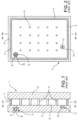
- FIGs. 1-2 illustrate an example vacuum IG unit (vacuum IG unit or VIG unit).
- VIG window unit 1 includes two spaced apart substantially parallel glass substrates 2 and 3, which enclose an evacuated or low pressure space 6 therebetween. Glass sheets/substrates 2 and 3 are interconnected by peripheral or hermetic edge seal 4 of fused solder glass or other suitable material, and an array of support spacers (e.g., pillars) 5.
- Pump out tube 8 is hermetically sealed by solder glass 9 to an aperture or hole 10 which passes from an interior surface of glass sheet 2 to the bottom of recess 11 in the exterior face of sheet 2.
- a vacuum is attached to pump out tube 8 so that the interior cavity between substrates 2 and 3 can be evacuated to create a low pressure area or space 6, having a pressure less than atmospheric pressure.
- tube 8 is melted to seal the vacuum, and the spacers 5 space at least the glass substrates 2 and 3 from each other.
- Recess 11 retains sealed tube 8.
- a chemical getter 12 may be included within recess 13 or at other suitable location.
- Certain example embodiments of this invention relate to a VIG window unit including spacers (e.g., pillars) of or including a metal alloy.
- Metal alloy spacers e.g., Ti, Cu, and/or Zr inclusive alloy
- metal content of the spacers 5 comprises, by weight, at least 30% (more preferably at least 40%, and most preferably at least 50%) Ti, Cu and/or Zr.
- the metal alloy of the spacer(s) is an amorphous metal alloy (e.g., Zr and/or Cu based amorphous alloy).
- material for spacers 5 is designed to advantageously provide for one or more of: (i) increased center of glass R-values (e.g., at least 11.1, more preferably at least 12.0, more preferably of at least 13.0, and sometimes at least 14.0, as a function of spacer spacing) for VIG window units while not significantly sacrificing strength; (ii) providing a spacer material having higher compressive yield strength compared to annealed 316 stainless steel, without being significantly magnetic; and/or (iii) providing a spacer material having lower thermal conductivity compared to 316 stainless steel.
- R-values e.g., at least 11.1, more preferably at least 12.0, more preferably of at least 13.0, and sometimes at least 14.0, as a function of spacer spacing
- alloying metals increases both resistance to compressive plastic deformation and decreases the thermal conductivity, for material for spacers 5. It has been found that such metal alloys are particularly advantageous for spacers in VIG window units.
- Certain example embodiments of this invention relate to a VIG window unit including spacers (e.g., pillars) 5 of or including a metal alloy.
- the metal alloy spacers 5 are provided between at least glass substrates 2 and 3, as shown in Figs. 1-3 .
- the metal alloy spacers 5 of Fig. 3 may be used in the VIG window unit of Figs. 1-2 , or in any other VIG window unit, according to example embodiments of this invention.
- the metal alloy spacers 5 discussed herein and/or shown in Fig. 3 may be used in any of the VIG window units described in any of U.S. Patent Nos.
- Metal alloy spacers 5 e.g., Ti, Cu, and/or Zr inclusive alloy
- metal content of the spacer comprises, by weight, at least 30% (more preferably at least 40%, and most preferably at least 50%) Ti, Cu and/or Zr.
- the metal alloy of the spacer(s) is an amorphous metal alloy (e.g., Zr and/or Cu based amorphous alloy).
- Example spacer materials are listed in the chart below. It can be seen that most pure metals (e.g., see Al, Ni, Zr, and Ti in the chart below) have high thermal conductivity values and low compressive yield strength, which are undesirable for use in VIG spacers 5. Decreasing the thermal conductivity will reduce the amount of heat transferring between the pieces of glass.
- Titanium based alloy Ti-6Al-4V (also known as Titanium 6-4) is an example material for spacers 5 according to an example of this invention, and is made up of for example about 6% Al, about 4% V, and about 90% Ti. It can be seen, for example, that example spacer 5 material alloys such as Ti-6Al-4V (also known as Titanium 6-4), Timet 685, and Hastelloy C276 all have lower thermal conductivity and significantly higher compressive yield strength than does annealed 316 stainless steel.
- example spacer 5 material alloys such as Ti-6Al-4V (also known as Titanium 6-4), Timet 685, and Hastelloy C276 represent significant improvements over annealed 316 stainless steel with respect to spacer material, and allow for higher R-values to be realized for VIG window units and/or for the spacers 5 to be spaced further apart from each other without sacrificing durability.
- the material for spacers 5 is designed to have (a) a compressive yield strength of at least 80,000 psi, more preferably at least 100,000 psi, more preferably at least 150,000 psi, and most preferably at least 200,000 psi, and/or (b) thermal conductivity of no greater than 13.0 W/m-K, more preferably no greater than 12.0 W/m-K, even more preferably no greater than 11.0 W/m-K, and most preferably no greater than 10.0 W/m-K or 9.0 W/m-K.
- Ti based alloys such as Ti-6Al-4V (also known as Titanium 6-4) and Timet 685, and Ni-Mo-Cr inclusive alloys such as Hastelloy C276 may be suitable for spacers 5 in certain example embodiments of this invention.
- Ti-6Al-4V for example, in a solution aged heat-treated condition offers improvements in compressive yield strength (155,000 psi) and thermal conductivity (6.7 W/m-K), compared to annealed 316 stainless steel at only 42,000 psi.
- Other Ti based alloys can be used such as Timet 685.
- An additional benefit to such titanium alloys is that they are not ferromagnetic or paramagnetic, which allows for ease of pillar placement during manufacturing.
- Gas-phase nitriding may optionally be used to increase compressive yield strength.
- Gas-phase nitriding e.g., of the Ti based alloy - see chart above
- the nitrogen atoms are positioned at interstitial atomic sites which leads to increase flow strength and hardness, without forming significant titanium nitrides on the surface or in the bulk. This is advantageous as thermal conductivity is significantly higher than Ti alloys.
- the spacers 5 of the VIG window unit may be of or include a Ti-based metal alloy comprising Ti and one or more of Al and/or V, where the Ti content by weight is at least about 30%, more preferably at least about 40%, and most preferably at least about 50%, and sometimes at least about 60% or at least about 80%.
- metal content of the spacers 5 may include by weight %, in addition to the Ti, from about 1-20% Al (more preferably from about 2-10%, and most preferably from about 4-8%), and from about 1-20% V (more preferably from about 1-10%, and most preferably from about 2-6%).
- Ti-6Al-4V also known as Titanium 6-4
- Ti-based alloy is an example of such a Ti-based alloy.
- the spacers 5 may be of or include a Zr-based amorphous metal alloy comprising Zr and one or more of Cu, Ni, Al, and/or Ti, where the Zr content by weight is at least about 30%, more preferably at least about 40%, and most preferably at least about 50%, and sometimes at least about 60%.
- metal alloy spacers e.g., Ti, Cu, and/or Zr inclusive alloy
- Increasing the compressive yield strength of the spacers in such a manner may allow for increased spacing between adjacent spacers in the window unit, which may allow for higher R-values to be achieved.
- the metal alloy of the spacer(s) 5 is an amorphous metal alloy (e.g., Zr and/or Cu based amorphous alloy).
- the spacers may be of or include a Zr-based amorphous metal alloy comprising Zr and one or more of Cu, Ni, Al, and/or Ti, where the Zr content by weight is at least about 30%, more preferably at least about 40%, and most preferably at least about 50%, and sometimes at least about 60%. It has been found that using such spacers advantageously reduces the thermal conductivity of the spacer array and increases the center of glass R-value of the VIG window unit, and can also provide for sufficient spacing strength of the substrates of the VIG window unit. Increasing the compressive yield strength of the spacers in such a manner may allow for increased spacing between adjacent spacers in the window unit, which may allow for higher R-values to be achieved.
- Amorphous alloys for spacers 5 are characterized by their unordered non-crystalline structure compared to metals and other classic alloys. Different metals can be combined with heat and melted together to make a liquid. When this liquid is cooled rapidly, metal atoms retain liquid-like random positions from the melt in forming an amorphous alloy.
- the alloy system may be chosen in a way such that no significant phase transition from liquid to solid exists which in turn leads to near net shape components that can be manufactured by casting, 3D printing or injection molding (spacers 5 may thus be manufactured by any of these techniques, including but not limited to 3D printing to the glass of the VIG unit).
- the VIT 105 amorphous alloy is made up of 16% Cu, 12% Ni, 3% Ti, 4% Al, and the balance (e.g., about 65%) essentially of Zr.
- the AMZ4 amorphous alloy is made up of 24% Cu, 4% Al, 2% Nb, and the balance (e.g., about 70%) essentially of Zr.
- the AMC4 amorphous alloy is made up of 26% Ti, 16% Zr, 8% Ni, 4% Sn, and the balance (e.g., about 46%) essentially of Cu.
- Amorphous Alloy VIT105 Zr-16Cu-12Ni-3Ti-4Al
- Amorphous Alloy AMZ4 Zr-24Cu-4Al-2Nb
- Amorphous Alloy AMC4 Cu-26Ti-16Zr-8Ni-4Sn
- VIT 105, AMZ4, and AMC4 amorphous alloys are advantageous with respect to annealed 316 stainless steel, in that they have lower thermal conductivity and/or higher compressive yield strength.
- the amorphous metal alloy for the spacers 5 may be of or include, with respect to metal content of the alloy by weight, at least 40% Zr, more preferably at least 50% Zr, and most preferably at least 60% Zr; from about 1-35% Cu, more preferably from about 10-30% Cu, and most preferably from about 15-25% Cu; from about 1-30% Ni, more preferably from about 5-20% Ni, and most preferably from about 10-15% Ni; from about 1-15% Ti, more preferably from about 1-10% Ti, and most preferably from about 1-5% Ti; and/or from about 1-15% Al, more preferably from about 1-10% Al, and most preferably from about 1-5% Al.
- the amorphous metal alloy for the spacers 5 may be of or include, with respect to metal content of the alloy by weight, at least 40% Zr, more preferably at least 50% Zr, and most preferably at least 60% Zr; from about 1-35% Cu, more preferably from about 10-30% Cu, and most preferably from about 15-25% Cu; from about 1-15% Nb, more preferably from about 1-10% Nb, and most preferably from about 1-5% Nb; and/or from about 1-15% Al, more preferably from about 1-10% Al, and most preferably from about 1-5% Al.
- the amorphous metal alloy for the spacers 5 may be of or include, with respect to metal content of the alloy by weight, at least 30% Cu, more preferably at least 40% Cu; from about 1-35% Ti, more preferably from about 10-35% Ti, and most preferably from about 20-30% Ti; from about 1-35% Zr, more preferably from about 5-30% Zr, and most preferably from about 10-22% Zr; from about 1-20% Ni, more preferably from about 2-15% Ni, and most preferably from about 5-12% Ni; and/or from about 1-15% Sn, more preferably from about 1-10% Sn, and most preferably from about 2-8% Sn.
- zirconium oxide e.g., ZrO 2
- This thin layer of zirconium oxide e.g., ZrO 2
- ZrO 2 zirconium oxide
- the thermal conductivity of ZrO 2 is ⁇ 1.7 W/m K.
- VIG R-value calculator Various spacers' calculated thermal conductivity was then imported into a VIG R-value calculator to determine its effect on the thermal performance of a VIG window unit.
- Ti-6Al-4V also known as Titanium 6-4 or Ti-6-4
- Heraeus amorphous alloy VIT105 spacers are compared to a stainless-steel pillar below. Due to the increases in compressive strength (e.g., resulting in larger pillar spacing) and decrease in thermal conductivity it is possible, for example and without limitation, for Ti 6-4 and VIT105 to achieve VIG unit R-values of 20.3 and 25.7, respectively (this is much higher than that for conventional stainless steel spacers/pillars). Results of the analysis and parameters that lead to the calculation can be seen below.
- the spacers according to example embodiments of this invention may allow VIG window units to realize higher R-values compared to conventional annealed 316 stainless steel spacers (e.g., pillars).
- a vacuum insulated glass (VIG) window unit comprising: first and second spaced apart glass substrates defining a gap therebetween; an edge seal provided proximate a periphery of the first and second substrates to form an hermetic seal, and help define the gap which is at a pressure less than atmospheric pressure; a plurality of spacers provided between at least the first and second glass substrates of the VIG window unit for helping space apart at least the first and second glass substrates; and wherein the spacers comprise a metal alloy having a thermal conductivity of no greater than 13.0 W/m-K and a compressive yield strength of at least 80,000 psi.
- the spacers may comprise a metal alloy having a thermal conductivity of no greater than 12.0 W/m-K, more preferably no greater than 11.0 W/m-K, more preferably no greater than 10.0 W/m-K, and most preferably no greater than 9.0 W/m-K.
- the spacers may comprise a metal alloy having a compressive yield strength of at least 100,000 psi, more preferably a compressive yield strength of at least 150,000 psi, and most preferably a compressive yield strength of at least 200,000 psi.
- the metal alloy may be nitrided.
- the metal alloy may comprises Ti as the largest metal element, and Ti content of the metal alloy, by weight, may be at least about 30%, more preferably at least about 50%, and most preferably at least about 80%.
- metal content of the metal alloy may comprise, by weight, at least 50% Ti, from about 1-20% Al, and from about 1-20% V.
- the metal alloy is amorphous, comprising a non-crystalline structure.
- Zr or Cu may be the largest metal element content of the amorphous metal alloy.
- metal content of the metal alloy may comprises, by weight, at least 40% Zr.
- metal content of the metal alloy may comprise, by weight, at least 40% Zr and from about 1-35% Cu, and at least one of: from about 1-30% Ni, from about 1-15% Ti, and/or from about 1-15% Al.
- metal content of the metal alloy may comprises, by weight, at least 40% Zr and from about 1-35% Cu, and at least one of: from about 1-15% Nb and/or from about 1-15% Al.
- metal content of the metal alloy may comprise, by weight, at least 30% Cu and from about 1-35% Ti, and at least one of: from about 1-35% Zr, from about 1-20% Ni, and/or from about 1-15% Sn.
- At least one of the spacers may comprises a coating on a surface thereof.
- the coating may be of or include a ceramic, such as an oxide of zirconium (e.g., ZrO 2 ).
- the coating may be on one, two, three, or all sides of at least one of the spacers.
- the coating may be formed by heat treatment.
Landscapes
- Engineering & Computer Science (AREA)
- Civil Engineering (AREA)
- Structural Engineering (AREA)
- Chemical & Material Sciences (AREA)
- Materials Engineering (AREA)
- Mechanical Engineering (AREA)
- Metallurgy (AREA)
- Organic Chemistry (AREA)
- Joining Of Glass To Other Materials (AREA)
- Securing Of Glass Panes Or The Like (AREA)
Description
- This application claims priority to
U.S. Patent Application No. 17/138,587 filed on December 30, 2020 - Certain example embodiments of this invention relate to a VIG window unit including spacers (e.g., pillars) of or including a metal alloy. Metal alloy spacers (e.g., Ti, Cu, and/or Zr inclusive alloy) have been found to have lower thermal conductivity, and increase compressive strength, compared to conventional annealed 316 stainless steel spacers. In certain example embodiments, metal content of the spacer comprises, by weight, at least 30% (more preferably at least 40%, and most preferably at least 50%) Ti, Cu and/or Zr. The metal alloy of the spacer(s) is an amorphous metal alloy (e.g., Zr and/or Cu based amorphous alloy). Thus, it has been found that using metal alloy spacers (e.g., Ti, Cu, and/or Zr inclusive alloy) advantageously reduces the thermal conductivity of the spacer array and increases the center of glass R-value of the VIG window unit, and can also provide for sufficient spacing strength of the substrates of the VIG window unit. Increasing the compressive yield strength of the spacers in such a manner may allow for increased spacing between adjacent spacers in the window unit, which may allow for higher R-values to be achieved.
- Vacuum IG units are known in the art. For example, see
U.S. Patent Nos. 5,664,395 ,5,657,607 and5,902,652 .WO2020/002126A1 discloses a method of manufacturing a vacuum insulated glazing (VIG) unit comprising depositing a coating material on at least a portion of a pillar core under conditions effective to provide a deposited coating material.WO01/12941A1 CN101891404A andUS2014/272208A1 also disclose a vacuum insulated glazing unit and/or a method of manufacturing a vacuum insulated glazing unit. -
EP0963961A1 discloses a double glazing including a pair of glass sheets, a plurality of spacers disposed between opposed sheet faces of the glass sheets by a predetermined pitch, and a sealing member interposed between the glass sheets along the entire peripheries thereof, with a space V between the glass sheets being sealed in a vacuum condition. - The present invention is set out in the appended set of claims.
-
Figs. 1-2 illustrate a conventional vacuum IG unit (vacuum IG unit or VIG unit). Vacuum IG unit 1 includes two spacedapart glass substrates low pressure space 6 therebetween. Glass sheets/substrates - Pump out
tube 8 is hermetically sealed bysolder glass 9 to an aperture orhole 10 which passes from an interior surface ofglass sheet 2 to the bottom ofrecess 11 in the exterior face ofsheet 2. A vacuum is attached to pump outtube 8 so that the interior cavity betweensubstrates space 6, having a pressure less than atmospheric pressure. After evacuation,tube 8 is melted to seal the vacuum. Recess 11 retains sealedtube 8. Optionally, achemical getter 12 may be included withinrecess 13 or at other suitable location. - A known spacer material, for
spacers 5, is annealed 316 stainless steel. Unfortunately, 316 stainless steel has combination of thermal conductivity of 13.5 W/m-K and compressive yield strength of 42,000 psi. This combination of low compressive yield strength, and medium to high thermal conductivity, means that the spacers in the VIG window unit cannot be spaced too far from each other (i.e., must be located reasonably close to each other to prevent failure) which in turn contributes to the VIG window unit having an R-value of about R-12. - It is possible to increase 316 stainless steel's compressive yield strength compared to the annealed state through strain hardening. However, strain hardening increases the amount of martensite in the structure causing it to be ferromagnetic, and highly magnetic spacers cause issues during the manufacturing process. Moreover, most pure metals have high thermal conductivity values and low compressive yield strength.
- Thus, it will be appreciated that there is a need in art to find a solution to the problems discussed above, such as, for example, one or more of: (i) finding a solution enabling higher R-values to be achieved for VIG window units while not significantly sacrificing strength; (ii) providing a spacer material having higher compressive yield strength compared to annealed 316 stainless steel, without being significantly magnetic; and/or (iii) providing a spacer material having lower thermal conductivity compared to 316 stainless steel.
- It has been found that alloying metals increases both resistance to compressive plastic deformation and decreases the thermal conductivity. Thus, it has been found that such alloys are particularly advantageous for spacers in VIG window units. Certain example embodiments of this invention relate to a VIG window unit including spacers (e.g., pillars) of or including a metal alloy. Metal alloy spacers (e.g., Ti, Cu, and/or Zr inclusive alloy) have been found to have lower thermal conductivity, and increased compressive strength, compared to conventional annealed 316 stainless steel spacers. In certain example embodiments, metal content of the spacer comprises, by weight, at least 30% (more preferably at least 40%, and most preferably at least 50%) Ti, Cu and/or Zr. The metal alloy of the spacer(s) is an amorphous metal alloy (e.g., Zr and/or Cu based amorphous alloy) . For example, the spacers may be of or include a Zr-based amorphous metal alloy comprising Zr and one or more of Cu, Ni, Al, and/or Ti, where the Zr content by weight is at least about 30%, more preferably at least about 40%, and most preferably at least about 50%, and sometimes at least about 60%. An another example, the spacers may be of or include a Ti-based metal alloy comprising Ti and one or more of Al and/or V, where the Ti content by weight is at least about 30%, more preferably at least about 40%, and most preferably at least about 50%, and sometimes at least about 60% or at least about 80%. Thus, it has been found that using metal alloy spacers (e.g., Ti, Cu, and/or Zr inclusive alloy) advantageously reduces the thermal conductivity of the spacer array and increases the center of glass R-value of the VIG window unit, and can also provide for sufficient spacing strength of the substrates of the VIG window unit. Increasing the compressive yield strength of the spacers in such a manner may allow for increased spacing between adjacent spacers in the window unit, which may allow for higher R-values to be achieved.
- In certain example embodiments of this invention, there is provided a vacuum insulated glass (VIG) window unit, comprising: first and second spaced apart glass substrates defining a gap therebetween; an edge seal provided proximate a periphery of the first and second substrates to form an hermetic seal, and help define the gap which is at a pressure less than atmospheric pressure; a plurality of spacers provided between at least the first and second glass substrates of the VIG window unit for helping space apart at least the first and second glass substrates; and wherein the spacers comprise a metal alloy having a thermal conductivity of no greater than 13.0 W/m-K and a compressive yield strength of at least 80,000 psi. The metal alloy may optionally be nitrided.
- In certain example embodiments, the metal alloy may comprise Ti as the largest metal element, and Ti content of the metal alloy, by weight, may be at least about 30%, more preferably at least about 50%, and most preferably at least about 80%.
- In certain example embodiments, the metal content of the metal alloy may comprise, by weight, at least 50% Ti, from about 1-20% Al, and from about 1-20% V.
- According to the present invention, the metal alloy is amorphous, comprising a non-crystalline structure. Zr or Cu may be the largest metal element content of the amorphous metal alloy. Metal content of the amorphous metal alloy may comprise, by weight, at least 40% Zr and from about 1-35% Cu, and at least one of: from about 1-30% Ni, from about 1-15% Ti, and/or from about 1-15% Al; may comprise, by weight, at least 40% Zr and from about 1-35% Cu, and at least one of: from about 1-15% Nb and/or from about 1-15% Al; and/or may comprise, by weight, at least 30% Cu and from about 1-35% Ti, and at least one of: from about 1-35% Zr, from about 1-20% Ni, and/or from about 1-15% Sn.
- In certain example embodiments of this invention, there is provided a vacuum insulated glass (VIG) window unit, comprising: first and second spaced apart glass substrates defining a gap therebetween; an edge seal provided proximate a periphery of the first and second substrates to form an hermetic seal, and help define the gap which is at a pressure less than atmospheric pressure; a plurality of spacers provided between at least the first and second glass substrates of the VIG window unit for helping space apart at least the first and second glass substrates; and wherein the spacers comprise a metal alloy having Ti as the largest metal element in the metal alloy, and wherein Ti content of the metal alloy, by weight, is at least about 50%.
- In certain example embodiments of this invention, there is provided a vacuum insulated glass (VIG) window unit, comprising: first and second spaced apart glass substrates defining a gap therebetween; an edge seal provided proximate a periphery of the first and second substrates to form an hermetic seal, and help define the gap which is at a pressure less than atmospheric pressure; a plurality of spacers provided between at least the first and second glass substrates of the VIG window unit for helping space apart at least the first and second glass substrates; and wherein the spacers comprise an amorphous metal alloy, wherein Zr or Cu is the largest metal element of the amorphous metal alloy.
- The features, aspects, advantages, and example embodiments described herein may be combined to realize yet further embodiments.
- These and other features and advantages may be better and more completely understood by reference to the following detailed description of exemplary illustrative embodiments in conjunction with the drawings, of which:
-
FIGURE 1 is a prior art cross-sectional view of a conventional vacuum IG unit; -
FIGURE 2 is a prior art top plan view of the bottom substrate, edge seal, and spacers of theFig. 1 vacuum IG unit taken along the section line illustrated inFig. 1 ; -
FIGURE 3 is side view of a metal alloy spacer that may be used in the VIG window unit ofFigs. 1-2 , or any other VIG window unit, according to example embodiments of this invention. - Referring now more particularly to the accompanying drawings in which like reference numerals indicate like parts throughout the several views.
-
Figs. 1-2 illustrate an example vacuum IG unit (vacuum IG unit or VIG unit). VIG window unit 1 includes two spaced apart substantiallyparallel glass substrates low pressure space 6 therebetween. Glass sheets/substrates hermetic edge seal 4 of fused solder glass or other suitable material, and an array of support spacers (e.g., pillars) 5. Pump outtube 8 is hermetically sealed bysolder glass 9 to an aperture orhole 10 which passes from an interior surface ofglass sheet 2 to the bottom ofrecess 11 in the exterior face ofsheet 2. A vacuum is attached to pump outtube 8 so that the interior cavity betweensubstrates space 6, having a pressure less than atmospheric pressure. After evacuation,tube 8 is melted to seal the vacuum, and thespacers 5 space at least theglass substrates tube 8. Optionally, achemical getter 12 may be included withinrecess 13 or at other suitable location. - Certain example embodiments of this invention relate to a VIG window unit including spacers (e.g., pillars) of or including a metal alloy. Metal alloy spacers (e.g., Ti, Cu, and/or Zr inclusive alloy) have been found to have lower thermal conductivity, and increased compressive strength, compared to conventional annealed 316 stainless steel spacers. In certain example embodiments, metal content of the
spacers 5 comprises, by weight, at least 30% (more preferably at least 40%, and most preferably at least 50%) Ti, Cu and/or Zr. The metal alloy of the spacer(s) is an amorphous metal alloy (e.g., Zr and/or Cu based amorphous alloy). In certain example embodiments of this invention, material forspacers 5 is designed to advantageously provide for one or more of: (i) increased center of glass R-values (e.g., at least 11.1, more preferably at least 12.0, more preferably of at least 13.0, and sometimes at least 14.0, as a function of spacer spacing) for VIG window units while not significantly sacrificing strength; (ii) providing a spacer material having higher compressive yield strength compared to annealed 316 stainless steel, without being significantly magnetic; and/or (iii) providing a spacer material having lower thermal conductivity compared to 316 stainless steel. - In example embodiments of this invention, alloying metals increases both resistance to compressive plastic deformation and decreases the thermal conductivity, for material for
spacers 5. It has been found that such metal alloys are particularly advantageous for spacers in VIG window units. - Certain example embodiments of this invention relate to a VIG window unit including spacers (e.g., pillars) 5 of or including a metal alloy. The
metal alloy spacers 5 are provided between at leastglass substrates Figs. 1-3 . Themetal alloy spacers 5 ofFig. 3 may be used in the VIG window unit ofFigs. 1-2 , or in any other VIG window unit, according to example embodiments of this invention. For example, themetal alloy spacers 5 discussed herein and/or shown inFig. 3 may be used in any of the VIG window units described in any ofU.S. Patent Nos. 5,664,395 ,5,657,607 ,5,902,652 ,10,703,667 10,683,695 10,590,695 10,465,433 10,435,938 Fig. 3 , have been found to have lower thermal conductivity, and increased compressive strength, compared to conventional annealed 316 stainless steel spacers. In certain example embodiments, metal content of the spacer comprises, by weight, at least 30% (more preferably at least 40%, and most preferably at least 50%) Ti, Cu and/or Zr. The metal alloy of the spacer(s) is an amorphous metal alloy (e.g., Zr and/or Cu based amorphous alloy). Example spacer materials are listed in the chart below. It can be seen that most pure metals (e.g., see Al, Ni, Zr, and Ti in the chart below) have high thermal conductivity values and low compressive yield strength, which are undesirable for use inVIG spacers 5. Decreasing the thermal conductivity will reduce the amount of heat transferring between the pieces of glass.Material Thermal Conductivity Compressive Yield Strength Aluminum (Pure)* 236 W/m-K Nickel (Pure)* 94 W/m-K Zirconium (Pure)* 23 W/m-K Titanium (Pure)* 22 W/m-K Stainless steel (316 Annealed) 13.5 W/m-K 42,000 psi Hastelloy C276 9.9 W/m-K 163,000 psi Titanium 6-4 (Solution aged) 6.7 W/m-K 155,000 psi Titanium 6-4 (STA & Nitrided) 6.7 W/m-K 290,000 psi Titanium 6-5-.5-.25 (Timet 685) 4.15 W/m-K ∼125,000 psi (*Cond. at 0°C; NPL) - Alloying the pure metals increase both resistance to compressive plastic deformation and decreases the thermal conductivity. Increasing the compressive yield gives the ability to increase the space between each individual pillars reducing the number of sites where thermal conduction can occur between the pieces of glass. Titanium based alloy Ti-6Al-4V (also known as Titanium 6-4) is an example material for
spacers 5 according to an example of this invention, and is made up of for example about 6% Al, about 4% V, and about 90% Ti. It can be seen, for example, thatexample spacer 5 material alloys such as Ti-6Al-4V (also known as Titanium 6-4), Timet 685, and Hastelloy C276 all have lower thermal conductivity and significantly higher compressive yield strength than does annealed 316 stainless steel. Thus, it will be appreciated thatexample spacer 5 material alloys such as Ti-6Al-4V (also known as Titanium 6-4), Timet 685, and Hastelloy C276 represent significant improvements over annealed 316 stainless steel with respect to spacer material, and allow for higher R-values to be realized for VIG window units and/or for thespacers 5 to be spaced further apart from each other without sacrificing durability. In certain example embodiments of this invention, the material forspacers 5 is designed to have (a) a compressive yield strength of at least 80,000 psi, more preferably at least 100,000 psi, more preferably at least 150,000 psi, and most preferably at least 200,000 psi, and/or (b) thermal conductivity of no greater than 13.0 W/m-K, more preferably no greater than 12.0 W/m-K, even more preferably no greater than 11.0 W/m-K, and most preferably no greater than 10.0 W/m-K or 9.0 W/m-K. Ti based alloys such as Ti-6Al-4V (also known as Titanium 6-4) and Timet 685, and Ni-Mo-Cr inclusive alloys such as Hastelloy C276 may be suitable forspacers 5 in certain example embodiments of this invention. Ti-6Al-4V, for example, in a solution aged heat-treated condition offers improvements in compressive yield strength (155,000 psi) and thermal conductivity (6.7 W/m-K), compared to annealed 316 stainless steel at only 42,000 psi. Other Ti based alloys can be used such as Timet 685. An additional benefit to such titanium alloys is that they are not ferromagnetic or paramagnetic, which allows for ease of pillar placement during manufacturing. - Gas-phase nitriding may optionally be used to increase compressive yield strength. Gas-phase nitriding (e.g., of the Ti based alloy - see chart above) is a secondary heat treating process where nitrogen atoms diffuse into the lattice of titanium alloys. The nitrogen atoms are positioned at interstitial atomic sites which leads to increase flow strength and hardness, without forming significant titanium nitrides on the surface or in the bulk. This is advantageous as thermal conductivity is significantly higher than Ti alloys.
- For example, the
spacers 5 of the VIG window unit may be of or include a Ti-based metal alloy comprising Ti and one or more of Al and/or V, where the Ti content by weight is at least about 30%, more preferably at least about 40%, and most preferably at least about 50%, and sometimes at least about 60% or at least about 80%. For example, metal content of thespacers 5 may include by weight %, in addition to the Ti, from about 1-20% Al (more preferably from about 2-10%, and most preferably from about 4-8%), and from about 1-20% V (more preferably from about 1-10%, and most preferably from about 2-6%). Ti-6Al-4V (also known as Titanium 6-4) is an example of such a Ti-based alloy. - As another example, the
spacers 5 may be of or include a Zr-based amorphous metal alloy comprising Zr and one or more of Cu, Ni, Al, and/or Ti, where the Zr content by weight is at least about 30%, more preferably at least about 40%, and most preferably at least about 50%, and sometimes at least about 60%. Thus, it has been found that using metal alloy spacers (e.g., Ti, Cu, and/or Zr inclusive alloy) advantageously reduces the thermal conductivity of the spacer array and increases the center of glass R-value of the VIG window unit, and can also provide for sufficient spacing strength of the substrates of the VIG window unit. Increasing the compressive yield strength of the spacers in such a manner may allow for increased spacing between adjacent spacers in the window unit, which may allow for higher R-values to be achieved. - The metal alloy of the spacer(s) 5 is an amorphous metal alloy (e.g., Zr and/or Cu based amorphous alloy). For example, the spacers may be of or include a Zr-based amorphous metal alloy comprising Zr and one or more of Cu, Ni, Al, and/or Ti, where the Zr content by weight is at least about 30%, more preferably at least about 40%, and most preferably at least about 50%, and sometimes at least about 60%. It has been found that using such spacers advantageously reduces the thermal conductivity of the spacer array and increases the center of glass R-value of the VIG window unit, and can also provide for sufficient spacing strength of the substrates of the VIG window unit. Increasing the compressive yield strength of the spacers in such a manner may allow for increased spacing between adjacent spacers in the window unit, which may allow for higher R-values to be achieved.
- Amorphous alloys (e.g., VIT 105, VIT 106, VIT 601, AMZ4, or AMC4) for
spacers 5 are characterized by their unordered non-crystalline structure compared to metals and other classic alloys. Different metals can be combined with heat and melted together to make a liquid. When this liquid is cooled rapidly, metal atoms retain liquid-like random positions from the melt in forming an amorphous alloy. The alloy system may be chosen in a way such that no significant phase transition from liquid to solid exists which in turn leads to near net shape components that can be manufactured by casting, 3D printing or injection molding (spacers 5 may thus be manufactured by any of these techniques, including but not limited to 3D printing to the glass of the VIG unit). With the absence of lattice defects, few or no grain or phase boundaries, and few or no composition variations exist. Several example Zr and Cu based amorphous alloys, which may be used forspacers 5 herein, are compared to conventional annealed 316 stainless steel spacers below. For example, the VIT 105 amorphous alloy is made up of 16% Cu, 12% Ni, 3% Ti, 4% Al, and the balance (e.g., about 65%) essentially of Zr. As another example, the AMZ4 amorphous alloy is made up of 24% Cu, 4% Al, 2% Nb, and the balance (e.g., about 70%) essentially of Zr. As yet another example, the AMC4 amorphous alloy is made up of 26% Ti, 16% Zr, 8% Ni, 4% Sn, and the balance (e.g., about 46%) essentially of Cu.Material Tg °C Thermal Conductivity Compressive Yield Strength Stainless steel (316 Annealed) none 13.5 W/m-K 42,000 psi Amorphous Alloy VIT105 (Zr-16Cu-12Ni-3Ti-4Al) 403 4.7 W/m-K 232,000 psi Amorphous Alloy AMZ4 (Zr-24Cu-4Al-2Nb) 400 4.8 W/m-K 246,000 psi Amorphous Alloy AMC4 (Cu-26Ti-16Zr-8Ni-4Sn) 410 ∼5 W/m-K - It can be seen that the VIT 105, AMZ4, and AMC4 amorphous alloys are advantageous with respect to annealed 316 stainless steel, in that they have lower thermal conductivity and/or higher compressive yield strength.
- In certain example amorphous alloy embodiments of this invention for the
spacers 5, the amorphous metal alloy for thespacers 5 may be of or include, with respect to metal content of the alloy by weight, at least 40% Zr, more preferably at least 50% Zr, and most preferably at least 60% Zr; from about 1-35% Cu, more preferably from about 10-30% Cu, and most preferably from about 15-25% Cu; from about 1-30% Ni, more preferably from about 5-20% Ni, and most preferably from about 10-15% Ni; from about 1-15% Ti, more preferably from about 1-10% Ti, and most preferably from about 1-5% Ti; and/or from about 1-15% Al, more preferably from about 1-10% Al, and most preferably from about 1-5% Al. - In certain example amorphous alloy embodiments of this invention for the
spacers 5, the amorphous metal alloy for thespacers 5 may be of or include, with respect to metal content of the alloy by weight, at least 40% Zr, more preferably at least 50% Zr, and most preferably at least 60% Zr; from about 1-35% Cu, more preferably from about 10-30% Cu, and most preferably from about 15-25% Cu; from about 1-15% Nb, more preferably from about 1-10% Nb, and most preferably from about 1-5% Nb; and/or from about 1-15% Al, more preferably from about 1-10% Al, and most preferably from about 1-5% Al. - In certain example amorphous alloy embodiments of this invention for the
spacers 5, the amorphous metal alloy for thespacers 5 may be of or include, with respect to metal content of the alloy by weight, at least 30% Cu, more preferably at least 40% Cu; from about 1-35% Ti, more preferably from about 10-35% Ti, and most preferably from about 20-30% Ti; from about 1-35% Zr, more preferably from about 5-30% Zr, and most preferably from about 10-22% Zr; from about 1-20% Ni, more preferably from about 2-15% Ni, and most preferably from about 5-12% Ni; and/or from about 1-15% Sn, more preferably from about 1-10% Sn, and most preferably from about 2-8% Sn. - Additional heat treating of zirconia-based bulk metallic glass can create zirconium oxide (e.g., ZrO2) on the surface of the pillar. This thin layer of zirconium oxide (e.g., ZrO2) can create a thermal barrier between the bulk amorphous metal pillar and the glass while maintaining the amorphous alloys mechanical properties. The thermal conductivity of ZrO2 is ~1.7 W/m K. A heat treatment in an oxygen rich atmosphere at temperatures of 225C-275C for 30min-60min, for example, produces a zirconium oxide (e.g., ZrO2) surface oxide on at least one or all sides of the spacer.
- Various spacers' calculated thermal conductivity was then imported into a VIG R-value calculator to determine its effect on the thermal performance of a VIG window unit. Ti-6Al-4V (also known as Titanium 6-4 or Ti-6-4) and Heraeus amorphous alloy VIT105 spacers are compared to a stainless-steel pillar below. Due to the increases in compressive strength (e.g., resulting in larger pillar spacing) and decrease in thermal conductivity it is possible, for example and without limitation, for Ti 6-4 and VIT105 to achieve VIG unit R-values of 20.3 and 25.7, respectively (this is much higher than that for conventional stainless steel spacers/pillars). Results of the analysis and parameters that lead to the calculation can be seen below. Note that the Double Ag and Triple Ag refer to different types of low-E coatings on the interior surface of one of the glass substrates of the VIG unit.
Pillar Material (and Spacing) R-Value (Double Ag) R-Value (Triple Ag) No Pillars (region away from pillars; radiation only, theoretical maximum): 39.3 60.7 316 Stainless Steel (40 mm Spacing): 11 12.2 316 Stainless Steel (Max Spacing= 30 mm): 7.0 7.5 Ti 6-4 SA (40mm Spacing): 11.4 12.7 Ti 6-4 SA (Max Spacing= 55mm): 17 20.3 Ti 6-4 SA + Nitriding (40mm Spacing): 11.4 12.7 Ti 6-4 SA + Nitriding (Max Spacing= 64mm): 20.6 24.3 Ti 6-5-.5-.25 (40 mm Spacing): 11.8 13.3 Ti 6-5-.5-.25 (Max Spacing= 50 mm): 15.8 18.5 Amorphous AlloyVIT105 (40 mm Spacing): 11.7 13.2 Amorphous AlloyVIT105 (Max Spacing= 64 mm): 20.7 25.7 Amorphous AlloyVIT105 with ZrO2 (40mm Spacing): 13.4 14.9 Amorphous AlloyVIT105 with ZrO2 (Max Spacing=64mm): 23.2 28.1 - Thus, it will be appreciated that the spacers according to example embodiments of this invention may allow VIG window units to realize higher R-values compared to conventional annealed 316 stainless steel spacers (e.g., pillars).
- In an example embodiment of this invention, there is provided a vacuum insulated glass (VIG) window unit, comprising: first and second spaced apart glass substrates defining a gap therebetween; an edge seal provided proximate a periphery of the first and second substrates to form an hermetic seal, and help define the gap which is at a pressure less than atmospheric pressure; a plurality of spacers provided between at least the first and second glass substrates of the VIG window unit for helping space apart at least the first and second glass substrates; and wherein the spacers comprise a metal alloy having a thermal conductivity of no greater than 13.0 W/m-K and a compressive yield strength of at least 80,000 psi.
- In the VIG window unit of the immediately preceding paragraph, the spacers may comprise a metal alloy having a thermal conductivity of no greater than 12.0 W/m-K, more preferably no greater than 11.0 W/m-K, more preferably no greater than 10.0 W/m-K, and most preferably no greater than 9.0 W/m-K.
- In the VIG unit of any of the preceding two paragraphs, the spacers may comprise a metal alloy having a compressive yield strength of at least 100,000 psi, more preferably a compressive yield strength of at least 150,000 psi, and most preferably a compressive yield strength of at least 200,000 psi.
- In the VIG unit of any of the preceding three paragraphs, the metal alloy may be nitrided.
- In the VIG unit of any of the preceding four paragraphs, the metal alloy may comprises Ti as the largest metal element, and Ti content of the metal alloy, by weight, may be at least about 30%, more preferably at least about 50%, and most preferably at least about 80%.
- In the VIG unit of any of the preceding five paragraphs, metal content of the metal alloy may comprise, by weight, at least 50% Ti, from about 1-20% Al, and from about 1-20% V.
- In the VIG unit of any of the preceding six paragraphs, the metal alloy is amorphous, comprising a non-crystalline structure. Zr or Cu may be the largest metal element content of the amorphous metal alloy.
- In the VIG unit of any of the preceding seven paragraphs, metal content of the metal alloy may comprises, by weight, at least 40% Zr.
- In the VIG unit of any of the preceding eight paragraphs, metal content of the metal alloy may comprise, by weight, at least 40% Zr and from about 1-35% Cu, and at least one of: from about 1-30% Ni, from about 1-15% Ti, and/or from about 1-15% Al.
- In the VIG unit of any of the preceding nine paragraphs, metal content of the metal alloy may comprises, by weight, at least 40% Zr and from about 1-35% Cu, and at least one of: from about 1-15% Nb and/or from about 1-15% Al.
- In the VIG unit of any of the preceding ten paragraphs, metal content of the metal alloy may comprise, by weight, at least 30% Cu and from about 1-35% Ti, and at least one of: from about 1-35% Zr, from about 1-20% Ni, and/or from about 1-15% Sn.
- In the VIG unit of any of the preceding eleven paragraphs, at least one of the spacers may comprises a coating on a surface thereof. The coating may be of or include a ceramic, such as an oxide of zirconium (e.g., ZrO2). The coating may be on one, two, three, or all sides of at least one of the spacers. The coating may be formed by heat treatment.
- While the invention has been described in connection with what is presently considered to be the most practical and preferred embodiment, it is to be understood that the invention is not to be limited to the disclosed embodiment, but on the contrary, is intended to cover various modifications and equivalent arrangements included within the scope of the appended claims.
Claims (15)
- A vacuum insulated glass (VIG) window unit (1), comprising:first and second spaced apart glass substrates (2, 3) defining a gap therebetween;an edge seal (4) provided proximate a periphery of the first and second substrates (2, 3) to form a hermetic seal, and help define the gap which is at a pressure less than atmospheric pressure;a plurality of spacers (5) provided between at least the first and second glass substrates (2, 3) of the VIG window unit (1) for helping space apart at least the first and second glass substrates (2, 3); and characterized in thatthe spacers (5) comprise an amorphous metal alloy comprising a non-crystalline structure, and wherein the spacers have a thermal conductivity of no greater than 13.0 W/m-K and a compressive yield strength of at least 80,000 psi.
- The VIG unit (1) of claim 1, wherein the spacers (5) comprise a meatal alloy having a thermal conductivity of no greater than 12.0 W/m-K, preferably no greater than 11.0 W/m-K, more preferably no greater than 10.0 W/m-K, even more preferably no greater than 9.0 W/m-K.
- The VIG unit (1) of any preceding claim, wherein the spacers (5) comprise a metal alloy having a compressive yield strength of at least 100,000 psi, preferably at least 150,000 psi, more preferably at least 200,000 psi.
- The VIG unit (1) of any preceding claim, wherein the metal alloy is nitrided.
- The VIG unit (1) of any preceding claim, wherein the metal alloy comprises Ti as the largest metal element, and Ti content of the metal alloy, by weight, is at least about 30%, preferably at least about 50%, more preferably at least about 80%.
- The VIG unit (1) of any preceding claim, wherein metal content of the metal alloy comprises, by weight, at least 50% Ti, from about 1-20% Al, and from about 1-20% V.
- The VIG unit (1) of any of claims 1-4, wherein Zr or Cu has the largest metal content of the metal alloy.
- The VIG unit (1) of any preceding claim, wherein metal content of the metal alloy comprises, by weight, at least 40% Zr.
- The VIG unit (1) of any of claims 1-4 or 7-8, wherein metal content of the metal alloy comprises, by weight, at least 40% Zr and from about 1-35% Cu, and at least one of: from about 1-30% Ni, from about 1-15% Ti, and/or from about 1-15% Al,
or,
wherein metal content of the metal alloy comprises, by weight, at least 40% Zr and from about 1-35% Cu, and at least one of: from about 1-15% Nb and/or from about 1-15% Al - The VIG unit (1) of any of claims 1-4 or 7, wherein metal content of the metal alloy comprises, by weight, at least 30% Cu and from about 1-35% Ti, and at least one of: from about 1-35% Zr, from about 1-20% Ni, and/or from about 1-15% Sn.
- The VIG unit (1) of any preceding claim, wherein at least one of the spacers comprises a coating on a surface thereof, preferably wherein the coating comprises an oxide of zirconium, more preferably wherein the coating comprises ZrO2, even more preferably wherein the coating is provided on all sides of the at least one spacer.
- A vacuum insulated glass (VIG) window unit (1), comprising:first and second spaced apart glass substrates (2,3) defining a gap therebetween;an edge seal (4) provided proximate a periphery of the first and second substrates (2, 3) to form a hermetic seal, and help define the gap which is at a pressure less than atmospheric pressure;a plurality of spacers (5) provided between at least the first and second glass substrates (2, 3) of the VIG window unit (1) for helping space apart at least the first and second glass substrates (2, 3); and characterized in thatthe spacers (5) comprise an amorphous metal alloy, wherein Zr or Cu is the largest metal element of the amorphous metal alloy.
- The VIG unit (1) of claim 12, wherein metal content of the metal alloy comprises, by weight, at least 40% Zr,preferably wherein metal content of the metal alloy comprises, by weight, at least 40% Zr and from about 1-35% Cu, and at least one of: from about 1-30% Ni, from about 1-15% Ti, and/or from about 1-15% Al, or,preferably wherein metal content of the metal alloy comprises, by weight, at least 40% Zr and from about 1-35% Cu, and at least one of: from about 1-15% Nb and/or from about 1-15% Al.
- The VIG unit (1) of claim 12, wherein metal content of the metal alloy comprises, by weight, at least 30% Cu and from about 1-35% Ti, and at least one of: from about 1-35% Zr, from about 1-20% Ni, and/or from about 1-15% Sn.
- The VIG unit (1) of any of claims 12-14, wherein at least one of the spacers comprises a coating on a surface thereof, preferably wherein the coating comprises an oxide of zirconium, more preferably wherein the coating comprises ZrO2, even more preferably wherein the coating is provided on all sides of the at least one spacer.
Applications Claiming Priority (2)
| Application Number | Priority Date | Filing Date | Title |
|---|---|---|---|
| US17/138,587 US11802436B2 (en) | 2020-12-30 | 2020-12-30 | Vacuum insulated glass (VIG) window unit with metal alloy spacers, and/or methods of making the same |
| PCT/IB2021/062359 WO2022144756A1 (en) | 2020-12-30 | 2021-12-28 | Vacuum insulated glass (vig) window unit with metal alloy spacers, and/or methods of making the same |
Publications (2)
| Publication Number | Publication Date |
|---|---|
| EP4271904A1 EP4271904A1 (en) | 2023-11-08 |
| EP4271904B1 true EP4271904B1 (en) | 2024-10-16 |
Family
ID=80112059
Family Applications (1)
| Application Number | Title | Priority Date | Filing Date |
|---|---|---|---|
| EP21841017.3A Active EP4271904B1 (en) | 2020-12-30 | 2021-12-28 | Vacuum insulated glass (vig) window unit with metal alloy spacers, and/or methods of making the same |
Country Status (8)
| Country | Link |
|---|---|
| US (1) | US11802436B2 (en) |
| EP (1) | EP4271904B1 (en) |
| JP (1) | JP2024501206A (en) |
| KR (1) | KR20230125775A (en) |
| CN (1) | CN116529453A (en) |
| DK (1) | DK4271904T3 (en) |
| PL (1) | PL4271904T3 (en) |
| WO (1) | WO2022144756A1 (en) |
Families Citing this family (2)
| Publication number | Priority date | Publication date | Assignee | Title |
|---|---|---|---|---|
| WO2024018689A1 (en) * | 2022-07-22 | 2024-01-25 | パナソニックIpマネジメント株式会社 | Method for manufacturing glass panel unit, and glass panel unit assembly |
| GR1010994B (en) * | 2024-10-18 | 2025-07-04 | Μαρια Νικολαου Δαιου | Method for producing an insulated glazing system with vaccum insulation using spacers of uv liquid glass resin |
Family Cites Families (16)
| Publication number | Priority date | Publication date | Assignee | Title |
|---|---|---|---|---|
| CA1233047A (en) * | 1984-03-05 | 1988-02-23 | Michael A. Tenhover | Amorphous metal alloy powders and bulk objects and synthesis of same by solid state decomposition reactions |
| US5657607A (en) | 1989-08-23 | 1997-08-19 | University Of Sydney | Thermally insulating glass panel and method of construction |
| WO1993015296A1 (en) | 1992-01-31 | 1993-08-05 | The University Of Sydney | Improvements to thermally insulating glass panels |
| EP0953719B1 (en) | 1993-06-30 | 2003-10-15 | The University Of Sydney | Methods of construction of evacuated glazing |
| JPH1179799A (en) * | 1997-09-04 | 1999-03-23 | Nippon Sheet Glass Co Ltd | Double glazing |
| US6420002B1 (en) | 1999-08-18 | 2002-07-16 | Guardian Industries Corp. | Vacuum IG unit with spacer/pillar getter |
| US7919157B2 (en) * | 2007-01-10 | 2011-04-05 | Guardian Industries Corp. | Vacuum IG window unit with metal member in hermetic edge seal |
| US8500933B2 (en) | 2007-12-14 | 2013-08-06 | Guardian Industries Corp. | Localized heating of edge seals for a vacuum insulating glass unit, and/or unitized oven for accomplishing the same |
| CN101891404A (en) | 2010-08-06 | 2010-11-24 | 朱雷 | Vacuum glass |
| US8679598B2 (en) | 2010-10-08 | 2014-03-25 | Guardian Industries Corp. | Vacuum insulated glass (VIG) unit including nano-composite pillars, and/or methods of making the same |
| US20140272208A1 (en) | 2011-11-16 | 2014-09-18 | Lg Hausys, Ltd. | Vacuum glass panel having getter filler and method of manufacturing same |
| US9428952B2 (en) | 2012-05-31 | 2016-08-30 | Guardian Industries Corp. | Vacuum insulated glass (VIG) window unit with reduced seal height variation and method for making same |
| US10012019B2 (en) | 2013-12-31 | 2018-07-03 | Guardian Glass, LLC | Vacuum insulating glass (VIG) unit with metallic peripheral edge seal and/or methods of making the same |
| US9593527B2 (en) | 2014-02-04 | 2017-03-14 | Guardian Industries Corp. | Vacuum insulating glass (VIG) unit with lead-free dual-frit edge seals and/or methods of making the same |
| EP3814599B1 (en) * | 2018-06-27 | 2023-02-15 | VKR Holding A/S | Post coating anneal of pillar for vacuum insulated glazing (vig) unit |
| JP7383382B2 (en) * | 2019-02-08 | 2023-11-20 | 日本板硝子株式会社 | glass unit |
-
2020
- 2020-12-30 US US17/138,587 patent/US11802436B2/en active Active
-
2021
- 2021-12-28 PL PL21841017.3T patent/PL4271904T3/en unknown
- 2021-12-28 JP JP2023536100A patent/JP2024501206A/en active Pending
- 2021-12-28 EP EP21841017.3A patent/EP4271904B1/en active Active
- 2021-12-28 CN CN202180081122.6A patent/CN116529453A/en active Pending
- 2021-12-28 KR KR1020237018365A patent/KR20230125775A/en active Pending
- 2021-12-28 WO PCT/IB2021/062359 patent/WO2022144756A1/en not_active Ceased
- 2021-12-28 DK DK21841017.3T patent/DK4271904T3/en active
Also Published As
| Publication number | Publication date |
|---|---|
| KR20230125775A (en) | 2023-08-29 |
| PL4271904T3 (en) | 2024-12-23 |
| CN116529453A (en) | 2023-08-01 |
| JP2024501206A (en) | 2024-01-11 |
| WO2022144756A1 (en) | 2022-07-07 |
| EP4271904A1 (en) | 2023-11-08 |
| US11802436B2 (en) | 2023-10-31 |
| US20220205311A1 (en) | 2022-06-30 |
| DK4271904T3 (en) | 2024-11-11 |
Similar Documents
| Publication | Publication Date | Title |
|---|---|---|
| CA2201897C (en) | Design improvements to vacuum glazing | |
| EP0771386B1 (en) | Methods of construction of evacuated glazing | |
| US11802436B2 (en) | Vacuum insulated glass (VIG) window unit with metal alloy spacers, and/or methods of making the same | |
| US6420002B1 (en) | Vacuum IG unit with spacer/pillar getter | |
| US8445111B2 (en) | Gadolinium oxide-doped zirconium oxide overcoat and/or method of making the same | |
| EP2716442A1 (en) | Low emissivity laminate and multi-layer glass | |
| EP2743240A2 (en) | Heat-strengthened vacuum glass | |
| US10731403B2 (en) | Vacuum insulated glazing unit | |
| US20100279038A1 (en) | Edge profiles for vacuum insulated glass (VIG) units, and/or VIG unit including the same | |
| EP0625239A1 (en) | Improvements to thermally insulating glass panels | |
| US20250137316A1 (en) | Post coating anneal of pillar for vacuum insulated glazing (vig) unit | |
| EP4553265A2 (en) | Specific coated glass for vig assembly | |
| EP1642872A1 (en) | Heat insulating/heat shielding glass panel | |
| CN112322935A (en) | Titanium-tantalum alloy plate with negative thermal expansion characteristic and preparation method thereof | |
| AU2012306676A1 (en) | Glass panel including glass sheets combined together via spacers, and corresponding method for manufacturing same | |
| EP3786129A1 (en) | Glass panel unit and glass window | |
| WO2021059167A1 (en) | Low thermal conductivity metal-polymer-metal sandwich composite spacer system for vacuum insulated glass (vig) units, vig units including composite spacers, and methods of making the same | |
| CN113891867A (en) | Method for producing insulating glass, and insulating glass | |
| JPH06169850A (en) | Metallic vacuum double container and its manufacture | |
| EP3803015A1 (en) | High performances vacuum insulating glazing unit | |
| EP3467143B1 (en) | Vacuum insulated glazing unit | |
| EA043067B1 (en) | SPECIAL COATED GLASS FOR VIG ASSEMBLY | |
| JP2003277857A (en) | β-type titanium alloy | |
| HK1038596A (en) | Process for manufacturing a strip made of an fe-ni alloy | |
| HK1014202B (en) | Methods of construction of evacuated glazing |
Legal Events
| Date | Code | Title | Description |
|---|---|---|---|
| STAA | Information on the status of an ep patent application or granted ep patent |
Free format text: STATUS: UNKNOWN |
|
| STAA | Information on the status of an ep patent application or granted ep patent |
Free format text: STATUS: THE INTERNATIONAL PUBLICATION HAS BEEN MADE |
|
| PUAI | Public reference made under article 153(3) epc to a published international application that has entered the european phase |
Free format text: ORIGINAL CODE: 0009012 |
|
| STAA | Information on the status of an ep patent application or granted ep patent |
Free format text: STATUS: REQUEST FOR EXAMINATION WAS MADE |
|
| 17P | Request for examination filed |
Effective date: 20230721 |
|
| AK | Designated contracting states |
Kind code of ref document: A1 Designated state(s): AL AT BE BG CH CY CZ DE DK EE ES FI FR GB GR HR HU IE IS IT LI LT LU LV MC MK MT NL NO PL PT RO RS SE SI SK SM TR |
|
| DAV | Request for validation of the european patent (deleted) | ||
| DAX | Request for extension of the european patent (deleted) | ||
| GRAP | Despatch of communication of intention to grant a patent |
Free format text: ORIGINAL CODE: EPIDOSNIGR1 |
|
| STAA | Information on the status of an ep patent application or granted ep patent |
Free format text: STATUS: GRANT OF PATENT IS INTENDED |
|
| INTG | Intention to grant announced |
Effective date: 20240506 |
|
| GRAS | Grant fee paid |
Free format text: ORIGINAL CODE: EPIDOSNIGR3 |
|
| GRAA | (expected) grant |
Free format text: ORIGINAL CODE: 0009210 |
|
| STAA | Information on the status of an ep patent application or granted ep patent |
Free format text: STATUS: THE PATENT HAS BEEN GRANTED |
|
| AK | Designated contracting states |
Kind code of ref document: B1 Designated state(s): AL AT BE BG CH CY CZ DE DK EE ES FI FR GB GR HR HU IE IS IT LI LT LU LV MC MK MT NL NO PL PT RO RS SE SI SK SM TR |
|
| REG | Reference to a national code |
Ref country code: GB Ref legal event code: FG4D |
|
| REG | Reference to a national code |
Ref country code: CH Ref legal event code: EP |
|
| REG | Reference to a national code |
Ref country code: IE Ref legal event code: FG4D |
|
| REG | Reference to a national code |
Ref country code: DE Ref legal event code: R096 Ref document number: 602021020479 Country of ref document: DE |
|
| REG | Reference to a national code |
Ref country code: DK Ref legal event code: T3 Effective date: 20241104 |
|
| REG | Reference to a national code |
Ref country code: LT Ref legal event code: MG9D |
|
| REG | Reference to a national code |
Ref country code: NL Ref legal event code: MP Effective date: 20241016 |
|
| REG | Reference to a national code |
Ref country code: AT Ref legal event code: MK05 Ref document number: 1733044 Country of ref document: AT Kind code of ref document: T Effective date: 20241016 |
|
| PG25 | Lapsed in a contracting state [announced via postgrant information from national office to epo] |
Ref country code: NL Free format text: LAPSE BECAUSE OF FAILURE TO SUBMIT A TRANSLATION OF THE DESCRIPTION OR TO PAY THE FEE WITHIN THE PRESCRIBED TIME-LIMIT Effective date: 20241016 |
|
| PG25 | Lapsed in a contracting state [announced via postgrant information from national office to epo] |
Ref country code: NL Free format text: LAPSE BECAUSE OF FAILURE TO SUBMIT A TRANSLATION OF THE DESCRIPTION OR TO PAY THE FEE WITHIN THE PRESCRIBED TIME-LIMIT Effective date: 20241016 |
|
| PG25 | Lapsed in a contracting state [announced via postgrant information from national office to epo] |
Ref country code: IS Free format text: LAPSE BECAUSE OF FAILURE TO SUBMIT A TRANSLATION OF THE DESCRIPTION OR TO PAY THE FEE WITHIN THE PRESCRIBED TIME-LIMIT Effective date: 20250216 Ref country code: HR Free format text: LAPSE BECAUSE OF FAILURE TO SUBMIT A TRANSLATION OF THE DESCRIPTION OR TO PAY THE FEE WITHIN THE PRESCRIBED TIME-LIMIT Effective date: 20241016 Ref country code: PT Free format text: LAPSE BECAUSE OF FAILURE TO SUBMIT A TRANSLATION OF THE DESCRIPTION OR TO PAY THE FEE WITHIN THE PRESCRIBED TIME-LIMIT Effective date: 20250217 |
|
| PG25 | Lapsed in a contracting state [announced via postgrant information from national office to epo] |
Ref country code: FI Free format text: LAPSE BECAUSE OF FAILURE TO SUBMIT A TRANSLATION OF THE DESCRIPTION OR TO PAY THE FEE WITHIN THE PRESCRIBED TIME-LIMIT Effective date: 20241016 |
|
| PG25 | Lapsed in a contracting state [announced via postgrant information from national office to epo] |
Ref country code: BG Free format text: LAPSE BECAUSE OF FAILURE TO SUBMIT A TRANSLATION OF THE DESCRIPTION OR TO PAY THE FEE WITHIN THE PRESCRIBED TIME-LIMIT Effective date: 20241016 |
|
| PG25 | Lapsed in a contracting state [announced via postgrant information from national office to epo] |
Ref country code: ES Free format text: LAPSE BECAUSE OF FAILURE TO SUBMIT A TRANSLATION OF THE DESCRIPTION OR TO PAY THE FEE WITHIN THE PRESCRIBED TIME-LIMIT Effective date: 20241016 |
|
| PG25 | Lapsed in a contracting state [announced via postgrant information from national office to epo] |
Ref country code: NO Free format text: LAPSE BECAUSE OF FAILURE TO SUBMIT A TRANSLATION OF THE DESCRIPTION OR TO PAY THE FEE WITHIN THE PRESCRIBED TIME-LIMIT Effective date: 20250116 |
|
| PG25 | Lapsed in a contracting state [announced via postgrant information from national office to epo] |
Ref country code: AT Free format text: LAPSE BECAUSE OF FAILURE TO SUBMIT A TRANSLATION OF THE DESCRIPTION OR TO PAY THE FEE WITHIN THE PRESCRIBED TIME-LIMIT Effective date: 20241016 Ref country code: GR Free format text: LAPSE BECAUSE OF FAILURE TO SUBMIT A TRANSLATION OF THE DESCRIPTION OR TO PAY THE FEE WITHIN THE PRESCRIBED TIME-LIMIT Effective date: 20250117 Ref country code: LV Free format text: LAPSE BECAUSE OF FAILURE TO SUBMIT A TRANSLATION OF THE DESCRIPTION OR TO PAY THE FEE WITHIN THE PRESCRIBED TIME-LIMIT Effective date: 20241016 |
|
| PG25 | Lapsed in a contracting state [announced via postgrant information from national office to epo] |
Ref country code: RS Free format text: LAPSE BECAUSE OF FAILURE TO SUBMIT A TRANSLATION OF THE DESCRIPTION OR TO PAY THE FEE WITHIN THE PRESCRIBED TIME-LIMIT Effective date: 20250116 |
|
| PG25 | Lapsed in a contracting state [announced via postgrant information from national office to epo] |
Ref country code: SM Free format text: LAPSE BECAUSE OF FAILURE TO SUBMIT A TRANSLATION OF THE DESCRIPTION OR TO PAY THE FEE WITHIN THE PRESCRIBED TIME-LIMIT Effective date: 20241016 |
|
| PG25 | Lapsed in a contracting state [announced via postgrant information from national office to epo] |
Ref country code: MC Free format text: LAPSE BECAUSE OF FAILURE TO SUBMIT A TRANSLATION OF THE DESCRIPTION OR TO PAY THE FEE WITHIN THE PRESCRIBED TIME-LIMIT Effective date: 20241016 |
|
| REG | Reference to a national code |
Ref country code: DE Ref legal event code: R097 Ref document number: 602021020479 Country of ref document: DE |
|
| PG25 | Lapsed in a contracting state [announced via postgrant information from national office to epo] |
Ref country code: EE Free format text: LAPSE BECAUSE OF FAILURE TO SUBMIT A TRANSLATION OF THE DESCRIPTION OR TO PAY THE FEE WITHIN THE PRESCRIBED TIME-LIMIT Effective date: 20241016 |
|
| PG25 | Lapsed in a contracting state [announced via postgrant information from national office to epo] |
Ref country code: RO Free format text: LAPSE BECAUSE OF FAILURE TO SUBMIT A TRANSLATION OF THE DESCRIPTION OR TO PAY THE FEE WITHIN THE PRESCRIBED TIME-LIMIT Effective date: 20241016 |
|
| PG25 | Lapsed in a contracting state [announced via postgrant information from national office to epo] |
Ref country code: SK Free format text: LAPSE BECAUSE OF FAILURE TO SUBMIT A TRANSLATION OF THE DESCRIPTION OR TO PAY THE FEE WITHIN THE PRESCRIBED TIME-LIMIT Effective date: 20241016 |
|
| PG25 | Lapsed in a contracting state [announced via postgrant information from national office to epo] |
Ref country code: CZ Free format text: LAPSE BECAUSE OF FAILURE TO SUBMIT A TRANSLATION OF THE DESCRIPTION OR TO PAY THE FEE WITHIN THE PRESCRIBED TIME-LIMIT Effective date: 20241016 |
|
| PG25 | Lapsed in a contracting state [announced via postgrant information from national office to epo] |
Ref country code: IT Free format text: LAPSE BECAUSE OF FAILURE TO SUBMIT A TRANSLATION OF THE DESCRIPTION OR TO PAY THE FEE WITHIN THE PRESCRIBED TIME-LIMIT Effective date: 20241016 |
|
| REG | Reference to a national code |
Ref country code: CH Ref legal event code: PL |
|
| PG25 | Lapsed in a contracting state [announced via postgrant information from national office to epo] |
Ref country code: LU Free format text: LAPSE BECAUSE OF NON-PAYMENT OF DUE FEES Effective date: 20241228 |
|
| PLBE | No opposition filed within time limit |
Free format text: ORIGINAL CODE: 0009261 |
|
| STAA | Information on the status of an ep patent application or granted ep patent |
Free format text: STATUS: NO OPPOSITION FILED WITHIN TIME LIMIT |
|
| PG25 | Lapsed in a contracting state [announced via postgrant information from national office to epo] |
Ref country code: SE Free format text: LAPSE BECAUSE OF FAILURE TO SUBMIT A TRANSLATION OF THE DESCRIPTION OR TO PAY THE FEE WITHIN THE PRESCRIBED TIME-LIMIT Effective date: 20241016 |
|
| 26N | No opposition filed |
Effective date: 20250717 |
|
| REG | Reference to a national code |
Ref country code: BE Ref legal event code: MM Effective date: 20241231 |
|
| PG25 | Lapsed in a contracting state [announced via postgrant information from national office to epo] |
Ref country code: BE Free format text: LAPSE BECAUSE OF NON-PAYMENT OF DUE FEES Effective date: 20241231 |
|
| PG25 | Lapsed in a contracting state [announced via postgrant information from national office to epo] |
Ref country code: CH Free format text: LAPSE BECAUSE OF NON-PAYMENT OF DUE FEES Effective date: 20241231 |
|
| PG25 | Lapsed in a contracting state [announced via postgrant information from national office to epo] |
Ref country code: IE Free format text: LAPSE BECAUSE OF NON-PAYMENT OF DUE FEES Effective date: 20241228 |
|
| PGFP | Annual fee paid to national office [announced via postgrant information from national office to epo] |
Ref country code: DE Payment date: 20250930 Year of fee payment: 5 |
|
| PGFP | Annual fee paid to national office [announced via postgrant information from national office to epo] |
Ref country code: GB Payment date: 20251001 Year of fee payment: 5 |
|
| PGFP | Annual fee paid to national office [announced via postgrant information from national office to epo] |
Ref country code: DK Payment date: 20251212 Year of fee payment: 5 |
|
| PGFP | Annual fee paid to national office [announced via postgrant information from national office to epo] |
Ref country code: FR Payment date: 20251110 Year of fee payment: 5 |
|
| PGFP | Annual fee paid to national office [announced via postgrant information from national office to epo] |
Ref country code: PL Payment date: 20251014 Year of fee payment: 5 |