EP4265736A1 - Procédé de diagnostic de maladies neurodégénératives par l'utilisation de l'hpma - Google Patents
Procédé de diagnostic de maladies neurodégénératives par l'utilisation de l'hpma Download PDFInfo
- Publication number
- EP4265736A1 EP4265736A1 EP21911492.3A EP21911492A EP4265736A1 EP 4265736 A1 EP4265736 A1 EP 4265736A1 EP 21911492 A EP21911492 A EP 21911492A EP 4265736 A1 EP4265736 A1 EP 4265736A1
- Authority
- EP
- European Patent Office
- Prior art keywords
- disease
- hpma
- strain
- degenerative brain
- composition
- Prior art date
- Legal status (The legal status is an assumption and is not a legal conclusion. Google has not performed a legal analysis and makes no representation as to the accuracy of the status listed.)
- Withdrawn
Links
Images




Classifications
-
- C—CHEMISTRY; METALLURGY
- C12—BIOCHEMISTRY; BEER; SPIRITS; WINE; VINEGAR; MICROBIOLOGY; ENZYMOLOGY; MUTATION OR GENETIC ENGINEERING
- C12Q—MEASURING OR TESTING PROCESSES INVOLVING ENZYMES, NUCLEIC ACIDS OR MICROORGANISMS; COMPOSITIONS OR TEST PAPERS THEREFOR; PROCESSES OF PREPARING SUCH COMPOSITIONS; CONDITION-RESPONSIVE CONTROL IN MICROBIOLOGICAL OR ENZYMOLOGICAL PROCESSES
- C12Q1/00—Measuring or testing processes involving enzymes, nucleic acids or microorganisms; Compositions therefor; Processes of preparing such compositions
- C12Q1/68—Measuring or testing processes involving enzymes, nucleic acids or microorganisms; Compositions therefor; Processes of preparing such compositions involving nucleic acids
- C12Q1/6876—Nucleic acid products used in the analysis of nucleic acids, e.g. primers or probes
- C12Q1/6883—Nucleic acid products used in the analysis of nucleic acids, e.g. primers or probes for diseases caused by alterations of genetic material
-
- A—HUMAN NECESSITIES
- A23—FOODS OR FOODSTUFFS; TREATMENT THEREOF, NOT COVERED BY OTHER CLASSES
- A23K—FODDER
- A23K20/00—Accessory food factors for animal feeding-stuffs
- A23K20/10—Organic substances
- A23K20/142—Amino acids; Derivatives thereof
- A23K20/147—Polymeric derivatives, e.g. peptides or proteins
-
- A—HUMAN NECESSITIES
- A01—AGRICULTURE; FORESTRY; ANIMAL HUSBANDRY; HUNTING; TRAPPING; FISHING
- A01K—ANIMAL HUSBANDRY; AVICULTURE; APICULTURE; PISCICULTURE; FISHING; REARING OR BREEDING ANIMALS, NOT OTHERWISE PROVIDED FOR; NEW BREEDS OF ANIMALS
- A01K67/00—Rearing or breeding animals, not otherwise provided for; New or modified breeds of animals
- A01K67/027—New or modified breeds of vertebrates
-
- A—HUMAN NECESSITIES
- A23—FOODS OR FOODSTUFFS; TREATMENT THEREOF, NOT COVERED BY OTHER CLASSES
- A23K—FODDER
- A23K10/00—Animal feeding-stuffs
- A23K10/10—Animal feeding-stuffs obtained by microbiological or biochemical processes
- A23K10/16—Addition of microorganisms or extracts thereof, e.g. single-cell proteins, to feeding-stuff compositions
-
- A—HUMAN NECESSITIES
- A23—FOODS OR FOODSTUFFS; TREATMENT THEREOF, NOT COVERED BY OTHER CLASSES
- A23L—FOODS, FOODSTUFFS OR NON-ALCOHOLIC BEVERAGES, NOT OTHERWISE PROVIDED FOR; PREPARATION OR TREATMENT THEREOF
- A23L33/00—Modifying nutritive qualities of foods; Dietetic products; Preparation or treatment thereof
- A23L33/10—Modifying nutritive qualities of foods; Dietetic products; Preparation or treatment thereof using additives
- A23L33/17—Amino acids, peptides or proteins
- A23L33/195—Proteins from microorganisms
-
- C—CHEMISTRY; METALLURGY
- C07—ORGANIC CHEMISTRY
- C07K—PEPTIDES
- C07K14/00—Peptides having more than 20 amino acids; Gastrins; Somatostatins; Melanotropins; Derivatives thereof
- C07K14/195—Peptides having more than 20 amino acids; Gastrins; Somatostatins; Melanotropins; Derivatives thereof from bacteria
- C07K14/24—Peptides having more than 20 amino acids; Gastrins; Somatostatins; Melanotropins; Derivatives thereof from bacteria from Enterobacteriaceae (F), e.g. Citrobacter, Serratia, Proteus, Providencia, Morganella, Yersinia
-
- G—PHYSICS
- G01—MEASURING; TESTING
- G01N—INVESTIGATING OR ANALYSING MATERIALS BY DETERMINING THEIR CHEMICAL OR PHYSICAL PROPERTIES
- G01N33/00—Investigating or analysing materials by specific methods not covered by groups G01N1/00 - G01N31/00
- G01N33/48—Biological material, e.g. blood, urine; Haemocytometers
- G01N33/50—Chemical analysis of biological material, e.g. blood, urine; Testing involving biospecific ligand binding methods; Immunological testing
- G01N33/5005—Chemical analysis of biological material, e.g. blood, urine; Testing involving biospecific ligand binding methods; Immunological testing involving human or animal cells
- G01N33/5008—Chemical analysis of biological material, e.g. blood, urine; Testing involving biospecific ligand binding methods; Immunological testing involving human or animal cells for testing or evaluating the effect of chemical or biological compounds, e.g. drugs, cosmetics
-
- G—PHYSICS
- G01—MEASURING; TESTING
- G01N—INVESTIGATING OR ANALYSING MATERIALS BY DETERMINING THEIR CHEMICAL OR PHYSICAL PROPERTIES
- G01N33/00—Investigating or analysing materials by specific methods not covered by groups G01N1/00 - G01N31/00
- G01N33/48—Biological material, e.g. blood, urine; Haemocytometers
- G01N33/50—Chemical analysis of biological material, e.g. blood, urine; Testing involving biospecific ligand binding methods; Immunological testing
- G01N33/5005—Chemical analysis of biological material, e.g. blood, urine; Testing involving biospecific ligand binding methods; Immunological testing involving human or animal cells
- G01N33/5008—Chemical analysis of biological material, e.g. blood, urine; Testing involving biospecific ligand binding methods; Immunological testing involving human or animal cells for testing or evaluating the effect of chemical or biological compounds, e.g. drugs, cosmetics
- G01N33/5082—Supracellular entities, e.g. tissue, organisms
- G01N33/5088—Supracellular entities, e.g. tissue, organisms of vertebrates
-
- G—PHYSICS
- G01—MEASURING; TESTING
- G01N—INVESTIGATING OR ANALYSING MATERIALS BY DETERMINING THEIR CHEMICAL OR PHYSICAL PROPERTIES
- G01N33/00—Investigating or analysing materials by specific methods not covered by groups G01N1/00 - G01N31/00
- G01N33/48—Biological material, e.g. blood, urine; Haemocytometers
- G01N33/50—Chemical analysis of biological material, e.g. blood, urine; Testing involving biospecific ligand binding methods; Immunological testing
- G01N33/68—Chemical analysis of biological material, e.g. blood, urine; Testing involving biospecific ligand binding methods; Immunological testing involving proteins, peptides or amino acids
- G01N33/6893—Chemical analysis of biological material, e.g. blood, urine; Testing involving biospecific ligand binding methods; Immunological testing involving proteins, peptides or amino acids related to diseases not provided for elsewhere
- G01N33/6896—Neurological disorders, e.g. Alzheimer's disease
-
- A—HUMAN NECESSITIES
- A01—AGRICULTURE; FORESTRY; ANIMAL HUSBANDRY; HUNTING; TRAPPING; FISHING
- A01K—ANIMAL HUSBANDRY; AVICULTURE; APICULTURE; PISCICULTURE; FISHING; REARING OR BREEDING ANIMALS, NOT OTHERWISE PROVIDED FOR; NEW BREEDS OF ANIMALS
- A01K2207/00—Modified animals
- A01K2207/25—Animals on a special diet
-
- A—HUMAN NECESSITIES
- A01—AGRICULTURE; FORESTRY; ANIMAL HUSBANDRY; HUNTING; TRAPPING; FISHING
- A01K—ANIMAL HUSBANDRY; AVICULTURE; APICULTURE; PISCICULTURE; FISHING; REARING OR BREEDING ANIMALS, NOT OTHERWISE PROVIDED FOR; NEW BREEDS OF ANIMALS
- A01K2267/00—Animals characterised by purpose
- A01K2267/03—Animal model, e.g. for test or diseases
- A01K2267/0306—Animal model for genetic diseases
- A01K2267/0312—Animal model for Alzheimer's disease
-
- A—HUMAN NECESSITIES
- A01—AGRICULTURE; FORESTRY; ANIMAL HUSBANDRY; HUNTING; TRAPPING; FISHING
- A01K—ANIMAL HUSBANDRY; AVICULTURE; APICULTURE; PISCICULTURE; FISHING; REARING OR BREEDING ANIMALS, NOT OTHERWISE PROVIDED FOR; NEW BREEDS OF ANIMALS
- A01K2267/00—Animals characterised by purpose
- A01K2267/03—Animal model, e.g. for test or diseases
- A01K2267/0306—Animal model for genetic diseases
- A01K2267/0318—Animal model for neurodegenerative disease, e.g. non- Alzheimer's
-
- C—CHEMISTRY; METALLURGY
- C12—BIOCHEMISTRY; BEER; SPIRITS; WINE; VINEGAR; MICROBIOLOGY; ENZYMOLOGY; MUTATION OR GENETIC ENGINEERING
- C12Q—MEASURING OR TESTING PROCESSES INVOLVING ENZYMES, NUCLEIC ACIDS OR MICROORGANISMS; COMPOSITIONS OR TEST PAPERS THEREFOR; PROCESSES OF PREPARING SUCH COMPOSITIONS; CONDITION-RESPONSIVE CONTROL IN MICROBIOLOGICAL OR ENZYMOLOGICAL PROCESSES
- C12Q2600/00—Oligonucleotides characterized by their use
- C12Q2600/136—Screening for pharmacological compounds
-
- C—CHEMISTRY; METALLURGY
- C12—BIOCHEMISTRY; BEER; SPIRITS; WINE; VINEGAR; MICROBIOLOGY; ENZYMOLOGY; MUTATION OR GENETIC ENGINEERING
- C12Q—MEASURING OR TESTING PROCESSES INVOLVING ENZYMES, NUCLEIC ACIDS OR MICROORGANISMS; COMPOSITIONS OR TEST PAPERS THEREFOR; PROCESSES OF PREPARING SUCH COMPOSITIONS; CONDITION-RESPONSIVE CONTROL IN MICROBIOLOGICAL OR ENZYMOLOGICAL PROCESSES
- C12Q2600/00—Oligonucleotides characterized by their use
- C12Q2600/158—Expression markers
-
- G—PHYSICS
- G01—MEASURING; TESTING
- G01N—INVESTIGATING OR ANALYSING MATERIALS BY DETERMINING THEIR CHEMICAL OR PHYSICAL PROPERTIES
- G01N2333/00—Assays involving biological materials from specific organisms or of a specific nature
- G01N2333/195—Assays involving biological materials from specific organisms or of a specific nature from bacteria
- G01N2333/24—Assays involving biological materials from specific organisms or of a specific nature from bacteria from Enterobacteriaceae (F), e.g. Citrobacter, Serratia, Proteus, Providencia, Morganella, Yersinia
-
- G—PHYSICS
- G01—MEASURING; TESTING
- G01N—INVESTIGATING OR ANALYSING MATERIALS BY DETERMINING THEIR CHEMICAL OR PHYSICAL PROPERTIES
- G01N2333/00—Assays involving biological materials from specific organisms or of a specific nature
- G01N2333/195—Assays involving biological materials from specific organisms or of a specific nature from bacteria
- G01N2333/24—Assays involving biological materials from specific organisms or of a specific nature from bacteria from Enterobacteriaceae (F), e.g. Citrobacter, Serratia, Proteus, Providencia, Morganella, Yersinia
- G01N2333/25—Shigella (G)
-
- G—PHYSICS
- G01—MEASURING; TESTING
- G01N—INVESTIGATING OR ANALYSING MATERIALS BY DETERMINING THEIR CHEMICAL OR PHYSICAL PROPERTIES
- G01N2333/00—Assays involving biological materials from specific organisms or of a specific nature
- G01N2333/195—Assays involving biological materials from specific organisms or of a specific nature from bacteria
- G01N2333/24—Assays involving biological materials from specific organisms or of a specific nature from bacteria from Enterobacteriaceae (F), e.g. Citrobacter, Serratia, Proteus, Providencia, Morganella, Yersinia
- G01N2333/26—Klebsiella (G)
-
- G—PHYSICS
- G01—MEASURING; TESTING
- G01N—INVESTIGATING OR ANALYSING MATERIALS BY DETERMINING THEIR CHEMICAL OR PHYSICAL PROPERTIES
- G01N2800/00—Detection or diagnosis of diseases
- G01N2800/28—Neurological disorders
- G01N2800/2814—Dementia; Cognitive disorders
-
- G—PHYSICS
- G01—MEASURING; TESTING
- G01N—INVESTIGATING OR ANALYSING MATERIALS BY DETERMINING THEIR CHEMICAL OR PHYSICAL PROPERTIES
- G01N2800/00—Detection or diagnosis of diseases
- G01N2800/28—Neurological disorders
- G01N2800/2814—Dementia; Cognitive disorders
- G01N2800/2821—Alzheimer
-
- G—PHYSICS
- G01—MEASURING; TESTING
- G01N—INVESTIGATING OR ANALYSING MATERIALS BY DETERMINING THEIR CHEMICAL OR PHYSICAL PROPERTIES
- G01N2800/00—Detection or diagnosis of diseases
- G01N2800/28—Neurological disorders
- G01N2800/2835—Movement disorders, e.g. Parkinson, Huntington, Tourette
-
- G—PHYSICS
- G01—MEASURING; TESTING
- G01N—INVESTIGATING OR ANALYSING MATERIALS BY DETERMINING THEIR CHEMICAL OR PHYSICAL PROPERTIES
- G01N2800/00—Detection or diagnosis of diseases
- G01N2800/28—Neurological disorders
- G01N2800/285—Demyelinating diseases; Multipel sclerosis
Definitions
- the present invention relates to a composition for the diagnosis of a degenerative brain disease, comprising hpmA from a biological sample of a subject.
- the present invention relates to a method for the diagnosis of a degenerative brain disease such as Parkinson's disease, brain neuritis (neuroinflammation), or Alzheimer's disease by measuring the amount of hpmA.
- Neurodegenerative brain disease is a disease that causes various symptoms such as motor disorder, memory disorder, and cognitive disorder due to degenerative changes in nerves, and the pathogenesis has not been completely identified to date.
- Parkinson's disease is accompanied by symptoms such as tremor, bradykinesia, muscle rigidity, postural instability, and akinesia, and is known as a disease caused by cell death in dopaminergic nerve containing melanin pigment in the substantia nigra pars compacta (SNpc) of the brain and a deficiency of dopamine, a neurotransmitter in the corpus striatum, through various stimuli such as excessive production of reactive oxygen species, oxidative stress, misfolded proteins, and impaired mitochondrial function.
- SNpc substantia nigra pars compacta
- Dopamine is produced in the substantia nigra of the brain, and the nerve cells in the substantia nigra are intricately connected to the motor cortex and other several parts of the brain, and are connected to a region called the basal ganglia that enables the human body to perform movements smoothly and accurately, and dopamine regulates the function of the basal ganglia.
- a method for treating Parkinson's disease includes drug therapy, surgical therapy, and physical therapy, and has mainly used a method of supplementing dopamine by administering L-dopa, a precursor of dopamine, but it is known in many clinical studies that continuous use of L-dopa causes serious side effects.
- Parkinson's disease In addition, at the time when the main symptoms of Parkinson's disease are first expressed and diagnosed, more than 70% of dopaminergic neurons in the substantia nigra have already been destroyed, and the already dead neurons could not be revived. For this reason, these drugs aim only to improve symptoms. Therefore, there were limitations in early diagnosis, prevention, and treatment of Parkinson's disease.
- a method for the diagnosis of Parkinson's disease include a method of imaging the substantia nigra or corpus striatum region of the brain using a method such as brain magnetic resonance image (MRI) examination, positron emission tomography (PET), single photon emission computed tomography (SPECT), tests for internal diseases (blood test, urine test, electrocardiogram, chest X-ray test) and the like, or a method of directly collecting brain tissue and examining a biological marker.
- MRI brain magnetic resonance image
- PET positron emission tomography
- SPECT single photon emission computed tomography
- tests for internal diseases blood test, urine test, electrocardiogram, chest X-ray test
- tests for internal diseases blood test, urine test, electrocardiogram, chest X-ray test
- the diagnostic methods are expensive, have complex diagnostic procedures, and have problems in that the results obtained are inaccurate or that brain tissue must be directly collected, causing pain and burden to the patient, and the development of the Parkinson's disease diagnosis market is also insignificant.
- gut microbes maintain gut homeostasis and are involved in the production of neurotransmitters in the brain. It has also been found that changes in the gut microbes are associated not only with metabolic diseases such as obesity and diabetes, but also with mental diseases such as depression and autism, and degenerative brain diseases such as Alzheimer's disease and Parkinson's disease.
- Proteus mirabilis strain is a gram negative rod bacterium belonging to the family Enterobacteriaceae, and mainly lives in the human gastrointestinal tract, and acts as a pathogen when it enters the urinary tract, wound, or lung. It mainly causes infections in the urinary system, creates kidney stones or ureteral stones, and produces and secretes hpmA.
- the present inventors have studied the relationship between Parkinson's disease and gut microbes. As a result, the present inventors found for the first time that hpmA among virulence factors derived from gut microbes plays a key role in the induction of Parkinson's disease. Based on the above, the present inventors completed the present invention.
- An object of the present invention is to provide a composition for the diagnosis of a degenerative brain disease, comprising hpmA.
- Another object of the present invention is to provide a method for the diagnosis of a degenerative brain disease, comprising the step of measuring the amount of hpmA from a biological sample of a subject.
- Another object of the present invention is to provide a composition for the preparation of an animal model of a degenerative brain disease, comprising a strain comprising an hpmA gene as an active ingredient.
- Another object of the present invention is to provide a method for the preparation of an animal model of a degenerative brain disease, comprising the step of administering a strain comprising an hpmA gene; and an animal model of a degenerative brain disease prepared by the preparation method.
- Another object of the present invention is to provide a method for screening a therapeutic agent for a degenerative brain disease, comprising the step of administering a therapeutic candidate drug; the step of measuring the amount of hpmA from a biological sample of a subject; and the step of determining the therapeutic effect of a candidate drug.
- the present invention relates to a composition for the diagnosis of a degenerative brain disease, comprising hpmA.
- the term "degenerative brain disease” refers to a disease that shows degenerative changes in nerve cells of the central nervous system and causes various symptoms.
- the degenerative brain disease may be Alzheimer's disease, Parkinson's disease, dementia, multiple sclerosis, Huntington's disease, amyotrophic lateral sclerosis, brain neuritis (neuroinflammation), multiple system atrophy, or Pick's disease.
- diagnosis means to confirm the presence or characteristics of a pathological condition, and in the present invention means to determine whether or not a degenerative brain disease such as Parkinson's disease, brain neuritis (neuroinflammation), or Alzheimer's disease has developed, but is not limited to diagnosis of the above diseases.
- a degenerative brain disease such as Parkinson's disease, brain neuritis (neuroinflammation), or Alzheimer's disease has developed, but is not limited to diagnosis of the above diseases.
- the present invention relates to a composition for the diagnosis of one or more degenerative brain diseases selected from the group consisting of Alzheimer's disease, Parkinson's disease, dementia, multiple sclerosis, Huntington's disease, amyotrophic lateral sclerosis, brain neuritis (neuroinflammation), multiple system atrophy and Pick's disease, and preferably to a composition for the diagnosis of Parkinson's disease.
- the diagnostic composition of the present invention may comprise hpmA derived from Proteus, Shigella, Klebsiella pneumoniae, or Citrobacter, but is not limited thereto.
- the diagnostic composition of the present invention may comprise hpmA derived from a Proteus mirabilis strain.
- the Proteus mirabilis strain of the present invention is a gram negative rod bacterium belonging to the family Enterobacteriaceae, and is a strain that biosynthesizes lipopolysaccharide (LPS) that causes inflammation, and is the second most common pathogen causing urinary tract infection in humans after Escherichia coli.
- Proteus mirabilis is distributed in various environments, and it is common to be infected through the urinary tract of humans or animals, but it can also be infected through the respiratory tract, skin, or intestinal system.
- the Proteus mirabilis strain is known to produce and secrete various virulence factors such as hpmA, ureC, and mrpA.
- hpmA is a hemolysin produced by the Proteus mirabilis strain and is one of the endotoxins.
- the present invention relates to a composition for the diagnosis of Parkinson's disease, comprising hpmA derived from a Proteus mirabilis strain.
- the present invention provides a method for the diagnosis of a degenerative brain disease, comprising the step of measuring the amount of hpmA from a biological sample of a subj ect.
- the subject may be an animal including a human.
- the hpmA of the present invention may be derived from Proteus, Shigella, Klebsiella pneumoniae, or Citrobacter.
- the hpmA of the present invention may be derived from a Proteus mirabilis strain, but is not limited thereto.
- the present invention provides a method for the diagnosis of a degenerative brain disease, comprising the step of measuring the amount of hpmA from a biological sample of a subject, and the step of comparing the amount of hpmA measured from a biological sample of a subject with the amount of hpmA measured from a biological sample of a normal control group.
- the present invention provides a method for the diagnosis of a degenerative brain disease, comprising the step of measuring the amount of hpmA from a biological sample of a subject, the step of comparing the amount of hpmA measured from a biological sample of a subject with the amount of hpmA measured from a biological sample of a normal control group, and the step of classifying the subject as having a disease or having a high possibility of developing a disease when the amount of hpmA measured from a biological sample of a subject is greater than the amount of hpmA measured from a biological sample of a normal control group.
- biological sample may be isolated from a living body, and includes a sample such as tissue, blood, whole blood, serum, plasma, saliva, sputum, cerebrospinal fluid, urine, large intestine tissue or feces of a subject, but is not limited thereto.
- the biological sample may be selected according to the patient's pathological condition and may be obtained by a method that does not harm the subject.
- the normal control group may be an animal, including a human, not having a degenerative brain disease, and the normal control group that does not suffer from such a disease corresponds to a subject for comparison having the disease.
- the normal control group is a subject that does not suffer from Parkinson's disease, and means an organism that does not suffer from the disease used for testing, examination, analysis, evaluation, and the like.
- it may be a mammal, such as a human, mice, monkey, cow, horse, rabbit, dog, cat, sheep, and goat, that does not suffer from Parkinson's disease, and more preferably a human.
- the present invention provides a composition for the preparation of an animal model of a degenerative brain disease, comprising a strain comprising an hpmA gene as an active ingredient, and preferably, a composition for the preparation of an animal model of Parkinson's disease.
- an animal model of Parkinson's disease refers to a Parkinson's disease laboratory animal (excluding a human) constructed to study Parkinson's disease.
- an animal model of Parkinson's disease is constructed by administering MPTP (1-methyl-4-phenyl-1,2,4,6-tetrahydropyridine), 6-OHDA (6-hydroxydopamine), rotenone and the like to a laboratory animal such as rodents or primates.
- the strain of the composition for the preparation of an animal model of Parkinson's disease of the present invention may be E. coli, but is not limited thereto.
- the present invention provides a method for the preparation of an animal model of a degenerative brain disease, comprising the step of administering a strain comprising an hpmA gene to an animal excluding a human; and an animal model of a degenerative brain disease prepared by the preparation method.
- the animal includes a mice, monkey, cow, horse, rabbit, dog, cat, sheep, goat, and the like, excluding a human.
- the present invention provides a method for screening a therapeutic agent for a degenerative brain disease, comprising the step of administering a therapeutic candidate drug; the step of measuring the amount of hpmA from a biological sample of a subject; and the step of determining the therapeutic effect of a candidate drug.
- the method for screening a therapeutic agent for Parkinson's disease of the present invention may further comprise the step of measuring and comparing the amounts of hpmA before and after administration of the candidate drug.
- therapeutic candidate drug includes known compounds or newly synthesized compounds, natural products, biological agents, stem cells, and the like, and includes, without limitation, substances that are effective or expected to exhibit an effect in preventing or treating Parkinson's disease, and can be appropriately selected by those of ordinary skill in the art.
- the composition comprising hpmA of the present invention can be used for diagnosing a degenerative brain disease such as Parkinson's disease, brain neuritis (neuroinflammation), or Alzheimer's disease.
- a degenerative brain disease can be diagnosed in a very simple and rapid manner by measuring the amount of hpmA from a biological sample of a subj ect and comparing it with the amount of hpmA in a normal control group.
- an animal model of Parkinson's disease can be prepared by administering a composition comprising the strain comprising hpmA of the present invention as an active ingredient to an animal excluding a human, and can be usefully used in a method for screening a therapeutic agent for Parkinson's disease.
- Parkinson's disease can rapidly diagnose a disease such as Parkinson's disease at an early stage compared to existing methods for the diagnosis of Parkinson's disease, thereby helping to improve the disease in patients with Parkinson's disease, and it can contribute to the development of new drugs with excellent effects by using it for screening of a therapeutic agent for Parkinson's disease.
- the hpmA265 sequence known as the active form of hpmA, was acquired in the form of genomic DNA, inserted into the pGEM-T vector, and cultured through transformation. Thereafter, the hpmA gene was extracted from the pGEM-T vector, and then ligated to the pET24a vector using a restriction enzyme, and then inserted into Escherichia coli (strain BL21(DE3)), and cultured. At this time, in order to improve the solubility of the prepared strain, after confirming the expression of hpmA by adding ubiquitin, the expressed strain was used.
- mice The evaluation of motor disorder in mice was performed through an experiment measuring voluntary locomotor activity (Locomotor activity test).
- the four groups of mice in Example 1 above were placed inside a 40X25X18 cm box, and their movements were tracked for 25 minutes, and the total moved distance (total length) was measured to evaluate whether or not the mice had a motor disorder, and the results are shown in Table 3 below and Fig. 2 .
- the hpmA-/- PM strain was constructed using the TargeTron mutagenesis kit.
- the plasmid pAR1219 including the pBR3220 based vector used in the TargeTron mutagenesis kit, has the characteristic of suppressing the expression of the corresponding protein by inhibiting the transcription of a gene at a specific location. Resistance to a specific antibiotic inserted into the plasmid was induced, and the mutant strain was selectively cultured and used in the experiment.
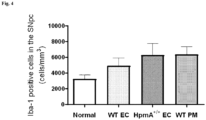
- PBS, a WT PM strain, and a hpmA-/- PM strain were orally administered to mice once a day for 5 days, respectively, and experiments were performed on motor ability, dopaminergic neurons in the substantia nigra of the brain, neuroglial cells, and change in ⁇ -synuclein aggregates in the substantia nigra of the brain.
- Group Administration method 1 Normal administration of PBS 2 WT PM administration of Proteus mirabilis strain (PM) 3 hpmA-/- PM administration of hpmA mutant strain (hpmA-/-)
- mice The evaluation of motor disorder in mice was performed through an experiment measuring voluntary locomotor activity (Locomotor activity test).
- the three groups of mice in Example 6 above were placed inside a 40X25X18 cm box, and their movements were tracked for 25 minutes, and the total moved distance (total length) was measured to evaluate whether or not there was a motor disorder, and the results are shown in Table 7 below and Fig. 5 .
- Group Moved distance (%) 1 Normal 100 ⁇ 5.94 2 WT PM 79.32 ⁇ 2.44 3 hpmA-/- PM 111.65 ⁇ 5.04
- hpmA has a direct relationship with Parkinson's disease.
Landscapes
- Life Sciences & Earth Sciences (AREA)
- Health & Medical Sciences (AREA)
- Chemical & Material Sciences (AREA)
- Engineering & Computer Science (AREA)
- Biomedical Technology (AREA)
- Microbiology (AREA)
- Molecular Biology (AREA)
- Proteomics, Peptides & Aminoacids (AREA)
- Polymers & Plastics (AREA)
- Immunology (AREA)
- Food Science & Technology (AREA)
- Zoology (AREA)
- Biochemistry (AREA)
- Biotechnology (AREA)
- Hematology (AREA)
- Urology & Nephrology (AREA)
- Organic Chemistry (AREA)
- Animal Husbandry (AREA)
- Analytical Chemistry (AREA)
- General Health & Medical Sciences (AREA)
- Environmental Sciences (AREA)
- Physics & Mathematics (AREA)
- Pathology (AREA)
- Cell Biology (AREA)
- Medicinal Chemistry (AREA)
- Genetics & Genomics (AREA)
- Bioinformatics & Cheminformatics (AREA)
- General Physics & Mathematics (AREA)
- Wood Science & Technology (AREA)
- Biodiversity & Conservation Biology (AREA)
- Animal Behavior & Ethology (AREA)
- Physiology (AREA)
- Biophysics (AREA)
- Tropical Medicine & Parasitology (AREA)
- Nutrition Science (AREA)
- Toxicology (AREA)
- Mycology (AREA)
- General Engineering & Computer Science (AREA)
- Gastroenterology & Hepatology (AREA)
- Neurosurgery (AREA)
Applications Claiming Priority (2)
| Application Number | Priority Date | Filing Date | Title |
|---|---|---|---|
| KR1020200180210A KR102661898B1 (ko) | 2020-12-21 | 2020-12-21 | HpmA를 이용한 퇴행성 뇌질환의 진단 방법 |
| PCT/KR2021/019539 WO2022139425A1 (fr) | 2020-12-21 | 2021-12-21 | Procédé de diagnostic de maladies neurodégénératives par l'utilisation de l'hpma |
Publications (2)
| Publication Number | Publication Date |
|---|---|
| EP4265736A1 true EP4265736A1 (fr) | 2023-10-25 |
| EP4265736A4 EP4265736A4 (fr) | 2024-11-20 |
Family
ID=82158472
Family Applications (1)
| Application Number | Title | Priority Date | Filing Date |
|---|---|---|---|
| EP21911492.3A Withdrawn EP4265736A4 (fr) | 2020-12-21 | 2021-12-21 | Procédé de diagnostic de maladies neurodégénératives par l'utilisation de l'hpma |
Country Status (4)
| Country | Link |
|---|---|
| US (1) | US20240108049A1 (fr) |
| EP (1) | EP4265736A4 (fr) |
| KR (1) | KR102661898B1 (fr) |
| WO (1) | WO2022139425A1 (fr) |
Families Citing this family (1)
| Publication number | Priority date | Publication date | Assignee | Title |
|---|---|---|---|---|
| CN115777625B (zh) * | 2022-10-17 | 2026-04-17 | 复旦大学 | 一种建立帕金森病动物模型的方法 |
Family Cites Families (6)
| Publication number | Priority date | Publication date | Assignee | Title |
|---|---|---|---|---|
| EP1787128A2 (fr) * | 2004-07-09 | 2007-05-23 | Amaox, Inc. | Biocapteurs de cellules immunes et procedes d'utilisation |
| KR101081358B1 (ko) | 2009-10-27 | 2011-11-09 | 가톨릭대학교 산학협력단 | 자기공명분광법을 이용한 뇌 대사물질의 양적 측정에 의한 파킨슨 질환의 진단방법 |
| KR101183620B1 (ko) | 2010-06-18 | 2012-09-18 | 서울대학교산학협력단 | 지방조직 유래의 간엽줄기세포를 포함하는 파킨슨병 진단용 조성물 및 파킨슨병 진단용 바이오마커 |
| WO2017047962A1 (fr) * | 2015-09-15 | 2017-03-23 | 경희대학교 산학협력단 | Nouveau lactobacillus et composition pour prévenir, atténuer ou traiter des maladies cérébrales dégénératives ou des troubles de la fonction cognitive |
| KR102889062B1 (ko) * | 2016-03-17 | 2025-11-21 | 더 존스 홉킨스 유니버시티 | Paris의 파네실화에 의해 파킨슨병을 예방 또는 치료하기 위한 방법 |
| KR101860566B1 (ko) | 2016-12-06 | 2018-05-23 | 경희대학교 산학협력단 | 파킨슨병을 진단하기 위한 정보제공방법 |
-
2020
- 2020-12-21 KR KR1020200180210A patent/KR102661898B1/ko active Active
-
2021
- 2021-12-21 EP EP21911492.3A patent/EP4265736A4/fr not_active Withdrawn
- 2021-12-21 US US18/257,759 patent/US20240108049A1/en active Pending
- 2021-12-21 WO PCT/KR2021/019539 patent/WO2022139425A1/fr not_active Ceased
Also Published As
| Publication number | Publication date |
|---|---|
| EP4265736A4 (fr) | 2024-11-20 |
| KR102661898B1 (ko) | 2024-04-26 |
| WO2022139425A1 (fr) | 2022-06-30 |
| KR20220089510A (ko) | 2022-06-28 |
| US20240108049A1 (en) | 2024-04-04 |
Similar Documents
| Publication | Publication Date | Title |
|---|---|---|
| KR101860566B1 (ko) | 파킨슨병을 진단하기 위한 정보제공방법 | |
| Winocur et al. | Neurobiological mechanisms of chemotherapy-induced cognitive impairment in a transgenic model of breast cancer | |
| Karoum et al. | Preliminary evidence of reduced combined output of dopamine and its metabolites in chronic schizophrenia | |
| Chen et al. | A macaque model of mesial temporal lobe epilepsy induced by unilateral intrahippocampal injection of kainic acid | |
| van Leer et al. | Practice of 18F-FDG-PET/CT in ICU patients: a systematic review | |
| KR20210034621A (ko) | 알츠하이머병 치료를 위한 릴루졸 전구약물의 용도 | |
| US20240108049A1 (en) | Method for diagnosis of neurodegenerative diseases by using hpma | |
| Petzold et al. | Structural indices of brain aging in methamphetamine use disorder | |
| Liu et al. | A preliminary study of brain developmental features of bipolar disorder familial risk and subthreshold symptoms | |
| CN112933117A (zh) | 一种预防和/或治疗帕金森病的药物及其应用 | |
| DONAT et al. | Focal cerebral atrophy in incontinentia pigmenti achromians | |
| Oishi et al. | Effectiveness of traditional Chinese medicine in Alzheimer disease | |
| Gaiad et al. | Duchenne muscular dystrophy: experimental models on physical therapy | |
| Yun et al. | Temporal and anatomical distribution of 18F-flutemetamol uptake in canine brain using positron emission tomography | |
| Smelson et al. | Electroretinogram in withdrawn cocaine-dependent subjects: Relationship to cue-elicited craving | |
| CN113041260B (zh) | 小分子阿胶在制备改善脑缺血的药物中的应用 | |
| Nicastro et al. | Preserved extrastriatal 123I-FP-CIT binding in scans without evidence of dopaminergic deficit (SWEDD) | |
| CN116616247B (zh) | 一种帕金森病食蟹猴动物模型的建立方法 | |
| Jones et al. | Lithium increases cortical and subcortical volumes in subjects with bipolar disorder | |
| CN113244271B (zh) | 阿胶在制备改善脑缺血的药物中的应用 | |
| Shishido et al. | Acute focal bacterial nephritis caused by Staphylococcus simulans | |
| Richmond | Chug’s Chewing Conundrum | |
| Seniuk et al. | What is the place of pharmaceutical preparations today and in the future in the kingdom of Morocco? | |
| Hwang et al. | Differential effects of treadmill exercise in early and chronic diabetic stages on parvalbumin immunoreactivity in the hippocampus of a rat model of type 2 diabetes | |
| Bakhle et al. | 413 The epithelial–mesenchymal transition protects heterogeneous breast tumors against immune attack in multiple species |
Legal Events
| Date | Code | Title | Description |
|---|---|---|---|
| STAA | Information on the status of an ep patent application or granted ep patent |
Free format text: STATUS: THE INTERNATIONAL PUBLICATION HAS BEEN MADE |
|
| PUAI | Public reference made under article 153(3) epc to a published international application that has entered the european phase |
Free format text: ORIGINAL CODE: 0009012 |
|
| STAA | Information on the status of an ep patent application or granted ep patent |
Free format text: STATUS: REQUEST FOR EXAMINATION WAS MADE |
|
| 17P | Request for examination filed |
Effective date: 20230615 |
|
| AK | Designated contracting states |
Kind code of ref document: A1 Designated state(s): AL AT BE BG CH CY CZ DE DK EE ES FI FR GB GR HR HU IE IS IT LI LT LU LV MC MK MT NL NO PL PT RO RS SE SI SK SM TR |
|
| DAV | Request for validation of the european patent (deleted) | ||
| DAX | Request for extension of the european patent (deleted) | ||
| REG | Reference to a national code |
Ref country code: DE Ref legal event code: R079 Free format text: PREVIOUS MAIN CLASS: C12Q0001688300 Ipc: A23K0010160000 |
|
| A4 | Supplementary search report drawn up and despatched |
Effective date: 20241017 |
|
| RIC1 | Information provided on ipc code assigned before grant |
Ipc: A01K 1/00 20060101ALI20241011BHEP Ipc: G01N 33/68 20060101ALI20241011BHEP Ipc: G01N 33/50 20060101ALI20241011BHEP Ipc: C07K 14/24 20060101ALI20241011BHEP Ipc: A23L 33/195 20160101ALI20241011BHEP Ipc: A23K 20/147 20160101ALI20241011BHEP Ipc: A01K 67/027 20060101ALI20241011BHEP Ipc: A23K 10/16 20160101AFI20241011BHEP |
|
| STAA | Information on the status of an ep patent application or granted ep patent |
Free format text: STATUS: THE APPLICATION IS DEEMED TO BE WITHDRAWN |
|
| 18D | Application deemed to be withdrawn |
Effective date: 20250507 |