EP4263307B1 - Verfahren und vorrichtung zur regelung der geschwindigkeit eines autonomen fahrzeugs - Google Patents
Verfahren und vorrichtung zur regelung der geschwindigkeit eines autonomen fahrzeugs Download PDFInfo
- Publication number
- EP4263307B1 EP4263307B1 EP21815240.3A EP21815240A EP4263307B1 EP 4263307 B1 EP4263307 B1 EP 4263307B1 EP 21815240 A EP21815240 A EP 21815240A EP 4263307 B1 EP4263307 B1 EP 4263307B1
- Authority
- EP
- European Patent Office
- Prior art keywords
- vehicle
- target
- ego
- speed
- acceleration
- Prior art date
- Legal status (The legal status is an assumption and is not a legal conclusion. Google has not performed a legal analysis and makes no representation as to the accuracy of the status listed.)
- Active
Links
Images
Classifications
-
- B—PERFORMING OPERATIONS; TRANSPORTING
- B60—VEHICLES IN GENERAL
- B60W—CONJOINT CONTROL OF VEHICLE SUB-UNITS OF DIFFERENT TYPE OR DIFFERENT FUNCTION; CONTROL SYSTEMS SPECIALLY ADAPTED FOR HYBRID VEHICLES; ROAD VEHICLE DRIVE CONTROL SYSTEMS FOR PURPOSES NOT RELATED TO THE CONTROL OF A PARTICULAR SUB-UNIT
- B60W30/00—Purposes of road vehicle drive control systems not related to the control of a particular sub-unit, e.g. of systems using conjoint control of vehicle sub-units
- B60W30/14—Adaptive cruise control
- B60W30/143—Speed control
-
- B—PERFORMING OPERATIONS; TRANSPORTING
- B60—VEHICLES IN GENERAL
- B60W—CONJOINT CONTROL OF VEHICLE SUB-UNITS OF DIFFERENT TYPE OR DIFFERENT FUNCTION; CONTROL SYSTEMS SPECIALLY ADAPTED FOR HYBRID VEHICLES; ROAD VEHICLE DRIVE CONTROL SYSTEMS FOR PURPOSES NOT RELATED TO THE CONTROL OF A PARTICULAR SUB-UNIT
- B60W30/00—Purposes of road vehicle drive control systems not related to the control of a particular sub-unit, e.g. of systems using conjoint control of vehicle sub-units
- B60W30/14—Adaptive cruise control
- B60W30/16—Control of distance between vehicles, e.g. keeping a distance to preceding vehicle
-
- B—PERFORMING OPERATIONS; TRANSPORTING
- B60—VEHICLES IN GENERAL
- B60W—CONJOINT CONTROL OF VEHICLE SUB-UNITS OF DIFFERENT TYPE OR DIFFERENT FUNCTION; CONTROL SYSTEMS SPECIALLY ADAPTED FOR HYBRID VEHICLES; ROAD VEHICLE DRIVE CONTROL SYSTEMS FOR PURPOSES NOT RELATED TO THE CONTROL OF A PARTICULAR SUB-UNIT
- B60W40/00—Estimation or calculation of non-directly measurable driving parameters for road vehicle drive control systems not related to the control of a particular sub unit, e.g. by using mathematical models
- B60W40/10—Estimation or calculation of non-directly measurable driving parameters for road vehicle drive control systems not related to the control of a particular sub unit, e.g. by using mathematical models related to vehicle motion
- B60W40/105—Speed
-
- B—PERFORMING OPERATIONS; TRANSPORTING
- B60—VEHICLES IN GENERAL
- B60W—CONJOINT CONTROL OF VEHICLE SUB-UNITS OF DIFFERENT TYPE OR DIFFERENT FUNCTION; CONTROL SYSTEMS SPECIALLY ADAPTED FOR HYBRID VEHICLES; ROAD VEHICLE DRIVE CONTROL SYSTEMS FOR PURPOSES NOT RELATED TO THE CONTROL OF A PARTICULAR SUB-UNIT
- B60W50/00—Details of control systems for road vehicle drive control not related to the control of a particular sub-unit, e.g. process diagnostic or vehicle driver interfaces
- B60W50/08—Interaction between the driver and the control system
- B60W50/14—Means for informing the driver, warning the driver or prompting a driver intervention
-
- B—PERFORMING OPERATIONS; TRANSPORTING
- B60—VEHICLES IN GENERAL
- B60W—CONJOINT CONTROL OF VEHICLE SUB-UNITS OF DIFFERENT TYPE OR DIFFERENT FUNCTION; CONTROL SYSTEMS SPECIALLY ADAPTED FOR HYBRID VEHICLES; ROAD VEHICLE DRIVE CONTROL SYSTEMS FOR PURPOSES NOT RELATED TO THE CONTROL OF A PARTICULAR SUB-UNIT
- B60W60/00—Drive control systems specially adapted for autonomous road vehicles
- B60W60/001—Planning or execution of driving tasks
-
- H—ELECTRICITY
- H04—ELECTRIC COMMUNICATION TECHNIQUE
- H04W—WIRELESS COMMUNICATION NETWORKS
- H04W4/00—Services specially adapted for wireless communication networks; Facilities therefor
- H04W4/30—Services specially adapted for particular environments, situations or purposes
- H04W4/40—Services specially adapted for particular environments, situations or purposes for vehicles, e.g. vehicle-to-pedestrians [V2P]
-
- B—PERFORMING OPERATIONS; TRANSPORTING
- B60—VEHICLES IN GENERAL
- B60W—CONJOINT CONTROL OF VEHICLE SUB-UNITS OF DIFFERENT TYPE OR DIFFERENT FUNCTION; CONTROL SYSTEMS SPECIALLY ADAPTED FOR HYBRID VEHICLES; ROAD VEHICLE DRIVE CONTROL SYSTEMS FOR PURPOSES NOT RELATED TO THE CONTROL OF A PARTICULAR SUB-UNIT
- B60W50/00—Details of control systems for road vehicle drive control not related to the control of a particular sub-unit, e.g. process diagnostic or vehicle driver interfaces
- B60W2050/0062—Adapting control system settings
- B60W2050/0075—Automatic parameter input, automatic initialising or calibrating means
- B60W2050/0083—Setting, resetting, calibration
- B60W2050/0088—Adaptive recalibration
-
- B—PERFORMING OPERATIONS; TRANSPORTING
- B60—VEHICLES IN GENERAL
- B60W—CONJOINT CONTROL OF VEHICLE SUB-UNITS OF DIFFERENT TYPE OR DIFFERENT FUNCTION; CONTROL SYSTEMS SPECIALLY ADAPTED FOR HYBRID VEHICLES; ROAD VEHICLE DRIVE CONTROL SYSTEMS FOR PURPOSES NOT RELATED TO THE CONTROL OF A PARTICULAR SUB-UNIT
- B60W2520/00—Input parameters relating to overall vehicle dynamics
- B60W2520/10—Longitudinal speed
-
- B—PERFORMING OPERATIONS; TRANSPORTING
- B60—VEHICLES IN GENERAL
- B60W—CONJOINT CONTROL OF VEHICLE SUB-UNITS OF DIFFERENT TYPE OR DIFFERENT FUNCTION; CONTROL SYSTEMS SPECIALLY ADAPTED FOR HYBRID VEHICLES; ROAD VEHICLE DRIVE CONTROL SYSTEMS FOR PURPOSES NOT RELATED TO THE CONTROL OF A PARTICULAR SUB-UNIT
- B60W2520/00—Input parameters relating to overall vehicle dynamics
- B60W2520/10—Longitudinal speed
- B60W2520/105—Longitudinal acceleration
-
- B—PERFORMING OPERATIONS; TRANSPORTING
- B60—VEHICLES IN GENERAL
- B60W—CONJOINT CONTROL OF VEHICLE SUB-UNITS OF DIFFERENT TYPE OR DIFFERENT FUNCTION; CONTROL SYSTEMS SPECIALLY ADAPTED FOR HYBRID VEHICLES; ROAD VEHICLE DRIVE CONTROL SYSTEMS FOR PURPOSES NOT RELATED TO THE CONTROL OF A PARTICULAR SUB-UNIT
- B60W2554/00—Input parameters relating to objects
- B60W2554/40—Dynamic objects, e.g. animals, windblown objects
- B60W2554/404—Characteristics
- B60W2554/4041—Position
-
- B—PERFORMING OPERATIONS; TRANSPORTING
- B60—VEHICLES IN GENERAL
- B60W—CONJOINT CONTROL OF VEHICLE SUB-UNITS OF DIFFERENT TYPE OR DIFFERENT FUNCTION; CONTROL SYSTEMS SPECIALLY ADAPTED FOR HYBRID VEHICLES; ROAD VEHICLE DRIVE CONTROL SYSTEMS FOR PURPOSES NOT RELATED TO THE CONTROL OF A PARTICULAR SUB-UNIT
- B60W2554/00—Input parameters relating to objects
- B60W2554/40—Dynamic objects, e.g. animals, windblown objects
- B60W2554/404—Characteristics
- B60W2554/4042—Longitudinal speed
-
- B—PERFORMING OPERATIONS; TRANSPORTING
- B60—VEHICLES IN GENERAL
- B60W—CONJOINT CONTROL OF VEHICLE SUB-UNITS OF DIFFERENT TYPE OR DIFFERENT FUNCTION; CONTROL SYSTEMS SPECIALLY ADAPTED FOR HYBRID VEHICLES; ROAD VEHICLE DRIVE CONTROL SYSTEMS FOR PURPOSES NOT RELATED TO THE CONTROL OF A PARTICULAR SUB-UNIT
- B60W2554/00—Input parameters relating to objects
- B60W2554/80—Spatial relation or speed relative to objects
- B60W2554/802—Longitudinal distance
-
- B—PERFORMING OPERATIONS; TRANSPORTING
- B60—VEHICLES IN GENERAL
- B60W—CONJOINT CONTROL OF VEHICLE SUB-UNITS OF DIFFERENT TYPE OR DIFFERENT FUNCTION; CONTROL SYSTEMS SPECIALLY ADAPTED FOR HYBRID VEHICLES; ROAD VEHICLE DRIVE CONTROL SYSTEMS FOR PURPOSES NOT RELATED TO THE CONTROL OF A PARTICULAR SUB-UNIT
- B60W2554/00—Input parameters relating to objects
- B60W2554/80—Spatial relation or speed relative to objects
- B60W2554/804—Relative longitudinal speed
-
- B—PERFORMING OPERATIONS; TRANSPORTING
- B60—VEHICLES IN GENERAL
- B60W—CONJOINT CONTROL OF VEHICLE SUB-UNITS OF DIFFERENT TYPE OR DIFFERENT FUNCTION; CONTROL SYSTEMS SPECIALLY ADAPTED FOR HYBRID VEHICLES; ROAD VEHICLE DRIVE CONTROL SYSTEMS FOR PURPOSES NOT RELATED TO THE CONTROL OF A PARTICULAR SUB-UNIT
- B60W2556/00—Input parameters relating to data
- B60W2556/45—External transmission of data to or from the vehicle
-
- B—PERFORMING OPERATIONS; TRANSPORTING
- B60—VEHICLES IN GENERAL
- B60W—CONJOINT CONTROL OF VEHICLE SUB-UNITS OF DIFFERENT TYPE OR DIFFERENT FUNCTION; CONTROL SYSTEMS SPECIALLY ADAPTED FOR HYBRID VEHICLES; ROAD VEHICLE DRIVE CONTROL SYSTEMS FOR PURPOSES NOT RELATED TO THE CONTROL OF A PARTICULAR SUB-UNIT
- B60W2720/00—Output or target parameters relating to overall vehicle dynamics
- B60W2720/10—Longitudinal speed
- B60W2720/106—Longitudinal acceleration
Definitions
- the invention is in the field of autonomous vehicle driving assistance systems.
- the invention relates to speed regulation of an autonomous vehicle by an adaptive cruise control.
- “Acceleration” of a vehicle means a change in the speed of the vehicle per unit of time. This acceleration is positive or negative. A deceleration is a negative acceleration.
- Vehicle means any type of vehicle such as a motor vehicle, a moped, a motorcycle, a storage robot in a warehouse, etc.
- “Autonomous driving” of an “autonomous vehicle” means any process capable of assisting the driving of the vehicle. The process may thus consist of partially or totally steering the vehicle or providing any type of assistance to a natural person driving the vehicle. The process thus covers all autonomous driving, from level 0 to level 5 in the OICA scale, for the International Organization of Motor Vehicle Manufacturers.
- An adaptive cruise control system or ACC (from the English acronym "Adaptive Cruise Control"), is a known ADAS system that regulates a vehicle speed and an inter-vehicular time, the inter-vehicular time representing a duration separating the passage of the front or the rear of two successive vehicles on the same traffic lane.
- the inter-vehicular time is a parameter predetermined by the driver or by default according to a recommendation of the regulations in force (2 seconds for example).
- a simple relationship links the inter-vehicular time to an inter-vehicular distance by the speed of the vehicle.
- An ACC of an autonomous vehicle generally includes a RADAR or a LIDAR which are able to detect a preceding vehicle, called a target vehicle, and to measure the inter-vehicular distance between the autonomous vehicle and the target vehicle. A speed and acceleration of the target vehicle are also measured or determined. The ACC is then able to determine the inter-vehicular time from the inter-vehicular distance and a speed of the autonomous vehicle.
- the vehicle target decelerates to stop with a strong deceleration (negative acceleration), due to the delay due to the reception of measured data, the calculation times of the instructions and the actuators (of the order of 500 ms), the inter-vehicular distance is not respected. This is all the more marked when the speed is low (less than 50 km/h).
- the autonomous vehicle then approaches the target vehicle too abruptly, generating a feeling of psychological discomfort for an occupant of the vehicle and sometimes generating the activation of emergency braking.
- An object of the present invention is to remedy the aforementioned problem, in particular to gain in responsiveness and to improve the psychological comfort of an occupant of the autonomous vehicle.
- the autonomous vehicle begins to approach the target vehicle too abruptly.
- the cruise control regulates the speed of the autonomous vehicle according to the acceleration of the target vehicle, and therefore decelerates the autonomous vehicle more sharply than if the cruise control regulates the speed of the autonomous vehicle according to the calculated setpoint acceleration.
- the autonomous vehicle then approaches the target vehicle less abruptly, the distance between the ego-vehicle and the target vehicle is greater. There is no longer any need to engage emergency braking. The occupants of the ego-vehicle feel a greater deceleration from the first moments and then feel reassured by good consideration of the target vehicle. The autonomous vehicle is then more responsive.
- said alert signal is in an active state when also said target acceleration is less than a predetermined maximum deceleration threshold.
- the substitution of the calculated setpoint acceleration by the target acceleration is only carried out when the target deceleration is significant and when a strong reactivity is necessary.
- said alert signal is in an active state when also said ego-speed is lower than a predetermined ego-speed threshold.
- said target information also characterizes a speed of said target vehicle, called target speed, and in which said alert signal is in an active state when said target speed is lower than said ego-speed.
- said predetermined percentage is a value between 60 and 120%;
- the higher the value of the predetermined percentage the more anticipatory the speed regulation, which typifies the road behavior of the ego-vehicle.
- said alert signal is transmitted by at least one wireless communication channel to at least one infrastructure, to at least one vehicle, and/or to at least one device capable of receiving information transmitted by a wireless communication channel.
- the autonomous vehicle Having detected a situation of strong deceleration, the autonomous vehicle communicates, for example, the detected situation to other vehicles to warn them and so that they adapt their behavior to the situation, such as slowing down for example.
- a second aspect of the invention relates to a device comprising a memory associated with at least one processor configured to implement the method according to the first aspect of the invention.
- the invention also relates to a vehicle comprising the device.
- the invention also relates to a computer program comprising instructions adapted for executing the steps of the method, according to the first aspect of the invention, when said program is executed by at least one processor.
- the invention is described below in its non-limiting application to the case of an autonomous motor vehicle traveling on a road or on a traffic lane.
- Other applications such as a robot in a storage warehouse or a motorcycle on a country road are also conceivable.
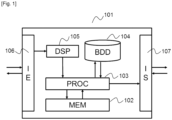
- FIG 1 represents an example of a device 101 included in the vehicle, in a network (“cloud”) or in a server.
- This device 101 can be used as a centralized device in charge of at least certain steps of the method described below with reference to the figure 2 .
- it corresponds to an autonomous driving calculator.
- the device 101 is included in the vehicle.
- This device 101 can take the form of a box comprising printed circuits, any type of computer or even a mobile telephone (“smartphone”).
- the device 101 comprises a random access memory 102 for storing instructions for the implementation by a processor 103 of at least one step of the method as described above.
- the device also comprises a mass memory 104 for storing data intended to be retained after the implementation of the method.
- the device 101 may further comprise a digital signal processor (DSP) 105.
- This DSP 105 receives data to format, demodulate and amplify, in a manner known per se, this data.
- the device 101 also comprises an input interface 106 for receiving the data implemented by the method according to the invention and an output interface 107 for transmitting the data implemented by the method according to the invention.
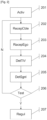
- FIG. 2 schematically illustrates a method of regulating the speed of an autonomous vehicle, according to a particular exemplary embodiment of the present invention.
- Step 201, “Activ”, is a step of activating said adaptive cruise control, said adaptive cruise control being based on a target acceleration calculated from a predetermined target inter-vehicular time, said inter-vehicular time defining a distance between said ego-vehicle and a target vehicle in front of said autonomous vehicle.
- an adaptive cruise control calculates at each moment the acceleration, the set acceleration, that the ego-vehicle must have so that the ego-vehicle follows a predetermined speed while respecting a predetermined inter-vehicular time.
- the acceleration is applied by a powertrain (engine, brake, etc.).
- the predetermined speed and the inter-vehicular time are provided, for example, by an occupant or a driver of the autonomous vehicle.
- the cruise control modifies the speed of the ego-vehicle in order to respect the predetermined inter-vehicular time.
- Step 202 “RecepCble”, is a step of receiving information relating to said target vehicle, called target information, said target information characterizing a distance of said target vehicle relative to said ego-vehicle, called target distance, and an acceleration of said target vehicle, called target acceleration.
- said target information also characterizes a speed of said target vehicle, called target speed.
- the target distance, the target speed and the target accelerations are information obtained periodically by processing measurements from on-board sensors present in a vehicle with a conventional adaptive cruise control.
- the input interface 106 of the device implementing the invention receives this information.
- Step 203 “RecepEgo”, is a step of receiving information relating to said ego-vehicle, called ego-vehicle information, said ego-vehicle information characterizing a speed of said ego-vehicle, called ego-speed.
- the ego-speed is information obtained periodically by processing measurements from on-board sensors present in a vehicle with a conventional adaptive cruise control.
- the input interface 106 of the device implementing the invention receives this information.
- Step 204 is a step of determining an inter-vehicular time calculated from said target information and said ego-vehicle information.
- the inter-vehicular time is obtained periodically by multiplying the inter-vehicular distance by the ego-speed. This inter-vehicular time is calculated periodically for example by the device 101.
- Step 205 is a step of determining an alert signal from said target information and said ego-vehicle information, said alert signal being in an active state when said calculated inter-vehicular time is less than a predetermined percentage of said predetermined set inter-vehicular time.
- Said predetermined percentage is a value between 60 and 120%, for example 80%. Other values are possible.
- Step 206 “Test”, is a step of verifying that said alert signal is in a said active state and if said target acceleration is less than said calculated target acceleration. If so, the ego-vehicle approaches the target vehicle too abruptly, the inter-vehicular distance is no longer respected, and the target vehicle decelerates more than the ego-vehicle. It is necessary to modify very quickly the target acceleration calculated by a conventional vehicle cruise control.
- Step 207 is a step of substituting said acceleration setpoint of said cruise control with said target acceleration.
- the acceleration setpoint calculated by a conventional vehicle cruise control is insufficient.
- the calculated target acceleration is therefore replaced by the target acceleration which is lower.
- the cruise control then takes into account the target acceleration as the target acceleration. This decelerates the ego-vehicle more quickly, thus providing the advantages mentioned above.
- said alert signal is transmitted by at least one wireless communication channel to at least one infrastructure, to at least one vehicle, and/or to at least one device capable of receiving information transmitted by a wireless communication channel in order to warn of the declaration.
- another autonomous vehicle receiving this alert signal and which follows the ego-vehicle will be able to anticipate a slowdown and therefore a deceleration.
- V2X channels short-range vehicle-to-everything wireless communication channels
- a first type of V2X channel is based on Wi-Fi standards (IEEE 802.11p) and supports communications between vehicles and between vehicles and infrastructures.
- a second type of V2X channel is based on cellular standards, and in particular on the 5G standard.
- This second type of V2X channel supports communications between vehicles, between vehicles and infrastructure or between vehicles and cellular networks.
- This type of channel exists in parallel with traditional cellular channels, and is notably called “sidelink", or "PC5".
- V2X communications can also be implemented by a user device.
Landscapes
- Engineering & Computer Science (AREA)
- Automation & Control Theory (AREA)
- Transportation (AREA)
- Mechanical Engineering (AREA)
- Human Computer Interaction (AREA)
- Computer Networks & Wireless Communication (AREA)
- Signal Processing (AREA)
- Physics & Mathematics (AREA)
- Mathematical Physics (AREA)
- Traffic Control Systems (AREA)
- Controls For Constant Speed Travelling (AREA)
- Control Of Vehicle Engines Or Engines For Specific Uses (AREA)
Claims (9)
- Verfahren zur Regelung der Geschwindigkeit eines autonomen Fahrzeugs, sogenanntes Ego-Fahrzeug, umfassend eine adaptive Geschwindigkeitsregelung, wobei das Verfahren die Schritte umfasst:• Aktivierung (201) der adaptiven Geschwindigkeitsregelung, wobei die adaptive Geschwindigkeitsregelung auf einer eingestellten Beschleunigung basiert, die aus einer vorgegebenen eingestellten Fahrzeugzwischenzeit berechnet wird, wobei die Fahrzeugzwischenzeit einen Abstand zwischen dem Ego-Fahrzeug und einem vorausfahrenden Zielfahrzeug definiert des autonomen Fahrzeugs;• Empfang (202) von Informationen bezüglich des Zielfahrzeugs, sogenannte Zielinformationen, wobei die Zielinformationen einen Abstand des Zielfahrzeugs relativ zu dem Ego-Fahrzeug, genannt Zielentfernung, und eine Beschleunigung des Zielfahrzeugs, genannt Zielbeschleunigung, charakterisieren;• Empfang (203) von Informationen bezüglich des Ego-Fahrzeugs, Ego-Fahrzeug-Informationen genannt, wobei die Ego-Fahrzeug-Informationen eine Geschwindigkeit des Ego-Fahrzeugs, Ego-Geschwindigkeit genannt, charakterisieren;• Bestimmung (204) einer Fahrzeugzwischenzeit, die aus den Zielinformationen und den Ego-Fahrzeuginformationen berechnet wird;• Bestimmung (205) eines Warnsignals aus den Zielinformationen und den Ego-Fahrzeuginformationen, wobei das Warnsignal in einem aktiven Zustand ist, wenn die berechnete Fahrzeugzwischenzeit kleiner als ein vorgegebener Prozentsatz der Fahrzeugzwischenzeit - vorgegebenes Fahrzeug - ist Anweisung; wobei das Verfahren dadurch gekennzeichnet ist• Wenn (206) das Alarmsignal im aktiven Zustand ist und die Zielbeschleunigung geringer ist als die berechnete Sollbeschleunigung, dann umfasst das Verfahren weiterhin einen Schritt des Ersetzens (207) der berechneten Sollbeschleunigung der Geschwindigkeitsreglergeschwindigkeit Zielbeschleunigung.
- Verfahren nach Anspruch 1, wobei das Alarmsignal im aktiven Zustand ist, wenn auch die Zielbeschleunigung geringer als ein vorgegebener maximaler Verzögerungsschwellenwert ist;
- Verfahren nach einem der vorhergehenden Ansprüche, wobei das Alarmsignal im aktiven Zustand ist, wenn auch die Eigengeschwindigkeit kleiner als ein vorgegebener Eigengeschwindigkeitsschwellenwert ist;
- Verfahren nach einem der vorhergehenden Ansprüche, bei dem die Zielinformationen auch eine Geschwindigkeit des Zielfahrzeugs charakterisieren, die Zielgeschwindigkeit genannt wird, und bei dem das Alarmsignal im aktiven Zustand ist, wenn auch die Zielgeschwindigkeit bei dem Ego niedriger ist - Geschwindigkeit;
- Verfahren nach einem der vorhergehenden Ansprüche, bei dem der vorgegebene Prozentsatz ein Wert zwischen 60 und 120 % ist;
- Verfahren nach einem der vorhergehenden Ansprüche, bei dem das Alarmsignal über mindestens einen drahtlosen Kommunikationskanal an mindestens eine Infrastruktur, an mindestens ein Fahrzeug und/oder an mindestens ein Gerät, das in der Lage ist, übermittelte Informationen zu empfangen, übertragen wird über einen drahtlosen Kommunikationskanal.
- Vorrichtung (101), umfassend einen Speicher (102), dem mindestens ein Prozessor (103) zugeordnet ist, der zur Durchführung des Verfahrens nach einem der vorhergehenden Ansprüche konfiguriert ist.
- Fahrzeug umfassend die Vorrichtung nach dem vorhergehenden Anspruch.
- Computerprogramm mit Anweisungen, die zur Ausführung der Schritte des Verfahrens nach einem der Ansprüche 1 bis 6 geeignet sind, wenn das Programm von mindestens einem Prozessor (103) ausgeführt wird.
Applications Claiming Priority (2)
| Application Number | Priority Date | Filing Date | Title |
|---|---|---|---|
| FR2013450A FR3117978B1 (fr) | 2020-12-17 | 2020-12-17 | Procédé et dispositif de régulation de vitesse d’un véhicule autonome. |
| PCT/FR2021/051947 WO2022129716A1 (fr) | 2020-12-17 | 2021-11-04 | Procédé et dispositif de régulation de vitesse d'un véhicule autonome |
Publications (2)
| Publication Number | Publication Date |
|---|---|
| EP4263307A1 EP4263307A1 (de) | 2023-10-25 |
| EP4263307B1 true EP4263307B1 (de) | 2024-08-21 |
Family
ID=74554104
Family Applications (1)
| Application Number | Title | Priority Date | Filing Date |
|---|---|---|---|
| EP21815240.3A Active EP4263307B1 (de) | 2020-12-17 | 2021-11-04 | Verfahren und vorrichtung zur regelung der geschwindigkeit eines autonomen fahrzeugs |
Country Status (5)
| Country | Link |
|---|---|
| US (1) | US12466403B2 (de) |
| EP (1) | EP4263307B1 (de) |
| CN (1) | CN116601067A (de) |
| FR (1) | FR3117978B1 (de) |
| WO (1) | WO2022129716A1 (de) |
Family Cites Families (12)
| Publication number | Priority date | Publication date | Assignee | Title |
|---|---|---|---|---|
| US3627785A (en) | 1968-07-22 | 1971-12-14 | Geigy Chem Corp | Benzofuran-2-carboxylic acids |
| US6785611B2 (en) * | 2002-08-01 | 2004-08-31 | Visteon Global Technologies, Inc. | Driver alert for vehicle with adaptive cruise control system |
| KR20090113309A (ko) * | 2007-02-26 | 2009-10-29 | 도요타 지도샤(주) | 차량간 통신 시스템과, 속도 및 감속도를 표시하는 방법 |
| JP4395798B2 (ja) * | 2007-08-24 | 2010-01-13 | 株式会社デンソー | レーダ装置 |
| DE102008014771A1 (de) * | 2008-03-18 | 2009-09-24 | Wabco Gmbh | Abstandregeltempomat |
| US8818678B2 (en) * | 2010-08-24 | 2014-08-26 | GM Global Technology Operations LLC | Method for preventing activation of resume function in a cruise control system |
| DE102014218198A1 (de) * | 2014-09-11 | 2016-03-17 | Robert Bosch Gmbh | Abstandsregelsystem für Kraftfahrzeuge |
| CN109421711B (zh) * | 2017-08-28 | 2021-07-13 | 腾讯科技(北京)有限公司 | 跟车速度控制方法、装置、系统、计算机设备及存储介质 |
| JP6760331B2 (ja) * | 2017-11-17 | 2020-09-23 | 株式会社デンソー | 車両制御装置 |
| EP3699632B8 (de) * | 2019-02-20 | 2025-02-19 | Qualcomm Auto Ltd. | Fahrzeugradarsystem zur erkennung von vorausliegenden objekten |
| GB201916026D0 (en) * | 2019-11-04 | 2019-12-18 | Five Ai Ltd | Adaptive cruise control |
| FR3110885B1 (fr) * | 2020-05-27 | 2022-12-02 | Renault | Procede d’aide a la conduite avec cible virtuelle de regulation de l’acc |
-
2020
- 2020-12-17 FR FR2013450A patent/FR3117978B1/fr active Active
-
2021
- 2021-11-04 CN CN202180085054.0A patent/CN116601067A/zh active Pending
- 2021-11-04 EP EP21815240.3A patent/EP4263307B1/de active Active
- 2021-11-04 US US18/253,753 patent/US12466403B2/en active Active
- 2021-11-04 WO PCT/FR2021/051947 patent/WO2022129716A1/fr not_active Ceased
Also Published As
| Publication number | Publication date |
|---|---|
| US20240010197A1 (en) | 2024-01-11 |
| WO2022129716A1 (fr) | 2022-06-23 |
| FR3117978B1 (fr) | 2022-12-23 |
| US12466403B2 (en) | 2025-11-11 |
| CN116601067A (zh) | 2023-08-15 |
| FR3117978A1 (fr) | 2022-06-24 |
| EP4263307A1 (de) | 2023-10-25 |
Similar Documents
| Publication | Publication Date | Title |
|---|---|---|
| EP4298000B1 (de) | Verfahren und vorrichtung zur bestimmung eines verzögerungssollwerts eines autonomen fahrzeugs | |
| EP4232333B1 (de) | Verfahren und vorrichtung zur typisierung des fahrmodus eines autonomen fahrzeugs | |
| EP4263307B1 (de) | Verfahren und vorrichtung zur regelung der geschwindigkeit eines autonomen fahrzeugs | |
| WO2022112677A1 (fr) | Procédé et dispositif d'adaptation d'une trajectoire d'accélération de consigne d'un régulateur de vitesse véhicule adaptatif d'un véhicule autonome | |
| WO2023161570A1 (fr) | Procédé et dispositif de pilotage d'une vitesse d'un véhicule autonome | |
| FR3117437A1 (fr) | Procédé et dispositif de dépassement d’un cycle par un véhicule autonome sans changement de voie. | |
| WO2024084140A1 (fr) | Procédé et dispositif de limitation d'une vitesse de consigne d'un régulateur de vitesse adaptatif d'un véhicule autonome | |
| EP4240629B1 (de) | Verfahren und vorrichtung zum bestimmen einer manöverzeit eines autonomen fahrzeugs | |
| EP4217245B1 (de) | Verfahren und vorrichtung zum autonomen fahren eines motorisierten landfahrzeugs, genannt ego-fahrzeug, durch adaptive geschwindigkeitsregelung auf basis einer sollbeschleunigung | |
| EP4277821B1 (de) | Verfahren und vorrichtung zur steuerung der beschleunigung eines fahrzeugs | |
| FR3140843A1 (fr) | Procédé et dispositif de régulation d’une vitesse d’un véhicule autonome | |
| EP4419402B1 (de) | Verfahren und system zur verwaltung des betriebs eines adaptiven geschwindigkeitsreglers eines ersten kraftfahrzeugs in abhängigkeit der seitenstabilität eines zweiten vorausfahrenden kraftfahrzeugs | |
| EP4247681A1 (de) | Verfahren und vorrichtung zur bestimmung einer sollbeschleunigungstrajektorie eines adaptiven fahrzeuggeschwindigkeitsreglers eines autonomen fahrzeugs | |
| FR3117977A1 (fr) | Procédé et dispositif de régulation de vitesse adaptatif d’un véhicule autonome | |
| FR3140842A1 (fr) | Procédé et dispositif de régulation d’une vitesse d’un véhicule autonome. | |
| FR3143517A1 (fr) | Procédé et dispositif de contrôle d’un système de régulation de vitesse adaptatif d’un véhicule autonome par un mode corridor. | |
| FR3163627A1 (fr) | Procédé de gestion de la vitesse d’un véhicule automobile roulant sur une voie de circulation | |
| FR3142976A1 (fr) | Procédé et dispositif de contrôle d’un niveau de décélération d’un système de conduite à pédale unique d’un véhicule électrique. | |
| FR3132264A1 (fr) | Procédé et dispositif de pilotage d’une vitesse d’un véhicule autonome | |
| FR3132262A1 (fr) | Procédé et dispositif de pilotage d’un régulateur de vitesse adaptatif d’un véhicule autonome. | |
| FR3143513A1 (fr) | Procédé et dispositif de contrôle d’un système de régulation de vitesse adaptatif d’un véhicule autonome par distance latérale modulée. | |
| FR3129346A1 (fr) | Procédé et dispositif de contrôle de vitesse d’un véhicule | |
| FR3130232A1 (fr) | Contrôle autonome de la vitesse d’un véhicule après un freinage d’urgence | |
| WO2022254108A1 (fr) | Procédé et dispositif de maintien d'une sélection d'un véhicule cible par un système d'aide à la conduite embarqué |
Legal Events
| Date | Code | Title | Description |
|---|---|---|---|
| STAA | Information on the status of an ep patent application or granted ep patent |
Free format text: STATUS: UNKNOWN |
|
| STAA | Information on the status of an ep patent application or granted ep patent |
Free format text: STATUS: THE INTERNATIONAL PUBLICATION HAS BEEN MADE |
|
| PUAI | Public reference made under article 153(3) epc to a published international application that has entered the european phase |
Free format text: ORIGINAL CODE: 0009012 |
|
| STAA | Information on the status of an ep patent application or granted ep patent |
Free format text: STATUS: REQUEST FOR EXAMINATION WAS MADE |
|
| 17P | Request for examination filed |
Effective date: 20230616 |
|
| AK | Designated contracting states |
Kind code of ref document: A1 Designated state(s): AL AT BE BG CH CY CZ DE DK EE ES FI FR GB GR HR HU IE IS IT LI LT LU LV MC MK MT NL NO PL PT RO RS SE SI SK SM TR |
|
| RAP3 | Party data changed (applicant data changed or rights of an application transferred) |
Owner name: STELLANTIS AUTO SAS |
|
| DAV | Request for validation of the european patent (deleted) | ||
| DAX | Request for extension of the european patent (deleted) | ||
| GRAP | Despatch of communication of intention to grant a patent |
Free format text: ORIGINAL CODE: EPIDOSNIGR1 |
|
| STAA | Information on the status of an ep patent application or granted ep patent |
Free format text: STATUS: GRANT OF PATENT IS INTENDED |
|
| INTG | Intention to grant announced |
Effective date: 20240424 |
|
| GRAS | Grant fee paid |
Free format text: ORIGINAL CODE: EPIDOSNIGR3 |
|
| GRAA | (expected) grant |
Free format text: ORIGINAL CODE: 0009210 |
|
| STAA | Information on the status of an ep patent application or granted ep patent |
Free format text: STATUS: THE PATENT HAS BEEN GRANTED |
|
| AK | Designated contracting states |
Kind code of ref document: B1 Designated state(s): AL AT BE BG CH CY CZ DE DK EE ES FI FR GB GR HR HU IE IS IT LI LT LU LV MC MK MT NL NO PL PT RO RS SE SI SK SM TR |
|
| REG | Reference to a national code |
Ref country code: GB Ref legal event code: FG4D Free format text: NOT ENGLISH |
|
| REG | Reference to a national code |
Ref country code: CH Ref legal event code: EP |
|
| REG | Reference to a national code |
Ref country code: DE Ref legal event code: R096 Ref document number: 602021017674 Country of ref document: DE |
|
| REG | Reference to a national code |
Ref country code: IE Ref legal event code: FG4D Free format text: LANGUAGE OF EP DOCUMENT: FRENCH |
|
| REG | Reference to a national code |
Ref country code: DE Ref legal event code: R084 Ref document number: 602021017674 Country of ref document: DE |
|
| REG | Reference to a national code |
Ref country code: LT Ref legal event code: MG9D |
|
| REG | Reference to a national code |
Ref country code: NL Ref legal event code: MP Effective date: 20240821 |
|
| PG25 | Lapsed in a contracting state [announced via postgrant information from national office to epo] |
Ref country code: NO Free format text: LAPSE BECAUSE OF FAILURE TO SUBMIT A TRANSLATION OF THE DESCRIPTION OR TO PAY THE FEE WITHIN THE PRESCRIBED TIME-LIMIT Effective date: 20241121 |
|
| REG | Reference to a national code |
Ref country code: AT Ref legal event code: MK05 Ref document number: 1715239 Country of ref document: AT Kind code of ref document: T Effective date: 20240821 |
|
| PG25 | Lapsed in a contracting state [announced via postgrant information from national office to epo] |
Ref country code: NL Free format text: LAPSE BECAUSE OF FAILURE TO SUBMIT A TRANSLATION OF THE DESCRIPTION OR TO PAY THE FEE WITHIN THE PRESCRIBED TIME-LIMIT Effective date: 20240821 Ref country code: FI Free format text: LAPSE BECAUSE OF FAILURE TO SUBMIT A TRANSLATION OF THE DESCRIPTION OR TO PAY THE FEE WITHIN THE PRESCRIBED TIME-LIMIT Effective date: 20240821 Ref country code: PL Free format text: LAPSE BECAUSE OF FAILURE TO SUBMIT A TRANSLATION OF THE DESCRIPTION OR TO PAY THE FEE WITHIN THE PRESCRIBED TIME-LIMIT Effective date: 20240821 Ref country code: GR Free format text: LAPSE BECAUSE OF FAILURE TO SUBMIT A TRANSLATION OF THE DESCRIPTION OR TO PAY THE FEE WITHIN THE PRESCRIBED TIME-LIMIT Effective date: 20241122 Ref country code: PT Free format text: LAPSE BECAUSE OF FAILURE TO SUBMIT A TRANSLATION OF THE DESCRIPTION OR TO PAY THE FEE WITHIN THE PRESCRIBED TIME-LIMIT Effective date: 20241223 |
|
| PG25 | Lapsed in a contracting state [announced via postgrant information from national office to epo] |
Ref country code: BG Free format text: LAPSE BECAUSE OF FAILURE TO SUBMIT A TRANSLATION OF THE DESCRIPTION OR TO PAY THE FEE WITHIN THE PRESCRIBED TIME-LIMIT Effective date: 20240821 |
|
| PG25 | Lapsed in a contracting state [announced via postgrant information from national office to epo] |
Ref country code: LV Free format text: LAPSE BECAUSE OF FAILURE TO SUBMIT A TRANSLATION OF THE DESCRIPTION OR TO PAY THE FEE WITHIN THE PRESCRIBED TIME-LIMIT Effective date: 20240821 |
|
| PG25 | Lapsed in a contracting state [announced via postgrant information from national office to epo] |
Ref country code: AT Free format text: LAPSE BECAUSE OF FAILURE TO SUBMIT A TRANSLATION OF THE DESCRIPTION OR TO PAY THE FEE WITHIN THE PRESCRIBED TIME-LIMIT Effective date: 20240821 Ref country code: IS Free format text: LAPSE BECAUSE OF FAILURE TO SUBMIT A TRANSLATION OF THE DESCRIPTION OR TO PAY THE FEE WITHIN THE PRESCRIBED TIME-LIMIT Effective date: 20241221 |
|
| PG25 | Lapsed in a contracting state [announced via postgrant information from national office to epo] |
Ref country code: HR Free format text: LAPSE BECAUSE OF FAILURE TO SUBMIT A TRANSLATION OF THE DESCRIPTION OR TO PAY THE FEE WITHIN THE PRESCRIBED TIME-LIMIT Effective date: 20240821 |
|
| PG25 | Lapsed in a contracting state [announced via postgrant information from national office to epo] |
Ref country code: RS Free format text: LAPSE BECAUSE OF FAILURE TO SUBMIT A TRANSLATION OF THE DESCRIPTION OR TO PAY THE FEE WITHIN THE PRESCRIBED TIME-LIMIT Effective date: 20241121 Ref country code: ES Free format text: LAPSE BECAUSE OF FAILURE TO SUBMIT A TRANSLATION OF THE DESCRIPTION OR TO PAY THE FEE WITHIN THE PRESCRIBED TIME-LIMIT Effective date: 20240821 |
|
| PG25 | Lapsed in a contracting state [announced via postgrant information from national office to epo] |
Ref country code: RS Free format text: LAPSE BECAUSE OF FAILURE TO SUBMIT A TRANSLATION OF THE DESCRIPTION OR TO PAY THE FEE WITHIN THE PRESCRIBED TIME-LIMIT Effective date: 20241121 Ref country code: PT Free format text: LAPSE BECAUSE OF FAILURE TO SUBMIT A TRANSLATION OF THE DESCRIPTION OR TO PAY THE FEE WITHIN THE PRESCRIBED TIME-LIMIT Effective date: 20241223 Ref country code: PL Free format text: LAPSE BECAUSE OF FAILURE TO SUBMIT A TRANSLATION OF THE DESCRIPTION OR TO PAY THE FEE WITHIN THE PRESCRIBED TIME-LIMIT Effective date: 20240821 Ref country code: NO Free format text: LAPSE BECAUSE OF FAILURE TO SUBMIT A TRANSLATION OF THE DESCRIPTION OR TO PAY THE FEE WITHIN THE PRESCRIBED TIME-LIMIT Effective date: 20241121 Ref country code: NL Free format text: LAPSE BECAUSE OF FAILURE TO SUBMIT A TRANSLATION OF THE DESCRIPTION OR TO PAY THE FEE WITHIN THE PRESCRIBED TIME-LIMIT Effective date: 20240821 Ref country code: LV Free format text: LAPSE BECAUSE OF FAILURE TO SUBMIT A TRANSLATION OF THE DESCRIPTION OR TO PAY THE FEE WITHIN THE PRESCRIBED TIME-LIMIT Effective date: 20240821 Ref country code: IS Free format text: LAPSE BECAUSE OF FAILURE TO SUBMIT A TRANSLATION OF THE DESCRIPTION OR TO PAY THE FEE WITHIN THE PRESCRIBED TIME-LIMIT Effective date: 20241221 Ref country code: HR Free format text: LAPSE BECAUSE OF FAILURE TO SUBMIT A TRANSLATION OF THE DESCRIPTION OR TO PAY THE FEE WITHIN THE PRESCRIBED TIME-LIMIT Effective date: 20240821 Ref country code: GR Free format text: LAPSE BECAUSE OF FAILURE TO SUBMIT A TRANSLATION OF THE DESCRIPTION OR TO PAY THE FEE WITHIN THE PRESCRIBED TIME-LIMIT Effective date: 20241122 Ref country code: FI Free format text: LAPSE BECAUSE OF FAILURE TO SUBMIT A TRANSLATION OF THE DESCRIPTION OR TO PAY THE FEE WITHIN THE PRESCRIBED TIME-LIMIT Effective date: 20240821 Ref country code: ES Free format text: LAPSE BECAUSE OF FAILURE TO SUBMIT A TRANSLATION OF THE DESCRIPTION OR TO PAY THE FEE WITHIN THE PRESCRIBED TIME-LIMIT Effective date: 20240821 Ref country code: BG Free format text: LAPSE BECAUSE OF FAILURE TO SUBMIT A TRANSLATION OF THE DESCRIPTION OR TO PAY THE FEE WITHIN THE PRESCRIBED TIME-LIMIT Effective date: 20240821 Ref country code: AT Free format text: LAPSE BECAUSE OF FAILURE TO SUBMIT A TRANSLATION OF THE DESCRIPTION OR TO PAY THE FEE WITHIN THE PRESCRIBED TIME-LIMIT Effective date: 20240821 |
|
| PG25 | Lapsed in a contracting state [announced via postgrant information from national office to epo] |
Ref country code: DK Free format text: LAPSE BECAUSE OF FAILURE TO SUBMIT A TRANSLATION OF THE DESCRIPTION OR TO PAY THE FEE WITHIN THE PRESCRIBED TIME-LIMIT Effective date: 20240821 Ref country code: RO Free format text: LAPSE BECAUSE OF FAILURE TO SUBMIT A TRANSLATION OF THE DESCRIPTION OR TO PAY THE FEE WITHIN THE PRESCRIBED TIME-LIMIT Effective date: 20240821 Ref country code: SM Free format text: LAPSE BECAUSE OF FAILURE TO SUBMIT A TRANSLATION OF THE DESCRIPTION OR TO PAY THE FEE WITHIN THE PRESCRIBED TIME-LIMIT Effective date: 20240821 |
|
| PG25 | Lapsed in a contracting state [announced via postgrant information from national office to epo] |
Ref country code: EE Free format text: LAPSE BECAUSE OF FAILURE TO SUBMIT A TRANSLATION OF THE DESCRIPTION OR TO PAY THE FEE WITHIN THE PRESCRIBED TIME-LIMIT Effective date: 20240821 |
|
| PG25 | Lapsed in a contracting state [announced via postgrant information from national office to epo] |
Ref country code: CZ Free format text: LAPSE BECAUSE OF FAILURE TO SUBMIT A TRANSLATION OF THE DESCRIPTION OR TO PAY THE FEE WITHIN THE PRESCRIBED TIME-LIMIT Effective date: 20240821 |
|
| PG25 | Lapsed in a contracting state [announced via postgrant information from national office to epo] |
Ref country code: IT Free format text: LAPSE BECAUSE OF FAILURE TO SUBMIT A TRANSLATION OF THE DESCRIPTION OR TO PAY THE FEE WITHIN THE PRESCRIBED TIME-LIMIT Effective date: 20240821 Ref country code: SK Free format text: LAPSE BECAUSE OF FAILURE TO SUBMIT A TRANSLATION OF THE DESCRIPTION OR TO PAY THE FEE WITHIN THE PRESCRIBED TIME-LIMIT Effective date: 20240821 |
|
| REG | Reference to a national code |
Ref country code: DE Ref legal event code: R097 Ref document number: 602021017674 Country of ref document: DE |
|
| PLBE | No opposition filed within time limit |
Free format text: ORIGINAL CODE: 0009261 |
|
| STAA | Information on the status of an ep patent application or granted ep patent |
Free format text: STATUS: NO OPPOSITION FILED WITHIN TIME LIMIT |
|
| REG | Reference to a national code |
Ref country code: CH Ref legal event code: PL |
|
| PG25 | Lapsed in a contracting state [announced via postgrant information from national office to epo] |
Ref country code: MC Free format text: LAPSE BECAUSE OF FAILURE TO SUBMIT A TRANSLATION OF THE DESCRIPTION OR TO PAY THE FEE WITHIN THE PRESCRIBED TIME-LIMIT Effective date: 20240821 |
|
| PG25 | Lapsed in a contracting state [announced via postgrant information from national office to epo] |
Ref country code: LU Free format text: LAPSE BECAUSE OF NON-PAYMENT OF DUE FEES Effective date: 20241104 |
|
| REG | Reference to a national code |
Ref country code: CH Ref legal event code: PL |
|
| PG25 | Lapsed in a contracting state [announced via postgrant information from national office to epo] |
Ref country code: CH Free format text: LAPSE BECAUSE OF NON-PAYMENT OF DUE FEES Effective date: 20241130 |
|
| 26N | No opposition filed |
Effective date: 20250522 |
|
| REG | Reference to a national code |
Ref country code: BE Ref legal event code: MM Effective date: 20241130 |
|
| PG25 | Lapsed in a contracting state [announced via postgrant information from national office to epo] |
Ref country code: SE Free format text: LAPSE BECAUSE OF FAILURE TO SUBMIT A TRANSLATION OF THE DESCRIPTION OR TO PAY THE FEE WITHIN THE PRESCRIBED TIME-LIMIT Effective date: 20240821 |
|
| PG25 | Lapsed in a contracting state [announced via postgrant information from national office to epo] |
Ref country code: BE Free format text: LAPSE BECAUSE OF NON-PAYMENT OF DUE FEES Effective date: 20241130 |
|
| PG25 | Lapsed in a contracting state [announced via postgrant information from national office to epo] |
Ref country code: IE Free format text: LAPSE BECAUSE OF NON-PAYMENT OF DUE FEES Effective date: 20241104 |
|
| PGFP | Annual fee paid to national office [announced via postgrant information from national office to epo] |
Ref country code: DE Payment date: 20251022 Year of fee payment: 5 |
|
| PGFP | Annual fee paid to national office [announced via postgrant information from national office to epo] |
Ref country code: FR Payment date: 20251022 Year of fee payment: 5 |