EP4262501B1 - Composite toilet seat - Google Patents
Composite toilet seat Download PDFInfo
- Publication number
- EP4262501B1 EP4262501B1 EP23704382.3A EP23704382A EP4262501B1 EP 4262501 B1 EP4262501 B1 EP 4262501B1 EP 23704382 A EP23704382 A EP 23704382A EP 4262501 B1 EP4262501 B1 EP 4262501B1
- Authority
- EP
- European Patent Office
- Prior art keywords
- toilet seat
- resin
- materials
- paper pulp
- agent
- Prior art date
- Legal status (The legal status is an assumption and is not a legal conclusion. Google has not performed a legal analysis and makes no representation as to the accuracy of the status listed.)
- Active
Links
Images
Classifications
-
- A—HUMAN NECESSITIES
- A47—FURNITURE; DOMESTIC ARTICLES OR APPLIANCES; COFFEE MILLS; SPICE MILLS; SUCTION CLEANERS IN GENERAL
- A47K—SANITARY EQUIPMENT; ACCESSORIES THEREFOR, e.g. TOILET ACCESSORIES
- A47K13/00—Seats or covers for all kinds of closets
-
- A—HUMAN NECESSITIES
- A47—FURNITURE; DOMESTIC ARTICLES OR APPLIANCES; COFFEE MILLS; SPICE MILLS; SUCTION CLEANERS IN GENERAL
- A47K—SANITARY EQUIPMENT; ACCESSORIES THEREFOR, e.g. TOILET ACCESSORIES
- A47K13/00—Seats or covers for all kinds of closets
- A47K13/02—Seats or covers for all kinds of closets of plastic materials
-
- C—CHEMISTRY; METALLURGY
- C08—ORGANIC MACROMOLECULAR COMPOUNDS; THEIR PREPARATION OR CHEMICAL WORKING-UP; COMPOSITIONS BASED THEREON
- C08L—COMPOSITIONS OF MACROMOLECULAR COMPOUNDS
- C08L61/00—Compositions of condensation polymers of aldehydes or ketones; Compositions of derivatives of such polymers
- C08L61/20—Condensation polymers of aldehydes or ketones with only compounds containing hydrogen attached to nitrogen
- C08L61/26—Condensation polymers of aldehydes or ketones with only compounds containing hydrogen attached to nitrogen of aldehydes with heterocyclic compounds
- C08L61/28—Condensation polymers of aldehydes or ketones with only compounds containing hydrogen attached to nitrogen of aldehydes with heterocyclic compounds with melamine
-
- C—CHEMISTRY; METALLURGY
- C08—ORGANIC MACROMOLECULAR COMPOUNDS; THEIR PREPARATION OR CHEMICAL WORKING-UP; COMPOSITIONS BASED THEREON
- C08L—COMPOSITIONS OF MACROMOLECULAR COMPOUNDS
- C08L67/00—Compositions of polyesters obtained by reactions forming a carboxylic ester link in the main chain; Compositions of derivatives of such polymers
- C08L67/06—Unsaturated polyesters
Definitions
- the invention relates to a toilet seat.
- Toilet seats are often made of wood, such as oak or walnut, resin, or plastics materials such as polypropylene or acrylonitrile butadiene styrene.
- An alternative to those materials is urea-formaldehyde, a thermosetting resin, which has become popular due to the ease with which it can be moulded, its non-toxic properties and its resistance to discolouration.
- a problem with urea-formaldehyde is that, being a thermosetting resin, it cannot be remoulded after is has been made into a toilet seat, thereby making it impractical for recycling into another product.
- urea-formaldehyde is not biodegradable and, when burned, it releases toxic components. Therefore, toilet seats made of urea-formaldehyde are particularly damaging to the environment.
- wood Whilst wood is a more sustainable product, it can be expensive and is not always aesthetically suitable for some bathrooms.
- JP2005179446 discloses over one hundred different products that might be manufactured from a resin composition.
- CN113801420 discloses a bathtub that is manufactured from resin, paper pulp, medical talcum powder, quartz stone, zinc stearate, a curing agent, antibacterial functional agent, an antioxidant and titanium dioxide.
- thermoset polymer substrate having applied thereto an ionizable compound and an electrostatic powder coating.
- the present invention is directed to a toilet seat comprising at least one part, preferably a seat element and/or lid, that is constructed from a composite material comprising a combination of:
- the toilet seat of the present invention is constructed from a composite material that has the required water and moisture resistance and is resistant to discolouration and is also considerably lighter in weight than wood toilet seats. Additionally, the toilet seat has a high degree of impact resistance in case items are dropped onto the toilet seat or it is, itself, dropped prior to installation. Additionally, over wood, the toilet seat of the present invention is able to be shaped with sharper, or cleaner, edges and is able to be made into slimmer designs, thereby providing more design freedom and allowing for aesthetically attractive toilets and/or bathrooms at a lower cost. Importantly, because the toilet seat is lighter and less prone to mechanical damage, it has a reduced carbon footprint, compared with comparable wooden or urea-formaldehyde products.
- the resin binds the dry materials to form a robust composite toilet seat.
- Hinges, fixing elements and other components may be over-moulded and/or incorporated into the seat material to allow the toilet seat to be fitted and to operate effectively. Alternatively, they may be applied once the seat portion has been created.
- the paper pulp is alpha cellulose paper pulp.
- Alpha cellulose contains the highest degree of polymerization and so is the most stable, which provides the toilet seat with strength and rigidity.
- the resulting toilet seat has the required degree of toughness to withstand impact and scratching.
- the resulting product is substantially recyclable.
- a further benefit of the present invention is that the use of paper pulp may allow the toilet seat to be made from recycled materials. Whilst a paper pulp containing a lower degree of polymerization may be employed, the alpha cellulose is preferred.
- titanium powder particularly titanium dioxide
- the provision of titanium powder, particularly titanium dioxide, in the composition increases the resistance to ultraviolet radiation and, additionally, can act as a whitening agent to create a more aesthetically attractive unit.
- talcum powder reduces the risk of fouling during production of the toilet seat.
- the mould release agent and curing agent are present in the composition to assist with the shaping of the toilet seat and the removal of the toilet seat once formed in a mould.
- the resin is a thermosetting plastics material, and it is particularly advantageous that the resin comprises melamine formaldehyde resin. Whilst some resin is required in the present invention, with the additional elements, the resulting product is more readily mechanically broken down than comparable seats constructed from urea-formaldehyde.
- the overall product is able to be provided with a gloss finish or a matt finish, depending upon what is required and/or desirable.
- a varnish coating and/or lamina coating may be applied to the product to improve its aesthetic appearance.
- a toilet seat could comprise at least one part that is constructed from a composite material comprising a combination of:
- the toilet seat of the present invention is constructed from a composite material that has the required mechanical resistance and is lighter in weight than wood toilet seats. Again, other elements, such as hinges or fixings may be incorporated into the product during manufacture.
- the toilet seat has a coating of varnish to assist with resistance to impact and light. Resistance can also be obtained from the insulative properties of the quartz sand. Therefore, the composite toilet seat has a high degree of impact and light resistance without having too greater a hardness that it is uncomfortable.
- the toilet seat of the present invention is able to be shaped with sharper, or cleaner, edges and is above to be made into slimmer designs, thereby providing more design freedom and allowing for aesthetically attractive toilets at a lower cost.
- the toilet seat is lighter and less prone to mechanical damage, it has a reduced carbon footprint.
- the resin binds the dry materials to form a robust composite toilet seat.
- At least one of the toilet seat part preferably the seat and/or lid of the toilet seat, comprises the materials in the following ranges:
- the toilet seat part comprises the following percentages, by weight or volume:
- the seat portion, the mounting bar (that sits upon the biscuit of the toilet pan) and the lid of the toilet seat are all constructed from at least one of the materials set out herein.
- the present invention it is relatively simple and low cost to mould any style and shape of toilet seat.
- the resin is unsaturated polyester resin. This is a relatively low-cost resin that is particularly useful for binding the composite materials together, particular as the resin is resistant to water and to chemicals.
- the varnish that is applied to the toilet seat comprises alkyd resin.
- the toilet seat is coated with the varnish to provide a protective coating that increases the toilet seat's resistance to mechanical and thermal damage.
- the resin varnish offers further resistance to moisture and ultra-violet light. It will be appreciated that other coatings may be applied, which may increase the impact resistance and/or chemical resistance and/or light resistance.
- the toilet seat may have a composition comprising: resin and a mix of at least two of: paper pulp; silica dioxide (quartz sand); and fibreglass.
- the resin may be any of those described herein and that binds the materials together to provide the required degree of heat insulation and toughness to the toilet seat.
- composition may further comprise one or more of: titanium powder; talcum powder; and mould release agent and curing agent; polystyrene; and tert-Butyl peroxybenzoate.
- titanium powder As described herein, these materials provide further benefits to the toilet seat of the present invention, such as increasing the toughness and anti-fouling properties to the composition.
- the toilet seat compositions described herein may provide microbial resistance, including, anti-bacterial properties, particularly in respect of Escherichia coli and Salmonella enterica subsp. Enterica.
- the toilet seat may comprise further materials, such as a bulking agent.
- the bulking agent may be in the form of plant-based materials, such as bamboo fibre. Such fibres assist with increasing the strength of the resultant product. It is preferred that the bulking agent is biodegradable, which may be derived from wood.
- the present invention extends to a method of manufacturing a toilet seat as described herein.
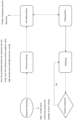
- FIG. 1 An example process for the manufacture of a toilet seat in accordance with the present invention is shown in Figure 1 .
- the toilet seat of the present invention may be manufactured using known moulding process, for example, compression moulding or resin infusion moulding, although the former is preferred.
- the materials are mixed in the appropriate ranges and heated and then the materials mix is compression moulded in a cavity mould, with the use of heat to cure the resin. It is preferable that the dry materials are in powder form and are mixed with one another prior to the addition of the resin, to ensure a good distribution of the component materials. At this stage, a colourant may be added to give the resulting product a particular colour.
- the composite structure is removed from the mould and, where needed, appropriate holes can be drilled therein. These may include holes for affixing hinges or fixings and any other holes or recesses that are required in the finished product.
- the toilet seat is then passed through an anti-deformation process to reduce the risk of any deformation due to mechanical or thermal factors. Subsequent to the anti-deformation process, the toilet seat is polished and inspected to ensure that it meets with the quality required. At this stage, surface decoration, such as colourant, may be applied to the toilet seat, after which a surface coating of the varnish may be applied and cured to ensure that the toilet seat is provided with a further protective layer.
- the toilet seat is inspected again to ensure that the varnish and underlying layers are not impaired or damaged before the toilet seat is sent for packing and transport.
- the appearance may still be consistent, unlike in some arrangements where the toilet seat comprises a coloured coating that, when scratched shows the core material thereunder.
- the tooling may allow for either a matt or gloss finish according to what is required.
- an insert may be applied to the tooling to give the desired finish.
Landscapes
- Chemical & Material Sciences (AREA)
- Health & Medical Sciences (AREA)
- Chemical Kinetics & Catalysis (AREA)
- Medicinal Chemistry (AREA)
- Polymers & Plastics (AREA)
- Organic Chemistry (AREA)
- Public Health (AREA)
- Compositions Of Macromolecular Compounds (AREA)
Description
- The invention relates to a toilet seat.
- Toilet seats are often made of wood, such as oak or walnut, resin, or plastics materials such as polypropylene or acrylonitrile butadiene styrene. An alternative to those materials is urea-formaldehyde, a thermosetting resin, which has become popular due to the ease with which it can be moulded, its non-toxic properties and its resistance to discolouration. A problem with urea-formaldehyde is that, being a thermosetting resin, it cannot be remoulded after is has been made into a toilet seat, thereby making it impractical for recycling into another product. Furthermore, urea-formaldehyde is not biodegradable and, when burned, it releases toxic components. Therefore, toilet seats made of urea-formaldehyde are particularly damaging to the environment.
- Whilst wood is a more sustainable product, it can be expensive and is not always aesthetically suitable for some bathrooms.
-
JP2005179446 (Toray Industries) -
CN113801420 (Pinghu ) discloses a bathtub that is manufactured from resin, paper pulp, medical talcum powder, quartz stone, zinc stearate, a curing agent, antibacterial functional agent, an antioxidant and titanium dioxide. -
US2006/182975 (Burbank ) discloses a thermoset polymer substrate having applied thereto an ionizable compound and an electrostatic powder coating. - Accordingly, the present invention is directed to a toilet seat comprising at least one part, preferably a seat element and/or lid, that is constructed from a composite material comprising a combination of:
- resin;
- paper pulp;
- titanium powder;
- talcum powder; and
- mould release agent and curing agent.
- Thus, the toilet seat of the present invention is constructed from a composite material that has the required water and moisture resistance and is resistant to discolouration and is also considerably lighter in weight than wood toilet seats. Additionally, the toilet seat has a high degree of impact resistance in case items are dropped onto the toilet seat or it is, itself, dropped prior to installation. Additionally, over wood, the toilet seat of the present invention is able to be shaped with sharper, or cleaner, edges and is able to be made into slimmer designs, thereby providing more design freedom and allowing for aesthetically attractive toilets and/or bathrooms at a lower cost. Importantly, because the toilet seat is lighter and less prone to mechanical damage, it has a reduced carbon footprint, compared with comparable wooden or urea-formaldehyde products. It will be appreciated that the resin binds the dry materials to form a robust composite toilet seat. Hinges, fixing elements and other components may be over-moulded and/or incorporated into the seat material to allow the toilet seat to be fitted and to operate effectively. Alternatively, they may be applied once the seat portion has been created.
- Preferably, the paper pulp is alpha cellulose paper pulp. Alpha cellulose contains the highest degree of polymerization and so is the most stable, which provides the toilet seat with strength and rigidity. The resulting toilet seat has the required degree of toughness to withstand impact and scratching. In addition to the toughness provided by the paper pulp, due to the high proportion of natural materials present in the toilet seat, the resulting product is substantially recyclable. A further benefit of the present invention is that the use of paper pulp may allow the toilet seat to be made from recycled materials. Whilst a paper pulp containing a lower degree of polymerization may be employed, the alpha cellulose is preferred.
- The provision of titanium powder, particularly titanium dioxide, in the composition increases the resistance to ultraviolet radiation and, additionally, can act as a whitening agent to create a more aesthetically attractive unit.
- The addition of talcum powder reduces the risk of fouling during production of the toilet seat.
- The mould release agent and curing agent are present in the composition to assist with the shaping of the toilet seat and the removal of the toilet seat once formed in a mould.
- It is advantageous that the toilet seat comprises the materials in the following ranges:
- resin - 50% to 62%;
- paper pulp - 36% to 44%;
- titanium powder - 0.6% to 1.7%;
- talcum powder - 1.3% to 2.7%; and
- mould release agent and curing agent - 0.6% to 1.4%.
- It is particularly advantageous that the materials are present in the composite toilet seat in the following ranges:
- resin - 54% to 58%;
- paper pulp - 38% to 42%;
- titanium powder - 0.8% to 1.5%;
- talcum powder - 1.5% to 2.5% ; and
- mould release agent and curing agent - 0.8% to 1.2%.
- It is advantageous that the resin is a thermosetting plastics material, and it is particularly advantageous that the resin comprises melamine formaldehyde resin. Whilst some resin is required in the present invention, with the additional elements, the resulting product is more readily mechanically broken down than comparable seats constructed from urea-formaldehyde.
- The overall product is able to be provided with a gloss finish or a matt finish, depending upon what is required and/or desirable.
- A varnish coating and/or lamina coating may be applied to the product to improve its aesthetic appearance.
- In an alternative construction, it is envisaged that a toilet seat could comprise at least one part that is constructed from a composite material comprising a combination of:
- resin;
- silica dioxide (quartz sand);
- fibreglass;
- polystyrene; and
- tert-Butyl peroxybenzoate.
- Thus, the toilet seat of the present invention is constructed from a composite material that has the required mechanical resistance and is lighter in weight than wood toilet seats. Again, other elements, such as hinges or fixings may be incorporated into the product during manufacture. Preferably, the toilet seat has a coating of varnish to assist with resistance to impact and light. Resistance can also be obtained from the insulative properties of the quartz sand. Therefore, the composite toilet seat has a high degree of impact and light resistance without having too greater a hardness that it is uncomfortable. Additionally, the toilet seat of the present invention is able to be shaped with sharper, or cleaner, edges and is above to be made into slimmer designs, thereby providing more design freedom and allowing for aesthetically attractive toilets at a lower cost. Importantly, because the toilet seat is lighter and less prone to mechanical damage, it has a reduced carbon footprint. The resin binds the dry materials to form a robust composite toilet seat.
- It is advantageous that at least one of the toilet seat part, preferably the seat and/or lid of the toilet seat, comprises the materials in the following ranges:
- resin - 15% to 23%;
- silica dioxide - 48% to 58%;
- fibre glass - 12% to 20%;
- polystyrene - 7% to 15%; and
- tert-Butyl peroxybenzoate - 0.4% to 0.8%.
- It is particularly advantageous that the materials are present in the following ranges:
- resin - 17% to 21%;
- silica dioxide - 50% to 56%;
- fibre glass - 14% to 18%;
- polystyrene - 9% to 13% ; and
- tert-Butyl peroxybenzoate - 0.5% to 0.7%.
- In a preferred arrangement, the toilet seat part comprises the following percentages, by weight or volume:
- resin - 19%;
- silica dioxide - 53.24%
- fibre glass - 16%;
- polystyrene - 11.18%; and
- tert-Butyl peroxybenzoate - 0.58%.
- In one arrangement, the seat portion, the mounting bar (that sits upon the biscuit of the toilet pan) and the lid of the toilet seat are all constructed from at least one of the materials set out herein. With the present invention, it is relatively simple and low cost to mould any style and shape of toilet seat.
- It is preferable that the resin is unsaturated polyester resin. This is a relatively low-cost resin that is particularly useful for binding the composite materials together, particular as the resin is resistant to water and to chemicals.
- Advantageously, the varnish that is applied to the toilet seat comprises alkyd resin. Thus, the toilet seat is coated with the varnish to provide a protective coating that increases the toilet seat's resistance to mechanical and thermal damage. Additionally, the resin varnish offers further resistance to moisture and ultra-violet light. It will be appreciated that other coatings may be applied, which may increase the impact resistance and/or chemical resistance and/or light resistance.
- In a third arrangement, the toilet seat may have a composition comprising: resin and a mix of at least two of: paper pulp; silica dioxide (quartz sand); and fibreglass. The resin may be any of those described herein and that binds the materials together to provide the required degree of heat insulation and toughness to the toilet seat.
- Additionally, the composition may further comprise one or more of: titanium powder; talcum powder; and mould release agent and curing agent; polystyrene; and tert-Butyl peroxybenzoate. As described herein, these materials provide further benefits to the toilet seat of the present invention, such as increasing the toughness and anti-fouling properties to the composition.
- The toilet seat compositions described herein may provide microbial resistance, including, anti-bacterial properties, particularly in respect of Escherichia coli and Salmonella enterica subsp. Enterica.
- In some arrangements, the toilet seat may comprise further materials, such as a bulking agent. The bulking agent may be in the form of plant-based materials, such as bamboo fibre. Such fibres assist with increasing the strength of the resultant product. It is preferred that the bulking agent is biodegradable, which may be derived from wood.
- The present invention extends to a method of manufacturing a toilet seat as described herein.
- An example process for the manufacture of a toilet seat in accordance with the present invention is shown in
Figure 1 . - As shown in
Figure 1 , the toilet seat of the present invention may be manufactured using known moulding process, for example, compression moulding or resin infusion moulding, although the former is preferred. - Thus, the materials are mixed in the appropriate ranges and heated and then the materials mix is compression moulded in a cavity mould, with the use of heat to cure the resin. It is preferable that the dry materials are in powder form and are mixed with one another prior to the addition of the resin, to ensure a good distribution of the component materials. At this stage, a colourant may be added to give the resulting product a particular colour.
- Once the moulding process is complete, the composite structure is removed from the mould and, where needed, appropriate holes can be drilled therein. These may include holes for affixing hinges or fixings and any other holes or recesses that are required in the finished product.
- The toilet seat is then passed through an anti-deformation process to reduce the risk of any deformation due to mechanical or thermal factors. Subsequent to the anti-deformation process, the toilet seat is polished and inspected to ensure that it meets with the quality required. At this stage, surface decoration, such as colourant, may be applied to the toilet seat, after which a surface coating of the varnish may be applied and cured to ensure that the toilet seat is provided with a further protective layer.
- The toilet seat is inspected again to ensure that the varnish and underlying layers are not impaired or damaged before the toilet seat is sent for packing and transport.
- In view of the composite material being consistently distributed, should the surface of the toilet seat become scratched, the appearance may still be consistent, unlike in some arrangements where the toilet seat comprises a coloured coating that, when scratched shows the core material thereunder.
- Where the toilet seat is press-moulded, or compression-moulded, the tooling may allow for either a matt or gloss finish according to what is required. In such an arrangement, an insert may be applied to the tooling to give the desired finish.
- The percentage values listed herein are, preferably, percentage by weight.
Claims (6)
- A toilet seat having at least one part constructed from a composite material comprising:resin;paper pulp;titanium powder;talcum powder; andmould release agent and curing agent.
- A toilet seat according to claim 1, wherein the toilet seat part comprises the materials in the following ranges:resin - 50% to 62%;paper pulp - 36% to 44%;titanium powder - 0.6% to 1.7%;talcum powder - 1.3% to 2.7%; andmould release agent and curing agent - 0.6% to 1.4%.
- A toilet seat according to claim 1 or claim 2, wherein the toilet seat part comprises a bulking agent.
- A toilet seat according to claim 3, wherein the bulking agent is bamboo.
- A toilet seat according to any preceding claim, wherein the resin is melamine formaldehyde resin.
- A toilet seat according to any preceding claim, wherein a varnish coating is applied to the composite part.
Applications Claiming Priority (2)
| Application Number | Priority Date | Filing Date | Title |
|---|---|---|---|
| GB2200275.2A GB2609063B (en) | 2022-01-11 | 2022-01-11 | Bathroom sanitary ware |
| PCT/GB2023/050043 WO2023135414A1 (en) | 2022-01-11 | 2023-01-11 | Composite toilet seat |
Publications (3)
| Publication Number | Publication Date |
|---|---|
| EP4262501A1 EP4262501A1 (en) | 2023-10-25 |
| EP4262501C0 EP4262501C0 (en) | 2024-10-02 |
| EP4262501B1 true EP4262501B1 (en) | 2024-10-02 |
Family
ID=84603060
Family Applications (1)
| Application Number | Title | Priority Date | Filing Date |
|---|---|---|---|
| EP23704382.3A Active EP4262501B1 (en) | 2022-01-11 | 2023-01-11 | Composite toilet seat |
Country Status (6)
| Country | Link |
|---|---|
| EP (1) | EP4262501B1 (en) |
| AU (1) | AU2023206648A1 (en) |
| ES (1) | ES3000664T3 (en) |
| GB (1) | GB2609063B (en) |
| PL (1) | PL4262501T3 (en) |
| WO (1) | WO2023135414A1 (en) |
Citations (6)
| Publication number | Priority date | Publication date | Assignee | Title |
|---|---|---|---|---|
| JPH05321313A (en) * | 1991-11-30 | 1993-12-07 | Toto Ltd | Handwasher molded with melamine resin |
| JP2004339454A (en) * | 2003-03-18 | 2004-12-02 | Toray Ind Inc | Resin composition and molded article comprising the same |
| JP2005154479A (en) * | 2003-11-20 | 2005-06-16 | Toray Ind Inc | Resin composition and molded article comprising the same |
| JP2005206813A (en) * | 2003-12-26 | 2005-08-04 | Toray Ind Inc | Foam and production method thereof |
| JP2006117768A (en) * | 2004-10-20 | 2006-05-11 | Toray Ind Inc | Resin composition and molded article comprising the same |
| US20110269907A1 (en) * | 2005-08-04 | 2011-11-03 | Toray Industries, Inc. | Resin composition and molded article made thereof |
Family Cites Families (5)
| Publication number | Priority date | Publication date | Assignee | Title |
|---|---|---|---|---|
| JP4759918B2 (en) * | 2003-12-17 | 2011-08-31 | 東レ株式会社 | Resin composition and molded article comprising the same |
| US20060182975A1 (en) * | 2005-02-17 | 2006-08-17 | Reichhold, Inc. | Thermoset polymer substrates |
| GB2598902B (en) * | 2020-09-16 | 2022-12-07 | Ellsi Ltd | A sink |
| EP4214370A1 (en) * | 2020-09-16 | 2023-07-26 | Ellsi Limited | A sink |
| CN113801420A (en) * | 2021-09-30 | 2021-12-17 | 平湖市欧迪雅厨卫设备有限公司 | Bathtub and preparation process thereof |
-
2022
- 2022-01-11 GB GB2200275.2A patent/GB2609063B/en active Active
-
2023
- 2023-01-11 PL PL23704382.3T patent/PL4262501T3/en unknown
- 2023-01-11 EP EP23704382.3A patent/EP4262501B1/en active Active
- 2023-01-11 ES ES23704382T patent/ES3000664T3/en active Active
- 2023-01-11 WO PCT/GB2023/050043 patent/WO2023135414A1/en not_active Ceased
- 2023-01-11 AU AU2023206648A patent/AU2023206648A1/en active Pending
Patent Citations (6)
| Publication number | Priority date | Publication date | Assignee | Title |
|---|---|---|---|---|
| JPH05321313A (en) * | 1991-11-30 | 1993-12-07 | Toto Ltd | Handwasher molded with melamine resin |
| JP2004339454A (en) * | 2003-03-18 | 2004-12-02 | Toray Ind Inc | Resin composition and molded article comprising the same |
| JP2005154479A (en) * | 2003-11-20 | 2005-06-16 | Toray Ind Inc | Resin composition and molded article comprising the same |
| JP2005206813A (en) * | 2003-12-26 | 2005-08-04 | Toray Ind Inc | Foam and production method thereof |
| JP2006117768A (en) * | 2004-10-20 | 2006-05-11 | Toray Ind Inc | Resin composition and molded article comprising the same |
| US20110269907A1 (en) * | 2005-08-04 | 2011-11-03 | Toray Industries, Inc. | Resin composition and molded article made thereof |
Also Published As
| Publication number | Publication date |
|---|---|
| EP4262501C0 (en) | 2024-10-02 |
| AU2023206648A1 (en) | 2024-08-01 |
| PL4262501T3 (en) | 2025-02-24 |
| WO2023135414A1 (en) | 2023-07-20 |
| GB2609063A (en) | 2023-01-25 |
| EP4262501A1 (en) | 2023-10-25 |
| ES3000664T3 (en) | 2025-03-03 |
| GB2609063B (en) | 2023-11-15 |
Similar Documents
| Publication | Publication Date | Title |
|---|---|---|
| TWI260271B (en) | Compound formable decorative laminate | |
| US6709612B2 (en) | Reformed medium density fiber board products, such as door skins, and a process for reforming medium density fiber board | |
| US10933608B2 (en) | Surfacing materials and method of manufacture | |
| US11504955B2 (en) | Decorative laminate with matte finish and method of manufacture | |
| TW200643102A (en) | Thermoplastic polycarbonate compositions with improved optical surface quality, articles made therefrom and method of manufacture | |
| CN100451269C (en) | Caster-resistant surface laminate and caster-resistant floor material | |
| US5678906A (en) | Decorative panel | |
| Shahruzzaman et al. | Furniture: eco-friendly polymer composites applications | |
| WO2023135414A1 (en) | Composite toilet seat | |
| US20240026148A1 (en) | A sink | |
| EP0437395B1 (en) | Method of manufacturing a moulded article from thermohardening plastic in corporating a decorative layer | |
| GB2600496A (en) | A sink | |
| KR100710722B1 (en) | How to form irregularities on the surface of wooden furniture | |
| AU727913B3 (en) | Improvements in watercraft and the manufacture thereof | |
| CN206548131U (en) | A kind of S types high pressure decorative resistant desk plate | |
| CN201626932U (en) | Woodware with anti-sinking clear primer | |
| KR200400140Y1 (en) | Interial Panel | |
| CN102039269A (en) | A kind of manufacturing method of melamine dish | |
| WO2021168794A1 (en) | Decorative three-dimensional visual toilet lid | |
| CN209600006U (en) | A kind of stone modeling solid wood ecological transfer film coated plate | |
| WO2021097716A1 (en) | Toilet lid with a decorative resin-impregnated layer | |
| KR100395309B1 (en) | Cork carpet by the method and cork carpet manufacture method | |
| CN107932664A (en) | A kind of manufacture craft of fire-retardant ribs of the fan | |
| TWI401153B (en) | Used in building materials, interior decoration materials, furniture, composite materials manufacturing methods | |
| KR20230062712A (en) | Composition for artificial marble and artificial marble using the same |
Legal Events
| Date | Code | Title | Description |
|---|---|---|---|
| STAA | Information on the status of an ep patent application or granted ep patent |
Free format text: STATUS: UNKNOWN |
|
| STAA | Information on the status of an ep patent application or granted ep patent |
Free format text: STATUS: THE INTERNATIONAL PUBLICATION HAS BEEN MADE |
|
| PUAI | Public reference made under article 153(3) epc to a published international application that has entered the european phase |
Free format text: ORIGINAL CODE: 0009012 |
|
| STAA | Information on the status of an ep patent application or granted ep patent |
Free format text: STATUS: REQUEST FOR EXAMINATION WAS MADE |
|
| 17P | Request for examination filed |
Effective date: 20230720 |
|
| AK | Designated contracting states |
Kind code of ref document: A1 Designated state(s): AL AT BE BG CH CY CZ DE DK EE ES FI FR GB GR HR HU IE IS IT LI LT LU LV MC ME MK MT NL NO PL PT RO RS SE SI SK SM TR |
|
| RIN1 | Information on inventor provided before grant (corrected) |
Inventor name: DELANEY, PAUL |
|
| GRAP | Despatch of communication of intention to grant a patent |
Free format text: ORIGINAL CODE: EPIDOSNIGR1 |
|
| STAA | Information on the status of an ep patent application or granted ep patent |
Free format text: STATUS: GRANT OF PATENT IS INTENDED |
|
| DAV | Request for validation of the european patent (deleted) | ||
| DAX | Request for extension of the european patent (deleted) | ||
| INTG | Intention to grant announced |
Effective date: 20240426 |
|
| RIC1 | Information provided on ipc code assigned before grant |
Ipc: C08L 61/28 20060101ALI20240412BHEP Ipc: A47K 13/02 20060101ALI20240412BHEP Ipc: C08L 67/06 20060101ALI20240412BHEP Ipc: A47K 13/00 20060101AFI20240412BHEP |
|
| GRAS | Grant fee paid |
Free format text: ORIGINAL CODE: EPIDOSNIGR3 |
|
| GRAA | (expected) grant |
Free format text: ORIGINAL CODE: 0009210 |
|
| STAA | Information on the status of an ep patent application or granted ep patent |
Free format text: STATUS: THE PATENT HAS BEEN GRANTED |
|
| AK | Designated contracting states |
Kind code of ref document: B1 Designated state(s): AL AT BE BG CH CY CZ DE DK EE ES FI FR GB GR HR HU IE IS IT LI LT LU LV MC ME MK MT NL NO PL PT RO RS SE SI SK SM TR |
|
| REG | Reference to a national code |
Ref country code: GB Ref legal event code: FG4D |
|
| REG | Reference to a national code |
Ref country code: CH Ref legal event code: EP |
|
| REG | Reference to a national code |
Ref country code: DE Ref legal event code: R096 Ref document number: 602023000648 Country of ref document: DE |
|
| REG | Reference to a national code |
Ref country code: IE Ref legal event code: FG4D |
|
| U01 | Request for unitary effect filed |
Effective date: 20241101 |
|
| U07 | Unitary effect registered |
Designated state(s): AT BE BG DE DK EE FI FR IT LT LU LV MT NL PT RO SE SI Effective date: 20241112 |
|
| REG | Reference to a national code |
Ref country code: ES Ref legal event code: FG2A Ref document number: 3000664 Country of ref document: ES Kind code of ref document: T3 Effective date: 20250303 |
|
| U20 | Renewal fee for the european patent with unitary effect paid |
Year of fee payment: 3 Effective date: 20250128 |
|
| PG25 | Lapsed in a contracting state [announced via postgrant information from national office to epo] |
Ref country code: HR Free format text: LAPSE BECAUSE OF FAILURE TO SUBMIT A TRANSLATION OF THE DESCRIPTION OR TO PAY THE FEE WITHIN THE PRESCRIBED TIME-LIMIT Effective date: 20241002 Ref country code: IS Free format text: LAPSE BECAUSE OF FAILURE TO SUBMIT A TRANSLATION OF THE DESCRIPTION OR TO PAY THE FEE WITHIN THE PRESCRIBED TIME-LIMIT Effective date: 20250202 |
|
| PG25 | Lapsed in a contracting state [announced via postgrant information from national office to epo] |
Ref country code: NO Free format text: LAPSE BECAUSE OF FAILURE TO SUBMIT A TRANSLATION OF THE DESCRIPTION OR TO PAY THE FEE WITHIN THE PRESCRIBED TIME-LIMIT Effective date: 20250102 |
|
| PG25 | Lapsed in a contracting state [announced via postgrant information from national office to epo] |
Ref country code: GR Free format text: LAPSE BECAUSE OF FAILURE TO SUBMIT A TRANSLATION OF THE DESCRIPTION OR TO PAY THE FEE WITHIN THE PRESCRIBED TIME-LIMIT Effective date: 20250103 |
|
| PG25 | Lapsed in a contracting state [announced via postgrant information from national office to epo] |
Ref country code: RS Free format text: LAPSE BECAUSE OF FAILURE TO SUBMIT A TRANSLATION OF THE DESCRIPTION OR TO PAY THE FEE WITHIN THE PRESCRIBED TIME-LIMIT Effective date: 20250102 |
|
| PG25 | Lapsed in a contracting state [announced via postgrant information from national office to epo] |
Ref country code: SM Free format text: LAPSE BECAUSE OF FAILURE TO SUBMIT A TRANSLATION OF THE DESCRIPTION OR TO PAY THE FEE WITHIN THE PRESCRIBED TIME-LIMIT Effective date: 20241002 |
|
| PG25 | Lapsed in a contracting state [announced via postgrant information from national office to epo] |
Ref country code: SK Free format text: LAPSE BECAUSE OF FAILURE TO SUBMIT A TRANSLATION OF THE DESCRIPTION OR TO PAY THE FEE WITHIN THE PRESCRIBED TIME-LIMIT Effective date: 20241002 |
|
| PLBE | No opposition filed within time limit |
Free format text: ORIGINAL CODE: 0009261 |
|
| STAA | Information on the status of an ep patent application or granted ep patent |
Free format text: STATUS: NO OPPOSITION FILED WITHIN TIME LIMIT |
|
| 26N | No opposition filed |
Effective date: 20250703 |
|
| PG25 | Lapsed in a contracting state [announced via postgrant information from national office to epo] |
Ref country code: MC Free format text: LAPSE BECAUSE OF FAILURE TO SUBMIT A TRANSLATION OF THE DESCRIPTION OR TO PAY THE FEE WITHIN THE PRESCRIBED TIME-LIMIT Effective date: 20241002 |
|
| U20 | Renewal fee for the european patent with unitary effect paid |
Year of fee payment: 4 Effective date: 20260128 |
|
| PGFP | Annual fee paid to national office [announced via postgrant information from national office to epo] |
Ref country code: ES Payment date: 20260203 Year of fee payment: 4 |
|
| PGFP | Annual fee paid to national office [announced via postgrant information from national office to epo] |
Ref country code: IE Payment date: 20260123 Year of fee payment: 4 |
|
| PGFP | Annual fee paid to national office [announced via postgrant information from national office to epo] |
Ref country code: TR Payment date: 20260107 Year of fee payment: 4 |
|
| PGFP | Annual fee paid to national office [announced via postgrant information from national office to epo] |
Ref country code: CZ Payment date: 20260107 Year of fee payment: 4 |
|
| PGFP | Annual fee paid to national office [announced via postgrant information from national office to epo] |
Ref country code: PL Payment date: 20260107 Year of fee payment: 4 |
|
| PG25 | Lapsed in a contracting state [announced via postgrant information from national office to epo] |
Ref country code: CY Free format text: LAPSE BECAUSE OF FAILURE TO SUBMIT A TRANSLATION OF THE DESCRIPTION OR TO PAY THE FEE WITHIN THE PRESCRIBED TIME-LIMIT Effective date: 20241002 |