EP4257988B1 - Verfahren zum lokalisieren eines fehlerpunktes auf einem hochspannungs-drehstromkabel und system zum lokalisieren eines fehlerpunktes - Google Patents
Verfahren zum lokalisieren eines fehlerpunktes auf einem hochspannungs-drehstromkabel und system zum lokalisieren eines fehlerpunktes Download PDFInfo
- Publication number
- EP4257988B1 EP4257988B1 EP22382332.9A EP22382332A EP4257988B1 EP 4257988 B1 EP4257988 B1 EP 4257988B1 EP 22382332 A EP22382332 A EP 22382332A EP 4257988 B1 EP4257988 B1 EP 4257988B1
- Authority
- EP
- European Patent Office
- Prior art keywords
- snf
- fault
- shield
- jwi
- cnf
- Prior art date
- Legal status (The legal status is an assumption and is not a legal conclusion. Google has not performed a legal analysis and makes no representation as to the accuracy of the status listed.)
- Active
Links
Images

Classifications
-
- G—PHYSICS
- G01—MEASURING; TESTING
- G01R—MEASURING ELECTRIC VARIABLES; MEASURING MAGNETIC VARIABLES
- G01R19/00—Arrangements for measuring currents or voltages or for indicating presence or sign thereof
- G01R19/25—Arrangements for measuring currents or voltages or for indicating presence or sign thereof using digital measurement techniques
- G01R19/2513—Arrangements for monitoring electric power systems, e.g. power lines or loads; Logging
-
- G—PHYSICS
- G01—MEASURING; TESTING
- G01R—MEASURING ELECTRIC VARIABLES; MEASURING MAGNETIC VARIABLES
- G01R19/00—Arrangements for measuring currents or voltages or for indicating presence or sign thereof
- G01R19/0092—Measuring current only
-
- G—PHYSICS
- G01—MEASURING; TESTING
- G01R—MEASURING ELECTRIC VARIABLES; MEASURING MAGNETIC VARIABLES
- G01R31/00—Arrangements for testing electric properties; Arrangements for locating electric faults; Arrangements for electrical testing characterised by what is being tested not provided for elsewhere
- G01R31/08—Locating faults in cables, transmission lines, or networks
- G01R31/081—Locating faults in cables, transmission lines, or networks according to type of conductors
- G01R31/083—Locating faults in cables, transmission lines, or networks according to type of conductors in cables, e.g. underground
-
- G—PHYSICS
- G01—MEASURING; TESTING
- G01R—MEASURING ELECTRIC VARIABLES; MEASURING MAGNETIC VARIABLES
- G01R31/00—Arrangements for testing electric properties; Arrangements for locating electric faults; Arrangements for electrical testing characterised by what is being tested not provided for elsewhere
- G01R31/08—Locating faults in cables, transmission lines, or networks
- G01R31/088—Aspects of digital computing
-
- G—PHYSICS
- G01—MEASURING; TESTING
- G01R—MEASURING ELECTRIC VARIABLES; MEASURING MAGNETIC VARIABLES
- G01R31/00—Arrangements for testing electric properties; Arrangements for locating electric faults; Arrangements for electrical testing characterised by what is being tested not provided for elsewhere
- G01R31/50—Testing of electric apparatus, lines, cables or components for short-circuits, continuity, leakage current or incorrect line connections
- G01R31/52—Testing for short-circuits, leakage current or ground faults
-
- G—PHYSICS
- G01—MEASURING; TESTING
- G01R—MEASURING ELECTRIC VARIABLES; MEASURING MAGNETIC VARIABLES
- G01R31/00—Arrangements for testing electric properties; Arrangements for locating electric faults; Arrangements for electrical testing characterised by what is being tested not provided for elsewhere
- G01R31/50—Testing of electric apparatus, lines, cables or components for short-circuits, continuity, leakage current or incorrect line connections
- G01R31/58—Testing of lines, cables or conductors
Definitions
- the present invention relates to a method for locating a fault point on a high-voltage three-phase AC cable and to a system for locating a fault point.
- US20210072302A1 relates to a method for locating a fault point on a high-voltage cable based on providing at least two current measuring apparatuses arranged at the cable at a given distance and having timers synchronized with one another, and a measuring device for detecting an electric current flowing in the shield and/or an earthing line connecting the shield and earth.
- the measuring apparatus transmits pairs of current measurement values and associated values of the timer to an analysis unit which, upon the occurrence of a current exceeding a threshold value and/or of a current profile over time that satisfies specific stipulations, feeds to a calculation unit the associated values of the timers and also an indication about the location of the measurement, for which first effects of the short circuit occurred.
- the calculation unit calculates the location of the fault from the known distance between the measuring apparatuses and a difference between the values of the synchronized timers.
- the object of the invention is to provide a method for locating a fault point on a high-voltage three-phase AC cable, and a system for locating a fault point on a high-voltage three-phase AC cable, as defined in the claims.
- a first aspect of the invention relates to a method for locating a fault point on a high-voltage three-phase AC cable.
- the cable in which the method of the invention is applied comprises a first end, a second end, and at least one main section extending between said ends, the cable comprising one conductor per phase and three shields associated with said conductor, said shields being attached to one another and connected to ground at both ends of each main section. Therefore, the method of the invention is configured for being applied in cables with cross bonding connection systems of the shields and in cables with solid bonded connection systems.
- the method comprises the following steps
- a second aspect of the invention relates to a system for locating a fault point on a cable such as the one described in the first aspect of the invention, the system comprising:
- the method for locating and the system for locating of the invention offer a rapid solution for locating a fault point on a high-voltage three-phase AC cable, with the result virtually being obtained in real time.
- the fault resistance i.e., the resistance between the conductor in fault and the shield in fault at fault point F, nor is it necessary to know the ground resistance of the connections to ground of the shields.
- a first aspect of the invention relates to a method for locating a fault point F on a high-voltage three-phase AC cable 1.
- the method of the invention is configured for locating a fault point F on a cable 1 comprising a first end 10, a second end 11, and at least one main section MP 1 , MP 2 , MP 3 extending between said ends 10, 11.
- the cable 1 comprises one conductor R, S, T for each phase and three shields S A , S B , S C ; S R , S S , S T associated with said conductors R, S, T.
- the shields S A , S B , S C ; S R , S S , S T are attached to one another and connected to ground G at both ends of each main section MP 1 , MP 2 , MP 3 , preferably by means of a corresponding grounding device 3, 4. Therefore, the method of the invention is configured for being applied in cables 1 with shield cross bonding connection systems, and in cables with solid bonded connection systems.
- fault point F is considered the point where one of the conductors R, S, T, of the cable 1 has electrical contact with the corresponding shield S A , S B , S C ; S R , S S , S T , such that a short circuit occurs between said conductor R, S, T and the corresponding shield S A , S B , Sc; S R , S S , S T at said fault point F.
- main section in fault will be considered the main section MP 1 , MP 2 , MP 3 of cable 1 at which the fault point F is arranged.
- the method of the invention comprises the following steps:
- the conductor current I R1 ; I S1 ; I T1 measured at the first end 10 of the cable 1 for each conductor R, S, T is compared with the conductor current I R2 ; I S2 ; I T2 measured at the second end 11 of the cable 1, determining that the conductor R, S, T in fault will be the conductor in which the conductor current I R1 , I R2 ; I S1 , I S2 ; I T1 , I T2 at said ends 10, 11 is different.
- the main section MP 1 , MP 2 , MP 3 in fault is determined taking into account that at the ends of said main section MP 1 , MP 2 , MP 3 in fault, the shield currents I SA1 , I SB1 , I SC1 ; I SA2 , I SB2 , I SC2 ; I SA3 , I SB3 , I SC3 ; I SA4 , I SB4 , I SC4 are not in phase.
- the shield currents I SA1 , I SB1 , I SC1 ; I SA2 , I SB2 , I SC2 ; I SA3 , I SB3 , I SC3 ; I SA4 , I SB4 , I SC4 are successively analyzed starting from one of the ends 10, 11 of the cable 1 until observing that the shield currents I SA1 , I SB1 , I SC1 ; I SA2 , I SB2 , Isc2; I SA3 , I SB3 , Isc3; I SA4 , I SB4 , Isc4 are not in phase, determining that the main section MP 1 , MP 2 , MP 3 in fault will be the main section MP 1 , MP 2 , MP 3 after the connection point to ground G in which it is detected that said shield currents I SA1 , I SB1
- the main section in fault will be determined by observing said shield currents and seeing at which point they are out of phase, or alternatively detecting the main part in which for one of the shields the shield current at both ends of the main section in fault is different.
- each main section MP 1 , MP 2 , MP 3 comprises three minor sections mp 1 , mp 2 , mp 3 , the method comprising determining the minor section mp 1 , mp 2 , mp 3 in fault once the main section MP 1 , MP 2 , MP 3 in fault has been determined.
- the shield S A , S B , S C in fault is determined by comparing for each shield S A , S B , S C the shield current I SA1 , I SB1 , I SC1 ; I SA2 , I SB2 , I SC2 ; I SA3 , I SB3 , I SC3 ; I SA4 , I SB4 , I SC4 measured at one of the ends of the main part MP 1 , MP 2 , MP 3 in fault with the shield current I SA1 , I SB1 , I SC1 ; I SA2 , I SB2 , I SC2 ; I SA3 , I SB3 , I SC3 ; I SA4 , I SB4 , I SC4 measured at the other end of the main part MP 1 , MP 2 , MP 3 in fault, the shield S A , S B , S C in fault being the shield S A , S B , Sc whose current
- the minor section mp 1 , mp 2 , mp 3 in fault will be the minor section mp 1 , mp 2 , mp 3 in which the conductor R, S, T in fault and the shield S A , S B , S C in fault coincide. It should be pointed out that the case of the cables with a cross bonding connection system, the minor part mp 1 , mp 2 , mp 3 in fault is determined univocally, since the determination of said minor part mp 1 , mp 2 , mp 3 in fault is performed from the short circuit values, without the need for models or suppositions.
- the model of the shields S A , S B , S C of main section MP 1 , MP 2 , MP 3 in fault of each shield S A , S B , S C comprises per minor section mp 1 , mp 2 , mp 3 its own resistance R SA , R SB , R SC and its own self-inductance L SA , L SB , Lsc of the corresponding shield S A , S B , S C , the mutual inductance M SB-SA , M SC-SA ; M SA-SB , M SC-SB ; M SA-SC , M SB-SC between said shield S A , S B , S C and the rest of the shields S A , S B , S C , and the mutual inductance M R-SA , M S-SA , M T-SA ; M R-SB , M S-SB , M T-SB ; M R-SC , M S-SC , M S-SC , M S-SC , M S
- the capacitive resistance between said shield and the rest of the shields and the conductors is not taken into account, since in case of fault, as the currents are very high and the frequency is the nominal frequency of the facility, they are completely negligible.
- the model of shield of each shield S A , S B , S C does not include the admittance between said shield and the rest of the shields and the conductors, since they are values that contribute nothing in fault situations.
- the parameters that are considered to define the model of the shield for each shield S A , S B , S C are the following:
- the shields S A , S B , Sc are attached and connected to ground at both ends of each main section MP 1 , MP 2 , MP 3 .
- the ends of the model corresponding to each shield S A , S B , S C are attached to one another, such that three nets in which the sum of voltages is zero are formed, the only unknown being the distance x to the fault point F.
- V SF V SNF
- V SF V SF _ mpf + V SF _ mpnf 1 + V SF _ mpnf 2
- V SF mpf xI SF 1 R SF mpf + xjwI SF 1 L SF mpf + xjwI CF 1 M CF ⁇ SF mpf + xjwI CNF 1 M CNF 1 ⁇ SF mpf + xjwI CNF 2 M CNF 2 ⁇ SF mpf + xjwI SNF 1 M SNF 1 ⁇ SF mpf + xjwI SNF 2 M SNF 2 ⁇ SF mpf ⁇ 1 ⁇ x I SF 2 R SF mpf ⁇ 1 ⁇ x jwI SF 2 L SF mpf ⁇ 1 ⁇ x jwI CF
- the cable 1 comprises a single main section MP 1 .
- the model of the shields S R , S S , S T of each shield S R , S S , S T comprises its own resistance R SR , R SS , R ST and self-inductance L SR , L SS , L ST , the mutual inductance M SS-SR , M ST-SR ; M SR-SS , M ST-SS ; M SR-ST , M SS-ST between said shield S R , S S , S T and the rest of the shields S R , S S , S T and the mutual inductance M R-SR , M S-SR , M T-SR ; M R-SS , M S-SS , M T-SS ; M R-ST , M S-ST , M T-ST between said shield S R , S S , S T and the conductors R, S, T.
- the shields S R , S S , S T are attached and connected to ground at both ends of the main section MP 1 . For this reason, the ends of the models corresponding to each shield S R , S S , S T are attached to one another, such that three nets in which the sum of voltages is zero are formed, the only unknown being the distance x to the fault point F.
- V SF xI SF 1 R SF + xjwI SF 1 L SF + xjwI CF 1 M CF ⁇ SF + xjwI CNF 1 M CNF 1 ⁇ SF + xjwI CNF 2 M CNF 2 ⁇ SF + xjwI SNF 1 M SNF 1 ⁇ SF + xjwI SNF 2 M SNF 2 ⁇ SF ⁇ 1 ⁇ x I SF 2 R SF ⁇ 1 ⁇ x jwI SF 2 L SF ⁇ 1 ⁇ x jwI CF 2 M CF ⁇ SF + 1 ⁇ x jwI CNF 1 M CNF 1 ⁇ SF + 1 ⁇ x jwI CNF 2 M C
- a second aspect of the invention relates to a system for locating a fault point F on a high-voltage three-phase AC cable 1.
- the system of the invention is configured for locating a fault point F on a cable 1 comprising a first end 10, a second end 11, and at least one main section MP 1 , MP 2 , MP 3 extending between said ends 10, 11.
- the cable 1 comprises one conductor R, S, T per phase and three shields S A , S B , S C ; S R , S S , S T associated with said conductors R, S, T.
- the shields S A , S B , S C ; S R , S S , S T are attached to one another and connected to ground G at both ends of each main section MP 1 , MP 2 , MP 3 .
- the system of the invention comprises
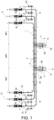
- Figure 1 schematically shows a first embodiment of the system of the invention, said system being applied on a high-voltage three-phase AC cable 1 having a first cable configuration.
- the cable 1 has a cross bonding connection system.
- the cable 1 comprises a first end 10, a second end 11, and three main sections MP 1 , MP 2 , MP 3 extending between said ends 10, 11.
- the shields S A , S B , S C are attached to one another and connected to ground G at both ends of each main section MP 1 , MP 2 , MP 3 .
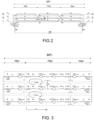
- Each main section MP 1 , MP 2 , MP 3 comprises three minor sections mp 1 , mp 2 , mp 3 which are defined by the points where the shields S A , S B , S C are cross bonded.
- the system comprises a first current measuring equipment configured for measuring the conductor current I R1 , I S1 , I T1 , I R2 , I S2 , I T2 circulating through each conductor R, S, T both at the first end 10 and at the second end 11 of the cable 1.
- the first current measuring equipment comprises six current sensors 50, 51, 52, 53, 54, 55, with one current sensor 50, 51, 52, 53, 54, 55 being arranged at each end of each conductor R, S, T.
- the system comprises a second current measuring equipment configured for measuring the shield current I SA1 , I SB1 , I SC1 ; I SA2 , I SB2 , I SC2 ; I SA3 , I SB3 , I SC3 ; I SA4 , I SB4 , I SC4 of each shield S A , S B , S C in the vicinity of the connection points to ground G of the shields S A , S B , S C .
- the second current measuring equipment comprises twelve current sensors 60, 61, 62, 63, 64, 65, 66, 67, 68, 69, 70, 71, with one current sensor 60, 61, 62, 63, 64, 65, 66, 67, 68, 69, 70, 71 being arranged in the vicinity of the connection points to ground G of each shield S A , S B , S C .
- shield currents I SA1 , I SB1 , I SC1 , I SA2 , I SB2 , I SC2 at the ends 10, 11 of the cable 1 is exclusive to the corresponding main section MP 1 , MP 3 (only shield current measurement)
- the measurement of shield currents I SA3 , I SB3 , I SC3 ; I SA4 , I SB4 , I SC4 in the intermediate connections to ground G does not present said separation, since the shields S A , S B , S C are attached to the corresponding grounding device 3, 4 through a coaxial cable 30, as shown for example in Figure 1 .
- the system of the invention comprises a processor, not shown in the figures, configured for executing the method of the invention based on the current measurements performed by said current measuring equipment.
- a fault between the conductor S and the shield S B in the main section MP 2 and the minor section mp 2 has been depicted in Figures 1 and 2 .
- the method of the invention would be applied as follows: Measuring the conductor current I R1 , I S1 , I T1 , I R2 , I S2 , I T2 circulating through each conductor R, S, T both at the first end 10 and at the second end 11 of the cable 1 by means of the first current measuring equipment.
- the shield currents I SA1 , I SB1 , I SC1 ; I SA2 , I SB2 , I SC2 ; I SA3 , I SB3 , I SC3 ; I SA4 , I SB4 , I SC4 are successively analyzed starting from one of the ends 10, 11 of the cable 1, for example starting from the first end 10.
- the main section MP 1 is the section that is in fault, and therefore the shield currents I SA2 , I SB2 , I SC2 in the following connection point to ground G are analyzed.
- the shields S A , S B , Sc are attached to one another at both ends of each main section MP 1 , MP 2 , MP 3 , in the main section MP 2 in fault the shield currents I SA3 , I SB3 , I SC3 ; I SA4 , I SB4 , I SC4 , are out of phase, but once the shield currents I SA3 , I SB3 , I SC3 ; I SA4 , I SB4 , I SC4 reach the end of the main section MP 2 in fault, in the rest of the main sections MP 1 , MP 3 the distribution of the shield currents I SA1 , I SB1 , I SC1 ; I SA2 , I SB2 , I SC2 is the same for all the shields S A , S B , S C .
- the minor section mp 1 , mp 2 , mp 3 is determined.
- the shield S A , S B , S C in fault is determined by comparing for each shield S A , S B , S C the shield current I SA2 , I SB2 , I SC2 measured at one of the ends of the main part MP 2 in fault with the shield current I SA3 , I SB3 , I SC3 measured at the other end of the main part MP 2 in fault.
- the shield current I SB3 at the first end of the main section MP 2 in fault will be different from the shield current I SB4 at the second end of the main section MP 2 in fault, determining that the shield S B is the section that is in fault.
- the minor section mp 1 , mp 2 , mp 3 in fault will be the minor section mp 2 in which the conductor S in fault and the shield S B in fault coincide.
- the model of the shields S A , S B , S C of main section MP 2 in fault is defined.
- the model of the shields S A , S B , S C of the main section MP 2 in fault are observed in Figure 3 .
- the shields S A , S B , S C are attached to one another at the ends of the main part MP 2 in fault, three nets S A- S B , S A- S C , S B- S C in which the sum of the voltages is equal to zero, or in other words, the voltage at the ends of the shields is the same for the three shields, are created.
- Figure 4 shows in detail the model of the shield S B which is in fault
- Figure 5 shows said model of the shield S B which is in fault in which the mutual inductances are depicted as generators.
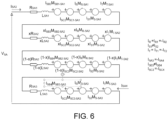
- Figure 6 shows the model of the shield S A which is not in fault in which the mutual inductances are depicted as generators.
- each shield S A , S B , S C comprises per minor section mp 1 , mp 2 , mp 3 its own resistance R SA , R SB , Rsc and its own self-inductance L SA , L SB , Lsc of the corresponding shield S A , S B , S C , the mutual inductance M SB-SA , M SC-SA ; M SA-SB , M SC-SB ; M SA-SC , M SB-SC between said shield S A , S B , S C and the rest of the shields S A , S B , S C , and the mutual inductance M R-SA , M S-SA , M T-SA ; M R-SB , M S-SB , M T-SB ; M R-SC , M S-SC , M T-SC between said shield S A , S B , S C and the conductors R, S, T.
- V SB I SB 3 R SB 1 + jwI SB 3 L SB 1 + jwI R M R ⁇ SB 1 + jwI S 1 M S ⁇ SB 1 + jwI T M T ⁇ SB 1 + jwI SA 3 M SA 1 ⁇ SB 1 + jwI SC 3 M SC 1 ⁇ SB 1 xI SB 3 R SB 2 + xjwI SB 3 L SB 2 + xjwI R M R ⁇ SB 2 + xjwI S 1 M S ⁇ SB 2 + xjwI T M T ⁇ SB 2 + xjwI SA 3 M SA 2 ⁇ SB 2 + xjwI SC 3 M SC 2 ⁇ SB 2 ⁇ 1 ⁇ x I SB 4 R SB 2 ⁇ 1 ⁇ x jwI SB 4 L SB 2 + 1 ⁇ x jwI R M R ⁇ SB 2 ⁇ 1 ⁇ x jwI R M R ⁇ SB 2 ⁇ 1 ⁇ x jwI SB 4 L SB 2 + 1
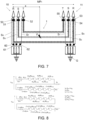
- Figure 7 schematically shows a second embodiment of the system of the invention, said system being applied on a high-voltage three-phase AC cable 1 having a second cable configuration.
- the system comprises a first current measuring equipment configured for measuring the conductor current I R1 , I S1 , I T1 , I R2 , I S2 , I T2 circulating through each conductor R, S, T both at the first end 10 and at the second end 11 of the cable 1.
- the first current measuring equipment comprises six current sensors 50, 51, 52, 53, 54, 55, with one current sensor 50, 51, 52, 53, 54, 55 being arranged at each end of each conductor R, S, T.
- the system comprises a second current measuring equipment configured for measuring the shield current I SR1 , I SS1 , I ST1 ; I SR2 , I SS2 , I ST2 ; of each shield S R , S S , S T in the vicinity of the connection points to ground G of the shields S R , S S , S T .
- the second current measuring equipment comprises six current sensors 60, 61, 62, 63, 64, 65, with one current sensor 60, 61, 62, 63, 64, 65 being arranged in the vicinity of the connection points to ground G of each shield S R , S S , S T .
- the system of the invention comprises a processor, not shown in the figures, configured for executing the method of the invention based on the current measurements performed by said current measuring equipment 50, 51, 52, 53, 54, 55, 60, 61, 62, 63, 64, 65.
- a fault between the conductor S and the shield Ss has been depicted in Figure 7 .
- the method of the invention would be applied as follows: Measuring the conductor current I R1 , I S1 , I T1 , I R2 , I S2 , I T2 circulating through each conductor R, S, T both at the first end 10 and at the second end 11 of the cable 1 by means of the first current measuring equipment 5.
- each shield S R , S S , S T comprises its own resistance R SS , R SR , R SC and its own self-inductance L SS , L SR , L ST of the corresponding shield S R , S S , S T , the mutual inductance Mss-S R , M ST-SR ; M SR-SS , M ST-SS ; M SR-ST , M SS-ST between said shield S R , S S , S T and the rest of the shields S R , S S , S T , and the mutual inductance M R-SR , M S-SR , M T-SR ; M R-SS , M S-SS , M T-SS ; M R-ST , M S-ST , M T-ST between said shield S R , S S , S T and the conductors R, S, T.
- the shields S R , S S , S T are attached and connected to ground at both ends of the main section MP 1 . For this reason, in the model of the shields S R , S S , S T the ends of the models corresponding to each shield S A , S B , Sc are attached to one another, such that three nets in which the sum of voltages is zero are formed.
- FIG 8 shows the detailed model of the shields S R and Ss.
Landscapes
- Physics & Mathematics (AREA)
- General Physics & Mathematics (AREA)
- Engineering & Computer Science (AREA)
- Mathematical Physics (AREA)
- Theoretical Computer Science (AREA)
- Power Engineering (AREA)
- Locating Faults (AREA)
Claims (10)
- Verfahren zum Lokalisieren eines Fehlerpunktes (F) auf einem Hochspannungs-Drehstromkabel (1), das ein erstes Ende (10), ein zweites Ende (11) und mindestens einen Hauptabschnitt (MP1, MP2, MP3) zwischen den genannten Enden (10, 11) umfasst, wobei das Kabel (1) einen Leiter (R, S, T) pro Phase und drei den genannten Leitern (R, S, T) zugehörige Abschirmungen (SA, SB, SC; SR, SS, ST) umfasst, wobei die genannten Abschirmungen (SA, SB, SC; SR, SS, ST) miteinander verbunden und an beiden Enden eines jeden Hauptabschnitts (MP1, MP2, MP3) an Erde (G) angeschlossen sind, wobei das Verfahren die folgenden Schritte umfasst:- Messen des Leiterstroms (IR1, IS1, IT1, IR2, IS2, IT2), der durch die einzelnen Leiter (R, S, T) fließt, sowohl am ersten Ende (10) als auch am zweiten Ende (11) des Kabels (1),- Messen des Schirmstroms (ISA1, ISB1, ISC1, ISA2, ISB2, ISC2, ISA3, ISB3, ISC3, ISA4, ISB4, ISC4; ISR1, ISS1, IST1; ISR2, ISS2, IST2) in der Nähe der Anschlusspunkte an Erde (G) der Abschirmungen (SA, SB, SC),- Ermitteln des fehlerhaften Leiters (R, S, T) auf Grundlage der zuvor gemessenen Leiterströme (IR1, IS1, IT1, IR2, IS2, IT2),- falls das Kabel (1) mehr als einen Hauptabschnitt (MP1, MP2, MP3) umfasst, Ermitteln des fehlerhaften Hauptabschnitts (MP1, MP2, MP3) auf Grundlage der zuvor gemessenen Schirmströme (ISA1, ISB1, ISC1, ISA2, ISB2, ISC2, ISA3, ISB3, ISC3, ISA4, ISB4, ISC4; ISR1, ISS1, IST1; ISR2, ISS2, IST2), und- Lokalisieren des Fehlerpunkts (F) anhand eines Modells der Abschirmungen (SA, SB, SC; SR, SS, ST) des fehlerhaften Hauptabschnitts (MP1, MP2, MP3), unter Berücksichtigung dessen, dass die Abschirmungen (SA, SB, SC; SR, SS, ST) an den Enden des genannten fehlerhaften Hauptteils (MP1, MP2, MP3) miteinander verbunden sind, sodass in dem Modell drei geschlossene Netze, deren Summe von Spannungen null ist, entstehen, wobei die einzige Unbekannte die Entfernung (x) zum Fehlerpunkt (F) ist.
- Verfahren nach Anspruch 1, wobei zur Ermittlung des fehlerhaften Leiters (R, S, T) der am ersten Ende (10) des Kabels (1) für die einzelnen Leiter (R, S, T) gemessene Leiterstrom (IR1; IS1; IT1) mit dem am zweiten Ende (11) des Kabels (1) gemessenen Leiterstrom (IR2; IS2; IT2) verglichen wird, woraus sich ergibt, dass der fehlerhafte Leiter (R, S, T) der Leiter ist, bei dem der Leiterstrom (IR1, IR2; IS1, IS2; IT1, IT2) an den genannten Enden (10, 11) unterschiedlich ist.
- Verfahren nach Anspruch 1 oder 2, wobei das Kabel (1) mindestens zwei Hauptabschnitte (MP1, MP2, MP3) umfasst, wobei der fehlerhafte Hauptabschnitt (MP1, MP2, MP3) anhand der Tatsache, dass die Schirmströme (ISA1, ISB1, ISC1; ISA2, ISB2, ISC2; ISA3, ISB3, ISC3; ISA4, ISB4, ISC4) an den Enden des genannten fehlerhaften Hauptabschnitts (MP1, MP2, MP3) nicht phasengleich sind, ermittelt wird.
- Verfahren nach Anspruch 3, wobei zur Ermittlung des fehlerhaften Hauptabschnitts (MP1, MP2, MP3) die Schirmströme (ISA1, ISB1, ISC1; ISA2, ISB2, ISC2; ISA3, ISB3, ISC3; ISA4, ISB4, ISC4) sukzessive geprüft werden, beginnend an einem der Enden (10, 11) des Kabels (1) bis zu dem Punkt, an dem die Phasenungleichheit der Schirmströme (ISA1, ISB1, ISC1; ISA2, ISB2, ISC2; ISA3, ISB3, ISC3; ISA4, ISB4, ISC4) erfasst wird, woraus sich ergibt, dass der Hauptabschnitt (MP1, MP2, MP3) nach dem Anschlusspunkt an Erde (G), in dem die Phasenungleichheit der genannten Schirmströme (ISA1, ISB1, ISC1; ISA2, ISB2, ISC2; ISA3, ISB3, ISC3; ISA4, ISB4, ISC4) erfasst wird, der fehlerhafte Hauptabschnitt (MP1, MP2, MP3) ist.
- Verfahren nach einem der Ansprüche 1 bis 4, wobei das Kabel (1) eine Cross-Bonding-Konfiguration aufweist, wobei jeder Hauptabschnitt (MP1, MP2, MP3) drei Unterabschnitte (mp1, mp2, mp3) umfasst, wobei das Verfahren das Ermitteln des fehlerhaften Unterabschnitts (mp1, mp2, mp3) nach dem Ermitteln des fehlerhaften Hauptabschnitts (MP1, MP2, MP3) umfasst, wobei zum Ermitteln des fehlerhaften Unterabschnitts (mp1, mp2, mp3) zuerst die fehlerhafte Abschirmung (SA, SB, SC) ermittelt wird, indem für jede Abschirmung (SA, SB, SC) der an einem der Enden des fehlerhaften Hauptteils (MP1, MP2, MP3) gemessene Schirmstrom (ISA1, ISB1, ISC1; ISA2, ISB2, ISC2; ISA3, ISB3, ISC3; ISA4, ISB4, ISC4) mit dem am anderen Ende des fehlerhaften Hauptteils (MP1, MP2, MP3) gemessenen Schirmstrom (ISA1, ISB1, ISC1; ISA2, ISB2, ISC2; ISA3, ISB3, ISC3; ISA4, ISB4, ISC4) verglichen wird, wobei die fehlerhafte Abschirmung (SA, SB, SC) die Abschirmung (SA, SB, SC) ist, bei der die Ströme (ISA1, ISB1, ISC1; ISA2, ISB2, ISC2; ISA3, ISB3, ISC3; ISA4, ISB4, ISC4) an den beiden Enden des fehlerhaften Hauptteils (MP1, MP2, MP3) voneinander abweichen, und der fehlerhafte Unterabschnitt (mp1, mp2, mp3) der Unterabschnitt (mp1, mp2, mp3) ist, in dem der fehlerhafte Leiter (R, S, T) und die fehlerhafte Abschirmung (SA, SB, SC) zusammenfallen.
- Verfahren nach Anspruch 5, wobei das Modell der Abschirmungen (SA, SB, SC) des fehlerhaften Hauptabschnitts (MP1, MP2, MP3) einer jeden Abschirmung (SA, SB, Sc) pro Unterabschnitt (MP1, MP2, MP3) einen eigenen Widerstand (RSA, RSB, RSC) und eine eigene Eigeninduktivität (LSA, LSB, LSC) der entsprechenden Abschirmung (SA, SB, SC), die Gegeninduktivität (MSB-SA, MPSC-SA; MSA-SB, MPSC-SB; MPSA-SC, MPSB-SC) zwischen der genannten Abschirmung (SA, SB, SC) und den übrigen Abschirmungen (SA, SB, SC) sowie die Gegeninduktivität (MR-SA, MS-SA, MT-SA; MR-SB, MS-SB, MPT-SC; MPR-SC, MPS-SC, MPT-SC) zwischen der genannten Abschirmung (SA, SB, SC) und den Leitern (R, S, T) umfasst.
- Verfahren nach Anspruch 6, wobei die Position des Fehlerpunkts (F) anhand der folgenden Gleichungen berechnet wird:


 SF= fehlerhafte Abschirmung,SNF = fehlerfreie Abschirmung,SNF1 = eine der fehlerfreien Abschirmungen,SNF2 = die andere fehlerfreie Abschirmung,CNF1 = einer der fehlerfreien Leiter,CNF2 = der andere fehlerfreie Leiter,mpf = der fehlerhafte Unterabschnitt,mpnf = fehlerfreier Unterabschnitt,ISF1 = Strom der fehlerhaften Abschirmung auf einer Seite des Fehlerpunkts,ISF2 = Strom der fehlerhaften Abschirmung auf der anderen Seite des Fehlerpunkts,ISF = Strom, der durch die fehlerhafte Abschirmung im fehlerhaften Abschnitt fließt; fließt der Strom vom ersten zum zweiten Ende, ist er als positiv zu berücksichtigen; fließt er dagegen vom zweiten zum ersten Ende, ist er als negativ zu berücksichtigen,ICF = Strom, der durch den fehlerhaften Leiter fließt. Fließt der Strom vom ersten zum zweiten Ende, ist er als positiv zu berücksichtigen; fließt er dagegen vom zweiten zum ersten Ende, ist er als negativ zu berücksichtigen,ICF1 = Strom des fehlerhaften Leiters auf einer Seite des Fehlerpunkts, undICF2 = Strom des fehlerhaften Leiters auf der anderen Seite des Fehlerpunkts.
 - Verfahren nach Anspruch 1 oder 2, wobei das Kabel (1) eine fest verbundene Konfiguration aufweist, also einen einzigen Hauptabschnitt (MP1) umfasst, wobei das Modell der Abschirmungen (SR, SS, ST) einer jeden Abschirmung (SR, SS, ST) einen eigenen Widerstand (RSR, RSS, RST) und eine eigene Selbstinduktivität (LSR, LSS, LST), die Gegeninduktivität (MSS-SR, MST-SR; MSR-SS, MST-SS; MSR-ST, MSS-ST) zwischen der genannten Abschirmung (SR, SS, ST) und den übrigen Abschirmungen (SR, SS, ST) sowie die Gegeninduktivität (MR-SR, MS-SR, MT-SR; MR-SS, Ms-ss, MT-SS; MR-ST, MS-ST, MT-ST) zwischen der genannten Abschirmung (SR, SS, ST) und den Leitern (R, S, T) umfasst.
- Verfahren nach Anspruch 8, wobei die Position des Fehlerpunkts (F) anhand der folgenden Gleichungen berechnet wird:


 SF = fehlerhafte Abschirmung,SNF = fehlerfreie Abschirmung,SNF1 = eine der fehlerfreien Abschirmungen,SNF2 = die andere fehlerfreie Abschirmung,CF = fehlerhafter Leiter,CNF1 = einer der fehlerfreien Leiter,CNF2 = der andere fehlerfreie Leiter,ISF1 = Strom der fehlerhaften Abschirmung auf einer Seite des Fehlerpunkts,ISF2 = Strom der fehlerhaften Abschirmung auf der anderen Seite des Fehlerpunkts,ICF1 = Strom des fehlerhaften Leiters auf einer Seite des Fehlerpunkts, undICF2 = Strom des fehlerhaften Leiters auf der anderen Seite des Fehlerpunkts.
 - System zum Lokalisieren eines Fehlerpunktes (F) auf einem Hochspannungs-Drehstromkabel (1), das ein erstes Ende (10), ein zweites Ende (11) und mindestens einen Hauptabschnitt (MP1, MP2, MP3) zwischen den genannten Enden (10, 11) umfasst, wobei das Kabel (1) einen Leiter (R, S, T) pro Phase und drei den genannten Leitern (R, S, T) zugehörige Abschirmungen (SA, SB, SC; SR, SS, ST) umfasst, wobei die genannten Abschirmungen (SA, SB, SC; SR, SS, ST) miteinander verbunden und an beiden Enden eines jeden Hauptabschnitts (MP1, MP2, MP3) an Erde (G) angeschlossen sind, wobei das System Folgendes umfasst:- eine erste Strommesseinrichtung, ausgelegt zum Messen des Leiterstroms (IR1, IS1, IT1, IR2, IS2, IT2), der durch die einzelnen Leiter (R, S, T) fließt, sowohl am ersten Ende (10) als auch am zweiten Ende (11) des Kabels (1),- eine zweite Strommesseinrichtung, ausgelegt zum Messen des Schirmstroms (ISA1, ISB1, ISC1, ISA2, ISB2, ISC2, ISA3, ISB3, ISC3, ISA4, ISB4, ISC4; ISR1, ISS1, IST1; ISR2, ISS2, IST2) in der Nähe der Anschlusspunkte an Erde (G) der Abschirmungen (SA, SB, SC), und- einen Prozessor, ausgelegt zum Ausführen des Verfahrens nach einem der Ansprüche 1 bis 9 auf der Grundlage der von der genannten Strommesseinrichtung durchgeführten Strommessungen.
Priority Applications (3)
| Application Number | Priority Date | Filing Date | Title |
|---|---|---|---|
| ES22382332T ES3008713T3 (en) | 2022-04-06 | 2022-04-06 | Method for locating a fault point on a high-voltage three-phase ac cable, and system for locating a fault point |
| EP22382332.9A EP4257988B1 (de) | 2022-04-06 | 2022-04-06 | Verfahren zum lokalisieren eines fehlerpunktes auf einem hochspannungs-drehstromkabel und system zum lokalisieren eines fehlerpunktes |
| US18/129,351 US12282050B2 (en) | 2022-04-06 | 2023-03-31 | Method for locating a fault point on a high-voltage three-phase AC cable, and system for locating a fault point |
Applications Claiming Priority (1)
| Application Number | Priority Date | Filing Date | Title |
|---|---|---|---|
| EP22382332.9A EP4257988B1 (de) | 2022-04-06 | 2022-04-06 | Verfahren zum lokalisieren eines fehlerpunktes auf einem hochspannungs-drehstromkabel und system zum lokalisieren eines fehlerpunktes |
Publications (3)
| Publication Number | Publication Date |
|---|---|
| EP4257988A1 EP4257988A1 (de) | 2023-10-11 |
| EP4257988C0 EP4257988C0 (de) | 2025-01-01 |
| EP4257988B1 true EP4257988B1 (de) | 2025-01-01 |
Family
ID=81850040
Family Applications (1)
| Application Number | Title | Priority Date | Filing Date |
|---|---|---|---|
| EP22382332.9A Active EP4257988B1 (de) | 2022-04-06 | 2022-04-06 | Verfahren zum lokalisieren eines fehlerpunktes auf einem hochspannungs-drehstromkabel und system zum lokalisieren eines fehlerpunktes |
Country Status (3)
| Country | Link |
|---|---|
| US (1) | US12282050B2 (de) |
| EP (1) | EP4257988B1 (de) |
| ES (1) | ES3008713T3 (de) |
Families Citing this family (1)
| Publication number | Priority date | Publication date | Assignee | Title |
|---|---|---|---|---|
| CN121164829B (zh) * | 2025-11-20 | 2026-01-27 | 内蒙古电力(集团)有限责任公司呼和浩特供电分公司 | 护层接地环流在线监测与故障源定位诊断方法及系统 |
Family Cites Families (9)
| Publication number | Priority date | Publication date | Assignee | Title |
|---|---|---|---|---|
| JPS61243375A (ja) * | 1985-04-19 | 1986-10-29 | Tokyo Electric Power Co Inc:The | 電力ケ−ブルの絶縁体劣化診断法 |
| US5202812A (en) * | 1988-09-21 | 1993-04-13 | Ngk Insulators, Ltd. | Apparatus for detecting faults on power transmission lines |
| US7282944B2 (en) * | 2003-07-25 | 2007-10-16 | Power Measurement, Ltd. | Body capacitance electric field powered device for high voltage lines |
| US7683798B2 (en) * | 2006-07-07 | 2010-03-23 | Ssi Power, Llc | Current monitoring device for high voltage electric power lines |
| US10852359B2 (en) * | 2017-12-05 | 2020-12-01 | The University Of Hong Kong | Apparatus and method for DC-component-based fault classification of three-phase distribution power cables with magnetic sensing |
| EP3850381A2 (de) * | 2018-09-10 | 2021-07-21 | 3M Innovative Properties Company | Stromkabelüberwachungsvorrichtung mit teilentladungssensor |
| US11971440B2 (en) * | 2018-11-01 | 2024-04-30 | University Of Manitoba | Method for determining conductors involved in a fault on a power transmission line and fault location using local current measurements |
| EP3786652B1 (de) | 2019-08-29 | 2023-12-06 | Nexans | Verfahren und system zur lokalisierung eines kurzschlusses zwischen einem leiter und einem diesen umgebenden elektrisch leitenden schirm |
| EP4257987B1 (de) * | 2022-04-06 | 2025-01-01 | Lumiker Aplicaciones Tecnologicas S.L. | Verfahren zum lokalisieren eines fehlerpunktes auf einem hochspannungs-drehstromkabel und system zum lokalisieren eines fehlerpunktes |
-
2022
- 2022-04-06 EP EP22382332.9A patent/EP4257988B1/de active Active
- 2022-04-06 ES ES22382332T patent/ES3008713T3/es active Active
-
2023
- 2023-03-31 US US18/129,351 patent/US12282050B2/en active Active
Also Published As
| Publication number | Publication date |
|---|---|
| EP4257988C0 (de) | 2025-01-01 |
| US12282050B2 (en) | 2025-04-22 |
| EP4257988A1 (de) | 2023-10-11 |
| US20230324450A1 (en) | 2023-10-12 |
| ES3008713T3 (en) | 2025-03-24 |
Similar Documents
| Publication | Publication Date | Title |
|---|---|---|
| EP3088906B1 (de) | Fehlerpositionserkennung und distanzschutzvorrichtung sowie zugehöriges verfahren | |
| EP0078183B1 (de) | Fehlerortsbestimmung in Energieübertragungsleitungen | |
| EP2780998B1 (de) | Ausfallschutz in gemischten hochspannungsleitungen | |
| EP3482472B1 (de) | Verfahren und system zur ortung eines fehlers in einer gemischten energieübertragungsleitung | |
| EP3710843B1 (de) | Parameterfreie wanderwellenbasierte fehlerortung für energieübertragungsleitungen | |
| EP1724597A2 (de) | Vorrichtung und Verfahren zur Ortsbestimmung eines Erdschlussfehlers | |
| EP2820435B1 (de) | Verfahren und vorrichtung zur fehlererfassung in einem hdvc-stromübertragungssystem | |
| EP1172660A2 (de) | Verfahren und Vorrichtung zur Fehlerortung in Versorgungsnetzen | |
| EP3093675A1 (de) | Verbesserungen an oder im zusammenhang mit gleichstromschutzschemata | |
| EP3629437B1 (de) | Verfahren und vorrichtung zum steuern mindestens eines leistungsschalters eines stromsystems | |
| JP6624165B2 (ja) | 配電線故障点標定システム | |
| CN107624209A (zh) | 直流电距离保护系统的改进或其相关改进 | |
| EP4257987B1 (de) | Verfahren zum lokalisieren eines fehlerpunktes auf einem hochspannungs-drehstromkabel und system zum lokalisieren eines fehlerpunktes | |
| EP4257988A1 (de) | Verfahren zum lokalisieren eines fehlerpunktes auf einem hochspannungs-drehstromkabel und system zum lokalisieren eines fehlerpunktes | |
| Yang et al. | On-line monitoring and trending of dielectric loss in a cross-bonded HV cable system | |
| WO2024141854A1 (en) | Method and system for recognising partial discharges in dc electrical components | |
| JPH11271384A (ja) | 非接地系電路の線路定数計測装置及び地絡監視装置 | |
| EP3185025B1 (de) | Elektrisches fehlerortungsverfahren | |
| EP3391064B1 (de) | Verfahren zur lokalisierung eines fehlers in einem leistungsübertragungsmedium | |
| EP0942292B1 (de) | Gerät und Verfahren zur Erfassung von Fehlern eines Kabelisolierungsmantels und Anlagen die sie benutzen | |
| Yang et al. | On-line monitoring and trending analysis of dielectric losses in cross-bonded high voltage cable systems | |
| Ntambara et al. | Power System Faults Analysis, Detection, and Localization in Underground Distribution and Transmission Networks by Deploying AI-based Matlab Model/Simulink. | |
| El Haffar et al. | Evaluation of travelling wave fault location methods based on field measurements | |
| Choudry | POWER STREAM From | |
| Sachdev et al. | A technique for estimating the location of a transmission line shunt fault |
Legal Events
| Date | Code | Title | Description |
|---|---|---|---|
| PUAI | Public reference made under article 153(3) epc to a published international application that has entered the european phase |
Free format text: ORIGINAL CODE: 0009012 |
|
| STAA | Information on the status of an ep patent application or granted ep patent |
Free format text: STATUS: THE APPLICATION HAS BEEN PUBLISHED |
|
| AK | Designated contracting states |
Kind code of ref document: A1 Designated state(s): AL AT BE BG CH CY CZ DE DK EE ES FI FR GB GR HR HU IE IS IT LI LT LU LV MC MK MT NL NO PL PT RO RS SE SI SK SM TR |
|
| STAA | Information on the status of an ep patent application or granted ep patent |
Free format text: STATUS: REQUEST FOR EXAMINATION WAS MADE |
|
| 17P | Request for examination filed |
Effective date: 20240327 |
|
| RBV | Designated contracting states (corrected) |
Designated state(s): AL AT BE BG CH CY CZ DE DK EE ES FI FR GB GR HR HU IE IS IT LI LT LU LV MC MK MT NL NO PL PT RO RS SE SI SK SM TR |
|
| GRAP | Despatch of communication of intention to grant a patent |
Free format text: ORIGINAL CODE: EPIDOSNIGR1 |
|
| STAA | Information on the status of an ep patent application or granted ep patent |
Free format text: STATUS: GRANT OF PATENT IS INTENDED |
|
| INTG | Intention to grant announced |
Effective date: 20240729 |
|
| GRAS | Grant fee paid |
Free format text: ORIGINAL CODE: EPIDOSNIGR3 |
|
| GRAA | (expected) grant |
Free format text: ORIGINAL CODE: 0009210 |
|
| STAA | Information on the status of an ep patent application or granted ep patent |
Free format text: STATUS: THE PATENT HAS BEEN GRANTED |
|
| AK | Designated contracting states |
Kind code of ref document: B1 Designated state(s): AL AT BE BG CH CY CZ DE DK EE ES FI FR GB GR HR HU IE IS IT LI LT LU LV MC MK MT NL NO PL PT RO RS SE SI SK SM TR |
|
| REG | Reference to a national code |
Ref country code: GB Ref legal event code: FG4D |
|
| REG | Reference to a national code |
Ref country code: CH Ref legal event code: EP |
|
| REG | Reference to a national code |
Ref country code: DE Ref legal event code: R096 Ref document number: 602022009346 Country of ref document: DE |
|
| REG | Reference to a national code |
Ref country code: IE Ref legal event code: FG4D |
|
| U01 | Request for unitary effect filed |
Effective date: 20250115 |
|
| U07 | Unitary effect registered |
Designated state(s): AT BE BG DE DK EE FI FR IT LT LU LV MT NL PT RO SE SI Effective date: 20250127 |
|
| REG | Reference to a national code |
Ref country code: ES Ref legal event code: FG2A Ref document number: 3008713 Country of ref document: ES Kind code of ref document: T3 Effective date: 20250324 |
|
| U20 | Renewal fee for the european patent with unitary effect paid |
Year of fee payment: 4 Effective date: 20250430 |
|
| PG25 | Lapsed in a contracting state [announced via postgrant information from national office to epo] |
Ref country code: PL Free format text: LAPSE BECAUSE OF FAILURE TO SUBMIT A TRANSLATION OF THE DESCRIPTION OR TO PAY THE FEE WITHIN THE PRESCRIBED TIME-LIMIT Effective date: 20250101 |
|
| PG25 | Lapsed in a contracting state [announced via postgrant information from national office to epo] |
Ref country code: IS Free format text: LAPSE BECAUSE OF FAILURE TO SUBMIT A TRANSLATION OF THE DESCRIPTION OR TO PAY THE FEE WITHIN THE PRESCRIBED TIME-LIMIT Effective date: 20250501 |
|
| PG25 | Lapsed in a contracting state [announced via postgrant information from national office to epo] |
Ref country code: HR Free format text: LAPSE BECAUSE OF FAILURE TO SUBMIT A TRANSLATION OF THE DESCRIPTION OR TO PAY THE FEE WITHIN THE PRESCRIBED TIME-LIMIT Effective date: 20250101 |
|
| PG25 | Lapsed in a contracting state [announced via postgrant information from national office to epo] |
Ref country code: GR Free format text: LAPSE BECAUSE OF FAILURE TO SUBMIT A TRANSLATION OF THE DESCRIPTION OR TO PAY THE FEE WITHIN THE PRESCRIBED TIME-LIMIT Effective date: 20250402 |
|
| PG25 | Lapsed in a contracting state [announced via postgrant information from national office to epo] |
Ref country code: CZ Free format text: LAPSE BECAUSE OF FAILURE TO SUBMIT A TRANSLATION OF THE DESCRIPTION OR TO PAY THE FEE WITHIN THE PRESCRIBED TIME-LIMIT Effective date: 20250101 |
|
| U1N | Appointed representative for the unitary patent procedure changed after the registration of the unitary effect |
Representative=s name: GALBAIAN S.COOP.; ES |
|
| PG25 | Lapsed in a contracting state [announced via postgrant information from national office to epo] |
Ref country code: SM Free format text: LAPSE BECAUSE OF FAILURE TO SUBMIT A TRANSLATION OF THE DESCRIPTION OR TO PAY THE FEE WITHIN THE PRESCRIBED TIME-LIMIT Effective date: 20250101 |
|
| PG25 | Lapsed in a contracting state [announced via postgrant information from national office to epo] |
Ref country code: SK Free format text: LAPSE BECAUSE OF FAILURE TO SUBMIT A TRANSLATION OF THE DESCRIPTION OR TO PAY THE FEE WITHIN THE PRESCRIBED TIME-LIMIT Effective date: 20250101 |
|
| PLBE | No opposition filed within time limit |
Free format text: ORIGINAL CODE: 0009261 |
|
| STAA | Information on the status of an ep patent application or granted ep patent |
Free format text: STATUS: NO OPPOSITION FILED WITHIN TIME LIMIT |
|
| REG | Reference to a national code |
Ref country code: CH Ref legal event code: L10 Free format text: ST27 STATUS EVENT CODE: U-0-0-L10-L00 (AS PROVIDED BY THE NATIONAL OFFICE) Effective date: 20251112 |
|
| REG | Reference to a national code |
Ref country code: CH Ref legal event code: H13 Free format text: ST27 STATUS EVENT CODE: U-0-0-H10-H13 (AS PROVIDED BY THE NATIONAL OFFICE) Effective date: 20251125 |
|
| 26N | No opposition filed |
Effective date: 20251002 |
|
| PG25 | Lapsed in a contracting state [announced via postgrant information from national office to epo] |
Ref country code: MC Free format text: LAPSE BECAUSE OF FAILURE TO SUBMIT A TRANSLATION OF THE DESCRIPTION OR TO PAY THE FEE WITHIN THE PRESCRIBED TIME-LIMIT Effective date: 20250101 |
|
| PG25 | Lapsed in a contracting state [announced via postgrant information from national office to epo] |
Ref country code: CH Free format text: LAPSE BECAUSE OF NON-PAYMENT OF DUE FEES Effective date: 20250430 |
|
| PG25 | Lapsed in a contracting state [announced via postgrant information from national office to epo] |
Ref country code: IE Free format text: LAPSE BECAUSE OF NON-PAYMENT OF DUE FEES Effective date: 20250406 |
|
| U20 | Renewal fee for the european patent with unitary effect paid |
Year of fee payment: 5 Effective date: 20260430 |
|
| PG25 | Lapsed in a contracting state [announced via postgrant information from national office to epo] |
Ref country code: CY Free format text: LAPSE BECAUSE OF FAILURE TO SUBMIT A TRANSLATION OF THE DESCRIPTION OR TO PAY THE FEE WITHIN THE PRESCRIBED TIME-LIMIT Effective date: 20250101 |
|
| PG25 | Lapsed in a contracting state [announced via postgrant information from national office to epo] |
Ref country code: RS Free format text: LAPSE BECAUSE OF FAILURE TO SUBMIT A TRANSLATION OF THE DESCRIPTION OR TO PAY THE FEE WITHIN THE PRESCRIBED TIME-LIMIT Effective date: 20250101 |
|
| PGFP | Annual fee paid to national office [announced via postgrant information from national office to epo] |
Ref country code: ES Payment date: 20260508 Year of fee payment: 5 |
|
| PGFP | Annual fee paid to national office [announced via postgrant information from national office to epo] |
Ref country code: NO Payment date: 20260429 Year of fee payment: 5 |