EP4253338A2 - Hydrogen-containing glass-based articles with high indentation cracking threshold - Google Patents
Hydrogen-containing glass-based articles with high indentation cracking threshold Download PDFInfo
- Publication number
- EP4253338A2 EP4253338A2 EP23192015.8A EP23192015A EP4253338A2 EP 4253338 A2 EP4253338 A2 EP 4253338A2 EP 23192015 A EP23192015 A EP 23192015A EP 4253338 A2 EP4253338 A2 EP 4253338A2
- Authority
- EP
- European Patent Office
- Prior art keywords
- equal
- mol
- glass
- less
- glass article
- Prior art date
- Legal status (The legal status is an assumption and is not a legal conclusion. Google has not performed a legal analysis and makes no representation as to the accuracy of the status listed.)
- Pending
Links
- 239000011521 glass Substances 0.000 title claims abstract description 406
- 239000001257 hydrogen Substances 0.000 title claims abstract description 123
- 229910052739 hydrogen Inorganic materials 0.000 title claims abstract description 123
- UFHFLCQGNIYNRP-UHFFFAOYSA-N Hydrogen Chemical compound [H][H] UFHFLCQGNIYNRP-UHFFFAOYSA-N 0.000 title claims abstract description 111
- 238000005336 cracking Methods 0.000 title abstract description 13
- 238000007373 indentation Methods 0.000 title description 15
- 230000007423 decrease Effects 0.000 claims abstract description 9
- VYPSYNLAJGMNEJ-UHFFFAOYSA-N Silicium dioxide Chemical compound O=[Si]=O VYPSYNLAJGMNEJ-UHFFFAOYSA-N 0.000 claims description 110
- DLYUQMMRRRQYAE-UHFFFAOYSA-N tetraphosphorus decaoxide Chemical compound O1P(O2)(=O)OP3(=O)OP1(=O)OP2(=O)O3 DLYUQMMRRRQYAE-UHFFFAOYSA-N 0.000 claims description 98
- PNEYBMLMFCGWSK-UHFFFAOYSA-N aluminium oxide Inorganic materials [O-2].[O-2].[O-2].[Al+3].[Al+3] PNEYBMLMFCGWSK-UHFFFAOYSA-N 0.000 claims description 55
- 229910052593 corundum Inorganic materials 0.000 claims description 55
- 239000000377 silicon dioxide Substances 0.000 claims description 55
- 229910001845 yogo sapphire Inorganic materials 0.000 claims description 55
- 229910052681 coesite Inorganic materials 0.000 claims description 54
- 229910052906 cristobalite Inorganic materials 0.000 claims description 54
- 229910052682 stishovite Inorganic materials 0.000 claims description 54
- 229910052905 tridymite Inorganic materials 0.000 claims description 54
- KOPBYBDAPCDYFK-UHFFFAOYSA-N Cs2O Inorganic materials [O-2].[Cs+].[Cs+] KOPBYBDAPCDYFK-UHFFFAOYSA-N 0.000 claims description 23
- AKUNKIJLSDQFLS-UHFFFAOYSA-M dicesium;hydroxide Chemical compound [OH-].[Cs+].[Cs+] AKUNKIJLSDQFLS-UHFFFAOYSA-M 0.000 claims description 23
- 229910001953 rubidium(I) oxide Inorganic materials 0.000 claims description 23
- WHXSMMKQMYFTQS-UHFFFAOYSA-N Lithium Chemical compound [Li] WHXSMMKQMYFTQS-UHFFFAOYSA-N 0.000 claims description 17
- 229910052744 lithium Inorganic materials 0.000 claims description 17
- 150000002500 ions Chemical class 0.000 claims description 16
- DGAQECJNVWCQMB-PUAWFVPOSA-M Ilexoside XXIX Chemical compound C[C@@H]1CC[C@@]2(CC[C@@]3(C(=CC[C@H]4[C@]3(CC[C@@H]5[C@@]4(CC[C@@H](C5(C)C)OS(=O)(=O)[O-])C)C)[C@@H]2[C@]1(C)O)C)C(=O)O[C@H]6[C@@H]([C@H]([C@@H]([C@H](O6)CO)O)O)O.[Na+] DGAQECJNVWCQMB-PUAWFVPOSA-M 0.000 claims description 15
- 229910052708 sodium Inorganic materials 0.000 claims description 15
- 239000011734 sodium Substances 0.000 claims description 15
- 230000006835 compression Effects 0.000 claims description 14
- 238000007906 compression Methods 0.000 claims description 14
- 230000000977 initiatory effect Effects 0.000 claims description 14
- FUJCRWPEOMXPAD-UHFFFAOYSA-N Li2O Inorganic materials [Li+].[Li+].[O-2] FUJCRWPEOMXPAD-UHFFFAOYSA-N 0.000 claims description 13
- XUCJHNOBJLKZNU-UHFFFAOYSA-M dilithium;hydroxide Chemical compound [Li+].[Li+].[OH-] XUCJHNOBJLKZNU-UHFFFAOYSA-M 0.000 claims description 13
- KKCBUQHMOMHUOY-UHFFFAOYSA-N Na2O Inorganic materials [O-2].[Na+].[Na+] KKCBUQHMOMHUOY-UHFFFAOYSA-N 0.000 claims description 12
- 239000003513 alkali Substances 0.000 claims description 11
- NOTVAPJNGZMVSD-UHFFFAOYSA-N potassium monoxide Inorganic materials [K]O[K] NOTVAPJNGZMVSD-UHFFFAOYSA-N 0.000 claims description 6
- 238000005496 tempering Methods 0.000 claims description 3
- 238000003475 lamination Methods 0.000 claims description 2
- 239000000203 mixture Substances 0.000 abstract description 59
- 238000000034 method Methods 0.000 abstract description 39
- 238000007545 Vickers hardness test Methods 0.000 abstract description 15
- 230000015572 biosynthetic process Effects 0.000 abstract description 6
- 239000000758 substrate Substances 0.000 description 103
- XLYOFNOQVPJJNP-UHFFFAOYSA-N water Substances O XLYOFNOQVPJJNP-UHFFFAOYSA-N 0.000 description 20
- 238000012360 testing method Methods 0.000 description 18
- 229910000272 alkali metal oxide Inorganic materials 0.000 description 12
- 150000002431 hydrogen Chemical class 0.000 description 11
- 125000002887 hydroxy group Chemical group [H]O* 0.000 description 11
- XLYOFNOQVPJJNP-UHFFFAOYSA-O oxonium Chemical compound [OH3+] XLYOFNOQVPJJNP-UHFFFAOYSA-O 0.000 description 8
- 238000005259 measurement Methods 0.000 description 7
- 239000000523 sample Substances 0.000 description 7
- 238000001004 secondary ion mass spectrometry Methods 0.000 description 7
- ZLMJMSJWJFRBEC-UHFFFAOYSA-N Potassium Chemical compound [K] ZLMJMSJWJFRBEC-UHFFFAOYSA-N 0.000 description 6
- 238000009792 diffusion process Methods 0.000 description 6
- 229910052700 potassium Inorganic materials 0.000 description 6
- 239000011591 potassium Substances 0.000 description 6
- 230000000052 comparative effect Effects 0.000 description 5
- 238000005033 Fourier transform infrared spectroscopy Methods 0.000 description 4
- 230000006870 function Effects 0.000 description 4
- BHEPBYXIRTUNPN-UHFFFAOYSA-N hydridophosphorus(.) (triplet) Chemical compound [PH] BHEPBYXIRTUNPN-UHFFFAOYSA-N 0.000 description 4
- 239000000463 material Substances 0.000 description 4
- 238000004458 analytical method Methods 0.000 description 3
- 230000006399 behavior Effects 0.000 description 3
- 239000000470 constituent Substances 0.000 description 3
- 238000005342 ion exchange Methods 0.000 description 3
- 230000008569 process Effects 0.000 description 3
- 238000007655 standard test method Methods 0.000 description 3
- 238000005299 abrasion Methods 0.000 description 2
- 239000003082 abrasive agent Substances 0.000 description 2
- 230000008901 benefit Effects 0.000 description 2
- 229910052792 caesium Inorganic materials 0.000 description 2
- TVFDJXOCXUVLDH-UHFFFAOYSA-N caesium atom Chemical compound [Cs] TVFDJXOCXUVLDH-UHFFFAOYSA-N 0.000 description 2
- 230000008859 change Effects 0.000 description 2
- 239000000156 glass melt Substances 0.000 description 2
- 230000007246 mechanism Effects 0.000 description 2
- 229910052701 rubidium Inorganic materials 0.000 description 2
- IGLNJRXAVVLDKE-UHFFFAOYSA-N rubidium atom Chemical compound [Rb] IGLNJRXAVVLDKE-UHFFFAOYSA-N 0.000 description 2
- 101100348017 Drosophila melanogaster Nazo gene Proteins 0.000 description 1
- 229910000760 Hardened steel Inorganic materials 0.000 description 1
- 230000006978 adaptation Effects 0.000 description 1
- 230000002411 adverse Effects 0.000 description 1
- 238000005452 bending Methods 0.000 description 1
- 239000000919 ceramic Substances 0.000 description 1
- 150000001875 compounds Chemical class 0.000 description 1
- 239000000356 contaminant Substances 0.000 description 1
- 239000013068 control sample Substances 0.000 description 1
- 230000007797 corrosion Effects 0.000 description 1
- 238000005260 corrosion Methods 0.000 description 1
- 238000007405 data analysis Methods 0.000 description 1
- 230000003247 decreasing effect Effects 0.000 description 1
- 230000007547 defect Effects 0.000 description 1
- 238000013461 design Methods 0.000 description 1
- 238000011161 development Methods 0.000 description 1
- 229910003460 diamond Inorganic materials 0.000 description 1
- 239000010432 diamond Substances 0.000 description 1
- 230000003292 diminished effect Effects 0.000 description 1
- 230000002708 enhancing effect Effects 0.000 description 1
- 230000001747 exhibiting effect Effects 0.000 description 1
- 239000005357 flat glass Substances 0.000 description 1
- 230000004927 fusion Effects 0.000 description 1
- 239000002241 glass-ceramic Substances 0.000 description 1
- 238000007542 hardness measurement Methods 0.000 description 1
- -1 hydrogen ions Chemical class 0.000 description 1
- WPYVAWXEWQSOGY-UHFFFAOYSA-N indium antimonide Chemical compound [Sb]#[In] WPYVAWXEWQSOGY-UHFFFAOYSA-N 0.000 description 1
- 238000004519 manufacturing process Methods 0.000 description 1
- 238000000691 measurement method Methods 0.000 description 1
- 238000002844 melting Methods 0.000 description 1
- 230000008018 melting Effects 0.000 description 1
- 238000012986 modification Methods 0.000 description 1
- 230000004048 modification Effects 0.000 description 1
- 230000003287 optical effect Effects 0.000 description 1
- 239000002245 particle Substances 0.000 description 1
- 238000005191 phase separation Methods 0.000 description 1
- 239000002243 precursor Substances 0.000 description 1
- 239000006064 precursor glass Substances 0.000 description 1
- 230000004044 response Effects 0.000 description 1
- 238000007679 ring-on-ring test Methods 0.000 description 1
- HBMJWWWQQXIZIP-UHFFFAOYSA-N silicon carbide Chemical compound [Si+]#[C-] HBMJWWWQQXIZIP-UHFFFAOYSA-N 0.000 description 1
- 238000001228 spectrum Methods 0.000 description 1
- 238000005728 strengthening Methods 0.000 description 1
Images



Classifications
-
- C—CHEMISTRY; METALLURGY
- C03—GLASS; MINERAL OR SLAG WOOL
- C03C—CHEMICAL COMPOSITION OF GLASSES, GLAZES OR VITREOUS ENAMELS; SURFACE TREATMENT OF GLASS; SURFACE TREATMENT OF FIBRES OR FILAMENTS MADE FROM GLASS, MINERALS OR SLAGS; JOINING GLASS TO GLASS OR OTHER MATERIALS
- C03C3/00—Glass compositions
- C03C3/04—Glass compositions containing silica
- C03C3/076—Glass compositions containing silica with 40% to 90% silica, by weight
- C03C3/102—Glass compositions containing silica with 40% to 90% silica, by weight containing lead
- C03C3/105—Glass compositions containing silica with 40% to 90% silica, by weight containing lead containing aluminium
-
- C—CHEMISTRY; METALLURGY
- C03—GLASS; MINERAL OR SLAG WOOL
- C03C—CHEMICAL COMPOSITION OF GLASSES, GLAZES OR VITREOUS ENAMELS; SURFACE TREATMENT OF GLASS; SURFACE TREATMENT OF FIBRES OR FILAMENTS MADE FROM GLASS, MINERALS OR SLAGS; JOINING GLASS TO GLASS OR OTHER MATERIALS
- C03C21/00—Treatment of glass, not in the form of fibres or filaments, by diffusing ions or metals in the surface
- C03C21/007—Treatment of glass, not in the form of fibres or filaments, by diffusing ions or metals in the surface in gaseous phase
-
- C—CHEMISTRY; METALLURGY
- C03—GLASS; MINERAL OR SLAG WOOL
- C03C—CHEMICAL COMPOSITION OF GLASSES, GLAZES OR VITREOUS ENAMELS; SURFACE TREATMENT OF GLASS; SURFACE TREATMENT OF FIBRES OR FILAMENTS MADE FROM GLASS, MINERALS OR SLAGS; JOINING GLASS TO GLASS OR OTHER MATERIALS
- C03C21/00—Treatment of glass, not in the form of fibres or filaments, by diffusing ions or metals in the surface
- C03C21/001—Treatment of glass, not in the form of fibres or filaments, by diffusing ions or metals in the surface in liquid phase, e.g. molten salts, solutions
- C03C21/002—Treatment of glass, not in the form of fibres or filaments, by diffusing ions or metals in the surface in liquid phase, e.g. molten salts, solutions to perform ion-exchange between alkali ions
-
- C—CHEMISTRY; METALLURGY
- C03—GLASS; MINERAL OR SLAG WOOL
- C03C—CHEMICAL COMPOSITION OF GLASSES, GLAZES OR VITREOUS ENAMELS; SURFACE TREATMENT OF GLASS; SURFACE TREATMENT OF FIBRES OR FILAMENTS MADE FROM GLASS, MINERALS OR SLAGS; JOINING GLASS TO GLASS OR OTHER MATERIALS
- C03C3/00—Glass compositions
- C03C3/04—Glass compositions containing silica
- C03C3/076—Glass compositions containing silica with 40% to 90% silica, by weight
- C03C3/083—Glass compositions containing silica with 40% to 90% silica, by weight containing aluminium oxide or an iron compound
-
- C—CHEMISTRY; METALLURGY
- C03—GLASS; MINERAL OR SLAG WOOL
- C03C—CHEMICAL COMPOSITION OF GLASSES, GLAZES OR VITREOUS ENAMELS; SURFACE TREATMENT OF GLASS; SURFACE TREATMENT OF FIBRES OR FILAMENTS MADE FROM GLASS, MINERALS OR SLAGS; JOINING GLASS TO GLASS OR OTHER MATERIALS
- C03C3/00—Glass compositions
- C03C3/04—Glass compositions containing silica
- C03C3/076—Glass compositions containing silica with 40% to 90% silica, by weight
- C03C3/083—Glass compositions containing silica with 40% to 90% silica, by weight containing aluminium oxide or an iron compound
- C03C3/085—Glass compositions containing silica with 40% to 90% silica, by weight containing aluminium oxide or an iron compound containing an oxide of a divalent metal
-
- C—CHEMISTRY; METALLURGY
- C03—GLASS; MINERAL OR SLAG WOOL
- C03C—CHEMICAL COMPOSITION OF GLASSES, GLAZES OR VITREOUS ENAMELS; SURFACE TREATMENT OF GLASS; SURFACE TREATMENT OF FIBRES OR FILAMENTS MADE FROM GLASS, MINERALS OR SLAGS; JOINING GLASS TO GLASS OR OTHER MATERIALS
- C03C3/00—Glass compositions
- C03C3/04—Glass compositions containing silica
- C03C3/076—Glass compositions containing silica with 40% to 90% silica, by weight
- C03C3/097—Glass compositions containing silica with 40% to 90% silica, by weight containing phosphorus, niobium or tantalum
-
- C—CHEMISTRY; METALLURGY
- C03—GLASS; MINERAL OR SLAG WOOL
- C03B—MANUFACTURE, SHAPING, OR SUPPLEMENTARY PROCESSES
- C03B2201/00—Type of glass produced
- C03B2201/06—Doped silica-based glasses
- C03B2201/20—Doped silica-based glasses doped with non-metals other than boron or fluorine
- C03B2201/21—Doped silica-based glasses doped with non-metals other than boron or fluorine doped with molecular hydrogen
Definitions
- This disclosure relates to glass-based articles that contain hydrogen, glass compositions utilized to form the glass-based articles, and methods of forming the glass-based articles.
- Portable electronic devices such as, smartphones, tablets, and wearable devices (such as, for example, watches and fitness trackers) continue to get smaller and more complex.
- materials that are conventionally used on at least one external surface of such portable electronic devices also continue to get more complex.
- the display covers and housings used in these portable electronic devices also get smaller and thinner, resulting in higher performance requirements for the materials used to form these components.
- a glass-based article comprises: SiO 2 , Al 2 O 3 , and P 2 O 5 ; and a hydrogen-containing layer extending from a surface of the glass-based article to a depth of layer.
- a hydrogen concentration of the hydrogen-containing layer decreases from a maximum hydrogen concentration to the depth of layer, and the depth of layer is greater than 5 ⁇ m.
- the glass-based article of aspect (1) is provided, wherein the glass-based article has a Vicker's crack initiation threshold of greater than or equal to 1 kgf
- the glass-based article of aspect (1) or (2) is provided, wherein the depth of layer is greater than or equal to 10 ⁇ m.
- the glass-based article of any of aspects (1) to (3) is provided, wherein the maximum hydrogen concentration is located at the surface of the glass-based article.
- the glass-based article of any of aspects (1) to (4) is provided, further comprising at least one of Li 2 O, Na 2 O, K 2 O, Cs 2 O, and Rb 2 O.
- the glass-based article of any of aspects (1) to (5) is provided, further comprising K 2 O.
- the glass-based article of any of aspects (1) to (6) wherein the center of the glass-based article comprises: greater than or equal to 45 mol% to less than or equal to 75 mol% SiO 2 ; greater than or equal to 3 mol% to less than or equal to 20 mol% Al 2 O 3 ; greater than or equal to 6 mol% to less than or equal to 15 mol% P 2 O 5 ; and greater than or equal to 6 mol% to less than or equal to 25 mol% K 2 O.
- the glass-based article of any of aspects (1) to (6) wherein the center of the glass-based article comprises: greater than or equal to 45 mol% to less than or equal to 75 mol% SiO 2 ; greater than or equal to 3 mol% to less than or equal to 20 mol% Al 2 O 3 ; greater than or equal to 4 mol% to less than or equal to 15 mol% P 2 O 5 ; and greater than or equal to 11 mol% to less than or equal to 25 mol% K 2 O.
- the glass-based article of any of aspects (1) to (6) wherein the center of the glass-based article comprises: greater than or equal to 55 mol% to less than or equal to 69 mol% SiO 2 ; greater than or equal to 5 mol% to less than or equal to 15 mol% Al 2 O 3 ; greater than or equal to 6 mol% to less than or equal to 10 mol% P 2 O 5 ; and greater than or equal to 10 mol% to less than or equal to 20 mol% K 2 O.
- the glass-based article of any of aspects (7) to (9) is provided, wherein the center of the glass-based article comprises: greater than or equal to 0 mol% to less than or equal to 10 mol% Cs 2 O; and greater than or equal to 0 mol% to less than or equal to 10 mol% Rb 2 O.
- the glass-based article of any of aspects (1) to (10) is provided, wherein the glass-based article is substantially free of at least one of lithium and sodium.
- the glass-based article of any of aspects (1) to (11) is provided, further comprising a compressive stress layer extending from a surface of the glass-based article into the glass-based article to a depth of compression.
- the glass-based article of aspect (12) is provided, wherein the compressive stress layer comprises a compressive stress of at least about 100 MPa and the depth of compression is at least about 75 ⁇ m.
- a consumer electronic product comprises: a housing comprising a front surface, a back surface and side surfaces; electrical components at least partially within the housing, the electrical components comprising at least a controller, a memory, and a display, the display at or adjacent the front surface of the housing; and a cover substrate disposed over the display. At least a portion of at least one of the housing or the cover substrate comprises the glass-based article of any of aspects (1) to (13).
- a glass in aspect (15), comprises: greater than or equal to 45 mol% to less than or equal to 75 mol% SiO 2 ; greater than or equal to 3 mol% to less than or equal to 20 mol% Al 2 O 3 ; greater than or equal to 6 mol% to less than or equal to 15 mol% P 2 O 5 ; and greater than or equal to 6 mol% to less than or equal to 25 mol% K 2 O.
- the glass of aspect (15) comprising: greater than or equal to 55 mol% to less than or equal to 69 mol% SiO 2 ; greater than or equal to 5 mol% to less than or equal to 15 mol% Al 2 O 3 ; greater than or equal to 6 mol% to less than or equal to 10 mol% P 2 O 5 ; and greater than or equal to 10 mol% to less than or equal to 20 mol% K 2 O.
- the glass of aspect (15) or (16) is provided, further comprising: greater than or equal to 0 mol% to less than or equal to 10 mol% Cs 2 O; and greater than or equal to 0 mol% to less than or equal to 10 mol% Rb 2 O.
- the glass of any of aspects (15) to (17) is provided, wherein the glass is substantially free of lithium.
- the glass of any of aspects (15) to (18) is provided, wherein the glass is substantially free of sodium.
- the glass of any of aspects (15) to (19) comprising: greater than or equal to 58 mol% to less than or equal to 63 mol% SiO 2 ; greater than or equal to 7 mol% to less than or equal to 14 mol% Al 2 O 3 ; greater than or equal to 7 mol% to less than or equal to 10 mol% P 2 O 5 ; and greater than or equal to 15 mol% to less than or equal to 20 mol% K 2 O.
- the glass of any of aspects (15) to (20) is provided, wherein the glass has a Vicker's crack initiation threshold of greater than or equal to 5 kgf
- the glass of any of aspects (15) to (21) is provided, further comprising at least one of Li 2 O, Na 2 O, Cs 2 O, and Rb 2 O.
- a glass in aspect (23), comprises: greater than or equal to 45 mol% to less than or equal to 75 mol% SiO 2 ; greater than or equal to 3 mol% to less than or equal to 20 mol% Al 2 O 3 ; greater than or equal to 4 mol% to less than or equal to 15 mol% P 2 O 5 ; and greater than or equal to 11 mol% to less than or equal to 25 mol% K 2 O.
- the glass of aspect (23) comprising: greater than or equal to 55 mol% to less than or equal to 69 mol% SiO 2 ; greater than or equal to 5 mol% to less than or equal to 15 mol% Al 2 O 3 ; greater than or equal to 5 mol% to less than or equal to 10 mol% P 2 O 5 ; and greater than or equal to 11 mol% to less than or equal to 20 mol% K 2 O.
- the glass of aspect (23) or (24) is provided, further comprising: greater than or equal to 0 mol% to less than or equal to 10 mol% Cs 2 O; and greater than or equal to 0 mol% to less than or equal to 10 mol% Rb 2 O.
- the glass of any of aspects (23) to (25) is provided, wherein the glass is substantially free of lithium.
- the glass of any of aspects (23) to (26) is provided, wherein the glass is substantially free of sodium.
- the glass of any of aspects (23) to (27) comprising: greater than or equal to 58 mol% to less than or equal to 63 mol% SiO 2 ; greater than or equal to 7 mol% to less than or equal to 14 mol% Al 2 O 3 ; greater than or equal to 7 mol% to less than or equal to 10 mol% P 2 O 5 ; and greater than or equal to 15 mol% to less than or equal to 20 mol% K 2 O.
- the glass of any of aspects (23) to (28) is provided, wherein the glass has a Vicker's crack initiation threshold of greater than or equal to 5 kgf
- the glass of any of aspects (23) to (29) is provided, further comprising at least one of Li 2 O, Na 2 O, Cs 2 O, and Rb 2 O.
- a method comprises: exposing a glass-based substrate to an environment with a relative humidity of greater than or equal to 75% to form glass-based article with a hydrogen-containing layer extending from a surface of the glass-based article to a depth of layer.
- the glass-based substrate includes SiO 2 , Al 2 O 3 , and P 2 O 5 .
- a hydrogen concentration of the hydrogen-containing layer decreases from a maximum hydrogen concentration to the depth of layer, and the depth of layer is greater than 5 ⁇ m.
- the method of aspect (31) is provided, wherein the glass-based substrate has a composition comprising: greater than or equal to 55 mol% to less than or equal to 69 mol% SiO 2 ; greater than or equal to 5 mol% to less than or equal to 15 mol% Al 2 O 3 ; greater than or equal to 6 mol% to less than or equal to 10 mol% P 2 O 5 ; and greater than or equal to 10 mol% to less than or equal to 20 mol% K 2 O.
- the method of aspect (31) is provided, wherein the glass-based substrate has a composition comprising: greater than or equal to 45 mol% to less than or equal to 75 mol% SiO 2 ; greater than or equal to 3 mol% to less than or equal to 20 mol% Al 2 O 3 ; greater than or equal to 4 mol% to less than or equal to 15 mol% P 2 O 5 ; and greater than or equal to 11 mol% to less than or equal to 25 mol% K 2 O.
- the method of aspect (31) is provided, wherein the glass-based substrate has a composition comprising: greater than or equal to 45 mol% to less than or equal to 75 mol% SiO 2 ; greater than or equal to 3 mol% to less than or equal to 20 mol% Al 2 O 3 ; greater than or equal to 6 mol% to less than or equal to 15 mol% P 2 O 5 ; and greater than or equal to 6 mol% to less than or equal to 25 mol% K 2 O.
- the method of any of aspects (31) to (34) is provided, wherein the glass-based substrate further comprises: greater than or equal to 0 mol% to less than or equal t10 mol% Cs 2 O; and greater than or equal to 0 mol% to less than or equal t10 mol% Rb 2 O.
- the method of any of aspects (31) to (35) is provided, further comprising at least one of Li 2 O, Na 2 O, Cs 2 O, and Rb 2 O.
- the method of any of aspects (31) to (36) is provided, wherein the glass-based substrate is substantially free of at least one of lithium and sodium.
- the method of any of aspects (31) to (37) is provided, wherein the exposing takes place at a temperature of greater than or equal to 70°C.
- the method of any of aspects (31) to (38) is provided, wherein the glass-based article has a Vicker's crack initiation threshold of greater than or equal to 1 kgf
- glass-based is used in its broadest sense to include any objects made wholly or partly of glass, including glass ceramics (which include a crystalline phase and a residual amorphous glass phase). Unless otherwise specified, all compositions of the glasses described herein are expressed in terms of mole percent (mol%), and the constituents are provided on an oxide basis. Unless otherwise specified, all temperatures are expressed in terms of degrees Celsius (°C).
- the terms “substantially” and “about” may be utilized herein to represent the inherent degree of uncertainty that may be attributed to any quantitative comparison, value, measurement, or other representation. These terms are also utilized herein to represent the degree by which a quantitative representation may vary from a stated reference without resulting in a change in the basic function of the subject matter at issue.
- a glass that is "substantially free of K 2 O” is one in which K 2 O is not actively added or batched into the glass, but may be present in very small amounts as a contaminant, such as in amounts of less than about 0.01 mol%.
- the term “about” when the term “about” is used to modify a value, the exact value is also disclosed.
- the term “greater than about 10 mol%” also discloses “greater than or equal to 10 mol%.”
- the glass-based articles disclosed herein include a hydrogen-containing layer extending from a surface of the article to a depth of layer.
- the hydrogen-containing layer includes a hydrogen concentration that decreases from a maximum hydrogen concentration of the glass-based article to the depth of layer.
- the maximum hydrogen concentration may be located at the surface of the glass-based article.
- the glass-based articles exhibit a high Vickers indentation cracking threshold (e.g., greater than or equal to 1 kgf), without the use of traditional stengthening methods (for example, ion-exchange of a pair of alkali ions or thermal tempering).
- the high Vickers indentation cracking thresholds exhibited by the glass-based articles signify a high resistance to damage.
- the glass-based articles may be formed by exposing glass-based substrates to environments containing water vapor, thereby allowing hydrogen species to penetrate the glass-based substrates and form the glass-based articles having a hydrogen-containing layer.
- hydrogen species includes molecular water, hydroxyl, hydrogen ions, and hydronium.
- the composition of the glass-based substrates may be selected to promote the interdiffusion of hydrogen species into the glass.
- glass-based substrate refers to the precursor prior to exposure to a water vapor containing environment for the formation of a glass-based article that includes hydrogen-containing layers.
- the term "glass-based article” refers to the post exposure article that includes a hydrogen-containing layer.
- FIG. 1 A representative cross-section of a glass-based article 100 according to some embodiments is depicted in FIG. 1 .
- the glass-based article 100 has a thickness t that extends between a first surface 110 and a second surface 112.
- a first hydrogen-containing layer 120 extends from the first surface 110 to a first depth of layer, where the first depth of layer has a depth d 1 measured from the first surface 110 into the glass-based article 100.
- a second hydrogen-containing layer 122 extends from the second surface 112 to a second depth of layer, where the second depth of layer has a depth d 2 measured from the second surface 112 into the glass-based article 100.
- An added-hydrogen-species free region 130 is present between the first depth of layer and the second depth of layer.
- the hydrogen-containing layer of the glass-based articles may have a depth of layer (DOL) greater than 5 ⁇ m.
- the depth of layer may be greater than or equal to 10 ⁇ m, such as greater than or equal to 15 ⁇ m, greater than or equal to 20 ⁇ m, greater than or equal to 25 ⁇ m, greater than or equal to 30 ⁇ m, greater than or equal to 35 ⁇ m, greater than or equal to 40 ⁇ m, greater than or equal to 45 ⁇ m, greater than or equal to 50 ⁇ m, greater than or equal to 55 ⁇ m, greater than or equal to 60 ⁇ m, greater than or equal to 65 ⁇ m, greater than or equal to 70 ⁇ m, greater than or equal to 75 ⁇ m, greater than or equal to 80 ⁇ m, greater than or equal to 85 ⁇ m, greater than or equal to 90 ⁇ m, greater than or equal to 95 ⁇ m, greater than or equal to 100 ⁇ m, greater than or equal to 105 ⁇ m, greater than or equal to 110 ⁇ m, greater than or equal
- the depth of layer may be from greater than 5 ⁇ m to less than or equal to 205 ⁇ m, such as from greater than or equal to 10 ⁇ m to less than or equal to 200 ⁇ m, from greater than or equal to 15 ⁇ m to less than or equal to 200 ⁇ m, from greater than or equal to 20 ⁇ m to less than or equal to 195 ⁇ m, from greater than or equal to 25 ⁇ m to less than or equal to 190 ⁇ m, from greater than or equal to 30 ⁇ m to less than or equal to 185 ⁇ m, from greater than or equal to 35 ⁇ m to less than or equal to 180 ⁇ m, from greater than or equal to 40 ⁇ m to less than or equal to 175 ⁇ m, from greater than or equal to 45 ⁇ m to less than or equal to 170 ⁇ m, from greater than or equal to 50 ⁇ m to less than or equal to 165 ⁇ m, from greater than or equal to 55 ⁇ m to less than or equal to 160 ⁇ m, from greater than or equal to 60
- the hydrogen-containing layer of the glass-based articles may have a depth of layer (DOL) greater than 0.005 t , wherein t is the thickness of the glass-based article.
- the depth of layer may be greater than or equal to 0.010 t , such as greater than or equal to 0.015 t , greater than or equal to 0.020 t , greater than or equal to 0.025 t , greater than or equal to 0.030 t , greater than or equal to 0.035 t , greater than or equal to 0.040 t , greater than or equal to 0.045 t , greater than or equal to 0.050 t , greater than or equal to 0.055 t , greater than or equal to 0.060 t , greater than or equal to 0.065 t , greater than or equal to 0.070 t , greater than or equal to 0.075 t , greater than or equal to 0.080 t , greater than or equal to 0.085 t , greater than or equal to 0.0
- the DOL may be from greater than 0.005 t to less than or equal to 0.205 t , such as from greater than or equal to 0.010 t to less than or equal to 0.200 t , from greater than or equal to 0.015 t to less than or equal to 0.195 t , from greater than or equal to 0.020 t to less than or equal to 0.190 t , from greater than or equal to 0.025 t to less than or equal to 0.185 t , from greater than or equal to 0.030 t to less than or equal to 0.180 t , from greater than or equal to 0.035 t to less than or equal to 0.175 t , from greater than or equal to 0.040 t to less than or equal to 0.170 t , from greater than or equal to 0.045 t to less than or equal to 0.165 t , from greater than or equal to 0.050 t to less than or equal to 0.160 t , from greater than or equal to 0.055 t to less than
- the depth of layer and hydrogen concentration are measured by a secondary ion mass spectrometry (SIMS) technique that is known in the art.
- SIMS secondary ion mass spectrometry
- the SIMS technique is capable of measuring the hydrogen concentration at a given depth, but is not capable of distinquishing the hydrogen species present in the glass-based article. For this reason, all hydrogen species contribute to the SIMS measured hydrogen concentration.
- the depth of layer refers to the first depth below the surface of the glass-based article where the hydrogen concentration is equal to the hydrogen concentration at the center of the glass-based article. This definition accounts for the hydrogen concentration of the glass-based substrate prior to treatment, such that the depth of layer refers to the depth of the hydrogen added by the treatment process.
- the hydrogen concentration at the center of the glass-based article may be approximated by the hydrogen concentration at the depth from the surface of the glass-based article where the hydrogen concentration becomes substantially constant, as the hydrogen concentration is not expected to change between such a depth and the center of the glass-based article. This approximation allows for the determination of the DOL without measuring the hydrogen concentration throughout the entire depth of the glass-based article.
- the entirety of the thickness of the glass-based article may be part of a hydrogen-containing layer.
- a glass-based article may be produced when the treatment of a glass-based substrate extends for a sufficient time in sufficient conditions for hydrogen species to diffuse to the center of the glass-based article from each exposed surface.
- a minimum hydrogen concentrationj may be located at half the thickness of the glass-based article, such that the hydrogen-containing layers meet at the center of the glass-based article.
- the DOL may be located at half the thickness of the glass-based articles.
- the glass-based articles may not include a region that is free of added hydrogen species.
- the glass-based articles may be treated in a humid environment such that the concentration of the added hydrogen species equilibriates throughout the glass-based articles, and the hydrogen concentration does not vary with depth below the surface of the glass-based article.
- the glass-based articles according to such embodiments would not exhibit a DOL as defined herein, as the hydrogen concentration at the center of the glass-based article would be equivalent to the hydrogen concentration at all other depths.
- the glass-based articles are highly resistant to Vickers indentation cracking.
- the high Vickers indentation cracking resistance imparts a high damage resistance to the glass-based articles.
- the water content of the glass-based articles may reduce the local viscosity of the hydrogen-containing layer such that local flow occurs instead of cracking.
- the Vickers indentation cracking threshold of the glass-based articles is achieved without the use of conventional strengthening techniques, such as the exchange of large alkali ions for smaller alkali ions in the glass, thermal tempering, or lamination of glass layers with a coefficient of thermal expansion mismatch.
- the glass-based articles exhibit a Vickers indentation cracking threshold of greater than or equal to 1 kgf, such as greater than or equal to 2 kgf, greater than or equal to 3 kgf, greater than or equal to 4 kgf, greater than or equal to 5 kgf, greater than or equal to 6 kgf, greater than or equal to 7 kgf, greater than or equal to 8 kgf, greater than or equal to 9 kgf, greater than or equal to 10 kgf, greater than or equal to 11 kgf, greater than or equal to 12 kgf, greater than or equal to 13 kgf, greater than or equal to 14 kgf, greater than or equal to 15 kgf, greater than or equal to 16 kgf, greater than or equal to 17 kgf, greater than or equal to 18 kgf, greater than or equal to 19 kgf, greater than or equal to 20 kgf, greater than or equal to 21 kgf, greater than or equal to 22 kgf, greater than or equal to 23 kgf, greater than or equal to 24 kgf, greater than or equal to 25 kgf, greater than or equal to 26 kgf, greater
- the glass-based articles exhibit a Vickers indentation cracking threshold from greater than or equal to 1 kgf to less than or equal to 30 kgf, such as from greater than or equal to 2 kgf to less than or equal to 29 kgf, from greater than or equal to 3 kgf to less than or equal to 28 kgf, from greater than or equal to 4 kgf to less than or equal to 27 kgf, from greater than or equal to 5 kgf to less than or equal to 26 kgf, from greater than or equal to 6kgf to less than or equal to 25 kgf, from greater than or equal to 7 kgf to less than or equal to 24 kgf, from greater than or equal to 8 kgf to less than or equal to 23 kgf, from greater than or equal to 9 kgf to less than or equal to 22 kgf, from greater than or equal to 10 kgf to less than or equal to 21 kgf, from greater than or equal to 11 kgf to less than or equal to 20 kgf, from greater than or equal to 12 kgf to less than or equal to 19 kgf, from greater than or
- Vickers crack initiation threshold (or Indentation Fracture Threshold) was measured by a Vickers indenter.
- Vickers crack initiation threshold is a measure of indentation damage resistance of the glass.
- the test involved the use of a square-based pyramidal diamond indenter with an angle of 136° between faces, referred to as a Vickers indenter.
- the Vickers indenter was the same as the one used in standard micro hardness testing (as described in ASTM-E384-11). A minimum of five specimens were chosen to represent the glass type and/or sample of interest. For each specimen, multiple sets of five indentations were introduced to the specimen surface.
- Each set of five indentations was introduced at a given load, with each individual indentation separated by a minimum of 5 mm and no closer than 5 mm to a specimen edge.
- a rate of indenter loading/unloading of 50 kg/minute was used for test loads ⁇ 2 kg.
- a rate of 5 kg/minute was used for test loads ⁇ 2 kg.
- a dwell (i.e., hold) time of 10 seconds at the target load was utilized. The machine maintained load control during the dwell period. After a period of at least 12 hours, the indentations were inspected under reflected light using a compound microscope at 500X magnification.
- the presence or absence of median/radial cracks (cracks extending from the indentation along a plane perpendicular to the major plane of the article), or specimen fracture, was then noted for each indentation. Note that the formation of lateral cracks (cracks extending along a plane parallel to the major plane of the article) was not considered indicative of exhibiting threshold behavior, since the formation of median/radial cracks was of interest, or specimen fracture, for this test.
- the specimen threshold value is defined as the midpoint of the lowest consecutive indentation loads which bracket greater than 50% of the individual indentations meeting threshold.
- the specimen threshold value would be defined as greater than 5 kg.
- the range (lowest value to highest value) of all the specimen midpoints may also be reported for each sample.
- the pre-test, test and post-test environment was controlled to 23 ⁇ 2°C and 50 ⁇ 5%RH to minimize variation in the fatigue (stress corrosion) behavior of the specimens.
- the hydrogen-containing layer of the glass-based articles may be the result of an interdiffusion of hydrogen species for ions contained in the compositions of the glass-based substrate.
- Monovalent hydrogen-containing species such as H 3 O + and/or H + , may replace alkali ions contained in the glass-based substrate composition to form the glass-based article.
- the size of the alkali ions that the hydrogen-containing species replaces contributes to the diffusivity of the hydrogen-containing species in the glass-based substrate, as larger alkali ions produce larger interstitial spaces that facilitate the interdiffusion mechanism.
- the hydronium ion (H 3 O + ) has an ionic radius that is close to the ionic radius of potassium, and much larger than the ionic radius of lithium. It was observed that the diffusivity of the hydrogen-containing species in the glass-based substrate is significantly higher, by two orderes of magnitude, when the glass-based substrate contains potassium than when the glass-based substrate contains lithium. This observed behavior may also indicate that the hydronium ion is the primary monovalent hydrogen-containing species that diffuses into the glass-based substrate.
- the ionic radii for the alkali ions and the hydronium ion are reported in Table I below.
- the replacement of alkali ions in the glass-based substrate with the hydrogen-containing ions may produce a compressive stress layer extending from the surface of the glass-basd article into the glass-based article to a depth of compression.
- depth of compression means the depth at which the stress in the glass-based article changes from compressive to tensile.
- the glass-based article also contains a tensile stress region having a maximum central tension (CT), such that the forces within the glass-based article are balanced.
- CT central tension
- the compressive stress region may be the result of the exchange of hydrogen-containing ions with an ionic radius that is larger than the ions which they replace.
- the compressive stress layer may include a compressive stress of at greater than or equal to 100 MPa, such as greater than or equal to 105 MPa, greater than or equal to 110 MPa, greater than or equal to 115 MPa, greater than or equal to 120 MPa, greater than or equal to 125 MPa, greater than or equal to 130 MPa, abo greater than or equal to ut 135 MPa, or more.
- the compressive stress layer may include a compressive stress of from greater than or equal to 100 MPa to less than or equal to 150 MPa, such as from greater than or equal to 105 MPa to less than or equal to 145 MPa, from greater than or equal to 110 MPa to less than or equal to 140 MPa, from greater than or equal to 115 MPa to less than or equal to 135 MPa, from greater than or equal to 120 MPa to less than or equal to 130 MPa, 125 MPa, or any sub-ranges formed from any of these endpoints.
- a compressive stress of from greater than or equal to 100 MPa to less than or equal to 150 MPa, such as from greater than or equal to 105 MPa to less than or equal to 145 MPa, from greater than or equal to 110 MPa to less than or equal to 140 MPa, from greater than or equal to 115 MPa to less than or equal to 135 MPa, from greater than or equal to 120 MPa to less than or equal to 130 MPa, 125 MPa, or any sub-ranges
- the DOC of the compressive stress layer may be greater than or equal to 75 ⁇ m, such as greater than or equal to 80 ⁇ m, greater than or equal to 85 ⁇ m, greater than or equal to 90 ⁇ m, greater than or equal to 95 ⁇ m, greater than or equal to 100 ⁇ m, or more.
- the DOC of the compressive stress layer may be at from greater than or equal to 75 ⁇ m to less than or equal to 115 ⁇ m, such as from greater than or equal to 80 ⁇ m to less than or equal to 110 ⁇ m, from greater than or equal to 85 ⁇ m to less than or equal to 105 ⁇ m, from greater than or equal to 90 ⁇ m to less than or equal to 100 ⁇ m, 95 ⁇ m, or any sub-ranges that may be formed from any of these endpoints.
- the glass-based articles may have a DOC greater than or equal to 0.05t, wherein t is the thickness of the glass-based article, such as greater than or equal to 0.06t, greater than or equal to 0.07t, greater than or equal to 0.08t, greater than or equal to 0.09 t , greater than or equal to 0.10 t , greater than or equal to 0.11 t , greater than or equal to 0.12t, or more.
- the glass-based articles may have a DOC from greater than or equal to 0.05 t to less than or equal to 0.20 t , such as from greater than or equal to 0.06 t to less than or equal to 0.19 t , from greater than or equal to 0.07 t to less than or equal to 0.18 t , from greater than or equal to 0.08 t to less than or equal to 0.17 t , from greater than or equal to 0.09 t to less than or equal to 0.16 t , from greater than or equal to 0.10 t to less than or equal to 0 .
- a DOC from greater than or equal to 0.05 t to less than or equal to 0.20 t , such as from greater than or equal to 0.06 t to less than or equal to 0.19 t , from greater than or equal to 0.07 t to less than or equal to 0.18 t , from greater than or equal to 0.08 t to less than or equal to 0.17 t , from greater than or equal to 0.09 t to less than or equal
- the CT of the glass-based article may be greater than or equal to 10 MPa, such as greater than or equal to 11 MPa, greater than or equal to 12 MPa, greater than or equal to 13 MPa, greater than or equal to 14 MPa, greater than or equal to 15 MPa, greater than or equal to 16 MPa, greater than or equal to 17 MPa, greater than or equal to 18 MPa, greater than or equal to 19 MPa, greater than or equal to 20 MPa, greater than or equal to 22 MPa, greater than or equal to 24 MPa, greater than or equal to 26 MPa, greater than or equal to 28 MPa, greater than or equal to 30 MPa, greater than or equal to 32 MPa, or more.
- the CT of the glass-based article may be from greater than or equal to 10 MPa to less than or equal to 35 MPa, such as from greater than or equal to 11 MPa to less than or equal to 34 MPa, from greater than or equal to 12 MPa to less than or equal to 33 MPa, from greater than or equal to 13 MPa to less than or equal to 32 MPa, from greater than or equal to 14 MPa to less than or equal to 32 MPa, from greater than or equal to 15 MPa to less than or equal to 31 MPa, from greater than or equal to 16 MPa to less than or equal to 30 MPa, from greater than or equal to 17 MPa to less than or equal to 28 MPa, from greater than or equal to 18 MPa to less than or equal to 26 MPa, from greater than or equal to 19 MPa to less than or equal to 24 MPa, from greater than or equal to 20 MPa to less than or equal to 22 MPa, or any sub-ranges formed from any of these endpoints.
- Compressive stress is measured by surface stress meter using commercially available instruments such as the FSM-6000 (FSM), manufactured by Orihara Industrial Co., Ltd. (Japan).
- FSM FSM-6000
- SOC stress optical coefficient
- ASTM standard C770-16 ASTM standard C770-16, entitled "Standard Test Method for Measurement of Glass Stress-Optical Coefficient,” the contents of which are incorporated herein by reference in their entirety.
- DOC is measured by FSM.
- the maximum central tension (CT) values are measured using a scattered light polariscope (SCALP) technique known in the art.
- the glass-based articles may be formed from glass-based substrates having any appropriate composition.
- the composition of the glass-based substrate may be specifically selected to promote the diffusion of hydrogen-containing species, such that a glass-based article including a hydrogen-containing layer may be formed efficiently.
- the glass-based substrates may have a composition that includes SiO 2 , Al 2 O 3 , and P 2 O 5 .
- the glass-based substrates may additionally include an alkali metal oxide, such as at least one of Li 2 O, Na 2 O, K 2 O, Rb 2 O, and Cs 2 O.
- the glass-based substrates may be substantially free, or free, of at least one of lithium and sodium.
- the glass-based article may have a bulk composition that is approximately the same as the composition of the glass-based substrate.
- the hydrogen species may not diffuse to the center of the glass-based article.
- the center of the glass-based article is the area least affected by the water vapor treatment. For this reason, the center of the glass-based article may have a composition that is substantially the same, or the same, as the composition of the glass-based substrate prior to treatment in a water containing environment.
- the glass-based substrate may include any appropriate amount of SiO 2 .
- SiO 2 is the largest constituent and, as such, SiO 2 is the primary constituent of the glass network formed from the glass composition. If the concentration of SiO 2 in the glass composition is too high, the formability of the glass composition may be diminished as higher concentrations of SiO 2 increase the difficulty of melting the glass, which, in turn, adversely impacts the formability of the glass.
- the glass-based substrate may include SiO 2 in an amount from greater than or equal to 45 mol% to less than or equal to 75 mol%, such as from greater than or equal to 46 mol% to less than or equal to 74 mol%, from greater than or equal to 47 mol% to less than or equal to 73 mol%, from greater than or equal to 48 mol% to less than or equal to 72 mol%, from greater than or equal to 49 mol% to less than or equal to 71 mol%, from greater than or equal to 50 mol% to less than or equal to 70 mol%, from greater than or equal to 51 mol% to less than or equal to 69 mol%, from greater than or equal to 52 mol% to less than or equal to 68 mol%, from greater than or equal to 53 mol% to less than or equal to 67 mol%, from greater than or equal to 54 mol% to less than or equal to 66 mol%, from greater than or equal to 55 mol% to less than or equal to 65 mol%, such
- the glass-based substrate may include SiO 2 in an amount from greater than or equal to 55 mol% to less than or equal to 69 mol%, such as from greater than or equal to 58 mol% to less than or equal to 63 mol%, or any sub-ranges formed from any of these endpoints.
- the glass-based substrate may include any appropriate amount of Al 2 O 3 .
- Al 2 O 3 may serve as a glass network former, similar to SiO 2 .
- Al 2 O 3 may increase the viscosity of the glass composition due to its tetrahedral coordination in a glass melt formed from a glass composition, decreasing the formability of the glass composition when the amount of Al 2 O 3 is too high.
- Al 2 O 3 can reduce the liquidus temperature of the glass melt, thereby enhancing the liquidus viscosity and improving the compatibility of the glass composition with certain forming processes, such as the fusion forming process.
- the glass-based substrate may include Al 2 O 3 in an amount of from greater than or equal to 3 mol% to less than or equal to 20 mol%, such as from greater than or equal to 4 mol% to less than or equal to 19 mol%, from greater than or equal to 5 mol% to less than or equal to 18 mol%, from greater than or equal to 6 mol% to less than or equal to 17 mol%, from greater than or equal to 7 mol% to less than or equal to 16 mol%, from greater than or equal to 8 mol% to less than or equal to 15 mol%, from greater than or equal to 9 mol% to less than or equal to 14 mol%, from greater than or equal to 10 mol% to less than or equal to 13 mol%, from greater than or equal to 11 mol% to
- the glass-based substrate may include Al 2 O 3 in an amount of from greater than or equal to 5 mol% to less than or equal to 15 mol%, such as from greater than or equal to 7 mol% to less than or equal to 14 mol%, or any sub-ranges formed from any of these endpoints.
- the glass-based substrate may include any amount of P 2 O 5 sufficient to produce the desired hydrogen diffusivity.
- P 2 O 5 sufficient to produce the desired hydrogen diffusivity.
- the inclusion of phosphorous in the glass-based substrate promotes faster interdiffusion, regardless of the exchanging ionic pair.
- the phosphorous containing glass-based substrates allow the efficient formation of glass-based articles including a hydrogen-containing layer.
- the inclusion of P 2 O 5 also allows for the production of a glass-based article with a deep depth of layer (e.g., greater than about 10 ⁇ m) in a relatively short treatment time.
- the glass-based substrate may include P 2 O 5 in an amount of from greater than or equal to 4 mol% to less than or equal to 15 mol%, such as from greater than or equal to 5 mol% to less than or equal to 14 mol%, from greater than or equal to 6 mol% to less than or equal to 13 mol%, from greater than or equal to 7 mol% to less than or equal to 12 mol%, from greater than or equal to 8 mol% to less than or equal to 11 mol%, from greater than or equal to 9 mol% to less than or equal to 10 mol%, or any sub-ranges formed by any of these endpoints.
- the glass-based substrate may include P 2 O 5 in an amount of from greater than or equal to 5 mol% to less than or equal to 15 mol%, such as from greater than or equal to 6 mol% to less than or equal to 15 mol%, from greater than or equal to 5 mol% to less than or equal to 10 mol%, from greater than or equal to 6 mol% to less than or equal to 10 mol%, from greater than or equal to 7 mol% to less than or equal to 10 mol%, or any sub-ranges formed by any of these endpoints.
- the glass-based substrate may include an alkali metal oxide in any appropriate amount.
- the alkali metal oxides promote ion exchange.
- the sum of the alkali metal oxides (e.g. , Li 2 O, Na 2 O, and K 2 O as well as other alkali metal oxides including Cs 2 O and Rb 2 O) in the glass composition may be referred to as "R 2 O", and R 2 O may be expressed in mol%.
- the glass-based substrate may be substrantially free, or free, of at least one of lithium and sodium.
- the glass composition comprises R 2 O in an amount greater than or equal to 6 mol%, such as greater than or equal to 7 mol%, greater than or equal to 8 mol%, greater than or equal to 9 mol%, greater than or equal to 10 mol%, greater than or equal to 11 mol%, greater than or equal to 12 mol%, greater than or equal to 13 mol%, greater than or equal to 14 mol%, greater than or equal to 15 mol%, greater than or equal to 16 mol%, greater than or equal to 17 mol%, greater than or equal to 18 mol%, greater than or equal to 19 mol%, greater than or equal to 20 mol%, greater than or equal to 21 mol%, greater than or equal to 22 mol%, greater than or equal to abut 23 mol%, or greater than or equal to 24 mol %.
- the glass composition comprises R 2 O in an amount less than or equal to 25 mol%, such as less than or equal to 24 mol%, less than or equal to 23 mol%, less than or equal to 22 mol%, less than or equal to 21 mol%, less than or equal to 20 mol%, less than or equal to 19 mol%, less than or equal to 18 mol%, less than or equal to 17 mol%, less than or equal to 16 mol%, less than or equal to 15 mol%, less than or equal to abut 14 mol%, less than or equal to 13 mol%, less than or equal to 12 mol%, less than or equal to 11 mol%, less than or equal to 10 mol%, less than or equal to 9 mol%, less than or equal to 8 mol%, or less than or equal to 7 mol%.
- the glass composition comprises R 2 O in an amount from greater than or equal to 6.0 mol% to less than or equal to 25.0 mol%, such as from greater than or equal to 7.0 mol% to less than or equal to 24.0 mol%, from greater than or equal to 8.0 mol% to less than or equal to 23.0 mol%, from greater than or equal to 9.0 mol% to less than or equal to 22.0 mol%, from greater than or equal to 10.0 mol% to less than or equal to 21.0 mol%, from greater than or equal to 11.0 mol% to less than or equal to 20.0 mol%, from greater than or equal to aout 12.0 mol% to less than or equal to 19.0 mol%, from greater than or equal to 13.0 mol% to less than or equal to 18.0 mol%, from greater than or equal to 14.0 mol% to less than or equal to 17.0 mol%, or from greater
- the alkali metal oxide may be K 2 O.
- the inclusion of K 2 O allows the efficient exchange of hydrogen species, into the glass substrate upon exposure to a water containing environment.
- the glass-based substrate may include K 2 O in an amount of from greater than or equal to 6 mol% to less than or equal to 25 mol%, such as from greater than or equal to 7 mol% to less than or equal to 24 mol%, from greater than or equal to 8 mol% to less than or equal to 23 mol%, from greater than or equal to 9 mol% to less than or equal to 22 mol%, from greater than or equal to 10 mol% to less than or equal to 21 mol%, from greater than or equal to 11 mol% to less than or equal to 20 mol%, from greater than or equal to 12 mol% to less than or equal to 19 mol%, from greater than or equal to 13 mol% to less than or equal to 18 mol%, from greater than or equal to 14 mol% to less than or equal to 17 mol%, from
- the glass-based substrate may include K 2 O in an amount of from greater than or equal to 10 mol% to less than or equal to 25 mol%, such as from greater than or equal to 10 mol% to less than or equal to 20 mol%, from greater than or equal to 11 mol% to less than or equal to 25 mol%, from greater than or equal to 11 mol% to less than or equal to 20 mol%, from greater than or equal to 15 mol% to less than or equal to 20 mol%, or any sub-ranges formed from any of these endpoints.
- the glass-based substrate may include Rb 2 O in any appropriate amount.
- the glass-based substrate may include Rb 2 O in an amount of from greater than or equal to 0 mol% to less than or equal to 10 mol%, such as from greater than or equal to 1 mol% to less than or equal to 9 mol%, from greater than or equal to 2 mol% to less than or equal to 8 mol%, from greater than or equal to 3 mol% to less than or equal to 7 mol%, from greater than or equal to 4 mol% to less than or equal to 6 mol%, 5 mol%, or any sub-range formed from any of these endpoints.
- the glass-based substrate may include Cs 2 O in any appropriate amount.
- the glass-based substrate may include Cs 2 O in an amount of from greater than or equal to 0 mol% to less than or equal to 10 mol%, such as from greater than or equal to 1 mol% to less than or equal to 9 mol%, from greater than or equal to 2 mol% to less than or equal to 8 mol%, from greater than or equal to 3 mol% to less than or equal to 7 mol%, from greater than or equal to 4 mol% to less than or equal to 6 mol%, 5 mol%, or any sub-range formed from any of these endpoints.
- the glass-based substrate may have a composition including: from greater than or equal to 45 mol% to less than or equal to 75 mol% SiO 2 , from greater than or equal to 3 mol% to less than or equal to 20 mol% Al 2 O 3 , from greater than or equal to 6 mol% to less than or equal to 15 mol% P 2 O 5 , and from greater than or equal to 6 mol% to less than or equal to 25 mol% K 2 O.
- the glass-based substrate may have a composition including: from greater than or equal to 45 mol% to less than or equal to 75 mol% SiO 2 , from greater than or equal to 3 mol% to less than or equal to 20 mol% Al 2 O 3 , from greater than or equal to 4 mol% to less than or equal to 15 mol% P 2 O 5 , and from greater than or equal to 11 mol% to less than or equal to 25 mol% K 2 O.
- the glass-based substrate may have a composition including: from greater than or equal to 55 mol% to less than or equal to 69 mol% SiO 2 , from greater than or equal to 5 mol% to less than or equal to 15 mol% Al 2 O 3 , from greater than or equal to 6 mol% to less than or equal to 10 mol% P 2 O 5 , and from greater than or equal to 10 mol% to less than or equal to 20 mol% K 2 O.
- the glass-based substrate may have a composition including: from greater than or equal to 55 mol% to less than or equal to 69 mol% SiO 2 , from greater than or equal to 5 mol% to less than or equal to 15 mol% Al 2 O 3 , from greater than or equal to 5 mol% to less than or equal to 10 mol% P 2 O 5 , and from greater than or equal to 11 mol% to less than or equal to 20 mol% K 2 O.
- the glass-based substrate may have a composition including: from greater than or equal to 58 mol% to less than or equal to 63 mol% SiO 2 , from greater than or equal to 7 mol% to less than or equal to 14 mol% Al 2 O 3 , from greater than or equal to 7 mol% to less than or equal to 10 mol% P 2 O 5 , and from greater than or equal to 15 mol% to less than or equal to 20 mol% K 2 O.
- the glass-based substrate may exhibit a Vickers crack initiation threshold of greater than or equal to 5 kgf, such as greater than or equal to 6 kgf, greater than or equal to 7 kgf, greater than or equal to 8 kgf, greater than or equal to 9 kgf, greater than or equal to 10 kgf, or more.
- the glass-based substrate may have any appropriate geometry.
- the glass-based substrate may have a thickness of less than or equal to 2 mm, such as less than or equal to 1 mm, less than or equal to 900 ⁇ m, less than or equal to 800 ⁇ m, less than or equal to 700 ⁇ m, less than or equal to 600 ⁇ m, less than or equal to 500 ⁇ m, less than or equal to 400 ⁇ m, less than or equal to 300 ⁇ m, or less.
- the glass-based substrate may have be plate or sheet shaped. In some other embodiments, the glass-based substrates may have a 2.5D or 3D shape.
- a "2.5D shape” refers to a sheet shaped article with at least one major surface being at least partially nonplanar, and a second major surface being substantially planar.
- a "3D shape” refers to an article with first and second opposing major surfaces that are at least partially nonplanar.
- the glass-based articles may be produced from the glass-based substrate by exposure to water vapor under any appropriate conditions.
- the exposure may be carried out in any appropriate device, such as a furnace with relative humidity control.
- the glass-based substrates may be exposed to an environment with a relative humidity of greater than or equal to 75%, such as greater than or equal to 80%, greater than or equal to 85%, greater than or equal to 90%, greater than or equal to 95%, greater than or equal to 99%, or more.
- the glass-based substrate may be exposed to an environment with 100% relative humidity.
- the glass-based substrates may be exposed to an environment at a temperature of greater than or equal to 70°C, such as greater than or equal to 75°C, greater than or equal to 80°C, greater than or equal to 85°C, greater than or equal to 90°C, greater than or equal to 95°C, greater than or equal to 100°C, greater than or equal to 105°C, greater than or equal to 110°C, greater than or equal to 115°C, greater than or equal to 120°C, greater than or equal to 125°C, greater than or equal to 130°C, greater than or equal to 135°C, greater than or equal to 140°C, greater than or equal to 145°C, greater than or equal to 150°C, greater than or equal to 155°C, greater than or equal to 160°C, greater than or equal to 160°C, greater than or equal to 165°C, greater than or equal to 170°C, greater than or equal to 175°C, greater than or equal to 180°C, greater than or equal to 70°C, such
- the glass-based substrates may be exposed to an environment at a temperature from greater than or equal to 70°C to less than or equal to 210°C, such as from greater than or equal to 75°C to less than or equal to 205°C, from greater than or equal to 80°C to less than or equal to 200°C, from greater than or equal to 85°C to less than or equal to 195°C, from greater than or equal to 90°C to less than or equal to 190°C, from greater than or equal to 95°C to less than or equal to 185°C, from greater than or equal to 100°C to less than or equal to 180°C, from greater than or equal to 105°C to less than or equal to 175°C, from greater than or equal to 110°C to less than or equal to 170°C, from greater than or equal to 115°C to less than or equal to 165°C, from greater than or equal to 120°C to less than or equal to 160°C, from greater than or equal to 125°C to less than
- the glass-based substrate may be exposed to the water vapor containing environment for a time period sufficient to produce the desired degree of hydrogen-containing species diffusion and the desired depth of layer.
- the glass-based substrate may be exposed to the water vapor containing environment for greater than or equal to 1 day, such as greater than or equal to 2 days, greater than or equal to 3 days, greater than or equal to 4 days, greater than or equal to 5 days, greater than or equal to 6 days, greater than or equal to 7 days, greater than or equal to 8 days, greater than or equal to 9 days, greater than or equal to 10 days, greater than or equal to 15 days, greater than or equal to 20 days, greater than or equal to 25 days, greater than or equal to 30 days, greater than or equal to 35 days, greater than or equal to 40 days, greater than or equal to 45 days, greater than or equal to 50 days, greater than or equal to 55 days, greater than or equal to 60 days, greater than or equal to 65 days, or more.
- the glass-based substrate may be exposed to the water vapor containing environment for a time period from greater than or equal to 1 day to less than or equal to 70 days, such as from greater than or equal to 2 days to less than or equal to 65 days, from greater than or equal to 3 days to less than or equal to 60 days, from greater than or equal to 4 days to less than or equal to 55 days, from greater than or equal to 5 days to less than or equal to 45 days, from greater than or equal to 6 days to less than or equal to 40 days, from greater than or equal to 7 days to less than or equal to 35 days, from greater than or equal to 8 days to less than or equal to 30 days, from greater than or equal to 9 days to less than or equal to 25 days, from greater than or equal to 10 days to less than or equal to 20 days, 15 days, or any sub-ranges formed from any of these endpoints.
- 1 day to less than or equal to 70 days such as from greater than or equal to 2 days to less than or equal to 65 days, from greater than or equal to 3 days to less than or
- the exposure conditions may be modified to reduce the time necessary to produce the desired amount of hydrogen-containing species diffusion into the glass-based substrate.
- the temperature and/or relative humidity may be increased to reduce the time required to achieve the desired degree of hydrogen-containing species diffusion and depth of layer into the glass-based substrate.
- the glass-based articles disclosed herein may be incorporated into another article such as an article with a display (or display articles) (e.g., consumer electronics, including mobile phones, tablets, computers, navigation systems, wearable devices (e.g., watches) and the like), architectural articles, transportation articles (e.g., automotive, trains, aircraft, sea craft, etc.), appliance articles, or any article that requires some transparency, scratch-resistance, abrasion resistance or a combination thereof.
- a display or display articles
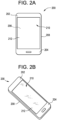
- FIGS. 2A and 2B An exemplary article incorporating any of the glass-based articles disclosed herein is shown in FIGS. 2A and 2B . Specifically, FIGS.
- FIGS. 2A and 2B show a consumer electronic device 200 including a housing 202 having front 204, back 206, and side surfaces 208; electrical components (not shown) that are at least partially inside or entirely within the housing and including at least a controller, a memory, and a display 210 at or adjacent to the front surface of the housing; and a cover substrate 212 at or over the front surface of the housing such that it is over the display.
- at least a portion of one of the cover substrate 212 and the housing 202 kmay include any of the glass-based articles disclosed herein.
- Glass compositions that are particularly suited for formation of the glass-based articles described herein were formed into glass-based substrates.
- the compositions of Examples 1-6 are described in Table II below.
- the density was determined using the buoyancy method of ASTM C693-93(2013).
- the linear coefficient of thermal expansion (CTE) over the temperature range 25 °C to 300 °C is expressed in terms of 10 -7 /°C and was determined using a push-rod dilatometer in accordance with ASTM E228-11.
- the strain point and anneal point were determined using the beam bending viscosity method of ASTM C598-93(2013).
- the softening point was determined using the parallel plate viscosity method of ASTM C1351M-96(2012).
- a glass-based substrate including the composition of Example 1 and having a thickness of 1 mm was exposed to an environment of 85% relative humidity for 65 days to form a glass-based article including a hydrogen-containing layer of the type described herein.
- the depth of the hydrogen-containing layer was measured by SIMS before and after exposure.
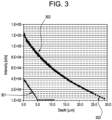
- the result of the SIMS hydrogen concentration measurement is shown in FIG. 3 , with the as-received glass-based substrate hydrogen concentration curve 301 having a depth of layer of about 5 ⁇ m and the glass-based article hydrogen concentration curve 302 having a depth of layer of about 30 ⁇ m.
- the post-exposure glass-based article was measured to a depth of about 25 ⁇ m, and the curve extrapolated 303 to determine the depth of layer.
- the Vickers indentation cracking threshold was measured before and after exposure to the water vapor containing environment.
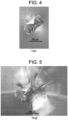
- the result of the Vickers indentation of the preexposure glass-based substrate is shown in FIGs. 4 and 5 , after indentation at 5 kgf and 10 kgf, respectively.
- the glass-based substrate had a Vickers crack initiation threshold above 5 kgf but below 10 kgf.
- the result of the Vickers indentation of the exposed glass-based article is shown in FIGs. 6, 7, and 8 , after indentation at 5 kgf, 10 kgf, and 20 kgf, respectively.
- the Vickers indentation cracking threshold of the glass-based article was greater than 20 kgf.
- Glass-based substrates including compositions of Comparative Examples 1 to 3 and having a thickness of 1 mm were also prepared and exposed to an environment of 85% relative humidity for 30 days.
- the compositions of Comparative Examples 1 to 3 are reported in Table III below.
- the Vickers indentation cracking threshold was measured before and after exposure to the water vapor containing environment, and the depth of the hydrogen-containing layer was measured by SIMS after exposure. The hydrogen diffusivity was calculated based on the measured values.
- the glass composition of Example 1 exhibited a hydrogen diffusivity that was two orders of magnitude higher than the glass composition of Comparative Example 3, which also included potassium but did not include phosphorous. These results indicate that the presence of phosphorous in the glass composition significantly increases the hydrogen diffusivity.
- the glass composition of Comparative Example 3 exhibited a hydrogen diffusivity that was two orders of magnitude higher than the Comparative Examples 1 and 2, which included lithium and sodium, respectively. The difference in hydrogen diffusivity between the potassium containing glass composition and the lithium and sodium containing glass compositions indicates that alkali ions with larger ionic radii allow for faster hydrogen diffusion.
- Glass-based substrates including the glass composition of Example 6 were produced with thicknesses of 0.5 mm and 1.0 mm.
- the glass-based substrates were exposed to a 100% relative humidity environment at a temperature of 200°C for a period of 7 days to produce glass-based articles of the type described herein.
- the glass-based articles exhibited a compressive stress region extending from the surface to a depth of compression.
- the maximum compressive stress measured for the 0.5 mm glass-based article was 124 MPa, and the maximum compressive stress measured for the 1.0 mm glass-based article was 137 MPa.
- the maximum central tension measured for the 0.5 mm glass-based article was 32 MPa, and the maximum central tension measured for the 1.0 mm glass-based article was 15 MPa.
- the depth of compression for the 0.5 mm glass-based article was 101 ⁇ m, and the depth of compression for the 1.0 mm glass-based article was 99 ⁇ m.
- Samples were also cut from the center of the 0.5 mm and 1.0 mm thick glass-based articles formed from the glass-based substrates including the glass composition of Example 6 after exposure to a 100% relative humidity environment at 200 °C for 7 days.
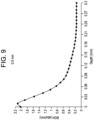
- the samples were then polished to a width of 0.5 mm and subjected to Fourier-transform infrared spectroscopy (FTIR) analysis.
- FTIR Fourier-transform infrared spectroscopy
- the FTIR analysis was performed with the following conditions: CaF/InSb, 64 scans, 16 cm -1 resolution, 10 ⁇ m aperture, and 10 ⁇ m steps. The scans originated at the surface of the samples and continued to the approximate mid-point of the thickness.
- the appearance of a buried hydroxyl concentration peak in FIGs. 9 and 10 is an artifact of the measurement method.
- Example 1 Square samples of with the composition of Example 1 were prepared with a thickness of 1 mm and 50 mm sides. Five of these samples were then treated in a 100% relative humidity environment at 200 °C for 121 hours. The resulting compressive stress (CS) and depth of compression (DOC) of the treated samples was then measured with FSM, yielding a CS of 167 MPa and DOC of 73 ⁇ m. The 5 steam treated samples and 3 control samples that were not exposed to the steam treatment were then subjected to abraded ring-on-ring (AROR) testing. The strength and peak load for each tested sample is reported in Table IV. As shown in Table IV, the steam treated samples exhibited a greatly increased peak load and strength in comparison to the non-treated control samples. Table IV Control Sample No.
- the AROR test is a surface strength measurement for testing flat glass specimens, and ASTM C1499-09(2013), entitled “Standard Test Method for Monotonic Equibiaxial Flexural Strength of Advanced Ceramics at Ambient Temperature,” serves as the basis for the AROR test methodology utilized herein.
- the contents of ASTM C1499-09 are incorporated herein by reference in their entirety.
- the glass specimen is abraded prior to ring-on-ring testing with 90 grit silicon carbide (SiC) particles that are delivered to the glass sample using the method and apparatus described in Annex A2, entitled “abrasion Procedures," of ASTM C158-02(2012), entitled “Standard Test Methods for Strength of Glass by Flexure (Determination of Modulus of Rupture).
- the contents of ASTM C158-02 and the contents of Annex 2 in particular are incorporated herein by reference in their entirety.
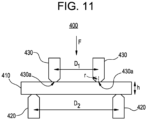
- a glass-based article having at least one abraded surface as shown in FIG. 11 is placed between two concentric rings of differing size to determine equibiaxial flexural strength (i.e., the maximum stress that a material is capable of sustaining when subjected to flexure between two concentric rings).
- equibiaxial flexural strength i.e., the maximum stress that a material is capable of sustaining when subjected to flexure between two concentric rings.
- the abraded glass-based article 410 is supported by a support ring 420 having a diameter D2.
- a force F is applied by a load cell (not shown) to the surface of the glass-based article by a loading ring 430 having a diameter D1.
- the ratio of diameters of the loading ring and support ring D1/D2 may be in a range from 0.2 to 0.5. In some embodiments, D1/D2 is 0.5.
- Loading and support rings 430, 420 should be aligned concentrically to within 0.5% of support ring diameter D2.
- the load cell used for testing should be accurate to within ⁇ 1% at any load within a selected range. Testing is carried out at a temperature of 23 ⁇ 2°C and a relative humidity of 40 ⁇ 10%.
- the radius r of the protruding surface of the loading ring 430 is in a range of h/2 ⁇ r ⁇ 3h/2, where h is the thickness of glass-based article 410.
- Loading and support rings 430, 420 are made of hardened steel with hardness HRc > 40. AROR fixtures are commercially available.
- the intended failure mechanism for the AROR test is to observe fracture of the glass-based article 410 originating from the surface 430a within the loading ring 430. Failures that occur outside of this region - i.e., between the loading ring 430 and support ring 420 - are omitted from data analysis. Due to the thinness and high strength of the glass-based article 410, however, large deflections that exceed 1 ⁇ 2 of the specimen thickness h are sometimes observed. It is therefore not uncommon to observe a high percentage of failures originating from underneath the loading ring 430. Stress cannot be accurately calculated without knowledge of stress development both inside and under the ring (collected via strain gauge analysis) and the origin of failure in each specimen. AROR testing therefore focuses on peak load at failure as the measured response.
Landscapes
- Chemical & Material Sciences (AREA)
- Life Sciences & Earth Sciences (AREA)
- Engineering & Computer Science (AREA)
- Chemical Kinetics & Catalysis (AREA)
- General Chemical & Material Sciences (AREA)
- Geochemistry & Mineralogy (AREA)
- Materials Engineering (AREA)
- Organic Chemistry (AREA)
- Ceramic Engineering (AREA)
- Glass Compositions (AREA)
- Surface Treatment Of Glass (AREA)
- Casings For Electric Apparatus (AREA)
Abstract
Description
- This application claims the benefit of priority of
U.S. Provisional Application Serial No. 62/587,872 filed on November 17, 2017 NL Application No. 2020896 filed on May 8, 2018 - This disclosure relates to glass-based articles that contain hydrogen, glass compositions utilized to form the glass-based articles, and methods of forming the glass-based articles.
- Portable electronic devices, such as, smartphones, tablets, and wearable devices (such as, for example, watches and fitness trackers) continue to get smaller and more complex. As such, materials that are conventionally used on at least one external surface of such portable electronic devices also continue to get more complex. For instance, as portable electronic devices get smaller and thinner to meet consumer demand, the display covers and housings used in these portable electronic devices also get smaller and thinner, resulting in higher performance requirements for the materials used to form these components.
- Accordingly, a need exists for materials that exhibit higher performance, such as resistance to damage, for use in portable electronic devices.
- In aspect (1), a glass-based article is provided. The glass-based article comprises: SiO2, Al2O3, and P2O5; and a hydrogen-containing layer extending from a surface of the glass-based article to a depth of layer. A hydrogen concentration of the hydrogen-containing layer decreases from a maximum hydrogen concentration to the depth of layer, and the depth of layer is greater than 5 µm.
- In aspect (2), the glass-based article of aspect (1) is provided, wherein the glass-based article has a Vicker's crack initiation threshold of greater than or equal to 1 kgf
- In aspect (3), the glass-based article of aspect (1) or (2) is provided, wherein the depth of layer is greater than or equal to 10 µm.
- In aspect (4), the glass-based article of any of aspects (1) to (3) is provided, wherein the maximum hydrogen concentration is located at the surface of the glass-based article.
- In aspect (5), the glass-based article of any of aspects (1) to (4) is provided, further comprising at least one of Li2O, Na2O, K2O, Cs2O, and Rb2O.
- In aspect (6), the glass-based article of any of aspects (1) to (5) is provided, further comprising K2O.
- In aspect (7), the glass-based article of any of aspects (1) to (6) is provided, wherein the center of the glass-based article comprises: greater than or equal to 45 mol% to less than or equal to 75 mol% SiO2; greater than or equal to 3 mol% to less than or equal to 20 mol% Al2O3; greater than or equal to 6 mol% to less than or equal to 15 mol% P2O5; and greater than or equal to 6 mol% to less than or equal to 25 mol% K2O.
- In aspect (8), the glass-based article of any of aspects (1) to (6) is provided, wherein the center of the glass-based article comprises: greater than or equal to 45 mol% to less than or equal to 75 mol% SiO2; greater than or equal to 3 mol% to less than or equal to 20 mol% Al2O3; greater than or equal to 4 mol% to less than or equal to 15 mol% P2O5; and greater than or equal to 11 mol% to less than or equal to 25 mol% K2O.
- In aspect (9), the glass-based article of any of aspects (1) to (6) is provided, wherein the center of the glass-based article comprises: greater than or equal to 55 mol% to less than or equal to 69 mol% SiO2; greater than or equal to 5 mol% to less than or equal to 15 mol% Al2O3; greater than or equal to 6 mol% to less than or equal to 10 mol% P2O5; and greater than or equal to 10 mol% to less than or equal to 20 mol% K2O.
- In aspect (10), the glass-based article of any of aspects (7) to (9) is provided, wherein the center of the glass-based article comprises: greater than or equal to 0 mol% to less than or equal to 10 mol% Cs2O; and greater than or equal to 0 mol% to less than or equal to 10 mol% Rb2O.
- In aspect (11), the glass-based article of any of aspects (1) to (10) is provided, wherein the glass-based article is substantially free of at least one of lithium and sodium.
- In aspect (12), the glass-based article of any of aspects (1) to (11) is provided, further comprising a compressive stress layer extending from a surface of the glass-based article into the glass-based article to a depth of compression.
- In aspect (13), the glass-based article of aspect (12) is provided, wherein the compressive stress layer comprises a compressive stress of at least about 100 MPa and the depth of compression is at least about 75 µm.
- In aspect (14), a consumer electronic product is provided. The consumer electronic product comprises: a housing comprising a front surface, a back surface and side surfaces; electrical components at least partially within the housing, the electrical components comprising at least a controller, a memory, and a display, the display at or adjacent the front surface of the housing; and a cover substrate disposed over the display. At least a portion of at least one of the housing or the cover substrate comprises the glass-based article of any of aspects (1) to (13).
- In aspect (15), a glass is provided. The glass comprises: greater than or equal to 45 mol% to less than or equal to 75 mol% SiO2; greater than or equal to 3 mol% to less than or equal to 20 mol% Al2O3; greater than or equal to 6 mol% to less than or equal to 15 mol% P2O5; and greater than or equal to 6 mol% to less than or equal to 25 mol% K2O.
- In aspect (16), the glass of aspect (15) is provided, comprising: greater than or equal to 55 mol% to less than or equal to 69 mol% SiO2; greater than or equal to 5 mol% to less than or equal to 15 mol% Al2O3; greater than or equal to 6 mol% to less than or equal to 10 mol% P2O5; and greater than or equal to 10 mol% to less than or equal to 20 mol% K2O.
- In aspect (17), the glass of aspect (15) or (16) is provided, further comprising: greater than or equal to 0 mol% to less than or equal to 10 mol% Cs2O; and greater than or equal to 0 mol% to less than or equal to 10 mol% Rb2O.
- In aspect (18), the glass of any of aspects (15) to (17) is provided, wherein the glass is substantially free of lithium.
- In aspect (19), the glass of any of aspects (15) to (18) is provided, wherein the glass is substantially free of sodium.
- In aspect (20), the glass of any of aspects (15) to (19) is provided, comprising: greater than or equal to 58 mol% to less than or equal to 63 mol% SiO2; greater than or equal to 7 mol% to less than or equal to 14 mol% Al2O3; greater than or equal to 7 mol% to less than or equal to 10 mol% P2O5; and greater than or equal to 15 mol% to less than or equal to 20 mol% K2O.
- In aspect (21), the glass of any of aspects (15) to (20) is provided, wherein the glass has a Vicker's crack initiation threshold of greater than or equal to 5 kgf
- In aspect (22), the glass of any of aspects (15) to (21) is provided, further comprising at least one of Li2O, Na2O, Cs2O, and Rb2O.
- In aspect (23), a glass is provided. The glass comprises: greater than or equal to 45 mol% to less than or equal to 75 mol% SiO2; greater than or equal to 3 mol% to less than or equal to 20 mol% Al2O3; greater than or equal to 4 mol% to less than or equal to 15 mol% P2O5; and greater than or equal to 11 mol% to less than or equal to 25 mol% K2O.
- In aspect (24), the glass of aspect (23) is provided, comprising: greater than or equal to 55 mol% to less than or equal to 69 mol% SiO2; greater than or equal to 5 mol% to less than or equal to 15 mol% Al2O3; greater than or equal to 5 mol% to less than or equal to 10 mol% P2O5; and greater than or equal to 11 mol% to less than or equal to 20 mol% K2O.
- In aspect (25), the glass of aspect (23) or (24) is provided, further comprising: greater than or equal to 0 mol% to less than or equal to 10 mol% Cs2O; and greater than or equal to 0 mol% to less than or equal to 10 mol% Rb2O.
- In aspect (26), the glass of any of aspects (23) to (25) is provided, wherein the glass is substantially free of lithium.
- In aspect (27), the glass of any of aspects (23) to (26) is provided, wherein the glass is substantially free of sodium.
- In aspect (28), the glass of any of aspects (23) to (27) is provided, comprising: greater than or equal to 58 mol% to less than or equal to 63 mol% SiO2; greater than or equal to 7 mol% to less than or equal to 14 mol% Al2O3; greater than or equal to 7 mol% to less than or equal to 10 mol% P2O5; and greater than or equal to 15 mol% to less than or equal to 20 mol% K2O.
- In aspect (29), the glass of any of aspects (23) to (28) is provided, wherein the glass has a Vicker's crack initiation threshold of greater than or equal to 5 kgf
- In aspect (30), the glass of any of aspects (23) to (29) is provided, further comprising at least one of Li2O, Na2O, Cs2O, and Rb2O.
- In aspect (31), a method is provided. The method comprises: exposing a glass-based substrate to an environment with a relative humidity of greater than or equal to 75% to form glass-based article with a hydrogen-containing layer extending from a surface of the glass-based article to a depth of layer. The glass-based substrate includes SiO2, Al2O3, and P2O5. A hydrogen concentration of the hydrogen-containing layer decreases from a maximum hydrogen concentration to the depth of layer, and the depth of layer is greater than 5 µm.
- In aspect (32), the method of aspect (31) is provided, wherein the glass-based substrate has a composition comprising: greater than or equal to 55 mol% to less than or equal to 69 mol% SiO2; greater than or equal to 5 mol% to less than or equal to 15 mol% Al2O3; greater than or equal to 6 mol% to less than or equal to 10 mol% P2O5; and greater than or equal to 10 mol% to less than or equal to 20 mol% K2O.
- In aspect (33), the method of aspect (31) is provided, wherein the glass-based substrate has a composition comprising: greater than or equal to 45 mol% to less than or equal to 75 mol% SiO2; greater than or equal to 3 mol% to less than or equal to 20 mol% Al2O3; greater than or equal to 4 mol% to less than or equal to 15 mol% P2O5; and greater than or equal to 11 mol% to less than or equal to 25 mol% K2O.
- In aspect (34), the method of aspect (31) is provided, wherein the glass-based substrate has a composition comprising: greater than or equal to 45 mol% to less than or equal to 75 mol% SiO2; greater than or equal to 3 mol% to less than or equal to 20 mol% Al2O3; greater than or equal to 6 mol% to less than or equal to 15 mol% P2O5; and greater than or equal to 6 mol% to less than or equal to 25 mol% K2O.
- In aspect (35), the method of any of aspects (31) to (34) is provided, wherein the glass-based substrate further comprises: greater than or equal to 0 mol% to less than or equal t10 mol% Cs2O; and greater than or equal to 0 mol% to less than or equal t10 mol% Rb2O.
- In aspect (36), the method of any of aspects (31) to (35) is provided, further comprising at least one of Li2O, Na2O, Cs2O, and Rb2O.
- In aspect (37), the method of any of aspects (31) to (36) is provided, wherein the glass-based substrate is substantially free of at least one of lithium and sodium.
- In aspect (38), the method of any of aspects (31) to (37) is provided, wherein the exposing takes place at a temperature of greater than or equal to 70°C.
- In aspect (39), the method of any of aspects (31) to (38) is provided, wherein the glass-based article has a Vicker's crack initiation threshold of greater than or equal to 1 kgf
- These and other aspects, advantages, and salient features will become apparent from the following detailed description, the accompanying drawings, and the appended claims.
-
-
FIG. 1 is a representation of a cross-section of a glass-based article according to an embodiment. -
FIG. 2A is a plan view of an exemplary electronic device incorporating any of the glass-based articles disclosed herein. -
FIG. 2B is a perspective view of the exemplary electronic device ofFIG. 2A . -
FIG. 3 is a measurement of hydrogen concentration as a function of depth below the surface produced by SIMS for a glass-based article formed from a glass-based substrate having a composition of Example 1. -
FIG. 4 is a photograph of a Vickers indent at 5 kgf in a glass-based substrate having the composition of Example 1 prior to exposure to a water containing environment. -
FIG. 5 is a photograph of a Vickers indent at 10 kgf in a glass-based substrate having the composition of Example 1 prior to exposure to a water containing environment. -
FIG. 6 is a photograph of a Vickers indent at 5 kgf in a glass-based article formed by exposing a glass-based substrate having the composition of Example 1 to a water containing environment. -
FIG. 7 is a photograph of a Vickers indent at 10 kgf in a glass-based article formed by exposing a glass-based substrate having the composition of Example 1 to a water containing environment. -
FIG. 8 is a photograph of a Vickers indent at 20 kgf in a glass-based article formed by exposing a glass-based substrate having the composition of Example 1 to a water containing environment. -
FIG. 9 is a plot of the hydroxyl (BOH) concentration of a 0.5 mm thick glass article as a function of depth from the surface after exposure to a water containing environment according to an embodiment. -
FIG. 10 is a plot of the hydroxyl (BOH) concentration of a 1.0 mm thick glass article as a function of depth from the surface after exposure to a water containing environment according to an embodiment. -
FIG. 11 is a side view of a ring-on-ring test apparatus. - In the following description, like reference characters designate like or corresponding parts throughout the several views shown in the figures. It is also understood that, unless otherwise specified, terms such as "top," "bottom," "outward," "inward," and the like are words of convenience and are not to be construed as limiting terms. Unless otherwise specified, a range of values, when recited, includes both the upper and lower limits of the range as well as any sub-ranges therebetween. As used herein, the indefinite articles "a," "an," and the corresponding definite article "the" mean "at least one" or "one or more," unless otherwise specified. It also is understood that the various features disclosed in the specification and the drawings can be used in any and all combinations.
- As used herein, the term "glass-based" is used in its broadest sense to include any objects made wholly or partly of glass, including glass ceramics (which include a crystalline phase and a residual amorphous glass phase). Unless otherwise specified, all compositions of the glasses described herein are expressed in terms of mole percent (mol%), and the constituents are provided on an oxide basis. Unless otherwise specified, all temperatures are expressed in terms of degrees Celsius (°C).
- It is noted that the terms "substantially" and "about" may be utilized herein to represent the inherent degree of uncertainty that may be attributed to any quantitative comparison, value, measurement, or other representation. These terms are also utilized herein to represent the degree by which a quantitative representation may vary from a stated reference without resulting in a change in the basic function of the subject matter at issue. For example, a glass that is "substantially free of K2O" is one in which K2O is not actively added or batched into the glass, but may be present in very small amounts as a contaminant, such as in amounts of less than about 0.01 mol%. As utilized herein, when the term "about" is used to modify a value, the exact value is also disclosed. For example, the term "greater than about 10 mol%" also discloses "greater than or equal to 10 mol%."
- Reference will now be made in detail to various embodiments, examples of which are illustrated in the accompanying examples and drawings.
- The glass-based articles disclosed herein include a hydrogen-containing layer extending from a surface of the article to a depth of layer. The hydrogen-containing layer includes a hydrogen concentration that decreases from a maximum hydrogen concentration of the glass-based article to the depth of layer. In some embodiments, the maximum hydrogen concentration may be located at the surface of the glass-based article. The glass-based articles exhibit a high Vickers indentation cracking threshold (e.g., greater than or equal to 1 kgf), without the use of traditional stengthening methods (for example, ion-exchange of a pair of alkali ions or thermal tempering). The high Vickers indentation cracking thresholds exhibited by the glass-based articles signify a high resistance to damage.
- The glass-based articles may be formed by exposing glass-based substrates to environments containing water vapor, thereby allowing hydrogen species to penetrate the glass-based substrates and form the glass-based articles having a hydrogen-containing layer. As utilized herein, hydrogen species includes molecular water, hydroxyl, hydrogen ions, and hydronium. The composition of the glass-based substrates may be selected to promote the interdiffusion of hydrogen species into the glass. As utilized herein, the term "glass-based substrate" refers to the precursor prior to exposure to a water vapor containing environment for the formation of a glass-based article that includes hydrogen-containing layers. Similarly, the term "glass-based article" refers to the post exposure article that includes a hydrogen-containing layer.
- A representative cross-section of a glass-based
article 100 according to some embodiments is depicted inFIG. 1 . The glass-basedarticle 100 has a thickness t that extends between afirst surface 110 and asecond surface 112. A first hydrogen-containinglayer 120 extends from thefirst surface 110 to a first depth of layer, where the first depth of layer has a depth d1 measured from thefirst surface 110 into the glass-basedarticle 100. A second hydrogen-containinglayer 122 extends from thesecond surface 112 to a second depth of layer, where the second depth of layer has a depth d2 measured from thesecond surface 112 into the glass-basedarticle 100. An added-hydrogen-speciesfree region 130 is present between the first depth of layer and the second depth of layer. - The hydrogen-containing layer of the glass-based articles may have a depth of layer (DOL) greater than 5 µm. In some embodiments, the depth of layer may be greater than or equal to 10 µm, such as greater than or equal to 15 µm, greater than or equal to 20 µm, greater than or equal to 25 µm, greater than or equal to 30 µm, greater than or equal to 35 µm, greater than or equal to 40 µm, greater than or equal to 45 µm, greater than or equal to 50 µm, greater than or equal to 55 µm, greater than or equal to 60 µm, greater than or equal to 65 µm, greater than or equal to 70 µm, greater than or equal to 75 µm, greater than or equal to 80 µm, greater than or equal to 85 µm, greater than or equal to 90 µm, greater than or equal to 95 µm, greater than or equal to 100 µm, greater than or equal to 105 µm, greater than or equal to 110 µm, greater than or equal to 115 µm, greater than or equal to 120 µm, greater than or equal to 125 µm, greater than or equal to 130 µm, greater than or equal to 135 µm, greater than or equal to 140 µm, greater than or equal to 145 µm, greater than or equal to 150 µm, greater than or equal to 155 µm, greater than or equal to 160 µm, greater than or equal to 165 µm, greater than or equal to 170 µm, greater than or equal to 175 µm, greater than or equal to 180 µm, greater than or equal to 185 µm, greater than or equal to 190 µm, greater than or equal to 195 µm, greater than or equal to 200 µm, or more. In some embodiments, the depth of layer may be from greater than 5 µm to less than or equal to 205 µm, such as from greater than or equal to 10 µm to less than or equal to 200 µm, from greater than or equal to 15 µm to less than or equal to 200 µm, from greater than or equal to 20 µm to less than or equal to 195 µm, from greater than or equal to 25 µm to less than or equal to 190 µm, from greater than or equal to 30 µm to less than or equal to 185 µm, from greater than or equal to 35 µm to less than or equal to 180 µm, from greater than or equal to 40 µm to less than or equal to 175 µm, from greater than or equal to 45 µm to less than or equal to 170 µm, from greater than or equal to 50 µm to less than or equal to 165 µm, from greater than or equal to 55 µm to less than or equal to 160 µm, from greater than or equal to 60 µm to less than or equal to 155 µm, from greater than or equal to 65 µm to less than or equal to 150 µm, from greater than or equal to 70 µm to less than or equal to 145 µm, from greater than or equal to 75 µm to less than or equal to 140 µm, from greater than or equal to 80 µm to less than or equal to 135 µm, from greater than or equal to 85 µm to less than or equal to 130 µm, from greater than or equal to 90 µm to less than or equal to 125 µm, from greater than or equal to 95 µm to less than or equal to 120 µm, from greater than or equal to 100 µm to less than or equal to 115 µm, from greater than or equal to 105 µm to less than or equal to 110 µm, or any sub-ranges formed by any of these endpoints. In general, the depth of layer exhibited by the glass-based articles is greater than the depth of layer that may be produced by exposure to the ambient environment.
- The hydrogen-containing layer of the glass-based articles may have a depth of layer (DOL) greater than 0.005t, wherein t is the thickness of the glass-based article. In some embodiments, the depth of layer may be greater than or equal to 0.010t, such as greater than or equal to 0.015t, greater than or equal to 0.020t, greater than or equal to 0.025t, greater than or equal to 0.030t, greater than or equal to 0.035t, greater than or equal to 0.040t, greater than or equal to 0.045t, greater than or equal to 0.050t, greater than or equal to 0.055t, greater than or equal to 0.060t, greater than or equal to 0.065t, greater than or equal to 0.070t, greater than or equal to 0.075t, greater than or equal to 0.080t, greater than or equal to 0.085t, greater than or equal to 0.090t, greater than or equal to 0.095t, greater than or equal to 0.10t, greater than or equal to 0.15t, greater than or equal to 0.20t, or more. In some embodiments, the DOL may be from greater than 0.005t to less than or equal to 0.205t, such as from greater than or equal to 0.010t to less than or equal to 0.200t, from greater than or equal to 0.015t to less than or equal to 0.195t, from greater than or equal to 0.020t to less than or equal to 0.190t, from greater than or equal to 0.025t to less than or equal to 0.185t, from greater than or equal to 0.030t to less than or equal to 0.180t, from greater than or equal to 0.035t to less than or equal to 0.175t, from greater than or equal to 0.040t to less than or equal to 0.170t, from greater than or equal to 0.045t to less than or equal to 0.165t, from greater than or equal to 0.050t to less than or equal to 0.160t, from greater than or equal to 0.055t to less than or equal to 0.155t, from greater than or equal to 0.060t to less than or equal to 0.150t, from greater than or equal to 0.065t to less than or equal to 0.145t, from greater than or equal to 0.070t to less than or equal to 0.140t, from greater than or equal to 0.075t to less than or equal to 0.135t, from greater than or equal to 0.080t to less than or equal to 0.130t, from greater than or equal to 0.085t to less than or equal to 0.125t, from greater than or equal to 0.090t to less than or equal to 0.120t, from greater than or equal to 0.095t to less than or equal to 0.115t, from greater than or equal to 0.100t to less than or equal to 0.110t, or any sub-ranges formed by any of these endpoints.
- The depth of layer and hydrogen concentration are measured by a secondary ion mass spectrometry (SIMS) technique that is known in the art. The SIMS technique is capable of measuring the hydrogen concentration at a given depth, but is not capable of distinquishing the hydrogen species present in the glass-based article. For this reason, all hydrogen species contribute to the SIMS measured hydrogen concentration. As utilized herein, the depth of layer (DOL) refers to the first depth below the surface of the glass-based article where the hydrogen concentration is equal to the hydrogen concentration at the center of the glass-based article. This definition accounts for the hydrogen concentration of the glass-based substrate prior to treatment, such that the depth of layer refers to the depth of the hydrogen added by the treatment process. As a practical matter, the hydrogen concentration at the center of the glass-based article may be approximated by the hydrogen concentration at the depth from the surface of the glass-based article where the hydrogen concentration becomes substantially constant, as the hydrogen concentration is not expected to change between such a depth and the center of the glass-based article. This approximation allows for the determination of the DOL without measuring the hydrogen concentration throughout the entire depth of the glass-based article.
- In some embodiments, the entirety of the thickness of the glass-based article may be part of a hydrogen-containing layer. Such a glass-based article may be produced when the treatment of a glass-based substrate extends for a sufficient time in sufficient conditions for hydrogen species to diffuse to the center of the glass-based article from each exposed surface. In some embodiments, where the surfaces of the glass-based article are exposed to the same treatment conditions a minimum hydrogen concentrationj may be located at half the thickness of the glass-based article, such that the hydrogen-containing layers meet at the center of the glass-based article. In such embodiments, the DOL may be located at half the thickness of the glass-based articles. In some embodiments, the glass-based articles may not include a region that is free of added hydrogen species. In some embodiments, the glass-based articles may be treated in a humid environment such that the concentration of the added hydrogen species equilibriates throughout the glass-based articles, and the hydrogen concentration does not vary with depth below the surface of the glass-based article. The glass-based articles according to such embodiments would not exhibit a DOL as defined herein, as the hydrogen concentration at the center of the glass-based article would be equivalent to the hydrogen concentration at all other depths.
- The glass-based articles are highly resistant to Vickers indentation cracking. The high Vickers indentation cracking resistance imparts a high damage resistance to the glass-based articles. Without wishing to be bound by any particular theory, the water content of the glass-based articles may reduce the local viscosity of the hydrogen-containing layer such that local flow occurs instead of cracking. The Vickers indentation cracking threshold of the glass-based articles is achieved without the use of conventional strengthening techniques, such as the exchange of large alkali ions for smaller alkali ions in the glass, thermal tempering, or lamination of glass layers with a coefficient of thermal expansion mismatch. The glass-based articles exhibit a Vickers indentation cracking threshold of greater than or equal to 1 kgf, such as greater than or equal to 2 kgf, greater than or equal to 3 kgf, greater than or equal to 4 kgf, greater than or equal to 5 kgf, greater than or equal to 6 kgf, greater than or equal to 7 kgf, greater than or equal to 8 kgf, greater than or equal to 9 kgf, greater than or equal to 10 kgf, greater than or equal to 11 kgf, greater than or equal to 12 kgf, greater than or equal to 13 kgf, greater than or equal to 14 kgf, greater than or equal to 15 kgf, greater than or equal to 16 kgf, greater than or equal to 17 kgf, greater than or equal to 18 kgf, greater than or equal to 19 kgf, greater than or equal to 20 kgf, greater than or equal to 21 kgf, greater than or equal to 22 kgf, greater than or equal to 23 kgf, greater than or equal to 24 kgf, greater than or equal to 25 kgf, greater than or equal to 26 kgf, greater than or equal to 27 kgf, greater than or equal to 28 kgf, greater than or equal to 29 kgf, greater than or equal to 30 kgf, or more. In some embodiments, the glass-based articles exhibit a Vickers indentation cracking threshold from greater than or equal to 1 kgf to less than or equal to 30 kgf, such as from greater than or equal to 2 kgf to less than or equal to 29 kgf, from greater than or equal to 3 kgf to less than or equal to 28 kgf, from greater than or equal to 4 kgf to less than or equal to 27 kgf, from greater than or equal to 5 kgf to less than or equal to 26 kgf, from greater than or equal to 6kgf to less than or equal to 25 kgf, from greater than or equal to 7 kgf to less than or equal to 24 kgf, from greater than or equal to 8 kgf to less than or equal to 23 kgf, from greater than or equal to 9 kgf to less than or equal to 22 kgf, from greater than or equal to 10 kgf to less than or equal to 21 kgf, from greater than or equal to 11 kgf to less than or equal to 20 kgf, from greater than or equal to 12 kgf to less than or equal to 19 kgf, from greater than or equal to 13 kgf to less than or equal to 18 kgf, from greater than or equal to 14 kgf to less than or equal to 17 kgf, from greater than or equal to 15 kgf to less than or equal to 16 kgf, or any sub-ranges formed by any of these endpoints.
- Vickers crack initiation threshold (or Indentation Fracture Threshold) was measured by a Vickers indenter. Vickers crack initiation threshold is a measure of indentation damage resistance of the glass. The test involved the use of a square-based pyramidal diamond indenter with an angle of 136° between faces, referred to as a Vickers indenter. The Vickers indenter was the same as the one used in standard micro hardness testing (as described in ASTM-E384-11). A minimum of five specimens were chosen to represent the glass type and/or sample of interest. For each specimen, multiple sets of five indentations were introduced to the specimen surface. Each set of five indentations was introduced at a given load, with each individual indentation separated by a minimum of 5 mm and no closer than 5 mm to a specimen edge. A rate of indenter loading/unloading of 50 kg/minute was used for test loads ≥ 2 kg. For test loads < 2 kg, a rate of 5 kg/minute was used. A dwell (i.e., hold) time of 10 seconds at the target load was utilized. The machine maintained load control during the dwell period. After a period of at least 12 hours, the indentations were inspected under reflected light using a compound microscope at 500X magnification. The presence or absence of median/radial cracks (cracks extending from the indentation along a plane perpendicular to the major plane of the article), or specimen fracture, was then noted for each indentation. Note that the formation of lateral cracks (cracks extending along a plane parallel to the major plane of the article) was not considered indicative of exhibiting threshold behavior, since the formation of median/radial cracks was of interest, or specimen fracture, for this test. The specimen threshold value is defined as the midpoint of the lowest consecutive indentation loads which bracket greater than 50% of the individual indentations meeting threshold. For example, if within an individual specimen, 2 of the 5 (40%) indentations induced at a 5 kg load have exceeded threshold, and 3 of the 5 (60%) indentations induced at a 6 kg load have exceeded threshold, then the specimen threshold value would be defined as greater than 5 kg. The range (lowest value to highest value) of all the specimen midpoints may also be reported for each sample. The pre-test, test and post-test environment was controlled to 23±2°C and 50±5%RH to minimize variation in the fatigue (stress corrosion) behavior of the specimens.
- Without wishing to be bound by any particular theory, the hydrogen-containing layer of the glass-based articles may be the result of an interdiffusion of hydrogen species for ions contained in the compositions of the glass-based substrate. Monovalent hydrogen-containing species, such as H3O+ and/or H+, may replace alkali ions contained in the glass-based substrate composition to form the glass-based article. The size of the alkali ions that the hydrogen-containing species replaces contributes to the diffusivity of the hydrogen-containing species in the glass-based substrate, as larger alkali ions produce larger interstitial spaces that facilitate the interdiffusion mechanism. For example, the hydronium ion (H3O+) has an ionic radius that is close to the ionic radius of potassium, and much larger than the ionic radius of lithium. It was observed that the diffusivity of the hydrogen-containing species in the glass-based substrate is significantly higher, by two orderes of magnitude, when the glass-based substrate contains potassium than when the glass-based substrate contains lithium. This observed behavior may also indicate that the hydronium ion is the primary monovalent hydrogen-containing species that diffuses into the glass-based substrate. The ionic radii for the alkali ions and the hydronium ion are reported in Table I below. As shown in Table I, rubidium and cesium have ionic radii that are significantly larger than the hydronium ion, which may result in higher hydrogen diffusivities than those observed for potassium.
Table I Ion Radius (nm) Lithium 0.059 Sodium 0.099 Potassium 0.133 Hydronium 0.137 Rubidium 0.152 Cesium 0.167 - In some embodiments, the replacement of alkali ions in the glass-based substrate with the hydrogen-containing ions may produce a compressive stress layer extending from the surface of the glass-basd article into the glass-based article to a depth of compression. As used herein, depth of compression (DOC) means the depth at which the stress in the glass-based article changes from compressive to tensile. Thus, the glass-based article also contains a tensile stress region having a maximum central tension (CT), such that the forces within the glass-based article are balanced. Without wishing to be bound by any theory, the compressive stress region may be the result of the exchange of hydrogen-containing ions with an ionic radius that is larger than the ions which they replace.
- In some embodiments, the compressive stress layer may include a compressive stress of at greater than or equal to 100 MPa, such as greater than or equal to 105 MPa, greater than or equal to 110 MPa, greater than or equal to 115 MPa, greater than or equal to 120 MPa, greater than or equal to 125 MPa, greater than or equal to 130 MPa, abo greater than or equal to ut 135 MPa, or more. In some embodiments, the compressive stress layer may include a compressive stress of from greater than or equal to 100 MPa to less than or equal to 150 MPa, such as from greater than or equal to 105 MPa to less than or equal to 145 MPa, from greater than or equal to 110 MPa to less than or equal to 140 MPa, from greater than or equal to 115 MPa to less than or equal to 135 MPa, from greater than or equal to 120 MPa to less than or equal to 130 MPa, 125 MPa, or any sub-ranges formed from any of these endpoints.
- In some embodiments, the DOC of the compressive stress layer may be greater than or equal to 75 µm, such as greater than or equal to 80 µm, greater than or equal to 85 µm, greater than or equal to 90 µm, greater than or equal to 95 µm, greater than or equal to 100 µm, or more. In some embodiments, the DOC of the compressive stress layer may be at from greater than or equal to 75 µm to less than or equal to 115 µm, such as from greater than or equal to 80 µm to less than or equal to 110 µm, from greater than or equal to 85 µm to less than or equal to 105 µm, from greater than or equal to 90 µm to less than or equal to 100 µm, 95 µm, or any sub-ranges that may be formed from any of these endpoints.
- In some embodiments, the glass-based articles may have a DOC greater than or equal to 0.05t, wherein t is the thickness of the glass-based article, such as greater than or equal to 0.06t, greater than or equal to 0.07t, greater than or equal to 0.08t, greater than or equal to 0.09t, greater than or equal to 0.10t, greater than or equal to 0.11t, greater than or equal to 0.12t, or more. In some embodiments, the glass-based articles may have a DOC from greater than or equal to 0.05t to less than or equal to 0.20t, such as from greater than or equal to 0.06t to less than or equal to 0.19t, from greater than or equal to 0.07t to less than or equal to 0.18t, from greater than or equal to 0.08t to less than or equal to 0.17t, from greater than or equal to 0.09t to less than or equal to 0.16t, from greater than or equal to 0.10t to less than or equal to 0.15t, from greater than or equal to 0.11t to less than or equal to 0.14t, from greater than or equal to 0.12t to less than or equal to 0.13t, or any sub-ranges formed from any of these endpoints.
- In some embodiments, the CT of the glass-based article may be greater than or equal to 10 MPa, such as greater than or equal to 11 MPa, greater than or equal to 12 MPa, greater than or equal to 13 MPa, greater than or equal to 14 MPa, greater than or equal to 15 MPa, greater than or equal to 16 MPa, greater than or equal to 17 MPa, greater than or equal to 18 MPa, greater than or equal to 19 MPa, greater than or equal to 20 MPa, greater than or equal to 22 MPa, greater than or equal to 24 MPa, greater than or equal to 26 MPa, greater than or equal to 28 MPa, greater than or equal to 30 MPa, greater than or equal to 32 MPa, or more. In some embodiments, the CT of the glass-based article may be from greater than or equal to 10 MPa to less than or equal to 35 MPa, such as from greater than or equal to 11 MPa to less than or equal to 34 MPa, from greater than or equal to 12 MPa to less than or equal to 33 MPa, from greater than or equal to 13 MPa to less than or equal to 32 MPa, from greater than or equal to 14 MPa to less than or equal to 32 MPa, from greater than or equal to 15 MPa to less than or equal to 31 MPa, from greater than or equal to 16 MPa to less than or equal to 30 MPa, from greater than or equal to 17 MPa to less than or equal to 28 MPa, from greater than or equal to 18 MPa to less than or equal to 26 MPa, from greater than or equal to 19 MPa to less than or equal to 24 MPa, from greater than or equal to 20 MPa to less than or equal to 22 MPa, or any sub-ranges formed from any of these endpoints.
- Compressive stress (including surface CS) is measured by surface stress meter using commercially available instruments such as the FSM-6000 (FSM), manufactured by Orihara Industrial Co., Ltd. (Japan). Surface stress measurements rely upon the accurate measurement of the stress optical coefficient (SOC), which is related to the birefringence of the glass. SOC in turn is measured according to Procedure C (Glass Disc Method) described in ASTM standard C770-16, entitled "Standard Test Method for Measurement of Glass Stress-Optical Coefficient," the contents of which are incorporated herein by reference in their entirety. DOC is measured by FSM. The maximum central tension (CT) values are measured using a scattered light polariscope (SCALP) technique known in the art.
- The glass-based articles may be formed from glass-based substrates having any appropriate composition. The composition of the glass-based substrate may be specifically selected to promote the diffusion of hydrogen-containing species, such that a glass-based article including a hydrogen-containing layer may be formed efficiently. In some embodiments, the glass-based substrates may have a composition that includes SiO2, Al2O3, and P2O5. In some embodiments, the glass-based substrates may additionally include an alkali metal oxide, such as at least one of Li2O, Na2O, K2O, Rb2O, and Cs2O. In some embodiments, the glass-based substrates may be substantially free, or free, of at least one of lithium and sodium. In some embodiments, after the diffusion of the hydrogen-containing species into the glass-based substrate, the glass-based article may have a bulk composition that is approximately the same as the composition of the glass-based substrate. In some embodiments, the hydrogen species may not diffuse to the center of the glass-based article. Stated differently, the center of the glass-based article is the area least affected by the water vapor treatment. For this reason, the center of the glass-based article may have a composition that is substantially the same, or the same, as the composition of the glass-based substrate prior to treatment in a water containing environment.
- The glass-based substrate may include any appropriate amount of SiO2. SiO2 is the largest constituent and, as such, SiO2 is the primary constituent of the glass network formed from the glass composition. If the concentration of SiO2 in the glass composition is too high, the formability of the glass composition may be diminished as higher concentrations of SiO2 increase the difficulty of melting the glass, which, in turn, adversely impacts the formability of the glass. In some embodiments, the glass-based substrate may include SiO2 in an amount from greater than or equal to 45 mol% to less than or equal to 75 mol%, such as from greater than or equal to 46 mol% to less than or equal to 74 mol%, from greater than or equal to 47 mol% to less than or equal to 73 mol%, from greater than or equal to 48 mol% to less than or equal to 72 mol%, from greater than or equal to 49 mol% to less than or equal to 71 mol%, from greater than or equal to 50 mol% to less than or equal to 70 mol%, from greater than or equal to 51 mol% to less than or equal to 69 mol%, from greater than or equal to 52 mol% to less than or equal to 68 mol%, from greater than or equal to 53 mol% to less than or equal to 67 mol%, from greater than or equal to 54 mol% to less than or equal to 66 mol%, from greater than or equal to 55 mol% to less than or equal to 65 mol%, from greater than or equal to 56 mol% to less than or equal to 64 mol%, from greater than or equal to 57 mol% to less than or equal to 63 mol%, from greater than or equal to 58 mol% to less than or equal to 62 mol%, from greater than or equal to 59 mol% to less than or equal to 61 mol%, 60 mol%, or any sub-ranges formed by any of these endpoints. In some embodiments, the glass-based substrate may include SiO2 in an amount from greater than or equal to 55 mol% to less than or equal to 69 mol%, such as from greater than or equal to 58 mol% to less than or equal to 63 mol%, or any sub-ranges formed from any of these endpoints.
- The glass-based substrate may include any appropriate amount of Al2O3. Al2O3 may serve as a glass network former, similar to SiO2. Al2O3 may increase the viscosity of the glass composition due to its tetrahedral coordination in a glass melt formed from a glass composition, decreasing the formability of the glass composition when the amount of Al2O3 is too high. However, when the concentration of Al2O3 is balanced against the concentration of SiO2 and the concentration of alkali oxides in the glass composition, Al2O3 can reduce the liquidus temperature of the glass melt, thereby enhancing the liquidus viscosity and improving the compatibility of the glass composition with certain forming processes, such as the fusion forming process. The inclusion of Al2O3 in the glass-based substrate prevents phase separation and reduces the number of non-bridging oxygens (NBOs) in the glass. Additionally, Al2O3 can improve the effectiveness of ion exchange. In some embodiments, the glass-based substrate may include Al2O3 in an amount of from greater than or equal to 3 mol% to less than or equal to 20 mol%, such as from greater than or equal to 4 mol% to less than or equal to 19 mol%, from greater than or equal to 5 mol% to less than or equal to 18 mol%, from greater than or equal to 6 mol% to less than or equal to 17 mol%, from greater than or equal to 7 mol% to less than or equal to 16 mol%, from greater than or equal to 8 mol% to less than or equal to 15 mol%, from greater than or equal to 9 mol% to less than or equal to 14 mol%, from greater than or equal to 10 mol% to less than or equal to 13 mol%, from greater than or equal to 11 mol% to less than or equal to 12 mol%, or any sub-ranges formed by any of these endpoints. In some embodiments, the glass-based substrate may include Al2O3 in an amount of from greater than or equal to 5 mol% to less than or equal to 15 mol%, such as from greater than or equal to 7 mol% to less than or equal to 14 mol%, or any sub-ranges formed from any of these endpoints.
- The glass-based substrate may include any amount of P2O5 sufficient to produce the desired hydrogen diffusivity. The inclusion of phosphorous in the glass-based substrate promotes faster interdiffusion, regardless of the exchanging ionic pair. Thus, the phosphorous containing glass-based substrates allow the efficient formation of glass-based articles including a hydrogen-containing layer. The inclusion of P2O5 also allows for the production of a glass-based article with a deep depth of layer (e.g., greater than about 10 µm) in a relatively short treatment time. In some embodiments, the glass-based substrate may include P2O5 in an amount of from greater than or equal to 4 mol% to less than or equal to 15 mol%, such as from greater than or equal to 5 mol% to less than or equal to 14 mol%, from greater than or equal to 6 mol% to less than or equal to 13 mol%, from greater than or equal to 7 mol% to less than or equal to 12 mol%, from greater than or equal to 8 mol% to less than or equal to 11 mol%, from greater than or equal to 9 mol% to less than or equal to 10 mol%, or any sub-ranges formed by any of these endpoints. In some embodiments, the glass-based substrate may include P2O5 in an amount of from greater than or equal to 5 mol% to less than or equal to 15 mol%, such as from greater than or equal to 6 mol% to less than or equal to 15 mol%, from greater than or equal to 5 mol% to less than or equal to 10 mol%, from greater than or equal to 6 mol% to less than or equal to 10 mol%, from greater than or equal to 7 mol% to less than or equal to 10 mol%, or any sub-ranges formed by any of these endpoints.
- The glass-based substrate may include an alkali metal oxide in any appropriate amount. The alkali metal oxides promote ion exchange. The sum of the alkali metal oxides (e.g., Li2O, Na2O, and K2O as well as other alkali metal oxides including Cs2O and Rb2O) in the glass composition may be referred to as "R2O", and R2O may be expressed in mol%. In some embodiments, the glass-based substrate may be substrantially free, or free, of at least one of lithium and sodium. In embodiments, the glass composition comprises R2O in an amount greater than or equal to 6 mol%, such as greater than or equal to 7 mol%, greater than or equal to 8 mol%, greater than or equal to 9 mol%, greater than or equal to 10 mol%, greater than or equal to 11 mol%, greater than or equal to 12 mol%, greater than or equal to 13 mol%, greater than or equal to 14 mol%, greater than or equal to 15 mol%, greater than or equal to 16 mol%, greater than or equal to 17 mol%, greater than or equal to 18 mol%, greater than or equal to 19 mol%, greater than or equal to 20 mol%, greater than or equal to 21 mol%, greater than or equal to 22 mol%, greater than or equal to abut 23 mol%, or greater than or equal to 24 mol %. In one or more embodiments, the glass composition comprises R2O in an amount less than or equal to 25 mol%, such as less than or equal to 24 mol%, less than or equal to 23 mol%, less than or equal to 22 mol%, less than or equal to 21 mol%, less than or equal to 20 mol%, less than or equal to 19 mol%, less than or equal to 18 mol%, less than or equal to 17 mol%, less than or equal to 16 mol%, less than or equal to 15 mol%, less than or equal to abut 14 mol%, less than or equal to 13 mol%, less than or equal to 12 mol%, less than or equal to 11 mol%, less than or equal to 10 mol%, less than or equal to 9 mol%, less than or equal to 8 mol%, or less than or equal to 7 mol%. It should be understood that, in embodiments, any of the above ranges may be combined with any other range. In some embodiments, the glass composition comprises R2O in an amount from greater than or equal to 6.0 mol% to less than or equal to 25.0 mol%, such as from greater than or equal to 7.0 mol% to less than or equal to 24.0 mol%, from greater than or equal to 8.0 mol% to less than or equal to 23.0 mol%, from greater than or equal to 9.0 mol% to less than or equal to 22.0 mol%, from greater than or equal to 10.0 mol% to less than or equal to 21.0 mol%, from greater than or equal to 11.0 mol% to less than or equal to 20.0 mol%, from greater than or equal to aout 12.0 mol% to less than or equal to 19.0 mol%, from greater than or equal to 13.0 mol% to less than or equal to 18.0 mol%, from greater than or equal to 14.0 mol% to less than or equal to 17.0 mol%, or from greater than or equal to 15.0 mol% to less than or equal to 16.0 mol%, and all ranges and sub-ranges between the foregoing values.
- In some embodiments, the alkali metal oxide may be K2O. The inclusion of K2O allows the efficient exchange of hydrogen species, into the glass substrate upon exposure to a water containing environment. In embodiments, the glass-based substrate may include K2O in an amount of from greater than or equal to 6 mol% to less than or equal to 25 mol%, such as from greater than or equal to 7 mol% to less than or equal to 24 mol%, from greater than or equal to 8 mol% to less than or equal to 23 mol%, from greater than or equal to 9 mol% to less than or equal to 22 mol%, from greater than or equal to 10 mol% to less than or equal to 21 mol%, from greater than or equal to 11 mol% to less than or equal to 20 mol%, from greater than or equal to 12 mol% to less than or equal to 19 mol%, from greater than or equal to 13 mol% to less than or equal to 18 mol%, from greater than or equal to 14 mol% to less than or equal to 17 mol%, from greater than or equal to 15 mol% to less than or equal to 16 mol%, or any sub-ranges formed from any of these endpoints. In some embodiments, the glass-based substrate may include K2O in an amount of from greater than or equal to 10 mol% to less than or equal to 25 mol%, such as from greater than or equal to 10 mol% to less than or equal to 20 mol%, from greater than or equal to 11 mol% to less than or equal to 25 mol%, from greater than or equal to 11 mol% to less than or equal to 20 mol%, from greater than or equal to 15 mol% to less than or equal to 20 mol%, or any sub-ranges formed from any of these endpoints.
- The glass-based substrate may include Rb2O in any appropriate amount. In some embodiments, the glass-based substrate may include Rb2O in an amount of from greater than or equal to 0 mol% to less than or equal to 10 mol%, such as from greater than or equal to 1 mol% to less than or equal to 9 mol%, from greater than or equal to 2 mol% to less than or equal to 8 mol%, from greater than or equal to 3 mol% to less than or equal to 7 mol%, from greater than or equal to 4 mol% to less than or equal to 6 mol%, 5 mol%, or any sub-range formed from any of these endpoints.
- The glass-based substrate may include Cs2O in any appropriate amount. In some embodiments, the glass-based substrate may include Cs2O in an amount of from greater than or equal to 0 mol% to less than or equal to 10 mol%, such as from greater than or equal to 1 mol% to less than or equal to 9 mol%, from greater than or equal to 2 mol% to less than or equal to 8 mol%, from greater than or equal to 3 mol% to less than or equal to 7 mol%, from greater than or equal to 4 mol% to less than or equal to 6 mol%, 5 mol%, or any sub-range formed from any of these endpoints.
- In some embodiments, the glass-based substrate may have a composition including: from greater than or equal to 45 mol% to less than or equal to 75 mol% SiO2, from greater than or equal to 3 mol% to less than or equal to 20 mol% Al2O3, from greater than or equal to 6 mol% to less than or equal to 15 mol% P2O5, and from greater than or equal to 6 mol% to less than or equal to 25 mol% K2O.
- In some embodiments, the glass-based substrate may have a composition including: from greater than or equal to 45 mol% to less than or equal to 75 mol% SiO2, from greater than or equal to 3 mol% to less than or equal to 20 mol% Al2O3, from greater than or equal to 4 mol% to less than or equal to 15 mol% P2O5, and from greater than or equal to 11 mol% to less than or equal to 25 mol% K2O.
- In some embodiments, the glass-based substrate may have a composition including: from greater than or equal to 55 mol% to less than or equal to 69 mol% SiO2, from greater than or equal to 5 mol% to less than or equal to 15 mol% Al2O3, from greater than or equal to 6 mol% to less than or equal to 10 mol% P2O5, and from greater than or equal to 10 mol% to less than or equal to 20 mol% K2O.
- In some embodiments, the glass-based substrate may have a composition including: from greater than or equal to 55 mol% to less than or equal to 69 mol% SiO2, from greater than or equal to 5 mol% to less than or equal to 15 mol% Al2O3, from greater than or equal to 5 mol% to less than or equal to 10 mol% P2O5, and from greater than or equal to 11 mol% to less than or equal to 20 mol% K2O.
- In some embodiments, the glass-based substrate may have a composition including: from greater than or equal to 58 mol% to less than or equal to 63 mol% SiO2, from greater than or equal to 7 mol% to less than or equal to 14 mol% Al2O3, from greater than or equal to 7 mol% to less than or equal to 10 mol% P2O5, and from greater than or equal to 15 mol% to less than or equal to 20 mol% K2O.
- In some embodiments, the glass-based substrate may exhibit a Vickers crack initiation threshold of greater than or equal to 5 kgf, such as greater than or equal to 6 kgf, greater than or equal to 7 kgf, greater than or equal to 8 kgf, greater than or equal to 9 kgf, greater than or equal to 10 kgf, or more.
- The glass-based substrate may have any appropriate geometry. In some embodiments, the glass-based substrate may have a thickness of less than or equal to 2 mm, such as less than or equal to 1 mm, less than or equal to 900 µm, less than or equal to 800 µm, less than or equal to 700 µm, less than or equal to 600 µm, less than or equal to 500 µm, less than or equal to 400 µm, less than or equal to 300 µm, or less. In some embodiments, the glass-based substrate may have be plate or sheet shaped. In some other embodiments, the glass-based substrates may have a 2.5D or 3D shape. As utilized herein, a "2.5D shape" refers to a sheet shaped article with at least one major surface being at least partially nonplanar, and a second major surface being substantially planar. As utilized herein, a "3D shape" refers to an article with first and second opposing major surfaces that are at least partially nonplanar.
- The glass-based articles may be produced from the glass-based substrate by exposure to water vapor under any appropriate conditions. The exposure may be carried out in any appropriate device, such as a furnace with relative humidity control. In some embodiments, the glass-based substrates may be exposed to an environment with a relative humidity of greater than or equal to 75%, such as greater than or equal to 80%, greater than or equal to 85%, greater than or equal to 90%, greater than or equal to 95%, greater than or equal to 99%, or more. In some embodiments, the glass-based substrate may be exposed to an environment with 100% relative humidity.
- In some embodiments, the glass-based substrates may be exposed to an environment at a temperature of greater than or equal to 70°C, such as greater than or equal to 75°C, greater than or equal to 80°C, greater than or equal to 85°C, greater than or equal to 90°C, greater than or equal to 95°C, greater than or equal to 100°C, greater than or equal to 105°C, greater than or equal to 110°C, greater than or equal to 115°C, greater than or equal to 120°C, greater than or equal to 125°C, greater than or equal to 130°C, greater than or equal to 135°C, greater than or equal to 140°C, greater than or equal to 145°C, greater than or equal to 150°C, greater than or equal to 155°C, greater than or equal to 160°C, greater than or equal to 160°C, greater than or equal to 165°C, greater than or equal to 170°C, greater than or equal to 175°C, greater than or equal to 180°C, greater than or equal to 185°C, greater than or equal to 190°C, greater than or equal to 195°C, greater than or equal to 200°C, or more. In some embodiments, the glass-based substrates may be exposed to an environment at a temperature from greater than or equal to 70°C to less than or equal to 210°C, such as from greater than or equal to 75°C to less than or equal to 205°C, from greater than or equal to 80°C to less than or equal to 200°C, from greater than or equal to 85°C to less than or equal to 195°C, from greater than or equal to 90°C to less than or equal to 190°C, from greater than or equal to 95°C to less than or equal to 185°C, from greater than or equal to 100°C to less than or equal to 180°C, from greater than or equal to 105°C to less than or equal to 175°C, from greater than or equal to 110°C to less than or equal to 170°C, from greater than or equal to 115°C to less than or equal to 165°C, from greater than or equal to 120°C to less than or equal to 160°C, from greater than or equal to 125°C to less than or equal to 155°C, from greater than or equal to 130°C to less than or equal to 150°C, from greater than or equal to 135°C to less than or equal to 145°C, 140°C, or any sub-ranges formed from these endpoints.
- In some embodiments, the glass-based substrate may be exposed to the water vapor containing environment for a time period sufficient to produce the desired degree of hydrogen-containing species diffusion and the desired depth of layer. In some embodiments, the glass-based substrate may be exposed to the water vapor containing environment for greater than or equal to 1 day, such as greater than or equal to 2 days, greater than or equal to 3 days, greater than or equal to 4 days, greater than or equal to 5 days, greater than or equal to 6 days, greater than or equal to 7 days, greater than or equal to 8 days, greater than or equal to 9 days, greater than or equal to 10 days, greater than or equal to 15 days, greater than or equal to 20 days, greater than or equal to 25 days, greater than or equal to 30 days, greater than or equal to 35 days, greater than or equal to 40 days, greater than or equal to 45 days, greater than or equal to 50 days, greater than or equal to 55 days, greater than or equal to 60 days, greater than or equal to 65 days, or more. In some embodiments, the glass-based substrate may be exposed to the water vapor containing environment for a time period from greater than or equal to 1 day to less than or equal to 70 days, such as from greater than or equal to 2 days to less than or equal to 65 days, from greater than or equal to 3 days to less than or equal to 60 days, from greater than or equal to 4 days to less than or equal to 55 days, from greater than or equal to 5 days to less than or equal to 45 days, from greater than or equal to 6 days to less than or equal to 40 days, from greater than or equal to 7 days to less than or equal to 35 days, from greater than or equal to 8 days to less than or equal to 30 days, from greater than or equal to 9 days to less than or equal to 25 days, from greater than or equal to 10 days to less than or equal to 20 days, 15 days, or any sub-ranges formed from any of these endpoints. The exposure conditions may be modified to reduce the time necessary to produce the desired amount of hydrogen-containing species diffusion into the glass-based substrate. For example, the temperature and/or relative humidity may be increased to reduce the time required to achieve the desired degree of hydrogen-containing species diffusion and depth of layer into the glass-based substrate.
- The glass-based articles disclosed herein may be incorporated into another article such as an article with a display (or display articles) (e.g., consumer electronics, including mobile phones, tablets, computers, navigation systems, wearable devices (e.g., watches) and the like), architectural articles, transportation articles (e.g., automotive, trains, aircraft, sea craft, etc.), appliance articles, or any article that requires some transparency, scratch-resistance, abrasion resistance or a combination thereof. An exemplary article incorporating any of the glass-based articles disclosed herein is shown in
FIGS. 2A and 2B . Specifically,FIGS. 2A and 2B show a consumerelectronic device 200 including ahousing 202 havingfront 204, back 206, andside surfaces 208; electrical components (not shown) that are at least partially inside or entirely within the housing and including at least a controller, a memory, and adisplay 210 at or adjacent to the front surface of the housing; and acover substrate 212 at or over the front surface of the housing such that it is over the display. In some embodiments, at least a portion of one of thecover substrate 212 and thehousing 202 kmay include any of the glass-based articles disclosed herein. - Glass compositions that are particularly suited for formation of the glass-based articles described herein were formed into glass-based substrates. The compositions of Examples 1-6 are described in Table II below. The density was determined using the buoyancy method of ASTM C693-93(2013). The linear coefficient of thermal expansion (CTE) over the temperature range 25 °C to 300 °C is expressed in terms of 10-7/°C and was determined using a push-rod dilatometer in accordance with ASTM E228-11. The strain point and anneal point were determined using the beam bending viscosity method of ASTM C598-93(2013). The softening point was determined using the parallel plate viscosity method of ASTM C1351M-96(2012). The temperatures where the glass had a viscosity of 200 P, 35,000 P, and 200,000 P were measured for the produced compositions in accordance with ASTM C965-96(2012), titled "Standard Practice for Measuring Viscosity of Glass Above the Softening Point."
Table II Composition (mol%) Ex. 1 Ex. 2 Ex. 3 Ex. 4 Ex. 5 Ex. 6 SiO2 60.67 60.73 60.69 61.03 61.5 61.15 Al2O3 10.81 12.85 8.91 10.89 10.89 10.9 P2O5 9.86 7.9 11.77 9.65 9.22 9.51 K2O 18.66 18.52 18.63 18.43 18.39 18.44 Density (g/cm3) 2.375 2.385 2.362 2.375 2.376 2.376 CTE (10-7/°C) 110.8 104.8 118.5 110 110.3 110 Strain Point (°C) 540 596 532 530 538 Anneal Point (°C) 592 657 584 584 592 Softening Point (°C) 892.2 959.8 885.2 888.4 902.6 892.3 200 P Temperature (°C) 1687 1766 1686 35,000 P Temperature (°C) 1219 1290 1155 200,000 P Temperature (°C) 1112 1184 1055 - A glass-based substrate including the composition of Example 1 and having a thickness of 1 mm was exposed to an environment of 85% relative humidity for 65 days to form a glass-based article including a hydrogen-containing layer of the type described herein.
- The depth of the hydrogen-containing layer was measured by SIMS before and after exposure. The result of the SIMS hydrogen concentration measurement is shown in
FIG. 3 , with the as-received glass-based substratehydrogen concentration curve 301 having a depth of layer of about 5 µm and the glass-based articlehydrogen concentration curve 302 having a depth of layer of about 30 µm. The post-exposure glass-based article was measured to a depth of about 25 µm, and the curve extrapolated 303 to determine the depth of layer. The hydrogen diffusivity (D) was calculated based on the measured values using the general formula DOL=sqrt(D ·time). - The Vickers indentation cracking threshold was measured before and after exposure to the water vapor containing environment. The result of the Vickers indentation of the preexposure glass-based substrate is shown in
FIGs. 4 and 5 , after indentation at 5 kgf and 10 kgf, respectively. As shown inFIGs. 4 and 5 , the glass-based substrate had a Vickers crack initiation threshold above 5 kgf but below 10 kgf. The result of the Vickers indentation of the exposed glass-based article is shown inFIGs. 6, 7, and 8 , after indentation at 5 kgf, 10 kgf, and 20 kgf, respectively. As demonstrated byFIGs. 6, 7, and 8 , the Vickers indentation cracking threshold of the glass-based article was greater than 20 kgf. - Glass-based substrates including compositions of Comparative Examples 1 to 3 and having a thickness of 1 mm were also prepared and exposed to an environment of 85% relative humidity for 30 days. The compositions of Comparative Examples 1 to 3 are reported in Table III below. The Vickers indentation cracking threshold was measured before and after exposure to the water vapor containing environment, and the depth of the hydrogen-containing layer was measured by SIMS after exposure. The hydrogen diffusivity was calculated based on the measured values.
Table III Composition (mol%) Ex. 1 Comp. Ex. 1 Comp. Ex. 2 Comp. Ex. 3 SiO2 60.67 70.05 70.43 72.44 Al2O3 10.81 9.98 10 8.18 P2O5 9.86 0 0 0 Li2O 0 19.97 0 0 NazO 0 0 19.57 0 K2O 18.66 0 0 19.38 Vickers Indentation Threshold - as received (kgf) 5 - 10 1-2 0.5-1 1-2 Exposure time (days) 65 30 30 30 Hydrogen DOL (µm) 25 0.2 0.34 3.7 Hydrogen Diffusivity (cm2/s) 1.10E-12 1.30E-16 4.50E-16 5.30E-14 Vickers Indentation Threshold - post exposure (kgf) 20 - 30 1-2 0.5 - 1 2-3 - As shown in Table III, the glass composition of Example 1 exhibited a hydrogen diffusivity that was two orders of magnitude higher than the glass composition of Comparative Example 3, which also included potassium but did not include phosphorous. These results indicate that the presence of phosphorous in the glass composition significantly increases the hydrogen diffusivity. Similarly, the glass composition of Comparative Example 3 exhibited a hydrogen diffusivity that was two orders of magnitude higher than the Comparative Examples 1 and 2, which included lithium and sodium, respectively. The difference in hydrogen diffusivity between the potassium containing glass composition and the lithium and sodium containing glass compositions indicates that alkali ions with larger ionic radii allow for faster hydrogen diffusion.
- Glass-based substrates including the glass composition of Example 6 were produced with thicknesses of 0.5 mm and 1.0 mm. The glass-based substrates were exposed to a 100% relative humidity environment at a temperature of 200°C for a period of 7 days to produce glass-based articles of the type described herein. The glass-based articles exhibited a compressive stress region extending from the surface to a depth of compression. The maximum compressive stress measured for the 0.5 mm glass-based article was 124 MPa, and the maximum compressive stress measured for the 1.0 mm glass-based article was 137 MPa. The maximum central tension measured for the 0.5 mm glass-based article was 32 MPa, and the maximum central tension measured for the 1.0 mm glass-based article was 15 MPa. The depth of compression for the 0.5 mm glass-based article was 101 µm, and the depth of compression for the 1.0 mm glass-based article was 99 µm.
- Samples were also cut from the center of the 0.5 mm and 1.0 mm thick glass-based articles formed from the glass-based substrates including the glass composition of Example 6 after exposure to a 100% relative humidity environment at 200 °C for 7 days. The samples were then polished to a width of 0.5 mm and subjected to Fourier-transform infrared spectroscopy (FTIR) analysis. The FTIR analysis was performed with the following conditions: CaF/InSb, 64 scans, 16 cm-1 resolution, 10 µm aperture, and 10 µm steps. The scans originated at the surface of the samples and continued to the approximate mid-point of the thickness. The spectrums were made relative to "dry" silica, and the hydoxyl (βOH) concentration was calculated using 3900 cm-1 max and 3550 cm-1 min parameters. It was not possible to distinguish bound hydroxyl from molecular hydroxyl due to the multi-component nature of the glass-based article, so the plots report the concentration of the total hydroxyl content. The measured hydroxyl concentration profiles of the 0.5 mm thick and 1.0 mm thick samples are shown in
FIGs. 9 and10 , respectively. As shown inFIGs. 9 and10 , the depth within the samples where the measured hydroxyl content becomes substantially constant and equivalent to the hydroxyl content at the center of the articles, indicating the background hydroxyl content of the precursor glass-based substrate, was approximately 200 µm as measured with FTIR. The appearance of a buried hydroxyl concentration peak inFIGs. 9 and10 is an artifact of the measurement method. - Square samples of with the composition of Example 1 were prepared with a thickness of 1 mm and 50 mm sides. Five of these samples were then treated in a 100% relative humidity environment at 200 °C for 121 hours. The resulting compressive stress (CS) and depth of compression (DOC) of the treated samples was then measured with FSM, yielding a CS of 167 MPa and DOC of 73 µm. The 5 steam treated samples and 3 control samples that were not exposed to the steam treatment were then subjected to abraded ring-on-ring (AROR) testing. The strength and peak load for each tested sample is reported in Table IV. As shown in Table IV, the steam treated samples exhibited a greatly increased peak load and strength in comparison to the non-treated control samples.
Table IV Control Sample No. Peak Load (kgf) Strength (MPa) 1 12.468 45.676 2 12.057 49.664 3 14.289 51.861 Mean 12.938 49.067 Treated Sample No. Peak Load (kgf) Strength (MPa) 1 42.296 170.492 2 41.067 153.003 3 38.182 170.168 4 38.799 154.273 5 38.420 150.417 Mean 39.752 159.671 - The AROR test is a surface strength measurement for testing flat glass specimens, and ASTM C1499-09(2013), entitled "Standard Test Method for Monotonic Equibiaxial Flexural Strength of Advanced Ceramics at Ambient Temperature," serves as the basis for the AROR test methodology utilized herein. The contents of ASTM C1499-09 are incorporated herein by reference in their entirety. The glass specimen is abraded prior to ring-on-ring testing with 90 grit silicon carbide (SiC) particles that are delivered to the glass sample using the method and apparatus described in Annex A2, entitled "abrasion Procedures," of ASTM C158-02(2012), entitled "Standard Test Methods for Strength of Glass by Flexure (Determination of Modulus of Rupture). The contents of ASTM C158-02 and the contents of
Annex 2 in particular are incorporated herein by reference in their entirety. - Prior to ring-on-ring testing a surface of the glass-based article samples was abraded as described in ASTM C158-02,
Annex 2, to normalize and/or control the surface defect condition of the sample using the apparatus shown in Figure A2.1 of ASTM C158-02. The abrasive material is sandblasted onto the surface of the glass-based article at an air pressure of 5 psi. After air flow is established, 1 cm3 of abrasive material is dumped into a funnel and the sample is sandblasted. - For the AROR test, a glass-based article having at least one abraded surface as shown in
FIG. 11 is placed between two concentric rings of differing size to determine equibiaxial flexural strength (i.e., the maximum stress that a material is capable of sustaining when subjected to flexure between two concentric rings). In theAROR configuration 400, the abraded glass-basedarticle 410 is supported by asupport ring 420 having a diameter D2. A force F is applied by a load cell (not shown) to the surface of the glass-based article by aloading ring 430 having a diameter D1. - The ratio of diameters of the loading ring and support ring D1/D2 may be in a range from 0.2 to 0.5. In some embodiments, D1/D2 is 0.5. Loading and support rings 430, 420 should be aligned concentrically to within 0.5% of support ring diameter D2. The load cell used for testing should be accurate to within ±1% at any load within a selected range. Testing is carried out at a temperature of 23±2°C and a relative humidity of 40±10%.
- For fixture design, the radius r of the protruding surface of the
loading ring 430 is in a range of h/2 ≤r ≤ 3h/2, where h is the thickness of glass-basedarticle 410. Loading and support rings 430, 420 are made of hardened steel with hardness HRc > 40. AROR fixtures are commercially available. - The intended failure mechanism for the AROR test is to observe fracture of the glass-based
article 410 originating from thesurface 430a within theloading ring 430. Failures that occur outside of this region - i.e., between theloading ring 430 and support ring 420 - are omitted from data analysis. Due to the thinness and high strength of the glass-basedarticle 410, however, large deflections that exceed ½ of the specimen thickness h are sometimes observed. It is therefore not uncommon to observe a high percentage of failures originating from underneath theloading ring 430. Stress cannot be accurately calculated without knowledge of stress development both inside and under the ring (collected via strain gauge analysis) and the origin of failure in each specimen. AROR testing therefore focuses on peak load at failure as the measured response. - While typical embodiments have been set forth for the purpose of illustration, the foregoing description should not be deemed to be a limitation on the scope of the disclosure or appended claims. Accordingly, various modifications, adaptations, and alternatives may occur to one skilled in the art without departing from the spirit and scope of the present disclosure or appended claims.
- Embodiments of the invention include the following:
- 1. A glass-based article, comprising:
- SiO2, Al2O3, and P2O5; and
- a hydrogen-containing layer extending from a surface of the glass-based article to a depth of layer,
- wherein:
- a hydrogen concentration of the hydrogen-containing layer decreases from a maximum hydrogen concentration to the depth of layer; and
- the depth of layer is at greater than 5 µm.
- 2. The glass-based article of [1], wherein the glass-based article has a Vicker's crack initiation threshold of at least 1 kgf.
- 3. The glass-based article of [1] or [2], wherein the depth of layer is at least about 10 µm.
- 4. The glass-based article of any of [1] to [3], wherein the maximum hydrogen concentration is located at the surface of the glass-based article.
- 5. The glass-based article of any of [1] to [4], further comprising at least one of Li2O, Na2O, K2O, Cs2O, and Rb2O.
- 6. The glass-based article of any of [1] to [5], further comprising K2O.
- 7. The glass-based article of any of [1] to [6], wherein the center of the glass-based article comprises:
- greater than or equal to 45 mol% to less than or equal to 75 mol% SiO2;
- greater than or equal to 3 mol% to less than or equal to 20 mol% Al2O3;
- greater than or equal to 6 mol% to less than or equal to 15 mol% P2O5; and
- greater than or equal to 6 mol% to less than or equal to 25 mol% K2O.
- 8. The glass-based article of any of [1] to [6], wherein the center of the glass-based article comprises:
- greater than or equal to 45 mol% to less than or equal to 75 mol% SiO2;
- greater than or equal to 3 mol% to less than or equal to 20 mol% Al2O3;
- greater than or equal to 4 mol% to less than or equal to 15 mol% P2O5; and
- greater than or equal to 11 mol% to less than or equal to 25 mol% K2O.
- 9. The glass-based article of any of [1] to [6], wherein the center of the glass-based article comprises:
- greater than or equal to 55 mol% to less than or equal to 69 mol% SiO2;
- greater than or equal to 5 mol% to less than or equal to 15 mol% Al2O3;
- greater than or equal to 6 mol% to less than or equal to 10 mol% P2O5; and
- greater than or equal to 10 mol% to less than or equal to 20 mol% K2O.
- 10. The glass-based article of any of [7] to [9], wherein the center of the glass-based article comprises:
- greater than or equal to 0 mol% to less than or equal to 10 mol% Cs2O; and
- greater than or equal to 0 mol% to less than or equal to 10 mol% Rb2O.
- 11. The glass-based article of any of [1] to [10], wherein the glass-based article is substantially free of at least one of lithium and sodium.
- 12. The glass-based article of any of [1] to [11], further comprising a compressive stress layer extending from a surface of the glass-based article into the glass-based article to a depth of compression.
- 13. The glass-based article of [12], wherein the compressive stress layer comprises a compressive stress of greater than or equal to 100 MPa and the depth of compression is greater than or equal to 75 µm.
- 14. A consumer electronic product, comprising:
- a housing comprising a front surface, a back surface and side surfaces;
- electrical components at least partially within the housing, the electrical components comprising at least a controller, a memory, and a display, the display at or adjacent the front surface of the housing; and
- a cover substrate disposed over the display,
- wherein at least a portion of at least one of the housing or the cover substrate comprises the glass-based article of any of [1] to [13].
- 15. A glass, comprising:
- greater than or equal to 45 mol% to less than or equal to 75 mol% SiO2;
- greater than or equal to 3 mol% to less than or equal to 20 mol% Al2O3;
- greater than or equal to 6 mol% to less than or equal to 15 mol% P2O5; and
- greater than or equal to 6 mol% to less than or equal to 25 mol% K2O.
- 16. The glass of [15], comprising:
- greater than or equal to 55 mol% to less than or equal to 69 mol% SiO2;
- greater than or equal to 5 mol% to less than or equal to 15 mol% Al2O3;
- greater than or equal to 6 mol% to less than or equal to 10 mol% P2O5; and
- greater than or equal to 10 mol% to less than or equal to 20 mol% K2O.
- 17. The glass of [15] or [16], further comprising:
- greater than or equal to 0 mol% to less than or equal to 10 mol% Cs2O; and
- greater than or equal to 0 mol% to less than or equal to 10 mol% Rb2O.
- 18. The glass of any of [15] to [17], wherein the glass is substantially free of lithium.
- 19. The glass of any of [15] to [18], wherein the glass is substantially free of sodium.
- 20. The glass of any of [15] to [19], comprising:
- greater than or equal to 58 mol% to less than or equal to 63 mol% SiO2;
- greater than or equal to 7 mol% to less than or equal to 14 mol% Al2O3;
- greater than or equal to 7 mol% to less than or equal to 10 mol% P2O5; and
- greater than or equal to 15 mol% to less than or equal to 20 mol% K2O.
- 21. The glass of any of [15] to [20], wherein the glass has a Vicker's crack initiation threshold of greater than or equal to 5 kgf
- 22. The glass of any of [15] to [17], [20], and [21], further comprising at least one of Li2O, Na2O, Cs2O, and Rb2O.
- 23. A glass, comprising:
- greater than or equal to 45 mol% to less than or equal to 75 mol% SiO2;
- greater than or equal to 3 mol% to less than or equal to 20 mol% Al2O3;
- greater than or equal to 4 mol% to less than or equal to 15 mol% P2O5; and
- greater than or equal to 11 mol% to less than or equal to 25 mol% K2O.
- 24. The glass of [23], comprising:
- greater than or equal to 55 mol% to less than or equal to 69 mol% SiO2;
- greater than or equal to 5 mol% to less than or equal to 15 mol% Al2O3;
- greater than or equal to 5 mol% to less than or equal to 10 mol% P2O5; and
- greater than or equal to 11 mol% to less than or equal to 20 mol% K2O.
- 25. The glass of [23] or [24], further comprising:
- greater than or equal to 0 mol% to less than or equal to 10 mol% Cs2O; and
- greater than or equal to 0 mol% to less than or equal to 10 mol% Rb2O.
- 26. The glass of any of [23] to [25], wherein the glass is substantially free of lithium.
- 27. The glass of any of [23] to [26], wherein the glass is substantially free of sodium.
- 28. The glass of any of [23] to [27], comprising:
- greater than or equal to 58 mol% to less than or equal to 63 mol% SiO2;
- greater than or equal to 7 mol% to less than or equal to 14 mol% Al2O3;
- greater than or equal to 7 mol% to less than or equal to 10 mol% P2O5; and
- greater than or equal to 15 mol% to less than or equal to 20 mol% K2O.
- 29. The glass of any of [23] to [28], wherein the glass has a Vicker's crack initiation threshold greater than or equal to 5 kgf
- 30. The glass of any of [23] to [25], [28], and [29], further comprising at least one of Li2O, Na2O, Cs2O, and Rb2O.
- 31. A method, comprising:
- exposing a glass-based substrate to an environment with a relative humidity of greater than or equal to 75% to form a glass-based article with a hydrogen-containing layer extending from a surface of the glass-based article to a depth of layer,
- wherein:
- the glass based substrate comprises SiO2, Al2O3, and P2O5;
- a hydrogen concentration of the hydrogen-containing layer decreases from a maximum hydrogen concentration to the depth of layer; and
- the depth of layer is greater than or equal to 5 µm.
- 32. The method of [31], wherein the glass-based substrate has a composition comprising:
- greater than or equal to 55 mol% to less than or equal to 69 mol% SiO2;
- greater than or equal to 5 mol% to less than or equal to 15 mol% Al2O3;
- greater than or equal to 6 mol% to less than or equal to 10 mol% P2O5; and
- greater than or equal to 10 mol% to less than or equal to 20 mol% K2O.
- 33. The method of [31], wherein the glass-based substrate has a composition comprising:
- greater than or equal to 45 mol% to less than or equal to 75 mol% SiO2;
- greater than or equal to 3 mol% to less than or equal to 20 mol% Al2O3;
- greater than or equal to 4 mol% to less than or equal to 15 mol% P2O5; and
- greater than or equal to 11 mol% to less than or equal to 25 mol% K2O.
- 34. The method of [31], wherein the glass-based substrate has a composition comprising:
- greater than or equal to 45 mol% to less than or equal to 75 mol% SiO2;
- greater than or equal to 3 mol% to less than or equal to 20 mol% Al2O3;
- greater than or equal to 6 mol% to less than or equal to 15 mol% P2O5; and
- greater than or equal to 6 mol% to less than or equal to 25 mol% K2O.
- 35. The method of any of [31] to [34], wherein the glass-based substrate further comprises:
- greater than or equal to 0 mol% to less than or equal to 10 mol% Cs2O; and
- greater than or equal to 0 mol% to less than or equal to 10 mol% Rb2O.
- 36. The method of any of [31] to [35], further comprising at least one of Li2O, Na2O, Cs2O, and Rb2O.
- 37. The method of any of [31] to [36], wherein the glass-based substrate is substantially free of at least one of lithium and sodium.
- 38. The method of any of [31] to [37], wherein the exposing takes place at a temperature greater than or equal to 70°C.
- 39. The method of any of [31] to [38], wherein the glass-based article has a Vicker's crack initiation threshold of greater than or equal to 1 kgf
- 40. A glass-based article, comprising:
- SiO2, Al2O3, and P2O5; and
- a hydrogen-containing layer extending from a surface of the glass-based article to a depth of layer,
- wherein:
- a hydrogen concentration of the hydrogen-containing layer decreases from a maximum hydrogen concentration to the depth of layer; and
- the depth of layer is at greater than 5 µm.
- 41. The glass-based article of [40], wherein the glass-based article has a Vicker's crack initiation threshold of at least 1 kgf.
- 42. The glass-based article of [40] or [41], wherein the depth of layer is at least about 10 µm.
- 43. The glass-based article of any of [40] to [42], wherein the maximum hydrogen concentration is located at the surface of the glass-based article.
- 44. The glass-based article of any of [40] to [43], further comprising at least one of Li2O, Na2O, K2O, Cs2O, and Rb2O.
- 45. The glass-based article of any of [40] to [44], further comprising K2O.
- 46. The glass-based article of any of [40] to [45], wherein the center of the glass-based article comprises:
- greater than or equal to 45 mol% to less than or equal to 75 mol% SiO2;
- greater than or equal to 3 mol% to less than or equal to 20 mol% Al2O3;
- greater than or equal to 6 mol% to less than or equal to 15 mol% P2O5; and
- greater than or equal to 6 mol% to less than or equal to 25 mol% K2O.
- 47. The glass-based article of any of [40] to [45], wherein the center of the glass-based article comprises:
- greater than or equal to 45 mol% to less than or equal to 75 mol% SiO2;
- greater than or equal to 3 mol% to less than or equal to 20 mol% Al2O3;
- greater than or equal to 4 mol% to less than or equal to 15 mol% P2O5; and
- greater than or equal to 11 mol% to less than or equal to 25 mol% K2O.
- 48. The glass-based article of any of [40] to [45], wherein the center of the glass-based article comprises:
- greater than or equal to 55 mol% to less than or equal to 69 mol% SiO2;
- greater than or equal to 5 mol% to less than or equal to 15 mol% Al2O3;
- greater than or equal to 6 mol% to less than or equal to 10 mol% P2O5; and
- greater than or equal to 10 mol% to less than or equal to 20 mol% K2O.
- 49. The glass-based article of any of [46] to [48], wherein the center of the glass-based article comprises:
- greater than or equal to 0 mol% to less than or equal to 10 mol% Cs2O; and
- greater than or equal to 0 mol% to less than or equal to 10 mol% Rb2O.
- 50. The glass-based article of any of [40] to [49], wherein the glass-based article is substantially free of at least one of lithium and sodium.
- 51. The glass-based article of any of [40] to [50], further comprising a compressive stress layer extending from a surface of the glass-based article into the glass-based article to a depth of compression, preferably wherein the compressive stress layer comprises a compressive stress of greater than or equal to 100 MPa and the depth of compression is greater than or equal to 75 µm.
- 52. A consumer electronic product, comprising:
- a housing comprising a front surface, a back surface and side surfaces;
- electrical components at least partially within the housing, the electrical components comprising at least a controller, a memory, and a display, the display at or adjacent the front surface of the housing; and
- a cover substrate disposed over the display,
- wherein at least a portion of at least one of the housing or the cover substrate comprises the glass-based article of any of [40] to [51].
- 53. A method, comprising:
- exposing a glass-based substrate to an environment with a relative humidity of greater than or equal to 75% to form a glass-based article with a hydrogen-containing layer extending from a surface of the glass-based article to a depth of layer,
- wherein:
- the glass based substrate comprises SiO2, Al2O3, and P2O5;
- a hydrogen concentration of the hydrogen-containing layer decreases from a maximum hydrogen concentration to the depth of layer; and
- the depth of layer is greater than or equal to 5 µm.
- 54. The method of [53], wherein the exposing takes place at a temperature greater than or equal to 70°C.
Claims (15)
- A glass article, comprising:a hydrogen-containing layer extending from a surface of the glass article to a depth of layer, wherein the depth of layer refers to the first depth below the surface where the hydrogen concentration matches the hydrogen concentration at the center of the glass article, anda compressive stress layer caused by the presence of hydrogen containing species in the hydrogen containing layer and extending from a surface of the glass article into the glass article to a depth of compression,wherein the compressive stress layer comprises a compressive stress of greater than or equal to 100 MPa; andwherein the depth of layer is at greater than 5 µm.
- The glass article of claim 1, wherein the glass article has a Vicker's crack initiation threshold of at least 9.8 N (1 kgf).
- The glass article of claim 1 or claim 2, wherein the maximum hydrogen concentration is located at the surface of the glass article, and wherein the hydrogen concentration of the hydrogen containing layer decreases from the maximum hydrogen concentration to the depth of layer.
- The glass article of any of claims 1 to 3, wherein the glass article comprises SiO2, Al2O3, and P2O5.
- The glass article of claim 4 further comprising at least one of Li2O, Na2O, K2O, Cs2O, and Rb2O, preferably K2O.
- The glass article of claim 5, wherein the center of the glass article comprises either:(I) greater than or equal to 45 mol% to less than or equal to 75 mol% SiO2; greater than or equal to 3 mol% to less than or equal to 20 mol% Al2O3; greater than or equal to 6 mol% to less than or equal to 15 mol% P2O5; and greater than or equal to 6 mol% to less than or equal to 25 mol% K2O, or(II) greater than or equal to 45 mol% to less than or equal to 75 mol% SiO2; greater than or equal to 3 mol% to less than or equal to 20 mol% Al2O3; greater than or equal to 4 mol% to less than or equal to 15 mol% P2O5; and greater than or equal to 11 mol% to less than or equal to 25 mol% K2O, or(III) greater than or equal to 55 mol% to less than or equal to 69 mol% SiO2; greater than or equal to 5 mol% to less than or equal to 15 mol% Al2O3; greater than or equal to 6 mol% to less than or equal to 10 mol% P2O5; and greater than or equal to 10 mol% to less than or equal to 20 mol% K2O.
- The glass article of any of claims 4 to 6, wherein the glass article is substantially free of at least one of lithium and sodium.
- The glass article of any of claims 1 to 7, wherein the surface is a first surface of the glass article, and wherein the glass article further comprises a second surface and a thickness that extends between the first and the second surface, preferably wherein the glass article is shaped such that the first and second surfaces are opposing major surfaces of the glass article.
- The glass article of claim 8, wherein the thickness is less than or equal to 2 mm.
- The glass article of claim 8 or claim 9, wherein the depth of layer is greater than 0.005 times the thickness of the glass article.
- The glass article of any of claims 8 to 10, wherein the depth of compression is greater than 0.05 times the thickness of the glass article.
- The glass article of any of claims 8 to 11, wherein the hydrogen-containing layer is a first hydrogen-containing layer, the depth of layer is a first depth of layer and the glass article further comprises a second hydrogen-containing layer extending from the second surface into the article to a second depth of layer, and wherein the glass article further comprises a region between the first depth of layer and the second depth of layer, wherein the hydrogen concentration is substantially constant in the region between the first and the second depth of layer.
- The glass article of any one of claims 1 to 12, wherein the compressive stress is not caused by an exchange of large alkali ions for smaller alkali ions in the glass, thermal tempering, or a lamination of glass layers with a coefficient of thermal expansion mismatch.
- A transportation article comprising the glass article of any one of claims 1 to 13, wherein the transportation article is automotive.
- A device comprising a display and the glass article of any one of claims 1 to 13.
Applications Claiming Priority (5)
| Application Number | Priority Date | Filing Date | Title |
|---|---|---|---|
| US201762587872P | 2017-11-17 | 2017-11-17 | |
| NL2020896A NL2020896B1 (en) | 2018-05-08 | 2018-05-08 | Water-containing glass-based articles with high indentation cracking threshold |
| EP18833733.1A EP3710412B1 (en) | 2017-11-17 | 2018-11-16 | Hydrogen-containing glass-based articles with high indentation cracking threshold |
| EP23154290.3A EP4190756B1 (en) | 2017-11-17 | 2018-11-16 | Hydrogen-containing glass-based articles with high indentation cracking threshold |
| PCT/US2018/061500 WO2019099814A1 (en) | 2017-11-17 | 2018-11-16 | Hydrogen-containing glass-based articles with high indentation cracking threshold |
Related Parent Applications (3)
| Application Number | Title | Priority Date | Filing Date |
|---|---|---|---|
| EP23154290.3A Division EP4190756B1 (en) | 2017-11-17 | 2018-11-16 | Hydrogen-containing glass-based articles with high indentation cracking threshold |
| EP23154290.3A Division-Into EP4190756B1 (en) | 2017-11-17 | 2018-11-16 | Hydrogen-containing glass-based articles with high indentation cracking threshold |
| EP18833733.1A Division EP3710412B1 (en) | 2017-11-17 | 2018-11-16 | Hydrogen-containing glass-based articles with high indentation cracking threshold |
Publications (2)
| Publication Number | Publication Date |
|---|---|
| EP4253338A2 true EP4253338A2 (en) | 2023-10-04 |
| EP4253338A3 EP4253338A3 (en) | 2023-12-13 |
Family
ID=62386898
Family Applications (3)
| Application Number | Title | Priority Date | Filing Date |
|---|---|---|---|
| EP23192015.8A Pending EP4253338A3 (en) | 2017-11-17 | 2018-11-16 | Hydrogen-containing glass-based articles with high indentation cracking threshold |
| EP23154290.3A Active EP4190756B1 (en) | 2017-11-17 | 2018-11-16 | Hydrogen-containing glass-based articles with high indentation cracking threshold |
| EP18833733.1A Active EP3710412B1 (en) | 2017-11-17 | 2018-11-16 | Hydrogen-containing glass-based articles with high indentation cracking threshold |
Family Applications After (2)
| Application Number | Title | Priority Date | Filing Date |
|---|---|---|---|
| EP23154290.3A Active EP4190756B1 (en) | 2017-11-17 | 2018-11-16 | Hydrogen-containing glass-based articles with high indentation cracking threshold |
| EP18833733.1A Active EP3710412B1 (en) | 2017-11-17 | 2018-11-16 | Hydrogen-containing glass-based articles with high indentation cracking threshold |
Country Status (7)
| Country | Link |
|---|---|
| US (6) | US11214510B2 (en) |
| EP (3) | EP4253338A3 (en) |
| JP (4) | JP7193533B2 (en) |
| KR (3) | KR102982488B1 (en) |
| CN (4) | CN111372901B (en) |
| NL (1) | NL2020896B1 (en) |
| TW (2) | TW202511211A (en) |
Families Citing this family (10)
| Publication number | Priority date | Publication date | Assignee | Title |
|---|---|---|---|---|
| NL2020896B1 (en) | 2018-05-08 | 2019-11-14 | Corning Inc | Water-containing glass-based articles with high indentation cracking threshold |
| TWI891613B (en) * | 2018-11-16 | 2025-08-01 | 美商康寧公司 | Glass compositions and methods for strengthening via steam treatment |
| CN114127024B (en) | 2019-05-16 | 2023-10-24 | 康宁股份有限公司 | Glass compositions having steam treatment haze resistance and methods thereof |
| US12122711B2 (en) | 2019-05-16 | 2024-10-22 | Corning Incorporated | Steam strengthenable glass compositions with low phosphorous content |
| WO2020231959A1 (en) * | 2019-05-16 | 2020-11-19 | Corning Incorporated | Glasses with modified young's modulus profile |
| DE102019121147A1 (en) | 2019-08-05 | 2021-02-11 | Schott Ag | Disc-shaped, chemically toughened glass articles and process for their manufacture |
| CN120607365A (en) | 2019-08-05 | 2025-09-09 | 肖特股份有限公司 | Chemically toughened or chemically toughenable sheet glass product and method for producing the same |
| DE102019121146A1 (en) | 2019-08-05 | 2021-02-11 | Schott Ag | Heat-formed chemically toughenable glass article with a low crystal content, in particular disk-shaped chemically toughened glass article, as well as method and device for its production |
| GB202012825D0 (en) | 2020-05-12 | 2020-09-30 | Corning Inc | Fusion formable and steam strengthenable glass compositions with platinum compatibility |
| DE202021103861U1 (en) | 2021-07-20 | 2021-10-04 | Schott Ag | Disc-shaped, chemically toughened or chemically toughened glass articles |
Family Cites Families (134)
| Publication number | Priority date | Publication date | Assignee | Title |
|---|---|---|---|---|
| BE382736A (en) | 1931-09-17 | 1931-10-21 | ||
| US2273778A (en) | 1939-03-17 | 1942-02-17 | Hartford Empire Co | Method of increasing the durability of glassware |
| US2377062A (en) | 1943-02-27 | 1945-05-29 | Pittsburgh Plate Glass Co | Fortification of glass surfaces |
| US3275470A (en) | 1963-02-18 | 1966-09-27 | Gen Electric | Glass bodies and methods of treatment thereof |
| US3395998A (en) | 1964-12-18 | 1968-08-06 | Corning Glass Works | Method for production of glass article having increased mechanical strength |
| US3485647A (en) | 1964-12-18 | 1969-12-23 | Corning Glass Works | Glass article and method of production |
| US3498803A (en) | 1967-04-13 | 1970-03-03 | Corning Glass Works | Glass or glass-ceramic steam treatment method and article |
| US3498802A (en) | 1967-04-13 | 1970-03-03 | Corning Glass Works | Steam treatment process to produce thermoplastic materials and hydraulic cements |
| US3756798A (en) | 1968-03-01 | 1973-09-04 | Ppg Industries Inc | Of making same novel glass ceramic article and water content crystallization process |
| US3653864A (en) | 1969-03-17 | 1972-04-04 | Corning Glass Works | Dealkalization of glass surfaces |
| US3811853A (en) | 1972-05-01 | 1974-05-21 | Corning Glass Works | Degradable glass suitable for containers |
| NL152228C (en) | 1973-03-06 | |||
| DE2313074C2 (en) | 1973-03-16 | 1974-10-31 | Jenaer Glaswerk Schott & Gen., 6500 Mainz | Phosphate-clouded opal glasses with thermal expansion coefficients of 48 to 92 times 10 to the power of -7 degrees C and good chemical resistance |
| US4201561A (en) | 1974-02-25 | 1980-05-06 | Corning Glass Works | Method for hydrating silicate glasses |
| US3912481A (en) | 1974-02-25 | 1975-10-14 | Corning Glass Works | Method for making alkali metal silicate thermoplastic materials |
| US3948629A (en) | 1974-04-29 | 1976-04-06 | Corning Glass Works | Hydration of silicate glasses in aqueous solutions |
| US3915720A (en) | 1974-10-07 | 1975-10-28 | Corning Glass Works | Machinable hydrothermally-crystallized glass bodies |
| US4053679A (en) * | 1975-08-15 | 1977-10-11 | Ppg Industries, Inc. | Chemically strengthened opal glass |
| US4073654A (en) | 1975-12-15 | 1978-02-14 | Corning Glass Works | Optical articles prepared from hydrated glasses |
| GB1515641A (en) | 1976-01-30 | 1978-06-28 | Pilkington Brothers Ltd | Photochromic glasses |
| US4042405A (en) | 1976-03-18 | 1977-08-16 | American Optical Corporation | High strength ophthalmic lens |
| US4133665A (en) | 1977-09-01 | 1979-01-09 | Corning Glass Works | Hydration of silicate glasses in alcohol-water solutions |
| US4099978A (en) | 1977-10-20 | 1978-07-11 | Corning Glass Works | High refractive index hydrated glasses |
| US4175942A (en) | 1978-04-12 | 1979-11-27 | Corning Glass Works | Method of glass drawing |
| US4214886A (en) | 1979-04-05 | 1980-07-29 | Corning Glass Works | Forming laminated sheet glass |
| US4440576A (en) * | 1982-09-27 | 1984-04-03 | Corning Glass Works | Hydraulic cements prepared from glass powders |
| SU1100252A1 (en) | 1982-12-02 | 1984-06-30 | Государственный научно-исследовательский институт стекла | Tinted glass |
| JPH0692674B2 (en) | 1986-04-23 | 1994-11-16 | 株式会社林友 | Structure of wooden building using arch type integrated columns |
| DE4026814C2 (en) | 1990-08-24 | 2000-05-18 | Deutz Ag | Plant for the thermal treatment of flour-like raw materials |
| US5475528A (en) | 1994-03-25 | 1995-12-12 | Corning Incorporated | Optical signal amplifier glasses |
| DE4423793C1 (en) | 1994-07-01 | 1996-02-22 | Ivoclar Ag | Phosphosilicate glass-ceramics containing leucite, process for their production and their use |
| JP3245516B2 (en) | 1995-04-19 | 2002-01-15 | ホーヤ株式会社 | Optical glass |
| US6200137B1 (en) | 1997-06-12 | 2001-03-13 | Ivoclar Ag | Chemically stable translucent apatite glass ceramic |
| DE19725553A1 (en) | 1997-06-12 | 1998-12-24 | Ivoclar Ag | Chemically stable translucent apatite glass-ceramic |
| DE19917921C1 (en) | 1999-04-20 | 2000-06-29 | Schott Glas | High specific elasticity moduli aluminosilicate glasses or glass-ceramics, for hard disk substrates, contain boron, alkali and alkaline earth metal, magnesium, phosphorus and titanium oxides |
| JP2001226138A (en) | 1999-12-06 | 2001-08-21 | Nippon Electric Glass Co Ltd | Glass substrates for flat panel display devices |
| ES2161193B1 (en) * | 2000-03-30 | 2002-06-16 | Vidres S A Vidresa | FORMULATION AND PROCEDURE FOR OBTAINING METAL EFFECTS IN CERAMIC TILES AND THEIR APPLICATIONS. |
| GB2389579A (en) | 2001-01-18 | 2003-12-17 | Nippon Sheet Glass Co Ltd | Method and apparatus for forcedly cooling sheet glass,and tempered sheet glass |
| JP2004051393A (en) | 2002-07-17 | 2004-02-19 | Nippon Sheet Glass Co Ltd | Method of manufacturing tempered glass and forcibly cooling equipment of glass plate used for the same |
| US7891212B2 (en) | 2004-03-25 | 2011-02-22 | Hoya Corporation | Magnetic disk glass substrate |
| DE102005026269A1 (en) | 2005-06-08 | 2006-12-14 | Ivoclar Vivadent Ag | Dental glass-ceramics |
| CN102603184B (en) | 2005-06-28 | 2015-04-15 | 康宁股份有限公司 | Down-drawing method for manufacturing alkali-free glass board |
| JP5173123B2 (en) | 2005-07-25 | 2013-03-27 | 株式会社オハラ | Inorganic composition |
| CN103121796B (en) | 2006-02-10 | 2017-03-29 | 康宁股份有限公司 | Glass composition with high heat stability and chemical stability and preparation method thereof |
| ATE469106T1 (en) | 2006-03-20 | 2010-06-15 | Schott Ag | LITHIUM-ALUMINUM-SILICATE GLASS WITH SHORT CERAMIZATION TIMES |
| EP2075237B1 (en) * | 2006-10-10 | 2019-02-27 | Nippon Electric Glass Co., Ltd. | Reinforced glass substrate |
| US7534734B2 (en) | 2006-11-13 | 2009-05-19 | Corning Incorporated | Alkali-free glasses containing iron and tin as fining agents |
| US8887528B2 (en) | 2006-12-04 | 2014-11-18 | Asahi Glass Company, Limited | Process for producing surface-treated glass plate |
| US7666511B2 (en) | 2007-05-18 | 2010-02-23 | Corning Incorporated | Down-drawable, chemically strengthened glass for cover plate |
| JP5046103B2 (en) | 2007-09-06 | 2012-10-10 | 富士電機株式会社 | Manufacturing method of glass substrate |
| JP5743125B2 (en) * | 2007-09-27 | 2015-07-01 | 日本電気硝子株式会社 | Tempered glass and tempered glass substrate |
| WO2009055745A1 (en) | 2007-10-24 | 2009-04-30 | Bids Trading, L.P. | System and method for integrating a dark trading facility and a securities exchange |
| DE102008056323B8 (en) | 2007-11-21 | 2019-01-03 | Schott Ag | Use of alkali-free aluminoborosilicate glasses for lamps with external or internal contact |
| JP2011505323A (en) | 2007-11-29 | 2011-02-24 | コーニング インコーポレイテッド | Glass with improved toughness and scratch resistance |
| DE202009018732U1 (en) | 2008-02-26 | 2013-01-17 | Corning Inc. | Refining agent for silicate glasses |
| US8232218B2 (en) | 2008-02-29 | 2012-07-31 | Corning Incorporated | Ion exchanged, fast cooled glasses |
| JP5867953B2 (en) | 2008-06-27 | 2016-02-24 | 日本電気硝子株式会社 | Tempered glass and tempered glass |
| CN102089252A (en) | 2008-07-03 | 2011-06-08 | 康宁股份有限公司 | Durable glass-ceramic housings/enclosures for electronic devices |
| WO2010016928A2 (en) | 2008-08-08 | 2010-02-11 | Corning Incorporated | Strengthened glass articles and methods of making |
| US8187987B2 (en) * | 2008-08-21 | 2012-05-29 | Corning Incorporated | Durable glass housings/enclosures for electronic devices |
| US8975199B2 (en) | 2011-08-12 | 2015-03-10 | Corsam Technologies Llc | Fusion formable alkali-free intermediate thermal expansion coefficient glass |
| JP5622069B2 (en) * | 2009-01-21 | 2014-11-12 | 日本電気硝子株式会社 | Tempered glass, tempered glass and method for producing tempered glass |
| US8341976B2 (en) | 2009-02-19 | 2013-01-01 | Corning Incorporated | Method of separating strengthened glass |
| JP4559523B2 (en) | 2009-02-24 | 2010-10-06 | 株式会社オハラ | Glass substrate for information recording medium and manufacturing method thereof |
| US8802581B2 (en) | 2009-08-21 | 2014-08-12 | Corning Incorporated | Zircon compatible glasses for down draw |
| US8759238B2 (en) | 2010-05-27 | 2014-06-24 | Corning Incorporated | Ion exchangeable glasses |
| JP2012036074A (en) | 2010-07-12 | 2012-02-23 | Nippon Electric Glass Co Ltd | Glass plate |
| JP6149284B2 (en) | 2010-10-06 | 2017-06-21 | コーニング インコーポレイテッド | Alkali-free glass composition having high heat and chemical stability |
| DE102010043326B4 (en) | 2010-11-03 | 2013-08-14 | Schott Ag | Process for strength-enhancing ceramization of a floated crystallizable glass, ceramised float glass and use of the ceramised float glass |
| US9346703B2 (en) | 2010-11-30 | 2016-05-24 | Corning Incorporated | Ion exchangable glass with deep compressive layer and high damage threshold |
| JP2012148909A (en) | 2011-01-18 | 2012-08-09 | Nippon Electric Glass Co Ltd | Tempered glass and tempered glass plate |
| JP5850401B2 (en) | 2011-02-10 | 2016-02-03 | 日本電気硝子株式会社 | Tempered glass plate |
| EP3782966A1 (en) | 2011-02-18 | 2021-02-24 | Schott AG | Feedthrough |
| US20120277085A1 (en) * | 2011-04-28 | 2012-11-01 | Dana Craig Bookbinder | Methods for enhancing strength and durability of a glass article |
| CN104591523B9 (en) * | 2011-07-01 | 2017-06-09 | 旭硝子株式会社 | It is chemical enhanced to use float glass |
| JP2013043795A (en) | 2011-08-23 | 2013-03-04 | Nippon Electric Glass Co Ltd | Tempered glass and method of manufacturing the same |
| CN104114503A (en) | 2011-11-16 | 2014-10-22 | 康宁股份有限公司 | Ion-exchangeable glasses with high crack initiation threshold |
| US20130136909A1 (en) | 2011-11-30 | 2013-05-30 | John Christopher Mauro | Colored alkali aluminosilicate glass articles |
| US9162919B2 (en) | 2012-02-28 | 2015-10-20 | Corning Incorporated | High strain point aluminosilicate glasses |
| US9359251B2 (en) * | 2012-02-29 | 2016-06-07 | Corning Incorporated | Ion exchanged glasses via non-error function compressive stress profiles |
| US8885447B2 (en) * | 2012-03-29 | 2014-11-11 | Hoya Corporation | Glass for magnetic recording medium substrate, glass substrate for magnetic recording medium, and their use |
| US9346708B2 (en) | 2012-05-04 | 2016-05-24 | Corning Incorporated | Strengthened glass substrates with glass frits and methods for making the same |
| WO2014017495A1 (en) | 2012-07-25 | 2014-01-30 | 旭硝子株式会社 | White glass |
| JP5546058B2 (en) * | 2012-09-25 | 2014-07-09 | 日本電気硝子株式会社 | Tempered glass, tempered glass and method for producing tempered glass |
| US8854623B2 (en) | 2012-10-25 | 2014-10-07 | Corning Incorporated | Systems and methods for measuring a profile characteristic of a glass sample |
| US20140154661A1 (en) | 2012-11-30 | 2014-06-05 | Corning Incorporated | Durable glass articles for use as writable erasable marker boards |
| WO2014084096A1 (en) * | 2012-11-30 | 2014-06-05 | 旭硝子株式会社 | Reinforced glass and method for manufacturing same |
| EP2925696B1 (en) | 2012-11-30 | 2021-07-07 | Corning Incorporated | Reduced reflection glass articles and methods for making and using same |
| JP6112122B2 (en) * | 2012-12-27 | 2017-04-12 | 旭硝子株式会社 | Float glass for chemical strengthening |
| US9527767B2 (en) | 2013-05-09 | 2016-12-27 | Corning Incorporated | Alkali-free phosphoborosilicate glass |
| JP2016521676A (en) | 2013-06-14 | 2016-07-25 | コーニング インコーポレイテッド | Method for producing laminated glass articles with improved edge conditions |
| WO2015008763A1 (en) * | 2013-07-19 | 2015-01-22 | 旭硝子株式会社 | Method for manufacturing chemically reinforced glass |
| DE102013214426A1 (en) | 2013-07-24 | 2015-01-29 | Schott Ag | Composite element and its use |
| CN113860730A (en) | 2013-08-27 | 2021-12-31 | 康宁股份有限公司 | Damage-resistant glass with high coefficient of thermal expansion |
| US9815733B2 (en) | 2013-08-29 | 2017-11-14 | Corning Incorporated | Ion exchangeable glass containing boron and phosphorous |
| CN111268912B (en) | 2013-08-30 | 2022-08-30 | 康宁股份有限公司 | Ion exchangeable glasses, glass-ceramics and methods of making the same |
| JP6131154B2 (en) * | 2013-09-11 | 2017-05-17 | Hoya株式会社 | Glass for magnetic recording medium substrate and magnetic recording medium substrate |
| US10160688B2 (en) | 2013-09-13 | 2018-12-25 | Corning Incorporated | Fracture-resistant layered-substrates and articles including the same |
| KR20160085251A (en) * | 2013-11-14 | 2016-07-15 | 아사히 가라스 가부시키가이샤 | Cover glass for pen input device and method for manufacturing same |
| TWI729306B (en) * | 2013-11-26 | 2021-06-01 | 美商康寧公司 | Phosphorous containing glass having antimicrobial efficacy |
| CN105813997A (en) | 2013-12-13 | 2016-07-27 | 旭硝子株式会社 | Glass for chemical strengthening, chemically strengthened glass, and method for producing chemically strengthened glass |
| US9321677B2 (en) | 2014-01-29 | 2016-04-26 | Corning Incorporated | Bendable glass stack assemblies, articles and methods of making the same |
| FR3017613B1 (en) | 2014-02-18 | 2020-03-13 | Glass Surface Technology | METHOD AND DEVICE FOR PASSIVATING THE INTERNAL SURFACE OF A GLASS BOTTLE AND BOTTLE OBTAINED WITH SUCH A METHOD. |
| US11039620B2 (en) | 2014-02-19 | 2021-06-22 | Corning Incorporated | Antimicrobial glass compositions, glasses and polymeric articles incorporating the same |
| US9622483B2 (en) | 2014-02-19 | 2017-04-18 | Corning Incorporated | Antimicrobial glass compositions, glasses and polymeric articles incorporating the same |
| US10118858B2 (en) | 2014-02-24 | 2018-11-06 | Corning Incorporated | Strengthened glass with deep depth of compression |
| EP3110769B1 (en) | 2014-02-27 | 2023-04-05 | Corning Incorporated | Ion exchangeable glass article for three-dimensional forming |
| KR102297729B1 (en) | 2014-04-09 | 2021-09-03 | 니폰 덴키 가라스 가부시키가이샤 | Glass production method and glass |
| US9359243B2 (en) | 2014-05-13 | 2016-06-07 | Corning Incorporated | Transparent glass-ceramic articles, glass-ceramic precursor glasses and methods for forming the same |
| CN107001096A (en) | 2014-10-07 | 2017-08-01 | 康宁股份有限公司 | Glass article with defined stress distribution and method for its production |
| US10150698B2 (en) | 2014-10-31 | 2018-12-11 | Corning Incorporated | Strengthened glass with ultra deep depth of compression |
| CN115286240A (en) | 2014-10-31 | 2022-11-04 | 康宁股份有限公司 | Dimensionally stable rapid etching of glass |
| US20160145152A1 (en) | 2014-11-26 | 2016-05-26 | Corning Incorporated | Strengthened glass, glass-ceramic and ceramic articles and methods of making the same through pressurized ion exchange |
| EP3230218A1 (en) | 2014-12-08 | 2017-10-18 | Corning Incorporated | Laminated glass article with low compaction and method for forming the same |
| JPWO2016104454A1 (en) | 2014-12-25 | 2017-10-05 | 旭硝子株式会社 | Glass plate |
| JP7004488B2 (en) | 2015-03-10 | 2022-01-21 | 日本電気硝子株式会社 | Glass substrate |
| US11104602B2 (en) | 2015-06-26 | 2021-08-31 | Corning Incorporated | Glass with high surface strength |
| US10579106B2 (en) | 2015-07-21 | 2020-03-03 | Corning Incorporated | Glass articles exhibiting improved fracture performance |
| DE102016109085A1 (en) | 2016-05-18 | 2017-11-23 | Schott Ag | Process for the asymmetrization of the hydrogen content and for the production of a chemically highly pretensionable disc-shaped glass article and glass articles obtained according to the method |
| WO2018136388A1 (en) | 2017-01-18 | 2018-07-26 | Corning Incorporated | Coated glass-based articles with engineered stress profiles and methods of manufacture |
| US11208344B2 (en) | 2017-03-28 | 2021-12-28 | Corning Incorporated | Textured glass articles and methods of making the same |
| CN107226614A (en) * | 2017-05-16 | 2017-10-03 | 东旭科技集团有限公司 | A kind of glass composition and glass and its preparation method and application |
| WO2019022033A1 (en) | 2017-07-26 | 2019-01-31 | Agc株式会社 | Glass for chemical strengthening, chemically strengthened glass, and electronic device case |
| US11548810B2 (en) | 2017-09-14 | 2023-01-10 | Corning Incorporated | Textured glass-based articles with scratch resistance and methods of making the same |
| WO2019099814A1 (en) | 2017-11-17 | 2019-05-23 | Corning Incorporated | Hydrogen-containing glass-based articles with high indentation cracking threshold |
| NL2020896B1 (en) * | 2018-05-08 | 2019-11-14 | Corning Inc | Water-containing glass-based articles with high indentation cracking threshold |
| DE102017128413A1 (en) | 2017-11-30 | 2019-06-06 | Schott Ag | Process for producing a glass article |
| DE102018110910A1 (en) | 2017-12-22 | 2018-06-21 | Schott Ag | Furnishings and fittings for kitchens or laboratories with lighting elements |
| CN108341595B (en) | 2018-02-12 | 2020-09-29 | 东旭集团有限公司 | Composition for glass, glass with low inclusion content, preparation method and application thereof |
| WO2019230889A1 (en) | 2018-06-01 | 2019-12-05 | 日本電気硝子株式会社 | Tempered glass and glass for tempering |
| WO2020102147A2 (en) | 2018-11-16 | 2020-05-22 | Corning Incorporated | Laminated glass articles comprising a hydrogen-containing glass core layer and methods of forming the same |
| TWI891613B (en) | 2018-11-16 | 2025-08-01 | 美商康寧公司 | Glass compositions and methods for strengthening via steam treatment |
| CN114127024B (en) * | 2019-05-16 | 2023-10-24 | 康宁股份有限公司 | Glass compositions having steam treatment haze resistance and methods thereof |
| GB202012825D0 (en) * | 2020-05-12 | 2020-09-30 | Corning Inc | Fusion formable and steam strengthenable glass compositions with platinum compatibility |
-
2018
- 2018-05-08 NL NL2020896A patent/NL2020896B1/en not_active IP Right Cessation
- 2018-11-16 US US16/193,210 patent/US11214510B2/en active Active
- 2018-11-16 JP JP2020526391A patent/JP7193533B2/en active Active
- 2018-11-16 KR KR1020247021431A patent/KR102982488B1/en active Active
- 2018-11-16 EP EP23192015.8A patent/EP4253338A3/en active Pending
- 2018-11-16 EP EP23154290.3A patent/EP4190756B1/en active Active
- 2018-11-16 TW TW113145517A patent/TW202511211A/en unknown
- 2018-11-16 KR KR1020207017039A patent/KR102659884B1/en active Active
- 2018-11-16 KR KR1020247012813A patent/KR102680713B1/en active Active
- 2018-11-16 TW TW112121798A patent/TWI867577B/en active
- 2018-11-16 EP EP18833733.1A patent/EP3710412B1/en active Active
- 2018-11-16 CN CN201880074555.7A patent/CN111372901B/en active Active
- 2018-11-16 CN CN202211037030.0A patent/CN115231822B/en active Active
- 2018-11-16 CN CN202211112565.XA patent/CN115368015A/en active Pending
- 2018-11-16 CN CN202211330882.9A patent/CN115557697B/en active Active
-
2021
- 2021-11-23 US US17/533,506 patent/US11377386B2/en active Active
-
2022
- 2022-06-13 US US17/838,404 patent/US11643356B2/en active Active
- 2022-08-31 US US17/899,717 patent/US11760685B2/en active Active
- 2022-09-26 JP JP2022152245A patent/JP7522802B2/en active Active
-
2023
- 2023-07-06 US US18/218,748 patent/US12054423B2/en active Active
-
2024
- 2024-06-26 US US18/755,071 patent/US20240343635A1/en active Pending
- 2024-07-12 JP JP2024112308A patent/JP7822563B2/en active Active
-
2026
- 2026-02-06 JP JP2026018515A patent/JP2026086612A/en active Pending
Also Published As
Similar Documents
| Publication | Publication Date | Title |
|---|---|---|
| US20230002269A1 (en) | Water-containing glass-based articles with high indentation cracking threshold | |
| US11963320B2 (en) | Glass-based articles including a stress profile comprising two regions | |
| TWI806928B (en) | Hydrogen-containing glass-based articles with high indentation cracking threshold | |
| TWI848780B (en) | High strength, scratch resistant and transparent glass-based materials | |
| TWI733903B (en) | Glass-based articles with engineered stress profiles and methods of manufacture | |
| HK40086050B (en) | Hydrogen-containing glass-based articles with high indentation cracking threshold | |
| HK40086050A (en) | Hydrogen-containing glass-based articles with high indentation cracking threshold | |
| US20220204386A1 (en) | Glasses with modified young's modulus profile |
Legal Events
| Date | Code | Title | Description |
|---|---|---|---|
| PUAI | Public reference made under article 153(3) epc to a published international application that has entered the european phase |
Free format text: ORIGINAL CODE: 0009012 |
|
| STAA | Information on the status of an ep patent application or granted ep patent |
Free format text: STATUS: THE APPLICATION HAS BEEN PUBLISHED |
|
| AC | Divisional application: reference to earlier application |
Ref document number: 3710412 Country of ref document: EP Kind code of ref document: P Ref document number: 4190756 Country of ref document: EP Kind code of ref document: P |
|
| AK | Designated contracting states |
Kind code of ref document: A2 Designated state(s): AL AT BE BG CH CY CZ DE DK EE ES FI FR GB GR HR HU IE IS IT LI LT LU LV MC MK MT NL NO PL PT RO RS SE SI SK SM TR |
|
| REG | Reference to a national code |
Ref country code: DE Ref legal event code: R079 Free format text: PREVIOUS MAIN CLASS: C03C0021000000 Ipc: C03C0003097000 |
|
| PUAL | Search report despatched |
Free format text: ORIGINAL CODE: 0009013 |
|
| AK | Designated contracting states |
Kind code of ref document: A3 Designated state(s): AL AT BE BG CH CY CZ DE DK EE ES FI FR GB GR HR HU IE IS IT LI LT LU LV MC MK MT NL NO PL PT RO RS SE SI SK SM TR |
|
| RIC1 | Information provided on ipc code assigned before grant |
Ipc: C03C 21/00 20060101ALI20231103BHEP Ipc: C03C 3/097 20060101AFI20231103BHEP |
|
| STAA | Information on the status of an ep patent application or granted ep patent |
Free format text: STATUS: REQUEST FOR EXAMINATION WAS MADE |
|
| 17P | Request for examination filed |
Effective date: 20240501 |
|
| RBV | Designated contracting states (corrected) |
Designated state(s): AL AT BE BG CH CY CZ DE DK EE ES FI FR GB GR HR HU IE IS IT LI LT LU LV MC MK MT NL NO PL PT RO RS SE SI SK SM TR |