EP4251469B1 - Dispositif de fixation d'un tube sur un support - Google Patents
Dispositif de fixation d'un tube sur un support Download PDFInfo
- Publication number
- EP4251469B1 EP4251469B1 EP21823642.0A EP21823642A EP4251469B1 EP 4251469 B1 EP4251469 B1 EP 4251469B1 EP 21823642 A EP21823642 A EP 21823642A EP 4251469 B1 EP4251469 B1 EP 4251469B1
- Authority
- EP
- European Patent Office
- Prior art keywords
- tube
- support
- holder
- nut
- attachment device
- Prior art date
- Legal status (The legal status is an assumption and is not a legal conclusion. Google has not performed a legal analysis and makes no representation as to the accuracy of the status listed.)
- Active
Links
Images


Classifications
-
- B—PERFORMING OPERATIONS; TRANSPORTING
- B60—VEHICLES IN GENERAL
- B60N—SEATS SPECIALLY ADAPTED FOR VEHICLES; VEHICLE PASSENGER ACCOMMODATION NOT OTHERWISE PROVIDED FOR
- B60N2/00—Seats specially adapted for vehicles; Arrangement or mounting of seats in vehicles
- B60N2/68—Seat frames
-
- B—PERFORMING OPERATIONS; TRANSPORTING
- B60—VEHICLES IN GENERAL
- B60N—SEATS SPECIALLY ADAPTED FOR VEHICLES; VEHICLE PASSENGER ACCOMMODATION NOT OTHERWISE PROVIDED FOR
- B60N2/00—Seats specially adapted for vehicles; Arrangement or mounting of seats in vehicles
- B60N2/68—Seat frames
- B60N2/682—Joining means
-
- F—MECHANICAL ENGINEERING; LIGHTING; HEATING; WEAPONS; BLASTING
- F16—ENGINEERING ELEMENTS AND UNITS; GENERAL MEASURES FOR PRODUCING AND MAINTAINING EFFECTIVE FUNCTIONING OF MACHINES OR INSTALLATIONS; THERMAL INSULATION IN GENERAL
- F16B—DEVICES FOR FASTENING OR SECURING CONSTRUCTIONAL ELEMENTS OR MACHINE PARTS TOGETHER, e.g. NAILS, BOLTS, CIRCLIPS, CLAMPS, CLIPS OR WEDGES; JOINTS OR JOINTING
- F16B2/00—Friction-grip releasable fastenings
- F16B2/02—Clamps, i.e. with gripping action effected by positive means other than the inherent resistance to deformation of the material of the fastening
- F16B2/06—Clamps, i.e. with gripping action effected by positive means other than the inherent resistance to deformation of the material of the fastening external, i.e. with contracting action
- F16B2/065—Clamps, i.e. with gripping action effected by positive means other than the inherent resistance to deformation of the material of the fastening external, i.e. with contracting action using screw-thread elements
-
- F—MECHANICAL ENGINEERING; LIGHTING; HEATING; WEAPONS; BLASTING
- F16—ENGINEERING ELEMENTS AND UNITS; GENERAL MEASURES FOR PRODUCING AND MAINTAINING EFFECTIVE FUNCTIONING OF MACHINES OR INSTALLATIONS; THERMAL INSULATION IN GENERAL
- F16B—DEVICES FOR FASTENING OR SECURING CONSTRUCTIONAL ELEMENTS OR MACHINE PARTS TOGETHER, e.g. NAILS, BOLTS, CIRCLIPS, CLAMPS, CLIPS OR WEDGES; JOINTS OR JOINTING
- F16B35/00—Screw-bolts; Stay-bolts; Screw-threaded studs; Screws; Set screws
- F16B35/04—Screw-bolts; Stay-bolts; Screw-threaded studs; Screws; Set screws with specially-shaped head or shaft in order to fix the bolt on or in an object
- F16B35/06—Specially-shaped heads
Definitions
- the technical field of the invention is that of fixing devices and more particularly the fixings between a tube and a support, this support could, for example, be a crosspiece of an airplane seat structure.
- Cylindrical beams or tubes are fastened to supports, whether metal or not, by tightening a simple screw passing through these two elements.
- the screw therefore only exerts pressure at its head and threads, which has the effect of "pinching" the support around the tube and does not distribute the tightening over its entire periphery.
- This simple radial tightening of the tube in the support induces poorly distributed pressure on its periphery and thus an ovalization of the latter. This results in poorly controlled tightening torque as well as grinding noises when a force is exerted due to the play between the tube and the support induced by this tightening method.
- the assembly then loses rigidity and therefore does not ensure optimal transmission of forces.
- GB2200401A discloses a known fastening device.
- the device for fixing a tube to a support comprises the tube, the support, a through screw and a nut, the support receiving the tube in a cylindrical housing pierced transversely by an orifice, the tube having two holes arranged opposite each other, the screw passing through the orifice and the two holes and securing the tube and the support, it is characterized in that the cylindrical housing of the support has a longitudinal slot arranged opposite the orifice, the slot having two internal edges arranged on the side of the housing and two external edges arranged on the side opposite the housing, the nut comprising at least one inclined face, each external edge having an angle return cooperating with the inclined face of the nut. Tightening the screw on the nut causes the edges of the slot to be tightened on the tube, the cylindrical housing closes on the tube allowing contact of the entire surface of the housing on the surface of the tube and thus better distributing the forces.
- the inclined face is conical.
- the nut can be circular and therefore space-saving.
- Each angle transmission will then be semi-conical in shape.
- the nut has two inclined faces arranged opposite each other.
- the two inclined faces provide a bearing surface across the entire thickness of the support. The angle transmissions will then be flat in shape.
- the tube and the cylindrical housing have a circular cross-section.
- a circular cross-section of the tube and the cylindrical housing makes it easier to mount the tube, which can be inserted in any position, and thus to tighten the cylindrical housing onto the tube.
- a tube and a housing with an oval cross-section make it possible to lock the tube in rotation.
- the support is metallic.
- the metal allows a certain flexibility which allows the support to both deform to enclose the tube and return to its original shape if the tube must be removed from the support.
- the tube is metallic.
- the metal is quite strong while remaining quite flexible.
- the tube is made of composite material.
- Composite materials are lighter and more resistant and particularly suitable for aeronautical applications.
- the support is a stock.
- the support has a curved shape in the form of an elbow and the attachment can be made indifferently at each end or at the location of the elbow.
- the stock constitutes an element of a seat.
- the seat could, for example, be an airplane seat.
- the seat comprising a fixing device with at least one of the preceding characteristics.
- the seat consists of at least two crosspieces connected by at least one tube, preferably three tubes.
- the state-of-the-art fixing device of the Figure 1 comprises a support 1, a tube 2 and a screw 3.
- the tube 2 is inserted into a cylindrical housing 10 provided for this purpose in the support 1 of thickness e.
- a screw 3 secures the assembly by crossing the tube 2 through two holes 20 arranged opposite each other, and the support 1 through an orifice 11 and a tapped hole 12.
- the support 1 comprises a cylindrical housing 10 with a longitudinal slot 100 which divides the housing 10 into two branches 101 and 102.
- the branch 101 is flexible so that it can close on the other branch 102.
- the slot 100 has an internal edge 103 and an external edge 104.
- Each of the two branches 101 and 102 ends with an angle transmission 1010 and 1020, placed projecting on an external edge 104 of the slot 100.
- the nut 4 has two inclined faces 40 and 41 intended to cooperate with the angle transmissions 1010 and 1020 and inclined towards the threaded part of the nut 4. These angle transmissions 1010 and 1020 extend over the entire thickness e of the support 1.
- both branches 101 and 102 are flexible.
- the cylindrical housing 10 also comprises an orifice 11 arranged opposite the longitudinal slot 100 (cf. Figure 6 ).
- the tube 2 is also pierced with two holes 20 arranged face to face.
- the nut 4 is in the form of a segment of the length of the thickness e of the support 1.
- One of its sides has two inclined faces 40 and 41.
- the inclination of the faces 40 and 41 is substantially identical to that of the angle transmissions.
- the tube 2 is inserted into the cylindrical housing 10 of the support 1, once the holes 20 are opposite the orifice 11, the screw 3 is inserted into the orifice 11, the holes 20 and the longitudinal slot 100.
- the nut 4 is screwed onto the end of the screw 3 according to arrow V. Tightening the nut 4 will bring it closer to the angle transmissions 1010 and 1020 (arrow E), once its inclined faces 40 and 41 are in contact with the angle transmissions 1010 and 1020 (arrow C), the bringing together of the nut 4 of the support will cause the inclined faces 40, 41 to bear on each of the angle transmissions 1010 and 1020.
- the increasingly important support of the inclined planes 40, 41 as the nut 4 is tightened will cause the two branches 101 and 102 to gradually close until the tube 2 is sufficiently tightened (arrow F).
- the two branches 101 and 102 are flexible, which allows better tightening of the tube 2.
- support or nut are possible, for example one can have a nut with a hollow conical face which cooperates with two half-cones projecting on the external edges 104 of the slot 100.
- This fastening device is particularly well suited for aircraft seats with structural elements, such as crossbars and beams.
- the crossbars have a beam passage area and the assembly is secured by means of a screw passing through openings in the beam and the crossbar.
- the crossbar thus corresponds to the support and the beam to the tube.
- airplane seats typically have several individual seats separated by armrests. Each seat is separated from the next by a crossbar, so for example, there are four crossbars for three seats.
- the crossbars are connected to each other by one or more tubes or beams. For example, there may be one tube at the seat, one at the backrest, and one at the intersection of the seat and backrest.
Landscapes
- Engineering & Computer Science (AREA)
- General Engineering & Computer Science (AREA)
- Mechanical Engineering (AREA)
- Aviation & Aerospace Engineering (AREA)
- Transportation (AREA)
- Clamps And Clips (AREA)
- Standing Axle, Rod, Or Tube Structures Coupled By Welding, Adhesion, Or Deposition (AREA)
- Mutual Connection Of Rods And Tubes (AREA)
Description
- Le domaine technique de l'invention est celui des dispositifs de fixation et plus particulièrement les fixations entre un tube et un support, ce support pourra, par exemple, être une crosse d'une structure de siège d'avion.
- Les fixations de poutres cylindriques ou de tubes sur des supports, métalliques ou non, sont faites par le serrage d'une simple vis traversant ces deux éléments. La vis n'exerce donc une pression qu'au niveau de sa tête et de ses filets ce qui a pour effet de « pincer » le support autour du tube et ne répartit par le serrage sur toute la périphérie de celui-ci. Ce simple serrage radial du tube dans le support induit une pression mal répartie sur sa périphérie et ainsi une ovalisation de celui-ci. Ce qui a comme conséquences, un couple de serrage mal maitrisé ainsi que des bruits de grincements lorsqu'un effort est exercé à cause des jeux entre le tube et le support induits par ce mode de serrage. L'assemblage perd alors en rigidité et n'assure donc pas une transmission optimale des efforts.
- Ceci est encore plus gênant quand cette fixation concerne un siège où des bruits de grincements apparaissent lorsqu'un utilisateur s'assoit ou manipule le siège.
GB2200401A - L'invention offre une solution aux problèmes évoqués précédemment, en permettant une meilleure répartition des forces sur toute la périphérie du tube et ainsi améliorer la rigidité de la fixation.
- Le dispositif de fixation d'un tube sur un support selon l'invention comprend le tube, le support, une vis traversante et un écrou, le support recevant le tube dans un logement cylindrique percé transversalement par un orifice, le tube ayant deux perçages disposés en vis-à-vis, la vis passant par l'orifice et les deux perçages et solidarisant le tube et le support, il est caractérisé en ce que le logement cylindrique du support présente une fente longitudinale disposée en vis-à-vis de l'orifice, la fente ayant deux bords internes disposés du côté du logement et deux bords externes disposés du côté opposé au logement, l'écrou comportant au moins une face inclinée, chaque bord externe présentant un renvoi d'angle coopérant avec la face inclinée de l'écrou. Le serrage de la vis sur l'écrou provoque le serrage des bords de la fente sur le tube, le logement cylindrique se referme sur le tube en permettant un contact de toute la surface du logement sur la surface du tube et ainsi de mieux répartir les efforts.
- Selon un premier mode de réalisation la face inclinée est conique. Dans ce cas, l'écrou peut être circulaire et donc peu encombrant. Chaque renvoi d'angle sera alors de forme semi conique.
- Selon un deuxième mode de réalisation, l'écrou a deux faces inclinées disposées en vis-à-vis. Les deux faces inclinées permettent d'avoir une surface d'appui sur toute l'épaisseur du support. Les renvois d'angle seront alors de forme plane.
- Avantageusement, le tube et le logement cylindrique ont une section circulaire. Une section circulaire du tube et du logement cylindrique facilite le montage du tube qui peut être inséré dans n'importe quelle position et ainsi le serrage du logement cylindrique sur le tube. Un tube et un logement de section ovale permet cependant de bloquer le tube en rotation.
- Avantageusement, le support est métallique. La métal permet une certaine souplesse qui permet au support à la fois de se déformer pour enserrer le tube et reprendre sa forme d'origine si on doit démonter le tube du support.
- Avantageusement, le tube est métallique. Le métal est assez résistant tout en restant assez souple.
- Avantageusement, le tube est en matériau composite. Les matériaux composites sont plus légers et plus résistants et particulièrement adaptés pour les application aéronautiques.
- Avantageusement, le support est une crosse. Le support a une forme courbée en forme de coude et la fixation peut être faite indifféremment à chaque extrémités ou à l'endroit du coude.
- Avantageusement, la crosse constitue un élément d'un siège. Le siège pourra par exemple être un siège d'avion.
- Siège comprenant un dispositif de fixation avec au moins une des caractéristiques précédentes. Dans ce cas le siège est constitué d'au moins deux crosses reliées par au moins un tube, de préférence trois tubes.
- Les figures sont présentées à titre indicatif et nullement limitatif de l'invention.
- [
Fig. 1 ] est une coupe d'un dispositif de fixation d'un tube dans un support selon l'état de la technique ; - [
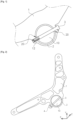
Fig. 2 ] est une vue de côté d'un support avec un dispositif de fixation selon l'invention; - [
Fig. 3 ] est une vue arrière de lafigure 2 ; - [
Fig. 4 ] est une coupe partielle du côté du dispositif selon l'invention ; - [
Fig. 5 ] est une vue en perspective d'un dispositif selon l'invention ; - [
Fig. 6 ] est une vue de côté d'un autre support avec un écrou ; - [
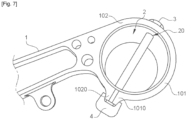
Fig. 7 ] est une vue de côté du support de lafigure 6 avec la vis, l'écrou et le tube. - Les figures sont présentées à titre indicatif et nullement limitatif de l'invention.
- Sauf précision contraire, un même élément apparaissant sur des figures différentes présente une référence unique.
- Dans toute la description on appellera « coté » , le plan XY illustré
figure 2 , l'avant étant disposé du coté gauche de cette figure. - Le dispositif de fixation de l'état de la technique de la
figure 1 comprend un support 1, un tube 2 et une vis 3. Le tube 2 est inséré dans un logement cylindrique 10 prévu à cet effet dans le support 1 d'épaisseur e. Une vis 3 vient solidariser l'ensemble en traversant le tube 2 par deux perçages 20 disposés en vis-à-vis, et le support 1 par un orifice 11 et un trou taraudé 12. - Cette simple vis n'exerce donc une pression qu'au niveau de sa tête et de ses filets ce qui a pour effet de « pincer » le support autour du tube et ne répartit pas le serrage sur toute la périphérie de celui-ci. On peut voir ici que la liaison ne tient qu'au niveau des deux perçages 20, d'où des contraintes importantes à cet endroit qui peuvent déformer le tube 2. Cette déformation, une ovalisation du tube 2, a pour conséquences un couple de serrage mal maitrisé, des jeux entre le tube et le support induit par ce mode de serrage, l'assemblage perd alors en rigidité et n'assure donc pas une transmission des efforts optimale.
- Sur le dispositif de serrage selon l'invention illustré aux
figures 3 à 5 , le support 1 comprend un logement cylindrique 10 avec une fente longitudinale 100 qui divise le logement 10 en deux branches 101 et 102. Ici, la branche 101 est flexible afin de pouvoir se refermer sur l'autre branche 102. La fente 100 présente un bord interne 103 et un bord externe 104. - Chacune des deux branches 101 et 102 se termine par un renvoi d'angle 1010 et 1020, placés en saillie sur un bord externe 104 de la fente 100. L'écrou 4 a deux faces inclinées 40 et 41 destinées à coopérer avec les renvois d'angle 1010 et 1020 et inclinées vers la partie taraudée de l'écrou 4. Ces renvois d'angles 1010 et 1020 se prolongent sur toute l'épaisseur e du support 1. Sur les
figures 6 et7 , les deux branches 101 et 102 sont flexibles. - Le logement cylindrique 10 comprend également un orifice 11 disposé en vis-à-vis de la fente longitudinale 100 (cf.
figure 6 ). Le tube 2 est également troué de deux perçages 20 disposés face à face. - L'écrou 4 se présente sous la forme d'un segment de la longueur de l'épaisseur e du support 1. Un de ses cotés comporte deux faces inclinées 40 et 41. L'inclinaison des faces 40 et 41 est sensiblement identique à celle des renvois d'angle.
- Nous allons maintenant décrire l'assemblage du tube 2 sur le support 1. On introduit le tube 2 dans le logement cylindrique 10 du support 1, une fois les perçages 20 en face de l'orifice 11, on insère la vis 3 dans l'orifice 11, les perçages 20 et la fente longitudinale 100.
- Une fois la vis 3 introduite, on visse l'écrou 4 à l'extrémité de la vis 3 selon la flèche V. Le serrage de l'écrou 4 va rapprocher celui-ci des renvois d'angle 1010 et 1020 (flèche E), une fois que ses faces inclinées 40 et 41 vont être en contact avec les renvois d'angle 1010 et 1020 (flèche C), le rapprochement de l'écrou 4 du support va entrainer un appui des faces inclinés 40, 41 sur chacun des renvois d'angle 1010 et 1020. L'appui de plus en plus important des plans inclinés 40, 41 au fur et à mesure du serrage de l'écrou 4 va provoquer la fermeture progressive des deux branches 101 et 102 jusqu'à ce que le tube 2 soit suffisamment serré (flèche F).
- Dans l'exemple des
figures 6 et7 , les deux branches 101 et 102 sont flexibles, ce qui permet un meilleur serrage du tube 2. - D'autres formes de support ou d'écrou sont possibles, on peut par exemple avoir un écrou avec une face conique creuse qui coopère avec deux demi-cônes en saillie sur les bords externes 104 de la fente 100.
- Ce dispositif de fixation est particulièrement bien adapté pour les sièges d'avion comportant des éléments structurels, tels que des crosses et des poutres. Les crosses comportent une zone de passage de la poutre et la fixation de l'ensemble est effectuée au moyen d'une vis traversant des ouvertures ménagées dans la poutre et la crosse. La crosse correspond ainsi au support et la poutre au tube.
- En général les sièges d'avions comportent plusieurs places individuelles séparées par des accoudoirs. Chaque place est séparée de la suivante par une crosse, il y a ainsi par exemple quatre crosses pour trois places. Les crosses sont reliées entre elles par un ou plusieurs tubes ou poutres. On peut par exemple avoir un tube au niveau de l'assise, un au niveau du dossier et un à l'intersection de l'assise et du dossier.
Claims (10)
- Dispositif de fixation d'un tube (2) sur un support (1), comprenant le tube (2), le support (1), une vis (3) traversante et un écrou (4), le support (1) recevant le tube (2) dans un logement cylindrique (10) percé transversalement par un orifice (11), le tube (2) ayant deux perçages (20) disposés en vis-à-vis, la vis (3) passant par l'orifice (11) et les deux perçages (20) et solidarisant le tube (2) et le support (1), le logement cylindrique (10) du support (1) présentant une fente longitudinale (100) disposée en vis-à-vis de l'orifice (11), la fente (100) ayant deux bords internes disposés du côté du logement (10) et deux bords externes disposés du côté opposé au logement (10), l'écrou (4) comportant au moins une face inclinée (40, 41), chaque bord externe présentant un renvoi d'angle (1010, 1020) coopérant avec la face inclinée (40, 41) de l'écrou (4).
- Dispositif de fixation selon la revendication 1, caractérisé en ce que la face inclinée est conique.
- Dispositif de fixation selon la revendication 1, caractérisé en ce que l'écrou (4) a deux faces inclinées (40, 41) disposées en vis-à-vis.
- Dispositif de fixation selon l'une des revendications précédentes, caractérisé en ce que le tube (2) et le logement cylindrique (10) ont une section circulaire.
- Dispositif de fixation selon l'une des revendications précédentes, caractérisé en ce que le support (1) est métallique.
- Dispositif de fixation selon l'une des revendications précédentes, caractérisé en ce que le tube (2) est métallique.
- Dispositif de fixation selon une des revendications 1 à 5, caractérisé en ce que le tube (2) est en matériau composite.
- Dispositif de fixation selon l'une des revendications précédentes, caractérisé en ce que le support (1) est une crosse.
- Dispositif de fixation selon la revendication précédente, caractérisé en ce que la crosse constitue un élément d'un siège.
- Siège comprenant un dispositif de fixation selon l'une des revendications précédentes.
Applications Claiming Priority (2)
| Application Number | Priority Date | Filing Date | Title |
|---|---|---|---|
| FR2012416A FR3116871B1 (fr) | 2020-11-30 | 2020-11-30 | Dispositif de fixation d’un tube sur un support |
| PCT/FR2021/052057 WO2022112698A1 (fr) | 2020-11-30 | 2021-11-22 | Dispositif de fixation d'un tube sur un support |
Publications (2)
| Publication Number | Publication Date |
|---|---|
| EP4251469A1 EP4251469A1 (fr) | 2023-10-04 |
| EP4251469B1 true EP4251469B1 (fr) | 2025-05-28 |
Family
ID=74125542
Family Applications (1)
| Application Number | Title | Priority Date | Filing Date |
|---|---|---|---|
| EP21823642.0A Active EP4251469B1 (fr) | 2020-11-30 | 2021-11-22 | Dispositif de fixation d'un tube sur un support |
Country Status (5)
| Country | Link |
|---|---|
| US (1) | US12594867B2 (fr) |
| EP (1) | EP4251469B1 (fr) |
| CN (1) | CN116829844B (fr) |
| FR (1) | FR3116871B1 (fr) |
| WO (1) | WO2022112698A1 (fr) |
Family Cites Families (15)
| Publication number | Priority date | Publication date | Assignee | Title |
|---|---|---|---|---|
| US2303309A (en) * | 1941-10-31 | 1942-11-24 | Warren Mcarthur Corp | Joint fitting |
| GB560154A (en) * | 1942-08-19 | 1944-03-22 | William Henry Bishop | Improvements in and relating to nuts for securing articles or structural parts to tubular and like members |
| FR2194288A5 (fr) * | 1972-07-25 | 1974-02-22 | Caillau Ets | |
| US4373235A (en) * | 1982-01-18 | 1983-02-15 | Jaising Korgaonkar | Pipe clamp |
| US4507105A (en) * | 1982-12-09 | 1985-03-26 | Huffy Corporation | Bicycle chainguard |
| JPS6023610A (ja) * | 1983-07-19 | 1985-02-06 | 奥村 潔 | バンド継手装置 |
| GB8701563D0 (en) * | 1987-01-24 | 1987-02-25 | Greenaway & Son Ltd M | Support device |
| US5553923A (en) * | 1993-12-08 | 1996-09-10 | Weber Aircraft, Inc. | Base frame for an aircraft seat |
| DE10133708C1 (de) * | 2001-07-11 | 2002-12-12 | Ferd Von Hagen Soehne & Koch G | Befestigungssystem für eine geteilte Kraftfahrzeug-Fondlehne |
| US6669400B1 (en) * | 2002-10-25 | 2003-12-30 | Paul D. Sergi | Tube connecting system |
| US10508667B2 (en) * | 2016-04-15 | 2019-12-17 | Stephan Bianchi | Hinge clamp for a bicycle frame and other structures |
| US10876554B2 (en) * | 2017-04-14 | 2020-12-29 | Stephan Bianchi | Hinge clamp for a bicycle frame and other structures |
| DE102017122397B4 (de) * | 2017-09-27 | 2024-08-01 | Airbus Operations Gmbh | Passagiersitzsystem für ein Transportmittel |
| DE202017005757U1 (de) * | 2017-11-07 | 2019-02-19 | Canyon Bicycles Gmbh | Klemmelement zur Befestigung von Komponenten an Fahrradlenkern sowie Komponente mit Klemmelement |
| CN109110134A (zh) * | 2018-07-25 | 2019-01-01 | 苏州频聿精密机械有限公司 | 一种能防止错位滑动的航空座椅连接装置 |
-
2020
- 2020-11-30 FR FR2012416A patent/FR3116871B1/fr active Active
-
2021
- 2021-11-22 US US18/254,938 patent/US12594867B2/en active Active
- 2021-11-22 WO PCT/FR2021/052057 patent/WO2022112698A1/fr not_active Ceased
- 2021-11-22 EP EP21823642.0A patent/EP4251469B1/fr active Active
- 2021-11-22 CN CN202180088471.0A patent/CN116829844B/zh active Active
Also Published As
| Publication number | Publication date |
|---|---|
| CN116829844A (zh) | 2023-09-29 |
| US20240042908A1 (en) | 2024-02-08 |
| FR3116871B1 (fr) | 2024-01-05 |
| FR3116871A1 (fr) | 2022-06-03 |
| US12594867B2 (en) | 2026-04-07 |
| EP4251469A1 (fr) | 2023-10-04 |
| WO2022112698A1 (fr) | 2022-06-02 |
| CN116829844B (zh) | 2025-10-24 |
Similar Documents
| Publication | Publication Date | Title |
|---|---|---|
| EP1011504B1 (fr) | Instrumentation d'osteosynthese a connecteur entre tige vertebrale et organes d'ancrage | |
| FR2724428A1 (fr) | Organe de fixation par flexion | |
| FR2710715A1 (fr) | Verrou auto-bloquant pour canalisations. | |
| FR2792039A1 (fr) | Dispositif d'assemblage d'une piece souple sur une piece rigide | |
| EP4251469B1 (fr) | Dispositif de fixation d'un tube sur un support | |
| FR2818239A1 (fr) | Structure d'assemblage sur un vehicule spatial | |
| FR2920015A3 (fr) | Structure de vehicule automobile et procede de fixation d'un accessoire | |
| FR2879269A1 (fr) | Dispositif de fixation d'un elememt sur un support | |
| FR3137367A1 (fr) | Structure en treillis renforcée et aéronef comprenant au moins une telle structure | |
| EP0465288A1 (fr) | Dispositif de fixation de plaques de revêtement sur un support et assemblage obtenu à l'aide de ce dispositif | |
| EP4242479B1 (fr) | Bielle réglable en longueur comprenant un système anti-rotation coopérant avec un système de liaison de la bielle, aéronef comprenant au moins une telle bielle | |
| FR2652872A1 (fr) | Raccord pour tuyau. | |
| EP2446155B1 (fr) | Dispositif de fixation a ecrou plastique | |
| EP3683150B1 (fr) | Dispositif de liaison pivotante entre au moins deux pièces, aéronef comprenant un capot équipé dudit dispositif de liaison pivotante | |
| EP3680176B1 (fr) | Attache-moteur d'aéronef comprenant au moins un système d'immobilisation en translation d'un pion de cisaillement comportant une plaque d'obturation, procédé de montage de ladite attache-moteur et aéronef comprenant ladite attache-moteur | |
| FR2671147A1 (fr) | Dispositif d'immobilisation de deux pieces assemblees par pression de l'une sur l'autre, en particulier pour vehicule automobile. | |
| EP0648943B1 (fr) | Dispositif de fixation avec réglage rapide tridimensionnel d'une pièce quelconque sur un support | |
| EP2094978A1 (fr) | Ecrou a collet deformable | |
| FR2759126A1 (fr) | Dispositif d'immobilisation relative de deux tubes ou d'un tube et d'une paroi a double peau et tricycle comprenant deux tubes immobilises grace a un tel dispositif | |
| FR3132128A1 (fr) | Dispositif de fixation comprenant au moins deux parties reliées par un système autobloquant à crans, assemblage comprenant au moins un tel dispositif de fixation | |
| FR2741407A1 (fr) | Dispositif de maintien en position d'un organe de serrage | |
| FR2741916A1 (fr) | Dispositif de premontage et de retenue d'une vis associee a une piece d'assemblage | |
| FR2734609A1 (fr) | Systeme de liaison mecanique entre deux pieces | |
| FR2871623A1 (fr) | Dispositif de traversee de tole mince | |
| EP2307243A1 (fr) | Chape de pedalier avec bague de ripage |
Legal Events
| Date | Code | Title | Description |
|---|---|---|---|
| STAA | Information on the status of an ep patent application or granted ep patent |
Free format text: STATUS: UNKNOWN |
|
| STAA | Information on the status of an ep patent application or granted ep patent |
Free format text: STATUS: THE INTERNATIONAL PUBLICATION HAS BEEN MADE |
|
| PUAI | Public reference made under article 153(3) epc to a published international application that has entered the european phase |
Free format text: ORIGINAL CODE: 0009012 |
|
| STAA | Information on the status of an ep patent application or granted ep patent |
Free format text: STATUS: REQUEST FOR EXAMINATION WAS MADE |
|
| 17P | Request for examination filed |
Effective date: 20230628 |
|
| AK | Designated contracting states |
Kind code of ref document: A1 Designated state(s): AL AT BE BG CH CY CZ DE DK EE ES FI FR GB GR HR HU IE IS IT LI LT LU LV MC MK MT NL NO PL PT RO RS SE SI SK SM TR |
|
| DAV | Request for validation of the european patent (deleted) | ||
| DAX | Request for extension of the european patent (deleted) | ||
| GRAP | Despatch of communication of intention to grant a patent |
Free format text: ORIGINAL CODE: EPIDOSNIGR1 |
|
| STAA | Information on the status of an ep patent application or granted ep patent |
Free format text: STATUS: GRANT OF PATENT IS INTENDED |
|
| INTG | Intention to grant announced |
Effective date: 20241223 |
|
| RIN1 | Information on inventor provided before grant (corrected) |
Inventor name: BEVING, PASCAL Inventor name: CAUQUIL, SAMUEL |
|
| GRAS | Grant fee paid |
Free format text: ORIGINAL CODE: EPIDOSNIGR3 |
|
| GRAA | (expected) grant |
Free format text: ORIGINAL CODE: 0009210 |
|
| STAA | Information on the status of an ep patent application or granted ep patent |
Free format text: STATUS: THE PATENT HAS BEEN GRANTED |
|
| AK | Designated contracting states |
Kind code of ref document: B1 Designated state(s): AL AT BE BG CH CY CZ DE DK EE ES FI FR GB GR HR HU IE IS IT LI LT LU LV MC MK MT NL NO PL PT RO RS SE SI SK SM TR |
|
| REG | Reference to a national code |
Ref country code: GB Ref legal event code: FG4D Free format text: NOT ENGLISH |
|
| REG | Reference to a national code |
Ref country code: CH Ref legal event code: EP |
|
| REG | Reference to a national code |
Ref country code: IE Ref legal event code: FG4D Free format text: LANGUAGE OF EP DOCUMENT: FRENCH Ref country code: DE Ref legal event code: R096 Ref document number: 602021031496 Country of ref document: DE |
|
| REG | Reference to a national code |
Ref country code: NL Ref legal event code: MP Effective date: 20250528 |
|
| PG25 | Lapsed in a contracting state [announced via postgrant information from national office to epo] |
Ref country code: FI Free format text: LAPSE BECAUSE OF FAILURE TO SUBMIT A TRANSLATION OF THE DESCRIPTION OR TO PAY THE FEE WITHIN THE PRESCRIBED TIME-LIMIT Effective date: 20250528 Ref country code: ES Free format text: LAPSE BECAUSE OF FAILURE TO SUBMIT A TRANSLATION OF THE DESCRIPTION OR TO PAY THE FEE WITHIN THE PRESCRIBED TIME-LIMIT Effective date: 20250528 |
|
| REG | Reference to a national code |
Ref country code: LT Ref legal event code: MG9D |
|
| PG25 | Lapsed in a contracting state [announced via postgrant information from national office to epo] |
Ref country code: GR Free format text: LAPSE BECAUSE OF FAILURE TO SUBMIT A TRANSLATION OF THE DESCRIPTION OR TO PAY THE FEE WITHIN THE PRESCRIBED TIME-LIMIT Effective date: 20250829 Ref country code: NO Free format text: LAPSE BECAUSE OF FAILURE TO SUBMIT A TRANSLATION OF THE DESCRIPTION OR TO PAY THE FEE WITHIN THE PRESCRIBED TIME-LIMIT Effective date: 20250828 |
|
| PG25 | Lapsed in a contracting state [announced via postgrant information from national office to epo] |
Ref country code: PL Free format text: LAPSE BECAUSE OF FAILURE TO SUBMIT A TRANSLATION OF THE DESCRIPTION OR TO PAY THE FEE WITHIN THE PRESCRIBED TIME-LIMIT Effective date: 20250528 Ref country code: NL Free format text: LAPSE BECAUSE OF FAILURE TO SUBMIT A TRANSLATION OF THE DESCRIPTION OR TO PAY THE FEE WITHIN THE PRESCRIBED TIME-LIMIT Effective date: 20250528 |
|
| PG25 | Lapsed in a contracting state [announced via postgrant information from national office to epo] |
Ref country code: BG Free format text: LAPSE BECAUSE OF FAILURE TO SUBMIT A TRANSLATION OF THE DESCRIPTION OR TO PAY THE FEE WITHIN THE PRESCRIBED TIME-LIMIT Effective date: 20250528 |
|
| PG25 | Lapsed in a contracting state [announced via postgrant information from national office to epo] |
Ref country code: HR Free format text: LAPSE BECAUSE OF FAILURE TO SUBMIT A TRANSLATION OF THE DESCRIPTION OR TO PAY THE FEE WITHIN THE PRESCRIBED TIME-LIMIT Effective date: 20250528 |
|
| PG25 | Lapsed in a contracting state [announced via postgrant information from national office to epo] |
Ref country code: RS Free format text: LAPSE BECAUSE OF FAILURE TO SUBMIT A TRANSLATION OF THE DESCRIPTION OR TO PAY THE FEE WITHIN THE PRESCRIBED TIME-LIMIT Effective date: 20250828 |
|
| PG25 | Lapsed in a contracting state [announced via postgrant information from national office to epo] |
Ref country code: IS Free format text: LAPSE BECAUSE OF FAILURE TO SUBMIT A TRANSLATION OF THE DESCRIPTION OR TO PAY THE FEE WITHIN THE PRESCRIBED TIME-LIMIT Effective date: 20250928 |
|
| PG25 | Lapsed in a contracting state [announced via postgrant information from national office to epo] |
Ref country code: LV Free format text: LAPSE BECAUSE OF FAILURE TO SUBMIT A TRANSLATION OF THE DESCRIPTION OR TO PAY THE FEE WITHIN THE PRESCRIBED TIME-LIMIT Effective date: 20250528 |
|
| REG | Reference to a national code |
Ref country code: AT Ref legal event code: MK05 Ref document number: 1798459 Country of ref document: AT Kind code of ref document: T Effective date: 20250528 |
|
| PGFP | Annual fee paid to national office [announced via postgrant information from national office to epo] |
Ref country code: DE Payment date: 20251118 Year of fee payment: 5 |
|
| PGFP | Annual fee paid to national office [announced via postgrant information from national office to epo] |
Ref country code: GB Payment date: 20251125 Year of fee payment: 5 |
|
| PG25 | Lapsed in a contracting state [announced via postgrant information from national office to epo] |
Ref country code: DK Free format text: LAPSE BECAUSE OF FAILURE TO SUBMIT A TRANSLATION OF THE DESCRIPTION OR TO PAY THE FEE WITHIN THE PRESCRIBED TIME-LIMIT Effective date: 20250528 Ref country code: AT Free format text: LAPSE BECAUSE OF FAILURE TO SUBMIT A TRANSLATION OF THE DESCRIPTION OR TO PAY THE FEE WITHIN THE PRESCRIBED TIME-LIMIT Effective date: 20250528 Ref country code: SM Free format text: LAPSE BECAUSE OF FAILURE TO SUBMIT A TRANSLATION OF THE DESCRIPTION OR TO PAY THE FEE WITHIN THE PRESCRIBED TIME-LIMIT Effective date: 20250528 |
|
| PGFP | Annual fee paid to national office [announced via postgrant information from national office to epo] |
Ref country code: FR Payment date: 20251125 Year of fee payment: 5 |
|
| PG25 | Lapsed in a contracting state [announced via postgrant information from national office to epo] |
Ref country code: CZ Free format text: LAPSE BECAUSE OF FAILURE TO SUBMIT A TRANSLATION OF THE DESCRIPTION OR TO PAY THE FEE WITHIN THE PRESCRIBED TIME-LIMIT Effective date: 20250528 |
|
| PG25 | Lapsed in a contracting state [announced via postgrant information from national office to epo] |
Ref country code: EE Free format text: LAPSE BECAUSE OF FAILURE TO SUBMIT A TRANSLATION OF THE DESCRIPTION OR TO PAY THE FEE WITHIN THE PRESCRIBED TIME-LIMIT Effective date: 20250528 |
|
| PG25 | Lapsed in a contracting state [announced via postgrant information from national office to epo] |
Ref country code: SK Free format text: LAPSE BECAUSE OF FAILURE TO SUBMIT A TRANSLATION OF THE DESCRIPTION OR TO PAY THE FEE WITHIN THE PRESCRIBED TIME-LIMIT Effective date: 20250528 |
|
| PG25 | Lapsed in a contracting state [announced via postgrant information from national office to epo] |
Ref country code: IT Free format text: LAPSE BECAUSE OF FAILURE TO SUBMIT A TRANSLATION OF THE DESCRIPTION OR TO PAY THE FEE WITHIN THE PRESCRIBED TIME-LIMIT Effective date: 20250528 |
|
| REG | Reference to a national code |
Ref country code: DE Ref legal event code: R097 Ref document number: 602021031496 Country of ref document: DE |
|
| PG25 | Lapsed in a contracting state [announced via postgrant information from national office to epo] |
Ref country code: RO Free format text: LAPSE BECAUSE OF FAILURE TO SUBMIT A TRANSLATION OF THE DESCRIPTION OR TO PAY THE FEE WITHIN THE PRESCRIBED TIME-LIMIT Effective date: 20250528 |
|
| PLBE | No opposition filed within time limit |
Free format text: ORIGINAL CODE: 0009261 |
|
| STAA | Information on the status of an ep patent application or granted ep patent |
Free format text: STATUS: NO OPPOSITION FILED WITHIN TIME LIMIT |
|
| REG | Reference to a national code |
Ref country code: CH Ref legal event code: L10 Free format text: ST27 STATUS EVENT CODE: U-0-0-L10-L00 (AS PROVIDED BY THE NATIONAL OFFICE) Effective date: 20260409 |