EP4246763B1 - Verfahren und vorrichtung zur kombination von zellkernen, elektronische vorrichtung und speichermedium - Google Patents
Verfahren und vorrichtung zur kombination von zellkernen, elektronische vorrichtung und speichermedium Download PDFInfo
- Publication number
- EP4246763B1 EP4246763B1 EP23159095.1A EP23159095A EP4246763B1 EP 4246763 B1 EP4246763 B1 EP 4246763B1 EP 23159095 A EP23159095 A EP 23159095A EP 4246763 B1 EP4246763 B1 EP 4246763B1
- Authority
- EP
- European Patent Office
- Prior art keywords
- battery pack
- members
- population
- cell cores
- capacity
- Prior art date
- Legal status (The legal status is an assumption and is not a legal conclusion. Google has not performed a legal analysis and makes no representation as to the accuracy of the status listed.)
- Active
Links
Images




Classifications
-
- H—ELECTRICITY
- H02—GENERATION; CONVERSION OR DISTRIBUTION OF ELECTRIC POWER
- H02J—ELECTRIC POWER NETWORKS; CIRCUIT ARRANGEMENTS OR SYSTEMS FOR SUPPLYING OR DISTRIBUTING ELECTRIC POWER; SYSTEMS FOR STORING ELECTRIC ENERGY
- H02J7/00—Circuit arrangements for charging or discharging batteries or for supplying loads from batteries
- H02J7/40—Circuit arrangements for charging or discharging batteries or for supplying loads from batteries characterised by the exchange of charge or discharge related data
-
- H—ELECTRICITY
- H02—GENERATION; CONVERSION OR DISTRIBUTION OF ELECTRIC POWER
- H02J—ELECTRIC POWER NETWORKS; CIRCUIT ARRANGEMENTS OR SYSTEMS FOR SUPPLYING OR DISTRIBUTING ELECTRIC POWER; SYSTEMS FOR STORING ELECTRIC ENERGY
- H02J7/00—Circuit arrangements for charging or discharging batteries or for supplying loads from batteries
- H02J7/50—Circuit arrangements for charging or discharging batteries or for supplying loads from batteries acting upon multiple batteries simultaneously or sequentially
-
- H—ELECTRICITY
- H02—GENERATION; CONVERSION OR DISTRIBUTION OF ELECTRIC POWER
- H02J—ELECTRIC POWER NETWORKS; CIRCUIT ARRANGEMENTS OR SYSTEMS FOR SUPPLYING OR DISTRIBUTING ELECTRIC POWER; SYSTEMS FOR STORING ELECTRIC ENERGY
- H02J7/00—Circuit arrangements for charging or discharging batteries or for supplying loads from batteries
- H02J7/60—Circuit arrangements for charging or discharging batteries or for supplying loads from batteries including safety or protection arrangements
- H02J7/663—Circuit arrangements for charging or discharging batteries or for supplying loads from batteries including safety or protection arrangements using battery or load disconnect circuits
- H02J7/667—Circuit arrangements for charging or discharging batteries or for supplying loads from batteries including safety or protection arrangements using battery or load disconnect circuits disconnection of loads if battery is not under charge, e.g. in vehicle if engine is not running
-
- H—ELECTRICITY
- H02—GENERATION; CONVERSION OR DISTRIBUTION OF ELECTRIC POWER
- H02J—ELECTRIC POWER NETWORKS; CIRCUIT ARRANGEMENTS OR SYSTEMS FOR SUPPLYING OR DISTRIBUTING ELECTRIC POWER; SYSTEMS FOR STORING ELECTRIC ENERGY
- H02J7/00—Circuit arrangements for charging or discharging batteries or for supplying loads from batteries
- H02J7/80—Circuit arrangements for charging or discharging batteries or for supplying loads from batteries including monitoring or indicating arrangements
- H02J7/82—Control of state of charge [SOC]
-
- H—ELECTRICITY
- H02—GENERATION; CONVERSION OR DISTRIBUTION OF ELECTRIC POWER
- H02J—ELECTRIC POWER NETWORKS; CIRCUIT ARRANGEMENTS OR SYSTEMS FOR SUPPLYING OR DISTRIBUTING ELECTRIC POWER; SYSTEMS FOR STORING ELECTRIC ENERGY
- H02J7/00—Circuit arrangements for charging or discharging batteries or for supplying loads from batteries
- H02J7/90—Regulation of charging or discharging current or voltage
- H02J7/92—Regulation of charging or discharging current or voltage with prioritisation of loads or sources
-
- G—PHYSICS
- G06—COMPUTING OR CALCULATING; COUNTING
- G06F—ELECTRIC DIGITAL DATA PROCESSING
- G06F2111/00—Details relating to CAD techniques
- G06F2111/06—Multi-objective optimisation, e.g. Pareto optimisation using simulated annealing [SA], ant colony algorithms or genetic algorithms [GA]
-
- G—PHYSICS
- G06—COMPUTING OR CALCULATING; COUNTING
- G06F—ELECTRIC DIGITAL DATA PROCESSING
- G06F30/00—Computer-aided design [CAD]
- G06F30/20—Design optimisation, verification or simulation
-
- G—PHYSICS
- G06—COMPUTING OR CALCULATING; COUNTING
- G06F—ELECTRIC DIGITAL DATA PROCESSING
- G06F30/00—Computer-aided design [CAD]
- G06F30/30—Circuit design
- G06F30/36—Circuit design at the analogue level
- G06F30/373—Design optimisation
-
- Y—GENERAL TAGGING OF NEW TECHNOLOGICAL DEVELOPMENTS; GENERAL TAGGING OF CROSS-SECTIONAL TECHNOLOGIES SPANNING OVER SEVERAL SECTIONS OF THE IPC; TECHNICAL SUBJECTS COVERED BY FORMER USPC CROSS-REFERENCE ART COLLECTIONS [XRACs] AND DIGESTS
- Y02—TECHNOLOGIES OR APPLICATIONS FOR MITIGATION OR ADAPTATION AGAINST CLIMATE CHANGE
- Y02E—REDUCTION OF GREENHOUSE GAS [GHG] EMISSIONS, RELATED TO ENERGY GENERATION, TRANSMISSION OR DISTRIBUTION
- Y02E60/00—Enabling technologies; Technologies with a potential or indirect contribution to GHG emissions mitigation
- Y02E60/10—Energy storage using batteries
-
- Y—GENERAL TAGGING OF NEW TECHNOLOGICAL DEVELOPMENTS; GENERAL TAGGING OF CROSS-SECTIONAL TECHNOLOGIES SPANNING OVER SEVERAL SECTIONS OF THE IPC; TECHNICAL SUBJECTS COVERED BY FORMER USPC CROSS-REFERENCE ART COLLECTIONS [XRACs] AND DIGESTS
- Y02—TECHNOLOGIES OR APPLICATIONS FOR MITIGATION OR ADAPTATION AGAINST CLIMATE CHANGE
- Y02T—CLIMATE CHANGE MITIGATION TECHNOLOGIES RELATED TO TRANSPORTATION
- Y02T10/00—Road transport of goods or passengers
- Y02T10/60—Other road transportation technologies with climate change mitigation effect
- Y02T10/70—Energy storage systems for electromobility, e.g. batteries
Definitions
- the present disclosure relates to the technical field of battery capacity control, in particular to a method for combing cell cores, a device for combing cell cores, an electronic apparatus and a storage medium.
- High capacity of the battery pack is generally achieved by connecting several cell cores in series and in parallel to form the battery pack.
- There are two ways to increase the capacity of the battery pack One of them is to increase the capacity of a single cell core, and the other is to optimize how to combine cell cores to increase the capacity of the battery pack.
- the capacity of the battery pack is usually lower than the capacity of any cell core in the battery pack, and thus the capacity of cell cores cannot be used normally, and the capacity of the battery pack is low. There is still room for optimization of effects of the traditional combination of cell cores.
- CN 114156552 A discloses an aging-considered equalization control strategy for series battery modules.
- embodiments of the present disclosure provide a method for combing cell cores, a device for combing cell cores, an electronic apparatus and a storage medium that remove or at least partially alleviate the above issues.
- a first aspect of the present disclosure provides a method for combining cell cores, the method including:
- a second aspect of the present disclosure also provides a device for combining cell cores, including:
- a third aspect of the present disclosure also provides an electronic apparatus, including: a processor, a memory, and a computer program stored on the memory and capable of running on the processor, and configured to implement the method for combining cell cores as described above when it is executed by the processor.
- a fourth aspect of the present disclosure also provides a computer-readable storage medium, on which a computer program is stored, and the computer program is configured to implement the method for combining cell cores as described above when it is executed by a processor.
- an initial battery pack population is generated for N cell cores according to different combinations of cell cores.
- the genetic algorithm is used to iteratively generate a new battery pack population based on the following steps until the last generation battery pack population which meets the preset condition is obtained.
- the minimum capacity of each member is calculated on a basis of the capacity and state of charge of each of cell cores in the battery pack population.
- the members are sorted according to the minimum capacity of these members in the battery pack population, and a new battery pack population is generated according to the sorting results.
- the cell cores can be combined into target modules and the target modules are combined into a target battery pack.
- the embodiment of the present disclosure is based on a genetic algorithm. It can generate a new battery pack population according to the sorting result of the members depending on minimum capacity of these members of the previous battery pack population. In this way, a variety of battery pack combinations in different sorting ways can be generated, so as to improve the combination efficiency in comparison with traditional combination of cell cores.
- the inconsistency between the capacities of adjacent monomer batteries can be reduced by such sorting operation according to the minimum capacity so that the combination of the cell cores can be optimized.
- Generation of the battery pack according to the combination of the cell cores of target members in the last generation battery pack population can increase the usage count and capacity of the battery pack.
- One of core concepts of the embodiments of the present disclosure is to propose a method for optimizing the combination of existing cell cores.
- the method uses genetic algorithm as the basis, and realizes automatic computer optimization of the combination of cell cores through computer programming.
- Step 101 capacities and states of charge of N cell cores are acquired.
- the embodiment of the present disclosure is aimed at the field of new energy vehicles.
- the capacity of the cell cores can be obtained through the charge and discharge test.
- the state of charge (SOC) of the cell cores may be determined from time integration calculation in the charge and discharge test, and it can also be obtained by the open circuit voltage of the electric cell obtained from the tests after the conversion of the SOC-OCV (State of charge-open circuit voltage) characteristic curve of the electric cell.
- the cell cores are elements that constitute a module and the module is an element that constitutes the battery pack.
- the module is an element that constitutes the battery pack.
- several cell cores may be connected in series, in parallel or in series and parallel to form a module as required, and several modules may be connected in series or in parallel or in series and parallel to form a battery pack.
- the capacity of the module is determined by the number of the cell cores and the way of connection among the cell cores, and the capacity of the battery pack is determined by the number of the modules and the way of connection among the modules.
- an initial battery pack population for N cell cores is generated on a basis of different combinations of cell cores.
- the battery pack population includes L members, and each of the members includes M battery packs.
- Each of the battery packs includes P modules.
- the battery cells can be combined in such a way that the cell cores can be combined in batches into several modules at first, then these modules can be combined into several battery packs, and several battery packs separated from each other can be combined to form a list of the initial battery pack populations.
- Serial numbers can be assigned to all of cell cores respectively, and the capacities and states of charge of the corresponding cell cores can be looked up through the serial numbers.
- modules and battery packs in the embodiments of the present disclosure mean energy storage devices with greater energy formed by connection of several cell cores of the same specification in series or in parallel. They are applicable for lithium-ion batteries, lithium metal batteries, lead-acid batteries, Ni-MH batteries, semi-solid or solid-state batteries and the like.
- the battery pack population is composed of L members.
- the L members are independent of each other.
- Each of the members is a set of battery packs which includes M battery packs.
- Each of the battery packs includes P modules.
- Each of the modules includes K cell cores, so the number N of cell cores is equal to the product (i.e. result of multiplication) of M, P, and K.
- N, M, P, K and L are all positive integers in the embodiments of the present disclosure.
- assigning the serial numbers to the cell cores and combining the cell cores on the basis of the serial numbers are both simulated by a programming language or a program. Thus, the combination of the cell cores in this application is random.
- the specific composition steps of the battery pack are known to those skilled in the art and will be omitted here.
- Step 103 a new battery pack population is iteratively generated by using a genetic algorithm according to the following steps until a last generation battery pack population meeting a preset condition is obtained.
- the genetic algorithm in the present disclosure is a method for searching the optimal solution by simulating the natural evolution process.
- the algorithm converts the problem-solving process into a process similar to such as the crossover and mutation of chromosome genes in biological evolution by using computer simulation operations in a mathematical way.
- the genetic algorithm has been widely used in the fields of combinatorial optimization, machine learning, signal processing, adaptive control and artificial life and so on.
- the genetic algorithm in the embodiment of the present disclosure can be the command stream and macro file that comes with the programming language or data processing software, and realize the programmed cyclic iteration process of automatic combination-calculation-optimization through programs to obtain the required final target members.
- Step 104 the minimum capacity of each member is calculated according to the capacities and state of charge of all of cell cores in the battery pack population.
- each of the members can include M battery packs.
- Each of the battery packs can include P modules, and each of the modules can include K batteries.
- the calculation of the minimum capacity of each of the members can be converted to the calculation of the minimum capacity of the battery packs in each of the members.
- the calculation of the minimum capacity of each battery pack can be converted into the calculation of the minimum capacity of the modules in the battery pack, and the calculation of the minimum capacity of each module can be converted into the calculation of the minimum capacity of the cell cores.
- Step 105 the members in the battery pack population are sorted according to the minimum capacity of these members, and a new battery pack population is generated according to the sorting result.
- the embodiments of the present disclosure can reduce the inconsistency of capacity between adjacent monomer batteries by sorting, thereby increasing the usage count and capacity of the battery pack.
- Step 106 the cell cores are combined into target modules and the target modules are combined into a target battery pack, according to combination of the cell cores of the target members.
- Step 104 and Step 105 can be executed cyclically until the last generation battery pack population meeting the preset condition is obtained.
- the target members obtained when the number of iterations reaches a predetermined number can be determined as the last generation battery pack population that meets the preset condition.
- the number of iterations is set to 1500, and when the number of iterations reaches 1500, end the cycle and acquire the optimal member of the battery pack population in the current cycle step as the target member.
- the present disclosure can also determine the battery pack population of which minimum capacity value of the sorted first member reaches the target capacity threshold as the last generation battery pack population meeting the preset condition. For example, assuming that the target capacity threshold is set to 123.50Ah, when the minimum capacity of the sorted first member in the battery pack population reaches 123.50Ah, the battery pack population at this time is the last generation battery pack population.
- the method for combining cell cores can generate an initial battery pack population for N cell cores depending on different combinations of cell cores.
- the genetic algorithm is used to iteratively generate a new battery pack population based on the following steps until the last generation battery pack population which meets the preset condition is achieved.
- the minimum capacity of each member is calculated on a basis of the capacity and state of charge of each of cell cores in the battery pack population.
- the members are sorted according to the minimum capacity of these members in the battery pack population, and a new battery pack population is generated according to the sorting results.
- the cell cores can be combined into target modules and the target modules are combined into a target battery pack.
- the embodiment of the present disclosure is based on a genetic algorithm. It can generate a new battery pack population according to the sorting result of the members depending on minimum capacity of these members of the previous battery pack population. In this way, a variety of battery pack combinations in different sorting ways can be generated, so as to improve the combination efficiency in comparison with traditional cell cores.
- the inconsistency between the capacities of adjacent monomer batteries can be reduced by such sorting operation according to the minimum capacity so that the combination of the cell cores can be optimized.
- Generation of the battery pack from the combination of the cell cores of target members in the last generation battery pack population can increase the usage count and capacity of the battery pack.
- FIG. 2 shows a flow chart of a method for combining cell cores according to another embodiment of the present disclosure.
- the method may specifically include following steps 201-212.
- Step 201 the capacities and states of charge of N cell cores are acquired.
- the capacity of cell cores can be normally distributed, with a mean of 126Ah and a standard deviation of 0.40Ah.
- the SOC of cell cores can be normally distributed, with a mean of 70% and a standard deviation of 0.003%.
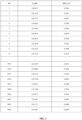
- the values of capacity C u and SOC u of 9984 cell cores can be obtained as shown in FIG.3 .
- No represents the serial number of the cell cores
- C u (Ah) represents the capacity of the cell cores
- SOC u represents the state of charge of the cell cores.
- FIG. 3 contains the capacities and states of charge of the 1st to 9984th cell cores.
- the number N of cell cores in the embodiment of the present disclosure can be obtained as a positive integer according to the number of battery packs to be formed.
- the specific number of cell cores to be obtained is not limited herein.
- Step 202 an initial battery pack population for the N cell cores is generated according to different combinations of cell cores.
- the cell cores can be connected in series to form modules, and then the modules can be connected in series to form a battery pack. Assuming that 52 battery packs in total need to be produced and one battery pack is composed of 16 modules and one module is composed of 12 cell cores, then the production of the 52 battery packs requires 832 modules and 9984 cell cores in total. If the population size is 80, the initial battery pack population will contain 80 members, and each of these members will contain 52 battery packs different from other members.
- the disclosed embodiments of the present disclosure are not limited thereto, for example, in the embodiments of the present disclosure, the connections of cell cores, the population size, the number of battery packs included in each member, the number of modules included in each battery pack, and the number of cell cores contained in each module can be provided as required.
- Step 203 a new battery pack population is generated iteratively according to the following steps using a genetic algorithm until a last generation battery pack population meeting the preset condition is obtained.
- Step 204 the capacity and state of charge of each module are calculated according to the capacity and state of charge of each cell core in each module.
- Step 205 the capacity and state of charge of each battery pack are calculated according to the capacity and state of charge of each module in each battery pack .
- the minimum capacity of the battery packs in each member is defined as the minimum capacity of the corresponding member.
- the capacity of each module and battery pack can be calculated by the following Equation (1):
- C 0 min SOC ⁇ C + min 1 ⁇ SOC ⁇ C
- C 0 is the capacity of the module or battery pack
- SOC is a vector composed of the state of charge of all the monomers that make up the modules or battery packs
- C is a vector composed of the capacity of all the monomers that make up the module or battery pack.
- the operator min() means to take the minimum value of the elements in the vector
- the operator * means to multiply the elements of one vector by the corresponding elements of the other vector respectively.
- C p C 0
- SOC p SOC 0
- the monomers refer to the modules that make up the battery pack.
- C min is a target value function of the combination of cell cores.
- Step 207 all of members in the battery pack population are sorted in descending order of the minimum capacity of these members, and the sorting result is obtained.
- the minimum capacity of the battery pack can be calculated one by one for all of members in the initial battery pack population through the program code to obtain the minimum capacity of each member, and these members are sorted in descending order of the minimum capacity.
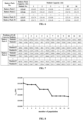
- the sorting results of all of members based on the minimum capacity are shown in FIG. 4 .
- No represents the serial number of each member
- C min represents the minimum capacity of each member
- FIG. 4 contains the results of sorting 80 members in descending order of the minimum capacity.
- top Q members in the sorting result are reserved as reserved members, and are put into the next generation battery pack population.
- the magnitude of Q is the product (i.e. result of multiplication) of the number of members in the sorting result and a candidate ratio, and it is a positive integer.
- the candidate ratio refers to the ratio of reserved members to the total members in the sorting result.
- 1*-12* represents 12 reserved members.
- the top 12 members in the candidate result are regarded as reserved members, and the rest 68 members are directly eliminated.
- the embodiment of the present disclosure is not limited thereto, and the candidate ratio Re in the embodiment of the present disclosure can be set as required, and may be a decimal between 0 to 1.
- Step 209 a member is arbitrarily selected from the reserved members, and a new member is generated by exchanging positions of a plurality of cell cores in the combination of the cell cores of the reserved member.
- the embodiments of the present disclosure are not limited thereto, and the variation intensity in the embodiment of the present disclosure can be set as required in practice, and can be a positive integer.
- Step 210 a new member is regenerated if the combination of cell cores of the new member is the same as that of any member in the sorting result.
- Step 211 the reserved members and the new member are combined into a new battery pack population.
- Step 204 to Step 211 are repeatedly executed until the count of iterations reaches 2000.
- the flow chart of the iterative loop in the embodiment of the present disclosure is shown in FIG. 5 .
- L in FIG. 5 is the number of members of battery pack population
- Re is the candidate ratio
- Q is the number of the reserved members in the battery pack population
- Q L*Re.
- the first-ranked member of the last generation battery pack population is defined as the target member, and N cell cores are combined into P target modules and P target modules are combined into M target battery pack depending on the combination of cell cores of the target member.
- the count of iterations can be set to 2000, and when the count of iterations reaches 2000, the iteration is stopped, and the first-ranked member in descending order of the smallest capacity of members in the last generation population list is the target member.
- FIG. 6 shows 52 battery packs and their module capacity values in the target members of the last generation battery pack population table.
- FIG. 6 contains 52 battery packs in the target members, and each battery pack consists of 16 different modules. The capacity of each battery pack and the capacity of the modules in each battery pack can be obtained according to the serial number of the battery packs.
- FIG. 7 shows the combination of cell cores in the two battery packs of the target members of the last generation battery pack population table.
- the battery pack in FIG. 7 consists of 16 different modules, and each module consists of 12 different cell cores. After such combination, the serial numbers of the cell cores contained in each battery pack are different.
- the method for combining cell cores can generate an initial battery pack population for N cell cores depending on different combinations of cell cores.
- the genetic algorithm is used to iteratively generate a new battery pack population based on the following steps until the last generation battery pack population which meets the preset condition is achieved.
- the minimum capacity of each member is calculated on a basis of the capacity and state of charge of each of cell cores in the battery pack population.
- the members are sorted according to the minimum capacity of these members in the battery pack population, and a new battery pack population is generated according to the sorting results.
- the cell cores can be combined into target modules and the target modules are combined into a target battery pack.
- the embodiment of the present disclosure is based on a genetic algorithm. It can generate a new battery pack population according to the sorting result of the members depending on minimum capacity of these members of the previous battery pack population. In this way, a variety of battery pack combinations in different sorting ways can be generated, so as to improve the combination efficiency in comparison with traditional cell cores.
- the inconsistency between the capacities of adjacent monomer batteries can be reduced by such sorting operation according to the minimum capacity so that the combination of the cell cores can be optimized.
- Generation of the battery pack according to the combination of the cell cores of target members in the last generation battery pack population can increase the usage count and capacity of the battery pack.
- the optimization process of this embodiment is a simple calculation example for testing.
- the total number of cell cores is 9984.
- the total number of battery packs is 52.
- the population size is 80, and the count of iterations is 2000.
- the combination of cell cores that increases the capacity of the battery pack is obtained.
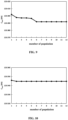
- FIG. 8 shows the minimum capacity diagram of the battery packs of the second generation reserved members of the embodiment of the present disclosure, where the horizontal coordinate represents the serial number of the reserved members, and the vertical coordinate represents the cell capacity of the members. It can be obtained from FIG. 8 that the capacity of cell cores of the first-ranked member in the second generation reserved members is close to 123.160Ah.
- FIG. 9 shows the minimum capacity diagram of the battery packs of the 100th generation reserved members of the embodiment of the present disclosure. It can be obtained from FIG.
- FIG. 10 shows the minimum capacity diagram of the battery packs of the 2000th generation reserved members of the embodiment of the present disclosure. It can be obtained from FIG. 10 that the capacity of cell cores of the first-ranked member in the 2000th generation reserved members is greater than 123.540Ah.
- FIG. 11 shows the minimum capacity target values of battery packs of each generation target member.
- the horizontal coordinate represents the count of iterations
- the vertical coordinate represents the minimum capacity value of each generation target member. It can be determined from FIG. 11 that the minimum capacity value of the 2000th generation target members is the highest. From the first generation to the last generation, the minimum capacity value of the 52 battery packs increases from 123.02Ah to 123.55Ah, that is, it increases by 0.53Ah. If the cell cores are combined into a battery pack by random combination, a battery pack with a capacity of 122.6Ah may be achieved (as shown in FIG. 4 -No.80). In contrast, through such optimization by this method, the minimum capacity of the 52 battery packs is 123.55Ah, completely avoiding the battery packs below 123Ah.
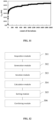
- FIG. 12 it shows a structural block diagram of a device for combining cell cores according to an embodiment of the present disclosure, which may specifically include following modules: an acquisition module 301, a generation module 302, an iteration module 303, a calculation module 304, a sorting module 305 and a combining module 306.
- the acquisition module 301 is configured to acquire the capacities and states of charge of N cell cores.
- the generation module 302 is configured to generate an initial battery pack population for N cell cores according to different combinations of cell cores.
- the iteration module 303 is configured to use the genetic algorithm to iteratively generate a new battery pack population according to the following steps until the last generation battery pack population meeting the preset condition is obtained.
- the calculation module 304 is configured to calculate the minimum capacity of each member according to the capacity and state of charge of each of the cell cores in the battery pack population.
- the calculation module 304 may include following sub-modules:
- the sorting module 305 is configured to sort the members in the battery pack population according to the minimum capacity of each member in the battery pack population, and generate a new battery pack population according to the sorting result.
- the sorting module 305 may include following sub-modules:
- the new member generation sub-module may include a following sub-unit: a new member generation unit configured to randomly select a member from the reserved members, and generate a new member by exchanging positions of multiple cell cores in the combination of the cell cores of the reserved member.
- the sorting module may also include a following sub-module: a regeneration sub-module configured to regenerate a new member if the combination of the cell cores of the new member is the same as that of any member in the sorting result.
- the combining module 306 is configured to combine the cell cores into target modules and combine the target modules into a target battery pack according to the combination of the cell cores of target members in the last generation battery pack population.
- the combining module may include following sub-modules:
- the device for combining cell cores may further include a following module: a first determining module configured to determine the battery pack population obtained in a case that the count of iterations reaches a predetermined number as the last generation battery pack population meeting preset condition.
- the device for combining cell cores may further include a following module: a second determination module configured to determine the battery pack population whose minimum capacity value of the first-ranked member obtained by iteration reaches the target capacity threshold as the last generation battery pack population meeting the preset condition.
- the method for combining cell cores can generate an initial battery pack population for N cell cores depending on different combinations of cell cores.
- the genetic algorithm is used to iteratively generate a new battery pack population based on the following steps until the last generation battery pack population which meets the preset condition is achieved.
- the minimum capacity of each member is calculated on a basis of the capacity and state of charge of each of cell cores in the battery pack population.
- the members are sorted according to the minimum capacity of these members in the battery pack population, and a new battery pack population is generated according to the sorting results.
- the cell cores can be combined into target modules and the target modules are combined into a target battery pack.
- the embodiment of the present disclosure is based on a genetic algorithm. It can generate a new battery pack population according to the sorting result of the members depending on minimum capacity of these members of the previous battery pack population. In this way, a variety of battery pack combinations in different sorting ways can be generated, so as to improve the combination efficiency in comparison with traditional combination of cell cores.
- the inconsistency between the capacities of adjacent monomer batteries can be reduced by such sorting operation according to the minimum capacity so that the combination of the cell cores can be optimized.
- Generation of the battery pack according to the combination of the cell cores of target members in the last generation battery pack population can increase the usage count and capacity of the battery pack.
- An embodiment of the present disclosure also provides an electronic apparatus, including: a processor, a memory, and a computer program stored on the memory and capable of running on the processor.
- the computer program When the computer program is executed by the processor, it realizes the various processes in the above embodiments of the method for combining cell cores, and can achieve the same technical effects. In order to avoid repetition, the details will be omitted herein.
- An embodiment of the present disclosure also provides a computer-readable storage medium, on which a computer program is stored, and when the computer program is executed by a processor, each process of the above-mentioned embodiments of the method for combining cell cores is realized, and can achieve the same technical effects. In order to avoid repetition, the details will be omitted herein.
- embodiments of the present disclosure may be provided as methods, devices, or computer program products. Accordingly, embodiments of the present disclosure may take the form of an entirely hardware, an entirely software, or an combination of software and hardware. Furthermore, embodiments of the present disclosure may take the form of a computer program product embodied on one or more computer-usable storage media (including but not limited to magnetic disk storage, CD-ROM, optical storage, etc.) having computer-usable program code embodied therein.
- computer-usable storage media including but not limited to magnetic disk storage, CD-ROM, optical storage, etc.
- Embodiments of the disclosure are described with reference to flowchart illustrations and/or block diagrams of methods, terminal apparatuses (systems), and computer program products according to embodiments of the disclosure. It should be understood that each procedure and/or block in the flowchart and/or block diagram, and combinations of procedures and/or blocks in the flowchart and/or block diagram can be implemented by computer program instructions. These computer program instructions may be provided to a general purpose computer, special purpose computer, embedded processor or processor of other programmable data processing terminal apparatus to produce a machine such that instructions executed by the computer or processor of other programmable data processing terminal apparatus can produce means for achieving the functions specified in one or more procedures of the flowchart and/or one or more blocks of the block diagram.
- These computer program instructions may also be stored in a computer-readable memory capable of directing a computer or other programmable data processing terminal equipment to operate in a specific manner, such that the instructions stored in the computer-readable memory produce a manufacturing article including instruction means.
- the instruction means implement the functions specified in one or more procedures of the flowchart and/or one or more blocks of the block diagram.
- An embodiment not claimed, of the present disclosure also provides a battery pack, wherein said battery pack is obtained by any one of methods disclosed above for combining cell cores.
Landscapes
- Engineering & Computer Science (AREA)
- Power Engineering (AREA)
- Physics & Mathematics (AREA)
- Theoretical Computer Science (AREA)
- Computer Hardware Design (AREA)
- Evolutionary Computation (AREA)
- Geometry (AREA)
- General Engineering & Computer Science (AREA)
- General Physics & Mathematics (AREA)
- Battery Mounting, Suspending (AREA)
- Secondary Cells (AREA)
Claims (14)
- Verfahren zum Kombinieren von Zellkernen, wobei das Verfahren umfasst:Erfassen (101) der Kapazität und des Ladezustands von N Zellkernen; undErzeugen (102) einer Batteriepack-Ausgangspopulation für die N Zellkerne entsprechend unterschiedlichen Kombinationen von Zellkernen, wobei die Batteriepack-Population L Elemente umfasst, wobei jedes der Elemente M Batteriepacks umfasst und jeder der Batteriepacks P Module umfasst, wobei jedes der Module K Zellkerne umfasst, N=M*P*K;dadurch gekennzeichnet, dass das Verfahren ferner umfasst:wiederholtes Erzeugen (103) einer neuen Batteriepack-Population unter Verwenden eines genetischen Algorithmus entsprechend den folgenden Schritten, bis eine Batteriepack-Population der letzten Generation erhalten ist, die eine vorher festgelegte Bedingung erfüllt;Berechnen (104) einer Mindestkapazität sämtlicher Elemente entsprechend der Kapazität und dem Ladezustand von jedem der Zellkerne in der Batteriepack-Population;Sortieren (105) der Elemente auf Grundlage der Mindestkapazität der Elemente in der Batteriepack-Population und Erzeugen einer neuen Batteriepack-Population entsprechend Sortierergebnissen, undKombinieren (106) der Zellkerne zu Zielmodulen und Kombinieren der Zielmodule zu einem Zielbatteriepack entsprechend der Kombination der Zellkerne der Zielbatteriepacks in der Batteriepack-Population der letzten Generation.
- Verfahren nach Anspruch 1, dadurch gekennzeichnet, dass das Berechnen (104) der Mindestkapazität sämtlicher Elemente entsprechend der Kapazität und dem Ladezustand von jedem der Zellkerne in der Batteriepack-Population umfasst:Berechnen (204) der Kapazität und des Ladezustands von jedem der Module entsprechend der Kapazität und dem Ladezustand von jedem der Zellkerne in jedem der Module;Berechnen (205) der Kapazität und des Ladezustands von jedem Batteriepack entsprechend der Kapazität und dem Ladezustand von jedem der Module in jedem Batteriepack; undDefinieren (206) der Mindestkapazität des Batteriepacks in jedem der Elemente als Mindestkapazität des entsprechenden Elements.
- Verfahren nach Anspruch 2, dadurch gekennzeichnet, dass das Sortieren (105) der Elemente auf Grundlage der Mindestkapazität der Elemente in der Batteriepack-Population und das Erzeugen einer neuen Batteriepack-Population entsprechend Sortierergebnissen umfasst:Sortieren (207) sämtlicher Elemente in der Batteriepack-Population in absteigender Reihenfolge der Mindestkapazität der Elemente zum Erhalten des Sortierergebnisses;Reservieren (208) der obersten Q Elemente in den Sortierergebnissen als reservierte Elemente und Bringen der reservierten Elemente in eine Batteriepack-Population der nächsten Generation;Erzeugen neuer Elemente undKombinieren (211) der reservierten Elemente und der neuen Elemente zu einer neuen Batteriepack-Population.
- Verfahren nach Anspruch 3, dadurch gekennzeichnet, dass das Erzeugen neuer Elemente umfasst:
willkürliches Auswählen (209) eines Elements aus den reservierten Elementen und Erzeugen der neuen Elemente durch Tauschen der Position von mehreren Zellkernen in der Kombination aus Zellkernen der reservierten Elemente. - Verfahren nach Anspruch 4, dadurch gekennzeichnet, dass das Sortieren (105) der Elemente auf Grundlage der Mindestkapazität der Elemente in der Batteriepack-Population ulation und das Erzeugen einer neuen Batteriepack-Population entsprechend Sortierergebnissen ferner umfasst:
erneutes Erzeugen (210) neuer Elemente, wenn die Kombination aus den Zellkernen der neuen Elemente identisch ist mit der eines beliebigen Elements in den Sortierergebnissen. - Verfahren nach Anspruch 1, dadurch gekennzeichnet, dass das Kombinieren (106) der Zellkerne zu Zielmodulen und Kombinieren der Zielmodule zu einem Zielbatteriepack entsprechend der Kombination der Zellkerne der Zielelemente in der Batteriepack-Population der letzten Generation umfasst:Auswählen (212) des Elements an der ersten Stelle in der Batteriepack-Population der letzten Generation als Zielelement undKombinieren der N Zellkerne zu P Zielmodulen und Kombinieren der P Zielmodule zu M Zielbatteriepacks entsprechend der Kombination von Zellkernen des Zielelements.
- Verfahren nach Anspruch 1, dadurch gekennzeichnet, dass das Verfahren ferner umfasst:
Bestimmen der Batteriepack-Population, die, falls eine Anzahl Wiederholungen eine vorher festgelegte Zahl erreicht, als Batteriepack-Population der letzten Generation erhalten wird, die die vorher festgelegte Bedingung erfüllt. - Verfahren nach Anspruch 1, dadurch gekennzeichnet, dass das Verfahren ferner umfasst:
Bestimmen der Batteriepack-Population, in der der Mindestkapazitätswert des Elements an der ersten Stelle, das durch Wiederholung erhalten wird, einen Zielkapazitätsschwellenwert erreicht, als Batteriepack-Population der letzten Generation, die die vorher festgelegte Bedingung erfüllt. - Vorrichtung zum Kombinieren von Zellkernen, umfassend:ein Erfassungsmodul (301), das so eingerichtet ist, dass es die Kapazität und den Ladezustand von N Zellkernen erfasst; undein Erzeugungsmodul (302), das so eingerichtet ist, dass es eine Batteriepack-Ausgangspopulation für N Zellkerne entsprechend unterschiedlichen Kombinationen von Zellkernen erzeugt, wobei die Batteriepack-Population L Elemente umfasst, wobei jedes dieser Elemente M Batteriepacks umfasst, jeder dieser Batteriepacks P Module umfasst, und jedes der Module K Zellkerne umfasst, wobei N=M*P*K;dadurch gekennzeichnet, dass die Vorrichtung ferner umfasst ein Wiederholungsmodul (303), das so eingerichtet ist, dass es eine neue Batteriepack-Population unter Verwendung eines genetischen Algorithmus entsprechend den folgenden Schritten wiederholt erzeugt, bis eine Batteriepack-Population der letzten Generation erhalten ist, die eine vorher festgelegte Bedingung erfüllt;ein Berechnungsmodul (304), das so eingerichtet ist, dass es die Mindestkapazität jedes Elements entsprechend der Kapazität und dem Ladezustand von jedem der Zellkerne in der Batteriepack-Population berechnet;ein Sortiermodul (305), das so eingerichtet ist, dass es die Elemente auf Grundlage der Mindestkapazität von jedem der Elemente in der Batteriepack-Population sortiert und eine neue Batteriepack-Population entsprechend Sortierergebnissen erzeugt, undein Kombiniermodul (306), das so eingerichtet ist, dass es entsprechend der Kombination der Zellkerne von Zielelementen in der Batteriepack-Population der letzten Generation die Zellkerne zu Zielmodulen kombiniert und die Zielmodule zu einem Zielbatteriepack kombiniert.
- Vorrichtung zum Kombinieren von Zellkernen nach Anspruch 9, dadurch gekennzeichnet, dass:
das Berechnungsmodul (304) umfasst:ein erstes Teilmodul zur Berechnung, das so eingerichtet ist, dass es entsprechend der Kapazität und dem Ladezustand von jedem der Zellkerne in jedem Modul die Kapazität und den Ladezustand von jedem Modul berechnet;ein zweites Teilmodul zur Berechnung, das so eingerichtet ist, dass es entsprechend der Kapazität und dem Ladezustand von jedem Modul in jedem Batteriepack die Kapazität und den Ladezustand von jedem Batteriepack berechnet; undein drittes Teilmodul zur Berechnung, das so eingerichtet ist, dass es die Mindestkapazität der Batteriepacks in jedem Element als die Mindestkapazität verwendet, die jedem Element entspricht, undwobei das Sortiermodul (305) so eingerichtet ist, dass es die Elemente in der Batteriepack-Population entsprechend der Mindestkapazität von jedem Element in der Batteriepack-Population sortiert und eine neue Batteriepack-Population entsprechend den Sortierergebnissen erzeugt. - Vorrichtung zum Kombinieren von Zellkernen nach Anspruch 9, dadurch gekennzeichnet, dass:
das Sortiermodul (305) umfasst:ein Teilmodul zum Sortieren, das so eingerichtet ist, dass es die Elemente in der Batteriepack-Population in absteigender Reihenfolge der Mindestkapazität dieser Elemente sortiert und das Sortierergebnis erhält;ein Teilmodul zum Reservieren, das so eingerichtet ist, dass es die obersten Q Elemente in dem Sortierergebnis als reservierte Elemente verwendet, die für die Batteriepack-Population der nächsten Generation reserviert werden sollen;ein Teilmodul zum Erzeugen neuer Elemente, das so eingerichtet ist, dass es neue Elemente erzeugt, undein Teilmodul zum Kombinieren zu einer Batteriepack-Population, das so eingerichtet ist, dass es die reservierten Elemente und neuen Elemente zu einer neuen Batteriepack-Population kombiniert. - Vorrichtung zum Kombinieren von Zellkernen nach Anspruch 11, dadurch gekennzeichnet, dass:
das Teilmodul zum Erzeugen neuer Elemente umfasst:
eine Einheit zum Erzeugen neuer Elemente, die so eingerichtet ist, dass sie willkürlich ein Element aus den reservierten Elementen auswählt und durch Tauschen der Position von mehreren Zellkernen in der Kombination aus den Zellkernen der reservierten Elemente ein neues Element erzeugt. - Elektronisches Gerät, das dadurch gekennzeichnet ist, dass das elektronische Gerät umfasst:einen Prozessor,einen Speicher undein Computerprogramm, das in dem Speicher gespeichert ist und in der Lage ist, auf dem Prozessor zu laufen, und das so eingerichtet ist, dass es das Verfahren zum Kombinieren von Zellkernen nach einem der Ansprüche 1 bis 8 implementiert, wenn es von dem Prozessor ausgeführt wird.
- Computerlesbares Speichermedium, auf dem ein Computerprogramm gespeichert ist, und wobei das Computerprogramm so eingerichtet ist, dass es das Verfahren zum Kombinieren von Zellkernen nach einem der Ansprüche 1 bis 8 implementiert, wenn es von einem Prozessor ausgeführt wird.
Applications Claiming Priority (1)
| Application Number | Priority Date | Filing Date | Title |
|---|---|---|---|
| CN202210264157.XA CN114564848A (zh) | 2022-03-17 | 2022-03-17 | 电芯组合方法和装置、电子设备及存储介质 |
Publications (3)
| Publication Number | Publication Date |
|---|---|
| EP4246763A1 EP4246763A1 (de) | 2023-09-20 |
| EP4246763C0 EP4246763C0 (de) | 2024-12-18 |
| EP4246763B1 true EP4246763B1 (de) | 2024-12-18 |
Family
ID=81718778
Family Applications (1)
| Application Number | Title | Priority Date | Filing Date |
|---|---|---|---|
| EP23159095.1A Active EP4246763B1 (de) | 2022-03-17 | 2023-02-28 | Verfahren und vorrichtung zur kombination von zellkernen, elektronische vorrichtung und speichermedium |
Country Status (2)
| Country | Link |
|---|---|
| EP (1) | EP4246763B1 (de) |
| CN (1) | CN114564848A (de) |
Families Citing this family (2)
| Publication number | Priority date | Publication date | Assignee | Title |
|---|---|---|---|---|
| CN115133098A (zh) * | 2022-08-02 | 2022-09-30 | 肇庆小鹏汽车有限公司 | 电池组生产系统 |
| CN115480164A (zh) * | 2022-09-15 | 2022-12-16 | 湖北亿纬动力有限公司 | 配组电芯的模组容量预测方法、装置、设备和介质 |
Family Cites Families (2)
| Publication number | Priority date | Publication date | Assignee | Title |
|---|---|---|---|---|
| CN108777329B (zh) * | 2018-06-05 | 2019-06-28 | 湖北锂诺新能源科技有限公司 | 锂电池配组方法 |
| CN114156552B (zh) * | 2021-11-28 | 2025-03-25 | 南京理工大学 | 一种考虑老化的串联电池组的均衡控制策略 |
-
2022
- 2022-03-17 CN CN202210264157.XA patent/CN114564848A/zh active Pending
-
2023
- 2023-02-28 EP EP23159095.1A patent/EP4246763B1/de active Active
Also Published As
| Publication number | Publication date |
|---|---|
| EP4246763C0 (de) | 2024-12-18 |
| CN114564848A (zh) | 2022-05-31 |
| EP4246763A1 (de) | 2023-09-20 |
Similar Documents
| Publication | Publication Date | Title |
|---|---|---|
| Han et al. | Near-fastest battery balancing by cell/module reconfiguration | |
| EP4246763B1 (de) | Verfahren und vorrichtung zur kombination von zellkernen, elektronische vorrichtung und speichermedium | |
| CN112622693A (zh) | 一种电池管理方法、装置及车辆 | |
| CN112198434A (zh) | 电池容量衰减模型参数的辨识方法、系统、设备、装置及介质 | |
| CN106842056B (zh) | 基于双步在线智能优化算法的动力电池峰值功率估计方法 | |
| CN112103580A (zh) | 一种基于等效内阻的锂电池充电方法 | |
| Moura et al. | Optimal control of film growth in lithium-ion battery packs via relay switches | |
| CN115267556A (zh) | 电池寿命衰降分析方法、存储介质及电子设备 | |
| CN116461355B (zh) | 一种锂离子动力电池智能充电方法 | |
| CN108233464B (zh) | 一种电池组主动均衡方法和系统 | |
| Weng et al. | AI-assisted reconfiguration of battery packs for cell balancing to extend driving runtime | |
| CN111354989A (zh) | 一种可重构电池组控制方法、系统及存储介质 | |
| CN114156552A (zh) | 一种考虑老化的串联电池组的均衡控制策略 | |
| CN117110884A (zh) | 基于多核相关向量机的锂电池剩余使用寿命预测方法 | |
| CN114994540A (zh) | 基于充电末端降流数据的电池容量估计方法和装置 | |
| KR102650969B1 (ko) | 2-브랜치 등가회로모델을 이용한 배터리 시뮬레이션 방법 | |
| CN114970156A (zh) | 用于五阶恒流快速充电的电流选取方法 | |
| CN112039171B (zh) | 电池组均衡方法、装置、设备和存储介质 | |
| CN110555226A (zh) | 基于emd和mlp的磷酸铁锂电池剩余寿命预测方法 | |
| CN116027204B (zh) | 基于数据融合的锂电池剩余使用寿命预测方法及装置 | |
| CN112114254A (zh) | 一种动力电池开路电压模型融合方法 | |
| CN114091975B (zh) | 一种储能电站运行寿命的评估方法 | |
| CN118275894A (zh) | 功率型电池的寿命预测方法、装置和系统 | |
| CN117559590A (zh) | 基于双向Cuk变换器的均衡结构、方法、设备及存储介质 | |
| Jagadeesh et al. | A review on modeling and estimation of state of charge of lithium-ion battery |
Legal Events
| Date | Code | Title | Description |
|---|---|---|---|
| PUAI | Public reference made under article 153(3) epc to a published international application that has entered the european phase |
Free format text: ORIGINAL CODE: 0009012 |
|
| STAA | Information on the status of an ep patent application or granted ep patent |
Free format text: STATUS: THE APPLICATION HAS BEEN PUBLISHED |
|
| AK | Designated contracting states |
Kind code of ref document: A1 Designated state(s): AL AT BE BG CH CY CZ DE DK EE ES FI FR GB GR HR HU IE IS IT LI LT LU LV MC ME MK MT NL NO PL PT RO RS SE SI SK SM TR |
|
| STAA | Information on the status of an ep patent application or granted ep patent |
Free format text: STATUS: REQUEST FOR EXAMINATION WAS MADE |
|
| 17P | Request for examination filed |
Effective date: 20240319 |
|
| RBV | Designated contracting states (corrected) |
Designated state(s): AL AT BE BG CH CY CZ DE DK EE ES FI FR GB GR HR HU IE IS IT LI LT LU LV MC ME MK MT NL NO PL PT RO RS SE SI SK SM TR |
|
| GRAP | Despatch of communication of intention to grant a patent |
Free format text: ORIGINAL CODE: EPIDOSNIGR1 |
|
| STAA | Information on the status of an ep patent application or granted ep patent |
Free format text: STATUS: GRANT OF PATENT IS INTENDED |
|
| RIC1 | Information provided on ipc code assigned before grant |
Ipc: G06F 111/06 20200101ALI20240620BHEP Ipc: G06F 30/20 20200101ALI20240620BHEP Ipc: H02J 7/00 20060101AFI20240620BHEP |
|
| INTG | Intention to grant announced |
Effective date: 20240709 |
|
| GRAS | Grant fee paid |
Free format text: ORIGINAL CODE: EPIDOSNIGR3 |
|
| GRAA | (expected) grant |
Free format text: ORIGINAL CODE: 0009210 |
|
| STAA | Information on the status of an ep patent application or granted ep patent |
Free format text: STATUS: THE PATENT HAS BEEN GRANTED |
|
| AK | Designated contracting states |
Kind code of ref document: B1 Designated state(s): AL AT BE BG CH CY CZ DE DK EE ES FI FR GB GR HR HU IE IS IT LI LT LU LV MC ME MK MT NL NO PL PT RO RS SE SI SK SM TR |
|
| REG | Reference to a national code |
Ref country code: CH Ref legal event code: EP |
|
| REG | Reference to a national code |
Ref country code: DE Ref legal event code: R096 Ref document number: 602023001363 Country of ref document: DE |
|
| REG | Reference to a national code |
Ref country code: IE Ref legal event code: FG4D |
|
| U01 | Request for unitary effect filed |
Effective date: 20241218 |
|
| U07 | Unitary effect registered |
Designated state(s): AT BE BG DE DK EE FI FR IT LT LU LV MT NL PT RO SE SI Effective date: 20241223 |
|
| U20 | Renewal fee for the european patent with unitary effect paid |
Year of fee payment: 3 Effective date: 20241230 |
|
| PG25 | Lapsed in a contracting state [announced via postgrant information from national office to epo] |
Ref country code: HR Free format text: LAPSE BECAUSE OF FAILURE TO SUBMIT A TRANSLATION OF THE DESCRIPTION OR TO PAY THE FEE WITHIN THE PRESCRIBED TIME-LIMIT Effective date: 20241218 |
|
| PG25 | Lapsed in a contracting state [announced via postgrant information from national office to epo] |
Ref country code: NO Free format text: LAPSE BECAUSE OF FAILURE TO SUBMIT A TRANSLATION OF THE DESCRIPTION OR TO PAY THE FEE WITHIN THE PRESCRIBED TIME-LIMIT Effective date: 20250318 |
|
| PG25 | Lapsed in a contracting state [announced via postgrant information from national office to epo] |
Ref country code: GR Free format text: LAPSE BECAUSE OF FAILURE TO SUBMIT A TRANSLATION OF THE DESCRIPTION OR TO PAY THE FEE WITHIN THE PRESCRIBED TIME-LIMIT Effective date: 20250319 |
|
| PG25 | Lapsed in a contracting state [announced via postgrant information from national office to epo] |
Ref country code: RS Free format text: LAPSE BECAUSE OF FAILURE TO SUBMIT A TRANSLATION OF THE DESCRIPTION OR TO PAY THE FEE WITHIN THE PRESCRIBED TIME-LIMIT Effective date: 20250318 |
|
| PG25 | Lapsed in a contracting state [announced via postgrant information from national office to epo] |
Ref country code: SM Free format text: LAPSE BECAUSE OF FAILURE TO SUBMIT A TRANSLATION OF THE DESCRIPTION OR TO PAY THE FEE WITHIN THE PRESCRIBED TIME-LIMIT Effective date: 20241218 |
|
| PG25 | Lapsed in a contracting state [announced via postgrant information from national office to epo] |
Ref country code: PL Free format text: LAPSE BECAUSE OF FAILURE TO SUBMIT A TRANSLATION OF THE DESCRIPTION OR TO PAY THE FEE WITHIN THE PRESCRIBED TIME-LIMIT Effective date: 20241218 |
|
| PG25 | Lapsed in a contracting state [announced via postgrant information from national office to epo] |
Ref country code: ES Free format text: LAPSE BECAUSE OF FAILURE TO SUBMIT A TRANSLATION OF THE DESCRIPTION OR TO PAY THE FEE WITHIN THE PRESCRIBED TIME-LIMIT Effective date: 20241218 |
|
| PG25 | Lapsed in a contracting state [announced via postgrant information from national office to epo] |
Ref country code: IS Free format text: LAPSE BECAUSE OF FAILURE TO SUBMIT A TRANSLATION OF THE DESCRIPTION OR TO PAY THE FEE WITHIN THE PRESCRIBED TIME-LIMIT Effective date: 20250418 |
|
| PG25 | Lapsed in a contracting state [announced via postgrant information from national office to epo] |
Ref country code: SK Free format text: LAPSE BECAUSE OF FAILURE TO SUBMIT A TRANSLATION OF THE DESCRIPTION OR TO PAY THE FEE WITHIN THE PRESCRIBED TIME-LIMIT Effective date: 20241218 |
|
| PG25 | Lapsed in a contracting state [announced via postgrant information from national office to epo] |
Ref country code: CZ Free format text: LAPSE BECAUSE OF FAILURE TO SUBMIT A TRANSLATION OF THE DESCRIPTION OR TO PAY THE FEE WITHIN THE PRESCRIBED TIME-LIMIT Effective date: 20241218 |
|
| PG25 | Lapsed in a contracting state [announced via postgrant information from national office to epo] |
Ref country code: MC Free format text: LAPSE BECAUSE OF FAILURE TO SUBMIT A TRANSLATION OF THE DESCRIPTION OR TO PAY THE FEE WITHIN THE PRESCRIBED TIME-LIMIT Effective date: 20241218 |
|
| PLBE | No opposition filed within time limit |
Free format text: ORIGINAL CODE: 0009261 |
|
| STAA | Information on the status of an ep patent application or granted ep patent |
Free format text: STATUS: NO OPPOSITION FILED WITHIN TIME LIMIT |
|
| 26N | No opposition filed |
Effective date: 20250919 |
|
| PG25 | Lapsed in a contracting state [announced via postgrant information from national office to epo] |
Ref country code: IE Free format text: LAPSE BECAUSE OF NON-PAYMENT OF DUE FEES Effective date: 20250228 |