EP4244637B1 - Lichtbogenfehlererkennung durch anhäufung von maschinenlernklassifikationen in einem schutzschalter - Google Patents
Lichtbogenfehlererkennung durch anhäufung von maschinenlernklassifikationen in einem schutzschalter Download PDFInfo
- Publication number
- EP4244637B1 EP4244637B1 EP22702383.5A EP22702383A EP4244637B1 EP 4244637 B1 EP4244637 B1 EP 4244637B1 EP 22702383 A EP22702383 A EP 22702383A EP 4244637 B1 EP4244637 B1 EP 4244637B1
- Authority
- EP
- European Patent Office
- Prior art keywords
- circuit breaker
- machine learning
- signal
- microcontroller
- arc
- Prior art date
- Legal status (The legal status is an assumption and is not a legal conclusion. Google has not performed a legal analysis and makes no representation as to the accuracy of the status listed.)
- Active
Links
Images





Classifications
-
- G—PHYSICS
- G01—MEASURING; TESTING
- G01R—MEASURING ELECTRIC VARIABLES; MEASURING MAGNETIC VARIABLES
- G01R31/00—Arrangements for testing electric properties; Arrangements for locating electric faults; Arrangements for electrical testing characterised by what is being tested not provided for elsewhere
- G01R31/12—Testing dielectric strength or breakdown voltage ; Testing or monitoring effectiveness or level of insulation, e.g. of a cable or of an apparatus, for example using partial discharge measurements; Electrostatic testing
- G01R31/1227—Testing dielectric strength or breakdown voltage ; Testing or monitoring effectiveness or level of insulation, e.g. of a cable or of an apparatus, for example using partial discharge measurements; Electrostatic testing of components, parts or materials
- G01R31/1263—Testing dielectric strength or breakdown voltage ; Testing or monitoring effectiveness or level of insulation, e.g. of a cable or of an apparatus, for example using partial discharge measurements; Electrostatic testing of components, parts or materials of solid or fluid materials, e.g. insulation films, bulk material; of semiconductors or LV electronic components or parts; of cable, line or wire insulation
- G01R31/1272—Testing dielectric strength or breakdown voltage ; Testing or monitoring effectiveness or level of insulation, e.g. of a cable or of an apparatus, for example using partial discharge measurements; Electrostatic testing of components, parts or materials of solid or fluid materials, e.g. insulation films, bulk material; of semiconductors or LV electronic components or parts; of cable, line or wire insulation of cable, line or wire insulation, e.g. using partial discharge measurements
-
- H—ELECTRICITY
- H01—ELECTRIC ELEMENTS
- H01H—ELECTRIC SWITCHES; RELAYS; SELECTORS; EMERGENCY PROTECTIVE DEVICES
- H01H83/00—Protective switches, e.g. circuit-breaking switches, or protective relays operated by abnormal electrical conditions otherwise than solely by excess current
- H01H83/20—Protective switches, e.g. circuit-breaking switches, or protective relays operated by abnormal electrical conditions otherwise than solely by excess current operated by excess current as well as by some other abnormal electrical condition
-
- H—ELECTRICITY
- H02—GENERATION; CONVERSION OR DISTRIBUTION OF ELECTRIC POWER
- H02H—EMERGENCY PROTECTIVE CIRCUIT ARRANGEMENTS
- H02H1/00—Details of emergency protective circuit arrangements
- H02H1/0007—Details of emergency protective circuit arrangements concerning the detecting means
- H02H1/0015—Using arc detectors
-
- H—ELECTRICITY
- H02—GENERATION; CONVERSION OR DISTRIBUTION OF ELECTRIC POWER
- H02H—EMERGENCY PROTECTIVE CIRCUIT ARRANGEMENTS
- H02H1/00—Details of emergency protective circuit arrangements
- H02H1/0092—Details of emergency protective circuit arrangements concerning the data processing means, e.g. expert systems, neural networks
-
- H—ELECTRICITY
- H04—ELECTRIC COMMUNICATION TECHNIQUE
- H04B—TRANSMISSION
- H04B17/00—Monitoring; Testing
- H04B17/30—Monitoring; Testing of propagation channels
- H04B17/309—Measuring or estimating channel quality parameters
- H04B17/318—Received signal strength
-
- H—ELECTRICITY
- H01—ELECTRIC ELEMENTS
- H01H—ELECTRIC SWITCHES; RELAYS; SELECTORS; EMERGENCY PROTECTIVE DEVICES
- H01H83/00—Protective switches, e.g. circuit-breaking switches, or protective relays operated by abnormal electrical conditions otherwise than solely by excess current
- H01H83/20—Protective switches, e.g. circuit-breaking switches, or protective relays operated by abnormal electrical conditions otherwise than solely by excess current operated by excess current as well as by some other abnormal electrical condition
- H01H2083/201—Protective switches, e.g. circuit-breaking switches, or protective relays operated by abnormal electrical conditions otherwise than solely by excess current operated by excess current as well as by some other abnormal electrical condition the other abnormal electrical condition being an arc fault
Definitions
- aspects of the present invention generally relate to arc fault detection by accumulation of machine learning classifications in a circuit breaker.
- AFCIs rely on internal electronics to analyze various analog signals (current and voltage) that pass through the circuit breaker to determine if an arc fault exists downstream of it.
- Prior art investigations tend to ignore utilizing the inferences from a machine learning classifier (neural network or other) to accumulate positive inferences (and decrement negative inferences) into a final decision to trip the circuit breaker in a specific amount of time to meet the safety limits detailed in various industry standards (e.g., UL1699 or other equivalents).
- aspects of the present invention relate to thermal management in a circuit breaker.
- the objective of the described invention is to focus on the types of signals and measurements to be made and analyzed, including investigations into the use of various machine learning mechanisms.
- a final step of utilizing the inferences from the machine learning classifier is designed to accumulate positive inferences (and decrement negative inferences) into making a final decision to trip the breaker in a specific amount of time to meet the safety limits detailed in various industry standards (e.g., UL1699 or other equivalents).
- a circuit breaker comprises a microcontroller including a processor and a memory.
- the circuit breaker further comprises computer-readable software code stored in the memory which, when executed by the processor, causes the microcontroller to: sample analog signals representing one or more of the following: a Received Signal Strength Indicator (RSSI) signal, a voltage signal, and a current signal, perform multiple pre-processing steps on the analog signals to derive a data set of measurements and features over a period of time, and input the data set into a machine learning classifier that resides in the microcontroller such that an output of the machine learning classifier is a value between 0 and 1 which represents a percent chance that the data set is from an electrical arc.
- RSSI Received Signal Strength Indicator
- an accumulator value is either incremented or decremented in proportion to an amount of the current passing through the circuit breaker and if the accumulator value passes an upper threshold level, the microcontroller sends a signal output to a trip circuit which then opens the circuit breaker.
- a method of arc fault detection by accumulation of machine learning classifications comprises providing a microcontroller including a processor and a memory.
- the method further comprises providing computer-readable software code stored in the memory which, when executed by the processor, causes the microcontroller to: sample analog signals representing one or more of the following: a Received Signal Strength Indicator (RSSI) signal, a voltage signal, and a current signal, perform multiple pre-processing steps on the analog signals to derive a data set of measurements and features over a period of time, and input the data set into a machine learning classifier that resides in the microcontroller such that an output of the machine learning classifier is a value between 0 and 1 which represents a percent chance that the data set is from an electrical arc.
- RSSI Received Signal Strength Indicator
- an accumulator value is either incremented or decremented in proportion to an amount of the current passing through the circuit breaker and if the accumulator value passes an upper threshold level, the microcontroller sends a signal output to a trip circuit which then opens the circuit breaker.
- a circuit breaker with software code provides classifications per half-cycle through accumulation of an inference output from a machine learning classifier for providing a final decision to trip the circuit breaker in a specific amount of time to meet the safety limits detailed in various industry standards.
- Embodiments of the present invention are not limited to use in the described devices or methods.
- FIGs. 1-13 These and other embodiments of the circuit breaker according to the present disclosure are described below with reference to FIGs. 1-13 herein.
- Like reference numerals used in the drawings identify similar or identical elements throughout the several views. The drawings are not necessarily drawn to scale.
- FIG. 1 represents a circuit breaker 105 in accordance with an exemplary embodiment of the present invention.
- the circuit breaker 105 is an arc fault circuit interrupter (AFCI) with the capabilities of detecting and tripping on arc faults without causing unwanted tripping on various residential products (i.e. lighting, microwaves, vacuum cleaners, power tools, etc.).
- An arc fault circuit interrupter (AFCI) is an advanced circuit breaker that, as a way to reduce electrical fire threats, breaks the circuit when it detects a dangerous electric arc in the circuit that it protects.
- AFCIs rely on internal electronics to analyze various analog signals (current and voltage) that pass through the circuit breaker 105 to determine if an arc fault exists downstream of it.
- FIG. 2 it illustrates an exploded view of the circuit breaker 105 of FIG. 1 in accordance with an exemplary embodiment of the present invention.
- This is an isometric view of an AFCI.
- the right-side cutaway shows a printed circuit board assembly (PCBA) 205, which contains a microcontroller 207 and accompanying circuitry.
- the microcontroller 207 includes a logic for detecting and tripping the circuit breaker 105 for overcurrent, differential, and arc faults.
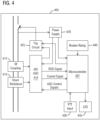
- FIG. 3 it illustrates a block diagram of a circuit breaker 305 in accordance with an exemplary embodiment of the present invention.
- the circuit breaker 305 comprises a microcontroller 307 including a processor 310(1) and a memory 310(2).
- the circuit breaker 305 further comprises computer-readable software code 312 stored in the memory 310(2) which, when executed by the processor 310(1), causes the microcontroller 307 to sample analog signals 315 representing one or more of the following: a Received Signal Strength Indicator (RSSI) signal 315(1), a voltage signal 315(2), and a current signal 315(3).
- RSSI Received Signal Strength Indicator
- an accumulator value 335 is either incremented or decremented in proportion to an amount of the current 337 passing through the circuit breaker 305 and if the accumulator value 335 passes an upper threshold level 340, the microcontroller 307 sends a signal output 342 to a trip circuit 345 which then opens the circuit breaker 305.
- the Received Signal Strength Indicator (RSSI) signal 315(1) and the current signal 315(3) come from an analog front-end ASIC circuitry 350.
- the analog front-end ASIC circuitry 350 acts as an interface between a radio frequency (RF) coupler, shunt resistance sensors and the microcontroller 307.
- the microcontroller 307 includes a logic 352 for detecting and tripping the circuit breaker 305 for overcurrent, differential, and arc faults.
- the computer-readable software code 312 is to digitally convert the Received Signal Strength Indicator (RSSI) signal 315(1), the voltage signal 315(2), and the current signal 315(3). Then extract half-cycle features 355 from the Received Signal Strength Indicator (RSSI) signal 315(1), the voltage signal 315(2), and the current signal 315(3). Next, run half-cycle features 355 set through the machine learning classifier 325 and analyze an output of the machine learning classifier 325 to determine if half-cycle was an arc or not. If there is an arc inference, the computer-readable software code 312 is to increment the accumulator value 335 proportional to an amount of the current.
- RSSI Received Signal Strength Indicator
- the computer-readable software code 312 is to digitally convert the Received Signal Strength Indicator (RSSI) signal 315(1), the voltage signal 315(2), and the current signal 315(3).
- run half-cycle features 355 set through the machine learning classifier 325 and analyze an output of the machine learning
- the computer-readable software code 312 is to check whether the accumulator value 335 exceeds a max accumulator threshold and if so trip the circuit breaker 305. If there is no arc inference, the computer-readable software code 312 is to decrement the accumulator value 335 proportional to an amount of the current.
- an analog signal representing the RSSI level present on the residential wiring downstream of an AFCI is measured and analyzed in real-time to produce a set of features at the end of each half-cycle of the power line frequency (i.e. every 8.33ms for the 60Hz frequency in the U.S.). These features are then fed into the machine learning classifier 325 (in our case a neural network, but other classifier types could also be used) that has been previously trained to recognize arc faults.
- the output of the classifier 325 is a number between 0 and 1 representing the percent confidence that the last half-cycle was an electrical arc.
- an accumulator a separate stored value in proportion to the amount of current present during this half-cycle event (e.g., a peak value of the current during this half-cycle, but other common measurements such as RMS or average could also be used). If the classifier 325 value is less than a threshold, the computer-readable software code 312 in turn decrements the accumulator by the same amount, in proportion to the amount of current present in that half-cycle. If the accumulator passes a maximum threshold an arc fault will have been deemed to be present, and the AFCI will trip to open the circuit.
- This incrementing and decrementing of the accumulator works to average out multiple inferences over time while weighting for the amount of current present, to ensure that the AFCI will trip within safe limits while also giving a maximum amount of time for discrimination of residential loads to minimize unwanted tripping.
- the inference itself could also be used in further weighting schemes, such as one where inferences at the min/max of 0 or 1 would result in full changes to the accumulator (still also weighted by the amount of current), with the shift being scaled down to 0 the closer the inference is to 0.5 (where the classifier 325 isn't sure if it is an arc or not).
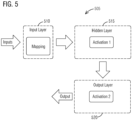
- the NN 505 comprises an input layer 5 10, a hidden layer 515 and an output layer 520.
- Training data includes split - 80% training, 0% validation, 20% testing, samples of arcing, and samples of nuisance and randomized distribution of samples in split.
- the training method may update the weight and bias values according to optimization and minimizes a combination of squared errors and weights to determine the correct combination so as to produce a network which generalizes well.
- Training method parameters left set to 'default' (Note: Does not need validation data set).
- the performance function is Mean-squared Error. This determines the overall performance of the network by comparing the target vs. desired output.
- the hidden layer 615 is located between the input and output of the algorithm, in which the function applies weights to the inputs and directs them through an activation function as the output.
- the hidden layers perform nonlinear transformations of the inputs entered into the neural network.
- FIG. 7 it illustrates a machine learning approach 700 for arc detection in accordance with an exemplary embodiment of the present invention.
- analog signals including current, RSSI, and voltage are received.
- digital conversion of the analog signals is performed.
- Pre-processing of data is done into set of measurements at a step 715.
- Arc detection is done by Neural Network computation instead of data comparison to multiple thresholds at a step 720.
- accumulation of multiple arc detections over time goes into a decision to trip an AFCI.
- FIG. 9 it illustrates neural network features in accordance with an exemplary embodiment of the present invention.
- the features for a neural network include specific data points 905 during an event, slope of a waveform 920 at the start and end and a half-cycle duration 915.
- FIG. 11 illustrates a flow diagram for the software code 312 running in the microcontroller 207, 307, 407 in accordance with an exemplary embodiment of the present invention.
- the software code 312 provides classifications per half-cycle through accumulation of an inference output from a machine learning classifier.
- an accumulator value is incremented proportional to an amount of current.
- a check is made to determine if the accumulator value exceeded a max accumulation threshold. If the determination in the step 1140 is "yes” then at a step 1145 an AFCI device is tripped.
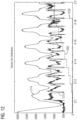
- FIG. 12 illustrates an example of accumulator incrementing as a neural network (NN) algorithm detects electrical arc events using current and RSSI signals at each half-cycle in accordance with an exemplary embodiment of the present invention.
- NN neural network
- the method 1300 comprises a step 1305 of providing a microcontroller including a processor and a memory.
- the method 1300 further comprises a step 1310 of providing computer-readable software code stored in the memory which, when executed by the processor, causes the microcontroller to: sample analog signals representing one or more of the following: a Received Signal Strength Indicator (RSSI) signal, a voltage signal, and a current signal, perform multiple pre-processing steps on the analog signals to derive a data set of measurements and features for every half-cycle of current passing through the circuit breaker, and input the data set into a machine learning classifier that resides in the microcontroller such that an output of the machine learning classifier is a value between 0 and 1 which represents a percent chance that the data set is from an electrical arc.
- RSSI Received Signal Strength Indicator
- an accumulator value is either incremented or decremented in proportion to an amount of the current passing through the circuit breaker and if the accumulator value passes an upper threshold level, the microcontroller sends a signal output to a trip circuit which then opens the circuit breaker.
- the techniques described herein can be particularly useful for arc detection in an AFCI circuit breaker. While particular embodiments are described in terms of specific configuration of an AFCI, the techniques described herein are not limited to such a limited configuration but can also be used with other configurations and types of circuit breakers.
Landscapes
- Engineering & Computer Science (AREA)
- Physics & Mathematics (AREA)
- Quality & Reliability (AREA)
- Electromagnetism (AREA)
- Computer Networks & Wireless Communication (AREA)
- Signal Processing (AREA)
- Artificial Intelligence (AREA)
- Evolutionary Computation (AREA)
- General Physics & Mathematics (AREA)
- Emergency Protection Circuit Devices (AREA)
- Breakers (AREA)
Claims (15)
- Leistungsschalter (305; 405), umfassend:eine Mikrosteuerung (307; 407), die einen Prozessor (310(1)) und einen Speicher (310(2)) beinhaltet,computerlesbaren Softwarecode (312), der in dem Speicher gespeichert ist, der, wenn er durch den Prozessor ausgeführt wird, die Mikrosteuerung veranlasst:Analogsignale (705) abzutasten, die Folgendes repräsentieren: ein RSSI-Signal (Received Signal Strength Indicator) und/oder ein Spannungssignal und/oder ein Stromsignal;mehrere Vorverarbeitungsschritte (715) an den analogen Signalen durchzuführen, um einen Datensatz von Messungen und Merkmalen über eine Zeitperiode abzuleiten; undden Datensatz in einen Klassifikator (325; 720) für maschinelles Lernen einzugeben, der sich in der Mikrosteuerung befindet, so dass eine Ausgabe des Klassifikators für maschinelles Lernen ein Wert zwischen 0 und 1 ist, der eine prozentuale Wahrscheinlichkeit repräsentiert, dass der Datensatz von einem elektrischen Lichtbogen stammt,wobei (725) basierend auf dem Wert der prozentualen Wahrscheinlichkeit ein Akkumulatorwert entweder inkrementiert oder dekrementiert wird im Verhältnis zu einer Menge des Stroms, der durch den Leistungsschalter fließt, und wenn der Akkumulatorwert einen oberen Schwellenwert überschreitet, die Mikrosteuerung ein Ausgangssignal an eine Auslöseschaltung (425) sendet, die dann den Leistungsschalter öffnet.
- Leistungsschalter nach Anspruch 1, wobei die Zeitperiode eine Dauer eines Halbzyklus des Stroms ist, der durch den Leistungsschalter fließt, und wobei das RSSI-Signal (Received Signal Strength Indicator) und das Stromsignal von einer analogen ASIC-Front-End-Schaltung stammen.
- Leistungsschalter nach Anspruch 2, wobei die analoge Front-End-ASIC-Schaltung als Schnittstelle zwischen einem Hochfrequenz-, HF-, Koppler-, Shunt-Widerstandssensor und der Mikrosteuerung fungiert.
- Leistungsschalter nach Anspruch 1, wobei der Klassifikator für maschinelles Lernen ein trainiertes neuronales Netzwerk ist.
- Leistungsschalter nach Anspruch 1, wobei die Mikrosteuerung eine Logik zum Erkennen und Auslösen des Leistungsschalters bei Überstrom-, Differenz- und Lichtbogenfehlern beinhaltet.
- Leistungsschalter nach Anspruch 1, wobei die analogen Signaldaten bei jedem Halbzyklus durch den Klassifikator für maschinelles Lernen anhand spezifischer Vorverarbeitungsmerkmale analysiert und klassifiziert werden.
- Leistungsschalter nach Anspruch 1, wobei der computerlesbare Softwarecode dazu dient:das RSSI-Signal (Received Signal Strength Indicator), das Spannungssignal und das Stromsignal digital umzuwandeln;aus dem RSSI-Signal (Received Signal Strength Indicator), dem Spannungssignal und dem Stromsignal Halbzyklusmerkmale zu extrahieren;Halbzyklusmerkmale auszuführen, die durch den Klassifikator für maschinelles Lernen eingestellt werden; undeine Ausgabe des Klassifikators für maschinelles Lernen zu analysieren, um zu bestimmen, ob der Halbzyklus ein Lichtbogen war oder nicht.
- Leistungsschalter nach Anspruch 7, wobei der computerlesbare Softwarecode im Falle einer Lichtbogeninferenz den Akkumulatorwert proportional zu einem Strombetrag inkrementieren soll.
- Leistungsschalter nach Anspruch 8, wobei der computerlesbare Softwarecode prüfen soll, ob der Akkumulatorwert einen maximalen Akkumulatorschwellenwert überschreitet, und wenn dies der Fall ist, den Leistungsschalter auslösen soll.
- Leistungsschalter nach Anspruch 7, wobei der computerlesbare Softwarecode im Falle keiner Lichtbogeninferenz den Akkumulatorwert proportional zu einem Strombetrag dekrementieren soll.
- Verfahren (1300) zur Erkennung von Lichtbogenfehlern durch Akkumulation von Klassifizierungen des maschinellen Lernens, wobei das Verfahren umfasst:Bereitstellen (1305) einer Mikrosteuerung, die einen Prozessor und einen Speicher beinhaltet,Bereitstellen (1310) eines computerlesbaren Softwarecodes, der in dem Speicher gespeichert ist, der, wenn er durch den Prozessor ausgeführt wird, die Mikrosteuerung veranlasst:Analogsignale abzutasten, die Folgendes repräsentieren: ein RSSI-Signal (Received Signal Strength Indicator) und/oder ein Spannungssignal und/oder ein Stromsignal;mehrere Vorverarbeitungsschritte an den analogen Signalen durchzuführen, um einen Datensatz von Messungen und Merkmalen über eine Zeitperiode abzuleiten; undden Datensatz in einen Klassifikator für maschinelles Lernen einzugeben, der sich in der Mikrosteuerung befindet, so dass eine Ausgabe des Klassifikators für maschinelles Lernen ein Wert zwischen 0 und 1 ist, der eine prozentuale Wahrscheinlichkeit repräsentiert, dass der Datensatz von einem elektrischen Lichtbogen stammt,wobei basierend auf dem Wert der prozentualen Wahrscheinlichkeit ein Akkumulatorwert entweder inkrementiert oder dekrementiert wird im Verhältnis zu einer Menge des Stroms, der durch den Leistungsschalter fließt, und wenn der Akkumulatorwert einen oberen Schwellenwert überschreitet, die Mikrosteuerung ein Ausgangssignal an eine Auslöseschaltung sendet, die dann den Leistungsschalter öffnet.
- Verfahren nach Anspruch 11, wobei die Zeitperiode eine Dauer eines Halbzyklus des Stroms ist, der durch den Leistungsschalter fließt, und wobei das RSSI-Signal (Received Signal Strength Indicator) und das Stromsignal von einer analogen Front-End-ASIC-Schaltung stammen, oder wobei die analoge Front-End-ASIC-Schaltung insbesondere als Schnittstelle zwischen einem Hochfrequenz-, HF-, Koppler-, Shunt-Widerstandssensor und der Mikrosteuerung fungiert.
- Verfahren nach Anspruch 11,wobei der Klassifikator für maschinelles Lernen ein trainiertes neuronales Netzwerk ist, oderwobei die Mikrosteuerung eine Logik zum Erkennen und Auslösen des Leistungsschalters bei Überstrom-, Differenz- und Lichtbogenfehlern beinhaltet, oderwobei die analogen Signaldaten bei jedem Halbzyklus durch den Klassifikator für maschinelles Lernen anhand spezifischer Vorverarbeitungsmerkmale analysiert und klassifiziert werden.
- Verfahren nach Anspruch 11, wobei der computerlesbare Softwarecode dazu dient:das RSSI-Signal (Received Signal Strength Indicator), das Spannungssignal und das Stromsignal digital umzuwandeln;aus dem RSSI-Signal (Received Signal Strength Indicator), dem Spannungssignal und dem Stromsignal Halbzyklusmerkmale zu extrahieren;Halbzyklusmerkmale auszuführen, die durch den Klassifikator für maschinelles Lernen eingestellt werden; undeine Ausgabe des Klassifizierers für maschinelles Lernen zu analysieren, um zu bestimmen, ob der Halbzyklus ein Lichtbogen war oder nicht.
- Verfahren nach Anspruch 14,wobei, wenn eine Lichtbogeninferenz vorliegt, der computerlesbare Softwarecode den Akkumulatorwert proportional zu einem Betrag des Stroms inkrementieren soll, wobei insbesondere der computerlesbare Softwarecode prüfen soll, ob der Akkumulatorwert einen maximalen Akkumulatorschwellenwert überschreitet, und wenn dies der Fall ist, den Leistungsschalter auszulösen, oderwobei der computerlesbare Softwarecode im Falle keiner Lichtbogeninferenz den Akkumulatorwert proportional zu einem Strombetrag dekrementieren soll.
Applications Claiming Priority (2)
| Application Number | Priority Date | Filing Date | Title |
|---|---|---|---|
| US17/163,997 US20220247163A1 (en) | 2021-02-01 | 2021-02-01 | Arc fault detection by accumulation of machine learning classifications in a circuit breaker |
| PCT/US2022/012654 WO2022164663A1 (en) | 2021-02-01 | 2022-01-17 | Arc fault detection by accumulation of machine learning classifications in a circuit breaker |
Publications (2)
| Publication Number | Publication Date |
|---|---|
| EP4244637A1 EP4244637A1 (de) | 2023-09-20 |
| EP4244637B1 true EP4244637B1 (de) | 2024-07-10 |
Family
ID=80168364
Family Applications (1)
| Application Number | Title | Priority Date | Filing Date |
|---|---|---|---|
| EP22702383.5A Active EP4244637B1 (de) | 2021-02-01 | 2022-01-17 | Lichtbogenfehlererkennung durch anhäufung von maschinenlernklassifikationen in einem schutzschalter |
Country Status (5)
| Country | Link |
|---|---|
| US (1) | US20220247163A1 (de) |
| EP (1) | EP4244637B1 (de) |
| CA (1) | CA3204006A1 (de) |
| MX (1) | MX2023008934A (de) |
| WO (1) | WO2022164663A1 (de) |
Families Citing this family (9)
| Publication number | Priority date | Publication date | Assignee | Title |
|---|---|---|---|---|
| JP7820641B2 (ja) * | 2022-03-11 | 2026-02-26 | ミネベアパワーデバイス株式会社 | パワー半導体モジュールの部分放電要因推定方法、パワー半導体モジュールの部分放電要因推定装置 |
| EP4511932A4 (de) * | 2022-04-22 | 2026-04-08 | Aclara Tech Llc | Firmware zur seriellen lichtbogenerkennung |
| CN115168079B (zh) * | 2022-09-08 | 2022-12-02 | 深圳市恒运昌真空技术有限公司 | 一种双处理器设备及其控制方法 |
| US12535538B2 (en) * | 2023-08-11 | 2026-01-27 | Siemens Industry, Inc. | Active detection of an arc fault |
| CN117872122B (zh) * | 2024-01-24 | 2024-09-17 | 广东电网有限责任公司江门供电局 | 一种基于高压断路器的机械故障诊断方法 |
| KR102906080B1 (ko) * | 2024-02-02 | 2025-12-29 | 중앙대학교 산학협력단 | 인공 기계 학습을 이용한 직류 아크 결함 진단 장치 |
| US20260018358A1 (en) * | 2024-07-11 | 2026-01-15 | Siemens Industry, Inc. | Active arc fault circuit interrupters with solid-state components |
| DE102024208163A1 (de) * | 2024-08-28 | 2026-03-05 | Siemens Aktiengesellschaft | Optimierte Fehlererkennung in einem Stromnetz |
| CN119479249B (zh) * | 2025-01-16 | 2025-03-28 | 核工业西南勘察设计研究院有限公司 | 一种tod建筑物的电气火灾预警方法及其系统 |
Family Cites Families (5)
| Publication number | Priority date | Publication date | Assignee | Title |
|---|---|---|---|---|
| DE4333257C2 (de) * | 1993-09-27 | 1997-09-04 | Siemens Ag | Verfahren zum Gewinnen eines Fehlerkennzeichnungs-Signals |
| GB0104763D0 (en) * | 2001-02-27 | 2001-04-18 | Smiths Group Plc | Arc detection |
| US7720619B2 (en) * | 2006-08-04 | 2010-05-18 | Schweitzer Engineering Laboratories, Inc. | Systems and methods for detecting high-impedance faults in a multi-grounded power distribution system |
| US8023235B2 (en) * | 2006-10-31 | 2011-09-20 | Siemens Industry, Inc. | Multifunctional residential circuit breaker |
| US9995796B1 (en) * | 2013-05-23 | 2018-06-12 | National Technology & Engineering Solutions Of Sandia, Llc | Identifying an arc-fault type in photovoltaic arrays |
-
2021
- 2021-02-01 US US17/163,997 patent/US20220247163A1/en not_active Abandoned
-
2022
- 2022-01-17 EP EP22702383.5A patent/EP4244637B1/de active Active
- 2022-01-17 WO PCT/US2022/012654 patent/WO2022164663A1/en not_active Ceased
- 2022-01-17 MX MX2023008934A patent/MX2023008934A/es unknown
- 2022-01-17 CA CA3204006A patent/CA3204006A1/en active Pending
Also Published As
| Publication number | Publication date |
|---|---|
| MX2023008934A (es) | 2023-08-10 |
| CA3204006A1 (en) | 2022-08-04 |
| EP4244637A1 (de) | 2023-09-20 |
| US20220247163A1 (en) | 2022-08-04 |
| WO2022164663A1 (en) | 2022-08-04 |
Similar Documents
| Publication | Publication Date | Title |
|---|---|---|
| US20220247163A1 (en) | Arc fault detection by accumulation of machine learning classifications in a circuit breaker | |
| JP5073472B2 (ja) | 直列アーク事故電流遮断器及び方法 | |
| JP6116495B2 (ja) | 直流アーク検出装置及び方法 | |
| US5537327A (en) | Method and apparatus for detecting high-impedance faults in electrical power systems | |
| US7796366B2 (en) | AC arc fault detection and protection | |
| EP2207246B1 (de) | Erdschlusserfassungsschaltung | |
| US20090161270A1 (en) | Industrial arc fault circuit interrupter and method of detecting arcing conditions | |
| JP6431123B2 (ja) | アナログ信号検出回路 | |
| CN111796202B (zh) | 用于输电系统的输电线路的故障检测的方法及装置 | |
| CN108885237A (zh) | 用于检测电气系统中的电弧故障的方法和装置 | |
| KR101956571B1 (ko) | 누전 차단 장치 | |
| US20180074112A1 (en) | Device for detecting an electric arc based on its acoustic signature | |
| US20030231449A1 (en) | Circuit breaker for detecting overload | |
| Jose et al. | Integrated approach based third zone protection during stressed system conditions | |
| CN110323726B (zh) | 一种直流配电网自适应线路保护方法及装置 | |
| KR20150081943A (ko) | 누전차단기 | |
| KR101616797B1 (ko) | 누전차단기 | |
| US12394973B2 (en) | Apparatus and method of detecting and classifying faults in circuit interrupter in microseconds | |
| CA3239432A1 (en) | Dynamic counterbalance adjustment for telescoping cranes | |
| CN116298663A (zh) | 一种高灵敏性混合直流线路区内外故障识别方法及系统 | |
| US20260018358A1 (en) | Active arc fault circuit interrupters with solid-state components | |
| RU2400899C1 (ru) | Способ сверхбыстродействующей аварийной защиты элементов электроэнергетических систем переменного тока и устройство для его осуществления | |
| AU2022470561A1 (en) | Method, device and equipment for detecting an electric arc fault | |
| WO2026046841A1 (de) | Optimierte fehlererkennung in einem stromnetz | |
| Abdallah et al. | Review of protection approaches for discrimination between internal fault and inrush current in electric power transformers |
Legal Events
| Date | Code | Title | Description |
|---|---|---|---|
| STAA | Information on the status of an ep patent application or granted ep patent |
Free format text: STATUS: UNKNOWN |
|
| STAA | Information on the status of an ep patent application or granted ep patent |
Free format text: STATUS: THE INTERNATIONAL PUBLICATION HAS BEEN MADE |
|
| PUAI | Public reference made under article 153(3) epc to a published international application that has entered the european phase |
Free format text: ORIGINAL CODE: 0009012 |
|
| STAA | Information on the status of an ep patent application or granted ep patent |
Free format text: STATUS: REQUEST FOR EXAMINATION WAS MADE |
|
| 17P | Request for examination filed |
Effective date: 20230614 |
|
| AK | Designated contracting states |
Kind code of ref document: A1 Designated state(s): AL AT BE BG CH CY CZ DE DK EE ES FI FR GB GR HR HU IE IS IT LI LT LU LV MC MK MT NL NO PL PT RO RS SE SI SK SM TR |
|
| GRAP | Despatch of communication of intention to grant a patent |
Free format text: ORIGINAL CODE: EPIDOSNIGR1 |
|
| STAA | Information on the status of an ep patent application or granted ep patent |
Free format text: STATUS: GRANT OF PATENT IS INTENDED |
|
| INTG | Intention to grant announced |
Effective date: 20240318 |
|
| DAV | Request for validation of the european patent (deleted) | ||
| DAX | Request for extension of the european patent (deleted) | ||
| GRAS | Grant fee paid |
Free format text: ORIGINAL CODE: EPIDOSNIGR3 |
|
| GRAA | (expected) grant |
Free format text: ORIGINAL CODE: 0009210 |
|
| STAA | Information on the status of an ep patent application or granted ep patent |
Free format text: STATUS: THE PATENT HAS BEEN GRANTED |
|
| AK | Designated contracting states |
Kind code of ref document: B1 Designated state(s): AL AT BE BG CH CY CZ DE DK EE ES FI FR GB GR HR HU IE IS IT LI LT LU LV MC MK MT NL NO PL PT RO RS SE SI SK SM TR |
|
| REG | Reference to a national code |
Ref country code: CH Ref legal event code: EP |
|
| REG | Reference to a national code |
Ref country code: DE Ref legal event code: R096 Ref document number: 602022004486 Country of ref document: DE |
|
| REG | Reference to a national code |
Ref country code: LT Ref legal event code: MG9D |
|
| REG | Reference to a national code |
Ref country code: NL Ref legal event code: MP Effective date: 20240710 |
|
| PG25 | Lapsed in a contracting state [announced via postgrant information from national office to epo] |
Ref country code: PT Free format text: LAPSE BECAUSE OF FAILURE TO SUBMIT A TRANSLATION OF THE DESCRIPTION OR TO PAY THE FEE WITHIN THE PRESCRIBED TIME-LIMIT Effective date: 20241111 |
|
| REG | Reference to a national code |
Ref country code: AT Ref legal event code: MK05 Ref document number: 1702490 Country of ref document: AT Kind code of ref document: T Effective date: 20240710 |
|
| PG25 | Lapsed in a contracting state [announced via postgrant information from national office to epo] |
Ref country code: NL Free format text: LAPSE BECAUSE OF FAILURE TO SUBMIT A TRANSLATION OF THE DESCRIPTION OR TO PAY THE FEE WITHIN THE PRESCRIBED TIME-LIMIT Effective date: 20240710 |
|
| PG25 | Lapsed in a contracting state [announced via postgrant information from national office to epo] |
Ref country code: PT Free format text: LAPSE BECAUSE OF FAILURE TO SUBMIT A TRANSLATION OF THE DESCRIPTION OR TO PAY THE FEE WITHIN THE PRESCRIBED TIME-LIMIT Effective date: 20241111 Ref country code: NL Free format text: LAPSE BECAUSE OF FAILURE TO SUBMIT A TRANSLATION OF THE DESCRIPTION OR TO PAY THE FEE WITHIN THE PRESCRIBED TIME-LIMIT Effective date: 20240710 |
|
| PG25 | Lapsed in a contracting state [announced via postgrant information from national office to epo] |
Ref country code: NO Free format text: LAPSE BECAUSE OF FAILURE TO SUBMIT A TRANSLATION OF THE DESCRIPTION OR TO PAY THE FEE WITHIN THE PRESCRIBED TIME-LIMIT Effective date: 20241010 |
|
| PG25 | Lapsed in a contracting state [announced via postgrant information from national office to epo] |
Ref country code: GR Free format text: LAPSE BECAUSE OF FAILURE TO SUBMIT A TRANSLATION OF THE DESCRIPTION OR TO PAY THE FEE WITHIN THE PRESCRIBED TIME-LIMIT Effective date: 20241011 Ref country code: FI Free format text: LAPSE BECAUSE OF FAILURE TO SUBMIT A TRANSLATION OF THE DESCRIPTION OR TO PAY THE FEE WITHIN THE PRESCRIBED TIME-LIMIT Effective date: 20240710 Ref country code: PL Free format text: LAPSE BECAUSE OF FAILURE TO SUBMIT A TRANSLATION OF THE DESCRIPTION OR TO PAY THE FEE WITHIN THE PRESCRIBED TIME-LIMIT Effective date: 20240710 |
|
| PG25 | Lapsed in a contracting state [announced via postgrant information from national office to epo] |
Ref country code: BG Free format text: LAPSE BECAUSE OF FAILURE TO SUBMIT A TRANSLATION OF THE DESCRIPTION OR TO PAY THE FEE WITHIN THE PRESCRIBED TIME-LIMIT Effective date: 20240710 |
|
| PG25 | Lapsed in a contracting state [announced via postgrant information from national office to epo] |
Ref country code: LV Free format text: LAPSE BECAUSE OF FAILURE TO SUBMIT A TRANSLATION OF THE DESCRIPTION OR TO PAY THE FEE WITHIN THE PRESCRIBED TIME-LIMIT Effective date: 20240710 |
|
| PG25 | Lapsed in a contracting state [announced via postgrant information from national office to epo] |
Ref country code: IS Free format text: LAPSE BECAUSE OF FAILURE TO SUBMIT A TRANSLATION OF THE DESCRIPTION OR TO PAY THE FEE WITHIN THE PRESCRIBED TIME-LIMIT Effective date: 20241110 Ref country code: AT Free format text: LAPSE BECAUSE OF FAILURE TO SUBMIT A TRANSLATION OF THE DESCRIPTION OR TO PAY THE FEE WITHIN THE PRESCRIBED TIME-LIMIT Effective date: 20240710 |
|
| PG25 | Lapsed in a contracting state [announced via postgrant information from national office to epo] |
Ref country code: HR Free format text: LAPSE BECAUSE OF FAILURE TO SUBMIT A TRANSLATION OF THE DESCRIPTION OR TO PAY THE FEE WITHIN THE PRESCRIBED TIME-LIMIT Effective date: 20240710 |
|
| PG25 | Lapsed in a contracting state [announced via postgrant information from national office to epo] |
Ref country code: ES Free format text: LAPSE BECAUSE OF FAILURE TO SUBMIT A TRANSLATION OF THE DESCRIPTION OR TO PAY THE FEE WITHIN THE PRESCRIBED TIME-LIMIT Effective date: 20240710 Ref country code: RS Free format text: LAPSE BECAUSE OF FAILURE TO SUBMIT A TRANSLATION OF THE DESCRIPTION OR TO PAY THE FEE WITHIN THE PRESCRIBED TIME-LIMIT Effective date: 20241010 |
|
| PG25 | Lapsed in a contracting state [announced via postgrant information from national office to epo] |
Ref country code: RS Free format text: LAPSE BECAUSE OF FAILURE TO SUBMIT A TRANSLATION OF THE DESCRIPTION OR TO PAY THE FEE WITHIN THE PRESCRIBED TIME-LIMIT Effective date: 20241010 Ref country code: PL Free format text: LAPSE BECAUSE OF FAILURE TO SUBMIT A TRANSLATION OF THE DESCRIPTION OR TO PAY THE FEE WITHIN THE PRESCRIBED TIME-LIMIT Effective date: 20240710 Ref country code: NO Free format text: LAPSE BECAUSE OF FAILURE TO SUBMIT A TRANSLATION OF THE DESCRIPTION OR TO PAY THE FEE WITHIN THE PRESCRIBED TIME-LIMIT Effective date: 20241010 Ref country code: LV Free format text: LAPSE BECAUSE OF FAILURE TO SUBMIT A TRANSLATION OF THE DESCRIPTION OR TO PAY THE FEE WITHIN THE PRESCRIBED TIME-LIMIT Effective date: 20240710 Ref country code: IS Free format text: LAPSE BECAUSE OF FAILURE TO SUBMIT A TRANSLATION OF THE DESCRIPTION OR TO PAY THE FEE WITHIN THE PRESCRIBED TIME-LIMIT Effective date: 20241110 Ref country code: HR Free format text: LAPSE BECAUSE OF FAILURE TO SUBMIT A TRANSLATION OF THE DESCRIPTION OR TO PAY THE FEE WITHIN THE PRESCRIBED TIME-LIMIT Effective date: 20240710 Ref country code: GR Free format text: LAPSE BECAUSE OF FAILURE TO SUBMIT A TRANSLATION OF THE DESCRIPTION OR TO PAY THE FEE WITHIN THE PRESCRIBED TIME-LIMIT Effective date: 20241011 Ref country code: FI Free format text: LAPSE BECAUSE OF FAILURE TO SUBMIT A TRANSLATION OF THE DESCRIPTION OR TO PAY THE FEE WITHIN THE PRESCRIBED TIME-LIMIT Effective date: 20240710 Ref country code: ES Free format text: LAPSE BECAUSE OF FAILURE TO SUBMIT A TRANSLATION OF THE DESCRIPTION OR TO PAY THE FEE WITHIN THE PRESCRIBED TIME-LIMIT Effective date: 20240710 Ref country code: BG Free format text: LAPSE BECAUSE OF FAILURE TO SUBMIT A TRANSLATION OF THE DESCRIPTION OR TO PAY THE FEE WITHIN THE PRESCRIBED TIME-LIMIT Effective date: 20240710 Ref country code: AT Free format text: LAPSE BECAUSE OF FAILURE TO SUBMIT A TRANSLATION OF THE DESCRIPTION OR TO PAY THE FEE WITHIN THE PRESCRIBED TIME-LIMIT Effective date: 20240710 |
|
| REG | Reference to a national code |
Ref country code: DE Ref legal event code: R097 Ref document number: 602022004486 Country of ref document: DE |
|
| PG25 | Lapsed in a contracting state [announced via postgrant information from national office to epo] |
Ref country code: DK Free format text: LAPSE BECAUSE OF FAILURE TO SUBMIT A TRANSLATION OF THE DESCRIPTION OR TO PAY THE FEE WITHIN THE PRESCRIBED TIME-LIMIT Effective date: 20240710 Ref country code: RO Free format text: LAPSE BECAUSE OF FAILURE TO SUBMIT A TRANSLATION OF THE DESCRIPTION OR TO PAY THE FEE WITHIN THE PRESCRIBED TIME-LIMIT Effective date: 20240710 Ref country code: SM Free format text: LAPSE BECAUSE OF FAILURE TO SUBMIT A TRANSLATION OF THE DESCRIPTION OR TO PAY THE FEE WITHIN THE PRESCRIBED TIME-LIMIT Effective date: 20240710 |
|
| PG25 | Lapsed in a contracting state [announced via postgrant information from national office to epo] |
Ref country code: EE Free format text: LAPSE BECAUSE OF FAILURE TO SUBMIT A TRANSLATION OF THE DESCRIPTION OR TO PAY THE FEE WITHIN THE PRESCRIBED TIME-LIMIT Effective date: 20240710 |
|
| PG25 | Lapsed in a contracting state [announced via postgrant information from national office to epo] |
Ref country code: CZ Free format text: LAPSE BECAUSE OF FAILURE TO SUBMIT A TRANSLATION OF THE DESCRIPTION OR TO PAY THE FEE WITHIN THE PRESCRIBED TIME-LIMIT Effective date: 20240710 |
|
| PG25 | Lapsed in a contracting state [announced via postgrant information from national office to epo] |
Ref country code: SK Free format text: LAPSE BECAUSE OF FAILURE TO SUBMIT A TRANSLATION OF THE DESCRIPTION OR TO PAY THE FEE WITHIN THE PRESCRIBED TIME-LIMIT Effective date: 20240710 |
|
| PLBE | No opposition filed within time limit |
Free format text: ORIGINAL CODE: 0009261 |
|
| STAA | Information on the status of an ep patent application or granted ep patent |
Free format text: STATUS: NO OPPOSITION FILED WITHIN TIME LIMIT |
|
| 26N | No opposition filed |
Effective date: 20250411 |
|
| REG | Reference to a national code |
Ref country code: CH Ref legal event code: PL |
|
| PG25 | Lapsed in a contracting state [announced via postgrant information from national office to epo] |
Ref country code: SE Free format text: LAPSE BECAUSE OF FAILURE TO SUBMIT A TRANSLATION OF THE DESCRIPTION OR TO PAY THE FEE WITHIN THE PRESCRIBED TIME-LIMIT Effective date: 20240710 |
|
| PG25 | Lapsed in a contracting state [announced via postgrant information from national office to epo] |
Ref country code: MC Free format text: LAPSE BECAUSE OF FAILURE TO SUBMIT A TRANSLATION OF THE DESCRIPTION OR TO PAY THE FEE WITHIN THE PRESCRIBED TIME-LIMIT Effective date: 20240710 Ref country code: LU Free format text: LAPSE BECAUSE OF NON-PAYMENT OF DUE FEES Effective date: 20250117 |
|
| PG25 | Lapsed in a contracting state [announced via postgrant information from national office to epo] |
Ref country code: BE Free format text: LAPSE BECAUSE OF NON-PAYMENT OF DUE FEES Effective date: 20250131 |
|
| PG25 | Lapsed in a contracting state [announced via postgrant information from national office to epo] |
Ref country code: CH Free format text: LAPSE BECAUSE OF NON-PAYMENT OF DUE FEES Effective date: 20250131 |
|
| REG | Reference to a national code |
Ref country code: BE Ref legal event code: MM Effective date: 20250131 |
|
| PG25 | Lapsed in a contracting state [announced via postgrant information from national office to epo] |
Ref country code: IE Free format text: LAPSE BECAUSE OF NON-PAYMENT OF DUE FEES Effective date: 20250117 |
|
| PGFP | Annual fee paid to national office [announced via postgrant information from national office to epo] |
Ref country code: GB Payment date: 20260210 Year of fee payment: 5 |
|
| PGFP | Annual fee paid to national office [announced via postgrant information from national office to epo] |
Ref country code: DE Payment date: 20260320 Year of fee payment: 5 |
|
| PGFP | Annual fee paid to national office [announced via postgrant information from national office to epo] |
Ref country code: IT Payment date: 20260127 Year of fee payment: 5 |
|
| PGFP | Annual fee paid to national office [announced via postgrant information from national office to epo] |
Ref country code: FR Payment date: 20260122 Year of fee payment: 5 |