EP4243425B1 - Bildschirmprojektionssteuerungsverfahren und -vorrichtung sowie elektronische vorrichtung - Google Patents
Bildschirmprojektionssteuerungsverfahren und -vorrichtung sowie elektronische vorrichtung Download PDFInfo
- Publication number
- EP4243425B1 EP4243425B1 EP21896740.4A EP21896740A EP4243425B1 EP 4243425 B1 EP4243425 B1 EP 4243425B1 EP 21896740 A EP21896740 A EP 21896740A EP 4243425 B1 EP4243425 B1 EP 4243425B1
- Authority
- EP
- European Patent Office
- Prior art keywords
- screen
- touch
- coordinate
- touch point
- width
- Prior art date
- Legal status (The legal status is an assumption and is not a legal conclusion. Google has not performed a legal analysis and makes no representation as to the accuracy of the status listed.)
- Active
Links
Images




Classifications
-
- G—PHYSICS
- G06—COMPUTING OR CALCULATING; COUNTING
- G06F—ELECTRIC DIGITAL DATA PROCESSING
- G06F3/00—Input arrangements for transferring data to be processed into a form capable of being handled by the computer; Output arrangements for transferring data from processing unit to output unit, e.g. interface arrangements
- G06F3/01—Input arrangements or combined input and output arrangements for interaction between user and computer
- G06F3/03—Arrangements for converting the position or the displacement of a member into a coded form
- G06F3/041—Digitisers, e.g. for touch screens or touch pads, characterised by the transducing means
- G06F3/0416—Control or interface arrangements specially adapted for digitisers
-
- G—PHYSICS
- G06—COMPUTING OR CALCULATING; COUNTING
- G06F—ELECTRIC DIGITAL DATA PROCESSING
- G06F3/00—Input arrangements for transferring data to be processed into a form capable of being handled by the computer; Output arrangements for transferring data from processing unit to output unit, e.g. interface arrangements
- G06F3/01—Input arrangements or combined input and output arrangements for interaction between user and computer
- G06F3/048—Interaction techniques based on graphical user interfaces [GUI]
- G06F3/0487—Interaction techniques based on graphical user interfaces [GUI] using specific features provided by the input device, e.g. functions controlled by the rotation of a mouse with dual sensing arrangements, or of the nature of the input device, e.g. tap gestures based on pressure sensed by a digitiser
- G06F3/0488—Interaction techniques based on graphical user interfaces [GUI] using specific features provided by the input device, e.g. functions controlled by the rotation of a mouse with dual sensing arrangements, or of the nature of the input device, e.g. tap gestures based on pressure sensed by a digitiser using a touch-screen or digitiser, e.g. input of commands through traced gestures
-
- G—PHYSICS
- G06—COMPUTING OR CALCULATING; COUNTING
- G06F—ELECTRIC DIGITAL DATA PROCESSING
- G06F1/00—Details not covered by groups G06F3/00 - G06F13/00 and G06F21/00
- G06F1/16—Constructional details or arrangements
- G06F1/1613—Constructional details or arrangements for portable computers
- G06F1/1633—Constructional details or arrangements of portable computers not specific to the type of enclosures covered by groups G06F1/1615 - G06F1/1626
- G06F1/1684—Constructional details or arrangements related to integrated I/O peripherals not covered by groups G06F1/1635 - G06F1/1675
- G06F1/1694—Constructional details or arrangements related to integrated I/O peripherals not covered by groups G06F1/1635 - G06F1/1675 the I/O peripheral being a single or a set of motion sensors for pointer control or gesture input obtained by sensing movements of the portable computer
-
- G—PHYSICS
- G06—COMPUTING OR CALCULATING; COUNTING
- G06F—ELECTRIC DIGITAL DATA PROCESSING
- G06F3/00—Input arrangements for transferring data to be processed into a form capable of being handled by the computer; Output arrangements for transferring data from processing unit to output unit, e.g. interface arrangements
- G06F3/01—Input arrangements or combined input and output arrangements for interaction between user and computer
- G06F3/03—Arrangements for converting the position or the displacement of a member into a coded form
- G06F3/041—Digitisers, e.g. for touch screens or touch pads, characterised by the transducing means
- G06F3/0416—Control or interface arrangements specially adapted for digitisers
- G06F3/04162—Control or interface arrangements specially adapted for digitisers for exchanging data with external devices, e.g. smart pens, via the digitiser sensing hardware
-
- G—PHYSICS
- G06—COMPUTING OR CALCULATING; COUNTING
- G06F—ELECTRIC DIGITAL DATA PROCESSING
- G06F3/00—Input arrangements for transferring data to be processed into a form capable of being handled by the computer; Output arrangements for transferring data from processing unit to output unit, e.g. interface arrangements
- G06F3/01—Input arrangements or combined input and output arrangements for interaction between user and computer
- G06F3/048—Interaction techniques based on graphical user interfaces [GUI]
- G06F3/0481—Interaction techniques based on graphical user interfaces [GUI] based on specific properties of the displayed interaction object or a metaphor-based environment, e.g. interaction with desktop elements like windows or icons, or assisted by a cursor's changing behaviour or appearance
- G06F3/04815—Interaction with a metaphor-based environment or interaction object displayed as three-dimensional, e.g. changing the user viewpoint with respect to the environment or object
-
- G—PHYSICS
- G06—COMPUTING OR CALCULATING; COUNTING
- G06F—ELECTRIC DIGITAL DATA PROCESSING
- G06F3/00—Input arrangements for transferring data to be processed into a form capable of being handled by the computer; Output arrangements for transferring data from processing unit to output unit, e.g. interface arrangements
- G06F3/01—Input arrangements or combined input and output arrangements for interaction between user and computer
- G06F3/048—Interaction techniques based on graphical user interfaces [GUI]
- G06F3/0487—Interaction techniques based on graphical user interfaces [GUI] using specific features provided by the input device, e.g. functions controlled by the rotation of a mouse with dual sensing arrangements, or of the nature of the input device, e.g. tap gestures based on pressure sensed by a digitiser
- G06F3/0488—Interaction techniques based on graphical user interfaces [GUI] using specific features provided by the input device, e.g. functions controlled by the rotation of a mouse with dual sensing arrangements, or of the nature of the input device, e.g. tap gestures based on pressure sensed by a digitiser using a touch-screen or digitiser, e.g. input of commands through traced gestures
- G06F3/04883—Interaction techniques based on graphical user interfaces [GUI] using specific features provided by the input device, e.g. functions controlled by the rotation of a mouse with dual sensing arrangements, or of the nature of the input device, e.g. tap gestures based on pressure sensed by a digitiser using a touch-screen or digitiser, e.g. input of commands through traced gestures for inputting data by handwriting, e.g. gesture or text
-
- G—PHYSICS
- G06—COMPUTING OR CALCULATING; COUNTING
- G06F—ELECTRIC DIGITAL DATA PROCESSING
- G06F3/00—Input arrangements for transferring data to be processed into a form capable of being handled by the computer; Output arrangements for transferring data from processing unit to output unit, e.g. interface arrangements
- G06F3/14—Digital output to display device ; Cooperation and interconnection of the display device with other functional units
- G06F3/1454—Digital output to display device ; Cooperation and interconnection of the display device with other functional units involving copying of the display data of a local workstation or window to a remote workstation or window so that an actual copy of the data is displayed simultaneously on two or more displays, e.g. teledisplay
-
- G—PHYSICS
- G09—EDUCATION; CRYPTOGRAPHY; DISPLAY; ADVERTISING; SEALS
- G09G—ARRANGEMENTS OR CIRCUITS FOR CONTROL OF INDICATING DEVICES USING STATIC MEANS TO PRESENT VARIABLE INFORMATION
- G09G5/00—Control arrangements or circuits for visual indicators common to cathode-ray tube indicators and other visual indicators
- G09G5/12—Synchronisation between the display unit and other units, e.g. other display units, video-disc players
-
- H—ELECTRICITY
- H04—ELECTRIC COMMUNICATION TECHNIQUE
- H04N—PICTORIAL COMMUNICATION, e.g. TELEVISION
- H04N21/00—Selective content distribution, e.g. interactive television or video on demand [VOD]
- H04N21/40—Client devices specifically adapted for the reception of or interaction with content, e.g. set-top-box [STB]; Operations thereof
- H04N21/41—Structure of client; Structure of client peripherals
- H04N21/4104—Peripherals receiving signals from specially adapted client devices
- H04N21/4122—Peripherals receiving signals from specially adapted client devices additional display device, e.g. video projector
-
- H—ELECTRICITY
- H04—ELECTRIC COMMUNICATION TECHNIQUE
- H04N—PICTORIAL COMMUNICATION, e.g. TELEVISION
- H04N21/00—Selective content distribution, e.g. interactive television or video on demand [VOD]
- H04N21/40—Client devices specifically adapted for the reception of or interaction with content, e.g. set-top-box [STB]; Operations thereof
- H04N21/43—Processing of content or additional data, e.g. demultiplexing additional data from a digital video stream; Elementary client operations, e.g. monitoring of home network or synchronising decoder's clock; Client middleware
- H04N21/4302—Content synchronisation processes, e.g. decoder synchronisation
- H04N21/4307—Synchronising the rendering of multiple content streams or additional data on devices, e.g. synchronisation of audio on a mobile phone with the video output on the TV screen
-
- H—ELECTRICITY
- H04—ELECTRIC COMMUNICATION TECHNIQUE
- H04N—PICTORIAL COMMUNICATION, e.g. TELEVISION
- H04N21/00—Selective content distribution, e.g. interactive television or video on demand [VOD]
- H04N21/40—Client devices specifically adapted for the reception of or interaction with content, e.g. set-top-box [STB]; Operations thereof
- H04N21/43—Processing of content or additional data, e.g. demultiplexing additional data from a digital video stream; Elementary client operations, e.g. monitoring of home network or synchronising decoder's clock; Client middleware
- H04N21/436—Interfacing a local distribution network, e.g. communicating with another STB or one or more peripheral devices inside the home
- H04N21/4363—Adapting the video stream to a specific local network, e.g. a Bluetooth® network
- H04N21/43637—Adapting the video stream to a specific local network, e.g. a Bluetooth® network involving a wireless protocol, e.g. Bluetooth, RF or wireless LAN [IEEE 802.11]
-
- H—ELECTRICITY
- H04—ELECTRIC COMMUNICATION TECHNIQUE
- H04N—PICTORIAL COMMUNICATION, e.g. TELEVISION
- H04N21/00—Selective content distribution, e.g. interactive television or video on demand [VOD]
- H04N21/40—Client devices specifically adapted for the reception of or interaction with content, e.g. set-top-box [STB]; Operations thereof
- H04N21/43—Processing of content or additional data, e.g. demultiplexing additional data from a digital video stream; Elementary client operations, e.g. monitoring of home network or synchronising decoder's clock; Client middleware
- H04N21/44—Processing of video elementary streams, e.g. splicing a video clip retrieved from local storage with an incoming video stream or rendering scenes according to encoded video stream scene graphs
- H04N21/4402—Processing of video elementary streams, e.g. splicing a video clip retrieved from local storage with an incoming video stream or rendering scenes according to encoded video stream scene graphs involving reformatting operations of video signals for household redistribution, storage or real-time display
- H04N21/440263—Processing of video elementary streams, e.g. splicing a video clip retrieved from local storage with an incoming video stream or rendering scenes according to encoded video stream scene graphs involving reformatting operations of video signals for household redistribution, storage or real-time display by altering the spatial resolution, e.g. for displaying on a connected PDA
- H04N21/440272—Processing of video elementary streams, e.g. splicing a video clip retrieved from local storage with an incoming video stream or rendering scenes according to encoded video stream scene graphs involving reformatting operations of video signals for household redistribution, storage or real-time display by altering the spatial resolution, e.g. for displaying on a connected PDA for performing aspect ratio conversion
-
- H—ELECTRICITY
- H04—ELECTRIC COMMUNICATION TECHNIQUE
- H04N—PICTORIAL COMMUNICATION, e.g. TELEVISION
- H04N21/00—Selective content distribution, e.g. interactive television or video on demand [VOD]
- H04N21/40—Client devices specifically adapted for the reception of or interaction with content, e.g. set-top-box [STB]; Operations thereof
- H04N21/47—End-user applications
- H04N21/472—End-user interface for requesting content, additional data or services; End-user interface for interacting with content, e.g. for content reservation or setting reminders, for requesting event notification, for manipulating displayed content
-
- G—PHYSICS
- G06—COMPUTING OR CALCULATING; COUNTING
- G06F—ELECTRIC DIGITAL DATA PROCESSING
- G06F2200/00—Indexing scheme relating to G06F1/04 - G06F1/32
- G06F2200/16—Indexing scheme relating to G06F1/16 - G06F1/18
- G06F2200/161—Indexing scheme relating to constructional details of the monitor
- G06F2200/1614—Image rotation following screen orientation, e.g. switching from landscape to portrait mode
-
- G—PHYSICS
- G09—EDUCATION; CRYPTOGRAPHY; DISPLAY; ADVERTISING; SEALS
- G09G—ARRANGEMENTS OR CIRCUITS FOR CONTROL OF INDICATING DEVICES USING STATIC MEANS TO PRESENT VARIABLE INFORMATION
- G09G2340/00—Aspects of display data processing
- G09G2340/14—Solving problems related to the presentation of information to be displayed
- G09G2340/145—Solving problems related to the presentation of information to be displayed related to small screens
-
- G—PHYSICS
- G09—EDUCATION; CRYPTOGRAPHY; DISPLAY; ADVERTISING; SEALS
- G09G—ARRANGEMENTS OR CIRCUITS FOR CONTROL OF INDICATING DEVICES USING STATIC MEANS TO PRESENT VARIABLE INFORMATION
- G09G2354/00—Aspects of interface with display user
Definitions
- Embodiments of the present disclosure relate to the field of computer technology, and in particular, to a screen projection control method and device, and an electronic device.
- Screen projection refers to synchronizing content displayed by a source device to a client, so that the client also displays the content. After the screen projection, a user can also control the source device in reverse through the client.
- the user when controlling the source device in reverse, the user performs a corresponding touch operation on a screen of the client to enable the source device to correspondingly control its displayed content according to the touch operation; the client acquires a touch position and a touch type corresponding to the touch operation, and sends the touch position and the touch type to the source device, to enable the source device to perform, at a touch position of its screen, a control operation corresponding to the touch type, i.e. perform the touch operation.
- the position where the source device performs the control operation is not the position where the user performs the touch operation on the client, i.e. not the touch position corresponding to the touch operation, which results in that the source device is unable to accurately perform the touch operation, so that the content displayed by the source device and the client is asynchronous, i.e. the screen projection being of low synchronization, and the user experience being affected.
- EP 3062214 A1 discloses an apparatus and method for providing a screen mirroring service.
- the apparatus includes a communication unit for connecting to an external device; and a control unit for generating a plurality of screen data, transmitting one of the plurality of screen data to the external device, and controlling the screen data being transmitted to the external device according to a control signal received from the external device.
- EP 3291565 A1 discloses a sink device which includes: a network transceiver configured to communicate with a source device; a display; and a controller configured to: receive video content from the source device via the network transceiver, wherein a source display of the source device corresponds to original display coordinates; cause the display to display the video content, wherein the display corresponds to changed display coordinates; receive a control signal for selecting a first coordinate of the display; generate a second coordinate with respect to the original display coordinates, wherein the second coordinate corresponds to the first coordinate; and cause the network transceiver to transmit the second coordinate to the source device.
- an embodiment of the present disclosure provides a screen projection control method applied to a first device.
- the method includes:
- an embodiment of the present disclosure also provides a computer program product, where the computer program product includes a computer program, the computer program is stored in a readable storage medium, one or more processors of an electronic device can read the computer program from the readable storage medium, and the one or more processors executes the computer program, to enable the electronic device to implement the screen projection control method as described above in the first aspect and various possible designs of the first aspect.
- an embodiment of the present disclosure also provides a computer program, where the computer program is stored in a readable storage medium, one or more processors of an electronic device can read the computer program from the readable storage medium, and the one or more processors executes the computer program, to enable the electronic device to implement the screen projection control method as described above in the first aspect and various possible designs of the first aspect.
- an embodiment of the present disclosure also provides a computer program product, where the computer program product includes a computer program, the computer program is stored in a readable storage medium, one or more processors of an electronic device can read the computer program from the readable storage medium, and the one or more processors executes the computer program, to enable the electronic device to implement the screen projection control method as described above in the second aspect and various possible designs of the second aspect.
- the position of the touch operation on the second device is mapped to the screen of the first device, to determine a target position corresponding to the coordinate position, thereby the touch operation corresponding to the touch type can be performed at the target position, so that the position where the first device performs the touch operation is the position where the user performs the touch operation on the second device, accurate mapping of the coordinate position of the touch point is achieved, and the first device is enabled to accurately perform the touch operation, and thus the first device is enabled to correspondingly control its displayed content according to the touch operation, so that the content displayed by a source device and a client is synchronous, thereby improving the synchronization of screen projection and improving the user experience.
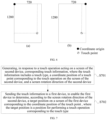
- the user when controlling a source device in reverse through a client, the user inputs a corresponding touch operation on a screen of a client to enable the source device to correspondingly control its displayed content according to the touch operation; the client acquires a touch position and a touch type corresponding to the touch operation (as shown in FIG. 1 , a user inputs a single point-press operation on a search button on the screen of the client, to make the client perform search), and sends the touch position and the touch type to the source device, to enable the source device to perform, at a touch position of its screen, a control operation corresponding to the touch type, i.e. perform the touch operation.
- FIG. 1 a user inputs a single point-press operation on a search button on the screen of the client, to make the client perform search
- the second device determines the touch information corresponding to the touch operation, where the touch information includes the coordinate position of the touch point on the screen of the second device and a current rotation direction of its screen (i.e. the screen rotation direction of the second device), the coordinate position of the touch point on the screen of the second device is the position where the user inputs the touch operation, i.e. the position of the touch point corresponding to the touch operation; and sends the touch information to the first device.
- the first device When the first device receives the touch information sent by the second device, it indicates that the first device also needs to synchronously perform the touch operation; then using the screen information of the first device and the screen rotation direction of the second device included by the touch information, the first device performs information conversion on the coordinate position to obtain the target position, i.e. obtain the position for performing the touch operation on the first device.
- the screen rotation direction of the first device and the screen rotation direction of the second device are the same, directly based on the first preset rule, performing the conversion on the coordinate position of the touch point using the size information of the screen of the first device, to achieve a proportional conversion of the coordinate position; when the screen rotation direction of the first device and the screen rotation direction of the second device are different, based on the second preset rule, performing the conversion on the coordinate position of the touch point using the size information of the screen of the first device, to achieve a proportional and directional conversion.
- the coordinate position can be accurately mapped to the screen of the first device, in turn the touch operation input by the user on the second device can be veritably feedback to the screen of the first device.
- the coordinate position of the touch point includes a proportional width coordinate and a proportional height coordinate of the touch point.
- the proportional width coordinate of the touch point indicates a proportion of the width coordinate of the touch point to a width of the screen of the second device
- the proportional height coordinate of the touch point indicates a proportion of the height coordinate of the touch point to the height of the screen of the second device.
- the target position corresponding to the coordinate position of the touch point includes a target height coordinate and a target width coordinate.
- the user when inputting the touch operation on the screen of the second device, the user can touch on the screen through at least one finger, i.e. the touch operation corresponds to at least one touch point; therefore, when performing, according to the size information of the screen of the first device, the conversion on the coordinate position of the touch point based on the first preset rule, the coordinate position of each touch point corresponding to the touch operation needs to be mapped, i.e. for each touch point, performing, according to the size information of the screen of the first device, the conversion on the coordinate position of the touch point based on the first preset rule, to obtain the target position corresponding to the coordinate position of this touch point.
- the position of each touch point corresponding to the touch operation needs to be mapped, i.e. for each touch point, performing, according to the size information of the screen of the first device, the conversion on the coordinate position of the touch point based on the second preset rule, to obtain the target position corresponding to the coordinate position of this touch point.
- the proportional width coordinate of the touch point indicates a proportion of the width coordinate corresponding to the touch point to the width of the screen of the second device, and the screen rotation direction of the first device and the screen rotation direction of the second device are the same, the proportional width coordinate of the touch point is directly multiplied by the width of the screen of the first device, the product is the target width coordinate corresponding to the coordinate position of the touch point, i.e. the width coordinate of the touch point on the screen of the first device.
- the proportional height coordinate of the touch point indicates a proportion of the height coordinate corresponding to the touch point to the height of the screen of the second device, and the screen rotation direction of the first device and the screen rotation direction of the second device are the same, the proportional height coordinate of the touch point is directly multiplied by the height of the screen of the first device, the product is the target height coordinate corresponding to the coordinate position of the touch point, i.e. the height coordinate of the touch point on the screen of the first device.
- the screen rotation directions of the first device and the second device need to be combined to perform the conversion on the coordinate position of the touch point.
- the screen rotation direction of the second device is a first preset direction
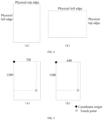
- the screen rotation direction of the first device is a second preset direction, i.e. when a direction of the screen of the second device is 0 degree, and a direction of the screen of the first device is 90 degrees
- the screen of the second device is a portrait screen
- the screen of the first device is a landscape screen
- the proportional height coordinate of the touch point is multiplied by the width of the screen of the first device, the product is the target width coordinate corresponding to the coordinate position of the touch point, i.e. the width coordinate of the touch point on the screen of the first device.
- the target height coordinate corresponding to the coordinate position when determining the target height coordinate corresponding to the coordinate position, a difference between 1 and the proportional width coordinate is calculated, and a product of the difference and the height of the screen of the first device is calculated, the product is the target height coordinate corresponding to the coordinate position of the touch point, i.e. the height coordinate of the touch point on the screen of the first device.
- a rotation direction of the screen of the second device is 0 degree
- a rotation direction of the screen of the first device is 90 degrees which is different from the direction of the second device
- the width of the screen of the second device is 720
- the height of the screen of the second device is 1280
- the actual coordinate of touch point 1 is (700, 1100), i.e. the width coordinate of the touch point 1 is 700
- the height coordinate of the touch point 1 is 1100
- FIG. 7 is a schematic flowchart 3 of a screen projection control method provided by an embodiment of the present disclosure.
- the method of this embodiment may be applied to a second device, the second device is an electronic device such as a mobile terminal.
- the screen projection control method includes the following.
- the multi-point-touch includes double-point touch (i.e. double-finger touch), three-point touch (i.e. three-finger touch), and four-point touch (i.e. four-finger touch), and so on.
- double-point touch i.e. double-finger touch
- three-point touch i.e. three-finger touch
- four-point touch i.e. four-finger touch
- pointer numbers of fingers such as ID (Identity document, Identification number).
- the second device since the content displayed by the first device and the second device needs to be synchronous, when the second device acquires the touch operation input by the user and performs the corresponding control operation according to the touch operation, the first device also needs to synchronously perform the touch operation, thereby performing the corresponding control operation according to the touch operation. Therefore, the second device sends the touch information to the first device, to enable the first device to accurately perform the touch operation using the touch information.
- the first device can be enabled to accurately perform the touch operation, in turn the content displayed by the first device and the second device is synchronous, thereby the synchronization of screen projection is improved, and the user experience is high.
- a proportion of the actual coordinate is determined according to the actual coordinate of the touch point and the size of the screen of the second device, to obtain the proportional coordinate of the touch point, and the proportional coordinate of the touch point is sent to the first device.
- the first device does not need to know the size of the screen of the second device, and can directly use the proportional coordinate to determine the target position, to achieve accurate determination of the target position.
- the touch type corresponding to the touch operation is a double-finger press operation type
- the touch position is the proportional coordinate corresponding to the touch point, represented by X and Y.
- the number of touch points is greater than 1, the distinguishment is possible through the pointer identity (pointerId).
- S803 sending the touch information to a first device, to enable the first device to determine, according to the screen rotation direction of the second device, a target position on a screen of the first device corresponding to the coordinate position of the touch point, where the target position is a position for performing a touch operation corresponding to the touch type.
- the proportional coordinate of the touch point on the screen of the second device is determined, to enable that the second device can use the proportional coordinate of the touch point to determine its position on the first device, i.e. determine the target position corresponding to the coordinate position of the touch point, to achieve the accurate mapping of the position.
- FIG. 9 is a structural block diagram 1 of a screen projection control device provided by an embodiment of the present disclosure.
- the screen projection control device 90 includes: a first transceiver module 901 and a first processing module 902.
- the first processing module 902 is configured to determine, according to the screen rotation direction of the second device, a target position on the screen of the first device corresponding to the coordinate position of the touch point; where the target position is a position for performing a touch operation corresponding to the touch type.
- the screen information of the first device includes a screen rotation direction of the first device and size information of the screen of the first device; and the first processing module 902 is further configured to:
- the coordinate position of the touch point includes a proportional width coordinate and a proportional height coordinate of the touch point.
- the target position includes a target width coordinate and a target height coordinate.
- the size information of the screen of the first device includes a width and a height of the screen of the first device.
- the touch information is generated based on a preset touch event transfer protocol.
- An embodiment of the present disclosure further provides a computer program product, where the computer program product includes a computer program, the computer program is stored in a readable storage medium, one or more processors of an electronic device can read the computer program from the readable storage medium, and the one or more processors executes the computer program, to enable the electronic device to execute a solution provided by any of the above-mentioned embodiments.
- the above computer readable medium carries one or more programs, and when the one or more programs are executed by the electronic device, the electronic device is enabled to execute the methods shown in the above embodiments.
- Computer program codes for performing operations of the present disclosure may be written in one or more programming languages or a combination thereof, the above programming language includes but not limited to object-oriented programming languages, such as Java, Smalltalk, C++, and also includes conventional procedural programming languages, such as the "C" language or similar programming languages.
- the program codes may be executed entirely on a user's computer, partly on the user's computer, as a stand-alone software package, partly on the user's computer and partly on a remote computer, or entirely on the remote computer or a server.
- the remote computer may be connected to the user's computer through any kind of network, including the local area network (Local Area Network, LAN for short) or wide area network (Wide Area Network, WAN for short), or may be connected to an external computer (for example, connected through the Internet using an Internet service provider).
- LAN Local Area Network
- WAN Wide Area Network
- each block in the block diagrams and/or flowcharts, and combinations of blocks in the block diagrams and/or flowcharts can be implemented in a dedicated hardware-based system that performs specified functions or operations, or can be implemented in a combination of dedicated hardware and computer instructions.
- Units involved in the embodiments of the present disclosure may be implemented in a software manner, and may also be implemented in a hardware manner.
- the name of a unit does not constitute a limitation of the unit itself under certain circumstances, for example, the first acquiring unit may also be described as "a unit acquiring at least two Internet Protocol addresses".
- exemplary types of hardware logic components include: a field programmable gate array (Field Programmable Gate Array, FPGA), an application specific integrated circuit (Application Specific Integrated Circuit, ASIC), an Application Specific Standard Product (Application Specific Standard Product, ASSP), a system on a chip (System on a Chip, SOC), a complex programmable logical device (Complex Programmable Logical Device, CPLD) and the like.
- FPGA Field Programmable Gate Array
- ASIC Application Specific Integrated Circuit
- ASSP Application Specific Standard Product
- SOC System on a Chip
- CPLD Complex Programmable Logical Device
- a machine readable medium may be a tangible medium that may contain or store a program for use by or in conjunction with the instruction executable system, apparatus, or device.
- the machine-readable medium may be a machine-readable signal medium or a machine-readable storage medium.
- the machine readable medium may include, but not limited to, an electronic, magnetic, optical, electromagnetic, infrared or semiconductor system, apparatus or device, or any suitable combination of the above.
- machine readable storage medium includes one or more wires-based electrical connections, portable computer disks, hard disks, random access memory (RAM), read only memory (ROM), erasable programmable read-only memory (EPROM or flash memory), fiber optics, compact disk read only memory (CD-ROM), optical storage devices, magnetic storage devices, or any suitable combination of the above.
- RAM random access memory
- ROM read only memory
- EPROM or flash memory erasable programmable read-only memory
- CD-ROM compact disk read only memory
- optical storage devices magnetic storage devices, or any suitable combination of the above.
Landscapes
- Engineering & Computer Science (AREA)
- Theoretical Computer Science (AREA)
- General Engineering & Computer Science (AREA)
- Human Computer Interaction (AREA)
- Physics & Mathematics (AREA)
- General Physics & Mathematics (AREA)
- Multimedia (AREA)
- Signal Processing (AREA)
- Computer Hardware Design (AREA)
- Computer Networks & Wireless Communication (AREA)
- Databases & Information Systems (AREA)
- User Interface Of Digital Computer (AREA)
Claims (4)
- Verfahren zur Steuerung einer Bildschirmprojektion, das auf eine erste Vorrichtung angewendet wird, das Verfahren umfassend:Erfassen (S201, S301) von Berührungsinformationen, die von einer zweiten Vorrichtung gesendet werden, wobei die Berührungsinformationen einen Berührungstyp, eine Koordinatenposition eines Berührungspunkts auf einem Bildschirm der zweiten Vorrichtung und eine Bildschirmdrehrichtung der zweiten Vorrichtung umfassen, wobei der Bildschirm der zweiten Vorrichtung und ein Bildschirm der ersten Vorrichtung dieselbe Schnittstelle anzeigen, wobei die Koordinatenposition des Berührungspunkts eine proportionale Breitenkoordinate und eine proportionale Höhenkoordinate des Berührungspunkts umfasst, und die proportionale Breitenkoordinate des Berührungspunkts ein Verhältnis einer tatsächlichen Breitenkoordinate des Berührungspunkts zu einer Breite des Bildschirms der zweiten Vorrichtung ist, die proportionale Höhenkoordinate des Berührungspunkts ein Verhältnis einer tatsächlichen Höhenkoordinate des Berührungspunkts zu einer Höhe des Bildschirms der zweiten Vorrichtung ist; wobei die Berührungsinformationen anhand einer dem Berührungstyp entsprechenden Berührungsoperation durch einen Benutzer auf dem Bildschirm der zweiten Vorrichtung bestimmt werden; undBestimmen (S202) einer Zielposition auf dem Bildschirm der ersten Vorrichtung, die der Koordinatenposition des Berührungspunkts entspricht, gemäß der Bildschirmdrehrichtung der zweiten Vorrichtung, wobei die Zielposition eine Position zum Durchführen eines Berührungsvorgangs ist, der dem Berührungstyp entspricht;wobei das Bestimmen (S202) der Zielposition auf dem Bildschirm der ersten Vorrichtung, gemäß der Bildschirmdrehrichtung der zweiten Vorrichtung, die der Koordinatenposition des Berührungspunktes entspricht, umfasst:Erfassen (S302) von Bildschirminformationen der ersten Vorrichtung; undDurchführen (S303) einer Umwandlung der Koordinatenposition des Berührungspunktes gemäß den Bildschirminformationen der ersten Vorrichtung und der Bildschirmdrehrichtung der zweiten Vorrichtung, um die Zielposition zu erhalten;wobei die Bildschirminformationen der ersten Vorrichtung eine Bildschirmdrehrichtung der ersten Vorrichtung und Größeninformationen des Bildschirms der ersten Vorrichtung umfassen, und das Durchführen (S303) der Umwandlung der Koordinatenposition des Berührungspunkts gemäß den Bildschirminformationen der ersten Vorrichtung und der Bildschirmdrehrichtung der zweiten Vorrichtung, um die Zielposition zu erhalten, umfasst:wenn festgestellt wird, dass die Bildschirmdrehrichtung der ersten Vorrichtung und die Bildschirmdrehrichtung der zweiten Vorrichtung gleich sind, die Umwandlung der Koordinatenposition des Berührungspunkts anhand einer ersten voreingestellten Regel gemäß den Größeninformationen des Bildschirms der ersten Vorrichtung durchführen, um die Zielposition zu erhalten; undwenn festgestellt wird, dass die Bildschirmdrehrichtung der ersten Vorrichtung und die Bildschirmdrehrichtung der zweiten Vorrichtung unterschiedlich sind, die Umwandlung der Koordinatenposition des Berührungspunkts anhand einer zweiten voreingestellten Regel gemäß den Größeninformationen des Bildschirms der ersten Vorrichtung durchführen, um die Zielposition zu erhalten;wobei die Zielposition eine Zielbreitenkoordinate und eine Zielhöhenkoordinate umfasst;die Größeninformationen des Bildschirms der ersten Vorrichtung eine Breite und eine Höhe des Bildschirms der ersten Vorrichtung umfasst;wobei die erste voreingestellte Regel TX=Breite*OX, TY=Höhe*OY lautet, wobei TX die Zielbreitenkoordinate ist, Breite die Breite des Bildschirms der ersten Vorrichtung ist, OX die proportionale Breitenkoordinate des Berührungspunkts ist, TY die Zielhöhenkoordinate ist, Höhe die Höhe des Bildschirms der ersten Vorrichtung ist und OY die proportionale Höhenkoordinate des Berührungspunkts ist;wobei die zweite voreingestellte Regel TX=Breite*OY, TY=Höhe*(1-OX) lautet, wobei TX die Zielbreitenkoordinate ist, Breite die Breite des Bildschirms der ersten Vorrichtung ist, OY die proportionale Höhenkoordinate des Berührungspunkts ist, TY die Zielhöhenkoordinate ist, Höhe die Höhe des Bildschirms der ersten Vorrichtung ist und OX die proportionale Breitenkoordinate des Berührungspunkts ist.
- Verfahren nach Anspruch 1, wobei die Berührungsinformationen anhand eines voreingestellten Übertragungsprotokolls für Berührungsereignisse erzeugt werden.
- Elektronische Vorrichtung, umfassend: mindestens einen Prozessor und einen Speicher;wobei in dem Speicher computerausführbare Anweisungen gespeichert sind; undwobei der mindestens eine Prozessor die im Speicher gespeicherten computerausführbaren Anweisungen durchführt, um den mindestens einen Prozessor in die Lage zu versetzen, das Verfahren zur Steuerung einer Bildschirmprojektion nach Anspruch 1 durchzuführen.
- Computerlesbares Speichermedium, in dem computerausführbare Anweisungen gespeichert sind, wobei, wenn ein Prozessor die computerausführbaren Anweisungen ausführt, das Verfahren zur Steuerung der Bildschirmprojektion nach Anspruch 1 implementiert wird.
Applications Claiming Priority (2)
| Application Number | Priority Date | Filing Date | Title |
|---|---|---|---|
| CN202011331970.1A CN112468863A (zh) | 2020-11-24 | 2020-11-24 | 投屏控制方法、设备及电子设备 |
| PCT/CN2021/128268 WO2022111239A1 (zh) | 2020-11-24 | 2021-11-02 | 投屏控制方法、设备及电子设备 |
Publications (4)
| Publication Number | Publication Date |
|---|---|
| EP4243425A1 EP4243425A1 (de) | 2023-09-13 |
| EP4243425A4 EP4243425A4 (de) | 2023-12-06 |
| EP4243425C0 EP4243425C0 (de) | 2025-07-09 |
| EP4243425B1 true EP4243425B1 (de) | 2025-07-09 |
Family
ID=74798799
Family Applications (1)
| Application Number | Title | Priority Date | Filing Date |
|---|---|---|---|
| EP21896740.4A Active EP4243425B1 (de) | 2020-11-24 | 2021-11-02 | Bildschirmprojektionssteuerungsverfahren und -vorrichtung sowie elektronische vorrichtung |
Country Status (4)
| Country | Link |
|---|---|
| US (1) | US12189886B2 (de) |
| EP (1) | EP4243425B1 (de) |
| CN (1) | CN112468863A (de) |
| WO (1) | WO2022111239A1 (de) |
Families Citing this family (14)
| Publication number | Priority date | Publication date | Assignee | Title |
|---|---|---|---|---|
| CN112468863A (zh) * | 2020-11-24 | 2021-03-09 | 北京字节跳动网络技术有限公司 | 投屏控制方法、设备及电子设备 |
| CN115129277A (zh) * | 2021-03-17 | 2022-09-30 | 海信视像科技股份有限公司 | 一种交互方法、显示设备及vr设备 |
| CN113535645B (zh) * | 2021-03-11 | 2023-08-18 | 北京字跳网络技术有限公司 | 共享文档的展示方法、装置、电子设备及存储介质 |
| CN114237419B (zh) * | 2021-03-31 | 2023-10-27 | 青岛海信商用显示股份有限公司 | 显示设备、触控事件的识别方法 |
| CN113434101B (zh) * | 2021-06-22 | 2023-06-09 | 青岛海尔科技有限公司 | 设备的控制方法、装置、存储介质及电子装置 |
| CN113391782A (zh) * | 2021-06-30 | 2021-09-14 | 深圳市斯博科技有限公司 | 计算机控制移动终端的方法、系统、电子设备及存储介质 |
| KR20230008954A (ko) | 2021-07-07 | 2023-01-17 | 삼성디스플레이 주식회사 | 표시 장치 및 복수의 표시 장치들의 제어 방법 |
| CN113849107A (zh) * | 2021-09-07 | 2021-12-28 | 深圳Tcl新技术有限公司 | 投屏控制方法、装置、存储介质及电子设备 |
| CN113934390A (zh) * | 2021-09-22 | 2022-01-14 | 青岛海尔科技有限公司 | 一种投屏的反向控制方法和装置 |
| CN114442847B (zh) * | 2022-01-18 | 2024-01-30 | Tcl华星光电技术有限公司 | 屏幕触控点定位方法、装置、计算机可读介质及电子设备 |
| WO2023179129A1 (zh) * | 2022-03-24 | 2023-09-28 | 海信视像科技股份有限公司 | 显示设备、投屏设备及基于轨迹提取的设备控制方法 |
| CN115390713A (zh) * | 2022-08-31 | 2022-11-25 | 京东方科技集团股份有限公司 | 屏幕控制方法、屏幕控制装置、电子设备、程序及介质 |
| CN116225291A (zh) * | 2022-12-14 | 2023-06-06 | 元境生生(北京)科技有限公司 | 异形屏适配方法、装置及设备 |
| CN117707454A (zh) * | 2023-11-23 | 2024-03-15 | 华为技术有限公司 | 发送信息的方法和电子设备 |
Family Cites Families (19)
| Publication number | Priority date | Publication date | Assignee | Title |
|---|---|---|---|---|
| CN101382858B (zh) * | 2008-10-21 | 2011-01-26 | 广东威创视讯科技股份有限公司 | 触摸屏设备的校准方法及校准装置 |
| US9258402B2 (en) * | 2009-04-14 | 2016-02-09 | Qualcomm Incorporated | System and method for controlling mobile devices |
| US9268424B2 (en) * | 2012-07-18 | 2016-02-23 | Sony Corporation | Mobile client device, operation method, recording medium, and operation system |
| CN102981793B (zh) * | 2012-11-22 | 2017-02-15 | 深圳Tcl工业研究院有限公司 | 一种屏幕同步方法及装置 |
| CN104144184B (zh) * | 2013-05-08 | 2018-06-26 | 华为终端(东莞)有限公司 | 一种控制远端设备的方法及电子设备 |
| KR20160053641A (ko) * | 2014-11-05 | 2016-05-13 | 삼성전자주식회사 | 멀티 디스플레이 제어 방법 및 그 전자 장치 |
| KR102345610B1 (ko) * | 2015-02-27 | 2021-12-30 | 삼성전자주식회사 | 스크린 미러링 서비스 제공장치 및 방법 |
| CN106095084A (zh) * | 2016-06-06 | 2016-11-09 | 乐视控股(北京)有限公司 | 投屏方法及装置 |
| KR102627518B1 (ko) * | 2016-09-02 | 2024-01-23 | 엘지전자 주식회사 | 싱크 디바이스 및 그 제어 방법 |
| US10242714B2 (en) * | 2016-12-19 | 2019-03-26 | Microsoft Technology Licensing, Llc | Interface for application-specified playback of panoramic video |
| CN108255398A (zh) * | 2016-12-29 | 2018-07-06 | 乐视汽车(北京)有限公司 | 用于控制移动设备的方法、移动设备和通信系统 |
| KR102604570B1 (ko) * | 2018-03-23 | 2023-11-22 | 삼성전자주식회사 | 사용자 입력 지원 방법 및 이를 지원하는 전자 장치 |
| JP6803581B2 (ja) * | 2018-09-28 | 2020-12-23 | パナソニックIpマネジメント株式会社 | 表示制御装置、表示制御方法、および表示制御システム |
| CN110109721A (zh) * | 2019-04-01 | 2019-08-09 | 努比亚技术有限公司 | 一种可穿戴设备控制方法、系统、可穿戴设备及存储介质 |
| CN110377250B (zh) * | 2019-06-05 | 2021-07-16 | 华为技术有限公司 | 一种投屏场景下的触控方法及电子设备 |
| CN110543278B (zh) * | 2019-08-19 | 2021-08-13 | 广州点云科技有限公司 | 一种跨设备屏幕坐标的适配方法、装置以及存储介质 |
| CN113391775A (zh) * | 2020-03-13 | 2021-09-14 | 华为技术有限公司 | 一种人机交互方法及设备 |
| CN111432070B (zh) * | 2020-03-17 | 2022-04-08 | 阿波罗智联(北京)科技有限公司 | 应用投屏控制方法、装置、设备和介质 |
| CN112468863A (zh) * | 2020-11-24 | 2021-03-09 | 北京字节跳动网络技术有限公司 | 投屏控制方法、设备及电子设备 |
-
2020
- 2020-11-24 CN CN202011331970.1A patent/CN112468863A/zh active Pending
-
2021
- 2021-11-02 WO PCT/CN2021/128268 patent/WO2022111239A1/zh not_active Ceased
- 2021-11-02 US US18/254,338 patent/US12189886B2/en active Active
- 2021-11-02 EP EP21896740.4A patent/EP4243425B1/de active Active
Also Published As
| Publication number | Publication date |
|---|---|
| US12189886B2 (en) | 2025-01-07 |
| CN112468863A (zh) | 2021-03-09 |
| EP4243425C0 (de) | 2025-07-09 |
| US20240012503A1 (en) | 2024-01-11 |
| EP4243425A1 (de) | 2023-09-13 |
| WO2022111239A1 (zh) | 2022-06-02 |
| EP4243425A4 (de) | 2023-12-06 |
Similar Documents
| Publication | Publication Date | Title |
|---|---|---|
| EP4243425B1 (de) | Bildschirmprojektionssteuerungsverfahren und -vorrichtung sowie elektronische vorrichtung | |
| EP4210320A1 (de) | Videoverarbeitungsverfahren, endgerätevorrichtung und speichermedium | |
| US10789033B2 (en) | System and method for providing widget | |
| US20230199262A1 (en) | Information display method and device, and terminal and storage medium | |
| US12287948B2 (en) | Virtual interface operation method, head-mounted display device, and computer-readable medium | |
| CN112925593A (zh) | 一种目标图层缩放旋转的方法和装置 | |
| WO2023138468A1 (zh) | 虚拟物体的生成方法、装置、设备及存储介质 | |
| WO2023083085A1 (zh) | 一种文档共享方法、装置、设备及介质 | |
| US20150326705A1 (en) | Mobile Device Data Transfer Using Location Information | |
| US20210168104A1 (en) | Electronic device and method for transmitting content of electronic device | |
| CN110178111B (zh) | 一种终端的图像处理方法及装置 | |
| WO2021244650A1 (zh) | 控制方法、装置、终端及存储介质 | |
| CN114397961B (zh) | 头戴式显示设备控制方法、头戴式显示设备组件和介质 | |
| CN113253874B (zh) | 显示装置的控制方法、装置、终端和存储介质 | |
| CN111290812B (zh) | 应用控件的显示方法、装置、终端及存储介质 | |
| CN113824629A (zh) | 一种房屋展示方法、装置、设备及介质 | |
| WO2024174871A1 (zh) | 一种图像处理方法、装置、设备及介质 | |
| CN114090817B (zh) | 一种人脸特征数据库动态构建方法、装置及存储介质 | |
| WO2024120114A1 (zh) | 特效处理方法、装置、设备、计算机可读存储介质及产品 | |
| CN110070479A (zh) | 图像变形拖拽点定位方法和装置 | |
| CN115619918A (zh) | 图像渲染方法、装置、设备及存储介质 | |
| CN116266206A (zh) | 页面显示方法、装置和电子设备 | |
| CN117008779A (zh) | 界面布局的调整方法、装置、设备、存储介质和程序产品 | |
| CN113204404A (zh) | 屏幕截图方法、装置和电子设备 | |
| WO2024060890A1 (zh) | 虚拟终端设备的信息提示方法、装置、设备、介质及产品 |
Legal Events
| Date | Code | Title | Description |
|---|---|---|---|
| STAA | Information on the status of an ep patent application or granted ep patent |
Free format text: STATUS: THE INTERNATIONAL PUBLICATION HAS BEEN MADE |
|
| PUAI | Public reference made under article 153(3) epc to a published international application that has entered the european phase |
Free format text: ORIGINAL CODE: 0009012 |
|
| STAA | Information on the status of an ep patent application or granted ep patent |
Free format text: STATUS: REQUEST FOR EXAMINATION WAS MADE |
|
| 17P | Request for examination filed |
Effective date: 20230512 |
|
| AK | Designated contracting states |
Kind code of ref document: A1 Designated state(s): AL AT BE BG CH CY CZ DE DK EE ES FI FR GB GR HR HU IE IS IT LI LT LU LV MC MK MT NL NO PL PT RO RS SE SI SK SM TR |
|
| A4 | Supplementary search report drawn up and despatched |
Effective date: 20231108 |
|
| RIC1 | Information provided on ipc code assigned before grant |
Ipc: G09G 5/12 20060101ALI20231102BHEP Ipc: G06F 3/14 20060101ALI20231102BHEP Ipc: H04N 21/43 20110101AFI20231102BHEP |
|
| DAV | Request for validation of the european patent (deleted) | ||
| DAX | Request for extension of the european patent (deleted) | ||
| STAA | Information on the status of an ep patent application or granted ep patent |
Free format text: STATUS: EXAMINATION IS IN PROGRESS |
|
| 17Q | First examination report despatched |
Effective date: 20240523 |
|
| GRAP | Despatch of communication of intention to grant a patent |
Free format text: ORIGINAL CODE: EPIDOSNIGR1 |
|
| STAA | Information on the status of an ep patent application or granted ep patent |
Free format text: STATUS: GRANT OF PATENT IS INTENDED |
|
| INTG | Intention to grant announced |
Effective date: 20250221 |
|
| GRAS | Grant fee paid |
Free format text: ORIGINAL CODE: EPIDOSNIGR3 |
|
| GRAA | (expected) grant |
Free format text: ORIGINAL CODE: 0009210 |
|
| STAA | Information on the status of an ep patent application or granted ep patent |
Free format text: STATUS: THE PATENT HAS BEEN GRANTED |
|
| AK | Designated contracting states |
Kind code of ref document: B1 Designated state(s): AL AT BE BG CH CY CZ DE DK EE ES FI FR GB GR HR HU IE IS IT LI LT LU LV MC MK MT NL NO PL PT RO RS SE SI SK SM TR |
|
| REG | Reference to a national code |
Ref country code: GB Ref legal event code: FG4D |
|
| REG | Reference to a national code |
Ref country code: CH Ref legal event code: EP |
|
| REG | Reference to a national code |
Ref country code: IE Ref legal event code: FG4D |
|
| REG | Reference to a national code |
Ref country code: DE Ref legal event code: R096 Ref document number: 602021033983 Country of ref document: DE |
|
| U01 | Request for unitary effect filed |
Effective date: 20250709 |
|
| U07 | Unitary effect registered |
Designated state(s): AT BE BG DE DK EE FI FR IT LT LU LV MT NL PT RO SE SI Effective date: 20250715 |
|
| U20 | Renewal fee for the european patent with unitary effect paid |
Year of fee payment: 5 Effective date: 20251110 |
|
| PG25 | Lapsed in a contracting state [announced via postgrant information from national office to epo] |
Ref country code: IS Free format text: LAPSE BECAUSE OF FAILURE TO SUBMIT A TRANSLATION OF THE DESCRIPTION OR TO PAY THE FEE WITHIN THE PRESCRIBED TIME-LIMIT Effective date: 20251109 |
|
| PGFP | Annual fee paid to national office [announced via postgrant information from national office to epo] |
Ref country code: GB Payment date: 20251010 Year of fee payment: 5 |
|
| PG25 | Lapsed in a contracting state [announced via postgrant information from national office to epo] |
Ref country code: NO Free format text: LAPSE BECAUSE OF FAILURE TO SUBMIT A TRANSLATION OF THE DESCRIPTION OR TO PAY THE FEE WITHIN THE PRESCRIBED TIME-LIMIT Effective date: 20251009 |
|
| PG25 | Lapsed in a contracting state [announced via postgrant information from national office to epo] |
Ref country code: HR Free format text: LAPSE BECAUSE OF FAILURE TO SUBMIT A TRANSLATION OF THE DESCRIPTION OR TO PAY THE FEE WITHIN THE PRESCRIBED TIME-LIMIT Effective date: 20250709 |
|
| PG25 | Lapsed in a contracting state [announced via postgrant information from national office to epo] |
Ref country code: GR Free format text: LAPSE BECAUSE OF FAILURE TO SUBMIT A TRANSLATION OF THE DESCRIPTION OR TO PAY THE FEE WITHIN THE PRESCRIBED TIME-LIMIT Effective date: 20251010 |
|
| PG25 | Lapsed in a contracting state [announced via postgrant information from national office to epo] |
Ref country code: PL Free format text: LAPSE BECAUSE OF FAILURE TO SUBMIT A TRANSLATION OF THE DESCRIPTION OR TO PAY THE FEE WITHIN THE PRESCRIBED TIME-LIMIT Effective date: 20250709 |
|
| PG25 | Lapsed in a contracting state [announced via postgrant information from national office to epo] |
Ref country code: RS Free format text: LAPSE BECAUSE OF FAILURE TO SUBMIT A TRANSLATION OF THE DESCRIPTION OR TO PAY THE FEE WITHIN THE PRESCRIBED TIME-LIMIT Effective date: 20251009 |
|
| PG25 | Lapsed in a contracting state [announced via postgrant information from national office to epo] |
Ref country code: ES Free format text: LAPSE BECAUSE OF FAILURE TO SUBMIT A TRANSLATION OF THE DESCRIPTION OR TO PAY THE FEE WITHIN THE PRESCRIBED TIME-LIMIT Effective date: 20250709 |