EP4240108A1 - Method of controlling a cooking system and related cooking system - Google Patents
Method of controlling a cooking system and related cooking system Download PDFInfo
- Publication number
- EP4240108A1 EP4240108A1 EP22160270.9A EP22160270A EP4240108A1 EP 4240108 A1 EP4240108 A1 EP 4240108A1 EP 22160270 A EP22160270 A EP 22160270A EP 4240108 A1 EP4240108 A1 EP 4240108A1
- Authority
- EP
- European Patent Office
- Prior art keywords
- item
- cookware
- cooking
- temperature
- sensor
- Prior art date
- Legal status (The legal status is an assumption and is not a legal conclusion. Google has not performed a legal analysis and makes no representation as to the accuracy of the status listed.)
- Pending
Links
- 238000010411 cooking Methods 0.000 title claims description 84
- 238000000034 method Methods 0.000 title claims description 13
- 230000006698 induction Effects 0.000 claims abstract description 45
- 238000010438 heat treatment Methods 0.000 claims abstract description 26
- 238000001514 detection method Methods 0.000 claims description 10
- 239000000523 sample Substances 0.000 claims description 5
- 230000011664 signaling Effects 0.000 claims description 2
- 238000012544 monitoring process Methods 0.000 description 6
- 238000010521 absorption reaction Methods 0.000 description 4
- 238000004891 communication Methods 0.000 description 4
- 238000003780 insertion Methods 0.000 description 2
- 230000037431 insertion Effects 0.000 description 2
- 230000003247 decreasing effect Effects 0.000 description 1
- 230000001419 dependent effect Effects 0.000 description 1
- 238000010586 diagram Methods 0.000 description 1
- 238000005259 measurement Methods 0.000 description 1
- 238000012545 processing Methods 0.000 description 1
- 238000006467 substitution reaction Methods 0.000 description 1
- 238000012360 testing method Methods 0.000 description 1
Images


Classifications
-
- F—MECHANICAL ENGINEERING; LIGHTING; HEATING; WEAPONS; BLASTING
- F24—HEATING; RANGES; VENTILATING
- F24C—DOMESTIC STOVES OR RANGES ; DETAILS OF DOMESTIC STOVES OR RANGES, OF GENERAL APPLICATION
- F24C7/00—Stoves or ranges heated by electric energy
- F24C7/08—Arrangement or mounting of control or safety devices
- F24C7/082—Arrangement or mounting of control or safety devices on ranges, e.g. control panels, illumination
- F24C7/083—Arrangement or mounting of control or safety devices on ranges, e.g. control panels, illumination on tops, hot plates
-
- H—ELECTRICITY
- H05—ELECTRIC TECHNIQUES NOT OTHERWISE PROVIDED FOR
- H05B—ELECTRIC HEATING; ELECTRIC LIGHT SOURCES NOT OTHERWISE PROVIDED FOR; CIRCUIT ARRANGEMENTS FOR ELECTRIC LIGHT SOURCES, IN GENERAL
- H05B6/00—Heating by electric, magnetic or electromagnetic fields
- H05B6/02—Induction heating
- H05B6/06—Control, e.g. of temperature, of power
- H05B6/062—Control, e.g. of temperature, of power for cooking plates or the like
-
- F—MECHANICAL ENGINEERING; LIGHTING; HEATING; WEAPONS; BLASTING
- F24—HEATING; RANGES; VENTILATING
- F24C—DOMESTIC STOVES OR RANGES ; DETAILS OF DOMESTIC STOVES OR RANGES, OF GENERAL APPLICATION
- F24C7/00—Stoves or ranges heated by electric energy
- F24C7/08—Arrangement or mounting of control or safety devices
- F24C7/087—Arrangement or mounting of control or safety devices of electric circuits regulating heat
-
- H—ELECTRICITY
- H05—ELECTRIC TECHNIQUES NOT OTHERWISE PROVIDED FOR
- H05B—ELECTRIC HEATING; ELECTRIC LIGHT SOURCES NOT OTHERWISE PROVIDED FOR; CIRCUIT ARRANGEMENTS FOR ELECTRIC LIGHT SOURCES, IN GENERAL
- H05B2213/00—Aspects relating both to resistive heating and to induction heating, covered by H05B3/00 and H05B6/00
- H05B2213/07—Heating plates with temperature control means
Definitions
- This disclosure relates generally to the field of cooking appliances and more specifically to a method of controlling a cooking system for monitoring a cooking process using an induction cooktop, and to a related cooking system.
- Cooking pans are used in cooking but provide no assistance in monitoring food temperature or doneness.
- the document WO2018049276 discloses a system of the type shown in figure 1 , comprising a heat source operable to provide an amount of energy to be used to cook a food item; and one or more processors communicatively coupled to the heat source, and operable, when executed, to receive an indication of a current temperature associated with the food item; receive an indication of a requested cooking temperature; determine whether a difference between the requested cooking temperature and the current temperature is a positive value or a negative value; in response to the determination that the difference is a positive value, determine an energy adjustment based on a first set of one or more gain constants; and in response to the determination that the difference is a negative value, determine an energy adjustment based on a second set of one or more gain constants; wherein the heat source is further operable to modify the amount of energy provided by the heat source in accordance with the determined energy adjustment.
- the document WO2018145088 discloses a monitoring system, of the type shown in figure 2 , for a cooktop assembly including a cooking surface having a plurality of cooking areas includes a temperature sensor configured to sense a first temperature change at the cooking surface within a first cooking area of the plurality of cooking areas.
- a controller is operatively coupled to the temperature sensor and includes a timing module. The controller is configured to receive from the temperature sensor a first signal indicating the first temperature change and activate the timing module for a first predetermined time period based at least in part on the first temperature change sensed by the temperature sensor.
- the document WO2017143146 discloses a system including a heat source operable to provide an amount of energy to be used to cook a food item.
- the system further includes a processor operable to establish a first communication link with a wireless device having a cooking recipe for the food item.
- the processor is further operable to receive, via the first communication link, an indication of a first temperature associated with the cooking recipe.
- the processor is further operable to establish a second communication link with a cooking device system operable to be used in cooking the food item, and to receive, via the second communication link, an indication of a current temperature associated with the food item.
- the processor is further operable to, based on the indication of the first temperature and the indication of the current temperature, adjust the amount of energy provided by the heat source.
- operations such as adding food or flipping food in an item of cookware being heated are detected by comparing with a threshold the time derivative of sensed temperature of an item of cookware and/or of heating power provided by an induction cooktop operated in order to keep constant the temperature value sensed by the sensors coupled to the item of cookware.
- a method of controlling a cooking system for monitoring implementation of a recipe by means of a related cooking system comprising an induction cooktop functionally coupled with an item of cookware equipped with temperature sensor and with a microprocessor control unit, is defined in claim 1.
- the induction cooktop is configured to determine a power that the induction cooktop itself provides to the item of cookware, wherein the induction cooktop is provided with a closed-loop controller configured to adjust power delivered by the induction cooktop to the item of cookware in order to keep substantially constant the cooking temperature of the pan or of a food contained therein.
- the sensor for determining the power absorbed by the pan, being heated may be the same sensor configured for determining the temperature of the pan, or may be another device embedded in the cooktop. According to one aspect, the sensor for determining the power absorbed by the cooking item or for determining the temperature of the cooking item may be embedded in the bulk of the pan, or may be an external device which is inserted in the cavity of the cooking item or even in the food contained therein.
- FIG 4 An example of such a cooking system according to this disclosure is depicted in figure 4 .
- It may comprise an induction cooktop B having an induction power converter B1, at least one cooking zone B2, an interface B3 which communicates with the sensor C1, which may be a temperature sensor installed in the item of cookware C (which in figure 4 is a pan), and a closed-loop controller (not depicted in the figures).
- the induction cooktop may also embed at least one sensor B4, preferably at least one temperature sensor B4, configured to sense a thermal parameter, preferably a temperature, of an item of cookware and/or one or more food items contained therein when the item of cookware is placed on the at least one cooking zone B2.
- the closed-loop controller may be configured to adjust power delivered by the induction power converter B1 to the item of cookware based upon information received from the sensor C1 or B4 in order to keep substantially constant a cooking temperature.
- the item of cookware C may include a battery C2 for powering the sensor C1 and a dedicated interface C3 functionally connected to the battery C2 and to the sensor C1 for reading a sensed value and for transmitting to the interface B3 of the induction cooktop.
- the sensor C1 is a temperature sensor configured to sense the temperature of the pan C.
- a probe D (a so-called "smart probe"), having at least one temperature sensor D1.
- the probe D may be equipped with a battery D2 and with a dedicated interface D3 configured to exchange information with the interface B3 of the induction cooktop B. If a smart probe D is available, then it is possible to implement the method of this disclosure also using a common pan not provided with embedded temperature sensors.
- the induction cooktop is operated in order to heat the pan up to a nominal cooking temperature and to keep the pan at this nominal cooking temperature while the food placed therein is being cooked.
- Figure 3 shows exemplary time graphs of power absorption a), of temperature b) and of the time derivatives of absorbed heating power c) and of temperature d) by the item of cookware, while cooking food.
- the pan C is initially at room temperature and there is a preliminary heating phase in which a maximum heating power is provided to the item of cookware to attain a certain temperature.
- the closed-loop controller operates the induction cooktop to keep constant the temperature sensed by the sensor coupled to the cookware, thus the heating power is decreased.
- time derivative of the pan temperature or of the power absorbed by the pan C varies abruptly also when the raw food being cooked in the pan C is flipped (time instant T4). Therefore, by monitoring the time derivative of pan temperature or of the power absorbed by the pan C in a cooking system in which the induction cooktop is configured to keep substantially constant the cooking temperature of a cooking item provided with at least one sensor (for example a so-called "smart pan"), it is possible to monitor the execution of a cooking recipe by determining when food is inserted in the item of cookware or is flipped.
- the induction cooktop will act to regulate the cooking temperature of the cooking item within a relatively narrow range centred around a nominal cooking temperature, for example in a range of +- 5°C.
- the induction cooktop generates an event detection signal when a threshold value is overcome by the time derivative of sensed temperature and/or of heating power absorbed by the cooking item C.
- the interface B3 of the induction cooktop may communicate with a microprocessor unit, for example of a smartphone or of a tablet A.
- a user may select a recipe with the tablet A and the cooking system, by implementing the method of this disclosure, may monitor the correct execution of the recipe by recognizing if the user has inserted the food to be cooked in the pan C and if he/she has flipped it at the right instant.
- the interface B3 of the induction cooktop may be connected in a wired mode or in wireless mode to the "smart" cooking item, and/or to the smartphone or tablet A.
- the interface B3 of the induction cooktop receives this information and the induction cooktop is operated to reduce the delivered heating power.
- the cooking system might call consumers to insert food in the cooking item.
Landscapes
- Engineering & Computer Science (AREA)
- Chemical & Material Sciences (AREA)
- Combustion & Propulsion (AREA)
- Mechanical Engineering (AREA)
- General Engineering & Computer Science (AREA)
- Physics & Mathematics (AREA)
- Electromagnetism (AREA)
- Induction Heating Cooking Devices (AREA)
- Cookers (AREA)
Abstract
Description
- This disclosure relates generally to the field of cooking appliances and more specifically to a method of controlling a cooking system for monitoring a cooking process using an induction cooktop, and to a related cooking system.
- Assistance in cooking is desirable, such as to assure food temperature and doneness. Cooking pans are used in cooking but provide no assistance in monitoring food temperature or doneness.
- The document
WO2018049276 discloses a system of the type shown infigure 1 , comprising a heat source operable to provide an amount of energy to be used to cook a food item; and one or more processors communicatively coupled to the heat source, and operable, when executed, to receive an indication of a current temperature associated with the food item; receive an indication of a requested cooking temperature; determine whether a difference between the requested cooking temperature and the current temperature is a positive value or a negative value; in response to the determination that the difference is a positive value, determine an energy adjustment based on a first set of one or more gain constants; and in response to the determination that the difference is a negative value, determine an energy adjustment based on a second set of one or more gain constants; wherein the heat source is further operable to modify the amount of energy provided by the heat source in accordance with the determined energy adjustment. - The document
WO2018145088 discloses a monitoring system, of the type shown infigure 2 , for a cooktop assembly including a cooking surface having a plurality of cooking areas includes a temperature sensor configured to sense a first temperature change at the cooking surface within a first cooking area of the plurality of cooking areas. A controller is operatively coupled to the temperature sensor and includes a timing module. The controller is configured to receive from the temperature sensor a first signal indicating the first temperature change and activate the timing module for a first predetermined time period based at least in part on the first temperature change sensed by the temperature sensor. - The document
WO2017143146 discloses a system including a heat source operable to provide an amount of energy to be used to cook a food item. The system further includes a processor operable to establish a first communication link with a wireless device having a cooking recipe for the food item. The processor is further operable to receive, via the first communication link, an indication of a first temperature associated with the cooking recipe. The processor is further operable to establish a second communication link with a cooking device system operable to be used in cooking the food item, and to receive, via the second communication link, an indication of a current temperature associated with the food item. The processor is further operable to, based on the indication of the first temperature and the indication of the current temperature, adjust the amount of energy provided by the heat source. - The above prior systems are focused on the measurement of food temperature to control doneness of the food being cooked, which is relatively difficult to be monitored.
- Studies carried out by the inventors have shown that certain operations carried out during cooking, such as adding food or flipping food in an item of cookware being heated, cause a sudden decrease of temperature sensed by the sensors coupled to the item of cookware and/or an increase of heating power absorption by the induction cooktop, which is operated so as to keep constant the cooking temperature of the item of cookware. In theory, it could be possible to detect food insertion and/or manipulation by detecting these variations of sensed temperature, but this technique may be relevantly influenced by the type of food and by the positioning of the temperature sensor within or outside the cookware.
- According to this disclosure, operations such as adding food or flipping food in an item of cookware being heated are detected by comparing with a threshold the time derivative of sensed temperature of an item of cookware and/or of heating power provided by an induction cooktop operated in order to keep constant the temperature value sensed by the sensors coupled to the item of cookware.
- A method of controlling a cooking system for monitoring implementation of a recipe by means of a related cooking system comprising an induction cooktop functionally coupled with an item of cookware equipped with temperature sensor and with a microprocessor control unit, is defined in
claim 1. - Other embodiments are defined in the dependent claims.
-
-
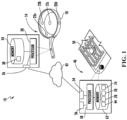
Figure 1 depicts a prior cooking system that may assist a user in cooking food. -
Figure 2 depicts a prior cooktop assembly including a monitoring system configured to monitor and control a cooking process performed on a cooking surface of the cooktop assembly. -
Figure 3 depicts exemplary time graphs of: a) power (W) provided to a pan on the induction cooktop; b) pan temperature (°C) sensed by a sensor on the induction cooktop; c)the time derivative of pan temperature (°C); d) the time derivative of power (W) provided to the induction cooktop. -
Figure 4 depicts a block diagram of a cooking system according to this disclosure. - What will be disclosed hereinafter applies to cooking systems having at least an induction cooktop, at least an item of cookware - such as a pan - and a sensor for determining a thermal parameter, preferably a temperature, of the item of cookware and/or of one or more food items contained in the item of cookware. The induction cooktop is configured to determine a power that the induction cooktop itself provides to the item of cookware, wherein the induction cooktop is provided with a closed-loop controller configured to adjust power delivered by the induction cooktop to the item of cookware in order to keep substantially constant the cooking temperature of the pan or of a food contained therein.
- The sensor for determining the power absorbed by the pan, being heated, may be the same sensor configured for determining the temperature of the pan, or may be another device embedded in the cooktop. According to one aspect, the sensor for determining the power absorbed by the cooking item or for determining the temperature of the cooking item may be embedded in the bulk of the pan, or may be an external device which is inserted in the cavity of the cooking item or even in the food contained therein.
- An example of such a cooking system according to this disclosure is depicted in
figure 4 . It may comprise an induction cooktop B having an induction power converter B1, at least one cooking zone B2, an interface B3 which communicates with the sensor C1, which may be a temperature sensor installed in the item of cookware C (which infigure 4 is a pan), and a closed-loop controller (not depicted in the figures). Optionally, the induction cooktop may also embed at least one sensor B4, preferably at least one temperature sensor B4, configured to sense a thermal parameter, preferably a temperature, of an item of cookware and/or one or more food items contained therein when the item of cookware is placed on the at least one cooking zone B2. The closed-loop controller may be configured to adjust power delivered by the induction power converter B1 to the item of cookware based upon information received from the sensor C1 or B4 in order to keep substantially constant a cooking temperature. - Optionally, the item of cookware C may include a battery C2 for powering the sensor C1 and a dedicated interface C3 functionally connected to the battery C2 and to the sensor C1 for reading a sensed value and for transmitting to the interface B3 of the induction cooktop.
- Preferably, the sensor C1 is a temperature sensor configured to sense the temperature of the pan C. According to one aspect, in addition or in substitution to the temperature sensor C1 embedded in the cooking item C, it is possible to insert directly in the food to be cooked a probe D (a so-called "smart probe"), having at least one temperature sensor D1. According to optional aspects, the probe D may be equipped with a battery D2 and with a dedicated interface D3 configured to exchange information with the interface B3 of the induction cooktop B. If a smart probe D is available, then it is possible to implement the method of this disclosure also using a common pan not provided with embedded temperature sensors.
- Thanks to the closed-loop controller, the induction cooktop is operated in order to heat the pan up to a nominal cooking temperature and to keep the pan at this nominal cooking temperature while the food placed therein is being cooked.
-
Figure 3 shows exemplary time graphs of power absorption a), of temperature b) and of the time derivatives of absorbed heating power c) and of temperature d) by the item of cookware, while cooking food. As shown in the time graphs a) and b) offigure 3 , the pan C is initially at room temperature and there is a preliminary heating phase in which a maximum heating power is provided to the item of cookware to attain a certain temperature. When the nominal temperature is attained, the closed-loop controller operates the induction cooktop to keep constant the temperature sensed by the sensor coupled to the cookware, thus the heating power is decreased. - At the instant T1 the pre-heating phase of the pan is over, then food is inserted in the pan and from the instant T1 onwards power provided to the pan C is adjusted to keep substantially constant the cooking temperature.
- According to this disclosure, it has been noticed that it is possible to detect operations carried out by users while cooking food, such as food insertion and/or manipulation, by processing power absorption or temperature rate of change and by determining when rate of change exceeds predetermined threshold, either in the positive or negative direction. Tests carried out by the Applicant have shown that wide and abrupt variations of time derivative of sensed temperature, and/or time derivative of power absorption, occur while inserting and/or manipulating food, and this information may be used to verify whether the cooking of food is being carried out according to a chosen cooking recipe.
- As shown in the time graphs of
figure 3 , when food is inserted in the item of cookware, or when food is flipped while being cooked, there is a sudden decrease of temperature values sensed by the sensors coupled to the item itself, thus the control system operates the induction cooktop to increase heating power to keep constant the temperature. These sudden variations of heating power and/or of sensed temperature are clearly visible in the time graphs 3c and/or 3d, because they generate high spikes. More in detail, at the instants T2 and T3, pieces of raw food are inserted in the pan C and the temperature sensor C1 senses a small reduction of cooking temperature because the heated pan C is in contact with the raw food, typically at room temperature. This temperature reduction is too small to be detected in a reliable manner, but the time derivative of the temperature (time graph c) infigure 3 ) sensed by the sensor C1 undergoes a relatively large and abrupt variation that may be reliably detected. The same applies to the time derivative of the power (time graph d) infigure 3 ) absorbed by the pan C, because the interface B3 detects the reduction of temperature sensed by the sensor C1 and thus the induction cooktop is operated accordingly to increase power delivered to the pan C. This abrupt and relatively large variation of the time derivative of the heating power absorbed by the pan C (or of the pan temperature) may be detected by comparing the time derivative with a threshold. - It has been noticed that the time derivative of the pan temperature or of the power absorbed by the pan C varies abruptly also when the raw food being cooked in the pan C is flipped (time instant T4). Therefore, by monitoring the time derivative of pan temperature or of the power absorbed by the pan C in a cooking system in which the induction cooktop is configured to keep substantially constant the cooking temperature of a cooking item provided with at least one sensor (for example a so-called "smart pan"), it is possible to monitor the execution of a cooking recipe by determining when food is inserted in the item of cookware or is flipped.
- Typically, the induction cooktop will act to regulate the cooking temperature of the cooking item within a relatively narrow range centred around a nominal cooking temperature, for example in a range of +- 5°C.
- According to one aspect of this disclosure, the induction cooktop generates an event detection signal when a threshold value is overcome by the time derivative of sensed temperature and/or of heating power absorbed by the cooking item C.
- According to one aspect, it is possible to generate with the induction cooktop a first logic signal for flagging an end of a pre-heating phase when the sensor B4, C1, D, has attained for a first time the cooking temperature, and to generate with the induction cooktop a second logic signal for signalling that food has been inserted or flipped into the cooking item C when the event detection signal is generated after the end of the pre-heating phase.
- According to one aspect, the interface B3 of the induction cooktop may communicate with a microprocessor unit, for example of a smartphone or of a tablet A. A user may select a recipe with the tablet A and the cooking system, by implementing the method of this disclosure, may monitor the correct execution of the recipe by recognizing if the user has inserted the food to be cooked in the pan C and if he/she has flipped it at the right instant.
- According to one aspect, the interface B3 of the induction cooktop may be connected in a wired mode or in wireless mode to the "smart" cooking item, and/or to the smartphone or tablet A. When the temperature of the pan C has attained a desired value, the interface B3 of the induction cooktop receives this information and the induction cooktop is operated to reduce the delivered heating power. Through the connection to the smartphone or tablet A, or using a display (not shown in the figures) functionally connected to the induction cooktop, the cooking system might call consumers to insert food in the cooking item. Thanks to the detection of spikes of the time derivative of the heating power delivered to the pan or of the time derivative of the temperature of the pan or of the food contained therein, it is possible to monitor the addition of raw food in the pan or the instants in which the food being cooked is flipped.
Claims (10)
- A method of controlling a cooking system, wherein said cooking system comprises at least:- an induction cooktop, having an induction power converter (B1), a closed loop controller, at least one cooking zone (B2), an interface (B3) functionally connected with the induction power converter (B1),- an item of cookware, and- at least one sensor (B4; C1; D) , wherein said sensor (B4; C1; D) is configured to sense a thermal parameter, preferably a temperature, of the item of cookware and/or one or more food items contained in said item of cookware when the item of cookware is placed on said at least one cooking zone (B2),said method comprising the following steps:- wherein said closed-loop controller is configured to adjust power delivered by the induction power converter (B1) to the item of cookware based upon information received from said sensor (B4; C1; D) in order to control, preferably to keep substantially constant, a cooking temperature of said item of cookware or of a food contained in said item of cookware,determining an active power delivered by the at least one cooking zone (B2);controlling said induction power converter (B1) by means of said closed loop controller for adjusting a heating power delivered to said item of cookware in order to control, preferably to keep substantially constant, a cooking temperature of said item of cookware;determining with said sensor (B4; C1; D) a current value of temperature or a current value of heating power absorbed by said item of cookware;determining a time rate of change of said current value of temperature or of said current value of heating power absorbed by said item of cookware;comparing said time rate of change with a threshold value and generating, with said induction cooktop, an event detection signal when said threshold value is overcome.
- The method of claim 1, wherein said step of generating an event detection signal comprisesoutputting a first logic signal for flagging an end of a pre-heating phase when said sensor (B4; C1; D) has attained for a first time said cooking temperature;outputting a second logic signal for signalling that food has been inserted or flipped into said cooking item when said event detection signal is generated after the end of the pre-heating phase.
- The method of one of claims 1 or 2, wherein said threshold value is either positive or negative and said time rate of change is either positive or negative.
- The method of one of the preceding claims, comprising the steps of:connecting a tablet or a smartphone (A) to said interface (B3);receiving with said tablet or smartphone (A) said event detection signal,checking execution of a cooking recipe with said tablet or smartphone (A) using said event detection signal.
- A cooking system, comprising at least:an induction cooktop, having an induction power converter (B1), a closed loop controller, at least one cooking zone (B2), an interface (B3) functionally connected with the induction power converter (B1),an item of cookware, andat least one sensor (B4; C1; D) , wherein said sensor (B4; C1; D) is configured to sense a thermal parameter, preferably a temperature, of the item of cookware and/or one or more food items contained in said item of cookware when the item of cookware is placed on said at least one cooking zone (B2),at least an item of cookware, comprising a sensor (B4; C1; D) associated with item of cookware and configured to sense a temperature of said item of cookware or a heating power absorbed by said item of cookware,wherein said closed loop controller is configured to:- adjust power delivered by the induction power converter (B1) to the item of cookware based upon information received from said sensor (B4; C1; D) in order to control, preferably to keep substantially constant, a cooking temperature of said item of cookware or of a food contained in said item of cookware,- determine an active power delivered by the at least one cooking zone (B2) ,- control said induction power converter (B1) by means of said closed loop controller for adjusting a heating power delivered to said item of cookware in order to control a cooking temperature of said item of cookware,- determine with said sensor (B4; C1; D) a current value of temperature or a current value of heating power absorbed by said item of cookware;- determine a time rate of change of said current value of temperature or of said current value of heating power absorbed by said item of cookware;- compare said time rate of change with a threshold value and to generate an event detection signal when said threshold value is overcome.
- The cooking system of claim 5, wherein said sensor (C1) is installed in a bulk portion of said item of cookware.
- The cooking system of claim 5, wherein said sensor (D) is realized in form of a probe configured to be installed in a food to be cooked into said item of cookware.
- The cooking system of claim 5, wherein said sensor (B4) is installed in said induction cooktop.
- The cooking system of one of claims 5 to 8, wherein said sensor (B4; C1; D) is a temperature sensor configured to sense a temperature of said cooking item.
- The cooking system of one of claims 5 to 9, comprising a tablet or a smartphone (A) connected to said interface (B3), wherein said tablet or smartphone is configured to receive said event detection signal as a feedback for checking execution of a cooking recipe.
Priority Applications (2)
| Application Number | Priority Date | Filing Date | Title |
|---|---|---|---|
| EP22160270.9A EP4240108A1 (en) | 2022-03-04 | 2022-03-04 | Method of controlling a cooking system and related cooking system |
| US18/116,470 US20230280040A1 (en) | 2022-03-04 | 2023-03-02 | Method of controlling a cooking system and related cooking system |
Applications Claiming Priority (1)
| Application Number | Priority Date | Filing Date | Title |
|---|---|---|---|
| EP22160270.9A EP4240108A1 (en) | 2022-03-04 | 2022-03-04 | Method of controlling a cooking system and related cooking system |
Publications (1)
| Publication Number | Publication Date |
|---|---|
| EP4240108A1 true EP4240108A1 (en) | 2023-09-06 |
Family
ID=80628516
Family Applications (1)
| Application Number | Title | Priority Date | Filing Date |
|---|---|---|---|
| EP22160270.9A Pending EP4240108A1 (en) | 2022-03-04 | 2022-03-04 | Method of controlling a cooking system and related cooking system |
Country Status (2)
| Country | Link |
|---|---|
| US (1) | US20230280040A1 (en) |
| EP (1) | EP4240108A1 (en) |
Cited By (1)
| Publication number | Priority date | Publication date | Assignee | Title |
|---|---|---|---|---|
| EP4626140A1 (en) | 2024-03-26 | 2025-10-01 | Whirlpool Corporation | Consistent back-to-back results on a cooktop |
Citations (11)
| Publication number | Priority date | Publication date | Assignee | Title |
|---|---|---|---|---|
| US20050016990A1 (en) * | 2003-06-16 | 2005-01-27 | Wilkins Peter Ravenscroft | Apparatus and method for detecting abnormal temperature rise associated with a cooking arrangement |
| JP2008262930A (en) * | 2008-08-05 | 2008-10-30 | Matsushita Electric Ind Co Ltd | Induction heating cooker |
| US20090314771A1 (en) * | 2006-12-18 | 2009-12-24 | Kazuichi Okada | Induction heating appliance for cooking |
| JP4765368B2 (en) * | 2005-03-29 | 2011-09-07 | パナソニック株式会社 | Induction heating cooker |
| JP4896695B2 (en) * | 2006-12-18 | 2012-03-14 | パナソニック株式会社 | Induction heating cooker |
| JP5109963B2 (en) * | 2008-12-22 | 2012-12-26 | パナソニック株式会社 | Induction heating cooker |
| WO2017143146A1 (en) | 2016-02-18 | 2017-08-24 | Meyer Intellectual Properties Limited | Wirelessly controlled cooking system |
| WO2018049276A1 (en) | 2016-09-08 | 2018-03-15 | Meyer Intellectual Properties Limited | Adaptive thermal control for a cooking system |
| WO2018145088A1 (en) | 2017-02-06 | 2018-08-09 | Pitco Frialator, Inc. | Cook top assembly having a monitoring system and method of monitoring a cooking process |
| EP3340737B1 (en) * | 2016-12-22 | 2019-09-04 | Vestel Elektronik Sanayi ve Ticaret A.S. | Control device, control method, and induction cooker |
| US20220065457A1 (en) * | 2019-01-11 | 2022-03-03 | Pippa Technologies Limited | Monitoring Cooking Appliances |
-
2022
- 2022-03-04 EP EP22160270.9A patent/EP4240108A1/en active Pending
-
2023
- 2023-03-02 US US18/116,470 patent/US20230280040A1/en active Pending
Patent Citations (11)
| Publication number | Priority date | Publication date | Assignee | Title |
|---|---|---|---|---|
| US20050016990A1 (en) * | 2003-06-16 | 2005-01-27 | Wilkins Peter Ravenscroft | Apparatus and method for detecting abnormal temperature rise associated with a cooking arrangement |
| JP4765368B2 (en) * | 2005-03-29 | 2011-09-07 | パナソニック株式会社 | Induction heating cooker |
| US20090314771A1 (en) * | 2006-12-18 | 2009-12-24 | Kazuichi Okada | Induction heating appliance for cooking |
| JP4896695B2 (en) * | 2006-12-18 | 2012-03-14 | パナソニック株式会社 | Induction heating cooker |
| JP2008262930A (en) * | 2008-08-05 | 2008-10-30 | Matsushita Electric Ind Co Ltd | Induction heating cooker |
| JP5109963B2 (en) * | 2008-12-22 | 2012-12-26 | パナソニック株式会社 | Induction heating cooker |
| WO2017143146A1 (en) | 2016-02-18 | 2017-08-24 | Meyer Intellectual Properties Limited | Wirelessly controlled cooking system |
| WO2018049276A1 (en) | 2016-09-08 | 2018-03-15 | Meyer Intellectual Properties Limited | Adaptive thermal control for a cooking system |
| EP3340737B1 (en) * | 2016-12-22 | 2019-09-04 | Vestel Elektronik Sanayi ve Ticaret A.S. | Control device, control method, and induction cooker |
| WO2018145088A1 (en) | 2017-02-06 | 2018-08-09 | Pitco Frialator, Inc. | Cook top assembly having a monitoring system and method of monitoring a cooking process |
| US20220065457A1 (en) * | 2019-01-11 | 2022-03-03 | Pippa Technologies Limited | Monitoring Cooking Appliances |
Cited By (1)
| Publication number | Priority date | Publication date | Assignee | Title |
|---|---|---|---|---|
| EP4626140A1 (en) | 2024-03-26 | 2025-10-01 | Whirlpool Corporation | Consistent back-to-back results on a cooktop |
Also Published As
| Publication number | Publication date |
|---|---|
| US20230280040A1 (en) | 2023-09-07 |
Similar Documents
| Publication | Publication Date | Title |
|---|---|---|
| EP3148291B1 (en) | Method of conducting a liquid-based cooking process, controller and cooking hob assembly | |
| EP1489479B1 (en) | Apparatus and method for detecting abnormal temperature rise associated with a cooking arrangement | |
| KR102538196B1 (en) | Method for controlling a cooking appliance using an external control unit, cooking appliance and system | |
| US11910947B2 (en) | Control device and method for pressure cooking appliance, and pressure cooking appliance | |
| CN104172903B (en) | Steam cooking apparatus and cooking control method thereof and system | |
| KR20080066171A (en) | Cooker, control information correction system of cooker and control information correction method of cooker | |
| US20230280040A1 (en) | Method of controlling a cooking system and related cooking system | |
| CN107143893B (en) | Control method of electromagnetic oven cooker and electromagnetic oven cooker | |
| CN108738183B (en) | Constant temperature pot heating method and induction cooker | |
| CN112781082A (en) | Method and device for detecting furnace surface temperature sensor | |
| US20130248516A1 (en) | Cooking hob with a balance system and a method for adjusting the temperature of a cooking vessel | |
| CN214841008U (en) | Furnace surface temperature sensor detection device and induction cooker | |
| CN113812847A (en) | Heating control method for cooking appliance and cooking appliance | |
| JPH04109914A (en) | rice cooker | |
| JP5290877B2 (en) | Rice cooker and capacity discrimination method of rice cooker | |
| CN109426284A (en) | The thermal-insulation control method and device and cooking apparatus of cooking apparatus | |
| KR101919960B1 (en) | An Apparatus for Heating with a Weighing Function | |
| JPH0644510B2 (en) | Induction heating cooker | |
| JP4915187B2 (en) | Cooker | |
| JPH04137388A (en) | Temperature control device for heating cooker | |
| CN114052534B (en) | Control method of food processing machine | |
| CN112137432B (en) | Control method and control device for cooking appliance and cooking appliance | |
| CN110652179B (en) | Electric cooker and method for controlling rice quantity of electric cooker | |
| JP2002085256A (en) | Steam pot with operation controller | |
| JP3206400B2 (en) | Induction heating cooker |
Legal Events
| Date | Code | Title | Description |
|---|---|---|---|
| PUAI | Public reference made under article 153(3) epc to a published international application that has entered the european phase |
Free format text: ORIGINAL CODE: 0009012 |
|
| STAA | Information on the status of an ep patent application or granted ep patent |
Free format text: STATUS: THE APPLICATION HAS BEEN PUBLISHED |
|
| AK | Designated contracting states |
Kind code of ref document: A1 Designated state(s): AL AT BE BG CH CY CZ DE DK EE ES FI FR GB GR HR HU IE IS IT LI LT LU LV MC MK MT NL NO PL PT RO RS SE SI SK SM TR |
|
| STAA | Information on the status of an ep patent application or granted ep patent |
Free format text: STATUS: REQUEST FOR EXAMINATION WAS MADE |
|
| 17P | Request for examination filed |
Effective date: 20240304 |
|
| RBV | Designated contracting states (corrected) |
Designated state(s): AL AT BE BG CH CY CZ DE DK EE ES FI FR GB GR HR HU IE IS IT LI LT LU LV MC MK MT NL NO PL PT RO RS SE SI SK SM TR |