EP4239086A1 - Extraction method for removing aluminum from leaching solution of ternary battery material - Google Patents
Extraction method for removing aluminum from leaching solution of ternary battery material Download PDFInfo
- Publication number
- EP4239086A1 EP4239086A1 EP21884932.1A EP21884932A EP4239086A1 EP 4239086 A1 EP4239086 A1 EP 4239086A1 EP 21884932 A EP21884932 A EP 21884932A EP 4239086 A1 EP4239086 A1 EP 4239086A1
- Authority
- EP
- European Patent Office
- Prior art keywords
- extraction
- organic phase
- aluminum
- mixing
- battery material
- Prior art date
- Legal status (The legal status is an assumption and is not a legal conclusion. Google has not performed a legal analysis and makes no representation as to the accuracy of the status listed.)
- Pending
Links
Images
Classifications
-
- H—ELECTRICITY
- H01—ELECTRIC ELEMENTS
- H01M—PROCESSES OR MEANS, e.g. BATTERIES, FOR THE DIRECT CONVERSION OF CHEMICAL ENERGY INTO ELECTRICAL ENERGY
- H01M10/00—Secondary cells; Manufacture thereof
- H01M10/54—Reclaiming serviceable parts of waste accumulators
-
- C—CHEMISTRY; METALLURGY
- C22—METALLURGY; FERROUS OR NON-FERROUS ALLOYS; TREATMENT OF ALLOYS OR NON-FERROUS METALS
- C22B—PRODUCTION AND REFINING OF METALS; PRETREATMENT OF RAW MATERIALS
- C22B21/00—Obtaining aluminium
- C22B21/0015—Obtaining aluminium by wet processes
- C22B21/0023—Obtaining aluminium by wet processes from waste materials
-
- C—CHEMISTRY; METALLURGY
- C22—METALLURGY; FERROUS OR NON-FERROUS ALLOYS; TREATMENT OF ALLOYS OR NON-FERROUS METALS
- C22B—PRODUCTION AND REFINING OF METALS; PRETREATMENT OF RAW MATERIALS
- C22B23/00—Obtaining nickel or cobalt
- C22B23/04—Obtaining nickel or cobalt by wet processes
- C22B23/0453—Treatment or purification of solutions, e.g. obtained by leaching
- C22B23/0461—Treatment or purification of solutions, e.g. obtained by leaching by chemical methods
-
- C—CHEMISTRY; METALLURGY
- C22—METALLURGY; FERROUS OR NON-FERROUS ALLOYS; TREATMENT OF ALLOYS OR NON-FERROUS METALS
- C22B—PRODUCTION AND REFINING OF METALS; PRETREATMENT OF RAW MATERIALS
- C22B3/00—Extraction of metal compounds from ores or concentrates by wet processes
- C22B3/20—Treatment or purification of solutions, e.g. obtained by leaching
- C22B3/26—Treatment or purification of solutions, e.g. obtained by leaching by liquid-liquid extraction using organic compounds
- C22B3/38—Treatment or purification of solutions, e.g. obtained by leaching by liquid-liquid extraction using organic compounds containing phosphorus
- C22B3/384—Pentavalent phosphorus oxyacids, esters thereof
- C22B3/3842—Phosphinic acid, e.g. H2P(O)(OH)
-
- C—CHEMISTRY; METALLURGY
- C22—METALLURGY; FERROUS OR NON-FERROUS ALLOYS; TREATMENT OF ALLOYS OR NON-FERROUS METALS
- C22B—PRODUCTION AND REFINING OF METALS; PRETREATMENT OF RAW MATERIALS
- C22B3/00—Extraction of metal compounds from ores or concentrates by wet processes
- C22B3/20—Treatment or purification of solutions, e.g. obtained by leaching
- C22B3/26—Treatment or purification of solutions, e.g. obtained by leaching by liquid-liquid extraction using organic compounds
- C22B3/38—Treatment or purification of solutions, e.g. obtained by leaching by liquid-liquid extraction using organic compounds containing phosphorus
- C22B3/384—Pentavalent phosphorus oxyacids, esters thereof
- C22B3/3846—Phosphoric acid, e.g. (O)P(OH)3
-
- C—CHEMISTRY; METALLURGY
- C22—METALLURGY; FERROUS OR NON-FERROUS ALLOYS; TREATMENT OF ALLOYS OR NON-FERROUS METALS
- C22B—PRODUCTION AND REFINING OF METALS; PRETREATMENT OF RAW MATERIALS
- C22B7/00—Working up raw materials other than ores, e.g. scrap, to produce non-ferrous metals and compounds thereof; Methods of a general interest or applied to the winning of more than two metals
- C22B7/006—Wet processes
-
- C—CHEMISTRY; METALLURGY
- C22—METALLURGY; FERROUS OR NON-FERROUS ALLOYS; TREATMENT OF ALLOYS OR NON-FERROUS METALS
- C22B—PRODUCTION AND REFINING OF METALS; PRETREATMENT OF RAW MATERIALS
- C22B23/00—Obtaining nickel or cobalt
- C22B23/04—Obtaining nickel or cobalt by wet processes
- C22B23/0453—Treatment or purification of solutions, e.g. obtained by leaching
-
- C—CHEMISTRY; METALLURGY
- C22—METALLURGY; FERROUS OR NON-FERROUS ALLOYS; TREATMENT OF ALLOYS OR NON-FERROUS METALS
- C22B—PRODUCTION AND REFINING OF METALS; PRETREATMENT OF RAW MATERIALS
- C22B47/00—Obtaining manganese
-
- Y—GENERAL TAGGING OF NEW TECHNOLOGICAL DEVELOPMENTS; GENERAL TAGGING OF CROSS-SECTIONAL TECHNOLOGIES SPANNING OVER SEVERAL SECTIONS OF THE IPC; TECHNICAL SUBJECTS COVERED BY FORMER USPC CROSS-REFERENCE ART COLLECTIONS [XRACs] AND DIGESTS
- Y02—TECHNOLOGIES OR APPLICATIONS FOR MITIGATION OR ADAPTATION AGAINST CLIMATE CHANGE
- Y02P—CLIMATE CHANGE MITIGATION TECHNOLOGIES IN THE PRODUCTION OR PROCESSING OF GOODS
- Y02P10/00—Technologies related to metal processing
- Y02P10/20—Recycling
-
- Y—GENERAL TAGGING OF NEW TECHNOLOGICAL DEVELOPMENTS; GENERAL TAGGING OF CROSS-SECTIONAL TECHNOLOGIES SPANNING OVER SEVERAL SECTIONS OF THE IPC; TECHNICAL SUBJECTS COVERED BY FORMER USPC CROSS-REFERENCE ART COLLECTIONS [XRACs] AND DIGESTS
- Y02—TECHNOLOGIES OR APPLICATIONS FOR MITIGATION OR ADAPTATION AGAINST CLIMATE CHANGE
- Y02W—CLIMATE CHANGE MITIGATION TECHNOLOGIES RELATED TO WASTEWATER TREATMENT OR WASTE MANAGEMENT
- Y02W30/00—Technologies for solid waste management
- Y02W30/50—Reuse, recycling or recovery technologies
- Y02W30/84—Recycling of batteries or fuel cells
Definitions
- the present disclosure belongs to the field of hydrometallurgy and particularly relates to an extraction method for removing aluminum from ternary battery material leachate.
- hydrolysis precipitation method is generally adopted for removing aluminum from metal liquid.
- the precipitation method has the advantages of easy reaction control, high reaction speed, high efficiency in aluminum removal, easy filtration of precipitation slag, simple process, low equipment investment and the like, and has good economic and environmental benefit.
- heavy metal coprecipitation and adsorption in the precipitation method which leads to the problems of large slag amount, low heavy metal recovery rate, aluminum slag recycling difficulty, poor working environment and the like.
- the extraction is a single-stage extraction or multi-stage countercurrent extraction with 3-7 extraction stages.
- the selectivity of an organic system to Al in the method using di (2,4, 4-trimethyl amyl) phosphinic acid as the extracting agent is higher than that in the method using naphthenic acid, and the extraction rate of nickel, cobalt and manganese is much lower.
- Naphthenic acid was used as an extracting agent, and after the single stage extraction, the extraction rate of Al was 40.63%, but the amount of the adsorbed heavy metals was also high.
- a method for removing aluminum in a ternary battery material leachate by adopting an extraction method comprises the following steps:
Landscapes
- Chemical & Material Sciences (AREA)
- Engineering & Computer Science (AREA)
- Manufacturing & Machinery (AREA)
- Organic Chemistry (AREA)
- Metallurgy (AREA)
- Mechanical Engineering (AREA)
- Materials Engineering (AREA)
- General Life Sciences & Earth Sciences (AREA)
- Environmental & Geological Engineering (AREA)
- Geology (AREA)
- Life Sciences & Earth Sciences (AREA)
- Geochemistry & Mineralogy (AREA)
- General Chemical & Material Sciences (AREA)
- Chemical Kinetics & Catalysis (AREA)
- Electrochemistry (AREA)
- Manufacture And Refinement Of Metals (AREA)
Abstract
Description
- The present disclosure belongs to the field of hydrometallurgy and particularly relates to an extraction method for removing aluminum from ternary battery material leachate.
- In recent years, gradually strengthened environmental protection consciousness of the public society, and the research and development of power batteries, battery management systems and the like carried out by colleges, universities, scientific research units and enterprises, electric automobile market is rapidly developed. With the rapid industrialization of new energy vehicles, the sales volume of new energy vehicles will be rapidly increased, leading to a rise of the retention volume of lithium ion batteries in a geometric progression. Meanwhile, the pollution and the appropriate resource recycling of waste lithium ion power batteries become problems which are generally concerned and urgently to be solved at present and even in future at home and abroad.
- Nickel and cobalt are an important strategic resource, and recycling of secondary resources of nickel and cobalt in waste lithium ion batteries is gradually emphasized. Besides nickel and cobalt, batteries also contain a large amount of aluminum, manganese, iron, copper, zinc and the like, and the effective separation of nickel, cobalt, manganese and aluminum has general significance in the aspect of recycling secondary resources.
- At present, hydrolysis precipitation method is generally adopted for removing aluminum from metal liquid. And the precipitation method has the advantages of easy reaction control, high reaction speed, high efficiency in aluminum removal, easy filtration of precipitation slag, simple process, low equipment investment and the like, and has good economic and environmental benefit. However, there are shortages of heavy metal coprecipitation and adsorption in the precipitation method, which leads to the problems of large slag amount, low heavy metal recovery rate, aluminum slag recycling difficulty, poor working environment and the like. Many researchers at home and abroad separate aluminum by a solvent extraction method, but the method has certain limitations, and the extracting agents comprise: versatic 10 extracting agent, di-n-butyl Dithiophosphate (DBTPA), di (2-ethylhexyl) Dithiophosphate (DETPA), Cyanex 921, naphthenic acid and the like. The main challenges of the extraction method for separating nickel, cobalt and manganese from aluminum are insufficient researchers, unclear extraction mechanism, lack of specific extracting agent, easy system emulsification and the like.
- The objective of the present disclosure is to provide an extraction method for removing aluminum from a ternary battery material leachate, and the ternary battery material leachate containing aluminum is a nickel-cobalt-manganese solution from which iron and zinc are removed. the extraction method adopts a common acidic extracting agent, and the extraction system has a good phase separation, less heavy metal entrainment, no slag generation, short process flow and high metal recovery rate, which provides a new thought in the field of heavy metal and aluminum separation.
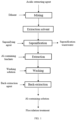
- To achieve the above objective, the embodiments of the present disclosure adopt the following technical solutions: An extraction method for removing aluminum in a ternary battery material leachate comprises the following steps:
- (1) Saponification: mixing an extraction solvent with a saponifying agent to obtain a saponified extraction solvent; the extraction solvent includes an extracting agent and a diluent;
- (2) Extraction: mixing a ternary battery material leachate with the saponified extraction solvent to obtain a mixture I, performing an extraction to the mixture I to obtain a loaded organic phase and a raffinate;
- (3) Back-extraction: mixing the loaded organic phase with a back-extraction agent to obtain a mixture II, performing a back-extraction to the mixture II to obtain an organic phase and a back-extraction solution.
- With restriction of the theory, saponification is a process of ion exchange. In the saponification stage, Na+ exchanges with H+ in the extraction solvent (mixture of an extracting agent and a diluent) and Na+ enters into the organic phase; in the extraction stage, Na+ exchanges with the metal to be extracted, and the metal to be extracted enters into the organic phase to achieve a separation of the metal and the impurities.
- In some embodiments, the saponification rate is 42-47%.
- In some embodiments, the extracting agent is an acidic extracting agent.
- In other embodiments, the acidic extracting agent is at least one selected from the group consisting of 2-ethylphosphonic acid mono (2-ethylhexyl) ester, bis (2-ethylhexyl) phosphoric acid and bis (2,4, 4-trimethylpentyl) phosphinic acid.
- In some embodiments, the diluent is at least one selected from the group consisting of kerosene, n-hexane, cyclohexane, octanol, and 2-octanol.
- In some embodiments, volume ratio of the extracting agent to the diluent is (0.01-0.4): 1.
- In other embodiments, the volume ratio of the extracting agent to the diluent is (0.1-0.35): 1.
- In other embodiments, the volume ratio of the extracting agent to the diluent is about 0.25: 1.
- In some embodiments, in step (1), the saponifying agent is a sodium salt.
- More preferably, the sodium salt is sodium hydroxide.
- In some embodiments, in step (2), the ternary battery material leachate mainly contains Ni2+, Co2+, Mn2+, Al3+, Ca2+, Mg2+, Li+, SO4 2-, and has no Fe2+, Zn2+; the Al3+ concentration in the ternary battery material leachate falls within 3.0-7.0 g/L, and the total concentration of Ni2+, Co2+, Mn2+ in the ternary battery material leachate falls within 50-70 g/L.
- In some embodiments, a processing procedure is further included between step (2) and step (3), in which the loaded organic phase is washed with sulfuric acid or the back extraction solution.
- In some embodiments, in the step (2), the extraction is carried out at a temperature of 25°C-60°C, and the extraction time is 3-8 min.
- In some embodiments, in the step (2), the extraction is a single-stage extraction or multi-stage countercurrent extraction with 3-7 extraction stages.
- In some embodiments, in the step (3), the back-extraction agent is selected from the group consisting of hydrochloric acid, sulfuric acid and acetic acid.
- In other embodiments, the concentration of the back-extraction is 2 to 4 mol/L.
- The embodiments of the present disclosure also provide the application of the method in metal material recovery.
- The embodiments of the present disclosure have the following advantages:
- (1) the present disclosure adopts the saponified extraction solvent in the extraction method to separate nickel, cobalt, manganese and aluminum in the ternary battery material leachate, resulting in less heavy metal entrainment, short process flow, and high metal recovery rate.
- (2) the present disclosure adopts the extraction method to separate nickel, cobalt, manganese and aluminum in the ternary battery material leachate, in which the aluminum in the loaded organic phase is high, the extraction rate of aluminum can reach 97.42% through 4-stage countercurrent extraction, and the loss rate of nickel, cobalt and manganese is only about 0.1%.
- (3) the present disclosure adopts the extraction method to separate nickel, cobalt, manganese and aluminum in the ternary battery material leachate, which has no traditional solid waste aluminum slag generated, while effectively recover the aluminum. The extraction method provides a new idea in the field of separation of heavy metal and aluminum.
-
FIG. 1 is the process flow chart of the present disclosure. - In order to fully understand the present disclosure, some experimental schemes of the present disclosure will be described below in conjunction with examples to further illustrate the characteristics and advantages of the present disclosure. Any change or alteration that does not deviate from the gist of the present disclosure can be understood by those skilled in the art. The scope of protection of the present disclosure is determined by the scope of the claims.
- A method for removing aluminum in a ternary battery material leachate by adopting an extraction method comprises the following steps:
- (1) saponification: preparing an extraction solvent for extracting aluminum: mixing bis (2,4, 4-trimethylpentyl) phosphinic acid and kerosene according to a volume ratio of 1:4 to prepare an extraction solvent (a blank organic phase) for extracting aluminum; mixing the extraction solvent with a saponifying agent (concentrated alkali solution) to obtain the saponified extraction solvent, in which the saponification rate was 45%;
- (2) Extraction: mixing 50mL aluminum-containing solution (wherein Al3+ is 6.4g/L, Ni2+ is 27.17g/L, Co2+ is 16.29g/L and Mn2+ is 9.81g/L) with 50mL of the saponified extraction solvent followed by performing an extraction at temperature of 40°C for 5 min to obtain an loaded organic phase and a raffinate. Al3+ in the raffinate was detected to be 3.4g/L, and the single-stage extraction rate of Al was 46.88%;
- (3) Back-extraction: mixing the loaded organic phase with 10mL of 2mol/L sulfuric acid, followed by phase separating to obtain an organic phase and a back-extraction solution, wherein Al3+ in the back-extraction solution is 14.95g/L, Ni2+ is 0.017g/L, Co2+ is 0.002g/L and Mn2+is 0.011g/L;
- Under the same condition, the selectivity of an organic system to Al in the method using di (2,4, 4-trimethyl amyl) phosphinic acid as the extracting agent is higher than that in the method using naphthenic acid, and the extraction rate of nickel, cobalt and manganese is much lower.
- A method for removing aluminum in a ternary battery material leachate by adopting an extraction method comprises the following steps:
- (1) saponification: preparing an extraction solvent for extracting aluminum: mixing bis (2,4,4-trimethylpentyl) phosphinic acid and kerosene according to the volume ratio of 1:4 to prepare an extraction solvent (a blank organic phase) for extracting aluminum, mixing the extraction solvent with a saponifying agent (concentrated alkali solution) to obtain the saponified extraction solvent, in which the saponification rate was 45%;
- (2) Extraction: mixing 50mL aluminum-containing solution (wherein Al3+ is 6.4g/L, Ni2+ is 27.17g/L, Co2+ is 16.29g/L and Mn2+ is 9.81g/L) with 50mL of the saponified extraction solvent, followed by performing a 5-stage countercurrent extraction to obtain an loaded organic phase and a raffinate. Al3+ in the raffinate was detected to be 0.208g/L, and the 5-stage countercurrent extraction rate of Al was 96.75%;
- (3) Back extraction: mixing the loaded organic phase with 10mL of 4mol/L sulfuric acid, followed by phase separating to obtain an organic phase and a back-extraction solution, wherein Al3+ in the back-extraction solution is 30.58g/L, Ni2+ is 0.007g/L, Co2+ is 0.002g/L and Mn2+is 0.009g/L.
- A method for removing aluminum in a ternary battery material leachate by adopting an extraction method comprises the following steps:
- (1) saponification: preparing an extraction solvent for extracting aluminum: mixing bis (2,4,4-trimethylpentyl) phosphinic acid and kerosene with a volume ratio of 1:4 to prepare an extraction solvent (a blank organic phase) for extracting aluminum, mixing the extraction solvent with a saponifying agent (concentrated alkali solution) to obtain a saponified extraction solvent, in which the saponification rate was 45%;
- (2) Extraction: mixing 50mL aluminum-containing solution (wherein Al3+ is 6.4g/L, Ni2+ is 27.17g/L, Co2+ is 16.29g/L and Mn2+ is 9.81g/L) with 50mL of the saponified extraction solvent, followed by performing a 4-stage countercurrent extraction to obtain an loaded organic phase and a raffinate. Al3+ in the raffinate was detected to be 0.165g/L, and the 4-stage countercurrent extraction rate of Al was 97.42%;
- (3) Back-extraction: mixing the loaded organic phase with 10mL of 4mol/L sulfuric acid, followed by phase separating to obtain an organic phase and a back-extraction solution, wherein Al3+ in the back-extraction solution is 31.03g/L, Ni2+ is 0.010g/L, Co2+ is 0.004g/L and Mn2+is 0.007g/L.
- A method for removing aluminum in a ternary battery material leachate by adopting an extraction method comprises the following steps:
- (1) saponification: preparing an extraction solvent for extracting aluminum: mixing Naphthenic acid and kerosene with a volume ratio of 1:4 to prepare an extraction solvent (a blank organic phase) for extracting aluminum, mixing the extraction solvent with a saponifying agent (concentrated alkali solution) to obtain a saponified extraction solvent, in which the saponification rate was 45%;
- (2) Extraction: mixing 50mL aluminum-containing solution (wherein Al3+ is 6.4g/L, Ni2+ is 27.17g/L, Co2+ is 16.29g/L and Mn2+ is 9.81g/L) with 50mL of the saponified extraction solvent, followed by performing an extraction at temperature of 40°C for 5 min to obtain an loaded organic phase and a raffinate. Al3+ in the raffinate was detected to be 3.8g/L, and the single stage extraction rate of Al was 40.63%;
- (3) Back-extraction: mixing the loaded organic phase with 10mL of 2mol/L sulfuric acid, followed by phase separating to obtain an organic phase and a back-extraction solution, wherein Al3+ in the back-extraction solution is 12.96g/L, Ni2+ is 2.15g/L, Co2+ is 0.94g/L and Mn2+is 1.04g/L.
- Naphthenic acid was used as an extracting agent, and after the single stage extraction, the extraction rate of Al was 40.63%, but the amount of the adsorbed heavy metals was also high.
- A method for removing aluminum in a ternary battery material leachate by adopting an extraction method comprises the following steps:
- (1) saponification: preparing an extraction solvent for extracting aluminum: mixing naphthenic acid and kerosene with a volume ratio of 1:3 to prepare an extraction solvent (a blank organic phase) for extracting aluminum, mixing the extraction solvent with a saponifying agent (concentrated alkali solution) to obtain a saponified extraction solvent, in which the saponification rate was 45%;
- (2) Extraction: mixing 50mL aluminum-containing solution (wherein Al3+ is 6.4g/L, Ni2+ is 27.17g/L, Co2+ is 16.29g/L and Mn2+ is 9.81g/L) with 50mL of the saponified extraction solvent, followed by performing a 4-stage countercurrent extraction to obtain an loaded organic phase and a raffinate. Al3+ in the raffinate was detected to be 0.35g/L, and the single stage extraction rate of Al was 94.53%;
- (3) Back-extraction: mixing the loaded organic phase with 10mL of 2mol/L sulfuric acid, followed by phase separating to obtain an organic phase and a back-extraction solution, wherein Al3+ in the back-extraction solution was 31.03g/L, Ni2+ is 0.010g/L, Co2+ is 0.94g/L and Mn2+is 0.007g/L.
- Naphthenic acid was used as an extracting agent, and after the 4-stage extraction, the extraction rate of Al was 94.53%, but the amount of the adsorbed heavy metals was also high.
- A method for removing aluminum in a ternary battery material leachate by adopting an extraction method comprises the following steps:
- (1) saponification: preparing an extraction solvent for extracting aluminum: mixing bis(2-ethylhexyl) phosphate and kerosene with a volume ratio of 1:4 to prepare an extraction solvent (a blank organic phase) for extracting aluminum, mixing the extraction solvent with a saponifying agent (concentrated alkali solution) to obtain a saponified extraction solvent, in which the saponification rate was 45%;
- (2) Extraction: mixing 50mL aluminum-containing solution (wherein Al3+ is 6.4g/L, Ni2+ is 27.17g/L, Co2+ is 16.29g/L and Mn2+ is 9.81g/L) with 50mL of the saponified extraction solvent, followed by performing a 4-stage countercurrent extraction to obtain an loaded organic phase and a raffinate. Al3+ in the raffinate was detected to be 2.29g/L, and the single stage extraction rate of Al was 35.78%;
- (3) Back-extraction: mixing the loaded organic phase with 10mL of 2mol/L sulfuric acid, followed by phase separating to obtain an organic phase and a back-extraction solution, wherein Al3+ in the back-extraction solution is 12.96g/L, Ni2+ is 2.15g/L, Co2+ is 0.94g/L and Mn2+is 1.04g/L.
- Bis(2-ethylhexyl) phosphate was used as an extracting agent, and after the single stage extraction, the extraction rate of Al can reach 35.78%, but the extraction rate is relatively low and the amount of the adsorbed heavy metals was also high.
- The above embodiments are preferred mode of the present disclosure, but the present disclosure is not limited to the above embodiments, and any other alternation, modifications and simplifications which do not depart from the spirit and principle of the present disclosure should be construed as equivalents thereof, and are included in the scope of the present disclosure.
Claims (10)
- An extraction method for removing aluminum from a ternary battery material leachate, comprising the following steps:(1) mixing an extraction solvent with a saponifying agent to obtain a saponified extraction solvent; the extraction solvent comprises an extracting agent and a diluent;(2) mixing the ternary battery material leachate with the saponified extraction solvent to obtain a mixture I, performing an extraction to the mixture I to obtain a loaded organic phase and a raffinate;(3) mixing the loaded organic phase with a back-extraction agent to obtain a mixture II, performing a back-extraction to the mixture II to obtain an organic phase and a back-extraction solution.
- The extraction method of claim 1, wherein the extracting agent is an acidic extracting agent.
- The extraction method of claim 2, wherein the acidic extracting agent is at least one selected from the group consisting of 2-ethylphosphonic acid mono (2-ethylhexyl) ester, bis (2-ethylhexyl) phosphoric acid, and bis (2,4,4-trimethylpentyl) phosphinic acid.
- The extraction method of claim 1, wherein the diluent is at least one selected from the group consisting of kerosene, n-hexane, cyclohexane, octanol, and 2-octanol.
- The extraction method of claim 1, wherein the extraction solvent comprises the extracting agent and the diluent in a volume ratio of (0.01-0.4): 1.
- The extraction method of claim 1, wherein in step (1), the saponifying agent is a sodium salt; wherein the sodium salt is sodium hydroxide.
- The extraction method of claim 1, wherein the ternary battery material leachate comprises Ni2+, Co2+, Mn2+, Al3+, Ca2+, Mg2+, Li+, SO4 2-, and does not comprise Fe2+ and Zn2+; the ternary battery material leachate has an Al3+ concentration falling within 3.0-7.0 g/L; the ternary battery material leachate has an total concentration of Ni2+, Co2+ and Mn2+ falling within 50-70 g/L.
- The extraction method of claim 1, wherein a washing procedure is further included between step (2) and step (3), in the washing procedure, the loaded organic phase is washed with sulfuric acid or the back-extraction solution; wherein in step (2), the extraction is a single-stage extraction or a multi-stage countercurrent extraction.
- The extraction method of claim 1, wherein in step (3), the back-extraction agent is selected from the group consisting of hydrochloric acid, sulfuric acid, and acetic acid.
- Use of the extraction method of any one of claims 1 to 9 in metallic material recovery.
Applications Claiming Priority (2)
| Application Number | Priority Date | Filing Date | Title |
|---|---|---|---|
| CN202011176863.6A CN112342393B (en) | 2020-10-29 | 2020-10-29 | Method for removing aluminum in leaching solution of ternary battery material by extraction method |
| PCT/CN2021/123402 WO2022089203A1 (en) | 2020-10-29 | 2021-10-13 | Extraction method for removing aluminum from leaching solution of ternary battery material |
Publications (2)
| Publication Number | Publication Date |
|---|---|
| EP4239086A1 true EP4239086A1 (en) | 2023-09-06 |
| EP4239086A4 EP4239086A4 (en) | 2024-04-17 |
Family
ID=74356054
Family Applications (1)
| Application Number | Title | Priority Date | Filing Date |
|---|---|---|---|
| EP21884932.1A Pending EP4239086A4 (en) | 2020-10-29 | 2021-10-13 | EXTRACTION PROCESS FOR REMOVING ALUMINUM FROM A LEACH SOLUTION OF A TERNARY BATTERY MATERIAL |
Country Status (4)
| Country | Link |
|---|---|
| US (1) | US20230265540A1 (en) |
| EP (1) | EP4239086A4 (en) |
| CN (1) | CN112342393B (en) |
| WO (1) | WO2022089203A1 (en) |
Families Citing this family (7)
| Publication number | Priority date | Publication date | Assignee | Title |
|---|---|---|---|---|
| CN112342393B (en) * | 2020-10-29 | 2022-10-18 | 湖南邦普循环科技有限公司 | Method for removing aluminum in leaching solution of ternary battery material by extraction method |
| WO2022236381A1 (en) * | 2021-05-13 | 2022-11-17 | Commonwealth Scientific And Industrial Research Organisation | Production of high purity nickel and cobalt compounds |
| CN113802017A (en) * | 2021-09-14 | 2021-12-17 | 湖南中金岭南康盟环保科技有限公司 | Method for separating and recovering aluminum in acid leachate of waste lithium iron phosphate battery positive electrode material by extraction method |
| CA3252892A1 (en) * | 2022-05-27 | 2025-07-08 | Asaka Riken Co., Ltd. | Method for extracting aluminum |
| CN115386731B (en) * | 2022-09-05 | 2024-02-09 | 郑州中科新兴产业技术研究院 | Synergistic extraction separation method for aluminum ions in acid leaching solution of waste ternary lithium battery |
| CN117947274B (en) * | 2024-03-26 | 2024-06-25 | 赣南科技学院 | Method for separating metal elements in sulfuric acid leaching solution of waste ternary lithium battery by full extraction |
| CN117987647B (en) * | 2024-04-03 | 2024-06-14 | 赣南科技学院 | Method for removing impurity iron and aluminum from sulfuric acid leaching solution of waste ternary lithium battery |
Family Cites Families (14)
| Publication number | Priority date | Publication date | Assignee | Title |
|---|---|---|---|---|
| CN102694218A (en) * | 2011-03-23 | 2012-09-26 | 吉坤日矿日石金属株式会社 | Solvent extraction method of aluminum |
| JP5706457B2 (en) * | 2013-02-27 | 2015-04-22 | Jx日鉱日石金属株式会社 | Method for separating and recovering metal from mixed metal solution |
| CN105375078B (en) * | 2015-10-23 | 2017-12-12 | 李斌 | A kind of method that spherical nickel-cobalt mangaic acid lithium is prepared by based lithium-ion battery positive plate circulation |
| CN106319228B (en) * | 2016-08-26 | 2018-06-19 | 荆门市格林美新材料有限公司 | A kind of method of synchronous recycling nickel cobalt manganese in manganese waste slag from nickel and cobalt containing |
| CN106898742B (en) * | 2017-03-10 | 2020-02-18 | 赣州市芯隆新能源材料有限公司 | Method for preparing positive electrode material of nickel-cobalt-manganate lithium-ion battery from waste lithium battery |
| CN109852797B (en) * | 2017-12-16 | 2020-12-29 | 虔东稀土集团股份有限公司 | Extraction solvent for extracting and separating lithium element and method for extracting and separating lithium element by using extraction solvent |
| CN108517409B (en) * | 2018-04-04 | 2019-11-29 | 长沙矿冶研究院有限责任公司 | A method of recycling valuable metal from waste and old power battery anode waste material |
| CN110512080A (en) * | 2019-09-12 | 2019-11-29 | 金川集团股份有限公司 | Valuable metal separation and recovery method in a kind of waste and old nickel cobalt manganese lithium ion battery |
| CN110616331B (en) * | 2019-10-16 | 2021-11-30 | 衢州华友资源再生科技有限公司 | Method for recycling all metals of power lithium ion battery |
| CN111334664B (en) * | 2020-03-07 | 2021-03-09 | 江苏北矿金属循环利用科技有限公司 | Method for comprehensively recycling valuable metals from ternary lithium battery positive electrode material based on magnesium salt circulation |
| CN111206148B (en) * | 2020-03-16 | 2021-11-26 | 宁波容百新能源科技股份有限公司 | Method for recycling and preparing ternary cathode material by using waste ternary lithium battery |
| CN111825110A (en) * | 2020-05-12 | 2020-10-27 | 宁夏百川新材料有限公司 | Recycling method of cathode material of waste lithium ion battery |
| CN111592459B (en) * | 2020-06-28 | 2021-10-15 | 北京博萃循环科技有限公司 | Carboxylic acid compound, its preparation method and application |
| CN112342393B (en) * | 2020-10-29 | 2022-10-18 | 湖南邦普循环科技有限公司 | Method for removing aluminum in leaching solution of ternary battery material by extraction method |
-
2020
- 2020-10-29 CN CN202011176863.6A patent/CN112342393B/en active Active
-
2021
- 2021-10-13 EP EP21884932.1A patent/EP4239086A4/en active Pending
- 2021-10-13 WO PCT/CN2021/123402 patent/WO2022089203A1/en not_active Ceased
-
2023
- 2023-04-29 US US18/141,407 patent/US20230265540A1/en active Pending
Also Published As
| Publication number | Publication date |
|---|---|
| CN112342393B (en) | 2022-10-18 |
| CN112342393A (en) | 2021-02-09 |
| EP4239086A4 (en) | 2024-04-17 |
| US20230265540A1 (en) | 2023-08-24 |
| WO2022089203A1 (en) | 2022-05-05 |
Similar Documents
| Publication | Publication Date | Title |
|---|---|---|
| EP4239086A1 (en) | Extraction method for removing aluminum from leaching solution of ternary battery material | |
| CN103924085B (en) | Utilize Copper making spent acid from heavy metal sewage sludge, reclaim the method for copper zinc-nickel | |
| CN114134341B (en) | Method for recovering nickel, cobalt and manganese in feed liquid containing nickel, cobalt and manganese | |
| CN103773961B (en) | The method of cobalt and nickel is extracted in a kind of manganese cobalt nickel waste residue | |
| CN108517409A (en) | A method of recycling valuable metal from waste and old power battery anode waste material | |
| CN111082043A (en) | A kind of recycling method of waste nickel cobalt lithium manganate ternary battery cathode material | |
| CN112538569B (en) | Method for separating nickel, cobalt and manganese from feed liquid containing nickel, cobalt and manganese | |
| CN114085996B (en) | A method for co-processing nickel-cobalt-containing materials to recover nickel-cobalt | |
| CN102031374A (en) | Method for separating and recovering nickel and lithium | |
| CN103898328B (en) | The method of cobalt is extracted in a kind of manganese cobalt nickel waste residue | |
| CN112342387A (en) | Method for separating nickel and magnesium and application thereof | |
| CN114457245A (en) | Method for preparing nickel sulfate and cobalt sulfate from nickel hydroxide cobalt | |
| CN116043035A (en) | A method for selectively extracting lithium from waste lithium-ion battery black powder | |
| CN109536728A (en) | A method of recycling nickel cobalt from battery electrode material leachate | |
| CN103898327B (en) | A kind of manganese cobalt nickel waste residue extracts the method for nickel | |
| CN112501445A (en) | Method for preparing battery-grade nickel-cobalt-manganese | |
| CN115491496A (en) | A method for selectively separating cobalt, manganese, zinc, and cadmium from cobalt slag purified by hydrometallurgy | |
| CN118880039B (en) | A method for separating Li/Co/Mn/Ni in solution and its application | |
| CN119082464A (en) | Recycling method of battery powder from waste power batteries by short extraction process | |
| CN115893497A (en) | Method for preparing high-purity manganese sulfate from manganese solution containing calcium, copper, chromium and silicon | |
| US20240274906A1 (en) | Method for Regenerated Raw Materials from Waste Cadmium Nickel Battery Based on Solvent Extraction | |
| CN118183647A (en) | A method for preparing lithium dihydrogen phosphate using waste lithium ion batteries | |
| CN112442605A (en) | Method for separating nickel and magnesium and application thereof | |
| CN115595444A (en) | A method and system for centrifugally extracting rare and precious metals from decommissioned power batteries | |
| EP4215630A1 (en) | Method for separating nickel from lithium, and application thereof |
Legal Events
| Date | Code | Title | Description |
|---|---|---|---|
| STAA | Information on the status of an ep patent application or granted ep patent |
Free format text: STATUS: THE INTERNATIONAL PUBLICATION HAS BEEN MADE |
|
| PUAI | Public reference made under article 153(3) epc to a published international application that has entered the european phase |
Free format text: ORIGINAL CODE: 0009012 |
|
| STAA | Information on the status of an ep patent application or granted ep patent |
Free format text: STATUS: REQUEST FOR EXAMINATION WAS MADE |
|
| 17P | Request for examination filed |
Effective date: 20230526 |
|
| AK | Designated contracting states |
Kind code of ref document: A1 Designated state(s): AL AT BE BG CH CY CZ DE DK EE ES FI FR GB GR HR HU IE IS IT LI LT LU LV MC MK MT NL NO PL PT RO RS SE SI SK SM TR |
|
| DAX | Request for extension of the european patent (deleted) | ||
| RAV | Requested validation state of the european patent: fee paid |
Extension state: MA Effective date: 20230526 |
|
| A4 | Supplementary search report drawn up and despatched |
Effective date: 20240319 |
|
| RIC1 | Information provided on ipc code assigned before grant |
Ipc: C22B 3/00 20060101ALI20240313BHEP Ipc: H01M 10/54 20060101ALI20240313BHEP Ipc: C22B 3/38 20060101ALI20240313BHEP Ipc: C22B 21/00 20060101ALI20240313BHEP Ipc: C22B 47/00 20060101ALI20240313BHEP Ipc: C22B 23/00 20060101ALI20240313BHEP Ipc: C22B 7/00 20060101AFI20240313BHEP |