EP4237974B1 - System zur authentifizierung eines benutzers bei und meldung über die verwendung einer ladevorrichtung - Google Patents
System zur authentifizierung eines benutzers bei und meldung über die verwendung einer ladevorrichtung Download PDFInfo
- Publication number
- EP4237974B1 EP4237974B1 EP21802277.0A EP21802277A EP4237974B1 EP 4237974 B1 EP4237974 B1 EP 4237974B1 EP 21802277 A EP21802277 A EP 21802277A EP 4237974 B1 EP4237974 B1 EP 4237974B1
- Authority
- EP
- European Patent Office
- Prior art keywords
- charging
- charging device
- user
- database unit
- authentication
- Prior art date
- Legal status (The legal status is an assumption and is not a legal conclusion. Google has not performed a legal analysis and makes no representation as to the accuracy of the status listed.)
- Active
Links
Images


Classifications
-
- H—ELECTRICITY
- H04—ELECTRIC COMMUNICATION TECHNIQUE
- H04L—TRANSMISSION OF DIGITAL INFORMATION, e.g. TELEGRAPHIC COMMUNICATION
- H04L63/00—Network architectures or network communication protocols for network security
- H04L63/08—Network architectures or network communication protocols for network security for authentication of entities
- H04L63/0807—Network architectures or network communication protocols for network security for authentication of entities using tickets, e.g. Kerberos
-
- B—PERFORMING OPERATIONS; TRANSPORTING
- B60—VEHICLES IN GENERAL
- B60L—PROPULSION OF ELECTRICALLY-PROPELLED VEHICLES; SUPPLYING ELECTRIC POWER FOR AUXILIARY EQUIPMENT OF ELECTRICALLY-PROPELLED VEHICLES; ELECTRODYNAMIC BRAKE SYSTEMS FOR VEHICLES IN GENERAL; MAGNETIC SUSPENSION OR LEVITATION FOR VEHICLES; MONITORING OPERATING VARIABLES OF ELECTRICALLY-PROPELLED VEHICLES; ELECTRIC SAFETY DEVICES FOR ELECTRICALLY-PROPELLED VEHICLES
- B60L53/00—Methods of charging batteries, specially adapted for electric vehicles; Charging stations or on-board charging equipment therefor; Exchange of energy storage elements in electric vehicles
- B60L53/30—Constructional details of charging stations
- B60L53/305—Communication interfaces
-
- B—PERFORMING OPERATIONS; TRANSPORTING
- B60—VEHICLES IN GENERAL
- B60L—PROPULSION OF ELECTRICALLY-PROPELLED VEHICLES; SUPPLYING ELECTRIC POWER FOR AUXILIARY EQUIPMENT OF ELECTRICALLY-PROPELLED VEHICLES; ELECTRODYNAMIC BRAKE SYSTEMS FOR VEHICLES IN GENERAL; MAGNETIC SUSPENSION OR LEVITATION FOR VEHICLES; MONITORING OPERATING VARIABLES OF ELECTRICALLY-PROPELLED VEHICLES; ELECTRIC SAFETY DEVICES FOR ELECTRICALLY-PROPELLED VEHICLES
- B60L53/00—Methods of charging batteries, specially adapted for electric vehicles; Charging stations or on-board charging equipment therefor; Exchange of energy storage elements in electric vehicles
- B60L53/60—Monitoring or controlling charging stations
- B60L53/65—Monitoring or controlling charging stations involving identification of vehicles or their battery types
-
- B—PERFORMING OPERATIONS; TRANSPORTING
- B60—VEHICLES IN GENERAL
- B60L—PROPULSION OF ELECTRICALLY-PROPELLED VEHICLES; SUPPLYING ELECTRIC POWER FOR AUXILIARY EQUIPMENT OF ELECTRICALLY-PROPELLED VEHICLES; ELECTRODYNAMIC BRAKE SYSTEMS FOR VEHICLES IN GENERAL; MAGNETIC SUSPENSION OR LEVITATION FOR VEHICLES; MONITORING OPERATING VARIABLES OF ELECTRICALLY-PROPELLED VEHICLES; ELECTRIC SAFETY DEVICES FOR ELECTRICALLY-PROPELLED VEHICLES
- B60L53/00—Methods of charging batteries, specially adapted for electric vehicles; Charging stations or on-board charging equipment therefor; Exchange of energy storage elements in electric vehicles
- B60L53/60—Monitoring or controlling charging stations
- B60L53/66—Data transfer between charging stations and vehicles
-
- B—PERFORMING OPERATIONS; TRANSPORTING
- B60—VEHICLES IN GENERAL
- B60L—PROPULSION OF ELECTRICALLY-PROPELLED VEHICLES; SUPPLYING ELECTRIC POWER FOR AUXILIARY EQUIPMENT OF ELECTRICALLY-PROPELLED VEHICLES; ELECTRODYNAMIC BRAKE SYSTEMS FOR VEHICLES IN GENERAL; MAGNETIC SUSPENSION OR LEVITATION FOR VEHICLES; MONITORING OPERATING VARIABLES OF ELECTRICALLY-PROPELLED VEHICLES; ELECTRIC SAFETY DEVICES FOR ELECTRICALLY-PROPELLED VEHICLES
- B60L53/00—Methods of charging batteries, specially adapted for electric vehicles; Charging stations or on-board charging equipment therefor; Exchange of energy storage elements in electric vehicles
- B60L53/60—Monitoring or controlling charging stations
- B60L53/66—Data transfer between charging stations and vehicles
- B60L53/665—Methods related to measuring, billing or payment
-
- G—PHYSICS
- G06—COMPUTING OR CALCULATING; COUNTING
- G06F—ELECTRIC DIGITAL DATA PROCESSING
- G06F21/00—Security arrangements for protecting computers, components thereof, programs or data against unauthorised activity
- G06F21/30—Authentication, i.e. establishing the identity or authorisation of security principals
- G06F21/31—User authentication
- G06F21/34—User authentication involving the use of external additional devices, e.g. dongles or smart cards
- G06F21/35—User authentication involving the use of external additional devices, e.g. dongles or smart cards communicating wirelessly
-
- G—PHYSICS
- G06—COMPUTING OR CALCULATING; COUNTING
- G06Q—INFORMATION AND COMMUNICATION TECHNOLOGY [ICT] SPECIALLY ADAPTED FOR ADMINISTRATIVE, COMMERCIAL, FINANCIAL, MANAGERIAL OR SUPERVISORY PURPOSES; SYSTEMS OR METHODS SPECIALLY ADAPTED FOR ADMINISTRATIVE, COMMERCIAL, FINANCIAL, MANAGERIAL OR SUPERVISORY PURPOSES, NOT OTHERWISE PROVIDED FOR
- G06Q20/00—Payment architectures, schemes or protocols
- G06Q20/30—Payment architectures, schemes or protocols characterised by the use of specific devices or networks
- G06Q20/32—Payment architectures, schemes or protocols characterised by the use of specific devices or networks using wireless devices
- G06Q20/327—Short range or proximity payments by means of M-devices
-
- G—PHYSICS
- G06—COMPUTING OR CALCULATING; COUNTING
- G06Q—INFORMATION AND COMMUNICATION TECHNOLOGY [ICT] SPECIALLY ADAPTED FOR ADMINISTRATIVE, COMMERCIAL, FINANCIAL, MANAGERIAL OR SUPERVISORY PURPOSES; SYSTEMS OR METHODS SPECIALLY ADAPTED FOR ADMINISTRATIVE, COMMERCIAL, FINANCIAL, MANAGERIAL OR SUPERVISORY PURPOSES, NOT OTHERWISE PROVIDED FOR
- G06Q20/00—Payment architectures, schemes or protocols
- G06Q20/38—Payment protocols; Details thereof
- G06Q20/382—Payment protocols; Details thereof insuring higher security of transaction
- G06Q20/3821—Electronic credentials
- G06Q20/38215—Use of certificates or encrypted proofs of transaction rights
-
- G—PHYSICS
- G06—COMPUTING OR CALCULATING; COUNTING
- G06Q—INFORMATION AND COMMUNICATION TECHNOLOGY [ICT] SPECIALLY ADAPTED FOR ADMINISTRATIVE, COMMERCIAL, FINANCIAL, MANAGERIAL OR SUPERVISORY PURPOSES; SYSTEMS OR METHODS SPECIALLY ADAPTED FOR ADMINISTRATIVE, COMMERCIAL, FINANCIAL, MANAGERIAL OR SUPERVISORY PURPOSES, NOT OTHERWISE PROVIDED FOR
- G06Q20/00—Payment architectures, schemes or protocols
- G06Q20/38—Payment protocols; Details thereof
- G06Q20/385—Payment protocols; Details thereof using an alias or single-use codes
-
- G—PHYSICS
- G07—CHECKING-DEVICES
- G07F—COIN-FREED OR LIKE APPARATUS
- G07F15/00—Coin-freed apparatus with meter-controlled dispensing of liquid, gas or electricity
- G07F15/003—Coin-freed apparatus with meter-controlled dispensing of liquid, gas or electricity for electricity
- G07F15/005—Coin-freed apparatus with meter-controlled dispensing of liquid, gas or electricity for electricity dispensed for the electrical charging of vehicles
-
- G—PHYSICS
- G07—CHECKING-DEVICES
- G07F—COIN-FREED OR LIKE APPARATUS
- G07F9/00—Details other than those peculiar to special kinds or types of apparatus
- G07F9/001—Interfacing with vending machines using mobile or wearable devices
-
- H—ELECTRICITY
- H02—GENERATION; CONVERSION OR DISTRIBUTION OF ELECTRIC POWER
- H02J—ELECTRIC POWER NETWORKS; CIRCUIT ARRANGEMENTS OR SYSTEMS FOR SUPPLYING OR DISTRIBUTING ELECTRIC POWER; SYSTEMS FOR STORING ELECTRIC ENERGY
- H02J7/00—Circuit arrangements for charging or discharging batteries or for supplying loads from batteries
- H02J7/40—Circuit arrangements for charging or discharging batteries or for supplying loads from batteries characterised by the exchange of charge or discharge related data
- H02J7/47—Arrangements for checking compatibility or authentication between one component, e.g. a battery or a battery charger, and another component, e.g. a power source
-
- H—ELECTRICITY
- H04—ELECTRIC COMMUNICATION TECHNIQUE
- H04L—TRANSMISSION OF DIGITAL INFORMATION, e.g. TELEGRAPHIC COMMUNICATION
- H04L63/00—Network architectures or network communication protocols for network security
- H04L63/04—Network architectures or network communication protocols for network security for providing a confidential data exchange among entities communicating through data packet networks
- H04L63/0428—Network architectures or network communication protocols for network security for providing a confidential data exchange among entities communicating through data packet networks wherein the data content is protected, e.g. by encrypting or encapsulating the payload
-
- H—ELECTRICITY
- H04—ELECTRIC COMMUNICATION TECHNIQUE
- H04L—TRANSMISSION OF DIGITAL INFORMATION, e.g. TELEGRAPHIC COMMUNICATION
- H04L63/00—Network architectures or network communication protocols for network security
- H04L63/08—Network architectures or network communication protocols for network security for authentication of entities
- H04L63/0823—Network architectures or network communication protocols for network security for authentication of entities using certificates
-
- H—ELECTRICITY
- H04—ELECTRIC COMMUNICATION TECHNIQUE
- H04L—TRANSMISSION OF DIGITAL INFORMATION, e.g. TELEGRAPHIC COMMUNICATION
- H04L63/00—Network architectures or network communication protocols for network security
- H04L63/08—Network architectures or network communication protocols for network security for authentication of entities
- H04L63/083—Network architectures or network communication protocols for network security for authentication of entities using passwords
- H04L63/0838—Network architectures or network communication protocols for network security for authentication of entities using passwords using one-time-passwords
-
- H—ELECTRICITY
- H04—ELECTRIC COMMUNICATION TECHNIQUE
- H04L—TRANSMISSION OF DIGITAL INFORMATION, e.g. TELEGRAPHIC COMMUNICATION
- H04L9/00—Cryptographic mechanisms or cryptographic arrangements for secret or secure communications; Network security protocols
- H04L9/08—Key distribution or management, e.g. generation, sharing or updating, of cryptographic keys or passwords
- H04L9/0816—Key establishment, i.e. cryptographic processes or cryptographic protocols whereby a shared secret becomes available to two or more parties, for subsequent use
- H04L9/0838—Key agreement, i.e. key establishment technique in which a shared key is derived by parties as a function of information contributed by, or associated with, each of these
- H04L9/0841—Key agreement, i.e. key establishment technique in which a shared key is derived by parties as a function of information contributed by, or associated with, each of these involving Diffie-Hellman or related key agreement protocols
-
- H—ELECTRICITY
- H04—ELECTRIC COMMUNICATION TECHNIQUE
- H04L—TRANSMISSION OF DIGITAL INFORMATION, e.g. TELEGRAPHIC COMMUNICATION
- H04L9/00—Cryptographic mechanisms or cryptographic arrangements for secret or secure communications; Network security protocols
- H04L9/08—Key distribution or management, e.g. generation, sharing or updating, of cryptographic keys or passwords
- H04L9/0894—Escrow, recovery or storing of secret information, e.g. secret key escrow or cryptographic key storage
- H04L9/0897—Escrow, recovery or storing of secret information, e.g. secret key escrow or cryptographic key storage involving additional devices, e.g. trusted platform module [TPM], smartcard or USB
-
- H—ELECTRICITY
- H04—ELECTRIC COMMUNICATION TECHNIQUE
- H04L—TRANSMISSION OF DIGITAL INFORMATION, e.g. TELEGRAPHIC COMMUNICATION
- H04L9/00—Cryptographic mechanisms or cryptographic arrangements for secret or secure communications; Network security protocols
- H04L9/32—Cryptographic mechanisms or cryptographic arrangements for secret or secure communications; Network security protocols including means for verifying the identity or authority of a user of the system or for message authentication, e.g. authorization, entity authentication, data integrity or data verification, non-repudiation, key authentication or verification of credentials
- H04L9/3226—Cryptographic mechanisms or cryptographic arrangements for secret or secure communications; Network security protocols including means for verifying the identity or authority of a user of the system or for message authentication, e.g. authorization, entity authentication, data integrity or data verification, non-repudiation, key authentication or verification of credentials using a predetermined code, e.g. password, passphrase or PIN
- H04L9/3228—One-time or temporary data, i.e. information which is sent for every authentication or authorization, e.g. one-time-password, one-time-token or one-time-key
-
- H—ELECTRICITY
- H04—ELECTRIC COMMUNICATION TECHNIQUE
- H04L—TRANSMISSION OF DIGITAL INFORMATION, e.g. TELEGRAPHIC COMMUNICATION
- H04L9/00—Cryptographic mechanisms or cryptographic arrangements for secret or secure communications; Network security protocols
- H04L9/32—Cryptographic mechanisms or cryptographic arrangements for secret or secure communications; Network security protocols including means for verifying the identity or authority of a user of the system or for message authentication, e.g. authorization, entity authentication, data integrity or data verification, non-repudiation, key authentication or verification of credentials
- H04L9/3247—Cryptographic mechanisms or cryptographic arrangements for secret or secure communications; Network security protocols including means for verifying the identity or authority of a user of the system or for message authentication, e.g. authorization, entity authentication, data integrity or data verification, non-repudiation, key authentication or verification of credentials involving digital signatures
-
- H—ELECTRICITY
- H04—ELECTRIC COMMUNICATION TECHNIQUE
- H04L—TRANSMISSION OF DIGITAL INFORMATION, e.g. TELEGRAPHIC COMMUNICATION
- H04L9/00—Cryptographic mechanisms or cryptographic arrangements for secret or secure communications; Network security protocols
- H04L9/32—Cryptographic mechanisms or cryptographic arrangements for secret or secure communications; Network security protocols including means for verifying the identity or authority of a user of the system or for message authentication, e.g. authorization, entity authentication, data integrity or data verification, non-repudiation, key authentication or verification of credentials
- H04L9/3297—Cryptographic mechanisms or cryptographic arrangements for secret or secure communications; Network security protocols including means for verifying the identity or authority of a user of the system or for message authentication, e.g. authorization, entity authentication, data integrity or data verification, non-repudiation, key authentication or verification of credentials involving time stamps, e.g. generation of time stamps
-
- H—ELECTRICITY
- H04—ELECTRIC COMMUNICATION TECHNIQUE
- H04L—TRANSMISSION OF DIGITAL INFORMATION, e.g. TELEGRAPHIC COMMUNICATION
- H04L2209/00—Additional information or applications relating to cryptographic mechanisms or cryptographic arrangements for secret or secure communication H04L9/00
- H04L2209/56—Financial cryptography, e.g. electronic payment or e-cash
-
- H—ELECTRICITY
- H04—ELECTRIC COMMUNICATION TECHNIQUE
- H04L—TRANSMISSION OF DIGITAL INFORMATION, e.g. TELEGRAPHIC COMMUNICATION
- H04L2209/00—Additional information or applications relating to cryptographic mechanisms or cryptographic arrangements for secret or secure communication H04L9/00
- H04L2209/80—Wireless
-
- H—ELECTRICITY
- H04—ELECTRIC COMMUNICATION TECHNIQUE
- H04L—TRANSMISSION OF DIGITAL INFORMATION, e.g. TELEGRAPHIC COMMUNICATION
- H04L2209/00—Additional information or applications relating to cryptographic mechanisms or cryptographic arrangements for secret or secure communication H04L9/00
- H04L2209/80—Wireless
- H04L2209/805—Lightweight hardware, e.g. radio-frequency identification [RFID] or sensor
-
- Y—GENERAL TAGGING OF NEW TECHNOLOGICAL DEVELOPMENTS; GENERAL TAGGING OF CROSS-SECTIONAL TECHNOLOGIES SPANNING OVER SEVERAL SECTIONS OF THE IPC; TECHNICAL SUBJECTS COVERED BY FORMER USPC CROSS-REFERENCE ART COLLECTIONS [XRACs] AND DIGESTS
- Y02—TECHNOLOGIES OR APPLICATIONS FOR MITIGATION OR ADAPTATION AGAINST CLIMATE CHANGE
- Y02T—CLIMATE CHANGE MITIGATION TECHNOLOGIES RELATED TO TRANSPORTATION
- Y02T10/00—Road transport of goods or passengers
- Y02T10/60—Other road transportation technologies with climate change mitigation effect
- Y02T10/70—Energy storage systems for electromobility, e.g. batteries
-
- Y—GENERAL TAGGING OF NEW TECHNOLOGICAL DEVELOPMENTS; GENERAL TAGGING OF CROSS-SECTIONAL TECHNOLOGIES SPANNING OVER SEVERAL SECTIONS OF THE IPC; TECHNICAL SUBJECTS COVERED BY FORMER USPC CROSS-REFERENCE ART COLLECTIONS [XRACs] AND DIGESTS
- Y02—TECHNOLOGIES OR APPLICATIONS FOR MITIGATION OR ADAPTATION AGAINST CLIMATE CHANGE
- Y02T—CLIMATE CHANGE MITIGATION TECHNOLOGIES RELATED TO TRANSPORTATION
- Y02T10/00—Road transport of goods or passengers
- Y02T10/60—Other road transportation technologies with climate change mitigation effect
- Y02T10/7072—Electromobility specific charging systems or methods for batteries, ultracapacitors, supercapacitors or double-layer capacitors
-
- Y—GENERAL TAGGING OF NEW TECHNOLOGICAL DEVELOPMENTS; GENERAL TAGGING OF CROSS-SECTIONAL TECHNOLOGIES SPANNING OVER SEVERAL SECTIONS OF THE IPC; TECHNICAL SUBJECTS COVERED BY FORMER USPC CROSS-REFERENCE ART COLLECTIONS [XRACs] AND DIGESTS
- Y02—TECHNOLOGIES OR APPLICATIONS FOR MITIGATION OR ADAPTATION AGAINST CLIMATE CHANGE
- Y02T—CLIMATE CHANGE MITIGATION TECHNOLOGIES RELATED TO TRANSPORTATION
- Y02T90/00—Enabling technologies or technologies with a potential or indirect contribution to GHG emissions mitigation
- Y02T90/10—Technologies relating to charging of electric vehicles
- Y02T90/12—Electric charging stations
-
- Y—GENERAL TAGGING OF NEW TECHNOLOGICAL DEVELOPMENTS; GENERAL TAGGING OF CROSS-SECTIONAL TECHNOLOGIES SPANNING OVER SEVERAL SECTIONS OF THE IPC; TECHNICAL SUBJECTS COVERED BY FORMER USPC CROSS-REFERENCE ART COLLECTIONS [XRACs] AND DIGESTS
- Y02—TECHNOLOGIES OR APPLICATIONS FOR MITIGATION OR ADAPTATION AGAINST CLIMATE CHANGE
- Y02T—CLIMATE CHANGE MITIGATION TECHNOLOGIES RELATED TO TRANSPORTATION
- Y02T90/00—Enabling technologies or technologies with a potential or indirect contribution to GHG emissions mitigation
- Y02T90/10—Technologies relating to charging of electric vehicles
- Y02T90/16—Information or communication technologies improving the operation of electric vehicles
-
- Y—GENERAL TAGGING OF NEW TECHNOLOGICAL DEVELOPMENTS; GENERAL TAGGING OF CROSS-SECTIONAL TECHNOLOGIES SPANNING OVER SEVERAL SECTIONS OF THE IPC; TECHNICAL SUBJECTS COVERED BY FORMER USPC CROSS-REFERENCE ART COLLECTIONS [XRACs] AND DIGESTS
- Y02—TECHNOLOGIES OR APPLICATIONS FOR MITIGATION OR ADAPTATION AGAINST CLIMATE CHANGE
- Y02T—CLIMATE CHANGE MITIGATION TECHNOLOGIES RELATED TO TRANSPORTATION
- Y02T90/00—Enabling technologies or technologies with a potential or indirect contribution to GHG emissions mitigation
- Y02T90/10—Technologies relating to charging of electric vehicles
- Y02T90/16—Information or communication technologies improving the operation of electric vehicles
- Y02T90/167—Systems integrating technologies related to power network operation and communication or information technologies for supporting the interoperability of electric or hybrid vehicles, i.e. smartgrids as interface for battery charging of electric vehicles [EV] or hybrid vehicles [HEV]
-
- Y—GENERAL TAGGING OF NEW TECHNOLOGICAL DEVELOPMENTS; GENERAL TAGGING OF CROSS-SECTIONAL TECHNOLOGIES SPANNING OVER SEVERAL SECTIONS OF THE IPC; TECHNICAL SUBJECTS COVERED BY FORMER USPC CROSS-REFERENCE ART COLLECTIONS [XRACs] AND DIGESTS
- Y04—INFORMATION OR COMMUNICATION TECHNOLOGIES HAVING AN IMPACT ON OTHER TECHNOLOGY AREAS
- Y04S—SYSTEMS INTEGRATING TECHNOLOGIES RELATED TO POWER NETWORK OPERATION, COMMUNICATION OR INFORMATION TECHNOLOGIES FOR IMPROVING THE ELECTRICAL POWER GENERATION, TRANSMISSION, DISTRIBUTION, MANAGEMENT OR USAGE, i.e. SMART GRIDS
- Y04S30/00—Systems supporting specific end-user applications in the sector of transportation
- Y04S30/10—Systems supporting the interoperability of electric or hybrid vehicles
- Y04S30/14—Details associated with the interoperability, e.g. vehicle recognition, authentication, identification or billing
Definitions
- the present invention relates to a method for authenticating a user at and reporting about use of a charging device.
- a charging apparatus or device that charges electric vehicles and bills or invoices users for the power consumed requires communication between a central system (through which access is managed, invoices are consolidated, and payments are made) and the individual charging points or devices.
- OCPP Open Charge Point Protocol
- Several charging device manufacturers support their own proprietary control protocols, sometimes instead of or otherwise in addition to OCPP. What all of these solutions have in common is that they require a central server to tell the charging device whether a given user is allowed to charge (or, if the user starts charging via an application communicating directly with the central server, the server tells the charging device simply to start charging).
- RFID Radio-frequency identification
- the charging device can query the OCPP server to know, if the cardholder is allowed to start a charging session or procedure.
- US 2019/156382 A1 discloses a method for controlling a charge transfer of an electric vehicle using an electric vehicle charging station, a mobile device, and a cloud.
- the method includes: receiving, at a mobile device, a message for an electric vehicle of a user directly from the electric vehicle charging station, wherein a user of the mobile device is associated with the electric vehicle to be charged; sending, from the mobile device, the message for the electric vehicle of the user directly to the cloud server; in response to a charging control signal being authorized using identification information and credit account information received from the mobile device, receiving the charging control signal from the cloud server via the mobile device at the electric vehicle charging station, wherein the charging control signal is configured to adjust a parameter used to draw electric power from the electric vehicle charging station; and adjusting the charge transfer based on the adjusted parameter.
- US 2017/171178 A1 discloses a system and method are described for an Internet of Things (IoT) gas pump or charging station implementation.
- IoT Internet of Things
- US 2012/331301 A1 discloses systems and methods to allow a smart phone or any terminal to reserve and activate an electric vehicle charger using a web site or server computer system.
- WO 2013/185860 A1 discloses a charging station for electric vehicles with a measuring device that measures the energy consumption of a connected electric vehicle, a computing device that converts the measured value of the measuring device into data, and a communication device that transmits at least the data to a central computer.
- a particularly efficient transmission of the data to the central computer occurs when the communication device is set up to establish a near-field communication connection with a mobile communication device in such a way that a wide-area connection suitable for transmitting the data can be established with the central computer via the near-field communication connection with the mobile communication device.
- an authenticating and reporting system for authenticating a user at and reporting about use of a charging device.
- the authenticating and reporting system comprises:
- the invention is based on the basic idea that the charging devices are enabled to authenticate authorized users and return charging reports to a central database unit or back end server without an infrastructure side internet connection or mobile network connection.
- the system works partially without any network connection, i.e. the system is operable even in a partial disconnected state due to the fact that encrypted authentication elements can be transmitted for enabling and unlocking the charging station for an authenticated user and encrypted charging report elements can be received for ensuring a correct billing procedure.
- the system is operable in an environment without internet connection like in underground parking spaces or areas with low internet or mobile network connection. It is configured to establish an independent connection to the charging device and to perform the needed data transfer for authentication and billing via this independent connection. Once internet connection is available again (e.g.
- the mobile device of the system connects again with the server infrastructure of the overall system to complete the overall process, especially the billing process.
- the asynchronous (non-real-time) nature of the system allows the user's mobile device to activate the charging device using a single-use authentication element or token, which was stored on the user's mobile device as long as a mobile network connection was available, even when the mobile device is out of mobile network coverage when next to the charging device, as e.g. in an underground parking.
- this solution can be used with a mobile application installed on the user's mobile device whether or not there is mobile network coverage at the site where the charging device is installed. Accordingly, the system benefits from the fact that no WiFi and/or 3G/4G/5G radio hardware, no OCPP client, and no RFID card and reader are needed. Moreover, the charging devices can be equipped with smaller processors, since no combination of TCP/IP network stack and OCPP client implementation are needed driving down the device costs.
- the database unit or back end server inter alia authenticates users, communicates with OCPP chargers, generates single-use authentication elements, processes charging report elements and may generate monthly invoices as well as manages billing of designated payment methods.
- the database unit has a hierarchical structure with at least two levels, wherein the high level is based on a high-level realtime database platform such as Firebase (but could be realized on any other suitable platform) handling all direct user communication, authentication procedures, persistence or data storage, and core application logic, like user management, charging procedure determination, invoicing or billing, etc.
- the sub level may be based on an OCPP platform handling all the communication with OCPP wallboxes, wherein the sub level relays high-level messages to/from high-level Firebase platform.
- the signing of the cryptography module is inter alia achieved by encrypting.
- the signing pursues the purpose that the recipient of an element sent from the database unit is able to validate that the sender of the element had the private key corresponding to locally stored copy of the sender's public key and that no data was changed during data transfer, wherein encrypting prevents intermediate parties or entities from reading the transferred data.
- the transmitting and receiving module can be configured to establish a wireless and/or wired network connection to send and receive elements or messages. It is also conceivable that the transmitting and receiving module comprises a connector module enabling the transmitting and receiving module to establish a wireless and/or wired network connection.
- the connector can be either integrated into the transmitting and receiving module or connected by a permanent or temporary wireless and/or wired connection.
- the system according to the present invention (which forms not part of the present invention) is operable with OCPP enabled charging devices and/or charging device as described further below.
- the system is (also) able to replace or supplant OCPP (or equivalent connected charger protocols).
- 3G/4G/5G wireless or WiFi network connections or the like are used.
- the authentication element or token is effectively a single-use "coupon" generated by the database unit for a given combination of user and charging device to which the user is granted access. Each authentication element is used by a given user for a charging procedure on the designated charging device.
- the charging report element is generated at the conclusion of the charging procedure by the charging device, for transmission back to the database use, and contains all information required to invoice the user for the charging procedure made, including inter alia the amount of energy consumed, the length of the charging procedure, a charging device identification parameter, the real (clock) time the charging procedure was started/stopped, a user identification parameter assigned to the charging procedure, and a sequence parameter of the authentication element used to initiate the charging procedure.
- the charging device is one of the group of a charge point, charger socket or any other device capable of being connected to a rechargeable device and charging it with a resource such as electricity.
- the mobile device is a smartphone, a laptop, a tablet or the like.
- the term mobile device shall apply to any mobile element, i.e. also covering a vehicle like an electric car.
- the encrypting and decrypting unit is a single unit providing both encrypting and decrypting or the unit comprises an encrypting module and a decrypting module.
- a chargeable device can be connected to the charging device in that physical plugged-in connection by means of a charging cable is established. But other connections are also conceivable, such as magnetic field-induced wireless charging.
- the communication between database unit, mobile device with (mobile) application, and charging device can be asynchronous and accomplished opportunistically in the background.
- the only exception to the adapted background communication is the communication related to a user-initiated operation by means of the application run on the mobile device, such as starting a charging procedure, which happens in the foreground and synchronously.
- any data from a charging device cached on a mobile device bound for the database unit will be transmitted to that database unit whenever a viable mobile network connection (and therefore the database unit) becomes available.
- data, i.e. in particular authentication elements, on the database unit waiting for a mobile device is transmitted whenever possible, as it is likely to be needed on the mobile device in a situation where a mobile network connection to the database unit is unavailable.
- the authentication elements are single-use elements each usable for one charging procedure.
- the single-use authentication elements or tokens can be assigned to a given user and/or a specific charging device.
- a second or further single-use authentication element will only be provided in exchange for a charging report element or a bundle of charging report elements related to the preceding authentication element or elements, respectively.
- one authentication element comprises
- the system may provide one or more authentication elements at system start.
- the exact number is a system parameter which governs the total risk in case of a malicious user. Typical numbers would be 1, 2, or 3 but can be anything else.
- the authentication element Due to the charging device identification parameter the authentication element is assigned to a specific charging device. Similarly, the user identification parameter assigns the authentication element to a given user such that, for example, if the authentication element is used for initiating a charging procedure the user becomes the addressee of the invoice.
- the sequence parameter is checked by the charging device as part of the validation of the authentication element to ensure that a new, subsequent authentication element is used for the charging procedure. For this purpose, it is checked whether the value of the sequence parameter is greater than the value of the last sequence parameter stored in the charging device. Value of the sequence parameters may therefore simply be integer numbers.
- Authentication elements may be generated to be used with one or more charging devices.
- the charging device As soon as the charging device registers the confirmation timestamp during validation of the authentication element, it discards all previously open charging report elements from the storage module, as the time stamp serves as confirmation that the previously open charging report elements have been securely transmitted to the database unit for invoicing.
- the authentication element further comprises configuration data of an assigned charging device.
- Configuration data include any value necessary to be set by charging device in relation to the user's connected chargeable device before starting the charging procedure.
- the at least one mobile device synchronizes with the database unit whenever a mobile network coverage is available.
- the mobile device In order to ensure that the user always has a valid authenticating element on the mobile device, with which he can, if necessary, carry out a charging procedure on the charging device, at whose installation side there is possibly no mobile network connection, the mobile device regularly synchronizes itself with the database unit if there is a sufficient mobile network connection.
- the synchronization takes place in regular time intervals if the mobile network connection is sufficient or at least once so that the next valid authenticating element is transferred to the mobile device.
- the charging device is pre-paired to the database unit.
- Pre-paired means that during the manufacturing process of charging devices, on the one hand, the public key is extracted (or otherwise recorded) from each manufactured charging device and stored or recorded in a database unit according to the present invention.
- the public key of the database unit is pre-loaded into the storage module of the respective charging devices, particularly into the non-volatile area of the storage module.
- pre-pairing may comprise that an allocation between a specific manufactured charging device and a given user is stored in the database unit before shipping the respective charging device to the user.
- a charging device that is already configured to work from end-to-end as soon as it is powered on, avoiding the need for a trained technician to set up and configure the product.
- the delivered charging device is a "plug-and-play" device, which has only be wired to power, as there is nothing unique to the property to configure, such as communication settings or channels, and the necessary encryption keys to establish end-to-end connectivity with the charging device have already been extracted at the time of manufacture, avoiding the need to exchange keys during an on-site setup process.
- the cryptography module of the database unit and the encrypting and decrypting module use public key cryptography.
- Both the charging device and the database unit are equipped with a public key cryptography module, wherein preferably symmetric encryption keys are used.
- the mobile device comprises an application configured to interoperate with the database unit and the charging device.
- the mobile application comprises
- the application which may be a mobile or a web application, comprises
- a back-office administrator application comprising:
- the application is further configured to start and stop the charging procedure, monitor the charging procedure and display charging report elements.
- the mobile device and/or the application are untrusted.
- Untrusted means that the mobile device and in particular the application run on the mobile device are regarded as insecure. Accordingly, it cannot be guaranteed that the application will not be accessed, abused, or reverse engineered by malicious parties.
- a method for authenticating a user at and reporting about use of a charging device comprises the steps of:
- the method is in particular formed to operate the system described above. It therefore has the same advantages as the system described above.
- the method according to the present invention is based on the idea that only single-use authentication elements are provided in return for completed charging report elements.
- the maximum liability per user and charging device is bounded by the maximum permitted charging procedure volume multiplied by the number of permitted outstanding authentication elements (typically one or two). In this way, a user's continued usage of the service is impaired until he (or, conceivably, another user of the system) provides the usage information for the previous charging procedure.
- At least one of the steps of decrypting and validating the transmitted authentication element in the charging device is mandatory.
- validating the decrypted authentication element comprises verifying whether a sequence parameter of the decrypted authentication element is higher than a last sequence parameter stored in the storage module of the charging device.
- validating the decrypted authentication element comprises verifying whether a charging device identification parameter of the decrypted authentication element matches a charging device identification parameter stored in the storage module of the charging device.
- decrypting uses a shared secret derived from an elliptic-curve Diffie-Hellman (ECDH) public-private key pair.
- decrypting uses a shared secret derived using the database unit ECDH public key and the charging device ECDH private key, which may be stored on a cryptochip, i.e. is not accessible for any mobile application.
- the shared secret may also be stored in a cryptochip hardware slot which is further used to decrypt elements that are received from the database unit-
- a charging device comprising:
- the charging device can further comprise a pre-programmed public-private key pair or a self-generated public-private key pair.
- the wireless communication module uses Bluetooth Low Energy.
- the charging device must be equipped with a wireless communication channel. It is preferred to use Bluetooth Low Energy (BLE) as it is broadly available in every smartphone and is easily and cheaply implementable in a charging device. But it should be understood that the wireless communication channel is not limited to BLE. Other wireless communication channels may be provided as well, e.g. near field communication (NFC), Ultra-wideband (UWB), or the like.
- BLE Bluetooth Low Energy
- NFC near field communication
- UWB Ultra-wideband
- the invention further relates to a use of an authenticating and reporting system as defined above.
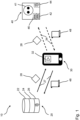
- Fig. 1 shows an embodiment of the authenticating and reporting system according to an example in connection with an embodiment of the method according to the present invention.
- the system 10 comprises a database unit 20.
- the database unit 20 in turn comprises a cryptography module 22, a memory module 24, and a wireless transmitting and receiving module 26.
- these modules 22 to 26 may be comprised by separate units or otherwise be formed as separate units.
- the system 10 further comprises a mobile device 30.
- the mobile device 30 comprises a mobile application 32.
- the system 10 furthermore comprises a charging device 40.
- the charging device 40 comprises a connector 41, a wireless communication module 44, a storage module 42, an encrypting and decrypting unit 46, and a control module (not shown).
- the connector 41 is connected to a chargeable device (not shown), preferably via a wireless data or network connection.
- a network connection 27 preferably wireless, which is established in a known way.
- the database unit 20 and the mobile device 30 are connected to a common network which is used to establish a data connection, in particular the Internet and/or a mobile network connection.
- a data connection in particular the Internet and/or a mobile network connection.
- wireless and wired connections may be provided, but wireless connections are preferred.
- an authentication element 28 generated and encrypted in the database unit 20 is sent to the mobile device 30.
- a wireless connection 34 such as a BLE, established in order to send or transfer the authentication element 28 from the mobile device 30 to the charging device 40.
- the wireless connection between the charging device 40 and the mobile device 30 is used to transfer a charging report element 48 which further on is transferred via a mobile network connection from the mobile device 30 to the database unit 20.
- a step S1 upon a user request, an authentication element 28 is generated in the database unit 20.
- the database unit 20 has already stored a corresponding authentication element in the memory module 24, which for example was stored when the user registered.
- one authentication element 28 which is preferably formed as a data structure may comprise a user identification parameter 50, a charging device identification parameter 52, a sequence number 56, and a charging report confirmation timestamp 58. Furthermore, the authentication element 28 may comprise some configuration data 54.
- a step S2 the authentication element 28 then signed in the cryptography module 22 of the database unit 20 which allows the recipient, i.e. the charging device 40, to validate that the sender, i.e. the database unit 20, had the private key corresponding to the locally stored copy of the sender's public key and that no data was changed.
- the authentication element 28 is encrypted in the cryptography module 22 which prevents intermediate parties from reading the data or the content of the authentication element 28. Both safety measures can also be regarded as independent method steps.
- the signed and encrypted authentication element 28 is first transferred to the user's mobile device 30 on which preferably a mobile application 32 for operating the charging procedure is operably installed, as soon as a sufficiently good mobile network connection, preferably a wireless network connection 27, is established between the database unit 20 and the mobile device 30.
- a sufficiently good mobile network connection preferably a wireless network connection 27
- the user is provided with a valid authentication element 28 to start the charging procedure at a designated charging device 40 and can go to the designated charging device 40, which in case of an underground car park is usually installed in a place where no direct network connection between database unit 20 and mobile device 30 can be established. Therefore, a wireless connection 34, preferably a wireless BLE connection, is established between mobile device 30 and charging device 40 and the authentication element 28 is transferred to the charging device 40 via this wireless connection 34.
- the received authentication element 28 is first decrypted by the encrypting and decrypting unit 46 of the charging device 40. Furthermore, the decrypted authentication element 28 is validated in the encrypting and decrypting unit 46 by checking if the charging device identification parameter 50 contained in the authentication element 28 corresponds to the charging device 40 to which the authentication element 28 was transferred and to which the user's chargeable device is connected or should be connected. Moreover, during validationit is checked if the sequence parameter 56 also contained in the authentication element 28 is greater or higher than the one stored in the storage module 42 of the charging device 40. This ensures inter alia that the authentication element 28 of the last charging procedure is not used again to start the charging procedure, but that a subsequent authentication element 28 was generated by the database unit 20.
- the charging procedure can be started in a step S5.
- This procedure can start e.g. as soon as the user connects his chargeable device to the charging device 40. In the case of an electric vehicle this would mean that the user plugs-in the charging cable to the charging device 40. But it is also possible that the charging procedure is started via the mobile application 32 on the mobile device 30 by user input.
- the charging procedure ends if, for example, the user initiates the ending of the charging procedure by input in the mobile application 32 or disconnects the connection between the chargeable device and the charging device 40 or if the maximum charging time or the maximum charging volume has been reached.
- a charging report element 48 containing all data required to bill the user for the charging procedure is generated in the charging device 40 in a step S6.
- the charging report element 48 is then encrypted in the encrypting and decrypting unit 46, so that this element 48 is also protected against manipulation or the like during transmission to the database unit 20.
- the encrypted charging report element 48 is transferred to the mobile device 30 via the wireless connection 34.
- the charging report element 48 is transmitted exactly to the mobile device 30, which has transmitted the corresponding authentication element 28 to the charging device 40 to initiate the charging procedure.
- the charging report element 48 or the bundle of reports is transmitted to the mobile device 30, which next establishes a wireless connection 34 to the charging device 40 after the charging procedure is completed or ended. From the terminal, the charging report element 48 or the bundle of reports is then transmitted to the database unit 20 via the wireless network connection 27 as soon as this connection 27 is established, i.e. as soon as there is sufficient mobile network coverage.
- step S9 the encrypted charging report element 48 or the bundle of encrypted reports received by the database unit 20 is then decrypted in cryptography module 22 of the database unit 20.
- step S10 which can also be divided into two separate substeps, the decrypted charging report element 48 or the bundle of reports are processed so that on the one hand the invoice(s) can be issued to the user(s) and on the other hand the next authentication element(s) 28 can be generated for a further charging procedure(s).
- the database unit 20 After the charging report element 48 is recorded or stored, the database unit 20 generates an acknowledgement message and/or timestamp for the charging device 40, that it has successfully processed the charging report element 48. Only after receiving this acknowledgment message and/or timestamp, the charging device 40 is allowed to discard all charging report element(s) 48 stored in the storage module 42.
- any mobile device 30 which has access to this charging device 40 will pick up this message and once it is near the charging device 40, mobile device will transfer the acknowledgement message to the charging device.
- the charging device 40 receives the acknowledgement from the database unit 20, discards the stored charging report element(s) 48 and generates another message that acknowledgement was successful.
- This message serves the purpose to tell the database unit 20 and the mobile device(s) 30 to stop sending the acknowledgement messages to the charging device 40, since the acknowledgment has already been processed.
Landscapes
- Engineering & Computer Science (AREA)
- Computer Security & Cryptography (AREA)
- Computer Networks & Wireless Communication (AREA)
- Signal Processing (AREA)
- Business, Economics & Management (AREA)
- Power Engineering (AREA)
- Theoretical Computer Science (AREA)
- Physics & Mathematics (AREA)
- General Physics & Mathematics (AREA)
- Transportation (AREA)
- Mechanical Engineering (AREA)
- Computer Hardware Design (AREA)
- General Engineering & Computer Science (AREA)
- Accounting & Taxation (AREA)
- Computing Systems (AREA)
- Strategic Management (AREA)
- General Business, Economics & Management (AREA)
- Software Systems (AREA)
- Finance (AREA)
- Mobile Radio Communication Systems (AREA)
- Charge And Discharge Circuits For Batteries Or The Like (AREA)
Claims (4)
- Verfahren zur Authentifizierung eines Benutzers bei und Meldung über die Verwendung einer Ladevorrichtung (40) mithilfe eines Authentifizierungs- und Meldesystems (10), wobei das Verfahren die Schritte umfasst:- Erzeugen von mindestens einem ersten einmalig zu verwendenden, verschlüsselten Authentifizierungselement (28) in einer Datenbankeinheit (20), wobei das einmalig zu verwendende Authentifizierungselement (28) dafür ausgelegt ist, dem Benutzer für einen Ladevorgang an einer bestimmten Ladevorrichtung (40) Zugang zu gewähren;- Übermitteln des ersten verschlüsselten Authentifizierungselements (28) an die Ladevorrichtung (40) über ein erstes mobiles Gerät (30);- Entschlüsseln des ersten verschlüsselten Authentifizierungselements (28) in der Ladevorrichtung (40);- Validieren des entschlüsselten Authentifizierungselements (28), um einen ersten Ladevorgang in der Ladevorrichtung (40) einzuleiten;- Erzeugen eines ersten Ladeberichtelements (48) in der Ladevorrichtung (40) nach Beendigung des ersten Ladevorgangs;- Speichern des ersten Ladeberichtelements (48) in einem Speichermodul (44) der Ladevorrichtung (40);- Übermitteln des ersten Ladeberichtelements (48) über das erste mobile Gerät (30) oder ein anderes mobiles Gerät an die Datenbankeinheit (20); und- Bereitstellen eines zweiten einmalig zu verwendenden, verschlüsselten Authentifizierungselements (28) für den Benutzer erst nach Verarbeiten des ersten Ladeberichtelements (48) in der Datenbankeinheit (20), um dadurch einen weiteren Zugang zu sperren, bis das erste Ladeberichtelement (48) an die Datenbankeinheit (20) zurückgegeben wird,wobei es sich bei dem ersten und zweiten einmalig zu verwendenden Authentifizierungselement (28) um einmalig zu verwendende Tokens handelt,dadurch gekennzeichnet, dasswobei das erste und zweite Authentifizierungselement (28) jeweils enthalten:- einen Ladevorrichtungs-Identifikationsparameter (50),- einen Benutzeridentifikationsparameter (52),- einen Sequenzparameter (56) und- einen Bestätigungszeitstempel (58) eines Ladeberichtelements (48),wobei das Erzeugen eines ersten Ladeberichtelements (48) in der Ladevorrichtung (40) das Erzeugen eines ersten verschlüsselten Ladeberichtelements (48) umfasst,wobei das Validieren des entschlüsselten Authentifizierungselements (28) umfasst, zu überprüfen, ob der Sequenzparameter (56) des entschlüsselten Authentifizierungselements (28) höher ist als der letzte Sequenzparameter, der im Speichermodul (44) der Ladevorrichtung (40) gespeichert wurde, undwobei, sobald das verschlüsselte Authentifizierungselement (28) der bestimmten Ladevorrichtung (40) präsentiert wird, die Ladevorrichtung (40) es entschlüsselt, eine Signatur überprüft und den Sequenzparameter (56) anhand einer lokalen Tabelle von Benutzern und hinsichtlich zuletzt gespeicherten Sequenzparametern gegenprüft.
- Verfahren zur Authentifizierung eines Benutzers bei und Meldung über die Verwendung einer Ladevorrichtung (40) nach Anspruch 1, wobei das Validieren des entschlüsselten Authentifizierungselements (28) darüber hinaus umfasst, zu überprüfen, ob der Ladevorrichtungs-Identifikationsparameter (50) des entschlüsselten Authentifizierungselements (28) mit einem Ladevorrichtungs-Identifikationsparameter (50) übereinstimmt, der im Speichermodul (44) der Ladevorrichtung (40) gespeichert ist.
- Verfahren zur Authentifizierung eines Benutzers bei und Meldung über die Verwendung einer Ladevorrichtung (40) nach Anspruch 1 oder 2, wobei beim Entschlüsseln ein gemeinsames Geheimnis, abgeleitet von einem öffentlichprivaten Diffie-Hellman-Schlüsselpaar mit elliptischer Kurve, verwendet wird.
- Authentifizierungs- und Meldesystem (10), das dafür ausgelegt ist, das Verfahren nach einem der vorhergehenden Ansprüche durchzuführen,wobei das Authentifizierungs- und Meldesystem (10) eine Datenbankeinheit (20), ein mobiles Gerät (30) und eine Ladevorrichtung (40) aufweist;wobei die Datenbankeinheit (20) dafür ausgelegt ist, ein erstes einmalig zu verwendendes Authentifizierungselement (28) zu erzeugen;wobei die Ladevorrichtung (40) dafür ausgelegt ist, das erste Authentifizierungselement (28) zu entschlüsseln und zu validieren sowie nach Beendigung eines ersten Ladevorgangs ein erstes verschlüsseltes Ladeberichtelement (48) zu erzeugen;wobei das mobile Gerät (30) dafür ausgelegt ist, das erste Authentifizierungselement (28) an die Ladevorrichtung (40) und das erste verschlüsselte Ladeberichtelement (48) an die Datenbankeinheit (20) zu übermitteln; undwobei die Datenbankeinheit (20) darüber hinaus dafür ausgelegt ist, ein zweites einmalig zu verwendendes Authentifizierungselement (28) zu erzeugen, um dem Benutzer nach Empfang des ersten Ladeberichtelements (48) einen weiteren Zugang zu gewähren, wodurch ein weiterer Zugang gesperrt wird, bis das erste verschlüsselte Ladeberichtelement (48) an die Datenbankeinheit (20) zurückgegeben wird, wobei es sich bei dem ersten und zweiten einmalig zu verwendenden Authentifizierungselement (28) um einmalig zu verwendende Tokens handelt, undwobei das erste und zweite Authentifizierungselement (28) jeweils enthalten:- einen Ladevorrichtungs-Identifikationsparameter (50),- einen Benutzeridentifikationsparameter (52),- einen Sequenzparameter (56) und- einen Bestätigungszeitstempel (58) eines Ladeberichtelements (48), undwobei das Validieren des entschlüsselten Authentifizierungselements (28) umfasst, zu überprüfen, ob der Sequenzparameter (56) des entschlüsselten Authentifizierungselements (28) höher ist als der letzte Sequenzparameter, der im Speichermodul (44) der Ladevorrichtung (40) gespeichert wurde.
Priority Applications (1)
| Application Number | Priority Date | Filing Date | Title |
|---|---|---|---|
| EP25160165.4A EP4586457A3 (de) | 2020-10-30 | 2021-10-28 | System zur authentifizierung eines benutzers bei und meldung über die verwendung einer ladevorrichtung |
Applications Claiming Priority (2)
| Application Number | Priority Date | Filing Date | Title |
|---|---|---|---|
| DE102020128700.3A DE102020128700B4 (de) | 2020-10-30 | 2020-10-30 | System zur Authentifizierung eines Benutzers an einer Ladevorrichtung und zur Berichterstattung über die Verwendung derselben |
| PCT/EP2021/079981 WO2022090392A2 (en) | 2020-10-30 | 2021-10-28 | System for authenticating a user at and reporting about use of a charging device |
Related Child Applications (1)
| Application Number | Title | Priority Date | Filing Date |
|---|---|---|---|
| EP25160165.4A Division EP4586457A3 (de) | 2020-10-30 | 2021-10-28 | System zur authentifizierung eines benutzers bei und meldung über die verwendung einer ladevorrichtung |
Publications (3)
| Publication Number | Publication Date |
|---|---|
| EP4237974A2 EP4237974A2 (de) | 2023-09-06 |
| EP4237974C0 EP4237974C0 (de) | 2025-03-05 |
| EP4237974B1 true EP4237974B1 (de) | 2025-03-05 |
Family
ID=78516809
Family Applications (2)
| Application Number | Title | Priority Date | Filing Date |
|---|---|---|---|
| EP21802277.0A Active EP4237974B1 (de) | 2020-10-30 | 2021-10-28 | System zur authentifizierung eines benutzers bei und meldung über die verwendung einer ladevorrichtung |
| EP25160165.4A Pending EP4586457A3 (de) | 2020-10-30 | 2021-10-28 | System zur authentifizierung eines benutzers bei und meldung über die verwendung einer ladevorrichtung |
Family Applications After (1)
| Application Number | Title | Priority Date | Filing Date |
|---|---|---|---|
| EP25160165.4A Pending EP4586457A3 (de) | 2020-10-30 | 2021-10-28 | System zur authentifizierung eines benutzers bei und meldung über die verwendung einer ladevorrichtung |
Country Status (7)
| Country | Link |
|---|---|
| US (1) | US20230415595A1 (de) |
| EP (2) | EP4237974B1 (de) |
| KR (1) | KR20230119118A (de) |
| CN (1) | CN116368771A (de) |
| DE (1) | DE102020128700B4 (de) |
| WO (1) | WO2022090392A2 (de) |
| ZA (1) | ZA202304215B (de) |
Families Citing this family (3)
| Publication number | Priority date | Publication date | Assignee | Title |
|---|---|---|---|---|
| DE102020128700B4 (de) | 2020-10-30 | 2025-07-10 | HeyCharge GmbH | System zur Authentifizierung eines Benutzers an einer Ladevorrichtung und zur Berichterstattung über die Verwendung derselben |
| DE102022213734A1 (de) | 2022-12-20 | 2024-06-20 | Volkswagen Aktiengesellschaft | Verfahren zum Lokalisieren einer verfügbaren Ladestation, Kraftfahrzeug, Verfahren zum Mitteilen einer verfügbaren Ladestation und Ladestation |
| US20250310318A1 (en) * | 2024-03-29 | 2025-10-02 | Ncr Voyix Corporation | Distributed edge-based identity management |
Citations (1)
| Publication number | Priority date | Publication date | Assignee | Title |
|---|---|---|---|---|
| WO2013185860A1 (de) * | 2012-06-15 | 2013-12-19 | Rwe Ag | Ladestation mit nahfeldkommunikationsverbindung |
Family Cites Families (6)
| Publication number | Priority date | Publication date | Assignee | Title |
|---|---|---|---|---|
| EP2364874A3 (de) | 2008-07-21 | 2014-09-03 | Dius Computing Pty Ltd | Authentifizierungssystem für ein Plug-in-Fahrzeug mit Elektroantrieb |
| WO2011109460A2 (en) * | 2010-03-02 | 2011-09-09 | Liberty Plug-Ins, Inc. | Method and system for using a smart phone for electrical vehicle charging |
| US9348381B2 (en) * | 2011-10-19 | 2016-05-24 | Zeco Systems Pte Ltd | Methods and apparatuses for charging of electric vehicles |
| DE102015214164A1 (de) | 2015-07-27 | 2017-02-02 | Workflowapp Software Gmbh | System und Verfahren zur Energieversorgung eines elektrischen Verbrauchers sowie eine Energiestation |
| US10791446B2 (en) * | 2015-12-14 | 2020-09-29 | Afero, Inc. | System and method for an Internet of Things (IoT) gas pump or charging station implementation |
| DE102020128700B4 (de) | 2020-10-30 | 2025-07-10 | HeyCharge GmbH | System zur Authentifizierung eines Benutzers an einer Ladevorrichtung und zur Berichterstattung über die Verwendung derselben |
-
2020
- 2020-10-30 DE DE102020128700.3A patent/DE102020128700B4/de active Active
-
2021
- 2021-10-28 WO PCT/EP2021/079981 patent/WO2022090392A2/en not_active Ceased
- 2021-10-28 KR KR1020237018269A patent/KR20230119118A/ko active Pending
- 2021-10-28 US US18/249,477 patent/US20230415595A1/en active Pending
- 2021-10-28 EP EP21802277.0A patent/EP4237974B1/de active Active
- 2021-10-28 CN CN202180074108.3A patent/CN116368771A/zh active Pending
- 2021-10-28 EP EP25160165.4A patent/EP4586457A3/de active Pending
-
2023
- 2023-04-06 ZA ZA2023/04215A patent/ZA202304215B/en unknown
Patent Citations (1)
| Publication number | Priority date | Publication date | Assignee | Title |
|---|---|---|---|---|
| WO2013185860A1 (de) * | 2012-06-15 | 2013-12-19 | Rwe Ag | Ladestation mit nahfeldkommunikationsverbindung |
Also Published As
| Publication number | Publication date |
|---|---|
| WO2022090392A2 (en) | 2022-05-05 |
| ZA202304215B (en) | 2024-01-31 |
| CN116368771A (zh) | 2023-06-30 |
| DE102020128700B4 (de) | 2025-07-10 |
| KR20230119118A (ko) | 2023-08-16 |
| EP4586457A2 (de) | 2025-07-16 |
| EP4586457A3 (de) | 2025-08-13 |
| WO2022090392A3 (en) | 2022-06-16 |
| DE102020128700A1 (de) | 2022-05-05 |
| EP4237974C0 (de) | 2025-03-05 |
| EP4237974A2 (de) | 2023-09-06 |
| US20230415595A1 (en) | 2023-12-28 |
Similar Documents
| Publication | Publication Date | Title |
|---|---|---|
| KR100652125B1 (ko) | 서비스 제공자, 단말기 및 사용자 식별 모듈 간을총괄적으로 인증하여 관리할 수 있도록 하는 상호 인증방법 및 이를 이용한 시스템과 단말 장치 | |
| EP4237974B1 (de) | System zur authentifizierung eines benutzers bei und meldung über die verwendung einer ladevorrichtung | |
| RU2665869C2 (ru) | Системы и способы привязки устройств к счетам пользователя | |
| CN101300808B (zh) | 安全认证的方法和设置 | |
| CN1992722B (zh) | 用于控制远程网络供电设备的安全性的系统和方法 | |
| CN101860525B (zh) | 电子授权状实现方法、智能终端、授权系统及验证终端 | |
| WO2021196966A1 (zh) | 交易方法、网关设备、支付平台、商户设备和交易系统 | |
| EP2424185A1 (de) | Verfahren und Vorrichtung zur Challenge-Response-Authentifizierung | |
| CN106027250B (zh) | 一种身份证信息安全传输方法及系统 | |
| CN104936178A (zh) | 无线电力发送设备、用于发信号通知针对无线通信网络的接入信息的方法及用于授权无线电力接收设备的方法 | |
| CN105956855B (zh) | 一种电子签名设备的交易方法和交易系统 | |
| CN106156677B (zh) | 身份证读卡方法和系统 | |
| CN112689981A (zh) | 车辆、充电站和充电站管理服务器之间的通信认证系统和方法 | |
| US20150294309A1 (en) | Method, Device and Service Provision Unit for Authenticating a Customer for a Service to be Provided by the Service Provision Unit | |
| US20220366408A1 (en) | Digital Key With Monetary Value | |
| CN114084023A (zh) | 一种控制方法、装置和充电桩 | |
| EP4289156A1 (de) | Sicheres laden eines elektrischen fahrzeugs | |
| CN104574653A (zh) | 基于车载单元实现电子钱包ic卡在线充值的方法及系统 | |
| JP5378182B2 (ja) | 通信装置および処理システム | |
| US20100071033A1 (en) | Authentication coordination system, terminal apparatus, storage medium, authentication coordination method, and authentication coordination program | |
| CN106027249B (zh) | 身份证读卡方法和系统 | |
| CN114253414A (zh) | 用于非接触式pin输入的系统和方法 | |
| CN116331047B (zh) | 充电桩的交易验证方法、装置、计算机设备及存储介质 | |
| CN106372557B (zh) | 证件卡信息获取方法、装置及系统 | |
| HK40097479A (zh) | 用於在充电设备认证使用者及报告关於充电设备的使用的系统 |
Legal Events
| Date | Code | Title | Description |
|---|---|---|---|
| STAA | Information on the status of an ep patent application or granted ep patent |
Free format text: STATUS: UNKNOWN |
|
| STAA | Information on the status of an ep patent application or granted ep patent |
Free format text: STATUS: THE INTERNATIONAL PUBLICATION HAS BEEN MADE |
|
| PUAI | Public reference made under article 153(3) epc to a published international application that has entered the european phase |
Free format text: ORIGINAL CODE: 0009012 |
|
| STAA | Information on the status of an ep patent application or granted ep patent |
Free format text: STATUS: REQUEST FOR EXAMINATION WAS MADE |
|
| 17P | Request for examination filed |
Effective date: 20230530 |
|
| AK | Designated contracting states |
Kind code of ref document: A2 Designated state(s): AL AT BE BG CH CY CZ DE DK EE ES FI FR GB GR HR HU IE IS IT LI LT LU LV MC MK MT NL NO PL PT RO RS SE SI SK SM TR |
|
| TPAC | Observations filed by third parties |
Free format text: ORIGINAL CODE: EPIDOSNTIPA |
|
| DAV | Request for validation of the european patent (deleted) | ||
| DAX | Request for extension of the european patent (deleted) | ||
| STAA | Information on the status of an ep patent application or granted ep patent |
Free format text: STATUS: EXAMINATION IS IN PROGRESS |
|
| 17Q | First examination report despatched |
Effective date: 20240215 |
|
| GRAP | Despatch of communication of intention to grant a patent |
Free format text: ORIGINAL CODE: EPIDOSNIGR1 |
|
| STAA | Information on the status of an ep patent application or granted ep patent |
Free format text: STATUS: GRANT OF PATENT IS INTENDED |
|
| TPAC | Observations filed by third parties |
Free format text: ORIGINAL CODE: EPIDOSNTIPA |
|
| RIC1 | Information provided on ipc code assigned before grant |
Ipc: H02J 7/00 20060101ALI20241017BHEP Ipc: G07F 15/00 20060101ALI20241017BHEP Ipc: G07F 9/00 20060101ALI20241017BHEP Ipc: H04L 9/40 20220101ALI20241017BHEP Ipc: B60L 53/66 20190101ALI20241017BHEP Ipc: B60L 53/60 20190101ALI20241017BHEP Ipc: H04L 9/32 20060101ALI20241017BHEP Ipc: G06F 21/35 20130101AFI20241017BHEP |
|
| INTG | Intention to grant announced |
Effective date: 20241028 |
|
| GRAS | Grant fee paid |
Free format text: ORIGINAL CODE: EPIDOSNIGR3 |
|
| GRAA | (expected) grant |
Free format text: ORIGINAL CODE: 0009210 |
|
| STAA | Information on the status of an ep patent application or granted ep patent |
Free format text: STATUS: THE PATENT HAS BEEN GRANTED |
|
| TPAC | Observations filed by third parties |
Free format text: ORIGINAL CODE: EPIDOSNTIPA |
|
| AK | Designated contracting states |
Kind code of ref document: B1 Designated state(s): AL AT BE BG CH CY CZ DE DK EE ES FI FR GB GR HR HU IE IS IT LI LT LU LV MC MK MT NL NO PL PT RO RS SE SI SK SM TR |
|
| REG | Reference to a national code |
Ref country code: GB Ref legal event code: FG4D |
|
| REG | Reference to a national code |
Ref country code: CH Ref legal event code: EP |
|
| REG | Reference to a national code |
Ref country code: IE Ref legal event code: FG4D |
|
| REG | Reference to a national code |
Ref country code: DE Ref legal event code: R096 Ref document number: 602021027253 Country of ref document: DE |
|
| U01 | Request for unitary effect filed |
Effective date: 20250405 |
|
| U07 | Unitary effect registered |
Designated state(s): AT BE BG DE DK EE FI FR IT LT LU LV MT NL PT RO SE SI Effective date: 20250411 |
|
| PG25 | Lapsed in a contracting state [announced via postgrant information from national office to epo] |
Ref country code: RS Free format text: LAPSE BECAUSE OF FAILURE TO SUBMIT A TRANSLATION OF THE DESCRIPTION OR TO PAY THE FEE WITHIN THE PRESCRIBED TIME-LIMIT Effective date: 20250605 |
|
| PG25 | Lapsed in a contracting state [announced via postgrant information from national office to epo] |
Ref country code: ES Free format text: LAPSE BECAUSE OF FAILURE TO SUBMIT A TRANSLATION OF THE DESCRIPTION OR TO PAY THE FEE WITHIN THE PRESCRIBED TIME-LIMIT Effective date: 20250305 |
|
| PG25 | Lapsed in a contracting state [announced via postgrant information from national office to epo] |
Ref country code: NO Free format text: LAPSE BECAUSE OF FAILURE TO SUBMIT A TRANSLATION OF THE DESCRIPTION OR TO PAY THE FEE WITHIN THE PRESCRIBED TIME-LIMIT Effective date: 20250605 |
|
| PG25 | Lapsed in a contracting state [announced via postgrant information from national office to epo] |
Ref country code: HR Free format text: LAPSE BECAUSE OF FAILURE TO SUBMIT A TRANSLATION OF THE DESCRIPTION OR TO PAY THE FEE WITHIN THE PRESCRIBED TIME-LIMIT Effective date: 20250305 |
|
| PG25 | Lapsed in a contracting state [announced via postgrant information from national office to epo] |
Ref country code: GR Free format text: LAPSE BECAUSE OF FAILURE TO SUBMIT A TRANSLATION OF THE DESCRIPTION OR TO PAY THE FEE WITHIN THE PRESCRIBED TIME-LIMIT Effective date: 20250606 |
|
| PG25 | Lapsed in a contracting state [announced via postgrant information from national office to epo] |
Ref country code: SM Free format text: LAPSE BECAUSE OF FAILURE TO SUBMIT A TRANSLATION OF THE DESCRIPTION OR TO PAY THE FEE WITHIN THE PRESCRIBED TIME-LIMIT Effective date: 20250305 |
|
| PG25 | Lapsed in a contracting state [announced via postgrant information from national office to epo] |
Ref country code: PL Free format text: LAPSE BECAUSE OF FAILURE TO SUBMIT A TRANSLATION OF THE DESCRIPTION OR TO PAY THE FEE WITHIN THE PRESCRIBED TIME-LIMIT Effective date: 20250305 |
|
| PG25 | Lapsed in a contracting state [announced via postgrant information from national office to epo] |
Ref country code: CZ Free format text: LAPSE BECAUSE OF FAILURE TO SUBMIT A TRANSLATION OF THE DESCRIPTION OR TO PAY THE FEE WITHIN THE PRESCRIBED TIME-LIMIT Effective date: 20250305 |
|
| PG25 | Lapsed in a contracting state [announced via postgrant information from national office to epo] |
Ref country code: SK Free format text: LAPSE BECAUSE OF FAILURE TO SUBMIT A TRANSLATION OF THE DESCRIPTION OR TO PAY THE FEE WITHIN THE PRESCRIBED TIME-LIMIT Effective date: 20250305 |
|
| PG25 | Lapsed in a contracting state [announced via postgrant information from national office to epo] |
Ref country code: IS Free format text: LAPSE BECAUSE OF FAILURE TO SUBMIT A TRANSLATION OF THE DESCRIPTION OR TO PAY THE FEE WITHIN THE PRESCRIBED TIME-LIMIT Effective date: 20250705 |
|
| REG | Reference to a national code |
Ref country code: CH Ref legal event code: U11 Free format text: ST27 STATUS EVENT CODE: U-0-0-U10-U11 (AS PROVIDED BY THE NATIONAL OFFICE) Effective date: 20251120 |
|
| U20 | Renewal fee for the european patent with unitary effect paid |
Year of fee payment: 5 Effective date: 20251030 |
|
| PGFP | Annual fee paid to national office [announced via postgrant information from national office to epo] |
Ref country code: GB Payment date: 20251120 Year of fee payment: 5 |
|
| PLBE | No opposition filed within time limit |
Free format text: ORIGINAL CODE: 0009261 |
|
| STAA | Information on the status of an ep patent application or granted ep patent |
Free format text: STATUS: NO OPPOSITION FILED WITHIN TIME LIMIT |
|
| REG | Reference to a national code |
Ref country code: CH Ref legal event code: L10 Free format text: ST27 STATUS EVENT CODE: U-0-0-L10-L00 (AS PROVIDED BY THE NATIONAL OFFICE) Effective date: 20260114 |
|
| PGFP | Annual fee paid to national office [announced via postgrant information from national office to epo] |
Ref country code: CH Payment date: 20251120 Year of fee payment: 5 |
|
| 26N | No opposition filed |
Effective date: 20251208 |