EP4237919B1 - Steuerungsverfahren für eine industrieanlage - Google Patents
Steuerungsverfahren für eine industrieanlage Download PDFInfo
- Publication number
- EP4237919B1 EP4237919B1 EP21815281.7A EP21815281A EP4237919B1 EP 4237919 B1 EP4237919 B1 EP 4237919B1 EP 21815281 A EP21815281 A EP 21815281A EP 4237919 B1 EP4237919 B1 EP 4237919B1
- Authority
- EP
- European Patent Office
- Prior art keywords
- interest
- poi
- points
- control
- measurement data
- Prior art date
- Legal status (The legal status is an assumption and is not a legal conclusion. Google has not performed a legal analysis and makes no representation as to the accuracy of the status listed.)
- Active
Links
Images
Classifications
-
- G—PHYSICS
- G05—CONTROLLING; REGULATING
- G05B—CONTROL OR REGULATING SYSTEMS IN GENERAL; FUNCTIONAL ELEMENTS OF SUCH SYSTEMS; MONITORING OR TESTING ARRANGEMENTS FOR SUCH SYSTEMS OR ELEMENTS
- G05B19/00—Programme-control systems
- G05B19/02—Programme-control systems electric
- G05B19/418—Total factory control, i.e. centrally controlling a plurality of machines, e.g. direct or distributed numerical control [DNC], flexible manufacturing systems [FMS], integrated manufacturing systems [IMS] or computer integrated manufacturing [CIM]
- G05B19/4183—Total factory control, i.e. centrally controlling a plurality of machines, e.g. direct or distributed numerical control [DNC], flexible manufacturing systems [FMS], integrated manufacturing systems [IMS] or computer integrated manufacturing [CIM] characterised by data acquisition, e.g. workpiece identification
-
- G—PHYSICS
- G05—CONTROLLING; REGULATING
- G05B—CONTROL OR REGULATING SYSTEMS IN GENERAL; FUNCTIONAL ELEMENTS OF SUCH SYSTEMS; MONITORING OR TESTING ARRANGEMENTS FOR SUCH SYSTEMS OR ELEMENTS
- G05B19/00—Programme-control systems
- G05B19/02—Programme-control systems electric
- G05B19/418—Total factory control, i.e. centrally controlling a plurality of machines, e.g. direct or distributed numerical control [DNC], flexible manufacturing systems [FMS], integrated manufacturing systems [IMS] or computer integrated manufacturing [CIM]
- G05B19/41865—Total factory control, i.e. centrally controlling a plurality of machines, e.g. direct or distributed numerical control [DNC], flexible manufacturing systems [FMS], integrated manufacturing systems [IMS] or computer integrated manufacturing [CIM] characterised by job scheduling, process planning, material flow
-
- G—PHYSICS
- G05—CONTROLLING; REGULATING
- G05B—CONTROL OR REGULATING SYSTEMS IN GENERAL; FUNCTIONAL ELEMENTS OF SUCH SYSTEMS; MONITORING OR TESTING ARRANGEMENTS FOR SUCH SYSTEMS OR ELEMENTS
- G05B19/00—Programme-control systems
- G05B19/02—Programme-control systems electric
- G05B19/18—Numerical control [NC], i.e. automatically operating machines, in particular machine tools, e.g. in a manufacturing environment, so as to execute positioning, movement or co-ordinated operations by means of programme data in numerical form
- G05B19/409—Numerical control [NC], i.e. automatically operating machines, in particular machine tools, e.g. in a manufacturing environment, so as to execute positioning, movement or co-ordinated operations by means of programme data in numerical form characterised by using manual data input [MDI] or by using control panel, e.g. controlling functions with the panel; characterised by control panel details or by setting parameters
-
- G—PHYSICS
- G05—CONTROLLING; REGULATING
- G05B—CONTROL OR REGULATING SYSTEMS IN GENERAL; FUNCTIONAL ELEMENTS OF SUCH SYSTEMS; MONITORING OR TESTING ARRANGEMENTS FOR SUCH SYSTEMS OR ELEMENTS
- G05B19/00—Programme-control systems
- G05B19/02—Programme-control systems electric
- G05B19/418—Total factory control, i.e. centrally controlling a plurality of machines, e.g. direct or distributed numerical control [DNC], flexible manufacturing systems [FMS], integrated manufacturing systems [IMS] or computer integrated manufacturing [CIM]
- G05B19/41875—Total factory control, i.e. centrally controlling a plurality of machines, e.g. direct or distributed numerical control [DNC], flexible manufacturing systems [FMS], integrated manufacturing systems [IMS] or computer integrated manufacturing [CIM] characterised by quality surveillance of production
-
- G—PHYSICS
- G05—CONTROLLING; REGULATING
- G05B—CONTROL OR REGULATING SYSTEMS IN GENERAL; FUNCTIONAL ELEMENTS OF SUCH SYSTEMS; MONITORING OR TESTING ARRANGEMENTS FOR SUCH SYSTEMS OR ELEMENTS
- G05B19/00—Programme-control systems
- G05B19/02—Programme-control systems electric
- G05B19/418—Total factory control, i.e. centrally controlling a plurality of machines, e.g. direct or distributed numerical control [DNC], flexible manufacturing systems [FMS], integrated manufacturing systems [IMS] or computer integrated manufacturing [CIM]
- G05B19/41885—Total factory control, i.e. centrally controlling a plurality of machines, e.g. direct or distributed numerical control [DNC], flexible manufacturing systems [FMS], integrated manufacturing systems [IMS] or computer integrated manufacturing [CIM] characterised by modeling, simulation of the manufacturing system
-
- G—PHYSICS
- G05—CONTROLLING; REGULATING
- G05B—CONTROL OR REGULATING SYSTEMS IN GENERAL; FUNCTIONAL ELEMENTS OF SUCH SYSTEMS; MONITORING OR TESTING ARRANGEMENTS FOR SUCH SYSTEMS OR ELEMENTS
- G05B2219/00—Program-control systems
- G05B2219/30—Nc systems
- G05B2219/31—From computer integrated manufacturing till monitoring
- G05B2219/31449—Monitor workflow, to optimize business, industrial processes
-
- G—PHYSICS
- G05—CONTROLLING; REGULATING
- G05B—CONTROL OR REGULATING SYSTEMS IN GENERAL; FUNCTIONAL ELEMENTS OF SUCH SYSTEMS; MONITORING OR TESTING ARRANGEMENTS FOR SUCH SYSTEMS OR ELEMENTS
- G05B2219/00—Program-control systems
- G05B2219/30—Nc systems
- G05B2219/31—From computer integrated manufacturing till monitoring
- G05B2219/31455—Monitor process status
-
- G—PHYSICS
- G05—CONTROLLING; REGULATING
- G05B—CONTROL OR REGULATING SYSTEMS IN GENERAL; FUNCTIONAL ELEMENTS OF SUCH SYSTEMS; MONITORING OR TESTING ARRANGEMENTS FOR SUCH SYSTEMS OR ELEMENTS
- G05B2219/00—Program-control systems
- G05B2219/30—Nc systems
- G05B2219/31—From computer integrated manufacturing till monitoring
- G05B2219/31471—Operator can select a graphical screen at his will as help diagnostic
-
- G—PHYSICS
- G05—CONTROLLING; REGULATING
- G05B—CONTROL OR REGULATING SYSTEMS IN GENERAL; FUNCTIONAL ELEMENTS OF SUCH SYSTEMS; MONITORING OR TESTING ARRANGEMENTS FOR SUCH SYSTEMS OR ELEMENTS
- G05B2219/00—Program-control systems
- G05B2219/30—Nc systems
- G05B2219/31—From computer integrated manufacturing till monitoring
- G05B2219/31472—Graphical display of process
-
- Y—GENERAL TAGGING OF NEW TECHNOLOGICAL DEVELOPMENTS; GENERAL TAGGING OF CROSS-SECTIONAL TECHNOLOGIES SPANNING OVER SEVERAL SECTIONS OF THE IPC; TECHNICAL SUBJECTS COVERED BY FORMER USPC CROSS-REFERENCE ART COLLECTIONS [XRACs] AND DIGESTS
- Y02—TECHNOLOGIES OR APPLICATIONS FOR MITIGATION OR ADAPTATION AGAINST CLIMATE CHANGE
- Y02P—CLIMATE CHANGE MITIGATION TECHNOLOGIES IN THE PRODUCTION OR PROCESSING OF GOODS
- Y02P90/00—Enabling technologies with a potential contribution to greenhouse gas [GHG] emissions mitigation
- Y02P90/02—Total factory control, e.g. smart factories, flexible manufacturing systems [FMS] or integrated manufacturing systems [IMS]
Definitions
- the present invention concerns a control method for an industrial plant.
- the industrial plant is supervised with a plurality of sensors, which detect the respective measurement data of the plant, and is controlled by an automation system, which receives the measurement data of the sensors and possible operator commands.
- the industrial plant in question can be a plant in the food industry, or metallurgical, steel, petrochemical, chemical, pharmaceutical, paper, textile industries and suchlike.
- Document US 2020 326684 A1 discloses such an industrial plant.
- plant components any apparatus, equipment, machine or device that contributes to the creation of a product.
- the components of the plant must necessarily interface with each other and be managed effectively so that the product in transit does not suffer damage and is made with the required quality standards, as well as to prevent the latter from damaging the machines it passes through and comply with the expected safety standards.
- control apparatus comprises a plurality of sensor devices, which acquire the measurement data of the plant, and an automation system that processes the measurement data in order to generate control signals to be transmitted to the controlled elements of the plant.
- the control apparatus also comprises a man-machine interface which allows an operator to view the measurement data and/or the processed data of the automation system, and to insert operator control commands to be transmitted to the automation system which it can use to establish the control signals as above.
- Another disadvantage of traditional control methods is that the processing of the measurement data occurs substantially continuously without appropriate historicization, as well as contextualization, thereof.
- one purpose of the present invention is to provide a control method able to automatically combine with the measurement data also the information relating to the perception of the weak signals.
- Another purpose of the present invention is to provide a control method which allows to acquire and process both the measurement data and also the information relating to the weak signals.
- Another purpose is to perfect a control method in which the operator assists and is assisted by the automation system.
- the Applicant has devised, tested and embodied the present invention to overcome the shortcomings of the state of the art and to obtain these and other purposes and advantages.
- a control method for an industrial plant comprises the acquisition of a plurality of measurement data relating to the components of a plant and/or a product being worked, their storage in a storage device and simultaneously their transmission to an automation system which uses the measurement data to generate respective control signals, the measurement data and at least some of the control signals being transmitted to an interactive platform.
- a first interactive platform comprises at least one device for assisting an operator having a control unit which, in a control step, uses suitable verification rules and continuously compares the measurement data, possibly combining them with at least some of the control signals and with control commands, given by an operator, in order to identify specific operational events characteristic of the process.
- each of the operational events as above defines a point of interest which is an aggregation of measurement data, operational control signals and possibly also video-audio contents relating to a determinate time window prior to and following the operational event.
- This aggregation of data can also comprise the detection and analysis of the behavior of the operators who supervise the ongoing process.
- the method provides a step of comparative analysis between homogeneous points of interest carried out at the end of the process in progress and after the control step, in which a processing unit of a second interactive platform allows to operate at least the comparison between all the points of interest generated during the process just ended and during previous processes, or to generate additional points of interest transmitting corresponding information on a screen.
- Such information can be, for example, but not limited to, of the augmented reality type.
- a time stamp is associated with each point of interest and the time window refers to a determinate period of time prior to and following the specific operational event that characterizes it.
- the points of interest are automatically generated by the control unit and possibly by the processing unit, or they can be manually generated by the operator on the basis of direct observations or weak signals.
- the points of interest are classified as normal events, alarm events, malfunction events.
- the control unit is configured to project on the main screens of the first interactive platform the images relating to the event occurring, in order to increase the level of attention from the operators.
- the level of attention can also be raised by combining, with the images, the corresponding sound flow in order to alert not only the sense of sight but also the sense of hearing.
- each point of interest contains measurement data relating to all the plant components that characterize the process and that are being monitored.
- the points of interest can also contain measurements relating to the quality of a determinate product, as well as the identification labels of all the raw materials used to manufacture the product, as well as measurements relating to energy consumption.
- control step and the analysis step occur at different moments and in completely separate and independent environments.
- the analysis step can occur simultaneously with the control step in "What-if" mode, in which, starting from current plant conditions, the continuation of the process is simulated, varying determinate control parameters.
- the second interactive platform allows to supervise the process in progress and trace the product being worked in all the working steps thereof, including the steps of movement between the plant components.
- a step of entering additional information relating to the points of interest generated in which on the screen of the operator assistance device a screen is displayed which offers the operator the option of entering the information in written or oral form.
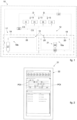
- the embodiments described here concern a control method for an industrial plant 10, schematically shown in fig. 1 .
- the industrial plant 10 can be a plant for the food industry, metallurgical and steel industry, petrochemical industry, paper industry, pharmaceutical industry, textile industry, chemical industry and suchlike.
- the industrial plants 10 in question comprise a plurality of plant components 11 and a control apparatus 12.
- plant components 11 here and hereafter we mean any apparatus, equipment, machine or device whatsoever that contributes to producing, working, or controlling a determinate product in a specific industrial plant 10.
- the control apparatus 12 comprises a plurality of detection devices 13 associated with the plant components 11 and able to detect, either directly or indirectly, respective measurement data D.
- the detection devices 13 are configured to detect determinate physical measurements correlated to the process and machine parameters of the plant components 11, and/or to the product being worked and possibly also to the surrounding environment.
- the detection devices 13 can be real or virtual.
- virtual detection device we mean a processing system that, by means of suitable algorithms, is able to supply data relating to parameters that cannot be measured directly, are difficult to measure directly, or the direct measurement of which would involve an excessively high cost.
- the detection devices 13 can be selected from a group comprising position sensors, photocells, thermocouples, pressure gauges, current sensors, voltage sensors or other.
- the detection devices 13 can comprise audio-video detection devices.
- the image can be of the optical or infrared type.
- the detection devices 13 can comprise devices to detect acoustic vibrations and corresponding spectra.
- the control apparatus 12 comprises a storage device 14 in which the measurement data D is stored.
- the measurement data D is stored in raw form, that is, without undergoing processing or transformation, so as to preserve all the information contained therein.
- a time stamp is associated with the measurement data D which configures the data as time series of measurement data.
- the measurement data D recorded in the storage device 14 can be both of the analog type and also of the digital type, according to the type of detection devices 13 and the measurement to be performed.
- the measurement data D can be homogeneous, heterogeneous, possibly made adimensional.
- the storage device 14 can be a centralized system, a distributed system or a cloud type remote system.
- the control apparatus 12 comprises an interactive platform 16 that allows to control and manage the industrial plant 10, and also allows to historicize and consult all the information relating to processes and products.
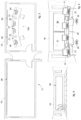
- the interactive platform 16 can be installed in a control cabin, hereafter also pulpit 17, inside the industrial plant 10, preferably in an elevated position, facing the process in progress.
- the pulpit 17 can be positioned outside the industrial plant 10, in a remote position.
- the pulpit 17 can comprise two zones, or independent and separate environments, wherein each environment can be provided with its own interactive platform 16.
- a first zone 18 of the pulpit 17, hereafter command room 18, can be dedicated to the reproduction and real time display of the contents acquired by means of the detection devices 13, for example the measurement data D, the functioning data of the industrial plant 10 - for example the data received from the automation system 15 relating to the functioning of the plant components 11 - and/or video-audio contents, or other.
- a control step of the process in progress is then carried out in the command room 18.
- a second zone 19 of the pulpit 17, hereafter analysis room 19, can be dedicated to the reproduction, for example "delayed" or simultaneous, of the contents that have been recorded in the storage device 14 and of the contents identified and processed in the command room 18, for example in order to carry out consultations or verifications of the processes that have already occurred or are occurring.
- the command room 18 and the analysis room 19 can be two rooms, or completely independent environments.
- the analysis room 19 can possibly be disposed in a remote position with respect to the installation site of the industrial plant 10, and can receive and process machine and process data of more than one industrial plant 10 at a time, also allowing an immediate cross-comparison of the data.
- the command room 18 is used to control and manage the industrial plant 10 and the processes in progress.
- the command room 18 has a first interactive platform 16a and command stations, preferably two, in which respective operators take their places who can share the same functions and responsibilities, or deal with different operational functions.
- the first interactive platform 16a comprises at least one main screen 20, preferably large, even up to 98 inches and more, disposed in front of each of the stations as above.
- An additional main screen shared by both operators can be positioned between two main screens 20, in order to project and analyze shared scenarios or scenarios that require special attention.
- the main screens 20 can allow to display the process in progress in real-time, for example thanks to closed-circuit cameras disposed in focal points of the industrial plant 10.
- the main screens 20 can have a dedicated display zone where the parameters of the process in progress, correlated to the images projected or relating to determinate zones of the industrial plant 10, are visible.
- the main screens 20 can allow to simultaneously display several zones of the industrial plant 10.
- the first interactive platform 16a can comprise additional monitors 24 and one or more interaction devices with commands such as real or virtual keyboards, joysticks, keys, levers or other.
- the first interactive platform 16a comprises at least one operator assistance device 21 associated with at least one of the two stations, preferably with both.
- the operator assistance device 21 is configured both to allow the operator to enter commands toward the automated devices and also to supervise the process in progress, as better explained below.
- the operator assistance device 21 comprises a control unit 23, configured to process and classify in real time a plurality of events of the process in progress, in chronological order of occurrence, and a screen 22, for example of the touch-screen type, on which the events as above are displayed.
- the control unit 23 comprises a central processing unit, or CPU, and at least one storage unit connected to it, which can also be the same storage device 14, and in which at least one processing algorithm is stored which is capable of causing the same CPU, in response at least to the measurement data D and to the corresponding operational control signals CS, to generate command signals to be transmitted to the automation system 15 which in turn processes them into corresponding control signals CS to be sent to the plant components 11.
- the control unit 23 is operatively associated with the interactive platform 16a, in particular at least with the automation system 15, with the screen 22 and with the main screens 20.
- control unit 23 which is operationally shared.
- the control unit 23 is configured to receive, from the automation system 15 or from the storage device 14, at least the measurement data D relating to the detection devices 13 and the data relating to the operational control signals CS of the plant components 11.
- the control unit 23 is configured to allow to generate a plurality of points of interest POI, that is, to define particular aggregations of measurement data D, operational control signals CS and possibly also video-audio contents relating to a determinate time window on the basis of specific verification rules R.
- the verification rules R are highly dependent on the type of event being monitored.
- Each point of interest POI is detected on the basis of a specific event that characterizes the process in progress; it can also contain measurement data D relating to all the plant components 11 that characterize the process, or only some of them, and also other data relating to tracing, quality, the operators involved and more.
- the measurement data referring to a point of interest POI can be homogeneous, heterogeneous, possibly made adimensional.
- the point of interest POI can also contain measurements relating to the quality of a determinate product, as well as the identification labels of all the raw materials used to manufacture the determinate product.
- More or less complex statistical analyzes can be applied to the numeric measurement data, for example average, minimum or maximum values, standard deviation or other. Any missing measurement data can be replaced, for example, with an average value or with other choices based on known statistical methods.
- a time stamp is associated with each point of interest POI and the time window therefore refers to a determinate period of time prior to and following a specific event that characterizes the point of interest POI.
- the points of interest POI can be classified according to the degree of importance.
- the classification can be performed on the basis of the verification rules R as above, and possibly on the basis of fixed or dynamic thresholds, or self-learned thresholds, which allow to determine a deviation of the process in progress from an optimum criterion.
- the points of interest POI can be classified by means of the processing algorithms as above, for example by means of a special classification algorithm.
- the points of interest POI can be classified as normal events, alarm events and malfunction events. Possible additional classifications or sub-classifications are however possible.
- the determination that a point of interest POI is approaching can be achieved by means of a processing algorithm that performs the analysis of the first derivatives in time of a determinate physical measurement.
- the control unit 23 is able to identify possible instabilities and warn the operators by means of the operator assistance device 21.
- control unit 23 is configured to project on the main screens 20 the images relating to the event occurring in order to increase the level of attention from the operators.
- the control system 23 can, by means of the processing algorithms as above, automatically modify the images projected on the screens 20, for example in order to focus the attention of the operators on the plant components 11, possibly in an enlarged image, located in the zone of the industrial plant 10 where the point of interest POI is occurring.
- the points of interest POI can be automatically generated by the control unit 23, following the processing generated by the processing algorithms as above or, for example, on the basis of heuristic rules.
- the points of interest POI can be manually generated by the operator by means of the operator assistance device 21, on the basis of direct observations or so-called weak signals.
- the manual points of interest POI represent warnings of notable behaviors or phenomena observed by operators.
- This additional information can be supplied to the control unit 23 in a known manner.
- a step of entering the information in which on the screen 22 of the operator assistance device 21 a screen is displayed which offers the operator the option of entering information.
- the operator can approve and subsequently enter such information in written or oral form.
- the additional information can be written or verbal in nature, and can be transcribed by an automatic interpreter.
- the additional information can be coded with an appropriate language in order to be univocally traced back to the specific point of interest POI.
- the additional information if encoded with a pair of specific words, can be transformed into dichotomous or binary variables.
- the control and verification of the manual points of interest POI are carried out post hoc with respect to the moment in which they are generated by qualified personnel who, within a predefined time interval, judge whether these are events to be taken into consideration, and therefore classified and historicized, or not. Once the predefined time interval has passed, in the absence of confirmation, the manual point of interest POI and the data associated with it will be deleted.
- the points of interest POI can be displayed on the screen 22 of the operator assistance device 21, or on the main screens 20 in augmented reality, in graphs with markers of different color and shape, or they can be listed.
- the points of interest POI are displayed on the operator assistance device 21 in chronological order with a color code that matches a normal event with the color blue, an alarm event with the color yellow and a malfunction event with the color red.
- the operator assistance device 21 allows a navigation mode between the points of interest POI generated. For example, by selecting a specific point of interest POI, it is possible to access all the information that characterizes it.
- a performance comparison is performed, favorably under the same operating conditions, in order to choose the best sequence of control signals CS as the manager varies, such sequence being used, together with other operational parameters, as a training database to train a neural network, or as a guideline to support a less experienced operator.
- the control unit 23 is also configured to store in its own memory unit and to associate the actions performed by the operators, for example executed by means of the console buttons, and/or the operational control signals generated automatically by the automation system 15. This information is combined with the points of interest POI generated, both automatically and manually, in such a way as to identify any human and/or automatic control errors, or simply to identify which one of the actions performed is the best one, that is, the one closer to an optimum criterion.
- the optimum criterion can be oriented to the management or yield, either quantitative or qualitative, or to the maintenance of the industrial plant 10, or to the geometric result of the final product, or to the energy consumption of the industrial plant 10 or other possible criteria.
- a determinate point of interest POI can identify a univocal situation in which a particular qualitative outcome (particular proximity to the objectives) has been achieved or, on the contrary, a situation in which a poor level of quality has been achieved (out of chemical or geometric tolerance, or other).
- the generation of the points of interest POI allows to facilitate the extraction of significant data for the development of possible predictive models of any significant or anomalous event, in order to be able to predict future similar events before they occur.
- the data relating to a determinate point of interest POI do not refer only to the plant components 11 that have manifested a particular event, but rather comprise all the data relating to the plant components 11, favorably of the entire supply chain, from the raw materials area to the finished products area.
- any given event can have a local cause, or evidence, or it can be caused by actions or conditions that have occurred even in a very distant and/or delocalized time.
- the operator assistance device 21 can allow to select a determinate optimum criterion and subsequently the events connected to the points of interest POI relating to the optimum criterion to be pursued are processed by means of the optimization algorithms as above.
- the control unit 23 is configured to automatically process the information relating to the points of interest POI and it can, by means of the screen 22, the main screens 20, possibly also with voice synthesis, suggest possible optimal sequences of commands in order to prevent reaching an unwanted event that is about to occur, or to remedy a problem that has already occurred as quickly and effectively as possible.
- the suggestion of the optimal sequence can be sent as command signals directly to the automation system 15, while operators may be required to simply check and confirm to proceed.
- sequences of commands executed by the operators can also be subject to statistics in order to determine any corrective behavior to be implemented.
- the analysis room 19 is used to analyze the processes of the industrial plant 10 which occurred in the past, for example over a period of time up to three previous days or more.
- the analysis room 19 can accommodate a certain number of people and can also be used for staff training, or for a post hoc analysis of events that occurred during a work shift.
- the analysis room 19 comprises a second interactive platform 16b comprising at least one large interactive screen 26 and a processing unit 27 operatively connected to the screen 26, to the control unit 23 of the operator assistance device 21 and to the storage device 14.
- the processing unit 27 is configured to transmit on the screen 26 the data and images relating to a specific process selected.
- the processing unit 27 can be integrated in the screen 26, or it can be an independent component.
- the images can be augmented reality images, that is, additional information can be combined with the real images, or with sequences of images, using the measurement data D stored in the storage device 14.
- the processing unit 27 can be configured to compare the points of interest POI already recorded by the control unit 23.
- the points of interest POI can be generated even if no significant or anomalous event has occurred during the process in progress, and they can be evaluated with respect to previously recorded data (playback mode).
- the processing unit 27 allows to access the data saved by the different information sources with selection criteria that may not necessarily be the time period. These selection criteria can be, for example, the production order, the order, the customer name, the material that the product consist of, the range, the physical state, the non-conformity or production anomaly, the energy consumption, or other criteria.
- the analysis room 19 can also act as a simulation environment. For example, starting from a specific process in progress, it is possible to change the process variables in order to predict/prevent possible events that have occurred in reality. In this case, we speak of "What-if" analysis modes.
- the industrial plant can be a strip rolling plant comprising a heating furnace for metal products, for example slabs, a rolling train provided with a plurality of rolling stands located in sequence and through which a product being rolled passes in a rolling direction, and a winding reel disposed at the end of the rolling train and able to wind the rolled product into reels.
- the rolling plant is provided with a plurality of sensors disposed along the line and with a video monitoring system that comprises a plurality of video cameras that monitor a series of focal points.
- a video camera that focuses on the entry and/or exit of the heating furnace, a video camera located upstream and downstream of each rolling stand, as well as at least one video camera positioned at the end of the rolling train to monitor the winding of the strip, and even video cameras located in the raw materials warehouse, in the finished products area and in the shipping area.
- the video cameras placed to control the rolling stands can be configured to detect any skidding of the product being rolled.
- the data relating to the control of the product being rolled are transmitted to the storage device 14 and then, either in the raw state or once processed, to the control unit 23 which generates, or doesn't generate, a point of interest POI in the event that, based on the verification rules R at that moment, a skidding of the product being rolled is occurring.
- the point of interest POI is then displayed by the operator on the touch screen 22 of the operator assistance device 21.
- the control unit 23 can transmit suitable corrective signals directly to the automation system 15, or to the operator, or to both.
- the point of interest POI generated on the basis of the skidding event of the product being rolled can contain information relating to all the steps preceding this event. In this way, it is possible to univocally identify the cause of the skidding which can be related to errors upstream, even ones very distant in time, for example errors during the billet casting process, or errors in the choice and composition of the set of raw materials sent to the melting furnace, or even errors in process temperatures or other.
- the points of interest POI and their processing can be used to identify the correction parameters of the model for chemical additivation/correction of the steel in the ladle or in the electric arc furnace.
- a point of interest POI that contains the information relating to the parameters actually used in the additivation operation, it is possible to compare this information with the results obtained from the physical-mathematical model and train a neural network that allows to identify the correction parameters of the physical-mathematical model in order to improve its performance as the operating conditions and yields of the materials vary.
- the points of interest POI and their processing can be used to identify the chemical composition of the scrap entering the melting process in relation to changes in the characteristics, by using a point of interest POI that identifies the instant of recovery of the chemical sample after the slagging operation and uses it to perform a first comparison between presumed analysis and real analysis.
- a point of interest POI and its processing can be used to identify a range of the measurement data of the cutting of a billet or bloom, when the weight parameters within which a billet/bloom being cut are violated, in order to train a neural network that feeds a corrective model of the cutting setup of the Torch/Shear.
- a point of interest POI and its processing can be used to classify defects during the qualitative analysis of a rolled strip in order to train a machine learning model to predict such defects on the basis of the useful data recorded.
Landscapes
- Engineering & Computer Science (AREA)
- Manufacturing & Machinery (AREA)
- Physics & Mathematics (AREA)
- General Physics & Mathematics (AREA)
- Automation & Control Theory (AREA)
- General Engineering & Computer Science (AREA)
- Quality & Reliability (AREA)
- Human Computer Interaction (AREA)
- Testing And Monitoring For Control Systems (AREA)
- Paper (AREA)
- Arrangements For Transmission Of Measured Signals (AREA)
Claims (13)
- Steuerungsverfahren für eine Industrieanlage (10), umfassend die Erfassung einer Vielzahl von Messdaten (D), die sich auf die Komponenten (11) einer Anlage und/oder auf ein zu bearbeitendes Produkt beziehen, ihre Speicherung in einer Speichervorrichtung (14) und ihre Übertragung an ein Automatisierungssystem (15), das die Messdaten (D) verwendet, um entsprechende Steuersignale (CS) zu erzeugen, wobei die Messdaten (D) und mindestens einige der Steuersignale (CS) an eine interaktive Plattform (16; 16a, 16b) übertragen werden, dadurch gekennzeichnet, dass eine erste interaktive Plattform (16a) mindestens eine Vorrichtung (21) zur Unterstützung eines Bedieners umfasst, die eine Steuereinheit (23) aufweist, die in einem Steuerschritt geeignete Überprüfungsregeln (R) verwendet und die Messdaten (D) kontinuierlich vergleicht, wobei sie gegebenenfalls mit mindestens einigen der Steuersignale (CS) und mit Steuerbefehlen kombiniert werden, die von einem Bediener gegeben werden, um spezifische Betriebsereignisse, die für den Prozess charakteristisch sind, zu identifizieren, wobei jedes der Betriebsereignisse einen Point of Interest (POI), der eine Ansammlung von Messdaten (D), Betriebssteuersignalen (CS) und gegebenenfalls auch Video-Audio-Inhalten ist, die sich auf ein bestimmtes Zeitfenster vor und nach dem Ereignis beziehen, auf der Grundlage der Überprüfungsregeln (R) definiert, wobei Points of Interest (POI) jeweils automatisch von der Steuereinheit (23) und gegebenenfalls von der Verarbeitungseinheit (27) erzeugt werden.
- Verfahren nach Anspruch 1, dadurch gekennzeichnet, dass es einen Analyseschritt umfasst, der am Ende des Prozesses nach dem Kontrollschritt ausgeführt wird, in dem eine Verarbeitungseinheit (27) einer zweiten interaktiven Plattform (16b) so konfiguriert ist, dass sie zumindest den Vergleich zwischen allen in dem Prozess und während vorheriger Prozesse erzeugten Points of Interest (POI) durchführt, um zusätzliche Points of Interest (POI) zu erzeugen, und/oder die zuvor in dem Kontrollschritt erzeugten Points of Interest (POI) validiert oder eliminiert, wobei entsprechende Informationen auf einen Bildschirm (26) übertragen werden.
- Verfahren nach Anspruch 2, dadurch gekennzeichnet, dass jedem Point of Interest (POI) ein Zeitstempel zugeordnet ist und sich das Zeitfenster auf eine bestimmte Zeitspanne vor und nach dem spezifischen Ereignis bezieht, das den Point of Interest (POI) charakterisiert.
- Verfahren nach irgendeinem der Ansprüche 1 bis 3, dadurch gekennzeichnet, dass die Points of Interest (POI) nach dem Grad der Wichtigkeit mit festen, dynamischen oder selbst erlernten Überprüfungsregeln (R) klassifiziert werden, die es erlauben, eine Abweichung des laufenden oder bereits erfolgten Prozesses von einem optimalen Kriterium zu bestimmen.
- Verfahren nach irgendeinem der Ansprüche 1 bis 4, dadurch gekennzeichnet, dass während des Kontrollschritts die Points of Interest (POI) auf einem Bildschirm (22) der Bedienerunterstützungsvorrichtung (21) in grafischer Form, mit Markierungen unterschiedlicher Farbe und/oder Form, gegebenenfalls auch als Auflistung, in chronologischer Reihenfolge angezeigt werden.
- Verfahren nach Anspruch 4 oder 5, wenn dieser von Anspruch 4 abhängt, dadurch gekennzeichnet, dass das optimale Kriterium auf die Verwaltung oder quantitative oder qualitative Ausbeute oder auf die Wartung der Industrieanlage (10) oder auf das geometrische Ergebnis des Endprodukts oder auf den Energieverbrauch der Industrieanlage (10) gerichtet ist.
- Verfahren nach irgendeinem der Ansprüche 4, 5 oder 6, dadurch gekennzeichnet, dass die Points of Interest (POI) als normale Ereignisse, Alarmereignisse, Störungsereignisse klassifiziert werden, und dass zumindest in dem Fall, in dem während des Kontrollschritts Points of Interest (POI) als Störungsereignisse klassifiziert werden, die Steuereinheit (23) so konfiguriert ist, dass sie zumindest auf den Hauptbildschirmen (20) der ersten interaktiven Plattform (16a) die Bilder, die sich auf das auftretende Ereignis beziehen, projiziert, um die Aufmerksamkeit der Bediener zu erhöhen
- Verfahren nach irgendeinem der Ansprüche 1 bis 7, dadurch gekennzeichnet, dass jeder Point of Interest (POI) Messdaten (D) enthält, die sich auf alle Anlagenkomponenten (11) beziehen, die den Prozess charakterisieren und die direkt oder indirekt überwacht werden.
- Verfahren nach irgendeinem der Ansprüche 1 bis 8, dadurch gekennzeichnet, dass die Points of Interest (POI) auch Messdaten, die sich auf die Qualität eines bestimmten Produkts beziehen, sowie die Identifikationsetiketten aller zur Herstellung des Produkts verwendeten Rohstoffe enthalten.
- Verfahren nach irgendeinem der Ansprüche 2 bis 9, dadurch gekennzeichnet, dass der Kontrollschritt und der Analyseschritt zu unterschiedlichen Zeitpunkten und in völlig getrennten und unabhängigen Umgebungen stattfinden.
- Verfahren nach Anspruch 1, dadurch gekennzeichnet, dass es einen Analyseschritt umfasst, der gleichzeitig mit dem Kontrollschritt im "Was-wäre-wenn"-Modus erfolgt, in dem, ausgehend von den aktuellen Anlagenbedingungen, der Fortgang des Prozesses simuliert wird, wobei bestimmte Kontrollparameter variiert werden.
- Verfahren nach einem der vorhergehenden Ansprüche, dadurch gekennzeichnet, dass die zweite interaktive Plattform (16b) die Überwachung des laufenden Prozesses und die Verfolgung des bearbeiteten Produkts in allen Arbeitsschritten, einschließlich der Bewegungsschritte zwischen den Anlagenkomponenten (11), ermöglicht.
- Verfahren nach irgendeinem der Ansprüche 5 bis 12, dadurch gekennzeichnet, dass während des Kontrollschritts ein Schritt zur Eingabe zusätzlicher Informationen in Bezug auf die erzeugten Points of Interest (POI) vorgesehen ist, wobei auf dem Bildschirm (22) der Bedienerunterstützungsvorrichtung (21) eine Maske angezeigt wird, die dem Bediener die Möglichkeit bietet, die Informationen in schriftlicher oder mündlicher Form einzugeben.
Applications Claiming Priority (2)
| Application Number | Priority Date | Filing Date | Title |
|---|---|---|---|
| IT102020000025360A IT202000025360A1 (it) | 2020-10-27 | 2020-10-27 | Metodo di controllo per un impianto industriale |
| PCT/IT2021/050352 WO2022091158A1 (en) | 2020-10-27 | 2021-10-26 | Control method for an industrial plant |
Publications (3)
| Publication Number | Publication Date |
|---|---|
| EP4237919A1 EP4237919A1 (de) | 2023-09-06 |
| EP4237919C0 EP4237919C0 (de) | 2025-06-11 |
| EP4237919B1 true EP4237919B1 (de) | 2025-06-11 |
Family
ID=74347494
Family Applications (1)
| Application Number | Title | Priority Date | Filing Date |
|---|---|---|---|
| EP21815281.7A Active EP4237919B1 (de) | 2020-10-27 | 2021-10-26 | Steuerungsverfahren für eine industrieanlage |
Country Status (5)
| Country | Link |
|---|---|
| US (1) | US20230305537A1 (de) |
| EP (1) | EP4237919B1 (de) |
| CN (1) | CN116507978A (de) |
| IT (1) | IT202000025360A1 (de) |
| WO (1) | WO2022091158A1 (de) |
Family Cites Families (14)
| Publication number | Priority date | Publication date | Assignee | Title |
|---|---|---|---|---|
| JP2947840B2 (ja) * | 1989-12-22 | 1999-09-13 | 株式会社日立製作所 | プラント運転監視装置 |
| US5982362A (en) * | 1996-05-30 | 1999-11-09 | Control Technology Corporation | Video interface architecture for programmable industrial control systems |
| GB0102355D0 (en) * | 2001-01-30 | 2001-03-14 | Mygard Plc | Security system |
| US8799113B2 (en) * | 2001-12-28 | 2014-08-05 | Binforma Group Limited Liability Company | Quality management by validating a bill of materials in event-based product manufacturing |
| US7092771B2 (en) * | 2002-11-14 | 2006-08-15 | Rockwell Automation Technologies, Inc. | Industrial control and monitoring method and system |
| US20070282480A1 (en) * | 2003-11-10 | 2007-12-06 | Pannese Patrick D | Methods and systems for controlling a semiconductor fabrication process |
| JP4239932B2 (ja) * | 2004-08-27 | 2009-03-18 | 株式会社日立製作所 | 生産管理システム |
| EP3045992B1 (de) * | 2015-01-14 | 2020-10-14 | Hexagon Technology Center GmbH | Kompensation von Fehlern in einem Herstellungsprozess |
| US20170351226A1 (en) * | 2016-06-01 | 2017-12-07 | Rockwell Automation Technologies, Inc. | Industrial machine diagnosis and maintenance using a cloud platform |
| CN106598791B (zh) * | 2016-09-12 | 2020-08-21 | 湖南微软创新中心有限公司 | 一种基于机器学习的工业设备故障预防性识别方法 |
| US11086298B2 (en) * | 2019-04-15 | 2021-08-10 | Rockwell Automation Technologies, Inc. | Smart gateway platform for industrial internet of things |
| CN110705133B (zh) * | 2019-11-06 | 2022-09-23 | 中国联合网络通信集团有限公司 | 一种预测性维护的方法及预测性维护设备 |
| CN111178553A (zh) * | 2019-12-16 | 2020-05-19 | 北京航天智造科技发展有限公司 | 一种基于arima和lstm算法的工业设备健康趋势分析方法及系统 |
| US11199829B2 (en) * | 2020-03-15 | 2021-12-14 | Nec Corporation Of America | Remote monitoring of industrial control systems |
-
2020
- 2020-10-27 IT IT102020000025360A patent/IT202000025360A1/it unknown
-
2021
- 2021-10-26 US US18/033,839 patent/US20230305537A1/en active Pending
- 2021-10-26 EP EP21815281.7A patent/EP4237919B1/de active Active
- 2021-10-26 CN CN202180073570.1A patent/CN116507978A/zh active Pending
- 2021-10-26 WO PCT/IT2021/050352 patent/WO2022091158A1/en not_active Ceased
Also Published As
| Publication number | Publication date |
|---|---|
| EP4237919C0 (de) | 2025-06-11 |
| US20230305537A1 (en) | 2023-09-28 |
| WO2022091158A1 (en) | 2022-05-05 |
| CN116507978A (zh) | 2023-07-28 |
| IT202000025360A1 (it) | 2022-04-27 |
| EP4237919A1 (de) | 2023-09-06 |
Similar Documents
| Publication | Publication Date | Title |
|---|---|---|
| US10809704B2 (en) | Process performance issues and alarm notification using data analytics | |
| US11926436B2 (en) | Automated fusion and analysis of multiple sources of aircraft data | |
| CN113703569B (zh) | 用于工业自动化的虚拟现实和增强现实的系统和方法 | |
| AT500365B1 (de) | Echtzeitsystem und -verfahren zum uberwachen transienter vorgange bei einem stranggiessprozess zur ausbruchsverhinderung | |
| US20180356804A1 (en) | Management system and management method | |
| CN107541597B (zh) | 连续退火机组均热炉的带钢跑偏监测与诊断方法及系统 | |
| JP7252703B2 (ja) | 操作支援装置、操作支援方法、操作支援プログラム及び記録媒体 | |
| CN115427907B (zh) | 用于工业过程中的智能报警管理方法 | |
| EP3731201B1 (de) | Unterstützungssystem für einen bediener | |
| EP3791234B1 (de) | Fabrikverwaltungs- und -überwachungssysteme und -verfahren | |
| JPWO2019181573A1 (ja) | 監視装置、監視方法、プログラム、制御装置およびプラント | |
| EP4237919B1 (de) | Steuerungsverfahren für eine industrieanlage | |
| JP2021023941A (ja) | 操作介入量評価装置 | |
| EP4478139A1 (de) | Mensch-maschine-schnittstelle zur bereitstellung von informationen an einen bediener einer industriellen produktionsanlage | |
| WO2022157985A1 (ja) | 監視装置および監視プログラム | |
| JP7158777B1 (ja) | 製造情報管理装置、製造情報管理方法、及び、製造情報管理プログラム | |
| US20240085885A1 (en) | Mixed reality and virtual reality for processing environments | |
| Shin et al. | Development of smart condition monitoring and diagnosis system for tandem cold rolling mills in iron and steel manufacturing processes (ICCAS 2018) | |
| WO2022258343A1 (de) | Audiovisuelles assistenzsystem, verfahren und computerprogramm zur unterstützung von wartungsarbeiten, reparaturarbeiten oder installationsarbeiten in einer industriellen anlage | |
| JP7506960B2 (ja) | データ管理装置 | |
| Jax et al. | How Through-Process Optimization (TPO) Assists to Meet Product Quality | |
| US12370589B2 (en) | Remote control of a plant for producing and/or treating a rolled product made of metal | |
| KR101360499B1 (ko) | 후판 공정 가상 조업 장치 및 방법 | |
| WO2023199609A1 (ja) | 製造情報管理システム、作業者用端末、監督者用端末、作業者用端末制御プログラム、監督者用端末制御プログラム | |
| CN117911341B (zh) | 一种基于数字工厂的连铸滞坯处置方法 |
Legal Events
| Date | Code | Title | Description |
|---|---|---|---|
| STAA | Information on the status of an ep patent application or granted ep patent |
Free format text: STATUS: UNKNOWN |
|
| STAA | Information on the status of an ep patent application or granted ep patent |
Free format text: STATUS: THE INTERNATIONAL PUBLICATION HAS BEEN MADE |
|
| PUAI | Public reference made under article 153(3) epc to a published international application that has entered the european phase |
Free format text: ORIGINAL CODE: 0009012 |
|
| STAA | Information on the status of an ep patent application or granted ep patent |
Free format text: STATUS: REQUEST FOR EXAMINATION WAS MADE |
|
| 17P | Request for examination filed |
Effective date: 20230426 |
|
| AK | Designated contracting states |
Kind code of ref document: A1 Designated state(s): AL AT BE BG CH CY CZ DE DK EE ES FI FR GB GR HR HU IE IS IT LI LT LU LV MC MK MT NL NO PL PT RO RS SE SI SK SM TR |
|
| P01 | Opt-out of the competence of the unified patent court (upc) registered |
Effective date: 20231005 |
|
| DAV | Request for validation of the european patent (deleted) | ||
| DAX | Request for extension of the european patent (deleted) | ||
| GRAP | Despatch of communication of intention to grant a patent |
Free format text: ORIGINAL CODE: EPIDOSNIGR1 |
|
| STAA | Information on the status of an ep patent application or granted ep patent |
Free format text: STATUS: GRANT OF PATENT IS INTENDED |
|
| INTG | Intention to grant announced |
Effective date: 20250319 |
|
| GRAS | Grant fee paid |
Free format text: ORIGINAL CODE: EPIDOSNIGR3 |
|
| GRAA | (expected) grant |
Free format text: ORIGINAL CODE: 0009210 |
|
| STAA | Information on the status of an ep patent application or granted ep patent |
Free format text: STATUS: THE PATENT HAS BEEN GRANTED |
|
| AK | Designated contracting states |
Kind code of ref document: B1 Designated state(s): AL AT BE BG CH CY CZ DE DK EE ES FI FR GB GR HR HU IE IS IT LI LT LU LV MC MK MT NL NO PL PT RO RS SE SI SK SM TR |
|
| REG | Reference to a national code |
Ref country code: GB Ref legal event code: FG4D |
|
| REG | Reference to a national code |
Ref country code: CH Ref legal event code: EP |
|
| REG | Reference to a national code |
Ref country code: DE Ref legal event code: R096 Ref document number: 602021032225 Country of ref document: DE |
|
| REG | Reference to a national code |
Ref country code: IE Ref legal event code: FG4D |
|
| U01 | Request for unitary effect filed |
Effective date: 20250624 |
|
| U07 | Unitary effect registered |
Designated state(s): AT BE BG DE DK EE FI FR IT LT LU LV MT NL PT RO SE SI Effective date: 20250701 |
|
| P04 | Withdrawal of opt-out of the competence of the unified patent court (upc) registered |
Free format text: CASE NUMBER: APP_30996/2025 Effective date: 20250627 |
|
| PG25 | Lapsed in a contracting state [announced via postgrant information from national office to epo] |
Ref country code: ES Free format text: LAPSE BECAUSE OF FAILURE TO SUBMIT A TRANSLATION OF THE DESCRIPTION OR TO PAY THE FEE WITHIN THE PRESCRIBED TIME-LIMIT Effective date: 20250611 |
|
| PG25 | Lapsed in a contracting state [announced via postgrant information from national office to epo] |
Ref country code: GR Free format text: LAPSE BECAUSE OF FAILURE TO SUBMIT A TRANSLATION OF THE DESCRIPTION OR TO PAY THE FEE WITHIN THE PRESCRIBED TIME-LIMIT Effective date: 20250912 Ref country code: NO Free format text: LAPSE BECAUSE OF FAILURE TO SUBMIT A TRANSLATION OF THE DESCRIPTION OR TO PAY THE FEE WITHIN THE PRESCRIBED TIME-LIMIT Effective date: 20250911 |
|
| PG25 | Lapsed in a contracting state [announced via postgrant information from national office to epo] |
Ref country code: HR Free format text: LAPSE BECAUSE OF FAILURE TO SUBMIT A TRANSLATION OF THE DESCRIPTION OR TO PAY THE FEE WITHIN THE PRESCRIBED TIME-LIMIT Effective date: 20250611 |
|
| PG25 | Lapsed in a contracting state [announced via postgrant information from national office to epo] |
Ref country code: RS Free format text: LAPSE BECAUSE OF FAILURE TO SUBMIT A TRANSLATION OF THE DESCRIPTION OR TO PAY THE FEE WITHIN THE PRESCRIBED TIME-LIMIT Effective date: 20250911 |
|
| U20 | Renewal fee for the european patent with unitary effect paid |
Year of fee payment: 5 Effective date: 20251027 |