EP4237822B1 - Digitale partikelanalyse - Google Patents
Digitale partikelanalyse Download PDFInfo
- Publication number
- EP4237822B1 EP4237822B1 EP22731712.0A EP22731712A EP4237822B1 EP 4237822 B1 EP4237822 B1 EP 4237822B1 EP 22731712 A EP22731712 A EP 22731712A EP 4237822 B1 EP4237822 B1 EP 4237822B1
- Authority
- EP
- European Patent Office
- Prior art keywords
- particle size
- particles
- particle
- camera
- image
- Prior art date
- Legal status (The legal status is an assumption and is not a legal conclusion. Google has not performed a legal analysis and makes no representation as to the accuracy of the status listed.)
- Active
Links
Images


Classifications
-
- C—CHEMISTRY; METALLURGY
- C04—CEMENTS; CONCRETE; ARTIFICIAL STONE; CERAMICS; REFRACTORIES
- C04B—LIME, MAGNESIA; SLAG; CEMENTS; COMPOSITIONS THEREOF, e.g. MORTARS, CONCRETE OR LIKE BUILDING MATERIALS; ARTIFICIAL STONE; CERAMICS; REFRACTORIES; TREATMENT OF NATURAL STONE
- C04B28/00—Compositions of mortars, concrete or artificial stone, containing inorganic binders or the reaction product of an inorganic and an organic binder, e.g. polycarboxylate cements
- C04B28/02—Compositions of mortars, concrete or artificial stone, containing inorganic binders or the reaction product of an inorganic and an organic binder, e.g. polycarboxylate cements containing hydraulic cements other than calcium sulfates
- C04B28/04—Portland cements
-
- C—CHEMISTRY; METALLURGY
- C04—CEMENTS; CONCRETE; ARTIFICIAL STONE; CERAMICS; REFRACTORIES
- C04B—LIME, MAGNESIA; SLAG; CEMENTS; COMPOSITIONS THEREOF, e.g. MORTARS, CONCRETE OR LIKE BUILDING MATERIALS; ARTIFICIAL STONE; CERAMICS; REFRACTORIES; TREATMENT OF NATURAL STONE
- C04B40/00—Processes, in general, for influencing or modifying the properties of mortars, concrete or artificial stone compositions, e.g. their setting or hardening ability
- C04B40/0028—Aspects relating to the mixing step of the mortar preparation
- C04B40/0032—Controlling the process of mixing, e.g. adding ingredients in a quantity depending on a measured or desired value
-
- G—PHYSICS
- G01—MEASURING; TESTING
- G01N—INVESTIGATING OR ANALYSING MATERIALS BY DETERMINING THEIR CHEMICAL OR PHYSICAL PROPERTIES
- G01N15/00—Investigating characteristics of particles; Investigating permeability, pore-volume or surface-area of porous materials
- G01N15/02—Investigating particle size or size distribution
- G01N15/0205—Investigating particle size or size distribution by optical means
- G01N15/0227—Investigating particle size or size distribution by optical means using imaging; using holography
-
- G—PHYSICS
- G01—MEASURING; TESTING
- G01N—INVESTIGATING OR ANALYSING MATERIALS BY DETERMINING THEIR CHEMICAL OR PHYSICAL PROPERTIES
- G01N33/00—Investigating or analysing materials by specific methods not covered by groups G01N1/00 - G01N31/00
- G01N33/24—Earth materials
-
- G—PHYSICS
- G01—MEASURING; TESTING
- G01N—INVESTIGATING OR ANALYSING MATERIALS BY DETERMINING THEIR CHEMICAL OR PHYSICAL PROPERTIES
- G01N15/00—Investigating characteristics of particles; Investigating permeability, pore-volume or surface-area of porous materials
- G01N15/02—Investigating particle size or size distribution
- G01N2015/0277—Average size only
-
- G—PHYSICS
- G01—MEASURING; TESTING
- G01N—INVESTIGATING OR ANALYSING MATERIALS BY DETERMINING THEIR CHEMICAL OR PHYSICAL PROPERTIES
- G01N15/00—Investigating characteristics of particles; Investigating permeability, pore-volume or surface-area of porous materials
- G01N15/02—Investigating particle size or size distribution
- G01N2015/0294—Particle shape
Definitions
- the invention relates to a computer-implemented method for characterization of solid particles, especially sand particles
- curable compositions are widely used for various applications.
- examples of such compositions are mortar, concrete, grout, or screed compositions.
- These compositions typically comprise binders in combination with solid aggregates.
- Binders might be selected from mineral binders, such as e.g. hydraulic binders, as well as organic binders, e.g. curable polymer compositions. Aggregates are chosen depending on the desired properties of the curable compositions. Typically aggregates include sand, gravel, rock flour, and/or polymeric particles.
- the behavior of sand in curable compositions depends inter alia on the crushing technique, particle shape, surface texture, fines content, mineral contamination, and grading curve.
- Grading curves of sand and aggregates is a key element to calculate the grading of a concrete mix design to ensure a dense packing of sand and aggregates.
- the particle shape which in turn depends on the production method or the sand and/or aggregate source, typically influences the needed grading of the concrete mix design.
- the particle shape i.e. the above-mentioned item (ii)
- the data is made available via a user interface, this can be done directly on the mobile computer device and/or an external computer device.
- the at least one particle size parameter and the at least one particle shape parameter are plotted in a graph, e.g. the particle size distribution, and/or presented in an animated plot, e.g. in a roundness versus sphericity plot or the bar plot of mean particle size parameter versus sieve opening.
- Making available the data via a machine interface allows for transferring the data to an external computer device, e.g. a server and/or a desktop computer.
- an external computer device e.g. a server and/or a desktop computer.
- a data storage medium e.g. on an internal data storage medium of the mobile computer device, a storage device attached to the mobile computer device and/or on a storage device of an external computer.
- the at least one particle size parameter and the at least one particle shape parameter are written in a data file with predefined file format.
- the file format is chosen from json, csv, txt and/or pdf.
- other file formats can be used as well.
- the data file does not include the at least one image. This helps to reduce the file size.
- the data file is transferred to another application, a further mobile computer device and/or an external computer device.
- Transfer can be effected by any kind of communication means, e.g. wireless communication and/or wired communication.
- the mobile computer device is configured for transferring a data file to another application, a further mobile computer device and/or an external computer device.
- a size of the solid particles for example ranges from >0 to 125 mm, preferably from 10 ⁇ m to 32 mm, more preferably from 0.063 mm to 16 mm, especially from 0.1 mm to 2 mm.
- Such kind of particles are typically used in curable compositions.
- the method can be used for characterization of other particles as well.
- the solid particles of the sample are selected from sand, aggregates, fibers and/or glass spheres.
- other solid particles can be used as well, especially sand replacements, manufactured sands, crushed and/or recycled construction materials, bio aggregates, natural or synthetic fibers and/or polymeric particles.
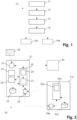
- Fig. 1 shows a flow chart of an inventive computer-implemented method 10.
- a sample of solid particles to be analyzed e.g. a sand sample with particle sizes ranging from >0 to 2 mm
- the sample area is for example formed by a sheet of paper of A4 size.
- a digital image of the sample of solid particles is taken with a camera of a mobile computer device, e.g. a smartphone.
- the camera for example has a 4K resolution.
- an imaging particle analysis of the digital image is performed for extracting at least one particle size parameter, e.g. the particle size distribution, and/or at least one particle shape parameter, e.g. roundness or sphericity, of the population of particles identified in the at least one digital image.
- at least one particle size parameter e.g. the particle size distribution
- at least one particle shape parameter e.g. roundness or sphericity
- the at least one particle size parameter and the at least one particle shape parameter are made available via a user interface, e.g. a display of the mobile computer device.
- a formulation of a curable composition comprising at least a binder and solid particles is provided, whereby nature and/or proportion of at least one component of the formulation, especially an additive, e.g. a plasticizer, in the formulation, is determined by taking into account the at least one particle size parameter and the at least one particle shape parameter.
- an additive e.g. a plasticizer
- a curable composition comprising at least a binder and solid particles
- step 15b comprises mixing the solid particles with the binder and any optional further component, whereby, the at least one particle size parameter and the at least one particle shape parameter are considered for determining nature and/or proportion of at least one of the components, especially of an additive, in the composition.
- Fig. 2 shows a schematic overview of a system 20 (not claimed) comprising means for carrying out the method shown in Fig. 1 .
- the system 20 comprises a smartphone 21 with a camera 22, a touch sensitive display comprising input device 23 and a display 24, a data processing unit 25 with a random access memory, a data storage device 29 and a wireless communication interface 28.
- an application 26 is executed in the data processing unit 25, whereby the application is configured for performing steps 12 and 14 of the method described with Fig. 1 .
- the application 26 assists a user in taking an image of solid particles in a two-dimensional sample area 30 with the built-in smartphone camera 22.
- the application is for example configured for automatically warning the user and/or for preventing taking the image as long as there is a non-plane-parallel alignment. This can be achieved by assessing the position sensors of the smartphone (not shown).
- the application is configured for automatically adjusting light conditions in order to obtain a balanced exposure.
- the digital image taken is stored in the random access memory and/or the data storage 29.
- the application 26 asks the user to enter one or more attributes of the sample via the input device and assigns a unique identifier to the sample. Attributes are e.g. the maximum grain size of the solid particles, the type of the solid particles (natural, crushed, manufactured, recycled; re-used solid particles), the state of the solid particles (wet or dry), the pretreatment (washed or untreated), the location of the source of the solid particles, the intended use (project name, customer name); and/or a general comment.
- Attributes are e.g. the maximum grain size of the solid particles, the type of the solid particles (natural, crushed, manufactured, recycled; re-used solid particles), the state of the solid particles (wet or dry), the pretreatment (washed or untreated), the location of the source of the solid particles, the intended use (project name, customer name); and/or a general comment.
- the query can e.g. be made by presenting to the user input fields, selection fields, maps and/or text input fields on the display 24 and storing the data provided by the user via the input device 23 together with the at least digital image in the random access memory and/or the data storage 29.
- the location of the source of particles can be provided manually by the user, e.g. by entering geo coordinates in input fields and/or by marking the position on a map shown on the display 24. It is however possible to automatically provide the location of the source of the solid particles e.g. by sensors of a global navigation satellite system, such as e.g. GPS, Galileo, Beidou and/or Glonass sensors. Thereby, the user might be requested to confirm the automatically determined position.
- a global navigation satellite system such as e.g. GPS, Galileo, Beidou and/or Glonass sensors.
- step 13 of the method shown in Fig. 1 is performed on an external server 21a.
- the image taken with the smartphone camera 22, optionally together with the attributes is transferred via the wireless communication interface 28 (or any other communication interface) and a network (e.g. the internet; not shown) to the server 21a.
- the server 21a receives the data via its communication interface 28a and forwards it to an imaging particle analysis application 26a running in a processing unit 25a.
- the image, optionally together with the attributes can be stored on a data storage 29a of the server 21a for later sharing, recalling and/or further evaluation.
- the application 26a performs an imaging particle analysis of the digital image whereby at least one particle size parameter, e.g. the particle size distribution, and at least one particle shape parameter, e.g. roundness or sphericity, of the population of particles identified in the at least one digital image is extracted. Thereby one or more attributes may be considered in the analysis as well.
- at least one particle size parameter e.g. the particle size distribution
- at least one particle shape parameter e.g. roundness or sphericity
- the application 26a is implemented for example with image analysis algorithms such as e.g. software packages and/or libraries provided in Matlab, OpenCV and/or ImageJ, and/or with artificial intelligence software.
- image analysis algorithms such as e.g. software packages and/or libraries provided in Matlab, OpenCV and/or ImageJ, and/or with artificial intelligence software.
- the at least one particle size parameter e.g. the particle size distribution
- at least one particle shape parameter e.g. roundness or sphericity
- the application 25a then makes available the at least one particle size parameter and/or the at least one particle shape parameter via the display 24, or saves the parameters on the data storage 29, preferably together with the attributes, for later sharing, recalling and/or further evaluation.
- This data can be stored for example in the form of a data file having a file format chosen from json, csv, txt, pdf, and/or a proprietary file format.
- a file format capable of being read by the application called "Sika Mix Design App" and/or any other additional application is chosen. See Fig. 4 for an example.
- the application 25 is configured for sharing the at least one particle size parameter and the at least one particle shape parameter and the attributes with another user by sending them, in particular as a data file, via the communication interface 28 to a further computer device 40, e.g. a smartphone of another user. This can for example be initiated by the user via input device 23, e.g. by pressing a button shown on the display 24.
- the system 20 may comprise an optional mix design application 27, which can be executed with the processing unit 25.
- the mix design application is configured for providing a formulation of a curable composition comprising at least a binder and solid particles is provided, whereby nature and/or proportion of at least one component of the formulation, especially an additive, e.g. a plasticizer, in the formulation, is determined by taking into account the at least one particle size parameter and the at least one particle shape parameter obtained with the first application 26.
- an additive e.g. a plasticizer
- the first application can forward the at least one particle size parameter and the at least one particle shape parameter, and optionally the attributes, to the mix design application 27 via an appropriate application interface.
- the data to be sent to the mix design application 27 can be provided and transferred to the mix design application 27 in the form of a data file.
- the mix design application can be configured for loading this data from the data storage 29 and/or in the form of a data file.
- the mix design application 27 is configured for making available the formulation provided on the display 24, sending it via the communication interface 28 to another computer system, e.g. server 21a, or to a further smartphone 40, and/or save it on the data storage 29 for later sharing, recalling and/or further evaluation.
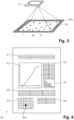
- Fig. 3 shows a schematic view of step 12 of the method shown in Fig. 1 .
- a user (not shown), holding a smartphone 21 in his hands, takes an image of a sample of solid particles L (large), M (medium), S (small) of different sizes, e.g. sand particles with particle sizes ranging from >0 to 2 mm, being provided on a white sheet of paper of A4 size serving as a two-dimensional sample area 30.
- the sheet of paper is placed on a surface with high contrast, e.g. black surface, 30a that in all directions of space is larger than the two-dimensional sample area 30.
- the two-dimensional sample area 30 is fully surrounded by a frame of a different color.
- Fig. 4 shows an example of the structure of a data file 50 in pdf file format.
- the data file 50 comprises a table 51 with attributes provided by the user, e.g. the type of the solid particles (natural, crushed, manufactured, recycled; re-used solid particles), the state of the solid particles (wet or dry), the pretreatment (washed or untreated), the location of the source of the solid particles, the intended use (project name, customer name); and/or a general comment.
- the file 50 comprises a graph 52 representing the particle size distribution, a table 53 comprising the calculated sieve size pass rate of the solid particles and/or the calculated proportion of retained solid particles, and a table 54 with statistical parameters, such as D 10 , D 50 , D 85 , and D 100 values as well as the fineness modulus of the solid particles analyzed.
- the file 50 comprises a two-dimensional plot 55 indicating the mean particle shape (for example roundness or sphericity) with a marker 55a. Additionally, the file 50 comprises a bar plot 57 displaying the mean value of selected particle shape parameters (for example roundness, sphericity and aspect ratio) per particle sieve size fraction. A more detailed view of the bar plot 57 is shown in Fig. 6 .
- Fig. 5 shows a flow chart of another computer-implemented method 60 (not claimed). Thereby, the particle size distribution and at least one particle shape parameter of a sample of solid particles are provided in a first step 61. These parameters can be obtained with the method shown in Fig. 1 or with any other method, e.g. manually.
- a formulation of a curable composition comprising at least a binder and solid particles is provided, whereby nature and/or proportion of at least one component of the formulation, especially an additive, e.g. a plasticizer, in the formulation, is determined by taking into account the particle size distribution and the at least one particle shape parameter.
- an additive e.g. a plasticizer
- mix design application 27 This can be achieved with a mix design application as described above, i.e. mix design application 27.
- This application is configured for making available the formulation provided on the display 24, sending it via the communication interface 28 to another computer system, e.g. server 21a, or to a further smartphone 40, and/or save it on the data storage 29 for later sharing, recalling and/or further evaluation.
- a curable composition comprising at least a binder and solid particles
- step 62b comprises mixing the solid particles with the binder and any optional further component, whereby, the at least one particle size parameter and/or the at least one particle shape parameter are considered for determining nature and/or proportion of at least one of the components, especially of an additive, in the composition.
- Fig. 7 shows an outline plot overlaid over the corresponding digital image.
- the outline plot can be used in addition to check the quality of the digital image and/or the analysis performed.
- Fig. 8 shows a schematic view of a light pad 70 which can be used as the two dimensional sample area 30 instead of the sheet of paper used in the setup of Fig. 3 .
- the light pad comprises of a light emitting luminous surface 71 made of a translucent layer that is illuminated with a white LED light source 73 (indicated by a dashed rectangle) from the backside.
- the light emitting luminous surface 71 has a size of a DIN A4 paper and is fully surrounded by a black frame 72.
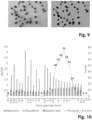
- Fig. 9 shows a sample of particles on the non-illuminated surface of the light pad 70 of Fig. 8 (left side) and the same sample of particles on the illuminated surface of the light pad 70 of Fig. 8 (right side). As evident from the comparison, the contrast on the right side is clearly better and there are no shadows visible.
- Fig. 10 shows an example of the particle counts of a sample of sand particles with a particle size > 0.5 mm per particle sieve size fractions (right axis), and additionally the corresponding mean values of three different particle shape parameters (roundness/R, sphericity/SP and aspect ratio/AR) per particle sieve size fraction (left axis).
- the data shown in Fig. 10 was obtained with the method and the system described in Fig. 1 and 2 .
- the application 26 used in this method may be further configured to calculate an overall mean value of the particle shape parameters for a selectable range of particle sieve size fractions, e.g. from a lower threshold of 4 mm to an upper threshold of 8 mm or alternatively from a lower threshold of 1 mm up the maximum sieve size fraction of 16 mm.
- the application 26 can be configured as a standalone application capable of executing all of the steps 11, 12, 13, 14 and optionally 15a of the method of Fig. 1 .
- the method can as well be used for characterizing solid particles other than sands.
- system 20 (not claimed) with mix design application 27 but without application 26.
- Such a system is for example suitable for performing the method as shown in Fig. 5 (not claimed).
- the at least one particle size parameter and the at least one particle shape parameter can be inputted manually and/or being read from the data storage 29 and/or any other data storage, e.g. data storage 29a of server 21.
Landscapes
- Chemical & Material Sciences (AREA)
- Engineering & Computer Science (AREA)
- Ceramic Engineering (AREA)
- Life Sciences & Earth Sciences (AREA)
- Health & Medical Sciences (AREA)
- Biochemistry (AREA)
- Analytical Chemistry (AREA)
- General Health & Medical Sciences (AREA)
- General Physics & Mathematics (AREA)
- Immunology (AREA)
- Pathology (AREA)
- Physics & Mathematics (AREA)
- Materials Engineering (AREA)
- Structural Engineering (AREA)
- Organic Chemistry (AREA)
- Dispersion Chemistry (AREA)
- Chemical Kinetics & Catalysis (AREA)
- Inorganic Chemistry (AREA)
- Environmental & Geological Engineering (AREA)
- General Life Sciences & Earth Sciences (AREA)
- Geology (AREA)
- Remote Sensing (AREA)
- Food Science & Technology (AREA)
- Medicinal Chemistry (AREA)
- Investigating Or Analysing Materials By Optical Means (AREA)
- Analysing Materials By The Use Of Radiation (AREA)
- Image Analysis (AREA)
Claims (24)
- Computerimplementiertes Verfahren zum Charakterisieren von festen Partikeln, vor allem von Sandpartikeln, umfassend die Schritte:a) Bereitstellen einer Probe von zu analysierenden festen Partikeln in einer vordefinierten Probefläche;b) Aufnehmen mindestens eines Digitalbildes der Probe von festen Partikeln mit einer Kamera einer mobilen Computervorrichtung;c) Ausführen einer Abbildungspartikelanalyse des mindestens einen Digitalbildes zum Extrahieren von mindestens einem Partikelgrößenparameter und optional mindestens einem Partikelformparameter der Population von in dem mindestens einen Digitalbild identifizierten Partikeln;d) Zurverfügungstellung des mindestens einen Partikelgrößenparameters und optional des mindestens einen Partikelformparameters über eine Benutzerschnittstelle, über eine Maschinenschnittstelle und/oder über ein Datenspeichermedium,dadurch gekennzeichnet, dass in Schritt a) die Probefläche eine zweidimensionale Probefläche ist, die horizontal ausgerichtet ist und wobei die festen Partikel in einer einzelnen Schicht angeordnet sind und/oder derart, dass im Wesentlichen keine Überlappung von Partikeln in der Probefläche vorliegt.
- Verfahren nach Anspruch 1, wobei die mobile Computervorrichtung ein Human Interface Device umfasst, insbesondere umfassend eine Eingabevorrichtung und eine Anzeige und vorzugsweise eine Drahtloskommunikationsvorrichtung.
- Verfahren nach einem der vorhergehenden Ansprüche, wobei die mobile Computervorrichtung ausgewählt ist aus einem Mobiltelefon, einem mobilen Computer oder einem tragbaren Computer und einem Head-Mounted Display mit Kamera.
- Verfahren nach einem der vorhergehenden Ansprüche, wobei die Kamera eine Kamera zum Aufnehmen von Bildern im sichtbaren Spektrum ist, vor allem von Farbbildern.
- Verfahren nach einem der vorhergehenden Ansprüche, wobei die Kamera eine Auflösung von mindestens 2 Megapixel hat, insbesondere mindestens 5 Megapixel, vorzugsweise mindestens 8 Megapixel, insbesondere mindestens 12 Megapixel, stark bevorzugt mindestens 20 Megapixel, noch stärker bevorzugt mindestens 50 Megapixel oder mindestens über 100 Megapixel.
- Verfahren nach einem der vorhergehenden Ansprüche, wobei die Probefläche eine Referenzskala umfasst und/oder eine bekannte Größe aufweist.
- Verfahren nach einem der vorhergehenden Ansprüche, wobei die vordefinierte Probefläche ein dünnes Plattenmaterial ist, insbesondere eines mit vordefinierter Größe.
- Verfahren nach einem der vorhergehenden Ansprüche, wobei die Partikel der Probe ausgewählt sind aus Sand, Aggregaten, Fasern und Glaskugeln.
- Verfahren nach einem der vorhergehenden Ansprüche, wobei beim Aufnehmen des Bildes die Kamera so ausgerichtet wird, dass ein Anteil der
Probefläche in dem Bild maximiert wird, insbesondere durch Bereitstellen von Ausrichtungsanweisungen für den Benutzer und/oder durch automatisches Einstellen mindestens einer Einstellung der Kamera, z. B. der Brennweite der Kamera. - Verfahren nach einem der vorhergehenden Ansprüche, wobei eine Mindestgröße von nachweisbaren Partikeln berechnet wird durch das Einbeziehen der Auflösung der Kamera, des Längenanteils der Probefläche an der Gesamtfläche des Bildes und der realen Länge der Probefläche.
- Verfahren nach einem der vorhergehenden Ansprüche, wobei, wenn eine kleinste nachweisbare Partikelgröße unter einem vorbestimmten Schwellenwert liegt, eine Warnung an den Benutzer ausgegeben wird, Ausrichtungsanweisungen an den Benutzer ausgegeben werden und/oder eine Einstellung der Kamera, z. B. die Brennweite, automatisch eingestellt wird.
- Verfahren nach einem der vorhergehenden Ansprüche, wobei der mindestens eine extrahierte Partikelgrößenparameter die Partikelgrößenverteilung der Population von in dem mindestens einen Digitalbild identifizierten Partikeln umfasst.
- Verfahren nach einem der vorhergehenden Ansprüche, wobei für jedes des mindestens einen Digitablildes ein Umrissbild erzeugt wird und vorzugsweise das Umrissbild in Schritt d) über eine Benutzerschnittstelle, über eine Maschinenschnittstelle und/oder auf einem Datenspeichermedium verfügbar gemacht wird.
- Verfahren nach einem der vorhergehenden Ansprüche, wobei in Schritt b) mindestens zwei, vorzugsweise drei, insbesondere mindestens fünf oder mindestens zehn Digitalbilder aufgenommen werden und für jedes Bild in Schritt c) eine Abbildungspartikelanalyse durchgeführt wird und wobei durch Einbeziehen jedes des mindestens einen Partikelgrößenparameters und optional des mindestens einen Partikelformparameters, individuell extrahiert aus den mindestens zwei Bildern, eine Abweichung, insbesondere die Standardabweichung des mindestens einen Partikelgrößenparameters und optional des mindestens einen Partikelformparameters bestimmt wird.
- Verfahren nach Anspruch 14, wobei, wenn die Abweichung über einem vorbestimmten Schwellenwert liegt, eine Warnung an den Benutzer ausgegeben wird und/oder wobei ein Digitalbild und/oder ein Umrissbild, das zu abweichenden Parametern führt, identifiziert und/oder angezeigt wird.
- Verfahren nach einem der vorhergehenden Ansprüche, wobei der mindestens eine Partikelgrößenparameter mindestens einen statistischen Parameter umfasst, ausgewählt aus der Gruppe bestehend aus durchschnittlicher Partikelgröße, durchschnittlichem Durchmesser, Dx-Wert mit x = 1 - 100 und/oder Feinheitsmodul.
- Verfahren nach einem der vorhergehenden Ansprüche, wobei der mindestens eine extrahierte Partikelgrößenparameter eine Abweichung von einem vordefinierten Nennwert und/oder von einer Nominalverteilung umfasst.
- Verfahren nach einem der vorhergehenden Ansprüche, wobei für Partikelgrößen unterhalb der kleinsten nachweisbaren Partikelgröße die Partikelgrößenverteilung basierend auf der extrahierten Partikelgrößenverteilung extrapoliert wird.
- Verfahren nach einem der vorhergehenden Ansprüche, wobei der mindestens eine extrahierte Partikelformparameter Rundheit, Kugelform, Seitenverhältnis, Rauheit, Festigkeit, Flockenindex, Formindex, Prozentsatz zerdrückter und gebrochener Oberflächen und/oder Kantigkeit umfasst.
- Verfahren nach einem der vorhergehenden Ansprüche, wobei der mindestens eine Partikelformparameter nur in Bezug auf Partikel mit einer vorbestimmten Größe extrahiert wird, insbesondere auf Partikel größer als eine vorgegebene Schwellengröße oder wobei für jede von mindestens zwei oder mehr vordefinierten Größenfraktionen der Partikel mindestens ein individueller Partikelformparameter extrahiert wird, insbesondere wobei mindestens ein individueller Mittelwert des Partikelformparameters extrahiert wird.
- Verfahren nach einem der vorhergehenden Ansprüche, umfassend den Schritt des Zuordnens mindestens eines Attributs zu einer Probe von festen Partikeln.
- Verfahren nach einem der vorhergehenden Ansprüche, wobei das Verfahren mindestens teilweise, insbesondere vollständig auf der mobilen Computervorrichtung ausgeführt wird.
- Verfahren nach einem der vorhergehenden Ansprüche, wobei die Bildanalyse in Schritt c) und/oder die Zurverfügungstellung in Schritt d) auf einer separaten Computervorrichtung ausgeführt wird/werden, z. B. auf einem Server.
- Verfahren nach einem der vorhergehenden Ansprüche, wobei das Bild, vorzugsweise gemeinsam mit dem mindestens einen Attribut, und optional dem Umrissbild auf einer externen Computervorrichtung, z. B. auf einem Server gespeichert werden, insbesondere zum Teilen, zum Aufrufen und/oder zur weiteren Auswertung.
Priority Applications (1)
| Application Number | Priority Date | Filing Date | Title |
|---|---|---|---|
| EP25171971.2A EP4582802A3 (de) | 2021-06-08 | 2022-06-08 | Digitale partikelanalyse |
Applications Claiming Priority (3)
| Application Number | Priority Date | Filing Date | Title |
|---|---|---|---|
| PCT/EP2021/065367 WO2022258155A1 (en) | 2021-06-08 | 2021-06-08 | Digital particle analysis |
| EP22153044 | 2022-01-24 | ||
| PCT/EP2022/065601 WO2022258715A1 (en) | 2021-06-08 | 2022-06-08 | Digital particle analysis |
Related Child Applications (2)
| Application Number | Title | Priority Date | Filing Date |
|---|---|---|---|
| EP25171971.2A Division EP4582802A3 (de) | 2021-06-08 | 2022-06-08 | Digitale partikelanalyse |
| EP25171971.2A Division-Into EP4582802A3 (de) | 2021-06-08 | 2022-06-08 | Digitale partikelanalyse |
Publications (3)
| Publication Number | Publication Date |
|---|---|
| EP4237822A1 EP4237822A1 (de) | 2023-09-06 |
| EP4237822B1 true EP4237822B1 (de) | 2025-07-02 |
| EP4237822C0 EP4237822C0 (de) | 2025-07-02 |
Family
ID=82115870
Family Applications (2)
| Application Number | Title | Priority Date | Filing Date |
|---|---|---|---|
| EP25171971.2A Pending EP4582802A3 (de) | 2021-06-08 | 2022-06-08 | Digitale partikelanalyse |
| EP22731712.0A Active EP4237822B1 (de) | 2021-06-08 | 2022-06-08 | Digitale partikelanalyse |
Family Applications Before (1)
| Application Number | Title | Priority Date | Filing Date |
|---|---|---|---|
| EP25171971.2A Pending EP4582802A3 (de) | 2021-06-08 | 2022-06-08 | Digitale partikelanalyse |
Country Status (12)
| Country | Link |
|---|---|
| US (1) | US20240280460A1 (de) |
| EP (2) | EP4582802A3 (de) |
| JP (1) | JP2024527468A (de) |
| KR (1) | KR20240018426A (de) |
| AU (1) | AU2022289241A1 (de) |
| BR (1) | BR112023022658A2 (de) |
| CA (1) | CA3221176A1 (de) |
| CO (1) | CO2023017979A2 (de) |
| ES (1) | ES3039448T3 (de) |
| MX (1) | MX2023014675A (de) |
| WO (1) | WO2022258715A1 (de) |
| ZA (1) | ZA202311464B (de) |
Families Citing this family (4)
| Publication number | Priority date | Publication date | Assignee | Title |
|---|---|---|---|---|
| AU2022491309A1 (en) * | 2022-12-22 | 2025-05-15 | Sika Technology Ag | Method to set desired properties of curable binder compositions |
| WO2025016519A1 (en) * | 2023-07-20 | 2025-01-23 | ParticleTech ApS | A method for transverse photographic analysis of dry particulate substances while suspended in a fluid |
| CN116755588B (zh) * | 2023-08-18 | 2023-11-07 | 成都建工第三建筑工程有限公司 | 一种基于抹灰机器人的数据可视化与交互系统及方法 |
| EP4632670A1 (de) | 2024-04-08 | 2025-10-15 | Sika Technology AG | Computerimplementiertes verfahren zur analyse von bildern, insbesondere im baubereich |
Citations (1)
| Publication number | Priority date | Publication date | Assignee | Title |
|---|---|---|---|---|
| US20180068825A1 (en) * | 2016-09-08 | 2018-03-08 | Kla-Tencor Corporation | Apparatus and Method for Correcting Arrayed Astigmatism in a Multi-Column Scanning Electron Microscopy System |
Family Cites Families (4)
| Publication number | Priority date | Publication date | Assignee | Title |
|---|---|---|---|---|
| US6379031B1 (en) * | 2000-01-20 | 2002-04-30 | Aggregate Research Industries, Llc | Method for manufacturing concrete |
| US8619256B1 (en) * | 2012-09-14 | 2013-12-31 | Halliburton Energy Services, Inc. | Systems and methods for monitoring the properties of a fluid cement composition in a flow path |
| GB2524130B (en) * | 2014-09-24 | 2016-02-24 | Lpw Technology Ltd | Analysing Apparatus |
| US11060855B2 (en) * | 2019-04-24 | 2021-07-13 | King Abdullah University Of Science And Technology | Angle of repose system and method |
-
2022
- 2022-06-08 AU AU2022289241A patent/AU2022289241A1/en active Pending
- 2022-06-08 KR KR1020237038280A patent/KR20240018426A/ko active Pending
- 2022-06-08 CA CA3221176A patent/CA3221176A1/en active Pending
- 2022-06-08 BR BR112023022658A patent/BR112023022658A2/pt unknown
- 2022-06-08 MX MX2023014675A patent/MX2023014675A/es unknown
- 2022-06-08 JP JP2023575441A patent/JP2024527468A/ja active Pending
- 2022-06-08 ES ES22731712T patent/ES3039448T3/es active Active
- 2022-06-08 WO PCT/EP2022/065601 patent/WO2022258715A1/en not_active Ceased
- 2022-06-08 US US18/568,320 patent/US20240280460A1/en active Pending
- 2022-06-08 EP EP25171971.2A patent/EP4582802A3/de active Pending
- 2022-06-08 EP EP22731712.0A patent/EP4237822B1/de active Active
-
2023
- 2023-12-13 ZA ZA2023/11464A patent/ZA202311464B/en unknown
- 2023-12-20 CO CONC2023/0017979A patent/CO2023017979A2/es unknown
Patent Citations (1)
| Publication number | Priority date | Publication date | Assignee | Title |
|---|---|---|---|---|
| US20180068825A1 (en) * | 2016-09-08 | 2018-03-08 | Kla-Tencor Corporation | Apparatus and Method for Correcting Arrayed Astigmatism in a Multi-Column Scanning Electron Microscopy System |
Non-Patent Citations (3)
| Title |
|---|
| ARAUJO GEORGIA S. ET AL: "Use of digital image analysis combined with fractal theory to determine particle morphology and surface texture of quartz sands", JOURNAL OF ROCK MECHANICS AND GEOTECHNICAL ENGINEERING, vol. 9, no. 6, 1 December 2017 (2017-12-01), pages 1131 - 1139, XP093122414, ISSN: 1674-7755, DOI: 10.1016/j.jrmge.2017.06.004 * |
| NICHOLAS RUDAWSKI: "FEI Tecnai F20 S/TEM: basic operation in TEM mode", 6 September 2018 (2018-09-06), XP093216417, Retrieved from the Internet <URL:https://www.youtube.com/watch?v=noE_F1o1XmA> * |
| SEKHAR TIWARY CHANDRA ET AL: "Onset of sphalerite to wurtzite transformation in ZnS nanoparticles", JOURNAL OF APPLIED PHYSICS, AMERICAN INSTITUTE OF PHYSICS, 2 HUNTINGTON QUADRANGLE, MELVILLE, NY 11747, vol. 110, no. 3, 1 August 2011 (2011-08-01), pages 34908 - 34908, XP012154165, ISSN: 0021-8979, [retrieved on 20110815], DOI: 10.1063/1.3622625 * |
Also Published As
| Publication number | Publication date |
|---|---|
| AU2022289241A1 (en) | 2023-12-14 |
| WO2022258715A1 (en) | 2022-12-15 |
| JP2024527468A (ja) | 2024-07-25 |
| ES3039448T3 (en) | 2025-10-21 |
| US20240280460A1 (en) | 2024-08-22 |
| EP4582802A3 (de) | 2026-03-04 |
| KR20240018426A (ko) | 2024-02-13 |
| EP4237822A1 (de) | 2023-09-06 |
| EP4237822C0 (de) | 2025-07-02 |
| MX2023014675A (es) | 2024-01-12 |
| ZA202311464B (en) | 2025-09-25 |
| CO2023017979A2 (es) | 2024-01-15 |
| CA3221176A1 (en) | 2022-12-15 |
| BR112023022658A2 (pt) | 2024-01-16 |
| EP4582802A2 (de) | 2025-07-09 |
Similar Documents
| Publication | Publication Date | Title |
|---|---|---|
| EP4237822B1 (de) | Digitale partikelanalyse | |
| An et al. | A fast and practical method for determining particle size and shape by using smartphone photogrammetry | |
| Lee et al. | A new approach to the three-dimensional quantification of angularity using image analysis of the size and form of coarse aggregates | |
| CN109856029B (zh) | 一种基于图像分析的孔隙度评价方法 | |
| JP2009036533A (ja) | 地盤材料の粒度計測システム及びプログラム | |
| Nežerka et al. | Assessment of aggregate-bitumen coverage using entropy-based image segmentation | |
| Tuan et al. | Automatic stereo vision-based inspection system for particle shape analysis of coarse aggregates | |
| Yu et al. | A rapid gradation detection system for earth and stone materials based on digital image | |
| Sorrentino et al. | Close-range photogrammetry reveals morphometric changes on replicative ground stones | |
| WO2022258155A1 (en) | Digital particle analysis | |
| CN113177949A (zh) | 一种大尺寸岩石颗粒特征识别方法及装置 | |
| CN105814428B (zh) | 取样位置显示装置及取样方法 | |
| Huang et al. | Field imaging and volumetric reconstruction of riprap rock and large-sized aggregates: algorithms and application | |
| Hurst et al. | Assessment of Apple’s object capture photogrammetry API for rapidly creating research quality cultural heritage 3D models | |
| Ferrer et al. | Evaluation of a simple and affordable image-based procedure to measure particle size distribution | |
| Moaveni | Advanced image analysis and techniques for degradation characterization of aggregates | |
| An et al. | Potential of smartphone-based photogrammetry for measuring particle size and shape in field surveys | |
| Razali et al. | Quantitative weathering assessment of rock slope using CIELAB color space and image analysis technique | |
| Thomas et al. | Applications of low‐budget photogrammetry in the geotechnical laboratory | |
| EP4630806A1 (de) | Digitale analyse heterogener materialien | |
| CN103048257A (zh) | 一种砂土种类识别与颗粒组分分析装置 | |
| CN106442539A (zh) | 利用图像信息测量工件表面缺陷的方法 | |
| Blair et al. | Photometric stereo data for the validation of a structural health monitoring test rig | |
| CN117242328A (zh) | 数字颗粒分析 | |
| CN115641312A (zh) | Led覆膜背光板的合格检测方法、装置和计算机设备 |
Legal Events
| Date | Code | Title | Description |
|---|---|---|---|
| STAA | Information on the status of an ep patent application or granted ep patent |
Free format text: STATUS: UNKNOWN |
|
| STAA | Information on the status of an ep patent application or granted ep patent |
Free format text: STATUS: THE INTERNATIONAL PUBLICATION HAS BEEN MADE |
|
| PUAI | Public reference made under article 153(3) epc to a published international application that has entered the european phase |
Free format text: ORIGINAL CODE: 0009012 |
|
| STAA | Information on the status of an ep patent application or granted ep patent |
Free format text: STATUS: REQUEST FOR EXAMINATION WAS MADE |
|
| 17P | Request for examination filed |
Effective date: 20230615 |
|
| AK | Designated contracting states |
Kind code of ref document: A1 Designated state(s): AL AT BE BG CH CY CZ DE DK EE ES FI FR GB GR HR HU IE IS IT LI LT LU LV MC MK MT NL NO PL PT RO RS SE SI SK SM TR |
|
| STAA | Information on the status of an ep patent application or granted ep patent |
Free format text: STATUS: EXAMINATION IS IN PROGRESS |
|
| 17Q | First examination report despatched |
Effective date: 20240130 |
|
| DAV | Request for validation of the european patent (deleted) | ||
| DAX | Request for extension of the european patent (deleted) | ||
| GRAP | Despatch of communication of intention to grant a patent |
Free format text: ORIGINAL CODE: EPIDOSNIGR1 |
|
| STAA | Information on the status of an ep patent application or granted ep patent |
Free format text: STATUS: GRANT OF PATENT IS INTENDED |
|
| INTG | Intention to grant announced |
Effective date: 20250210 |
|
| GRAS | Grant fee paid |
Free format text: ORIGINAL CODE: EPIDOSNIGR3 |
|
| GRAA | (expected) grant |
Free format text: ORIGINAL CODE: 0009210 |
|
| STAA | Information on the status of an ep patent application or granted ep patent |
Free format text: STATUS: THE PATENT HAS BEEN GRANTED |
|
| AK | Designated contracting states |
Kind code of ref document: B1 Designated state(s): AL AT BE BG CH CY CZ DE DK EE ES FI FR GB GR HR HU IE IS IT LI LT LU LV MC MK MT NL NO PL PT RO RS SE SI SK SM TR |
|
| REG | Reference to a national code |
Ref country code: GB Ref legal event code: FG4D |
|
| REG | Reference to a national code |
Ref country code: CH Ref legal event code: EP |
|
| REG | Reference to a national code |
Ref country code: DE Ref legal event code: R096 Ref document number: 602022016949 Country of ref document: DE |
|
| REG | Reference to a national code |
Ref country code: IE Ref legal event code: FG4D |
|
| U01 | Request for unitary effect filed |
Effective date: 20250729 |
|
| U07 | Unitary effect registered |
Designated state(s): AT BE BG DE DK EE FI FR IT LT LU LV MT NL PT RO SE SI Effective date: 20250805 |
|
| REG | Reference to a national code |
Ref country code: ES Ref legal event code: FG2A Ref document number: 3039448 Country of ref document: ES Kind code of ref document: T3 Effective date: 20251021 |
|
| PG25 | Lapsed in a contracting state [announced via postgrant information from national office to epo] |
Ref country code: IS Free format text: LAPSE BECAUSE OF FAILURE TO SUBMIT A TRANSLATION OF THE DESCRIPTION OR TO PAY THE FEE WITHIN THE PRESCRIBED TIME-LIMIT Effective date: 20251102 |
|
| PG25 | Lapsed in a contracting state [announced via postgrant information from national office to epo] |
Ref country code: NO Free format text: LAPSE BECAUSE OF FAILURE TO SUBMIT A TRANSLATION OF THE DESCRIPTION OR TO PAY THE FEE WITHIN THE PRESCRIBED TIME-LIMIT Effective date: 20251002 |
|
| PG25 | Lapsed in a contracting state [announced via postgrant information from national office to epo] |
Ref country code: HR Free format text: LAPSE BECAUSE OF FAILURE TO SUBMIT A TRANSLATION OF THE DESCRIPTION OR TO PAY THE FEE WITHIN THE PRESCRIBED TIME-LIMIT Effective date: 20250702 |
|
| PG25 | Lapsed in a contracting state [announced via postgrant information from national office to epo] |
Ref country code: GR Free format text: LAPSE BECAUSE OF FAILURE TO SUBMIT A TRANSLATION OF THE DESCRIPTION OR TO PAY THE FEE WITHIN THE PRESCRIBED TIME-LIMIT Effective date: 20251003 |
|
| PG25 | Lapsed in a contracting state [announced via postgrant information from national office to epo] |
Ref country code: CZ Free format text: LAPSE BECAUSE OF FAILURE TO SUBMIT A TRANSLATION OF THE DESCRIPTION OR TO PAY THE FEE WITHIN THE PRESCRIBED TIME-LIMIT Effective date: 20250702 |
|
| PG25 | Lapsed in a contracting state [announced via postgrant information from national office to epo] |
Ref country code: RS Free format text: LAPSE BECAUSE OF FAILURE TO SUBMIT A TRANSLATION OF THE DESCRIPTION OR TO PAY THE FEE WITHIN THE PRESCRIBED TIME-LIMIT Effective date: 20251002 |