EP4236524B1 - Verfahren, vorrichtung, vorrichtung und speichermedium zur aktivierung einer sekundärzelle - Google Patents
Verfahren, vorrichtung, vorrichtung und speichermedium zur aktivierung einer sekundärzelle Download PDFInfo
- Publication number
- EP4236524B1 EP4236524B1 EP20958239.4A EP20958239A EP4236524B1 EP 4236524 B1 EP4236524 B1 EP 4236524B1 EP 20958239 A EP20958239 A EP 20958239A EP 4236524 B1 EP4236524 B1 EP 4236524B1
- Authority
- EP
- European Patent Office
- Prior art keywords
- reference signal
- time domain
- secondary cell
- domain position
- terminal
- Prior art date
- Legal status (The legal status is an assumption and is not a legal conclusion. Google has not performed a legal analysis and makes no representation as to the accuracy of the status listed.)
- Active
Links
Images


Classifications
-
- H—ELECTRICITY
- H04—ELECTRIC COMMUNICATION TECHNIQUE
- H04L—TRANSMISSION OF DIGITAL INFORMATION, e.g. TELEGRAPHIC COMMUNICATION
- H04L5/00—Arrangements affording multiple use of the transmission path
- H04L5/003—Arrangements for allocating sub-channels of the transmission path
- H04L5/0048—Allocation of pilot signals, i.e. of signals known to the receiver
-
- H—ELECTRICITY
- H04—ELECTRIC COMMUNICATION TECHNIQUE
- H04L—TRANSMISSION OF DIGITAL INFORMATION, e.g. TELEGRAPHIC COMMUNICATION
- H04L5/00—Arrangements affording multiple use of the transmission path
- H04L5/0091—Signalling for the administration of the divided path, e.g. signalling of configuration information
- H04L5/0096—Indication of changes in allocation
-
- H—ELECTRICITY
- H04—ELECTRIC COMMUNICATION TECHNIQUE
- H04L—TRANSMISSION OF DIGITAL INFORMATION, e.g. TELEGRAPHIC COMMUNICATION
- H04L5/00—Arrangements affording multiple use of the transmission path
- H04L5/0091—Signalling for the administration of the divided path, e.g. signalling of configuration information
- H04L5/0096—Indication of changes in allocation
- H04L5/0098—Signalling of the activation or deactivation of component carriers, subcarriers or frequency bands
-
- H—ELECTRICITY
- H04—ELECTRIC COMMUNICATION TECHNIQUE
- H04W—WIRELESS COMMUNICATION NETWORKS
- H04W72/00—Local resource management
- H04W72/04—Wireless resource allocation
-
- H—ELECTRICITY
- H04—ELECTRIC COMMUNICATION TECHNIQUE
- H04W—WIRELESS COMMUNICATION NETWORKS
- H04W72/00—Local resource management
- H04W72/04—Wireless resource allocation
- H04W72/044—Wireless resource allocation based on the type of the allocated resource
- H04W72/0446—Resources in time domain, e.g. slots or frames
-
- H—ELECTRICITY
- H04—ELECTRIC COMMUNICATION TECHNIQUE
- H04W—WIRELESS COMMUNICATION NETWORKS
- H04W72/00—Local resource management
- H04W72/20—Control channels or signalling for resource management
- H04W72/23—Control channels or signalling for resource management in the downlink direction of a wireless link, i.e. towards a terminal
-
- H—ELECTRICITY
- H04—ELECTRIC COMMUNICATION TECHNIQUE
- H04W—WIRELESS COMMUNICATION NETWORKS
- H04W72/00—Local resource management
- H04W72/20—Control channels or signalling for resource management
- H04W72/23—Control channels or signalling for resource management in the downlink direction of a wireless link, i.e. towards a terminal
- H04W72/231—Control channels or signalling for resource management in the downlink direction of a wireless link, i.e. towards a terminal the control data signalling from the layers above the physical layer, e.g. RRC or MAC-CE signalling
-
- H—ELECTRICITY
- H04—ELECTRIC COMMUNICATION TECHNIQUE
- H04W—WIRELESS COMMUNICATION NETWORKS
- H04W72/00—Local resource management
- H04W72/20—Control channels or signalling for resource management
- H04W72/23—Control channels or signalling for resource management in the downlink direction of a wireless link, i.e. towards a terminal
- H04W72/232—Control channels or signalling for resource management in the downlink direction of a wireless link, i.e. towards a terminal the control data signalling from the physical layer, e.g. DCI signalling
-
- H—ELECTRICITY
- H04—ELECTRIC COMMUNICATION TECHNIQUE
- H04L—TRANSMISSION OF DIGITAL INFORMATION, e.g. TELEGRAPHIC COMMUNICATION
- H04L5/00—Arrangements affording multiple use of the transmission path
- H04L5/0001—Arrangements for dividing the transmission path
- H04L5/0003—Two-dimensional division
- H04L5/0005—Time-frequency
- H04L5/0007—Time-frequency the frequencies being orthogonal, e.g. OFDM(A) or DMT
- H04L5/001—Time-frequency the frequencies being orthogonal, e.g. OFDM(A) or DMT the frequencies being arranged in component carriers
-
- H—ELECTRICITY
- H04—ELECTRIC COMMUNICATION TECHNIQUE
- H04L—TRANSMISSION OF DIGITAL INFORMATION, e.g. TELEGRAPHIC COMMUNICATION
- H04L5/00—Arrangements affording multiple use of the transmission path
- H04L5/003—Arrangements for allocating sub-channels of the transmission path
- H04L5/0053—Allocation of signalling, i.e. of overhead other than pilot signals
-
- Y—GENERAL TAGGING OF NEW TECHNOLOGICAL DEVELOPMENTS; GENERAL TAGGING OF CROSS-SECTIONAL TECHNOLOGIES SPANNING OVER SEVERAL SECTIONS OF THE IPC; TECHNICAL SUBJECTS COVERED BY FORMER USPC CROSS-REFERENCE ART COLLECTIONS [XRACs] AND DIGESTS
- Y02—TECHNOLOGIES OR APPLICATIONS FOR MITIGATION OR ADAPTATION AGAINST CLIMATE CHANGE
- Y02D—CLIMATE CHANGE MITIGATION TECHNOLOGIES IN INFORMATION AND COMMUNICATION TECHNOLOGIES [ICT], I.E. INFORMATION AND COMMUNICATION TECHNOLOGIES AIMING AT THE REDUCTION OF THEIR OWN ENERGY USE
- Y02D30/00—Reducing energy consumption in communication networks
- Y02D30/70—Reducing energy consumption in communication networks in wireless communication networks
Definitions
- the present application relates to the field of mobile communications, and in particular, to a method, apparatus, device for activating a secondary cell and a storage medium.
- a carrier aggregation manner can be used to support a relatively large bandwidth, and a terminal can receive data or send data from a plurality of cells of the carrier aggregation.
- the aggregated plurality of cells include one primary cell and a plurality of secondary cells, and the initial state of the secondary cell is a deactivated state, thus the terminal needs to activate the secondary cell to receive or send data.
- the terminal receives the Media Access Control (MAC) Control Element (CE) sent by the network device for activating the secondary cell, returns a confirmation message indicating that the MAC CE has been received, receives the first Synchronization Signal Block (SSB) after a preset duration after returning the confirmation message, parses the SSB, determines to use the secondary cell, and then activates the secondary cell.
- MAC Media Access Control
- SSB Synchronization Signal Block
- the terminal waits for a long delay to receive the SSB, activation of the secondary cell takes a long time.
- ERICSSON "Reduced Latency SCell Activation", 3GPP DRAFT; R1-206673 relates to high-level framework to support faster SCell activation.
- Discussion on fast SCell activation based on Aperiodic TRS A-TRS
- 3GPP DRAFT 3GPP DRAFT
- R2-1908686 relates to a way to speed up SCell activation based on A-TRS when SSB is not present for AGC and FTL/TTL.
- WO2020191764A1 relates to methods and apparatuses for fast serving cell activation.
- Embodiments of the present application provide a method, apparatus, device for activating a secondary cell, and a storage medium, which reduce the waiting time for receiving the first SSB, thereby reducing the time delay for activating the secondary cell, and improving the accuracy of activating the secondary cell.
- the technical solutions are as follows.
- a method for activating a secondary cell is provided, which is applied to a terminal, and the method is as set out in claim 1. Additional features are set out in claims 2 to 5.
- a method for activating a secondary cell is provided, which is applied to a network device, and the method is as set out in claim 6. Additional features are set out in claims 7 to 10.
- a terminal is provided as set out in claim 11.
- a network device is provided as set out in claim 12.
- a computer-readable storage medium is provided, and executable program codes are stored in the readable storage medium, and the executable program codes are loaded and executed by the processor to implement the method for activating a secondary cell as described in the above aspects.
- the terminal can receive the reference signal based on the reference signal activation signaling, and then activate the secondary cell, without waiting for receiving the first SSB and then activating the secondary cell, which reduces the delay of activating the secondary cell and improves the accuracy of activating the secondary cell.
- Carrier aggregation can be divided into continuous carrier aggregation and discontinuous carrier aggregation according to whether the aggregated carriers are continuous in the spectrum. Carrier aggregation can be divided into intra-band carrier aggregation and inter-band carrier aggregation according to whether the frequency bands in which the aggregated carriers are located are the same.
- the carriers of carrier aggregation include Primary Cell Component (PCC, primary carrier) and Secondary Cell Component (SCC, secondary carrier).
- PCC Primary Cell Component
- SCC Secondary Cell Component
- PCC provides an RRC signaling connection, a Non-Access Stratrum (NAS) function, or a security service, and so on.
- SCC provides additional radio resources.
- PCC and SCC are both serving cells.
- the maximum number of carriers through carrier aggregation is 5, and the maximum bandwidth after aggregation is 100 MHZ (megahertz), and the aggregated carriers all belong to the same base station.
- one carrier aggregation includes 5 carriers, the bandwidth of each carrier is 20MHz, and the maximum bandwidth after aggregation is 100MHz.
- the carriers aggregated through carrier aggregation use the same cell radio network temporary identifier (C-RNTI), and the base station can ensure that the C-RNTI does not collide in the cell where each carrier is located. Since carrier aggregation includes asymmetric carrier aggregation and symmetric carrier aggregation, the aggregated carriers are required to include downlink, but may not include uplink.
- C-RNTI cell radio network temporary identifier
- the secondary cell is configured through Radio Resource Control (RRC) signaling, and the initial state of the secondary cell is a deactivated state. In this deactivated state, the secondary cell cannot receive or send data.
- RRC Radio Resource Control
- the secondary cell needs to be activated, and the activated secondary cell can receive and send data.
- Reference signal is TRS or CSI RS.
- the reference signal will be described by taking the TRS as an example.
- the TRS occupies symbols at preset positions in each slot, for example, the TRS occupies the 5th symbol and the 9th symbol in one slot.
- FIG. 2 shows a block diagram of a communication system provided by an exemplary embodiment of the present application.
- the communication system may include: an access network 12 and a terminal 13.
- the access network 12 includes several network devices 120.
- the network device 120 may be an apparatus that provides a radio communication function for the terminal.
- the network device 120 may be various forms of base stations (e.g., a macro base station, a micro base station, a relay station) or access points, and the like.
- base stations e.g., a macro base station, a micro base station, a relay station
- the names of devices with base station functions may be different.
- eNodeB or eNB In the LTE system, they are called eNodeB or eNB; in the 5G NR-U system, they are called gNodeB or gNB.
- the term "base station" may change.
- the above-mentioned apparatuses for providing the terminal 13 with a radio communication function are collectively referred to as an access network device.
- the terminal 13 may include various handheld devices, vehicle-mounted devices, wearable devices, computing devices with radio communication functions or other processing devices connected to the wireless modem, as well as various forms of user equipment, Mobile Stations (MS), terminal (terminal device) and so on.
- MS Mobile Stations
- terminal device terminal device
- the access network device 120 and the terminal 13 communicate with each other through a certain air interface technology, such as a Uu interface.
- GSM Global System of Mobile communication
- CDMA Code Division Multiple Access
- WCDMA Wideband Code Division Multiple Access
- GPRS General Packet Radio Service
- LTE Long Term Evolution
- FDD Frequency Division Duplex
- TDD Time Division Duplex
- LTE-A Advanced Long Term Evolution
- NR New Radio
- UMTS Universal Mobile Telecommunication System
- WiMAX Worldwide Interoperability for Microwave Access
- WLAN Wireless Local Area Networks
- WiFi Wireless Fidelity
- D2D Device to Device
- M2M Machine to Machine
- MTC Machine Type Communication
- V2V Vehicle to Vehicle
- V2X Vehicle to Everything
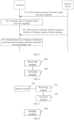
- FIG. 3 shows a flowchart of a method for activating a secondary cell provided by an exemplary embodiment of the present application, which is applied to the terminal and the network device shown in FIG. 2 , and the method includes at least part of the following contents.
- the network device sends a reference signal activation signaling.
- the terminal receives the reference signal activation signaling.
- the reference signal activation signaling is used for activating a reference signal.
- the reference signal activation signaling may also be other types of signaling, and these signalings also have the function of activating the reference signal, which is not limited in the embodiments of the present application.
- the reference signal is used for activation of the secondary cell.
- the embodiments of the present application are applied in a carrier aggregation scenario. If a plurality of carriers are aggregated through the carrier aggregation technology, the primary cell corresponds to one of the aggregated plurality of carriers, and the secondary cell corresponds to another of the aggregated plurality of carriers.
- the network device sends the reference signal activation signaling to the terminal, and the reference signal can be activated through the reference signal activation signaling.
- the network device sends the reference signal, and then the terminal activates the secondary cell based on the reference signal sent by the network device, and transmits data by using the carrier corresponding to the secondary cell.
- the reference signal activation signaling is any one of Medium Access Control (MAC) Control Element (CE) or Downlink Control Information (DCI).
- MAC Medium Access Control
- CE Control Element
- DCI Downlink Control Information
- the network device sends the MAC CE, the terminal receives the MAC CE, determines the secondary cell to be activated subsequently, and then activates the secondary cell based on the received reference signal.
- the network device sends the DCI, the terminal receives the DCI, determines the secondary cell to be activated subsequently, and then activates the secondary cell based on the received reference signal.
- the reference signal in the embodiments of the present application is a Tracking Reference Signal (TRS).
- TRS Tracking Reference Signal
- the network device sends a reference signal based on the reference signal activation signaling.
- the terminal receives the reference signal based on the reference signal activation signaling, and activates the secondary cell.
- the terminal after receiving the reference signal activation signaling, determines a time domain position of the reference signal based on the reference signal activation signaling, and then receives the reference signal based on the time domain position of the reference signal to activate the secondary cell.
- the terminal determines the starting time domain position of the reference signal based on the time domain position at which the reference signal activation signaling is sent, and starts receiving the reference signal at the starting time domain position of the reference signal.
- the reference signal activation signaling includes two cases of MAC CE or DCI, then determining the starting time domain position of the reference signal also includes the following two cases:
- the terminal receives the MAC CE after the network device sends the MAC CE to the terminal, and the time domain position for sending the MAC CE is determined, and then the starting time domain position of the reference signal is determined based on the time domain position of the MAC CE, the network device sends the reference signal at the starting time domain position of the reference signal, and the terminal receives the reference signal at the starting time domain position.
- the terminal receives the MAC CE and needs to process the MAC CE to obtain the information included in the MAC CE.
- the process of the MAC CE by the terminal requires the first preset duration. Therefore, the reference signal is received at a time domain position corresponding to the first preset duration after the time of sending the MAC CE.
- the first preset duration is set by the network device, or set by the operator, or set by other methods.
- the first preset duration is 40 milliseconds, 50 milliseconds, or other values.
- the first preset duration is represented by a time unit, for example, the first preset duration is T time units.
- T is an integer.
- the time unit is a symbol or the time unit is a slot.
- the starting time domain position of the reference signal is a time domain position corresponding to a second preset duration after the moment when a confirmation message of the MAC CE is sent.
- the confirmation message is a HARQ-ACK message.
- the terminal receives the MAC CE, parses the MAC CE, and the terminal also needs to return the confirmation message of the MAC CE to the network device, so it is determined that the time domain position corresponding to the second preset duration after the terminal sends the confirmation message of the MAC CE is the starting time domain position of the reference signal.
- the second preset duration is set by the network device, or set by the operator, or set by other methods.
- the second preset duration is 20 milliseconds, 30 milliseconds, or other values.
- the starting time domain position of the reference signal is a time domain position corresponding to a third preset duration after the moment when the DCI is sent.
- the terminal determines the starting time domain position of the reference signal based on the time domain position of the DCI after the network device sends the DCI to the terminal, the network device starts sending the reference signal at the starting time domain position, and the terminal starts receiving the reference signal at the starting time domain position.
- the terminal After the terminal receives the DCI, it needs to process the DCI to obtain the information included in the DCI.
- the processing of the DCI by the terminal requires a certain period of time. Therefore, the terminal may receive the reference signal at the time domain position corresponding to the third preset duration after the moment of sending the DCI.
- T proc is the third preset duration
- k and T c are constants
- ⁇ 0, 1, 2, 3
- N 1 is the processing time of PDSCH
- N 1 is set by the network device, or set by the operator, or set in other ways.
- k is 64 and T c is 1/1966080000.
- ⁇ is 0, if the subcarrier spacing is 30KHz, then ⁇ is 1, if the subcarrier spacing is 60KHz, then ⁇ is 2, if the subcarrier spacing is 120KHz, then ⁇ is 3.
- the third preset duration is represented by a time unit, for example, the third preset duration is N time units. N is an integer.
- an interval between the time domain position of the DCI and the starting time domain position of the reference signal is not less than the third preset duration.
- the DCI is used as the reference signal activation signaling, and then the starting time domain position of the reference signal can be determined based on the time domain position where the DCI is sent. Since the terminal can complete the processing of the DCI, there is no need to improve the processing speed of the terminal, which reduces the complexity of the terminal and improves the processing rate of the reference signal.
- the network device can activate different carriers and send or receive different information on different carriers. If the starting frequency domain position of the reference signal overlaps with the time domain position of the Synchronization Signal Block (SSB) of the activated carrier, the terminal can detect the reference signal and the SSB at the overlapping time domain position, and can consider a plurality of carriers at the same time, which improves the efficiency of receiving information by the terminal.
- SSB Synchronization Signal Block
- the starting time domain position of the reference signal is in the same slot as the SSB, and the symbol where the reference signal is located is a subset or a universe set of symbols where the SSB is located.
- the starting time domain position of the reference signal is determined according to the state of the carrier corresponding to the secondary cell.
- the state of the carrier corresponding to the secondary cell includes a plurality of states, the manners of determining the starting time domain position of the reference signal are different in different states.
- the state of the carrier corresponding to the secondary cell is determined according to at least one of a measurement cycle of the secondary cell, a frequency range to which the secondary cell belongs, or whether the secondary cell is known.
- the terminal determines the state of the carrier corresponding to the secondary cell. For example, if the secondary cell is unknown, it determines that the state of the carrier corresponding to the secondary cell is state 1, and if the frequency range to which the secondary cell belongs is FR1 (referring to a frequency range, for example, 450MHz-6000MHz), then it is determined that the state of the carrier corresponding to the secondary cell is state 2, or other states can also be determined.
- FR1 referring to a frequency range, for example, 450MHz-6000MHz
- the embodiments of the present application include 9 types of state of carrier.
- the 9 types of states of carrier are shown in Table 1: Table 1 Number of state State of carrier 1 If the secondary cell is known and belongs to FR1, and the measurement cycle of the secondary cell is equal to or smaller than 160ms 2 If the secondary cell is known and belongs to FR1, and the measurement cycle of the secondary cell is larger than 160ms 3 If the secondary cell is unknown and belongs to FR1, provided that the side condition conditions/Iot ⁇ - 2dB (ratio) is fulfilled 4 If the activated secondary cell belongs to FR2 and there is at least one active serving cell on the FR2 band, and - SMTC for the target SCell is provided to the terminal, and - The SSBs in the serving cell(s) and the SSBs in the SCell fulfill the condition defined in Section 3.6.3, - The parameter ssb-PositionsInBurst is the same for the serving cell(s) and SCell 5 If the activated SCell belongs to FR2 and there
- the activated SCell belongs to FR2, and if there is no active serving cell on the FR2 band provided that PCell or PSCell is in FR1 or in FR2: If the target SCell is known to the terminal and semi-persistent CSI-RS is used for CSI reporting, if the target SCell is known to the terminal and periodic CSI-RS is used for CSI reporting. 8 If the PCell/PSCell and the target SCell are in a band pair with independent beam management, and the target SCell is unknown to the terminal, and the semi-persistent CSI-RS is used for CSI reporting, provided that the side condition ⁇ s/Iot ⁇ - 2dB is fulfilled.
- the determined starting time domain position of the reference signal is not only related to the time domain position of the reference signal activation signaling, but also needs to be guaranteed to overlap with the time domain position of the SSB.
- the determined starting time domain position of the reference signal is related to the time domain position of the reference signal activation signaling.
- the first point that needs to be explained is that the terminal and the network device in the embodiments of the present application both determine the starting time domain position of the reference signal by using the above manners.
- the embodiments of the present application are only described by taking the terminal determining the starting time domain position of the reference signal according to the time domain position of the reference signal activation signaling as an example.
- the starting time domain position of the reference signal can also be indicated by the network device, without the need for the terminal to determine based on the time domain position of the reference signal activation signaling.
- the time domain length of the reference signal can be determined in the following three ways:
- the time domain length of the reference signal is used to represent the number of time domain positions corresponding to the reference signal. For example, the reference signal occupies 4 time domain positions, or the reference signal occupies 6 time domain positions, or the reference signal occupies other number of time domain positions.
- the time domain length of the reference signal is represented by the number of time domain units, or the time domain length of the reference signal is represented by the number of times of repeated transmission of the reference signal.
- the number of time domain positions occupied by the reference signal is the same as the number of the symbols. If the time domain length of the reference signal is represented by slots, the number of time domain positions occupied by the reference signal is twice the number of slots. If the time domain length of the reference signal is represented by the number of repeated transmissions of the reference signal, the number of time domain positions occupied by the reference signal is four times the number of repeated transmissions.
- the embodiments of the present application only take the number of repeated transmissions or the number of time domain units to represent the time domain length of the reference signal as an example for description, and the present application is not limited to the above-mentioned methods, and other methods can also be used to represent the time domain length of the reference signal.
- the time domain length of the reference signal is determined by way (1), for the time-frequency synchronization function, a plurality of time domain positions of the reference signal are required, and time-frequency synchronization is realized according to a difference between the plurality of time domain positions. Or, for the frequency gain control function, if the reference signal is one symbol, the frequency gain control can be completed, and if the reference signal is a plurality of symbols, the frequency gain control can also be completed. Then, in the above way, the time domain length of the reference signal can be determined according to the states of the carriers of different secondary cells.
- the time domain length of the reference signal shown in Table 2 can be determined: Table 2 Number of state State of carrier Number of symbols occupied by reference signal Number of slots for configuring reference signal Usage 1 If the secondary cell is known and belongs to FR1, and the measurement cycle of the secondary cell is equal to or smaller than 160ms 4 2 Time-frequency synchronization 2 If the secondary cell is known and belongs to FR1, and the measurement cycle of the secondary cell is larger than 160ms 6 3 AGC setting and time-frequency synchronization 3 If the secondary cell is unknown and belongs to FR1, provided that the side condition conditions/Iot ⁇ -2dB is fulfilled 8 4 AGC setting and time-frequency synchronization 4 If the activated secondary cell belongs to FR2 and there is at least one active serving cell on the FR2 band, and 4 2 Time-frequency synchronization - SMTC for the target SCell is provided to the terminal, and - The SSBs in the serving cell(s) and the SSBs in the SCell
- the target SCell is known to the terminal and periodic CSI-RS is used for CSI reporting 8 If the PCell/PSCell and the target SCell are in a band pair with independent beam management, and the target SCell is unknown to the terminal, and semi-persistent CSI-RS is used for CSI reporting, provided that the side condition ⁇ s/Iot ⁇ - 2dB is fulfilled 48 24 AGC setting and time-frequency synchronization of a plurality of beams 9 If the PCell/PSCell and the target SCell are in a band pair with independent beam management, and the target SCell is unknown to the terminal, and periodic CSI-RS is used for CSI reporting, provided that the side condition ⁇ s/Iot ⁇ -2dB is fulfilled 48 24 AGC setting and time-frequency synchronization of a plurality of beams
- the network device can send the reference signal configuration signaling to the terminal, and the terminal receives the reference signal configuration signaling, and determines the time domain length of the reference signal based on the reference signal configuration signaling.
- the time domain length of the reference signal determined by the terminal is a preset length.
- the preset length is set by the network device, or set by the operator, or set by other ways.
- the above preset length is just an example, and may be other values in practical applications.
- the time domain length of the reference signal is determined as the preset length, which reduces the operation of the terminal for determining the time domain length of the reference signal, and improves the efficiency of determining the time domain length of the reference signal.
- the time domain position of the reference signal is determined according to the state of the carrier corresponding to the secondary cell.
- the state of the carrier corresponding to the secondary cell is determined according to at least one of a measurement cycle of the secondary cell, a frequency range to which the secondary cell belongs, or whether the secondary cell is known.
- the state of the carrier corresponding to the secondary cell is that the time domain synchronization is completed according to the reference signal, it is determined that there is an interval between the time domain positions of the reference signal, or the reference signal includes a reference signal used for frequency gain control setting and a reference signal used for time-frequency synchronization, if the state of the carrier is to complete time domain synchronization and frequency gain control setting according to the reference signal, the reference signal used for frequency gain control setting is adjacent to the reference signal used for time-frequency synchronization.
- the state of the carrier since the state of the carrier is different, the dependence of the terminal on the reference signal is also different. For different carrier states, the number of time domain positions of the reference signal and the interval of the time domain positions are also different.
- the terminal completes time-frequency synchronization according to the reference signal, and there is an interval between the time domain positions of the reference signal.
- the terminal completes time domain synchronization and frequency gain control according to the reference signal.
- the reference signal used for frequency gain control is adjacent to the reference signal used for time-frequency synchronization, and there is an interval between the time domain positions of the reference signal used for time-frequency synchronization.
- the terminal completes time domain synchronization and frequency gain control according to the reference signal, and the frequency gain control needs to be set multiple times, so a plurality of reference signals are required.
- the plurality of reference signals used for frequency gain control are adjacent, and there is an interval between the plurality of reference signals used for time-frequency synchronization.
- the terminal completes time-frequency synchronization according to the reference signal, and there is an interval between the time domain positions of the reference signal.
- the terminal does not need to receive the reference signal.
- the terminal completes time domain synchronization and frequency gain control according to the reference signal.
- the reference signal used for frequency gain control is adjacent to the reference signal used for time-frequency synchronization, and there is an interval between the time domain positions of the reference signal used for time-frequency synchronization.
- state 8 for the same beam (with QCL Type D relationship between signals), it is the same as state 3.
- a plurality of beams are repeatedly mapped on different symbols. There is a certain interval between different beams to meet the time for beam switching.
- state 9 for the same beam (with QCL Type D relationship between signals), it is the same as state 3.
- a plurality of beams are repeatedly mapped on different symbols. There is a certain interval between different beams to meet the time for beam switching.
- Table 3 shows the time domain position of the reference signal corresponding to each state, and the value of x is 5: Table 3 Number of state First column of TRS Second column of TRS Third column of TRS Fourth column of TRS 1 X X+5 0 0 2 X X+1 X+5 0 3 X X+1 X+2 X+6 4 X X+5 0 0 5 0 0 0 0 6 X X+1 X+5 0 7 X X+1 X+5 0 8 X X+1 X+2 X+6 9 X X+1 X+2 X+6
- the time domain position of the reference signal is a slot occupied by the reference signal and/or a preset position in the slot.
- each time domain position of the reference signal is determined by using the existing format of the time domain position of the reference signal. For example, as shown in Table 4, the time domain position of the reference signal occupies the 5th symbol and the 9th symbol in the slot, and the value of x is 5.
- the starting time domain position of the reference signal does not overlap with the time domain position of the SSB of the activated carrier, an offset is performed on the starting time domain position of the reference signal, and the time domain position of the reference signal after offset overlaps with the time domain position of the SSB.
- the measurement related to the SSB or CSI can be performed according to the reference signal.
- the quasi-co-location relationship includes four types, namely, a quasi-co-location relationship of type A, a quasi-co-location relationship of type B, a quasi-co-location relationship of type C, and a quasi-co-location relationship of type D.
- the quasi-co-location relationship of type A has the characteristics of Doppler frequency shift, Doppler spread, average delay and delay spread
- the quasi-co-location relationship of type B has the characteristics of Doppler frequency shift and Doppler spread
- the quasi-co-location relationship of type C has the characteristics of Doppler frequency shift and average delay
- the quasi-co-location relationship of type D has the characteristics of spatial reception parameter.
- the SSB is detected according to the reference signal.
- the reference signal and the SSB have a quasi-co-location relationship of type C, or a quasi-co-location relationship of type C and type D.
- CSI RS channel state indication reference signal
- the reference signal and the CSI RS have a quasi-co-location relationship of type A, or a quasi-co-location relationship of type B, or a quasi-co-location relationship of type A and type D.
- the embodiments of the present application only take the reference signal and SSB or CSI measurement having a quasi-co-location relationship as an example for description.
- the reference signal does not have a quasi-co-location relationship with the SSB or CSI, and the reference signal received by the terminal is only used for frequency gain control or time-frequency synchronization.
- the terminal can receive the reference signal based on the reference signal activation signaling, and then activate the secondary cell, without waiting for the first SSB to activate the secondary cell, reducing the time for waiting to receive the first SSB, and thus reducing the time delay of activating the secondary cell, and improving the accuracy of activating the secondary cell.
- the terminal activates the secondary cell according to the received reference signal without parsing the SSB, which reduces the processing resource consumed in the parsing process, thereby saving the resource of the terminal.
- the starting resource position of the reference signal, the time domain length of the reference signal and the time domain position of the reference signal are respectively defined, which ensures that the reference signal can activate the secondary cell in any scenario and improves the efficiency of activating the secondary cell.
- the time domain length of the reference signal can be determined in various ways, which improves the flexibility of determining the reference signal, and further improves the flexibility of activating the secondary cell.
- FIG. 4 shows a block diagram of an apparatus for activating a secondary cell provided by an exemplary embodiment of the present application.
- the apparatus is applied to a terminal, and the apparatus includes:
- a receiving module 401 configured to receive a reference signal activation signaling, where the reference signal activation signaling is used for activating a reference signal, and the reference signal is used for activation of the secondary cell;
- a receiving module 401 configured to receive the reference signal based on the reference signal activation signaling
- the terminal can receive the reference signal based on the reference signal activation signaling, and then activate the secondary cell, without waiting for the first SSB to activate the secondary cell, reducing the time for waiting to receive the first SSB, and thus reducing the time delay of activating the secondary cell, and improving the accuracy of activating the secondary cell.
- the reference signal activation signaling is any one of MAC CE or DCI.
- the reference signal activation signaling is MAC CE
- the starting time domain position of the reference signal is a time domain position corresponding to a first preset duration after the moment when the MAC CE is sent; or, the starting time domain position of the reference signal is a time domain position corresponding to a second preset duration after the moment when a confirmation message of the MAC CE is sent.
- the reference signal activation signaling is DCI
- the starting time domain position of the reference signal is a time domain position corresponding to a third preset duration after the moment when the DCI is sent.
- T proc is the third preset duration
- k and Tc are constants
- the starting time domain position of the reference signal overlaps with the time domain position of the SSB of the activated carrier.
- the starting time domain position of the reference signal is determined according to the state of the carrier corresponding to the secondary cell.
- the time domain length of the reference signal is determined according to the state of the carrier corresponding to the secondary cell, or the time domain length of the reference signal is indicated by a reference signal configuration signaling sent by the network device, or the time domain length of the reference signal is a preset length.
- the time domain length of the reference signal is represented by the number of time domain units, or the time domain length of the reference signal is represented by the number of repeated transmissions of the reference signal.
- the time domain unit is a symbol, or the time domain unit is a slot.
- the time domain position of the reference signal is determined according to the state of the carrier corresponding to the secondary cell.
- the time domain position of the reference signal is a slot occupied by the reference signal and/or a preset position in the slot.
- the apparatus further includes: an offset module 403, configured to perform an offset on the starting time domain position of the reference signal if the starting time domain position of the reference signal does not overlap with the time domain position of the SSB of the activated carrier, where the time domain position of the reference signal after offset overlaps with the time domain position of the SSB of the activated carrier.
- an offset module 403 configured to perform an offset on the starting time domain position of the reference signal if the starting time domain position of the reference signal does not overlap with the time domain position of the SSB of the activated carrier, where the time domain position of the reference signal after offset overlaps with the time domain position of the SSB of the activated carrier.
- the state of the carrier corresponding to the secondary cell is determined according to at least one of a measurement cycle of the secondary cell, a frequency range to which the secondary cell belongs, or whether the secondary cell is known.
- the reference signal is a tracking reference signal (TRS).
- TRS tracking reference signal
- the above-mentioned activation module 402 or offset module 403 may also be a processing module, and may be a processor in specific implementation.
- the above receiving module 401 may be a receiver or a transceiver during specific implementation.
- FIG. 6 shows a block diagram of an apparatus for activating a secondary cell provided by an exemplary embodiment of the present application.
- the apparatus is applied to a network device, and the apparatus includes:
- the terminal can receive the reference signal based on the reference signal activation signaling, and then activate the secondary cell, without waiting for the first SSB to activate the secondary cell, reducing the time for waiting to receive the first SSB, thereby reducing the time delay of activating the secondary cell, and improving the accuracy of activating the secondary cell.
- the reference signal activation signaling is any one of MAC CE or DCI.
- the reference signal activation signaling is MAC CE
- the starting time domain position of the reference signal is the time domain position corresponding to the first preset duration after the time when the MAC CE is sent; or, the starting time domain position of the reference signal is the time domain position corresponding to the second preset duration after the moment when the confirmation message of the MAC CE is sent.
- the reference signal activation signaling is DCI
- the starting time domain position is a time domain position corresponding to a third preset duration after the moment when the DCI is sent.
- the starting time domain position of the reference signal overlaps with the time domain position of the SSB of the activated carrier.
- the starting time domain position of the reference signal is determined according to the state of the carrier corresponding to the secondary cell.
- the time domain length of the reference signal is determined according to the state of the carrier corresponding to the secondary cell, or the time domain length of the reference signal is indicated by the reference signal configuration signaling sent by the network device, or the time domain length of the reference signal is the preset length.
- the time domain length of the reference signal is represented by the number of time domain units, or the time domain length of the reference signal is represented by the number of repeated transmissions of the reference signal.
- the time domain units are symbols, or alternatively, the time domain units are slots.
- the time domain position of the reference signal is determined according to the state of the carrier corresponding to the secondary cell.
- the time domain position of the reference signal is a slot occupied by the reference signal and/or a preset position in the slot.
- the apparatus further includes: an offset module 602, configured to perform an offset on the starting time domain position of the reference signal if the starting time domain position of the reference signal does not overlap with the time domain position of the SSB of the activated carrier, where the time domain position of the reference signal after offset overlaps with the time domain position of the SSB of the activated carrier.
- an offset module 602 configured to perform an offset on the starting time domain position of the reference signal if the starting time domain position of the reference signal does not overlap with the time domain position of the SSB of the activated carrier, where the time domain position of the reference signal after offset overlaps with the time domain position of the SSB of the activated carrier.
- the state of the carrier corresponding to the secondary cell is determined according to at least one of a measurement cycle of the secondary cell, a frequency range to which the secondary cell belongs, or whether the secondary cell is known.
- the reference signal is a tracking reference signal (TRS).
- TRS tracking reference signal
- the above offset module 602 may also be a processing module, and may be a processor in specific implementation.
- the above-mentioned sending module 601 may be a transmitter or a transceiver during specific implementation.
- FIG. 8 shows a schematic structural diagram of a communication device provided by an exemplary embodiment of the present application.
- the communication device includes: a processor 801, a receiver 802, a transmitter 803, a memory 804, and a bus 805.
- the processor 801 includes one or more processing cores, and the processor 801 executes various functional applications and information processing by running software programs and modules.
- the receiver 802 and the transmitter 803 may be implemented as one communication component.
- the memory 804 is connected to the processor 801 through the bus 805.
- the memory 804 may be configured to store at least one program code, and the processor 801 is configured to execute the at least one program code, so that the communication device implements each step in the above method embodiments.
- the communication device may be a terminal or a base station.
- the memory 804 may be implemented by any type or combination of volatile or non-volatile storage devices including, but not limited to: a magnetic disk or an optical disk, an electrically erasable programmable read-only Memory (EEPROM), an Erasable Programmable Read Only Memory (EPROM), a Static Random Access Memory (SRAM), a Read Only Memory (ROM), a magnetic memory, a flash memory, a Programmable Read Only Memory (PROM).
- EEPROM electrically erasable programmable read-only Memory
- EPROM Erasable Programmable Read Only Memory
- SRAM Static Random Access Memory
- ROM Read Only Memory
- magnetic memory a magnetic memory
- flash memory a Programmable Read Only Memory
- a computer-readable storage medium in which executable program code is stored, and the executable program code is loaded and executed by the processor to implement the method for activating a secondary cell performed by the communication device provided by the above individual method embodiments.
Landscapes
- Engineering & Computer Science (AREA)
- Signal Processing (AREA)
- Computer Networks & Wireless Communication (AREA)
- Mobile Radio Communication Systems (AREA)
Claims (13)
- Verfahren zum Aktivieren einer Sekundärzelle, angewendet auf ein Endgerät, wobei das Verfahren umfasst:Empfangen (320) einer Referenzsignalaktivierungssignalisierung, wobei die Referenzsignalaktivierungssignalisierung zum Aktivieren eines Referenzsignals verwendet wird und das Referenzsignal zum Aktivieren der Sekundärzelle verwendet wird; undEmpfangen (340) des Referenzsignals auf der Grundlage der Referenzsignalaktivierungssignalisierung und Aktivieren der Sekundärzelle,dadurch gekennzeichnet, dass eine Zeitdomänenlänge des Referenzsignals durch eine Referenzsignalauslegungssignalisierung angegeben wird, die von einer Netzvorrichtung gesendet wird, wobei die Zeitdomänenlänge des Referenzsignals durch eine Anzahl von wiederholten Übertragungen des Referenzsignals repräsentiert wird und eine Anzahl von Zeitdomänenpositionen, die durch das Referenzsignal belegt werden, das Vierfache der Anzahl von wiederholten Übertragungen ist.
- Verfahren nach Anspruch 1, wobei:
die Referenzsignalaktivierungssignalisierung ein MAC CE ist und eine Anfangszeitdomänenposition des Referenzsignals eine Zeitdomänenposition ist, die einer zweiten voreingestellten Dauer nach einem Zeitpunkt entspricht, zu dem eine Bestätigungsnachricht des MAC CE gesendet wird. - Verfahren nach einem der Ansprüche 1 bis 2, wobei das Referenzsignal ein "Tracking Reference Signal", TRS, ist.
- Verfahren zum Aktivieren einer Sekundärzelle, angewendet auf eine Netzvorrichtung, wobei das Verfahren umfasst:Senden (310) einer Referenzsignalaktivierungssignalisierung, wobei die Referenzsignalaktivierungssignalisierung zum Aktivieren eines Referenzsignals verwendet wird und das Referenzsignal zum Aktivieren der Sekundärzelle verwendet wird; undSenden (330) des Referenzsignals auf der Grundlage der Referenzsignalaktivierungssignalisierung,dadurch gekennzeichnet, dass eine Zeitdomänenlänge des Referenzsignals durch eine Referenzsignalauslegungssignalisierung angegeben wird, die von der Netzvorrichtung gesendet wird, wobei die Zeitdomänenlänge des Referenzsignals durch eine Anzahl von wiederholten Übertragungen des Referenzsignals repräsentiert wird und eine Anzahl von Zeitdomänenpositionen, die durch das Referenzsignal belegt werden, das Vierfache der Anzahl von wiederholten Übertragungen ist.
- Verfahren nach Anspruch 4, wobei:
die Referenzsignalaktivierungssignalisierung ein MAC CE ist und eine Anfangszeitdomänenposition des Referenzsignals eine Zeitdomänenposition ist, die einer zweiten voreingestellten Dauer nach einem Zeitpunkt entspricht, zu dem eine Bestätigungsnachricht des MAC CE gesendet wird. - Verfahren nach einem der Ansprüche 4 bis 5, wobei das Referenzsignal ein "Tracking Reference Signal", TRS, ist.
- Endgerät, umfassend:einen Prozessor;einen Sender-Empfänger, der mit dem Prozessor verbunden ist;einen Speicher zum Speichern von ausführbaren Programmcodes für den Prozessor;wobei der Prozessor dafür ausgelegt ist, die ausführbaren Programmcodes zu laden und auszuführen, um das Endgerät in die Lage zu versetzen, die folgenden Vorgänge zu implementieren:Empfangen (320) einer Referenzsignalaktivierungssignalisierung, wobei die Referenzsignalaktivierungssignalisierung zum Aktivieren eines Referenzsignals verwendet wird und das Referenzsignal zum Aktivieren der Sekundärzelle verwendet wird; undEmpfangen (340) des Referenzsignals auf der Grundlage der Referenzsignalaktivierungssignalisierung und Aktivieren der Sekundärzelle,dadurch gekennzeichnet, dass eine Zeitdomänenlänge des Referenzsignals durch eine Referenzsignalauslegungssignalisierung angegeben wird, die von einer Netzvorrichtung gesendet wird, wobei die Zeitdomänenlänge des Referenzsignals durch eine Anzahl von wiederholten Übertragungen des Referenzsignals repräsentiert wird und eine Anzahl von Zeitdomänenpositionen, die durch das Referenzsignal belegt werden, das Vierfache der Anzahl von wiederholten Übertragungen ist.
- Endgerät nach Anspruch 7, wobei:
die Referenzsignalaktivierungssignalisierung ein MAC CE ist und eine Anfangszeitdomänenposition des Referenzsignals eine Zeitdomänenposition ist, die einer zweiten voreingestellten Dauer nach einem Zeitpunkt entspricht, zu dem eine Bestätigungsnachricht des MAC CE gesendet wird. - Endgerät nach einem der Ansprüche 7 bis 8, wobei das Referenzsignal ein "Tracking Reference Signal", TRS, ist.
- Netzvorrichtung, umfassend:einen Prozessor;einen Sender-Empfänger, der mit dem Prozessor verbunden ist;einen Speicher zum Speichern von ausführbaren Programmcodes für den Prozessor;wobei der Prozessor dafür ausgelegt ist, die ausführbaren Programmcodes zu laden und auszuführen, um die Netzvorrichtung in die Lage zu versetzen, die folgenden Vorgänge zu implementieren:Senden (310) einer Referenzsignalaktivierungssignalisierung, wobei die Referenzsignalaktivierungssignalisierung zum Aktivieren eines Referenzsignals verwendet wird und das Referenzsignal zum Aktivieren der Sekundärzelle verwendet wird; undSenden (330) des Referenzsignals auf der Grundlage der Referenzsignalaktivierungssignalisierung,dadurch gekennzeichnet, dass eine Zeitdomänenlänge des Referenzsignals durch eine Referenzsignalauslegungssignalisierung angegeben wird, die von der Netzvorrichtung gesendet wird, wobei die Zeitdomänenlänge des Referenzsignals durch eine Anzahl von wiederholten Übertragungen des Referenzsignals repräsentiert wird und eine Anzahl von Zeitdomänenpositionen, die durch das Referenzsignal belegt werden, das Vierfache der Anzahl von wiederholten Übertragungen ist.
- Endgerät nach Anspruch 10, wobei:
die Referenzsignalaktivierungssignalisierung ein MAC CE ist und eine Anfangszeitdomänenposition des Referenzsignals eine Zeitdomänenposition ist, die einer zweiten voreingestellten Dauer nach einem Zeitpunkt entspricht, zu dem eine Bestätigungsnachricht des MAC CE gesendet wird. - Netzvorrichtung nach einem der Ansprüche 10 bis 11, wobei das Referenzsignal ein "Tracking Reference Signal", TRS, ist.
- Computerlesbares Speichermedium, wobei das lesbare Speichermedium ausführbare Programmcodes speichert und die ausführbaren Programmcodes von einem Prozessor geladen und ausgeführt werden, um das Verfahren zum Aktivieren einer Sekundärzelle nach einem der Ansprüche 1 bis 6 zu implementieren.
Applications Claiming Priority (1)
| Application Number | Priority Date | Filing Date | Title |
|---|---|---|---|
| PCT/CN2020/122981 WO2022082657A1 (zh) | 2020-10-22 | 2020-10-22 | 辅小区激活方法、装置、设备及存储介质 |
Publications (3)
| Publication Number | Publication Date |
|---|---|
| EP4236524A1 EP4236524A1 (de) | 2023-08-30 |
| EP4236524A4 EP4236524A4 (de) | 2023-11-29 |
| EP4236524B1 true EP4236524B1 (de) | 2025-06-11 |
Family
ID=81291452
Family Applications (1)
| Application Number | Title | Priority Date | Filing Date |
|---|---|---|---|
| EP20958239.4A Active EP4236524B1 (de) | 2020-10-22 | 2020-10-22 | Verfahren, vorrichtung, vorrichtung und speichermedium zur aktivierung einer sekundärzelle |
Country Status (6)
| Country | Link |
|---|---|
| US (1) | US12483367B2 (de) |
| EP (1) | EP4236524B1 (de) |
| JP (1) | JP7612012B2 (de) |
| KR (1) | KR20230092949A (de) |
| CN (2) | CN116097596A (de) |
| WO (1) | WO2022082657A1 (de) |
Families Citing this family (10)
| Publication number | Priority date | Publication date | Assignee | Title |
|---|---|---|---|---|
| EP4271033A4 (de) * | 2021-01-13 | 2024-03-06 | Huawei Technologies Co., Ltd. | Kommunikationsverfahren und -vorrichtung |
| US12375883B2 (en) * | 2021-06-17 | 2025-07-29 | Qualcomm Incorporated | Initial access enhancements for fixed point-to-multipoint millimeter-wave wireless communication networks |
| CN118921677B (zh) * | 2023-05-08 | 2025-06-17 | 中国电信股份有限公司北京研究院 | 激活辅小区的方法、装置、终端和存储介质 |
| CN119316891A (zh) * | 2023-07-12 | 2025-01-14 | 华为技术有限公司 | 一种辅小区激活方法及通信装置 |
| US20250056510A1 (en) * | 2023-08-10 | 2025-02-13 | Samsung Electronics Co., Ltd. | Triggering on-demand ssb or sib1 |
| CN120111630A (zh) * | 2023-12-06 | 2025-06-06 | 华为技术有限公司 | 一种在辅小区上传输ssb的方法及装置 |
| WO2025166593A1 (zh) * | 2024-02-06 | 2025-08-14 | 富士通株式会社 | 同步信号块的触发方法以及装置 |
| WO2025174083A1 (ko) * | 2024-02-16 | 2025-08-21 | 엘지전자 주식회사 | 무선 통신 시스템에서 신호를 송수신하는 방법 및 장치 |
| KR20250140353A (ko) * | 2024-03-18 | 2025-09-25 | 삼성전자주식회사 | 무선 통신 시스템에서 저계층 신호 기반 동적 셀 측정 설정을 위한 방법 및 장치 |
| WO2026020284A1 (en) * | 2024-07-22 | 2026-01-29 | Apple Inc. | On-demand ssb operation after nes secondary cell activation command |
Family Cites Families (31)
| Publication number | Priority date | Publication date | Assignee | Title |
|---|---|---|---|---|
| US9237537B2 (en) * | 2012-01-25 | 2016-01-12 | Ofinno Technologies, Llc | Random access process in a multicarrier base station and wireless device |
| KR102580213B1 (ko) * | 2017-06-15 | 2023-09-19 | 삼성전자주식회사 | 이동 통신 시스템에서의 데이터 전송 방법 및 장치 |
| CN114025365B (zh) * | 2017-08-11 | 2024-04-12 | 华为技术有限公司 | 一种辅小区激活方法、接入网设备、通信装置以及系统 |
| US11456830B2 (en) * | 2018-01-09 | 2022-09-27 | Qualcomm Incorporated | Aperiod tracking reference signal |
| CN110149178B (zh) * | 2018-02-12 | 2020-09-01 | 维沃移动通信有限公司 | 参考信号配置方法、终端设备和网络侧设备 |
| CN110166192B (zh) * | 2018-02-12 | 2020-08-04 | 维沃移动通信有限公司 | 小区处理方法、终端设备及网络设备 |
| RU2746585C1 (ru) * | 2018-02-16 | 2021-04-16 | Телефонактиеболагет Лм Эрикссон (Пабл) | Оптимизированная реконфигурация параметров rlm и контроля пучка |
| CN110475364B (zh) * | 2018-05-09 | 2021-03-26 | 维沃移动通信有限公司 | 一种非周期跟踪参考信号的接收方法及终端 |
| KR102645643B1 (ko) | 2018-05-21 | 2024-03-11 | 삼성전자 주식회사 | 무선 통신 시스템을 위한 기준 신호 송수신 방법 및 장치 |
| CN114900891A (zh) * | 2018-08-17 | 2022-08-12 | 成都华为技术有限公司 | 信号传输的方法和通信装置 |
| EP3874826B1 (de) | 2018-11-02 | 2024-07-03 | ZTE Corporation | Stromeinsparschemen in drahtloser kommunikation |
| WO2020146739A1 (en) * | 2019-01-11 | 2020-07-16 | Apple Inc. | Systems and methods of providing new radio positioning |
| WO2020167896A1 (en) * | 2019-02-13 | 2020-08-20 | Hua Zhou | Uplink transmission in power saving mode |
| KR102355560B1 (ko) * | 2019-03-21 | 2022-01-25 | 아서스테크 컴퓨터 인코포레이션 | 무선 통신 시스템에서 다중 노드 시나리오를 고려한 pusch(physical uplink shared channel)에 대한 빔 지시를 위한 방법 및 장치 |
| WO2020191764A1 (en) * | 2019-03-28 | 2020-10-01 | Zte Corporation | Method and apparatus for fast serving cell activation |
| US20220190991A1 (en) * | 2019-03-29 | 2022-06-16 | Telefonaktiebolaget Lm Ericsson (Publ) | Fast channel state information during new radio secondary cell activation |
| CN111757501B (zh) * | 2019-03-29 | 2024-11-15 | 北京三星通信技术研究有限公司 | 用户设备、基站及数据传输的方法 |
| WO2020264373A1 (en) * | 2019-06-27 | 2020-12-30 | Apple Inc. | Adaptive uplink (ul) timing adjustment for beam switching in fifth-generation new radio (5g nr) |
| KR20210012304A (ko) * | 2019-07-24 | 2021-02-03 | 삼성전자주식회사 | 무선 통신 시스템에서 채널상태정보 보고 방법 및 장치 |
| US11622239B2 (en) * | 2019-11-01 | 2023-04-04 | Qualcomm Incorporated | TRS for multicast and broadcast |
| JP7451572B2 (ja) * | 2020-01-30 | 2024-03-18 | 株式会社Nttドコモ | 端末、無線通信方法、基地局及びシステム |
| US12368558B2 (en) * | 2020-03-06 | 2025-07-22 | Interdigital Patent Holdings, Inc. | Dynamic demodulation signal resource allocation |
| US12213099B2 (en) * | 2020-05-15 | 2025-01-28 | Qualcomm Incorporated | Dynamic power sharing and tracking in a communications network |
| EP4173380A4 (de) * | 2020-06-30 | 2024-04-03 | Qualcomm Incorporated | Anzeige der doppler-vorkompensation in kommunikationen mit mehreren sendeempfangspunkten |
| EP4183082A4 (de) * | 2020-07-18 | 2024-05-01 | Qualcomm Incorporated | Uplink-verfolgungsreferenzsignaltechniken in der drahtlosen kommunikation |
| EP4190076A4 (de) * | 2020-07-31 | 2024-05-01 | Lenovo (Beijing) Limited | Verfahren und vorrichtung zur downlink-übertragung in einem physikalischen downlink-steuerkanal |
| EP4209061A1 (de) * | 2020-09-04 | 2023-07-12 | Lenovo (Singapore) Pte. Ltd. | Vorrichtung und verfahren zur übertragung eines csi-berichts bei einer übertragungsgelegenheit |
| WO2022067697A1 (zh) * | 2020-09-30 | 2022-04-07 | Oppo广东移动通信有限公司 | 一种触发trs激活的方法及装置、终端设备、网络设备 |
| EP4280525A3 (de) * | 2020-10-02 | 2024-03-20 | Apple Inc. | Verbesserung der scell-aktivierung mit hilfsreferenzsignal |
| WO2022073187A1 (en) * | 2020-10-09 | 2022-04-14 | Zte Corporation | Scheduling resource mapping of inter-cell multi transmission/reception point operation |
| US12356490B2 (en) * | 2021-08-05 | 2025-07-08 | Apple Inc. | Fast secondary cell activation with temporary reference signals |
-
2020
- 2020-10-22 KR KR1020237015911A patent/KR20230092949A/ko active Pending
- 2020-10-22 CN CN202080103961.9A patent/CN116097596A/zh active Pending
- 2020-10-22 EP EP20958239.4A patent/EP4236524B1/de active Active
- 2020-10-22 WO PCT/CN2020/122981 patent/WO2022082657A1/zh not_active Ceased
- 2020-10-22 CN CN202311349266.2A patent/CN117278184B/zh active Active
- 2020-10-22 JP JP2023524471A patent/JP7612012B2/ja active Active
-
2022
- 2022-12-30 US US18/091,927 patent/US12483367B2/en active Active
Non-Patent Citations (1)
| Title |
|---|
| VIVO: "Remaining issues on TRS", vol. RAN WG1, no. Busan, Korea; 20180521 - 20180525, 20 May 2018 (2018-05-20), XP051441268, Retrieved from the Internet <URL:http://www.3gpp.org/ftp/Meetings%5F3GPP%5FSYNC/RAN1/Docs/> [retrieved on 20180520] * |
Also Published As
| Publication number | Publication date |
|---|---|
| KR20230092949A (ko) | 2023-06-26 |
| WO2022082657A1 (zh) | 2022-04-28 |
| EP4236524A1 (de) | 2023-08-30 |
| CN117278184A (zh) | 2023-12-22 |
| CN116097596A (zh) | 2023-05-09 |
| JP2023552269A (ja) | 2023-12-15 |
| CN117278184B (zh) | 2025-03-18 |
| US20230224113A1 (en) | 2023-07-13 |
| JP7612012B2 (ja) | 2025-01-10 |
| US12483367B2 (en) | 2025-11-25 |
| EP4236524A4 (de) | 2023-11-29 |
Similar Documents
| Publication | Publication Date | Title |
|---|---|---|
| EP4236524B1 (de) | Verfahren, vorrichtung, vorrichtung und speichermedium zur aktivierung einer sekundärzelle | |
| KR102686582B1 (ko) | 전송 자원 결정 방법 및 장치 | |
| EP3648389B1 (de) | Kommunikationsverfahren, netzwerkvorrichtung und relaisvorrichtung | |
| WO2019062003A1 (zh) | 数据传输的方法、终端设备和网络设备 | |
| CN115396076A (zh) | 一种信号配置方法及相关设备 | |
| CN111357371B (zh) | 用于多载波系统中的上行链路传输的方法和装置 | |
| US20240236939A9 (en) | Method and apparatus for paging procedure in wireless communication system | |
| KR20250099691A (ko) | 하위 계층 신호 기반 이동성을 위한 cfra 자원 설정 시스템 및 방법 | |
| CN116436582A (zh) | Ssb确定方法、装置、设备及存储介质 | |
| KR20250099340A (ko) | 무선 통신 시스템에서 네트워크 에너지 절감을 위한 si 획득 방법 및 장치 | |
| CN116897558A (zh) | 用于无线通信中初始接入消息上的设备类型和信道状态信息反馈的方法和装置 | |
| EP4142400B1 (de) | Verfahren und vorrichtung zur ressourcenbestimmung | |
| CN111448840A (zh) | 数据传输方法、装置、通信设备及存储介质 | |
| EP4258583B1 (de) | Verfahren und vorrichtung zur drahtlosen kommunikation | |
| CN119547373A (zh) | 在具有多个订阅的无线通信设备处的分量载波冲突管理 | |
| US20250220727A1 (en) | On-off control method, information indication method, repeater and network device | |
| EP4371256A1 (de) | Durch synchronisationssignalblock-strahlabtastung aktivierter direktionaler repeater | |
| US20240098720A1 (en) | Terminal, System, and Method for Bandwidth Part Out-of-Sync Detection and Recovery | |
| EP4518550A1 (de) | Direktzugriffsressourcenkonfigurationsverfahren, direktzugriffsverfahren, vorrichtung und speichermedium | |
| CN118077290A (zh) | 用于利用小数据传输的上行链路控制信息传输的技术 | |
| WO2025208604A1 (en) | Enhanced on-demand synchronization signaling for secondary cell operation | |
| WO2026020284A1 (en) | On-demand ssb operation after nes secondary cell activation command | |
| EP4694376A1 (de) | Verfahren und vorrichtung zur strahlausfallerkennung in einem drahtloskommunikationssystem | |
| KR20260014942A (ko) | 차세대 이동통신 시스템에서 서브밴드 풀 듀플렉스 자원을 활용한 랜덤 액세스 방법 및 장치 | |
| KR20240153847A (ko) | 무선 통신 시스템의 에너지 세이빙을 위한 방법 및 장치 |
Legal Events
| Date | Code | Title | Description |
|---|---|---|---|
| STAA | Information on the status of an ep patent application or granted ep patent |
Free format text: STATUS: THE INTERNATIONAL PUBLICATION HAS BEEN MADE |
|
| PUAI | Public reference made under article 153(3) epc to a published international application that has entered the european phase |
Free format text: ORIGINAL CODE: 0009012 |
|
| STAA | Information on the status of an ep patent application or granted ep patent |
Free format text: STATUS: REQUEST FOR EXAMINATION WAS MADE |
|
| 17P | Request for examination filed |
Effective date: 20221221 |
|
| AK | Designated contracting states |
Kind code of ref document: A1 Designated state(s): AL AT BE BG CH CY CZ DE DK EE ES FI FR GB GR HR HU IE IS IT LI LT LU LV MC MK MT NL NO PL PT RO RS SE SI SK SM TR |
|
| A4 | Supplementary search report drawn up and despatched |
Effective date: 20231030 |
|
| RIC1 | Information provided on ipc code assigned before grant |
Ipc: H04L 5/00 20060101ALI20231024BHEP Ipc: H04W 72/04 20230101AFI20231024BHEP |
|
| DAV | Request for validation of the european patent (deleted) | ||
| DAX | Request for extension of the european patent (deleted) | ||
| STAA | Information on the status of an ep patent application or granted ep patent |
Free format text: STATUS: EXAMINATION IS IN PROGRESS |
|
| 17Q | First examination report despatched |
Effective date: 20240417 |
|
| GRAP | Despatch of communication of intention to grant a patent |
Free format text: ORIGINAL CODE: EPIDOSNIGR1 |
|
| STAA | Information on the status of an ep patent application or granted ep patent |
Free format text: STATUS: GRANT OF PATENT IS INTENDED |
|
| INTG | Intention to grant announced |
Effective date: 20250225 |
|
| GRAS | Grant fee paid |
Free format text: ORIGINAL CODE: EPIDOSNIGR3 |
|
| GRAA | (expected) grant |
Free format text: ORIGINAL CODE: 0009210 |
|
| STAA | Information on the status of an ep patent application or granted ep patent |
Free format text: STATUS: THE PATENT HAS BEEN GRANTED |
|
| AK | Designated contracting states |
Kind code of ref document: B1 Designated state(s): AL AT BE BG CH CY CZ DE DK EE ES FI FR GB GR HR HU IE IS IT LI LT LU LV MC MK MT NL NO PL PT RO RS SE SI SK SM TR |
|
| REG | Reference to a national code |
Ref country code: GB Ref legal event code: FG4D |
|
| REG | Reference to a national code |
Ref country code: CH Ref legal event code: EP |
|
| REG | Reference to a national code |
Ref country code: IE Ref legal event code: FG4D |
|
| REG | Reference to a national code |
Ref country code: DE Ref legal event code: R096 Ref document number: 602020052792 Country of ref document: DE |
|
| P01 | Opt-out of the competence of the unified patent court (upc) registered |
Free format text: CASE NUMBER: UPC_APP_5306_4236524/2025 Effective date: 20250829 |
|
| PG25 | Lapsed in a contracting state [announced via postgrant information from national office to epo] |
Ref country code: FI Free format text: LAPSE BECAUSE OF FAILURE TO SUBMIT A TRANSLATION OF THE DESCRIPTION OR TO PAY THE FEE WITHIN THE PRESCRIBED TIME-LIMIT Effective date: 20250611 Ref country code: ES Free format text: LAPSE BECAUSE OF FAILURE TO SUBMIT A TRANSLATION OF THE DESCRIPTION OR TO PAY THE FEE WITHIN THE PRESCRIBED TIME-LIMIT Effective date: 20250611 |
|
| REG | Reference to a national code |
Ref country code: LT Ref legal event code: MG9D |
|
| PG25 | Lapsed in a contracting state [announced via postgrant information from national office to epo] |
Ref country code: GR Free format text: LAPSE BECAUSE OF FAILURE TO SUBMIT A TRANSLATION OF THE DESCRIPTION OR TO PAY THE FEE WITHIN THE PRESCRIBED TIME-LIMIT Effective date: 20250912 Ref country code: NO Free format text: LAPSE BECAUSE OF FAILURE TO SUBMIT A TRANSLATION OF THE DESCRIPTION OR TO PAY THE FEE WITHIN THE PRESCRIBED TIME-LIMIT Effective date: 20250911 |
|
| REG | Reference to a national code |
Ref country code: NL Ref legal event code: MP Effective date: 20250611 |
|
| PG25 | Lapsed in a contracting state [announced via postgrant information from national office to epo] |
Ref country code: BG Free format text: LAPSE BECAUSE OF FAILURE TO SUBMIT A TRANSLATION OF THE DESCRIPTION OR TO PAY THE FEE WITHIN THE PRESCRIBED TIME-LIMIT Effective date: 20250611 |
|
| PG25 | Lapsed in a contracting state [announced via postgrant information from national office to epo] |
Ref country code: HR Free format text: LAPSE BECAUSE OF FAILURE TO SUBMIT A TRANSLATION OF THE DESCRIPTION OR TO PAY THE FEE WITHIN THE PRESCRIBED TIME-LIMIT Effective date: 20250611 |
|
| PG25 | Lapsed in a contracting state [announced via postgrant information from national office to epo] |
Ref country code: RS Free format text: LAPSE BECAUSE OF FAILURE TO SUBMIT A TRANSLATION OF THE DESCRIPTION OR TO PAY THE FEE WITHIN THE PRESCRIBED TIME-LIMIT Effective date: 20250911 |
|
| PG25 | Lapsed in a contracting state [announced via postgrant information from national office to epo] |
Ref country code: LV Free format text: LAPSE BECAUSE OF FAILURE TO SUBMIT A TRANSLATION OF THE DESCRIPTION OR TO PAY THE FEE WITHIN THE PRESCRIBED TIME-LIMIT Effective date: 20250611 |
|
| PG25 | Lapsed in a contracting state [announced via postgrant information from national office to epo] |
Ref country code: NL Free format text: LAPSE BECAUSE OF FAILURE TO SUBMIT A TRANSLATION OF THE DESCRIPTION OR TO PAY THE FEE WITHIN THE PRESCRIBED TIME-LIMIT Effective date: 20250611 |
|
| PG25 | Lapsed in a contracting state [announced via postgrant information from national office to epo] |
Ref country code: PT Free format text: LAPSE BECAUSE OF FAILURE TO SUBMIT A TRANSLATION OF THE DESCRIPTION OR TO PAY THE FEE WITHIN THE PRESCRIBED TIME-LIMIT Effective date: 20251013 |
|
| REG | Reference to a national code |
Ref country code: AT Ref legal event code: MK05 Ref document number: 1803249 Country of ref document: AT Kind code of ref document: T Effective date: 20250611 |
|
| PG25 | Lapsed in a contracting state [announced via postgrant information from national office to epo] |
Ref country code: IS Free format text: LAPSE BECAUSE OF FAILURE TO SUBMIT A TRANSLATION OF THE DESCRIPTION OR TO PAY THE FEE WITHIN THE PRESCRIBED TIME-LIMIT Effective date: 20251011 |
|
| PGFP | Annual fee paid to national office [announced via postgrant information from national office to epo] |
Ref country code: DE Payment date: 20251027 Year of fee payment: 6 |
|
| PGFP | Annual fee paid to national office [announced via postgrant information from national office to epo] |
Ref country code: GB Payment date: 20251024 Year of fee payment: 6 |
|
| PG25 | Lapsed in a contracting state [announced via postgrant information from national office to epo] |
Ref country code: AT Free format text: LAPSE BECAUSE OF FAILURE TO SUBMIT A TRANSLATION OF THE DESCRIPTION OR TO PAY THE FEE WITHIN THE PRESCRIBED TIME-LIMIT Effective date: 20250611 Ref country code: SM Free format text: LAPSE BECAUSE OF FAILURE TO SUBMIT A TRANSLATION OF THE DESCRIPTION OR TO PAY THE FEE WITHIN THE PRESCRIBED TIME-LIMIT Effective date: 20250611 |
|
| PG25 | Lapsed in a contracting state [announced via postgrant information from national office to epo] |
Ref country code: CZ Free format text: LAPSE BECAUSE OF FAILURE TO SUBMIT A TRANSLATION OF THE DESCRIPTION OR TO PAY THE FEE WITHIN THE PRESCRIBED TIME-LIMIT Effective date: 20250611 |
|
| PG25 | Lapsed in a contracting state [announced via postgrant information from national office to epo] |
Ref country code: PL Free format text: LAPSE BECAUSE OF FAILURE TO SUBMIT A TRANSLATION OF THE DESCRIPTION OR TO PAY THE FEE WITHIN THE PRESCRIBED TIME-LIMIT Effective date: 20250611 |
|
| PG25 | Lapsed in a contracting state [announced via postgrant information from national office to epo] |
Ref country code: EE Free format text: LAPSE BECAUSE OF FAILURE TO SUBMIT A TRANSLATION OF THE DESCRIPTION OR TO PAY THE FEE WITHIN THE PRESCRIBED TIME-LIMIT Effective date: 20250611 |
|
| PG25 | Lapsed in a contracting state [announced via postgrant information from national office to epo] |
Ref country code: SK Free format text: LAPSE BECAUSE OF FAILURE TO SUBMIT A TRANSLATION OF THE DESCRIPTION OR TO PAY THE FEE WITHIN THE PRESCRIBED TIME-LIMIT Effective date: 20250611 |