EP4236479A1 - Steuerungsverfahren und -vorrichtung zur energieeinsparung einer basisstation und computerlesbares speichermedium - Google Patents
Steuerungsverfahren und -vorrichtung zur energieeinsparung einer basisstation und computerlesbares speichermedium Download PDFInfo
- Publication number
- EP4236479A1 EP4236479A1 EP21893818.1A EP21893818A EP4236479A1 EP 4236479 A1 EP4236479 A1 EP 4236479A1 EP 21893818 A EP21893818 A EP 21893818A EP 4236479 A1 EP4236479 A1 EP 4236479A1
- Authority
- EP
- European Patent Office
- Prior art keywords
- slot
- base station
- energy
- threshold
- slots
- Prior art date
- Legal status (The legal status is an assumption and is not a legal conclusion. Google has not performed a legal analysis and makes no representation as to the accuracy of the status listed.)
- Pending
Links
Images

Classifications
-
- H—ELECTRICITY
- H04—ELECTRIC COMMUNICATION TECHNIQUE
- H04W—WIRELESS COMMUNICATION NETWORKS
- H04W52/00—Power management, e.g. Transmission Power Control [TPC] or power classes
- H04W52/02—Power saving arrangements
- H04W52/0203—Power saving arrangements in the radio access network or backbone network of wireless communication networks
- H04W52/0206—Power saving arrangements in the radio access network or backbone network of wireless communication networks in access points, e.g. base stations
-
- H—ELECTRICITY
- H04—ELECTRIC COMMUNICATION TECHNIQUE
- H04W—WIRELESS COMMUNICATION NETWORKS
- H04W52/00—Power management, e.g. Transmission Power Control [TPC] or power classes
- H04W52/04—Transmission power control [TPC]
- H04W52/30—Transmission power control [TPC] using constraints in the total amount of available transmission power
- H04W52/34—TPC management, i.e. sharing limited amount of power among users or channels or data types, e.g. cell loading
- H04W52/343—TPC management, i.e. sharing limited amount of power among users or channels or data types, e.g. cell loading taking into account loading or congestion level
-
- Y—GENERAL TAGGING OF NEW TECHNOLOGICAL DEVELOPMENTS; GENERAL TAGGING OF CROSS-SECTIONAL TECHNOLOGIES SPANNING OVER SEVERAL SECTIONS OF THE IPC; TECHNICAL SUBJECTS COVERED BY FORMER USPC CROSS-REFERENCE ART COLLECTIONS [XRACs] AND DIGESTS
- Y02—TECHNOLOGIES OR APPLICATIONS FOR MITIGATION OR ADAPTATION AGAINST CLIMATE CHANGE
- Y02D—CLIMATE CHANGE MITIGATION TECHNOLOGIES IN INFORMATION AND COMMUNICATION TECHNOLOGIES [ICT], I.E. INFORMATION AND COMMUNICATION TECHNOLOGIES AIMING AT THE REDUCTION OF THEIR OWN ENERGY USE
- Y02D30/00—Reducing energy consumption in communication networks
- Y02D30/70—Reducing energy consumption in communication networks in wireless communication networks
Definitions
- the present disclosure relates to the technical field of communication, and more particularly, to a method and a device for energy saving control of a base station, and a computer-readable storage medium.
- 5G 5th Generation Mobile Networks
- 4G or 5G terminals continue to grow, and communication networks are affected by the growth of terminals, which also makes services highly stressed.
- new services such as HD video and mobile games
- Various demands result in a high-density layout of more base stations, thus causing the following problems such as high energy consumption due to the high-power and high-density layout of 5G base stations, and reduced communication quality caused by inter-cell interference due to the high-density layout of base stations.
- Embodiments of the present disclosure provide a method and a device for energy saving control of a base station, and a computer-readable storage medium, so as to realize energy saving of the base station.
- a method for energy saving control of a base station includes: acquiring service data of the base station; triggering an energy-saving mode of the base station corresponding to the service data meeting a trigger condition; calculating a service load of the base station in the energy-saving mode; and controlling, based on a relationship between the calculated service load and a preset slot threshold, a corresponding slot to be off or on.
- a device for energy saving control of a base station includes an acquisition module, configured to acquire service data of the base station; a trigger module, configured to trigger an energy-saving mode of the base station corresponding to the service data meeting a trigger condition; a calculation module, configured to calculate a service load of the base station in the energy-saving mode; and a control module, configured to control, based on a relationship between the calculated service load and a preset slot threshold, a corresponding slot to be off or on.
- a computer-readable storage medium storing a computer-executable instruction which, when executed by a computer, causes the computer to carry out the method for energy saving control of a base station.
- 5G 5th generation mobile networks or 5th generation wireless systems, 5th-Generation, and 5th Generation Mobile Communication Technology
- 5G is the latest generation of cellular mobile communication technology and is developed from 4G (LTE-A, WiMax), 3G (UMTS, LTE) and 2G (GSM) systems.
- 5G is designed to achieve performances such as high data rates, reduced latency, energy savings, lower costs, higher system capacity, and massive device connections.
- LTE Long Term Evolution: the long-term evolution of Universal Mobile Telecommunications System (UMTS) technical standards developed by the 3rd Generation Partnership Project (3GPP) organization.
- UMTS Universal Mobile Telecommunications System
- PCI Physical-layer Cell Identity: a physical-layer cell ID configured to uniquely identify a cell.
- slot the smallest unit for transmitting circuit switching aggregated information, a time slice in a Time Division Multiplexing (TDM) mode, and a part of the serial self-multiplexing of slot information dedicated to a single channel.
- TDM Time Division Multiplexing
- PRB Physical Resource Block
- Bitmap also known as a dot matrix chart.
- 5G NR New Radio: 5G NR, which supports multiple sub-carrier spacings.
- Frame format the format of different frames according to a protocol.
- Broadcast channel an information channel that transmits information through broadcast.
- Common energy-saving technologies include: energy-saving technologies for devices, preferably low-power devices, in which a low-power mode of these devices is used reasonably in an idle period to improve the efficiency of power amplifiers and other devices; energy-saving technologies for equipment, in which flexible off-state enabling strategies with different symbols, slots, channels, carrier frequencies, and granularities are provided for different application scenarios based on the tidal effect of service loads of 2/3/4G/WLAN systems in time and space; and energy-saving technologies for networks which allow energy savings through cooperation between WLAN and cellular network based on the characteristics of 2/3/4G/WLAN systems.
- the energy-saving technologies for networks are mainly used to activate a sleep function of a small base station at low load conditions in a scenario of cell overlapping coverage, so that a low-power mode of the entire base station is enabled to save power.
- the schemes provided in the embodiments of the present disclosure relate to a method and a device for energy saving control of a base station, an electronic device and a computer-readable storage medium, which are specifically described by way of the following embodiments. First, the method for energy saving control of a base station in the embodiments of the present disclosure is described.
- the method for energy saving control of a base station may be applied to terminals or to servers, and may also be software running in the terminals or servers.
- the terminal may be, without limitation, a smart phone, tablet PC, laptop, desktop computer, or smart watch.
- the server may be configured, without limitation, as an independent physical server, as a server cluster or distributed system composed of a plurality of physical servers, or as a cloud server that provides cloud services, cloud database, cloud computing, cloud functions, cloud storage, network services, cloud communication, middleware services, domain name services, security services, CDN, big data and AI platforms, and other basic cloud computing services.
- the software may be, without limitation, an application that implement the method for energy saving control of a base station.
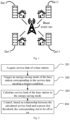
- FIG. 1 is a schematic diagram of an application scenario according to an embodiment of the present disclosure.
- the method for energy saving control of a base station in the embodiment of the present disclosure is applied to a network system, where the network system includes: a base station and cells, and network communication can be performed between the base station and the cells.
- Communication equipment such as computers, TVs and telephones may be installed in the cells.
- FIG. 2 is a flow chart of the method for energy saving control of a base station according to the embodiment of the present disclosure.
- the method in FIG. 2 includes following steps of S201, S202, S203 and S204.
- the service data may include, without limitation, PRB utilization rate, number of users, priority of current services, and period in which the current services are running.
- the service data of the base station include: PRB utilization rate, number of users currently connected to the base station, priority of the current services, and period in which the current services are running.
- the obtained trigger condition is used for triggering the energy-saving mode of the base station, and if the base station enters the energy-saving mode, S202 is performed.
- the service data meeting the trigger condition in S202 may include, without limitation, the number of users being less than a user threshold, no preset high-priority services, and the period in which the current services are running being a preset energy-saving period.
- the energy-saving mode refers to a mode in which part of slots are off while all services are converged in the on-state slots for scheduling based on actual needs.
- the PRB utilization rate refers to a downlink PRB utilization rate. If the downlink PRB utilization rate is less than a slot off threshold, it indicates that the service load is low, so that the base station controls part of the slots to be off and converges all the services in the on-state slots for scheduling, so as to save energy. If the downlink PRB utilization rate is greater than a slot on threshold, it indicates that the service load increases, so that the base station may control the off-state slots to be on and reschedule the slots.
- the preset high-priority services may be configured based on actual needs, e.g., live streaming and game services are configured as high-priority services, while web browsing and email services are configured as low-priority services.
- the energy-saving mode may be disabled in response to not meeting one of the following conditions: the number of users is less than the user threshold, the period in which the current services are running is the preset energy-saving period, and there are no preset high-priority services.
- the service load includes a filter value corresponding to the PRB utilization rate.
- the filter value of the PRB utilization rate is the filter value of the downlink PRB utilization rate.
- the PRB utilization rates in several previous periods are weighted as the PRB utilization rate in the current period when making statistics on the PRB utilization rate in the current period.
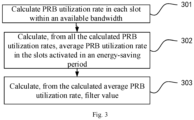
- FIG. 3 is a flow chart of S203 according to the embodiment of the present disclosure, including following steps of S301, S302 and S303.
- the PRB utilization rate in each slot within an available bandwidth is calculated.
- an average PRB utilization rate in the slots activated in an energy-saving period is calculated from all the calculated PRB utilization rates.
- the filter value is calculated from the calculated average PRB utilization rate.
- the PRB utilization rate is the downlink PRB utilization rate and also the current downlink PRB utilization.
- the PRB utilization rate in each slot within the available bandwidth is calculated, where the current PRB utilization rate is equal to a value obtained by dividing the number of PRBs scheduled in a previous slot by the number of PRBs available in a current slot.
- P f is the filter value
- ⁇ is a filter coefficient, which may be configured as required and is a decimal between 0 and 1
- P p_n is the PRB utilization rate in the n th slot activated
- P p_n-1 is the PRB utilization rate of an n-1 th slot activated.
- the slot threshold includes a slot off threshold and a slot on threshold, and the relationship between the filter value and the preset slot threshold is as follows:
- S204 includes: controlling M slot(s) to be off if the filter value is less than the preset slot off threshold, where M is an integer from 1 to 99.
- M denotes the granularity of off-state slots and depends on the energy-saving period. A too large value of M will result in convergence failure of the system, while a too small value will result in slow response of the system.
- a slot off-state enabling strategy will be initiated, i.e., periodic statistics and calculation will be made on the PRB utilization rates, where the duration of the period may be configured, without limitation, as an integer multiple of an NR radio frame. For example, if the period of the NR radio frame lasts 10 ms, the duration may be configured as: 20 ms, 30 ms, 40 ms, etc.
- the base station controls part of the downlink slots (such as M slot(s)) to be off and converges all the current services in the on-state slots for scheduling, so as to save energy.
- the slot off-state enabling strategy further includes:
- OffNUM n + 1 OffNUM n + M
- OffNUM n+1 the number of the downlink slots controlled to be off in the next energy-saving period
- an initial value of OffNUM n+1 is set to 0
- NUM n the number of the downlink off-state slots in the current energy-saving period.
- the S204 further includes: controlling L slot(s) to be on if the filter value is greater than the preset slot on threshold, where L is an integer from 1 to 99.
- a slot on-state enabling strategy will be initiated, i.e., periodic statistics and calculation will be made on the PRB utilization rates, where the duration of the period may be configured, without limitation, as an integer multiple of the NR radio frame.
- the base station controls the off-state slots (such as L slot(s)) to be on again for rescheduling.
- the slot on-state enabling strategy further includes:
- P next2 is the PRB utilization rate after controlling the L slot(s) to be on in the next energy-saving period
- P f is the filter value
- N is the total number of the downlink slots activated in the energy-saving period
- L is the number of the downlink slots controlled to be on in the next energy-saving period.
- the value of L denotes the granularity of on-state slots and depends on the energy-saving period. A too large value of L will result in convergence failure of the system, while a too small value will result in slow response of the system.
- OffNUM n + 1 OffNUM n ⁇ L
- OffNUM n+1 the number of the downlink slots controlled to be off in the next energy-saving period
- an initial value of OffNUM n+1 is set to 0
- NUM n the number of the downlink off-state slots in the current energy-saving period.
- the S204 further includes: controlling the number of the on-state slots in the current period to be unchanged if the filter value is between the slot off threshold and the slot on threshold,.
- the filter value being between the slot off threshold and the slot on threshold includes:
- the service data of the base station are acquired, the energy-saving mode of the base station corresponding to the service data meeting the trigger condition is triggered, and the filter value of the base station in the energy-saving mode is calculated, so that the corresponding slots are controlled to be off or on based on the relationship between the calculated filter value and the preset slot threshold.
- the filter value is less than the preset slot off threshold, i.e., at low service load
- the base station controls part of the downlink slots (such as M slot(s)) to be off and converges all the current services in the on-state slots for scheduling, so as to save energy.
- the method for energy saving control of a base station in the embodiment of the present disclosure further includes: maintaining the bitmap of the corresponding slot.
- the bitmaps of a group of slots are maintained in a cell, and a period duration of the bitmaps is configured based on actual needs, which may be configured, without limitation, as an integer multiple of the NR radio frame. For example, if the period of the NR radio frame lasts 10 ms, the period duration may be configured as: 20 ms, 30 ms, 40 ms, etc.
- FIG. 4 is a schematic diagram of the bitmaps. A detail description will be made with reference to FIGS. 5 and 6 .
- different frame formats refer to the bitmaps of slots with different structures, and the slots are controlled to be off and then on from left to right.
- the bitmap is numbered, a common channel configuration of the cell is identified, and the slot with the corresponding number being the common channel configuration of the cell is controlled to be on, so that other services can also be scheduled normally in the on-state slot.
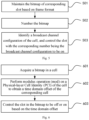
- maintaining bitmap of corresponding slot includes the following steps of S501, S502 and S503.
- bitmap of corresponding slot is maintained based on the frame format.
- bitmap is numbered.
- a broadcast channel configuration of the cell is identified, and slot with the corresponding number being the broadcast channel configuration is controlled to be on.
- bitmaps of different slots corresponding to the different frame formats may need to be maintained.
- bitmaps are numbered on the principle of controlling the slots to be off or on randomly, such that the scheduling latency can be prevented from being affected due to the fact the slots are controlled to be off in a centralized manner.
- a broadcast channel configuration of the cell is identified, and slot with the corresponding number being the broadcast channel configuration is controlled to be on, so that other services can also be scheduled normally in the on-state slot.
- maintaining slot offsets of corresponding slots to obtain the bitmaps of each cell further including: in the hybrid mode where 4G LET and 5G NR share a base station, controlling the slots corresponding to the LTE broadcast channel configuration to be on, such that other services can also be scheduled normally in the on-state slots.
- maintaining bitmaps of corresponding slots includes the following steps of S601, S602 and S603.
- the bitmap of a cell is acquired.
- a modulus operation (mod) is performed on the PCI of the cell to obtain a time domain offset in the bitmaps of the corresponding cell.
- a modulus operation (mod) is performed on the PCI of the cell to obtain a time domain offset in the bitmaps of the corresponding cell.
- the slot in the bitmap is controlled to be off or on based on the time domain offset.
- acquiring the bitmaps of slots in a cell includes:
- cyclic shifting is performed based on the time domain offsets in the bitmaps acquired in S601 to obtain three new bitmaps.
- An interval between starting points of two new adjacent bitmaps is marked as Slot_offset, the cyclic shifts of the bitmaps are of the same length, where the equation for the interval Slot_offset between the starting points of the two new adjacent bitmaps is shown in Equation (8):
- Slot _ offset Round length bitmap 3 where length(bitmap) denotes the length of the bitmap.
- a mod 3 is performed on the PCI of the cell to obtain a time domain offset Slot_offset ⁇ mod (PCI,3) in the bitmaps of the corresponding cell, to obtain the bitmaps used in each PCI cell.
- bitmaps when being controlled to be off or on based on the time domain offset, the bitmaps are controlled to be off and then on from left to right based on an off-state enabling principle. A further description is made with reference to FIG. 4 .
- the slots S26, S27, S28, ..., S38, S39, S0, S1, ..., S24 and S25 are controlled to be off in sequence from left to right, and the slots S25, S24, ..., S26 are controlled to be on in sequence from right to left if needed.
- the mod operation is performed on the PCI of each cell; the slot offsets are different based on different calculation results and different number of carriers; different results correspond to different slot offset based on different PCIs of the cells; and a start slot in scheduling slots is different for different cells. Therefore, each cell may only maintain its own bitmaps, all cells are independent of each other, and time domains are staggered and scheduled in a time-sharing manner, which can effectively suppress inter-cell signal interference.
- the service data of the base station are acquired, the energy-saving mode of the base station corresponding to the service data meeting the trigger condition is triggered, and the service load of the base station in the energy-saving mode is calculated, so that the corresponding slots are controlled to be off or on based on the relationship between the calculated service load and the preset slot threshold. For example, if the service load is less than the preset slot off threshold, i.e., at low service load, the base station controls part of the downlink slots (such as M slot(s)) to be off and converges all the current services in the on-state slots for scheduling, so as to save energy.
- the preset slot off threshold i.e., at low service load
- the number of the on-state slots in the energy-saving period is determined through the statistics of service load, such that the services are converged in the time domain, and resources in the frequency domain are expanded for scheduling.
- Power amplifiers and other energy consumption devices of the base station can be turned off in an idle period of the time domain, to save energy and reduce consumption.
- the mod operation is further performed on the PCI of each cell, the slot offsets are different based on different calculation results and different number of carriers, different results correspond to different slot offset based on different PCIs of the cells, and a start slot in scheduling slots is different for different cells. Therefore, each cell may only maintain its own bitmaps, and all cells are independent of each other for scheduling in a time-sharing manner, which can effectively suppress inter-cell signal interference.
- the base station controls part of the downlink slots to be off, and converges all the services in the on-state slots for scheduling, so as to save energy.
- the off-state slots are controlled to be on for rescheduling.
- different slots are controlled to be on for scheduling based on the principle of staggered time domains, thus suppressing inter-cell signal interference in the time domains.
- Common energy-saving methods include: carrier turn-off, antenna channel turn-off, intelligent turn-off, etc., and have the following shortcomings.
- the turn-off or/and turn-on operation is slow, the response is not timely enough, the turn-off and turn-on operations are usually timed, and no real-time turn-on operation is allowed.
- the turn-off operation is realized roughly, affecting the coverage of services.
- the energy-saving mode of the base station in a "hot spot" area (the area where network communication is intensively available for a plurality of communication devices) may never be triggered. Due to limitations, these methods have limited suppression effects and thus cannot be adapted to all types of base stations.
- the energy-saving method proposed in the embodiments of the present disclosure can respond fast and dynamically in real time around the clock, adjust the mode of the base station based on the current services of the base station without affecting the coverage of services, is adapted to all types of base stations and can effectively suppress inter-cell interference.
- the method is applied in 5G.
- different frame formats refer to the bitmaps of slots with different structures, and the slots are controlled to be off and then on from left to right.
- the common channel configuration of the cell is identified, and the slots where the corresponding common channel is located in the bitmaps of slots are controlled to be on, so that other services can also be scheduled normally in the on-state slots.
- the slots where the LTE broadcast channel is located are controlled to be on, so that other services can also be scheduled normally in the on-state slots.
- the slot offsets are different in the cells. Therefore, each cell may only maintain its own bitmaps, and all cells are independent of each other for scheduling in a time-sharing manner, which can effectively suppress inter-cell signal interference at low service load.
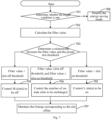
- FIG. 7 is a flow chart of an application scenario of the method for energy saving control of a base station according to the embodiment of the present disclosure.
- the method in FIG. 7 includes the following steps of S701, S702, S703, S704, S705, S706 and S708.
- a trigger condition is met is determined; a energy-saving mode is triggered if the trigger condition is met, and S702 is performed; otherwise, S708 is performed.
- a relationship between the filter value and a preset slot threshold is determined; if the filter value is less than the preset slot off threshold, S704 is performed; and if the filter value of a PRB utilization rate is greater the preset slot on threshold, S705 is performed; otherwise, S706 is performed.
- slot offsets are maintained to obtain the bitmaps of each cell.
- the method is applied in 5G.
- different frame formats refer to the bitmaps of slots with different structures, and the slots are controlled to be off and then on from left to right.
- the common channel configuration of the cell is identified, and the slots where the corresponding common channel is located in the bitmaps of slots are controlled to be on, so that other services can also be scheduled normally in the on-state slots.
- the slots where the LTE broadcast channel is located are controlled to be on, so that other services can also be scheduled normally in the on-state slots.
- the slot offsets are different, so each cell may only maintain its own bitmaps, and all cells are independent of each other for scheduling in a time-sharing manner, which can effectively suppress inter-cell signal interference at low service load.
- PCIs cell attributes
- the slot offsets are different, so each cell may only maintain its own bitmaps, and all cells are independent of each other for scheduling in a time-sharing manner, which can effectively suppress inter-cell signal interference at low service load.
- a device for energy saving control of a base station which can implement the above method for energy saving control of a base station.
- the device includes: an acquisition module, a trigger module, a calculation module, and a control module.
- the acquisition module is configured to acquire service data of the base station.
- the trigger module is configured to trigger an energy-saving mode of the base station corresponding to the service data meeting a trigger condition.
- the calculation module is configured to calculate a service load of the base station in the energy-saving mode.
- the control module is configured to control, based on a relationship between the calculated service load and a preset slot threshold, corresponding slots to be off or on.
- a device for energy saving control of a base station including: at least one memory, at least one processor, and at least one program stored in the at least one memory which, when executed by the at least one processor, causes the at least one processor to carry out the method for energy saving control of a base station in the embodiments.
- the device for energy saving control of a base station may be any smart terminal such as cell phone, tablet PC, Personal Digital Assistant (PDA), Point of Sales (POS), and car PC.
- a computer-readable storage medium storing a computer-executable instruction which, when executed by a processor, causes the processor to implement the above method for energy saving control of a base station.
- the service data of the base station are acquired, the energy-saving mode of the base station corresponding to the service data meeting the trigger condition is triggered, and the service load of the base station in the energy-saving mode is calculated, so that the corresponding slots are controlled to be off or on based on the relationship between the calculated service load and the preset slot threshold.
- the base station controls part of the downlink slots (such as M slot(s)) to be off and converges all the current services in the on-state slots for scheduling, so as to save energy.
- the mod operation is further performed on the PCI of each cell, different results correspond to the different slot offset based on different PCIs of the cells, and the start slot in the scheduling slots is different for different cells. Therefore, each cell may only maintain its own bitmaps, and all cells are independent of each other for scheduling in a time-sharing manner, which can effectively suppress inter-cell signal interference.
- the memory may be configured to store non-transitory software programs and non-transitory computer-executable programs.
- the memory may include high-speed RAM and non-transitory memory, such as at least one disk memory, flash memory, or other non-transitory solid-state memories.
- the memory may include memories remotely located with respect to the processor, and these remote memories may be connected to the processor through a network.
- the above network includes the Internet, an intranet, an LAN, a mobile communications network, and combinations thereof.
- FIGS 2-3 and 5-7 are not intended to limit the embodiments of the present disclosure, and there may be more or fewer steps than or different steps from those shown, or some steps may be combined.
- the units described as separate components may or may not be physically separated, i.e., these units may be located in one place, and may also be distributed over a plurality of network units. Part or all of the modules can be selected based on actual needs to achieve the purpose of the schemes in the embodiments.
- the device and the method disclosed in several embodiments of the present disclosure may also be implemented in other ways.
- the embodiments of the device described above are merely exemplary embodiments.
- the division of the units which is only the division of logical functions, may be implemented in other ways in practice, e.g., a plurality of units or components may be combined or integrated in another system, or certain features may be omitted or not implemented.
- the mutual or direct coupling or communication connections shown or discussed herein may be indirect coupling or communication connections between the devices or units through some interfaces, and may also be electrical connection, mechanical connection, or connections in other forms.
- the units described as separate components may or may not be physically separated, and the components described as units may or may not be physical units, i.e., these units may be located in one place, and may also be distributed over a plurality of network units. Part or all of the units can be selected based on actual needs to achieve the purpose of the schemes in the embodiments.
- all functional units in the embodiments of the present disclosure may be integrated into one processing unit and may also exist separately, or two or more units may be integrated into one unit.
- the above units may be integrated by hardware or software functional units.
- the integrated unit if implemented in the form of a software functional unit and sold or used as a stand-alone product, may be stored in a computer-readable storage medium.
- the technical schemes of the present disclosure or the part of the technical schemes that essentially contributes to the prior art, or all or part of the technical schemes, may be embodied in the form of a software product.
- the computer software product is stored in a storage medium, storing a plurality of instructions configured to enable computer equipment (which may be a PC, a server, or a network device) to perform all or part of the steps of the method described in the embodiments of the present disclosure.
- the above storage medium includes: a USB disk, a mobile hard disk, a Read-Only Memory (ROM), a Random Access Memory (RAM), a magnetic disk or optical disks, and other media that can store programs.
Landscapes
- Engineering & Computer Science (AREA)
- Computer Networks & Wireless Communication (AREA)
- Signal Processing (AREA)
- Mobile Radio Communication Systems (AREA)
Applications Claiming Priority (2)
| Application Number | Priority Date | Filing Date | Title |
|---|---|---|---|
| CN202011308662.7A CN114521005B (zh) | 2020-11-20 | 2020-11-20 | 基站节能的控制方法和装置、计算机可读存储介质 |
| PCT/CN2021/130137 WO2022105671A1 (zh) | 2020-11-20 | 2021-11-11 | 基站节能的控制方法和装置、计算机可读存储介质 |
Publications (2)
| Publication Number | Publication Date |
|---|---|
| EP4236479A1 true EP4236479A1 (de) | 2023-08-30 |
| EP4236479A4 EP4236479A4 (de) | 2024-05-15 |
Family
ID=81594138
Family Applications (1)
| Application Number | Title | Priority Date | Filing Date |
|---|---|---|---|
| EP21893818.1A Pending EP4236479A4 (de) | 2020-11-20 | 2021-11-11 | Steuerungsverfahren und -vorrichtung zur energieeinsparung einer basisstation und computerlesbares speichermedium |
Country Status (3)
| Country | Link |
|---|---|
| EP (1) | EP4236479A4 (de) |
| CN (1) | CN114521005B (de) |
| WO (1) | WO2022105671A1 (de) |
Cited By (1)
| Publication number | Priority date | Publication date | Assignee | Title |
|---|---|---|---|---|
| TWI891109B (zh) * | 2023-11-02 | 2025-07-21 | 宏碁股份有限公司 | 電子裝置及其切換閒置時間的設定方法 |
Families Citing this family (4)
| Publication number | Priority date | Publication date | Assignee | Title |
|---|---|---|---|---|
| CN114845362B (zh) * | 2021-02-01 | 2024-04-02 | 大唐移动通信设备有限公司 | 一种节能控制方法、装置及存储介质 |
| KR20230166172A (ko) * | 2022-05-30 | 2023-12-07 | 삼성전자주식회사 | 네트워크 전력소모 감소를 위한 단말 정보전달 방법 및 장치 |
| CN115604797B (zh) * | 2022-09-28 | 2025-10-17 | 中通服咨询设计研究院有限公司 | 一种基于5g网络的节能方法 |
| CN118233990A (zh) * | 2022-12-20 | 2024-06-21 | 中国移动通信有限公司研究院 | 一种网络节能方法、装置和存储介质 |
Family Cites Families (12)
| Publication number | Priority date | Publication date | Assignee | Title |
|---|---|---|---|---|
| CN102340852B (zh) * | 2010-07-20 | 2015-02-18 | 电信科学技术研究院 | 移动通信系统基站节能方法及装置 |
| CN102143564A (zh) * | 2010-12-23 | 2011-08-03 | 华为技术有限公司 | 载频时隙的关断方法及设备 |
| CN102595478A (zh) * | 2011-01-14 | 2012-07-18 | 华为技术有限公司 | 小区节能信息处理方法、网络侧设备和用户设备 |
| CN103781161A (zh) * | 2012-10-25 | 2014-05-07 | 中兴通讯股份有限公司 | 用于远距离覆盖基站的节能方法、装置及系统 |
| CN104812035B (zh) * | 2015-05-12 | 2018-04-24 | 东南大学 | 一种自适应控制基站节能的方法 |
| CN106470470A (zh) * | 2015-08-17 | 2017-03-01 | 中兴通讯股份有限公司 | 发射功率关闭方法、装置及共模rru |
| CN106686701B (zh) * | 2015-11-10 | 2019-06-25 | 中国移动通信集团公司 | 一种小区内与小区之间联合节电的方法及装置 |
| CN109257804A (zh) * | 2018-07-31 | 2019-01-22 | 四川景云祥通信股份公司 | 用于5g通信的集中化中心机房节能控制方法 |
| KR102029929B1 (ko) * | 2018-09-17 | 2019-10-08 | 주식회사 큐셀네트웍스 | 이동 통신망에서의 셀 간 간섭 제어를 위한 자원 관리 방법 및 장치 |
| CN111615191B (zh) * | 2019-02-22 | 2025-08-22 | 中兴通讯股份有限公司 | 一种控制方法、装置及计算机可读存储介质 |
| US11212747B2 (en) * | 2019-03-25 | 2021-12-28 | Comcast Cable Communications, Llc | Power saving operations for communication systems |
| CN111885685B (zh) * | 2020-07-22 | 2023-04-25 | 中国联合网络通信集团有限公司 | 5g基站节能的方法、装置、电子设备及存储介质 |
-
2020
- 2020-11-20 CN CN202011308662.7A patent/CN114521005B/zh active Active
-
2021
- 2021-11-11 EP EP21893818.1A patent/EP4236479A4/de active Pending
- 2021-11-11 WO PCT/CN2021/130137 patent/WO2022105671A1/zh not_active Ceased
Cited By (1)
| Publication number | Priority date | Publication date | Assignee | Title |
|---|---|---|---|---|
| TWI891109B (zh) * | 2023-11-02 | 2025-07-21 | 宏碁股份有限公司 | 電子裝置及其切換閒置時間的設定方法 |
Also Published As
| Publication number | Publication date |
|---|---|
| EP4236479A4 (de) | 2024-05-15 |
| US20230422166A1 (en) | 2023-12-28 |
| WO2022105671A1 (zh) | 2022-05-27 |
| CN114521005A (zh) | 2022-05-20 |
| CN114521005B (zh) | 2025-01-28 |
Similar Documents
| Publication | Publication Date | Title |
|---|---|---|
| EP4236479A1 (de) | Steuerungsverfahren und -vorrichtung zur energieeinsparung einer basisstation und computerlesbares speichermedium | |
| US20200015312A1 (en) | Method and device for determining discontinuous reception configuration | |
| CN111294898B (zh) | 用户终端及其状态切换方法、计算机可读存储介质、基站 | |
| US10327210B2 (en) | Low power consumption communication method and apparatus | |
| CN108377551B (zh) | Drx处理方法及装置 | |
| US20250088960A1 (en) | State determining method, state indication method, communication device, communication system, and storage medium | |
| EP3742651B1 (de) | Kanaldetektionsverfahren und -vorrichtung sowie computerspeichermedium | |
| CN109479258A (zh) | 寻呼检测窗口 | |
| KR20240071412A (ko) | 시간창의 결정 방법, 장치, 단말 및 저장매체 | |
| CN114077213B (zh) | 节能控制方法及装置 | |
| US12155603B2 (en) | Data transmission methods and apparatuses, and storage media | |
| WO2016188173A1 (zh) | 基于载波聚合对小区进行处理的方法和装置 | |
| CN113708902B (zh) | 用于休眠的带宽部分的信道信息报告 | |
| CN117295102A (zh) | 参考信号接收、发送方法、终端及网络侧设备 | |
| US12501358B2 (en) | Control method and apparatus for energy conservation of base station, and computer-readable storage medium | |
| US12034507B2 (en) | Method and device for channel state indication on unlicensed spectrum | |
| US9900130B2 (en) | Method and device for sending signal, and storage medium | |
| US20230300795A1 (en) | Apparatuses and methods for downlink notification monitoring | |
| US20250048350A1 (en) | Resource scheduling method, base station, user equipment, electronic device and storage medium | |
| CN118019117A (zh) | 增强的帧结构配置方法、装置、设备及存储介质 | |
| US11856637B2 (en) | Search space and DRX cycle linking and modification | |
| CN116709544A (zh) | 一种drx传输方法及相关设备 | |
| CN111867011B (zh) | 一种节能信号的传输方法、网络侧设备及用户设备 | |
| WO2023005863A1 (zh) | Pssch的传输方法和设备 | |
| CN114615731A (zh) | 信号传输方法、装置、终端及网络设备 |
Legal Events
| Date | Code | Title | Description |
|---|---|---|---|
| STAA | Information on the status of an ep patent application or granted ep patent |
Free format text: STATUS: THE INTERNATIONAL PUBLICATION HAS BEEN MADE |
|
| PUAI | Public reference made under article 153(3) epc to a published international application that has entered the european phase |
Free format text: ORIGINAL CODE: 0009012 |
|
| STAA | Information on the status of an ep patent application or granted ep patent |
Free format text: STATUS: REQUEST FOR EXAMINATION WAS MADE |
|
| 17P | Request for examination filed |
Effective date: 20230523 |
|
| AK | Designated contracting states |
Kind code of ref document: A1 Designated state(s): AL AT BE BG CH CY CZ DE DK EE ES FI FR GB GR HR HU IE IS IT LI LT LU LV MC MK MT NL NO PL PT RO RS SE SI SK SM TR |
|
| DAV | Request for validation of the european patent (deleted) | ||
| DAX | Request for extension of the european patent (deleted) | ||
| A4 | Supplementary search report drawn up and despatched |
Effective date: 20240415 |
|
| RIC1 | Information provided on ipc code assigned before grant |
Ipc: H04W 52/34 20090101ALI20240409BHEP Ipc: H04W 52/02 20090101AFI20240409BHEP |
|
| STAA | Information on the status of an ep patent application or granted ep patent |
Free format text: STATUS: EXAMINATION IS IN PROGRESS |
|
| 17Q | First examination report despatched |
Effective date: 20250616 |