EP4232448B1 - Agonisten des freien fettsäurerezeptors 1 und ihre verwendung bei erkrankungen im zusammenhang mit diesem rezeptor - Google Patents
Agonisten des freien fettsäurerezeptors 1 und ihre verwendung bei erkrankungen im zusammenhang mit diesem rezeptor Download PDFInfo
- Publication number
- EP4232448B1 EP4232448B1 EP20800803.7A EP20800803A EP4232448B1 EP 4232448 B1 EP4232448 B1 EP 4232448B1 EP 20800803 A EP20800803 A EP 20800803A EP 4232448 B1 EP4232448 B1 EP 4232448B1
- Authority
- EP
- European Patent Office
- Prior art keywords
- methyl
- sulfanyl
- oxazol
- amine
- triazin
- Prior art date
- Legal status (The legal status is an assumption and is not a legal conclusion. Google has not performed a legal analysis and makes no representation as to the accuracy of the status listed.)
- Active
Links
Images
















Classifications
-
- A—HUMAN NECESSITIES
- A61—MEDICAL OR VETERINARY SCIENCE; HYGIENE
- A61P—SPECIFIC THERAPEUTIC ACTIVITY OF CHEMICAL COMPOUNDS OR MEDICINAL PREPARATIONS
- A61P3/00—Drugs for disorders of the metabolism
-
- A—HUMAN NECESSITIES
- A61—MEDICAL OR VETERINARY SCIENCE; HYGIENE
- A61K—PREPARATIONS FOR MEDICAL, DENTAL OR TOILETRY PURPOSES
- A61K31/00—Medicinal preparations containing organic active ingredients
- A61K31/33—Heterocyclic compounds
- A61K31/395—Heterocyclic compounds having nitrogen as a ring hetero atom, e.g. guanethidine or rifamycins
- A61K31/495—Heterocyclic compounds having nitrogen as a ring hetero atom, e.g. guanethidine or rifamycins having six-membered rings with two or more nitrogen atoms as the only ring heteroatoms, e.g. piperazine or tetrazines
- A61K31/505—Pyrimidines; Hydrogenated pyrimidines, e.g. trimethoprim
- A61K31/506—Pyrimidines; Hydrogenated pyrimidines, e.g. trimethoprim not condensed and containing further heterocyclic rings
-
- A—HUMAN NECESSITIES
- A61—MEDICAL OR VETERINARY SCIENCE; HYGIENE
- A61K—PREPARATIONS FOR MEDICAL, DENTAL OR TOILETRY PURPOSES
- A61K31/00—Medicinal preparations containing organic active ingredients
- A61K31/33—Heterocyclic compounds
- A61K31/395—Heterocyclic compounds having nitrogen as a ring hetero atom, e.g. guanethidine or rifamycins
- A61K31/53—Heterocyclic compounds having nitrogen as a ring hetero atom, e.g. guanethidine or rifamycins having six-membered rings with three nitrogens as the only ring hetero atoms, e.g. chlorazanil, melamine
-
- A—HUMAN NECESSITIES
- A61—MEDICAL OR VETERINARY SCIENCE; HYGIENE
- A61P—SPECIFIC THERAPEUTIC ACTIVITY OF CHEMICAL COMPOUNDS OR MEDICINAL PREPARATIONS
- A61P1/00—Drugs for disorders of the alimentary tract or the digestive system
- A61P1/16—Drugs for disorders of the alimentary tract or the digestive system for liver or gallbladder disorders, e.g. hepatoprotective agents, cholagogues, litholytics
-
- A—HUMAN NECESSITIES
- A61—MEDICAL OR VETERINARY SCIENCE; HYGIENE
- A61P—SPECIFIC THERAPEUTIC ACTIVITY OF CHEMICAL COMPOUNDS OR MEDICINAL PREPARATIONS
- A61P13/00—Drugs for disorders of the urinary system
- A61P13/12—Drugs for disorders of the urinary system of the kidneys
-
- A—HUMAN NECESSITIES
- A61—MEDICAL OR VETERINARY SCIENCE; HYGIENE
- A61P—SPECIFIC THERAPEUTIC ACTIVITY OF CHEMICAL COMPOUNDS OR MEDICINAL PREPARATIONS
- A61P3/00—Drugs for disorders of the metabolism
- A61P3/04—Anorexiants; Antiobesity agents
-
- A—HUMAN NECESSITIES
- A61—MEDICAL OR VETERINARY SCIENCE; HYGIENE
- A61P—SPECIFIC THERAPEUTIC ACTIVITY OF CHEMICAL COMPOUNDS OR MEDICINAL PREPARATIONS
- A61P3/00—Drugs for disorders of the metabolism
- A61P3/08—Drugs for disorders of the metabolism for glucose homeostasis
-
- C—CHEMISTRY; METALLURGY
- C07—ORGANIC CHEMISTRY
- C07D—HETEROCYCLIC COMPOUNDS
- C07D413/00—Heterocyclic compounds containing two or more hetero rings, at least one ring having nitrogen and oxygen atoms as the only ring hetero atoms
- C07D413/02—Heterocyclic compounds containing two or more hetero rings, at least one ring having nitrogen and oxygen atoms as the only ring hetero atoms containing two hetero rings
- C07D413/12—Heterocyclic compounds containing two or more hetero rings, at least one ring having nitrogen and oxygen atoms as the only ring hetero atoms containing two hetero rings linked by a chain containing hetero atoms as chain links
-
- C—CHEMISTRY; METALLURGY
- C07—ORGANIC CHEMISTRY
- C07D—HETEROCYCLIC COMPOUNDS
- C07D413/00—Heterocyclic compounds containing two or more hetero rings, at least one ring having nitrogen and oxygen atoms as the only ring hetero atoms
- C07D413/14—Heterocyclic compounds containing two or more hetero rings, at least one ring having nitrogen and oxygen atoms as the only ring hetero atoms containing three or more hetero rings
-
- C—CHEMISTRY; METALLURGY
- C07—ORGANIC CHEMISTRY
- C07D—HETEROCYCLIC COMPOUNDS
- C07D417/00—Heterocyclic compounds containing two or more hetero rings, at least one ring having nitrogen and sulfur atoms as the only ring hetero atoms, not provided for by group C07D415/00
- C07D417/14—Heterocyclic compounds containing two or more hetero rings, at least one ring having nitrogen and sulfur atoms as the only ring hetero atoms, not provided for by group C07D415/00 containing three or more hetero rings
-
- C—CHEMISTRY; METALLURGY
- C07—ORGANIC CHEMISTRY
- C07D—HETEROCYCLIC COMPOUNDS
- C07D471/00—Heterocyclic compounds containing nitrogen atoms as the only ring hetero atoms in the condensed system, at least one ring being a six-membered ring with one nitrogen atom, not provided for by groups C07D451/00 - C07D463/00
- C07D471/02—Heterocyclic compounds containing nitrogen atoms as the only ring hetero atoms in the condensed system, at least one ring being a six-membered ring with one nitrogen atom, not provided for by groups C07D451/00 - C07D463/00 in which the condensed system contains two hetero rings
- C07D471/04—Ortho-condensed systems
-
- C—CHEMISTRY; METALLURGY
- C07—ORGANIC CHEMISTRY
- C07D—HETEROCYCLIC COMPOUNDS
- C07D495/00—Heterocyclic compounds containing in the condensed system at least one hetero ring having sulfur atoms as the only ring hetero atoms
- C07D495/02—Heterocyclic compounds containing in the condensed system at least one hetero ring having sulfur atoms as the only ring hetero atoms in which the condensed system contains two hetero rings
- C07D495/04—Ortho-condensed systems
Definitions
- the present invention relates a pharmaceutical composition as defined in claim 1 and to a compound of general formula (I) for use in the prevention and/or treatment of a disease and/or or condition selected from the group consisting of metabolic syndrome, dyslipidemia, kidney diseases, fibrotic or sclerotic conditions and diseases, hepatic diseases and biliary diseases as defined in claim 23.
- a disease and/or or condition selected from the group consisting of metabolic syndrome, dyslipidemia, kidney diseases, fibrotic or sclerotic conditions and diseases, hepatic diseases and biliary diseases as defined in claim 23.
- Preferred embodiments of the invention are characterised in dependent claims 2 to 22 and 24 to 34, respectively.
- the free fatty acid receptors are G-protein coupled receptors which bind free fatty acids [1]. Free fatty acid receptors have broad tissue distribution, e.g., they are expressed in mouth (possibly for sensing fatty taste), digestive system (as energy sensors, and eating sensors), pancreatic Beta cells (to sense feeding), and even in CNS (of yet unknown function). There are at least four different FFARs, each encoded by a separate gene (FFAR1, FFAR2, FFAR3, FFAR4). Preliminary findings suggest that FFAR2 and FFAR3 may interact to form a FFAR2-FFAR3 receptor heteromer.
- Free fatty acid receptors (FFA, nomenclature as agreed by the NC-IUPHAR Subcommittee on free fatty acid receptors [3,4]) are activated by free fatty acids.
- FFA Free fatty acid receptors
- Long-chain saturated and unsaturated fatty acids C14.0 (myristic acid), C16:0 (palmitic acid), C18:1 (oleic acid), C18:2 (linoleic acid), C18:3, ( ⁇ -linolenic acid), C20:4 (arachidonic acid), C20:5,n-3 (EPA) and C22:6,n-3 (docosahexaenoic acid)
- C14.0 myristic acid
- C16:0 palmitic acid
- C18:1 oleic acid
- C18:2 lainoleic acid
- C20:4 arachidonic acid
- FFAR1 is also known as GPR40
- FFAR4 is known as GPR120.
- FFAR1 (GPR40) agonists are under development as Type 2 diabetic drugs.
- Fasiglifam TAK-8705
- GPR120 FFA family receptors
- FFAR4 FFAR4
- GPR120 Several agonists for FFAR4 (GPR120), are undergoing preliminary development.
- GW9508 initially identified as a GPR40 agonist, was shown to also moderately activate GPR120 [17].
- the dual specificity of GW9508 for GPR40 and GPR120 represents a confounding variable in the interpretation of results in studies using GW9508 as a result of off-target effects at GPR40.
- Further research identified several other potential agonists for GPR120 including the plant-derived compound grifolic acid which acts as a partially selective GPR120 agonist [18], and NCG21 [19] as well as GSK-137647A [20], which are reported to be selective for GPR120.
- TUG891 has been made commercially available as a GPR120 agonist. TUG891 is reported to be potent and selective for GPR120 demonstrating greater selectivity and potency to GPR120 than GPR40 [21].
- T2DM T2DM is a disease in which blood sugar homeostasis is regulated improperly by insulin. Insulin is secreted from pancreatic b cells in response to elevated plasma glucose, with several additional types of signals combining to modify its insulin secretion rate from pancreatic b cells.
- FFAR1/GPR40 is abundantly expressed on the surface of pancreatic beta cells and functions as a receptor for long-chain FFAs, and that these FFAs amplify glucose-stimulated insulin secretion.
- Agonism of FFAR1/GPR40 in pancreatic beta cells was demonstrated to amplify insulin secretion over a period spanning hours, and even full agonism of the receptor did not appear to result in secretion of insulin levels sufficient to drive hypoglycemia.
- Hypoglycemia means low blood glucose, and severe hypoglycemia occurs when the blood glucose level becomes so low that a patient is unable to maintain normal activity, and it can result in loss of consciousness and be life threatening (due to oxygen deprivation in the brain which function crucially depends on appropriate glucose supply).
- available insulin stimulation drugs for treating T2DM generally have the potential to result in inappropriately high insulin secretion and trigger severe hypoglycemia. Since severe hypoglycemia cannot be triggered by agonizing PR40, GPR40 agonists therefore have a high potential for the treatment of T2DM.
- the technical problem underlying the present invention is to provide pharmaceutical compositions comprising agonists of FFARs, in particular agonists of FFAR1 and new medical uses of such agonists.
- the present invention provides a pharmaceutical composition
- a pharmaceutical composition comprising a compound of general formula (I) R 1 -S-CH 2 -OXA-R 2 (I) including enantiomers, diastereomers, hydrates, solvates, pharmaceutically acceptable cocrystals or salts, and complexes thereof; wherein
- Preferred halide substituents for use in the invention are selected from CI, Br and F.
- C 1 -C 6 alkyl (group) means, for example, methyl, ethyl, propyl, isopropyl, butyl, isobutyl, sec-butyl, tert-butyl, pentyl, isopentyl, neopentyl, 1-ethylpropyl, hexyl, isohexyl, 1,1-dimethylbutyl, 2,2-dimethylbutyl, 3,3-dimethylbutyl, 2-ethylbuty, or the like.
- C 1 -C 5- alkyl groups are preferred.
- C 1 -C 6 alkyl also relate to substituents in which such ""C 1 -C 6 alkyl” is present.
- Any alkyl group as referred to herein having more than 2 carbons may be a linear or branched chain.
- C 1 -C 4 -alkoxy (group) means, for example, methoxy, ethoxy, propoxy, isopropoxy, butoxy, iso-butoxy, sec-butoxy, tert.-butoxy or the like.
- C 1 -C 3- alkoxy groups are preferred. Any alkoxy group as referred to herein having more than 2 carbons may be a linear or branched chain.
- a "N-mono-C 1 -C 3 -alkylamino (group)” means, for example, methylamino, ethylamino, propylamino, isopropylamino or the like.
- a "N,N-di-C 1 -C 3 -alkylamino (group)” means, for example, dimethylamino, diethylamino, dipropylamino, diisopropylamino, or the like. It is to be understood that the C 1 -C 3 -alkyl groups of the N,N-di-C 1 -C 3 -alkylamino (group) may also be different from one another.
- C 3 -C 6 -cycloalkyl (group) means, for example, cyclopropyl, cyclobutyl, cyclopentyl, cyclohexyl or the like.
- C 3 -C 5 -cycloalkyl groups are preferred.
- the 6-membered aryl substituent of 1,2,4-triazine or pyrimidine in the definition of R 2 of general formula (I) means phenyl.
- examples of the "5- or 6-membered heteraryl (group)” means a 5- or 6-membered monocyclic aromatic heterocyclic group containing, as a ring-constituting atom besides carbon atoms, 1 to 4 hetero atoms selected from an oxygen atom, a sulfur atom (optionally oxidized) and a nitrogen atom (optionally oxidized).
- Examples thereof include furyl (e.g., 2-furyl, 3-furyl), thienyl (e.g., 2-thienyl, 3-thienyl), pyridyl (e.g., 2-pyridyl, 3-pyridyl, 4-pyridyl), pyrimidinyl (e.g., 2-pyrimidinyl, 4-pyrimidinyl, 5-pyrimidinyl), pyridazinyl (e.g., 3-pyridazinyl, 4-pyridazinyl), pyrazinyl (e.g., 2-pyrazinyl), pyrrolyl (e.g., 1-pyrrolyl, 2-pyrrolyl, 3-pyrrolyl), imidazolyl (e.g., 1-imidazolyl, 2-imidazolyl, 4-imidazolyl, 5-imidazolyl), pyrazolyl (e.g., 1-pyrazolyl, 3-pyrazolyl, 4-pyr
- a “non-aromatic 5-to 6-membered heterocyclic group” means a 5- or 6-membered monocyclic non-aromatic heterocyclic group containing, as a ring-constituting atom besides carbon atoms, 1 to 4 hetero atoms selected from an oxygen atom, a sulfur atom (optionally oxidized) and a nitrogen atom (optionally oxidized).
- Examples thereof include azetidinyl (e.g., 1-azetidinyl, 2-azetidinyl), pyrrolidinyl (e.g., 1-pyrrolidinyl, 2-pyrrolidinyl), piperidyl (e.g., piperidino, 2-piperidyl, 3-piperidyl, 4-piperidyl), morpholinyl (e.g., morpholino), thiomorpholinyl (e.g., thiomorpholino), piperazinyl (e.g., 1-piperazinyl, 2-piperazinyl, 3-piperazinyl), oxazolidinyl (e.g., oxazolidin-2-yl), thiazolidinyl (e.g., thiazolidin-2-yl), dihydrothiopyranyl (e.g., dihydrothiopyran-3-yl, dihydrothiopyran-4-yl), imidazo
- R 1 is 1,3,5-triazinyl substituted as defined above in general formula (I). It is further preferred that, if the 1,3,5-triazinyl group is substituted with more than one substituent, the substituents are different. According to further preferred embodiments, the 1,3,5 triazinyl group is independently substituted with one or two substituents selected from the group consisting of amino, methyl, ethyl, isopropyl and tert.-butyl, which may be in turn substituted with one or more halide, preferably Cl, F and/or Br..
- R 1 is selected from the group consisting of and
- R 1 is pyrimidinyl substituted as defined above in general formula (I). It is further preferred that, if the pyrimidinyl group is substituted with more than one substituent, the substituents are different. According to further preferred embodiments the pyrimidinyl group is independently substituted by one or more substituents selected from the group consisting of amino (preferably mono- or di-substituted with methyl, more preferably methylamino), methyl and ethyl wherein the latter two groups are substituted with one or more halides as defined above.
- R 1 is selected from the group consisting of
- R 2 is independently substituted with one more substituents selected from the group consisting of Cl, Br, F, methyl, triflourmethyl, methoxy and ethoxy. Furthermore, it is preferred that R 2 is substituted in at least one meta position and/or at least one ortho position.
- R 2 is selected from the group consisting of
- Highly active agonists of GPR40 according to the invention are compounds wherein R 2 is not substituted in the para position.
- R 2 Particularly preferred groups for R 2 are selected from the group consisting of and
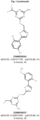
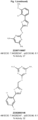
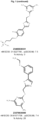
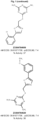
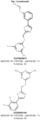
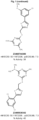
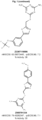
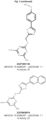
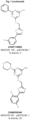
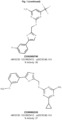
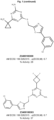
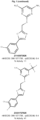
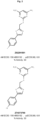
- Fig. 1 Highly preferred compounds for use in the invention are compounds shown in Fig. 1 .
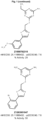
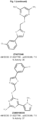
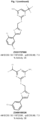
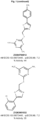
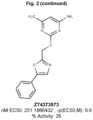
- Fig. 2 shows additional compounds specifically preferred for the use as medicaments, in particular for the uses according to the invention as further described below.
- Table 1 Compound ID Name Z3352693410 5-(2,5-dichlorophenyl)-2-[( ⁇ 2-methylpyrido[2,3-d]pyrimidin-4-yl ⁇ sulfanyl)methyl]-1,3-oxazole Z3331727678 2-( ⁇ [5-(2,3-dichlorophenyl)-1,3-oxazol-2-yl]methyl ⁇ sulfanyl)-6-(trifluoromethyl)pyrimidin-4-ol Z3331727680 2-( ⁇ [5-(2,5-dichlorophenyl)-1,3-oxazol-2-yl]methyl ⁇ sulfanyl)-6-(trifluoromethyl)pyrimidin-4-amine Z3304784611 5-(2-chlorophenyl)-2-[( ⁇ 2-methylpyrido[2,3-d]pyrimidin-4-yl ⁇ sulfanyl)methyl]-1,3-
- Table 2 Compound ID Name Z3400108329 4-( ⁇ [5-(3-chlorophenyl)-1,3-oxazol-2-yl]methyl ⁇ sulfanyl)-6-[difluoro(phenyl)methyl]-1,3,5-triazin-2-amine Z3400108333 4-( ⁇ [5-(3-chlorophenyl)-1,3-oxazol-2-yl]methyl ⁇ sulfanyl)-6-(1,3-thiazol-4-yl)-1,3,5-triazin-2-amine Z3400108337 4-( ⁇ [5-(3-chlorophenyl)-1,3-oxazol-2-yl]methyl ⁇ sulfanyl)-6-(1-methyl-1H-imidazol-2-yl)-1,3,5-triazin-2-amine Z3400108303 4-( ⁇ [5-(3-chlorophenyl)-1,
- Table 3 Coumpound ID Name Z642432840 2- ⁇ [5-(4-methylphenyl)-1,3,4-oxadiazol-2-yl]sulfanyl ⁇ -1,3-benzoxazole Z1340746590 4- ⁇ [5-(1-benzofuran-2-yl)-1,3,4-oxadiazol-2-yl]sulfanyl ⁇ -6-methylpyrimidine
- Table 4 Compound ID Name Z855788832 6-( ⁇ [5-(4-methoxyphenyl)-1,3-oxazol-2-yl]methyl ⁇ sulfanyl)-1,3,5-triazine-2,4-diamine Z1029502468 4,6-diamino-2-( ⁇ [3-(2H-1,3-benzodioxol-5-yl)-1,2,4-oxadiazol-5-yl]methyl ⁇ sulfanyl)pyridine-3-carbonitrile
- Table 5 Compound ID Name Z1029491270 2-( ⁇ [3-(2H-1,3-benzodioxol-5-yl)-1,2,4-oxadiazol-5-yl]methyl ⁇ sulfanyl)-1-methyl-1H-1,3-benzodiazole Z1029491492 4-( ⁇ [3-(2H-1,3-benzodioxol-5-yl)-1,2,4-oxadiazol-5-yl]methyl ⁇ sulfanyl)-2-methylquinazoline Z1029492422 2-( ⁇ [3-(2H-1,3-benzodioxol-5-yl)-1,2,4-oxadiazol-5-yl]methyl ⁇ sulfanyl)-6-chloro-1,3-benzoxazole Z1029493690 6-( ⁇ [3-(2H-1,3-benzodioxol-5-yl)-1,2,4
- Table 6 Compound ID Name Z1137177241 2-(((3-(furan-3-yl)-1,2,4-oxadiazol-5-yl)methyl)thio)-6-methylpyrimidin-4-amine Z3214047394 6-methyl-2-((2-(3-(p-tolyl)-1,2,4-oxadiazol-5-yl)ethyl)thio)pyrimidin-4(1H)-imine Z1453477070 2-((1-(3-(4-methoxyphenyl)-1,2,4-oxadiazol-5-yl)ethyl)thio)-6-methylpyrimidin-4(1H)-imine
- Pharmaceutically acceptable salts are typically salts of an organic or inorganic acids generally known in the art as pharmaceutically acceptable, preferably those disclosed in P. H. Stahl and C. G. Wermuth, editors, Handbook of Pharmaceutical Salts: Properties, Selection and Use, Weinheim/Zürich:Wiley-VCH/VHCA, 2002 .
- a preferred salt of the invention is the hydrochloride salt of a compound as disclosed herein.
- the compounds of general formula (I) for use in the present invention as defined herein are particularly useful as agonists of GPR40, wherein, according to preferred embodiments, the compound shows a higher selectivity for GPR40 than for GPR120.
- the compound of general formula (I) for use in the present invention as defined herein shows a % activation of GPR40 being at least 3fold higher than the % activation of GPR120, with % activation being the hundredfold ratio of activation of GPR40 or GPR120, respectively, by said compound to the activation of GPR40 or GPR120, respectively, by AMG 837.
- AMG 837 is a known potent agonist of GPR40 [22].
- the compounds of general formula (I) for use in the present invention are potent and selective agonists and are preferably provided as such agonists, of FFAR1 (GPR40).
- the compounds as disclosed herein are more selective and potent agonists of FFAR1 than of FFAR4.
- a compound as disclosed herein shows an at least 3 fold %, more preferably a 3 to 5 fold, % activation of FFAR1 in comparison to its % activation of FFAR4 (GPR120), with % activation always being the 100fold ratio of activation of the respective receptor by the compound as disclosed herein and the activation of the respective receptor by AMG 837.
- the % activation as used herein may also be expressed by reference to the activation by TAK-875.
- the compounds as disclosed herein are useful as medicaments, preferably for the prevention, improvement of symptoms, suppression of progression or treatment of conditions or diseases in a mammalian (such as, e.g., human, mouse, rat, rabbit, dog, cat, bovine, horse, swine, monkey) subject as defined in claim 23.
- a mammalian such as, e.g., human, mouse, rat, rabbit, dog, cat, bovine, horse, swine, monkey
- the compounds of this disclosure may be used as such or as an active ingredient of a pharmaceutical composition comprising at least one compound of general formula (I) and at least one pharmaceutically acceptable carrier.
- Useful pharmaceutically acceptable carriers are various organic or inorganic carrier substances which are conventionally used as preparation materials in the pharmaceutical art. These may be incorporated as excipients, lubricants, binders and disintegrants for solid preparations, or solvents, solubilizing agents, suspending agents, isotonicity agents, buffers and soothing agents for liquid preparations, and the like, in the present pharmaceutical composition. Further ingredients are preferably selected from preparation additives such as preservatives, antioxidants, colorants, sweetening agents and the like, which can be added as necessary.
- excipients include, but are not limited to, lactose, sucrose, D-mannitol, D-sorbitol, starch, gelatinated starch, dextrin, crystalline cellulose, low-substituted hydroxypropylcellulose, sodium carboxymethylcellulose, gum arabic, pullulan, light anhydrous silicic acid, synthesis aluminum silicate and magnesium alumino metasilicate.
- Lubricants include, but are not limited to, magnesium stearate, calcium stearate, talc and colloidal silica.
- Preferred binders include, but are not limited to, gelatinated starch, sucrose, gelatin, gum arabic, methylcellulose, carboxymethylcellulose, sodium carboxymethylcellulose, crystalline cellulose, sucrose, D-mannitol, trehalose, dextrin, pullulan, hydroxypropylcellulose, hydroxypropylmethylcellulose and polyvinylpyrrolidone.
- Preferred disintegrants include, but are not limited to, lactose, sucrose, starch, carboxymethylcellulose, calcium carboxymethylcellulose, croscarmellose sodium, sodium carboxymethyl starch, light anhydrous silicic acid and low-substituted hydroxypropylcellulose.
- useful solvents include, but are not limited to, water for injection, physiological brine, Ringer's solution, Ringer lactate, alcohol, propylene glycol, polyethylene glycol, sesame oil, corn oil, olive oil and cottonseed oil.
- Preferred solubilizing agents include, but are not limited to, polyethylene glycol, propylene glycol, D-mannitol, trehalose, benzyl benzoate, ethanol, trisaminomethane, cholesterol, triethanolamine, sodium carbonate, sodium citrate, sodium salicylate and sodium acetate.
- Preferred suspending agents for use in the present inventiuon include, but are not limited to, surfactants such as stearyltriethanolamine, sodium lauryl sulfate, lauryl aminopropionate, lecithin, benzalkonium chloride, benzethonium chloride, glycerol monostearate and the like; hydrophilic polymers such as polyvinyl alcohol, polyvinylpyrrolidone, sodium carboxymethylcellulose, methylcellulose, hydroxymethylcellulose, hydroxyethylcellulose, hydroxypropylcellulose and the like; polysorbates; and polyoxyethylene hydrogenated castor oil.
- surfactants such as stearyltriethanolamine, sodium lauryl sulfate, lauryl aminopropionate, lecithin, benzalkonium chloride, benzethonium chloride, glycerol monostearate and the like
- hydrophilic polymers such as polyvinyl alcohol, polyvinylpyrrolidone, sodium carboxy
- isotonicity agents are sodium chloride, glycerol, D-mannitol, D-sorbitol and glucose.
- Preferred buffer substances include buffers such as phosphate, acetate, carbonate, citrate and the like.
- a preferred soothing agent in the context of the invention is benzyl alcohol.
- preservatives for use in the pharmaceutical composition include, but are not limited to, p-oxybenzoates, chlorobutanol, benzyl alcohol, phenethyl alcohol, dehydroacetic acid and sorbic acid.
- Preferred antioxidants for use in the invention include, but are not limited to, sulfite and ascorbate.
- Preferred colorants include, e.g., aqueous water-soluble food tar colors (e.g., food colors such as Food Color Red Nos. 2 and 3, Food Color Yellow Nos. 4 and 5, Food Color Blue Nos. 1 and 2 and the like food colors), water insoluble lake dyes (e.g., aluminum salt of the aforementioned water-soluble food tar color) and natural dyes (e.g., ⁇ -carotene, chlorophyll, ferric oxide red).
- aqueous water-soluble food tar colors e.g., food colors such as Food Color Red Nos. 2 and 3, Food Color Yellow Nos. 4 and 5, Food Color Blue Nos. 1 and 2 and the like food colors
- water insoluble lake dyes e.g., aluminum salt of the aforementioned water-soluble food tar color
- natural dyes e.g., ⁇ -carotene, chlorophyll, ferric oxide red
- Preferred sweetening agents are, e.g., saccharin sodium, dipotassium glycyrrhizinate, aspartame and stevia.
- Preferred dosage forms of the pharmaceutical composition include oral preparations such as tablet (including sugar-coated tablet, film-coated tablet, sublingual tablet, orally disintegrating tablet), capsules (including soft capsule, microcapsule), granule, powder, troche, syrup, emulsion, suspension, films (e.g., orally disintegrable films) and the like; and parenteral agents such as injection (e.g., subcutaneous injection, intravenous injection, intramuscular injection, intraperitoneal injection, drip infusion), external preparations (e.g., dermal preparation, ointment), suppository (e.g., rectal suppository, vaginal suppository), pellet, nasal preparation, pulmonary preparation (inhalant), eye drop.
- oral preparations such as tablet (including sugar-coated tablet, film-coated tablet, sublingual tablet, orally disintegrating tablet), capsules (including soft capsule, microcapsule), granule, powder, troche, syrup, emulsion, suspension, films (e.g.,
- compositions of the invention may be in the form of release control preparations (e.g., sustained-release microcapsule) such as an immediate-release preparation, a sustained-release preparation and the like
- the pharmaceutical composition can be produced according to a method conventionally used in the field of pharmaceutical formulation.
- the content of the compound of general formula (I) in the pharmaceutical composition of the invention varies depending on the dosage form, dose of the compound of the present invention or as disclosed herein and further parameters such as the specific aids as outlined above, it is typically contained in the pharmaceutical composition at about 0.1 to about 100 wt %.
- Oral pharmaceutical compositions of the invention may comprise one or more coatings which may be applied as necessary for the purpose of various parameters such as masking of taste, enteric property or durability.
- the compounds disclosed herein are for use in the prevention, improvement of symptoms, suppression of progression or treatment of conditions or diseases amenable to higher GPR40 (FFAR1) activity, namely, metabolic syndrome, dyslipidemia, kidney diseases, fibrotic or sclerotic conditions and diseases, hepatic diseases and biliary diseases.
- FFAR1 GPR40
- treatment means the treatment of the respective conditions or diseases as such as well as the prevention and/or improvement of symptoms and/or suppression of progression of such conditions or diseases.
- use in the treatment which relates to the use in the treatment of the respective conditions or diseases as such as well as the to the use in the prevention and/or improvement of symptoms and/or suppression of progression of such conditions or diseases.
- diseases of energy household and/or metabolism for which the compounds of the invention can be applied to are metabolic syndrome and dyslipidemia
- kidney diseases such as preferably chronic kidney disease (CKD) and diabetic nephropathy (diabetic kidney disease), fibrotic and sclerotic diseases or conditions such as preferably idiopathic pulmonary fibrosis (IPF), lung fibrosis, heart fibrosis, liver fibrosis, kidney fibrosis and systemic schlerosis, and hepatic and biliary diseases such as preferably hepatic steatosis, non-alcoholic fatty liver disease (NAFLD), non-alcoholic fatty liver (NAFL), and non-alcoholic steatohepatitis (NASH), primary biliary cholangitis (PBC) and primary sclerosing cholangitis (PSC).
- kidney diseases such as preferably chronic kidney disease (CKD) and diabetic nephropathy (diabetic kidney disease)
- fibrotic and sclerotic diseases or conditions such as preferably idiopathic pulmonary fibrosis (IPF), lung
- the administration of the compound of use in the invention is preferably systemic, with oral administration being particularly preferred.
- the "effective amount" of the compound for use in the invention varies depending on the administration subject, route of administration, target disease, symptoms, sex of the subject etc.
- its dose is typically about 0.01 to about 100 mg/kg body weight per dose, preferably about 0.05 to about 30 mg/kg body weight per dose, more preferably about 0.1 to about 10 mg/kg body weight per dose, with such exemplary or preferable effective amounts being preferably administered in 1 to 3 doses per day.
- the compound of formula (I) as disclosed herein when applied to a condition or diseases as defined in claim 23, it can be used in an appropriate combination with a medicament or a treatment method generally employed for the condition or disease, respectively, whereby the compound of the invention (or compound being useful in the invention) can administered with the second, third or more medicament simultaneously or non-simultaneously.
- the pharmaceutical composition according to the invention comprises at least one compound of formula (I) as defined in claim 1 and at least one further acrive component selected from one or more biduanides such as preferably Metformin, one or more DPP-4 inhibitors such as preferably one or more selected from Sitagliptin, Vildagliptin, Saxagliptin and Linagliptin, one or more ⁇ -glucosidase inhibitors such as preferably one or more selected from Acarbose, Miglitol and Voglibose, one or more sulfonylurea compounds such as preferably one or more selected from acetohexamide, carbutamide, chlorpropamide, glycyclamide metahexamide, tolazamide, tolbutamide glibenclamide, glibornuride, gliclazide,glipizide, gliquidone, glisoxepide, glyclopyramide and glimipiride, one ore more glinides such as
- Preferred combination therapies for treatment of metabolic syndrome and/or dyslipidemia employ at least one compound of formula (I) and one or more other active agents useful in the treatment of metabolic syndrome and/or and/or dyslipidemia, such as preferably one or more selected from; statins such as preferably one or more selected from atorvastatin, fluvastatin, lovastatin, pitavastatin, pravastatin, rosuvastatin calcium and simvastatin; bile acid sequestrants such as preferably one or more selected from cholestyramine, colesevelam, colestipol, fibrates; other PPAR alpha agonists such as preferably one or more selected from bezafibrate, ciprofibrate, clinofibrate, clofibrate, fenofibrate, gemfibrozil and ronifibrate; PCSK9 inhibitors such as preferably one or more selected from alirocumab, bococizumab and evolocum
- the present invention also relates to pharmaceutical compositions containing at least one compound of formula (I) as defined in claim 1 and one or more other active components useful in the treatment of metabolic syndrome and/or obesity and/or and/or dyslipidemia, such as preferably one or more of the active agents as outlined above.
- Preferred combination therapies for treatment of kidney diseases such as preferably chronic kidney disease (CKD) and diabetic nephropathy (diabetic kidney disease)
- kidney diseases such as preferably chronic kidney disease (CKD) and diabetic nephropathy (diabetic kidney disease)
- ACE inhibitors angiotensin-converting-enzyme inhibitors
- ARBs angiotensin II receptor blockers
- losartan irbesartan, olmesartan
- thiazide diuretics such as preferably one or more selected from hydrochlorothiazide, bendroflumethiazide
- the present invention also relates to pharmaceutical compositions containing at least one compound of formula (I) as defined in claim 1 and one or more other active components useful in the treatment of kidney diseases, such as preferably chronic kidney disease (CKD) and diabetic nephropathy (diabetic kidney disease), such as preferably one or more of the above active agents as outlined above.
- kidney diseases such as preferably chronic kidney disease (CKD) and diabetic nephropathy (diabetic kidney disease)
- CKD chronic kidney disease
- diabetic nephropathy diabetic nephropathy
- Preferred combination therapies for treatment of fibrotic and sclerotic diseases or conditions such as preferably idiopathic pulmonary fibrosis (IPF), lung fibrosis, heart fibrosis, liver fibrosis, kidney fibrosis and systemic sclerosis, according to the invention employ at least one compound of formula (1) and one or more other active agents useful in the treatment of fibrotic and sclerotic diseases or conditions such as preferably idiopathic pulmonary fibrosis (IPF), lung fibrosis, heart fibrosis, liver fibrosis, kidney fibrosis and systemic sclerosis, such as preferably one or more selected from; tissue growth factor (TGF) inhibitors such as preferably one or more selected from F-351, P-144, GC-1008 and pamrevlumab; tyrosine-kinase inhibitors such as preferably one or more selected from nintedanib, or TAS-115, sorafenib; imatinib, BOT-191,
- the present invention also relates to pharmaceutical compositions containing at least one compound of formula (I) as defined in claim 1 and one or more other active components useful in the treatment of fibrotic and sclerotic diseases or conditions such as preferably idiopathic pulmonary fibrosis (IPF), lung fibrosis, heart fibrosis, liver fibrosis, kidney fibrosis and systemic sclerosis, such as one or more of the above active agents as outlined above.
- fibrotic and sclerotic diseases or conditions such as preferably idiopathic pulmonary fibrosis (IPF), lung fibrosis, heart fibrosis, liver fibrosis, kidney fibrosis and systemic sclerosis, such as one or more of the above active agents as outlined above.
- Preferred combination therapies for treatment of hepatic and biliary diseases preferably hepatic steatosis, non-alcoholic fatty liver disease (NAFLD), non-alcoholic fatty liver (NAFL), and non-alcoholic steatohepatitis (NASH), primary biliary cholangitis (PBC) and primary sclerosing cholangitis (PSC), according to the invention employ at least one compound of formula (1) and one or more other active agents useful in the treatment of hepatic and biliary diseases, preferably hepatic steatosis, non-alcoholic fatty liver disease (NAFLD), non-alcoholic fatty liver (NAFL), and non-alcoholic steatohepatitis (NASH), primary biliary cholangitis (PBC) and primary sclerosing cholangitis (PSC), such as preferably one or more selected from;androgen receptor agonists such as preferably LPCN 1144; fatty-acid/bile-acid conjugates
- the present invention also relates to pharmaceutical compositions containing at least one compound of formula (I1) as defined in claim 1 and one or more other active components useful in the treatment hepatic and biliary diseases, preferably hepatic steatosis, non-alcoholic fatty liver disease (NAFLD), non-alcoholic fatty liver (NAFL), and non-alcoholic steatohepatitis (NASH), primary biliary cholangitis (PBC) and primary sclerosing cholangitis (PSC), such as one or more of the above active agents as outlined above.
- active components useful in the treatment hepatic and biliary diseases, preferably hepatic steatosis, non-alcoholic fatty liver disease (NAFLD), non-alcoholic fatty liver (NAFL), and non-alcoholic steatohepatitis (NASH), primary biliary cholangitis (PBC) and primary sclerosing cholangitis (PSC), such as one or more of the above active agents
- Preferred embodiments of the compounds of the present disclosure wherein OXA in general formula (I) is 1,3-oxazolyl are preferably prepared according to one the following general synthesis schemes: wherein R is as defined as the substituents at the phenyl group as defined in R 2 according to general formula (I), R' is H or C 1 -C 3 -alkyl, and R" is a substituent selected from hydroxyl, amino, C 1 -C 5 -alkyl, C 3 -C 5 -cycloalkyl, C 1 -C 3 -alkoxy, , N-mono- or N,N-di-substituted C 1 -C 3 -alkylamino, non-aromatic 5- to 6-membered heterocyclyl, 6- membered aryl and 5- to 6-membered heteroaryl, optionally substituted with one or more groups selected from halide, cyano and C 1 to C 6 -alkyl.
- R is as defined as the substituents at the phenyl group as defined in R 2 according to general formula (I), R' is a substituent selected from hydroxyl, amino, C 1 -C 5 -alkyl, C 3 -C 5 -cycloalkyl, C 1 -C 3 -alkoxy, N-mono- or N,N-di-substituted C 1 -C 3 -alkylamino, non-aromatic 5- to 6-membered heterocyclyl, 6- membered aryl and 5- to 6-membered heteroaryl,, optionally substituted with one or more groups selected from halide, cyano and C 1 to C 6 -alkyl.
- R is as defined as the substituents at the phenyl group as defined in R 2 according to general formula (I), R' is a substituent selected from hydroxyl, amino, C 1 -C 5 -alkyl, C 3 -C 5 -cycloalkyl, C 1 -C 3 -alkoxy, N-mono- or N,N-di-substituted C 1 -C 3 -alkylamino, non-aromatic 5- to 6-membered heterocyclyl, 6- membered aryl and 5- to 6-membered heteroaryl,, optionally substituted with one or more groups selected from halide, cyano and C 1 to C 6 -alkyl.
- Example 52 4-([5-(2,5-Dichlorophenyl)-1,3-oxazol-2-yl]methylsulfanyl)-6-ethyl-1,3,5-triazin-2-amine (Z3397119001)
- Example 56 4-([5-(2,5-Dichlorophenyl)-1,3-oxazol-2-yl]methylsulfanyl)-6-ethyl-1,3,5-triazin-2-amine (Z3485538333)
- Example 58 2-[( ⁇ 5-[3-Chloro-4-(3-methanesulfonylpropoxy)phenyl]-1,3-oxazol-2-yl ⁇ methyl)sulfanyl]-6-(trifluoromethyl)pyrimidin-4-amine (Z3485538334)
- Example 60 4-([5-(3-Chlorophenyl)-1,3-oxazol-2-yl]methylsulfanyl)-6-(trifluoromethyl)-1,3,5-triazin-2-amine (Z3400108327)
- Example 61 4-([5-(3-Chlorophenyl)-1,3-oxazol-2-yl]methylsulfanyl)-6-(fluoromethyl)-1,3,5-triazin-2-amine (Z3481547512)
- Example 62 4-([5-(3-Chlorophenyl)-1,3-oxazol-2-yl]methylsulfanyl)-6-(difluoromethyl)-1,3,5-triazin-2-amine (Z3400108328)
- Example 63 4-([5-(3-Chlorophenyl)-1,3-oxazol-2-yl]methylsulfanyl)-6-(4-methylpiperazin-1-yl)-1,3,5-triazin-2-amine (Z3400108321)
- Example 64 2-[4-Amino-6-([5-(3-chlorophenyl)-1,3-oxazol-2-yl]methylsulfanyl)-1,3,5-triazin-2-yl]aminoethan-1-ol (Z3446839933)
- Example 65 4-([5-(3-Chlorophenyl)-1,3-oxazol-2-yl]methylsulfanyl)-6-(morpholin-4-yl)-1,3,5-triazin-2-amine (Z3400108313)
- Example 66 4-([5-(3-Chlorophenyl)-1,3-oxazol-2-yl]methylsulfanyl)-6-methoxy-1,3,5-triazin-2-amine (Z3400108307)
- Example 68 4-([5-(2,5-Dichlorophenyl)-1,3-oxazol-2-yl]methylsulfanyl)-6-(morpholin-4-yl)-1,3,5-triazin-2-amine (Z3485538340)
- Example 69 4-([5-(2,5-Dichlorophenyl)-1,3-oxazol-2-yl]methylsulfanyl)-6-(4-methylpiperazin-1-yl)-1,3,5-triazin-2-amine (Z3485538341)
- Example 70 4-([5-(2,5-Dichlorophenyl)-1,3-oxazol-2-yl]methylsulfanyl)-6-(difluoromethyl)-1,3,5-triazin-2-amine (Z3485538343)
- Example 71 4-([5-(2,5-Dichlorophenyl)-1,3-oxazol-2-yl]methylsulfanyl)-6-(fluoromethyl)-1,3,5-triazin-2-amine (Z3485538344)
- Example 72 4-(([5-(2-Chloro-5-methoxyphenyl)-1,3-oxazol-2-yl]methyl)sulfanyl)-6-(fluoromethyl)-1,3,5-triazin-2-amine (Z3485538337)
- Example 73 4-(([5-(2-Chloro-5-methoxyphenyl)-1,3-oxazol-2-yl]methyl)sulfanyl)-6-(4-methylpiperazin-1-yl)-1,3,5-triazin-2-amine (Z3485538338)
- Example 74 4-(([5-(2-Chloro-5-methoxyphenyl)-1,3-oxazol-2-yl]methyl)sulfanyl)-6-(morpholin-4-yl)-1,3,5-triazin-2-amine (Z3485538336)
- Example 75 4-( ⁇ [5-(2-Chloro-5-methoxyphenyl)-1,3-oxazol-2-yl]methyl ⁇ sulfanyl)-6-(difluoromethyl)-1,3,5-triazin-2-amine (Z3485538339)
- Example 80 2-(((5-(3-Chloro-4-methoxyphenyl)oxazol-2-yl)methyl)thio)-6-methylpyrimidin-4( 3H )-one (Z3325085942):
- Example 81 4-(((5-(3-Chlorophenyl)oxazol-2-yl)methyl)thio)-6-(thiophen-3-yl)-1,3,5-triazin-2-amine (Z3400108331):
- Example 85 4-(((5-(3-chlorophenyl)oxazol-2-yl)methyl)thio)-6-ethyl-1,3,5-triazin-2-amine (Z1558775684)
- Example 86 Measurement of agonistic activity of compounds of the invention on GPR40
- Assays for agonistic activity of compounds as decribed herein on GPR40 are carried out in mammalian cells which provide a readout for GPR40 activation.
- mammalian cells which provide a readout for GPR40 activation.
- Primarily stable cell lines of HEK cells which measure B-arrestin recruitment to heterologously expressed GPR40 via BRET readout. This involves co-expressing in one cell two components, namely a B-arrestin tagged with one element of the BRET assay (fluorescent protein or Luciferase) and the GPR40 tagged with the other element of the assay (fluorescent protein or Luciferase).
- a fluorescent protein (FP) was fused to the C-terminus of the receptor and was co-expressed in HEK293T cells with luciferase (Luc) fused the N-terminus of G-protein subunit G gamma 2 (G ⁇ ). Furthermore, a fluorescent protein (FP) was fused to the C-terminus of the receptor and was co-expressed in HEK293T cells with luciferase (Luc) fused to the N-terminus of beta-Arrestin-2. 48h after transfections, cells were incubated with increasing doses of GPR40 reference ligand AMG 837 or a compound as disclosed herein and changes in BRET were measured.
- pEC50 data and % activation (activation of GPR40 by compound of invention/activation of GPR40 by AMG-837)*100) data of preferred compounds of the invention are shown in Fig. 1 and of preferred compounds for use in the invention are shown in Fig. 2 .
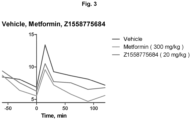
- Example 87 OGTT testing in C57BI/6N male mice
- Compound Z1558775684 was synthesized according to Example 85. Metformin was acquired from Teva Pharmaceutical Industries Ltd., Petach Tikwa, Israel, Lot 78133817 03 2020.
- Hygienic class Conventional at arrival. The animals were kept in good conventional conditions during the study.
- C57BL/6N is a mouse strain commonly used in glucose metabolism studies.
- the animals were individually identified by earmarking.
- the cages were labeled with tags indicating the ID numbers and earmarks of mice, the study code, sex, and route of administration, start and end date of the experimental period.
- mice were administered to mice.
- Animals were dosed once perorally with 20 mg/kg of tested compound Z1558775684.
- a control group was dosed with vehicle on the same schedule.
- Metformin at the dosage of 300 mg/kg was used as reference compound. All mice were observed for clinical signs of gross toxicity before administration.
- Compound Z1558775684 was dissolved/suspended in DMSO - PEG400 - physiological saline (20%:50%:30%) at concentration 4 mg/ml. Metformin was dissolved in the same vehicle at concentration 60 mg/ml. The test samples were administered per os in the volume corresponding to 5 ml/kg body weight.
- test samples Single doses of test samples were administered 60 min before glucose treatment at 3 p.m.
- the blood glucose level was measured after 6-hour fasting using Call Plus glucometer and specific test strips. Blood was obtained from the tail vein by incision of the tail tip, 5-6 ⁇ l of blood was used for each assay.
- Non-parametric statistical analysis (criteria of Wilcoxon-Mann-Whitney U) for independent samples was used to calculate the significance. The experiments were performed according to the Bienta Standard Operating Procedures/Manuals.
Landscapes
- Health & Medical Sciences (AREA)
- Chemical & Material Sciences (AREA)
- Organic Chemistry (AREA)
- Pharmacology & Pharmacy (AREA)
- Animal Behavior & Ethology (AREA)
- Veterinary Medicine (AREA)
- Public Health (AREA)
- General Health & Medical Sciences (AREA)
- Life Sciences & Earth Sciences (AREA)
- Medicinal Chemistry (AREA)
- Diabetes (AREA)
- Nuclear Medicine, Radiotherapy & Molecular Imaging (AREA)
- Bioinformatics & Cheminformatics (AREA)
- Engineering & Computer Science (AREA)
- General Chemical & Material Sciences (AREA)
- Chemical Kinetics & Catalysis (AREA)
- Hematology (AREA)
- Obesity (AREA)
- Epidemiology (AREA)
- Endocrinology (AREA)
- Emergency Medicine (AREA)
- Child & Adolescent Psychology (AREA)
- Gastroenterology & Hepatology (AREA)
- Urology & Nephrology (AREA)
- Pharmaceuticals Containing Other Organic And Inorganic Compounds (AREA)
- Medicines That Contain Protein Lipid Enzymes And Other Medicines (AREA)
- Acyclic And Carbocyclic Compounds In Medicinal Compositions (AREA)
Claims (34)
- Pharmazeutische Zusammensetzung, umfassend mindestens eine Verbindung der allgemeinen Formel (I)
R1-S-CH2-OXA-R2 (I)
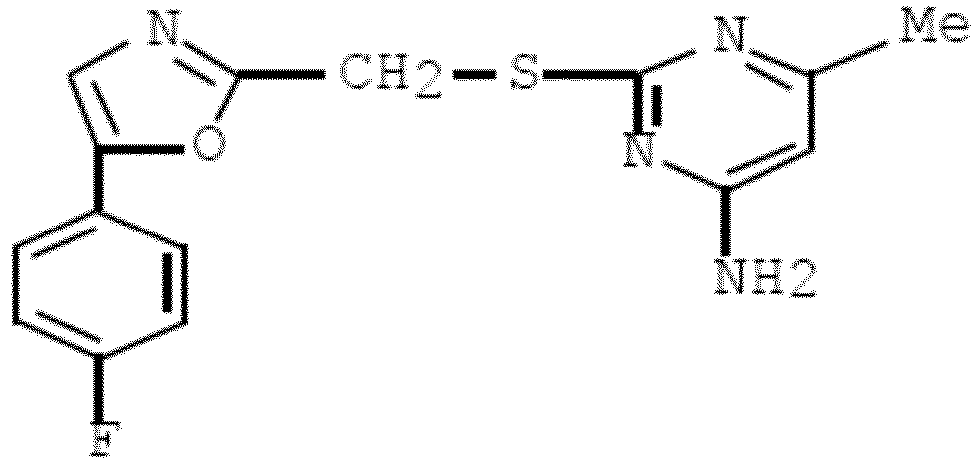
einschließlich Enantiomere, Diastereomere, Hydrate, Solvate, pharmazeutisch verträgliche Cokristalle oder Salze und Komplexe davon; undmindestens ein weiterer wirksamer Bestandteil, der aus der Gruppe, bestehend aus einem oder mehreren Agonisten von GPR40 and/oder GPR120, einem oder mehreren Biguaniden, einem oder mehreren DPP-4-Inhibitoren, einem oder mehreren α-Glucosidase-Inhibitoren, einer oder mehreren Sulfonylharnstoff-Verbindungen, einemoder mehreren GLP-1-Rezeptoragonisten, einem oder mehreren Thiazolidindionen, einem oder mehreren Inkretin-Mimetika, Insulin, einem oder mehreren Insulinderivaten und Pramlintid, ausgewählt ist wobei die mindestens eine Verbindung der allgemeinen Formel (I) dadurch gekennzeichnet ist, dassOXA aus der Gruppe, bestehend aus 1,3-Oxazolyl, 1,2,4-Oxadiazolyl oder 1,3, 4-Oxadiazolyl, ausgewählt ist;wenn OXA 1,3-Oxazoly ist, die Gruppe R1-S-CH2 an C2 des 1,3-Oxazolyls gebunden und die Gruppe R2 ist an C4 des 1,3-Oxazolyls gebunden ist;wenn OXA 1,2,4-Oxadiazolyl ist, die Gruppe R1-S-CH2 an C5 des 1,2,4-Oxadiazolyls gebunden und die Gruppe R2 ist an C3 des 1,2,4-Oxadiazolyls gebunden ist;wenn OXA 1,3,4-Oxadiazolyl ist, idie Gruppe R1-S-CH2 an C5 des 1,3,4-Oxadiazolyls gebunden und die Gruppe R2 an C2 des 1,3,4-Oxadiazolyls gebunden ist:R1 eine 6-gliedrige Heteroarylgruppe ist, die aus der Gruppe ausgewählt ist, die aus 1,3,5-Triazinyl und Pyrimidinyl besteht, die unabhängig voneinander mit einem oder mehreren Substituenten substituiert sind, die aus der Gruppe ausgewählt sind, die aus Hydroxyl, Amino, C1-C6-Alkyl, C3-C6-Cycloalkyl, C1-C4-Alkoxy, N-Mono- oder N,N-Di-substituiertem C1-C3-Alkylamino, nicht-aromatischem 5- bis 6-gliedrigem Heterocyclyl,, 6-gliedrigem Aryl und 5- bis 6-gliedrigem Heteroaryl besteht, wobei die Substituenten unsubstituiert oder mit einer oder mehreren Gruppen, ausgewählt aus der Gruppe bestehend aus Halogenid, Cyano und C1-C6-Alkyl, substituiert sein können, wobei die 6-gliedrige Aryl- bzw. 5- bis 6-gliedrige Heteroarylgruppe mit der 1,3,5-Triazinyl- bzw. Pyrimidylgruppe kondensiert sein kann, undR2 Phenyl ist, das unsubstituiert ist oder mit einem oder mehreren Substituenten substituiert ist, die ausgewählt sind aus der Gruppe bestehend aus Halogenid, Cyano, Amino, C1-C6-Alkyl, C3-C6-Cycloalkyl, das gegebenenfalls mit einem oder mehreren Halogeniden substituiert sein kann, C1-C4-Alkoxy, das gegebenenfalls mit einem oder mehreren Halogeniden substituiert sein kann, Hydroxy-C1-C6-alkyl, Sulfonyl-C1-C6-alkyl, Sulfamidyl-N-C1-C6-alkyl und Carboxamidyl-N-mono- oder -N,N-di-C1-C6-alkyl;mit der Maßgabe, dass die folgenden Verbindungen ausgeschlossen sind:




- Zusammensetzung nach Anspruch 1, wobei das Halogenid ausgewählt ist aus Cl, Br und F.
- Zusammensetzung nach Anspruch 1 oder 2, woei R1 1,3,5-Triazinyl ist, das wie in Anspruch 1 definiert substituiert ist.
- Zusammensetzung nach Anspruch 3, wobei, wenn die 1,3,5-Triazinylgruppe mit mehr als einem Substituenten substituiert ist, die Substituenten unterschiedlich sind.
- Zusammensetzung nach Anspruch 3 oder 4, wobei die 1,3,5-Triazinylgruppe unabhängig voneinander mit einem oder zwei Substituenten, ausgewählt aus der Gruppe bestehend aus Amino, Methyl, Ethyl, Isopropyl und tert.-Butyl, substituiert ist, wobei der/die Substituent(en) gegebenenfalls mit einem oder mehreren Halogeniden substituiert ist/sind.
- Zusammensetzung nach Anspruch 3, wobei R1 ausgewählt ist aus der Gruppe bestehend aus


- Zusammensetzung nach einem der Ansprüche 1 oder 2, wobei R1 ein wie in Anspruch 1 definiertes substituiertes Pyrimidinyl ist.
- Zusammensetzung nach Anspruch 7, wobei, wenn die Pyrimidinylgruppe mit mehr als einem Substituenten substituiert ist, die Substituenten unterschiedlich sind.
- Zusammensetzung nach Anspruch 7 oder 8, wobei die Pyrimidinylgruppe unabhängig voneinander durch einen oder mehrere Substituenten, ausgewählt aus der Gruppe bestehend aus Amino, Methyl und Ethyl, substituiert ist.
- Zusammensetzung nach Anspruch 9, wobei die Aminogruppe mit Methyl substituiert ist.
- Zusammensetzung nach Anspruch 9 oder 10, wobei die Methyl- oder Ethylgruppe mit einem oder mehreren Halogeniden gemäß der Definition im Anspruch 2 substituiert ist.
- Zusammensetzung nach Anspruch 7, wobei R1 ausgewählt ist aus der Gruppe bestehend aus


- Zusammensetzung nach einem der vorhergehenden Ansprüche, wobei R2 unabhängig voneinander mit einem oder mehreren Substituenten, ausgewählt aus der Gruppe bestehend aus Cl, Br, F, Methyl, Triflourmethyl, Methoxy und Ethoxy, substituiert ist.
- Zusammensetzung nach einem der vorhergehenden Ansprüche, wobei R2 in mindestens einer meta-Position und/oder mindestens einer ortho-Position substituiert ist.
- Zusammensetzung nach Anspruch 14, wobei R2 ausgewählt ist aus der Gruppe bestehend aus

- Zusammensetzung nach Anspruch 13 oder 14, wobei R2 in para-Stellung nicht substituiert ist.
- Zusammensetzung nach Anspruch 16, wobei R2 ausgewählt ist aus der Gruppe bestehend aus
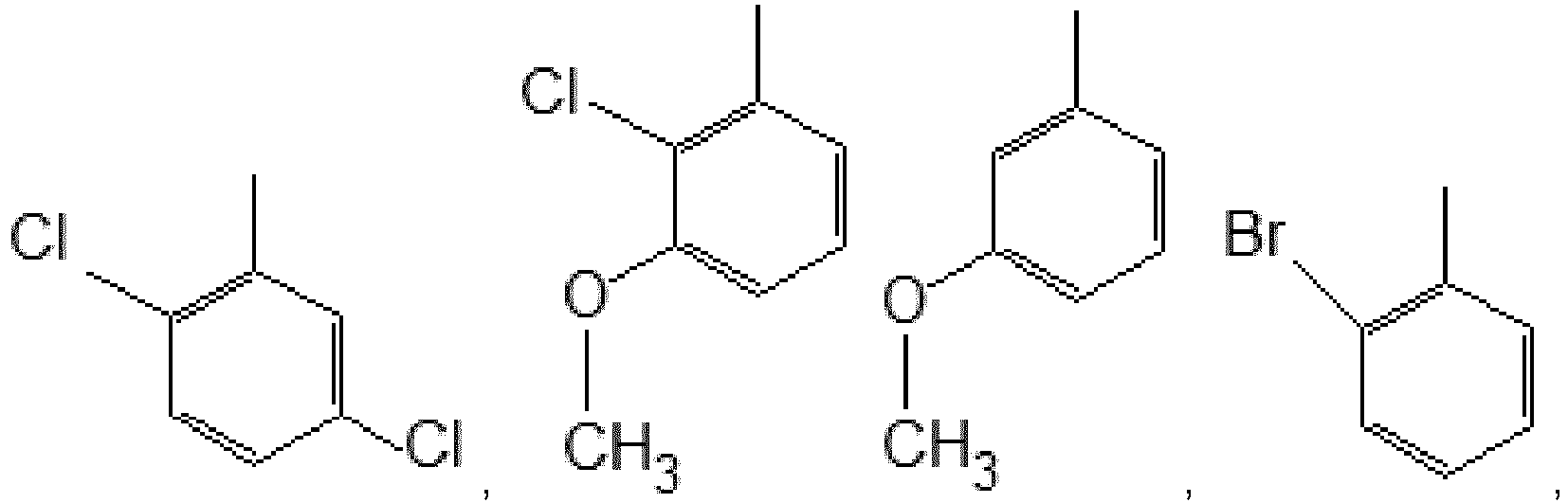

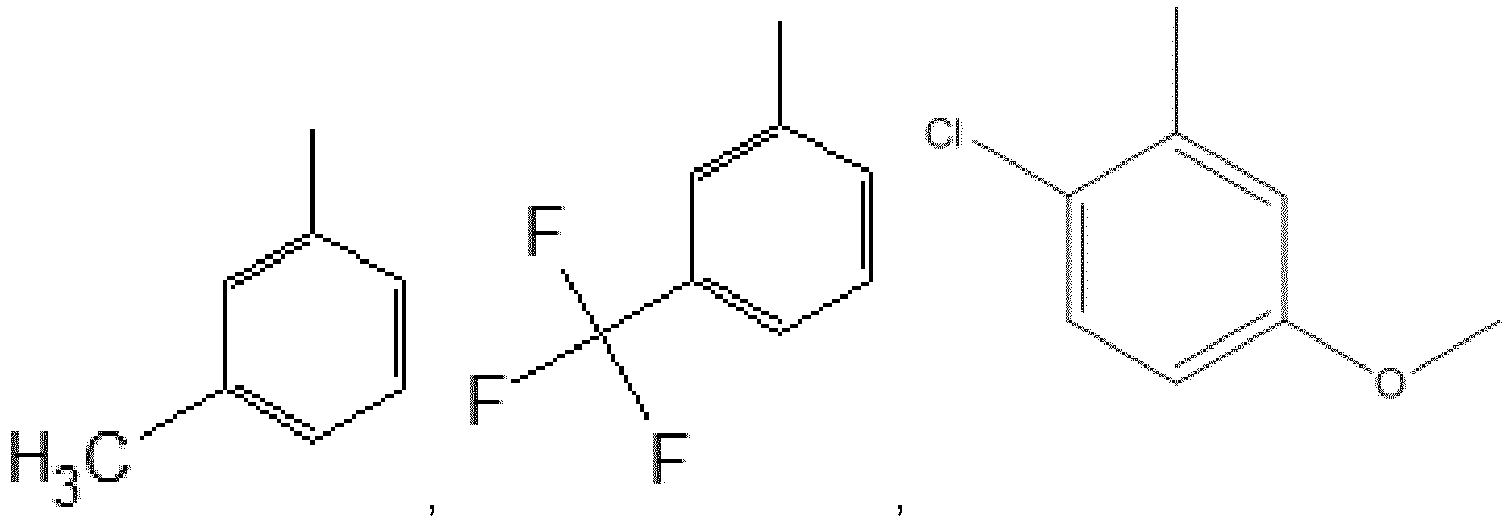

- Zusammensetzung nach einem der vorhergehenden Ansprüche, wobei OXA 1,3-Oxazolyl ist.
- Die Zusammensetzung nach Anspruch 18, wobei die Verbindung der allgemeinen Formel (I) aus der der Gruppe bestehend aus den folgenden Zusammensetzungen, ausgewählt ist:2-({[5-(2-Chlor-5-methoxyphenyl)-1,3-oxazol-2-yl]methyl}sulfanyl)-6-methylpyrimidin-4-amin4-({[5-(2-Chlor-5-methoxyphenyl)-1,3-oxazol-2-yl]methyl}sulfanyl)-6-(diflourmethyl)-1,3,5-triazin-2-amin4-([5-(2,5-Dichlorphenyl)-1,3-oxazol-2-yl]methylsulfanyl)-6-(difluormethyl)-1,3,5-triazin-2-amin4-({[5-(2-chlor-5-Methoxyphenyl)-1,3-oxazol-2-yl]methyl}sulfanyl)-6-(flourmethyl)-1,3,5-triazin-2-amin2-({[5-(2-Chlor-3-Methoxyphenyl)-1,3-oxazol-2-yl]methyl}sulfanyl)-6-methylpyrimidin-4-amin2-({[5-(2-Chlor-3-Methoxyphenyl)-1,3-oxazol-2-yl]methyl}sulfanyl)-6-methylpyrimidin-4-amin4-({[5-(2,5-Dichlorphenyl)-1,3-oxazol-2-yl]methyl}sulfanyl)-6-methyl-1,3,5-triazin-2-amin4-({[5-(2-Chlor-5-methoxyphenyl)-1,3-oxazol-2-yl]methyl}sulfanyl)-6-ethyl-1,3,5-triazin-2-amin4-({[5-(2-Chlor-5-methoxyphenyl)-1,3-oxazol-2-yl]methyl}sulfanyl)-6-methyl-1,3,5-triazin-2-amin4-({[5-(3-Chlor-4-methoxyphenyl)-1,3-oxazol-2-yl]methyl}sulfanyl)-6-methyl-1,3,5-triazin-2-amin2-({[5-(2-Chlor-5-methoxyphenyl)-1,3-oxazol-2-yl]methyl}sulfanyl)-6-(trifluormethyl)pyrimidin-4-amin4-([5-(2,5-Dichlorphenyl)-1,3-oxazol-2-yl]methylsulfanyl)-6-(fluormethyl)-1,3,5-triazin-2-amin4-({[5-(2,5-Dichlorphenyl)-1,3-oxazol-2-yl]methyl}sulfanyl)-6-methylpyrimidin-4-amin4-([5-(2,5-Dichlorphenyl)-1,3-oxazol-2-yl]methylsulfanyl)-6-ethyl-1,3,5-triazin-2-amin2-({[5-(3-Chlor-4-methoxyphenyl)-1,3-oxazol-2-yl]methyl}sulfanyl)-6-methylpyrimidin-4-amin4-({[5-(2-Chlor-3-methoxyphenyl)-1,3-oxazol-2-yl]methyl}sulfanyl)-6-methyl-1,3,5-triazin-2-amin4-({[5-(3-Chlor-4-methoxyphenyl)-1,3-oxazol-2-yl]methyl}sulfanyl)-6-ethyl-1,3,5-triazin-2-amin4-Ethyl-6-({[5-(3-methoxyphenyl)-1,3-oxazol-2-yl]methyl}sulfanyl)-1,3,5-triazin-2-amin2-({[5-(2-Bromphenyl)-1,3-oxazol-2-yl]methyl}sulfanyl)-6-methylpyrimidin-4-amin2-({[5-(3-Methoxyphenyl)-1,3-oxazol-2-yl]methyl}sulfanyl)-6-methylpyrimidin-4-amin4-({[5-(3-Chlorphenyl)-1,3-oxazol-2-yl]methyl}sulfanyl)-6-(pyridin-4-yl)-1,3,5-triazin-2-amin4-({[5-(3-Chlor-5-methoxyphenyl)-1,3-oxazol-2-yl]methyl}sulfanyl)-6-ethyl-1,3,5-triazin-2-amin4-({[5-(3-Chlorphenyl)-1,3-oxazol-2-yl]methyl}sulfanyl)-6-ethyl-1,3,5-triazin-2-amin4-({[5-(3-Chlor-4-flourphenyl)-1,3-oxazol-2-yl]methyl}sulfanyl)-6-methyl-1,3,5-triazin-2-amin6-Methyl-2-({[5-(4-methylphenyl)-1,3-oxazol-2-yl]methyl}sulfanyl)pyrimidin-4-amin2-({[5-(3-Chlorphenyl)-1,3-oxazol-2-yl]methyl}sulfanyl)-6-methylpyrimidin-4-amin4-({[5-(3-Chlorphenyl)-1,3-oxazol-2-yl]methyl}sulfanyl)-6-(1-methyl-1H-pyrazol-5-yl)-1,3,5-triazin-2-amin2-[({5-[3-Chlor-4-(3-methansulfonylpropoxy)phenyl]-1,3-oxazol-2-yl}methyl)sulfanyl]-6-methylpyrimidin-4-amin2-({[5-(3-Ethoxyphenyl)-1,3-oxazol-2-yl]methyl}sulfanyl)-6-methylpyrimidin-4-amin2-({[5-(3-Chlor-4-fluorphenyl)-1,3-oxazol-2-yl]methyl}sulfanyl)-6-methylpyrimidin-4-amin4-({[5-(3-Chlorphenyl)-1,3-oxazol-2-yl]methyl}sulfanyl)-6-methyl-1,3,5-triazin-2-amin4-({[5-(2-Chlorphenyl)-1,3-oxazol-2-yl]methyl}sulfanyl)-6-methyl-1,3,5-triazin-2-amin4-({[5-(3-Methoxyphenyl)-1,3-oxazol-2-yl]methyl}sulfanyl)-6-methyl-1,3,5-triazin-2-amin2-({[5-(3-Chlor-5-methoxyphenyl)-1,3-oxazol-2-yl]methyl}sulfanyl)-6-methylpyrimidin-4-amin4-({[5-(2,3-Dichlorphenyl)-1,3-oxazol-2-yl]methyl}sulfanyl)-6-ethyl-1,3,5-triazin-2-amin6-Methyl-2-[({5-[3-(trifluormethyl)phenyl]-1,3-oxazol-2-yl}methyl)sulfanyl]pyrimidin-4-amin2-({[5-(2,3-Dichlorphenyl)-1,3-oxazol-2-yl]methyl}sulfanyl)-6-methylpyrimidin-4-amin4-Methyl-6-[({5-[3-(triflourmethyl)phenyl]-1,3-oxazol-2-yl}methyl)sulfanyl]-1,3,5-triazin-2-amin4-({[5-(3-Bromphenyl)-1,3-oxazol-2-yl]methyl}sulfanyl)-6-methyl-1,3,5-triazin-2-amin4-({[5-(3-eEhoxyphenyl)-1,3-oxazol-2-yl]methyl}sulfanyl)-6-methyl-1,3,5-triazin-2-amin4-({[5-(2,3-Dichlorphenyl)-1,3-oxazol-2-yl]methyl}sulfanyl)-6-methyl-1,3,5-triazin-2-amin2-({[5-(2,5-Dichlorphenyl)-1,3-oxazol-2-yl]methyl}sulfanyl)-6-(trifluormethyl)pyrimidin-4-amin4-[Chlor(flour)methyl]-6-({[5-(3-chlorphenyl)-1,3-oxazol-2-yl]methyl}sulfanyl)-1,3,5-triazin-2-amin4-({[5-(3-Chlor-5-methoxyphenyl)-1,3-oxazol-2-yl]methyl}sulfanyl)-6-methyl-1,3,5-triazin-2-amin6-({[5-(2,5-Dichlorphenyl)-1,3-oxazol-2-yl]methyl}thio)-N,N-dimethyl-1,3,5-triazin-2,4-diamin4-Methyl-6-({[5-(4-methylphenyl)-1,3-oxazol-2-yl]methyl}sulfanyl)-1,3,5-triazin-2-amin2-({[5-(2-Chlorphenyl)-1,3-oxazol-2-yl]methyl}sulfanyl)-6-methylpyrimidin-4-amin4-Methyl-6-({[5-(naphthalen-2-yl)-1,3-oxazol-2-yl]methyl}sulfanyl)-1,3,5-triazin-2-amin2-({[5-(3-Methoxyphenyl)-1,3-oxazol-2-yl]methyl}sulfanyl)-6-(trifluormethyl)pyrimidin-4-amin4-Methyl-6-[({5-[3-(triflourmethoxy)phenyl]-1,3-oxazol-2-yl}methyl)sulfanyl]-1,3,5-triazin-2-amin2-({[5-(4-Methoxyphenyl)-1,3-oxazol-2-yl]methyl}sulfanyl)-6-methylpyrimidin-4-amin4-({[5-(4-Methoxyphenyl)-1,3-oxazol-2-yl]methyl}sulfanyl)-6-methyl-1,3,5-triazin-2-amin6-Methyl-2-({[5-(naphthalen-2-yl)-1,3-oxazol-2-yl]methyl}sulfanyl)pyrimidin-4-amin6-Methyl-2-({[5-(2-methylphenyl)-1,3-oxazol-2-yl]methyl}sulfanyl)pyrimidin-4-amin4-([5-(3-Chlorphenyl)-1,3-oxazol-2-yl]methylsulfanyl)-6-(trifluormethyl)-1,3,5-triazin-2-amin4-({[5-(2-Chlor-5-methoxyphenyl)-1,3-oxazol-2-yl]methyl}sulfanyl)-6-(morpholin-4-yl)-1,3,5-triazin-2-amin2-([5-(3-Methoxyphenyl)-1,3-oxazol-2-yl]methylsulfanyl)-N,6-dimethylpyrimidin-4-amin4-({[5-(4-Ethylphenyl)-1,3-oxazol-2-yl]methyl}sulfanyl)-6-methyl-1,3,5-triazin-2-amin2-({[5-(2-Chlorphenyl)-1,3-oxazol-2-yl]methyl}sulfanyl)-6-(trifluormethyl)pyrimidin-4-amin4-({[5-(3-Chlorphenyl)-1,3-oxazol-2-yl]methyl}sulfanyl)-6-phenyl-1,3,5-triazin-2-amin4-([5-(2,5-dichlorphenyl)-1,3-oxazol-2-yl]methylsulfanyl)-6-(morpholin-4-yl)-1,3,5-triazin-2-amin2-({[5-(3-Chlorphenyl)-1,3-oxazol-2-yl]methyl}sulfanyl)-6-(trifluormethyl)pyrimidin-4-amin4-Cyclopropyl-6-([5-(3-methoxyphenyl)-1,3-oxazol-2-yl]methylsulfanyl)-1,3,5-triazin-2-amin2-({[5-(3-Chlor-5-methoxyphenyl)-1,3-oxazol-2-yl]methyl}sulfanyl)-6-(trifluormethyl)pyrimidin-4-amin2-({[5-(2,3-Dichlorphenyl)-1,3-oxazol-2-yl]methyl}sulfanyl)-6-(trifluormethyl)pyrimidin-4-amin4-({[5-(3-Chlorphenyl)-1,3-oxazol-2-yl]methyl}sulfanyl)-6-(1,3-thiazol-4-yl)-1,3,5-triazin-2-amin4-({[5-(3-Dichlorphenyl)-1,3-oxazol-2-yl]methyl}sulfanyl)-6-(1-methyl-1H-pyrazol-4-yl)-1,3,5-triazin-2-amin4-({[5-(4-Flourphenyl)-1,3-oxazol-2-yl]methyl}sulfanyl)-6-methyl-1,3,5-triazin-2-amin2-({Thieno[2,3-d]pyrimidin-4-ylsulfanyl}methyl)-5-[3-(trifluormethyl)phenyl]-1,3-oxazol4-({[5-(3-Chlorphenyl)-1,3-oxazol-2-yl]methyl}sulfanyl)-6-(1-methylcyclopropyl)-1,3,5-triazin-2-amin4-({[5-(3-Dichlorphenyl)-1,3-oxazol-2-yl]methyl}sulfanyl)-6-(3,3-diflourcyclobutyl)-1,3,5-triazin-2-amin6-Methyl-2-[({5-[3-(trifluormethoxy)phenyl]-1,3-oxazol-2-yl}methyl)sulfanyl]pyrimidin-4-amin2-[({5-[3-(Trifluormethoxy)phenyl]-1,3-oxazol-2-yl}methyl)sulfanyl]-6-(trifluormethyl)pyrimidin-4-amin2-({[5-(2-Methoxyphenyl)-1,3-oxazol-2-yl]methyl}sulfanyl)-6-methylpyrimidin-4-amin5-(2,5-Dichlorphenyl)-2-[({2-methylpyrido[2,3-d]pyrimidin-4-yl}sulfanyl)methyl]-1,3-oxazol5-(3-Methoxyphenyl)-2-({thieno[2,3-d]pyrimidin-4-ylsulfanyl}methyl)-1,3-oxazol2-({[5-(4-Methylphenyl)-1,3-oxazol-2-yl]methyl}sulfanyl)-6-(trifluormethyl)pyrimidin-4-amin4-([5-(3-Chlorphenyl)-1,3-oxazol-2-yl]methylsulfanyl)-6-methoxy-1,3,5-triazin-2-amin4-Ethyl-6-[({5-[3-(triflourmethoxy)phenyl]-1,3-oxazol-2-yl}methyl)sulfanyl]-1,3,5-triazin-2-amin2-({[5-(3-Chlorphenyl)-1,3-oxazol-2-yl]methyl}sulfanyl)-N-methylchinazolin-4-amin4-({[5-(3-Chlorphenyl)-1,3-oxazol-2-yl]methyl}sulfanyl)-6-(methoxymethyl)-1,3,5-triazin-2-amin6-({[5-(2-Chlorphenyl)-1,3-oxazol-2-yl]methyl}sulfanyl)-1,3,5-triazin-2,4-diamin2-({[5-(3-Chlor-4-fluorphenyl)-1,3-oxazol-2-yl]methyl}sulfanyl)-6-(trifluormethyl)pyrimidin-4-amin5-(3-Methoxyphenyl)-2-[({2-methylpyrido[2,3-d]pyrimidin-4-yl}sulfanyl)methyl]-1,3-oxazol
- Zusammensetzung gemäß einem der Ansprüche 1 bis 19, wobei die Zusammensetzung mindestens einen weiteren wirksamen Bestandteil enthält, der aus der Gruppe, bestehend aus einem oder mehreren Angiotensin-Converting-Enzym-Inhibitoren (ACE-Inhibitoren), einem oder mehreren Angiotensin-II-Rezeptorblockern (ARBs), einem oder mehreren Thiaziddiuretika, einem oder mehreren Calciumkanalblockern, einem oder mehreren Antioxidantien, einem oder mehreren Proteinkinase-C-Inhibitoren, einem oder mehreren TNF-alpha-Blockern, einem oder mehreren SGTL2-Inhibitoren, einem oder mehreren Inkretin-Mimetika, einem oder mehreren Mineralocorticoid-Rezeptor-Antagonisten und Sulodexid, ausgewählt ist.
- Zusammensetzung nacheinem der Ansprüche 1 bis 20, wobei die Zusammensetzung mindestens einen weiteren wirksamen Bestandteil enthält, der aus der Gruppe, bestehend aus einem oder mehreren Inhibitoren des Gewebewachstumsfaktors (TGF), einem oder mehreren Tyrosinkinase-Inhibitoren, einem oder mehreren Integrin-Inhibitoren, einem oder mehreren ALK5-Inhibitoren, einem oder mehreren Agonisten des knochenmorphogenetischen Proteins 7, einem oder mehreren CTGF-Inhibitoren, einem oder mehreren TNF-Inhibitoren, einem oder mehreren HGF-Mimetika, einem oder mehreren Interleukin-Inhibitoren, einem oder mehreren CC-Chemokin-Inhibitoren, einem oder mehreren Interferonen, einem oder mehreren MMP/TIMP-Inhibitoren, einem oder mehreren Endothelin-Antagonisten, einem oder mehreren LPAR-Antagonisten, einem oder mehreren CB1-Rezeptorantagonisten, einem oder mehreren CB2-Rezeptorantagonisten, einem oder mehreren Prostazyklinrezeptoragonisten, einem oder mehreren VIP-Rezeptoragonisten, einem oder mehreren Leukozytenelastaseinhibitoren, einem oder mehreren TAFI-Inhibitoren, einem oder mehreren Relaxinrezeptorstimulatoren, einem oder mehreren rekombinanten Pentraxinen oder Mimetika davon, einem oder mehreren TGM-Inhibitoren, einem oder mehreren Autotaxin-Inhibitoren, einem oder mehreren GPR84-Inhibitoren, einem oder mehreren GPR40-Agonisten, einem oder mehreren Bindegewebs-Galectin-Inhibitoren, einem oder mehreren Rho-assoziierten Kinase-Inhibitoren, einem oder mehreren c-Jun-Kinase-Inhibitoren, einem oder mehreren Somatostatin-Analoga, einem oder mehreren Cyclophilin-Inhibitoren, Pirfenidon, Tripelukast und Bardoxolonemethy, ausgewählt ist.
- Zusammensetzung nach einem der Ansprüche 1 bis 21, wobei die Zusammensetzung mindestens einen weiteren wirksamen Bestandteil enthält, der aus der Gruppe, bestehend aus einem oder mehreren Androgenrezeptor-Agonisten, einem oder mehreren Fettsäure/Gallensäure-Konjugaten (FABACs), einer oder mehreren Gallensäuren, einem oder mehreren FXR-Liganden, einem oder mehreren FGF-19-Mimetika, einem oder mehreren TGR5-Agonisten, einem oder mehreren PPAR-Agonisten, einem oder mehreren ASBT-Inhibitoren, einem oder mehreren Immunmodulatoren, einem oder mehreren CCR2/CCR5-Rezeptor-Inhibitoren, einem oder mehreren Caspase-Inhibitoren, einem oder mehreren Schilddrüsenhormonrezeptor-β-Agonisten, einem oder mehreren ASK1-Inhibitoren, einem oder mehreren SSAO/VAP-1-Inhibitoren, einem oder mehreren Mimetika des humanen Fibroblasten-Wachstumsfaktors, einem oder mehreren P2RY13-Protein-Agonisten, einem oder mehreren Cyclosporin-A-Analoga, einem oder mehreren Galectin-Inhibitoren, einem oder mehreren Acetyl-CoA-Carboxylase (ACC)-Inhibitoren, einem oder mehreren Lipidmodulatoren, einem oder mehreren Anti-CD3-Antikörpern, einem oder mehreren FGFR1c/KLB-Aktivatoren, einem oder mehreren Diacylglycerol-O-Acyltransferase-2 (DGAT2)-Inhibitoren, einem oder mehreren Ketohexokinase (KHK)-Inhibitoren, einem oder mehreren Integrin-Inhibitoren, einem oder mehreren mitochondrialen Pyruvatträger-Inhibitoren und Vitamin E, ausgewählt ist.
- Eine Verbindung der allgemeinen Formel (I)
R1-S-CH2-OXA-R2 (I)
einschließlich Enantiomere, Diastereomere, Hydrate, Solvate, pharmazeutisch verträgliche Cokristalle oder Salze und Komplexe davon;wobeiOXA ausgewählt ist aus der Gruppe bestehend aus 1,3-Oxazolyl, 1,2,4-Oxadiazolyl oder 1,3,4-Oxadiazolyl;wenn OXA 1,3-Oxazolyl ist, ist die Gruppe R1-S-CH2 an C2 des 1,3-Oxazolyls gebunden und die Gruppe R2 ist an C4 des 1,3-Oxazolyls gebunden;wenn OXA 1,2,4-Oxadiazolyl ist, ist die Gruppe R1-S-CH2 an C5 des 1,2,4-Oxadiazolyls gebunden und die Gruppe R2 ist an C3 des 1,2,4-Oxadiazolyls gebunden;wenn OXA 1,3,4-Oxadiazolyl ist, ist die Gruppe R1-S-CH2 an C5 des 1,3,4-Oxadiazolyls gebunden und die Gruppe R2 ist an C2 des 1,3,4-Oxadiazolyls' gebunden;R1 eine 6-gliedrige Heteroarylgruppe ist, die aus der Gruppe ausgewählt ist, die aus 1,3,5-Triazinyl und Pyrimidinyl besteht, die unabhängig voneinander mit einem oder mehreren Substituenten substituiert sind, die aus der Gruppe ausgewählt sind, die aus Hydroxyl, Amino, C1-C6-Alkyl, C3-C6-Cycloalkyl, C1-C4-Alkoxy, N-Mono- oder N, N-Di-substituiertem C1-C3-Alkylamino, nicht-aromatischem 5- bis 6-gliedrigem Heterocyclyl besteht, 6-gliedriges Aryl und 5- bis 6-gliedriges Heteroaryl, wobei die Substituenten unsubstituiert oder mit einer oder mehreren Gruppen, ausgewählt aus der Gruppe bestehend aus Halogenid, Cyano und C1-C6-Alkyl, substituiert sein können, wobei die 6-gliedrige Aryl- bzw. 5- bis 6-gliedrige Heteroarylgruppe an die 1,3,5-Triazinyl- bzw. Pyrimidylgruppe kondensiert sein kann, undR2 Phenyl ist, das unsubstituiert ist oder mit einem oder mehreren Substituenten substituiert ist, die ausgewählt sind aus der Gruppe bestehend aus Halogenid, Cyano, Amino, C1-C6-Alkyl, C3-C6-Cycloalkyl, das gegebenenfalls mit einem oder mehreren Halogeniden substituiert sein kann, C1-C4-Alkoxy, das gegebenenfalls mit einem oder mehreren Halogeniden substituiert sein kann, Hydroxy-C1-C6-alkyl, Sulfonyl-C1-C6-alkyl, Sulfamidyl-N-C1-C6-alkyl und Carboxamidyl-N-mono- oder -N,N-di-C1-C6-alkyl;zur Verwendung in der Vorbeugung oder Behandlung einer Erkrankung und/oder eines Zustands, die/der aus metabolischem Syndrom, Dyslipidämie, Nierenerkrankungen, fibrotischen oder sklerotischen Erkrankungen, hepatischen Erkrankungen und Gallenerkrankungen, ausgewählt ist.. - Die Verbindung zur Verwendung nach Anspruch 23, wobei die Verbindung eine höhere Selektivität für GPR40 als für GPR120 aufweist.
- Verbindung zur Verwendung nach Anspruch 24, wobei die Verbindung eine prozentuale Aktivierung von GPR40 zeigt, die mindestens dreifach höher ist als die prozentuale Aktivierung von GPR120, wobei die prozentuale Aktivierung das hundertfache Verhältnis der Aktivierung von GPR40 bzw. GPR120 durch die Verbindung zur Aktivierung von GPR40 bzw. GPR120 durch AMG 837 ist.
- Verbindung zur Verwendung nach einem der Ansprüche 23 bis 25, wobei die Nierenerkrankung aus der Gruppe, bestehend auschronischer Nierenerkrankung (CKD) und diabetischer Nephropathie, ausgewählt ist.
- Verbindung zur Verwendung nach einem der Ansprüche 23 bis 25, wobei die fibrotische oder sklerotische Erkrankung oder der fibrotische oder sklerotische Zustand aus der Gruppe, bestehend aus idiopathischer Lungenfibrose (IPF), Lungenfibrose, Herzfibrose, Leberfibrose, Nierenfibrose und systemischer Sklerose, ausgewählt ist.
- Verbindung zur Verwendung nach einem der Ansprüche 23 bis 25, wobei die Leber- und Gallenerkrankungen aus der Gruppe, bestehend aus Lebersteatose, nichtalkoholischer Fettlebererkrankung (NAFLD), nichtalkoholischer Fettleber (NAFL) und nichtalkoholischer Steatohepatitis (NASH), primär biliärer Cholangitis (PBC) und primär sklerosierender Cholangitis (PSC), ausgewählt sind.
- Verbindung zur Verwendung nach einem der Ansprüche 23 bis 25 zur Verwendung in der Behandlung und/oder Vorbeugung des metabolischen Syndroms und/oder der Dyslipidämie, wobei die Verbindung in Kombination mit mindestens einem weiteren Wirkstoff verwendet wird, der aus der Gruppe ausgewählt ist, die aus einem oder mehreren Statinen, einem oder mehreren Gallensäure-Maskierungsmitteln, einem oder mehreren Fibraten und/oder mehreren anderen PPAR-Alpha-Agonisten, einem oder mehreren PCSK9-Inhibitoren, einem oder mehreren Lipasehemmern, einem oder mehreren 5-HT2C-Rezeptoragonisten, einem oder mehreren Amphetaminen, einem oder mehreren Phenethylaminen, einem oder mehreren Antikonvulsiva, einem oder mehreren Opioidrezeptorantagonisten, einem oder mehreren Noradrenalin-Dopamin-Wiederaufnahmehemmern, Ezetimib und Niacin
- Verbindung zur Verwendung nach einem der Ansprüche 23 bis 26 zur Verwendung in der Behandlung einer Nierenerkrankung, wobei die Verbindung in Kombination mit mindestens einem weiteren Wirkstoff verwendet wird, der aus der Gruppe, bestehend aus einem oder mehreren Angiotensin-1- oder -2-Converting-Enzym-Inhibitoren (ACE-Inhibitoren), einem oder mehreren Angiotensin-II-Rezeptorblockern (ARBs), einem oder mehreren Thiaziddiuretika, einem oder mehreren Calciumkanalblockern, einem oder mehreren Antioxidantien, einem oder mehreren Proteinkinase-C-Inhibitoren, einem oder mehreren TNF-alpha-Blockern, einem oder mehreren Thiazolidindionen, einem oder mehreren DP-4-Inhibitoren, einem oder mehreren SGTL2-Inhibitoren, einem oder mehreren Inkretin-Mimetika, einem oder mehreren Mineralocorticoid-Rezeptor-Antagonisten und Sulodexid, ausgewählt ist.
- Verbindung zur Verwendung nacheinem der Ansprüche 23 bis 25 und 27 zur Verwendung in der Behandlung und/oder Vorbeugung von fibrotischen und/oder sklerotischen Erkrankungen oder Zuständen, wobei die Verbindung in Kombination mit mindestens einem weiteren Wirkstoff verwendet wird, der aus der Gruppe, bestehend aus einem oder mehreren Inhibitoren des Gewebewachstumsfaktors (TGF), einem oder mehreren Tyrosinkinaseinhibitoren, einem oder mehreren Integrininhibitoren, einem oder mehreren ALK5-Inhibitoren, einem oder mehreren Agonisten des knochenmorphogenetischen Proteins 7, einem oder mehreren CTGF-Inhibitoren, einem oder mehreren TNF-Inhibitoren, einem oder mehreren HGF-Mimetika, einem oder mehreren Interleukin-Inhibitoren, einem oder mehreren CC-Chemokin-Inhibitoren, einem oder mehreren Interferonen, einem oder mehreren MMP/TIMP-Inhibitoren, einem oder mehreren Endothelin-Antagonisten, einem oder mehreren Angiotensin-II-Rezeptorblockern (ARBs), einem oder mehreren LPAR-Antagonisten, einem oder mehreren CB1-Rezeptorantagonisten, einem oder mehreren CB2-Rezeptorantagonisten, einem oder mehreren Prostazyklinrezeptoragonisten, einem oder mehreren VIP-Rezeptoragonisten, einem oder mehreren Leukozytenelastaseinhibitoren, einem oder mehreren TAFI-Inhibitoren, einem oder mehreren Relaxinrezeptorstimulanzien, einem oder mehreren rekombinanten Pentraxinen oder Mimetika davon, einem oder mehreren TGM-Inhibitoren, einem oder mehreren Autotaxin-Inhibitoren, einem oder mehreren GPR84-Inhibitoren, einem oder mehreren GPR40-Agonisten, einem oder mehreren Bindegewebs-Galectin-Inhibitoren, einem oder mehreren Rho-assoziierten Kinase-Inhibitoren, einem oder mehreren c-Jun-Kinase-Inhibitoren, einem oder mehreren Somatostatin-Analoga, einem oder mehreren Cyclophilin-Inhibitoren, Pirfenidon, Tripelukast und Bardoxolonemethyl, ausgewählt ist.
- Verbindung zur Verwendung nach einem der Ansprüche 23 bis 25 und 28 zur Verwendung in der Behandlung und/oder Vorbeugung von Lebererkrankungen und/oder Gallenerkrankungen, wobei die Verbindung in Kombination mit mindestens einem weiteren Wirkstoff verwendet wird, der aus der Gruppe, bestehend aus einem oder mehreren Androgenrezeptoragonisten, einem oder mehreren Fettsäure/Gallensäure-Konjugaten (FABACs), einer oder mehreren Gallensäuren, einem oder mehreren FXR-Liganden, einem oder mehreren FGF-19-Mimetika, einem oder mehreren TGR5-Agonisten, einem oder mehreren PPAR-Agonisten, einem oder mehreren ASBT-Inhibitoren, einem oder mehreren Immunmodulatoren, einem oder mehreren CCR2/CCR5-Rezeptor-Inhibitoren, einem oder mehreren Caspase-Inhibitoren, einem oder mehreren GLP-1-Rezeptor-Agonisten, einem oder mehreren Schilddrüsenhormonrezeptor-β-Agonisten, ein oder mehrere ASK1-Inhibitoren, ein oder mehrere SSAO/VAP-1-Inhibitoren, ein oder mehrere Mimetika des humanen Fibroblasten-Wachstumsfaktors, ein oder mehrere P2RY13-Protein-Agonisten, ein oder mehrere Cyclosporin-A-Analoga, ein oder mehrere Galectin-Inhibitoren, ein oder mehrere Acetyl-CoA-Carboxylase (ACC)-Inhibitoren, ein oder mehrere Lipidmodulatoren, ein oder mehrere Anti-CD3-Antikörper, ein oder mehrere FGFR1c/KLB-Aktivatoren, ein oder mehrere Diacylglycerol-O-Acyltransferase-2 (DGAT2)-Inhibitoren, ein oder mehrere Ketohexokinase (KHK)-Inhibitoren, ein oder mehrere Integrin-Inhibitoren, ein oder mehrere Mitochondrien-Pyruvat-Carrier-Inhibitoren und Vitamin E, ausgewählt ist.
- Verbindung zur Verwendung nach einem der Ansprüche 23 bis 32, wobei die Verbindung außerdem wie in einem der Ansprüche 2 bis 18 definiert ist.
- Verbindung zur Verwendung nach einem der Ansprüche 23 bis 33, wobei die Verbindung aus der Gruppe ausgewählt die aus den folgenden Verbindungen besteht:2-({[5-(2-Chlor-5-methoxyphenyl)-1,3-oxazol-2-yl]methyl}sulfanyl)-6-methylpyrimidin-4-amin4-({[5-(2-Chlor-5-methoxyphenyl)-1,3-oxazol-2-yl]methyl}sulfanyl)-6-(diflourmethyl)-1,3,5-triazin-2-amin4-([5-(2,5-Dichlorphenyl)-1,3-oxazol-2-yl]methylsulfanyl)-6-(difluormethyl)-1,3,5-triazin-2-amin4-({[5-(2-Chlor-5-methoxyphenyl)-1,3-oxazol-2-yl]methyl}sulfanyl)-6-(flourmethyl)-1,3,5-triazin-2-amin2-({[5-(2-Chlor-3-methoxyphenyl)-1,3-oxazol-2-yl]methyl}sulfanyl)-6-methylpyrimidin-4-amin2-({[5-(2-Chlor-3-methoxyphenyl)-1,3-oxazol-2-yl]methyl}sulfanyl)-6-methylpyrimidin-4-amin4-({[5-(2,5-Dichlorphenyl)-1,3-oxazol-2-yl]methyl}sulfanyl)-6-methyl-1,3,5-triazin-2-amin4-({[5-(2-Chlor-5-methoxyphenyl)-1,3-oxazol-2-yl]methyl}sulfanyl)-6-ethyl-1,3,5-triazin-2-amin4-({[5-(2-Chlor-5-methoxyphenyl)-1,3-oxazol-2-yl]methyl}sulfanyl)-6-methyl-1,3,5-triazin-2-amin4-({[5-(3-Chlor-4-methoxyphenyl)-1,3-oxazol-2-yl]methyl}sulfanyl)-6-methyl-1,3,5-triazin-2-amin2-({[5-(2-Chlor-5-methoxyphenyl)-1,3-oxazol-2-yl]methyl}sulfanyl)-6-(trifluormethyl)pyrimidin-4-amin4-([5-(2,5-Dichlorphenyl)-1,3-oxazol-2-yl]methylsulfanyl)-6-(fluormethyl)-1,3,5-triazin-2-amin4-({[5-(2,5-Dichlorphenyl)-1,3-oxazol-2-yl]methyl}sulfanyl)-6-methylpyrimidin-4-amin4-([5-(2,5-Dichlorphenyl)-1,3-oxazol-2-yl]methylsulfanyl)-6-ethyl-1,3,5-triazin-2-amin2-({[5-(3-Chlor-4-methoxyphenyl)-1,3-oxazol-2-yl]methyl}sulfanyl)-6-methylpyrimidin-4-amin4-({[5-(2-Chlor-3-methoxyphenyl)-1,3-oxazol-2-yl]methyl}sulfanyl)-6-methyl-1,3,5-triazin-2-amin4-({[5-(3-Chlor-4-methoxyphenyl)-1,3-oxazol-2-yl]methyl}sulfanyl)-6-ethyl-1,3,5-triazin-2-amin4-Ethyl-6-({[5-(3-methoxyphenyl)-1,3-oxazol-2-yl]methyl}sulfanyl)-1,3,5-triazin-2-amin2-({[5-(2-Bromphenyl)-1,3-oxazol-2-yl]methyl}sulfanyl)-6-methylpyrimidin-4-amin2-({[5-(3-Methoxyphenyl)-1,3-oxazol-2-yl]methyl}sulfanyl)-6-methylpyrimidin-4-amin4-({[5-(3-Chlorphenyl)-1,3-oxazol-2-yl]methyl}sulfanyl)-6-(pyridin-4-yl)-1,3,5-triazin-2-amin4-({[5-(3-Chlor-5-methoxyphenyl)-1,3-oxazol-2-yl]methyl}sulfanyl)-6-ethyl-1,3,5-triazin-2-amin4-({[5-(3-Chlorphenyl)-1,3-oxazol-2-yl]methyl}sulfanyl)-6-ethyl-1,3,5-triazin-2-amin4-({[5-(3-Chlor-4-flourphenyl)-1,3-oxazol-2-yl]methyl}sulfanyl)-6-methyl-1,3,5-triazin-2-amin6-Methyl-2-({[5-(4-methylphenyl)-1,3-oxazol-2-yl]methyl}sulfanyl)pyrimidin-4-amin2-({[5-(3-Chlorphenyl)-1,3-oxazol-2-yl]methyl}sulfanyl)-6-methylpyrimidin-4-amin4-({[5-(3-chlorphenyl)-1,3-oxazol-2-yl]methyl}sulfanyl)-6-(1-methyl-1H-pyrazol-5-yl)-1,3,5-triazin-2-amin2-[({5-[3-Chlor-4-(3-methansulfonylpropoxy)phenyl]-1,3-oxazol-2-yl}methyl)sulfanyl]-6-methylpyrimidin-4-amin2-({[5-(3-Ethoxyphenyl)-1,3-oxazol-2-yl]methyl}sulfanyl)-6-methylpyrimidin-4-amin2-({[5-(3-Chlor-4-fluorphenyl)-1,3-oxazol-2-yl]methyl}sulfanyl)-6-methylpyrimidin-4-amin4-({[5-(3-Chlorphenyl)-1,3-oxazol-2-yl]methyl}sulfanyl)-6-methyl-1,3,5-triazin-2-amin4-({[5-(2-Chlorphenyl)-1,3-oxazol-2-yl]methyl}sulfanyl)-6-methyl-1,3,5-triazin-2-amin4-({[5-(3-Methoxyphenyl)-1,3-oxazol-2-yl]methyl}sulfanyl)-6-methyl-1,3,5-triazin-2-amin2-({[5-(3-Chlor-5-methoxyphenyl)-1,3-oxazol-2-yl]methyl}sulfanyl)-6-methylpyrimidin-4-amin4-({[5-(2,3-Dichlorphenyl)-1,3-oxazol-2-yl]methyl}sulfanyl)-6-ethyl-1,3,5-triazin-2-amin6-Methyl-2-[({5-[3-(trifluormethyl)phenyl]-1,3-oxazol-2-yl}methyl)sulfanyl]pyrimidin-4-amin2-({[5-(2,3-Dichlorphenyl)-1,3-oxazol-2-yl]methyl}sulfanyl)-6-methylpyrimidin-4-amin4Methyl-6-[({5-[3-(triflourmethyl)phenyl]-1,3-oxazol-2-yl}methyl)sulfanyl]-1,3,5-triazin-2-amin4-({[5-(3-Bromphenyl)-1,3-oxazol-2-yl]methyl}sulfanyl)-6-methyl-1,3,5-triazin-2-amin4-({[5-(3-Ethoxyphenyl)-1,3-oxazol-2-yl]methyl}sulfanyl)-6-methyl-1,3,5-triazin-2-amin4-({[5-(2,3-Cichlorphenyl)-1,3-oxazol-2-yl]methyl}sulfanyl)-6-methyl-1,3,5-triazin-2-amin2-({[5-(2,5-Dichlorphenyl)-1,3-oxazol-2-yl]methyl}sulfanyl)-6-(trifluormethyl)pyrimidin-4-amin4-[Chlor(flour)methyl]-6-({[5-(3-chlorphenyl)-1,3-oxazol-2-yl]methyl}sulfanyl)-1,3,5-triazin-2-amin4-({[5-(3-Chlor-5-methoxyphenyl)-1,3-oxazol-2-yl]methyl}sulfanyl)-6-methyl-1,3,5-triazin-2-amin6-({[5-(2,5-Dichlorphenyl)-1,3-oxazol-2-yl]methyl}thio)-N,N-dimethyl-1,3,5-triazin-2,4-diamin4-Methyl-6-({[5-(4-methylphenyl)-1,3-oxazol-2-yl]methyl}sulfanyl)-1,3,5-triazin-2-amin2-({[5-(2-Chlorphenyl)-1,3-oxazol-2-yl]methyl}sulfanyl)-6-methylpyrimidin-4-amin4-Methyl-6-({[5-(naphthalen-2-yl)-1,3-oxazol-2-yl]methyl}sulfanyl)-1,3,5-triazin-2-amin2-({[5-(3-Methoxyphenyl)-1,3-oxazol-2-yl]methyl}sulfanyl)-6-(trifluormethyl)pyrimidin-4-amin4-Methyl-6-[({5-[3-(triflourmethoxy)phenyl]-1,3-oxazol-2-yl}methyl)sulfanyl]-1,3,5-triazin-2-amin2-({[5-(4-Methoxyphenyl)-1,3-oxazol-2-yl]methyl}sulfanyl)-6-methylpyrimidin-4-amin4-({[5-(4-Methoxyphenyl)-1,3-oxazol-2-yl]methyl}sulfanyl)-6-methyl-1,3,5-triazin-2-amin6-Methyl-2-({[5-(naphthalen-2-yl)-1,3-oxazol-2-yl]methyl}sulfanyl)pyrimidin-4-amin6-Methyl-2-({[5-(2-methylphenyl)-1,3-oxazol-2-yl]methyl}sulfanyl)pyrimidin-4-amin4-([5-(3-Chlorphenyl)-1,3-oxazol-2-yl]methylsulfanyl)-6-(trifluormethyl)-1,3,5-triazin-2-amin4-({[5-(2-Chlor-5-methoxyphenyl)-1,3-oxazol-2-yl]methyl}sulfanyl)-6-(morpholin-4-yl)-1,3,5-triazin-2-amin2-([5-(3-Methoxyphenyl)-1,3-oxazol-2-yl]methylsulfanyl)-N,6-dimethylpyrimidin-4-amin4-({[5-(4-Ethylphenyl)-1,3-oxazol-2-yl]methyl}sulfanyl)-6-methyl-1,3,5-triazin-2-amin2-({[5-(2-Chlorphenyl)-1,3-oxazol-2-yl]methyl}sulfanyl)-6-(trifluormethyl)pyrimidin-4-amin4-({[5-(3-Chlorphenyl)-1,3-oxazol-2-yl]methyl}sulfanyl)-6-phenyl-1,3,5-triazin-2-amin4-([5-(2,5-Dichlorphenyl)-1,3-oxazol-2-yl]methylsulfanyl)-6-(morpholin-4-yl)-1,3,5-triazin-2-amin2-({[5-(3-Chlorphenyl)-1,3-oxazol-2-yl]methyl}sulfanyl)-6-(trifluormethyl)pyrimidin-4-amin4-Cyclopropyl-6-([5-(3-methoxyphenyl)-1,3-oxazol-2-yl]methylsulfanyl)-1,3,5-triazin-2-amin2-({[5-(3-Chlor-5-methoxyphenyl)-1,3-oxazol-2-yl]methyl}sulfanyl)-6-(trifluormethyl)pyrimidin-4-amin2-({[5-(2,3-Dichlorphenyl)-1,3-oxazol-2-yl]methyl}sulfanyl)-6-(trifluormethyl)pyrimidin-4-amin4-({[5-(3-Chlorphenyl)-1,3-oxazol-2-yl]methyl}sulfanyl)-6-(1,3-thiazol-4-yl)-1,3,5-triazin-2-amin4-({[5-(3-Chlorphenyl)-1,3-oxazol-2-yl]methyl}sulfanyl)-6-(1-methyl-1H-pyrazol-4-yl)-1,3,5-triazin-2-amin4-({[5-(4-Flourphenyl)-1,3-oxazol-2-yl]methyl}sulfanyl)-6-methyl-1,3,5-triazin-2-amin2-({Thieno[2,3-d]pyrimidin-4-ylsulfanyl}methyl)-5-[3-(Trifluormethyl)phenyl]-1,3-oxazol4-({[5-(3-Chlorphenyl)-1,3-oxazol-2-yl]methyl}sulfanyl)-6-(1-methylcyclopropyl)-1,3,5-triazin-2-amin4-({[5-(3-Chlorphenyl)-1,3-oxazol-2-yl]methyl}sulfanyl)-6-(3,3-diflourcyclobutyl)-1,3,5-triazin-2-amin6-Methyl-2-[({5-[3-(trifluormethoxy)phenyl]-1,3-oxazol-2-yl}methyl)sulfanyl]pyrimidin-4-amin2-[({5-[3-(Trifluormethoxy)phenyl]-1,3-oxazol-2-yl}methyl)sulfanyl]-6-(trifluormethyl)pyrimidin-4-amin2-({[5-(2-Methoxyphenyl)-1,3-oxazol-2-yl]methyl}sulfanyl)-6-methylpyrimidin-4-amin5-(2,5-Dichlorphenyl)-2-[({2-methylpyrido[2,3-d]pyrimidin-4-yl}sulfanyl)methyl]-1,3-oxazol5-(3-Methoxyphenyl)-2-({thieno[2,3-d]pyrimidin-4-ylsulfanyl}methyl)-1,3-oxazol2-({[5-(4-Methylphenyl)-1,3-oxazol-2-yl]methyl}sulfanyl)-6-(trifluormethyl)pyrimidin-4-amin4-([5-(3-Chlorphenyl)-1,3-oxazol-2-yl]methylsulfanyl)-6-methoxy-1,3,5-triazin-2-amin4-Ethyl-6-[({5-[3-(triflourmethoxy)phenyl]-1,3-oxazol-2-yl}methyl)sulfanyl]-1,3,5-triazin-2-amin2-({[5-(3-Chlorphenyl)-1,3-oxazol-2-yl]methyl}sulfanyl)-N-methylchinazolin-4-amin4-({[5-(3-Chlorphenyl)-1,3-oxazol-2-yl]methyl}sulfanyl)-6-(methoxymethyl)-1,3,5-triazin-2-amin6-({[5-(2-Chlorphenyl)-1,3-oxazol-2-yl]methyl}sulfanyl)-1,3,5-triazin-2,4-diamin2-({[5-(3-Chlorphenyl)-1,3,4-oxadiazol-2-yl]methyl}sulfanyl)-6-methylpyrimidin-4-amin2-({[5-(3-Chlor-4-fluorphenyl)-1,3-oxazol-2-yl]methyl}sulfanyl)-6-(trifluormethyl)pyrimidin-4-amin2-({[5-(3-Chlorphenyl)-1,3,4-oxadiazol-2-yl]methyl}sulfanyl)-6-(trifluormethyl)pyrimidin-4-amin5-(3-Methoxyphenyl)-2-[({2-methylpyrido[2,3-d]pyrimidin-4-yl}sulfanyl)methyl]-1,3-oxazol2-({[5-(4-Fluorphenyl)-1,3-oxazol-2-yl]methyl}sulfanyl)-6-methylpyrimidin-4-amin2-({[5-(4-Chlorphenyl)-1,3-oxazol-2-yl]methyl}sulfanyl)-6-methylpyrimidin-4-amin6-Methyl-2-{[(5-phenyl-1,3-oxazol-2-yl)methyl]sulfanyl}pyrimidin-4-amin.
Priority Applications (1)
| Application Number | Priority Date | Filing Date | Title |
|---|---|---|---|
| PL20800803.7T PL4232448T3 (pl) | 2020-10-20 | 2020-10-20 | Agoniści receptora 1 wolnych kwasów tłuszczowych i ich zastosowanie w chorobach związanych z wymienionym receptorem |
Applications Claiming Priority (1)
| Application Number | Priority Date | Filing Date | Title |
|---|---|---|---|
| PCT/EP2020/079530 WO2022083853A1 (en) | 2020-10-20 | 2020-10-20 | Agonists of free fatty acid receptor 1 and their use in diseases associated with said receptor |
Publications (3)
| Publication Number | Publication Date |
|---|---|
| EP4232448A1 EP4232448A1 (de) | 2023-08-30 |
| EP4232448B1 true EP4232448B1 (de) | 2025-05-07 |
| EP4232448C0 EP4232448C0 (de) | 2025-05-07 |
Family
ID=73059830
Family Applications (1)
| Application Number | Title | Priority Date | Filing Date |
|---|---|---|---|
| EP20800803.7A Active EP4232448B1 (de) | 2020-10-20 | 2020-10-20 | Agonisten des freien fettsäurerezeptors 1 und ihre verwendung bei erkrankungen im zusammenhang mit diesem rezeptor |
Country Status (8)
| Country | Link |
|---|---|
| US (1) | US20240158382A1 (de) |
| EP (1) | EP4232448B1 (de) |
| CN (1) | CN116745289A (de) |
| AU (1) | AU2020472970A1 (de) |
| CA (1) | CA3196009A1 (de) |
| ES (1) | ES3037017T3 (de) |
| PL (1) | PL4232448T3 (de) |
| WO (1) | WO2022083853A1 (de) |
Families Citing this family (6)
| Publication number | Priority date | Publication date | Assignee | Title |
|---|---|---|---|---|
| BR112021013807A2 (pt) | 2019-01-18 | 2021-11-30 | Astrazeneca Ab | Inibidores de pcsk9 e seus métodos de uso |
| MX2021008661A (es) | 2019-01-18 | 2021-08-19 | Astrazeneca Ab | Inhibidores de la pcsk9 y metodos de uso de los mismos. |
| WO2020232247A1 (en) | 2019-05-14 | 2020-11-19 | Provention Bio, Inc. | Methods and compositions for preventing type 1 diabetes |
| IL298999A (en) | 2020-06-11 | 2023-02-01 | Provention Bio Inc | Methods and compositions for the prevention of type 1 diabetes |
| JP2024520444A (ja) | 2021-05-24 | 2024-05-24 | プロヴェンション・バイオ・インコーポレイテッド | 1型糖尿病を治療するための方法 |
| US12303604B1 (en) | 2024-10-16 | 2025-05-20 | Currax Pharmaceuticals Llc | Pharmaceutical formulations comprising naltrexone and/or bupropion |
Family Cites Families (8)
| Publication number | Priority date | Publication date | Assignee | Title |
|---|---|---|---|---|
| US20040006011A1 (en) * | 1996-07-12 | 2004-01-08 | Gour Barbara J. | Peptidomimetic modulators of cell adhesion |
| DE19947154A1 (de) * | 1999-10-01 | 2001-10-04 | Bayer Ag | Substituierte 2-Thio-3,5-dicyano-4-aryl-6-aminopyridine und ihre Verwendung |
| DE102006042143A1 (de) * | 2006-09-08 | 2008-03-27 | Bayer Healthcare Aktiengesellschaft | Neue substituierte Bipyridin-Derivate und ihre Verwendung |
| DE102006056740A1 (de) * | 2006-12-01 | 2008-06-05 | Bayer Healthcare Ag | Cyclisch substituierte 3,5-Dicyano-2-thiopyridine und ihre Verwendung |
| DE102006056739A1 (de) * | 2006-12-01 | 2008-06-05 | Bayer Healthcare Ag | Substituierte 4-Amino-3,5-dicyano-2-thiopyridine und ihre Verwendung |
| DE102008013587A1 (de) * | 2008-03-11 | 2009-09-17 | Bayer Schering Pharma Aktiengesellschaft | Heteroaryl-substituierte Dicyanopyridine und ihre Verwendung |
| PL3956323T3 (pl) * | 2019-04-18 | 2025-06-23 | Halo Therapeutics Ltd | Pochodne oksazolu i oksadiazolu przydatne jako agoniści receptora 1 wolnych kwasów tłuszczowych |
| WO2021155253A1 (en) * | 2020-01-31 | 2021-08-05 | Atomwise Inc. | Anat inhibitors and methods of use thereof |
-
2020
- 2020-10-20 AU AU2020472970A patent/AU2020472970A1/en active Pending
- 2020-10-20 US US18/032,963 patent/US20240158382A1/en active Pending
- 2020-10-20 ES ES20800803T patent/ES3037017T3/es active Active
- 2020-10-20 WO PCT/EP2020/079530 patent/WO2022083853A1/en not_active Ceased
- 2020-10-20 CN CN202080107810.0A patent/CN116745289A/zh active Pending
- 2020-10-20 CA CA3196009A patent/CA3196009A1/en active Pending
- 2020-10-20 PL PL20800803.7T patent/PL4232448T3/pl unknown
- 2020-10-20 EP EP20800803.7A patent/EP4232448B1/de active Active
Also Published As
| Publication number | Publication date |
|---|---|
| CN116745289A (zh) | 2023-09-12 |
| US20240158382A1 (en) | 2024-05-16 |
| AU2020472970A1 (en) | 2023-06-22 |
| EP4232448A1 (de) | 2023-08-30 |
| ES3037017T3 (en) | 2025-09-26 |
| WO2022083853A1 (en) | 2022-04-28 |
| EP4232448C0 (de) | 2025-05-07 |
| CA3196009A1 (en) | 2022-04-28 |
| PL4232448T3 (pl) | 2025-10-13 |
Similar Documents
| Publication | Publication Date | Title |
|---|---|---|
| EP4232448B1 (de) | Agonisten des freien fettsäurerezeptors 1 und ihre verwendung bei erkrankungen im zusammenhang mit diesem rezeptor | |
| EP2797915B1 (de) | 2-Benzyl-3-(Oxazol/Thiazol)-5-(Pyrimidin-2-yl)-1(H)-Pyrazol-Derivate als Stimulatoren der löslichen Guanylat-Cyclase (sGC) zur Behandlung von Bluthochdruck und Herzversagen | |
| US20230012463A1 (en) | Cyclic sulfamide compounds and methods of using same | |
| US11020397B2 (en) | Compounds and their use for reducing uric acid levels | |
| US20110152295A1 (en) | Heteroaromatic compounds as inhibitors of stearoyl-coenzyme a delta-9 desaturase | |
| US11780830B2 (en) | Triazolone derivatives or salts thereof and pharmaceutical compositions comprising the same | |
| TWI825079B (zh) | 新穎的芳基或雜芳基三唑酮衍生物或其鹽或包含彼等之醫藥組合物 | |
| EP3956323B1 (de) | Oxazol- und oxadiazolderivate als agonisten des freie-fettsäure-rezeptors 1 | |
| CA2738348A1 (en) | Heteroaromatic compounds as inhibitors of stearoyl-coenzyme a delta-9 desaturase | |
| US20220081433A1 (en) | Cyclic sulfamide compounds for treatment of hbv | |
| US11976061B2 (en) | Preparation of benzimidazolone derivatives as novel diacylglyceride O-acyltransferase 2 inhibitors | |
| EP3448853A1 (de) | Verbindungen zur modulation von auqaporinen | |
| WO2013130370A2 (en) | Compounds as dgat-1 inhibitors |
Legal Events
| Date | Code | Title | Description |
|---|---|---|---|
| STAA | Information on the status of an ep patent application or granted ep patent |
Free format text: STATUS: UNKNOWN |
|
| STAA | Information on the status of an ep patent application or granted ep patent |
Free format text: STATUS: THE INTERNATIONAL PUBLICATION HAS BEEN MADE |
|
| PUAI | Public reference made under article 153(3) epc to a published international application that has entered the european phase |
Free format text: ORIGINAL CODE: 0009012 |
|
| STAA | Information on the status of an ep patent application or granted ep patent |
Free format text: STATUS: REQUEST FOR EXAMINATION WAS MADE |
|
| 17P | Request for examination filed |
Effective date: 20230522 |
|
| AK | Designated contracting states |
Kind code of ref document: A1 Designated state(s): AL AT BE BG CH CY CZ DE DK EE ES FI FR GB GR HR HU IE IS IT LI LT LU LV MC MK MT NL NO PL PT RO RS SE SI SK SM TR |
|
| DAV | Request for validation of the european patent (deleted) | ||
| DAX | Request for extension of the european patent (deleted) | ||
| STAA | Information on the status of an ep patent application or granted ep patent |
Free format text: STATUS: EXAMINATION IS IN PROGRESS |
|
| 17Q | First examination report despatched |
Effective date: 20240415 |
|
| GRAP | Despatch of communication of intention to grant a patent |
Free format text: ORIGINAL CODE: EPIDOSNIGR1 |
|
| STAA | Information on the status of an ep patent application or granted ep patent |
Free format text: STATUS: GRANT OF PATENT IS INTENDED |
|
| INTG | Intention to grant announced |
Effective date: 20241127 |
|
| GRAS | Grant fee paid |
Free format text: ORIGINAL CODE: EPIDOSNIGR3 |
|
| GRAA | (expected) grant |
Free format text: ORIGINAL CODE: 0009210 |
|
| STAA | Information on the status of an ep patent application or granted ep patent |
Free format text: STATUS: THE PATENT HAS BEEN GRANTED |
|
| AK | Designated contracting states |
Kind code of ref document: B1 Designated state(s): AL AT BE BG CH CY CZ DE DK EE ES FI FR GB GR HR HU IE IS IT LI LT LU LV MC MK MT NL NO PL PT RO RS SE SI SK SM TR |
|
| RAP3 | Party data changed (applicant data changed or rights of an application transferred) |
Owner name: HALO THERAPEUTICS LTD |
|
| REG | Reference to a national code |
Ref country code: GB Ref legal event code: FG4D |
|
| REG | Reference to a national code |
Ref country code: CH Ref legal event code: EP |
|
| REG | Reference to a national code |
Ref country code: DE Ref legal event code: R096 Ref document number: 602020050960 Country of ref document: DE |
|
| REG | Reference to a national code |
Ref country code: IE Ref legal event code: FG4D |
|
| U01 | Request for unitary effect filed |
Effective date: 20250606 |
|
| U07 | Unitary effect registered |
Designated state(s): AT BE BG DE DK EE FI FR IT LT LU LV MT NL PT RO SE SI Effective date: 20250616 |
|
| REG | Reference to a national code |
Ref country code: ES Ref legal event code: FG2A Ref document number: 3037017 Country of ref document: ES Kind code of ref document: T3 Effective date: 20250926 |
|
| PG25 | Lapsed in a contracting state [announced via postgrant information from national office to epo] |
Ref country code: NO Free format text: LAPSE BECAUSE OF FAILURE TO SUBMIT A TRANSLATION OF THE DESCRIPTION OR TO PAY THE FEE WITHIN THE PRESCRIBED TIME-LIMIT Effective date: 20250807 Ref country code: GR Free format text: LAPSE BECAUSE OF FAILURE TO SUBMIT A TRANSLATION OF THE DESCRIPTION OR TO PAY THE FEE WITHIN THE PRESCRIBED TIME-LIMIT Effective date: 20250808 |
|
| PG25 | Lapsed in a contracting state [announced via postgrant information from national office to epo] |
Ref country code: HR Free format text: LAPSE BECAUSE OF FAILURE TO SUBMIT A TRANSLATION OF THE DESCRIPTION OR TO PAY THE FEE WITHIN THE PRESCRIBED TIME-LIMIT Effective date: 20250507 |
|
| PG25 | Lapsed in a contracting state [announced via postgrant information from national office to epo] |
Ref country code: RS Free format text: LAPSE BECAUSE OF FAILURE TO SUBMIT A TRANSLATION OF THE DESCRIPTION OR TO PAY THE FEE WITHIN THE PRESCRIBED TIME-LIMIT Effective date: 20250807 |
|
| PG25 | Lapsed in a contracting state [announced via postgrant information from national office to epo] |
Ref country code: IS Free format text: LAPSE BECAUSE OF FAILURE TO SUBMIT A TRANSLATION OF THE DESCRIPTION OR TO PAY THE FEE WITHIN THE PRESCRIBED TIME-LIMIT Effective date: 20250907 |
|
| REG | Reference to a national code |
Ref country code: CH Ref legal event code: U11 Free format text: ST27 STATUS EVENT CODE: U-0-0-U10-U11 (AS PROVIDED BY THE NATIONAL OFFICE) Effective date: 20251101 |
|
| U20 | Renewal fee for the european patent with unitary effect paid |
Year of fee payment: 6 Effective date: 20251020 |
|
| PGFP | Annual fee paid to national office [announced via postgrant information from national office to epo] |
Ref country code: GB Payment date: 20251020 Year of fee payment: 6 |
|
| PG25 | Lapsed in a contracting state [announced via postgrant information from national office to epo] |
Ref country code: SM Free format text: LAPSE BECAUSE OF FAILURE TO SUBMIT A TRANSLATION OF THE DESCRIPTION OR TO PAY THE FEE WITHIN THE PRESCRIBED TIME-LIMIT Effective date: 20250507 |
|
| PGFP | Annual fee paid to national office [announced via postgrant information from national office to epo] |
Ref country code: TR Payment date: 20251017 Year of fee payment: 6 |
|
| PGFP | Annual fee paid to national office [announced via postgrant information from national office to epo] |
Ref country code: CH Payment date: 20251101 Year of fee payment: 6 |
|
| PG25 | Lapsed in a contracting state [announced via postgrant information from national office to epo] |
Ref country code: CZ Free format text: LAPSE BECAUSE OF FAILURE TO SUBMIT A TRANSLATION OF THE DESCRIPTION OR TO PAY THE FEE WITHIN THE PRESCRIBED TIME-LIMIT Effective date: 20250507 |
|
| PGFP | Annual fee paid to national office [announced via postgrant information from national office to epo] |
Ref country code: PL Payment date: 20251017 Year of fee payment: 6 |
|
| PG25 | Lapsed in a contracting state [announced via postgrant information from national office to epo] |
Ref country code: SK Free format text: LAPSE BECAUSE OF FAILURE TO SUBMIT A TRANSLATION OF THE DESCRIPTION OR TO PAY THE FEE WITHIN THE PRESCRIBED TIME-LIMIT Effective date: 20250507 |
|
| PGFP | Annual fee paid to national office [announced via postgrant information from national office to epo] |
Ref country code: ES Payment date: 20251114 Year of fee payment: 6 |
|
| REG | Reference to a national code |
Ref country code: CH Ref legal event code: R17 Free format text: ST27 STATUS EVENT CODE: U-0-0-R10-R17 (AS PROVIDED BY THE NATIONAL OFFICE) Effective date: 20260213 |
|
| PLBE | No opposition filed within time limit |
Free format text: ORIGINAL CODE: 0009261 |
|
| STAA | Information on the status of an ep patent application or granted ep patent |
Free format text: STATUS: NO OPPOSITION FILED WITHIN TIME LIMIT |
|
| REG | Reference to a national code |
Ref country code: CH Ref legal event code: L10 Free format text: ST27 STATUS EVENT CODE: U-0-0-L10-L00 (AS PROVIDED BY THE NATIONAL OFFICE) Effective date: 20260318 |
|
| 26N | No opposition filed |
Effective date: 20260210 |