EP4230248A1 - Nap environment decision system - Google Patents
Nap environment decision system Download PDFInfo
- Publication number
- EP4230248A1 EP4230248A1 EP21882797.0A EP21882797A EP4230248A1 EP 4230248 A1 EP4230248 A1 EP 4230248A1 EP 21882797 A EP21882797 A EP 21882797A EP 4230248 A1 EP4230248 A1 EP 4230248A1
- Authority
- EP
- European Patent Office
- Prior art keywords
- nap
- environment
- subject
- determination system
- environment condition
- Prior art date
- Legal status (The legal status is an assumption and is not a legal conclusion. Google has not performed a legal analysis and makes no representation as to the accuracy of the status listed.)
- Withdrawn
Links
Images




Classifications
-
- A—HUMAN NECESSITIES
- A61—MEDICAL OR VETERINARY SCIENCE; HYGIENE
- A61M—DEVICES FOR INTRODUCING MEDIA INTO, OR ONTO, THE BODY; DEVICES FOR TRANSDUCING BODY MEDIA OR FOR TAKING MEDIA FROM THE BODY; DEVICES FOR PRODUCING OR ENDING SLEEP OR STUPOR
- A61M21/00—Other devices or methods to cause a change in the state of consciousness; Devices for producing or ending sleep by mechanical, optical, or acoustical means, e.g. for hypnosis
- A61M21/02—Other devices or methods to cause a change in the state of consciousness; Devices for producing or ending sleep by mechanical, optical, or acoustical means, e.g. for hypnosis for inducing sleep or relaxation, e.g. by direct nerve stimulation, hypnosis, analgesia
-
- A—HUMAN NECESSITIES
- A61—MEDICAL OR VETERINARY SCIENCE; HYGIENE
- A61B—DIAGNOSIS; SURGERY; IDENTIFICATION
- A61B5/00—Measuring for diagnostic purposes; Identification of persons
- A61B5/48—Other medical applications
- A61B5/4806—Sleep evaluation
- A61B5/4809—Sleep detection, i.e. determining whether a subject is asleep or not
-
- A—HUMAN NECESSITIES
- A61—MEDICAL OR VETERINARY SCIENCE; HYGIENE
- A61B—DIAGNOSIS; SURGERY; IDENTIFICATION
- A61B5/00—Measuring for diagnostic purposes; Identification of persons
- A61B5/48—Other medical applications
- A61B5/4806—Sleep evaluation
- A61B5/4812—Detecting sleep stages or cycles
-
- F—MECHANICAL ENGINEERING; LIGHTING; HEATING; WEAPONS; BLASTING
- F24—HEATING; RANGES; VENTILATING
- F24F—AIR-CONDITIONING; AIR-HUMIDIFICATION; VENTILATION; USE OF AIR CURRENTS FOR SCREENING
- F24F11/00—Control or safety arrangements
- F24F11/70—Control systems characterised by their outputs; Constructional details thereof
- F24F11/80—Control systems characterised by their outputs; Constructional details thereof for controlling the temperature of the supplied air
-
- G—PHYSICS
- G16—INFORMATION AND COMMUNICATION TECHNOLOGY [ICT] SPECIALLY ADAPTED FOR SPECIFIC APPLICATION FIELDS
- G16H—HEALTHCARE INFORMATICS, i.e. INFORMATION AND COMMUNICATION TECHNOLOGY [ICT] SPECIALLY ADAPTED FOR THE HANDLING OR PROCESSING OF MEDICAL OR HEALTHCARE DATA
- G16H20/00—ICT specially adapted for therapies or health-improving plans, e.g. for handling prescriptions, for steering therapy or for monitoring patient compliance
- G16H20/30—ICT specially adapted for therapies or health-improving plans, e.g. for handling prescriptions, for steering therapy or for monitoring patient compliance relating to physical therapies or activities, e.g. physiotherapy, acupressure or exercising
-
- G—PHYSICS
- G16—INFORMATION AND COMMUNICATION TECHNOLOGY [ICT] SPECIALLY ADAPTED FOR SPECIFIC APPLICATION FIELDS
- G16H—HEALTHCARE INFORMATICS, i.e. INFORMATION AND COMMUNICATION TECHNOLOGY [ICT] SPECIALLY ADAPTED FOR THE HANDLING OR PROCESSING OF MEDICAL OR HEALTHCARE DATA
- G16H40/00—ICT specially adapted for the management or administration of healthcare resources or facilities; ICT specially adapted for the management or operation of medical equipment or devices
- G16H40/60—ICT specially adapted for the management or administration of healthcare resources or facilities; ICT specially adapted for the management or operation of medical equipment or devices for the operation of medical equipment or devices
- G16H40/63—ICT specially adapted for the management or administration of healthcare resources or facilities; ICT specially adapted for the management or operation of medical equipment or devices for the operation of medical equipment or devices for local operation
-
- G—PHYSICS
- G16—INFORMATION AND COMMUNICATION TECHNOLOGY [ICT] SPECIALLY ADAPTED FOR SPECIFIC APPLICATION FIELDS
- G16H—HEALTHCARE INFORMATICS, i.e. INFORMATION AND COMMUNICATION TECHNOLOGY [ICT] SPECIALLY ADAPTED FOR THE HANDLING OR PROCESSING OF MEDICAL OR HEALTHCARE DATA
- G16H50/00—ICT specially adapted for medical diagnosis, medical simulation or medical data mining; ICT specially adapted for detecting, monitoring or modelling epidemics or pandemics
- G16H50/30—ICT specially adapted for medical diagnosis, medical simulation or medical data mining; ICT specially adapted for detecting, monitoring or modelling epidemics or pandemics for calculating health indices; for individual health risk assessment
-
- A—HUMAN NECESSITIES
- A61—MEDICAL OR VETERINARY SCIENCE; HYGIENE
- A61M—DEVICES FOR INTRODUCING MEDIA INTO, OR ONTO, THE BODY; DEVICES FOR TRANSDUCING BODY MEDIA OR FOR TAKING MEDIA FROM THE BODY; DEVICES FOR PRODUCING OR ENDING SLEEP OR STUPOR
- A61M21/00—Other devices or methods to cause a change in the state of consciousness; Devices for producing or ending sleep by mechanical, optical, or acoustical means, e.g. for hypnosis
- A61M2021/0005—Other devices or methods to cause a change in the state of consciousness; Devices for producing or ending sleep by mechanical, optical, or acoustical means, e.g. for hypnosis by the use of a particular sense, or stimulus
- A61M2021/0016—Other devices or methods to cause a change in the state of consciousness; Devices for producing or ending sleep by mechanical, optical, or acoustical means, e.g. for hypnosis by the use of a particular sense, or stimulus by the smell sense
-
- A—HUMAN NECESSITIES
- A61—MEDICAL OR VETERINARY SCIENCE; HYGIENE
- A61M—DEVICES FOR INTRODUCING MEDIA INTO, OR ONTO, THE BODY; DEVICES FOR TRANSDUCING BODY MEDIA OR FOR TAKING MEDIA FROM THE BODY; DEVICES FOR PRODUCING OR ENDING SLEEP OR STUPOR
- A61M21/00—Other devices or methods to cause a change in the state of consciousness; Devices for producing or ending sleep by mechanical, optical, or acoustical means, e.g. for hypnosis
- A61M2021/0005—Other devices or methods to cause a change in the state of consciousness; Devices for producing or ending sleep by mechanical, optical, or acoustical means, e.g. for hypnosis by the use of a particular sense, or stimulus
- A61M2021/0022—Other devices or methods to cause a change in the state of consciousness; Devices for producing or ending sleep by mechanical, optical, or acoustical means, e.g. for hypnosis by the use of a particular sense, or stimulus by the tactile sense, e.g. vibrations
-
- A—HUMAN NECESSITIES
- A61—MEDICAL OR VETERINARY SCIENCE; HYGIENE
- A61M—DEVICES FOR INTRODUCING MEDIA INTO, OR ONTO, THE BODY; DEVICES FOR TRANSDUCING BODY MEDIA OR FOR TAKING MEDIA FROM THE BODY; DEVICES FOR PRODUCING OR ENDING SLEEP OR STUPOR
- A61M21/00—Other devices or methods to cause a change in the state of consciousness; Devices for producing or ending sleep by mechanical, optical, or acoustical means, e.g. for hypnosis
- A61M2021/0005—Other devices or methods to cause a change in the state of consciousness; Devices for producing or ending sleep by mechanical, optical, or acoustical means, e.g. for hypnosis by the use of a particular sense, or stimulus
- A61M2021/0027—Other devices or methods to cause a change in the state of consciousness; Devices for producing or ending sleep by mechanical, optical, or acoustical means, e.g. for hypnosis by the use of a particular sense, or stimulus by the hearing sense
-
- A—HUMAN NECESSITIES
- A61—MEDICAL OR VETERINARY SCIENCE; HYGIENE
- A61M—DEVICES FOR INTRODUCING MEDIA INTO, OR ONTO, THE BODY; DEVICES FOR TRANSDUCING BODY MEDIA OR FOR TAKING MEDIA FROM THE BODY; DEVICES FOR PRODUCING OR ENDING SLEEP OR STUPOR
- A61M21/00—Other devices or methods to cause a change in the state of consciousness; Devices for producing or ending sleep by mechanical, optical, or acoustical means, e.g. for hypnosis
- A61M2021/0005—Other devices or methods to cause a change in the state of consciousness; Devices for producing or ending sleep by mechanical, optical, or acoustical means, e.g. for hypnosis by the use of a particular sense, or stimulus
- A61M2021/0044—Other devices or methods to cause a change in the state of consciousness; Devices for producing or ending sleep by mechanical, optical, or acoustical means, e.g. for hypnosis by the use of a particular sense, or stimulus by the sight sense
-
- A—HUMAN NECESSITIES
- A61—MEDICAL OR VETERINARY SCIENCE; HYGIENE
- A61M—DEVICES FOR INTRODUCING MEDIA INTO, OR ONTO, THE BODY; DEVICES FOR TRANSDUCING BODY MEDIA OR FOR TAKING MEDIA FROM THE BODY; DEVICES FOR PRODUCING OR ENDING SLEEP OR STUPOR
- A61M21/00—Other devices or methods to cause a change in the state of consciousness; Devices for producing or ending sleep by mechanical, optical, or acoustical means, e.g. for hypnosis
- A61M2021/0005—Other devices or methods to cause a change in the state of consciousness; Devices for producing or ending sleep by mechanical, optical, or acoustical means, e.g. for hypnosis by the use of a particular sense, or stimulus
- A61M2021/0066—Other devices or methods to cause a change in the state of consciousness; Devices for producing or ending sleep by mechanical, optical, or acoustical means, e.g. for hypnosis by the use of a particular sense, or stimulus with heating or cooling
-
- A—HUMAN NECESSITIES
- A61—MEDICAL OR VETERINARY SCIENCE; HYGIENE
- A61M—DEVICES FOR INTRODUCING MEDIA INTO, OR ONTO, THE BODY; DEVICES FOR TRANSDUCING BODY MEDIA OR FOR TAKING MEDIA FROM THE BODY; DEVICES FOR PRODUCING OR ENDING SLEEP OR STUPOR
- A61M2205/00—General characteristics of the apparatus
- A61M2205/33—Controlling, regulating or measuring
- A61M2205/3306—Optical measuring means
-
- A—HUMAN NECESSITIES
- A61—MEDICAL OR VETERINARY SCIENCE; HYGIENE
- A61M—DEVICES FOR INTRODUCING MEDIA INTO, OR ONTO, THE BODY; DEVICES FOR TRANSDUCING BODY MEDIA OR FOR TAKING MEDIA FROM THE BODY; DEVICES FOR PRODUCING OR ENDING SLEEP OR STUPOR
- A61M2205/00—General characteristics of the apparatus
- A61M2205/33—Controlling, regulating or measuring
- A61M2205/3368—Temperature
-
- A—HUMAN NECESSITIES
- A61—MEDICAL OR VETERINARY SCIENCE; HYGIENE
- A61M—DEVICES FOR INTRODUCING MEDIA INTO, OR ONTO, THE BODY; DEVICES FOR TRANSDUCING BODY MEDIA OR FOR TAKING MEDIA FROM THE BODY; DEVICES FOR PRODUCING OR ENDING SLEEP OR STUPOR
- A61M2205/00—General characteristics of the apparatus
- A61M2205/33—Controlling, regulating or measuring
- A61M2205/3368—Temperature
- A61M2205/3372—Temperature compensation
-
- A—HUMAN NECESSITIES
- A61—MEDICAL OR VETERINARY SCIENCE; HYGIENE
- A61M—DEVICES FOR INTRODUCING MEDIA INTO, OR ONTO, THE BODY; DEVICES FOR TRANSDUCING BODY MEDIA OR FOR TAKING MEDIA FROM THE BODY; DEVICES FOR PRODUCING OR ENDING SLEEP OR STUPOR
- A61M2205/00—General characteristics of the apparatus
- A61M2205/33—Controlling, regulating or measuring
- A61M2205/3375—Acoustical, e.g. ultrasonic, measuring means
-
- A—HUMAN NECESSITIES
- A61—MEDICAL OR VETERINARY SCIENCE; HYGIENE
- A61M—DEVICES FOR INTRODUCING MEDIA INTO, OR ONTO, THE BODY; DEVICES FOR TRANSDUCING BODY MEDIA OR FOR TAKING MEDIA FROM THE BODY; DEVICES FOR PRODUCING OR ENDING SLEEP OR STUPOR
- A61M2230/00—Measuring parameters of the user
- A61M2230/04—Heartbeat characteristics, e.g. ECG, blood pressure modulation
-
- A—HUMAN NECESSITIES
- A61—MEDICAL OR VETERINARY SCIENCE; HYGIENE
- A61M—DEVICES FOR INTRODUCING MEDIA INTO, OR ONTO, THE BODY; DEVICES FOR TRANSDUCING BODY MEDIA OR FOR TAKING MEDIA FROM THE BODY; DEVICES FOR PRODUCING OR ENDING SLEEP OR STUPOR
- A61M2230/00—Measuring parameters of the user
- A61M2230/04—Heartbeat characteristics, e.g. ECG, blood pressure modulation
- A61M2230/06—Heartbeat rate only
-
- A—HUMAN NECESSITIES
- A61—MEDICAL OR VETERINARY SCIENCE; HYGIENE
- A61M—DEVICES FOR INTRODUCING MEDIA INTO, OR ONTO, THE BODY; DEVICES FOR TRANSDUCING BODY MEDIA OR FOR TAKING MEDIA FROM THE BODY; DEVICES FOR PRODUCING OR ENDING SLEEP OR STUPOR
- A61M2230/00—Measuring parameters of the user
- A61M2230/08—Other bio-electrical signals
- A61M2230/10—Electroencephalographic signals
-
- A—HUMAN NECESSITIES
- A61—MEDICAL OR VETERINARY SCIENCE; HYGIENE
- A61M—DEVICES FOR INTRODUCING MEDIA INTO, OR ONTO, THE BODY; DEVICES FOR TRANSDUCING BODY MEDIA OR FOR TAKING MEDIA FROM THE BODY; DEVICES FOR PRODUCING OR ENDING SLEEP OR STUPOR
- A61M2230/00—Measuring parameters of the user
- A61M2230/30—Blood pressure
-
- A—HUMAN NECESSITIES
- A61—MEDICAL OR VETERINARY SCIENCE; HYGIENE
- A61M—DEVICES FOR INTRODUCING MEDIA INTO, OR ONTO, THE BODY; DEVICES FOR TRANSDUCING BODY MEDIA OR FOR TAKING MEDIA FROM THE BODY; DEVICES FOR PRODUCING OR ENDING SLEEP OR STUPOR
- A61M2230/00—Measuring parameters of the user
- A61M2230/40—Respiratory characteristics
-
- A—HUMAN NECESSITIES
- A61—MEDICAL OR VETERINARY SCIENCE; HYGIENE
- A61M—DEVICES FOR INTRODUCING MEDIA INTO, OR ONTO, THE BODY; DEVICES FOR TRANSDUCING BODY MEDIA OR FOR TAKING MEDIA FROM THE BODY; DEVICES FOR PRODUCING OR ENDING SLEEP OR STUPOR
- A61M2230/00—Measuring parameters of the user
- A61M2230/50—Temperature
-
- A—HUMAN NECESSITIES
- A61—MEDICAL OR VETERINARY SCIENCE; HYGIENE
- A61M—DEVICES FOR INTRODUCING MEDIA INTO, OR ONTO, THE BODY; DEVICES FOR TRANSDUCING BODY MEDIA OR FOR TAKING MEDIA FROM THE BODY; DEVICES FOR PRODUCING OR ENDING SLEEP OR STUPOR
- A61M2230/00—Measuring parameters of the user
- A61M2230/63—Motion, e.g. physical activity
-
- F—MECHANICAL ENGINEERING; LIGHTING; HEATING; WEAPONS; BLASTING
- F24—HEATING; RANGES; VENTILATING
- F24F—AIR-CONDITIONING; AIR-HUMIDIFICATION; VENTILATION; USE OF AIR CURRENTS FOR SCREENING
- F24F2110/00—Control inputs relating to air properties
- F24F2110/10—Temperature
-
- F—MECHANICAL ENGINEERING; LIGHTING; HEATING; WEAPONS; BLASTING
- F24—HEATING; RANGES; VENTILATING
- F24F—AIR-CONDITIONING; AIR-HUMIDIFICATION; VENTILATION; USE OF AIR CURRENTS FOR SCREENING
- F24F2110/00—Control inputs relating to air properties
- F24F2110/20—Humidity
-
- F—MECHANICAL ENGINEERING; LIGHTING; HEATING; WEAPONS; BLASTING
- F24—HEATING; RANGES; VENTILATING
- F24F—AIR-CONDITIONING; AIR-HUMIDIFICATION; VENTILATION; USE OF AIR CURRENTS FOR SCREENING
- F24F2110/00—Control inputs relating to air properties
- F24F2110/50—Air quality properties
- F24F2110/60—Odour
-
- F—MECHANICAL ENGINEERING; LIGHTING; HEATING; WEAPONS; BLASTING
- F24—HEATING; RANGES; VENTILATING
- F24F—AIR-CONDITIONING; AIR-HUMIDIFICATION; VENTILATION; USE OF AIR CURRENTS FOR SCREENING
- F24F2120/00—Control inputs relating to users or occupants
- F24F2120/10—Occupancy
- F24F2120/14—Activity of occupants
-
- F—MECHANICAL ENGINEERING; LIGHTING; HEATING; WEAPONS; BLASTING
- F24—HEATING; RANGES; VENTILATING
- F24F—AIR-CONDITIONING; AIR-HUMIDIFICATION; VENTILATION; USE OF AIR CURRENTS FOR SCREENING
- F24F2130/00—Control inputs relating to environmental factors not covered by group F24F2110/00
- F24F2130/40—Noise
Definitions
- the present disclosure relates to a nap environment determination system.
- PTL 1 Japanese Patent No. 4466654 discloses a sleep state improvement system and a sleep state improvement method capable of improving the sleep state of a user also while the user is away from home.
- the sleep environment provided by the system and method of PTL 1 noted above is not necessarily an environment suitable for the user who takes a nap.
- a nap environment determination system of a first aspect is a system for determining an environment condition during a nap and includes a pre-nap information acquisition unit and a determination unit.
- the pre-nap information acquisition unit acquires pre-nap information regarding a subject who takes a nap before the subject takes the nap.
- the determination unit determines an environment condition for adjusting a sleep depth, based on the pre-nap information.
- the determination unit determines the environment condition for adjusting the sleep depth, based on the pre-nap information.
- the pre-nap information is information regarding the subject who takes a nap and is information acquired before the subject takes the nap.
- the nap environment determination system can determine the environment condition during a nap, based on the environment condition for adjusting the sleep depth which is determined by the determination unit. Therefore, the nap environment determination system according to the first aspect can provide an environment that is suitable for the subject during a nap.
- a nap environment determination system of a second aspect is the system of the first aspect and further includes a creation unit.
- the creation unit creates a nap plan related to the environment condition for adjusting the sleep depth, based on a determination of the determination unit.
- the nap plan includes the number of times the environment condition is adjusted, a time at which the environment condition is adjusted, a target transition of a sleep state switched by adjustment of the environment condition, and a control parameter for adjusting the environment condition.
- the creation unit creates the nap plan related to the environment condition for adjusting the sleep depth, based on the determination of the determination unit.
- the nap environment determination system can determine the environment condition during a nap, based on the nap plan created by the creation unit. Therefore, the nap environment determination system according to the second aspect can provide an environment that is suitable for the subject during a nap.
- a nap environment determination system of a third aspect is the system of the first aspect or the second aspect and further includes an intra-nap information acquisition unit and an update unit.
- the intra-nap information acquisition unit acquires intra-nap information regarding the subject who is taking a nap while the subject is taking the nap.
- the update unit updates the nap plan, based on the intra-nap information while the subject is taking the nap.
- the update unit updates the nap plan, based on the intra-nap information while the subject is taking a nap.
- the intra-nap information is information regarding the subject who is taking a nap and is information acquired while the subject is taking the nap.
- the nap environment determination system can determine the environment condition during a nap, based on the nap plan that has been updated while the subject is taking the nap. Therefore, the nap environment determination system according to the third aspect can provide an environment that is more suitable for the subject during a nap.
- a nap environment determination system of a fourth aspect is the system of any one of the first aspect to the third aspect, wherein the pre-nap information includes at least one of a sleep onset time of a previous day, an average sleep onset time, a wake-up time of the previous day, an average wake-up time, and drowsiness, of the subject.
- the pre-nap information includes at least one of a gender, an age, and a desired nap time, of the subject.
- the nap environment determination system In the nap environment determination system, information specific to the subject is acquired as the pre-nap information. According to this configuration, the nap environment determination system can determine the environment condition during a nap, based on the characteristics of the subject. Therefore, the nap environment determination system according to the fourth aspect can provide an environment that is more suitable for the subject during a nap.
- a nap environment determination system of a fifth aspect is the system of any one of the first aspect to the fourth aspect, wherein the pre-nap information further includes at least one of a level of fatigue, a sleeping time of a previous day, and an average sleeping time, of the subject.
- the nap environment determination system In the nap environment determination system, information specific to the subject is acquired as the pre-nap information. According to this configuration, the nap environment determination system can determine the environment condition during a nap, based on the characteristics of the subject. Therefore, the nap environment determination system according to the fifth aspect can provide an environment that is more suitable for the subject during a nap.
- a nap environment determination system of a sixth aspect is the system of any one of the first aspect to the fifth aspect, wherein the pre-nap information is acquired from at least one of a manual input by the subject and a pre-nap information acquisition device that is a device for acquiring information about the subject.
- a nap environment determination system of a seventh aspect is the system of any one of the third aspect to the sixth aspect, wherein the intra-nap information includes at least one of a heartbeat, an electrocardiogram, a pulse wave, a brain wave, breathing, a blood pressure, a body temperature, and a body motion.
- the intra-nap information includes at least one of a temperature, a humidity, an airflow, an illuminance, a noise, an odor, a temperature of bedding, and a gradient of the bedding, in a space in which the subject who is taking a nap is present.
- the intra-nap information is acquired by an intra-nap information acquisition device installed in the space in which the subject who is taking the nap is present.
- the nap environment determination system In the nap environment determination system, biological information specific to the subject and information specific to the space in which the subject is present are acquired as the intra-nap information.
- the intra-nap information is information acquired while the subject is taking a nap.
- the nap environment determination system can determine the environment condition during a nap, based on the current characteristics of the subject and the current characteristics of the space in which the subject is present. Therefore, the nap environment determination system according to the seventh aspect can provide an environment that is more suitable for the subject during a nap.
- a nap environment determination system of an eighth aspect is the system of any one of the second aspect to the seventh aspect, wherein the sleep state includes a wakeful state, a REM sleep state, a light sleep state, and a deep sleep state.
- a nap environment determination system of a ninth aspect is the system of any one of the second aspect to the eighth aspect, wherein the environment condition includes at least one of a thermal environment, a lighting environment, an intra-bedding thermal environment, a bedding position, and a sound environment, in a space in which the subject who is taking a nap is present.
- a nap environment determination system of a tenth aspect is the system of any of the second aspect to the ninth aspect and further includes an environment condition adjustment device and an actuator.
- the environment condition adjustment device is a device for adjusting the environment condition, based on the nap plan.
- the actuator controls the environment condition adjustment device.
- the environment condition adjustment device includes an air-conditioning apparatus and bedding having a temperature adjustment unit.
- the nap environment determination system further includes an environment condition adjustment device that is a device for adjusting the environment condition, based on the nap plan, and an actuator that controls the environment condition adjustment device. According to this configuration, the environment condition can be adjusted by the environment condition adjustment device.
- a nap environment determination system 1 is a system that determines an environment condition during a nap.
- the environment condition during a nap includes at least one of a temperature, a humidity, an airflow, an illuminance, a noise, a temperature of bedding, and a gradient of the bedding, in a space in which the subject who is taking a nap is present.
- the nap environment determination system 1 determines the environment condition during a nap so that the sleep depth during the nap increases, so that the sleep depth during the nap decreases, or so that the sleep depth during the nap is maintained. Details will be described below.
- the nap environment determination system 1 mainly includes a pre-nap information acquisition unit 10, an intra-nap information acquisition unit 20, a determination unit 30, a creation unit 40, an update unit 50, a pre-nap information acquisition device 60, an intra-nap information acquisition device 70, an environment condition adjustment device 100, and actuators 110.
- the pre-nap information acquisition unit 10 the intra-nap information acquisition unit 20, the determination unit 30, the creation unit 40, and the update unit 50 are included in a management apparatus 200 (see Fig. 2 ).
- the subject takes a nap on the bedding 102 in a space RM in which the pre-nap information acquisition device 60, the intra-nap information acquisition device 70, and the like are installed.
- a "nap” refers to a sleep for 10 minutes or more and three hours or less, for example.
- a "nap” is started at a time point when the subject comes to be present on the bedding 102. Therefore, as long as the subject is present on the bedding 102, it is considered that the subject is taking a nap even if the subject is in a wakeful state.
- the pre-nap information regarding the subject who takes a nap is acquired by the pre-nap information acquisition device 60 before the subject takes the nap.
- the pre-nap information includes at least one of a sleep onset time of a previous day, an average sleep onset time, a wake-up time of the previous day, an average wake-up time, drowsiness, and a desired nap time, of the subject.
- the pre-nap information includes at least one of a gender, an age, and a desired nap time, of the subject.
- the pre-nap information includes at least one of a level of fatigue, a sleeping time of the previous day, and an average sleeping time, of the subject.
- the determination unit 30 of the nap environment determination system 1 determines an environment condition for adjusting the sleep depth, based on the pre-nap information.
- the creation unit 40 of the nap environment determination system 1 creates a nap plan related to the environment condition for adjusting the sleep depth, based on the determination of the determination unit 30.
- the nap environment determination system 1 adjusts the environment condition, based on the nap plan created by the creation unit 40.
- intra-nap information regarding the subject who is taking a nap is acquired by the intra-nap information acquisition device 70 while the subject is taking the nap.
- the intra-nap information includes at least one of a heartbeat, an electrocardiogram, a pulse wave, a brain wave, breathing, a blood pressure, a body temperature, and a body motion, of the subject.
- the intra-nap information includes at least one of a temperature, a humidity, an airflow, an illuminance, a noise, an odor, a temperature of the bedding, and a gradient of the bedding, in a space RM in which the subject who is taking a nap is present.
- the update unit 50 of the nap environment determination system 1 updates the nap plan, based on these pieces of intra-nap information.
- the nap environment determination system 1 adjusts the environment condition based on the updated nap plan. By adjusting the environment condition, the sleep depth of the subject is adjusted.
- the pre-nap information acquisition device 60 is a device that acquires pre-nap information.
- the pre-nap information acquisition device 60 according to the present embodiment is, for example, a wearable device such as a smart watch or smart glasses.
- the pre-nap information acquisition device 60 acquires the pre-nap information by means of a sensor, such as a vital sensor built in the pre-nap information acquisition device 60.
- the pre-nap information acquisition device 60 acquires the pre-nap information by, for example, receiving a manual input from the subject.
- the pre-nap information acquisition device 60 acquires the pre-nap information by communicating with an information terminal (for example, a computer installed at home or the workplace of the subject), which is not illustrated and in which the pre-nap information is recorded, via a communication network NW1 or the like.
- an information terminal for example, a computer installed at home or the workplace of the subject
- the pre-nap information acquisition device 60 is not limited to a single device and may be configured by combining a plurality of devices.
- the pre-nap information acquisition device 60 is not limited to a wearable device and may be changed, as appropriate. Therefore, the pre-nap information acquisition device 60 may be, for example, a smartphone or the like.
- the intra-nap information acquisition device 70 is a device that acquires intra-nap information.
- the intra-nap information acquisition device 70 according to the present embodiment is, for example, but not limited to, a sensor unit installed in the space RM in which the subject who is taking a nap is present. More specifically, the intra-nap information acquisition device 70 according to the present embodiment includes any one of a vital sensor, a motion sensor, an electroencephalograph, and a heart rate meter.
- the intra-nap information acquisition device 70 further includes any one of an air temperature sensor, an air humidity sensor, an airflow sensor, an illuminance sensor, a sound pressure sensor that detects a noise level, an odor sensor that detects an amount of an odor component contained in air, a temperature sensor that detects a temperature of the bedding 102, and a gradient sensor that detects a gradient of the bedding 102.
- the intra-nap information acquisition device 70 is not limited to a single device and may be configured by combining a plurality of devices.
- the intra-nap information acquisition device 70 is not limited to the sensor unit described above and may be selected, as appropriate.
- the environment condition adjustment device 100 is a device that adjusts the environment condition.
- the environment condition includes at least one of a thermal environment, a lighting environment, an intra-bedding thermal environment, a bedding position, an odor environment, and a sound environment, in the space RM in which the subject who is taking a nap is present.
- the environment condition adjustment device 100 includes an air-conditioning apparatus 101 and the bedding 102, which includes a temperature adjustment unit.
- the environment condition adjustment device 100 may also include a lighting device 103, a speaker 104, and a scent dispenser 105.
- the air-conditioning apparatus 101 is a device capable of adjusting the temperature and humidity of air in the space RM and is a device capable of adjusting the thermal environment in the space RM in which the subject who is taking a nap is present.
- the bedding 102 is a device including, for example, an electric blanket 102a as the temperature adjustment unit and a bed 102b whose position can be changed and is a device capable of adjusting an intra-bedding thermal environment and a bedding position in the space RM in which the subject who is taking a nap is present.
- the lighting device 103 is, for example, a device capable of changing illuminance and is a device capable of adjusting a lighting environment in the space RM in which the subject who is taking a nap is present.
- the speaker 104 is, for example, a device capable of adjusting a sound volume and is a device capable of adjusting a sound environment in the space RM in which the subject who is taking a nap is present.
- the scent dispenser 105 is a device that contains, for example, a plurality of scents and can adjust the odor environment in the space RM in which the subject who is taking a nap is present by generating a scent using one scent and/or a plurality of scents.
- the nap environment determination system 1 includes actuators 110 that control the environment condition adjustment device 100. More specifically, the nap environment determination system 1 includes the actuators 110 that control the operation of the environment condition adjustment device 100.
- the actuators 110 according to the present embodiment are built in the air-conditioning apparatus 101, the bedding 102, and the like as the environment condition adjustment device 100. By controlling the actuators 110, the nap environment determination system 1 can control at least one of a thermal environment, a lighting environment, an intra-bedding thermal environment, a bedding position, an odor environment, and a sound environment, in the space RM in which the subject who is taking a nap is present.
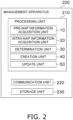
- the management apparatus 200 is, for example, a computer apparatus including a processing unit 210, a communication unit 220, and a storage unit 230.
- the management apparatus 200 is installed in a space different from the space RM.
- the management apparatus 200 is a device apparatus that manages the environment condition of the space RM.
- the management apparatus 200 is connected by the function of the communication unit 220 to each of the pre-nap information acquisition device 60, the intra-nap information acquisition device 70, and the environment condition adjustment device 100 via the communication network NW1.
- management apparatus 200 constituting the nap environment determination system 1 will be described with reference to the drawings.
- the management apparatus 200 may not have some or all of the functions described in the present embodiment.
- some or all of the functions of the management apparatus 200 described below may be realized by a server or the like installed in a place different from the management apparatus 200.
- Fig. 2 is a block diagram illustrating the configuration of the management apparatus 200.
- the management apparatus 200 according to the present embodiment includes the processing unit 210, the communication unit 220, and the storage unit 230.
- the processing unit 210 includes a CPU.
- the CPU of the processing unit 210 reads and executes various programs stored in the storage unit 230 to function as the pre-nap information acquisition unit 10, the intra-nap information acquisition unit 20, the determination unit 30, the creation unit 40, and the update unit 50.
- the pre-nap information acquisition unit 10 acquires pre-nap information. Specifically, the pre-nap information acquisition unit 10 acquires the pre-nap information from the pre-nap information acquisition device 60 via the communication network NW1, by means of the communication unit 220 described below. Note that the pre-nap information acquisition unit 10 may acquire the pre-nap information by receiving a manual input from the subject. In other words, the pre-nap information acquisition unit 10 may acquire the pre-nap information without using the pre-nap information acquisition device 60.
- the intra-nap information acquisition unit 20 acquires intra-nap information. Specifically, the intra-nap information acquisition unit 20 acquires the intra-nap information from the intra-nap information acquisition device 70 via the communication network NW1, by means of the communication unit 220 described below.
- the determination unit 30 determines the environment condition for adjusting the sleep depth of the subject, based on the pre-nap information. In other words, the determination unit 30 determines how to adjust the environment condition to adjust the sleep depth of the subject.
- the adjustment of the sleep depth means any one of increasing the sleep depth, decreasing the sleep depth, and maintaining the sleep depth. Therefore, the determination unit 30 can be rephrased as a functional unit that determines how to adjust the environment condition to increase, decrease, and maintain the sleep depth of the subject.
- the creation unit 40 creates a nap plan related to the environment condition for adjusting the sleep depth, based on the determination of the determination unit 30.
- the nap plan includes the number of times the environment condition is adjusted, a time at which the environment condition is adjusted, a target transition of a sleep state switched by adjustment of the environment condition, and a control parameter for adjusting the environment condition.
- the nap environment determination system 1 adjusts the environment condition according to the nap plan. Details will be described below.
- the update unit 50 updates the nap plan, based on the intra-nap information while the subject is taking a nap.
- the intra-nap information is information acquired while the subject is taking a nap.
- the nap environment determination system 1 adjusts the environment condition of the subject in accordance with the updated nap plan.
- the communication unit 220 communicates with an external network including the communication network NW1. Through the functioning of the communication unit 220, various data are transmitted and received between the management apparatus 200 and various devices including the pre-nap information acquisition device 60, the intra-nap information acquisition device 70, and the environment condition adjustment device 100.
- the storage unit 230 includes a medium that records information, such as stored programs and data, so as to be readable by a processor or the like.
- the CPU or the like constituting the processing unit 210 reads a program stored in the storage unit 230 to realize the functions described above.
- the storage unit 230 includes a system memory, such as a random access memory (RAM) or a read only memory (ROM), and an auxiliary storage apparatus.
- the auxiliary storage apparatus may be, for example, a magnetic recording medium such as a hard disk, an optical recording medium such as a CD or a DVD, or a semiconductor memory such as a flash memory.
- the nap plan is a plan related to the environment condition for adjusting the sleep depth of the subject and is a plan created by the creation unit 40.
- the creation unit 40 creates the nap plan based on the determination of the determination unit 30.
- the determination unit 30 determines the environment condition for adjusting the sleep depth of the subject, based on the pre-nap information.
- an age, a gender, an average sleep onset time, an average wake-up time, an average sleeping time, drowsiness, a level of fatigue, a sleeping time of the previous day, and a desired nap time, of the subject are acquired as the pre-nap information.
- the determination unit 30 determines a nap condition for adjusting the sleep depth of the subject, based on the pre-nap information as described above. For example, the determination unit 30 determines the number of times the environment condition is adjusted. In addition, the determination unit 30 determines, for example, a time at which the environment condition is adjusted. In addition, the determination unit 30 determines how the sleep state transitions, for example. In addition, the determination unit 30 determines how to adjust a control parameter for adjusting the environment condition, for example.
- the control parameter for adjusting the environment condition includes, for example, at least one of a temperature, a humidity, an airflow, an illuminance, a noise, an odor, a temperature of the bedding, and a gradient of the bedding.
- the sleep state of the subject includes a REM sleep state, a light sleep state, a deep sleep state, and a wakeful state.
- the light sleep state here refers to a state in which the subject is in stage 1 or stage 2 of sleep.
- the deep sleep state refers to a state in which the subject is in stage 3 or stage 4 of sleep.
- the wakeful state refers to a sleep state that does not correspond to any one of the REM sleep state, the light sleep state, and the deep sleep state.
- the creation unit 40 creates the nap plan, based on the determination of the determination unit 30 as described above.
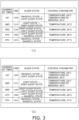
- Figs. 3(a) and 3(b) are examples of the nap plan created by the creation unit 40.
- Fig. 3(a) illustrates a nap plan immediately after being created by the creation unit 40.
- Fig. 3(b) illustrates a nap plan updated by the update unit 50.
- the nap plan immediately after being created by the creation unit 40 includes the number of times the environment condition is adjusted, the times at which the environment condition is adjusted, target transitions of the sleep state switched by adjustment of the environment condition, and control parameters for adjusting the environment condition.
- the nap environment determination system 1 is scheduled to adjust the sleep depth in accordance with the nap plan created by the creation unit 40.
- the nap environment determination system 1 is scheduled to perform a first adjustment of the environment condition at 13:00 (at the same time as the start of the nap), a second adjustment of the environment condition at 13:15, a third adjustment of the environment condition at 13:30, a fourth adjustment of the environment condition at 14:00, and a fifth adjustment of the environment condition at 14:15.
- the operations of the air-conditioning apparatus 101 and the electric blanket 102a as the environment condition adjustment device 100 are scheduled to be controlled so that the temperature (air temperature in the space RM) becomes 24°C and the temperature of the bedding becomes 30°C.
- the operation of the air-conditioning apparatus 101 is scheduled to be controlled so that the temperature becomes 22°C.
- the operation of the air-conditioning apparatus 101 is scheduled to be controlled so that the temperature becomes 24°C.
- the operation of the air-conditioning apparatus 101 is scheduled to be controlled so that the temperature becomes 26°C.
- the operation of the air-conditioning apparatus 101 is scheduled to be controlled so that the temperature becomes 27°C.
- the sleep state of the subject is expected to switch from the light sleep state to the deep sleep state (refer to point B in Fig. 4 ).
- the sleep state of the subject is expected to switch from the deep sleep state to the light sleep state (refer to point C in Fig. 4 ).
- the sleep state of the subject is expected to switch from the light state to the wakeful state (refer to point D in Fig. 4 ).
- the sleep state of the subject is expected to be maintained in the wakeful state (refer to point E in Fig. 4 ).
- the nap plan according to the present embodiment is updated in real time by the function of the update unit 50 while the subject is taking a nap.
- the intra-nap information is acquired while the subject is taking a nap.
- the heartbeat a heart rate per minute of the subject is acquired.
- an average number of breaths per minute of the subject is acquired as the "breathing”.
- the nap environment determination system 1 can know, for example, that the sleep state of the subject who is taking the nap has switched or that the body temperature of the subject who is taking the nap has increased.
- the update unit 50 updates the nap plan, based on such intra-nap information.
- Fig. 3(b) illustrates an example of the updated nap plan.
- the nap environment determination system 1 changes the schedule so that the second adjustment of the environment condition, which has been scheduled to be performed at 13:15, is performed at 13:12.
- the operation of the electric blanket 102a is controlled so that the temperature of the bedding becomes 28°C.
- the nap environment determination system 1 adjusts the environment condition in accordance with the nap plan updated by the update unit 50.
- the nap plan is repeatedly updated based on the intra-nap information acquired in real time. Each time the nap plan is updated, the nap environment determination system 1 adjusts the environment condition in accordance with the updated nap plan.
- a nap plan may be created in which the lighting device 103, the speaker 104, and the scent dispenser 105 operate in order to adjust the sleep depth.
- the environment condition is adjusted in accordance with the nap plan. More specifically, an environment condition that leads to deep sleep during a nap, an environment condition that leads to light sleep during a nap, and an environment condition that maintains the sleep depth during a nap are determined. Therefore, the nap environment determination system 1 according to the present embodiment can provide an environment that is suitable for the subject during a nap.
- the environment during a nap is controlled in detail in accordance with the nap plan. Therefore, even when the subject takes a short time of sleep, such as a nap, it is possible to provide an environment that is suitable for the subject during a nap.
- Fig. 5 is a flowchart illustrating an example of the flow of the operation of the nap environment determination system 1. Note that the contents of the steps illustrated in Fig. 5 can be changed, as appropriate. For example, the order of the steps may be changed as long as there is no contradiction; some steps may be executed in parallel with other steps; or other steps may be newly added.
- step S1 the pre-nap information acquisition device 60 of the nap environment determination system 1 acquires pre-nap information and transmits the pre-nap information to the pre-nap information acquisition unit 10.
- step S2 the determination unit 30 of the nap environment determination system 1 determines an environment condition for adjusting the sleep depth of the subject, based on the pre-nap information.
- step S3 the creation unit 40 creates a nap plan, based on the determination of the determination unit 30.
- the steps S1 to S3 are performed before a nap of the subject is started.
- step S4 a nap of the subject is started.
- the nap environment determination system 1 adjusts the environment condition of the subject who takes the nap, based on the nap plan.
- step S5 the intra-nap information acquisition device 70 of the nap environment determination system 1 acquires intra-nap information while the subject is taking the nap and transmits the intra-nap information to the intra-nap information acquisition unit 20.
- step S6 the nap plan is updated by the update unit 50 of the nap environment determination system 1.
- step S7 the nap environment determination system 1 adjusts the environment condition of the subject who is taking the nap, based on the updated nap plan.
- the nap environment determination system 1 continues the processing from step S5 to step S7 until the nap of the subject ends.
- step S8 the nap of the subject ends.
- the nap environment determination system 1 determines the environment condition during a nap.
- PTL 1 noted above discloses a sleep state improvement system and a sleep state improvement method capable of improving the sleep state of a user (subject) also while the user is away from home.
- a case in which the user takes a nap is not considered in detail. Therefore, the sleep environment provided by the system and method of PTL 1 noted above is not necessarily an environment suitable for the user who takes a nap.
- the nap environment determination system 1 is a system for determining an environment during a nap and includes the pre-nap information acquisition unit 10 and the determination unit 30.
- the pre-nap information acquisition unit 10 acquires pre-nap information regarding a subject who takes a nap before the subject takes the nap.
- the determination unit 30 determines an environment condition for adjusting the sleep depth, based on the pre-nap information.
- the determination unit 30 determines an environment condition for adjusting the sleep depth, based on the pre-nap information.
- the pre-nap information is information regarding the subject who takes a nap and is information acquired before the subject takes the nap.
- the nap environment determination system 1 can determine the environment condition during a nap, based on the environment condition for adjusting the sleep depth which is determined by the determination unit 30. More specifically, it is possible to determine an environment condition that increases the sleep depth of the subject during a nap, an environment condition that decreases the sleep depth of the subject during a nap, or an environment condition that maintains the sleep depth of the subject during a nap. Therefore, the nap environment determination system 1 according to the present embodiment can provide an environment that is suitable for the subject during a nap.
- the nap environment determination system 1 further includes the creation unit 40.
- the creation unit 40 creates a nap plan related to the environment condition for adjusting the sleep depth, based on the determination of the determination unit 30.
- the nap plan includes the number of times the environment condition is adjusted, a time at which the environment condition is adjusted, a target transition of a sleep state switched by adjustment of the environment condition, and a control parameter for adjusting the environment condition.
- the creation unit 40 creates a nap plan related to the environment condition for adjusting the sleep depth, based on the determination of the determination unit 30.
- the nap environment determination system 1 can determine the environment condition during a nap, based on the nap plan created by the creation unit 40. Therefore, the nap environment determination system 1 according to the present embodiment can provide an environment that is suitable for the subject during a nap.
- the nap environment determination system 1 further includes the intra-nap information acquisition unit 20 and the update unit 50.
- the intra-nap information acquisition unit 20 acquires intra-nap information regarding the subject who is taking a nap while the subject is taking the nap.
- the update unit 50 updates the nap plan, based on the intra-nap information while the subject is taking the nap.
- the update unit 50 updates the nap plan, based on the intra-nap information while the subject is taking a nap.
- the intra-nap information is information regarding the subject who is taking a nap and is information acquired while the subject is taking the nap.
- the nap environment determination system 1 can determine the environment condition during a nap, based on the nap plan that has been updated while the subject is taking the nap. Therefore, the nap environment determination system 1 according to the present embodiment can provide an environment that is more suitable for the subject during a nap.
- the pre-nap information includes at least one of a sleep onset time of a previous day, an average sleep onset time, a wake-up time of the previous day, an average wake-up time, and drowsiness, of the subject.
- the pre-nap information includes at least one of a gender, an age, and a desired nap time, of the subject.
- the nap environment determination system 1 In the nap environment determination system 1, information specific to the subject is acquired as the pre-nap information. According to this configuration, the nap environment determination system 1 can determine the environment condition during a nap in accordance with the characteristics of the subject. Therefore, the nap environment determination system 1 according to the present embodiment can provide an environment that is more suitable for the subject during a nap.
- the pre-nap information further includes at least one of a level of fatigue, a sleeping time of a previous day, and an average sleeping time, of the subject.
- the nap environment determination system 1 In the nap environment determination system 1, information specific to the subject is acquired as the pre-nap information. According to this configuration, the nap environment determination system 1 can determine the environment condition during a nap in accordance with the characteristics of the subject. Therefore, the nap environment determination system 1 according to the present embodiment can provide an environment that is more suitable for the subject during a nap.
- the pre-nap information is acquired from at least one of a manual input by the subject and the pre-nap information acquisition device 60 that is a device for acquiring information about the subject.
- the intra-nap information includes at least one of a heartbeat, an electrocardiogram, a pulse wave, a brain wave, breathing, a blood pressure, a body temperature, and a body motion.
- the intra-nap information includes at least one of a temperature, a humidity, an airflow, an illuminance, a noise, an odor, a temperature of the bedding, and a gradient of the bedding, in a space RM in which the subject who is taking a nap is present.
- the intra-nap information is acquired by the intra-nap information acquisition device 70 installed in the space in which the subject who is taking the nap is present.
- the nap environment determination system 1 In the nap environment determination system 1, biological information specific to the subject and information specific to the space RM in which the subject is present are acquired as the intra-nap information. In addition, the intra-nap information is information acquired while the subject is taking a nap. According to this configuration, the nap environment determination system 1 can determine the environment condition during a nap, based on the current characteristics of the subject and the current characteristics of the space RM in which the subject is present. Therefore, the nap environment determination system 1 according to the present embodiment can provide an environment that is more suitable for the subject during a nap.
- the sleep state includes a wakeful state, a REM sleep state, a light sleep state, and a deep sleep state.
- the environment condition includes at least one of a thermal environment, a lighting environment, an intra-bedding thermal environment, a bedding position, and a sound environment, in the space in which the subject who is taking a nap is present.
- the nap environment determination system 1 further includes the environment condition adjustment device 100 and the actuator 110.
- the environment condition adjustment device 100 is a device for adjusting the environment condition, based on the nap plan.
- the actuator 110 controls the environment condition adjustment device 100.
- the environment condition adjustment device 100 includes the air-conditioning apparatus 101 and the bedding 102 having a temperature adjustment unit.
- the nap environment determination system 1 further includes the environment condition adjustment device 100 that is a device for adjusting the environment condition, based on the nap plan, and the actuator 110 that controls the environment condition adjustment device 100. According to this configuration, the environment condition can be adjusted by the environment condition adjustment device 100.
- the nap environment determination system 1 may further include an output unit that outputs the nap plan.
- the pre-nap information acquisition device 60 or the management apparatus 200 may have a function as the output unit.
- the subject can check the nap plan immediately after being created by the creation unit 40, and a history of updates to the nap plan. Therefore, it is possible to easily confirm how the user's nap environment is determined.
- the nap environment determination system 1 may create a report in which items related to the nap of the subject are described in detail.
- a report is referred to as a nap report.
- the nap report may be outputted by the output unit.
- the nap environment determination system 1 may create and output a nap report as illustrated in Fig. 6 .
- the nap report may include a time zone in which a nap is taken, a sleep state in each time zone, a control policy in each time zone, control parameters in each time zone, and the like.
- the nap report may include various kinds of information related to a nap of the subject, such as the pre-nap information acquired before a nap and the intra-nap information acquired during a nap.
- the subject can easily check his/her own biological information during a nap, a transition of his/her own sleep state, and the like.
- the management apparatus 200 is described as being installed in a space different from the space RM, this is not a limitation.
- the management apparatus 200 may be installed inside the space RM.
- the management apparatus 200 may perform, for example, short-range wireless communication with the pre-nap information acquisition device 60, the intra-nap information acquisition device 70, and the environment condition adjustment device 100 to receive and transmit various data.
- the present disclosure is not limited to the embodiments described above as they are.
- the present disclosure can be embodied by modifying its constituent elements without departing from the gist of the present disclosure in the implementation stage.
- the present disclosure can form various disclosures by appropriately combining a plurality of constituent elements disclosed in each of the embodiments described above. For example, some constituent elements may be deleted from all the constituent elements illustrated in the embodiments. Further, constituent elements may be appropriately combined in different embodiments.
- the present embodiments are, therefore, to be considered in all respects as illustrative and not restrictive, and all modifications apparent to those skilled in the art are intended to be included therein.
Landscapes
- Health & Medical Sciences (AREA)
- Engineering & Computer Science (AREA)
- Life Sciences & Earth Sciences (AREA)
- Public Health (AREA)
- General Health & Medical Sciences (AREA)
- Biomedical Technology (AREA)
- Medical Informatics (AREA)
- Anesthesiology (AREA)
- Physics & Mathematics (AREA)
- Veterinary Medicine (AREA)
- Heart & Thoracic Surgery (AREA)
- Animal Behavior & Ethology (AREA)
- Pathology (AREA)
- Biophysics (AREA)
- Molecular Biology (AREA)
- Surgery (AREA)
- Primary Health Care (AREA)
- Epidemiology (AREA)
- Psychology (AREA)
- Acoustics & Sound (AREA)
- Pain & Pain Management (AREA)
- Hematology (AREA)
- Business, Economics & Management (AREA)
- Physical Education & Sports Medicine (AREA)
- General Business, Economics & Management (AREA)
- Data Mining & Analysis (AREA)
- Databases & Information Systems (AREA)
- Chemical & Material Sciences (AREA)
- Combustion & Propulsion (AREA)
- Mechanical Engineering (AREA)
- General Engineering & Computer Science (AREA)
- Measurement Of The Respiration, Hearing Ability, Form, And Blood Characteristics Of Living Organisms (AREA)
- Air Conditioning Control Device (AREA)
Abstract
Description
- The present disclosure relates to a nap environment determination system.
- Conventionally, PTL 1 (
Japanese Patent No. 4466654 - However, in
PTL 1 noted above, a case in which the user takes a nap is not considered in detail. Therefore, the sleep environment provided by the system and method ofPTL 1 noted above is not necessarily an environment suitable for the user who takes a nap. - A nap environment determination system of a first aspect is a system for determining an environment condition during a nap and includes a pre-nap information acquisition unit and a determination unit. The pre-nap information acquisition unit acquires pre-nap information regarding a subject who takes a nap before the subject takes the nap. The determination unit determines an environment condition for adjusting a sleep depth, based on the pre-nap information.
- In the nap environment determination system, which is a system for determining an environment condition during a nap, the determination unit determines the environment condition for adjusting the sleep depth, based on the pre-nap information. The pre-nap information is information regarding the subject who takes a nap and is information acquired before the subject takes the nap. According to this configuration, the nap environment determination system can determine the environment condition during a nap, based on the environment condition for adjusting the sleep depth which is determined by the determination unit. Therefore, the nap environment determination system according to the first aspect can provide an environment that is suitable for the subject during a nap.
- A nap environment determination system of a second aspect is the system of the first aspect and further includes a creation unit. The creation unit creates a nap plan related to the environment condition for adjusting the sleep depth, based on a determination of the determination unit. The nap plan includes the number of times the environment condition is adjusted, a time at which the environment condition is adjusted, a target transition of a sleep state switched by adjustment of the environment condition, and a control parameter for adjusting the environment condition.
- In the nap environment determination system, the creation unit creates the nap plan related to the environment condition for adjusting the sleep depth, based on the determination of the determination unit. According to this configuration, the nap environment determination system can determine the environment condition during a nap, based on the nap plan created by the creation unit. Therefore, the nap environment determination system according to the second aspect can provide an environment that is suitable for the subject during a nap.
- A nap environment determination system of a third aspect is the system of the first aspect or the second aspect and further includes an intra-nap information acquisition unit and an update unit. The intra-nap information acquisition unit acquires intra-nap information regarding the subject who is taking a nap while the subject is taking the nap. The update unit updates the nap plan, based on the intra-nap information while the subject is taking the nap.
- In the nap environment determination system, the update unit updates the nap plan, based on the intra-nap information while the subject is taking a nap. The intra-nap information is information regarding the subject who is taking a nap and is information acquired while the subject is taking the nap. According to this configuration, the nap environment determination system can determine the environment condition during a nap, based on the nap plan that has been updated while the subject is taking the nap. Therefore, the nap environment determination system according to the third aspect can provide an environment that is more suitable for the subject during a nap.
- A nap environment determination system of a fourth aspect is the system of any one of the first aspect to the third aspect, wherein the pre-nap information includes at least one of a sleep onset time of a previous day, an average sleep onset time, a wake-up time of the previous day, an average wake-up time, and drowsiness, of the subject. In addition, the pre-nap information includes at least one of a gender, an age, and a desired nap time, of the subject.
- In the nap environment determination system, information specific to the subject is acquired as the pre-nap information. According to this configuration, the nap environment determination system can determine the environment condition during a nap, based on the characteristics of the subject. Therefore, the nap environment determination system according to the fourth aspect can provide an environment that is more suitable for the subject during a nap.
- A nap environment determination system of a fifth aspect is the system of any one of the first aspect to the fourth aspect, wherein the pre-nap information further includes at least one of a level of fatigue, a sleeping time of a previous day, and an average sleeping time, of the subject.
- In the nap environment determination system, information specific to the subject is acquired as the pre-nap information. According to this configuration, the nap environment determination system can determine the environment condition during a nap, based on the characteristics of the subject. Therefore, the nap environment determination system according to the fifth aspect can provide an environment that is more suitable for the subject during a nap.
- A nap environment determination system of a sixth aspect is the system of any one of the first aspect to the fifth aspect, wherein the pre-nap information is acquired from at least one of a manual input by the subject and a pre-nap information acquisition device that is a device for acquiring information about the subject.
- A nap environment determination system of a seventh aspect is the system of any one of the third aspect to the sixth aspect, wherein the intra-nap information includes at least one of a heartbeat, an electrocardiogram, a pulse wave, a brain wave, breathing, a blood pressure, a body temperature, and a body motion. In addition, the intra-nap information includes at least one of a temperature, a humidity, an airflow, an illuminance, a noise, an odor, a temperature of bedding, and a gradient of the bedding, in a space in which the subject who is taking a nap is present. The intra-nap information is acquired by an intra-nap information acquisition device installed in the space in which the subject who is taking the nap is present.
- In the nap environment determination system, biological information specific to the subject and information specific to the space in which the subject is present are acquired as the intra-nap information. In addition, the intra-nap information is information acquired while the subject is taking a nap. According to this configuration, the nap environment determination system can determine the environment condition during a nap, based on the current characteristics of the subject and the current characteristics of the space in which the subject is present. Therefore, the nap environment determination system according to the seventh aspect can provide an environment that is more suitable for the subject during a nap.
- A nap environment determination system of an eighth aspect is the system of any one of the second aspect to the seventh aspect, wherein the sleep state includes a wakeful state, a REM sleep state, a light sleep state, and a deep sleep state.
- A nap environment determination system of a ninth aspect is the system of any one of the second aspect to the eighth aspect, wherein the environment condition includes at least one of a thermal environment, a lighting environment, an intra-bedding thermal environment, a bedding position, and a sound environment, in a space in which the subject who is taking a nap is present.
- A nap environment determination system of a tenth aspect is the system of any of the second aspect to the ninth aspect and further includes an environment condition adjustment device and an actuator. The environment condition adjustment device is a device for adjusting the environment condition, based on the nap plan. The actuator controls the environment condition adjustment device. The environment condition adjustment device includes an air-conditioning apparatus and bedding having a temperature adjustment unit.
- The nap environment determination system further includes an environment condition adjustment device that is a device for adjusting the environment condition, based on the nap plan, and an actuator that controls the environment condition adjustment device. According to this configuration, the environment condition can be adjusted by the environment condition adjustment device.
-
- [
Fig. 1] Fig. 1 is a conceptual diagram of a nap environment determination system. - [
Fig. 2] Fig. 2 is a block diagram illustrating a configuration of a management apparatus. - [
Fig. 3] Fig. 3 is a diagram illustrating a nap plan. - [
Fig. 4] Fig. 4 is a diagram illustrating an example in which the sleep depth is adjusted by adjusting a nap environment condition. - [
Fig. 5] Fig. 5 is a flowchart illustrating an operation flow of the nap environment determination system. - [
Fig. 6] Fig. 6 is a diagram illustrating a nap report. - Hereinafter, embodiments of a nap
environment determination system 1 according to the present disclosure will be described with reference to the drawings, as appropriate. However, unnecessarily detailed description may be omitted. For example, detailed description of an already well-known matter or redundant description of a substantially identical configuration may be omitted. This is to avoid making unnecessarily redundant descriptions below and to facilitate understanding by those skilled in the art. - Note that the drawings are not necessarily precise illustrations. In addition, in the drawings, substantially the same configurations are denoted by the same reference numerals, and overlapping descriptions are omitted or simplified.
- A nap
environment determination system 1 according to the present embodiment is a system that determines an environment condition during a nap. In the present embodiment, the environment condition during a nap includes at least one of a temperature, a humidity, an airflow, an illuminance, a noise, a temperature of bedding, and a gradient of the bedding, in a space in which the subject who is taking a nap is present. The napenvironment determination system 1 determines the environment condition during a nap so that the sleep depth during the nap increases, so that the sleep depth during the nap decreases, or so that the sleep depth during the nap is maintained. Details will be described below. - As illustrated in
Figs. 1 and2 , the napenvironment determination system 1 according to the present embodiment mainly includes a pre-napinformation acquisition unit 10, an intra-napinformation acquisition unit 20, adetermination unit 30, acreation unit 40, anupdate unit 50, a pre-napinformation acquisition device 60, an intra-napinformation acquisition device 70, an environmentcondition adjustment device 100, andactuators 110. - Although details will be described below, in the nap
environment determination system 1 according to the present embodiment, the pre-napinformation acquisition unit 10, the intra-napinformation acquisition unit 20, thedetermination unit 30, thecreation unit 40, and theupdate unit 50 are included in a management apparatus 200 (seeFig. 2 ). - As illustrated in
Fig. 1 , the subject takes a nap on thebedding 102 in a space RM in which the pre-napinformation acquisition device 60, the intra-napinformation acquisition device 70, and the like are installed. Note that in the present embodiment, a "nap" refers to a sleep for 10 minutes or more and three hours or less, for example. In addition, it is assumed that a "nap" is started at a time point when the subject comes to be present on thebedding 102. Therefore, as long as the subject is present on thebedding 102, it is considered that the subject is taking a nap even if the subject is in a wakeful state. - In the nap
environment determination system 1 according to the present embodiment, the pre-nap information regarding the subject who takes a nap is acquired by the pre-napinformation acquisition device 60 before the subject takes the nap. The pre-nap information includes at least one of a sleep onset time of a previous day, an average sleep onset time, a wake-up time of the previous day, an average wake-up time, drowsiness, and a desired nap time, of the subject. In addition, the pre-nap information includes at least one of a gender, an age, and a desired nap time, of the subject. Further, the pre-nap information includes at least one of a level of fatigue, a sleeping time of the previous day, and an average sleeping time, of the subject. Thedetermination unit 30 of the napenvironment determination system 1 determines an environment condition for adjusting the sleep depth, based on the pre-nap information. Thecreation unit 40 of the napenvironment determination system 1 creates a nap plan related to the environment condition for adjusting the sleep depth, based on the determination of thedetermination unit 30. The napenvironment determination system 1 adjusts the environment condition, based on the nap plan created by thecreation unit 40. - In addition, in the nap
environment determination system 1 according to the present embodiment, intra-nap information regarding the subject who is taking a nap is acquired by the intra-napinformation acquisition device 70 while the subject is taking the nap. The intra-nap information includes at least one of a heartbeat, an electrocardiogram, a pulse wave, a brain wave, breathing, a blood pressure, a body temperature, and a body motion, of the subject. In addition, the intra-nap information includes at least one of a temperature, a humidity, an airflow, an illuminance, a noise, an odor, a temperature of the bedding, and a gradient of the bedding, in a space RM in which the subject who is taking a nap is present. Theupdate unit 50 of the napenvironment determination system 1 updates the nap plan, based on these pieces of intra-nap information. The napenvironment determination system 1 adjusts the environment condition based on the updated nap plan. By adjusting the environment condition, the sleep depth of the subject is adjusted. - The pre-nap
information acquisition device 60 is a device that acquires pre-nap information. The pre-napinformation acquisition device 60 according to the present embodiment is, for example, a wearable device such as a smart watch or smart glasses. For example, the pre-napinformation acquisition device 60 acquires the pre-nap information by means of a sensor, such as a vital sensor built in the pre-napinformation acquisition device 60. Alternatively, the pre-napinformation acquisition device 60 acquires the pre-nap information by, for example, receiving a manual input from the subject. Alternatively, the pre-napinformation acquisition device 60 acquires the pre-nap information by communicating with an information terminal (for example, a computer installed at home or the workplace of the subject), which is not illustrated and in which the pre-nap information is recorded, via a communication network NW1 or the like. - Note that the pre-nap
information acquisition device 60 according to the present embodiment is not limited to a single device and may be configured by combining a plurality of devices. In addition, the pre-napinformation acquisition device 60 is not limited to a wearable device and may be changed, as appropriate. Therefore, the pre-napinformation acquisition device 60 may be, for example, a smartphone or the like. - The intra-nap
information acquisition device 70 is a device that acquires intra-nap information. The intra-napinformation acquisition device 70 according to the present embodiment is, for example, but not limited to, a sensor unit installed in the space RM in which the subject who is taking a nap is present. More specifically, the intra-napinformation acquisition device 70 according to the present embodiment includes any one of a vital sensor, a motion sensor, an electroencephalograph, and a heart rate meter. In addition, the intra-napinformation acquisition device 70 according to the present embodiment further includes any one of an air temperature sensor, an air humidity sensor, an airflow sensor, an illuminance sensor, a sound pressure sensor that detects a noise level, an odor sensor that detects an amount of an odor component contained in air, a temperature sensor that detects a temperature of thebedding 102, and a gradient sensor that detects a gradient of thebedding 102. - Note that the intra-nap
information acquisition device 70 according to the present embodiment is not limited to a single device and may be configured by combining a plurality of devices. The intra-napinformation acquisition device 70 is not limited to the sensor unit described above and may be selected, as appropriate. - The environment
condition adjustment device 100 is a device that adjusts the environment condition. As described above, the environment condition includes at least one of a thermal environment, a lighting environment, an intra-bedding thermal environment, a bedding position, an odor environment, and a sound environment, in the space RM in which the subject who is taking a nap is present. - The environment
condition adjustment device 100 includes an air-conditioning apparatus 101 and thebedding 102, which includes a temperature adjustment unit. The environmentcondition adjustment device 100 may also include alighting device 103, aspeaker 104, and ascent dispenser 105. The air-conditioning apparatus 101 is a device capable of adjusting the temperature and humidity of air in the space RM and is a device capable of adjusting the thermal environment in the space RM in which the subject who is taking a nap is present. Thebedding 102 is a device including, for example, anelectric blanket 102a as the temperature adjustment unit and abed 102b whose position can be changed and is a device capable of adjusting an intra-bedding thermal environment and a bedding position in the space RM in which the subject who is taking a nap is present. Thelighting device 103 is, for example, a device capable of changing illuminance and is a device capable of adjusting a lighting environment in the space RM in which the subject who is taking a nap is present. Thespeaker 104 is, for example, a device capable of adjusting a sound volume and is a device capable of adjusting a sound environment in the space RM in which the subject who is taking a nap is present. Thescent dispenser 105 is a device that contains, for example, a plurality of scents and can adjust the odor environment in the space RM in which the subject who is taking a nap is present by generating a scent using one scent and/or a plurality of scents. - The nap
environment determination system 1 includesactuators 110 that control the environmentcondition adjustment device 100. More specifically, the napenvironment determination system 1 includes theactuators 110 that control the operation of the environmentcondition adjustment device 100. Theactuators 110 according to the present embodiment are built in the air-conditioning apparatus 101, thebedding 102, and the like as the environmentcondition adjustment device 100. By controlling theactuators 110, the napenvironment determination system 1 can control at least one of a thermal environment, a lighting environment, an intra-bedding thermal environment, a bedding position, an odor environment, and a sound environment, in the space RM in which the subject who is taking a nap is present. - The
management apparatus 200 according to the present embodiment is, for example, a computer apparatus including aprocessing unit 210, acommunication unit 220, and astorage unit 230. In the present embodiment, themanagement apparatus 200 is installed in a space different from the space RM. Themanagement apparatus 200 is a device apparatus that manages the environment condition of the space RM. Themanagement apparatus 200 is connected by the function of thecommunication unit 220 to each of the pre-napinformation acquisition device 60, the intra-napinformation acquisition device 70, and the environmentcondition adjustment device 100 via the communication network NW1. - Hereinafter, the
management apparatus 200 constituting the napenvironment determination system 1 will be described with reference to the drawings. Note that themanagement apparatus 200 may not have some or all of the functions described in the present embodiment. For example, some or all of the functions of themanagement apparatus 200 described below may be realized by a server or the like installed in a place different from themanagement apparatus 200. - The configuration of the
management apparatus 200 constituting the napenvironment determination system 1 will be described in detail.Fig. 2 is a block diagram illustrating the configuration of themanagement apparatus 200. As illustrated inFig. 2 , themanagement apparatus 200 according to the present embodiment includes theprocessing unit 210, thecommunication unit 220, and thestorage unit 230. - The
processing unit 210 includes a CPU. The CPU of theprocessing unit 210 reads and executes various programs stored in thestorage unit 230 to function as the pre-napinformation acquisition unit 10, the intra-napinformation acquisition unit 20, thedetermination unit 30, thecreation unit 40, and theupdate unit 50. - The pre-nap
information acquisition unit 10 acquires pre-nap information. Specifically, the pre-napinformation acquisition unit 10 acquires the pre-nap information from the pre-napinformation acquisition device 60 via the communication network NW1, by means of thecommunication unit 220 described below. Note that the pre-napinformation acquisition unit 10 may acquire the pre-nap information by receiving a manual input from the subject. In other words, the pre-napinformation acquisition unit 10 may acquire the pre-nap information without using the pre-napinformation acquisition device 60. - The intra-nap
information acquisition unit 20 acquires intra-nap information. Specifically, the intra-napinformation acquisition unit 20 acquires the intra-nap information from the intra-napinformation acquisition device 70 via the communication network NW1, by means of thecommunication unit 220 described below. - The
determination unit 30 determines the environment condition for adjusting the sleep depth of the subject, based on the pre-nap information. In other words, thedetermination unit 30 determines how to adjust the environment condition to adjust the sleep depth of the subject. Note that the adjustment of the sleep depth means any one of increasing the sleep depth, decreasing the sleep depth, and maintaining the sleep depth. Therefore, thedetermination unit 30 can be rephrased as a functional unit that determines how to adjust the environment condition to increase, decrease, and maintain the sleep depth of the subject. - The
creation unit 40 creates a nap plan related to the environment condition for adjusting the sleep depth, based on the determination of thedetermination unit 30. The nap plan includes the number of times the environment condition is adjusted, a time at which the environment condition is adjusted, a target transition of a sleep state switched by adjustment of the environment condition, and a control parameter for adjusting the environment condition. The napenvironment determination system 1 adjusts the environment condition according to the nap plan. Details will be described below. - The
update unit 50 updates the nap plan, based on the intra-nap information while the subject is taking a nap. As described above, the intra-nap information is information acquired while the subject is taking a nap. When the nap plan is updated by theupdate unit 50, the napenvironment determination system 1 adjusts the environment condition of the subject in accordance with the updated nap plan. - The
communication unit 220 communicates with an external network including the communication network NW1. Through the functioning of thecommunication unit 220, various data are transmitted and received between themanagement apparatus 200 and various devices including the pre-napinformation acquisition device 60, the intra-napinformation acquisition device 70, and the environmentcondition adjustment device 100. - The
storage unit 230 includes a medium that records information, such as stored programs and data, so as to be readable by a processor or the like. In the napenvironment determination system 1 according to the present embodiment, the CPU or the like constituting theprocessing unit 210 reads a program stored in thestorage unit 230 to realize the functions described above. - The
storage unit 230 includes a system memory, such as a random access memory (RAM) or a read only memory (ROM), and an auxiliary storage apparatus. The auxiliary storage apparatus may be, for example, a magnetic recording medium such as a hard disk, an optical recording medium such as a CD or a DVD, or a semiconductor memory such as a flash memory. - Hereinafter, the nap plan according to the present embodiment will be described. The nap plan is a plan related to the environment condition for adjusting the sleep depth of the subject and is a plan created by the
creation unit 40. - The
creation unit 40 creates the nap plan based on the determination of thedetermination unit 30. Thedetermination unit 30 determines the environment condition for adjusting the sleep depth of the subject, based on the pre-nap information. Here, it is assumed that, for example, an age, a gender, an average sleep onset time, an average wake-up time, an average sleeping time, drowsiness, a level of fatigue, a sleeping time of the previous day, and a desired nap time, of the subject are acquired as the pre-nap information. - The
determination unit 30 determines a nap condition for adjusting the sleep depth of the subject, based on the pre-nap information as described above. For example, thedetermination unit 30 determines the number of times the environment condition is adjusted. In addition, thedetermination unit 30 determines, for example, a time at which the environment condition is adjusted. In addition, thedetermination unit 30 determines how the sleep state transitions, for example. In addition, thedetermination unit 30 determines how to adjust a control parameter for adjusting the environment condition, for example. Here, the control parameter for adjusting the environment condition includes, for example, at least one of a temperature, a humidity, an airflow, an illuminance, a noise, an odor, a temperature of the bedding, and a gradient of the bedding. - Note that in the present embodiment, the sleep state of the subject includes a REM sleep state, a light sleep state, a deep sleep state, and a wakeful state. Note that the light sleep state here refers to a state in which the subject is in
stage 1 or stage 2 of sleep. The deep sleep state refers to a state in which the subject is in stage 3 or stage 4 of sleep. The wakeful state refers to a sleep state that does not correspond to any one of the REM sleep state, the light sleep state, and the deep sleep state. - The
creation unit 40 creates the nap plan, based on the determination of thedetermination unit 30 as described above.Figs. 3(a) and 3(b) are examples of the nap plan created by thecreation unit 40.Fig. 3(a) illustrates a nap plan immediately after being created by thecreation unit 40.Fig. 3(b) illustrates a nap plan updated by theupdate unit 50. As illustrated inFig. 3(a) , the nap plan immediately after being created by thecreation unit 40 includes the number of times the environment condition is adjusted, the times at which the environment condition is adjusted, target transitions of the sleep state switched by adjustment of the environment condition, and control parameters for adjusting the environment condition. The napenvironment determination system 1 is scheduled to adjust the sleep depth in accordance with the nap plan created by thecreation unit 40. - For example, when the nap plan illustrated in
Fig. 3(a) is created, the napenvironment determination system 1 is scheduled to perform a first adjustment of the environment condition at 13:00 (at the same time as the start of the nap), a second adjustment of the environment condition at 13:15, a third adjustment of the environment condition at 13:30, a fourth adjustment of the environment condition at 14:00, and a fifth adjustment of the environment condition at 14:15. Further, in the first adjustment of the environment condition, the operations of the air-conditioning apparatus 101 and theelectric blanket 102a as the environmentcondition adjustment device 100 are scheduled to be controlled so that the temperature (air temperature in the space RM) becomes 24°C and the temperature of the bedding becomes 30°C. In the second adjustment of the environment condition, the operation of the air-conditioning apparatus 101 is scheduled to be controlled so that the temperature becomes 22°C. In the third adjustment of the environment condition, the operation of the air-conditioning apparatus 101 is scheduled to be controlled so that the temperature becomes 24°C. In the fourth adjustment of the environment condition, the operation of the air-conditioning apparatus 101 is scheduled to be controlled so that the temperature becomes 26°C. In the fifth adjustment of the environment condition, the operation of the air-conditioning apparatus 101 is scheduled to be controlled so that the temperature becomes 27°C. By performing the first adjustment of the environment condition, the sleep state of the subject is expected to switch from the wakeful state to the light sleep state (refer to point A inFig. 4 ). By performing the second adjustment of the environment condition, the sleep state of the subject is expected to switch from the light sleep state to the deep sleep state (refer to point B inFig. 4 ). By performing the third adjustment of the environment condition, the sleep state of the subject is expected to switch from the deep sleep state to the light sleep state (refer to point C inFig. 4 ). By performing the fourth adjustment of the environment condition, the sleep state of the subject is expected to switch from the light state to the wakeful state (refer to point D inFig. 4 ). By performing the fifth adjustment of the environment condition, the sleep state of the subject is expected to be maintained in the wakeful state (refer to point E inFig. 4 ). - Further, the nap plan according to the present embodiment is updated in real time by the function of the
update unit 50 while the subject is taking a nap. As described above, the intra-nap information is acquired while the subject is taking a nap. Here, a case is assumed in which, for example, the heartbeat, breathing, and body temperature of the subject are acquired as the intra-nap information. Note that, here, as the "heartbeat", a heart rate per minute of the subject is acquired. Here, an average number of breaths per minute of the subject is acquired as the "breathing". - By acquiring the intra-nap information described above while the subject is taking a nap, the nap
environment determination system 1 can know, for example, that the sleep state of the subject who is taking the nap has switched or that the body temperature of the subject who is taking the nap has increased. Theupdate unit 50 updates the nap plan, based on such intra-nap information.Fig. 3(b) illustrates an example of the updated nap plan. When the nap plan is updated to the contents illustrated inFig. 3(b) , the napenvironment determination system 1 changes the schedule so that the second adjustment of the environment condition, which has been scheduled to be performed at 13:15, is performed at 13:12. In addition, in the second adjustment of the environment condition in the updated nap plan, the operation of theelectric blanket 102a is controlled so that the temperature of the bedding becomes 28°C. Thus, when the nap plan is updated, the napenvironment determination system 1 adjusts the environment condition in accordance with the nap plan updated by theupdate unit 50. - Note that the nap plan is repeatedly updated based on the intra-nap information acquired in real time. Each time the nap plan is updated, the nap
environment determination system 1 adjusts the environment condition in accordance with the updated nap plan. - Note that the contents of the nap plan illustrated in
Fig. 3(a) and the contents of the updated nap plan illustrated inFig. 3(b) are merely examples and can be changed, as appropriate. Therefore, for example, a nap plan may be created in which thelighting device 103, thespeaker 104, and thescent dispenser 105 operate in order to adjust the sleep depth. - Thus, in the nap
environment determination system 1 according to the present embodiment, the environment condition is adjusted in accordance with the nap plan. More specifically, an environment condition that leads to deep sleep during a nap, an environment condition that leads to light sleep during a nap, and an environment condition that maintains the sleep depth during a nap are determined. Therefore, the napenvironment determination system 1 according to the present embodiment can provide an environment that is suitable for the subject during a nap. - In addition, in the nap
environment determination system 1 according to the present embodiment, the environment during a nap is controlled in detail in accordance with the nap plan. Therefore, even when the subject takes a short time of sleep, such as a nap, it is possible to provide an environment that is suitable for the subject during a nap. - Hereinafter, a flow of the operation of the nap
environment determination system 1 according to the present embodiment will be described with reference toFig. 5. Fig. 5 is a flowchart illustrating an example of the flow of the operation of the napenvironment determination system 1. Note that the contents of the steps illustrated inFig. 5 can be changed, as appropriate. For example, the order of the steps may be changed as long as there is no contradiction; some steps may be executed in parallel with other steps; or other steps may be newly added. - In step S1, the pre-nap
information acquisition device 60 of the napenvironment determination system 1 acquires pre-nap information and transmits the pre-nap information to the pre-napinformation acquisition unit 10. - In step S2, the
determination unit 30 of the napenvironment determination system 1 determines an environment condition for adjusting the sleep depth of the subject, based on the pre-nap information. - In step S3, the
creation unit 40 creates a nap plan, based on the determination of thedetermination unit 30. - The steps S1 to S3 are performed before a nap of the subject is started.
- In step S4, a nap of the subject is started. Here, the nap
environment determination system 1 adjusts the environment condition of the subject who takes the nap, based on the nap plan. - In step S5, the intra-nap
information acquisition device 70 of the napenvironment determination system 1 acquires intra-nap information while the subject is taking the nap and transmits the intra-nap information to the intra-napinformation acquisition unit 20. - In step S6, the nap plan is updated by the
update unit 50 of the napenvironment determination system 1. - In step S7, the nap
environment determination system 1 adjusts the environment condition of the subject who is taking the nap, based on the updated nap plan. The napenvironment determination system 1 continues the processing from step S5 to step S7 until the nap of the subject ends. - In step S8, the nap of the subject ends.
- In this way, the nap
environment determination system 1 determines the environment condition during a nap. -
PTL 1 noted above discloses a sleep state improvement system and a sleep state improvement method capable of improving the sleep state of a user (subject) also while the user is away from home. However, inPTL 1 noted above, a case in which the user takes a nap is not considered in detail. Therefore, the sleep environment provided by the system and method ofPTL 1 noted above is not necessarily an environment suitable for the user who takes a nap. - The nap
environment determination system 1 according to the present embodiment is a system for determining an environment during a nap and includes the pre-napinformation acquisition unit 10 and thedetermination unit 30. The pre-napinformation acquisition unit 10 acquires pre-nap information regarding a subject who takes a nap before the subject takes the nap. Thedetermination unit 30 determines an environment condition for adjusting the sleep depth, based on the pre-nap information. - In the nap
environment determination system 1, which is a system for determining an environment condition during a nap, thedetermination unit 30 determines an environment condition for adjusting the sleep depth, based on the pre-nap information. The pre-nap information is information regarding the subject who takes a nap and is information acquired before the subject takes the nap. According to this configuration, the napenvironment determination system 1 can determine the environment condition during a nap, based on the environment condition for adjusting the sleep depth which is determined by thedetermination unit 30. More specifically, it is possible to determine an environment condition that increases the sleep depth of the subject during a nap, an environment condition that decreases the sleep depth of the subject during a nap, or an environment condition that maintains the sleep depth of the subject during a nap. Therefore, the napenvironment determination system 1 according to the present embodiment can provide an environment that is suitable for the subject during a nap. - The nap
environment determination system 1 according to the present embodiment further includes thecreation unit 40. Thecreation unit 40 creates a nap plan related to the environment condition for adjusting the sleep depth, based on the determination of thedetermination unit 30. The nap plan includes the number of times the environment condition is adjusted, a time at which the environment condition is adjusted, a target transition of a sleep state switched by adjustment of the environment condition, and a control parameter for adjusting the environment condition. - In the nap
environment determination system 1, thecreation unit 40 creates a nap plan related to the environment condition for adjusting the sleep depth, based on the determination of thedetermination unit 30. According to this configuration, the napenvironment determination system 1 can determine the environment condition during a nap, based on the nap plan created by thecreation unit 40. Therefore, the napenvironment determination system 1 according to the present embodiment can provide an environment that is suitable for the subject during a nap. - The nap
environment determination system 1 according to the present embodiment further includes the intra-napinformation acquisition unit 20 and theupdate unit 50. The intra-napinformation acquisition unit 20 acquires intra-nap information regarding the subject who is taking a nap while the subject is taking the nap. Theupdate unit 50 updates the nap plan, based on the intra-nap information while the subject is taking the nap. - In the nap
environment determination system 1, theupdate unit 50 updates the nap plan, based on the intra-nap information while the subject is taking a nap. The intra-nap information is information regarding the subject who is taking a nap and is information acquired while the subject is taking the nap. According to this configuration, the napenvironment determination system 1 can determine the environment condition during a nap, based on the nap plan that has been updated while the subject is taking the nap. Therefore, the napenvironment determination system 1 according to the present embodiment can provide an environment that is more suitable for the subject during a nap. - In the nap
environment determination system 1 according to the present embodiment, the pre-nap information includes at least one of a sleep onset time of a previous day, an average sleep onset time, a wake-up time of the previous day, an average wake-up time, and drowsiness, of the subject. In addition, the pre-nap information includes at least one of a gender, an age, and a desired nap time, of the subject. - In the nap
environment determination system 1, information specific to the subject is acquired as the pre-nap information. According to this configuration, the napenvironment determination system 1 can determine the environment condition during a nap in accordance with the characteristics of the subject. Therefore, the napenvironment determination system 1 according to the present embodiment can provide an environment that is more suitable for the subject during a nap. - In the nap
environment determination system 1 according to the present embodiment, the pre-nap information further includes at least one of a level of fatigue, a sleeping time of a previous day, and an average sleeping time, of the subject. - In the nap
environment determination system 1, information specific to the subject is acquired as the pre-nap information. According to this configuration, the napenvironment determination system 1 can determine the environment condition during a nap in accordance with the characteristics of the subject. Therefore, the napenvironment determination system 1 according to the present embodiment can provide an environment that is more suitable for the subject during a nap. - In the nap
environment determination system 1 according to the present embodiment, the pre-nap information is acquired from at least one of a manual input by the subject and the pre-napinformation acquisition device 60 that is a device for acquiring information about the subject. - In the nap
environment determination system 1 according to the present embodiment, the intra-nap information includes at least one of a heartbeat, an electrocardiogram, a pulse wave, a brain wave, breathing, a blood pressure, a body temperature, and a body motion. In addition, the intra-nap information includes at least one of a temperature, a humidity, an airflow, an illuminance, a noise, an odor, a temperature of the bedding, and a gradient of the bedding, in a space RM in which the subject who is taking a nap is present. The intra-nap information is acquired by the intra-napinformation acquisition device 70 installed in the space in which the subject who is taking the nap is present. - In the nap
environment determination system 1, biological information specific to the subject and information specific to the space RM in which the subject is present are acquired as the intra-nap information. In addition, the intra-nap information is information acquired while the subject is taking a nap. According to this configuration, the napenvironment determination system 1 can determine the environment condition during a nap, based on the current characteristics of the subject and the current characteristics of the space RM in which the subject is present. Therefore, the napenvironment determination system 1 according to the present embodiment can provide an environment that is more suitable for the subject during a nap. - In the nap
environment determination system 1 according to the present embodiment, the sleep state includes a wakeful state, a REM sleep state, a light sleep state, and a deep sleep state. - In the nap
environment determination system 1 according to the present embodiment, the environment condition includes at least one of a thermal environment, a lighting environment, an intra-bedding thermal environment, a bedding position, and a sound environment, in the space in which the subject who is taking a nap is present. - The nap
environment determination system 1 according to the present embodiment further includes the environmentcondition adjustment device 100 and theactuator 110. The environmentcondition adjustment device 100 is a device for adjusting the environment condition, based on the nap plan. Theactuator 110 controls the environmentcondition adjustment device 100. The environmentcondition adjustment device 100 includes the air-conditioning apparatus 101 and thebedding 102 having a temperature adjustment unit. - The nap
environment determination system 1 further includes the environmentcondition adjustment device 100 that is a device for adjusting the environment condition, based on the nap plan, and theactuator 110 that controls the environmentcondition adjustment device 100. According to this configuration, the environment condition can be adjusted by the environmentcondition adjustment device 100. - The embodiment described above can be appropriately modified as illustrated in the following modifications. Each modification may be applied in combination with another modification within a range such that no contradiction occurs. Note that the same configurations as those in the first embodiment are denoted by the same reference numerals, and detailed description thereof will be omitted.
- The nap
environment determination system 1 according to the present disclosure may further include an output unit that outputs the nap plan. Alternatively, for example, the pre-napinformation acquisition device 60 or themanagement apparatus 200 may have a function as the output unit. - In the nap
environment determination system 1 according to the present modification, for example, the subject can check the nap plan immediately after being created by thecreation unit 40, and a history of updates to the nap plan. Therefore, it is possible to easily confirm how the user's nap environment is determined. - The nap
environment determination system 1 according to the present disclosure may create a report in which items related to the nap of the subject are described in detail. Hereinafter, such a report is referred to as a nap report. In addition, when the napenvironment determination system 1 includes the output unit described in the modification 1A, the nap report may be outputted by the output unit. For example, the napenvironment determination system 1 may create and output a nap report as illustrated inFig. 6 . - As illustrated in
Fig. 6 , the nap report may include a time zone in which a nap is taken, a sleep state in each time zone, a control policy in each time zone, control parameters in each time zone, and the like. In addition, the nap report may include various kinds of information related to a nap of the subject, such as the pre-nap information acquired before a nap and the intra-nap information acquired during a nap. - In the nap
environment determination system 1 according to the present modification, for example, the subject can easily check his/her own biological information during a nap, a transition of his/her own sleep state, and the like. - While in the embodiment described above, the
management apparatus 200 is described as being installed in a space different from the space RM, this is not a limitation. For example, themanagement apparatus 200 may be installed inside the space RM. In this case, themanagement apparatus 200 may perform, for example, short-range wireless communication with the pre-napinformation acquisition device 60, the intra-napinformation acquisition device 70, and the environmentcondition adjustment device 100 to receive and transmit various data. - While the embodiments of the present disclosure have been described, it will be understood that various changes in form or details may be made therein without departing from the spirit and scope of the claims.
- The present disclosure is not limited to the embodiments described above as they are. The present disclosure can be embodied by modifying its constituent elements without departing from the gist of the present disclosure in the implementation stage. In addition, the present disclosure can form various disclosures by appropriately combining a plurality of constituent elements disclosed in each of the embodiments described above. For example, some constituent elements may be deleted from all the constituent elements illustrated in the embodiments. Further, constituent elements may be appropriately combined in different embodiments. The present embodiments are, therefore, to be considered in all respects as illustrative and not restrictive, and all modifications apparent to those skilled in the art are intended to be included therein.
-
- 1
- Nap environment determination system
- 10
- Pre-nap information acquisition unit
- 20
- Intra-nap information acquisition unit
- 30
- Determination unit
- 40
- Creation unit
- 50
- Update unit
- 60
- Pre-nap information acquisition device
- 70
- Intra-nap information acquisition device
- 100
- Environment condition adjustment device
- 101
- Air-conditioning apparatus
- 102
- Bedding
- 110
- Actuator
- PTL 1:
Japanese Patent No. 4466654
Claims (10)
- A nap environment determination system (1) that is a system for determining an environment condition during a nap, the system comprising:a pre-nap information acquisition unit (10) that acquires pre-nap information regarding a subject who takes a nap before the subject takes the nap; anda determination unit (30) that determines an environment condition for adjusting a sleep depth, based on the pre-nap information.
- The nap environment determination system according to claim 1, further comprising a creation unit (40) that creates a nap plan related to the environment condition for adjusting the sleep depth, based on a determination of the determination unit, wherein
the nap plan includes a number of times the environment condition is adjusted, a time at which the environment condition is adjusted, a target transition of a sleep state switched by adjustment of the environment condition, and a control parameter for adjusting the environment condition. - The nap environment determination system according to claim 1 or 2, further comprising:an intra-nap information acquisition unit (20) that acquires intra-nap information regarding the subject who is taking a nap while the subject is taking the nap; andan update unit (50) that updates the nap plan, based on the intra-nap information while the subject is taking the nap.
- The nap environment determination system according to any one of claims 1 to 3, whereinthe pre-nap information includesat least one of a sleep onset time of a previous day, an average sleep onset time, a wake-up time of the previous day, an average wake-up time, and drowsiness, of the subject, andat least one of a gender, an age, and a desired nap time, of the subject.
- The nap environment determination system according to any one of claims 1 to 4, wherein the pre-nap information further includes at least one of a level of fatigue, a sleeping time of a previous day, and an average sleeping time, of the subject.
- The nap environment determination system according to any one of claims 1 to 5, wherein
the pre-nap information is acquired from at least one of a manual input by the subject and a pre-nap information acquisition device (60) that is a device for acquiring information about the subject. - The nap environment determination system according to any one of claims 3 to 6, whereinthe intra-nap information includesat least one of a heartbeat, an electrocardiogram, a pulse wave, a brain wave, breathing, a blood pressure, a body temperature, and a body motion, andat least one of a temperature, a humidity, an airflow, an illuminance, a noise, an odor, a temperature of bedding, and a gradient of the bedding, in a space in which the subject who is taking a nap is present, andthe intra-nap information is acquired by an intra-nap information acquisition device (70) installed in the space in which the subject who is taking the nap is present.
- The nap environment determination system according to any one of claims 2 to 7, wherein
the sleep state includes a wakeful state, a REM sleep state, a light sleep state, and a deep sleep state. - The nap environment determination system according to any one of claims 2 to 8, wherein
the environment condition includes at least one of a thermal environment, a lighting environment, an intra-bedding thermal environment, a bedding position, and a sound environment, in a space in which the subject who is taking a nap is present. - The nap environment determination system according to any one of claims 2 to 9, further comprising:an environment condition adjustment device (100) that is a device for adjusting the environment condition, based on the nap plan; andan actuator (110) that controls the environment condition adjustment device, whereinthe environment condition adjustment device includes an air-conditioning apparatus (101) and bedding (102) having a temperature adjustment unit.
Applications Claiming Priority (2)
| Application Number | Priority Date | Filing Date | Title |
|---|---|---|---|
| JP2020175270A JP2022066747A (en) | 2020-10-19 | 2020-10-19 | Nap environment determination system |
| PCT/JP2021/038515 WO2022085656A1 (en) | 2020-10-19 | 2021-10-19 | Nap environment decision system |
Publications (2)
| Publication Number | Publication Date |
|---|---|
| EP4230248A1 true EP4230248A1 (en) | 2023-08-23 |
| EP4230248A4 EP4230248A4 (en) | 2024-03-27 |
Family
ID=81289874
Family Applications (1)
| Application Number | Title | Priority Date | Filing Date |
|---|---|---|---|
| EP21882797.0A Withdrawn EP4230248A4 (en) | 2020-10-19 | 2021-10-19 | NAP ENVIRONMENT DECISION SYSTEM |
Country Status (4)
| Country | Link |
|---|---|
| US (1) | US20230381445A1 (en) |
| EP (1) | EP4230248A4 (en) |
| JP (2) | JP2022066747A (en) |
| WO (1) | WO2022085656A1 (en) |
Family Cites Families (19)
| Publication number | Priority date | Publication date | Assignee | Title |
|---|---|---|---|---|
| JP2003322383A (en) * | 2002-04-30 | 2003-11-14 | Daikin Ind Ltd | Equipment control system and capsule bed |
| US8690751B2 (en) * | 2003-12-31 | 2014-04-08 | Raphael Auphan | Sleep and environment control method and system |
| JP2005270401A (en) * | 2004-03-25 | 2005-10-06 | Seiko Epson Corp | Bedding with sleep controller |
| US8409074B2 (en) | 2004-10-04 | 2013-04-02 | Daikin Industries, Ltd. | Sleeping state improvement system and sleeping state improvement method |
| JP4390718B2 (en) * | 2005-01-18 | 2009-12-24 | 三洋電機株式会社 | Sleep environment control device and sleep environment control program |
| WO2009108228A1 (en) * | 2008-02-25 | 2009-09-03 | Kingsdown, Inc. | Systems and methods for controlling a bedroom environment and for providing sleep data |
| JP4596023B2 (en) * | 2008-03-11 | 2010-12-08 | トヨタ自動車株式会社 | Sleeping device |
| US20150217082A1 (en) * | 2008-08-14 | 2015-08-06 | National Taiwan University | Sleep assistant system, method, and non-transitory computer-readable medium for assisting in easing hardship of falling asleep |
| JP5155805B2 (en) * | 2008-10-02 | 2013-03-06 | 国立大学法人広島大学 | Sleep control device |
| US10740438B2 (en) * | 2012-08-16 | 2020-08-11 | Ginger.io, Inc. | Method and system for characterizing and/or treating poor sleep behavior |
| JP6698521B2 (en) * | 2013-07-08 | 2020-05-27 | レスメッド センサー テクノロジーズ リミテッド | Sleep management method and system |
| CA2955365C (en) * | 2014-07-18 | 2023-04-04 | Select Comfort Corporation | Automatic sensing and adjustment of a bed system |
| JP2016131574A (en) * | 2015-01-15 | 2016-07-25 | アイシン精機株式会社 | Temporary sleep control device and control method |
| EP3275494A4 (en) * | 2015-03-27 | 2018-10-10 | Sony Corporation | Information-processing device, information-processing method, and program |
| WO2017017784A1 (en) * | 2015-07-28 | 2017-02-02 | 三菱電機株式会社 | Environment control device and air conditioning system |
| JP6775949B2 (en) * | 2015-12-25 | 2020-10-28 | トヨタホーム株式会社 | Sleep support device |
| US11123009B2 (en) * | 2017-12-21 | 2021-09-21 | Koninklijke Philips N.V. | Sleep stage prediction and intervention preparation based thereon |
| JP7096541B2 (en) * | 2017-12-30 | 2022-07-06 | 株式会社エアウィーヴ | Mattress ventilation system and airflow control method |
| JP7233032B2 (en) * | 2018-12-27 | 2023-03-06 | パナソニックIpマネジメント株式会社 | Environment control system and environment control method |
-
2020
- 2020-10-19 JP JP2020175270A patent/JP2022066747A/en active Pending
-
2021
- 2021-10-19 WO PCT/JP2021/038515 patent/WO2022085656A1/en not_active Ceased
- 2021-10-19 US US18/032,444 patent/US20230381445A1/en active Pending
- 2021-10-19 EP EP21882797.0A patent/EP4230248A4/en not_active Withdrawn
-
2022
- 2022-09-05 JP JP2022140746A patent/JP2022174165A/en active Pending
Also Published As
| Publication number | Publication date |
|---|---|
| EP4230248A4 (en) | 2024-03-27 |
| JP2022066747A (en) | 2022-05-02 |
| JP2022174165A (en) | 2022-11-22 |
| US20230381445A1 (en) | 2023-11-30 |
| WO2022085656A1 (en) | 2022-04-28 |
Similar Documents
| Publication | Publication Date | Title |
|---|---|---|
| EP2896359B1 (en) | Method and system for measuring heart rate in electronic device using photoplethysmography | |
| US20200273566A1 (en) | Sharing of health-related data based on data exported by ear-wearable device | |
| CN105380597B (en) | Electronic device and method for measuring vital signals | |
| EP3517024B1 (en) | An apparatus and associated methods for adjusting a group of users' sleep | |
| US9501049B2 (en) | Dynamic environment adaptation | |
| US20250360025A1 (en) | Ear apparatus and methods of use | |
| US11524691B2 (en) | System and method for controlling an interior environmental condition in a vehicle | |
| KR20180062865A (en) | Device For Providing Health Management Service and Method Thereof | |
| CN103823957A (en) | Methods and systems for managing performance based sleep patient care protocols | |
| CN108375909A (en) | A kind of parameters analysis method, device, equipment and computer readable storage medium | |
| CN114431837B (en) | Sleep state control method and device, sleep-assisting equipment and storage medium | |
| WO2014200670A1 (en) | Data-capable wrist band with a removable watch | |
| CN102859910B (en) | Method for generating a medical network | |
| CN114251817A (en) | Method and device for controlling air conditioner and air conditioner | |
| EP3383261B1 (en) | Sleep study system and method | |
| US20220293259A1 (en) | Technologies for performing dynamic alert management to reduce caregiver fatigue | |
| US9715219B2 (en) | Information processing apparatus, information processing method, and program | |
| KR20170065375A (en) | Electronic device and communication connection method thereof | |
| US20230381445A1 (en) | Nap environment determination system | |
| US20220157452A1 (en) | Method for Providing Data for an Interface | |
| JP2022174165A5 (en) | ||
| KR20120051122A (en) | Providing system of sleeping environment in ubiquitous sensor network and method thereof | |
| JP5208531B2 (en) | Information management apparatus, information management apparatus control method, and information management program | |
| KR101916418B1 (en) | Method and apparatus for reducing power consumption of receiver | |
| Wigand | Enlarged middle fossa approach to the cerebello-pontine angle. Technique and indications |
Legal Events
| Date | Code | Title | Description |
|---|---|---|---|
| STAA | Information on the status of an ep patent application or granted ep patent |
Free format text: STATUS: THE INTERNATIONAL PUBLICATION HAS BEEN MADE |
|
| PUAI | Public reference made under article 153(3) epc to a published international application that has entered the european phase |
Free format text: ORIGINAL CODE: 0009012 |
|
| STAA | Information on the status of an ep patent application or granted ep patent |
Free format text: STATUS: REQUEST FOR EXAMINATION WAS MADE |
|
| 17P | Request for examination filed |
Effective date: 20230425 |
|
| AK | Designated contracting states |
Kind code of ref document: A1 Designated state(s): AL AT BE BG CH CY CZ DE DK EE ES FI FR GB GR HR HU IE IS IT LI LT LU LV MC MK MT NL NO PL PT RO RS SE SI SK SM TR |
|
| RAP3 | Party data changed (applicant data changed or rights of an application transferred) |
Owner name: THE UNIVERSITY OF ELECTRO-COMMUNICATIONS Owner name: DAIKIN INDUSTRIES, LTD. |
|
| DAV | Request for validation of the european patent (deleted) | ||
| DAX | Request for extension of the european patent (deleted) | ||
| A4 | Supplementary search report drawn up and despatched |
Effective date: 20240223 |
|
| RIC1 | Information provided on ipc code assigned before grant |
Ipc: F24F 130/40 20180101ALI20240219BHEP Ipc: F24F 110/60 20180101ALI20240219BHEP Ipc: F24F 110/20 20180101ALI20240219BHEP Ipc: F24F 110/10 20180101ALI20240219BHEP Ipc: F24F 11/80 20180101ALI20240219BHEP Ipc: A61M 21/02 20060101AFI20240219BHEP |
|
| STAA | Information on the status of an ep patent application or granted ep patent |
Free format text: STATUS: THE APPLICATION IS DEEMED TO BE WITHDRAWN |
|
| 18D | Application deemed to be withdrawn |
Effective date: 20240914 |