EP4224450A1 - Threat safety system and method - Google Patents
Threat safety system and method Download PDFInfo
- Publication number
- EP4224450A1 EP4224450A1 EP22155138.5A EP22155138A EP4224450A1 EP 4224450 A1 EP4224450 A1 EP 4224450A1 EP 22155138 A EP22155138 A EP 22155138A EP 4224450 A1 EP4224450 A1 EP 4224450A1
- Authority
- EP
- European Patent Office
- Prior art keywords
- threat
- closed structure
- algorithm
- path
- people
- Prior art date
- Legal status (The legal status is an assumption and is not a legal conclusion. Google has not performed a legal analysis and makes no representation as to the accuracy of the status listed.)
- Granted
Links
Images

Classifications
-
- G—PHYSICS
- G08—SIGNALLING
- G08B—SIGNALLING SYSTEMS, e.g. PERSONAL CALLING SYSTEMS; ORDER TELEGRAPHS; ALARM SYSTEMS
- G08B13/00—Burglar, theft or intruder alarms
- G08B13/18—Actuation by interference with heat, light, or radiation of shorter wavelength; Actuation by intruding sources of heat, light, or radiation of shorter wavelength
- G08B13/189—Actuation by interference with heat, light, or radiation of shorter wavelength; Actuation by intruding sources of heat, light, or radiation of shorter wavelength using passive radiation detection systems
- G08B13/194—Actuation by interference with heat, light, or radiation of shorter wavelength; Actuation by intruding sources of heat, light, or radiation of shorter wavelength using passive radiation detection systems using image scanning and comparing systems
- G08B13/196—Actuation by interference with heat, light, or radiation of shorter wavelength; Actuation by intruding sources of heat, light, or radiation of shorter wavelength using passive radiation detection systems using image scanning and comparing systems using television cameras
- G08B13/19602—Image analysis to detect motion of the intruder, e.g. by frame subtraction
- G08B13/19608—Tracking movement of a target, e.g. by detecting an object predefined as a target, using target direction and or velocity to predict its new position
-
- G—PHYSICS
- G08—SIGNALLING
- G08B—SIGNALLING SYSTEMS, e.g. PERSONAL CALLING SYSTEMS; ORDER TELEGRAPHS; ALARM SYSTEMS
- G08B7/00—Signalling systems according to two or more of groups G08B3/00 - G08B6/00
- G08B7/06—Signalling systems according to two or more of groups G08B3/00 - G08B6/00 using electric transmission, e.g. involving audible and visible signalling through the use of sound and light sources
- G08B7/066—Signalling systems according to two or more of groups G08B3/00 - G08B6/00 using electric transmission, e.g. involving audible and visible signalling through the use of sound and light sources guiding along a path, e.g. evacuation path lighting strip
-
- G—PHYSICS
- G08—SIGNALLING
- G08B—SIGNALLING SYSTEMS, e.g. PERSONAL CALLING SYSTEMS; ORDER TELEGRAPHS; ALARM SYSTEMS
- G08B15/00—Identifying, scaring or incapacitating burglars, thieves or intruders, e.g. by explosives
- G08B15/007—Identifying, scaring or incapacitating burglars, thieves or intruders, e.g. by explosives by trapping
Definitions
- the present invention falls within the field of method and system configured for preventing or mitigating a threat within a closed structure comprising several rooms or spaces connected with each other and designed for being occupied by persons.
- Said structure is for instance a building or a ship.
- Said threat is for instance a terrorist attack or any threat that could endanger lives of people occupying said structure.
- State of the art systems for mitigating a risk related to a threat usually comprise one or several manual pushing buttons located at various appropriate locations within said structure, and which, upon activation, triggers an alarm indicating to the occupants of said structure to regroup in predefined safe areas, usually outside of the structure.
- the present invention concerns thus a threat safety system - hereafter "TSS" - for managing a threat within a closed structure, e.g. building, comprising several rooms or spaces configured for being occupied by people, the TSS comprising:
- the present invention also concerns a method for managing a threat within a closed structure comprising several rooms or spaces configured for being occupied by people, the method comprising:
- said algorithm is configured for receiving as input, from the threat presence detector, threat position information, e.g. threat position in function of the time, and for providing, as output, said path and control commands for activating said one or several protection devices in function of said path in order to guide the movement of said threat within said structure.
- the controller might be configured for determining the threat position within said structure and the time at which said threat was at said position from the signal received from the threat presence detector.
- the controller may receive said threat presence information from a threat presence detector signal, wherein said signal is sent in real time by said threat presence detector, and wherein the threat position is for instance the position of the threat presence detector within the building that sent said signal, and said time is the time at which the controller received said signal.
- the controller may receive from the threat presence detector a signal comprising a temporal indication and/or threat position information with respect to a surrounding environment of the threat presence detector that enable the controller to determine said position of the threat in function of the time.
- a first threat presence detector may send threat presence information to the controller according to one of the above-mentioned embodiments and another threat presence detector may send threat presence information to the controller according to another one of said above-mentioned embodiments.
- said algorithm has been trained by machine learning.
- the present invention proposes also a method for training the algorithm according to the invention. More precisely, said method is a method for providing, by a data processing system, a trained algorithm for dynamically calculating or determining a path for a threat through a structure (i.e. said closed structure such as a building), the method comprising:
- the algorithm might thus be trained only for the closed structure wherein the TSS has to be implemented, or for various closed structures. If trained for various closed structures, then the trained algorithm is able to determine said path and the control commands for activating or deactivating each of the protection devices of the TPS for a specific closed structure (i.e. a closed structure it was not trained for) as soon as it receives as input said plan of the specific closed structure. From the information comprised in said plan, it will be able, thanks to its training, to automatically determine the path for mitigating risks for the occupants of the closed structure and the control commands which enable to guide the threat through said path and/or the people through said another path.
- a specific closed structure i.e. a closed structure it was not trained for
- the resulting algorithm is thus a trained algorithm used by the controller for determining said path for the threat for dynamically guiding ("dynamically" in the sense that said path will be continuously adapted to newly acquired positions of the threat) said threat within the closed structure for mitigating the risks for said people.
- the determined path corresponds thus to a set of successive positions located within said structure, which, when temporally successively occupied by the threat will mitigate the risks for said people, for instance by moving the threat away from said people.
- the guidance is realized by activating, in function of said path (or more precisely, in function of the temporal position of the threat), one or several protection devices of the TPS, e.g. by blocking or opening temporarily or continuously access to some rooms or spaces using fire doors or electric doors (i.e.
- the goal is thus to move the threat, e.g. a terrorist, away from said people.
- the TPS is or comprises or is configured for cooperating with a fire protection system of a fire safety system.
- the TSS according to the invention can be embedded into an existing Fire Safety System (hereafter "FSS"), providing thus the latter with an intelligence for detecting a threat like a terrorist located within a closed structure like a building, and guiding a movement of said threat within said closed structure in order to mitigate the risks for people currently occupying said closed structure.
- FSS Fire Safety System
- the TSS according to the invention might be defined thus as a smart FSS which is able to actively and dynamically react to a movement or action of a threat within the closed structure.
- said reaction of the TSS to a movement or action of a threat might be triggered, or launched, automatically, e.g. by automatically detecting the presence of said threat by means of a threat presence detector of the TDS, or said reaction might be triggered, or launched, manually, e.g. by manually activating a pushing-button of the TDS.
- the TSS according to the invention can be a completely new system, or might be an improvement of an existing FSS, adding to the latter new functionalities for detecting the presence of a threat, determining said path and controlling an activation/deactivation of TPS devices for providing said guidance according to the invention and mitigating the risks for the occupants of said structure.
- said one or several protection devices comprise a fire protection door, and/or an elevator fire switch, and/or a visual alarm, and/or an emergency exit lighting, and/or a door control system, and/or a loudspeaker sound diffusion system, and/or a sounder, which might be for instance part of said existing FSS.
- the one or several threat presence detectors of the TDS comprise a motion detector, and/or a sound detector, and/or an IR detector, and/or a camera, and/or any other device capable of detecting a threat such as a terrorist attack.
- FIGURES 1 through 3 discussed below, and the various embodiments used to describe the principles of the present disclosure in this patent document are by way of illustration only and should not be construed in any way to limit the scope of the disclosure. Those skilled in the art will understand that the principles of the present disclosure may be implemented in any suitably arranged TSS. The numerous innovative teachings of the present application will be described with reference to exemplary non-limiting embodiments.
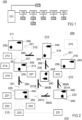
- FIG. 1 illustrates schematically an FSS 100.
- a FSS might be defined as a system configured for protecting occupants of a closed structure and said closed structure from a specific threat: the fire.
- a typical FSS 100 comprises a fire control panel - hereafter FCP - 101 connected to one or several remote modules - hereafter RM - 102 which are remotely located within said closed structure with respect to the FCP 101 and preferably connected in series.
- Each RM 102 might be connected to one or several FPD 103.
- the FCP 101 might also be directly connected to one or several FPD 103.
- the FCP 101 is in charge of the activation or deactivation of the FPD 103, e.g. a fire door. This is carried out by controlling activation electrical circuits in charge of supplying power to the different FPDs 103.
- such a FSS is not smart enough for protecting against other threats, like a terrorist attack.
- the present invention proposes a new kind of TSS, illustrated in Fig. 2 , and which is able to provide additional functionalities for mitigating risks for occupants of a closed structure 200 with respect to a threat, like a terrorist attack.
- the TSS according to the invention might be embedded or integrated within an existing FSS 100 to make the latter smarter, providing thus the latter with said additional functionalities for reacting to a threat different from a fire, like said terrorist attack.
- FIG. 2 is a schematical representation of a closed structure 200 comprising an implementation of the TSS according to the invention.
- Said closed structure is for instance a building.
- Said schematical representation might be considered as a plan of said closed structure 200, comprising different rooms or spaces of the closed structure 200, for instance a first set of rooms 211-218 located at a first floor, a second set of rooms 221-227 located at a second floor of said closed structure 200, and a third set of rooms 230-231.
- Said rooms are connected to each other through different paths schematically represented by the lines 201. The latter connect the different rooms together in a way that defines how people can move from one room to another room, and thus how a person can move or circulate within said closed structure.
- Said closed structure 200 comprises also entrance/exit doors 210, which can encompass emergency exit doors, and which enable people to leave and/or enter the closed structure 200.
- a TSS according to the invention is implemented within said closed structure 200.
- the TSS comprises a controller 270 configured for being connected to a TDS and to a TPS.
- the TDS comprises one or several threat presence detectors, like a camera 240 and/or a motion detector 250 and/or a sound detector and/or an IR detector.
- the threat presence detector is preferentially a device capable of detecting a presence of one or several persons within a predefined detection area and/or a motion of said one or several persons within said predefined area, and/or a sound of a gunfire.
- the threat presence detector is configured for providing an automatic detection of a presence of a threat.
- at least one threat presence detector might be manually activated.
- the threat presence detectors according to the invention are located at strategical positions within the closed structure.
- the predefined detection areas of at least a set of neighboring threat presence detectors overlap with each other or comprise a same boundary so that any motion of said threat within an area being the union of the predefined detection areas of said neighboring threat presence detectors can be continuously (i.e. without interruption during which the position of the threat becomes undetermined) determined in function of the time by the controller 270.
- such sets of neighboring threat presence detectors are installed along strategical paths within said closed structure 200, for instance along paths going from a first entrance/exit door 210 to another entrance/exist door remotely located (i.e. at least located in another room of said closed structure) compared to the first entrance/exit door. This enables the TDS to continuously keep the threat in its field of view (which is defined by said union of the predefined detection areas) during a displacement of the threat along such strategical paths.
- Each threat presence detector is configured for sending presence information to the controller 270.
- Said presence information is sent via a signal, e.g. a detection or alert signal.
- a signal e.g. a detection or alert signal.
- one or several threat presence detectors might send an alert signal only upon detection of a threat.
- one or several threat presence detectors may send a detection signal that requires further processing by the controller 270 for determining or detecting whether a threat is present within the predefined detection area of the threat presence detector having sent said detection signal.
- the detection of the threat might be performed directly by the threat presence detector and/or by the controller from the presence information (e.g. detection signal) provided by the threat presence detector.
- the TPS comprises one or several protection devices, like fire protection doors 260, and/or elevator fire switches, and/or visual alarms, and/or emergency exit lightings, and/or door control systems, and/or loudspeaker sound diffusion systems, and/or closed structure lighting system, and/or a sounder, entrance/exit doors 210, etc.
- Each of said protection devices can be controlled by the controller 270, e.g. activated or deactivated by the latter, or put in a first state or a second state by the latter.
- the controller 270 can for instance activate or deactivate each of said protection devices, and/or control an action performed by said protection device.
- the controller 270 can activate a fire protection door 260 and/or an elevator fire switch to block access to part of the rooms and/or paths 201 of the closed structure. For instance, the controller 270 can shut down the light of some paths 201 and/or rooms 221, 222, 223, 224, 220 for preventing a motion of persons and/or threat in said rooms or for hiding some persons in said rooms.
- the activation or deactivation of the threat protection devices is thus controlled by the controller 270 in function of a current position of the threat within the closed structure 200 and a path calculated or determined for said threat in order to mitigate risks for the occupants of the closed structure.
- the controller 270 receives from a threat presence detector, e.g. from the camera 240 and/or a motion detector 250 and/or a sound detector installed in said room 220, and/or a push-button, threat presence information about a threat within said closed structure 200, more precisely within the room 220.
- a threat presence detector e.g. from the camera 240 and/or a motion detector 250 and/or a sound detector installed in said room 220, and/or a push-button
- the threat might be identified or detected by the TSS according to the invention from the threat presence information received from the threat presence detector.
- the controller 270 might be configured for identifying or detecting one or several objects and/or person behaviors in images acquired by a camera 240, wherein said objects are for instance one or several types of weapons, wherein said behaviors are for instance fighting behaviors, and/or threatening behaviors, and/or running away persons.
- the threat presence information received by the controller 270 might be the sound of a gunshot acquired by a sound detector, or other sounds typically related to the presence of a threat.
- the threat presence information might be the detection of a motion characterizing running people, which might be interpreted by the controller 270 as a potential presence of a threat in the vicinity of the threat presence detector.
- the controller 270 is configured for cross-checking the threat presence information received, at the same time or within a predefined period of time, from several threat presence detectors in order to improve the detection of a threat.
- characteristics of the latter e.g. face shape, and/or clothes, and/or voice, etc.
- Person and/or face recognition techniques might be used by the controller for tracking said threat in threat presence information received from the threat presence detectors.
- the controller 270 will automatically track a movement of said threat within said closed structure 200 from the continuous reception of threat presence information sent by the threat presence detectors.
- the controller 270 is configured for continuously determining the position of the threat within the closed structure 200 in function of the time. For instance, if at time T0, the threat has been identified or detected in room 220, then the controller 270 is able to determine whether said threat is still located in room 220 at time T1>T0 or moved to (or is moving towards) another room, e.g. to room 230.
- the controller 270 receives, at the same time, occupant presence information from the threat presence detectors. In other words, it is also able to determine the position of occupants within the closed structure 200 in function of the time.
- the controller 270 is configured for automatically activating or deactivating at least one of said one or several devices of the TPS for dynamically guiding the movement of said threat within said closed structure 200 according to a path calculated or determined by an algorithm and configured for mitigating risks for said occupants.
- the controller 270 is configured for inputting in said algorithm the position of the threat within said closed structure 200 in function of the time, and optionally, the position of said occupants in function of the time.
- Said algorithm is then configured for outputting a set of future positions for said threat, wherein said future positions define said path that will mitigate the risk for the occupants of the closed structure 200 and a set of control commands for activating or deactivating one or several protection devices in function of said path, wherein each activation or deactivation of a protection device by the controller 270 is configured for guiding said threat along said path, for instance by blocking or resp. opening an access to a room by activating or resp. deactivating a fire protection door 260.
- the controller 270 might be able to block an access to a part of the closed structure 200 where people found refuge, and then, once said threat moved sufficiently away from said part, it might open said access to let said people move to an exit of the closed structure 200.
- Said algorithm provides thus intelligence to the TSS in order to mitigate the risks for said the occupants of the closed structure.
- Said algorithm might be trained with different scenarios defined for a specific closed structure where the TSS according to the invention will be installed.
- the algorithm might have been trained for various closed structures, and in such a case, the controller needs to store or have access to a plan of the closed structure where the TSS is installed. Said plan is then used as additional input to the algorithm.
- Said plan enables to define all possible paths through the closed structure, notably in function of the activation or deactivation of protection devices.
- the set of scenarios used for training the algorithm define typical reactions (or actions) that the TSS according to the invention shall have in function of successive temporal positions of the threat in order to protect occupants of the closed structure.
- some scenarios might aim to enclose the threat in some specific part of the closed structure, other scenarios might aim to keep the greatest distance between the threat and occupants of the closed structure, other scenarios might aim to guide the threat towards the closest exit, etc.
- the algorithm might in particular use a weight function for determining said control commands, i.e. which protection devices have to be activated or deactivated. For instance, a movement characterizing a threat moving away from a position where occupants of the closed structure are located is assigned a low weight. A movement of a threat moving towards a position where people are located, but where the access to said people is protected from said threat by some protection devices, like a fire protection door that can be activated, is assigned a medium weight.
- a movement of a threat towards a position where occupants are located and where no protection device could be used for preventing said threat to reach said position is assigned the highest weight.
- the algorithm is then configured for determining a path that will minimize said weight function by activating some protection devices and/or deactivating some other protection devices.
- Fig. 2 A more concrete example will be provided now with the help of Fig. 2 .
- the controller 270 receives presence information indicating said motion of the threat towards room 230.
- the controller 270 may receive or acquire, for instance from the camera system 240 located in room 226, presence information about people located in said room 226 indicating that some people are present in said room 226, and presence information from the camera system 240 installed in room 230, which indicates for instance that nobody is in room 230.
- the position in function of the time of the threat and of said people is fed as input to the algorithm according to the invention.
- the latter is configured for automatically minimizing the risk for the people in room 226. For instance, it can be configured for automatically blocking the access to room 226, and, if not possible, for automatically determining which protection devices, like fire doors, have to be activated or deactivated for maximizing the length of a continuous path conducting from room 220 to room 226.
- the algorithm may provide, as output, control commands to the controller 270 that are configured for automatically closing fire door 260A and fire door 260B, wherein fire door 260A is located on the path 201A directly connecting room 230 to room 225 and fire door 260B is installed on path 201B connecting path 201C to room 226. By this way, access to room 226 is blocked for the threat.
- fire door 260 installed on the path 201 directly connecting room 220 to room 212 is also closed by the controller 270 using the control commands outputted by the algorithm, preventing thus an access to the first floor to the threat.
- the controller 270 may close fire door 260C, so that the only possible motion for the threat is via room 231.
- the controller 270 might use other systems, like a loudspeaker system for automatically informing the people of room 226 about the position of the threat and/or the closest safe exit 210 and/or to guide said people towards the closest safe exit.
- the controller 270 comprises thus said algorithm configured for automatically outputting control commands for the protection devices, wherein said control commands are then used by the controller 270 for controlling the protection devices so that risks for the occupants of the closed structure be mitigated.
- the controller 270 might be installed in a FCP 101 of an existing FSS, controlling for instance the fire protection doors via activation electrical circuits of the FSS 100.
- the controller 270 is configured for cooperating with existing systems of the closed structure 200, like a FSS 100, a loudspeaker system, a door control system, a light system, etc., in order to mitigate the risks for the occupants of said closed structure.
- the present invention proposes a new method and system for managing a threat in a closed structure that is able to guide a motion of said threat through said closed structure by automatically activating or deactivating protection devices, such as fire protection doors, according to a path determined by an algorithm for mitigating risks for occupants of said closed structure.
Landscapes
- Physics & Mathematics (AREA)
- General Physics & Mathematics (AREA)
- Engineering & Computer Science (AREA)
- Computer Vision & Pattern Recognition (AREA)
- Alarm Systems (AREA)
Abstract
Description
- The present invention falls within the field of method and system configured for preventing or mitigating a threat within a closed structure comprising several rooms or spaces connected with each other and designed for being occupied by persons. Said structure is for instance a building or a ship. Said threat is for instance a terrorist attack or any threat that could endanger lives of people occupying said structure.
- State of the art systems for mitigating a risk related to a threat usually comprise one or several manual pushing buttons located at various appropriate locations within said structure, and which, upon activation, triggers an alarm indicating to the occupants of said structure to regroup in predefined safe areas, usually outside of the structure.
- Unfortunately, such systems do not efficiently protect against threats, such as a terrorist attack, wherein the threat can move within the rooms or spaces of said structure and can endanger the lives of people moving towards said safe areas or waiting at said safe areas for being rescued.
- Current solutions are thus not optimal, and improved solutions are needed.
- It is an objective of the present invention to provide a threat safety system and method capable of managing a threat.
- This objective is achieved according to the present invention by a threat safety system and method according to the object of the independent claims. Dependent claims present further advantages of the invention.
- The present invention concerns thus a threat safety system - hereafter "TSS" - for managing a threat within a closed structure, e.g. building, comprising several rooms or spaces configured for being occupied by people, the TSS comprising:
- a controller configured for being connected to:
- a threat detection system - hereafter "TDS" - comprising one or several threat presence detectors; and
- a threat protection system - hereafter "TPS" - comprising one or several protection devices configured for mitigating said threat within one or several of said rooms or spaces;
- The present invention also concerns a method for managing a threat within a closed structure comprising several rooms or spaces configured for being occupied by people, the method comprising:
- receiving, by a controller and from a threat presence detector of a TDS, presence information about a threat within said structure;
- automatically tracking, by the controller, a movement of said threat within said structure from said presence information;
- automatically activating one or several devices of a TPS for dynamically guiding said movement within said structure according to a path calculated or determined by an algorithm and configured for mitigating risks for said people. According to the present invention, "dynamically guiding" means that the path is continuously adapted or recalculated in function of the position of the threat ("position" has to be understood as the position in function of the time, i.e. the path is adapted in function of the current threat trajectory). Said automatic activation or deactivation of at least one of said protection devices might be configured for statically and/or dynamically interrupting or blocking or perturbing a progression of said threat within said structure. In particular, "statically" interrupting or blocking or perturbing means that a predefined scenario is for instance automatically selected by the algorithm in function of the position of the threat and applied by the TPS, wherein said scenario defines, for a predefined set of protection devices of the TPS and for each of said protection devices, for instance all protection devices covering or installed on a predefined area or zone of the closed structure (e.g. a whole floor of said closed structure) a respective state (e.g. an activated state or a deactivated state) in which they have to be respectively put if said scenario is selected by the algorithm in function of the position of the threat, wherein said change of state is applied to all protection devices of said area at the same time. This enables to have predefined scenarios for one of several zones of the closed structure, governing the change of state of all protection devices of said zone even if said threat did not yet enter one or several parts of said zone. In particular, "dynamically" interrupting or blocking or perturbing means that protection devices within a predefined area centered on the threat or calculated in function of the threat position are activated or deactivated successively in function of the movement of the threat, i.e. its change of position with time.
- In particular, said algorithm is configured for receiving as input, from the threat presence detector, threat position information, e.g. threat position in function of the time, and for providing, as output, said path and control commands for activating said one or several protection devices in function of said path in order to guide the movement of said threat within said structure. In particular, the controller might be configured for determining the threat position within said structure and the time at which said threat was at said position from the signal received from the threat presence detector. For instance, the controller may receive said threat presence information from a threat presence detector signal, wherein said signal is sent in real time by said threat presence detector, and wherein the threat position is for instance the position of the threat presence detector within the building that sent said signal, and said time is the time at which the controller received said signal. According to another embodiment, the controller may receive from the threat presence detector a signal comprising a temporal indication and/or threat position information with respect to a surrounding environment of the threat presence detector that enable the controller to determine said position of the threat in function of the time. Of course, the above-mentioned embodiments or examples might be combined, in that a first threat presence detector may send threat presence information to the controller according to one of the above-mentioned embodiments and another threat presence detector may send threat presence information to the controller according to another one of said above-mentioned embodiments.
- Preferentially, said algorithm has been trained by machine learning. In particular, the present invention proposes also a method for training the algorithm according to the invention. More precisely, said method is a method for providing, by a data processing system, a trained algorithm for dynamically calculating or determining a path for a threat through a structure (i.e. said closed structure such as a building), the method comprising:
- receiving input training data, wherein the input training data comprise at least one plan, preferentially a set of plans (e.g. building plans), wherein each plan is a plan of a closed structure comprising several rooms or spaces connected with each other and designed for being occupied by persons, wherein each plan is configured for defining (or enabling to define) paths through said closed structure, wherein each plan comprises at least the position, within the closed structure, of the protection devices of the TPS and their respective action on a path through said structure when activated or deactivated (e.g. blocking, or resp. opening, an access to a space or room when activated or resp. deactivated), and for each plan, a set of scenarios, wherein each scenario comprises a set of past positions (within said closed structure) of the threat in function of the time, optionally, for each scenario, a set of past positions of said people in function of said time within said structure;
- receiving output training data comprising for each scenario a set of future temporal positions (i.e. positions in function of time) for said threat within the considered structure and a set of control commands, each control command being configured for activating or deactivating at least one of said protection devices in function of a path defined by said set of future positions, and optionally a set of future positions in function of the time for said people within said considered structure and another set of said control commands for activating or deactivating protection devices in function of another path defined by said set of future temporal positions for said people in order to provide guidance to said people within the considered structure;
- training an algorithm based on the input training data and output training data;
- providing the resulting algorithm.
- The algorithm might thus be trained only for the closed structure wherein the TSS has to be implemented, or for various closed structures. If trained for various closed structures, then the trained algorithm is able to determine said path and the control commands for activating or deactivating each of the protection devices of the TPS for a specific closed structure (i.e. a closed structure it was not trained for) as soon as it receives as input said plan of the specific closed structure. From the information comprised in said plan, it will be able, thanks to its training, to automatically determine the path for mitigating risks for the occupants of the closed structure and the control commands which enable to guide the threat through said path and/or the people through said another path.
- The resulting algorithm is thus a trained algorithm used by the controller for determining said path for the threat for dynamically guiding ("dynamically" in the sense that said path will be continuously adapted to newly acquired positions of the threat) said threat within the closed structure for mitigating the risks for said people. The determined path corresponds thus to a set of successive positions located within said structure, which, when temporally successively occupied by the threat will mitigate the risks for said people, for instance by moving the threat away from said people. The guidance is realized by activating, in function of said path (or more precisely, in function of the temporal position of the threat), one or several protection devices of the TPS, e.g. by blocking or opening temporarily or continuously access to some rooms or spaces using fire doors or electric doors (i.e. doors whose opening/closing can be controlled remotely by the controller), and/or by switching off some lifts, and/or some lights and/or indicator panels, and/or sounders, etc. The goal is thus to move the threat, e.g. a terrorist, away from said people.
- Preferentially, the TPS is or comprises or is configured for cooperating with a fire protection system of a fire safety system. For instance, the TSS according to the invention can be embedded into an existing Fire Safety System (hereafter "FSS"), providing thus the latter with an intelligence for detecting a threat like a terrorist located within a closed structure like a building, and guiding a movement of said threat within said closed structure in order to mitigate the risks for people currently occupying said closed structure. The TSS according to the invention might be defined thus as a smart FSS which is able to actively and dynamically react to a movement or action of a threat within the closed structure. In particular, said reaction of the TSS to a movement or action of a threat might be triggered, or launched, automatically, e.g. by automatically detecting the presence of said threat by means of a threat presence detector of the TDS, or said reaction might be triggered, or launched, manually, e.g. by manually activating a pushing-button of the TDS.
- Otherwise said, the TSS according to the invention can be a completely new system, or might be an improvement of an existing FSS, adding to the latter new functionalities for detecting the presence of a threat, determining said path and controlling an activation/deactivation of TPS devices for providing said guidance according to the invention and mitigating the risks for the occupants of said structure. In particular, said one or several protection devices comprise a fire protection door, and/or an elevator fire switch, and/or a visual alarm, and/or an emergency exit lighting, and/or a door control system, and/or a loudspeaker sound diffusion system, and/or a sounder, which might be for instance part of said existing FSS. In particular, the one or several threat presence detectors of the TDS comprise a motion detector, and/or a sound detector, and/or an IR detector, and/or a camera, and/or any other device capable of detecting a threat such as a terrorist attack.
- For a more complete understanding of the present invention, and the advantages thereof, reference is now made to the following description taken in conjunction with the accompanying drawings, wherein like numbers designate like objects, and in which:
-
Figure 1 schematically illustrates an FSS according to prior techniques; -
Figure 2 schematically illustrates a closed structure comprising an implementation of the TSS according to the invention; -
Figure 3 schematically illustrates a flowchart describing a preferred embodiment of a method according to the invention. -
FIGURES 1 through 3 , discussed below, and the various embodiments used to describe the principles of the present disclosure in this patent document are by way of illustration only and should not be construed in any way to limit the scope of the disclosure. Those skilled in the art will understand that the principles of the present disclosure may be implemented in any suitably arranged TSS. The numerous innovative teachings of the present application will be described with reference to exemplary non-limiting embodiments. -
Figure 1 illustrates schematically an FSS 100. A FSS might be defined as a system configured for protecting occupants of a closed structure and said closed structure from a specific threat: the fire. A typical FSS 100 comprises a fire control panel - hereafter FCP - 101 connected to one or several remote modules - hereafter RM - 102 which are remotely located within said closed structure with respect to the FCP 101 and preferably connected in series. EachRM 102 might be connected to one orseveral FPD 103. TheFCP 101 might also be directly connected to one orseveral FPD 103. TheFCP 101 is in charge of the activation or deactivation of theFPD 103, e.g. a fire door. This is carried out by controlling activation electrical circuits in charge of supplying power to thedifferent FPDs 103. As explained earlier, such a FSS is not smart enough for protecting against other threats, like a terrorist attack. - For this reason, the present invention proposes a new kind of TSS, illustrated in
Fig. 2 , and which is able to provide additional functionalities for mitigating risks for occupants of aclosed structure 200 with respect to a threat, like a terrorist attack. In particular, the TSS according to the invention might be embedded or integrated within an existingFSS 100 to make the latter smarter, providing thus the latter with said additional functionalities for reacting to a threat different from a fire, like said terrorist attack. -
Figure 2 is a schematical representation of aclosed structure 200 comprising an implementation of the TSS according to the invention. Said closed structure is for instance a building. Said schematical representation might be considered as a plan of saidclosed structure 200, comprising different rooms or spaces of theclosed structure 200, for instance a first set of rooms 211-218 located at a first floor, a second set of rooms 221-227 located at a second floor of saidclosed structure 200, and a third set of rooms 230-231. Said rooms are connected to each other through different paths schematically represented by thelines 201. The latter connect the different rooms together in a way that defines how people can move from one room to another room, and thus how a person can move or circulate within said closed structure. Saidclosed structure 200 comprises also entrance/exit doors 210, which can encompass emergency exit doors, and which enable people to leave and/or enter theclosed structure 200. - A TSS according to the invention is implemented within said
closed structure 200. The TSS comprises acontroller 270 configured for being connected to a TDS and to a TPS. - The TDS comprises one or several threat presence detectors, like a
camera 240 and/or amotion detector 250 and/or a sound detector and/or an IR detector. The threat presence detector is preferentially a device capable of detecting a presence of one or several persons within a predefined detection area and/or a motion of said one or several persons within said predefined area, and/or a sound of a gunfire. Preferentially, the threat presence detector is configured for providing an automatic detection of a presence of a threat. Optionally, at least one threat presence detector might be manually activated. The threat presence detectors according to the invention are located at strategical positions within the closed structure. Preferentially, the predefined detection areas of at least a set of neighboring threat presence detectors overlap with each other or comprise a same boundary so that any motion of said threat within an area being the union of the predefined detection areas of said neighboring threat presence detectors can be continuously (i.e. without interruption during which the position of the threat becomes undetermined) determined in function of the time by thecontroller 270. Preferentially, such sets of neighboring threat presence detectors are installed along strategical paths within saidclosed structure 200, for instance along paths going from a first entrance/exit door 210 to another entrance/exist door remotely located (i.e. at least located in another room of said closed structure) compared to the first entrance/exit door. This enables the TDS to continuously keep the threat in its field of view (which is defined by said union of the predefined detection areas) during a displacement of the threat along such strategical paths. - Each threat presence detector is configured for sending presence information to the
controller 270. Said presence information is sent via a signal, e.g. a detection or alert signal. For instance, one or several threat presence detectors might send an alert signal only upon detection of a threat. Additionally and/or alternatively, one or several threat presence detectors may send a detection signal that requires further processing by thecontroller 270 for determining or detecting whether a threat is present within the predefined detection area of the threat presence detector having sent said detection signal. In other words, the detection of the threat might be performed directly by the threat presence detector and/or by the controller from the presence information (e.g. detection signal) provided by the threat presence detector. - The TPS comprises one or several protection devices, like
fire protection doors 260, and/or elevator fire switches, and/or visual alarms, and/or emergency exit lightings, and/or door control systems, and/or loudspeaker sound diffusion systems, and/or closed structure lighting system, and/or a sounder, entrance/exit doors 210, etc. Each of said protection devices can be controlled by thecontroller 270, e.g. activated or deactivated by the latter, or put in a first state or a second state by the latter. Thecontroller 270 can for instance activate or deactivate each of said protection devices, and/or control an action performed by said protection device. For instance, thecontroller 270 can activate afire protection door 260 and/or an elevator fire switch to block access to part of the rooms and/orpaths 201 of the closed structure. For instance, thecontroller 270 can shut down the light of somepaths 201 and/orrooms controller 270 in function of a current position of the threat within theclosed structure 200 and a path calculated or determined for said threat in order to mitigate risks for the occupants of the closed structure. - A preferred embodiment of the method according to the invention will be described now in connection with
Figure 3 together withFigure 2 . - Let's suppose that a threat is located in one of the rooms of the
closed structure 200, for instance inroom 220. Atstep 301, thecontroller 270 receives from a threat presence detector, e.g. from thecamera 240 and/or amotion detector 250 and/or a sound detector installed in saidroom 220, and/or a push-button, threat presence information about a threat within saidclosed structure 200, more precisely within theroom 220. The threat might be identified or detected by the TSS according to the invention from the threat presence information received from the threat presence detector. For instance, thecontroller 270 might be configured for identifying or detecting one or several objects and/or person behaviors in images acquired by acamera 240, wherein said objects are for instance one or several types of weapons, wherein said behaviors are for instance fighting behaviors, and/or threatening behaviors, and/or running away persons. For instance, the threat presence information received by thecontroller 270 might be the sound of a gunshot acquired by a sound detector, or other sounds typically related to the presence of a threat. For instance, the threat presence information might be the detection of a motion characterizing running people, which might be interpreted by thecontroller 270 as a potential presence of a threat in the vicinity of the threat presence detector. Preferentially, thecontroller 270 is configured for cross-checking the threat presence information received, at the same time or within a predefined period of time, from several threat presence detectors in order to improve the detection of a threat. Preferentially, once a threat has been detected and/or identified, characteristics of the latter (e.g. face shape, and/or clothes, and/or voice, etc.) are stored in a memory of the TSS for enabling tracking said threat within theclosed structure 200. For instance, person and/or face recognition techniques might be used by the controller for tracking said threat in threat presence information received from the threat presence detectors. - At
step 302, once the threat has been detected and identified from the received threat presence information, thecontroller 270 will automatically track a movement of said threat within saidclosed structure 200 from the continuous reception of threat presence information sent by the threat presence detectors. In other words, thecontroller 270 is configured for continuously determining the position of the threat within theclosed structure 200 in function of the time. For instance, if at time T0, the threat has been identified or detected inroom 220, then thecontroller 270 is able to determine whether said threat is still located inroom 220 at time T1>T0 or moved to (or is moving towards) another room, e.g. toroom 230. Preferentially, thecontroller 270 receives, at the same time, occupant presence information from the threat presence detectors. In other words, it is also able to determine the position of occupants within theclosed structure 200 in function of the time. - At
step 303, thecontroller 270 is configured for automatically activating or deactivating at least one of said one or several devices of the TPS for dynamically guiding the movement of said threat within saidclosed structure 200 according to a path calculated or determined by an algorithm and configured for mitigating risks for said occupants. For this purpose, thecontroller 270 is configured for inputting in said algorithm the position of the threat within saidclosed structure 200 in function of the time, and optionally, the position of said occupants in function of the time. Said algorithm is then configured for outputting a set of future positions for said threat, wherein said future positions define said path that will mitigate the risk for the occupants of theclosed structure 200 and a set of control commands for activating or deactivating one or several protection devices in function of said path, wherein each activation or deactivation of a protection device by thecontroller 270 is configured for guiding said threat along said path, for instance by blocking or resp. opening an access to a room by activating or resp. deactivating afire protection door 260. For instance, thecontroller 270 might be able to block an access to a part of theclosed structure 200 where people found refuge, and then, once said threat moved sufficiently away from said part, it might open said access to let said people move to an exit of theclosed structure 200. Said algorithm provides thus intelligence to the TSS in order to mitigate the risks for said the occupants of the closed structure. - Said algorithm might be trained with different scenarios defined for a specific closed structure where the TSS according to the invention will be installed. Alternatively, the algorithm might have been trained for various closed structures, and in such a case, the controller needs to store or have access to a plan of the closed structure where the TSS is installed. Said plan is then used as additional input to the algorithm. Said plan enables to define all possible paths through the closed structure, notably in function of the activation or deactivation of protection devices. The set of scenarios used for training the algorithm define typical reactions (or actions) that the TSS according to the invention shall have in function of successive temporal positions of the threat in order to protect occupants of the closed structure. For instance, some scenarios might aim to enclose the threat in some specific part of the closed structure, other scenarios might aim to keep the greatest distance between the threat and occupants of the closed structure, other scenarios might aim to guide the threat towards the closest exit, etc. The algorithm might in particular use a weight function for determining said control commands, i.e. which protection devices have to be activated or deactivated. For instance, a movement characterizing a threat moving away from a position where occupants of the closed structure are located is assigned a low weight. A movement of a threat moving towards a position where people are located, but where the access to said people is protected from said threat by some protection devices, like a fire protection door that can be activated, is assigned a medium weight. A movement of a threat towards a position where occupants are located and where no protection device could be used for preventing said threat to reach said position is assigned the highest weight. The algorithm is then configured for determining a path that will minimize said weight function by activating some protection devices and/or deactivating some other protection devices.
- A more concrete example will be provided now with the help of
Fig. 2 . Let's suppose that the threat located inroom 220 is leaving the latter via thepath 201C directly connectingroom 220 toroom 230. Via thecamera system 240 and/ormotion detector 250 installed inroom 220, thecontroller 270 receives presence information indicating said motion of the threat towardsroom 230. At the same time, thecontroller 270 may receive or acquire, for instance from thecamera system 240 located inroom 226, presence information about people located in saidroom 226 indicating that some people are present in saidroom 226, and presence information from thecamera system 240 installed inroom 230, which indicates for instance that nobody is inroom 230. The position in function of the time of the threat and of said people is fed as input to the algorithm according to the invention. The latter is configured for automatically minimizing the risk for the people inroom 226. For instance, it can be configured for automatically blocking the access toroom 226, and, if not possible, for automatically determining which protection devices, like fire doors, have to be activated or deactivated for maximizing the length of a continuous path conducting fromroom 220 toroom 226. In the present case, the algorithm may provide, as output, control commands to thecontroller 270 that are configured for automatically closingfire door 260A andfire door 260B, whereinfire door 260A is located on thepath 201A directly connectingroom 230 toroom 225 andfire door 260B is installed onpath 201B connecting path 201C toroom 226. By this way, access toroom 226 is blocked for the threat. At the same time,fire door 260 installed on thepath 201 directly connectingroom 220 toroom 212 is also closed by thecontroller 270 using the control commands outputted by the algorithm, preventing thus an access to the first floor to the threat. Afterwards, for instance if the threat is detected by thecamera system 240 ofroom 230, thecontroller 270 may closefire door 260C, so that the only possible motion for the threat is viaroom 231. At the same time, thecontroller 270 might use other systems, like a loudspeaker system for automatically informing the people ofroom 226 about the position of the threat and/or the closestsafe exit 210 and/or to guide said people towards the closest safe exit. - According to the present invention, the
controller 270 comprises thus said algorithm configured for automatically outputting control commands for the protection devices, wherein said control commands are then used by thecontroller 270 for controlling the protection devices so that risks for the occupants of the closed structure be mitigated. Thecontroller 270 might be installed in aFCP 101 of an existing FSS, controlling for instance the fire protection doors via activation electrical circuits of theFSS 100. In other words, thecontroller 270 is configured for cooperating with existing systems of theclosed structure 200, like aFSS 100, a loudspeaker system, a door control system, a light system, etc., in order to mitigate the risks for the occupants of said closed structure. - To summarize, the present invention proposes a new method and system for managing a threat in a closed structure that is able to guide a motion of said threat through said closed structure by automatically activating or deactivating protection devices, such as fire protection doors, according to a path determined by an algorithm for mitigating risks for occupants of said closed structure.
-
- FSS
- Fire Safety System
- FCP
- Fire Control Panel
- FPD
- Fire Protection Device
- TSS
- Threat Safety System
- TPS
- Threat Protection System
- TDS
- Threat Detection System
- RM
- Remote Module
Claims (15)
- Threat Safety System - hereafter "TSS" - for managing a threat within a closed structure (200) comprising several rooms (211-218, 220-227, 230-231), configured for being occupied by people, the TSS comprising:- a controller (270) configured for being connected to:the TSS being characterized in that its controller (270) is configured for automatically tracking a movement of said threat within said closed structure (200) from presence information received from the presence detector of the TDS and for automatically activating or deactivating at least one of said protection devices for dynamically guiding said movement within said closed structure (200) according to a path determined by an algorithm and configured for mitigating risks for said people.- a threat detection system - hereafter "TDS" - comprising one or several threat presence detectors;- a threat protection system - hereafter "TPS" - comprising one or several protection devices configured for mitigating said threat within one or several of said rooms (211-218, 220-227, 230-231);
- TSS according to claim 1, wherein said algorithm is configured for receiving as input, from the threat presence detector, threat position in function of the time, and for providing, as output, said path and control commands for activating or deactivating said one or several protection devices in function of said path in order to guide the movement of said threat within said structure.
- TSS according to claim 1 or 2, wherein said algorithm has been trained by machine learning.
- TSS according to one of the claims 1 to 3, wherein said TPS is or comprises or is configured for cooperating with a fire protection system of a fire safety system (100).
- TSS according to one of the claims 1 to 4, wherein said one or several threat presence detectors comprise a motion detector (250), and/or a sound detector, and/or an IR detector, and/or a camera (240).
- TSS according to one of the claims 1 to 5, wherein said one or several protection devices comprise a fire protection door (260), and/or an elevator fire switch, and/or a visual alarm, and/or an emergency exit lighting, and/or a door control system, and/or a loudspeaker sound diffusion system, and/or a sounder.
- TSS according to one of the claims 1 to 6, wherein said presence information comprises temporal positions of said people within the structure and said path is determined by said algorithm in function of said temporal positions.
- Fire safety system (100), characterized in that it comprises the TSS according to one of the claims 1 to 7.
- A method for providing, by a data processing system, a trained algorithm for dynamically determining a path for a threat through a closed structure (200), the method comprising:- receiving input training data, wherein the input training data comprise a plan of said closed structure (200), wherein said plan is configured for defining paths through said closed structure (200), wherein said plan comprises at least the position within the closed structure, of protection devices of a TPS and their respective action on a path through said closed structure (200) when activated or deactivated, the input training data further comprising a set of scenarios, wherein each scenario comprises a set of past positions within said closed structure (200) of a threat in function of the time;- receiving output training data comprising for each scenario a set of future positions for said threat within the closed structure (200) and a set of control commands for activating or deactivating at least one of said protection devices in function of a path defined by said set of future positions of the threat;- training an algorithm based on the input training data and output training data;- providing the resulting algorithm.
- Method for managing a threat within a closed structure (200) comprising several rooms (211-218, 220-227, 230-231) configured for being occupied by people, the method comprising:- receiving (301), by a controller (270) and from a threat presence detector of a TDS, presence information about a threat within said closed structure (200);- automatically tracking (302), by the controller (270), a movement of said threat within said closed structure (200) from said presence information;- automatically activating (303) or deactivating one or several protection devices of a TPS for dynamically guiding said movement within said closed structure (200) according to a path determined by an algorithm and configured for mitigating risks for said people.
- Method according to claim 10, comprising receiving as input by the algorithm and from the threat presence detector, threat position in function of the time, and providing, by the algorithm and as output, said path and control commands for activating said one or several protection devices in function of said path in order to guide the movement of said threat within said closed structure (200).
- Method according to claim 10 or 11, comprising training said algorithm using machine learning techniques.
- Method according to one of the claims 10 to 12, comprising receiving presence information about said people within said closed structure (200) and determining said path in function of said people presence information.
- Method according to one of the claims 10 to 13, comprising automatically guiding said people through said closed structure (200) by means of said TPS and in function of the position of said threat.
- Method according to one of the claims 10 to 14, comprising automatically determining, by said algorithm, another path and other control commands for automatically guiding said people through said closed structure (200).
Priority Applications (1)
| Application Number | Priority Date | Filing Date | Title |
|---|---|---|---|
| EP22155138.5A EP4224450B1 (en) | 2022-02-04 | 2022-02-04 | Threat safety system and method |
Applications Claiming Priority (1)
| Application Number | Priority Date | Filing Date | Title |
|---|---|---|---|
| EP22155138.5A EP4224450B1 (en) | 2022-02-04 | 2022-02-04 | Threat safety system and method |
Publications (2)
| Publication Number | Publication Date |
|---|---|
| EP4224450A1 true EP4224450A1 (en) | 2023-08-09 |
| EP4224450B1 EP4224450B1 (en) | 2025-04-02 |
Family
ID=80218644
Family Applications (1)
| Application Number | Title | Priority Date | Filing Date |
|---|---|---|---|
| EP22155138.5A Active EP4224450B1 (en) | 2022-02-04 | 2022-02-04 | Threat safety system and method |
Country Status (1)
| Country | Link |
|---|---|
| EP (1) | EP4224450B1 (en) |
Citations (2)
| Publication number | Priority date | Publication date | Assignee | Title |
|---|---|---|---|---|
| US10497251B2 (en) * | 2013-07-15 | 2019-12-03 | Bluepoint Alert Solutions, Llc | Apparatus, system and methods for providing notifications and dynamic security information during an emergency crisis |
| US20200168063A1 (en) * | 2018-11-27 | 2020-05-28 | Livefree Emergency Response, Inc. | System and method for suppression of physical threats |
-
2022
- 2022-02-04 EP EP22155138.5A patent/EP4224450B1/en active Active
Patent Citations (2)
| Publication number | Priority date | Publication date | Assignee | Title |
|---|---|---|---|---|
| US10497251B2 (en) * | 2013-07-15 | 2019-12-03 | Bluepoint Alert Solutions, Llc | Apparatus, system and methods for providing notifications and dynamic security information during an emergency crisis |
| US20200168063A1 (en) * | 2018-11-27 | 2020-05-28 | Livefree Emergency Response, Inc. | System and method for suppression of physical threats |
Also Published As
| Publication number | Publication date |
|---|---|
| EP4224450B1 (en) | 2025-04-02 |
Similar Documents
| Publication | Publication Date | Title |
|---|---|---|
| US10157525B2 (en) | Active intruder mitigation system and method | |
| JP6791399B2 (en) | Elevator security system | |
| US10942011B1 (en) | Active shooter shield system | |
| US12118791B2 (en) | Active shooter response systems and methods | |
| KR20170088544A (en) | Social security network system having portable lighting for combing wireless disaster fire detection and security accident prevention | |
| EP3154040A1 (en) | System for smart intrusion control using wearable and ble devices | |
| EP1491709A1 (en) | Automatic door opening/closing apparatus | |
| EP4224450B1 (en) | Threat safety system and method | |
| JP2016139343A (en) | Crime prevention system | |
| US10977915B2 (en) | Active intruder mitigation system and method | |
| KR102542129B1 (en) | Emergency evacuation control method | |
| US9911527B2 (en) | Electromagnetic safety device | |
| EP2856446B1 (en) | Device, system and method for monitoring a predetermined space | |
| KR20180137885A (en) | Fire protection system and method | |
| KR101142221B1 (en) | Invasion Detecting Device | |
| WO1995019202A1 (en) | An evacuation system | |
| US20250148889A1 (en) | Light switch systems configured to respond to gunfire and methods of use | |
| JP5210828B2 (en) | Building security system | |
| US11210883B2 (en) | Facility access regulating system and method | |
| KR20240142130A (en) | Iot-based smart fire alarm control station for monitoring and blocking unwanted fire alarm | |
| KR102532639B1 (en) | Fire shutter control system | |
| KR101491464B1 (en) | System for safety elevator | |
| WO2012085606A1 (en) | Electronic home protection apparatus | |
| JP4703358B2 (en) | Elevator equipment | |
| KR20240026219A (en) | Safety systems, shore systems, onboard systems and control methods |
Legal Events
| Date | Code | Title | Description |
|---|---|---|---|
| PUAI | Public reference made under article 153(3) epc to a published international application that has entered the european phase |
Free format text: ORIGINAL CODE: 0009012 |
|
| STAA | Information on the status of an ep patent application or granted ep patent |
Free format text: STATUS: THE APPLICATION HAS BEEN PUBLISHED |
|
| AK | Designated contracting states |
Kind code of ref document: A1 Designated state(s): AL AT BE BG CH CY CZ DE DK EE ES FI FR GB GR HR HU IE IS IT LI LT LU LV MC MK MT NL NO PL PT RO RS SE SI SK SM TR |
|
| STAA | Information on the status of an ep patent application or granted ep patent |
Free format text: STATUS: REQUEST FOR EXAMINATION WAS MADE |
|
| 17P | Request for examination filed |
Effective date: 20240205 |
|
| RBV | Designated contracting states (corrected) |
Designated state(s): AL AT BE BG CH CY CZ DE DK EE ES FI FR GB GR HR HU IE IS IT LI LT LU LV MC MK MT NL NO PL PT RO RS SE SI SK SM TR |
|
| STAA | Information on the status of an ep patent application or granted ep patent |
Free format text: STATUS: EXAMINATION IS IN PROGRESS |
|
| 17Q | First examination report despatched |
Effective date: 20240911 |
|
| GRAP | Despatch of communication of intention to grant a patent |
Free format text: ORIGINAL CODE: EPIDOSNIGR1 |
|
| STAA | Information on the status of an ep patent application or granted ep patent |
Free format text: STATUS: GRANT OF PATENT IS INTENDED |
|
| INTG | Intention to grant announced |
Effective date: 20241126 |
|
| GRAS | Grant fee paid |
Free format text: ORIGINAL CODE: EPIDOSNIGR3 |
|
| GRAA | (expected) grant |
Free format text: ORIGINAL CODE: 0009210 |
|
| STAA | Information on the status of an ep patent application or granted ep patent |
Free format text: STATUS: THE PATENT HAS BEEN GRANTED |
|
| AK | Designated contracting states |
Kind code of ref document: B1 Designated state(s): AL AT BE BG CH CY CZ DE DK EE ES FI FR GB GR HR HU IE IS IT LI LT LU LV MC MK MT NL NO PL PT RO RS SE SI SK SM TR |
|
| REG | Reference to a national code |
Ref country code: GB Ref legal event code: FG4D |
|
| REG | Reference to a national code |
Ref country code: CH Ref legal event code: EP |
|
| REG | Reference to a national code |
Ref country code: IE Ref legal event code: FG4D |
|
| REG | Reference to a national code |
Ref country code: DE Ref legal event code: R096 Ref document number: 602022012415 Country of ref document: DE |
|
| REG | Reference to a national code |
Ref country code: NL Ref legal event code: FP |
|
| PG25 | Lapsed in a contracting state [announced via postgrant information from national office to epo] |
Ref country code: FI Free format text: LAPSE BECAUSE OF FAILURE TO SUBMIT A TRANSLATION OF THE DESCRIPTION OR TO PAY THE FEE WITHIN THE PRESCRIBED TIME-LIMIT Effective date: 20250402 Ref country code: ES Free format text: LAPSE BECAUSE OF FAILURE TO SUBMIT A TRANSLATION OF THE DESCRIPTION OR TO PAY THE FEE WITHIN THE PRESCRIBED TIME-LIMIT Effective date: 20250402 Ref country code: PT Free format text: LAPSE BECAUSE OF FAILURE TO SUBMIT A TRANSLATION OF THE DESCRIPTION OR TO PAY THE FEE WITHIN THE PRESCRIBED TIME-LIMIT Effective date: 20250804 |
|
| REG | Reference to a national code |
Ref country code: LT Ref legal event code: MG9D |
|
| PG25 | Lapsed in a contracting state [announced via postgrant information from national office to epo] |
Ref country code: GR Free format text: LAPSE BECAUSE OF FAILURE TO SUBMIT A TRANSLATION OF THE DESCRIPTION OR TO PAY THE FEE WITHIN THE PRESCRIBED TIME-LIMIT Effective date: 20250703 Ref country code: NO Free format text: LAPSE BECAUSE OF FAILURE TO SUBMIT A TRANSLATION OF THE DESCRIPTION OR TO PAY THE FEE WITHIN THE PRESCRIBED TIME-LIMIT Effective date: 20250702 |
|
| PG25 | Lapsed in a contracting state [announced via postgrant information from national office to epo] |
Ref country code: PL Free format text: LAPSE BECAUSE OF FAILURE TO SUBMIT A TRANSLATION OF THE DESCRIPTION OR TO PAY THE FEE WITHIN THE PRESCRIBED TIME-LIMIT Effective date: 20250402 |
|
| PG25 | Lapsed in a contracting state [announced via postgrant information from national office to epo] |
Ref country code: BG Free format text: LAPSE BECAUSE OF FAILURE TO SUBMIT A TRANSLATION OF THE DESCRIPTION OR TO PAY THE FEE WITHIN THE PRESCRIBED TIME-LIMIT Effective date: 20250402 |
|
| PG25 | Lapsed in a contracting state [announced via postgrant information from national office to epo] |
Ref country code: HR Free format text: LAPSE BECAUSE OF FAILURE TO SUBMIT A TRANSLATION OF THE DESCRIPTION OR TO PAY THE FEE WITHIN THE PRESCRIBED TIME-LIMIT Effective date: 20250402 |
|
| PG25 | Lapsed in a contracting state [announced via postgrant information from national office to epo] |
Ref country code: RS Free format text: LAPSE BECAUSE OF FAILURE TO SUBMIT A TRANSLATION OF THE DESCRIPTION OR TO PAY THE FEE WITHIN THE PRESCRIBED TIME-LIMIT Effective date: 20250702 |
|
| PG25 | Lapsed in a contracting state [announced via postgrant information from national office to epo] |
Ref country code: IS Free format text: LAPSE BECAUSE OF FAILURE TO SUBMIT A TRANSLATION OF THE DESCRIPTION OR TO PAY THE FEE WITHIN THE PRESCRIBED TIME-LIMIT Effective date: 20250802 |
|
| PG25 | Lapsed in a contracting state [announced via postgrant information from national office to epo] |
Ref country code: LV Free format text: LAPSE BECAUSE OF FAILURE TO SUBMIT A TRANSLATION OF THE DESCRIPTION OR TO PAY THE FEE WITHIN THE PRESCRIBED TIME-LIMIT Effective date: 20250402 |
|
| REG | Reference to a national code |
Ref country code: DE Ref legal event code: R097 Ref document number: 602022012415 Country of ref document: DE |
|
| PG25 | Lapsed in a contracting state [announced via postgrant information from national office to epo] |
Ref country code: DK Free format text: LAPSE BECAUSE OF FAILURE TO SUBMIT A TRANSLATION OF THE DESCRIPTION OR TO PAY THE FEE WITHIN THE PRESCRIBED TIME-LIMIT Effective date: 20250402 Ref country code: SM Free format text: LAPSE BECAUSE OF FAILURE TO SUBMIT A TRANSLATION OF THE DESCRIPTION OR TO PAY THE FEE WITHIN THE PRESCRIBED TIME-LIMIT Effective date: 20250402 |
|
| PG25 | Lapsed in a contracting state [announced via postgrant information from national office to epo] |
Ref country code: CZ Free format text: LAPSE BECAUSE OF FAILURE TO SUBMIT A TRANSLATION OF THE DESCRIPTION OR TO PAY THE FEE WITHIN THE PRESCRIBED TIME-LIMIT Effective date: 20250402 |
|
| PG25 | Lapsed in a contracting state [announced via postgrant information from national office to epo] |
Ref country code: EE Free format text: LAPSE BECAUSE OF FAILURE TO SUBMIT A TRANSLATION OF THE DESCRIPTION OR TO PAY THE FEE WITHIN THE PRESCRIBED TIME-LIMIT Effective date: 20250402 |
|
| PG25 | Lapsed in a contracting state [announced via postgrant information from national office to epo] |
Ref country code: SK Free format text: LAPSE BECAUSE OF FAILURE TO SUBMIT A TRANSLATION OF THE DESCRIPTION OR TO PAY THE FEE WITHIN THE PRESCRIBED TIME-LIMIT Effective date: 20250402 |
|
| PLBE | No opposition filed within time limit |
Free format text: ORIGINAL CODE: 0009261 |
|
| STAA | Information on the status of an ep patent application or granted ep patent |
Free format text: STATUS: NO OPPOSITION FILED WITHIN TIME LIMIT |
|
| REG | Reference to a national code |
Ref country code: CH Ref legal event code: L10 Free format text: ST27 STATUS EVENT CODE: U-0-0-L10-L00 (AS PROVIDED BY THE NATIONAL OFFICE) Effective date: 20260211 |
|
| 26N | No opposition filed |
Effective date: 20260105 |
|
| PGFP | Annual fee paid to national office [announced via postgrant information from national office to epo] |
Ref country code: NL Payment date: 20260209 Year of fee payment: 5 |
|
| PGFP | Annual fee paid to national office [announced via postgrant information from national office to epo] |
Ref country code: GB Payment date: 20260310 Year of fee payment: 5 |
|
| PGFP | Annual fee paid to national office [announced via postgrant information from national office to epo] |
Ref country code: AT Payment date: 20260301 Year of fee payment: 5 |
|
| PGFP | Annual fee paid to national office [announced via postgrant information from national office to epo] |
Ref country code: IT Payment date: 20260225 Year of fee payment: 5 |
|
| PGFP | Annual fee paid to national office [announced via postgrant information from national office to epo] |
Ref country code: FR Payment date: 20260213 Year of fee payment: 5 |
|
| REG | Reference to a national code |
Ref country code: CH Ref legal event code: U11 Free format text: ST27 STATUS EVENT CODE: U-0-0-U10-U11 (AS PROVIDED BY THE NATIONAL OFFICE) Effective date: 20260511 |