Technical field of the invention
-
The present invention relates to the medical field, and in particular for treating diseases caused by RNA viruses, in particular by SARS-CoV-2.
-
The health emergency due to the outbreak of acute respiratory syndrome coronavirus 2 (SARS-CoV-2) has not only affected the world population in terms of lost lives, but also in terms of economic impact on the national healthcare budgets.
-
The current situation has prompted the scientific community to search a variety of strategies against the spread of the coronavirus, including widespread immunization, local epidemiological monitoring and the use of drugs (e.g., remdesivir) already known for other applications.
-
Critical issues have emerged regarding the suspected onset of adverse effects, the great variability of the individual response to these treatments and, above all, the emergence of uncontrollable mutant strains resistant to drugs, in particular of the class of nucleotide analogues, it remaining urgent to find an effective treatment.
-
SARS-CoV-2 is a single-stranded positive RNA virus, which infects the renin-angiotensin-aldosterone system causing a vasodilation effect and the replication thereof requires a complex mechanism in which several viral and host factors and proteins are involved, including RNA-dependent RNA polymerase (RdRp).
-
In recent years, RdRp has emerged as an attractive target for the development of new antiviral drugs due to the high conservation thereof among distant evolutionary RNA viruses, the absence of RdRp homologues in mammalian cells, the extensive knowledge on the structure and functions of RdRp and the easy development and consequent availability of biochemical assays for the rapid screening of large compound libraries (Piccarizzi/Mori, Molecules 2020) .
-
The enzyme RdRp catalyzes the synthesis of a forming RNA strand, adding ribonucleotide units to the 3'-hydroxyl terminal, building the RNA molecule in the 5'-3' direction. To carry out the polymerase activity, RdRp requires an RNA template, ribonucleotide 5' triphosphate (ATP, GTP, UTP and CTP) as precursors of the forming RNA nucleotide units and two magnesium ions (Mg2+) within the active site which catalyze the formation of the phosphodiester bond.
-
The inhibitory action towards RdRp prevents the virus from proliferating, thus also blocking the resulting disease.
-
Despite the enormous effort of the scientific community to find an effective drug against SARS-CoV-2, currently a single RNA-dependent small molecule RNA polymerase inhibitor (RdRp), remdesivir, has been approved by the U.S. Food and Drug Administration (FDA) for the treatment of SARS-CoV-2 syndrome.
-
The use of remdesivir for the treatment against SARS-CoV-2 is part of the so-called "repurposing" strategy, which investigates the possible use of already known drugs for treating other diseases.
-
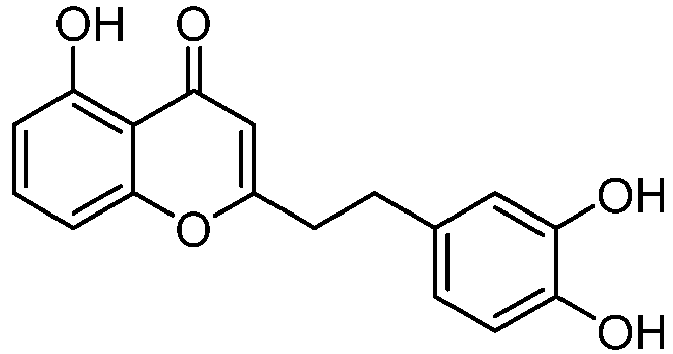
Prior art document "Flavonols as potential antiviral drugs targeting SARS-CoV-2 proteases (3CLpro and PLpro), spike protein, RNA-dependent RNA polymerase (RdRp) and angiotensin-converting enzyme II receptor (ACE2)." to Mouffouk et al. (European Journal of Pharmacology 891 (2021) 173759) describes the antiviral activity of natural compounds of plant origin, in particular of flavonols. Such compounds are shown in Figure 1.
-
-
The prior art document " In silico fight against novel coronavirus by finding chromone derivatives as inhibitor of coronavirus main proteases enzyme." to Sepay et al. (Struct Chem 2020 May 13;1-10) describes naturally occurring compounds characterized by the structures shown in Figure 3 capable of blocking the main protease enzyme of SARS-CoV-2 (SARS-CoV-2 Mpro).
Summary of the invention
-
The inventors of the present patent application have surprisingly found that the compounds characterized by the general formula (I) are capable of inhibiting the activity of the RdRp polymerase, which is essential for the virus replication in the host cells, and which can thus be usefully employed for treating viral infections.
-
Such an activity is completely unexpected based on the structure of similar compounds already known to have antiviral activity.
Object of the invention
-
In a first object, the present patent application describes compounds for medical use.
-
According to a particular aspect, such compounds are described for medical use for treating diseases caused by RNA viruses.
-
According to an alternative aspect, such compounds are described for the prevention of diseases caused by RNA viruses.
-
According to a preferred aspect such diseases are caused by RNA viruses of the group comprising: SARS-CoV-2 virus, Hepatitis C virus (HCV), Ebola virus, Zika virus and further viruses: Severe acute respiratory syndrome coronavirus (SARS), Middle east respiratory syndrome coronavirus (MERS), influenza, Orthomyxoviruses, Paramyxoviruses, Hendra and Nipah viruses, Measles, Picornaviruses, Poliomyelitis ("Polio"), Hepatitis A virus (HAV), Rotavirus, Human immunodeficiency virus (HIV), adult Human T-cell lymphotropic virus type 1 (HTLV-1).
-
According to a particularly preferred aspect, such a disease is caused by the RNA virus represented by SARS-CoV-2.
-
In a second object, the present patent application describes pharmaceutical formulations comprising the compounds of the invention.
-
According to a particular aspect, such pharmaceutical formulations are described for medical use for treating diseases caused by RNA viruses.
-
According to a preferred aspect of the present invention such diseases are caused by RNA viruses of the group comprising: SARS-CoV-2 virus, Hepatitis C virus (HCV), Ebola virus, Zika virus and further viruses: Severe acute respiratory syndrome coronavirus (SARS), Middle east respiratory syndrome coronavirus (MERS), influenza, Orthomyxoviruses, Paramyxoviruses, Hendra and Nipah viruses, Measles, Picornaviruses, Poliomyelitis ("Polio"), Hepatitis A virus (HAV), Rotavirus, Human immunodeficiency virus (HIV), adult Human T-cell lymphotropic virus type 1 (HTLV-1).
-
According to a particularly preferred aspect, such a disease is caused by the RNA virus represented by SARS-CoV-2.
-
In a third object the present patent application describes compounds according to general formula (I) and general formulae (Ib) and (Ic).
-
In a fourth object, the present patent application describes a process for preparing the compounds of the invention.
-
In another object, the present patent application describes a method for treating or preventing diseases comprising the administration of a pharmaceutically effective amount of a compound according to the invention.
Brief description of the drawings
-
- Figures 1 to 3 show the structure of compounds known in the art.
- Figures 4 to 10 show schemes 1 to 7, respectively, according to the present patent application.
Detailed description of the invention
-
In a first object, the present patent application describes compounds having the general structures (I), (Ia), (Ib) and (Ic) and the formulae shown in Tables A, B and B' shown below for medical use.
-
According to a particular aspect, such compounds are described for medical use for treating diseases caused by RNA viruses.
-
According to a preferred aspect of the present invention such diseases are caused by RNA viruses of the group comprising: SARS-CoV-2 virus, Hepatitis C virus (HCV), Ebola virus, Zika virus and further viruses: Severe acute respiratory syndrome coronavirus (SARS), Middle east respiratory syndrome coronavirus (MERS), influenza, Orthomyxoviruses, Paramyxoviruses, Hendra and Nipah viruses, Measles, Picornaviruses, Poliomyelitis ("Polio"), Hepatitis A virus (HAV), Rotavirus, Human immunodeficiency virus (HIV), adult Human T-cell lymphotropic virus type 1 (HTLV-1).
-
According to a particularly preferred aspect, such a disease is caused by the RNA virus represented by SARS-CoV-2.
-
According to alternative aspects of the present invention, the compounds described are further intended for medical use in the prevention of diseases caused by RNA viruses.
-
According to a preferred aspect such diseases are caused by RNA viruses of the group comprising: SARS-CoV-2 virus, Hepatitis C virus (HCV), Ebola virus, Zika virus and further viruses: Severe acute respiratory syndrome coronavirus (SARS), Middle east respiratory syndrome coronavirus (MERS), influenza, Orthomyxoviruses, Paramyxoviruses, Hendra and Nipah viruses, Measles, Picornaviruses, Poliomyelitis ("Polio"), Hepatitis A virus (HAV), Rotavirus, Human immunodeficiency virus (HIV), adult Human T-cell lymphotropic virus type 1 (HTLV-1).
-
According to a particularly preferred aspect, such a disease is caused by the RNA virus represented by SARS-CoV-2.
-
For the purposes of the present invention, the medical use in the treatment and prevention described above concerns compounds according to general formula (I):
in which
- R1 can be hydrogen or -OH, -N(R4)R5, -NO2, halogen, C1-4 haloalkyl,
where - R4 and R5 can be independently H, C1-4 alkyl,
- R2 can be hydrogen, C1-4 alkyl, C1-4 haloalkyl, C1-7 alkoxyalkyl and preferably C1-4 alkoxyalkyl, or -O-, -NH-,
- R3 can be H, -OH, or it can be C1-4 alkyl, C1-4 hydroxyalkyl, C1-4 haloalkyl, C1-4 aminoalkyl, C1-4 alkoxyalkyl,
- X1 can be a single bond, X2 or X3.
-
In a first embodiment, in the compounds of general formula (I) for medical use, R
1 is -OH and X
1 is a single bond and the compounds of the invention can thus have general formula (Ia):
-
For the purposes of the present invention, in general formula (Ia) R2 is -O- and R3 is C1-4 alkyl or C1-4 hydroxyalkyl.
-
In a second embodiment, in the compounds of general formula (I) for medical use, R
1 and R
2 are both hydrogen, X
1 is X
2 and the compounds of the invention can thus have general formula (Ib):
- where X2 can be -CH2-, -CH2CH2-, -CH=CH-, -CHR4, -COR5, -NH, -O-, or -OR6, where
- R4 can be C1-4 alkyl, C1-4 haloalkyl, C1-4 alkoxyalkyl, C1-4 aminoalkyl,
- R5 can be -NH-, -O-, -NHR6-, -OR6-,
- R6 can be C2-4 alkyl.
-
For the purposes of the present invention, in general formula (Ib), X2 is preferably selected from -CH2-, -CH2CH2-, -CH=CH-, -CHR4, -COR5 and -OR6, where
R4, R5 and R6 are as defined above.
-
In a third embodiment, in the compounds of general formula (I) for medical use, R
1 and R
2 are both hydrogen, X
1 is X
3 and the compounds of the invention can thus have general formula (Ic):
- where X3 can be -C(O)X4 or -C(O)X4-(CH2)2-7-X5 and preferably - C(O)X4-(CH2)2-4-X5 where
- X4 can be -NH, -O- or -O-C2-4 alkyl,
- X5 can be selected from:
or
- X5 can be -NH-R7, -OR7 or -OC2-4 alkyl-R7 where
- R7 can be -C(O), -C(O)NH or -C(S)NH, -C(O)O-, -C(S)O-.
-
According to an aspect of the present invention, the medical use of the compounds of the following Table A is particularly described:
| Ref | Formula | CAS |
| (5a) | | 87339-67-1 |
| (5b) | | |
| (5c) | | 1052191-74-8 |
| (9a) | | 1453201-09-6 |
| (9b) | | 1428945-02-1 |
| (9c) | | 2832051-00-8 |
| (13a) | | |
| (13b) | | |
| (13c) | | |
| (13d) | | |
| (18) | | 350855-59-3 |
| (20) | | |
| (24a) | | |
| (24b) | | |
| (24c) | | |
| (28) | | |
| (31) | | |
-
In a preferred aspect of the present invention, the medical use of the compounds of the following Table B is described:
| Ref | Formula | CAS |
| (5a) | | 87339-67-1 |
| (5b) | | |
| (5c) | | 1052191-74-8 |
| (9a) | | 1453201-09-6 |
| (9b) | | 1428945-02-1 |
| (9c) | | 2832051-00-8 |
| (13a) | | |
| (13b) | | |
| (18) | | 350855-59-3 |
| (20) | | |
| (24a) | | |
| (24b) | | |
| (24c) | | |
| (28) | | |
| (31) | | |
-
In an even more preferred aspect of the present invention, the medical use of the compounds of the following Table B' is described:
| Ref | Formula | CAS |
| (9a) | | 1453201-09-6 |
| (9b) | | 1428945-02-1 |
| (9c) | | 2832051-00-8 |
| (13a) | | |
| (13b) | | |
| (20) | | |
| (24a) | | |
-
In a second object, the present patent application describes pharmaceutical formulations comprising the compounds of the invention.
-
Such formulations can be administered orally, nasally, subcutaneously or intramuscularly.
-
In particular, such formulations comprise one or more pharmaceutically suitable excipients depending on the route of administration.
-
According to a particular aspect of the invention, the formulations shown above are also described for medical use for treating or preventing diseases caused by RNA viruses.
-
According to a preferred aspect such diseases are caused by RNA viruses of the group comprising: SARS-CoV-2 virus, Hepatitis C virus (HCV), Ebola virus, Zika virus and further viruses: Severe acute respiratory syndrome coronavirus (SARS), Middle east respiratory syndrome coronavirus (MERS), influenza, Orthomyxoviruses, Paramyxoviruses, Hendra and Nipah viruses, Measles, Picornaviruses, Poliomyelitis ("Polio"), Hepatitis A virus (HAV), Rotavirus, Human immunodeficiency virus (HIV), adult Human T-cell lymphotropic virus type 1 (HTLV-1).
-
According to a particularly preferred aspect, such a disease is caused by the RNA virus represented by SARS-CoV-2.
-
In a third object, the present patent application describes the compounds according to general formula (I):
wherein
- R1 can be hydrogen or -OH, -N(R4)R5, -NO2, halogen, C1-4 haloalkyl, where
- R4 and R5 can be independently H or C1-4 alkyl,
- R2 can be hydrogen, C1-4 alkyl, C1-4 haloalkyl, C1-7 alkoxyalkyl and preferably C1-4 alkoxyalkyl, or -O-,-NH-,
- R3 can be H, -OH, or it can be C1-4 alkyl, C1-4 hydroxyalkyl, C1-4 haloalkyl, C1-4 aminoalkyl, C1-4 alkoxyalkyl,
- X1 can be X2 or X3 as described hereinafter.
-
In a first embodiment, in the compounds of general formula (I), with the exclusion of the compound that is not the subject of the present invention, R
1 and R
2 are both hydrogen, X
1 is X
2 and the compounds of the invention can thus have general formula (Ib):
wherein
- X2 can be -CH2-, -CH2-CH2-, -CH=CH-, -CHR4, -COR5, -NH, -O- or -OR6, where
- R4 can be C1-4 alkyl, C1-4 haloalkyl, C1-4 alkoxyalkyl, C1-4 aminoalkyl,
- R5 can be -NH-, -O-, -NHR6-, -OR6-,
- R6 can be C2-4 alkyl.
-
For the purposes of the present invention, in general formula (Ib), X2 is preferably selected from -CH2-, -CH2CH2-, -CH=CH-, -CHR4, -COR5 and -OR6, where
R4, R5 and R6 are as defined above.
-
For the purposes of the present invention, in general formula (Ib), X2 is preferably selected from -CH2-, -CH2CH2-, -CH=CH-, -COR5 and -OR6, where
R5 and R6 are as defined above.
-
In the context of formula (Ib) shown above, the present invention does not relate to the following compound:
| Ref | Formula | CAS |
| (18) | | 350855-59-3 |
-
In a second embodiment, in the compounds of general formula (I), with the exclusion of the compound that is not the subject of the present invention, and R
1 and R
2 are both hydrogen, X
1 is X
3 and the compounds of the invention can thus have general formula (Ic):
wherein
- X3 can be -C(O)X4 or -C(O)X4-(CH2)2-7-X5 and preferably -C(O)X4-(CH2)2-4-X5 where
- X4 can be -NH, -O- or -O-C2-4 alkyl,
- X5 can be selected from:
or
- X5 can be -NH-R7, -OR7 or -OC2-4 alkyl-R7 where
- R7 can be -C(O), -C(O)NH or -C(S)NH, -C(O)O-, -C(S)O-.
-
Preferred compounds according to the present invention are the compounds having the formula shown in the following Table C:
| Ref | Formula |
| (13c) | |
| (13d) | |
| (20) | |
| (24a) | |
| (24b) | |
| (24c) | |
| (28) | |
| (31) | |
-
In accordance with a fourth object of the present patent application, a process for preparing the compounds of the invention is described.
-
In accordance with a first aspect, the compounds of general formula Ia are prepared, in which R2 is different from oxygen.
-
In particular, such a synthesis comprises aldol condensation, oxidative cyclization and removal of the protective group.
-
The conditions of such steps are shown at the beginning of the experimental part ( general procedures 1, 2 and 3).
-
According to Scheme 1 shown in Figure 4, the compounds of formula 5a-c are prepared, the synthesis of which is described in detail in the following examples.
-
In accordance with a second aspect, compounds of general formula Ia are prepared, in which R2 is oxygen.
-
In particular, such a synthesis comprises an alkylation of a suitable 3-hydroxy-chromone and a benzyl deprotection.
-
The conditions of such steps are shown at the beginning of the experimental part (general procedures 4 and 5).
-
According to Scheme 2 shown in Figure 5, the compounds of formula 9a-c are prepared, the synthesis of which is described in detail in the following examples.
-
In accordance with a third aspect, compounds of general formula Ib are prepared in which X2 is -CH2- or -CHR4.
-
In particular, such a synthesis comprises a Claisen condensation and a dehydrative cyclization, and a removal of the protective group.
-
In some cases, the Claisen condensation is preceded by an α-alkylation of the starting ester and subsequent hydrolysis.
-
The conditions of such steps are shown at the beginning of the experimental part (general procedures 6-9 and 3).
-
According to Scheme 3 and Scheme 4 shown in Figure 6 and Figure 7, respectively, the compounds of formula 13a-d are prepared, the synthesis of which is described in detail in the following examples.
-
In accordance with a fourth aspect, compounds of general formula Ib are prepared in which X2 is -CH2-CH2- or -CH=HC-.
-
In particular, such a synthesis comprises a Claisen condensation, a dehydrative cyclization and a deprotection.
-
The conditions of such steps are shown at the beginning of the experimental part ( general procedures 7, 8 and 3).
-
According to Scheme 5 shown in Figure 8, the compounds of formula 18 and 20 are prepared, the synthesis of which is described in detail in the following examples.
-
In accordance with a fifth aspect, compounds of general formula Ic are prepared in which X3 is -C(O)X4 in which X4 is -NH, -O- or -OC2-4 alkyl.
-
According to Scheme 6 shown in Figure 9 the compounds of 24a-c are prepared, the synthesis of which is described in detail in the following examples.
-
In accordance with a sixth aspect, compounds of general formula Ic are prepared in which -C(O)X4-(CH2)2-7-X5.
-
According to Scheme 7 shown in Figure 10 the compounds 28 and 31 are prepared, the synthesis of which is described in detail in the following examples.
-
In another object, the present patent application describes a method for treating diseases comprising administering a pharmaceutically effective amount of a compound or a pharmaceutical formulation according to the invention to a subject in need thereof.
-
For the purposes of the present invention, a subject in need thereof is a subject affected by a disease caused by RNA viruses.
-
According to a preferred aspect such diseases are caused by RNA viruses of the group comprising: SARS-CoV-2 virus, Hepatitis C virus (HCV), Ebola virus, Zika virus and further viruses: Severe acute respiratory syndrome coronavirus (SARS), Middle east respiratory syndrome coronavirus (MERS), influenza, Orthomyxoviruses, Paramyxoviruses, Hendra and Nipah viruses, Measles, Picornaviruses, Poliomyelitis ("Polio"), Hepatitis A virus (HAV), Rotavirus, Human immunodeficiency virus (HIV), adult Human T-cell lymphotropic virus type 1 (HTLV-1).
-
According to a particularly preferred aspect, such a disease is caused by the RNA virus represented by SARS-CoV-2.
-
According to alternative aspects of the present invention, the described method is further intended for the prevention of a disease caused by RNA viruses.
-
According to a preferred aspect such diseases are caused by RNA viruses of the group comprising: SARS-CoV-2 virus, Hepatitis C virus (HCV), Ebola virus, Zika virus and further viruses: Severe acute respiratory syndrome coronavirus (SARS), Middle east respiratory syndrome coronavirus (MERS), influenza, Orthomyxoviruses, Paramyxoviruses, Hendra and Nipah viruses, Measles, Picornaviruses, Poliomyelitis ("Polio"), Hepatitis A virus (HAV), Rotavirus, Human immunodeficiency virus (HIV), adult Human T-cell lymphotropic virus type 1 (HTLV-1).
-
According to a particularly preferred aspect, such a disease is caused by the RNA virus represented by SARS-CoV-2.
Methods
-
All the commercially available reagents and solvents were used as purchased from vendors without further purification. The
intermediates 1a and
1b can be synthesized according to the procedure shown in
European Journal of Medicinal Chemistry 180 (2019) 350-366. The intermediate
1c can be synthesized according to the procedure shown in the
international patent application WO 2017/132928 A1 . Anhydrous solvents were purchased from Sigma-Aldrich. Automated column chromatography purifications were done using a Teledyne ISCO apparatus (CombiFlash
® Rf) with pre-packed silica gel columns of different sizes (from 4 g up to 120 g) and mixtures of increasing polarity of cyclohexane and ethyl acetate (EtOAc) or dichloromethane (DCM) and methanol (MeOH). NMR experiments were run on a Bruker Avance III 400 system (400.13 MHz for 1H, and 100.62 MHz for 13C), equipped with a BBI probe and Z-gradients. Spectra were acquired at 300 K, using deuterated dimethylsulfoxide (DMSO-d
6)or deuterated chloroform (CDCl
3) as solvents. For
1H-NMR, data are shown as follows: chemical shift, multiplicity (s= singlet, d= doublet, dd= double of doublets, ddd= doublet of doublet of doublets, t= triplet, td= triplet of doublets, q= quartet, p= quintet, m= multiplet), coupling constants (Hz) and integration. UPLC/MS analyses were run on a Waters ACQUITY UPLC/MS system consisting of a SQD (single quadrupole detector) mass spectrometer equipped with an electrospray ionization interface and a photodiode array detector. The PDA range was 210-400 nm. The analyses were carried out on a C18 ACQUITY UPLC BEH column (100x2.1 mmID, 1.7 um particle size) with a C18 VanGuard BEH pre-column (5x2.1 mmID, 1.7 um particle size) or on ACQUITY UPLC HSS T3 C
18 column combined again with a C18 VanGuard BEH pre-column (5x2.1 mmID, 1.7 um particle size) . The mobile phase was 10 mM NH
4OAc in H
2O at
pH 5 adjusted with CH
3COOH (A) and 10 mM NH
4OAc in CH
3CN-H
2O (95:5) at pH 5.0 (B). Two types of gradients were applied depending on the analysis, gradient 1 (5% to 100 % mobile phase B in 3 min) or gradient 2 (50% to 100 % mobile phase B in 3 min). Alternatively, analyses were performed on ACQUITY UPLC HSS T3 C
18 column combined again with a VanGuard BEH C18 pre-column (5x2.1 mmID, 1.7 um particle size). In this case, the type of gradient applied is gradient 3 (mobile phase B from 0% to 100%B in 3.0 min). Electrospray ionization in positive and negative mode was applied. ESI was applied in positive and negative mode. All tested compounds showed ≥ 95% purity by UPLC/MS analysis.
General procedures
-
General procedure 1. Aldol condensation (Scheme 1, Figure 4 ) . The appropriate ketone of type 1 (1.0 eq.) and benzaldehyde of type 2 (1.1 eq) were added to a solution of potassium hydroxide (20.0 eq.) in MeOH (0.12 M). The reaction mixture was stirred at room temperature. After complete conversion of starting materials, the reaction mixture was acidified to pH=5 with 1 M HCl and extracted with EtOAc (3x5 mL). Combined organic layers were dried over magnesium sulfate, filtered and concentrated under vacuum. The product was purified by flash chromatography or trituration with EtOH giving the pure intermediate of type 3.
-
General procedure 2. Oxidative cyclization (Scheme 1, Figure 4 ). The appropriate chalcone of type 3 (1 eq.) was dissolved in anhydrous DMSO (0.3 M) and heated at 135°C under argon atmosphere. I2 (0.05 eq.) was added and the reaction mixture was stirred until full conversion of the starting material. After reaction completion, the reaction mixture was cooled to room temperature and sodium thiosulfate 1 N was added to quench iodine. The crude product was filtered, washed with water and purified by flash chromatography giving the pure compound of type 4.
General procedure 3. Demethylation (Schemes 1, 3-7, Figures 4, 6-10) .
-
Method A. The appropriate compound of type 4 (1 eq.) was treated with pyridinium chloride (10 eq.) and the reaction mixture was heated at 190°C under argon atmosphere until total conversion of the starting material. After reaction completion, the reaction mixture was cooled down to room temperature and added with water. The crude product was filtered, washed with water and purified by silica. Method B. The appropriate compound of type 12, 17, 19, 23, 27, 30 (1 eq.) was dissolved in anhydrous DCM (0.05 M) and cooled to 0°C. A 1 M solution of boron tribromide in DCM (1.5 eq for each methoxy group) was added and the reaction mixture was allowed to warm to room temperature and stirred until complete conversion of the starting material under argon. After reaction completion, the reaction was quenched with MeOH and concentrated under reduced pressure. The crude product was redissolved in MeOH, concentrated under vacuum and purified by flash chromatography.
General procedure 4. Alkylation of 3-hydroxy chromone (Scheme 2, Figure 5)
-
K2CO3 (3 eq.) and suitable alkyl bromide (1.5 eq.) were added to a solution of intermediate 7 (1 eq.) in DMF (0.06 M) and the reaction mixture was stirred under argon for three hours at room temperature. After reaction completion, the reaction mixture was poured into water and extracted with ethyl acetate (2x20 mL). The combined organic layer was divided, dried over magnesium sulfate, filtered and concentrated under vacuum, giving a crude product of the compound of type 8, which was used for the next step without purification.
General procedure 5. Benzyl deprotection (Scheme 2, Figure 5)
-
An appropriate benzylated compound was dissolved in a 1:1 mixture MeOH/DCM (0.04 M) under an argon atmosphere. Pd/C (20% w/w) triethylsilane (6 eq. for each benzyl group) were added to the solution. The reaction mixture was stirred at 40°C until complete conversion of the starting material. Then, the reaction mixture was filtered over a bed of celite and concentrated under vacuum. The crude product was raised in ethyl acetate and the organic phase was washed with water, dried over magnesium sulfate, filtered and concentrated under vacuum, and purified by silica.
General procedure 6. Alpha alkylation of esters (Schemes 3-4, Figures 6-7)
-
The starting material methyl-2-(3,4-dimethoxyphenyl)acetate 10a (1.0 eq) is dissolved in anhydrous THF (2 M) at -78°C in an inert argon atmosphere and LiHMDS or LDA base (1.5 eq) was then added to the mixture at the usual temperature. After 40 minutes of stirring to form the desired enolate, the corresponding alkyl iodide (2.0 eq) was added dropwise at -78°C and the mixture thus obtained was allowed to reach room temperature until the starting material had completely disappeared (another 1.5-3 base equivalents and 1 alkyl iodide equivalent were added when starting material was still present after one night) . At the end of the reaction, ice and then 2 M HCl was slowly added up to pH 6. The mixture was then extracted with AcOEt and the obtained organic phases were dried with Na2CO3, the solvent evaporated and the obtained crude was purified on silica to give compounds 10b-d.
General procedure 7. Claisen Condensation (Schemes 3-5 Figures 6-8)
-
Method A. A solution of appropriate ketone (1 eq.) in anhydrous THF (0.3 M) was added to a suspension of 60% NaH dispersion in mineral oil (4 eq.) in anhydrous THF (1.2 M) under argon, followed by the addition of an appropriate ester (2 eq.) at room temperature. The reaction mixture was then reflux-stirred under argon until complete consumption of the starting material. The reaction mixture was quenched by pouring into ice and further acidified up to pH 6 with acq. 2 M HCl and then extracted with EtOAc. The collected organic layers were dried over Na2SO4, filtered, and concentrated under vacuum. The crude product was used as such without further purification.
-
Method B. A solution of appropriate ketone (1.0 eq.) in anhydrous THF (0.12 M) was added to LDA (3.0 eq.) under an inert argon atmosphere at -78°C and the mixture was stirred for 30 minutes at the usual temperature, then another 30 minutes at 0°C to form the corresponding enolate. It was then heated again to -78°C in order to add the corresponding ester (1.0 eq). The addition was performed dropwise over about 15 minutes and the reaction mixture was allowed to slowly come to room temperature. After 24 h the reaction is stopped by slowly adding water and then 2 M HCl up to acidic pH. The crude mixture was extracted with AcOEt, the collected organic phases were dried with Na2SO4, the solvent evaporated and the crude material filtered on silica.
-
Method C. In a closed and septum-sealed vial, the reference carboxylic acid (1.0 eq) was solubilized in anhydrous DCM (0.25 M) and, under inert argon or nitrogen environment, SOCl2 (10.0 eq) was added. The mixture thus obtained was reflux-heated for about one hour. Then the solvent and excess thionyl chloride were evaporated under vacuum in order to obtain the corresponding acid chloride. This is dissolved in the minimum possible amount of anhydrous THF and added dropwise to the preformed enolate solution using the methodology described in method b described above (1.0 eq ketone, 0.12 M anhydrous THF, LDA 3.0 eq). The reaction was stirred overnight and was then stopped by adding H2O and 2 M HCl up to acidic pH. The crude mixture was extracted with AcOEt, the collected organic phases were dried with Na2SO4, the solvent evaporated and the crude material filtered on silica.
General procedure 8. Dehydrating cyclization (Schemes 3-5 Figures 6-8)
-
Method A. An appropriate diketone derived from step 1 (1 eq.) was treated with an 8:1 mixture of MeOH/37% HCl (0.15 M). The reaction mixture was stirred at room temperature until complete consumption of the starting material. Then the solvent was removed under vacuum, the residue was raised with EtOAc and washed with NaHCOs saturated solution. The organic layer was divided, dried over Na2SO4, filtered and concentrated under vacuum. Purification by typical silica gave the pure desired product.
-
Method B. To a solution of the crude material of compounds 11 b-d in CH3COOH (0.12 M), 0.25 mL of conc. H2SO4 per 4.0 mmol of starting material were added and the obtained mixture was heated to 100°C. After disappearance of the starting material, the solvent was evaporated, H2O and AcOEt were added to the obtained residue, the aqueous phase was extracted three times with AcOEt and the combined organic phases were dried with Na2SO4, the solvent evaporated and the obtained crude material was purified on silica.
General procedure 9. Ester hydrolysis (Scheme 4, Figure 7)
-
The corresponding ester was dissolved in a 10:1 mixture of THF/H2O (0.1 M) and LiOH (2.0 eq) was added to the reaction mixture, which was heated at 50°C for 16 h. After the disappearance of the starting material, the mixture was cooled to room temperature and 2 M HCl was slowly added up to acidic pH. The mixture thus obtained was extracted with AcOEt, the combined organic phases were dried with Na2SO4, the solvent evaporated and the obtained crude was cleaned with a filtration on silica.
EXAMPLE 1
Synthesis of 2-(3,4-dihydroxyphenyl)-5,7-dihydroxy-3-methyl-4H-chromen-4-one (compound 5a, Scheme 1).
Step 1. (E)-3-(3,4-dimethoxyphenyl)-1-(2-hydroxy-4,6-dimethoxyphenyl)-2-methylprop-2-en-1-one (compound 3a, Scheme 1).
-
-
The title compound was synthesized following the general procedure 1 described above using 1-(2-hydroxy-4,6-dimethoxyphenyl)propane-1-one 1a (100 mg, 0.48 mmol), 3,4-dimethoxybenzaldehyde 2 (87 mg, 0.53 mmol) and potassium hydroxide (539 mg, 9.6 mmol) in MeOH (5 mL). Purification by silica (elution by gradient from 100 to 80/20 cyclohexane/EtOAc).
-
Characterization: UPLC/MS Rt: 2.12 min (gradient 1), MS (ESI) m/z: 359.0 [M+H]+. [M+H]+ Calculated for C20H23O6: 359.4. 1H-NMR (400 MHz, DMSO-d6): 7.12 (d, J = 1.5 Hz, 1H), 7.00 (s, 2H), 6.98 (s, 1H), 6.11 (d, J = 1.8, 1H), 6.07 (d, J = 1.9 Hz, 1H), 3.78 (s, 3H), 3.76 (s, 3H), 3.73 (s, 3H), 3.66 (s, 3H), 2.08 (s, 3H).
Step 2. Synthesis of 2-(3,4-dimethoxyphenyl)-5,7-dimethoxy-3-methyl-4H-chromen-4-one (compound 4a, Scheme 1).
-
-
The title compound was synthesized following the general procedure 2 described above using intermediate 3a (77 mg, 0.22 mmol) and I2 (2.7 mg, 0.01 mmol) in DMSO (1 mL). Purification by silica (elution by gradient from 15/85 to 50/50 cyclohexane/EtOAc) gave the pure intermediate 4a (59 mg, 77% yield).
-
Characterization: UPLC/MS Rt: 1.96 min (gradient 1), MS (ESI) m/z: 357.0 [M+H]+.[M+H]+ calculated for C20H21O6: 357.1. 1H-NMR (400 MHz, DMSO-d6) δ 7.28 - 7.20 (m, 2H), 7.14 - 7.08 (m, 1H), 6.67 (d, J = 2.3 Hz, 1H), 6.48 (d, J = 2.3 Hz, 1H), 3.87 (s, 3H), 3.86 - 3.80 (m, 9H), 1.96 (s, 3H).
Step 3. Synthesis of 2-(3,4-dihydroxyphenyl)-5,7-dihydroxy-3-methyl-4H-chromen-4-one (compound 5a, Scheme 1).
-
-
The title compound was synthesized following the general procedure 3 Method A described above using intermediate 4a (59 mg, 0.16 mmol) and pyridinium chloride (185 mg, 1.6 mmol). Purification by silica (elution by gradient from 100 to 80:20 DCM/MeOH) gave the pure compound 5a (31 mg, 74% yield).
-
Characterization: UPLC/MS Rt: 1.62 min (gradient 1), MS (ESI) m/z: 301.0 [M+H]+.[M+H]+ Calculated for C16H13O6: 300.3. 1H-NMR (400 MHz, DMSO-d6) δ 13.07 (s, 1H), 7.08 (d, J = 2.1 Hz, 1H) 7.01 (dd, J = 8.3, 2.1 Hz, 1H), 6.88 (d, J = 8.3 Hz, 1H), 6.29 (bs, 1H), 6.15 (bs, 1H), 2.01 (s, 3H).
EXAMPLE 2
Synthesis of 2-(3,4-dihydroxyphenyl)-5,7-dihydroxy-3-propyl-4H-chromen-4-one (compound 5b, Scheme 1).
Step 1. Synthesis of (E)-2-(3,4-dimethoxybenzylidene)-1-(2-hydroxy-4,6-dimethoxyphenyl)pentane-1-one (Intermediate 3b, Scheme 1)
-
-
The title compound was synthesized following the general procedure 1 described above using 1-(2-hydroxy-4,6-dimethoxyphenyl)pentane-1-one 1b (105 mg, 0.60 mmol), 3,4-dimethoxybenzaldehyde 2 (101 mg, 0.66 mmol) and potassium hydroxide (675 mg, 12 mmol) in MeOH (5 mL). Purification by silica (elution by gradient from 100 to 70/30 cyclohexane/EtOAc) gave the pure intermediate 3b (116 mg, 50% yield).
-
Characterization: UPLC/MS Rt: 2.40 min (gradient 1), MS (ESI) m/z: 387.2 [M+H]+. [M+H]+ Calculated for C22H27O6: 387.2. 1H-NMR (400 MHz, DMSO-d6) δ 9.70 (s, 1H), 7.04 (s, 1H), 7.01 (d, J = 8.1 Hz, 1H), 6.97 - 6.89 (m, 2H), 6.12 (d, J = 2.1 Hz, 1H), 6.07 (d, J = 2.1 Hz, 1H), 3.78 (s, 3H), 3.76 (s, 3H), 3.74 (s, 3H), 3.65 (s, 3H), 1.57 - 1.44 (m, 2H), 1.17 (t, J = 7.1 Hz, 2H), 0.96 (t, J = 7.3 Hz, 3H).
Step 2. Synthesis of 2-(3,4-dimethoxyphenyl)-5,7-dimethoxy-3-propyl-4H-chromen-4-one (Intermediate 4b, Scheme 1).
-
-
The title compound was synthesized following the general procedure 2 described above using intermediate 3b (116 mg, 0.3 mmol) and I2 (4 mg, 0.01 mmol) in DMSO (1 mL). Purification by silica (elution by gradient from 15/85 to 50/50 cyclohexane/EtOAc) gave the pure intermediate 4b (54 mg, 50% yield).
-
Characterization: UPLC/MS Rt: 2.23 min (gradient 1), MS (ESI) m/z: 385.2 [M+H]+.[M+H]+ Calculated for C22H25O6: 385.2. 1H-NMR (400 MHz, DMSO-d6) δ 7.20 - 7.15 (m, 2H), 7.12 (s, 1H), 6.64 (d, J = 2.3 Hz, 1H), 6.48 (d, J = 2.3 Hz, 1H), 3.85 (s, 3H), 3.84 (s, 3H), 3.83 (s, 3H), 3.81 (s, 3H), 2.38 - 2.29 (m, 2H), 1.53 - 1.39 (m, 2H), 0.82 (t, J = 7.3 Hz, 3H).
Step 3. Synthesis of 2-(3,4-dihydroxyphenyl)-5,7-dihydroxy-3-propyl-4H-chromen-4-one (compound 5b, Scheme 1).
-
-
The title compound was synthesized following the general procedure C Method A described above using intermediate 1b (54 mg, 0.14 mmol) and pyridinium chloride (162 mg, 1.4 mmol). Purification by silica (elution by gradient from 100 to 94:6 DCM/MeOH) gave the pure compound 1 (35 mg, 76% yield).
-
Characterization: UPLC/MS Rt: 1.93 min (gradient 1), MS (ESI) m/z: 329.3 [M+H]+.[M+H]+ Calculated for C18H17O6: 329.1. 1H-NMR (400 MHz, DMSO-d6) δ 13.08 (s, 1H), 7.01 (d, J = 2.1 Hz, 1H) 6.93 (dd, J = 8.2, 2.1 Hz, 1H), 6.88 (d, J = 8.2 Hz, 1H), 6.28 (d, J = 2.1 Hz, 1H), 6.16 (d, J = 2.1 Hz, 1H), 2.44 - 2.35 (m, 2H), 1.56 - 1.42 (m, 2H), 0.84 (t, J = 7.3 Hz, 3H). 13C-NMR (101 MHz, DMSO-d6) δ 182.20, 164.66, 162.78, 161.93, 157.77, 148.25, 145.67, 123.83, 120.86, 118.66, 116.21, 116.02, 103.53, 99.01, 93.77, 27.07, 22.25, 14.53.
EXAMPLE 3
Synthesis of 2-(3,4-dihydroxyphenyl)-5,7-dihydroxy-3-propyl-4H-chromen-4-one (compound 5c, Scheme 1).
Step 1. Synthesis of (E)-2-(3,4-dimethoxybenzylidene)-1-(2-hydroxy-4,6-dimethoxyphenyl)hexane-1-one (intermediate 3c, Scheme 1)
-
-
The title compound was synthesized following the general procedure 1 described above using 1-(2-hydroxy-4,6-dimethoxyphenyl)hexane-1-one 1c (150 mg, 0.6 mmol), 3,4-dimethoxybenzaldehyde 2 (109 mg, 0.66 mmol) and potassium hydroxide (707 mg, 12.6 mmol) in MeOH (7 mL). Purification by silica (elution by gradient from 100 to 70/30 cyclohexane/EtOAc) gave the pure intermediate 3c (81 mg, 35% yield).
-
Characterization: UPLC/MS Rt: 2.50 min (gradient 1), MS (ESI) m/z: 401.0 [M+H]+.[M+H]+ Calculated for C23H28O6: 401.5. 1H-NMR (400 MHz, DMSO-d6) δ 9.70 (s, 1H), 7.06 - 6.97 (m, 2H), 6.94 (d, J = 2.0 Hz, 1H), 6.92 (d, J = 2.3 Hz, 1H), 6.12 (d, J = 2.1 Hz, 1H), 6.07 (d, J = 2.1 Hz, 1H), 3.78 (s, 3H), 3.76 (s, 3H), 3.74 (s, 3H), 3.65 (s, 3H), 2.62 - 2.53 (m, 2H), 1.51 - 1.42 (m, 2H), 1.42 - 1.31 (m, 2H), 0.90 (t, J = 7.2 Hz, 3H).
Step 1. Synthesis of 3-butyl-2-(3,4-dimethoxyphenyl)-5,7-dimethoxy-4H-chromen-4-one (Compound 4c, Scheme 1).
-
-
The title compound was synthesized following the general procedure 2 described above using intermediate 3c (81 mg, 0.2 mmol) and I2 (4 mg, 0.01 mmol) in DMSO (1 mL). Purification by silica (elution by gradient from 15/85 to 50/50 cyclohexane/EtOAc) gave the pure intermediate 4c (48 mg, 61% yield).
-
Characterization: UPLC/MS Rt: 2.38 min (gradient 1), MS (ESI) m/z: 399.0 [M+H]+. [M+H]+ Calculated for C23H27O6: 399.5. 1H-NMR (400 MHz, DMSO-d6) δ 7.18 - 7.15 (m, 2H), 7.11 (d, J = 8.8 Hz, 1H), 6.64 (d, J = 2.3 Hz, 1H), 6.48 (d, J = 2.3 Hz, 1H), 3.86 (s, 3H), 3.83 (s, 3H), 3.82 (s, 3H), 3.81 (s, 3H), 2.42 - 2.30 (m, 2H), 1.42 (p, J = 7.3 Hz, 2H), 1.23 (sextet, J = 7.3 Hz, 2H), 0.81 (t, J = 7.3 Hz, 3H) .
Synthesis of 2-(3,4-dihydroxyphenyl)-5,7-dihydroxy-3-propyl-4H-chromen-4-one (compound 5c, Scheme 1).
-
-
The title compound was synthesized following the general procedure 3 Method A described above using intermediate 4c (48 mg, 0.12 mmol) and pyridinium chloride (139 mg, 1.2 mmol). Purification by silica (elution by gradient from 100 to 94:6 DCM/MeOH) gave the pure compound 5c (10 mg, 30% yield).
-
Characterization: UPLC/MS Rt: 2.07 min (gradient 1), MS (ESI) m/z: [M+H]+. [M+H]+ Calculated for C19H19O6: 343.4. 1H-NMR (400 MHz, DMSO-d6) δ 13.05 (s, 1H), 7.01 (d, J = 2.0 Hz, 1H), 6.92 (dd, J = 8.2, 2.0 Hz, 1H), 6.87 (d, J = 8.2, Hz, 1H), 6.25 (d, J = 2.0 Hz, 1H), 6.14(d, J = 2.0 Hz, 1H), 2.44 - 2.40 (m, 2H), 1.49 - 1.42 (m, 2H), 1.25 (m, 2H), 0.82 (t, J = 7.2 Hz, 3H).
EXAMPLE 4
Synthesis of 3-butoxy-2-(3,4-dihydroxyphenyl)-5,7-dihydroxy-4H-chromen-4-one (compound 9a, Scheme 2).
Step 1. Synthesis of 7-(benzyloxy)-2-(3,4-bis(benzyloxy)phenyl)-5-hydroxy-3-(((2S,3R,4S,5S,6R)-3,4,5-trihydroxy-6-((((2R,3R,4R,5R,6S)-3,4,5-trihydroxy-6-methyltetrahydro-2H-pyran-2-yl)oxy)methyl)tetrahydro-2H-pyran-2-yl)oxy)-4H-chromen-4-one (compound 6, Scheme 2).
-
-
To a solution of rutin (2000 mg, 2.96 mmol) in DMF (20 mL) K2CO3 (1716 mg, 12.44 mmol) and benzoyl bromide (2.8 mL, 23.68 mmol) were added. The reaction mixture was stirred overnight at room temperature. Then it was diluted with EtOAc (60 mL). The organic phase was divided, washed with water (2x50 mL), dried over magnesium sulfate, filtered and concentrated under vacuum giving the crude product 6, which was used without further purification for the next step (2000 mg).
-
Characterization: UPLC/MS Rt: 2.44 min (gradient 1), MS (ESI) m/z: 881.3 [M+H]+. [M+H]+ Calculated for C48H49O16: 883.3.
Step 2. Synthesis of 7-(benzyloxy)-2-(3,4-bis(benzyloxy)phenyl)-3,5-dihydroxy-4H-chromen-4-one (compound 7, Scheme 2).
-
-
Intermediate 6 (2000 mg, 2.27 mmol) was dissolved in ethanol (14 mL) to which 37% HCl (2 mL) was added. The reaction mixture was refluxed for 120 minutes. After complete conversion of the starting material, the reaction mixture was cooled to room temperature and filtered. The precipitate was washed with water (5 mL) and cold MeOH (5 mL), giving the pure product 7 (1394 mg, yield: 82% in the two steps).
-
Characterization: UPLC/MS Rt: 2.55 min (gradient 2), MS (ESI) m/z: 573.2 [M+H]+. [M+H]+ Calculated for C36H29O7: 573.2. 1H-NMR (400 MHz, DMSO-d6) δ 11.70 (s, 1H), 7.85 (d, J = 2.1 Hz, 1H), 7.77 (dd, J = 8.5, 2.0 Hz, 1H), 7.54 - 7.29 (m, 15H), 7.04 (d, J = 8.7 Hz, 1H), 6.52 (d, J = 2.2 Hz, 1H), 6.45 (d, J = 2.2 Hz, 1H), 5.25 (s, 4H), 5.15 (s, 2H).
Step 3. Synthesis of 7-(benzyloxy)-2-(3,4-bis(benzyloxy)phenyl)-3-butoxy-5-hydroxy-4H-chromen-4-one (compound 8a, Scheme 2)
-
Compound 8a was prepared following the general procedure 4 using: K2CO3 (207 mg, 3 mmol) and 4-bromobutane (0.07 mL, 0.7 mmol) were added to a solution of intermediate 7 (300 mg, 0.50 mmol) in DMF (8 mL). The crude product of compound 8a was used as such without further purification.
-
Characterization: UPLC/MS Rt: 2.07 min (gradient 2), no ionization was detected.
Step 4. Synthesis of 3-butoxy-2-(3,4-dihydroxyphenyl)-5,7-dihydroxy-4H-chromen-4-one (compound 9a, Scheme 2).
-
-
Compound 9a was prepared following the general procedure 5 using: the crude product of compound 8a (0.60 mmol), Pd/C (50 mg), Et3SiH (2.0 mL, 10 mmol) in a 1:1 mixture of MeOH/DCM (15 mL). Purification by silica (elution by gradient from 100 to 50/50 Cyclohexane/EtOAc) gave the pure compound 9 (110 mg, 62% yield in two steps). Characterization: Rt: 1.40 min (gradient 1), MS (ESI) m/z: 359.1 [M+H]+.[M+H]+ Calculated for C19H19O7: 359.1.
-
1H-NMR (400 MHz, DMSO-d6) δ 12.74 (s, 1H), 7.52 (d, J = 2.2 Hz, 1H), 7.44 (dd, J = 8.4, 2.2 Hz, 1H), 6.88 (d, J = 8.4 Hz, 1H), 6.44 - 6.36 (m, 1H), 6.20 - 6.15 (m, 1H), 3.92 (t, J = 6.6 Hz, 2H), 1.68 - 1.56 (m, 2H), 1.44 - 1.30 (m, 2H), 0.86 (t, J = 7.4 Hz, 3H).
EXAMPLE 5
Synthesis of 2-(3,4-dihydroxyphenyl)-5,7-dihydroxy-3-(2-hydroxyethoxy)-4H-chromen-4-one (compound 9b, Scheme 2).
-
Steps 1 and 2 of Example 4 are repeated and the following further steps are carried out:
Step 3. Synthesis of 7-(benzyloxy)-2-(3,4-bis(benzyloxy)phenyl)-5-hydroxy-3-(2-hydroxyethoxy)-4H-chromen-4-one (compound 8b).
-
-
The compound 8b was prepared following the general procedure 4 using: K2CO3 (124 mg, 0.9 mmol) and 2-bromoethanol (0.03 mL, 0.45 mmol) and intermediate 7 (200 mg, 0.30 mmol) in DMF (5 mL). The crude product of compound 8b was used as such without further purification.
-
Characterization: UPLC/MS Rt: 0.58 min (gradient 2), MS (ESI) m/z: 615.4 [M - H]-. [M - H]-Calculated for C38H31O8: 615.7.
Step 4. Synthesis of 2-(3,4-dihydroxyphenyl)-5,7-dihydroxy-3-(2-hydroxyethoxy)-4H-chromen-4-one (compound 9b, Scheme 2)
-
-
Compound 9b was prepared following the general procedure 5 using: the crude product of compound 8b (0.30 mmol), Pd/C (25 mg), Et3SiH (1.2 mL, 6 mmol) in a 1:1 mixture of MeOH/DCM (8 mL). Purification by silica (elution by gradient from 100 to 30/70 Cyclohexane/EtOAc) gave the pure compound 9b (33 mg, 15% yield in two steps). Characterization: Rt: 1.40 min (gradient 1), MS (ESI) m/z: 345.1 [M - H]-. [M - H]- Calculated for C17H13O8: 345.3.
-
1H-NMR (400 MHz, DMSO-d6) δ 12.68 (s, 1H), 7.57 (dd, J = 9.5, 2.2 Hz, 1H), 7.56 (s, 1H), 6.86 (d, J = 8.2 Hz, 1H), 6.36 (d, J = 2.1 Hz, 1H), 6.15 (d, J = 2.1 Hz, 1H), 3.99 (t, J = 5.3 Hz, 2H), 3.65 (t, J = 5.3 Hz, 2H).
EXAMPLE 6
Synthesis of 2-(3,4-dihydroxyphenyl)-5,7-dihydroxy-3-(3-hydroxypropoxy)-4H-chromen-4-one (compound 9c, Scheme 2)
-
Steps 1 and 2 of Example 4 are repeated and the following further steps are carried out:
Step 3. Synthesis of 7-(benzyloxy)-2-(3,4-bis(benzyloxy)phenyl)-5-hydroxy-3-(3-hydroxypropoxy)-4H-chromen-4-one (compound 8c, Scheme 2) .
-
-
Compound 8c was prepared following the general procedure 4 using: K2CO3 (248 mg, 0.18 mmol), 3-bromo-1-propanol (0.14 mL, 0.9 mmol), and intermediate 7 (350 mg, 0.60 mmol) in DMF (10 mL). The crude product of intermediate 8c was used as such without further purification.
-
Characterization: UPLC/MS Rt: 2.40 min (gradient 2), MS (ESI) m/z: 631.2 [M+H]+.[M+H]+ Calculated: 631.2 for C41H37O8.
Step 4. Synthesis of 2-(3,4-dihydroxyphenyl)-5,7-dihydroxy-3-(3-hydroxypropoxy)-4H-chromen-4-one (compound 9c, Scheme 2).
-
-
Compound 9c was prepared following the general procedure 5 using: compound 8c (365 mg, 0.58 mmol), Pd/C (72 mg), Et3SiH (2.2 mL, 10.5 mmol) in a 1:1 mixture of MeOH/DCM (14 mL). Purification by silica (elution by gradient from 100 to 40/60 Cyclohexane/EtOAc) gave the pure compound 9c (33 mg, 15% yield in two steps). Characterization: Rt: 1.40 min (gradient 1), MS (ESI) m/z: 361.1 [M+H]+.[M+H]+ Calculated for C19H19O7: 361.1.
-
1H-NMR (400 MHz, DMSO-d6) δ 12.72 (s, 1H), 7.53 (d, J = 2.2 Hz, 1H), 7.46 (dd, J = 8.4, 2.2 Hz, 1H), 6.89 (d, J = 8.4 Hz, 1H), 6.39 (d, J = 2.1 Hz, 1H), 6.18 (d, J = 2.1 Hz, 1H), 4.01 (t, J = 6.7 Hz, 2H), 3.49 (t, J = 6.4 Hz, 2H), 1.81 (p, J = 6.5 Hz, 2H). 13C-NMR (101 MHz, DMSO-d6) δ 178.04, 164.12, 161.29, 156.37, 155.95, 148.62, 145.18, 136.75, 120.96, 120.78, 115.64, 115.51, 104.17, 98.54, 93.57, 69.72, 57.71, 32.91.
EXAMPLE 7
Synthesis of 2-(3,4-dihydroxybenzyl)-5-hydroxy-4H-chromen-4-one (compound 13a, Scheme 3)
Step 1: Synthesis of 4-(3,4-dimethoxyphenyl)-1-(2-hydroxy-6-methoxyphenyl)butane-1,3-dione (compound 11a, Scheme 3).
-
-
Compound 11a was prepared following the general procedure 7 method A using: 6'-hydroxy-2'-methoxyacetophenone 10a (200 mg, 1.2 mmol), ethyl 2-(3,4-dimethoxyphenyl)acetate (538 mg, 2.4 mmol), a 60% NaH dispersion in mineral oil (192 mg, 4.8 mmol) in anhydrous THF (6 mL). The crude product was used as such without further purification. Characterization: UPLC/MS Rt: 1.85 min (gradient 1); MS (ESI) m/z: 345.0 [M+H]+, [M+H]+ Calculated for C19H21O6: 345.4.
Step 2: Synthesis of 2-(3,4-dimethoxybenzyl)-5-methoxy-4H-chromen-4-one (compound 12a, Scheme 3).
-
-
Compound 11 was prepared following the general procedure 7 using: crude product 11a (412 mg), 37% HCl (1 mL) in MeOH (7 mL). The reaction mixture was stirred at room temperature for 20 hours. Purification by silica (elution by gradient from 100:0 to 50:50 dichloromethane/EtOAc) gave the pure title compound 12a as a white powder (145 mg, 37% yield in 2 steps). Characterization: UPLC/MS Rt: 1.80 min (gradient 1), MS (ESI) m/z 327.1, [M+H]+. [M+H]+ calculated for C19H19O5: 327.3. 1H NMR (400 MHz, CDCl3) δ 7.50 (t, J = 8.41 Hz, 1H), 6.96 (d, J = 8.35 Hz, 1H), 6.83 (bs, 2H), 6.79-6.77 (m, 2H), 6.06 (s, 1H), 3.95 (s, 3H), 3.97 (s, 3H), 3.86 (s, 3H), 3.48 (s, 2H).
Step 3: Synthesis of 2-(3,4-dihydroxybenzyl)-5-hydroxy-4H-chromen-4-one (compound 13a, Scheme 3).
-
-
Compound 13a was prepared according to general procedure C method B using: intermediate 12a (150 mg, 0.46 mmol), BBrs (1 M in DCM) (2.1 mL, 2.06 mmol) in anhydrous CH2Cl2 (6 mL). The crude product was purified by flash chromatography on silica gel (elution by gradient from 100:0 to 90:10 dichloromethane/EtOAc) to give product 13a (120 mg, 92% yield). Characterization: UPLC/MS Rt: 1.77 min (gradient 1), MS (ESI) m/z 285.0, [M+H]+. [M+H]+ calculated for C16H13O5: 284.3. 1H NMR (400 MHz, DMSO-d6) δ 12.60 (s, 1H), 8.81 (s, 1H), 7.61 (t, J = 8.4 Hz, 1H), 6.99 (dd, J= 8.5, 0.9 Hz, 1H), 6.78 (dd, J = 8.3, 0.9 Hz, 1H), 6.72 (d, J = 2.2 Hz, 1H), 6.70 (d, J = 8.0 Hz, 1H), 6.60 (dd, J= 8.0, 2.1 Hz, 1H), 6.24 (s, 1H), 3.85 (s, 2H) .
Example 8
Synthesis of 2-(1-(3,4-dihydroxyphenyl)ethyl)-5-hydroxy-4H-chromen-4-one (compound 13b, Scheme 3)
Step 1: Synthesis of methyl-2-(3,4-dimethoxyphenyl)propanoate (compound 10b, Scheme 3)
-
-
Compound 10b was prepared according to general procedure 6 using: 10a (400 mg, 1.9 mmol), LiHMDS (540 µL, 2.85 mmol), iodomethane (260 µL, 3.8 mmol), anhydrous THF (1.0 mL). The crude material was purified by flash chromatography on silica gel (elution by gradient from 100:0 to 75:25 cyclohexane/AcOEt) to obtain product 10b (306 mg, 72% yield). Characterization: UPLC/MS Rt: 1.74 min (gradient 1), MS (ESI) m/z 225.1, [M+H]+. [M+H]+ calculated for C12H17O4: 225.1. 1H NMR (400 MHz, DMSO-d6) δ 6.89 (d, J = 8.2 Hz, 1H), 6.85 (d, J = 2.1 Hz, 1H), 6.77 (dd, J = 8.2, 2.1 Hz, 1H), 3.76 - 3.68 (m, 7H), 3.57 (s, 3H), 1.36 (d, J = 7.1 Hz, 3H).
Step 2: Synthesis of 4-(3,4-dimethoxyphenyl)-1-(2-hydroxy-6-methoxyphenyl)pentane-1,3-dione (compound 11b, Scheme 3)
-
Compound 11b was prepared following the general procedure 7 method B using: 1-(2-hydroxy-6-methoxyphenyl)ethane-1-one (56 mg, 0.34 mmol), 10b (77 mg, 0.348 mmol), LDA (0.51 µL, 1.02 mmol) in anhydrous THF (2.8 mL). The crude product was filtered on silica (elution by gradient 90:10 to 70:30 cyclohexane/AcOEt) to remove much more polar and/or apolar impurities and obtain a cleaner crude material for use in the next step. Characterization: UPLC/MS Rt: 2.02 min (gradient 1); MS (ESI) m/z: 359.1 [M+H]+, [M+H]+ Calculated for C20H23O6: 359.1.
Step 3: Synthesis of 2-(1-(3,4-dimethoxyphenyl)ethyl)-5-methoxy-4H-chromen-4-one (compound 12b, Scheme 3)
-
-
Compound 12b was prepared according to general procedure 8 method B using: crude material from the previous step (34 mg, 0.095 mmol), CH3COOH (0.45 mL), H2SO4 (2 drops). The new crude material was purified by flash chromatography on silica gel (elution by gradient from 60:40 to 0:100 cyclohexane/AcOEt) to obtain product 12b (28 mg, with overall yield of the 2 steps of 24%). Characterization: 1H NMR (400 MHz, DMSO-d6) δ 7.61 (t, J = 8.4 Hz, 1H), 7.03 (d, J = 8.4 Hz, 1H), 6.99 - 6.85 (m, 4H), 6.06 (s, 1H), 4.06 - 3.97 (m, 1H), 3.82 (s, 3H), 3.74 (s, 3H), 3.72 (s, 3H), 1.54 (d, J = 7.2 Hz, 3H).
Step 4: Synthesis of 2-(1-(3,4-dihydroxyphenyl)ethyl)-5-hydroxy-4H-chromen-4-one (compound 13b, Scheme 4)
-
-
Compound 13b was prepared according to general procedure 3 method B using: intermediate 12b (28 mg, 0.082 mmol), BBrs (1 M in DCM) (0.37 mL, 0.37 mmol) in anhydrous CH2Cl2 (3.1 mL). The crude product was purified by flash chromatography on silica gel (elution by gradient from 100:0 to 98:2 dichloromethane/MeOH) to give product 13b (19 mg, 78% yield). Characterization: UPLC/MS Rt: 1.93 min (gradient 1), MS (ESI) m/z 297.2, [M-H]-; 299.0, [M-H]+. [M-H]+ calculated for C17H14O5: 299.1.0. 1H NMR (400 MHz, DMSO-d6) δ 7.61 (t, J = 8.4 Hz, 1H), 6.99 (dd, J = 8.5, 0.9 Hz, 1H), 6.78 (d, J = 7.9 Hz, 1H), 6.74 (d, J = 2.2 Hz, 1H), 6.69 (d, J = 8.1 Hz, 1H), 6.63 (dd, J = 8.1, 2.1 Hz, 1H), 6.33 (s, 1H), 4.01 (q, J = 7.2 Hz, 1H), 1.53 (d, J = 7.1 Hz, 3H) .
Example 9
Synthesis of 2-(1-(3,4-dihydroxyphenyl)pentyl)-5-hydroxy-4H-chromen-4-one (compound 13c, Scheme 4)
Step 1: Synthesis of methyl-2-(3,4-dimethoxyphenyl)hexanoate (compound 10c, Scheme 4)
-
-
Compound 10c was prepared according to general procedure 6 using: 10a (300 mg, 1.43 mmol), LiHMDS (400 µL, 2.14 mmol), 1-iodobutane (230 µL, 2.85 mmol), anhydrous THF (0.71 mL). The crude material was purified by flash chromatography on silica gel (elution by gradient from 100:0 to 85:15 cyclohexane/AcOEt) to obtain product 10c (228 mg, 60% yield). Characterization: UPLC/MS Rt: 2.27 min (gradient 1), MS (ESI) m/z 267.1, [M+H]+. [M+H]+ calculated for C15H23O4: 267.2. 1H NMR (400 MHz, DMSO-d6) δ 6.89 (d, J = 8.2 Hz, 1H), 6.85 (d, J = 2.0 Hz, 1H), 6.78 (dd, J = 8.2, 2.0 Hz, 1H), 3.73 (s, 3H), 3.72 (s, 3H), 3.57 (s, 3H), 3.52 (t, J = 7.7 Hz, 1H), 1.99 - 1.85 (m, 1H), 1.71 - 1.58 (m, 1H), 1.33 - 1.06 (m, 4H), 0.82 (t, J = 7.2 Hz, 3H).
Step 2: Synthesis of 2-(3,4-dimethoxyphenyl)hexanoic acid (compound 14c, Scheme 4)
-
-
Compound 14c was prepared according to general procedure 9 using: 10c (330 mg, 1.03 mmol), LiOH (49 mg, 2.06 mmol), THF (9.3 mL), H2O (1.0 mL). The crude material was purified by flash chromatography on silica gel (elution by gradient from 70:30 to 30:70 cyclohexane/DCM and then from 50:50 to 0:100 DCM/AcOEt) to obtain product 14c (234 mg, 90% yield). Characterization: UPLC/MS Rt: 1.85 min (gradient 1), [MS (ESI) m/z 251.2, [M-H]-,253.1, [M+H]+. [M+H]+ calculated for C14H21O4: 253.1. 1H NMR (400 MHz, DMSO-d6) δ 6.88 (d, J = 8.3 Hz, 1H), 6.86 (d, J = 2.1 Hz, 1H), 6.79 (dd, J = 8.2, 2.1 Hz, 1H), 3.72 (s, 3H), 3.72 (s, 3H), 1.97 - 1.83 (m, 1H), 1.66 - 1.53 (m, 1H), 1.35 - 1.06 (m, 4H), 0.83 (t, J = 7.2 Hz, 3H).
Step 3: Synthesis of -(3,4-dimethoxyphenyl)-1-(2-hydroxy-6-methoxyphenyl)octane-1,3-dione (compound 11c, Scheme 4)
-
-
Compound 11c was prepared following the general procedure 7 method C: using 1-(2-hydroxy-6-methoxyphenyl)ethane-1-one (60 mg, 0.36 mmol), LDA (0.54 mL, 1.08 mmol) in anhydrous THF (3 mL) to obtain the enolate to which the freshly prepared acyl chloride using 14c (100 mg, 0.396 mmol), SOCl2 (290 µL, 3.96 mmol) in anhydrous DCM (1.5 mL) was added. The crude product was filtered on silica (elution by gradient from 100:0 to 50:50 cyclohexane/AcOEt) to remove much more polar and/or apolar impurities and obtain a cleaner crude material to be used in the next step. Characterization: UPLC/MS Rt: 1.67 min (gradient 2); MS (ESI) m/z: 399.2 [M-H]-; 401.1 [M+H]+, [M+H]+ Calculated for C23H29O6: 401.2.
Step 4: Synthesis of 2-(1-(3,4-dimethoxyphenyl)pentyl)-5-methoxy-4H-chromen-4-one (compound 12c, Scheme 4)
-
Compound 12c was prepared according to
general procedure 8 method B using: intermediate
11c (65 mg, 0.15 mmol), CH
3COOH (0.5 mL), H
2SO
4 (2 drops). The crude material was purified by flash chromatography on silica gel (elution by gradient 90:10 to 0:100 cyclohexane/AcOEt) to obtain
product 12c (40 mg, 29% 2-step overall yield).
Characterization: UPLC/MS Rt: 1.21 min (gradient 2), MS (ESI) m/z 383.1, [M+H]
+. [M+H]
+ calculated for C
23H
27O
5: 383.2.
1H NMR (400 MHz, DMSO-d
6) δ 7.61 (t, J = 8.4 Hz, 1H), 7.08 (dd, J = 8.5, 0.9 Hz, 1H), 6.99 (d, J = 1.6 Hz, 1H), 6.95 - 6.88 (m, 3H), 6.13 (s, 1H), 3.84 - 3.77 (m, 4H), 3.75 (s, 3H), 3.72 (s, 3H), 2.13 - 2.01 (m, 1H), 1.96 - 1.84 (m, 1H), 1.38 - 1.26 (m, 2H), 1.26 - 1.15 (m, 2H), 0.84 (t, J = 7.2 Hz, 3H).
Step 5: Synthesis of 2-(1-(3,4-dihydroxyphenyl)pentyl)-5-hydroxy-4H-chromen-4-one (compound 13c, Scheme 4)
-
Compound 13c was prepared according to general procedure 3 method B using: intermediate 12c (35 mg, 0.092 mmol), BBrs (1 M in DCM) (0.28 mL, 0.28 mmol) in anhydrous CH2Cl2 (1.9 mL). The crude product was purified by flash chromatography on silica gel (elution by gradient from 100:0 to 98:2 dichloromethane/MeOH) to give product 13c (29 mg, 92% yield). Characterization: UPLC/MS Rt: 1.21 min (gradient 2), MS (ESI) m/z 339.2, [M-H]-; 341.1, [M+H]+. [M-H]+ calculated for C20H21O5: 341.1. 1H NMR (400 MHz, DMSO-d6) δ 12.59 (s, 1H), 8.88 (s, 2H), 7.61 (t, J = 8.3 Hz, 1H), 7.01 (dd, J = 8.5, 0.9 Hz, 1H), 6.79 - 6.74 (m, 2H), 6.71 - 6.64 (m, 2H), 6.39 (s, 1H), 3.80 (t, J = 7.8 Hz, 1H), 2.11 - 1.97 (m, 1H), 1.93 - 1.80 (m, 1H), 1.37 - 1.26 (m, 2H), 1.25 - 1.14 (m, 2H), 0.83 (t, J = 7.2 Hz, 3H).
Example 10
Synthesis of 2-(1-(3,4-dihydroxyphenyl)-5,5,5-trifluoropentyl)-5-hydroxy-4H-chromen-4-one (compound 13d, Scheme 4)
Step 1: Synthesis of methyl-2-(3,4-dimethoxyphenyl)-6,6,6-trifluorohexanoate (compound 10d, Scheme 4)
-
-
Compound 10d was prepared according to general procedure 6 using: 10a (400 mg, 1.9 mmol), LDA (1.4 mL, 2.85 mmol), 1,1,1-trifluoro-4-iodobutane (270 µL, 2.09 mmol), anhydrous THF (1.0 mL). The crude material was purified by flash chromatography on silica gel (elution by gradient from 100:0 to 80:20 cyclohexane/AcOEt) to obtain product 10d (339 mg, 55% yield). Characterization: UPLC/MS Rt: 2.35 min (gradient 2), [MS (ESI) m/z 321.1, [M+H]+. [M+H]+ calculated for C15H20F3O4: 321.1. 1H NMR (400 MHz, DMSO-d6) δ 6.90 (d, J = 8.3 Hz, 1H), 6.86 (d, J = 2.0 Hz, 1H), 6.79 (dd, J = 8.2, 2.0 Hz, 1H), 3.73 (s, 3H), 3.72 (s, 3H), 3.64 - 3.56 (m, 4H), 2.32 - 2.16 (m, 2H), 2.05 - 1.93 (m, 1H), 1.81 - 1.70 (m, 1H), 1.46 - 1.27 (m, 2H).
Step 2 : Synthesis of 2-(3,4-dimethoxyphenyl)-6,6,6-trifluorohexanoic acid (compound 14d, Scheme 4)
-
Compound 14d was prepared according to general procedure 9 using: 10d (330 mg, 1.03 mmol), LiOH (49 mg, 2.06 mmol), THF (9.3 mL), H2O (1.0 mL) . The crude material was purified by flash chromatography on silica gel (elution by gradient from 70:30 to 30:70 cyclohexane/DCM and then from 50:50 to 0:100 DCM/AcOEt) to obtain product 14d (278 mg, 88% yield). Characterization: 1H NMR (400 MHz, DMSO-d6) δ 6.90 (d, J = 8.3 Hz, 1H), 6.87 (d, J = 2.0 Hz, 1H), 6.80 (dd, J = 8.2, 2.1 Hz, 1H), 3.73 (s, 3H), 3.72 (s, 3H), 3.47 (t, J = 7.7 Hz, 1H), 2.31 - 2.16 (m, 2H), 2.05 - 1.90 (m, 1H), 1.76 - 1.65 (m, 1H), 1.49 - 1.30 (m, 2H).
Step 3: Synthesis of 4-(3,4-dimethoxyphenyl)-8,8,8-trifluoro-1-(2-hydroxy-6-methoxyphenyl)octane-1,3-dione (compound 11d, Scheme 4)
-
-
Compound 11d was prepared following the general procedure 7 method C using: 1-(2-hydroxy-6-methoxyphenyl)ethane-1-one (50 mg, 0.30 mmol), LDA (0.45 mL, 0.90 mmol) in anhydrous THF (4.9 mL) to obtain the enolate to which the freshly prepared acyl chloride using 14d (138 mg, 0.45 mmol), SOCl2 (330 µL, 4.5 mmol) in anhydrous DCM (1.7 mL) was added. The crude product was filtered on silica (elution by gradient 100:0 to 80:50 cyclohexane/AcOEt) to remove much more polar and/or apolar impurities and obtain a cleaner crude material for use in the next step. Characterization: UPLC/MS Rt: 1.48 min (gradient 2); MS (ESI) m/z: 453.3 [M-H]-, 455.1 [M+H]+, [M+H]+ Calculated for C23H26F3O6: 455.2.
Step 4: Synthesis of 2-(1-(3,4-dimethoxyphenyl)-5,5,5-trifluoropentyl)-5-methoxy-4H-chromen-4-one (compound 12d, Scheme 4)
-
Compound 12d was prepared according to general procedure 8 method B using: intermediate 11d (70 mg, 0.154 mmol), CH3COOH (0.6 mL), H2SO4 (2 drops). The crude material was purified by flash chromatography on silica gel (elution by gradient 80:20 to 0:100 cyclohexane/AcOEt) to obtain product 12d (32 mg, with overall yield of the 2 steps of 24%). Characterization: UPLC/MS Rt: 1.03 min (gradient 2), MS (ESI) m/z 435.2 [M-H]-; 437.1, [M+H]+. [M+H]+ calculated for C23H24F3O5: 437.2. 1H NMR (400 MHz, DMSO-d6) δ 7.62 (t, J = 8.4 Hz, 1H), 7.06 (dd, J = 8.5, 0.9 Hz, 1H), 7.00 (s, 1H), 6.97 - 6.91 (m, 3H), 6.15 (s, 1H), 3.89 (t, J = 7.8 Hz, 1H), 3.82 (s, 3H), 3.75 (s, 3H), 3.72 (s, 3H), 2.40 - 2.23 (m, 2H), 2.20 - 2.08 (m, 1H), 2.07 - 1.94 (m, 1H) .
Step 5: Synthesis of 2-(1-(3,4-dihydroxyphenyl)-5,5,5-trifluoropentyl)-5-hydroxy-4H-chromen-4-one (compound 13d, Scheme 4)
-
Compound 13d was prepared according to general procedure 3 method B using: intermediate 12d (35 mg, 0.080 mmol), BBrs (1 M in DCM) (0.25 mL, 0.25 mmol) in anhydrous CH2Cl2 (1.4 mL). The crude product was purified by flash chromatography on silica gel (elution by gradient from 100:0 to 99:1 dichloromethane/MeOH) to give product 13d (28 mg, 88% yield). Characterization: UPLC/MS Rt: 1.03 min (gradient 2), MS (ESI) m/z 393.2, [M-H]-; 395.0, [M+H]+ [M+H]+ calculated for C20H18F3O5: 395.1. 1H NMR (400 MHz, DMSO-d6) δ 12.56 (s, 1H), 8.92 (s, 2H), 7.62 (t, J = 8.3 Hz, 1H), 7.00 (dd, J = 8.4, 0.9 Hz, 1H), 6.80 - 6.75 (m, 2H), 6.73 - 6.64 (m, 2H), 6.41 (s, 1H), 3.89 (t, J = 7.8 Hz, 1H), 2.40 - 2.22 (m, 2H), 2.19 - 2.05 (m, 1H), 2.03 - 1.89 (m, 1H), 1.52 - 1.37 (m, 2H).
EXAMPLE 11
Synthesis of (E)-2-(3,4-dihydroxystyryl)-5-hydroxy-4H-chromen-4-one (compound 18, Scheme 5)
Step 1: Synthesis of 1-(2-hydroxy-6-methoxyphenyl)butane-1,3-dione (compound 15).
-
-
Compound 15 was prepared following the general procedure 7 method A using: 1-(2-hydroxy-6-methoxyphenyl)ethane-1-one (1 mL, 8.3 mmol), a 60% NaH dispersion in mineral oil (1328 mg, 33.2 mmol) in a 5:1 mixture of THF/EtOAc (24 mL). The crude product obtained was used as such, without further purification.
-
Characterization: UPLC/MS Rt: 1.42 min (gradient 1), MS (ESI) m/z 285.0, [M-H]-. [M-H]- calculated for C11H11O4: 207.2.
Step 2: Synthesis of 5-methoxy-2-methyl-4H-chromen-4-one (compound 16, Scheme 5).
-
-
Compound 16 was prepared following the general procedure 8 method A using: the crude product of compound 15 (1480 g), 37% HCl (1 mL), in MeOH (20 mL). Purification by typical silica gel (elution by gradient 100:0 to 75:25 cyclohexane/EtOAc) gave the pure title compound 16 as a white powder (1.18 mg, 84% yield in 2 steps). Characterization: UPLC/MS Rt: 1.43 min (gradient 1), MS (ESI) m/z 190.9, [M+H]+. [M+H]+ calculated for C11H11O3: 191.2. 1H NMR (400 MHz, CDCl3) δ 7.51 (t, J = 8.4 Hz, 1H), 6.98 (dd, J = 8.5, 1.0 Hz, 1H), 6.78 (dd, J = 8.4, 1.0 Hz, 1H), 6.10 (d, J = 0.9 Hz, 1H), 3.97 (s, 3H), 2.31 (d, J = 0.7 Hz, 3H).
Step 3: Synthesis of (E)-2-(3,4-dimethoxystyryl)-5-methoxy-4H-chromen-4-one (Compound 17, Scheme 5).
-
-
Sodium ethoxide (55 mg, 0.31 mmol) was added to a solution of compound 16 (100 mg, 0.62 mmol) in EtOH (2 mL), followed by addition of a solution of 3,4-dimethoxybenzaldehyde (110 mg, 0.62 mmol) in EtOH (1 mL). The reaction mixture was stirred at 50°C for 2 hours. After that, acq. HCl (2 M) was added to the reaction mixture to reach pH=4, the resulting precipitate was filtered and washed with water (0.5 mL) and dried under vacuum to give the pure title compound 17 (140 mg, 74% yield) . Characterization: UPLC/MS Rt: 1.97 min (gradient 1), MS (ESI) m/z 339.0, [M+H]+. [M+H]+ calculated for C20H19O5: 338. 4. 1H NMR (400 MHz, CDCl3) δ 7.57 (t, J = 8.4 Hz, 1H), 7.51 (d, J = 16.0 Hz, 1H), 7.15 (dd, J = 8.4, 2.0 Hz, 1H), 7.10 (dd, J = 8.4, 1.0 Hz, 1H), 7.09 (d, J = 2.3 Hz, 1H), 6.90 (d, J = 8.3 Hz, 1H), 6.82 (dd, J = 8.4, 0.9 Hz, 1H), 6.61 (d, J = 16.0 Hz, 1H), 6.38 (s, 1H), 3.99 (s, 3H), 3.97 (s, 3H), 3.93 (s, 3H).
Step 4. Synthesis of (E)-2-(3,4-dihydroxystyryl)-5-hydroxy-4H-chromen-4-one (Compound 18, Scheme 5).
-
-
Compound 18 was prepared following the general procedure 3, method B using: intermediate 17 (89 mg, 0.26 mmol), BBrs (1 M in DCM) (1.2 mL, 1.17 mmol) in anhydrous DCM (5.2 mL). The crude product was purified by silica gel (elution by gradient from 100:0 to 80:20 DCM/EtOAc) to give product 18 (53 mg, 66% yield). Characterization: UPLC/MS Rt: 1.94 min (gradient 1), MS (ESI) m/z 297.0, [M+H]+. [M+H]+ calculated for C17H13O5: 297.3. 1H NMR (400 MHz, CDCl3) δ 12.80 (s, 1H), 7.64 (t, J = 8.4 Hz, 1H), 7.59 (d, J = 16.0 Hz, 1H), 7.15 - 7.09 (m, 2H), 7.05 (dd, J = 8.2, 2.0 Hz, 1H), 6.88 (d, J = 16.0 Hz, 1H), 6.81 (d, J = 8.1 Hz, 1H), 6.78 (d, J = 8.1 Hz, 1H), 6.47 (s, 1H).
EXAMPLE 12
Synthesis of 2-(3,4-dihydroxyphenethyl)-5-hydroxy-4H-chromen-4-one (Compound 20, Scheme 5).
-
Steps 1 to 3 of Example 11 are conducted followed by the further steps below.
Step 4: Synthesis of 2-(3,4-dimethoxyphenethyl)-5-methoxy-4H-chromen-4-one (compound 19).
-
-
Ammonium formate (21 mg, 0.30 mmol) and Pd(OH)2/C (0.015 g, 15% w/w) were added to a solution of intermediate 17 (100 mg, 0.29 mmol) in MeOH (3 mL). The reaction mixture was stirred at 80°C for 4 hours. Thereafter, the mixture was filtered over a pad of celite, increased with MeOH (10 mL), and concentrated under vacuum. Purification by silica (elution by gradient from 100:0 to 60:40 DCM/EtOAc) gave the pure title compound 19 (64mg, 63%). Characterization: UPLC/MS Rt: 1.89 min (gradient 1), MS (ESI) m/z 341.0, [M+H]+. [M+H]+ calculated for C20H21O5: 341.4. 1H NMR (400 MHz, CDCl3) δ 7.52 (dd, J = 8.4, 8.4 Hz, 1H), 6.99 (dd, J = 8.4, 0.9 Hz, 1H), 6.81 - 6.76 (m, 2H), 6.75 - 6.69 (m, 2H), 6.08 (s, 1H), 3.97 (s, 3H), 3.85 (s, 3H), 3.82 (s, 3H), 2.97 (dd, J = 9.4, 7.3 Hz, 2H), 2.84 (dd, J = 9.3, 7.2 Hz, 2H).
Step 5: Synthesis of 2-(3,4-dihydroxyphenethyl)-5-hydroxy-4H-chromen-4-one (compound 20, Scheme 5).
-
-
Compound 20 was prepared following the general procedure 3, method B using: intermediate 19 (64 mg, 0.19 mmol), BBrs (1 M in DCM) (0.86 mL, 0.68 mmol) in anhydrous DCM (3.8 mL). The crude product was purified by silica gel (elution by gradient from 100:0 to 85:15 DCM/EtOAc) to give product 20 (45 mg, 80% yield). Characterization: UPLC/MS Rt: 1.89 min (gradient 1), MS (ESI) m/z 299.0, [M+H]+. [M+H]+ calculated for C17H15O5: 299.3. 1H NMR (400 MHz, DMSO-d6) δ 7.63 (dd, J = 8.4, 8.4 Hz, 1H), 7.04 (dd, J = 8.5, 0.9 Hz, 1H), 6.78 (dd, J = 8.2, 0.9 Hz, 1H), 6.62 (d, J = 5.1 Hz, 1H), 6.60 (bs, 1H), 6.47 (dd, J = 8.0, 2.1 Hz, 1H), 6.26 (s, 1H), 2.91 (ddd, J = 8.7, 6.8, 1.7 Hz, 2H), 2.84 (ddd, J = 8.4, 6.7 Hz, 1.8 Hz, 2H).
EXAMPLE 13
Synthesis of N-(3,4-dihydroxyphenyl)-5-hydroxy-4-oxo-4H-chromen-2-carboxamide (compound 24a, Scheme 5).
Step 1. Synthesis of ethyl 5-methoxy-4-oxo-4H-chromen-2-carboxylate (compound 21, Scheme 6).
-
-
NaOEt (210 mg, 3 mmol) was dissolved in absolute EtOH (4 mL). A mixture of diethyl oxalate (310 mg, 2.1 mmol) and 1-(2-hydroxy-6-methanoxyphenyl)ethane-1-one (100 mg, 0.6 mmol) in absolute EtOH (2 mL) was slowly added to the NaOEt solution. The solution was reflux-stirred for 2 hours until complete consumption of starting material. The mixture was then allowed to cool to room temperature and neutralized with acq. HCl (2 M). The mixture was extracted with EtOAc (3 x 5 mL), the collected organic layer was dried over Na2SO4, filtered and concentrated under vacuum. Purification by silica (elution by gradient from 100:0 to 75:25 Cyclohexane/EtOAc) gave the pure title compound 21 (120 mg, 79%). Characterization: UPLC/MS Rt: 1.65 min (gradient 1), MS (ESI) m/z 249.0, [M+H]+. [M+H]+ calculated for C17H15O5: 249.3. 1H NMR (400 MHz, CDCl3) δ 7.60 (t, J = 8.4 Hz, 1H), 7.16 (dd, J = 8.5, 0.9 Hz, 1H), 7.00 (s, 1H), 6.83 (d, J = 8.4 Hz, 1H), 4.44 (q, J = 7.1 Hz, 2H), 3.99 (s, 3H), 1.42 (t, J = 7.1 Hz, 3H).
Step 2. Synthesis of 5-methoxy-4-oxo-4H-chromen-2-carboxylic acid (compound 22, Scheme 6).
-
-
K2CO3 (100 mg, 0.60 mmol) was added to a solution of intermediate 21 (100 mg, 0.40 mmol) in a 3:1 mixture of THF/EtOH (4 mL). The reaction mixture was stirred for 6 h at 50°C until complete consumption of the starting material, then acq. HCl (2 M) was added up to reaching pH=5, and the mixture was extracted with EtOAc (3x4 mL). The collected organic layers were dried over Na2SO4, filtered and concentrated under vacuum to give the pure compound 22 (70 mg, 79% yield). Characterization: UPLC/MS Rt: 0.80 min (gradient 1), MS (ESI) m/z 220.9, [M+H]+. [M+H]+ calculated for C11H9O5: 221.2. 1H NMR (400 MHz, DMSO-d6) δ 7.72 (t, J = 8.4 Hz, 1H), 7.18 (d, J = 8.4 Hz, 1H), 7.02 (d, J = 8.3 Hz, 1H), 3.86 (s, 3H).
Step 3. Synthesis of N-(3,4-dimethoxyphenyl)-5-methoxy-4-oxo-4H-chromen-2-carboxamide (compound 23a, Scheme 6).
-
-
HATU (170 mg, 0.43 mmol) and DIPEA (0.23 mL, 1.3 mmol) were sequentially added to a solution of intermediate 22 (60 mg, 0.29 mmol) in a 3:1 mixture of DMF/DCM (4 mL) under argon. The reaction mixture was stirred at room temperature for 15 minutes, after that 3,4-dimethoxyaniline (44 mg, 0.29 mmol) was added and the reaction mixture was stirred for another 4 hours until complete consumption of the starting material. Water (1 mL) and acq. HCl (2 M) were added to reach pH=7, the mixture was extracted with CH2Cl2 (3x3 mL), the collected organic layers were dried over Na2SO4, filtered and concentrated under vacuum. Purification by silica (elution by gradient from 100:0 to 55:45 DCM/EtOAc) gave the pure title compound 23a (92 mg, 90%).
-
Characterization: UPLC/MS Rt: 1.66 min (gradient 1), MS (ESI) m/z 356.0, [M+H]+. [M+H]+ calculated for C19H18NO6: 356.3. 1H NMR (400 MHz, DMSO-d6) δ 7.78 (t, J = 8.4 Hz, 1H), 7.44 (d, J = 2.4 Hz, 1H), 7.36 (dd, J = 8.6, 2.4 Hz, 1H), 7.34 (d, J = 8.3 Hz, 1H), 7.05 (d, J = 8.3 Hz, 1H), 6.98 (d, J = 8.7 Hz, 1H), 6.76 (s, 1H), 3.88 (s, 3H), 3.77 (s, 3H), 3.76 (s, 3H).
Step 4. Synthesis of N-(3,4-dihydroxyphenyl)-5-hydroxy-4-oxo-4H-chromen-2-carboxamide (compound 24a, Scheme 6).
-
-
Compound 24a was prepared following the general procedure 3, method B using: intermediate 23a (45 mg, 0.13 mmol), BBrs (1 M in DCM) (0.59 mL, 0.59 mmol) in anhydrous CH2Cl2 (2.6 mL). The crude product was purified by silica (elution by gradient from 100:0 to 98:2 DCM/MeOH) to give product 24a (0.016 g, 40% yield). Characterization: UPLC/MS Rt: 1.65 min (gradient 1), m/z 312.0, [M-H]-. [M-H]- calculated for C16H10NO6: 312.3. 1H NMR (400 MHz, DMSO-d6) δ 12.30 (bs, 1H), 10.48 (bs, 1H), 9.01 (bs, 1H), 7.77 (t, J = 8.4, Hz, 1H), 7.30 (d, J = 2.5 Hz, 1H), 7.26 (d, J = 8.4 Hz, 1H), 7.03 (dd, J = 8.5, 2.5 Hz, 1H), 6.95 (s, 1H), 6.88 (d, J = 8.3 Hz, 1H), 6.74 (d, J = 8.5 Hz, 1H).
Example 14
Synthesis of 3,4-dihydroxyphenyl-5-hydroxy-4-oxo-4H-chromen-2-carboxylate (compound 24b, Scheme 6)
-
Steps 1 to 2 of Example 13 are conducted followed by the further steps below.
Step 3: Synthesis of 3,4-dimethoxyphenyl-5-methoxy-4-oxo-4H-chromen-2-carboxylate (compound 23b, Scheme 6)
-
-
To a solution of 3,4-dimethoxyphenol (44 mg, 0.286 mmol) in anhydrous DCM (0.5 mL) at 0 °C intermediate 22 (63 mg, 0.286 mmol), DCC (59 mg, 0.286 mmol DMAP (3.5 mg, 0.0286 mmol) were added. After the disappearance of the starting material, the reaction mixture was filtered to remove the solid present and the crude material obtained was purified on silica gel (elution with gradient from 100:0 to 70:30 dichloromethane/AcOEt) to obtain a dirty yellow solid which was reprecipitated in a DCM/pentane mixture (3 mL/25 mL) to give, after filtration, product 23b (25 mg, with 25% yield). Characterization: UPLC/MS Rt: 1.76 min (gradient 1), MS (ESI) m/z 357.0, [M+H]+. [M+H]+ calculated for C19H17O7: 357.1. 1H NMR (400 MHz, DMSO-d6) δ 7.78 (t, J = 8.4 Hz, 1H), 7.26 (dd, J = 8.5, 0.9 Hz, 1H), 7.08 (d, J = 8.3 Hz, 1H), 7.05 - 7.00 (m, 2H), 6.96 (s, 1H), 6.87 (dd, J = 8.7, 2.7 Hz, 1H), 3.90 (s, 3H), 3.78 (s, 3H), 3.76 (s, 3H) .
Step 4: Synthesis of 3,4-dihydroxyphenyl-5-hydroxy-4-oxo-4H-chromen-2-carboxylate (compound 24b, Scheme 6)
-
-
Compound 24b was prepared according to general procedure 3 method B using: intermediate 23b (22 mg, 0.062 mmol), BBrs (1 M in DCM) (0.28 mL, 0.28 mmol) in anhydrous CH2Cl2 (1.3 mL). The crude product was purified by crystallization (AcOEt/Pentane) to give product 24b (15 mg, 77% yield) . Characterization: UPLC/MS Rt: 1.74 min (gradient 1), MS (ESI) m/z 313.1, [M-H]-. [M-H]- calculated for C16H9O7: 313.0. 1H NMR (400 MHz, DMSO-d6) δ 12.17 (s, 1H), 9.35 (s, 1H), 9.10 (s, 1H), 7.77 (t, J = 8.4 Hz, 1H), 7.23 (dd, J = 8.6, 0.9 Hz, 1H), 7.16 (s, 1H), 6.91 (dd, J = 8.3, 0.8 Hz, 1H), 6.78 (d, J = 8.6 Hz, 1H), 6.72 (d, J = 2.8 Hz, 1H), 6.58 (dd, J = 8.6, 2.8 Hz, 1H).
Example 15
Synthesis of 3,4-dihydroxyphenethyl-5-hydroxy-4-oxo-4H-chromen-2-carboxylate (compound 24c, Scheme 6)
-
Steps 1 to 2 of Example 12 are conducted followed by the further steps below.
Step 3: Synthesis of 3,4-dimethoxyphenyl-5-methoxy-4-oxo-4H-chromen-2-carboxylate (compound 23c, Scheme 6)
-
-
To a solution of 2-(3,4-dimethoxyphenyl)ethane-1-ol (66 mg, 0.363 mmol), in anhydrous DCM (0.6 mL), intermediate 22 (80 mg, 0.363 mmol), DCC (75 mg, 0.363 mmol), DMAP (4.4 mg, 0.0363 mmol) were added at a temperature of 0°C. After the disappearance of the starting material, the reaction mixture was filtered to remove the solid present and the crude material obtained was purified on silica gel (elution by gradient from 90:10 to 10:90 cyclohexane/AcOEt) to obtain product 23c (62 mg, with 44% yield). Characterization: UPLC/MS Rt: 1.84 min (gradient 1), MS (ESI) m/z 385.1, [M+H]+.
-
[M+H]+ calculated for C21H21O7: 385.1. 1H NMR (400 MHz, DMSO-d6) δ 7.74 (t, J = 8.4 Hz, 1H), 7.17 (dd, J = 8.5, 0.9 Hz, 1H), 7.04 (d, J = 8.3 Hz, 1H), 6.93 (d, J = 2.0 Hz, 1H), 6.88 (d, J = 8.2 Hz, 1H), 6.82 (dd, J = 8.1, 1.9 Hz, 1H), 6.71 (s, 1H), 4.49 (t, J = 6.7 Hz, 2H), 3.86 (s, 3H), 3.73 (s, 3H), 3.71 (s, 3H), 2.96 (t, J = 6.7 Hz, 2H).
Step 4: Synthesis of 3,4-dihydroxyphenethyl-5-hydroxy-4-oxo-4H-chromen-2-carboxylate (compound 24c, Scheme 6)
-
-
Compound 24c was prepared according to general procedure 3 method B using: intermediate 23c (60 mg, 0.156 mmol), BBrs (1 M in DCM) (0.47 mL, 0.47 mmol) in anhydrous CH2Cl2 (3.1 mL). The crude obtained was triturated with MeOH and the resulting yellow solid was filtered to give product 24c (45 mg, 84% yield). Characterization: UPLC/MS Rt: 1.82 min (gradient 1), MS (ESI) m/z 341.3, [M-H]-. [M-H]-calculated for C18H13O7: 341.1. 1H NMR (400 MHz, DMSO-d6) δ 12.14 (s, 1H), 8.80 (s, 1H), 8.74 (s, 1H), 7.75 (t, J = 8.4 Hz, 1H), 7.16 (dd, J = 8.5, 0.8 Hz, 1H), 6.92 (s, 1H), 6.89 (dd, J = 8.3, 0.8 Hz, 1H), 6.69 (d, J = 2.1 Hz, 1H), 6.66 (d, J = 8.0 Hz, 1H), 6.55 (dd, J = 8.0, 2.1 Hz, 1H), 4.45 (t, J = 6.9 Hz, 2H), 2.86 (t, J = 6.8 Hz, 2H).
EXAMPLE 16
Synthesis of N-(2-(3,4-dihydroxybenzamide)ethyl)-5-hydroxy-4-oxo-4H-chromen-2-carboxamide (Compound 28. Scheme 7).
Step 1: Synthesis of tert-butyl (2-(5-methoxy-4-oxo-4H-chromen-2-carboxamide)ethyl)carbamate (compound 25, Scheme 7)
-
-
DIPEA (0.52 mL, 3 mmol), PyBOP (780 mg, 1.5 mmol), N-Boc-ethylenediamine (0.24 mL, 1.5 mmol) were sequentially added to a suspension of compound 22 (220 mg, 1 mmol) in a 4:1 mixture of DCM/DMF (10 mL) under argon atmosphere at 0°C. The reaction mixture was allowed to go to room temperature. After 30 minutes the conversion was complete. The resulting precipitate was filtered, the stock liquid was taken up with water and DCM and the aqueous phase was extracted with DCM (5 mL x 2), the combined organic phases were dried out with magnesium sulfate, filtered and concentrated under vacuum. The product was purified by chromatography on silica (elution by gradient from 100/0 to 94/6 DCM/MeOH) obtaining the pure intermediate 25 (252 mg, 79% yield). Characterization: UPLC/MS Rt: 1.52 min (gradient 1), MS (ESI) m/z: 363.1 [M+H]+. [M+H]+ Calculated for C18H23N2O6: 363.4. 1H NMR (400 MHz, CDCl3) δ 8.07 (s, 1H), 8.01 (s, 1H), 7.59 (t, J = 8.4 Hz, 1H), 7.13 (d, J = 8.5 Hz, 1H), 7.01 (s, 1H), 6.83 (dd, J = 8.4, 0.9 Hz, 1H), 3.97 (s, 3H), 3.56 (q, J = 5.2 Hz, 2H), 3.42 (m, 2H), 1.43 (s, 11H).
Step 2: Synthesis of N-(2-aminoethyl)-5-methoxy-4-oxo-4H-chromen-2-carboxamide hydrochloride (compound 26, Scheme 7).
-
-
HCl (4 M in 1,4 dioxane) (0.7 mL, 2.82 mmol) was added dropwise to a solution of intermediate 25 (170 mg, 0.46 mmol) in anhydrous 1,4-dioxane (2.8 mL) under argon atmosphere. The conversion was complete after 2 hours, then the solvent was removed under vacuum. Trituration with Et2O (1 mL) gave the desired intermediate 26 (122 mg, 87% yield). Characterization: UPLC/MS Rt: 1.45 min (gradient 1), MS (ESI) m/z: 263.1 [M+H]+.[M+H]+ Calculated for C13H15N2O4: 263.3. 1H NMR (400 MHz, DMSO-d6 ) δ 9.31 (t, J = 5.8 Hz, 1H), 8.08 (s, 3H), 7.76 (t, J = 8.4 Hz, 1H), 7.29 (dd, J = 8.5, 0.9 Hz, 1H), 7.03 (dd, J = 8.4, 1.0 Hz, 1H), 6.67 (s, 1H), 3.87 (s, 3H), 3.56 (q, J = 6.0 Hz, 2H), 3.02 (q, J = 5.9 Hz, 2H).
Step 3: Synthesis of N-(2-(3,4-dimethoxybenzamido)ethyl)-5-methoxy-4-oxo-4H-chromen-2-carboxamide (compound 27, Scheme 7).
-
-
DIPEA (0.11 mL, 0.6 mmol) and PyBOP (157 mg, 0.30 mmol) were added to a solution of 3,4-dimethoxy benzoic acid (0.24 mL, 0.20 mmol) in a 4:1 mixture of DCM/DMF (3 mL) under argon atmosphere at 0°C. After 5 minutes, a solution of compound 26 in a 1:1 mixture of DIPEA/DMF (0.22 mL) was added dropwise to the reaction mixture under argon. The reaction mixture was allowed to go to room temperature. After 30 minutes the conversion was complete. The brine was added to the reaction mixture and the aqueous phase was extracted with DCM (5 mL x 2), the combined organic phases were dried out with sodium sulfate, filtered and concentrated under vacuum. The product was purified by chromatography on silica (elution by gradient from 100/0 to 94/6 DCM/MeOH) obtaining the pure intermediate 27 (57 mg, 66% yield). Characterization: UPLC/MS Rt: 1.37 min (gradient 1), MS (ESI) m/z: 425.3 [M-H]-.[M-H]- Calculated for C22H21N2O7: 425.4 1H NMR (400 MHz, DMSO-d6 ) δ 9.20 (t, J = 5.6 Hz, 1H), 8.52 (t, J = 5.6 Hz, 1H), 7.75 (t, J = 8.4 Hz, 1H), 7.47 (dd, J = 8.3, 2.1 Hz, 1H), 7.44 (d, J = 2.1 Hz, 1H), 7.22 (d, J = 8.5 Hz, 1H), 7.03 (d, J = 8.4 Hz, 1H), 7.03 (d, J = 8.4 Hz, 1H), 6.63 (s, 1H), 3.86 (s, 3H), 3.80 (s, 3H), 3.78 (s, 3H), 3.49 - 3.40 (m, 4H).
Step 3: Synthesis of N-(2-(3,4-dihydroxybenzamide)ethyl)-5-hydroxy-4-oxo-4H-chromen-2-carboxamide (Compound 28). Scheme 7).
-
-
Compound 28 was prepared following the general procedure 3 method B using: intermediate 27 (27 mg, 0.06 mmol), BBrs (1 M in DCM) (0.27 mL, 0.27 mmol) in anhydrous DCM (3 mL). The crude was purified by trituration with MeOH (1 mL) obtaining the pure compound 28 (19 mg, 78%). Characterization: UPLC/MS Rt: 2.30 min (gradient 3), MS (ESI) m/z: 383.4 [M-H]-.[M-H]- Calculated for C19H15N2O7: 383.3. 1H NMR (400 MHz, DMSO-d6 ) δ 9.20 (t, J = 5.6 Hz, 1H), 8.52 (t, J = 5.6 Hz, 1H), 7.75 (t, J = 8.4 Hz, 1H), 7.47 (dd, J = 8.3, 2.1 Hz, 1H), 7.44 (d, J = 2.1 Hz, 1H), 7.22 (d, J = 8.5 Hz, 1H), 7.03 (d, J = 8.4 Hz, 1H), 7.03 (d, J = 8.4 Hz, 1H), 6.63 (s, 1H), 3.86 (s, 3H), 3.80 (s, 3H), 3.78 (s, 3H), 3.49 - 3.40 (m, 4H).
Example 17
Synthesis of N-(2-(3-(3,4-dihydroxyphenyl)thiourea)ethyl)-5-hydroxy-4-oxo-4H-chromen-2-carboxamide (Compound 31. Scheme 7).
-
Steps 1 to 2 of Example 16 are conducted followed by the further steps below.
Step 3: Synthesis of 4-isothiocyanate-1,2-dimethoxybenzene (Compound 29, Scheme 7).
-
-
A solution of 3,4-dimethoxyaniline (300 mg, 1.95 mmol) in anhydrous CHCl3 (2 mL) was added dropwise to a solution of TCDI (384 mg, 2.15 mmol) in anhydrous CHCl3 (4 mL) under an inert atmosphere. The reaction mixture was stirred for one hour at 40°C. Then, the solvent was removed under vacuum and the crude was purified by chromatography on silica (elution by gradient from 100 to 85/15 cyclohexane/EtOAc) obtaining compound 29 (216 mg, 42% yield). Characterization: UPLC/MS Rt: 2.14 min (gradient 1), no ionization. 1H NMR (400 MHz, CDCl3) δ 6.83 (dd, J = 8.6, 2.2 Hz, 1H), 6.78 (d, J = 8.5 Hz, 1H), 6.74 (d, J = 2.2 Hz, 1H), 3.88 (s, 3H), 3.87 (s, 3H) .
Step 4: Synthesis of N-(2-(3-(3,4-dimethoxyphenyl)thiourea)ethyl)-5-methoxy-4-oxo-4H-chromen-2-carboxamide (Compound 30, Scheme 7).
-
-
DIPEA (0.18 mL, 1.00 mmol) and a solution of compound 29 (39 mg, 0.20 mmol) in EtOH (1 mL) were sequentially added to a solution of compound 26 (60 mg, 0.20 mmol) in EtOH (1 mL) under argon. The reaction mixture was reflux-stirred for 15 minutes. Then, the solvent was removed under vacuum. The crude was purified by trituration with an 8:2 mixture of DCM/MeOH (1 mL) obtaining the pure intermediate 30 (44 mg, 49% yield). Characterization: UPLC/MS Rt: 1.44 min (gradient 1), MS (ESI) m/z: 458.1 [M+H]+.[M+H]+ Calculated for C22H24N3O6S: 458.5. 1H NMR (400 MHz, DMSO-d6 ) δ 9.46 (s, 1H), 9.14 (t, J = 5.6 Hz, 1H), 7.76 (t, J = 8.4 Hz, 1H), 7.64 (s, 1H), 7.23 (d, J = 8.5 Hz, 1H), 7.03 (d, J = 8.3 Hz, 1H), 6.95 (d, J = 2.4 Hz, 1H), 6.86 (d, J = 8.6 Hz, 1H), 6.77 (dd, J = 8.5, 2.4 Hz, 1H), 6.63 (s, 1H), 3.87 (s, 3H), 3.70 (s, 3H), 3.68 (m, 2H), 3.65 (s, 3H), 3.49 (q, J = 5.7 Hz, 2H).
Step 5: Synthesis of N-(2-(3-(3,4-dihydroxyphenyl)thiourea)ethyl)-5-hydroxy-4-oxo-4H-chromen-2-carboxamide (Compound 31, Scheme 7).
-
-
Compound 31 was prepared following the general procedure 3 method B using: intermediate 30 (40 mg, 0.09 mmol), BBrs (1 M in DCM) (0.41 mL, 0.41 mmol) in anhydrous DCM (4 mL). The crude was purified by chromatography on silica (elution by gradient from 100 to 92/8 CHCl3/EtOH) obtaining the non-pure compound. Then the compound eluted by chromatography was triturated with a 1:1 cyclohexane/EtOAc mixture (1 mL) obtaining the pure compound 31 (12 mg, 31% yield). Characterization: UPLC/MS Rt: 1.48 min (gradient 1), MS (ESI) m/z: 414.3 [M-H]-.[M-H]- Calculated for C19H16N3O6S : 414.4. 1H NMR 1H NMR (400 MHz, MeOD) δ 7.68 (t, J = 8.4 Hz, 1H), 7.16 (d, J = 8.4 Hz, 1H), 6.94 (s, 1H), 6.84 (d, J = 8.3 Hz, 1H), 6.74 (d, J = 8.3 Hz, 1H), 6.67 (d, J = 2.4 Hz, 1H), 6.56 (dd, J = 8.4, 2.5 Hz, 1H), 3.85 (t, J = 5.6 Hz, 2H), 3.60 (t, J = 6.1 Hz, 2H) .
Example 18
Enzymatic activity
-
The activity of the compounds of the invention was assayed experimentally by evaluating the enzymatic activity of RNA-dependent RNA polymerase (SARS-CoV-2) using an in vitro enzymatic assay.
-
The RdRp reactions were conducted in duplicate at 37°C for 60 minutes in a 10 µl mixture containing assay buffer, duplex RNA, substrate and ATP enzyme and a compound according to the invention. The 10 µl reactions were conducted in 384-well wells of Optiplate (PerkinElmer) .
-
The dilutions of the compounds (starting from a 10 mM stock solution in DMSO of the substrate) were prepared in analysis Tris-buffer pH 8.0 containing some amount of detergent to prevent non-specific aggregation (5% DMSO concentration) and 2 µl of the dilution was added to 6 µl of RdRp containing RNAse inhibitor for preincubation (30 minutes at room temperature with slow stirring). The reaction was initiated by the addition of 2 µl of the substrate mixture containing duplex RNA and ATP substrate. The final DMSO concentration was 1% in all the reactions (reference compound - 0% DMSO).
-
After the enzymatic reactions, 10 µl of anti-Dig Acceptor microspheres (PerkinElmer, diluted 1:500 with 1x detection buffer) were added to the reaction mixture. After brief stirring, the plate was incubated for 30 minutes.
-
Finally, 10 µl Streptavidin AlphaScreen-conjugated donor beads (Perkin, diluted 1:125 with 1x detection buffer) were added.
-
In 30 minutes, the samples were measured in the AlphaScreen microplate reader (EnSpire Alpha 2390 Multilabel Reader, PerkinElmer) .
-
The IC
50 data and the percentage inhibition of the enzyme at the 25 and 100 µM concentration of the compounds against RdRp are summarized in the following Table:
| Ref | Formula | IC50 (µM) | % inhib. (25 µM) | % inhib. (100 µM) |
| (5a) | | 4.3 ± 1.1 | 94 | 99 |
| (5b) | | 8.8 ± 0.7 | 72 | 98 |
| (5c) | | 6.0 ± 1.1 | 81 | 100 |
| (9a) | | 5.3 ± 1.0 | 52 | 98 |
| (9b) | | 6.1 ± 1.0 | 83 | 100 |
| (9c) | | 5.6 ± 0.1 | 71 | 95 |
| (13a) | | 8.5 ± 0.7 | 78 | 99 |
| (13b) | | 4.1 ± 1.4 | 65 | 100 |
| (13c) | | > 100 | 16 | 37 |
| (13d) | | NO inhibition | 8 | 10 |
| (18) | | 7.0 ± 1.2 | 54 | 94 |
| (20) | | 5.8 ± 0.7 | 80 | 97 |
| (24a) | | 7.1 ± 0.8 | 80 | 100 |
| (24b) | | 2.0 ± 1.0 | 95 | 94 |
| (24c) | | 44.1 ± 1.1 | 36 | 72 |
| (28) | | 15.9 ± 1.1 | 79 | 100 |
| (31) | | 3.4 ± 1.2 | 86 | 94 |
-
For compounds 28 and 31, the 10 mM stock solution in DMSO and subsequent dilutions were freshly prepared in order to avoid degradation of the compound, then revealed by NMR analysis.
Example 19
Solubility and stability
-
The solubility and stability of some compounds of the invention and known compounds were evaluated. The data are shown in the following Table.
| Compound | Kinetic solubility Sk (µM) | Plasma stability in mice t1/2 (minutes) | Microsomal stability in mice t1/2 (minutes) |
| luteolin | 21 | >120 | >60 |
| quercetin | 16 | 7 | >60 |
| (5a) | 32 | - | - |
| (5b) | 13 | - | - |
| (5c) | < 1 | - | - |
| (9a) | 156 | >120 | >60 |
| (9b) | 167 | >120 | >60 |
| (9c) | 231 | 90 | 60 |
| (13a) | 63 | >120 | >60 |
| (13b) | 165 | >120 | >60 |
| (18) | <1 | - | - |
| (20) | 67 | >120 | >60 |
| (24a) | 65 | 83 ± 13 | 60 |
| (24b) | <1 | - | - |
| (31) | <1 | - | - |
-
Compounds 9a, 9b, 9c, 13a, 13b, 20 and 24a gave the best results in terms of plasma and microsomal solubility and stability.
Example 20
Control compound inhibition percentage
-
The inhibitory activity towards RdRp was evaluated for screening compounds similar to those of the invention and the results are shown in the following Table:
| Formula | % inhibition | |
| 25 µM | 100 µM |
| | 0 | 25 |
| | 0 | 51 |
| | 3 | 34 |
-
The above data demonstrate the poor inhibition activity of the tested compounds despite the structural similarity.
-
From the above, the advantages linked with the present invention will be immediately apparent to those skilled in the art.
-
Firstly, the compounds described are referred to as small molecules, thus molecules of small size capable of being easily synthesized.
-
The main formula and substructures define scaffolds which allow a good chemical diversity, allowing many compounds with similar structure to be investigated.
-
In addition to this, the compounds described have shown to be very active in inhibiting the replication of the virus responsible for the SARS-CoV-2 syndrome with IC50 values in the order of a few micromoles.
-
The activity of the described compounds is not limited to the SARS-CoV-2 virus alone, but also comprises other RNA viruses, such as the Hepatitis C virus (HCV), Ebola virus and Zika virus.
-
It should be emphasized that the present invention contemplates already known compounds, and therefore belongs to the so-called repurposing of drugs, thus making the evaluations of activity and toxicity of a possible drug for the new identified disease faster.

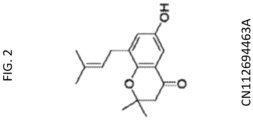

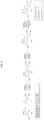


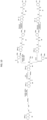


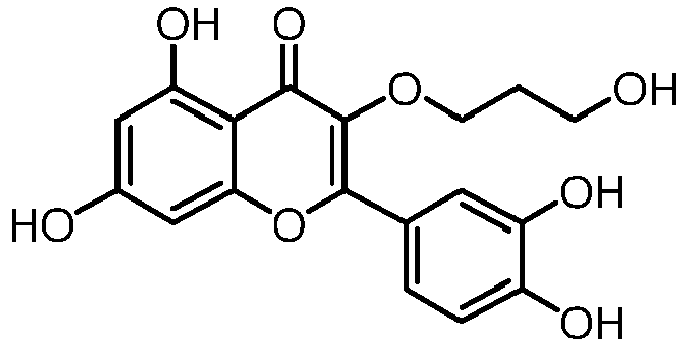


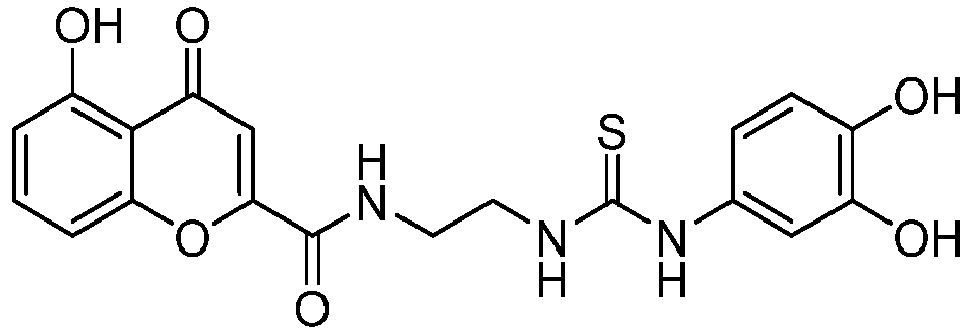

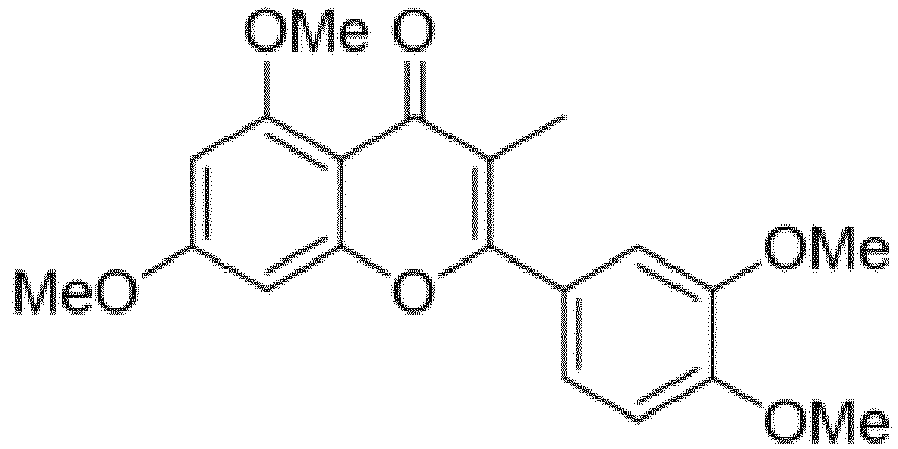


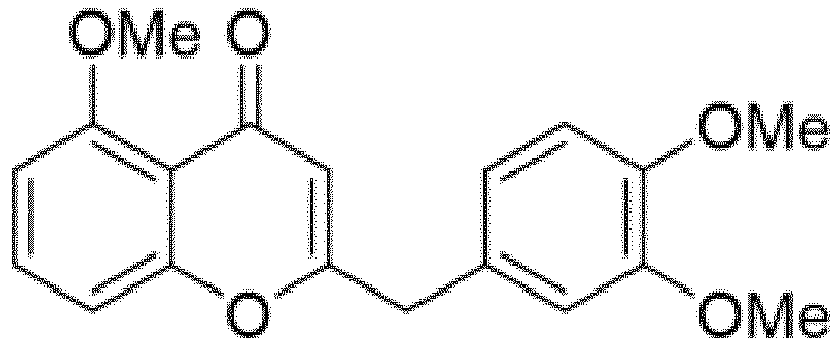


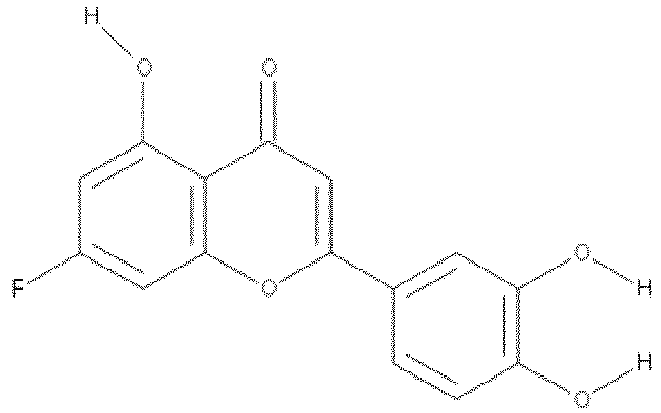


 R1 is selected from hydrogen or -OH, -N(R4)R5, -NO2, halogen, C1-4 haloalkyl, whereinR4 and R5 are independently H or C1-4 alkyl,R2 is selected from hydrogen, C1-4 alkyl, C1-4 haloalkyl, C1-7 alkoxyalkyl, or
 wherein X2 is selected from -CH2-, -CH2-CH2-, -CH=CH-, -CHR4, - COR5,-NH, -O- or -OR6, whereR4 is selected from C1-4 alkyl, C1-4 haloalkyl, C1-4 alkoxyalkyl, C1-4 aminoalkyl,R5 is selected from -NH-, -O-, -NHR6-, -OR6-,R6 is C2-4 alkyl,
 wherein X3 is selected from -C(O)X4 or -C(O)X4-(CH2)2-7-X5 where X4 is selected from -NH, -O- or -O-C2-4 alkyl,X5 is selected from:
 X5 is selected from -NH-R7, -O-R7 or -O-C2-4 alkyl-R7 where R7 is selected from -C(O), -C(O)NH or -C(S)NH, -C(O)O-, -C(S)O-, with the proviso that the following compound is excluded:

 X2 is preferably selected from -CH2-, -CH2CH2-, -CH=CH-, -CHR4, -COR5 and -OR6, whereR4 is selected from C1-4 alkyl, C1-4 haloalkyl, C1-4 alkoxyalkyl, C1-4 aminoalkyl,R5 is selected from -NH-, -O-, -NHR6-, -OR6-,R6 can be C2-4 alkyl.


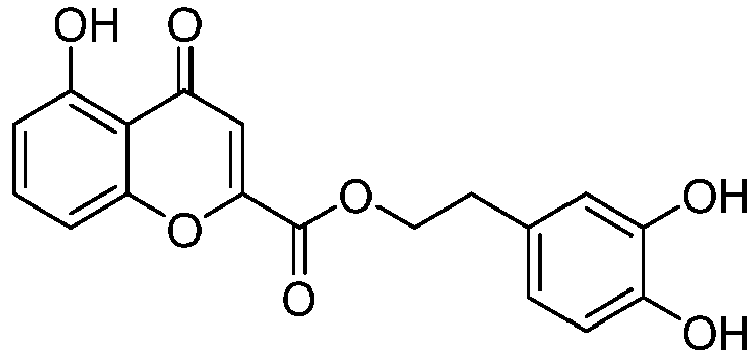
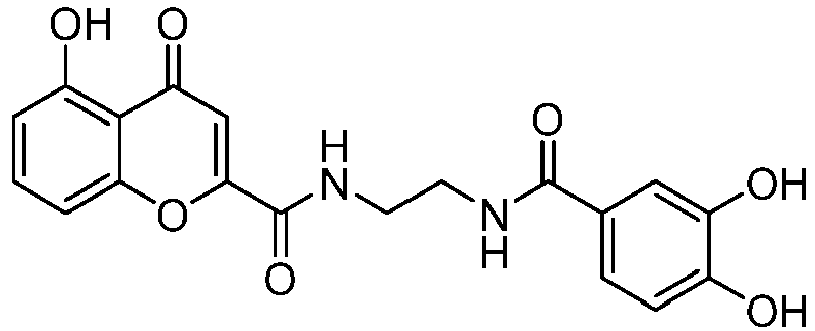

 R1 is selected from hydrogen or -OH, -N(R4)R5, -NO2, halogen, C1-4 haloalkyl, whereR4 and R5 are independently H or C1-4 alkyl,R2 is selected from hydrogen, C1-4 alkyl, C1-4 haloalkyl, C1-7 alkoxyalkyl, or -O-, -NH-,R3 is H, -OH, or is selected from C1-4 alkyl, C1-4 hydroxyalkyl, C1-4 haloalkyl, C1-4 aminoalkyl, C1-4 alkoxyalkyl,X1 is a single bond and R1 is -OH and said compounds have general formula (Ia):
 X1 is X2 and R1 and R2 are both hydrogen and said compounds have general formula (Ib):
 wherein X2 is selected from -CH2-, -CH2-CH2-, -CH=CH-, -CHR4, -COR5, -NH, -O- or -OR6, whereR4 is selected from C1-4 alkyl, C1-4 haloalkyl, C1-4 alkoxyalkyl, C1-4 aminoalkyl,R5 is selected from -NH-, -O-, -NHR6-, -OR6-,R6 is C2-4 alkyl,
 where X3 is selected from -C(O)X4 or -C(O)X4-(CH2)2-7-X5 and preferably -C(O)X4-(CH2)2-4-X5 whereX4 is selected from -NH, -O- or -O-C2-4 alkyl,X5 is selected from:
 X5 is selected from -NH-R7, -O-R7 or -O-C2-4 alkyl-R7 where R7 is selected from -C(O), -C(O)NH or -C(S)NH, -C(O)O-, -C(S)O-for medical use.


 X2 is preferably selected from -CH2-, -CH2CH2-, -CH=CH-, -CHR4, -COR5 and -OR6, whereR4 is selected from C1-4 alkyl, C1-4 haloalkyl, C1-4 alkoxyalkyl, C1-4 aminoalkyl,R5 is selected from -NH-, -O-, -NHR6-, -OR6-,R6 is C2-4 alkyl.