EP4213705B1 - Motion-compensated laser speckle contrast imaging - Google Patents
Motion-compensated laser speckle contrast imaging Download PDFInfo
- Publication number
- EP4213705B1 EP4213705B1 EP21773845.9A EP21773845A EP4213705B1 EP 4213705 B1 EP4213705 B1 EP 4213705B1 EP 21773845 A EP21773845 A EP 21773845A EP 4213705 B1 EP4213705 B1 EP 4213705B1
- Authority
- EP
- European Patent Office
- Prior art keywords
- images
- speckle
- image
- light
- speckle contrast
- Prior art date
- Legal status (The legal status is an assumption and is not a legal conclusion. Google has not performed a legal analysis and makes no representation as to the accuracy of the status listed.)
- Active
Links
Images






Classifications
-
- A—HUMAN NECESSITIES
- A61—MEDICAL OR VETERINARY SCIENCE; HYGIENE
- A61B—DIAGNOSIS; SURGERY; IDENTIFICATION
- A61B5/00—Measuring for diagnostic purposes; Identification of persons
- A61B5/02—Detecting, measuring or recording for evaluating the cardiovascular system, e.g. pulse, heart rate, blood pressure or blood flow
- A61B5/026—Measuring blood flow
- A61B5/0261—Measuring blood flow using optical means, e.g. infrared light
-
- A—HUMAN NECESSITIES
- A61—MEDICAL OR VETERINARY SCIENCE; HYGIENE
- A61B—DIAGNOSIS; SURGERY; IDENTIFICATION
- A61B5/00—Measuring for diagnostic purposes; Identification of persons
- A61B5/48—Other medical applications
- A61B5/4887—Locating particular structures in or on the body
- A61B5/489—Blood vessels
-
- A—HUMAN NECESSITIES
- A61—MEDICAL OR VETERINARY SCIENCE; HYGIENE
- A61B—DIAGNOSIS; SURGERY; IDENTIFICATION
- A61B5/00—Measuring for diagnostic purposes; Identification of persons
- A61B5/72—Signal processing specially adapted for physiological signals or for diagnostic purposes
- A61B5/7203—Signal processing specially adapted for physiological signals or for diagnostic purposes for noise prevention, reduction or removal
- A61B5/7207—Signal processing specially adapted for physiological signals or for diagnostic purposes for noise prevention, reduction or removal of noise induced by motion artifacts
-
- A—HUMAN NECESSITIES
- A61—MEDICAL OR VETERINARY SCIENCE; HYGIENE
- A61B—DIAGNOSIS; SURGERY; IDENTIFICATION
- A61B5/00—Measuring for diagnostic purposes; Identification of persons
- A61B5/72—Signal processing specially adapted for physiological signals or for diagnostic purposes
- A61B5/7235—Details of waveform analysis
- A61B5/725—Details of waveform analysis using specific filters therefor, e.g. Kalman or adaptive filters
-
- G—PHYSICS
- G02—OPTICS
- G02B—OPTICAL ELEMENTS, SYSTEMS OR APPARATUS
- G02B21/00—Microscopes
- G02B21/0004—Microscopes specially adapted for specific applications
- G02B21/0012—Surgical microscopes
-
- G—PHYSICS
- G02—OPTICS
- G02B—OPTICAL ELEMENTS, SYSTEMS OR APPARATUS
- G02B27/00—Optical systems or apparatus not provided for by any of the groups G02B1/00 - G02B26/00, G02B30/00
- G02B27/48—Laser speckle optics
-
- A—HUMAN NECESSITIES
- A61—MEDICAL OR VETERINARY SCIENCE; HYGIENE
- A61B—DIAGNOSIS; SURGERY; IDENTIFICATION
- A61B2560/00—Constructional details of operational features of apparatus; Accessories for medical measuring apparatus
-
- A—HUMAN NECESSITIES
- A61—MEDICAL OR VETERINARY SCIENCE; HYGIENE
- A61B—DIAGNOSIS; SURGERY; IDENTIFICATION
- A61B2576/00—Medical imaging apparatus involving image processing or analysis
Definitions
- the disclosure relates to motion-compensated laser speckle contrast imaging, and, in particular, though not exclusively, to methods and systems for motion-compensated laser speckle contrast imaging, a module for motion-compensation in a laser speckle contrast imaging systems and methods and a computer program product enabling a computer system to perform such methods.
- Laser speckle contrast imaging provides a fast, full-field, and in vivo imaging method for determining two-dimensional (2D) perfusion maps of living biological tissue. Perfusion can be an indicator for tissue viability and thus may provide valuable information for diagnostics and surgery. For example, during a bowel operation, selection of a high-perfused intervention site may reduce anastomotic leakage.
- LSCI is based on the principle that the backscattered light from a tissue illuminated with coherent laser light forms a random interference pattern at the detector due to differences in optical path lengths.
- the resulting interference pattern is called a speckle pattern, and may be imaged in real-time using a digital camera. Movement of particles inside the tissue causes fluctuations in this speckle pattern resulting in blurring of the speckles in those parts of the images where perfusion takes place.
- this blurring may be related to blood flow if the fluctuations are caused by the movement of red blood cells.
- blood perfusion can be imaged in living tissue in a relatively simple way. Examples of state of the art clinical perfusion imaging schemes by LSCI are described in the review article by W. Heeman et al, 'Clinical applications of laser speckle contrast imaging: a review', J. Biomed. Opt. 24:8 (2019 ). Perfusion by other bodily fluids, e.g. lymph perfusion, may be imaged in a similar way.
- LSCI is extremely sensitive to any type of motion. Blurring may not only be caused by movement of blood flow but also any other type of motion such as movement of tissue due to respiration, heartbeat, muscle contraction or to motion of the camera, especially in handheld cameras.
- the LSCI system is capable of generating accurate, high-resolution blood flow images, in particular microcirculation images, in real-time, in which motion artefacts are substantially reduced.
- measures are required to minimize motion artefacts so that accurate, high resolution perfusion images can be acquired. This may improve identification of well-perfused and poorly perfused areas, and thus increase diagnosis and treatment outcome.
- WO2020/045015 A1 discloses a laser speckle contrast imaging system which is capable of capturing near-infrared speckle images and white light images of an imaging target.
- a simple motion detection scheme may include the use of a reference marker on an image target, tracking a feature point in the visible light images, or a change in a speckle shape in a speckle image to determine a global motion vector indicating an amount of movement of an image target between two subsequent images.
- Speckle contrast images may be generated based on the speckle images and can be corrected for the amount of motion based on the motion vector.
- Motion will even be more prominent in handheld LSCI systems, compared to e.g. tripod-supported systems.
- Lertsakdadet et al described in their article 'Correcting for motion artefact in handheld laser speckle images', Journal of biomedical optics 23(2), March 2018 , a motion compensation scheme for laser speckle imaging using a fiducial marker that is attached to the tissue that needs to be imaged.
- the use of a marker is not possible in many applications.
- US 2019/046232 A1 describes a method for marker-based image registration for medical images.
- EP 1324051 A1 describes an endoscopic apparatus for laser speckle contrast imaging.
- aspects of the present invention may be embodied as a system, method or computer program product. Accordingly, aspects of the present invention may take the form of an entirely hardware embodiment, an entirely software embodiment (including firmware, resident software, micro-code, etc.) or an embodiment combining software and hardware aspects that may all generally be referred to herein as a "circuit," “module” or “system”. Functions described in this disclosure may be implemented as an algorithm executed by a microprocessor of a computer. Furthermore, aspects of the present invention may take the form of a computer program product embodied in one or more computer readable medium(s) having computer readable program code embodied, e.g., stored, thereon.
- the computer readable medium may be a computer readable signal medium or a computer readable storage medium.
- a computer readable storage medium may be, for example, but not limited to, an electronic, magnetic, optical, electromagnetic, infrared, or semiconductor system, apparatus, or device, or any suitable combination of the foregoing.
- a computer readable signal medium may include a propagated data signal with computer readable program code embodied therein, for example, in baseband or as part of a carrier wave. Such a propagated signal may take any of a variety of forms, including, but not limited to, electro-magnetic, optical, or any suitable combination thereof.
- a computer readable signal medium may be any computer readable medium that is not a computer readable storage medium and that can communicate, propagate, or transport a program for use by or in connection with an instruction execution system, apparatus, or device.
- Program code embodied on a computer readable medium may be transmitted using any appropriate medium, including but not limited to wireless, wireline, optical fiber, cable, RF, etc., or any suitable combination of the foregoing.
- Computer program code for carrying out operations for aspects of the present invention may be written in any combination of one or more programming languages, including a functional or an object oriented programming language such as Java(TM), Scala, C++, Python or the like and conventional procedural programming languages, such as the "C" programming language or similar programming languages.
- the program code may execute entirely on the user's computer, partly on the user's computer, as a stand-alone software package, partly on the user's computer and partly on a remote computer, or entirely on the remote computer, server or virtualized server.
- the remote computer may be connected to the user's computer through any type of network, including a local area network (LAN) or a wide area network (WAN), or the connection may be made to an external computer (for example, through the Internet using an Internet Service Provider).
- LAN local area network
- WAN wide area network
- Internet Service Provider an Internet Service Provider
- These computer program instructions may be provided to a processor, in particular a microprocessor or central processing unit (CPU), or graphics processing unit (GPU), of a general purpose computer, special purpose computer, or other programmable data processing apparatus to produce a machine, such that the instructions, which execute via the processor of the computer, other programmable data processing apparatus, or other devices create means for implementing the functions/acts specified in the flowchart and/or block diagram block or blocks.
- a processor in particular a microprocessor or central processing unit (CPU), or graphics processing unit (GPU), of a general purpose computer, special purpose computer, or other programmable data processing apparatus to produce a machine, such that the instructions, which execute via the processor of the computer, other programmable data processing apparatus, or other devices create means for implementing the functions/acts specified in the flowchart and/or block diagram block or blocks.
- CPU central processing unit
- GPU graphics processing unit
- These computer program instructions may also be stored in a computer readable medium that can direct a computer, other programmable data processing apparatus, or other devices to function in a particular manner, such that the instructions stored in the computer readable medium produce an article of manufacture including instructions which implement the function/act specified in the flowchart and/or block diagram block or blocks.
- the computer program instructions may also be loaded onto a computer, other programmable data processing apparatus, or other devices to cause a series of operational steps to be performed on the computer, other programmable apparatus or other devices to produce a computer implemented process such that the instructions which execute on the computer or other programmable apparatus provide processes for implementing the functions/acts specified in the flowchart and/or block diagram block or blocks.
- each block in the flowchart or block diagrams may represent a module, segment, or portion of code, which comprises one or more executable instructions for implementing the specified logical function(s).
- the functions noted in the blocks may occur out of the order noted in the figures. For example, two blocks shown in succession may, in fact, be executed substantially concurrently, or the blocks may sometimes be executed in the reverse order, depending upon the functionality involved.
- the invention in a first aspect, relates to a method of motion-compensated laser speckle contrast imaging.
- the method comprises exposing a target area to coherent first light of a first wavelength, the target area including living tissue, and capturing at least one sequence of images.
- the at least one sequence of images comprises first speckle images, the first speckle images being captured during the exposure with the first light.
- the method further comprises determining one or more transformation parameters of an image registration algorithm for registering the first speckle images with each other.
- the transformation parameters may be based on a similarity measure of pixel values of at least one group of pixels in each of a plurality of images of the at least one sequence of images, the images in the plurality of images being selected from the first speckle images or being associated with the first speckle images.
- the method further comprises determining first speckle contrast images based on the first speckle images, determining registered speckle contrast images by registering the first speckle contrast images based on the one or more transformation parameters and the image registration algorithm, and computing a weighted average of the registered first speckle contrast images.
- a sequence of speckle contrast images may be registered or aligned without the use of a marker.
- the registered images may then be combined into a combined speckle contrast image, having a high resolution and accuracy
- the combined image may comprise information from a plurality of speckle images, e.g. a pixelwise average, preferably a weighted average, or the combined image can be a single most reliable image in e.g. a moving window of images, for instance the image with the smallest transformation (i.e., closest to the identity transformation using a suitable metric) relative to the subsequent image in a sequence of images.
- the images are less sensitive to noise due to motion.
- Motion can be caused by e.g. motion of the camera, in particular in handheld systems, or motion of the patient, due to e.g. muscle contractions.
- the embodiments in this disclosure may enable or improve speckle contrast imaging in a wide range of applications, including, for example, perfusion imaging large bowel tracts, requiring motion of the camera along the entire surface to be imaged, or perfusion imaging of skin burns, where a patient may be unable to remain motionless due to pain.
- the method may be executed (essentially) in real-time using generally available hardware.
- a delay is generally not detrimental to clinical use.
- Physiological properties may be based on image analysis of the speckle images, the speckle contrast images, and/or the images from the plurality of images, on a predetermined constant based on knowledge on the physiological phenomena or may be based on external input, e.g. from a heart rate monitor.
- the method does not need a fiducial marker to be placed in the field of view. This is especially relevant for areas where placing fiducial markers is undesirable, e.g. when imaging internal organs, burned tissue or brain tissue, or for relatively large image targets that would otherwise require a multitude of fiducial markers or repeatedly replacement of a marker.
- motion correction may comprise transforming one or more images based on detected apparent motion.
- Motion compensation may comprise combining a plurality of images, thus increasing the signal to noise ratio.
- the plurality of first speckle images from the sequence of first speckle images may be used to determine a combined speckle contrast image with an increased contrast and/or spatial resolution, compared to the first speckle contrast images separately.
- the number of registered speckle images to be combined may depend on the clinical requirements and/or on quality parameters of the first speckle images.
- Speckle contrast images may be computed based on the non-registered, and hence untransformed speckle images. Subsequently, the speckle contrast images may be transformed and then combined. The transformation may distort the speckle pattern or parts thereof, for example, speckles may be enlarged, shrunk, or deformed, especially for transformations that are more general than mere translations or rotations. Hence, computing speckle contrast images based on the untransformed speckle images may prevent introducing noise due to the transformation into the speckle contrast images.
- the speckle images may be first registered, and hence transformed, and subsequently a speckle contrast image may be computed.
- a temporal or spatio-temporal speckle contrast may be computed based on two or more registered speckle images.
- Using temporal or spatio-temporal speckle contrast may lead to a higher spatial resolution.
- the images are preferably registered with sub-pixel accuracy.
- the same sequence of image may be used for (determining transformation parameters for) image registration, for determining averaging weights, and for determining a combined laser speckle contrast image or perfusion image.
- a second sequence of images may be used for determining the transformation parameters for image registration, and for determining the averaging weights.
- the method further comprises exposing the target area to second light of one or more second wavelengths, preferably coherent light of a second wavelength or light comprising a plurality of second wavelengths of the visible spectrum, wherein the exposure to the second light is alternated with the exposure to the first light or is simultaneous with the exposure to the first light.
- the at least one sequence of images comprises a sequence of second images, the second images being captured during exposure with the second light; and the plurality of images is selected from the sequence of second images, each of the second images being associated with a first speckle image.
- the method of laser speckle contrast imaging comprises alternatingly or simultaneously exposing a target area to coherent first light of a first wavelength and to second light of one or more second wavelengths, preferably coherent light of a second wavelength or light comprising a plurality of second wavelengths of the visible spectrum, the target area preferably including living tissue.
- the method may further comprise capturing a sequence of first speckle images during the exposure with the first light and a sequence of second images during the exposure with the second light, a speckle image of the sequence of first speckle images being associated with an image of the sequence of second images.
- One or more transformation parameters of an registration algorithm for registering at least a part of the sequence of first speckle images may be determined based on a similarity measure of pixel values of groups of pixels in at least a part of the sequence of second images associated with the first speckle images.
- the method may further comprise determining registered first speckle images by registering the at least part of the sequence of first speckle images based on the one or more transformation parameters and the registration algorithm, and determining a combined speckle contrast image based on the registered first speckle images.
- the method may comprise determining first speckle contrast images based on the at least part of the sequence of first speckle images, determining registered speckle contrast images by registering the first speckle contrast images based on the one or more transformation parameters and the registration algorithm, and determining a combined speckle contrast image based on the registered first speckle contrast images.
- the first light and the second light are the same light with the same wavelength
- the sequence of first speckle images and the sequence of second images are the same sequence of images.
- at least one of the one or more second wavelength is different from the first wavelength
- the second images are different from the first speckle images.
- a first speckle image and an associated second image can also be different parts of a single image.
- the images in the sequence of images may be frames in a video stream or in a multi-frame snapshot.
- the second images may also be referred to as correction images.
- at least one group of pixels in each of the at least part of the sequence of second images is used to determine the one or more transformation parameters.
- the first wavelength and the capturing of the sequence of first speckle images may be optimised for speckle contrast imaging (e.g. an optimised exposure time) in dependence of the quantity to be measured; while the one or more second wavelength and the capturing of the sequence of second images may be optimised to obtain images that can easily and accurately be registered, e.g. by ensuring a high contrast between anatomical features such as blood vessels and normal tissue.
- Typical combinations may be speckle images acquired using infrared light and second images acquired using white light, or speckle images acquired using red light and second images acquired using green or blue light, but of course, other combinations are also possible.
- the groups of pixels may represent predetermined features in the plurality of images, the predetermined features preferably being associated with objects, preferably anatomical structures, in the target area. Groups of pixels may be selected by a feature detection algorithm.
- the features may be features associated with physical objects in the target area, e.g. features related to blood vessels, rather than e.g. image features not directly related to objects such as overexposed image parts or speckles.
- Predetermined features may be determined by e.g. belonging to a class of features, such as corners or regions with large differences in intensity. They may be further determined by e.g. a quality metric, restrictions on mutual distance between features, et cetera.
- the neighbourhood of one or more determined features may be used to determine the displacement vectors and/or the transformation.
- Determining a displacement based on a relatively small number of features, compared to the total number of pixels, may substantially reduce computation times, while still giving accurate results. This is especially the case for relatively simple motions, where e.g. the entire target area is displaced due to a motion of a camera.
- the method may further comprise filtering the plurality of images with a filter adapted to increase the probability that a group of pixels represents a feature corresponding to an anatomical feature.
- a filter may determine overexposed and/or underexposed areas and/or other image artefacts, and may create a mask based on these areas or artefacts. Thus, determining features related to these areas or artefacts may be prevented.
- determining transformation parameters based on a similarity of pixel values of groups of pixels may comprise, for each group of pixels in an image from the plurality of images, determining a convolution or a cross-correlation with at least part of a different image from the plurality of images.
- the method may also comprise determining a polynomial expansion to model pixel values in pixel neighbourhoods in the plurality of images, comparing expansion coefficients, and determining displacement vectors based on the comparison.
- determining one or more transformation parameters may comprise determining a plurality of associated groups of pixels based on the similarity measure, each group of pixels belonging to a different image from the plurality of images, determining a plurality of displacement vectors based on positions of the groups of pixels relative to the respective images from the plurality of images, the displacement vectors representing motion of the target area relative to the image sensor, and determining the transformation parameters based on the plurality of displacement vectors.
- displacement vectors for a plurality of features, or pairs of corresponding features
- the displacement vectors may be used to determine e.g. an affine transformation, a projective transformation, or a homography, which may correct for e.g. translation, rotation, scaling and shearing of an image based on image data alone.
- the method does not require information about e.g. distance between camera and target, incident angle, et cetera.
- the determination of displacement vectors and/or the determination of the one or more transformations may be based on optical flow parameters, determined using a suitable optical flow algorithm, e.g. a dense optical flow algorithm or a sparse optical flow algorithm.
- determining a combined speckle contrast image may further comprise computing an average of the registered first speckle images, respectively of the registered first speckle contrast images, the average preferably being a weighted average, a weight of an image preferably being based on the transformation parameters or based on a relative magnitude of the speckle contrast.
- combining speckle images or speckle contrast images may comprise filtering the at least part of the first speckle images, respectively first speckle contrast images, with e.g. a median filter or a minimum or maximum filter, et cetera. Weights for weighted averaging may be based e.g. on a quantity derived from the speckle contrast or derived from the displacement vectors.
- computing a combined laser speckle contrast image may comprise computing an average, preferably a weighted average, of the registered sequence of speckle images.
- the method may further comprise, for each first speckle image or each first speckle contrast image associated with an image from the plurality of images, determining a transformation size associated with the respective first speckle image or first speckle contrast image based on the plurality of displacement vectors, preferably based on the lengths of the plurality of displacement vectors, and/or on parameters defining the determined transformation.
- the weighted average may be determined using weights based on the determined transformation size associated with the respective first speckle contrast image, preferably the weight being inversely correlated to the determined transformation size.
- a weight based on the size or amount of displacement, or on the size or amount of transformation may be determined quickly for each image, independent of other images.
- the transformation size may e.g. be based on a norm of a matrix representing the transformation, or the norm of matrix representing a difference between the transformation and the identity transformation.
- the transformation size may also be based on e.g. a statistically representative measure of the displacement vectors, e.g., the average, median, n-th percentile, or maximum displacement vector length. Images with a large amount of displacement are generally noisier, and may therefore be assigned a lower weight, thus increasing the quality of the combined image.
- the method may further comprise determining, for each first speckle image, a normalised amount of speckle contrast or an amount of change in speckle contrast relative to one or more previous and/or subsequent images in the sequence of first speckle contrast images.
- the weighted average may be determined using weights based on the determined normalised amount of speckle contrast or the determined change in speckle contrast associated with the respective first speckle contrast image.
- weights may be determined based on a normalised amount of speckle contrast or an amount of change in speckle contrast for the second speckle contrast images.
- Weights based on differences or changes in speckle contrast may be indicative for image quality.
- speckle contrast and hence these weights, may be affected by various factors in the entire system, e.g. motion of the camera relative to the target area, movement of fibres or other factors influencing the optical path length or fluctuating lighting conditions.
- weights based on speckle contrast a higher quality combined image may be obtained.
- speckle contrast is determined in arbitrary units, so weights may be determined by analysing a sequence of speckle images. As speckle contrast is inversely correlated with perfusion, speckle contrast-based perfusion units could similarly be used.
- the algorithm may be applied to a predefined region of interest in a field of view of a camera.
- a region of interest may be determined by a user, or may be predetermined.
- the outer border of the images may be ignored. and/or hidden from view, e.g. to prevent a transformed image border from being visible.
- Applying the algorithm, or part of the algorithm, to only part of an image may be faster.
- the region of interest may be transformed based on the determined transformations.
- the algorithm may be applied to the entire image.
- the plurality of images may be the sequence of first speckle images.
- the first wavelength is preferably a wavelength in the green or the blue part of the electromagnetic spectrum. This way, a balance may be struck between a good speckle signal and good visual distinctiveness (i.e., a high contrast of anatomical features, which is to be differentiated from a high speckle contrast), which is advantageous for determining features. Thus, there is no pre-processing step required to increase the contrast of the speckle image.
- a first wavelength in the red part of the electromagnetic spectrum may be used, preferably in the range 600-700 nm, more preferably in the range 620-660 nm, or in the infrared part of the electromagnetic spectrum, preferably in the range 700-1200 nm.
- the visual distinctiveness may be sufficient for adequate determination of features. Since red light and infrared light is mostly reflected by red blood cells, these wavelengths result in speckles with a relatively high intensity and are thus very suitable for speckle contrast imaging of blood flow.
- the first speckle images and the images from the plurality of images are the same images, the images may be acquired with a relatively simple system, requiring only a single light source and a single camera.
- the light of the at least second wavelength may be light of at least a second wavelength different from the first wavelength, preferably coherent light of a predetermined second wavelength, preferably in the green or blue part of the electromagnetic spectrum, preferably in the range 380-590 nm, more preferably in the range 470-570 nm, even more preferably in the range 520-560 nm.
- Blue or, especially, green light may result in a high contrast or visual distinctiveness, as it is absorbed in the blood vessels much more strongly than by normal tissue.
- features, such edges or corners, related to blood vessels may be used to determine the transformation parameters
- the first speckle images themselves are inherently noisy (as far as imaging of anatomical features is concerned)
- the first speckle images may be acquired based on light selected to optimise the speckle contrast signal, while the second images may be acquired based on light selected to optimise visual distinctiveness.
- Such a system is particularly advantageous for imaging tissues where the blood perfusion is relatively deep, e.g. the skin. In such tissues, most of the green or blue light does not penetrate deep enough to interact with the blood cells, resulting in a relatively noise free image.
- the first wavelength is preferably a wavelength in the red part of the electromagnetic spectrum, preferably in the range 600-700 nm, more preferably in the range 620-660 nm, or in the infrared part of the electromagnetic spectrum, preferably in the range 700-1200 nm.
- Red light and infrared light is mostly reflected by red blood cells, making it very suitable for speckle contrast imaging of blood flow.
- Infrared light has a larger penetration depth than red light. Red light may be easier to integrate into existing systems, using e.g. a red channel of an RGB camera to acquire a speckle image.
- the first wavelength is selected to be scattered or reflected by the fluid of interest; for example, red or near-infrared light may be used for imaging blood in blood vessels.
- the first wavelength may be selected based on the required penetration depth. Light with a relatively high penetration depth may allow light scattered by the bodily fluid of interest to be detected with a sufficient signal to noise ratio even at some depth in the imaged tissue.
- the second wavelength is selected to provide an image with a high visual distinctiveness resulting in consistent features on the tissue surface in the image.
- green light may be used for imaging blood vessels in internal organs, as green light typically is absorbed much more strongly by blood than by tissues.
- the light of the second wavelength can be either coherent or incoherent light.
- the second images may also be based on a multitude of wavelengths, e.g. white light may be used.
- the light of the second wavelength may be generated by e.g. a second coherent light source.
- light of the first wavelength and the light of the second wavelength may be generated by a single coherent light source configured to generate coherent light at a plurality of wavelengths.
- the sequence of second images may be a sequence of second speckle images and the method may further comprise determining second speckle contrast images based on the sequence of second speckle images and adjusting or correcting the first speckle contrast images based on changes in speckle contrast magnitude in the sequence of second speckle contrast images.
- Multi-spectral coherent correction may remove or reduce noise in the first speckle contrast images by adjusting the determined speckle contrast in the first speckle images based on a change in determined speckle contrast in sequence of second images.
- the adjustment may be based on a predetermined correlation between the speckle contrast of the first speckle contrast images and the speckle contrast of the second speckle contrast images.
- Multi-spectral coherent correction may advantageously be combined with image registration using second images by using the second images based on the second wavelength both for multi-spectral coherent correction and for image registration.
- the second wavelength preferably has a relatively small penetration depth. This way the second image may comprise information that mostly relates to the surface of the target area. This is especially true for tissues with little perfusion close to the surface, such as the skin, scar tissue, and some tumour types.
- the method may further comprise dividing each image in the at least part of the sequence of first speckle images, respectively first speckle contrast images, and each image in the plurality of images into a plurality of regions, preferably disjoint regions.
- the regions in the image from the plurality of images correspond to the regions in the associated first speckle image, respectively first speckle contrast image.
- Determining transformation parameters may comprise determining transformation parameters for each region, and determining a sequence of registered first speckle images, respectively first speckle contrast images, may comprise registering each region of the first speckle image, respectively first speckle contrast image, based on the transformation based on the corresponding region in the image from the plurality of images.
- the regions may be determined based on e.g. the geometry of the image, e.g. a grid of rectangular or triangular regions, or based on image properties, e.g. light intensity or groups of pixels that appear to belong to an anatomical structure.
- Local movements in part of the image may be corrected, leading to a higher quality combined image.
- Local movements are typically caused by motion in the target, e.g. due to the person moving, respiration, heartbeat, or muscle contraction such as peristaltic motion in the lower abdomen.
- the regions may be as small as single pixels. If a weighted average is used to combine two or more images, weights may be assigned to each region separately and/or to the image as a whole. Combining images may likewise be region based, or be done on an image-by-image basis.
- the target area may comprise a perfused organ, preferably perfused by a bodily fluid, more preferably perfused by blood and/or lymph fluid, and/or may comprise one or more blood vessels and/or lymphatic vessels.
- the method may further comprise computing a perfusion intensity, preferably a blood perfusion intensity or a lymph perfusion intensity, based on the combined speckle image.
- the method may further include post-processing the images, e.g. thresholding, false colouring, overlying on other images, e.g. white light images, and/or displaying the combined image or a derivative thereof.
- post-processing the images e.g. thresholding, false colouring, overlying on other images, e.g. white light images, and/or displaying the combined image or a derivative thereof.
- the invention is further related to a hardware module for an imaging device, preferably a medical imaging device, comprising a first light source a first light source for exposing a target area to coherent first light of a first wavelength, the target area preferably including living tissue.
- the hardware module may further comprise an image sensor system with one or more image sensors for capturing at least one sequence of images, the at least one sequence of images comprising first speckle images, the first speckle images being captured during the exposure with the first light.
- the hardware module may further comprise a computer readable storage medium having computer readable program code embodied therewith, and a processor, preferably a microprocessor, more preferably a graphics processing unit, coupled to the computer readable storage medium, wherein responsive to executing the computer readable program code, the processor is configured to: determine one or more transformation parameters of an image registration algorithm for registering the first speckle images with each other, the transformation parameters being based on a similarity measure of pixel values of at least one group of pixels in each of a plurality of images, the images in the plurality of images being selected from the first laser speckle images or being associated with the first speckle images, the transformation parameters preferably defining one of: a homography, a projective transformation, or an affine transformation; and determine first speckle contrast images based on the first speckle images, determine registered speckle contrast images by registering the first speckle contrast images based on the one or more transformation parameters and the image registration algorithm, and compute a weighted average of the registered first speckle contrast images.
- a processor
- the hardware module may comprise a second light source for illuminating, simultaneous or alternatingly with the first light source, the target area with light of at least a second wavelength, different from the first wavelength.
- the at least one image sensor may be configured to capture a sequence of second images, the second images being captured during exposure with the second light.
- the plurality of images may be selected from the sequence of second images, each of the second images being associated with a first speckle image.
- the image sensor system may comprise a first image sensor for capturing the sequence of first images, and a second image sensor for capturing the sequence of second images, or a single image sensor for capturing both the sequence of first images and the sequence of second images.
- the hardware module may further comprise a display for displaying the combined speckle image and/or a derivative thereof, preferably a perfusion intensity image.
- the hardware module may comprise a video output for outputting the combined speckle image and/or the derivative thereof.
- the image sensor system may comprise a first image sensor for capturing images of the first wavelength and a second image sensor for capturing images of the at least second wavelength.
- the first image sensor and the second image sensor may be the same image sensor, different parts of a single image sensor, e.g. red and green channels from an RGB camera, or different image sensors.
- the module may further comprise optics to guide light from the first light source and from the optional second light source to a target area and/or to guide light from the target area to the first and second image sensors.
- the invention is further related to a medical imaging device, preferably a endoscope, a laparoscope, a surgical robot, a handheld laser speckle contrast imaging device or an open surgical laser speckle contrast imaging system comprising such a hardware module.
- a medical imaging device preferably a endoscope, a laparoscope, a surgical robot, a handheld laser speckle contrast imaging device or an open surgical laser speckle contrast imaging system comprising such a hardware module.
- the invention is related to a computation module for a laser speckle imaging system, comprising a computer readable storage medium having at least part of a program embodied therewith, and a processor, preferably a microprocessor, more preferably a graphics processing unit, coupled to the computer readable storage medium, wherein responsive to executing the computer readable storage code, the processor is configured to perform executable operations.
- a processor preferably a microprocessor, more preferably a graphics processing unit, coupled to the computer readable storage medium, wherein responsive to executing the computer readable storage code, the processor is configured to perform executable operations.
- the executable operations may comprise: receiving at least one sequence of images, the at least one sequence of images comprising first speckle images, the first speckle images having been captured during exposure of a target area to coherent first light of a first wavelength, the target area including living tissue; determining one or more transformation parameters of an image registration algorithm for registering the first speckle images with each other, the transformation parameters being based on a similarity measure of pixel values of at least one group of pixels in each of a plurality of images of the at least one sequence of images, the images in the plurality of images being selected from the first speckle images or being associated with the first speckle images, the transformation parameters preferably defining one of: a homography, a projective transformation, or an affine transformation; and determining first speckle contrast images based on the first speckle images, determining registered speckle contrast images by registering the first speckle contrast images based on the one or more transformation parameters and the image registration algorithm, and compute a weighted average of the registered first speckle contrast images.
- Such a computation module may e.g. be added to an existing or new medical imaging device such as a laparoscope or an endoscope, in order to improve laser speckle contrast imaging, in particular perfusion imaging.
- the method steps described in this disclosure may be executed by a processor in a device for coupling coherent light into an endoscopic system.
- a device may be coupled between a light source and a video processor of an endoscopic system, and an endoscope, e.g. a laparoscope, of the endoscopic system.
- the coupling device may thus add laser speckle imaging capabilities to an endoscopic system.
- Such a coupling device has been described in more detail in Dutch patent application NL 2026240 .
- the at least one sequence of images comprises a sequence of second images, the second images being captured during exposure with second light, the second light having one or more second wavelengths, preferably the second light being coherent light of a second wavelength or the second light comprising a plurality of second wavelengths of the visible spectrum, wherein the exposure to the second light is alternated with the exposure to the first light or is simultaneous with the exposure to the first light.
- the plurality of images may be selected from the sequence of second images, each of the second images being associated with a first speckle image.
- the invention may also relate to a computer program or suite of computer programs comprising at least one software code portion or a computer program product storing at least one software code portion, the software code portion, when run on a computer system, being configured for executing any of the method steps described above.
- the invention may further relate to a non-transitory computer-readable storage medium storing at least one software code portion, the software code portion, when executed or processed by a computer, is configured to perform any of the method steps as described above.
- Laser speckle contrast images may be based on spatial contrast, temporal contrast, or a combination.
- using spatial contrast leads to a high temporal resolution but a relatively low spatial resolution.
- individual images may suffer from e.g. quality loss due to motion or lighting artefacts, resulting in an image quality that may vary from image to image.
- using a temporal contrast is associated with a relatively high spatial resolution and a relatively low temporal resolution.
- the quality of temporal contrast may be strongly affected by motion of the target relative to the camera, which may lead to pixels being incorrectly combined. Mixed methods may share some advantages and disadvantages of both methods.
- speckle images may also be referred to as raw speckle images to better differentiate between (raw) speckle images and speckle contrast images.
- the term 'raw speckle image' may thus refer to an image representing a speckle pattern, with pixels having pixels values representing a light intensity.
- Raw speckle images may be unprocessed images or (pre-)processed images.
- the term 'speckle contrast image' may be used to refer to a processed speckle image with pixels having pixel values representing a speckle contrast magnitude, typically a relative standard deviation over a predefined neighbourhood of the pixel.
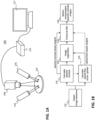
- Fig. 1A schematically depicts a system 100 for motion-compensated laser speckle contrast imaging according to an embodiment of the invention.
- the system may comprise a first light source 104 for generating coherent light, e.g. laser light, of a first wavelength for illuminating a target area 102.
- the target is preferably living tissue, e.g. skin, bowel, or brain tissue.
- the first wavelength may be selected to interact with a bodily fluid which may move through the target, for instance blood or lymph fluid.
- the first wavelength may be in the red or (near) infrared part of the electromagnetic spectrum, e.g. in the range 600-700 nm, preferably in the range 620-660 nm, or in the range 700-1200 nm.
- the first wavelength may be selected based on the bodily fluid of interest and/or the tissue being imaged.
- the first wavelength may also be selected based on the properties of an imaging sensor.
- different quantities of interest may be imaged, e.g. flow in individual large or small blood vessels, or microvascular perfusion of a target area.
- the system may further comprise a second light source 106 for generating light of at least a second wavelength, preferably comprising light of the green part of the electromagnetic spectrum, for illuminating the target area 102.
- the at least second wavelength may be selected to comprise a wavelength that creates images with a high visual distinctiveness, that is, a high contrast of anatomical features.
- the second wavelength may be selected based on the tissue in the target area.
- the light of the at least second wavelength may be coherent light or incoherent light, and may be monochromatic, e.g. blue or green narrow-band imaging light, or polychromatic light, e.g. white light. In other embodiments, only the first light source is used. In the embodiment depicted in Fig.
- the light of the at least second wavelength is monochromatic coherent light.
- the second wavelength may be generated by e.g. a second coherent light source.
- light of the first wavelength and the light of the second wavelength may be generated by a single coherent light source configured to generate coherent light at a plurality of wavelengths.
- the system may further comprise one or more image sensors 108 for capturing images associated with light of the first wavelength and, when applicable, images associated with light of the at least second wavelength, the light of the first and at least second wavelengths having interacted with the target in the target area.
- the system may comprise a plurality of cameras, for example a first camera for acquiring first raw speckle images associated with the first wavelength and a second camera for acquiring correction images associated with the second wavelength.
- the system may furthermore comprise additional optics, e.g. optical fibres, lenses, or beam splitters, to guide light from the one or more light sources to the target area and from the target area to the one or more image sensors.
- a laser speckle pattern may be formed through self-interference.
- the images may be received and processed by a processing unit 110. Examples will be described in further detail with reference to Fig. 1B-D .
- the processing unit may output processed images in essentially real-time to e.g. a display or to a computer 112.
- the processing unit may be a separate unit or may be part of the computer.
- the processed images may be displayed by the display or computer.
- an endoscope or laparoscope may be used to guide light to the target area and to acquire images.
- the one or more light sources, the one or more image sensors, the processing unit and the display may e.g. be part of an endoscopic system.
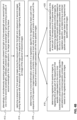
- Fig. 1B-D depict a flow diagrams for motion-compensated laser speckle contrast imaging according to an embodiments of the invention. Alternatives that are mentioned with respect to one of these embodiments can also be applied to the other embodiments, unless where such combination would result in a contradictory description.
- Fig. 1B depicts a flow diagram for motion-compensated laser speckle contrast imaging according to an embodiment of the invention.
- only coherent light of the first wavelength generated by the first light source 104 is used, which can be e.g. green or, preferably, red light.
- the one or more image sensors 108 is a single image sensor, typically a monochromatic image sensor optimised or at least suitable for the used wavelength. As was indicated above and will be shown in the examples of Fig. 1C and 1D below, other embodiments may use different configurations.
- a sequence of raw speckle images is obtained, e.g. captured or received from an external source. These speckle images will also be used as correction images.
- a first speckle contrast image may be computed 126. Speckle contrast may be determined in any suitable way, e.g. by a convolution with a predetermined convolution kernel, or by determining the relative standard deviation of pixel value intensities in a sliding window. As the speckle contrast is correlated with perfusion, perfusion unit weights may be determined based on the speckle contrast values of the first speckle contrast images.
- either the raw speckle images or the speckle contrast images may be used as correction images.
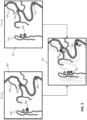
- positions of predetermined object features may be determined 130.
- displacement vectors identifying motion of the target area may be determined, for example using an optical flow algorithm. This will be described in more detail with reference to Fig. 5 and 6 .
- a (sparse) optical flow algorithm may be used to determine displacement vectors based on selected features.
- Other embodiments may use e.g. a dense optical flow algorithm; in that case, there is no need to determine features.
- transformations for registering images in the second sequence of images may be determined.
- the transformations are selected from the class of homographies, from the class of projective transformations, or from the class of affine transformations.
- optical flow weights may be determined based on the displacement vectors or on parameters defining the transformation.
- the determined transformations may then be used to register 134 , or geometrically align, the speckle contrast images with each other, resulting in registered first speckle contrast images.
- the raw speckle images may be registered before computing the speckle contrast.
- image registration may affect the pixel values and hence the contrast, such an embodiment is less preferred.
- the registered first speckle contrast images may be combined 136 , e.g., using a temporal filter.
- the temporal filter may comprise averaging a plurality of first speckle contrast images.
- the averaging may be weighted averaging, with the weights being based on the optical flow weights and/or based on perfusion unit weights.
- the registered raw speckle images may be combined using the temporal filter, and a speckle contrast image may be determined based on the combine draw speckle image. This results in motion-compensated speckle contrast images
- the combined first raw speckle images may be post-processed, e.g. converted to perfusion values, thresholded to indicate areas with high or low perfusion, overlain on a white light image of the target area, et cetera.
- the post-processing may be done by e.g. the processing unit 110 or the computer 112.
- Fig. 1C depicts a flow diagram for motion-compensated laser speckle contrast imaging according to an embodiment of the invention.
- the light of the first wavelength generated by the first light source 104 is red light
- the light of the at least second wavelength generated by the second light source 106 is coherent green light.
- the one or more image sensors 108 are a single sensor comprising red, green, and blue channels.
- the first wavelength and the second wavelength are selected to minimise crosstalk.
- the signal in the red channel caused by the green light is substantially smaller than the signal caused by the red light; and the signal in the green channel caused by the red light is substantially smaller than the signal caused by the green light.
- other embodiments may use different configurations.
- a sequence of RGB images is received.
- a first sequence of first raw speckle images may be extracted 142 from the red channel of sequence of the RGB image, and a second sequence of correction images may be extracted 144 from the green channel of the RGB image.
- the sequence of correction images may be a second sequence of second raw speckle images.
- Each first raw speckle image may be associated with the correction image extracted from the same RGB image.
- the first raw speckle images and the correction images may be acquired by different cameras, by different sensors of a multi-sensor camera (e.g., a 3CCD camera), by other (colour) channels of a single camera (e.g., a YUV camera), or, if the target is illuminated alternately with light of the first wavelength and light of the at least second wavelength, the images may be acquired alternately by a single monochrome camera.
- a multi-sensor camera e.g., a 3CCD camera
- other (colour) channels of a single camera e.g., a YUV camera
- a first speckle contrast image may be computed 146.
- a second speckle contrast image may be computed 148.
- Speckle contrast may be determined in any suitable way, e.g. by a convolution with a predetermined convolution kernel, or by determining the relative standard deviation of pixel value intensities in a sliding window.
- perfusion unit weights may be determined based on the speckle contrast values of the first speckle contrast images.
- the second speckle contrast image may optionally be used to correct 152 the first speckle contrast image, as will be described in more detail with reference to Fig. 8 . In that case, the corrected speckle contrast values may be used to determine perfusion unit weights.
- positions of predetermined object features may be determined 150. Based on the positions of the predetermined object features in two or more correction images, displacement vectors identifying motion of the target area may be determined, for example using an optical flow algorithm. This will be described in more detail with reference to Fig. 5 and 6 .
- a (sparse) optical flow algorithm may be used to determine displacement vectors based on selected features.
- Other embodiments may use e.g. a dense optical flow algorithm; in that case, there is no need to determine features.
- transformations for registering images in the second sequence of images may be determined.
- the transformations are selected from the class of homographies, from the class of projective transformations, or from the class of affine transformations.
- optical flow weights may be determined based on the displacement vectors or on parameters defining the transformation.
- the determined transformations may then be used to register 154 , or geometrically align, the first speckle contrast images associated with the correction images.
- the registered first speckle contrast images may be combined 156 , e.g. using a temporal filter.
- the temporal filter may comprise averaging a plurality of first speckle contrast images.
- the averaging may be weighted averaging, with the weights being based on the optical flow weights and/or based on perfusion unit weights.
- the combined first raw speckle images may be post-processed, e.g. converted to perfusion values, thresholded to indicate areas with high or low perfusion, overlain on a white light image of the target area, et cetera.
- the post-processing may be done by e.g. the processing unit 110 or the computer 112.
- Fig. 1D depicts a flow diagram for motion-compensated laser speckle contrast imaging according to an embodiment of the invention.
- the light of the first wavelength generated by the first light source 104 is infrared light, but other colours such as red, green, or blue are also possible.
- the light of the at least second wavelength generated by the second light source 106 is (incoherent) white light.
- the one or more image sensors 108 are two image sensors in two cameras, an infrared camera and a colour camera. This can be practical if the laser speckle imaging is added to a system already comprising a colour camera, for instance in an open surgery setting. Additionally, having dedicated image sensors may allow separate optimisation of hardware and/or equipment parameters such as exposure time. As was indicated above, other embodiments may use different configurations. For example, in some embodiments, a single camera may be used to capture both the infrared and the (white light) colour images. An advantage of using a single camera is that the infrared images and the colour images are automatically aligned and associated with each other.
- a first sequence of first images is captured by the infrared camera.
- This first sequence may be stored by the image processor as a sequence of raw speckle images.
- a second sequence of second images is captured by the colour camera.
- This second sequence may be stored 164 as a sequence of correction images.
- Each raw speckle image may be associated with one or more correction images.
- each raw speckle image is associated at least with the correction image that was captured closest in time to, preferably simultaneous with the raw speckle image.
- the frame rates of the first and second cameras are chosen such as to allow a straightforward association, e.g. by selecting one frame rate as a integer multiple of the other frame rate.
- a speckle contrast image may be computed 166.
- Speckle contrast may be determined in any suitable way, e.g. by a convolution with a predetermined convolution kernel, or by determining the relative standard deviation of pixel value intensities in a sliding window.
- perfusion unit weights may be determined based on the speckle contrast values of the first speckle contrast images.
- positions of predetermined object features may be determined 170. Based on the positions of the predetermined object features in two or more correction images, displacement vectors identifying motion of the target area may be determined, for example using an optical flow algorithm. This will be described in more detail with reference to Fig. 5 and 6 .
- a (sparse) optical flow algorithm may be used to determine displacement vectors based on selected features.
- Other embodiments may use e.g. a dense optical flow algorithm; in that case, there is no need to determine features.
- transformations for registering images in the sequence of correction images may be determined.
- the transformations are selected from the class of homographies, from the class of projective transformations, or from the class of affine transformations.
- optical flow weights may be determined based on the displacement vectors or on parameters defining the transformation.
- the determined transformations may then be used to register 174 , or geometrically align, the first speckle contrast images associated with the correction images. Since, in this embodiment, two cameras are used, the two cameras do not share a field of view and frame of reference. Consequently, registering the speckle contrast images based on the transformation parameters determined using the correction images may comprise applying a transformation to the transformation parameters to account for this change in frame of reference. If the cameras are positioned in a fixed position relative to each other, this transformation may be predetermined. Otherwise, the transformation can be determined based on e.g. image processing of calibration images or markers. Markers can be either natural or artificial.
- the registered first speckle contrast images may be combined 176 , e.g. using a temporal filter.
- the temporal filter may comprise averaging a plurality of first speckle contrast images.
- the averaging may be weighted averaging, with the weights being based on the optical flow weights and/or based on perfusion unit weights.
- the combined first raw speckle images may be post-processed, e.g. converted to perfusion values, thresholded to indicate areas with high or low perfusion, overlain on a white light image of the target area, et cetera.
- the post-processing may be done by e.g. the processing unit 110 or the computer 112.
- the method steps described in this disclosure may be executed by a processor in a device for coupling coherent light into an endoscopic system.
- a device for coupling coherent light into an endoscopic system.
- Such a device may be coupled between a light source and a video processor of an endoscopic system, and an endoscope, e.g. a laparoscope, of the endoscopic system.
- the coupling device may thus add laser speckle imaging capabilities to an endoscopic system.
- Such a coupling device has been described in more detail in Dutch patent application NL 2026240 .
- the method steps described in this disclosure may be applied in an open surgical setting, possibly in combination with a pre-existing imaging system.
- Fig. 2A depicts a raw speckle images, and laser speckle contrast images based on the raw speckle images, of a target with low perfusion and a target with high perfusion.
- Images 202 and 204 are raw speckle images of the tip of a human finger, including a nail bed.
- image 202 was obtained, blood flow through the finger was restricted, resulting in a low blood perfusion of the finger (artificial ischemia).
- image 204 was obtained, blood flow was unrestricted, resulting in a much higher blood perfusion, compared to the previous situation. For a human viewer, it is difficult to see differences in the speckle pattern associated with the difference in perfusion.
- a zoomed-in part 210 of image 204 is also shown, displaying the speckle structure in more detail.
- Images 206 and 208 are speckle contrast images based on images 202 and 204, respectively.
- a light colour represents a low contrast, and hence a high perfusion, while a dark colour represents a high contrast, and hence a low perfusion.
- the difference in perfusion is immediately clear, especially in the nail bed where the blood flow occurs relatively close to the surface.
- Fig. 2B depicts a series of laser speckle contrast images of a low perfusion target exhibiting motion, before motion correction and after motion correction according to an embodiment of the invention.
- Images 220 1-5 are speckle contrast images of the tip of a human finger, including a nail bed. During the acquisition of images 220 2-4 , the finger moved, leading to loss of contrast due to finger motion. If a user is interested in blood flow, the low speckle contrast in images 220 2-4 , represented by a light colour, may be considered a motion artefact.
- Images 222 1-5 are based on the same raw speckle images as images 220 1-5 , respectively, but have been corrected by a motion correction algorithm according to an embodiment of the invention.
- Fig. 2C depicts speckle contrast images from a series of speckle contrast images and a graph representing a perfusion level based on the series of speckle contrast images.
- Graph 230 depicts a perfusion measurement of a nailbed, showing a first curve 232 representing the perfusion determined based on uncorrected measurements, and a second curve 234 representing the perfusion determined based on measurements corrected with a motion correction algorithm as described in this disclosure.
- the restriction is removed.
- the uncorrected perfusion measurement show a number of motion artefacts, where the perfusion seems to sharply rise and fall again.
- the figure further shows three exemplary speckle contrast images before (images 236 1-3 ) and after (images 238 1-3 ) processing with a motion correction and compensation algorithm based on a single wavelength.
- a light colour represents a low speckle contrast, and hence a high perfusion
- a dark colour represents a high speckle contrast, and hence a low perfusion.
- the three uncorrected images appear more or less the same, making it difficult for a user to recognise a time (or in other applications, a region) with low or high perfusion.
- the motion corrected images display a clear difference between the (middle) image acquired during restriction of the blood flow and the other images with unrestricted blood flow, allowing a user to select a time or place with a high perfusion.
- anatomical structures such as the edges of the finger and the nailbed can more easily be recognised in the motion compensated image, while details may be hard to recognise in the uncorrected images due to their grainy nature. This further facilitates interpretation of the images by a user.
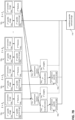
- Fig. 3A depicts a flow diagram for laser speckle contrast imaging according to an embodiment of the invention.
- a light source may illuminate a target area with coherent light of a predetermined wavelength and an image sensor may capture a first raw speckle image based on the predetermined wavelength.
- a first laser speckle contrast image may be computed 304.
- a laser speckle contrast image may be determined, for example, by determining a relative standard deviation of pixel values in a sliding window, e.g. a 3 ⁇ 3 window, a 5 ⁇ 5 window, or a 7 ⁇ 7 window.
- a (2 n + 1) ⁇ (2 n + 1) window may be selected for a natural number n, depending on the speckle size.
- a convolution with a kernel may be used, where the size of the kernel may be selected based on the speckle size.
- a relative standard deviation may be determined by computing the standard deviation of pixel intensity values in an area divided by the mean pixel intensity value in the area.
- laser speckle contrast values may be determined in any other suitable way.
- a processor may determine a first plurality of first features in the first raw speckle image.
- the first plurality of first features may be determined in the first speckle contrast image.
- the image with the most clearly defined anatomical features is used; it may depend on the imaging parameters such as wavelength and exposure time whether the anatomical have a higher visual distinctiveness in the raw speckle image or in the speckle contrast image.
- the term 'speckle image' may refer to either a raw speckle image or a speckle contrast image.
- the light source may illuminate the target area with coherent light of the predetermined wavelength and the image sensor may capture a second raw speckle image based on the predetermined wavelength.
- a second laser speckle contrast image may be computed 314.
- the processor may determine a second plurality of second features in the second speckle image. At least a part of the second plurality of second features should correspond to at least a part of the first plurality of first features.
- a plurality of second features may be associated with a plurality of first features.
- the processor may determine a plurality of displacement vectors based on the first features and the corresponding second features, a displacement vector describing the displacement of a feature relative to an image. For example, the processor may determine pairs of features comprising one first feature and one second feature, determine a first position of the first feature relative to the first speckle image, determine a second position of the second feature relative to the second speckle image, and determine a difference between the first and second positions.
- pairs of corresponding features may be pairs of a first feature and an associated second feature representing the same anatomical feature.
- the processor may determine a transformation, e.g. an affine transformation or a more general homography, for registering corresponding features with each other, based on the plurality of displacement vectors.
- the transformation may e.g. be found by selection from a class of transformations a transformation that minimizes a distance between pairs of corresponding features.
- the processor may register or align 324 the first laser speckle contrast image and the second laser speckle contrast image with each other, by transforming the first and/or second laser speckle contrast images.
- the older image may be transformed to be registered with the newer image.
- steps 308 and 318 may be omitted, and displacement vectors may be determined based on the first and second speckle images.
- a dense optical flow algorithm may be used, such as a Pyramid Lucas-Kanade algorithm or a Farneback algorithm to determine displacement vectors.
- This sort of algorithms typically performs a convolution of a pixel neighbourhood from the first speckle image with a part or the whole of the second speckle image, thus matching a neighbourhood for each pixel in the first speckle image with a neighbourhood in the second speckle image.
- Such methods may also comprise determining a polynomial expansion to model pixel values in pixel neighbourhoods in the first and second speckle images, comparing expansion coefficients, and determining displacement vectors based on the comparison.
- displacement vectors may be determined for e.g. individual pixels or groups of pixels, based on pixel values in groups of pixels in the speckle images.
- step 320 may be omitted, and a transformation may be determined based on pixel values of groups of pixels in the first speckle image and pixel values of associated groups of pixels in the second speckle image, for instance using a trained neural network that receives a first image and a second image as input and provides as output a transformation to register the first image with the second image or, alternatively, the second image with the first image.
- the processor may then compute 326 a combined, e.g. averaged, laser speckle contrast image based on the registered first and second laser speckle contrast images.
- Computing a combined image may comprise computing a weighted average, the weights preferably being based on a normalised amount of speckle contrast, on a relative change in speckle contrast, on the determined displacement vectors, and/or on parameters associated with the determined transformation.
- Computing a combined image may further comprise applying one or more filters, e.g. a median filter, or an outlier filter.
- the steps may be performed in a different order.
- the laser speckle contrast images may be computed after the raw speckle images have been registered. This way, temporal or spatio-temporal speckle contrast images may be computed.
- the transformation is more general than translation and rotation (e.g. comprises scaling or shearing), the transformation may distort the speckle pattern and thus introduce a source of noise.
- a single laser contrast raw speckle image may be computed based on the combined, e.g. averaged, raw speckle images. In this case, the images are preferably registered with sub-pixel accuracy.
- Fig. 3B depicts a flow diagram for laser speckle contrast imaging according to an embodiment of the invention.
- a first light source may illuminate a target area with coherent light of a first wavelength and a first image sensor may capture a first raw speckle image based on the first wavelength.
- a first laser speckle contrast image may be computed 334.
- a laser speckle contrast image may be determined as described above with reference to step 304.
- the first correction image may comprise pixels with pixel values and pixel coordinates, the pixel coordinates identifying the position of the pixel in the image.
- the first correction image is preferably obtained simultaneously with the first raw speckle image, but in an alternative embodiment, the first correction image may be obtained e.g. before or after the first raw speckle image.
- a second light source may illuminate the target area with light of at least a second wavelength, different from the first wavelength and a second image sensor may capture a first correction image based on the at least second wavelength.
- the second light source may use coherent light or incoherent light.
- the second light source may generate monochromatic light or polychromatic light, e.g. white light.
- the second image sensor may be the same sensor as the first image sensor, or a different sensor.
- the second wavelength is the same as the first wavelength
- the first correction image is the same image as the first raw speckle image
- a processor may determine a first plurality of first features in the first correction image. The steps relating to feature detection will be described in more detail with reference to Fig. 5-6 .
- the first light source may illuminate the target area with coherent light of the first wavelength and the first image sensor may capture a second raw speckle image based on the first wavelength.
- a second laser speckle contrast image may be computed 344.
- the second light source may illuminate the target area with light of the at least second wavelength and the second image sensor may capture a second correction image based on the at least second wavelength.
- the processor may determine a second plurality of second features in the second correction image. At least a part of the second plurality of second features should correspond to at least a part of the first plurality of first features.
- a plurality of second features may be associated with a plurality of first features.
- the processor may determine a plurality of displacement vectors based on the first features and the corresponding second features, a displacement vector describing the displacement of a feature relative to an image. For example, the processor may determine pairs of features comprising one first feature and one second feature, determine a first position of the first feature relative to the first correction image, determine a second position of the second feature relative to the second correction image, and determine a difference between the first and second positions.
- pairs of corresponding features may be pairs of a first feature and an associated second feature representing the same anatomical feature.
- the processor may determine a transformation, e.g. an affine transformation or a more general homography, for registering corresponding features with each other, based on the plurality of displacement vectors.
- the transformation may e.g. be found by selection from a class of transformations a transformation that minimizes a distance between pairs of corresponding features.
- the processor may register or align 354 the first laser speckle contrast image and the second laser speckle contrast image with each other, by transforming the first and/or second laser speckle contrast images.
- the older image may be transformed to be registered with the newer image.
- the transformation parameters determined based on the correction images may be adjusted to account for differences between the fields of view of the more than one image sensor.
- steps 338 and 348 may be omitted, and displacement vectors may be determined based on the first and second correction images.
- a dense optical flow algorithm may be used, such as a Pyramid Lucas-Kanade algorithm or a Farneback algorithm to determine displacement vectors.
- This sort of algorithms typically performs a convolution of a pixel neighbourhood from the first correction image with a part or the whole of the second correction image, thus matching a neighbourhood for each pixel in the first correction image with a neighbourhood in the second correction image.
- Such methods may also comprise determining a polynomial expansion to model pixel values in pixel neighbourhoods in the first and second correction images, comparing expansion coefficients, and determining displacement vectors based on the comparison.
- displacement vectors may be determined for e.g. individual pixels or groups of pixels, based on pixel values in groups of pixels in the first correction image and associated groups of pixels in the second correction image.
- step 350 may be omitted, and a transformation may be determined based on pixel values of groups of pixels in the first correction image and pixel values of associated groups of pixels in the second correction image, for instance using a trained neural network that receives a first image and a second image as input and provides as output a transformation to register the first image with the second image or alternatively, the second image with the first image.
- the processor may then compute 356 a combined, e.g. averaged, laser speckle contrast image based on the registered first and second laser speckle contrast images, as described above with reference to step 326.
- the steps may be performed in a different order.
- the laser speckle contrast images may be computed after the raw speckle images have been registered. This way, temporal or spatio-temporal speckle contrast images may be computed.
- the transformation is more general than translation and rotation (e.g. comprises scaling or shearing), the transformation may distort the speckle pattern and thus introduce a source of noise. This is particularly true for embodiments with more than one camera.
- a single laser contrast raw speckle image may be computed based on the combined, e.g. averaged, raw speckle images. In this case, the images are preferably registered with sub-pixel accuracy.
- Fig. 4A depicts a flow diagram for a motion-compensated speckle contrast imaging method according to an embodiment of the invention.
- the method may comprise exposing a target area to coherent light of a predetermined wavelength, the target area including living tissue.
- the target area comprises living tissue, e.g. skin, burns, or internal organs such as intestines, or brain tissue.
- the living tissue is perfused and/or comprises blood vessels and/or lymph vessels.
- the predetermined wavelength may be a wavelength in the visible spectrum, e.g. in the red, green, or blue part of the visible spectrum, or the predetermined wavelength may be a wavelength in the infrared part of the spectrum, preferably in the near-infrared part.
- the method may comprise capturing, e.g. by an image sensor, at least one sequence of images, the at least one sequence of images comprising (raw) speckle images, the (raw) speckle images being captured during the exposure with the first light.
- Each raw speckle image may comprise pixels, the pixels being defined by pixel coordinates and having pixel values.
- the pixel coordinates may define the position of the pixel relative to the image, and are typically associated with a sensor element of the image sensor.
- the pixel value may represent a light intensity.
- the image sensor may comprise a 2D image sensor, e.g. a CCD, for example a monochrome camera or a colour camera.
- the images in the sequence of images can be frames in a video stream or in a multi-frame snapshot.
- the method may further comprise determining one or more transformation parameters of an image registration algorithm for registering the speckle images with each other.
- the transformation parameters may be based on a similarity measure of pixel values of groups of pixels in a plurality of images of the at least one sequence of images, the images in the plurality of images being selected from the speckle images.
- the images in the plurality of images may comprise other images than the raw speckle images, that are associated with the raw speckle images.
- the transformation parameters preferably define one or more transformations out the group of homographies, projective transformations, or affine transformations.
- the method may further comprise determining a combined laser speckle contrast image based on the at least part of the sequence of first speckle images and the one or more determined transformation parameters, using either step 408 or step 410.
- the method may further comprise determining registered speckle images by registering the speckle images based on the one or more transformation parameters and the image registration algorithm, and determining a combined speckle contrast image based on the registered speckle images.
- the algorithm may first register the sequence of raw speckle images using the determined transformation, then compute a sequence of speckle contrast images, and then combine the registered speckle contrast images.
- the method may further comprise determining speckle contrast images based on the speckle images, determining registered speckle contrast images by registering the speckle contrast images based on the one or more transformation parameters and the image registration algorithm, and determining a combined speckle contrast image based on the registered speckle contrast images.
- the algorithm may first compute a sequence of speckle contrast images, then register the speckle contrast images using the determined transformation, and then combine the registered speckle contrast images.
- Fig. 4B depicts a flow diagram for a motion-compensated speckle contrast imaging method according to an embodiment of the invention.
- the method may comprise alternatingly or simultaneously exposing a target area to coherent first light of a first wavelength and to second light of one or more second wavelengths, preferably at least in part different from the first wavelength.
- the second light may be, for example, coherent light of a second wavelength, narrow-band light, or light comprising a plurality of second wavelengths of the visible spectrum, e.g. white light.
- the target area comprises living tissue, e.g. skin, burns, or internal organs such as intestines, or brain tissue.
- the living tissue is perfused and/or comprises blood vessels and/or lymph vessels.
- the method may comprise capturing, e.g. by an image sensor system with one or more image sensors with a fixed relation to each other, a sequence of first (raw) speckle images during the exposure with the first light, and a sequence of second (correction) images during the exposure with the second light.
- a speckle image of the sequence of first speckle images may be associated with an image of the sequence of second images.
- each second image may be associated with the simultaneously acquired first speckle image.
- each image may be considered associated with itself, and the image may be referred to as a first speckle image or as a second image, depending on its function in the algorithm (e.g. determining transformation parameters or providing perfusion information).
- a first speckle image may be associated with, e.g., the second image acquired immediately preceding or subsequent to the first speckle image, or both.
- first speckle images may be acquired at a higher rate than the second images, several first speckle images may be associated with a single second image.
- a sequence of first raw speckle images of the target area and a sequence of correction images of the target area may be acquired, each correction image being associated with one or more first raw speckle images.
- Each correction image may comprise pixels, the pixels being defined by pixel coordinates and having pixel values.
- the pixel coordinates may define the position of the pixel relative to the image, and are typically associated with a sensor element of the image sensor.
- the pixel value may represent a light intensity.
- the image sensor system may comprise one or more 2D image sensors, e.g. CCDs.
- the first raw speckle images and the correction images may be acquired using one or more image sensors, for example using greyscale cameras or colour (RGB) cameras.
- the images in the sequence of images may be e.g. frames in a video stream or multi-frame snapshot.
- the method may further comprise determining one or more transformation parameters of a registration algorithm for registering at least a part of the sequence of first speckle images based on a similarity measure of pixel values of groups of pixels in at least a part of the sequence of second images associated with the first speckle images.
- the transformation parameters preferably define one or more transformations out the group of homographies, projective transformations, or affine transformations.
- Determining transformation parameters may comprise selecting a first correction image from the at least part of the sequence of correction images and determining a plurality of first groups of pixels in the first correction image.
- the first correction image may be a reference correction image.
- the first correction image may be the first image, e.g. when a single output image is generated based on input by a user.
- the first correction image may be the most recent correction image, e.g. when a continuous stream of output images is being generated.
- a first group of pixels may be associated with a feature in the first correction image, e.g. an edge or corner.
- a feature is associated with a physical or anatomical feature, e.g. a blood vessel, or more in particular, a sharp corner or a bifurcation in a blood vessel.
- Image features not related to physical features such as overexposed image parts or edges of speckles, may display a large inter-frame variation, and may hence be less useful to register images.
- the features may be predetermined features, e.g. features belonging to a class of features, such as corners or regions with large differences in intensity.
- Features may further be determined by e.g. a quality metric, restrictions on mutual distances between features, et cetera.
- a group of pixels may be associated with a region in the first correction image, e.g. a neighbourhood of a predetermined set of pixels, for example, every pixel in the image, or a selection of pixels equally distributed over the image.
- Determining transformation parameters may further comprise selecting one or more second correction images, different from the first correction image. For each of the selected one or more second correction images, a plurality of second groups of pixels may be determined. The second groups of pixels may be associated with a feature in the second correction image. If feature-based (image) registration is used, e.g. using a sparse optical flow algorithm, preferably, the same algorithm is used to determine the first groups of pixels and the second groups of pixels.
- the second groups of pixels may be determined by convolving or cross-correlating a first group of pixels with the second correction image and e.g. selecting the group of pixels that is most similar to the first group of pixels, based on a suitable similarity metric.
- the convolution may be restricted in space, e.g. by only searching for a matching second group of pixels close to the position of the first group of pixels.
- the second groups of pixels may be restrained to conserve the mutual orientation of the first groups of pixels, e.g. for preventing anatomically impossible combinations.
- the second groups of pixels may then be associated with the first groups of pixels based on, at least, a similarity in pixel values.
- the second groups of pixels are determined by matching or convolution with the first groups of pixels, such association may be performed as part of determining the second groups of pixels. If feature-based registration is used, a second group of pixels may be associated with a first group of pixels based on similarity of the feature associated with the second group of pixels and the feature associated with the first group of pixels.
- a transformation for registering the second correction image and the first correction image, and hence for registering the associated first speckle images or derived first speckle contrast images may be determined based on the pixel coordinates of pixels in the associated first and second groups of pixels. Determining a transformation may comprise determining a 3D motion of the image sensor system relative to the target area, or may be informed by the effects this 3D motion would have on the acquired images.
- displacement vectors may be determined, based on positions of the first and associated second groups of pixels, e.g. based on positions of features in the first and second correction images.
- the displacement vectors may represent motion of the target area relative to the image sensor or image capturing device.
- the neighbourhood of one or more determined object features may be used to determine the displacement vectors and/or the transformation.
- the method may further comprise determining a combined laser speckle contrast image based on the at least part of the sequence of first speckle images and the one or more determined transformation parameters, using either step 418 or step 420 .
- the method may further comprise determining registered first speckle images by registering the at least part of the sequence of first speckle images based on the one or more transformation parameters and the registration algorithm, and determining a combined speckle contrast image based on the registered first speckle images.
- the algorithm may first register the sequence of raw speckle images using the determined transformation, then compute a sequence of speckle contrast images, and then combine the registered speckle contrast images.
- the method may further comprise determining first speckle contrast images based on the at least part of the sequence of first speckle images, determining registered speckle contrast images by registering the first speckle contrast images based on the one or more transformation parameters and the registration algorithm, and determining a combined speckle contrast image based on the registered first speckle contrast images.
- the algorithm may first compute a sequence of speckle contrast images, then register the speckle contrast images using the determined transformation, and then combine the registered speckle contrast images.
- determining a combined laser speckle contrast image may comprise determining a sequence of registered first raw speckle images based on the first raw speckle images and the determined transformation, determining a combined speckle contrast image based on two or more registered first raw speckle images of the sequence of registered first raw speckle images, and determining a combined speckle contrast image based on the combined raw speckle image.
- the algorithm may first register the sequence of raw speckle images using the determined transformation, then combine the registered speckle contrast images, and then compute a speckle contrast image.
- the combining and the computing of a speckle contrast may be a single step, e.g. by computing a temporal or spatio-temporal speckle contrast based on the sequence of registered first raw speckle images.
- Combining raw speckle images or speckle contrast images may comprise averaging, weighted averaging, filtering with e.g. a median filter, et cetera. Weights for weighted averaging may be based e.g. on a quantity derived from the speckle contrast, derived from the transformation parameters, or derived from the displacement vectors. Methods of combining raw speckle images or speckle contrast images are discussed in more detail below with reference to Fig. 9 .
- Fig. 5 depicts a method for determining a transformation according to an embodiment of the invention.
- Each of the plurality of first features may be associated with a group of pixels in the first correction image.
- the first features relate to anatomical structures, e.g. blood vessels 504 1-2 , or other stable features that may be assumed not to move between subsequent frames. Therefore, the first correction image is preferably obtained using light which makes such anatomical structures clearly visible. For example, green light may be used, which is strongly absorbed by blood vessels, but not by most other tissues. Therefore, blood vessels may appear as dark structures in a light environment, resulting in a high visual distinctiveness.
- other embodiments may use light of one or more other wavelengths, e.g. blue light or white light.
- Features 506 1-3 may be determined using any suitable feature detection algorithm, for example a feature detector based on a Harris detector or Shi-Tomasi detector, such as goodFeaturesToTrack from the OpenCV library.
- suitable feature detectors and descriptors include Speeded-Up Robust Features (SURF), Features from Accelerated Segment Test (FAST), Binary Robust Independent Elementary Features (BRIEF), and combinations thereof such as ORB.
- SURF Speeded-Up Robust Features
- FAST Features from Accelerated Segment Test
- BRIEF Binary Robust Independent Elementary Features
- ORB Binary Robust Independent Elementary Features
- Various suitable algorithms have been implemented in generally available image processing libraries such as OpenCV. Preferably, depending on the application, the algorithm should be fast enough to allow real-time image processing.
- sharp corners e.g. features 506 1,3
- bifurcations e.g. feature 506 2
- a deterministic feature detection algorithm is used, i.e., a feature detection algorithm that detects identical features in identical images.
- the features should be distributed over a large part of the image area. A good distribution of feature points over the image may be obtained by requiring a minimum distance between selected feature points.
- the features may be assigned a descriptor identifying feature properties, facilitating feature distinction and feature matching.
- the first plurality of first features may comprise at least 5 features, preferably at least 25, more preferably at least 250, even more preferably at least 1000.
- the number of features may depend on the amount of pixels in the image, with a larger number of features being used for images with more pixels. Typically, a higher number of features may result in a more accurate transformation, as random errors may be averaged out.
- the number of features may be limited. For example, there may only be a limited number of features that satisfy predetermined quality indicators, e.g. a magnitude of a local contrast or the sharpness of a corner. Additionally, the computation time increases with the number of features, and hence, the number of features may be limited to allow real-time image registration, e.g. for a 50 fps video feed, the entire algorithm should preferably take less than 20 ms per frame.
- the field of view of the second correction image overlaps substantially, preferably more than half, with the field of view of the first correction image.
- the second features relate to the same anatomical structures, e.g. blood vessels 514 1-2 as the first features.
- the same feature detection algorithm is used to detect features in both the first and second correction images.
- the determined first and second features may comprise position information relative to the first and second correction images, respectively.
- a plurality of displacement vectors 524 1-2 may be determined, a displacement vector describing the displacement of a feature relative to an image.
- pairs of corresponding features may be determined, e.g. feature 506, may be associated with feature 516 1
- feature 506 2 may be associated with feature 516 2
- feature 506 3 may be associated with feature 516 3 .
- Pairs of corresponding features may e.g. be determined based on feature parameters such as local contrast or the sharpness of a corner, or based on distances between features in the first and second correction images.
- not all features in the first correction image can be paired to features in the second correction image.
- determining displacement vectors 524 1-3 and determining pairs of corresponding features may be performed in a single step.
- an algorithm that minimizes the distance between point clouds formed by, respectively, the first and second features may implicitly determine pairs of corresponding features and displacement vectors for each pair of corresponding features.
- the typical inter-frame displacement is only a few pixels.
- the plurality of displacement vectors may be filtered to exclude potential outliers, e.g. displacement vectors that deviate more than a predetermined amount from displacement vectors originating from nearby features.
- displacement vectors may be determined based on associated groups of pixels, based on pixel values in the first and second correction images. As was explained above with reference to Fig. 3 , in such embodiments feature detection may be omitted. Instead, displacement vectors may be determined using e.g. a dense optical flow algorithm, such as a Pyramid Lucas-Kanade algorithm or a Farneback algorithm. In principle, any method to determine displacement vectors based on pixel values of corresponding groups of pixels may be used.
- a transformation may be determined.
- the transformation may be defined by an average or median displacement vector, or by another displacement vector that is statistically representative of the plurality of displacement vectors.
- the transformation may be an affine transformation, a projective transformation, or a homography, combining e.g. translation, rotation, scaling and shearing transformations.
- the transformation images features from the first correction image onto the corresponding features in the second correction image. The transformation may then be applied to the first raw speckle image to register the first raw speckle image with the second raw speckle image.
- the first and second correction images may be preprocessed before determining features. For example, overexposed and/or underexposed regions may be identified based on pixel values. Subsequently, these regions may be masked, so no features may be detected in those regions.
- the mask may be slightly larger than the overexposed or underexposed region, e.g. by growing the identified region with a predetermined number of pixels. Masking overexposed and/or underexposed regions may improve the quality of the features, as it prevents features e.g. associated with an edge or corner of an overexposed region.
- Fig. 6A displays an example of determining a transformation according to an embodiment of the invention, where the determined transformation is a translation.
- a plurality of displacement vectors 606 1-3 may be determined. For the sake of clarity, only the features and the displacement vectors are shown, and not the (anatomical) structures.
- displacement vector 606 1-3 will not all be exactly the same.
- displacement vector 606 is slightly shorter than average, while displacement vector 606 3 is slightly larger than average.
- the directions of the displacement vector display some variation.
- an average displacement vector 608 may be determined.
- a similarity between the average displacement vector 608 and the determined displacement vectors 606 1-3 may be computed, for example based on the variation of the displacement vectors. This way, an indication may be obtained how well the transformation compensates for the detected displacement of individual pairs of features. Alternatively, the average distance between the features in the first correction image after transformation and the corresponding features in the second correction image may be determined.
- Fig. 6B displays an example of determining a transformation according to an embodiment of the invention, where the determined transformation is an affine transformation. Similar to Fig. 6A , a first plurality of first features 612 1-3 , a second plurality of second features 614 1-3 , and a plurality of displacement vectors 616 1-3 may be determined. In this example, however, the average displacement vector 618 , which has almost zero length, is not representative for the determined displacement vectors, which are typically longer, and point in different directions.
- affine transformations include translations, rotations, mirroring, scaling, and shearing transformations, and combinations thereof. It is possible to selectively exclude transformations by restricting transformation parameter values. For example, mirroring may be excluded as a possible transformation, as mirroring is typically not physically possible.
- an affine transformation can be computed using a transformation matrix with six degrees of freedom as described in equation (1), acting on a point represented in homogeneous coordinates.
- the affine transformation may be limited to only predefined operations. For example, a more specific transformation matrix limited tot e.g. rotation matrices can be obtained which can be more suitable for certain applications.
- A is a transformation matrix transforming a point p with coordinates x and y , typically in pixel coordinates, into a transformed point p' with coordinates x' and y' .
- Matrix A comprises six free parameters, of which t x and t y define a translation, while the submatrix a 11 a 12 a 21 a 22 may define reflections, rotations, scaling and/or shearing.
- a transformation size may e.g. be based on a norm of the transformation matrix A , or the norm of the matrix A - I , where I is the Identity matrix.
- At least three displacement vectors may be used to provide a solvable system of six equations and six unknowns.
- Such a linear system can be solved in a deterministic way as is known in the art.
- many displacement vectors may be determined, each of which may comprise a small error. Therefore, a more robust approach can be to use multiple displacement vectors and use an appropriate fitting algorithm, e.g., least squares fitting as shown in equation (2).
- A arg min A ⁇ i ⁇ p i ′ ⁇ A p i ⁇ 2
- the reliability of the determined transformation may again be determined as was explained above with reference to Fig. 6A .
- Fig. 6C displays an example of determining a transformation according to an embodiment of the invention, where the determined transformation is a projective transformation.
- Projective transformations include and are more general than affine transformations.
- Projective transformation include e.g. skewing transformations. They may be needed to compensate for e.g. a change in angle between the camera and the target area.
- a first plurality of first features 622 1-3 , a second plurality of second features 624 1-3 , and a plurality of displacement vectors 626 1-3 may be determined.
- the translation on the left side of the image is much smaller than on the right side of the image.
- applying an average translation would transform pixels on the left too much, and pixels on the right not enough.
- This kind of displacement may be corrected by a projective transformation.
- Various methods to determine a projective transformation based on four or more displacement vectors are known in the art.
- a projective transformation can be calculated using a projective matrix as depicted in equation (3) using inhomogeneous coordinates ( x 1 , y 1 , z 1 ) and ( x 2 , y 2 , z 2 ).
- x 2 y 2 z 2 h 11 h 12 h 13 h 21 h 22 h 23 h 31 h 32 h 33 x 1 y 1 z 1
- displacement vectors may be determined by ( x' - x, y' - y). In other embodiments, displacement vectors are not explicitly constructed.
- equation (3) may be rewritten as two independent equations as is shown in equation (4).
- Equation (7) may be solved using only four sets of coordinates provided by four features.
- Equation (7) can be solved deterministically using at least four points, but using more points may result in a more robust result, similar to what was explained above with regards to the affine transformation.
- this may be done using singular value decomposition (SVD).
- the step of determining the displacement vectors or point pairs is combined with the determination of the homography step to find the most accurate projective transformation, this can be done with algorithms such as RANSAC.
- an algorithm may first compute a relatively simple transformation, e.g. a translation. The algorithm may then determine whether the computed transformation reproduces the determined displacement vectors with sufficient accuracy. If not, the algorithm may attempt a more general transformation, e.g. an affine transformation, and repeat the same procedure. This may reduce the required computation time if translations are sufficient in a large enough number of cases. In a different embodiment, the algorithm may always compute a general transformation, e.g. always a general homography. This may result in more accurate registration of the raw speckle images or speckle contrast images.
- Fig. 6D displays an example of determining a plurality of transformations according to an embodiment of the invention.
- Each correction image 650 in the series of correction images may be divided into a plurality of regions 652 1-n , preferably a plurality of disjoint regions which jointly cover the entire image, for example a rectangular grid.
- a transformation 654 1 , 654 2 , ..., 654 n may be determined for each region 654 1 , 654 2 , ..., 654 n , respectively, preferably in the same manner as was explained above with reference to Fig. 6A-C for the entire image.
- each region may be transformed using the transformation determined for that region.
- the determined transformations may be assigned to e.g. a central pixel in the region, and the remaining pixels are transformed according to an interpolation scheme, based on the transformation of the region comprising the pixel and the transformations of neighbouring regions.
- each region may be a single pixel.
- the transformation may be determined based on the pixel value and based on pixel values of pixels in a region surrounding the pixel.
- Fig. 7A and 7B depict flow diagrams for laser speckle contrast imaging combining more than two raw speckle images according to an embodiment of the invention.
- a first raw speckle image 702 1 based on light of a first wavelength may be obtained, and may be used to compute a first laser speckle contrast image 704 1 .
- a first correction image 706 1 based on light of at least a second wavelength, and associated with the first raw speckle image may be obtained and a first plurality of first features may be detected 708 1 in the first correction image.
- Items 702 1 -708 1 may be acquired by performing step 710 1 , which may be similar to steps 302-308 as described with reference to Fig. 3 .
- the first correction image and the first raw speckle image may be the same image.
- step 710 1 may be repeated as step 710 2 , resulting in a second raw speckle image 702 2 based on light of the first wavelength, a second laser speckle contrast image 704 2 , a second correction image 706 2 based on light of the at least second wavelength, and a plurality of second features 708 2 .
- a plurality of first displacement vectors 712 1 may be computed.
- a first transformation 714 1 may be determined, which may be used to transform the first laser speckle contrast image 704 1 to register the first laser speckle contrast image with the second laser speckle contrast image 704 2 , resulting in a first registered laser speckle contrast image 718 1 .
- a transformation may be determined without explicitly detecting features and/or displacement vectors.
- first weights 716 1 may be determined based on the plurality of first displacement vectors 712 1 .
- a weight may be correlated, preferably inversely correlated, to a length of a representative displacement vector, e.g., a maximum, an average or a median displacement vector, or to e.g. an average or median length of the plurality of first displacement vectors.
- a weight may be determined for each region based on transformation parameters associated with that region or a single weight may be determined for the entire image, e.g. based on a representative parameter, e.g. the largest, average, or median displacement. Determination of a weighted average is discussed in more detail below with reference to Fig. 9 .
- the first registered laser speckle contrast image 718 1 may then be combined with the second laser speckle contrast image 704 2 , resulting in a first combined laser speckle contrast image 720 1 .
- the combined laser speckle contrast image can be, e.g., a pixel-wise average or maximum of the first registered laser speckle contrast image 718 1 and the second laser speckle contrast image 704 2 .
- first weights 716 1 and/or second weights 716 2 may be used to determine a weighted average.
- step 710 1 may be repeated as step 710 3 , resulting in a third raw speckle image 702 3 based on light of the first wavelength, a third laser speckle contrast image 704 3 , a third correction image 706 3 based on light of the at least second wavelength, and a plurality of second features 708 3 .
- a plurality of second displacement vectors 712 2 may be computed.
- a second transformation 714 2 may be determined.
- the second transformation may be used to transform the first combined laser speckle contrast image 720 1 to register the first combined laser speckle contrast image with the third laser speckle contrast image 704 3 , resulting in a first registered combined laser speckle contrast image 722 1 .
- the first registered laser speckle contrast image 718 1 may then be combined with the second laser speckle contrast image 704 2 , resulting in a first combined laser speckle contrast image 720 1 .
- the first registered combined laser speckle contrast image 720 1 may then be combined with the third laser speckle contrast image 704 3 , resulting in a second combined laser speckle contrast image 720 2 .
- the second combined laser speckle contrast image may comprise information from the first laser speckle contrast image 704 1 , the second laser speckle contrast image 704 2 , and the third laser speckle contrast image 704 3 .
- the n th image may comprise information from all previous n -1 images.
- the weighing may then be skewed to give recent images a higher weight then older images. This embodiment is particularly useful for streaming video, where each captured frame is processed and outputted with a minimal delay.
- Another advantage of this method is that between two subsequent frames, motion may be assumed to be relatively small, which may speed up processing, and which may allow a wider range of algorithms to be used, as some algorithms may work less well for large motions. In general, feature-based algorithms may be more reliable for relatively large displacements.
- Fig. 7B depicts a flow diagram for an alternative method for laser speckle contrast imaging combining more than two raw speckle images according to an embodiment of the invention.
- a predetermined number of images is combined into a single combined image.
- Steps 752 1-n -760 1-n relating to image acquisition, computation of speckle contrast images, and determination of features, may be the same as steps 702 1-n - 710 1-n , explained above with reference to Fig. 7A .
- all displacement vectors 762 1,2 are determined relative to a single reference image, e.g. the first or last image in the sequence of n images.
- the images are registered with the n th image.
- the weights 766 1,2 are also determined based on a transformation parameter, e.g. average displacement, relative to the n th image.
- all n registered speckle contrast images may be combined into a single combined speckle contrast image 770.
- the method depicted in Fig. 7B may result in a combined image having a higher image quality than the method depicted in Fig. 7A , but at the cost of a larger delay between image capture and display. Thus, this method is especially advantageous for recording snap shots.
- the method depicted in Fig. 7B may be applied on a sliding group of images, e.g. the last n images of a video feed.
- n should preferably be not too large, e.g. n may be about 5-20 when the frame rate is e.g. 50-60 fps.
- the number of frames which may be processed also depends on the hardware and the algorithm, so larger amounts of frames may still be feasible.
- An advantage of using a relatively small number of frames is that dynamic phenomena, e.g. the effect of a heartbeat, may be imaged.
- An advantage of a larger amount of frames is that such transient effects may be filtered out, especially when the number of frames is selected to cover an integer multiple of heartbeats and/or respiration cycles.
- Fig. 8 depicts a flow diagram for computing a corrected laser speckle contrast image according to an embodiment of the invention.
- one may be interested in the relative motion of one or more objects in the target area relative to one or more other objects in the target area; for example, motion of a bodily fluid or red blood cells relative to a tissue.
- noise in a signal derived from the moving object may be compensated by a signal derived from a reference object (reference signal).
- reference signal reference object
- the underlying principle is that the desired signal may comprise a first component based on the motion of the quantity of interest relative to the reference object, and a second component based on the motion of the entire target area relative to the camera.
- the reference signal may comprise only, or mainly, a component based on the motion of the entire target area relative to the camera.
- the reference signal may therefore be correlated to the second component of the desired signal. This correlation may be used to correct or compensate the desired signal. For example, a correction term based on the signal strength of the reference signal may be added to the desired signal.
- a target area is illuminated with coherent light of a first wavelength 802 , e.g. red or infrared light, and illuminated with coherent light of a second wavelength 812 , e.g. green or blue light.
- the light of the first wavelength is mostly scattered by the object or fluid of interest, e.g. blood.
- the light of the second wavelength is mostly scattered by the surface of the target area and/or mostly absorbed by the object or fluid of interest.
- the second wavelength is selected such that the reflection of the second wavelength by blood is at least 25%, at least 50%, or at least 75% less than the reflection by tissue.
- the target area is illuminated with light of the first and second wavelengths simultaneously.
- the scattered light of the first wavelength may result in a first raw speckle image, which may be captured 804 by a first image sensor.
- the scattered light of the second raw speckle image may be captured 814 by a second image sensor, preferably different from the first image sensor.
- the first raw speckle image may be referred to as a desired signal raw speckle image, while the second raw speckle image may be referred to as a reference signal image or a correction signal image.
- a first speckle contrast image may be calculated 806.
- a second speckle contrast image may be calculated 806.
- the speckle contrast is calculated in the same way for the first and second raw speckle images. Speckle contrast may be calculated, for example, in the way that has been explained above with reference to Fig. 1 and step 304 of Fig. 3A .
- a corrected speckle contrast image may be calculated based on the first and second speckle contrast images.
- Calculating a corrected speckle contrast image may comprise e.g. adding a correction term or multiplying by a correction factor.
- a correction term or correction term may be based on a determined amount of speckle contrast in the speckle contrast image in comparison with a reference amount of speckle contrast.
- the reference amount of speckle contrast may e.g. be predetermined, or may be determined dynamically based on e.g. the amount of speckle contrast in a number of preceding second contrast images, or based on an speckle contrast image with very little motion as determined by e.g. the motion correction algorithm as has been described above.
- the corrected speckle contrast image may then be stored 810 for further processing, e.g. reregistration or realignment and temporal averaging as was explained with reference to Fig. 3A and B .
- the second raw speckle image and/or the second speckle contrast image may also be stored 818 for further processing, e.g. to determine displacement vectors in a plurality of second raw speckle images to reregister or realign a plurality of simultaneously captured corrected speckle contrast images.
- steps 802-818 may replace steps 332-336 in Fig. 3B .
- the second wavelength image may be used both for multi-spectral coherent correction (or 'dual laser correction'), as explained with reference to Fig. 8 , and for registering speckle contrast images as explained with reference to Fig. 3A and B .
- Fig. 9 schematically depicts determining motion compensate speckle contrast image based on a weighted average, according to an embodiment of the invention.
- a transformation size may be determined based on parameters defining the determined transformation, and/or on the plurality of displacement vectors.
- the transformation size may be based on the lengths of the plurality of displacement vectors or a statistical representation, e.g. an average 904 1-N thereof, or on a matrix norm of a matrix representing the transformation.
- the combined speckle contrast image 906 may be a weighted average of the speckle contrast images in the sequence of registered speckle contrast images, each image being weighted with a weight parameter w' .
- the displacement vectors may be defined by a total of P points p i ' which are defined by the coordinates ( x i ' , y i ' ) on a reference image and points p i which are defined by the coordinates ( x i , y i ) on the image that is to be transformed to be registered to the reference image.
- the weight parameter w' may also be determined based on a dense or sparse optical flow parameter defining the optical flow between a first image, typically a reference image, and a second image.
- v ij ' is the optical flow of a pixel ( i, j ) comprising an x and an y component of the optical flow
- W and H are respectively the width and height in pixels of the reference image or the reference region of interest.
- a weight parameter may also be determined for predefined regions of the image such as a rectangular or triangular mesh. For instance, a weight parameter may be based on the average optical flow in a corresponding predefined region.
- s ij ' is the speckle contrast of the reference image and W and H are respectively the width and height in pixels of the reference image or the reference region of interest.
- An advantage of using the speckle contrast is that any noise occurring in a small temporal window on the speckle contrast would blur the speckle contrast. Such noise could be due to motion of e.g. the images object or the camera, or to other sources such as loose fibre connections.
- An advantage of using weights based on displacement vectors or optical flow is that they may have a higher temporal resolution for LSCI, while a speckle contrast-based weight may lag behind, especially when the perfusion is increasing.
- the weight parameter can be determined based on a speckle contrast per pixel.
- w ij ′ ⁇ 1 s ij ⁇
- the weight parameter can be determined based on the average speckle contrast in predefined regions such as a square grid or triangular mesh. Weight parameters may also be determined for dynamically determined regions, where regions may e.g. be determined based on the detected motion.
- weights may be combined.
- the weights could be normalised and added, multiplied, or compared, selecting e.g. the lowest weight.
- a first weight e.g. based on speckle contrast values
- an optical flow or displacement based weight may be used to determine a weighted average of the images that have not been filtered out.
- the image buffer may only comprise the combined image.
- the advantage of this algorithm is that it is much faster to compute since only one geometrical transformation has to be applied and the amount of processing steps is lower.
- the size of the buffer where the weight factors are stored determines how large the influence of the history images are compared to the influence of the new image. When the buffer is small, the new image will be more present in the final image while if the buffer is large the new image will be less present while images with a high weight factor will be more present.
- the weights may be determined for an image as a whole, for each pixel in an image, or for predetermined or dynamically determined regions in an image.
- a single transformations may be applied to each image as a whole, each pixel may be individually transformed, or the transformation may be determined for an applied to predetermined or dynamically determined regions.
- the weights may be defined as scalars, as matrices, or in different format.
- An advantage of an algorithm using geometrical transformations based on e.g. rectangular or triangular meshes, and using weights determined per mesh segment, is that such an algorithm may be more robust to registration errors while still being able to correct locally for noise such as local motion.
- a weight based on the amount of displacement or amount of transformation may be determined quickly for each image, independent of other images. Images with a large amount of displacement are generally noisier, and may therefore be assigned a lower weight, thus increasing the quality of the combined image.
- a normalised amount of speckle contrast or an amount of change in speckle contrast relative to one or more previous and/or subsequent images in the sequence of first speckle contrast images may be determined for each first raw speckle image.
- the weighted average may be determined using weights based on the determined normalised amount of speckle contrast or the determined change in speckle contrast associated with the respective first speckle contrast image.
- Weights based on differences or changes in speckle contrast may be indicative for image quality.
- speckle contrast and hence these weights, may be affected by various factors in the entire system, e.g. motion of the camera relative to the target area, movement of fibres or other factors influencing the optical path length, loose connections, or fluctuating lighting conditions.
- speckle contrast is determined in relative units, so weights may be determined by analysing a sequence of raw speckle images. As speckle contrast is inversely correlated with perfusion, speckle contrast-based perfusion units could similarly be used.
- the images may be normalized in such a way that the relation between the speckle contrast and weight is a linear with a constant.
- speckle-contrast-based correction could be more real-time, because each image might be normalized directly and without reference to a temporal window of images. Alternatively, an incremental average might be used.
- Data processing system 1000 may include at least one processor 1002 coupled to memory elements 1004 through a system bus 1006 . As such, the data processing system may store program code within memory elements 1004 . Further, processor 1002 may execute the program code accessed from memory elements 1004 via system bus 1006 . In one aspect, data processing system may be implemented as a computer that is suitable for storing and/or executing program code. It should be appreciated, however, that data processing system 1000 may be implemented in the form of any system including a processor and memory that is capable of performing the functions described within this specification.
- Memory elements 1004 may include one or more physical memory devices such as, for example, local memory 1008 and one or more bulk storage devices 1010 .
- Local memory may refer to random access memory or other non-persistent memory device(s) generally used during actual execution of the program code.
- a bulk storage device may be implemented as a hard drive or other persistent data storage device.
- the processing system 1000 may also include one or more cache memories (not shown) that provide temporary storage of at least some program code in order to reduce the number of times program code must be retrieved from bulk storage device 1010 during execution.
- I/O devices depicted as key device 1012 and output device 1014 optionally can be coupled to the data processing system.
- key device may include, but are not limited to, for example, a keyboard, a pointing device such as a mouse, or the like.
- output device may include, but are not limited to, for example, a monitor or display, speakers, or the like.
- Key device and/or output device may be coupled to data processing system either directly or through intervening I/O controllers.
- a network adapter 1016 may also be coupled to data processing system to enable it to become coupled to other systems, computer systems, remote network devices, and/or remote storage devices through intervening private or public networks.
- the network adapter may comprise a data receiver for receiving data that is transmitted by said systems, devices and/or networks to said data and a data transmitter for transmitting data to said systems, devices and/or networks.
- Operation modems, cable operation modems, and Ethernet cards are examples of different types of network adapter that may be used with data processing system 1000 .
- memory elements 1004 may store an application 1018 .
- data processing system 1000 may further execute an operating system (not shown) that can facilitate execution of the application.
- Application being implemented in the form of executable program code, can be executed by data processing system 1000 , e.g., by processor 1002 . Responsive to executing application, data processing system may be configured to perform one or more operations to be described herein in further detail.
- data processing system 1000 may represent a client data processing system.
- application 1018 may represent a client application that, when executed, configures data processing system 1000 to perform the various functions described herein with reference to a "client".
- client can include, but are not limited to, a personal computer, a portable computer, a mobile phone, or the like.
- data processing system may represent a server.
- data processing system may represent an (HTTP) server in which case application 1018 , when executed, may configure data processing system to perform (HTTP) server operations.
- data processing system may represent a module, unit or function as referred to in this specification.
Landscapes
- Health & Medical Sciences (AREA)
- Life Sciences & Earth Sciences (AREA)
- Physics & Mathematics (AREA)
- Engineering & Computer Science (AREA)
- General Health & Medical Sciences (AREA)
- Surgery (AREA)
- Animal Behavior & Ethology (AREA)
- Veterinary Medicine (AREA)
- Biophysics (AREA)
- Biomedical Technology (AREA)
- Heart & Thoracic Surgery (AREA)
- Medical Informatics (AREA)
- Molecular Biology (AREA)
- Pathology (AREA)
- Public Health (AREA)
- Physiology (AREA)
- Signal Processing (AREA)
- Optics & Photonics (AREA)
- General Physics & Mathematics (AREA)
- Artificial Intelligence (AREA)
- Psychiatry (AREA)
- Computer Vision & Pattern Recognition (AREA)
- Cardiology (AREA)
- Vascular Medicine (AREA)
- Hematology (AREA)
- Chemical & Material Sciences (AREA)
- Analytical Chemistry (AREA)
- Image Processing (AREA)
- Endoscopes (AREA)
- Eye Examination Apparatus (AREA)
- Lasers (AREA)
Applications Claiming Priority (2)
| Application Number | Priority Date | Filing Date | Title |
|---|---|---|---|
| NL2026505A NL2026505B1 (en) | 2020-09-18 | 2020-09-18 | Motion-compensated laser speckle contrast imaging |
| PCT/EP2021/075620 WO2022058499A1 (en) | 2020-09-18 | 2021-09-17 | Motion-compensated laser speckle contrast imaging |
Publications (3)
| Publication Number | Publication Date |
|---|---|
| EP4213705A1 EP4213705A1 (en) | 2023-07-26 |
| EP4213705C0 EP4213705C0 (en) | 2024-11-06 |
| EP4213705B1 true EP4213705B1 (en) | 2024-11-06 |
Family
ID=74125608
Family Applications (1)
| Application Number | Title | Priority Date | Filing Date |
|---|---|---|---|
| EP21773845.9A Active EP4213705B1 (en) | 2020-09-18 | 2021-09-17 | Motion-compensated laser speckle contrast imaging |
Country Status (10)
| Country | Link |
|---|---|
| US (1) | US20230359057A1 (https=) |
| EP (1) | EP4213705B1 (https=) |
| JP (1) | JP2023543172A (https=) |
| KR (1) | KR20230069196A (https=) |
| CN (1) | CN116456897B (https=) |
| CA (1) | CA3192536A1 (https=) |
| ES (1) | ES3006987T3 (https=) |
| IL (1) | IL301395B2 (https=) |
| NL (1) | NL2026505B1 (https=) |
| WO (1) | WO2022058499A1 (https=) |
Families Citing this family (19)
| Publication number | Priority date | Publication date | Assignee | Title |
|---|---|---|---|---|
| ES3037621T3 (en) | 2018-07-19 | 2025-10-03 | Activ Surgical Inc | Systems and methods for multi-modal sensing of depth in vision systems for automated surgical robots |
| WO2020081651A1 (en) | 2018-10-16 | 2020-04-23 | Activ Surgical, Inc. | Autonomous methods and systems for tying surgical knots |
| CN113993474A (zh) | 2018-12-28 | 2022-01-28 | 艾科缇弗外科公司 | 在微创手术中优化可达性、工作空间和灵巧性的系统和方法 |
| CN113853151A (zh) | 2018-12-28 | 2021-12-28 | 艾科缇弗外科公司 | 用于在手术期间定向远程相机的用户界面元件 |
| CN113950279B (zh) | 2019-04-08 | 2023-04-14 | 艾科缇弗外科公司 | 用于医疗成像的系统和方法 |
| US12292564B2 (en) | 2019-04-08 | 2025-05-06 | Activ Surgical, Inc. | Systems and methods for medical imaging |
| WO2020214821A1 (en) | 2019-04-19 | 2020-10-22 | Activ Surgical, Inc. | Systems and methods for trocar kinematics |
| CN114599263A (zh) | 2019-08-21 | 2022-06-07 | 艾科缇弗外科公司 | 用于医疗成像的系统和方法 |
| CN115243610A (zh) | 2020-01-08 | 2022-10-25 | 艾科缇弗外科公司 | 激光散斑力反馈估计 |
| IL295510B2 (en) | 2020-02-14 | 2025-08-01 | Activ Surgical Inc | Systems and methods for processing laser speckle signals |
| CN116744873A (zh) | 2020-12-04 | 2023-09-12 | 艾科缇弗外科公司 | 用于提供外科手术指导的系统和方法 |
| US20240412355A1 (en) * | 2021-09-24 | 2024-12-12 | Activ Surgical, Inc. | Systems and methods for perfusion quantification |
| EP4493052A1 (en) * | 2022-03-17 | 2025-01-22 | LIMIS Development B.V. | Motion-compensated laser speckle contrast imaging |
| CN119300752A (zh) * | 2022-04-28 | 2025-01-10 | 德克萨斯大学系统董事会 | 使用激光散斑对比成像进行连续血流可视化 |
| CN119300753A (zh) * | 2022-06-10 | 2025-01-10 | 洛克利光子有限公司 | 用于校准基于散斑的传感器的系统和方法 |
| CN114943661B (zh) * | 2022-07-26 | 2022-11-04 | 中国科学院武汉岩土力学研究所 | 基于双目相机的无标靶岩石表面变形场观测装置与方法 |
| CN116418976B (zh) * | 2022-11-24 | 2023-12-12 | 北京的卢铭视科技有限公司 | 结构光相机的产测sdk授权方法、电子设备及存储介质 |
| US12175438B1 (en) * | 2023-10-10 | 2024-12-24 | Capital One Services, Llc | Burst image capture |
| KR20250092466A (ko) | 2023-12-15 | 2025-06-24 | 부산대학교 산학협력단 | 저간섭 반사도 이미지를 활용한 개선된 스펙클 대조도 이미징 시스템 및 방법 |
Citations (1)
| Publication number | Priority date | Publication date | Assignee | Title |
|---|---|---|---|---|
| US20210219961A1 (en) * | 2018-06-19 | 2021-07-22 | The Board Of Trustees Of The Leland Stanford Junior University | Compounding and non-rigid image registration for ultrasound speckle reduction |
Family Cites Families (11)
| Publication number | Priority date | Publication date | Assignee | Title |
|---|---|---|---|---|
| EP1324051A1 (en) * | 2001-12-26 | 2003-07-02 | Kevin R. Forrester | Motion measuring device |
| ES2676511T3 (es) * | 2009-09-04 | 2018-07-20 | The Johns Hopkins University | Formación de imágenes por moteado láser multimodal |
| JP2013153813A (ja) * | 2012-01-27 | 2013-08-15 | Olympus Corp | 内視鏡装置、画像処理方法及びプログラム |
| JP6230333B2 (ja) * | 2013-08-22 | 2017-11-15 | オリンパス株式会社 | 画像処理装置、画像処理方法およびプログラム |
| CN106413536A (zh) * | 2014-05-23 | 2017-02-15 | 柯惠有限合伙公司 | 用于在腹腔镜中为血流成像的系统 |
| CN107735015B (zh) * | 2015-05-07 | 2021-09-10 | 史赛克欧洲运营有限公司 | 使用彩色图像传感器的用于组织的激光散斑成像的方法和系统 |
| EP3416366B1 (en) * | 2016-02-12 | 2021-03-03 | Sony Corporation | Image pickup apparatus and image pickup method |
| US20190293554A1 (en) * | 2016-03-28 | 2019-09-26 | Sony Corporation | Imaging apparatus and imaging method |
| CN106842607B (zh) * | 2017-01-19 | 2019-01-08 | 浙江工业大学 | 基于光学衍射元件的激光散斑抑制的实现系统 |
| US11202652B2 (en) * | 2017-08-11 | 2021-12-21 | Canon U.S.A., Inc. | Registration and motion compensation for patient-mounted needle guide |
| DE112019004340T5 (de) | 2018-08-28 | 2021-05-12 | Sony Corporation | Medizinisches system, informationsverarbeitungsvorrichtung und informationsverarbeitungsverfahren |
-
2020
- 2020-09-18 NL NL2026505A patent/NL2026505B1/en active
-
2021
- 2021-09-17 CA CA3192536A patent/CA3192536A1/en active Pending
- 2021-09-17 CN CN202180077846.3A patent/CN116456897B/zh active Active
- 2021-09-17 IL IL301395A patent/IL301395B2/en unknown
- 2021-09-17 KR KR1020237012761A patent/KR20230069196A/ko active Pending
- 2021-09-17 JP JP2023517650A patent/JP2023543172A/ja active Pending
- 2021-09-17 WO PCT/EP2021/075620 patent/WO2022058499A1/en not_active Ceased
- 2021-09-17 EP EP21773845.9A patent/EP4213705B1/en active Active
- 2021-09-17 US US18/245,419 patent/US20230359057A1/en active Pending
- 2021-09-17 ES ES21773845T patent/ES3006987T3/es active Active
Patent Citations (1)
| Publication number | Priority date | Publication date | Assignee | Title |
|---|---|---|---|---|
| US20210219961A1 (en) * | 2018-06-19 | 2021-07-22 | The Board Of Trustees Of The Leland Stanford Junior University | Compounding and non-rigid image registration for ultrasound speckle reduction |
Also Published As
| Publication number | Publication date |
|---|---|
| ES3006987T3 (en) | 2025-03-19 |
| JP2023543172A (ja) | 2023-10-13 |
| IL301395B2 (en) | 2024-11-01 |
| CA3192536A1 (en) | 2022-03-24 |
| EP4213705C0 (en) | 2024-11-06 |
| KR20230069196A (ko) | 2023-05-18 |
| US20230359057A1 (en) | 2023-11-09 |
| NL2026505B1 (en) | 2022-05-23 |
| IL301395A (en) | 2023-05-01 |
| WO2022058499A1 (en) | 2022-03-24 |
| EP4213705A1 (en) | 2023-07-26 |
| IL301395B1 (en) | 2024-07-01 |
| CN116456897B (zh) | 2026-03-31 |
| CN116456897A (zh) | 2023-07-18 |
Similar Documents
| Publication | Publication Date | Title |
|---|---|---|
| EP4213705B1 (en) | Motion-compensated laser speckle contrast imaging | |
| US20240041432A1 (en) | Method and system for generating a three-dimensional ultrasound image of a tissue volume from two-dimensional ultrasound images | |
| US10939800B2 (en) | Examination support device, examination support method, and examination support program | |
| EP2146321B1 (en) | Dynamic error correction in radiographic imaging | |
| KR101652641B1 (ko) | Ecg 신호를 이용한 영상 정합 장치 및 그 방법 | |
| US12310761B2 (en) | Medical imaging apparatus including biological signal processing system, medical imaging system, and biological signal processing method | |
| EP3505059B1 (en) | Apparatus and method for measuring blood flow direction using a fluorophore | |
| CN119295493A (zh) | 肿瘤消融治疗系统的肿瘤医学影像处理方法及系统 | |
| US20180263527A1 (en) | Endoscope position specifying device, method, and program | |
| CA3245137A1 (en) | Motion-Compensating Laser Granularity Contrast Imaging | |
| US20200240934A1 (en) | Tomography apparatus and controlling method for the same | |
| EP4505398B1 (en) | Automatic rib fracture detection from unfolded scan images | |
| JP2021168914A (ja) | 断層画像撮影システムにおけるゲーティング方法 | |
| US10600182B2 (en) | Image processing apparatus and image processing method, that determine a conformable image | |
| JP5051025B2 (ja) | 画像生成装置、プログラム、および画像生成方法 | |
| US20180263712A1 (en) | Endoscope position specifying device, method, and program | |
| US20110075888A1 (en) | Computer readable medium, systems and methods for improving medical image quality using motion information | |
| EP4258207A1 (en) | Automatic rib fracture detection from unfolded scan images | |
| CN109242893A (zh) | 成像方法、图像配准方法及装置 | |
| Wei et al. | Automatic quantification of liver-heart cross-talk for quality assessment in SPECT myocardial perfusion imaging |
Legal Events
| Date | Code | Title | Description |
|---|---|---|---|
| STAA | Information on the status of an ep patent application or granted ep patent |
Free format text: STATUS: UNKNOWN |
|
| STAA | Information on the status of an ep patent application or granted ep patent |
Free format text: STATUS: THE INTERNATIONAL PUBLICATION HAS BEEN MADE |
|
| PUAI | Public reference made under article 153(3) epc to a published international application that has entered the european phase |
Free format text: ORIGINAL CODE: 0009012 |
|
| STAA | Information on the status of an ep patent application or granted ep patent |
Free format text: STATUS: REQUEST FOR EXAMINATION WAS MADE |
|
| 17P | Request for examination filed |
Effective date: 20230414 |
|
| AK | Designated contracting states |
Kind code of ref document: A1 Designated state(s): AL AT BE BG CH CY CZ DE DK EE ES FI FR GB GR HR HU IE IS IT LI LT LU LV MC MK MT NL NO PL PT RO RS SE SI SK SM TR |
|
| DAV | Request for validation of the european patent (deleted) | ||
| DAX | Request for extension of the european patent (deleted) | ||
| P01 | Opt-out of the competence of the unified patent court (upc) registered |
Effective date: 20240327 |
|
| GRAP | Despatch of communication of intention to grant a patent |
Free format text: ORIGINAL CODE: EPIDOSNIGR1 |
|
| STAA | Information on the status of an ep patent application or granted ep patent |
Free format text: STATUS: GRANT OF PATENT IS INTENDED |
|
| INTG | Intention to grant announced |
Effective date: 20240625 |
|
| GRAS | Grant fee paid |
Free format text: ORIGINAL CODE: EPIDOSNIGR3 |
|
| GRAA | (expected) grant |
Free format text: ORIGINAL CODE: 0009210 |
|
| STAA | Information on the status of an ep patent application or granted ep patent |
Free format text: STATUS: THE PATENT HAS BEEN GRANTED |
|
| AK | Designated contracting states |
Kind code of ref document: B1 Designated state(s): AL AT BE BG CH CY CZ DE DK EE ES FI FR GB GR HR HU IE IS IT LI LT LU LV MC MK MT NL NO PL PT RO RS SE SI SK SM TR |
|
| REG | Reference to a national code |
Ref country code: GB Ref legal event code: FG4D |
|
| REG | Reference to a national code |
Ref country code: CH Ref legal event code: EP |
|
| REG | Reference to a national code |
Ref country code: DE Ref legal event code: R096 Ref document number: 602021021489 Country of ref document: DE |
|
| REG | Reference to a national code |
Ref country code: IE Ref legal event code: FG4D |
|
| U01 | Request for unitary effect filed |
Effective date: 20241206 |
|
| U07 | Unitary effect registered |
Designated state(s): AT BE BG DE DK EE FI FR IT LT LU LV MT NL PT RO SE SI Effective date: 20241216 |
|
| P04 | Withdrawal of opt-out of the competence of the unified patent court (upc) registered |
Free format text: CASE NUMBER: APP_65529/2024 Effective date: 20241212 |
|
| REG | Reference to a national code |
Ref country code: ES Ref legal event code: FG2A Ref document number: 3006987 Country of ref document: ES Kind code of ref document: T3 Effective date: 20250319 |
|
| PG25 | Lapsed in a contracting state [announced via postgrant information from national office to epo] |
Ref country code: HR Free format text: LAPSE BECAUSE OF FAILURE TO SUBMIT A TRANSLATION OF THE DESCRIPTION OR TO PAY THE FEE WITHIN THE PRESCRIBED TIME-LIMIT Effective date: 20241106 Ref country code: IS Free format text: LAPSE BECAUSE OF FAILURE TO SUBMIT A TRANSLATION OF THE DESCRIPTION OR TO PAY THE FEE WITHIN THE PRESCRIBED TIME-LIMIT Effective date: 20250306 |
|
| PG25 | Lapsed in a contracting state [announced via postgrant information from national office to epo] |
Ref country code: NO Free format text: LAPSE BECAUSE OF FAILURE TO SUBMIT A TRANSLATION OF THE DESCRIPTION OR TO PAY THE FEE WITHIN THE PRESCRIBED TIME-LIMIT Effective date: 20250206 |
|
| PG25 | Lapsed in a contracting state [announced via postgrant information from national office to epo] |
Ref country code: GR Free format text: LAPSE BECAUSE OF FAILURE TO SUBMIT A TRANSLATION OF THE DESCRIPTION OR TO PAY THE FEE WITHIN THE PRESCRIBED TIME-LIMIT Effective date: 20250207 |
|
| PG25 | Lapsed in a contracting state [announced via postgrant information from national office to epo] |
Ref country code: PL Free format text: LAPSE BECAUSE OF FAILURE TO SUBMIT A TRANSLATION OF THE DESCRIPTION OR TO PAY THE FEE WITHIN THE PRESCRIBED TIME-LIMIT Effective date: 20241106 |
|
| PG25 | Lapsed in a contracting state [announced via postgrant information from national office to epo] |
Ref country code: RS Free format text: LAPSE BECAUSE OF FAILURE TO SUBMIT A TRANSLATION OF THE DESCRIPTION OR TO PAY THE FEE WITHIN THE PRESCRIBED TIME-LIMIT Effective date: 20250206 |
|
| PG25 | Lapsed in a contracting state [announced via postgrant information from national office to epo] |
Ref country code: SM Free format text: LAPSE BECAUSE OF FAILURE TO SUBMIT A TRANSLATION OF THE DESCRIPTION OR TO PAY THE FEE WITHIN THE PRESCRIBED TIME-LIMIT Effective date: 20241106 |
|
| PG25 | Lapsed in a contracting state [announced via postgrant information from national office to epo] |
Ref country code: SK Free format text: LAPSE BECAUSE OF FAILURE TO SUBMIT A TRANSLATION OF THE DESCRIPTION OR TO PAY THE FEE WITHIN THE PRESCRIBED TIME-LIMIT Effective date: 20241106 |
|
| PG25 | Lapsed in a contracting state [announced via postgrant information from national office to epo] |
Ref country code: CZ Free format text: LAPSE BECAUSE OF FAILURE TO SUBMIT A TRANSLATION OF THE DESCRIPTION OR TO PAY THE FEE WITHIN THE PRESCRIBED TIME-LIMIT Effective date: 20241106 |
|
| PLBE | No opposition filed within time limit |
Free format text: ORIGINAL CODE: 0009261 |
|
| STAA | Information on the status of an ep patent application or granted ep patent |
Free format text: STATUS: NO OPPOSITION FILED WITHIN TIME LIMIT |
|
| 26N | No opposition filed |
Effective date: 20250807 |
|
| PGFP | Annual fee paid to national office [announced via postgrant information from national office to epo] |
Ref country code: GB Payment date: 20250929 Year of fee payment: 5 |
|
| U20 | Renewal fee for the european patent with unitary effect paid |
Year of fee payment: 5 Effective date: 20250929 |
|
| PGFP | Annual fee paid to national office [announced via postgrant information from national office to epo] |
Ref country code: ES Payment date: 20251001 Year of fee payment: 5 |