EP4213291A2 - Batteriepack und kollektorplattenanordnung für batteriepack - Google Patents
Batteriepack und kollektorplattenanordnung für batteriepack Download PDFInfo
- Publication number
- EP4213291A2 EP4213291A2 EP23150341.8A EP23150341A EP4213291A2 EP 4213291 A2 EP4213291 A2 EP 4213291A2 EP 23150341 A EP23150341 A EP 23150341A EP 4213291 A2 EP4213291 A2 EP 4213291A2
- Authority
- EP
- European Patent Office
- Prior art keywords
- collector plate
- battery
- battery pack
- support
- housing
- Prior art date
- Legal status (The legal status is an assumption and is not a legal conclusion. Google has not performed a legal analysis and makes no representation as to the accuracy of the status listed.)
- Pending
Links
- 238000003466 welding Methods 0.000 claims abstract description 46
- RVCKCEDKBVEEHL-UHFFFAOYSA-N 2,3,4,5,6-pentachlorobenzyl alcohol Chemical compound OCC1=C(Cl)C(Cl)=C(Cl)C(Cl)=C1Cl RVCKCEDKBVEEHL-UHFFFAOYSA-N 0.000 claims description 28
- 238000007789 sealing Methods 0.000 claims description 21
- 238000001816 cooling Methods 0.000 claims description 18
- 239000000463 material Substances 0.000 claims description 13
- 229920002725 thermoplastic elastomer Polymers 0.000 claims description 6
- 239000004033 plastic Substances 0.000 claims description 5
- 229920003023 plastic Polymers 0.000 claims description 5
- 238000002347 injection Methods 0.000 claims description 3
- 239000007924 injection Substances 0.000 claims description 3
- 238000012544 monitoring process Methods 0.000 claims description 3
- 239000000155 melt Substances 0.000 claims description 2
- HBBGRARXTFLTSG-UHFFFAOYSA-N Lithium ion Chemical compound [Li+] HBBGRARXTFLTSG-UHFFFAOYSA-N 0.000 description 9
- 230000017525 heat dissipation Effects 0.000 description 9
- 229910001416 lithium ion Inorganic materials 0.000 description 9
- 238000000034 method Methods 0.000 description 8
- 238000013461 design Methods 0.000 description 7
- 239000007788 liquid Substances 0.000 description 7
- 229910052751 metal Inorganic materials 0.000 description 7
- 239000002184 metal Substances 0.000 description 7
- 239000000243 solution Substances 0.000 description 6
- 239000006229 carbon black Substances 0.000 description 4
- 230000007797 corrosion Effects 0.000 description 4
- 238000005260 corrosion Methods 0.000 description 4
- 238000003780 insertion Methods 0.000 description 4
- 230000037431 insertion Effects 0.000 description 4
- XLYOFNOQVPJJNP-UHFFFAOYSA-N water Substances O XLYOFNOQVPJJNP-UHFFFAOYSA-N 0.000 description 4
- OKTJSMMVPCPJKN-UHFFFAOYSA-N Carbon Chemical compound [C] OKTJSMMVPCPJKN-UHFFFAOYSA-N 0.000 description 3
- 239000013536 elastomeric material Substances 0.000 description 3
- 238000009434 installation Methods 0.000 description 3
- 238000012423 maintenance Methods 0.000 description 3
- 238000004519 manufacturing process Methods 0.000 description 3
- 230000003647 oxidation Effects 0.000 description 3
- 238000007254 oxidation reaction Methods 0.000 description 3
- 238000004382 potting Methods 0.000 description 3
- 239000013543 active substance Substances 0.000 description 2
- 238000011161 development Methods 0.000 description 2
- 239000000428 dust Substances 0.000 description 2
- 239000013013 elastic material Substances 0.000 description 2
- 238000005538 encapsulation Methods 0.000 description 2
- 238000005516 engineering process Methods 0.000 description 2
- 239000010439 graphite Substances 0.000 description 2
- 229910002804 graphite Inorganic materials 0.000 description 2
- 229910021385 hard carbon Inorganic materials 0.000 description 2
- 238000001746 injection moulding Methods 0.000 description 2
- 238000000465 moulding Methods 0.000 description 2
- 229910021384 soft carbon Inorganic materials 0.000 description 2
- 238000012546 transfer Methods 0.000 description 2
- WHXSMMKQMYFTQS-UHFFFAOYSA-N Lithium Chemical compound [Li] WHXSMMKQMYFTQS-UHFFFAOYSA-N 0.000 description 1
- 229910019142 PO4 Inorganic materials 0.000 description 1
- RTAQQCXQSZGOHL-UHFFFAOYSA-N Titanium Chemical compound [Ti] RTAQQCXQSZGOHL-UHFFFAOYSA-N 0.000 description 1
- 239000000956 alloy Substances 0.000 description 1
- 229910045601 alloy Inorganic materials 0.000 description 1
- 230000005540 biological transmission Effects 0.000 description 1
- 229910052799 carbon Inorganic materials 0.000 description 1
- 230000001413 cellular effect Effects 0.000 description 1
- 238000004891 communication Methods 0.000 description 1
- 239000004020 conductor Substances 0.000 description 1
- 238000005265 energy consumption Methods 0.000 description 1
- 238000010413 gardening Methods 0.000 description 1
- 238000010438 heat treatment Methods 0.000 description 1
- 238000011900 installation process Methods 0.000 description 1
- 229910052744 lithium Inorganic materials 0.000 description 1
- 229910000625 lithium cobalt oxide Inorganic materials 0.000 description 1
- 229910002102 lithium manganese oxide Inorganic materials 0.000 description 1
- FUJCRWPEOMXPAD-UHFFFAOYSA-N lithium oxide Chemical compound [Li+].[Li+].[O-2] FUJCRWPEOMXPAD-UHFFFAOYSA-N 0.000 description 1
- 229910001947 lithium oxide Inorganic materials 0.000 description 1
- BFZPBUKRYWOWDV-UHFFFAOYSA-N lithium;oxido(oxo)cobalt Chemical compound [Li+].[O-][Co]=O BFZPBUKRYWOWDV-UHFFFAOYSA-N 0.000 description 1
- VLXXBCXTUVRROQ-UHFFFAOYSA-N lithium;oxido-oxo-(oxomanganiooxy)manganese Chemical compound [Li+].[O-][Mn](=O)O[Mn]=O VLXXBCXTUVRROQ-UHFFFAOYSA-N 0.000 description 1
- 238000012986 modification Methods 0.000 description 1
- 230000004048 modification Effects 0.000 description 1
- 238000013021 overheating Methods 0.000 description 1
- 239000010452 phosphate Substances 0.000 description 1
- NBIIXXVUZAFLBC-UHFFFAOYSA-K phosphate Chemical compound [O-]P([O-])([O-])=O NBIIXXVUZAFLBC-UHFFFAOYSA-K 0.000 description 1
- 229920002635 polyurethane Polymers 0.000 description 1
- 239000004814 polyurethane Substances 0.000 description 1
- 239000003566 sealing material Substances 0.000 description 1
Images

Classifications
-
- H—ELECTRICITY
- H01—ELECTRIC ELEMENTS
- H01M—PROCESSES OR MEANS, e.g. BATTERIES, FOR THE DIRECT CONVERSION OF CHEMICAL ENERGY INTO ELECTRICAL ENERGY
- H01M10/00—Secondary cells; Manufacture thereof
- H01M10/60—Heating or cooling; Temperature control
- H01M10/61—Types of temperature control
- H01M10/613—Cooling or keeping cold
-
- H—ELECTRICITY
- H01—ELECTRIC ELEMENTS
- H01M—PROCESSES OR MEANS, e.g. BATTERIES, FOR THE DIRECT CONVERSION OF CHEMICAL ENERGY INTO ELECTRICAL ENERGY
- H01M10/00—Secondary cells; Manufacture thereof
- H01M10/05—Accumulators with non-aqueous electrolyte
- H01M10/052—Li-accumulators
- H01M10/0525—Rocking-chair batteries, i.e. batteries with lithium insertion or intercalation in both electrodes; Lithium-ion batteries
-
- H—ELECTRICITY
- H01—ELECTRIC ELEMENTS
- H01M—PROCESSES OR MEANS, e.g. BATTERIES, FOR THE DIRECT CONVERSION OF CHEMICAL ENERGY INTO ELECTRICAL ENERGY
- H01M10/00—Secondary cells; Manufacture thereof
- H01M10/60—Heating or cooling; Temperature control
- H01M10/62—Heating or cooling; Temperature control specially adapted for specific applications
- H01M10/623—Portable devices, e.g. mobile telephones, cameras or pacemakers
- H01M10/6235—Power tools
-
- H—ELECTRICITY
- H01—ELECTRIC ELEMENTS
- H01M—PROCESSES OR MEANS, e.g. BATTERIES, FOR THE DIRECT CONVERSION OF CHEMICAL ENERGY INTO ELECTRICAL ENERGY
- H01M10/00—Secondary cells; Manufacture thereof
- H01M10/60—Heating or cooling; Temperature control
- H01M10/65—Means for temperature control structurally associated with the cells
- H01M10/653—Means for temperature control structurally associated with the cells characterised by electrically insulating or thermally conductive materials
-
- H—ELECTRICITY
- H01—ELECTRIC ELEMENTS
- H01M—PROCESSES OR MEANS, e.g. BATTERIES, FOR THE DIRECT CONVERSION OF CHEMICAL ENERGY INTO ELECTRICAL ENERGY
- H01M10/00—Secondary cells; Manufacture thereof
- H01M10/60—Heating or cooling; Temperature control
- H01M10/65—Means for temperature control structurally associated with the cells
- H01M10/655—Solid structures for heat exchange or heat conduction
- H01M10/6551—Surfaces specially adapted for heat dissipation or radiation, e.g. fins or coatings
-
- H—ELECTRICITY
- H01—ELECTRIC ELEMENTS
- H01M—PROCESSES OR MEANS, e.g. BATTERIES, FOR THE DIRECT CONVERSION OF CHEMICAL ENERGY INTO ELECTRICAL ENERGY
- H01M10/00—Secondary cells; Manufacture thereof
- H01M10/60—Heating or cooling; Temperature control
- H01M10/65—Means for temperature control structurally associated with the cells
- H01M10/656—Means for temperature control structurally associated with the cells characterised by the type of heat-exchange fluid
- H01M10/6561—Gases
- H01M10/6562—Gases with free flow by convection only
-
- H—ELECTRICITY
- H01—ELECTRIC ELEMENTS
- H01M—PROCESSES OR MEANS, e.g. BATTERIES, FOR THE DIRECT CONVERSION OF CHEMICAL ENERGY INTO ELECTRICAL ENERGY
- H01M50/00—Constructional details or processes of manufacture of the non-active parts of electrochemical cells other than fuel cells, e.g. hybrid cells
- H01M50/10—Primary casings; Jackets or wrappings
- H01M50/147—Lids or covers
- H01M50/148—Lids or covers characterised by their shape
- H01M50/154—Lid or cover comprising an axial bore for receiving a central current collector
-
- H—ELECTRICITY
- H01—ELECTRIC ELEMENTS
- H01M—PROCESSES OR MEANS, e.g. BATTERIES, FOR THE DIRECT CONVERSION OF CHEMICAL ENERGY INTO ELECTRICAL ENERGY
- H01M50/00—Constructional details or processes of manufacture of the non-active parts of electrochemical cells other than fuel cells, e.g. hybrid cells
- H01M50/10—Primary casings; Jackets or wrappings
- H01M50/172—Arrangements of electric connectors penetrating the casing
- H01M50/174—Arrangements of electric connectors penetrating the casing adapted for the shape of the cells
- H01M50/179—Arrangements of electric connectors penetrating the casing adapted for the shape of the cells for cells having curved cross-section, e.g. round or elliptic
-
- H—ELECTRICITY
- H01—ELECTRIC ELEMENTS
- H01M—PROCESSES OR MEANS, e.g. BATTERIES, FOR THE DIRECT CONVERSION OF CHEMICAL ENERGY INTO ELECTRICAL ENERGY
- H01M50/00—Constructional details or processes of manufacture of the non-active parts of electrochemical cells other than fuel cells, e.g. hybrid cells
- H01M50/20—Mountings; Secondary casings or frames; Racks, modules or packs; Suspension devices; Shock absorbers; Transport or carrying devices; Holders
- H01M50/204—Racks, modules or packs for multiple batteries or multiple cells
- H01M50/207—Racks, modules or packs for multiple batteries or multiple cells characterised by their shape
-
- H—ELECTRICITY
- H01—ELECTRIC ELEMENTS
- H01M—PROCESSES OR MEANS, e.g. BATTERIES, FOR THE DIRECT CONVERSION OF CHEMICAL ENERGY INTO ELECTRICAL ENERGY
- H01M50/00—Constructional details or processes of manufacture of the non-active parts of electrochemical cells other than fuel cells, e.g. hybrid cells
- H01M50/20—Mountings; Secondary casings or frames; Racks, modules or packs; Suspension devices; Shock absorbers; Transport or carrying devices; Holders
- H01M50/204—Racks, modules or packs for multiple batteries or multiple cells
- H01M50/207—Racks, modules or packs for multiple batteries or multiple cells characterised by their shape
- H01M50/213—Racks, modules or packs for multiple batteries or multiple cells characterised by their shape adapted for cells having curved cross-section, e.g. round or elliptic
-
- H—ELECTRICITY
- H01—ELECTRIC ELEMENTS
- H01M—PROCESSES OR MEANS, e.g. BATTERIES, FOR THE DIRECT CONVERSION OF CHEMICAL ENERGY INTO ELECTRICAL ENERGY
- H01M50/00—Constructional details or processes of manufacture of the non-active parts of electrochemical cells other than fuel cells, e.g. hybrid cells
- H01M50/20—Mountings; Secondary casings or frames; Racks, modules or packs; Suspension devices; Shock absorbers; Transport or carrying devices; Holders
- H01M50/247—Mountings; Secondary casings or frames; Racks, modules or packs; Suspension devices; Shock absorbers; Transport or carrying devices; Holders specially adapted for portable devices, e.g. mobile phones, computers, hand tools or pacemakers
-
- H—ELECTRICITY
- H01—ELECTRIC ELEMENTS
- H01M—PROCESSES OR MEANS, e.g. BATTERIES, FOR THE DIRECT CONVERSION OF CHEMICAL ENERGY INTO ELECTRICAL ENERGY
- H01M50/00—Constructional details or processes of manufacture of the non-active parts of electrochemical cells other than fuel cells, e.g. hybrid cells
- H01M50/20—Mountings; Secondary casings or frames; Racks, modules or packs; Suspension devices; Shock absorbers; Transport or carrying devices; Holders
- H01M50/284—Mountings; Secondary casings or frames; Racks, modules or packs; Suspension devices; Shock absorbers; Transport or carrying devices; Holders with incorporated circuit boards, e.g. printed circuit boards [PCB]
-
- H—ELECTRICITY
- H01—ELECTRIC ELEMENTS
- H01M—PROCESSES OR MEANS, e.g. BATTERIES, FOR THE DIRECT CONVERSION OF CHEMICAL ENERGY INTO ELECTRICAL ENERGY
- H01M50/00—Constructional details or processes of manufacture of the non-active parts of electrochemical cells other than fuel cells, e.g. hybrid cells
- H01M50/20—Mountings; Secondary casings or frames; Racks, modules or packs; Suspension devices; Shock absorbers; Transport or carrying devices; Holders
- H01M50/289—Mountings; Secondary casings or frames; Racks, modules or packs; Suspension devices; Shock absorbers; Transport or carrying devices; Holders characterised by spacing elements or positioning means within frames, racks or packs
- H01M50/291—Mountings; Secondary casings or frames; Racks, modules or packs; Suspension devices; Shock absorbers; Transport or carrying devices; Holders characterised by spacing elements or positioning means within frames, racks or packs characterised by their shape
-
- H—ELECTRICITY
- H01—ELECTRIC ELEMENTS
- H01M—PROCESSES OR MEANS, e.g. BATTERIES, FOR THE DIRECT CONVERSION OF CHEMICAL ENERGY INTO ELECTRICAL ENERGY
- H01M50/00—Constructional details or processes of manufacture of the non-active parts of electrochemical cells other than fuel cells, e.g. hybrid cells
- H01M50/20—Mountings; Secondary casings or frames; Racks, modules or packs; Suspension devices; Shock absorbers; Transport or carrying devices; Holders
- H01M50/296—Mountings; Secondary casings or frames; Racks, modules or packs; Suspension devices; Shock absorbers; Transport or carrying devices; Holders characterised by terminals of battery packs
-
- H—ELECTRICITY
- H01—ELECTRIC ELEMENTS
- H01M—PROCESSES OR MEANS, e.g. BATTERIES, FOR THE DIRECT CONVERSION OF CHEMICAL ENERGY INTO ELECTRICAL ENERGY
- H01M50/00—Constructional details or processes of manufacture of the non-active parts of electrochemical cells other than fuel cells, e.g. hybrid cells
- H01M50/50—Current conducting connections for cells or batteries
- H01M50/502—Interconnectors for connecting terminals of adjacent batteries; Interconnectors for connecting cells outside a battery casing
- H01M50/503—Interconnectors for connecting terminals of adjacent batteries; Interconnectors for connecting cells outside a battery casing characterised by the shape of the interconnectors
-
- H—ELECTRICITY
- H01—ELECTRIC ELEMENTS
- H01M—PROCESSES OR MEANS, e.g. BATTERIES, FOR THE DIRECT CONVERSION OF CHEMICAL ENERGY INTO ELECTRICAL ENERGY
- H01M50/00—Constructional details or processes of manufacture of the non-active parts of electrochemical cells other than fuel cells, e.g. hybrid cells
- H01M50/50—Current conducting connections for cells or batteries
- H01M50/502—Interconnectors for connecting terminals of adjacent batteries; Interconnectors for connecting cells outside a battery casing
- H01M50/505—Interconnectors for connecting terminals of adjacent batteries; Interconnectors for connecting cells outside a battery casing comprising a single busbar
-
- H—ELECTRICITY
- H01—ELECTRIC ELEMENTS
- H01M—PROCESSES OR MEANS, e.g. BATTERIES, FOR THE DIRECT CONVERSION OF CHEMICAL ENERGY INTO ELECTRICAL ENERGY
- H01M50/00—Constructional details or processes of manufacture of the non-active parts of electrochemical cells other than fuel cells, e.g. hybrid cells
- H01M50/50—Current conducting connections for cells or batteries
- H01M50/502—Interconnectors for connecting terminals of adjacent batteries; Interconnectors for connecting cells outside a battery casing
- H01M50/514—Methods for interconnecting adjacent batteries or cells
- H01M50/516—Methods for interconnecting adjacent batteries or cells by welding, soldering or brazing
-
- H—ELECTRICITY
- H01—ELECTRIC ELEMENTS
- H01M—PROCESSES OR MEANS, e.g. BATTERIES, FOR THE DIRECT CONVERSION OF CHEMICAL ENERGY INTO ELECTRICAL ENERGY
- H01M50/00—Constructional details or processes of manufacture of the non-active parts of electrochemical cells other than fuel cells, e.g. hybrid cells
- H01M50/20—Mountings; Secondary casings or frames; Racks, modules or packs; Suspension devices; Shock absorbers; Transport or carrying devices; Holders
- H01M50/218—Mountings; Secondary casings or frames; Racks, modules or packs; Suspension devices; Shock absorbers; Transport or carrying devices; Holders characterised by the material
- H01M50/22—Mountings; Secondary casings or frames; Racks, modules or packs; Suspension devices; Shock absorbers; Transport or carrying devices; Holders characterised by the material of the casings or racks
- H01M50/227—Organic material
-
- H—ELECTRICITY
- H01—ELECTRIC ELEMENTS
- H01M—PROCESSES OR MEANS, e.g. BATTERIES, FOR THE DIRECT CONVERSION OF CHEMICAL ENERGY INTO ELECTRICAL ENERGY
- H01M50/00—Constructional details or processes of manufacture of the non-active parts of electrochemical cells other than fuel cells, e.g. hybrid cells
- H01M50/50—Current conducting connections for cells or batteries
- H01M50/572—Means for preventing undesired use or discharge
- H01M50/574—Devices or arrangements for the interruption of current
- H01M50/583—Devices or arrangements for the interruption of current in response to current, e.g. fuses
-
- Y—GENERAL TAGGING OF NEW TECHNOLOGICAL DEVELOPMENTS; GENERAL TAGGING OF CROSS-SECTIONAL TECHNOLOGIES SPANNING OVER SEVERAL SECTIONS OF THE IPC; TECHNICAL SUBJECTS COVERED BY FORMER USPC CROSS-REFERENCE ART COLLECTIONS [XRACs] AND DIGESTS
- Y02—TECHNOLOGIES OR APPLICATIONS FOR MITIGATION OR ADAPTATION AGAINST CLIMATE CHANGE
- Y02E—REDUCTION OF GREENHOUSE GAS [GHG] EMISSIONS, RELATED TO ENERGY GENERATION, TRANSMISSION OR DISTRIBUTION
- Y02E60/00—Enabling technologies; Technologies with a potential or indirect contribution to GHG emissions mitigation
- Y02E60/10—Energy storage using batteries
Definitions
- the present invention relates to a battery pack, in particular to a battery pack with improved heat management and improved safety.
- the present invention also relates to a collector plate assembly for a battery pack.
- a battery unit used in the battery pack is a secondary battery; such a battery generally uses doped and de-doped lithium ions.
- Multiple battery units are connected to form a battery support.
- the battery support is encapsulated in a casing, thereby forming the battery pack.
- Battery packs comprising battery units such as lithium ion secondary batteries are already widely used in electronic devices (such as personal computers and mobile phones), electric vehicles and electric tools, etc., especially handheld electric tools.
- the battery pack might be used for long periods of time, leading to the problem that the battery pack might overheat, so it is necessary to carry away as much of the heat produced by the battery pack as possible.
- the fact that multiple encapsulation structures are included will result in poor heat dissipation.
- the battery pack will experience a large amount of vibration; such vibration might lead to loosening or even short-circuiting of electric connecting components of the battery pack, and thus might damage the entire battery pack or even cause danger.
- the objective of the present invention is to solve at least some of the abovementioned problems.
- the present invention proposes a battery pack with improved heat management and improved safety, and a collector plate assembly for the battery pack.
- a collector plate assembly for a battery pack comprising a collector plate and a collector plate support, the collector plate having a welding part for welding to a terminal of a battery unit, and the collector plate being installed in the collector plate support in such a way that the welding part is exposed by the collector plate support.
- the collector plate assembly as a whole is impermeable to liquids such as water, so prevents corrosion of the battery unit or cell, thus helping to improve the safety of the battery pack.
- the collector plate and collector plate support are integrally injection moulded together.
- the collector plate support is provided with a gap in which the collector plate is inserted.
- the welding part of the collector plate protrudes from a body part of the collector plate, and is substantially flush with a surface of the collector plate support.
- the collector plate support is provided with an opening corresponding to the welding part of the collector plate, and the collector plate is installed in the collector plate support in such a way that the welding part is exposed by the collector plate support through the opening.
- a battery pack comprising:
- the collector plate further comprises a pin extending from a substantially planar body, the welding part protrudes relative to the substantially planar body of the collector plate, and the pin is configured to be electrically connected to the PCBA.
- the collector plate comprises a connecting fuse part, which melts through to break a circuit when the battery pack experiences a short circuit.
- the battery pack of the present invention thus has improved safety.
- the collector plate support is made of a material which is thermally conductive but not electrically conductive, the material preferably being a thermoplastic elastomer.
- the collector plate support is in direct contact with the collector plate and the corresponding housing, and has good thermal conductivity, so the battery pack has improved heat management.
- the collector plate comprises multiple collector plates electrically isolated from each other, and the collector plate support is insert-moulded onto the multiple collector plates and keeps the multiple collector plates electrically isolated from each other.
- the housing comprises an upper housing, the upper housing comprising a front opening and/or a rear opening allowing cooling air to enter, and an opening located at the top; and the cooling air leaves the battery pack through the opening located at the top after cooling the PCBA and an outer wall of the battery support body.
- the battery pack can be fully cooled, to avoid the problem of battery pack damage caused by overheating of the battery pack and electronic devices such as the PCBA.
- the battery support body is an integrally formed plastic member, and preferably, a rearward-sunk cooling slot and an upward-sunk cooling slot are provided at a front part and a bottom part of the battery support body respectively.
- the cooling slots help to improve heat dissipation from the battery pack.
- the battery support further comprises a sealing ring, which is disposed around the periphery of a side part of the battery support body and between the battery support body and the collector plate, to form a seal between the battery support body and the collector plate.
- a sealing ring which is disposed around the periphery of a side part of the battery support body and between the battery support body and the collector plate, to form a seal between the battery support body and the collector plate.
- the battery pack further comprises an NB-IoT module located in a space enclosed by the housing and the battery support body, the NB-IoT module being electrically connected to the PCBA, thus enabling remote monitoring of a state of the battery pack in real time.
- the use of an IoT module in the battery pack makes it easier to manage the battery pack more effectively and respond promptly to battery pack states.
- the NB-IoT module comprises a cover, a chipset and a slide groove, the chipset being electrically connected to the PCBA, and the cover being removable to allow a sim card to be inserted with the chipset into the battery pack along the slide groove. That is to say, the NB-IoT module employs a modular design, realizing IoT functionality without significantly altering the battery pack design, and facilitating maintenance and updating of battery packs on a large scale.
- the battery support body comprises a channel wall exposed to the environment, and a cooling fin is provided on the channel wall exposed to the environment.
- a cooling fin further facilitates heat dissipation.
- the housing comprises a left housing and a right housing, which are directly coupled to the battery support body by means of the collector plate support.
- heat from the battery unit can be directly conducted out more quickly.
- the battery support body is formed as a lower housing of the battery pack.
- the heat of the battery unit is dissipated into the environment directly through the battery support body.
- orientational or positional relationships indicated by terms such as “centre”, “longitudinal”, “transverse”, “up”, “down”, “front”, “rear”, “left”, “right”, “vertical”, “horizontal”, “top”, “bottom”, “inner”, “outer”, “axial”, “radial” and “circumferential” are based on the orientational or positional relationships shown in the drawings, and are merely intended to facilitate and simplify description of the present application, without indicating or implying that the apparatus or element in question must have a specific orientation or be constructed and operated in a specific orientation, so must not be construed as limiting the present application.
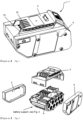
- Fig. 1 shows a schematic perspective view of a battery pack 1 according to an embodiment of the present invention.
- Fig. 2 shows a partial exploded schematic perspective view of the battery pack 1 according to an embodiment of the present invention, showing a battery support and a housing enclosing the battery support.
- the housing comprises an upper housing 2, a left housing 3 and a right housing 4.
- a battery pack 1 in an embodiment of the present invention, comprising a battery support and a housing enclosing the battery support.
- the housing may comprise an upper housing 2, a left housing 3 and a right housing 4.
- the upper housing 2, left housing 3 and right housing 4 are connected to the battery support by fasteners such as screws.
- the housing may be configured according to requirements, e.g. configured as an upper/lower housing structure.
- the battery pack is a rechargeable battery pack, preferably a lithium ion battery pack.
- the battery pack 1 comprises at least one battery unit.
- the battery pack 1 comprises a total of 10 battery units 11, but the present application may of course use a larger or smaller number of battery units.
- the 10 battery units are battery units with exactly the same parameters such as capacity, and are electrically connected in series/parallel to provide a more stable power supply.
- the battery unit is a lithium ion secondary battery unit.
- graphite or hard carbon black or soft carbon black is used for a negative electrode of the lithium ion secondary battery unit, and a lithium oxide such as LCO, NMC or NCA is used for a positive electrode, the lithium ion secondary battery unit having a nominal voltage of 3.6 V.
- a positive electrode active substance used in the battery unit comprises a ternary material, an NCA material, lithium ion phosphate, lithium cobalt oxide or lithium manganese oxide;
- a negative electrode active substance used in the battery unit comprises lithium titanate, graphite or low-crystallinity carbon such as soft carbon black or hard carbon black.
- the top of the upper housing 2 has a battery plug 10, for electrically connecting the battery pack to an electrical device or a charger.
- the electrical device may be an electric tool, so the battery pack may supply electric power to the electric tool.
- the electric tool is for example a handheld electric tool, which includes electric drills, grinders, cutters, etc., and various gardening tools, including electric lawnmowers, hedge trimmers, electric blowers, etc.
- the upper housing 2 is provided with slide grooves 15 at two sides of the charging plug 10 in the length direction thereof, the slide grooves facilitating electric tool insertion.
- a locking structure 14 for locking to the electric tool is provided at the top of the battery pack 1. Once the battery pack 1 has been inserted via the slide grooves 15 thereof into place in the electric tool, the locking structure 14 locks the battery pack 1 to the electric tool, to prevent the battery pack 1 from falling off the electric tool accidentally.
- Fig. 2 shows a partial exploded schematic drawing of a battery pack in an embodiment of the present invention.
- a battery support body 5 is used to accommodate multiple battery units (cells).
- the battery support body 5 forms a bottom part of the housing, and could also be said to be formed as a lower housing itself.
- a collector plate (not shown) is used to connect the battery units together.
- the left and right housings 3, 4 are installed at left and right sides of the battery support body 5, thereby fixedly installing the battery units in the battery pack.
- a PCBA is installed on the battery support body 5.
- the battery support body 5 Since the battery support body 5 is in direct contact with the outside, the battery support body 5 can dissipate heat of the battery units into the air directly, thus improving the ability of the battery pack to dissipate heat.
- the lower housing is mainly formed by the battery support body 5.
- the housing may also be configured as an upper/lower structure, i.e. comprises an upper housing and a lower housing.
- the upper housing comprises the battery plug.
- the battery support body may be installed in the lower housing by insertion, with the lower housing then being closed by the upper housing to form the battery pack.
- Fig. 3 shows a partial exploded schematic perspective view of the battery support of Fig. 2 according to an embodiment of the present invention, showing the battery units 11, the battery support body 5, a metal collector plate 7, a collector plate support 6, the PCBA 8 and an NB-IoT module 9.
- the battery support comprises the battery support body 5, multiple battery units 11 installed in the battery support body 5, the metal collector plate 7, the collector plate support 6, the PCBA 8 and the NB-IoT module 9.
- the battery support body 5 is an integrally formed plastic member.
- the battery support body 5 comprises multiple channels 51 for insertion of the battery units 11; in the embodiment of Fig. 7 , there are 10 channels in total.
- the collector plate 7 is used to connect electrode terminals of the battery units together electrically and/or to connect the electrode terminals to the PCBA; preferably, the collector plate 7 is electrically connected by laser welding to the electrode terminals of the battery units 11, e.g. negative electrode terminals 12 or positive electrode terminals 13.
- the collector plate 7 is inserted into the collector plate support 6.
- the collector plate support 6 is provided with a gap, and the collector plate 7 is inserted in the gap.
- the collector plate support 6 is insert-moulded onto the collector plate 7.
- the collector plate support 6 may be made of a material which is thermally conductive but not electrically conductive.
- the collector plate support 6 is made of an elastomeric material such as a thermoplastic elastomer, and has a certain degree of elasticity so as to help form a seal between the battery support body and the left housing 3 and/or right housing 4 when the left housing 3 and/or right housing 4 is/are fixed to the battery support body, thereby preventing liquid or dust, etc. from contacting the electrode terminals of the battery units, effectively protecting the battery units, ensuring the safety of the battery pack and increasing the battery pack's life.
- an elastomeric material such as a thermoplastic elastomer
- the PCBA 8 is disposed at one end of the top of the battery support body 5, and the width of the PCBA 8 is slightly less than the width of the battery support body 5.
- a control circuit for controlling the operation of the battery pack is provided on the PCBA 8.
- Each collector plate 7 comprises protrusions 71 or welding parts protruding relative to a substantially planar body thereof, and a pin 72 extending from the substantially planar body.
- the collector plate support 6 comprises multiple openings 61; the openings 61 correspond to the protrusions 71, and the protrusions or welding parts are revealed or exposed through the openings in the insert-moulding process.
- the protrusions 71 are configured to be firmly connected electrically to the electrode terminals of the battery units 11, e.g. the negative electrode terminals 12 and/or positive electrode terminals 13, by a process such as laser welding.
- the pin 72 is configured to be electrically connected to the PCBA 8, so as to realize power supply management of the battery pack via the PCBA 8.
- the battery support further comprises the NB-IoT module 9.
- the NB-IoT Near Band Internet of Things
- NBIOT Near Band Internet of Things
- the NB-IoT module is one type of IoT module, but the present application is not limited to the NB-IoT module, and may use another module such as a 4G module instead of the NB-IoT module.
- the battery pack further comprises a Bluetooth module.
- the battery pack further comprises a BLE-IoT module.
- the BLE-IoT module is a Bluetooth IoT with low energy consumption.
- the NB-IoT module 9 is electrically connected to the PCBA 8 and may be connected to another apparatus wirelessly for example, thus enabling remote data transmission and remote real-time monitoring of the state of the battery pack, and facilitating remote control/maintenance of the battery pack as well as maintenance and updating of battery packs on a large scale.
- the NB-IoT module 9 comprises an upper cover 91, a chipset 92 and a lower cover 93.
- the upper cover 91 and lower cover 93 form an installation chamber, in which the chipset 92 may be installed.
- the NB-IoT module 9 may be removably fitted to the PCBA 8, such that the chipset 92 is electrically connected to the PCBA via an interface (not shown) to realize communication.
- the right housing 4 comprises an opening 41, and the NB-IoT module 9 may be inserted into the battery pack or removed from the battery pack through the opening 41.
- the opening 41 may be covered by a closing member 94, to protect the NB-IoT module 9.
- the closing member 94 is taken off first, then the NB-IoT module 9 is pulled out of the battery pack through the opening 41.
- the closing member 94 may be made of an elastic plastic.
- the NB-IoT module 9 employs a cover-free design.
- the NB-IoT module employs low-pressure injection-moulding TPE encapsulation or a moulding process to realize a cover-free design.
- the NB-IoT module is realized using a soft polyurethane potting (soft PU-potting) process, and realizes a cover-free design by integral potting.
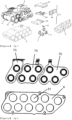
- Fig. 4 shows an exploded schematic drawing of a collector plate and a collector plate support
- Fig. 4a shows a schematic front view and a sectional view of a collector plate assembly comprising a collector plate and a collector plate support according to an embodiment of the present invention
- Fig. 4 shows a schematic drawing of a collector plate assembly comprising the collector plate 7 and collector plate support 6 according to an embodiment of the present invention
- the collector plate 7 may comprise at least one collector plate, for example may comprise a first collector plate 73, a second collector plate 74 and a third collector plate 75.
- collector plates 7 connect multiple battery units 11 (10 in this embodiment) together electrically, and the collector plates 7 are sealed well when installed between the battery support 5 and the collector plate support 6.
- the collector plates 7 have welding parts 71 configured to be welded to the terminals of the battery units; as shown in Fig. 4 , the collector plate support 6 is provided with openings 61 corresponding to the welding parts of the collector plates, and the collector plates 7 are installed in the collector plate support 6 in such a way that the welding parts 71 are exposed by the collector plate support 6 through the openings 61.
- the collector plate support 6 is made of an elastic sealing material. In an embodiment of the present invention, the collector plate support 6 is made of a thermally conductive material. The collector plate support protects the battery units disposed inside the battery support from corrosion. In an embodiment of the present invention, the collector plate support is manufactured as a single piece, thus reducing the process assembly costs and manufacturing costs. In an embodiment of the present invention, a collector plate 7 with high electrical conductivity may be used; this can further reduce collector plate heating. In an embodiment of the present invention, the collector plate 7 has high weldability; this can reduce the electrical resistance of welding contact parts. The collector plate 7 preferably has high thermal conductivity; this can increase its heat conduction efficiency.
- the material properties of the collector plate support and collector plate can significantly reduce the internal resistance of the battery pack and reduce its energy loss.
- the internal electrical design of the battery pack can be optimized, thus reducing the process assembly costs and manufacturing costs.
- the collector plate support and collector plate by using the collector plate support and collector plate, the electrical properties and the overall thermal balance of the battery pack can be improved.
- the collector plate support and collector plate by using the collector plate support and collector plate, the overall energy output of the battery pack can be increased, the overall battery pack cycle life can be increased, and the customer's user experience can be improved.
- the collector plate support 6 is a single component made of a plastic material.
- the collector plate support is provided with a gap, in which the collector plate is inserted.
- the collector plate support is provided with openings 61 corresponding to the welding parts of the collector plate; the purpose of the openings is to allow a welding head or laser head (not shown) of a welding tool to pass through the openings 61 to weld the collector plate to the terminals of the battery units.
- a welding head or laser head not shown
- the collector plate connects the terminals of 2 or 4 battery units. However, it will be understood that the collector plate may also connect the terminals of one or another number of battery units as required.
- the size of the collector plate may be configured appropriately according to the number of terminals of battery units to be connected.
- the collector plate support is configured as a single piece, i.e. the collector plate support accommodates multiple collector plates; this helps to reduce the number of installation process steps, thereby improving production efficiency.
- the housing can press the collector plate support against the battery support body 5, and the collector plate support may be formed of an elastic material, the housing and the battery support body 5 can clamp the collector plate support, so the collector plate support and the corresponding collector plate can still seal the terminals of the corresponding battery units.
- the collector plate has no gaps at the welding parts thereof, so the welding parts can block the terminals of the battery units.
- the collector plate support has a gap, such that the collector plate can be inserted into the gap of the collector plate support, so that the welding parts of the collector plate are exposed through the openings 61 of the collector plate support. Since the collector plate support is formed of an elastic material, a seal is substantially formed between the inserted collector plate and the collector plate support. As shown in the figures, the welding parts of the collector plate are formed by protrusions 71, which protrude from a body part of the collector plate and are substantially flush with a surface of the collector plate support. A collector plate assembly is thereby formed.
- the battery units When installation is performed, the battery units are first installed in the battery support body, then the collector plate welding parts are welded to the terminals of the battery units, then the housing is installed in such a way as to offset the collector plate support, to achieve sealing of the terminals of the battery units.
- the collector plate and collector plate support are integrally formed by injection moulding.
- the collector plate is placed in a mould, then a molten elastomeric material (e.g. a thermoplastic elastomer TPE, TPR, TPU, TPO, TPV, etc.) is injected, such that the collector plate is moulded in the elastomeric material, thereby obtaining a collector plate assembly as shown in Fig. 4a .
- a molten elastomeric material e.g. a thermoplastic elastomer TPE, TPR, TPU, TPO, TPV, etc.
- the welding parts of the collector plate protrude from the body part of the collector plate, and are substantially flush with a surface of the collector plate support. Better sealing performance is thus provided between the collector plate and the collector plate support.
- FIG. 4a A sectional view of a collector plate assembly 6 is also shown in Fig. 4a , wherein the collector plate 7 is injection moulded into the collector plate support 6.
- the welding parts 71 of the collector plate 7 are located in the openings 61 of the collector plate support 6, and the welding parts 71 protrude from the body part of the collector plate 7 and are flush with a surface of the collector plate support 6; in this way, an integral body is formed to facilitate sealing of the battery units.
- the collector plate assembly substantially covers an open end (i.e. a side face) of the battery support body 5, and the left and right housings need only press the periphery of the collector plate support against the battery support body in order to achieve a good sealing result.
- Liquid such as water that seeps into/enters the battery pack cannot contact the terminals of the battery units, so corrosive oxidation of the terminals and short circuits between the terminals are prevented, thus increasing the safety and durability of the battery pack.
- a sealing element is provided at the periphery of a side part of the battery support 5 to achieve better sealing, such that the terminals of the battery units 11 will not come into contact with liquid that enters the battery pack, thus avoiding oxidation and corrosion of the terminals.
- the collector plate support 6 is a novel proposition of the present invention.
- the collector plate is at least able to block the openings 61 in the collector plate support which correspond to the welding parts of the collector plate, to prevent liquid from entering through the openings 61 and contacting the terminals of the battery units.
- the sealing element is a closed sealing ring 16, which may be a single sealing ring formed integrally for all of the battery units (as shown in Fig. 7 ), or may have one sealing ring for each battery unit, or may be formed as a single sealing ring around the entire periphery, for forming a press-fit with the collector plate support, thereby achieving sealing.
- the metal collector plate 7 may comprise a connecting fuse part; when the battery pack is in a short-circuit state, the metal collector plate made of a low-melting-point alloy will melt through at the connecting fuse part, thus achieving a short circuit protection function.
- the connecting fuse part may be disposed at a part of the collector plate that is connected to the PCBA, or may be disposed at a connecting part between the welding parts. At the same time, because the resistance of the metal collector plate will be higher at the connecting fuse part, the metal collector plate will melt through at the connecting fuse part first, thus achieving the short circuit protection function, and thereby preventing damage to the entire battery pack due to a short circuit.
- the first collector plate 73, second collector plate 74 and third collector plate 75 are spaced apart so as to be electrically isolated, and the collector plate support 6 is insert-moulded onto the first collector plate 73, the second collector plate 74 and the third collector plate 75 and keeps these collector plates electrically isolated.
- the collector plate support 6 keeps the collector plates firmly fixed to itself, and prevents the collector plates from loosening due to vibration, etc. during operation, which might result in electrical connections forming between the collector plates; thus, damage to the battery units due to short circuits is prevented.
- Fig. 5 is a partial view of an embodiment of the present invention, showing part of the assembled battery pack.
- the negative electrode terminal 12 of the battery unit 11 is welded to the welding part 71 of the collector plate 7 to form an electrical connection.
- the collector plate 7 is inserted in the collector plate support 6 in such a way that the welding part 71 thereof is exposed by the collector plate support 6.
- a sealing element is provided between the battery support body 5 and the collector plate support 6, for example the sealing ring 16 shown in Figs. 3 and 7 , to completely seal the battery units within it.
- the housing e.g. the right housing 4 is attached to the battery support body 5 by means of fasteners, with the collector plate support 6 disposed between the housing and the battery support body 5.
- the battery unit 11 When installation is performed, the battery unit 11 is first installed in the battery support body 5, then the welding part 71 of the collector plate 7 of the collector plate assembly is welded to the terminal of the battery unit 11 (e.g. the negative electrode terminal 12 in Fig. 5 ), then the housing 4 is installed in such a way as to offset the collector plate support 6.
- the sealing element is disposed between the battery support body 5 and the collector plate support 6, and the collector plate assembly is itself a leakproof integral structure, so the battery unit 11 disposed in the battery support body 5 is protected to achieve a good sealing result.
- liquid such as water that seeps into/enters the battery pack cannot contact the terminals of the battery units, so corrosive oxidation of the terminals and short circuits between the terminals are prevented, thus increasing the safety and durability of the battery pack.
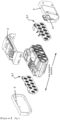
- Fig. 6 shows a partial exploded schematic perspective view of the battery pack 1 according to an embodiment of the present invention, showing heat management and sealing between the various components of the battery pack 1.
- this shows a partial exploded schematic perspective view of the battery pack 1 according to an embodiment of the present invention, showing heat management and sealing between the various parts of the battery pack 1.
- the collector plate supports 6 are located between the battery support body 5 and the right housing 4 or left housing 3; the collector plate supports 6 are in direct contact with the right housing 4 or left housing 3, and the collector plate supports and housings are all made of a material with good thermal conductivity, to help lead out the heat generated in the battery pack.
- Fig. 6 shows a partial exploded schematic perspective view of the battery pack 1 according to an embodiment of the present invention, showing heat management and sealing between the various parts of the battery pack 1.
- the collector plate supports 6 are located between the battery support body 5 and the right housing 4 or left housing 3; the collector plate supports 6 are in direct contact with the right housing 4 or left housing 3, and the collector plate supports and housings are all made
- the battery support body 5 forms part of the housing, and the battery support body 5 can dissipate heat generated by the battery units into the environment. It will be understood that the battery support body 5 may be made of a material with a high heat dissipation coefficient.
- Fig. 7 shows a schematic perspective view of part of the battery pack 1 according to an embodiment of the present invention, showing the principle of air cooling.
- the upper housing 2 comprises front openings 21, rear openings 22, and openings 23 and 24 located at the top; the upper housing 2 may of course comprise a larger or smaller number of openings.
- the openings 23 are located close to the battery plug 10, and the opening 24 is located close to the locking structure 14.
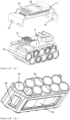
- Fig. 8 shows a perspective view of the battery support body 5 according to an embodiment of the present invention.
- the battery support body 5 comprises a front opening 52 and a bottom opening 53.
- the battery support body 5 comprises multiple channels 51 for insertion of the battery units 11; the channels 51 run through a body of the battery support body 5 transversely, and the channels 51 are formed in the shape of cylinders defined by channel walls 54.
- the front opening 52 and bottom opening 53 expose the channel walls 54 of the channels 51 accommodating the battery units.
- the channel walls 54 can dissipate the heat of the battery units into the environment directly.
- such a design is conducive to the forward transfer of heat through the front opening 52 and the downward transfer of heat through the bottom opening 53, and is thus conducive to rapid heat dissipation from the battery units 11 accommodated in the channels 51.
- the front opening 52 and bottom opening 53 can improve the effectiveness of heat dissipation from the battery pack, helping to reduce the temperature in the battery pack.
- cooling fins may also be provided on the exposed channel walls, to increase the heat dissipation area and improve the heat dissipation efficiency.
Landscapes
- Chemical & Material Sciences (AREA)
- Chemical Kinetics & Catalysis (AREA)
- Electrochemistry (AREA)
- General Chemical & Material Sciences (AREA)
- Engineering & Computer Science (AREA)
- Manufacturing & Machinery (AREA)
- Life Sciences & Earth Sciences (AREA)
- Biophysics (AREA)
- Computer Hardware Design (AREA)
- Materials Engineering (AREA)
- Connection Of Batteries Or Terminals (AREA)
- Battery Mounting, Suspending (AREA)
Applications Claiming Priority (1)
| Application Number | Priority Date | Filing Date | Title |
|---|---|---|---|
| CN202210033138.6A CN116470217A (zh) | 2022-01-12 | 2022-01-12 | 电池包和用于电池包的汇流片组件 |
Publications (2)
| Publication Number | Publication Date |
|---|---|
| EP4213291A2 true EP4213291A2 (de) | 2023-07-19 |
| EP4213291A3 EP4213291A3 (de) | 2024-06-19 |
Family
ID=84820202
Family Applications (1)
| Application Number | Title | Priority Date | Filing Date |
|---|---|---|---|
| EP23150341.8A Pending EP4213291A3 (de) | 2022-01-12 | 2023-01-04 | Batteriepack und kollektorplattenanordnung für batteriepack |
Country Status (4)
| Country | Link |
|---|---|
| US (1) | US20230223613A1 (de) |
| EP (1) | EP4213291A3 (de) |
| CN (1) | CN116470217A (de) |
| DE (1) | DE202023100128U1 (de) |
Cited By (1)
| Publication number | Priority date | Publication date | Assignee | Title |
|---|---|---|---|---|
| DE102022213648A1 (de) * | 2022-12-14 | 2024-06-20 | Robert Bosch Gesellschaft mit beschränkter Haftung | Energiespeichereinheit für einen elektrischen Verbraucher |
Families Citing this family (4)
| Publication number | Priority date | Publication date | Assignee | Title |
|---|---|---|---|---|
| USD1051058S1 (en) * | 2021-10-13 | 2024-11-12 | Positec Power Tools (Suzhou) Co., Ltd. | Adaptor |
| DE102023128529B4 (de) * | 2023-10-18 | 2025-06-12 | Diehl Advanced Mobility GmbH | Gehäusedeckel für Energiespeichermodul sowie Verfahren zur Montage eines Energiespeichermoduls |
| EP4685955A1 (de) * | 2024-07-24 | 2026-01-28 | Hilti Aktiengesellschaft | Akkupack |
| EP4752939A1 (de) * | 2024-11-15 | 2026-06-03 | Nanjing Chervon Industry Co., Ltd. | Batteriepack |
Family Cites Families (4)
| Publication number | Priority date | Publication date | Assignee | Title |
|---|---|---|---|---|
| WO2018126136A1 (en) * | 2016-12-29 | 2018-07-05 | Romeo Systems, Inc. | Systems and methods for battery structure, interconnects, sensing, and balancing |
| CN107611328A (zh) * | 2017-09-08 | 2018-01-19 | 华霆(合肥)动力技术有限公司 | 汇流组件及注塑方法 |
| DE102018210663A1 (de) * | 2018-06-29 | 2020-01-02 | Robert Bosch Gmbh | Akkupack |
| DE102019219194B4 (de) * | 2019-12-09 | 2024-10-31 | Robert Bosch Gmbh | Verfahren zum Herstellen eines Zellverbinderverbunds, Zellverbinderverbund, Batteriepaket und Vorrichtung |
-
2022
- 2022-01-12 CN CN202210033138.6A patent/CN116470217A/zh active Pending
-
2023
- 2023-01-04 EP EP23150341.8A patent/EP4213291A3/de active Pending
- 2023-01-10 US US18/152,611 patent/US20230223613A1/en active Pending
- 2023-01-11 DE DE202023100128.9U patent/DE202023100128U1/de active Active
Cited By (1)
| Publication number | Priority date | Publication date | Assignee | Title |
|---|---|---|---|---|
| DE102022213648A1 (de) * | 2022-12-14 | 2024-06-20 | Robert Bosch Gesellschaft mit beschränkter Haftung | Energiespeichereinheit für einen elektrischen Verbraucher |
Also Published As
| Publication number | Publication date |
|---|---|
| US20230223613A1 (en) | 2023-07-13 |
| DE202023100128U1 (de) | 2023-02-08 |
| CN116470217A (zh) | 2023-07-21 |
| EP4213291A3 (de) | 2024-06-19 |
Similar Documents
| Publication | Publication Date | Title |
|---|---|---|
| US20230223613A1 (en) | Battery pack and current collector assembly for battery pack | |
| KR102311075B1 (ko) | 팩 하우징을 포함하는 배터리 팩 | |
| CN100423322C (zh) | 电池组 | |
| KR101792162B1 (ko) | 배터리 팩 | |
| CN115513561B (zh) | 电池包、充电系统及用电设备 | |
| KR102273195B1 (ko) | 개선된 냉각 구조를 갖는 배터리 모듈 | |
| US7088075B2 (en) | Battery pack | |
| KR101447057B1 (ko) | 전지셀의 장착 및 방열을 위한 방열 지지부재를 포함하는 전지모듈 | |
| US20080233475A1 (en) | Battery Pack | |
| JP2018503233A (ja) | バッテリーモジュール | |
| KR101524007B1 (ko) | 가압 탄성부재를 포함하는 전지모듈 | |
| EP2333870B1 (de) | Sekundärbatterie | |
| KR20190001408A (ko) | 배터리 모듈과 이를 포함하는 배터리 팩 및 자동차 | |
| CN108878692B (zh) | 电池包及通讯设备 | |
| KR20160149576A (ko) | 배터리 팩 | |
| US20220123412A1 (en) | Battery pack | |
| KR100604276B1 (ko) | 리튬이온 배터리용 피시엠 보호캡 | |
| JP2005209367A (ja) | 電池パック | |
| KR20170134270A (ko) | 전기자동차용 배터리팩 | |
| KR102957152B1 (ko) | 배터리 모듈, 이를 포함하는 배터리 팩 및 자동차 | |
| JP4752180B2 (ja) | 電池パック | |
| KR101717184B1 (ko) | 고에너지밀도의 전지팩 | |
| KR100853620B1 (ko) | 전지모듈 제조용 스페이서 | |
| KR100563036B1 (ko) | 전지팩 | |
| US20250079556A1 (en) | Battery assembly for heat dissipation |
Legal Events
| Date | Code | Title | Description |
|---|---|---|---|
| PUAI | Public reference made under article 153(3) epc to a published international application that has entered the european phase |
Free format text: ORIGINAL CODE: 0009012 |
|
| STAA | Information on the status of an ep patent application or granted ep patent |
Free format text: STATUS: THE APPLICATION HAS BEEN PUBLISHED |
|
| AK | Designated contracting states |
Kind code of ref document: A2 Designated state(s): AL AT BE BG CH CY CZ DE DK EE ES FI FR GB GR HR HU IE IS IT LI LT LU LV MC ME MK MT NL NO PL PT RO RS SE SI SK SM TR |
|
| RIC1 | Information provided on ipc code assigned before grant |
Ipc: H01M 10/6551 20140101ALI20240209BHEP Ipc: H01M 10/653 20140101ALI20240209BHEP Ipc: H01M 10/6562 20140101ALI20240209BHEP Ipc: H01M 10/613 20140101ALI20240209BHEP Ipc: H01M 50/213 20210101ALI20240209BHEP Ipc: H01M 50/284 20210101ALI20240209BHEP Ipc: H01M 50/247 20210101ALI20240209BHEP Ipc: H01M 10/6235 20140101ALI20240209BHEP Ipc: H01M 50/516 20210101ALI20240209BHEP Ipc: H01M 50/503 20210101AFI20240209BHEP |
|
| PUAL | Search report despatched |
Free format text: ORIGINAL CODE: 0009013 |
|
| AK | Designated contracting states |
Kind code of ref document: A3 Designated state(s): AL AT BE BG CH CY CZ DE DK EE ES FI FR GB GR HR HU IE IS IT LI LT LU LV MC ME MK MT NL NO PL PT RO RS SE SI SK SM TR |
|
| RIC1 | Information provided on ipc code assigned before grant |
Ipc: H01M 10/6551 20140101ALI20240516BHEP Ipc: H01M 10/653 20140101ALI20240516BHEP Ipc: H01M 10/6562 20140101ALI20240516BHEP Ipc: H01M 10/613 20140101ALI20240516BHEP Ipc: H01M 50/213 20210101ALI20240516BHEP Ipc: H01M 50/284 20210101ALI20240516BHEP Ipc: H01M 50/247 20210101ALI20240516BHEP Ipc: H01M 10/6235 20140101ALI20240516BHEP Ipc: H01M 50/516 20210101ALI20240516BHEP Ipc: H01M 50/503 20210101AFI20240516BHEP |
|
| STAA | Information on the status of an ep patent application or granted ep patent |
Free format text: STATUS: REQUEST FOR EXAMINATION WAS MADE |
|
| 17P | Request for examination filed |
Effective date: 20241213 |