EP4213246B1 - Positive ektrodenplatte, sekundärbatterie, batteriemodul, batteriepack und stromverbrauchende vorrichtung - Google Patents
Positive ektrodenplatte, sekundärbatterie, batteriemodul, batteriepack und stromverbrauchende vorrichtung Download PDFInfo
- Publication number
- EP4213246B1 EP4213246B1 EP21945360.2A EP21945360A EP4213246B1 EP 4213246 B1 EP4213246 B1 EP 4213246B1 EP 21945360 A EP21945360 A EP 21945360A EP 4213246 B1 EP4213246 B1 EP 4213246B1
- Authority
- EP
- European Patent Office
- Prior art keywords
- positive electrode
- active material
- electrode active
- material layer
- carbon
- Prior art date
- Legal status (The legal status is an assumption and is not a legal conclusion. Google has not performed a legal analysis and makes no representation as to the accuracy of the status listed.)
- Active
Links
Images



Classifications
-
- H—ELECTRICITY
- H01—ELECTRIC ELEMENTS
- H01M—PROCESSES OR MEANS, e.g. BATTERIES, FOR THE DIRECT CONVERSION OF CHEMICAL ENERGY INTO ELECTRICAL ENERGY
- H01M10/00—Secondary cells; Manufacture thereof
- H01M10/05—Accumulators with non-aqueous electrolyte
- H01M10/052—Li-accumulators
-
- H—ELECTRICITY
- H01—ELECTRIC ELEMENTS
- H01M—PROCESSES OR MEANS, e.g. BATTERIES, FOR THE DIRECT CONVERSION OF CHEMICAL ENERGY INTO ELECTRICAL ENERGY
- H01M10/00—Secondary cells; Manufacture thereof
- H01M10/05—Accumulators with non-aqueous electrolyte
- H01M10/052—Li-accumulators
- H01M10/0525—Rocking-chair batteries, i.e. batteries with lithium insertion or intercalation in both electrodes; Lithium-ion batteries
-
- H—ELECTRICITY
- H01—ELECTRIC ELEMENTS
- H01M—PROCESSES OR MEANS, e.g. BATTERIES, FOR THE DIRECT CONVERSION OF CHEMICAL ENERGY INTO ELECTRICAL ENERGY
- H01M4/00—Electrodes
- H01M4/02—Electrodes composed of, or comprising, active material
- H01M4/04—Processes of manufacture in general
- H01M4/0402—Methods of deposition of the material
- H01M4/0404—Methods of deposition of the material by coating on electrode collectors
-
- H—ELECTRICITY
- H01—ELECTRIC ELEMENTS
- H01M—PROCESSES OR MEANS, e.g. BATTERIES, FOR THE DIRECT CONVERSION OF CHEMICAL ENERGY INTO ELECTRICAL ENERGY
- H01M4/00—Electrodes
- H01M4/02—Electrodes composed of, or comprising, active material
- H01M4/13—Electrodes for accumulators with non-aqueous electrolyte, e.g. for lithium-accumulators; Processes of manufacture thereof
-
- H—ELECTRICITY
- H01—ELECTRIC ELEMENTS
- H01M—PROCESSES OR MEANS, e.g. BATTERIES, FOR THE DIRECT CONVERSION OF CHEMICAL ENERGY INTO ELECTRICAL ENERGY
- H01M4/00—Electrodes
- H01M4/02—Electrodes composed of, or comprising, active material
- H01M4/13—Electrodes for accumulators with non-aqueous electrolyte, e.g. for lithium-accumulators; Processes of manufacture thereof
- H01M4/131—Electrodes based on mixed oxides or hydroxides, or on mixtures of oxides or hydroxides, e.g. LiCoOx
-
- H—ELECTRICITY
- H01—ELECTRIC ELEMENTS
- H01M—PROCESSES OR MEANS, e.g. BATTERIES, FOR THE DIRECT CONVERSION OF CHEMICAL ENERGY INTO ELECTRICAL ENERGY
- H01M4/00—Electrodes
- H01M4/02—Electrodes composed of, or comprising, active material
- H01M4/13—Electrodes for accumulators with non-aqueous electrolyte, e.g. for lithium-accumulators; Processes of manufacture thereof
- H01M4/136—Electrodes based on inorganic compounds other than oxides or hydroxides, e.g. sulfides, selenides, tellurides, halogenides or LiCoFy
-
- H—ELECTRICITY
- H01—ELECTRIC ELEMENTS
- H01M—PROCESSES OR MEANS, e.g. BATTERIES, FOR THE DIRECT CONVERSION OF CHEMICAL ENERGY INTO ELECTRICAL ENERGY
- H01M4/00—Electrodes
- H01M4/02—Electrodes composed of, or comprising, active material
- H01M4/13—Electrodes for accumulators with non-aqueous electrolyte, e.g. for lithium-accumulators; Processes of manufacture thereof
- H01M4/139—Processes of manufacture
- H01M4/1391—Processes of manufacture of electrodes based on mixed oxides or hydroxides, or on mixtures of oxides or hydroxides, e.g. LiCoOx
-
- H—ELECTRICITY
- H01—ELECTRIC ELEMENTS
- H01M—PROCESSES OR MEANS, e.g. BATTERIES, FOR THE DIRECT CONVERSION OF CHEMICAL ENERGY INTO ELECTRICAL ENERGY
- H01M4/00—Electrodes
- H01M4/02—Electrodes composed of, or comprising, active material
- H01M4/13—Electrodes for accumulators with non-aqueous electrolyte, e.g. for lithium-accumulators; Processes of manufacture thereof
- H01M4/139—Processes of manufacture
- H01M4/1397—Processes of manufacture of electrodes based on inorganic compounds other than oxides or hydroxides, e.g. sulfides, selenides, tellurides, halogenides or LiCoFy
-
- H—ELECTRICITY
- H01—ELECTRIC ELEMENTS
- H01M—PROCESSES OR MEANS, e.g. BATTERIES, FOR THE DIRECT CONVERSION OF CHEMICAL ENERGY INTO ELECTRICAL ENERGY
- H01M4/00—Electrodes
- H01M4/02—Electrodes composed of, or comprising, active material
- H01M4/36—Selection of substances as active materials, active masses, active liquids
-
- H—ELECTRICITY
- H01—ELECTRIC ELEMENTS
- H01M—PROCESSES OR MEANS, e.g. BATTERIES, FOR THE DIRECT CONVERSION OF CHEMICAL ENERGY INTO ELECTRICAL ENERGY
- H01M4/00—Electrodes
- H01M4/02—Electrodes composed of, or comprising, active material
- H01M4/36—Selection of substances as active materials, active masses, active liquids
- H01M4/362—Composites
- H01M4/364—Composites as mixtures
-
- H—ELECTRICITY
- H01—ELECTRIC ELEMENTS
- H01M—PROCESSES OR MEANS, e.g. BATTERIES, FOR THE DIRECT CONVERSION OF CHEMICAL ENERGY INTO ELECTRICAL ENERGY
- H01M4/00—Electrodes
- H01M4/02—Electrodes composed of, or comprising, active material
- H01M4/36—Selection of substances as active materials, active masses, active liquids
- H01M4/362—Composites
- H01M4/366—Composites as layered products
-
- H—ELECTRICITY
- H01—ELECTRIC ELEMENTS
- H01M—PROCESSES OR MEANS, e.g. BATTERIES, FOR THE DIRECT CONVERSION OF CHEMICAL ENERGY INTO ELECTRICAL ENERGY
- H01M4/00—Electrodes
- H01M4/02—Electrodes composed of, or comprising, active material
- H01M4/36—Selection of substances as active materials, active masses, active liquids
- H01M4/48—Selection of substances as active materials, active masses, active liquids of inorganic oxides or hydroxides
- H01M4/485—Selection of substances as active materials, active masses, active liquids of inorganic oxides or hydroxides of mixed oxides or hydroxides for inserting or intercalating light metals, e.g. LiTi2O4 or LiTi2OxFy
-
- H—ELECTRICITY
- H01—ELECTRIC ELEMENTS
- H01M—PROCESSES OR MEANS, e.g. BATTERIES, FOR THE DIRECT CONVERSION OF CHEMICAL ENERGY INTO ELECTRICAL ENERGY
- H01M4/00—Electrodes
- H01M4/02—Electrodes composed of, or comprising, active material
- H01M4/36—Selection of substances as active materials, active masses, active liquids
- H01M4/48—Selection of substances as active materials, active masses, active liquids of inorganic oxides or hydroxides
- H01M4/50—Selection of substances as active materials, active masses, active liquids of inorganic oxides or hydroxides of manganese
- H01M4/505—Selection of substances as active materials, active masses, active liquids of inorganic oxides or hydroxides of manganese of mixed oxides or hydroxides containing manganese for inserting or intercalating light metals, e.g. LiMn2O4 or LiMn2OxFy
-
- H—ELECTRICITY
- H01—ELECTRIC ELEMENTS
- H01M—PROCESSES OR MEANS, e.g. BATTERIES, FOR THE DIRECT CONVERSION OF CHEMICAL ENERGY INTO ELECTRICAL ENERGY
- H01M4/00—Electrodes
- H01M4/02—Electrodes composed of, or comprising, active material
- H01M4/36—Selection of substances as active materials, active masses, active liquids
- H01M4/48—Selection of substances as active materials, active masses, active liquids of inorganic oxides or hydroxides
- H01M4/52—Selection of substances as active materials, active masses, active liquids of inorganic oxides or hydroxides of nickel, cobalt or iron
- H01M4/525—Selection of substances as active materials, active masses, active liquids of inorganic oxides or hydroxides of nickel, cobalt or iron of mixed oxides or hydroxides containing iron, cobalt or nickel for inserting or intercalating light metals, e.g. LiNiO2, LiCoO2 or LiCoOxFy
-
- H—ELECTRICITY
- H01—ELECTRIC ELEMENTS
- H01M—PROCESSES OR MEANS, e.g. BATTERIES, FOR THE DIRECT CONVERSION OF CHEMICAL ENERGY INTO ELECTRICAL ENERGY
- H01M4/00—Electrodes
- H01M4/02—Electrodes composed of, or comprising, active material
- H01M4/36—Selection of substances as active materials, active masses, active liquids
- H01M4/58—Selection of substances as active materials, active masses, active liquids of inorganic compounds other than oxides or hydroxides, e.g. sulfides, selenides, tellurides, halogenides or LiCoFy; of polyanionic structures, e.g. phosphates, silicates or borates
-
- H—ELECTRICITY
- H01—ELECTRIC ELEMENTS
- H01M—PROCESSES OR MEANS, e.g. BATTERIES, FOR THE DIRECT CONVERSION OF CHEMICAL ENERGY INTO ELECTRICAL ENERGY
- H01M4/00—Electrodes
- H01M4/02—Electrodes composed of, or comprising, active material
- H01M4/36—Selection of substances as active materials, active masses, active liquids
- H01M4/58—Selection of substances as active materials, active masses, active liquids of inorganic compounds other than oxides or hydroxides, e.g. sulfides, selenides, tellurides, halogenides or LiCoFy; of polyanionic structures, e.g. phosphates, silicates or borates
- H01M4/5825—Oxygenated metallic salts or polyanionic structures, e.g. borates, phosphates, silicates, olivines
-
- H—ELECTRICITY
- H01—ELECTRIC ELEMENTS
- H01M—PROCESSES OR MEANS, e.g. BATTERIES, FOR THE DIRECT CONVERSION OF CHEMICAL ENERGY INTO ELECTRICAL ENERGY
- H01M4/00—Electrodes
- H01M4/02—Electrodes composed of, or comprising, active material
- H01M4/36—Selection of substances as active materials, active masses, active liquids
- H01M4/58—Selection of substances as active materials, active masses, active liquids of inorganic compounds other than oxides or hydroxides, e.g. sulfides, selenides, tellurides, halogenides or LiCoFy; of polyanionic structures, e.g. phosphates, silicates or borates
- H01M4/583—Carbonaceous material, e.g. graphite-intercalation compounds or CFx
- H01M4/587—Carbonaceous material, e.g. graphite-intercalation compounds or CFx for inserting or intercalating light metals
-
- H—ELECTRICITY
- H01—ELECTRIC ELEMENTS
- H01M—PROCESSES OR MEANS, e.g. BATTERIES, FOR THE DIRECT CONVERSION OF CHEMICAL ENERGY INTO ELECTRICAL ENERGY
- H01M4/00—Electrodes
- H01M4/02—Electrodes composed of, or comprising, active material
- H01M4/62—Selection of inactive substances as ingredients for active masses, e.g. binders, fillers
-
- H—ELECTRICITY
- H01—ELECTRIC ELEMENTS
- H01M—PROCESSES OR MEANS, e.g. BATTERIES, FOR THE DIRECT CONVERSION OF CHEMICAL ENERGY INTO ELECTRICAL ENERGY
- H01M4/00—Electrodes
- H01M4/02—Electrodes composed of, or comprising, active material
- H01M4/62—Selection of inactive substances as ingredients for active masses, e.g. binders, fillers
- H01M4/621—Binders
- H01M4/622—Binders being polymers
-
- H—ELECTRICITY
- H01—ELECTRIC ELEMENTS
- H01M—PROCESSES OR MEANS, e.g. BATTERIES, FOR THE DIRECT CONVERSION OF CHEMICAL ENERGY INTO ELECTRICAL ENERGY
- H01M4/00—Electrodes
- H01M4/02—Electrodes composed of, or comprising, active material
- H01M4/62—Selection of inactive substances as ingredients for active masses, e.g. binders, fillers
- H01M4/621—Binders
- H01M4/622—Binders being polymers
- H01M4/623—Binders being polymers fluorinated polymers
-
- H—ELECTRICITY
- H01—ELECTRIC ELEMENTS
- H01M—PROCESSES OR MEANS, e.g. BATTERIES, FOR THE DIRECT CONVERSION OF CHEMICAL ENERGY INTO ELECTRICAL ENERGY
- H01M4/00—Electrodes
- H01M4/02—Electrodes composed of, or comprising, active material
- H01M4/62—Selection of inactive substances as ingredients for active masses, e.g. binders, fillers
- H01M4/624—Electric conductive fillers
- H01M4/625—Carbon or graphite
-
- H—ELECTRICITY
- H01—ELECTRIC ELEMENTS
- H01M—PROCESSES OR MEANS, e.g. BATTERIES, FOR THE DIRECT CONVERSION OF CHEMICAL ENERGY INTO ELECTRICAL ENERGY
- H01M4/00—Electrodes
- H01M4/02—Electrodes composed of, or comprising, active material
- H01M2004/021—Physical characteristics, e.g. porosity, surface area
-
- H—ELECTRICITY
- H01—ELECTRIC ELEMENTS
- H01M—PROCESSES OR MEANS, e.g. BATTERIES, FOR THE DIRECT CONVERSION OF CHEMICAL ENERGY INTO ELECTRICAL ENERGY
- H01M4/00—Electrodes
- H01M4/02—Electrodes composed of, or comprising, active material
- H01M2004/026—Electrodes composed of, or comprising, active material characterised by the polarity
- H01M2004/028—Positive electrodes
-
- Y—GENERAL TAGGING OF NEW TECHNOLOGICAL DEVELOPMENTS; GENERAL TAGGING OF CROSS-SECTIONAL TECHNOLOGIES SPANNING OVER SEVERAL SECTIONS OF THE IPC; TECHNICAL SUBJECTS COVERED BY FORMER USPC CROSS-REFERENCE ART COLLECTIONS [XRACs] AND DIGESTS
- Y02—TECHNOLOGIES OR APPLICATIONS FOR MITIGATION OR ADAPTATION AGAINST CLIMATE CHANGE
- Y02E—REDUCTION OF GREENHOUSE GAS [GHG] EMISSIONS, RELATED TO ENERGY GENERATION, TRANSMISSION OR DISTRIBUTION
- Y02E60/00—Enabling technologies; Technologies with a potential or indirect contribution to GHG emissions mitigation
- Y02E60/10—Energy storage using batteries
Definitions
- the present application relates to the technical field of lithium batteries, and in particular to a positive electrode plate, a secondary battery, a battery module, a battery pack and a power consuming device.
- Lithium-ion batteries are widely used in electric vehicles and consumer electronics because of their advantages such as a high energy density, high output power, long cycle life and low environmental pollution. Among them, the application of lithium iron phosphate batteries is expanding, and its market share is increasing year by year.
- the conductivity of a lithium iron phosphate material is relatively weak, and this characteristic becomes more prominent at a low temperature, which is caused by inherent defects in the olivine crystal structure of the lithium iron phosphate material. Due to the performance weakness of a lithium iron phosphate material, the capacity and working voltage performance of a lithium iron phosphate battery become worse at a low temperature, and the discharge power is limited and reduced. It can be seen that the energy density of a lithium ion battery is significantly affected by a temperature.
- US 11 050 053 B2 relates to a battery, comprising a positive electrode plate, a separator and a negative electrode plate, wherein the positive electrode plate comprises a positive electrode current collector and at least two layers of positive active materials on at least one surface of the positive electrode current collector in which the underlying positive active material layer in contact with the positive electrode current collector comprises a first positive active material, a first polymer material, and a first conductive material and in which the upper positive active material layer comprises a second positive active material, a second polymer material, and a second conductive material and the first polymer material comprises an oil-dispersible polymer material having a solubility in NMP at 130° C. for 5 minutes, which is 30% or less of the solubility of PVDF under the same conditions.
- CN 113 594 412 A discloses a lithium battery positive plate with a sandwich structure, which comprises a positive current collector and a positive active layer, the positive active layer comprises a conductive layer, a first active layer and a second active layer which are sequentially coated on the positive current collector, the first active layer is a lithium manganate coating or a ternary material coating, and the second active layer is a lithium iron manganese phosphate coating.
- the present application has been made in view of the above problems, and an objective thereof is to improve the performance of secondary batteries at a low temperature.
- the present application provides a positive electrode plate, a secondary battery, a battery module, a battery pack and a power consuming device.
- a first aspect of the present application provides a positive electrode plate, including a current collector, a first positive electrode active material layer and a second positive electrode active material layer, wherein the second positive electrode active material layer is arranged between the current collector and the first positive electrode active material layer, or the first positive electrode active material layer is arranged between the current collector and the second positive electrode active material layer;
- the first positive electrode active material layer comprises a first positive electrode active material, a first binder and a first conductive agent, wherein the first positive electrode active material is selected from at least one of Li q CoO 2 , Li 1+x Co 1-y-z Ni y Mn z O 2 or carbon-coated Li ⁇ Fe ⁇ M (1- ⁇ ) PO 4 , wherein 0 ⁇ q ⁇ 1, 0 ⁇ x ⁇ 0.1, 0 ⁇ y ⁇ 0.95, 0 ⁇ z ⁇ 0.95, 0.2 ⁇ ⁇ ⁇ 1, 1 ⁇ ⁇ ⁇ 1.1, and M is selected from at least one of Cu, M
- the low temperature performance of a secondary battery is improved by means of the synergistic effect between the first positive electrode active material layer and the second active material layer in the positive electrode plate.
- the thickness D2 of the second positive electrode active material layer is 2 ⁇ m to 40 ⁇ m, optionally 10 ⁇ m to 30 ⁇ m, and further optionally 15 ⁇ m to 25 ⁇ m.
- the average particle size of the primary particles of the second positive electrode active material is 20 nm to 240 nm, optionally 20 nm to 160 nm, further optionally 20 nm to 80 nm.
- the contents of the second positive electrode active material, the second binder and the second conductive agent are 80% to 98%, 1% to 10% and 1% to 10%, respectively.
- the thickness D1 of the first positive electrode active material layer is 100 ⁇ m to 140 ⁇ m, optionally 110 ⁇ m to 130 ⁇ m, and further optionally 115 ⁇ m to 125 ⁇ m. By controlling the thickness of the first positive electrode active material layer, it is beneficial to the improvement of the volume energy density of the secondary battery.
- the contents of the first positive electrode active material, the first binder and the first conductive agent are 90% to 95%, 2% to 8% and 2% to 8%, respectively.
- the first conductive agent and the second conductive agent are each independently selected from at least one of carbon nanotubes, conductive carbon, gas-phase carbon nanofibers, graphite, acetylene black, metal fibers, organic conductive polymers, and graphene.
- the first binder and the second binder are each independently selected from at least one of polyvinylidene fluoride, polyvinyl alcohol, polytetrafluoroethylene, sodium carboxymethyl cellulose and polyurethane.
- a second aspect of the present application provides a secondary battery, comprising the positive electrode plate of the first aspect of the present application.
- a third aspect of the present application provides a battery module, comprising the secondary battery of the second aspect of the present application.
- a fourth aspect of the present application provides a battery pack, comprising the battery module of the third aspect of the present application.
- a fifth aspect of the present application provides a power consuming device, comprising at least one selected from the secondary battery of the second aspect of the present application, the battery module of the third aspect of the present application or the battery pack of the fourth aspect of the present application.
- the present application provides a positive electrode plate, a secondary battery, a battery module, a battery pack and a power consuming device, wherein the positive electrode plate comprises a first positive electrode active material layer and a second positive electrode active material layer, a second positive electrode active material in the second positive electrode active material layer is selected from carbon-coated Li ⁇ Fe ⁇ M (1- ⁇ ) PO 4 , an intensity ratio I A /I B of the diffraction peak A and diffraction peak B satisfies: 0.98 ⁇ I A /I B ⁇ 1.1, the proportion of crystal plane (010) of a carbon-coated lithium iron phosphate material exposed is increased, such that the active material in the second positive electrode active material layer first undergoes an electrochemical reaction and generates heat, which further promotes the active material in the first positive electrode active material layer in the secondary battery to undergo an electrochemical reaction.
- the secondary battery of the present application has a good low temperature performance by means of the synergistic effect
- 1 battery pack 2 upper box body; 3 lower box body; 4 battery module; 5 secondary battery; 51 housing; 52 electrode assembly; 53 cover plate; 11 first positive electrode active material layer; 12 second positive electrode active material layer; 13 current collector.
- Ranges disclosed herein are defined in the form of lower and upper limits, where a given range is defined by the selection of a lower limit and an upper limit, and the selected lower and upper limits define the boundaries of the particular range. Ranges defined in this manner may be inclusive or exclusive, and may be arbitrarily combined, that is, any lower limit may be combined with any upper limit to form a range. For example, if the ranges of 60-120 and 80-110 are listed for a particular parameter, it should be understood that the ranges of 60-110 and 80-120 are also contemplated. Additionally, if minimum range values 1 and 2 are listed, and maximum range values 3, 4, and 5 are listed, the following ranges are all contemplated: 1-3, 1-4, 1-5, 2-3, 2-4, and 2-5.
- the numerical range "a-b” denotes an abbreviated representation of any combination of real numbers between a and b, where both a and b are real numbers.
- the numerical range "0-5" means that all real numbers between "0-5" have been listed herein, and "0-5" is just an abbreviated representation of combinations of these numerical values.
- a parameter is expressed as an integer of ⁇ 2, it is equivalent to disclosing that the parameter is, for example, an integer of 2, 3, 4, 5, 6, 7, 8, 9, 10, 11, 12, and the like.
- steps (a) and (b) indicates that the method may include steps (a) and (b) performed sequentially, and may also include steps (b) and (a) performed sequentially.
- the method may further include step (c)" indicates that step (c) may be added to the method in any order, e.g., the method may include steps (a), (b) and (c), steps (a), (c) and (b), and also steps (c), (a) and (b), etc.
- the term "or” is inclusive unless otherwise specified.
- the phrase "A or B” means “A, B, or both A and B”. More specifically, a condition "A or B” is satisfied by any one of the following: A is true (or present) and B is false (or not present); A is false (or not present) and B is true (or present); or both A and B are true (or present).
- the present application is explained by means of using a lithium-ion battery as an example of secondary batteries, but the secondary batteries in the present application are not limited to lithium-ion batteries.
- lithium iron phosphate materials have the problem of poor low-temperature conductivity, which makes it difficult for the capacity and working voltage of lithium iron phosphate batteries to meet application requirements at low temperatures, thus affecting the low temperature performance of lithium iron phosphate material batteries.
- the present application provides a positive electrode plate, a secondary battery, a battery module, a battery pack and a power consuming device.
- the present application proposes a positive electrode plate, as an example, as shown in FIG. 1 , comprising a current collector 13, a first positive electrode active material layer 11 and a second positive electrode active material layer 12 arranged between the current collector 13 and the first positive electrode active material layer 11; and in another embodiment, as shown in FIG. 2 , comprising a current collector 13, a second positive electrode active material layer 12 and a first positive electrode active material layer 11 arranged between the current collector 13 and the second positive electrode active material layer 12.
- the first positive electrode active material layer comprises a first positive electrode active material, a first binder and a first conductive agent, wherein the first positive electrode active material is selected from at least one of Li q CoO 2 , Li 1+x Co 1-y-z Ni y Mn z O 2 or carbon-coated Li ⁇ Fe ⁇ M (1- ⁇ ) PO 4 , wherein 0 ⁇ q ⁇ 1, 0 ⁇ x ⁇ 0.1, 0 ⁇ y ⁇ 0.95, 0 ⁇ z ⁇ 0.95, 0.2 ⁇ ⁇ ⁇ 1, 1 ⁇ ⁇ ⁇ 1.1, and M is selected from at least one of Cu, Mn, Cr, Zn, Pb, Ca, Co, Ni and Sr; and the second positive electrode active material layer comprises a second positive electrode active material, a second binder and a second conductive agent, wherein the second positive electrode active material is selected from carbon-coated Li ⁇ Fe ⁇ M (1- ⁇ ) PO 4 , where 0.2 ⁇ ⁇ ⁇ 1,
- a second positive electrode active material in the second positive electrode active material layer is selected from carbon-coated Li ⁇ Fe ⁇ M (1- ⁇ ) PO 4 ; by controlling an intensity ratio of the diffraction peaks in the X-ray diffraction pattern of the second positive electrode active material, the proportion of crystal plane (010) of the carbon-coated lithium iron phosphate material (such as carbon-coated Li ⁇ Fe ⁇ M (1- ⁇ ) PO 4 ) exposed is increased, such that the active material in the second positive electrode active material layer first undergoes an electrochemical reaction and generates heat, which further promotes the active material in the first positive electrode active material layer in the lithium ion battery to further undergo an electrochemical reaction, and by means of the synergistic effect between the first positive electrode active material layer and the second positive electrode active material layer in the positive electrode plate, the capacity retention rate and power performance of the lithium ion battery under low temperature conditions can be effectively improved, thus the overall low temperature performance of the secondary battery can
- the second positive electrode active material has a diffraction peak A between 29° and 30° in the X-ray diffraction pattern, and a diffraction peak B between 25° and 26°, wherein the higher intensity ratio of diffraction peaks I A /I B results in a higher proportion of crystal plane (010) of the carbon-coated lithium iron phosphate material (such as carbon-coated Li ⁇ Fe ⁇ M (1- ⁇ ) PO 4 ) exposed. It is speculated that this may be due to the intercalation and deintercalation of lithium ions in the carbon-coated lithium iron phosphate material along the b-axis during the electrochemical reaction.
- the second positive electrode active material having the diffraction peak intensity ratio of the present application exhibits excellent low temperature performance when applied to a lithium ion battery.
- the inventor of the present application also found that when the intensity ratio I A /I B of the diffraction peaks satisfies: 1.05 ⁇ I A /I B ⁇ 1.1, the low temperature performance of a secondary battery prepared by the above materials is further improved.
- the active material in the second positive electrode active material layer of the positive electrode plate first undergoes an electrochemical reaction and generates heat, which further promotes the active material in the first positive electrode active material layer in the lithium ion battery to further undergo an electrochemical reaction, and by means of the synergistic effect between the first positive electrode active material layer and the second positive electrode active material layer, the overall low temperature performance of the secondary battery is improved.
- the thickness D2 of the second positive electrode active material layer in the positive electrode plate of the present application is 2 ⁇ m to 40 ⁇ m, optionally 10 ⁇ m to 30 ⁇ m, and further optionally 15 ⁇ m to 25 ⁇ m.
- the thickness of the second positive electrode active material layer is too large, which may affect the volume energy density of the lithium ion battery, and the thickness of the second positive electrode active material layer is too small, which may affect the low temperature performance of the lithium ion battery. Therefore, in the present application, by controlling the thickness of the second positive electrode active material layer within the above range, it is beneficial to balance the low temperature performance and volume energy density of the lithium ion battery.
- the average particle size of the primary particles of the second active material of the present application is 20 nm to 240 nm, optionally 20 nm to 160 nm, and further optionally 20 nm to 80 nm.
- the inventor of the present application found that when the particle size of the primary particles of the second active material is within the above range, the diffusion path of lithium ions during the electrochemical reaction can be shortened, and a shorter transmission channel for lithium ions can be provided, such that the secondary battery, under a low temperature or high rate discharge, has smaller battery polarization, and lower voltage drop, and the good discharge capacity is maintained, thereby improving the low temperature performance of the secondary battery.
- the contents of the second positive electrode active material, the second binder and the second conductive agent are 80% to 98%, 1% to 10% and 1% to 10%, respectively.
- the capacity retention rate and power performance of the secondary battery under low temperature conditions can be improved.
- the thickness D1 of the first positive electrode active material layer is 100 ⁇ m to 140 ⁇ m, optionally 110 ⁇ m to 130 ⁇ m, and further optionally 115 ⁇ m to 125 ⁇ m. Without being limited to any theory, by controlling the thickness of the first positive electrode active material layer within the above range, it is beneficial to the improvement of the volume energy density of the secondary battery.
- the contents of the first positive electrode active material, the first binder and the first conductive agent are 90% to 95%, 2% to 8% and 2% to 8%, respectively.
- the contents of the positive electrode active material, the binder and the conductive agent in the first positive electrode active material layer within the above range, it is beneficial to the improvement of the volume energy density of the secondary battery.
- the first conductive agent and the second conductive agent are not particularly limited in the present application as long as the objectives of the present application can be achieved.
- the first conductive agent and the second conductive agent are each independently selected from at least one of carbon nanotubes, conductive carbon, gas-phase carbon nanofibers, graphite, acetylene black, metal fibers, organic conductive polymers, and graphene.
- the first binder and the second binder are not particularly limited in the present application as long as the objectives of the present application can be achieved.
- the first binder and the second binder are each independently selected from at least one of polyvinylidene fluoride, polyvinyl alcohol, polytetrafluoroethylene, sodium carboxymethyl cellulose and polyurethane.
- the average particle size of the primary particles of the first active material is not particularly limited in the present application, e.g. 800 nm to 3000 nm, as long as the objectives of the present application can be achieved.
- the position of the first positive electrode active material layer and the second positive electrode active material layer above and below the current collector are not particularly limited in the present application as long as the objectives of the present application can be achieved.
- the second positive electrode active material layer 12 can be located below the first positive electrode active material layer 11, that is, between the current collector 13 and the first positive electrode active material layer 11; and in some embodiments, referring to FIG. 2 , the first positive electrode active material layer 11 can be located below the second positive electrode active material layer 12, that is, between the current collector 13 and the second positive electrode active material layer 12.
- the coating method of the first positive electrode active material layer and the second positive electrode active material layer is not particularly limited in the present application as long as the objectives of the present application can be achieved.
- the first positive electrode active material layer and the second positive electrode active material layer may be sequentially coated.
- the first positive electrode active material layer and the second positive electrode active material layer may be coated simultaneously.
- the preparation method of the carbon-coated Li ⁇ Fe ⁇ M (1- ⁇ ) PO 4 active material in the second positive electrode active material layer is not particularly limited in the present application as long as the objectives of the present application can be achieved. In some embodiments, it can be prepared by liquid phase synthesis, comprising the following steps:
- the intensity ratio I A /I B of the diffraction peaks can be regulated by controlling parameters such as the reaction time t in the liquid phase method, the concentration C of the reactant, the concentration C x of the surfactant added, or the selected type of the surfactant.
- the inventor of the present application found that the I A /I B value is increasing with the prolongation of the reaction time, but when the reaction time continues to prolong, the I A /I B value would show a downward trend.
- the lithium iron phosphate nanoparticles grow directionally under the control of the surfactant, and with the increase of the crystal volume, the increase of I A dominates; but when the reaction time is too long, the epitaxial growth of the (010) crystal plane will reach a equilibrium.
- the increase in nanoparticle thickness values parallel to the [010] crystallographic orientation leads to a decrease in the proportion of (010) crystal plane exposed.
- the liquid-phase reaction time is regulated to be 1 h to 6 h, and within this reaction time range, the I A /I B value increases with the prolongation of the reaction time.
- the lower concentration of reactant is beneficial to the increase of I A /I B value, but too low concentration of reactant will prolong the reaction end time and lower the production efficiency.
- the mass ratio of the surfactant to the mixed solution A can be controlled within the range of 1 : 100 to 1000.
- the preparation method of the carbon-coated Li ⁇ Fe ⁇ M (1- ⁇ ) PO 4 active material in the first positive electrode active material layer is not particularly limited in the present application as long as the objectives of the present application can be achieved. In some embodiments, common solid-phase methods or hydrothermal synthesis methods may be employed. Of course, in the present application, the carbon-coated Li ⁇ Fe ⁇ M (1- ⁇ ) PO 4 active material in the first positive electrode active material layer can also be prepared by a liquid phase synthesis method.
- the nanomaterials with larger Id will show better low-temperature performance and power performance.
- the diffusion path of lithium ions in the electrochemical reaction is shortened, which makes the carbon-coated lithium iron phosphate material prepared by the method show a high limiting diffusion current density, such that the lithium-ion battery has a good low temperature performance.
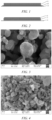
- the carbon-coated lithium iron phosphate material synthesized by a conventional method (such as a solid phase method), as shown in Figure 3 , has no orientation in the crystal plane in the microscopic state, and the primary particle size is large.
- the carbon-coated lithium iron phosphate obtained by the liquid phase synthesis method exhibits a crystal-plane growth-oriented flaky morphology in the microscopic state, as shown in Figure 4 .
- the smaller particle size and flake-like morphology are more conducive to the diffusion of lithium ions, resulting in good low temperature performance.
- a secondary battery comprising the positive electrode plate according to any one of the above embodiments.
- the secondary battery of the present application may refer to the lithium-ion battery according to any one of the above embodiments.
- a secondary battery comprises a positive electrode plate, a negative electrode plate, an electrolyte and a separator.
- active ions are intercalated and de-intercalated back and forth between the positive electrode plate and the negative electrode plate.
- the electrolyte is located between the positive electrode plate and the negative electrode plate and functions for ionic conduction.
- the separator is provided between the positive electrode plate and the negative electrode plate, and mainly prevents the positive and negative electrodes from short-circuiting and enables ions to pass through.
- the negative electrode current collector of the negative electrode plate may be a metal foil or a composite current collector.
- a metal foil a copper foil can be used.
- the composite current collector may comprise a polymer material substrate and a metal layer formed on at least one surface of the polymer material substrate.
- the composite current collector can be formed by forming a metal material (copper, a copper alloy, nickel, a nickel alloy, titanium, a titanium alloy, silver and a silver alloy, etc.) on a polymer material substrate (e.g., polypropylene (PP), polyethylene terephthalate (PET), polybutylene terephthalate (PBT), polystyrene (PS), polyethylene (PE), etc.).
- PP polypropylene
- PET polyethylene terephthalate
- PBT polybutylene terephthalate
- PS polystyrene
- PE polyethylene
- the negative electrode plate can be prepared as follows: a first negative electrode slurry and a second negative electrode slurry are prepared; the second negative electrode slurry is coated on the current collector to form a second coating, and then the first negative electrode slurry is coated on a surface of the second coating to form a first coating; or a double-sided coating device may also be used in the coating to coat the first negative electrode slurry and the second negative electrode slurry on the current collector simultaneously; and procedures such as drying and cold pressing are performed to obtain a negative electrode plate, in which the current collector is on one side of the second coating, and the first coating is on the other side of the second coating.
- the electrolyte is located between the positive electrode plate and the negative electrode plate and functions for ionic conduction.
- the type of the electrolyte is not specifically limited in the present application, and can be selected according to actual requirements.
- the electrolyte may be liquid, gel or all solid.
- an electrolyte solution is used as the electrolyte.
- the electrolyte solution comprises an electrolyte salt and a solvent.
- the electrolyte salt may be selected from at least one of lithium hexafluorophosphate, lithium tetrafluoroborate, lithium perchlorate, lithium hexafluoroarsenate, lithium bisfluorosulfonimide, lithium bistrifluoromethanesulfonimide, lithium trifluoromethanesulfonate, lithium difluorophosphate, lithium difluorooxalate borate, lithium dioxalate borate, lithium difluorodioxalate phosphate and lithium tetrafluorooxalate phosphate.
- the solvent may be selected from at least one of ethylene carbonate, propylene carbonate, ethyl methyl carbonate, diethyl carbonate, dimethyl carbonate, dipropyl carbonate, methyl propyl carbonate, ethyl propyl carbonate, butylene carbonate, fluoroethylene carbonate, methyl formate, methyl acetate, ethyl acetate, propyl acetate, methyl propionate, ethyl propionate, propyl propionate, methyl butyrate, ethyl butyrate, 1,4-butyrolactone, sulfolane, dimethyl sulfone, ethyl methyl sulfone, and diethyl sulfone.
- the electrolyte solution may optionally comprise an additive.
- the additive can include a negative electrode film-forming additive, a positive electrode film-forming additive, and also an additive that can improve certain performances of the battery, such as an additive that improve the overcharge performance of the battery, or an additive that improve the high temperature performance or low-temperature performance of the battery.
- the secondary battery further comprises a separator.
- the type of the separator is not particularly limited in the present application, and any well known porous-structure separator with good chemical stability and mechanical stability may be selected.
- the material of the separator can be selected from at least one of glass fibers, a non-woven, polyethylene, polypropylene and polyvinylidene fluoride.
- the separator may be a single-layer film and also a multi-layer composite film, and is not limited particularly.
- the separator is a multi-layer composite film, the materials in the respective layers may be same or different, which is not limited particularly.
- an electrode assembly may be formed by a positive electrode plate, a negative electrode plate and a separator by a winding process or a laminating process.
- the secondary battery may comprise an outer package.
- the outer package can be used to encapsulate the above-mentioned electrode assembly and electrolyte.
- the outer package of the secondary battery can be a hard shell, for example, a hard plastic shell, an aluminum shell, a steel shell, etc.
- the outer package of the secondary battery may also be a soft bag, such as a pouch-type soft bag.
- the material of the soft bag may be plastics, and the examples of plastics may include polypropylene, polybutylene terephthalate, and polybutylene succinate, etc.
- the shape of the secondary battery is not particularly limited in the present application, and may be cylindrical, square or of any other shape.
- Fig. 5 shows a secondary battery 5 with a square structure as an example.
- the outer package may include a housing 51 and a cover plate 53.
- the housing 51 may include a bottom plate and side plates connected to the bottom plate, and the bottom plate and the side plates enclose to form an accommodating cavity.
- the housing 51 has an opening in communication with the accommodating cavity, and the cover plate 53 can cover the opening to close the accommodating cavity.
- the positive electrode plate, the negative electrode plate and the separator can be subjected to a winding process or a lamination process to form an electrode assembly 52.
- the electrode assembly 52 is packaged in the accommodating cavity.
- the electrolyte infiltrates the electrode assembly 52.
- the number of the electrode assemblies 52 contained in the secondary battery 5 may be one or more, and can be selected by those skilled in the art according to actual requirements.
- the secondary battery can be assembled into a battery module, and the number of the secondary batteries contained in the battery module may be one or more, and the specific number can be selected by those skilled in the art according to the application and capacity of the battery module.
- Fig. 7 shows a battery module 4 as an example.
- a plurality of secondary batteries 5 may be arranged in sequence in the length direction of the battery module 4.
- the secondary batteries may also be arranged in any other manner.
- the plurality of secondary batteries 5 may be fixed by fasteners.
- the battery module 4 may also comprise a housing with an accommodating space, and a plurality of secondary batteries 5 are accommodated in the accommodating space.
- the above-mentioned battery module may also be assembled into a battery pack, the number of battery modules included in the battery pack may be one or more, and the specific number can be selected by those skilled in the art according to the application and capacity of the battery pack.
- the battery pack 1 may comprise a battery box and a plurality of battery modules 4 provided in the battery box.
- the battery box comprises an upper box body 2 and a lower box body 3, wherein the upper box body 2 can cover the lower box body 3 to form a closed space for accommodating the battery modules 4.
- a plurality of battery modules 4 may be arranged in the battery box in any manner.
- the present application further provides a power consuming device.
- the power consuming device comprises at least one of the secondary battery, battery module, or battery pack provided by the present application.
- the secondary battery, battery module or battery pack may be used as a power source of the power consuming device or as an energy storage unit of the power consuming device.
- the power consuming device may include a mobile device (e.g., a mobile phone, a laptop computer, etc.), an electric vehicle (e.g., a pure electric vehicle, a hybrid electric vehicle, a plug-in hybrid electric vehicle, an electric bicycle, an electric scooter, an electric golf cart, an electric truck), an electric train, ship, and satellite, an energy storage system, and the like, but is not limited thereto.
- the secondary battery, battery module or battery pack can be selected according to the usage requirements thereof.
- Fig. 10 shows a power consuming device as an example.
- the power consuming device may be a pure electric vehicle, a hybrid electric vehicle, a plug-in hybrid electric vehicle or the like.
- a battery pack or a battery module may be used.
- the device may be a mobile phone, a tablet, a laptop computer, etc.
- the device is generally required to be thin and light, and may use a secondary battery as a power source.
- the carbon-coated LiFePO 4 with a primary particle average particle size of 800 nm as a first positive electrode active material (obtained by a solid-phase method), a binder polyvinylidene fluoride (PVDF), and a conductive carbon acetylene black are dry-mixed according to the weight ratio of 95 : 3 : 2, then N-methylpyrrolidone (NMP) is added as a solvent, and the system is stirred under the action of a vacuum mixer until the system is homogeneous to obtain a first positive electrode slurry with a viscosity of 20000 mPa ⁇ s.
- NMP N-methylpyrrolidone
- the carbon-coated LiFePO 4 with a primary particle average particle size of 80 nm as a second positive electrode active material obtained by a liquid-phase method
- a conductive carbon acetylene black are dry-mixed according to the weight ratio of 95 : 3 : 2, then N-methylpyrrolidone (NMP) is added as a solvent, and the system is stirred under the action of a vacuum mixer until the system is homogeneous to obtain a second positive electrode slurry with a viscosity of 20000 mPa ⁇ s.
- NMP N-methylpyrrolidone
- the prepared second positive electrode slurry is uniformly coated onto the surface of the current collector aluminum foil with a thickness of 12 ⁇ m at a coating weight of 20 g/m 2 , and dried in an oven at 100°C to obtain a second active material layer with a thickness of 8.5 ⁇ m.
- the first positive electrode slurry is uniformly coated onto the surface of the second active material layer with a coating weight of 260 g/m 2 , and dried in an oven at 100°C to obtain a first active material layer with a thickness of 110 ⁇ m, forming a structure as shown in Figure 1 , following by processes such as cold pressing, tab forming, and slitting to obtain a positive electrode plate.
- non-aqueous organic solvents ethylene carbonate, ethyl methyl carbonate and diethyl carbonate were mixed in a volume ratio of 1 : 1 : 1 to obtain an electrolyte solution solvent, and then a lithium salt LiPF 6 was dissolved in the mixed solvent, to make an electrolyte solution with a lithium salt concentration of 1 mol/L.
- a polyethylene film with a thickness of 9 ⁇ m was selected as a separator, and before use, the separator was slitted to obtain a suitable width according to the dimensions of the positive electrode plate and the negative electrode plate.
- the above positive electrode plate, a separator and negative electrode plate are punched into a plate, such that the separator was located between the positive electrode plate and the negative electrode plate to play a role of isolation, and then the plate is stacked several times to obtain an electrode assembly; and the electrode assembly was placed in an outer package and dried, and then an electrolyte solution was injected, followed by the procedures such as vacuum encapsulation, standing, forming and shaping, to obtain a lithium-ion battery.
- the procedure is the same as that of Example 1, except that the thickness of the second positive electrode active material layer and the coating weight of the first positive electrode active material are adjusted as shown in Table 1.
- the procedure is the same as that of Example 6, except that in ⁇ Preparation of positive electrode plate containing first positive electrode active material layer and second positive electrode active material layer>, the first positive electrode slurry is first coated onto the current collector to obtain the first positive electrode active material layer, and then the second positive electrode slurry is coated onto the surface of the first positive electrode active material layer to form the structure shown in FIG. 2 .
- the procedure is the same as that of Example 8, except that the thickness of the second positive electrode active material layer and the coating weight of the first positive electrode active material are adjusted as shown in Table 1.
- the lithium-ion batteries prepared in each example and comparative example are kept at 25°C for 2 h, they are charged to 3.65 V with a constant current rate of 0.33 C, and charged to 0.05 C with a constant voltage at 3.65 V.
- the tested battery is allowed to stand at 25°C for 2 h, and then discharged to 2.5 V at a rate of 0.5 C by means of a direct current, and the discharge capacity at room temperature thereof is recorded as C 0 .
- the lithium-ion batteries prepared in each example and comparative example are kept at 25°C for 2 h, they are charged to 3.65 V with a constant current rate of 0.33 C, and charged to 0.05 C with a constant voltage at 3.65 V.
- the tested battery is allowed to stand at -20°C for 2 h, and then discharged to 2.5 V at a rate of 0.5 C by means of a direct current, and the discharge capacity at -20°C thereof is recorded as C 1 .
- the capacity retention rate of the lithium-ion battery at -20°C is: (C 1 /C 0 ) ⁇ 100%.
- Capacity calibration After the lithium-ion batteries prepared in each example and comparative example are kept at 25°C for 2 h, they are charged to 3.65 V with a constant current rate of 0.33 C, and charged to 0.05 C with a constant voltage at 3.65 V. After the charging is completed, the tested battery is allowed to stand at 25°C for 2 h, and then discharged to 2.5 V at a rate of 0.33 C by means of a direct current, and the discharge capacity at room temperature thereof is recorded as C 0 .
- the lithium-ion batteries prepared in each example and comparative example are kept at 25°C for 2 h, they are charged to 3.65 V with a constant current rate of 0.33 C, and charged to 0.05 C with a constant voltage at 3.65 V.
- the diffraction peak intensity ratio of the second positive electrode active material is tested by X-ray, wherein a copper target X-ray diffractometer is used, the second active material is placed on the X-ray diffractometer (model Shimadzu XRD-7000) test platform, the start angle of scan is 10°, the end angle is 90°, and a step size is 0.013, and then the test is started to obtain the diffraction pattern of the second active material in the range of the diffraction angle of 10° to 90°, and the diffraction peak intensity ratio I A /I B is determined according to the diffraction pattern.
- example 1 to example 18 by controlling the intensity ratio I A /I B of the diffraction peak A to the diffraction peak B of the second positive electrode active material in the second positive electrode active material layer to satisfy: 0.98 ⁇ I A /I B ⁇ 1.1, a lithium ion battery with good low temperature performance as a whole can be obtained.
- the positive electrode plate of the lithium ion battery includes a first positive electrode active material layer and a second positive electrode active material layer, wherein the intensity ratio I A /I B of the diffraction peak A to the diffraction peak B of the second positive electrode active material in the second positive electrode active material layer satisfies: 0.98 ⁇ I A /I B ⁇ 1.1, such that the lithium ion battery has good low temperature capacity retention rate, low temperature power performance and low temperature volume energy density, and has achieved good results.
- the lithium ion batteries of comparative examples 1 to 2 do not achieve effective improvement in the low temperature capacity retention rate, low temperature power performance and low temperature volume energy density due to the fact that the diffraction peak intensity ratio I A /I B is too low or too high. That is, the low temperature performance has not been effectively improved.
- the low temperature performance of the lithium ion battery with the second positive electrode active material layer of the present application is improved.
- the lithium ion battery of comparative example 6 does not have the second positive electrode active material layer and does not achieve the effective improvement in the low temperature capacity retention rate, low temperature power performance and low temperature volume energy density. That is, the low temperature performance has not been effectively improved.
- the thickness of the second positive electrode active material layer, the type of the second positive electrode active material, and the type of the first positive electrode active material will also affect the low temperature performance of the lithium ion battery of the present application. It can be seen from Examples 5 to 18 that, as long as the above parameters are within the scope of the present application, a lithium ion battery with good comprehensive low temperature performance can be obtained.
- Example 6 and Example 16 it can be seen from Example 6 and Example 16 that the first positive electrode active material layer is arranged between the current collector and the second positive electrode active material layer, or the second positive electrode active material layer is arranged between the current collector and the first positive electrode active material layer, the low temperature performance of the lithium ion battery can be effectively improved.
Landscapes
- Chemical & Material Sciences (AREA)
- Chemical Kinetics & Catalysis (AREA)
- Electrochemistry (AREA)
- General Chemical & Material Sciences (AREA)
- Engineering & Computer Science (AREA)
- Inorganic Chemistry (AREA)
- Composite Materials (AREA)
- Materials Engineering (AREA)
- Manufacturing & Machinery (AREA)
- Crystallography & Structural Chemistry (AREA)
- Battery Electrode And Active Subsutance (AREA)
Claims (10)
- Positive Elektrodenplatte, dadurch gekennzeichnet, dass sie einen Stromkollektor (13), eine erste positive elektrodenaktive Materialschicht (11) und eine zweite positive elektrodenaktive Materialschicht (12) umfasst, wobei die zweite positive elektrodenaktive Materialschicht (12) zwischen dem Stromkollektor (13) und der ersten positiven elektrodenaktiven Materialschicht (11) angeordnet ist oder die erste positive elektrodenaktive Materialschicht (11) zwischen dem Stromkollektor (13) und der zweiten positiven elektrodenaktiven Materialschicht (12) angeordnet ist;die erste positive elektrodenaktive Materialschicht (11) ein erstes positives elektrodenaktives Material, ein erstes Bindemittel und ein erstes leitfähiges Mittel umfasst, wobei das erste positive elektrodenaktive Material ausgewählt ist aus mindestens einem von LiqCoO2, Li1+xCo1-y-zNiyMnzO2 oder kohlenstoffbeschichtetem LiβFeαM(1-α)PO4, wobei 0 ≤ q ≤ 1, 0 ≤ x ≤ 0,1, 0 ≤ y ≤ 0,95, 0 ≤ z ≤ 0,95, 0,2 ≤ α ≤ 1, 1 ≤ β ≤ 1,1, und M ausgewählt ist aus mindestens einem von Cu, Mn, Cr, Zn, Pb, Ca, Co, Ni und Sr; unddie zweite positive elektrodenaktive Materialschicht (12) ein zweites positives elektrodenaktives Material, ein zweites Bindemittel und ein zweites leitfähiges Mittel umfasst, wobei das zweite positive elektrodenaktive Material ausgewählt ist aus kohlenstoffbeschichtetem LiβFeαM(1-α)PO4, wobei 0,2 ≤ α ≤ 1, 1 ≤ β ≤ 1,1, M ausgewählt ist aus mindestens einem von Cu, Mn, Cr, Zn, Pb, Ca, Co, Ni und Sr, und das zweite positive elektrodenaktive Material einen Beugungspeak A zwischen 29° und 30° im Röntgenbeugungsmuster und einen Beugungspeak B zwischen 25° und 26° aufweist und das Intensitätsverhältnis IA/IB der Beugungspeaks erfüllt: 0,98 ≤ IA/IB ≤ 1,1, gegebenenfalls 1,05 ≤ IA/IB ≤ 1,1, wobei das Peakintensitätsverhältnis unter Verwendung eines Kupfer-Target-Röntgendiffraktometers bestimmt wird.
- Positive Elektrodenplatte nach Anspruch 1, dadurch gekennzeichnet, dass die Dicke D2 der Schicht des zweiten positiven elektrodenaktive Materials (12) 2 µm bis 40 µm, optional 10 µm bis 30 µm, und weiter optional 15 µm bis 25 µm beträgt.
- Positive Elektrodenplatte nach einem der Ansprüche 1 bis 2, dadurch gekennzeichnet, dass, bezogen auf die Gesamtmasse der zweiten positiven elektrodenaktiven Materialschicht (12), die Anteile des zweiten positiven Elektrodenaktivmaterials, des zweiten Bindemittels und des zweiten leitfähigen Mittels 80% bis 98%, 1% bis 10% bzw. 1% bis 10% betragen.
- Positive Elektrodenplatte nach einem der Ansprüche 1 bis 3, dadurch gekennzeichnet, dass die Dicke D1 der Schicht des ersten positiven elektrodenaktiven Materials (11) 100 µm bis 140 µm, optional 110 µm bis 130 µm, und weiter optional 115 µm bis 125 µm beträgt.
- Positive Elektrodenplatte nach einem der Ansprüche 1 bis 4, dadurch gekennzeichnet, dass, bezogen auf die Gesamtmasse der ersten positiven elektrodenaktiven Materialschicht (11), die Anteile des ersten positiven elektrodenaktiven Materials, des ersten Bindemittels und des ersten leitfähigen Mittels 90% bis 95%, 2% bis 8% bzw. 2% bis 8% betragen.
- Positive Elektrodenplatte nach einem der Ansprüche 1 bis 5, dadurch gekennzeichnet, dass das erste leitfähige Mittel und das zweite leitfähige Mittel jeweils unabhängig voneinander aus mindestens einem der folgenden Stoffe ausgewählt sind: Kohlenstoff-Nanoröhren, leitfähiger Kohlenstoff, Gasphasen-Kohlenstoff-Nanofasern, Graphit, Acetylenschwarz, Metallfasern, organische leitfähige Polymere und Graphen; das erste Bindemittel und das zweite Bindemittel jeweils unabhängig voneinander ausgewählt sind aus mindestens einem der folgenden Stoffe: Polyvinylidenfluorid, Polyvinylalkohol, Polytetrafluorethylen, Natriumcarboxymethylcellulose und Polyurethan.
- Sekundärbatterie (5), dadurch gekennzeichnet, dass sie eine positive Elektrodenplatte nach einem der Ansprüche 1 bis 6 umfasst.
- Batteriemodul (4), dadurch gekennzeichnet, dass es eine Sekundärbatterie (5) nach Anspruch 7 umfasst.
- Batteriepack (1), dadurch gekennzeichnet, dass es ein Batteriemodul (4) nach Anspruch 8 umfasst.
- Stromverbrauchende Vorrichtung, dadurch gekennzeichnet, dass sie mindestens eines der folgenden Elemente umfasst: eine Sekundärbatterie (5) nach Anspruch 7, ein Batteriemodul (4) nach Anspruch 8 oder ein Batteriepaket (1) nach Anspruch 9.
Priority Applications (1)
| Application Number | Priority Date | Filing Date | Title |
|---|---|---|---|
| HUE21945360A HUE069890T2 (hu) | 2021-11-30 | 2021-11-30 | Pozitív elektródlemez, akkumulátor, akkumulátormodul, akkumulátorcsomag és energiafogyasztó eszköz |
Applications Claiming Priority (1)
| Application Number | Priority Date | Filing Date | Title |
|---|---|---|---|
| PCT/CN2021/134449 WO2023097454A1 (zh) | 2021-11-30 | 2021-11-30 | 正极极片、二次电池、电池模块、电池包及用电装置 |
Publications (4)
| Publication Number | Publication Date |
|---|---|
| EP4213246A1 EP4213246A1 (de) | 2023-07-19 |
| EP4213246A4 EP4213246A4 (de) | 2023-08-23 |
| EP4213246C0 EP4213246C0 (de) | 2024-11-06 |
| EP4213246B1 true EP4213246B1 (de) | 2024-11-06 |
Family
ID=86499374
Family Applications (1)
| Application Number | Title | Priority Date | Filing Date |
|---|---|---|---|
| EP21945360.2A Active EP4213246B1 (de) | 2021-11-30 | 2021-11-30 | Positive ektrodenplatte, sekundärbatterie, batteriemodul, batteriepack und stromverbrauchende vorrichtung |
Country Status (5)
| Country | Link |
|---|---|
| US (1) | US20230170472A1 (de) |
| EP (1) | EP4213246B1 (de) |
| CN (1) | CN116762192A (de) |
| HU (1) | HUE069890T2 (de) |
| WO (1) | WO2023097454A1 (de) |
Families Citing this family (4)
| Publication number | Priority date | Publication date | Assignee | Title |
|---|---|---|---|---|
| KR20250068314A (ko) * | 2023-11-09 | 2025-05-16 | 삼성에스디아이 주식회사 | 리튬 이차 전지용 전극, 이를 포함하는 전극 조립체 및 리튬 이차 전지 |
| CN120033205A (zh) * | 2023-11-23 | 2025-05-23 | 宁德时代新能源科技股份有限公司 | 正极极片及其制备方法、电池和用电装置 |
| CN118671617B (zh) * | 2024-07-09 | 2024-11-12 | 香港科技大学(广州) | 电池的电解液化成反应分析方法及相关设备 |
| CN119965221B (zh) * | 2024-11-04 | 2025-09-30 | 宁德时代新能源科技股份有限公司 | 锂离子二次电池、正极活性材料和用电装置 |
Family Cites Families (9)
| Publication number | Priority date | Publication date | Assignee | Title |
|---|---|---|---|---|
| JP5991551B2 (ja) * | 2014-01-08 | 2016-09-14 | トヨタ自動車株式会社 | 非水電解質二次電池 |
| CN104779395B (zh) * | 2015-05-11 | 2018-11-02 | 德阳威旭锂电科技有限责任公司 | 一种三维导电网络结构的磷酸铁锂正极材料及其制备方法 |
| CN104900874B (zh) * | 2015-05-11 | 2018-01-16 | 德阳威旭锂电科技有限责任公司 | 一种晶体结构可控的磷酸铁锂材料及其制备方法 |
| CN111200108B (zh) * | 2018-11-16 | 2021-03-19 | 宁德时代新能源科技股份有限公司 | 一种电池 |
| CN111200103B (zh) * | 2018-11-16 | 2021-01-08 | 宁德时代新能源科技股份有限公司 | 一种电池 |
| CN111200104B (zh) * | 2018-11-16 | 2021-03-19 | 宁德时代新能源科技股份有限公司 | 一种电池 |
| CN111900342A (zh) * | 2020-06-18 | 2020-11-06 | 珠海冠宇电池股份有限公司 | 一种正极极片及其制备方法和用途 |
| CN112510168A (zh) * | 2020-12-22 | 2021-03-16 | 易佰特新能源科技有限公司 | 锂电池正极极片及其制备方法与采用该正极极片的锂电池 |
| CN113594412B (zh) * | 2021-08-10 | 2024-06-28 | 星恒电源股份有限公司 | 一种三明治结构的锂电池正极片及锂离子电池 |
-
2021
- 2021-11-30 WO PCT/CN2021/134449 patent/WO2023097454A1/zh not_active Ceased
- 2021-11-30 CN CN202180092408.4A patent/CN116762192A/zh active Pending
- 2021-11-30 EP EP21945360.2A patent/EP4213246B1/de active Active
- 2021-11-30 HU HUE21945360A patent/HUE069890T2/hu unknown
-
2022
- 2022-12-20 US US18/084,551 patent/US20230170472A1/en active Pending
Non-Patent Citations (1)
| Title |
|---|
| N.N.: "A basic guide to particle characterization", 1 January 2015 (2015-01-01), XP093118075, Retrieved from the Internet <URL:https://www.cif.iastate.edu/sites/default/files/uploads/Other_Inst/Particle%20Size/Particle%20Characterization%20Guide.pdf> [retrieved on 20240111] * |
Also Published As
| Publication number | Publication date |
|---|---|
| US20230170472A1 (en) | 2023-06-01 |
| EP4213246A1 (de) | 2023-07-19 |
| WO2023097454A1 (zh) | 2023-06-08 |
| EP4213246A4 (de) | 2023-08-23 |
| HUE069890T2 (hu) | 2025-04-28 |
| EP4213246C0 (de) | 2024-11-06 |
| CN116762192A (zh) | 2023-09-15 |
Similar Documents
| Publication | Publication Date | Title |
|---|---|---|
| EP4213246B1 (de) | Positive ektrodenplatte, sekundärbatterie, batteriemodul, batteriepack und stromverbrauchende vorrichtung | |
| CN117088352A (zh) | 磷酸铁锂的制备方法、正极活性材料、正极极片、电池和用电装置 | |
| CN117080419B (zh) | 正极活性材料及其制备方法、正极极片、二次电池和用电装置 | |
| EP4468403A1 (de) | Ammoniummanganeisenphosphatvorläufer und herstellungsverfahren dafür, lithiummanganeisenphosphatpositivelektrodenaktivmaterial und sekundärbatterie | |
| CN118043997B (zh) | 正极材料及其制备方法、具备其的二次电池 | |
| US12438149B2 (en) | Assembly, battery cell, battery, and electric apparatus containing same | |
| CN118525386B (zh) | 一种复合正极材料、其制备方法、二次电池、电池模块、电池包和用电装置 | |
| WO2023078047A1 (zh) | 正极活性材料、其制备方法、包括其的锂离子电池、电池模块、电池包和用电装置 | |
| EP4145569A1 (de) | Positivpolteil, sekundärbatterie und herstellungsverfahren dafür sowie batteriemodul, batteriepack und elektrische vorrichtung mit der sekundärbatterie | |
| US20260031350A1 (en) | Positive electrode active material and preparation method therefor, positive electrode plate, battery, and electrical apparatus | |
| WO2023184512A1 (zh) | 正极活性材料、其制备方法以及包含其的正极极片、二次电池及用电装置 | |
| CN121506917A (zh) | 正极活性材料、及其制备方法、二次电池和用电装置 | |
| WO2024011621A1 (zh) | 磷酸锰铁锂正极活性材料及其制备方法、正极极片、二次电池及用电装置 | |
| CN118043995B (zh) | 一种二次电池、电池模块、电池包和用电装置 | |
| CN121726337A (zh) | 负极极片、二次电池和用电装置 | |
| EP4682979A1 (de) | Verfahren zur herstellung eines positivelektrodenmaterials, positivelektrodenmaterial, positivelektrodenfolie, batterie und elektrische vorrichtung | |
| EP4668344A1 (de) | Positivelektrodenaktivmaterial und verfahren zur herstellung davon sowie positivelektrodenfolie, batterie und elektrische vorrichtung damit | |
| EP4614617A1 (de) | Positivelektrodenaktivmaterial, herstellungsverfahren dafür, positivelektrodenfolie, sekundärbatterie und elektrische vorrichtung | |
| EP4682990A1 (de) | Verfahren zur herstellung eines positivelektrodenmaterials, positivelektrodenmaterial, positivelektrodenfolie, batterie und elektrische vorrichtung | |
| EP4672365A1 (de) | Positivelektrodenaktivmaterial und herstellungsverfahren dafür sowie batteriezelle und elektrische vorrichtung | |
| US20250279429A1 (en) | Positive electrode material and preparation method thereof, positive electrode plate, secondary battery, and electrical device | |
| US20250343269A1 (en) | Electrolyte, secondary battery, and electrical apparatus | |
| CN118693245B (zh) | 正极活性材料组合物、正极极片、电池及用电装置 | |
| US20260011770A1 (en) | Cell combination, battery, and electric apparatus | |
| US20250070141A1 (en) | Negative electrode active material, preparation method thereof, secondary battery, and electric apparatus |
Legal Events
| Date | Code | Title | Description |
|---|---|---|---|
| STAA | Information on the status of an ep patent application or granted ep patent |
Free format text: STATUS: UNKNOWN |
|
| STAA | Information on the status of an ep patent application or granted ep patent |
Free format text: STATUS: THE INTERNATIONAL PUBLICATION HAS BEEN MADE |
|
| PUAI | Public reference made under article 153(3) epc to a published international application that has entered the european phase |
Free format text: ORIGINAL CODE: 0009012 |
|
| STAA | Information on the status of an ep patent application or granted ep patent |
Free format text: STATUS: REQUEST FOR EXAMINATION WAS MADE |
|
| 17P | Request for examination filed |
Effective date: 20221219 |
|
| AK | Designated contracting states |
Kind code of ref document: A1 Designated state(s): AL AT BE BG CH CY CZ DE DK EE ES FI FR GB GR HR HU IE IS IT LI LT LU LV MC MK MT NL NO PL PT RO RS SE SI SK SM TR |
|
| A4 | Supplementary search report drawn up and despatched |
Effective date: 20230721 |
|
| RIC1 | Information provided on ipc code assigned before grant |
Ipc: H01M 4/525 20100101AFI20230718BHEP |
|
| STAA | Information on the status of an ep patent application or granted ep patent |
Free format text: STATUS: EXAMINATION IS IN PROGRESS |
|
| 17Q | First examination report despatched |
Effective date: 20240117 |
|
| GRAP | Despatch of communication of intention to grant a patent |
Free format text: ORIGINAL CODE: EPIDOSNIGR1 |
|
| STAA | Information on the status of an ep patent application or granted ep patent |
Free format text: STATUS: GRANT OF PATENT IS INTENDED |
|
| GRAS | Grant fee paid |
Free format text: ORIGINAL CODE: EPIDOSNIGR3 |
|
| DAV | Request for validation of the european patent (deleted) | ||
| DAX | Request for extension of the european patent (deleted) | ||
| INTG | Intention to grant announced |
Effective date: 20240828 |
|
| RAP1 | Party data changed (applicant data changed or rights of an application transferred) |
Owner name: CONTEMPORARY AMPEREX TECHNOLOGY(HONG KONG) LIMITED |
|
| GRAA | (expected) grant |
Free format text: ORIGINAL CODE: 0009210 |
|
| STAA | Information on the status of an ep patent application or granted ep patent |
Free format text: STATUS: THE PATENT HAS BEEN GRANTED |
|
| AK | Designated contracting states |
Kind code of ref document: B1 Designated state(s): AL AT BE BG CH CY CZ DE DK EE ES FI FR GB GR HR HU IE IS IT LI LT LU LV MC MK MT NL NO PL PT RO RS SE SI SK SM TR |
|
| REG | Reference to a national code |
Ref country code: GB Ref legal event code: FG4D |
|
| REG | Reference to a national code |
Ref country code: CH Ref legal event code: EP |
|
| REG | Reference to a national code |
Ref country code: DE Ref legal event code: R096 Ref document number: 602021021643 Country of ref document: DE |
|
| REG | Reference to a national code |
Ref country code: IE Ref legal event code: FG4D |
|
| U01 | Request for unitary effect filed |
Effective date: 20241129 |
|
| U07 | Unitary effect registered |
Designated state(s): AT BE BG DE DK EE FI FR IT LT LU LV MT NL PT RO SE SI Effective date: 20241210 |
|
| U20 | Renewal fee for the european patent with unitary effect paid |
Year of fee payment: 4 Effective date: 20241213 |
|
| PG25 | Lapsed in a contracting state [announced via postgrant information from national office to epo] |
Ref country code: HR Free format text: LAPSE BECAUSE OF FAILURE TO SUBMIT A TRANSLATION OF THE DESCRIPTION OR TO PAY THE FEE WITHIN THE PRESCRIBED TIME-LIMIT Effective date: 20241106 Ref country code: IS Free format text: LAPSE BECAUSE OF FAILURE TO SUBMIT A TRANSLATION OF THE DESCRIPTION OR TO PAY THE FEE WITHIN THE PRESCRIBED TIME-LIMIT Effective date: 20250306 |
|
| PG25 | Lapsed in a contracting state [announced via postgrant information from national office to epo] |
Ref country code: ES Free format text: LAPSE BECAUSE OF FAILURE TO SUBMIT A TRANSLATION OF THE DESCRIPTION OR TO PAY THE FEE WITHIN THE PRESCRIBED TIME-LIMIT Effective date: 20241106 |
|
| PG25 | Lapsed in a contracting state [announced via postgrant information from national office to epo] |
Ref country code: NO Free format text: LAPSE BECAUSE OF FAILURE TO SUBMIT A TRANSLATION OF THE DESCRIPTION OR TO PAY THE FEE WITHIN THE PRESCRIBED TIME-LIMIT Effective date: 20250206 |
|
| PG25 | Lapsed in a contracting state [announced via postgrant information from national office to epo] |
Ref country code: GR Free format text: LAPSE BECAUSE OF FAILURE TO SUBMIT A TRANSLATION OF THE DESCRIPTION OR TO PAY THE FEE WITHIN THE PRESCRIBED TIME-LIMIT Effective date: 20250207 |
|
| PG25 | Lapsed in a contracting state [announced via postgrant information from national office to epo] |
Ref country code: PL Free format text: LAPSE BECAUSE OF FAILURE TO SUBMIT A TRANSLATION OF THE DESCRIPTION OR TO PAY THE FEE WITHIN THE PRESCRIBED TIME-LIMIT Effective date: 20241106 |
|
| REG | Reference to a national code |
Ref country code: HU Ref legal event code: AG4A Ref document number: E069890 Country of ref document: HU |
|
| PG25 | Lapsed in a contracting state [announced via postgrant information from national office to epo] |
Ref country code: RS Free format text: LAPSE BECAUSE OF FAILURE TO SUBMIT A TRANSLATION OF THE DESCRIPTION OR TO PAY THE FEE WITHIN THE PRESCRIBED TIME-LIMIT Effective date: 20250206 |
|
| REG | Reference to a national code |
Ref country code: CH Ref legal event code: PL |
|
| PG25 | Lapsed in a contracting state [announced via postgrant information from national office to epo] |
Ref country code: SM Free format text: LAPSE BECAUSE OF FAILURE TO SUBMIT A TRANSLATION OF THE DESCRIPTION OR TO PAY THE FEE WITHIN THE PRESCRIBED TIME-LIMIT Effective date: 20241106 |
|
| REG | Reference to a national code |
Ref country code: CH Ref legal event code: PL |
|
| PG25 | Lapsed in a contracting state [announced via postgrant information from national office to epo] |
Ref country code: CH Free format text: LAPSE BECAUSE OF NON-PAYMENT OF DUE FEES Effective date: 20241130 |
|
| PG25 | Lapsed in a contracting state [announced via postgrant information from national office to epo] |
Ref country code: SK Free format text: LAPSE BECAUSE OF FAILURE TO SUBMIT A TRANSLATION OF THE DESCRIPTION OR TO PAY THE FEE WITHIN THE PRESCRIBED TIME-LIMIT Effective date: 20241106 |
|
| PG25 | Lapsed in a contracting state [announced via postgrant information from national office to epo] |
Ref country code: CZ Free format text: LAPSE BECAUSE OF FAILURE TO SUBMIT A TRANSLATION OF THE DESCRIPTION OR TO PAY THE FEE WITHIN THE PRESCRIBED TIME-LIMIT Effective date: 20241106 |
|
| PLBE | No opposition filed within time limit |
Free format text: ORIGINAL CODE: 0009261 |
|
| STAA | Information on the status of an ep patent application or granted ep patent |
Free format text: STATUS: NO OPPOSITION FILED WITHIN TIME LIMIT |
|
| PG25 | Lapsed in a contracting state [announced via postgrant information from national office to epo] |
Ref country code: MC Free format text: LAPSE BECAUSE OF FAILURE TO SUBMIT A TRANSLATION OF THE DESCRIPTION OR TO PAY THE FEE WITHIN THE PRESCRIBED TIME-LIMIT Effective date: 20241106 |
|
| 26N | No opposition filed |
Effective date: 20250807 |
|
| PG25 | Lapsed in a contracting state [announced via postgrant information from national office to epo] |
Ref country code: IE Free format text: LAPSE BECAUSE OF NON-PAYMENT OF DUE FEES Effective date: 20241130 |
|
| PGFP | Annual fee paid to national office [announced via postgrant information from national office to epo] |
Ref country code: HU Payment date: 20251107 Year of fee payment: 5 |
|
| U20 | Renewal fee for the european patent with unitary effect paid |
Year of fee payment: 5 Effective date: 20251127 |
|
| PGFP | Annual fee paid to national office [announced via postgrant information from national office to epo] |
Ref country code: GB Payment date: 20251126 Year of fee payment: 5 |