EP4209583A1 - Method for regenerating liquid to be treated, and agent for regenerating liquid to be treated - Google Patents
Method for regenerating liquid to be treated, and agent for regenerating liquid to be treated Download PDFInfo
- Publication number
- EP4209583A1 EP4209583A1 EP21864329.4A EP21864329A EP4209583A1 EP 4209583 A1 EP4209583 A1 EP 4209583A1 EP 21864329 A EP21864329 A EP 21864329A EP 4209583 A1 EP4209583 A1 EP 4209583A1
- Authority
- EP
- European Patent Office
- Prior art keywords
- lactic acid
- ammonia
- adsorbent
- liquid
- treated
- Prior art date
- Legal status (The legal status is an assumption and is not a legal conclusion. Google has not performed a legal analysis and makes no representation as to the accuracy of the status listed.)
- Pending
Links
Images


Classifications
-
- B—PERFORMING OPERATIONS; TRANSPORTING
- B01—PHYSICAL OR CHEMICAL PROCESSES OR APPARATUS IN GENERAL
- B01J—CHEMICAL OR PHYSICAL PROCESSES, e.g. CATALYSIS OR COLLOID CHEMISTRY; THEIR RELEVANT APPARATUS
- B01J20/00—Solid sorbent compositions or filter aid compositions; Sorbents for chromatography; Processes for preparing, regenerating or reactivating thereof
- B01J20/02—Solid sorbent compositions or filter aid compositions; Sorbents for chromatography; Processes for preparing, regenerating or reactivating thereof comprising inorganic material
- B01J20/06—Solid sorbent compositions or filter aid compositions; Sorbents for chromatography; Processes for preparing, regenerating or reactivating thereof comprising inorganic material comprising oxides or hydroxides of metals not provided for in group B01J20/04
- B01J20/08—Solid sorbent compositions or filter aid compositions; Sorbents for chromatography; Processes for preparing, regenerating or reactivating thereof comprising inorganic material comprising oxides or hydroxides of metals not provided for in group B01J20/04 comprising aluminium oxide or hydroxide; comprising bauxite
-
- B—PERFORMING OPERATIONS; TRANSPORTING
- B01—PHYSICAL OR CHEMICAL PROCESSES OR APPARATUS IN GENERAL
- B01D—SEPARATION
- B01D15/00—Separating processes involving the treatment of liquids with solid sorbents; Apparatus therefor
-
- B—PERFORMING OPERATIONS; TRANSPORTING
- B01—PHYSICAL OR CHEMICAL PROCESSES OR APPARATUS IN GENERAL
- B01J—CHEMICAL OR PHYSICAL PROCESSES, e.g. CATALYSIS OR COLLOID CHEMISTRY; THEIR RELEVANT APPARATUS
- B01J20/00—Solid sorbent compositions or filter aid compositions; Sorbents for chromatography; Processes for preparing, regenerating or reactivating thereof
- B01J20/02—Solid sorbent compositions or filter aid compositions; Sorbents for chromatography; Processes for preparing, regenerating or reactivating thereof comprising inorganic material
- B01J20/10—Solid sorbent compositions or filter aid compositions; Sorbents for chromatography; Processes for preparing, regenerating or reactivating thereof comprising inorganic material comprising silica or silicate
- B01J20/16—Alumino-silicates
- B01J20/18—Synthetic zeolitic molecular sieves
-
- C—CHEMISTRY; METALLURGY
- C12—BIOCHEMISTRY; BEER; SPIRITS; WINE; VINEGAR; MICROBIOLOGY; ENZYMOLOGY; MUTATION OR GENETIC ENGINEERING
- C12M—APPARATUS FOR ENZYMOLOGY OR MICROBIOLOGY; APPARATUS FOR CULTURING MICROORGANISMS FOR PRODUCING BIOMASS, FOR GROWING CELLS OR FOR OBTAINING FERMENTATION OR METABOLIC PRODUCTS, i.e. BIOREACTORS OR FERMENTERS
- C12M41/00—Means for regulation, monitoring, measurement or control, e.g. flow regulation
- C12M41/30—Means for regulation, monitoring, measurement or control, e.g. flow regulation of concentration
- C12M41/32—Means for regulation, monitoring, measurement or control, e.g. flow regulation of concentration of substances in solution
-
- C—CHEMISTRY; METALLURGY
- C12—BIOCHEMISTRY; BEER; SPIRITS; WINE; VINEGAR; MICROBIOLOGY; ENZYMOLOGY; MUTATION OR GENETIC ENGINEERING
- C12M—APPARATUS FOR ENZYMOLOGY OR MICROBIOLOGY; APPARATUS FOR CULTURING MICROORGANISMS FOR PRODUCING BIOMASS, FOR GROWING CELLS OR FOR OBTAINING FERMENTATION OR METABOLIC PRODUCTS, i.e. BIOREACTORS OR FERMENTERS
- C12M47/00—Means for after-treatment of the produced biomass or of the fermentation or metabolic products, e.g. storage of biomass
- C12M47/10—Separation or concentration of fermentation products
-
- C—CHEMISTRY; METALLURGY
- C12—BIOCHEMISTRY; BEER; SPIRITS; WINE; VINEGAR; MICROBIOLOGY; ENZYMOLOGY; MUTATION OR GENETIC ENGINEERING
- C12N—MICROORGANISMS OR ENZYMES; COMPOSITIONS THEREOF; PROPAGATING, PRESERVING, OR MAINTAINING MICROORGANISMS; MUTATION OR GENETIC ENGINEERING; CULTURE MEDIA
- C12N1/00—Microorganisms; Compositions thereof; Processes of propagating, maintaining or preserving microorganisms or compositions thereof; Processes of preparing or isolating a composition containing a microorganism; Culture media therefor
- C12N1/38—Chemical stimulation of growth or activity by addition of chemical compounds which are not essential growth factors; Stimulation of growth by removal of a chemical compound
-
- C—CHEMISTRY; METALLURGY
- C12—BIOCHEMISTRY; BEER; SPIRITS; WINE; VINEGAR; MICROBIOLOGY; ENZYMOLOGY; MUTATION OR GENETIC ENGINEERING
- C12N—MICROORGANISMS OR ENZYMES; COMPOSITIONS THEREOF; PROPAGATING, PRESERVING, OR MAINTAINING MICROORGANISMS; MUTATION OR GENETIC ENGINEERING; CULTURE MEDIA
- C12N5/00—Undifferentiated human, animal or plant cells, e.g. cell lines; Tissues; Cultivation or maintenance thereof; Culture media therefor
- C12N5/0018—Culture media for cell or tissue culture
-
- B—PERFORMING OPERATIONS; TRANSPORTING
- B01—PHYSICAL OR CHEMICAL PROCESSES OR APPARATUS IN GENERAL
- B01J—CHEMICAL OR PHYSICAL PROCESSES, e.g. CATALYSIS OR COLLOID CHEMISTRY; THEIR RELEVANT APPARATUS
- B01J20/00—Solid sorbent compositions or filter aid compositions; Sorbents for chromatography; Processes for preparing, regenerating or reactivating thereof
- B01J20/02—Solid sorbent compositions or filter aid compositions; Sorbents for chromatography; Processes for preparing, regenerating or reactivating thereof comprising inorganic material
- B01J20/04—Solid sorbent compositions or filter aid compositions; Sorbents for chromatography; Processes for preparing, regenerating or reactivating thereof comprising inorganic material comprising compounds of alkali metals, alkaline earth metals or magnesium
- B01J20/041—Oxides or hydroxides
Definitions
- the present invention relates to a method for regenerating a liquid to be treated, and a regenerating agent for a liquid to be treated.
- Cell for which mass-culture is required includes antibody-producing cell and pluripotent stem cell. These cells and so forth, if mass-culturable stably over a long period, enable efficient production of biological substances such as monoclonal antibody, or differentiation-inducing tissue derived from the pluripotent stem cell.
- a possible method for industrial mass-culture of the cells and so forth may be suspension stirred culture with use of a culture tank.
- industrial use of the cells tends to push up the culture cost, due to increased scale of culture. It is therefore effective to increase culture density of the cells and so forth, for cost reduction.
- Increase of the culture density has been known to suppress proliferation of the cells and so forth. This is because the thus densified cell and so forth elevates the concentration of wastes (metabolites) in the culture liquid (liquid medium), and this reduces proliferative activity of the cell and so forth. Lactic acid and ammonia have been known as representative wastes that can affect the cell and so forth.
- Patent Literature 1 discloses a cell culture apparatus, in which a cell culture tank and a component adjusting solution tank are connected by a liquid feeding line provided with a culture solution component adjustment membrane through which components can permeate depending on concentration difference.
- the wastes accumulated in the culture solution move to the component adjusting solution side, so that the concentration in the culture solution decreases.
- the component adjusting solution having been used is the culture liquid per se.
- Patent Literature 1 WO2015/122528
- Patent Literature 1 has removed wastes from the culture liquid, on the principle of dialysis.
- a tank of the component adjusting solution has therefore been designed to have a capacity 10 times or more larger than the cell culture tank, in order to fully remove the wastes.
- This has posed a problem that a huge volume of liquid is necessary, and the cost grows high.
- use of the culture liquid per se consequently consumes a large volume of expensive medium, further pushing up the cost.
- removal of the wastes based on the dialysis technique has also posed a problem of complicating the structure of the culture apparatus.
- Lactic acid and ammonia are desired to be removed not only in culture liquid of cell and so forth, but also in other liquid systems.
- the present invention has been arrived at in view of such circumstances, wherein an object of which is to provide a novel technique for removing lactic acid and ammonia.
- a mode of the present invention relates to a method for regenerating a liquid to be treated.
- the method includes bringing a lactic acid adsorbent that contains a Mg-Al-based layered double hydroxide having Mg 2+ and Al 3+ as constituent metals, and an ammonia adsorbent having L-type zeolite, into contact with the liquid to be treated that contains lactic acid and ammonia, to remove lactic acid and ammonia in the liquid to be treated.
- the regenerating agent for a liquid to be treated contains a lactic acid adsorbent that contains a Mg-Al-based layered double hydroxide having Mg 2+ and Al 3+ as constituent metals; and an ammonia adsorbent having L-type zeolite, the agent being structured to remove lactic acid and ammonia in the liquid to be treated, upon being bought into contact with the liquid to be treated that contains lactic acid and ammonia.
- a novel method for removing lactic acid and ammonia may be provided.
- a mode of the present invention relates to a method for regenerating a liquid to be treated.
- the method includes bringing a lactic acid adsorbent that contains a Mg-Al-based layered double hydroxide having Mg 2+ and Al 3+ as constituent metals, and an ammonia adsorbent having L-type zeolite, into contact with the liquid to be treated that contains lactic acid and ammonia, to remove lactic acid and ammonia in the liquid to be treated.
- a novel method for removing lactic acid ammonia may be provided.
- the liquid to be treated may contain glucose.
- the liquid to be treated may be a culture liquid of at least either cell or microorganism.
- an amount of consumption of each of the lactic acid adsorbent and the ammonia adsorbent may be adjusted so that the concentration thereof relative to the liquid to be treated will be 0.025 g/mL or higher and 0.1 g/mL or lower.
- the regenerating agent for a liquid to be treated contains a lactic acid adsorbent that contains a Mg-Al-based layered double hydroxide having Mg 2+ and Al 3+ as constituent metals; and an ammonia adsorbent having L-type zeolite, the agent being structured to remove lactic acid and ammonia in the liquid to be treated, upon being bought into contact with the liquid to be treated that contains lactic acid and ammonia.
- the regenerating agent for a liquid to be treated according to the present embodiment includes a lactic acid adsorbent that contains a layered double hydroxide (LDH), and an ammonia adsorbent having L-type zeolite.
- LDH layered double hydroxide
- LDH contained in the lactic acid adsorbent is an Mg-Al-based LDH having Mg 2+ and Al 3+ as constituent metals.
- LDH has a plurality of host layers (metal hydroxide layers), and an anion and water molecule intercalated between the host layers, and the host layers contain divalent metal ion Mg 2+ and trivalent metal ion Al 3+ as the constituent metals. More specifically, the LDH is composed of octahedron-arrayed host layers which are positively charged due to substitution of a part of Mg 2+ in Mg(OH) 2 with Al 3+ , and a guest layer that contains an anion that compensates the positive charge of the host layers, and intercalated water.
- Lactic acid (lactate ion) is adsorbed to LDH, as a result of ion exchange with the anion in the guest layer.
- LDH having Mg 2+ and Al 3+ is represented by a chemical formula below. [Mg 2+ 1-X Al 3+ x (OH) 2 ][A n- x/n ⁇ yH 2 O]
- a n- represents an n-valent anion selected from the group consisting of HEPES, citric acid, pyruvic acid, CO 3 2- , SO 4 2- , Cl-, OH-, SiO 4 4- , SO 4 2- and NO 3 - .
- x represents 0.22 to 0.33, n represents 1 to 3, and y represents 1 to 12.
- the lactic acid adsorbent can demonstrate good adsorptivity to lactic acid, when combined with the ammonia adsorbent that contains L-type zeolite. Also toxicity of LDH to cell and so forth may be more likely to be reduced, as compared with a case where LDH contains Cu.
- a plurality of types of LDH, having different types of metal ion and anion that constitute LDH, may be used in a mixed manner.
- L-type zeolite contained in the ammonia adsorbent has a basic skeleton composed of silicon oxide, with a part of silicon in the basic skeleton substituted with aluminum. The crystal as a whole is therefore negatively charged. Zeolite retains cations in the zeolite pores, in order to maintain electrical neutrality. The cations are reversibly interchangeable. Ammonia (ammonium ions) is adsorbed by the L-type zeolite, as a result of ion exchange with the retained ion. With the L-type zeolite contained therein, the ammonia adsorbent can demonstrate good adsorptivity to ammonia, when combined with the aforementioned lactic acid adsorbent.
- the L-type zeolite usable herein includes synthetic zeolite such as 500KOA (from Tosoh Corporation), and HS-500 (from FUJIFILM Wako Pure Chemical Corporation). These L-type zeolites retain K as the retained cation.
- the retained ion, although preferably K, may alternatively be alkali metal, alkaline earth metal or lanthanoid, such as Na, Li, Rb, Ce, Ba, Ca, Mg, Sr, and La; and, Al or Fe.
- the retained ion may alternatively be H.
- a plurality of types of L-type zeolites having different retained ions may be used in a mixed manner.
- the aforementioned lactic acid adsorbent can adsorb lactic acid, simply upon contact with lactic acid.
- the aforementioned ammonia adsorbent can adsorb ammonia, simply upon contact with ammonia.
- the regenerating agent of this embodiment may be suitably used for adsorptive removal of lactic acid and ammonia in the liquid.
- lactic acid and ammonia in the liquid to be treated may be removed by bringing the lactic acid adsorbent and the ammonia adsorbent into contact with the liquid to be treated that contains lactic acid and ammonia.
- the regenerating agent can adsorb lactic acid and ammonia to be removed, with selectivity higher than that for glucose to be remained in the liquid.
- the liquid to be treated containing glucose is exemplified by a culture liquid of at least either cell or microorganism. That is, the regenerating agent of this embodiment is suitably applicable to regeneration treatment of culture liquid.
- the type of the culture liquid is not particularly limited.
- the regenerating agent may also be used in combination with an adsorbent that adsorbs any other cell waste product.
- the amount of consumption of each of the lactic acid adsorbent and the ammonia adsorbent, in the regenerating treatment of the liquid to be treated is preferably adjusted so that the concentration thereof relative to the liquid to be treated will be 0.025 g/mL or higher and 0.1 g/mL or lower.
- the amount of consumption (concentration) of each of the lactic acid adsorbent and the ammonia adsorbent adjusted to 0.025 g/mL or more, it becomes possible to more effectively adsorb lactic acid and ammonia.
- the cell and microorganism cultured with use of the culture liquid are not particularly limited.
- the cell is exemplified by pluripotent stem cell and differentiation-induced cell such as human iPS cell, human ES cell, and human Muse cell; somatic stem cell such as mesenchymal stem cell (MSC) and nephron precursor cell; tissue cell such as human renal proximal tubule epithelial cell, human distal tubule epithelial cell, and human collecting duct epithelial cell; antibody-producing cell line such as human fetal renal cell (HEK293 cell); and antibody-producing cell line derived from animals other than human such as Chinese hamster ovary cell (CHO cell) and insect cell (SF9 cell).
- pluripotent stem cell and differentiation-induced cell such as human iPS cell, human ES cell, and human Muse cell
- somatic stem cell such as mesenchymal stem cell (MSC) and nephron precursor cell
- tissue cell such as human renal proximal
- the method for regenerating the liquid to be treated according to this embodiment includes adsorptively removing lactic acid and ammonia in the liquid to be treated, by bringing the aforementioned lactic acid adsorbent and the ammonia adsorbent into contact with the liquid to be treated that contains lactic acid and ammonia.
- the method of bringing the individual adsorbents into contact with the liquid to be treated are exemplified as follows, although not particularly limited thereto.
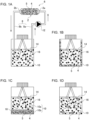
- Fig. 1A to Fig. 1D are schematic drawings for explaining methods for regenerating the liquid to be treated according to the embodiment. Although the description below will deal with removal of lactic acid and ammonia from the culture liquid, also removal of lactic acid and ammonia from any other liquid to be treated may be conducted in the same way.
- an adsorption module 6 having a vessel 2 such as a column in which a lactic acid adsorbent 4 and an ammonia adsorbent 5 are packed, is prepared.
- the vessel 2 has an inlet 2a and an outlet 2b through which the inside and the outside of the vessel 2 are communicated.
- the lactic acid adsorbent 4 and the ammonia adsorbent 5 are typically in the form of particle, which are mixed and housed in the adsorption module 6.
- the adsorption module 6 is connected through a circulation path 8, to a culture container 10 such as a spinner flask.
- the circulation path 8 has an outward path 8a that connects the culture container 10 and the inlet 2a of the vessel 2, and a return path 8b that connects the outlet 2b of the vessel 2 and the culture container 10.
- the outward path 8a has a pump 12 connected in the middle thereof.
- the culture container 10 houses a culture liquid 14 and a cell 16.
- the pump 12 may alternatively be arranged on the return path 8b.
- the culture liquid 14 Upon operation of the pump 12, the culture liquid 14 is sucked from the culture container 10, and fed through the outward path 8a to the vessel 2 of the adsorption module 6. The culture liquid 14 fed to the vessel 2 is returned through the return path 8b, back to the culture container 10.
- the outward path 8a has an unillustrated filter arranged at the end thereof on the side connected to the culture container 10. This suppresses the cell 16 from migrating towards the adsorption module 6. Note that a medium component such as glucose or protein, necessary for culturing the cell 16, may be replenished into the culture liquid 14, in the process of circulating the culture liquid 14 between the culture container 10 and the adsorption module 6.
- lactic acid and ammonia in the culture liquid 14 are removed, with use of the regenerating apparatus that includes the adsorption module 6 having the lactic acid adsorbent 4 and the ammonia adsorbent 5 (that is, the regenerating agent); the culture container 10 that houses the cell 16 (or may be microorganism) and the culture liquid 14; and the circulation path 8 that connects the culture container 10 and the adsorption module 6, and allows the culture liquid 14 to circulate therethrough.
- the regenerating apparatus that includes the adsorption module 6 having the lactic acid adsorbent 4 and the ammonia adsorbent 5 (that is, the regenerating agent); the culture container 10 that houses the cell 16 (or may be microorganism) and the culture liquid 14; and the circulation path 8 that connects the culture container 10 and the adsorption module 6, and allows the culture liquid 14 to circulate therethrough.
- the lactic acid adsorbent 4 and the ammonia adsorbent 5 are supported on the inner wall face of the culture container 10.
- the culture container 10 houses the culture liquid 14 and the cell 16.
- the culture liquid 14 therefore comes into contact with the lactic acid adsorbent 4 and the ammonia adsorbent 5 that expose on the inner wall face of the culture container 10. Lactic acid and ammonia in the culture liquid 14 may thus be adsorbed to the lactic acid adsorbent 4 and to the ammonia adsorbent 5.
- the culture container 10 is exemplified by spinner flask, petri dish, well plate, cell culture insert, and microsphere.
- Method for supporting the lactic acid adsorbent 4 and the ammonia adsorbent 5 on the inner wall face of the culture container 10 is exemplified by a method of adhering the lactic acid adsorbent 4 and the ammonia adsorbent 5 to the inner wall face of the culture container 10; and, a method of molding the culture container 10, if made of resin, with use of a resin having the lactic acid adsorbent 4 and the ammonia adsorbent 5 preliminarily kneaded therein.
- lactic acid and ammonia in the culture liquid 14 in the second mode are removed with use of a regenerating apparatus having the culture container 10, and the lactic acid adsorbent 4 and the ammonia adsorbent 5 (that are regenerating agents) supported on the inner wall face of the culture container 10.
- the culture container 10 is structured to have a diaphragm 18 such as a porous membrane, which divides the inside of the container into an upper part 10a and a lower part 10b.
- This sort of culture container 10 is exemplified by cell culture insert.
- the upper part 10a houses the culture liquid 14 and the cell 16, meanwhile the lower part 10b houses the culture liquid 14, the lactic acid adsorbent 4, and the ammonia adsorbent 5.
- the culture liquid 14 can move back and forth between the upper part 10a and the lower part 10b, through the diaphragm 18.
- the cell 16, the lactic acid adsorbent 4, and the ammonia adsorbent 5 cannot pass through the diaphragm 18.
- the culture liquid 14 comes into contact with the lactic acid adsorbent 4 and the ammonia adsorbent 5 housed in the lower part 10b. Lactic acid and ammonia in the culture liquid 14 may thus be adsorbed to the lactic acid adsorbent 4 and to the ammonia adsorbent 5.
- lactic acid and ammonia in the culture liquid 14 in the third mode are removed with use of the regenerating apparatus having the culture container 10, the lactic acid adsorbent 4 and the ammonia adsorbent 5 (that are regenerating agents), and the diaphragm 18 that divides the inside of the culture container 10 into a first space that houses the lactic acid adsorbent 4 and the ammonia adsorbent 5, and a second space that houses the cell 16 (or may be microorganism).
- the lactic acid adsorbent 4 and the ammonia adsorbent 5 in the form of particle are allowed to disperse, precipitate or suspend in the culture liquid 14. Lactic acid and ammonia in the culture liquid 14 may thus be adsorbed to the lactic acid adsorbent 4 and to the ammonia adsorbent 5.
- the lactic acid adsorbent 4 and the ammonia adsorbent 5 added to the culture liquid 14 may be recovered by any of known methods such as filtration or centrifugation.
- the lactic acid adsorbent 4 and the ammonia adsorbent 5 preferably have a predetermined size or larger, which is typically 10 um or larger, in order to avoid phagocytosis by the cell 16. That is, lactic acid and ammonia in the culture liquid 14 in the fourth mode are removed with use of a regenerating apparatus having the culture container 10, and the lactic acid adsorbent 4 and the ammonia adsorbent 5 (that are regenerating agents) added to the culture liquid 14 in the culture container 10.
- the lactic acid adsorbent 4 and the ammonia adsorbent 5 are preferably coated with a resin such as polyvinyl alcohol, or a biological gel such as collagen, alginic acid, or gelatin. This suppresses outflow of any fine particle that may affect the cell 16, from the lactic acid adsorbent 4 and the ammonia adsorbent 5 into the culture liquid 14.
- the lactic acid adsorbent 4 is alternatively formed by kneading Mg-Al-based LDH typically with a ceramic binder, resin binder, or biological gel.
- the ammonia adsorbent 5 is formed by kneading L-type zeolite typically with a ceramic binder, resin binder, or biological gel.
- the ceramic binder is exemplified by alumina binder and colloidal silica.
- the resin binder is exemplified by polyvinyl alcohol and carboxymethyl cellulose.
- the biological gel is exemplified by collagen, alginic acid, and gelatin.
- the lactic acid adsorbent 4 and the ammonia adsorbent 5 reside in a mixed manner in the adsorption module 6, on the inner wall face of the culture container 10, in the lower part 10b, or in the culture liquid 14. That is, the first to fourth modes represent simultaneous treatment systems designed to simultaneously bring the lactic acid adsorbent 4 and the ammonia adsorbent 5 into contact with the liquid to be treated.
- the timing at which the lactic acid adsorbent 4 and the ammonia adsorbent 5 are brought into contact with the liquid to be treated is, however, not limited thereto, instead the liquid to be treated may be contacted first with the lactic acid adsorbent 4 and then with the ammonia adsorbent 5, or, the liquid to be treated may be contacted first with the ammonia adsorbent 5 and then with the lactic acid adsorbent 4. That is, applicable is a two-step treatment system in which the liquid to be treated is contacted with the lactic acid adsorbent 4 and the ammonia adsorbent 5 at different timings.
- the vessel 2 that houses the lactic acid adsorbent 4, and the vessel 2 that houses the ammonia adsorbent 5 are connected in series to the circulation path 8. Either of the two vessels 2 may be arranged upstream.
- the culture container 10 with the lactic acid adsorbent 4 supported on the inner wall face, and the culture container 10 with the ammonia adsorbent 5 supported on the inner wall face are prepared, and the culture liquid 14 filled in one culture contained 10 is transferred to the other culture container 10.
- the culture container 10 with the lactic acid adsorbent 4 housed in the lower part 10b, and the culture container 10 with the ammonia adsorbent 5 housed in the lower part 10b are prepared, and the culture liquid 14 filled in one culture container 10 is transferred to the other culture container 10.
- one of the lactic acid adsorbent 4 and the ammonia adsorbent 5 is added to the culture container 10, recovered after a lapse of a predetermined time, and subsequently the other adsorbent is added to the culture container 10.
- the duration over which the lactic acid adsorbent 4 and the ammonia adsorbent 5 are brought into contact with the culture liquid 14 may be appropriately determined, typically on the basis of empirical knowledge of the designer, or, experiment and simulation by the designer.
- a concentration sensor may be connected typically to the circulation path 8 so as to measure the concentrations of lactic acid and ammonia in the culture liquid 14, according to which the adsorption treatment may be continued until the concentration of lactic acid and ammonia will become equal to or lower than predetermined values.
- the concentration sensor employable is any of known sensors such as a medium ingredient analyzer or the like. Possible methods for detecting the concentrations of lactic acid and ammonia include colorimetry with use of predetermined assay reagent, enzyme electrode method utilizing enzyme-substrate specificity, and high performance liquid chromatography (HPLC).
- the method for regenerating a liquid to be treated includes bringing the lactic acid adsorbent 4 that contains a Mg-Al-based LDH having Mg 2+ and Al 3+ as constituent metals, and the ammonia adsorbent 5 having L-type zeolite, into contact with the liquid to be treated that contains lactic acid and ammonia, to remove lactic acid and ammonia in the liquid to be treated.
- the regenerating agent for a liquid to be treated contains the lactic acid adsorbent that contains a Mg-Al-based LDH, and the ammonia adsorbent having L-type zeolite, the agent being structured to remove lactic acid and ammonia in the liquid to be treated, upon being bought into contact with the liquid to be treated that contains lactic acid and ammonia.
- the present embodiment can therefore provide a novel removal technique capable of removing lactic acid and ammonia at low cost. Moreover, this embodiment can simplify the device structure necessary for the regeneration treatment of the liquid to be treated, since lactic acid and ammonia may be removed simply by contacting the lactic acid adsorbent 4 and the ammonia adsorbent 5 with the liquid to be treated that contains lactic acid and ammonia.
- the present inventors also found from our extensive studies on the technique for removing lactic acid and ammonia that, depending on the types of the lactic acid adsorbent and the ammonia adsorbent, the simultaneous contact of these adsorbents with the liquid to be treated would occasionally results in an adsorption rate lower than in the case of sequential contact.
- the present inventors also found that the sequential contact of the lactic acid adsorbent and the ammonia adsorbent would occasionally result in a lowered adsorption rate, depending on the sequential order.
- the liquid to be treated contains glucose
- such combination of the lactic acid adsorbent and the ammonia adsorbent enables adsorption of lactic acid and ammonia, with selectivity higher than that for glucose.
- the method for regenerating a liquid to be treated and the regenerating agent according to the present embodiment are therefore suitably employed for removal of lactic acid and ammonia, from a liquid to be treated that contains glucose.
- Such combination of the lactic acid adsorbent and the ammonia adsorbent of this embodiment can also suppress the pH of the liquid to be treated from fluctuating possibly due to addition of the adsorbents.
- the liquid to be treated if being a culture liquid, may become less likely to cause deactivation of the medium component, due to pH fluctuation.
- Such small pH fluctuation allows increase of the amount of consumption of the individual adsorbents, thus increasing the amount of removal of lactic acid and ammonia removed.
- the individual adsorbents are also less toxic typically to cell.
- the method for regenerating a liquid to be treated and the regenerating agent according to this embodiment are particularly suitably employable for removal of lactic acid and ammonia from culture liquid.
- the amount of consumption of the culture liquid may be reduced, as compared with the known dialysis technique. This enables further cost reduction, since the culture liquid is expensive overall.
- the removal of lactic acid and ammonia also enables mass culture of cell and so forth at high density.
- the removal of lactic acid and ammonia not only enables high-density mass culture of the cell, but also keeps the cell in an undifferentiated stage, or, maintains the pluripotent nature (pluripotency) of the cell.
- pluripotent stem cell not only enables high-density mass culture of the cell, but also keeps the cell in an undifferentiated stage, or, maintains the pluripotent nature (pluripotency) of the cell.
- the amount of consumption of each of the lactic acid adsorbent 4 and the ammonia adsorbent 5 is preferably adjusted, so that the concentration thereof relative to the liquid to be treated will be 0.025 g/mL or higher and 0.1 g/mL or lower. This makes it possible to more effectively remove lactic acid and ammonia, and more effectively suppress the glucose adsorption rate.
- a three-necked flask was prepared, with 3575 mg/L HEPES solution (from FUJIFILM Wako Pure Chemical Corporation) contained therein.
- HEPES solution from FUJIFILM Wako Pure Chemical Corporation
- the HEPES solution was kept stirred at 300 rpm, to which a Mg(NO 3 ) 2 -Al(NO 3 ) 3 mixed solution was added dropwise.
- the reaction liquid was filtered, and the product was washed with water.
- HEPES-type Mg-Al-based LDH (appropriately denoted as Mg-Al LDH, hereinafter) having HEPES as an intercalated ion.
- the adsorption process includes a simultaneous treatment system in which lactic acid adsorption treatment and ammonia adsorption treatment simultaneously proceed; a two-step treatment system in which the lactic acid adsorption treatment is followed by the ammonia adsorption treatment; and a two-step treatment system in which the ammonia adsorption treatment is followed by the lactic acid adsorption treatment.
- sodium lactate from FUJIFILM Wako Pure Chemical Corporation
- ammonium chloride from FUJIFILM Wako Pure Chemical Corporation
- aqueous solution with the concentrations of both of sodium lactate and ammonium chloride adjusted to 10 mmol/L.
- Twenty milliliters of this aqueous solution was placed in a 50 mL Erlenmeyer flask.
- 0.5 g of Mg-Al LDH as the lactic acid adsorbent 0.5 g of 500KOA (from Tosoh Corporation) as the ammonia adsorbent were placed.
- the aqueous solution was then suction filtered to remove the ammonia adsorbent.
- the lactic acid concentration and the ammonia concentration of the obtained filtrate were measured, and the absorption rate of lactic acid and adsorption rate of ammonia were estimated in the same way as in the test for the simultaneous treatment system. Results are summarized in Fig. 2 .
- the aqueous solution was then suction filtered to remove the lactic acid adsorbent.
- the lactic acid concentration and the ammonia concentration of the obtained filtrate were measured, and the absorption rate of lactic acid and adsorption rate of ammonia were estimated in the same way as in the test for the simultaneous treatment system. Results are summarized in Fig. 2 .
- Fig. 2 is a chart summarizing adsorption rate of lactic acid, and adsorption rate of ammonia, in the aqueous solution of lactic acid and ammonia.
- a high adsorption rate of lactic acid of 50% or higher, and a high adsorption rate of ammonia of 60% or higher were obtained in all adsorption processes.
- the combination of Mg-Al-based LDH and L-type zeolite was thus confirmed to effectively remove lactic acid and ammonia from the aqueous solution, irrespective of the sequential order of adsorption.
- the three types of adsorption process are similar to those in the analysis with use of the aqueous solution.
- sodium lactate from FUJIFILM Wako Pure Chemical Corporation
- ammonium chloride from FUJIFILM Wako Pure Chemical Corporation
- iPS cell culture medium StemFit: from Ajinomoto Co., Inc.
- the culture liquid has a glucose concentration of 250 mg/dL.
- the culture liquid was found, by measurement, to have a pH of 7.4. Twenty milliliters each of this culture solution was dispensed into a plurality of 50 mL tubes.
- Mg-Al LDH as the lactic acid adsorbent, and 500KOA (from Tosoh Corporation) as the ammonia adsorbent were added in each of the 50 mL tubes.
- the amount of addition (concentration) of each adsorbent was varied among 0.02 g (0.001 g/mL), 0.1 g (0.005 g/mL), 0.5 g (0.025 g/mL), 1.0 g (0.05 g/mL) and 2.0 g (0.1 g/mL).
- the individual 50 mL tubes were immersed in a thermostatic shaking bath, and shaken at 37°C, 60 times/ min for 24 hours (implementation of lactic acid adsorption treatment and ammonia adsorption treatment).
- the aqueous solution was then suction filtered to remove the adsorbents.
- the thus obtained filtrate was measured with a blood gas analyzer (ABL800 FLEX: from Radiometer Medical ApS), to determine the lactic acid concentration, the glucose concentration, and pH.
- the thus obtained filtrate was also measured with an Ammonia Assay Kit (from Sigma-Aldrich Co. LLC.), to determine the ammonia concentration.
- Ammonia Assay Kit from Sigma-Aldrich Co. LLC.
- the amount of addition (concentration) of the adsorbent, and the procedure of the adsorption treatment are same as those in the test of the simultaneous treatment system.
- the aqueous solution was then suction filtered to remove the ammonia adsorbent.
- Measurement of the lactic acid concentration, the glucose concentration, pH and the ammonia concentration of the thus obtained filtrate; and estimation of the adsorption rate of lactic acid, the adsorption rate of glucose, and the adsorption rate of ammonia were conducted in the same way as in the test for the simultaneous treatment system. Results are summarized in Fig. 3 .
- the amount of addition (concentration) of the adsorbent, and the procedure of the adsorption treatment are same as those in the test of the simultaneous treatment system.
- the aqueous solution was then suction filtered to remove the lactic acid adsorbent.
- Measurement of the lactic acid concentration, the glucose concentration, pH and the ammonia concentration of the thus obtained filtrate; and estimation of the adsorption rate of lactic acid, the adsorption rate of glucose, and the adsorption rate of ammonia were conducted in the same way as in the test for the simultaneous treatment system. Results are summarized in Fig. 3 .
- Fig. 3 is a chart summarizing adsorption rate of lactic acid, adsorption rate of ammonia, adsorption rate of glucose, and pH, in a cell culture liquid. As summarized in Fig. 3 , all adsorption processes were confirmed to remove lactic acid and ammonia, with selectivity higher than that for glucose. In particular, the lactic acid adsorbent and the ammonia adsorbent were confirmed to demonstrate a high adsorption rate of lactic acid such as approximately 30% or higher, and a high adsorption rate of ammonia such as approximately 50% or higher, respectively, when the concentration was adjusted to 0.025 g/mL or higher for both of them.
- the lactic acid adsorbent and the ammonia adsorbent were also confirmed to suppress the adsorption rate of glucose to 20% or lower, when the concentration was adjusted to 0.1 g/mL or lower for both of them. It was also confirmed that the range of fluctuation of pH could be suppressed to approximately 1 or smaller, by adjusting the concentration of both adsorbents to 0.1 g/mL or lower.
- lactic acid adsorbent and the ammonia adsorbent were combined and added to the culture liquid, and adsorptivity was evaluated for each combination, in three types of adsorption process.
- the three types of adsorption process are as described above.
- Candidate materials for the lactic acid adsorbent prepared herein were as follows.
- the candidate materials for the individual adsorbents were combined in a round-robin manner.
- the individual 50 mL tubes were immersed in a thermostatic shaking bath, and shaken at 37°C, 150 rpm for 24 hours (implementation of lactic acid adsorption treatment and ammonia adsorption treatment).
- the aqueous solution was then suction filtered to remove the adsorbents.
- the thus obtained filtrate was measured with a blood gas analyzer (ABL800 FLEX: from Radiometer Medical ApS), to determine the lactic acid concentration.
- the thus obtained filtrate was also measured with an Ammonia Assay Kit (from Sigma-Aldrich Co. LLC.), to determine the ammonia concentration.
- adsorption rates of lactic acid and ammonia were estimated from the equation above.
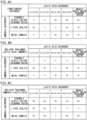
- Cases with both the lactic acid adsorption rate and the ammonia adsorption rate found to be 25% or higher were ranked A. Cases with only the lactic acid adsorption ratio found to be 25% or higher were ranked Bl. Cases with only the ammonia adsorption ratio found to be 25% or higher were ranked Ba. Cases with both the lactic acid adsorption rate and the ammonia adsorption rate found to be lower than 25% were ranked X. Results are summarized in Fig. 4A .
- the lactic acid adsorbent in each of the individual combinations was added, and the mixture was then subjected to the lactic acid adsorption treatment, following the same procedures as used to test the simultaneous treatment system.
- the aqueous solution was then suction filtered to remove the lactic acid adsorbent.
- the ammonia adsorbent with each of the individual combinations was added, and the mixture was then subjected to the ammonia adsorption treatment, following the same procedure as used to test the simultaneous treatment system.
- the aqueous solution was then suction filtered to remove the ammonia adsorbent. Measurement of the lactic acid concentration and the ammonia concentration of the thus obtained filtrate; estimation of the adsorption rate of lactic acid and the adsorption rate of ammonia; and evaluation of the adsorptivity were conducted in the same way as in the test for the simultaneous treatment system. Results are summarized in Fig. 4B .
- the ammonia adsorbent with each of the individual combinations was added, and the mixture was then subjected to the ammonia adsorption treatment, following the same procedures as used to test the simultaneous treatment system.
- the aqueous solution was then suction filtered to remove the ammonia adsorbent.
- the lactic acid adsorbent with each of the individual combinations was added, and the mixture was then subjected to the lactic acid adsorption treatment, following the same procedure as used to test the simultaneous treatment system.
- the aqueous solution was then suction filtered to remove the lactic acid adsorbent. Measurement of the lactic acid concentration and the ammonia concentration of the thus obtained filtrate; estimation of the absorption rate of lactic acid and the adsorption rate of ammonia; and evaluation of the adsorptivity were conducted in the same way as in the test for the simultaneous treatment system. Results are summarized in Fig. 4C .
- Fig. 4A is a chart summarizing adsorptivity in a simultaneous treatment system under various combinations of adsorbents.
- Fig. 4B is a chart summarizing adsorptivity in a two-step treatment system in which lactic acid adsorption treatment is followed by ammonia adsorption treatment, under various combinations of adsorbents.
- Fig. 4C is a chart summarizing adsorptivity in a two-step treatment system in which ammonia adsorption treatment is followed by lactic acid adsorption treatment, under various combinations of adsorbents. As summarized in Figs.
- the present invention relates to a method for regenerating a liquid to be treated, and a regenerating agent for a liquid to be treated.
Landscapes
- Chemical & Material Sciences (AREA)
- Engineering & Computer Science (AREA)
- Life Sciences & Earth Sciences (AREA)
- Organic Chemistry (AREA)
- Health & Medical Sciences (AREA)
- Biotechnology (AREA)
- Zoology (AREA)
- Bioinformatics & Cheminformatics (AREA)
- Wood Science & Technology (AREA)
- Genetics & Genomics (AREA)
- Biomedical Technology (AREA)
- Analytical Chemistry (AREA)
- Chemical Kinetics & Catalysis (AREA)
- Biochemistry (AREA)
- Microbiology (AREA)
- General Engineering & Computer Science (AREA)
- General Health & Medical Sciences (AREA)
- Inorganic Chemistry (AREA)
- Sustainable Development (AREA)
- Virology (AREA)
- Tropical Medicine & Parasitology (AREA)
- Medicinal Chemistry (AREA)
- General Chemical & Material Sciences (AREA)
- Cell Biology (AREA)
- Solid-Sorbent Or Filter-Aiding Compositions (AREA)
- Micro-Organisms Or Cultivation Processes Thereof (AREA)
Abstract
Description
- The present invention relates to a method for regenerating a liquid to be treated, and a regenerating agent for a liquid to be treated.
- Artificial and efficient mass culture of cell or microorganism has been required typically in the fields of pharmaceutical production and regenerative medicine. Cell for which mass-culture is required includes antibody-producing cell and pluripotent stem cell. These cells and so forth, if mass-culturable stably over a long period, enable efficient production of biological substances such as monoclonal antibody, or differentiation-inducing tissue derived from the pluripotent stem cell.
- A possible method for industrial mass-culture of the cells and so forth may be suspension stirred culture with use of a culture tank. On the other hand, industrial use of the cells tends to push up the culture cost, due to increased scale of culture. It is therefore effective to increase culture density of the cells and so forth, for cost reduction. Increase of the culture density, however, has been known to suppress proliferation of the cells and so forth. This is because the thus densified cell and so forth elevates the concentration of wastes (metabolites) in the culture liquid (liquid medium), and this reduces proliferative activity of the cell and so forth. Lactic acid and ammonia have been known as representative wastes that can affect the cell and so forth.
- It is therefore preferred to remove lactic acid and ammonia accumulated in the culture liquid, in order to stably multiply the cell and so forth in a dense state. On the other hand, Patent Literature 1 for example discloses a cell culture apparatus, in which a cell culture tank and a component adjusting solution tank are connected by a liquid feeding line provided with a culture solution component adjustment membrane through which components can permeate depending on concentration difference. In this cell culture device, the wastes accumulated in the culture solution move to the component adjusting solution side, so that the concentration in the culture solution decreases. Note that the component adjusting solution having been used is the culture liquid per se.
- [Patent Literature 1]
WO2015/122528 - The cell culture apparatus disclosed in Patent Literature 1 has removed wastes from the culture liquid, on the principle of dialysis. A tank of the component adjusting solution has therefore been designed to have a
capacity 10 times or more larger than the cell culture tank, in order to fully remove the wastes. This has posed a problem that a huge volume of liquid is necessary, and the cost grows high. In particular, use of the culture liquid per se consequently consumes a large volume of expensive medium, further pushing up the cost. In addition, removal of the wastes based on the dialysis technique has also posed a problem of complicating the structure of the culture apparatus. - Lactic acid and ammonia are desired to be removed not only in culture liquid of cell and so forth, but also in other liquid systems. A novel technique for removing lactic acid and ammonia, with use of a technique other than dialysis, has therefore been strongly desired.
- The present invention has been arrived at in view of such circumstances, wherein an object of which is to provide a novel technique for removing lactic acid and ammonia.
- A mode of the present invention relates to a method for regenerating a liquid to be treated. The method includes bringing a lactic acid adsorbent that contains a Mg-Al-based layered double hydroxide having Mg2+ and Al3+ as constituent metals, and an ammonia adsorbent having L-type zeolite, into contact with the liquid to be treated that contains lactic acid and ammonia, to remove lactic acid and ammonia in the liquid to be treated.
- Another mode of the present invention relates to a regenerating agent for a liquid to be treated. The regenerating agent for a liquid to be treated contains a lactic acid adsorbent that contains a Mg-Al-based layered double hydroxide having Mg2+ and Al3+ as constituent metals; and an ammonia adsorbent having L-type zeolite, the agent being structured to remove lactic acid and ammonia in the liquid to be treated, upon being bought into contact with the liquid to be treated that contains lactic acid and ammonia.
- Note that also free combinations of these constituents, and also any of the constituents and expressions exchanged among the method, device and system, are valid as the modes of the present invention.
- According to the present invention, a novel method for removing lactic acid and ammonia may be provided.
-
-
Fig. 1A to Fig. 1D are schematic drawings for explaining a method for regenerating a liquid to be treated according to an embodiment. -
Fig. 2 is a chart summarizing adsorption rate of lactic acid, and adsorption rate of ammonia, in an aqueous solution of lactic acid and ammonia. -
Fig. 3 is a chart summarizing adsorption rate of lactic acid, adsorption rate of ammonia, adsorption rate of glucose, and pH, in a cell culture liquid. -
Fig. 4A is a chart summarizing adsorptivity in a simultaneous treatment system under various combinations of adsorbents.Fig. 4B is a chart summarizing adsorptivity in a two-step treatment system in which lactic acid adsorption treatment is followed by ammonia adsorption treatment, under various combinations of adsorbents.Fig. 4C is a chart summarizing adsorptivity in a two-step treatment system in which ammonia adsorption treatment is followed by lactic acid adsorption treatment, under various combinations of adsorbents. - A mode of the present invention relates to a method for regenerating a liquid to be treated. The method includes bringing a lactic acid adsorbent that contains a Mg-Al-based layered double hydroxide having Mg2+ and Al3+ as constituent metals, and an ammonia adsorbent having L-type zeolite, into contact with the liquid to be treated that contains lactic acid and ammonia, to remove lactic acid and ammonia in the liquid to be treated. According to this mode, a novel method for removing lactic acid ammonia may be provided.
- In this mode, the liquid to be treated may contain glucose. In any one of these modes, the liquid to be treated may be a culture liquid of at least either cell or microorganism. In any one of these modes, an amount of consumption of each of the lactic acid adsorbent and the ammonia adsorbent may be adjusted so that the concentration thereof relative to the liquid to be treated will be 0.025 g/mL or higher and 0.1 g/mL or lower.
- Another mode of the present invention relates to a regenerating agent for a liquid to be treated. The regenerating agent for a liquid to be treated contains a lactic acid adsorbent that contains a Mg-Al-based layered double hydroxide having Mg2+ and Al3+ as constituent metals; and an ammonia adsorbent having L-type zeolite, the agent being structured to remove lactic acid and ammonia in the liquid to be treated, upon being bought into contact with the liquid to be treated that contains lactic acid and ammonia.
- The present invention will be explained below on the basis of preferred embodiments, referring to the attached drawings. The embodiments are merely illustrative, and are not restrictive about the invention. All features and combinations thereof described in the embodiments are not always necessarily essential to the present invention. All identical or equivalent constituents, members and treatments illustrated in the individual drawings will be given same reference numerals, so as to properly avoid redundant explanations. Reduced scales and shapes of the individual parts in the individual drawings are properly given for simplicity of explanation, and should not be interpreted restrictively unless otherwise specifically noted. Also note that ordinal terms "first", "second" and so on used in this patent specification and in claims do not represent any sequential order or importance, and are used only for discrimination of one structure from the other. Also note that some of the members that are not important for explaining the embodiment will be omitted from the individual drawings.
- The present inventors have made extensive studies on the technique for removing lactic acid and ammonia, and have found a combination of a lactic acid adsorbent and an ammonia adsorbent capable of highly selectively adsorbing lactic acid and ammonia. More specifically, the regenerating agent for a liquid to be treated according to the present embodiment includes a lactic acid adsorbent that contains a layered double hydroxide (LDH), and an ammonia adsorbent having L-type zeolite.
- LDH contained in the lactic acid adsorbent is an Mg-Al-based LDH having Mg2+ and Al3+ as constituent metals. LDH has a plurality of host layers (metal hydroxide layers), and an anion and water molecule intercalated between the host layers, and the host layers contain divalent metal ion Mg2+ and trivalent metal ion Al3+ as the constituent metals. More specifically, the LDH is composed of octahedron-arrayed host layers which are positively charged due to substitution of a part of Mg2+ in Mg(OH)2 with Al3+, and a guest layer that contains an anion that compensates the positive charge of the host layers, and intercalated water. Lactic acid (lactate ion) is adsorbed to LDH, as a result of ion exchange with the anion in the guest layer. LDH having Mg2+ and Al3+ is represented by a chemical formula below.
[Mg2+ 1-XAl3+ x(OH)2][An- x/n·yH2O]
- In the formula, An- represents an n-valent anion selected from the group consisting of HEPES, citric acid, pyruvic acid, CO3 2-, SO4 2-, Cl-, OH-, SiO4 4-, SO4 2- and NO3 -. x Represents 0.22 to 0.33, n represents 1 to 3, and y represents 1 to 12.
- With the Mg-Al-based LDH contained therein, the lactic acid adsorbent can demonstrate good adsorptivity to lactic acid, when combined with the ammonia adsorbent that contains L-type zeolite. Also toxicity of LDH to cell and so forth may be more likely to be reduced, as compared with a case where LDH contains Cu. A plurality of types of LDH, having different types of metal ion and anion that constitute LDH, may be used in a mixed manner.
- L-type zeolite contained in the ammonia adsorbent has a basic skeleton composed of silicon oxide, with a part of silicon in the basic skeleton substituted with aluminum. The crystal as a whole is therefore negatively charged. Zeolite retains cations in the zeolite pores, in order to maintain electrical neutrality. The cations are reversibly interchangeable. Ammonia (ammonium ions) is adsorbed by the L-type zeolite, as a result of ion exchange with the retained ion. With the L-type zeolite contained therein, the ammonia adsorbent can demonstrate good adsorptivity to ammonia, when combined with the aforementioned lactic acid adsorbent.
- The L-type zeolite usable herein includes synthetic zeolite such as 500KOA (from Tosoh Corporation), and HS-500 (from FUJIFILM Wako Pure Chemical Corporation). These L-type zeolites retain K as the retained cation. The retained ion, although preferably K, may alternatively be alkali metal, alkaline earth metal or lanthanoid, such as Na, Li, Rb, Ce, Ba, Ca, Mg, Sr, and La; and, Al or Fe. The retained ion may alternatively be H. Alternatively, a plurality of types of L-type zeolites having different retained ions may be used in a mixed manner.
- The aforementioned lactic acid adsorbent can adsorb lactic acid, simply upon contact with lactic acid. Meanwhile, the aforementioned ammonia adsorbent can adsorb ammonia, simply upon contact with ammonia. Hence, the regenerating agent of this embodiment may be suitably used for adsorptive removal of lactic acid and ammonia in the liquid. In this case, lactic acid and ammonia in the liquid to be treated may be removed by bringing the lactic acid adsorbent and the ammonia adsorbent into contact with the liquid to be treated that contains lactic acid and ammonia.
- For the liquid to be treated containing glucose as a useful component, the regenerating agent can adsorb lactic acid and ammonia to be removed, with selectivity higher than that for glucose to be remained in the liquid. The liquid to be treated containing glucose is exemplified by a culture liquid of at least either cell or microorganism. That is, the regenerating agent of this embodiment is suitably applicable to regeneration treatment of culture liquid. The type of the culture liquid is not particularly limited. The regenerating agent may also be used in combination with an adsorbent that adsorbs any other cell waste product.
- The amount of consumption of each of the lactic acid adsorbent and the ammonia adsorbent, in the regenerating treatment of the liquid to be treated, that is, the amount of each adsorbent to be contained in the regenerating agent, is preferably adjusted so that the concentration thereof relative to the liquid to be treated will be 0.025 g/mL or higher and 0.1 g/mL or lower. With the amount of consumption (concentration) of each of the lactic acid adsorbent and the ammonia adsorbent adjusted to 0.025 g/mL or more, it becomes possible to more effectively adsorb lactic acid and ammonia. Meanwhile, with the amount of consumption (concentration) of each of the lactic acid adsorbent and the ammonia adsorbent adjusted to 0.1 g/mL or lower, it becomes possible to effectively suppress the glucose adsorptivity. Also the pH may be more effectively suppressed from fluctuating. This enables more efficient culture of cell and so forth.
- The cell and microorganism cultured with use of the culture liquid are not particularly limited. The cell is exemplified by pluripotent stem cell and differentiation-induced cell such as human iPS cell, human ES cell, and human Muse cell; somatic stem cell such as mesenchymal stem cell (MSC) and nephron precursor cell; tissue cell such as human renal proximal tubule epithelial cell, human distal tubule epithelial cell, and human collecting duct epithelial cell; antibody-producing cell line such as human fetal renal cell (HEK293 cell); and antibody-producing cell line derived from animals other than human such as Chinese hamster ovary cell (CHO cell) and insect cell (SF9 cell).
- The method for regenerating the liquid to be treated according to this embodiment includes adsorptively removing lactic acid and ammonia in the liquid to be treated, by bringing the aforementioned lactic acid adsorbent and the ammonia adsorbent into contact with the liquid to be treated that contains lactic acid and ammonia. The method of bringing the individual adsorbents into contact with the liquid to be treated are exemplified as follows, although not particularly limited thereto.
Fig. 1A to Fig. 1D are schematic drawings for explaining methods for regenerating the liquid to be treated according to the embodiment. Although the description below will deal with removal of lactic acid and ammonia from the culture liquid, also removal of lactic acid and ammonia from any other liquid to be treated may be conducted in the same way. - In a first mode illustrated in
Fig. 1A , anadsorption module 6, having avessel 2 such as a column in which alactic acid adsorbent 4 and anammonia adsorbent 5 are packed, is prepared. Thevessel 2 has aninlet 2a and anoutlet 2b through which the inside and the outside of thevessel 2 are communicated. Thelactic acid adsorbent 4 and theammonia adsorbent 5 are typically in the form of particle, which are mixed and housed in theadsorption module 6. Theadsorption module 6 is connected through acirculation path 8, to aculture container 10 such as a spinner flask. Thecirculation path 8 has anoutward path 8a that connects theculture container 10 and theinlet 2a of thevessel 2, and areturn path 8b that connects theoutlet 2b of thevessel 2 and theculture container 10. Theoutward path 8a has apump 12 connected in the middle thereof. Theculture container 10 houses aculture liquid 14 and acell 16. Thepump 12 may alternatively be arranged on thereturn path 8b. - Upon operation of the
pump 12, theculture liquid 14 is sucked from theculture container 10, and fed through theoutward path 8a to thevessel 2 of theadsorption module 6. Theculture liquid 14 fed to thevessel 2 is returned through thereturn path 8b, back to theculture container 10. Theculture liquid 14, while being circulated between theculture container 10 and theadsorption module 6, comes into contact with thelactic acid adsorbent 4 and theammonia adsorbent 5 packed in thevessel 2. In this process, lactic acid in theculture liquid 14 is adsorbed by thelactic acid adsorbent 4, and ammonia in theculture liquid 14 is adsorbed by theammonia adsorbent 5. Lactic acid and ammonia in theculture liquid 14 are removed as a consequence. - The
outward path 8a has an unillustrated filter arranged at the end thereof on the side connected to theculture container 10. This suppresses thecell 16 from migrating towards theadsorption module 6. Note that a medium component such as glucose or protein, necessary for culturing thecell 16, may be replenished into theculture liquid 14, in the process of circulating theculture liquid 14 between theculture container 10 and theadsorption module 6. - That is, in the first mode, lactic acid and ammonia in the
culture liquid 14 are removed, with use of the regenerating apparatus that includes theadsorption module 6 having thelactic acid adsorbent 4 and the ammonia adsorbent 5 (that is, the regenerating agent); theculture container 10 that houses the cell 16 (or may be microorganism) and theculture liquid 14; and thecirculation path 8 that connects theculture container 10 and theadsorption module 6, and allows theculture liquid 14 to circulate therethrough. - In a second mode illustrated in
Fig. 1B , thelactic acid adsorbent 4 and theammonia adsorbent 5 are supported on the inner wall face of theculture container 10. Theculture container 10 houses theculture liquid 14 and thecell 16. Theculture liquid 14 therefore comes into contact with thelactic acid adsorbent 4 and theammonia adsorbent 5 that expose on the inner wall face of theculture container 10. Lactic acid and ammonia in theculture liquid 14 may thus be adsorbed to thelactic acid adsorbent 4 and to theammonia adsorbent 5. Theculture container 10 is exemplified by spinner flask, petri dish, well plate, cell culture insert, and microsphere. - Method for supporting the
lactic acid adsorbent 4 and theammonia adsorbent 5 on the inner wall face of theculture container 10 is exemplified by a method of adhering thelactic acid adsorbent 4 and theammonia adsorbent 5 to the inner wall face of theculture container 10; and, a method of molding theculture container 10, if made of resin, with use of a resin having thelactic acid adsorbent 4 and theammonia adsorbent 5 preliminarily kneaded therein. That is, lactic acid and ammonia in theculture liquid 14 in the second mode are removed with use of a regenerating apparatus having theculture container 10, and thelactic acid adsorbent 4 and the ammonia adsorbent 5 (that are regenerating agents) supported on the inner wall face of theculture container 10. - In a third mode illustrated in
Fig. 1C , theculture container 10 is structured to have adiaphragm 18 such as a porous membrane, which divides the inside of the container into anupper part 10a and alower part 10b. This sort ofculture container 10 is exemplified by cell culture insert. Theupper part 10a houses theculture liquid 14 and thecell 16, meanwhile thelower part 10b houses theculture liquid 14, thelactic acid adsorbent 4, and theammonia adsorbent 5. Theculture liquid 14 can move back and forth between theupper part 10a and thelower part 10b, through thediaphragm 18. In contrast, thecell 16, thelactic acid adsorbent 4, and theammonia adsorbent 5 cannot pass through thediaphragm 18. - In this structure, the
culture liquid 14 comes into contact with thelactic acid adsorbent 4 and theammonia adsorbent 5 housed in thelower part 10b. Lactic acid and ammonia in theculture liquid 14 may thus be adsorbed to thelactic acid adsorbent 4 and to theammonia adsorbent 5. That is, lactic acid and ammonia in theculture liquid 14 in the third mode are removed with use of the regenerating apparatus having theculture container 10, thelactic acid adsorbent 4 and the ammonia adsorbent 5 (that are regenerating agents), and thediaphragm 18 that divides the inside of theculture container 10 into a first space that houses thelactic acid adsorbent 4 and theammonia adsorbent 5, and a second space that houses the cell 16 (or may be microorganism). - In a fourth mode illustrated in
Fig. 1D , thelactic acid adsorbent 4 and theammonia adsorbent 5 in the form of particle are allowed to disperse, precipitate or suspend in theculture liquid 14. Lactic acid and ammonia in theculture liquid 14 may thus be adsorbed to thelactic acid adsorbent 4 and to theammonia adsorbent 5. Thelactic acid adsorbent 4 and theammonia adsorbent 5 added to theculture liquid 14 may be recovered by any of known methods such as filtration or centrifugation. Thelactic acid adsorbent 4 and theammonia adsorbent 5 preferably have a predetermined size or larger, which is typically 10 um or larger, in order to avoid phagocytosis by thecell 16. That is, lactic acid and ammonia in theculture liquid 14 in the fourth mode are removed with use of a regenerating apparatus having theculture container 10, and thelactic acid adsorbent 4 and the ammonia adsorbent 5 (that are regenerating agents) added to theculture liquid 14 in theculture container 10. - The
lactic acid adsorbent 4 and theammonia adsorbent 5 are preferably coated with a resin such as polyvinyl alcohol, or a biological gel such as collagen, alginic acid, or gelatin. This suppresses outflow of any fine particle that may affect thecell 16, from thelactic acid adsorbent 4 and theammonia adsorbent 5 into theculture liquid 14. Thelactic acid adsorbent 4 is alternatively formed by kneading Mg-Al-based LDH typically with a ceramic binder, resin binder, or biological gel. Meanwhile, theammonia adsorbent 5 is formed by kneading L-type zeolite typically with a ceramic binder, resin binder, or biological gel. This also successfully suppresses the outflow of fine particle. The ceramic binder is exemplified by alumina binder and colloidal silica. The resin binder is exemplified by polyvinyl alcohol and carboxymethyl cellulose. The biological gel is exemplified by collagen, alginic acid, and gelatin. - Note that, in the first to fourth modes, the
lactic acid adsorbent 4 and theammonia adsorbent 5 reside in a mixed manner in theadsorption module 6, on the inner wall face of theculture container 10, in thelower part 10b, or in theculture liquid 14. That is, the first to fourth modes represent simultaneous treatment systems designed to simultaneously bring thelactic acid adsorbent 4 and theammonia adsorbent 5 into contact with the liquid to be treated. The timing at which thelactic acid adsorbent 4 and theammonia adsorbent 5 are brought into contact with the liquid to be treated is, however, not limited thereto, instead the liquid to be treated may be contacted first with thelactic acid adsorbent 4 and then with theammonia adsorbent 5, or, the liquid to be treated may be contacted first with theammonia adsorbent 5 and then with thelactic acid adsorbent 4. That is, applicable is a two-step treatment system in which the liquid to be treated is contacted with thelactic acid adsorbent 4 and theammonia adsorbent 5 at different timings. - In an exemplary two-step treatment system, the
vessel 2 that houses thelactic acid adsorbent 4, and thevessel 2 that houses theammonia adsorbent 5 are connected in series to thecirculation path 8. Either of the twovessels 2 may be arranged upstream. Alternatively, theculture container 10 with thelactic acid adsorbent 4 supported on the inner wall face, and theculture container 10 with theammonia adsorbent 5 supported on the inner wall face are prepared, and theculture liquid 14 filled in one culture contained 10 is transferred to theother culture container 10. Still alternatively, theculture container 10 with thelactic acid adsorbent 4 housed in thelower part 10b, and theculture container 10 with theammonia adsorbent 5 housed in thelower part 10b are prepared, and theculture liquid 14 filled in oneculture container 10 is transferred to theother culture container 10. Still alternatively, one of thelactic acid adsorbent 4 and theammonia adsorbent 5 is added to theculture container 10, recovered after a lapse of a predetermined time, and subsequently the other adsorbent is added to theculture container 10. - In both of the simultaneous treatment system and the two-step treatment system, the duration over which the
lactic acid adsorbent 4 and theammonia adsorbent 5 are brought into contact with theculture liquid 14 may be appropriately determined, typically on the basis of empirical knowledge of the designer, or, experiment and simulation by the designer. Alternatively, for example, a concentration sensor may be connected typically to thecirculation path 8 so as to measure the concentrations of lactic acid and ammonia in theculture liquid 14, according to which the adsorption treatment may be continued until the concentration of lactic acid and ammonia will become equal to or lower than predetermined values. As the concentration sensor, employable is any of known sensors such as a medium ingredient analyzer or the like. Possible methods for detecting the concentrations of lactic acid and ammonia include colorimetry with use of predetermined assay reagent, enzyme electrode method utilizing enzyme-substrate specificity, and high performance liquid chromatography (HPLC). - As explained previously, the method for regenerating a liquid to be treated according to this embodiment includes bringing the
lactic acid adsorbent 4 that contains a Mg-Al-based LDH having Mg2+ and Al3+ as constituent metals, and theammonia adsorbent 5 having L-type zeolite, into contact with the liquid to be treated that contains lactic acid and ammonia, to remove lactic acid and ammonia in the liquid to be treated. The regenerating agent for a liquid to be treated according to this embodiment contains the lactic acid adsorbent that contains a Mg-Al-based LDH, and the ammonia adsorbent having L-type zeolite, the agent being structured to remove lactic acid and ammonia in the liquid to be treated, upon being bought into contact with the liquid to be treated that contains lactic acid and ammonia. - This makes it possible to remove lactic acid and ammonia without using a huge volume of solution, unlike the prior case that relies upon a dialysis technique to remove lactic acid and ammonia. The present embodiment can therefore provide a novel removal technique capable of removing lactic acid and ammonia at low cost. Moreover, this embodiment can simplify the device structure necessary for the regeneration treatment of the liquid to be treated, since lactic acid and ammonia may be removed simply by contacting the
lactic acid adsorbent 4 and theammonia adsorbent 5 with the liquid to be treated that contains lactic acid and ammonia. - The present inventors also found from our extensive studies on the technique for removing lactic acid and ammonia that, depending on the types of the lactic acid adsorbent and the ammonia adsorbent, the simultaneous contact of these adsorbents with the liquid to be treated would occasionally results in an adsorption rate lower than in the case of sequential contact. The present inventors also found that the sequential contact of the lactic acid adsorbent and the ammonia adsorbent would occasionally result in a lowered adsorption rate, depending on the sequential order.
- In contrast, with the combination of the lactic acid adsorbent and the ammonia adsorbent of this embodiment, excellent adsorption rate of lactic acid and adsorption rate of ammonia are obtainable, in any of the case relying upon simultaneous contact with the liquid to be treated; the case relying upon contact with the liquid to be treated first by the lactic acid adsorbent and then by the ammonia adsorbent; and the case relying upon contact with the liquid to be treated first by the ammonia adsorbent and then by the lactic acid adsorbent. Thus, the degree of freedom of the treatment process may be increased.
- In a case where the liquid to be treated contains glucose, such combination of the lactic acid adsorbent and the ammonia adsorbent enables adsorption of lactic acid and ammonia, with selectivity higher than that for glucose. The method for regenerating a liquid to be treated and the regenerating agent according to the present embodiment are therefore suitably employed for removal of lactic acid and ammonia, from a liquid to be treated that contains glucose.
- Such combination of the lactic acid adsorbent and the ammonia adsorbent of this embodiment can also suppress the pH of the liquid to be treated from fluctuating possibly due to addition of the adsorbents. Hence, the liquid to be treated, if being a culture liquid, may become less likely to cause deactivation of the medium component, due to pH fluctuation. Such small pH fluctuation allows increase of the amount of consumption of the individual adsorbents, thus increasing the amount of removal of lactic acid and ammonia removed. The individual adsorbents are also less toxic typically to cell. Thus, the method for regenerating a liquid to be treated and the regenerating agent according to this embodiment are particularly suitably employable for removal of lactic acid and ammonia from culture liquid.
- In a case where the liquid to be treated is a culture liquid, the amount of consumption of the culture liquid may be reduced, as compared with the known dialysis technique. This enables further cost reduction, since the culture liquid is expensive overall. The removal of lactic acid and ammonia also enables mass culture of cell and so forth at high density. Moreover, in a case where the cell is pluripotent stem cell, the removal of lactic acid and ammonia not only enables high-density mass culture of the cell, but also keeps the cell in an undifferentiated stage, or, maintains the pluripotent nature (pluripotency) of the cell. Thus, it now becomes possible to obtain a large amount of the cell suitable for producing differentiation-inducing tissue. This successfully reduces the cost for producing the cell.
- The amount of consumption of each of the
lactic acid adsorbent 4 and theammonia adsorbent 5 is preferably adjusted, so that the concentration thereof relative to the liquid to be treated will be 0.025 g/mL or higher and 0.1 g/mL or lower. This makes it possible to more effectively remove lactic acid and ammonia, and more effectively suppress the glucose adsorption rate. - The embodiments of the present invention have been detailed. The aforementioned embodiments merely illustrate specific examples for carrying out the present invention. The contents of the embodiments do not limit the technical scope of the present invention, instead allowing numerous design changes such as modification, addition, and deletion of constituents, without departing from the spirit of the present invention specified in the claims. Any new embodiment with design change will have effects derived both from an embodiment and modification to be combined. While the aforementioned embodiments, all contents possibly subject to such design change have been emphasized with a notation stating "... of this embodiment" or "in this embodiment", also any content without such notation is acceptable for the design change. Also free combination of the aforementioned constituents is valid as a mode of the present invention.
- Examples of the present invention will be explained below, merely as illustrative ones for properly explaining the present invention, without limiting the present invention.
- A three-necked flask was prepared, with 3575 mg/L HEPES solution (from FUJIFILM Wako Pure Chemical Corporation) contained therein. In a nitrogen atmosphere under conditions of 30°C, and pH 10.5, the HEPES solution was kept stirred at 300 rpm, to which a Mg(NO3)2-Al(NO3)3 mixed solution was added dropwise. After a lapse of one hour from the start of dropwise addition, the reaction liquid was filtered, and the product was washed with water. The obtained product was dried at 40°C under reduced pressure for 40 hours, to obtain HEPES-type Mg-Al-based LDH (appropriately denoted as Mg-Al LDH, hereinafter) having HEPES as an intercalated ion.
- Performances of the individual adsorbents, when added to a mixed aqueous solution of lactic acid and ammonia, were evaluated in three types of adsorption process. The adsorption process includes a simultaneous treatment system in which lactic acid adsorption treatment and ammonia adsorption treatment simultaneously proceed; a two-step treatment system in which the lactic acid adsorption treatment is followed by the ammonia adsorption treatment; and a two-step treatment system in which the ammonia adsorption treatment is followed by the lactic acid adsorption treatment.
- First, sodium lactate (from FUJIFILM Wako Pure Chemical Corporation) and ammonium chloride (from FUJIFILM Wako Pure Chemical Corporation) were added to pure water, to prepare an aqueous solution with the concentrations of both of sodium lactate and ammonium chloride adjusted to 10 mmol/L. Twenty milliliters of this aqueous solution was placed in a 50 mL Erlenmeyer flask. Into the Erlenmeyer flask that contains the aqueous solution, 0.5 g of Mg-Al LDH as the lactic acid adsorbent, and 0.5 g of 500KOA (from Tosoh Corporation) as the ammonia adsorbent were placed.
- The Erlenmeyer flask was immersed in a thermostatic shaking bath, and shaken at 37°C, 150 rpm for 24 hours (implementation of lactic acid adsorption treatment and ammonia adsorption treatment). The aqueous solution was then suction filtered to remove the adsorbents. Lactic acid concentration and ammonia concentration of the thus obtained filtrate was measured with use of an HPLC analyzer (from JASCO Corporation). Also adsorption rates of lactic acid and ammonia were estimated from the equation below. Results are summarized in
Fig. 2 .
- Into the Erlenmeyer flask with 20 mL of the same aqueous solution as used to test the simultaneous treatment system contained therein, 0.5 g of Mg-Al LDH as the lactic acid adsorbent was placed, and the mixture was then allowed to adsorb lactic acid following the same procedure as used to test the simultaneous treatment system. The aqueous solution was then suction filtered to remove the lactic acid adsorbent. To the thus obtained filtrate, 0.5 g of 500KOA was added as the ammonia adsorbent, and the mixture was then subjected to the ammonia adsorption treatment, following the same procedure as used to test the simultaneous treatment system. The aqueous solution was then suction filtered to remove the ammonia adsorbent. The lactic acid concentration and the ammonia concentration of the obtained filtrate were measured, and the absorption rate of lactic acid and adsorption rate of ammonia were estimated in the same way as in the test for the simultaneous treatment system. Results are summarized in
Fig. 2 . - Into the Erlenmeyer flask with 20 mL of the same aqueous solution as used to test the simultaneous treatment system contained therein, 0.5 g of 500KOA was placed as the ammonia adsorbent, and the mixture was allowed to adsorb ammonia following the same procedure as used to test the simultaneous treatment system. The aqueous solution was then suction filtered to remove the ammonia adsorbent. To the thus obtained filtrate, 0.5 g of Mg-Al LDH was added as the lactic acid adsorbent, and the mixture was then subjected to the lactic acid adsorption treatment, following the same procedure as used to test the simultaneous treatment system. The aqueous solution was then suction filtered to remove the lactic acid adsorbent. The lactic acid concentration and the ammonia concentration of the obtained filtrate were measured, and the absorption rate of lactic acid and adsorption rate of ammonia were estimated in the same way as in the test for the simultaneous treatment system. Results are summarized in
Fig. 2 . -
Fig. 2 is a chart summarizing adsorption rate of lactic acid, and adsorption rate of ammonia, in the aqueous solution of lactic acid and ammonia. As summarized inFig. 2 , a high adsorption rate of lactic acid of 50% or higher, and a high adsorption rate of ammonia of 60% or higher were obtained in all adsorption processes. The combination of Mg-Al-based LDH and L-type zeolite was thus confirmed to effectively remove lactic acid and ammonia from the aqueous solution, irrespective of the sequential order of adsorption. - Performances of the individual adsorbents, when added to the culture liquid as a glucose-containing solution, were evaluated in three types of adsorption process. The three types of adsorption process are similar to those in the analysis with use of the aqueous solution.
- First, sodium lactate (from FUJIFILM Wako Pure Chemical Corporation) and ammonium chloride (from FUJIFILM Wako Pure Chemical Corporation) were added to an iPS cell culture medium (StemFit: from Ajinomoto Co., Inc.), to prepare a culture liquid with the concentrations of both of sodium lactate and ammonium chloride adjusted to 10 mmol/L. The culture liquid has a glucose concentration of 250 mg/dL. The culture liquid was found, by measurement, to have a pH of 7.4. Twenty milliliters each of this culture solution was dispensed into a plurality of 50 mL tubes.
- Mg-Al LDH as the lactic acid adsorbent, and 500KOA (from Tosoh Corporation) as the ammonia adsorbent were added in each of the 50 mL tubes. The amount of addition (concentration) of each adsorbent was varied among 0.02 g (0.001 g/mL), 0.1 g (0.005 g/mL), 0.5 g (0.025 g/mL), 1.0 g (0.05 g/mL) and 2.0 g (0.1 g/mL). The individual 50 mL tubes were immersed in a thermostatic shaking bath, and shaken at 37°C, 60 times/ min for 24 hours (implementation of lactic acid adsorption treatment and ammonia adsorption treatment). The aqueous solution was then suction filtered to remove the adsorbents. The thus obtained filtrate was measured with a blood gas analyzer (ABL800 FLEX: from Radiometer Medical ApS), to determine the lactic acid concentration, the glucose concentration, and pH. The thus obtained filtrate was also measured with an Ammonia Assay Kit (from Sigma-Aldrich Co. LLC.), to determine the ammonia concentration. Also adsorption rates of lactic acid, glucose, and ammonia were estimated from the aforementioned equation. Results are summarized in
Fig. 3 . - Into a plurality of 50 mL tubes with 20 mL each of the same culture liquid as used to test the simultaneous treatment system contained therein, Mg-Al LDH as the lactic acid adsorbent was placed, and the mixture was then allowed to adsorb lactic acid. The amount of addition (concentration) of the adsorbent, and the procedure of the adsorption treatment are same as those in the test of the simultaneous treatment system. The aqueous solution was then suction filtered to remove the lactic acid adsorbent. To the thus obtained filtrate, 500KOA was added as the ammonia adsorbent, and the mixture was then subjected to the ammonia adsorption treatment. The amount of addition (concentration) of the adsorbent, and the procedure of the adsorption treatment are same as those in the test of the simultaneous treatment system. The aqueous solution was then suction filtered to remove the ammonia adsorbent. Measurement of the lactic acid concentration, the glucose concentration, pH and the ammonia concentration of the thus obtained filtrate; and estimation of the adsorption rate of lactic acid, the adsorption rate of glucose, and the adsorption rate of ammonia were conducted in the same way as in the test for the simultaneous treatment system. Results are summarized in
Fig. 3 . - Into a plurality of 50 mL tubes with 20 mL each of the same aqueous solution as used to test the simultaneous treatment system contained therein, 500KOA was added as the ammonia adsorbent, and the mixture was then subjected to the ammonia adsorption treatment. The amount of addition (concentration) of the adsorbent, and the procedure of the adsorption treatment are same as those in the test of the simultaneous treatment system. The aqueous solution was then suction filtered to remove the ammonia adsorbent. To the thus obtained filtrate, Mg-Al LDH was added as the lactic acid adsorbent, and the mixture was then subjected to the lactic acid adsorption treatment. The amount of addition (concentration) of the adsorbent, and the procedure of the adsorption treatment are same as those in the test of the simultaneous treatment system. The aqueous solution was then suction filtered to remove the lactic acid adsorbent. Measurement of the lactic acid concentration, the glucose concentration, pH and the ammonia concentration of the thus obtained filtrate; and estimation of the adsorption rate of lactic acid, the adsorption rate of glucose, and the adsorption rate of ammonia were conducted in the same way as in the test for the simultaneous treatment system. Results are summarized in
Fig. 3 . -
Fig. 3 is a chart summarizing adsorption rate of lactic acid, adsorption rate of ammonia, adsorption rate of glucose, and pH, in a cell culture liquid. As summarized inFig. 3 , all adsorption processes were confirmed to remove lactic acid and ammonia, with selectivity higher than that for glucose. In particular, the lactic acid adsorbent and the ammonia adsorbent were confirmed to demonstrate a high adsorption rate of lactic acid such as approximately 30% or higher, and a high adsorption rate of ammonia such as approximately 50% or higher, respectively, when the concentration was adjusted to 0.025 g/mL or higher for both of them. The lactic acid adsorbent and the ammonia adsorbent were also confirmed to suppress the adsorption rate of glucose to 20% or lower, when the concentration was adjusted to 0.1 g/mL or lower for both of them. It was also confirmed that the range of fluctuation of pH could be suppressed to approximately 1 or smaller, by adjusting the concentration of both adsorbents to 0.1 g/mL or lower. - Various types of the lactic acid adsorbent and the ammonia adsorbent were combined and added to the culture liquid, and adsorptivity was evaluated for each combination, in three types of adsorption process. The three types of adsorption process are as described above.
- Candidate materials for the lactic acid adsorbent prepared herein were as follows.
- Layered double hydroxide (Ca-Al LDH)
- Layered double hydroxide (Cu-Al LDH)
- Layered double hydroxide (Mg-Al LDH)
- Layered double oxide (Mg-Al LDO)
- Weakly basic anion exchange resin (WA30: from Mitsubishi Chemical Corporation)
- Meanwhile, candidate materials for the ammonia adsorbent prepared herein were as follows.
- Strongly acidic cation exchange resin (PK216LH: from Mitsubishi Chemical Corporation)
- L-type zeolite (500KOA: from Tosoh Corporation)
- Metal complex (Prussian blue: from Kanto Chemical Co., Inc.)
- The candidate materials for the individual adsorbents were combined in a round-robin manner. Into a plurality of 50 mL tubes with 20 mL each of the culture liquid contained therein, 0.5 g each of the adsorbents in each combination was added. The individual 50 mL tubes were immersed in a thermostatic shaking bath, and shaken at 37°C, 150 rpm for 24 hours (implementation of lactic acid adsorption treatment and ammonia adsorption treatment). The aqueous solution was then suction filtered to remove the adsorbents. The thus obtained filtrate was measured with a blood gas analyzer (ABL800 FLEX: from Radiometer Medical ApS), to determine the lactic acid concentration. The thus obtained filtrate was also measured with an Ammonia Assay Kit (from Sigma-Aldrich Co. LLC.), to determine the ammonia concentration. Also adsorption rates of lactic acid and ammonia were estimated from the equation above.
- Cases with both the lactic acid adsorption rate and the ammonia adsorption rate found to be 25% or higher were ranked A. Cases with only the lactic acid adsorption ratio found to be 25% or higher were ranked Bl. Cases with only the ammonia adsorption ratio found to be 25% or higher were ranked Ba. Cases with both the lactic acid adsorption rate and the ammonia adsorption rate found to be lower than 25% were ranked X. Results are summarized in
Fig. 4A . - Into a plurality of 50 mL tubes with 20 mL each of the same aqueous solution as used to test the simultaneous treatment system contained therein, the lactic acid adsorbent in each of the individual combinations was added, and the mixture was then subjected to the lactic acid adsorption treatment, following the same procedures as used to test the simultaneous treatment system. The aqueous solution was then suction filtered to remove the lactic acid adsorbent. To the thus obtained filtrate, the ammonia adsorbent with each of the individual combinations was added, and the mixture was then subjected to the ammonia adsorption treatment, following the same procedure as used to test the simultaneous treatment system. The aqueous solution was then suction filtered to remove the ammonia adsorbent. Measurement of the lactic acid concentration and the ammonia concentration of the thus obtained filtrate; estimation of the adsorption rate of lactic acid and the adsorption rate of ammonia; and evaluation of the adsorptivity were conducted in the same way as in the test for the simultaneous treatment system. Results are summarized in
Fig. 4B . - Into a plurality of 50 mL tubes with 20 mL each of the same aqueous solution as used to test the simultaneous treatment system contained therein, the ammonia adsorbent with each of the individual combinations was added, and the mixture was then subjected to the ammonia adsorption treatment, following the same procedures as used to test the simultaneous treatment system. The aqueous solution was then suction filtered to remove the ammonia adsorbent. To the thus obtained filtrate, the lactic acid adsorbent with each of the individual combinations was added, and the mixture was then subjected to the lactic acid adsorption treatment, following the same procedure as used to test the simultaneous treatment system. The aqueous solution was then suction filtered to remove the lactic acid adsorbent. Measurement of the lactic acid concentration and the ammonia concentration of the thus obtained filtrate; estimation of the absorption rate of lactic acid and the adsorption rate of ammonia; and evaluation of the adsorptivity were conducted in the same way as in the test for the simultaneous treatment system. Results are summarized in
Fig. 4C . -
Fig. 4A is a chart summarizing adsorptivity in a simultaneous treatment system under various combinations of adsorbents.Fig. 4B is a chart summarizing adsorptivity in a two-step treatment system in which lactic acid adsorption treatment is followed by ammonia adsorption treatment, under various combinations of adsorbents.Fig. 4C is a chart summarizing adsorptivity in a two-step treatment system in which ammonia adsorption treatment is followed by lactic acid adsorption treatment, under various combinations of adsorbents. As summarized inFigs. 4A to 4C , only a combination of Mg-Al LDH and L-type zeolite was found to demonstrate high adsorption rate of lactic acid and high adsorption rate ammonia, irrespective of the adsorption process. From this, the combination of the lactic acid adsorbent that contains Mg-Al-based LDH and the ammonia adsorbent that contains L-type zeolite was confirmed to demonstrate excellent lactic acid adsorptivity and ammonia adsorptivity, as compared with the other combinations of the adsorbents. Excellent usefulness of the combination of the lactic acid adsorbent that contains Mg-Al-based LDH and the ammonia adsorbent that contains L-type zeolite may be understood, also from the viewpoint of toxicity to cells and pH fluctuation. - The present invention relates to a method for regenerating a liquid to be treated, and a regenerating agent for a liquid to be treated.
- 2 vessel, 4 lactic acid adsorbent, 5 ammonia adsorbent, 6 adsorption module, 8 circulation path, 10 culture container, 12 pump, 14 culture liquid, 16 cell, 18 diaphragm
Claims (5)
- A method for regenerating a liquid to be treated, the method comprising: bringing a lactic acid adsorbent that contains a Mg-Al-based layered double hydroxide having Mg2+ and Al3+ as constituent metals, and an ammonia adsorbent having L-type zeolite, into contact with the liquid to be treated that contains lactic acid and ammonia, to remove lactic acid and ammonia in the liquid to be treated.
- The method for regenerating a liquid to be treated according to claim 1, wherein the liquid to be treated contains glucose.
- The method for regenerating a liquid to be treated according to claim 1 or 2, wherein the liquid to be treated is a culture liquid of at least either cell or microorganism.
- The method for regenerating a liquid to be treated according to any one of claims 1 to 3, wherein an amount of consumption of each of the lactic acid adsorbent and the ammonia adsorbent is adjusted so that the concentration thereof relative to the liquid to be treated will be 0.025 g/mL or higher and 0.1 g/mL or lower.
- A regenerating agent for a liquid to be treated, the regenerating agent comprising:a lactic acid adsorbent that contains a Mg-Al-based layered double hydroxide having Mg2+ and Al3+ as constituent metals; andan ammonia adsorbent having L-type zeolite,being structured to remove lactic acid and ammonia in the liquid to be treated, upon being bought into contact with the liquid to be treated that contains lactic acid and ammonia.
Applications Claiming Priority (2)
| Application Number | Priority Date | Filing Date | Title |
|---|---|---|---|
| JP2020148284A JP7544339B2 (en) | 2020-09-03 | 2020-09-03 | Method for regenerating liquid to be treated, regenerator for liquid to be treated, and regenerator for liquid to be treated |
| PCT/JP2021/031932 WO2022050271A1 (en) | 2020-09-03 | 2021-08-31 | Method for regenerating liquid to be treated, and agent for regenerating liquid to be treated |
Publications (2)
| Publication Number | Publication Date |
|---|---|
| EP4209583A1 true EP4209583A1 (en) | 2023-07-12 |
| EP4209583A4 EP4209583A4 (en) | 2024-11-27 |
Family
ID=80491019
Family Applications (1)
| Application Number | Title | Priority Date | Filing Date |
|---|---|---|---|
| EP21864329.4A Pending EP4209583A4 (en) | 2020-09-03 | 2021-08-31 | METHOD FOR REGENERATION OF A LIQUID TO BE TREATED AND MEANS FOR REGENERATION OF A LIQUID TO BE TREATED |
Country Status (4)
| Country | Link |
|---|---|
| US (1) | US12508571B2 (en) |
| EP (1) | EP4209583A4 (en) |
| JP (1) | JP7544339B2 (en) |
| WO (1) | WO2022050271A1 (en) |
Families Citing this family (4)
| Publication number | Priority date | Publication date | Assignee | Title |
|---|---|---|---|---|
| JP7274170B2 (en) * | 2019-05-17 | 2023-05-16 | 日機装株式会社 | Method for regenerating liquid to be treated and apparatus for regenerating liquid to be treated |
| JP7236120B2 (en) * | 2019-11-13 | 2023-03-09 | 日機装株式会社 | Lactic acid adsorbent and method for removing lactic acid |
| CN114768754B (en) * | 2022-04-29 | 2024-05-14 | 福州城建设计研究院有限公司 | Preparation, regeneration method and application of selective adsorption Mg/Al layered double hydroxide shaped adsorption particles |
| WO2025205976A1 (en) * | 2024-03-29 | 2025-10-02 | 東ソー株式会社 | Lactic acid adsorbent |
Family Cites Families (6)
| Publication number | Priority date | Publication date | Assignee | Title |
|---|---|---|---|---|
| JPH0728723B2 (en) * | 1988-05-06 | 1995-04-05 | 株式会社日立製作所 | Cell culture method and device |
| AU2014310480B2 (en) | 2013-08-23 | 2020-03-05 | Boehringer Ingelheim Rcv Gmbh & Co Kg | Microparticles for cell disruption and/or biomolecule recovery |
| CN106029865A (en) | 2014-02-17 | 2016-10-12 | 旭化成株式会社 | cell culture device |
| JP7231355B2 (en) * | 2018-08-22 | 2023-03-01 | 日機装株式会社 | Cell culture method and cell culture apparatus |
| JP7191341B2 (en) | 2018-09-06 | 2022-12-19 | 日機装株式会社 | Lactic acid removal method and lactic acid removal device |
| JP7075054B2 (en) | 2018-09-06 | 2022-05-25 | 日機装株式会社 | Ammonia adsorbent and method of removing ammonia |
-
2020
- 2020-09-03 JP JP2020148284A patent/JP7544339B2/en active Active
-
2021
- 2021-08-31 WO PCT/JP2021/031932 patent/WO2022050271A1/en not_active Ceased
- 2021-08-31 EP EP21864329.4A patent/EP4209583A4/en active Pending
-
2023
- 2023-02-27 US US18/174,820 patent/US12508571B2/en active Active
Also Published As
| Publication number | Publication date |
|---|---|
| JP2022042724A (en) | 2022-03-15 |
| WO2022050271A1 (en) | 2022-03-10 |
| JP7544339B2 (en) | 2024-09-03 |
| US20230211313A1 (en) | 2023-07-06 |
| US12508571B2 (en) | 2025-12-30 |
| EP4209583A4 (en) | 2024-11-27 |
Similar Documents
| Publication | Publication Date | Title |
|---|---|---|
| US12508571B2 (en) | Method for regenerating liquid to be treated, and regenerating agent for liquid to be treated | |
| EP3848115A1 (en) | Lactic acid absorber and method for removing lactic acid | |
| US20220266216A1 (en) | Lactic acid adsorbent and method for removing lactic acid | |
| US20210178359A1 (en) | Ammonia adsorbent and method for removing ammonia | |
| JP7274170B2 (en) | Method for regenerating liquid to be treated and apparatus for regenerating liquid to be treated | |
| Blank et al. | Adsorption of albumin on rabbit sperm membranes | |
| JP2022042724A5 (en) | Method for regenerating liquid to be treated, regenerating agent for liquid to be treated, and apparatus for regenerating liquid to be treated | |
| CN103464092B (en) | Preparation of a TiO2/diatomite composite material and its method for purifying phosvitin phosphopeptide | |
| US20220266220A1 (en) | Lactic acid adsorbent and method for removing lactic acid | |
| JP7352650B2 (en) | Cell culture method, antibody production method, organic acid removal method, and antibody | |
| US6926915B1 (en) | Method for selectively separating blood cells by using lectin | |
| CA2428351A1 (en) | Method for detoxifying a carbohydrate containing solution | |
| US20260131308A1 (en) | Lactic acid removal device | |
| JP2025178993A (en) | Lactic acid adsorbent and lactic acid removal method | |
| JP7606185B2 (en) | Phenol red adsorbent and method for removing phenol red | |
| JP2025162735A (en) | Lactic acid adsorbent, lactic acid removal device, and lactic acid removal method | |
| RU193393U1 (en) | CASCADE ELECTRODIALYSIS FOR ISOLATION OF MESENCHYMAL CELLS AND GROWTH FACTORS FROM CONTAINING FAT TISSUE ANALYTES | |
| CN218131974U (en) | Nucleic acid ion purification suction head | |
| CN214115573U (en) | Immune cell culture kit | |
| JP4484790B2 (en) | Cell adsorption material | |
| JP2023042742A (en) | Method for separating and collecting cells using adsorbent with large particle size | |
| CN117120595A (en) | Cell capture and expansion | |
| CN113528601A (en) | Cell culture method | |
| JPH0630774A (en) | Immobilized enzyme agent | |
| LiCause | Experimental study on modeling of affinity chromatography |
Legal Events
| Date | Code | Title | Description |
|---|---|---|---|
| STAA | Information on the status of an ep patent application or granted ep patent |
Free format text: STATUS: THE INTERNATIONAL PUBLICATION HAS BEEN MADE |
|
| PUAI | Public reference made under article 153(3) epc to a published international application that has entered the european phase |
Free format text: ORIGINAL CODE: 0009012 |
|
| STAA | Information on the status of an ep patent application or granted ep patent |
Free format text: STATUS: REQUEST FOR EXAMINATION WAS MADE |
|
| 17P | Request for examination filed |
Effective date: 20230301 |
|
| AK | Designated contracting states |
Kind code of ref document: A1 Designated state(s): AL AT BE BG CH CY CZ DE DK EE ES FI FR GB GR HR HU IE IS IT LI LT LU LV MC MK MT NL NO PL PT RO RS SE SI SK SM TR |
|
| DAV | Request for validation of the european patent (deleted) | ||
| DAX | Request for extension of the european patent (deleted) | ||
| REG | Reference to a national code |
Ref country code: DE Ref legal event code: R079 Free format text: PREVIOUS MAIN CLASS: C12N0005000000 Ipc: B01J0020180000 |
|
| A4 | Supplementary search report drawn up and despatched |
Effective date: 20241028 |
|
| RIC1 | Information provided on ipc code assigned before grant |
Ipc: C12M 1/00 20060101ALI20241022BHEP Ipc: C12M 1/32 20060101ALI20241022BHEP Ipc: C12N 5/00 20060101ALI20241022BHEP Ipc: C12N 1/00 20060101ALI20241022BHEP Ipc: B01D 15/00 20060101ALI20241022BHEP Ipc: B01J 20/04 20060101ALI20241022BHEP Ipc: B01J 20/18 20060101AFI20241022BHEP |