EP4207964A1 - Heat dissipation control method and apparatus, heat dissipation system, computer device and readable medium - Google Patents
Heat dissipation control method and apparatus, heat dissipation system, computer device and readable medium Download PDFInfo
- Publication number
- EP4207964A1 EP4207964A1 EP21888617.4A EP21888617A EP4207964A1 EP 4207964 A1 EP4207964 A1 EP 4207964A1 EP 21888617 A EP21888617 A EP 21888617A EP 4207964 A1 EP4207964 A1 EP 4207964A1
- Authority
- EP
- European Patent Office
- Prior art keywords
- heat dissipation
- temperature
- distance
- threshold
- operator
- Prior art date
- Legal status (The legal status is an assumption and is not a legal conclusion. Google has not performed a legal analysis and makes no representation as to the accuracy of the status listed.)
- Granted
Links
Images
Classifications
-
- G—PHYSICS
- G06—COMPUTING OR CALCULATING; COUNTING
- G06F—ELECTRIC DIGITAL DATA PROCESSING
- G06F1/00—Details not covered by groups G06F3/00 - G06F13/00 and G06F21/00
- G06F1/16—Constructional details or arrangements
- G06F1/20—Cooling means
- G06F1/206—Cooling means comprising thermal management
-
- H—ELECTRICITY
- H05—ELECTRIC TECHNIQUES NOT OTHERWISE PROVIDED FOR
- H05K—PRINTED CIRCUITS; CASINGS OR CONSTRUCTIONAL DETAILS OF ELECTRIC APPARATUS; MANUFACTURE OF ASSEMBLAGES OF ELECTRICAL COMPONENTS
- H05K7/00—Constructional details common to different types of electric apparatus
- H05K7/20—Modifications to facilitate cooling, ventilating, or heating
- H05K7/2039—Modifications to facilitate cooling, ventilating, or heating characterised by the heat transfer by conduction from the heat generating element to a dissipating body
Definitions
- the present disclosure relates to the technical field of automatic control, and specifically relates to a heat dissipation control method and apparatus, a heat dissipation system, a computer device and a readable medium.
- the most direct heat dissipation mode is rapidly transferring the heat inside the electronic device to the device surface (the shell), and implementing rapid heat dissipation through the device surface.
- This mode has a good heat dissipation effect, can ensure that the internal temperature of the electronic device will not rise quickly, but may cause an overhigh temperature on the device surface. If a user directly contacts the device surface at this time, the user is likely to be scalded, leading to potential safety hazards.
- the present disclosure provides a heat dissipation control method and apparatus, a heat dissipation system, a computer device and a readable medium.
- an embodiment of the present disclosure provides a heat dissipation control method, including: acquiring, in response to receiving a distance between a device operator and a device, a temperature of a device surface; and determining a heat dissipation mode for the device according to the distance between the device operator and the device, the temperature of the device surface, a preset distance threshold and a preset temperature threshold; and controlling the device to perform heat dissipation according to the heat dissipation mode.
- an embodiment of the present disclosure further provides a heat dissipation control apparatus, including: a receiving module, a processing module and a control module, wherein the receiving module is configured to receive a distance between a device operator and a device; the processing module is configured to acquire, in response to that the receiving module receives the distance between the device operator and the device, a temperature of a device surface; and determine a heat dissipation mode for the device according to the distance between the device operator and the device, the temperature of the device surface, a preset distance threshold and a preset temperature threshold; and the control module is configured to control the device to perform heat dissipation according to the heat dissipation mode.
- an embodiment of the present disclosure further provides a heat dissipation system, including a distance detection apparatus, a temperature detection apparatus, a heat dissipation apparatus, and the heat dissipation control apparatus as described above.
- an embodiment of the present disclosure further provides a computer device, including: one or more processors; a storage medium having one or more programs stored thereon, wherein the one or more programs, when executed by the one or more processors, cause the one or more processors to perform the heat dissipation control method as described above.
- an embodiment of the present disclosure further provides a computer-readable medium storing a computer program thereon, wherein the program, when executed, causes the heat dissipation control method as described above to be implemented.
- Embodiments described herein may be described with reference to plan and/or sectional views in idealized representations of the present disclosure. Accordingly, the example illustrations may be modified in accordance with manufacturing techniques and/or tolerances. Accordingly, the embodiments are not limited to the embodiments shown in the drawings, but include modifications of configurations formed based on a manufacturing process. Thus, the regions illustrated in the figures have schematic properties, and the shapes of the regions shown in the figures illustrate specific shapes of regions of elements, but are not intended to be limiting.
- An embodiment of the present disclosure provides a heat dissipation control method for control heat dissipation of a device.
- the device may be a router, a customer premise equipment, a mobile phone, a television, or other electronic devices which can be directly contacted by a human body, or a device, such as a base station device, which is rarely contacted by a human body but can transfer the internal temperature to a surface of the device to cause an overhigh surface temperature.
- the device has a cross section as shown in FIG. 1 .
- the device is provided with an electronic component inside as an internal heat source in operation, and the device includes four surfaces, A, B, C and D, each of which is made of a good conductor of heat.
- E, F, G and H are four contact locations or portions of adjacent surfaces of the device, each of which is made of a poor conductor of heat.
- J, K, L and M respectively indicate heat dissipation channels of the device in four directions, and the heat dissipation channels are configured to transfer heat from the internal heat source (in first to fourth directions) to the surfaces of the device.
- a four-surface device is taken as an example for illustration, but those skilled in the art will understand that the device may not be limited to four surfaces, such as a device with a sphere shape, an ellipsoid shape, a cube shape, or any other irregular shape, and any type and shape of electronic device capable of dissipating heat falls within the scope of the embodiments of the present disclosure.
- the heat dissipation control method includes the following steps 11 to 12.
- step 11 acquiring, in response to receiving a distance between a device operator and a device, a temperature of a device surface (a surface of the device).
- a distance sensor i.e., a distance detection apparatus having a detection range is provided on the device surface. Once a device operator approaches the device and comes within the detection range of the distance sensor, the distance sensor can detect the distance between the device operator and the device, and transmit the distance between the device operator and the device to the heat dissipation control apparatus.
- a temperature sensor i.e., a temperature detection apparatus is provided on the device surface to detect a temperature of each device surface according to a detection period, and report the detected temperature to the heat dissipation control apparatus. When the heat dissipation control apparatus receives the distance between the device operator and the device sent from the distance sensor, the temperature of the device surface corresponding to that moment is acquired.
- step 12 determining a heat dissipation mode for the device according to the distance between the device operator and the device, the temperature of the device surface, a preset distance threshold and a preset temperature threshold.
- the device may have four heat dissipation modes, including: (1) a normal heat dissipation mode, that is, transferring heat from an internal heat source to a device surface through a heat dissipation channel; (2) a first rapid heat dissipation mode, that is, closing the heat dissipation channel, and stopping transferring heat from the internal heat source to the device surface through the heat dissipation channel, which can rapidly reduce the temperature of the device surface since the heat transfer path from the internal heat source to the device surface is cut off; (3) a second rapid heat dissipation mode, that is, closing the heat dissipation channel and starting heat dissipation on the device surface, including performing heat dissipation through a heat dissipation apparatus for the device surface while closing the heat dissipation channel, which can further reduce the temperature of the device surface rapidly; (4) a slow heat dissipation mode, that is, reducing heat transferred through the heat dissipation channel.
- the heat dissipation control apparatus judges whether the distance between the device operator and the device satisfies a preset distance threshold condition, and whether the temperature of the device surface satisfies a preset temperature threshold condition, and selects an appropriate heat dissipation mode for the device according to the judgment result.
- step 13 controlling the device to perform heat dissipation according to the heat dissipation mode.
- the heat dissipation control apparatus may control opening/closing of the heat dissipation channel, an amount of heat transferred through the heat dissipation channel, and opening/closing of the heat dissipation apparatus for the device surface, to ensure heat dissipation of the device in a corresponding heat dissipation mode.
- the heat dissipation channel may be a coolant flow channel, an air flow channel, a heat transfer path, or the like between the internal heat source and the device surface. Accordingly, closing the heat dissipation channel and reducing heat transferred through the heat dissipation channel may refer to partially or completely closing the coolant or air flow channel, moving an insulation material into the heat transfer path or moving a heat transfer material away from the heat transfer path, adjusting positions of fins, and the like.
- the heat dissipation apparatus for' the device surface may be a Peltier element, a fan, or the like.
- the heat dissipation control method includes: acquiring, in response to receiving a distance between a device operator and a device, a temperature of a device surface; and determining a heat dissipation mode for the device according to the distance between the device operator and the device, the temperature of the device surface, a preset distance threshold and a preset temperature threshold; and controlling the device to perform heat dissipation according to the heat dissipation mode.
- the distance between the device operator and the device is a distance between the device as a whole and the device operator (different surfaces of the device are not distinguished), and the temperature of the device is a temperature of the device as a whole (different surfaces of the device are not distinguished). Therefore, the temperature sensor and the distance sensor may be arranged at any position of the device as long as the temperature detection and the distance detection can be realized.
- the control of heat dissipation is also for the device as a whole, and different surfaces of the device are not distinguished. For example, if it is determined that the normal heat dissipation mode is adopted, the device is controlled to transfer heat from the internal heat source to the device surfaces through four heat dissipation channels, respectively.
- This solution uses relatively fewer sensors and is relatively simple, but has a poor temperature control effect on the device surfaces.
- temperature sensors may be provided on the respective device surfaces to detect temperatures of the respective device surfaces
- distance sensors may be provided on the respective device surfaces to detect distances between different parts of the device operator and different surfaces of the device, respectively, such as a distance between the left hand of the device operator and the first surface of the device, and a distance between the right hand of the device operator and the second surface of the device.
- a sensor for recognizing a person or an object such as an SAR (Specific Absorption Rate) sensor, may be further provided, which has a low detection accuracy, while the distance sensor, which has a relatively high detection accuracy, is configured to detect the distance.
- the SAR sensor When recognizing a person approaching the device, the SAR sensor notifies the heat dissipation control apparatus to turn on the distance sensor.
- the distance between the device operator and the device is the distance between the device operator and the device in each direction (i.e., each device surface).
- acquiring the temperature of the device surface includes: the following step 11'.
- step 11' acquiring a temperature of a device surface corresponding to each direction.
- the acquired temperature(s) of the device surface(s) is/are the temperature(s) of device surface(s) against which the device operator and a body part thereof face.
- Determining the heat dissipation mode for the device according to the distance between the device operator and the device, the temperature of the device surface, the preset distance threshold and the preset temperature threshold includes: determining a heat dissipation mode for the device in each direction according to the distance between the device operator and the device in each direction, the temperature of the device surface corresponding to each direction, the preset distance threshold and the preset temperature threshold.
- the heat dissipation mode is determined and adjusted for each direction in which approach of a device operator to the device is detected. This solution can control the temperature of the device surface more accurately, and can have a better temperature control effect.
- the distance threshold may include a first distance threshold D1 and a second distance threshold D2.
- the second distance threshold D2 is less than the first distance threshold D1.
- the temperature threshold may include a first temperature threshold T1 and a second temperature threshold T2.
- the second temperature threshold T2 is less than the first temperature threshold T1.
- the first temperature threshold T1 is a safe temperature for human touch up to which there is a risk of being scalded, and T1 may be 50 °C.
- the second temperature threshold T2 is an alert temperature. When T2 is reached, it indicates that the safe temperature for human touch is nearly reached, and T2 may be 40 °C to 45 °C.
- Determining the heat dissipation mode for the device in each direction according to the distance between the device operator and the device in each direction, the temperature of the device surface corresponding to each direction, the preset distance threshold and the preset temperature threshold includes: in a first direction between the device operator and the device, in response to the distance d between the device operator and the device in the first direction greater than the second distance threshold D2 and less than or equal to the first distance threshold D1, and the temperature t of the device surface corresponding to the first direction greater than or equal to the first temperature threshold T1, or in response to the distance d between the device operator and the device in the first direction greater than or equal to zero and less than or equal to the second distance threshold D2, and the temperature t of the device surface corresponding to the first direction less than the first temperature threshold T1 and greater than or equal to the second temperature threshold T2, determining that the heat dissipation mode of the device in the first direction is: reducing an amount of heat delivered by a heat dissipation channel of the device in the first direction.
- the slow heat dissipation mode is adopted in a direction if one of the following condition is satisfied in that direction:
- D2 ⁇ d ⁇ D1, and t ⁇ T1 it indicates that the temperature of the current device surface (i.e., the surface facing the device operator) is relatively high, but the device operator is far away from the device, so slow heat dissipation can be performed by reducing heat delivered by the corresponding heat dissipation channel.
- 0 ⁇ d ⁇ D2, and T2 ⁇ t ⁇ T1 it indicates that the device operator is close to the device, but the temperature of the current device surface (i.e., the surface facing the device operator) is not too high or too low, so slow heat dissipation can also be performed by reducing heat delivered by the corresponding heat dissipation channel.
- determining the heat dissipation mode for the device in each direction according to the distance between the device operator and the device in each direction, the temperature of the device surface corresponding to each direction, the preset distance threshold and the preset temperature threshold includes: in a first direction between the device operator and the device, in response to the distance d between the device operator and the device in the first direction greater than the second distance threshold D2 and less than or equal to the first distance threshold D 1, and the temperature t of the device surface corresponding to the first direction less than the first temperature threshold T1, or in response to the distance d between the device operator and the device in the first direction greater than or equal to zero and less than or equal to the second distance threshold D2, and the temperature t of the device surface corresponding to the first direction less than the second temperature threshold T2, determining that the heat dissipation mode of the device in the first direction is: maintaining an amount of heat delivered by a heat dissipation channel of the device in the first direction.
- the normal heat dissipation mode is adopted in a direction if one of the following condition is satisfied in that direction:
- D2 ⁇ d ⁇ D1, and t ⁇ T1 it indicates that the temperature of the current device surface (i.e., the surface facing the device operator) is not too high, and the device operator is far away from the device, so normal heat dissipation can be performed by maintaining heat delivered by the corresponding heat dissipation channel.
- 0 ⁇ d ⁇ D2, and t ⁇ T2 it indicates that the device operator is close to the device, but the temperature of the current device surface (i.e., the surface facing the device operator) is relatively low, so normal heat dissipation can also be performed by maintaining heat delivered by the corresponding heat dissipation channel.
- determining the heat dissipation mode for the device in each direction according to the distance between the device operator and the device in each direction, the temperature of the device surface corresponding to each direction, the preset distance threshold and the preset temperature threshold includes: in a first direction between the device operator and the device, in response to the distance d between the device operator and the device in the first direction greater than zero and less than or equal to the second distance threshold D2, and the temperature t of the device surface corresponding to the first direction greater than or equal to the first temperature threshold T1, determining that the heat dissipation mode of the device in the first direction is: closing a heat dissipation channel of the device in the first direction, or determining that the heat dissipation mode of the device in the first direction is: closing the heat dissipation channel of the device in the first direction and turning on a heat dissipation apparatus for a device surface corresponding to the first direction.
- the first or second rapid heat dissipation mode is adopted in a direction if 0 ⁇ d ⁇ D2 and t ⁇ T1 in that direction.
- the device operator is close to the device, and the temperature of the current device surface (i.e., the surface facing the device operator) is relatively high, so rapid heat dissipation is performed by closing a heat dissipation channel of the device in the first direction, or by closing the heat dissipation channel of the device in the first direction and turning on a heat dissipation apparatus for a device surface in the first direction.
- the method may further include the following step 12'.
- step 12' giving an alarm in a first direction between the device operator and the device, in response to a temperature of a device surface corresponding to the first direction greater than or equal to the second temperature threshold.
- the alarm may be continued until the temperature t of the device surface is less than the second temperature threshold T2.
- An embodiment of the present disclosure provides a heat dissipation control method for adjusting internal-external heat dissipation mechanisms of a device according to a distance between a human body and the device and a temperature of a device surface.
- the method includes: monitoring the distance between the device and the human body (i.e., a device operator) and the temperature of the device surface, and switching, when the distance between the human body and the device is smaller than or equal to a distance safety value (i.e., a second distance threshold value D2) and the temperature of the device surface is greater than or equal to a first temperature threshold value (T1), a heat dissipation mode into a rapid heat dissipation mode which takes internal heat circulation as a main mode and external heat dissipation as an auxiliary mode within a safe service temperature range of the device, that is, adjusting a position of the external heat dissipation so that internal heat is rapidly and intensively transferred to a position beyond reach of the human body; adopting, when the distance between
- D2 ⁇ d ⁇ D1 and t ⁇ T1, and when 0 ⁇ d ⁇ D2 and T2 ⁇ t ⁇ T1 the device starts reducing the heat transferred from the inside to the outside, thereby effectively reducing the temperature of the device surface.
- the device performs normal heat dissipation by maintaining the heat delivered by the heat dissipation channel.
- the device When 0 ⁇ d ⁇ D2 and t ⁇ T1, the device completely cuts off the heat conduction path from the internal heat source to the device surface, thereby rapidly reducing the temperature of the device surface to a safe range acceptable to human body.
- the embodiment of the present disclosure can, on one hand, ensure that the device will not work abnormally due to an overhigh temperature, and on the other hand, improve the comfort level of the human body when contacting the device surface, and ensure that the temperature can be reduced to a comfortable temperature range acceptable by the human body when the human body contacts the device surface.
- the embodiment of the present disclosure can adjust the temperature of the device surface automatically and effectively, and ensure that while normal heat dissipation is performed on internal electronic components of device, the temperature of the corresponding device surface is effectively reduced before a person approaches and touches the device surface, thereby protecting the person from being scalded.
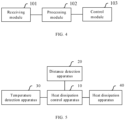
- an embodiment of the present disclosure further provides a heat dissipation control apparatus which, as shown in FIG. 4 , includes: a receiving module 101, a processing module 102 and a control module 103.
- the receiving module 101 is configured to receive a distance between a device operator and a device.
- the processing module 102 is configured to acquire, in response to that the receiving module 101 receives the distance between the device operator and the device, a temperature of a device surface; and determine a heat dissipation mode for the device according to the distance between the device operator and the device, the temperature of the device surface, a preset distance threshold and a preset temperature threshold.
- the control module 103 is configured to control the device to perform heat dissipation according to the heat dissipation mode.
- the distance between the device operator and the device is a distance between the device operator and the device in each direction
- the processing module 102 is configured to acquire a temperature of a device surface corresponding to each direction; and determine a heat dissipation mode for the device in each direction according to the distance between the device operator and the device in each direction, the temperature of the device surface corresponding to each direction, the preset distance threshold and the preset temperature threshold.
- the distance threshold includes a first distance threshold and a second distance threshold
- the temperature threshold includes a first temperature threshold and a second temperature threshold
- the processing module 102 is configured to, in a first direction between the device operator and the device, in response to the distance between the device operator and the device in the first direction greater than the second distance threshold and less than or equal to the first distance threshold, and the temperature of the device surface corresponding to the first direction greater than or equal to the first temperature threshold, or in response to the distance between the device operator and the device in the first direction greater than or equal to zero and less than or equal to the second distance threshold, and the temperature of the device surface corresponding to the first direction less than the first temperature threshold and greater than or equal to the second temperature threshold, determine that the heat dissipation mode of the device in the first direction is reducing an amount of heat delivered by a heat dissipation channel of the device in the first direction.
- the distance threshold includes a first distance threshold and a second distance threshold
- the temperature threshold includes a first temperature threshold and a second temperature threshold
- the processing module 102 is configured to, in a first direction between the device operator and the device, in response to the distance between the device operator and the device in the first direction greater than the second distance threshold and less than or equal to the first distance threshold, and the temperature of the device surface corresponding to the first direction less than the first temperature threshold, or in response to the distance between the device operator and the device in the first direction greater than or equal to zero and less than or equal to the second distance threshold, and the temperature of the device surface corresponding to the first direction less than the second temperature threshold, determine that the heat dissipation mode of the device in the first direction is maintaining an amount of heat delivered by a heat dissipation channel of the device in the first direction.
- the distance threshold includes a first distance threshold and a second distance threshold
- the temperature threshold includes a first temperature threshold and a second temperature threshold
- the processing module 102 is configured to, in a first direction between the device operator and the device, in response to the distance between the device operator and the device in the first direction greater than zero and less than or equal to the second distance threshold, and the temperature of the device surface corresponding to the first direction greater than or equal to the first temperature threshold, determine that the heat dissipation mode of the device in the first direction is closing a heat dissipation channel of the device in the first direction, or determine that the heat dissipation mode of the device in the first direction is closing the heat dissipation channel of the device in the first direction and turning on a heat dissipation apparatus on a device surface corresponding to the first direction.
- the temperature threshold includes a first temperature threshold and a second temperature threshold greater than the first temperature threshold
- the processing module 102 is further configured to give an alarm in a first direction between the device operator and the device, in response to a temperature of a device surface corresponding to the first direction greater than or equal to the second temperature threshold.
- an embodiment of the present disclosure further provides a heat dissipation system which, as shown in FIG. 5 , includes: a distance detection apparatus 20, a temperature detection apparatus 30, a heat dissipation apparatus 40, and the heat dissipation control apparatus 10 as described above.
- An embodiment of the present disclosure further provides a computer device, including: one or more processors and a storage medium.
- the storage medium stores one or more programs thereon which, when executed by the one or more processors, cause the one or more processors to implement the heat dissipation control method as described in any of the above embodiments.
- An embodiment of the present disclosure further provides a computer-readable medium storing a computer program thereon, where the computer program, when executed, causes the heat dissipation control method as described in any of the above embodiments to be implemented.
- the term computer storage medium includes volatile and nonvolatile, removable and non-removable media implemented in any method or technology for storage of information such as computer-readable instructions, data structures, program modules or other data, as is well known to those of ordinary skill in the art.
- the computer storage medium includes, but is not limited to, an RAM, an ROM, an EEPROM, a flash or any other memory technology, a CD-ROM, a digital versatile disc (DVD) or any other optical disc storage, a magnetic cartridge, a magnetic tape, a magnetic disk storage or any other magnetic storage medium, or may be any other medium used for storing the desired information and accessible by a computer.
- a communication medium typically includes a computer-readable instruction, a data structure, a program module, or other data in a modulated data signal, such as a carrier wave or other transport mechanism, and may include any information delivery medium.
Landscapes
- Engineering & Computer Science (AREA)
- Physics & Mathematics (AREA)
- Theoretical Computer Science (AREA)
- Thermal Sciences (AREA)
- Microelectronics & Electronic Packaging (AREA)
- Human Computer Interaction (AREA)
- General Engineering & Computer Science (AREA)
- General Physics & Mathematics (AREA)
- Cooling Or The Like Of Electrical Apparatus (AREA)
- Control Of Temperature (AREA)
Abstract
Description
- This application claims priority from
Chinese patent application NO. 202011230195.0 filed on November 6, 2020 - The present disclosure relates to the technical field of automatic control, and specifically relates to a heat dissipation control method and apparatus, a heat dissipation system, a computer device and a readable medium.
- Inside an electronic device, a large amount of electronic components generate heat in operation, causing a too high temperature inside the electronic device. For the electronic device with a relatively confined structure, the most direct heat dissipation mode is rapidly transferring the heat inside the electronic device to the device surface (the shell), and implementing rapid heat dissipation through the device surface. This mode has a good heat dissipation effect, can ensure that the internal temperature of the electronic device will not rise quickly, but may cause an overhigh temperature on the device surface. If a user directly contacts the device surface at this time, the user is likely to be scalded, leading to potential safety hazards.
- The present disclosure provides a heat dissipation control method and apparatus, a heat dissipation system, a computer device and a readable medium.
- In a first aspect, an embodiment of the present disclosure provides a heat dissipation control method, including: acquiring, in response to receiving a distance between a device operator and a device, a temperature of a device surface; and determining a heat dissipation mode for the device according to the distance between the device operator and the device, the temperature of the device surface, a preset distance threshold and a preset temperature threshold; and controlling the device to perform heat dissipation according to the heat dissipation mode.
- In another aspect, an embodiment of the present disclosure further provides a heat dissipation control apparatus, including: a receiving module, a processing module and a control module, wherein the receiving module is configured to receive a distance between a device operator and a device; the processing module is configured to acquire, in response to that the receiving module receives the distance between the device operator and the device, a temperature of a device surface; and determine a heat dissipation mode for the device according to the distance between the device operator and the device, the temperature of the device surface, a preset distance threshold and a preset temperature threshold; and the control module is configured to control the device to perform heat dissipation according to the heat dissipation mode.
- In another aspect, an embodiment of the present disclosure further provides a heat dissipation system, including a distance detection apparatus, a temperature detection apparatus, a heat dissipation apparatus, and the heat dissipation control apparatus as described above.
- In another aspect, an embodiment of the present disclosure further provides a computer device, including: one or more processors; a storage medium having one or more programs stored thereon, wherein the one or more programs, when executed by the one or more processors, cause the one or more processors to perform the heat dissipation control method as described above.
- In another aspect, an embodiment of the present disclosure further provides a computer-readable medium storing a computer program thereon, wherein the program, when executed, causes the heat dissipation control method as described above to be implemented.
-
-
FIG. 1 is a schematic structural diagram of a device according to an embodiment of the present disclosure; -
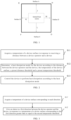
FIG. 2 is a first schematic flowchart of a heat dissipation control method according to an embodiment of the present disclosure; -
FIG. 3 is a second schematic flowchart of a heat dissipation control method according to an embodiment of the present disclosure; -
FIG. 4 is a schematic structural diagram of a heat dissipation control apparatus according to an embodiment of the present disclosure; and -
FIG. 5 is a schematic structural diagram of a heat dissipation system according to an embodiment of the present disclosure. - Example embodiments will be described more sufficiently below with reference to the accompanying drawings, but which may be embodied in different forms and should not be construed as limited to the embodiments set forth herein. Rather, these embodiments are provided so that the present disclosure will be thorough and complete, and will fully convey the scope of the present disclosure to those skilled in the art.
- As used herein, the term "and/or" includes any and all combinations of one or more of the associated listed items.
- The terminology used herein is for the purpose of describing specific embodiments only and is not intended to limit the present disclosure. As used herein, the singular forms "a", "an" and "the" are intended to include the plural forms as well, unless the context clearly indicates otherwise. It will be further understood that as used herein, the terms "comprise" and/or "consist of ..." specify the presence of stated features, integers, steps, operations, elements, and/or components, but do not preclude the presence or addition of one or more other features, integers, steps, operations, elements, components, and/or groups thereof.
- Embodiments described herein may be described with reference to plan and/or sectional views in idealized representations of the present disclosure. Accordingly, the example illustrations may be modified in accordance with manufacturing techniques and/or tolerances. Accordingly, the embodiments are not limited to the embodiments shown in the drawings, but include modifications of configurations formed based on a manufacturing process. Thus, the regions illustrated in the figures have schematic properties, and the shapes of the regions shown in the figures illustrate specific shapes of regions of elements, but are not intended to be limiting.
- Unless otherwise defined, all terms (including technical and scientific terms) used herein have the same meaning as commonly understood by one of ordinary skill in the art. It will be further understood that terms, such as those defined in commonly used dictionaries, should be interpreted as having a meaning that is consistent with their meaning in the context of the existing art and the present disclosure, and will not be interpreted in an idealized or overly formal sense unless expressly so defined herein.
- An embodiment of the present disclosure provides a heat dissipation control method for control heat dissipation of a device. The device may be a router, a customer premise equipment, a mobile phone, a television, or other electronic devices which can be directly contacted by a human body, or a device, such as a base station device, which is rarely contacted by a human body but can transfer the internal temperature to a surface of the device to cause an overhigh surface temperature. The device has a cross section as shown in
FIG. 1 . The device is provided with an electronic component inside as an internal heat source in operation, and the device includes four surfaces, A, B, C and D, each of which is made of a good conductor of heat. E, F, G and H are four contact locations or portions of adjacent surfaces of the device, each of which is made of a poor conductor of heat. J, K, L and M respectively indicate heat dissipation channels of the device in four directions, and the heat dissipation channels are configured to transfer heat from the internal heat source (in first to fourth directions) to the surfaces of the device. It should be noted that, in the embodiment of the present disclosure, a four-surface device is taken as an example for illustration, but those skilled in the art will understand that the device may not be limited to four surfaces, such as a device with a sphere shape, an ellipsoid shape, a cube shape, or any other irregular shape, and any type and shape of electronic device capable of dissipating heat falls within the scope of the embodiments of the present disclosure. - As shown in
FIG. 2 , the heat dissipation control method includes the following steps 11 to 12. - At step 11, acquiring, in response to receiving a distance between a device operator and a device, a temperature of a device surface (a surface of the device).
- A distance sensor (i.e., a distance detection apparatus) having a detection range is provided on the device surface. Once a device operator approaches the device and comes within the detection range of the distance sensor, the distance sensor can detect the distance between the device operator and the device, and transmit the distance between the device operator and the device to the heat dissipation control apparatus. A temperature sensor (i.e., a temperature detection apparatus) is provided on the device surface to detect a temperature of each device surface according to a detection period, and report the detected temperature to the heat dissipation control apparatus. When the heat dissipation control apparatus receives the distance between the device operator and the device sent from the distance sensor, the temperature of the device surface corresponding to that moment is acquired.
- At
step 12, determining a heat dissipation mode for the device according to the distance between the device operator and the device, the temperature of the device surface, a preset distance threshold and a preset temperature threshold. - In an embodiment of the present disclosure, the device may have four heat dissipation modes, including: (1) a normal heat dissipation mode, that is, transferring heat from an internal heat source to a device surface through a heat dissipation channel; (2) a first rapid heat dissipation mode, that is, closing the heat dissipation channel, and stopping transferring heat from the internal heat source to the device surface through the heat dissipation channel, which can rapidly reduce the temperature of the device surface since the heat transfer path from the internal heat source to the device surface is cut off; (3) a second rapid heat dissipation mode, that is, closing the heat dissipation channel and starting heat dissipation on the device surface, including performing heat dissipation through a heat dissipation apparatus for the device surface while closing the heat dissipation channel, which can further reduce the temperature of the device surface rapidly; (4) a slow heat dissipation mode, that is, reducing heat transferred through the heat dissipation channel.
- In this step, the heat dissipation control apparatus judges whether the distance between the device operator and the device satisfies a preset distance threshold condition, and whether the temperature of the device surface satisfies a preset temperature threshold condition, and selects an appropriate heat dissipation mode for the device according to the judgment result.
- At
step 13, controlling the device to perform heat dissipation according to the heat dissipation mode. - In this step, the heat dissipation control apparatus may control opening/closing of the heat dissipation channel, an amount of heat transferred through the heat dissipation channel, and opening/closing of the heat dissipation apparatus for the device surface, to ensure heat dissipation of the device in a corresponding heat dissipation mode.
- In some implementations, the heat dissipation channel may be a coolant flow channel, an air flow channel, a heat transfer path, or the like between the internal heat source and the device surface. Accordingly, closing the heat dissipation channel and reducing heat transferred through the heat dissipation channel may refer to partially or completely closing the coolant or air flow channel, moving an insulation material into the heat transfer path or moving a heat transfer material away from the heat transfer path, adjusting positions of fins, and the like. The heat dissipation apparatus for' the device surface may be a Peltier element, a fan, or the like.
- The heat dissipation control method according to the embodiment of the present disclosure includes: acquiring, in response to receiving a distance between a device operator and a device, a temperature of a device surface; and determining a heat dissipation mode for the device according to the distance between the device operator and the device, the temperature of the device surface, a preset distance threshold and a preset temperature threshold; and controlling the device to perform heat dissipation according to the heat dissipation mode. In this embodiment of the present disclosure, by monitoring the distance between the device operator and the device and the temperature of the device surface, heat exchange between the interior of the device and the device surface is automatically adjusted, it is ensured that the temperature of the device surface is within a human acceptable range when the device operator contacts the device surface, thus the device operator is protected from being scalded and potential safety hazards are eliminated, while normal operation of the device is ensured.
- In some embodiments, the distance between the device operator and the device is a distance between the device as a whole and the device operator (different surfaces of the device are not distinguished), and the temperature of the device is a temperature of the device as a whole (different surfaces of the device are not distinguished). Therefore, the temperature sensor and the distance sensor may be arranged at any position of the device as long as the temperature detection and the distance detection can be realized. Correspondingly, in this solution, the control of heat dissipation is also for the device as a whole, and different surfaces of the device are not distinguished. For example, if it is determined that the normal heat dissipation mode is adopted, the device is controlled to transfer heat from the internal heat source to the device surfaces through four heat dissipation channels, respectively. This solution uses relatively fewer sensors and is relatively simple, but has a poor temperature control effect on the device surfaces.
- In order to solve the problem of poor temperature control effect on the device surfaces, in some embodiments, temperature sensors may be provided on the respective device surfaces to detect temperatures of the respective device surfaces, and distance sensors may be provided on the respective device surfaces to detect distances between different parts of the device operator and different surfaces of the device, respectively, such as a distance between the left hand of the device operator and the first surface of the device, and a distance between the right hand of the device operator and the second surface of the device. In an embodiment of the present disclosure, in addition to the distance sensor, a sensor for recognizing a person or an object, such as an SAR (Specific Absorption Rate) sensor, may be further provided, which has a low detection accuracy, while the distance sensor, which has a relatively high detection accuracy, is configured to detect the distance. When recognizing a person approaching the device, the SAR sensor notifies the heat dissipation control apparatus to turn on the distance sensor.
- Accordingly, in this embodiment, the distance between the device operator and the device is the distance between the device operator and the device in each direction (i.e., each device surface). As shown in
FIG. 3 , acquiring the temperature of the device surface (i.e., step 11) includes: the following step 11'. - At step 11', acquiring a temperature of a device surface corresponding to each direction. In other words, the acquired temperature(s) of the device surface(s) is/are the temperature(s) of device surface(s) against which the device operator and a body part thereof face.
- Determining the heat dissipation mode for the device according to the distance between the device operator and the device, the temperature of the device surface, the preset distance threshold and the preset temperature threshold (i.e., step 12) includes: determining a heat dissipation mode for the device in each direction according to the distance between the device operator and the device in each direction, the temperature of the device surface corresponding to each direction, the preset distance threshold and the preset temperature threshold. In other words, in this step, the heat dissipation mode is determined and adjusted for each direction in which approach of a device operator to the device is detected. This solution can control the temperature of the device surface more accurately, and can have a better temperature control effect.
- In some embodiments, the distance threshold may include a first distance threshold D1 and a second distance threshold D2. The second distance threshold D2 is less than the first distance threshold D1. The temperature threshold may include a first temperature threshold T1 and a second temperature threshold T2. The second temperature threshold T2 is less than the first temperature threshold T1. The first temperature threshold T1 is a safe temperature for human touch up to which there is a risk of being scalded, and T1 may be 50 °C. The second temperature threshold T2 is an alert temperature. When T2 is reached, it indicates that the safe temperature for human touch is nearly reached, and T2 may be 40 °C to 45 °C.
- Determining the heat dissipation mode for the device in each direction according to the distance between the device operator and the device in each direction, the temperature of the device surface corresponding to each direction, the preset distance threshold and the preset temperature threshold includes: in a first direction between the device operator and the device, in response to the distance d between the device operator and the device in the first direction greater than the second distance threshold D2 and less than or equal to the first distance threshold D1, and the temperature t of the device surface corresponding to the first direction greater than or equal to the first temperature threshold T1, or in response to the distance d between the device operator and the device in the first direction greater than or equal to zero and less than or equal to the second distance threshold D2, and the temperature t of the device surface corresponding to the first direction less than the first temperature threshold T1 and greater than or equal to the second temperature threshold T2, determining that the heat dissipation mode of the device in the first direction is: reducing an amount of heat delivered by a heat dissipation channel of the device in the first direction.
- In other words, the slow heat dissipation mode is adopted in a direction if one of the following condition is satisfied in that direction:
- (1) D2<d≤D1, and t≥T1; and
- (2) 0≤d≤D2, and T2≤t<T1.
- When D2<d≤D1, and t≥T1, it indicates that the temperature of the current device surface (i.e., the surface facing the device operator) is relatively high, but the device operator is far away from the device, so slow heat dissipation can be performed by reducing heat delivered by the corresponding heat dissipation channel. When 0<d≤D2, and T2≤t<T1, it indicates that the device operator is close to the device, but the temperature of the current device surface (i.e., the surface facing the device operator) is not too high or too low, so slow heat dissipation can also be performed by reducing heat delivered by the corresponding heat dissipation channel. When d=0 and T2≤t<T1, it indicates that the device operator has come into contact with the device surface, but the temperature of the current device surface (i.e., the surface facing the device operator) is not too high or too low, so slow heat dissipation can also be performed by reducing heat delivered by the corresponding heat dissipation channel.
- In some embodiments, determining the heat dissipation mode for the device in each direction according to the distance between the device operator and the device in each direction, the temperature of the device surface corresponding to each direction, the preset distance threshold and the preset temperature threshold includes: in a first direction between the device operator and the device, in response to the distance d between the device operator and the device in the first direction greater than the second distance threshold D2 and less than or equal to the first distance threshold D 1, and the temperature t of the device surface corresponding to the first direction less than the first temperature threshold T1, or in response to the distance d between the device operator and the device in the first direction greater than or equal to zero and less than or equal to the second distance threshold D2, and the temperature t of the device surface corresponding to the first direction less than the second temperature threshold T2, determining that the heat dissipation mode of the device in the first direction is: maintaining an amount of heat delivered by a heat dissipation channel of the device in the first direction.
- In other words, the normal heat dissipation mode is adopted in a direction if one of the following condition is satisfied in that direction:
- (1) D2<d≤D1, and t<T1; and
- (2) 0<d≤D2, and t<T2.
- When D2<d≤D1, and t<T1, it indicates that the temperature of the current device surface (i.e., the surface facing the device operator) is not too high, and the device operator is far away from the device, so normal heat dissipation can be performed by maintaining heat delivered by the corresponding heat dissipation channel. When 0<d≤D2, and t<T2, it indicates that the device operator is close to the device, but the temperature of the current device surface (i.e., the surface facing the device operator) is relatively low, so normal heat dissipation can also be performed by maintaining heat delivered by the corresponding heat dissipation channel. When d=0 and t< T2, it indicates that the device operator has come into contact with the device surface, but the temperature of the current device surface (i.e., the surface facing the device operator) is relatively low, so normal heat dissipation can also be performed by maintaining heat delivered by the corresponding heat dissipation channel.
- Further, in the case where the device operator is not detected, since there is no fear that the device operator comes into contact with the device surface, it is also possible to perform normal heat dissipation by maintaining heat delivered by the corresponding heat dissipation channel.
- In some embodiments, determining the heat dissipation mode for the device in each direction according to the distance between the device operator and the device in each direction, the temperature of the device surface corresponding to each direction, the preset distance threshold and the preset temperature threshold includes: in a first direction between the device operator and the device, in response to the distance d between the device operator and the device in the first direction greater than zero and less than or equal to the second distance threshold D2, and the temperature t of the device surface corresponding to the first direction greater than or equal to the first temperature threshold T1, determining that the heat dissipation mode of the device in the first direction is: closing a heat dissipation channel of the device in the first direction, or determining that the heat dissipation mode of the device in the first direction is: closing the heat dissipation channel of the device in the first direction and turning on a heat dissipation apparatus for a device surface corresponding to the first direction.
- In other words, the first or second rapid heat dissipation mode is adopted in a direction if 0<d≤D2 and t≥T1 in that direction. When 0<d≤D2 and t≥T1, the device operator is close to the device, and the temperature of the current device surface (i.e., the surface facing the device operator) is relatively high, so rapid heat dissipation is performed by closing a heat dissipation channel of the device in the first direction, or by closing the heat dissipation channel of the device in the first direction and turning on a heat dissipation apparatus for a device surface in the first direction.
- In some embodiments, as shown in
FIG. 3 , after acquiring the temperature of the device surface corresponding to each direction (i.e., step 11'), the method may further include the following step 12'. - At step 12', giving an alarm in a first direction between the device operator and the device, in response to a temperature of a device surface corresponding to the first direction greater than or equal to the second temperature threshold.
- In this step, in the process of adjusting the heat dissipation mode of the device, if the heat dissipation control apparatus determines that the temperature t of the device surface in a certain direction satisfies t≥T2, which indicates that the temperature of the device surface in that direction is very close to the safe temperature for human touch, an alarm is given to remind to pay attention to operation of the device and avoid scalding.
- It should be noted that the alarm may be continued until the temperature t of the device surface is less than the second temperature threshold T2.
- An embodiment of the present disclosure provides a heat dissipation control method for adjusting internal-external heat dissipation mechanisms of a device according to a distance between a human body and the device and a temperature of a device surface. The method includes: monitoring the distance between the device and the human body (i.e., a device operator) and the temperature of the device surface, and switching, when the distance between the human body and the device is smaller than or equal to a distance safety value (i.e., a second distance threshold value D2) and the temperature of the device surface is greater than or equal to a first temperature threshold value (T1), a heat dissipation mode into a rapid heat dissipation mode which takes internal heat circulation as a main mode and external heat dissipation as an auxiliary mode within a safe service temperature range of the device, that is, adjusting a position of the external heat dissipation so that internal heat is rapidly and intensively transferred to a position beyond reach of the human body; adopting, when the distance between the human body and the device is relatively long (D2<d), or the distance between the human body and the device is relatively short or even the human body has contacted the device (0≤d≤D2) and the temperature of the device surface is relatively low, a normal heat dissipation mode of a heat dissipation channel; and adopting, when the distance between the human body and the device is relatively long (D2<d) and the temperature of the device surface is relatively high (t≥T1), or when the distance between the human body and the device is relatively short or even the human body has contacted the device (0≤d≤D2) and the temperature of the device surface is not too high or too low (T2≤t<T1), a slow heat dissipation mode of reducing heat delivered by the heat dissipation channel.
- In an embodiment of the present disclosure, when d=D1, the distance sensor starts monitoring the distance between the human body and the device in real time. When D2<d≤D1 and t≥T1, and when 0<d≤D2 and T2≤t<T1, the device starts reducing the heat transferred from the inside to the outside, thereby effectively reducing the temperature of the device surface. When D2<d≤D1 and t<T1, and when 0≤d≤D2 and t<T2, the device performs normal heat dissipation by maintaining the heat delivered by the heat dissipation channel. When 0<d≤D2 and t≥T1, the device completely cuts off the heat conduction path from the internal heat source to the device surface, thereby rapidly reducing the temperature of the device surface to a safe range acceptable to human body. The embodiment of the present disclosure can, on one hand, ensure that the device will not work abnormally due to an overhigh temperature, and on the other hand, improve the comfort level of the human body when contacting the device surface, and ensure that the temperature can be reduced to a comfortable temperature range acceptable by the human body when the human body contacts the device surface. The embodiment of the present disclosure can adjust the temperature of the device surface automatically and effectively, and ensure that while normal heat dissipation is performed on internal electronic components of device, the temperature of the corresponding device surface is effectively reduced before a person approaches and touches the device surface, thereby protecting the person from being scalded.
- Based on the same technical concept, an embodiment of the present disclosure further provides a heat dissipation control apparatus which, as shown in
FIG. 4 , includes: a receivingmodule 101, aprocessing module 102 and acontrol module 103. The receivingmodule 101 is configured to receive a distance between a device operator and a device. - The
processing module 102 is configured to acquire, in response to that the receivingmodule 101 receives the distance between the device operator and the device, a temperature of a device surface; and determine a heat dissipation mode for the device according to the distance between the device operator and the device, the temperature of the device surface, a preset distance threshold and a preset temperature threshold. - The
control module 103 is configured to control the device to perform heat dissipation according to the heat dissipation mode. - In some embodiments, the distance between the device operator and the device is a distance between the device operator and the device in each direction, and the
processing module 102 is configured to acquire a temperature of a device surface corresponding to each direction; and determine a heat dissipation mode for the device in each direction according to the distance between the device operator and the device in each direction, the temperature of the device surface corresponding to each direction, the preset distance threshold and the preset temperature threshold. - In some embodiments, the distance threshold includes a first distance threshold and a second distance threshold, and the temperature threshold includes a first temperature threshold and a second temperature threshold, and the
processing module 102 is configured to, in a first direction between the device operator and the device, in response to the distance between the device operator and the device in the first direction greater than the second distance threshold and less than or equal to the first distance threshold, and the temperature of the device surface corresponding to the first direction greater than or equal to the first temperature threshold, or in response to the distance between the device operator and the device in the first direction greater than or equal to zero and less than or equal to the second distance threshold, and the temperature of the device surface corresponding to the first direction less than the first temperature threshold and greater than or equal to the second temperature threshold, determine that the heat dissipation mode of the device in the first direction is reducing an amount of heat delivered by a heat dissipation channel of the device in the first direction. - In some embodiments, the distance threshold includes a first distance threshold and a second distance threshold, and the temperature threshold includes a first temperature threshold and a second temperature threshold, and the
processing module 102 is configured to, in a first direction between the device operator and the device, in response to the distance between the device operator and the device in the first direction greater than the second distance threshold and less than or equal to the first distance threshold, and the temperature of the device surface corresponding to the first direction less than the first temperature threshold, or in response to the distance between the device operator and the device in the first direction greater than or equal to zero and less than or equal to the second distance threshold, and the temperature of the device surface corresponding to the first direction less than the second temperature threshold, determine that the heat dissipation mode of the device in the first direction is maintaining an amount of heat delivered by a heat dissipation channel of the device in the first direction. - In some embodiments, the distance threshold includes a first distance threshold and a second distance threshold, and the temperature threshold includes a first temperature threshold and a second temperature threshold, and the
processing module 102 is configured to, in a first direction between the device operator and the device, in response to the distance between the device operator and the device in the first direction greater than zero and less than or equal to the second distance threshold, and the temperature of the device surface corresponding to the first direction greater than or equal to the first temperature threshold, determine that the heat dissipation mode of the device in the first direction is closing a heat dissipation channel of the device in the first direction, or determine that the heat dissipation mode of the device in the first direction is closing the heat dissipation channel of the device in the first direction and turning on a heat dissipation apparatus on a device surface corresponding to the first direction. - In some embodiments, the temperature threshold includes a first temperature threshold and a second temperature threshold greater than the first temperature threshold, and the
processing module 102 is further configured to give an alarm in a first direction between the device operator and the device, in response to a temperature of a device surface corresponding to the first direction greater than or equal to the second temperature threshold. - Based on the same technical concept, an embodiment of the present disclosure further provides a heat dissipation system which, as shown in
FIG. 5 , includes: adistance detection apparatus 20, atemperature detection apparatus 30, aheat dissipation apparatus 40, and the heatdissipation control apparatus 10 as described above. - An embodiment of the present disclosure further provides a computer device, including: one or more processors and a storage medium. The storage medium stores one or more programs thereon which, when executed by the one or more processors, cause the one or more processors to implement the heat dissipation control method as described in any of the above embodiments.
- An embodiment of the present disclosure further provides a computer-readable medium storing a computer program thereon, where the computer program, when executed, causes the heat dissipation control method as described in any of the above embodiments to be implemented.
- Those of ordinary skill in the art will appreciate that all or some operations of the above described method, functional modules/units in the apparatus may be implemented as software, firmware, hardware, and suitable combinations thereof. In a hardware implementation, the division between the functional modules/units mentioned in the above description does not necessarily correspond to the division of physical components; for example, one physical component may have multiple functions, or one function or operation may be performed cooperatively by several physical components. Some or all physical components may be implemented as software executed by a processor, such as a CPU, a digital signal processor or microprocessor, or implemented as hardware, or implemented as an integrated circuit, such as an application specific integrated circuit. Such software may be distributed on a computer-readable medium which may include a computer storage medium (or non-transitory medium) and communication medium (or transitory medium). The term computer storage medium includes volatile and nonvolatile, removable and non-removable media implemented in any method or technology for storage of information such as computer-readable instructions, data structures, program modules or other data, as is well known to those of ordinary skill in the art. The computer storage medium includes, but is not limited to, an RAM, an ROM, an EEPROM, a flash or any other memory technology, a CD-ROM, a digital versatile disc (DVD) or any other optical disc storage, a magnetic cartridge, a magnetic tape, a magnetic disk storage or any other magnetic storage medium, or may be any other medium used for storing the desired information and accessible by a computer. Moreover, it is well known to those ordinary skilled in the art that a communication medium typically includes a computer-readable instruction, a data structure, a program module, or other data in a modulated data signal, such as a carrier wave or other transport mechanism, and may include any information delivery medium.
- The present disclosure has disclosed exemplary embodiments, and although specific terms are employed, they are used and should be interpreted merely in a generic and descriptive sense, not for purposes of limitation. In some instances, as would be apparent to one skilled in the art, features, characteristics and/or elements described in connection with a particular embodiment may be used alone or in combination with features, characteristics and/or elements described in connection with another embodiment, unless expressly stated otherwise. It will, therefore, be understood by those skilled in the art that various changes in form and details may be made therein without departing from the scope of the present disclosure as set forth in the appended claims.
Claims (10)
- A heat dissipation control method, comprising:acquiring, in response to receiving a distance between a device operator and a device, a temperature of a device surface; anddetermining a heat dissipation mode for the device according to the distance between the device operator and the device, the temperature of the device surface, a preset distance threshold and a preset temperature threshold; andcontrolling the device to perform heat dissipation according to the heat dissipation mode.
- The method according to claim 1, wherein the distance between the device operator and the device is a distance between the device operator and the device in each direction, and acquiring the temperature of the device surface comprises: acquiring a temperature of a device surface corresponding to each direction; and
determining the heat dissipation mode for the device according to the distance between the device operator and the device, the temperature of the device surface, the preset distance threshold and the preset temperature threshold comprises: determining a heat dissipation mode for the device in each direction according to the distance between the device operator and the device in each direction, the temperature of the device surface corresponding to each direction, the preset distance threshold and the preset temperature threshold. - The method according to claim 2, wherein the distance threshold comprises a first distance threshold and a second distance threshold, and the temperature threshold comprises a first temperature threshold and a second temperature threshold, and wherein determining the heat dissipation mode for the device in each direction according to the distance between the device operator and the device in each direction, the temperature of the device surface corresponding to each direction, the preset distance threshold and the preset temperature threshold comprises:
in a first direction between the device operator and the device, in response to a distance between the device operator and the device in the first direction greater than the second distance threshold and less than or equal to the first distance threshold, and a temperature of a device surface corresponding to the first direction greater than or equal to the first temperature threshold, or in response to the distance between the device operator and the device in the first direction greater than or equal to zero and less than or equal to the second distance threshold, and the temperature of the device surface corresponding to the first direction less than the first temperature threshold and greater than or equal to the second temperature threshold, determining that the heat dissipation mode of the device in the first direction is reducing an amount of heat delivered by a heat dissipation channel of the device in the first direction. - The method according to claim 2, wherein the distance threshold comprises a first distance threshold and a second distance threshold, and the temperature threshold comprises a first temperature threshold and a second temperature threshold, and wherein determining the heat dissipation mode for the device in each direction according to the distance between the device operator and the device in each direction, the temperature of the device surface corresponding to each direction, the preset distance threshold and the preset temperature threshold comprises:
in a first direction between the device operator and the device, in response to a distance between the device operator and the device in the first direction greater than the second distance threshold and less than or equal to the first distance threshold, and a temperature of a device surface corresponding to the first direction less than the first temperature threshold, or in response to the distance between the device operator and the device in the first direction greater than or equal to zero and less than or equal to the second distance threshold, and the temperature of the device surface corresponding to the first direction less than the second temperature threshold, determining that the heat dissipation mode of the device in the first direction is maintaining an amount of heat delivered by a heat dissipation channel of the device in the first direction. - The method according to claim 2, wherein the distance threshold comprises a first distance threshold and a second distance threshold, and the temperature threshold comprises a first temperature threshold and a second temperature threshold, and wherein determining the heat dissipation mode for the device in each direction according to the distance between the device operator and the device in each direction, the temperature of the device surface corresponding to each direction, the preset distance threshold and the preset temperature threshold comprises:
in a first direction between the device operator and the device, in response to a distance between the device operator and the device in the first direction greater than zero and less than or equal to the second distance threshold, and a temperature of a device surface corresponding to the first direction greater than or equal to the first temperature threshold, determining that the heat dissipation mode of the device in the first direction is closing a heat dissipation channel of the device in the first direction, or determining that the heat dissipation mode of the device in the first direction is closing the heat dissipation channel of the device in the first direction and turning on a heat dissipation apparatus for the device surface corresponding to the first direction. - The method according to any one of claims 2 to 5, wherein the temperature threshold comprises a first temperature threshold and a second temperature threshold greater than the first temperature threshold, and wherein after acquiring the temperature of the device surface corresponding to each direction, the method further comprises:
giving an alarm in a first direction between the device operator and the device, in response to the temperature of the device surface corresponding to the first direction greater than or equal to the second temperature threshold. - A heat dissipation control apparatus, comprising: a receiving module, a processing module and a control module, whereinthe receiving module is configured to receive a distance between a device operator and a device;the processing module is configured to acquire, in response to that the receiving module receives the distance between the device operator and the device, a temperature of a device surface; and determine a heat dissipation mode for the device according to the distance between the device operator and the device, the temperature of the device surface, a preset distance threshold and a preset temperature threshold; andthe control module is configured to control the device to perform heat dissipation according to the heat dissipation mode.
- A heat dissipation system, comprising a distance detection apparatus, a temperature detection apparatus, a heat dissipation apparatus, and the heat dissipation control apparatus according to claim 7.
- A computer device, comprising:one or more processors;a storage medium having one or more programs stored thereon; whereinthe one or more programs, when executed by the one or more processors, cause the one or more processors to implement the heat dissipation control method according to any one of claims 1 to 6.
- A computer-readable medium storing a computer program thereon, wherein the program, when executed, causes the heat dissipation control method according to any one of claims 1 to 6 to be implemented.
Applications Claiming Priority (2)
| Application Number | Priority Date | Filing Date | Title |
|---|---|---|---|
| CN202011230195.0A CN114449833B (en) | 2020-11-06 | 2020-11-06 | Heat dissipation control method, heat dissipation control device, heat dissipation system, computer equipment and readable medium |
| PCT/CN2021/128702 WO2022095925A1 (en) | 2020-11-06 | 2021-11-04 | Heat dissipation control method and apparatus, heat dissipation system, computer device and readable medium |
Publications (3)
| Publication Number | Publication Date |
|---|---|
| EP4207964A1 true EP4207964A1 (en) | 2023-07-05 |
| EP4207964A4 EP4207964A4 (en) | 2024-02-28 |
| EP4207964B1 EP4207964B1 (en) | 2026-03-11 |
Family
ID=81361993
Family Applications (1)
| Application Number | Title | Priority Date | Filing Date |
|---|---|---|---|
| EP21888617.4A Active EP4207964B1 (en) | 2020-11-06 | 2021-11-04 | Heat dissipation control method and apparatus, heat dissipation system, computer device and readable medium |
Country Status (4)
| Country | Link |
|---|---|
| EP (1) | EP4207964B1 (en) |
| JP (1) | JP7556146B2 (en) |
| CN (1) | CN114449833B (en) |
| WO (1) | WO2022095925A1 (en) |
Families Citing this family (1)
| Publication number | Priority date | Publication date | Assignee | Title |
|---|---|---|---|---|
| CN115406163B (en) * | 2022-09-01 | 2023-12-12 | 珠海格力电器股份有限公司 | Heat dissipation control method and device of equipment, equipment and storage medium |
Family Cites Families (14)
| Publication number | Priority date | Publication date | Assignee | Title |
|---|---|---|---|---|
| USRE37888E1 (en) * | 1996-03-06 | 2002-10-22 | Eugen Cretu-Petra | Water faucet with touchless controls |
| TW200712915A (en) * | 2005-09-15 | 2007-04-01 | Asustek Comp Inc | Electronic device capable of detecting an object and method thereof |
| US8712598B2 (en) * | 2011-01-14 | 2014-04-29 | Microsoft Corporation | Adaptive flow for thermal cooling of devices |
| US9291400B2 (en) * | 2013-03-13 | 2016-03-22 | Elwha Llc | Management of exterior temperatures encountered by user of a portable electronic device using multiple heat-rejection elements |
| US9268378B2 (en) * | 2013-06-28 | 2016-02-23 | Intel Corporation | Techniques and system for managing platform temperature |
| US9427828B2 (en) * | 2014-08-08 | 2016-08-30 | International Business Machines Corporation | Increasing solder hole-fill in a printed circuit board assembly |
| CN106163225A (en) * | 2015-04-28 | 2016-11-23 | 中兴通讯股份有限公司 | Calorie control method and device |
| CN106095022B (en) * | 2016-05-31 | 2020-09-25 | 联想(北京)有限公司 | Control method and electronic equipment |
| CN106155133B (en) * | 2016-06-28 | 2018-11-09 | 联想(北京)有限公司 | A kind of control method and electronic equipment |
| CN105977574A (en) * | 2016-06-30 | 2016-09-28 | 深圳市元征科技股份有限公司 | Battery temperature control method and system |
| CN106814767A (en) * | 2016-12-30 | 2017-06-09 | 维沃移动通信有限公司 | The method and mobile terminal of a kind of dynamic radiating |
| WO2019014127A1 (en) | 2017-07-10 | 2019-01-17 | Magic Leap, Inc. | Method and system for integration of electronic sensors with thermal cooling system |
| CN111381648A (en) * | 2020-03-03 | 2020-07-07 | 合肥联宝信息技术有限公司 | Cooling method, system, electronic equipment and computer storage medium |
| CN111459252B (en) * | 2020-03-31 | 2023-05-02 | 联想(北京)有限公司 | Control method and device and electronic equipment |
-
2020
- 2020-11-06 CN CN202011230195.0A patent/CN114449833B/en active Active
-
2021
- 2021-11-04 WO PCT/CN2021/128702 patent/WO2022095925A1/en not_active Ceased
- 2021-11-04 JP JP2023525574A patent/JP7556146B2/en active Active
- 2021-11-04 EP EP21888617.4A patent/EP4207964B1/en active Active
Also Published As
| Publication number | Publication date |
|---|---|
| WO2022095925A1 (en) | 2022-05-12 |
| EP4207964B1 (en) | 2026-03-11 |
| JP7556146B2 (en) | 2024-09-25 |
| JP2023547438A (en) | 2023-11-10 |
| CN114449833B (en) | 2026-03-10 |
| CN114449833A (en) | 2022-05-06 |
| EP4207964A4 (en) | 2024-02-28 |
Similar Documents
| Publication | Publication Date | Title |
|---|---|---|
| US11872156B2 (en) | Core body temperature measurement | |
| US10559969B2 (en) | Charging cable and charging control device | |
| CN102789246B (en) | Thermal protection method, device and equipment with thermal protection function | |
| EP4207964B1 (en) | Heat dissipation control method and apparatus, heat dissipation system, computer device and readable medium | |
| EP2703941A2 (en) | Power control apparatus, information processing apparatus, and power control method | |
| US20200401326A1 (en) | Semiconductor storage device | |
| EP2919345A1 (en) | Thermal protection circuit | |
| KR20180007085A (en) | Electronic device supporting usb interface and control method for the usb interface | |
| US10566814B2 (en) | Charging control method, device, and power adapter | |
| TW201218823A (en) | Methods and apparatus for touch temperature management based on power dissipation history | |
| WO2019196424A1 (en) | Temperature compensation method for sar sensor of terminal, and terminal | |
| KR20180012246A (en) | Sensor-based signal transmission methods and apparatus | |
| US20190191593A1 (en) | Water-cooling heat-dissipating assembly and electronic device | |
| US10060868B2 (en) | Calculating an effective heat transfer coefficient of a device | |
| WO2021047442A1 (en) | Solenoid valve control apparatus | |
| WO2020208726A1 (en) | Power conversion device | |
| KR102977362B1 (en) | Systems, apparatuses, and methods for detecting a vapor | |
| US11256232B2 (en) | Thermal mitigation within a converged radio device | |
| CN107608424A (en) | Smart machine with temperature detection and protection system | |
| CN118645741A (en) | Thermal management method, related device and storage medium during battery system charging | |
| CN108873794B (en) | Control equipment, system and method of cooling fan | |
| WO2017023280A1 (en) | Leakage detection for a logic board | |
| US10025332B2 (en) | Overheat protection method and apparatus for hand-held electronic device, and hand-held electronic device | |
| US20250043980A1 (en) | Control method of air conditioner, storage medium, control apparatus and air conditioner | |
| KR20200042343A (en) | Apparatus and method for detecting battery temperature, and battery system including the apparatus |
Legal Events
| Date | Code | Title | Description |
|---|---|---|---|
| STAA | Information on the status of an ep patent application or granted ep patent |
Free format text: STATUS: THE INTERNATIONAL PUBLICATION HAS BEEN MADE |
|
| PUAI | Public reference made under article 153(3) epc to a published international application that has entered the european phase |
Free format text: ORIGINAL CODE: 0009012 |
|
| STAA | Information on the status of an ep patent application or granted ep patent |
Free format text: STATUS: REQUEST FOR EXAMINATION WAS MADE |
|
| 17P | Request for examination filed |
Effective date: 20230330 |
|
| AK | Designated contracting states |
Kind code of ref document: A1 Designated state(s): AL AT BE BG CH CY CZ DE DK EE ES FI FR GB GR HR HU IE IS IT LI LT LU LV MC MK MT NL NO PL PT RO RS SE SI SK SM TR |
|
| REG | Reference to a national code |
Ref country code: DE Ref legal event code: R079 Free format text: PREVIOUS MAIN CLASS: H05K0007200000 Ipc: G06F0001200000 Ref country code: DE Ref legal event code: R079 Ref document number: 602021049926 Country of ref document: DE Free format text: PREVIOUS MAIN CLASS: H05K0007200000 Ipc: G06F0001200000 |
|
| DAV | Request for validation of the european patent (deleted) | ||
| DAX | Request for extension of the european patent (deleted) | ||
| A4 | Supplementary search report drawn up and despatched |
Effective date: 20240126 |
|
| RIC1 | Information provided on ipc code assigned before grant |
Ipc: G06F 1/20 20060101AFI20240122BHEP |
|
| GRAP | Despatch of communication of intention to grant a patent |
Free format text: ORIGINAL CODE: EPIDOSNIGR1 |
|
| STAA | Information on the status of an ep patent application or granted ep patent |
Free format text: STATUS: GRANT OF PATENT IS INTENDED |
|
| INTG | Intention to grant announced |
Effective date: 20260105 |
|
| GRAS | Grant fee paid |
Free format text: ORIGINAL CODE: EPIDOSNIGR3 |
|
| GRAA | (expected) grant |
Free format text: ORIGINAL CODE: 0009210 |
|
| STAA | Information on the status of an ep patent application or granted ep patent |
Free format text: STATUS: THE PATENT HAS BEEN GRANTED |
|
| AK | Designated contracting states |
Kind code of ref document: B1 Designated state(s): AL AT BE BG CH CY CZ DE DK EE ES FI FR GB GR HR HU IE IS IT LI LT LU LV MC MK MT NL NO PL PT RO RS SE SI SK SM TR |
|
| REG | Reference to a national code |
Ref country code: CH Ref legal event code: F10 Free format text: ST27 STATUS EVENT CODE: U-0-0-F10-F00 (AS PROVIDED BY THE NATIONAL OFFICE) Effective date: 20260311 Ref country code: GB Ref legal event code: FG4D |
|
| REG | Reference to a national code |
Ref country code: DE Ref legal event code: R096 Ref document number: 602021049926 Country of ref document: DE |
|
| REG | Reference to a national code |
Ref country code: IE Ref legal event code: FG4D |
|
| PG25 | Lapsed in a contracting state [announced via postgrant information from national office to epo] |
Ref country code: RS Free format text: LAPSE BECAUSE OF FAILURE TO SUBMIT A TRANSLATION OF THE DESCRIPTION OR TO PAY THE FEE WITHIN THE PRESCRIBED TIME-LIMIT Effective date: 20260611 |
|
| PG25 | Lapsed in a contracting state [announced via postgrant information from national office to epo] |
Ref country code: ES Free format text: LAPSE BECAUSE OF FAILURE TO SUBMIT A TRANSLATION OF THE DESCRIPTION OR TO PAY THE FEE WITHIN THE PRESCRIBED TIME-LIMIT Effective date: 20260311 |
|
| PG25 | Lapsed in a contracting state [announced via postgrant information from national office to epo] |
Ref country code: GR Free format text: LAPSE BECAUSE OF FAILURE TO SUBMIT A TRANSLATION OF THE DESCRIPTION OR TO PAY THE FEE WITHIN THE PRESCRIBED TIME-LIMIT Effective date: 20260612 |
|
| REG | Reference to a national code |
Ref country code: LT Ref legal event code: MG9D |
|
| PG25 | Lapsed in a contracting state [announced via postgrant information from national office to epo] |
Ref country code: LT Free format text: LAPSE BECAUSE OF FAILURE TO SUBMIT A TRANSLATION OF THE DESCRIPTION OR TO PAY THE FEE WITHIN THE PRESCRIBED TIME-LIMIT Effective date: 20260311 |
|
| PG25 | Lapsed in a contracting state [announced via postgrant information from national office to epo] |
Ref country code: NO Free format text: LAPSE BECAUSE OF FAILURE TO SUBMIT A TRANSLATION OF THE DESCRIPTION OR TO PAY THE FEE WITHIN THE PRESCRIBED TIME-LIMIT Effective date: 20260611 |
|
| PG25 | Lapsed in a contracting state [announced via postgrant information from national office to epo] |
Ref country code: FI Free format text: LAPSE BECAUSE OF FAILURE TO SUBMIT A TRANSLATION OF THE DESCRIPTION OR TO PAY THE FEE WITHIN THE PRESCRIBED TIME-LIMIT Effective date: 20260311 Ref country code: SE Free format text: LAPSE BECAUSE OF FAILURE TO SUBMIT A TRANSLATION OF THE DESCRIPTION OR TO PAY THE FEE WITHIN THE PRESCRIBED TIME-LIMIT Effective date: 20260311 |
|
| REG | Reference to a national code |
Ref country code: NL Ref legal event code: MP Effective date: 20260311 |
|
| PG25 | Lapsed in a contracting state [announced via postgrant information from national office to epo] |
Ref country code: HR Free format text: LAPSE BECAUSE OF FAILURE TO SUBMIT A TRANSLATION OF THE DESCRIPTION OR TO PAY THE FEE WITHIN THE PRESCRIBED TIME-LIMIT Effective date: 20260311 |
|
| PG25 | Lapsed in a contracting state [announced via postgrant information from national office to epo] |
Ref country code: LV Free format text: LAPSE BECAUSE OF FAILURE TO SUBMIT A TRANSLATION OF THE DESCRIPTION OR TO PAY THE FEE WITHIN THE PRESCRIBED TIME-LIMIT Effective date: 20260311 |
|
| PG25 | Lapsed in a contracting state [announced via postgrant information from national office to epo] |
Ref country code: BG Free format text: LAPSE BECAUSE OF FAILURE TO SUBMIT A TRANSLATION OF THE DESCRIPTION OR TO PAY THE FEE WITHIN THE PRESCRIBED TIME-LIMIT Effective date: 20260311 |
|
| REG | Reference to a national code |
Ref country code: AT Ref legal event code: MK05 Ref document number: 1897105 Country of ref document: AT Kind code of ref document: T Effective date: 20260311 |
|
| PG25 | Lapsed in a contracting state [announced via postgrant information from national office to epo] |
Ref country code: NL Free format text: LAPSE BECAUSE OF FAILURE TO SUBMIT A TRANSLATION OF THE DESCRIPTION OR TO PAY THE FEE WITHIN THE PRESCRIBED TIME-LIMIT Effective date: 20260311 |
|
| PG25 | Lapsed in a contracting state [announced via postgrant information from national office to epo] |
Ref country code: PL Free format text: LAPSE BECAUSE OF FAILURE TO SUBMIT A TRANSLATION OF THE DESCRIPTION OR TO PAY THE FEE WITHIN THE PRESCRIBED TIME-LIMIT Effective date: 20260311 |