EP4203353B1 - Data transmission method, communication device, and storage medium - Google Patents
Data transmission method, communication device, and storage medium Download PDFInfo
- Publication number
- EP4203353B1 EP4203353B1 EP20953732.3A EP20953732A EP4203353B1 EP 4203353 B1 EP4203353 B1 EP 4203353B1 EP 20953732 A EP20953732 A EP 20953732A EP 4203353 B1 EP4203353 B1 EP 4203353B1
- Authority
- EP
- European Patent Office
- Prior art keywords
- code block
- code
- load
- redundancy
- receive end
- Prior art date
- Legal status (The legal status is an assumption and is not a legal conclusion. Google has not performed a legal analysis and makes no representation as to the accuracy of the status listed.)
- Active
Links
Images





Classifications
-
- H—ELECTRICITY
- H04—ELECTRIC COMMUNICATION TECHNIQUE
- H04L—TRANSMISSION OF DIGITAL INFORMATION, e.g. TELEGRAPHIC COMMUNICATION
- H04L1/00—Arrangements for detecting or preventing errors in the information received
- H04L1/12—Arrangements for detecting or preventing errors in the information received by using return channel
- H04L1/16—Arrangements for detecting or preventing errors in the information received by using return channel in which the return channel carries supervisory signals, e.g. repetition request signals
- H04L1/18—Automatic repetition systems, e.g. Van Duuren systems
- H04L1/1812—Hybrid protocols; Hybrid automatic repeat request [HARQ]
- H04L1/1819—Hybrid protocols; Hybrid automatic repeat request [HARQ] with retransmission of additional or different redundancy
-
- H—ELECTRICITY
- H04—ELECTRIC COMMUNICATION TECHNIQUE
- H04L—TRANSMISSION OF DIGITAL INFORMATION, e.g. TELEGRAPHIC COMMUNICATION
- H04L1/00—Arrangements for detecting or preventing errors in the information received
- H04L1/004—Arrangements for detecting or preventing errors in the information received by using forward error control
- H04L1/0056—Systems characterized by the type of code used
- H04L1/0057—Block codes
-
- H—ELECTRICITY
- H04—ELECTRIC COMMUNICATION TECHNIQUE
- H04L—TRANSMISSION OF DIGITAL INFORMATION, e.g. TELEGRAPHIC COMMUNICATION
- H04L1/00—Arrangements for detecting or preventing errors in the information received
- H04L1/004—Arrangements for detecting or preventing errors in the information received by using forward error control
- H04L1/0056—Systems characterized by the type of code used
- H04L1/0061—Error detection codes
-
- H—ELECTRICITY
- H04—ELECTRIC COMMUNICATION TECHNIQUE
- H04L—TRANSMISSION OF DIGITAL INFORMATION, e.g. TELEGRAPHIC COMMUNICATION
- H04L1/00—Arrangements for detecting or preventing errors in the information received
- H04L1/12—Arrangements for detecting or preventing errors in the information received by using return channel
- H04L1/16—Arrangements for detecting or preventing errors in the information received by using return channel in which the return channel carries supervisory signals, e.g. repetition request signals
- H04L1/1607—Details of the supervisory signal
- H04L1/1614—Details of the supervisory signal using bitmaps
-
- H—ELECTRICITY
- H04—ELECTRIC COMMUNICATION TECHNIQUE
- H04L—TRANSMISSION OF DIGITAL INFORMATION, e.g. TELEGRAPHIC COMMUNICATION
- H04L1/00—Arrangements for detecting or preventing errors in the information received
- H04L1/12—Arrangements for detecting or preventing errors in the information received by using return channel
- H04L1/16—Arrangements for detecting or preventing errors in the information received by using return channel in which the return channel carries supervisory signals, e.g. repetition request signals
- H04L1/1607—Details of the supervisory signal
- H04L1/1664—Details of the supervisory signal the supervisory signal being transmitted together with payload signals; piggybacking
-
- H—ELECTRICITY
- H04—ELECTRIC COMMUNICATION TECHNIQUE
- H04L—TRANSMISSION OF DIGITAL INFORMATION, e.g. TELEGRAPHIC COMMUNICATION
- H04L1/00—Arrangements for detecting or preventing errors in the information received
- H04L1/12—Arrangements for detecting or preventing errors in the information received by using return channel
- H04L1/16—Arrangements for detecting or preventing errors in the information received by using return channel in which the return channel carries supervisory signals, e.g. repetition request signals
- H04L1/18—Automatic repetition systems, e.g. Van Duuren systems
- H04L1/1812—Hybrid protocols; Hybrid automatic repeat request [HARQ]
-
- H—ELECTRICITY
- H04—ELECTRIC COMMUNICATION TECHNIQUE
- H04L—TRANSMISSION OF DIGITAL INFORMATION, e.g. TELEGRAPHIC COMMUNICATION
- H04L1/00—Arrangements for detecting or preventing errors in the information received
- H04L1/12—Arrangements for detecting or preventing errors in the information received by using return channel
- H04L1/16—Arrangements for detecting or preventing errors in the information received by using return channel in which the return channel carries supervisory signals, e.g. repetition request signals
- H04L1/18—Automatic repetition systems, e.g. Van Duuren systems
- H04L1/1867—Arrangements specially adapted for the transmitter end
- H04L1/1896—ARQ related signaling
-
- H—ELECTRICITY
- H04—ELECTRIC COMMUNICATION TECHNIQUE
- H04L—TRANSMISSION OF DIGITAL INFORMATION, e.g. TELEGRAPHIC COMMUNICATION
- H04L5/00—Arrangements affording multiple use of the transmission path
- H04L5/003—Arrangements for allocating sub-channels of the transmission path
- H04L5/0053—Allocation of signalling, i.e. of overhead other than pilot signals
Definitions
- This application relates to the field of communications technologies, and specifically, to a data transmission method, a communications apparatus, and a storage medium.
- intelligent vehicles intelligent car
- self-driving cars self-driving car
- Various vehicle-mounted devices in a vehicle play a very important role in processes such as intelligent driving (intelligent driving), assisted driving, self-driving, and communication of an intelligent car.
- Various perception data or communication data is transmitted at any time in a driving process of a vehicle. This plays an important role in vehicle interconnection, vehicle-to-vehicle communication, and vehicle-to-people communication, and effectively improves safety and comfort of car driving.
- a self-driving vehicle may detect information about a car position and a surrounding object by using devices such as an acoustic wave radar, a laser radar, a navigation system, an odometer, an accelerometer, and a camera, and may interpret the detected information and identify a navigation path by using a control system, to drive an execution apparatus to complete a self-driving process.
- devices such as an acoustic wave radar, a laser radar, a navigation system, an odometer, an accelerometer, and a camera, and may interpret the detected information and identify a navigation path by using a control system, to drive an execution apparatus to complete a self-driving process.
- Bit Error Rate Bit Error Rate
- a BER Bit Error Rate
- a BER is required to reach an order of magnitude of 10 -10 to 10 -12 .
- a requirement for a BER may reach an order of magnitude of 10 -15 .
- EP 3457738 A1 discloses a communication apparatus including a radio processing unit configured to transmit or receive a radio signal; and a control unit configured to control application of retransmission control in accordance with information indicating whether or not to apply the retransmission control, the information being included in a radio signal received from another communication apparatus via the radio processing unit.
- US 2017/359150 A1 discloses a method including: receiving a transmission signal containing a first data block and transmitted by a transmission node, wherein the length of the first data block is N bits, the first data block is generated by performing an FEC encoding on a second data block which has a length of K bits, and the second data block is generated by performing a CRC encoding on a third data block which has a length of L bits, where N, K and L are all positive integers, and N ⁇ K>L.
- US 2009/258665 A1 discloses receiving information representative of a first normalized channel characteristic power associated with a downlink and receiving information representative of a second normalized channel characteristic power associated with an uplink.
- US 2020/099499 A1 discloses a method and apparatus for inserting an index into a code block as a unit in which a channel code is executed and transmitting the same.
- US 2017/048026 A1 discloses receiving downlink data through at least one of the cells, and piggybacking hybrid automatic repeat and request (HARQ)-acknowledgement (ACK) information about the downlink data on a physical uplink shared channel (PUSCH) and transmitting the same.
- HARQ hybrid automatic repeat and request
- ACK acknowledgenowledgement
- US 2017/279464 A1 discloses a LDPC code encoding method includes determining whether code block cyclic redundancy check (CRC) is attached to a code block based on a channel state or a required error rate.
- CRC code block cyclic redundancy check
- Embodiments of this application provide a data transmission method, a communications apparatus, and a storage medium. Error correction and error detection are performed on to-be-transmitted data, to improve data transmission reliability and reduce a transmission delay.
- an embodiment of this application provides a data transmission method.
- the method is performed by a transmit end, or may be performed by a chip applied to a transmit end.
- the following provides description by using an example in which the method is performed by a transmit end.
- the method includes: generating a first code block, where the first code block includes a first load and a first redundancy code, the first load includes N second code blocks, the first redundancy code is used to perform error correction on the first load, the i th second code block includes a second load and a second redundancy code, the second redundancy code is used to perform error detection on the second load in the i th second code block, a value of i is an integer ranging from 1 to N, and N is an integer greater than or equal to 1; and sending the first code block to a receive end.
- the first code block includes a first redundancy code used for error correction
- each second code block includes a second code block used for error detection.
- the receive end After receiving the first code block, the receive end first performs error correction on the first load by using the first redundancy code, thereby reducing bits that are incorrectly transmitted in the first load. Then, error detection is performed on each second code block by using the second redundancy code of each second code block, to determine specific second code blocks that are in the N second code blocks and that have error bits, that is, failing to be received.
- the receive end may indicate the transmit end to retransmit these second code blocks instead of indicating the transmit end to retransmit the entire first code block, thereby improving retransmission efficiency and meeting requirements for high reliability and a low delay of data transmission.
- the transmit end and the receive end are devices in an in-vehicle system, reliability of data transmission in the in-vehicle communications field is improved by using the foregoing data transmission method, a transmission delay is reduced, and a data transmission requirement in the in-vehicle communications field is met.
- the method further includes: receiving first acknowledgment information from the receive end, where the first acknowledgment information indicates a receiving status of at least one of the N second code blocks.
- the first acknowledgment information may indicate unsuccessfully received second code blocks in the N second code blocks.
- the transmit end may retransmit these unsuccessfully received second code blocks based on the first acknowledgment information, to retransmit some load in the first code block, and improve retransmission efficiency.
- the first redundancy code is obtained by performing Reed-Solomon forward error correction RS-FEC encoding on the first load
- the second redundancy code is obtained by performing cyclic redundancy check CRC encoding on the second load in the i th second code block.
- the second load in the i th second code block includes indication information and to-be-transmitted data, and the indication information is used to indicate an identifier of the i th second code block.
- the indication information in the second code block is used to indicate the identifier of the second code block, so that the receive end can determine unsuccessfully received second code blocks, and further send the first acknowledgment information to the transmit end, to trigger the transmit end to retransmit these second code blocks and successfully retransmit some load in the first code block.
- the indication information in the i th second code block is further used to indicate a code block type of the i th second code block, and the code block type includes a retransmission-supported type or a retransmission-unsupported type.
- the indication information of each second code block is used to indicate the code block type of each code block.
- the receive end when failing to receive a second code block and identifying that the code block type of the second code block is the retransmission-unsupported type, the receive end does not need to wait for retransmission of the second code block, and can process a subsequently successfully received second code block in a timely manner, thereby reducing a processing delay.
- the receive end may not need to feed back a receiving status of the second code block to the transmit end, and the second code block is considered by default to be successfully received, so that feedback overheads of the first acknowledgment information may be reduced.
- the code block type of the i th second code block when a value of the indication information is a first preset value, the code block type of the i th second code block is the retransmission-unsupported type; or when a value of the indication information is not a first preset value, the code block type of the i th second code block is the retransmission-supported type.
- the indication information in the i th second code block is further used to indicate a code block type of at least one second code block before the i th second code block, and the code block type includes the retransmission-supported type or the retransmission-unsupported type.
- the indication information in the i th code block is used to indicate the code block type of the at least one second code block before the i th second code block, so that when successfully receiving the i th second code block, the receive end can determine the code block type of the second code block before the i th second code block. If it is determined that a code block type of a second code block before the i th second code block is the retransmission-unsupported type, and the second code block is not successfully received, the receive end does not need to wait for retransmission of the second code block, and can process a subsequently successfully received second code block in a timely manner, thereby reducing a processing delay. In addition, in this case, the receive end may not need to feed back a receiving status of the second code block to the transmit end, and the second code block is considered by default to be successfully received, so that feedback overheads of the first acknowledgment information may be reduced.
- the indication information in the i th second code block is further used to indicate that to-be-transmitted data of the i th second code block includes padding bits.
- the indication information in the i th second code block is further used to indicate that the to-be-transmitted data of the i th second code block includes padding bits, so that the receive end determines that the i th second code block is invalid data, and may directly discard the second code block, thereby reducing processing complexity.
- the to-be-transmitted data includes at least one to-be-transmitted data segment, and a length of each to-be-transmitted data segment in the at least one to-be-transmitted data segment is an integer multiple of a sum of a length of the indication information and a length of the second redundancy code.
- the length of each to-be-transmitted data segment in the second code block is set to an integer multiple of a sum of the length of the indication information and the length of the second redundancy code.
- the to-be-transmitted data can be placed at locations corresponding to the indication information and the second redundancy code, thereby further improving data transmission efficiency.
- the receiving first acknowledgment information from the receive end includes: receiving a third code block from the receive end, where the third code block includes the first acknowledgment information and a third redundancy code, and the third redundancy code is used to perform error correction on the first acknowledgment information.
- the receive end may encode the first acknowledgment information and the to-be-transmitted data of the receive end together, to form a third code block.
- the transmit end can perform error correction on the first acknowledgment information by using the third redundancy code in the third code block, thereby ensuring transmission stability of the first acknowledgment message. Because error correction may be performed on the first acknowledgment information by using the third redundancy code, error detection may not be separately performed on the first acknowledgment information, thereby further reducing feedback overheads of the first acknowledgment information.
- the receiving first acknowledgment information from the receive end includes: receiving the first acknowledgment information from the receive end.
- the receive end may separately feed back the first acknowledgment information, and does not need to encode the first acknowledgment information together with the to-be-transmitted data of the receive end to form the third code block before feeding back the first acknowledgment information, thereby improving flexibility of feeding back the first acknowledgment information.
- the transmit end may receive the first acknowledgment message earlier, decode the first acknowledgment message, and more quickly determine specific second code blocks that need to be retransmitted, thereby further improving retransmission efficiency.
- the method further includes: retransmitting, to the receive end, at least one of the unsuccessfully received second code blocks in the N second code blocks based on the first acknowledgment information.
- the transmit end needs to retransmit only at least one of the unsuccessfully received second code blocks to the receive end, and does not need to retransmit the entire first code block, thereby improving retransmission efficiency.
- the method further includes: retransmitting, to the receive end based on the first acknowledgment information, at least one of the unsuccessfully received second code blocks that support retransmission and that are in the N second code blocks.
- the transmit end needs to retransmit, to the receive end, only at least one of the unsuccessfully received second code blocks that support retransmission, and does not need to retransmit the entire first code block and some retransmission-unsupported second code blocks, thereby further improving retransmission efficiency.
- an embodiment of this application provides a data transmission method, applied to a receive end.
- the method includes: receiving a first code block from a transmit end, where the first code block includes a first load and a first redundancy code, the first load includes N second code blocks, an i th second code block includes a second load and a second redundancy code, a value of i is an integer ranging from 1 to N, and N is an integer greater than or equal to 1; performing error correction on the first load by using the first redundancy code, and performing error detection on the second load in the i th second code block by using the second redundancy code.
- the receive end may first perform error correction on the first load by using the first redundancy code, to reduce bits that are incorrectly transmitted in the first load. Then, error detection is performed on each second code block by using the second redundancy code of each second code block, to determine unsuccessfully received second code blocks in the N second code blocks. In this way, the transmit end may be indicated to retransmit these second code blocks, and does not need to retransmit the entire first code block, thereby improving retransmission efficiency and meeting requirements for high reliability and a low delay of data transmission.
- the transmit end and the receive end are devices in an in-vehicle system, by using the foregoing data transmission method, reliability of data transmission in the in-vehicle communications field is improved, a transmission delay is reduced, and a requirement of the in-vehicle field for data transmission is met.
- the method further includes: sending first acknowledgment information to the transmit end, where the first acknowledgment information indicates a receiving status of at least one of the N second code blocks.
- the receive end may indicate the unsuccessfully received second code block in the N second code blocks by using the first acknowledgment information, so that the transmit end can retransmit the unsuccessfully received second code block based on the first acknowledgment information, thereby retransmitting some load in the first code block and improving retransmission efficiency.
- the first redundancy code is obtained by performing Reed-Solomon forward error correction RS-FEC encoding on the first load
- the second redundancy code is obtained by performing cyclic redundancy check CRC encoding on the second load in the i th second code block.
- the second load in the i th second code block includes indication information and to-be-transmitted data, and the indication information is used to indicate an identifier of the i th second code block.
- the receive end determines specific second code blocks that are not successfully received, and further sends the first acknowledgment information to the transmit end, to trigger the transmit end to retransmit these second code blocks, so that some loads in the first code block are successfully retransmitted.
- the indication information in the i th second code block is further used to indicate a code block type of the i th second code block, and the code block type includes a retransmission-supported type or a retransmission-unsupported type.
- the indication information of each second code block is used to indicate the code block type of each second code block.
- the receive end can process a subsequently successfully received second code block in a timely manner, thereby reducing a processing delay.
- a receiving status of the second code block may not need to be fed back to the transmit end, and the second code block is considered by default to be successfully received, so that feedback overheads of the first acknowledgment information is reduced.
- the code block type of the i th second code block when a value of the indication information is a first preset value, the code block type of the i th second code block is the retransmission-unsupported type; or when a value of the indication information is not a first preset value, the code block type of the i th second code block is the retransmission-supported type.
- the indication information in the i th second code block is further used to indicate a code block type of at least one second code block before the i th second code block, and the code block type includes the retransmission-supported type or the retransmission-unsupported type.
- the indication information in the i th code block is used to indicate the code block type of the at least one second code block before the i th second code block.
- the receive end may determine the code block type of the second code block before the i th second code block. If it is determined that the code block type of a second code block before the i th second code block is the retransmission-unsupported type, and the second code block is not successfully received, the receive end does not need to wait for retransmission of the second code block, and can process a subsequently successfully received second code block in a timely manner, thereby reducing a processing delay.
- a receiving status of the second code block may not need to be fed back to the transmit end, and the second code block is considered by default to be successfully received, so that feedback overheads of the first acknowledgment information can be reduced.
- the indication information in the i th second code block is further used to indicate that to-be-transmitted data of the i th second code block includes padding bits.
- the indication information in the i th second code block is further used to indicate that the to-be-transmitted data of the i th second code block includes padding bits, and the receive end may determine that the i th second code block is invalid data, and may directly discard the second code block, thereby reducing processing complexity.
- the to-be-transmitted data includes at least one to-be-transmitted data segment, and a length of each to-be-transmitted data segment in the at least one to-be-transmitted data segment is an integer multiple of a sum of a length of the indication information and a length of the second redundancy code.
- the length of each to-be-transmitted data segment in the second code block is set to an integer multiple of a sum of the length of the indication information and the length of the second redundancy code.
- the to-be-transmitted data can be placed at locations corresponding to the indication information and the second redundancy code, thereby further improving data transmission efficiency.
- the sending first acknowledgment information to the transmit end includes: sending a third code block to the transmit end, where the third code block includes the first acknowledgment information and a third redundancy code, and the third redundancy code is used to perform error correction on the first acknowledgment information.
- the receive end may encode the first acknowledgment information and the to-be-transmitted data of the receive end together, to form a third code block.
- the transmit end performs error correction on the first acknowledgment information by using the third redundancy code in the third code block, thereby ensuring transmission stability of the first acknowledgment message. Because error correction may be performed on the first acknowledgment information by using the third redundancy code, error detection may not be separately performed on the first acknowledgment information, thereby further reducing feedback overheads of the first acknowledgment information.
- the sending first acknowledgment information to the transmit end includes: sending the first acknowledgment information to the transmit end.
- the receive end may separately feed back the first acknowledgment information, and does not need to encode the first acknowledgment information together with the to-be-transmitted data of the receive end to form the third code block before feeding back the first acknowledgment information, thereby improving flexibility of feeding back the first acknowledgment information.
- the transmit end can receive the first acknowledgment message earlier, decode the first acknowledgment message, and more quickly determine specific second code blocks that need to be retransmitted, thereby further improving retransmission efficiency.
- the method further includes: receiving at least one of unsuccessfully received second code blocks that are in the N second code blocks and that are retransmitted by the transmit end.
- the receive end receives only at least one of the unsuccessfully received second code blocks that are retransmitted by the transmit end, and the transmit end does not need to retransmit the entire first code block, thereby improving retransmission efficiency.
- the method further includes: receiving at least one of the unsuccessfully received second code blocks, in the N second code blocks, that support retransmission and that are retransmitted by the transmit end.
- the receive end receives only at least one of the unsuccessfully received second code blocks that support retransmission and that are retransmitted by the transmit end, and the transmit end does not need to retransmit the entire first code block and some retransmission-unsupported second code blocks, thereby further improving retransmission efficiency.
- an embodiment of this application provides a communications apparatus.
- the communications apparatus has a function of implementing behavior in the method example in the first aspect.
- the function may be implemented by hardware, or may be implemented by hardware executing corresponding software.
- the hardware or the software includes one or more modules corresponding to the function.
- the communications apparatus includes a processing module and a transceiver module.
- the processing module is configured to generate a first code block, where the first code block includes a first load and a first redundancy code, the first load includes N second code blocks, the first redundancy code is used to perform error correction on the first load, the i th second code block includes a second load and a second redundancy code, the second redundancy code is used to perform error detection on the second load in the i th second code block, a value of i is an integer ranging from 1 to N, and N is an integer greater than or equal to 1.
- the transceiver module is configured to send a first code block to a receive end.
- an embodiment of this application provides a communications apparatus.
- the communications apparatus has a function of implementing behavior in the method example in the second aspect.
- the function may be implemented by hardware, or may be implemented by hardware executing corresponding software.
- the hardware or the software includes one or more modules corresponding to the function.
- the communications apparatus includes a transceiver module and a processing module.
- the transceiver module is configured to receive a first code block from a transmit end, where the first code block includes a first load and a first redundancy code, the first load includes N second code blocks, an i th second code block includes a second load and a second redundancy code, a value of i is an integer ranging from 1 to N, and N is an integer greater than or equal to 1.
- the processing module is configured to: perform error correction on the first load by using the first redundancy code, and perform error detection on the second load in the i th second code block by using the second redundancy code.
- a communications apparatus may be the transmit end in the foregoing method embodiments, or a chip disposed in the transmit end.
- the communications apparatus includes a communication interface and a processor, and optionally, further includes a memory.
- the memory is configured to store a computer program or instructions.
- the processor is coupled to the memory and the communications interface. When the processor executes the computer program or the instructions, the communications apparatus is enabled to perform the method performed by the transmit end in the foregoing method embodiments.
- a communications apparatus may be the receive end in the foregoing method embodiments, or a chip disposed in the receive end.
- the communications apparatus includes a communication interface and a processor, and optionally, further includes a memory.
- the memory is configured to store a computer program or instructions.
- the processor is coupled to the memory and the communications interface. When the processor executes the computer program or the instructions, the communications apparatus is enabled to perform the method performed by the receive end in the foregoing method embodiments.
- a computer program product includes computer program code.
- the computer program product includes computer program code.
- a computer program product includes computer program code.
- the computer program product includes computer program code.
- this application provides a chip system.
- the chip system includes a processor, configured to implement functions of the transmit end in the methods in the foregoing aspects.
- the chip system further includes a memory, configured to store program instructions and/or data.
- the chip system may include a chip, or may include a chip and another discrete device.
- this application provides a chip system.
- the chip system includes a processor. configured to implement functions of the receive end in the methods in the foregoing aspects.
- the chip system further includes a memory, configured to store program instructions and/or data.
- the chip system may include a chip, or may include a chip and another discrete device.
- this application provides a computer-readable storage medium.
- the computer-readable storage medium stores a computer program.
- the methods performed by the transmit end in the foregoing aspects are implemented.
- this application provides a computer-readable storage medium.
- the computer-readable storage medium stores a computer program, and when the computer program is run, the methods performed by the receive end in the foregoing aspects are implemented.
- this application provides a communications system, including the communications apparatus in the fifth aspect and the communications apparatus in the sixth aspect.
- a transmit end and a receive end in embodiments of this application may be an MDC, an in-vehicle large screen, a central control screen, and various sensors.
- the transmit end and the receive end communicate with each other by using a cable.
- the sensor includes a positioning system (the positioning system may be a GPS system, a BeiDou system, or another positioning system), an inertial measurement unit (inertial measurement unit, IMU), a radar (for example, a laser radar), a laser rangefinder, and a camera (for example, a high-definition camera).
- the sensor may further include a sensor of an internal system of a monitored vehicle (for example, an in-vehicle air quality monitor, a fuel gauge, or an engine oil thermometer).
- the transmit end and the receive end in embodiments of this application may be one of a network device and user equipment (User Equipment, UE).
- UE User Equipment
- the UE may include a mobile phone (or referred to as a "cellular" phone), wireless user equipment, mobile user equipment, device-to-device (device-to-device, D2D) user equipment, vehicle-to-everything (vehicle-to-everything, V2X) user equipment, machine-to-machine/machine-type communications (machine-to-machine/machine-type communications, M2M/MTC) user equipment, internet of things (internet of things, IoT) user equipment, a subscriber unit (subscriber unit), a subscriber station (subscriber station), a mobile station (mobile station), a remote station (remote station), an access point (access point, AP), a remote terminal (remote terminal), an access terminal (access terminal), a user terminal (user terminal), a user agent (user agent), a user device (user device), or the like.
- IoT internet of things
- IoT internet of things
- IoT internet of things
- the network device may be an access network (Access network, AN) device.
- the AN device may be a device that communicates with wireless user equipment over an air interface in an access network by using one or more cells, for example, a base station NodeB (for example, an access point), an evolved NodeB (NodeB, eNB, or e-NodeB, evolutional Node B), a new radio network device gNB, or a roadside unit (road side unit, RSU).
- the AN device may further include a centralized unit (centralized unit, CU) and a distributed unit (distributed unit, DU) in a cloud radio access network (cloud radio access network, CloudRAN) system.
- the AN device is not limited in embodiments of this application.
- RS-FEC Reed Solomon Forward Error Correction
- CRC Cyclic Redundancy Check
- a specific encoding scheme of the RS-FEC may be represented by RS (N, K, U), where U represents a quantity of bits corresponding to one unit, K represents a quantity of units of input data, and N represents a quantity of units of output data after encoding is performed.
- RS 360, 326, 10.
- the input data includes 3260 bits, and is divided into 326 input data units by using 10 bits as a unit.
- 360 units that is, one 3600-bit RS code block, are output.
- the 360 units consist of 326 input data units and 34 redundancy units.
- the 326 input data units are loads of the RS code block, that is, valid data.
- the 34 redundancy units are redundancy codes of the RS code block, that is, invalid data.
- the 34 redundancy units are obtained by performing a Galois field operation on the 326 input data units, and are used to perform error correction on the 326 input data units.
- the following uses an example to describe an implementation in which 34 redundancy units used for error correction are obtained through RS-FEC encoding.
- a polynomial g(x) is constructed by using a preset primitive polynomial.
- the transmit end and the receive end agree on a primitive polynomial.
- the primitive polynomial is x 10 + x 3 + 1
- ⁇ is a primitive element of the primitive polynomial.
- 34 coefficients p 0 to p 33 are used for error correction, and each coefficient corresponds to one 10-bit unit.
- the 360 units including m 325 , m 324 , ..., m 0 , p 33 , p 32 , ..., and p 0 are sequentially arranged to form one RS code block, and the transmit end sends the RS code block to the receive end.
- the receive end performs error correction on the 326 input data units by using the 34 redundancy units, to obtain correct valid data.
- RS-FEC encoding provides an error correction mechanism for data transmission.
- RS-FEC encoding can only resist an error in which a maximum quantity of consecutive error bits is (N-K)/2*U. Once a quantity of consecutive error bits in the RS code block exceeds (N-K)/2*U, the receive end cannot restore the load. In this case, the transmit end needs to retransmit the entire RS code block.
- the entire RS code block includes a large quantity of bits. Consequently, an entire retransmission process is slow, and a large quantity of bandwidth resources are occupied.
- the transmit end and the receive end agree on a generator polynomial in advance.
- a CRC check code is generated based on the generator polynomial and the input data; and the CRC check code is added to the input data bits, to obtain a CRC code block.
- the input data is a load of the CRC code block, that is, valid data.
- the CRC check code is a redundancy code of the CRC code block, and is invalid data.
- the receive end performs error detection on the load of the CRC code block by using the CRC check code. After the received load undergoes the same CRC processing as the transmit end, a local CRC check code is obtained. If the local CRC check code is the same as the received CRC check code, there is no error bit in the load; or if the local CRC check code is different from the received CRC check code, there is an error bit in the load.
- CRC encoding provides an error detection mechanism, but cannot perform data correction. Once a transmission error occurs, the CRC code block needs to be retransmitted. In an entire data transmission process, a large quantity of CRC code blocks are retransmitted, resulting in a long transmission delay.
- the foregoing encoding scheme cannot meet requirements for both high reliability and a low delay of data transmission in the communications field. How to balance reliability and a transmission delay is an urgent problem to be resolved.
- FIG. 1 is a schematic diagram of an architecture of a communications system according to an embodiment of this application.
- the communications system includes a transmit end 10 and a receive end 20. It may be understood that the communications system may include one or more transmit ends, or may include one or more receive ends.
- FIG. 1 shows only two transmit ends and one receive end, but does not constitute a limitation on this application.
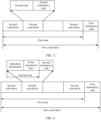
- a method provided in this embodiment of this application includes: The transmit end 10 generates a first code block, where the first code block includes a first load and a first redundancy code, the first load includes N second code blocks, the first redundancy code is used to perform error correction on the first load, an i th second code block includes a second load and a second redundancy code, a second redundancy code in the i th second code block is used to perform error detection on a second load in the i th second code block, a value of i is an integer ranging from 1 to N (including 1 and N), and N is an integer greater than or equal to 1.
- the i th second code block may be any one of the N second code blocks.
- the first code block is sent to the receive end 20.
- the receive end 20 may first perform error correction on the first load by using the first redundancy code, to improve transmission reliability of the first code block, and then perform error detection on each second code block by using the second redundancy code of each second code block.
- the receive end 20 may indicate the transmit end 10 to retransmit the second code block. In this way, when the first code block is incorrectly transmitted, the transmit end 10 may retransmit only some data carried in the first code block, thereby improving retransmission efficiency and reducing a transmission delay.
- FIG. 2 is a schematic flowchart of a data transmission method according to an embodiment of this application. This embodiment includes the following steps.
- a transmit end generates a first code block.
- the first code block includes a first load and a first redundancy code
- the first load includes N second code blocks
- the first redundancy code is used to perform error correction on the first load
- the i th second code block includes the second load and the second redundancy code
- the second redundancy code in the i th second code block is used to perform error detection on the second load in the i th second code block
- a value of i is an integer ranging from 1 to N (including 1 and N).
- the i th second code block may be any one of the N second code blocks
- N is an integer greater than or equal to 1.
- the second redundancy code in the i th second code block may be a CRC check code.
- the second load in the i th second code block is used as valid data in a CRC encoding process
- CRC encoding is performed on the second load in the i th second code block to obtain the i th second code block
- the N second code blocks are encapsulated as valid data (the first load) in the RS-FEC encoding process.
- the first redundancy code may be obtained by performing RS-FEC encoding on the first load, that is, RS-FEC encoding is performed on the N second code blocks to generate the first code block.
- the foregoing RS-FEC encoding and CRC encoding are merely examples for description.
- the first load and the second load may alternatively be encoded in another encoding manner, to obtain the first redundancy code and the second redundancy code.
- low density parity check Low Density Parity Check, LPDC
- CRC encoding are used.
- An encoding scheme is not limited in this application.
- the second load in the i th second code block includes indication information and to-be-transmitted data.
- the indication information is used to indicate an identifier of the i th second code block, and the identifier may uniquely correspond to one second code block within a specific time range. For example, if a value of the indication information is 0001, it indicates that the i th second code block is the 1 st second code block in the N second code blocks.
- the receive end may feed back a receiving status of each second code block with reference to the identifier of each second code block. In this way, the transmit end may retransmit an unsuccessfully received second code block based on the receiving status of each second code block, and does not need to retransmit the entire first code block, thereby improving retransmission efficiency.
- the indication information in the i th second code block is further used to indicate a code block type of the i th second code block, and the code block type includes a retransmission-supported type or a retransmission-unsupported type.
- the second code block is a second code block that does not support retransmission; or when the to-be-transmitted data in the second code block is a control message, the second code block is a second code block that supports retransmission.
- the code block type of the i th second code block is the retransmission-unsupported type; or when the indication information is not the first preset value, the code block type of the i th second code block is the retransmission-supported type.
- the indication information includes four bits.
- a value of the indication information is 0000, it indicates that the code block type of the second code block is the retransmission-unsupported type.
- a value of the indication information is not 0000, it indicates that the code block type of the second code block is the retransmission-supported type.
- values of indication information in the second code blocks that support retransmission may be encoded in ascending order, and when the value of the indication information reaches a maximum value, the value of the indication information is automatically rolled back to a minimum value to continue encoding, so that the receive end can determine the code block type of the second code block by using continuity of the values of the indication information.
- the second code blocks that support retransmission are transmitted for the first time, the second code blocks are sequentially transmitted in ascending order of the values of the indication information.
- values of indication information in the 1 st , the 3 rd , and the 4 th second code blocks may be set to 0001, 0010, and 0011. If a code block type of the 2 nd code block is the retransmission-unsupported type, a value of indication information in the 2 nd second code block may be set to 0000.
- the receive end when the receive end successfully receives the 1 st second code block and the 3 rd second code block, and fails to receive the 2 nd second code block, because values of indication information in the 1 st second code block and the 3 rd second code block are consecutive, the receive end determines that the unsuccessfully received 2 nd second code block is a second code block that does not support retransmission.
- the receive end When the receive end successfully receives the 1 st second code block, the 2 nd second code block, and the 4 th code block, and fails to receive the 3 rd second code block, because identifiers of the 2 nd second code block and the 4 th second code block are nonconsecutive, the receive end may determine that the unsuccessfully received 3 rd second code block supports retransmission, and a value of the indication information is 0010.
- the indication information in the i th second code block is further used to indicate a code block type of at least one second code block before the i th second code block, and the code block type includes the retransmission-supported type or the retransmission-unsupported type.
- a code block type of at least one second code block before the i th second code block may be indicated in a bitmap manner.
- the code block types of the three second code blocks may be indicated by using three bits in the indication information.
- a value of a bit is 1, it indicates that a code block type of a second code block corresponding to the bit is the retransmission-supported type; or when a value of a bit is 0, it indicates that a code block type of a second code block corresponding to the bit is the retransmission-supported type.
- values of the three bits may be all set to 0. It should be understood that, alternatively, 0 may be used to indicate that retransmission is supported, and 1 may be used to indicate that retransmission is not supported.
- indication information of each second code block may alternatively be used to indicate the code block types of the N second code blocks, or indication information of one or more second code blocks selected from the N second code blocks is used to indicate the code block types of the N second code blocks.
- the receive end may obtain the code block types of the N second code blocks, thereby improving flexibility of indicating the code block types. It can be learned that the transmit end indicates the code block type of the second code block by using the indication information in the second code block. In this way, the receive end can clearly understand the code block type of each second code block.
- acknowledgment information for indicating retransmission of these second code blocks does not need to be sent to the transmit end, thereby reducing feedback overheads of the acknowledgment information.
- the indication information in the i th second code block is further used to indicate that to-be-transmitted data of the i th second code block includes padding bits.
- a value of one bit in the indication information is used to indicate whether the to-be-transmitted data of the second code block includes only padding bits. For example, if the value is 0, it indicates that the to-be-transmitted data of the second code block includes only padding bits; or if the value is 1, it indicates that the to-be-transmitted data of the second code block includes not only padding bits.
- the bit used to indicate that the to-be-transmitted data includes padding bits and the bit used to indicate the code block type of the second code block may be different bits in the indication information.
- a code block type of the second code block is the retransmission-unsupported type.
- a code block type of the second code block is determined based on a type of to-be-transmitted data of the second code block. For example, when the to-be-transmitted data of the second code block is a control message, the code block type of the second code block is the retransmission-supported type; or when the to-be-transmitted data of the second code block is image data, the code block type of the second code block is the retransmission-unsupported type.
- meaningless bits may be padded to ensure that a transmission rate is always a fixed value, thereby ensuring transmission stability. If the receive end identifies that the to-be-transmitted data of the i th second code block includes only padding bits, the receive end may directly discard the i th second code block, to avoid subsequent processing and reduce processing complexity.
- the to-be-transmitted data of the i th second code block includes at least one to-be-transmitted data segment.
- a length of each to-be-transmitted data segment in the at least one to-be-transmitted data segment is an integer multiple of a sum of a length of indication information in the i th second code block and a length of the second redundancy code.
- the length mentioned in this application may be understood as a quantity of bits.
- a length of each to-be-transmitted data segment is 66 bits
- a sum of the length of the indication information and the length of the second redundancy code may be set to 6 bits, 11 bits, 22 bits, 33 bits, or 66 bits.
- the length of the indication information may be set to 14 bits
- the length of the second redundancy code may be set to 8 bits.
- a length of each to-be-transmitted data segment in the second code block is set to an integer multiple of a sum of a length of the indication information and a length of the second redundancy code.
- a length of the to-be-transmitted data segment is three times the sum of the length of the indication information and the length of the second redundancy code, compared with a manner of placing the indication information and the second redundancy code in the second code block, one more to-be-transmitted data segment whose length is 66 bits can be transmitted after three second code blocks are passed, thereby improving data transmission efficiency.
- the transmit end sends the first code block to the receive end, and correspondingly, the receive end receives the first code block.
- the receive end may first perform error correction on the first load by using the first redundancy code, to improve transmission reliability of the first code block, and then perform error detection on the second load of each second code block by using the second redundancy code of each second code block.
- the receive end may indicate the transmit end to retransmit the second code block. In this way, when the first code block is incorrectly transmitted, the transmit end may retransmit some data carried in the first code block (the incorrectly transmitted second code block). This improves retransmission efficiency, reduces a transmission delay, and meets requirements for high reliability and a low delay of data transmission.
- FIG. 6 is a schematic flowchart of another data transmission method according to an embodiment of this application. Content in this embodiment that is the same as that in the embodiment shown in FIG. 2 is not repeatedly described herein. This embodiment includes the following steps.
- a transmit end generates a first code block.
- the transmit end sends the first code block to a receive end, and correspondingly, the receive end receives the first code block.
- the receive end sends first acknowledgment information to the transmit end, and correspondingly, the transmit end receives the first acknowledgment information.
- the first acknowledgment information indicates a receiving status of at least one of the N second code blocks, and a receiving status of each second code block includes a successfully received state or an unsuccessfully received state.
- a bitmap may be set in the first acknowledgment information to indicate the receiving status of the at least one of the N second code blocks.
- the receiving status of each second code block may be indicated by using a bitmap.
- a value of the bitmap is 1, it indicates that a receiving status of a second code block corresponding to the value is the successfully received state; or when a value of is 0, it indicates that a receiving status of a second code block corresponding to the value is the unsuccessfully received state.
- a code block type of a second code block is a retransmission-unsupported type, even if the receive end fails to receive the second code block in a current transmission process, a value corresponding to the second code block may be set to 1 in the bitmap. In this way, the transmit end does not need to retransmit the second code block, thereby avoiding invalid retransmission and improving retransmission efficiency.
- the receiving status of the at least one of the N second code blocks may be further indicated in the first acknowledgment information by carrying identifiers of the second code blocks.
- the first acknowledgment information may be used to indicate an unsuccessfully received second code block in the N second code blocks, that is, the first acknowledgment information may carry only an identifier of the unsuccessfully received second code block.
- these second code blocks are considered by default to be successfully received.
- the transmit end may determine, by using the identifier that is of the second code block and that is carried in the first acknowledgment information, specific second code blocks are not successfully received.
- the receive end may first perform error correction on the first load by using the first redundancy code, to improve transmission reliability of the first code block, and then perform error detection on the second load of each second code block by using the second redundancy code of each second code block.
- the receive end may feed back first acknowledgment information to the transmit end, to indicate the incorrectly transmitted second code blocks.
- the transmit end may retransmit, based on the acknowledgment information, some data carried in the first code block (that is, the incorrectly transmitted second code block). This improves retransmission efficiency, reduces a transmission delay, and meets requirements for high reliability and a low delay of data transmission.
- a code block type of a second code block is the retransmission-unsupported type, even if the second code block is not successfully received in a current transmission process, an identifier of the second code block may not be carried in the first acknowledgment information.
- the receive end sends a third code block to the transmit end.
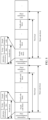
- the third code block includes first acknowledgment (Acknowledge character, ACK) information and a third redundancy code, that is, the first ACK is included in the third code block.
- the first ACK is used as a part of a third load of the third code block and is encoded together with data, to obtain the third code block.
- An encoding manner of the third code block is similar to the foregoing encoding manner of the first code block (specific parameters may be different). Details are not described again. Therefore, the third redundancy code may be used to perform error correction on the first ACK.
- the third redundancy code is used to perform error correction on the first ACK, so that reliability in a transmission process of the first ACK is improved.
- error correction is performed by using the third redundancy code in the third code block.
- error detection may be performed on the first ACK in an error detection manner with a small quantity of check codes, or no error detection is performed on the first ACK.
- error detection may be performed on the first ACK in a parity check manner. Because a small quantity of check codes are used in an error detection process of the first ACK, feedback overheads of the first ACK are reduced.
- the third load of the third code block shown in FIG. 7 includes a fourth code block and the first acknowledgment information shown in FIG. 7 , and a manner in which the receive end generates the third code block may be similar to the foregoing manner in which the transmit end generates the first code block. Details are not described again.
- each fourth code block includes a fourth load and a fourth redundancy code, and the fourth load includes indication information and to-be-transmitted data. It should be understood that a manner in which the receive end generates the fourth code block may be similar to the foregoing manner in which the transmit end generates the second code block. Details are not described again.
- the receive end sends the first ACK to the transmit end, that is, the receive end independently sends the first ACK to the transmit end.
- the first ACK is outside the third code block.
- the receive end may periodically send the first ACK to the transmit end.
- the receive end can flexibly send the first ACK to the transmit end, and a process in which the transmit end obtains the first ACK is not affected by the third code block.
- the transmit end can obtain the first ACK without decoding the third code block, and can more quickly determine the second code block that needs to be retransmitted. This further improves retransmission efficiency and reduces a delay.
- each fourth code block includes a fourth load and a fourth redundancy code, and each fourth code block includes indication information and to-be-transmitted data. It should be understood that a manner in which the receive end generates the fourth code block may be similar to the foregoing manner in which the transmit end generates the second code block. Details are not described again.
- the transmit end may further retransmit at least one of unsuccessfully received second code blocks in the N second code blocks to the receive end based on the first acknowledgment information. For example, when the first acknowledgment information indicates that a receiving status of at least one of the N second code blocks is an unsuccessfully received state, the transmit end may determine the unsuccessfully received second code blocks in the N second code blocks based on the first acknowledgment information. For example, the transmit end may determine the unsuccessfully received second code blocks in the N second code blocks based on a bitmap in the first acknowledgment information, and retransmit at least one of the unsuccessfully received second code blocks to the receive end.
- the transmit end may retransmit all the unsuccessfully received second code blocks to the receive end; or when the bandwidth is insufficient, the transmit end may retransmit one or more of the unsuccessfully received second code blocks to the receive end.
- the transmit end may further retransmit, to the receive end based on the first acknowledgment information, at least one of the unsuccessfully received second code blocks that support retransmission and that are in the N second code blocks. For example, when the receiving status that is of at least one of the N second code blocks and that is indicated by the first acknowledgment information is an unsuccessfully received state, the transmit end may determine, based on the first acknowledgment information, an unsuccessfully received second code block in the N second code blocks, and determine that a code block type of the unsuccessfully received second code block is a second code block that supports retransmission. Then, the transmit end retransmits, to the receive end, at least one of the unsuccessfully received second code blocks that support retransmission and that are in the N second code blocks.
- the receive end considers the code block type of the second code block.
- the unsuccessfully received second code blocks indicated by the first acknowledgment information are actually the unsuccessfully received second code blocks that support retransmission.
- the receive end may further send second acknowledgment information to the transmit end, where the second acknowledgment information indicates a receiving status of at least one of the N second code blocks.
- the receive end may send a plurality of pieces of acknowledgment information to the transmit end at different moments, and second code blocks indicated by the acknowledgment information sent at the different moments may overlap.
- the receive end may periodically send acknowledgment information to the transmit end.
- the receive end sends first acknowledgment information to the transmit end at a moment 11, and the first acknowledgment information indicates a receiving status of at least one of the N code blocks.
- the transmit end may fail to decode the first acknowledgment information, that is, the transmit end fails to receive the first acknowledgment information, or the transmit end successfully receives the first acknowledgment information, but the transmit end does not retransmit unsuccessfully received second code blocks to the receive end.
- the receive end may further send the second acknowledgment information to the transmit end when a timing periodicity arrives, for example, at a moment t2, to indicate the receiving status of at least one of the N second code blocks by using the second acknowledgment information.
- the second acknowledgment information may be further used to indicate a receiving status of at least one second code block in the another first code block.
- the transmit end may retransmit at least one of the unsuccessfully received second code blocks in the N second code blocks to the receive end based on the first acknowledgment information and/or the second acknowledgment information; or retransmit, to the receive end based on the first acknowledgment information and/or the second acknowledgment information, at least one of the unsuccessfully received second code blocks that support retransmission and that are in the N second code blocks.
- the receive end may further send third acknowledgment information, fourth acknowledgment information, fifth acknowledgment information, and the like to the transmit end.
- second code blocks indicated by adjacent acknowledgment information may overlap.
- the receive end when time for feeding back the status of the unsuccessfully received second code block expires, and the transmit end has not retransmitted the unsuccessfully received second code block to the receive end, the receive end no longer sends acknowledgment information to the transmit end to indicate the unsuccessfully received second code blocks, and discards the unsuccessfully received second code blocks.
- the transmit end and the receive end may include a hardware structure and/or a software module, and the foregoing functions are implemented in a form of the hardware structure, the software module, or a combination of the hardware structure and the software module. Whether a specific function in the foregoing functions is performed by using the hardware structure, the software module, or the combination of the hardware structure and the software module depends on a specific application and a design constraint of the technical solutions.
- FIG. 10 and FIG. 11 each are a schematic diagram of a structure of a communications apparatus according to an embodiment of this application. These communications apparatuses implement functions of the transmit end or the receive end in the foregoing method embodiments, and therefore can also implement beneficial effects of the foregoing method embodiments.
- the communications apparatus may be the transmit end 10 shown in FIG. 1 , or may be the receive end 20 shown in FIG. 1 , or may be a module (for example, a chip) applied to a transmit end or a receive end.
- a communications apparatus 1000 includes a transceiver module 1001 and a processing module 1002.
- the communications apparatus 1000 is configured to implement the functions of the transmit end or the receive end in the method embodiments shown in FIG. 2 and FIG. 6 .
- That the communications apparatus 1000 is configured to implement the functions of the transmit end in the method embodiments in FIG. 2 and FIG. 6 is as follows.
- the processing module 1002 is configured to generate a first code block, where the first code block includes a first load and a first redundancy code, the first load includes N second code blocks, the first redundancy code is used to perform error correction on the first load, an i th second code block includes a second load and a second redundancy code, the second redundancy code is used to perform error detection on the second load in the i th second code block, a value of i is an integer ranging from 1 to N, and N is an integer greater than or equal to 1
- the transceiver module 1001 is configured to send the first code block to the receive end.
- That the communications apparatus 1000 is configured to implement the functions of the receive end in the method embodiments in FIG. 2 and FIG. 6 is as follows.
- the transceiver module 1001 is configured to receive a first code block from the transmit end, where the first code block includes a first load and a first redundancy code, the first load includes N second code blocks, an i th second code block includes a second load and a second redundancy code, a value of i is an integer ranging from 1 to N, and N is an integer greater than or equal to 1
- the processing module 1002 is configured to: perform error correction on the first load by using the first redundancy code, and perform error detection on the second load in the i th second code block by using the second redundancy code.
- transceiver module 1001 and the processing module 1002 refer to related descriptions in the foregoing method embodiments. Details are not described herein again.
- a communications apparatus 1100 includes a processor 1101 and an interface circuit 1102.
- the processor 1101 and the interface circuit 1102 are coupled to each other.
- the interface circuit 1102 may be a transceiver or an input/output interface.
- the communications apparatus 1100 may further include a memory 1103, configured to: store instructions executed by the processor 1101, store input data required by the processor 1101 to run instructions, or store data generated after the processor 1101 runs instructions.
- the processor 1101 is configured to perform functions of the processing module 1002 and the interface circuit 1102 is configured to perform functions of the transceiver module 1001.
- the chip in the transmit end implements functions of the transmit end in the foregoing method embodiments.
- the chip in the transmit end receives information from another module (for example, a radio frequency module or an antenna) in the transmit end, where the information is sent by the receive end to the transmit end; or the chip in the transmit end sends information to another module (for example, a radio frequency module or an antenna) in the transmit end, where the information is sent by the transmit end to the receive end.
- the chip in the receive end implements functions of the receive end in the foregoing method embodiments.
- the chip in the receive end receives information from another module (for example, a radio frequency module or an antenna) in the receive end, where the information is sent by the transmit end to the receive end; or the chip in the receive end sends information to another module (for example, a radio frequency module or an antenna) in the receive end, where the information is sent by the receive end to the transmit end.
- An embodiment of this application further provides a communications system, including the foregoing communications apparatus for implementing the functions of the transmit end and the foregoing communications apparatus for implementing the functions of the receive end.
- the processor in embodiments of this application may be a central processing unit (central processing unit, CPU), or may be another general-purpose processor, a digital signal processor (digital signal processor, DSP), an application-specific integrated circuit (application-specific integrated circuit, ASIC), a field programmable gate array (field programmable gate array, FPGA) or another programmable logic device, a transistor logic device, a hardware component, or any combination thereof.
- the general-purpose processor may be a microprocessor or any conventional processor.
- the method steps in embodiments of this application may be implemented in a hardware manner, or may be implemented in a manner of executing software instructions by the processor.
- the software instructions may include a corresponding software module.
- the software module may be stored in a random access memory (random access memory, RAM), a flash memory, a read-only memory (Read-Only Memory, ROM), a programmable read-only memory (programmable ROM, PROM), an erasable programmable read-only memory (erasable PROM, EPROM), an electrically erasable programmable read-only memory (electrically EPROM, EEPROM), a register, a hard disk, a removable hard disk, a CD-ROM, or any other form of storage medium well-known in the art.
- RAM random access memory
- ROM read-only memory
- PROM programmable read-only memory
- EPROM erasable programmable read-only memory
- electrically erasable programmable read-only memory electrically EPROM, EEPROM
- a storage medium is coupled to a processor, so that the processor can read information from the storage medium and write information into the storage medium.
- the storage medium may be a component of the processor.
- the processor and the storage medium may be disposed in an ASIC.
- the ASIC may be disposed in a receive end or a transmit end.
- the processor and the storage medium may exist in the receive end or the transmit end as discrete components.
- All or some of the foregoing embodiments may be implemented by using software, hardware, firmware, or any combination thereof.
- software is used to implement the embodiments, all or a part of the embodiments may be implemented in a form of a computer program product.
- the computer program product includes one or more computer programs or instructions.
- the computer programs or the instructions are loaded and executed on a computer, the processes or the functions according to embodiments of this application are all or partially implemented.
- the computer may be a general-purpose computer, a dedicated computer, a computer network, or another programmable apparatus.
- the computer programs or the instructions may be stored in a computer-readable storage medium, or may be transmitted by using a computer-readable storage medium.
- the computer-readable storage medium may be any usable medium accessible by a computer, or a data storage device, such as a server integrating one or more usable media.
- the usable medium may be a magnetic medium, for example, a floppy disk, a hard disk, or a magnetic tape; or may be an optical medium, for example, a DVD; or may be a semiconductor medium, for example, a solid state disk (solid state disk, SSD).
- “at least one” means one or more, and "a plurality of” means two or more.
- the term “and/or” describes an association relationship between associated objects, and represents that three relationships may exist. For example, A and/or B may represent the following cases: Only A exists, both A and B exist, and only B exists, where A and B may be singular or plural.
- the character “/” generally indicates an “or” relationship between the associated objects. In a formula in this application, the character “/” indicates a "division" relationship between the associated objects.
Landscapes
- Engineering & Computer Science (AREA)
- Signal Processing (AREA)
- Computer Networks & Wireless Communication (AREA)
- Detection And Prevention Of Errors In Transmission (AREA)
- Mobile Radio Communication Systems (AREA)
Priority Applications (1)
| Application Number | Priority Date | Filing Date | Title |
|---|---|---|---|
| EP24210911.4A EP4546685A3 (en) | 2020-09-18 | 2020-09-18 | Data transmission method, communications apparatus, and storage medium |
Applications Claiming Priority (1)
| Application Number | Priority Date | Filing Date | Title |
|---|---|---|---|
| PCT/CN2020/116312 WO2022056874A1 (zh) | 2020-09-18 | 2020-09-18 | 数据传输方法、通信装置及存储介质 |
Related Child Applications (1)
| Application Number | Title | Priority Date | Filing Date |
|---|---|---|---|
| EP24210911.4A Division EP4546685A3 (en) | 2020-09-18 | 2020-09-18 | Data transmission method, communications apparatus, and storage medium |
Publications (3)
| Publication Number | Publication Date |
|---|---|
| EP4203353A1 EP4203353A1 (en) | 2023-06-28 |
| EP4203353A4 EP4203353A4 (en) | 2023-09-27 |
| EP4203353B1 true EP4203353B1 (en) | 2024-11-06 |
Family
ID=80777406
Family Applications (2)
| Application Number | Title | Priority Date | Filing Date |
|---|---|---|---|
| EP20953732.3A Active EP4203353B1 (en) | 2020-09-18 | 2020-09-18 | Data transmission method, communication device, and storage medium |
| EP24210911.4A Pending EP4546685A3 (en) | 2020-09-18 | 2020-09-18 | Data transmission method, communications apparatus, and storage medium |
Family Applications After (1)
| Application Number | Title | Priority Date | Filing Date |
|---|---|---|---|
| EP24210911.4A Pending EP4546685A3 (en) | 2020-09-18 | 2020-09-18 | Data transmission method, communications apparatus, and storage medium |
Country Status (8)
| Country | Link |
|---|---|
| US (1) | US12598023B2 (https=) |
| EP (2) | EP4203353B1 (https=) |
| JP (2) | JP7739420B2 (https=) |
| KR (1) | KR20230066627A (https=) |
| CN (3) | CN119921912A (https=) |
| BR (1) | BR112023004828A2 (https=) |
| CA (1) | CA3193110A1 (https=) |
| WO (1) | WO2022056874A1 (https=) |
Families Citing this family (2)
| Publication number | Priority date | Publication date | Assignee | Title |
|---|---|---|---|---|
| US12479466B2 (en) * | 2023-08-03 | 2025-11-25 | Waymo Llc | Privacy-respecting detection and localization of sounds in autonomous driving applications |
| CN120454940A (zh) * | 2024-02-08 | 2025-08-08 | 华为技术有限公司 | 反馈方法和通信装置 |
Family Cites Families (26)
| Publication number | Priority date | Publication date | Assignee | Title |
|---|---|---|---|---|
| US7549107B1 (en) * | 2000-05-18 | 2009-06-16 | Broadcom Corporation | Interleaved reed solomon coding for home networking |
| US7418644B2 (en) * | 2004-03-01 | 2008-08-26 | Hewlett-Packard Development Company, L.P. | System for error correction coding and decoding |
| JP4543049B2 (ja) | 2007-02-05 | 2010-09-15 | 株式会社東芝 | 通信装置および通信装置の通信方法 |
| US8238958B2 (en) * | 2008-04-11 | 2012-08-07 | Wi-Lan Inc. | Method, apparatus, and system for uplink modulation and coding scheme selection |
| CN101674153B (zh) * | 2008-09-09 | 2012-05-30 | 普天信息技术研究院有限公司 | 一种信息处理方法、设备及系统 |
| CN101834700A (zh) * | 2010-05-12 | 2010-09-15 | 北京邮电大学 | 一种基于数据包的单向可靠传输方法及收发装置 |
| US8473821B2 (en) | 2010-11-09 | 2013-06-25 | Qualcomm, Incorporated | Packet-level erasure protection coding in aggregated packet transmissions |
| KR20120062544A (ko) * | 2010-12-06 | 2012-06-14 | 한국전자통신연구원 | 인지 무선 네트워크에서의 수신확인 전송방법 및 장치 |
| CN103312458B (zh) * | 2013-06-25 | 2018-09-18 | 合肥金星机电科技发展有限公司 | 混合编码方法 |
| CN105306165B (zh) * | 2014-06-23 | 2019-10-11 | 中兴通讯股份有限公司 | 数据发送方法及装置 |
| US20160080115A1 (en) | 2014-09-12 | 2016-03-17 | Samsung Electronics Co., Ltd. | Methods for efficient acknowledgement in wireless systems |
| CN105634504A (zh) * | 2014-11-07 | 2016-06-01 | 中兴通讯股份有限公司 | 数据校验方法及装置 |
| US10230404B2 (en) * | 2014-12-23 | 2019-03-12 | Texas Instruments Incorporated | Forward error control coding |
| US10103849B2 (en) * | 2015-08-13 | 2018-10-16 | Lg Electronics Inc. | Method of transmitting or receiving uplink control information in wireless communication system and apparatus for the same |
| CN107771376B (zh) * | 2015-09-08 | 2021-07-23 | Lg电子株式会社 | 无线通信系统中发送数据的方法及其设备 |
| ES3037335T3 (en) * | 2015-10-20 | 2025-10-01 | Wilus Inst Standards & Tech Inc | Wireless communication method and wireless communication terminal in high-density environment including overlapped basic service set |
| US20170279464A1 (en) * | 2016-03-22 | 2017-09-28 | Lg Electronics Inc. | Method of ldpc code encoding for reducing signal overhead and apparatus therefor |
| CN109155934B (zh) * | 2016-05-13 | 2022-02-25 | 富士通株式会社 | 通信装置、无线通信系统和无线通信方法 |
| KR102683634B1 (ko) * | 2016-08-22 | 2024-07-11 | 삼성전자 주식회사 | 통신 시스템에서 초기 접속을 수행하는 방법 및 장치 |
| US10396826B2 (en) * | 2016-10-26 | 2019-08-27 | Huawei Technologies Co., Ltd. | Software defined network with selectable low latency or high throughput mode |
| US10505568B2 (en) * | 2016-12-02 | 2019-12-10 | Huawei Technologies Co., Ltd. | Systems and methods for outer coding |
| US11165541B2 (en) * | 2018-11-02 | 2021-11-02 | Qualcomm Incorporated | Retransmission protocol based on forward error correction codewords |
| US11943055B2 (en) * | 2019-02-13 | 2024-03-26 | Sony Group Corporation | Communication device and communication method |
| US11258538B2 (en) * | 2019-08-01 | 2022-02-22 | Vulcan Technologies Shanghai Co., Ltd. | Intelligent controller and sensor network bus, system and method including an error avoidance and correction mechanism |
| CN111181700A (zh) * | 2020-01-07 | 2020-05-19 | 广州华多网络科技有限公司 | 数据传输方法、装置、电子设备及存储介质 |
| CN116346278A (zh) * | 2021-12-22 | 2023-06-27 | 华为技术有限公司 | 发送方法、接收方法、装置、系统、设备及存储介质 |
-
2020
- 2020-09-18 CA CA3193110A patent/CA3193110A1/en active Pending
- 2020-09-18 KR KR1020237012832A patent/KR20230066627A/ko active Pending
- 2020-09-18 WO PCT/CN2020/116312 patent/WO2022056874A1/zh not_active Ceased
- 2020-09-18 EP EP20953732.3A patent/EP4203353B1/en active Active
- 2020-09-18 BR BR112023004828A patent/BR112023004828A2/pt unknown
- 2020-09-18 CN CN202510233545.5A patent/CN119921912A/zh active Pending
- 2020-09-18 EP EP24210911.4A patent/EP4546685A3/en active Pending
- 2020-09-18 CN CN202510227879.1A patent/CN120050006A/zh active Pending
- 2020-09-18 JP JP2023518019A patent/JP7739420B2/ja active Active
- 2020-09-18 CN CN202080105304.8A patent/CN116114190B/zh active Active
-
2023
- 2023-03-17 US US18/185,988 patent/US12598023B2/en active Active
-
2025
- 2025-05-28 JP JP2025089009A patent/JP2025129154A/ja active Pending
Also Published As
| Publication number | Publication date |
|---|---|
| WO2022056874A1 (zh) | 2022-03-24 |
| BR112023004828A2 (pt) | 2023-04-18 |
| JP2023542015A (ja) | 2023-10-04 |
| EP4546685A2 (en) | 2025-04-30 |
| CN119921912A (zh) | 2025-05-02 |
| KR20230066627A (ko) | 2023-05-16 |
| US12598023B2 (en) | 2026-04-07 |
| CN120050006A (zh) | 2025-05-27 |
| CA3193110A1 (en) | 2022-03-24 |
| CN116114190B (zh) | 2025-03-07 |
| JP7739420B2 (ja) | 2025-09-16 |
| JP2025129154A (ja) | 2025-09-04 |
| EP4203353A1 (en) | 2023-06-28 |
| US20230261787A1 (en) | 2023-08-17 |
| EP4546685A3 (en) | 2025-05-07 |
| EP4203353A4 (en) | 2023-09-27 |
| CN116114190A (zh) | 2023-05-12 |
Similar Documents
| Publication | Publication Date | Title |
|---|---|---|
| US11990999B2 (en) | Method and apparatus for feeding back hybrid automatic repeat request of downlink data | |
| EP4030671B1 (en) | Communication method and device | |
| KR102068554B1 (ko) | 부분적 재전송을 위한 방법 | |
| KR102334935B1 (ko) | 전송 방법, 단말 장치 및 기지국 | |
| US20210167899A1 (en) | Hybrid automatic repeat request (harq) techniques for non-terrestrial networks | |
| JP2025129154A (ja) | データ送信方法、通信装置、および記憶媒体 | |
| CN108282897A (zh) | 一种随机接入反馈、处理方法、基站及终端 | |
| US20170288742A1 (en) | Wireless data transmission method, network side device, user equipment, and system | |
| CN113411174B (zh) | 一种通信方法及通信装置 | |
| CN110121850B (zh) | 数据传输的方法、发射端设备和接收端设备 | |
| CN107113118B (zh) | 应答消息传输方法和网络设备 | |
| CN114205874B (zh) | 通信方法和装置 | |
| EP4132180B1 (en) | Dai configuration method and device, dai indication method and device, dai sending method and device, and medium | |
| EP2056508A1 (en) | Implicit masking for transmitting a control signal | |
| CN121150886A (zh) | 通信方法和通信装置 | |
| CN116897571A (zh) | 无线通信方法、第一设备和第二设备 |
Legal Events
| Date | Code | Title | Description |
|---|---|---|---|
| STAA | Information on the status of an ep patent application or granted ep patent |
Free format text: STATUS: THE INTERNATIONAL PUBLICATION HAS BEEN MADE |
|
| PUAI | Public reference made under article 153(3) epc to a published international application that has entered the european phase |
Free format text: ORIGINAL CODE: 0009012 |
|
| STAA | Information on the status of an ep patent application or granted ep patent |
Free format text: STATUS: REQUEST FOR EXAMINATION WAS MADE |
|
| 17P | Request for examination filed |
Effective date: 20230323 |
|
| AK | Designated contracting states |
Kind code of ref document: A1 Designated state(s): AL AT BE BG CH CY CZ DE DK EE ES FI FR GB GR HR HU IE IS IT LI LT LU LV MC MK MT NL NO PL PT RO RS SE SI SK SM TR |
|
| A4 | Supplementary search report drawn up and despatched |
Effective date: 20230830 |
|
| RIC1 | Information provided on ipc code assigned before grant |
Ipc: H04L 1/1812 20230101ALI20230824BHEP Ipc: H04L 1/1867 20230101ALI20230824BHEP Ipc: H04L 1/1607 20230101ALI20230824BHEP Ipc: H04L 1/00 20060101AFI20230824BHEP |
|
| DAV | Request for validation of the european patent (deleted) | ||
| DAX | Request for extension of the european patent (deleted) | ||
| RIC1 | Information provided on ipc code assigned before grant |
Ipc: H04L 1/1812 20230101ALI20240415BHEP Ipc: H04L 1/1867 20230101ALI20240415BHEP Ipc: H04L 1/1607 20230101ALI20240415BHEP Ipc: H04L 1/00 20060101AFI20240415BHEP |
|
| GRAP | Despatch of communication of intention to grant a patent |
Free format text: ORIGINAL CODE: EPIDOSNIGR1 |
|
| STAA | Information on the status of an ep patent application or granted ep patent |
Free format text: STATUS: GRANT OF PATENT IS INTENDED |
|
| INTG | Intention to grant announced |
Effective date: 20240605 |
|
| GRAS | Grant fee paid |
Free format text: ORIGINAL CODE: EPIDOSNIGR3 |
|
| GRAA | (expected) grant |
Free format text: ORIGINAL CODE: 0009210 |
|
| STAA | Information on the status of an ep patent application or granted ep patent |
Free format text: STATUS: THE PATENT HAS BEEN GRANTED |
|
| AK | Designated contracting states |
Kind code of ref document: B1 Designated state(s): AL AT BE BG CH CY CZ DE DK EE ES FI FR GB GR HR HU IE IS IT LI LT LU LV MC MK MT NL NO PL PT RO RS SE SI SK SM TR |
|
| REG | Reference to a national code |
Ref country code: GB Ref legal event code: FG4D |
|
| REG | Reference to a national code |
Ref country code: CH Ref legal event code: EP |
|
| REG | Reference to a national code |
Ref country code: DE Ref legal event code: R096 Ref document number: 602020041129 Country of ref document: DE |
|
| REG | Reference to a national code |
Ref country code: IE Ref legal event code: FG4D Ref country code: DE Ref legal event code: R081 Ref document number: 602020041129 Country of ref document: DE Owner name: SHENZHEN YINWANG INTELLIGENT TECHNOLOGIES CO.,, CN Free format text: FORMER OWNER: HUAWEI TECHNOLOGIES CO., LTD., SHENZHEN, GUANGDONG, CN |
|
| P01 | Opt-out of the competence of the unified patent court (upc) registered |
Free format text: CASE NUMBER: APP_59300/2024 Effective date: 20241031 |
|
| RAP2 | Party data changed (patent owner data changed or rights of a patent transferred) |
Owner name: SHENZHEN YINWANG INTELLIGENTTECHNOLOGIES CO., LTD. |
|
| REG | Reference to a national code |
Ref country code: NL Ref legal event code: PD Owner name: SHENZHEN YINWANG INTELLIGENT TECHNOLOGIES CO., LTD.; CN Free format text: DETAILS ASSIGNMENT: CHANGE OF OWNER(S), ASSIGNMENT; FORMER OWNER NAME: HUAWEI TECHNOLOGIES CO. LTD. Effective date: 20241216 |
|
| REG | Reference to a national code |
Ref country code: NL Ref legal event code: FP |
|
| REG | Reference to a national code |
Ref country code: LT Ref legal event code: MG9D |
|
| PG25 | Lapsed in a contracting state [announced via postgrant information from national office to epo] |
Ref country code: IS Free format text: LAPSE BECAUSE OF FAILURE TO SUBMIT A TRANSLATION OF THE DESCRIPTION OR TO PAY THE FEE WITHIN THE PRESCRIBED TIME-LIMIT Effective date: 20250306 Ref country code: HR Free format text: LAPSE BECAUSE OF FAILURE TO SUBMIT A TRANSLATION OF THE DESCRIPTION OR TO PAY THE FEE WITHIN THE PRESCRIBED TIME-LIMIT Effective date: 20241106 Ref country code: PT Free format text: LAPSE BECAUSE OF FAILURE TO SUBMIT A TRANSLATION OF THE DESCRIPTION OR TO PAY THE FEE WITHIN THE PRESCRIBED TIME-LIMIT Effective date: 20250306 |
|
| PG25 | Lapsed in a contracting state [announced via postgrant information from national office to epo] |
Ref country code: FI Free format text: LAPSE BECAUSE OF FAILURE TO SUBMIT A TRANSLATION OF THE DESCRIPTION OR TO PAY THE FEE WITHIN THE PRESCRIBED TIME-LIMIT Effective date: 20241106 |
|
| REG | Reference to a national code |
Ref country code: AT Ref legal event code: MK05 Ref document number: 1740542 Country of ref document: AT Kind code of ref document: T Effective date: 20241106 |
|
| PG25 | Lapsed in a contracting state [announced via postgrant information from national office to epo] |
Ref country code: BG Free format text: LAPSE BECAUSE OF FAILURE TO SUBMIT A TRANSLATION OF THE DESCRIPTION OR TO PAY THE FEE WITHIN THE PRESCRIBED TIME-LIMIT Effective date: 20241106 |
|
| PG25 | Lapsed in a contracting state [announced via postgrant information from national office to epo] |
Ref country code: ES Free format text: LAPSE BECAUSE OF FAILURE TO SUBMIT A TRANSLATION OF THE DESCRIPTION OR TO PAY THE FEE WITHIN THE PRESCRIBED TIME-LIMIT Effective date: 20241106 |
|
| PG25 | Lapsed in a contracting state [announced via postgrant information from national office to epo] |
Ref country code: NO Free format text: LAPSE BECAUSE OF FAILURE TO SUBMIT A TRANSLATION OF THE DESCRIPTION OR TO PAY THE FEE WITHIN THE PRESCRIBED TIME-LIMIT Effective date: 20250206 |
|
| PG25 | Lapsed in a contracting state [announced via postgrant information from national office to epo] |
Ref country code: LV Free format text: LAPSE BECAUSE OF FAILURE TO SUBMIT A TRANSLATION OF THE DESCRIPTION OR TO PAY THE FEE WITHIN THE PRESCRIBED TIME-LIMIT Effective date: 20241106 Ref country code: GR Free format text: LAPSE BECAUSE OF FAILURE TO SUBMIT A TRANSLATION OF THE DESCRIPTION OR TO PAY THE FEE WITHIN THE PRESCRIBED TIME-LIMIT Effective date: 20250207 Ref country code: AT Free format text: LAPSE BECAUSE OF FAILURE TO SUBMIT A TRANSLATION OF THE DESCRIPTION OR TO PAY THE FEE WITHIN THE PRESCRIBED TIME-LIMIT Effective date: 20241106 |
|
| PG25 | Lapsed in a contracting state [announced via postgrant information from national office to epo] |
Ref country code: PL Free format text: LAPSE BECAUSE OF FAILURE TO SUBMIT A TRANSLATION OF THE DESCRIPTION OR TO PAY THE FEE WITHIN THE PRESCRIBED TIME-LIMIT Effective date: 20241106 |
|
| PG25 | Lapsed in a contracting state [announced via postgrant information from national office to epo] |
Ref country code: RS Free format text: LAPSE BECAUSE OF FAILURE TO SUBMIT A TRANSLATION OF THE DESCRIPTION OR TO PAY THE FEE WITHIN THE PRESCRIBED TIME-LIMIT Effective date: 20250206 |
|
| PG25 | Lapsed in a contracting state [announced via postgrant information from national office to epo] |
Ref country code: SM Free format text: LAPSE BECAUSE OF FAILURE TO SUBMIT A TRANSLATION OF THE DESCRIPTION OR TO PAY THE FEE WITHIN THE PRESCRIBED TIME-LIMIT Effective date: 20241106 |
|
| PG25 | Lapsed in a contracting state [announced via postgrant information from national office to epo] |
Ref country code: DK Free format text: LAPSE BECAUSE OF FAILURE TO SUBMIT A TRANSLATION OF THE DESCRIPTION OR TO PAY THE FEE WITHIN THE PRESCRIBED TIME-LIMIT Effective date: 20241106 |
|
| PG25 | Lapsed in a contracting state [announced via postgrant information from national office to epo] |
Ref country code: EE Free format text: LAPSE BECAUSE OF FAILURE TO SUBMIT A TRANSLATION OF THE DESCRIPTION OR TO PAY THE FEE WITHIN THE PRESCRIBED TIME-LIMIT Effective date: 20241106 |
|
| PG25 | Lapsed in a contracting state [announced via postgrant information from national office to epo] |
Ref country code: RO Free format text: LAPSE BECAUSE OF FAILURE TO SUBMIT A TRANSLATION OF THE DESCRIPTION OR TO PAY THE FEE WITHIN THE PRESCRIBED TIME-LIMIT Effective date: 20241106 |
|
| PG25 | Lapsed in a contracting state [announced via postgrant information from national office to epo] |
Ref country code: SK Free format text: LAPSE BECAUSE OF FAILURE TO SUBMIT A TRANSLATION OF THE DESCRIPTION OR TO PAY THE FEE WITHIN THE PRESCRIBED TIME-LIMIT Effective date: 20241106 |
|
| PG25 | Lapsed in a contracting state [announced via postgrant information from national office to epo] |
Ref country code: CZ Free format text: LAPSE BECAUSE OF FAILURE TO SUBMIT A TRANSLATION OF THE DESCRIPTION OR TO PAY THE FEE WITHIN THE PRESCRIBED TIME-LIMIT Effective date: 20241106 |
|
| PG25 | Lapsed in a contracting state [announced via postgrant information from national office to epo] |
Ref country code: IT Free format text: LAPSE BECAUSE OF FAILURE TO SUBMIT A TRANSLATION OF THE DESCRIPTION OR TO PAY THE FEE WITHIN THE PRESCRIBED TIME-LIMIT Effective date: 20241106 |
|
| REG | Reference to a national code |
Ref country code: DE Ref legal event code: R097 Ref document number: 602020041129 Country of ref document: DE |
|
| PG25 | Lapsed in a contracting state [announced via postgrant information from national office to epo] |
Ref country code: SE Free format text: LAPSE BECAUSE OF FAILURE TO SUBMIT A TRANSLATION OF THE DESCRIPTION OR TO PAY THE FEE WITHIN THE PRESCRIBED TIME-LIMIT Effective date: 20241106 |
|
| PLBE | No opposition filed within time limit |
Free format text: ORIGINAL CODE: 0009261 |
|
| STAA | Information on the status of an ep patent application or granted ep patent |
Free format text: STATUS: NO OPPOSITION FILED WITHIN TIME LIMIT |
|
| PGFP | Annual fee paid to national office [announced via postgrant information from national office to epo] |
Ref country code: NL Payment date: 20250826 Year of fee payment: 6 |
|
| PGFP | Annual fee paid to national office [announced via postgrant information from national office to epo] |
Ref country code: DE Payment date: 20250827 Year of fee payment: 6 |
|
| 26N | No opposition filed |
Effective date: 20250807 |
|
| PGFP | Annual fee paid to national office [announced via postgrant information from national office to epo] |
Ref country code: FR Payment date: 20250821 Year of fee payment: 6 |
|
| REG | Reference to a national code |
Ref country code: CH Ref legal event code: H13 Free format text: ST27 STATUS EVENT CODE: U-0-0-H10-H13 (AS PROVIDED BY THE NATIONAL OFFICE) Effective date: 20260425 |