EP4201743B1 - Bodenbeleuchtungsmodul für ein kraftfahrzeug zur erzeugung einer boden-lichtverteilung - Google Patents
Bodenbeleuchtungsmodul für ein kraftfahrzeug zur erzeugung einer boden-lichtverteilung Download PDFInfo
- Publication number
- EP4201743B1 EP4201743B1 EP21217000.5A EP21217000A EP4201743B1 EP 4201743 B1 EP4201743 B1 EP 4201743B1 EP 21217000 A EP21217000 A EP 21217000A EP 4201743 B1 EP4201743 B1 EP 4201743B1
- Authority
- EP
- European Patent Office
- Prior art keywords
- axis
- holding
- lighting module
- adapter element
- floor lighting
- Prior art date
- Legal status (The legal status is an assumption and is not a legal conclusion. Google has not performed a legal analysis and makes no representation as to the accuracy of the status listed.)
- Active
Links
Images


Classifications
-
- F—MECHANICAL ENGINEERING; LIGHTING; HEATING; WEAPONS; BLASTING
- F21—LIGHTING
- F21S—NON-PORTABLE LIGHTING DEVICES; SYSTEMS THEREOF; VEHICLE LIGHTING DEVICES SPECIALLY ADAPTED FOR VEHICLE EXTERIORS
- F21S43/00—Signalling devices specially adapted for vehicle exteriors, e.g. brake lamps, direction indicator lights or reversing lights
-
- B—PERFORMING OPERATIONS; TRANSPORTING
- B60—VEHICLES IN GENERAL
- B60Q—ARRANGEMENT OF SIGNALLING OR LIGHTING DEVICES, THE MOUNTING OR SUPPORTING THEREOF OR CIRCUITS THEREFOR, FOR VEHICLES IN GENERAL
- B60Q1/00—Arrangement of optical signalling or lighting devices, the mounting or supporting thereof or circuits therefor
- B60Q1/26—Arrangement of optical signalling or lighting devices, the mounting or supporting thereof or circuits therefor the devices being primarily intended to indicate the vehicle, or parts thereof, or to give signals, to other traffic
- B60Q1/2619—Arrangement of optical signalling or lighting devices, the mounting or supporting thereof or circuits therefor the devices being primarily intended to indicate the vehicle, or parts thereof, or to give signals, to other traffic built in the vehicle body
- B60Q1/2623—Details of the fastening means
- B60Q1/263—Snap-in fasteners
-
- B—PERFORMING OPERATIONS; TRANSPORTING
- B60—VEHICLES IN GENERAL
- B60Q—ARRANGEMENT OF SIGNALLING OR LIGHTING DEVICES, THE MOUNTING OR SUPPORTING THEREOF OR CIRCUITS THEREFOR, FOR VEHICLES IN GENERAL
- B60Q1/00—Arrangement of optical signalling or lighting devices, the mounting or supporting thereof or circuits therefor
- B60Q1/02—Arrangement of optical signalling or lighting devices, the mounting or supporting thereof or circuits therefor the devices being primarily intended to illuminate the way ahead or to illuminate other areas of way or environments
- B60Q1/24—Arrangement of optical signalling or lighting devices, the mounting or supporting thereof or circuits therefor the devices being primarily intended to illuminate the way ahead or to illuminate other areas of way or environments for lighting other areas than only the way ahead
- B60Q1/247—Arrangement of optical signalling or lighting devices, the mounting or supporting thereof or circuits therefor the devices being primarily intended to illuminate the way ahead or to illuminate other areas of way or environments for lighting other areas than only the way ahead for illuminating the close surroundings of the vehicle, e.g. to facilitate entry or exit
-
- B—PERFORMING OPERATIONS; TRANSPORTING
- B60—VEHICLES IN GENERAL
- B60Q—ARRANGEMENT OF SIGNALLING OR LIGHTING DEVICES, THE MOUNTING OR SUPPORTING THEREOF OR CIRCUITS THEREFOR, FOR VEHICLES IN GENERAL
- B60Q1/00—Arrangement of optical signalling or lighting devices, the mounting or supporting thereof or circuits therefor
- B60Q1/26—Arrangement of optical signalling or lighting devices, the mounting or supporting thereof or circuits therefor the devices being primarily intended to indicate the vehicle, or parts thereof, or to give signals, to other traffic
- B60Q1/2661—Arrangement of optical signalling or lighting devices, the mounting or supporting thereof or circuits therefor the devices being primarily intended to indicate the vehicle, or parts thereof, or to give signals, to other traffic mounted on parts having other functions
-
- B—PERFORMING OPERATIONS; TRANSPORTING
- B60—VEHICLES IN GENERAL
- B60Q—ARRANGEMENT OF SIGNALLING OR LIGHTING DEVICES, THE MOUNTING OR SUPPORTING THEREOF OR CIRCUITS THEREFOR, FOR VEHICLES IN GENERAL
- B60Q1/00—Arrangement of optical signalling or lighting devices, the mounting or supporting thereof or circuits therefor
- B60Q1/26—Arrangement of optical signalling or lighting devices, the mounting or supporting thereof or circuits therefor the devices being primarily intended to indicate the vehicle, or parts thereof, or to give signals, to other traffic
- B60Q1/32—Arrangement of optical signalling or lighting devices, the mounting or supporting thereof or circuits therefor the devices being primarily intended to indicate the vehicle, or parts thereof, or to give signals, to other traffic for indicating vehicle sides, e.g. clearance lights
- B60Q1/323—Arrangement of optical signalling or lighting devices, the mounting or supporting thereof or circuits therefor the devices being primarily intended to indicate the vehicle, or parts thereof, or to give signals, to other traffic for indicating vehicle sides, e.g. clearance lights on or for doors
-
- B—PERFORMING OPERATIONS; TRANSPORTING
- B60—VEHICLES IN GENERAL
- B60Q—ARRANGEMENT OF SIGNALLING OR LIGHTING DEVICES, THE MOUNTING OR SUPPORTING THEREOF OR CIRCUITS THEREFOR, FOR VEHICLES IN GENERAL
- B60Q1/00—Arrangement of optical signalling or lighting devices, the mounting or supporting thereof or circuits therefor
- B60Q1/26—Arrangement of optical signalling or lighting devices, the mounting or supporting thereof or circuits therefor the devices being primarily intended to indicate the vehicle, or parts thereof, or to give signals, to other traffic
- B60Q1/32—Arrangement of optical signalling or lighting devices, the mounting or supporting thereof or circuits therefor the devices being primarily intended to indicate the vehicle, or parts thereof, or to give signals, to other traffic for indicating vehicle sides, e.g. clearance lights
- B60Q1/325—Arrangement of optical signalling or lighting devices, the mounting or supporting thereof or circuits therefor the devices being primarily intended to indicate the vehicle, or parts thereof, or to give signals, to other traffic for indicating vehicle sides, e.g. clearance lights on or for running boards or steps
-
- F—MECHANICAL ENGINEERING; LIGHTING; HEATING; WEAPONS; BLASTING
- F21—LIGHTING
- F21S—NON-PORTABLE LIGHTING DEVICES; SYSTEMS THEREOF; VEHICLE LIGHTING DEVICES SPECIALLY ADAPTED FOR VEHICLE EXTERIORS
- F21S41/00—Illuminating devices specially adapted for vehicle exteriors, e.g. headlamps
- F21S41/60—Illuminating devices specially adapted for vehicle exteriors, e.g. headlamps characterised by a variable light distribution
-
- F—MECHANICAL ENGINEERING; LIGHTING; HEATING; WEAPONS; BLASTING
- F21—LIGHTING
- F21V—FUNCTIONAL FEATURES OR DETAILS OF LIGHTING DEVICES OR SYSTEMS THEREOF; STRUCTURAL COMBINATIONS OF LIGHTING DEVICES WITH OTHER ARTICLES, NOT OTHERWISE PROVIDED FOR
- F21V21/00—Supporting, suspending, or attaching arrangements for lighting devices; Hand grips
- F21V21/14—Adjustable mountings
- F21V21/30—Pivoted housings or frames
-
- F—MECHANICAL ENGINEERING; LIGHTING; HEATING; WEAPONS; BLASTING
- F21—LIGHTING
- F21W—INDEXING SCHEME ASSOCIATED WITH SUBCLASSES F21K, F21L, F21S and F21V, RELATING TO USES OR APPLICATIONS OF LIGHTING DEVICES OR SYSTEMS
- F21W2102/00—Exterior vehicle lighting devices for illuminating purposes
- F21W2102/20—Illuminance distribution within the emitted light
-
- F—MECHANICAL ENGINEERING; LIGHTING; HEATING; WEAPONS; BLASTING
- F21—LIGHTING
- F21W—INDEXING SCHEME ASSOCIATED WITH SUBCLASSES F21K, F21L, F21S and F21V, RELATING TO USES OR APPLICATIONS OF LIGHTING DEVICES OR SYSTEMS
- F21W2103/00—Exterior vehicle lighting devices for signalling purposes
- F21W2103/60—Projection of signs from lighting devices, e.g. symbols or information being projected onto the road
-
- F—MECHANICAL ENGINEERING; LIGHTING; HEATING; WEAPONS; BLASTING
- F21—LIGHTING
- F21W—INDEXING SCHEME ASSOCIATED WITH SUBCLASSES F21K, F21L, F21S and F21V, RELATING TO USES OR APPLICATIONS OF LIGHTING DEVICES OR SYSTEMS
- F21W2107/00—Use or application of lighting devices on or in particular types of vehicles
- F21W2107/10—Use or application of lighting devices on or in particular types of vehicles for land vehicles
Definitions
- the invention further relates to a system comprising at least two floor lighting modules.
- Adjustable floor lighting modules are known in the state of the art.
- the document US4809137A represents such a module.
- a floor lighting module usually produces a floor light distribution or a Light image that illuminates a surface to the side of a motor vehicle to which the floor lighting module is attached.
- the setting or adjustment of the floor light distribution relative to the motor vehicle is usually carried out using electric motors that pivot a light source of the floor lighting module that generates the floor light distribution within a housing of the floor lighting module.
- the adjustment mechanisms known in the prior art are often prone to errors or expensive to manufacture.
- the object of the present invention is to alleviate or eliminate the disadvantages of the prior art.
- the invention therefore has the particular aim of creating a floor lighting module with an improved adjustment mechanism.
- the adjustment of the floor light distribution around the first and second axes can be carried out particularly easily.
- the position of the floor light distribution can be adjusted or pivoted relative to a motor vehicle to which the floor lighting module can be attached.
- the receiving opening of the adapter element and the receiving section of the fastening device are connected to one another in particular via a slewing ring connection, or the transmission of the rotary movement of the counter element to the adapter element can take place via the slewing ring connection.
- the floor lighting module can be attached in particular to the underside of a motor vehicle.
- the rotational movement that can be carried out by the counter element can induce a rotational movement of the adapter element in the same direction relative to the fastening element.
- the adapter element has at least one lamp carrier holding area, wherein the lamp carrier holding area has a first holding leg and a second holding leg, wherein the lamp carrier, in a holding state, is held between the first holding leg and the second holding leg such that the lamp carrier is secured against movement along the second axis, wherein in the holding state the lamp carrier is in engagement with the first holding leg and the second holding leg such that the lamp carrier can be rotated about the second axis.
- the first holding leg and the second holding leg are preferably arranged in an edge region around the receiving opening.
- the two holding legs are arranged diametrically on the receiving opening.
- the adapter element can have a base plate which has the receiving opening, wherein the two receiving legs extend away from the base plate, substantially parallel to the first axis.
- first holding leg and the second holding leg extend away from the holding portion of the adapter element, substantially along the first axis.
- the first holding leg has a first holding opening and the second holding leg has a second holding opening
- the lamp carrier has a first holding projection and a second holding projection
- in the holding state the first holding projection is received in the first holding opening and the second holding projection is received in the second holding opening in a form-fitting manner such that the lamp carrier can be rotated about the second axis between the two holding legs.
- a change in the position of the holding projections within the holding opening can induce the rotation of the lamp carrier about the second axis.
- the first holding opening and the second holding opening are designed as a circular segment-shaped elongated hole.
- the first holding opening and the second holding opening are preferably designed in the same way.
- the first holding projection and the second holding projection are preferably designed in the same way.
- the first holding projection and the second holding projection are in particular designed to correspond to the first and second holding openings.
- the fastening element has an adjustment opening, via which the counter element can be brought into engagement with the circumferentially radially extending teeth of the receiving opening in order to indicate the rotary movement to the adapter element.
- the counter element can be a screwdriver, for example.
- first axis and the second axis are oriented substantially orthogonally to each other.
- the first axis is oriented substantially vertically and the second axis is oriented substantially horizontally.
- the adapter element has a first fixing means which is designed to fix a first angle of rotation by which the adapter element is rotatable relative to the fastening device.
- the adapter element has a second fixing means which is designed to fix a second angle of rotation by which the lamp carrier can be rotated relative to the adapter element.
- the rotary movement about the first axis that can be carried out by the counter element to indicate a rotational movement in the same direction on the adapter element can be carried out manually.
- the rotary movement of the counter element can be carried out manually, in particular without a mechanical or electrical drive means.
- the fastening device has a locking element which is designed to fasten the floor lighting module to a motor vehicle via a locking connection.
- the locking element has at least one locking lug, preferably a plurality of locking lugs, which extend away from the receiving portion of the fastening device substantially parallel to the first axis.
- a system comprising at least two floor lighting modules can be provided, wherein a first floor lighting module is configured to generate a first floor light distribution and a second floor lighting module is configured to generate a second floor light distribution, wherein preferably the first floor light distribution and the second floor light distribution are designed differently.
- a motor vehicle comprising at least one floor lighting module or a system can be provided.
- the floor lighting module is in particular attached to an underside of the motor vehicle.
- top, bottom, horizontal, vertical are to be understood as indications of the orientation when the floor lighting module is arranged in the normal position of use after it has been attached to a motor vehicle, in particular to an underside of a motor vehicle.
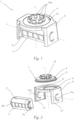
- Fig.1 shows a floor lighting module 1 for a motor vehicle 17 for generating a floor light distribution 2a, with which a surface to the side and/or underneath a motor vehicle 17 can be illuminated.
- Fig.2 shows an exploded view of the floor lighting module 1.
- the floor lighting module 1 is designed to adjust the floor light distribution 2a about a first axis z and a second axis x that is different from the first axis z.
- the floor lighting module 1 can be attached to a motor vehicle 17.
- the floor lighting module 1 comprises a lamp 2 for generating the floor light distribution 2a.
- the floor lighting module 1 has four lamps 2 that are arranged next to one another.
- the first axis z can be the vertically extending z-axis in a Cartesian coordinate system.
- the second axis x can be the horizontally extending x-axis in a Cartesian coordinate system, which, in a state in which the floor lighting module 1 is attached to a motor vehicle 17, is oriented parallel to the longitudinal axis of the motor vehicle 17.
- the adapter element 5 has a circular receiving opening 6, wherein the fastening device 4 has a receiving section 7 that is complementary to the receiving opening 6. The fastening device 4 is received in the receiving opening 6 via the receiving section 7.
- the receiving opening 6 has a holding section 8 and the fastening device 4 has a counter section 9 corresponding to the holding section 8.
- the holding section 8 and the counter section 9 are designed in relation to one another such that, in a receiving state in which the receiving section 7 of the fastening device 4 is received in the receiving opening 6 of the adapter element 5, the holding section 8 is in engagement with the counter section 9 such that the adapter element 5 is secured against movement along the first axis of rotation z.
- the adapter element 5 has at least one lamp carrier holding area, wherein the lamp carrier holding area comprises a first holding leg 12 and a second holding leg 13.
- the lamp carrier 3 is held in a holding state between the first holding leg 12 and the second holding leg 13 such that the lamp carrier 3 is secured against movement along the second axis x.
- the lamp carrier 3 In the holding state, the lamp carrier 3 is in engagement with the first holding leg 12 and the second holding leg 13 such that the lamp carrier 3 can rotate about the second axis x. is rotatable.
- the first holding leg 12 and the second holding leg 13 extend away from the holding section 8 of the adapter element 5, essentially along the first axis z.
- the first holding leg 12 has a first holding opening 12a and the second holding leg 13 has a second holding opening 13a, whereby the lamp carrier 3 has a first holding projection 3a and a second holding projection 3b.
- the first holding projection 3a is received in the first holding opening 12a and the second holding projection 3b in the second holding opening 13a in such a form-fitting manner that the lamp carrier 3 can be rotated about the second axis x between the two holding legs 12, 13.
- the first holding opening 12a and the second holding opening 13a are designed as a curved or circular segment-shaped elongated hole.
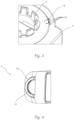
- the circular receiving opening 6 has teeth 10 along its circumference, at least in sections, which run radially to the first axis z.
- the teeth 10 are designed and configured to interact with a counter element 11.
- the counter element 11 can be brought into engagement with the teeth 10 in such a way that a rotary movement about the first axis z that can be carried out by the counter element 11 can induce a rotary movement of the adapter element 5 relative to the fastening element 4.
- the rotary movement that can be carried out by the counter element 11 induces, for example, a rotary movement of the adapter element 5 in the same direction relative to the fastening element 4.
- the adapter element 5 preferably has a first fixing means (not shown) which is designed to fix a first angle of rotation by which the adapter element 5 is rotatable relative to the fastening device 3.
- the adapter element 5 preferably has a second fixing means (not shown) which is designed to fix a second angle of rotation by which the lamp carrier 3 is rotatable relative to the adapter element 4.
- Fig.4 shows a detailed view of the lamp carrier 3.
- the lamp carrier 3 is designed as a housing in which the lamp 2 is accommodated.
- the lamp carrier 3 has a holding projection 3a, 3b on each of two opposite side surfaces.
- Each holding projection 3a, 3b is designed in the shape of a circular segment.
- a groove structure 16 is formed on an inner side of the circular segment-shaped holding projection 3a, 3b, which can be brought into engagement with corresponding engagement elements on the holding opening 12a, 13a of a holding leg 12, 13 in order to fix the angle of rotation of the lamp carrier 3 relative to a holding leg 12, 13.
- Fig.5 shows the counter element 11 in a state in which it is accommodated in the adjustment opening 14 of the fastening element 4.
- the rotary movement that can be carried out by the counter element 11 induces a rotary movement of the adapter element 5 in the same direction relative to the fastening element 4.
- the counter element 11 is in engagement with the circumferentially radially extending teeth 10 of the receiving opening 6 in order to transmit the rotary movement to the adapter element 5.
- the rotary movement that can be carried out by the counter element 11 about the first axis z can be carried out in particular manually.
- the counter element 11 is a screwdriver in the embodiment shown.
- Fig.6 shows a motor vehicle 17, to the underbody of which three floor lighting modules 1 are attached. More or fewer floor lighting modules 1 can also be attached to the motor vehicle 17. Each floor lighting module 1 can generate one or more floor light distributions 2a, which can be adjusted or pivoted relative to the motor vehicle 17 via the mechanism described above.
- Fig.7 shows a motor vehicle 17 with three floor lighting modules 1, wherein each floor lighting module 1 radiates different floor light distributions 2a onto a surface at the side of the vehicle 17.
- the three floor light distributions 2a can be adjusted relative to one another via the adapter elements 5 of the floor lighting modules 1.
Landscapes
- Engineering & Computer Science (AREA)
- Mechanical Engineering (AREA)
- General Engineering & Computer Science (AREA)
- Non-Portable Lighting Devices Or Systems Thereof (AREA)
- Lighting Device Outwards From Vehicle And Optical Signal (AREA)
Description
- Die Erfindung betrifft ein Bodenbeleuchtungsmodul für ein Kraftfahrzeug zur Erzeugung einer Boden-Lichtverteilung, mit welcher ein Untergrund seitlich und/oder unterhalb eines Kraftfahrzeugs beleuchtbar ist, wobei das Bodenbeleuchtungsmodul eingerichtet ist, die Boden-Lichtverteilung, um eine erste und eine von der ersten unterschiedliche zweite Achse, zu verstellen, wobei das Bodenbeleuchtungsmodul an einem Kraftfahrzeug befestigbar ist, wobei das Bodenbeleuchtungsmodul Folgendes umfasst:
- ein Leuchtmittel zur Erzeugung der Boden-Lichtverteilung,
- einen Leuchtmittelträger, an welchem das Leuchtmittel befestigt ist,
- eine Befestigungsvorrichtung zur Befestigung des Bodenbeleuchtungsmoduls an einem Kraftfahrzeug,
- ein Adapterelement, welches eingerichtet ist, die Verstellung der Boden-Lichtverteilung um die erste und die zweite Achse zu ermöglichen, wobei das Adapterelement an der Befestigungsvorrichtung drehbar um die erste Achse gelagert ist, wobei der Leuchtmittelträger an dem Adapterelement derart befestigt ist, dass eine Drehbewegung des Adapterelements um die erste Achse eine Drehung des Leuchtmittelträgers um die erste Achse bewirkt, und wobei der Leuchtmittelträger an dem Adapterelement drehbar um die zweite Achse gelagert ist.
- Die Erfindung betrifft weiters ein System, umfassend zumindest zwei Bodenbeleuchtungsmodule.
- Die Erfindung betrifft ferner ein Kraftfahrzeug, umfassend zumindest ein Bodenbeleuchtungsmodul oder ein System umfassend zumindest zwei Bodenbeleuchtungsmodule.
- Im Stand der Technik sind verstellbare Bodenbeleuchtungsmodule bekannt. Das Dokument
US4809137A stellt ein solches Modul dar. Ein Bodenbeleuchtungsmodul erzeugt üblicherweise eine Boden-Lichtverteilung bzw. ein Lichtbild, welches einen Untergrund seitlich eines Kraftfahrzeugs, an welchem das Bodenbeleuchtungsmodul befestigt ist, beleuchtet. Die Einstellung bzw. die Verstellung der Boden-Lichtverteilung relativ zu dem Kraftfahrzeug erfolgt im Stand der Technik meist über Elektromotoren, welche eine die Bodenlichtverteilung erzeugende Lichtquelle des Bodenbeleuchtungsmoduls innerhalb eines Gehäuses des Bodenbeleuchtungsmoduls verschwenken. Die im Stand der Technik bekannten Einstellmechanismen sind jedoch oft fehleranfällig bzw. in der Herstellung teuer. - Die Aufgabe der vorliegenden Erfindung besteht darin, die Nachteile des Standes der Technik zu lindern bzw. zu beseitigen. Die Erfindung setzt sich daher insbesondere zum Ziel, ein Bodenbeleuchtungsmodul mit einem verbesserten Einstellmechanismus zu schaffen.
- Diese Aufgabe wird durch ein Bodenbeleuchtungsmodul mit den Merkmalen von Anspruch 1 gelöst. Bevorzugte Ausführungen sind in den abhängigen Ansprüchen angegeben.
- Erfindungsgemäß weist das Adapterelement eine kreisrunde Aufnahmeöffnung auf, wobei die Befestigungsvorrichtung einen zu der Aufnahmeöffnung komplementär ausgebildeten Aufnahmeabschnitt aufweist, wobei die Befestigungsvorrichtung über den Aufnahmeabschnitt in der Aufnahmeöffnung aufgenommen ist,
- wobei die Aufnahmeöffnung einen Halteabschnitt und die Befestigungsvorrichtung einen zu dem Halteabschnitt korrespondieren Gegenabschnitt aufweist, wobei der Halteabschnitt und der Gegenabschnitt derart zueinander ausgebildet sind, dass, in einem Aufnahmezustand, in dem der Aufnahmeabschnitt der Befestigungsvorrichtung in der Aufnahmeöffnung des Adapterelements aufgenommen ist, der Halteabschnitt mit dem Gegenabschnitt derart in Eingriff ist, dass das Adapterelement gegen eine Bewegung entlang der ersten Drehachse gesichert ist,
- wobei die kreisrunde Aufnahmeöffnung entlang ihres Umfangs zumindest abschnittweise radial zur ersten Achse verlaufende Zähne aufweist, wobei die Zähne derart ausgestaltet und dazu eingerichtet sind, mit einem Gegenelement zusammenzuwirken, wobei das Gegenelement derart in Eingriff mit den Zähnen bringbar ist, sodass eine von dem Gegenelement ausführbare Drehbewegung um die erste Achse eine Drehbewegung des Adapterelements relativ zu dem Befestigungselement induzieren kann.
- Dadurch ergibt sich der Vorteil, dass die Verstellung der Boden-Lichtverteilung um die erste und die zweite Achse besonders einfach erfolgen kann. Durch die Verstellung bzw. Verschwenkung des Leuchtmittelträgers um die erste und zweite Achse kann die Position der Boden-Lichtverteilung relativ zu einem Kraftfahrzeug, an welchem das Bodenbeleuchtungsmodul befestigt sein kann, verstellt bzw. verschwenkt werden. Die Aufnahmeöffnung des Adapterelement und der Aufnahmeabschnitt der Befestigungsvorrichtung sind insbesondere über eine Drehkranz-Verbindung miteinander verbunden, bzw. kann die Übertragung der Drehbewegung des Gegenelements auf das Adapterelement über die Drehkranz-Verbindung erfolgen. Dadurch ergibt sich der Vorteil, dass die Drehung des Adapterelements relativ zu der Befestigungsvorrichtung besonders einfach und gut steuerbar erfolgen kann. Das Bodenbeleuchtungsmodul ist insbesondere an einer Unterseite eines Kraftfahrzeugs befestigbar.
- Es kann vorgesehen sein, dass die von dem Gegenelement ausführbare Drehbewegung eine gleichgerichtete Drehbewegung des Adapterelements relativ zu dem Befestigungselement induzieren kann.
- Es kann vorgesehen sein, dass das Adapterelement zumindest einen Leuchtmittelträger-Haltebereich aufweist, wobei der Leuchtmittelträger-Haltebereich einen ersten Halteschenkel und einen zweiten Halteschenkel aufweist, wobei der Leuchtmittelträger, in einem Haltezustand, zwischen dem ersten Halteschenkel und dem zweiten Halteschenkel derart gehalten wird, dass der Leuchtmittelträger gegen eine Bewegung entlang der zweiten Achse gesichert ist, wobei in dem Haltezustand der Leuchtmittelträger mit dem ersten Halteschenkel und dem zweiten Halteschenkel derart in Eingriff ist, dass der Leuchtmittelträger um die zweite Achse drehbar ist. Der erste Haltschenkel und der zweite Halteschenkel sind vorzugsweise an einem Randbereich um die Aufnahmeöffnung angeordnet. Vorzugsweise sind die beiden Halteschenkel diametral an der Aufnahmeöffnung angeordnet. Das Adapterelement kann eine Grundplatte aufweisen, welche die Aufnahmeöffnung aufweist, wobei sich die beiden Aufnahmeschenkel von der Grundplatte, im Wesentlichen parallel zur ersten Achse, weg erstrecken.
- Es kann vorgesehen sein, dass sich der erste Halteschenkel und der zweite Halteschenkel von dem Halteabschnitt des Adapterelements, im Wesentlich entlang der ersten Achse, weg erstrecken.
- Es kann vorgesehen sein, dass der erste Halteschenkel eine erste Halteöffnung und der zweite Halteschenkel eine zweite Halteöffnung aufweist, wobei der Leuchtmittelträger einen ersten Haltevorsprung und einen zweiten Haltevorsprung aufweist, wobei in dem Haltezustand der erste Haltevorsprung in der ersten Halteöffnung und der zweite Haltevorsprung in der zweiten Halteöffnung derart formschlüssig aufgenommen ist, dass der Leuchtmittelträger zwischen den beiden Halteschenkeln um die zweite Achse drehbar ist. Eine Positionsänderung der Haltvorsprünge innerhalb der Halteöffnung kann die Drehung des Leuchtmittelträgers um zweite Achse induzieren. Vorzugsweise sind die erste Halteöffnung und die zweite Halteöffnung als kreissegment-förmiges Langloch ausgestaltet. Die erste Halteöffnung und die zweite Haltöffnung sind vorzugsweise gleichartig ausgestaltet. Der erste Haltvorsprung und der zweite Haltevorsprung sind vorzugsweise gleichartig ausgestaltet. Der erste Haltvorsprung und der zweite Haltevorsprung sind insbesondere zu der ersten und zweiten Halteöffnung korrespondierend ausgestaltet.
- Es kann vorgesehen sein, dass das Befestigungselement eine Einstellöffnung aufweist, über welche das Gegenelement, zur Indizierung der Drehbewegung auf das Adapterelement, mit den umfangseitig radial verlaufenden Zähnen der Aufnahmeöffnung in Eingriff gebracht werden kann. Das Gegenelement kann beispielsweise ein Schraubenzieher sein.
- Es kann vorgesehen sein, dass die erste Achse und die zweite Achse im Wesentlichen orthogonal zueinander orientiert sind.
- Es kann vorgesehen sein, dass in einem Zustand, in dem das Bodenbeleuchtungsmodul an einem Kraftfahrzeug angebracht ist, die erste Achse im Wesentlichen vertikal und die zweite Achse im Wesentlichen horizontal orientiert ist.
- Es kann vorgesehen sein, dass das Adapterelement ein erstes Fixiermittel aufweist, welches dazu eingerichtet ist, einen ersten Drehwinkel, um welchen das Adapterelement relativ zu der Befestigungsvorrichtung drehbar ist, zu fixieren.
- Es kann vorgesehen sein, dass das Adapterelement ein zweites Fixiermittel aufweist, welches dazu eingerichtet ist, einen zweiten Drehwinkel, um welchen der Leuchtmittelträger relativ zu dem Adapterelement drehbar ist, zu fixieren.
- Es kann vorgesehen sein, dass die von dem Gegenelement ausführbare Drehbewegung um die erste Achse, zur Indizierung einer gleichgerichteten Drehbewegung auf des Adapterelement, manuell erfolgen kann. Die Drehbewegung des Gegenelements kann händisch, insbesondere ohne einem mechanischen oder elektrischen Antriebsmittel, ausgeführt werden.
- Es kann vorgesehen sein, dass die Befestigungsvorrichtung ein Rastelement aufweist, welches dazu eingerichtet ist, das Bodenbeleuchtungsmodul über eine Rastverbindung an einem Kraftfahrzeug zu befestigen.
- Es kann vorgesehen sein, dass das Rastelement zumindest eine Rastnase, vorzugsweise mehrere Rastnasen, aufweist, welche sich von dem Aufnahmeabschnitt der Befestigungsvorrichtung im Wesentlichen parallel zur ersten Achse weg erstrecken.
- Es kann ein System, umfassend zumindest zwei Bodenbeleuchtungsmodule, vorgesehen sein, wobei ein erstes Bodenbeleuchtungsmodul zur Erzeugung einer ersten Boden-Lichtverteilung und ein zweites Bodenbeleuchtungsmodul zur Erzeugung einer zweiten Boden-Lichtverteilung eingerichtet ist, wobei vorzugsweise die erste Boden-Lichtverteilung und die zweite Boden-Lichtverteilung unterschiedlich ausgestaltet sind.
- Es kann ein Kraftfahrzeug, umfassend zumindest ein Bodenbeleuchtungsmodul oder ein System, vorgesehen sein. Das Bodenbeleuchtungsmodul ist insbesondere an einer Unterseite des Kraftfahrzeugs befestigt.
- Im Rahmen dieser Beschreibung sind die Begriffe "oben", "unten", "horizontal", "vertikal" als Angaben der Ausrichtung zu verstehen, wenn das Bodenbeleuchtungsmodul in normaler Benutzungsstellung angeordnet ist, nachdem es an einem Kraftfahrzeug, insbesondere an einer Unterseite eines Kraftfahrzeugs, befestigt wurde.
- Die Erfindung wird nachstehend anhand eines bevorzugten Ausführungsbeispiels, auf das sie jedoch nicht beschränkt sein soll, noch weiter erläutert. In den Zeichnungen zeigt:
- Fig. 1
- ein erfindungsgemäßes Bodenbeleuchtungsmodul;
- Fig. 2
- eine Explosionsdarstellung des Bodenbeleuchtungsmoduls gemäß
Fig. 1 ; - Fig. 3
- eine Detailansicht des Bodenbeleuchtungsmoduls gemäß
Fig. 1 ; - Fig. 4
- eine Detailansicht eines Leuchtmittelträgers;
- Fig. 5
- eine Ansicht eines Einstellvorgangs des Bodenbeleuchtungsmoduls gemäß
Fig. 1 ; - Fig. 6
- ein Kraftfahrzeug mit drei Bodenbeleuchtungsmodulen; und
- Fig. 7
- ein Kraftfahrzeug mit seitlichen Boden-Lichtverteilungen.
-
Fig. 1 zeigt ein Bodenbeleuchtungsmodul 1 für ein Kraftfahrzeug 17 zur Erzeugung einer Boden-Lichtverteilung 2a, mit welcher ein Untergrund seitlich und/oder unterhalb eines Kraftfahrzeugs 17 beleuchtbar ist.Fig. 2 zeigt eine Explosionsdarstellung des Bodenbeleuchtungsmoduls 1. Das Bodenbeleuchtungsmodul 1 ist eingerichtet, die Boden-Lichtverteilung 2a um eine erste Achse z und eine von der ersten Achse z unterschiedliche zweite Achse x zu verstellen. Das Bodenbeleuchtungsmodul 1 ist an einem Kraftfahrzeug 17 befestigbar. Das Bodenbeleuchtungsmodul 1 umfasst ein Leuchtmittel 2 zur Erzeugung der Boden-Lichtverteilung 2a. In dem gezeigten Ausführungsbeispiel hat das Bodenbeleuchtungsmodul 1 vier Leuchtmittel 2, welche nebeneinander angeordnet sind. Das Leuchtmittel 2 kann eine Lichtquelle und eine der Lichtquelle zugeordnete Projektionsvorrichtung umfassen, wobei die Projektionsvorrichtung Licht, welches von der Lichtquelle erzeugbar ist, als Boden-Lichtverteilung 2a, beispielsweise auf einen Fahrbahnuntergrund, projizieren kann. Das Bodenbeleuchtungsmodul 1 umfasst weiters einen Leuchtmittelträger 3, an welchem das Leuchtmittel 2 befestigt ist und eine Befestigungsvorrichtung 4 zur Befestigung des Bodenbeleuchtungsmoduls 1 an einem Kraftfahrzeug 17. Das Bodenbeleuchtungsmodul 1 hat ferner ein Adapterelement 5, welches eingerichtet ist, die Verstellung der Boden-Lichtverteilung 2a um die erste z und die zweite Achse x zu ermöglichen. Das Adapterelement 5 ist an der Befestigungsvorrichtung 4 drehbar um die erste Achse z gelagert. Der Leuchtmittelträger 3 ist an dem Adapterelement 5 derart befestigt, dass eine Drehbewegung des Adapterelements 5 um die erste Achse z eine Drehung des Leuchtmittelträgers 3 um die erste Achse z bewirkt. Der Leuchtmittelträger 3 ist wiederum an dem Adapterelement 5 drehbar um die zweite Achse x gelagert. Die erste Achse z und die zweite Achse x sind im Wesentlichen orthogonal zueinander orientiert. In einem Zustand, in dem das Bodenbeleuchtungsmodul 1 an einem Kraftfahrzeug 17 angebracht ist, kann beispielsweise die erste Achse z eine vertikale Achse und die zweite Achse x eine horizontale Achse sein. Die erste Achse z kann in einem kartesischen Koordinatensystem die vertikal verlaufende z-Achse sein. Die zweite Achse x kann in einem kartesischen Koordinatensystem die horizontal verlaufende x-Achse sein, welche, in einem Zustand, in dem das Bodenbeleuchtungsmodul 1 an einem Kraftfahrzeug 17 angebracht ist, parallel zur Längsachse des Kraftfahrzeugs 17 orientiert ist. - Das Adapterelement 5 hat eine kreisrunde Aufnahmeöffnung 6, wobei die Befestigungsvorrichtung 4 einen zu der Aufnahmeöffnung 6 komplementär ausgebildeten Aufnahmeabschnitt 7 hat. Die Befestigungsvorrichtung 4 ist über den Aufnahmeabschnitt 7 in der Aufnahmeöffnung 6 aufgenommen.
- Die Befestigungsvorrichtung 4 weist ein Rastelement 15 auf, welches dazu eingerichtet ist, das Bodenbeleuchtungsmodul 1 über eine Rastverbindung an einem Kraftfahrzeug 17 zu befestigen. In dem gezeigten Ausführungsbeispiel hat das Rastelement mehrere kreisförmig zueinander angeordnete Rastnasen 15a, welche sich von dem Aufnahmeabschnitt 7 der Befestigungsvorrichtung 4 im Wesentlichen parallel zur ersten Achse z weg erstrecken.
- Die Aufnahmeöffnung 6 hat einen Halteabschnitt 8 und die Befestigungsvorrichtung 4 hat einen zu dem Halteabschnitt 8 korrespondieren Gegenabschnitt 9. Der Halteabschnitt 8 und der Gegenabschnitt 9 sind derart zueinander ausgebildet, dass, in einem Aufnahmezustand, in dem der Aufnahmeabschnitt 7 der Befestigungsvorrichtung 4 in der Aufnahmeöffnung 6 des Adapterelements 5 aufgenommen ist, der Halteabschnitt 8 mit dem Gegenabschnitt 9 derart in Eingriff ist, dass das Adapterelement 5 gegen eine Bewegung entlang der ersten Drehachse z gesichert ist.
- Das Adapterelement 5 hat zumindest einen Leuchtmittelträger-Haltebereich, wobei der Leuchtmittelträger-Haltebereich einen ersten Halteschenkel 12 und einen zweiten Halteschenkel 13 umfasst. Der Leuchtmittelträger 3 wird in einem Haltezustand zwischen dem ersten Halteschenkel 12 und dem zweiten Halteschenkel 13 derart gehalten, dass der Leuchtmittelträger 3 gegen eine Bewegung entlang der zweiten Achse x gesichert ist. In dem Haltezustand ist der Leuchtmittelträger 3 mit dem ersten Halteschenkel 12 und dem zweiten Halteschenkel 13 derart in Eingriff, dass der Leuchtmittelträger 3 um die zweite Achse x drehbar ist. Der erste Halteschenkel 12 und der zweite Halteschenkel 13 erstrecken sich von dem Halteabschnitt 8 des Adapterelements 5, im Wesentlich entlang der ersten Achse z, weg.
- Der erste Halteschenkel 12 hat eine erste Halteöffnung 12a und der zweite Halteschenkel 13 hat eine zweite Halteöffnung 13a, wobei der Leuchtmittelträger 3 einen ersten Haltevorsprung 3a und einen zweiten Haltevorsprung 3b hat. Im Haltezustand ist der erste Haltevorsprung 3a in der ersten Halteöffnung 12a und der zweite Haltevorsprung 3b in der zweiten Halteöffnung 13a derart formschlüssig aufgenommen, dass der Leuchtmittelträger 3 zwischen den beiden Halteschenkeln 12, 13 um die zweite Achse x drehbar ist. Die erste Halteöffnung 12a und die zweite Haltöffnung 13a sind als gekrümmt bzw. kreissegmentförmig verlaufendes Langloch ausgebildet.
- Wie in
Fig. 3 ersichtlich, hat die kreisrunde Aufnahmeöffnung 6 entlang ihres Umfangs zumindest abschnittweise radial zur ersten Achse z verlaufende Zähne 10. Die Zähne 10 sind derart ausgestaltet und dazu eingerichtet, mit einem Gegenelement 11 zusammenzuwirken. Das Gegenelement 11 ist derart in Eingriff mit den Zähnen 10 bringbar, dass eine von dem Gegenelement 11 ausführbare Drehbewegung um die erste Achse z eine Drehbewegung des Adapterelements 5 relativ zu dem Befestigungselement 4 induzieren kann. Die von dem Gegenelement 11 ausführbare Drehbewegung induziert beispielsweise eine gleichgerichtete Drehbewegung des Adapterelements 5 relativ zu dem Befestigungselement 4. Das Befestigungselement 4 hat eine Einstellöffnung 14, über welche das Gegenelement 11, zur Indizierung der Drehbewegung auf das Adapterelement 5, mit den umfangseitig radial verlaufenden Zähnen 10 der Aufnahmeöffnung 6 in Eingriff gebracht werden kann. Die von dem Gegenelement 11 ausführbare Drehbewegung um die erste Achse z, zur Indizierung einer gleichgerichteten Drehbewegung auf des Adapterelement 5, kann insbesondere manuell erfolgen. - Das Adapterelement 5 hat vorzugsweise ein erstes Fixiermittel (nicht gezeigt), welches dazu eingerichtet ist, einen ersten Drehwinkel, um welchen das Adapterelement 5 relativ zu der Befestigungsvorrichtung 3 drehbar ist, zu fixieren. Das Adapterelement 5 hat vorzugsweise ein zweites Fixiermittel (nicht gezeigt), welches dazu eingerichtet ist, einen zweiten Drehwinkel, um welchen der Leuchtmittelträger 3 relativ zu dem Adapterelement 4 drehbar ist, zu fixieren.
-
Fig. 4 zeigt eine Detailansicht des der Leuchtmittelträgers 3. In dem gezeigten Ausführungsbeispiel ist der Leuchtmittelträger 3 als Gehäuse ausgebildet, in welchem das Leuchtmittel 2 aufgenommen ist. Der Leuchtmittelträger 3 hat an zwei gegenüberliegenden Seitenflächen jeweils einen Haltvorsprung 3a, 3b. Jeder Haltevorsprung 3a, 3b ist kreissegmentförmig ausgestaltet. An einer Innenseite des kreissegmentförmigen Haltevorsprungs 3a, 3b ist eine Rillenstruktur 16 ausgebildet, welche, zur Fixierung des Drehwinkels des Leuchtmittelträgers 3 relativ zu einem Halteschenkel 12, 13, mit entsprechenden Eingriffselementen an der Halteöffnung 12a, 13a eines Halteschenkels 12,13 in Eingriff bringbar ist. -
Fig. 5 zeigt das Gegenelement 11 in einem Zustand, in dem es in der Einstellöffnung 14 des Befestigungselements 4 aufgenommen ist. Die von dem Gegenelement 11 ausführbare Drehbewegung induziert eine gleichgerichtete Drehbewegung des Adapterelements 5 relativ zu dem Befestigungselement 4. Das Gegenelement 11 ist, zur Übertragung der Drehbewegung auf das Adapterelement 5, mit den umfangseitig radial verlaufenden Zähnen 10 der Aufnahmeöffnung 6 in Eingriff. Die von dem Gegenelement 11 ausführbare Drehbewegung um die erste Achse z kann insbesondere manuell erfolgen. Das Gegenelement 11 ist in dem gezeigten Ausführungsbeispiel ein Schraubenzieher. -
Fig. 6 zeigt ein Kraftfahrzeug 17, an dessen Unterboden drei Bodenbeleuchtungsmodule 1 befestigt sind. Es können auch mehr oder weniger Bodenbeleuchtungsmodule 1 an dem Kraftfahrzeug 17 angebracht sein. Jedes Bodenbeleuchtungsmodul 1 kann eine oder mehrere Boden-Lichtverteilungen 2a erzeugen, welche über den oben beschriebenen Mechanismus relativ zu dem Kraftfahrzeug 17 verstellt bzw. verschwenkt werden können. -
Fig. 7 zeigt ein Kraftfahrzeug 17 mit drei Bodenbeleuchtungsmodulen 1, wobei jedes Bodenbeleuchtungsmodul 1 unterschiedliche Boden-Lichtverteilungen 2a seitlich des Fahrzeugs 17 auf einen Untergrund abstrahlt. Über die Adapterelemente 5 der Bodenbeleuchtungsmodule 1 können die drei Boden-Lichtverteilungen 2a relativ zueinander verstellt werden.
Claims (15)
- Bodenbeleuchtungsmodul (1) für ein Kraftfahrzeug zur Erzeugung einer Boden-Lichtverteilung (2a), mit welcher ein Untergrund seitlich und/oder unterhalb eines Kraftfahrzeugs beleuchtbar ist, wobei das Bodenbeleuchtungsmodul (1) eingerichtet ist, die Boden-Lichtverteilung (2a), um eine erste (z) und eine von der ersten unterschiedliche zweite Achse (x), zu verstellen, wobei das Bodenbeleuchtungsmodul (1) an einem Kraftfahrzeug befestigbar ist, wobei das Bodenbeleuchtungsmodul (1) Folgendes umfasst:- ein Leuchtmittel (2) zur Erzeugung der Boden-Lichtverteilung (2a),- einen Leuchtmittelträger (3), an welchem das Leuchtmittel befestigt ist,- eine Befestigungsvorrichtung (4) zur Befestigung des Bodenbeleuchtungsmoduls (1) an einem Kraftfahrzeug,- ein Adapterelement (5), welches eingerichtet ist, die Verstellung der Boden-Lichtverteilung (2a) um die erste Achse (z) und die zweite Achse (x) zu ermöglichen, wobei das Adapterelement (5) an der Befestigungsvorrichtung (4) drehbar um die erste Achse (z) gelagert ist, wobei der Leuchtmittelträger (3) an dem Adapterelement (5) derart befestigt ist, dass eine Drehbewegung des Adapterelements (5) um die erste Achse (z) eine Drehung des Leuchtmittelträgers (3) um die erste Achse (z) bewirkt, und wobei der Leuchtmittelträger (3) an dem Adapterelement (5) drehbar um die zweite Achse (x) gelagert ist,wobei das Adapterelement (5) eine kreisrunde Aufnahmeöffnung (6) aufweist, wobei die Befestigungsvorrichtung (4) einen zu der Aufnahmeöffnung komplementär ausgebildeten Aufnahmeabschnitt (7) aufweist, wobei die Befestigungsvorrichtung (4) über den Aufnahmeabschnitt (7) in der Aufnahmeöffnung (6) aufgenommen ist,wobei die Aufnahmeöffnung (6) einen Halteabschnitt (8) und die Befestigungsvorrichtung (4) einen zu dem Halteabschnitt (8) korrespondieren Gegenabschnitt (9) aufweist, dadurch gekennzeichnet, dass der Halteabschnitt (8) und der Gegenabschnitt (9) derart zueinander ausgebildet sind, dass, in einem Aufnahmezustand, in dem der Aufnahmeabschnitt (7) der Befestigungsvorrichtung (4) in der Aufnahmeöffnung (6) des Adapterelements (5) aufgenommen ist, der Halteabschnitt (8) mit dem Gegenabschnitt (9) derart in Eingriff ist, dass das Adapterelement (5) gegen eine Bewegung entlang der ersten Drehachse (z) gesichert ist,wobei die kreisrunde Aufnahmeöffnung (6) entlang ihres Umfangs zumindest abschnittweise radial zur ersten Achse (z) verlaufende Zähne (10) aufweist, wobei die Zähne (10) derart ausgestaltet und dazu eingerichtet sind, mit einem Gegenelement (11) zusammenzuwirken, wobei das Gegenelement (11) derart in Eingriff mit den Zähnen (10) bringbar ist, dass eine von dem Gegenelement (11) ausführbare Drehbewegung um die erste Achse (z) eine Drehbewegung des Adapterelements (5) relativ zu dem Befestigungselement (4) induzieren kann.
- Bodenbeleuchtungsmodul (1) nach Anspruch 1, wobei die von dem Gegenelement (11) ausführbare Drehbewegung eine gleichgerichtete Drehbewegung des Adapterelements (5) relativ zu dem Befestigungselement (4) induzieren kann.
- Bodenbeleuchtungsmodul (1) nach einem der vorhergehenden Ansprüche, wobei das Adapterelement (5) zumindest einen Leuchtmittelträger-Haltebereich aufweist, wobei der Leuchtmittelträger-Haltebereich einen ersten Halteschenkel (12) und einen zweiten Halteschenkel (13) aufweist, wobei der Leuchtmittelträger (3), in einem Haltezustand, zwischen dem ersten Halteschenkel (12) und dem zweiten Halteschenkel (13) derart gehalten wird, dass der Leuchtmittelträger (3) gegen eine Bewegung entlang der zweiten Achse (x) gesichert ist, wobei in dem Haltezustand der Leuchtmittelträger (3) mit dem ersten Halteschenkel (12) und dem zweiten Halteschenkel (13) derart in Eingriff ist, dass der Leuchtmittelträger (3) um die zweite Achse (x) drehbar ist.
- Bodenbeleuchtungsmodul (1) nach Anspruch 3, wobei sich der erste Halteschenkel (12) und der zweite Halteschenkel (13) von dem Halteabschnitt (8) des Adapterelements (5), im Wesentlich entlang der ersten Achse (z), weg erstrecken.
- Bodenbeleuchtungsmodul (1) nach Anspruch 3 oder 4, wobei der erste Halteschenkel (12) eine erste Halteöffnung (12a) und der zweite Halteschenkel (13) eine zweite Halteöffnung (13a) aufweist, wobei der Leuchtmittelträger (3) einen ersten Haltevorsprung (3a) und einen zweiten Haltevorsprung (3b) aufweist, wobei in dem Haltezustand der erste Haltevorsprung (3a) in der ersten Halteöffnung (12a) und der zweite Haltevorsprung (3b) in der zweiten Halteöffnung (13a) derart formschlüssig aufgenommen ist, dass der Leuchtmittelträger (3) zwischen den beiden Halteschenkeln (12, 13) um die zweite Achse (x) drehbar ist.
- Bodenbeleuchtungsmodul (1) nach einem der vorhergehenden Ansprüche, wobei das Befestigungselement (4) eine Einstellöffnung (14) aufweist, über welche das Gegenelement (11), zur Indizierung der Drehbewegung auf das Adapterelement (5), mit den umfangseitig radial verlaufenden Zähnen (10) der Aufnahmeöffnung (6) in Eingriff gebracht werden kann.
- Bodenbeleuchtungsmodul (1) nach einem der vorhergehenden Ansprüche, wobei die erste Achse (z) und die zweite Achse (x) im Wesentlichen orthogonal zueinander orientiert sind.
- Bodenbeleuchtungsmodul (1) nach einem der vorhergehenden Ansprüche, wobei in einem Zustand, in dem das Bodenbeleuchtungsmodul (1) an einem Kraftfahrzeug angebracht ist, die erste Achse (z) im Wesentlichen vertikal und die zweite Achse (x) im Wesentlichen horizontal orientiert ist.
- Bodenbeleuchtungsmodul (1) nach einem der vorhergehenden Ansprüche, wobei das Adapterelement (5) ein erstes Fixiermittel aufweist, welches dazu eingerichtet ist, einen ersten Drehwinkel, um welchen das Adapterelement (5) relativ zu der Befestigungsvorrichtung (4) drehbar ist, zu fixieren.
- Bodenbeleuchtungsmodul (1) nach einem der vorhergehenden Ansprüche, wobei das Adapterelement (5) ein zweites Fixiermittel aufweist, welches dazu eingerichtet ist, einen zweiten Drehwinkel, um welchen der Leuchtmittelträger (3) relativ zu dem Adapterelement (5) drehbar ist, zu fixieren.
- Bodenbeleuchtungsmodul (1) nach einem der vorhergehenden Ansprüche, wobei die von dem Gegenelement (11) ausführbare Drehbewegung um die erste Achse (z), zur Indizierung einer gleichgerichteten Drehbewegung auf des Adapterelement (5), manuell erfolgen kann.
- Bodenbeleuchtungsmodul (1) nach einem der vorhergehenden Ansprüche, wobei die Befestigungsvorrichtung (4) ein Rastelement (15) aufweist, welches dazu eingerichtet ist, das Bodenbeleuchtungsmodul (1) über eine Rastverbindung an einem Kraftfahrzeug zu befestigen.
- Bodenbeleuchtungsmodul (1) nach Anspruch 12, wobei das Rastelement (15) zumindest eine Rastnase (15a), vorzugsweise mehrere Rastnasen, aufweist, welche sich von dem Aufnahmeabschnitt (7) der Befestigungsvorrichtung (4) im Wesentlichen parallel zur ersten Achse (z) weg erstrecken.
- System, umfassend zumindest zwei Bodenbeleuchtungsmodule (1) nach einem der vorhergehenden Ansprüche, wobei ein erstes Bodenbeleuchtungsmodul (1) zur Erzeugung einer ersten Boden-Lichtverteilung (2a) und ein zweites Bodenbeleuchtungsmodul (1) zur Erzeugung einer zweiten Boden-Lichtverteilung (2a) eingerichtet ist, wobei vorzugsweise die erste Boden-Lichtverteilung (2a) und die zweite Boden-Lichtverteilung (2a) unterschiedlich ausgestaltet sind.
- Kraftfahrzeug, umfassend zumindest ein Bodenbeleuchtungsmodul (1) nach einem der Ansprüche 1-13 oder ein System nach Anspruch 14.
Priority Applications (3)
| Application Number | Priority Date | Filing Date | Title |
|---|---|---|---|
| EP21217000.5A EP4201743B1 (de) | 2021-12-22 | 2021-12-22 | Bodenbeleuchtungsmodul für ein kraftfahrzeug zur erzeugung einer boden-lichtverteilung |
| KR1020220171181A KR102811998B1 (ko) | 2021-12-22 | 2022-12-09 | 바닥 광 분포의 생성을 위한 자동차용 바닥 조명 모듈 |
| CN202211652942.9A CN116412382B (zh) | 2021-12-22 | 2022-12-22 | 用于生成地面光分布的用于机动车的地面照明模块 |
Applications Claiming Priority (1)
| Application Number | Priority Date | Filing Date | Title |
|---|---|---|---|
| EP21217000.5A EP4201743B1 (de) | 2021-12-22 | 2021-12-22 | Bodenbeleuchtungsmodul für ein kraftfahrzeug zur erzeugung einer boden-lichtverteilung |
Publications (2)
| Publication Number | Publication Date |
|---|---|
| EP4201743A1 EP4201743A1 (de) | 2023-06-28 |
| EP4201743B1 true EP4201743B1 (de) | 2024-07-10 |
Family
ID=79021023
Family Applications (1)
| Application Number | Title | Priority Date | Filing Date |
|---|---|---|---|
| EP21217000.5A Active EP4201743B1 (de) | 2021-12-22 | 2021-12-22 | Bodenbeleuchtungsmodul für ein kraftfahrzeug zur erzeugung einer boden-lichtverteilung |
Country Status (3)
| Country | Link |
|---|---|
| EP (1) | EP4201743B1 (de) |
| KR (1) | KR102811998B1 (de) |
| CN (1) | CN116412382B (de) |
Family Cites Families (13)
| Publication number | Priority date | Publication date | Assignee | Title |
|---|---|---|---|---|
| KR910002276B1 (ko) * | 1987-07-24 | 1991-04-11 | 기요시 야마다 | 차체 축방에 조명등을 설치한 백미러 |
| JP2765643B2 (ja) * | 1992-06-03 | 1998-06-18 | 株式会社小糸製作所 | 投射型自動車用ヘッドランプ |
| JP3128616B2 (ja) * | 1996-07-02 | 2001-01-29 | 株式会社小糸製作所 | 車輌用灯具の光軸調整装置 |
| KR200182974Y1 (ko) * | 1999-12-17 | 2000-05-15 | 주식회사미래 | 차량의 회전 전조등 작동장치 |
| JP4619278B2 (ja) * | 2005-11-25 | 2011-01-26 | 富士通テン株式会社 | 車両用スマートエントリシステム及び車両用照明装置 |
| DE102014007313B4 (de) * | 2014-05-17 | 2023-03-30 | Audi Ag | Vorrichtung zur Unterstützung eines Fahrers eines Kraftfahrzeugs beim Rangieren und/oder Parken, zugehöriges Kraftfahrzeug und Betriebsverfahren |
| DE102015006656A1 (de) * | 2015-05-22 | 2016-03-31 | Daimler Ag | Befestigungselement für ein Verkleidungsteil eines Fahrzeugs, Verkleidungsteil und Fahrzeug |
| CN105882536B (zh) | 2016-06-30 | 2018-02-06 | 山东文捷智能动力有限公司 | 后视镜转向辅助照明系统 |
| JP6765049B2 (ja) * | 2016-09-28 | 2020-10-07 | マツダ株式会社 | 車両用照明装置 |
| WO2019108675A1 (en) * | 2017-11-28 | 2019-06-06 | Postmates, Inc. | Light projection system |
| CN108674301A (zh) * | 2018-04-19 | 2018-10-19 | 江苏大学 | 自适应控制的汽车前照灯结构及控制方法 |
| EP3670260B1 (de) * | 2018-12-19 | 2022-05-18 | ZKW Group GmbH | Beleuchtungsvorrichtung für fahrzeugscheinwerfer |
| EP3670259B1 (de) * | 2018-12-19 | 2021-09-22 | ZKW Group GmbH | Beleuchtungsvorrichtung für fahrzeugscheinwerfer |
-
2021
- 2021-12-22 EP EP21217000.5A patent/EP4201743B1/de active Active
-
2022
- 2022-12-09 KR KR1020220171181A patent/KR102811998B1/ko active Active
- 2022-12-22 CN CN202211652942.9A patent/CN116412382B/zh active Active
Also Published As
| Publication number | Publication date |
|---|---|
| KR102811998B1 (ko) | 2025-05-23 |
| CN116412382B (zh) | 2026-03-20 |
| EP4201743A1 (de) | 2023-06-28 |
| CN116412382A (zh) | 2023-07-11 |
| KR20230095815A (ko) | 2023-06-29 |
Similar Documents
| Publication | Publication Date | Title |
|---|---|---|
| EP1606139B1 (de) | Feststell- und neigungsverstellvorrichtung für beschläge | |
| EP3847413B1 (de) | Radhalter | |
| DE2539023A1 (de) | Einstellmechanismus fuer sitze | |
| DE8703112U1 (de) | Rolloträger | |
| EP3610189A1 (de) | Halter für flache, in etwa rechteckige geräte wie tablet-computer oder smartphones | |
| DE102016216592A1 (de) | Verstellvorrichtung für eine Welle | |
| EP2553328B1 (de) | Mastbefestigung für strassenleuchte | |
| DE10301662A1 (de) | Vorrichtung und Verfahren zum Befestigen der Innenausstattung für Fahrzeuge | |
| DE2914705C2 (de) | ||
| EP4190635B1 (de) | Beleuchtungsvorrichtung für ein kraftfahrzeug mit verstelleinrichtung zur gleichzeitigen verstellung von lichtmodulen | |
| EP4201743A1 (de) | Bodenbeleuchtungsmodul für ein kraftfahrzeug zur erzeugung einer boden-lichtverteilung | |
| DE2241221A1 (de) | Kleinmotor | |
| WO2003022658A1 (de) | Anordnung bestehend aus einem lenkrad und einem torsionsmodul | |
| DE102010035551B4 (de) | Werkzeug für einen Roboter sowie Verfahren zum Herstellen einer Schraubverbindung | |
| DE102022107259B3 (de) | Drehlager für ein Deckenstativ | |
| DE102016215571A1 (de) | Befestigungsanordnung eines Elektromotors und Sitz | |
| EP2602542B1 (de) | Beleuchtungsvorrichtung | |
| EP1873403B1 (de) | Befestigungsvorrichtung mit Schwenkbasis | |
| EP3851206A1 (de) | Wasserspiel zur erzeugung eines beleuchteten wasserbildes | |
| DE19511584C2 (de) | Ringtrogzwangsmischer | |
| DE102009020324B4 (de) | Nutzfahrzeugscheinwerfer | |
| WO2002025905A2 (de) | Vorrichtung zur befestigung eines geräts der drahtlosen kommunikation | |
| DE102017216521B4 (de) | Anschlagmodul für einen fahrzeugsitz sowie fahrzeugsitz | |
| DE4321708A1 (de) | Heizkörperkonsole | |
| DE102019132106B4 (de) | Verschraubungsvorrichtung zur mechanischen Verbindung einer vorderen Trommel und einer hinteren Trommel eines Verdichters eines Gasturbinentriebwerks |
Legal Events
| Date | Code | Title | Description |
|---|---|---|---|
| PUAI | Public reference made under article 153(3) epc to a published international application that has entered the european phase |
Free format text: ORIGINAL CODE: 0009012 |
|
| STAA | Information on the status of an ep patent application or granted ep patent |
Free format text: STATUS: THE APPLICATION HAS BEEN PUBLISHED |
|
| AK | Designated contracting states |
Kind code of ref document: A1 Designated state(s): AL AT BE BG CH CY CZ DE DK EE ES FI FR GB GR HR HU IE IS IT LI LT LU LV MC MK MT NL NO PL PT RO RS SE SI SK SM TR |
|
| STAA | Information on the status of an ep patent application or granted ep patent |
Free format text: STATUS: REQUEST FOR EXAMINATION WAS MADE |
|
| 17P | Request for examination filed |
Effective date: 20231211 |
|
| RBV | Designated contracting states (corrected) |
Designated state(s): AL AT BE BG CH CY CZ DE DK EE ES FI FR GB GR HR HU IE IS IT LI LT LU LV MC MK MT NL NO PL PT RO RS SE SI SK SM TR |
|
| GRAP | Despatch of communication of intention to grant a patent |
Free format text: ORIGINAL CODE: EPIDOSNIGR1 |
|
| STAA | Information on the status of an ep patent application or granted ep patent |
Free format text: STATUS: GRANT OF PATENT IS INTENDED |
|
| GRAS | Grant fee paid |
Free format text: ORIGINAL CODE: EPIDOSNIGR3 |
|
| GRAA | (expected) grant |
Free format text: ORIGINAL CODE: 0009210 |
|
| STAA | Information on the status of an ep patent application or granted ep patent |
Free format text: STATUS: THE PATENT HAS BEEN GRANTED |
|
| INTG | Intention to grant announced |
Effective date: 20240515 |
|
| AK | Designated contracting states |
Kind code of ref document: B1 Designated state(s): AL AT BE BG CH CY CZ DE DK EE ES FI FR GB GR HR HU IE IS IT LI LT LU LV MC MK MT NL NO PL PT RO RS SE SI SK SM TR |
|
| REG | Reference to a national code |
Ref country code: CH Ref legal event code: EP |
|
| REG | Reference to a national code |
Ref country code: DE Ref legal event code: R096 Ref document number: 502021004308 Country of ref document: DE |
|
| P01 | Opt-out of the competence of the unified patent court (upc) registered |
Free format text: CASE NUMBER: APP_51276/2024 Effective date: 20240911 |
|
| REG | Reference to a national code |
Ref country code: LT Ref legal event code: MG9D |
|
| REG | Reference to a national code |
Ref country code: NL Ref legal event code: MP Effective date: 20240710 |
|
| PG25 | Lapsed in a contracting state [announced via postgrant information from national office to epo] |
Ref country code: PT Free format text: LAPSE BECAUSE OF FAILURE TO SUBMIT A TRANSLATION OF THE DESCRIPTION OR TO PAY THE FEE WITHIN THE PRESCRIBED TIME-LIMIT Effective date: 20241111 |
|
| PG25 | Lapsed in a contracting state [announced via postgrant information from national office to epo] |
Ref country code: NL Free format text: LAPSE BECAUSE OF FAILURE TO SUBMIT A TRANSLATION OF THE DESCRIPTION OR TO PAY THE FEE WITHIN THE PRESCRIBED TIME-LIMIT Effective date: 20240710 |
|
| PG25 | Lapsed in a contracting state [announced via postgrant information from national office to epo] |
Ref country code: PT Free format text: LAPSE BECAUSE OF FAILURE TO SUBMIT A TRANSLATION OF THE DESCRIPTION OR TO PAY THE FEE WITHIN THE PRESCRIBED TIME-LIMIT Effective date: 20241111 Ref country code: NL Free format text: LAPSE BECAUSE OF FAILURE TO SUBMIT A TRANSLATION OF THE DESCRIPTION OR TO PAY THE FEE WITHIN THE PRESCRIBED TIME-LIMIT Effective date: 20240710 |
|
| PG25 | Lapsed in a contracting state [announced via postgrant information from national office to epo] |
Ref country code: NO Free format text: LAPSE BECAUSE OF FAILURE TO SUBMIT A TRANSLATION OF THE DESCRIPTION OR TO PAY THE FEE WITHIN THE PRESCRIBED TIME-LIMIT Effective date: 20241010 |
|
| PG25 | Lapsed in a contracting state [announced via postgrant information from national office to epo] |
Ref country code: FI Free format text: LAPSE BECAUSE OF FAILURE TO SUBMIT A TRANSLATION OF THE DESCRIPTION OR TO PAY THE FEE WITHIN THE PRESCRIBED TIME-LIMIT Effective date: 20240710 Ref country code: GR Free format text: LAPSE BECAUSE OF FAILURE TO SUBMIT A TRANSLATION OF THE DESCRIPTION OR TO PAY THE FEE WITHIN THE PRESCRIBED TIME-LIMIT Effective date: 20241011 Ref country code: PL Free format text: LAPSE BECAUSE OF FAILURE TO SUBMIT A TRANSLATION OF THE DESCRIPTION OR TO PAY THE FEE WITHIN THE PRESCRIBED TIME-LIMIT Effective date: 20240710 |
|
| PG25 | Lapsed in a contracting state [announced via postgrant information from national office to epo] |
Ref country code: BG Free format text: LAPSE BECAUSE OF FAILURE TO SUBMIT A TRANSLATION OF THE DESCRIPTION OR TO PAY THE FEE WITHIN THE PRESCRIBED TIME-LIMIT Effective date: 20240710 |
|
| PG25 | Lapsed in a contracting state [announced via postgrant information from national office to epo] |
Ref country code: LV Free format text: LAPSE BECAUSE OF FAILURE TO SUBMIT A TRANSLATION OF THE DESCRIPTION OR TO PAY THE FEE WITHIN THE PRESCRIBED TIME-LIMIT Effective date: 20240710 |
|
| PG25 | Lapsed in a contracting state [announced via postgrant information from national office to epo] |
Ref country code: IS Free format text: LAPSE BECAUSE OF FAILURE TO SUBMIT A TRANSLATION OF THE DESCRIPTION OR TO PAY THE FEE WITHIN THE PRESCRIBED TIME-LIMIT Effective date: 20241110 |
|
| PG25 | Lapsed in a contracting state [announced via postgrant information from national office to epo] |
Ref country code: HR Free format text: LAPSE BECAUSE OF FAILURE TO SUBMIT A TRANSLATION OF THE DESCRIPTION OR TO PAY THE FEE WITHIN THE PRESCRIBED TIME-LIMIT Effective date: 20240710 |
|
| PG25 | Lapsed in a contracting state [announced via postgrant information from national office to epo] |
Ref country code: ES Free format text: LAPSE BECAUSE OF FAILURE TO SUBMIT A TRANSLATION OF THE DESCRIPTION OR TO PAY THE FEE WITHIN THE PRESCRIBED TIME-LIMIT Effective date: 20240710 Ref country code: RS Free format text: LAPSE BECAUSE OF FAILURE TO SUBMIT A TRANSLATION OF THE DESCRIPTION OR TO PAY THE FEE WITHIN THE PRESCRIBED TIME-LIMIT Effective date: 20241010 |
|
| PG25 | Lapsed in a contracting state [announced via postgrant information from national office to epo] |
Ref country code: RS Free format text: LAPSE BECAUSE OF FAILURE TO SUBMIT A TRANSLATION OF THE DESCRIPTION OR TO PAY THE FEE WITHIN THE PRESCRIBED TIME-LIMIT Effective date: 20241010 Ref country code: PL Free format text: LAPSE BECAUSE OF FAILURE TO SUBMIT A TRANSLATION OF THE DESCRIPTION OR TO PAY THE FEE WITHIN THE PRESCRIBED TIME-LIMIT Effective date: 20240710 Ref country code: NO Free format text: LAPSE BECAUSE OF FAILURE TO SUBMIT A TRANSLATION OF THE DESCRIPTION OR TO PAY THE FEE WITHIN THE PRESCRIBED TIME-LIMIT Effective date: 20241010 Ref country code: LV Free format text: LAPSE BECAUSE OF FAILURE TO SUBMIT A TRANSLATION OF THE DESCRIPTION OR TO PAY THE FEE WITHIN THE PRESCRIBED TIME-LIMIT Effective date: 20240710 Ref country code: IS Free format text: LAPSE BECAUSE OF FAILURE TO SUBMIT A TRANSLATION OF THE DESCRIPTION OR TO PAY THE FEE WITHIN THE PRESCRIBED TIME-LIMIT Effective date: 20241110 Ref country code: HR Free format text: LAPSE BECAUSE OF FAILURE TO SUBMIT A TRANSLATION OF THE DESCRIPTION OR TO PAY THE FEE WITHIN THE PRESCRIBED TIME-LIMIT Effective date: 20240710 Ref country code: GR Free format text: LAPSE BECAUSE OF FAILURE TO SUBMIT A TRANSLATION OF THE DESCRIPTION OR TO PAY THE FEE WITHIN THE PRESCRIBED TIME-LIMIT Effective date: 20241011 Ref country code: FI Free format text: LAPSE BECAUSE OF FAILURE TO SUBMIT A TRANSLATION OF THE DESCRIPTION OR TO PAY THE FEE WITHIN THE PRESCRIBED TIME-LIMIT Effective date: 20240710 Ref country code: ES Free format text: LAPSE BECAUSE OF FAILURE TO SUBMIT A TRANSLATION OF THE DESCRIPTION OR TO PAY THE FEE WITHIN THE PRESCRIBED TIME-LIMIT Effective date: 20240710 Ref country code: BG Free format text: LAPSE BECAUSE OF FAILURE TO SUBMIT A TRANSLATION OF THE DESCRIPTION OR TO PAY THE FEE WITHIN THE PRESCRIBED TIME-LIMIT Effective date: 20240710 |
|
| REG | Reference to a national code |
Ref country code: DE Ref legal event code: R097 Ref document number: 502021004308 Country of ref document: DE |
|
| PG25 | Lapsed in a contracting state [announced via postgrant information from national office to epo] |
Ref country code: DK Free format text: LAPSE BECAUSE OF FAILURE TO SUBMIT A TRANSLATION OF THE DESCRIPTION OR TO PAY THE FEE WITHIN THE PRESCRIBED TIME-LIMIT Effective date: 20240710 Ref country code: RO Free format text: LAPSE BECAUSE OF FAILURE TO SUBMIT A TRANSLATION OF THE DESCRIPTION OR TO PAY THE FEE WITHIN THE PRESCRIBED TIME-LIMIT Effective date: 20240710 Ref country code: SM Free format text: LAPSE BECAUSE OF FAILURE TO SUBMIT A TRANSLATION OF THE DESCRIPTION OR TO PAY THE FEE WITHIN THE PRESCRIBED TIME-LIMIT Effective date: 20240710 |
|
| PG25 | Lapsed in a contracting state [announced via postgrant information from national office to epo] |
Ref country code: EE Free format text: LAPSE BECAUSE OF FAILURE TO SUBMIT A TRANSLATION OF THE DESCRIPTION OR TO PAY THE FEE WITHIN THE PRESCRIBED TIME-LIMIT Effective date: 20240710 |
|
| PG25 | Lapsed in a contracting state [announced via postgrant information from national office to epo] |
Ref country code: CZ Free format text: LAPSE BECAUSE OF FAILURE TO SUBMIT A TRANSLATION OF THE DESCRIPTION OR TO PAY THE FEE WITHIN THE PRESCRIBED TIME-LIMIT Effective date: 20240710 |
|
| PG25 | Lapsed in a contracting state [announced via postgrant information from national office to epo] |
Ref country code: SK Free format text: LAPSE BECAUSE OF FAILURE TO SUBMIT A TRANSLATION OF THE DESCRIPTION OR TO PAY THE FEE WITHIN THE PRESCRIBED TIME-LIMIT Effective date: 20240710 Ref country code: IT Free format text: LAPSE BECAUSE OF FAILURE TO SUBMIT A TRANSLATION OF THE DESCRIPTION OR TO PAY THE FEE WITHIN THE PRESCRIBED TIME-LIMIT Effective date: 20240710 |
|
| PLBE | No opposition filed within time limit |
Free format text: ORIGINAL CODE: 0009261 |
|
| STAA | Information on the status of an ep patent application or granted ep patent |
Free format text: STATUS: NO OPPOSITION FILED WITHIN TIME LIMIT |
|
| 26N | No opposition filed |
Effective date: 20250411 |
|
| PG25 | Lapsed in a contracting state [announced via postgrant information from national office to epo] |
Ref country code: MC Free format text: LAPSE BECAUSE OF FAILURE TO SUBMIT A TRANSLATION OF THE DESCRIPTION OR TO PAY THE FEE WITHIN THE PRESCRIBED TIME-LIMIT Effective date: 20240710 |
|
| REG | Reference to a national code |
Ref country code: CH Ref legal event code: PL |
|
| PG25 | Lapsed in a contracting state [announced via postgrant information from national office to epo] |
Ref country code: LU Free format text: LAPSE BECAUSE OF NON-PAYMENT OF DUE FEES Effective date: 20241222 |
|
| PG25 | Lapsed in a contracting state [announced via postgrant information from national office to epo] |
Ref country code: SE Free format text: LAPSE BECAUSE OF FAILURE TO SUBMIT A TRANSLATION OF THE DESCRIPTION OR TO PAY THE FEE WITHIN THE PRESCRIBED TIME-LIMIT Effective date: 20240710 |
|
| REG | Reference to a national code |
Ref country code: BE Ref legal event code: MM Effective date: 20241231 |
|
| PG25 | Lapsed in a contracting state [announced via postgrant information from national office to epo] |
Ref country code: BE Free format text: LAPSE BECAUSE OF NON-PAYMENT OF DUE FEES Effective date: 20241231 |
|
| PG25 | Lapsed in a contracting state [announced via postgrant information from national office to epo] |
Ref country code: CH Free format text: LAPSE BECAUSE OF NON-PAYMENT OF DUE FEES Effective date: 20241231 |
|
| PG25 | Lapsed in a contracting state [announced via postgrant information from national office to epo] |
Ref country code: IE Free format text: LAPSE BECAUSE OF NON-PAYMENT OF DUE FEES Effective date: 20241222 |
|
| PGFP | Annual fee paid to national office [announced via postgrant information from national office to epo] |
Ref country code: AT Payment date: 20260113 Year of fee payment: 5 |
|
| PGFP | Annual fee paid to national office [announced via postgrant information from national office to epo] |
Ref country code: FR Payment date: 20251218 Year of fee payment: 5 |
|
| PGFP | Annual fee paid to national office [announced via postgrant information from national office to epo] |
Ref country code: DE Payment date: 20251222 Year of fee payment: 5 |
|
| PG25 | Lapsed in a contracting state [announced via postgrant information from national office to epo] |
Ref country code: CY Free format text: LAPSE BECAUSE OF FAILURE TO SUBMIT A TRANSLATION OF THE DESCRIPTION OR TO PAY THE FEE WITHIN THE PRESCRIBED TIME-LIMIT Effective date: 20240710 |