EP4201074B1 - Schätzung der videoauflösung, die von einem verschlüsselten videostrom geliefert wird - Google Patents
Schätzung der videoauflösung, die von einem verschlüsselten videostrom geliefert wird Download PDFInfo
- Publication number
- EP4201074B1 EP4201074B1 EP20764342.0A EP20764342A EP4201074B1 EP 4201074 B1 EP4201074 B1 EP 4201074B1 EP 20764342 A EP20764342 A EP 20764342A EP 4201074 B1 EP4201074 B1 EP 4201074B1
- Authority
- EP
- European Patent Office
- Prior art keywords
- resolution
- network
- video
- video stream
- client device
- Prior art date
- Legal status (The legal status is an assumption and is not a legal conclusion. Google has not performed a legal analysis and makes no representation as to the accuracy of the status listed.)
- Active
Links
Images


Classifications
-
- H—ELECTRICITY
- H04—ELECTRIC COMMUNICATION TECHNIQUE
- H04N—PICTORIAL COMMUNICATION, e.g. TELEVISION
- H04N21/00—Selective content distribution, e.g. interactive television or video on demand [VOD]
- H04N21/20—Servers specifically adapted for the distribution of content, e.g. VOD servers; Operations thereof
- H04N21/25—Management operations performed by the server for facilitating the content distribution or administrating data related to end-users or client devices, e.g. end-user or client device authentication, learning user preferences for recommending movies
- H04N21/266—Channel or content management, e.g. generation and management of keys and entitlement messages in a conditional access system, merging a VOD unicast channel into a multicast channel
- H04N21/2662—Controlling the complexity of the video stream, e.g. by scaling the resolution or bitrate of the video stream based on the client capabilities
-
- H—ELECTRICITY
- H04—ELECTRIC COMMUNICATION TECHNIQUE
- H04N—PICTORIAL COMMUNICATION, e.g. TELEVISION
- H04N21/00—Selective content distribution, e.g. interactive television or video on demand [VOD]
- H04N21/80—Generation or processing of content or additional data by content creator independently of the distribution process; Content per se
- H04N21/83—Generation or processing of protective or descriptive data associated with content; Content structuring
- H04N21/845—Structuring of content, e.g. decomposing content into time segments
- H04N21/8456—Structuring of content, e.g. decomposing content into time segments by decomposing the content in the time domain, e.g. in time segments
-
- G—PHYSICS
- G06—COMPUTING OR CALCULATING; COUNTING
- G06V—IMAGE OR VIDEO RECOGNITION OR UNDERSTANDING
- G06V10/00—Arrangements for image or video recognition or understanding
- G06V10/70—Arrangements for image or video recognition or understanding using pattern recognition or machine learning
- G06V10/82—Arrangements for image or video recognition or understanding using pattern recognition or machine learning using neural networks
-
- G—PHYSICS
- G06—COMPUTING OR CALCULATING; COUNTING
- G06V—IMAGE OR VIDEO RECOGNITION OR UNDERSTANDING
- G06V10/00—Arrangements for image or video recognition or understanding
- G06V10/70—Arrangements for image or video recognition or understanding using pattern recognition or machine learning
- G06V10/84—Arrangements for image or video recognition or understanding using pattern recognition or machine learning using probabilistic graphical models from image or video features, e.g. Markov models or Bayesian networks
- G06V10/85—Markov-related models; Markov random fields
-
- H—ELECTRICITY
- H04—ELECTRIC COMMUNICATION TECHNIQUE
- H04N—PICTORIAL COMMUNICATION, e.g. TELEVISION
- H04N21/00—Selective content distribution, e.g. interactive television or video on demand [VOD]
- H04N21/20—Servers specifically adapted for the distribution of content, e.g. VOD servers; Operations thereof
- H04N21/23—Processing of content or additional data; Elementary server operations; Server middleware
- H04N21/234—Processing of video elementary streams, e.g. splicing of video streams or manipulating encoded video stream scene graphs
- H04N21/2343—Processing of video elementary streams, e.g. splicing of video streams or manipulating encoded video stream scene graphs involving reformatting operations of video signals for distribution or compliance with end-user requests or end-user device requirements
- H04N21/234363—Processing of video elementary streams, e.g. splicing of video streams or manipulating encoded video stream scene graphs involving reformatting operations of video signals for distribution or compliance with end-user requests or end-user device requirements by altering the spatial resolution, e.g. for clients with a lower screen resolution
-
- H—ELECTRICITY
- H04—ELECTRIC COMMUNICATION TECHNIQUE
- H04N—PICTORIAL COMMUNICATION, e.g. TELEVISION
- H04N21/00—Selective content distribution, e.g. interactive television or video on demand [VOD]
- H04N21/20—Servers specifically adapted for the distribution of content, e.g. VOD servers; Operations thereof
- H04N21/23—Processing of content or additional data; Elementary server operations; Server middleware
- H04N21/238—Interfacing the downstream path of the transmission network, e.g. adapting the transmission rate of a video stream to network bandwidth; Processing of multiplex streams
- H04N21/2389—Multiplex stream processing, e.g. multiplex stream encrypting
- H04N21/23895—Multiplex stream processing, e.g. multiplex stream encrypting involving multiplex stream encryption
-
- H—ELECTRICITY
- H04—ELECTRIC COMMUNICATION TECHNIQUE
- H04N—PICTORIAL COMMUNICATION, e.g. TELEVISION
- H04N21/00—Selective content distribution, e.g. interactive television or video on demand [VOD]
- H04N21/20—Servers specifically adapted for the distribution of content, e.g. VOD servers; Operations thereof
- H04N21/23—Processing of content or additional data; Elementary server operations; Server middleware
- H04N21/24—Monitoring of processes or resources, e.g. monitoring of server load, available bandwidth, upstream requests
- H04N21/2401—Monitoring of the client buffer
-
- H—ELECTRICITY
- H04—ELECTRIC COMMUNICATION TECHNIQUE
- H04N—PICTORIAL COMMUNICATION, e.g. TELEVISION
- H04N21/00—Selective content distribution, e.g. interactive television or video on demand [VOD]
- H04N21/20—Servers specifically adapted for the distribution of content, e.g. VOD servers; Operations thereof
- H04N21/23—Processing of content or additional data; Elementary server operations; Server middleware
- H04N21/24—Monitoring of processes or resources, e.g. monitoring of server load, available bandwidth, upstream requests
- H04N21/2402—Monitoring of the downstream path of the transmission network, e.g. bandwidth available
-
- H—ELECTRICITY
- H04—ELECTRIC COMMUNICATION TECHNIQUE
- H04N—PICTORIAL COMMUNICATION, e.g. TELEVISION
- H04N21/00—Selective content distribution, e.g. interactive television or video on demand [VOD]
- H04N21/40—Client devices specifically adapted for the reception of or interaction with content, e.g. set-top-box [STB]; Operations thereof
- H04N21/43—Processing of content or additional data, e.g. demultiplexing additional data from a digital video stream; Elementary client operations, e.g. monitoring of home network or synchronising decoder's clock; Client middleware
- H04N21/442—Monitoring of processes or resources, e.g. detecting the failure of a recording device, monitoring the downstream bandwidth, the number of times a movie has been viewed, the storage space available from the internal hard disk
- H04N21/44209—Monitoring of downstream path of the transmission network originating from a server, e.g. bandwidth variations of a wireless network
-
- H—ELECTRICITY
- H04—ELECTRIC COMMUNICATION TECHNIQUE
- H04N—PICTORIAL COMMUNICATION, e.g. TELEVISION
- H04N21/00—Selective content distribution, e.g. interactive television or video on demand [VOD]
- H04N21/40—Client devices specifically adapted for the reception of or interaction with content, e.g. set-top-box [STB]; Operations thereof
- H04N21/45—Management operations performed by the client for facilitating the reception of or the interaction with the content or administrating data related to the end-user or to the client device itself, e.g. learning user preferences for recommending movies, resolving scheduling conflicts
- H04N21/462—Content or additional data management e.g. creating a master electronic programme guide from data received from the Internet and a Head-end or controlling the complexity of a video stream by scaling the resolution or bit-rate based on the client capabilities
- H04N21/4621—Controlling the complexity of the content stream or additional data, e.g. lowering the resolution or bit-rate of the video stream for a mobile client with a small screen
-
- H—ELECTRICITY
- H04—ELECTRIC COMMUNICATION TECHNIQUE
- H04N—PICTORIAL COMMUNICATION, e.g. TELEVISION
- H04N21/00—Selective content distribution, e.g. interactive television or video on demand [VOD]
- H04N21/60—Network structure or processes for video distribution between server and client or between remote clients; Control signalling between clients, server and network components; Transmission of management data between server and client, e.g. sending from server to client commands for recording incoming content stream; Communication details between server and client
- H04N21/61—Network physical structure; Signal processing
- H04N21/6106—Network physical structure; Signal processing specially adapted to the downstream path of the transmission network
- H04N21/6131—Network physical structure; Signal processing specially adapted to the downstream path of the transmission network involving transmission via a mobile phone network
-
- H—ELECTRICITY
- H04—ELECTRIC COMMUNICATION TECHNIQUE
- H04N—PICTORIAL COMMUNICATION, e.g. TELEVISION
- H04N21/00—Selective content distribution, e.g. interactive television or video on demand [VOD]
- H04N21/60—Network structure or processes for video distribution between server and client or between remote clients; Control signalling between clients, server and network components; Transmission of management data between server and client, e.g. sending from server to client commands for recording incoming content stream; Communication details between server and client
- H04N21/63—Control signaling related to video distribution between client, server and network components; Network processes for video distribution between server and clients or between remote clients, e.g. transmitting basic layer and enhancement layers over different transmission paths, setting up a peer-to-peer communication via Internet between remote STB's; Communication protocols; Addressing
- H04N21/643—Communication protocols
- H04N21/64322—IP
-
- H—ELECTRICITY
- H04—ELECTRIC COMMUNICATION TECHNIQUE
- H04N—PICTORIAL COMMUNICATION, e.g. TELEVISION
- H04N21/00—Selective content distribution, e.g. interactive television or video on demand [VOD]
- H04N21/60—Network structure or processes for video distribution between server and client or between remote clients; Control signalling between clients, server and network components; Transmission of management data between server and client, e.g. sending from server to client commands for recording incoming content stream; Communication details between server and client
- H04N21/63—Control signaling related to video distribution between client, server and network components; Network processes for video distribution between server and clients or between remote clients, e.g. transmitting basic layer and enhancement layers over different transmission paths, setting up a peer-to-peer communication via Internet between remote STB's; Communication protocols; Addressing
- H04N21/647—Control signaling between network components and server or clients; Network processes for video distribution between server and clients, e.g. controlling the quality of the video stream, by dropping packets, protecting content from unauthorised alteration within the network, monitoring of network load, bridging between two different networks, e.g. between IP and wireless
- H04N21/64784—Data processing by the network
- H04N21/64792—Controlling the complexity of the content stream, e.g. by dropping packets
Definitions
- MNOs To measure the Quality of Experience (QoE) of playout of video at a client device, MNOs typically use passive probes in their network to collect packet-level information from which to calculate meaningful metrics for various types of network traffic.
- QoE Quality of Experience
- Video clients also tend to avoid resolution ping-pong (when the client switches back and forth between two resolutions) in order to provide a steady quality. However, this conservative approach is not taken into consideration by any of the current solutions.
- a video client operating under a given set of network conditions may exhibit differing behavior conditional upon a current buffering resolution. For example, if a video is streamed in 360p resolution and the long-time throughput of the network falls by 200 kbit/s, then it is very likely that the client will have to change to lower resolutions. On the other hand, if the video had been streamed in 1080p resolution, then 200 kbit/s is a marginal change compared to the throughput that is required to maintain such a video, hence the client would continue without a resolution decrease.
- the examples disclosed herein take account of this behavior.
- a further advantage of examples disclosed herein is that they provide models that enable a time-varying measure of uncertainty to be determined in estimates of a level of video resolution being achieved at a client device.
- Known models simply provide single resolution estimates as outputs at each time step.
- KPIs Key Performance Indicators
- Examples disclosed herein provide more accurate estimates for video resolution, so making it possible to derive end-to-end KPIs that correctly capture user perceived performance from encrypted video data streams.
- Examples disclosed herein avoid incorporating features that capture a particular service provider's behavior or which rely on protocol messages like those of TCP that may cease to exist in the near future.
- the proposed examples are both service provider and transport protocol-agnostic.
- a computer is generally understood to comprise one or more processors, one or more processing modules or one or more controllers, and the terms computer, processor, processing module and controller may be employed interchangeably.
- processors When provided by a computer, processor, or controller, the functions described herein may be provided by a single dedicated computer or processor or controller, by a single shared computer or processor or controller, or by a plurality of individual computers or processors or controllers, some of which may be shared or distributed.
- processor or “controller” also refers to other hardware capable of performing such functions and/or executing software, such as the example hardware recited above.
- Video and other multi-media content providers aim to deliver content at a high availability and high performance to their customers, despite bandwidth limitations in communication networks that interconnect them.
- Network operators also have an interest in ensuring that the networks they operate are able to support the levels of data traffic expected by their users.
- Network operators employ various techniques to monitor the use of their networks and to anticipate or respond to varying demand for data communications resources.
- the content may be delivered, received or provided to the UE devices using broadcast cable TV, local TV, switched digital video (SDV) TV, satellite TV, broadband Internet, via one or more ABR streaming technologies.
- Example subscriber end stations or client devices may comprise any device configured to execute, inter alia, a streaming client application (e.g. an ABR streaming client application) for receiving content from one or more content providers, e.g. via a broadband access network, or CDN.
- a streaming client application e.g. an ABR streaming client application for receiving content from one or more content providers, e.g. via a broadband access network, or CDN.
- Such client devices may therefore include set-top boxes (STBs), TVs, personal/digital video recorders (PVR/DVRs), networked media projectors, portable laptops, netbooks, palm tops, tablets, smartphones, video phones, mobile/wireless user equipment, portable media players, portable gaming systems or consoles (such as the Wii ® , Play Station 3 ® , etc.) and the like that may access or consume content/services provided via a suitable dynamic packager network architecture for purposes of one or more embodiments set forth herein.
- STBs set-top boxes
- TVs TVs
- PVR/DVRs personal/digital video recorders
- networked media projectors portable laptops, netbooks, palm tops, tablets, smartphones, video phones, mobile/wireless user equipment, portable media players, portable gaming systems or consoles (such as the Wii ® , Play Station 3 ® , etc.) and the like that may access or consume content/services provided via a suitable dynamic packager network architecture for purposes of one or more embodiment
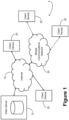
- a video server 10 is linked to a network such as the Internet 15.
- the video server 10 may for example be an original content server operated by a video service provider offering video content on demand.
- the video server 10 may be an 'edge' server in a CDN from which such video content may be delivered to subscribers.
- Subscribers may operate client devices 20, configured to communicate with the video server 10 over the Internet 15, or a respective local access network of an Internet service provider or other communications service provider.
- the client devices 20 communicate with the video server 10 using HTTP to request and download video content.
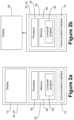
- a client device 20, 25 may comprise a data processing component 50 that includes a processor 55 and an associated memory 60.
- the memory may store, besides other data, one or more computer programs 65.
- the client device 20, 25 is configured to request and download encrypted video content via a communications interface 70 and to decode the content for display to a user of the device.
- a display 75 is integrated within the device, as for example where the client device 20, 25 is a smart phone, a tablet computer, a laptop computer, a vehicle, etc.
- a network operator for example a mobile network operator (MNO) of the network 30, may determine the level of resolution of video in a video stream being carried in data packets to a client device 25 over its network 30. For example, if the video stream is not encrypted, the MNO may see what video segments a client device 25 is requesting, and from which URL. In one possible method, the MNO may itself download a respective manifest file and see, by matching the URLs in client requests with entries in the manifest file, the level of resolution of the requested segments. In another possible method, it may be that the naming of the URL in a client request message directly indicates the level of resolution of a segment being requested. However, when the video data stream is encrypted, it is no longer possible for the MNO to determine any properties of the encrypted video stream.
- MNO mobile network operator
- the method then moves on, at 110, to analyze the selected current chunk from 105 to determine values ⁇ ( t ) for a predetermined set of features, wherein the time t indicates a time at which the 'current' chunk is being, or was, communicated.
- the set of features has been selected to include features whose values ⁇ ( t ) may be determined by analysis of the encrypted video stream and which have been found to provide a more reliable indication of network conditions or network behavior than, for example, traffic patterns, as used in the above-referenced prior art.
- Analysis of the selected current chunk at 110 is implemented, ideally, from where a realistic indication of end-to-end network conditions may be obtained.
- the set of features may also include one or more features that are used in known methods, so that the set of features may include one or both of the above two features in combination with the one or more known features.
- the one or more known features may, for example, be selected from:
- burst inter-arrival time is the time passed between the arrival of the first packet of a current chunk (burst) 150, and the last packet of the preceding chunk (burst) 155.
- burst inter-arrival time 160 may be observed to be large.
- burst inter-arrival time 175 may be observed to decrease, reaching zero in extreme cases.
- client devices 20, 25 may be observed to send (partial) GET requests with similar URLs, most likely having almost the same size (or alternating sizes for video and audio content).
- client device 20, 25 may first query the content descriptor, resulting in a sudden spike (most likely a drop) in request size. This is one potential anomaly that may be observed.
- the same chunk may have a different video hash for different resolutions, or the same hash but with different parameters in the URL, which may also result in a sudden change in request size.
- the URL of each of the segments being requested includes a video identifier that is the same for every requested segment, regardless of the level of resolution of the segment.
- the URL for each requested segment of the same video, but of a different level of resolution includes a different video identifier.
- the method then moves on, at 115, to access a pre-generated model to obtain state transition probabilities that correspond to the values ⁇ ( t ) determined for the set of features.
- a pre-generated model to obtain state transition probabilities that correspond to the values ⁇ ( t ) determined for the set of features.
- the pre-generated model 200 maps different possible network conditions to different possible transitions from one level of resolution, in this example one of four possible levels R 1 , R 2 , R 3 , R 4 , to another of the four possible levels R 1 , R 2 , R 3 , R 4 .
- the pre-generated model 200 may be implemented in any one of a number of known ways and may be generated in an offline processing stage. There is vast academic literature on coding theory that may be applied to the representation of possible state transition matrices.
- the model 200 may comprise a database of compressed client behavior patterns using a known compression technique to represent all the possible combinations of values for the set of features ⁇ F k ⁇ and possible resolution transitions.
- the model may be trained using a training data set 210 to assign respective probabilities to the different resolution transitions for a particular set of network conditions.
- the step 115 in the above method, of accessing the model 200 to obtain the state transition probability matrix H ⁇ ( t ) may, in this example, comprise applying decompression, parameterized by ⁇ ( t ) , the determined feature values for the current chunk, to the database of compressed client behavior patterns, extracting the most proper state-transition probability matrix H ⁇ ( t ) for the Markov chain.
- one or more decision trees may be used to represent, as a hierarchy of decision nodes, the different possible combinations of values of the predetermined set of features ⁇ F k ⁇ and the different possible first levels of video resolution.
- Leaf nodes of the decision tree comprise the different possible second levels of video resolution that may result by following respective paths through the decision nodes of the decision tree.
- Each path through the decision nodes of the decision tree represents a rule that results in the same, or a transition to different level of video resolution.
- the different possible rules may be represented by decision lists or multiple decision trees having decision nodes representing single values for the respective features so that each 'rule' may be represented by a different decision tree or decision list.
- a training data set 210 may be assembled by previous experiment or observation, for example in the form of a training data table, recording actual observations made over a period of time.
- the training data may be split by buffering resolution as an explaining variable.
- Each row of the training data table may record the current level of buffering resolution, an observed combination of values for the set of features ⁇ F k ⁇ and the resultant level of buffering resolution at a client device.
- For each current level of resolution a decision tree may be trained to code the possible transitions from that current resolution into the others. The decision tree would merge similar network conditions in a way that tries to give the best predictions for a target variable - as such, it provides lossy compression.
- each leaf node the distribution of the target variable is available as a row vector, which is a symbol in the compression procedure.
- Decompression can be carried out in a simple and efficient manner as the best fitting transition probability matrix one can reconstruct by querying the resolution distribution from each tree according to ⁇ ( t ) .
- Each tree will return a symbol, which is one row of H ⁇ ( t ) .
- the decision tree may be 'trained' by recording what proportion of the rows in the training data table satisfy each 'rule' represented by a path through the decision tree to a leaf node.
- R i , F k ) may be determined and recorded in the model for each possible path through the decision tree, providing a probability that the network conditions represented by a set of values F k for the features ⁇ F k ⁇ will cause the resulting level of video resolution R j at a client device to be the same or to change from a current level of video resolution R i .
- a neural network may be trained using the training data set 210 to relate, with respective conditional probabilities, one or more first levels of resolution to one or more second levels of resolution for different combinations of values for the set of features.
- Other implementations of machine learning techniques may be applied to generate the model, as would be apparent to a person of ordinary skill in the relevant art.
- State-transition matrices with high second largest eigenvalues indicate uncertainty, which should be avoided - compression should be done in such a way that the second largest eigenvalues are as small as possible. Furthermore, if the determinant of a state transition probability matrix is near to 0, this implies that the matrix is close to being linearly dependent, which means that two or more rows are almost the same, i.e. states could be merged, which is not desirable.
- the corresponding matrix H ⁇ ( t ) of transition probabilities may be assembled at 115 by selecting from the model those paths through the decision tree representing the different possible current levels of resolution in combination with the determined values ⁇ ( t ) for the set of features ⁇ F k ⁇ .
- the pre-generated state transition probabilities may be read for each of the resultant levels of resolution represented by respective leaf nodes. If required, the different possible levels of resolution represented in the leaf nodes may be grouped into a smaller number of resolution categories, e.g. Low, Medium and High, and the associated state transition probabilities may be combined to give a 3 x 3 matrix H ⁇ ( t ) of transition probabilities.
- the method then moves on, at 120, to use the state transition probability matrix H ⁇ ( t ) determined at 115 to calculate how the first probability distribution ⁇ t obtained at 100 is likely to change as a result of the indicated network conditions, so determining the next set of state probabilities in the Markov chain.
- the second probability distribution ⁇ t +1 indicates the probabilities that each of the different levels of resolution at the client device 20, 25 will be achieved at the client device 20, 25 as a result of the network conditions indicated at 110, given that the probability distribution was previously the first probability distribution ⁇ t obtained at 100.
- This method thereby simulates the inventive assumption that levels of resolution likely to be experienced at the client device 20,25 evolve in the manner of a state machine.
- the method then returns to 105 to be repeated, wherein the second probability distribution ⁇ t +1 calculated at 120 becomes the first probability distribution ⁇ t obtained at 100, and 105 comprises selecting a new 'current' chunk of the video stream.
- obtaining the first probability distribution comprises estimating a first probability for each of the of states of the Markov chain to be 1 / n, where n is the number of different levels of playout resolution that may be achieved at the client device by the delivered video stream.
- obtaining the first probability distribution comprises determining a probability distribution for the states of the Markov chain resulting from network conditions indicated by analysis of data packets in a selected chunk preceding the current chunk in the encrypted video stream.
- the convergent behavior also protects against sudden drops in predicted resolution by enforcing a gradual increase or decrease. From basic linear algebra and probability theory it is known that the smaller the second largest eigenvalue of the transition matrix H , the faster the Markov chain will converge. Furthermore, if the second largest eigenvalue is high (around 1), then in practice this means that there is another probability distribution that is almost stable. That is, under uncertain conditions, the Markov chain will converge slower, which is also a welcomed property. Finally, the steady state distribution of a Markov chain does not depend on the initial conditions, meaning that whatever the current resolution distribution, if a new transition matrix is set, the chain will converge to the new steady state regardless.
- KPIs key performance indicators
- KPIs may be calculated using contents selected from such a database of probability distributions:
- expected values may be calculated for each of the metrics measured in these KPIs. Any of these KPIs may be calculated and reported on a per chunk, per video or per session basis.
- a real example of the application of the above-described method and the resultant KPIs may be represented graphically, as for example is shown in Figure 6 .
- the graph 305 shows how the probability of each resolution class, determined by application of the above-described method, changes over time. Note the smooth transition between resolution classes.
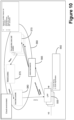
- a NWDAF 500 is shown linked to each of a number of network functions (NF) 505.
- a network function 505 may be any suitable network function (e.g. an AMF, an AUSF or any other network function).
- the NWDAF 500 collects data from one or more of the network functions 505 by connecting to an Event Exposure Function at the network function 505 over an Nnf reference point (as detailed in the 3GPP document TS 23.288, v 16.0.0).
- the NWDAF 500 is then able to receive data from the network function 505 over the Nnf reference point by subscribing to reports from the network function 505 or by requesting data from the network function 505.
- the network function NF2 may be configured to implement the remaining part of the feature 105 to select from the data packets indicated by NF1 those packets to form the current chunk, using by one or more of the techniques described and referenced above.
- the functionality required to implement feature 105 of the method may be implemented entirely by the network function NF 1 such that the NWDAF 500 may receive from NF 1 only an indication of the data packets selected for the current chunk.
- the network function NF 5 may be configured to implement the feature 120 of Figure 3 . That is, NF5 may be configured to receive the state transition probability matrix obtained by NF 4, for example by accessing the NRF 515. NF 5 may be configured to apply the obtained matrix to calculate a second probability distribution for the levels of resolution, using a first probability distribution for the implemented Markov chain obtained at feature 100 of the method. NF 5 may store the calculated second probability distribution in the NRF 515.
- feature values ⁇ ( t ) determined for multiple selected chunks, or at multiple times for multiple subscribers may be bundled together and forwarded to a cloud environment 560, using a common interface, an Ingress Load Balancer 565, e.g. a Representational State Transfer Application Programming Interface (REST API), where the data can be spread amongst multiple worker nodes 570, for example a Per-subscriber video QoE analytics node.
- the worker nodes 570 may implement model access functions to extract respective state transition probability matrices and, optionally, to calculate KPIs.
- the state transition probability matrices may then either be communicated back to the originating node or retained in the cloud environment 560 where the remaining steps of the proposed method may be implemented.
- a Network Analytics node 575 may perform further analysis of the output of the worker nodes 570, for example to identify issues affecting QoE of one or more subscribers.
- the responses may be short-term configuration changes or longer term reconfiguration or provisioning exercises.
- the network may be triggered to provide more bandwidth to one or more subscribers if this can be done without causing problems for other subscribers using the network.
- a longer term response, in a mobile communication network 30, may be to provision additional cells in an area in which it is determined that there are a large number of video subscribers experiencing generally low levels of QoE.
- An alarm system may also be implemented to alert network engineers to particular problems that can be localized to a particular part of the network.
Landscapes
- Engineering & Computer Science (AREA)
- Multimedia (AREA)
- Signal Processing (AREA)
- Databases & Information Systems (AREA)
- Theoretical Computer Science (AREA)
- Software Systems (AREA)
- Computer Networks & Wireless Communication (AREA)
- Physics & Mathematics (AREA)
- Evolutionary Computation (AREA)
- Computing Systems (AREA)
- Computer Vision & Pattern Recognition (AREA)
- General Health & Medical Sciences (AREA)
- Medical Informatics (AREA)
- Artificial Intelligence (AREA)
- Health & Medical Sciences (AREA)
- General Physics & Mathematics (AREA)
- Probability & Statistics with Applications (AREA)
- Computer Security & Cryptography (AREA)
- Two-Way Televisions, Distribution Of Moving Picture Or The Like (AREA)
- Data Exchanges In Wide-Area Networks (AREA)
Claims (17)
- Verfahren zur Schätzung der Wiedergabeauflösung eines Videos, das durch einen verschlüsselten Videostrom, der über ein Netzwerk kommuniziert wird, an eine Client-Vorrichtung geliefert wird, wobei das Verfahren Folgendes umfasst:(i) Erhalten (100) einer ersten Wahrscheinlichkeitsverteilung für eine Mehrzahl von Zuständen, wobei jeder der Mehrzahl von Zuständen einen unterschiedlichen Grad der Wiedergabeauflösung umfasst, der an der Client-Vorrichtung durch den gelieferten Videostrom erreicht werden kann, und wobei die erste Wahrscheinlichkeitsverteilung entweder eine anfängliche Schätzung der Wahrscheinlichkeit für jeden der Mehrzahl von Zuständen oder eine Wahrscheinlichkeit für den Zustand in einer zeitabhängigen Markov-Kette angibt, die von einem unmittelbar vorhergehenden Zustand, der durch den Videostrom geliefert wird, und einer jeweiligen zeitabhängigen Zustandsübergangswahrscheinlichkeit abhängt;(ii) Auswählen (105) eines aktuellen Chunks des verschlüsselten Videostroms, der voraussichtlich Datenpakete umfasst, die Videodaten mit demselben Wiedergabeauflösungsgrad übertragen;(iii) Bestimmen von Werten für Merkmale in einem vorbestimmten Satz von Merkmalen, die Bedingungen in dem Netzwerk angeben, durch Analyse (110) der Datenpakete in dem ausgewählten aktuellen Chunk;(iv) Verwenden (115) eines vorab generierten Modells in Anbetracht des bestimmten Satzes von Merkmalswerten aus (iii), um einen entsprechenden Satz von zeitabhängigen Zustandsübergangswahrscheinlichkeiten für die Mehrzahl von Zuständen zu erhalten;(v) Anwenden (120) des bestimmten Satzes von zeitabhängigen Zustandsübergangswahrscheinlichkeiten aus (iv), um unter Verwendung der bei (i) erhaltenen ersten Wahrscheinlichkeitsverteilung eine zweite Wahrscheinlichkeitsverteilung für die Mehrzahl von Zuständen der Markov-Kette zu berechnen; und(vi) Verwenden der zweiten Wahrscheinlichkeitsverteilung, um zu schätzen, welcher der Mehrzahl von unterschiedlichen Graden der Wiedergabeauflösung durch den aktuellen Chunk des verschlüsselten Videostroms an die Client-Vorrichtung geliefert wird.
- Verfahren nach Anspruch 1, wobei (i) Bestimmen einer Wahrscheinlichkeitsverteilung für die Mehrzahl von Zuständen der Markov-Kette, die aus den angegebenen Netzwerkbedingungen resultieren, durch Analyse von Datenpaketen in einem ausgewählten Chunk umfasst, der dem aktuellen Chunk in dem verschlüsselten Videostrom vorangeht, wobei der dem aktuellen Chunk vorangehende ausgewählte Chunk durch null oder mehr Zwischenchunks von dem aktuellen Chunk in dem verschlüsselten Videostrom getrennt ist.
- Verfahren nach einem der Ansprüche 1 bis 2, wobei die Datenpakete des ausgewählten aktuellen Chunks des verschlüsselten Videostroms sich auf eine einzige Videositzung zwischen der Client-Vorrichtung und einem Videodienstanbieter beziehen.
- Verfahren nach einem der Ansprüche 1 bis 3, wobei das Auswählen des aktuellen Chunks des verschlüsselten Videostroms mindestens eines von Folgendem umfasst:Auswählen von Datenpaketen mit einer Nutzlastgröße über einem vorbestimmten Schwellenwert; undAuswählen von Datenpaketen, die voraussichtlich einen Teil des Videos mit einer vorbestimmten Zeitdauer übertragen.
- Verfahren nach einem der Ansprüche 1 bis 4, wobei der vorbestimmte Satz von Merkmalen eines oder mehrere von Folgenden umfasst:eine Burst-Zwischenankunftszeit zwischen dem ausgewählten aktuellen Chunk und einem vorangehenden oder einem nachfolgenden Chunk des verschlüsselten Videostroms;eine Anomalie in der Größe von angeforderten Nachrichten, die von der Client-Vorrichtung gesendet werden; undeine Bitrate des verschlüsselten Videostroms.
- Verfahren nach einem der Ansprüche 1 bis 5, wobei bei (iv) das vorab generierte Modell mit einer unter Bezugnahme auf einen Trainingsdatensatz bestimmten Wahrscheinlichkeit einen ersten Auflösungsgrad eines an die Client-Vorrichtung gelieferten Videos mit einem zweiten Auflösungsgrad in Beziehung setzt, der als Ergebnis von Netzwerkbedingungen an die Client-Vorrichtung geliefert wird, die durch eine jeweilige Kombination von Werten für den Satz von Merkmalen angegeben werden, wobei das Modell dadurch für einen bestimmten Satz von Merkmalswerten eine bedingte Wahrscheinlichkeit bereitstellt, dass sich der zweite Auflösungsgrad in Anbetracht des ersten Auflösungsgrads ergibt.
- Verfahren nach Anspruch 6, wobei bei (iv) das vorab generierte Modell Folgendes umfasst:einen Entscheidungsbaum, der Entscheidungsknoten, die verschiedene mögliche Werte für Merkmale in dem Satz von Merkmalen und verschiedene mögliche erste Grade der Mehrzahl von Auflösungsgraden darstellen, und Blattknoten umfasst, die verschiedene mögliche zweite Grade der Mehrzahl von Auflösungsgraden darstellen; undeine mit einem Pfad durch den Entscheidungsbaum zu einem Blattknoten assoziierte Zustandsübergangswahrscheinlichkeit, die unter Bezugnahme auf einen Trainingsdatensatz bestimmt wird, der Instanzen umfasst, in denen die durch den Satz von Merkmalswerten angegeben Netzwerkbedingungen und der in dem Pfad dargestellte erste Auflösungsgrad zu einem Übergang zu dem zweiten Auflösungsgrad führen, der durch den Blattknoten dargestellt wird.
- Verfahren nach Anspruch 6, wobei bei (iv) das vorab generierte Modell ein neuronales Netzwerk umfasst, das unter Bezugnahme auf den Trainingsdatensatz trainiert wird, um mit jeweiligen bedingten Wahrscheinlichkeiten einen oder mehrere erste Auflösungsgrade mit einem oder mehreren zweiten Auflösungsgraden für verschiedene Kombinationen von Werten für den Satz von Merkmalen in Beziehung zu setzen.
- Verfahren nach einem der Ansprüche 1 bis 8, wobei bei (i) das Erhalten der ersten Wahrscheinlichkeitsverteilung ein Schätzen einer ersten Wahrscheinlichkeit für jeden der Mehrzahl von Zuständen der Markov-Kette als 1/n umfasst, wobei n die Anzahl unterschiedlicher Grade der Wiedergabeauflösung ist, die an der Client-Vorrichtung durch den gelieferten Videostrom erreicht werden kann, und das Verfahren ferner Folgendes umfasst:
(vii) Wiederholen von (i) bis (vi), wobei, wenn (i) wiederholt wird, das Erhalten der ersten Wahrscheinlichkeitsverteilung Verwenden der bei (v) bestimmten zweiten Wahrscheinlichkeitsverteilung als erste Wahrscheinlichkeitsverteilung umfasst und (ii) Auswählen eines Chunks nach dem aktuellen Chunk in dem verschlüsselten Videostrom als den aktuellen Chunk umfasst. - Verfahren nach Anspruch 9, umfassend:
(viii) Berechnen eines oder mehrerer Leistungsindikatoren der Erlebnisqualität (QoE) eines Benutzers, der ein Video betrachtet, das durch den verschlüsselten Videostrom an die Client-Vorrichtung geliefert wird, unter Verwendung des geschätzten Grades der Wiedergabeauflösung, der bei (vi) über einen oder mehrere aufeinanderfolgende Chunks bestimmt wird. - Verfahren nach Anspruch 10, wobei der eine oder die mehreren Leistungsindikatoren aus Folgendem ausgewählt werden:einer voraussichtlichen Anzahl von Änderungen von einem ersten Auflösungsgrad in einen zweiten, unterschiedlichen Auflösungsgrad;einer voraussichtlichen Zeit, die zum Wiedergeben des Videos an der Client-Vorrichtung mit einem der Mehrzahl verschiedener Auflösungsgrade aufgebracht wird; undeiner voraussichtlichen Zeit, um einen gegebenen der Mehrzahl unterschiedlicher Grade der Wiedergabeauflösung nach einer Herabsetzung des Grades der Wiedergabeauflösung wiederherzustellen.
- Verfahren nach Anspruch 10 oder 11, wobei der eine oder die mehreren Leistungsindikatoren für mindestens eines von Folgenden bestimmt werden:einen Zeitraum, der durch einen ausgewählten Chunk des verschlüsselten Videostroms dargestellt wird;eine Videositzung; undein ganzes Video.
- Verfahren nach einem der Ansprüche 10 bis 12, umfassend:
(viii) Anpassen von Kommunikationsparametern des Netzwerks gemäß dem einen oder den mehreren bei (vii) berechneten Leistungsindikatoren. - Verfahren nach einem der vorhergehenden Ansprüche, umfassend ein Einteilen der Mehrzahl unterschiedlicher Auflösungsgrade in zwei oder mehr Gruppen von Wiedergabeauflösungen und wobei die Zustände der Markov-Kette zwei oder mehr Gruppen von Wiedergabeauflösungen umfassen.
- Netzwerkknoten oder Gruppe von Knoten eines Netzwerks, konfiguriert mit Zugriff auf Datenpakete, die einen verschlüsselten Videostrom übertragen, der über das Netzwerk kommuniziert wird, wobei der Netzwerkknoten oder die Gruppe von Knoten konfiguriert sind, um die Wiedergabeauflösung eines durch den verschlüsselten Videostrom an eine Client-Vorrichtung gelieferten Videos durch Folgendes zu schätzen:(i) Erhalten (100) einer ersten Wahrscheinlichkeitsverteilung für eine Mehrzahl von Zuständen, wobei jeder der Mehrzahl von Zuständen einen unterschiedlichen Grad der Wiedergabeauflösung umfasst, der an der Client-Vorrichtung durch den gelieferten Videostrom erreicht werden kann, und wobei die erste Wahrscheinlichkeitsverteilung entweder eine anfängliche Schätzung der Wahrscheinlichkeit für jeden der Mehrzahl von Zuständen oder eine Wahrscheinlichkeit für den Zustand in einer zeitabhängigen Markov-Kette angibt, die von einem unmittelbar vorhergehenden Zustand, der durch den Videostrom geliefert wird, und einer jeweiligen zeitabhängigen Zustandsübergangswahrscheinlichkeit abhängt;(ii) Auswählen (105) eines aktuellen Chunks des verschlüsselten Videostroms, der voraussichtlich Datenpakete umfasst, die Videodaten mit demselben Wiedergabeauflösungsgrad übertragen;(iii) Bestimmen von Werten für Merkmale in einem vorbestimmten Satz von Merkmalen, die Bedingungen in dem Netzwerk angeben, durch Analyse (110) der Datenpakete in dem ausgewählten aktuellen Chunk;(iv) Verwenden (115) eines vorab generierten Modells in Anbetracht des bestimmten Satzes von Merkmalswerten aus (iii), um einen entsprechenden Satz von zeitabhängigen Zustandsübergangswahrscheinlichkeiten für die Mehrzahl von Zuständen zu erhalten;(v) Anwenden (120) des bestimmten Satzes von zeitabhängigen Zustandsübergangswahrscheinlichkeiten aus (iv), um unter Verwendung der bei (i) erhaltenen ersten Wahrscheinlichkeitsverteilung eine zweite Wahrscheinlichkeitsverteilung für die Mehrzahl von Zuständen der Markov-Kette zu berechnen; und(vi) Verwenden der zweiten Wahrscheinlichkeitsverteilung, um zu schätzen, welcher der Mehrzahl von unterschiedlichen Graden der Wiedergabeauflösung durch den aktuellen Chunk des verschlüsselten Videostroms an die Client-Vorrichtung geliefert wird.
- Netzwerkknoten oder Gruppe von Knoten nach Anspruch 15, konfiguriert zum Durchführen von Operationen des Verfahrens nach einem der Ansprüche 2 bis 14.
- Datenverarbeitungsstruktur, die eine Cloud-gehostete Datenverarbeitungsumgebung und einen Netzwerkknoten nach einem der Ansprüche 15 bis 16 umfasst, wobei die Cloud-gehostete Datenverarbeitungsumgebung konfiguriert ist, um einen physischen oder virtualisierten Funktionsknoten mit einer Schnittstelle zum Empfangen von Werten für Merkmale in einem vorbestimmten Satz von Merkmalen von dem Netzwerkknoten zu implementieren, die Bedingungen in einem Netzwerk angeben, wobei der Funktionsknoten mit Zugriff auf ein vorab generiertes Modell konfiguriert ist, das mit einer unter Bezugnahme auf einen Trainingsdatensatz bestimmten Wahrscheinlichkeit einen ersten von einer Mehrzahl von Auflösungsgraden eines Videos, wie er über das Netzwerk an eine Client-Vorrichtung geliefert werden kann, mit einem zweiten der Mehrzahl von Auflösungsgraden des Videos, wie er als Ergebnis von Netzwerkbedingungen an die Client-Vorrichtung geliefert werden kann, die durch eine jeweilige Kombination von Werten für den Satz von Merkmalen angegeben werden, in Beziehung setzt, wobei der Funktionsknoten konfiguriert ist, um von dem Modell für die empfangene Kombination von Werten für den Satz von Merkmalen einen Satz von zeitabhängigen Zustandsübergangswahrscheinlichkeiten für die möglichen Übergänge von einem ersten der Mehrzahl von Auflösungsgraden zu einem zweiten der Mehrzahl von Auflösungsgraden unter Netzwerkbedingungen zu erhalten, die durch die empfangene Kombination von Werten für den Satz von Merkmalen angegeben werden, und den erhaltenen Satz von bedingten Zustandsübergangswahrscheinlichkeiten an der Schnittstelle auszugeben.
Applications Claiming Priority (2)
| Application Number | Priority Date | Filing Date | Title |
|---|---|---|---|
| EP2020073124 | 2020-08-18 | ||
| PCT/EP2020/073869 WO2022037798A1 (en) | 2020-08-18 | 2020-08-26 | Estimating video resolution delivered by an encrypted video stream |
Publications (2)
| Publication Number | Publication Date |
|---|---|
| EP4201074A1 EP4201074A1 (de) | 2023-06-28 |
| EP4201074B1 true EP4201074B1 (de) | 2025-04-09 |
Family
ID=72291021
Family Applications (1)
| Application Number | Title | Priority Date | Filing Date |
|---|---|---|---|
| EP20764342.0A Active EP4201074B1 (de) | 2020-08-18 | 2020-08-26 | Schätzung der videoauflösung, die von einem verschlüsselten videostrom geliefert wird |
Country Status (3)
| Country | Link |
|---|---|
| US (1) | US12063403B2 (de) |
| EP (1) | EP4201074B1 (de) |
| WO (1) | WO2022037798A1 (de) |
Families Citing this family (5)
| Publication number | Priority date | Publication date | Assignee | Title |
|---|---|---|---|---|
| US11632290B2 (en) * | 2020-11-10 | 2023-04-18 | Cisco Technology, Inc. | Selective disaggregation advertisement for routing in multi-plane topologies |
| US12120201B1 (en) * | 2023-04-17 | 2024-10-15 | Motorola Mobility Llc | Push notifications with metatags directing optimal time for surfacing notifications at consumer device |
| US12445552B2 (en) | 2023-04-17 | 2025-10-14 | Motorola Mobility Llc | Surfacing notifications based on optimal network conditions and device characteristics at a consumer device |
| CN117768685B (zh) * | 2023-12-06 | 2025-04-25 | 书行科技(北京)有限公司 | 数据处理方法、装置、计算机设备及计算机可读存储介质 |
| CN121056688B (zh) * | 2025-10-09 | 2026-05-05 | 重庆大学 | 视频分辨率预测方法、装置、电子设备及存储介质 |
Family Cites Families (42)
| Publication number | Priority date | Publication date | Assignee | Title |
|---|---|---|---|---|
| US6771644B1 (en) * | 1999-09-17 | 2004-08-03 | Lucent Technologies Inc. | Program insertion in real time IP multicast |
| US6665705B1 (en) * | 1999-10-19 | 2003-12-16 | International Business Machines Corporation | Method and apparatus for proxy replication |
| US7594249B2 (en) * | 2001-05-04 | 2009-09-22 | Entropic Communications, Inc. | Network interface device and broadband local area network using coaxial cable |
| US8392952B2 (en) * | 2002-05-03 | 2013-03-05 | Time Warner Cable Enterprises Llc | Programming content processing and management system and method |
| US7792984B2 (en) * | 2003-01-23 | 2010-09-07 | International Business Machines Corporation | Systems and methods for the distribution of bulk data using multicast routing that mitigates network traffic on subnets |
| US20080037420A1 (en) * | 2003-10-08 | 2008-02-14 | Bob Tang | Immediate ready implementation of virtually congestion free guaranteed service capable network: external internet nextgentcp (square waveform) TCP friendly san |
| US7430222B2 (en) * | 2004-02-27 | 2008-09-30 | Microsoft Corporation | Media stream splicer |
| US8135040B2 (en) * | 2005-11-30 | 2012-03-13 | Microsoft Corporation | Accelerated channel change |
| US20080098420A1 (en) * | 2006-10-19 | 2008-04-24 | Roundbox, Inc. | Distribution and display of advertising for devices in a network |
| US20090025027A1 (en) * | 2007-07-20 | 2009-01-22 | Michael Craner | Systems & methods for allocating bandwidth in switched digital video systems based on interest |
| US8316409B2 (en) * | 2007-10-11 | 2012-11-20 | James Strothmann | Simultaneous access to media in a media delivery system |
| US8578432B2 (en) * | 2007-12-07 | 2013-11-05 | Cisco Technology, Inc. | Policy control over switched delivery networks |
| US9094140B2 (en) * | 2008-04-28 | 2015-07-28 | Time Warner Cable Enterprises Llc | Methods and apparatus for audience research in a content-based network |
| EP2297957B1 (de) * | 2008-07-03 | 2014-09-03 | Telefonaktiebolaget LM Ericsson (publ) | Schneller kanalwechsel in tv-ausstrahlungssystemen |
| US8014393B1 (en) * | 2008-08-05 | 2011-09-06 | Cisco Technology, Inc. | Bandwidth optimized rapid channel change in IP-TV network |
| US8112781B2 (en) * | 2008-10-07 | 2012-02-07 | General Instrument Corporation | Content delivery system having an edge resource manager performing bandwidth reclamation |
| US8321887B2 (en) * | 2008-11-10 | 2012-11-27 | Time Warner Cable Inc. | Displaying enhanced advertisements simultaneously across substantially all channels |
| US8949888B2 (en) * | 2008-12-30 | 2015-02-03 | Verizon Patent And Licensing Inc. | Systems and methods for efficient messaging and targeted IP multicast advertisement in communication networks |
| CA2774480C (en) * | 2009-09-15 | 2023-02-28 | Comcast Cable Communications, Llc | Control plane architecture for multicast cache-fill |
| US10264029B2 (en) * | 2009-10-30 | 2019-04-16 | Time Warner Cable Enterprises Llc | Methods and apparatus for packetized content delivery over a content delivery network |
| US10003851B2 (en) * | 2009-11-24 | 2018-06-19 | Imagine Communications Corp. | Managed multiplexing of video in an adaptive bit rate environment |
| US9158769B2 (en) * | 2009-12-28 | 2015-10-13 | Adam Dunstan | Systems and methods for network content delivery |
| EP2534836A4 (de) * | 2010-02-11 | 2014-10-01 | Beaumaris Networks Inc D B A Bni Video | Bandbreitenzuweisung für mehrere dienste |
| JP5569053B2 (ja) * | 2010-03-11 | 2014-08-13 | ソニー株式会社 | コンテンツ配信装置、コンテンツ配信方法および送信サーバ |
| EP2383999A1 (de) | 2010-04-29 | 2011-11-02 | Irdeto B.V. | Kontrolle eines adaptiven Streaming digitalen Inhalts |
| GB2490659A (en) * | 2011-05-04 | 2012-11-14 | Nds Ltd | Fast channel change using channel packs comprising independently decodable frame segments having differing qualities |
| US9380079B2 (en) * | 2011-06-29 | 2016-06-28 | Cable Television Laboratories, Inc. | Content multicasting |
| US8676995B1 (en) * | 2011-07-07 | 2014-03-18 | Cisco Technology, Inc. | System and method for enabling pairing of a companion device with a mate device for performing a companion service |
| US9264508B2 (en) * | 2011-08-19 | 2016-02-16 | Time Warner Cable Enterprises Llc | Apparatus and methods for reduced switching delays in a content distribution network |
| US9197907B2 (en) * | 2011-10-07 | 2015-11-24 | Ericsson Ab | Adaptive ads with advertising markers |
| US9485526B2 (en) * | 2012-07-16 | 2016-11-01 | Time Warner Cable Enterprises Llc | Multi-stream shared communication channels |
| US10708335B2 (en) * | 2012-11-16 | 2020-07-07 | Time Warner Cable Enterprises Llc | Situation-dependent dynamic bit rate encoding and distribution of content |
| US9402107B2 (en) * | 2013-03-15 | 2016-07-26 | Time Warner Cable Enterprises Llc | Apparatus and methods for delivery of multicast and unicast content in a content delivery network |
| US9066153B2 (en) * | 2013-03-15 | 2015-06-23 | Time Warner Cable Enterprises Llc | Apparatus and methods for multicast delivery of content in a content delivery network |
| US10362081B2 (en) | 2013-08-30 | 2019-07-23 | Citrix Systems, Inc. | Methods and systems for quantifying the holistic quality of experience for internet multimedia |
| US9628405B2 (en) * | 2014-04-07 | 2017-04-18 | Ericsson Ab | Merging multicast ABR and unicast ABR with progressive download ABR in a customer premises device within the same video delivery pipe |
| US10601869B2 (en) * | 2016-02-15 | 2020-03-24 | Netscout Systems Texas, Llc | System and method to estimate quality of experience for consumption of encrypted media network traffic |
| EP3322127A1 (de) * | 2016-11-14 | 2018-05-16 | Telefonica Digital España, S.L.U. | Verfahren und computerprogramme zur identifizierung von video-streaming-benutzererfahrungsqualität (qoe) aus netzwerkverkehr |
| EP3439308A1 (de) | 2017-07-31 | 2019-02-06 | Zhilabs S.L. | Bestimmung von qoe bei verschlüsselten videoströmen unter verwendung von betreutem lernen |
| EP3707863B1 (de) | 2017-11-10 | 2021-06-23 | Telefonaktiebolaget LM Ericsson (PUBL) | Mehrweg-richtlinienentscheidungen für verschlüsselte videoströme |
| US10986001B2 (en) | 2018-01-25 | 2021-04-20 | Nokia Solutions And Networks Oy | System and method for quality of service detection of encrypted packet flows |
| WO2020078575A1 (en) * | 2018-10-19 | 2020-04-23 | Telefonaktiebolaget Lm Ericsson (Publ) | Methods of and devices for adaptive bit rate, abr, video resolution shaping of a video stream in a telecommunications system |
-
2020
- 2020-08-26 EP EP20764342.0A patent/EP4201074B1/de active Active
- 2020-08-26 US US18/021,954 patent/US12063403B2/en active Active
- 2020-08-26 WO PCT/EP2020/073869 patent/WO2022037798A1/en not_active Ceased
Also Published As
| Publication number | Publication date |
|---|---|
| US20230247244A1 (en) | 2023-08-03 |
| EP4201074A1 (de) | 2023-06-28 |
| US12063403B2 (en) | 2024-08-13 |
| WO2022037798A1 (en) | 2022-02-24 |
Similar Documents
| Publication | Publication Date | Title |
|---|---|---|
| US12063403B2 (en) | Estimating video resolution delivered by an encrypted video stream | |
| US10826807B2 (en) | Media player analytics | |
| Juluri et al. | Measurement of quality of experience of video-on-demand services: A survey | |
| US11979387B2 (en) | Classification of encrypted internet traffic | |
| US9967161B2 (en) | Coordinating analytics between media player and server | |
| US11089076B1 (en) | Automated detection of capacity for video streaming origin server | |
| US11743158B2 (en) | Initial bitrate selection for a video delivery session | |
| US20240259649A1 (en) | Video stream analytics | |
| da Costa Filho et al. | Predicting the performance of virtual reality video streaming in mobile networks | |
| US20150256577A1 (en) | Directing Fragmented Content | |
| US10887363B1 (en) | Streaming decision in the cloud | |
| CA3132483A1 (en) | System and method for managing video streaming quality of experience | |
| Bentaleb et al. | Performance analysis of ACTE: A bandwidth prediction method for low-latency chunked streaming | |
| US10757220B2 (en) | Estimating video quality of experience metrics from encrypted network traffic | |
| US20160028594A1 (en) | Generating and Utilizing Contextual Network Analytics | |
| Mushtaq et al. | Quality of experience paradigm in multimedia services: application to OTT video streaming and VoIP services | |
| Abar et al. | Enhancing QoE based on machine learning and DASH in SDN networks | |
| Calyam et al. | Multi‐resolution multimedia QoE models for IPTV applications | |
| US20210014547A1 (en) | System for distributing an audiovisual content | |
| Thang et al. | Video streaming over HTTP with dynamic resource prediction | |
| Shabrina et al. | The Usage of CDN for Live Video Streaming to Improve QoS. Case Study: 1231 Provider. | |
| Nguyen et al. | CADLAD: Device-aware bitrate ladder construction for HTTP adaptive streaming | |
| Bouraqia et al. | Solving startup-delay-QoE dilemma for video streaming services in 5G networks | |
| Pelayo | Bandwidth prediction for adaptive video streaming | |
| Khokhar | Modeling quality of experience of internet video streaming by controlled experimentation and machine learning |
Legal Events
| Date | Code | Title | Description |
|---|---|---|---|
| STAA | Information on the status of an ep patent application or granted ep patent |
Free format text: STATUS: UNKNOWN |
|
| STAA | Information on the status of an ep patent application or granted ep patent |
Free format text: STATUS: THE INTERNATIONAL PUBLICATION HAS BEEN MADE |
|
| PUAI | Public reference made under article 153(3) epc to a published international application that has entered the european phase |
Free format text: ORIGINAL CODE: 0009012 |
|
| STAA | Information on the status of an ep patent application or granted ep patent |
Free format text: STATUS: REQUEST FOR EXAMINATION WAS MADE |
|
| 17P | Request for examination filed |
Effective date: 20230316 |
|
| AK | Designated contracting states |
Kind code of ref document: A1 Designated state(s): AL AT BE BG CH CY CZ DE DK EE ES FI FR GB GR HR HU IE IS IT LI LT LU LV MC MK MT NL NO PL PT RO RS SE SI SK SM TR |
|
| DAV | Request for validation of the european patent (deleted) | ||
| DAX | Request for extension of the european patent (deleted) | ||
| GRAP | Despatch of communication of intention to grant a patent |
Free format text: ORIGINAL CODE: EPIDOSNIGR1 |
|
| STAA | Information on the status of an ep patent application or granted ep patent |
Free format text: STATUS: GRANT OF PATENT IS INTENDED |
|
| INTG | Intention to grant announced |
Effective date: 20241114 |
|
| GRAS | Grant fee paid |
Free format text: ORIGINAL CODE: EPIDOSNIGR3 |
|
| GRAA | (expected) grant |
Free format text: ORIGINAL CODE: 0009210 |
|
| STAA | Information on the status of an ep patent application or granted ep patent |
Free format text: STATUS: THE PATENT HAS BEEN GRANTED |
|
| AK | Designated contracting states |
Kind code of ref document: B1 Designated state(s): AL AT BE BG CH CY CZ DE DK EE ES FI FR GB GR HR HU IE IS IT LI LT LU LV MC MK MT NL NO PL PT RO RS SE SI SK SM TR |
|
| REG | Reference to a national code |
Ref country code: GB Ref legal event code: FG4D |
|
| REG | Reference to a national code |
Ref country code: CH Ref legal event code: EP |
|
| REG | Reference to a national code |
Ref country code: DE Ref legal event code: R096 Ref document number: 602020049150 Country of ref document: DE |
|
| REG | Reference to a national code |
Ref country code: IE Ref legal event code: FG4D |
|
| REG | Reference to a national code |
Ref country code: NL Ref legal event code: MP Effective date: 20250409 |
|
| PG25 | Lapsed in a contracting state [announced via postgrant information from national office to epo] |
Ref country code: NL Free format text: LAPSE BECAUSE OF FAILURE TO SUBMIT A TRANSLATION OF THE DESCRIPTION OR TO PAY THE FEE WITHIN THE PRESCRIBED TIME-LIMIT Effective date: 20250409 |
|
| REG | Reference to a national code |
Ref country code: AT Ref legal event code: MK05 Ref document number: 1784651 Country of ref document: AT Kind code of ref document: T Effective date: 20250409 |
|
| PG25 | Lapsed in a contracting state [announced via postgrant information from national office to epo] |
Ref country code: ES Free format text: LAPSE BECAUSE OF FAILURE TO SUBMIT A TRANSLATION OF THE DESCRIPTION OR TO PAY THE FEE WITHIN THE PRESCRIBED TIME-LIMIT Effective date: 20250409 Ref country code: PT Free format text: LAPSE BECAUSE OF FAILURE TO SUBMIT A TRANSLATION OF THE DESCRIPTION OR TO PAY THE FEE WITHIN THE PRESCRIBED TIME-LIMIT Effective date: 20250811 Ref country code: FI Free format text: LAPSE BECAUSE OF FAILURE TO SUBMIT A TRANSLATION OF THE DESCRIPTION OR TO PAY THE FEE WITHIN THE PRESCRIBED TIME-LIMIT Effective date: 20250409 |
|
| PGFP | Annual fee paid to national office [announced via postgrant information from national office to epo] |
Ref country code: DE Payment date: 20250827 Year of fee payment: 6 |
|
| REG | Reference to a national code |
Ref country code: LT Ref legal event code: MG9D |
|
| PG25 | Lapsed in a contracting state [announced via postgrant information from national office to epo] |
Ref country code: NO Free format text: LAPSE BECAUSE OF FAILURE TO SUBMIT A TRANSLATION OF THE DESCRIPTION OR TO PAY THE FEE WITHIN THE PRESCRIBED TIME-LIMIT Effective date: 20250709 Ref country code: GR Free format text: LAPSE BECAUSE OF FAILURE TO SUBMIT A TRANSLATION OF THE DESCRIPTION OR TO PAY THE FEE WITHIN THE PRESCRIBED TIME-LIMIT Effective date: 20250710 |
|
| PG25 | Lapsed in a contracting state [announced via postgrant information from national office to epo] |
Ref country code: PL Free format text: LAPSE BECAUSE OF FAILURE TO SUBMIT A TRANSLATION OF THE DESCRIPTION OR TO PAY THE FEE WITHIN THE PRESCRIBED TIME-LIMIT Effective date: 20250409 |
|
| PG25 | Lapsed in a contracting state [announced via postgrant information from national office to epo] |
Ref country code: BG Free format text: LAPSE BECAUSE OF FAILURE TO SUBMIT A TRANSLATION OF THE DESCRIPTION OR TO PAY THE FEE WITHIN THE PRESCRIBED TIME-LIMIT Effective date: 20250409 |
|
| PGFP | Annual fee paid to national office [announced via postgrant information from national office to epo] |
Ref country code: GB Payment date: 20250827 Year of fee payment: 6 |
|
| PG25 | Lapsed in a contracting state [announced via postgrant information from national office to epo] |
Ref country code: HR Free format text: LAPSE BECAUSE OF FAILURE TO SUBMIT A TRANSLATION OF THE DESCRIPTION OR TO PAY THE FEE WITHIN THE PRESCRIBED TIME-LIMIT Effective date: 20250409 |
|
| PG25 | Lapsed in a contracting state [announced via postgrant information from national office to epo] |
Ref country code: AT Free format text: LAPSE BECAUSE OF FAILURE TO SUBMIT A TRANSLATION OF THE DESCRIPTION OR TO PAY THE FEE WITHIN THE PRESCRIBED TIME-LIMIT Effective date: 20250409 |
|
| PG25 | Lapsed in a contracting state [announced via postgrant information from national office to epo] |
Ref country code: RS Free format text: LAPSE BECAUSE OF FAILURE TO SUBMIT A TRANSLATION OF THE DESCRIPTION OR TO PAY THE FEE WITHIN THE PRESCRIBED TIME-LIMIT Effective date: 20250709 |
|
| PG25 | Lapsed in a contracting state [announced via postgrant information from national office to epo] |
Ref country code: IS Free format text: LAPSE BECAUSE OF FAILURE TO SUBMIT A TRANSLATION OF THE DESCRIPTION OR TO PAY THE FEE WITHIN THE PRESCRIBED TIME-LIMIT Effective date: 20250809 |
|
| PG25 | Lapsed in a contracting state [announced via postgrant information from national office to epo] |
Ref country code: LV Free format text: LAPSE BECAUSE OF FAILURE TO SUBMIT A TRANSLATION OF THE DESCRIPTION OR TO PAY THE FEE WITHIN THE PRESCRIBED TIME-LIMIT Effective date: 20250409 |
|
| REG | Reference to a national code |
Ref country code: DE Ref legal event code: R097 Ref document number: 602020049150 Country of ref document: DE |
|
| PG25 | Lapsed in a contracting state [announced via postgrant information from national office to epo] |
Ref country code: SM Free format text: LAPSE BECAUSE OF FAILURE TO SUBMIT A TRANSLATION OF THE DESCRIPTION OR TO PAY THE FEE WITHIN THE PRESCRIBED TIME-LIMIT Effective date: 20250409 Ref country code: DK Free format text: LAPSE BECAUSE OF FAILURE TO SUBMIT A TRANSLATION OF THE DESCRIPTION OR TO PAY THE FEE WITHIN THE PRESCRIBED TIME-LIMIT Effective date: 20250409 |
|
| PG25 | Lapsed in a contracting state [announced via postgrant information from national office to epo] |
Ref country code: CZ Free format text: LAPSE BECAUSE OF FAILURE TO SUBMIT A TRANSLATION OF THE DESCRIPTION OR TO PAY THE FEE WITHIN THE PRESCRIBED TIME-LIMIT Effective date: 20250409 |
|
| PG25 | Lapsed in a contracting state [announced via postgrant information from national office to epo] |
Ref country code: EE Free format text: LAPSE BECAUSE OF FAILURE TO SUBMIT A TRANSLATION OF THE DESCRIPTION OR TO PAY THE FEE WITHIN THE PRESCRIBED TIME-LIMIT Effective date: 20250409 |
|
| PG25 | Lapsed in a contracting state [announced via postgrant information from national office to epo] |
Ref country code: SK Free format text: LAPSE BECAUSE OF FAILURE TO SUBMIT A TRANSLATION OF THE DESCRIPTION OR TO PAY THE FEE WITHIN THE PRESCRIBED TIME-LIMIT Effective date: 20250409 |
|
| PG25 | Lapsed in a contracting state [announced via postgrant information from national office to epo] |
Ref country code: IT Free format text: LAPSE BECAUSE OF FAILURE TO SUBMIT A TRANSLATION OF THE DESCRIPTION OR TO PAY THE FEE WITHIN THE PRESCRIBED TIME-LIMIT Effective date: 20250409 |
|
| PLBE | No opposition filed within time limit |
Free format text: ORIGINAL CODE: 0009261 |
|
| STAA | Information on the status of an ep patent application or granted ep patent |
Free format text: STATUS: NO OPPOSITION FILED WITHIN TIME LIMIT |
|
| REG | Reference to a national code |
Ref country code: CH Ref legal event code: L10 Free format text: ST27 STATUS EVENT CODE: U-0-0-L10-L00 (AS PROVIDED BY THE NATIONAL OFFICE) Effective date: 20260218 |
|
| PG25 | Lapsed in a contracting state [announced via postgrant information from national office to epo] |
Ref country code: RO Free format text: LAPSE BECAUSE OF FAILURE TO SUBMIT A TRANSLATION OF THE DESCRIPTION OR TO PAY THE FEE WITHIN THE PRESCRIBED TIME-LIMIT Effective date: 20250409 |
|
| 26N | No opposition filed |
Effective date: 20260112 |
|
| REG | Reference to a national code |
Ref country code: CH Ref legal event code: H13 Free format text: ST27 STATUS EVENT CODE: U-0-0-H10-H13 (AS PROVIDED BY THE NATIONAL OFFICE) Effective date: 20260324 |
|
| PG25 | Lapsed in a contracting state [announced via postgrant information from national office to epo] |
Ref country code: MC Free format text: LAPSE BECAUSE OF FAILURE TO SUBMIT A TRANSLATION OF THE DESCRIPTION OR TO PAY THE FEE WITHIN THE PRESCRIBED TIME-LIMIT Effective date: 20250409 |
|
| PG25 | Lapsed in a contracting state [announced via postgrant information from national office to epo] |
Ref country code: LU Free format text: LAPSE BECAUSE OF NON-PAYMENT OF DUE FEES Effective date: 20250826 |
|
| PG25 | Lapsed in a contracting state [announced via postgrant information from national office to epo] |
Ref country code: CH Free format text: LAPSE BECAUSE OF NON-PAYMENT OF DUE FEES Effective date: 20250831 |