EP4200652B1 - Neuronales netzwerk zur verwaltung von gespeichertem korninventar - Google Patents
Neuronales netzwerk zur verwaltung von gespeichertem korninventar Download PDFInfo
- Publication number
- EP4200652B1 EP4200652B1 EP21755831.1A EP21755831A EP4200652B1 EP 4200652 B1 EP4200652 B1 EP 4200652B1 EP 21755831 A EP21755831 A EP 21755831A EP 4200652 B1 EP4200652 B1 EP 4200652B1
- Authority
- EP
- European Patent Office
- Prior art keywords
- data
- neural network
- container
- processors
- instructions
- Prior art date
- Legal status (The legal status is an assumption and is not a legal conclusion. Google has not performed a legal analysis and makes no representation as to the accuracy of the status listed.)
- Active
Links
Images


Classifications
-
- G—PHYSICS
- G01—MEASURING; TESTING
- G01V—GEOPHYSICS; GRAVITATIONAL MEASUREMENTS; DETECTING MASSES OR OBJECTS; TAGS
- G01V3/00—Electric or magnetic prospecting or detecting; Measuring magnetic field characteristics of the earth, e.g. declination, deviation
- G01V3/12—Electric or magnetic prospecting or detecting; Measuring magnetic field characteristics of the earth, e.g. declination, deviation operating with electromagnetic waves
-
- G—PHYSICS
- G01—MEASURING; TESTING
- G01F—MEASURING VOLUME, VOLUME FLOW, MASS FLOW OR LIQUID LEVEL; METERING BY VOLUME
- G01F22/00—Methods or apparatus for measuring volume of fluids or fluent solid material, not otherwise provided for
-
- G—PHYSICS
- G01—MEASURING; TESTING
- G01F—MEASURING VOLUME, VOLUME FLOW, MASS FLOW OR LIQUID LEVEL; METERING BY VOLUME
- G01F23/00—Indicating or measuring liquid level or level of fluent solid material, e.g. indicating in terms of volume or indicating by means of an alarm
- G01F23/22—Indicating or measuring liquid level or level of fluent solid material, e.g. indicating in terms of volume or indicating by means of an alarm by measuring physical variables, other than linear dimensions, pressure or weight, dependent on the level to be measured, e.g. by difference of heat transfer of steam or water
- G01F23/28—Indicating or measuring liquid level or level of fluent solid material, e.g. indicating in terms of volume or indicating by means of an alarm by measuring physical variables, other than linear dimensions, pressure or weight, dependent on the level to be measured, e.g. by difference of heat transfer of steam or water by measuring the variations of parameters of electromagnetic or acoustic waves applied directly to the liquid or fluent solid material
- G01F23/284—Electromagnetic waves
-
- G—PHYSICS
- G01—MEASURING; TESTING
- G01F—MEASURING VOLUME, VOLUME FLOW, MASS FLOW OR LIQUID LEVEL; METERING BY VOLUME
- G01F23/00—Indicating or measuring liquid level or level of fluent solid material, e.g. indicating in terms of volume or indicating by means of an alarm
- G01F23/80—Arrangements for signal processing
- G01F23/802—Particular electronic circuits for digital processing equipment
-
- G—PHYSICS
- G01—MEASURING; TESTING
- G01N—INVESTIGATING OR ANALYSING MATERIALS BY DETERMINING THEIR CHEMICAL OR PHYSICAL PROPERTIES
- G01N33/00—Investigating or analysing materials by specific methods not covered by groups G01N1/00 - G01N31/00
- G01N33/02—Food
-
- G—PHYSICS
- G01—MEASURING; TESTING
- G01S—RADIO DIRECTION-FINDING; RADIO NAVIGATION; DETERMINING DISTANCE OR VELOCITY BY USE OF RADIO WAVES; LOCATING OR PRESENCE-DETECTING BY USE OF THE REFLECTION OR RERADIATION OF RADIO WAVES; ANALOGOUS ARRANGEMENTS USING OTHER WAVES
- G01S13/00—Systems using the reflection or reradiation of radio waves, e.g. radar systems; Analogous systems using reflection or reradiation of waves whose nature or wavelength is irrelevant or unspecified
- G01S13/88—Radar or analogous systems specially adapted for specific applications
-
- G—PHYSICS
- G01—MEASURING; TESTING
- G01S—RADIO DIRECTION-FINDING; RADIO NAVIGATION; DETERMINING DISTANCE OR VELOCITY BY USE OF RADIO WAVES; LOCATING OR PRESENCE-DETECTING BY USE OF THE REFLECTION OR RERADIATION OF RADIO WAVES; ANALOGOUS ARRANGEMENTS USING OTHER WAVES
- G01S7/00—Details of systems according to groups G01S13/00, G01S15/00, G01S17/00
- G01S7/02—Details of systems according to groups G01S13/00, G01S15/00, G01S17/00 of systems according to group G01S13/00
- G01S7/41—Details of systems according to groups G01S13/00, G01S15/00, G01S17/00 of systems according to group G01S13/00 using analysis of echo signal for target characterisation; Target signature; Target cross-section
- G01S7/417—Details of systems according to groups G01S13/00, G01S15/00, G01S17/00 of systems according to group G01S13/00 using analysis of echo signal for target characterisation; Target signature; Target cross-section involving the use of neural networks
-
- G—PHYSICS
- G06—COMPUTING OR CALCULATING; COUNTING
- G06N—COMPUTING ARRANGEMENTS BASED ON SPECIFIC COMPUTATIONAL MODELS
- G06N3/00—Computing arrangements based on biological models
- G06N3/02—Neural networks
- G06N3/08—Learning methods
-
- G—PHYSICS
- G01—MEASURING; TESTING
- G01N—INVESTIGATING OR ANALYSING MATERIALS BY DETERMINING THEIR CHEMICAL OR PHYSICAL PROPERTIES
- G01N22/00—Investigating or analysing materials by the use of microwaves or radio waves, i.e. electromagnetic waves with a wavelength of one millimetre or more
- G01N22/04—Investigating moisture content
-
- G—PHYSICS
- G01—MEASURING; TESTING
- G01N—INVESTIGATING OR ANALYSING MATERIALS BY DETERMINING THEIR CHEMICAL OR PHYSICAL PROPERTIES
- G01N33/00—Investigating or analysing materials by specific methods not covered by groups G01N1/00 - G01N31/00
- G01N33/02—Food
- G01N33/10—Starch-containing substances, e.g. dough
Definitions
- the present disclosure is generally related to electromagnetic imaging of containers.
- Imaging contents within a container is a powerful tool, especially when the interior of the container is difficult to access.
- knowledge of the grain/air surface once obtained, provides the volume of grain in the bin, which is of significant economic importance to anyone storing grain in bins.
- existing methods may be used to calculate the weight of the contents of the bin. Grain is bought and sold by weight.
- One type of grain bin monitoring technology referred to as electromagnetic inversion or imaging, uses radio-frequency signals, a series of antennas placed inside of a grain bin, and an inversion (or imaging) algorithm to create an image of the electrical permittivity of the contents of the bin.
- the electrical permittivity may be used to determine the moisture contents of the grain stored in a bin.
- the imaging/inversion algorithm requires that a computer model of the bin and antennas be constructed, though this model has inevitable errors. These errors (called modelling errors) require the raw radio-frequency data to be calibrated before the data can be used to generate an image.
- electromagnetic inversion systems require that experimental data be calibrated to the computational inversion model being used, and that accurate prior information be provided to the inversion algorithm to enable higher-quality images.
- known calibration targets cannot be easily introduced into the imaging region. Also, the ability to determine prior information may be limited.
- GILMORE COLIN ET AL 2019, “Phaseless Parametric Inversion for System Calibration and Obtaining Prior Information" describes a system for in-container electromagnetic imaging to infer container-content parameters.
- Chen Xudong ET AL, 2021, "A REVIEW OF DEEP LEARNING APPROACHES FOR INVERSE SCATTERING PROBLEMS” describes the sue of machine learning for electromagnetic inversion scattering problems in various contexts.
- ASEFI MOHAMMAD ET AL, 2015, Grain bin monitoring via electromagnetic imaging describes a system for container inspection using electromagnetic waves, and SANDHU A I ET AL, 2019, A Neural Network Assisted Greedy Algorithm For Sparse Electromagnetic Imaging , describes a neural network based setup for electromagnetic imaging.
- the invention relates to a system according to claim 1, a method according to claim 14 and a computer readable medium according to claim 15.
- a neural network-based parametric inversion system and method that use uncalibrated data to estimate the contents within a container and derive values for the formulation of a pixel-based inversion are disclosed.
- the neural network-based parametric inversion system may be used to derive information about grain in a grain storage bin.
- the neural network-based parametric inversion system rapidly determines the height and volume of grain in the bin to characterize the grain/air interface, and provides bulk permittivity estimates (e.g., parameters) of the bin contents that may be used to provide an estimate of moisture content of the grain. This information may also be used to calibrate the system and provide an initial guess, enabling full inversion.
- a neural network is trained solely on synthetic data, and can determine the parameters from uncalibrated experimental (measurement) data.
- a neural network may be trained on a mix of synthetic data and experimental data, or assuming a sufficient amount of experimental data, the training may be based on experimental data in some embodiments.
- a full inversion technique requires additional time (e.g., using Contrast Source Inversion).
- certain embodiments of a neural network-based parametric inversion system provides an advantage in that it allows for the determination of parameters from an experimental measurement in a matter of seconds, providing a long-term cost benefit over existing parameter inversion methods.
- the neural network method may require a high computational cost up front, requiring many forward solver calls to generate the training set, however, once the network is trained, there is very little computational cost or time required to process a measurement.
- certain embodiments of a neural network-based parametric inversion system may process a measurement hundreds of times faster than existing technology. In exchange for this marked increase in speed, there is a high upfront computational cost associated with creating the training set and training the network, yet the upfront cost to performance boost ratio decreases each time a measurement is processed.
- the neural network-based parametric inversion system does not need to introduce a target or calibration object into the imaging region.
- the use of magnitude data enables comparisons of measurements and simulations without traditional calibration.
- the magnitude data enables estimates of permittivity information (real and imaginary values) of the grain and other geometrical information pertaining to the grain volume within the container that simulates calibration data and prior information, which when further processed using a calibration equation, can be used to implement a pixel-based inversion.
- a neural network-based parametric inversion system of the present disclosure, reference will now be made in detail to the description of a neural network-based parametric inversion system as illustrated in the drawings. While a neural network-based parametric inversion system will be described in connection with these drawings, there is no intent to limit it to the embodiment or embodiments disclosed herein. For instance, in the description that follows, one focus is on grain bin monitoring. However, certain embodiments of a neural network-based parametric inversion system may be used to determine other contents of a container, including one or any combination of other materials or solids, fluids, or gases, as long as such contents reflect electromagnetic waves.
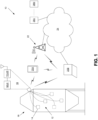
- FIG. 1 is a schematic diagram that illustrates an example environment 10 in which an embodiment of a neural network-based parametric inversion system may be implemented.
- the environment 10 is one example among many, and that some embodiments of a neural network-based parametric inversion system may be used in environments with fewer, greater, and/or different components than those depicted in FIG. 1 .
- the environment 10 comprises a plurality of devices that enable communication of information throughout one or more networks.
- the depicted environment 10 comprises an antenna array 12 comprising a plurality of antenna probes 14 and an antenna acquisition system 16 that is used to monitor contents within a container 18 and uplink with other devices to communicate and/or receive information.
- the container 18 is depicted as one type of grain storage bin (or simply, grain bin), though it should be appreciated that containers of other geometries, for the same (e.g., grain) or other contents, with a different arrangement (side ports, etc.) and/or quantity of inlet and outlet ports, may be used in some embodiments.
- electromagnetic imaging uses active transmitters and receivers of electromagnetic radiation to obtain quantitative and qualitative images of the complex dielectric profile of an object of interest (e.g., here, the contents or grain).
- each transmitting antenna probe is polarized to excite/collect the signals scattered by the contents. That is, each antenna probe 14 illuminates the contents while the receiving antennas probes collect the signals scattered by the contents.
- the antenna probes 14 are connected (via cabling, such as coaxial cabling) to a radio frequency (RF) switch matrix or RF multiplexor (MUX) of the antenna acquisition system 16, the switch/mux switching between the transmitter/receiver pairs.
- RF radio frequency
- MUX RF multiplexor
- the RF switch/mux enables each antenna probe 14 to either deliver RF energy to the container 18 or collect the RF energy from the other antenna probes 14.
- the switch/mux is followed by an electromagnetic transceiver (TCVR) system of the antenna acquisition system 16 (e.g., a vector network analyzer or VNA).
- TCVR electromagnetic transceiver
- the electromagnetic transceiver system generates the RF wave for illumination of the contents of the container 18 as well as receiving the measured fields by the antenna probes 14 of the antenna array 12.
- the antenna acquisition system 16 may include additional circuitry, including a global navigation satellite systems (GNSS) device or triangulation-based devices, which may be used to provide location information to another device or devices within the environment 10 that remotely monitors the container 18 and associated data.
- GNSS global navigation satellite systems
- the antenna acquisition system 16 may include suitable communication functionality to communicate with other devices of the environment.
- the uncalibrated, raw data collected from the antenna acquisition system 16 is communicated (e.g., via uplink functionality of the antenna acquisition system 16) to one or more devices of the environment 10, including devices 20A and/or 20B.
- Communication by the antenna acquisition system 16 may be achieved using near field communications (NFC) functionality, Blue-tooth functionality, 802.11-based technology, satellite technology, streaming technology, including LoRa, and/or broadband technology including 3G, 4G, 5G, etc., and/or via wired communications (e.g., hybrid-fiber coaxial, optical fiber, copper, Ethernet, etc.) using TCP/IP, UDP, HTTP, DSL, among others.
- NFC near field communications
- Blue-tooth functionality 802.11-based technology
- satellite technology satellite technology
- streaming technology including LoRa
- broadband technology including 3G, 4G, 5G, etc.
- wired communications e.g., hybrid-fiber coaxial, optical fiber, copper, Ethernet, etc.
- the devices 20A and 20B communicate with each other and/or with other devices of the environment 10 via a wireless/cellular network 22 and/or wide area network (WAN) 24, including the Internet.
- the wide area network 24 may include additional networks, including an Internet of Things (loT) network, among others.
- LoT Internet of Things
- Connected to the wide area network 24 is a computing system comprising one or more servers 26 (e.g., 26A, ...26N).
- the devices 20 may be embodied as a smartphone, mobile phone, cellular phone, pager, stand-alone image capture device (e.g., camera), laptop, tablet, personal computer, workstation, among other handheld, portable, or other computing/communication devices, including communication devices having wireless communication capability, including telephony functionality.
- the device 20A is illustrated as a smartphone and the device 20B is illustrated as a laptop for convenience in illustration and description, though it should be appreciated that the devices 20 may take the form of other types of devices as explained above.
- the devices 20 provide (e.g., relay) the (uncalibrated, raw) data sent by the antenna acquisition system 16 to one or more servers 26 via one or more networks.
- the wireless/cellular network 22 may include the necessary infrastructure to enable wireless and/or cellular communications between the device 20 and the one or more servers 26.
- wireless/cellular network 22 There are a number of different digital cellular technologies suitable for use in the wireless/cellular network 22, including: 3G, 4G, 5G, GSM, GPRS, CDMAOne, CDMA2000, Evolution-Data Optimized (EV-DO), EDGE, Universal Mobile Telecommunications System (UMTS), Digital Enhanced Cordless Telecommunications (DECT), Digital AMPS (IS-136/TDMA), and Integrated Digital Enhanced Network (iDEN), among others, as well as Wireless-Fidelity (Wi-Fi), 802.11, streaming, etc., for some example wireless technologies.
- the wide area network 24 may comprise one or a plurality of networks that in whole or in part comprise the Internet.
- the devices 20 may access the one or more server 26 via the wireless/cellular network 22, as explained above, and/or the Internet 24, which may be further enabled through access to one or more networks including PSTN (Public Switched Telephone Networks), POTS, Integrated Services Digital Network (ISDN), Ethernet, Fiber, DSL/ADSL, Wi-Fi, among others.
- PSTN Public Switched Telephone Networks
- POTS Integrated Services Digital Network
- ISDN Integrated Services Digital Network
- Ethernet Fiber
- DSL/ADSL Wi-Fi
- Wi-Fi wireless fidelity
- the wireless/cellular network 22 may comprise suitable equipment that includes a modem, router, switching, etc.
- the servers 26 are coupled to the wide area network 24, and in one embodiment may comprise one or more computing devices networked together, including an application server(s) and data storage.
- the servers 26 may serve as a cloud computing environment (or other server network) configured to perform processing required to implement an embodiment of a neural network-based parametric inversion method and pixel-based inversion.
- the server 26 may comprise an internal cloud, an external cloud, a private cloud, a public cloud (e.g., commercial cloud), or a hybrid cloud, which includes both on-premises and public cloud resources.
- a private cloud may be implemented using a variety of cloud systems including, for example, Eucalyptus Systems, VMWare vSphere ® , or Microsoft ® HyperV.
- a public cloud may include, for example, Amazon EC2 ® , Amazon Web Services ® , Terremark ® , Savvis ® , or GoGrid ® .
- Cloud-computing resources provided by these clouds may include, for example, storage resources (e.g., Storage Area Network (SAN), Network File System (NFS), and Amazon S3 ® ), network resources (e.g., firewall, load-balancer, and proxy server), internal private resources, external private resources, secure public resources, infrastructure-as-a-services (laaSs), platform-as-a-services (PaaSs), or software-as-a-services (SaaSs).
- the cloud architecture of the servers 26 may be embodied according to one of a plurality of different configurations. For instance, if configured according to MICROSOFT AZURE TM , roles are provided, which are discrete scalable components built with managed code.
- Web roles are for generalized development, and may perform background processing for a web role.
- Web roles provide a web server and listen for and respond to web requests via an HTTP (hypertext transfer protocol) or HTTPS (HTTP secure) endpoint.
- VM roles are instantiated according to tenant defined configurations (e.g., resources, guest operating system). Operating system and VM updates are managed by the cloud.
- a web role and a worker role run in a VM role, which is a virtual machine under the control of the tenant. Storage and SQL services are available to be used by the roles.
- the hardware and software environment or platform including scaling, load balancing, etc., are handled by the cloud.
- the servers 26 may be configured into multiple, logically-grouped servers (run on server devices), referred to as a server farm.
- the servers 26 may be geographically dispersed, administered as a single entity, or distributed among a plurality of server farms.
- the servers 26 within each farm may be heterogeneous.
- One or more of the servers 26 may operate according to one type of operating system platform (e.g., WINDOWS-based O.S., manufactured by Microsoft Corp. of Redmond, Wash.), while one or more of the other servers 26 may operate according to another type of operating system platform (e.g., UNIX or Linux).
- one type of operating system platform e.g., WINDOWS-based O.S., manufactured by Microsoft Corp. of Redmond, Wash.
- another type of operating system platform e.g., UNIX or Linux
- the group of servers 26 may be logically grouped as a farm that may be interconnected using a wide-area network connection or medium-area network (MAN) connection.
- the servers 26 may each be referred to as, and operate according to, a file server device, application server device, web server device, proxy server device, or gateway server device.
- one or more of the servers 26 may comprise a web server that provides a web site that can be used by users interested in the contents of the container 18 via browser software residing on a device (e.g., device 20).
- the web site may provide visualizations that reveal permittivity of the contents and/or geometric and/or other information about the container and/or contents (e.g., the volume geometry, such as cone angle, height of the grain along the container wall, etc.).
- functionality for performing the neural network-based parametric inversion and/or pixel-based inversion may be implemented at a computing device that is local to the container 18 (e.g., edge computing), or in some embodiments, such functionality may be implemented at the devices 20.
- functionality of the neural network-based parametric inversion and/or pixel-based inversion may be implemented in different devices of the environment 10 operating according to a master-slave configuration or peer-to-peer configuration.
- the antenna acquisition system 16 may bypass the devices 20 and communicate with the servers 26 via the wireless/cellular network 22 and/or the wide area network 24 using suitable processing and software residing in the antenna acquisition system 16.
- APIs application programming interfaces
- the API may be implemented as one or more calls in program code that send or receive one or more parameters through a parameter list or other structure based on a call convention defined in an API specification document.
- a parameter may be a constant, a key, a data structure, an object, an object class, a variable, a data type, a pointer, an array, a list, or another call.
- API calls and parameters may be implemented in any programming language.
- the programming language may define the vocabulary and calling convention that a programmer employs to access functions supporting the API.
- an API call may report to an application the capabilities of a device running the application, including input capability, output capability, processing capability, power capability, and communications capability.
- An embodiment of a neural network-based parametric inversion system may include any one or a combination of the components of the environment 10.
- the neural network-based parametric inversion system may include a single computing device (e.g., one of the servers 26 or one of the devices 20), and in some embodiments, the neural network-based parametric inversion system may comprise the antenna array 12, the antenna acquisition system 16, and one or more of the server 26 and/or devices 20.
- implementation of an embodiment of a neural network-based parametric inversion method is described in the following as being implemented in a computing device that may be one of the servers 26, with the understanding that functionality may be implemented in other and/or additional devices.
- a user requests measurements of the contents of the container 18. This request is communicated to the antenna acquisition system 16.
- the triggering of measurements may occur automatically based on a fixed time frame or based on certain conditions or based on detection of an authorized user device 20.
- the request may trigger the communication of measurements that have already occurred.
- the antenna acquisition system 16 activates (e.g., excites) the antenna probes 14 of the antenna array 12, such that the acquisition system (via the transmission of signals and receipt of the scattered signals) collects a set of raw, uncalibrated electromagnetic data at a set of (a plurality of) discrete, sequential frequencies (e.g., 10-100 Mega-Hertz (MHz), though not limited to this range of frequencies nor limited to collecting the frequencies in sequence).
- the uncalibrated data comprises total-field, S-parameter measurements (which are used to generate both a calibration model or information and a prior model or information as described below).
- S-parameters are ratios of voltage levels (e.g., due to the decay between the sending and receiving signal).
- S-parameter measurements are described, in some embodiments, other mechanisms for describing voltages on a line may be used. For instance, power may be measured directly (without the need for phase measurements), or various transforms may be used to convert S-parameter data into other parameters, including transmission parameters, impedance, admittance, etc. Since the uncalibrated S-parameter measurement is corrupted by the switching matrix and/or varying lengths and/or other differences (e.g., manufacturing differences) in the cables connecting the antenna probes 14 to the antenna acquisition system 16, it is important that embodiments of the neural network-based parametric inversion method use only magnitude (i.e., phaseless) data as input, which is relatively unperturbed by the measurement system.
- magnitude i.e., phaseless
- the antenna acquisition system 16 communicates (e.g., via a wired and/or wireless communications medium) the uncalibrated (S-parameter) data to the device 20, which in turn communicates the uncalibrated data to the server 26.
- data analytics are performed using a trained neural network as described in association with FIG. 3 .
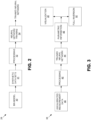
- logical flow diagram 28 illustrates synthetic data generation and neural network training using the synthetic data for an embodiment of a neural network-based parametric inversion system.
- the training is performed before the example sequence of operations described above in association with FIG. 1 .
- the container 18 e.g., bin
- transceiver locations within that bin are specified.
- synthetic data generation may take place.
- standardization e.g., industry standardization
- no additional data generation needs to take place for new bins with the same geometry as a previously trained network's bin.
- certain embodiments may use experimental data for training, alone or in combination with synthetic data.
- the blocks of the logical flow diagram 28 of FIG. 2 are intended to represent modules of code (e.g., opcode, machine language code, higher level code), fixed or programmable hardware, or a combination of both that implement the functionality or method step of each block, where all blocks may be implemented in a single component or device or implemented using a distributed network of devices.
- the logical flow diagram 28 comprises a bin model 30 (also, computer model, that comprises a forward model or forward solver), synthetic data sets 31, processing 32, and neural network training 34 that produces a trained neural network.
- the logical flow diagram 28 illustrates the use of the bin model 30 that uses a forward solver to generate the synthetic data sets 31.
- the synthetic data sets 31 are processed 32 before passing to the neural network for training 34 resulting in a neural network that is trained on synthetic data.
- the neural network may receive uncalibrated measurement data multiple times for the given container 18 ( FIG. 1 ) to generate information in rapid fashion.
- the bin model 30 comprises a computer model of the container 18 (grain bin or the like and container 18 used interchangeably herein) using a known method (e.g., a discrete mesh). For instance, any one of several types of commercial, proprietary, free or open-source meshing software (e.g., GMSH) may be used to generate a 3D model of the container 18. Information about the container structure (e.g., diameter, height, etc.) may be input to the mesh software via a user interface or loaded from a file.
- the computer model 30 comprises a forward solver that simulates the electric and magnetic fields within the bin volume. The forward solver discretizes the bin geometry (surface and volume) into elements and computes the fields within each element.
- the air/grain interface may, though not necessarily, be included in the geometry and a distinct mesh is produced for each unique geometry in the dataset.
- An example visualization of the computer model is shown in FIG. 7 .
- the forward solver provides an initial estimate of the grain bin contents.
- the forward solver is used to simulate the electromagnetic signals being received by the antenna array 12 ( FIG. 1 ), at a set (or plurality) of selected frequencies.
- the frequencies selected comprise a sub-set of the frequencies at which the electromagnetic signals were transmitted and collected by the acquisition system (e.g., approximately 1-10 of the frequencies collected by the transceiver system).
- the electromagnetic solver estimates the electromagnetic fields for each simulated activation of a probe 14 of the antenna array 12 based on the 3D model of the container 18.
- the electromagnetic solver comprises any one of a 3D finite-element method forward direct solver, a finite difference method, a method of moments, a discontinuous Galerkin method, or any other computational electromagnetic forward solver.
- the dataset comprises pairs of data: (e.g., bin contents, electromagnetic fields at the transceivers).
- the dataset is generated by sampling the space of all possible bin contents of interest and running a simulation to obtain the fields related to those bin-content-configurations.
- angle may be replaced with volume (e.g., from volume and height, the angle may be obtained, and from angle and height, the volume may be obtained).
- permittivity may be replaced with moisture information via mapping of discrete values of moisture to permittivities through modelling.
- the estimated parameters listed above are illustrative of a particular container geometry as indicated in FIG. 1 , and that in some applications, the container may be of a different geometry or different inlet/outlet ports and/or port quantities that may engender different parameter estimates.
- the container may be of a different geometry or different inlet/outlet ports and/or port quantities that may engender different parameter estimates.
- an air/grain interface is described here for illustrative purposes, it should be appreciated by one having ordinary skill in the art that other types of interfaces (e.g., water/fuel) or different quantities of interfaces (e.g., water/fuel/air) may need to be modeled, and as such, in some embodiments, the modeled parameters may comprise geometric parameters that describe one or more interfaces between various contents of the container.
- the forward solver of the bin model 30 may be called multiple times for each of a plurality of meshes to generate combinations of real and imaginary permittivities for each height and angle combination.
- the synthetic data may comprise one or any combination of grain height and/or grain volume, cone angle, bulk real permittivity, and bulk imaginary permittivity.
- FIG. 5A shows an embodiment of the processing 32 that is performed on the synthetic data 31.
- the synthetic data undergoes partitioning 59 to derive a training set (TS), a validation set (VS), and a test set (TST) (referred to herein also as a synthetic test set to distinguish it from the experimental data to which the neural network is ultimately applied).
- partitioning is used in machine learning, where a neural network is trained with a part of the dataset (e.g., the training set) and the training process performs validation throughout training (e.g., a validation set) and the resulting machine learning model is applied to a test set to gauge performance.
- the validation and test data undergo processing 42 (see FIG.
- the training set undergoes conversion to magnitude 60 (e.g., magnitude of voltage, and not the phase).
- the training set comprises magnitude and phase information, though the phase information from the physical domain (experimental, S-parameter data) is corrupted from various features of the physical domain (e.g., cable losses/phase shifts, switch path losses, corrupted signals due to the presence of plural antennas, receiver thermal noise, etc.). Accordingly, the phase information is removed in the conversion 60, the phaseless or magnitude only conversion performed to enable a valid later-implemented comparison between synthetic and experimental data.
- the magnitude-only training set is normalized 62. That is, the use of neural networks does not circumvent scaling issues between the raw S-parameters and the simulated fields.
- the data normalizations described herein enables the neural network training on synthetic data while enabling successful operations on experimental data without calibration.
- the magnitude-only training set comprises a plurality of samples of projected field measurements at the field probes 14 ( FIG. 1 ), referred to herein as I H ⁇ I (magnetic fields in amperes/meter) at a plurality of different frequencies n f .
- I H ⁇ I magnetic fields in amperes/meter
- the 552 samples of I H ⁇ I are first flattened for each of the n f frequencies, and are vertically concatenated to create an input column vector that is 552 x n f elements long. Equivalently, this vector is a flattened version of I H ⁇ I.
- Each feature (I H ⁇ I i,j for a given frequency) is normalized across all samples in the training set using, in one embodiment, z-scores, and the normalized features are provided to the neural network for training 34.
- scale parameters are stored 64 for use in the processing 42 of FIG. 5B . For instance, the mean and standard deviation ( ⁇ train , ⁇ train ) are stored 64.
- the synthetically trained neural network may be applied to uncalibrated experimental data. The processed data is provided to the neural network for training 34, the neural network described below in association with FIG. 4 .
- a logical flow diagram 38 that illustrates processing of uncalibrated measurement data via a neural network trained on synthetic data for an embodiment of a neural network-based parametric inversion system.
- the logical flow diagram 38 comprises uncalibrated measurement data 40, processing 42, a trained neural network 44, parametric information 46, visualization 48 and full inversion 50.
- the process shown in FIG. 3 receives uncalibrated measurement data 40 from the antenna acquisition system 16 ( FIG.
- uncalibrated measurement data 40 a set of electromagnetic data are collected by the transmitter/receiver system depicted in FIG. 1 at a set of discrete sequential (and/or non-sequential) frequencies.
- the uncalibrated measurement data 40 comprises total-field, S-parameter measurements extracted from the experimental data.
- These complex measurements undergo processing 42, as shown in FIG. 5B .
- the processing 42 comprises conversion of the S-parameter measurements to magnitudes 66, accessing stored scale parameters 68 (e.g., from the storage of those parameters in 64, FIG. 5A ), and the implementation of feature scaling 70.
- the data from the set of frequencies are combined (vertically concatenated) and passed to the trained neural network 44.
- the complex S-parameters from the experimental data are converted to magnitude only data 66 (e.g., removal of phase information).
- reciprocity is enforced by combining the transmitter/receiver pair (m, n) and (n, m) values as an average.
- the S-matrix magnitude data is normalized independently along each row (i.e., corresponding to each transmitter and thus associated with different loss in the transmitting cable) to zero mean and unit variance.
- the magnitude only S parameter data is processed in the same or similar way as the synthetic data (e.g., transmitter-wise normalization as explained above) followed in one embodiment by scaling 70 to the mean and standard deviation of the training data (i.e., so that the normalized and scaled S-parameter data can be appropriately compared to synthetic neural network training data).
- the (magnitude-only) validation and testing sets are feature scaled 70 using ⁇ train, ⁇ train to scale their values to match the distribution of the training set.
- the processed data 42 is provided to the trained neural network 44, which in turn computes parametric information 46 (e.g., prediction parameters) that may be used for visualization 48 and/or full inversion 50.
- the parametric information 46 comprises the grain permittivity (e.g., imaginary and real values) and geometric information about the grain or grain volume (e.g., grain height and cone angle or volume).
- the parametric information 46 may be used as feedback in a visualization 48 (e.g., data presented on a screen).
- the output comprises a more fully developed visualization of these parameters based on applying these parameters to a known, finite element mesh or other known visualization algorithm (e.g., contrast source inversion).
- the parametric information 46 may be used in a pixel-based inversion algorithm (e.g., instead of four values in this example, there may be thousands or more, as shown in FIG. 8 ).
- every pixel or voxel element is ascribed a complex permittivity (real and imaginary).
- the neural network-based parametric inversion method comprises a pre-processing step or steps (e.g., of obtaining the prior information and calibration data) to the pixel-based inversion to derive the visualization of, for instance, the visualization shown in FIG. 8 .
- the use of the parametric information 46 in a subsequent pixel based inversion is within the abilities of one having ordinary skill in the art, and hence further discussion herein is omitted.
- model parameters that include volume and angle, though in some embodiments, other model parameters may be used, including surface models.
- a neural network 52 that is trained in one embodiment by the synthetic data and then used on experimental S-parameter (e.g., ratios of voltages) data to derive prediction parameters.
- the neural network 52 receives the training data (training set) or experimental S-parameter data, processes the data via one or more hidden layers 56 (six shown for an example illustration), and provides an output 58 of the prediction parameters.
- training data training set
- experimental S-parameter data processes the data via one or more hidden layers 56 (six shown for an example illustration), and provides an output 58 of the prediction parameters.
- Each layer of the hidden layers 56 is shown illustratively with the quantity of neurons per layer (e.g., 4096 under the first layer, 2048 under the second layer, etc.), with the output 58 comprising four output values pertaining to the trained or experimental predictive parameters (e.g., angle or volume, real permittivity, imaginary permittivity) based on the last layer of 64 neurons.
- the trained or experimental predictive parameters e.g., angle or volume, real permittivity, imaginary permittivity
- These four parameters may characterize the grain/air interface and provide average permittivity of the grain in the bin to provide information for inventory management, including grain volume and an estimate of moisture content in the bin. These parameters can further be used to calibrate the raw data for full inversions.
- the neural network 52 uses a supervised learning method (e.g., relying on a dataset of fields and parameters). More importantly, the neural network is trained on synthetic data. As the training and use of neural networks are known to those having ordinary skill in the art, further discussion of the same is omitted here for brevity.
- the output 58 may be used to generate the volume of the grain in the bin and the average moisture content of the grain in the bin (e.g., information about the grain), which is useful information that may be provided via a user interface to render feedback and/or transmitted and/or stored for later processing or review (e.g., in the way of reports).
- FIG. 6 illustrates an example computing device 72 used in one embodiment of the neural network-based parametric inversion system depicted in FIG. 1 .
- the computing device 72 may be one of the servers 26 or one of the devices 20. Though described as implementing certain functionality of a neural network-based parametric inversion method, in some embodiments, such functionality may be distributed among plural devices (e.g., using plural, distributed processors) that are co-located or geographically dispersed. In some embodiments, functionality of the computing device 72 may be implemented in another device, including a programmable logic controller, ASIC, FPGA, among other processing devices.
- ASIC programmable logic controller
- the computing device 72 comprises one or more processors, such as processor 74, input/output (I/O) interface(s) 76, a user interface 78, and memory 80, all coupled to one or more data busses, such as data bus 82.
- the memory 80 may include any one or a combination of volatile memory elements (e.g., random-access memory RAM, such as DRAM, and SRAM, etc.) and nonvolatile memory elements (e.g., ROM, hard drive, tape, CDROM, etc.).
- the memory 80 may store a native operating system, one or more native applications, emulation systems, or emulated applications for any of a variety of operating systems and/or emulated hardware platforms, emulated operating systems, etc.
- the memory 80 comprises an operating system 84 and application software 86.
- the application software 86 comprises a bin model 88 having one or more forward solvers as explained above, a process module 90 (e.g., for implementing the process 32 and 42), a neural network 92 (as described in association with FIG. 4 ), full inversion software 94, visualization software 96, and communication software 98 that formats data according to the appropriate format to enable transmission or receipt of communications over the networks and/or wireless or wired transmission hardware (e.g., radio hardware).
- the application software 86 performs the functionality described in association with the logical flow diagrams 28 and 38, as well as the neural network 52 and processing 32 and 42, in FIGS. 2-5B .
- the full inversion software 94 may comprise known pixel-based inversion (PBI) software.
- the full inversion software 94 comprises known algorithms for performing pixel-based inversion based on the outputs provided by the neural network 92, and includes contrast source inversion or other known visualization software.
- one or more functionality of the application software 86 may be implemented in hardware. In some embodiments, one or more of the functionality of the application software 86 may be performed in more than one device. It should be appreciated by one having ordinary skill in the art that in some embodiments, additional or fewer software modules (e.g., combined functionality) may be employed in the memory 80 or additional memory. In some embodiments, a separate storage device may be coupled to the data bus 82, such as a persistent memory (e.g., optical, magnetic, and/or semiconductor memory and associated drives).
- a persistent memory e.g., optical, magnetic, and/or semiconductor memory and associated drives.
- the processor 74 may be embodied as a custom-made or commercially available processor, a central processing unit (CPU) or an auxiliary processor among several processors, a semiconductor based microprocessor (in the form of a microchip), a macroprocessor, one or more application specific integrated circuits (ASICs), a plurality of suitably configured digital logic gates, and/or other well-known electrical configurations comprising discrete elements both individually and in various combinations to coordinate the overall operation of the computing device 72.
- CPU central processing unit
- ASICs application specific integrated circuits
- the I/O interfaces 76 provide one or more interfaces to the networks 22 and/or 24.
- the I/O interfaces 76 may comprise any number of interfaces for the input and output of signals (e.g., analog or digital data) for conveyance over one or more communication mediums.
- the user interface (UI) 78 may be a keyboard, mouse, microphone, touch-type display device, head-set, and/or other devices that enable visualization of the contents and/or container as described above.
- the output may include other or additional forms, including audible or on the visual side, rendering via virtual reality or augmented reality based techniques.
- the manner of connections among two or more components may be varied.
- the computing device 72 may have additional software and/or hardware, or fewer software.
- the application software 86 comprises executable code/instructions that, when executed by the processor 74, causes the processor 74 to implement the functionality shown and described in association with the neural network-based parametric inversion method, including functionality described in association with FIGS. 1-5B (and FIG. 9 below). As the functionality of the application software 86 has been described in the description corresponding to the aforementioned figures, further description here is omitted to avoid redundancy.
- Execution of the application software 86 is implemented by the processor 74 under the management and/or control of the operating system 84.
- the operating system 84 may be omitted.
- functionality of application software 86 may be distributed among plural computing devices (and hence, plural processors).
- a computer-readable medium may comprise an electronic, magnetic, optical, or other physical device or apparatus that may contain or store a computer program (e.g., executable code or instructions) for use by or in connection with a computer-related system or method.
- the software may be embedded in a variety of computer-readable mediums for use by, or in connection with, an instruction execution system, apparatus, or device, such as a computer-based system, processor-containing system, or other system that can fetch the instructions from the instruction execution system, apparatus, or device and execute the instructions.
- an instruction execution system, apparatus, or device such as a computer-based system, processor-containing system, or other system that can fetch the instructions from the instruction execution system, apparatus, or device and execute the instructions.
- computing device 72 When certain embodiments of the computing device 72 are implemented at least in part with hardware, such functionality may be implemented with any or a combination of the following technologies, which are all well-known in the art: a discrete logic circuit(s) having logic gates for implementing logic functions upon data signals, an application specific integrated circuit (ASIC) having appropriate combinational logic gates, a programmable gate array(s) (PGA), a field programmable gate array (FPGA), etc.
- ASIC application specific integrated circuit
- PGA programmable gate array
- FPGA field programmable gate array
- FIG. 7 is a schematic diagram 100 that illustrates example results of a finite element model, described above, based on discretizing space inside a container using an embodiment of a neural network-based parametric inversion method.
- FIG. 8 is a schematic diagram 102 that illustrates an example visualization of contents of a grain bin based on implementation of an embodiment of a neural network-based parametric inversion method.
- the visualization may include parameter values describing permittivity and geometric information about the contents, including the height of the grain along the container wall, the angle of grain repose, and the average complex permittivity of the grain.
- the rendering of the color of the grain may be indicative of average grain moisture content, among other parameters.
- one embodiment of a neural network-based parametric inversion method comprises receiving first electromagnetic data at a plurality of frequencies (106); processing the first electromagnetic data (108); and generating prediction parameters by passing the processed first electromagnetic data through a neural network trained on data corresponding to a synthetic training set, the prediction parameters corresponding to a container and contents located within the container (110).
- FIG. 10 provides yet another embodiment of a neural network-based parametric inversion method, denoted as method 112, and comprises (with example, non-limiting illustrations indicated in parenthesis) providing (e.g., producing) a synthetic training set (e.g., tens of thousands of examples) using a forward solver at several (e.g., 4-8) pre-determined frequencies (114); converting synthetic examples from complex data points to magnitude only data (116); combining data from the same example at different frequencies (e.g., vertically concatenated) (118); training a fully connected neural network (e.g., with six (6) hidden layers and four (4) outputs as shown in FIG.4 ) on the synthetic data set (120); collecting a set of electromagnetic data from a transmitter/receiver system (e.g., FIG.
- Certain embodiments of a neural network-based parametric system and method provide for training of the neural network using synthetic data, thus not requiring experimental measurements to be trained. That is, the neural network is capable of being trained solely on synthetic examples, and can be used to analyze experimental data without modification to the network, thus enabling ready field use shortly after the installation location of antennas in the bin is known.
Landscapes
- Physics & Mathematics (AREA)
- Engineering & Computer Science (AREA)
- General Physics & Mathematics (AREA)
- Life Sciences & Earth Sciences (AREA)
- Remote Sensing (AREA)
- Health & Medical Sciences (AREA)
- Electromagnetism (AREA)
- Chemical & Material Sciences (AREA)
- Radar, Positioning & Navigation (AREA)
- General Health & Medical Sciences (AREA)
- Fluid Mechanics (AREA)
- Immunology (AREA)
- Analytical Chemistry (AREA)
- Theoretical Computer Science (AREA)
- Food Science & Technology (AREA)
- Pathology (AREA)
- Biochemistry (AREA)
- Artificial Intelligence (AREA)
- Evolutionary Computation (AREA)
- Computer Networks & Wireless Communication (AREA)
- Signal Processing (AREA)
- Mathematical Physics (AREA)
- Molecular Biology (AREA)
- Software Systems (AREA)
- General Engineering & Computer Science (AREA)
- Medicinal Chemistry (AREA)
- Biomedical Technology (AREA)
- Biophysics (AREA)
- Computational Linguistics (AREA)
- Data Mining & Analysis (AREA)
- Computing Systems (AREA)
- Environmental & Geological Engineering (AREA)
- Thermal Sciences (AREA)
- General Life Sciences & Earth Sciences (AREA)
- Geology (AREA)
- Geophysics (AREA)
- Arrangements For Transmission Of Measured Signals (AREA)
- Management, Administration, Business Operations System, And Electronic Commerce (AREA)
Claims (15)
- System (16) mit:einem oder mehreren Prozessoren (74); undeinem Speicher (80) mit Instruktionen, wobei der eine oder die mehreren Prozessoren durch die Instruktionen ausgebildet werden, um:bei einer Mehrzahl von Frequenzen innerhalb eines Containers gemessene erste elektromagnetische Daten zu empfangen;die ersten elektromagnetischen Daten zu verarbeiten; unddadurch gekennzeichnet, dass der eine oder die mehreren Prozessoren weiterhin durch die Instruktionen ausgebildet werden, umVorhersageparameter durch Hindurchleiten der verarbeiteten ersten elektromagnetischen Daten durch ein neuronales Netzwerk, das mit mit einem synthetischen Trainingssatz korrespondierenden Daten trainiert wurde, zu generieren, wobei die Vorhersageparameter mit einer Permittivität von sich innerhalb des Containers (18) befindenden Inhalten und geometrischen Parametern, die mit den sich darin befindenden Inhalten verbunden sind, korrespondieren.
- System (16) nach Anspruch 1, wobei der eine oder die mehreren Prozessoren (74) vor dem Empfangen der ersten elektromagnetischen Daten weiterhin durch die Instruktionen ausgebildet werden, um den synthetischen Trainingssatz unter Verwenden eines Vorwärtslösers bei einer Mehrzahl von vorbestimmten Frequenzen zu generieren, wobei der synthetische Trainingssatz mit zweiten elektromagnetischen Daten korrespondiert, die synthetische Vorhersageparameter von einem selben Typ wie die Vorhersageparameter aufweisen; wobei optional der Vorwärtslöser einen 3D-Finite-Elemente-Verfahren-Vorwärtsdirektlöser und/oder ein Finite-Differenz-Verfahren und/oder ein Momente-Verfahren und/oder ein diskontinuierliches Galerkin-Verfahren und/oder einen rechnerischen elektromagnetischen Vorwärtslöser aufweist.
- System (16) nach Anspruch 2, wobei der eine oder die mehreren Prozessoren weiterhin durch die Instruktionen ausgebildet werden, um die zweiten elektromagnetischen Daten durch Konvertieren von Werten der zweiten elektromagnetischen Daten zu reinen Größenwerten zu verarbeiten; wobei optional der eine oder die mehreren Prozessoren (74) weiterhin durch die Instruktionen ausgebildet werden, um die reinen Größenwerte bei jeder der Mehrzahl von Frequenzen zu kombinieren.
- System (16) nach Anspruch 3, wobei der eine oder die mehreren Prozessoren (74) weiterhin durch die Instruktionen ausgebildet werden, um die zweiten elektromagnetischen Daten durch Normalisieren der reinen Größenwerte zu verarbeiten, wobei der eine oder die mehreren Prozessoren (74) weiterhin durch die Instruktionen ausgebildet werden, um ein Ergebnis des Kombinierens und Normalisierens an das neuronale Netzwerk weiterzuleiten, wobei das neuronale Netzwerk ausgebildet ist, um sich mit dem Ergebnis zu trainieren.
- System (16) nach Anspruch 1, wobei der eine oder die mehreren Prozessoren (74) weiterhin durch die Instruktionen ausgebildet werden, um die ersten elektromagnetischen Daten durch Konvertieren von Werten der ersten elektromagnetischen Daten zu reinen Größenwerten zu verarbeiten; und optional um die reinen Größenwerte bei jeder der Mehrzahl von Frequenzen zu kombinieren.
- System nach Anspruch 5, wobei der eine oder die mehreren Prozessoren (74) weiterhin durch die Instruktionen ausgebildet werden, um die ersten elektromagnetischen Daten durch Normalisieren der reinen Größenwerte zu verarbeiten, wobei der eine oder die mehreren Prozessoren weiterhin durch die Instruktionen ausgebildet werden, um ein Ergebnis des Kombinierens und Normalisierens an das neuronale Netzwerk weiterzuleiten, wobei das neuronale Netzwerk das Ergebnis basierend auf den mit dem synthetischen Trainingssatz korrespondierenden Daten verarbeitet.
- System (16) nach Anspruch 6, wobei das Ergebnis mit elektromagnetischen Feld-Schätzungen für verschiedene Werte für jeden von mehreren synthetischen Vorhersageparametern des Containers (18) und der sich innerhalb des Containers befindenden Inhalte korrespondiert.
- System (16) nach Anspruch 7, wobei die mehreren synthetischen Vorhersageparameter eine Höhe der Inhalte entlang einer Seitenwand des Containers (18), einen Konuswinkel der Inhalte, die sich von der Seitenwand zu ungefähr einem höchsten Ort der Inhalte erstrecken, und eine komplexe Permittivität der Inhalte aufweisen.
- System (16) nach Anspruch 8, wobei die Inhalte ein rohes Gemüseprodukt aufweisen und der Container einen Lagerbehälter für das rohe Gemüseprodukt aufweist.
- System (16) nach Anspruch 1, wobei das neuronale Netzwerk für den Container (18) nur einmal mit den mit dem synthetischen Trainingssatz korrespondierenden Daten trainiert wird und das trainierte neuronale Netzwerk basierend auf dem Empfang von aktualisierten elektromagnetischen Daten zu einer Mehrzahl von verschiedenen Zeiten Vorhersageparameter generiert.
- System (16) nach Anspruch 1, weiterhin mit einem ein Sender/Empfänger-System aufweisenden Datenaufnahmesystem, das an den Container gekoppelt ist, wobei der eine oder die mehreren Prozessoren weiterhin durch die Instruktionen ausgebildet werden, um die ersten elektromagnetischen Daten direkt von dem Datenaufnahmesystem oder über ein oder mehrere zwischengeordnete Geräte zu empfangen.
- System (16) nach Anspruch 1, wobei der eine oder die mehreren Prozessoren weiterhin durch die Instruktionen ausgebildet werden, um eine Visualisierung des Containers (18) und von Geometrien der Inhalte innerhalb des Containers bereitzustellen.
- System (16) nach Anspruch 1, wobei der eine oder die mehreren Prozessoren (74) weiterhin durch die Instruktionen ausgebildet werden, um basierend auf den Vorhersageparametern Feuchtigkeitsgehaltwerte der Inhalte innerhalb des Containers (18) bereitzustellen.
- Verfahren mit:Empfangen erster bei einer Mehrzahl von Frequenzen innerhalb eines Containers gemessener elektromagnetischer Daten;Verarbeiten der ersten elektromagnetischen Daten;
wobei das Verfahren dadurch gekennzeichnet ist, dass es aufweistGenerieren von Vorhersageparametern durch Hindurchleiten der verarbeiteten ersten elektromagnetischen Daten durch ein neuronales Netzwerk, das mit mit einem synthetischen Trainingssatz korrespondieren Daten trainiert ist, wobei die Vorhersageparameter mit einer Permittivität von sich innerhalb des Containers (18) befindenden Inhalten und geometrischen Parametern, die mit den sich darin befindenden Inhalten verbunden sind, korrespondieren. - Nicht-flüchtiges, computerlesbares Medium mit Instruktionen, die, wenn sie durch einen oder mehrere Prozessoren ausgeführt werden, den einen oder die mehreren Prozessoren veranlassen, um:bei einer Mehrzahl von Frequenzen innerhalb des Containers gemessene erste elektromagnetische Daten zu empfangen;die ersten elektromagnetischen Daten zu verarbeiten; und
dadurch gekennzeichnet, dass der Prozessor veranlasst wird,Vorhersageparameter durch Hindurchleiten der verarbeiteten ersten elektromagnetischen Daten durch ein neuronales Netzwerk, das mit mit einem synthetischen Trainingssatz korrespondierenden Daten trainiert ist, zu generieren, wobei die Vorhersageparameter mit einer Permittivität von sich innerhalb des Containers (18) befindenden Inhalten und geometrischen Parametern, die mit den sich darin befindenden Inhalten verbunden sind, korrespondieren.
Applications Claiming Priority (2)
| Application Number | Priority Date | Filing Date | Title |
|---|---|---|---|
| US202063071495P | 2020-08-20 | 2020-08-20 | |
| PCT/IB2021/056810 WO2022038437A1 (en) | 2020-08-20 | 2021-07-27 | Stored grain inventory management neural network |
Publications (2)
| Publication Number | Publication Date |
|---|---|
| EP4200652A1 EP4200652A1 (de) | 2023-06-28 |
| EP4200652B1 true EP4200652B1 (de) | 2024-11-27 |
Family
ID=77367451
Family Applications (1)
| Application Number | Title | Priority Date | Filing Date |
|---|---|---|---|
| EP21755831.1A Active EP4200652B1 (de) | 2020-08-20 | 2021-07-27 | Neuronales netzwerk zur verwaltung von gespeichertem korninventar |
Country Status (4)
| Country | Link |
|---|---|
| US (1) | US12560559B2 (de) |
| EP (1) | EP4200652B1 (de) |
| CA (1) | CA3189064A1 (de) |
| WO (1) | WO2022038437A1 (de) |
Families Citing this family (5)
| Publication number | Priority date | Publication date | Assignee | Title |
|---|---|---|---|---|
| EP4273517A1 (de) * | 2022-05-06 | 2023-11-08 | Insylo Technologies, S.L. | Verfahren und system zum messen der menge eines in einem silo gelagerten schüttguts |
| DE102023103242A1 (de) * | 2023-02-10 | 2024-08-14 | Endress+Hauser SE+Co. KG | Füllvolumen-Ermittlung in Behältern |
| DE102023106819A1 (de) * | 2023-03-17 | 2024-09-19 | Endress+Hauser SE+Co. KG | Ermittlung von Füllgut-Eigenschaften |
| WO2024224172A1 (en) * | 2023-04-26 | 2024-10-31 | Gsi Electronique Inc | Commodity monitoring system, commodity viewing system, and related methods and systems |
| DE102023207121A1 (de) * | 2023-07-26 | 2025-01-30 | Vega Grieshaber Kg | Verfahren zum Bestimmen eines Füllstandswertes eines Füllguts in einem Behälter |
Family Cites Families (7)
| Publication number | Priority date | Publication date | Assignee | Title |
|---|---|---|---|---|
| AU2001237053A1 (en) * | 2000-02-17 | 2001-08-27 | Bintech. Lllp | Bulk materials management apparatus and method |
| US8570208B2 (en) * | 2010-07-16 | 2013-10-29 | Sony Corporation | Radar tomography apparatus and method |
| WO2016068865A1 (en) * | 2014-10-28 | 2016-05-06 | Halliburton Energy Services, Inc. | Identification of material type and condition in a dry bulk material storage bin |
| GB2545836B (en) * | 2014-10-28 | 2021-01-13 | Halliburton Energy Services Inc | Identification of material type and condition in a dry bulk material hopper |
| GB2556290A (en) * | 2015-09-16 | 2018-05-23 | Halliburton Energy Services Inc | Optical computing devices and methods utilizing multiple integrated computatational elements in sequence |
| CA3210917A1 (en) * | 2021-03-22 | 2022-09-29 | Gsi Electronique Inc | Resonance-based imaging in grain bins |
| US20250314608A1 (en) * | 2024-01-27 | 2025-10-09 | Barrel Proof Technologies Llc | Container monitoring system with dielectric-based contamination detection |
-
2021
- 2021-07-27 WO PCT/IB2021/056810 patent/WO2022038437A1/en not_active Ceased
- 2021-07-27 US US18/042,593 patent/US12560559B2/en active Active
- 2021-07-27 EP EP21755831.1A patent/EP4200652B1/de active Active
- 2021-07-27 CA CA3189064A patent/CA3189064A1/en active Pending
Non-Patent Citations (5)
| Title |
|---|
| ASEFI MOHAMMAD ET AL: "Grain bin monitoring via electromagnetic imaging", COMPUTERS AND ELECTRONICS IN AGRICULTURE, ELSEVIER, AMSTERDAM, NL, vol. 119, 5 November 2015 (2015-11-05), pages 133 - 141, XP029320918, ISSN: 0168-1699, DOI: 10.1016/J.COMPAG.2015.10.016 * |
| CHEN XUDONG ET AL: "A REVIEW OF DEEP LEARNING APPROACHES FOR INVERSE SCATTERING PROBLEMS (INVITED REVIEW)", ELECTROMAGNETIC WAVES (CAMBRIDGE, MASS.), 1 January 2020 (2020-01-01), pages 67 - 81, XP055853514, Retrieved from the Internet <URL:https://www.jpier.org/PIER/pier167/07.20030705.pdf> [retrieved on 20211021], DOI: 10.2528/PIER20030705 * |
| EDWARDS KEELEY ET AL: "Stored Grain Inventory Management Using Neural-Network-Based Parametric Electromagnetic Inversion", IEEE ACCESS, IEEE, USA, vol. 8, 16 November 2020 (2020-11-16), pages 207182 - 207192, XP011822262, [retrieved on 20201123], DOI: 10.1109/ACCESS.2020.3038312 * |
| GILMORE COLIN ET AL: "Phaseless Parametric Inversion for System Calibration and Obtaining Prior Information", IEEE ACCESS, vol. 7, 5 September 2019 (2019-09-05), pages 128735 - 128745, XP011746478, [retrieved on 20190917], DOI: 10.1109/ACCESS.2019.2939725 * |
| SANDHU A I ET AL: "A Neural Network Assisted Greedy Algorithm For Sparse Electromagnetic Imaging", ARXIV.ORG, CORNELL UNIVERSITY LIBRARY, 201 OLIN LIBRARY CORNELL UNIVERSITY ITHACA, NY 14853, 15 November 2019 (2019-11-15), XP081533075 * |
Also Published As
| Publication number | Publication date |
|---|---|
| EP4200652A1 (de) | 2023-06-28 |
| CA3189064A1 (en) | 2022-02-24 |
| US20230280286A1 (en) | 2023-09-07 |
| US12560559B2 (en) | 2026-02-24 |
| WO2022038437A1 (en) | 2022-02-24 |
Similar Documents
| Publication | Publication Date | Title |
|---|---|---|
| EP4200652B1 (de) | Neuronales netzwerk zur verwaltung von gespeichertem korninventar | |
| US11125796B2 (en) | Electromagnetic imaging and inversion of simple parameters in storage bins | |
| US20220365002A1 (en) | Electromagnetic imaging and inversion of simple parameters in storage bins | |
| EP4042148B1 (de) | Elektromagnetische detektion und lokalisierung von gefährlichen lagerplätzen und menschlichem eindringen | |
| US20240183800A1 (en) | Single Data Set Calibration and Imaging with Uncooperative Electromagnetic Inversion | |
| US20240183798A1 (en) | Ray-Based Imaging in Grain Bins | |
| US20240169716A1 (en) | Deep Learning for Electromagnetic Imaging of Stored Commodities | |
| US9329263B2 (en) | Imaging system and method | |
| US20240183799A1 (en) | Resonance-Based Imaging in Grain Bins | |
| D'Aucelli et al. | LineLab-A transmission line simulator for distributed sensing systems: Open-source MATLAB code for simulating real-world transmission lines | |
| CN119574981A (zh) | 一种微波介电常数的测量方法、系统、设备及存储介质 | |
| CN110441746B (zh) | 一种时域门变换方法和装置 | |
| Chen et al. | Numerical vector Green’s function for S-parameter measurement with waveport excitation | |
| EP4548085A1 (de) | Enteinbettung von elektromagnetischen bilddaten auf grossen lagerbehältern | |
| Sadou et al. | Predictors generation by partial least square regression for microwave characterization of dielectric materials | |
| WO2023187529A1 (en) | Modifying the contrast basis when using contrast source inversion method to image a stored commodity in a grain bin | |
| CA3169353A1 (en) | Electromagnetic imaging for large storage bins using ferrite loaded shielded half-loop antennas | |
| CN121831722A (zh) | 一种rcs测试校准和实时监控方法、装置、设备及介质 |
Legal Events
| Date | Code | Title | Description |
|---|---|---|---|
| STAA | Information on the status of an ep patent application or granted ep patent |
Free format text: STATUS: UNKNOWN |
|
| STAA | Information on the status of an ep patent application or granted ep patent |
Free format text: STATUS: THE INTERNATIONAL PUBLICATION HAS BEEN MADE |
|
| PUAI | Public reference made under article 153(3) epc to a published international application that has entered the european phase |
Free format text: ORIGINAL CODE: 0009012 |
|
| STAA | Information on the status of an ep patent application or granted ep patent |
Free format text: STATUS: REQUEST FOR EXAMINATION WAS MADE |
|
| 17P | Request for examination filed |
Effective date: 20230320 |
|
| AK | Designated contracting states |
Kind code of ref document: A1 Designated state(s): AL AT BE BG CH CY CZ DE DK EE ES FI FR GB GR HR HU IE IS IT LI LT LU LV MC MK MT NL NO PL PT RO RS SE SI SK SM TR |
|
| DAV | Request for validation of the european patent (deleted) | ||
| DAX | Request for extension of the european patent (deleted) | ||
| GRAP | Despatch of communication of intention to grant a patent |
Free format text: ORIGINAL CODE: EPIDOSNIGR1 |
|
| STAA | Information on the status of an ep patent application or granted ep patent |
Free format text: STATUS: GRANT OF PATENT IS INTENDED |
|
| GRAS | Grant fee paid |
Free format text: ORIGINAL CODE: EPIDOSNIGR3 |
|
| GRAA | (expected) grant |
Free format text: ORIGINAL CODE: 0009210 |
|
| STAA | Information on the status of an ep patent application or granted ep patent |
Free format text: STATUS: THE PATENT HAS BEEN GRANTED |
|
| INTG | Intention to grant announced |
Effective date: 20240930 |
|
| RAP3 | Party data changed (applicant data changed or rights of an application transferred) |
Owner name: UNIVERSITY OF MANITOBA Owner name: AGCO CORPORATION |
|
| RIN1 | Information on inventor provided before grant (corrected) |
Inventor name: GEDDERT, NICHOLAS Inventor name: ASEFI, MOHAMMAD Inventor name: KRUK, RYAN Inventor name: KRAKALOVICH, KENNEDY Inventor name: GILMORE, COLIN GERALD Inventor name: JEFFREY, IAN Inventor name: EDWARDS, KEELEY AKIKO |
|
| AK | Designated contracting states |
Kind code of ref document: B1 Designated state(s): AL AT BE BG CH CY CZ DE DK EE ES FI FR GB GR HR HU IE IS IT LI LT LU LV MC MK MT NL NO PL PT RO RS SE SI SK SM TR |
|
| REG | Reference to a national code |
Ref country code: GB Ref legal event code: FG4D |
|
| REG | Reference to a national code |
Ref country code: CH Ref legal event code: EP |
|
| REG | Reference to a national code |
Ref country code: IE Ref legal event code: FG4D |
|
| REG | Reference to a national code |
Ref country code: DE Ref legal event code: R096 Ref document number: 602021022489 Country of ref document: DE |
|
| REG | Reference to a national code |
Ref country code: LT Ref legal event code: MG9D |
|
| REG | Reference to a national code |
Ref country code: NL Ref legal event code: MP Effective date: 20241127 |
|
| PG25 | Lapsed in a contracting state [announced via postgrant information from national office to epo] |
Ref country code: HR Free format text: LAPSE BECAUSE OF FAILURE TO SUBMIT A TRANSLATION OF THE DESCRIPTION OR TO PAY THE FEE WITHIN THE PRESCRIBED TIME-LIMIT Effective date: 20241127 Ref country code: IS Free format text: LAPSE BECAUSE OF FAILURE TO SUBMIT A TRANSLATION OF THE DESCRIPTION OR TO PAY THE FEE WITHIN THE PRESCRIBED TIME-LIMIT Effective date: 20250327 Ref country code: PT Free format text: LAPSE BECAUSE OF FAILURE TO SUBMIT A TRANSLATION OF THE DESCRIPTION OR TO PAY THE FEE WITHIN THE PRESCRIBED TIME-LIMIT Effective date: 20250327 |
|
| PG25 | Lapsed in a contracting state [announced via postgrant information from national office to epo] |
Ref country code: FI Free format text: LAPSE BECAUSE OF FAILURE TO SUBMIT A TRANSLATION OF THE DESCRIPTION OR TO PAY THE FEE WITHIN THE PRESCRIBED TIME-LIMIT Effective date: 20241127 Ref country code: NL Free format text: LAPSE BECAUSE OF FAILURE TO SUBMIT A TRANSLATION OF THE DESCRIPTION OR TO PAY THE FEE WITHIN THE PRESCRIBED TIME-LIMIT Effective date: 20241127 |
|
| REG | Reference to a national code |
Ref country code: AT Ref legal event code: MK05 Ref document number: 1746202 Country of ref document: AT Kind code of ref document: T Effective date: 20241127 |
|
| PG25 | Lapsed in a contracting state [announced via postgrant information from national office to epo] |
Ref country code: BG Free format text: LAPSE BECAUSE OF FAILURE TO SUBMIT A TRANSLATION OF THE DESCRIPTION OR TO PAY THE FEE WITHIN THE PRESCRIBED TIME-LIMIT Effective date: 20241127 |
|
| PG25 | Lapsed in a contracting state [announced via postgrant information from national office to epo] |
Ref country code: ES Free format text: LAPSE BECAUSE OF FAILURE TO SUBMIT A TRANSLATION OF THE DESCRIPTION OR TO PAY THE FEE WITHIN THE PRESCRIBED TIME-LIMIT Effective date: 20241127 |
|
| PG25 | Lapsed in a contracting state [announced via postgrant information from national office to epo] |
Ref country code: NO Free format text: LAPSE BECAUSE OF FAILURE TO SUBMIT A TRANSLATION OF THE DESCRIPTION OR TO PAY THE FEE WITHIN THE PRESCRIBED TIME-LIMIT Effective date: 20250227 |
|
| PG25 | Lapsed in a contracting state [announced via postgrant information from national office to epo] |
Ref country code: AT Free format text: LAPSE BECAUSE OF FAILURE TO SUBMIT A TRANSLATION OF THE DESCRIPTION OR TO PAY THE FEE WITHIN THE PRESCRIBED TIME-LIMIT Effective date: 20241127 Ref country code: GR Free format text: LAPSE BECAUSE OF FAILURE TO SUBMIT A TRANSLATION OF THE DESCRIPTION OR TO PAY THE FEE WITHIN THE PRESCRIBED TIME-LIMIT Effective date: 20250228 Ref country code: LV Free format text: LAPSE BECAUSE OF FAILURE TO SUBMIT A TRANSLATION OF THE DESCRIPTION OR TO PAY THE FEE WITHIN THE PRESCRIBED TIME-LIMIT Effective date: 20241127 |
|
| PG25 | Lapsed in a contracting state [announced via postgrant information from national office to epo] |
Ref country code: PL Free format text: LAPSE BECAUSE OF FAILURE TO SUBMIT A TRANSLATION OF THE DESCRIPTION OR TO PAY THE FEE WITHIN THE PRESCRIBED TIME-LIMIT Effective date: 20241127 |
|
| PG25 | Lapsed in a contracting state [announced via postgrant information from national office to epo] |
Ref country code: RS Free format text: LAPSE BECAUSE OF FAILURE TO SUBMIT A TRANSLATION OF THE DESCRIPTION OR TO PAY THE FEE WITHIN THE PRESCRIBED TIME-LIMIT Effective date: 20250227 |
|
| PG25 | Lapsed in a contracting state [announced via postgrant information from national office to epo] |
Ref country code: SM Free format text: LAPSE BECAUSE OF FAILURE TO SUBMIT A TRANSLATION OF THE DESCRIPTION OR TO PAY THE FEE WITHIN THE PRESCRIBED TIME-LIMIT Effective date: 20241127 |
|
| PG25 | Lapsed in a contracting state [announced via postgrant information from national office to epo] |
Ref country code: DK Free format text: LAPSE BECAUSE OF FAILURE TO SUBMIT A TRANSLATION OF THE DESCRIPTION OR TO PAY THE FEE WITHIN THE PRESCRIBED TIME-LIMIT Effective date: 20241127 |
|
| PG25 | Lapsed in a contracting state [announced via postgrant information from national office to epo] |
Ref country code: EE Free format text: LAPSE BECAUSE OF FAILURE TO SUBMIT A TRANSLATION OF THE DESCRIPTION OR TO PAY THE FEE WITHIN THE PRESCRIBED TIME-LIMIT Effective date: 20241127 |
|
| PG25 | Lapsed in a contracting state [announced via postgrant information from national office to epo] |
Ref country code: RO Free format text: LAPSE BECAUSE OF FAILURE TO SUBMIT A TRANSLATION OF THE DESCRIPTION OR TO PAY THE FEE WITHIN THE PRESCRIBED TIME-LIMIT Effective date: 20241127 |
|
| PG25 | Lapsed in a contracting state [announced via postgrant information from national office to epo] |
Ref country code: SK Free format text: LAPSE BECAUSE OF FAILURE TO SUBMIT A TRANSLATION OF THE DESCRIPTION OR TO PAY THE FEE WITHIN THE PRESCRIBED TIME-LIMIT Effective date: 20241127 |
|
| PG25 | Lapsed in a contracting state [announced via postgrant information from national office to epo] |
Ref country code: CZ Free format text: LAPSE BECAUSE OF FAILURE TO SUBMIT A TRANSLATION OF THE DESCRIPTION OR TO PAY THE FEE WITHIN THE PRESCRIBED TIME-LIMIT Effective date: 20241127 |
|
| REG | Reference to a national code |
Ref country code: DE Ref legal event code: R097 Ref document number: 602021022489 Country of ref document: DE |
|
| PG25 | Lapsed in a contracting state [announced via postgrant information from national office to epo] |
Ref country code: SE Free format text: LAPSE BECAUSE OF FAILURE TO SUBMIT A TRANSLATION OF THE DESCRIPTION OR TO PAY THE FEE WITHIN THE PRESCRIBED TIME-LIMIT Effective date: 20241127 |
|
| PLBE | No opposition filed within time limit |
Free format text: ORIGINAL CODE: 0009261 |
|
| STAA | Information on the status of an ep patent application or granted ep patent |
Free format text: STATUS: NO OPPOSITION FILED WITHIN TIME LIMIT |
|
| REG | Reference to a national code |
Ref country code: CH Ref legal event code: L10 Free format text: ST27 STATUS EVENT CODE: U-0-0-L10-L00 (AS PROVIDED BY THE NATIONAL OFFICE) Effective date: 20251008 |
|
| 26N | No opposition filed |
Effective date: 20250828 |
|
| REG | Reference to a national code |
Ref country code: DE Ref legal event code: R119 Ref document number: 602021022489 Country of ref document: DE |
|
| REG | Reference to a national code |
Ref country code: CH Ref legal event code: H13 Free format text: ST27 STATUS EVENT CODE: U-0-0-H10-H13 (AS PROVIDED BY THE NATIONAL OFFICE) Effective date: 20260224 |
|
| PG25 | Lapsed in a contracting state [announced via postgrant information from national office to epo] |
Ref country code: LU Free format text: LAPSE BECAUSE OF NON-PAYMENT OF DUE FEES Effective date: 20250727 |
|
| GBPC | Gb: european patent ceased through non-payment of renewal fee |
Effective date: 20250727 |
|
| REG | Reference to a national code |
Ref country code: BE Ref legal event code: MM Effective date: 20250731 |
|
| PG25 | Lapsed in a contracting state [announced via postgrant information from national office to epo] |
Ref country code: GB Free format text: LAPSE BECAUSE OF NON-PAYMENT OF DUE FEES Effective date: 20250727 |
|
| PG25 | Lapsed in a contracting state [announced via postgrant information from national office to epo] |
Ref country code: DE Free format text: LAPSE BECAUSE OF NON-PAYMENT OF DUE FEES Effective date: 20260203 |
|
| PG25 | Lapsed in a contracting state [announced via postgrant information from national office to epo] |
Ref country code: BE Free format text: LAPSE BECAUSE OF NON-PAYMENT OF DUE FEES Effective date: 20250731 |
|
| PG25 | Lapsed in a contracting state [announced via postgrant information from national office to epo] |
Ref country code: FR Free format text: LAPSE BECAUSE OF NON-PAYMENT OF DUE FEES Effective date: 20250731 |
|
| PG25 | Lapsed in a contracting state [announced via postgrant information from national office to epo] |
Ref country code: CH Free format text: LAPSE BECAUSE OF NON-PAYMENT OF DUE FEES Effective date: 20250731 |