EP4196839B1 - System zum abzielen einer visiervorrichtung in einer umgebung der virtuellen realität - Google Patents
System zum abzielen einer visiervorrichtung in einer umgebung der virtuellen realität Download PDFInfo
- Publication number
- EP4196839B1 EP4196839B1 EP21770337.0A EP21770337A EP4196839B1 EP 4196839 B1 EP4196839 B1 EP 4196839B1 EP 21770337 A EP21770337 A EP 21770337A EP 4196839 B1 EP4196839 B1 EP 4196839B1
- Authority
- EP
- European Patent Office
- Prior art keywords
- hmd
- location
- virtual trainer
- sighting system
- determination
- Prior art date
- Legal status (The legal status is an assumption and is not a legal conclusion. Google has not performed a legal analysis and makes no representation as to the accuracy of the status listed.)
- Active
Links
Images


Classifications
-
- G—PHYSICS
- G09—EDUCATION; CRYPTOGRAPHY; DISPLAY; ADVERTISING; SEALS
- G09B—EDUCATIONAL OR DEMONSTRATION APPLIANCES; APPLIANCES FOR TEACHING, OR COMMUNICATING WITH, THE BLIND, DEAF OR MUTE; MODELS; PLANETARIA; GLOBES; MAPS; DIAGRAMS
- G09B9/00—Simulators for teaching or training purposes
- G09B9/003—Simulators for teaching or training purposes for military purposes and tactics
-
- F—MECHANICAL ENGINEERING; LIGHTING; HEATING; WEAPONS; BLASTING
- F41—WEAPONS
- F41G—WEAPON SIGHTS; AIMING
- F41G3/00—Aiming or laying means
- F41G3/26—Teaching or practice apparatus for gun-aiming or gun-laying
-
- G—PHYSICS
- G02—OPTICS
- G02B—OPTICAL ELEMENTS, SYSTEMS OR APPARATUS
- G02B27/00—Optical systems or apparatus not provided for by any of the groups G02B1/00 - G02B26/00, G02B30/00
- G02B27/0093—Optical systems or apparatus not provided for by any of the groups G02B1/00 - G02B26/00, G02B30/00 with means for monitoring data relating to the user, e.g. head-tracking, eye-tracking
-
- G—PHYSICS
- G02—OPTICS
- G02B—OPTICAL ELEMENTS, SYSTEMS OR APPARATUS
- G02B27/00—Optical systems or apparatus not provided for by any of the groups G02B1/00 - G02B26/00, G02B30/00
- G02B27/01—Head-up displays
- G02B27/017—Head mounted
- G02B27/0172—Head mounted characterised by optical features
-
- G—PHYSICS
- G06—COMPUTING OR CALCULATING; COUNTING
- G06F—ELECTRIC DIGITAL DATA PROCESSING
- G06F3/00—Input arrangements for transferring data to be processed into a form capable of being handled by the computer; Output arrangements for transferring data from processing unit to output unit, e.g. interface arrangements
- G06F3/01—Input arrangements or combined input and output arrangements for interaction between user and computer
- G06F3/011—Arrangements for interaction with the human body, e.g. for user immersion in virtual reality
- G06F3/012—Head tracking input arrangements
-
- G—PHYSICS
- G09—EDUCATION; CRYPTOGRAPHY; DISPLAY; ADVERTISING; SEALS
- G09B—EDUCATIONAL OR DEMONSTRATION APPLIANCES; APPLIANCES FOR TEACHING, OR COMMUNICATING WITH, THE BLIND, DEAF OR MUTE; MODELS; PLANETARIA; GLOBES; MAPS; DIAGRAMS
- G09B5/00—Electrically-operated educational appliances
- G09B5/06—Electrically-operated educational appliances with both visual and audible presentation of the material to be studied
-
- G—PHYSICS
- G02—OPTICS
- G02B—OPTICAL ELEMENTS, SYSTEMS OR APPARATUS
- G02B27/00—Optical systems or apparatus not provided for by any of the groups G02B1/00 - G02B26/00, G02B30/00
- G02B27/01—Head-up displays
- G02B27/0101—Head-up displays characterised by optical features
- G02B2027/0138—Head-up displays characterised by optical features comprising image capture systems, e.g. camera
-
- G—PHYSICS
- G02—OPTICS
- G02B—OPTICAL ELEMENTS, SYSTEMS OR APPARATUS
- G02B27/00—Optical systems or apparatus not provided for by any of the groups G02B1/00 - G02B26/00, G02B30/00
- G02B27/01—Head-up displays
- G02B27/0101—Head-up displays characterised by optical features
- G02B2027/014—Head-up displays characterised by optical features comprising information/image processing systems
Definitions
- the present disclosure relates to a sighting system for a virtual reality environment, and in an embodiment, but not by way of limitation, a sighting system for a personal-portable air defense virtual trainer.
- MANPADS man portable air defense system
- TADSS simulations
- US 5 641 288 A discloses a user friendly shooting simulating process and training system are provided to more accurately and reliably detect the impact time and location in which a projectile shot from a shotgun, rifle, pistol or other weapon, hits a moving target.
- the shooting simulating process and training system can also readily display the amount by which the projectile misses the target.
- the target impact time is based upon the speed and directions of the target and weapon, as well as the internal and external delay time of the projectile.
- the training system includes a microprocessor and special projectile sensing equipment, and the targets and projectiles are simulated and viewed on a virtual reality head mounted display.
- the present disclosure provides a process comprising: determining a first location of a sighting system virtual trainer in three-dimensional space using a three-dimensional positional tracking system; upon placement of a virtual reality, VR, head mounted display, HMD, in proximity to the sighting system virtual trainer, determining a second location of the VR HMD in three-dimensional space using the three-dimensional positional tracking system; analyzing a relationship between the first location and second location; and upon a determination that the VR HMD is properly positioned in relation to the sighting system virtual trainer based on the analysis of the relationship between the first location and second location, locking a visual feed to the VR HMD; wherein the determination that the VR HMD is properly positioned comprises a determination that a user can look down an aiming sight line of the sighting system virtual trainer; and wherein the determination that the user can look down the aiming sight line of the sighting system virtual trainer comprises a determination that the VR HMD is positioned within a software-defined virtual collision zone of the sighting system virtual trainer.
- the present disclosure provides a system comprising: a sighting system virtual trainer; and a virtual reality, VR, head mounted display, HMD; wherein the system is operable for: determining a first location of the sighting system virtual trainer in three-dimensional space using a three-dimensional positional tracking system; upon placement of the VR HMD in proximity to the sighting system virtual trainer, determining a second location of the VR HMD in three-dimensional space using the three-dimensional positional tracking system; analyzing a relationship between the first location and second location; and upon a determination that the VR HMD is properly positioned in relation to the sighting system virtual trainer based on the analysis of the relationship between the first location and second location, locking a visual feed to the VR HMD; wherein the determination that the VR HMD is properly positioned comprises a determination that a user can look down an aiming sight line of the sighting system virtual trainer; and wherein the determination that the user can look down the aiming sight line of the sighting system virtual trainer comprises a determination that the VR HMD is positioned
- the present disclosure provides a non-transitory computer-readable medium comprising instructions that, when executed by a processor of a system according to the second aspect, execute a process comprising: determining a first location of a sighting system virtual trainer in three-dimensional space using a three-dimensional positional tracking system; upon placement of a virtual reality, VR, head mounted display, HMD, in proximity to the sighting system virtual trainer, determining a second location of the VR HMD in three-dimensional space using the three-dimensional positional tracking system; analyzing a relationship between the first location and second location; and upon a determination that the VR HMD is properly positioned in relation to the sighting system virtual trainer based on the analysis of the relationship between the first location and second location, locking a visual feed to the VR HMD; wherein the determination that the VR HMD is properly positioned comprises a determination that a user can look down an aiming sight line of the sighting system virtual trainer; and wherein the determination that the user can look down the aiming sight line of the sighting system virtual trainer
- a tactical man portable air defense system is a weapon that a user normally rests on their shoulder, and which fires a projectile to counter an airborne vehicle such as a plane, helicopter, or drone.
- Many militaries through the world use such tactical MANPADS, and these same militaries also use training devices, which can generally be referred to as training aids, devices, simulators, and simulations (TADSS) devices, to train persons on the use of tactical MANPADS.
- training aids, devices, simulators, and simulations TADS
- TADSS simulations
- embodiments are also applicable to any training or gaming application that requires the user to properly position their head in order to aim down a set of sights.
- embodiments could be used for surveyor training wherein a surveyor in training could use these embodiments to properly aim and position a theodolite device.
- a software method which can be referred to as a "SightLock” feature, allows a user to receive instant feedback when they are physically positioning a TADSS device correctly on their shoulder.
- the view in the VR HMD smoothly snaps in and out of the virtual sight frame allowing the user to aim down sights (ADS) when they are holding the TADSS device correctly. More particularly, the view in the VR HMD snaps into the proper "aim down sites” position and holds it there, allowing the user to have the proper sight picture of what they are aiming at.
- ADS aim down sights
- This provides invaluable muscle memory for trainees in virtual reality as it replicates the real-world equivalent of placing one's eye up to the rear sight on a physical sight frame on a tactical MANPADS launcher.
- An embodiment works in conjunction with a modified sight frame assembly of a TADSS device, which makes the embodiment more realistic for the user.
- the modified sight frame assembly is not required for operation of this embodiment.
- Some MANPADS training devices include a sight frame assembly, which makes the training regime more realistic.
- the VR HMD prevents the user from properly placing their head in relation to the virtual TADSS device, and in particular, the sight frame assembly.
- An embodiment tracks the position of a person's head in relation to the physical TADSS device that they are holding.
- the view in the VR HMD is locked in place. That is, the MANPADS geometry in the virtual reality generated scene does not change so that the person can look down the sights in a clear sight picture.
- This locking feature solves the inherent jitter involved in virtual reality. This feature locks the 3D model of the weapon to the position of the user's head (if held correctly), and it potentially reduces the chance of simulation sickness occurring due to having the TADSS device in synchronization with the user's movements.
- a collision area represented by a small virtual collision zone
- POV point of view
- the determination that the VR HMD is in the proper position in relation to the TADSS device is as follows.
- a gaming engine determines the locations of the TADSS device and the VR. HMD in 3D space.
- the system is programmed to know what the correct location of the VR HMD in 3D space should be in relation to the TADSS device. That correct location is marked by the software via the collision zone and/or a box surrounding the collision zone. If the VR HMD is within the collision zone and/or the box, the visual feed to the VR HMD is locked.
- FIG. 1 is a diagram illustrating a simulated virtual reality view of a personal-portable air defense virtual trainer. That is, FIG. 1 illustrates what a user of a TADSS device sees in the virtual reality environment when using an embodiment of this disclosure. It can be referred to as a first-person view.
- the collision zone 110 is not visible to the person wearing the headset.
- the collision zone 110 is a marker for the software, indicating that when the person's head is within the collision zone, their head is in the correct position and the sight picture is then locked.
- the sight picture After the sight picture is locked, the sight picture will not change until the person physically moves away from the TADSS device.
- the user by correctly placing their head in relation to the TADSS device, causes the software to determine that their head is within the collision zone. This process is discussed in more detail in connection with FIGS. 2 and 3 .
- the correct positioning of the user's heard eliminates the natural error of the virtual reality system so that the training is a seamless experience for the user.
- the geometry of the simulated environment is locked to the position of the person's head, so that when the user holds their head still, the inherent error in the virtual reality system does not cause the view to be constantly redrawn.
- the software constantly monitors the position of the person's head (via the position of the VR HMD) in relation to the TADSS device that the person is holding. This all becomes active when the zone (position of the head) is in the middle of the box 130 in FIG. 1 . At that point, the person has the sight line until the person moves their head out of box 130.
- the software Whenever the user moves the TADSS device, the software must update the position of the TADSS device. As detailed below in FIGS. 2 and 3 , this involves updating the rotation of the TADSS device, or the movement of the TADSS device to the left and right and up and down. This is the rotation of the TADSS device (not the VR HMD).
- the TADSS device is rotated in 3D space in order to match the rotation of actual TADSS device by the user in real space.
- a feature is the ability to move the MANPADS simulator in the elevation (up and down) angle while at the same time keeping the SightLock feature active.
- the software determines that the user's head is within the box 130, it can be concluded that the user is aiming down the sights.
- the sight lock feature is then activated at that point.
- the software attaches the user to the TADSS device.
- the software then properly orients the VR HMD and the TADSS device in the virtual environment.
- the user's head is moved out of the box 130. That is, the VR HMD has moved away from the TADSS device.
- the software locks the visual feed to the VR HMD.
- the TADSS which is associated with a 3D point in space from a game engine tracker, is then associated with the VR HMD, and that generates a position product.
- the box 130 moves relative to the TADSS device, that is, it follows the movement of the TADSS device.
- the software also tracks the VR HMD, and when VR HMD and box 130 meet in the correct position, that is when the point of view that the user sees is coupled to the sight in the virtual reality environment. At that point, the user should be able to aim down the sights.
- the position of the TADSS device is not updated based on the actual physical position of the physical TADSS device. Rather, it is updated based on the direction at which the user's headset is pointed.
- FIG. 2 is a high-level diagram of a process to update a sight lock, thereby locking down the view of a user of a personal-portable air defense system virtual trainer so that the user can properly aim down the sights in the virtual trainer.
- the simulation begins at 210, and at the beginning, the sight lock is inactive at 220.
- the system detects that the user's head is entering the collision zone ( FIG. 1 , 110), and the sight lock becomes active at 240.
- the sight lock remains active as long as the user's head (VR HMD) stays within the collision zone and with proper 3D spatial orientation to the weapon simulator.
- VR HMD user's head
- the system returns to the sight lock inactive state at 220.
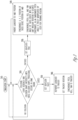
- FIG. 3 is a more detailed diagram of the process of locking down the sights in a virtual trainer.
- the system commences its simulation operation at 310, and it determines if there is a collision event at 320.
- a collision event is when a user's VR HMD enters the software-generated collision zone. More specifically, the system is programmed with the three-dimensional shape of the VR HMD and the three-dimensional shape of the TADSS device, and when two programmed shapes attached to the VR HMD and TADSS device three-dimensional shape intersect, the system can determine that a collision event has occurred. In an embodiment, the determination of a collision event can be executed with a typical VR gaming engine. If no collision event has occurred at 320, the system loops back to continue to monitor for a collision event.
- the sight lock is set to true at 330, and the weapon simulation launcher is attached to or associated with the user's VR HMD at 340.
- This attachment or association involves synchronizing the x, y, and z position of the TADSS device with the x, y, and z position of the user's VR HMD.
- the angular rotations are limited to any desired constraints.
- the system can constrain the positioning of the TADSS between the angles of 25 degrees to 75 degrees in relation to parallel.
- the pitch angle of the TADSS can be freely manipulated by the user so that the training is more realistic.
- the sight lock feature stays active at 340, until the user's VR HMD exits the collision zone, and then the sight lock feature is set to false at 350. Thereafter, at 360, the simulation launcher is detached or disassociated from the user's VR HMD, and the simulation launcher is re-attached to or re-associated with the VR tracker of the gaming engine. The rotation of the tracker is determined, and the pitch, yaw, and roll of the TADSS device is synchronized to the VR tracker. Thereafter, system returns to determine the next collision event at 320.
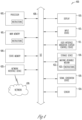
- FIG. 4 is a block diagram of a machine in the form of a computer system within which a set of instructions, for causing the machine to perform any one or more of the methodologies discussed herein, may be executed.
- the machine operates as a standalone device or may be connected ( e.g ., networked) to other machines.
- the machine may operate in the capacity of a server or a client machine in a client-server network environment, or as a peer machine in peer-to-peer (or distributed) network environment.
- machine-readable medium 422 is illustrated in an example embodiment to be a single medium, the term “machine-readable medium” may include a single medium or multiple media (e.g., a centralized or distributed database, and/or associated caches and servers) that store the one or more instructions.
- the term “machine-readable medium” shall also be taken to include any tangible medium that is capable of storing, encoding or carrying instructions for execution by the machine and that cause the machine to perform any one or more of the methodologies of the present invention, or that is capable of storing, encoding or carrying data structures utilized by or associated with such instructions.
- the term “machine-readable medium” shall accordingly be taken to include, but not be limited to, solid-state memories, and optical and magnetic media.
- machine-readable media include non-volatile memory, including by way of example semiconductor memory devices, e.g., EPROM, EEPROM, and flash memory devices, magnetic disks such as internal hard disks and removable disks; magneto-optical disks; and CD-ROM and DVD-ROM disks.
- semiconductor memory devices e.g., EPROM, EEPROM, and flash memory devices
- magnetic disks such as internal hard disks and removable disks
- magneto-optical disks and CD-ROM and DVD-ROM disks.
Landscapes
- Engineering & Computer Science (AREA)
- Physics & Mathematics (AREA)
- Theoretical Computer Science (AREA)
- General Physics & Mathematics (AREA)
- General Engineering & Computer Science (AREA)
- Educational Administration (AREA)
- Educational Technology (AREA)
- Business, Economics & Management (AREA)
- Optics & Photonics (AREA)
- Human Computer Interaction (AREA)
- Radar, Positioning & Navigation (AREA)
- Processing Or Creating Images (AREA)
- User Interface Of Digital Computer (AREA)
Claims (15)
- Prozess, umfassend:Bestimmen eines ersten Standorts eines virtuellen Zielsystemtrainers im dreidimensionalen Raum unter Verwendung eines dreidimensionalen Positionsverfolgungssystems;beim Platzieren eines Virtual Reality-Head-Mounted-Displays (VR) (HMD) in der Nähe des virtuellen Trainers des Zielsystems, Bestimmen einer zweiten Position des VR-HMD im dreidimensionalen Raum unter Verwendung des dreidimensionalen Positionsverfolgungssystems;Analysieren einer Beziehung zwischen dem ersten Standort und dem zweiten Standort; undbei einer Bestimmung (320), dass das VR-HMD in Bezug auf den virtuellen Trainer des Zielsystems richtig positioniert ist, basierend auf der Analyse der Beziehung zwischen dem ersten Standort und dem zweiten Standort, Sperren (340) einer visuellen Übertragung an das VR-HMD;wobei die Feststellung, dass das VR-HMD richtig positioniert ist, eine Feststellung umfasst, dass ein Benutzer entlang einer Zielsichtlinie des virtuellen Trainingsgeräts des Zielsystems blicken kann; undwobei die Feststellung, dass der Benutzer entlang der Zielsichtlinie des virtuellen Trainingsgeräts des Zielsystems blicken kann, eine Feststellung umfasst, dass das VR-HMD innerhalb einer softwaredefinierten virtuellen Kollisionszone (110) des virtuellen Trainingsgeräts des Zielsystems positioniert ist.
- Verfahren nach Anspruch 1, wobei der virtuelle Trainer des Zielsystems einen tragbaren virtuellen Trainer für die Luftabwehr umfasst.
- Verfahren nach Anspruch 1, wobei der virtuelle Trainer des Zielsystems einen virtuellen Trainer für tragbare Luftabwehrsysteme (MANPADS) umfasst.
- Verfahren nach Anspruch 1, wobei der virtuelle Trainer des Zielsystems ein Gerät für Trainingshilfen, Geräte, Simulatoren und Simulationen (TADSS) umfasst.
- Verfahren nach Anspruch 1, wobei die Zielvisierlinie ein erstes virtuelles Fadenkreuz und/oder ein zweites virtuelles Fadenkreuz umfasst.
- Verfahren nach Anspruch 5, umfassend die Verwendung einer physischen Zielvorrichtung in Verbindung mit der Zielvisierlinie.
- Verfahren nach Anspruch 1, wobei das VR-HMD auf dem Kopf eines Benutzers des virtuellen Zielsystemtrainers positioniert ist.
- Verfahren nach Anspruch 1, wobei die Analyse der Beziehung zwischen dem ersten Standort und dem zweiten Standort die Verwendung einer Virtual-Reality-Gaming-Engine umfasst.
- Verfahren nach Anspruch 1, wobei das dreidimensionale Positionsverfolgungssystem einen oder mehrere Infrarotsensoren umfasst, die auf dem virtuellen Trainer des Zielsystems und dem VR-HMD angebracht sind, eine Vielzahl von Kameras und eine Inside-Out-Verfolgungsmethode.
- System, umfassend:ein virtueller Trainer für Zielsysteme; undein Virtual Reality, VR, Head-Mounted Display, HMD;wobei das System betriebsfähig ist, zum:Bestimmen eines ersten Standorts des virtuellen Zielsystemtrainers im dreidimensionalen Raum unter Verwendung eines dreidimensionalen Positionsverfolgungssystems;beim Platzieren eines VR HMD in der Nähe des virtuellen Trainers des Zielsystems, Bestimmen einer zweiten Position des VR-HMD im dreidimensionalen Raum unter Verwendung des dreidimensionalen Positionsverfolgungssystems;Analysieren einer Beziehung zwischen dem ersten Standort und dem zweiten Standort; undbei einer Bestimmung (320), dass das VR-HMD in Bezug auf den virtuellen Trainer des Zielsystems richtig positioniert ist, basierend auf der Analyse der Beziehung zwischen dem ersten Standort und dem zweiten Standort, Sperren (340) einer visuellen Übertragung an das VR-HMD;wobei die Feststellung, dass das VR-HMD richtig positioniert ist, eine Feststellung umfasst, dass ein Benutzer entlang einer Zielsichtlinie des virtuellen Trainingsgeräts des Zielsystems blicken kann; undwobei die Feststellung, dass der Benutzer entlang der Zielsichtlinie des virtuellen Trainingsgeräts des Zielsystems blicken kann, eine Feststellung umfasst, dass das VR-HMD innerhalb einer softwaredefinierten virtuellen Kollisionszone (110) des virtuellen Trainingsgeräts des Zielsystems positioniert ist.
- Nichttransitorisches computerlesbares Medium, umfassend Anweisungen, die, wenn sie durch einen Systemprozessor nach Anspruch 10 ausgeführt werden, einen Prozess ausführen, umfassend:Bestimmen eines ersten Standorts eines virtuellen Zielsystemtrainers im dreidimensionalen Raum unter Verwendung eines dreidimensionalen Positionsverfolgungssystems;beim Platzieren eines Virtual Reality-Head-Mounted-Displays (VR) (HMD) in der Nähe des virtuellen Trainers des Zielsystems, Bestimmen einer zweiten Position des VR-HMD im dreidimensionalen Raum unter Verwendung des dreidimensionalen Positionsverfolgungssystems;Analysieren einer Beziehung zwischen dem ersten Standort und dem zweiten Standort; undbei einer Bestimmung (320), dass das VR-HMD in Bezug auf den virtuellen Trainer des Zielsystems richtig positioniert ist, basierend auf der Analyse der Beziehung zwischen dem ersten Standort und dem zweiten Standort, Sperren (340) einer visuellen Übertragung an das VR-HMD;wobei die Feststellung, dass das VR-HMD richtig positioniert ist, eine Feststellung umfasst, dass ein Benutzer entlang einer Zielsichtlinie des virtuellen Trainingsgeräts des Zielsystems blicken kann; undwobei die Feststellung, dass der Benutzer entlang der Zielsichtlinie des virtuellen Trainingsgeräts des Zielsystems blicken kann, eine Feststellung umfasst, dass das VR-HMD innerhalb einer softwaredefinierten virtuellen Kollisionszone (110) des virtuellen Trainingsgeräts des Zielsystems positioniert ist.
- Das nicht flüchtige, computerlesbare Medium nach Anspruch 11, wobei der virtuelle Trainer des Zielsystems einen tragbaren virtuellen Trainer zur Luftabwehr umfasst.
- Das nicht flüchtige, computerlesbare Medium nach Anspruch 11, wobei der virtuelle Trainer des Zielsystems einen tragbaren virtuellen Trainer zur Luftabwehr, MANPADS, umfasst.
- Das nicht flüchtige computerlesbare Medium nach Anspruch 11, wobei der virtuelle Trainer des Zielsystems ein Gerät für Trainingshilfen, Geräte, Simulatoren und Simulationen (TADSS) umfasst.
- Das nicht flüchtige computerlesbare Medium nach Anspruch 11, wobei die Zielsichtlinie ein erstes virtuelles Fadenkreuz und ein zweites virtuelles Fadenkreuz oder mehrere davon umfasst; und
Vorzugsweise umfasst es Anweisungen zur Verwendung eines physischen Zielgeräts in Verbindung mit der Zielvisierlinie.
Applications Claiming Priority (2)
| Application Number | Priority Date | Filing Date | Title |
|---|---|---|---|
| US16/995,470 US11585637B2 (en) | 2020-08-17 | 2020-08-17 | System for aiming down a sighting apparatus in a virtual reality environment |
| PCT/US2021/046132 WO2022040081A1 (en) | 2020-08-17 | 2021-08-16 | System for aiming down a sighting apparatus in a virtual reality environment |
Publications (2)
| Publication Number | Publication Date |
|---|---|
| EP4196839A1 EP4196839A1 (de) | 2023-06-21 |
| EP4196839B1 true EP4196839B1 (de) | 2025-03-26 |
Family
ID=77774972
Family Applications (1)
| Application Number | Title | Priority Date | Filing Date |
|---|---|---|---|
| EP21770337.0A Active EP4196839B1 (de) | 2020-08-17 | 2021-08-16 | System zum abzielen einer visiervorrichtung in einer umgebung der virtuellen realität |
Country Status (4)
| Country | Link |
|---|---|
| US (1) | US11585637B2 (de) |
| EP (1) | EP4196839B1 (de) |
| JP (1) | JP7563863B2 (de) |
| WO (1) | WO2022040081A1 (de) |
Families Citing this family (1)
| Publication number | Priority date | Publication date | Assignee | Title |
|---|---|---|---|---|
| US20240386677A1 (en) * | 2021-06-25 | 2024-11-21 | Telefonaktiebolaget Lm Ericsson (Publ) | Placement of 3d visual appearance in extended reality communications |
Family Cites Families (3)
| Publication number | Priority date | Publication date | Assignee | Title |
|---|---|---|---|---|
| US5641288A (en) * | 1996-01-11 | 1997-06-24 | Zaenglein, Jr.; William G. | Shooting simulating process and training device using a virtual reality display screen |
| US20150226509A1 (en) * | 2014-02-10 | 2015-08-13 | Shawn Hadler | System and method for simulated firearms training |
| US11226677B2 (en) * | 2019-01-08 | 2022-01-18 | V-Armed Inc. | Full-body inverse kinematic (FBIK) module for use in firearm simulation training |
-
2020
- 2020-08-17 US US16/995,470 patent/US11585637B2/en active Active
-
2021
- 2021-08-16 EP EP21770337.0A patent/EP4196839B1/de active Active
- 2021-08-16 JP JP2023511890A patent/JP7563863B2/ja active Active
- 2021-08-16 WO PCT/US2021/046132 patent/WO2022040081A1/en not_active Ceased
Also Published As
| Publication number | Publication date |
|---|---|
| WO2022040081A1 (en) | 2022-02-24 |
| JP7563863B2 (ja) | 2024-10-08 |
| US11585637B2 (en) | 2023-02-21 |
| US20220049930A1 (en) | 2022-02-17 |
| JP2023538903A (ja) | 2023-09-12 |
| EP4196839A1 (de) | 2023-06-21 |
Similar Documents
| Publication | Publication Date | Title |
|---|---|---|
| US11325036B2 (en) | Interface display method and apparatus, electronic device, and computer-readable storage medium | |
| US11224815B2 (en) | Method and apparatus for obtaining damage value of attack item in virtual environment, method and apparatus for displaying damage value of attack item in virtual environment, and computer device | |
| US11192035B2 (en) | Method and apparatus for providing online shooting game | |
| US10030931B1 (en) | Head mounted display-based training tool | |
| US10030937B2 (en) | System and method for marksmanship training | |
| KR101414147B1 (ko) | 가상현실 사격 시뮬레이션 시스템 | |
| US9662564B1 (en) | Systems and methods for generating three-dimensional image models using game-based image acquisition | |
| US20170193710A1 (en) | System and method for generating a mixed reality environment | |
| US20090155747A1 (en) | Sniper Training System | |
| US20220178657A1 (en) | Systems and methods for shooting simulation and training | |
| WO2013111146A4 (en) | System and method of providing virtual human on human combat training operations | |
| US11268790B2 (en) | Firing-simulation scope | |
| US20240185736A1 (en) | Magnetic tracking in an extended reality training system | |
| JP7558985B2 (ja) | 画像処理システム、画像処理プログラム、および画像処理方法 | |
| EP4196839B1 (de) | System zum abzielen einer visiervorrichtung in einer umgebung der virtuellen realität | |
| EP3015954B1 (de) | Datenverarbeitungsvorrichtung, verfahren zur steuerung der datenverarbeitungsvorrichtung, programm und datenspeichermedium | |
| CN113663329B (zh) | 虚拟角色的射击控制方法、装置、电子设备及存储介质 | |
| WO2016024921A1 (en) | Mobile training device and system for man-portable weapon | |
| WO2013111145A1 (en) | System and method of generating perspective corrected imagery for use in virtual combat training | |
| Fedasyuk et al. | Virtual reality training simulator for weapons shooting | |
| CN115311918B (zh) | 虚实融合训练系统以及方法 | |
| Wahyudi et al. | A novel system to visualize aerial weapon scoring system (AWSS) using 3D mixed reality | |
| AU2020226291A1 (en) | Systems and methods for training persons in the aiming of firearms at moving targets | |
| CN117928303A (zh) | 一种虚拟现实射击训练方法、装置以及电子设备 | |
| US20250036211A1 (en) | Universal tracking of physical objects in an extended reality environment |
Legal Events
| Date | Code | Title | Description |
|---|---|---|---|
| STAA | Information on the status of an ep patent application or granted ep patent |
Free format text: STATUS: UNKNOWN |
|
| STAA | Information on the status of an ep patent application or granted ep patent |
Free format text: STATUS: THE INTERNATIONAL PUBLICATION HAS BEEN MADE |
|
| PUAI | Public reference made under article 153(3) epc to a published international application that has entered the european phase |
Free format text: ORIGINAL CODE: 0009012 |
|
| STAA | Information on the status of an ep patent application or granted ep patent |
Free format text: STATUS: REQUEST FOR EXAMINATION WAS MADE |
|
| 17P | Request for examination filed |
Effective date: 20230209 |
|
| AK | Designated contracting states |
Kind code of ref document: A1 Designated state(s): AL AT BE BG CH CY CZ DE DK EE ES FI FR GB GR HR HU IE IS IT LI LT LU LV MC MK MT NL NO PL PT RO RS SE SI SK SM TR |
|
| DAV | Request for validation of the european patent (deleted) | ||
| DAX | Request for extension of the european patent (deleted) | ||
| REG | Reference to a national code |
Ref country code: DE Free format text: PREVIOUS MAIN CLASS: G02B0027000000 Ref country code: DE Ref legal event code: R079 Ref document number: 602021028197 Country of ref document: DE Free format text: PREVIOUS MAIN CLASS: G02B0027000000 Ipc: G02B0027010000 |
|
| GRAP | Despatch of communication of intention to grant a patent |
Free format text: ORIGINAL CODE: EPIDOSNIGR1 |
|
| STAA | Information on the status of an ep patent application or granted ep patent |
Free format text: STATUS: GRANT OF PATENT IS INTENDED |
|
| RIC1 | Information provided on ipc code assigned before grant |
Ipc: G09B 9/00 20060101ALI20241129BHEP Ipc: G09B 5/06 20060101ALI20241129BHEP Ipc: G02B 27/00 20060101ALI20241129BHEP Ipc: G02B 27/01 20060101AFI20241129BHEP |
|
| INTG | Intention to grant announced |
Effective date: 20241212 |
|
| GRAS | Grant fee paid |
Free format text: ORIGINAL CODE: EPIDOSNIGR3 |
|
| GRAA | (expected) grant |
Free format text: ORIGINAL CODE: 0009210 |
|
| STAA | Information on the status of an ep patent application or granted ep patent |
Free format text: STATUS: THE PATENT HAS BEEN GRANTED |
|
| AK | Designated contracting states |
Kind code of ref document: B1 Designated state(s): AL AT BE BG CH CY CZ DE DK EE ES FI FR GB GR HR HU IE IS IT LI LT LU LV MC MK MT NL NO PL PT RO RS SE SI SK SM TR |
|
| REG | Reference to a national code |
Ref country code: GB Ref legal event code: FG4D |
|
| REG | Reference to a national code |
Ref country code: CH Ref legal event code: EP |
|
| REG | Reference to a national code |
Ref country code: DE Ref legal event code: R096 Ref document number: 602021028197 Country of ref document: DE |
|
| REG | Reference to a national code |
Ref country code: IE Ref legal event code: FG4D |
|
| PG25 | Lapsed in a contracting state [announced via postgrant information from national office to epo] |
Ref country code: RS Free format text: LAPSE BECAUSE OF FAILURE TO SUBMIT A TRANSLATION OF THE DESCRIPTION OR TO PAY THE FEE WITHIN THE PRESCRIBED TIME-LIMIT Effective date: 20250626 |
|
| PG25 | Lapsed in a contracting state [announced via postgrant information from national office to epo] |
Ref country code: FI Free format text: LAPSE BECAUSE OF FAILURE TO SUBMIT A TRANSLATION OF THE DESCRIPTION OR TO PAY THE FEE WITHIN THE PRESCRIBED TIME-LIMIT Effective date: 20250326 |
|
| REG | Reference to a national code |
Ref country code: LT Ref legal event code: MG9D |
|
| PG25 | Lapsed in a contracting state [announced via postgrant information from national office to epo] |
Ref country code: HR Free format text: LAPSE BECAUSE OF FAILURE TO SUBMIT A TRANSLATION OF THE DESCRIPTION OR TO PAY THE FEE WITHIN THE PRESCRIBED TIME-LIMIT Effective date: 20250326 |
|
| PG25 | Lapsed in a contracting state [announced via postgrant information from national office to epo] |
Ref country code: LV Free format text: LAPSE BECAUSE OF FAILURE TO SUBMIT A TRANSLATION OF THE DESCRIPTION OR TO PAY THE FEE WITHIN THE PRESCRIBED TIME-LIMIT Effective date: 20250326 |
|
| PG25 | Lapsed in a contracting state [announced via postgrant information from national office to epo] |
Ref country code: BG Free format text: LAPSE BECAUSE OF FAILURE TO SUBMIT A TRANSLATION OF THE DESCRIPTION OR TO PAY THE FEE WITHIN THE PRESCRIBED TIME-LIMIT Effective date: 20250326 Ref country code: GR Free format text: LAPSE BECAUSE OF FAILURE TO SUBMIT A TRANSLATION OF THE DESCRIPTION OR TO PAY THE FEE WITHIN THE PRESCRIBED TIME-LIMIT Effective date: 20250627 |
|
| REG | Reference to a national code |
Ref country code: NL Ref legal event code: MP Effective date: 20250326 |
|
| PG25 | Lapsed in a contracting state [announced via postgrant information from national office to epo] |
Ref country code: NL Free format text: LAPSE BECAUSE OF FAILURE TO SUBMIT A TRANSLATION OF THE DESCRIPTION OR TO PAY THE FEE WITHIN THE PRESCRIBED TIME-LIMIT Effective date: 20250326 |
|
| PG25 | Lapsed in a contracting state [announced via postgrant information from national office to epo] |
Ref country code: SE Free format text: LAPSE BECAUSE OF FAILURE TO SUBMIT A TRANSLATION OF THE DESCRIPTION OR TO PAY THE FEE WITHIN THE PRESCRIBED TIME-LIMIT Effective date: 20250326 |
|
| REG | Reference to a national code |
Ref country code: AT Ref legal event code: MK05 Ref document number: 1779501 Country of ref document: AT Kind code of ref document: T Effective date: 20250326 |
|
| PG25 | Lapsed in a contracting state [announced via postgrant information from national office to epo] |
Ref country code: SM Free format text: LAPSE BECAUSE OF FAILURE TO SUBMIT A TRANSLATION OF THE DESCRIPTION OR TO PAY THE FEE WITHIN THE PRESCRIBED TIME-LIMIT Effective date: 20250326 |
|
| PG25 | Lapsed in a contracting state [announced via postgrant information from national office to epo] |
Ref country code: ES Free format text: LAPSE BECAUSE OF FAILURE TO SUBMIT A TRANSLATION OF THE DESCRIPTION OR TO PAY THE FEE WITHIN THE PRESCRIBED TIME-LIMIT Effective date: 20250326 Ref country code: PT Free format text: LAPSE BECAUSE OF FAILURE TO SUBMIT A TRANSLATION OF THE DESCRIPTION OR TO PAY THE FEE WITHIN THE PRESCRIBED TIME-LIMIT Effective date: 20250728 |
|
| PGFP | Annual fee paid to national office [announced via postgrant information from national office to epo] |
Ref country code: DE Payment date: 20250724 Year of fee payment: 5 |
|
| PGFP | Annual fee paid to national office [announced via postgrant information from national office to epo] |
Ref country code: NO Payment date: 20250725 Year of fee payment: 5 |
|
| PG25 | Lapsed in a contracting state [announced via postgrant information from national office to epo] |
Ref country code: IT Free format text: LAPSE BECAUSE OF FAILURE TO SUBMIT A TRANSLATION OF THE DESCRIPTION OR TO PAY THE FEE WITHIN THE PRESCRIBED TIME-LIMIT Effective date: 20250326 Ref country code: PL Free format text: LAPSE BECAUSE OF FAILURE TO SUBMIT A TRANSLATION OF THE DESCRIPTION OR TO PAY THE FEE WITHIN THE PRESCRIBED TIME-LIMIT Effective date: 20250326 |
|
| PGFP | Annual fee paid to national office [announced via postgrant information from national office to epo] |
Ref country code: GB Payment date: 20250724 Year of fee payment: 5 |
|
| PG25 | Lapsed in a contracting state [announced via postgrant information from national office to epo] |
Ref country code: AT Free format text: LAPSE BECAUSE OF FAILURE TO SUBMIT A TRANSLATION OF THE DESCRIPTION OR TO PAY THE FEE WITHIN THE PRESCRIBED TIME-LIMIT Effective date: 20250326 |
|
| PGFP | Annual fee paid to national office [announced via postgrant information from national office to epo] |
Ref country code: FR Payment date: 20250725 Year of fee payment: 5 |
|
| PG25 | Lapsed in a contracting state [announced via postgrant information from national office to epo] |
Ref country code: EE Free format text: LAPSE BECAUSE OF FAILURE TO SUBMIT A TRANSLATION OF THE DESCRIPTION OR TO PAY THE FEE WITHIN THE PRESCRIBED TIME-LIMIT Effective date: 20250326 |
|
| PG25 | Lapsed in a contracting state [announced via postgrant information from national office to epo] |
Ref country code: RO Free format text: LAPSE BECAUSE OF FAILURE TO SUBMIT A TRANSLATION OF THE DESCRIPTION OR TO PAY THE FEE WITHIN THE PRESCRIBED TIME-LIMIT Effective date: 20250326 |
|
| PG25 | Lapsed in a contracting state [announced via postgrant information from national office to epo] |
Ref country code: SK Free format text: LAPSE BECAUSE OF FAILURE TO SUBMIT A TRANSLATION OF THE DESCRIPTION OR TO PAY THE FEE WITHIN THE PRESCRIBED TIME-LIMIT Effective date: 20250326 |
|
| PG25 | Lapsed in a contracting state [announced via postgrant information from national office to epo] |
Ref country code: IS Free format text: LAPSE BECAUSE OF FAILURE TO SUBMIT A TRANSLATION OF THE DESCRIPTION OR TO PAY THE FEE WITHIN THE PRESCRIBED TIME-LIMIT Effective date: 20250726 |
|
| PG25 | Lapsed in a contracting state [announced via postgrant information from national office to epo] |
Ref country code: DK Free format text: LAPSE BECAUSE OF FAILURE TO SUBMIT A TRANSLATION OF THE DESCRIPTION OR TO PAY THE FEE WITHIN THE PRESCRIBED TIME-LIMIT Effective date: 20250326 |
|
| PG25 | Lapsed in a contracting state [announced via postgrant information from national office to epo] |
Ref country code: CZ Free format text: LAPSE BECAUSE OF FAILURE TO SUBMIT A TRANSLATION OF THE DESCRIPTION OR TO PAY THE FEE WITHIN THE PRESCRIBED TIME-LIMIT Effective date: 20250326 |
|
| PLBE | No opposition filed within time limit |
Free format text: ORIGINAL CODE: 0009261 |
|
| STAA | Information on the status of an ep patent application or granted ep patent |
Free format text: STATUS: NO OPPOSITION FILED WITHIN TIME LIMIT |