EP4195069B1 - Systeme und verfahren zur automatischen erzeugung von metadaten für mediendokumente - Google Patents
Systeme und verfahren zur automatischen erzeugung von metadaten für mediendokumente Download PDFInfo
- Publication number
- EP4195069B1 EP4195069B1 EP23154628.4A EP23154628A EP4195069B1 EP 4195069 B1 EP4195069 B1 EP 4195069B1 EP 23154628 A EP23154628 A EP 23154628A EP 4195069 B1 EP4195069 B1 EP 4195069B1
- Authority
- EP
- European Patent Office
- Prior art keywords
- model
- feature vector
- media
- metadata
- collection
- Prior art date
- Legal status (The legal status is an assumption and is not a legal conclusion. Google has not performed a legal analysis and makes no representation as to the accuracy of the status listed.)
- Active
Links
Images



Classifications
-
- G—PHYSICS
- G06—COMPUTING OR CALCULATING; COUNTING
- G06F—ELECTRIC DIGITAL DATA PROCESSING
- G06F16/00—Information retrieval; Database structures therefor; File system structures therefor
- G06F16/50—Information retrieval; Database structures therefor; File system structures therefor of still image data
- G06F16/56—Information retrieval; Database structures therefor; File system structures therefor of still image data having vectorial format
-
- G—PHYSICS
- G06—COMPUTING OR CALCULATING; COUNTING
- G06F—ELECTRIC DIGITAL DATA PROCESSING
- G06F16/00—Information retrieval; Database structures therefor; File system structures therefor
- G06F16/40—Information retrieval; Database structures therefor; File system structures therefor of multimedia data, e.g. slideshows comprising image and additional audio data
- G06F16/41—Indexing; Data structures therefor; Storage structures
-
- G—PHYSICS
- G06—COMPUTING OR CALCULATING; COUNTING
- G06F—ELECTRIC DIGITAL DATA PROCESSING
- G06F16/00—Information retrieval; Database structures therefor; File system structures therefor
- G06F16/40—Information retrieval; Database structures therefor; File system structures therefor of multimedia data, e.g. slideshows comprising image and additional audio data
- G06F16/45—Clustering; Classification
-
- G—PHYSICS
- G06—COMPUTING OR CALCULATING; COUNTING
- G06F—ELECTRIC DIGITAL DATA PROCESSING
- G06F16/00—Information retrieval; Database structures therefor; File system structures therefor
- G06F16/90—Details of database functions independent of the retrieved data types
- G06F16/93—Document management systems
-
- G—PHYSICS
- G06—COMPUTING OR CALCULATING; COUNTING
- G06N—COMPUTING ARRANGEMENTS BASED ON SPECIFIC COMPUTATIONAL MODELS
- G06N3/00—Computing arrangements based on biological models
- G06N3/02—Neural networks
-
- G—PHYSICS
- G06—COMPUTING OR CALCULATING; COUNTING
- G06N—COMPUTING ARRANGEMENTS BASED ON SPECIFIC COMPUTATIONAL MODELS
- G06N3/00—Computing arrangements based on biological models
- G06N3/02—Neural networks
- G06N3/04—Architecture, e.g. interconnection topology
- G06N3/045—Combinations of networks
-
- G—PHYSICS
- G06—COMPUTING OR CALCULATING; COUNTING
- G06N—COMPUTING ARRANGEMENTS BASED ON SPECIFIC COMPUTATIONAL MODELS
- G06N3/00—Computing arrangements based on biological models
- G06N3/02—Neural networks
- G06N3/04—Architecture, e.g. interconnection topology
- G06N3/0464—Convolutional networks [CNN, ConvNet]
-
- G—PHYSICS
- G06—COMPUTING OR CALCULATING; COUNTING
- G06N—COMPUTING ARRANGEMENTS BASED ON SPECIFIC COMPUTATIONAL MODELS
- G06N3/00—Computing arrangements based on biological models
- G06N3/02—Neural networks
- G06N3/08—Learning methods
-
- G—PHYSICS
- G06—COMPUTING OR CALCULATING; COUNTING
- G06N—COMPUTING ARRANGEMENTS BASED ON SPECIFIC COMPUTATIONAL MODELS
- G06N3/00—Computing arrangements based on biological models
- G06N3/02—Neural networks
- G06N3/08—Learning methods
- G06N3/084—Backpropagation, e.g. using gradient descent
Definitions
- Examples of the present invention relate to the field of digital media tagging and classification, including image and 3D model tagging and classification, and associated user interface systems.
- Metadata that includes textual descriptions of the digital media document.
- This metadata may include information such as a timestamp, as well as tags and/or narrative descriptions of the content of the associated digital media document. These metadata may be used when performing text based searches in order to identify media documents that are relevant to the search query.
- the metadata may also be used to categorize or classify the digital media documents.
- the metadata associated with a digital photo may include technical information such as the dimensions of the image (in pixels) and the color depth of the image, as well as metadata describing the content of the photo.
- the metadata associated with a photograph of a hiker in a forest may include textual descriptions of the content of the photograph, such as a "woods,” “forest,” “trees,” “plants,” “green,” “shadow,” “flower,” “hike,” “hiker,” “hiking,” etc.
- Three-dimensional (3D) models are another form of digital media document, and are prevalently used in contexts such as advertising, quality control, video games, virtual reality, and augmented reality applications.
- 3D models were generated manually through the use of, for example, computer aided design (CAD) tools. Creating these models is, generally, a labor intensive task, especially when creating detailed models.
- CAD computer aided design
- depth cameras and 3D scanners have provided an alternative approach, in which detailed 3D models can be created through the digital capture of the shapes of real, physical objects.
- the three-dimensional models generated using CAD tools, depth cameras, and 3D scanners may also benefit from metadata tagging.
- 3D models may be used in product listings on electronic commerce websites, and the metadata associated with the 3D models may be used to generate or populate the information in the associated product listings.
- a 3D model of a vehicle may include metadata information such as the make and model of the car, the interior and exterior color, condition (e.g., presence of dents or damage), and the like. These metadata can be added to the information in the product listing, such that a shopper can search for a particular type of car in a particular color.
- US 2010/111370 A1 relates to matching 3D body shapes and uses a projection of the 3D body shape models onto a 2D silhouette.
- the 2D silhouette is used to derive additional parameters such as a contour to be associated with the 3D body shape model for matching a 3D body shape model with another 3D body shape model.
- GB 2 514 320 A describes a method and system for 3D model database creation or retrieval comprising: converting each 3D model into a plurality of orthogonal 2D views; generating signature such as edge or boundary contour and storing the generated descriptors.
- Examples of the present invention are directed to systems and methods for automatically generating metadata for a media document such as a two-dimensional (2D) image or a three-dimensional (3D) model.
- the 3D model may be generated by a scanner system, scanner system having a depth camera, as described in more detail below.
- Some aspects of embodiments examples of the present invention relate to supplying the media document to a feature extractor to generate a feature vector and to supply the feature vector to a classifier that is trained or configured to classify the media document in accordance with a set of classifications.
- Still other aspects of embodiments of the present invention relate to searching a collection of media documents (e.g., stored in a database) to identify existing media documents having similar classifications (e.g., a similar feature vector). The metadata associated with these media documents having similar classifications may then be used to generate metadata for the supplied media document.
- FIG. 1 is an example of the automatic population of tags and classes of metadata according to one example of the present invention.
- a 3D model 10 is used as the media model that is supplied as a query.
- the 3D model 10 does not have any associated metadata.
- an example of the present invention identifies entries 12 in a collection of media documents (a collection of 3D models) that are similar to the 3D model 10 supplied in the query.
- Each of the identified entries 12 is associated with metadata 14 including a class 14a and tags 14b.
- the first entry shows a model of a blue sport utility vehicle with class "car” and tags "Jeep, blue, sport".
- the second entry shows a model of a red, open top, off road vehicle with class "car” and tags "Jeep, convertible, red.”
- the third entry shows a model of a baseball cap with class “cap” and tags “black & white.”
- the fourth entry shows a model of a green, open top car with class "car” and tags “convertible” and "sport.”
- This approach may be particularly useful in the case of a 3D model generated by a scanner system, where such a generated 3D model may have substantially no metadata, such as in the case of a user who captured a 3D model of his or her car, using a 3D scanner system, in order to include the 3D model of the car in an advertisement (e.g., a product listing on an online auction website) to sell the car.
- an advertisement e.g., a product listing on an online auction website
- This approach further allows the system to automatically classify and tag an object, even when the user capturing the image or 3D model of the object does not know what the object is or what the object is called.
- scanner systems include hardware devices that include a sensor, such as a camera, that collects data from a scene.
- the scanner systems may include a computer processor or other processing hardware for generating depth images and/or three-dimensional (3D) models of the scene from the data collected by the sensor.
- the sensor of a scanner system may be, for example one of a variety of different types of cameras including: an ordinary color camera; a depth (or range) camera; or a combination of depth and color camera.
- the latter is typically called RGB-D where RGB stands for the color image and D stands for the depth image (where each pixel encodes the depth (or distance) information of the scene.)
- the depth image can be obtained by different methods including geometric or electronic methods.
- a depth image may be represented as a point cloud or may be converted into a point cloud. Examples of geometric methods include passive or active stereo camera systems and structured light camera systems. Examples of electronic methods to capture depth images include Time of Flight (TOF), or general scanning or fixed LIDAR cameras.
- TOF Time of Flight
- LIDAR general scanning or fixed LIDAR cameras.
- DTAM Dense Tracking and Mapping in Real Time
- SLAM Simultaneous Localization and Mapping
- ICP Iterative Closest Point
- At least some depth camera systems allow a user to freely move the camera around the object to capture all sides of the object.
- the underlying algorithm for generating the combined depth image may track and/or infer the pose of the camera with respect to the object in order to align the captured data with the object or with a partially constructed 3D model of the object.
- One example of a system and method for scanning three-dimensional objects is described in U.S. Patent Application Serial No. 15/630,715, filed in the United States Patent and Trademark Office on June 22, 2017 .
- the construction of the depth image or 3D model is performed locally by the scanner itself. It other examples, the processing is performed by one or more local or remote servers, which may receive data from the scanner over a wired or wireless connection (e.g., an Ethernet network connection, a USB connection, a cellular data connection, a local wireless network connection, and a Bluetooth connection).
- a wired or wireless connection e.g., an Ethernet network connection, a USB connection, a cellular data connection, a local wireless network connection, and a Bluetooth connection.
- the scanner may be a hand-held 3D scanner.
- Such hand-held 3D scanners may include a depth camera (a camera that computes the distance of the surface elements imaged by each pixel) together with software that can register multiple depth images of the same surface to create a 3D representation of a possibly large surface or of a complete object. Users of hand-held 3D scanners need to move it to different positions around the object and orient it so that all points in the object's surface are covered (e.g., the surfaces are seen in at least one depth image taken by the scanner).
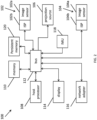
- FIG. 2 is a block diagram of a scanning system as a stereo depth camera system according to one example of the present invention.
- the scanning system 100 shown in FIG. 2 includes a first camera 102, a second camera 104, a projection source 106 (or illumination source or active projection system), and a host processor 108 and memory 110, wherein the host processor may be, for example, a graphics processing unit (GPU), a more general purpose processor (CPU), an appropriately configured field programmable gate array (FPGA), or an application specific integrated circuit (ASIC).
- the first camera 102 and the second camera 104 may be rigidly attached, e.g., on a frame, such that their relative positions and orientations are substantially fixed.
- the first camera 102 and the second camera 104 may be referred to together as a "depth camera.”
- the first camera 102 and the second camera 104 include corresponding image sensors 102a and 104a, and may also include corresponding image signal processors (ISP) 102b and 104b.
- ISP image signal processors
- the various components may communicate with one another over a system bus 112.
- the scanning system 100 may include additional components such as a display 114 to allow the device to display images, a network adapter 116 to communicate with other devices, an inertial measurement unit (IMU) 118 such as a gyroscope to detect acceleration of the scanning system 100 (e.g., detecting the direction of gravity to determine orientation and detecting movements to detect position changes), and persistent memory 120 such as NAND flash memory for storing data collected and processed by the scanning system 100.
- IMU inertial measurement unit
- the IMU 118 may be of the type commonly found in many modern smartphones.
- the image capture system may also include other communication components, such as a universal serial bus (USB) interface controller.
- USB universal serial bus
- the image sensors 102a and 104a of the cameras 102 and 104 are RGB-IR image sensors.
- Image sensors that are capable of detecting visible light (e.g., red-green-blue, or RGB) and invisible light (e.g., infrared or IR) information may be, for example, charged coupled device (CCD) or complementary metal oxide semiconductor (CMOS) sensors.
- CCD charged coupled device
- CMOS complementary metal oxide semiconductor
- a conventional RGB camera sensor includes pixels arranged in a "Bayer layout" or "RGBG layout,” which is 50% green, 25% red, and 25% blue.
- Band pass filters are placed in front of individual photodiodes (e.g., between the photodiode and the optics associated with the camera) for each of the green, red, and blue wavelengths in accordance with the Bayer layout.
- a conventional RGB camera sensor also includes an infrared (IR) filter or IR cut-off filter (formed, e.g., as part of the lens or as a coating on the entire image sensor chip) which further blocks signals in an IR portion of electromagnetic spectrum.
- IR infrared
- An RGB-IR sensor is substantially similar to a conventional RGB sensor, but may include different color filters.
- one of the green filters in every group of four photodiodes is replaced with an IR band-pass filter (or micro filter) to create a layout that is 25% green, 25% red, 25% blue, and 25% infrared, where the infrared pixels are intermingled among the visible light pixels.
- the IR cut-off filter may be omitted from the RGB-IR sensor, the IR cut-off filter may be located only over the pixels that detect red, green, and blue light, or the IR filter can be designed to pass visible light as well as light in a particular wavelength interval ( e.g. , 840-860 nm).
- An image sensor capable of capturing light in multiple portions or bands or spectral bands of the electromagnetic spectrum (e.g., red, blue, green, and infrared light) will be referred to herein as a "multi-channel" image sensor.
- the image sensors 102a and 104a are conventional visible light sensors.
- the system includes one or more visible light cameras (e.g., RGB cameras) and, separately, one or more invisible light cameras (e.g., infrared cameras, where an IR band-pass filter is located across all over the pixels).
- the image sensors 102a and 104a are infrared (IR) light sensors.
- a stereoscopic depth camera system includes at least two cameras that are spaced apart from each other and rigidly mounted to a shared structure such as a rigid frame.
- the cameras are oriented in substantially the same direction (e.g., the optical axes of the cameras may be substantially parallel) and have overlapping fields of view.
- These individual cameras can be implemented using, for example, a complementary metal oxide semiconductor (CMOS) or a charge coupled device (CCD) image sensor with an optical system (e.g., including one or more lenses) configured to direct or focus light onto the image sensor.
- CMOS complementary metal oxide semiconductor
- CCD charge coupled device
- the optical system can determine the field of view of the camera, e.g., based on whether the optical system is implements a "wide angle" lens, a "telephoto” lens, or something in between.
- the image acquisition system of the depth camera system may be referred to as having at least two cameras, which may be referred to as a "master” camera and one or more "slave” cameras.
- the estimated depth or disparity maps computed from the point of view of the master camera but any of the cameras may be used as the master camera.
- terms such as master/slave, left/right, above/below, first/second, and CAM1/CAM2 are used interchangeably unless noted.
- any one of the cameras may be master or a slave camera, and considerations for a camera on a left side with respect to a camera on its right may also apply, by symmetry, in the other direction.
- a depth camera system may include three cameras.
- two of the cameras may be invisible light (infrared) cameras and the third camera may be a visible light (e.g., a red/blue/green color camera) camera. All three cameras may be optically registered (e.g., calibrated) with respect to one another.
- One example of a depth camera system including three cameras is described in U.S. Patent Application Serial No. 15/147,879 "Depth Perceptive Trinocular Camera System" filed in the United States Patent and Trademark Office on May 5, 2016 .
- the depth camera system determines the pixel location of the feature in each of the images captured by the cameras.
- the distance between the features in the two images is referred to as the disparity, which is inversely related to the distance or depth of the object. (This is the effect when comparing how much an object "shifts" when viewing the object with one eye at a time-the size of the shift depends on how far the object is from the viewer's eyes, where closer objects make a larger shift and farther objects make a smaller shift and objects in the distance may have little to no detectable shift.)
- Techniques for computing depth using disparity are described, for example, in R. Szeliski. "Computer Vision: Algorithms and Applications", Springer, 2010 pp. 467 et seq .
- the magnitude of the disparity between the master and slave cameras depends on physical characteristics of the depth camera system, such as the pixel resolution of cameras, distance between the cameras and the fields of view of the cameras. Therefore, to generate accurate depth measurements, the depth camera system (or depth perceptive depth camera system) is calibrated based on these physical characteristics.
- the cameras may be arranged such that horizontal rows of the pixels of the image sensors of the cameras are substantially parallel.
- Image rectification techniques can be used to accommodate distortions to the images due to the shapes of the lenses of the cameras and variations of the orientations of the cameras.
- camera calibration information can provide information to rectify input images so that epipolar lines of the equivalent camera system are aligned with the scanlines of the rectified image.
- a 3D point in the scene projects onto the same scanline index in the master and in the slave image.
- Let u m and u s be the coordinates on the scanline of the image of the same 3D point p in the master and slave equivalent cameras, respectively, where in each camera these coordinates refer to an axis system centered at the principal point (the intersection of the optical axis with the focal plane) and with horizontal axis parallel to the scanlines of the rectified image.
- the difference u s - u m is called disparity and denoted by d ; it is inversely proportional to the orthogonal distance of the 3D point with respect to the rectified cameras (that is, the length of the orthogonal projection of the point onto the optical axis of either camera).
- Block matching is a commonly used stereoscopic algorithm. Given a pixel in the master camera image, the algorithm computes the costs to match this pixel to any other pixel in the slave camera image. This cost function is defined as the dissimilarity between the image content within a small window surrounding the pixel in the master image and the pixel in the slave image. The optimal disparity at point is finally estimated as the argument of the minimum matching cost. This procedure is commonly addressed as Winner-Takes-All (WTA). These techniques are described in more detail, for example, in R. Szeliski.
- the projection source 106 may be configured to emit visible light (e.g., light within the spectrum visible to humans and/or other animals) or invisible light (e.g., infrared light) toward the scene imaged by the cameras 102 and 104.
- the projection source may have an optical axis substantially parallel to the optical axes of the cameras 102 and 104 and may be configured to emit light in the direction of the fields of view of the cameras 102 and 104.
- the projection source 106 may include multiple separate illuminators, each having an optical axis spaced apart from the optical axis (or axes) of the other illuminator (or illuminators), and spaced apart from the optical axes of the cameras 102 and 104.
- An invisible light projection source may be better suited to for situations where the subjects are people (such as in a videoconferencing system) because invisible light would not interfere with the subject's ability to see, whereas a visible light projection source may shine uncomfortably into the subject's eyes or may undesirably affect the experience by adding patterns to the scene. Examples of systems that include invisible light projection sources are described, for example, in U.S. Patent Application No. 14/788,078 "Systems and Methods for Multi-Channel Imaging Based on Multiple Exposure Settings," filed in the United States Patent and Trademark Office on June 30, 2015 .
- Active projection sources can also be classified as projecting static patterns, e.g., patterns that do not change over time, and dynamic patterns, e.g., patterns that do change over time.
- one aspect of the pattern is the illumination level of the projected pattern. This may be relevant because it can influence the depth dynamic range of the depth camera system. For example, if the optical illumination is at a high level, then depth measurements can be made of distant objects (e.g., to overcome the diminishing of the optical illumination over the distance to the object, by a factor proportional to the inverse square of the distance) and under bright ambient light conditions. However, a high optical illumination level may cause saturation of parts of the scene that are close-up. On the other hand, a low optical illumination level can allow the measurement of close objects, but not distant objects.
- the depth camera system includes two components: a detachable scanning component and a display component.
- the display component is a computer system, such as a smartphone, a tablet, a personal digital assistant, or other similar systems. Scanning systems using separable scanning and display components are described in more detail in, for example, U.S. Patent Application Serial No. 15/382,210 "3D Scanning Apparatus Including Scanning Sensor Detachable from Screen" filed in the United States Patent and Trademark Office on December 16, 2016 .
- examples of the present invention are described herein with respect to stereo depth camera systems, examples of the present invention are not limited thereto and may also be used with other depth camera systems such as structured light time of flight cameras and LIDAR cameras.
- Dense Tracking and Mapping in Real Time uses color cues for scanning and Simultaneous Localization and Mapping uses depth data (or a combination of depth and color data) to generate the 3D model.
- DTAM Dense Tracking and Mapping in Real Time
- Simultaneous Localization and Mapping uses depth data (or a combination of depth and color data) to generate the 3D model.
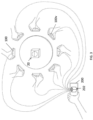
- FIG. 3 illustrates, from the perspective of a user, a system and method for scanning an object 20 in a fixed location using a 3D scanning system 50 including a scanning sensor (or camera) separate from a screen according to one example of the present invention.
- FIG. 3 illustrates a single scanning sensor module 100 at eight different physical positions around the object 20 at eight different points in time.
- the dotted line between the scanning sensor module 100 and the scanning device 200 indicates the data connection between the two pieces of hardware, where the scanning device 200 may transmit commands to the scanning sensor module 100 over the data connection, and the scanning sensor module 100 may transmit data, including images, to the scanning device 200.
- the user 22 may hold the scanning sensor module 100 (e.g., the camera) in one hand (depicted in FIG. 3 as the right hand) and may hold the scanning device 200 (e.g., a smartphone, tablet computer, personal digital assistant, or other handheld device with a display) in the other hand (depicted in FIG. 3 as the left hand).
- the user may move the scanning sensor from the front of the object to the back of the object without changing the position of the scanning device 200.
- the scanning device 200 displays a view 202 (e.g., a real time view) or representation of the images captured by the scanning sensor module.
- the user may have a more top-down view of the object 20, but the user 22 may position the scanning sensor module 100 to have a side view of the object 20.
- the view 202 on the scanning device 200 shown in FIG. 3 corresponds to the side view image captured by the scanning sensor module 100 at position 100v.
- This may enable the user 22 to scan the object 20 more easily and comfortably by manipulating the position of the scanning sensor module 100 without having to contort his or her body to maintain sight of the view 202 on the display of the scanning device 200. Therefore, the user receives real time feedback regarding the data being captured by the scanning sensor, thereby helping to ensure that all sides of the object, including the top, are imaged by the scanning sensor.
- a user may inadvertently orient the scanning sensor in a direction that fails to capture useful images of the object.
- the user may inadvertently capture images of the ceiling or the floor, or may capture images of the background.
- the fixed relationship between the field of view of the camera and the viewing direction of the display of the imaging system can make it difficult for the user to maintain a view of the screen while scanning all sides of the object.
- the three-dimensional model may also be associated with texture information (e.g., color information).
- texture information e.g., color information
- Such a model may be represented as a mesh.
- Creating a textured model is more complex than creating an un-textured model, in part because a viewer of the textured model may have higher expectations for photorealism and due to the additional challenge of aligning the textures with the surface of the mesh.
- Various techniques based on photometric error minimization and graph cut optimization may be applied in the creation of textured models, and, in some examples, such techniques may be performed by a server, rather than the scanner itself.
- FIGS. 4A and 4B are examples of three-dimensional models captured by a scanning system.
- FIG. 4A is a textured model of a brown shoe and may have been captured by an RGB-IR depth camera system.
- FIG. 4B is an untextured model of a duffel bag and may have been captured without texture (e.g., by a depth camera system that includes only IR sensors and no visible light or RGB sensors).
- the generated models may be stored in a standard format such as a "ply" format or "obj" format and can be displayed on a display device using viewer software.
- the viewing software may be web based (e.g., executed by a web browser), such as the case with the ThreeJS viewer.
- a collection of existing media documents such as three-dimensional (3D) models, is stored in a database.
- a database When generating metadata for a supplied media document (such as a 3D model), the database is queried for media documents that are similar to the supplied media document, and similar entries are returned as a result.
- a database stores N entries (N media documents) that are organized into K different classes.
- the number of entries ( N ) may be in the order of millions and the number of classes ( K ) may be in the order of thousands or tens of thousands.
- the K classes may be organized in a hierarchical tree-like structure, a portion of which is shown in Table 1: Table 1 Alcohol Antiques Art Baby Baby Carriers Baby Carriers Slings Tapestries Backpacks Baby Clothing Baby Shoes Bathing Grooming Bath Tubs Bathing Accessories Health Other Bathing Skincare Towels Washcloths Bedding Car Seats
- each entry in the database is associated with metadata that includes a name, one or more classes, one or more tags, a textual description, and visual information.
- the name field is a specific name for the media document of the entry.
- the media document is a 3D model of a particular type of car may specify the full name of the car (e.g., model year, make, model, and trim concatenated into a string).
- the classes field identifies one or more classes of the K classes that are associated with the particular entry.
- the K classes are organized hierarchically into a tree like structure, then, if an entry belongs to a class, it also belongs to all of the classes that are above the particular class in the tree, up to the root of the tree. For example, an entry with the class "Washcloths" as shown in Table 1 would also belong to the class of its immediate parent, "Towels,” as well as the higher level classes of "Bathing" and "Baby.”
- the one or more tags correspond to keywords (e.g., non-hierarchical words or phrases) that are associated with the particular entry. These may include, for example, descriptions of the colors of the product (e.g., red, white, and yellow), patterns (e.g., plaid, striped, and gingham), materials (e.g., cotton, polyester, blends), sizes, or other descriptors that may not fit into a hierarchy such as the classes.
- keywords e.g., non-hierarchical words or phrases
- These may include, for example, descriptions of the colors of the product (e.g., red, white, and yellow), patterns (e.g., plaid, striped, and gingham), materials (e.g., cotton, polyester, blends), sizes, or other descriptors that may not fit into a hierarchy such as the classes.
- the textual description field may describe the model in narrative form, and may be written for human readability, but may also be used in a textual search for entries.
- the media information field may correspond to the media document itself (or more broadly, the particular digital media document associated with the entry, such as a particular image, a particular 3D model, a particular audio recording, or a particular video).
- Metadata fields such as the name, the classes, and the visual information
- metadata fields such as the tags and the textual description
- Some or all of the metadata fields for any given entry may be entered manually by a user, or may be generated automatically, as described in more detail below.
- One aspect of examples of the present invention is directed to performing searches of the database described above for entries that are similar to a given input media document in order to generate metadata for the given input media document.
- an entry is (or is associated with) a media document (e.g., a 3D model, an image, an audio recording, or a video) that is already present in the database and for which metadata are available
- a query is a media document (e.g., a three-dimensional model) that is not present in the database, and for which some or all of the metadata fields are desired to be filled by combining information from the metadata of the entries or models already present in the database.
- the case where the metadata field to be populated is the class of the query may be referred to as classification of the media document of the query.
- ImageNet A Large-Scale Hierarchical Image Database. IEEE Computer Vision and Pattern Recognition (CVPR), 2009
- Methodologies for performing image classification and retrieval include techniques using Convolutional Neural Networks (CNNs) (see, e.g., A.
- Rabinovich "Going deeper with convolutions", CVPR, 2015 ) and Bayesian hierarchical models (see, e.g., L. Fei-Fei, P. Perona, "A Bayesian hierarchical model for learning natural scene categories", CVPR, 2005 ).
- audio recordings, and the audio components of videos can also be supplied to a convolutional neural network for feature extraction by converting the audio recording into an image by creating one or more spectrograms of the audio (e.g., one spectrogram for each channel of the audio).
- a CNN can be regarded as a system that, given an input image, performs a set of operations such as two-dimensional (2D) convolutions, non-linear mapping, max-pooling aggregations, and connections to compute a vector of values or features (commonly referred to as a feature vector).
- the estimated feature vector for a query image is a vector of values (generally encoded as floating-point or fixed-point numeric values) of large dimensionality (e.g., 4096 values).
- the feature vector can be considered as the "signature" of the input image, and it has the property that feature vectors of objects in the same class are points close in the feature vector space (e.g., have similar feature vectors).
- the feature vector can then be used by a classifier (e.g., a SoftMax classifier) in order to obtain an estimate of one or more classes of metadata for the input image.
- a classifier e.g., a SoftMax classifier
- the classifications computed by the classifier can be used to identify which classes are associated with a given image.
- the feature vector can also be used for image retrieval. Because similar images have similar feature vectors, entries in the database are similar to the query image if their feature vectors are close to the feature vector of the query image in feature vector space, where the "closeness" or similarity can be computed with respect to a standard metric such as a L 1 or L 2 metric. Given the large dimensionality of feature vector space, the feature vectors may be made more computationally tractable by applying a technique for dimensionality reduction, such as Principal Component Analysis (PCA) or Linear Discriminant Analysis (LDA).
- PCA Principal Component Analysis
- LDA Linear Discriminant Analysis
- three-dimensional models can also be considered in the context of classification or retrieval using a convolutional neural network and a classifier.
- one aspect of examples of the present invention relates to using information from the media document of the query to search for entries associated with similar media documents in order to obtain metadata.
- one aspect of examples of the present invention relates to encoding a media document in order to extract a feature vector from the media document using a convolutional neural network. The extracted feature vector can then be supplied to a classifier to classify the media document or may also be used to search for similar media documents in feature vector space.
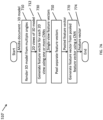
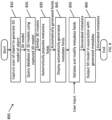
- FIG. 5 is a flowchart of a method 500 for generating metadata for a media document according to one example of the present invention.
- the method shown in FIG. 5 may be performed by the host processor 108 of the scanner 100, performed by a server (e.g., a computer local to the scanner 100 or a computer in a data center on the "cloud"), or combinations thereof (where some operations may be performed by the host processor 108 of the scanner and other operations are performed by a server).
- a server e.g., a computer local to the scanner 100 or a computer in a data center on the "cloud”
- the operations will be described as being performed by a "processor,” without limitation as to whether the processor is the host processor 108 or a processor of a server.
- the processor computes a feature vector of a media document that it has received.
- the media document may be a 3D model that was captured by the scanner 100 during a scanning process.
- the media document may be retrieved from a 3rd party (e.g., a 3D model captured by a different scanning device), may be generated manually using a computer aided design tool, or may be a scanned model that is modified using a computer aided design tool.
- the 2D image may be supplied directly to a trained CNN (e.g., trained on 2D images).
- the processor converts the audio into one or more spectrograms and supplies the one or more spectrograms as input to the trained CNN (e.g., trained on spectrograms of audio recordings).
- FIG. 6A is a flowchart illustrating a method for computing a feature vector in the case where the media document is a 3D model by voxelizing the 3D model according to one example of the present invention
- FIG. 6A is a flowchart illustrating a method for computing a feature vector in the case where the media document is a 3D model by voxelizing the 3D model according to one example of the present invention
- the processor defines a bounding box 612 around the 3D model, such as by applying the rotating calipers algorithm to the 3D model.
- the processor voxelizes the model to generate a set of voxels representing the 3D model.
- the processor divides the bounding box into subunits, referred to as voxels.
- Each voxel may be associated with a value representing whether or not some portion of the 3D model is contained within the voxel (e.g., in a binary valued voxelization), or in another case, each voxel may be associated with a value (e.g., an 8-bit value) representing the fraction or percentage of the voxel that is occupied by the 3D model (e.g., an integer valued or floating point voxelization).
- FIG. 6B depicts a voxelized 3D model 632.
- operation 630 further includes estimating features or performing principal component analysis to identify a "preferred view" before performing the voxelization. Identifying a consistent preferred view of the model before voxelization increases the likelihood that two different 3D models of substantially similar objects (or the same objects) will be voxelized from the same perspective (e.g., with the voxels defined along substantially the same coordinate space), thereby providing rotational invariance (e.g., the ability of the system to recognize models of objects that have been rotated).
- rotational invariance e.g., the ability of the system to recognize models of objects that have been rotated.
- the processor generates a feature vector from the voxels generated in operation 630.
- the feature vector is 654 is computed by supplying the voxels to a trained convolutional neural network 652. Because the voxel representation can be regarded as a 3D tensor, the voxels can be directly supplied as input to a CNN, where the CNN is trained based on voxelized 3D models.
- the dashed cubes shown in FIG. 6B represent convolution operations.
- the feature vector 654 can also be supplied to a classifier to generate classifications 656 of the voxelized 3D model 612.
- the geometrical and textural information about the 3D model is encoded by rendering the model from multiple directions or viewpoints.
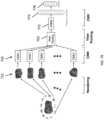
- FIG. 7A is a flowchart illustrating a method for computing a feature vector in the case where the media document is a 3D model by rendering multiple views of a 3D model from different viewpoints or directions according to one example of the present invention
- FIG. 7B visually depicts the application of a CNN to a 3D model rendered from multiple views.
- the processor renders the 3D model from multiple angles to generate multiple two-dimensional (2D) views 712 of the 3D model.
- a similar feature estimation or principal component analysis technique may also be applied to identify "preferred views" of the 3D model from which to generate the multiple 2D views of the 3D model.
- the processor supplies each of the 2D views to a convolutional neural network 732 to generate a plurality of corresponding single view feature vectors (feature vectors corresponding to single ones of the 2D views).
- each of the views is supplied to the same convolutional neural network.
- a view pooling layer 752 aggregates the single view feature vectors computed from the individual 2D views or images.
- the view pooling layer 752 allows additional flexibility in the system, because the view pooling layer 752 makes the length of the pooled feature vector independent of the number of views of the 3D model.
- the processor applies a final stage CNN 772 to compute a feature vector 774.
- the feature vector 774 may also be supplied to a classifier to generate classifications 776 of the views of the 3D model.
- the media document of the query includes one or more 2D images of the same object and the database is a collection of 3D models
- one or more feature vectors may be extracted from the 2D images to generate feature vectors that can be compared with feature vectors of the collection of 3D models.
- the 2D images are used to synthesize a 3D model using, for example, stereoscopic algorithms such as block matching, which are described briefly above, and also described in more detail in R. Szeliski. "Computer Vision: Algorithms and Applications", Springer, 2010 .
- a feature vector can then be extracted from the synthesized 3D model in a manner substantially similar to those in which the media document of the query is a 3D model, such as the techniques described above with respect to FIGS. 6A , 6B , 7A , and 7B .
- the processor searches for media documents in the database having feature vectors similar to the feature vector computed for the input media document.
- L 1 corresponds to a distance in "taxicab” space or "Manhattan space”
- L 2 corresponds to a distance in Euclidian space.
- the processor determines that two feature vectors (e.g., the feature vector of the query model and the feature vector of a model of one of the entries in the database) are similar when the metric representing the distance (or difference) between the two is less than a threshold value.
- similar media documents are identified in the database by comparing the feature vector of the media document of the query with the feature vector of every entry in the database.
- similar entries are grouped together (or binned) in the database based on similarity of their feature vectors.
- An initial search may identify one or more bins of entries that are similar to the media document of the query, where all of the entries each of the identified bins of entries may be considered to be similar to the feature vector of the media document of the query.
- the search may be further refined by comparing the feature vector of the media document of the query with each feature vector of each entry in each of the identified bins.
- the similar 3D models are identified in the database by applying an iterative closest point (ICP) technique.
- ICP iterative closest point
- iterative closest point attempts to align two point clouds (e.g., corresponding to 3D models).
- One byproduct of an ICP technique is a map of distances between the points of one point cloud and the points of the other point cloud.
- a similarity metric corresponds to a statistic of these distances, such as the mean distance between points of the point clouds.
- the feature vectors extracted in operation 510 may be separate feature vectors for each of the one or more 2D images, and plurality of feature vectors can be generated for each of the 3D models in the database by rendering each of the 3D models from a plurality of different viewpoints, and supplying each of the separate rendered views of the 3D model to a convolutional neural network to generate one or more feature vectors, each corresponding to a different viewpoint.
- the feature vectors extracted from the 2D images of the query may then be compared (e.g., using the L 1 or L 2 metrics described above) with the feature vectors of the 2D views of the 3D model to calculate a similarity between the 2D images of the query and the 3D model.
- the set of retrieved entries of the query results can also be displayed to the user and manually refined by the user in order to lead to a more relevant set of retrieved objects that can be used for inferring the metadata.
- searching the database for similar entries in operation 530 may also include searching for entries that contain metadata similar to the partially filled fields of the metadata of the query.
- the metadata of the similar entries can then be used to generate the metadata for the unfilled portions of the metadata of the query.
- the "title” and “class” entries are filled, and the "tags” and “text” entries are unfilled.
- the unfilled entries of "tags" and "text,” as well as potentially a more specific class can be automatically generated by searching the database for similar entries, based on the available fields of "title” and "class.”
- the database may be searched for entries in the class "car” that have a title that is similar to the title of in the metadata of the query.
- the title of an entry of the database may be considered to be sufficiently similar if, for example, the title of the entry contains at least 75% of the words in the title of the query.
- a Levenshtein distance or other distance metric may be used to compare the titles, where an entry having a distance below a threshold distance may be considered to be similar.
- the tags and text metadata fields of the identified similar entries are then evaluated and their content is merged in order to automatically generate the tags and text fields to populate the unfilled fields of the metadata of the query.
- the tags can be obtained by enumerating all the tags in the retrieved entries and keeping only the tags which appear at least two times and the text can be obtained by semantic text analysis techniques.
- the class field of the generated metadata is filled using the classifications (e.g., classifications 656 or classifications 776 shown in FIGS. 6B and 7B , respectively) computed for the feature vector by a classifier.
- Table 2 Retrieved entry Class Tags 1 car Jeep, blue, sport 2 car Jeep, convertible, red 3 cap black & white 4 car convertible, sport
- a rule is applied where tags that appear at least a threshold number of times are added to the generated metadata.
- tags “Jeep,” “convertible,” and “sport” all appear twice in the tags of the results, so, assuming that the threshold is two, these three tags are added to the tags of the generated metadata.
- the tags “blue,” “red,” and “black & white” each appear only once in the results, and therefore these are not added to the tags of the generated metadata. While the tag “black & white” does accurately reflect the colors of the 3D model of the query, not enough of the results include this tag for it to be included in the generated metadata.
- the processor may be configured to retrieve a large number of results (e.g., the ten most similar entries), and the threshold for adding a class or tag that appears in the results may be at least 4 results.
- the threshold for adding a class or tag may be set as a minimum percentage of the results that include the tag or class, such as at least 50%.
- the class field of the generated metadata may also be filled using classes that appear at least twice in the query results or based on a class that appears in the majority of the query results. As shown in Table 2, the class "car” appears in three of the results and the class "cap” appears in one of the results. As such, the generated metadata includes the class "car” but not the class "cap.”
- the feature vector of the media document of the query is supplied to a classifier (e.g., a classifier trained on entries within the database) to generate a classification or classifications (e.g., classifications 656 or classifications 776).
- the classifications may be represented as a plurality of values, where each value represents a confidence that the media document belongs to a particular class. For example, a classification of the query shown in FIG. 1 may express high confidence that the query depicts a car, low confidence that the query depicts a cap, and substantially zero confidence that the query depicts a dog.
- the processor outputs the generated metadata for the media document. This may include, for example, displaying the metadata on a display device in association with the media document. The user may then review the automatically generated metadata, validate that the generated metadata is sensible for the result (e.g., that the class, tags, name, and textual description accurately reflect the nature of the media document), and edit the generated metadata, if necessary.
- the query may already be associated with partial metadata.
- additional relevant metadata may be automatically generated.
- errors in the metadata of the query may also be corrected based on the automatically generated metadata.
- the generated metadata may then be saved in association with the media document for use in other applications.
- One example of the present invention relates to constraining the search of the database in accordance with access policies. For example, different users that are querying the database may search only the portions of the database to which they have access, based on policies. For instance, given five users ⁇ a1, a2, a3, b1, b2> in which users ⁇ a1, a2, a3> belong to group A, and ⁇ b1, b2> belong to the group B; and a database constituted by three sets of entries (or three sets of media documents) ⁇ dbA, dbB, dbC>, in which dbA is visible by members of group A, dbB is visible to members of group B, and dbC is visible to members of both groups A and B, the user b1 is allowed (permitted) to search only entries in dbB and dbC and is not allowed (denied) access to entries in dbA (and therefore the search is not performed on the entries in dbA).
- the search performed by user b1 is restricted to entries in dbB and dbC.
- policies can also be applied differently for different fields of the metadata.
- the user b1 can be allowed to search in the entire database in order to populate the tags and the title field, but only dbB and dbC in order to populate the text field.
- Applications of these policies encompass the enforcement of digital rights for, for example, textual and visual information, classified information, proprietary information, and of adults-only or otherwise unsafe material search restriction.
- the media document of the query and its automatically generated metadata form a candidate for insertion into the database as a new entry and thus become an entry that can be further used for search and generation of metadata for further queries.
- new entries are subject to a probation time and democratic validation.
- the query is temporarily added to the database as an entry. If this temporary entry is used to populate the missing metadata of a second query from a different user and the user validates the automatically-filled metadata fields, this entry is considered to be valid and is added to the pool of regular entries in the database.
- a media document that is ready to be added to the pool of entries is validated by an administrator of the database before it can appear in search results.
- FIG. 8 is a flowchart depicting a process of capturing a model and automatically generating metadata for the model according to one example of the present invention.
- a 3D scanner such as a scanning system of the types described in U.S. Patent Application Serial No. 15/630,715, filed in the United States Patent and Trademark Office on June 22, 2017 .
- a 3D scanner is able to acquire geometrical and textural information of a three-dimensional object.
- 3D scanner acquires the three-dimensional geometry and of the texture of a particular physical three dimensional object, such as a lamp.
- a portion of the computation for computing the 3D geometry and texture of the captured raw data (e.g., two dimensional images) to generate a 3D model can be performed on the 3D scanner, while the remaining portion may be performed on a local or remote server.
- the output of this operation is a textured three-dimensional model (3D model) of the particular object (e.g., a 3D model of the lamp).
- the database of 3D models is queried using the captured 3D model.
- the captured 3D model e.g., the captured model of a lamp
- a local or remote server which performs a search for this 3D model with respect to a database of classified and labeled 3D models.
- all of the metadata fields e.g., name, classes, tags, and textual description
- none of the metadata fields of the query model are populated.
- the query of the database may be performed in substantially the same manner shown in operations 510 and 530 of FIG. 5 .
- a feature vector is computed (or extracted) based on the 3D model of the query using a trained convolutional neural network (CNN).
- CNN convolutional neural network
- the weights of the CNN that has been trained on such a database may be pre-computed, and the feature vectors for each of the 3D models in the database may be pre-computed using the same CNN and those feature vectors may be stored within the database.
- the feature vector of the 3D model of the query can therefore be used for classification and retrieval purposes.
- metadata fields are automatically generated for the 3D model of the query.
- the classification may be a set of classes for the 3D model of the query when its feature vector is supplied to a classifier
- the retrieval output may be a set of entries having 3D models that are similar to the query model (e.g., having similar feature vectors).
- This set of similar entry models can be used for the automatic population of the metadata fields other than the class, such as the name, tags and textual description.
- operation 840 all of the automatically generated metadata fields for the 3D model supplied as the query have been populated by the server, and they are displayed to the user for validation.
- operation 850 the user can validate and modify the automatically generated values of the metadata suggested by the server. Once the metadata is validated (and possibly edited), the resulting metadata can be output in operation 860, with the 3D model for use in other contexts, such as the creation of an e-commerce listing including a three-dimensional model, where the automatically generated metadata can be used to automatically fill various portions of the e-commerce listing.
- one example of an application of the automatic generation of metadata for media documents such as three-dimensional (3D) models with automatically generated metadata is in e-commerce applications.
- providing a 3D model of a product being sold may improve the shopping experience and result in increased shopper engagement by allowing the shopper to manipulate the product, virtually, within a 3D environment, thereby providing a more immersive understanding of the size and shape of the product.
- 2D images of a product being sold are commonplace and are typically expected by consumers.
- listings on e-commerce applications generally include a large about of associated data, such as a name (or title), a textual description, tags (or keywords), and they are organized in classes (commonly called categories).
- categories may be in the order of many thousands or more, and they may be organized in a tree structure encoding sub-categories relationships, where each listed product may belong to one or more categories.
- the automatic metadata generation allows the metadata fields of e-commerce postings to be automatically populated using the captured media data (e.g., photographs of the product or a 3D scan of the object).
- the captured media data e.g., photographs of the product or a 3D scan of the object.
- examples of the present invention are not limited thereto, and may also be applied to other forms of media such as videos (e.g., feature vectors may be extracted from videos rather than 2D images or 3D models, and the resulting feature vectors may be used to classify the objects depicted in the images and to identify images and/or videos of similar objects in order to automatically retrieve metadata from those similar entries).
- This automatic population of the various metadata fields is obtained by means of a self-updating organized database of listings, which allows for efficient classification and retrieval operations.
Landscapes
- Engineering & Computer Science (AREA)
- Theoretical Computer Science (AREA)
- Physics & Mathematics (AREA)
- Data Mining & Analysis (AREA)
- General Physics & Mathematics (AREA)
- General Engineering & Computer Science (AREA)
- Software Systems (AREA)
- Databases & Information Systems (AREA)
- Computing Systems (AREA)
- Life Sciences & Earth Sciences (AREA)
- General Health & Medical Sciences (AREA)
- Molecular Biology (AREA)
- Computational Linguistics (AREA)
- Biophysics (AREA)
- Biomedical Technology (AREA)
- Mathematical Physics (AREA)
- Artificial Intelligence (AREA)
- Evolutionary Computation (AREA)
- Health & Medical Sciences (AREA)
- Multimedia (AREA)
- Business, Economics & Management (AREA)
- General Business, Economics & Management (AREA)
- Image Analysis (AREA)
- Processing Or Creating Images (AREA)
- Two-Way Televisions, Distribution Of Moving Picture Or The Like (AREA)
Claims (15)
- Ein computerimplementiertes Verfahren zur automatischen Erzeugung von Metadaten für ein Mediendokument, wobei das computerimplementierte Verfahren umfasst:Berechnen eines Merkmalsvektors des Mediendokuments unter Verwendung eines neuronalen Faltungsnetzwerks (510), wobei das Mediendokument ein oder mehrere zweidimensionale (2D) Bilder umfasst, wobei das Berechnen des Merkmalsvektors das Berechnen eines oder mehrerer Merkmalsvektoren des einen oder der mehreren 2D-Bilder umfasst;Durchsuchen einer Sammlung von Mediendokumenten nach einem oder mehreren übereinstimmenden Mediendokumenten mit entsprechenden Merkmalsvektoren, die dem Merkmalsvektor des Mediendokuments (530) ähnlich sind, wobei jedes Mediendokument der Sammlung von Mediendokumenten mit Metadaten verbunden ist, wobei:die Sammlung von Mediendokumenten eine Sammlung von dreidimensionalen (3D) Modellen umfasst,das eine oder die mehreren übereinstimmenden Mediendokumente ein oder mehrere übereinstimmende 3D-Modelle der Sammlung von 3D-Modellen umfassen, undjeder der entsprechenden Merkmalsvektoren der übereinstimmenden 3D-Modelle mindestens einem des einen oder der mehreren Merkmalsvektoren des 3D-Modells ähnlich ist;Erzeugen von Metadaten für das Mediendokument basierend auf den Metadaten, die mit dem einen oder den mehreren übereinstimmenden Mediendokumenten (550) verbunden sind; undAnzeigen des Mediendokuments in Verbindung mit den erzeugten Metadaten.
- Das computerimplementierte Verfahren nach Anspruch 1, wobei das Mediendokument ein dreidimensionales (3D) Modell ist.
- Das computerimplementierte Verfahren nach Anspruch 2, wobei das Berechnen des Merkmalsvektors umfasstDefinieren eines Begrenzungsrahmens um das 3D-Modell, um ein begrenztes 3D-Modell zu erzeugen;Voxelisieren des begrenzten 3D-Modells, um eine Vielzahl von Voxeln zu berechnen; und Erzeugen des Merkmalsvektors aus den Voxeln.
- Das computerimplementierte Verfahren nach Anspruch 2, wobei die Sammlung von Mediendokumenten eine Sammlung von dreidimensionalen (3D) Modellen umfasst, und
wobei das Durchsuchen der Sammlung von Mediendokumenten das Berechnen eines Abstands zwischen dem 3D-Modell und einem der 3D-Modelle der Sammlung von 3D-Modellen in Übereinstimmung mit einer iterativen Technik des nächsten Punktes umfasst. - Das computerimplementierte Verfahren nach Anspruch 2, wobei das Berechnen des Merkmalsvektors umfasst:Rendering des 3D-Modells aus mehreren Winkeln, um eine Vielzahl von zweidimensionalen (2D) Ansichten des 3D-Modells zu rendern;Erzeugen einer Vielzahl von Einzelansichts-Merkmalsvektoren unter Verwendung eines oder mehrerer Faltungsneuronalnetze, wobei jeder der Einzelansichts-Merkmalsvektoren einer der 2D-Ansichten des 3D-Modells entspricht;Zusammenfassen der Vielzahl von Einzelansichts-Merkmalsvektoren, um einen zusammengefassten Merkmalsvektor zu berechnen; undBerechnen des Merkmalsvektors aus dem zusammengefassten Merkmalsvektor unter Verwendung eines neuronalen Faltungsnetzwerks der letzten Stufe.
- Das computerimplementierte Verfahren nach Anspruch 2, wobei die Sammlung von Mediendokumenten eine Sammlung von zweidimensionalen (2D) Bildern umfasst,wobei das Berechnen des Merkmalsvektors das Berechnen eines oder mehrerer Merkmalsvektoren des 3D-Modells umfasst,wobei das eine oder die mehreren übereinstimmenden Mediendokumente ein oder mehrere übereinstimmende 2D-Bilder der Sammlung von 2D-Bildern umfassen, undwobei jeder der entsprechenden Merkmalsvektoren der übereinstimmenden 2D-Bilder mindestens einem der ein oder mehreren Merkmalsvektoren des 3D-Modells ähnlich ist.
- Das computerimplementierte Verfahren nach Anspruch 2, das ferner umfasst:
Erfassen des 3D-Modells unter Verwendung eines dreidimensionalen Scanners, wobei der dreidimensionale Scanner umfasst:zwei oder mehr Infrarot (IR)-Kameras; undeinen oder mehrere kollimierte IR-Strahler. - Das computerimplementierte Verfahren nach Anspruch 1, wobei das Berechnen des Merkmalsvektors umfasst
Berechnen eines 3D-Modells eines Objekts aus dem einen oder den mehreren 2D-Bildern; und Extrahieren des Merkmalsvektors aus dem 3D-Modell. - Das computerimplementierte Verfahren nach Anspruch 8, wobei das Extrahieren des Merkmalsvektors aus dem 3D-Modell Folgendes umfasst:Definieren eines Begrenzungsrahmens um das 3D-Modell, um ein begrenztes 3D-Modell zu erzeugen;Voxelisieren des begrenzten 3D-Modells, um eine Vielzahl von Voxeln zu berechnen; undErzeugen des Merkmalsvektors aus den Voxeln.
- Das computerimplementierte Verfahren nach Anspruch 8, wobei das Extrahieren des Merkmalsvektors aus dem 3D-Modell umfasst:Rendern des 3D-Modells aus mehreren Winkeln, um eine Vielzahl von zweidimensionalen (2D) Ansichten des 3D-Modells zu rendern;Erzeugen einer Vielzahl von Einzelansichts-Merkmalsvektoren unter Verwendung eines oder mehrerer Faltungsneuronalnetze, wobei jeder der Einzelansichts-Merkmalsvektoren einer der 2D-Ansichten des 3D-Modells entspricht;Zusammenfassen der Vielzahl von Einzelansichts-Merkmalsvektoren, um einen zusammengefassten Merkmalsvektor zu berechnen; undBerechnen des Merkmalsvektors aus dem zusammengefassten Merkmalsvektor unter Verwendung eines neuronalen Faltungsnetzwerks der letzten Stufe.
- Ein System zum automatischen Erzeugen von Metadaten für ein Mediendokument, wobei das System Folgendes umfasst:einen oder mehrere Prozessoren; undSpeicher mit darauf gespeicherten Anweisungen, die, wenn sie von dem Prozessor ausgeführt werden, den Prozessor veranlassen,:Berechnen eines Merkmalsvektors des Mediendokuments unter Verwendung eines neuronalen Faltungsnetzwerks (510), wobei das Mediendokument ein oder mehrere zweidimensionale (2D) Bilder umfasst, wobei das Berechnen des Merkmalsvektors das Berechnen eines oder mehrerer Merkmalsvektoren des einen oder der mehreren 2D-Bilder umfasst;Durchsuchen einer Sammlung von Mediendokumenten nach einem oder mehreren übereinstimmenden Mediendokumenten mit entsprechenden Merkmalsvektoren, die dem Merkmalsvektor des Mediendokuments (530) ähnlich sind, wobei jedes Mediendokument der Sammlung von Mediendokumenten mit Metadaten verknüpft ist, wobei:die Sammlung von Mediendokumenten eine Sammlung von dreidimensionalen (3D) Modellen umfasst,das eine oder die mehreren übereinstimmenden Mediendokumente ein oder mehrere übereinstimmende 3D-Modelle der Sammlung von 3D-Modellen umfassen, undjeder der entsprechenden Merkmalsvektoren der übereinstimmenden 3D-Modelle mindestens einem des einen oder der mehreren Merkmalsvektoren des 3D-Modells ähnlich ist;Erzeugen von Metadaten für das Mediendokument basierend auf den Metadaten, die mit dem einen oder den mehreren übereinstimmenden Mediendokumenten (550) verbunden sind; undAnzeigen des Mediendokuments in Verbindung mit den erzeugten Metadaten.
- Das System nach Anspruch 11, wobei das Mediendokument ein dreidimensionales (3D) Modell ist.
- Das System nach Anspruch 11, wobei die Anweisungen zum Berechnen des Merkmalsvektors Anweisungen umfassen, die, wenn sie von dem Prozessor ausgeführt werden, den Prozessor veranlassen,:Berechnen eines 3D-Modells eines Objekts aus dem einen oder den mehreren 2D-Bildern; undExtrahieren des Merkmalsvektors aus dem 3D-Modell.
- Das System nach Anspruch 13, wobei die Anweisungen zum Extrahieren des Merkmalsvektors aus dem 3D-Modell Anweisungen umfassen, die, wenn sie von dem Prozessor ausgeführt werden, den Prozessor veranlassen, Folgendes zu tunDefinieren eines Begrenzungsrahmens um das 3D-Modell, um ein begrenztes 3D-Modell zu erzeugen;Voxelisieren des begrenzten 3D-Modells, um eine Vielzahl von Voxeln zu berechnen; undden Merkmalsvektor aus den Voxeln zu erzeugen.
- Das System nach Anspruch 13, wobei die Anweisungen zum Extrahieren des Merkmalsvektors aus dem 3D-Modell Anweisungen umfassen, die, wenn sie von dem Prozessor ausgeführt werden, den Prozessor veranlassen,:Rendering des 3D-Modells aus mehreren Winkeln, um eine Vielzahl von zweidimensionalen (2D) Ansichten des 3D-Modells zu rendern;Erzeugen einer Vielzahl von Einzelansichts-Merkmalsvektoren, wobei jeder der Einzelansichts-Merkmalsvektoren einer der 2D-Ansichten des 3D-Modells entspricht, unter Verwendung eines oder mehrerer faltungsneuronaler Netzwerke;Zusammenfassen der Vielzahl von Einzelansichts-Merkmalsvektoren, um einen zusammengefassten Merkmalsvektor zu berechnen; und Berechnen des Merkmalsvektors aus dem zusammengefassten Merkmalsvektor unter Verwendung eines faltungsneuronalen Netzwerks der letzten Stufe.
Applications Claiming Priority (3)
| Application Number | Priority Date | Filing Date | Title |
|---|---|---|---|
| US201662374598P | 2016-08-12 | 2016-08-12 | |
| PCT/US2017/046642 WO2018031959A1 (en) | 2016-08-12 | 2017-08-11 | Systems and methods for automatically generating metadata for media documents |
| EP17840385.3A EP3497550B1 (de) | 2016-08-12 | 2017-08-11 | Systeme und verfahren zur automatischen erzeugung von metadaten für mediendokumente |
Related Parent Applications (2)
| Application Number | Title | Priority Date | Filing Date |
|---|---|---|---|
| EP17840385.3A Division EP3497550B1 (de) | 2016-08-12 | 2017-08-11 | Systeme und verfahren zur automatischen erzeugung von metadaten für mediendokumente |
| EP17840385.3A Division-Into EP3497550B1 (de) | 2016-08-12 | 2017-08-11 | Systeme und verfahren zur automatischen erzeugung von metadaten für mediendokumente |
Publications (2)
| Publication Number | Publication Date |
|---|---|
| EP4195069A1 EP4195069A1 (de) | 2023-06-14 |
| EP4195069B1 true EP4195069B1 (de) | 2024-11-06 |
Family
ID=61160193
Family Applications (2)
| Application Number | Title | Priority Date | Filing Date |
|---|---|---|---|
| EP23154628.4A Active EP4195069B1 (de) | 2016-08-12 | 2017-08-11 | Systeme und verfahren zur automatischen erzeugung von metadaten für mediendokumente |
| EP17840385.3A Active EP3497550B1 (de) | 2016-08-12 | 2017-08-11 | Systeme und verfahren zur automatischen erzeugung von metadaten für mediendokumente |
Family Applications After (1)
| Application Number | Title | Priority Date | Filing Date |
|---|---|---|---|
| EP17840385.3A Active EP3497550B1 (de) | 2016-08-12 | 2017-08-11 | Systeme und verfahren zur automatischen erzeugung von metadaten für mediendokumente |
Country Status (7)
| Country | Link |
|---|---|
| US (2) | US10296603B2 (de) |
| EP (2) | EP4195069B1 (de) |
| JP (1) | JP6810247B2 (de) |
| CN (2) | CN116484029A (de) |
| ES (2) | ES2941259T3 (de) |
| PL (1) | PL3497550T3 (de) |
| WO (1) | WO2018031959A1 (de) |
Families Citing this family (56)
| Publication number | Priority date | Publication date | Assignee | Title |
|---|---|---|---|---|
| US11006095B2 (en) | 2015-07-15 | 2021-05-11 | Fyusion, Inc. | Drone based capture of a multi-view interactive digital media |
| US11095869B2 (en) * | 2015-09-22 | 2021-08-17 | Fyusion, Inc. | System and method for generating combined embedded multi-view interactive digital media representations |
| US10242474B2 (en) | 2015-07-15 | 2019-03-26 | Fyusion, Inc. | Artificially rendering images using viewpoint interpolation and extrapolation |
| US10147211B2 (en) | 2015-07-15 | 2018-12-04 | Fyusion, Inc. | Artificially rendering images using viewpoint interpolation and extrapolation |
| US12495134B2 (en) | 2015-07-15 | 2025-12-09 | Fyusion, Inc. | Drone based capture of multi-view interactive digital media |
| US12261990B2 (en) | 2015-07-15 | 2025-03-25 | Fyusion, Inc. | System and method for generating combined embedded multi-view interactive digital media representations |
| US10222932B2 (en) | 2015-07-15 | 2019-03-05 | Fyusion, Inc. | Virtual reality environment based manipulation of multilayered multi-view interactive digital media representations |
| US11783864B2 (en) | 2015-09-22 | 2023-10-10 | Fyusion, Inc. | Integration of audio into a multi-view interactive digital media representation |
| US10496897B2 (en) * | 2015-11-25 | 2019-12-03 | Institute Of Automation Chinese Academy Of Sciences | Method and apparatus for recognizing RGB-D objects based on adaptive similarity measure of dense matching item |
| CN107025642B (zh) * | 2016-01-27 | 2018-06-22 | 百度在线网络技术(北京)有限公司 | 基于点云数据的车辆轮廓检测方法和装置 |
| US11202017B2 (en) | 2016-10-06 | 2021-12-14 | Fyusion, Inc. | Live style transfer on a mobile device |
| US10437879B2 (en) | 2017-01-18 | 2019-10-08 | Fyusion, Inc. | Visual search using multi-view interactive digital media representations |
| US20180227482A1 (en) | 2017-02-07 | 2018-08-09 | Fyusion, Inc. | Scene-aware selection of filters and effects for visual digital media content |
| US10313651B2 (en) * | 2017-05-22 | 2019-06-04 | Fyusion, Inc. | Snapshots at predefined intervals or angles |
| US11069147B2 (en) | 2017-06-26 | 2021-07-20 | Fyusion, Inc. | Modification of multi-view interactive digital media representation |
| CN107609152B (zh) * | 2017-09-22 | 2021-03-09 | 百度在线网络技术(北京)有限公司 | 用于扩展查询式的方法和装置 |
| US10579875B2 (en) * | 2017-10-11 | 2020-03-03 | Aquifi, Inc. | Systems and methods for object identification using a three-dimensional scanning system |
| US10713563B2 (en) * | 2017-11-27 | 2020-07-14 | Technische Universiteit Eindhoven | Object recognition using a convolutional neural network trained by principal component analysis and repeated spectral clustering |
| US10916135B2 (en) | 2018-01-13 | 2021-02-09 | Toyota Jidosha Kabushiki Kaisha | Similarity learning and association between observations of multiple connected vehicles |
| US10963706B2 (en) * | 2018-01-13 | 2021-03-30 | Toyota Jidosha Kabushiki Kaisha | Distributable representation learning for associating observations from multiple vehicles |
| US10586118B2 (en) | 2018-01-13 | 2020-03-10 | Toyota Jidosha Kabushiki Kaisha | Localizing traffic situation using multi-vehicle collaboration |
| US20190251744A1 (en) * | 2018-02-12 | 2019-08-15 | Express Search, Inc. | System and method for searching 3d models using 2d images |
| US11062469B2 (en) | 2018-03-09 | 2021-07-13 | Microsoft Technology Licensing, Llc | 4D tracking utilizing depth data from multiple 3D cameras |
| US11429658B1 (en) * | 2018-04-11 | 2022-08-30 | Soroco Private Limited | Systems and methods for content-aware image storage |
| WO2019203851A1 (en) * | 2018-04-20 | 2019-10-24 | Hewlett-Packard Development Company, L.P. | Three-dimensional shape classification and retrieval using convolutional neural networks and majority vote |
| US10592747B2 (en) | 2018-04-26 | 2020-03-17 | Fyusion, Inc. | Method and apparatus for 3-D auto tagging |
| WO2019232645A1 (en) * | 2018-06-07 | 2019-12-12 | Element Ai Inc. | Unsupervised classification of documents using a labeled data set of other documents |
| US10817270B2 (en) | 2018-08-02 | 2020-10-27 | Oracle International Corporation | AI-generated instant micro apps |
| CN113228114B (zh) * | 2018-08-29 | 2024-12-31 | 莫维迪厄斯有限公司 | 计算机视觉系统 |
| US11507052B2 (en) * | 2018-09-24 | 2022-11-22 | The Boeing Company | System and method of voxel based parametric specification for manufacturing a part |
| US10810725B1 (en) * | 2018-12-07 | 2020-10-20 | Facebook, Inc. | Automated detection of tampered images |
| US11995854B2 (en) * | 2018-12-19 | 2024-05-28 | Nvidia Corporation | Mesh reconstruction using data-driven priors |
| US11508050B2 (en) * | 2018-12-19 | 2022-11-22 | Packsize Llc | Systems and methods for joint learning of complex visual inspection tasks using computer vision |
| EP3899874A4 (de) * | 2018-12-20 | 2022-09-07 | Packsize, LLC | Systeme und verfahren zur objektdimensionierung basierend auf partiellen visuellen informationen |
| CA3139978A1 (en) * | 2019-06-06 | 2020-12-10 | Bruno ALVES | Methods and systems for automatically detecting design elements in a two-dimensional design document |
| CN114730498A (zh) * | 2019-06-14 | 2022-07-08 | 奇跃公司 | 跨现实系统中的可缩放三维对象识别 |
| US11537816B2 (en) * | 2019-07-16 | 2022-12-27 | Ancestry.Com Operations Inc. | Extraction of genealogy data from obituaries |
| JP7410613B2 (ja) * | 2019-08-27 | 2024-01-10 | キヤノン株式会社 | 情報処理装置およびその制御方法およびプログラム |
| US11520037B2 (en) * | 2019-09-30 | 2022-12-06 | Zoox, Inc. | Perception system |
| CN111191052B (zh) * | 2019-12-24 | 2023-12-22 | 广州索答信息科技有限公司 | 一种数据采集方法、设备及介质 |
| CN111243085B (zh) * | 2020-01-20 | 2021-06-22 | 北京字节跳动网络技术有限公司 | 图像重建网络模型的训练方法、装置和电子设备 |
| US11430042B2 (en) * | 2020-04-30 | 2022-08-30 | Capital One Services, Llc | Methods and systems for providing a vehicle recommendation |
| US11240707B2 (en) | 2020-05-28 | 2022-02-01 | Toyota Motor Engineering & Manufacturing North America, Inc. | Adaptive vehicle identifier generation |
| EP4200739A1 (de) * | 2020-08-20 | 2023-06-28 | Siemens Industry Software Inc. | Verfahren und system zur bereitstellung eines dreidimensionalen cad-modells in einer cad-umgebung |
| US11232298B1 (en) | 2021-08-18 | 2022-01-25 | IAA, Inc. | Automated data extraction and document generation |
| US12282829B2 (en) * | 2021-08-25 | 2025-04-22 | Capital One Services, Llc | Techniques for data type detection with learned metadata |
| JP7755971B2 (ja) * | 2021-10-21 | 2025-10-17 | アセントロボティクス株式会社 | 対象デジタルツインモデル生成システム、ロボットの制御システム、仮想店舗生成システム、対象デジタルツインモデル生成方法、ロボットの制御方法、および仮想店舗生成方法 |
| US12518134B2 (en) * | 2021-10-27 | 2026-01-06 | Adobe Inc. | Generating digital assets utilizing a content aware machine-learning model |
| CN114968993B (zh) * | 2022-04-27 | 2026-02-06 | 鼎捷数智股份有限公司 | 元数据生成系统以及元数据生成方法 |
| US12243325B2 (en) | 2022-04-29 | 2025-03-04 | Toyota Research Institute, Inc. | Self-calibration for decoration based sensor fusion method |
| US12221115B1 (en) | 2022-04-29 | 2025-02-11 | Zoox, Inc. | Self-supervised global velocity determination for perception system |
| JP2024062300A (ja) * | 2022-10-24 | 2024-05-09 | キヤノン株式会社 | 画像処理装置、画像処理方法及びコンピュータプログラム |
| US12608879B2 (en) * | 2022-12-12 | 2026-04-21 | Adobe Inc. | Generation of a 360-degree object view by leveraging available images on an online platform |
| US20240311421A1 (en) * | 2023-03-13 | 2024-09-19 | Google Llc | Multiple Dataset Search Based On a Visual Query |
| CN118691735A (zh) * | 2023-03-24 | 2024-09-24 | 戴尔产品有限公司 | 用于生成3d对象模型的方法、设备和计算机程序产品 |
| JP2024148430A (ja) * | 2023-04-05 | 2024-10-18 | キヤノン株式会社 | 情報処理装置、情報処理方法、及びプログラム |
Family Cites Families (43)
| Publication number | Priority date | Publication date | Assignee | Title |
|---|---|---|---|---|
| JPH06223198A (ja) * | 1993-01-26 | 1994-08-12 | Hitachi Ltd | 光線追跡による画像生成装置及び方法 |
| US6044375A (en) * | 1998-04-30 | 2000-03-28 | Hewlett-Packard Company | Automatic extraction of metadata using a neural network |
| US6525699B1 (en) * | 1998-05-21 | 2003-02-25 | Nippon Telegraph And Telephone Corporation | Three-dimensional representation method and an apparatus thereof |
| JP4516957B2 (ja) * | 2003-01-25 | 2010-08-04 | パーデュー リサーチ ファンデーション | 3次元オブジェクトについて検索を行なうための方法、システムおよびデータ構造 |
| US9900478B2 (en) * | 2003-09-04 | 2018-02-20 | Flir Systems, Inc. | Device attachment with infrared imaging sensor |
| US8166059B2 (en) * | 2005-07-08 | 2012-04-24 | Oracle International Corporation | Optimization of queries on a repository based on constraints on how the data is stored in the repository |
| EP2174301A4 (de) * | 2007-06-29 | 2011-11-16 | Three Pixels Wide Pty Ltd | Verfahren und system zur erzeugung eines 3d-modells aus bildern |
| CA2734143C (en) * | 2008-08-15 | 2021-08-31 | Brown University | Method and apparatus for estimating body shape |
| US8340453B1 (en) * | 2008-08-29 | 2012-12-25 | Adobe Systems Incorporated | Metadata-driven method and apparatus for constraining solution space in image processing techniques |
| JP2010067014A (ja) * | 2008-09-11 | 2010-03-25 | Ricoh Co Ltd | 画像分類装置及び画像分類方法 |
| US9183227B2 (en) * | 2008-09-19 | 2015-11-10 | Xerox Corporation | Cross-media similarity measures through trans-media pseudo-relevance feedback and document reranking |
| US8411953B2 (en) * | 2008-09-30 | 2013-04-02 | International Business Machines Corporation | Tagging images by determining a set of similar pre-tagged images and extracting prominent tags from that set |
| US8686992B1 (en) * | 2009-03-30 | 2014-04-01 | Google Inc. | Methods and systems for 3D shape matching and retrieval |
| EP2521979A4 (de) * | 2010-01-08 | 2014-12-17 | Ericsson Telefon Ab L M | Verfahren und vorrichtung zur sozialen kennzeichnung von mediendateien |
| US20110222757A1 (en) * | 2010-03-10 | 2011-09-15 | Gbo 3D Technology Pte. Ltd. | Systems and methods for 2D image and spatial data capture for 3D stereo imaging |
| CN101827203B (zh) * | 2010-03-29 | 2012-05-30 | 天津大学 | 一种视频标注方法 |
| US8485668B2 (en) * | 2010-05-28 | 2013-07-16 | Microsoft Corporation | 3D interaction for mobile device |
| US8457355B2 (en) * | 2011-05-05 | 2013-06-04 | International Business Machines Corporation | Incorporating video meta-data in 3D models |
| US9424258B2 (en) * | 2011-09-08 | 2016-08-23 | Telefonaktiebolaget Lm Ericsson (Publ) | Assigning tags to media files |
| CN103164463B (zh) * | 2011-12-16 | 2017-03-22 | 国际商业机器公司 | 推荐标签的方法和装置 |
| US9008433B2 (en) * | 2012-02-08 | 2015-04-14 | International Business Machines Corporation | Object tag metadata and image search |
| US9589344B2 (en) * | 2012-12-28 | 2017-03-07 | Hitachi, Ltd. | Volume data analysis system and method therefor |
| GB2514320B (en) * | 2013-03-15 | 2020-01-29 | 3D Industries Ltd | A method and system for 3D model database retrieval |
| US9117104B2 (en) * | 2013-07-10 | 2015-08-25 | Cherif Algreatly | Object recognition for 3D models and 2D drawings |
| US9905043B2 (en) * | 2013-09-10 | 2018-02-27 | Microsoft Technology Licensing, Llc | Techniques to generate digital maps |
| GB2514432B (en) | 2013-10-02 | 2015-05-27 | Cybertooling Ltd | Floor height adjustment |
| US20150142782A1 (en) * | 2013-11-15 | 2015-05-21 | Trendalytics, Inc. | Method for associating metadata with images |
| WO2015083199A1 (en) * | 2013-12-04 | 2015-06-11 | J Tech Solutions, Inc. | Computer device and method executed by the computer device |
| WO2015085435A1 (fr) * | 2013-12-15 | 2015-06-18 | Socovar, Société En Commandite | Méthode et système de comparaison de modèles 3d |
| EP2886043A1 (de) * | 2013-12-23 | 2015-06-24 | a.tron3d GmbH | Verfahren zum Fortsetzen von Aufnahmen zum Erfassen von dreidimensionalen Geometrien von Objekten |
| US9311737B1 (en) * | 2014-01-17 | 2016-04-12 | Pixar | Temporal voxel data structure |
| US9392262B2 (en) | 2014-03-07 | 2016-07-12 | Aquifi, Inc. | System and method for 3D reconstruction using multiple multi-channel cameras |
| JP6355372B2 (ja) * | 2014-03-17 | 2018-07-11 | 国立大学法人豊橋技術科学大学 | 三次元モデル特徴抽出方法、及び三次元モデル・アノテーションシステム |
| WO2016006728A1 (ko) * | 2014-07-08 | 2016-01-14 | 삼성전자 주식회사 | 화상을 이용해 3차원 정보를 처리하는 전자 장치 및 방법 |
| US9747493B2 (en) * | 2014-09-23 | 2017-08-29 | Keylemon Sa | Face pose rectification method and apparatus |
| CN104391960B (zh) * | 2014-11-28 | 2019-01-25 | 北京奇艺世纪科技有限公司 | 一种视频标注方法及系统 |
| GB2532948B (en) * | 2014-12-02 | 2021-04-14 | Vivo Mobile Communication Co Ltd | Object Recognition in a 3D scene |
| US9858484B2 (en) * | 2014-12-30 | 2018-01-02 | Facebook, Inc. | Systems and methods for determining video feature descriptors based on convolutional neural networks |
| ITUB20153277A1 (it) * | 2015-08-28 | 2017-02-28 | St Microelectronics Srl | Procedimento per ricerche visuali, sistema, apparecchiatura e prodotto informatico corrispondenti |
| US9773302B2 (en) * | 2015-10-08 | 2017-09-26 | Hewlett-Packard Development Company, L.P. | Three-dimensional object model tagging |
| CN105243139B (zh) * | 2015-10-10 | 2018-10-23 | 天津大学 | 一种基于深度学习的三维模型检索方法及其检索装置 |
| US10482681B2 (en) * | 2016-02-09 | 2019-11-19 | Intel Corporation | Recognition-based object segmentation of a 3-dimensional image |
| CN107066559B (zh) * | 2017-03-30 | 2019-12-27 | 天津大学 | 一种基于深度学习的三维模型检索方法 |
-
2017
- 2017-08-11 ES ES17840385T patent/ES2941259T3/es active Active
- 2017-08-11 CN CN202310465193.7A patent/CN116484029A/zh active Pending
- 2017-08-11 WO PCT/US2017/046642 patent/WO2018031959A1/en not_active Ceased
- 2017-08-11 EP EP23154628.4A patent/EP4195069B1/de active Active
- 2017-08-11 CN CN201780061114.9A patent/CN109791554B/zh active Active
- 2017-08-11 JP JP2019507781A patent/JP6810247B2/ja not_active Expired - Fee Related
- 2017-08-11 EP EP17840385.3A patent/EP3497550B1/de active Active
- 2017-08-11 US US15/675,684 patent/US10296603B2/en active Active
- 2017-08-11 ES ES23154628T patent/ES2998815T3/es active Active
- 2017-08-11 PL PL17840385.3T patent/PL3497550T3/pl unknown
-
2019
- 2019-04-04 US US16/375,615 patent/US10528616B2/en active Active
Also Published As
| Publication number | Publication date |
|---|---|
| US20180046649A1 (en) | 2018-02-15 |
| CN116484029A (zh) | 2023-07-25 |
| US20190236096A1 (en) | 2019-08-01 |
| JP2019530062A (ja) | 2019-10-17 |
| EP3497550A4 (de) | 2020-03-11 |
| PL3497550T3 (pl) | 2023-07-24 |
| JP6810247B2 (ja) | 2021-01-06 |
| WO2018031959A1 (en) | 2018-02-15 |
| CN109791554A (zh) | 2019-05-21 |
| EP3497550A1 (de) | 2019-06-19 |
| EP4195069A1 (de) | 2023-06-14 |
| ES2998815T3 (en) | 2025-02-21 |
| US10528616B2 (en) | 2020-01-07 |
| ES2941259T3 (es) | 2023-05-19 |
| US10296603B2 (en) | 2019-05-21 |
| EP3497550B1 (de) | 2023-03-15 |
| CN109791554B (zh) | 2023-05-09 |
Similar Documents
| Publication | Publication Date | Title |
|---|---|---|
| US10528616B2 (en) | Systems and methods for automatically generating metadata for media documents | |
| US10691979B2 (en) | Systems and methods for shape-based object retrieval | |
| CN113498530B (zh) | 基于局部视觉信息的对象尺寸标注系统和方法 | |
| US20190096135A1 (en) | Systems and methods for visual inspection based on augmented reality | |
| US20180322623A1 (en) | Systems and methods for inspection and defect detection using 3-d scanning | |
| US9912862B2 (en) | System and method for assisted 3D scanning | |
| US10109055B2 (en) | Multiple hypotheses segmentation-guided 3D object detection and pose estimation | |
| US20200380229A1 (en) | Systems and methods for text and barcode reading under perspective distortion | |
| CN108734087B (zh) | 物体自动识别方法以及系统、购物设备和存储介质 | |
| US9305206B2 (en) | Method for enhancing depth maps | |
| US20200057778A1 (en) | Depth image pose search with a bootstrapped-created database | |
| Ming et al. | A unified 3D face authentication framework based on robust local mesh SIFT feature | |
| Kriegler et al. | Evaluation of monocular and stereo depth data for geometry-assisted learning of 3D pose | |
| Liu et al. | Synthesis and identification of three-dimensional faces from image (s) and three-dimensional generic models | |
| Liu et al. | Multi-feature combination method for point cloud intensity feature image and UAV optical image matching | |
| Treible | CATKit: a color and thermal computer vision toolkit and benchmark for cross-modal similarity and semantic segmentation | |
| Li et al. | Reconstruction of 3D structural semantic points based on multiple camera views | |
| Nilosek | Analysis and exploitation of automatically generated scene structure from aerial imagery | |
| May | Data Analytics and Methods for Improved Feature Selection and Matching | |
| Recky et al. | Multi-View Image Interpretation for Street-Side-Scenes | |
| Yu et al. | Improved 3D face reconstruction from stereo images | |
| Jimenez | Perception and interpretation of dynamic scenarios using lidar data and images |
Legal Events
| Date | Code | Title | Description |
|---|---|---|---|
| PUAI | Public reference made under article 153(3) epc to a published international application that has entered the european phase |
Free format text: ORIGINAL CODE: 0009012 |
|
| STAA | Information on the status of an ep patent application or granted ep patent |
Free format text: STATUS: REQUEST FOR EXAMINATION WAS MADE |
|
| 17P | Request for examination filed |
Effective date: 20230202 |
|
| AC | Divisional application: reference to earlier application |
Ref document number: 3497550 Country of ref document: EP Kind code of ref document: P |
|
| AK | Designated contracting states |
Kind code of ref document: A1 Designated state(s): AL AT BE BG CH CY CZ DE DK EE ES FI FR GB GR HR HU IE IS IT LI LT LU LV MC MK MT NL NO PL PT RO RS SE SI SK SM TR |
|
| P01 | Opt-out of the competence of the unified patent court (upc) registered |
Effective date: 20230726 |
|
| GRAP | Despatch of communication of intention to grant a patent |
Free format text: ORIGINAL CODE: EPIDOSNIGR1 |
|
| STAA | Information on the status of an ep patent application or granted ep patent |
Free format text: STATUS: GRANT OF PATENT IS INTENDED |
|
| INTG | Intention to grant announced |
Effective date: 20240419 |
|
| GRAS | Grant fee paid |
Free format text: ORIGINAL CODE: EPIDOSNIGR3 |
|
| GRAA | (expected) grant |
Free format text: ORIGINAL CODE: 0009210 |
|
| STAA | Information on the status of an ep patent application or granted ep patent |
Free format text: STATUS: THE PATENT HAS BEEN GRANTED |
|
| AC | Divisional application: reference to earlier application |
Ref document number: 3497550 Country of ref document: EP Kind code of ref document: P |
|
| AK | Designated contracting states |
Kind code of ref document: B1 Designated state(s): AL AT BE BG CH CY CZ DE DK EE ES FI FR GB GR HR HU IE IS IT LI LT LU LV MC MK MT NL NO PL PT RO RS SE SI SK SM TR |
|
| REG | Reference to a national code |
Ref country code: GB Ref legal event code: FG4D |
|
| REG | Reference to a national code |
Ref country code: CH Ref legal event code: EP |
|
| REG | Reference to a national code |
Ref country code: DE Ref legal event code: R096 Ref document number: 602017086056 Country of ref document: DE |
|
| REG | Reference to a national code |
Ref country code: IE Ref legal event code: FG4D |
|
| REG | Reference to a national code |
Ref country code: ES Ref legal event code: FG2A Ref document number: 2998815 Country of ref document: ES Kind code of ref document: T3 Effective date: 20250221 |
|
| REG | Reference to a national code |
Ref country code: LT Ref legal event code: MG9D |
|
| REG | Reference to a national code |
Ref country code: NL Ref legal event code: MP Effective date: 20241106 |
|
| PG25 | Lapsed in a contracting state [announced via postgrant information from national office to epo] |
Ref country code: IS Free format text: LAPSE BECAUSE OF FAILURE TO SUBMIT A TRANSLATION OF THE DESCRIPTION OR TO PAY THE FEE WITHIN THE PRESCRIBED TIME-LIMIT Effective date: 20250306 Ref country code: PT Free format text: LAPSE BECAUSE OF FAILURE TO SUBMIT A TRANSLATION OF THE DESCRIPTION OR TO PAY THE FEE WITHIN THE PRESCRIBED TIME-LIMIT Effective date: 20250306 Ref country code: HR Free format text: LAPSE BECAUSE OF FAILURE TO SUBMIT A TRANSLATION OF THE DESCRIPTION OR TO PAY THE FEE WITHIN THE PRESCRIBED TIME-LIMIT Effective date: 20241106 |
|
| PG25 | Lapsed in a contracting state [announced via postgrant information from national office to epo] |
Ref country code: NL Free format text: LAPSE BECAUSE OF FAILURE TO SUBMIT A TRANSLATION OF THE DESCRIPTION OR TO PAY THE FEE WITHIN THE PRESCRIBED TIME-LIMIT Effective date: 20241106 Ref country code: FI Free format text: LAPSE BECAUSE OF FAILURE TO SUBMIT A TRANSLATION OF THE DESCRIPTION OR TO PAY THE FEE WITHIN THE PRESCRIBED TIME-LIMIT Effective date: 20241106 |
|
| REG | Reference to a national code |
Ref country code: AT Ref legal event code: MK05 Ref document number: 1740150 Country of ref document: AT Kind code of ref document: T Effective date: 20241106 |
|
| PG25 | Lapsed in a contracting state [announced via postgrant information from national office to epo] |
Ref country code: BG Free format text: LAPSE BECAUSE OF FAILURE TO SUBMIT A TRANSLATION OF THE DESCRIPTION OR TO PAY THE FEE WITHIN THE PRESCRIBED TIME-LIMIT Effective date: 20241106 |
|
| PG25 | Lapsed in a contracting state [announced via postgrant information from national office to epo] |
Ref country code: NO Free format text: LAPSE BECAUSE OF FAILURE TO SUBMIT A TRANSLATION OF THE DESCRIPTION OR TO PAY THE FEE WITHIN THE PRESCRIBED TIME-LIMIT Effective date: 20250206 |
|
| PG25 | Lapsed in a contracting state [announced via postgrant information from national office to epo] |
Ref country code: GR Free format text: LAPSE BECAUSE OF FAILURE TO SUBMIT A TRANSLATION OF THE DESCRIPTION OR TO PAY THE FEE WITHIN THE PRESCRIBED TIME-LIMIT Effective date: 20250207 Ref country code: LV Free format text: LAPSE BECAUSE OF FAILURE TO SUBMIT A TRANSLATION OF THE DESCRIPTION OR TO PAY THE FEE WITHIN THE PRESCRIBED TIME-LIMIT Effective date: 20241106 Ref country code: AT Free format text: LAPSE BECAUSE OF FAILURE TO SUBMIT A TRANSLATION OF THE DESCRIPTION OR TO PAY THE FEE WITHIN THE PRESCRIBED TIME-LIMIT Effective date: 20241106 |
|
| PG25 | Lapsed in a contracting state [announced via postgrant information from national office to epo] |
Ref country code: PL Free format text: LAPSE BECAUSE OF FAILURE TO SUBMIT A TRANSLATION OF THE DESCRIPTION OR TO PAY THE FEE WITHIN THE PRESCRIBED TIME-LIMIT Effective date: 20241106 |
|
| PG25 | Lapsed in a contracting state [announced via postgrant information from national office to epo] |
Ref country code: RS Free format text: LAPSE BECAUSE OF FAILURE TO SUBMIT A TRANSLATION OF THE DESCRIPTION OR TO PAY THE FEE WITHIN THE PRESCRIBED TIME-LIMIT Effective date: 20250206 |
|
| PG25 | Lapsed in a contracting state [announced via postgrant information from national office to epo] |
Ref country code: SM Free format text: LAPSE BECAUSE OF FAILURE TO SUBMIT A TRANSLATION OF THE DESCRIPTION OR TO PAY THE FEE WITHIN THE PRESCRIBED TIME-LIMIT Effective date: 20241106 |
|
| PG25 | Lapsed in a contracting state [announced via postgrant information from national office to epo] |
Ref country code: DK Free format text: LAPSE BECAUSE OF FAILURE TO SUBMIT A TRANSLATION OF THE DESCRIPTION OR TO PAY THE FEE WITHIN THE PRESCRIBED TIME-LIMIT Effective date: 20241106 |
|
| PG25 | Lapsed in a contracting state [announced via postgrant information from national office to epo] |
Ref country code: EE Free format text: LAPSE BECAUSE OF FAILURE TO SUBMIT A TRANSLATION OF THE DESCRIPTION OR TO PAY THE FEE WITHIN THE PRESCRIBED TIME-LIMIT Effective date: 20241106 |
|
| PG25 | Lapsed in a contracting state [announced via postgrant information from national office to epo] |
Ref country code: RO Free format text: LAPSE BECAUSE OF FAILURE TO SUBMIT A TRANSLATION OF THE DESCRIPTION OR TO PAY THE FEE WITHIN THE PRESCRIBED TIME-LIMIT Effective date: 20241106 |
|
| PG25 | Lapsed in a contracting state [announced via postgrant information from national office to epo] |
Ref country code: SK Free format text: LAPSE BECAUSE OF FAILURE TO SUBMIT A TRANSLATION OF THE DESCRIPTION OR TO PAY THE FEE WITHIN THE PRESCRIBED TIME-LIMIT Effective date: 20241106 |
|
| PG25 | Lapsed in a contracting state [announced via postgrant information from national office to epo] |
Ref country code: CZ Free format text: LAPSE BECAUSE OF FAILURE TO SUBMIT A TRANSLATION OF THE DESCRIPTION OR TO PAY THE FEE WITHIN THE PRESCRIBED TIME-LIMIT Effective date: 20241106 |
|
| REG | Reference to a national code |
Ref country code: DE Ref legal event code: R097 Ref document number: 602017086056 Country of ref document: DE |
|
| PG25 | Lapsed in a contracting state [announced via postgrant information from national office to epo] |
Ref country code: SE Free format text: LAPSE BECAUSE OF FAILURE TO SUBMIT A TRANSLATION OF THE DESCRIPTION OR TO PAY THE FEE WITHIN THE PRESCRIBED TIME-LIMIT Effective date: 20241106 |
|
| PLBE | No opposition filed within time limit |
Free format text: ORIGINAL CODE: 0009261 |
|
| STAA | Information on the status of an ep patent application or granted ep patent |
Free format text: STATUS: NO OPPOSITION FILED WITHIN TIME LIMIT |
|
| PGFP | Annual fee paid to national office [announced via postgrant information from national office to epo] |
Ref country code: DE Payment date: 20250827 Year of fee payment: 9 |
|
| 26N | No opposition filed |
Effective date: 20250807 |
|
| PGFP | Annual fee paid to national office [announced via postgrant information from national office to epo] |
Ref country code: GB Payment date: 20250827 Year of fee payment: 9 |
|
| PGFP | Annual fee paid to national office [announced via postgrant information from national office to epo] |
Ref country code: FR Payment date: 20250825 Year of fee payment: 9 |
|
| REG | Reference to a national code |
Ref country code: CH Ref legal event code: H13 Free format text: ST27 STATUS EVENT CODE: U-0-0-H10-H13 (AS PROVIDED BY THE NATIONAL OFFICE) Effective date: 20260324 |
|
| PG25 | Lapsed in a contracting state [announced via postgrant information from national office to epo] |
Ref country code: MC Free format text: LAPSE BECAUSE OF FAILURE TO SUBMIT A TRANSLATION OF THE DESCRIPTION OR TO PAY THE FEE WITHIN THE PRESCRIBED TIME-LIMIT Effective date: 20241106 |
|
| PG25 | Lapsed in a contracting state [announced via postgrant information from national office to epo] |
Ref country code: LU Free format text: LAPSE BECAUSE OF NON-PAYMENT OF DUE FEES Effective date: 20250811 |
|
| PG25 | Lapsed in a contracting state [announced via postgrant information from national office to epo] |
Ref country code: CH Free format text: LAPSE BECAUSE OF NON-PAYMENT OF DUE FEES Effective date: 20250831 |