EP4194293B1 - Bremssystem, verfahren zum betreiben eines bremssystems und kraftfahrzeug mit einem bremssystem - Google Patents
Bremssystem, verfahren zum betreiben eines bremssystems und kraftfahrzeug mit einem bremssystem Download PDFInfo
- Publication number
- EP4194293B1 EP4194293B1 EP22207186.2A EP22207186A EP4194293B1 EP 4194293 B1 EP4194293 B1 EP 4194293B1 EP 22207186 A EP22207186 A EP 22207186A EP 4194293 B1 EP4194293 B1 EP 4194293B1
- Authority
- EP
- European Patent Office
- Prior art keywords
- braking
- brake
- motor vehicle
- energy
- emergency
- Prior art date
- Legal status (The legal status is an assumption and is not a legal conclusion. Google has not performed a legal analysis and makes no representation as to the accuracy of the status listed.)
- Active
Links
Images


Classifications
-
- B—PERFORMING OPERATIONS; TRANSPORTING
- B60—VEHICLES IN GENERAL
- B60T—VEHICLE BRAKE CONTROL SYSTEMS OR PARTS THEREOF; BRAKE CONTROL SYSTEMS OR PARTS THEREOF, IN GENERAL; ARRANGEMENT OF BRAKING ELEMENTS ON VEHICLES IN GENERAL; PORTABLE DEVICES FOR PREVENTING UNWANTED MOVEMENT OF VEHICLES; VEHICLE MODIFICATIONS TO FACILITATE COOLING OF BRAKES
- B60T17/00—Component parts, details, or accessories of power brake systems not covered by groups B60T8/00, B60T13/00 or B60T15/00, or presenting other characteristic features
- B60T17/18—Safety devices; Monitoring
-
- B—PERFORMING OPERATIONS; TRANSPORTING
- B60—VEHICLES IN GENERAL
- B60T—VEHICLE BRAKE CONTROL SYSTEMS OR PARTS THEREOF; BRAKE CONTROL SYSTEMS OR PARTS THEREOF, IN GENERAL; ARRANGEMENT OF BRAKING ELEMENTS ON VEHICLES IN GENERAL; PORTABLE DEVICES FOR PREVENTING UNWANTED MOVEMENT OF VEHICLES; VEHICLE MODIFICATIONS TO FACILITATE COOLING OF BRAKES
- B60T17/00—Component parts, details, or accessories of power brake systems not covered by groups B60T8/00, B60T13/00 or B60T15/00, or presenting other characteristic features
- B60T17/08—Brake cylinders other than ultimate actuators
- B60T17/085—Spring loaded brake actuators
- B60T17/086—Spring loaded brake actuators with emergency release device
-
- B—PERFORMING OPERATIONS; TRANSPORTING
- B60—VEHICLES IN GENERAL
- B60T—VEHICLE BRAKE CONTROL SYSTEMS OR PARTS THEREOF; BRAKE CONTROL SYSTEMS OR PARTS THEREOF, IN GENERAL; ARRANGEMENT OF BRAKING ELEMENTS ON VEHICLES IN GENERAL; PORTABLE DEVICES FOR PREVENTING UNWANTED MOVEMENT OF VEHICLES; VEHICLE MODIFICATIONS TO FACILITATE COOLING OF BRAKES
- B60T13/00—Transmitting braking action from initiating means to ultimate brake actuator with power assistance or drive; Brake systems incorporating such transmitting means, e.g. air-pressure brake systems
- B60T13/10—Transmitting braking action from initiating means to ultimate brake actuator with power assistance or drive; Brake systems incorporating such transmitting means, e.g. air-pressure brake systems with fluid assistance, drive, or release
- B60T13/24—Transmitting braking action from initiating means to ultimate brake actuator with power assistance or drive; Brake systems incorporating such transmitting means, e.g. air-pressure brake systems with fluid assistance, drive, or release the fluid being gaseous
- B60T13/26—Compressed-air systems
- B60T13/38—Brakes applied by springs or weights and released by compressed air
- B60T13/385—Control arrangements therefor
-
- B—PERFORMING OPERATIONS; TRANSPORTING
- B60—VEHICLES IN GENERAL
- B60T—VEHICLE BRAKE CONTROL SYSTEMS OR PARTS THEREOF; BRAKE CONTROL SYSTEMS OR PARTS THEREOF, IN GENERAL; ARRANGEMENT OF BRAKING ELEMENTS ON VEHICLES IN GENERAL; PORTABLE DEVICES FOR PREVENTING UNWANTED MOVEMENT OF VEHICLES; VEHICLE MODIFICATIONS TO FACILITATE COOLING OF BRAKES
- B60T13/00—Transmitting braking action from initiating means to ultimate brake actuator with power assistance or drive; Brake systems incorporating such transmitting means, e.g. air-pressure brake systems
- B60T13/10—Transmitting braking action from initiating means to ultimate brake actuator with power assistance or drive; Brake systems incorporating such transmitting means, e.g. air-pressure brake systems with fluid assistance, drive, or release
- B60T13/66—Electrical control in fluid-pressure brake systems
- B60T13/68—Electrical control in fluid-pressure brake systems by electrically-controlled valves
-
- B—PERFORMING OPERATIONS; TRANSPORTING
- B60—VEHICLES IN GENERAL
- B60T—VEHICLE BRAKE CONTROL SYSTEMS OR PARTS THEREOF; BRAKE CONTROL SYSTEMS OR PARTS THEREOF, IN GENERAL; ARRANGEMENT OF BRAKING ELEMENTS ON VEHICLES IN GENERAL; PORTABLE DEVICES FOR PREVENTING UNWANTED MOVEMENT OF VEHICLES; VEHICLE MODIFICATIONS TO FACILITATE COOLING OF BRAKES
- B60T13/00—Transmitting braking action from initiating means to ultimate brake actuator with power assistance or drive; Brake systems incorporating such transmitting means, e.g. air-pressure brake systems
- B60T13/74—Transmitting braking action from initiating means to ultimate brake actuator with power assistance or drive; Brake systems incorporating such transmitting means, e.g. air-pressure brake systems with electrical assistance or drive
- B60T13/745—Transmitting braking action from initiating means to ultimate brake actuator with power assistance or drive; Brake systems incorporating such transmitting means, e.g. air-pressure brake systems with electrical assistance or drive acting on a hydraulic system, e.g. a master cylinder
-
- B—PERFORMING OPERATIONS; TRANSPORTING
- B60—VEHICLES IN GENERAL
- B60T—VEHICLE BRAKE CONTROL SYSTEMS OR PARTS THEREOF; BRAKE CONTROL SYSTEMS OR PARTS THEREOF, IN GENERAL; ARRANGEMENT OF BRAKING ELEMENTS ON VEHICLES IN GENERAL; PORTABLE DEVICES FOR PREVENTING UNWANTED MOVEMENT OF VEHICLES; VEHICLE MODIFICATIONS TO FACILITATE COOLING OF BRAKES
- B60T15/00—Construction arrangement, or operation of valves incorporated in power brake systems and not covered by groups B60T11/00 or B60T13/00
- B60T15/02—Application and release valves
- B60T15/04—Driver's valves
- B60T15/041—Driver's valves controlling auxiliary pressure brakes, e.g. parking or emergency brakes
-
- B—PERFORMING OPERATIONS; TRANSPORTING
- B60—VEHICLES IN GENERAL
- B60T—VEHICLE BRAKE CONTROL SYSTEMS OR PARTS THEREOF; BRAKE CONTROL SYSTEMS OR PARTS THEREOF, IN GENERAL; ARRANGEMENT OF BRAKING ELEMENTS ON VEHICLES IN GENERAL; PORTABLE DEVICES FOR PREVENTING UNWANTED MOVEMENT OF VEHICLES; VEHICLE MODIFICATIONS TO FACILITATE COOLING OF BRAKES
- B60T17/00—Component parts, details, or accessories of power brake systems not covered by groups B60T8/00, B60T13/00 or B60T15/00, or presenting other characteristic features
- B60T17/18—Safety devices; Monitoring
- B60T17/22—Devices for monitoring or checking brake systems; Signal devices
- B60T17/221—Procedure or apparatus for checking or keeping in a correct functioning condition of brake systems
-
- B—PERFORMING OPERATIONS; TRANSPORTING
- B60—VEHICLES IN GENERAL
- B60T—VEHICLE BRAKE CONTROL SYSTEMS OR PARTS THEREOF; BRAKE CONTROL SYSTEMS OR PARTS THEREOF, IN GENERAL; ARRANGEMENT OF BRAKING ELEMENTS ON VEHICLES IN GENERAL; PORTABLE DEVICES FOR PREVENTING UNWANTED MOVEMENT OF VEHICLES; VEHICLE MODIFICATIONS TO FACILITATE COOLING OF BRAKES
- B60T8/00—Arrangements for adjusting wheel-braking force to meet varying vehicular or ground-surface conditions, e.g. limiting or varying distribution of braking force
- B60T8/32—Arrangements for adjusting wheel-braking force to meet varying vehicular or ground-surface conditions, e.g. limiting or varying distribution of braking force responsive to a speed condition, e.g. acceleration or deceleration
- B60T8/88—Arrangements for adjusting wheel-braking force to meet varying vehicular or ground-surface conditions, e.g. limiting or varying distribution of braking force responsive to a speed condition, e.g. acceleration or deceleration with failure responsive means, i.e. means for detecting and indicating faulty operation of the speed responsive control means
- B60T8/885—Arrangements for adjusting wheel-braking force to meet varying vehicular or ground-surface conditions, e.g. limiting or varying distribution of braking force responsive to a speed condition, e.g. acceleration or deceleration with failure responsive means, i.e. means for detecting and indicating faulty operation of the speed responsive control means using electrical circuitry
-
- B—PERFORMING OPERATIONS; TRANSPORTING
- B60—VEHICLES IN GENERAL
- B60T—VEHICLE BRAKE CONTROL SYSTEMS OR PARTS THEREOF; BRAKE CONTROL SYSTEMS OR PARTS THEREOF, IN GENERAL; ARRANGEMENT OF BRAKING ELEMENTS ON VEHICLES IN GENERAL; PORTABLE DEVICES FOR PREVENTING UNWANTED MOVEMENT OF VEHICLES; VEHICLE MODIFICATIONS TO FACILITATE COOLING OF BRAKES
- B60T2270/00—Further aspects of brake control systems not otherwise provided for
- B60T2270/40—Failsafe aspects of brake control systems
- B60T2270/402—Back-up
Definitions
- the present invention relates to a braking system - in particular a so-called "brake-by-wire" braking system - for a motor vehicle, comprising a braking device for braking a wheel of the motor vehicle, an actuator device for the targeted actuation of the braking device, a control device for controlling the actuator device and an emergency braking device for braking the wheel in the event of a malfunction of the motor vehicle.
- the invention further relates to a method for operating a braking system according to the invention and to a motor vehicle with a braking system according to the invention.
- Conventional motor vehicles generally have two types of braking systems. There are braking systems designed for driving to slow down the rolling motor vehicle or to stop it briefly, for example at a traffic light. For the sake of simplicity, such braking systems are referred to below as braking systems. There are also parking brake systems for holding the stationary motor vehicle in a parking position. Parking brake systems are generally not particularly suitable for slowing down a rolling motor vehicle. These braking systems are always referred to below as parking brake systems.
- a braking command can be transmitted mechanically, in particular hydraulically, for example via a brake pedal, to a braking device, such as a disc brake with a brake disc, a brake calliper and brake pads, for braking a wheel of the motor vehicle. If an on-board power supply of the motor vehicle fails, it is still possible to brake the wheel by operating the braking device, at least with reduced braking effect.
- a braking device such as a disc brake with a brake disc, a brake calliper and brake pads
- Modern brake-by-wire braking systems have a braking device that can be operated by means of an electrically operated actuator device.
- a braking command can be transmitted electrically to the actuator device via a control device of the braking system.
- the electrical energy required for this is provided via the vehicle's on-board power supply.
- the disadvantage of these braking systems is that if the on-board power supply fails, it is no longer possible to actively brake the vehicle using the braking device. Such a scenario represents a particular danger for the occupants of the vehicle as well as other road users and facilities in the vicinity of the vehicle.
- the document US10,207,694 B2 discloses a pneumatically actuated parking brake system.
- An actuator can be caused to actuate a parking brake using compressed air by means of an electrical signal. If the on-board power supply fails, the electrical signal for activating the parking brake can no longer be transmitted.
- the document WO 2019 / 158 351 A1 shows an electropneumatic parking brake which has a redundant power supply, so that if one power source fails, another power source is still available to operate the parking brake. If the on-board power system fails completely, the parking brake cannot be activated.
- An electropneumatic parking brake system which has a spring device for operating the parking brake and a compressed air system for releasing the parking brake, which can be operated via a control device.
- the parking brake system can be used as an emergency braking system. A functioning on-board power supply is required for this.
- Known brake-by-wire braking systems and parking brake systems have the disadvantage that the vehicle's on-board power supply must always be used to activate them, as electrical energy is required to transmit the control command. If the on-board power supply fails, it is therefore not possible to lock the vehicle's wheels. Even if activation were possible, a braking torque cannot be provided in a targeted manner in the event of an emergency braking, so the risk of braking too hard and the associated loss of control over the vehicle's steering is significantly increased.
- the object of the present invention is to eliminate or at least partially eliminate the above-described disadvantages in a braking system for a motor vehicle.
- the object of the present invention is to provide a braking system for a Motor vehicle, a method for operating a braking system and a motor vehicle which ensure safe braking of the rolling motor vehicle in a simple and cost-effective manner in the event of a failure of the on-board power supply.
- the object is achieved by a braking system for a motor vehicle.
- the braking system has a braking device for braking a wheel of the motor vehicle, an actuator device for the targeted actuation of the braking device, a control device for controlling the actuator device and an emergency braking device for braking the wheel in the event of a malfunction of the motor vehicle.
- the emergency braking device has an electrical energy store for storing energy for actuating the braking device and a triggering device for releasing the energy stored in the energy store for actuating the braking device, wherein the triggering device is designed to release the energy store in the event of a failure of an on-board power system of the motor vehicle.
- the braking device is designed to brake the wheel of the motor vehicle.
- the braking system preferably has several generic braking devices.
- the braking system preferably has four braking devices, each of which is designed to brake a different wheel.
- the braking device is preferably designed as a disc brake and has a brake disc that can be coupled to the wheel in a rotationally fixed manner and a brake calliper that can be arranged on a body of the motor vehicle with brake pad holders that are held thereon so that they can move relative to one another and on which brake pads are arranged.
- the braking device can also be designed as a drum brake with pivotable Brake shoes, on which the brake pads are preferably arranged, or the like.
- the braking system preferably has a braking command device, which can have a brake pedal, for example.
- a braking command can thus be transmitted to the braking system by the driver of the motor vehicle specifically pressing the brake pedal.
- a brake pedal can also be provided for a passenger in the motor vehicle.
- the braking command device is designed, for example, as an interface of a driver assistance system, such as a brake assistant or an autonomous vehicle control system, in order to receive the braking command of the driver assistance system.
- the brake system has the actuator device for the targeted actuation of the brake device.
- the actuator device can be designed, for example, as an electropneumatic, electrohydraulic or electromechanical actuator device.
- a brake pressure can be generated in the brake device for braking the wheel by means of the actuator device.
- the actuator device is preferably designed for the relative movement of the brake pad holder or the brake shoes. The level of the brake pressure and thus the braking torque that can be generated can be specifically adjusted via the actuator device.
- the control device is designed for targeted control of the actuator device.
- a targeted energization of the actuator device for generating a pneumatic pressure, a hydraulic pressure or a mechanical pressure force can be effected, for example by means of an electric motor, which is preferably coupled to a transmission, such as a gear transmission, ball screw drive or the like, for the relative movement of the brake pads.
- the emergency braking device is designed to brake the wheel in the event of a malfunction of the motor vehicle.
- a malfunction is understood to mean in particular a failure of the entire on-board power system, so that all electronic components are no longer operable.
- the emergency braking device has the energy storage device and the triggering device.
- the emergency braking device is preferably designed to brake the wheel sustainably. This means that the emergency braking device is preferably designed to implement the function of a parking brake in conjunction with the braking device after the motor vehicle has stopped.
- the energy storage device is designed to temporarily store energy for actuating the braking device.
- a storage capacity of the energy storage device is preferably dimensioned such that the energy is sufficient to bring the motor vehicle traveling at maximum speed to a safe standstill.
- the braking system preferably has an energy exchange device for adding energy to the energy storage device and for removing energy from the energy storage device. A predefined energy level can thus be set in the energy storage device by means of the energy exchange device.
- the energy storage device is designed as an electrical energy storage device.
- a capacitor for example, is preferred as an electrical energy storage device.
- the energy storage device is preferably designed for the targeted release of the stored energy. Targeted release can be understood to mean, for example, a linear, progressive, degressive or intermittent release of the energy.
- the energy storage device is preferably designed to be configurable for this purpose, so that the type of targeted release of the energy can be changed, for example, while the motor vehicle is traveling.
- an intermittent energy release can be configured; in a dense traffic situation, a progressive energy release can be configured to avoid a rear-end collision with following vehicles; or a degressive energy release can be configured just before a bend.
- the triggering device is designed to hold back and release the energy stored in the energy storage device.
- the stored energy can be released in such a way that the braking device can be actuated directly or indirectly. Such a release can take place, for example, depending on the braking specification and/or a current deceleration of the motor vehicle and/or a current speed of the motor vehicle and/or a current gradient of the road.
- the triggering device is further designed to automatically release the energy stored in the energy storage device to actuate the braking device in the event of a failure of the on-board power system.
- the triggering device is preferably designed not to release the energy stored in the energy storage device to actuate the braking device during normal operation of the on-board power system, at least while the motor vehicle is driving.
- the triggering device can, for example, have an electrical power storage device and an electric motor, which are configured in such a way that the power storage device is charged when the on-board power system is functioning or can be charged via the on-board power system.
- the electric motor is preferably designed as a servomotor with a high degree of self-locking, so that no accidental triggering due to vibrations or the like can occur.
- the electric motor is preferably de-energized in this state. If the on-board power supply is no longer available, the power storage unit is designed to automatically supply electrical energy to the electric motor. This means that the energy stored in the energy storage unit can be released to operate the braking device.
- a braking system according to the invention has the advantage over conventional braking systems that, with simple means and in a cost-effective manner, the emergency braking device ensures that the moving motor vehicle is reliably stopped in the event of a failure of the on-board power supply. This is achieved through the interaction of the energy storage device with the triggering device.
- the triggering device is designed to release the energy storage device automatically in the event of a failure of the on-board power supply, without the need for a supply of electrical energy from the on-board power supply.
- the energy storage device provides the braking device with the energy required to brake the motor vehicle. The operational reliability of the braking system according to the invention is thus significantly increased compared to conventional braking systems.
- the emergency braking device in a braking system, can have a configuration device for the targeted configuration of the actuation of the braking device that can be provided by the emergency braking device, wherein the configuration device is designed to increase and decrease the energy stored in the energy storage device and/or to set the maximum energy that can be delivered by the energy storage device and/or to set a delivery rate of the energy that can be delivered by the energy storage device.
- the configuration device can be designed, for example, to increase, in particular to increase in a targeted manner, and to decrease, in particular to decrease in a targeted manner, the energy stored in the energy storage device.
- the configuration device can be designed according to the invention to set or limit the maximum energy that can be delivered by the energy storage device and/or a delivery rate of the energy that can be delivered by the energy storage device.
- the configuration device is preferably designed to configure the emergency braking device repeatedly while the motor vehicle is driving, preferably at least once every five seconds, particularly preferably at least once per second, or continuously.
- the configuration device is preferably designed to carry out the configuration of the energy storage device on the basis of predefined parameters, wherein these parameters preferably have a relevance, in particular a particular relevance, for a braking process of the motor vehicle. This has the advantage that with simple means and in a It can be ensured in a cost-effective manner that the emergency braking device can provide the braking torque required in the event of a failure of the on-board power supply.
- the configuration device is designed to carry out the configuration of the available actuation depending on route data and/or weather data and/or traffic data and/or the vehicle speed and/or a driver profile of a driver of the motor vehicle and/or a total weight of the motor vehicle and/or a tire condition of the motor vehicle.
- route data can be provided, for example, by a navigation system of the motor vehicle, external data sources and sensors of the motor vehicle, such as an inclination sensor, radar sensor, lidar sensor or the like.
- weather data can be taken into account as weather data.
- the weather data can be provided, for example, by external data sources and sensors of the motor vehicle, such as a temperature sensor, a radar sensor, a lidar sensor or the like.
- data on traffic density, traffic flow, accidents or the like can be taken into account as traffic data, for example.
- the traffic data can be provided, for example, from external data sources and sensors of the motor vehicle, such as a radar sensor, a lidar sensor or the like.
- the driver profile is stored, for example, in a storage device of the motor vehicle.
- the driver profile contains driver-specific data, such as the age of the driver and/or a driving style of the driver and/or a driving ability of the driver and/or a driving ability of the driver or the like.
- This data is all related to the braking behavior of the motor vehicle.
- the emergency braking device can be configured depending on the situation, so that, for example, a sporty driver can carry out a stronger emergency braking than a more cautious or anxious driver. Before a bend or on a steep gradient, for example, a stronger emergency braking can be configured than on a straight or on a steep gradient.
- a more powerful emergency braking can be configured than if the distance to a vehicle behind is smaller in order to prevent a rear-end collision. This has the advantage that the operational reliability of the braking system is further improved using simple means and in a cost-effective manner.
- the configuration device for configuring the energy storage device preferably has a self-locking spindle drive.
- the self-locking spindle drive is preferably designed as a ball screw drive.
- the self-locking spindle drive is preferably designed to adjust and maintain a preload of the energy storage device designed as a spring device.
- the self-locking spindle drive can be designed to adjust and maintain a volume of an energy storage device designed as a pressure device. This has the advantage that the energy storage device can be easily configured using simple means and in a cost-effective manner.
- the energy storage device is designed for directly actuating the braking device and/or for actuating the actuator device for actuating the braking device and/or for actuating an emergency actuator device for actuating the braking device.
- Direct actuation can be implemented, for example, in such a way that the energy storage device is designed to exert a pressure force against the braking device by means of which a braking torque can be generated.
- Actuation of the actuator device can be implemented, for example, in such a way that the energy storage device provides a pressure medium, such as a hydraulic fluid, which can be introduced into the actuator device for actuating the braking device.
- An emergency actuator device in the sense of the invention is an additional actuator device which can be operated by means of the energy storage device to actuate the braking device. This has the advantage that the operational reliability of the braking system is further improved using simple means and in a cost-effective manner.
- the triggering device preferably has an electromagnet for holding the triggering device in a basic position.
- the triggering device preferably has a spring device which has a pre-tension in the basic position. If the on-board power supply fails, the electromagnet is also no longer powered, so that the triggering device can be moved from the basic position by the spring force and the emergency braking process can thus be initiated. This has the advantage that the operational reliability of the braking system is further improved using simple means and in a cost-effective manner.
- the triggering device comprises a voltage monitoring device for monitoring the on-board power supply, an electric actuator for releasing the energy storage device for actuating the Braking device and a power storage device for storing an emergency operating current for operating the servomotor, wherein the triggering device is designed to operate the servomotor with the emergency operating current in the event of a failure of the on-board power network.
- the triggering device is preferably designed such that the servomotor is de-energized when the on-board power network is functioning.
- the servomotor preferably has a self-locking mechanism such that it maintains its current position when de-energized. A failure of the on-board power network can be detected by the voltage monitoring device.
- the voltage monitoring device is designed to release the power switch for operating the servomotor in this case.
- the energy stored in the energy storage device such as spring energy or hydrostatic energy, can be released by means of the servomotor to operate the braking device. This has the advantage that the operational reliability of the braking system is further improved using simple means and in a cost-effective manner.
- the emergency braking device particularly preferably has a reset device for resetting the triggering device to a basic position.
- the reset device can be used to reset the triggering device to the basic position after an emergency braking operation and when the on-board power supply is available again.
- the reset device is preferably designed as part of the triggering device.
- the braking system is preferably designed to refill the energy store so that a further emergency braking operation can be carried out by means of the emergency braking device if the on-board power supply fails again.
- the configuration device is preferably designed for this purpose.
- the triggering device can also be designed for this purpose. This has the advantage that the operational reliability of the braking system is further improved using simple means and in a cost-effective manner.
- the braking system is in a normal state.
- the on-board power supply is functioning so that sufficient electrical energy is provided to operate the control device and the actuator device.
- a braking command can be easily implemented by the braking device.
- the determination device is used to determine braking-relevant parameters for the emergency braking device.
- the emergency braking device is configured on the basis of these determined parameters. This configuration can, for example, relate to a load of the energy storage device and/or an energy release rate of the energy storage device in the event of an emergency braking. This configuration is preferably carried out in such a way that safe emergency braking can be carried out using the emergency braking device at any time while the motor vehicle is driving.
- the triggering device In the event of a failure of the on-board power supply, when normal operation of the braking system is no longer guaranteed, the triggering device automatically initiates the emergency braking process by releasing the energy stored in the electrical energy storage device to the braking device. This brakes the wheel.
- the method according to the invention results in all the advantages that have already been described for a braking system according to the first aspect of the invention. Accordingly, the method according to the invention has the advantage over conventional methods that, with simple means and in a cost-effective manner, the emergency braking device ensures that the moving motor vehicle is reliably stopped in the event of a failure of the on-board power supply. This is achieved through the interaction of the energy storage device with the triggering device. In the event of a failure of the on-board power supply, the triggering device automatically releases the energy storage device without the need for a supply of electrical energy from the on-board power supply. The energy storage device provides the braking device with the energy required to brake the motor vehicle. This makes it possible to carry out a safe emergency braking process.
- the object is achieved by a motor vehicle.
- the motor vehicle has a drive system for driving the motor vehicle and a Braking system for braking the motor vehicle.
- the braking system is designed as a braking system according to the invention.
- the motor vehicle preferably has several sensors which are designed to record braking-relevant data for the braking system.
- the motor vehicle according to the invention offers all the advantages that have already been described for a braking system according to the first aspect of the invention and for a method according to the second aspect of the invention. Accordingly, the motor vehicle according to the invention has the advantage over conventional motor vehicles that, with simple means and in a cost-effective manner, the emergency braking device ensures that the moving motor vehicle is reliably stopped in the event of a failure of the on-board power supply. This is achieved through the interaction of the energy storage device with the triggering device.
- the triggering device is designed to release the energy storage device automatically in the event of a failure of the on-board power supply and without the need for a supply of electrical energy from the on-board power supply.
- the energy storage device provides the braking device with the energy required to brake the motor vehicle.
- the operational reliability of the motor vehicle according to the invention is thus significantly increased compared to conventional motor vehicles.
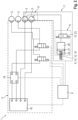
- Fig.1 is the preferred first embodiment of a braking system 1 according to the invention for a motor vehicle 2 (cf. Fig.5 ) is shown schematically in a schematic diagram.
- the braking system 1 has a plurality of wheels 4 (cf. Fig.5 ) each have a braking device 3 and a hydraulic actuator device 5 for actuating the braking device 3.
- the actuator device 5 has a primary pressure device 18 and a secondary pressure device 19 for generating an operating pressure for operating the braking device 3.
- the braking system 1 has a control device 6 for operating the actuator device 5.
- the braking system 1 also has an emergency braking device 7 for carrying out an emergency braking operation.
- the emergency braking device 7 has an energy storage device 8 and a triggering device 9 for releasing the energy stored in the energy storage device 8 to operate the braking device 3.
- the energy storage device 8 has a pressure cylinder 20 in which a pressure piston 21 is slidably held.
- a compression spring 22 is arranged on the pressure piston 21.
- a tension spring can also be arranged on the pressure piston 21, the spring force of which preferably acts in the same direction as the spring force of the compression spring 22.
- the pressure piston 21 is shown in a basic position in which the compression spring 22 has a preload. The pressure piston 21 is held in the basic position by the triggering device 9.
- the triggering device 9 has an electromagnet 12. If there is no power supply, the electromagnet 12 becomes inactive, so that the triggering device 9 automatically releases the pressure piston 21. By means of the pre-tensioned compression spring 22, the pressure piston 21 can be pressed from the basic position into the pressure cylinder 20. In this way, hydraulic fluid can be pressed out of the pressure cylinder 20 to the actuator device 5 in order to actuate the braking device 3.
- the actuator device 5 In order to maintain a pressure level in the event of a failure of the on-board power supply, the actuator device 5 has two protective valves 24, which are open in normal operation and closed in the de-energized state, in particular in the event of a failure of the on-board power supply. A flow of fluid from the emergency braking device 7 in the direction of the primary pressure device 18 and the secondary pressure device 19 can be prevented in this way.
- the emergency braking device 7 has a configuration device 10, which is partly controlled by the triggering device 9 and partly by an emergency valve 23 is implemented.
- a position of the pressure piston 21 relative to the pressure cylinder 20 can be specifically changed and thus the preload of the compression spring 22 can be increased or reduced accordingly.
- the emergency valve 23 of the configuration device is designed for the targeted, preferably stepless, limitation of a hydraulic fluid flow from the energy storage device 8 to the actuator device 5.
- the emergency valve 23 is preferably adjustable by means of the control device 6 and preferably has a self-locking mechanism, so that a valve position of the emergency valve 23 is maintained when the emergency valve 23 is inactively controlled.
- Fig. 2 shows the preferred second embodiment of a braking system 1 according to the invention schematically in a schematic diagram.
- the braking system 1 according to the preferred second embodiment of the invention differs from the braking system 1 according to the preferred first embodiment of the invention in a design of the emergency braking device 7.
- the emergency braking device 7 is no longer coupled to the actuator device 5 in a fluid-communicating manner and instead has an emergency actuator device 11 for actuating the braking device 3, which is coupled to the energy storage device 8 in a fluid-communicating manner via the emergency valve 23.
- the rest of the way in which the emergency braking device 11 functions corresponds to the preferred first embodiment of the invention.
- Fig.3 the preferred third embodiment of a braking system 1 according to the invention is shown schematically in a schematic diagram.
- the braking system 1 according to the preferred third embodiment of the invention differs from the braking system 1 according to the preferred first embodiment of the invention in a design of the triggering device 9 of the emergency braking device 7.
- the triggering device 9 is also designed as part of the configuration device 10. Instead of an electromagnet 12, the triggering device 9 now has a voltage monitoring device 13, a servomotor 14 and a power storage device 15. If a failure of the on-board power network is detected by the voltage monitoring device 13, the electrical energy stored in the power storage device 15 can be released to operate the servomotor 14 by means of the voltage monitoring device 13.
- the pressure piston 21 can be released by operating the servomotor 14.
- the rest of the functionality of the emergency braking device 11 corresponds to the preferred first embodiment of the invention.
- Fig.4 shows the preferred embodiment of a method according to the invention schematically in a flow chart.
- a first method action 100 the motor vehicle 2 is operated in a normal driving mode.
- the triggering device 9 is, for example, by means of the electromagnet 12, servomotor 14 or the like in the basic position.
- the electrical energy required for this is provided, for example, by the on-board power supply of the motor vehicle 2.
- vehicle parameters and environmental parameters are determined by means of a determination device 17 (cf. Fig.5 ) of the motor vehicle 2 are determined which have an influence on a braking specification for the safe braking of the motor vehicle 2.
- These include, for example, route data, weather data, traffic data, the vehicle speed, data of a driver profile of a driver of the motor vehicle 2, a current total weight of the motor vehicle 2, a tire condition of the tires of the motor vehicle 2 or the like.
- the determination is preferably carried out continuously.
- the actuation of the braking device 3 that can be provided by the emergency braking device 7 is configured by means of the configuration device 10. This is done, for example, by moving the pressure piston 21 in the pressure cylinder 20, for example by means of the electromagnet 12, the servomotor 14 or the like, whereby the preload force of the compression spring 22 is changed. Alternatively or additionally, this is done, for example, by changing a valve position of the emergency valve 23.
- a fourth method action 400 is carried out if the on-board power network has a fault and is not providing any power or at least no longer provides sufficient power to operate the braking system 1. In this situation, the triggering device 9 automatically releases the energy storage device 8.
- a fifth method action 500 the braking device 3 is actuated by means of the displaced hydraulic fluid and the motor vehicle 2 is brought to a standstill and braked sustainably in a particularly situation-appropriate manner.
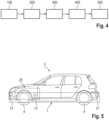
- a motor vehicle 2 according to the invention is shown schematically in a side view.
- the motor vehicle 2 has a drive system 25 for driving wheels 4 of the motor vehicle 2.
- the motor vehicle 2 also has a braking system 1 according to the invention for braking the wheels 4.
- the braking system 1 has several detection devices 17, such as a radar, a lidar, a rain sensor, a navigation system, a traffic information system or the like, for determining braking-relevant data.
Landscapes
- Engineering & Computer Science (AREA)
- Transportation (AREA)
- Mechanical Engineering (AREA)
- Regulating Braking Force (AREA)
- Braking Systems And Boosters (AREA)
- Valves And Accessory Devices For Braking Systems (AREA)
Description
- Die vorliegende Erfindung betrifft ein Bremssystem - insbesondere ein sogenanntes "Brake-By-Wire" Bremssystem - für ein Kraftfahrzeug, aufweisend eine Bremsvorrichtung zum Bremsen eines Rads des Kraftfahrzeugs, eine Aktuatorvorrichtung zum gezielten Betätigen der Bremsvorrichtung, eine Steuerungsvorrichtung zum Steuern der Aktuatorvorrichtung und eine Notbremsvorrichtung zum Bremsen des Rads bei einer Betriebsstörung des Kraftfahrzeugs. Ferner betrifft die Erfindung ein Verfahren zum Betreiben eines erfindungsgemäßen Bremssystems sowie ein Kraftfahrzeug mit einem erfindungsgemäßen Bremssystem.
- Herkömmliche Kraftfahrzeuge weisen grundsätzlich zwei Arten von Bremssystemen auf. Es gibt für die Fahrt ausgebildete Bremssysteme zum Abbremsen des rollenden Kraftfahrzeugs oder zum kurzzeitigen Halten, beispielsweise an einer Ampel. Derartige Bremssysteme werden im Folgenden der Einfachheit halber als Bremssysteme bezeichnet. Ferner existieren Feststellbremssysteme zum Halten des stehenden Kraftfahrzeugs in einer Parkposition. Zum Abbremsen eines rollenden Kraftfahrzeugs sind Feststellbremssysteme grundsätzlich nicht besonders geeignet. Diese Bremssysteme werden im Folgenden stets als Feststellbremssysteme bezeichnet.
- Bei konventionellen Bremssystemen ist eine Übertragung einer Bremsvorgabe, wie beispielsweise über ein Bremspedal, mechanisch, insbesondere hydraulisch, auf eine Bremsvorrichtung, wie beispielsweise eine Scheibenbremse mit einer Bremsscheibe, einem Bremssattel und Bremsbelägen, zum Bremsen eines Rads des Kraftfahrzeugs übertragbar. Bei einem Ausfall eines Bordstromnetzes des Kraftfahrzeugs ist ein Abbremsen des Rads durch Betätigung der Bremsvorrichtung weiterhin, zumindest mit reduzierter Bremswirkung, möglich.
- Moderne Brake-By-Wire Bremssysteme weisen eine Bremsvorrichtung auf, welche mittels einer elektrisch betreibbaren Aktuatorvorrichtung betätigbar ist. Eine Bremsvorgabe ist über eine Steuerungsvorrichtung des Bremssystems elektrisch an die Aktuatorvorrichtung übermittelbar. Die hierfür erforderliche elektrische Energie ist über das Bordstromnetz des Kraftfahrzeugs bereitstellbar. Nachteilig bei diesen Bremssystemen ist, dass bei einem Ausfall des Bordstromnetzes ein aktives Abbremsen des Kraftfahrzeugs mittels der Bremsvorrichtung nicht mehr möglich ist. Ein solches Szenario stellt eine besondere Gefahr für die Insassen des Kraftfahrzeugs sowie andere Verkehrsteilnehmer und Einrichtungen im Umfeld des Kraftfahrzeugs dar.
- Ferner ist eine Vielzahl von Feststellbremssystemen für Kraftfahrzeuge bekannt. Das Dokument
US 10,207,694 B2 WO 2019 / 158 351 A1 zeigt eine elektropneumatische Feststellbremse, welche eine redundante Stromversorgung aufweist, sodass bei Ausfall einer Stromquelle noch eine weitere Stromquelle zum Betreiben der Feststellbremse zur Verfügung steht. Bei einem Totalausfall des Bordstromnetzes ist die Feststellbremse nicht aktivierbar. Aus dem DokumentUS 2020 / 0 189 550 A1 ist ein elektropneumatisches Feststellbremssystem bekannt, welches zum Betätigen der Feststellbremse eine Federvorrichtung und zum Lösen der Feststellbremse ein Druckluftsystem aufweist, welches über eine Steuerungsvorrichtung betätigbar ist. Im Falle des Versagens eines Hauptbremssystems ist das Feststellbremssystem als Notbremssystem einsetzbar. Hierfür ist ein funktionierendes Bordstromnetz erforderlich. - Aus den Dokumenten
DE 10 2018 217 615 A1 ,DE 10 2017 222 625 A1 ,DE 10 2019 206 501 A1 ,DE 10 2015 201 236 A1 undDE 10 2018 222 149 A1 sind verschiedene Bremssysteme mit mechanischen Notbremsvorrichtungen bekannt. - Bekannte Brake-by-Wire Bremssysteme und Feststellbremssysteme haben den Nachteil, dass zum Aktivieren stets auf das Bordstromnetz des Kraftfahrzeugs zurückgegriffen werden muss, da für die Übermittlung des Steuerbefehls elektrische Energie erforderlich ist. Bei einem Ausfall des Bordstromnetzes ist somit ein Feststellen der Räder des Kraftfahrzeugs nicht durchführbar. Selbst wenn eine Aktivierung möglich wäre, so ist ein bereitstellbares Bremsmoment bei einer Notbremsung nicht gezielt bereitstellbar, sodass die Gefahr eines zu starken Bremsens und ein damit verbundener Kontrollverlust über die Lenkung des Kraftfahrzeugs wesentlich erhöht ist.
- Es ist daher Aufgabe der vorliegenden Erfindung, die voranstehend beschriebenen Nachteile bei einem Bremssystem für ein Kraftfahrzeug zu beheben oder zumindest teilweise zu beheben. Insbesondere ist es Aufgabe der vorliegenden Erfindung ein Bremssystem für ein Kraftfahrzeug, ein Verfahren zum Betreiben eines Bremssystems sowie ein Kraftfahrzeug zu schaffen, die auf eine einfache und kostengünstige Art und Weise ein sicheres Abbremsen des rollenden Kraftfahrzeugs bei einem Ausfall des Bordstromnetzes gewährleisten.
- Voranstehende Aufgabe wird durch die Patentansprüche gelöst. Demnach wird die Aufgabe durch ein Bremssystem für ein Kraftfahrzeug mit den Merkmalen des unabhängigen Anspruchs 1, ein Verfahren zum Betreiben eines Bremssystems mit den Merkmalen des nebengeordneten Anspruchs 9 sowie durch ein Kraftfahrzeug mit den Merkmalen des nebengeordneten Anspruchs 10 gelöst. Weitere Merkmale und Details der Erfindung ergeben sich aus den Unteransprüchen, der Beschreibung und den Zeichnungen. Dabei gelten Merkmale und Details, die im Zusammenhang mit dem erfindungsgemäßen Bremssystem beschrieben sind, selbstverständlich auch im Zusammenhang mit dem erfindungsgemäßen Verfahren sowie dem erfindungsgemäßen Kraftfahrzeug und jeweils umgekehrt, sodass bezüglich der Offenbarung zu den einzelnen Erfindungsaspekten stets wechselseitig Bezug genommen wird beziehungsweise werden kann.
- Gemäß einem ersten Aspekt der Erfindung wird die Aufgabe durch ein Bremssystem für ein Kraftfahrzeug gelöst. Das Bremssystem weist eine Bremsvorrichtung zum Bremsen eines Rads des Kraftfahrzeugs, eine Aktuatorvorrichtung zum gezielten Betätigen der Bremsvorrichtung, eine Steuerungsvorrichtung zum Steuern der Aktuatorvorrichtung und eine Notbremsvorrichtung zum Bremsen des Rads bei einer Betriebsstörung des Kraftfahrzeugs auf. Erfindungsgemäß weist die Notbremsvorrichtung einen elektrischen Energiespeicher zum Speichern von Energie zum Betätigen der Bremsvorrichtung und eine Auslösevorrichtung zum Freigeben der im Energiespeicher gespeicherten Energie zum Betätigen der Bremsvorrichtung auf, wobei die Auslösevorrichtung ausgebildet ist, den Energiespeicher bei einem Ausfall eines Bordstromnetzes des Kraftfahrzeugs freizugeben.
- Die Bremsvorrichtung ist zum Bremsen des Rads des Kraftfahrzeugs ausgebildet. Vorzugsweise weist das Bremssystem mehrere gattungsgemäße Bremsvorrichtungen auf. Vorzugsweise weist das Bremssystem vier Bremsvorrichtungen auf, welche jeweils zum Bremsen eines anderen Rads ausgebildet sind. Die Bremsvorrichtung ist vorzugsweise als Scheibenbremse ausgebildet und weist eine mit dem Rad drehfest koppelbare Bremsscheibe sowie an einer Karosserie des Kraftfahrzeugs anordenbare Bremssattel mit daran relativ zueinander bewegbar gehaltenen Bremsbelaghaltern auf, an welchen Bremsbeläge angeordnet sind. Alternativ kann die Bremsvorrichtung auch als Trommelbremse mit verschwenkbaren Bremsbacken, an denen vorzugsweise die Bremsbeläge angeordnet sind, oder dergleichen ausgebildet sein.
- Zum Bereitstellen einer Bremsvorgabe weist das Bremssystem vorzugsweise eine Bremsvorgabevorrichtung auf, die beispielsweise ein Bremspedal aufweisen kann. Eine Bremsvorgabe ist somit durch gezieltes Betätigen des Bremspedals durch den Fahrer des Kraftfahrzeugs an das Bremssystem übermittelbar. Es kann auch ein Bremspedal für einen Beifahrer des Kraftfahrzeugs vorgesehen sein. Zusätzlich oder alternativ ist die Bremsvorgabevorrichtung beispielsweise als Schnittstelle eines Fahrerassistenzsystems, wie beispielsweise eines Bremsassistenten oder einer autonomen Fahrzeugsteuerung, ausgebildet, um die Bremsvorgabe des Fahrerassistenzsystems aufzunehmen.
- Zum gezielten Betätigen der Bremsvorrichtung weist das Bremssystem die Aktuatorvorrichtung auf. Die Aktuatorvorrichtung kann erfindungsgemäß beispielsweise als elektropneumatische, elektrohydraulische oder elektromechanische Aktuatorvorrichtung ausgebildet sein. Mittels der Aktuatorvorrichtung ist ein Bremsdruck in der Bremsvorrichtung zum Bremsen des Rads erzeugbar. Demnach ist die Aktuatorvorrichtung vorzugsweise zum relativen Bewegen der Bremsbelaghalter bzw. der Bremsbacken ausgebildet. Eine Höhe des Bremsdrucks und somit des erzeugbaren Bremsmoments ist über die Aktuatorvorrichtung gezielt einstellbar.
- Die Steuerungsvorrichtung ist zum gezielten Steuern der Aktuatorvorrichtung ausgebildet. Mittels der Steuerungsvorrichtung ist beispielsweise eine gezielte Bestromung der Aktuatorvorrichtung zum Erzeugen eines pneumatischen Drucks, eines hydraulischen Drucks oder einer mechanischen Druckkraft, beispielsweise mittels eines Elektromotors, welcher vorzugsweise mit einem Getriebe, wie beispielsweise einem Zahnradgetriebe, Kugelspindeltrieb oder dergleichen, gekoppelt ist, zum relativen Bewegen der Bremsbeläge bewirkbar.
- Die Notbremsvorrichtung ist zum Bremsen des Rads bei einer Betriebsstörung des Kraftfahrzeugs ausgebildet. Unter einer Betriebsstörung wird im Rahmen der Erfindung insbesondere ein Ausfall des gesamten Bordstromnetzes verstanden, sodass sämtliche elektronische Komponenten nicht mehr betreibbar sind. Zum Gewährleisten eines sicheren Abbremsens während einer solchen Betriebsstörung weist die Notbremsvorrichtung den Energiespeicher und die Auslösevorrichtung auf. Die Notbremsvorrichtung ist vorzugsweise zum nachhaltigen Bremsen des Rads ausgebildet. Das bedeutet, dass die Notbremsvorrichtung vorzugsweise ausgebildet ist, nach dem Anhalten des Kraftfahrzeugs im Zusammenspiel mit der Bremsvorrichtung die Funktion einer Feststellbremse zu realisieren.
- Der Energiespeicher ist zum Zwischenspeichern von Energie zum Betätigen der Bremsvorrichtung ausgebildet. Eine Speicherkapazität des Energiespeichers ist vorzugsweise derart bemessen, dass die Energie ausreicht, um das mit Höchstgeschwindigkeit fahrende Kraftfahrzeug sicher zum Stillstand zu bringen. Das Bremssystem weist vorzugsweise eine Energieaustauschvorrichtung zum Hinzufügen von Energie in den Energiespeicher sowie zum Abführen von Energie aus dem Energiespeicher auf. Mittels der Energieaustauschvorrichtung ist somit ein vordefiniertes Energieniveau im Energiespeicher einstellbar. Der Energiespeicher ist erfindungsgemäß als elektrischer Energiespeicher ausgebildet. Als elektrischer Energiespeicher ist beispielsweise ein Kondensator bevorzugt. Der Energiespeicher ist vorzugsweise zum gezielten Abgeben der gespeicherten Energie ausgebildet. Unter einem gezielten Abgeben kann beispielsweise ein lineares, progressives, degressives oder intermittierendes Abgeben der Energie verstanden werden. Vorzugsweise ist der Energiespeicher hierfür konfigurierbar ausgebildet, sodass die Art des gezielten Abgebens der Energie beispielsweise während der Fahrt des Kraftfahrzeugs veränderbar ist. Bei einer schneebedeckten oder nassen Fahrbahn ist beispielsweise eine intermittierende Energieabgabe, bei einer dichten Verkehrslage zur Vermeidung eines Auffahrunfalls nachfolgender Kraftfahrzeuge eine progressive Energieabgabe oder kurz vor einer Kurve eine degressive Energieabgabe konfigurierbar.
- Die Auslösevorrichtung ist zum Zurückhalten sowie zum Freigeben der im Energiespeicher gespeicherten Energie ausgebildet. Die gespeicherte Energie ist derart freigebbar, dass hierdurch direkt oder indirekt die Bremsvorrichtung betätigbar ist. Eine derartige Freigabe kann beispielsweise in Abhängigkeit der Bremsvorgabe und/oder einer aktuellen Verzögerung des Kraftfahrzeugs und/oder einer aktuellen Geschwindigkeit des Kraftfahrzeugs und/oder eines aktuellen Gefälles der Fahrbahn erfolgen. Die Auslösevorrichtung ist weiter ausgebildet, die im Energiespeicher gespeicherte Energie bei einem Ausfall des Bordstromnetzes zum Betätigen der Bremsvorrichtung automatisch freizugeben. Vorzugsweise ist die Auslösevorrichtung ausgebildet, die im Energiespeicher gespeicherte Energie bei einem Normalbetrieb des Bordstromnetzes, zumindest während der Fahrt des Kraftfahrzeugs, nicht zum Betätigen der Bremsvorrichtung freizugeben. Die Auslösevorrichtung kann beispielsweise einen elektrischen Stromspeicher und einen Elektromotor aufweisen, die derart konfiguriert sind, dass der Stromspeicher bei funktionierendem Bordstromnetz aufgeladen ist oder über das Bordstromnetz aufladbar ist. Der Elektromotor ist vorzugsweise als Stellmotor mit einer hohen Selbsthemmung ausgebildet, sodass kein versehentliches Auslösen aufgrund von Vibrationen oder dergleichen erfolgen kann. Der Elektromotor ist in diesem Zustand vorzugsweise unbestromt. Bei einem Wegfall des Bordstromnetzes ist der Stromspeicher ausgebildet, automatisch elektrische Energie an den Elektromotor abzugeben. Hierdurch ist die im Energiespeicher gespeicherte Energie zum Betätigen der Bremsvorrichtung freigebbar.
- Ein erfindungsgemäßes Bremssystem hat gegenüber herkömmlichen Bremssystemen den Vorteil, dass mit einfachen Mitteln sowie auf eine kostengünstige Art und Weise mittels der Notbremsvorrichtung ein zuverlässiges Anhalten des fahrenden Kraftfahrzeugs bei einem Ausfall des Bordstromnetzes sichergestellt ist. Dies wird durch das Zusammenspiel des Energiespeichers mit der Auslösevorrichtung erreicht. Die Auslösevorrichtung ist ausgebildet, bei Ausfall des Bordstromnetzes den Energiespeicher automatisch und ohne das Erfordernis der Versorgung mit elektrischer Energie vom Bordstromnetz freizugeben. Der Energiespeicher stellt der Bremsvorrichtung die zum Abbremsen des Kraftfahrzeugs erforderliche Energie bereit. Somit ist die Betriebssicherheit des erfindungsgemäßen Bremssystems gegenüber herkömmlichen Bremssystemen wesentlich erhöht.
- Gemäß einer bevorzugten Weiterentwicklung der Erfindung kann bei einem Bremssystem vorgesehen sein, dass die Notbremsvorrichtung eine Konfigurationsvorrichtung zum gezielten Konfigurieren der durch die Notbremsvorrichtung bereitstellbaren Betätigung der Bremsvorrichtung aufweist, wobei die Konfigurationsvorrichtung zum Erhöhen sowie zum Absenken der im Energiespeicher gespeicherten Energie und/oder zum Einstellen der vom Energiespeicher maximal abgebbaren Energie und/oder zum Einstellen einer Abgabegeschwindigkeit der vom Energiespeicher abgebbaren Energie ausgebildet ist. Die Konfigurationsvorrichtung kann beispielsweise zum Erhöhen, insbesondere zum gezielten Erhöhen, sowie zum Absenken, insbesondere zum gezielten Absenken, der im Energiespeicher gespeicherten Energie ausgebildet sein. Alternativ oder zusätzlich kann die Konfigurationsvorrichtung erfindungsgemäß zum Einstellen bzw. Begrenzen der vom Energiespeicher maximal abgebbaren Energie und/oder einer Abgabegeschwindigkeit der vom Energiespeicher abgebbaren Energie ausgebildet sein. Die Konfigurationsvorrichtung ist vorzugsweise ausgebildet, die Notbremsvorrichtung während der Fahrt des Kraftfahrzeugs wiederholt, vorzugsweise mindestens einmal pro fünf Sekunden, besonders bevorzugt mindestens einmal pro Sekunde, oder kontinuierlich zu konfigurieren. Die Konfigurationsvorrichtung ist vorzugsweise ausgebildet, das Konfigurieren des Energiespeichers auf Basis vordefinierter Parameter durchzuführen, wobei diese Parameter vorzugsweise eine Relevanz, insbesondere eine besondere Relevanz, für einen Bremsvorgang des Kraftfahrzeugs aufweisen. Dies hat den Vorteil, dass mit einfachen Mitteln sowie auf eine kostengünstige Art und Weise sicherstellbar ist, dass mittels der Notbremsvorrichtung bei einem Ausfall des Bordstromnetzes ein aktuell bedarfsgerechtes Bremsmoment bewirkbar ist.
- Es ist erfindungsgemäß bevorzugt, dass die Konfigurationsvorrichtung ausgebildet ist, das Konfigurieren der bereitstellbaren Betätigung in Abhängigkeit von Streckendaten und/oder Wetterdaten und/oder Verkehrsdaten und/oder der Fahrzeuggeschwindigkeit und/oder eines Fahrerprofils eines Fahrers des Kraftfahrzeugs und/oder eines Gesamtgewichts des Kraftfahrzeugs und/oder eines Reifenzustands des Kraftfahrzeugs durchzuführen. Als Streckendaten sind erfindungsgemäß beispielsweise Daten über Steigungen, Gefälle, Kurven, Querneigungen, Fahrbahnbreiten, Fahrbahnbeläge oder dergleichen berücksichtigbar. Die Streckendaten sind beispielsweise von einem Navigationssystem des Kraftfahrzeugs, externen Datenquellen sowie Sensoren des Kraftfahrzeugs, wie beispielsweise einem Neigungssensor, Radarsensor, Lidarsensor oder dergleichen, bereitstellbar. Als Wetterdaten sind erfindungsgemäß beispielsweise Daten über Umgebungstemperaturen, Niederschläge, Schneelage, Glatteis, Windstärke, Windrichtung oder dergleichen berücksichtigbar. Die Wetterdaten sind beispielsweise von externen Datenquellen sowie Sensoren des Kraftfahrzeugs, wie beispielsweise einem Temperatursensor, einem Radarsensor, einem Lidarsensor oder dergleichen, bereitstellbar. Als Verkehrsdaten sind erfindungsgemäß beispielsweise Daten über Verkehrsdichte, Verkehrsfluss, Unfälle oder dergleichen berücksichtigbar. Die Verkehrsdaten sind beispielsweise von externen Datenquellen sowie Sensoren des Kraftfahrzeugs, wie beispielsweise einem Radarsensor, einem Lidarsensor oder dergleichen, bereitstellbar. Das Fahrerprofil ist beispielsweise in einer Speichervorrichtung des Kraftfahrzeugs gespeichert. Vorzugsweise enthält das Fahrerprofil fahrerspezifische Daten, wie beispielsweise das Alter des Fahrers und/oder einen Fahrstil des Fahrers und/oder eine Fahrtüchtigkeit des Fahrers und/oder eine Fahrfähigkeit des Fahrers oder dergleichen. Diese Daten stehen allesamt mit dem Bremsverhalten des Kraftfahrzeugs in Verbindung. Auf diese Weise ist die Notbremsvorrichtung situativ konfigurierbar, sodass beispielsweise bei einem sportlichen Fahrer eine kräftigere Notbremsung durchführbar ist als bei einem eher zurückhaltenden bzw. ängstlichen Fahrer. Vor einer Kurve oder bei einem starken Gefälle ist somit beispielsweise eine kräftigere Notbremsung konfigurierbar als auf einer Geraden oder bei einer größeren Steigung. Bei einem geringeren Abstand zu einem vorfahrenden Kraftfahrzeug als zu einem nachfolgenden Kraftfahrzeug ist somit beispielsweise eine kräftigere Notbremsung konfigurierbar als bei einem geringeren Abstand zu einem nachfolgenden Kraftfahrzeug, um einen Auffahrunfall zu verhindern. Dies hat den Vorteil, dass mit einfachen Mitteln sowie auf eine kostengünstige Art und Weise die Betriebssicherheit des Bremssystems weiter verbessert ist.
- Weiter bevorzugt weist die Konfigurationsvorrichtung zum Konfigurieren des Energiespeichers einen selbsthemmenden Spindeltrieb auf. Der selbsthemmende Spindeltrieb ist vorzugsweise als Kugelspindeltrieb ausgebildet. Vorzugsweise ist der selbsthemmende Spindeltrieb ausgebildet, eine Vorspannung des als Federvorrichtung ausgebildeten Energiespeichers zu verstellen sowie zu halten. Alternativ kann der selbsthemmende Spindeltrieb ausgebildet sein, ein Volumen eines als Druckvorrichtung ausgebildeten Energiespeichers zu verstellen sowie zu halten. Dies hat den Vorteil, dass mit einfachen Mitteln sowie auf eine kostengünstige Art und Weise eine leichte Konfigurierbarkeit des Energiespeichers gewährleistet ist.
- In einer besonders bevorzugten Ausgestaltung der Erfindung ist der Energiespeicher zum direkten Betätigen der Bremsvorrichtung und/oder zum Betätigen der Aktuatorvorrichtung zum Betätigen der Bremsvorrichtung und/oder zum Betätigen einer Notaktuatorvorrichtung zum Betätigen der Bremsvorrichtung ausgebildet. Ein direktes Betätigen kann beispielsweise derart realisiert sein, dass der Energiespeicher ausgebildet ist, eine Druckkraft gegen die Bremsvorrichtung auszuüben mittels welcher ein Bremsmoment erzeugbar ist. Ein Betätigen der Aktuatorvorrichtung kann beispielsweise derart realisiert sein, dass der Energiespeicher ein Druckmedium, wie beispielsweise eine Hydraulikflüssigkeit, bereitstellt, die in die Aktuatorvorrichtung zum Betätigen der Bremsvorrichtung einleitbar ist. Eine Notaktuatorvorrichtung ist im Sinne der Erfindung eine zusätzliche Aktuatorvorrichtung, welche zum Betätigen der Bremsvorrichtung mittels des Energiespeichers betreibbar ist. Dies hat den Vorteil, dass mit einfachen Mitteln sowie auf eine kostengünstige Art und Weise die Betriebssicherheit des Bremssystems weiter verbessert ist.
- Vorzugsweise weist die Auslösevorrichtung einen Elektromagneten zum Halten der Auslösevorrichtung in einer Grundstellung auf. Überdies weist die Auslösevorrichtung vorzugsweise eine Federvorrichtung auf, die in der Grundstellung eine Vorspannung aufweist. Bei einem Wegfall des Bordstromnetzes fällt auch die Bestromung des Elektromagneten weg, sodass die Auslösevorrichtung durch die Federkraft aus der Grundstellung bewegbar und der Notbremsvorgang somit einleitbar ist. Dies hat den Vorteil, dass mit einfachen Mitteln sowie auf eine kostengünstige Art und Weise die Betriebssicherheit des Bremssystems weiter verbessert ist.
- Gemäß einer bevorzugten Ausführungsform der Erfindung weist die Auslösevorrichtung eine Spannungsüberwachungsvorrichtung zum Überwachen des Bordstromnetzes, einen elektrischen Stellmotor zum Freigeben des Energiespeichers zum Betätigen der Bremsvorrichtung und einen Stromspeicher zum Speichern eines Notbetriebsstroms zum Betreiben des Stellmotors auf, wobei die Auslösevorrichtung ausgebildet ist, bei einem Ausfall des Bordstromnetzes den Stellmotor mit dem Notbetriebsstrom zu betreiben. Die Auslösevorrichtung ist vorzugsweise derart ausgebildet, dass der Stellmotor bei einem funktionierenden Bordstromnetz unbestromt ist. Der Stellmotor weist vorzugsweise eine derartige Selbsthemmung auf, dass dieser im unbestromten Zustand seine aktuelle Stellung beibehält. Ein Ausfall des Bordstromnetzes ist von der Spannungsüberwachungsvorrichtung detektierbar. Die Spannungsüberwachungsvorrichtung ist ausgebildet, in diesem Fall den Stromschalter zum Betreiben des Stellmotors freizuschalten. Mittels des Stellmotors ist die im Energiespeicher gespeicherte Energie, wie beispielsweise Federenergie oder hydrostatische Energie, zum Betreiben der Bremsvorrichtung freigebbar. Dies hat den Vorteil, dass mit einfachen Mitteln sowie auf eine kostengünstige Art und Weise die Betriebssicherheit des Bremssystems weiter verbessert ist.
- Besonders bevorzugt weist die Notbremsvorrichtung eine Rückstellvorrichtung zum Zurückstellen der Auslösevorrichtung in eine Grundstellung auf. Mittels der Rückstellvorrichtung ist die Auslösevorrichtung nach einem Notbremsvorgang und wenn das Bordstromnetz wieder verfügbar ist in die Grundstellung zurückstellbar. Die Rückstellvorrichtung ist vorzugsweise als Teil der Auslösevorrichtung ausgebildet. In der Grundstellung ist eine Abgabe der im Energiespeicher gespeicherten Energie zum Betätigen der Bremsvorrichtung durch die Auslösevorrichtung vorzugsweise unterbunden. Ferner ist das Bremssystem vorzugsweise ausgebildet, den Energiespeicher wieder aufzufüllen, sodass mittels der Notbremsvorrichtung bei einem erneuten Ausfall des Bordstromnetzes ein weiterer Notbremsvorgang durchführbar ist. Hierfür ist vorzugsweise die Konfigurationsvorrichtung ausgebildet. Alternativ oder zusätzlich kann auch die Auslösevorrichtung hierfür ausgebildet sein. Dies hat den Vorteil, dass mit einfachen Mitteln sowie auf eine kostengünstige Art und Weise die Betriebssicherheit des Bremssystems weiter verbessert ist.
- Gemäß einem zweiten Aspekt der Erfindung wird die Aufgabe durch ein Verfahren zum Betreiben eines erfindungsgemäßen Bremssystems gelöst. Das Verfahren weist auf:
- Halten der Auslösevorrichtung in der Grundstellung, wenn ein Bordstromnetz zum Betätigen der Aktuatorvorrichtung ausreichend elektrischen Strom bereitstellt,
- Ermitteln von Fahrzeugparametern und Umweltparametern, die einen Einfluss auf eine Bremsvorgabe zum Sicheren Bremsen des Kraftfahrzeugs haben, mittels einer Ermittlungsvorrichtung des Kraftfahrzeugs,
- Konfigurieren der durch die Notbremsvorrichtung bereitstellbaren Betätigung der Bremsvorrichtung mittels der Konfigurationsvorrichtung,
- Freigeben der im elektrischen Energiespeicher gespeicherten Energie mittels der Auslösevorrichtung, wenn das Bordstromnetz zum Betätigen der Aktuatorvorrichtung nicht mehr ausreichend elektrischen Strom bereitstellt und
- Betätigen der Bremsvorrichtung mittels der vom elektrischen Energiespeicher freigegebenen Energie.
- Zunächst befindet sich das Bremssystem in einem Normalzustand. Das Bordstromnetz funktioniert, sodass ausreichend elektrische Energie zum Betreiben der Steuerungsvorrichtung sowie der Aktuatorvorrichtung bereitgestellt ist. Eine Bremsvorgabe ist in diesem Zustand durch die Bremsvorrichtung problemlos realisierbar. Mittels der Ermittlungsvorrichtung werden für die Notbremsvorrichtung bremsrelevante Parameter ermittelt. Auf Basis dieser ermittelten Parameter wird die Notbremsvorrichtung konfiguriert. Diese Konfiguration kann beispielsweise eine Beladung des Energiespeichers und/oder eine Energieabgaberate des Energiespeichers im Notbremsfall betreffen. Diese Konfiguration erfolgt vorzugsweise derart, dass mittels der Notbremsvorrichtung zu jedem Zeitpunkt während der Fahrt des Kraftfahrzeugs eine sichere Notbremsung durchführbar ist. Bei einem Ausfall des Bordstromnetzes, wenn ein Normalbetrieb des Bremssystems nicht mehr gewährleistet ist, leitet die Auslösevorrichtung automatisch den Notbremsvorgang durch Freigeben der im elektrischen Energiespeicher gespeicherten Energie an die Bremsvorrichtung an. Hierdurch wird das Rad abgebremst.
- Bei dem erfindungsgemäßen Verfahren ergeben sich sämtliche Vorteile, die bereits zu einem Bremssystem gemäß dem ersten Aspekt der Erfindung beschrieben worden sind. Demnach hat das erfindungsgemäße Verfahren gegenüber herkömmlichen Verfahren den Vorteil, dass mit einfachen Mitteln sowie auf eine kostengünstige Art und Weise mittels der Notbremsvorrichtung ein zuverlässiges Anhalten des fahrenden Kraftfahrzeugs bei einem Ausfall des Bordstromnetzes sichergestellt ist. Dies wird durch das Zusammenspiel des Energiespeichers mit der Auslösevorrichtung erreicht. Die Auslösevorrichtung gibt bei Ausfall des Bordstromnetzes den Energiespeicher automatisch und ohne das Erfordernis der Versorgung mit elektrischer Energie vom Bordstromnetz frei. Der Energiespeicher stellt der Bremsvorrichtung die zum Abbremsen des Kraftfahrzeugs erforderliche Energie bereit. Somit ist ein sicherer Notbremsvorgang durchführbar.
- Gemäß einem dritten Aspekt der Erfindung wird die Aufgabe durch ein Kraftfahrzeug gelöst. Das Kraftfahrzeug weist ein Antriebssystem zum Antreiben des Kraftfahrzeugs und ein Bremssystem zum Bremsen des Kraftfahrzeugs auf. Erfindungsgemäß ist das Bremssystem als erfindungsgemäßes Bremssystem ausgebildet. Das Kraftfahrzeug weist vorzugsweise mehrere Sensoren auf, die zum Erfassen bremsrelevanter Daten für das Bremssystem ausgebildet sind.
- Bei dem erfindungsgemäßen Kraftfahrzeug ergeben sich sämtliche Vorteile, die bereits zu einem Bremssystem gemäß dem ersten Aspekt der Erfindung sowie zu einem Verfahren gemäß dem zweiten Aspekt der Erfindung beschrieben worden sind. Demnach hat das erfindungsgemäße Kraftfahrzeug gegenüber herkömmlichen Kraftfahrzeugen den Vorteil, dass mit einfachen Mitteln sowie auf eine kostengünstige Art und Weise mittels der Notbremsvorrichtung ein zuverlässiges Anhalten des fahrenden Kraftfahrzeugs bei einem Ausfall des Bordstromnetzes sichergestellt ist. Dies wird durch das Zusammenspiel des Energiespeichers mit der Auslösevorrichtung erreicht. Die Auslösevorrichtung ist ausgebildet, bei Ausfall des Bordstromnetzes den Energiespeicher automatisch und ohne das Erfordernis der Versorgung mit elektrischer Energie vom Bordstromnetz freizugeben. Der Energiespeicher stellt der Bremsvorrichtung die zum Abbremsen des Kraftfahrzeugs erforderliche Energie bereit. Somit ist die Betriebssicherheit des erfindungsgemäßen Kraftfahrzeugs gegenüber herkömmlichen Kraftfahrzeugen wesentlich erhöht.
- Ein erfindungsgemäßes Bremssystem, ein erfindungsgemäßes Verfahren sowie ein erfindungsgemäßes Kraftfahrzeug werden nachfolgend anhand von Zeichnungen näher erläutert. Es zeigen jeweils schematisch:
- Figur 1
- in einer Prinzipskizze eine bevorzugte erste Ausführungsform eines erfindungsgemäßen Bremssystems,
- Figur 2
- in einer Prinzipskizze eine bevorzugte zweite Ausführungsform eines erfindungsgemäßen Bremssystems,
- Figur 3
- in einer Prinzipskizze eine bevorzugte dritte Ausführungsform eines erfindungsgemäßen Bremssystems,
- Figur 4
- in einem Ablaufdiagramm eine bevorzugte Ausführungsform eines erfindungsgemäßen Verfahrens, und
- Figur 5
- in einer Seitenansicht eine bevorzugte Ausführungsform eines erfindungsgemäßen Kraftfahrzeugs.
- Elemente mit gleicher Funktion und Wirkungsweise sind in den
Figuren 1 bis 5 jeweils mit denselben Bezugszeichen versehen. - In
Fig. 1 ist die bevorzugte erste Ausführungsform eines erfindungsgemäßen Bremssystems 1 für ein Kraftfahrzeug 2 (vgl.Fig. 5 ) in einer Prinzipskizze schematisch abgebildet. Das Bremssystem 1 weist zum Bremsen mehrerer in dieser Darstellung nicht abgebildeter Räder 4 (vgl.Fig. 5 ) jeweils eine Bremsvorrichtung 3 sowie eine hydraulische Aktuatorvorrichtung 5 zum Betätigen der Bremsvorrichtung 3 auf. Die Aktuatorvorrichtung 5 weist zum Erzeugen eines Betriebsdrucks zum Betreiben der Bremsvorrichtung 3 eine primäre Druckvorrichtung 18 und eine sekundäre Druckvorrichtung 19 auf. Zum Betreiben der Aktuatorvorrichtung 5 weist das Bremssystem 1 eine Steuerungsvorrichtung 6 auf. - Ferner weist das Bremssystem 1 zum Durchführen eines Notbremsvorgangs eine Notbremsvorrichtung 7 auf. Die Notbremsvorrichtung 7 weist einen Energiespeicher 8 und eine Auslösevorrichtung 9 zum Freigeben der im Energiespeicher 8 gespeicherten Energie zum Betreiben der Bremsvorrichtung 3 auf. Der Energiespeicher 8 weist einen Druckzylinder 20 auf, in welchem ein Druckkolben 21 verschiebbar gehalten ist. An dem Druckkolben 21 ist eine Druckfeder 22 angeordnet. Alternativ oder zusätzlich kann auch eine Zugfeder am Druckkolben 21 angeordnet sein, dessen Federkraft vorzugsweise in dieselbe Richtung wirkt wie die Federkraft der Druckfeder 22. Der Druckkolben 21 ist in einer Grundstellung dargestellt, in welcher die Druckfeder 22 eine Vorspannung aufweist. Der Druckkolben 21 ist von der Auslösevorrichtung 9 in der Grundstellung gehalten. Hierfür weist die Auslösevorrichtung 9 einen Elektromagneten 12 auf. Bei Wegfall einer Stromversorgung wird der Elektromagnet 12 inaktiv, sodass die Auslösevorrichtung 9 den Druckkolben 21 automatisch freigibt. Mittels der vorgespannten Druckfeder 22 ist der Druckkolben 21 aus der Grundstellung in den Druckzylinder 20 hineindrückbar. Auf diese Weise ist Hydraulikfluid aus dem Druckzylinder 20 zum Betätigen der Bremsvorrichtung 3 zur Aktuatorvorrichtung 5 herausdrückbar. Um ein Druckniveau bei Ausfall des Bordstromnetzes zu halten weist die Aktuatorvorrichtung 5 zwei Schutzventile 24 auf, welche im Normalbetrieb offen und im unbestromten Zustand, insbesondere bei Ausfall des Bordstromnetzes geschlossen sind. Ein Fluidstrom von der Notbremsvorrichtung 7 in Richtung der primären Druckvorrichtung 18 sowie der sekundären Druckvorrichtung 19 ist auf diese Weise verhinderbar.
- Des Weiteren weist die Notbremsvorrichtung 7 eine Konfigurationsvorrichtung 10 auf, welche zu einem Teil durch die Auslösevorrichtung 9 und zu einem anderen Teil durch ein Notventil 23 realisiert ist. Mittels der Auslösevorrichtung 9 der Konfigurationsvorrichtung 10 ist eine Stellung des Druckkolbens 21 relativ zum Druckzylinder 20 gezielt veränderbar und somit die Vorspannung der Druckfeder 22 entsprechend vergrößerbar oder verkleinerbar. Das Notventil 23 der Konfigurationsvorrichtung ist zum gezielten, vorzugsweise stufenlosen, Begrenzen eines Hydraulikfluidstroms vom Energiespeicher 8 zur Aktuatorvorrichtung 5 ausgebildet. Das Notventil 23 ist vorzugsweise mittels der Steuerungsvorrichtung 6 verstellbar und weist vorzugsweise eine Selbsthemmung auf, sodass eine Ventilstellung des Notventils 23 bei inaktiver Ansteuerung des Notventils 23 erhalten bleibt.
-
Fig. 2 zeigt die bevorzugte zweite Ausführungsform eines erfindungsgemäßen Bremssystems 1 schematisch in einer Prinzipskizze. Das Bremssystem 1 gemäß der bevorzugten zweiten Ausführungsform der Erfindung unterscheidet sich von dem Bremssystem 1 gemäß der bevorzugten ersten Ausführungsform der Erfindung in einer Ausbildung der Notbremsvorrichtung 7. Die Notbremsvorrichtung 7 ist nicht mehr mit der Aktuatorvorrichtung 5 fluidkommunizierend gekoppelt und weist dafür zum Betätigen der Bremsvorrichtung 3 eine Notaktuatorvorrichtung 11, welche über das Notventil 23 mit dem Energiespeicher 8 fluidkommunizierend gekoppelt ist. Die sonstige Funktionsweise der Notbremsvorrichtung 11 entspricht der bevorzugten ersten Ausführungsform der Erfindung. - In
Fig. 3 ist die bevorzugte dritte Ausführungsform eines erfindungsgemäßen Bremssystems 1 in einer Prinzipskizze schematisch abgebildet. Das Bremssystem 1 gemäß der bevorzugten dritten Ausführungsform der Erfindung unterscheidet sich von dem Bremssystem 1 gemäß der bevorzugten ersten Ausführungsform der Erfindung in einer Ausbildung der Auslösevorrichtung 9 der Notbremsvorrichtung 7. Die Auslösevorrichtung 9 ist weiterhin als Teil der Konfigurationsvorrichtung 10 ausgebildet. Anstatt eines Elektromagneten 12 weist die Auslösevorrichtung 9 nunmehr eine Spannungsüberwachungsvorrichtung 13, einen Stellmotor 14 und einen Stromspeicher 15 auf. Bei Detektieren eines Ausfalls des Bordstromnetztes durch die Spannungsüberwachungsvorrichtung 13 ist die im Stromspeicher 15 gespeicherte elektrische Energie zum Betreiben des Stellmotors 14 mittels der Spannungsüberwachungsvorrichtung 13 freigebbar. Durch Betreiben des Stellmotors 14 ist der Druckkolben 21 freigebbar. Die sonstige Funktionsweise der Notbremsvorrichtung 11 entspricht der bevorzugten ersten Ausführungsform der Erfindung. -
Fig. 4 zeigt die bevorzugte Ausführungsform eines erfindungsgemäßen Verfahrens schematisch in einem Ablaufdiagramm. Gemäß einer ersten Verfahrensaktion 100 wird das Kraftfahrzeug 2 in einem normalen Fahrbetrieb betrieben. Hierbei wird die Auslösevorrichtung 9 beispielsweise mittels des Elektromagneten 12, Stellmotors 14 oder dergleichen in der Grundstellung gehalten. Die hierfür erforderliche elektrische Energie wird beispielsweise vom Bordstromnetz des Kraftfahrzeugs 2 bereitgestellt. Gemäß einer zweiten Verfahrensaktion 200 werden während der Fahrt des Kraftfahrzeugs 2 Fahrzeugparameter und Umweltparameter mittels einer Ermittlungsvorrichtung 17 (vgl.Fig. 5 ) des Kraftfahrzeugs 2 ermittelt, welche einen Einfluss auf eine Bremsvorgabe zum sicheren Bremsen des Kraftfahrzeugs 2 aufweisen. Hierzu zählen beispielsweise Streckendaten, Wetterdaten, Verkehrsdaten, die Fahrzeuggeschwindigkeit, Daten eines Fahrerprofils eines Fahrers des Kraftfahrzeugs 2, ein aktuelles Gesamtgewicht des Kraftfahrzeugs 2, ein Reifenzustand der Reifen des Kraftfahrzeugs 2 oder dergleichen. Das Ermitteln erfolgt vorzugsweise fortlaufend. - Gemäß einer dritten Verfahrensaktion 300 wird die durch die Notbremsvorrichtung 7 bereitstellbare Betätigung der Bremsvorrichtung 3 mittels der Konfigurationsvorrichtung 10 konfiguriert. Dies erfolgt beispielsweise durch Bewegen des Druckkolbens 21 im Druckzylinder 20, beispielsweise mittels des Elektromagneten 12, des Stellmotors 14 oder dergleichen, wodurch die Vorspannkraft der Druckfeder 22 verändert wird. Alternativ oder zusätzlich erfolgt dies beispielsweise durch Verändern einer Ventilstellung des Notventils 23. Eine vierte Verfahrensaktion 400 wird durchgeführt, wenn das Bordstromnetz eine Störung aufweist und keinen Strom oder zumindest nicht mehr ausreichend Strom zum Betreiben des Bremssystems 1 bereitstellt. Die Auslösevorrichtung 9 gibt in dieser Situation automatisch den Energiespeicher 8 frei. Dies kann beispielsweise durch Loslassen des Druckkolbens 21 erfolgen, welcher dann aufgrund der Vorspannkraft der Druckfeder 22 weiter in den Druckzylinder 20 eintaucht und somit das Hydraulikfluid verdrängt. Gemäß einer fünften Verfahrensaktion 500 wird mittels des verdrängten Hydraulikfluids die Bremsvorrichtung 3 betätigt und das Kraftfahrzeug 2 besonders situationsgerecht zum Stillstand gebracht sowie nachhaltig gebremst.
- In
Fig. 5 ist die eine bevorzugte Ausführungsform eines erfindungsgemäßen Kraftfahrzeugs 2 schematisch in einer Seitenansicht abgebildet. Das Kraftfahrzeug 2 weist ein Antriebssystem 25 zum Antreiben von Rädern 4 des Kraftfahrzeugs 2 auf. Ferner weist das Kraftfahrzeug 2 ein erfindungsgemäßes Bremssystem 1 zum Bremsen der Räder 4 auf. Das Bremssystem 1 weist mehrere Ermittlungsvorrichtungen 17, wie beispielsweise ein Radar, ein Lidar, einen Regensensor, ein Navigationssystem, ein Verkehrsinformationssystem oder dergleichen, zum Ermitteln von bremsrelevanten Daten auf. -
- 1
- Bremssystem
- 2
- Kraftfahrzeug
- 3
- Bremsvorrichtung
- 4
- Rad
- 5
- Aktuatorvorrichtung
- 6
- Steuerungsvorrichtung
- 7
- Notbremsvorrichtung
- 8
- Energiespeicher
- 9
- Auslösevorrichtung
- 10
- Konfigurationsvorrichtung
- 11
- Notaktuatorvorrichtung
- 12
- Elektromagnet
- 13
- Spannungsüberwachungsvorrichtung
- 14
- Stellmotor
- 15
- Stromspeicher
- 16
- Rückstellvorrichtung
- 17
- Ermittlungsvorrichtung
- 18
- primäre Druckvorrichtung
- 19
- sekundäre Druckvorrichtung
- 20
- Druckzylinder
- 21
- Druckkolben
- 22
- Druckfeder
- 23
- Notventil
- 24
- Schutzventil
- 25
- Antriebssystem
- 100
- erste Verfahrensaktion
- 200
- zweite Verfahrensaktion
- 300
- dritte Verfahrensaktion
- 400
- vierte Verfahrensaktion
- 500
- fünfte Verfahrensaktion
Claims (10)
- Bremssystem (1) für ein Kraftfahrzeug (2), aufweisend eine Bremsvorrichtung (3) zum Bremsen eines Rads (4) des Kraftfahrzeugs (2), eine Aktuatorvorrichtung (5) zum gezielten Betätigen der Bremsvorrichtung (3), eine Steuerungsvorrichtung (6) zum Steuern der Aktuatorvorrichtung (5) und eine Notbremsvorrichtung (7) zum Bremsen des Rads (4) bei einer Betriebsstörung des Kraftfahrzeugs (2),
dadurch gekennzeichnet,
dass die Notbremsvorrichtung (7) einen elektrischen Energiespeicher (8) zum Speichern von Energie zum Betätigen der Bremsvorrichtung (3) und eine Auslösevorrichtung (9) zum Freigeben der im Energiespeicher (8) gespeicherten Energie zum Betätigen der Bremsvorrichtung (3) aufweist, wobei die Auslösevorrichtung (9) ausgebildet ist, den Energiespeicher (8) bei einem Ausfall eines Bordstromnetzes des Kraftfahrzeugs (2) freizugeben. - Bremssystem (1) nach Anspruch 1,
dadurch gekennzeichnet,
dass die Notbremsvorrichtung (7) eine Konfigurationsvorrichtung (10) zum gezielten Konfigurieren der durch die Notbremsvorrichtung (7) bereitstellbaren Betätigung der Bremsvorrichtung (3) aufweist, wobei die Konfigurationsvorrichtung (10) zum Erhöhen sowie zum Absenken der im Energiespeicher (8) gespeicherten Energie und/oder zum Einstellen der vom Energiespeicher (8) maximal abgebbaren Energie und/oder zum Einstellen einer Abgabegeschwindigkeit der vom Energiespeicher (8) abgebbaren Energie ausgebildet ist. - Bremssystem (1) nach Anspruch 2,
dadurch gekennzeichnet,
dass die Konfigurationsvorrichtung (10) ausgebildet ist, das Konfigurieren der bereitstellbaren Betätigung in Abhängigkeit von Streckendaten und/oder Wetterdaten und/oder Verkehrsdaten und/oder der Fahrzeuggeschwindigkeit und/oder eines Fahrerprofils eines Fahrers des Kraftfahrzeugs (2) und/oder eines Gesamtgewichts des Kraftfahrzeugs (2) und/oder eines Reifenzustands des Kraftfahrzeugs (2) durchzuführen. - Bremssystem (1) nach Anspruch 2 oder 3,
dadurch gekennzeichnet,
dass die Konfigurationsvorrichtung (10) zum Konfigurieren des Energiespeichers (8) einen selbsthemmenden Spindeltrieb aufweist. - Bremssystem (1) nach einem der vorangegangenen Ansprüche,
dadurch gekennzeichnet,
dass der Energiespeicher (8) zum direkten Betätigen der Bremsvorrichtung (3) und/oder zum Betätigen der Aktuatorvorrichtung (5) zum Betätigen der Bremsvorrichtung (3) und/oder zum Betätigen einer Notaktuatorvorrichtung (11) zum Betätigen der Bremsvorrichtung (3) ausgebildet ist. - Bremssystem (1) nach einem der vorangegangenen Ansprüche,
dadurch gekennzeichnet,
dass die Auslösevorrichtung (9) einen Elektromagneten (12) zum Halten der Auslösevorrichtung (9) in einer Grundstellung aufweist. - Bremssystem (1) nach einem der vorangegangenen Ansprüche,
dadurch gekennzeichnet,
dass die Auslösevorrichtung (9) eine Spannungsüberwachungsvorrichtung (13) zum Überwachen des Bordstromnetzes, einen elektrischen Stellmotor (14) zum Freigeben des Energiespeichers (8) zum Betätigen der Bremsvorrichtung (3) und einen Stromspeicher (15) zum Speichern eines Notbetriebsstroms zum Betreiben des Stellmotors (14) aufweist, wobei die Auslösevorrichtung (9) ausgebildet ist, bei einem Ausfall des Bordstromnetzes den Stellmotor (14) mit dem Notbetriebsstrom zu betreiben. - Bremssystem (1) nach einem der vorangegangenen Ansprüche,
dadurch gekennzeichnet,
dass die Notbremsvorrichtung (7) eine Rückstellvorrichtung (16) zum Zurückstellen der Auslösevorrichtung (9) in eine Grundstellung aufweist. - Verfahren zum Betreiben eines Bremssystems (1) nach einem der Ansprüche 2-4 und einem der Ansprüche 5-8, wenn abhängig von Anspruch 2, aufweisend:- Halten der Auslösevorrichtung (9) in der Grundstellung, wenn ein Bordstromnetz zum Betätigen der Aktuatorvorrichtung (5) ausreichend elektrischen Strom bereitstellt,- Ermitteln von Fahrzeugparametern und Umweltparametern, die einen Einfluss auf eine Bremsvorgabe zum Sicheren Bremsen des Kraftfahrzeugs (2) haben, mittels einer Ermittlungsvorrichtung (17) des Kraftfahrzeugs (2),- Konfigurieren der durch die Notbremsvorrichtung (7) bereitstellbaren Betätigung der Bremsvorrichtung (3) mittels der Konfigurationsvorrichtung (10),- Freigeben der im elektrischen Energiespeicher (8) gespeicherten Energie mittels der Auslösevorrichtung (9), wenn das Bordstromnetz zum Betätigen der Aktuatorvorrichtung (5) nicht mehr ausreichend elektrischen Strom bereitstellt und- Betätigen der Bremsvorrichtung (3) mittels der vom elektrischen Energiespeicher (8) freigegebenen Energie.
- Kraftfahrzeug (2), aufweisend ein Antriebssystem (25) zum Antreiben des Kraftfahrzeugs (2) und ein Bremssystem (1) zum Bremsen des Kraftfahrzeugs (2),
dadurch gekennzeichnet,
dass das Bremssystem (1) als Bremssystem (1) nach einem der Ansprüche 1 bis 8 ausgebildet ist.
Applications Claiming Priority (1)
| Application Number | Priority Date | Filing Date | Title |
|---|---|---|---|
| DE102021214270.2A DE102021214270A1 (de) | 2021-12-13 | 2021-12-13 | Bremssystem, Verfahren zum Betreiben eines Bremssystems und Kraftfahrzeug mit einem Bremssystem |
Publications (2)
| Publication Number | Publication Date |
|---|---|
| EP4194293A1 EP4194293A1 (de) | 2023-06-14 |
| EP4194293B1 true EP4194293B1 (de) | 2024-09-04 |
Family
ID=84331777
Family Applications (1)
| Application Number | Title | Priority Date | Filing Date |
|---|---|---|---|
| EP22207186.2A Active EP4194293B1 (de) | 2021-12-13 | 2022-11-14 | Bremssystem, verfahren zum betreiben eines bremssystems und kraftfahrzeug mit einem bremssystem |
Country Status (4)
| Country | Link |
|---|---|
| US (1) | US12583426B2 (de) |
| EP (1) | EP4194293B1 (de) |
| CN (1) | CN116262494A (de) |
| DE (1) | DE102021214270A1 (de) |
Family Cites Families (24)
| Publication number | Priority date | Publication date | Assignee | Title |
|---|---|---|---|---|
| EP0904221B1 (de) | 1997-04-16 | 2001-09-05 | Siemens Aktiengesellschaft | Bremswertgeber für eine elektrisch gesteuerte und betätigte bremsanlage |
| DE10146770A1 (de) * | 2001-09-22 | 2003-04-17 | Daimler Chrysler Ag | Bremsanlage für ein Fahrzeug |
| DE10312481A1 (de) * | 2003-03-20 | 2004-10-14 | Lucas Automotive Gmbh | Verfahren und System zur Früherkennung eines Ausfalls eines elektrisch gesteuerten Bremssystems |
| DE102005058799A1 (de) * | 2005-12-09 | 2007-06-14 | Wabco Gmbh | Elektropneumatische Bremssteuerungseinrichtung |
| DE102007052439A1 (de) | 2007-11-02 | 2009-05-07 | Wabco Gmbh | Fahrerassistenzsystem |
| DE102009002436A1 (de) | 2009-04-16 | 2010-10-21 | Zf Friedrichshafen Ag | Notbremssystem für elektrische Maschinen in Hybridfahrzeugen und Elektrofahrzeugen |
| CN102616145B (zh) * | 2012-03-29 | 2013-11-20 | 青岛易特优电子有限公司 | 一种电动汽车再生制动能量储存装置 |
| WO2016006695A1 (ja) | 2014-07-11 | 2016-01-14 | ナブテスコオートモーティブ 株式会社 | パーキングブレーキシステム |
| GB201413204D0 (en) * | 2014-07-25 | 2014-09-10 | Agco Int Gmbh | Parking brake |
| DE102014216930A1 (de) * | 2014-08-26 | 2016-03-03 | Jungheinrich Aktiengesellschaft | Ventilanordnung für eine Federspeicherbremse |
| DE102015201236A1 (de) | 2015-01-26 | 2016-07-28 | Brose Fahrzeugteile GmbH & Co. Kommanditgesellschaft, Würzburg | Elektronisch gesteuertes Hydraulikbremssystem mit Zusatzspeichereinheit |
| EP3569459B1 (de) * | 2017-01-10 | 2023-07-19 | Nabtesco Automotive Corporation | Druckluftbremsensystem |
| CN206797104U (zh) * | 2017-05-15 | 2017-12-26 | 吉林大学 | 一种行星混联式双模混合动力车辆驱动系统 |
| EP3415386B1 (de) | 2017-06-16 | 2019-12-11 | KNORR-BREMSE Systeme für Nutzfahrzeuge GmbH | Fahrzeugbremssystem |
| DE102017008184A1 (de) | 2017-08-31 | 2019-02-28 | Wabco Gmbh | Parkbrems-Ventileinrichtung |
| DE102017215289A1 (de) * | 2017-08-31 | 2019-02-28 | Knorr-Bremse Systeme für Schienenfahrzeuge GmbH | Elektro-mechanischer Bremsaktuator mit interner Leistungselektronik und Energiespeicher |
| DE102017120691A1 (de) * | 2017-09-07 | 2019-03-07 | Knorr-Bremse Systeme für Nutzfahrzeuge GmbH | Elektropneumatische Parkbremssteuereinrichtung |
| DE102017222625A1 (de) | 2017-12-13 | 2019-06-13 | Robert Bosch Gmbh | Druckerzeugungsvorrichtung für eine hydraulische Fahrzeugbremsanlage mit einem Energiespeicher |
| DE102018103605A1 (de) | 2018-02-19 | 2019-08-22 | Knorr-Bremse Systeme für Nutzfahrzeuge GmbH | Elektropneumatische Ausrüstung eines Fahrzeugs |
| DE102018217615A1 (de) | 2018-10-15 | 2020-04-16 | Robert Bosch Gmbh | Notbremsvorrichtung für ein Kraftfahrzeug während eines automatisierten Fahrmanövers |
| DE102018222149A1 (de) | 2018-12-18 | 2020-06-18 | Robert Bosch Gmbh | Verfahren zum Notbremsen eines zumindest teilautomatisiert geführten Kraftfahrzeugs |
| DE102018222179A1 (de) | 2018-12-18 | 2020-06-18 | Eckerle Technologies GmbH | Zahnradfluidmaschine |
| DE102019206501B4 (de) | 2019-05-07 | 2021-10-21 | Volkswagen Aktiengesellschaft | Ausfallsichere Bremsvorrichtung für ein Kleinstfahrzeug |
| DE102020102716A1 (de) | 2020-02-04 | 2021-08-05 | Karlsruher Institut für Technologie | Notbremseinrichtung für ein hydraulisches Bremssystem |
-
2021
- 2021-12-13 DE DE102021214270.2A patent/DE102021214270A1/de active Pending
-
2022
- 2022-11-14 EP EP22207186.2A patent/EP4194293B1/de active Active
- 2022-12-08 CN CN202211575779.0A patent/CN116262494A/zh active Pending
- 2022-12-12 US US18/064,753 patent/US12583426B2/en active Active
Also Published As
| Publication number | Publication date |
|---|---|
| US12583426B2 (en) | 2026-03-24 |
| CN116262494A (zh) | 2023-06-16 |
| EP4194293A1 (de) | 2023-06-14 |
| US20230182704A1 (en) | 2023-06-15 |
| DE102021214270A1 (de) | 2023-06-15 |
Similar Documents
| Publication | Publication Date | Title |
|---|---|---|
| EP2055541B1 (de) | Fahrerassistenzsystem mit Steuerung der Feststellbremse | |
| EP3529118B2 (de) | System mit getrennten steuereinheiten für die stelleinheiten einer elektrischen parkbremse | |
| EP4071012B1 (de) | Bremssystem für ein autonomes fahrzeug | |
| EP3529117B2 (de) | System mit getrennten steuereinheiten für die stelleinheiten einer elektrischen parkbremse | |
| EP3247596B1 (de) | Elektronisches bremssystem für eine druckluftbremsanlage eines nutzfahrzeugs | |
| EP2229302B1 (de) | Bremsanlage für ein fahrzeug sowie bremspedaleinrichtung für eine derartige bremsanlage | |
| DE102020202477A1 (de) | Sicherheitssystem für einen elektrisch antreibbaren Kraftwagen, Verfahren zum Betreiben eines solchen Sicherheitssystems sowie Kraftwagen | |
| DE102011110892B4 (de) | Fahrzeug-Bremssystem, sowie Verfahren hierfür | |
| EP4071011B1 (de) | Bremssystem für ein autonomes fahrzeug | |
| EP3867113B1 (de) | Verfahren zum verzögern eines kraftfahrzeugs bei einer notbremsung und kraftfahrzeug | |
| WO1999038738A1 (de) | Kraftfahrzeugbremssystem mit einer elektrisch steuerbaren feststellbremsanlage | |
| DE102011076980A1 (de) | Bremsanlage für Kraftfahrzeug, damit ausgestattetes Kraftfahrzeug sowie Verfahren zum Betrieb der Bremsanlage | |
| DE102013207286A1 (de) | Verfahren zum Steuern einer Feststellbremse | |
| DE102021133892A1 (de) | Brake-by-Wire-Bremssystem | |
| DE102014203889A1 (de) | Verfahren zum Betreiben eines Bremssystems | |
| EP4405219A1 (de) | Verfahren zum automatischen durchführen eines bremsvorgangs eines fahrzeugs bei einem fehlerfall einer spannungsversorgung des fahrzeugs, sowie elektronisches fahrzeugsicherheitssystem und fahrzeug | |
| DE102010003325A1 (de) | Verfahren und Einrichtung zum Betrieb einer Bremseinrichtung für Kraftfahrzeuge und Kraftfahrzeug | |
| WO2007147694A1 (de) | Automatische parkbremse mit einem mechanischen impulsgeber | |
| EP1306277B1 (de) | Elektrisch angesteuerte Parkbremse | |
| DE10213346B4 (de) | Verfahren zur Steuerung einer Kraftfahrzeugbremsanlage | |
| EP4194293A1 (de) | Bremssystem, verfahren zum betreiben eines bremssystems und kraftfahrzeug mit einem bremssystem | |
| DE102020111402A1 (de) | Notbremsen eines Kraftfahrzeugs mittels eines Doppelkupplungsgetriebes | |
| EP1479579A1 (de) | Fahrzeug mit einem Scheibenbremssystem und Verfahren hierzu | |
| DE102021210445A1 (de) | Verfahren zum automatischen Durchführen eines Bremsvorgangs bei einem Fehlerfall eines Bremssystems, sowie elektronisches Fahrzeugsicherheitssystem und Fahrzeug | |
| DE102021100195A1 (de) | Bremssystem für ein Flurförderzeug |
Legal Events
| Date | Code | Title | Description |
|---|---|---|---|
| PUAI | Public reference made under article 153(3) epc to a published international application that has entered the european phase |
Free format text: ORIGINAL CODE: 0009012 |
|
| STAA | Information on the status of an ep patent application or granted ep patent |
Free format text: STATUS: THE APPLICATION HAS BEEN PUBLISHED |
|
| AK | Designated contracting states |
Kind code of ref document: A1 Designated state(s): AL AT BE BG CH CY CZ DE DK EE ES FI FR GB GR HR HU IE IS IT LI LT LU LV MC ME MK MT NL NO PL PT RO RS SE SI SK SM TR |
|
| STAA | Information on the status of an ep patent application or granted ep patent |
Free format text: STATUS: REQUEST FOR EXAMINATION WAS MADE |
|
| 17P | Request for examination filed |
Effective date: 20231214 |
|
| RBV | Designated contracting states (corrected) |
Designated state(s): AL AT BE BG CH CY CZ DE DK EE ES FI FR GB GR HR HU IE IS IT LI LT LU LV MC ME MK MT NL NO PL PT RO RS SE SI SK SM TR |
|
| GRAP | Despatch of communication of intention to grant a patent |
Free format text: ORIGINAL CODE: EPIDOSNIGR1 |
|
| STAA | Information on the status of an ep patent application or granted ep patent |
Free format text: STATUS: GRANT OF PATENT IS INTENDED |
|
| RIC1 | Information provided on ipc code assigned before grant |
Ipc: B60T 17/08 20060101AFI20240408BHEP |
|
| INTG | Intention to grant announced |
Effective date: 20240503 |
|
| GRAS | Grant fee paid |
Free format text: ORIGINAL CODE: EPIDOSNIGR3 |
|
| GRAA | (expected) grant |
Free format text: ORIGINAL CODE: 0009210 |
|
| STAA | Information on the status of an ep patent application or granted ep patent |
Free format text: STATUS: THE PATENT HAS BEEN GRANTED |
|
| AK | Designated contracting states |
Kind code of ref document: B1 Designated state(s): AL AT BE BG CH CY CZ DE DK EE ES FI FR GB GR HR HU IE IS IT LI LT LU LV MC ME MK MT NL NO PL PT RO RS SE SI SK SM TR |
|
| REG | Reference to a national code |
Ref country code: GB Ref legal event code: FG4D Free format text: NOT ENGLISH |
|
| REG | Reference to a national code |
Ref country code: CH Ref legal event code: EP |
|
| REG | Reference to a national code |
Ref country code: IE Ref legal event code: FG4D Free format text: LANGUAGE OF EP DOCUMENT: GERMAN |
|
| REG | Reference to a national code |
Ref country code: DE Ref legal event code: R096 Ref document number: 502022001614 Country of ref document: DE |
|
| P01 | Opt-out of the competence of the unified patent court (upc) registered |
Free format text: CASE NUMBER: APP_48525/2024 Effective date: 20240826 |
|
| REG | Reference to a national code |
Ref country code: LT Ref legal event code: MG9D |
|
| REG | Reference to a national code |
Ref country code: NL Ref legal event code: MP Effective date: 20240904 |
|
| PGFP | Annual fee paid to national office [announced via postgrant information from national office to epo] |
Ref country code: DE Payment date: 20241114 Year of fee payment: 5 |
|
| PG25 | Lapsed in a contracting state [announced via postgrant information from national office to epo] |
Ref country code: NO Free format text: LAPSE BECAUSE OF FAILURE TO SUBMIT A TRANSLATION OF THE DESCRIPTION OR TO PAY THE FEE WITHIN THE PRESCRIBED TIME-LIMIT Effective date: 20241204 |
|
| PG25 | Lapsed in a contracting state [announced via postgrant information from national office to epo] |
Ref country code: GR Free format text: LAPSE BECAUSE OF FAILURE TO SUBMIT A TRANSLATION OF THE DESCRIPTION OR TO PAY THE FEE WITHIN THE PRESCRIBED TIME-LIMIT Effective date: 20241205 Ref country code: FI Free format text: LAPSE BECAUSE OF FAILURE TO SUBMIT A TRANSLATION OF THE DESCRIPTION OR TO PAY THE FEE WITHIN THE PRESCRIBED TIME-LIMIT Effective date: 20240904 |
|
| PG25 | Lapsed in a contracting state [announced via postgrant information from national office to epo] |
Ref country code: BG Free format text: LAPSE BECAUSE OF FAILURE TO SUBMIT A TRANSLATION OF THE DESCRIPTION OR TO PAY THE FEE WITHIN THE PRESCRIBED TIME-LIMIT Effective date: 20240904 |
|
| PG25 | Lapsed in a contracting state [announced via postgrant information from national office to epo] |
Ref country code: LV Free format text: LAPSE BECAUSE OF FAILURE TO SUBMIT A TRANSLATION OF THE DESCRIPTION OR TO PAY THE FEE WITHIN THE PRESCRIBED TIME-LIMIT Effective date: 20240904 |
|
| PG25 | Lapsed in a contracting state [announced via postgrant information from national office to epo] |
Ref country code: HR Free format text: LAPSE BECAUSE OF FAILURE TO SUBMIT A TRANSLATION OF THE DESCRIPTION OR TO PAY THE FEE WITHIN THE PRESCRIBED TIME-LIMIT Effective date: 20240904 |
|
| PG25 | Lapsed in a contracting state [announced via postgrant information from national office to epo] |
Ref country code: ES Free format text: LAPSE BECAUSE OF FAILURE TO SUBMIT A TRANSLATION OF THE DESCRIPTION OR TO PAY THE FEE WITHIN THE PRESCRIBED TIME-LIMIT Effective date: 20240904 Ref country code: RS Free format text: LAPSE BECAUSE OF FAILURE TO SUBMIT A TRANSLATION OF THE DESCRIPTION OR TO PAY THE FEE WITHIN THE PRESCRIBED TIME-LIMIT Effective date: 20241204 |
|
| PG25 | Lapsed in a contracting state [announced via postgrant information from national office to epo] |
Ref country code: RS Free format text: LAPSE BECAUSE OF FAILURE TO SUBMIT A TRANSLATION OF THE DESCRIPTION OR TO PAY THE FEE WITHIN THE PRESCRIBED TIME-LIMIT Effective date: 20241204 Ref country code: NO Free format text: LAPSE BECAUSE OF FAILURE TO SUBMIT A TRANSLATION OF THE DESCRIPTION OR TO PAY THE FEE WITHIN THE PRESCRIBED TIME-LIMIT Effective date: 20241204 Ref country code: LV Free format text: LAPSE BECAUSE OF FAILURE TO SUBMIT A TRANSLATION OF THE DESCRIPTION OR TO PAY THE FEE WITHIN THE PRESCRIBED TIME-LIMIT Effective date: 20240904 Ref country code: HR Free format text: LAPSE BECAUSE OF FAILURE TO SUBMIT A TRANSLATION OF THE DESCRIPTION OR TO PAY THE FEE WITHIN THE PRESCRIBED TIME-LIMIT Effective date: 20240904 Ref country code: GR Free format text: LAPSE BECAUSE OF FAILURE TO SUBMIT A TRANSLATION OF THE DESCRIPTION OR TO PAY THE FEE WITHIN THE PRESCRIBED TIME-LIMIT Effective date: 20241205 Ref country code: FI Free format text: LAPSE BECAUSE OF FAILURE TO SUBMIT A TRANSLATION OF THE DESCRIPTION OR TO PAY THE FEE WITHIN THE PRESCRIBED TIME-LIMIT Effective date: 20240904 Ref country code: ES Free format text: LAPSE BECAUSE OF FAILURE TO SUBMIT A TRANSLATION OF THE DESCRIPTION OR TO PAY THE FEE WITHIN THE PRESCRIBED TIME-LIMIT Effective date: 20240904 Ref country code: BG Free format text: LAPSE BECAUSE OF FAILURE TO SUBMIT A TRANSLATION OF THE DESCRIPTION OR TO PAY THE FEE WITHIN THE PRESCRIBED TIME-LIMIT Effective date: 20240904 |
|
| PG25 | Lapsed in a contracting state [announced via postgrant information from national office to epo] |
Ref country code: NL Free format text: LAPSE BECAUSE OF FAILURE TO SUBMIT A TRANSLATION OF THE DESCRIPTION OR TO PAY THE FEE WITHIN THE PRESCRIBED TIME-LIMIT Effective date: 20240904 |
|
| PG25 | Lapsed in a contracting state [announced via postgrant information from national office to epo] |
Ref country code: IS Free format text: LAPSE BECAUSE OF FAILURE TO SUBMIT A TRANSLATION OF THE DESCRIPTION OR TO PAY THE FEE WITHIN THE PRESCRIBED TIME-LIMIT Effective date: 20250104 Ref country code: PT Free format text: LAPSE BECAUSE OF FAILURE TO SUBMIT A TRANSLATION OF THE DESCRIPTION OR TO PAY THE FEE WITHIN THE PRESCRIBED TIME-LIMIT Effective date: 20250106 |
|
| PG25 | Lapsed in a contracting state [announced via postgrant information from national office to epo] |
Ref country code: SM Free format text: LAPSE BECAUSE OF FAILURE TO SUBMIT A TRANSLATION OF THE DESCRIPTION OR TO PAY THE FEE WITHIN THE PRESCRIBED TIME-LIMIT Effective date: 20240904 Ref country code: RO Free format text: LAPSE BECAUSE OF FAILURE TO SUBMIT A TRANSLATION OF THE DESCRIPTION OR TO PAY THE FEE WITHIN THE PRESCRIBED TIME-LIMIT Effective date: 20240904 |
|
| PG25 | Lapsed in a contracting state [announced via postgrant information from national office to epo] |
Ref country code: EE Free format text: LAPSE BECAUSE OF FAILURE TO SUBMIT A TRANSLATION OF THE DESCRIPTION OR TO PAY THE FEE WITHIN THE PRESCRIBED TIME-LIMIT Effective date: 20240904 |
|
| PG25 | Lapsed in a contracting state [announced via postgrant information from national office to epo] |
Ref country code: PL Free format text: LAPSE BECAUSE OF FAILURE TO SUBMIT A TRANSLATION OF THE DESCRIPTION OR TO PAY THE FEE WITHIN THE PRESCRIBED TIME-LIMIT Effective date: 20240904 Ref country code: CZ Free format text: LAPSE BECAUSE OF FAILURE TO SUBMIT A TRANSLATION OF THE DESCRIPTION OR TO PAY THE FEE WITHIN THE PRESCRIBED TIME-LIMIT Effective date: 20240904 |
|
| PG25 | Lapsed in a contracting state [announced via postgrant information from national office to epo] |
Ref country code: IT Free format text: LAPSE BECAUSE OF FAILURE TO SUBMIT A TRANSLATION OF THE DESCRIPTION OR TO PAY THE FEE WITHIN THE PRESCRIBED TIME-LIMIT Effective date: 20240904 Ref country code: SK Free format text: LAPSE BECAUSE OF FAILURE TO SUBMIT A TRANSLATION OF THE DESCRIPTION OR TO PAY THE FEE WITHIN THE PRESCRIBED TIME-LIMIT Effective date: 20240904 |
|
| REG | Reference to a national code |
Ref country code: DE Ref legal event code: R097 Ref document number: 502022001614 Country of ref document: DE |
|
| PG25 | Lapsed in a contracting state [announced via postgrant information from national office to epo] |
Ref country code: MC Free format text: LAPSE BECAUSE OF FAILURE TO SUBMIT A TRANSLATION OF THE DESCRIPTION OR TO PAY THE FEE WITHIN THE PRESCRIBED TIME-LIMIT Effective date: 20240904 |
|
| PG25 | Lapsed in a contracting state [announced via postgrant information from national office to epo] |
Ref country code: DK Free format text: LAPSE BECAUSE OF FAILURE TO SUBMIT A TRANSLATION OF THE DESCRIPTION OR TO PAY THE FEE WITHIN THE PRESCRIBED TIME-LIMIT Effective date: 20240904 |
|
| PLBE | No opposition filed within time limit |
Free format text: ORIGINAL CODE: 0009261 |
|
| STAA | Information on the status of an ep patent application or granted ep patent |
Free format text: STATUS: NO OPPOSITION FILED WITHIN TIME LIMIT |
|
| PG25 | Lapsed in a contracting state [announced via postgrant information from national office to epo] |
Ref country code: LU Free format text: LAPSE BECAUSE OF NON-PAYMENT OF DUE FEES Effective date: 20241114 |
|
| 26N | No opposition filed |
Effective date: 20250605 |
|
| REG | Reference to a national code |
Ref country code: BE Ref legal event code: MM Effective date: 20241130 |
|
| PG25 | Lapsed in a contracting state [announced via postgrant information from national office to epo] |
Ref country code: SE Free format text: LAPSE BECAUSE OF FAILURE TO SUBMIT A TRANSLATION OF THE DESCRIPTION OR TO PAY THE FEE WITHIN THE PRESCRIBED TIME-LIMIT Effective date: 20240904 |
|
| PG25 | Lapsed in a contracting state [announced via postgrant information from national office to epo] |
Ref country code: BE Free format text: LAPSE BECAUSE OF NON-PAYMENT OF DUE FEES Effective date: 20241130 |
|
| PG25 | Lapsed in a contracting state [announced via postgrant information from national office to epo] |
Ref country code: IE Free format text: LAPSE BECAUSE OF NON-PAYMENT OF DUE FEES Effective date: 20241114 |
|
| PGFP | Annual fee paid to national office [announced via postgrant information from national office to epo] |
Ref country code: AT Payment date: 20260113 Year of fee payment: 4 |
|
| PGFP | Annual fee paid to national office [announced via postgrant information from national office to epo] |
Ref country code: FR Payment date: 20251124 Year of fee payment: 4 |
|
| PG25 | Lapsed in a contracting state [announced via postgrant information from national office to epo] |
Ref country code: HU Free format text: LAPSE BECAUSE OF FAILURE TO SUBMIT A TRANSLATION OF THE DESCRIPTION OR TO PAY THE FEE WITHIN THE PRESCRIBED TIME-LIMIT; INVALID AB INITIO Effective date: 20221114 |
|
| PG25 | Lapsed in a contracting state [announced via postgrant information from national office to epo] |
Ref country code: CY Free format text: LAPSE BECAUSE OF FAILURE TO SUBMIT A TRANSLATION OF THE DESCRIPTION OR TO PAY THE FEE WITHIN THE PRESCRIBED TIME-LIMIT; INVALID AB INITIO Effective date: 20221114 |
|
| PG25 | Lapsed in a contracting state [announced via postgrant information from national office to epo] |
Ref country code: TR Free format text: LAPSE BECAUSE OF FAILURE TO SUBMIT A TRANSLATION OF THE DESCRIPTION OR TO PAY THE FEE WITHIN THE PRESCRIBED TIME-LIMIT Effective date: 20240904 |
|
| PG25 | Lapsed in a contracting state [announced via postgrant information from national office to epo] |
Ref country code: SI Free format text: LAPSE BECAUSE OF FAILURE TO SUBMIT A TRANSLATION OF THE DESCRIPTION OR TO PAY THE FEE WITHIN THE PRESCRIBED TIME-LIMIT Effective date: 20240904 |
|
| REG | Reference to a national code |
Ref country code: CH Ref legal event code: H13 Free format text: ST27 STATUS EVENT CODE: U-0-0-H10-H13 (AS PROVIDED BY THE NATIONAL OFFICE) Effective date: 20260623 |
|
| PG25 | Lapsed in a contracting state [announced via postgrant information from national office to epo] |
Ref country code: LT Free format text: LAPSE BECAUSE OF FAILURE TO SUBMIT A TRANSLATION OF THE DESCRIPTION OR TO PAY THE FEE WITHIN THE PRESCRIBED TIME-LIMIT Effective date: 20240904 |
|
| PG25 | Lapsed in a contracting state [announced via postgrant information from national office to epo] |
Ref country code: ME Free format text: LAPSE BECAUSE OF FAILURE TO SUBMIT A TRANSLATION OF THE DESCRIPTION OR TO PAY THE FEE WITHIN THE PRESCRIBED TIME-LIMIT Effective date: 20240904 |
|
| PG25 | Lapsed in a contracting state [announced via postgrant information from national office to epo] |
Ref country code: CH Free format text: LAPSE BECAUSE OF NON-PAYMENT OF DUE FEES Effective date: 20251130 |