EP4191102A1 - Valve - Google Patents
Valve Download PDFInfo
- Publication number
- EP4191102A1 EP4191102A1 EP21854468.2A EP21854468A EP4191102A1 EP 4191102 A1 EP4191102 A1 EP 4191102A1 EP 21854468 A EP21854468 A EP 21854468A EP 4191102 A1 EP4191102 A1 EP 4191102A1
- Authority
- EP
- European Patent Office
- Prior art keywords
- valve
- valve body
- rod
- concave portion
- convex portion
- Prior art date
- Legal status (The legal status is an assumption and is not a legal conclusion. Google has not performed a legal analysis and makes no representation as to the accuracy of the status listed.)
- Pending
Links
Images





Classifications
-
- F—MECHANICAL ENGINEERING; LIGHTING; HEATING; WEAPONS; BLASTING
- F25—REFRIGERATION OR COOLING; COMBINED HEATING AND REFRIGERATION SYSTEMS; HEAT PUMP SYSTEMS; MANUFACTURE OR STORAGE OF ICE; LIQUEFACTION SOLIDIFICATION OF GASES
- F25B—REFRIGERATION MACHINES, PLANTS OR SYSTEMS; COMBINED HEATING AND REFRIGERATION SYSTEMS; HEAT PUMP SYSTEMS
- F25B41/00—Fluid-circulation arrangements
- F25B41/30—Expansion means; Dispositions thereof
- F25B41/31—Expansion valves
- F25B41/34—Expansion valves with the valve member being actuated by electric means, e.g. by piezoelectric actuators
- F25B41/345—Expansion valves with the valve member being actuated by electric means, e.g. by piezoelectric actuators by solenoids
-
- B—PERFORMING OPERATIONS; TRANSPORTING
- B60—VEHICLES IN GENERAL
- B60H—ARRANGEMENTS OF HEATING, COOLING, VENTILATING OR OTHER AIR-TREATING DEVICES SPECIALLY ADAPTED FOR PASSENGER OR GOODS SPACES OF VEHICLES
- B60H1/00—Heating, cooling or ventilating devices
- B60H1/00485—Valves for air-conditioning devices, e.g. thermostatic valves
-
- F—MECHANICAL ENGINEERING; LIGHTING; HEATING; WEAPONS; BLASTING
- F16—ENGINEERING ELEMENTS AND UNITS; GENERAL MEASURES FOR PRODUCING AND MAINTAINING EFFECTIVE FUNCTIONING OF MACHINES OR INSTALLATIONS; THERMAL INSULATION IN GENERAL
- F16K—VALVES; TAPS; COCKS; ACTUATING-FLOATS; DEVICES FOR VENTING OR AERATING
- F16K1/00—Lift valves or globe valves, i.e. cut-off apparatus with closure members having at least a component of their opening and closing motion perpendicular to the closing faces
- F16K1/32—Details
- F16K1/34—Cutting-off parts, e.g. valve members, seats
- F16K1/36—Valve members
-
- F—MECHANICAL ENGINEERING; LIGHTING; HEATING; WEAPONS; BLASTING
- F16—ENGINEERING ELEMENTS AND UNITS; GENERAL MEASURES FOR PRODUCING AND MAINTAINING EFFECTIVE FUNCTIONING OF MACHINES OR INSTALLATIONS; THERMAL INSULATION IN GENERAL
- F16K—VALVES; TAPS; COCKS; ACTUATING-FLOATS; DEVICES FOR VENTING OR AERATING
- F16K1/00—Lift valves or globe valves, i.e. cut-off apparatus with closure members having at least a component of their opening and closing motion perpendicular to the closing faces
- F16K1/32—Details
- F16K1/48—Attaching valve members to screw-spindles
-
- F—MECHANICAL ENGINEERING; LIGHTING; HEATING; WEAPONS; BLASTING
- F16—ENGINEERING ELEMENTS AND UNITS; GENERAL MEASURES FOR PRODUCING AND MAINTAINING EFFECTIVE FUNCTIONING OF MACHINES OR INSTALLATIONS; THERMAL INSULATION IN GENERAL
- F16K—VALVES; TAPS; COCKS; ACTUATING-FLOATS; DEVICES FOR VENTING OR AERATING
- F16K17/00—Safety valves; Equalising valves, e.g. pressure relief valves
- F16K17/02—Safety valves; Equalising valves, e.g. pressure relief valves opening on surplus pressure on one side; closing on insufficient pressure on one side
- F16K17/04—Safety valves; Equalising valves, e.g. pressure relief valves opening on surplus pressure on one side; closing on insufficient pressure on one side spring-loaded
-
- F—MECHANICAL ENGINEERING; LIGHTING; HEATING; WEAPONS; BLASTING
- F16—ENGINEERING ELEMENTS AND UNITS; GENERAL MEASURES FOR PRODUCING AND MAINTAINING EFFECTIVE FUNCTIONING OF MACHINES OR INSTALLATIONS; THERMAL INSULATION IN GENERAL
- F16K—VALVES; TAPS; COCKS; ACTUATING-FLOATS; DEVICES FOR VENTING OR AERATING
- F16K27/00—Construction of housing; Use of materials therefor
- F16K27/02—Construction of housing; Use of materials therefor of lift valves
- F16K27/029—Electromagnetically actuated valves
-
- F—MECHANICAL ENGINEERING; LIGHTING; HEATING; WEAPONS; BLASTING
- F16—ENGINEERING ELEMENTS AND UNITS; GENERAL MEASURES FOR PRODUCING AND MAINTAINING EFFECTIVE FUNCTIONING OF MACHINES OR INSTALLATIONS; THERMAL INSULATION IN GENERAL
- F16K—VALVES; TAPS; COCKS; ACTUATING-FLOATS; DEVICES FOR VENTING OR AERATING
- F16K31/00—Actuating devices; Operating means; Releasing devices
- F16K31/02—Actuating devices; Operating means; Releasing devices electric; magnetic
- F16K31/06—Actuating devices; Operating means; Releasing devices electric; magnetic using a magnet, e.g. diaphragm valves, cutting off by means of a liquid
- F16K31/0644—One-way valve
- F16K31/0655—Lift valves
-
- F—MECHANICAL ENGINEERING; LIGHTING; HEATING; WEAPONS; BLASTING
- F25—REFRIGERATION OR COOLING; COMBINED HEATING AND REFRIGERATION SYSTEMS; HEAT PUMP SYSTEMS; MANUFACTURE OR STORAGE OF ICE; LIQUEFACTION SOLIDIFICATION OF GASES
- F25B—REFRIGERATION MACHINES, PLANTS OR SYSTEMS; COMBINED HEATING AND REFRIGERATION SYSTEMS; HEAT PUMP SYSTEMS
- F25B2341/00—Details of ejectors not being used as compression device; Details of flow restrictors or expansion valves
- F25B2341/06—Details of flow restrictors or expansion valves
-
- Y—GENERAL TAGGING OF NEW TECHNOLOGICAL DEVELOPMENTS; GENERAL TAGGING OF CROSS-SECTIONAL TECHNOLOGIES SPANNING OVER SEVERAL SECTIONS OF THE IPC; TECHNICAL SUBJECTS COVERED BY FORMER USPC CROSS-REFERENCE ART COLLECTIONS [XRACs] AND DIGESTS
- Y02—TECHNOLOGIES OR APPLICATIONS FOR MITIGATION OR ADAPTATION AGAINST CLIMATE CHANGE
- Y02B—CLIMATE CHANGE MITIGATION TECHNOLOGIES RELATED TO BUILDINGS, e.g. HOUSING, HOUSE APPLIANCES OR RELATED END-USER APPLICATIONS
- Y02B30/00—Energy efficient heating, ventilation or air conditioning [HVAC]
- Y02B30/70—Efficient control or regulation technologies, e.g. for control of refrigerant flow, motor or heating
Definitions
- the present invention relates to a valve which variably controls a hydraulic fluid and, for example, a valve used in an air conditioning system.
- An air conditioning system has a refrigeration cycle which mainly includes a compressor compressing a refrigerant to become superheated steam, a condenser cooling the refrigerant sent from the compressor to become a supercooled liquid, an expansion valve expanding the refrigerant sent from the condenser to become moist steam, and an evaporator heating the refrigerant sent from the expansion valve to become saturated steam and in which the refrigerant circulates in order of the compressor, the condenser, the expansion valve, and the evaporator.
- a valve of Patent Citation 1 is an electronic expansion valve and includes an urging means for urging a valve body in a valve closing direction with respect to a valve seat and a solenoid which is a drive source driving the valve body in a valve opening direction against the urging force of the urging means.
- the solenoid includes a coil, a bottomed sleeve which is disposed in a through-hole of the coil, a fixed iron core which is disposed inside the sleeve, a movable iron core which is disposed on a bottom surface side inside the sleeve, and a rod which is fixed to the movable iron core and is inserted through a through-hole of the fixed iron core.
- the urging means urging the valve body in the valve closing direction comes into contact with one axial end surface of the valve body and a front end surface of the rod comes into contact with the other axial end surface. Accordingly, the valve opening degree is adjusted in accordance with a current applied to the solenoid and the flow rate of the refrigerant passing between the valve body and the valve seat can be controlled.
- Patent Citation 1 JP 2004-101163 A (pages 5 and 6, FIG. 1 )
- valve of Patent Citation 1 has a structure in which a primary pressure of the refrigerant is applied to one axial end surface of the valve body in the valve closing direction, a secondary pressure lower than the primary pressure is applied to the other axial end surface in the valve opening direction, and the valve opening degree is slightly adjusted by a differential pressure between the primary pressure and the secondary pressure, it is possible to obtain a desired flow rate of the refrigerant in accordance with the current applied to the solenoid.
- the rod is guided by a bearing and a gap between the bearing and the rod is very narrow, there is concern that contamination flows between the bearing and the rod to be caught therein.
- the present invention has been made by focusing on such a problem and an object of the present invention is to provide a valve capable of suppressing contamination from being caught between a fixed iron core and a rod.
- a valve in order to solve the foregoing problem, includes: a valve housing; a valve body; a valve seat configured to have the valve body seated thereon; a drive source configured to drive the valve body through a rod; and an urging member configured to urge the valve body in a direction opposite to a driving direction of the drive source, wherein one of the valve body and the rod includes a guide concave portion configured to guide remaining one of the valve body and the rod in a relative fitting direction in which the valve body and the rod are fitted to each other.
- the rod or the valve body is guided in the fitting direction by the guide concave portion when the rod strokes toward the valve body, it is possible to maintain the radial deviation of the valve body with respect to the valve seat in an allowable range while ensuring the gap between the fixed iron core and the rod. Accordingly, it is possible to suppress contamination from being caught between the fixed iron core and the rod.
- the guide concave portion includes an inclined surface. According to this preferable configuration, the rod is relatively and smoothly guided with respect to the valve body and the guide concave portion can be simply formed.
- the remaining one of the valve body and the rod includes a guided convex portion which is fitted to the guide concave portion. According to this preferable configuration, the remaining one of the valve body and the rod can be smoothly guided. Further, it is possible to obtain a compact configuration in which the valve body and the rod are fitted to each other. Therefore, it is possible to reduce the influence on the flow of the fluid by the relative movement between the valve body and the rod.
- each of the guide concave portion and the guided convex portion includes an inclined surface. According to this preferable configuration, it is possible to enable the accurate relative alignment between the axis of the guide concave portion and the axis of the guided convex portion.
- the inclined surface of the guide concave portion and the inclined surface of the guided convex portion are equal to each other in inclination angle with respect to an axial direction. According to this preferable configuration, it is possible to enable the accurate relative alignment between the axis of the guide concave portion and the axis of the guided convex portion. Further, since the inclined surfaces can come into surface contact with each other, it is possible to easily transmit the driving force of the drive source to the valve body.
- each of the inclined surfaces of the guide concave portion and the guided convex portion is part of a spherical surface defined by one mutual curvature. According to this preferable configuration, it is possible to enable the accurate relative alignment between the axis of the guide concave portion and the axis of the guided convex portion. Further, since the inclined surfaces can come into surface contact with each other, it is possible to easily transmit the driving force of the drive source to the valve body.
- each of the guide concave portion and the guided convex portion includes a flat surface which is orthogonal to an axial direction. According to this preferable configuration, since the flat surfaces come into contact with each other, a force is easily transmitted from the rod to the valve body.
- the valve further includes a spring configured to urge the rod toward the valve body. According to this preferable configuration, since the rod is pressed against the valve body by the spring, it is possible to maintain a state in which the rod and the valve body are fitted to each other by the guide concave portion.
- FIGS. 1 to 5 An expansion valve which is a valve according to a first embodiment of the present invention will be described with reference to FIGS. 1 to 5 .
- the embodiment will be described by exemplifying the expansion valve, but can be also applied to other applications.
- the left and right sides when viewed from the front side of FIG. 2 will be described as the left and right sides of the expansion valve.
- an expansion valve V1 of the present invention constitutes a refrigeration cycle R used in an air conditioning system of an automobile or the like together with a compressor C, an indoor heat exchanger H1, an outdoor heat exchanger H2, and the like.
- the refrigeration cycle R is configured to circulate the refrigerant in order of the compressor C, the heat exchanger H1, the expansion valve V1, and the heat exchanger H2 in a heating mode.
- the refrigerant becomes superheated steam by the compressor C, becomes a supercooled liquid by the heat exchange with the indoor air using the heat exchanger H1, becomes moist steam by being depressurized from a high-pressure primary pressure to a low-pressure secondary pressure using the expansion valve V1, and becomes saturated steam by the heat exchange with the outdoor air using the heat exchanger H2.
- the indoor air is heated by the heat exchange with the heat exchanger H1. That is, in the heating mode, the heat exchanger H1 serves as a condenser and the heat exchanger H2 serves as an evaporator.
- the refrigeration cycle R is configured to circulate the refrigerant in order of the compressor C, the heat exchanger H2, the expansion valve V1, and the heat exchanger H1 in a cooling mode.
- the refrigerant becomes superheated steam by the compressor C, becomes a supercooled liquid by the heat exchange with the outdoor air using the heat exchanger H2, becomes moist steam by being depressurized from a high-pressure primary pressure to a low-pressure secondary pressure using the expansion valve V1, and becomes saturated steam by the heat exchange with the indoor air using the heat exchanger H1.
- the indoor air is cooled by the heat exchange with the heat exchanger H1. That is, in the cooling mode, the heat exchanger H1 serves as an evaporator and the heat exchanger H2 serves as a condenser.
- the refrigeration cycle R is used for heating unless otherwise specified.
- the heat exchanger H1 is referred to as a condenser H1 and the heat exchanger H2 is referred to as an evaporator H2 on the basis of the heating mode.
- the expansion valve V1 is disposed between the condenser H1 and the evaporator H2.
- a current flowing through a coil 86 constituting the solenoid 80 is set and the valve opening degree of the expansion valve V1 is adjusted. Accordingly, when the refrigerant passes through a valve 50, the pressure is adjusted from the high-pressure primary pressure to the relatively low-pressure secondary pressure and the temperature is adjusted from the high temperature to the low temperature. Accordingly, all refrigerants which are supercooled liquids sent from the condenser H1 are adjusted to the dryness of the moist steam that can transition to the saturated steam after passing through the evaporator H2.
- the valve 50 includes a valve body 51 and a valve seat 10a.
- the valve seat 10a is formed on the inner peripheral surface of the valve housing 10. When a tapered surface portion 51a formed at the right end portion of the valve body 51 in the axial direction comes into contact with and separates from the valve seat 10a, the valve 50 is opened and closed.
- the expansion valve V1 mainly includes the valve housing 10, the valve body 51, and the solenoid 80.
- the valve housing 10 is integrally formed of a metal material or a resin material.
- the valve body 51 has an axial left end portion disposed inside the valve housing 10.
- the solenoid 80 is connected to the valve housing 10 and is used for applying a driving force to the valve body 51.
- the valve housing 10 is provided with an outlet port 11 and an inlet port 12.
- the outlet port 11 communicates with the evaporator H2 and is formed on the axial right side in relation to the valve seat 10a, that is, the valve closing direction side.
- the inlet port 12 communicates with the condenser H1 and is formed on the axial left side in relation to the valve seat 10a, that is, the valve opening direction side.
- a primary pressure chamber 14, a secondary pressure chamber 13, a valve opening portion 15, and a concave portion 10d are provided inside the valve housing 10.
- the primary pressure chamber 14 receives the refrigerant having passed through the condenser H1 from the inlet port 12.
- the secondary pressure chamber 13 receives the refrigerant having passed through the valve 50 from the primary pressure chamber 14 and communicates with the outlet port 11.
- the valve opening portion 15 is disposed between the secondary pressure chamber 13 and the primary pressure chamber 14 and the valve seat 10a is formed at the edge portion on the axial left side.
- the concave portion 10d is disposed on the axial left side in relation to the valve seat 10a and constitutes the primary pressure chamber 14.
- an opening portion provided on the axial left side is closed by a lid member 16.
- a bellows 18 which is an urging member for urging the valve body 51 toward the axial right side which is the valve closing direction is disposed in the primary pressure chamber 14.
- the bellows 18 includes a bellows core and a push spring.
- the bellows core constitutes an outer shell of the bellows 18.
- the push spring is contained in the bellows core and urges the valve body 51 in the direction in which the push spring extends, that is, the valve closing direction.
- the axial left end is hermetically fixed to the lid member 16 and the axial right end is hermetically fixed to the axial left end surface of the valve body 51.
- a space S1 is formed inside the bellows core.
- a member such as a push spring that applies the urging force to the bellows core may be omitted in addition to the bellows core as long as the bellows core itself has an urging force.
- the space S1 communicates with the secondary pressure chamber 13 through a communication path 51c in the valve body 51. Accordingly, the refrigerant inside the secondary pressure chamber 13 flows into the space S1. That is, the bellows 18 hermetically defines the space S1 and the primary pressure chamber 14 in the closed state of the valve 50.
- valve housing 10 is provided with a concave portion 10c which is recessed toward the axial left side and a flange portion 82d of a center post 82 is inserted from the axial right side to be integrally and substantially hermetically connected and fixed thereto.
- an opening end on the side of the solenoid 80 in the secondary pressure chamber 13 is formed on the inner radial side of the bottom surface of the concave portion 10c of the valve housing 10.
- the valve body 51 is provided with a concave portion 52 which is a guide concave portion and a communication path 51c.
- the concave portion 52 opens to the axial right side at the center portion of the valve body 51.
- the communication path 51c penetrates in the axial direction at a position deviating in the radial direction in relation to the concave portion 52.
- the concave portion 52 is formed in a truncated conical shape, that is, a circular shape when viewed from the axial direction and an isosceles trapezoidal shape when viewed from the radial cross-section.
- the concave portion 52 includes a flat surface 52a and a tapered surface 52b which is an inclined surface.
- the flat surface 52a extends to be substantially orthogonal to the axial direction.
- a tapered surface 53b has a diameter gradually increasing as it goes from the outer diameter side end portion of the flat surface 52a toward the axial right side.
- an R surface 52c which is formed as a slightly curved surface is provided between the outer diameter side end portion of the tapered surface 52b and the axial right end surface of the valve body 51.
- the R surface 52c is preferably provided and may be a linear C surface.
- the solenoid 80 mainly includes a casing 81, the center post 82 which is a fixed iron core, a rod 53, a movable iron core 84, a coil spring 85 which is a spring, an excitation coil 86, and a sleeve 87.
- the casing 81 includes an opening portion 81a which opens to the axial left side.
- the center post 82 is inserted into the opening portion 81a of the casing 81 from the axial left side and is formed in a substantially cylindrical shape to be fixed to the inner diameter side of the casing 81.
- the rod 53 is used for transmitting the driving force of the solenoid 80 to the valve body 51.
- the movable iron core 84 is sucked to the center post 82 when a current is applied to the solenoid 80.
- the coil spring 85 urges the movable iron core 84 toward the axial left side which is the valve opening direction of the valve 50.
- the coil 86 is wound on an outer bobbin of the center post 82.
- the sleeve 87 is formed in a bottomed cylindrical shape capable of accommodating a part of the center post 82, a part of the rod 53, the movable iron core 84, and the coil spring 85.
- the axial left end is provided with a concave portion 81b which is recessed toward the axial right side and the axial right end portion of the valve housing 10 is hermetically inserted and fixed to the concave portion 81b.
- the center post 82 is formed of a rigid body which is a magnetic material such as iron or silicon steel.
- the center post 82 includes a cylindrical portion 82b and a flange portion 82d.
- the cylindrical portion 82b is provided with an insertion hole 82c which extends in the axial direction and into which the rod 53 is inserted.
- the flange portion 82d is formed in an annular shape which extends in the outer diameter direction from the outer peripheral surface at the axial left end portion of the cylindrical portion 82b.
- the concave portion 81b of the casing 81 is hermetically inserted and fixed to the concave portion 10c of the valve housing 10. Further, the flange portion 82d is sandwiched between the bottom surface of the concave portion 81b of the casing 81 and the bottom surface of the concave portion 10c of the valve housing 10 from both sides in the axial direction. In this way, the center post 82 is fixed to the valve housing 10.
- the rod 53 is provided with a front end portion 54, a base portion 55, and a rear end portion 56 in order from the axial left side.
- the front end portion 54 serves as a guided convex portion which is relatively guided to the concave portion 52 which is a guide concave portion.
- the front end portion 54 is simply referred to as the convex portion 54.
- the convex portion 54 has a complementary shape to the concave portion 52 and is formed in a circular shape when viewed from the axial direction and an isosceles trapezoidal shape when viewed from the radial cross-section.
- the convex portion 54 includes a flat surface 54a and a tapered surface 54b which is an inclined surface.
- the flat surface 54a extends to be substantially orthogonal to the axial direction.
- the tapered surface 54b has a diameter gradually increasing as it goes from the outer diameter side end portion of the flat surface 54a toward the base portion 55.
- the convex portion 54 is disposed on the axial left side in relation to the valve seat 10a (see FIGS. 2 and 3 ) .
- the base portion 55 is a columnar body extending in the axial direction of the convex portion 54 with a constant cross-section.
- the cross-sectional area of the base portion 55 is formed to be narrower than the cross-sectional area of the insertion hole 82c of the center post 82.
- the cross-sectional area of the rear end portion 56 is formed to be narrower than the cross-sectional area of the base portion 55. Accordingly, the rear end portion 56 is inserted into a through-hole 84a of the movable iron core 84 together with the axial right end portion of the base portion 55 and the rod 53 is fixed to the movable iron core 84.
- the axial right end of the movable iron core 84 is provided with a concave portion 84b which is recessed toward the axial left side.
- the coil spring 85 is disposed between the concave portion 84b and the bottom of the sleeve 87.
- valve body 51 before assembling sits on the valve seat 10a by the urging of the bellows 18. At this time, the axes of the valve body 51 and the concave portion 52 and the axis of the valve seat 10a are aligned and the axes of the valve body 51, the concave portion 52, and the valve seat 10a are aligned.
- the concave portion 52 and the convex portion 54 are fitted to each other in an assembled state. Accordingly, the rod 53 is separated from the inner peripheral surface of the insertion hole 82c of the center post 82 at a position substantially equal in the circumferential direction.
- the urging force F bel of the bellows 18 is stronger than the urging force F sp of the coil spring 85 (i.e., F bel > F sp ). Therefore, when the solenoid 80 is not energized, the closed state of the valve 50 is maintained.
- a force caused by the differential pressure between the primary pressure and the secondary pressure is applied to the valve body 51 in addition to the urging force F bel of the bellows 18 and the urging force F sp of the coil spring 85.
- the effective pressure receiving area of the bellows 18 and the effective pressure receiving area of the valve 50 are substantially the same.
- the refrigerant flows from the secondary pressure chamber 13 into the space S1 through the communication path 51c of the valve body 51. Therefore, a force in which the valve body 51 is urged in the valve closing direction or the valve opening direction by the differential pressure is almost 0 (zero).
- the description of the force applied to the valve body 51 on the basis of the differential pressure between the primary pressure and the secondary pressure will be omitted below.
- the rod 53 strokes in the valve opening direction together with the valve body 51 while the concave portion 52 of the valve body 51 and the convex portion 54 of the rod 53 are maintained in a fitted state.
- the tapered surface 52b of the valve body 51 and the tapered surface 54b of the rod 53 are formed to have substantially the same inclination angles, respectively. Therefore, the tapered surface 52b and the tapered surface 54b come into surface contact with each other. Accordingly, the tapered surface 52b and the tapered surface 54b can easily transmit the driving force F sol of the solenoid 80 from the rod 53 to the valve body 51.
- the flat surface 52a of the valve body 51 and the flat surface 54a of the rod 53 come into surface contact with each other. Therefore, the flat surface 52a and the flat surface 54a can easily transmit the driving force F sol of the solenoid 80 to the valve body 51.
- the front end of the rod 53 is the flat surface 54a and the bottom of the valve body 51 disposed to be substantially in parallel to the flat surface 54a in a facing state is also the flat surface 52a. Accordingly, it is possible to prevent the convex portion 54 from being inseparably fitted to the concave portion 52.
- valve body 51 moves away from the valve seat 10a, the valve body 51 is mainly supported by the bellows 18. Further, the rod 53 is supported by the sleeve 87 together with the movable iron core 84. That is, both the valve body 51 and the rod 53 are in a cantilever state.
- valve body 51 and the rod 53 arranged linearly may be bent in a polygonal line starting from the concave portion 52 and the convex portion 54 which are the contact portions. For example, as shown in FIG.
- the convex portion 54 of the rod 53 is guided along the concave portion 52, specifically, the tapered surface 54b of the convex portion 54 is guided along the tapered surface 52b of the concave portion 52.
- the rod 53 and the valve body 51 are arranged substantially linearly as indicated by the one-dotted chain line in FIG. 4 . Additionally, the bending of the valve body 51 and the rod 53 is exaggerated for convenience of explanation in FIG. 5 .
- valve body 51 and the rod 53 are maintained substantially linearly. Therefore, the valve body 51 and the rod 53 can maintain the valve opening degree according to the driving force F sol of the solenoid 80.
- the rod 53 strokes in the valve closing direction together with the valve body 51 while the concave portion 52 of the valve body 51 and the convex portion 54 of the rod 53 are maintained in a fitted state.
- the maximum stroke ST of the movable iron core 84 that is, the maximum stroke ST of the rod 53 while the concave portion 52 and the convex portion 54 are fitted to each other is shorter than the dimension L in which the concave portion 52 and the convex portion 54 overlap each other in the axial direction (i.e., ST ⁇ L). Therefore, even when the rod 53 strokes in the valve opening direction or strokes in the valve closing direction, the convex portion 54 does not easily escape from the concave portion 52.
- the coil spring 85 is disposed and the convex portion 54 is maintained in a fitted state to the concave portion 52 by the urging force F sp thereof. Therefore, the relative movement of the valve body 51 and the rod 53 in the separation direction is suppressed. Accordingly, it is possible to maintain the valve opening degree according to the driving force F sol of the solenoid 80.
- the convex portion 54 having a cross-sectional area narrower than that of the base portion 55 of the rod 53 is fitted to the concave portion 52. Accordingly, it is possible to obtain a compact configuration in which the valve body 51 and the rod 53 are fitted to each other. Therefore, it is possible to reduce the influence on the flow of the refrigerant even when the relative movement of the valve body 51 and the rod 53 in the separation direction is slightly generated.
- a gap G is formed between the rod 53 and the center post 82 with reference to FIGS. 2 and 3 . Therefore, contamination is less likely to be caught between the rod 53 and the center post 82 due to the stroke of the rod 53.
- the gap G is wider than the minute gap between the rod and the bearing as shown in the conventional literature. Accordingly, contamination is less likely to be caught between the rod 53 and the center post 82 as compared with the rod and the bearing as shown in the conventional literature.
- the axis of the valve body 51 and the axis of the rod 53 are aligned by the concave portion 52 and the convex portion 54. Accordingly, the large inclination of the rod 53 with respect to the center post 82 is prevented. Therefore, the gap G which is the substantially same distance in the circumferential direction prevents contamination from being caught.
- the refrigerant flows out from the gap G into the secondary pressure chamber 13 due to the stroke of the rod 53 in the valve opening direction. Accordingly, it is possible to discharge contamination sucked into the gap G.
- the refrigerant can easily pass through the gap G. Accordingly, the rod 53 capable of promptly obtaining a force applied from the refrigerant flowing the back surface side in relation to the rod 53 during the stroke of the rod 53 easily maintains the force based on the differential pressure described above at almost 0 (zero). By forming the gap G in this way, it is easy to stabilize the stroke of the rod 53 with respect to the current applied to the solenoid 80.
- the concave portion 52 is provided with the tapered surface 52b. Therefore, it is possible to simply form the guide concave portion.
- the concave portion 52 is provided with the R surface 52c. Accordingly, damage due to mutual contact is less likely to occur compared to a configuration in which the tapered surface 52b of the concave portion 52 and the axial right end surface of the valve body 51 form a corner when the convex portion 54 is inserted into the concave portion 52.
- the present invention is not limited thereto.
- the tapered surfaces 52b and 54b may come into surface contact with each other and the flat surfaces 52a and 54a may be separated from each other. In such a separation case, the top of the convex portion and the bottom of the concave portion may not be flat.
- the flat surface 54a of the convex portion 54 and the flat surface 52a of the concave portion 52 may come into surface contact with each other and the tapered surface 52b of the concave portion 52 and the tapered surface 54b of the convex portion 54 may be slightly separated from each other while the concave portion 52 and the convex portion 54 are fitted to each other.
- the tapered surface 52b and the tapered surface 54b may come into contact with each other in at least one position in the circumferential direction while the top of the convex portion and the bottom of the concave portion come into contact with each other.
- a concave portion 152 of a valve body 151 is provided with a semispherical surface 152a which is a part of a spherical surface having a diameter gradually decreasing in a curved state as it goes from the axial left end of the R surface 52c toward the axial left side.
- a convex portion 154 of a rod 153 is provided with a semispherical surface 154a which is a part of a spherical surface having a diameter gradually decreasing in a curved state as it goes from the axial left end of the base portion 55 toward the axial left side.
- the semispherical surface 152a and the semispherical surface 154a are formed to have the same curvature. Therefore, the semispherical surface 152a and the semispherical surface 154a enable the accurate relative alignment between the axis of the concave portion 152 and the axis of the convex portion 154. Further, the semispherical surface 152a and the semispherical surface 154a can come into surface contact with each other. Therefore, the semispherical surface 152a and the semispherical surface 154a can easily transmit the driving force F sol of the solenoid 80 to the valve body 151.
- the convex portion 154 of the rod 153 without a corner is less likely to be damaged due to a mutual contact.
- a rod 253 includes a base portion 55 and a rear end portion 56.
- the base portion 55 is guided to the tapered surface 52b of the concave portion 52. Accordingly, the rod 53 can be smoothly guided with respect to the valve body 51. In this way, even when the guided convex portion is not inserted into the guide concave portion, this is included in the present invention.
- the guided convex portion is not formed, it is possible to simplify a configuration in which the valve body 51 and the rod 253 are fitted to each other.
- the corner of the base portion 55 comes into line contact with the tapered surface 52b of the concave portion 52. Therefore, it is possible to transmit the driving force F sol of the solenoid 80.
- the corner of the base portion 55 is preferably provided with a minute R surface or C surface.
- the present invention is not limited thereto. That is, the rod may escape from the valve body while a part of the rod comes into contact with the valve body or the entire rod is separated therefrom in the valve closed state.
- valve body is provided with the through-hole
- present invention is not limited thereto. That is, the valve body may not be provided with the through-hole.
- the guide concave portion has a circular shape when viewed from the axial direction, but the present invention is not limited thereto. That is, the guide concave portion may have a polygonal shape when viewed from the axial direction or an annular shape when viewed from the axial direction or a plurality of concave portions may be arranged concentrically and equally or the configuration may be appropriately changed. Similarly, the guided convex portion may be also formed in an annular shape when viewed from the axial direction or a plurality of convex portions may be arranged concentrically and equally or the configuration may be appropriately changed.
- the rod is integrally provided with the front end portion, the base portion, and the rear end portion, but the present invention is not limited thereto. That is, the rod may be a plurality of members such that the front end portion formed as a separate member is fixed to the base portion or the like.
- the urging member is exemplified as the bellows having a sealing function, but the present invention is not limited thereto. That is, the urging member may be an urging member without a sealing function, for example, a coil spring.
- the urging member is exemplified as the push spring urging the valve body in the extension direction thereof, but the present invention is not limited thereto. That is, the urging member may be a pull spring.
Landscapes
- Engineering & Computer Science (AREA)
- General Engineering & Computer Science (AREA)
- Mechanical Engineering (AREA)
- Physics & Mathematics (AREA)
- Thermal Sciences (AREA)
- Electromagnetism (AREA)
- Magnetically Actuated Valves (AREA)
Abstract
Description
- The present invention relates to a valve which variably controls a hydraulic fluid and, for example, a valve used in an air conditioning system.
- An air conditioning system has a refrigeration cycle which mainly includes a compressor compressing a refrigerant to become superheated steam, a condenser cooling the refrigerant sent from the compressor to become a supercooled liquid, an expansion valve expanding the refrigerant sent from the condenser to become moist steam, and an evaporator heating the refrigerant sent from the expansion valve to become saturated steam and in which the refrigerant circulates in order of the compressor, the condenser, the expansion valve, and the evaporator.
- For example, a valve of Patent Citation 1 is an electronic expansion valve and includes an urging means for urging a valve body in a valve closing direction with respect to a valve seat and a solenoid which is a drive source driving the valve body in a valve opening direction against the urging force of the urging means. The solenoid includes a coil, a bottomed sleeve which is disposed in a through-hole of the coil, a fixed iron core which is disposed inside the sleeve, a movable iron core which is disposed on a bottom surface side inside the sleeve, and a rod which is fixed to the movable iron core and is inserted through a through-hole of the fixed iron core. Further, the urging means urging the valve body in the valve closing direction comes into contact with one axial end surface of the valve body and a front end surface of the rod comes into contact with the other axial end surface. Accordingly, the valve opening degree is adjusted in accordance with a current applied to the solenoid and the flow rate of the refrigerant passing between the valve body and the valve seat can be controlled.
- Patent Citation 1:
JP 2004-101163 A FIG. 1 ) - Since the valve of Patent Citation 1 has a structure in which a primary pressure of the refrigerant is applied to one axial end surface of the valve body in the valve closing direction, a secondary pressure lower than the primary pressure is applied to the other axial end surface in the valve opening direction, and the valve opening degree is slightly adjusted by a differential pressure between the primary pressure and the secondary pressure, it is possible to obtain a desired flow rate of the refrigerant in accordance with the current applied to the solenoid. However, since the rod is guided by a bearing and a gap between the bearing and the rod is very narrow, there is concern that contamination flows between the bearing and the rod to be caught therein.
- The present invention has been made by focusing on such a problem and an object of the present invention is to provide a valve capable of suppressing contamination from being caught between a fixed iron core and a rod.
- In order to solve the foregoing problem, a valve according to the present invention includes: a valve housing; a valve body; a valve seat configured to have the valve body seated thereon; a drive source configured to drive the valve body through a rod; and an urging member configured to urge the valve body in a direction opposite to a driving direction of the drive source, wherein one of the valve body and the rod includes a guide concave portion configured to guide remaining one of the valve body and the rod in a relative fitting direction in which the valve body and the rod are fitted to each other. According to the aforesaid feature of the present invention, since the rod or the valve body is guided in the fitting direction by the guide concave portion when the rod strokes toward the valve body, it is possible to maintain the radial deviation of the valve body with respect to the valve seat in an allowable range while ensuring the gap between the fixed iron core and the rod. Accordingly, it is possible to suppress contamination from being caught between the fixed iron core and the rod.
- It may be preferable that the guide concave portion includes an inclined surface. According to this preferable configuration, the rod is relatively and smoothly guided with respect to the valve body and the guide concave portion can be simply formed.
- It may be preferable that the remaining one of the valve body and the rod includes a guided convex portion which is fitted to the guide concave portion. According to this preferable configuration, the remaining one of the valve body and the rod can be smoothly guided. Further, it is possible to obtain a compact configuration in which the valve body and the rod are fitted to each other. Therefore, it is possible to reduce the influence on the flow of the fluid by the relative movement between the valve body and the rod.
- It may be preferable that each of the guide concave portion and the guided convex portion includes an inclined surface. According to this preferable configuration, it is possible to enable the accurate relative alignment between the axis of the guide concave portion and the axis of the guided convex portion.
- It may be preferable that the inclined surface of the guide concave portion and the inclined surface of the guided convex portion are equal to each other in inclination angle with respect to an axial direction. According to this preferable configuration, it is possible to enable the accurate relative alignment between the axis of the guide concave portion and the axis of the guided convex portion. Further, since the inclined surfaces can come into surface contact with each other, it is possible to easily transmit the driving force of the drive source to the valve body.
- It may be preferable that each of the inclined surfaces of the guide concave portion and the guided convex portion is part of a spherical surface defined by one mutual curvature. According to this preferable configuration, it is possible to enable the accurate relative alignment between the axis of the guide concave portion and the axis of the guided convex portion. Further, since the inclined surfaces can come into surface contact with each other, it is possible to easily transmit the driving force of the drive source to the valve body.
- It may be preferable that each of the guide concave portion and the guided convex portion includes a flat surface which is orthogonal to an axial direction. According to this preferable configuration, since the flat surfaces come into contact with each other, a force is easily transmitted from the rod to the valve body.
- It may be preferable that the valve further includes a spring configured to urge the rod toward the valve body. According to this preferable configuration, since the rod is pressed against the valve body by the spring, it is possible to maintain a state in which the rod and the valve body are fitted to each other by the guide concave portion.
-
-
FIG. 1 is a schematic diagram showing a refrigeration cycle that adopts an expansion valve as a valve according to a first embodiment of the present invention. -
FIG. 2 is a cross-sectional view showing a valve closed state of the expansion valve in the first embodiment of the present invention. -
FIG. 3 is a cross-sectional view showing a expansion valve opened state in the first embodiment. -
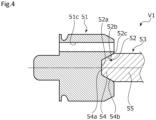
FIG. 4 is an enlarged cross-sectional view of a main part of the expansion valve in the first embodiment. -
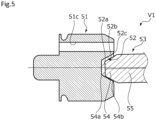
FIG. 5 is an enlarged cross-sectional view of a main part of the expansion valve in the first embodiment. -
FIG. 6 is an enlarged cross-sectional view of a main part of an expansion valve as a valve according to a second embodiment of the present invention. -
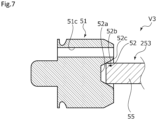
FIG. 7 is an enlarged cross-sectional view of a main part of an expansion valve as a valve according to a third embodiment of the present invention. -
FIG. 8 is an enlarged cross-sectional view of a main part of a first modified example of the expansion valve according to the present invention. -
FIG. 9 is an enlarged cross-sectional view of a main part of a second modified example of the expansion valve according to the present invention. -
FIG. 10 is an enlarged cross-sectional view of a main part of a third modified example of the expansion valve according to the present invention. - Modes for carrying out a valve according to the present invention will be described below with reference to embodiments.
- An expansion valve which is a valve according to a first embodiment of the present invention will be described with reference to
FIGS. 1 to 5 . In addition, the embodiment will be described by exemplifying the expansion valve, but can be also applied to other applications. Hereinafter, the left and right sides when viewed from the front side ofFIG. 2 will be described as the left and right sides of the expansion valve. Specifically, the left side of the paper surface in which avalve housing 10 ofFIG. 2 is disposed will be described as the left side of the expansion valve and the right side of the paper surface in which asolenoid 80 is disposed as a drive source will be described as the right side of the expansion valve. - As shown in
FIG. 1 , an expansion valve V1 of the present invention constitutes a refrigeration cycle R used in an air conditioning system of an automobile or the like together with a compressor C, an indoor heat exchanger H1, an outdoor heat exchanger H2, and the like. - First, the refrigeration cycle R will be described. The refrigeration cycle R is configured to circulate the refrigerant in order of the compressor C, the heat exchanger H1, the expansion valve V1, and the heat exchanger H2 in a heating mode. The refrigerant becomes superheated steam by the compressor C, becomes a supercooled liquid by the heat exchange with the indoor air using the heat exchanger H1, becomes moist steam by being depressurized from a high-pressure primary pressure to a low-pressure secondary pressure using the expansion valve V1, and becomes saturated steam by the heat exchange with the outdoor air using the heat exchanger H2. Accordingly, the indoor air is heated by the heat exchange with the heat exchanger H1. That is, in the heating mode, the heat exchanger H1 serves as a condenser and the heat exchanger H2 serves as an evaporator.
- Further, the refrigeration cycle R is configured to circulate the refrigerant in order of the compressor C, the heat exchanger H2, the expansion valve V1, and the heat exchanger H1 in a cooling mode. The refrigerant becomes superheated steam by the compressor C, becomes a supercooled liquid by the heat exchange with the outdoor air using the heat exchanger H2, becomes moist steam by being depressurized from a high-pressure primary pressure to a low-pressure secondary pressure using the expansion valve V1, and becomes saturated steam by the heat exchange with the indoor air using the heat exchanger H1. Accordingly, the indoor air is cooled by the heat exchange with the heat exchanger H1. That is, in the cooling mode, the heat exchanger H1 serves as an evaporator and the heat exchanger H2 serves as a condenser.
- In addition, in the following description, the refrigeration cycle R is used for heating unless otherwise specified. Similarly, the heat exchanger H1 is referred to as a condenser H1 and the heat exchanger H2 is referred to as an evaporator H2 on the basis of the heating mode.
- Referring to
FIG. 2 , the expansion valve V1 is disposed between the condenser H1 and the evaporator H2. On the basis of the temperature difference of the refrigerants at the inlet side and the outlet side of the evaporator H2, a current flowing through acoil 86 constituting thesolenoid 80 is set and the valve opening degree of the expansion valve V1 is adjusted. Accordingly, when the refrigerant passes through avalve 50, the pressure is adjusted from the high-pressure primary pressure to the relatively low-pressure secondary pressure and the temperature is adjusted from the high temperature to the low temperature. Accordingly, all refrigerants which are supercooled liquids sent from the condenser H1 are adjusted to the dryness of the moist steam that can transition to the saturated steam after passing through the evaporator H2. - In this embodiment, the
valve 50 includes avalve body 51 and avalve seat 10a. Thevalve seat 10a is formed on the inner peripheral surface of thevalve housing 10. When atapered surface portion 51a formed at the right end portion of thevalve body 51 in the axial direction comes into contact with and separates from thevalve seat 10a, thevalve 50 is opened and closed. - Next, the structure of the expansion valve V1 will be described. As shown in
FIG. 1 , the expansion valve V1 mainly includes thevalve housing 10, thevalve body 51, and thesolenoid 80. Thevalve housing 10 is integrally formed of a metal material or a resin material. Thevalve body 51 has an axial left end portion disposed inside thevalve housing 10. Thesolenoid 80 is connected to thevalve housing 10 and is used for applying a driving force to thevalve body 51. - As shown in
FIGS. 2 and3 , thevalve housing 10 is provided with anoutlet port 11 and aninlet port 12. Theoutlet port 11 communicates with the evaporator H2 and is formed on the axial right side in relation to thevalve seat 10a, that is, the valve closing direction side. Further, theinlet port 12 communicates with the condenser H1 and is formed on the axial left side in relation to thevalve seat 10a, that is, the valve opening direction side. - A
primary pressure chamber 14, asecondary pressure chamber 13, avalve opening portion 15, and aconcave portion 10d are provided inside thevalve housing 10. Theprimary pressure chamber 14 receives the refrigerant having passed through the condenser H1 from theinlet port 12. Thesecondary pressure chamber 13 receives the refrigerant having passed through thevalve 50 from theprimary pressure chamber 14 and communicates with theoutlet port 11. Thevalve opening portion 15 is disposed between thesecondary pressure chamber 13 and theprimary pressure chamber 14 and thevalve seat 10a is formed at the edge portion on the axial left side. Theconcave portion 10d is disposed on the axial left side in relation to thevalve seat 10a and constitutes theprimary pressure chamber 14. - In the
concave portion 10d, an opening portion provided on the axial left side is closed by alid member 16. Further, a bellows 18 which is an urging member for urging thevalve body 51 toward the axial right side which is the valve closing direction is disposed in theprimary pressure chamber 14. The bellows 18 includes a bellows core and a push spring. The bellows core constitutes an outer shell of thebellows 18. The push spring is contained in the bellows core and urges thevalve body 51 in the direction in which the push spring extends, that is, the valve closing direction. In the bellows core, the axial left end is hermetically fixed to thelid member 16 and the axial right end is hermetically fixed to the axial left end surface of thevalve body 51. Further, a space S1 is formed inside the bellows core. In the bellows, a member such as a push spring that applies the urging force to the bellows core may be omitted in addition to the bellows core as long as the bellows core itself has an urging force. - Further, the space S1 communicates with the
secondary pressure chamber 13 through acommunication path 51c in thevalve body 51. Accordingly, the refrigerant inside thesecondary pressure chamber 13 flows into the space S1. That is, thebellows 18 hermetically defines the space S1 and theprimary pressure chamber 14 in the closed state of thevalve 50. - Further, the axial right end of the
valve housing 10 is provided with aconcave portion 10c which is recessed toward the axial left side and aflange portion 82d of acenter post 82 is inserted from the axial right side to be integrally and substantially hermetically connected and fixed thereto. In addition, an opening end on the side of thesolenoid 80 in thesecondary pressure chamber 13 is formed on the inner radial side of the bottom surface of theconcave portion 10c of thevalve housing 10. - As shown in
FIG. 4 , thevalve body 51 is provided with aconcave portion 52 which is a guide concave portion and acommunication path 51c. Theconcave portion 52 opens to the axial right side at the center portion of thevalve body 51. Thecommunication path 51c penetrates in the axial direction at a position deviating in the radial direction in relation to theconcave portion 52. - The
concave portion 52 is formed in a truncated conical shape, that is, a circular shape when viewed from the axial direction and an isosceles trapezoidal shape when viewed from the radial cross-section. Theconcave portion 52 includes aflat surface 52a and atapered surface 52b which is an inclined surface. Theflat surface 52a extends to be substantially orthogonal to the axial direction. A tapered surface 53b has a diameter gradually increasing as it goes from the outer diameter side end portion of theflat surface 52a toward the axial right side. Further, anR surface 52c which is formed as a slightly curved surface is provided between the outer diameter side end portion of the taperedsurface 52b and the axial right end surface of thevalve body 51. In addition, theR surface 52c is preferably provided and may be a linear C surface. - As shown in
FIGS. 2 and3 , thesolenoid 80 mainly includes acasing 81, thecenter post 82 which is a fixed iron core, arod 53, amovable iron core 84, acoil spring 85 which is a spring, anexcitation coil 86, and asleeve 87. Thecasing 81 includes anopening portion 81a which opens to the axial left side. Thecenter post 82 is inserted into theopening portion 81a of thecasing 81 from the axial left side and is formed in a substantially cylindrical shape to be fixed to the inner diameter side of thecasing 81. Therod 53 is used for transmitting the driving force of thesolenoid 80 to thevalve body 51. Themovable iron core 84 is sucked to thecenter post 82 when a current is applied to thesolenoid 80. Thecoil spring 85 urges themovable iron core 84 toward the axial left side which is the valve opening direction of thevalve 50. Thecoil 86 is wound on an outer bobbin of thecenter post 82. Thesleeve 87 is formed in a bottomed cylindrical shape capable of accommodating a part of thecenter post 82, a part of therod 53, themovable iron core 84, and thecoil spring 85. - In the
casing 81, the axial left end is provided with aconcave portion 81b which is recessed toward the axial right side and the axial right end portion of thevalve housing 10 is hermetically inserted and fixed to theconcave portion 81b. - The
center post 82 is formed of a rigid body which is a magnetic material such as iron or silicon steel. Thecenter post 82 includes acylindrical portion 82b and aflange portion 82d. Thecylindrical portion 82b is provided with aninsertion hole 82c which extends in the axial direction and into which therod 53 is inserted. Theflange portion 82d is formed in an annular shape which extends in the outer diameter direction from the outer peripheral surface at the axial left end portion of thecylindrical portion 82b. - Further, in a state in which the axial right end surface of the
flange portion 82d comes into contact with the bottom surface of theconcave portion 81b of thecasing 81 from the axial left side, theconcave portion 81b of thecasing 81 is hermetically inserted and fixed to theconcave portion 10c of thevalve housing 10. Further, theflange portion 82d is sandwiched between the bottom surface of theconcave portion 81b of thecasing 81 and the bottom surface of theconcave portion 10c of thevalve housing 10 from both sides in the axial direction. In this way, thecenter post 82 is fixed to thevalve housing 10. - The
rod 53 is provided with afront end portion 54, abase portion 55, and arear end portion 56 in order from the axial left side. Thefront end portion 54 serves as a guided convex portion which is relatively guided to theconcave portion 52 which is a guide concave portion. In the present specification, thefront end portion 54 is simply referred to as theconvex portion 54. - Referring to
FIG. 4 , theconvex portion 54 has a complementary shape to theconcave portion 52 and is formed in a circular shape when viewed from the axial direction and an isosceles trapezoidal shape when viewed from the radial cross-section. Theconvex portion 54 includes aflat surface 54a and atapered surface 54b which is an inclined surface. Theflat surface 54a extends to be substantially orthogonal to the axial direction. Thetapered surface 54b has a diameter gradually increasing as it goes from the outer diameter side end portion of theflat surface 54a toward thebase portion 55. Further, theconvex portion 54 is disposed on the axial left side in relation to thevalve seat 10a (seeFIGS. 2 and3 ) . - Returning to
FIGS. 2 and3 , thebase portion 55 is a columnar body extending in the axial direction of theconvex portion 54 with a constant cross-section. The cross-sectional area of thebase portion 55 is formed to be narrower than the cross-sectional area of theinsertion hole 82c of thecenter post 82. - The cross-sectional area of the
rear end portion 56 is formed to be narrower than the cross-sectional area of thebase portion 55. Accordingly, therear end portion 56 is inserted into a through-hole 84a of themovable iron core 84 together with the axial right end portion of thebase portion 55 and therod 53 is fixed to themovable iron core 84. - The axial right end of the
movable iron core 84 is provided with aconcave portion 84b which is recessed toward the axial left side. Thecoil spring 85 is disposed between theconcave portion 84b and the bottom of thesleeve 87. - Next, the positional relationship between the
valve body 51 and therod 53 when the expansion valve V1 is assembled and when thesolenoid 80 is energized or not energized will be described with reference toFIGS. 2 to 5 . - First, the operation of assembling the expansion valve V1 will be described. Referring to
FIGS. 2 and3 , theconvex portion 54 of therod 53 protruding from thecenter post 82 is inserted into theconcave portion 52 of thevalve body 51 when thevalve housing 10 is assembled to thesolenoid 80 as described above. - The
valve body 51 before assembling sits on thevalve seat 10a by the urging of thebellows 18. At this time, the axes of thevalve body 51 and theconcave portion 52 and the axis of thevalve seat 10a are aligned and the axes of thevalve body 51, theconcave portion 52, and thevalve seat 10a are aligned. - When the
valve housing 10 is assembled to thesolenoid 80, theconvex portion 54 of therod 53 is inserted into theconcave portion 52 of thevalve body 51 to come into contact therewith. Accordingly, it is easy to align therod 53 and thevalve body 51. - Further, the
concave portion 52 and theconvex portion 54 are fitted to each other in an assembled state. Accordingly, therod 53 is separated from the inner peripheral surface of theinsertion hole 82c of thecenter post 82 at a position substantially equal in the circumferential direction. - Next, a state in which the expansion valve V1 is not energized will be described. The
rod 53 which is urged in the valve opening direction by the urging force Fsp of thecoil spring 85 is pressed against thevalve body 51. Therefore, a state in which theconvex portion 54 is fitted to theconcave portion 52 is maintained. - In addition, the urging force Fbel of the
bellows 18 is stronger than the urging force Fsp of the coil spring 85 (i.e., Fbel > Fsp). Therefore, when thesolenoid 80 is not energized, the closed state of thevalve 50 is maintained. - Further, a force caused by the differential pressure between the primary pressure and the secondary pressure is applied to the
valve body 51 in addition to the urging force Fbel of thebellows 18 and the urging force Fsp of thecoil spring 85. On the other hand, in this embodiment, the effective pressure receiving area of thebellows 18 and the effective pressure receiving area of thevalve 50 are substantially the same. Further, the refrigerant flows from thesecondary pressure chamber 13 into the space S1 through thecommunication path 51c of thevalve body 51. Therefore, a force in which thevalve body 51 is urged in the valve closing direction or the valve opening direction by the differential pressure is almost 0 (zero). In addition, the description of the force applied to thevalve body 51 on the basis of the differential pressure between the primary pressure and the secondary pressure will be omitted below. - Next, a state in which the expansion valve V1 is energized will be described. When the
solenoid 80 is energized, the driving force Fsol of thesolenoid 80 is applied to the urging force Fsp of thecoil spring 85 with respect to therod 53 in the valve opening direction. When the resultant force applied in the valve opening direction exceeds the urging force Fbel of thebellows 18, thevalve body 51 strokes in the valve opening direction and separates from thevalve seat 10a. - At this time, the
rod 53 strokes in the valve opening direction together with thevalve body 51 while theconcave portion 52 of thevalve body 51 and theconvex portion 54 of therod 53 are maintained in a fitted state. - Here, the
tapered surface 52b of thevalve body 51 and thetapered surface 54b of therod 53 are formed to have substantially the same inclination angles, respectively. Therefore, thetapered surface 52b and thetapered surface 54b come into surface contact with each other. Accordingly, thetapered surface 52b and thetapered surface 54b can easily transmit the driving force Fsol of thesolenoid 80 from therod 53 to thevalve body 51. - Further, the
flat surface 52a of thevalve body 51 and theflat surface 54a of therod 53 come into surface contact with each other. Therefore, theflat surface 52a and theflat surface 54a can easily transmit the driving force Fsol of thesolenoid 80 to thevalve body 51. Further, the front end of therod 53 is theflat surface 54a and the bottom of thevalve body 51 disposed to be substantially in parallel to theflat surface 54a in a facing state is also theflat surface 52a. Accordingly, it is possible to prevent theconvex portion 54 from being inseparably fitted to theconcave portion 52. - When the
valve body 51 moves away from thevalve seat 10a, thevalve body 51 is mainly supported by thebellows 18. Further, therod 53 is supported by thesleeve 87 together with themovable iron core 84. That is, both thevalve body 51 and therod 53 are in a cantilever state. - Accordingly, when a force acts in a direction in which the
bellows 18 is bent in the radial direction and themovable iron core 84 is inclined with respect to thesleeve 87, thevalve body 51 and therod 53 arranged linearly may be bent in a polygonal line starting from theconcave portion 52 and theconvex portion 54 which are the contact portions. For example, as shown inFIG. 5 , even when therod 53 is slightly inclined so that the axis of theconcave portion 52 and the axis of theconvex portion 54 relatively deviate from each other, theconvex portion 54 of therod 53 is guided along theconcave portion 52, specifically, thetapered surface 54b of theconvex portion 54 is guided along the taperedsurface 52b of theconcave portion 52. Accordingly, therod 53 and thevalve body 51 are arranged substantially linearly as indicated by the one-dotted chain line inFIG. 4 . Additionally, the bending of thevalve body 51 and therod 53 is exaggerated for convenience of explanation inFIG. 5 . - In this way, even when the
valve body 51 is separated from thevalve seat 10a while thevalve 50 is opened, thevalve body 51 and therod 53 are maintained substantially linearly. Therefore, thevalve body 51 and therod 53 can maintain the valve opening degree according to the driving force Fsol of thesolenoid 80. - After that, when the current is weakened or not supplied, the
rod 53 strokes in the valve closing direction together with thevalve body 51 while theconcave portion 52 of thevalve body 51 and theconvex portion 54 of therod 53 are maintained in a fitted state. - As shown in
FIG. 2 , the maximum stroke ST of themovable iron core 84, that is, the maximum stroke ST of therod 53 while theconcave portion 52 and theconvex portion 54 are fitted to each other is shorter than the dimension L in which theconcave portion 52 and theconvex portion 54 overlap each other in the axial direction (i.e., ST < L). Therefore, even when therod 53 strokes in the valve opening direction or strokes in the valve closing direction, theconvex portion 54 does not easily escape from theconcave portion 52. - Further, the
coil spring 85 is disposed and theconvex portion 54 is maintained in a fitted state to theconcave portion 52 by the urging force Fsp thereof. Therefore, the relative movement of thevalve body 51 and therod 53 in the separation direction is suppressed. Accordingly, it is possible to maintain the valve opening degree according to the driving force Fsol of thesolenoid 80. - Further, the
convex portion 54 having a cross-sectional area narrower than that of thebase portion 55 of therod 53 is fitted to theconcave portion 52. Accordingly, it is possible to obtain a compact configuration in which thevalve body 51 and therod 53 are fitted to each other. Therefore, it is possible to reduce the influence on the flow of the refrigerant even when the relative movement of thevalve body 51 and therod 53 in the separation direction is slightly generated. - Further, a gap G is formed between the
rod 53 and thecenter post 82 with reference toFIGS. 2 and3 . Therefore, contamination is less likely to be caught between therod 53 and thecenter post 82 due to the stroke of therod 53. The gap G is wider than the minute gap between the rod and the bearing as shown in the conventional literature. Accordingly, contamination is less likely to be caught between therod 53 and thecenter post 82 as compared with the rod and the bearing as shown in the conventional literature. - Further, the axis of the
valve body 51 and the axis of therod 53 are aligned by theconcave portion 52 and theconvex portion 54. Accordingly, the large inclination of therod 53 with respect to thecenter post 82 is prevented. Therefore, the gap G which is the substantially same distance in the circumferential direction prevents contamination from being caught. - In addition, the refrigerant flows out from the gap G into the
secondary pressure chamber 13 due to the stroke of therod 53 in the valve opening direction. Accordingly, it is possible to discharge contamination sucked into the gap G. - Further, the refrigerant can easily pass through the gap G. Accordingly, the
rod 53 capable of promptly obtaining a force applied from the refrigerant flowing the back surface side in relation to therod 53 during the stroke of therod 53 easily maintains the force based on the differential pressure described above at almost 0 (zero). By forming the gap G in this way, it is easy to stabilize the stroke of therod 53 with respect to the current applied to thesolenoid 80. - As described above, when the
rod 53 strokes toward thevalve body 51, therod 53 is relatively guided in the fitting direction by theconcave portion 52. Therefore, it is possible to maintain the radial deviation of thevalve body 51 with respect to thevalve seat 10a in an allowable range while ensuring the gap G between thecenter post 82 and therod 53. Accordingly, it is possible to suppress contamination from being caught between thecenter post 82 and therod 53. - Further, the
concave portion 52 is provided with thetapered surface 52b. Therefore, it is possible to simply form the guide concave portion. - Further, the
concave portion 52 is provided with theR surface 52c. Accordingly, damage due to mutual contact is less likely to occur compared to a configuration in which the taperedsurface 52b of theconcave portion 52 and the axial right end surface of thevalve body 51 form a corner when theconvex portion 54 is inserted into theconcave portion 52. - In addition, an example has been described in which the
flat surfaces concave portion 52 and theconvex portion 54 come into surface contact with each other while theconcave portion 52 and theconvex portion 54 are fitted to each other, but the present invention is not limited thereto. The tapered surfaces 52b and 54b may come into surface contact with each other and theflat surfaces - Further, the
flat surface 54a of theconvex portion 54 and theflat surface 52a of theconcave portion 52 may come into surface contact with each other and thetapered surface 52b of theconcave portion 52 and thetapered surface 54b of theconvex portion 54 may be slightly separated from each other while theconcave portion 52 and theconvex portion 54 are fitted to each other. In addition, thetapered surface 52b and thetapered surface 54b may come into contact with each other in at least one position in the circumferential direction while the top of the convex portion and the bottom of the concave portion come into contact with each other. - An expansion valve as a valve according to a second embodiment of the present invention will be described with reference to
FIG. 6 . In addition, the description of the overlapping configuration in the same configuration as that of the first embodiment will be omitted. - As shown in
FIG. 6 , in an expansion valve V2 in the second embodiment, aconcave portion 152 of avalve body 151 is provided with asemispherical surface 152a which is a part of a spherical surface having a diameter gradually decreasing in a curved state as it goes from the axial left end of theR surface 52c toward the axial left side. Further, aconvex portion 154 of arod 153 is provided with asemispherical surface 154a which is a part of a spherical surface having a diameter gradually decreasing in a curved state as it goes from the axial left end of thebase portion 55 toward the axial left side. - The
semispherical surface 152a and thesemispherical surface 154a are formed to have the same curvature. Therefore, thesemispherical surface 152a and thesemispherical surface 154a enable the accurate relative alignment between the axis of theconcave portion 152 and the axis of theconvex portion 154. Further, thesemispherical surface 152a and thesemispherical surface 154a can come into surface contact with each other. Therefore, thesemispherical surface 152a and thesemispherical surface 154a can easily transmit the driving force Fsol of thesolenoid 80 to thevalve body 151. - Further, the
convex portion 154 of therod 153 without a corner is less likely to be damaged due to a mutual contact. - An expansion valve as a valve according to a third embodiment of the present invention will be described with reference to
FIG. 7 . In addition, the description of the overlapping configuration in the same configuration as those of the first and second embodiments will be omitted. - As shown in
FIG. 7 , in an expansion valve V3 in the third embodiment, arod 253 includes abase portion 55 and arear end portion 56. In this way, even when a guided convex portion is not formed, thebase portion 55 is guided to the taperedsurface 52b of theconcave portion 52. Accordingly, therod 53 can be smoothly guided with respect to thevalve body 51. In this way, even when the guided convex portion is not inserted into the guide concave portion, this is included in the present invention. - Further, since the guided convex portion is not formed, it is possible to simplify a configuration in which the
valve body 51 and therod 253 are fitted to each other. - Further, the corner of the
base portion 55 comes into line contact with thetapered surface 52b of theconcave portion 52. Therefore, it is possible to transmit the driving force Fsol of thesolenoid 80. In addition, the corner of thebase portion 55 is preferably provided with a minute R surface or C surface. - In addition, an example has been described in which the corner of the
base portion 55 and thetapered surface 52b of theconcave portion 52 come into line contact with each other while thebase portion 55 is fitted to theconcave portion 52, but the present invention is not limited thereto. That is, the axial left end surface of thebase portion 55 and theflat surface 52a of theconcave portion 52 may come into surface contact with each other and thetapered surface 52b of theconcave portion 52 and the outer peripheral surface of thebase portion 55 may be separated from each other. - Here, each of modified examples of the first to third embodiments will be described. In the first to third embodiments, an example has been described in which the expansion valves V1 to V3 are formed such that the
valve bodies concave portions rods convex portions FIGS. 8 to 10 ,rods concave portions valve bodies convex portions - Although the embodiments of the present invention have been described above with reference to the drawings, the specific configuration is not limited to these examples and is included in the present invention even if there are changes or additions within the scope of the present invention.
- For example, in the first to third embodiments, an example has been described in which the valve body and the rod are maintained in a fitted state while the valve is closed, but the present invention is not limited thereto. That is, the rod may escape from the valve body while a part of the rod comes into contact with the valve body or the entire rod is separated therefrom in the valve closed state.
- Further, in the first to third embodiments, an example has been described in which the valve body is provided with the through-hole, but the present invention is not limited thereto. That is, the valve body may not be provided with the through-hole.
- Further, in the first to third embodiments, an example has been described in which the guide concave portion has a circular shape when viewed from the axial direction, but the present invention is not limited thereto. That is, the guide concave portion may have a polygonal shape when viewed from the axial direction or an annular shape when viewed from the axial direction or a plurality of concave portions may be arranged concentrically and equally or the configuration may be appropriately changed. Similarly, the guided convex portion may be also formed in an annular shape when viewed from the axial direction or a plurality of convex portions may be arranged concentrically and equally or the configuration may be appropriately changed.
- Further, in the first to third embodiments, an example has been described in which the rod is integrally provided with the front end portion, the base portion, and the rear end portion, but the present invention is not limited thereto. That is, the rod may be a plurality of members such that the front end portion formed as a separate member is fixed to the base portion or the like.
- Further, in the first to third embodiments, an example has been described in which the urging member is exemplified as the bellows having a sealing function, but the present invention is not limited thereto. That is, the urging member may be an urging member without a sealing function, for example, a coil spring.
- Further, in the first to third embodiments, an example has been described in which the urging member is exemplified as the push spring urging the valve body in the extension direction thereof, but the present invention is not limited thereto. That is, the urging member may be a pull spring.
-
- 10 Valve housing
- 10a Valve seat
- 18 Bellows (urging member)
- 50 Valve
- 51 Valve body
- 52 Concave portion (guide concave portion)
- 52a Flat surface
- 52b Tapered surface (inclined surface)
- 53 Rod
- 54 Front end portion, convex portion (guided convex portion)
- 54a Flat surface
- 54b Tapered surface (inclined surface)
- 80 Solenoid (drive source)
- 82 Center post (fixed iron core)
- 84 Movable iron core
- 85 Coil spring (spring)
- 86 Coil
- 151 Valve body
- 152 Concave portion (guide concave portion)
- 152a Semispherical surface (part of spherical surface)
- 153, 253 Rod
- 154 to 554 Convex portion (guided convex portion)
- 154a Semispherical surface (part of spherical surface)
- 351 to 551 Valve body
- 352 to 552 Concave portion (guide concave portion)
- 353 to 553 Rod
- 354 to 554 Convex portion (guided convex portion)
- C Compressor
- G Gap
- H1 Heat exchanger (condenser for heating, evaporator for cooling)
- H2 Heat exchanger (evaporator for heating, condenser for cooling)
- R Refrigeration cycle
- V1 to V3 Expansion valve (valve)
Claims (8)
- A valve, comprising:a valve housing;a valve body;a valve seat configured to have the valve body seated thereon;a drive source configured to drive the valve body through a rod; andan urging member configured to urge the valve body in a direction opposite to a driving direction of the drive source,wherein one of the valve body and the rod includes a guide concave portion configured to guide remaining one of the valve body and the rod in a relative fitting direction in which the valve body and the rod are fitted to each other.
- The valve according to claim 1,
wherein the guide concave portion includes an inclined surface. - The valve according to claim 1,
wherein the remaining one of the valve body and the rod includes a guided convex portion which is fitted to the guide concave portion. - The valve according to claim 3,
wherein each of the guide concave portion and the guided convex portion includes an inclined surface. - The valve according to claim 4,
wherein the inclined surface of the guide concave portion and the inclined surface of the guided convex portion are equal to each other in inclination angle with respect to an axial direction. - The valve according to claim 4,
wherein each of the inclined surfaces of the guide concave portion and the guided convex portion is part of a spherical surface defined by one mutual curvature. - The valve according to any one of claims 3 to 6,
wherein each of the guide concave portion and the guided convex portion includes a flat surface which is orthogonal to an axial direction. - The valve according to any one of claims 1 to 7, further comprising:
a spring configured to urge the rod toward the valve body.
Applications Claiming Priority (2)
| Application Number | Priority Date | Filing Date | Title |
|---|---|---|---|
| JP2020131959 | 2020-08-03 | ||
| PCT/JP2021/027762 WO2022030309A1 (en) | 2020-08-03 | 2021-07-27 | Valve |
Publications (2)
| Publication Number | Publication Date |
|---|---|
| EP4191102A1 true EP4191102A1 (en) | 2023-06-07 |
| EP4191102A4 EP4191102A4 (en) | 2024-08-21 |
Family
ID=80119778
Family Applications (1)
| Application Number | Title | Priority Date | Filing Date |
|---|---|---|---|
| EP21854468.2A Pending EP4191102A4 (en) | 2020-08-03 | 2021-07-27 | Valve |
Country Status (6)
| Country | Link |
|---|---|
| US (1) | US12196464B2 (en) |
| EP (1) | EP4191102A4 (en) |
| JP (1) | JPWO2022030309A1 (en) |
| KR (1) | KR102898007B1 (en) |
| CN (1) | CN116137884A (en) |
| WO (1) | WO2022030309A1 (en) |
Families Citing this family (2)
| Publication number | Priority date | Publication date | Assignee | Title |
|---|---|---|---|---|
| WO2022131053A1 (en) * | 2020-12-17 | 2022-06-23 | イーグル工業株式会社 | Valve |
| CN117098943A (en) | 2021-03-29 | 2023-11-21 | 伊格尔工业股份有限公司 | valve |
Family Cites Families (226)
| Publication number | Priority date | Publication date | Assignee | Title |
|---|---|---|---|---|
| US821758A (en) | 1904-07-18 | 1906-05-29 | Alva C Ricksecker | Valve. |
| US813555A (en) | 1905-04-13 | 1906-02-27 | Crane Co | Spring-disk valve. |
| US877865A (en) | 1905-05-06 | 1908-01-28 | Ajax Valve Company | Valve. |
| US1449876A (en) | 1920-07-12 | 1923-03-27 | Williams William Erastus | Poppet-valve head |
| US1614002A (en) | 1923-12-05 | 1927-01-11 | Horton Spencer | Valve for automatic sprinkler apparatus for fire extinguishing |
| US1800127A (en) | 1926-01-25 | 1931-04-07 | Wilson Rings Company | Valve |
| US1758471A (en) | 1926-02-12 | 1930-05-13 | Schmidt Georg Julius | Valve |
| US1847385A (en) | 1930-05-26 | 1932-03-01 | Dengler Benjamin Franklin | Valve |
| US2196798A (en) | 1936-06-15 | 1940-04-09 | Horstmann Frederick Otto | Tap or valve |
| US2267515A (en) | 1940-01-19 | 1941-12-23 | California Cedar Prod | Fluid control valve |
| US2898082A (en) | 1956-08-09 | 1959-08-04 | Macclatchie Mfg Company | High pressure pump valve |
| US2893685A (en) | 1957-07-03 | 1959-07-07 | Automatic Switch Co | Valve having resilient wafer-like disc closure |
| US2887293A (en) | 1958-09-22 | 1959-05-19 | Autoclave Eng Inc | Valve |
| US3054422A (en) | 1958-09-26 | 1962-09-18 | Pellegrino E Napolitano | Fluid seal for pressure responsive valve |
| US3070120A (en) | 1960-12-23 | 1962-12-25 | L K Pump Valve Company | Valve and sealing gasket therefor |
| US3049332A (en) | 1961-11-28 | 1962-08-14 | Tri Kris Company Inc | High pressure valve, shank and stem assembly |
| US3204925A (en) | 1962-05-15 | 1965-09-07 | Montuori Enrico | Valve with nonrotating valve stem |
| DE1229924B (en) | 1962-06-09 | 1966-12-08 | Junkers & Co | Gas valve |
| US3185438A (en) | 1962-08-17 | 1965-05-25 | Johannes R Smirra | Cone labyrinth valve |
| US3360304A (en) | 1964-11-09 | 1967-12-26 | Abex Corp | Retarder systems |
| US3394732A (en) | 1965-04-26 | 1968-07-30 | Protectoseal Co | Valve seal |
| US3278156A (en) | 1965-12-27 | 1966-10-11 | Nuclear Products Company | Bellows valve |
| US3483888A (en) | 1967-12-15 | 1969-12-16 | Waldes Kohinoor Inc | Self-locking retaining rings and assemblies employing same |
| US3426741A (en) | 1968-04-03 | 1969-02-11 | Thomas E Haagen | Diesel engine poppet valve |
| JPS4822735B1 (en) | 1968-06-28 | 1973-07-09 | ||
| BE754966A (en) | 1969-10-01 | 1971-02-18 | Sno Trik Co | HIGH PRESSURE VALVES |
| US3854495A (en) * | 1972-05-08 | 1974-12-17 | J Cowley | Pressure regulator |
| JPS5167121U (en) | 1974-11-18 | 1976-05-27 | ||
| US4085921A (en) | 1975-04-09 | 1978-04-25 | Matsushita Electric Industrial Co., Ltd. | Multiple-mode fluid-flow control valve arrangement |
| JPS5346276U (en) | 1976-09-20 | 1978-04-19 | ||
| US4149699A (en) | 1977-05-06 | 1979-04-17 | Gould Inc. | Union bonnet valve |
| CH637745A5 (en) | 1979-02-01 | 1983-08-15 | Balzers Hochvakuum | Hochvakuum valve. |
| US4448038A (en) | 1979-10-01 | 1984-05-15 | Sporlan Valve Company | Refrigeration control system for modulating electrically-operated expansion valves |
| JPS5682358U (en) | 1979-11-30 | 1981-07-03 | ||
| US4345739A (en) | 1980-08-07 | 1982-08-24 | Barton Valve Company | Flanged sealing ring |
| JPS5740945U (en) | 1980-08-20 | 1982-03-05 | ||
| US4364615A (en) | 1980-09-08 | 1982-12-21 | The Bendix Corporation | Retaining ring |
| US4417601A (en) | 1980-12-19 | 1983-11-29 | National Foam Systems, Inc. | Variable proportioning valve for balanced pressure proportioning systems, and system containing the valve |
| US4474356A (en) | 1982-05-07 | 1984-10-02 | Baumann Hans D | Control valve with integral streamlined seating means |
| JPS5983539U (en) | 1982-11-30 | 1984-06-06 | カシオ計算機株式会社 | ink cartridge |
| GB8315079D0 (en) | 1983-06-01 | 1983-07-06 | Sperry Ltd | Pilot valves for two-stage hydraulic devices |
| DE8322570U1 (en) | 1983-08-05 | 1985-01-17 | Robert Bosch Gmbh, 7000 Stuttgart | PRESSURE REGULATOR |
| US4617889A (en) | 1984-04-11 | 1986-10-21 | Hitachi, Ltd. | Idle speed control device |
| US4632358A (en) | 1984-07-17 | 1986-12-30 | Eaton Corporation | Automotive air conditioning system including electrically operated expansion valve |
| JPS6135521U (en) | 1984-07-31 | 1986-03-05 | 矢崎総業株式会社 | Door wire harness extraction fixing structure |
| JPH0664789B2 (en) | 1985-06-29 | 1994-08-22 | ソニー株式会社 | Video tape recorder |
| KR870006308A (en) | 1985-12-10 | 1987-07-10 | 미타 가쓰시게 | Car idle control device |
| GB2186035B (en) | 1986-01-23 | 1989-11-01 | Fort Vale Eng Ltd | Seal |
| JPS6368581U (en) * | 1986-10-24 | 1988-05-09 | ||
| US4778150A (en) | 1987-03-06 | 1988-10-18 | Autoclave Engineers, Inc. | Non-rotating stem valve |
| US4895192A (en) | 1987-12-24 | 1990-01-23 | Sundstrand Corporation | Process and apparatus for filling a constant speed drive |
| US4848729A (en) | 1988-02-01 | 1989-07-18 | Dresser Industries, Inc. | Valve seal |
| US4825909A (en) | 1988-02-24 | 1989-05-02 | Diesel Equipment Limited | High pressure hydraulic flow control valve |
| DE3814156A1 (en) | 1988-04-27 | 1989-11-09 | Mesenich Gerhard | PULSE-MODULATED HYDRAULIC VALVE |
| US4917150A (en) | 1988-07-29 | 1990-04-17 | Colt Industries Inc. | Solenoid operated pressure control valve |
| US4998559A (en) | 1988-09-13 | 1991-03-12 | Coltec Industries Inc. | Solenoid operated pressure control valve |
| US4922957A (en) | 1989-03-08 | 1990-05-08 | National-Oilwell | Valve with replaceable seal element |
| US4923173A (en) | 1989-10-30 | 1990-05-08 | Vilter Manufacturing Corporation | Seating seal means for disc-type valve |
| US5011116A (en) | 1990-03-30 | 1991-04-30 | Keystone International Holdings Corp. | Shock absorbing sealing means for flow control devices |
| US5060695A (en) | 1990-04-02 | 1991-10-29 | Coltec Industries Inc | Bypass flow pressure regulator |
| JPH04171361A (en) | 1990-10-31 | 1992-06-18 | Hitachi Constr Mach Co Ltd | hydraulic drive |
| IT1245443B (en) | 1991-03-08 | 1994-09-20 | Fiat Auto Spa | FLOW REGULATING VALVE |
| US5217047A (en) | 1991-05-30 | 1993-06-08 | Coltec Industries Inc. | Solenoid operated pressure regulating valve |
| US5263694A (en) | 1992-02-24 | 1993-11-23 | General Motors Corporation | Upper mount assembly for a suspension damper |
| US5246205A (en) | 1992-04-06 | 1993-09-21 | Donaldson Company, Inc. | Valve assembly and use |
| JPH05346276A (en) * | 1992-05-15 | 1993-12-27 | Nippondenso Co Ltd | Expansion valve |
| JP2742001B2 (en) | 1993-06-29 | 1998-04-22 | 川崎製鉄株式会社 | Pulverized coal injection control method |
| US5364066A (en) | 1993-07-15 | 1994-11-15 | Sporlan Valve Company | Dual port valve with stepper motor actuator |
| US5439027A (en) | 1994-01-21 | 1995-08-08 | Halliburton Company | High pressure regulating valve |
| JPH08159320A (en) | 1994-12-05 | 1996-06-21 | Fuji Koki Seisakusho:Kk | Motor-driven flow control valve |
| US5702235A (en) | 1995-10-31 | 1997-12-30 | Tgk Company, Ltd. | Capacity control device for valiable-capacity compressor |
| JPH09144931A (en) * | 1995-11-22 | 1997-06-03 | Aisin Aw Co Ltd | Linear solenoid |
| US6010312A (en) | 1996-07-31 | 2000-01-04 | Kabushiki Kaisha Toyoda Jidoshokki Seiksakusho | Control valve unit with independently operable valve mechanisms for variable displacement compressor |
| JPH10220926A (en) | 1997-02-03 | 1998-08-21 | Denso Corp | Electric expansion valve |
| US5778932A (en) | 1997-06-04 | 1998-07-14 | Vickers, Incorporated | Electrohydraulic proportional pressure reducing-relieving valve |
| JP4048512B2 (en) | 1998-03-31 | 2008-02-20 | 株式会社日立製作所 | Damping force adjustable hydraulic shock absorber |
| JP3475795B2 (en) | 1998-07-01 | 2003-12-08 | オムロン株式会社 | Automatic ticket gate |
| JP2000220763A (en) | 1999-01-29 | 2000-08-08 | Toyota Autom Loom Works Ltd | Capacity control valve for variable displacement compressor |
| US6161585A (en) | 1999-03-26 | 2000-12-19 | Sterling Hydraulics, Inc. | High flow proportional pressure reducing valve |
| JP4075207B2 (en) | 1999-04-22 | 2008-04-16 | 株式会社デンソー | Flow control valve |
| JP3583951B2 (en) | 1999-06-07 | 2004-11-04 | 株式会社豊田自動織機 | Capacity control valve |
| JP4161151B2 (en) | 1999-06-30 | 2008-10-08 | 株式会社日立製作所 | Damping force adjustable hydraulic shock absorber |
| JP3428926B2 (en) * | 1999-07-12 | 2003-07-22 | 株式会社テージーケー | Pilot operated flow control valve |
| JP3840354B2 (en) | 1999-12-01 | 2006-11-01 | 株式会社テージーケー | Electrically controlled expansion valve |
| JP2001153498A (en) | 1999-12-01 | 2001-06-08 | Tgk Co Ltd | Supercooling degree control type expansion valve |
| JP2001165055A (en) | 1999-12-09 | 2001-06-19 | Toyota Autom Loom Works Ltd | Control valve and displacement variable compressor |
| EP1240450B1 (en) | 1999-12-21 | 2003-11-05 | MAINI, Sanjeev | A shut-off valve assembly |
| JP2002216803A (en) | 2001-01-19 | 2002-08-02 | Sony Corp | Fuel cell, method for producing and using the same |
| JP2002286151A (en) | 2001-03-26 | 2002-10-03 | Denso Corp | solenoid valve |
| JP2002295711A (en) | 2001-04-02 | 2002-10-09 | Aisan Ind Co Ltd | High pressure on-off valve device |
| JP2003004160A (en) | 2001-06-25 | 2003-01-08 | Fuji Koki Corp | Motor-operated valve |
| JP4006218B2 (en) | 2001-10-30 | 2007-11-14 | 京三電機株式会社 | Stop valve seal structure |
| JP3846287B2 (en) | 2001-11-27 | 2006-11-15 | 三浦工業株式会社 | valve |
| JP4246975B2 (en) | 2002-02-04 | 2009-04-02 | イーグル工業株式会社 | Capacity control valve |
| JP4162419B2 (en) | 2002-04-09 | 2008-10-08 | サンデン株式会社 | Variable capacity compressor |
| JP4110512B2 (en) | 2002-04-18 | 2008-07-02 | Smc株式会社 | Vacuum pressure regulating valve |
| US6939112B2 (en) | 2002-04-25 | 2005-09-06 | Sanden Corporation | Variable displacement compressors |
| JP4195633B2 (en) | 2002-04-25 | 2008-12-10 | サンデン株式会社 | Variable displacement compressor with displacement control valve |
| JP2004190495A (en) | 2002-12-06 | 2004-07-08 | Toyota Industries Corp | Variable displacement structure of variable displacement compressor |
| JP2004101163A (en) | 2002-07-16 | 2004-04-02 | Tgk Co Ltd | Constant flow rate expansion valve |
| JP2004098757A (en) | 2002-09-05 | 2004-04-02 | Toyota Industries Corp | Air conditioner |
| US7159615B2 (en) | 2003-02-12 | 2007-01-09 | Isuzu Motors Limited | Flow control valve |
| JP2005030586A (en) | 2003-07-07 | 2005-02-03 | Lg Electron Inc | Electromagnetic fluid control valve |
| JP4316955B2 (en) | 2003-08-11 | 2009-08-19 | イーグル工業株式会社 | Capacity control valve |
| EP1691075B1 (en) * | 2003-11-14 | 2012-01-11 | Eagle Industry Co., Ltd. | Capacity control valve |
| US20050151310A1 (en) | 2004-01-14 | 2005-07-14 | Barnes Group, Inc., A Corp. Of Delaware | Spring washer |
| JP2005307817A (en) | 2004-04-20 | 2005-11-04 | Toyota Industries Corp | Capacity controller for variable displacement compressor |
| JP2005351605A (en) | 2004-06-14 | 2005-12-22 | Daikin Ind Ltd | Expansion valve and refrigeration device |
| JP4522833B2 (en) | 2004-11-30 | 2010-08-11 | 株式会社キッツ | Needle valve |
| JP2006194175A (en) | 2005-01-14 | 2006-07-27 | Tgk Co Ltd | Control valve for variable displacement compressor |
| DE102005004987B8 (en) | 2005-02-02 | 2017-12-14 | Vat Holding Ag | vacuum valve |
| WO2006090760A1 (en) | 2005-02-24 | 2006-08-31 | Kabushiki Kaisha Toyota Jidoshokki | Capacity control valve |
| US7832653B2 (en) | 2005-02-28 | 2010-11-16 | Daikin Industries, Ltd. | Expansion valve having a grooved valve member and refrigeration device including the same |
| US8469337B1 (en) | 2005-04-04 | 2013-06-25 | Herbert W. Hoeptner, III | Faucet sealing |
| JP4822735B2 (en) | 2005-04-14 | 2011-11-24 | 株式会社タイカ | A decorative member that also functions, a method for manufacturing the same, and a cushioning device that incorporates a decorative member that also functions |
| CN100557239C (en) | 2005-06-03 | 2009-11-04 | 伊格尔工业股份有限公司 | capacity control valve |
| US10900539B2 (en) | 2005-12-30 | 2021-01-26 | Fox Factory, Inc. | Fluid damper having a damping profile favorable for absorbing the full range of compression forces, including low- and high-speed compression forces |
| US8079827B2 (en) | 2006-03-15 | 2011-12-20 | Eagle Industry Co., Ltd. | Displacement control valve |
| JP2007247512A (en) | 2006-03-15 | 2007-09-27 | Toyota Industries Corp | Capacity control valve in variable capacity type compressor |
| US7758014B2 (en) | 2006-06-20 | 2010-07-20 | Noshok, Inc. | High-pressure miniature needle valve with pressure-enhanced seal |
| DE102006044514B4 (en) | 2006-09-21 | 2011-02-24 | Itw Automotive Products Gmbh & Co. Kg | thermostatic valve |
| JP2008157031A (en) | 2006-12-20 | 2008-07-10 | Toyota Industries Corp | Electromagnetic displacement control valve in clutchless variable displacement type compressor |
| JP2008190574A (en) | 2007-02-02 | 2008-08-21 | Nissin Kogyo Co Ltd | solenoid valve |
| WO2008111840A1 (en) | 2007-03-09 | 2008-09-18 | Provinor As | Method for rotational moulding of a cylindrical product |
| US20080296848A1 (en) | 2007-06-01 | 2008-12-04 | Taylor Innovations, L.L.C. | Annular sealing member with enhanced hoop strength |
| JP2009030752A (en) | 2007-07-30 | 2009-02-12 | Denso Corp | Solenoid valve and solenoid valve device |
| US8434517B2 (en) | 2007-08-23 | 2013-05-07 | Eagle Industry Co. Ltd. | Control valve |
| CN101784829B (en) | 2007-08-23 | 2012-05-30 | 伊格尔工业股份有限公司 | Control valve |
| SE531814C2 (en) | 2007-10-17 | 2009-08-11 | Oehlins Racing Ab | Valve with spring arrangement for adjusting the shock absorber flow of a shock absorber |
| JP4861956B2 (en) | 2007-10-24 | 2012-01-25 | 株式会社豊田自動織機 | Capacity control valve in variable capacity compressor |
| JP5156339B2 (en) | 2007-11-06 | 2013-03-06 | 株式会社不二工機 | Valve device manufacturing method and valve assembly |
| DE102008003725A1 (en) | 2008-01-09 | 2009-07-16 | Vse Vacuum Technology | Vacuum valve with sealing ring |
| JP2009221965A (en) | 2008-03-17 | 2009-10-01 | Sanden Corp | Capacity control valve of variable displacement compressor, and reciprocating type variable displacement compressor |
| US8006719B2 (en) | 2008-04-15 | 2011-08-30 | Husco Automotive Holdings Llc | Electrohydraulic valve having a solenoid actuator plunger with an armature and a bearing |
| JP2009257523A (en) * | 2008-04-18 | 2009-11-05 | Mitsubishi Electric Corp | Solenoid valve |
| CN102007331B (en) | 2008-04-28 | 2014-11-05 | 博格华纳公司 | Overmolded or pressed-in sleeve for hydraulic routing of solenoid |
| JP2009275550A (en) | 2008-05-13 | 2009-11-26 | Toyota Industries Corp | Capacity control valve of variable displacement compressor |
| SE532533C2 (en) | 2008-06-25 | 2010-02-16 | Oehlins Racing Ab | Pressure regulator for shock absorbers |
| JP2010019406A (en) | 2008-07-14 | 2010-01-28 | Fuji Koki Corp | Motor-driven valve |
| US8684037B2 (en) | 2009-08-05 | 2014-04-01 | Eaton Corportion | Proportional poppet valve with integral check valve |
| JP5346276B2 (en) | 2009-12-28 | 2013-11-20 | ユニ・チャーム株式会社 | Wearing article |
| US8931517B2 (en) | 2010-03-03 | 2015-01-13 | Eagle Industry Co., Ltd. | Solenoid valve |
| JP5557901B2 (en) * | 2010-03-16 | 2014-07-23 | イーグル工業株式会社 | Capacity control valve |
| JP5649570B2 (en) | 2010-04-21 | 2015-01-07 | イーグル工業株式会社 | Pressure control valve for fuel cell |
| CN102869884B (en) * | 2010-04-29 | 2015-04-22 | 伊格尔工业股份有限公司 | Capacity control valve |
| PL2420708T3 (en) | 2010-08-16 | 2013-11-29 | Leinemann Gmbh & Co Kg | Switching valve |
| JP5878703B2 (en) | 2010-09-06 | 2016-03-08 | 株式会社不二工機 | Control valve for variable displacement compressor |
| JP5740945B2 (en) | 2010-12-06 | 2015-07-01 | Jfeスチール株式会社 | Looper movable roll position control method |
| KR101375294B1 (en) | 2010-12-09 | 2014-03-17 | 이구루코교 가부시기가이샤 | Capacity control valve |
| JP5699259B2 (en) | 2011-01-07 | 2015-04-08 | 株式会社テージーケー | Control valve for variable capacity compressor |
| DE102011010474A1 (en) | 2011-02-05 | 2012-08-09 | Hydac Fluidtechnik Gmbh | Proportional pressure control valve |
| JP5682358B2 (en) | 2011-02-15 | 2015-03-11 | 株式会社ニコン | Imaging device |
| US8225818B1 (en) | 2011-03-22 | 2012-07-24 | Incova Technologies, Inc. | Hydraulic valve arrangement with an annular check valve element |
| KR101532996B1 (en) | 2011-06-15 | 2015-07-01 | 이구루코교 가부시기가이샤 | Capacity control valve |
| ITFI20110143A1 (en) | 2011-07-19 | 2013-01-20 | Nuovo Pignone Spa | A DIFFERENTIAL PRESSURE VALVE WITH REDUCED SPRING-SURGE AND METHOD FOR REDUCING SPRING SURGE |
| ITFI20110145A1 (en) | 2011-07-19 | 2013-01-20 | Nuovo Pignone Spa | A DIFFERENTIAL PRESSURE VALVE WITH PARALLEL BIASING SPRINGS AND METHOD FOR REDUCING SPRING SURGE |
| JP2013024135A (en) | 2011-07-21 | 2013-02-04 | Saginomiya Seisakusho Inc | Pressure-sensitive control valve |
| JP5665722B2 (en) | 2011-11-17 | 2015-02-04 | 株式会社豊田自動織機 | Capacity control valve |
| JP6108673B2 (en) | 2011-12-21 | 2017-04-05 | 株式会社不二工機 | Control valve for variable displacement compressor |
| CN104204600A (en) | 2012-03-23 | 2014-12-10 | 日本发条株式会社 | Disc spring |
| US20150068628A1 (en) | 2012-05-24 | 2015-03-12 | Eagle Industry Co., Ltd. | Capacity control valve |
| EP2872958B1 (en) | 2012-07-11 | 2018-05-02 | Flextronics AP, LLC | Direct acting solenoid actuator |
| JP6064132B2 (en) | 2012-10-09 | 2017-01-25 | 株式会社テージーケー | Compound valve |
| JP6064131B2 (en) | 2012-10-17 | 2017-01-25 | 株式会社テージーケー | Control valve for variable capacity compressor |
| US9206919B2 (en) * | 2012-10-23 | 2015-12-08 | Mks Instruments, Inc. | Corrosion and deposition protected valve apparatus and method |
| JP6064123B2 (en) | 2012-11-01 | 2017-01-25 | 株式会社テージーケー | Control valve |
| US9243733B2 (en) | 2012-11-12 | 2016-01-26 | Dresser, Inc. | Valve device and fluid coupling comprised thereof |
| DE102012222399A1 (en) | 2012-12-06 | 2014-06-12 | Robert Bosch Gmbh | Constantly adjustable hydraulic cartridge valve |
| EP2952741B1 (en) | 2013-01-31 | 2019-03-13 | Eagle Industry Co., Ltd. | Variable capacity compressor |
| JP5600844B2 (en) | 2013-02-12 | 2014-10-08 | 株式会社日本自動車部品総合研究所 | solenoid valve |
| CN105229352B (en) | 2013-03-22 | 2017-05-17 | 三电控股株式会社 | Control valve and variable capacity compressor provided with said control valve |
| JP6136461B2 (en) | 2013-03-29 | 2017-05-31 | 株式会社豊田自動織機 | Variable capacity compressor |
| JP5983539B2 (en) | 2013-06-13 | 2016-08-31 | 株式会社豊田自動織機 | Double-head piston type swash plate compressor |
| JP6149239B2 (en) | 2013-06-28 | 2017-06-21 | 株式会社テージーケー | Control valve for variable capacity compressor |
| JP5870971B2 (en) | 2013-07-24 | 2016-03-01 | 株式会社デンソー | solenoid valve |
| JP6115393B2 (en) | 2013-08-08 | 2017-04-19 | 株式会社豊田自動織機 | Variable capacity swash plate compressor |
| JP2015075054A (en) | 2013-10-10 | 2015-04-20 | 株式会社豊田自動織機 | Variable displacement swash plate compressor |
| JP6135521B2 (en) | 2014-01-20 | 2017-05-31 | 株式会社豊田自動織機 | Variable capacity swash plate compressor |
| JP6206274B2 (en) | 2014-03-19 | 2017-10-04 | 株式会社豊田自動織機 | Capacity control valve |
| JP2015183614A (en) | 2014-03-25 | 2015-10-22 | 株式会社豊田自動織機 | Variable displacement swash plate compressor |
| JP6163129B2 (en) | 2014-03-31 | 2017-07-12 | アズビル株式会社 | Cage valve |
| US9470337B2 (en) | 2014-04-08 | 2016-10-18 | Emerson Process Management Regulator Technologies, Inc. | Flow path velocity modifier for a control valve |
| JP6347444B2 (en) * | 2014-09-12 | 2018-06-27 | 日立オートモティブシステムズ株式会社 | solenoid valve |
| JP6379997B2 (en) | 2014-10-24 | 2018-08-29 | 浜名湖電装株式会社 | Fluid control valve device |
| KR101988880B1 (en) | 2014-11-25 | 2019-06-13 | 이구루코교 가부시기가이샤 | Capacity control valve |
| JP6495634B2 (en) | 2014-12-02 | 2019-04-03 | サンデンホールディングス株式会社 | Variable capacity compressor |
| WO2016104390A1 (en) | 2014-12-25 | 2016-06-30 | イーグル工業株式会社 | Volume control valve |
| JP6518910B2 (en) * | 2015-02-16 | 2019-05-29 | 株式会社テージーケー | Motorized valve |
| JP6500183B2 (en) | 2015-04-02 | 2019-04-17 | 株式会社テージーケー | Control valve for variable displacement compressor |
| US10830364B2 (en) | 2015-05-05 | 2020-11-10 | Eaton Intelligent Power Limited | Oil controlled valve |
| CN107889547B (en) | 2015-07-31 | 2020-12-22 | 日产自动车株式会社 | Magnetization state control method and magnetization state control device |
| JP2017089832A (en) | 2015-11-13 | 2017-05-25 | 株式会社テージーケー | solenoid valve |
| JP6500186B2 (en) | 2016-02-25 | 2019-04-17 | 株式会社テージーケー | Control valve for variable displacement compressor |
| WO2017159553A1 (en) | 2016-03-17 | 2017-09-21 | イーグル工業株式会社 | Capacity control valve |
| JP6676432B2 (en) | 2016-03-28 | 2020-04-08 | 株式会社不二工機 | Electric valve and method of assembling the same |
| JP6674325B2 (en) * | 2016-06-03 | 2020-04-01 | Kyb株式会社 | Control valve status detection system |
| JP6802658B2 (en) | 2016-07-29 | 2020-12-16 | タカオカ化成工業株式会社 | Hydrogen water generator |
| CN109642560B (en) | 2016-08-29 | 2020-07-24 | 伊格尔工业股份有限公司 | volume control valve |
| JP6461872B2 (en) | 2016-08-30 | 2019-01-30 | 株式会社不二工機 | Motorized valve |
| US11085431B2 (en) | 2016-12-28 | 2021-08-10 | Eagle Industry Co., Ltd. | Displacement control valve |
| JP6814644B2 (en) | 2017-01-17 | 2021-01-20 | 日立オートモティブシステムズ株式会社 | Damping force adjustable shock absorber |
| CN110192052B (en) | 2017-01-26 | 2020-09-22 | 伊格尔工业股份有限公司 | volume control valve |
| JP2018118488A (en) | 2017-01-27 | 2018-08-02 | 日立化成株式会社 | Aerogel laminate complex and heat insulation material |
| JP6522023B2 (en) | 2017-02-22 | 2019-05-29 | 株式会社不二工機 | Motorized valve |
| US10378657B2 (en) | 2017-03-24 | 2019-08-13 | Emerson Process Management Regulator Technologies, Inc. | Valve plug assembly and seat ring for regulator |
| JP6924476B2 (en) * | 2017-04-07 | 2021-08-25 | 株式会社テージーケー | Control valve for variable displacement compressor |
| JP2019002436A (en) * | 2017-06-13 | 2019-01-10 | 株式会社Soken | Linear solenoid valve |
| CN107339442A (en) | 2017-07-19 | 2017-11-10 | 武汉武船机电模块有限责任公司 | A kind of kingston valve |
| US20200173580A1 (en) | 2017-08-16 | 2020-06-04 | Vat Holding Ag | Seal arrangement |
| EP3677820B1 (en) * | 2017-08-28 | 2025-07-16 | Eagle Industry Co., Ltd. | Electromagnetic valve |
| CN114687984B (en) | 2017-11-15 | 2024-12-31 | 伊格尔工业股份有限公司 | Capacity control valve |
| JP7083844B2 (en) | 2017-11-30 | 2022-06-13 | イーグル工業株式会社 | Capacity control valve and capacity control valve control method |
| US11542929B2 (en) | 2017-12-14 | 2023-01-03 | Eagle Industry Co., Ltd. | Capacity control valve and method for controlling capacity control valve |
| CN111492141B (en) | 2017-12-25 | 2022-06-03 | 伊格尔工业股份有限公司 | Capacity control valve |
| WO2019131694A1 (en) | 2017-12-27 | 2019-07-04 | イーグル工業株式会社 | Capacity control valve and method for controlling same |
| US11434885B2 (en) | 2017-12-27 | 2022-09-06 | Eagle Industry Co., Ltd. | Capacity control valve and method for controlling same |
| JP7194503B2 (en) | 2018-01-31 | 2022-12-22 | 北越コーポレーション株式会社 | Method for producing cellulose nanofiber |
| JP7063453B2 (en) | 2018-03-22 | 2022-05-09 | 株式会社不二工機 | Solenoid valve |
| JP6942081B2 (en) * | 2018-04-10 | 2021-09-29 | 三菱電機株式会社 | Solenoid valve and manufacturing method of solenoid valve |
| WO2019225628A1 (en) | 2018-05-23 | 2019-11-28 | イーグル工業株式会社 | Capacity control valve |
| JP7178837B2 (en) | 2018-09-11 | 2022-11-28 | イーグル工業株式会社 | flow control valve |
| EP3889430B1 (en) | 2018-11-26 | 2024-07-17 | Eagle Industry Co., Ltd. | Capacity control valve |
| JP7150645B2 (en) | 2019-03-20 | 2022-10-11 | 株式会社三共 | game machine |
| JP6757996B2 (en) | 2019-04-23 | 2020-09-23 | 株式会社不二工機 | Solenoid valve |
| CN110260001A (en) | 2019-07-08 | 2019-09-20 | 宁波国创机车装备有限公司 | A kind of spring loaded check valve |
| CN112268141B (en) | 2020-10-23 | 2025-05-16 | 中国科学院上海高等研究院 | Sealing disc for vacuum sealing |
-
2021
- 2021-07-27 EP EP21854468.2A patent/EP4191102A4/en active Pending
- 2021-07-27 KR KR1020237004092A patent/KR102898007B1/en active Active
- 2021-07-27 JP JP2022541458A patent/JPWO2022030309A1/ja active Pending
- 2021-07-27 WO PCT/JP2021/027762 patent/WO2022030309A1/en not_active Ceased
- 2021-07-27 CN CN202180057780.1A patent/CN116137884A/en active Pending
- 2021-07-27 US US18/017,824 patent/US12196464B2/en active Active
Also Published As
| Publication number | Publication date |
|---|---|
| US20230288110A1 (en) | 2023-09-14 |
| JPWO2022030309A1 (en) | 2022-02-10 |
| US12196464B2 (en) | 2025-01-14 |
| EP4191102A4 (en) | 2024-08-21 |
| KR102898007B1 (en) | 2025-12-09 |
| KR20230031364A (en) | 2023-03-07 |
| CN116137884A (en) | 2023-05-19 |
| WO2022030309A1 (en) | 2022-02-10 |
Similar Documents
| Publication | Publication Date | Title |
|---|---|---|
| US11085431B2 (en) | Displacement control valve | |
| EP4191102A1 (en) | Valve | |
| JP2011043102A (en) | Control valve for variable displacement compressor | |
| EP4067715B1 (en) | Expansion valve comprising a power element | |
| EP4194728A1 (en) | Valve | |
| US12061025B2 (en) | Power element and expansion valve using same | |
| JP6828532B2 (en) | Temperature expansion valve | |
| US12298048B2 (en) | Expansion valve | |
| KR20140076507A (en) | Control valve | |
| EP4219994B1 (en) | Valve | |
| US11746920B2 (en) | Switching valve device | |
| JP2009103018A (en) | Control valve for variable displacement compressor | |
| JP2010031786A (en) | Control valve for variable displacement compressor | |
| JP6340742B2 (en) | solenoid valve | |
| KR102446452B1 (en) | Control valves for variable displacement compressors | |
| EP4063766A1 (en) | Expansion valve | |
| JP2021025490A (en) | Control valve | |
| JP2025034633A (en) | Expansion valve | |
| WO2015072088A1 (en) | Expansion valve | |
| JP2008267203A (en) | Control valve for variable displacement compressor |
Legal Events
| Date | Code | Title | Description |
|---|---|---|---|
| STAA | Information on the status of an ep patent application or granted ep patent |
Free format text: STATUS: THE INTERNATIONAL PUBLICATION HAS BEEN MADE |
|
| PUAI | Public reference made under article 153(3) epc to a published international application that has entered the european phase |
Free format text: ORIGINAL CODE: 0009012 |
|
| STAA | Information on the status of an ep patent application or granted ep patent |
Free format text: STATUS: REQUEST FOR EXAMINATION WAS MADE |
|
| 17P | Request for examination filed |
Effective date: 20230125 |
|
| AK | Designated contracting states |
Kind code of ref document: A1 Designated state(s): AL AT BE BG CH CY CZ DE DK EE ES FI FR GB GR HR HU IE IS IT LI LT LU LV MC MK MT NL NO PL PT RO RS SE SI SK SM TR |
|
| DAV | Request for validation of the european patent (deleted) | ||
| DAX | Request for extension of the european patent (deleted) | ||
| REG | Reference to a national code |
Ref country code: DE Ref legal event code: R079 Free format text: PREVIOUS MAIN CLASS: F16K0001320000 Ipc: F16K0001360000 |
|
| A4 | Supplementary search report drawn up and despatched |
Effective date: 20240724 |
|
| RIC1 | Information provided on ipc code assigned before grant |
Ipc: F16K 31/06 20060101ALI20240718BHEP Ipc: F16K 1/48 20060101ALI20240718BHEP Ipc: F16K 1/36 20060101AFI20240718BHEP |
|
| STAA | Information on the status of an ep patent application or granted ep patent |
Free format text: STATUS: EXAMINATION IS IN PROGRESS |
|
| 17Q | First examination report despatched |
Effective date: 20260223 |