EP4187944B1 - Kommunikationsverfahren und -vorrichtung sowie lesbares speichermedium - Google Patents
Kommunikationsverfahren und -vorrichtung sowie lesbares speichermedium Download PDFInfo
- Publication number
- EP4187944B1 EP4187944B1 EP20948445.0A EP20948445A EP4187944B1 EP 4187944 B1 EP4187944 B1 EP 4187944B1 EP 20948445 A EP20948445 A EP 20948445A EP 4187944 B1 EP4187944 B1 EP 4187944B1
- Authority
- EP
- European Patent Office
- Prior art keywords
- priority
- information
- field
- resource
- sci
- Prior art date
- Legal status (The legal status is an assumption and is not a legal conclusion. Google has not performed a legal analysis and makes no representation as to the accuracy of the status listed.)
- Active
Links
Images




Classifications
-
- H—ELECTRICITY
- H04—ELECTRIC COMMUNICATION TECHNIQUE
- H04W—WIRELESS COMMUNICATION NETWORKS
- H04W4/00—Services specially adapted for wireless communication networks; Facilities therefor
- H04W4/30—Services specially adapted for particular environments, situations or purposes
- H04W4/40—Services specially adapted for particular environments, situations or purposes for vehicles, e.g. vehicle-to-pedestrians [V2P]
- H04W4/46—Services specially adapted for particular environments, situations or purposes for vehicles, e.g. vehicle-to-pedestrians [V2P] for vehicle-to-vehicle communication [V2V]
-
- H—ELECTRICITY
- H04—ELECTRIC COMMUNICATION TECHNIQUE
- H04L—TRANSMISSION OF DIGITAL INFORMATION, e.g. TELEGRAPHIC COMMUNICATION
- H04L5/00—Arrangements affording multiple use of the transmission path
- H04L5/003—Arrangements for allocating sub-channels of the transmission path
- H04L5/0053—Allocation of signalling, i.e. of overhead other than pilot signals
-
- H—ELECTRICITY
- H04—ELECTRIC COMMUNICATION TECHNIQUE
- H04W—WIRELESS COMMUNICATION NETWORKS
- H04W4/00—Services specially adapted for wireless communication networks; Facilities therefor
- H04W4/30—Services specially adapted for particular environments, situations or purposes
- H04W4/40—Services specially adapted for particular environments, situations or purposes for vehicles, e.g. vehicle-to-pedestrians [V2P]
-
- H—ELECTRICITY
- H04—ELECTRIC COMMUNICATION TECHNIQUE
- H04W—WIRELESS COMMUNICATION NETWORKS
- H04W72/00—Local resource management
- H04W72/02—Selection of wireless resources by user or terminal
-
- H—ELECTRICITY
- H04—ELECTRIC COMMUNICATION TECHNIQUE
- H04W—WIRELESS COMMUNICATION NETWORKS
- H04W72/00—Local resource management
- H04W72/04—Wireless resource allocation
-
- H—ELECTRICITY
- H04—ELECTRIC COMMUNICATION TECHNIQUE
- H04W—WIRELESS COMMUNICATION NETWORKS
- H04W72/00—Local resource management
- H04W72/04—Wireless resource allocation
- H04W72/044—Wireless resource allocation based on the type of the allocated resource
- H04W72/0453—Resources in frequency domain, e.g. a carrier in FDMA
-
- H—ELECTRICITY
- H04—ELECTRIC COMMUNICATION TECHNIQUE
- H04W—WIRELESS COMMUNICATION NETWORKS
- H04W72/00—Local resource management
- H04W72/12—Wireless traffic scheduling
-
- H—ELECTRICITY
- H04—ELECTRIC COMMUNICATION TECHNIQUE
- H04W—WIRELESS COMMUNICATION NETWORKS
- H04W72/00—Local resource management
- H04W72/20—Control channels or signalling for resource management
-
- H—ELECTRICITY
- H04—ELECTRIC COMMUNICATION TECHNIQUE
- H04W—WIRELESS COMMUNICATION NETWORKS
- H04W72/00—Local resource management
- H04W72/20—Control channels or signalling for resource management
- H04W72/25—Control channels or signalling for resource management between terminals via a wireless link, e.g. sidelink
-
- H—ELECTRICITY
- H04—ELECTRIC COMMUNICATION TECHNIQUE
- H04W—WIRELESS COMMUNICATION NETWORKS
- H04W72/00—Local resource management
- H04W72/50—Allocation or scheduling criteria for wireless resources
- H04W72/56—Allocation or scheduling criteria for wireless resources based on priority criteria
-
- H—ELECTRICITY
- H04—ELECTRIC COMMUNICATION TECHNIQUE
- H04W—WIRELESS COMMUNICATION NETWORKS
- H04W72/00—Local resource management
- H04W72/50—Allocation or scheduling criteria for wireless resources
- H04W72/56—Allocation or scheduling criteria for wireless resources based on priority criteria
- H04W72/563—Allocation or scheduling criteria for wireless resources based on priority criteria of the wireless resources
-
- H—ELECTRICITY
- H04—ELECTRIC COMMUNICATION TECHNIQUE
- H04W—WIRELESS COMMUNICATION NETWORKS
- H04W72/00—Local resource management
- H04W72/50—Allocation or scheduling criteria for wireless resources
- H04W72/56—Allocation or scheduling criteria for wireless resources based on priority criteria
- H04W72/566—Allocation or scheduling criteria for wireless resources based on priority criteria of the information or information source or recipient
- H04W72/569—Allocation or scheduling criteria for wireless resources based on priority criteria of the information or information source or recipient of the traffic information
-
- H—ELECTRICITY
- H04—ELECTRIC COMMUNICATION TECHNIQUE
- H04W—WIRELESS COMMUNICATION NETWORKS
- H04W92/00—Interfaces specially adapted for wireless communication networks
- H04W92/16—Interfaces between hierarchically similar devices
- H04W92/18—Interfaces between hierarchically similar devices between terminal devices
Definitions
- V2X communication may include vehicle-to-vehicle (vehicle-to-vehicle, V2V) communication, vehicle-to-infrastructure (vehicle-to-infrastructure, V2I) communication, vehicle-to-pedestrian (vehicle-to-pedestrian, V2P) communication, vehicle-to-network (vehicle-to-network, V2N) communication, or the like.
- V2X communication may include vehicle-to-vehicle (vehicle-to-vehicle, V2V) communication, vehicle-to-infrastructure (vehicle-to-infrastructure, V2I) communication, vehicle-to-pedestrian (vehicle-to-pedestrian, V2P) communication, vehicle-to-network (vehicle-to-network, V2N) communication, or the like.
- Communication between terminal devices in the V2X system is widely referred to as sidelink (sidelink,
- a network device configures a resource pool, and a terminal device performs resource sensing and resource selection. Therefore, how the terminal device implements resource sensing and resource selection is a problem worth studying.
- EP 3 672 337 A2 discloses that a first user equipment, UE, may be configured with a first number of carriers corresponding to a maximum number of carriers that the first UE is able to use concurrently and/or transmit on concurrently (1205).
- the first UE may receive a plurality of sidelink transmissions on a plurality of carriers.
- the first UE may derive a plurality of slots for transmitting Physical Sidelink Feedback Channels, PSFCHs, based upon resources associated with the plurality of sidelink transmissions (1210).
- PSFCHs Physical Sidelink Feedback Channels
- the first UE may prioritize one or more PSFCHs of the PSFCHs based upon a rule (1225).
- the plurality of slots for transmitting the PSFCHs may be at least partially overlapped in the time domain.
- Embodiments of this application provide a communication method and apparatus, and a readable storage medium, so that a terminal device implements resource sensing and resource selection.
- the second priority is a preset value, or the second priority is a priority in a preset priority list, and the preset priority list includes a plurality of priorities.
- the second priority is a fixed value or a value from a priority list.
- the processing manner is simple and direct, and can reduce processing complexity of the device.
- the second priority is related to a range of the first priority.
- the second priority is a sum of the first priority and a first difference, or the second priority is a difference between the first priority and a first difference.
- the second priority is a higher priority between the first priority and a logical channel priority
- the logical channel priority is a highest priority in logical channel priorities corresponding to data of a physical sidelink shared channel PSSCH.
- the information about the first priority is carried in a first sub-protocol data unit
- the first sub-protocol data unit is a medium access control sub-protocol data unit
- the first sub-protocol data unit includes a first subheader and a first control element
- the first subheader includes a first field
- the first field indicates a logical channel number.
- the first subheader includes M bits, M is an integer multiple of 8, the first field occupies N bits in the first subheader, and N is an integer greater than or equal to 6.
- the second field includes three bits, two bits, one bit, or four bits.
- the first control element further includes a third field, and the third field indicates the geographical location information of the second device.
- the information about the first priority is carried in the SCI.
- SCI of a control channel includes a fourth field, the fourth field indicates the first priority, or the fourth field indicates a second difference corresponding to the first priority, and the second difference is a difference between the first priority and the second priority.
- SCI of a data channel includes a fifth field, and the fifth field indicates the first priority or a second difference corresponding to the first priority.
- the SCI of the data channel includes SCI2-A, SCI2-B, or SCI other than SCI2-A and SCI2-B.
- the information about the first priority is carried in first-order SCI, so that the information about the first priority can be more flexibly and dynamically indicated. This helps another device decode the information about the first priority during resource sensing, and further provides more reference information for determining in resource selection and preemption.
- the information about the first priority may alternatively be carried in second-order SCI. In this manner, the information about the first priority can also be flexibly and dynamically indicated.
- the second device may demodulate the second-order SCI after demodulating the first-order SCI, to obtain the information about the first priority.
- a "second-order SCI format" field in the first-order SCI may indicate the information about the first priority indicated by the second-order SCI.
- an embodiment of this application provides a communication method.
- the method includes: A second device receives information about a first priority and a second priority from a first device.
- the first priority is used to assist the second device in selecting a resource for sidelink transmission, the information about the first priority is carried in SCI and/or a MAC CE, and the second priority is a physical layer priority of the first device.
- the second device selects, based on the information about the first priority, a resource for sidelink transmission.
- the second device further receives first information from the first device, and the first information includes any one of the following: a resource set for sidelink transmission determined by the first device, and information used by the first device to select a sidelink transmission resource.
- the second priority is a preset value, or the second priority is a priority in a preset priority list, and the preset priority list includes a plurality of priorities.
- the second priority is related to the first priority.
- the second priority is related to a range of the first priority.
- the second priority is a sum of the first priority and a first difference, or the second priority is a difference between the first priority and a first difference.
- the first difference is indicated by using RRC signaling, or the first difference is a pre-configured value.
- the first difference may be a positive number or a negative number.
- the second priority is a higher priority between the first priority and a logical channel priority
- the logical channel priority is a highest priority in logical channel priorities corresponding to data of a PSSCH.
- the information about the first priority is carried in a first sub-protocol data unit
- the first sub-protocol data unit is a medium access control sub-protocol data unit
- the first sub-protocol data unit includes a first subheader and a first control element
- the first subheader includes a first field
- the first field indicates a logical channel number.
- a first value of the first field in the first subheader indicates that the information about the first priority is transmitted.
- the first subheader includes M bits, M is an integer multiple of 8, the first field occupies N bits in the first subheader, and N is an integer greater than or equal to 6.
- the first control element includes a second field, and the second field indicates the information about the first priority.
- the second field includes three bits, two bits, one bit, or four bits.
- SCI of a control channel includes a fourth field, the fourth field indicates the first priority, or the fourth field indicates a second difference corresponding to the first priority, and the second difference is a difference between the first priority and the second priority.
- SCI of a data channel includes a fifth field, and the fifth field indicates the first priority or a second difference corresponding to the first priority.
- an embodiment of this application provides a communication apparatus, including a processing module and a sending module.
- the processing module is configured to send information about a first priority and a second priority to a second device by using the sending module.
- the first priority is used to assist the second device in selecting a resource for sidelink transmission, the information about the first priority is carried in SCI and/or a MAC CE, and the second priority is a physical layer priority of a first device.
- the processing module is further configured to send first information to the second device by using the sending module, and the first information includes any one of the following: a resource set for sidelink transmission determined by the first device, and information used by the first device to select a sidelink transmission resource.
- the second priority is a preset value, or the second priority is a priority in a preset priority list, and the preset priority list includes a plurality of priorities.
- the second priority is related to the first priority.
- the second priority is related to a range of the first priority.
- the second priority is a sum of the first priority and a first difference, or the second priority is a difference between the first priority and a first difference.
- the first difference is indicated by using RRC signaling, or the first difference is a pre-configured value.
- the first difference may be a positive number or a negative number.
- the second priority is a higher priority between the first priority and a logical channel priority
- the logical channel priority is a highest priority in logical channel priorities corresponding to data of a PSSCH.
- the information about the first priority is carried in a first sub-protocol data unit
- the first sub-protocol data unit is a medium access control sub-protocol data unit
- the first sub-protocol data unit includes a first subheader and a first control element
- the first subheader includes a first field
- the first field indicates a logical channel number.
- a first value of the first field in the first subheader indicates that the information about the first priority is transmitted.
- the first subheader includes M bits, M is an integer multiple of 8, the first field occupies N bits in the first subheader, and N is an integer greater than or equal to 6.
- the first control element includes a second field, and the second field indicates the information about the first priority.
- the second field includes three bits, two bits, one bit, or four bits.
- the information about the first priority is carried in the SCI.
- the first priority is a sum of the second priority and the second difference, or the first priority is a difference between the second priority and the second difference, and the second difference may be a positive number or a negative number.
- the second priority is a preset value, or the second priority is a priority in a preset priority list, and the preset priority list includes a plurality of priorities.
- the second priority is related to the first priority.
- the second priority is related to a range of the first priority.
- the second priority is a sum of the first priority and a first difference, or the second priority is a difference between the first priority and a first difference.
- the first difference is indicated by using RRC signaling, or the first difference is a pre-configured value.
- the first difference may be a positive number or a negative number.
- the second priority is a higher priority between the first priority and a logical channel priority
- the logical channel priority is a highest priority in logical channel priorities corresponding to data of a PSSCH.
- the information about the first priority is carried in a first sub-protocol data unit
- the first sub-protocol data unit is a medium access control sub-protocol data unit
- the first sub-protocol data unit includes a first subheader and a first control element
- the first subheader includes a first field
- the first field indicates a logical channel number.
- a first value of the first field in the first subheader indicates that the information about the first priority is transmitted.
- the first subheader includes M bits, M is an integer multiple of 8, the first field occupies N bits in the first subheader, and N is an integer greater than or equal to 6.
- the first control element includes a second field, and the second field indicates the information about the first priority.
- the second field includes three bits, two bits, one bit, or four bits.
- the first control element further includes a third field, and the third field indicates the geographical location information of the second device.
- the SCI of the data channel includes SCI2-A, SCI2-B, or SCI other than SCI2-A and SCI2-B.
- the first priority is a sum of the second priority and the second difference, or the first priority is a difference between the second priority and the second difference, and the second difference may be a positive number or a negative number.
- an embodiment of this application provides a communication apparatus, including a processor and a communication interface.
- the processor is configured to implement the method in the first aspect or the second aspect.
- the communication apparatus further includes a memory.
- the communication apparatus further includes a transceiver.
- the transceiver is configured to send and receive a message.
- V2X communication system is a typical application scenario of SL communication.
- V2X communication system is a typical application scenario of SL communication.
- the following embodiments provide descriptions by using the V2X communication system as an example. However, it should be understood that this cannot be construed as a limitation on this application.
- the technical solutions in this application may further be applied to another communication system based on SL communication.
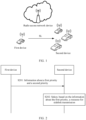
- FIG. 1 is a schematic diagram of a V2X communication scenario.
- a first device communicates with a second device through an SL.
- the sidelink is a secondary link in a V2X network.
- the V2X network further includes an uplink (uplink) and a downlink (downlink).
- V2X communication includes vehicle-to-vehicle (Vehicle-to-Vehicle, V2V) communication, vehicle-to-infrastructure (Vehicle-to-Infrastructure, V2I) communication, vehicle-to-people (Vehicle-to-People, V2P) communication, vehicle-to-application server (Vehicle-to-Network, V2N) communication, and the like.
- V2V communication in which both the first device and the second device are vehicles is used as an example for description.
- a specific V2X communication scenario is not limited in this embodiment of this application.
- communication between the first device and the second device may be communication between vehicle-mounted devices, between a roadside unit (Roadside Unit, RSU) and a vehicle-mounted device and/or a network device (for example, a base station device), between a network device (for example, a base station device) and a vehicle-mounted device and/or an RSU, or the like.
- the network device may be an LTE base station device, an NR base station device, or a base station in a subsequent evolved system.
- a radio access network device in FIG. 1 may be a base station or a device in a network that provides radio access.
- the base station may be an evolved NodeB (eNB) in LTE (Long Term Evolution) or a base station in an NR network.
- eNB evolved NodeB
- the base station in NR may include a new radio NodeB (NR NodeB, gNB), a next-generation evolved NodeB (NG-eNB), a gNB separated from a central unit (central unit, CU) and a distributed unit (distributed unit, DU), a transmission/reception point (transmission/reception point, TRP), a transmission point (transmission point, TP), an access point (access point, AP) in a wireless fidelity (Wireless Fidelity, Wi-Fi) network, or another node.
- FIG. 2 is an interaction flowchart of a communication method according to an embodiment of this application. As shown in FIG. 2 , an interaction process between a first device and a second device includes the following steps.
- the first device sends information about a first priority and a second priority to the second device.
- the second device receives the information about the first priority and the second priority.
- the first priority is used to assist the second device in selecting a resource for sidelink transmission, and the information about the first priority may be carried in sidelink control information (sidelink control information, SCI) and/or a medium access control control element (medium access control control element, MAC CE).
- sidelink control information sidelink control information, SCI
- medium access control control element medium access control control element
- the information about the first priority may be the first priority or information associated with the first priority.
- the information about the first priority may indicate the first priority.
- the second device may obtain the first priority based on the information about the first priority, and further select, based on the first priority, the resource for sidelink transmission.
- that the first device sends the information about the first priority and the second priority to the second device may occur in a phase in which the first device initiates a coordination request to the second device, or in a phase in which the first device assists the second device in resource selection.
- the first device assists the second device in resource selection.
- the first priority may be a priority used by the first device to assist the second device in resource selection, a service priority of the second device, a physical layer priority of the second device, or a priority corresponding to a physical sidelink shared channel (physical sidelink shared channel, PSSCH) sent by the second device to a third device.
- a physical sidelink shared channel physical sidelink shared channel, PSSCH
- the second priority may be a service priority sent by the first device to the second device, a priority carried in the SCI sent by the first device to the second device, a priority corresponding to a PSSCH sent by the first device to the second device, a priority corresponding to a logical channel sent by the first device to the second device, a highest priority in priorities corresponding to a logical channel sent by the first device to the second device, a priority corresponding to a service of the first device, or a priority used by the first device for resource selection of the first device.
- the first device initiates a coordination request to the second device.
- the information about the first priority and the second priority may be transmitted in a data transport block (transport block, TB).
- transport block transport block
- the second priority is carried in SCI of a PSCCH
- the information about the first priority is carried in the SCI or the MAC CE.
- the first device may set a first priority, and when a service priority of the second device is higher than the first priority, a resource set sent by the first device may be used.
- a service priority of the second device when a service priority of the second device is higher than the first priority, a resource set sent by the first device may be used.
- Both the information about the first priority and the second priority may be carried in the SCI, or the second priority is carried in the SCI, and the information about the first priority is carried in the MAC CE.
- the first device sends the information about the first priority and the second priority to the second device, and the information about the first priority is used to assist the second device in selecting the resource for sidelink transmission.
- the second device may further select, based on the information about the first priority, the resource for sidelink transmission.
- the first device assists the second device in selecting the resource for sidelink transmission.
- a resource is selected through assistance or coordination. Therefore, a surrounding environment can be sensed from more angles. This can overcome a sending resource conflict scenario caused by a hidden node, an IBE problem deterioration scenario caused by near-far effect, and a scenario of additionally receiving interference information near UE.
- the terminal device B may serve as the first device, and the terminal device A may serve as the second device.
- the terminal device A may select, based on the information about the first priority, the resource for sidelink transmission.
- the terminal device B may further send geographical location information of the terminal device A to the terminal device A, to request a second device, namely, the terminal device A, at a specific geographical location.
- step S401 and step S402 coordinated resource sensing and selection are triggered by the terminal device B.
- coordinated resource sensing and selection of the terminal device A and the terminal device B may alternatively be performed based on a non-triggering mechanism. In this manner, step S401 and step S402 do not need to be performed, and step S403 is directly performed.
- a resource selection priority that is used by the terminal device A to determine assistance information in step S403 may be obtained based on the first priority indicated by the coordination request of the terminal device B in step S401. It is assumed that first priorities indicated by coordination requests of a plurality of terminal devices B are ⁇ P A1 , P A2 , P A3 ... ⁇ .
- first priorities indicated by coordination requests of a plurality of terminal devices B are ⁇ P A1 , P A2 , P A3 ... ⁇ .
- the resource selection priority that is used by the terminal device A to determine the assistance information in step S403 may be equal to P A1 .
- the resource selection priority used by the terminal device A to determine the assistance information may be calculated in the following two manners:
- a resource selection priority that is used by the terminal device A to determine assistance information in step S403 may be determined by the terminal device A.
- the terminal device A performs resource selection based on the resource selection priority used to determine the assistance information.
- the terminal device A may perform resource selection based on the resource selection priority used to determine the assistance information, a location and a length of a resource sensing window, a quantity of resource selection frequency domain sub-bandwidths, a transmission period of the terminal device B, resource pool information, and the like.
- S404 The terminal device A sends the assistance information to the terminal device B.
- the assistance information may include the resource set that is for sidelink transmission and that is determined by the terminal device A. It should be noted that the resource set included in the assistance information does not include a resource to be used by the terminal device A for transmission. Optionally, the resource set included in the assistance information may be a resource set that the terminal device A recommends the terminal device B to use, or may be a resource set that the terminal device A does not recommend the terminal device B to use.
- the terminal device A may further send geographical location information of the terminal device B to the terminal device B, to assist the second device, namely, the terminal device B, at a specific geographical location.
- the terminal device A may serve as the first device, and the terminal device B may serve as the second device.
- the assistance information may be used as the first information.
- the terminal device A may also send the information about the first priority and the second priority.
- the information about the first priority is used to assist the terminal device B in selecting the resource for sidelink transmission
- the second priority is a physical layer priority of the terminal device A.
- the terminal device B may select, based on the information about the first priority, the resource for sidelink transmission.
- the terminal device B selects, based on the resource set from the terminal device A and the resource set sensed by the terminal device B, a time frequency resource for sidelink communication between the terminal device B and a terminal device C.
- Sidelink communication between the terminal device B and the terminal device C may include an initial transmission and several retransmissions.
- the terminal device B may determine, based on a hybrid automatic repeat request (hybrid automatic repeat request, HARQ) response of the terminal device C, whether to perform retransmission.
- HARQ hybrid automatic repeat request
- the first device sends the information about the first priority and the second priority to the second device.
- the first device may first determine the second priority. The following describes several optional manners of determining the second priority.
- the second priority is a preset value.
- the second priority is a preset value M, where M is an integer greater than or equal to 1 and less than or equal to 8, or an integer greater than or equal to 0 and less than or equal to 7.
- M is an integer greater than or equal to 1 and less than or equal to 8, or an integer greater than or equal to 0 and less than or equal to 7.
- the value range is also applicable to the first priority.
- the second priority is represented by a value, and the value is opposite to a level actually indicated by the second priority.
- a larger value of the second priority indicates a lower level of the second priority.
- the value range of the priority is an integer from 1 to 8. When the value of the second priority is 1, it indicates that the second priority is a highest priority, and when the value of the second priority is 8, it indicates that the second priority is a lowest priority.
- the second priority is a priority in a preset priority list.
- the preset priority list may include a plurality of priorities, and the first device may select one priority from the plurality of priorities as the second priority.
- each priority in the preset priority list may be an integer greater than or equal to 1 and less than or equal to 8.
- the priority list may be ⁇ 1, 3, 5, 7 ⁇ .
- the priority list may be ⁇ 2, 4, 6, 8 ⁇ .
- the priority list is ⁇ 1, 3, 5, 7 ⁇ , and only two bits are required to represent any priority in the priority list. This can reduce signaling overheads.
- the second priority is a fixed value or a value from a priority list.
- the processing manner is simple and direct, and can reduce processing complexity of the device.
- the second priority is related to the first priority.
- the manner may be any one of the following three examples.
- the second priority may be related to a range of the first priority.
- the range of the first priority may correspond to the value of the second priority.
- a value range of the priority is an integer from 1 to 8.
- the range of the first priority is ⁇ 1, 2, 3, 4 ⁇ , and the second priority may be 4.
- the range of the first priority is ⁇ 5, 6, 7, 8 ⁇ , and the second priority may be 8. Only one bit is required to represent any priority in the priority list. This can reduce signaling overheads.
- each value of the second priority corresponds to four values of the first priority, and only two bits are required to represent any priority in the priority list. This can reduce signaling overheads.
- a value range of the priority is an integer from 1 to 8.
- the range of the first priority is ⁇ 1, 2, 3, 4 ⁇ , and the second priority may be 1.
- the range of the first priority is ⁇ 5, 6, 7, 8 ⁇ , and the second priority may be 5. Only one bit is required to represent any priority in the priority list. This can reduce signaling overheads.
- each value of the second priority corresponds to four values of the first priority, and only two bits are required to represent any priority in the priority list. This can reduce signaling overheads.
- the second priority may be a sum of the first priority and a first difference, or the second priority is a difference between the first priority and a first difference.
- the first difference may be a positive number or a negative number.
- the second priority is P i
- the first priority is P A
- the first difference is delta1
- the second priority is a sum of the first priority and the first difference.
- the maximum value of the priority is used as the value of the second priority.
- a value range of the priority is an integer from 1 to 8. If the value obtained through calculation according to the formula (1) is greater than 8, the value of the second priority may be considered as 8.
- the minimum value of the priority is used as the value of the second priority.
- a value range of the priority is an integer from 1 to 8. If the value obtained through calculation according to the formula (1) is less than 1, the value of the second priority may be considered as 1.
- the second priority is P i
- the first priority is P A
- the first difference is delta1
- the second priority is a difference between the first priority and the first difference.
- the maximum value of the priority is used as the value of the second priority.
- a value range of the priority is an integer from 1 to 8. If the value obtained through calculation according to the formula (2) is greater than 8, the value of the second priority may be considered as 8.
- the minimum value of the priority is used as the value of the second priority.
- a value range of the priority is an integer from 1 to 8. If the value obtained through calculation according to the formula (2) is less than 1, the value of the second priority may be considered as 1.
- the first difference may be indicated by using radio resource control (radio resource control, RRC) signaling, or the first difference may be a pre-configured value. It should be understood that the first difference may be a positive number or a negative number.
- RRC radio resource control
- the second priority is a higher priority between the first priority and a logical channel priority.
- the logical channel priority is a highest priority in logical channel priorities corresponding to data of a PSSCH.
- the physical sidelink shared channel may also be referred to as a physical sidelink data channel.
- the PSSCH includes eight logical channel priorities.
- a physical layer priority of the first device is a highest priority in logical channel priorities.
- the second priority is related to the first priority, and the second priority may be obtained based on a correlation between the two priorities.
- the information about the first priority and the second priority may be indicated by using fewer signaling overheads.
- the first device determines the second priority before sending the second priority.
- the following describes a manner in which the first device sends the information about the first priority. It should be understood that the manner of determining the second priority may be implemented in combination with any one of the following manners of sending the information about the first priority.
- the information about the first priority may be carried in the SCI and/or the MAC CE.
- the following provides descriptions. It should be understood that the first device may select at least one of the SCI or the MAC CE to carry the information about the first priority. When both the SCI and the MAC CE are selected to carry the information about the first priority, the first device adds the information about the first priority to both the SCI and the MAC CE.
- the information about the first priority may be carried in a first sub-protocol data unit, and the first sub-protocol data unit is a medium access control sub-protocol data unit (medium access control sub-protocol data unit, MAC subPDU) in a MAC protocol data unit (protocol data unit, PDU).
- the first sub-protocol data unit includes a first subheader and a first control element.
- the first subheader includes a first field, and the first field indicates a logical channel number.
- a specific value of the first field may indicate that the information about the first priority is transmitted.
- a specific field of the first control element may indicate the information about the first priority.
- FIG. 5 is a schematic diagram of a structure of a sidelink MAC PDU.
- the MAC PDU includes a sidelink shared channel (sidelink shared channel, SL-SCH) subheader, a MAC subPDU including a MAC SDU, a MAC subPDU including a MAC CE, and a MAC subPDU including a padding (padding) field.
- the MAC subPDU including a MAC SDU includes an R/F/LCID/L subheader and a MAC SDU.
- the MAC subPDU including a MAC CE includes an R/LCID subheader and a MAC CE.
- the R/F/LCID/L subheader includes an R field, an F field, a logical channel identifier (logical channel identifier, LCID) field, and an L field, and may further include an extended LCID (eLCID) field. Definitions of the fields are described as follows:
- the R/LCID subheader includes an R field and an LCID field. Definitions of the fields are the same as definitions of the fields in the R/F/LCID/L subheader, and details are not described again.
- the first sub-protocol data unit may be a MAC subPDU including a MAC CE.
- the first subheader may be an R/L CID subheader in the MAC subPDU including a MAC CE in FIG. 5
- the first control element may be a MAC CE in the MAC subPDU including a MAC CE in FIG. 5 .
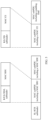
- FIG. 6 is a schematic diagram of a structure of an R/LCID subheader.
- the R/LCID subheader includes eight bits, where six bits are an LCID field, a value of the LCID field indicates a logical channel number, and the other two bits are reserved bits.
- the first field may be the six-bit LCID field in FIG. 6 .
- the first field has six bits, there may be 64 values.
- a first value of the first field may be used to identify that the information about the first priority is transmitted.
- the first value may be 61.
- the value of the LCID field in the R/LCID subheader is 61, it indicates that the information about the first priority is carried in the MAC CE for transmission.
- FIG. 7 is a schematic diagram of another structure of an R/LCID subheader.
- the R/LCID subheader includes 16 bits, where a reserved bit is one bit, an F bit is one bit, an LCID field is six bits, and an extended LCID (eLCID) field is eight bits.
- a definition indicated by the F bit is the same as a definition of the F field described in FIG. 5 .
- the first field may be the six-bit LCID field in FIG. 7 , the eight-bit eLCID field in FIG. 7 , or some or all bits of the six-bit LCID field and the eight-bit eLCID field.
- the first field may have a plurality of values.
- a first value of the first field may be used to identify that the information about the first priority is transmitted.
- the first subheader may include M bits, M is an integer multiple of 8, the first field occupies N bits in the first subheader, and N is an integer greater than or equal to 6.
- the first control element includes a second field, and the second field may indicate the information about the first priority.
- the second field may include three bits, two bits, one bit, or four bits.
- FIG. 8 is a schematic diagram of a structure of the first control element. As shown in FIG. 8 , the first control element includes eight bits, the second field occupies three bits, and the remaining bits are reserved bits.
- the second field may indicate one priority. For example, when the second field is 000, it indicates that the priority is 1, namely, a highest priority.
- FIG. 9 is a schematic diagram of another structure of the first control element. As shown in FIG. 9 , the first control element includes eight bits, the second field occupies two bits, and the remaining bits are reserved bits.
- the first priority is a priority in the priority list ⁇ 1, 3, 5, 7 ⁇ .
- the second field is 00, it indicates that the first priority is 1, namely, a highest priority.
- the priority list is preset or pre-configured, and is stored in the first device and the second device.
- FIG. 10 is a schematic diagram of still another structure of the first control element. As shown in FIG. 10 , the first control element includes eight bits, the second field occupies one bit, and the remaining bits are reserved bits.
- the first priority is a priority in the priority list ⁇ 1, 3, 5, 7 ⁇ .
- the second field is 0, it indicates that the first priority is 1, namely, a highest priority.
- the priority list is preset or pre-configured, and is stored in the first device and the second device.
- a value of the second field may be the first priority, or may be a value related to the first priority.
- the second field includes four bits, and the four bits may indicate a difference corresponding to the first priority. It is assumed that a value range of the priority is an integer from 1 to 8, and the four bits may include an integer range of [-7, 8]. For example, it is assumed that a value indicated by the four bits is -7, that is, a difference is -7.
- the second device may obtain the first priority through calculation based on the first difference.
- the first control element may further include a third field, and the third field may indicate geographical location information of the second device.
- the structure of the first control element shown in FIG. 8 is used as an example.
- the third field may occupy the remaining five bits other than the second field.
- the third field may occupy fewer bits or more bits in the third control element.
- the geographical location information of the second device may be a zone ID of the second device.
- the first device adds the geographical location information of the second device to the first control element, so that the second device can perform resource selection or another operation based on the geographical location information.
- the geographical location information may be used to request a second device at a specific geographical location, or may assist a second device at a specific geographical location.
- the geographical location information may be used to request a terminal device A at a specific geographical location. If the first device is the terminal device A, the geographical location information may assist a terminal device B at a specific geographical location.
- the MAC CE carries the information about the first priority.
- the information about the first priority can be dynamically indicated.
- the MAC CE may be used to carry the information about the first priority, and the MAC CE may be used to carry other information, for example, geographical location information of the second device.
- the following describes a manner in which the information about the first priority is carried in the SCI.
- the information about the first priority may be carried in SCI of a control channel, or may be carried in SCI of a data channel.
- the SCI of the control channel may also be referred to as SCI 1 or first-order SCI.
- the SCI of the data channel may also be referred to as SCI 2 or second-order SCI.
- the information about the first priority is carried in the first-order SCI, so that the information about the first priority can be more flexibly and dynamically indicated. This helps another device decode the information about the first priority during resource sensing, and further provides more reference information for determining in resource selection and preemption.
- the information about the first priority may alternatively be carried in the second-order SCI. In this manner, the information about the first priority can also be flexibly and dynamically indicated.
- the second device may demodulate the second-order SCI after demodulating the first-order SCI, to obtain the information about the first priority.
- a "second-order SCI format" field in the first-order SCI may indicate the information about the first priority indicated by the second-order SCI.
- any one of the following two manners may be used.
- the SCI of the control channel may include a fourth field, and the fourth field may indicate the first priority.
- the fourth field occupies a preset bit in the SCI of the control channel, for example, may occupy three bits, two bits, or one bit.
- the preset bit may be used to indicate a specific priority, a priority range, or the like.
- the fourth field occupies three bits. It is assumed that a value range of the priority is 1 to 8, and the fourth field may indicate a specific first priority.
- the priority list is preset or pre-configured, and is stored in the first device and the second device.
- the fourth field occupies one bit. For example, it is assumed that the first priority is a priority in the priority list ⁇ 1, 3, 5, 7 ⁇ . When the fourth field is 0, it indicates that the first priority is 1, namely, a highest priority.
- the SCI of the control channel may include a fourth field, and the fourth field may indicate a second difference corresponding to the first priority.
- the second difference is a difference between the first priority and the second priority.
- the first priority may be a sum of the second priority and the second difference, or a difference between the second priority and the second difference.
- the second difference may be a positive number or a negative number.
- the second priority is P i
- the first priority is P A
- the second difference is delta2
- the first priority is a sum of the second priority and the second difference.
- the maximum value of the priority is used as the value of the first priority.
- a value range of the priority is an integer from 1 to 8. If the value obtained through calculation according to the formula (3) is greater than 8, the value of the first priority may be considered as 8.
- the minimum value of the priority is used as the value of the first priority.
- a value range of the priority is an integer from 1 to 8. If the value obtained through calculation according to the formula (3) is less than 1, the value of the first priority may be considered as 1.
- the second priority is P i
- the first priority is P A
- the second difference is delta2
- the first priority is a difference between the second priority and the second difference.
- the maximum value of the priority is used as the value of the first priority.
- a value range of the priority is an integer from 1 to 8. If the value obtained through calculation according to the formula (4) is greater than 8, the value of the first priority may be considered as 8.
- the minimum value of the priority is used as the value of the first priority.
- a value range of the priority is an integer from 1 to 8. If the value obtained through calculation according to the formula (4) is less than 1, the value of the first priority may be considered as 1.
- any one of the following two manners may be used.
- the SCI of the data channel may include a fifth field, and the fifth field may indicate the first priority.
- the fifth field occupies three bits. It is assumed that a value range of the priority is 1 to 8, and the fifth field may indicate a specific first priority.
- the fifth field occupies two bits. For example, it is assumed that the first priority is a priority in the priority list ⁇ 1, 3, 5, 7 ⁇ . When the fifth field is 00, it indicates that the first priority is 1, namely, a highest priority.
- the priority list is preset or pre-configured, and is stored in the first device and the second device.
- the fifth field occupies one bit. For example, it is assumed that the first priority is a priority in the priority list ⁇ 1, 3, 5, 7 ⁇ . When the fifth field is 0, it indicates that the first priority is 1, namely, a highest priority.
- the priority list is preset or pre-configured, and is stored in the first device and the second device.
- the SCI of the data channel may include a fifth field, and the fifth field may indicate a second difference corresponding to the first priority.
- the second difference is a difference between the first priority and the second priority.
- the first priority may be a sum of the second priority and the second difference, or a difference between the second priority and the second difference.
- the second difference may be a positive number or a negative number.
- a manner of obtaining the first priority based on the second difference in the manner is the same as a manner of obtaining the first priority based on the second difference in the control channel.
- the SCI of the data channel may be SCI2-A, or SCI2-B, or may be SCI, for example, SCI2-C, other than SCI2-A and SCI2-B.
- FIG. 11 is a diagram of a module structure of a communication apparatus according to an embodiment of this application.
- the apparatus may be the first device or an apparatus that can enable the first device to implement a function of the first device in the method provided in embodiments of this application.
- the apparatus may be an apparatus or a chip system in the first device.
- the apparatus includes a processing module 1101 and a sending module 1102.
- the processing module 1101 is configured to send information about a first priority and a second priority to a second device by using the sending module 1102.
- the first priority is used to assist the second device in selecting a resource for sidelink transmission, the information about the first priority is carried in SCI and/or a MAC CE, and the second priority is a physical layer priority of a first device.
- the processing module 1101 is further configured to send first information to the second device by using the sending module 1102, and the first information includes any one of the following: a resource set for sidelink transmission determined by the first device, and information used by the first device to select a sidelink transmission resource.
- the second priority is a preset value, or the second priority is a priority in a preset priority list, and the preset priority list includes a plurality of priorities.
- the second priority is related to the first priority.
- the second priority is related to a range of the first priority.
- the second priority is a sum of the first priority and a first difference, or the second priority is a difference between the first priority and a first difference.
- the first difference is indicated by using RRC signaling, or the first difference is a pre-configured value.
- the first difference may be a positive number or a negative number.
- the second priority is a higher priority between the first priority and a logical channel priority
- the logical channel priority is a highest priority in logical channel priorities corresponding to data of a PSSCH.
- the information about the first priority is carried in a first sub-protocol data unit
- the first sub-protocol data unit is a medium access control sub-protocol data unit
- the first sub-protocol data unit includes a first subheader and a first control element
- the first subheader includes a first field
- the first field indicates a logical channel number.
- a first value of the first field in the first subheader indicates that the information about the first priority is transmitted.
- the first subheader includes M bits, M is an integer multiple of 8, the first field occupies N bits in the first subheader, and N is an integer greater than or equal to 6.
- the first control element includes a second field, and the second field indicates the information about the first priority.
- the second field includes three bits, two bits, one bit, or four bits.
- the first control element further includes a third field, and the third field indicates the geographical location information of the second device.
- the information about the first priority is carried in the SCI.
- SCI of a control channel includes a fourth field, the fourth field indicates the first priority, or the fourth field indicates a second difference corresponding to the first priority, and the second difference is a difference between the first priority and the second priority.
- SCI of a data channel includes a fifth field, and the fifth field indicates the first priority or a second difference corresponding to the first priority.
- the SCI of the data channel includes SCI2-A, SCI2-B, or SCI other than SCI2-A and SCI2-B.
- the first priority is a sum of the second priority and the second difference, or the first priority is a difference between the second priority and the second difference, and the second difference may be a positive number or a negative number.
- FIG. 12 is a diagram of a module structure of another communication apparatus according to an embodiment of this application.
- the apparatus may be the second device or an apparatus that can enable the second device to implement a function of the second device in the method provided in embodiments of this application.
- the apparatus may be an apparatus or a chip system in the second device. As shown in FIG. 12 , the apparatus includes:
- the receiving module 1201 is further configured to receive first information from the first device, and the first information includes any one of the following: a resource set for sidelink transmission determined by the first device, and information used by the first device to select a sidelink transmission resource.
- the second priority is a preset value, or the second priority is a priority in a preset priority list, and the preset priority list includes a plurality of priorities.
- the second priority is related to the first priority.
- the second priority is related to a range of the first priority.
- the second priority is a sum of the first priority and a first difference, or the second priority is a difference between the first priority and a first difference.
- the first difference is indicated by using RRC signaling, or the first difference is a pre-configured value.
- the first difference may be a positive number or a negative number.
- the second priority is a higher priority between the first priority and a logical channel priority
- the logical channel priority is a highest priority in logical channel priorities corresponding to data of a PSSCH.
- the information about the first priority is carried in a first sub-protocol data unit
- the first sub-protocol data unit is a medium access control sub-protocol data unit
- the first sub-protocol data unit includes a first subheader and a first control element
- the first subheader includes a first field
- the first field indicates a logical channel number.
- a first value of the first field in the first subheader indicates that the information about the first priority is transmitted.
- the first subheader includes M bits, M is an integer multiple of 8, the first field occupies N bits in the first subheader, and N is an integer greater than or equal to 6.
- the first control element includes a second field, and the second field indicates the information about the first priority.
- the second field includes three bits, two bits, one bit, or four bits.
- the first control element further includes a third field, and the third field indicates the geographical location information of the second device.
- the information about the first priority is carried in the SCI.
- SCI of a control channel includes a fourth field, the fourth field indicates the first priority, or the fourth field indicates a second difference corresponding to the first priority, and the second difference is a difference between the first priority and the second priority.
- SCI of a data channel includes a fifth field, and the fifth field indicates the first priority or a second difference corresponding to the first priority.
- the SCI of the data channel includes SCI2-A, SCI2-B, or SCI other than SCI2-A and SCI2-B.
- the first priority is a sum of the second priority and the second difference, or the first priority is a difference between the second priority and the second difference, and the second difference may be a positive number or a negative number.
- the communication apparatus provided in the embodiments of this application may perform steps of the method in the method embodiments.
- the implementation principles and the technical effects of the optical module are similar to those in the method embodiment. Details are not described herein again.
- modules of the foregoing apparatus are merely logic function division.
- some or all modules may be integrated into one physical entity, or the modules may be physically separated.
- the modules may be all implemented in a form of software invoked by a processing element, or may be all implemented in a form of hardware.
- some modules may be implemented in a form of software invoked by a processing element, and some modules are implemented in a form of hardware.
- a determining module may be a processing element separately disposed, or may be integrated in a chip of the foregoing apparatus for implementation.
- the determining module may alternatively be stored in the memory of the foregoing apparatus in a form of program code, and is invoked by a processing element of the foregoing apparatus to perform a function of the determining module. Implementations of other modules are similar to the implementation of the determining module. In addition, all or some of the modules may be integrated together, or may be implemented independently.
- the processing element herein may be an integrated circuit, and have a signal processing capability. In an implementation process, steps in the methods or the modules can be implemented by using a hardware integrated logical circuit in the processing element, or by using instructions in a form of software.
- the foregoing modules may be configured as one or more integrated circuits for implementing the foregoing method, such as one or more application-specific integrated circuits (application-specific integrated circuit, ASIC), one or more microprocessors (digital signal processor, DSP), or one or more field programmable gate arrays (field programmable gate array, FPGA).
- ASIC application-specific integrated circuit
- DSP digital signal processor
- FPGA field programmable gate array
- the processing element may be a general-purpose processor, such as a central processing unit (central processing unit, CPU) or another processor that can invoke the program code.
- the modules may be integrated together, and implemented in a form of a system-on-a-chip (system-on-a-chip, SOC).
- All or some of the embodiments may be implemented by using software, hardware, firmware, or any combination thereof.
- the software is used to implement the embodiments, all or some of the embodiments may be implemented in a form of a computer program product.
- the computer program product includes one or more computer instructions.
- the computer may be a general-purpose computer, a dedicated computer, a computer network, or another programmable apparatus.
- the computer instructions may be stored in a computer-readable storage medium or may be transmitted from one computer-readable storage medium to another computer-readable storage medium.
- the computer instructions may be transmitted from one website, computer, server, or data center to another website, computer, server, or data center in a wired (for example, a coaxial cable, an optical fiber, or a digital subscriber line (DSL)) or wireless (for example, infrared, radio, or microwave) manner.
- the computer-readable storage medium may be any usable medium accessible by the computer, or a data storage device, such as a server or a data center, integrating one or more usable media.
- the usable medium may be a magnetic medium (for example, a floppy disk, a hard disk, or a magnetic tape), an optical medium (for example, a DVD), a semiconductor medium (for example, a solid-state disk (solid-state disk, SSD)), or the like.
- a magnetic medium for example, a floppy disk, a hard disk, or a magnetic tape
- an optical medium for example, a DVD
- a semiconductor medium for example, a solid-state disk (solid-state disk, SSD)
- FIG. 13 is a schematic diagram of a structure of a communication apparatus according to an embodiment of this application.
- the communication apparatus may be the first device or the second device described in the foregoing embodiments.
- a communication apparatus 1300 may include a processor 131 (for example, a CPU).
- the communication apparatus may further include a memory 132 and/or a transceiver 133.
- the transceiver 133 is coupled to the processor 131, and the processor 131 controls sending and receiving actions of the transceiver 133.
- the memory 132 may store various instructions, to implement various processing functions and implement steps of the method performed by the first device or the second device in embodiments of this application.
- the communication apparatus in this embodiment of this application may further include a power supply 134, a system bus 135, and a communication interface 136.
- the transceiver 133 may be integrated into a transceiver machine of the communication apparatus, or may be an independent transceiver antenna of the communication apparatus.
- the system bus 135 is configured to implement communication connections between components.
- the communication interface 136 is configured to implement connection and communication between the communication apparatus and another peripheral.
- the processor 131 is configured to be coupled to the memory 132, and read and execute the instructions in the memory 132, to implement steps of the method performed by the first device or the second device in the method embodiments.
- the transceiver 133 is coupled to the processor 131, and the processor 131 controls the transceiver 133 to send and receive a message. Implementation principles and technical effects of the transceiver 133 are similar to those of the method embodiments. Details are not described herein again.
- the system bus mentioned in FIG. 13 may be a peripheral component interconnect (peripheral component interconnect, PCI) bus, an extended industry standard architecture (extended industry standard architecture, EISA) bus, or the like.
- PCI peripheral component interconnect
- EISA extended industry standard architecture
- the system bus may be classified into an address bus, a data bus, a control bus, or the like. For ease of indication, the system bus is indicated by using only one bold line in the figure. However, it does not indicate that there is only one bus or only one type of bus.
- the communication interface is configured to implement communication between a database access apparatus and another device (for example, a client, a read/write database, and a read-only database).
- the memory may include a RAM, and may further include a nonvolatile memory (nonvolatile memory), for example, at least one magnetic disk memory.
- the processor mentioned in FIG. 13 may be a general-purpose processor, including a central processing unit CPU, a network processor (network processor, NP), or the like, a digital signal processor DSP, an application-specific integrated circuit ASIC, a field programmable gate array FPGA or another programmable logic device, a discrete gate or a transistor logic device, a discrete hardware component, or the like.
- a central processing unit CPU central processing unit
- NP network processor
- DSP digital signal processor
- ASIC application-specific integrated circuit
- FPGA field programmable gate array
- another programmable logic device a discrete gate or a transistor logic device, a discrete hardware component, or the like.
- an embodiment of this application further provides a readable storage medium.
- the storage medium stores instructions.
- the instructions When the instructions are run on a computer, the computer is enabled to perform the method in the embodiments shown in FIG. 2 to FIG. 10 .
- "at least one” means one or more, and "a plurality of” means two or more.
- "And/or” describes an association relationship between associated objects, and represents that three relationships may exist. For example, A and/or B may represent the following cases: Only A exists, both A and B exist, and only B exists, where A and B may be singular or plural.
- the character "/” usually indicates an "or” relationship between associated objects. In a formula, the character “/” indicates a “division” relationship between the associated objects.
- “At least one of the following items (pieces)” or a similar expression thereof refers to any combination of these items, including any combination of singular items (pieces) or plural items (pieces).
Landscapes
- Engineering & Computer Science (AREA)
- Signal Processing (AREA)
- Computer Networks & Wireless Communication (AREA)
- Mobile Radio Communication Systems (AREA)
- Communication Control (AREA)
- Computer And Data Communications (AREA)
Claims (13)
- Kommunikationsverfahren, umfassend:Empfangen (S201) einer ersten und einer zweiten Priorität von einer ersten Vorrichtung durch eine zweite Vorrichtung, wobei die erste Priorität für die zweite Vorrichtung beim Auswählen einer Ressource zur Sidelink-Übertragung der ersten Vorrichtung verwendet wird, die erste Priorität in Sidelink-Steuerinformationen, SCI, auf einem physischen gemeinsam genutzten Sidelink-Kanal, PSSCH, und/oder einem Medium-Access-Control-Steuerelement, MAC CE, übertragen wird und die zweite Priorität eine Priorität des PSSCH angibt, die zweite Priorität in SCI auf einem physischen Sidelink-Steuerkanal, PSCCH, übertragen wird; undAuswählen (S202) einer Ressource zur Sidelink-Übertragung der ersten Vorrichtung durch die zweite Vorrichtung basierend auf der ersten Priorität.
- Verfahren nach Anspruch 1, wobei,
Empfangen einer Koordinationsanfrage von der ersten Vorrichtung durch die zweite Vorrichtung. - Verfahren nach Anspruch 2, wobei,
die Koordinationsanfrage die erste Priorität und die zweite Priorität umfasst. - Verfahren nach Anspruch 1, wobei,
der Wert der zweiten Priorität 1 ist. - Verfahren nach Anspruch 1, wobei,
die erste Priorität in SCI 2-C auf dem PSSCH übertragen wird, SCI 2-C ein fünftes Feld umfasst, das fünfte Feld die erste Priorität angibt und das fünfte Feld 3 Bits belegt. - Verfahren nach Anspruch 1, wobei,
die zweite Priorität in SCI 1 auf dem PSCCH übertragen wird. - Verfahren nach Anspruch 2, wobei,
die erste Priorität basierend auf der Koordinationsanfrage erlangt wird. - Verfahren nach einem der Ansprüche 1 bis 7, wobei die erste Priorität in einer ersten Unterprotokolldateneinheit übertragen wird, die erste Unterprotokolldateneinheit eine Medium-Access-Control-Unterprotokolldateneinheit ist, die erste Unterprotokolldateneinheit einen ersten Subheader und ein erstes Steuerelement umfasst, der erste Subheader ein erstes Feld umfasst und das erste Feld eine logische Kanalnummer angibt.
- Verfahren nach Anspruch 8, wobei ein erster Wert des ersten Feldes in dem ersten Subheader angibt, dass die erste Priorität übertragen wird.
- Verfahren nach Anspruch 1, wobei,
Auswählen der Ressource zur Sidelink-Übertragung der ersten Vorrichtung durch die zweite Vorrichtung basierend auf der ersten Priorität, einem Ort und einer Länge eines Fensters zur Ressourcenerfassung, einer Menge von Unterbandbreiten von Frequenzbereichen für die Ressourcenauswahl, einem Übertragungszeitraum und Ressourcenpoolinformationen. - Zweite Vorrichtung, die dazu konfiguriert ist, die Verfahrensschritte nach einem der Ansprüche 1 bis 10 zu implementieren.
- Kommunikationseinrichtung, umfassend einen Prozessor und eine Kommunikationsschnittstelle, wobeidie Kommunikationsschnittstelle dazu konfiguriert ist, eine Verbindung und eine Kommunikation zwischen der Kommunikationseinrichtung und einem Peripheriegerät zu implementieren; undder Prozessor dazu konfiguriert ist, das Verfahren nach einem der Ansprüche 1 bis 10 zu implementieren.
- Computerprogramm, umfassend Anweisungen, wobei die Anweisungen bei Ausführung durch eine Kommunikationseinrichtung bewirken, dass die Kommunikationseinrichtung das Verfahren nach einem der Ansprüche 1 bis 10 durchführt.
Priority Applications (1)
| Application Number | Priority Date | Filing Date | Title |
|---|---|---|---|
| EP25176537.6A EP4629670A3 (de) | 2020-08-06 | 2020-08-06 | Kommunikationsverfahren und -vorrichtung sowie lesbares speichermedium |
Applications Claiming Priority (1)
| Application Number | Priority Date | Filing Date | Title |
|---|---|---|---|
| PCT/CN2020/107423 WO2022027441A1 (zh) | 2020-08-06 | 2020-08-06 | 通信方法、装置及可读存储介质 |
Related Child Applications (2)
| Application Number | Title | Priority Date | Filing Date |
|---|---|---|---|
| EP25176537.6A Division-Into EP4629670A3 (de) | 2020-08-06 | 2020-08-06 | Kommunikationsverfahren und -vorrichtung sowie lesbares speichermedium |
| EP25176537.6A Division EP4629670A3 (de) | 2020-08-06 | 2020-08-06 | Kommunikationsverfahren und -vorrichtung sowie lesbares speichermedium |
Publications (4)
| Publication Number | Publication Date |
|---|---|
| EP4187944A1 EP4187944A1 (de) | 2023-05-31 |
| EP4187944A4 EP4187944A4 (de) | 2023-08-23 |
| EP4187944B1 true EP4187944B1 (de) | 2025-06-25 |
| EP4187944C0 EP4187944C0 (de) | 2025-06-25 |
Family
ID=80118806
Family Applications (2)
| Application Number | Title | Priority Date | Filing Date |
|---|---|---|---|
| EP25176537.6A Pending EP4629670A3 (de) | 2020-08-06 | 2020-08-06 | Kommunikationsverfahren und -vorrichtung sowie lesbares speichermedium |
| EP20948445.0A Active EP4187944B1 (de) | 2020-08-06 | 2020-08-06 | Kommunikationsverfahren und -vorrichtung sowie lesbares speichermedium |
Family Applications Before (1)
| Application Number | Title | Priority Date | Filing Date |
|---|---|---|---|
| EP25176537.6A Pending EP4629670A3 (de) | 2020-08-06 | 2020-08-06 | Kommunikationsverfahren und -vorrichtung sowie lesbares speichermedium |
Country Status (7)
| Country | Link |
|---|---|
| US (1) | US20230180192A1 (de) |
| EP (2) | EP4629670A3 (de) |
| JP (1) | JP7670116B2 (de) |
| KR (1) | KR20230044519A (de) |
| CN (2) | CN116134848B (de) |
| MX (1) | MX2023001569A (de) |
| WO (1) | WO2022027441A1 (de) |
Families Citing this family (2)
| Publication number | Priority date | Publication date | Assignee | Title |
|---|---|---|---|---|
| US11716726B2 (en) * | 2020-08-07 | 2023-08-01 | Qualcomm Incorporated | Message handling for device-to-device coordination messages |
| US11950233B2 (en) * | 2020-10-09 | 2024-04-02 | Samsung Electronics Co., Ltd | Efficient techniques for resource selection assistance reporting for NR Rel-17 sidelink |
Family Cites Families (12)
| Publication number | Priority date | Publication date | Assignee | Title |
|---|---|---|---|---|
| US10455587B2 (en) * | 2014-12-05 | 2019-10-22 | Lg Electronics Inc. | Method and apparatus for terminal to transmit and receive signal using sidelinks between devices |
| US10779308B2 (en) * | 2016-08-11 | 2020-09-15 | Qualcomm Incorporated | Priority based resource selection in a device-to-device communication system |
| KR102234664B1 (ko) | 2017-03-25 | 2021-04-01 | 엘지전자 주식회사 | 무선 통신 시스템에서 단말의 v2x 통신 방법 및 상기 방법을 이용하는 단말 |
| US20200037343A1 (en) * | 2018-07-24 | 2020-01-30 | Samsung Electronics Co., Ltd. | Method and apparatus for network controlled resource allocation in nr v2x |
| US11405932B2 (en) * | 2018-08-08 | 2022-08-02 | Hannibal Ip Llc | Method and apparatus for power control of wireless communications |
| WO2020036426A1 (ko) * | 2018-08-13 | 2020-02-20 | 엘지전자 주식회사 | 무선 통신 시스템에서 tc와 pppp를 맵핑하는 방법 및 장치 |
| EP3672133B1 (de) * | 2018-12-20 | 2022-09-14 | ASUSTek Computer Inc. | Verfahren und vorrichtung zur handhabung einer kollision zwischen sidelink-feedback und sidelink-daten in einem drahtloskommunikationssystem |
| KR102342393B1 (ko) * | 2018-12-20 | 2021-12-23 | 아서스테크 컴퓨터 인코포레이션 | 무선 통신 시스템에서 사이드링크 피드백 충돌을 핸들링하는 방법 및 장치 |
| US20200229143A1 (en) * | 2019-01-10 | 2020-07-16 | Industrial Technology Research Institute | Method for allocating and requesting sidelink resources, base station and user device |
| KR102640665B1 (ko) | 2019-01-21 | 2024-02-27 | 엘지전자 주식회사 | 무선통신시스템에서 사이드링크 harq 피드백을 전송하는 방법 |
| US11277819B2 (en) * | 2019-01-21 | 2022-03-15 | Huawei Technologies Co., Ltd. | Method and apparatus for sidelink transmission and resource allocation |
| CN120416944A (zh) * | 2019-08-16 | 2025-08-01 | 中兴通讯股份有限公司 | 信息传输方法及装置 |
-
2020
- 2020-08-06 WO PCT/CN2020/107423 patent/WO2022027441A1/zh not_active Ceased
- 2020-08-06 CN CN202080104535.7A patent/CN116134848B/zh active Active
- 2020-08-06 MX MX2023001569A patent/MX2023001569A/es unknown
- 2020-08-06 JP JP2023507685A patent/JP7670116B2/ja active Active
- 2020-08-06 EP EP25176537.6A patent/EP4629670A3/de active Pending
- 2020-08-06 KR KR1020237007586A patent/KR20230044519A/ko active Pending
- 2020-08-06 EP EP20948445.0A patent/EP4187944B1/de active Active
- 2020-08-06 CN CN202510560699.5A patent/CN120499858A/zh active Pending
-
2023
- 2023-02-03 US US18/164,300 patent/US20230180192A1/en active Pending
Also Published As
| Publication number | Publication date |
|---|---|
| CN116134848B (zh) | 2025-05-16 |
| KR20230044519A (ko) | 2023-04-04 |
| US20230180192A1 (en) | 2023-06-08 |
| EP4187944A4 (de) | 2023-08-23 |
| CN116134848A (zh) | 2023-05-16 |
| WO2022027441A1 (zh) | 2022-02-10 |
| CN116134848A8 (zh) | 2024-05-17 |
| JP2023541109A (ja) | 2023-09-28 |
| EP4629670A3 (de) | 2025-11-05 |
| JP7670116B2 (ja) | 2025-04-30 |
| EP4187944A1 (de) | 2023-05-31 |
| MX2023001569A (es) | 2023-05-09 |
| EP4187944C0 (de) | 2025-06-25 |
| EP4629670A2 (de) | 2025-10-08 |
| CN120499858A (zh) | 2025-08-15 |
Similar Documents
| Publication | Publication Date | Title |
|---|---|---|
| US10448425B2 (en) | Systems and methods for traffic-aware medium access selection | |
| CN111656852B (zh) | 用于5g网络中的回程的方法和装置 | |
| EP3400670B1 (de) | Verfahren und vorrichtung zur zuweisung von bestätigungsressourcen | |
| JP2021502742A5 (de) | ||
| CN114071776A (zh) | 通信方法、用户设备、网络设备及电子设备 | |
| EP3397017A1 (de) | Elektronische vorrichtung, informationsverarbeitungsvorrichtung und informationsverarbeitungssystem | |
| US11259362B2 (en) | Method for repeatedly transmitting data and device | |
| US20230180192A1 (en) | Communication method and apparatus, and readable storage medium | |
| CN116686327A (zh) | 用于l1-rsrp的测量增强 | |
| TWI472254B (zh) | 處理分時雙工系統中資源配置的方法及其通訊裝置 | |
| CN103384185A (zh) | 处理分时双工系统中资源配置的方法及其通信装置 | |
| US11882429B2 (en) | Uplink resource determination apparatus, method and computer program | |
| CN111903159B (zh) | 用于通信的方法、装置和计算机可读存储介质 | |
| EP3657886A1 (de) | Datenerzeugungsverfahren, konfigurationsverfahren für logischen kanal, endgerätevorrichtung und chip | |
| EP4462701A1 (de) | Strahltrainingsverfahren und kommunikationsvorrichtung | |
| US20250261217A1 (en) | Resource selection method and apparatus | |
| US20240205662A1 (en) | Communication method and apparatus | |
| AU2023258288A1 (en) | Communication device and communication method | |
| WO2025168255A1 (en) | Apparatus, method and computer program | |
| CN106900076A (zh) | 一种随机接入参数的更新方法及相关设备 | |
| CN116847394A (zh) | 感知方法及装置 | |
| JP2025527665A (ja) | チャネルアクセス優先度 | |
| CN119404452A (zh) | 小区间场景的网络辅助pl-rs维护 | |
| CN121014249A (zh) | 在通信网络中的节点处改变通信优先级 | |
| CN117998640A (zh) | 一种信道占用时间的传输方法、装置、终端及网络设备 |
Legal Events
| Date | Code | Title | Description |
|---|---|---|---|
| STAA | Information on the status of an ep patent application or granted ep patent |
Free format text: STATUS: THE INTERNATIONAL PUBLICATION HAS BEEN MADE |
|
| PUAI | Public reference made under article 153(3) epc to a published international application that has entered the european phase |
Free format text: ORIGINAL CODE: 0009012 |
|
| STAA | Information on the status of an ep patent application or granted ep patent |
Free format text: STATUS: REQUEST FOR EXAMINATION WAS MADE |
|
| 17P | Request for examination filed |
Effective date: 20230222 |
|
| AK | Designated contracting states |
Kind code of ref document: A1 Designated state(s): AL AT BE BG CH CY CZ DE DK EE ES FI FR GB GR HR HU IE IS IT LI LT LU LV MC MK MT NL NO PL PT RO RS SE SI SK SM TR |
|
| A4 | Supplementary search report drawn up and despatched |
Effective date: 20230726 |
|
| RIC1 | Information provided on ipc code assigned before grant |
Ipc: H04W 4/46 20180101AFI20230720BHEP |
|
| DAV | Request for validation of the european patent (deleted) | ||
| DAX | Request for extension of the european patent (deleted) | ||
| GRAP | Despatch of communication of intention to grant a patent |
Free format text: ORIGINAL CODE: EPIDOSNIGR1 |
|
| STAA | Information on the status of an ep patent application or granted ep patent |
Free format text: STATUS: GRANT OF PATENT IS INTENDED |
|
| INTG | Intention to grant announced |
Effective date: 20250206 |
|
| GRAS | Grant fee paid |
Free format text: ORIGINAL CODE: EPIDOSNIGR3 |
|
| GRAA | (expected) grant |
Free format text: ORIGINAL CODE: 0009210 |
|
| STAA | Information on the status of an ep patent application or granted ep patent |
Free format text: STATUS: THE PATENT HAS BEEN GRANTED |
|
| AK | Designated contracting states |
Kind code of ref document: B1 Designated state(s): AL AT BE BG CH CY CZ DE DK EE ES FI FR GB GR HR HU IE IS IT LI LT LU LV MC MK MT NL NO PL PT RO RS SE SI SK SM TR |
|
| REG | Reference to a national code |
Ref country code: GB Ref legal event code: FG4D |
|
| REG | Reference to a national code |
Ref country code: CH Ref legal event code: EP |
|
| REG | Reference to a national code |
Ref country code: CH Ref legal event code: EP |
|
| REG | Reference to a national code |
Ref country code: IE Ref legal event code: FG4D |
|
| U01 | Request for unitary effect filed |
Effective date: 20250625 |
|
| U07 | Unitary effect registered |
Designated state(s): AT BE BG DE DK EE FI FR IT LT LU LV MT NL PT RO SE SI Effective date: 20250701 |
|
| PG25 | Lapsed in a contracting state [announced via postgrant information from national office to epo] |
Ref country code: GR Free format text: LAPSE BECAUSE OF FAILURE TO SUBMIT A TRANSLATION OF THE DESCRIPTION OR TO PAY THE FEE WITHIN THE PRESCRIBED TIME-LIMIT Effective date: 20250926 Ref country code: NO Free format text: LAPSE BECAUSE OF FAILURE TO SUBMIT A TRANSLATION OF THE DESCRIPTION OR TO PAY THE FEE WITHIN THE PRESCRIBED TIME-LIMIT Effective date: 20250925 |
|
| PGFP | Annual fee paid to national office [announced via postgrant information from national office to epo] |
Ref country code: GB Payment date: 20250710 Year of fee payment: 6 |
|
| PG25 | Lapsed in a contracting state [announced via postgrant information from national office to epo] |
Ref country code: HR Free format text: LAPSE BECAUSE OF FAILURE TO SUBMIT A TRANSLATION OF THE DESCRIPTION OR TO PAY THE FEE WITHIN THE PRESCRIBED TIME-LIMIT Effective date: 20250625 |
|
| PG25 | Lapsed in a contracting state [announced via postgrant information from national office to epo] |
Ref country code: RS Free format text: LAPSE BECAUSE OF FAILURE TO SUBMIT A TRANSLATION OF THE DESCRIPTION OR TO PAY THE FEE WITHIN THE PRESCRIBED TIME-LIMIT Effective date: 20250925 |
|
| U20 | Renewal fee for the european patent with unitary effect paid |
Year of fee payment: 6 Effective date: 20251001 |