EP4185580B1 - Feste formen von belumosudil und belumosudilsalzen - Google Patents
Feste formen von belumosudil und belumosudilsalzen Download PDFInfo
- Publication number
- EP4185580B1 EP4185580B1 EP21755332.0A EP21755332A EP4185580B1 EP 4185580 B1 EP4185580 B1 EP 4185580B1 EP 21755332 A EP21755332 A EP 21755332A EP 4185580 B1 EP4185580 B1 EP 4185580B1
- Authority
- EP
- European Patent Office
- Prior art keywords
- belumosudil
- theta
- degrees
- mesylate
- crystalline
- Prior art date
- Legal status (The legal status is an assumption and is not a legal conclusion. Google has not performed a legal analysis and makes no representation as to the accuracy of the status listed.)
- Active
Links
Images











Classifications
-
- C—CHEMISTRY; METALLURGY
- C07—ORGANIC CHEMISTRY
- C07D—HETEROCYCLIC COMPOUNDS
- C07D403/00—Heterocyclic compounds containing two or more hetero rings, having nitrogen atoms as the only ring hetero atoms, not provided for by group C07D401/00
- C07D403/02—Heterocyclic compounds containing two or more hetero rings, having nitrogen atoms as the only ring hetero atoms, not provided for by group C07D401/00 containing two hetero rings
- C07D403/12—Heterocyclic compounds containing two or more hetero rings, having nitrogen atoms as the only ring hetero atoms, not provided for by group C07D401/00 containing two hetero rings linked by a chain containing hetero atoms as chain links
-
- A—HUMAN NECESSITIES
- A61—MEDICAL OR VETERINARY SCIENCE; HYGIENE
- A61P—SPECIFIC THERAPEUTIC ACTIVITY OF CHEMICAL COMPOUNDS OR MEDICINAL PREPARATIONS
- A61P17/00—Drugs for dermatological disorders
-
- A—HUMAN NECESSITIES
- A61—MEDICAL OR VETERINARY SCIENCE; HYGIENE
- A61P—SPECIFIC THERAPEUTIC ACTIVITY OF CHEMICAL COMPOUNDS OR MEDICINAL PREPARATIONS
- A61P17/00—Drugs for dermatological disorders
- A61P17/06—Antipsoriatics
-
- A—HUMAN NECESSITIES
- A61—MEDICAL OR VETERINARY SCIENCE; HYGIENE
- A61P—SPECIFIC THERAPEUTIC ACTIVITY OF CHEMICAL COMPOUNDS OR MEDICINAL PREPARATIONS
- A61P37/00—Drugs for immunological or allergic disorders
- A61P37/02—Immunomodulators
- A61P37/06—Immunosuppressants, e.g. drugs for graft rejection
-
- C—CHEMISTRY; METALLURGY
- C07—ORGANIC CHEMISTRY
- C07C—ACYCLIC OR CARBOCYCLIC COMPOUNDS
- C07C303/00—Preparation of esters or amides of sulfuric acids; Preparation of sulfonic acids or of their esters, halides, anhydrides or amides
- C07C303/32—Preparation of esters or amides of sulfuric acids; Preparation of sulfonic acids or of their esters, halides, anhydrides or amides of salts of sulfonic acids
-
- C—CHEMISTRY; METALLURGY
- C07—ORGANIC CHEMISTRY
- C07C—ACYCLIC OR CARBOCYCLIC COMPOUNDS
- C07C309/00—Sulfonic acids; Halides, esters, or anhydrides thereof
- C07C309/01—Sulfonic acids
- C07C309/02—Sulfonic acids having sulfo groups bound to acyclic carbon atoms
- C07C309/03—Sulfonic acids having sulfo groups bound to acyclic carbon atoms of an acyclic saturated carbon skeleton
- C07C309/04—Sulfonic acids having sulfo groups bound to acyclic carbon atoms of an acyclic saturated carbon skeleton containing only one sulfo group
-
- C—CHEMISTRY; METALLURGY
- C07—ORGANIC CHEMISTRY
- C07B—GENERAL METHODS OF ORGANIC CHEMISTRY; APPARATUS THEREFOR
- C07B2200/00—Indexing scheme relating to specific properties of organic compounds
- C07B2200/13—Crystalline forms, e.g. polymorphs
Definitions
- the present disclosure encompasses solid state forms of Belumosudil mesylate, processes for preparation thereof, and pharmaceutical compositions thereof.
- Belumosudil is a ROCK2 inhibitor, and it is developed for the treatment of Graft-Versus-Host Disease including Chronic Graft-Versus-Host Disease, Systemic Sclerosis including Diffuse Cutaneous Systemic Sclerosis, Fibrosis including Idiopathic Pulmonary Fibrosis, Plaque Psoriasis, and Systemic Scleroderma.
- Polymorphism the occurrence of different crystalline forms, is a property of some molecules and molecular complexes.
- a single molecule may produce a rise to a variety of polymorphs having distinct crystal structures and physical properties like melting point, thermal behaviors (e.g., measured by thermogravimetric analysis (“TGA”), or differential scanning calorimetry (“DSC”)), X-ray diffraction (XRD) pattern, infrared absorption fingerprint, and solid state ( 13 C) NMR spectrum.
- TGA thermogravimetric analysis
- DSC differential scanning calorimetry
- XRD X-ray diffraction
- 13 C solid state
- Different salts and solid state forms (including solvated forms) of an active pharmaceutical ingredient may possess different properties. Such variations in the properties of different salts and solid state forms and solvates may provide a basis for improving formulation, for example, by facilitating better processing or handling characteristics, changing the dissolution profile in a favorable direction, or improving stability (polymorph as well as chemical stability) and shelf-life. These variations in the properties of different salts and solid state forms may also offer improvements to the final dosage form, for instance, if they serve to improve bioavailability. Different salts and solid state forms and solvates of an active pharmaceutical ingredient may also produce a rise to a variety of polymorphs or crystalline forms, which may in turn provide additional opportunities to assess variations in the properties and characteristics of a solid active pharmaceutical ingredient.
- Discovering new solid state forms and solvates of a pharmaceutical product may yield materials having desirable processing properties, such as ease of handling, ease of processing, storage stability, and ease of purification or as desirable intermediate crystal forms that facilitate conversion to other polymorphic forms.
- New solid state forms of a pharmaceutically useful compound can also provide an opportunity to improve the performance characteristics of a pharmaceutical product. It enlarges the repertoire of materials that a formulation scientist has available for formulation optimization, for example by providing a product with different properties, including a different crystal habit, higher crystallinity, or polymorphic stability, which may offer better processing or handling characteristics, improved dissolution profile, or improved shelf-life (chemical/physical stability). For at least these reasons, there is a need for additional solid state forms (including solvated forms) of Belumosudil salts.
- the present disclosure provides crystalline polymorph Forms M1 and M2 of Belumosudil Mesylate processes for preparation thereof, and pharmaceutical compositions thereof. These crystalline polymorphs can be used to prepare other solid state forms of Belumosudil, Belumosudil salts and their solid state forms.
- the present disclosure also provides uses of the said solid state forms M1 and M2 of Belumosudil Mesylatein the preparation of other solid state forms of Belumosudil or salts thereof.
- the present disclosure provides crystalline polymorph Forms M1 and M2 of Belumosudil Mesylate for use in medicine, including for the treatment of Graft-Versus-Host Disease including Chronic Graft-Versus-Host Disease, Systemic Sclerosis including Diffuse Cutaneous Systemic Sclerosis, Fibrosis including Idiopathic Pulmonary Fibrosis, Plaque Psoriasis, Systemic Scleroderma.
- the present disclosure provides crystalline polymorph Forms M1 and M2 of Belumosudil Mesylate for use in medicine, including for the treatment of Chronic Graft-Versus-Host Disease and/or Systemic Sclerosis.
- the present disclosure also encompasses the use of crystalline polymorph Forms M1 and M2 of Belumosudil Mesylate of the present disclosure for the preparation of pharmaceutical compositions and/or formulations.
- the present disclosure provides pharmaceutical compositions comprising crystalline polymorph Forms M1 and M2 of Belumosudil Mesylate according to the present disclosure.
- the present disclosure includes processes for preparing the above mentioned pharmaceutical compositions.
- the processes include combining any one or a combination of the crystalline polymorph Forms M1 and M2 of Belumosudil Mesylate, with at least one pharmaceutically acceptable excipient.
- the crystalline polymorph Forms M1 and M2 of Belumosudil Mesylate as defined herein and the pharmaceutical compositions or formulations of the crystalline polymorph Forms M1 and M2 of Belumosudil Mesylate may be used as medicaments, such as for the treatment of Graft-Versus-Host Disease including Chronic Graft-Versus-Host Disease, Systemic Sclerosis including Diffuse Cutaneous Systemic Sclerosis, Fibrosis including Idiopathic Pulmonary Fibrosis, Plaque Psoriasis, Systemic Scleroderma.
- the crystalline polymorph Forms M1 and M2 of Belumosudil Mesylate as defined herein and the pharmaceutical compositions or formulations of the crystalline polymorph Forms M1 and M2 of Belumosudil Mesylate may be used as medicaments, for the treatment of Chronic Graft-Versus-Host Disease and/or Systemic Sclerosis.
- the present disclosure also provides uses of crystalline polymorph Forms M1 and M2 of Belumosudil Mesylate of the present disclosure, or at least one of the above pharmaceutical compositions, for the manufacture of medicaments for treating e.g., Graft-Versus-Host Disease including Chronic Graft-Versus-Host Disease, Systemic Sclerosis including Diffuse Cutaneous Systemic Sclerosis, Fibrosis including Idiopathic Pulmonary Fibrosis, Plaque Psoriasis, Systemic Scleroderma, and particularly for treating Chronic Graft-Versus-Host Disease and/or Systemic Sclerosis.
- Graft-Versus-Host Disease including Chronic Graft-Versus-Host Disease
- Systemic Sclerosis including Diffuse Cutaneous Systemic Sclerosis
- Fibrosis including Idiopathic Pulmonary Fibrosis
- Plaque Psoriasis Plaque Psoriasis
- Systemic Scleroderma and particularly for treating Chronic Graft-Versus-Host Disease
- the present disclosure encompasses solid state forms M1 and M2 of Belumosudil Mesylate, processes for preparation thereof, and pharmaceutical compositions thereof, as defined in the claims.
- Solid state properties of Belumosudil, Belumosudil salts, and crystalline polymorphs thereof can be influenced by controlling the conditions under which Belumosudil and Belumosudil salts, and crystalline polymorphs thereof are obtained in solid form.
- a solid state form may be referred to herein as polymorphically pure or as substantially free of any other solid state (or polymorphic) forms.
- the expression “substantially free of any other forms” will be understood to mean that the solid state form contains about 20% (w/w) or less, about 10% (w/w) or less, about 5% (w/w) or less, about 2% (w/w) or less, about 1% (w/w) or less, or about 0% of any other forms of the subject compound as measured, for example, by XRPD.
- a crystalline polymorph of Belumosudil or Belumosudil salt described herein as substantially free of any other solid state forms would be understood to contain greater than about 80% (w/w), greater than about 90% (w/w), greater than about 95% (w/w), greater than about 98% (w/w), greater than about 99% (w/w), or about 100% of the subject crystalline polymorph of Belumosudil or Belumosudil salt.
- the described crystalline polymorph Forms M1 and M2 of Belumosudil Mesylate may contain from about 1% to about 20% (w/w), from about 5% to about 20% (w/w), or from about 5% to about 10% (w/w) of one or more other crystalline polymorph of Belumosudil Mesylate described herein as substantially free of any other solid state forms would be understood to contain greater than about 80% (w/w), greater than about 90% (w/w), greater than about 95% (w/w), greater than about 98% (w/w), greater than about 99% (w/w), or about 100% of the subject crystalline polymorph of the Belumosudil Mesylate,.
- the described crystalline polymorph Forms M1 and M2 of Belumosudil Mesylate may contain from about 1% to about 20% (w/w), from about 5% to about 20% (w/w), or from about 5% to about 10% (w/w) of one or more other crystalline polymorph of Belumosudil Mesylate.
- the crystalline polymorph Forms M1 and M2 of Belumosudil Mesylate may have advantageous properties selected from at least one of the following: chemical purity, flowability, solubility, dissolution rate, morphology or crystal habit, stability, such as chemical stability as well as thermal and mechanical stability with respect to polymorphic conversion, stability towards dehydration and/or storage stability, low content of residual solvent, a lower degree of hygroscopicity, flowability, and advantageous processing and handling characteristics such as compressibility and bulk density.
- a solid state form such as a crystal form or an amorphous form, may be referred to herein as being characterized by graphical data "as depicted in” or “as substantially depicted in” a Figure.
- Such data include, for example, powder X-ray diffractograms and solid state NMR spectra.
- the graphical data potentially provides additional technical information to further define the respective solid state form (a so-called "fingerprint") which cannot necessarily be described by reference to numerical values or peak positions alone.
- a crystal form of Belumosudil or Belumosudil salt referred to herein as being characterized by graphical data "as depicted in” or “as substantially depicted in” a Figure will thus be understood to include any crystal forms of Belumosudil or Belumosudil salt, characterized with the graphical data having such small variations, as are well known to the skilled person, in comparison with the Figure.
- anhydrous in relation to crystalline forms of Belumosudil, Belumosudil Mesylate, Belumosudil Tosylate and/or Belumosudil Besylate, relates to a crystalline form of Belumosudil or Belumosudil salt which does not include any crystalline water (or other solvents) in a defined, stoichiometric amount within the crystal. Moreover, an “anhydrous” form would generally not contain more than 1% (w/w), of either water or organic solvents as measured for example by TGA.
- solvate refers to a crystal form that incorporates a solvent in the crystal structure.
- the solvent is water, the solvate is often referred to as a "hydrate.”
- the solvent in a solvate may be present in either a stoichiometric or in a non-stoichiometric amount.
- the term "isolated” in reference to crystalline polymorph of Belumosudil, or Belumosudil salt (e.g., Belumosudil Mesylate, Belumosudil Tosylate and/or Belumosudil Besylate) of the present disclosure corresponds to a crystalline polymorph of Belumosudil or Belumosudil salt, that is physically separated from the reaction mixture in which it is formed.
- the XRPD measurements are taken using copper K ⁇ radiation wavelength 1.5418 ⁇ .
- TGA analysis is preferably carried out at a heating rate of 10 °C/min to 250 °C, preferably with a nitrogen flow of 40 ml/min.
- a thing e.g. , a reaction mixture
- room temperature or “ambient temperature”, often abbreviated as "RT.”
- RT room temperature
- room temperature is from about 20°C to about 30°C, or about 22°C to about 27°C, or about 25°C.
- the amount of solvent employed in a chemical process may be referred to herein as a number of "volumes” or “vol” or “V.”
- a material may be referred to as being suspended in 10 volumes (or 10 vol or 10V) of a solvent.
- this expression would be understood to mean milliliters of the solvent per gram of the material being suspended, such that suspending a 5 grams of a material in 10 volumes of a solvent means that the solvent is used in an amount of 10 milliliters of the solvent per gram of the material that is being suspended or, in this example, 50 mL of the solvent.
- v/v may be used to indicate the number of volumes of a solvent that are added to a liquid mixture based on the volume of that mixture. For example, adding solvent X (1.5 v/v) to a 100 ml reaction mixture would indicate that 150 mL of solvent X was added.
- a process or step may be referred to herein as being carried out “overnight.” This refers to a time interval, e.g., for the process or step, that spans the time during the night, when that process or step may not be actively observed. This time interval is from about 8 to about 20 hours, or about 10-18 hours, in some cases about 16 hours.
- reduced pressure refers to a pressure that is less than atmospheric pressure.
- reduced pressure is about 10 mbar to about 50 mbar.
- ambient conditions refer to atmospheric pressure and a temperature of 22-24°C.
- crystalline polymorph of Belumosudil designated form B1.
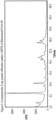
- the crystalline Form B1 of Belumosudil may be characterized by data selected from one or more of the following: an X-ray powder diffraction pattern substantially as depicted in Figure 2 ; an X-ray powder diffraction pattern having peaks at 3.5, 6.9, 10.5, 24.9 and 25.7 degrees 2-theta ⁇ 0.2 degrees 2-theta; and combinations of these data.
- Crystalline Form B1 of Belumosudil may be further characterized by an X-ray powder diffraction pattern having peaks at 3.5, 6.9, 10.5, 24.9 and 25.7 degrees 2-theta ⁇ 0.2 degrees 2-theta, and also having any one, two, three, four or five additional peaks selected from 9.4, 12.5, 15.7, 18.9 and 19.7 degrees 2-theta ⁇ 0.2 degrees 2-theta.
- Crystalline Form B1 of Belumosudil may be alternatively characterized by an X-ray powder diffraction pattern having peaks at 3.5, 6.9, 9.4, 10.5, 12.5, 15.7, 18.9, 19.7, 24.9, and 25.7 degrees 2-theta ⁇ 0.2 degrees 2-theta.
- Crystalline Form B1 of Belumosudil may be characterized by each of the above characteristics alone/or by all possible combinations, e.g., an XRPD pattern having peaks at 3.5, 6.9, 10.5, 24.9 and 25.7 degrees 2-theta ⁇ 0.2 degrees 2-theta; an XRPD pattern as depicted in Figure 2 , and combinations thereof.
- crystalline polymorph of Belumosudil designated form B2.
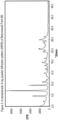
- the crystalline Form B2 of Belumosudil may be characterized by data selected from one or more of the following: an X-ray powder diffraction pattern substantially as depicted in Figure 3 ; an X-ray powder diffraction pattern having peaks at 3.8, 5.7, 7.6, 9.6 and 25.9 degrees 2-theta ⁇ 0.2 degrees 2-theta; and combinations of these data.
- Crystalline Form B2 of Belumosudil may be further characterized by an X-ray powder diffraction pattern having peaks at 3.8, 5.7, 7.6, 9.6 and 25.9 degrees 2-theta ⁇ 0.2 degrees 2-theta, and also having any one, two, three, four or five additional peaks selected from 10.7, 15.4, 16.6, 17.8 and 19.3 degrees 2-theta ⁇ 0.2 degrees 2-theta.
- Crystalline Form B2 of Belumosudil may be alternatively characterized by an X-ray powder diffraction pattern having peaks at 3.8, 5.7, 7.6, 9.6, 10.7, 15.4, 16.6, 17.8, 19.3 and 25.9 degrees 2-theta ⁇ 0.2 degrees 2-theta.
- Crystalline Form B2 of Belumosudil may be characterized by each of the above characteristics alone/or by all possible combinations, e.g., an XRPD pattern having peaks at 3.8, 5.7, 7.6, 9.6 and 25.9 degrees 2-theta ⁇ 0.2 degrees 2-theta; an XRPD pattern as depicted in Figure 3 , and combinations thereof.
- crystalline polymorph of Belumosudil designated form B3.
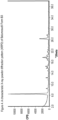
- the crystalline Form B3 of Belumosudil may be characterized by data selected from one or more of the following: an X-ray powder diffraction pattern substantially as depicted in Figure 4 ; an X-ray powder diffraction pattern having peaks at 6.5, 8.4, 12.2, 19.6 and 26.3 degrees 2-theta ⁇ 0.2 degrees 2-theta; and combinations of these data.
- Crystalline Form B3 of Belumosudil may be further characterized by an X-ray powder diffraction pattern having peaks at 6.5, 8.4, 12.2, 19.6 and 26.3 degrees 2-theta ⁇ 0.2 degrees 2-theta, and also having any one, two, three, four or five additional peaks selected from 14.7, 15.4, 16.4, 18.8 and 22.5 degrees 2-theta ⁇ 0.2 degrees 2-theta.
- Crystalline Form B3 of Belumosudil may be alternatively characterized by an X-ray powder diffraction pattern having peaks at 6.5, 8.4, 12.2, 14.7, 15.4, 16.4, 18.8, 19.6, 22.5, and 26.3 degrees 2-theta ⁇ 0.2 degrees 2-theta.
- Crystalline Form B3 of Belumosudil may be characterized by each of the above characteristics alone/or by all possible combinations, e.g., an XRPD pattern having peaks at 6.5, 8.4, 12.2, 19.6 and 26.3 degrees 2-theta ⁇ 0.2 degrees 2-theta; an XRPD pattern as depicted in Figure 4 , and combinations thereof.
- crystalline polymorph of Belumosudil designated form B4.
- the crystalline Form B4 of Belumosudil may be characterized by data selected from one or more of the following: an X-ray powder diffraction pattern substantially as depicted in Figure 6 ; an X-ray powder diffraction pattern having peaks at 8.3, 9.3, 11.9, 16.7 and 17.2 degrees 2-theta ⁇ 0.2 degrees 2-theta; and combinations of these data.
- Crystalline Form B4 of Belumosudil may be further characterized by an X-ray powder diffraction pattern having peaks at 8.3, 9.3, 11.9, 16.7 and 17.2 degrees 2-theta ⁇ 0.2 degrees 2-theta, and also having any one, two, three, four or five additional peaks selected from 15.2, 18.7, 24.1, 25.6 and 26.2 degrees 2-theta ⁇ 0.2 degrees 2-theta.
- Crystalline Form B4 of Belumosudil may be further characterized by an X-ray powder diffraction pattern having peaks at 8.3, 9.3, 11.9, 16.7 and 17.2 degrees 2-theta ⁇ 0.2 degrees 2-theta, and also having any one, two, three, four or five additional peaks selected from 15.2, 18.7, 24.1, 25.6 and 26.2 degrees 2-theta ⁇ 0.2 degrees 2-theta.
- Crystalline Form B4 of Belumosudil may be alternatively characterized by an X-ray powder diffraction pattern having peaks at 8.3, 9.3, 11.9, 15.2, 16.7, 17.2, 18.7, 24.1, 25.6, and 26.2 degrees 2-theta ⁇ 0.2 degrees 2-theta.
- Crystalline Form B4 of Belumosudil may be isolated.
- Crystalline Form B4 of Belumosudil may be characterized by each of the above characteristics alone/or by all possible combinations, e.g., an XRPD pattern having peaks at 8.3, 9.3, 11.9, 16.7 and 17.2 degrees 2-theta ⁇ 0.2 degrees 2-theta; an XRPD pattern as depicted in Figure 6 , and combinations thereof.
- crystalline polymorph of Belumosudil designated form B5.
- the crystalline Form B5 of Belumosudil may be characterized by data selected from one or more of the following: an X-ray powder diffraction pattern substantially as depicted in Figure 9 ; an X-ray powder diffraction pattern having peaks at 6.1, 12.9, 16.2, 16.8 and 19.2 degrees 2-theta ⁇ 0.2 degrees 2-theta; and combinations of these data.
- Crystalline Form B5 of Belumosudil may be further characterized by an X-ray powder diffraction pattern having peaks at 6.1, 12.9, 16.2, 16.8 and 19.2 degrees 2-theta ⁇ 0.2 degrees 2-theta, and also having any one, two, three, four or five additional peaks selected from 3.7, 9.4, 9.8, 12.4 and 18.4 degrees 2-theta ⁇ 0.2 degrees 2-theta.
- Crystalline Form B5 of Belumosudil may be alternatively characterized by an X-ray powder diffraction pattern having peaks at 3.7, 6.1, 9.4, 9.8, 12.4, 12.9, 16.2, 16.8, 18.4, and 19.2 degrees 2-theta ⁇ 0.2 degrees 2-theta.
- Crystalline Form B5 of Belumosudil may be characterized by each of the above characteristics alone/or by all possible combinations, e.g., an XRPD pattern having peaks at 6.1, 12.9, 16.2, 16.8 and 19.2 degrees 2-theta ⁇ 0.2 degrees 2-theta; an XRPD pattern as depicted in Figure 9 , and combinations thereof.
- the present disclosure includes a crystalline polymorph of Belumosudil Mesylate, designated form M1.
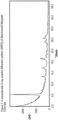
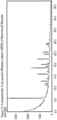
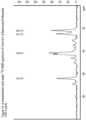
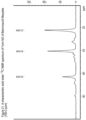
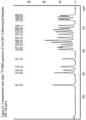
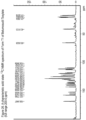
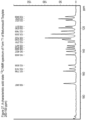
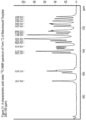
- the crystalline Form M1 of Belumosudil Mesylate may be characterized by data selected from one or more of the following: an X-ray powder diffraction pattern substantially as depicted in Figure 5 ; an X-ray powder diffraction pattern having peaks at 7.1, 17.2, 20.3, 21.5 and 25.5 degrees 2-theta ⁇ 0.2 degrees 2-theta; a solid state 13 C NMR spectrum with characteristic peaks at 137.8, 133.8, 122.5, 118.3 and 111.6 ppm ⁇ 0.2 ppm; a solid state 13 C NMR spectrum having the following chemical shift absolute differences from reference peak at 167.2 ppm ⁇ 1 ppm: 29.4, 33.4, 44.7, 48.9 and 55.6 ppm ⁇ 0.1 ppm; a solid state 13 C NMR spectrum substantially as depicted in any of Figures 16 , 17 and 18 ; and combinations of these data.
- Crystalline Form M1 of Belumosudil Mesylate may be further characterized by an X-ray powder diffraction pattern having peaks at 7.1, 17.2, 20.3, 21.5 and 25.5 degrees 2-theta ⁇ 0.2 degrees 2-theta, and also having any one, two, three, four or five additional peaks selected from 8.4, 15.5, 16.8, 19.5 and 22.1 degrees 2-theta ⁇ 0.2 degrees 2-theta.
- Crystalline form M1 of Belumosudil Mesylate may be alternatively characterized by X-ray powder diffraction pattern having peaks at 7.1, 8.4, 15.5, 16.8, 17.2, 19.5, 20.3, 21.5, 22.1 and 25.5 degrees 2-theta ⁇ 0.2 degrees 2-theta.
- crystalline form M1 of Belumosudil Mesylate may be an anhydrous form, as can be determined by TGA. According to any aspect or embodiment as described herein, crystalline form M1 of Belumosudil Mesylate may contain 0.5% w/w or less, or 0.2% w/w or less, or 0.1 wt% or less, of total residual solvent.
- the residual solvent may be one or more polar solvents, preferably water, alcohols (particularly C 1-4 alcohols, especially methanol, ethanol, isopropanol, 1-propanol, or n-butanol) or halogenated solvents (particularly 2,2,2-trifluoroethanol or dichloromethane), or DMSO, or mixtures thereof.
- polar solvents preferably water, alcohols (particularly C 1-4 alcohols, especially methanol, ethanol, isopropanol, 1-propanol, or n-butanol) or halogenated solvents (particularly 2,2,2-trifluoroethanol or dichloromethane), or DMSO, or mixtures thereof.
- crystalline form M1 of Belumosudil Mesylate may contain 0.5% w/w or less, or 0.2% w/w or less, or 0.1 wt% or less, of total residual solvent, wherein the residual solvent is: ethanol, water, or DMSO, or a combination of ethanol, water and DMSO and water, or a combination of ethanol and DMSO.
- crystalline form M1 of Belumosudil Mesylate may contain 0.5% w/w or less, or 0.2% w/w or less, or 0.1 wt% or less, of ethanol, or 0.5% w/w or less, or 0.2 w/w or less, or 0.1 wt% or less, of a mixture of ethanol and DMSO.
- crystalline Form M1 of Belumosudil Mesylate is isolated.
- crystalline form M1 of Belumosudil Mesylate according to any aspect or embodiment of the disclosure may be isolated.
- crystalline Form M1 of Belumosudil Mesylate is non-hygroscopic.
- Form M1 of Belumosudil Mesylate according to any aspect or embodiment is polymorphically stable at up to 100% relative humidity at room temperature for at least 7 days.
- Crystalline Form M1 of Belumosudil Mesylate may be characterized by each of the above characteristics alone/or by all possible combinations, e.g., an XRPD pattern having peaks at 7.1, 17.2, 20.3, 21.5 and 25.5 degrees 2-theta ⁇ 0.2 degrees 2-theta; an XRPD pattern as depicted in Figure 5 , and combinations thereof.
- Crystalline form M1 of Belumosudil Mesylate may be prepared by crystallisation from a mixture comprising Belumosudil Mesylate and one or more polar solvents, preferably a polar organic solvent, and particularly wherein the polar solvent is an alcohol or halogenated solvent, or mixtures thereof.
- suitable solvents include, but are not limited to, methanol, ethanol, isopropanol, 1-propanol, n-butanol, dichloromethane, and combinations thereof; and preferably ethanol, isopropanol, n-butanol or 1-propanol.
- Form M1 may be prepared by a process comprising:
- the mixture in step (a) may be prepared by:
- the process for preparing Form M1 of Belumosudil Mesylate as described herein is carried out in the absence of water or substantially in the absence of water, particularly 2 wt% or less, 1 wt% or less, 0.5 wt% or less, 0.2 wt% or less, or 0.1 wt% or less of water.
- the solvent in step (i) is preferably an organic solvent, particularly comprising an alcohol, a halogenated solvent, or mixtures thereof.
- the solvent is selected from the group consisting of methanol, ethanol, isopropanol, 1-propanol, n-butanol, and dichloromethane or mixtures thereof, and particularly, ethanol, isopropanol, 1-propanol, n-butanol.
- the ratio of solvent to Belumosudil may be: about 10 to about 40 ml per gram of Belumosudil, about 14 to about 35 ml per gram of Belumosudil or about 16 to about 20 to about 32 ml per gram of Belumosudil, or about 18 to about 24 ml per gram of Belumosudil, and optionally about 20 ml per gram of Belumosudil.
- the mixture in step (i) may be a solution or a slurry.
- step (ii) of the process for preparing form M1 combining of methanesulfonic acid to Belumosudil may be in any order.
- methanesulfonic acid may be added to the mixture of Belumosudil in the solvent. The addition may be carried out portion-wise or dropwise.
- the methanesulfonic acid is optionally added in an amount of: about 0.7 to about 1.5 molar equivalents, about 0.9 to about 1.3 molar equivalents, about 1.0 to about 1.2 molar equivalents, or about 1.1 molar equivalents relative to Belumosudil.
- step (ii) comprises adding Methanesulfonic acid to the mixture of Belumosudil and solvent.
- the mixture may be optionally heated.
- the heating may be to a temperature of about 30°C to about 70°C, about 40°C to about 60°C, about 45°C to about 55°C, or about 50°C.
- a further polar solvent may be added to the reaction mixture.
- the further solvent may be any solvent which is a poor solvent for Belumosudil Mesylate, i.e., a solvent in which Belumosudil Mesylate has low solubility.
- the further polar solvent may be the same solvent as that used in step (i)) or may be different.
- the further solvent is preferably selected from the group consisting of methanol, ethanol, isopropanol, 1-propanol, n-butanol, and dichloromethane or mixtures thereof.
- the further polar solvent in step (iv) is selected from methanol, ethanol, isopropanol, 1-propanol, and n-butanol.
- the further polar solvent in step (iv) is ethanol.
- the further polar solvent in step (iv) can be added in any suitable amount.
- the v/v ratio of the further polar solvent to the solvent in step (i) may be from: about 5 : 1 to about 1 : 5, or about 2 : 1 to about 1 : 2, or about 1.5 : 1 to about 1 : 1.5, or about 1.3 : 1 to about 1 : 1.3, and preferably about 1 : 1.3.
- the mixture in step (a) may be prepared by:
- the polar solvent in step (i-a) is preferably an organic solvent, more preferably selected from the group consisting of, 2,2,2-Trifluoroethanol (TFE), and DMSO or mixtures thereof. Particularly, the solvent is selected from the group consisting of TFE and DMSO.
- the ratio of solvent to Belumosudil Mesylate may be from: about 5 to about 50 ml, about 7 to about 40 ml, about 9 to about 35 ml, or about 10V to about 30 ml per gram of Belumosudil Mesylate.
- the organic antisolvent in step (ii-a) can be any organic solvent in which Belumosudil Mesylate is poorly soluble.
- the organic antisolvent in step (ii-a) is selected from the group consisting of acetonitrile, dioxane, methyl ethyl ketone, methyl t-butyl ketone, ethanol, isopropanol, 1-propanol, n-butanol, and more particularly, ethanol.
- the mixture in step (a) may be a solution or a slurry.
- the mixture in step (a) is preferably in the form of a slurry.
- the mixture in step (a) may be at room temperature, or may be heated. The heating may be to a temperature of about 30°C to about 70°C, about 40°C to about 60°C, about 45°C to about 55°C, or about 50°C. Alternatively, the mixture may be at room temperature.
- step (b) may be carried out, preferably by stirring at a temperature of: about 30°C to about 70°C, about 40°C to about 60°C, about 45°C to about 55°C, or about 50°C.
- step (b) may be carried out at room temperature.
- the stirring may be carried out for any suitable time. Typically, the stirring may be carried out over a period of about 10 minutes to about 2 hours, about 20 minutes to about 1 hour, or about 45 minutes.
- step (c) may be carried out.
- the cooling is to room temperature.
- step (d) can be carried out, preferably by stirring the cooled mixture for a suitable time to prepare Belumosudil Mesylate Form M1.
- the stirring may be carried out for any suitable time, preferably for about 6 to about 96 hours, about 20 to about 80 hours, about 30 to about 50 hours, or about 40 hours.
- step (e) may be carried out by any suitable method, for example by filtration, decantation or by centrifuge.
- the isolation of the solid is by filtration or by centrifuge, and more preferably by centrifuge.
- the process as described herein may further comprise washing and/or drying steps.
- the present disclosure includes a crystalline polymorph of Belumosudil Mesylate, designated form M2.
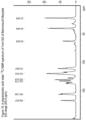
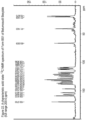
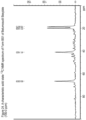
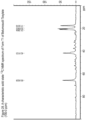
- the crystalline Form M2 of Belumosudil Mesylate may be characterized by data selected from one or more of the following: an X-ray powder diffraction pattern substantially as depicted in Figure 7 ; an X-ray powder diffraction pattern having peaks at 6.3, 12.8, 15.8, 19.3 and 26.5 degrees 2-theta ⁇ 0.2 degrees 2-theta; a solid state 13 C NMR spectrum with characteristic peaks at 156.1, 132.7, 135.5, 119.8 and 110.9 ppm ⁇ 0.2 ppm; a solid state 13 C NMR spectrum having the following chemical shift absolute differences from reference peak at 166.9 ppm ⁇ 1 ppm: 10.8, 34.2, 36.4, 47.1 and 56.0 ppm ⁇ 0.1 ppm; a solid state 13 C NMR spectrum substantially as depicted in any of Figures 19 , 20 and 21 ; and combinations of these data.
- Crystalline Form M2 of Belumosudil Mesylate may be further characterized by an X-ray powder diffraction pattern having peaks at 6.3, 12.8, 15.8, 19.3 and 26.5 degrees 2-theta ⁇ 0.2 degrees 2-theta, and also having any one, two, three, four or five additional peaks selected from 7.8, 20.4, 23.7, 25.1 and 27.4 degrees 2-theta ⁇ 0.2 degrees 2-theta.
- Crystalline form M2 of Belumosudil Mesylate may be alternatively characterized by X-ray powder diffraction pattern having peaks at 6.3, 7.8, 12.8, 15.8, 19.3, 20.4, 23.7, 25.1, 26.5 and 27.4 degrees 2-theta ⁇ 0.2 degrees 2-theta.
- crystalline form M2 of Belumosudil Mesylate may be a hydrate, preferably a di-hydrate.
- crystalline form M2 of Belumosudil Mesylate may contain about 1 % to about 7 % of water, preferably about 1.5 to about 6.1 % of water by weight.
- crystalline Form M2 of Belumosudil Mesylate is isolated.
- crystalline form M2 of Belumosudil Mesylate according to any aspect or embodiment of the disclosure may be isolated.
- crystalline Form M2 of Belumosudil Mesylate is non-hygroscopic.
- Form M2 of Belumosudil Mesylate according to any aspect or embodiment is polymorphically stable at up to 100% relative humidity at room temperature for at least 7 days.
- Crystalline Form M2 of Belumosudil Mesylate may be characterized by each of the above characteristics alone/or by all possible combinations, e.g., an XRPD pattern having peaks at 6.3, 12.8, 15.8, 19.3 and 26.5 degrees 2-theta ⁇ 0.2 degrees 2-theta; an XRPD pattern as depicted in Figure 7 , and combinations thereof.
- Crystalline form M2 of Belumosudil Mesylate may be prepared by crystallisation from a mixture comprising Belumosudil Mesylate and water, and optionally one or more polar organic solvents, preferably alcohols or mixtures thereof.
- suitable solvents include but are not limited to methanol, isopropanol, 1-propanol, n-butanol .
- the water may be present in an amount of: about 1 to about 60 ml per mmol of Belumosudil.
- the process may comprise:
- the mixture in step (a) may be prepared by:
- the polar organic solvent in step (i) may preferably comprise an alcohol or mixtures thereof.
- the polar organic solvent in step (i) is selected from: methanol, isopropanol, 1-propanol and n-butanol, or mixtures thereof; more preferably the polar organic solvent in step (i) is methanol, ethanol, isopropanol, 1-propanol, or n-butanol, and most preferably ethanol.
- the ratio of solvent to Belumosudil in step (i) may be: about 10 to about 40 ml per gram of Belumosudil, about 14 to about 35 ml per gram of Belumosudil or about 16 to about 28 ml per gram of Belumosudil, or about 18 to about 24 ml per gram of Belumosudil, and optionally about 20 ml per gram of Belumosudil.
- the mixture in step (i) may be a solution or a slurry.
- step (ii) the combining of Methanesulfonic acid to Belumosudil may be in any order.
- methanesulfonic acid may be added to the mixture of Belumosudil in the solvent. The addition may be carried out portion-wise or dropwise.
- the Methanesulfonic acid is optionally added in an amount of: about 0.7 to about 1.5 molar equivalents, about 0.9 to about 1.3 molar equivalents, about 1.0 to about 1.2 molar equivalents, or about 1.1 molar equivalents relative to Belumosudil.
- step (ii) comprises adding Methanesulfonic acid, to the mixture of Belumosudil and solvent.
- the mixture may be optionally heated.
- the heating may be to a temperature of about 30°C to about 70°C, about 40°C to about 60°C, about 45°C to about 55°C, or about 50°C.
- the heating may take place over any suitable period of time to form a solution of Belumosudil Mesylate.
- the mixture in step (a) may be prepared by a process comprising:
- the polar organic solvent in step (i-b) is preferably selected from the group consisting of TFE, DMSO and or mixtures thereof. Particularly, the solvent is selected from the group consisting of TFE and DMSO.
- the ratio of polar organic solvent in step (i-b) is preferably about 5 ml to 60 ml, about 7 ml to about 50 ml, about 10 ml to about 45 ml, or about 10 ml to about 40 ml, per gram of Belumosudil Mesylate.
- the mixture in step (a) may be prepared by a process comprising: (i-c) combining Belumosudil Mesylate with water to produce a slurry.
- the Belumosudil Mesylate is Form M1 as described according to any aspect or embodiment herein.
- the ratio of water step (i-c) is preferably about 10 ml to 60 ml, about 20 ml to about 50 ml, about 30 ml to about 45 ml, or about 40 ml, per gram of Belumosudil Mesylate.
- step (b) may be carried out.
- Step (b) is preferably carried out under heating, preferably at a temperature of: about 30°C to about 80°C, about 40°C to about 75°C, about 45°C to about 70°C, about 45°C to about 65°C, about 45°C to about 65 °C, about 48 °C to about 62°C, or about 50°C to about 60°C.
- the stirring may be carried out for any suitable period of time.
- step (c) may be carried out.
- Step (c) preferably comprises cooling the mixture to room temperature.
- step (d) may be carried out.
- the stirring may be for any suitable time to prepare Form M2.
- step (e) may be carried out by any suitable method, for example by filtration, decantation or by centrifuge.
- the isolation of the solid is by filtration or by centrifuge, and more preferably by centrifuge.
- the process described herein may further comprise washing and/or drying steps.
- crystalline polymorph of Belumosudil Mesylate designated form M3.
- the crystalline Form M3 of Belumosudil Mesylate may be characterized by data selected from one or more of the following: an X-ray powder diffraction pattern substantially as depicted in Figure 8 ; an X-ray powder diffraction pattern having peaks at 7.3, 14.6, 16.6, 17.5 and 19.6 degrees 2-theta ⁇ 0.2 degrees 2-theta; and combinations of these data.
- Crystalline Form M3 of Belumosudil Mesylate may be further characterized by an X-ray powder diffraction pattern having peaks at 7.3, 14.6, 16.6, 17.5 and 19.6 degrees 2-theta ⁇ 0.2 degrees 2-theta, and also having any one, two, three, four or five additional peaks selected from 12.9, 13.7, 19.0, 20.6 and 26.0 degrees 2-theta ⁇ 0.2 degrees 2-theta.
- Crystalline form M3 of Belumosudil Mesylate may be alternatively characterized by X-ray powder diffraction pattern having peaks at 7.3, 12.9, 13.7, 14.6, 16.6, 17.5, 19.0, 19.6, 20.6 and 26.0 degrees 2-theta ⁇ 0.2 degrees 2-theta.
- Crystalline Form M3 of Belumosudil Mesylate may be characterized by each of the above characteristics alone/or by all possible combinations, e.g., an XRPD pattern having peaks at 7.3, 14.6, 16.6, 17.5 and 19.6 degrees 2-theta ⁇ 0.2 degrees 2-theta; an XRPD pattern as depicted in Figure 8 , and combinations thereof.
- crystalline polymorph of Belumosudil Mesylate designated form M4.
- the crystalline Form M4 of Belumosudil Mesylate may be characterized by data selected from one or more of the following: an X-ray powder diffraction pattern substantially as depicted in Figure 11 ; an X-ray powder diffraction pattern having peaks at 7.5, 15.0, 17.9, 21.8 and 22.6 degrees 2-theta ⁇ 0.2 degrees 2-theta; and combinations of these data.
- Crystalline Form M4 of Belumosudil Mesylate may be further characterized by an X-ray powder diffraction pattern having peaks at 7.5, 15.0, 17.9, 21.8 and 22.6 degrees 2-theta ⁇ 0.2 degrees 2-theta, and also having any one, two, three, four or five additional peaks selected from 11.3, 17.4, 20.9, 24.2 and 29.2 degrees 2-theta ⁇ 0.2 degrees 2-theta.
- Crystalline form M4 of Belumosudil Mesylate may be alternatively characterized by X-ray powder diffraction pattern having peaks at 7.5, 11.3, 15.0, 17.4, 17.9, 20.9, 21.8, 22.6, 24.2 and 29.2 degrees 2-theta ⁇ 0.2 degrees 2-theta.
- Crystalline Form M4 of Belumosudil Mesylate may be characterized by each of the above characteristics alone/or by all possible combinations, e.g., an XRPD pattern having peaks at 7.5, 15.0, 17.9, 21.8 and 22.6 degrees 2-theta ⁇ 0.2 degrees 2-theta; an XRPD pattern as depicted in Figure 11 , and combinations thereof.
- a crystalline polymorph of Belumosudil Mesylate designated form M5.
- the crystalline Form M5 of Belumosudil Mesylate may be characterized by data selected from one or more of the following: an X-ray powder diffraction pattern substantially as depicted in Figure 12 ; an X-ray powder diffraction pattern having peaks at 6.2, 15.7, 18.4, 19.2 and 25.1 degrees 2-theta ⁇ 0.2 degrees 2-theta; and combinations of these data.
- Crystalline Form M5 of Belumosudil Mesylate may be further characterized by an X-ray powder diffraction pattern having peaks at 6.2, 15.7, 18.4, 19.2 and 25.1 degrees 2-theta ⁇ 0.2 degrees 2-theta, and also having any one, two, three, four or five additional peaks selected from 17.8, 21.6, 21.9, 24.7, 25.9 degrees 2-theta ⁇ 0.2 degrees 2-theta.
- Crystalline form M5 of Belumosudil Mesylate may be alternatively characterized by X-ray powder diffraction pattern having peaks at 6.2, 15.7, 17.8, 18.4, 19.2, 21.6, 21.9, 24.7, 25.1 and 25.9 degrees 2-theta ⁇ 0.2 degrees 2-theta.
- Crystalline Form M5 of Belumosudil Mesylate may be characterized by each of the above characteristics alone/or by all possible combinations, e.g., an XRPD pattern having peaks at 6.2, 15.7, 18.4, 19.2 and 25.1 degrees 2-theta ⁇ 0.2 degrees 2-theta; an XRPD pattern as depicted in Figure 12 , and combinations thereof.
- a crystalline polymorph of Belumosudil Besylate designated form BS1.
- the crystalline Form BS1 of Belumosudil Besylate may be characterized by data selected from one or more of the following: an X-ray powder diffraction pattern substantially as depicted in Figure 13 ; an X-ray powder diffraction pattern having peaks at 6.6, 12.5, 14.9, 17.0 and 20.1 degrees 2-theta ⁇ 0.2 degrees 2-theta; a solid state 13 C NMR spectrum with characteristic peaks at 158.9, 146.8, 134.3, 121.3 and 117.6 ppm ⁇ 0.2 ppm; a solid state 13 C NMR spectrum having the following chemical shift absolute differences from reference peak at 169.6 ppm ⁇ 1 ppm: 10.7, 22.8, 35.3, 48.3 and 52.0 ppm ⁇ 0.1 ppm; a solid state 13 C NMR spectrum substantially as depicted in any of Figures 22
- Crystalline Form BS1 of Belumosudil Besylate may be further characterized by an X-ray powder diffraction pattern having peaks at 6.6, 12.5, 14.9, 17.0 and 20.1 degrees 2-theta ⁇ 0.2 degrees 2-theta, and also having any one, two, three, four or five additional peaks selected from 11.6, 17.6, 18.2, 21.7 and 25.1 degrees 2-theta ⁇ 0.2 degrees 2-theta.
- Crystalline form BS1 of Belumosudil Besylate may be alternatively characterized by X-ray powder diffraction pattern having peaks at 6.6, 11.6, 12.5, 14.9, 17.0, 17.6, 18.2, 20.1, 21.7 and 25.1 degrees 2-theta ⁇ 0.2 degrees 2-theta.
- Crystalline form BS1 of Belumosudil Besylate may be an anhydrous form, as can be determined by TGA.
- the present disclosure comprises crystalline form BS1 of Belumosudil Besylate having 0.5% w/w or less, or 0.2% w/w or less, or 0.1 wt% or less, of total residual solvent.
- Crystalline form BS1 of Belumosudil Besylate may contain 0.5% w/w or less, or 0.2% w/w or less, or 0.1 wt% or less, of total residual solvent.
- the residual organic solvent may be one or more polar solvents, preferably water, alcohols (particularly C 1-4 alcohols, especially ethanol, methanol, isopropanol, 1-propanol, or n-butanol), and most preferably the residual organic solvent may be ethanol.
- crystalline form BS1 of Belumosudil Besylate may contain 0.5% w/w or less, or 0.2 w/w or less, or 0.1 wt% or less, of ethanol.
- Crystalline Form BS1 of Belumosudil Mesylate may be non-hygroscopic. Particularly, Form BS1 of Belumosudil Mesylate is polymorphically stable at up to 100% relative humidity at room temperature for at least 7 days.
- Crystalline Form BS1 of Belumosudil Besylate may be characterized by each of the above characteristics alone/or by all possible combinations, e.g., an XRPD pattern having peaks at 6.6, 12.5, 14.9, 17.0 and 20.1 degrees 2-theta ⁇ 0.2 degrees 2-theta; an XRPD pattern as depicted in Figure 13 , and combinations thereof.
- Crystalline form BS1 of Belumosudil Besylate may be prepared by crystallisation from a mixture comprising Belumosudil Besylate and a polar solvent such as ethanol.
- the process may comprise:
- the mixture in step (a) may be prepared by:
- the polar solvent in step (i) is preferably an alcohol (particularly C 1-4 alcohols, especially ethanol, methanol, isopropanol, 1-propanol, or n-butanol).
- the polar solvent comprises ethanol or isopropanol and more preferably the polar solvent is ethanol.
- the ratio of solvent to Belumosudil may be: about 10 to about 40 ml per gram of Belumosudil, about 14 to about 35 ml per gram of Belumosudil or about 16 to about 28 ml per gram of Belumosudil, or about 18 to about 24 ml per gram of Belumosudil, and optionally about 20 ml per gram of Belumosudil.
- the mixture may be a solution or a slurry.
- step (ii) may comprise combining Benzenesulfonic acid to Belumosudil.
- the combining may be in any order.
- benzenesulfonic acid may be added to the mixture of Belumosudil in the solvent.
- the addition may be carried out portion-wise or dropwise.
- the Benzenesulfonic acid is optionally added in an amount of: about 0.7 to about 1.5 molar equivalents, about 0.9 to about 1.3 molar equivalents, about 1.0 to about 1.2 molar equivalents, or about 1.1 molar equivalents relative to Belumosudil.
- step (ii) comprises adding Benzenesulfonic acid to the mixture of Belumosudil and polar solvent.
- the mixture in step (a) may be prepared by combining Belumosudil Besylate with a polar solvent.
- the polar solvent is an alcohol (particularly C 1-4 alcohols, especially ethanol, methanol, isopropanol, 1-propanol, or n-butanol), and most preferably the polar solvent is ethanol.
- step (b) may be carried out, preferably by stirring at room temperature, more preferably at a temperature of: about 30°C to about 70°C, about 40°C to about 60°C, about 45°C to about 55°C, or about 50°C.
- the stirring is carried out at a temperature.
- the stirring may be carried out for any suitable time to form Belumosudil Besylate Form BS1.
- the stirring may be carried out over a period of about 10 minutes to about 2 hours, about 20 minutes to about 1 hour, or about 45 minutes.
- step (c) may be carried out, preferably wherein the cooling is to room temperature.
- step (d) may be carried out by any suitable method, for example by filtration, decantation or by centrifuge.
- the isolation of the solid is by filtration or by centrifuge, and more preferably by centrifuge.
- the process for preparing from BS1 as described herein may further comprise washing and/or drying steps.
- the crystalline Form T1 of Belumosudil Tosylate may be characterized by data selected from one or more of the following: an X-ray powder diffraction pattern substantially as depicted in Figure 14 ; an X-ray powder diffraction pattern having peaks at 6.2, 12.3, 14.1, 17.7 and 18.4 degrees 2-theta ⁇ 0.2 degrees 2-theta; a solid state 13 C NMR spectrum with characteristic peaks at 152.6, 143.4, 132.3, 125.3 and 119.8 ppm ⁇ 0.2 ppm; a solid state 13 C NMR spectrum having the following chemical shift absolute differences from reference peak at 168.6 ppm ⁇ 1 ppm: 16.0, 25.2, 36.3, 43.3 and 48.8 ppm ⁇ 0.1 ppm; a solid state 13 C NMR spectrum substantially as depicted in any of Figures 26 , 27 and 28 ;
- Crystalline Form T1 of Belumosudil Tosylate may be further characterized by an X-ray powder diffraction pattern having peaks at 6.2, 12.3, 14.1, 17.7 and 18.4 degrees 2-theta ⁇ 0.2 degrees 2-theta, and also having any one, two, three, four or five additional peaks selected from 9.9, 14.5, 16.7, 21.5 and 24.6 degrees 2-theta ⁇ 0.2 degrees 2-theta.
- Crystalline form T1 of Belumosudil Tosylate may be alternatively characterized by X-ray powder diffraction pattern having peaks at 6.2, 9.9, 12.3, 14.1, 14.5, 16.7, 17.7, 18.4, 21.5 and 24.6 degrees 2-theta ⁇ 0.2 degrees 2-theta.
- Crystalline form T1 of Belumosudil Tosylate may be an anhydrous form, as can be determined by TGA.
- the present disclosure comprises crystalline form T1 of Belumosudil Tosylate having 0.5% w/w or less, or 0.2% w/w or less, or 0.1 wt% or less, of total residual solvent.
- the residual solvent may be one or more polar solvents, preferably water and/or alcohols (particularly C 1-4 alcohols, especially ethanol, methanol, isopropanol, 1-propanol, or n-butanol), and most preferably the residual organic solvent may be methanol.
- crystalline form T1 of Belumosudil Tosylate may contain to 0.5% w/w or less, or 0.2% w/w or less, or 0.1 wt% or less, of methanol.
- Crystalline Form T1 of Belumosudil Mesylate may be non-hygroscopic. Particularly, Form T1 of Belumosudil Mesylate is polymorphically stable at up to 100% relative humidity at room temperature for at least 7 days.
- Crystalline Form T1 of Belumosudil Tosylate may be characterized by each of the above characteristics alone/or by all possible combinations, e.g., an XRPD pattern having peaks at 6.2, 12.3, 14.1, 17.7 and 18.4 degrees 2-theta ⁇ 0.2 degrees 2-theta; an XRPD pattern as depicted in Figure 14 , and combinations thereof.
- Crystalline form T1 of Belumosudil Tosylate may be prepared by crystallisation from a mixture comprising Belumosudil Tosylate and one or more polar solvents such as alcohols.
- the solvent is methanol.
- the process may comprise:
- the mixture in step (a) may be prepared by:
- the process for preparing Form T1 of Belumosudil Tosylate as described herein is carried out in the absence of water or substantially in the absence of water, particularly 2 wt% or less, 1 wt% or less, 0.5 wt% or less, 0.2 wt% or less, or 0.1 wt% or less of water.
- the polar solvent is preferably an alcohol (particularly C 1-4 alcohols, especially ethanol, methanol, isopropanol, 1-propanol, or n-butanol), and most preferably the polar solvent is methanol.
- the ratio of solvent to Belumosudil may be: about 10 to about 40 ml per gram of Belumosudil, about 14 to about 35 ml per gram of Belumosudil or about 16 to about 28 ml per gram of Belumosudil, or about 18 to about 24 ml per gram of Belumosudil, and optionally about 20 ml per gram of Belumosudil.
- the mixture may be a solution or a slurry
- step (ii) combining of Toluenesulfonic acid to Belumosudil may be in any order.
- Toluenesulfonic acid may be added to the mixture of Belumosudil in the solvent. The addition may be carried out portion-wise or dropwise.
- the Toluenesulfonic acid is optionally added in an amount of: about 0.7 to about 1.5 molar equivalents, about 0.9 to about 1.3 molar equivalents, about 1.0 to about 1.2 molar equivalents, or about 1.1 molar equivalents relative to Belumosudil.
- step (ii) comprises adding Toluenesulfonic acid, to the mixture of Belumosudil and solvent.
- the mixture in step (a) may be prepared by combining Belumosudil Tosylate with a polar solvent.
- a polar solvent is an alcohol (particularly C 1-4 alcohols, especially ethanol, methanol, isopropanol, 1-propanol, or n-butanol), and most preferably the polar solvent is methanol.
- step (b) may be carried out, preferably by stirring at a temperature of: about 30°C to about 70°C, about 40°C to about 60°C, about 45°C to about 55°C, or about 50°C.
- the stirring may be carried out for any suitable time.
- step (c) may be carried out, preferably wherein the cooling is to room temperature.
- step (d) may be carried out by any suitable method, for example by filtration, decantation or by centrifuge.
- the isolation of the solid is by filtration or by centrifuge, and more preferably by centrifuge.
- the process may further comprise washing and/or drying steps.
- the crystalline Form T2 of Belumosudil Tosylate may be characterized by data selected from one or more of the following: an X-ray powder diffraction pattern substantially as depicted in Figure 15 ; an X-ray powder diffraction pattern having peaks at 5.1, 15.7, 16.4, 19.7 and 23.7 degrees 2-theta ⁇ 0.2 degrees 2-theta; a solid state 13 C NMR spectrum with characteristic peaks at 141.7, 140.2, 131.1, 125.9 and 124.2 ppm ⁇ 0.2 ppm; a solid state 13 C NMR spectrum having the following chemical shift absolute differences from reference peak at 166.3 ppm ⁇ 1 ppm: 24.6, 26.1, 35.2, 40.4 and 42.1 ppm ⁇ 0.1 ppm; a solid state 13 C NMR spectrum substantially as depicted in any of Figures 30 , 31 and 32 ; and combinations
- Crystalline Form T2 of Belumosudil Tosylate may be further characterized by an X-ray powder diffraction pattern having peaks at 5.1, 15.7, 16.4, 19.7 and 23.7 degrees 2-theta ⁇ 0.2 degrees 2-theta, and also having any one, two, three, four or five additional peaks selected from 13.7, 14.2, 14.6, 19.1 and 23.0 degrees 2-theta ⁇ 0.2 degrees 2-theta.
- Crystalline form T2 of Belumosudil Tosylate may be alternatively characterized by X-ray powder diffraction pattern having peaks at 5.1, 13.7, 14.2, 14.6, 15.7, 16.4, 19.1, 19.7, 23.0 and 23.7 degrees 2-theta ⁇ 0.2 degrees 2-theta.
- Crystalline form T2 of Belumosudil Tosylate may be an anhydrous form, as can be determined by TGA.
- the present disclosure comprises crystalline form T2 of Belumosudil Tosylate having 1% w/w or less, or 0.5% w/w or less or 0.2% w/w or less, or 0.1 wt% or less, of total residual solvent.
- the residual solvent may be one or more polar solvents, preferably water or alcohols (particularly C 1-4 alcohols, especially ethanol, methanol, isopropanol, 1-propanol, or n-butanol), and most preferably the residual organic solvent may be water and/or ethanol.
- crystalline form T2 of Belumosudil Tosylate may contain 0.5% w/w or less, or 0.2% w/w or less, or 0.1 wt% or less, of ethanol. Crystalline Form T2 of Belumosudil Tosylate may be isolated.
- Crystalline Form T2 of Belumosudil Mesylate may be non-hygroscopic. Particularly, Form T2 of Belumosudil Mesylate may be polymorphically stable at up to 100% relative humidity at room temperature for at least 7 days.
- Crystalline Form T2 of Belumosudil Tosylate may be characterized by each of the above characteristics alone/or by all possible combinations, e.g., an XRPD pattern having peaks at 5.1, 15.7, 16.4, 19.7 and 23.7 degrees 2-theta ⁇ 0.2 degrees 2-theta; an XRPD pattern as depicted in Figure 15 , and combinations thereof.
- Crystalline form T2 of Belumosudil Tosylate may be prepared by crystallisation from a mixture comprising Belumosudil Tosylate and one or more polar solvent such as water.
- the process can comprise:
- the mixture in step (a) may be prepared by:
- the polar solvent in step (i) preferably comprises water, and more preferably the polar solvent in step (i) water.
- the ratio of solvent to Belumosudil may be: about 10 to about 40 ml per gram of Belumosudil, about 14 to about 35 ml per gram of Belumosudil or about 16 to about 28 ml per gram of Belumosudil, or about 18 to about 24 ml per gram of Belumosudil, about 20 to about 30, and optionally about 20 ml per gram of Belumosudil.
- the mixture may be a solution or a slurry.
- step (ii) may comprise combining Toluenesulfonic acid to Belumosudil in any order.
- Toluenesulfonic acid may be added to the mixture of Belumosudil in the solvent. The addition may be carried out portion-wise or dropwise.
- the Toluenesulfonic acid is optionally added in an amount of: about 0.7 to about 1.5 molar equivalents, about 0.9 to about 1.3 molar equivalents, about 1.0 to about 1.2 molar equivalents, or about 1.1 molar equivalents relative to Belumosudil.
- step (ii) comprises adding Toluenesulfonic acid, to the mixture of Belumosudil and solvent.
- the polar solvent is preferably selected from the group consisting of methanol, ethanol, isopropanol, 1-propanol, and n-butanol. More preferably, the polar solvent in step (iii) is ethanol.
- the ratio of total solvent to Belumosudil may be from: about 20 to about 50 ml, about 20 to about 40 ml, about 22 to about 35 ml, or about 25 ml, per gram of Belumosudil.
- the mixture in step (a) may be prepared by combining Belumosudil Tosylate with one or more polar solvents.
- the polar solvent is water and/or an alcohol (particularly C 1-4 alcohols, especially ethanol, methanol, isopropanol, 1-propanol, or n-butanol).
- the polar solvent is water and ethanol.
- step (b) may be carried out, preferably by stirring at a temperature of: about 30°C to about 70°C, about 40°C to about 60°C, about 45°C to about 55°C, or about 50°C.
- the stirring may be carried out for any suitable time. Typically, the stirring may be carried out over a period of about 10 minutes to about 2 hours, about 20 minutes to about 1 hour, or about 50 minutes.
- the mixture may be cooled, preferably to room temperature, and step (d) may be carried out by any suitable method, for example by filtration, decantation or by centrifuge.
- step (d) may be carried out by any suitable method, for example by filtration, decantation or by centrifuge.
- the isolation of the solid is by filtration or by centrifuge, and more preferably by centrifuge.
- the process as described herein may further comprise washing and/or drying steps.
- the present disclosure encompasses a process for preparing other solid state forms of Belumosudil, Belumosudil salts and their solid state forms thereof.
- the process includes preparing Belumosudil mesylate Forms M1 and M2 by the processes of the present disclosure, and converting that salt to said other Belumosudil salt.
- the conversion can be done, for example, by a process including basifying any one or a combination of the above described Belumosudil Mesylate Forms M1 and M2, and reacting the obtained Belumosudil base with an appropriate acid, to obtain the corresponding salt.
- the conversion can be done by salt switching, i.e., reacting a Belumosudil acid addition salt, with an acid having a pKa which is lower than the pKa of the acid of the Belumosudil mesylate.
- the present disclosure provides the above described crystalline polymorph Forms M1 and M2 of Belumosudil Mesylate for use in the preparation of pharmaceutical compositions comprising Belumosudil, salts thereof and/or crystalline polymorphs thereof.
- the present disclosure also encompasses the use of crystalline polymorph Forms M1 and M2 of Belumosudil Mesylate, of the present disclosure for the preparation of pharmaceutical compositions of of Belumosudil Mesylate, Belumosudil Tosylate and/or Belumosudil Besylate and/or crystalline polymorphs thereof.
- any of the solid state forms M1 and M2 of Belumosudil Mesylate described herein may be polymorphically pure or may be substantially free of any other solid state forms ofBelumosudil Mesylate.
- any of the solid state forms M1 and M2 of Belumosudil Mesylate may contain: about 20% (w/w) or less, about 10% (w/w) or less, about 5% (w/w) or less, about 2% (w/w) or less, about 1% (w/w) or less, about 0.5% (w/w) or less, about 0.2% (w/w) or less, about 0.1% (w/w) or less, or about 0%, of any other solid state forms of Belumosudil mesylate, preferably as measured by XRPD.
- any of the disclosed crystalline forms of Belumosudil Mesylate described herein may be substantially free of any other solid state forms of the subject compound, and may contain greater than about 80% (w/w), greater than about 90% (w/w), greater than about 95% (w/w), greater than about 98% (w/w), greater than about 99% (w/w), or about 100% of the solid state form M1 and M2 of the Belumosudil Mesylate.
- the present disclosure includes processes for preparing the above mentioned pharmaceutical compositions.
- the processes include combining any one or a combination of the crystalline polymorph Forms M1 and M2 of Belumosudil Mesylate of the present disclosure with at least one pharmaceutically acceptable excipient.
- compositions or formulations of the present disclosure contain any one or a combination of the solid state forms M1 and M2 of Belumosudil Mesylate of the present disclosure.
- the pharmaceutical formulations of the present disclosure can contain one or more excipients. Excipients are added to the formulation for a variety of purposes.
- the pharmaceutical composition or formulation according to any aspect or embodiment of the present disclosure is in the form of a tablet or a capsule, more preferably a tablet.
- Diluents increase the bulk of a solid pharmaceutical composition, and can make a pharmaceutical dosage form containing the composition easier for the patient and caregiver to handle.
- Diluents for solid compositions include, for example, microcrystalline cellulose (e.g., Avicel ® ), microfine cellulose, lactose, starch, pregelatinized starch, calcium carbonate, calcium sulfate, sugar, dextrates, dextrin, dextrose, dibasic calcium phosphate dihydrate, tribasic calcium phosphate, kaolin, magnesium carbonate, magnesium oxide, maltodextrin, mannitol, polymethacrylates (e.g., Eudragit ® ), potassium chloride, powdered cellulose, sodium chloride, sorbitol, and talc.
- microcrystalline cellulose e.g., Avicel ®
- microfine cellulose lactose
- starch pregelatinized starch
- calcium carbonate calcium sulfate
- sugar dextra
- Solid pharmaceutical compositions that are compacted into a dosage form, such as a tablet can include excipients whose functions include helping to bind the active ingredient and other excipients together after compression.
- Binders for solid pharmaceutical compositions include acacia, alginic acid, carbomer (e.g. carbopol), carboxymethylcellulose sodium, dextrin, ethyl cellulose, gelatin, guar gum, hydrogenated vegetable oil, hydroxyethyl cellulose, hydroxypropyl cellulose (e.g. Klucel ® ), hydroxypropyl methyl cellulose (e.g.
- Methocel ® liquid glucose, magnesium aluminum silicate, maltodextrin, methylcellulose, polymethacrylates, povidone (e.g. Kollidon ® , Plasdone ® ), pregelatinized starch, sodium alginate, and starch.
- povidone e.g. Kollidon ® , Plasdone ®
- pregelatinized starch sodium alginate, and starch.
- the dissolution rate of a compacted solid pharmaceutical composition in the patient's stomach can be increased by the addition of a disintegrant to the composition.
- Disintegrants include alginic acid, carboxymethylcellulose calcium, carboxymethylcellulose sodium (e.g., Ac-Di-Sol ® , Primellose ® ), colloidal silicon dioxide, croscarmellose sodium, crospovidone (e.g., Kollidon ® , Polyplasdone ® ), guar gum, magnesium aluminum silicate, methyl cellulose, microcrystalline cellulose, polacrilin potassium, powdered cellulose, pregelatinized starch, sodium alginate, sodium starch glycolate (e.g., Explotab ® ), and starch.
- alginic acid include alginic acid, carboxymethylcellulose calcium, carboxymethylcellulose sodium (e.g., Ac-Di-Sol ® , Primellose ® ), colloidal silicon dioxide, croscarmellose sodium, crospo
- Glidants can be added to improve the flowability of a non-compacted solid composition and to improve the accuracy of dosing.
- Excipients that can function as glidants include colloidal silicon dioxide, magnesium trisilicate, powdered cellulose, starch, talc, and tribasic calcium phosphate.
- a dosage form such as a tablet
- the composition is subjected to pressure from a punch and dye.
- Some excipients and active ingredients have a tendency to adhere to the surfaces of the punch and dye, which can cause the product to have pitting and other surface irregularities.
- a lubricant can be added to the composition to reduce adhesion and ease the release of the product from the dye.
- Lubricants include magnesium stearate, calcium stearate, glyceryl monostearate, glyceryl palmitostearate, hydrogenated castor oil, hydrogenated vegetable oil, mineral oil, polyethylene glycol, sodium benzoate, sodium lauryl sulfate, sodium stearyl fumarate, stearic acid, talc, and zinc stearate.
- Flavoring agents and flavor enhancers make the dosage form more palatable to the patient.
- Common flavoring agents and flavor enhancers for pharmaceutical products that can be included in the composition of the present disclosure include maltol, vanillin, ethyl vanillin, menthol, citric acid, fumaric acid, ethyl maltol, and tartaric acid.
- Solid and liquid compositions can also be dyed using any pharmaceutically acceptable colorant to improve their appearance and/or facilitate patient identification of the product and unit dosage level.
- Belumosudil and any other solid excipients can be dissolved or suspended in a liquid carrier such as water, vegetable oil, alcohol, polyethylene glycol, propylene glycol, or glycerin.
- Liquid pharmaceutical compositions can contain emulsifying agents to disperse uniformly throughout the composition an active ingredient or other excipient that is not soluble in the liquid carrier.
- Emulsifying agents that can be useful in liquid compositions of the present invention include, for example, gelatin, egg yolk, casein, cholesterol, acacia, tragacanth, chondrus, pectin, methyl cellulose, carbomer, cetostearyl alcohol, and cetyl alcohol.
- Liquid pharmaceutical compositions of the present invention can also contain a viscosity enhancing agent to improve the mouth-feel of the product and/or coat the lining of the gastrointestinal tract.
- a viscosity enhancing agent include acacia, alginic acid bentonite, carbomer, carboxymethylcellulose calcium or sodium, cetostearyl alcohol, methyl cellulose, ethylcellulose, gelatin guar gum, hydroxyethyl cellulose, hydroxypropyl cellulose, hydroxypropyl methyl cellulose, maltodextrin, polyvinyl alcohol, povidone, propylene carbonate, propylene glycol alginate, sodium alginate, sodium starch glycolate, starch tragacanth, xanthan gum and combinations thereof.
- Sweetening agents such as sorbitol, saccharin, sodium saccharin, sucrose, aspartame, fructose, mannitol, and invert sugar can be added to improve the taste.
- Preservatives and chelating agents such as alcohol, sodium benzoate, butylated hydroxyl toluene, butylated hydroxyanisole, and ethylenediamine tetraacetic acid can be added at levels safe for ingestion to improve storage stability.
- a liquid composition can also contain a buffer such as gluconic acid, lactic acid, citric acid, or acetic acid, sodium gluconate, sodium lactate, sodium citrate, or sodium acetate. Selection of excipients and the amounts used can be readily determined by the formulation scientist based upon experience and consideration of standard procedures and reference works in the field.
- a buffer such as gluconic acid, lactic acid, citric acid, or acetic acid, sodium gluconate, sodium lactate, sodium citrate, or sodium acetate.
- the solid compositions of the present disclosure include powders, granulates, aggregates, and compacted compositions.
- the dosages include dosages suitable for oral, buccal, rectal, parenteral (including subcutaneous, intramuscular, and intravenous), inhalant, and ophthalmic administration. Although the most suitable administration in any given case will depend on the nature and severity of the condition being treated, in embodiments the route of administration is oral.
- the dosages can be conveniently presented in unit dosage form and prepared by any of the methods well-known in the pharmaceutical arts.
- Dosage forms include solid dosage forms like tablets, powders, capsules, suppositories, sachets, troches, and lozenges, as well as liquid syrups, suspensions, and elixirs.
- the dosage form of the present disclosure can be a capsule containing the composition, such as a powdered or granulated solid composition of the disclosure, within either a hard or soft shell.
- the shell can be made from gelatin and optionally contain a plasticizer such as glycerin and/or sorbitol, an opacifying agent and/or colorant.
- compositions and dosage forms can be formulated into compositions and dosage forms according to methods known in the art.
- a composition for tableting or capsule filling can be prepared by wet granulation.
- wet granulation some or all of the active ingredients and excipients in powder form are blended and then further mixed in the presence of a liquid, typically water, that causes the powders to clump into granules.
- the granulate is screened and/or milled, dried, and then screened and/or milled to the desired particle size.
- the granulate can then be tableted, or other excipients can be added prior to tableting, such as a glidant and/or a lubricant.
- a tableting composition can be prepared conventionally by dry blending.
- the blended composition of the actives and excipients can be compacted into a slug or a sheet and then comminuted into compacted granules. The compacted granules can subsequently be compressed into a tablet.
- a blended composition can be compressed directly into a compacted dosage form using direct compression techniques.
- Direct compression produces a more uniform tablet without granules.
- Excipients that are particularly well suited for direct compression tableting include microcrystalline cellulose, spray dried lactose, dicalcium phosphate dihydrate, and colloidal silica. The proper use of these and other excipients in direct compression tableting is known to those in the art with experience and skill in particular formulation challenges of direct compression tableting.
- a capsule filling of the present disclosure can include any of the aforementioned blends and granulates that were described with reference to tableting, but they are not subjected to a final tableting step.
- Belumosudil Mesylate A pharmaceutical formulation of Belumosudil Mesylate can be administered.
- Belumosudil Mesylate may be formulated for administration to a mammal, in embodiments to a human, by injection.
- Belumosudil can be formulated, for example, as a viscous liquid solution or suspension, such as a clear solution, for injection.
- the formulation can contain one or more solvents.
- a suitable solvent can be selected by considering the solvent's physical and chemical stability at various pH levels, viscosity (which would allow for syringeability), fluidity, boiling point, miscibility, and purity.
- Suitable solvents include alcohol USP, benzyl alcohol NF, benzyl benzoate USP, and Castor oil USP. Additional substances can be added to the formulation such as buffers, solubilizers, and antioxidants, among others.
- Ansel et al. Pharmaceutical Dosage Forms and Drug Delivery Systems, 7th ed.
- the crystalline polymorph Forms M1 and M2 of Belumosudil Mesylate and the pharmaceutical compositions and/or formulations of Belumosudil of the present disclosure can be used as medicaments, in embodiments in the treatment of Graft-Versus-Host Disease including Chronic Graft-Versus-Host Disease, Systemic Sclerosis including Diffuse Cutaneous Systemic Sclerosis, Fibrosis including Idiopathic Pulmonary Fibrosis, Plaque Psoriasis, Systemic Scleroderma, and particularly Chronic Graft-Versus-Host Disease and/or Systemic Sclerosis.
- the present disclosure also provides the Forms M1 and M2 of Belumosudil Mesylate for use in methods of treating Graft-Versus-Host Disease including Chronic Graft-Versus-Host Disease, Systemic Sclerosis including Diffuse Cutaneous Systemic Sclerosis, Fibrosis including Idiopathic Pulmonary Fibrosis, Plaque Psoriasis, Systemic Scleroderma, and particularly Chronic Graft-Versus-Host Disease and/or Systemic Sclerosis by administering a therapeutically effective amount of any one or a combination of the crystalline polymorph Forms M1 and M2 of Belumosudil Mesylate of the present disclosure, or at least one of the above pharmaceutical compositions and/or formulations, to a subject in need of the treatment.
- XRPD analysis was performed on a Bruker powder X-Ray diffractometer model D8 ADVANCE equipped with a solid state detector. Copper radiation of 1.54060 ⁇ was used. Scanning parameters: range: 2-40 degrees two-theta; scan mode; step size: 0.05°.
- Solid-state 13C NMR spectra were recorded with variable amplitude cross polarization, magic angle spinning and high power proton decoupling using a BRUKER Avance II+ spectrometer operating at 125MHz and controlled temperature at 0°C.
- a probe using 4 mm o.d. zirconia rotors was employed. The operation conditions were: contact time: 2 ms; recycle delay: 5s; 1024 scans and spin rate of 11 kHz.
- Chemical shifts were referenced via a replacement sample of glycine (carboxyl carbon chemical shift assigned as 176.03 ppm relative to the signal of tetramethylsilane).
- Belumosudil can be prepared according to methods known from the literature, for example according to International Publication No. WO 2006/105081 . Examples marked with an asterisk (*) are provided for reference only.
- Amorphous Belumosudil (30 mg, 0.066 mmol) was heated by TGA to 160 °C over a period of 0.5 hours. The obtained solid was analyzed by X-ray powder diffraction and identified as Belumosudil crystalline form B2.
- Tetrahydrofuran (5 ml, 50V) was added to Belumosudil (100 mg, 0.22 mmol) at 40 °C and stirred for 10 minutes to obtain clear solution. The solution was then mechanically filtered, cooled to room temperature and stirred over a period of 14 hours to afford a wet solid. The solid was separated by centrifuge. The obtained wet solid was analyzed by XRPD and characterized as Belumosudil crystalline form B3. The XRPD pattern is presented in Figure 4 .
- Ethanol (4 ml, 20V) was added to Belumosudil (200 mg, 0. 44 mmol) to obtain a slurry at room temperature.
- Methanesulfonic acid 31 ⁇ L, 1.1 eq was added drop-wise to give clear solution.
- the solution was heated to 50 °C and precipitation was observed.
- Ethanol (3 ml, 15V) was added to the obtained massive precipitate followed by magnetically stirring over a period of 30 minutes at 50 °C. Next, the precipitate was spontaneously cooled to room temperature. The solid was separated by centrifuge.
- the obtained solid was washed twice with ethanol (400 ⁇ L, 2V) and dried in a vacuum oven at 45 °C over a period of 16 hours to afford yellow solid.
- the obtained solid was analyzed by X-ray powder diffraction and characterized as Belumosudil Mesylate crystal form M1.
- the XRPD pattern is presented in Figure 5 .
- DMSO 0.9 ml, 30V
- Belumosudil Mesylate salt 30 mg, 0.06 mmol
- the slurry was heated to 50 °C for 10 minutes to obtain complete dissolution, followed by a hot mechanical filtration.
- ethanol as anti-solvent 2.7 ml, 100V
- the slurry was magnetically stirred at room temperature during 40 hours. Then, the solid was isolated by centrifuge. The obtained wet solid was analyzed by X-ray powder diffraction and identified as Belumosudil Mesylate crystal form M1.
- 2,2,2-Trifluoroethanol (0.3 ml, 10V) was added to Belumosudil Mesylate salt (30 mg, 0.06 mmol) to give slurry.
- the slurry was heated to 60 °C for 10 minutes to obtain complete dissolution, followed by a hot mechanical filtration.
- ethanol as anti-solvent (1.2 ml, 40V) was added drop-wise to obtain a solid precipitate.
- the slurry was magnetically stirred at room temperature during 17hours. Then, the solid was isolated by centrifuge. The obtained wet solid was analyzed by X-ray powder diffraction and identified as Belumosudil Mesylate crystal form M1.
- DMSO (2ml, 40V) was added to Belumosudil Mesylate salt form M1 (50 mg, 0.11 mmol) to give a slurry.
- the slurry was heated to 50 °C for 10 minutes to obtain complete dissolution, followed by a hot mechanical filtration.
- the solution was spontaneously cooled to room temperature and magnetically stirred for 5 days.
- cold water as anti-solvent (5ml, 100V, 4 °C) was added drop-wise to obtain a solid precipitate.
- the slurry was magnetically stirred at room temperature during 18 hours. Then, the solid was isolated by centrifuge. The obtained wet solid was analyzed by X-ray powder diffraction and identified as Belumosudil Mesylate crystal form M2.
- 2,2,2-Trifluoroethanol (0.3 ml, 10V) was added to Belumosudil Mesylate salt (30 mg, 0.06 mmol) to give slurry.
- the slurry was heated to 60 °C for 10 minutes to obtain complete dissolution, followed by a hot mechanical filtration.
- water as anti-solvent (1.2 ml, 40V) was added drop-wise to obtain a solid precipitate.
- the slurry was magnetically stirred at room temperature during 17 hours. Then, the solid was isolated by centrifuge. The obtained wet solid was analyzed by X-ray powder diffraction and identified as Belumosudil Mesylate crystal form M2.
- Belumosudil Mesylate salt form M2 (prepared according to procedure C of example 7) was dried in a vacuum oven at 200 °C over a period of 4 hours to afford a yellow solid. The obtained solid was characterized by X-ray powder diffraction as Belumosudil Mesylate crystal form M3.
- TFE 2,2,2-Trifluoroethanol
- DMSO (9 ml, 30V) was added to Belumosudil Mesylate form M1 (300 mg, 0. 6 mmol) to obtain a clear solution.
- the clear solution was added to cyclopentylmethyl ether (9 ml, 30V) containing seeds of Belumosudil Mesylate form M4 (about 1 wt%) that was precooled to about 4 °C, then additional cyclopentylmethyl ether (18 ml, 60V) and seeds of Belumosudil Mesylate form M4 (about 1 wt%) were added and after 10 minutes some precipitant was observed.
- the mixture was stirred for a period of 18 hours at about 4 °C and massive precipitate was obtained.
- the precipitate was isolated by centrifuge and dried in a vacuum oven at 45 °C over a period of 18 hours to afford yellow solid.
- the obtained solid was analyzed by X-ray powder diffraction and the XRPD pattern is presented in Figure 12 .
- Ethanol (10 ml, 20V) was added to Belumosudil form B1 (500 mg, 1.1 mmol) to obtain a slurry at room temperature.
- Benzenesulfonic acid (192.3 mg, 1.1 eq) was added and the slurry was heated to 50 °C over a period of 45 minutes with stirring.
- the slurry was spontaneously cooled to room temperature and the obtained solid was isolated using centrifuge.
- the isolated solid was dried in a vacuum oven at 45 °C over a period of 18 hours to afford yellow solid.
- the obtained solid was analyzed by X-ray powder diffraction and the XRPD pattern is presented in Figure 13 .
- the isolated solid was washed once with Water:Ethanol (1 ml, 2V, 4:1) and dried in a vacuum oven at 45 °C over a period of 18 hours to afford yellow solid.
- the obtained solid was analyzed by X-ray powder diffraction and the XRPD pattern is presented in Figure 15 .
Landscapes
- Chemical & Material Sciences (AREA)
- Organic Chemistry (AREA)
- Health & Medical Sciences (AREA)
- Engineering & Computer Science (AREA)
- Bioinformatics & Cheminformatics (AREA)
- Veterinary Medicine (AREA)
- Public Health (AREA)
- Medicinal Chemistry (AREA)
- General Health & Medical Sciences (AREA)
- Animal Behavior & Ethology (AREA)
- Pharmacology & Pharmacy (AREA)
- Life Sciences & Earth Sciences (AREA)
- Chemical Kinetics & Catalysis (AREA)
- Nuclear Medicine, Radiotherapy & Molecular Imaging (AREA)
- General Chemical & Material Sciences (AREA)
- Dermatology (AREA)
- Immunology (AREA)
- Transplantation (AREA)
- Pharmaceuticals Containing Other Organic And Inorganic Compounds (AREA)
- Nitrogen Condensed Heterocyclic Rings (AREA)
- Plural Heterocyclic Compounds (AREA)
- Epidemiology (AREA)
- Pulmonology (AREA)
Claims (15)
- Kristalline Form von Belumosudilmesylat, die als Form M1 bezeichnet wird, die durch ein XRPD-Muster mit Peaks bei 7,1, 17,2, 20,3, 21,5 und 25,5 Grad 2-Theta ± 0,2 Grad 2-Theta gekennzeichnet ist.
- Kristalline Form nach Anspruch 1, die durch eines oder mehrere der Folgenden gekennzeichnet ist:(i) ein XRPD-Muster mit Peaks bei 7,1, 17,2, 20,3, 21,5 und 25,5 Grad 2-Theta ± 0,2 Grad 2-Theta sowie mit einem, zwei, drei, vier oder fünf zusätzlichen Peaks, die aus 8,4, 15,5, 16,8, 19,5 und 22,1 Grad Zwei Theta ± 0,2 Grad Zwei Theta ausgewählt sind;(ii) ein Röntgenpulverbeugungsmuster mit Peaks bei 7,1, 8,4, 15,5, 16,8, 17,2, 19,5, 20,3, 21,5, 22,1 und 25,5 Grad 2-Theta ± 0,2 Grad 2-Theta;(iii) ein XRPD-Muster, das weitgehend der Darstellung in Figur 5 entspricht;(iv) ein Festkörper-13C-NMR-Spektrum mit charakteristischen Peaks bei 137,8, 133,8, 122,5, 118,3 und 111,6 ppm ± 0,2 ppm;(v) ein Festkörper-13C-NMR-Spektrum mit den folgenden absoluten Differenzen der chemischen Verschiebung gegenüber dem Referenzpeak bei 167,2 ppm ± 1 ppm: 29,4, 33,4, 44,7, 48,9 und 55,6 ppm ± 0,1 ppm; und(vi) ein Festkörper-13C-NMR-Spektrum, das weitgehend der Darstellung in den Figuren 16, 17 oder 18 entspricht.
- Kristallines Produkt nach Anspruch 1 oder Anspruch 2, wobei es sich bei der kristallinen Form um eine wasserfreie Form handelt.
- Kristalline Form nach Anspruch 1, Anspruch 2 oder Anspruch 3, die 0,5 % w/w oder weniger oder 0,2 % w/w oder weniger oder 0,1 Gew.-% oder weniger gesamtes Restlösungsmittel enthält, vorzugsweise wobei es sich bei dem Restlösungsmittel um ein oder mehrere polare Lösungsmittel, vorzugsweise Wasser, Alkohol oder halogenierte Lösungsmittel oder DMSO oder Mischungen davon handelt, und weiter bevorzugt wobei es sich bei dem Restlösungsmittel um Ethanol, Wasser oder DMSO oder eine Kombination von Ethanol, Wasser und DMSO und Wasser oder eine Kombination von Ethanol und DMSO handelt.
- Kristalline Form von Belumosudilmesylat, die als Form M2 bezeichnet wird, die durch ein XRPD-Muster mit Peaks bei 6,3, 12,8, 15,8, 19,3 und 26,5 Grad 2-Theta ± 0,2 Grad 2-Theta gekennzeichnet ist.
- Kristalline Form nach Anspruch 5, die durch eines oder mehrere der Folgenden gekennzeichnet ist:(i) ein XRPD-Muster mit Peaks bei 6,3, 12,8, 15,8, 19,3 und 26,5 Grad 2-Theta ± 0,2 Grad 2-Theta sowie mit einem, zwei, drei, vier oder fünf zusätzlichen Peaks, die aus 7,8, 20,4, 23,7, 25,1 und 27,4 Grad Zwei Theta ± 0,2 Grad Zwei Theta ausgewählt sind;(ii) ein Röntgenpulverbeugungsmuster mit Peaks bei 6,3, 7,8, 12,8, 15,8, 19,3, 20,4, 23,7, 25,1, 26,5 und 27,4 Grad 2-Theta ± 0,2 Grad 2-Theta;(iii) ein XRPD-Muster, das weitgehend der Darstellung in Figur 7 entspricht;(iv) ein Festkörper-13C-NMR-Spektrum mit charakteristischen Peaks bei 156,1, 132,7, 135,5, 119,8 und 110,9 ppm ± 0,2 ppm;(v) ein Festkörper-13C-NMR-Spektrum mit den folgenden absoluten Differenzen der chemischen Verschiebung gegenüber dem Referenzpeak bei 166,9 ppm ± 1 ppm: 10,8, 34,2, 36,4, 47,1 und 56,0 ppm ± 0,1 ppm; und(vi) ein Festkörper-13C-NMR-Spektrum, das weitgehend der Darstellung in den Figuren 19, 20 oder 21 entspricht.
- Kristallines Produkt nach Anspruch 5 oder Anspruch 6, wobei es sich bei der kristallinen Form um ein Hydrat handelt, gegebenenfalls wobei es sich bei der kristallinen Form um ein Dihydrat handelt; und/oder wobei die Form 1 bis 7 Gew.-% Wasser, vorzugsweise 1,5 bis 6,1 Gew.-% Wasser, enthält.
- Kristallines Produkt nach einem der Ansprüche 1-7, das nicht mehr als 20 %, nicht mehr als 10 %, nicht mehr als 5 %, nicht mehr als 2 %, nicht mehr als 1 % oder etwa 0 % beliebiger anderer kristalliner Formen von Belumosudilmesylat enthält; und/oder das nicht mehr als 20 %, nicht mehr als 10 %, nicht mehr als 5 %, nicht mehr als 2 %, nicht mehr als 1 % oder etwa 0 % amorphes Belumosudilmesylat enthält.
- Kristallines Produkt nach einem der vorhergehenden Ansprüche, das nicht hygroskopisch ist, vorzugsweise wobei das kristalline Produkt bei bis zu 100 % relativer Feuchte bei Raumtemperatur über einen Zeitraum von mindestens 7 Tagen polymorphstabil ist.
- Verwendung eines kristallinen Produkts nach einem der Ansprüche 1 bis 9 zur Herstellung einer pharmazeutischen Zusammensetzung.
- Pharmazeutische Zusammensetzung, umfassend ein kristallines Produkt nach einem der Ansprüche 1 bis 9 und mindestens einen pharmazeutisch unbedenklichen Hilfsstoff.
- Verfahren zur Herstellung einer pharmazeutischen Zusammensetzung nach Anspruch 11, umfassend das Vereinigen einer kristallinen Form nach einem der Ansprüche 1 bis 9 mit mindestens einem pharmazeutisch unbedenklichen Hilfsstoff.
- Kristallines Produkt nach einem der Ansprüche 1 bis 9 oder pharmazeutische Zusammensetzung nach Anspruch 11 zur Verwendung als Medikament, gegebenenfalls zur Verwendung bei der Behandlung von Graft-Versus-Host-Krankheit einschließlich chronischer Graft-Versus-Host-Krankheit, systemischer Sklerose einschließlich diffuser kutaner systemischer Sklerose, Fibrose einschließlich idiopathischer Lungenfibrose, Plaque-Psoriasis, systemischer Sklerodermie und insbesondere chronischer Graft-Versus-Host-Krankheit und systemischer Sklerose.
- Verwendung des kristallinen Produkts nach einem der Ansprüche 1 bis 9 bei der Herstellung einer anderen Festkörperform von Belumosudil oder einem anderen Salz von Belumosudil oder einer Festkörperform davon.
- Verfahren zur Herstellung eines Belumosudilsalzes oder einer Festkörperform davon, bei dem man das kristalline Produkt nach einem der Ansprüche 1 bis 9 herstellt und es in eine andere Festkörperform von Belumosudil oder ein anderes Salz oder eine Festkörperform davon umwandelt.
Priority Applications (3)
| Application Number | Priority Date | Filing Date | Title |
|---|---|---|---|
| HRP20241789TT HRP20241789T1 (hr) | 2020-07-22 | 2021-07-22 | Čvrsti oblici belumosudila i soli belumosudila |
| SI202130256T SI4185580T1 (sl) | 2020-07-22 | 2021-07-22 | Trdne oblike belumosudila in soli belumosudila |
| EP24204028.5A EP4480483A3 (de) | 2020-07-22 | 2021-07-22 | Feste formen von blumosudil und blumosudilsalzen |
Applications Claiming Priority (5)
| Application Number | Priority Date | Filing Date | Title |
|---|---|---|---|
| US202063054918P | 2020-07-22 | 2020-07-22 | |
| US202063075368P | 2020-09-08 | 2020-09-08 | |
| US202063104329P | 2020-10-22 | 2020-10-22 | |
| US202163137212P | 2021-01-14 | 2021-01-14 | |
| PCT/US2021/070924 WO2022020850A1 (en) | 2020-07-22 | 2021-07-22 | Solid state forms of belumosudil and belumosudil salts |
Related Child Applications (2)
| Application Number | Title | Priority Date | Filing Date |
|---|---|---|---|
| EP24204028.5A Division-Into EP4480483A3 (de) | 2020-07-22 | 2021-07-22 | Feste formen von blumosudil und blumosudilsalzen |
| EP24204028.5A Division EP4480483A3 (de) | 2020-07-22 | 2021-07-22 | Feste formen von blumosudil und blumosudilsalzen |
Publications (3)
| Publication Number | Publication Date |
|---|---|
| EP4185580A1 EP4185580A1 (de) | 2023-05-31 |
| EP4185580B1 true EP4185580B1 (de) | 2024-11-13 |
| EP4185580B8 EP4185580B8 (de) | 2024-12-18 |
Family
ID=77338971
Family Applications (2)
| Application Number | Title | Priority Date | Filing Date |
|---|---|---|---|
| EP21755332.0A Active EP4185580B8 (de) | 2020-07-22 | 2021-07-22 | Feste formen von belumosudil und belumosudilsalzen |
| EP24204028.5A Pending EP4480483A3 (de) | 2020-07-22 | 2021-07-22 | Feste formen von blumosudil und blumosudilsalzen |
Family Applications After (1)
| Application Number | Title | Priority Date | Filing Date |
|---|---|---|---|
| EP24204028.5A Pending EP4480483A3 (de) | 2020-07-22 | 2021-07-22 | Feste formen von blumosudil und blumosudilsalzen |
Country Status (14)
| Country | Link |
|---|---|
| US (5) | US11773083B2 (de) |
| EP (2) | EP4185580B8 (de) |
| JP (2) | JP2023535447A (de) |
| KR (1) | KR20230043910A (de) |
| CN (2) | CN116390918B (de) |
| CA (1) | CA3186800A1 (de) |
| ES (1) | ES3007246T3 (de) |
| HR (1) | HRP20241789T1 (de) |
| HU (1) | HUE069889T2 (de) |
| IL (1) | IL300040A (de) |
| PL (1) | PL4185580T3 (de) |
| PT (1) | PT4185580T (de) |
| SI (1) | SI4185580T1 (de) |
| WO (1) | WO2022020850A1 (de) |
Families Citing this family (8)
| Publication number | Priority date | Publication date | Assignee | Title |
|---|---|---|---|---|
| EP4185580B8 (de) | 2020-07-22 | 2024-12-18 | Assia Chemical Industries Ltd. | Feste formen von belumosudil und belumosudilsalzen |
| WO2022170864A1 (zh) * | 2021-02-09 | 2022-08-18 | 苏州科睿思制药有限公司 | Belumosudil甲磺酸盐的晶型及其制备方法和用途 |
| CN115124514A (zh) * | 2021-03-26 | 2022-09-30 | 广东东阳光药业有限公司 | Kd-025的共晶及其制备方法 |
| WO2023285706A1 (en) * | 2021-07-16 | 2023-01-19 | Sandoz Ag | Solid-state forms of 2-(3-(4-(1h-indazol-5-ylamino)quinazolin-2-yl )phenoxy)-n- isopropylacetamide methane sulfonic acid salt |
| WO2024000060A1 (en) * | 2022-06-30 | 2024-01-04 | Apotex Inc | Salts of belumosudil, crystalline forms and pharmaceutical compositions thereof and their use in the treatment of chronic graft-versus-host disease |
| WO2024063770A1 (en) * | 2022-09-21 | 2024-03-28 | Kadmon Corporation, Llc | Liquid formulation of belumosudil |
| EP4615835A1 (de) | 2022-11-11 | 2025-09-17 | Assia Chemical Industries Ltd. | Festkörperformen von blumosudil und verfahren zu ihrer herstellung |
| WO2025257846A1 (en) * | 2024-06-14 | 2025-12-18 | Natco Pharma Limited | An improved process for the preparation of belumosudil mesylate and its intermediates thereof |
Family Cites Families (12)
| Publication number | Priority date | Publication date | Assignee | Title |
|---|---|---|---|---|
| CR9465A (es) * | 2005-03-25 | 2008-06-19 | Surface Logix Inc | Compuestos mejorados farmacocineticamente |
| WO2008054599A2 (en) | 2006-09-27 | 2008-05-08 | Surface Logix, Inc. | Rho kinase inhibitors |
| WO2012040499A2 (en) | 2010-09-22 | 2012-03-29 | Surface Logix, Inc. | Metabolic inhibitors |
| PT2903618T (pt) | 2012-10-05 | 2022-08-19 | Kadmon Corp Llc | Inibidores de rho cinase |
| WO2015157556A1 (en) | 2014-04-09 | 2015-10-15 | Kadmon Corporation, Llc | Treatment of gvhd |
| CN106916145B (zh) | 2017-03-06 | 2019-06-04 | 上海应用技术大学 | SLx-2119的合成方法 |
| CN114746412A (zh) | 2019-12-27 | 2022-07-12 | 广东东阳光药业有限公司 | Kd-025的新晶型及其制备方法 |
| EP3875078A1 (de) * | 2020-03-06 | 2021-09-08 | Dompe' Farmaceutici S.P.A. | Verbindungen zur behandlung von covid 19 |
| EP4185580B8 (de) | 2020-07-22 | 2024-12-18 | Assia Chemical Industries Ltd. | Feste formen von belumosudil und belumosudilsalzen |
| CN114907325A (zh) * | 2021-02-09 | 2022-08-16 | 苏州科睿思制药有限公司 | Belumosudil甲磺酸盐的晶型及其制备方法和用途 |
| WO2022170864A1 (zh) | 2021-02-09 | 2022-08-18 | 苏州科睿思制药有限公司 | Belumosudil甲磺酸盐的晶型及其制备方法和用途 |
| CN115073430A (zh) * | 2021-03-10 | 2022-09-20 | 苏州科睿思制药有限公司 | Belumosudil甲磺酸盐的晶型及其制备方法和用途 |
-
2021
- 2021-07-22 EP EP21755332.0A patent/EP4185580B8/de active Active
- 2021-07-22 CA CA3186800A patent/CA3186800A1/en active Pending
- 2021-07-22 PT PT217553320T patent/PT4185580T/pt unknown
- 2021-07-22 EP EP24204028.5A patent/EP4480483A3/de active Pending
- 2021-07-22 CN CN202180053875.6A patent/CN116390918B/zh active Active
- 2021-07-22 HU HUE21755332A patent/HUE069889T2/hu unknown
- 2021-07-22 ES ES21755332T patent/ES3007246T3/es active Active
- 2021-07-22 SI SI202130256T patent/SI4185580T1/sl unknown
- 2021-07-22 KR KR1020237005948A patent/KR20230043910A/ko active Pending
- 2021-07-22 JP JP2023504631A patent/JP2023535447A/ja active Pending
- 2021-07-22 PL PL21755332.0T patent/PL4185580T3/pl unknown
- 2021-07-22 WO PCT/US2021/070924 patent/WO2022020850A1/en not_active Ceased
- 2021-07-22 IL IL300040A patent/IL300040A/en unknown
- 2021-07-22 CN CN202411335318.5A patent/CN119219610A/zh active Pending
- 2021-07-22 HR HRP20241789TT patent/HRP20241789T1/hr unknown
-
2022
- 2022-12-06 US US18/075,513 patent/US11773083B2/en active Active
-
2023
- 2023-08-22 US US18/236,458 patent/US11932627B2/en active Active
- 2023-12-22 US US18/393,915 patent/US12157729B2/en active Active
-
2024
- 2024-11-08 US US18/941,174 patent/US20250066334A1/en active Pending
- 2024-11-08 US US18/941,154 patent/US20250066333A1/en active Pending
-
2025
- 2025-04-28 JP JP2025074604A patent/JP2025113269A/ja active Pending
Also Published As
| Publication number | Publication date |
|---|---|
| CN119219610A (zh) | 2024-12-31 |
| ES3007246T3 (en) | 2025-03-19 |
| EP4185580A1 (de) | 2023-05-31 |
| HRP20241789T1 (hr) | 2025-03-14 |
| SI4185580T1 (sl) | 2025-05-30 |
| JP2023535447A (ja) | 2023-08-17 |
| IL300040A (en) | 2023-03-01 |
| EP4185580B8 (de) | 2024-12-18 |
| WO2022020850A1 (en) | 2022-01-27 |
| KR20230043910A (ko) | 2023-03-31 |
| US20230117059A1 (en) | 2023-04-20 |
| HUE069889T2 (hu) | 2025-04-28 |
| CA3186800A1 (en) | 2022-01-27 |
| US20230391755A1 (en) | 2023-12-07 |
| US20240124425A1 (en) | 2024-04-18 |
| PL4185580T3 (pl) | 2025-04-14 |
| US20250066333A1 (en) | 2025-02-27 |
| US12157729B2 (en) | 2024-12-03 |
| US20250066334A1 (en) | 2025-02-27 |
| CN116390918B (zh) | 2024-12-24 |
| EP4480483A3 (de) | 2025-02-26 |
| JP2025113269A (ja) | 2025-08-01 |
| US11932627B2 (en) | 2024-03-19 |
| CN116390918A (zh) | 2023-07-04 |
| PT4185580T (pt) | 2025-01-16 |
| US11773083B2 (en) | 2023-10-03 |
| EP4480483A2 (de) | 2024-12-25 |
Similar Documents
| Publication | Publication Date | Title |
|---|---|---|
| EP4185580B1 (de) | Feste formen von belumosudil und belumosudilsalzen | |
| US20210387952A1 (en) | Solid state forms of daprodustat and process for preparation thereof | |
| US12473268B2 (en) | Solid state forms of Blarcamesine salts | |
| US20240208889A1 (en) | Solid state forms of tapinarof | |
| EP4096790B1 (de) | Festkörperformen von asciminib und verfahren zu deren herstellung | |
| US11427533B2 (en) | Crystalline polymorphs of bardoxolone methyl | |
| US20210163498A1 (en) | Solid state forms of lorlatinib and their preparation | |
| US12421214B2 (en) | Solid state forms of aprocitentan and process for preparation thereof | |
| US20250276959A1 (en) | Solid state forms of zavegepant hydrochloride and process for preparation thereof | |
| US12534448B2 (en) | Solid state form of lemborexant | |
| HK40114899A (en) | Solid state forms of belumosudil and belumosudil salts | |
| HK40090826A (en) | Solid state forms of belumosudil and belumosudil salts | |
| HK40090826B (en) | Solid state forms of belumosudil and belumosudil salts | |
| EP4211136B1 (de) | Festkörperformen von at-001 und verfahren zur herstellung davon | |
| US20240246914A1 (en) | Solid state form of centanafadine hcl and process for preparation thereof | |
| WO2024069574A1 (en) | Solid state forms of denifanstat |
Legal Events
| Date | Code | Title | Description |
|---|---|---|---|
| REG | Reference to a national code |
Ref country code: HR Ref legal event code: TUEP Ref document number: P20241789T Country of ref document: HR |
|
| STAA | Information on the status of an ep patent application or granted ep patent |
Free format text: STATUS: UNKNOWN |
|
| STAA | Information on the status of an ep patent application or granted ep patent |
Free format text: STATUS: THE INTERNATIONAL PUBLICATION HAS BEEN MADE |
|
| PUAI | Public reference made under article 153(3) epc to a published international application that has entered the european phase |
Free format text: ORIGINAL CODE: 0009012 |
|
| STAA | Information on the status of an ep patent application or granted ep patent |
Free format text: STATUS: REQUEST FOR EXAMINATION WAS MADE |
|
| 17P | Request for examination filed |
Effective date: 20230208 |
|
| AK | Designated contracting states |
Kind code of ref document: A1 Designated state(s): AL AT BE BG CH CY CZ DE DK EE ES FI FR GB GR HR HU IE IS IT LI LT LU LV MC MK MT NL NO PL PT RO RS SE SI SK SM TR |
|
| DAV | Request for validation of the european patent (deleted) | ||
| DAX | Request for extension of the european patent (deleted) | ||
| REG | Reference to a national code |
Ref country code: HK Ref legal event code: DE Ref document number: 40090826 Country of ref document: HK |
|
| STAA | Information on the status of an ep patent application or granted ep patent |
Free format text: STATUS: EXAMINATION IS IN PROGRESS |
|
| 17Q | First examination report despatched |
Effective date: 20231222 |
|
| GRAP | Despatch of communication of intention to grant a patent |
Free format text: ORIGINAL CODE: EPIDOSNIGR1 |
|
| STAA | Information on the status of an ep patent application or granted ep patent |
Free format text: STATUS: GRANT OF PATENT IS INTENDED |
|
| INTG | Intention to grant announced |
Effective date: 20240621 |
|
| RAP1 | Party data changed (applicant data changed or rights of an application transferred) |
Owner name: ASSIA CHEMICAL INDUSTRIES LTD. |
|
| GRAS | Grant fee paid |
Free format text: ORIGINAL CODE: EPIDOSNIGR3 |
|
| GRAA | (expected) grant |
Free format text: ORIGINAL CODE: 0009210 |
|
| STAA | Information on the status of an ep patent application or granted ep patent |
Free format text: STATUS: THE PATENT HAS BEEN GRANTED |
|
| P01 | Opt-out of the competence of the unified patent court (upc) registered |
Free format text: CASE NUMBER: APP_51013/2024 Effective date: 20240909 |
|
| GRAT | Correction requested after decision to grant or after decision to maintain patent in amended form |
Free format text: ORIGINAL CODE: EPIDOSNCDEC |
|
| REG | Reference to a national code |
Ref country code: DE Ref legal event code: R083 Ref document number: 602021021827 Country of ref document: DE |
|
| AK | Designated contracting states |
Kind code of ref document: B1 Designated state(s): AL AT BE BG CH CY CZ DE DK EE ES FI FR GB GR HR HU IE IS IT LI LT LU LV MC MK MT NL NO PL PT RO RS SE SI SK SM TR |
|
| REG | Reference to a national code |
Ref country code: GB Ref legal event code: FG4D |
|
| REG | Reference to a national code |
Ref country code: CH Ref legal event code: EP |
|
| RIN2 | Information on inventor provided after grant (corrected) |
Inventor name: SHAUL, OFIR Inventor name: SHUMACHER, INBAL Inventor name: LAPIDO, POLINA |
|
| REG | Reference to a national code |
Ref country code: DE Ref legal event code: R096 Ref document number: 602021021827 Country of ref document: DE |
|
| REG | Reference to a national code |
Ref country code: CH Ref legal event code: PK Free format text: BERICHTIGUNG B8 |
|
| REG | Reference to a national code |
Ref country code: IE Ref legal event code: FG4D |
|
| REG | Reference to a national code |
Ref country code: PT Ref legal event code: SC4A Ref document number: 4185580 Country of ref document: PT Date of ref document: 20250116 Kind code of ref document: T Free format text: AVAILABILITY OF NATIONAL TRANSLATION Effective date: 20250113 |
|
| REG | Reference to a national code |
Ref country code: NL Ref legal event code: FP |
|
| REG | Reference to a national code |
Ref country code: LT Ref legal event code: MG9D |
|
| REG | Reference to a national code |
Ref country code: HR Ref legal event code: T1PR Ref document number: P20241789 Country of ref document: HR |
|
| REG | Reference to a national code |
Ref country code: ES Ref legal event code: FG2A Ref document number: 3007246 Country of ref document: ES Kind code of ref document: T3 Effective date: 20250319 |
|
| PG25 | Lapsed in a contracting state [announced via postgrant information from national office to epo] |
Ref country code: IS Free format text: LAPSE BECAUSE OF FAILURE TO SUBMIT A TRANSLATION OF THE DESCRIPTION OR TO PAY THE FEE WITHIN THE PRESCRIBED TIME-LIMIT Effective date: 20250313 |
|
| PG25 | Lapsed in a contracting state [announced via postgrant information from national office to epo] |
Ref country code: FI Free format text: LAPSE BECAUSE OF FAILURE TO SUBMIT A TRANSLATION OF THE DESCRIPTION OR TO PAY THE FEE WITHIN THE PRESCRIBED TIME-LIMIT Effective date: 20241113 |
|
| REG | Reference to a national code |
Ref country code: AT Ref legal event code: MK05 Ref document number: 1741624 Country of ref document: AT Kind code of ref document: T Effective date: 20241113 |
|
| PG25 | Lapsed in a contracting state [announced via postgrant information from national office to epo] |
Ref country code: BG Free format text: LAPSE BECAUSE OF FAILURE TO SUBMIT A TRANSLATION OF THE DESCRIPTION OR TO PAY THE FEE WITHIN THE PRESCRIBED TIME-LIMIT Effective date: 20241113 |
|
| PG25 | Lapsed in a contracting state [announced via postgrant information from national office to epo] |
Ref country code: NO Free format text: LAPSE BECAUSE OF FAILURE TO SUBMIT A TRANSLATION OF THE DESCRIPTION OR TO PAY THE FEE WITHIN THE PRESCRIBED TIME-LIMIT Effective date: 20250213 |
|
| PG25 | Lapsed in a contracting state [announced via postgrant information from national office to epo] |
Ref country code: GR Free format text: LAPSE BECAUSE OF FAILURE TO SUBMIT A TRANSLATION OF THE DESCRIPTION OR TO PAY THE FEE WITHIN THE PRESCRIBED TIME-LIMIT Effective date: 20250214 Ref country code: AT Free format text: LAPSE BECAUSE OF FAILURE TO SUBMIT A TRANSLATION OF THE DESCRIPTION OR TO PAY THE FEE WITHIN THE PRESCRIBED TIME-LIMIT Effective date: 20241113 Ref country code: LV Free format text: LAPSE BECAUSE OF FAILURE TO SUBMIT A TRANSLATION OF THE DESCRIPTION OR TO PAY THE FEE WITHIN THE PRESCRIBED TIME-LIMIT Effective date: 20241113 |
|
| REG | Reference to a national code |
Ref country code: HU Ref legal event code: AG4A Ref document number: E069889 Country of ref document: HU |
|
| PG25 | Lapsed in a contracting state [announced via postgrant information from national office to epo] |
Ref country code: RS Free format text: LAPSE BECAUSE OF FAILURE TO SUBMIT A TRANSLATION OF THE DESCRIPTION OR TO PAY THE FEE WITHIN THE PRESCRIBED TIME-LIMIT Effective date: 20250213 |
|
| PG25 | Lapsed in a contracting state [announced via postgrant information from national office to epo] |
Ref country code: SM Free format text: LAPSE BECAUSE OF FAILURE TO SUBMIT A TRANSLATION OF THE DESCRIPTION OR TO PAY THE FEE WITHIN THE PRESCRIBED TIME-LIMIT Effective date: 20241113 |
|
| PGFP | Annual fee paid to national office [announced via postgrant information from national office to epo] |
Ref country code: PL Payment date: 20250625 Year of fee payment: 5 |
|
| PG25 | Lapsed in a contracting state [announced via postgrant information from national office to epo] |
Ref country code: DK Free format text: LAPSE BECAUSE OF FAILURE TO SUBMIT A TRANSLATION OF THE DESCRIPTION OR TO PAY THE FEE WITHIN THE PRESCRIBED TIME-LIMIT Effective date: 20241113 |
|
| PGFP | Annual fee paid to national office [announced via postgrant information from national office to epo] |
Ref country code: GB Payment date: 20250619 Year of fee payment: 5 |
|
| PGFP | Annual fee paid to national office [announced via postgrant information from national office to epo] |
Ref country code: NL Payment date: 20250620 Year of fee payment: 5 |
|
| PGFP | Annual fee paid to national office [announced via postgrant information from national office to epo] |
Ref country code: PT Payment date: 20250624 Year of fee payment: 5 |
|
| PGFP | Annual fee paid to national office [announced via postgrant information from national office to epo] |
Ref country code: FR Payment date: 20250620 Year of fee payment: 5 |
|
| PG25 | Lapsed in a contracting state [announced via postgrant information from national office to epo] |
Ref country code: SK Free format text: LAPSE BECAUSE OF FAILURE TO SUBMIT A TRANSLATION OF THE DESCRIPTION OR TO PAY THE FEE WITHIN THE PRESCRIBED TIME-LIMIT Effective date: 20241113 |
|
| PGFP | Annual fee paid to national office [announced via postgrant information from national office to epo] |
Ref country code: TR Payment date: 20250626 Year of fee payment: 5 |
|
| PGFP | Annual fee paid to national office [announced via postgrant information from national office to epo] |
Ref country code: SI Payment date: 20250627 Year of fee payment: 5 |
|
| REG | Reference to a national code |
Ref country code: HR Ref legal event code: ODRP Ref document number: P20241789 Country of ref document: HR Payment date: 20250707 Year of fee payment: 5 |
|
| PGFP | Annual fee paid to national office [announced via postgrant information from national office to epo] |
Ref country code: HU Payment date: 20250714 Year of fee payment: 5 |
|
| REG | Reference to a national code |
Ref country code: DE Ref legal event code: R097 Ref document number: 602021021827 Country of ref document: DE |
|
| PG25 | Lapsed in a contracting state [announced via postgrant information from national office to epo] |
Ref country code: SE Free format text: LAPSE BECAUSE OF FAILURE TO SUBMIT A TRANSLATION OF THE DESCRIPTION OR TO PAY THE FEE WITHIN THE PRESCRIBED TIME-LIMIT Effective date: 20241113 |
|
| PLBE | No opposition filed within time limit |
Free format text: ORIGINAL CODE: 0009261 |
|
| STAA | Information on the status of an ep patent application or granted ep patent |
Free format text: STATUS: NO OPPOSITION FILED WITHIN TIME LIMIT |
|
| PGFP | Annual fee paid to national office [announced via postgrant information from national office to epo] |
Ref country code: ES Payment date: 20250801 Year of fee payment: 5 |
|
| PGFP | Annual fee paid to national office [announced via postgrant information from national office to epo] |
Ref country code: DE Payment date: 20250620 Year of fee payment: 5 |
|
| PGFP | Annual fee paid to national office [announced via postgrant information from national office to epo] |
Ref country code: IT Payment date: 20250619 Year of fee payment: 5 |
|
| PGFP | Annual fee paid to national office [announced via postgrant information from national office to epo] |
Ref country code: HR Payment date: 20250707 Year of fee payment: 5 |
|
| 26N | No opposition filed |
Effective date: 20250814 |
|
| PGFP | Annual fee paid to national office [announced via postgrant information from national office to epo] |
Ref country code: CZ Payment date: 20250630 Year of fee payment: 5 |
|
| PGFP | Annual fee paid to national office [announced via postgrant information from national office to epo] |
Ref country code: RO Payment date: 20250721 Year of fee payment: 5 |