EP4183336B1 - Verfahren und system zur echtzeitanalyse des bewegungsbereichs - Google Patents
Verfahren und system zur echtzeitanalyse des bewegungsbereichs Download PDFInfo
- Publication number
- EP4183336B1 EP4183336B1 EP22202762.5A EP22202762A EP4183336B1 EP 4183336 B1 EP4183336 B1 EP 4183336B1 EP 22202762 A EP22202762 A EP 22202762A EP 4183336 B1 EP4183336 B1 EP 4183336B1
- Authority
- EP
- European Patent Office
- Prior art keywords
- gyroscope data
- rom
- angle
- bias
- subject
- Prior art date
- Legal status (The legal status is an assumption and is not a legal conclusion. Google has not performed a legal analysis and makes no representation as to the accuracy of the status listed.)
- Active
Links
Images






Classifications
-
- G—PHYSICS
- G16—INFORMATION AND COMMUNICATION TECHNOLOGY [ICT] SPECIALLY ADAPTED FOR SPECIFIC APPLICATION FIELDS
- G16H—HEALTHCARE INFORMATICS, i.e. INFORMATION AND COMMUNICATION TECHNOLOGY [ICT] SPECIALLY ADAPTED FOR THE HANDLING OR PROCESSING OF MEDICAL OR HEALTHCARE DATA
- G16H50/00—ICT specially adapted for medical diagnosis, medical simulation or medical data mining; ICT specially adapted for detecting, monitoring or modelling epidemics or pandemics
- G16H50/30—ICT specially adapted for medical diagnosis, medical simulation or medical data mining; ICT specially adapted for detecting, monitoring or modelling epidemics or pandemics for calculating health indices; for individual health risk assessment
-
- A—HUMAN NECESSITIES
- A61—MEDICAL OR VETERINARY SCIENCE; HYGIENE
- A61B—DIAGNOSIS; SURGERY; IDENTIFICATION
- A61B5/00—Measuring for diagnostic purposes; Identification of persons
- A61B5/103—Measuring devices for testing the shape, pattern, colour, size or movement of the body or parts thereof, for diagnostic purposes
- A61B5/11—Measuring movement of the entire body or parts thereof, e.g. head or hand tremor or mobility of a limb
- A61B5/1121—Determining geometric values, e.g. centre of rotation or angular range of movement
-
- A—HUMAN NECESSITIES
- A61—MEDICAL OR VETERINARY SCIENCE; HYGIENE
- A61B—DIAGNOSIS; SURGERY; IDENTIFICATION
- A61B5/00—Measuring for diagnostic purposes; Identification of persons
- A61B5/72—Signal processing specially adapted for physiological signals or for diagnostic purposes
- A61B5/7221—Determining signal validity, reliability or quality
-
- G—PHYSICS
- G16—INFORMATION AND COMMUNICATION TECHNOLOGY [ICT] SPECIALLY ADAPTED FOR SPECIFIC APPLICATION FIELDS
- G16H—HEALTHCARE INFORMATICS, i.e. INFORMATION AND COMMUNICATION TECHNOLOGY [ICT] SPECIALLY ADAPTED FOR THE HANDLING OR PROCESSING OF MEDICAL OR HEALTHCARE DATA
- G16H20/00—ICT specially adapted for therapies or health-improving plans, e.g. for handling prescriptions, for steering therapy or for monitoring patient compliance
- G16H20/30—ICT specially adapted for therapies or health-improving plans, e.g. for handling prescriptions, for steering therapy or for monitoring patient compliance relating to physical therapies or activities, e.g. physiotherapy, acupressure or exercising
-
- A—HUMAN NECESSITIES
- A61—MEDICAL OR VETERINARY SCIENCE; HYGIENE
- A61B—DIAGNOSIS; SURGERY; IDENTIFICATION
- A61B2562/00—Details of sensors; Constructional details of sensor housings or probes; Accessories for sensors
- A61B2562/02—Details of sensors specially adapted for in-vivo measurements
- A61B2562/0219—Inertial sensors, e.g. accelerometers, gyroscopes, tilt switches
Definitions
- the disclosure herein generally relates to the field of measurement of Range of motion (ROM), and, more particularly, to a method and a system for real time analysis of range of motion.
- ROM Range of motion
- Range of motion is a measurement of the amount of movement around a specific joint or a body part.
- the ROM is commonly measured during a physical therapy evaluation or during a course of treatment, and especially in physical examination of patients with musculoskeletal ailments, as its longitudinal assessment can help track the trajectory of recovery of the patient.
- goniometer-based measurement which is a manual measurement requires personal presence of a medical expert especially in passive goniometry.
- numerous solutions have been proposed to enable digital ROM estimation using smart wearables with embedded inertial sensors for ROM measurements, wherein the smart wearables use fused information from accelerometers and gyroscopes.
- smart wearables cover a wide variety of ROM measurements, the smart wearables fail for measurements made in certain planes and require sensor specific calibration.
- a method for real time analysis of ROM includes a memory storing instructions, one or more communication interfaces, and one or more hardware processors coupled to the memory via the one or more communication interfaces, wherein the one or more hardware processors are configured by the instructions to receiving a first set of gyroscope data from a subject, using a wearable device at a pre-defined neutral position of the subject, wherein the first set of gyroscope data is associated with a joint rotation of the subject at the pre-defined neutral position of the subject.
- the system is further configured for computing a set of bias correction parameters from the first set of gyroscope data using a static bias parameter, wherein the static bias parameter is computed from the first set of gyroscope data in a first pre-defined window and the set of bias correction parameters includes a plurality of bias corrected first set of gyroscope data and a plurality of sample angles.
- the system is further configured for receiving a second set of gyroscope data from the subject, using the wearable device at a pre-defined rotation movement of a joint of the subject, wherein the second set of gyroscope data is associated with the joint rotation of the subject at the pre-defined rotation movement of the joint.
- the system is further configured for obtaining a bias corrected second set of gyroscope data for the second set of gyroscope data using the set of bias correction parameters.
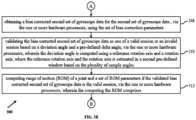
- the system is further configured for validating the bias corrected second set of gyroscope data as one of a valid session or an invalid session based on a deviation angle and a pre-defined delta angle, wherein the deviation angle is computed using a reference rotation axis and a rotation axis, where the reference rotation axis and the rotation axis is estimated in a second pre-defined window based on the plurality of sample angles.
- the system is further configured for computing range of motion (ROM) of a joint and a set of ROM parameters if the validated bias corrected second set of gyroscope data is the valid session, wherein the computing the ROM comprises: computing a real-time cumulative angle for each of the plurality of bias corrected second set of gyroscope data to obtain a plurality of the real-time cumulative angle using the plurality of sample angles, the deviation angle and the pre-defined delta angle, computing the joint ROM using the plurality of real-time cumulative angle, wherein the ROM is computed using a minimum real-time cumulative angle and a maximum real-time cumulative angle from the plurality of real-time cumulative angle and computing the set of ROM parameters, wherein the set of ROM parameters includes a speed of rotation, and a session validity score using the plurality of sample angles, a pre-defined delta angle and the deviation angle.
- ROM range of motion
- a method for real time analysis of ROM includes receiving a first set of gyroscope data from a subject using a wearable device at a pre-defined neutral position of the subject, wherein the first set of gyroscope data is associated with a joint rotation of the subject at the pre-defined neutral position of the subject.
- the method further includes computing a set of bias correction parameters from the first set of gyroscope data using a static bias parameter, wherein the static bias parameter is computed from the first set of gyroscope data in a first pre-defined window and the set of bias correction parameters includes a plurality of bias corrected first set of gyroscope data and a plurality of sample angles.
- the method further includes receiving a second set of gyroscope data from the subject, using the wearable device at a pre-defined rotation movement of a joint of the subject, wherein the second set of gyroscope data is associated with the joint rotation of the subject at the pre-defined rotation movement of the j oint.
- the method further includes obtaining a bias corrected second set of gyroscope data for the second set of gyroscope data using the set of bias correction parameters.
- the method further includes validating the bias corrected second set of gyroscope data as one of a valid session or an invalid session based on a deviation angle and a pre-defined delta angle, wherein the deviation angle is computed using a reference rotation axis and a rotation axis, where the reference rotation axis and the rotation axis is estimated in a second pre-defined window based on the plurality of sample angles.
- the method further includes computing range of motion (ROM) of a joint and a set of ROM parameters if the validated bias corrected second set of gyroscope data is the valid session, wherein the computing the ROM comprises: computing a real-time cumulative angle for each of the plurality of bias corrected second set of gyroscope data to obtain a plurality of the real-time cumulative angle using the plurality of sample angles the deviation angle and the pre-defined delta angle , computing the joint ROM using the plurality of real-time cumulative angle, wherein the ROM is computed using a minimum real-time cumulative angle and a maximum real-time cumulative angle from the plurality of real-time cumulative angle ; and computing the set of ROM parameters, wherein the set of ROM parameters includes a speed of rotation, and a session validity score using the plurality of sample angles, a pre-defined delta angle and the deviation angle.
- ROM range of motion
- a non-transitory computer readable medium for real time analysis of ROM includes receiving a first set of gyroscope data from a subject using a wearable device at a pre-defined neutral position of the subject, wherein the first set of gyroscope data is associated with a joint rotation of the subject at the pre-defined neutral position of the subject.
- the program further includes computing a set of bias correction parameters from the first set of gyroscope data using a static bias parameter, wherein the static bias parameter is computed from the first set of gyroscope data in a first pre-defined window and the set of bias correction parameters includes a plurality of bias corrected first set of gyroscope data and a plurality of sample angles.
- the program further includes receiving a second set of gyroscope data from the subject, using the wearable device at a pre-defined rotation movement of a joint of the subject, wherein the second set of gyroscope data is associated with the joint rotation of the subject at the pre-defined rotation movement of the joint.
- the program further includes obtaining a bias corrected second set of gyroscope data for the second set of gyroscope data using the set of bias correction parameters.
- the program further includes validating the bias corrected second set of gyroscope data as one of a valid session or an invalid session based on a deviation angle and a pre-defined delta angle, wherein the deviation angle is computed using a reference rotation axis and a rotation axis, where the reference rotation axis and the rotation axis is estimated in a second pre-defined window based on the plurality of sample angles.
- the program further includes computing range of motion (ROM) of a joint and a set of ROM parameters if the validated bias corrected second set of gyroscope data is the valid session, wherein the computing the ROM comprises: computing a real-time cumulative angle for each of the plurality of bias corrected second set of gyroscope data to obtain a plurality of the real-time cumulative angle using the plurality of sample angles ,the deviation angle and the pre-defined delta angle , computing the joint ROM using the plurality of real-time cumulative angle, wherein the ROM is computed using a minimum real-time cumulative angle and a maximum real-time cumulative angle from the plurality of real-time cumulative angle ; and computing the set of ROM parameters, wherein the set of ROM parameters includes a speed of rotation, and a session validity score using the plurality of sample angles, a pre-defined delta angle and the deviation angle.
- ROM range of motion
- FIG. 1 through FIG.7C where similar reference characters denote corresponding features consistently throughout the figures, there are shown preferred embodiments and these embodiments are described in the context of the following exemplary system and/or method.
- FIG.1 is a functional block diagram of a system 100 for real time analysis of ROM in accordance with some embodiments of the present disclosure.
- the system 100 includes a processor(s) 104, communication interface device(s), alternatively referred as input/output (I/O) interface(s) 106, and one or more data storage devices or a memory 102 operatively coupled to the processor(s) 104.
- the system 100 with one or more hardware processors is configured to execute functions of one or more functional blocks of the system 100.
- the processor(s) 104 can be one or more hardware processors 104.
- the one or more hardware processors 104 can be implemented as one or more microprocessors, microcomputers, microcontrollers, digital signal processors, central processing units, state machines, logic circuitries, and/or any devices that manipulate signals based on operational instructions.
- the one or more hardware processors 104 is configured to fetch and execute computer-readable instructions stored in the memory 102.
- the system 100 can be implemented in a variety of computing systems including laptop computers, notebooks, hand-held devices such as mobile phones, workstations, mainframe computers, servers, a network cloud and the like.
- the I/O interface(s) 106 can include a variety of software and hardware interfaces, for example, a web interface, a graphical user interface, a touch user interface (TUI) and the like and can facilitate multiple communications within a wide variety of networks N/W and protocol types, including wired networks, for example, LAN, cable, etc., and wireless networks, such as WLAN, cellular, or satellite.
- the I/O interface (s) 106 can include one or more ports for connecting a number of devices (nodes) of the system 100 to one another or to another server.
- the memory 102 may include any computer-readable medium known in the art including, for example, volatile memory, such as static random-access memory (SRAM) and dynamic random-access memory (DRAM), and/or non-volatile memory, such as read only memory (ROM), erasable programmable ROM, flash memories, hard disks, optical disks, and magnetic tapes.
- volatile memory such as static random-access memory (SRAM) and dynamic random-access memory (DRAM)
- DRAM dynamic random-access memory
- non-volatile memory such as read only memory (ROM), erasable programmable ROM, flash memories, hard disks, optical disks, and magnetic tapes.
- the memory 102 may include a database 108 configured to include information regarding historic data associated the breathing analysis.
- the memory 102 may comprise information pertaining to input(s)/output(s) of each step performed by the processor(s) 104 of the system 100 and methods of the present disclosure.
- the database 108 may be external (not shown) to the system 100 and coupled to the system via the I/O interface 106.
- the system 100 supports various connectivity options such as BLUETOOTH ® , USB, ZigBee and other cellular services.
- the network environment enables connection of various components of the system 100 using any communication link including Internet, WAN, MAN, and so on.
- the system 100 is implemented to operate as a stand-alone device.
- the system 100 may be implemented to work as a loosely coupled device to a smart computing environment. The components and functionalities of the system 100 are described further in detail.
- FIG.2 is an example functional block diagram of the various modules of the system of FIG.1 , in accordance with some embodiments of the present disclosure. As depicted in the architecture, the FIG.2 illustrates the functions of the modules of the system 100 that includes for real time analysis of ROM.
- the system 100 for real time analysis of ROM is configured to receive a first set of gyroscope data from a subject, via one or more hardware processors using a wearable device 202.
- the first set of gyroscope data is associated with a joint rotation of the subject at the pre-defined neutral position of the subject.
- the first set of gyroscope data is received at a pre-defined neutral position of the subject.
- the wearable device 202 is also configured to receive a second set of gyroscope data from the subject.
- the second set of gyroscope data is associated with the joint rotation of the subject at the pre-defined rotation movement of the joint.
- the second set of gyroscope data is received at a pre-defined rotation movement of the joint of the subject.
- the system 100 further comprises a bias correction module 204 configured to compute a set of bias correction parameters.
- the set of bias correction parameters includes a plurality of bias corrected first set of gyroscope data and a plurality of sample angles ( ⁇ ).
- the set of bias correction parameters are computed from the first set of gyroscope data using a static bias parameter.
- the static bias parameter is computed from the first set of gyroscope data in a first pre-defined window.
- the bias correction module 204 is also configured to obtain a bias corrected second set of gyroscope data for the second set of gyroscope data.
- the bias corrected second set of gyroscope data is obtained using the set of bias correction parameters computed during the first pre-defined window.
- the system 100 further comprises a validation module 206 configured to validate the bias corrected second set of gyroscope data as one of a valid session or an invalid session.
- the validation is performed based on a deviation angle ( ⁇ ) and a pre-defined delta angle ( ⁇ ).
- the deviation angle is computed using a reference rotation axis ( R ) and a rotation axis ( V ).
- the reference rotation axis ( R ) and the rotation axis ( V ) is estimated in a second pre-defined window based on the plurality of sample angles ( ⁇ ).
- the system 100 further comprises a ROM module 208 configured to compute range of motion (ROM) of the joint and a set of ROM parameters if the validated bias corrected second set of gyroscope data is the valid session.
- the range of motion (ROM) of a joint and a set of ROM parameters is computed in the ROM module 208 using the modules within the ROM module 208 that includes a real-time cumulative angle computation module 210, a ROM computation module 212, a ROM parameter calculation module 214.
- the real-time cumulative angle module 210 in the ROM module 208 is configured for computing a real-time cumulative angle ( C i ) for each of the plurality of bias corrected second set of gyroscope data to obtain a plurality of the real-time cumulative angle ( C ).
- the real-time cumulative angle ( C i ) is computed using the plurality of sample angles ( ⁇ ), the deviation angle ( ⁇ )and the pre-defined delta angle ( ⁇ ).
- the ROM computation module 212 in the ROM module 208 is configured for computing the joint ROM using the plurality of real-time cumulative angle ( C ).
- the ROM is computed using a minimum real-time cumulative angle ( C ) and a maximum real-time cumulative angle ( C ) from the plurality of real-time cumulative angle ( C ).
- the ROM parameter module 214 in the ROM module 208 is configured for computing the set of ROM parameters.
- the set of ROM parameters includes a speed of rotation ( ⁇ ), and a session validity score ( ⁇ ) using the plurality of sample angles ( ⁇ ), a pre-defined delta angle ( ⁇ ) and the deviation angle ( ⁇ ).
- the various modules of the system 100 and the functional blocks in FIG.2 are configured for usage monitoring of equipment using a set of sensors are implemented as at least one of a logically self-contained part of a software program, a self-contained hardware component, and/or, a self-contained hardware component with a logically self-contained part of a software program embedded into each of the hardware component that when executed perform the above method described herein.
- FIGS.3A , 3B and 3C are an exemplary flow diagram illustrating a method 300 for real time analysis of ROM using the system 100 of FIG. 1 according to an embodiment of the present disclosure.
- the joint ROM is calculated for a bi-directional rotational movement of joints of the subject, wherein the bi-directional rotational movement of joints comprise of limbs movement including an abduction-adduction, an extension-flexion and an internal-external rotation.
- the disclosed technique for estimation of ROM includes but not limited to, shoulder, elbow, knee and hip joints. Further during estimation of ROM for one pair of opposite rotation (example scenario: abduction/adduction) of the joint, it can be assumed that the plane of rotation stays approximately the same throughout the rotational movement.
- the first set of gyroscope data is received from the subject using the wearable device 202.
- the first set of gyroscope data is associated with a joint rotation of the subject at the pre-defined neutral position of the subject.
- the first set of gyroscope data is received at a pre-defined neutral position of the subject.
- the wearable device 202 comprises at least a 3-axis gyroscope sensor.
- the gyroscope sensor is configured to receive the first set of gyroscope data at a pre-determined rate as a plurality of data samples.
- the pre-defined neutral position of the subject is the neutral position of the subject from where the range of motion (ROM) calculations start.
- a pre-defined neutral position is defined for every well-known ROM rotation marking the starting position of the limb for a ROM estimation session from where the joint can be rotated in either direction for ROM estimation (example: abducting in one direction, adducting in another direction).
- the pre-defined neutral position may be defined as the arm pointing downwards with palm facing the body, wherein a starting position can also be selected by a medical specialist as per their preference according to the requirement of their analysis.
- the first set of gyroscope data can be processed for computation of ROM within the wearable device 202 using the modules (204 to 214).
- the processing of the first set of gyroscope data for computation of ROM can run on a separate host system wirelessly using the modules (204 to 214).
- the computed ROM can be displayed in real time on a screen which is available with the separate host system, or in another embodiment, the computation of ROM can be displayed on the wearable device 202.
- the computation of ROM can be performed within the wearable device 202 or on a separate system based on a user requirement.
- a set of bias correction parameters is computed in the bias correction module 204.
- the set of bias correction parameters includes a plurality of bias corrected first set of gyroscope data and a plurality of sample angles ( ⁇ ).
- the set of bias correction parameters are computed from the first set of gyroscope data using a static bias parameter.
- the static bias parameter is computed from the first set of gyroscope data in a first pre-defined window.
- the first set of gyroscope data is received at the gyroscope of the wearable device 202 in the pre-defined neutral position of the subject
- the subject is directed to keep their limb (for which joint ROM is computed) in the pre-defined neutral position for a pre-determined duration, T s , which is typically 2 seconds, which is when the range of motion (ROM) calculations start.
- T s a pre-determined duration
- the first set of gyroscope data is processed in the first pre-defined window for T s seconds.
- the first pre-defined window is defined based on a standard deviation of the first set of gyroscope data and a first pre-defined threshold ( C L ) on the standard deviation of the first set of gyroscope data for a " m th " data sample of the first set of gyroscope data from a plurality of " k " plurality of data samples of the first set of gyroscope data.
- the first pre-defined threshold ( C L ) represents a threshold on the standard deviation of the first set of gyroscope data, with a typical value of 0.01 degrees per second.
- the first pre-defined window is defined as shown below: std x i : ⁇ i ⁇ m + k ⁇ C L std y i : ⁇ i ⁇ m + k ⁇ C L std z i : ⁇ i ⁇ m + k ⁇ C L
- the process of computing a set of bias correction parameters is explained using the flowchart 400 of FIG.4 .
- the process of computing a set of bias correction parameters comprises:
- the static bias parameter in the first pre-defined window is computed.
- the static bias parameter is computed as a mean of the first set of gyroscope data.
- the static bias parameter is computed as a mean of the first set of gyroscope data taken independently in all the three axes of the gyroscope and can be represented as B x , B y , B z .
- the plurality of bias corrected first set of gyroscope data is computed for the first set of gyroscope data.
- the plurality of bias corrected first set of gyroscope data is computed using the static bias parameter.
- the plurality of bias corrected first set of gyroscope data is computed for the first set of gyroscope data bias correction for a particular data sample can be performed by subtracting the calculated static bias parameter from the actual raw sample value.
- a plurality of sample angles ( ⁇ ) is computed for the plurality of bias corrected first set of gyroscope data.
- the sample angle is computed for each of the bias corrected first set of gyroscope data from the plurality of bias corrected first set of gyroscope data.
- the plurality of sample angles ( ⁇ ) is an average of the plurality of bias corrected first set of gyroscope data.
- the subject or the specialist who is assisting in the ROM computation can be provided feedback (audio/visual/tactile) to begin the rotation of the limb or the pre-defined rotation movement of the joint as explained in the further sections for computation of ROM.
- the feedback is automated and is provided by the system 100 upon sensing a completion of the pre-defined neutral position, wherein the completion of the pre-defined neutral position is sensed using a plurality of sensors based on a pre-defined time instance.
- the objective of the feedback is to alert the subject to start rotation at the point of receiving this feedback.
- a second set of gyroscope data is received from the subject using the wearable device 202.
- the second set of gyroscope data is associated with the joint rotation of the subject at the pre-defined rotation movement of the joint.
- the second set of gyroscope data is received at a pre-defined rotation movement of a joint of the subject.
- the pre-defined joint rotation movement of the subject is a pre-defined rotation of the joint of the subject where the ROM is computed.
- the pre-defined rotation movement includes an upward and a downward movement of the arm joint.
- the FIG.5A illustrates a side view of a subject performing a shoulder flexion by moving arm joint upwards.
- the FIG.5A illustrates a side view of a subject bringing the arm down after performing a shoulder flexion.
- a bias corrected second set of gyroscope data is obtained for the second set of gyroscope data at the bias correction module 204.
- the bias corrected second set of gyroscope data is obtained using the set of bias correction parameters.
- the plurality of bias corrected second set of gyroscope data is computed for the second set of gyroscope data bias correction for a particular data sample can be performed by subtracting the calculated static bias parameter from the actual raw sample value.
- the bias corrected second set of gyroscope data as one of a valid session or an invalid session in the validation module 206.
- the validation is performed based on a deviation angle ( ⁇ ) and a pre-defined delta angle ( ⁇ ).
- the deviation angle is computed using a reference rotation axis ( R ) and a rotation axis ( V ).
- the reference rotation axis ( R ) and the rotation axis ( V ) is estimated in a second pre-defined window based on the plurality of sample angles ( ⁇ ).
- the second pre-defined window is defined based on the plurality of bias corrected second set of gyroscope data and a second pre-defined threshold parameter ( C U ).
- the second pre-defined threshold parameter ( C U ) is a predetermined threshold and can be altered as per the requirement of the subject.
- a typical value for the C U can be 0.03 degrees at a sampling rate of 200 samples per second.
- the typical value of 0.03 for the second pre-defined threshold parameter ( C U ) at 200hz sampling rate implies a speed of 6 degrees/second, which marks the speed at which the ongoing rotational motion is expected to represent the actual motion pertaining to the ROM estimation, and not owing to the sensor noise or any other undesired source.
- the second pre-defined threshold parameter ( C U ) can be adjusted as per the requirement of the specialist, which lower values set for slower rotational speed during the ROM estimation session.
- the deviation angle ( ⁇ ) is computed using the reference rotation axis ( R ) and the rotation axis ( V ).
- the reference rotation axis ( R ) and the rotation axis ( V ) is computed at the second pre-defined window based on a plurality of sample angles ( ⁇ ).
- î, ⁇ and k ⁇ are unit vectors in X-axis, Y-axis and Z-axis respectively of the plurality of bias corrected second data samples;
- r x ⁇ K X i K
- r y ⁇ K Y i K
- r z ⁇ K Z i K
- r x , r y , and r y are the average values of X, Y and Z components of all the samples which belong to the set K.
- the deviation angle is the angle between the reference rotation axis and the rotation axis.
- the range of motion (ROM) of a joint and the set of ROM parameters is computed in the ROM module 208 if the validated bias corrected second set of gyroscope data is the valid session.
- the range of motion (ROM) of a joint and a set of ROM parameters is computed in the ROM module 208 using the modules within the ROM module 208 that includes a real-time cumulative angle module 210, a ROM computation module 212, a ROM parameter module 214.
- a real-time cumulative angle ( C i ) is computed in the real-time cumulative angle computation module 210 of the ROM module 208.
- the real-time cumulative angle ( C i ) is computed for each of the plurality of bias corrected second set of gyroscope data to obtain a plurality of the real-time cumulative angle ( C )
- the real-time cumulative angle ( C i ) is computed using the plurality of sample angles ( ⁇ ), the deviation angle ( ⁇ )and the pre-defined delta angle ( ⁇ ).
- Equation (13) signifies the case when the limb is rotated along an axis in the direction same as that the initial movement, using which the reference rotation axis ( R ) is calculated using equation (9) and (10).
- Equation (14) signifies the case when the limb is rotated along an axis which is opposite in direction to the reference rotation axis ( R ).
- Any measurement session involves rotating the limb in two directions with an exactly opposite angular trajectory in a plane for a complete range of motion measurement.
- the flexion is performed by moving the arm upwards from neutral/normal position as illustrated in FIG.5A as a first rotation, during which the validity may be executed using equation 13.
- the arm can be brought back to neutral/normal position by retracing the angular trajectory and an extension may then be performed position as illustrated in FIG.5A by continuing through the neutral/normal position, as a second rotation for which, the validity may be executed using equation (14).
- the forearm may be rotated away from the body first, during which the calculation of cumulative angles will fall in the category of equation (13) as illustrated in FIG.6A as a top view of a subject performing the pre-defined rotation movement of FIG.5A , by an upward movement of the arm joint.
- the cumulative angles in FIG.6A is computed by adding the angles from the plurality of sample angles ( ⁇ ), signifying a valid session as per a deviation angle ( ⁇ ) and a pre-defined delta angle ( ⁇ ).
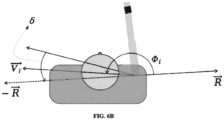
- FIG.6B illustrates a top view of a subject performing the pre-defined rotation movement of FIG. 5B , by downward movement of the arm joint
- the cumulative angles are computed by subtracting the angles from the plurality of sample angles ( ⁇ ), signifying a valid session as per a deviation angle ( ⁇ ) and a pre-defined delta angle ( ⁇ ) in accordance with some embodiments of the present disclosure. during which the calculation of cumulative angles will fall in the category of (14) as illustrated in FIG.6B .
- the pre-defined parameter ⁇ is used to ensure that the rotational movement happens approximately along the same axis (the reference axis). If any sample is encountered which satisfies neither Equation (13) nor equation (14), then the session is deemed to be in-valid and the subject can be instructed to restart the measurement session as illustrated in FIG.6C , wherein, the FIG.6C illustrates a top view of a subject performing the pre-defined rotation movement of FIG.5A , by an upward movement of the arm joint.
- the joint ROM is computed in the ROM computation module 212 of the ROM module 208.
- the joint ROM is computed using the plurality of real-time cumulative angle ( C ), wherein the ROM is computed using a minimum real-time cumulative angle ( R min ) and a maximum real-time cumulative angle ( R max ) from the plurality of real-time cumulative angle ( C ).
- the set of ROM parameters is computed in the ROM parameter computation module 214 of the ROM module 208.
- the set of ROM parameters includes a speed of rotation ( ⁇ ), and a session validity score ( ⁇ ) using the plurality of sample angles ( ⁇ ), a pre-defined delta angle ( ⁇ ) and the deviation angle ( ⁇ ).
- a session validity score ( ⁇ ) score is calculated for every sample which depicts how closely the requirements of equations 13 and 14 are satisfied during the session.
- the session validity score ( ⁇ ) obtained closer to 1 denoting no deviation from the reference axis of rotation during the first motion.
- the session validity score ( ⁇ ) score decreases to 0 and below if the ⁇ i becomes equal to or more than the pre-defined angle delta ( ⁇ ), which denotes significant deviation from the reference axis of rotation during first motion
- the session validity score ( ⁇ ) decreases to 0 and below if (2 ⁇ - ⁇ i ) becomes equal to or more than the pre-defined angle delta ( ⁇ ), which denotes significant deviation from the negative of reference axis of rotation during second motion.
- the range of motion (ROM) of a joint and the set of ROM parameters computed in the ROM module 208 is displayed on the I/O interface(s) 106 or in the wearable device 202 based on the subject's requirement.
- ROM is estimated using the disclosed for real time analysis of ROM.
- the estimation of ROM includes computing a real-time cumulative angle, the joint ROM using the plurality of real-time cumulative angle and finally computing the set of ROM parameters.
- FIG.7A to FIG.7C The results are illustrated in FIG.7A to FIG.7C .
- the FIG.7A illustrates a real-time graph for the speed of rotation during the ROM analysis, wherein it can be inferred that speed of rotation can initially be seen rising during the first motion, and then coming back to zero before rising again for the second motion and then coming back to zero again.
- the FIG.7B illustrates a real-time graph for the session validity score during the ROM analysis, where since the session validity score can be seen to be closer to 1 denoting a valid session.
- the FIG.7C illustrates a real-time graph for the real-time cumulative angle during the ROM analysis.
- the real-time cumulative angle can be seen rising initially to about 179 degrees marking the first rotation of the session, followed by fall in the cumulative angle marking the subject bringing back the limb to the neutral position, followed by the angle going in the negative direction till about - 34 degrees marking the second rotation of the session, followed by bringing the limb back to the neutral position where the cumulative angle comes back to zero.
- the embodiments of present disclosure herein provide a solution analysis of range of motion (ROM).
- the existing techniques for ROM fail for measurements made in certain planes and are not very effective for ROM measurements for extremely slow and very fast movements.
- the disclosed provides a real time analysis of ROM based on computation of range of motion (ROM) of a joint and a set of ROM parameters using a gyroscope.
- the gyroscope collects data from a subject at pre-defined neutral position of the subject as well as a pre-defined rotation movement of a joint of the subject.
- the received data is corrected for bias and processed at real time to analyze the ROM by computing range of motion (ROM) of a joint and a set of ROM parameters.
- Such computer-readable storage means contain program-code means for implementation of one or more steps of the method, when the program runs on a server or mobile device or any suitable programmable device.
- the hardware device can be any kind of device which can be programmed including e.g., any kind of computer like a server or a personal computer, or the like, or any combination thereof.
- the device may also include means which could be e.g., hardware means like e.g., an application-specific integrated circuit (ASIC), a field-programmable gate array (FPGA), or a combination of hardware and software means, e.g., an ASIC and an FPGA, or at least one microprocessor and at least one memory with software processing components located therein.
- the means can include both hardware means and software means.
- the method embodiments described herein could be implemented in hardware and software.
- the device may also include software means. Alternatively, the embodiments may be implemented on different hardware devices, e.g., using a plurality of CPUs.
- the embodiments herein can comprise hardware and software elements.
- the embodiments that are implemented in software include but are not limited to, firmware, resident software, microcode, etc.
- the functions performed by various components described herein may be implemented in other components or combinations of other components.
- a computer-usable or computer readable medium can be any apparatus that can comprise, store, communicate, propagate, or transport the program for use by or in connection with the instruction execution system, apparatus, or device.
- a computer-readable storage medium refers to any type of physical memory on which information or data readable by a processor may be stored.
- a computer-readable storage medium may store instructions for execution by one or more processors, including instructions for causing the processor(s) to perform steps or stages consistent with the embodiments described herein.
- the term "computer-readable medium” should be understood to include tangible items and exclude carrier waves and transient signals, i.e., be non-transitory. Examples include random access memory (RAM), read-only memory (ROM), volatile memory, nonvolatile memory, hard drives, CD ROMs, DVDs, flash drives, disks, and any other known physical storage media.
Landscapes
- Health & Medical Sciences (AREA)
- Life Sciences & Earth Sciences (AREA)
- Engineering & Computer Science (AREA)
- Medical Informatics (AREA)
- Public Health (AREA)
- General Health & Medical Sciences (AREA)
- Biophysics (AREA)
- Biomedical Technology (AREA)
- Pathology (AREA)
- Physics & Mathematics (AREA)
- Epidemiology (AREA)
- Primary Health Care (AREA)
- Animal Behavior & Ethology (AREA)
- Physiology (AREA)
- Veterinary Medicine (AREA)
- Heart & Thoracic Surgery (AREA)
- Molecular Biology (AREA)
- Surgery (AREA)
- Physical Education & Sports Medicine (AREA)
- Databases & Information Systems (AREA)
- Data Mining & Analysis (AREA)
- Artificial Intelligence (AREA)
- Psychiatry (AREA)
- Computer Vision & Pattern Recognition (AREA)
- Signal Processing (AREA)
- Geometry (AREA)
- Dentistry (AREA)
- Oral & Maxillofacial Surgery (AREA)
- Measurement Of The Respiration, Hearing Ability, Form, And Blood Characteristics Of Living Organisms (AREA)
Claims (15)
- Prozessorimplementiertes Verfahren (300) zur Echtzeitanalyse des Bewegungsbereichs (ROM), umfassend:Empfangen eines ersten Satzes von Gyroskopdaten von einem Subjekt über einen oder mehrere Hardwareprozessoren unter Verwendung einer tragbaren Vorrichtung an einer vordefinierten neutralen Position des Subjekts, wobei der erste Satz von Gyroskopdaten mit einer Gelenkdrehung des Subjekts an der vordefinierten neutralen Position des Subjekts assoziiert ist; (302)Berechnen eines Satzes von Vorspannungskorrekturparametern aus dem ersten Satz von Gyroskopdaten unter Verwendung eines statischen Vorspannungsparameters über den einen oder die mehreren Hardwareprozessoren, wobei der statische Vorspannungsparameter aus dem ersten Satz von Gyroskopdaten in einem ersten vordefinierten Fenster berechnet wird und der Satz von Vorspannungskorrekturparametern eine Mehrzahl von vorspannungskorrigierten ersten Sätzen von Gyroskopdaten und eine Mehrzahl von Abtastwinkeln umfasst (α); (304)Empfangen eines zweiten Satzes von Gyroskopdaten von dem Subjekt über den einen oder die mehreren Hardwareprozessoren unter Verwendung der tragbaren Vorrichtung bei einer vordefinierten Drehbewegung eines Gelenks des Subjekts, wobei der zweite Satz von Gyroskopdaten mit der Gelenkdrehung des Subjekts bei der vordefinierten Drehbewegung des Gelenks assoziiert ist; (306)Erhalten eines vorspannungskorrigierten zweiten Satzes von Gyroskopdaten für den zweiten Satz von Gyroskopdaten über den einen oder die mehreren Hardwareprozessoren unter Verwendung des Satzes von Vorspannungskorrekturparametern; (308)Validieren des vorspannungskorrigierten zweiten Satzes von Gyroskopdaten als eine gültige Sitzung oder eine ungültige Sitzung über den einen oder die mehreren Hardwareprozessoren basierend auf einem Abweichungswinkel (φ) und einem vordefinierten Deltawinkel (δ), wobei der Abweichungswinkel unter Verwendung einer Referenzdrehachse (
R ) und einer Drehachse (V ) berechnet wird, wobei die Referenzdrehachse und die Drehachse in einem zweiten vordefinierten Fenster basierend auf der Mehrzahl von Abtastwinkeln geschätzt werden (α); (310) undBerechnen des Bewegungsbereichs (ROM) des Gelenks und eines Satzes von ROM-Parametern (312) über einen oder mehrere Hardwareprozessoren, wenn der validierte vorspannungskorrigierte zweite Satz von Gyroskopdaten die gültige Sitzung ist, wobei das Berechnen des ROM umfasst:Berechnen eines kumulativen Echtzeitwinkels (Ci ) für jeden der Mehrzahl von vorspannungskorrigierten zweiten Sätzen von Gyroskopdaten, um eine Mehrzahl des kumulativen Echtzeitwinkels (C) unter Verwendung der Mehrzahl von Abtastwinkeln (α), den Abweichungswinkel (φ) und den vordefinierten Deltawinkel (δ) zu erhalten; (312A)Berechnen des Gelenk-ROM unter Verwendung der Mehrzahl von kumulativen Echtzeitwinkeln (C), wobei der ROM unter Verwendung eines minimalen kumulativen Echtzeitwinkels (C) und eines maximalen kumulativen Echtzeitwinkels (C) aus der Mehrzahl von kumulativen Echtzeitwinkeln berechnet wird (C); (312B) undBerechnen des Satzes von ROM-Parametern, wobei der Satz von ROM-Parametern eine Drehzahl (ω) und eine Sitzungsgültigkeitsbewertung (λ) unter Verwendung der Mehrzahl von Abtastwinkeln (α), des vordefinierten Deltawinkels (δ) und des Abweichungswinkels (φ) umfasst. (312C) - Verfahren nach Anspruch 1, ferner umfassend das Erklären der Sitzung als ungültig und das Anfordern eines zweiten Satzes von Gyroskopdaten des Subjekts, wenn der validierte zweite Satz von Gyroskopdaten die ungültige Sitzung ist.
- Verfahren nach Anspruch 1, wobei die tragbare Vorrichtung ein Gyroskop umfasst, die vordefinierte neutrale Position des Subjekts die neutrale Position des Subjekts ist, von der aus die Berechnungen des Bewegungsbereichs (ROM) beginnen, und die vordefinierte Gelenkdrehbewegung des Subjekts eine vordefinierte Drehung des Gelenks des Subjekts ist, wo der ROM berechnet wird, und wobei der Gelenk-ROM für eine bidirektionale Drehbewegung von Gelenken des Subjekts berechnet wird, wobei die bidirektionale Drehbewegung von Gelenken eine Bewegung von Gliedmaßen umfasst, die eine Abduktions-Adduktion, eine Extensions-Flexion und eine Innen-Außen-Drehung umfasst.
- Verfahren nach Anspruch 1, wobei der Prozess des Berechnens eines Satzes von Vorspannungskorrekturparametern (400) umfasst:Berechnen des statischen Vorspannungsparameters in dem ersten vordefinierten Fenster, wobei der statische Vorspannungsparameter als ein Mittelwert des ersten Satzes von Gyroskopdaten berechnet wird; (402)Berechnen der Mehrzahl von vorspannungskorrigierten ersten Sätzen von Gyroskopdaten für den ersten Satz von Gyroskopdaten unter Verwendung des statischen Vorspannungsparameters; und (404)Berechnen einer Mehrzahl von Abtastwinkeln (α) für die Mehrzahl von vorspannungskorrigierten ersten Sätzen von Gyroskopdaten, wobei die Mehrzahl von Abtastwinkeln ein Mittelwert der Mehrzahl von vorspannungskorrigierten ersten Sätzen von Gyroskopdaten ist, wobei ein Abtastwinkel für jeden der vorspannungskorrigierten ersten Sätze von Gyroskopdaten aus der Mehrzahl von vorspannungskorrigierten ersten Sätzen von Gyroskopdaten berechnet wird (406).
- Verfahren nach Anspruch 1, wobei das erste vordefinierte Fenster basierend auf einer Standardabweichung des ersten Satzes von Gyroskopdaten und einem ersten vordefinierten Schwellenwert (CL ) auf der Standardabweichung des ersten Satzes von Gyroskopdaten definiert wird.
- Verfahren nach Anspruch 1, wobei das zweite vordefinierte Fenster basierend auf der Mehrzahl von vorspannungskorrigierten zweiten Sätzen von Gyroskopdaten und einem zweiten vordefinierten Schwellenwertparameter (CU ) definiert wird.
- Verfahren nach Anspruch 1, wobei der Abweichungswinkel (φ) unter Verwendung der Referenzdrehachse (
R ) und der Drehachse (V ) berechnet wird, wie unten ausgedrückt:
die Referenzdrehachse (R ) und die Drehachse (V ) in dem zweiten vordefinierten Fenster basierend auf einer Mehrzahl von Abtastwinkeln (α) berechnet werden, wie unten gezeigt:Referenzdrehachse (R ) istR = rxî + ryĵ + rzk̂ ; undund eine Drehachse (V ) ist
î, ĵ and k̂ Einheitsvektoren in X-Achse, Y-Achse bzw. Z-Achse der Mehrzahl von vorspannungskorrigierten ersten Datenabtastwerten sind.
- Verfahren nach Anspruch 1, wobei die Drehzahl (ω) unter Verwendung der Mehrzahl von Abtastwinkeln (α) berechnet wird und eine Sitzungsgültigkeitsbewertung (λ) unter Verwendung des vordefinierten Deltawinkels (δ) und des Abweichungswinkels (φ) berechnet wird und wie unten gezeigt ausgedrückt wird:eine Drehzahl (ω) ist
 und eine Sitzungsgültigkeitsbewertung (λ) ist definiert als;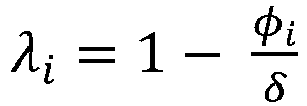

- System (100), umfassend:einen Speicher (102), der Anweisungen speichert;eine oder mehrere Kommunikationsschnittstellen (106); undeinen oder mehrere Hardwareprozessoren (104), die über die eine oder die mehreren Kommunikationsschnittstellen (106) mit dem Speicher (102) gekoppelt sind, wobei der eine oder die mehreren Hardwareprozessoren (104) durch die Anweisungen konfiguriert sind zum:Empfangen eines ersten Satzes von Gyroskopdaten von einem Subjekt über einen oder mehrere Hardwareprozessoren unter Verwendung einer tragbaren Vorrichtung an einer vordefinierten neutralen Position des Subjekts, wobei der erste Satz von Gyroskopdaten mit einer Gelenkdrehung des Subjekts an der vordefinierten neutralen Position des Subjekts assoziiert ist;Berechnen eines Satzes von Vorspannungskorrekturparametern aus dem ersten Satz von Gyroskopdaten unter Verwendung eines statischen Vorspannungsparameters über den einen oder die mehreren Hardwareprozessoren, wobei der statische Vorspannungsparameter aus dem ersten Satz von Gyroskopdaten in einem ersten vordefinierten Fenster berechnet wird und der Satz von Vorspannungskorrekturparametern eine Mehrzahl von vorspannungskorrigierten ersten Sätzen von Gyroskopdaten und eine Mehrzahl von Abtastwinkeln umfasst (α);Empfangen eines zweiten Satzes von Gyroskopdaten von dem Subjekt über den einen oder die mehreren Hardwareprozessoren unter Verwendung der tragbaren Vorrichtung bei einer vordefinierten Drehbewegung eines Gelenks des Subjekts, wobei der zweite Satz von Gyroskopdaten mit der Gelenkdrehung des Subjekts bei der vordefinierten Drehbewegung des Gelenks assoziiert ist;Erhalten eines vorspannungskorrigierten zweiten Satzes von Gyroskopdaten für den zweiten Satz von Gyroskopdaten über den einen oder die mehreren Hardwareprozessoren unter Verwendung des Satzes von Vorspannungskorrekturparametern;Validieren des vorspannungskorrigierten zweiten Satzes von Gyroskopdaten als eine gültige Sitzung oder eine ungültige Sitzung über den einen oder die mehreren Hardwareprozessoren basierend auf einem Abweichungswinkel (φ) und einem vordefinierten Deltawinkel (δ), wobei der Abweichungswinkel unter Verwendung einer Referenzdrehachse (
R ) und einer Drehachse (V ) berechnet wird, wobei die Referenzdrehachse und die Drehachse in einem zweiten vordefinierten Fenster basierend auf der Mehrzahl von Abtastwinkeln geschätzt werden (α); undBerechnen des Bewegungsbereichs (ROM) des Gelenks und eines Satzes von ROM-Parametern über einen oder mehrere Hardwareprozessoren, wenn der validierte vorspannungskorrigierte zweite Satz von Gyroskopdaten die gültige Sitzung ist, wobei das Berechnen des ROM umfasst:Berechnen eines kumulativen Echtzeitwinkels (Ci ) für jeden der Mehrzahl von vorspannungskorrigierten zweiten Sätzen von Gyroskopdaten, um eine Mehrzahl des kumulativen Echtzeitwinkels (C) unter Verwendung der Mehrzahl von Abtastwinkeln (α), des Abweichungswinkels (φ) und des vordefinierten Deltawinkels (δ) zu erhalten;Berechnen des Gelenk-ROM unter Verwendung der Mehrzahl von kumulativen Echtzeitwinkeln (C), wobei der ROM unter Verwendung eines minimalen kumulativen Echtzeitwinkels (C) und eines maximalen kumulativen Echtzeitwinkels (C) aus der Mehrzahl von kumulativen Echtzeitwinkeln berechnet wird (C); undBerechnen des Satzes von ROM-Parametern, wobei der Satz von ROM-Parametern eine Drehzahl (ω) und eine Sitzungsgültigkeitsbewertung (λ) unter Verwendung der Mehrzahl von Abtastwinkeln (α), des vordefinierten Deltawinkels (δ) und des Abweichungswinkels (φ) umfasst. - System nach Anspruch 9, wobei der eine oder die mehreren Hardwareprozessoren durch die Anweisungen konfiguriert sind, um einen zweiten Satz von Gyroskopdaten zu validieren, wobei, wenn der zweite Satz von Gyroskopdaten als die ungültige Sitzung validiert wird, die Sitzung als ungültig erklärt wird und der zweite Satz von Gyroskopdaten erneut von dem Subjekt angefordert wird.
- System nach Anspruch 9, wobei der eine oder die mehreren Hardwareprozessoren durch die Anweisungen konfiguriert sind, um den Gelenk-ROM für eine bidirektionale Drehbewegung von Gelenken des Subjekts zu berechnen, wobei die bidirektionale Drehbewegung von Gelenken eine Bewegung von Gliedmaßen umfasst, die eine Abduktions-Adduktion, eine Extensions-Flexion und eine Innen-Außen-Drehung umfasst.
- System nach Anspruch 9, wobei der eine oder die mehreren Hardwareprozessoren durch die Anweisungen konfiguriert sind, um einen Satz von Vorspannungskorrekturparametern zu berechnen, umfassend:Berechnen des statischen Vorspannungsparameters in dem ersten vordefinierten Fenster, wobei der statische Vorspannungsparameter als ein Mittelwert des ersten Satzes von Gyroskopdaten berechnet wird;Berechnen der Mehrzahl von vorspannungskorrigierten ersten Sätzen von Gyroskopdaten für den ersten Satz von Gyroskopdaten unter Verwendung des statischen Vorspannungsparameters; undBerechnen einer Mehrzahl von Abtastwinkeln (α) für die Mehrzahl von vorspannungskorrigierten ersten Sätzen von Gyroskopdaten, wobei die Mehrzahl von Abtastwinkeln ein Mittelwert der Mehrzahl von vorspannungskorrigierten ersten Sätzen von Gyroskopdaten ist, wobei ein Abtastwinkel für jeden der vorspannungskorrigierten ersten Sätze von Gyroskopdaten aus der Mehrzahl von vorspannungskorrigierten ersten Sätzen von Gyroskopdaten berechnet wird.
- System nach Anspruch 9, wobei der eine oder die mehreren Hardwareprozessoren durch die Anweisungen konfiguriert sind, um den Abweichungswinkel (φ) unter Verwendung der Referenzdrehachse (
R ) und der Drehachse (V ) zu berechnen, wie unten ausgedrückt: die Referenzdrehachse (
R ) und die Drehachse (V ) in dem zweiten vordefinierten Fenster basierend auf einer Mehrzahl von Abtastwinkeln (α) berechnet werden, wie unten gezeigt:Referenzdrehachse (R ) ist und eine Drehachse (
V ) ist
î, ĵ and k̂ Einheitsvektoren in X-Achse, Y-Achse bzw. Z-Achse der Mehrzahl von vorspannungskorrigierten ersten Datenabtastwerten sind.
- System nach Anspruch 9, wobei der eine oder die mehreren Hardwareprozessoren durch die Anweisungen konfiguriert sind, um die Drehzahl (ω) unter Verwendung der Mehrzahl von Abtastwinkeln (α) zu berechnen, und eine Sitzungsgültigkeitsbewertung (λ) unter Verwendung des vordefinierten Deltawinkels (δ) und des Abweichungswinkels (φ) berechnet wird und wie unten gezeigt ausgedrückt wird:
eine Drehzahl (ω) ist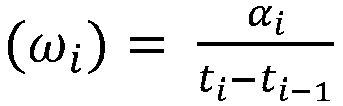
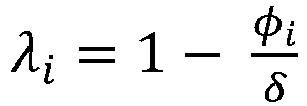

- Ein oder mehrere nichtflüchtige maschinenlesbare Informationsspeichermedien, umfassend eine oder mehrere Anweisungen, die, wenn sie von einem oder mehreren Hardwareprozessoren ausgeführt werden, bewirken:Empfangen eines ersten Satzes von Gyroskopdaten von einem Subjekt über einen oder mehrere Hardwareprozessoren unter Verwendung einer tragbaren Vorrichtung an einer vordefinierten neutralen Position des Subjekts, wobei der erste Satz von Gyroskopdaten mit einer Gelenkdrehung des Subjekts an der vordefinierten neutralen Position des Subjekts assoziiert ist;Berechnen eines Satzes von Vorspannungskorrekturparametern aus dem ersten Satz von Gyroskopdaten unter Verwendung eines statischen Vorspannungsparameters über den einen oder die mehreren Hardwareprozessoren, wobei der statische Vorspannungsparameter aus dem ersten Satz von Gyroskopdaten in einem ersten vordefinierten Fenster berechnet wird und der Satz von Vorspannungskorrekturparametern eine Mehrzahl von vorspannungskorrigierten ersten Sätzen von Gyroskopdaten und eine Mehrzahl von Abtastwinkeln umfasst (α);Empfangen eines zweiten Satzes von Gyroskopdaten von dem Subjekt über den einen oder die mehreren Hardwareprozessoren unter Verwendung der tragbaren Vorrichtung bei einer vordefinierten Drehbewegung eines Gelenks des Subjekts, wobei der zweite Satz von Gyroskopdaten mit der Gelenkdrehung des Subjekts bei der vordefinierten Drehbewegung des Gelenks assoziiert ist;Erhalten eines vorspannungskorrigierten zweiten Satzes von Gyroskopdaten für den zweiten Satz von Gyroskopdaten über den einen oder die mehreren Hardwareprozessoren unter Verwendung des Satzes von Vorspannungskorrekturparametern;Validieren des vorspannungskorrigierten zweiten Satzes von Gyroskopdaten als eine gültige Sitzung oder eine ungültige Sitzung über den einen oder die mehreren Hardwareprozessoren basierend auf einem Abweichungswinkel (φ) und einem vordefinierten Deltawinkel (δ), wobei der Abweichungswinkel unter Verwendung einer Referenzdrehachse (
R ) und einer Drehachse (V ) berechnet wird, wobei die Referenzdrehachse und die Drehachse in einem zweiten vordefinierten Fenster basierend auf der Mehrzahl von Abtastwinkeln geschätzt werden (α); undBerechnen des Bewegungsbereichs (ROM) des Gelenks und eines Satzes von ROM-Parametern über einen oder mehrere Hardwareprozessoren, wenn der validierte vorspannungskorrigierte zweite Satz von Gyroskopdaten die gültige Sitzung ist, wobei das Berechnen des ROM umfasst:Berechnen eines kumulativen Echtzeitwinkels (Ci ) für jeden der Mehrzahl von vorspannungskorrigierten zweiten Sätzen von Gyroskopdaten, um eine Mehrzahl des kumulativen Echtzeitwinkels (C) unter Verwendung der Mehrzahl von Abtastwinkeln (α), des Abweichungswinkels (φ) und des vordefinierten Delta - winkels (δ) zu erhalten;Berechnen des Gelenk-ROM unter Verwendung der Mehrzahl von kumulativen Echtzeitwinkeln (C), wobei der ROM unter Verwendung eines minimalen kumulativen Echtzeitwinkels (C) und eines maximalen kumulativen Echtzeitwinkels (C) aus der Mehrzahl von kumulativen Echtzeitwinkeln berechnet wird (C); undBerechnen des Satzes von ROM-Parametern, wobei der Satz von ROM-Parametern eine Drehzahl (ω) und eine Sitzungsgültigkeitsbewertung (λ) unter Verwendung der Mehrzahl von Abtastwinkeln (α), des vordefinierten Deltawinkels (δ) und des Abweichungswinkels (φ) umfasst.
Applications Claiming Priority (1)
| Application Number | Priority Date | Filing Date | Title |
|---|---|---|---|
| IN202121052132 | 2021-11-13 |
Publications (3)
| Publication Number | Publication Date |
|---|---|
| EP4183336A1 EP4183336A1 (de) | 2023-05-24 |
| EP4183336C0 EP4183336C0 (de) | 2024-02-07 |
| EP4183336B1 true EP4183336B1 (de) | 2024-02-07 |
Family
ID=83903011
Family Applications (1)
| Application Number | Title | Priority Date | Filing Date |
|---|---|---|---|
| EP22202762.5A Active EP4183336B1 (de) | 2021-11-13 | 2022-10-20 | Verfahren und system zur echtzeitanalyse des bewegungsbereichs |
Country Status (2)
| Country | Link |
|---|---|
| US (1) | US12367983B2 (de) |
| EP (1) | EP4183336B1 (de) |
Family Cites Families (11)
| Publication number | Priority date | Publication date | Assignee | Title |
|---|---|---|---|---|
| US20110087450A1 (en) * | 2009-04-03 | 2011-04-14 | University Of Michigan | Heading Error Removal System for Tracking Devices |
| EP2525702A4 (de) * | 2009-09-28 | 2014-10-29 | Illuminare Holdings Ltd | Intravaginalüberwachungsvorrichtung und -netzwerk |
| CA2881000C (en) * | 2012-08-15 | 2020-09-22 | HealthSpot Inc. | Veterinary kiosk with integrated veterinary medical devices |
| CA2943113C (en) * | 2014-03-17 | 2022-10-25 | Core Sports Technology Group | Method and system for delivering biomechanical feedback to human and object motion |
| US20180144101A1 (en) * | 2016-11-22 | 2018-05-24 | Microsoft Technology Licensing, Llc | Identifying diagnosis-relevant health information |
| US20170173262A1 (en) * | 2017-03-01 | 2017-06-22 | François Paul VELTZ | Medical systems, devices and methods |
| US10989563B2 (en) * | 2018-06-25 | 2021-04-27 | CloudNav Inc. | Automatic calibration of rate gyroscope sensitivity |
| EP3986266A4 (de) * | 2019-06-21 | 2023-10-04 | Rehabilitation Institute of Chicago D/b/a Shirley Ryan Abilitylab | Am körper tragbare gelenkverfolgungsvorrichtung mit muskelaktivität und verfahren dafür |
| EP3808268B1 (de) * | 2019-10-16 | 2023-10-11 | Tata Consultancy Services Limited | System und verfahren zur propriozeptiven analyse der schulter |
| CN112603295B (zh) | 2020-12-15 | 2022-11-08 | 深圳先进技术研究院 | 一种基于可穿戴传感器的康复评估方法和系统 |
| DE102022203454B4 (de) * | 2022-04-06 | 2025-11-13 | Volkswagen Aktiengesellschaft | Fortbewegungsmittel, Anwenderschnittstelle und Verfahren zum Betreiben einer Anwenderschnittstelle |
-
2022
- 2022-10-20 EP EP22202762.5A patent/EP4183336B1/de active Active
- 2022-11-08 US US17/982,812 patent/US12367983B2/en active Active
Non-Patent Citations (2)
| Title |
|---|
| AKINTADE OLUBIYI O ET AL: "Comparison of Range-of-Motion Measurement Data in Human Knee Joint using inertial Sensors", INTERNATIONAL JOURNAL OF ELECTRICAL AND ELECTRONIC SCIENCE INTERNATIONAL JOURNAL OF ELECTRICAL AND ELECTRONIC SCIENCE, vol. 2, no. 3, 20 September 2015 (2015-09-20), pages 49 - 56, XP093037877, ISSN: 2375-2998, Retrieved from the Internet <URL:https://www.researchgate.net/profile/Olubiyi-Akintade/publication/287935548_Comparison_of_Range-of-Motion_Measurement_Data_in_Human_Knee_Joint_using_inertial_Sensors/links/56f12ea208ae1da84befd504/Comparison-of-Range-of-Motion-Measurement-Data-in-Human-Knee-Joint-using-inertial-Sensors.pdf?origin=pu> * |
| LENDNER NUPHAR ET AL: "Utility of the iPhone 4 Gyroscope Application in the Measurement of Wrist Motion", HAND, vol. 14, no. 3, 1 May 2019 (2019-05-01), Boston, pages 352 - 356, XP093037873, ISSN: 1558-9447, DOI: 10.1177/1558944717730604 * |
Also Published As
| Publication number | Publication date |
|---|---|
| EP4183336C0 (de) | 2024-02-07 |
| US12367983B2 (en) | 2025-07-22 |
| US20230154621A1 (en) | 2023-05-18 |
| EP4183336A1 (de) | 2023-05-24 |
Similar Documents
| Publication | Publication Date | Title |
|---|---|---|
| EP3707584B1 (de) | Verfahren zur verfolgung der handhaltung und elektronische vorrichtung dafür | |
| Zhou et al. | Inertial sensors for motion detection of human upper limbs | |
| US11774246B2 (en) | Correction of heading errors of inertial measurement units of a motion tracking system | |
| US20130113704A1 (en) | Data fusion and mutual calibration for a sensor network and a vision system | |
| WO2012097161A2 (en) | Human action monitor | |
| US20160324447A1 (en) | System and Method for Determining Orientation of Body Segments Using Inertial Measurement Units | |
| US10952684B2 (en) | Method for estimating the physical activity of an upper limb | |
| CN114748306A (zh) | 一种外骨骼设备穿戴误差校正方法 | |
| EP4183336B1 (de) | Verfahren und system zur echtzeitanalyse des bewegungsbereichs | |
| EP3808268B1 (de) | System und verfahren zur propriozeptiven analyse der schulter | |
| CN111248919A (zh) | 步态识别方法、装置、设备及可读存储介质 | |
| Hou et al. | HINNet: Inertial navigation with head-mounted sensors using a neural network | |
| CN115919250B (zh) | 一种人体动态关节角测量系统 | |
| US20230309896A1 (en) | ECG Waveform Display Method and Medium Thereof, and Electronic Device | |
| EP4183334B1 (de) | Verfahren und system zur atemanalyse unter verwendung eines persönlichen digitalen assistenten (pda) | |
| CN108209931A (zh) | 关节夹角的测量系统及方法 | |
| US11490833B2 (en) | Apparatus and method for remote range-of-motion testing | |
| Alam et al. | IMU-based estimation of body posture: Laboratory validation in simulated commercial fishing | |
| US20230099425A1 (en) | Lift classification device and system | |
| EP3474290B1 (de) | Systeme und verfahren zur optimierung einer gemeinsamen kostenfunktion und zum erfassen von neuro-muskulären profilen davon | |
| Bellaire et al. | ProprioLogger: Evaluating Proprioception During Post-Surgical Rehabilitation using Portable IMUs | |
| Bosmediano et al. | Estimation of spatio-temporal parameters of gait using an inertial sensor network | |
| Chien et al. | Non-linear complementary filter based upper limb motion tracking using wearable sensors | |
| US20250331737A1 (en) | Multibody motion tracking using machine learning-informed physics models and inertial measurement units | |
| KR20220139485A (ko) | 견 관절 회복 솔루션을 제공하는 전자 장치 및 프로그램 |
Legal Events
| Date | Code | Title | Description |
|---|---|---|---|
| PUAI | Public reference made under article 153(3) epc to a published international application that has entered the european phase |
Free format text: ORIGINAL CODE: 0009012 |
|
| STAA | Information on the status of an ep patent application or granted ep patent |
Free format text: STATUS: THE APPLICATION HAS BEEN PUBLISHED |
|
| STAA | Information on the status of an ep patent application or granted ep patent |
Free format text: STATUS: REQUEST FOR EXAMINATION WAS MADE |
|
| AK | Designated contracting states |
Kind code of ref document: A1 Designated state(s): AL AT BE BG CH CY CZ DE DK EE ES FI FR GB GR HR HU IE IS IT LI LT LU LV MC ME MK MT NL NO PL PT RO RS SE SI SK SM TR |
|
| 17P | Request for examination filed |
Effective date: 20230505 |
|
| RBV | Designated contracting states (corrected) |
Designated state(s): AL AT BE BG CH CY CZ DE DK EE ES FI FR GB GR HR HU IE IS IT LI LT LU LV MC ME MK MT NL NO PL PT RO RS SE SI SK SM TR |
|
| GRAP | Despatch of communication of intention to grant a patent |
Free format text: ORIGINAL CODE: EPIDOSNIGR1 |
|
| STAA | Information on the status of an ep patent application or granted ep patent |
Free format text: STATUS: GRANT OF PATENT IS INTENDED |
|
| INTG | Intention to grant announced |
Effective date: 20230818 |
|
| RIN1 | Information on inventor provided before grant (corrected) |
Inventor name: PODUVAL, MURALI Inventor name: GHOSE, AVIK Inventor name: CHANDEL, VIVEK |
|
| GRAS | Grant fee paid |
Free format text: ORIGINAL CODE: EPIDOSNIGR3 |
|
| GRAA | (expected) grant |
Free format text: ORIGINAL CODE: 0009210 |
|
| STAA | Information on the status of an ep patent application or granted ep patent |
Free format text: STATUS: THE PATENT HAS BEEN GRANTED |
|
| AK | Designated contracting states |
Kind code of ref document: B1 Designated state(s): AL AT BE BG CH CY CZ DE DK EE ES FI FR GB GR HR HU IE IS IT LI LT LU LV MC ME MK MT NL NO PL PT RO RS SE SI SK SM TR |
|
| REG | Reference to a national code |
Ref country code: GB Ref legal event code: FG4D |
|
| REG | Reference to a national code |
Ref country code: CH Ref legal event code: EP |
|
| REG | Reference to a national code |
Ref country code: IE Ref legal event code: FG4D |
|
| REG | Reference to a national code |
Ref country code: DE Ref legal event code: R096 Ref document number: 602022001869 Country of ref document: DE |
|
| U01 | Request for unitary effect filed |
Effective date: 20240207 |
|
| U07 | Unitary effect registered |
Designated state(s): AT BE BG DE DK EE FI FR IT LT LU LV MT NL PT SE SI Effective date: 20240212 |
|
| PG25 | Lapsed in a contracting state [announced via postgrant information from national office to epo] |
Ref country code: IS Free format text: LAPSE BECAUSE OF FAILURE TO SUBMIT A TRANSLATION OF THE DESCRIPTION OR TO PAY THE FEE WITHIN THE PRESCRIBED TIME-LIMIT Effective date: 20240607 |
|
| PG25 | Lapsed in a contracting state [announced via postgrant information from national office to epo] |
Ref country code: GR Free format text: LAPSE BECAUSE OF FAILURE TO SUBMIT A TRANSLATION OF THE DESCRIPTION OR TO PAY THE FEE WITHIN THE PRESCRIBED TIME-LIMIT Effective date: 20240508 |
|
| PG25 | Lapsed in a contracting state [announced via postgrant information from national office to epo] |
Ref country code: HR Free format text: LAPSE BECAUSE OF FAILURE TO SUBMIT A TRANSLATION OF THE DESCRIPTION OR TO PAY THE FEE WITHIN THE PRESCRIBED TIME-LIMIT Effective date: 20240207 Ref country code: RS Free format text: LAPSE BECAUSE OF FAILURE TO SUBMIT A TRANSLATION OF THE DESCRIPTION OR TO PAY THE FEE WITHIN THE PRESCRIBED TIME-LIMIT Effective date: 20240507 |
|
| PG25 | Lapsed in a contracting state [announced via postgrant information from national office to epo] |
Ref country code: ES Free format text: LAPSE BECAUSE OF FAILURE TO SUBMIT A TRANSLATION OF THE DESCRIPTION OR TO PAY THE FEE WITHIN THE PRESCRIBED TIME-LIMIT Effective date: 20240207 |
|
| PG25 | Lapsed in a contracting state [announced via postgrant information from national office to epo] |
Ref country code: RS Free format text: LAPSE BECAUSE OF FAILURE TO SUBMIT A TRANSLATION OF THE DESCRIPTION OR TO PAY THE FEE WITHIN THE PRESCRIBED TIME-LIMIT Effective date: 20240507 Ref country code: NO Free format text: LAPSE BECAUSE OF FAILURE TO SUBMIT A TRANSLATION OF THE DESCRIPTION OR TO PAY THE FEE WITHIN THE PRESCRIBED TIME-LIMIT Effective date: 20240507 Ref country code: IS Free format text: LAPSE BECAUSE OF FAILURE TO SUBMIT A TRANSLATION OF THE DESCRIPTION OR TO PAY THE FEE WITHIN THE PRESCRIBED TIME-LIMIT Effective date: 20240607 Ref country code: HR Free format text: LAPSE BECAUSE OF FAILURE TO SUBMIT A TRANSLATION OF THE DESCRIPTION OR TO PAY THE FEE WITHIN THE PRESCRIBED TIME-LIMIT Effective date: 20240207 Ref country code: GR Free format text: LAPSE BECAUSE OF FAILURE TO SUBMIT A TRANSLATION OF THE DESCRIPTION OR TO PAY THE FEE WITHIN THE PRESCRIBED TIME-LIMIT Effective date: 20240508 Ref country code: ES Free format text: LAPSE BECAUSE OF FAILURE TO SUBMIT A TRANSLATION OF THE DESCRIPTION OR TO PAY THE FEE WITHIN THE PRESCRIBED TIME-LIMIT Effective date: 20240207 |
|
| PG25 | Lapsed in a contracting state [announced via postgrant information from national office to epo] |
Ref country code: PL Free format text: LAPSE BECAUSE OF FAILURE TO SUBMIT A TRANSLATION OF THE DESCRIPTION OR TO PAY THE FEE WITHIN THE PRESCRIBED TIME-LIMIT Effective date: 20240207 |
|
| PG25 | Lapsed in a contracting state [announced via postgrant information from national office to epo] |
Ref country code: PL Free format text: LAPSE BECAUSE OF FAILURE TO SUBMIT A TRANSLATION OF THE DESCRIPTION OR TO PAY THE FEE WITHIN THE PRESCRIBED TIME-LIMIT Effective date: 20240207 |
|
| PG25 | Lapsed in a contracting state [announced via postgrant information from national office to epo] |
Ref country code: SM Free format text: LAPSE BECAUSE OF FAILURE TO SUBMIT A TRANSLATION OF THE DESCRIPTION OR TO PAY THE FEE WITHIN THE PRESCRIBED TIME-LIMIT Effective date: 20240207 |
|
| PG25 | Lapsed in a contracting state [announced via postgrant information from national office to epo] |
Ref country code: CZ Free format text: LAPSE BECAUSE OF FAILURE TO SUBMIT A TRANSLATION OF THE DESCRIPTION OR TO PAY THE FEE WITHIN THE PRESCRIBED TIME-LIMIT Effective date: 20240207 |
|
| PG25 | Lapsed in a contracting state [announced via postgrant information from national office to epo] |
Ref country code: SK Free format text: LAPSE BECAUSE OF FAILURE TO SUBMIT A TRANSLATION OF THE DESCRIPTION OR TO PAY THE FEE WITHIN THE PRESCRIBED TIME-LIMIT Effective date: 20240207 |
|
| PG25 | Lapsed in a contracting state [announced via postgrant information from national office to epo] |
Ref country code: SM Free format text: LAPSE BECAUSE OF FAILURE TO SUBMIT A TRANSLATION OF THE DESCRIPTION OR TO PAY THE FEE WITHIN THE PRESCRIBED TIME-LIMIT Effective date: 20240207 Ref country code: SK Free format text: LAPSE BECAUSE OF FAILURE TO SUBMIT A TRANSLATION OF THE DESCRIPTION OR TO PAY THE FEE WITHIN THE PRESCRIBED TIME-LIMIT Effective date: 20240207 Ref country code: RO Free format text: LAPSE BECAUSE OF FAILURE TO SUBMIT A TRANSLATION OF THE DESCRIPTION OR TO PAY THE FEE WITHIN THE PRESCRIBED TIME-LIMIT Effective date: 20240207 Ref country code: CZ Free format text: LAPSE BECAUSE OF FAILURE TO SUBMIT A TRANSLATION OF THE DESCRIPTION OR TO PAY THE FEE WITHIN THE PRESCRIBED TIME-LIMIT Effective date: 20240207 |
|
| REG | Reference to a national code |
Ref country code: DE Ref legal event code: R097 Ref document number: 602022001869 Country of ref document: DE |
|
| U20 | Renewal fee for the european patent with unitary effect paid |
Year of fee payment: 3 Effective date: 20241025 |
|
| PLBE | No opposition filed within time limit |
Free format text: ORIGINAL CODE: 0009261 |
|
| STAA | Information on the status of an ep patent application or granted ep patent |
Free format text: STATUS: NO OPPOSITION FILED WITHIN TIME LIMIT |
|
| 26N | No opposition filed |
Effective date: 20241108 |
|
| PG25 | Lapsed in a contracting state [announced via postgrant information from national office to epo] |
Ref country code: MC Free format text: LAPSE BECAUSE OF FAILURE TO SUBMIT A TRANSLATION OF THE DESCRIPTION OR TO PAY THE FEE WITHIN THE PRESCRIBED TIME-LIMIT Effective date: 20240207 |
|
| PG25 | Lapsed in a contracting state [announced via postgrant information from national office to epo] |
Ref country code: IE Free format text: LAPSE BECAUSE OF NON-PAYMENT OF DUE FEES Effective date: 20241020 |
|
| REG | Reference to a national code |
Ref country code: CH Ref legal event code: U11 Free format text: ST27 STATUS EVENT CODE: U-0-0-U10-U11 (AS PROVIDED BY THE NATIONAL OFFICE) Effective date: 20251101 |
|
| U20 | Renewal fee for the european patent with unitary effect paid |
Year of fee payment: 4 Effective date: 20251027 |
|
| PGFP | Annual fee paid to national office [announced via postgrant information from national office to epo] |
Ref country code: CH Payment date: 20251101 Year of fee payment: 4 |
|
| PG25 | Lapsed in a contracting state [announced via postgrant information from national office to epo] |
Ref country code: CY Free format text: LAPSE BECAUSE OF FAILURE TO SUBMIT A TRANSLATION OF THE DESCRIPTION OR TO PAY THE FEE WITHIN THE PRESCRIBED TIME-LIMIT; INVALID AB INITIO Effective date: 20221020 |