EP4182186B1 - A lamp assembly for a vehicle - Google Patents
A lamp assembly for a vehicle Download PDFInfo
- Publication number
- EP4182186B1 EP4182186B1 EP20743108.1A EP20743108A EP4182186B1 EP 4182186 B1 EP4182186 B1 EP 4182186B1 EP 20743108 A EP20743108 A EP 20743108A EP 4182186 B1 EP4182186 B1 EP 4182186B1
- Authority
- EP
- European Patent Office
- Prior art keywords
- lamp assembly
- latch
- vehicle
- recess
- vehicle body
- Prior art date
- Legal status (The legal status is an assumption and is not a legal conclusion. Google has not performed a legal analysis and makes no representation as to the accuracy of the status listed.)
- Active
Links
Images


Classifications
-
- B—PERFORMING OPERATIONS; TRANSPORTING
- B60—VEHICLES IN GENERAL
- B60Q—ARRANGEMENT OF SIGNALLING OR LIGHTING DEVICES, THE MOUNTING OR SUPPORTING THEREOF OR CIRCUITS THEREFOR, FOR VEHICLES IN GENERAL
- B60Q1/00—Arrangement of optical signalling or lighting devices, the mounting or supporting thereof or circuits therefor
- B60Q1/02—Arrangement of optical signalling or lighting devices, the mounting or supporting thereof or circuits therefor the devices being primarily intended to illuminate the way ahead or to illuminate other areas of way or environments
- B60Q1/04—Arrangement of optical signalling or lighting devices, the mounting or supporting thereof or circuits therefor the devices being primarily intended to illuminate the way ahead or to illuminate other areas of way or environments the devices being headlights
- B60Q1/0408—Arrangement of optical signalling or lighting devices, the mounting or supporting thereof or circuits therefor the devices being primarily intended to illuminate the way ahead or to illuminate other areas of way or environments the devices being headlights built into the vehicle body, e.g. details concerning the mounting of the headlamps on the vehicle body
- B60Q1/0441—Arrangement of optical signalling or lighting devices, the mounting or supporting thereof or circuits therefor the devices being primarily intended to illuminate the way ahead or to illuminate other areas of way or environments the devices being headlights built into the vehicle body, e.g. details concerning the mounting of the headlamps on the vehicle body the housing being fastened onto the vehicle body using means other than screws
-
- B—PERFORMING OPERATIONS; TRANSPORTING
- B60—VEHICLES IN GENERAL
- B60Q—ARRANGEMENT OF SIGNALLING OR LIGHTING DEVICES, THE MOUNTING OR SUPPORTING THEREOF OR CIRCUITS THEREFOR, FOR VEHICLES IN GENERAL
- B60Q1/00—Arrangement of optical signalling or lighting devices, the mounting or supporting thereof or circuits therefor
- B60Q1/0088—Details of electrical connections
-
- B—PERFORMING OPERATIONS; TRANSPORTING
- B60—VEHICLES IN GENERAL
- B60Q—ARRANGEMENT OF SIGNALLING OR LIGHTING DEVICES, THE MOUNTING OR SUPPORTING THEREOF OR CIRCUITS THEREFOR, FOR VEHICLES IN GENERAL
- B60Q1/00—Arrangement of optical signalling or lighting devices, the mounting or supporting thereof or circuits therefor
- B60Q1/02—Arrangement of optical signalling or lighting devices, the mounting or supporting thereof or circuits therefor the devices being primarily intended to illuminate the way ahead or to illuminate other areas of way or environments
- B60Q1/04—Arrangement of optical signalling or lighting devices, the mounting or supporting thereof or circuits therefor the devices being primarily intended to illuminate the way ahead or to illuminate other areas of way or environments the devices being headlights
- B60Q1/18—Arrangement of optical signalling or lighting devices, the mounting or supporting thereof or circuits therefor the devices being primarily intended to illuminate the way ahead or to illuminate other areas of way or environments the devices being headlights being additional front lights
-
- B—PERFORMING OPERATIONS; TRANSPORTING
- B60—VEHICLES IN GENERAL
- B60Q—ARRANGEMENT OF SIGNALLING OR LIGHTING DEVICES, THE MOUNTING OR SUPPORTING THEREOF OR CIRCUITS THEREFOR, FOR VEHICLES IN GENERAL
- B60Q1/00—Arrangement of optical signalling or lighting devices, the mounting or supporting thereof or circuits therefor
- B60Q1/26—Arrangement of optical signalling or lighting devices, the mounting or supporting thereof or circuits therefor the devices being primarily intended to indicate the vehicle, or parts thereof, or to give signals, to other traffic
- B60Q1/2619—Arrangement of optical signalling or lighting devices, the mounting or supporting thereof or circuits therefor the devices being primarily intended to indicate the vehicle, or parts thereof, or to give signals, to other traffic built in the vehicle body
- B60Q1/2623—Details of the fastening means
-
- B—PERFORMING OPERATIONS; TRANSPORTING
- B60—VEHICLES IN GENERAL
- B60R—VEHICLES, VEHICLE FITTINGS, OR VEHICLE PARTS, NOT OTHERWISE PROVIDED FOR
- B60R16/00—Electric or fluid circuits specially adapted for vehicles and not otherwise provided for; Arrangement of elements of electric or fluid circuits specially adapted for vehicles and not otherwise provided for
- B60R16/02—Electric or fluid circuits specially adapted for vehicles and not otherwise provided for; Arrangement of elements of electric or fluid circuits specially adapted for vehicles and not otherwise provided for electric constitutive elements
- B60R16/03—Electric or fluid circuits specially adapted for vehicles and not otherwise provided for; Arrangement of elements of electric or fluid circuits specially adapted for vehicles and not otherwise provided for electric constitutive elements for supply of electrical power to vehicle subsystems or for
-
- B—PERFORMING OPERATIONS; TRANSPORTING
- B60—VEHICLES IN GENERAL
- B60Q—ARRANGEMENT OF SIGNALLING OR LIGHTING DEVICES, THE MOUNTING OR SUPPORTING THEREOF OR CIRCUITS THEREFOR, FOR VEHICLES IN GENERAL
- B60Q1/00—Arrangement of optical signalling or lighting devices, the mounting or supporting thereof or circuits therefor
- B60Q1/0029—Spatial arrangement
- B60Q1/0035—Spatial arrangement relative to the vehicle
-
- B—PERFORMING OPERATIONS; TRANSPORTING
- B60—VEHICLES IN GENERAL
- B60Q—ARRANGEMENT OF SIGNALLING OR LIGHTING DEVICES, THE MOUNTING OR SUPPORTING THEREOF OR CIRCUITS THEREFOR, FOR VEHICLES IN GENERAL
- B60Q1/00—Arrangement of optical signalling or lighting devices, the mounting or supporting thereof or circuits therefor
- B60Q1/26—Arrangement of optical signalling or lighting devices, the mounting or supporting thereof or circuits therefor the devices being primarily intended to indicate the vehicle, or parts thereof, or to give signals, to other traffic
- B60Q1/2619—Arrangement of optical signalling or lighting devices, the mounting or supporting thereof or circuits therefor the devices being primarily intended to indicate the vehicle, or parts thereof, or to give signals, to other traffic built in the vehicle body
- B60Q1/2623—Details of the fastening means
- B60Q1/263—Snap-in fasteners
-
- B—PERFORMING OPERATIONS; TRANSPORTING
- B60—VEHICLES IN GENERAL
- B60Q—ARRANGEMENT OF SIGNALLING OR LIGHTING DEVICES, THE MOUNTING OR SUPPORTING THEREOF OR CIRCUITS THEREFOR, FOR VEHICLES IN GENERAL
- B60Q2900/00—Features of lamps not covered by other groups in B60Q
- B60Q2900/30—Lamps commanded by wireless transmissions
-
- E—FIXED CONSTRUCTIONS
- E05—LOCKS; KEYS; WINDOW OR DOOR FITTINGS; SAFES
- E05B—LOCKS; ACCESSORIES THEREFOR; HANDCUFFS
- E05B47/00—Operating or controlling locks or other fastening devices by electric or magnetic means
- E05B2047/0048—Circuits, feeding, monitoring
- E05B2047/0057—Feeding
- E05B2047/0059—Feeding by transfer between frame and wing
- E05B2047/0061—Feeding by transfer between frame and wing using induction
-
- E—FIXED CONSTRUCTIONS
- E05—LOCKS; KEYS; WINDOW OR DOOR FITTINGS; SAFES
- E05B—LOCKS; ACCESSORIES THEREFOR; HANDCUFFS
- E05B47/00—Operating or controlling locks or other fastening devices by electric or magnetic means
- E05B47/0001—Operating or controlling locks or other fastening devices by electric or magnetic means with electric actuators; Constructional features thereof
- E05B47/0002—Operating or controlling locks or other fastening devices by electric or magnetic means with electric actuators; Constructional features thereof with electromagnets
- E05B47/0003—Operating or controlling locks or other fastening devices by electric or magnetic means with electric actuators; Constructional features thereof with electromagnets having a movable core
- E05B47/0004—Operating or controlling locks or other fastening devices by electric or magnetic means with electric actuators; Constructional features thereof with electromagnets having a movable core said core being linearly movable
Definitions
- a lamp assembly is secured to the outer face of the vehicle by fastening arrangements such as bolts and nuts.
- the vehicle body is provided with through holes for receiving the fasteners and also the electric wires which connect the lamp assembly to a power source located inside the vehicle body.
- US 5 264 997 A discloses a lamp assembly of the prior art according to the preamble of claim 1.
- Seals are generally provided to prevent water entry.
- an efficient sealing interface is an expensive solution, and requires a high level of maintenance.
- An object of the invention is to provide a lamp assembly for a vehicle which is robust and requires little maintenance.
- the the invention relates to a lamp assembly for a vehicle, intended to be mounted in a recess of a body of the vehicle, the lamp assembly having a housing and a securing system for securing the lamp assembly to the vehicle body, wherein the securing system is arranged in the housing and comprises:
- the invention avoids the issue of water entry into the vehicle and does not require implementing expensive sealing solutions.
- the lamp assembly therefore has an increased robustness and durability, and may last during the entire life-span of the vehicle, without service or replacement.
- the lamp assembly according to the invention can be easily mounted on the vehicle and disassembled. There is no need to open the housing during these operations.
- the latch is preferably in the retracted position.
- the lamp assembly may comprise at least one biasing member configured to bias the latch towards the retracted position.
- the terms "the latch is substantially fully located inside the housing” may include a configuration in which the latch projects out from the housing over a very small distance, this distance being small enough to prevent locking.
- the latch before the lamp assembly is mounted, the latch can be in the locked position, but capable of moving towards the retracted position while being pushed onto the vehicle body when the lamp assembly is being mounted.
- the retaining system comprises a retaining member and at least one biasing member configured to bias the retaining member towards the active state.
- a projection secured to the latch may cooperate with the retaining member to prevent the latch from moving to its retracted position.
- the securing system can be configured so that the movement of the latch from the retracted position towards the locking position causes the projection to move the retaining member towards its inactive state against the force of the biasing member until the projection has moved past the retaining member, the projection then being snapped on the retaining member which has returned to the active state by means of the biasing member.
- the retaining member comprises a bar.
- the bar can have a triangular cross-section.
- the lamp assembly can comprise two latches configured to move along parallel sliding axes between the retracted position and the locking position, said sliding axes being orthogonal to the main direction of the bar.
- the securing system may further comprise a releasing member which is configured to be actuated from the outside of the lamp assembly by a user, for moving the retaining system to the inactive state, and ultimately allowing removing the lamp assembly from the vehicle body.
- one wall of the housing preferably the rear wall, has at least one pattern which is depressed or raised and which is configured to cooperate with a corresponding pattern arranged in the recess of the vehicle body for prepositioning the lamp assembly in said recess before the lamp assembly is secured to the vehicle body.
- depressed is meant “protruding towards the inside of the housing; by “raised” is meant “protruding towards the outside of the housing”.
- Figure 1 shows a vehicle 1, more specifically an industrial vehicle.
- the invention will be described with respect to a truck, the invention is not restricted to this particular vehicle, but may also be used in other vehicles, such as a bus.
- the vehicle 1 further comprises at least one lamp assembly 20 secured to the vehicle body 10.
- at least one recess 11 is formed in the vehicle body 10, the recess 11 being open towards the outside of the vehicle 1 and receiving the lamp assembly 20.
- the recess 11 has a rear wall 13 opposite the recess opening, and a peripheral wall 14.
- the vehicle 1 may comprise several lamp assemblies 20 which are mounted in corresponding recesses 11 of the vehicle body 10.
- the lamp assemblies 20 are mounted on the cab 5, preferably along a transverse line above the vehicle windshield 7, and thus can form clearance marker lamps.
- the invention can apply to lamp assemblies having other functions and/or other locations on a vehicle.
- the lamp assembly 20 comprises one or several light sources (not shown) which are located inside the housing 21, and which have appropriate lighting or signalling functions in accordance with the intended use of the lamp assembly 20.
- the lens 22 of the housing 21 must allow the light emitted by the light source(s) to be transmitted towards the outside with the required properties in terms of light intensity and distribution.
- the securing system 25 comprises at least one latch 30 that is movable between a retracted position in which the latch 30 is substantially fully located inside the housing 21 ( figure 7 ), and a locking position in which the latch 30 at least partially projects out from the housing 21 ( figures 3 and 9 ).
- the peripheral wall 24 of the housing 21 has a hole 16 for allowing the latch 30 to pass through and extend outside the housing 21.
- the latch 30 may be arranged to slide in a sleeve 31 secured to the housing 21, along a sliding axis A30.
- the sliding axis A30 may be substantially vertical, i.e. parallel to vertical direction Z.
- the lamp assembly 20 preferably comprises a biasing member 34 (such as a helical spring) configured to bias the latch 30 towards the retracted position, as can be seen in figure 4 .
- a biasing member 34 such as a helical spring
- the lamp assembly 20 may comprise two latches 30 configured to move along parallel sliding axes A30 between the retracted position and the locking position.
- the latches 30 may be arranged near opposite sides of the lamp assembly 20, as seen in figure 3 .
- the retaining system further has at least one biasing member which is configured to bias the retaining member 26 towards the active state.
- This biasing member may be a spring 35, such as a helical spring, having one end secured to the lens 22 and one opposite end secured to the retaining member 26.
- the spring 35 can be an extension spring.
- the receiver 42 can provide the power transmitted by the transmitter 41 to components inside the housing 21 of the lamp assembly 20, including light source(s) and the electromagnet 33. Inside the housing 21, wires or tracks on a circuit board (not shown) electrically connect the receiver 42 to the components which need power.
- Figure 3 schematically shows wires 39 which electrically connect the electromagnets 33 and the receiver 42.
- the latches 30 are in the retracted position, because of springs 34, and therefore do not project, or project only very slightly, outside the housing 21. As shown in figure 10 , the projection 36 on the latch 30 is spaced apart from the retaining member 26.
- the transmitter 41 is powered, typically by switching on the vehicle ignition.
- the receiver 42 is also powered, and the electromagnet 33 is powered in turn. Attraction of the ferromagnetic member 32 by the electromagnet 33 causes the latch 30 to move to the locking position, against the force of the biasing member 34, the latch 30 projecting out of the housing 21 through holes 16 and engaging the cavity 12 of the recess 11 ( figure 9 ).
- the lamp assembly 20 when the lamp assembly 20 is received in the recess 11, there can remain a small gap 55 between the wall of the housing 21 which is adjacent the releasing member 47 and the facing wall of the recess 11 (see figure 15 ).
- Said wall of the housing 21 may be the wall provided with the holes 16.
- Such a gap 55 allows a user to access and actuate the releasing member 47, typically by means of a tool 48 inserted in said gap 55 ( figure 13 ).
- the tool can be a screwdriver.
- actuating the releasing member 47 results in pushing the retaining member 26 to move it towards its inactive state against the force of the biasing member 35.
- the lamp assembly 20 can then be removed from the vehicle body 10.
- the invention relies in avoiding through holes in the vehicle body. Moreover, the invention provides a straight forward and intuitive way of mounting and securing the lamp assembly on the vehicle body. Besides, the invention does not require any particularly sophisticated arrangement on the vehicle body.
Landscapes
- Engineering & Computer Science (AREA)
- Mechanical Engineering (AREA)
- Lighting Device Outwards From Vehicle And Optical Signal (AREA)
Description
- The invention relates to a lamp assembly for a vehicle and to a vehicle comprising such a lamp assembly. The invention further relates to a method for mounting a lamp assembly on a vehicle body, and to a method for disassembling a lamp assembly.
- The invention can be applied in light, medium and heavy-duty vehicles, such as trucks, buses and construction equipment. However, the invention can be applied to other types of vehicles, such as passenger cars.
- Vehicles are equipped with several lamp assemblies having various functions such as lighting or signalling functions.
- Conventionally, a lamp assembly is secured to the outer face of the vehicle by fastening arrangements such as bolts and nuts. For that purpose, the vehicle body is provided with through holes for receiving the fasteners and also the electric wires which connect the lamp assembly to a power source located inside the vehicle body.
US 5 264 997 A discloses a lamp assembly of the prior art according to the preamble of claim 1. - However, having through holes in the vehicle body leads to the risk of water entry. Ultimately, this can cause corrosion of the fasteners, which may require most frequent replacement and make this replacement problematic. Other consequences may be corrosion of the vehicle body, or entry of water into the passenger's compartment.
- Seals are generally provided to prevent water entry. However, an efficient sealing interface is an expensive solution, and requires a high level of maintenance.
- An object of the invention is to provide a lamp assembly for a vehicle which is robust and requires little maintenance.
- The the invention relates to a lamp assembly for a vehicle, intended to be mounted in a recess of a body of the vehicle, the lamp assembly having a housing and a securing system for securing the lamp assembly to the vehicle body, wherein the securing system is arranged in the housing and comprises:
- at least one latch that is movable between a retracted position in which the latch is substantially fully located inside the housing, and a locking position in which the latch at least partially projects out from the housing to be able to engage in a cavity arranged in the recess of the vehicle body;
- an electromagnet capable, when powered, to attract a ferromagnetic member secured to the latch, in order to move the latch to the locking position;
- a receiver capable of being coupled to a transmitter located inside the vehicle body, said receiver and said transmitter being part of a wireless power transfer device, the receiver being configured to power the electromagnet;
- a retaining system which, in an active state, is configured to retain the latch in the locking position and which can be released to an inactive state for allowing the latch to move to the retracted position.
- Owing to the invention, there is no need to provide through holes in the vehicle body. Indeed, securing the lamp assembly to the vehicle body is achieved by a latch engaged in a cavity, which is not a through hole. Moreover, the electric connection between the lamp assembly located outside the vehicle and the power source located inside the vehicle is provided by a wireless power transfer device.
- As a consequence, the invention avoids the issue of water entry into the vehicle and does not require implementing expensive sealing solutions. The lamp assembly therefore has an increased robustness and durability, and may last during the entire life-span of the vehicle, without service or replacement.
- Another advantage of the invention derives from the fact that the securing system is arranged in the housing. With such non-visible fasteners, the lamp assembly design can meet the high expectations from a premium brand. Moreover, it improves the vehicle aerodynamics and thus its efficiency. However, the securing system design allows easily mounting and disassembling the lamp assembly despite the fact that the fasteners - here the latches - are not directly accessible to an operator.
- The lamp assembly according to the invention can be easily mounted on the vehicle and disassembled. There is no need to open the housing during these operations.
- In practice, before the lamp assembly is mounted, the latch is preferably in the retracted position. The lamp assembly may comprise at least one biasing member configured to bias the latch towards the retracted position. The terms "the latch is substantially fully located inside the housing" may include a configuration in which the latch projects out from the housing over a very small distance, this distance being small enough to prevent locking.
- Alternatively, before the lamp assembly is mounted, the latch can be in the locked position, but capable of moving towards the retracted position while being pushed onto the vehicle body when the lamp assembly is being mounted.
- Power is required to trigger the mounting process, i.e. the movement of the latch due to the electromagnet. In this respect, it has to be noted that a reverse configuration is possible, namely with the electromagnet provided on the latch and the ferromagnetic member secured to the housing. However, once the latch is in the locking position, the securing system is electrically passive, i.e. does not require power, as the latch can be mechanically maintained in this position by means of the retaining system.
- In an embodiment, the retaining system comprises a retaining member and at least one biasing member configured to bias the retaining member towards the active state. In the active state of the retaining member and in the locking position of the latch, a projection secured to the latch may cooperate with the retaining member to prevent the latch from moving to its retracted position.
- The securing system can be configured so that the movement of the latch from the retracted position towards the locking position causes the projection to move the retaining member towards its inactive state against the force of the biasing member until the projection has moved past the retaining member, the projection then being snapped on the retaining member which has returned to the active state by means of the biasing member.
- For example, the retaining member comprises a bar. The bar can have a triangular cross-section. The lamp assembly can comprise two latches configured to move along parallel sliding axes between the retracted position and the locking position, said sliding axes being orthogonal to the main direction of the bar.
- The securing system may further comprise a releasing member which is configured to be actuated from the outside of the lamp assembly by a user, for moving the retaining system to the inactive state, and ultimately allowing removing the lamp assembly from the vehicle body.
- In an embodiment, the housing has a lens, a rear wall opposite the lens, and a peripheral wall. The lens is the transparent or translucent wall through which the light is emitted. The lens can include optics or not. It can be made of a plastic material. One wall of the housing, preferably the peripheral wall, has at least one hole for the at least one latch in the locking position to pass therethrough.
- In an embodiment, one wall of the housing, preferably the rear wall, has at least one pattern which is depressed or raised and which is configured to cooperate with a corresponding pattern arranged in the recess of the vehicle body for prepositioning the lamp assembly in said recess before the lamp assembly is secured to the vehicle body. By "depressed" is meant "protruding towards the inside of the housing; by "raised" is meant "protruding towards the outside of the housing". Such an arrangement ensures that the latch faces the cavity of the recess. This may not be easy to achieve otherwise, as the latch is hidden in the housing or hard to see through the lens of the housing.
- The receiver can be one of a capacitive plate and an induction coil. However, other wireless power transfer devices could be envisaged. In an embodiment, the receiver comprises a plate which is mounted adjacent the housing rear wall, and said plate has at least one hole for receiving a depressed pattern arranged in the housing rear wall.
- According to another aspect, the invention relates to a vehicle having a body in which at least one recess is formed, the recess being open towards the outside of the vehicle, the vehicle comprising a lamp assembly as previously described. The lamp assembly is mounted in the recess and secured to the vehicle body. The recess has at least one cavity in which a latch of the lamp assembly can be engaged. The vehicle further comprises a transmitter which is located inside the vehicle body, substantially adjacent a recess wall, and which can be connected to a vehicle battery for allowing wireless power transfer to the receiver of the lamp assembly.
- In an embodiment, the housing of the lamp assembly has a lens, and said lens is substantially level with the portion of the vehicle body which surrounds the recess. This brings significant advantages in terms of design, impact protection and aerodynamics.
- Additionally, the invention relates to a method for mounting a lamp assembly on a vehicle body, to form a vehicle as previously described. The method comprises:
- positioning the lamp assembly in the recess, the latch being in the retracted position;
- powering the transmitter thus, as a consequence of the wireless power transfer device, powering the receiver, thereby powering the electromagnet and causing the latch to move to the locking position to engage the cavity of the recess, the latch then being retained in the locking position by the retaining system in the active state.
- Additionally, the invention relates to a method for disassembling a lamp assembly, in a vehicle as previously described. The method comprises, starting from an unpowered condition of the transmitter:
- releasing the retaining system to the inactive state, resulting in the latch being freed and moving to the retracted position, for example by means of at least one biasing member configured to bias the latch towards the retracted position;
- removing the lamp assembly from the vehicle body.
- Further advantages and advantageous features of the invention are disclosed in the following description and in the dependent claims.
- With reference to the appended drawings, below follows a more detailed description of embodiments of the invention cited as examples.
- In the drawings:
-
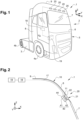
Fig. 1 is a perspective view of a vehicle comprising several lamp assemblies according to the invention; -
Fig. 2 is a schematic cross-section in a vertical longitudinal plane of the vehicle ofFig. 1 ; -
Fig. 3 is a front view of a lamp assembly mounted on the vehicle body; -
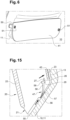
Fig. 4 is a schematic and enlarged cross-section in vertical longitudinal plane PIV offigure 3 , PIV being defined as including axis A30 of a latch of a securing system of the lamp assembly; -
Fig. 5 is a schematic and enlarged cross-section in vertical longitudinal plane Pv offigure 3 , Pv being defined as passing through a biasing member of a retaining system of the lamp assembly; -
Fig. 6 is a detailed view of the vehicle body from the inside, near the lamp assembly; -
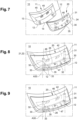
Fig. 7 to 9 show successive steps of a method for mounting the lamp assembly on the vehicle body; -
Fig. 10 and 11 are detailed views of the securing system of the lamp assembly, respectively with the latch in the retracted position and with the latch retained in the locking position by the retaining system; -
Fig. 12 to 14 show successive steps of a method for disassembling the lamp assembly; -
Fig. 15 is a detailed view of the lamp assembly showing a step of the disassembling method. -
Figure 1 shows a vehicle 1, more specifically an industrial vehicle. Although the invention will be described with respect to a truck, the invention is not restricted to this particular vehicle, but may also be used in other vehicles, such as a bus. - As shown in
figure 1 , Z is defined as the vertical direction, X is defined as the longitudinal direction of the vehicle 1, and Y is defined as the transversal direction of the vehicle 1. - The vehicle 1 comprises a
tractor 2 including achassis 3 supported byfront wheels 4a andrear wheels 4b and acab 5 which can be mounted on thechassis 2 through suspensions. Thecab 5 comprises afront wall 6 provided with awindscreen 7,side walls 8 and aroof 9. It defines a driver compartment. The vehicle 1 comprises abody 10 which is defined as the frame structure including in particular thefront wall 6,side walls 8 androof 9. - In the configuration of
figure 2 , the vehicle 1 comprises only thetractor 2. However, the vehicle 1 is also configured to include a trailer (not shown) connected to thetractor 2. - The vehicle 1 further comprises at least one
lamp assembly 20 secured to thevehicle body 10. For that purpose, at least onerecess 11 is formed in thevehicle body 10, therecess 11 being open towards the outside of the vehicle 1 and receiving thelamp assembly 20. Therecess 11 has arear wall 13 opposite the recess opening, and aperipheral wall 14. - The vehicle 1 may comprise
several lamp assemblies 20 which are mounted in correspondingrecesses 11 of thevehicle body 10. In a non-limiting embodiment, as shown infigure 1 , thelamp assemblies 20 are mounted on thecab 5, preferably along a transverse line above thevehicle windshield 7, and thus can form clearance marker lamps. However, the invention can apply to lamp assemblies having other functions and/or other locations on a vehicle. - The
lamp assembly 20 has ahousing 21 which comprises alens 22, arear wall 23 opposite thelens 22, and aperipheral wall 24. Preferably, thehousing 21 has substantially the same shape as that of therecess 11, so that thelamp assembly 20 can be mounted in therecess 11 and fit into saidrecess 11. In addition, thelens 22 may be substantially level with the portion of thevehicle body 10 which surrounds therecess 11, as can be seen infigures 4 and9 for example. This brings significant advantages in terms of aesthetics, aerodynamics and impact protection. - The
lamp assembly 20 comprises one or several light sources (not shown) which are located inside thehousing 21, and which have appropriate lighting or signalling functions in accordance with the intended use of thelamp assembly 20. Thelens 22 of thehousing 21 must allow the light emitted by the light source(s) to be transmitted towards the outside with the required properties in terms of light intensity and distribution. - The vehicle 1 also comprises an
electronic control unit 18 and abattery 19 connected to saidelectronic control unit 18. The connection can be achieved bywires 17. Thebattery 19 can provide power to the light source(s) and other components of thelamp assembly 20, in particular for allowing securing thelamp assembly 20 to thevehicle body 10 as will be explained hereinafter. - The
lamp assembly 20 comprises a securingsystem 25 for securing thelamp assembly 20 to thevehicle body 10. The securingsystem 25 is arranged in thehousing 21. Preferably, the securingsystem 25 is fully housed in thehousing 21, before thelamp assembly 20 is mounted in therecess 11. - The securing
system 25 comprises at least onelatch 30 that is movable between a retracted position in which thelatch 30 is substantially fully located inside the housing 21 (figure 7 ), and a locking position in which thelatch 30 at least partially projects out from the housing 21 (figures 3 and9 ). For that purpose, theperipheral wall 24 of thehousing 21 has ahole 16 for allowing thelatch 30 to pass through and extend outside thehousing 21. - In the locking position, the
latch 30 is engaged in acavity 12 arranged in therecess 11 of thevehicle body 10, thecavity 12 not being a through hole. In an embodiment, as represented infigure 4 , thelatch 30 is not directly engaged in thecavity 12 but received in a receivingmember 15 which is arranged in thecavity 12 and which opens towards the inside of therecess 11. The receivingmember 15 may comprise a non-threaded nut. It is preferably assembled to thevehicle body 10 without requiring holes in thevehicle body 10. For example, the receivingmember 15 can be integrated in thevehicle body 10 by insert moulding or any other appropriate post operation method, such that the interface between the receivingmember 15 and thevehicle body 10 is completely sealed. - The
latch 30 may be arranged to slide in asleeve 31 secured to thehousing 21, along a sliding axis A30. With the arrangement shown infigure 1 , the sliding axis A30 may be substantially vertical, i.e. parallel to vertical direction Z. - The
lamp assembly 20 preferably comprises a biasing member 34 (such as a helical spring) configured to bias thelatch 30 towards the retracted position, as can be seen infigure 4 . - For better securing the
lamp assembly 20 to thevehicle body 10, thelamp assembly 20 may comprise twolatches 30 configured to move along parallel sliding axes A30 between the retracted position and the locking position. Preferably, thelatches 30 may be arranged near opposite sides of thelamp assembly 20, as seen infigure 3 . - The securing
system 25 also comprises a retaining system which, in an active state, is configured to retain thelatch 30 in the locking position and which can be released to an inactive state for allowing thelatch 30 to move to the retracted position, for example under the action of the biasingmember 34. - In the non-limited illustrated embodiment, the retaining system has a retaining member comprising or consisting of a
bar 26 which preferably extends orthogonal to the sliding axes A30 and adjacent the housingrear wall 23. Thebar 26 may be engaged inside apertures 29 of the housing, as can be seen infigure 10 . - The
bar 26 may have a triangular cross-section having afront face 27 forming a ramp and abottom face 28 forming a locking surface (seefigure 5 ). Thelatch 30 comprises aprojection 36 having a ramp-like bottom face 37 and a lockingupper face 38, as shown infigure 10 . In the active state of the retainingmember 26 and in the locking position of thelatch 30, theprojection 36 cooperates with the retainingmember 26 to prevent thelatch 30 from moving to its retracted position. - The retaining system further has at least one biasing member which is configured to bias the retaining
member 26 towards the active state. This biasing member may be aspring 35, such as a helical spring, having one end secured to thelens 22 and one opposite end secured to the retainingmember 26. Thespring 35 can be an extension spring. - The securing
system 25 further comprises anelectromagnet 33 which is secured to thehousing 21. When powered, theelectromagnet 33 is capable of attracting a ferromagnetic member secured to thelatch 30, in order to move thelatch 30 to the locking position. The ferromagnetic member may comprise atab 32 extending orthogonally to thelatch 30. - It results from the above description that the mechanical features ensuring the locking of the
lamp assembly 20 inside the recess 11 - namely basically thelatch 30 and cavity 12 - do not require through-holes in thevehicle body 10. - Moreover, actuating the securing
system 25 neither requires such through-holes, as the invention makes use of a wirelesspower transfer device 40. - To that end, the vehicle 1 comprises a
transmitter 41 which is located inside thevehicle body 10 and which is connected to thebattery 19, and thelamp assembly 20 comprises areceiver 42 which is located inside thehousing 21. Thetransmitter 41 andreceiver 42 are part of the wirelesspower transfer device 40, thetransmitter 41 allowing wireless power transfer to thereceiver 42. Thetransmitter 41 andreceiver 42 can be capacitive plate, or induction coils. Thetransmitter 41 can be housed in aninner module 44 as shown infigure 2 . - The
transmitter 41, orinner module 44, is secured to the vehicle body with any mounting arrangement not requiring holes. For that purpose, according to an embodiment shown infigure 6 , there may be provided embossments 50 protruding from thevehicle body 10 towards the inside, on opposite sides of therecess 11. Theembossments 50 are made by moulding or other appropriate post operation and therefore are part of thevehicle body 10 or secured to thevehicle body 10 without holes. Theembossments 50 may have threaded inserts for receivingfasteners 51 for securing thetransmitter 41. - Thus, basically, the
lamp assembly 20 derives power and communication wirelessly from theinner module 44. - For the wireless
power transfer device 40 to work, there is no need to provide through holes in thevehicle body 10 for receiving wires; however, thetransmitter 41 andreceiver 42 must be fairly close to one another. In an embodiment, thetransmitter 41 is arranged substantially adjacent the recessrear wall 13, while thereceiver 42 is arranged substantially adjacent the housingrear wall 23, therefore facing thetransmitter 41. As shown infigures 2 ,4 and 5 , with such a configuration, thetransmitter 41 andreceiver 42 are only separated by a wall of thevehicle body 10. - The
receiver 42 can provide the power transmitted by thetransmitter 41 to components inside thehousing 21 of thelamp assembly 20, including light source(s) and theelectromagnet 33. Inside thehousing 21, wires or tracks on a circuit board (not shown) electrically connect thereceiver 42 to the components which need power.Figure 3 schematically showswires 39 which electrically connect theelectromagnets 33 and thereceiver 42. - According to a possible feature of the invention, one wall of the
recess 11 of thevehicle body 10 can have at least one pattern which is depressed or raised. This pattern in therecess 11 is configured to cooperate with a corresponding pattern arranged in one wall of thelamp assembly housing 21, for prepositioning thelamp assembly 20 in saidrecess 11 before thelamp assembly 20 is secured to thevehicle body 10. - In the non-limited represented embodiment, on the one hand, the
rear wall 13 of the recess has twopatterns 45 which are raised, i.e. which protrude towards the inside of therecess 11. On the other hand, therear wall 23 of thehousing 21 has twopatterns 46 which are depressed, i.e. which protrude towards the inside of thehousing 21. - The
receiver 42 may comprise a plate which is mounted adjacent the housingrear wall 23. Then, said plate-shapedreceiver 42 has one orseveral holes 43 for receiving the depressed pattern(s) 46 arranged in the housingrear wall 23, as shown infigures 3 and 5 . - Reference is now made to
figures 7 to 11 which shows steps of a method for mounting thelamp assembly 20 on thevehicle body 10. - In the
lamp assembly 20 ready for being mounted, thelatches 30 are in the retracted position, because ofsprings 34, and therefore do not project, or project only very slightly, outside thehousing 21. As shown infigure 10 , theprojection 36 on thelatch 30 is spaced apart from the retainingmember 26. - First of all, the
lamp assembly 20 is positioned in therecess 11 so that theaxes 30 of thelatches 30 coincide with the cavities 12 (figure 8 ). This might be fairly easy if the shapes of thehousing 21 andrecess 11 are substantially identical. Mutually engaging thepatterns 45 of thevehicle body lamp assembly 20 further improves the positioning, and may even provide some temporary hold. - Then, the
transmitter 41 is powered, typically by switching on the vehicle ignition. As a consequence, thereceiver 42 is also powered, and theelectromagnet 33 is powered in turn. Attraction of theferromagnetic member 32 by theelectromagnet 33 causes thelatch 30 to move to the locking position, against the force of the biasingmember 34, thelatch 30 projecting out of thehousing 21 throughholes 16 and engaging thecavity 12 of the recess 11 (figure 9 ). - As the
latch 30 moves towards the locking position, theprojection 36 on thelatch 30 moves closer to the retainingmember 26 until the ramp-like bottom face 37 of theprojection 36 comes into contact with thefront face 27 of the retainingmember 26. Further movement of thelatch 30 towards the locking position results in theprojection 36 pushing the retainingmember 26 to move it towards its inactive state against the force of the biasingmember 35, until theprojection 36 has moved past the retainingmember 26. Then, theprojection 36 is snapped on the retainingmember 26 which has returned to the active state by means of the biasingmember 35. The lockingupper face 38 of theprojection 36 on thelatch 30 abuts thebottom face 28 of the retainingmember 26, so that thelatch 30 is retained in the locking position by the retainingsystem 26 in the active state (figure 11 ). - In the locking position, the
latch 30 remains engaged in the cavity 12 - i.e. thelamp assembly 20 remains secured to the vehicle body 10 - even if thetransmitter 41,receiver 42 andelectromagnet 33 are not powered any more as a result of the vehicle ignition being turned off, and despite the biasingmember 34. The securingsystem 25 of the invention is electrically activated but then mechanically held in locking position. - In case the
lamp assembly 20 needs to be disassembled, an operator can follow the now described steps, with reference tofigures 12 to 15 . - The vehicle 1 is in the condition depicted in
figures 9 ,11 and 12 , namely: thelatches 30 are engaged incavities 12 and held in the locking position by the retainingmember 26. Furthermore, the vehicle ignition is off. In other words, thetransmitter 41 is in an unpowered condition, meaning that theelectromagnet 33 does not attract theferromagnetic member 32 provided on thelatch 30. - The securing
system 25 comprises a releasingmember 47 which is configured to be actuated from the outside of thelamp assembly 20 by a user, for moving the retaining system to the inactive state. - For example, when the
lamp assembly 20 is received in therecess 11, there can remain asmall gap 55 between the wall of thehousing 21 which is adjacent the releasingmember 47 and the facing wall of the recess 11 (seefigure 15 ). Said wall of thehousing 21 may be the wall provided with theholes 16. Such agap 55 allows a user to access and actuate the releasingmember 47, typically by means of atool 48 inserted in said gap 55 (figure 13 ). The tool can be a screwdriver. - For example, actuating the releasing
member 47 results in pushing the retainingmember 26 to move it towards its inactive state against the force of the biasingmember 35. - More specifically, as shown in
figure 15 , the releasingmember 47 may include a base 56 arranged in a hollow 57 of thehousing 21 and secured to anarm 58 having anenlarged end 59. Theenlarged end 59 is located close to the retaining member orbar 26, preferably substantially in contact with thebottom face 28 of the retainingmember 26. The hollow 57 has a greater dimension than thebase 56 of the releasingmember 47. Thus, thebase 56 can be pushed to move inside the hollow 57, here towards therear wall 23 of thehousing 21. This results in thearm 58 pushing the retainingmember 26 towards its inactive state. - Once the user has released the retaining system to the inactive state by actuating the releasing
member 47, thelatch 30 is freed from the retainingmember 26 and, as it is not attracted by theelectromagnet 33, moves to the retracted position (figure 14 ). This can be achieved by means of the biasingmember 34. - The
lamp assembly 20 can then be removed from thevehicle body 10. - Because of the robust design of the lamp assembly securing system according to the invention, disassembling should only be necessary to replace a damaged lamp assembly, but should not be required for maintenance.
- One significant improvement brought by the invention relies in avoiding through holes in the vehicle body. Moreover, the invention provides a straight forward and intuitive way of mounting and securing the lamp assembly on the vehicle body. Besides, the invention does not require any particularly sophisticated arrangement on the vehicle body.
- In addition to the previously mentioned advantages of the invention, it should be noted that the wireless power transfer device provides a wireless communication link which enables the electronic identification of the lamp assembly for aftermarket and warehouse traceability through contactless methods.
- It is to be understood that the present invention is not limited to the embodiments described above and illustrated in the drawings; rather, the skilled person will recognize that many changes and modifications may be made within the scope of the appended claims.
Claims (16)
- A lamp assembly (20) for a vehicle (1), intended to be mounted in a recess (11) of a body (10) of the vehicle (1), the lamp assembly (20) having a housing (21) and a securing system (25) for securing the lamp assembly (20) to the vehicle body (10), wherein the securing system (25) is arranged in the housing (21) and comprises: - a receiver (42) capable of being coupled to a transmitter (41) located inside the vehicle body (10), said receiver (42) and said transmitter (41) being part of a wireless power transfer device (40), the receiver (42) being configured to power an electromagnet (33); characterized in that the securing system (25) comprises:- at least one latch (30) that is movable between a retracted position in which the latch (30) is substantially fully located inside the housing (21), and a locking position in which the latch (30) at least partially projects out from the housing (21) to be able to engage in a cavity (12) arranged in the recess (11) of the vehicle body (10);- the electromagnet (33) is capable, when powered, to attract a ferromagnetic member (32) secured to the latch (30), in order to move the latch (30) to the locking position;- a retaining system (26) which, in an active state, is configured to retain the latch (30) in the locking position and which can be released to an inactive state for allowing the latch (30) to move to the retracted position.
- The lamp assembly according to claim 1, characterized in that the retaining system comprises a retaining member (26) and at least one biasing member (35) configured to bias the retaining member (26) towards the active state, wherein, in the active state of the retaining member (26) and in the locking position of the latch (30), a projection (36) secured to the latch (30) cooperates with the retaining member (26) to prevent the latch (30) from moving to its retracted position.
- The lamp assembly according to claim 2, characterized in that the securing system (25) is configured so that the movement of the latch (30) from the retracted position towards the locking position causes the projection (36) to move the retaining member (26) towards its inactive state against the force of the biasing member (35) until the projection (36) has moved past the retaining member (26), the projection (36) then being snapped on the retaining member (26) which has returned to the active state by means of the biasing member (35).
- The lamp assembly according to any one of claims 2 to 3, characterized in that the retaining member (26) comprises a bar preferably having a triangular cross-section.
- The lamp assembly according to claim 4, characterized in that the lamp assembly comprises two latches (30) configured to move along parallel sliding axes (A30) between the retracted position and the locking position, said sliding axes (A30) being orthogonal to the main direction of the bar (26).
- The lamp assembly according to any one of claims 1 to 5, characterized in the securing system (25) further comprises a releasing member (47) which is configured to be actuated from the outside of the lamp assembly (20) by a user, for moving the retaining system (26) to the inactive state.
- The lamp assembly according to any one of claims 1 to 6, characterized in that the receiver (42) is one of a capacitive plate and an induction coil.
- The lamp assembly according to any one of claims 1 to 7, characterized in that the housing (21) has a lens (22), a rear wall (23) opposite the lens (22), and a peripheral wall (24), wherein one wall of the housing (21), preferably the peripheral wall (24), has at least one hole (16) for the at least one latch (30) in the locking position to pass therethrough.
- The lamp assembly according to claim 8, characterized in that one wall of the housing (21), preferably the rear wall (23), has at least one pattern (46) which is depressed or raised and which is configured to cooperate with a corresponding pattern (45) arranged in the recess (11) of the vehicle body (10) for prepositioning the lamp assembly (20) in said recess (11) before the lamp assembly (20) is secured to the vehicle body (10).
- The lamp assembly according to claim 9, characterized in that the receiver (42) comprises a plate which is mounted adjacent the housing rear wall (23), and in that said plate has at least one hole (43) for receiving a depressed pattern (46) arranged in the housing rear wall (23).
- A vehicle (1) having a body (10) in which at least one recess (11) is formed, the recess (11) being open towards the outside of the vehicle (1), the vehicle (1) comprising a lamp assembly (20) according to any one of the preceding claims, the lamp assembly (20) being mounted in the recess (11) and secured to the vehicle body (10), the recess (11) having at least one cavity (12) in which a latch (30) of the lamp assembly (20) can be engaged, the vehicle (1) further comprising a transmitter (41) which is located inside the vehicle body (10), substantially adjacent a recess wall (13), and which can be connected to a vehicle battery (19) for allowing wireless power transfer to the receiver (42) of the lamp assembly (20).
- The vehicle according to claim 11, characterized in that the housing (21) of the lamp assembly (20) has a lens (22), and in that said lens (22) is substantially level with the portion of the vehicle body (10) which surrounds the recess (11).
- The vehicle according to claim 11 or 12, characterized in that one wall (13) of the recess (11) of the vehicle body (10) has at least one pattern (45) which is depressed or raised and which is configured to cooperate with a corresponding pattern (46) arranged in one wall (23) of the lamp assembly housing (21) for prepositioning the lamp assembly (20) in said recess (11) before the lamp assembly (20) is secured to the vehicle body (10).
- The vehicle according to any one of claims 11 to 13, characterized in that it comprises several lamp assemblies (20) mounted in corresponding recesses (11) of the vehicle body (10), the lamp assemblies (20) being preferably mounted on a vehicle cab (5), preferably along a transverse line above a vehicle windshield (7).
- A method for mounting a lamp assembly (20) on a vehicle body (10), to form a vehicle (1) according to any one of claims 11 to 14, wherein the method comprises:- positioning the lamp assembly (20) in the recess (11), the latch (30) being in the retracted position;- powering the transmitter (41) thus, as a consequence of the wireless power transfer device (20), powering the receiver (42), thereby powering the electromagnet (33) and causing the latch (30) to move to the locking position to engage the cavity (12) of the recess (11), the latch (30) then being retained in the locking position by the retaining system in the active state.
- A method for disassembling a lamp assembly (20), in a vehicle (1) according to any one of claims 11 to 14, wherein the method comprises, starting from an unpowered condition of the transmitter (41):- releasing the retaining system to the inactive state, resulting in the latch (30) being freed and moving to the retracted position;- removing the lamp assembly (20) from the vehicle body (10).
Applications Claiming Priority (1)
| Application Number | Priority Date | Filing Date | Title |
|---|---|---|---|
| PCT/EP2020/070029 WO2022012747A1 (en) | 2020-07-15 | 2020-07-15 | A lamp assembly for a vehicle |
Publications (3)
| Publication Number | Publication Date |
|---|---|
| EP4182186A1 EP4182186A1 (en) | 2023-05-24 |
| EP4182186C0 EP4182186C0 (en) | 2024-07-03 |
| EP4182186B1 true EP4182186B1 (en) | 2024-07-03 |
Family
ID=71728726
Family Applications (1)
| Application Number | Title | Priority Date | Filing Date |
|---|---|---|---|
| EP20743108.1A Active EP4182186B1 (en) | 2020-07-15 | 2020-07-15 | A lamp assembly for a vehicle |
Country Status (4)
| Country | Link |
|---|---|
| US (1) | US11820278B2 (en) |
| EP (1) | EP4182186B1 (en) |
| CN (1) | CN115551743A (en) |
| WO (1) | WO2022012747A1 (en) |
Families Citing this family (1)
| Publication number | Priority date | Publication date | Assignee | Title |
|---|---|---|---|---|
| DE102024116060B3 (en) * | 2024-06-10 | 2025-06-05 | Bayerische Motoren Werke Aktiengesellschaft | Fastening arrangement of a lighting device to a component of a vehicle and vehicle |
Family Cites Families (11)
| Publication number | Priority date | Publication date | Assignee | Title |
|---|---|---|---|---|
| US5264997A (en) * | 1992-03-04 | 1993-11-23 | Dominion Automotive Industries Corp. | Sealed, inductively powered lamp assembly |
| KR101199204B1 (en) * | 2010-07-30 | 2012-11-07 | 기아자동차주식회사 | Vehicle lamp of wireless charging type capable of being attached and detached |
| US9413104B2 (en) * | 2013-01-28 | 2016-08-09 | Sheng-Hsin Liao | Magnetic light source adaptor and light source therefor |
| US9713233B1 (en) * | 2015-12-30 | 2017-07-18 | GM Global Technology Operations LLC | Methods and apparatus for wireless communication and power transfer for an external light fixture onboard a vehicle |
| US10562441B2 (en) | 2016-07-09 | 2020-02-18 | Cab Over America LLC | Wireless cab marker lights for truck |
| CN205857980U (en) * | 2016-08-15 | 2017-01-04 | 陈晓越 | Auto electronic is locked |
| US20190277059A1 (en) | 2018-03-07 | 2019-09-12 | Glen A. Robertson | Wireless Deadbolt Door Lock |
| DE202018102945U1 (en) * | 2018-05-25 | 2019-08-29 | Automotive Lighting Reutlingen Gmbh | Modular system for a motor vehicle lighting device and / or a motor vehicle environment sensor |
| CN209838177U (en) * | 2018-11-16 | 2019-12-24 | 浙江星月安防科技有限公司 | Armored door with detachable decorative panel |
| CN110675763B (en) * | 2019-10-24 | 2025-02-18 | 惠州市科伦特智能科技有限公司 | Installation structure of LED display screen to prevent falling |
| CN111271680B (en) * | 2020-04-08 | 2021-02-02 | 佛山市氙明电器有限公司 | Automobile headlamp module |
-
2020
- 2020-07-15 WO PCT/EP2020/070029 patent/WO2022012747A1/en not_active Ceased
- 2020-07-15 CN CN202080100750.XA patent/CN115551743A/en active Pending
- 2020-07-15 US US17/920,095 patent/US11820278B2/en active Active
- 2020-07-15 EP EP20743108.1A patent/EP4182186B1/en active Active
Also Published As
| Publication number | Publication date |
|---|---|
| US11820278B2 (en) | 2023-11-21 |
| CN115551743A (en) | 2022-12-30 |
| US20230158945A1 (en) | 2023-05-25 |
| WO2022012747A1 (en) | 2022-01-20 |
| EP4182186C0 (en) | 2024-07-03 |
| EP4182186A1 (en) | 2023-05-24 |
Similar Documents
| Publication | Publication Date | Title |
|---|---|---|
| JP5166023B2 (en) | Plug-in connection | |
| EP4182186B1 (en) | A lamp assembly for a vehicle | |
| KR100589266B1 (en) | Fixing structure of headlamp module of automobile | |
| CA2300549C (en) | Theft resistant lamp assembly mounting bracket | |
| EP0656838A1 (en) | A vehicle radiator grille, a headlight housing and a method of mounting the grille onto a vehicle. | |
| US11796158B2 (en) | Lamp unit housing and a lamp arrangement | |
| US5869934A (en) | Barricade light control switch apparatus | |
| KR101033744B1 (en) | Bumper device with light source unit | |
| JP2013035320A (en) | Electronic control unit | |
| KR100439793B1 (en) | Headlamp-supporter for absorb impact of automobile | |
| CN222246851U (en) | Sub-instrument panel assembly and vehicle having the same | |
| KR200438350Y1 (en) | Automotive Side Indicators | |
| KR100756699B1 (en) | Installation structure of side marker lamp for automobile | |
| KR100848371B1 (en) | Contact terminals for turn signal switches in automobiles | |
| KR100570027B1 (en) | Connector mounting structure of ignition key combination for automobile | |
| KR200206284Y1 (en) | Door knob of vehicles | |
| KR200177755Y1 (en) | An apparatus for protecting head lamp in a car's collision | |
| KR0140557Y1 (en) | Lamp structure | |
| KR100371717B1 (en) | Mounting structure of fog lamp housing for automobile | |
| KR0122010Y1 (en) | Spare tire demounting device of car | |
| KR0126235Y1 (en) | An installation structure of wiper switch for a vehicle | |
| KR970002504Y1 (en) | Hood light of a car | |
| KR19980052676U (en) | Town hook structure for towing vehicle | |
| KR19980060751U (en) | Wheel housing with luminaire | |
| KR19980037133U (en) | Towing ring coupling structure for automobile |
Legal Events
| Date | Code | Title | Description |
|---|---|---|---|
| STAA | Information on the status of an ep patent application or granted ep patent |
Free format text: STATUS: UNKNOWN |
|
| STAA | Information on the status of an ep patent application or granted ep patent |
Free format text: STATUS: THE INTERNATIONAL PUBLICATION HAS BEEN MADE |
|
| PUAI | Public reference made under article 153(3) epc to a published international application that has entered the european phase |
Free format text: ORIGINAL CODE: 0009012 |
|
| STAA | Information on the status of an ep patent application or granted ep patent |
Free format text: STATUS: REQUEST FOR EXAMINATION WAS MADE |
|
| 17P | Request for examination filed |
Effective date: 20230117 |
|
| AK | Designated contracting states |
Kind code of ref document: A1 Designated state(s): AL AT BE BG CH CY CZ DE DK EE ES FI FR GB GR HR HU IE IS IT LI LT LU LV MC MK MT NL NO PL PT RO RS SE SI SK SM TR |
|
| DAV | Request for validation of the european patent (deleted) | ||
| DAX | Request for extension of the european patent (deleted) | ||
| GRAP | Despatch of communication of intention to grant a patent |
Free format text: ORIGINAL CODE: EPIDOSNIGR1 |
|
| STAA | Information on the status of an ep patent application or granted ep patent |
Free format text: STATUS: GRANT OF PATENT IS INTENDED |
|
| INTG | Intention to grant announced |
Effective date: 20240304 |
|
| GRAS | Grant fee paid |
Free format text: ORIGINAL CODE: EPIDOSNIGR3 |
|
| GRAA | (expected) grant |
Free format text: ORIGINAL CODE: 0009210 |
|
| STAA | Information on the status of an ep patent application or granted ep patent |
Free format text: STATUS: THE PATENT HAS BEEN GRANTED |
|
| AK | Designated contracting states |
Kind code of ref document: B1 Designated state(s): AL AT BE BG CH CY CZ DE DK EE ES FI FR GB GR HR HU IE IS IT LI LT LU LV MC MK MT NL NO PL PT RO RS SE SI SK SM TR |
|
| REG | Reference to a national code |
Ref country code: CH Ref legal event code: EP |
|
| REG | Reference to a national code |
Ref country code: DE Ref legal event code: R096 Ref document number: 602020033353 Country of ref document: DE |
|
| U01 | Request for unitary effect filed |
Effective date: 20240718 |
|
| U07 | Unitary effect registered |
Designated state(s): AT BE BG DE DK EE FI FR IT LT LU LV MT NL PT SE SI Effective date: 20240731 |
|
| U20 | Renewal fee for the european patent with unitary effect paid |
Year of fee payment: 5 Effective date: 20240814 |
|
| PG25 | Lapsed in a contracting state [announced via postgrant information from national office to epo] |
Ref country code: NO Free format text: LAPSE BECAUSE OF FAILURE TO SUBMIT A TRANSLATION OF THE DESCRIPTION OR TO PAY THE FEE WITHIN THE PRESCRIBED TIME-LIMIT Effective date: 20241003 |
|
| PG25 | Lapsed in a contracting state [announced via postgrant information from national office to epo] |
Ref country code: GR Free format text: LAPSE BECAUSE OF FAILURE TO SUBMIT A TRANSLATION OF THE DESCRIPTION OR TO PAY THE FEE WITHIN THE PRESCRIBED TIME-LIMIT Effective date: 20241004 Ref country code: PL Free format text: LAPSE BECAUSE OF FAILURE TO SUBMIT A TRANSLATION OF THE DESCRIPTION OR TO PAY THE FEE WITHIN THE PRESCRIBED TIME-LIMIT Effective date: 20240703 |
|
| PG25 | Lapsed in a contracting state [announced via postgrant information from national office to epo] |
Ref country code: IS Free format text: LAPSE BECAUSE OF FAILURE TO SUBMIT A TRANSLATION OF THE DESCRIPTION OR TO PAY THE FEE WITHIN THE PRESCRIBED TIME-LIMIT Effective date: 20241103 |
|
| PG25 | Lapsed in a contracting state [announced via postgrant information from national office to epo] |
Ref country code: CZ Free format text: LAPSE BECAUSE OF FAILURE TO SUBMIT A TRANSLATION OF THE DESCRIPTION OR TO PAY THE FEE WITHIN THE PRESCRIBED TIME-LIMIT Effective date: 20240703 Ref country code: HR Free format text: LAPSE BECAUSE OF FAILURE TO SUBMIT A TRANSLATION OF THE DESCRIPTION OR TO PAY THE FEE WITHIN THE PRESCRIBED TIME-LIMIT Effective date: 20240703 |
|
| PG25 | Lapsed in a contracting state [announced via postgrant information from national office to epo] |
Ref country code: ES Free format text: LAPSE BECAUSE OF FAILURE TO SUBMIT A TRANSLATION OF THE DESCRIPTION OR TO PAY THE FEE WITHIN THE PRESCRIBED TIME-LIMIT Effective date: 20240703 Ref country code: RS Free format text: LAPSE BECAUSE OF FAILURE TO SUBMIT A TRANSLATION OF THE DESCRIPTION OR TO PAY THE FEE WITHIN THE PRESCRIBED TIME-LIMIT Effective date: 20241003 |
|
| PG25 | Lapsed in a contracting state [announced via postgrant information from national office to epo] |
Ref country code: RS Free format text: LAPSE BECAUSE OF FAILURE TO SUBMIT A TRANSLATION OF THE DESCRIPTION OR TO PAY THE FEE WITHIN THE PRESCRIBED TIME-LIMIT Effective date: 20241003 Ref country code: PL Free format text: LAPSE BECAUSE OF FAILURE TO SUBMIT A TRANSLATION OF THE DESCRIPTION OR TO PAY THE FEE WITHIN THE PRESCRIBED TIME-LIMIT Effective date: 20240703 Ref country code: NO Free format text: LAPSE BECAUSE OF FAILURE TO SUBMIT A TRANSLATION OF THE DESCRIPTION OR TO PAY THE FEE WITHIN THE PRESCRIBED TIME-LIMIT Effective date: 20241003 Ref country code: IS Free format text: LAPSE BECAUSE OF FAILURE TO SUBMIT A TRANSLATION OF THE DESCRIPTION OR TO PAY THE FEE WITHIN THE PRESCRIBED TIME-LIMIT Effective date: 20241103 Ref country code: HR Free format text: LAPSE BECAUSE OF FAILURE TO SUBMIT A TRANSLATION OF THE DESCRIPTION OR TO PAY THE FEE WITHIN THE PRESCRIBED TIME-LIMIT Effective date: 20240703 Ref country code: GR Free format text: LAPSE BECAUSE OF FAILURE TO SUBMIT A TRANSLATION OF THE DESCRIPTION OR TO PAY THE FEE WITHIN THE PRESCRIBED TIME-LIMIT Effective date: 20241004 Ref country code: ES Free format text: LAPSE BECAUSE OF FAILURE TO SUBMIT A TRANSLATION OF THE DESCRIPTION OR TO PAY THE FEE WITHIN THE PRESCRIBED TIME-LIMIT Effective date: 20240703 Ref country code: CZ Free format text: LAPSE BECAUSE OF FAILURE TO SUBMIT A TRANSLATION OF THE DESCRIPTION OR TO PAY THE FEE WITHIN THE PRESCRIBED TIME-LIMIT Effective date: 20240703 |
|
| REG | Reference to a national code |
Ref country code: CH Ref legal event code: PL |
|
| PG25 | Lapsed in a contracting state [announced via postgrant information from national office to epo] |
Ref country code: SM Free format text: LAPSE BECAUSE OF FAILURE TO SUBMIT A TRANSLATION OF THE DESCRIPTION OR TO PAY THE FEE WITHIN THE PRESCRIBED TIME-LIMIT Effective date: 20240703 |
|
| PG25 | Lapsed in a contracting state [announced via postgrant information from national office to epo] |
Ref country code: MC Free format text: LAPSE BECAUSE OF FAILURE TO SUBMIT A TRANSLATION OF THE DESCRIPTION OR TO PAY THE FEE WITHIN THE PRESCRIBED TIME-LIMIT Effective date: 20240703 Ref country code: CH Free format text: LAPSE BECAUSE OF NON-PAYMENT OF DUE FEES Effective date: 20240731 |
|
| PG25 | Lapsed in a contracting state [announced via postgrant information from national office to epo] |
Ref country code: SK Free format text: LAPSE BECAUSE OF FAILURE TO SUBMIT A TRANSLATION OF THE DESCRIPTION OR TO PAY THE FEE WITHIN THE PRESCRIBED TIME-LIMIT Effective date: 20240703 |
|
| PLBE | No opposition filed within time limit |
Free format text: ORIGINAL CODE: 0009261 |
|
| STAA | Information on the status of an ep patent application or granted ep patent |
Free format text: STATUS: NO OPPOSITION FILED WITHIN TIME LIMIT |
|
| 26N | No opposition filed |
Effective date: 20250404 |
|
| GBPC | Gb: european patent ceased through non-payment of renewal fee |
Effective date: 20241003 |
|
| PG25 | Lapsed in a contracting state [announced via postgrant information from national office to epo] |
Ref country code: GB Free format text: LAPSE BECAUSE OF NON-PAYMENT OF DUE FEES Effective date: 20241003 |
|
| PG25 | Lapsed in a contracting state [announced via postgrant information from national office to epo] |
Ref country code: IE Free format text: LAPSE BECAUSE OF NON-PAYMENT OF DUE FEES Effective date: 20240715 |
|
| PG25 | Lapsed in a contracting state [announced via postgrant information from national office to epo] |
Ref country code: RO Free format text: LAPSE BECAUSE OF FAILURE TO SUBMIT A TRANSLATION OF THE DESCRIPTION OR TO PAY THE FEE WITHIN THE PRESCRIBED TIME-LIMIT Effective date: 20240703 |
|
| PG25 | Lapsed in a contracting state [announced via postgrant information from national office to epo] |
Ref country code: CY Free format text: LAPSE BECAUSE OF FAILURE TO SUBMIT A TRANSLATION OF THE DESCRIPTION OR TO PAY THE FEE WITHIN THE PRESCRIBED TIME-LIMIT; INVALID AB INITIO Effective date: 20200715 |
|
| PG25 | Lapsed in a contracting state [announced via postgrant information from national office to epo] |
Ref country code: HU Free format text: LAPSE BECAUSE OF FAILURE TO SUBMIT A TRANSLATION OF THE DESCRIPTION OR TO PAY THE FEE WITHIN THE PRESCRIBED TIME-LIMIT; INVALID AB INITIO Effective date: 20200715 |
|
| U90 | Renewal fees not paid: noting of loss of rights |
Free format text: RENEWAL FEE NOT PAID FOR YEAR 06 Effective date: 20260217 |