EP4181377A1 - Power supply and battery charging arrangement for feeding a solar tracker and method thereof - Google Patents
Power supply and battery charging arrangement for feeding a solar tracker and method thereof Download PDFInfo
- Publication number
- EP4181377A1 EP4181377A1 EP21383027.6A EP21383027A EP4181377A1 EP 4181377 A1 EP4181377 A1 EP 4181377A1 EP 21383027 A EP21383027 A EP 21383027A EP 4181377 A1 EP4181377 A1 EP 4181377A1
- Authority
- EP
- European Patent Office
- Prior art keywords
- electronic board
- main electronic
- auxiliary
- input
- vout
- Prior art date
- Legal status (The legal status is an assumption and is not a legal conclusion. Google has not performed a legal analysis and makes no representation as to the accuracy of the status listed.)
- Pending
Links
Images

Classifications
-
- H—ELECTRICITY
- H02—GENERATION; CONVERSION OR DISTRIBUTION OF ELECTRIC POWER
- H02M—APPARATUS FOR CONVERSION BETWEEN AC AND AC, BETWEEN AC AND DC, OR BETWEEN DC AND DC, AND FOR USE WITH MAINS OR SIMILAR POWER SUPPLY SYSTEMS; CONVERSION OF DC OR AC INPUT POWER INTO SURGE OUTPUT POWER; CONTROL OR REGULATION THEREOF
- H02M3/00—Conversion of DC power input into DC power output
- H02M3/02—Conversion of DC power input into DC power output without intermediate conversion into AC
- H02M3/04—Conversion of DC power input into DC power output without intermediate conversion into AC by static converters
- H02M3/10—Conversion of DC power input into DC power output without intermediate conversion into AC by static converters using discharge tubes with control electrode or semiconductor devices with control electrode
- H02M3/145—Conversion of DC power input into DC power output without intermediate conversion into AC by static converters using discharge tubes with control electrode or semiconductor devices with control electrode using devices of a triode or transistor type requiring continuous application of a control signal
- H02M3/155—Conversion of DC power input into DC power output without intermediate conversion into AC by static converters using discharge tubes with control electrode or semiconductor devices with control electrode using devices of a triode or transistor type requiring continuous application of a control signal using semiconductor devices only
- H02M3/156—Conversion of DC power input into DC power output without intermediate conversion into AC by static converters using discharge tubes with control electrode or semiconductor devices with control electrode using devices of a triode or transistor type requiring continuous application of a control signal using semiconductor devices only with automatic control of output voltage or current, e.g. switching regulators
- H02M3/158—Conversion of DC power input into DC power output without intermediate conversion into AC by static converters using discharge tubes with control electrode or semiconductor devices with control electrode using devices of a triode or transistor type requiring continuous application of a control signal using semiconductor devices only with automatic control of output voltage or current, e.g. switching regulators including plural semiconductor devices as final control devices for a single load
- H02M3/1584—Conversion of DC power input into DC power output without intermediate conversion into AC by static converters using discharge tubes with control electrode or semiconductor devices with control electrode using devices of a triode or transistor type requiring continuous application of a control signal using semiconductor devices only with automatic control of output voltage or current, e.g. switching regulators including plural semiconductor devices as final control devices for a single load with a plurality of power processing stages connected in parallel
- H02M3/1586—Conversion of DC power input into DC power output without intermediate conversion into AC by static converters using discharge tubes with control electrode or semiconductor devices with control electrode using devices of a triode or transistor type requiring continuous application of a control signal using semiconductor devices only with automatic control of output voltage or current, e.g. switching regulators including plural semiconductor devices as final control devices for a single load with a plurality of power processing stages connected in parallel switched with a phase shift, i.e. interleaved
-
- H—ELECTRICITY
- H02—GENERATION; CONVERSION OR DISTRIBUTION OF ELECTRIC POWER
- H02J—ELECTRIC POWER NETWORKS; CIRCUIT ARRANGEMENTS OR SYSTEMS FOR SUPPLYING OR DISTRIBUTING ELECTRIC POWER; SYSTEMS FOR STORING ELECTRIC ENERGY
- H02J2101/00—Supply or distribution of decentralised, dispersed or local electric power generation
- H02J2101/20—Dispersed power generation using renewable energy sources
- H02J2101/22—Solar energy
- H02J2101/24—Photovoltaics
-
- Y—GENERAL TAGGING OF NEW TECHNOLOGICAL DEVELOPMENTS; GENERAL TAGGING OF CROSS-SECTIONAL TECHNOLOGIES SPANNING OVER SEVERAL SECTIONS OF THE IPC; TECHNICAL SUBJECTS COVERED BY FORMER USPC CROSS-REFERENCE ART COLLECTIONS [XRACs] AND DIGESTS
- Y02—TECHNOLOGIES OR APPLICATIONS FOR MITIGATION OR ADAPTATION AGAINST CLIMATE CHANGE
- Y02E—REDUCTION OF GREENHOUSE GAS [GHG] EMISSIONS, RELATED TO ENERGY GENERATION, TRANSMISSION OR DISTRIBUTION
- Y02E10/00—Energy generation through renewable energy sources
- Y02E10/50—Photovoltaic [PV] energy
- Y02E10/56—Power conversion systems, e.g. maximum power point trackers
Definitions
- the invention hereby provided belongs to the field of conversion of solar energy into electrical power by means of photovoltaic technologies.
- the object of the invention is directed to a high series power supply.
- Expandable current input range by using modules that connect to the master board.
- the main advantage is being able to use a modular design to be able to adapt to different levels of string current.
- This modularity allows that the electronics are not oversized (the price is reduced) in cases where the string current is low and that its range is expandable in cases where the string current is high, always adapting the electronics to the specific case of string current in a simple way and saving costs.
- the object of the invention provides a battery charger with serial connection to the string (from where it obtains the energy to charge) to power the solar tracker or any auxiliary electronics in solar fields; being the object of the invention defined by the content of the claims.
- the object of invention encompasses a main electronic board, capable of operating autonomously as a charger up to a maximum input current, and auxiliary electronic boards, hereinafter modules, which are connected to the main electronic board to expand the range of current input.
- Each module allows the input current to be increased by a certain number of amps that, added to those already allowed by the main electronic board, define the current input range of the equipment.
- the main electronic board sets a current reference for the rest of the modules, auxiliary electronic boards, that is equal to the maximum input current between the number of modules, auxiliary electronic boards. In this way, the input current will be distributed evenly among all the auxiliary electronic boards.
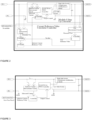
- power supply and battery charging arrangement for feeding a solar tracker through connection to the string in solar fields as shown in figure 1 .
- Said power supply and battery charging arrangement for feeding the solar tracker comprises a main electronic board, shown in figure 1 , capable of operating autonomously as a charger up to a maximum input current, said main electronic board being connected to:
- a plurality of auxiliary electronic boards as the one depicted in figure 2 are connected to the main electronic board, being said plurality of auxiliary electronic boards connected to the main electronic board to expand the range of current input based on a current reference value generated by the main electronic board.
- Each auxiliary electronic board comprises:
- the different auxiliary electronic boards can work in "interleaving" (out of phase with each other, intertwined) so that the ripple of the current in the input capacitor is appreciably reduced. This increases the life of the capacitor and the quality of the voltage that the rest of the installation sees.
- the main electronic board and or the auxiliary electronic board high side switch may be a synchronous rectification or diode.
- the object of the invention may comprise two DC/DC converters.
- the object of the invention may comprise auxiliary electronics configured to calculate based on the output reference voltage (the voltage that we want to set at the output of the boost converter, that is, 18v) a reference input voltage (that is, it calculates based on the output voltage desired input voltage (voltage drop in the string) that the object of the invention should generate.
- the output reference voltage the voltage that we want to set at the output of the boost converter, that is, 18v
- a reference input voltage that is, it calculates based on the output voltage desired input voltage (voltage drop in the string) that the object of the invention should generate.
- the object of the fist aspect of the invention embraces:
- each riser module is a PCB board that is clicked on top of the main electronic board or main electronic board.
- a method for power supplying and battery charging for feeding the solar a tracker through a connection to the string in solar fields using the arrangement of the first aspect of the invention encompasses determining a Reference voltage Vout (Vout Reference Value) as a fixed parameter that determines the output voltage of the converter. From this value an input voltage reference value (Vin Ref) is obtained that is compared with the real input voltage and through a first control loop a main electronic board inductor current reference value is obtained (this value is scaled in function of the number of stages that will work in parallel "N"). The main electronic board inductor current reference value in turn through another control loop determines a PWM value of the MOFSET of each of the stages.
- Vout Reference Value an input voltage reference value (Vin Ref) is obtained that is compared with the real input voltage and through a first control loop a main electronic board inductor current reference value is obtained (this value is scaled in function of the number of stages that will work in parallel "N").
- the main electronic board inductor current reference value in
- the different stages can work in "interleaving" (out of phase with each other, intertwined) so that the ripple of the current in the input capacitor is appreciably reduced. This increases the life of the capacitor and the quality of the voltage that the rest of the installation sees.
Landscapes
- Engineering & Computer Science (AREA)
- Power Engineering (AREA)
- Dc-Dc Converters (AREA)
Abstract
Description
- The invention hereby provided belongs to the field of conversion of solar energy into electrical power by means of photovoltaic technologies.
- More precisely, the object of the invention is directed to a high series power supply.
- Power supply and charge of auxiliary circuits through connection to the string in solar fields.
- Expandable current input range by using modules that connect to the master board. The main advantage is being able to use a modular design to be able to adapt to different levels of string current. This modularity allows that the electronics are not oversized (the price is reduced) in cases where the string current is low and that its range is expandable in cases where the string current is high, always adapting the electronics to the specific case of string current in a simple way and saving costs.
- On the other hand, this configuration allows working with extremely high inrush currents, difficult to tackle with a single stage.
- In previous developments (single stage), the control of the output voltage was carried out by directly adjusting the duty cycle, considering that the input was a current source and that with an appropriate filtering, the ripple and oscillations of the input voltage could be eliminated. that the photovoltaic system "saw". There was no input voltage control loop. However, when approaching a "multistage" design, a stable input voltage is necessary to ensure a good current distribution between the different stages.
- The object of the invention provides a battery charger with serial connection to the string (from where it obtains the energy to charge) to power the solar tracker or any auxiliary electronics in solar fields; being the object of the invention defined by the content of the claims.
- The object of invention encompasses a main electronic board, capable of operating autonomously as a charger up to a maximum input current, and auxiliary electronic boards, hereinafter modules, which are connected to the main electronic board to expand the range of current input.
- Several of these modules, auxiliary electronic boards, may be arranged at the same time to increase the input current. Each module allows the input current to be increased by a certain number of amps that, added to those already allowed by the main electronic board, define the current input range of the equipment. The main electronic board sets a current reference for the rest of the modules, auxiliary electronic boards, that is equal to the maximum input current between the number of modules, auxiliary electronic boards. In this way, the input current will be distributed evenly among all the auxiliary electronic boards.
- To complement the description being made and in order to aid towards a better understanding of the characteristics of the invention, in accordance with a preferred example of practical embodiment thereof, a set of drawings is attached as an integral part of said description wherein, with illustrative and non-limiting character, the following has been represented:
-
Figure 1 : Shows an electric diagram of the object of the invention. -
Figure 2 : Shows an electric diagram of the main electronic board. -
Figure 3 : Shows an electric diagram of the auxiliary electronic board. - In a preferred embodiment of a first aspect of the object of the invention, it is provided power supply and battery charging arrangement for feeding a solar tracker through connection to the string in solar fields as shown in
figure 1 . - Said power supply and battery charging arrangement for feeding the solar tracker comprises a main electronic board, shown in
figure 1 , capable of operating autonomously as a charger up to a maximum input current, said main electronic board being connected to: - i. a load of the solar tracker to feed the solar tracker,
- ii. a battery to feed the battery and
- iii. a plurality of auxiliary electronic boards connected to the main electronic board, to expand the range of current input and comprising:
- i. an isolated converter, and
- ii. a step-up converter comprising in turn:
- a main electronic board PV+ input,
- a main electronic board PV- input connected to a first ground connector of the main electronic board,
- a Vin measurement circuit connected to the main electronic board PV+ input,
∘ and the main electronic board PV- input - a first main electronic board controller connected to the Vin measurement circuit receiving the measured Vin,
- a GAIN connected to the first controller associated to a main electronic board inductor current reference value,
- a second main electronic board controller receiving the reference value from the GAIN and connected to the main electronic board inductor current measurement circuit configured to receive current measurements and to produce a main electronic board output control,
- a main electronic board switch driver PWM controller configured to receive the output control from the main electronic board second controller,
- a main electronic board low side switch connected to the main electronic board switch driver PWM controller and to a main electronic board second ground connector and a main electronic board Vout -,
- a main electronic board high side switch connected to the main electronic board switch driver PWM controller connected to a main electronic board Vout+,
- a main electronic board Vout measurement circuit arranged between the high side switch and the main electronic board Vout- to measure Vout, and
- a main electronic board third controller connected to the main electronic board Vout measurement circuit and configured to generate a reference Vin value from a Vout reference value and sending said Vin value to the main electronic board first controller.
- A plurality of auxiliary electronic boards as the one depicted in
figure 2 are connected to the main electronic board, being said plurality of auxiliary electronic boards connected to the main electronic board to expand the range of current input based on a current reference value generated by the main electronic board. Each auxiliary electronic board comprises: - an auxiliary electronic board PV+ input,
- an auxiliary electronic board PV- input connected to a first ground connector of the auxiliary electronic board,
- an auxiliary electronic board inductor current measurement unit connected to the auxiliary electronic board PV+ input,
- an auxiliary electronic board controller connected to the auxiliary electronic board inductor current measurement unit to receive measured current and generate an auxiliary electronic board output control,
- an auxiliary electronic board switch drive PWM controller configure to receive the auxiliary electronic board output control from the auxiliary electronic board controller, connected to:
- i. an auxiliary electronic board low side switch connected to a second auxiliary electronic board ground connector and auxiliary electronic board Vout -, and
- ii. an auxiliary electronic board high side switch connected to an auxiliary electronic board Vout+, and
- a capacitor connected between the connections of:
- ∘ the auxiliary electronic board low side switch connected to the second auxiliary electronic board ground connector and auxiliary electronic board Vout -, and
- ∘ the auxiliary electronic board high side switch connected to an auxiliary electronic board Vout+,
- The different auxiliary electronic boards can work in "interleaving" (out of phase with each other, intertwined) so that the ripple of the current in the input capacitor is appreciably reduced. This increases the life of the capacitor and the quality of the voltage that the rest of the installation sees.
- The main electronic board and or the auxiliary electronic board high side switch may be a synchronous rectification or diode.
- The object of the invention may comprise two DC/DC converters.
- A step-up converter (
Module 0 infigure 1 ) which is a step-up converter (boost or step-up converter) configured to "steal" a small portion of energy from the string to which it is connected in series, that is, the current that flows through the string passes through this converter through the String IN and String OUT terminals. This converter transforms the input current (that of the string) and the input voltage that the string itself generates (according to the power its "steals", the more power the more voltage) into a fixed output voltage (17-18v) and 2 amps of output current (maximum, the more output current, the more input voltage it generates). The output of this converter is in turn the input of the isolated converter. - An isolated converter (Isolated Converter in
figure 1 ) is responsible for adapting the output of the step-up converter (18 volts and current <= 2 amps) to the appropriate values of voltage and current to charge the battery (28v and current <= 1 amp). In addition, this Isolated converter provides electrical isolation between the high voltage area (the string) and the low voltage area (the tracker controller and the battery) to provide operator safety. - The object of the invention may comprise auxiliary electronics configured to calculate based on the output reference voltage (the voltage that we want to set at the output of the boost converter, that is, 18v) a reference input voltage (that is, it calculates based on the output voltage desired input voltage (voltage drop in the string) that the object of the invention should generate.
- As per
figure 3 , the object of the fist aspect of the invention embraces: - Output voltage controller connected to the output voltage measurement circuit. Its function is to calculate the input voltage that must be at the input of the object of the invention based on the reference output voltage (set by us at 18v).
- Input voltage controller connected to the input measurement circuit. Its function is to control the input voltage of the object of the invention, that is, to try that the input voltage of the object of the invention is equal to the reference input voltage that the output voltage controller calculates.
- Gain block. Calculates the reference input current of the modules based on the input voltage and the number of modules that are connected.
- Input current controller connected to the PWM controller. Its function is to control the input current of the module (and therefore of the object of the invention in total if more modules are connected, each module controls its input current), that is, to try that the input current of the module is equal to the current of reference input that calculates the gain block.
- PWM controller connected to the MOSFET. Its function is to generate a pulse train (PWM signal) to trigger the MOSFET based on the input current driver output. The MOSFET is a semiconductor device that acts as a switch that opens or closes the flow of current. When it is closed, the string current enters through String IN and exits through String OUT through the main electronic board inductor and itself. When it is open (this is the moment when the object of the invention "steals" energy from the string) the current from the string flows through diode D and charges capacitor C. The longer the MOSFET is open, the more energy is stolen from the string. Normally almost the entire time the MOSFET remains closed since a tiny portion of energy is stolen from the string. For this reason, the object of the invention acts almost like a short circuit for electrical purposes.
- In
figure 3 , a detail of the electronics presents in the rest of the modules (1... n) is shown. As can be seen, it has in common with the base booster module, the input current controller. These modules have as their input control signal the reference current that is calculated in the base boost module. Should an increase of the current input range of the object of the invention, riser modules may be connected being each riser module is a PCB board that is clicked on top of the main electronic board or main electronic board. Considering that the maximum input current that each riser module allows is 30 amps, in case of having an input current of 90 amps we would need 3 modules:
- Therefore, for 3 modules having a string current at less than 90A, for example 30A, the current would be equally distributed, that is, 10.
- In a second aspect of the invention, a method for power supplying and battery charging for feeding the solar a tracker through a connection to the string in solar fields using the arrangement of the first aspect of the invention is provided, said method encompasses determining a Reference voltage Vout (Vout Reference Value) as a fixed parameter that determines the output voltage of the converter. From this value an input voltage reference value (Vin Ref) is obtained that is compared with the real input voltage and through a first control loop a main electronic board inductor current reference value is obtained (this value is scaled in function of the number of stages that will work in parallel "N"). The main electronic board inductor current reference value in turn through another control loop determines a PWM value of the MOFSET of each of the stages. The method of the invention may be summarized as follows:
- Setting a reference voltage value (Vout Reference Value) a fixed parameter determining the output voltage of the step-up converter,
- Comparing a real output voltage value with output reference voltage value (Vout Ref) by means of a third control loop obtaining an input reference voltage value (Vin Ref).
- Comparing a real input voltage value with input reference voltage value (Vin Ref) by means of a first control loop obtaining a main electronic board inductor current reference value.
- Comparing a real inductor current value with inductor current reference value by means of a second control loop obtaining an output control for the PWM Controller.
- Obtaining PWM of the MOSFET of each stage by means of a PWM controller.
- In alternative embodiments of the method of the invention the different stages can work in "interleaving" (out of phase with each other, intertwined) so that the ripple of the current in the input capacitor is appreciably reduced. This increases the life of the capacitor and the quality of the voltage that the rest of the installation sees.
- Besides, in yet an alternative embodiment of the method of the invention, it is provided escalating the main electronic board inductor current reference value in function of the number of stages working in parallel "N".
Claims (6)
- Power supply and battery charging arrangement for feeding a solar tracker through connection to the string in solar fields, characterised by comprising:• a main electronic board capable of operating autonomously as a charger up to a maximum input current, said main electronic board being connected to:i. a load of the solar tracker to feed the solar tracker,ii. a battery to feed the battery andiii. a plurality of auxiliary electronic boards connected to the main electronic board, to expand the range of current input and comprising:i. an isolated converter, andii. a step-up converter comprising in turn:• a main electronic board PV+ input,• a main electronic board PV- input connected to a first ground connector of the main electronic board,• a Vin measurement circuit connected to the main electronic board PV+ input,
∘ and the main electronic board PV- input• a first main electronic board controller connected to the Vin measurement circuit receiving the measured Vin,• a GAIN connected to the first controller associated to a main electronic board inductor current reference value,• a second main electronic board controller receiving the reference value from the GAIN and connected to the main electronic board inductor current measurement circuit configured to receive current measurements and to produce a main electronic board output control,• a main electronic board switch driver PWM controller configured to receive the output control from the main electronic board second controller,• a main electronic board low side switch connected to the main electronic board switch driver PWM controller and to a main electronic board second ground connector and a main electronic board Vout -,• a main electronic board high side switch connected to the main electronic board switch driver PWM controller connected to a main electronic board Vout+,• a main electronic board Vout measurement circuit arranged between the high side switch and the main electronic board Vout- to measure Vout,• a main electronic board third controller connected to the main electronic board Vout measurement circuit and configured to generate a reference Vin value from a Vout reference value and sending said Vin value to the main electronic board first controller, and• a plurality of auxiliary electronic boards connected to the main electronic board, which are connected to the main electronic board to expand the range of current input based on a current reference value generated by the main electronic board. - The arrangement of claim 1 wherein each auxiliary electronic board comprises:• an auxiliary electronic board PV+ input,• an auxiliary electronic board PV- input connected to a first ground connector of the auxiliary electronic board,• an auxiliary electronic board inductor current measurement unit connected to the auxiliary electronic board PV+ input,• an auxiliary electronic board controller connected to the auxiliary electronic board inductor current measurement unit to receive measured current and generate an auxiliary electronic board output control,• an auxiliary electronic board switch drive PWM controller configure to receive the auxiliary electronic board output control from the auxiliary electronic board controller, connected to:i. an auxiliary electronic board low side switch connected to a second auxiliary electronic board ground connector and auxiliary electronic board Vout -, andii. an auxiliary electronic board high side switch connected to an auxiliary electronic board Vout+, and• a capacitor connected between the connections of:∘ the auxiliary electronic board low side switch connected to the second auxiliary electronic board ground connector and auxiliary electronic board Vout -, and∘ the auxiliary electronic board high side switch connected to an auxiliary electronic board Vout+.
- The arrangement of either claim 1 or 2 wherein the auxiliary electronic board high side switch is a synchronous rectification action switch or a diode.
- A method for power supplying and battery charging for feeding a solar tracker through connection to the string in solar fields using the arrangement of any one of the preceding claims, the method characterised by comprising:• setting a reference voltage value (Vout Reference Value) a fixed parameter determining the output voltage of the step-up converter,• comparing a real output voltage value with output reference voltage value (Vout Ref) by means of a third control loop obtaining an input reference voltage value (Vin Ref),• comparing a real input voltage value with input reference voltage value (Vin Ref) by means of a first control loop obtaining a main electronic board inductor current reference value,• comparing a real inductor current value with inductor current reference value by means of a second control loop obtaining an output control for the PWM Controller, and• obtaining PWM of the MOSFET of each stage by means of a PWM controller.
- The method of claim 4 further comprising escalating the main electronic board inductor current reference value in function of the number of stages working in parallel "N".
- The method of claim 4 or 5 wherein the stages work out of phase with each other, intertwined.
Priority Applications (1)
| Application Number | Priority Date | Filing Date | Title |
|---|---|---|---|
| EP21383027.6A EP4181377A1 (en) | 2021-11-12 | 2021-11-12 | Power supply and battery charging arrangement for feeding a solar tracker and method thereof |
Applications Claiming Priority (1)
| Application Number | Priority Date | Filing Date | Title |
|---|---|---|---|
| EP21383027.6A EP4181377A1 (en) | 2021-11-12 | 2021-11-12 | Power supply and battery charging arrangement for feeding a solar tracker and method thereof |
Publications (1)
| Publication Number | Publication Date |
|---|---|
| EP4181377A1 true EP4181377A1 (en) | 2023-05-17 |
Family
ID=78770573
Family Applications (1)
| Application Number | Title | Priority Date | Filing Date |
|---|---|---|---|
| EP21383027.6A Pending EP4181377A1 (en) | 2021-11-12 | 2021-11-12 | Power supply and battery charging arrangement for feeding a solar tracker and method thereof |
Country Status (1)
| Country | Link |
|---|---|
| EP (1) | EP4181377A1 (en) |
Citations (3)
| Publication number | Priority date | Publication date | Assignee | Title |
|---|---|---|---|---|
| US20150364982A1 (en) * | 2014-06-11 | 2015-12-17 | Korea Institute Of Energy Research | Converter System Using Efficient Map And Method Of Controlling Same |
| US20160261205A1 (en) * | 2015-03-04 | 2016-09-08 | Infineon Technologies Austria Ag | Multi-cell power conversion method with failure detection and multi-cell power converter |
| US10651739B1 (en) * | 2019-02-25 | 2020-05-12 | Nextracker Inc. | Power converters and methods of controlling same |
-
2021
- 2021-11-12 EP EP21383027.6A patent/EP4181377A1/en active Pending
Patent Citations (3)
| Publication number | Priority date | Publication date | Assignee | Title |
|---|---|---|---|---|
| US20150364982A1 (en) * | 2014-06-11 | 2015-12-17 | Korea Institute Of Energy Research | Converter System Using Efficient Map And Method Of Controlling Same |
| US20160261205A1 (en) * | 2015-03-04 | 2016-09-08 | Infineon Technologies Austria Ag | Multi-cell power conversion method with failure detection and multi-cell power converter |
| US10651739B1 (en) * | 2019-02-25 | 2020-05-12 | Nextracker Inc. | Power converters and methods of controlling same |
Similar Documents
| Publication | Publication Date | Title |
|---|---|---|
| US9684320B2 (en) | DC-DC converter and method for controlling the same and power supply of energy storage system including the same DC-DC converter | |
| EP2367275B2 (en) | Non-isolated DC - DC converter for solar power plant | |
| US10158316B2 (en) | Motor control apparatus, power conversion device, auxiliary power source device, and method for controlling auxiliary power source device | |
| EP2362517A2 (en) | Power storage system | |
| EP2421138A1 (en) | Transformer-isolated switching converter | |
| EP2365606A1 (en) | A battery system | |
| KR101591491B1 (en) | Power array for high power pulse load | |
| WO2017015670A1 (en) | Hysteretic control for transformer based power converters | |
| CN113765368B (en) | A three-level DC converter, power supply system and chip | |
| JP2012173773A (en) | Power converter | |
| EP4318911A1 (en) | Power conversion apparatus having multi-level structure | |
| CN104779792B (en) | The control method of onboard charger DC DC systems | |
| US12261530B2 (en) | Synchronous DC-DC power converter with a single power storage element | |
| EP4181377A1 (en) | Power supply and battery charging arrangement for feeding a solar tracker and method thereof | |
| EP2421134A1 (en) | Current-fed quadratic buck converter | |
| US9755526B2 (en) | Power converter | |
| Schulz et al. | Four switch buck/boost converter to handle bidirectional power flow in dc subgrids | |
| EP4418514A1 (en) | Photovoltaic inverter and power control method | |
| EP4318910A1 (en) | Power conversion device having multi-level structure | |
| EP4318912A1 (en) | Power conversion device having multi-level structure | |
| US12431796B2 (en) | Frequency lock loop for constant switching frequency of DC-DC converters | |
| CN214674941U (en) | Power converter and its current limiting control circuit | |
| US9407171B2 (en) | Apparatus and a method for enhancing power output in electrical circuits | |
| WO2022056576A1 (en) | A synchronous dc-dc power converter with a single power storage element | |
| Tabarestani et al. | An Interleaved Bidirectional Switched-Capacitor Converter with Reduced Stress on the Capacitors |
Legal Events
| Date | Code | Title | Description |
|---|---|---|---|
| PUAI | Public reference made under article 153(3) epc to a published international application that has entered the european phase |
Free format text: ORIGINAL CODE: 0009012 |
|
| STAA | Information on the status of an ep patent application or granted ep patent |
Free format text: STATUS: THE APPLICATION HAS BEEN PUBLISHED |
|
| AK | Designated contracting states |
Kind code of ref document: A1 Designated state(s): AL AT BE BG CH CY CZ DE DK EE ES FI FR GB GR HR HU IE IS IT LI LT LU LV MC MK MT NL NO PL PT RO RS SE SI SK SM TR |
|
| STAA | Information on the status of an ep patent application or granted ep patent |
Free format text: STATUS: REQUEST FOR EXAMINATION WAS MADE |
|
| 17P | Request for examination filed |
Effective date: 20230810 |
|
| RBV | Designated contracting states (corrected) |
Designated state(s): AL AT BE BG CH CY CZ DE DK EE ES FI FR GB GR HR HU IE IS IT LI LT LU LV MC MK MT NL NO PL PT RO RS SE SI SK SM TR |