EP4166417A1 - Guidance system and guidance method - Google Patents
Guidance system and guidance method Download PDFInfo
- Publication number
- EP4166417A1 EP4166417A1 EP20945421.4A EP20945421A EP4166417A1 EP 4166417 A1 EP4166417 A1 EP 4166417A1 EP 20945421 A EP20945421 A EP 20945421A EP 4166417 A1 EP4166417 A1 EP 4166417A1
- Authority
- EP
- European Patent Office
- Prior art keywords
- station
- congestion
- output
- guidance
- train
- Prior art date
- Legal status (The legal status is an assumption and is not a legal conclusion. Google has not performed a legal analysis and makes no representation as to the accuracy of the status listed.)
- Withdrawn
Links
Images

Classifications
-
- G—PHYSICS
- G06—COMPUTING OR CALCULATING; COUNTING
- G06Q—INFORMATION AND COMMUNICATION TECHNOLOGY [ICT] SPECIALLY ADAPTED FOR ADMINISTRATIVE, COMMERCIAL, FINANCIAL, MANAGERIAL OR SUPERVISORY PURPOSES; SYSTEMS OR METHODS SPECIALLY ADAPTED FOR ADMINISTRATIVE, COMMERCIAL, FINANCIAL, MANAGERIAL OR SUPERVISORY PURPOSES, NOT OTHERWISE PROVIDED FOR
- G06Q90/00—Systems or methods specially adapted for administrative, commercial, financial, managerial or supervisory purposes, not involving significant data processing
- G06Q90/20—Destination assistance within a business structure or complex
-
- B—PERFORMING OPERATIONS; TRANSPORTING
- B61—RAILWAYS
- B61L—GUIDING RAILWAY TRAFFIC; ENSURING THE SAFETY OF RAILWAY TRAFFIC
- B61L27/00—Central railway traffic control systems; Trackside control; Communication systems specially adapted therefor
- B61L27/10—Operations, e.g. scheduling or time tables
- B61L27/14—Following schedules
-
- B—PERFORMING OPERATIONS; TRANSPORTING
- B61—RAILWAYS
- B61L—GUIDING RAILWAY TRAFFIC; ENSURING THE SAFETY OF RAILWAY TRAFFIC
- B61L27/00—Central railway traffic control systems; Trackside control; Communication systems specially adapted therefor
- B61L27/10—Operations, e.g. scheduling or time tables
- B61L27/16—Trackside optimisation of vehicle or train operation
-
- B—PERFORMING OPERATIONS; TRANSPORTING
- B61—RAILWAYS
- B61L—GUIDING RAILWAY TRAFFIC; ENSURING THE SAFETY OF RAILWAY TRAFFIC
- B61L27/00—Central railway traffic control systems; Trackside control; Communication systems specially adapted therefor
- B61L27/40—Handling position reports or trackside vehicle data
-
- G—PHYSICS
- G06—COMPUTING OR CALCULATING; COUNTING
- G06Q—INFORMATION AND COMMUNICATION TECHNOLOGY [ICT] SPECIALLY ADAPTED FOR ADMINISTRATIVE, COMMERCIAL, FINANCIAL, MANAGERIAL OR SUPERVISORY PURPOSES; SYSTEMS OR METHODS SPECIALLY ADAPTED FOR ADMINISTRATIVE, COMMERCIAL, FINANCIAL, MANAGERIAL OR SUPERVISORY PURPOSES, NOT OTHERWISE PROVIDED FOR
- G06Q10/00—Administration; Management
- G06Q10/06—Resources, workflows, human or project management; Enterprise or organisation planning; Enterprise or organisation modelling
- G06Q10/063—Operations research, analysis or management
-
- G—PHYSICS
- G06—COMPUTING OR CALCULATING; COUNTING
- G06Q—INFORMATION AND COMMUNICATION TECHNOLOGY [ICT] SPECIALLY ADAPTED FOR ADMINISTRATIVE, COMMERCIAL, FINANCIAL, MANAGERIAL OR SUPERVISORY PURPOSES; SYSTEMS OR METHODS SPECIALLY ADAPTED FOR ADMINISTRATIVE, COMMERCIAL, FINANCIAL, MANAGERIAL OR SUPERVISORY PURPOSES, NOT OTHERWISE PROVIDED FOR
- G06Q50/00—Information and communication technology [ICT] specially adapted for implementation of business processes of specific business sectors, e.g. utilities or tourism
- G06Q50/40—Business processes related to the transportation industry
Definitions
- the present disclosure relates to a guidance system and a guidance method.
- Patent Literature 1 There is technology of estimating a congestion situation in a station by estimating the number of people alighting from a train (see, for example, Patent Literature 1.).
- Patent Literature 1 WO 2017/169068 A
- the present disclosure is intended to solve the above problem, and an object of the present disclosure is to provide a guidance system capable of suppressing confusion of station users in a station.
- a guidance system of the present disclosure includes: a station congestion estimating unit to estimate congestion situations in respective areas in a station and to output station congestion information indicating the estimated congestion situations in the respective areas in the station; a guidance determining unit to determine a mode of guiding a station user on the basis of the station congestion information output by the station congestion estimating unit and to output guidance information indicating the mode that has been determined; and an output generation unit to generate an output signal for guiding the station user on the basis of the guidance information output by the guidance determining unit, to output the output signal that has been generated to an output device, and to cause the output device to provide output corresponding to the output signal.
- a guidance system 1 according to a first embodiment will be described with reference to FIGS. 1 and 2 .
- FIG. 1 is a block diagram illustrating an example of the configuration of the main part of the guidance system 1 according to the first embodiment.
- the guidance system 1 includes sensors 10, a station congestion estimating unit 20, a train congestion estimating unit 21, a guidance determining unit 30, an output generation unit 31, an output device 40, a travel control unit 50, a movable object 51, a waiting position determining unit 60, a waiting position transmitting unit 61, and mobile terminals 62.
- the sensors 10, the station congestion estimating unit 20, the train congestion estimating unit 21, the guidance determining unit 30, the output generation unit 31, the output device 40, the travel control unit 50, the movable object 51, the waiting position determining unit 60, the waiting position transmitting unit 61, and the mobile terminals 62 included in the guidance system 1 are connected to each other via a network 70 capable of transmitting and receiving information.
- Examples of the network 70 include a wireless communication network such as a wireless local area network (LAN), long term evolution (LTE), or Bluetooth (registered trademark) (BT), and a wired communication network such as a wired LAN or a signal line that performs communication using a predetermined protocol.
- a wireless communication network such as a wireless local area network (LAN), long term evolution (LTE), or Bluetooth (registered trademark) (BT)
- BT Bluetooth (registered trademark)
- wired communication network such as a wired LAN or a signal line that performs communication using a predetermined protocol.
- the train congestion estimating unit 21, the travel control unit 50, the movable object 51, the waiting position determining unit 60, the waiting position transmitting unit 61, and the mobile terminals 62 are not essential components for the guidance system 1.
- the guidance system 1 will be described as including the train congestion estimating unit 21, the travel control unit 50, the movable object 51, the waiting position determining unit 60, the waiting position transmitting unit 61, and the mobile terminals 62.
- a sensor 10 is an imaging device such as a monitoring camera that captures an image of a predetermined area in a station.
- the sensor 10 is not limited to an imaging device and may be a three-dimensional (3D) LiDAR device or the like that detects an object present in a predetermined area in the station.
- the sensor 10 may be a weight sensor that detects a weight in a predetermined area in the station.
- the sensor 10 may be an automatic ticket gate provided at a ticket gate that manages entry to and exit from the station.
- the sensors 10 output sensor information.
- the sensor 10 outputs image information indicating a captured image as sensor information.
- the guidance system 1 includes a plurality of sensors 101,..., and 10N (N is a natural number greater than or equal to 2).
- N is a natural number greater than or equal to 2.
- each of the plurality of sensors 101,..., and 10N captures an image of a predetermined area in the station.
- the station congestion estimating unit 20 estimates a congestion situation in each of a plurality of areas in the station.
- the station congestion estimating unit 20 outputs station congestion information indicating the congestion situation in each of the areas in the station estimated by the station congestion estimating unit 20.
- the station congestion estimating unit 20 acquires sensor information output from each of the plurality of sensors 101,..., and 10N and estimates the congestion situation in each of the plurality of areas in the station on the basis of the plurality of pieces of sensor information that has been acquired.
- the station congestion estimating unit 20 has an image analysis function and estimates the congestion situation in each of the plurality of areas in the station by analyzing the sensor information by the image analysis function.
- the station congestion estimating unit 20 includes, for example, a computer having a processor and a memory or a processing circuit.
- the station congestion estimating unit 20 may be configured by a computer including a processor, a memory, and a processing circuit.
- processor for example, a central processing unit (CPU), a graphics processing unit (GPU), a microprocessor, a micro controller, or a digital signal processor (DSP) is used.
- CPU central processing unit
- GPU graphics processing unit
- DSP digital signal processor
- the memory for example, a semiconductor memory or a magnetic disk is used. More specifically, as the memory, a random access memory (RAM), a read only memory (ROM), a flash memory, an erasable programmable read only memory (EPROM), or an electrically erasable programmable read-only memory (EEPROM), an SSD, or an HDD is used.
- RAM random access memory
- ROM read only memory
- EPROM erasable programmable read only memory
- EEPROM electrically erasable programmable read-only memory
- SSD or an HDD
- processing circuit for example, an application specific integrated circuit (ASIC), a programmable logic device (PLD), a field-programmable gate array (FPGA), a system-on-a-chip (SoC), or a system large-scale integration (LSI) is used.
- ASIC application specific integrated circuit
- PLD programmable logic device
- FPGA field-programmable gate array
- SoC system-on-a-chip
- LSI system large-scale integration
- the guidance determining unit 30 includes, for example, a computer having a processor and a memory or a processing circuit.
- the guidance determining unit 30 may be configured by a computer having a processor, a memory, and a processing circuit.
- the guidance determining unit 30 determines a mode of guiding station users on the basis of the station congestion information output by the station congestion estimating unit 20.
- the guidance determining unit 30 outputs guidance information indicating the mode determined by the guidance determining unit 30.
- the guidance determining unit 30 sets some of the plurality of routes as a route to go from the concourse to the platform (hereinafter referred to as "boarding route”) and sets the rest as a route to go from the platform to the concourse (hereinafter referred to as "alighting route").
- the guidance determining unit 30 determines a mode of guiding the station users in such a way as to guide station users planning to board a train from the platform to the boarding route. Meanwhile, the guidance determining unit 30 determines the mode of guiding the station users in such a way as to guide station users who have alighted from a train to the alighting route.
- the output generation unit 31 includes, for example, a computer having a processor and a memory or a processing circuit.
- the output generation unit 31 may be configured by a computer including a processor, a memory, and a processing circuit.
- the output generation unit 31 generates an output signal for guiding the station users on the basis of the guidance information output by the guidance determining unit 30.
- the output generation unit 31 outputs the output signal generated by the output generation unit 31 to the output device 40.
- the output device 40 is a display output device such as a display or a monitor or an audio output device such as a speaker.
- the output device 40 acquires the output signal output from the output generation unit 31 and provides display output, sound output, or the like corresponding to the output signal that has been acquired.
- the output generation unit 31 outputs the output signal generated by the output generation unit 31 to the output device 40 and causes the output device 40 to provide the output corresponding to the output signal.
- the output device 40 is installed in a ticket gate, the concourse, a passage or a staircase connecting the concourse and a platform, a platform, or the like, at a position that can be viewed by station users.
- the output device 40 provides display output or sound output such as "Those who take the train arriving at track number XX, please go left.” or the like.
- the guidance system 1 can suppress confusion of station users in a station.
- the station congestion estimating unit 20 preferably estimates a congestion situation in each of a plurality of areas on at least a platform.
- the station congestion estimating unit 20 outputs station congestion information indicating the congestion situation in each of the areas on the platform estimated by the station congestion estimating unit 20.
- the guidance determining unit 30 preferably determines a mode of guiding the station users in such a way as to reduce local congestion on the platform on the basis of the station congestion information output by the station congestion estimating unit 20.
- the guidance determining unit 30 outputs guidance information indicating the mode determined by the guidance determining unit 30.
- the output device 40 provides display output or sound output such as "Those who take the train arriving at track number XX, please wait for the train at boarding place number YY.” or the like.
- the guidance system 1 can equalize the number of station users who wait for a train to board on a platform across the entire platform while suppressing confusion of the station users on the platform. As a result, the guidance system 1 can prevent a station user from falling from the platform onto a railway track, for example.
- the guidance system 1 can equalize the number of station users who board the arriving train across cars or passenger doors of the train by equalizing the number of station users who wait for the train to board on the platform across the entire platform. As a result, the guidance system 1 can shorten the period required for the station users to board a train and thus can make it possible to operate trains without delay in accordance with a predetermined operation schedule.
- the guidance system 1 can prevent the station users waiting for a train to board on the platform from locally concentrating on the platform by equalizing the number of station users waiting for the train to board on the platform across the entire platform. As a result, the guidance system 1 can reduce droplet infection of bacteria, viruses, or the like.
- the guidance system 1 may include the train congestion estimating unit 21.
- the train congestion estimating unit 21 includes, for example, a computer having a processor and a memory or a processing circuit.
- the train congestion estimating unit 21 may be configured by a computer including a processor, a memory, and a processing circuit.
- the train congestion estimating unit 21 estimates a congestion situation in each of a plurality of areas of a train scheduled to arrive at the station.
- the train congestion estimating unit 21 outputs train congestion information indicating the congestion situation in each of the areas of the train estimated by the train congestion estimating unit 21.
- the train congestion estimating unit 21 acquires sensor information output from each of the plurality of sensors 101,..., and 10N and estimates the congestion situation in each of the plurality of areas of the train scheduled to arrive at the station on the basis of the plurality of pieces of sensor information that has been acquired.
- the train congestion estimating unit 21 has an image analysis function and estimates the congestion situation in each of the plurality of areas of the train scheduled to arrive at the station by analyzing the sensor information by the image analysis function.
- the sensors 10 of sensors 101,..., and 10N that output the sensor information to be acquired by the train congestion estimating unit 21 are imaging devices such as monitoring cameras that capture predetermined areas in the train scheduled to arrive at the station.
- the sensor 10 may be installed in a train scheduled to arrive at the station or installed at a platform.
- the sensor 10 may be installed at a platform of a station where the train has already arrived or installed at a platform of a station where the train is scheduled to arrive, among a plurality of stations where the train scheduled to arrive at the station stops.
- a sensor 10 is a weight sensor
- the sensor 10 is installed in a train scheduled to arrive at the station.
- the guidance determining unit 30 determines a mode of guiding the station users on the basis of the station congestion information output by the station congestion estimating unit 20 and the train congestion information output by the train congestion estimating unit 21.
- the guidance determining unit 30 outputs guidance information indicating the mode determined by the guidance determining unit 30.
- the guidance determining unit 30 determines a mode of guiding the station users in such a way as to reduce, when station users to board a train scheduled to arrive at the station have actually boarded the train, local congestion in the train.
- the output device 40 provides display output or sound output such as "Those who take the train arriving at track number XX, please wait for the train at boarding place number YY and get on car number ZZ.” or the like.
- the guidance system 1 can reduce local congestion in the train while suppressing confusion of station users on the platform.
- station users planning to board the train board the train one after another.
- station users planning to board attempt to board a congested car or a car, the surroundings of passenger doors of which are congested
- the time required for all the station users who are planning to board to complete the boarding becomes long. That is, areas of the platform corresponding to the congested car or the car, the surroundings of passenger doors of which are congested are temporarily congested.
- the guidance determining unit 30 preferably determines a mode of guiding the station users in such a way as to reduce local congestion on the platform when the train scheduled to arrive arrives at the platform on the basis of the station congestion information output by the station congestion estimating unit 20 and the train congestion information output by the train congestion estimating unit 21.
- the output device 40 provides display output or sound output such as "Those who take the train arriving at track number XX, please wait for the train at boarding place number YY and get on car number ZZ.” or the like.
- the guidance system 1 can reduce the time required for all the station users planning to board to complete the boarding while suppressing confusion of the station users on the platform. As a result, the guidance system 1 can make it possible to operate the train without delay in accordance with a predetermined operation schedule.
- the train congestion estimating unit 21 may further have a function of estimating the number of station users who alight from the train at the station at which the train is scheduled to arrive, among the passengers on the train scheduled to arrive.
- the train congestion estimating unit 21 calculates, for each car or each passenger door of a train that has arrived in the same period of time in the past, the number of station users who have alighted from the car or the passenger door.
- the train congestion estimating unit 21 estimates, for each car or each passenger door of the train scheduled to arrive at the station, the number of station users who alight at the station, at which the train is scheduled to arrive, from the car or the passenger door, on the basis of the number of station users who have alighted from the corresponding car or the corresponding passenger door of the train that has arrived in the same period of time in the past that has been calculated by the train congestion estimating unit 21.
- the train congestion estimating unit 21 outputs train alighting information indicating the number of station users who alight at the station, scheduled to arrive at, from the train scheduled to arrive at the station for each car or each passenger door, which has been estimated by the train congestion estimating unit 21.
- the guidance determining unit 30 determines a mode of guiding the station users in such a way as to reduce local congestion on the platform when the train scheduled to arrive arrives at the platform.
- the output device 40 provides display output or sound output such as "Those who take the train arriving at track number XX, please wait for the train at boarding place number YY and get on car number ZZ.” or the like.
- the guidance system 1 can reduce the time required for all the station users planning to board the train to complete the boarding while suppressing confusion of the station users on the platform. As a result, the guidance system 1 can make it possible to operate the train without delay in accordance with a predetermined operation schedule.
- the guidance system 1 may include the travel control unit 50 and the movable object 51.
- the travel control unit 50 includes, for example, a computer having a processor and a memory or a processing circuit.
- the travel control unit 50 may be configured by a computer including a processor, a memory, and a processing circuit.
- the movable object 51 is a pole-shaped robot that can travel autonomously.
- the movable object 51 forms a lane for guiding station users by traveling in the station.
- the movable object 51 acquires travel control information and travels on the basis of the travel control information that has been acquired.
- the movable object 51 preferably has the center of gravity at a low position in order to prevent the movable object 51 from falling down even when a station user comes into contact with the movable object 51.
- the guidance system 1 may include a plurality of movable objects 51.
- some movable objects 51 of the plurality of movable objects 51 may be formed by connecting movable objects 51 to each other using a long object having a string shape, a band shape, or a rod shape.
- the travel control unit 50 controls the travel of the movable object 51. Specifically, the travel control unit 50 generates travel control information indicating control for causing the movable object 51 to travel on the basis of the guidance information output by the guidance determining unit 30. The travel control unit 50 outputs the travel control information generated by the travel control unit 50 to the movable object 51.
- the travel control unit 50 generates and outputs travel control information for causing the movable object 51 to travel so that the movable object 51 forms a lane through which station users planning to board a train scheduled to arrive pass and a lane through which station users who alight from the train that has arrived pass, in a passage connecting a ticket gate or a concourse and a platform.
- the travel control unit 50 generates pieces of travel control information which correspond to the respective plurality of movable objects 51 and outputs the pieces of travel control information which correspond to the respective plurality of movable objects 51 to the plurality of movable objects 51.
- the guidance system 1 may include a plurality of travel control units 50 corresponding to the respective plurality of movable objects 51.
- the travel control units 50 may be installed in housings of the respective plurality of movable objects 51.
- the guidance system 1 can suppress confusion of the station users in the station.
- the guidance system 1 may include the waiting position determining unit 60 and the waiting position transmitting unit 61.
- the waiting position determining unit 60 and the waiting position transmitting unit 61 are each configured by, for example, a computer having a processor and a memory or a processing circuit.
- the waiting position determining unit 60 and the waiting position transmitting unit 61 may be each configured by a computer including a processor, a memory, and a processing circuit.
- the waiting position determining unit 60 determines the positions on the platform where respective station users who board the train scheduled to arrive wait to board the train to board on the basis of the guidance information output by the guidance determining unit 30.
- the waiting position determining unit 60 generates waiting position information indicating the position determined by the waiting position determining unit 60 for each of the station users.
- each of the station users sets scheduled train information indicating a train to board in advance in a mobile terminal 62 possessed by the station user.
- the waiting position determining unit 60 acquires the scheduled train information from the mobile terminals 62 possessed by the respective station users.
- the waiting position determining unit 60 generates waiting position information for each of the station users on the basis of the guidance information and the scheduled train information.
- a method by which the waiting position determining unit 60 acquires the scheduled train information is not limited to the method by which the scheduled train information set in advance in the mobile terminals 62 by the station users is acquired from the mobile terminals 62.
- the waiting position determining unit 60 may acquire the scheduled train information by the following methods or the like.
- the waiting position determining unit 60 acquires, from the mobile terminals 62 held by the respective station users, station user position information indicating positions of the mobile terminals 62, that is, positions of the station users holding the mobile terminals 62.
- the waiting position determining unit 60 estimates a train that a station user is planning to board on the basis of the station user position information acquired by the waiting position determining unit 60.
- the waiting position determining unit 60 specifies a train that the station user can board after arriving at the platform on the basis of the station user position information, thereby estimating a train that the station user is planning to board.
- the waiting position determining unit 60 acquires, as the scheduled train information, information indicating the train to board that has been estimated by the waiting position determining unit 60.
- the waiting position determining unit 60 acquires, from the mobile terminals 62 held by the respective station users, station user position information indicating positions of the mobile terminals 62, that is, positions of the station users holding the mobile terminals 62.
- the waiting position determining unit 60 specifies trains which a station user has boarded in the past on the basis of station user position information acquired in the past by the waiting position determining unit 60.
- the waiting position determining unit 60 estimates a train that the station user is planning to board by statistically processing information indicating the trains which the station user has boarded in the past and which are specified by the waiting position determining unit 60.
- the waiting position transmitting unit 61 transmits the waiting position information generated for each station user by the waiting position determining unit 60 to a mobile terminal 62 held by the station user. Specifically, the waiting position transmitting unit 61 transmits, to a mobile terminal 62 held by each station user, waiting position information corresponding to the station user.
- a mobile terminal 62 held by each station user acquires the waiting position information transmitted by the waiting position transmitting unit 61 and outputs the waiting position information by display or speech.
- Each station user can check a position on the platform to wait at for boarding a train to board by the display output or the speech output by the mobile terminal 62.
- the guidance system 1 can equalize the number of station users who wait for a train on a platform across the entire platform while suppressing confusion of the station users in the station.
- the guidance system 1 can prevent the station users waiting for a train to board on the platform from locally concentrating on the platform by equalizing the number of station users waiting for the train to board on the platform across the entire platform. As a result, the guidance system 1 can reduce droplet infection of bacteria, viruses, or the like.
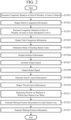
- FIG. 2 is a flowchart illustrating an example of processing of the guidance system 1 according to the first embodiment.
- the guidance system 1 repeatedly executes, for example, processing of the flowchart.
- step ST201 the station congestion estimating unit 20 estimates a congestion situation in each of a plurality of areas in a station.
- step ST202 the station congestion estimating unit 20 outputs station congestion information.
- step ST203 the train congestion estimating unit 21 estimates a congestion situation in each of a plurality of areas of the train scheduled to arrive at the station.
- step ST204 the train congestion estimating unit 21 outputs train congestion information.
- step ST205 the guidance determining unit 30 determines a mode of guiding station users.
- step ST206 the guidance determining unit 30 outputs guidance information.
- step ST207 the output generation unit 31 generates an output signal.
- step ST208 the output generation unit 31 outputs the output signal.
- step ST209 the travel control unit 50 generates travel control information.
- step ST210 the travel control unit 50 outputs the travel control information.
- step ST211 the waiting position determining unit 60 determines the position on the platform where each station user waits.
- step ST212 the waiting position determining unit 60 generates waiting position information for each station user.
- step ST213 the waiting position transmitting unit 61 transmits the waiting position information to the mobile terminals 62 held by respective station users.
- step ST213 the guidance system 1 ends the processing of the flowchart. After ending the processing of the flowchart, the guidance system 1 returns to step ST213 and repeatedly executes the processing of the flowchart.
- step ST211 to step ST213 the processing from step ST211 to step ST213 is omitted.
- step ST207 is executed before the processing of step ST208
- the processing of step ST209 is executed before the processing of step ST210
- the processing of step ST211 is executed before the processing of step ST212
- the processing of step ST212 is executed before the processing of step ST213
- the processing from step ST207 to step ST213 may be in any order.
- the guidance system 1 includes: the station congestion estimating unit 20 to estimate congestion situations in respective areas in a station and to output station congestion information indicating the estimated congestion situations in the respective areas in the station; the guidance determining unit 30 to determine a mode of guiding station users on the basis of the station congestion information output by the station congestion estimating unit 20 and to output guidance information indicating the mode that has been determined; and the output generation unit 31 to generate an output signal for guiding the station users on the basis of the guidance information output by the guidance determining unit 30, to output the output signal that has been generated to the output device 40, and to cause the output device 40 to provide output corresponding to the output signal.
- the guidance system 1 can suppress confusion of station users in the station.
- the station congestion estimating unit 20 outputs, by estimating the congestion situations in the respective areas on at least a platform, the station congestion information indicating the estimated congestion situations in the respective areas on the platform. Furthermore, the guidance determining unit 30 determines a mode of guiding the station users in such a way as to reduce local congestion on the platform on the basis of the station congestion information output by the station congestion estimating unit 20 and outputs the guidance information indicating the mode that has been determined.
- the guidance system 1 can equalize the number of station users who wait for a train to board on a platform across the entire platform while suppressing confusion of the station users on the platform. As a result, the guidance system 1 can prevent a station user from falling from the platform onto a railway track, for example.
- the guidance system 1 can equalize the number of station users who board the arriving train across cars or passenger doors of the train by equalizing the number of station users who wait for the train to board on the platform across the entire platform. As a result, the guidance system 1 can shorten the period required for the station users to board a train and can make it possible to operate trains without delay in accordance with a predetermined operation schedule.
- the guidance system 1 can prevent the station users waiting for a train to board on the platform from locally concentrating on the platform by equalizing the number of station users waiting for the train to board on the platform across the entire platform. As a result, the guidance system 1 can reduce droplet infection of bacteria, viruses, or the like.
- the guidance system 1 includes, in addition to the above configuration, the train congestion estimating unit 21 that estimates congestion situations in respective areas of a train scheduled to arrive at the station and outputs train congestion information indicating the estimated congestion situations in the respective areas of the train. Furthermore, the guidance determining unit 30 determines the mode of guiding station users on the basis of the station congestion information output by the station congestion estimating unit 20 and the train congestion information output by the train congestion estimating unit 21 and outputs guidance information indicating the mode that has been determined.
- the guidance system 1 can reduce local congestion in the train while suppressing confusion of station users on the platform.
- the station congestion estimating unit 20 outputs, by estimating the congestion situations in the respective areas on at least the platform, the station congestion information indicating the estimated congestion situations in the respective areas on the platform. Furthermore, the guidance determining unit 30 determines the mode of guiding the station users in such a way as to reduce local congestion on the platform when the train scheduled to arrive arrives at the platform on the basis of the station congestion information output by the station congestion estimating unit 20 and the train congestion information output by the train congestion estimating unit 21 and outputs the guidance information indicating the mode that has been determined.
- the guidance system 1 can reduce the time required for all the station users planning to board to complete boarding while suppressing the confusion of the station users on the platform. As a result, the guidance system 1 can make it possible to operate the train without delay in accordance with a predetermined operation schedule.
- the guidance system 1 includes, in addition to the above configuration, the travel control unit 50 that controls the travel of the movable object 51, which is capable of autonomously travelling and forms a lane for guiding station users by traveling in the station.
- the travel control unit 50 generates travel control information indicating control for causing the movable object 51 to travel on the basis of the guidance information output by the guidance determining unit 30 and outputs the travel control information that has been generated.
- the guidance system 1 can suppress confusion of station users in the station.
- the guidance system 1 includes: in addition to the above configuration, the waiting position determining unit 60 that determines a position on the platform where each of the plurality of station users boarding the train scheduled to arrive waits in order to board the train to board on the basis of the guidance information output by the guidance determining unit 30 and generates waiting position information indicating the position that has been determined for each station user; and the waiting position transmitting unit 61 that transmits, to the mobile terminal 62 held by each station user, the waiting position information generated for the station user by the waiting position determining unit 60 and corresponding to the station user.
- the guidance system 1 can equalize the number of station users who wait for a train on a platform across the entire platform while suppressing confusion of the station users in the station.
- the guidance system 1 can prevent the station users waiting for a train to board on the platform from locally concentrating on the platform by equalizing the number of station users waiting for the train to board on the platform across the entire platform. As a result, the guidance system 1 can reduce droplet infection of bacteria, viruses, or the like.
- the present disclosure can include a modification of any component of the embodiment or an omission of any component of the embodiment.
- the guidance system of the present disclosure can be applied to a station for boarding and alighting from a train.
Landscapes
- Business, Economics & Management (AREA)
- Engineering & Computer Science (AREA)
- Economics (AREA)
- Tourism & Hospitality (AREA)
- Physics & Mathematics (AREA)
- General Physics & Mathematics (AREA)
- General Business, Economics & Management (AREA)
- Theoretical Computer Science (AREA)
- Human Resources & Organizations (AREA)
- Strategic Management (AREA)
- Mechanical Engineering (AREA)
- Marketing (AREA)
- Entrepreneurship & Innovation (AREA)
- Operations Research (AREA)
- Game Theory and Decision Science (AREA)
- Educational Administration (AREA)
- Development Economics (AREA)
- Quality & Reliability (AREA)
- Health & Medical Sciences (AREA)
- General Health & Medical Sciences (AREA)
- Primary Health Care (AREA)
- Train Traffic Observation, Control, And Security (AREA)
Abstract
Description
- The present disclosure relates to a guidance system and a guidance method.
- There is technology of estimating a congestion situation in a station by estimating the number of people alighting from a train (see, for example, Patent Literature 1.).
- Patent Literature 1:
WO 2017/169068 A - However, since it is not possible to suppress the confusion of station users in the station only by estimating the congestion situation in the station, there may occur cases where station users collide with each other, or fall due to the collision.
- The present disclosure is intended to solve the above problem, and an object of the present disclosure is to provide a guidance system capable of suppressing confusion of station users in a station.
- A guidance system of the present disclosure includes: a station congestion estimating unit to estimate congestion situations in respective areas in a station and to output station congestion information indicating the estimated congestion situations in the respective areas in the station; a guidance determining unit to determine a mode of guiding a station user on the basis of the station congestion information output by the station congestion estimating unit and to output guidance information indicating the mode that has been determined; and an output generation unit to generate an output signal for guiding the station user on the basis of the guidance information output by the guidance determining unit, to output the output signal that has been generated to an output device, and to cause the output device to provide output corresponding to the output signal.
- According to the present disclosure, it is possible to suppress confusion of station users in a station.
-
-
FIG. 1 is a block diagram illustrating an example of the configuration of the main part of a guidance system according to a first embodiment. -
FIG. 2 is a flowchart illustrating an example of processing of the guidance system according to the first embodiment. - Hereinafter, an embodiment of the present disclosure will be described in detail by referring to the drawings.
- A guidance system 1 according to a first embodiment will be described with reference to
FIGS. 1 and2 . - The configuration of the main part of the guidance system 1 according to the first embodiment will be described with reference to
FIG. 1 . -
FIG. 1 is a block diagram illustrating an example of the configuration of the main part of the guidance system 1 according to the first embodiment. - The guidance system 1 includes
sensors 10, a stationcongestion estimating unit 20, a traincongestion estimating unit 21, aguidance determining unit 30, anoutput generation unit 31, anoutput device 40, atravel control unit 50, amovable object 51, a waitingposition determining unit 60, a waitingposition transmitting unit 61, andmobile terminals 62. - The
sensors 10, the stationcongestion estimating unit 20, the traincongestion estimating unit 21, theguidance determining unit 30, theoutput generation unit 31, theoutput device 40, thetravel control unit 50, themovable object 51, the waitingposition determining unit 60, the waitingposition transmitting unit 61, and themobile terminals 62 included in the guidance system 1 are connected to each other via anetwork 70 capable of transmitting and receiving information. - Examples of the
network 70 include a wireless communication network such as a wireless local area network (LAN), long term evolution (LTE), or Bluetooth (registered trademark) (BT), and a wired communication network such as a wired LAN or a signal line that performs communication using a predetermined protocol. - Note that the train
congestion estimating unit 21, thetravel control unit 50, themovable object 51, the waitingposition determining unit 60, the waitingposition transmitting unit 61, and themobile terminals 62 are not essential components for the guidance system 1. - In the first embodiment, the guidance system 1 will be described as including the train
congestion estimating unit 21, thetravel control unit 50, themovable object 51, the waitingposition determining unit 60, the waitingposition transmitting unit 61, and themobile terminals 62. - A
sensor 10 is an imaging device such as a monitoring camera that captures an image of a predetermined area in a station. Thesensor 10 is not limited to an imaging device and may be a three-dimensional (3D) LiDAR device or the like that detects an object present in a predetermined area in the station. Furthermore, for example, thesensor 10 may be a weight sensor that detects a weight in a predetermined area in the station. Furthermore, for example, thesensor 10 may be an automatic ticket gate provided at a ticket gate that manages entry to and exit from the station. - The
sensors 10 output sensor information. - Specifically, for example, in a case where a
sensor 10 is an imaging device, thesensor 10 outputs image information indicating a captured image as sensor information. - As illustrated in
FIG. 1 , the guidance system 1 includes a plurality ofsensors 101,..., and 10N (N is a natural number greater than or equal to 2). For example, in a case where thesensors 101,..., and 10N are imaging devices, each of the plurality ofsensors 101,..., and 10N captures an image of a predetermined area in the station. - The station
congestion estimating unit 20 estimates a congestion situation in each of a plurality of areas in the station. The stationcongestion estimating unit 20 outputs station congestion information indicating the congestion situation in each of the areas in the station estimated by the stationcongestion estimating unit 20. - Specifically, for example, the station
congestion estimating unit 20 acquires sensor information output from each of the plurality ofsensors 101,..., and 10N and estimates the congestion situation in each of the plurality of areas in the station on the basis of the plurality of pieces of sensor information that has been acquired. - More specifically, for example, the station
congestion estimating unit 20 has an image analysis function and estimates the congestion situation in each of the plurality of areas in the station by analyzing the sensor information by the image analysis function. - Since a method of estimating a congestion situation in a predetermined area on the basis of sensor information is well known, description thereof will be omitted.
- The station
congestion estimating unit 20 includes, for example, a computer having a processor and a memory or a processing circuit. The stationcongestion estimating unit 20 may be configured by a computer including a processor, a memory, and a processing circuit. - As the processor, for example, a central processing unit (CPU), a graphics processing unit (GPU), a microprocessor, a micro controller, or a digital signal processor (DSP) is used.
- Meanwhile, as the memory, for example, a semiconductor memory or a magnetic disk is used. More specifically, as the memory, a random access memory (RAM), a read only memory (ROM), a flash memory, an erasable programmable read only memory (EPROM), or an electrically erasable programmable read-only memory (EEPROM), an SSD, or an HDD is used.
- In addition, as the processing circuit, for example, an application specific integrated circuit (ASIC), a programmable logic device (PLD), a field-programmable gate array (FPGA), a system-on-a-chip (SoC), or a system large-scale integration (LSI) is used.
- The
guidance determining unit 30 includes, for example, a computer having a processor and a memory or a processing circuit. Theguidance determining unit 30 may be configured by a computer having a processor, a memory, and a processing circuit. - The
guidance determining unit 30 determines a mode of guiding station users on the basis of the station congestion information output by the stationcongestion estimating unit 20. Theguidance determining unit 30 outputs guidance information indicating the mode determined by theguidance determining unit 30. - For example, in a case where there is a plurality of routes from a concourse to a platform, the
guidance determining unit 30 sets some of the plurality of routes as a route to go from the concourse to the platform (hereinafter referred to as "boarding route") and sets the rest as a route to go from the platform to the concourse (hereinafter referred to as "alighting route"). Theguidance determining unit 30 determines a mode of guiding the station users in such a way as to guide station users planning to board a train from the platform to the boarding route. Meanwhile, theguidance determining unit 30 determines the mode of guiding the station users in such a way as to guide station users who have alighted from a train to the alighting route. - The
output generation unit 31 includes, for example, a computer having a processor and a memory or a processing circuit. Theoutput generation unit 31 may be configured by a computer including a processor, a memory, and a processing circuit. - The
output generation unit 31 generates an output signal for guiding the station users on the basis of the guidance information output by theguidance determining unit 30. Theoutput generation unit 31 outputs the output signal generated by theoutput generation unit 31 to theoutput device 40. - The
output device 40 is a display output device such as a display or a monitor or an audio output device such as a speaker. - The
output device 40 acquires the output signal output from theoutput generation unit 31 and provides display output, sound output, or the like corresponding to the output signal that has been acquired. - That is, the
output generation unit 31 outputs the output signal generated by theoutput generation unit 31 to theoutput device 40 and causes theoutput device 40 to provide the output corresponding to the output signal. - Specifically, for example, the
output device 40 is installed in a ticket gate, the concourse, a passage or a staircase connecting the concourse and a platform, a platform, or the like, at a position that can be viewed by station users. - For example, the
output device 40 provides display output or sound output such as "Those who take the train arriving at track number XX, please go left." or the like. - With the above configuration, the guidance system 1 can suppress confusion of station users in a station.
- The station
congestion estimating unit 20 preferably estimates a congestion situation in each of a plurality of areas on at least a platform. The stationcongestion estimating unit 20 outputs station congestion information indicating the congestion situation in each of the areas on the platform estimated by the stationcongestion estimating unit 20. - In addition, the
guidance determining unit 30 preferably determines a mode of guiding the station users in such a way as to reduce local congestion on the platform on the basis of the station congestion information output by the stationcongestion estimating unit 20. Theguidance determining unit 30 outputs guidance information indicating the mode determined by theguidance determining unit 30. - For example, the
output device 40 provides display output or sound output such as "Those who take the train arriving at track number XX, please wait for the train at boarding place number YY." or the like. - With the above configuration, the guidance system 1 can equalize the number of station users who wait for a train to board on a platform across the entire platform while suppressing confusion of the station users on the platform. As a result, the guidance system 1 can prevent a station user from falling from the platform onto a railway track, for example.
- In addition, with the above configuration, the guidance system 1 can equalize the number of station users who board the arriving train across cars or passenger doors of the train by equalizing the number of station users who wait for the train to board on the platform across the entire platform. As a result, the guidance system 1 can shorten the period required for the station users to board a train and thus can make it possible to operate trains without delay in accordance with a predetermined operation schedule.
- In addition, with the above configuration, the guidance system 1 can prevent the station users waiting for a train to board on the platform from locally concentrating on the platform by equalizing the number of station users waiting for the train to board on the platform across the entire platform. As a result, the guidance system 1 can reduce droplet infection of bacteria, viruses, or the like.
- As described above, the guidance system 1 may include the train
congestion estimating unit 21. - The train
congestion estimating unit 21 includes, for example, a computer having a processor and a memory or a processing circuit. The traincongestion estimating unit 21 may be configured by a computer including a processor, a memory, and a processing circuit. - The train
congestion estimating unit 21 estimates a congestion situation in each of a plurality of areas of a train scheduled to arrive at the station. The traincongestion estimating unit 21 outputs train congestion information indicating the congestion situation in each of the areas of the train estimated by the traincongestion estimating unit 21. - Specifically, for example, the train
congestion estimating unit 21 acquires sensor information output from each of the plurality ofsensors 101,..., and 10N and estimates the congestion situation in each of the plurality of areas of the train scheduled to arrive at the station on the basis of the plurality of pieces of sensor information that has been acquired. - More specifically, for example, the train
congestion estimating unit 21 has an image analysis function and estimates the congestion situation in each of the plurality of areas of the train scheduled to arrive at the station by analyzing the sensor information by the image analysis function. - Since a method of estimating the congestion situation in a predetermined area of the train on the basis of the sensor information is well known, description thereof will be omitted.
- Note that the
sensors 10 ofsensors 101,..., and 10N that output the sensor information to be acquired by the traincongestion estimating unit 21 are imaging devices such as monitoring cameras that capture predetermined areas in the train scheduled to arrive at the station. For example, in a case where asensor 10 is an imaging device, thesensor 10 may be installed in a train scheduled to arrive at the station or installed at a platform. For example, in a case where asensor 10 is an imaging device installed at a platform, thesensor 10 may be installed at a platform of a station where the train has already arrived or installed at a platform of a station where the train is scheduled to arrive, among a plurality of stations where the train scheduled to arrive at the station stops. - Meanwhile, in a case where a
sensor 10 is a weight sensor, thesensor 10 is installed in a train scheduled to arrive at the station. - In a case where the guidance system 1 includes the train
congestion estimating unit 21, theguidance determining unit 30 determines a mode of guiding the station users on the basis of the station congestion information output by the stationcongestion estimating unit 20 and the train congestion information output by the traincongestion estimating unit 21. Theguidance determining unit 30 outputs guidance information indicating the mode determined by theguidance determining unit 30. - In this case, for example, the
guidance determining unit 30 determines a mode of guiding the station users in such a way as to reduce, when station users to board a train scheduled to arrive at the station have actually boarded the train, local congestion in the train. - For example, the
output device 40 provides display output or sound output such as "Those who take the train arriving at track number XX, please wait for the train at boarding place number YY and get on car number ZZ." or the like. - With the above configuration, the guidance system 1 can reduce local congestion in the train while suppressing confusion of station users on the platform.
- For example, when the train scheduled to arrive arrives at the platform, station users planning to board the train board the train one after another. At this point, if station users planning to board attempt to board a congested car or a car, the surroundings of passenger doors of which are congested, the time required for all the station users who are planning to board to complete the boarding becomes long. That is, areas of the platform corresponding to the congested car or the car, the surroundings of passenger doors of which are congested are temporarily congested.
- Therefore, in a case where the station
congestion estimating unit 20 estimates the congestion situation in each of a plurality of areas on a platform and thereby outputs station congestion information indicating the estimated congestion situation in each of the areas on the platform, theguidance determining unit 30 preferably determines a mode of guiding the station users in such a way as to reduce local congestion on the platform when the train scheduled to arrive arrives at the platform on the basis of the station congestion information output by the stationcongestion estimating unit 20 and the train congestion information output by the traincongestion estimating unit 21. - For example, the
output device 40 provides display output or sound output such as "Those who take the train arriving at track number XX, please wait for the train at boarding place number YY and get on car number ZZ." or the like. - With the
guidance determining unit 30 determining the mode in such a way as to guide the station users in such a way as to reduce local congestion on the platform when the train scheduled to arrive arrives at the platform on the basis of the station congestion information and the train congestion information, the guidance system 1 can reduce the time required for all the station users planning to board to complete the boarding while suppressing confusion of the station users on the platform. As a result, the guidance system 1 can make it possible to operate the train without delay in accordance with a predetermined operation schedule. - In addition to the function of estimating the congestion situation in each of the plurality of areas of the train scheduled to arrive at the station, the train
congestion estimating unit 21 may further have a function of estimating the number of station users who alight from the train at the station at which the train is scheduled to arrive, among the passengers on the train scheduled to arrive. - For example, on the basis of sensor information acquired in the past, the train
congestion estimating unit 21 calculates, for each car or each passenger door of a train that has arrived in the same period of time in the past, the number of station users who have alighted from the car or the passenger door. The traincongestion estimating unit 21 estimates, for each car or each passenger door of the train scheduled to arrive at the station, the number of station users who alight at the station, at which the train is scheduled to arrive, from the car or the passenger door, on the basis of the number of station users who have alighted from the corresponding car or the corresponding passenger door of the train that has arrived in the same period of time in the past that has been calculated by the traincongestion estimating unit 21. - The train
congestion estimating unit 21 outputs train alighting information indicating the number of station users who alight at the station, scheduled to arrive at, from the train scheduled to arrive at the station for each car or each passenger door, which has been estimated by the traincongestion estimating unit 21. - For example, when a train scheduled to arrive arrives at the platform, first, station users onboard the train alight from the train. At this point, the station users who have alighted from the train and station users planning to board the train and to board trains scheduled to arrive later are on the platform.
- In a case where congestion occurs in a local area on the platform due to the station users who have alighted from the train and the station users planning to board a train, the time required for all the station users to complete boarding and alighting from the train becomes long.
- Therefore, on the basis of the station congestion information output by the station
congestion estimating unit 20 and the train congestion information and the train alighting information output by the traincongestion estimating unit 21, theguidance determining unit 30 determines a mode of guiding the station users in such a way as to reduce local congestion on the platform when the train scheduled to arrive arrives at the platform. - For example, the
output device 40 provides display output or sound output such as "Those who take the train arriving at track number XX, please wait for the train at boarding place number YY and get on car number ZZ." or the like. - With the
guidance determining unit 30 determining the mode in such a way as to guide the station users in such a way as to reduce local congestion on the platform when the train scheduled to arrive arrives at the platform on the basis of the station congestion information, the train congestion information, and the train alighting information, the guidance system 1 can reduce the time required for all the station users planning to board the train to complete the boarding while suppressing confusion of the station users on the platform. As a result, the guidance system 1 can make it possible to operate the train without delay in accordance with a predetermined operation schedule. - As described above, the guidance system 1 may include the
travel control unit 50 and themovable object 51. - The
travel control unit 50 includes, for example, a computer having a processor and a memory or a processing circuit. Thetravel control unit 50 may be configured by a computer including a processor, a memory, and a processing circuit. - The
movable object 51 is a pole-shaped robot that can travel autonomously. Themovable object 51 forms a lane for guiding station users by traveling in the station. Themovable object 51 acquires travel control information and travels on the basis of the travel control information that has been acquired. - The
movable object 51 preferably has the center of gravity at a low position in order to prevent themovable object 51 from falling down even when a station user comes into contact with themovable object 51. - The guidance system 1 may include a plurality of
movable objects 51. In addition, somemovable objects 51 of the plurality ofmovable objects 51 may be formed by connectingmovable objects 51 to each other using a long object having a string shape, a band shape, or a rod shape. - The
travel control unit 50 controls the travel of themovable object 51. Specifically, thetravel control unit 50 generates travel control information indicating control for causing themovable object 51 to travel on the basis of the guidance information output by theguidance determining unit 30. Thetravel control unit 50 outputs the travel control information generated by thetravel control unit 50 to themovable object 51. - Specifically, for example, the
travel control unit 50 generates and outputs travel control information for causing themovable object 51 to travel so that themovable object 51 forms a lane through which station users planning to board a train scheduled to arrive pass and a lane through which station users who alight from the train that has arrived pass, in a passage connecting a ticket gate or a concourse and a platform. - For example, the
travel control unit 50 generates pieces of travel control information which correspond to the respective plurality ofmovable objects 51 and outputs the pieces of travel control information which correspond to the respective plurality ofmovable objects 51 to the plurality ofmovable objects 51. - The guidance system 1 may include a plurality of
travel control units 50 corresponding to the respective plurality ofmovable objects 51. In a case where the guidance system 1 includes the plurality oftravel control units 50, thetravel control units 50 may be installed in housings of the respective plurality ofmovable objects 51. - With the
travel control unit 50 causing themovable object 51 to travel on the basis of the guidance information and causing themovable object 51 to form lanes for guiding station users traveling in the station, the guidance system 1 can suppress confusion of the station users in the station. - As described above, the guidance system 1 may include the waiting
position determining unit 60 and the waitingposition transmitting unit 61. - The waiting
position determining unit 60 and the waitingposition transmitting unit 61 are each configured by, for example, a computer having a processor and a memory or a processing circuit. The waitingposition determining unit 60 and the waitingposition transmitting unit 61 may be each configured by a computer including a processor, a memory, and a processing circuit. - The waiting
position determining unit 60 determines the positions on the platform where respective station users who board the train scheduled to arrive wait to board the train to board on the basis of the guidance information output by theguidance determining unit 30. The waitingposition determining unit 60 generates waiting position information indicating the position determined by the waitingposition determining unit 60 for each of the station users. - For example, each of the station users sets scheduled train information indicating a train to board in advance in a
mobile terminal 62 possessed by the station user. The waitingposition determining unit 60 acquires the scheduled train information from themobile terminals 62 possessed by the respective station users. The waitingposition determining unit 60 generates waiting position information for each of the station users on the basis of the guidance information and the scheduled train information. - A method by which the waiting
position determining unit 60 acquires the scheduled train information is not limited to the method by which the scheduled train information set in advance in themobile terminals 62 by the station users is acquired from themobile terminals 62. The waitingposition determining unit 60 may acquire the scheduled train information by the following methods or the like. - For example, the waiting
position determining unit 60 acquires, from themobile terminals 62 held by the respective station users, station user position information indicating positions of themobile terminals 62, that is, positions of the station users holding themobile terminals 62. The waitingposition determining unit 60 estimates a train that a station user is planning to board on the basis of the station user position information acquired by the waitingposition determining unit 60. Specifically, for example, the waitingposition determining unit 60 specifies a train that the station user can board after arriving at the platform on the basis of the station user position information, thereby estimating a train that the station user is planning to board. The waitingposition determining unit 60 acquires, as the scheduled train information, information indicating the train to board that has been estimated by the waitingposition determining unit 60. - Furthermore, for example, the waiting
position determining unit 60 acquires, from themobile terminals 62 held by the respective station users, station user position information indicating positions of themobile terminals 62, that is, positions of the station users holding themobile terminals 62. The waitingposition determining unit 60 specifies trains which a station user has boarded in the past on the basis of station user position information acquired in the past by the waitingposition determining unit 60. The waitingposition determining unit 60 estimates a train that the station user is planning to board by statistically processing information indicating the trains which the station user has boarded in the past and which are specified by the waitingposition determining unit 60. - The waiting
position transmitting unit 61 transmits the waiting position information generated for each station user by the waitingposition determining unit 60 to amobile terminal 62 held by the station user. Specifically, the waitingposition transmitting unit 61 transmits, to amobile terminal 62 held by each station user, waiting position information corresponding to the station user. - A
mobile terminal 62 held by each station user acquires the waiting position information transmitted by the waitingposition transmitting unit 61 and outputs the waiting position information by display or speech. - Each station user can check a position on the platform to wait at for boarding a train to board by the display output or the speech output by the
mobile terminal 62. - With the above configuration, the guidance system 1 can equalize the number of station users who wait for a train on a platform across the entire platform while suppressing confusion of the station users in the station.
- In addition, with the above configuration, the guidance system 1 can prevent the station users waiting for a train to board on the platform from locally concentrating on the platform by equalizing the number of station users waiting for the train to board on the platform across the entire platform. As a result, the guidance system 1 can reduce droplet infection of bacteria, viruses, or the like.
- The operation of the guidance system 1 according to the first embodiment will be described with reference to
FIG. 2 . -
FIG. 2 is a flowchart illustrating an example of processing of the guidance system 1 according to the first embodiment. The guidance system 1 repeatedly executes, for example, processing of the flowchart. - First, in step ST201, the station
congestion estimating unit 20 estimates a congestion situation in each of a plurality of areas in a station. - Next, in step ST202, the station
congestion estimating unit 20 outputs station congestion information. - Next, in step ST203, the train
congestion estimating unit 21 estimates a congestion situation in each of a plurality of areas of the train scheduled to arrive at the station. - Next, in step ST204, the train
congestion estimating unit 21 outputs train congestion information. - Next, in step ST205, the
guidance determining unit 30 determines a mode of guiding station users. - Next, in step ST206, the
guidance determining unit 30 outputs guidance information. - Next, in step ST207, the
output generation unit 31 generates an output signal. - Next, in step ST208, the
output generation unit 31 outputs the output signal. - Next, in step ST209, the
travel control unit 50 generates travel control information. - Next, in step ST210, the
travel control unit 50 outputs the travel control information. - Next, in step ST211, the waiting
position determining unit 60 determines the position on the platform where each station user waits. - Next, in step ST212, the waiting
position determining unit 60 generates waiting position information for each station user. - Next, in step ST213, the waiting
position transmitting unit 61 transmits the waiting position information to themobile terminals 62 held by respective station users. - After step ST213, the guidance system 1 ends the processing of the flowchart. After ending the processing of the flowchart, the guidance system 1 returns to step ST213 and repeatedly executes the processing of the flowchart.
- Note that, in a case where the guidance system 1 does not include the train
congestion estimating unit 21, the processing of steps ST203 and ST204 is omitted. - In addition, in a case where the guidance system 1 does not include the
travel control unit 50 and themovable object 51, the processing of steps ST209 and ST210 is omitted. - In addition, in a case where the guidance system 1 does not include the waiting
position determining unit 60 and the waitingposition transmitting unit 61, the processing from step ST211 to step ST213 is omitted. - Furthermore, as long as the processing of step ST207 is executed before the processing of step ST208, the processing of step ST209 is executed before the processing of step ST210, the processing of step ST211 is executed before the processing of step ST212, and the processing of step ST212 is executed before the processing of step ST213, the processing from step ST207 to step ST213 may be in any order.
- As described above, the guidance system 1 according to the first embodiment includes: the station
congestion estimating unit 20 to estimate congestion situations in respective areas in a station and to output station congestion information indicating the estimated congestion situations in the respective areas in the station; theguidance determining unit 30 to determine a mode of guiding station users on the basis of the station congestion information output by the stationcongestion estimating unit 20 and to output guidance information indicating the mode that has been determined; and theoutput generation unit 31 to generate an output signal for guiding the station users on the basis of the guidance information output by theguidance determining unit 30, to output the output signal that has been generated to theoutput device 40, and to cause theoutput device 40 to provide output corresponding to the output signal. - With this configuration, the guidance system 1 can suppress confusion of station users in the station.
- In addition, in the guidance system 1 according to the first embodiment having the above-described configuration, the station
congestion estimating unit 20 outputs, by estimating the congestion situations in the respective areas on at least a platform, the station congestion information indicating the estimated congestion situations in the respective areas on the platform. Furthermore, theguidance determining unit 30 determines a mode of guiding the station users in such a way as to reduce local congestion on the platform on the basis of the station congestion information output by the stationcongestion estimating unit 20 and outputs the guidance information indicating the mode that has been determined. - With this configuration, the guidance system 1 can equalize the number of station users who wait for a train to board on a platform across the entire platform while suppressing confusion of the station users on the platform. As a result, the guidance system 1 can prevent a station user from falling from the platform onto a railway track, for example.
- In addition, with this configuration, the guidance system 1 can equalize the number of station users who board the arriving train across cars or passenger doors of the train by equalizing the number of station users who wait for the train to board on the platform across the entire platform. As a result, the guidance system 1 can shorten the period required for the station users to board a train and can make it possible to operate trains without delay in accordance with a predetermined operation schedule.
- In addition, with this configuration, the guidance system 1 can prevent the station users waiting for a train to board on the platform from locally concentrating on the platform by equalizing the number of station users waiting for the train to board on the platform across the entire platform. As a result, the guidance system 1 can reduce droplet infection of bacteria, viruses, or the like.
- Moreover, the guidance system 1 according to the first embodiment includes, in addition to the above configuration, the train
congestion estimating unit 21 that estimates congestion situations in respective areas of a train scheduled to arrive at the station and outputs train congestion information indicating the estimated congestion situations in the respective areas of the train. Furthermore, theguidance determining unit 30 determines the mode of guiding station users on the basis of the station congestion information output by the stationcongestion estimating unit 20 and the train congestion information output by the traincongestion estimating unit 21 and outputs guidance information indicating the mode that has been determined. - With this configuration, the guidance system 1 can reduce local congestion in the train while suppressing confusion of station users on the platform.
- In addition, in the guidance system 1 according to the first embodiment having the above configuration, the station
congestion estimating unit 20 outputs, by estimating the congestion situations in the respective areas on at least the platform, the station congestion information indicating the estimated congestion situations in the respective areas on the platform. Furthermore, theguidance determining unit 30 determines the mode of guiding the station users in such a way as to reduce local congestion on the platform when the train scheduled to arrive arrives at the platform on the basis of the station congestion information output by the stationcongestion estimating unit 20 and the train congestion information output by the traincongestion estimating unit 21 and outputs the guidance information indicating the mode that has been determined. - With this configuration, the guidance system 1 can reduce the time required for all the station users planning to board to complete boarding while suppressing the confusion of the station users on the platform. As a result, the guidance system 1 can make it possible to operate the train without delay in accordance with a predetermined operation schedule.
- In addition, the guidance system 1 according to the first embodiment includes, in addition to the above configuration, the
travel control unit 50 that controls the travel of themovable object 51, which is capable of autonomously travelling and forms a lane for guiding station users by traveling in the station. Thetravel control unit 50 generates travel control information indicating control for causing themovable object 51 to travel on the basis of the guidance information output by theguidance determining unit 30 and outputs the travel control information that has been generated. - With this configuration, the guidance system 1 can suppress confusion of station users in the station.
- In addition, the guidance system 1 according to the first embodiment includes: in addition to the above configuration, the waiting
position determining unit 60 that determines a position on the platform where each of the plurality of station users boarding the train scheduled to arrive waits in order to board the train to board on the basis of the guidance information output by theguidance determining unit 30 and generates waiting position information indicating the position that has been determined for each station user; and the waitingposition transmitting unit 61 that transmits, to themobile terminal 62 held by each station user, the waiting position information generated for the station user by the waitingposition determining unit 60 and corresponding to the station user. - With this configuration, the guidance system 1 can equalize the number of station users who wait for a train on a platform across the entire platform while suppressing confusion of the station users in the station.
- In addition, with this configuration, the guidance system 1 can prevent the station users waiting for a train to board on the platform from locally concentrating on the platform by equalizing the number of station users waiting for the train to board on the platform across the entire platform. As a result, the guidance system 1 can reduce droplet infection of bacteria, viruses, or the like.
- Moreover, within the scope of the disclosure, the present disclosure can include a modification of any component of the embodiment or an omission of any component of the embodiment.
- The guidance system of the present disclosure can be applied to a station for boarding and alighting from a train.
- 1: guidance system, 10, 101,..., 10N: sensor, 20: station congestion estimating unit, 21: train congestion estimating unit, 30: guidance determining unit, 31: output generation unit, 40: output device, 50: travel control unit, 51: movable object, 60: waiting position determining unit, 61: waiting position transmitting unit, 62: mobile terminal, 70: network
Claims (7)
- A guidance system comprising:a station congestion estimating unit to estimate congestion situations in respective areas in a station and to output station congestion information indicating the estimated congestion situations in the respective areas in the station;a guidance determining unit to determine a mode of guiding a station user on a basis of the station congestion information output by the station congestion estimating unit and to output guidance information indicating the mode that has been determined; andan output generation unit to generate an output signal for guiding the station user on a basis of the guidance information output by the guidance determining unit, to output the output signal that has been generated to an output device, and to cause the output device to provide output corresponding to the output signal.
- The guidance system according to claim 1,wherein the station congestion estimating unit outputs, by estimating the congestion situations in the respective areas on at least a platform, the station congestion information indicating the estimated congestion situations in the respective areas on the platform, andthe guidance determining unit determines the mode of guiding the station user in such a way as to reduce local congestion on the platform on a basis of the station congestion information output by the station congestion estimating unit and outputs the guidance information indicating the mode that has been determined.
- The guidance system according to claim 1, further comprising:a train congestion estimating unit to estimate congestion situations in respective areas of a train scheduled to arrive at the station and to output train congestion information indicating the estimated congestion situations in the respective areas of the train,wherein the guidance determining unit determines the mode of guiding the station user on a basis of the station congestion information output by the station congestion estimating unit and the train congestion information output by the train congestion estimating unit and outputs the guidance information indicating the mode that has been determined.
- The guidance system according to claim 3,wherein the station congestion estimating unit outputs, by estimating the congestion situations in the respective areas on at least a platform, the station congestion information indicating the estimated congestion situations in the respective areas on the platform, andthe guidance determining unit determines the mode of guiding the station user in such a way as to reduce local congestion on the platform when the train scheduled to arrive arrives at the platform on a basis of the station congestion information output by the station congestion estimating unit and the train congestion information output by the train congestion estimating unit and outputs the guidance information indicating the mode that has been determined.
- The guidance system according to claim 1, further comprising:
a travel control unit to control travel of a movable object for forming a lane for guiding the station user by traveling in the station, the movable object capable of autonomously travelling, the travel control unit to generate travel control information indicating control for causing the movable object to travel on a basis of the guidance information output by the guidance determining unit and to output the travel control information that has been generated. - The guidance system according to claim 1, further comprising:a waiting position determining unit to determine a position on a platform where each of station users boarding a train scheduled to arrive waits in order to board the train to board on a basis of the guidance information output by the guidance determining unit and to generate waiting position information indicating the position that has been determined for each of the station users; anda waiting position transmitting unit to transmit, to a mobile terminal held by each of the station users, the waiting position information generated for the station user by the waiting position determining unit, the waiting position information corresponding to the station user.
- A guidance method comprising:a station congestion estimating step of, by a station congestion estimating unit, estimating congestion situations in respective areas in a station and outputting station congestion information indicating the estimated congestion situations in the respective areas in the station;a guidance determining step of, by a guidance determining unit, determining a mode of guiding a station user on a basis of the station congestion information output in the station congestion estimating step and outputting guidance information indicating the mode that has been determined; andan output generation step of, by an output generation unit, generating an output signal for guiding the station user on a basis of the guidance information output in the guidance determining step, outputting the output signal that has been generated to an output device, and causing the output device to provide output corresponding to the output signal.
Applications Claiming Priority (1)
| Application Number | Priority Date | Filing Date | Title |
|---|---|---|---|
| PCT/JP2020/027268 WO2022013922A1 (en) | 2020-07-13 | 2020-07-13 | Guidance system and guidance method |
Publications (2)
| Publication Number | Publication Date |
|---|---|
| EP4166417A1 true EP4166417A1 (en) | 2023-04-19 |
| EP4166417A4 EP4166417A4 (en) | 2023-07-26 |
Family
ID=77549921
Family Applications (1)
| Application Number | Title | Priority Date | Filing Date |
|---|---|---|---|
| EP20945421.4A Withdrawn EP4166417A4 (en) | 2020-07-13 | 2020-07-13 | Guidance system and guidance method |
Country Status (4)
| Country | Link |
|---|---|
| US (1) | US12175554B2 (en) |
| EP (1) | EP4166417A4 (en) |
| JP (1) | JP6932275B1 (en) |
| WO (1) | WO2022013922A1 (en) |
Families Citing this family (3)
| Publication number | Priority date | Publication date | Assignee | Title |
|---|---|---|---|---|
| EP3846146A4 (en) | 2018-08-30 | 2021-10-27 | NEC Corporation | NOTIFICATION DEVICE, NOTIFICATION CONTROL DEVICE, NOTIFICATION SYSTEM, NOTIFICATION METHOD, AND PROGRAM |
| DE112022005332T5 (en) * | 2022-01-14 | 2024-09-05 | Mitsubishi Electric Corporation | INFORMATION PROCESSING DEVICE, CONTROL SYSTEM, CONTROL METHOD AND CONTROL PROGRAM |
| CN118211690A (en) * | 2022-12-16 | 2024-06-18 | 鸿海精密工业股份有限公司 | Waiting number recommending method, electronic equipment and storage medium |
Family Cites Families (11)
| Publication number | Priority date | Publication date | Assignee | Title |
|---|---|---|---|---|
| JP2001354138A (en) * | 2000-06-09 | 2001-12-25 | Mitsubishi Electric Corp | Station notification device |
| JP2007260822A (en) * | 2006-03-28 | 2007-10-11 | Advanced Telecommunication Research Institute International | Road guidance robot |
| JP2010171658A (en) * | 2009-01-21 | 2010-08-05 | Mitsubishi Electric Corp | System, apparatus and method for passenger information |
| JP2011218859A (en) * | 2010-04-05 | 2011-11-04 | Nippon Signal Co Ltd:The | Movable platform fence |
| JP5518213B2 (en) | 2010-12-20 | 2014-06-11 | 三菱電機株式会社 | Vehicle congestion status display system and congestion status guidance method |
| JP5856456B2 (en) | 2011-12-02 | 2016-02-09 | 株式会社日立製作所 | Human flow prediction apparatus and method |
| WO2014121328A1 (en) * | 2013-02-06 | 2014-08-14 | University Of Technology, Sydney | Computer-implemented system for influencing commuter behaviour |
| JP6178226B2 (en) * | 2013-12-04 | 2017-08-09 | 株式会社日立製作所 | Human flow guidance system and human flow guidance method |
| EP3437955B1 (en) | 2016-03-30 | 2021-04-28 | Hitachi, Ltd. | Train disembarking passenger number prediction system, congestion visualization and evaluation system, and riding capacity calculation system |
| JP6636075B2 (en) * | 2018-03-26 | 2020-01-29 | 株式会社エヌ・ティ・ティ・データ | Passenger weight equalization support apparatus and passenger weight equalization support method |
| JP7142718B2 (en) * | 2018-12-19 | 2022-09-27 | 本田技研工業株式会社 | GUIDANCE ROBOT CONTROL DEVICE, GUIDANCE SYSTEM USING THE SAME, AND GUIDANCE ROBOT CONTROL METHOD |
-
2020
- 2020-07-13 WO PCT/JP2020/027268 patent/WO2022013922A1/en not_active Ceased
- 2020-07-13 JP JP2020563733A patent/JP6932275B1/en active Active
- 2020-07-13 EP EP20945421.4A patent/EP4166417A4/en not_active Withdrawn
-
2022
- 2022-10-26 US US17/973,540 patent/US12175554B2/en active Active
Also Published As
| Publication number | Publication date |
|---|---|
| WO2022013922A1 (en) | 2022-01-20 |
| JPWO2022013922A1 (en) | 2022-01-20 |
| JP6932275B1 (en) | 2021-09-08 |
| US12175554B2 (en) | 2024-12-24 |
| US20230046952A1 (en) | 2023-02-16 |
| EP4166417A4 (en) | 2023-07-26 |
Similar Documents
| Publication | Publication Date | Title |
|---|---|---|
| US12175554B2 (en) | Guidance system and guidance method | |
| US10457306B2 (en) | Server, system, and method for automatically calculating platform dwell time of train | |
| JP6141035B2 (en) | Train control system and automatic train operation device | |
| EP3437957A1 (en) | Train traffic control system and train traffic control method | |
| CN109311622B (en) | Elevator system and car call estimation method | |
| JPWO2020090285A1 (en) | Communication equipment, communication control methods, and programs | |
| CN105371861A (en) | Route navigation method and server | |
| KR20140096705A (en) | Apparatus and method for informing getting on and off bus | |
| US20050264431A1 (en) | Forwarding system for long-range preemption and corridor clearance for emergency response | |
| CN107534920A (en) | The system and method dispatched and transmitted for packet | |
| JP2014092998A (en) | Number of incoming and outgoing passengers counting system | |
| WO2019008957A1 (en) | Method and apparatus for estimating capacity of a predetermined area of a vehicle | |
| WO2019168026A1 (en) | Support system and support method | |
| EP3929125B1 (en) | Travel-speed based predictive dispatching | |
| JP6129486B2 (en) | Information processing system, information processing apparatus, information processing method, and information processing program | |
| KR102217424B1 (en) | Stop support system for securing passenger safety of autonomous large bus rapid transit | |
| JP2023079829A (en) | Control device, control method | |
| US12380752B2 (en) | System, method and computer program product for automatically opening a gate of a public transport station | |
| US12223227B2 (en) | Voice guidance method | |
| WO2023023693A1 (en) | Vehicle interaction system | |
| EP4686638A1 (en) | Railway scheduling | |
| CN114596708A (en) | Intelligent scheduling system, method, apparatus and computer program product | |
| JP2000228784A (en) | Ride guide device and mobile communication system including the same | |
| JPWO2018155031A1 (en) | Management system, management device, and management method | |
| US20250368474A1 (en) | Elevator Control Apparatus and Method |
Legal Events
| Date | Code | Title | Description |
|---|---|---|---|
| STAA | Information on the status of an ep patent application or granted ep patent |
Free format text: STATUS: THE INTERNATIONAL PUBLICATION HAS BEEN MADE |
|
| PUAI | Public reference made under article 153(3) epc to a published international application that has entered the european phase |
Free format text: ORIGINAL CODE: 0009012 |
|
| STAA | Information on the status of an ep patent application or granted ep patent |
Free format text: STATUS: REQUEST FOR EXAMINATION WAS MADE |
|
| 17P | Request for examination filed |
Effective date: 20221212 |
|
| AK | Designated contracting states |
Kind code of ref document: A1 Designated state(s): AL AT BE BG CH CY CZ DE DK EE ES FI FR GB GR HR HU IE IS IT LI LT LU LV MC MK MT NL NO PL PT RO RS SE SI SK SM TR |
|
| REG | Reference to a national code |
Ref country code: DE Ref legal event code: R079 Free format text: PREVIOUS MAIN CLASS: B61L0025020000 Ipc: G06Q0090000000 |
|
| A4 | Supplementary search report drawn up and despatched |
Effective date: 20230622 |
|
| RIC1 | Information provided on ipc code assigned before grant |
Ipc: B61L 25/04 20060101ALI20230616BHEP Ipc: B61L 25/02 20060101ALI20230616BHEP Ipc: G06Q 50/30 20120101ALI20230616BHEP Ipc: G06Q 50/10 20120101ALI20230616BHEP Ipc: G06Q 90/00 20060101AFI20230616BHEP |
|
| DAV | Request for validation of the european patent (deleted) | ||
| DAX | Request for extension of the european patent (deleted) | ||
| STAA | Information on the status of an ep patent application or granted ep patent |
Free format text: STATUS: EXAMINATION IS IN PROGRESS |
|
| 17Q | First examination report despatched |
Effective date: 20240223 |
|
| REG | Reference to a national code |
Ref country code: DE Ref legal event code: R079 Free format text: PREVIOUS MAIN CLASS: G06Q0090000000 Ipc: B61L0025020000 |
|
| GRAP | Despatch of communication of intention to grant a patent |
Free format text: ORIGINAL CODE: EPIDOSNIGR1 |
|
| STAA | Information on the status of an ep patent application or granted ep patent |
Free format text: STATUS: GRANT OF PATENT IS INTENDED |
|
| RIC1 | Information provided on ipc code assigned before grant |
Ipc: G06Q 10/063 20230101ALI20250523BHEP Ipc: G06Q 90/00 20060101ALI20250523BHEP Ipc: G06Q 50/40 20240101ALI20250523BHEP Ipc: B61L 27/16 20220101ALI20250523BHEP Ipc: B61L 27/40 20220101ALI20250523BHEP Ipc: B61L 27/14 20220101ALI20250523BHEP Ipc: B61L 25/02 20060101AFI20250523BHEP |
|
| INTG | Intention to grant announced |
Effective date: 20250606 |
|
| STAA | Information on the status of an ep patent application or granted ep patent |
Free format text: STATUS: THE APPLICATION IS DEEMED TO BE WITHDRAWN |
|
| 18D | Application deemed to be withdrawn |
Effective date: 20251007 |