EP4164010B1 - Method for recovering platinum from hydrogen fuel cell of new energy vehicle - Google Patents
Method for recovering platinum from hydrogen fuel cell of new energy vehicle Download PDFInfo
- Publication number
- EP4164010B1 EP4164010B1 EP21834298.8A EP21834298A EP4164010B1 EP 4164010 B1 EP4164010 B1 EP 4164010B1 EP 21834298 A EP21834298 A EP 21834298A EP 4164010 B1 EP4164010 B1 EP 4164010B1
- Authority
- EP
- European Patent Office
- Prior art keywords
- hydrogen
- recycling
- gas
- fuel cell
- hydrogen fuel
- Prior art date
- Legal status (The legal status is an assumption and is not a legal conclusion. Google has not performed a legal analysis and makes no representation as to the accuracy of the status listed.)
- Active
Links
Images
Classifications
-
- C—CHEMISTRY; METALLURGY
- C22—METALLURGY; FERROUS OR NON-FERROUS ALLOYS; TREATMENT OF ALLOYS OR NON-FERROUS METALS
- C22B—PRODUCTION AND REFINING OF METALS; PRETREATMENT OF RAW MATERIALS
- C22B3/00—Extraction of metal compounds from ores or concentrates by wet processes
- C22B3/20—Treatment or purification of solutions, e.g. obtained by leaching
- C22B3/44—Treatment or purification of solutions, e.g. obtained by leaching by chemical processes
-
- C—CHEMISTRY; METALLURGY
- C22—METALLURGY; FERROUS OR NON-FERROUS ALLOYS; TREATMENT OF ALLOYS OR NON-FERROUS METALS
- C22B—PRODUCTION AND REFINING OF METALS; PRETREATMENT OF RAW MATERIALS
- C22B11/00—Obtaining noble metals
- C22B11/02—Obtaining noble metals by dry processes
- C22B11/021—Recovery of noble metals from waste materials
- C22B11/026—Recovery of noble metals from waste materials from spent catalysts
-
- C—CHEMISTRY; METALLURGY
- C22—METALLURGY; FERROUS OR NON-FERROUS ALLOYS; TREATMENT OF ALLOYS OR NON-FERROUS METALS
- C22B—PRODUCTION AND REFINING OF METALS; PRETREATMENT OF RAW MATERIALS
- C22B11/00—Obtaining noble metals
- C22B11/04—Obtaining noble metals by wet processes
- C22B11/042—Recovery of noble metals from waste materials
- C22B11/046—Recovery of noble metals from waste materials from manufactured products, e.g. from printed circuit boards, from photographic films, paper or baths
-
- C—CHEMISTRY; METALLURGY
- C22—METALLURGY; FERROUS OR NON-FERROUS ALLOYS; TREATMENT OF ALLOYS OR NON-FERROUS METALS
- C22B—PRODUCTION AND REFINING OF METALS; PRETREATMENT OF RAW MATERIALS
- C22B11/00—Obtaining noble metals
- C22B11/04—Obtaining noble metals by wet processes
- C22B11/042—Recovery of noble metals from waste materials
- C22B11/048—Recovery of noble metals from waste materials from spent catalysts
-
- C—CHEMISTRY; METALLURGY
- C22—METALLURGY; FERROUS OR NON-FERROUS ALLOYS; TREATMENT OF ALLOYS OR NON-FERROUS METALS
- C22B—PRODUCTION AND REFINING OF METALS; PRETREATMENT OF RAW MATERIALS
- C22B11/00—Obtaining noble metals
- C22B11/06—Chloridising
-
- C—CHEMISTRY; METALLURGY
- C22—METALLURGY; FERROUS OR NON-FERROUS ALLOYS; TREATMENT OF ALLOYS OR NON-FERROUS METALS
- C22B—PRODUCTION AND REFINING OF METALS; PRETREATMENT OF RAW MATERIALS
- C22B7/00—Working up raw materials other than ores, e.g. scrap, to produce non-ferrous metals and compounds thereof; Methods of a general interest or applied to the winning of more than two metals
- C22B7/001—Dry processes
-
- C—CHEMISTRY; METALLURGY
- C22—METALLURGY; FERROUS OR NON-FERROUS ALLOYS; TREATMENT OF ALLOYS OR NON-FERROUS METALS
- C22B—PRODUCTION AND REFINING OF METALS; PRETREATMENT OF RAW MATERIALS
- C22B7/00—Working up raw materials other than ores, e.g. scrap, to produce non-ferrous metals and compounds thereof; Methods of a general interest or applied to the winning of more than two metals
- C22B7/006—Wet processes
- C22B7/007—Wet processes by acid leaching
-
- C—CHEMISTRY; METALLURGY
- C22—METALLURGY; FERROUS OR NON-FERROUS ALLOYS; TREATMENT OF ALLOYS OR NON-FERROUS METALS
- C22B—PRODUCTION AND REFINING OF METALS; PRETREATMENT OF RAW MATERIALS
- C22B7/00—Working up raw materials other than ores, e.g. scrap, to produce non-ferrous metals and compounds thereof; Methods of a general interest or applied to the winning of more than two metals
- C22B7/009—General processes for recovering metals or metallic compounds from spent catalysts
-
- H—ELECTRICITY
- H01—ELECTRIC ELEMENTS
- H01M—PROCESSES OR MEANS, e.g. BATTERIES, FOR THE DIRECT CONVERSION OF CHEMICAL ENERGY INTO ELECTRICAL ENERGY
- H01M8/00—Fuel cells; Manufacture thereof
- H01M8/008—Disposal or recycling of fuel cells
-
- H—ELECTRICITY
- H01—ELECTRIC ELEMENTS
- H01M—PROCESSES OR MEANS, e.g. BATTERIES, FOR THE DIRECT CONVERSION OF CHEMICAL ENERGY INTO ELECTRICAL ENERGY
- H01M8/00—Fuel cells; Manufacture thereof
- H01M8/10—Fuel cells with solid electrolytes
- H01M2008/1095—Fuel cells with polymeric electrolytes
-
- H—ELECTRICITY
- H01—ELECTRIC ELEMENTS
- H01M—PROCESSES OR MEANS, e.g. BATTERIES, FOR THE DIRECT CONVERSION OF CHEMICAL ENERGY INTO ELECTRICAL ENERGY
- H01M4/00—Electrodes
- H01M4/86—Inert electrodes with catalytic activity, e.g. for fuel cells
- H01M4/90—Selection of catalytic material
- H01M4/92—Metals of platinum group
-
- Y—GENERAL TAGGING OF NEW TECHNOLOGICAL DEVELOPMENTS; GENERAL TAGGING OF CROSS-SECTIONAL TECHNOLOGIES SPANNING OVER SEVERAL SECTIONS OF THE IPC; TECHNICAL SUBJECTS COVERED BY FORMER USPC CROSS-REFERENCE ART COLLECTIONS [XRACs] AND DIGESTS
- Y02—TECHNOLOGIES OR APPLICATIONS FOR MITIGATION OR ADAPTATION AGAINST CLIMATE CHANGE
- Y02E—REDUCTION OF GREENHOUSE GAS [GHG] EMISSIONS, RELATED TO ENERGY GENERATION, TRANSMISSION OR DISTRIBUTION
- Y02E60/00—Enabling technologies; Technologies with a potential or indirect contribution to GHG emissions mitigation
- Y02E60/30—Hydrogen technology
- Y02E60/50—Fuel cells
-
- Y—GENERAL TAGGING OF NEW TECHNOLOGICAL DEVELOPMENTS; GENERAL TAGGING OF CROSS-SECTIONAL TECHNOLOGIES SPANNING OVER SEVERAL SECTIONS OF THE IPC; TECHNICAL SUBJECTS COVERED BY FORMER USPC CROSS-REFERENCE ART COLLECTIONS [XRACs] AND DIGESTS
- Y02—TECHNOLOGIES OR APPLICATIONS FOR MITIGATION OR ADAPTATION AGAINST CLIMATE CHANGE
- Y02P—CLIMATE CHANGE MITIGATION TECHNOLOGIES IN THE PRODUCTION OR PROCESSING OF GOODS
- Y02P10/00—Technologies related to metal processing
- Y02P10/20—Recycling
-
- Y—GENERAL TAGGING OF NEW TECHNOLOGICAL DEVELOPMENTS; GENERAL TAGGING OF CROSS-SECTIONAL TECHNOLOGIES SPANNING OVER SEVERAL SECTIONS OF THE IPC; TECHNICAL SUBJECTS COVERED BY FORMER USPC CROSS-REFERENCE ART COLLECTIONS [XRACs] AND DIGESTS
- Y02—TECHNOLOGIES OR APPLICATIONS FOR MITIGATION OR ADAPTATION AGAINST CLIMATE CHANGE
- Y02P—CLIMATE CHANGE MITIGATION TECHNOLOGIES IN THE PRODUCTION OR PROCESSING OF GOODS
- Y02P70/00—Climate change mitigation technologies in the production process for final industrial or consumer products
- Y02P70/50—Manufacturing or production processes characterised by the final manufactured product
-
- Y—GENERAL TAGGING OF NEW TECHNOLOGICAL DEVELOPMENTS; GENERAL TAGGING OF CROSS-SECTIONAL TECHNOLOGIES SPANNING OVER SEVERAL SECTIONS OF THE IPC; TECHNICAL SUBJECTS COVERED BY FORMER USPC CROSS-REFERENCE ART COLLECTIONS [XRACs] AND DIGESTS
- Y02—TECHNOLOGIES OR APPLICATIONS FOR MITIGATION OR ADAPTATION AGAINST CLIMATE CHANGE
- Y02W—CLIMATE CHANGE MITIGATION TECHNOLOGIES RELATED TO WASTEWATER TREATMENT OR WASTE MANAGEMENT
- Y02W30/00—Technologies for solid waste management
- Y02W30/50—Reuse, recycling or recovery technologies
- Y02W30/84—Recycling of batteries or fuel cells
Definitions
- the present invention relates to the field of recycling hydrogen fuel cells, and more particularly, to a method for recycling a hydrogen fuel cell of a new energy vehicle.
- a fuel cell has no pollution to the environment. Electrochemical reaction rather than combustion (gasoline and diesel) or energy storage (storage battery) which is the most typical traditional backup power solution that will release pollutants such as CO x , NO x , SO x gas and dust while combustion, is employed in the fuel cell. As mentioned above, the fuel cell only generates water and heat. If hydrogen is generated by renewable energy sources (photovoltaic panels, wind power generation, or the like), the whole cycle is a process that does not produce harmful substances completely. According to Energy Storage International Summit, as a clean energy source with zero emissions in the true sense, the application of hydrogen fuel cells in developed countries is accelerating. The fuel cell has gone from laboratory to industrialization. Compared with a lithium battery, it has the advantage of zero pollution.
- the end of life of some old hydrogen fuel cells is approaching, and there are a large number of high-value components in the hydrogen fuel cells, such as various valves and gas pipelines, valuable metal wastes, precious metal platinum in catalysts, and the like.
- the availability of these high-value wastes makes recycling significant.
- the recycling of precious metal platinum in catalysts may be summarized as carbonyl platinum chloride method, molten salt electrolysis method, zone smelting method, ammonium chloride repeated precipitation method, sodium bromate hydrolysis method, oxidized carrier hydrolysis method, and the like.
- the carbonyl platinum chloride method and the molten salt electrolysis method are limited to large-scale production and application due to complicated technological processes and tedious operations thereof.
- the sodium bromate hydrolysis method and the oxidized carrier hydrolysis method have a large amount of solution treatment and need a long time to stand and clarify, which takes up space and site, has a long generation period, and cannot be applied to large-scale production. Therefore, the existing recycling processes have the defects of high labor intensity, low production efficiency, inconvenient operation and high energy consumption.
- Patent document discloses a method for recovering catalyst from a membrane electrode, which comprises stripping the matrix material of the membrane electrode, and then recovering the catalyst from the membrane electrode stripped of the matrix material, wherein the method for stripping the matrix material of the membrane electrode comprises contacting the membrane electrode with a solvent, wherein the amount of the solvent and the contact conditions are sufficient to strip the matrix material of the membrane electrode from the membrane electrode, and the solvent is a solvent capable of swelling the matrix material of the membrane electrode.
- a membrane electrode is soaked in a solvent which can swell the matrix material of the membrane electrode, namely a proton exchange membrane, which is a polymer material, and can absorb liquid solvent to cause physical swelling; after the matrix material swells, the catalytic layer naturally falls off the surface of the matrix material, so that the matrix material is completely stripped from the membrane electrode. Therefore, the stripping method adopted by the catalyst recovery method is simple in process and suitable for stripping the substrate material of the membrane electrode.
- the object of the present invention is to provide a method for recycling a hydrogen fuel cell of a new energy vehicle.
- a platinum element in the hydrogen fuel cell can be efficiently recycled, high-purity Pt can be prepared by combining a chlorination evaporation method with a chemical reduction method, precious metal resources are effectively saved, and the recycling process has the advantages of being easy and convenient to operate and high in production efficiency.
- the present invention employs the following technical solutions.
- a method for recycling a hydrogen fuel cell of a new energy vehicle includes the following steps of
- the specific treatment process of the hydrogen supply system refers to: further disassembling the hydrogen supply system to obtain a hydrogen ejector, a high-pressure hydrogen sealing valve, a reducing valve, a hydrogen tank, a hydrogen circulating pump, an inverter, a hydrogen concentration sensor, a hydrogen temperature sensor, a hydrogenation control unit, a hydrogen pressure sensor, and a hydrogen pipeline.
- sealing performances of the high-pressure hydrogen sealing valve, the reducing valve and the hydrogen tank are checked. If there is no air leakage, the high-pressure hydrogen sealing valve, the reducing valve and the hydrogen pipeline are recycled as old parts for repeated utilization. If the hydrogen tank has good sealing performance and is within a service life thereof, the hydrogen tank is recycled for repeated utilization. If the sealing performances of the high-pressure hydrogen sealing valve, the pressure reducing valve, the hydrogen tank and the hydrogen pipeline are not good, the high-pressure hydrogen sealing valve, the pressure reducing valve, the hydrogen tank and the hydrogen pipeline will be directly recycled as waste metal materials.
- the hydrogen ejector, the hydrogen circulating pump and the inverter operate normally in the discharging process in step (1), the hydrogen ejector, the hydrogen circulating pump and the inverter will be recycled for repeated utilization; otherwise, the hydrogen ejector, the hydrogen circulating pump and the inverter will be further disassembled and classified according to the material categories and recycled.
- the hydrogen concentration sensor, the hydrogen temperature sensor, the hydrogenation control unit and the hydrogen pressure sensor are directly disassembled and classified according to the material categories and recycled.
- the specific treatment process of the air supply system refers to: further disassembling the air supply system to obtain an air compressor, a muffler, an air valve module, and an air pipeline.
- the air compressor and the muffler will be recycled for repeated utilization if the air compressor and the muffler operate normally in the discharging process described in (1).
- the air valve module and the air pipeline will be recycled for repeated utilization if there is no air leakage in the discharging process mentioned in (1), otherwise, the air valve module and the air pipeline will be recycled as waste metal materials.
- the specific treatment process of the cooling system refers to: further disassembling the cooling system to obtain a water pump, a radiator, a deionization device, and a thermostat (three-way valve).
- the water pump, the radiator, the deionization device, and the thermostat operate normally in the discharging process in step (1), the water pump, the radiator, the deionization device, and the thermostat will be recycled for repeated utilization; otherwise, the water pump, the radiator, the deionization device, and the thermostat will be further disassembled and classified according to the material categories for recycling.
- step (2) the ashing is carried out at a temperature of 400°C to 600°C, and lasts for 30 minutes to 60 minutes.
- the object of the above ashing is to remove carbon, burn out the carbon cloth and generate carbon dioxide, so that the catalyst can be directly separated from the carbon cloth.
- the auxiliary agent is one of NaF, CaF 2 , KCl, NaCl or CaCl 2 .
- the above-mentioned auxiliary agent is a solid chlorinating agent, wherein the solid chlorinating agent will be completely or mostly decomposed into a gaseous chlorinating agent such as chlorine gas or HCl during the reaction process and then working, so that the ash will be chlorinated, and enter the ammonium chloride solution with chlorine gas.
- a gaseous chlorinating agent such as chlorine gas or HCl
- a weight ratio of the ash to the auxiliary agent is 1 : 1 to 5.
- the inert gas is one of nitrogen, helium or argon gas.
- the oxidizing gas is one of chlorine gas or bromine gas.
- the ammonium salt solution is one of ammonium chloride solution or ammonium bromide solution.
- the inert gas is introduced at a flow rate of 1 mL ⁇ min -1 to 30 mL ⁇ min -1 , and lasts for 5 minutes to 15 minutes.
- the oxidizing gas is introduced at a flow rate of 1 mL ⁇ min -1 to 30 mL ⁇ min -1 , and lasts for 20 minutes to 60 minutes.
- the ammonium salt solution has a concentration of 1 mol ⁇ L -1 to 5 mol ⁇ L -1 .
- step (3) the temperature is raised to 1,000°C to 1,200°C at a rate of 2°C ⁇ min -1 to 6°C ⁇ min -1 .
- the reducing agent is one of sodium thiosulfate, sodium borohydride or hydrazine.
- the reducing agent has a mass concentration of 40% to 100%.
- a volume ratio of the ammonium chloride solution to the reducing agent is 1: (0.1 to 0.3).
- step (4) the further purification process of Pt after preparing Pt in step is as follows: adding a leachate into Pt, heating, washing, filtering, taking a filtrate, adding a reducing agent for reaction, filtering, taking and cleaning a filter residue to obtain pure Pt, wherein a mass ratio of Pt to the leachate is 1: (10 to 20).
- the leachate is aqua regia
- the aqua regia has a mass concentration of 50% to 100%.
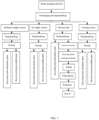
- FIG. 1 is a flowchart of a hydrogen fuel cell recycling process according to Embodiment 1 of the present invention.
- the raw materials, reagents or devices used in the following embodiments can be obtained from conventional commercial sources or by existing known methods.
- a method for recycling a hydrogen fuel cell of a new energy vehicle included the following specific steps of:
- a method for recycling a hydrogen fuel cell of a new energy vehicle included the following specific steps of:
- a method for recycling a hydrogen fuel cell of a new energy vehicle included the following specific steps of:
- a platinum recycling refining process included the following process steps of:
- the recycling rate of Pt in Embodiment 2 of the present invention is 99.7% , and the purity of the Pt crude product is 99.9%; the recycling rate of Cu is 98.6%, and the purity of the Cu crude product is 99.6%; the recycling rate of Fe is 98.7%, and the purity of the Fe crude product is 98.7%; the recycling rate of Zn is 99.5%, and the purity of the Zn crude product is 99.5%; the recycling rate of Al is 99.8%, and the purity of the Al crude product is 99.8%; and the recycling rate of plastic is 99.5%, and the purity of the Pt crude product is 99.2%.
- the recycling rate of Pt in Embodiment 3 of the present invention is 99.3% , and the purity of the Pt crude product is 99.8%; the recycling rate of Cu is 98.5%, and the purity of the Cu crude product is 99.4%; the recycling rate of Fe is 98.6%, and the purity of the Fe crude product is 98.5%; the recycling rate of Zn is 99.2%, and the purity of the Zn crude product is 99.3%; the recycling rate of Al is 99.5%, and the purity of the A1 crude product is 99.5%; and the recycling rate of plastic is 99.3%, and the purity of the Pt crude product is 99.1%.
- the recycling rate of Pt is 96.7%, the recycling rate of Cu is 97.6%, the recycling rate of Fe is 95.7%, the recycling rate of Zn is 96.5%, the recycling rate of Al is 97.8%, and the recycling rate of plastic is 96.5%, respectively.
- FIG. 1 is a flowchart of a waste hydrogen fuel cell recycling process according to Embodiment 1 of the present invention. It can be seen from FIG. 1 that the entire recycling process is simple and efficient.
- the recycling range includes materials with a specific gravity of more than 99% and can obtain crude products with higher purity.
- the difficulty in the whole process is the method for recycling platinum.
- the ashing treatment can directly increase the purity of platinum to more than 98%. After two steps of high temperature chlorination and reduction, the platinum can be purified, and the purity can reach 99.9%.
Landscapes
- Chemical & Material Sciences (AREA)
- Engineering & Computer Science (AREA)
- Manufacturing & Machinery (AREA)
- Life Sciences & Earth Sciences (AREA)
- Materials Engineering (AREA)
- Mechanical Engineering (AREA)
- Metallurgy (AREA)
- Organic Chemistry (AREA)
- Chemical Kinetics & Catalysis (AREA)
- Sustainable Development (AREA)
- Environmental & Geological Engineering (AREA)
- Geology (AREA)
- General Life Sciences & Earth Sciences (AREA)
- General Chemical & Material Sciences (AREA)
- Sustainable Energy (AREA)
- Electrochemistry (AREA)
- Geochemistry & Mineralogy (AREA)
- Fuel Cell (AREA)
- Manufacture And Refinement Of Metals (AREA)
Description
- The present invention relates to the field of recycling hydrogen fuel cells, and more particularly, to a method for recycling a hydrogen fuel cell of a new energy vehicle.
- A fuel cell has no pollution to the environment. Electrochemical reaction rather than combustion (gasoline and diesel) or energy storage (storage battery) which is the most typical traditional backup power solution that will release pollutants such as COx, NOx, SOx gas and dust while combustion, is employed in the fuel cell. As mentioned above, the fuel cell only generates water and heat. If hydrogen is generated by renewable energy sources (photovoltaic panels, wind power generation, or the like), the whole cycle is a process that does not produce harmful substances completely. According to Energy Storage International Summit, as a clean energy source with zero emissions in the true sense, the application of hydrogen fuel cells in developed countries is accelerating. The fuel cell has gone from laboratory to industrialization. Compared with a lithium battery, it has the advantage of zero pollution.
- However, with the continuous and extensive use of the hydrogen fuel cells, the end of life of some old hydrogen fuel cells is approaching, and there are a large number of high-value components in the hydrogen fuel cells, such as various valves and gas pipelines, valuable metal wastes, precious metal platinum in catalysts, and the like. The availability of these high-value wastes makes recycling significant. At present, the recycling of precious metal platinum in catalysts may be summarized as carbonyl platinum chloride method, molten salt electrolysis method, zone smelting method, ammonium chloride repeated precipitation method, sodium bromate hydrolysis method, oxidized carrier hydrolysis method, and the like. The carbonyl platinum chloride method and the molten salt electrolysis method are limited to large-scale production and application due to complicated technological processes and tedious operations thereof. The sodium bromate hydrolysis method and the oxidized carrier hydrolysis method have a large amount of solution treatment and need a long time to stand and clarify, which takes up space and site, has a long generation period, and cannot be applied to large-scale production. Therefore, the existing recycling processes have the defects of high labor intensity, low production efficiency, inconvenient operation and high energy consumption.
- Patent document (
CN101130192 ) discloses a method for recovering catalyst from a membrane electrode, which comprises stripping the matrix material of the membrane electrode, and then recovering the catalyst from the membrane electrode stripped of the matrix material, wherein the method for stripping the matrix material of the membrane electrode comprises contacting the membrane electrode with a solvent, wherein the amount of the solvent and the contact conditions are sufficient to strip the matrix material of the membrane electrode from the membrane electrode, and the solvent is a solvent capable of swelling the matrix material of the membrane electrode. In the method, a membrane electrode is soaked in a solvent which can swell the matrix material of the membrane electrode, namely a proton exchange membrane, which is a polymer material, and can absorb liquid solvent to cause physical swelling; after the matrix material swells, the catalytic layer naturally falls off the surface of the matrix material, so that the matrix material is completely stripped from the membrane electrode. Therefore, the stripping method adopted by the catalyst recovery method is simple in process and suitable for stripping the substrate material of the membrane electrode. - The object of the present invention is to provide a method for recycling a hydrogen fuel cell of a new energy vehicle. According to the method, a platinum element in the hydrogen fuel cell can be efficiently recycled, high-purity Pt can be prepared by combining a chlorination evaporation method with a chemical reduction method, precious metal resources are effectively saved, and the recycling process has the advantages of being easy and convenient to operate and high in production efficiency.
- To implement the foregoing object, the present invention employs the following technical solutions.
- The invention is defined in the appended claims.
- A method for recycling a hydrogen fuel cell of a new energy vehicle includes the following steps of
- (1) discharging and disassembling a hydrogen fuel cellto obtain a hydrogen supply system, an air supply system, a cooling system and a galvanic pile;
- (2) disassembling the galvanic pile into a catalyst and carbon cloth, and ashing to obtain ash;
- (3) adding an auxiliary agent into the ash, mixing, introducing inert gas, heating, introducing oxidizing gas, and absorbing tail gas by using an ammonium salt solution; and
- (4) adding a reducing agent into the ammonium salt solution absorbing the tail gas in step (3) to react, filtering, taking and cleaning a filter residue to obtain Pt.
- Preferably, in step (1), the specific treatment process of the hydrogen supply system refers to: further disassembling the hydrogen supply system to obtain a hydrogen ejector, a high-pressure hydrogen sealing valve, a reducing valve, a hydrogen tank, a hydrogen circulating pump, an inverter, a hydrogen concentration sensor, a hydrogen temperature sensor, a hydrogenation control unit, a hydrogen pressure sensor, and a hydrogen pipeline.
- Preferably, in the process of discharging in step (1), sealing performances of the high-pressure hydrogen sealing valve, the reducing valve and the hydrogen tank are checked. If there is no air leakage, the high-pressure hydrogen sealing valve, the reducing valve and the hydrogen pipeline are recycled as old parts for repeated utilization. If the hydrogen tank has good sealing performance and is within a service life thereof, the hydrogen tank is recycled for repeated utilization. If the sealing performances of the high-pressure hydrogen sealing valve, the pressure reducing valve, the hydrogen tank and the hydrogen pipeline are not good, the high-pressure hydrogen sealing valve, the pressure reducing valve, the hydrogen tank and the hydrogen pipeline will be directly recycled as waste metal materials. If the hydrogen ejector, the hydrogen circulating pump and the inverter operate normally in the discharging process in step (1), the hydrogen ejector, the hydrogen circulating pump and the inverter will be recycled for repeated utilization; otherwise, the hydrogen ejector, the hydrogen circulating pump and the inverter will be further disassembled and classified according to the material categories and recycled. The hydrogen concentration sensor, the hydrogen temperature sensor, the hydrogenation control unit and the hydrogen pressure sensor are directly disassembled and classified according to the material categories and recycled.
- Preferably, in step (1), the specific treatment process of the air supply system refers to: further disassembling the air supply system to obtain an air compressor, a muffler, an air valve module, and an air pipeline.
- The air compressor and the muffler will be recycled for repeated utilization if the air compressor and the muffler operate normally in the discharging process described in (1). The air valve module and the air pipeline will be recycled for repeated utilization if there is no air leakage in the discharging process mentioned in (1), otherwise, the air valve module and the air pipeline will be recycled as waste metal materials.
- Preferably, in step (1), the specific treatment process of the cooling system refers to: further disassembling the cooling system to obtain a water pump, a radiator, a deionization device, and a thermostat (three-way valve).
- If the water pump, the radiator, the deionization device, and the thermostat operate normally in the discharging process in step (1), the water pump, the radiator, the deionization device, and the thermostat will be recycled for repeated utilization; otherwise, the water pump, the radiator, the deionization device, and the thermostat will be further disassembled and classified according to the material categories for recycling.
- Preferably, in step (2), the ashing is carried out at a temperature of 400°C to 600°C, and lasts for 30 minutes to 60 minutes.
- The object of the above ashing is to remove carbon, burn out the carbon cloth and generate carbon dioxide, so that the catalyst can be directly separated from the carbon cloth.
- In step (3), the auxiliary agent is one of NaF, CaF2, KCl, NaCl or CaCl2.
- The above-mentioned auxiliary agent is a solid chlorinating agent, wherein the solid chlorinating agent will be completely or mostly decomposed into a gaseous chlorinating agent such as chlorine gas or HCl during the reaction process and then working, so that the ash will be chlorinated, and enter the ammonium chloride solution with chlorine gas.
- Preferably, in step (3), a weight ratio of the ash to the auxiliary agent is 1 : 1 to 5.
- Preferably, in step (3), the inert gas is one of nitrogen, helium or argon gas.
- In step (3), the oxidizing gas is one of chlorine gas or bromine gas.
- Preferably, in step (3), the ammonium salt solution is one of ammonium chloride solution or ammonium bromide solution.
- Preferably, in step (3), the inert gas is introduced at a flow rate of 1 mL·min-1 to 30 mL·min-1, and lasts for 5 minutes to 15 minutes.
- Preferably, in step (3), the oxidizing gas is introduced at a flow rate of 1 mL·min-1 to 30 mL·min-1, and lasts for 20 minutes to 60 minutes.
- Preferably, in step (3), the ammonium salt solution has a concentration of 1 mol·L-1 to 5 mol·L-1.
- In step (3), the temperature is raised to 1,000°C to 1,200°C at a rate of 2°C·min-1 to 6°C·min-1.
- Preferably, in step (4), the reducing agent is one of sodium thiosulfate, sodium borohydride or hydrazine.
- More preferably, in step (4), the reducing agent has a mass concentration of 40% to 100%.
- Preferably, in step (4), a volume ratio of the ammonium chloride solution to the reducing agent is 1: (0.1 to 0.3).
- Preferably, in step (4), the further purification process of Pt after preparing Pt in step is as follows: adding a leachate into Pt, heating, washing, filtering, taking a filtrate, adding a reducing agent for reaction, filtering, taking and cleaning a filter residue to obtain pure Pt, wherein a mass ratio of Pt to the leachate is 1: (10 to 20).
- More preferably, the leachate is aqua regia, and the aqua regia has a mass concentration of 50% to 100%.
-
- 1. According to the present invention, the platinum element in the hydrogen fuel cell can be efficiently recycled, the high-purity Pt can be prepared by combining the chlorination evaporation method with the chemical reduction method, the precious metal resources are effectively saved, and the recycling process has the advantages of being easy and convenient to operate and high in production efficiency.
- 2. The present invention is the first recycling process for the hydrogen fuel cells in China, which can safely separate gas cylinders containing residual fuels and reduce the safety risks of the gas cylinders containing the residual fuels.
- 3. According to the present invention, all the components of the hydrogen fuel cell are recycled, and some parts can be fully utilized in steps, thus saving the economic cost. In each ton of hydrogen fuel cells, the recycling rate of Pt is 99.7% and the purity of Pt crude product is 99.9%; the recycling rate of Cu is 98.6%, and the recycling rate of Fe is 98.7%; the recycling rate of Zn is 99.5%; the recycling rate of Al is 99.8%; and the recycling rate of plastic is 99.5%.
-
FIG. 1 is a flowchart of a hydrogen fuel cell recycling process according to Embodiment 1 of the present invention. - In order to make the technical solutions of the present invention clearer to those skilled in the art, the following embodiments are listed for explanation. It should be noted that the following embodiments do not limit the scope of protection claimed by the present invention.
- Unless otherwise specified, the raw materials, reagents or devices used in the following embodiments can be obtained from conventional commercial sources or by existing known methods.
- A method for recycling a hydrogen fuel cell of a new energy vehicle included the following specific steps of:
- (1) discharging a hydrogen fuel cell until a hydrogen fuel in a hydrogen storage tank was completely exhausted, and disassembling the hydrogen fuel cellto obtain a hydrogen supply system, an air supply system, a cooling system, an electric control system and a galvanic pile;
- (2) further disassembling the hydrogen supply system to obtain a hydrogen ejector, a high-pressure hydrogen sealing valve, a reducing valve, a hydrogen tank, a hydrogen circulating pump, an inverter, a hydrogen concentration sensor, a hydrogen temperature sensor, a hydrogenation control unit, a hydrogen pressure sensor, and a hydrogen pipeline; further disassembling the air supply system to obtain an air compressor, a muffler, an air valve module, and an air pipeline; and further disassembling the cooling system to obtain a water pump, a radiator, a deionization device, and a thermostat (three-way valve);
- (3) further disassembling the galvanic pile to obtain metal fasteners such as a screw stem, alloy bipolar plates and a plastic shell for direct recycling, directly discarding graphite bipolar plates, further disassembling membrane electrodes to directly recover proton exchange membranes as polymers, placing the obtained catalyst and carbon cloth in a ceramic crucible, and ashing the ceramic crucible in a muffle furnace at 400°C for 30 minutes to obtain ash;
- (4) placing the ash in mortar, adding NaF according to a weight ratio of 1: 1, grinding the mixture evenly, pouring the mixture into a corundum porcelain boat and then placing the boat in a middle heating zone of a tube furnace, introducing nitrogen at a flow rate of 1 mL·min-1, absorbing the tail gas with 30 mL of ammonium chloride solution with a concentration of 1 mol·L-1, introducing nitrogen for 5 minutes, then raising the temperature to 1,000°C at a heating rate of 2°C·min-1, switching to another gas channel to introduce the chlorine gas for 20 minutes, then switching back to the nitrogen again, turning off the heating system, cooling to room temperature, and turning off the chlorine gas;
- (5) adding the ammonium chloride solution absorbing the tail gas into sodium thiosulfate solution with a mass concentration of 40% according to a volume ratio of 1: 0.1, filtering, cleaning, and taking a filter residue to obtain crude Pt; and
- (6) adding aqua regia with a mass concentration of 50% into the crude Pt according to a mass ratio of 1: 10, heating the mixture to slight boiling for 5 minutes, rinsing the cup wall with 5 mL of deionized water, filtering, taking and adding the filtrate into sodium thiosulfate solution with a mass concentration of 40% according to a volume ratio of 1: 0.1, filtering, cleaning, and take a filter residue which was pure Pt.
- A method for recycling a hydrogen fuel cell of a new energy vehicle included the following specific steps of:
- (1) discharging a hydrogen fuel cell until a hydrogen fuel in a hydrogen storage tank was completely exhausted, and disassembling the hydrogen fuel cellto obtain a hydrogen supply system, an air supply system, a cooling system, an electric control system and a galvanic pile;
- (2) further disassembling the hydrogen supply system to obtain a hydrogen ejector, a high-pressure hydrogen sealing valve, a reducing valve, a hydrogen tank, a hydrogen circulating pump, an inverter, a hydrogen concentration sensor, a hydrogen temperature sensor, a hydrogenation control unit, a hydrogen pressure sensor, and a hydrogen pipeline; further disassembling the air supply system to obtain an air compressor, a muffler, an air valve module, and an air pipeline; and further disassembling the cooling system to obtain a water pump, a radiator, a deionization device, and a thermostat (three-way valve);
- (3) further disassembling the galvanic pile to obtain metal fasteners such as a screw stem, alloy bipolar plates and a plastic shell for direct recycling, directly discarding graphite bipolar plates, further disassembling membrane electrodes to directly recover proton exchange membranes as polymers, placing the obtained catalyst and carbon cloth in a ceramic crucible, and ashing the ceramic crucible in a muffle furnace at 500°C for 45 minutes to obtain ash;
- (4) placing the ash in mortar, adding KCl according to a weight ratio of 1: 3, grinding the mixture evenly, pouring the mixture into a corundum porcelain boat and then placing the boat in a middle heating zone of a tube furnace, introducing nitrogen at a flow rate of 15 mL·min-1, absorbing the tail gas with 35 mL of ammonium chloride solution with a concentration of 3 mol·L-1, introducing nitrogen for 10 minutes, then raising the temperature to 1,100°C at a heating rate of 4°C·min-1, introducing chlorine gas for 40 minutes, then switching back to the nitrogen again, turning off the heating system, cooling to room temperature, and turning off the chlorine gas;
- (5) adding the ammonium chloride solution absorbing the tail gas into sodium borohydride with a mass concentration of 60% according to a volume ratio of 1: 0.2, filtering, cleaning, and taking a filter residue to obtain crude Pt; and
- (6) adding aqua regia with a mass concentration of 75% into the crude Pt according to a mass ratio of 1: 15, heating the mixture to slight boiling for 7 minutes, rinsing the cup wall with 7 mL of deionized water, filtering, taking and adding the filtrate into sodium borohydride with a mass concentration of 40% according to a volume ratio of 1: 0.1, filtering, cleaning, and take a filter residue which was pure Pt.
- A method for recycling a hydrogen fuel cell of a new energy vehicle included the following specific steps of:
- (1) discharging a hydrogen fuel cell until a hydrogen fuel in a hydrogen storage tank was completely exhausted, and disassembling the hydrogen fuel cell to obtain a hydrogen supply system, an air supply system, a cooling system, an electric control system and a galvanic pile;
- (2) further disassembling the hydrogen supply system to obtain a hydrogen ejector, a high-pressure hydrogen sealing valve, a reducing valve, a hydrogen tank, a hydrogen circulating pump, an inverter, a hydrogen concentration sensor, a hydrogen temperature sensor, a hydrogenation control unit, a hydrogen pressure sensor, and a hydrogen pipeline; further disassembling the air supply system to obtain an air compressor, a muffler, an air valve module, and an air pipeline; and further disassembling the cooling system to obtain a water pump, a radiator, a deionization device, and a thermostat (three-way valve);
- (3) further disassembling the galvanic pile to obtain metal fasteners such as a screw stem, alloy bipolar plates and a plastic shell for direct recycling, directly discarding graphite bipolar plates, further disassembling membrane electrodes to directly recover proton exchange membranes as polymers, placing the obtained catalyst and carbon cloth in a ceramic crucible, and ashing the ceramic crucible in a muffle furnace at 600°C for 60 minutes to obtain ash;
- (4) placing the ash in mortar, adding NaCl according to a weight ratio of 1: 5, grinding the mixture evenly, pouring the mixture into a corundum porcelain boat and then placing the boat in a middle heating zone of a tube furnace, introducing nitrogen at a flow rate of 30 mL·min-1, absorbing the tail gas with 40 mL of ammonium chloride solution with a concentration of 5 mol·L-1, introducing nitrogen for 15 minutes, then raising the temperature to 1,200°C at a heating rate of 6°C·min-1, introducing chlorine gas for 60 minutes, then switching back to the nitrogen again, turning off the heating system, cooling to room temperature, and turning off the chlorine gas;
- (5) adding the ammonium chloride solution absorbing the tail gas into hydrazine with a mass concentration of 100% according to a volume ratio of 1: 0.3, filtering, cleaning, and taking a filter residue to obtain crude Pt; and
- (6) adding aqua regia with a mass concentration 100% into the crude Pt according to a mass ratio of 1: 20, heating the mixture to slight boiling for 10 minutes, rinsing the cup wall with 10 mL of deionized water, filtering, taking and adding the filtrate into hydrazine with a mass concentration of 100% according to a volume ratio of 1: 0.3, filtering, cleaning, and take a filter residue which was pure Pt.
- A platinum recycling refining process included the following process steps of:
- a. carbonizing a platinum-containing material for 1.5 hours to 2.5 hours at 750°C to 850°C;
- b. cooling to a room temperature and then adding aqua regia to dissolve the material at a temperature control between 65°C and 75°C until the material was completely dissolved;
- c. adding ammonium chloride and precipitating for 0.5 hour to 1.5 hours, and after precipitating, filtering and washing ammonium chloroplatinate;
- d. adding sodium hydroxide till dissolving in 20 minutes to 40 minutes to form a dissolution solution;
- e. heating the dissolution solution obtained in the step d to 45°C to 55°C and then adding hydrazine hydrate for reducing, and reacting for 0.5 hour to 1.5 hours to finish platinum recycling; and
- f. drying the reduced platinum powder.
-
Table 1 Recycling status and cost of Embodiment 2 Recycling object Recycling rate (%) Recycling amount (per ton of battery) Crude product purity (%) Process cost (RMB) Pt 99.7 60.56 g 99.9 231 Cu 98.6 82.62 kg 99.6 36 Fe 98.7 636.5 kg 98.7 23 Zn 99.5 1.2 kg 99.5 103 Al 99.8 160.9 kg 99.8 41 Plastic 99.5 67.0 kg 99.2 37 Table 2 Recycling status and cost of Embodiment 3 Recycling object Recycling rate (%) Recycling amount (per ton of battery) Crude product purity (%) Process cost (RMB) Pt 99.3 58.36 g 99.8 246 Cu 98.5 81.99 kg 99.4 42 Fe 98.6 631.7 kg 98.5 29 Zn 99.2 1.13 kg 99.3 125 Al 99.5 159.6 kg 99.5 44 Plastic 99.3 65.8 kg 99.1 39 Table 2 Recycling status and cost of Comparative Example 1 Recycling object Recycling rate (%) Recycling amount (per ton of battery) Crude product purity (%) Process cost (RMB) Pt 96.7 57.56 g 99.8 588 Cu 97.6 76.62 kg 99.1 43 Fe 95.7 616.5 kg 98.2 35 Zn 96.5 1.1 kg 99.3 121 Al 97.8 155.9 kg 98.8 57 Plastic 96.5 65.0 kg 97.2 42 - It can be seen from Tables 1 to 3 that, in each ton of hydrogen fuel cell, the recycling rate of Pt in Embodiment 2 of the present invention is 99.7% , and the purity of the Pt crude product is 99.9%; the recycling rate of Cu is 98.6%, and the purity of the Cu crude product is 99.6%; the recycling rate of Fe is 98.7%, and the purity of the Fe crude product is 98.7%; the recycling rate of Zn is 99.5%, and the purity of the Zn crude product is 99.5%; the recycling rate of Al is 99.8%, and the purity of the Al crude product is 99.8%; and the recycling rate of plastic is 99.5%, and the purity of the Pt crude product is 99.2%. In each ton of hydrogen fuel cell, the recycling rate of Pt in Embodiment 3 of the present invention is 99.3% , and the purity of the Pt crude product is 99.8%; the recycling rate of Cu is 98.5%, and the purity of the Cu crude product is 99.4%; the recycling rate of Fe is 98.6%, and the purity of the Fe crude product is 98.5%; the recycling rate of Zn is 99.2%, and the purity of the Zn crude product is 99.3%; the recycling rate of Al is 99.5%, and the purity of the A1 crude product is 99.5%; and the recycling rate of plastic is 99.3%, and the purity of the Pt crude product is 99.1%.In the Comparative Example 2, the recycling rate of Pt is 96.7%, the recycling rate of Cu is 97.6%, the recycling rate of Fe is 95.7%, the recycling rate of Zn is 96.5%, the recycling rate of Al is 97.8%, and the recycling rate of plastic is 96.5%, respectively. The recycling rates of all components are lower than those in Embodiments 2 and 3, and the process cost of recycling Pt is much higher than that in Embodiment 2. From this, it can be seen that by using the method for recycling of the present invention, the process for obtaining pure platinum is simple, low in cost, and industrially recoverable.
-
FIG. 1 is a flowchart of a waste hydrogen fuel cell recycling process according to Embodiment 1 of the present invention. It can be seen fromFIG. 1 that the entire recycling process is simple and efficient. The recycling range includes materials with a specific gravity of more than 99% and can obtain crude products with higher purity. The difficulty in the whole process is the method for recycling platinum. The ashing treatment can directly increase the purity of platinum to more than 98%. After two steps of high temperature chlorination and reduction, the platinum can be purified, and the purity can reach 99.9%. - The method for recycling the hydrogen fuel cell of the new energy vehicle provided by the present invention has been introduced in detail above, and the principle and implementation of the present invention have been illustrated with specific embodiments. The explanation of the above embodiments is only used to help understand the method and the core idea of the present invention, including the best mode, and also enables any person skilled in the art to practice the present invention, including manufacturing and using any device or system, and implementing any combined method.
Claims (6)
- A method for recycling a hydrogen fuel cell, comprising:(1) discharging and disassembling a hydrogen fuel cell to obtain a hydrogen supply system, an air supply system, a cooling system and a galvanic pile;(2) disassembling the galvanic pile into a catalyst and carbon cloth, and ashing to obtain ash;(3) adding an auxiliary agent into the ash, mixing, introducing inert gas, heating, introducing oxidizing gas, and absorbing tail gas by using an ammonium salt solution; and(4) adding a reducing agent into the ammonium salt solution absorbing the tail gas in step (3) to react, filtering, taking and cleaning a filter residue to obtain Pt, wherein in step (3), the oxidizing gas is one of chlorine gas or bromine gas, wherein in step (3), the heating is carried out at a rate of 2°C·min-1 to 6°C·min-1 and a temperature of 1,000°C to 1,200°C;wherein in step (3), the auxiliary agent is one of NaF, CaF2, KCl, NaCl or CaCl2.
- The method of claim 1, wherein in step (2), the ashing is carried out at a temperature of 400°C to 600°C, and lasts for 30 minutes to 60 minutes.
- The method of claim 1, wherein in step (3), the inert gas is one of nitrogen, helium or argon.
- The method of claim 1, wherein in step (4), the reducing agent is one of sodium thiosulfate, sodium borohydride or hydrazine.
- The method of claim 1, wherein in step (4), the ammonium salt solution is one of ammonium chloride solution or ammonium bromide solution.
- The method of claim 1, wherein in step (4), a further purification process of Pt after preparing Pt is as follows: adding a leachate into Pt, heating, washing, filtering, taking a filtrate, adding a reducing agent for reaction, filtering, taking and cleaning a filter residue to obtain pure Pt, wherein a mass ratio of Pt to the leachate is 1: (10 to 20).
Priority Applications (1)
| Application Number | Priority Date | Filing Date | Title |
|---|---|---|---|
| MA68024A MA68024B1 (en) | 2020-07-03 | 2021-04-30 | METHOD FOR RECOVERING PLATINUM FROM A HYDROGEN FUEL CELL OF A NEW ENERGY VEHICLE |
Applications Claiming Priority (2)
| Application Number | Priority Date | Filing Date | Title |
|---|---|---|---|
| CN202010637420.6A CN111900425B (en) | 2020-07-03 | 2020-07-03 | Method for recycling hydrogen fuel cell of new energy automobile |
| PCT/CN2021/091559 WO2022001351A1 (en) | 2020-07-03 | 2021-04-30 | Method for recovering hydrogen fuel cell of new energy vehicle |
Publications (3)
| Publication Number | Publication Date |
|---|---|
| EP4164010A1 EP4164010A1 (en) | 2023-04-12 |
| EP4164010A4 EP4164010A4 (en) | 2023-10-11 |
| EP4164010B1 true EP4164010B1 (en) | 2024-10-09 |
Family
ID=73191547
Family Applications (1)
| Application Number | Title | Priority Date | Filing Date |
|---|---|---|---|
| EP21834298.8A Active EP4164010B1 (en) | 2020-07-03 | 2021-04-30 | Method for recovering platinum from hydrogen fuel cell of new energy vehicle |
Country Status (8)
| Country | Link |
|---|---|
| US (1) | US11699796B1 (en) |
| EP (1) | EP4164010B1 (en) |
| CN (1) | CN111900425B (en) |
| CL (1) | CL2022003845A1 (en) |
| ES (1) | ES2989403T3 (en) |
| HU (1) | HUE069208T2 (en) |
| MA (1) | MA68024B1 (en) |
| WO (1) | WO2022001351A1 (en) |
Families Citing this family (4)
| Publication number | Priority date | Publication date | Assignee | Title |
|---|---|---|---|---|
| CN111900425B (en) | 2020-07-03 | 2021-12-17 | 广东邦普循环科技有限公司 | Method for recycling hydrogen fuel cell of new energy automobile |
| CN115275241B (en) * | 2022-08-03 | 2025-09-16 | 湖南理工学院 | Recovery and regeneration method of waste platinum catalyst |
| CN116454305B (en) * | 2023-03-19 | 2025-11-07 | 上海锐唯新能源科技有限公司 | Repairing method of graphite bipolar plate of fuel cell |
| GB2628686B (en) * | 2023-09-12 | 2025-07-09 | Mastermelt Ltd | Process for recovering noble metals from fluoropolymer-containing components |
Family Cites Families (18)
| Publication number | Priority date | Publication date | Assignee | Title |
|---|---|---|---|---|
| JPH086152B2 (en) * | 1986-12-26 | 1996-01-24 | 株式会社徳力本店 | Method for recovering precious metals from fuel cell electrode waste materials |
| JP2684171B2 (en) * | 1987-02-25 | 1997-12-03 | 株式会社 徳力本店 | Method for recovering precious metals from fuel cell electrode waste materials, etc. |
| JPH02301527A (en) * | 1989-05-17 | 1990-12-13 | Tanaka Kikinzoku Kogyo Kk | Method for recovering platinum family metal |
| US5102632A (en) * | 1990-12-21 | 1992-04-07 | Metallgesellschaft Aktiengesellschaft | Two-step method for recovering dispersed noble metals |
| JP4700815B2 (en) | 2001-01-12 | 2011-06-15 | 株式会社フルヤ金属 | Method for recovering platinum group metals from metal electrodes |
| US20060147791A1 (en) * | 2004-12-30 | 2006-07-06 | Debe Mark K | Platinum recovery from fuel cell stacks |
| JP4604934B2 (en) * | 2005-09-22 | 2011-01-05 | トヨタ自動車株式会社 | Method and apparatus for recovering catalyst for fuel cell |
| CN101036889B (en) * | 2006-03-14 | 2010-08-04 | 上海耀华铂制品有限公司 | Recycling method of catalyzer having platinum |
| CN101130192B (en) * | 2006-08-24 | 2010-06-16 | 比亚迪股份有限公司 | A method for recovering catalyst from membrane electrode |
| JP5021331B2 (en) | 2007-02-16 | 2012-09-05 | 田中貴金属工業株式会社 | Method for recovering platinum group metals from waste |
| CN101280362B (en) * | 2008-05-15 | 2010-06-23 | 大连交通大学 | Recovery method of platinum catalyst in membrane electrode of waste fuel batter with proton exchange film |
| CN101347788A (en) * | 2008-08-28 | 2009-01-21 | 新源动力股份有限公司 | Method for recycling carbon paper from waste membrane electrode assembly |
| KR101452809B1 (en) * | 2013-04-22 | 2014-10-22 | (주)알티아이엔지니어링 | Method of preparing platinum catalyst supported on carbon black for fuel cell using a recycled platinum from spent catalyst |
| JP6523346B2 (en) | 2014-06-19 | 2019-05-29 | イエダ リサーチ アンド ディベロップメント カンパニー リミテッド | Method of recovering platinum group metals from used catalysts |
| CN106803596A (en) * | 2017-01-22 | 2017-06-06 | 东莞佐佑电子科技有限公司 | A kind of method for reclaiming platinum in waste and old fuel cell |
| CN107497420B (en) * | 2017-09-07 | 2021-03-05 | 浙江卫星能源有限公司 | Regeneration method of carbon-containing noble metal catalyst |
| CN109088080A (en) * | 2018-07-12 | 2018-12-25 | 北京科技大学 | The recovery method of one proton exchanging film fuel battery |
| CN111900425B (en) | 2020-07-03 | 2021-12-17 | 广东邦普循环科技有限公司 | Method for recycling hydrogen fuel cell of new energy automobile |
-
2020
- 2020-07-03 CN CN202010637420.6A patent/CN111900425B/en active Active
-
2021
- 2021-04-30 MA MA68024A patent/MA68024B1/en unknown
- 2021-04-30 EP EP21834298.8A patent/EP4164010B1/en active Active
- 2021-04-30 US US18/004,042 patent/US11699796B1/en active Active
- 2021-04-30 HU HUE21834298A patent/HUE069208T2/en unknown
- 2021-04-30 WO PCT/CN2021/091559 patent/WO2022001351A1/en not_active Ceased
- 2021-04-30 ES ES21834298T patent/ES2989403T3/en active Active
-
2022
- 2022-12-30 CL CL2022003845A patent/CL2022003845A1/en unknown
Also Published As
| Publication number | Publication date |
|---|---|
| CL2022003845A1 (en) | 2023-06-09 |
| EP4164010A1 (en) | 2023-04-12 |
| EP4164010A4 (en) | 2023-10-11 |
| ES2989403T3 (en) | 2024-11-26 |
| US20230197976A1 (en) | 2023-06-22 |
| CN111900425B (en) | 2021-12-17 |
| HUE069208T2 (en) | 2025-02-28 |
| MA68024B1 (en) | 2024-10-31 |
| US11699796B1 (en) | 2023-07-11 |
| CN111900425A (en) | 2020-11-06 |
| WO2022001351A1 (en) | 2022-01-06 |
Similar Documents
| Publication | Publication Date | Title |
|---|---|---|
| EP4164010B1 (en) | Method for recovering platinum from hydrogen fuel cell of new energy vehicle | |
| CN114678553B (en) | Recycling method of waste proton exchange membrane electrolytic water film electrode | |
| CN115000435B (en) | Complete recovery process for CCM material of proton exchange membrane fuel cell | |
| CN100541885C (en) | Method for enriching precious metals from fluorine-containing fuel cell components | |
| CN111477986B (en) | Method for preparing ternary lithium ion battery precursor by electrolyzing sodium sulfate waste liquid | |
| CN111472016A (en) | A kind of method for preparing hydrogen peroxide by electrolytic recovery of sodium sulfate waste liquid | |
| CN119301283A (en) | Method for recovering catalyst material from a membrane electrode assembly for water electrolysis | |
| CN115275241B (en) | Recovery and regeneration method of waste platinum catalyst | |
| CN117165957A (en) | Method for preparing sodium iron phosphate by utilizing waste lithium iron phosphate in high-valued manner | |
| CN102367577B (en) | Method for preparing Na2[Pb(OH)4] solution and recovering lead from lead-containing waste | |
| CN115584397B (en) | Method for recovering lithium, lanthanum, zirconium, titanium and oxygen in lithium ion semi-solid battery | |
| CN114351162A (en) | Method for recycling metal elements in waste lithium battery positive electrode material | |
| CN111943327A (en) | Electrode material with RuO2-IrO2 intermediate layer for acid wastewater treatment and preparation method | |
| CN111364056A (en) | Method and apparatus for treating nickel-containing waste generated in nitrogen trifluoride electrolysis | |
| CN213596351U (en) | Three-step continuous leaching device for ternary anode material | |
| CN116162942A (en) | Method for preparing battery-grade lithium hydroxide by electrolyzing crude lithium bicarbonate | |
| CN102168284A (en) | Method for recovering and electrolyzing zinc electrode of insert-block-type zinc air battery | |
| CN114132924A (en) | Low-energy-consumption preparation method of artificial graphite/coke negative electrode material of lithium ion battery | |
| CN110304666A (en) | A method of recycling valuable element from waste lithium ion cell anode material | |
| CN119776914B (en) | Zirconium metal and method for preparing zirconium metal by molten salt electrolysis | |
| CN211462643U (en) | A gas discharge device for titanium-tin alloy processing by negative pressure method | |
| CN201154926Y (en) | Electrolytic sewage treatment residual energy recovery device | |
| CN110323509A (en) | A kind of technique recycling valuable element from anode material for lithium-ion batteries | |
| CN114506814B (en) | Aluminum activation hydrogen production method, hydrogen production device and power generation equipment | |
| CN118223079A (en) | Method for recycling metal lead from waste lead paste by utilizing ore pulp electrolysis technology |
Legal Events
| Date | Code | Title | Description |
|---|---|---|---|
| STAA | Information on the status of an ep patent application or granted ep patent |
Free format text: STATUS: THE INTERNATIONAL PUBLICATION HAS BEEN MADE |
|
| PUAI | Public reference made under article 153(3) epc to a published international application that has entered the european phase |
Free format text: ORIGINAL CODE: 0009012 |
|
| STAA | Information on the status of an ep patent application or granted ep patent |
Free format text: STATUS: REQUEST FOR EXAMINATION WAS MADE |
|
| 17P | Request for examination filed |
Effective date: 20230105 |
|
| AK | Designated contracting states |
Kind code of ref document: A1 Designated state(s): AL AT BE BG CH CY CZ DE DK EE ES FI FR GB GR HR HU IE IS IT LI LT LU LV MC MK MT NL NO PL PT RO RS SE SI SK SM TR |
|
| REG | Reference to a national code |
Ref country code: DE Ref legal event code: R079 Free format text: PREVIOUS MAIN CLASS: H01M0008008000 Ipc: C22B0003440000 Ref document number: 602021020128 Country of ref document: DE |
|
| A4 | Supplementary search report drawn up and despatched |
Effective date: 20230913 |
|
| DAX | Request for extension of the european patent (deleted) | ||
| RAV | Requested validation state of the european patent: fee paid |
Extension state: MA Effective date: 20230105 |
|
| RIC1 | Information provided on ipc code assigned before grant |
Ipc: H01M 8/008 20160101ALI20230907BHEP Ipc: C22B 11/06 20060101ALI20230907BHEP Ipc: C22B 11/02 20060101ALI20230907BHEP Ipc: C22B 11/00 20060101ALI20230907BHEP Ipc: C22B 7/00 20060101ALI20230907BHEP Ipc: C22B 3/44 20060101AFI20230907BHEP |
|
| GRAP | Despatch of communication of intention to grant a patent |
Free format text: ORIGINAL CODE: EPIDOSNIGR1 |
|
| STAA | Information on the status of an ep patent application or granted ep patent |
Free format text: STATUS: GRANT OF PATENT IS INTENDED |
|
| RIC1 | Information provided on ipc code assigned before grant |
Ipc: H01M 8/10 20160101ALN20240508BHEP Ipc: H01M 4/92 20060101ALN20240508BHEP Ipc: H01M 8/008 20160101ALI20240508BHEP Ipc: C22B 11/06 20060101ALI20240508BHEP Ipc: C22B 11/02 20060101ALI20240508BHEP Ipc: C22B 11/00 20060101ALI20240508BHEP Ipc: C22B 7/00 20060101ALI20240508BHEP Ipc: C22B 3/44 20060101AFI20240508BHEP |
|
| RIC1 | Information provided on ipc code assigned before grant |
Ipc: H01M 8/10 20160101ALN20240515BHEP Ipc: H01M 4/92 20060101ALN20240515BHEP Ipc: H01M 8/008 20160101ALI20240515BHEP Ipc: C22B 11/06 20060101ALI20240515BHEP Ipc: C22B 11/02 20060101ALI20240515BHEP Ipc: C22B 11/00 20060101ALI20240515BHEP Ipc: C22B 7/00 20060101ALI20240515BHEP Ipc: C22B 3/44 20060101AFI20240515BHEP |
|
| INTG | Intention to grant announced |
Effective date: 20240531 |
|
| GRAS | Grant fee paid |
Free format text: ORIGINAL CODE: EPIDOSNIGR3 |
|
| GRAA | (expected) grant |
Free format text: ORIGINAL CODE: 0009210 |
|
| STAA | Information on the status of an ep patent application or granted ep patent |
Free format text: STATUS: THE PATENT HAS BEEN GRANTED |
|
| AK | Designated contracting states |
Kind code of ref document: B1 Designated state(s): AL AT BE BG CH CY CZ DE DK EE ES FI FR GB GR HR HU IE IS IT LI LT LU LV MC MK MT NL NO PL PT RO RS SE SI SK SM TR |
|
| RAP3 | Party data changed (applicant data changed or rights of an application transferred) |
Owner name: HUNAN BRUNP EV RECYCLING CO., LTD. Owner name: HUNAN BRUNP RECYCLING TECHNOLOGY CO., LTD. Owner name: GUANGDONG BRUNP RECYCLING TECHNOLOGY CO., LTD. |
|
| REG | Reference to a national code |
Ref country code: CH Ref legal event code: EP |
|
| REG | Reference to a national code |
Ref country code: MA Ref legal event code: VAGR Ref document number: 68024 Country of ref document: MA Kind code of ref document: B1 Ref country code: DE Ref legal event code: R096 Ref document number: 602021020128 Country of ref document: DE |
|
| REG | Reference to a national code |
Ref country code: IE Ref legal event code: FG4D |
|
| REG | Reference to a national code |
Ref country code: ES Ref legal event code: FG2A Ref document number: 2989403 Country of ref document: ES Kind code of ref document: T3 Effective date: 20241126 |
|
| REG | Reference to a national code |
Ref country code: LT Ref legal event code: MG9D |
|
| REG | Reference to a national code |
Ref country code: NL Ref legal event code: MP Effective date: 20241009 |
|
| REG | Reference to a national code |
Ref country code: HU Ref legal event code: AG4A Ref document number: E069208 Country of ref document: HU |
|
| REG | Reference to a national code |
Ref country code: AT Ref legal event code: MK05 Ref document number: 1730669 Country of ref document: AT Kind code of ref document: T Effective date: 20241009 |
|
| PG25 | Lapsed in a contracting state [announced via postgrant information from national office to epo] |
Ref country code: NL Free format text: LAPSE BECAUSE OF FAILURE TO SUBMIT A TRANSLATION OF THE DESCRIPTION OR TO PAY THE FEE WITHIN THE PRESCRIBED TIME-LIMIT Effective date: 20241009 |
|
| PG25 | Lapsed in a contracting state [announced via postgrant information from national office to epo] |
Ref country code: NL Free format text: LAPSE BECAUSE OF FAILURE TO SUBMIT A TRANSLATION OF THE DESCRIPTION OR TO PAY THE FEE WITHIN THE PRESCRIBED TIME-LIMIT Effective date: 20241009 |
|
| PG25 | Lapsed in a contracting state [announced via postgrant information from national office to epo] |
Ref country code: IS Free format text: LAPSE BECAUSE OF FAILURE TO SUBMIT A TRANSLATION OF THE DESCRIPTION OR TO PAY THE FEE WITHIN THE PRESCRIBED TIME-LIMIT Effective date: 20250209 Ref country code: PT Free format text: LAPSE BECAUSE OF FAILURE TO SUBMIT A TRANSLATION OF THE DESCRIPTION OR TO PAY THE FEE WITHIN THE PRESCRIBED TIME-LIMIT Effective date: 20250210 Ref country code: HR Free format text: LAPSE BECAUSE OF FAILURE TO SUBMIT A TRANSLATION OF THE DESCRIPTION OR TO PAY THE FEE WITHIN THE PRESCRIBED TIME-LIMIT Effective date: 20241009 |
|
| PG25 | Lapsed in a contracting state [announced via postgrant information from national office to epo] |
Ref country code: FI Free format text: LAPSE BECAUSE OF FAILURE TO SUBMIT A TRANSLATION OF THE DESCRIPTION OR TO PAY THE FEE WITHIN THE PRESCRIBED TIME-LIMIT Effective date: 20241009 |
|
| PG25 | Lapsed in a contracting state [announced via postgrant information from national office to epo] |
Ref country code: BG Free format text: LAPSE BECAUSE OF FAILURE TO SUBMIT A TRANSLATION OF THE DESCRIPTION OR TO PAY THE FEE WITHIN THE PRESCRIBED TIME-LIMIT Effective date: 20241009 |
|
| PG25 | Lapsed in a contracting state [announced via postgrant information from national office to epo] |
Ref country code: NO Free format text: LAPSE BECAUSE OF FAILURE TO SUBMIT A TRANSLATION OF THE DESCRIPTION OR TO PAY THE FEE WITHIN THE PRESCRIBED TIME-LIMIT Effective date: 20250109 |
|
| PG25 | Lapsed in a contracting state [announced via postgrant information from national office to epo] |
Ref country code: LV Free format text: LAPSE BECAUSE OF FAILURE TO SUBMIT A TRANSLATION OF THE DESCRIPTION OR TO PAY THE FEE WITHIN THE PRESCRIBED TIME-LIMIT Effective date: 20241009 Ref country code: AT Free format text: LAPSE BECAUSE OF FAILURE TO SUBMIT A TRANSLATION OF THE DESCRIPTION OR TO PAY THE FEE WITHIN THE PRESCRIBED TIME-LIMIT Effective date: 20241009 Ref country code: GR Free format text: LAPSE BECAUSE OF FAILURE TO SUBMIT A TRANSLATION OF THE DESCRIPTION OR TO PAY THE FEE WITHIN THE PRESCRIBED TIME-LIMIT Effective date: 20250110 |
|
| PG25 | Lapsed in a contracting state [announced via postgrant information from national office to epo] |
Ref country code: PL Free format text: LAPSE BECAUSE OF FAILURE TO SUBMIT A TRANSLATION OF THE DESCRIPTION OR TO PAY THE FEE WITHIN THE PRESCRIBED TIME-LIMIT Effective date: 20241009 |
|
| PG25 | Lapsed in a contracting state [announced via postgrant information from national office to epo] |
Ref country code: RS Free format text: LAPSE BECAUSE OF FAILURE TO SUBMIT A TRANSLATION OF THE DESCRIPTION OR TO PAY THE FEE WITHIN THE PRESCRIBED TIME-LIMIT Effective date: 20250109 |
|
| PG25 | Lapsed in a contracting state [announced via postgrant information from national office to epo] |
Ref country code: SM Free format text: LAPSE BECAUSE OF FAILURE TO SUBMIT A TRANSLATION OF THE DESCRIPTION OR TO PAY THE FEE WITHIN THE PRESCRIBED TIME-LIMIT Effective date: 20241009 |
|
| PGFP | Annual fee paid to national office [announced via postgrant information from national office to epo] |
Ref country code: DE Payment date: 20250514 Year of fee payment: 5 |
|
| PG25 | Lapsed in a contracting state [announced via postgrant information from national office to epo] |
Ref country code: DK Free format text: LAPSE BECAUSE OF FAILURE TO SUBMIT A TRANSLATION OF THE DESCRIPTION OR TO PAY THE FEE WITHIN THE PRESCRIBED TIME-LIMIT Effective date: 20241009 |
|
| PGFP | Annual fee paid to national office [announced via postgrant information from national office to epo] |
Ref country code: GB Payment date: 20250515 Year of fee payment: 5 Ref country code: ES Payment date: 20250528 Year of fee payment: 5 |
|
| REG | Reference to a national code |
Ref country code: DE Ref legal event code: R097 Ref document number: 602021020128 Country of ref document: DE |
|
| PG25 | Lapsed in a contracting state [announced via postgrant information from national office to epo] |
Ref country code: EE Free format text: LAPSE BECAUSE OF FAILURE TO SUBMIT A TRANSLATION OF THE DESCRIPTION OR TO PAY THE FEE WITHIN THE PRESCRIBED TIME-LIMIT Effective date: 20241009 |
|
| PGFP | Annual fee paid to national office [announced via postgrant information from national office to epo] |
Ref country code: FR Payment date: 20250530 Year of fee payment: 5 |
|
| PG25 | Lapsed in a contracting state [announced via postgrant information from national office to epo] |
Ref country code: RO Free format text: LAPSE BECAUSE OF FAILURE TO SUBMIT A TRANSLATION OF THE DESCRIPTION OR TO PAY THE FEE WITHIN THE PRESCRIBED TIME-LIMIT Effective date: 20241009 |
|
| PG25 | Lapsed in a contracting state [announced via postgrant information from national office to epo] |
Ref country code: SK Free format text: LAPSE BECAUSE OF FAILURE TO SUBMIT A TRANSLATION OF THE DESCRIPTION OR TO PAY THE FEE WITHIN THE PRESCRIBED TIME-LIMIT Effective date: 20241009 |
|
| PG25 | Lapsed in a contracting state [announced via postgrant information from national office to epo] |
Ref country code: CZ Free format text: LAPSE BECAUSE OF FAILURE TO SUBMIT A TRANSLATION OF THE DESCRIPTION OR TO PAY THE FEE WITHIN THE PRESCRIBED TIME-LIMIT Effective date: 20241009 |
|
| PG25 | Lapsed in a contracting state [announced via postgrant information from national office to epo] |
Ref country code: IT Free format text: LAPSE BECAUSE OF FAILURE TO SUBMIT A TRANSLATION OF THE DESCRIPTION OR TO PAY THE FEE WITHIN THE PRESCRIBED TIME-LIMIT Effective date: 20241009 |
|
| PLBE | No opposition filed within time limit |
Free format text: ORIGINAL CODE: 0009261 |
|
| STAA | Information on the status of an ep patent application or granted ep patent |
Free format text: STATUS: NO OPPOSITION FILED WITHIN TIME LIMIT |
|
| PG25 | Lapsed in a contracting state [announced via postgrant information from national office to epo] |
Ref country code: SE Free format text: LAPSE BECAUSE OF FAILURE TO SUBMIT A TRANSLATION OF THE DESCRIPTION OR TO PAY THE FEE WITHIN THE PRESCRIBED TIME-LIMIT Effective date: 20241009 |
|
| 26N | No opposition filed |
Effective date: 20250710 |
|
| PGFP | Annual fee paid to national office [announced via postgrant information from national office to epo] |
Ref country code: HU Payment date: 20250610 Year of fee payment: 5 |
|
| VSFP | Annual fee paid to validation state [announced via postgrant information from national office to epo] |
Ref country code: MA Payment date: 20250521 Year of fee payment: 5 |
|
| REG | Reference to a national code |
Ref country code: CH Ref legal event code: H13 Free format text: ST27 STATUS EVENT CODE: U-0-0-H10-H13 (AS PROVIDED BY THE NATIONAL OFFICE) Effective date: 20251125 |
|
| PG25 | Lapsed in a contracting state [announced via postgrant information from national office to epo] |
Ref country code: LU Free format text: LAPSE BECAUSE OF NON-PAYMENT OF DUE FEES Effective date: 20250430 |
|
| PG25 | Lapsed in a contracting state [announced via postgrant information from national office to epo] |
Ref country code: MC Free format text: LAPSE BECAUSE OF FAILURE TO SUBMIT A TRANSLATION OF THE DESCRIPTION OR TO PAY THE FEE WITHIN THE PRESCRIBED TIME-LIMIT Effective date: 20241009 |
|
| REG | Reference to a national code |
Ref country code: BE Ref legal event code: MM Effective date: 20250430 |
|
| PG25 | Lapsed in a contracting state [announced via postgrant information from national office to epo] |
Ref country code: BE Free format text: LAPSE BECAUSE OF NON-PAYMENT OF DUE FEES Effective date: 20250430 |
|
| PG25 | Lapsed in a contracting state [announced via postgrant information from national office to epo] |
Ref country code: CH Free format text: LAPSE BECAUSE OF NON-PAYMENT OF DUE FEES Effective date: 20250430 |
|
| PG25 | Lapsed in a contracting state [announced via postgrant information from national office to epo] |
Ref country code: IE Free format text: LAPSE BECAUSE OF NON-PAYMENT OF DUE FEES Effective date: 20250430 |
|
| VSFP | Annual fee paid to validation state [announced via postgrant information from national office to epo] |
Ref country code: MA Payment date: 20260413 Year of fee payment: 6 |