EP4157041B1 - Intelligente multifunktionsbetten und betriebsmodi dafür - Google Patents
Intelligente multifunktionsbetten und betriebsmodi dafür Download PDFInfo
- Publication number
- EP4157041B1 EP4157041B1 EP21732599.2A EP21732599A EP4157041B1 EP 4157041 B1 EP4157041 B1 EP 4157041B1 EP 21732599 A EP21732599 A EP 21732599A EP 4157041 B1 EP4157041 B1 EP 4157041B1
- Authority
- EP
- European Patent Office
- Prior art keywords
- smart bed
- bed
- sound
- multifunctional smart
- controller
- Prior art date
- Legal status (The legal status is an assumption and is not a legal conclusion. Google has not performed a legal analysis and makes no representation as to the accuracy of the status listed.)
- Active
Links
Images




Classifications
-
- A—HUMAN NECESSITIES
- A47—FURNITURE; DOMESTIC ARTICLES OR APPLIANCES; COFFEE MILLS; SPICE MILLS; SUCTION CLEANERS IN GENERAL
- A47C—CHAIRS; SOFAS; BEDS
- A47C21/00—Attachments for beds, e.g. sheet holders or bed-cover holders; Ventilating, cooling or heating means in connection with bedsteads or mattresses
- A47C21/003—Lighting, radio, telephone or the like connected to the bedstead
-
- A—HUMAN NECESSITIES
- A47—FURNITURE; DOMESTIC ARTICLES OR APPLIANCES; COFFEE MILLS; SPICE MILLS; SUCTION CLEANERS IN GENERAL
- A47C—CHAIRS; SOFAS; BEDS
- A47C20/00—Head-, foot- or like rests for beds, sofas or the like
- A47C20/04—Head-, foot- or like rests for beds, sofas or the like with adjustable inclination
- A47C20/041—Head-, foot- or like rests for beds, sofas or the like with adjustable inclination by electric motors
-
- A—HUMAN NECESSITIES
- A61—MEDICAL OR VETERINARY SCIENCE; HYGIENE
- A61B—DIAGNOSIS; SURGERY; IDENTIFICATION
- A61B5/00—Measuring for diagnostic purposes; Identification of persons
- A61B5/103—Measuring devices for testing the shape, pattern, colour, size or movement of the body or parts thereof, for diagnostic purposes
- A61B5/11—Measuring movement of the entire body or parts thereof, e.g. head or hand tremor or mobility of a limb
- A61B5/1102—Ballistocardiography
-
- A—HUMAN NECESSITIES
- A61—MEDICAL OR VETERINARY SCIENCE; HYGIENE
- A61B—DIAGNOSIS; SURGERY; IDENTIFICATION
- A61B5/00—Measuring for diagnostic purposes; Identification of persons
- A61B5/68—Arrangements of detecting, measuring or recording means, e.g. sensors, in relation to patient
- A61B5/6887—Arrangements of detecting, measuring or recording means, e.g. sensors, in relation to patient mounted on external non-worn devices, e.g. non-medical devices
- A61B5/6891—Furniture
-
- A—HUMAN NECESSITIES
- A47—FURNITURE; DOMESTIC ARTICLES OR APPLIANCES; COFFEE MILLS; SPICE MILLS; SUCTION CLEANERS IN GENERAL
- A47C—CHAIRS; SOFAS; BEDS
- A47C31/00—Details or accessories for chairs, beds, or the like, not provided for in other groups of this subclass, e.g. upholstery fasteners, mattress protectors, stretching devices for mattress nets
- A47C31/008—Use of remote controls
-
- A—HUMAN NECESSITIES
- A61—MEDICAL OR VETERINARY SCIENCE; HYGIENE
- A61B—DIAGNOSIS; SURGERY; IDENTIFICATION
- A61B2560/00—Constructional details of operational features of apparatus; Accessories for medical measuring apparatus
- A61B2560/02—Operational features
- A61B2560/0242—Operational features adapted to measure environmental factors, e.g. temperature, pollution
-
- A—HUMAN NECESSITIES
- A61—MEDICAL OR VETERINARY SCIENCE; HYGIENE
- A61B—DIAGNOSIS; SURGERY; IDENTIFICATION
- A61B5/00—Measuring for diagnostic purposes; Identification of persons
- A61B5/08—Measuring devices for evaluating the respiratory organs
- A61B5/0826—Detecting or evaluating apnoea events
-
- A—HUMAN NECESSITIES
- A61—MEDICAL OR VETERINARY SCIENCE; HYGIENE
- A61B—DIAGNOSIS; SURGERY; IDENTIFICATION
- A61B5/00—Measuring for diagnostic purposes; Identification of persons
- A61B5/48—Other medical applications
- A61B5/4806—Sleep evaluation
-
- A—HUMAN NECESSITIES
- A61—MEDICAL OR VETERINARY SCIENCE; HYGIENE
- A61B—DIAGNOSIS; SURGERY; IDENTIFICATION
- A61B7/00—Instruments for auscultation
- A61B7/003—Detecting lung or respiration noise
-
- A—HUMAN NECESSITIES
- A61—MEDICAL OR VETERINARY SCIENCE; HYGIENE
- A61G—TRANSPORT, PERSONAL CONVEYANCES, OR ACCOMMODATION SPECIALLY ADAPTED FOR PATIENTS OR DISABLED PERSONS; OPERATING TABLES OR CHAIRS; CHAIRS FOR DENTISTRY; FUNERAL DEVICES
- A61G2203/00—General characteristics of devices
- A61G2203/30—General characteristics of devices characterised by sensor means
- A61G2203/44—General characteristics of devices characterised by sensor means for weight
-
- A—HUMAN NECESSITIES
- A61—MEDICAL OR VETERINARY SCIENCE; HYGIENE
- A61G—TRANSPORT, PERSONAL CONVEYANCES, OR ACCOMMODATION SPECIALLY ADAPTED FOR PATIENTS OR DISABLED PERSONS; OPERATING TABLES OR CHAIRS; CHAIRS FOR DENTISTRY; FUNERAL DEVICES
- A61G2203/00—General characteristics of devices
- A61G2203/30—General characteristics of devices characterised by sensor means
- A61G2203/46—General characteristics of devices characterised by sensor means for temperature
Definitions
- What is needed is a multifunctional smart bed, configured to analyze multiple characteristics related to the user and their environment and to provide various operational and reporting options based on the comprehensive analysis of these characteristics.
- a multifunctional smart bed includes a controller, configured to receive input from various sensors (e.g., force sensors positioned in bed legs, thermometers and/or microphones) and/or a user. These inputs are analyzed and used to control various components of the bed to improve sleep quality, to monitor users' health, evaluate couple relationship, etc. For example, these inputs can be used to control the firmness of different parts of the mattress, change the orientations of the head, torso and/or leg sections, adjust the light, etc.
- the smart bed generates a report indicating one or more sleep durations, sleep depth profile, sleep extent, heart rate, respiratory rate, environmental conditions, couple relationship, etc.
- a multifunctional smart bed is also configured to control external devices in the same environment, e.g. smart switches, smart thermostats.
- a multifunctional smart bed comprises a frame, a plurality of legs, each of the bed legs comprising a force sensor and coupled to the frame, a mattress, positioned on and supported by a frame, a plurality of environmental sensors, a controller, communicatively coupled to the force sensors in each of the plurality of legs and each of the plurality of environmental sensors, and a plurality of actuators, communicatively coupled to the controller and configured to change at least one or more characteristics of the multifunctional smart bed based on the input received by the controller.
- the feature(s) of the bed include at least one of the following: the firmness of the mattress and one or more positions of the different sections of the frame relative to each other.
- the plurality of actuators are configured to adjust one or more environmental characteristics of the environment around the multifunctional smart bed based on the command from the controller.
- the one or more environmental features include at least one of the following: light around the multifunctional smart bed, sound around the multifunctional smart bed, temperature around the multifunctional smart bed, humidity around the multifunctional smart bed or the air quality around the multifunctional smart bed.
- the controller is configured to determine the presence of one or more users in the multifunctional smart bed based on input from the force sensors in each of the plurality of bed legs. More specifically, the controller is further configured to determine the identity of the user(s) in the multifunctional smart bed.
- the controller includes a sound classifier configured to determine the identity of the user(s) in the multifunctional smart bed. In some examples, the identity of the user(s) in the multifunctional smart bed is determined based on input from the force sensors in each of the plurality of legs of the bed.
- the multifunctional smart bed further includes a ballistocardiography sensor, communicatively coupled to the controller and configured to determine at least one of the following parameters: a heart rate, a respiratory rate or a bed turning rate. one or more users in the smart multifunctional bed, wherein the controller is configured to match at least one of the following parameters, heart rate, respiratory rate or turning rate, user identity or users in the multifunctional smart bed.
- a ballistocardiography sensor communicatively coupled to the controller and configured to determine at least one of the following parameters: a heart rate, a respiratory rate or a bed turning rate.
- the plurality of environmental sensors includes multiple microphones to differentiate the snoring of multiple users of the multifunctional smart bed.
- the plurality of environmental sensors comprises one or more microphones, configured to distort a real sound, obtained around the multifunctional smart bed thus generating a distorted sound, not recognizable to a human being.
- the controller receives distorted sound from the microphone(s) and does not have access to the real sound.
- the controller is configured to identify one or more of the following sound categories in the distorted sound: normal conversation, laughing and happy conversation, arguing and shouting, and intimate acts.
- the controller is configured to collectively analyze the identified sound category(ies) together with inputs received from the force sensors in each of the plurality of legs of the bed.
- the controller is configured to give a score to the intimate relationship based on at least the distorted sound.
- the method includes receiving data from the force sensors in the legs of the multifunctional smart bed, processing the data received from the force sensors, using a controller of the smart bed multifunctional and adjusting at least one or more features of the multifunctional smart bed using a plurality of actuators controlled by the inputs from the controller.
- the method further comprises obtaining real sound around the multifunctional smart bed using one or more microphones of the multifunctional smart bed and, using the one or more microphones, distorting the real sound thereby generating a distorted sound.
- the method further includes providing the distorted sound to the controller of the multifunctional smart bed.
- the microphone(s) isolate the controller of the multifunctional smart bed from actual sound around the multifunctional smart bed.
- data, received from the force sensors is processed by the controller with the distorted sound to generate the command to adjust at least one or more features of the multifunctional smart bed.
- the method further includes obtaining ballistocardiogram data from a ballistocardiography sensor of the multifunctional smart bed, wherein the data, received from the force sensors, is processed by the controller in conjunction with the data from the ballistocardiogram to generate the command for adjusting at least one or more features of the multifunctional smart bed.
- Multifunctional smart beds and their operating methods provide various new functions, which are not available in conventional beds. Some examples of these features include, but are not limited to, health monitoring, sleep management, mattress hardness adjustments, and intimate intercourse tracking features. These functions are provided in an automated manner using various sensors and smart bed actuators. In some examples, user input is minimal or completely absent.
- a smart bed is equipped with force sensors, which are coupled or integrated into the legs of the smart bed.
- Each force sensor continuously measures the weight applied to the corresponding foot, allowing monitoring of users' weight changes (e.g. weight gains/loss), weight distribution (e.g. movements in bed, position in bed), times of entry and exit from bed (e.g. night waking), etc.
- the weight data is provided to a controller, which aggregates and analyzes the data for various characteristics. For example, data analysis can be used to generate reports for users (e.g. weight profile, sleep profile) and/or control various actuators of the smart bed (e.g. change the orientation of different parts of the frame, change the hardness of the different parts of the mattress, turn the light on/off).
- the smart bed controller includes various modules, specifically configured to provide various functions of the smart bed.
- the controller may include an environmental module, configured to receive input from environmental sensors (e.g., microphones, light sensors, thermometers) and to control environmental adjusters (e.g., speakers , lights, heaters).
- the environmental module is also configured to interact with one or more other modules of the controller.
- a module is a mattress hardness module, which is configured to monitor and adjust the hardness of the mattress or, more specifically, the hardness of different mattress parts.
- a health monitoring module is configured to receive input from various sensors, including specific health sensors, such as a ballistocardiography (BCG) sensor.
- BCG ballistocardiography
- the health monitoring module is configured to provide reports to users on their expected health conditions (e.g. weight profile, sleep efficiency, heart rate (HR), respiratory rate (RR), frequency of turning in bed (RT), etc.).
- expected health conditions e.g. weight profile, sleep efficiency, heart rate (HR), respiratory rate (RR), frequency of turning in bed (RT), etc.
- the smart bed controller includes a sleep management module, which receives sensor data and output from other modules related to sleep quality.
- the sleep management module is also configured to control various actuators, for example to improve sleep quality.
- the sleep management module can adjust the light, temperature and/or sound of the bed environment.
- the sleep management module instructs the mattress hardness module to adjust the hardness of one or more sections of the mattress.
- the smart bed controller includes a privacy module, which is configured to receive and analyze pre-filtered data from one or more sensors, such as microphones or force sensors. Pre-filtering sensor data before that data is analyzed and stored helps address various privacy concerns. For example, a sound modifier is used at the microphone to remove certain types of sounds and/or to make various and, in some examples, even all sounds unrecognizable to humans (for privacy). However, the modified sound still retains enough distinctive and/or discriminative information allowing the sound classification algorithm to perform various operations, such as separating multiple speech sources, speech recognition, sentiment analysis, etc. . In other words, instead of removing parts of the sound, the sound is modified/distorted in one or more ways to make the modified sound unrecognizable to humans.
- a privacy module is configured to receive and analyze pre-filtered data from one or more sensors, such as microphones or force sensors. Pre-filtering sensor data before that data is analyzed and stored helps address various privacy concerns. For example, a sound modifier is used at the microphone to remove certain types of sounds and/or to make various and, in some examples
- the modified sound always contains distinctive characteristics allowing the artificial intelligence (AI) classifier to differentiate between different classes of sound.
- AI artificial intelligence
- the overall content of the sound is lost when changing the sound while various essential differentiating characteristics are retained.
- the sound modification is irreversible to preserve the confidentiality of intimate personal data.
- the edited sound cannot be converted back to the original sound. Irreversible functionality is achieved by processing the original sound using an irreversible mathematical function. As a result, the edited sound can be stored and shared without concerns about privacy.
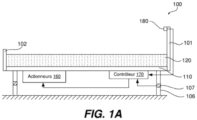
- FIG. 1A is a schematic side view of the smart bed 100, in accordance with some examples.
- the smart bed 100 is also called a multi-function smart bed, due to various new functions described below.
- the smart bed 100 includes the frame 110 and the mattress 120, supported by the frame 110.
- the smart bed 100 also includes a plurality of legs 106, such that each plurality of legs 106 includes or is coupled to a force sensor 107.
- the plurality of legs 106 maintains the frame 110 and the mattress 120 above ground level.
- the force sensors 107 are configured to measure the weight applied to each of the legs of the bed 106.
- the output of the force sensors 107 can be used to determine various weight changes associated with the use of the smart bed 100 (e.g., a user entering or exiting the smart bed 100), weight distribution of the smart bed 100. In some examples, these weight measurements and analyzes are performed continuously, which makes it possible to determine dynamic changes in users' weight, movements in bed (e.g. measuring changes in weight distribution).
- the force sensors 107 can determine when a person lies down in the bed, leaves the bed, moves while in the bed, etc.
- the output of force sensors 107 is provided to and used by controller 170.
- the smart bed 100 also includes a controller 170, which is configured to receive input from various sensors (e.g., environmental sensors 180, force sensors 107) and to provide instructions to the actuators 160.
- the controller 170 is communicatively coupled to force sensors 107. in each of a plurality of legs 106 and to each environmental sensor 180.
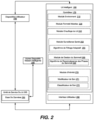
- Actuators 160 are also communicatively coupled to controller 170 and configured to change one or more characteristics of the multifunctional smart bed 100, based on input from controller 170. Additional features of controller 170 are described below with reference to the Fig. 2 and the fig. 7 .
- Fig. 1B is a schematic top view of the smart bed 100, in accordance with some examples.
- the smart bed 100 comprises two frames 110, for example the first frame 111 and the second frame 112.
- the smart bed 100 comprises a single frame 110 or comprises one or more additional frames 110 (for example example a third frame).
- the plurality of legs 106 provide support to both the first frame 111 and the second frame 112.
- the smart bed 100 further includes one or more bases 105, providing support to each of the first frame 111 and the second frame 112 and acting as an intermediate structure between each of the first frame 111 and second frame 112 and plurality of legs 106.
- each of the first frame 111 and the second frame 112 has a dedicated base 105 and is adjustably coupled to this base 105.
- each frame is adjustably coupled to the base 105.
- each of the first frame 111 and the second frame 112 includes multiple sections, which are independently movable, for example relative to the base 105 and/or the plurality of feet 106.
- each of the first frame 111 and the second frame 112 includes a head section 130, a torso section 140 and a leg section 150.
- the head section 130, torso section 140 and leg section 150 in each frame are adjustable independently of each other (within the same frame and from corresponding sections in another frame).
- the head section 130 of the first frame 111 is adjustable independently of the head section 130 of the second frame 112. These adjustments may involve an angle of the corresponding section relative to the base 105 and/or relative to one or several other sections, which can be called inclination angles. The different adjustments of each section and the reasons for these adjustments are described below.
- the smart bed 100 includes a plurality of actuators 160.
- actuators are motors used, for example, to change the orientation of at least one of the following parts: the head section 130, the torso section 140 and/or the leg section 150 relative to the base 105.
- Fig. 1 C illustrates an example of a smart bed 100 comprising a first drive 161 for changing the orientation of the head section 130, a second drive 162 for changing the orientation of the torso section 140 and a third drive 163 for changing the orientation of the leg section 150.
- Each drive is independently controlled by the controller 170.
- the actuators 160 may include other types such as actuators for adjusting the environment, which may be referred to as adjusters of environment 190, which are described below.
- the smart bed 100 also includes a plurality of environmental sensors 180.
- Various components of the smart bed 100 can be used to support environmental sensors 180, such as the frame 110, the headboard 101, the foot of bed 102, and the like.
- at least one or more environmental sensors 180 are positioned on the headboard 101, for example, at the highest possible position of the headboard 101.
- the position of the environmental sensors 180 depends on the type of detection.
- microphones may be placed on opposite sides of the headboard 101 (e.g., one on the right and one on the left) to provide sound differentiation of different people in the smart bed 100.
- even the same sensor can be placed in several different locations, for example a microphone in the headboard 101, while the sound processing circuitry is in another location.
- the environmental sensors 180 are configured to measure temperature, humidity, air quality, air pressure, light level, noise level and/or other characteristics in the environment surrounding the smart bed 100.
- Environmental sensors 180 may be positioned at various relative locations. to the frame 110 and/or the mattress 120.
- the environmental sensors 180 include one or more thermometers, for example positioned at various height levels or parts of the bed to determine the distribution of temperature in the bed environment.
- the smart bed 100 may include various other sensors, focusing on user parameters, which are described in more detail below.
- Another example of environmental sensors 180 is a light sensor, configured to detect the intensity of light in the bed environment. The output of environmental sensors 180 is provided to controller 170.
- the environmental sensors 180 are positioned near or attached to the head section 130, for example positioned in the headboard 101.
- the environmental sensors 180 include a microphone to measure both ambient noise and noise produced by a person in smart bed 100 (for example, snoring).
- the environmental sensors 180 include two microphones, each positioned in the headboard 101. As such, one microphone is used by a person (e.g., positioned on the first frame 111), while that the other microphone is used to capture sounds from another person. (for example, positioned on the second frame 112). This type of arrangement is used, for example, to detect which of two people is actually snoring.
- the smart bed 100 includes one or more environment adjusters 190, which are specific examples of actuators 160.
- the environment adjusters 190 may be configured to adjust temperature, humidity, light level , noise level and/or other characteristics in the environment surrounding the smart bed 100.
- Some examples of environment adjusters 190 include, but are not limited to, heaters, fans, humidifiers , lights, speakers, and the like.
- the environment adjusters 190 are controlled based on input from the controller 170.
- the controller 170 may instruct the environment adjusters 190 to change one or more environmental parameters based on the input from the environmental sensors. 180 and/or determinations made by one or more modules of controller 170, which are described below.
- the smart bed 100 is communicatively coupled to one or more user devices 290 and/or the smart bed service unit 295.
- user devices 290 include, but are not limited to, a smartphone, smart watch, tablet, laptop, desktop, smart home centers/hubs, etc.
- the user devices 290 can be communicatively coupled to the smart bed 100 either directly, for example via the Bluetooth protocol, or indirectly, for example via local and/or remote networks (Wi-Fi, Internet).
- Controller 170 is configured to provide user devices 290 with various sensors and other similar data obtained by controller 170. In some examples, controller 170 is configured to generate reports based on this data, and the reports are provided to the user devices 290. Additionally, the controller 170 is configured to receive various inputs from the user devices 290, for example, to modify various parameters of the smart bed 100.
- the smart bed service unit 295 is a remote background server, communicatively coupled to the smart bed 100 via at least remote networks (e.g., the Internet).
- the smart bed service unit 295 is a server hosted by a smart bed manufacturer 100 to obtain data on various operating conditions of the smart bed 100, e.g. to initiate a service/repair request, update update functionality (e.g. live updates), etc.
- database 296 stores various parameters for smart bed 100, which are automatically downloaded and used by the smart bed 100 and, in some examples, by other devices around the smart bed 100, e.g. smart home devices 299.
- the bed service unit smart 295 creates parameters for the smart bed 100, based on input from several other smart beds, thereby performing data mining and analysis.
- the smart bed service unit 295 can download settings for a specific user when that user travels and sleeps in other smart beds, for example, a hotel, hospital, second home, etc.
- the controller 170 of the smart bed 100 includes various modules, configured to provide various functions of the smart bed 100. Some examples of these modules are the environment module 210, the mattress firmness module 220, the bed heating module 240 , the health monitoring module 250, the sleep management module 260 and the privacy module 270.
- the controller 170 may have fewer modules and/or additional modules, enabling various functions described in this disclosure. These modules can be enabled in hardware and/or software as described in more detail below with reference to the Fig. 7 .
- the controller 170 also includes a user interface 280, which may be used by a user (e.g., while the user is in the smart bed 100) to control various functions of the smart bed 100 and/or display various data, collected by the controller 170.
- a user e.g., while the user is in the smart bed 100
- Certain functions of the user interface 280 are the same as those of the user devices 290, described above. In other words, a person can use the user device 290 or the user interface 280 to control the smart bed 100 and review various data.
- the user interface 280 includes a dedicated set of input devices (e.g., switches, dials) to control specific functions of the smart bed 100.
- the The user interface 280 includes a reconfigurable touch screen.
- a user can manually adjust various features of the smart bed 100 via user interface 280.
- These manually set features can be combined with features determined automatically (by various modules of controller 170, described above).
- manually tuned characteristics can be used to override automatically determined characteristics or to further adjust automatically determined characteristics.
- manually adjusted features include, but are not limited to, the color of the lights, its intensity, the sound level of the music, the speed of the position adjustment motors, and others.
- the controller 170 includes the environment module 210.
- the environment module 210 is configured to receive data relating to the environment surrounding the smart bed 100, for example from the environmental sensors 180. This type of data may be called bed environment data and may include temperature, humidity, noise, etc.
- the environment module 210 is configured to selectively share this bed environment data with other modules, such as with the sleep management module 260.
- the sleep management module 260 is configured to correlate the data bed environment with the user's sleep quality, which can be presented as a sleep score. The functionality of the Sleep Management Module 260 is described below.
- the environment module 210 controls the environment adjusters 190 and/or other smart home devices 299 to achieve desired environment characteristics, e.g., determined by the environment module 210 or d other modules.
- desired environment characteristics e.g., determined by the environment module 210 or d other modules.
- the environment module 210 may determine desired environment characteristics based on the current setting (provided by the user), historical trends (e.g., learned parameters), identity of the user (e.g., determined from weight, sound profile), and/or other similar factors.
- the environment module 210 is configured to control the noise level around the smart bed 100 or, more specifically, around the head portion of each user.
- the environment adjusters 190 may include one or more speakers or headphones controlled by the environment module 210 to generate specific sound (e.g. mood setting sounds, relaxation, meditation), white noise, noise cancellation, etc.
- the sound data received by the environment module 210 represents a modified/distorted version of the actual sound in the environment, to ensure confidentiality of sounds emitted by the user. Distortion may be performed by analog hardware, e.g., analog circuitry in environment module 210. Processing of altered/distorted sound (e.g., sound classification) is described below with reference to the Fig. 6 .
- controller 170 uses sound input to control firmness units 400.
- a smart bed 100 with two frames may have two microphones. Both microphones are used to detect the person snoring, by comparing the amplitude of the sound in the two microphones. This comparison helps determine which side the snoring person is on.
- the snoring sound is detected by a supervised learning convolutional neural network (CNN) artificial intelligence (AI) model, trained to differentiate snoring from non-snoring sounds.
- the sound signal is modified at the receiving hardware, for example a microphone, to protect the privacy of the user.
- the environment module 210 is configured to control the light level around the smart bed 100 or, more specifically, around each user.
- the environment module 210 may receive a signal from the force sensors 107 indicating that a user is getting out of bed. In this case, the environment module 210 commands a light to turn on to help the user navigate the environment around the smart bed 100.
- the environment module 210 provides a report (to the user), recommending various adjustments to the environment, for example, installing sound insulation solutions in the bedroom, moving the smart bed 100 to a new location, closing the shutters.
- the smart bed 100 is communicatively coupled to other smart home devices 299, such as smart thermostats, smart lights, smart shutters, and the like.
- the The output of the environmental adjusters 190 is used to control one or more of these devices, without direct user intervention.
- the environment module 210 is configured to receive and process various types of environmental data (temperature, humidity, noise, etc.) and, in some examples, to correlate this data with other types of data (e.g. example, sleep quality, health conditions, activities, etc.).
- the environment module 210 is configured to determine the target environment parameters and to control the environment adjusters 190 and/or external components responsible for maintaining the environment around the smart bed 100.
- the module environment 210 is configured to generate a report, related to the environmental conditions and recommendations for modifying these environmental conditions and to send this report to the user device 290.
- controller 170 includes bed heating module 240.
- Bed heating module 240 is used to control the power applied to each of one or more heated blankets, heated pillows, heated sheets, and/or heated mattress pads. of the smart bed 100, for example, based on various inputs received by the controller 170 and/or based on various determinations by the controller 170. Heating the mattress should be distinguished from adjusting the firmness of the mattress, using a heating element built into the mattress, as described in more detail below.
- the operations of the bed heating module 240 are synchronized with the operations of the environment module 210, which can control the temperature of the environments.
- the bed heating module 240 may activate the electric blanket when the environment module 210 allows the room temperature to drop.
- the controller 170 includes a mattress firmness module 220.
- the mattress firmness module 220 is used to control and adjust the hardness of the mattress 120, for example based on input from sensors or sensors.
- other modules for example, sleep management module 260, environment module 210 and analogues.
- the sleep management module 260 may be configured to automatically adjust the hardness of the mattress 120 to improve overall sleep quality, for example, as represented by the sleep score as described in more detail below.
- the firmness module of the mattress 220 is used to control the hardness of different parts of the mattress 120, as will now be described with reference to the Fig. 4 .
- Fig. 4A is a schematic sectional view of the smart bed 100, showing several firmness units 400, integrated into the mattress 120.
- Each firmness unit 400 includes a viscoelastic foam base 410 and a heating unit 420.
- the heating unit 420 is configured as a jacket/shell surrounding the viscoelastic foam base 410.
- the heating unit 420 may be an electrical resistance heating element, with a temperature level controlled by the mattress hardness module 220 or, more generally, by the controller 170.
- the 410 viscoelastic foam base is formed from a viscoelastic polyurethane foam with a suitable formulation. Below a certain foam setpoint temperature (related to the glass transition temperature of the viscoelastic polyurethane foam), the 410 viscoelastic foam base has a defined level of hardness. When the temperature of the memory foam base 410 increases due to heating by the heating unit 420 and exceeds the foam set temperature, the hardness of the memory foam base 410 decreases.
- the glass transition is defined as a temperature range, during which the polymer changes from a hard, glassy state to a soft, rubbery material.
- the glass transition temperature is a dynamic property of amorphous polymers and is related to the relaxation behavior of local polymer chain segments. Accordingly, the glass transition temperature depends on the following factors affecting the mobility of polymer chain segments: (1) cross-linking density in the network structure, (2) aromaticity (e.g., defined as a weight fraction of aromatic structures in the polymer matrix), (3) plasticizer concentration and other similar factors.
- the glass transition temperature of the viscoelastic polyurethane foam forming the viscoelastic foam base 410 is between + 25 ° C and + 40 ° C. This temperature is much higher than that used conventionally.
- Such a high glass transition temperature is achieved by (1) increasing the cross-linking density by increasing the isocyanates to polyol ratio (called “index”), (2) varying the chemical composition of the network segments by varying the lengths of chain polyols and monomers, and (3) increasing the urea and polyurea content of the foam by increasing the water content of the formulation.
- the viscoelastic polyurethane foam is formed using a tightly closed container in which the foam is reacted.
- the resulting carbon dioxide (CO2) gas generated by the reaction is prevented from escaping from the closed container, but in a controlled manner. More precisely, the gas generated inside the closed container exerts a homogeneously distributed mechanical force which acts against the expansion of the foam and therefore prevents the decrease in density. The less gas escaping from the foaming chamber, the higher the density. The more gas allowed to escape through a control valve, the lower the density.
- This new foaming process allows the production of a high density viscoelastic polyurethane foam, with a high polyurea content while maintaining a high density which in some examples varies between 35 kg/m3 and 75 kg/m3 or more.
- the density is between 55 kg/m3 and 65 kg/m3 to support high loads and significant deformations particularly during the heated mode during which the foam exhibits its soft properties and is therefore more subject to deformation. Additionally, the foam has a high polyurea content due to the high level of water content in the formulation.
- the foam is expanded into a multitude of mold shapes to give the desired shape. Additionally, in some examples, the foam is machined (e.g., using a computer numerically controlled (CNC) machining tool) to the desired shape from a starting block.
- CNC computer numerically controlled
- the cut foam bun is then inserted into an electrically heated jacket having several heating elements in the inner side of the jacket adjacent to the foam bun and a thermally insulating material (e.g., aluminum foil) on the outer side in order to to avoid loss of thermal energy and also to prevent components that come into contact with the device from being heated.
- a thermally insulating material e.g., aluminum foil
- multiple firmness units 400 are positioned within the same mattress 120 and, more specifically, distributed along the length of the mattress 120.
- a pair of adjacent firmness units 400 may be spaced between 200 millimeters and 500. millimeters.
- the cross-sectional size (for example, the diameter of each firmness unit 400) can be between 50 millimeters and 300 millimeters.
- Each of these multiple firmness units 400 is independently controlled by the controller 170. More specifically, the controller 170 may provide input to the power supply 430, individually coupled to each of the firmness units 400.
- Different forms of firmness unit 400 or, more specifically, viscoelastic foam base 410 are within the scope of the invention, such as cylindrical, rectangular, triangular, etc.
- the controller 170 uses sound input to control the firmness units 400.
- the smart bed 100 with two frames may have two microphones, one in the head section 130 of each frame. Both microphones are used to detect the person snoring, by comparing the amplitude of the sound in the two microphones. This comparison helps determine which side the snoring person is on.
- the snoring sound is detected by a supervised learning convolutional neural network (CNN) artificial intelligence (AI) model, trained to differentiate between snoring and non-snoring sounds.
- the sound signal is modified at the receiving hardware, for example a microphone, to protect the privacy of the user.
- the controller 170 upon detecting snoring, commands one or more drives to change the position of one or more of the following sections: the head section 130, the torso section 140, and the section of legs 150.
- the controller 170 instructs the first drive 161 to increase the angle of the head section 130, relative to the ground, thereby increasing the position of the sleeper's head.
- Changing head position is known to temporarily stop snoring because airways obstructed by relaxed laryngeal muscles are cleared by changing head position.
- the head position is moved again, at a slow speed (e.g., less than 5° per minute) to avoid waking the sleeping person. For example, Elevating the user's head approximately 20° to 30° from the horizontal plane opens the nasal airway and may prevent snoring. Another cause of snoring can be uneven weight distribution.
- the controller 170 also includes a health monitoring module 250.
- the smart bed 100 includes one or more BCG sensors 310, attached or integrated to the controller mattress 120.
- the controller 170 or, more specifically, the health monitoring module 250 receives input from the BCG sensors 310 and, in some examples, force sensors 107, provided in the legs 106 of the smart bed 100.
- the force sensors 107 provide continuous and non-intrusive monitoring of the person's weight. For example, a person does not need to specifically use a scale, which can often be forgotten to use.
- Such continuous weight monitoring is especially important for people with undiagnosed heart and hypertension problems, as they are often not able to notice weight gain due to body water retention, which is considered as an important signal of cardiovascular dysfunction.
- Continuous weight monitoring can provide various day-to-day comparison trends (e.g., overeating on a given day).
- the Smart Bed 100 is able to perform daily comparisons at the same time of day, which is one of the main recommendations for keeping a good weight record.
- the smart bed 100 is capable of detecting early stages of obesity, during which weight control is relatively easy, compared to later stages. At the same time, detection of weight gain is more difficult at this early stage due to the imperceptible small and gradual weight increase.
- the Smart Bed 100 overcomes this challenge with continuous and consistent monitoring.
- This weight measurement feature of the Smart Bed 100 is self-calibrated. More specifically, the controller 170 of the smart bed 100 or, more specifically, the health monitoring module 250 includes an algorithm that allows precise weight measurements without being impacted by different configurations of the smart bed 100, for example, such as adding/removing various objects from the smart bed 100, e.g. , pillows or blankets. More specifically, the force sensors 107 continuously monitor the weight in conjunction with continuous monitoring of the user's presence in the smart bed 100, for example using the BCG signal, noise detection, motion sensor, etc. In other words, the controller 170 is not misled by non-living objects added/removed from the smart bed 100. Furthermore, the controller 170 is configured to recognize different users using the same smart bed 100 (e.g. example, family members). For example, controller 170 uses sound input (e.g., from a microphone in environmental sensors 180), along with previous weight data and the like to differentiate between users.
- sound input e.g., from a microphone in environmental sensors 180
- the BCG sensors 310 are used to monitor the user's heart rate (HR), monitor the user's respiratory rate (RR), and/or monitor the user's turning rate (RT).
- BCG 310 sensors include polyvinylidenefluoride (PVDF) transducers.
- FC and/or FR information from the BCG signal is mainly due to various interferences from other motion signals and noise with the FC and FR signals.
- conventional systems that are limited to one type of BCG sensors, such as PVDF transducers, electromechanical films (EMFi), or force sensors are limited in their accuracy.
- the smart bed 100 allows combining input from BCG sensors 310 and force sensors 107.
- the health monitoring module 250 includes an adaptive filtering algorithm 255, various functions of which will now be described in more detail.
- the BCG sensors 310 are used to detect the raw BCG signals, while the force sensors 107 are used to detect the movements of the user, during his presence on the smart bed 100. For example, the sensitivity of the force sensors 107 is lowered.
- the adaptive filtering algorithm 255 subtracts various noises, for example, associated with user movements in the smart bed 100, potential movements of the smart bed 100, etc. (detected by the force sensors 107) of the raw BCG signal (obtained using the BCG sensors 310).
- the processed BCG signal produced by the adaptive filtering algorithm 255 is more precise than the raw BCG signal from the BCG sensors 310.
- continuous and prolonged monitoring of various BCG signals is very advantageous in comparison to infrequent measurements classically associated with these types of signals.
- this continuous monitoring allows for improved diagnosis and monitoring of various cardiac and respiratory dysfunctions, such as tachycardia, bradycardia, apnea, tachypnea and bradypnea.
- the recording of body movements by force sensors 107 also aids in the diagnosis and monitoring of restless legs syndrome (RLS) since the health monitoring module 250 is configured to differentiate between various origins of body movements, for example force sensors 107 positioned closer to the leg section 150 compared to force sensors 107 positioned closer to the torso section 140.
- RLS restless legs syndrome
- the controller 170 also includes the sleep management module 260.
- the sleep management module 260 is configured to interact and share data with one or more other modules of the controller 170.
- the management module sleep management module 260 is configured to receive HR, FR and RT data from health monitoring module 250.
- sleep management module 260 is configured to receive sound, temperature , humidity and other similar data from the environment module 210. More specifically, the sleep management module 260 is configured to identify snoring from sound data, for example, obtained by microphones positioned around the head section 130.
- the snoring detection algorithm determines whether the snoring sound coincides with inspiration (inhalation, during which snoring occurs) based on the breathing signal, extracted of the BCG signal. As such, the accuracy of snoring classification is significantly increased compared to conventional sound classifiers. Detecting snoring may be important in diagnosing obstructive sleep apnea, which causes a person to temporarily stop breathing during sleep and increases the risk of diabetes, obesity, hypertension, heart attack and d other cardiovascular problems.
- the sleep management module 260 controls the operation of one or more drives, to adjust the orientation of one or more of the following sections: the head section 130, the torso section 140 and/or the section of legs 150 relative to the respective frame. Additionally, in some examples, the sleep management module 260 is configured to send instructions to the bed heating module 240, for example, to adjust the temperature of one or more electric blankets.
- the sleep management module 260 includes and uses a sleep stage recognition algorithm 265, which identifies particular sleep stages (e.g., an awake stage, a light sleep stage, a sleep stage). intermediate sleep and a deep sleep stage) and other associated parameters (e.g., sleep duration, sequence, turning rate, bed leaving, and sleep start and end times).
- the sleep management module 260 uses these parameters to establish a sleep score. For example, perfect sleep is given a maximum score of 100%. Points are subtracted for each event that negatively affects sleep quality, such as tossing and turning, tachypnea, taking too long to fall asleep, going to bed later than the recommended time.
- each event is associated with an “importance coefficient,” which determines the number of points subtracted for that event.
- the sleep management module 260 generates a “Hypnogram,” which is a time profile identifying different sleep states (e.g., awake, light sleep, medium sleep, and deep sleep). Similarly, in some examples, the sleep management module 260 generates a sleep score curve, which combines sleep scores for a defined period of time (e.g., a week, a month, etc.) . The hypnogram can be presented in a report provided to the user. In some examples, the report also shows the percentage of time in each sleep state.
- a “Hypnogram” is a time profile identifying different sleep states (e.g., awake, light sleep, medium sleep, and deep sleep).
- the sleep management module 260 generates a sleep score curve, which combines sleep scores for a defined period of time (e.g., a week, a month, etc.) .
- the hypnogram can be presented in a report provided to the user. In some examples, the report also shows the percentage of time in each sleep state.
- the sleep score is correlated with environmental parameters, recorded during the same period. As noted above, some examples of these parameters include temperature, humidity, noise level, and light level.
- the sleep management module 260 is configured to provide reports and make recommendations for adjustment of one or more environmental parameters, for example, to improve sleep score/sleep quality. Furthermore, in some examples, the sleep management module 260 collects data containing sleep scores under different environmental conditions, compares the sleep scores to different environmental parameters, establishes a correlation between sleep quality and environmental parameters, and recommends various environmental parameters to improve sleep score.
- the sleep score is also used as feedback data to adjust various parameters of the smart bed 100, such as the orientation of one or more head sections 130, torso sections 140, and leg sections 150 relative to each other. to the corresponding support frame and/or firmness of the mattress 120.
- various parameters of the smart bed 100 such as the orientation of one or more head sections 130, torso sections 140, and leg sections 150 relative to each other. to the corresponding support frame and/or firmness of the mattress 120.
- Various characteristics for hardness settings are described below.
- Other examples of parameters that can be adjusted include, but are not limited to, light, sound, ambient temperature and humidity, produced by the environment adjusters 190.
- Obtaining information using various environmental sensors 180 raises certain privacy concerns. For example, beds are used for intimate moments, and people may not want various data (audio, weight changes, etc.) to be recorded and shared externally, for example to the ward unit. smart bed 295.
- the smart bed 110 includes various features at both the hardware level and the software level.
- a microphone at the environmental sensors 180 is equipped with a special information loss filter, limiting the types of sounds captured by the microphone and transmitted to the controller 170. It should be noted that the information loss function information is implemented in the electronic circuits of the microphones.
- the signals from two microphones are supplied to an analog circuit which performs mathematical operations on the signals, before this analog signal is converted into a digital signal (for example, by an analog-to-digital converter) and transmitted to the controller 170.
- the purpose of the mathematical operations performed consist of "losing information" from the signal which is important for the human ear's recognition of the sound content but which is not important for the sound classification task by the AI model which can be carried out later, e.g. , by the sound classifier 272 of the controller 170.
- the audio signal is modified even before the signal is converted to a digital signal, which improves privacy and prevents loss of information in the event of a violation of system security.
- the controller 170 includes the privacy module 270.
- the privacy module 270 includes a sound modifier 271, which eliminates all privacy classified sounds from the recorded audio stream.
- sound modifier 271 is configured to identify or at least differentiate between the following categories: (1) normal conversation, (2) laughing and happy conversation, (3) arguing and shouting, and (4) sounds related to sexual activity.
- the same mathematical operations, described above in the context of analog circuits, are used to modify sound files in training the AI model. As such, the AI model is able to differentiate and classify the desired categories of sounds.
- Controller 170 stores and processes only the classification categories listed above. All other events that are of no interest to our system are neither captured nor understood.
- the output of force sensors 107 is also used as a source of information about potential intimate acts.
- the force profile (over time) recorded by the force sensors 107 corresponding to intimate acts is distinct from other activities of the smart bed 100.
- This output can be used to complete the determination of one of the four categories listed above by sound modifier 271.
- sound modifier 271 uses a combination of sounds and force signals to determine the correct classification.
- the output received from force sensors 107 can be used to determine the intensity, duration, and time of various activities.
- the information from the force sensors 107 provides information that the couple has started to separate their sleeping arrangements, which can be used as an indicator of a negative development in the marital relationship.
- the privacy module 270 is used as a means of communication between partners by setting the aroma diffuser, music, and room lighting to a particular configuration that can signal a given message to the other partner. This can even be set automatically if the couple chooses to let the system surprise them with their own actions when they notice that the relationship score needs improvement or if they notice - via the PA system - that the The atmosphere is suitable for having fun.
- the privacy module 270 is configured to control an aroma diffuser, provided in the environment adjusters 190. For example, the privacy module 270 may instruct the aroma diffuser to infuse a fragrance around the smart bed 100, upon detecting intimate activities in the smart bed 100.
- the privacy module 270 is configured to control a speaker, provided in the environment adjusters 190.
- the privacy module 270 may command the speaker to play selected sounds (e.g., melody, song, etc.), upon detecting activities in the smart bed 100.
- the privacy module Privacy module 270 is configured to control a light, provided in the environment adjusters 190.
- the privacy module 270 may instruct the light (e.g., LED strip) to change intensity (e.g., dimmed). ), color, etc. when detecting intimate activities in the smart bed 100.
- the intimacy module 270 is configured to rate an intimate relationship based on at least the distorted audio. More specifically, another sensor input (e.g. force sensors) is used. For example, the score can be established over time based on frequency of sex, frequency of sleeping apart, percentage of time spent having fun in bed versus time spent arguing and yelling , the percentage of time spent sleeping in an embrace or very close position compared to sleeping in the same bed but at a distance (for example, using the force sensors) and information on the position of each person in the bed. In in some examples, the score and trend are shared with users of the smart bed 100 or even shared with the couple's therapist (e.g., based on specific permission from users). Overall, the intimacy module 270 is configured to provide objective evidence of relationship development, in comparison to the subjective accounts conventionally provided by each party during a therapy session.
- another sensor input e.g. force sensors
- the score can be established over time based on frequency of sex, frequency of sleeping apart, percentage of time spent having fun in bed versus time
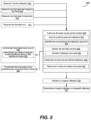
- FIG. 5 is a process flowchart corresponding to the method 500 of operating the smart bed 100, in accordance with some examples.
- the method 500 may involve receiving user input (block 502).
- the user may provide input via user interface 280 of controller 170 and/or user device 290, which is communicatively coupled to smart bed 100.
- Some examples of user input include, for example, mattress hardness , sound selection, light selection, electric blanket temperature, etc.
- the method 500 may involve receiving data from the force sensors (block 510).
- the data from the force sensors represents the weight at each leg of the smart bed 100. This data can be collected continuously and is used, for example, to determine when the user entered the bed, left the bed, turned around in bed, to monitor the user's weight, etc.
- the method 500 may involve receiving environmental data (block 512).
- environmental data e.g. ambient temperature, light, noise, humidity, air quality. This data is used by controller 170, for example, to determine the effect of the environment on sleep quality.
- the method 500 may involve receiving BCG data (block 514).
- BCG data may be received from the BCG sensor 310, installed in the mattress 120 as, for example, described above with reference to the Fig. 3 .
- the method 500 may involve receiving and processing inputs and received data (block 520).
- Different types of data processing fall within the scope, such as tracking the user's weight profile (block 522), identifying movements of the user in bed (block 524), classifying the sound data (block 526) so as to identify snoring (block 528), and determining the user's sleep score (block 530) and the sleep score (block 530). the couple relationship (block 540).
- the method 500 may involve instructing one or more bed actuators (block 550) to perform various functions, such as adjusting the positions of one or more sections of the frame (block 552).
- the method 500 may involve transmitting instructions to external smart home devices (block 560).
- controller 170 may send instructions to a smart thermostat to adjust the temperature of the environment around the bed.
- the method 500 may involve generating a user report (block 570) and transmitting that report to user devices (block 572).
- Method 600 uses modified/distorted sound as input, to ensure confidentiality, and is received (block 610) from smart bed 100.
- method 600 may be executed by a system, which is remote but connected to the smart bed 100.
- the method 600 includes determining (decision block 620) whether the modified sound is a human-related sound, for example to differentiate the modified sound from silence or other non-human sounds (for example, street sounds, ventilation system sounds, etc.). Once the modified sound is identified as human, method 600 proceeds to determine (block 630) whether the modified sound corresponds to one or more speakers.
- the method 600 proceeds to carry out (block 650) the separation of the voices of the different individual speakers.
- the method 600 then carries out voice recognition (block 660) to assign different audio parts to each speaker.
- Method 600 then conducts a sentiment analysis (block 670) where the altered sound (separated for each individual speaker) is classified into one or more of the following categories: snoring, normal conversation, happy conversation, shouting, tense conversation, and intimate sounds .
- speaker recognition is implemented by asking a user to speak a given phrase into their smartphone's microphone or by using microphones in the smart bed 110.
- a trained AI model extracts a fingerprint voice recognition of this audio and uses it to recognize the user's voice. In the case of a double bed, two audios are collected.
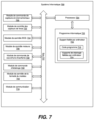
- FIG. 7 is a block diagram corresponding to the computer system 700 and computer program 722, which are used to support and implement various functions of the smart bed 100 described above.
- various components of smart bed 100 e.g., controller 170
- computer system 700 includes bus 702, which provides communications between processor 704 and various modules.
- Processor 704 is configured to execute instructions for software (e.g., computer program 722).
- Various processes of the smart bed 100 are executed by the processor 704 using computer implemented instructions. These instructions are called program code 718, computer usable program code or computer readable program code which is read and executed by a processor in processor 704.
- the program code in different examples is embodied on different physical or computer readable storage media .
- Program code 718 is stored in functional form on computer readable media 720 which is selectively removable and is loaded onto or transferred to computer system 700 for execution by processor 704.
- program code 718 and the computer readable medium 720 form computer program 722.
- computer readable medium 720 is or includes computer readable storage medium 724.
- computer readable storage medium 724 is a computer readable storage medium 724. physical or tangible storage used to store program code 718 rather than a medium that propagates or transmits program code 718.
- the computing system 700 includes one or more modules, designed to implement various functions of the smart bed 100.
- the computing system 700 includes an environmental sensor control module 730, which receives and processes (e.g., pretreat/process partially) input from environmental sensors 180.
- computer system 700 includes a force sensor control module 732, which receives and processes (e.g., preprocessing/partial processing) input from force sensors 107.
- computer system 700 includes a BCG sensor control module 734, which receives and processes (e.g., preprocessing/partial processing) input from BCG sensor 310.
- the computer system 700 includes the motor control module 736, which provides input to the drive 161, the drive 162 and/or the drive 163.
- the motor control module 736 may receive various inputs , such as the position of each section of the smart bed 100.
- the computer system 700 includes an electric blanket control module 738, which provides input to the electric blanket.
- the heated blanket control module 738 may receive various inputs, such as the temperature of the environment, the temperature of the blanket, the temperature of the memory foam units 410 in the mattress.
- the computer system 700 includes the lighting control module 740, which provides input to the lights or, more generally, the environmental adjusters 190.
- the computer system 700 also includes the control module firmness of the mattress 742, which provides input to the heating units 420 of the mattress 120.
- the computing system 700 also includes the communications unit 710, which provides communications with other computing systems or devices, such as user 290 and/or the smart bed service unit 295.
- the communication unit 710 is a network interface card, Bluetooth module, etc.
Landscapes
- Health & Medical Sciences (AREA)
- Life Sciences & Earth Sciences (AREA)
- General Health & Medical Sciences (AREA)
- Surgery (AREA)
- Biophysics (AREA)
- Engineering & Computer Science (AREA)
- Biomedical Technology (AREA)
- Heart & Thoracic Surgery (AREA)
- Medical Informatics (AREA)
- Molecular Biology (AREA)
- Physics & Mathematics (AREA)
- Animal Behavior & Ethology (AREA)
- Pathology (AREA)
- Public Health (AREA)
- Veterinary Medicine (AREA)
- Nursing (AREA)
- Cardiology (AREA)
- Physiology (AREA)
- Dentistry (AREA)
- Oral & Maxillofacial Surgery (AREA)
- Measuring And Recording Apparatus For Diagnosis (AREA)
- Invalid Beds And Related Equipment (AREA)
Claims (14)
- Multifunktionales intelligentes Bett (100), welches umfasst:- einen Rahmen (110), der mehrere Abschnitte umfasst, die unabhängig voneinander beweglich sind;- mehrere Füße (106), die jeweils einen Kraftsensor umfassen, der mit dem Rahmen gekoppelt ist;- eine Matratze (120), die auf dem Rahmen angeordnet ist und von diesem getragen wird;- mehrere Umgebungssensoren (180), die ein oder mehrere Mikrofone umfassen,
die ausgestaltet sind, einen realen Ton um das multifunktionale intelligente Bett herum zu erhalten und den realen Ton zu verzerren, wodurch irreversibel ein verzerrter Ton erzeugt wird, der für einen Menschen nicht erkennbar ist, mit Hilfe einer irreversiblen mathematischen Funktion, die in den elektronischen Schaltungen der Mikrofone durch Software oder Hardware implementiert ist, worin der verzerrte Ton Unterscheidungsmerkmale umfasst, die es dem Klassifikator für künstliche Intelligenz (IA) ermöglichen, zwischen verschiedenen Tonkategorien zu unterscheiden;- eine Steuerung (170), die kommunikativ gekoppelt und ausgestaltet ist, die Eingabe der Kraftsensoren in jedem der mehreren Füße und von jedem der mehreren Umgebungssensoren zu empfangen und zu verarbeiten; und- mehrere Aktuatoren (160), die kommunikativ mit der Steuerung gekoppelt sind, mechanisch mit dem Rahmen gekoppelt und ausgestaltet sind, mindestens eine oder mehrere Merkmale des multifunktionalen intelligenten Bettes auf der Grundlage von Eingaben von der Steuerung zu ändern. - Multifunktionales intelligentes Bett nach Anspruch 1, worin das oder die Merkmale des Bettes mindestens eines umfasst von: die Steuerung der Festigkeit der Matratze oder die Positionen der mehreren Abschnitte des Rahmens in Bezug zueinander.
- Multifunktionales intelligentes Bett nach Anspruch 1, worin die Steuerung ausgestaltet ist, dass sie die Anwesenheit eines oder mehrerer Benutzer in dem multifunktionalen intelligenten Bett auf der Grundlage der Eingabe der Kraftsensoren in jedes der mehreren Beine des Bettes bestimmt und die Identität eines oder mehrerer Benutzer in dem multifunktionalen intelligenten Bett bestimmt.
- Multifunktionales intelligentes Bett nach Anspruch 3, worin die Steuerung einen Ton-Klassifikator umfasst, der ausgestaltet ist, die Identität des oder der Benutzer in dem multifunktionalen intelligenten Bett zu bestimmen.
- Multifunktionales intelligentes Bett nach Anspruch 3, welches ferner einen Balistokardiographie-Sensor umfasst, der mit der Steuereinheit kommunikativ gekoppelt und ausgestaltet ist, mindestens eine der folgenden Frequenzen zu bestimmen: eine Herzfrequenz, eine Atemfrequenz oder eine Umdrehungsfrequenz des oder der Benutzer in dem multifunktionalen intelligenten Bett, und worin die Steuereinheit ausgestaltet ist, mindestens eine der Herzfrequenz, der Atemfrequenz oder der Umdrehungsfrequenz mit der Identität eines oder mehrerer Benutzer in dem multifunktionalen intelligenten Bett in Übereinstimmung zu bringen.
- Multifunktionales intelligentes Bett nach Anspruch 1, worin die mehreren Umgebungssensoren mehrere Mikrofone umfassen, die ausgestaltet sind, das Schnarchen mehrerer Benutzer des multifunktionalen intelligenten Bettes zu unterscheiden.
- Multifunktionales intelligentes Bett nach Anspruch 1, worin die Steuerung den verzerrten Ton des Mikrofons oder der Mikrofone empfängt und keinen Zugriff auf den realen Ton hat.
- Multifunktionales intelligentes Bett nach Anspruch 1, worin die Steuerung ausgestaltet ist, eine intime Beziehung auf der Grundlage von mindestens dem verzerrten Ton zu bewerten.
- Multifunktionales intelligentes Bett nach Anspruch 1, worin die Steuerung ausgestaltet ist, eine oder mehrere Tonkategorien in dem verzerrten Ton zu identifizieren, worin die eine oder die mehreren Tonkategorien ausgewählt sind, aus der Gruppe bestehend aus normaler Konversation, lachender und fröhlicher Konversation, Diskussionen und Schreien sowie intimen Handlungen.
- Multifunktionales intelligentes Bett nach Anspruch 9, worin die Steuerung ausgestaltet ist, die eine oder die mehreren identifizierten Tonkategorien zusammen mit den Eingaben von den Kraftsensoren in jedem der mehreren Bettbeine kollektiv zu analysieren.
- Verfahren zum Betreiben eines multifunktionalen intelligenten Bettes nach Anspruch 1,
wobei das Verfahren umfasst:- Empfangen von Daten von den Kraftsensoren in jedem von mehreren Beinen des multifunktionalen intelligenten Bettes, worin die mehreren Beine einen Rahmen des multifunktionalen intelligenten Bettes tragen;- Verarbeiten der von den Kraftsensoren empfangenen Daten unter Verwendung einer Steuerung des multifunktionalen intelligenten Bettes; und- Einstellen von mindestens einem oder mehreren Merkmalen des multifunktionalen intelligenten Bettes mit Hilfe mehrerer Aktuatoren des multifunktionalen intelligenten Bettes auf der Grundlage einer Eingabe von der Steuerung;- Erzeugung eines realen Tons um das multifunktionale intelligente Bett herum unter Verwendung eines oder mehrerer Mikrofone des multifunktionalen intelligenten Bettes;- Verwenden des Mikrofons oder der Mikrofone, Verzerren des realen Tons, wodurch irreversibel ein verzerrter Ton mit Hilfe einer irreversiblen mathematischen Funktion erzeugt wird, die in einer Software oder Hardware implementiert ist,
worin der verzerrte Ton Unterscheidungsmerkmale zur Unterscheidung verschiedener Tonkategorien enthält,- Bereitstellen des verzerrten Tons an eine multifunktionale intelligente Bettsteuerung. - Verfahren zum Betreiben eines multifunktionalen intelligenten Bettes nach Anspruch 11, worin das Verfahren umfasst:- Erhalten von Ballistokardiogrammdaten von einem Ballistokardiogrammsensor des multifunktionalen intelligenten Bettes, worin die von den Kraftsensoren empfangenen Daten von der Steuereinheit zusammen mit den Ballistokardiogrammdaten verarbeitet werden, um die Eingabe zum Einstellen von mindestens einer oder mehreren Eigenschaften des multifunktionalen intelligenten Bettes zu erzeugen.
- Verfahren zum Betreiben eines multifunktionalen intelligenten Bettes nach Anspruch 11, wobei das Verfahren umfasst:- Identifizieren einer oder mehrerer der Tonkategorien in dem verzerrten Ton in der Steuerung, worin die Tonkategorien ausgewählt sind, aus der Gruppe bestehend aus einem normalen Gespräch, einem lachenden und fröhlichen Gespräch, einem Streit, Schreien und intimen Handlungen.
- Verfahren zum Betreiben eines multifunktionalen intelligenten Bettes nach Anspruch 11, wobei das Verfahren umfasst:- Analyse des verzerrten Tons in der Steuerung, um mindestens eine der folgenden Funktionen zu erreichen: Trennen der Sprachquellen von mehreren Sprechern, Spracherkennung oder Gefühlsanalyse.
Applications Claiming Priority (3)
| Application Number | Priority Date | Filing Date | Title |
|---|---|---|---|
| US16/888,378 US10905249B1 (en) | 2020-05-29 | 2020-05-29 | Multifunctional smart beds and methods of operating thereof |
| MA53066A MA53066B1 (fr) | 2020-05-29 | 2021-04-23 | Lits intelligents multifonctionnels et leurs modes de fonctionnement. |
| PCT/MA2021/000005 WO2021242087A1 (fr) | 2020-05-29 | 2021-04-30 | Lits intelligents multifonctionnels et leurs modes de fonctionnement |
Publications (3)
| Publication Number | Publication Date |
|---|---|
| EP4157041A1 EP4157041A1 (de) | 2023-04-05 |
| EP4157041B1 true EP4157041B1 (de) | 2024-05-08 |
| EP4157041C0 EP4157041C0 (de) | 2024-05-08 |
Family
ID=76444517
Family Applications (1)
| Application Number | Title | Priority Date | Filing Date |
|---|---|---|---|
| EP21732599.2A Active EP4157041B1 (de) | 2020-05-29 | 2021-04-30 | Intelligente multifunktionsbetten und betriebsmodi dafür |
Country Status (2)
| Country | Link |
|---|---|
| EP (1) | EP4157041B1 (de) |
| WO (1) | WO2021242087A1 (de) |
Families Citing this family (3)
| Publication number | Priority date | Publication date | Assignee | Title |
|---|---|---|---|---|
| CN116592943B (zh) * | 2023-05-17 | 2025-09-12 | 珠海格力电器股份有限公司 | 智能床的检测方法、装置、智能床及存储介质 |
| CN118873349B (zh) * | 2024-08-06 | 2025-04-15 | 广东中匠福健康产业股份有限公司 | 基于语音交互的智能电动护理床控制方法及装置 |
| CN119184981A (zh) * | 2024-11-26 | 2024-12-27 | 徐州徐控控制科技有限公司 | 一种用于智能床的多功能调节控制器 |
Family Cites Families (10)
| Publication number | Priority date | Publication date | Assignee | Title |
|---|---|---|---|---|
| WO2009089157A1 (en) * | 2008-01-03 | 2009-07-16 | L & P Property Management Company | Interactive adjustable media bed providing sleep diagnostics |
| PL2543027T3 (pl) * | 2009-12-31 | 2017-02-28 | Nightbalance B.V. | Urządzenie do monitorowania pozycji snu |
| EP2667769B1 (de) * | 2011-01-27 | 2020-07-22 | The Board of Trustees of the Leland Stanford Junior University | Systeme zur überwachung des kreislaufsystems |
| US9788092B2 (en) * | 2014-05-19 | 2017-10-10 | Ascion, Llc | Speaker system |
| US20170135881A1 (en) * | 2015-11-16 | 2017-05-18 | Eight Sleep Inc. | Adjustable bedframe and operating methods |
| WO2017190085A1 (en) * | 2016-04-29 | 2017-11-02 | Fitbit, Inc. | Sleep monitoring system with optional alarm functionality |
| CN105877713B (zh) * | 2016-06-19 | 2019-03-26 | 河北工业大学 | 一种融合多元信息自动调整睡姿的方法 |
| EP3300662B1 (de) * | 2016-09-30 | 2022-08-17 | Nokia Technologies Oy | Bestimmung einer intimen aktivität durch eine detektionsvorrichtung |
| KR102059065B1 (ko) * | 2017-11-30 | 2019-12-24 | 이정기 | 전동침대의 센싱정보를 이용한 숙면 유도 및 관리시스템 |
| US10940065B2 (en) * | 2018-08-24 | 2021-03-09 | Stryker Corporation | Angle calibration using load cells |
-
2021
- 2021-04-30 WO PCT/MA2021/000005 patent/WO2021242087A1/fr not_active Ceased
- 2021-04-30 EP EP21732599.2A patent/EP4157041B1/de active Active
Also Published As
| Publication number | Publication date |
|---|---|
| WO2021242087A1 (fr) | 2021-12-02 |
| EP4157041A1 (de) | 2023-04-05 |
| EP4157041C0 (de) | 2024-05-08 |
Similar Documents
| Publication | Publication Date | Title |
|---|---|---|
| US12303038B2 (en) | Devices and methods for sound distortion | |
| CN112312801B (zh) | 具有改善睡眠的特征的家庭自动化系统 | |
| EP4157041A1 (de) | Intelligente multifunktionsbetten und betriebsmodi dafür | |
| US10779091B2 (en) | Hearing evaluation and configuration of a hearing assistance-device | |
| US20220240842A1 (en) | Utilization of vocal acoustic biomarkers for assistive listening device utilization | |
| CN105592777B (zh) | 用于睡眠管理的方法和系统 | |
| CN101060879B (zh) | 控制音频信号重放的系统和方法 | |
| US20250099028A1 (en) | Ai-based contactless sleep analysis method and real-time sleep environment adjustment method | |
| US20150081299A1 (en) | Method and system for assisting patients | |
| US20220016386A1 (en) | A system and method for delivering an audio output | |
| CN114999472B (zh) | 一种空调控制方法、装置及一种空调 | |
| CN107875496A (zh) | 一种智能睡眠管理眼罩装置及其控制方法 | |
| CN116325020A (zh) | 具有用于跟踪睡眠者心率变异性的控制器的床 | |
| US20230181869A1 (en) | Multi-sensory ear-wearable devices for stress related condition detection and therapy | |
| WO2021064557A1 (en) | Systems and methods for adjusting electronic devices | |
| CN118402011A (zh) | 具有用于个性化日间警觉性量化的功能的睡眠系统 | |
| CN110286600B (zh) | 智能家居操作系统的场景设置方法及装置 | |
| EP4522014A1 (de) | Verfahren zur schlafüberwachung eines benutzers sowie entsprechende überwachungsvorrichtung und computerprogramm | |
| CN111137311A (zh) | 动车组客室环境调节方法及装置 | |
| JP6663198B2 (ja) | 見守り装置及び見守り方法 | |
| EP4156717A1 (de) | Verfahren und computerprogramm zur früherkennung eines gesundheitsproblems, steuerung für ein hörgerät, hörgerät und hörsystem mit einem hörgerät | |
| FR2889071A1 (fr) | Dispositif pour l'amenee d'un gaz de respiration ainsi que procede de controle d'appareil | |
| US20230256192A1 (en) | Systems and methods for inducing sleep of a subject | |
| Lirio | Effects of tailored singing on acoustic and biomechanical voice traits in Parkinson’s disease: A pilot study | |
| JP7819898B2 (ja) | 映像表示システム |
Legal Events
| Date | Code | Title | Description |
|---|---|---|---|
| STAA | Information on the status of an ep patent application or granted ep patent |
Free format text: STATUS: UNKNOWN |
|
| STAA | Information on the status of an ep patent application or granted ep patent |
Free format text: STATUS: THE INTERNATIONAL PUBLICATION HAS BEEN MADE |
|
| PUAI | Public reference made under article 153(3) epc to a published international application that has entered the european phase |
Free format text: ORIGINAL CODE: 0009012 |
|
| STAA | Information on the status of an ep patent application or granted ep patent |
Free format text: STATUS: REQUEST FOR EXAMINATION WAS MADE |
|
| 17P | Request for examination filed |
Effective date: 20221020 |
|
| AK | Designated contracting states |
Kind code of ref document: A1 Designated state(s): AL AT BE BG CH CY CZ DE DK EE ES FI FR GB GR HR HU IE IS IT LI LT LU LV MC MK MT NL NO PL PT RO RS SE SI SK SM TR |
|
| DAV | Request for validation of the european patent (deleted) | ||
| DAX | Request for extension of the european patent (deleted) | ||
| GRAP | Despatch of communication of intention to grant a patent |
Free format text: ORIGINAL CODE: EPIDOSNIGR1 |
|
| STAA | Information on the status of an ep patent application or granted ep patent |
Free format text: STATUS: GRANT OF PATENT IS INTENDED |
|
| INTG | Intention to grant announced |
Effective date: 20231205 |
|
| GRAS | Grant fee paid |
Free format text: ORIGINAL CODE: EPIDOSNIGR3 |
|
| GRAA | (expected) grant |
Free format text: ORIGINAL CODE: 0009210 |
|
| STAA | Information on the status of an ep patent application or granted ep patent |
Free format text: STATUS: THE PATENT HAS BEEN GRANTED |
|
| AK | Designated contracting states |
Kind code of ref document: B1 Designated state(s): AL AT BE BG CH CY CZ DE DK EE ES FI FR GB GR HR HU IE IS IT LI LT LU LV MC MK MT NL NO PL PT RO RS SE SI SK SM TR |
|
| REG | Reference to a national code |
Ref country code: GB Ref legal event code: FG4D Free format text: NOT ENGLISH |
|
| REG | Reference to a national code |
Ref country code: CH Ref legal event code: EP |
|
| REG | Reference to a national code |
Ref country code: DE Ref legal event code: R096 Ref document number: 602021013107 Country of ref document: DE |
|
| REG | Reference to a national code |
Ref country code: IE Ref legal event code: FG4D Free format text: LANGUAGE OF EP DOCUMENT: FRENCH |
|
| U01 | Request for unitary effect filed |
Effective date: 20240607 |
|
| U07 | Unitary effect registered |
Designated state(s): AT BE BG DE DK EE FI FR IT LT LU LV MT NL PT SE SI Effective date: 20240620 |
|
| PG25 | Lapsed in a contracting state [announced via postgrant information from national office to epo] |
Ref country code: IS Free format text: LAPSE BECAUSE OF FAILURE TO SUBMIT A TRANSLATION OF THE DESCRIPTION OR TO PAY THE FEE WITHIN THE PRESCRIBED TIME-LIMIT Effective date: 20240908 |
|
| PG25 | Lapsed in a contracting state [announced via postgrant information from national office to epo] |
Ref country code: HR Free format text: LAPSE BECAUSE OF FAILURE TO SUBMIT A TRANSLATION OF THE DESCRIPTION OR TO PAY THE FEE WITHIN THE PRESCRIBED TIME-LIMIT Effective date: 20240508 |
|
| PG25 | Lapsed in a contracting state [announced via postgrant information from national office to epo] |
Ref country code: ES Free format text: LAPSE BECAUSE OF FAILURE TO SUBMIT A TRANSLATION OF THE DESCRIPTION OR TO PAY THE FEE WITHIN THE PRESCRIBED TIME-LIMIT Effective date: 20240508 |
|
| PG25 | Lapsed in a contracting state [announced via postgrant information from national office to epo] |
Ref country code: PL Free format text: LAPSE BECAUSE OF FAILURE TO SUBMIT A TRANSLATION OF THE DESCRIPTION OR TO PAY THE FEE WITHIN THE PRESCRIBED TIME-LIMIT Effective date: 20240508 |
|
| PG25 | Lapsed in a contracting state [announced via postgrant information from national office to epo] |
Ref country code: PL Free format text: LAPSE BECAUSE OF FAILURE TO SUBMIT A TRANSLATION OF THE DESCRIPTION OR TO PAY THE FEE WITHIN THE PRESCRIBED TIME-LIMIT Effective date: 20240508 Ref country code: NO Free format text: LAPSE BECAUSE OF FAILURE TO SUBMIT A TRANSLATION OF THE DESCRIPTION OR TO PAY THE FEE WITHIN THE PRESCRIBED TIME-LIMIT Effective date: 20240808 Ref country code: IS Free format text: LAPSE BECAUSE OF FAILURE TO SUBMIT A TRANSLATION OF THE DESCRIPTION OR TO PAY THE FEE WITHIN THE PRESCRIBED TIME-LIMIT Effective date: 20240908 Ref country code: HR Free format text: LAPSE BECAUSE OF FAILURE TO SUBMIT A TRANSLATION OF THE DESCRIPTION OR TO PAY THE FEE WITHIN THE PRESCRIBED TIME-LIMIT Effective date: 20240508 Ref country code: ES Free format text: LAPSE BECAUSE OF FAILURE TO SUBMIT A TRANSLATION OF THE DESCRIPTION OR TO PAY THE FEE WITHIN THE PRESCRIBED TIME-LIMIT Effective date: 20240508 Ref country code: RS Free format text: LAPSE BECAUSE OF FAILURE TO SUBMIT A TRANSLATION OF THE DESCRIPTION OR TO PAY THE FEE WITHIN THE PRESCRIBED TIME-LIMIT Effective date: 20240808 |
|
| PG25 | Lapsed in a contracting state [announced via postgrant information from national office to epo] |
Ref country code: CZ Free format text: LAPSE BECAUSE OF FAILURE TO SUBMIT A TRANSLATION OF THE DESCRIPTION OR TO PAY THE FEE WITHIN THE PRESCRIBED TIME-LIMIT Effective date: 20240508 |
|
| PG25 | Lapsed in a contracting state [announced via postgrant information from national office to epo] |
Ref country code: RO Free format text: LAPSE BECAUSE OF FAILURE TO SUBMIT A TRANSLATION OF THE DESCRIPTION OR TO PAY THE FEE WITHIN THE PRESCRIBED TIME-LIMIT Effective date: 20240508 Ref country code: SK Free format text: LAPSE BECAUSE OF FAILURE TO SUBMIT A TRANSLATION OF THE DESCRIPTION OR TO PAY THE FEE WITHIN THE PRESCRIBED TIME-LIMIT Effective date: 20240508 |
|
| PG25 | Lapsed in a contracting state [announced via postgrant information from national office to epo] |
Ref country code: SM Free format text: LAPSE BECAUSE OF FAILURE TO SUBMIT A TRANSLATION OF THE DESCRIPTION OR TO PAY THE FEE WITHIN THE PRESCRIBED TIME-LIMIT Effective date: 20240508 |
|
| PG25 | Lapsed in a contracting state [announced via postgrant information from national office to epo] |
Ref country code: SM Free format text: LAPSE BECAUSE OF FAILURE TO SUBMIT A TRANSLATION OF THE DESCRIPTION OR TO PAY THE FEE WITHIN THE PRESCRIBED TIME-LIMIT Effective date: 20240508 Ref country code: SK Free format text: LAPSE BECAUSE OF FAILURE TO SUBMIT A TRANSLATION OF THE DESCRIPTION OR TO PAY THE FEE WITHIN THE PRESCRIBED TIME-LIMIT Effective date: 20240508 Ref country code: RO Free format text: LAPSE BECAUSE OF FAILURE TO SUBMIT A TRANSLATION OF THE DESCRIPTION OR TO PAY THE FEE WITHIN THE PRESCRIBED TIME-LIMIT Effective date: 20240508 Ref country code: CZ Free format text: LAPSE BECAUSE OF FAILURE TO SUBMIT A TRANSLATION OF THE DESCRIPTION OR TO PAY THE FEE WITHIN THE PRESCRIBED TIME-LIMIT Effective date: 20240508 |
|
| REG | Reference to a national code |
Ref country code: DE Ref legal event code: R097 Ref document number: 602021013107 Country of ref document: DE |
|
| PLBE | No opposition filed within time limit |
Free format text: ORIGINAL CODE: 0009261 |
|
| STAA | Information on the status of an ep patent application or granted ep patent |
Free format text: STATUS: NO OPPOSITION FILED WITHIN TIME LIMIT |
|
| 26N | No opposition filed |
Effective date: 20250211 |
|
| U21 | Renewal fee for the european patent with unitary effect paid with additional fee |
Year of fee payment: 5 Effective date: 20250924 |
|
| REG | Reference to a national code |
Ref country code: CH Ref legal event code: H13 Free format text: ST27 STATUS EVENT CODE: U-0-0-H10-H13 (AS PROVIDED BY THE NATIONAL OFFICE) Effective date: 20251125 |
|
| PG25 | Lapsed in a contracting state [announced via postgrant information from national office to epo] |
Ref country code: MC Free format text: LAPSE BECAUSE OF FAILURE TO SUBMIT A TRANSLATION OF THE DESCRIPTION OR TO PAY THE FEE WITHIN THE PRESCRIBED TIME-LIMIT Effective date: 20240508 |
|
| GBPC | Gb: european patent ceased through non-payment of renewal fee |
Effective date: 20250430 |
|
| PG25 | Lapsed in a contracting state [announced via postgrant information from national office to epo] |
Ref country code: GB Free format text: LAPSE BECAUSE OF NON-PAYMENT OF DUE FEES Effective date: 20250430 |
|
| PG25 | Lapsed in a contracting state [announced via postgrant information from national office to epo] |
Ref country code: CH Free format text: LAPSE BECAUSE OF NON-PAYMENT OF DUE FEES Effective date: 20250430 |
|
| PG25 | Lapsed in a contracting state [announced via postgrant information from national office to epo] |
Ref country code: IE Free format text: LAPSE BECAUSE OF NON-PAYMENT OF DUE FEES Effective date: 20250430 |