EP4156941B1 - Whole cell methanotroph based biostimulant compositions, methods and applications thereof - Google Patents
Whole cell methanotroph based biostimulant compositions, methods and applications thereof Download PDFInfo
- Publication number
- EP4156941B1 EP4156941B1 EP21739779.3A EP21739779A EP4156941B1 EP 4156941 B1 EP4156941 B1 EP 4156941B1 EP 21739779 A EP21739779 A EP 21739779A EP 4156941 B1 EP4156941 B1 EP 4156941B1
- Authority
- EP
- European Patent Office
- Prior art keywords
- plant
- composition
- methanotroph
- biostimulant
- nitrogen
- Prior art date
- Legal status (The legal status is an assumption and is not a legal conclusion. Google has not performed a legal analysis and makes no representation as to the accuracy of the status listed.)
- Active
Links
Images



Classifications
-
- A—HUMAN NECESSITIES
- A01—AGRICULTURE; FORESTRY; ANIMAL HUSBANDRY; HUNTING; TRAPPING; FISHING
- A01N—PRESERVATION OF BODIES OF HUMANS OR ANIMALS OR PLANTS OR PARTS THEREOF; BIOCIDES, e.g. AS DISINFECTANTS, AS PESTICIDES OR AS HERBICIDES; PEST REPELLANTS OR ATTRACTANTS; PLANT GROWTH REGULATORS
- A01N63/00—Biocides, pest repellants or attractants, or plant growth regulators containing microorganisms, viruses, microbial fungi, animals or substances produced by, or obtained from, microorganisms, viruses, microbial fungi or animals, e.g. enzymes or fermentates
- A01N63/20—Bacteria; Substances produced thereby or obtained therefrom
-
- A—HUMAN NECESSITIES
- A01—AGRICULTURE; FORESTRY; ANIMAL HUSBANDRY; HUNTING; TRAPPING; FISHING
- A01P—BIOCIDAL, PEST REPELLANT, PEST ATTRACTANT OR PLANT GROWTH REGULATORY ACTIVITY OF CHEMICAL COMPOUNDS OR PREPARATIONS
- A01P21/00—Plant growth regulators
-
- C—CHEMISTRY; METALLURGY
- C05—FERTILISERS; MANUFACTURE THEREOF
- C05F—ORGANIC FERTILISERS NOT COVERED BY SUBCLASSES C05B, C05C, e.g. FERTILISERS FROM WASTE OR REFUSE
- C05F11/00—Other organic fertilisers
- C05F11/08—Organic fertilisers containing added bacterial cultures, mycelia or the like
-
- C—CHEMISTRY; METALLURGY
- C12—BIOCHEMISTRY; BEER; SPIRITS; WINE; VINEGAR; MICROBIOLOGY; ENZYMOLOGY; MUTATION OR GENETIC ENGINEERING
- C12N—MICROORGANISMS OR ENZYMES; COMPOSITIONS THEREOF; PROPAGATING, PRESERVING, OR MAINTAINING MICROORGANISMS; MUTATION OR GENETIC ENGINEERING; CULTURE MEDIA
- C12N1/00—Microorganisms, e.g. protozoa; Compositions thereof; Processes of propagating, maintaining or preserving microorganisms or compositions thereof; Processes of preparing or isolating a composition containing a microorganism; Culture media therefor
- C12N1/20—Bacteria; Culture media therefor
-
- C—CHEMISTRY; METALLURGY
- C12—BIOCHEMISTRY; BEER; SPIRITS; WINE; VINEGAR; MICROBIOLOGY; ENZYMOLOGY; MUTATION OR GENETIC ENGINEERING
- C12N—MICROORGANISMS OR ENZYMES; COMPOSITIONS THEREOF; PROPAGATING, PRESERVING, OR MAINTAINING MICROORGANISMS; MUTATION OR GENETIC ENGINEERING; CULTURE MEDIA
- C12N1/00—Microorganisms, e.g. protozoa; Compositions thereof; Processes of propagating, maintaining or preserving microorganisms or compositions thereof; Processes of preparing or isolating a composition containing a microorganism; Culture media therefor
- C12N1/20—Bacteria; Culture media therefor
- C12N1/205—Bacterial isolates
-
- C—CHEMISTRY; METALLURGY
- C12—BIOCHEMISTRY; BEER; SPIRITS; WINE; VINEGAR; MICROBIOLOGY; ENZYMOLOGY; MUTATION OR GENETIC ENGINEERING
- C12R—INDEXING SCHEME ASSOCIATED WITH SUBCLASSES C12C - C12Q, RELATING TO MICROORGANISMS
- C12R2001/00—Microorganisms ; Processes using microorganisms
- C12R2001/01—Bacteria or Actinomycetales ; using bacteria or Actinomycetales
-
- Y—GENERAL TAGGING OF NEW TECHNOLOGICAL DEVELOPMENTS; GENERAL TAGGING OF CROSS-SECTIONAL TECHNOLOGIES SPANNING OVER SEVERAL SECTIONS OF THE IPC; TECHNICAL SUBJECTS COVERED BY FORMER USPC CROSS-REFERENCE ART COLLECTIONS [XRACs] AND DIGESTS
- Y02—TECHNOLOGIES OR APPLICATIONS FOR MITIGATION OR ADAPTATION AGAINST CLIMATE CHANGE
- Y02E—REDUCTION OF GREENHOUSE GAS [GHG] EMISSIONS, RELATED TO ENERGY GENERATION, TRANSMISSION OR DISTRIBUTION
- Y02E50/00—Technologies for the production of fuel of non-fossil origin
- Y02E50/30—Fuel from waste, e.g. synthetic alcohol or diesel
-
- Y—GENERAL TAGGING OF NEW TECHNOLOGICAL DEVELOPMENTS; GENERAL TAGGING OF CROSS-SECTIONAL TECHNOLOGIES SPANNING OVER SEVERAL SECTIONS OF THE IPC; TECHNICAL SUBJECTS COVERED BY FORMER USPC CROSS-REFERENCE ART COLLECTIONS [XRACs] AND DIGESTS
- Y02—TECHNOLOGIES OR APPLICATIONS FOR MITIGATION OR ADAPTATION AGAINST CLIMATE CHANGE
- Y02W—CLIMATE CHANGE MITIGATION TECHNOLOGIES RELATED TO WASTEWATER TREATMENT OR WASTE MANAGEMENT
- Y02W30/00—Technologies for solid waste management
- Y02W30/40—Bio-organic fraction processing; Production of fertilisers from the organic fraction of waste or refuse
Definitions
- the instant disclosure is in the field of biosciences, particularly focused towards biotechnology, agricultural science and environmental science.
- the disclosure particularly relates to whole cell based biostimulant compositions and methods for improving agricultural productivity.
- the biostimulant compositions disclosed herein comprise a microbial consortium comprising at least 50% whole cells gammaproteobacterial methanotroph and at least one plant growth-promoting microbe selected from a group comprising nitrogen fixing microorganism, phosphate solubilizing microorganism, mineral solubilizing microorganism, phytohormone secreting microorganism, organic acids secreting bacteria and plant beneficial microbe, or any combination thereof.
- the biostimulant composition enables plant performance improvement, utilization of methane, and facilitates improved nitrogen fixation in plants.
- the composition also helps in reducing the need of external chemical fertilizers for plant growth, development, performance and/or survival.
- NPK- nitrogen (N), phosphorus expressed as phosphate (P 2 O 5 ), and potassium expressed as potash (K 2 O) was 292 million tonnes in 2016 and is expected to increase to 318 million tonnes by 2022.
- the demand for NPK is growing annually on average by 2.2% from 2015 to 2020. (FAO 2019; World fertilizer trends and outlook to 2022; Rome). This continued and increasing use of synthetic fertilizers however poses severe environmental threat.
- Methane is a powerful greenhouse gas with 84 times the global warming potential compared to CO 2 over a 20 year period. While methane is generated in the course of several naturally occurring processes, it is its anthropogenic generation (resulting from human actions) that forms the majority of the methane emissions and is of concern. Agricultural activity is one such area of concern as it is responsible for a large share of anthropogenic methane emissions. Globally, agricultural activities contribute to about 40% of methane emissions ( Agriculture and climate Change, Mckinsey & Company, April 2020 ). While researchers across the globe are intensifying their focus on combating climate change, there is a dire need for reducing methane emitted during agricultural activities. More importantly, there is a greater need to utilize/channelize/recycle these agricultural methane emissions in an efficient, environment friendly and sustainable way.
- biostimulant composition according to claim 1.
- the composition further comprises at least one metabolite, at least one media derived nutrient and optionally at least one agriculturally acceptable excipient.
- the microbial consortium of whole cells comprises about 1 ⁇ 10 3 cells to about 5 ⁇ 10 10 cells per gram or per millilitre of the composition.
- the microbial consortium within the composition utilizes methane, and wherein the composition:
- a method of improving or enhancing plant performance comprising contacting or applying the said biostimulant composition of the invention to a plant.
- the composition improves or enhances plant performance which comprises stimulating or promoting a quantitative or qualitative plant attribute selected from a group comprising biomass production, yield, photosynthetic activity, nutritional value, secondary metabolites and nutrient use efficiency, or any combination thereof.
- a method for facilitating simultaneous utilization of methane and nitrogen fixation in a plant comprising contacting or applying the said biostimulant composition of the invention to the plant.
- the nitrogen fixation is facilitated by increase in expression of genes of nitrogenase cluster selected from a group comprising nifA, nifD, nifH and nifK, or any combination thereof, in the microbial whole cells present in the biostimulant.
- a method of reducing need of external addition of at least one nutrient or nutrient carrying fertilizer for growth, development, performance and/or survival of a plant comprising contacting or applying the said biostimulant composition of the invention, to the plant, wherein the nutrient is selected from a group comprising nitrogen, phosphorus and potassium, or any combination thereof.
- the composition improves or enhances the plant performance by either increasing availability of or efficient utilization of at least one of nitrogen, phosphorus and potassium by the plant, or both.
- the present disclosure provides a biostimulant composition that comprises a microbial consortium of whole cells, that not only improves or enhances performance of a plant but does so while reducing carbon footprint generated by methane.
- the present disclosure aims at addressing the need for improving agricultural productivity in an environment friendly and sustainable approach using a technological solution.
- the present disclosure provides an efficient way to reduce the levels of methane in atmosphere and improve agricultural productivity in an environment friendly and sustainable manner, by providing a biostimulant that comprises whole cells of gammaproteobacterial methanotroph.
- This biostimulant when applied to a plant not only increases its performance, but because of the presence of gammaproteobacterial methanotroph, efficiently utilizes methane.
- an objective of the present disclosure is to reduce the carbon footprint (total greenhouse gas emissions) caused by methane emitted during agricultural activity, and while doing so, make use of the same methane to provide for improved agricultural productivity.
- One of the ways through which this objective of the present disclosure is achieved, is by making the plant more efficient in the manner in which it utilizes nutrients such as nitrogen, phosphorus and potassium, for its growth.
- Increasing nitrogen fixation is one such example, that allows higher availability of nitrogen to the plant.
- another objective of the present disclosure is to improve nitrogen fixation in plants and/or, increase the nitrogen availability to the plants.
- the aim is to facilitate methane utilization and nitrogen fixation in an environment friendly/biological manner.
- an objective is to facilitate simultaneous atmospheric methane utilization and nitrogen availability/ fixation in an environment friendly/biological manner, as a means for improving agricultural productivity.
- Another way through which more efficient agricultural production is achieved is by reducing the amounts of chemical/synthetic fertilizers that are employed for growth of a plant.
- such fertilizers cause adverse effect to the soil, environment and the water table, thereby impacting the overall ecosystem.
- Providing a biostimulant that reduces a plant's dependence on chemical/synthetic fertilizers, is an example of innovative solution to this issue.
- another objective of the present disclosure is to reduce the use/application of chemical/synthetic fertilizers-based inputs, for agricultural activity.
- the aim is to facilitate methane utilization, more efficient nutrient use, better nitrogen availability/fixation and reduce the use of chemical fertilizers in an environment friendly/biological manner.
- an objective is to facilitate simultaneous methane utilization, nitrogen fixation and reduced use of chemical fertilizers in an environment friendly/biological manner, as a means for improving agricultural productivity.
- the present disclosure thus aims at providing a simple, economical and sustainable solution for simultaneously addressing the aforesaid needs of: a) methane utilization arising due to methane emissions from agricultural activity or other sources, b) improved nutrient availability/nitrogen fixation in plants, c) reduced use of chemical fertilizers, and d) providing products and methods for improving agricultural productivity.
- the term 'methanotroph(s)' or 'methanotroph' or 'methanotrophs' refer to prokaryotic cell that use methane as their primary and sole source of carbon and energy.
- methanotrophs employ methane as the sole source of carbon and energy.
- methanotrophs comprise methanotrophic bacteria.
- gammaproteobacterial methanotroph refers to methanotrophs that belong to the class of Gammaproteobacteria. These comprise of type I/type X methanotrophs.
- gammaproteobacterial methanotrophs include members of the family Methylococcaceae.
- Methylococcus capsulatus also referred to herein as M. capsulatus.
- the terms/phrases 'improving plant performance', 'enhancing plant performance', 'promoting plant growth' and the likes refer to stimulating/promoting one or more plant attributes important for plant growth, development, performance and/or survival, selected from but not limited to biomass production, yield, photosynthetic activity, nutritional value, secondary metabolites and nutrient use efficiency, or any combination thereof.
- the improvement or enhancement of the plant performance or plant growth comprises having a stimulating/promoting effect on plant as measured by outcomes selected from but not limited to - increase in number, size or quality of below ground or aerial biomass selected from a group comprising root, shoot, leaf, flowers, anthers, stigma, stamens, fruits and seeds or any combination thereof, increase in photosynthetic activity or chlorophyll content, increase in protein, dietary fibre, ⁇ -carotene or essential oil content, plant specific metabolites or any combination thereof, or efficient absorption or utilization of available or externally provided nutrients or minerals.
- outcomes selected from but not limited to - increase in number, size or quality of below ground or aerial biomass selected from a group comprising root, shoot, leaf, flowers, anthers, stigma, stamens, fruits and seeds or any combination thereof, increase in photosynthetic activity or chlorophyll content, increase in protein, dietary fibre, ⁇ -carotene or essential oil content, plant specific metabolites or any combination thereof, or efficient absorption or utilization of available or externally provided nutrients or
- the terms 'increase', 'increased', 'increasing', 'enhance', 'enhanced', 'enhancing', 'promote', 'promoted', 'promoting', 'improve', 'improved', or 'improving' or their commonly known synonyms are used interchangeably and refer to their usual meaning known in the art.
- composition(s) or method(s) of the present disclosure has on the plant, that causes the plant to grow or survive better, when compared to its previous setting without use of the composition(s) or method(s) of the present disclosure.
- the term 'metabolite' refers to an intermediate, precursor or end product of metabolism.
- the metabolite includes products produced during metabolic reaction(s) in methanotroph(s).
- the metabolite includes products produced due to metabolic reaction(s) in methanotrophic bacteria during culturing of said methanotrophic bacteria.
- the term 'cells', or 'whole cells' can be used interchangeably and refers to the collection or mass of microorganisms.
- the cells refer to the collection of methanotrophic bacterial cells.
- the cells refer to the collection of methanotrophic bacterial cells alone or in combination with plant growth-promoting microorganism(s).
- the bacterial cells are in combination with at least one plant growth-promoting microbe.
- the term 'microbial consortium', 'bacterial consortium' or 'consortium of microorganisms' or just 'consortium' comprises one or more microorganisms functioning symbiotically or independently, wherein at least one of the microorganisms is a methanotroph.
- the microbial consortium comprises a combination of one or more species of microorganisms functioning symbiotically or independently, comprising at least 50% whole cells of gammaproteobacterial methanotroph, and at least one plant growth-promoting microorganism.
- the plant growth-promoting microorganism is selected from a group comprising nitrogen solubilizing microorganisms, phosphate solubilizing microorganism, mineral solubilizing microorganism, phytohormone secreting microorganism, organic acids secreting bacteria and plant beneficial microbe, or any combination thereof.
- the term 'optionally', 'optional' and the likes mean that said component or feature may or may not be present as a part of the composition(s) or method(s) of the disclosure.
- the term 'plant', 'crop' and the likes are used interchangeably and refer to plants under kingdom Plantae in general.
- the plants are agricultural plants, horticultural plants, cereal crops, cash crops, indoor plants, floriculture plants, plantation crops, spice crops, and combinations thereof.
- the terms 'whole cell composition', 'methanotroph based whole cell composition', 'methanotroph based composition', 'methanotroph based product', 'biostimulant', 'biostimulant composition', 'whole cell biostimulant composition', 'plant biostimulant composition', 'plant biostimulant composition comprising whole cell methanotroph' and the likes are used interchangeably and refer to the product(s) of the present disclosure.
- biostimulant with or without any other accompanying term is meant to provide the same meaning, which is ordinarily known to a person skilled in the art, for example that of a biological or biologically derived composition that is used in plants to enhance their characteristics, productivity or efficiency.
- compositions that include microorganisms which when applied to plants, seeds or the rhizosphere stimulate natural processes to benefit nutrient uptake, nutrient use efficiency, and/or crop quality, independently of its nutrient content.
- biostimulant means any composition that comprises at least one microorganism, and is useful for a plant and provides at least one benefit that impacts the overall characteristics, productivity or efficiency of the plant.
- the term 'nitrogen availability' or 'nitrogen fixation' and the likes is intended to refer to the general meaning of the terms known in the art. In the context of the present disclosure, it includes increasing the availability of nitrogen or enabling better utilization of nitrogen by the plants in the form of ammonia, nitrate, nitrite, protein, amino acids, peptides, nucleic acids through compositions such as the whole cell biostimulant composition described herein, either alone or in combination with other nitrogen fixing microorganisms and/or from other sources such as amino acids, glutamine, ammonium, urea, sulphur coated urea, methylene urea, polymer coated urea, isobutylidene diurea, nitrate, nitrite, ammonium containing molecules, nitrate containing molecules or nitrite containing molecules or any combinations thereof.
- the term 'phosphorous availability' and the likes is intended to refer to the general meaning of the term known in the art. In the context of the present disclosure, it includes increasing the availability or enabling better utilization of phosphorous to the plants through compositions such as the whole cell methanotroph composition described herein, either alone or in combination with other phosphate solubilizing microorganisms and/or from sources comprising diammonium phosphate, monoammonium phosphate, single super phosphate, ammonium dihydrogen phosphate, ammonium phosphate, super phosphate, tricalcium phosphate or any combinations thereof as a source of phosphate.
- compositions such as the whole cell methanotroph composition described herein, either alone or in combination with other phosphate solubilizing microorganisms and/or from sources comprising diammonium phosphate, monoammonium phosphate, single super phosphate, ammonium dihydrogen phosphate, ammonium phosphate, super phosphate, tricalcium phosphate or
- the term 'potassium availability' and the likes is intended to refer to the general meaning of the terms known in the art. In the context of the present disclosure, it includes increasing the availability or enabling better utilization of potassium to the plants in the form of potassium from compositions such as the whole cell methanotroph composition described herein, either alone or in combination with other potassium solubilizing microorganisms and/or from sources comprising but not limited to muriate of potash, sulphate of potash, potassium nitrate, sulfate potash magnesia, kainite or any combinations thereof as a source of potassium.
- the present disclosure provides for a biostimulant composition comprising gammaproteobacterial methanotroph.
- the biostimulant composition improves or enhances performance of the plant.
- the composition comprises gammaproteobacterial methanotrophs
- a method for facilitating simultaneous utilization of methane and nitrogen fixation in a plant comprising contacting or applying the biostimulant composition to the plant. Consequently, the biostimulant composition improves the overall efficiency of the plant, and therefore allows for reduction in external addition of at least one nutrient or nutrient carrying fertilizer for growth, development, performance and/or survival of the plant.
- composition(s), their use and associated method(s) of the present disclosure are further described in greater detail in the following embodiments. For the sake of brevity, identical embodiments may not be repeated for each of the different composition(s), use(s) or method(s) described herein.
- the present disclosure provides a biostimulant composition based on a microbial consortium that includes gammaproteobacterial methanotrophs for improving plant performance, methane utilization and nitrogen fixation/availability in plants.
- the composition also allows for reduction in use of chemical or synthetic fertilizers normally used in the course of agricultural activities.
- a corresponding composition includes microorganisms that can efficiently use methane generated by agricultural activities and other sources, and uses it to provide benefits for a plant. This is achieved by the presence of microbial consortium that includes gammaproteobacterial methanotroph, in the compositions of the present disclosure.
- This gammaproteobacterial methanotroph is present in a consortium that comprises a total of about 1 ⁇ 10 3 whole cells to about 5 ⁇ 10 10 whole cells per gram or per millilitre of the compositions of the present disclosure, and includes all values and ranges therein.
- the microbial consortium comprises a total of about 5 ⁇ 10 3 whole cells to about 5 ⁇ 10 10 whole cells, and includes all values and ranges therein. In other embodiments, the microbial consortium comprises a total of about 1 ⁇ 10 3 whole cells to about 1 ⁇ 10 10 whole cells, and includes all values and ranges therein.
- a gammaproteobacterial methanotroph is a microorganism capable of using methane as the primary source or the sole source of carbon and/or energy.
- the present disclosure provides a biostimulant composition
- a biostimulant composition comprising a microbial consortium of whole cells, that includes whole cells of gammaproteobacterial methanotroph.
- the composition of the present disclosure employs them to not only utilize methane but to do so while providing beneficial effect to the plant that the composition is applied to. Accordingly, the gammaproteobacterial methanotroph form the most important part of the composition of the present disclosure. They therefore form the majority of the microorganisms that are present in the composition.
- the present disclosure provides a biostimulant composition
- a biostimulant composition comprising a microbial consortium of whole cells, wherein the consortium comprises at least 50% whole cells of gammaproteobacterial methanotroph.
- the microbial consortium within the biostimulant composition comprises at least about 60% to about 100% whole cells of gammaproteobacterial methanotroph, and includes all values and ranges therein.
- the microbial consortium within the composition comprises at least about 60% whole cells of gammaproteobacterial methanotroph.
- the microbial consortium within the composition comprises at least about 70% whole cells of gammaproteobacterial methanotroph.
- the microbial consortium within the composition comprises at least about 80% whole cells of gammaproteobacterial methanotroph.
- the microbial consortium within the composition comprises at least about 99% whole cells of gammaproteobacterial methanotroph.
- the microbial consortium within the composition essentially consists of whole cells of gammaproteobacterial methanotroph.
- the microbial consortium within the composition consists of whole cells of gammaproteobacterial methanotroph.
- the gammaproteobacterial methanotroph employed in the biostimulant composition is a type I or type X methanotroph belonging to genus selected from a group comprising Methylococcus, Methylomonas, Methylobacter, Methyloglobulus, Methylovulum, Methylomicrobium, Methylosarcina, Methylosphaera, Methyloprofundus, Methylosoma, Methylocucumis, Methylocaldum, Methyloparacoccus, Methylogaea, Methylomagnum, Methyloterricola, Methylothermus, Methylohalobius, Methylomarinovum, Methylomarinum and Crenothrix, or any combination thereof.
- the gammaproteobacterial methanotroph employed in the biostimulant composition is a type I or type X methanotroph is selected from a group comprising Methylococcus sp., Methylomonas sp., Methylobacter sp., Methyloglobulus sp., Methylovulum sp., Methylomicrobium sp., Methylosarcina sp., Methylosphaera sp., Methyloprofundus sp., Methylosoma sp., Methylocucumis sp., Methylocaldum sp., Methyloparacoccus sp., Methylogaea sp., Methylomagnum sp., Methyloterricola sp., Methylothermus sp., Methylohalobius sp
- the gammaproteobacterial methanotroph is selected from a group comprising Methylococcus capsulatus, Methylococcus mobilis, , Methylomicrobium kenyense, Methylomicrobium alcaliphilum, Methylomicrobium alcaliphilum 20Z, Methylomicrobium buryatense 5G, Methylomicrobium buryatense 4G, Halomonas pantelleriensis, Methylomicrobium album, Methylomonas methanica, MB 126, Methylobacter tundripaludum, Methylovulum miyakonense, Methylomonas rubra, Methylomonas koyamae, Methylomonas methancia, Methylomonas denitrificans, Methylomonas paludis, Methylomonas lenta, Methylomarinum
- the gammaproteobacterial methanotroph is selected from a group comprising Methylococcus capsulatus, Methylocucumis oryzae, Methylogaea oryzae, Methylomicrobium alcaliphilum, Methylomicrobium alcaliphilum 20Z, Methylomicrobium buryatense 5G, Methylomicrobium buryatense 4G, Halomonas pantelleriensis, Methylobacter tundripaludum, Methylobacter whittenburyi, Methylobacter marinus, Methylobacter luteus Methylosarcina lacus, Methylosarcina fibrata, Methylotericola oryzae, Methylosoma difficile, Methylomonas methanica, Methylomonas denitrificans, Methylomonas koyamae, Methylosoma difficile,
- the microbial consortium comprises a total of about 1 ⁇ 10 3 whole cells to about 5 ⁇ 10 10 whole cells per gram or per millilitre of the composition, and includes all values and ranges therein. As mentioned, out of these total cells, at least 50% whole cells are of gammaproteobacterial methanotrophs.
- the gammaproteobacterial methanotroph employed in the biostimulant composition is Methylococcus capsulatus.
- the microbial consortium within the biostimulant composition comprises at least about 60% to about 100% whole cells of Methylococcus capsulatus, and includes all values and ranges therein.
- the microbial consortium within the composition comprises at least about 60% whole cells of Methylococcus capsulatus.
- the microbial consortium within the composition comprises at least about 70% whole cells of Methylococcus capsulatus.
- the microbial consortium within the composition comprises at least about 80% whole cells of Methylococcus capsulatus.
- the microbial consortium within the composition comprises at least about 90% whole cells of Methylococcus capsulatus.
- the microbial consortium within the composition comprises at least about 99% whole cells of Methylococcus capsulatus.
- the microbial consortium comprises a total of about 1 ⁇ 10 3 whole cells to about 5 ⁇ 10 10 whole cells of Methylococcus capsulatus per gram or per millilitre of the composition, and includes all values and ranges therein.
- the microbial consortium comprises a total of about 5 ⁇ 10 3 whole cells to about 5 ⁇ 10 10 whole cells of Methylococcus capsulatus per gram or per millilitre of the composition.
- the microbial consortium comprises a total of about 1 ⁇ 10 3 whole cells to about 1 ⁇ 10 10 whole cells of Methylococcus capsulatus per gram or per millilitre of the composition.
- the microbial consortium comprises at least about 0.5 ⁇ 10 3 whole cells to about 2.5 ⁇ 10 10 whole cells of Methylococcus capsulatus per gram or per millilitre of the composition.
- the microbial consortium comprises at least about 1 ⁇ 10 5 whole cells to about 1 ⁇ 10 8 whole cells of Methylococcus capsulatus per gram or per millilitre of the composition.
- the microbial consortium comprises other plant growth-promoting microbes/microorganisms (PGPM) selected from a group comprising nitrogen fixing microorganism, phosphate solubilizing microorganism, mineral solubilizing microorganism, phytohormone secreting microorganism, organic acids secreting bacteria, other plant beneficial microbes and combinations thereof.
- PGPM plant growth-promoting microbes/microorganisms
- the PGPM accordingly comprises about 1% to about 50% the consortium.
- the microbial consortium comprises at least 50% whole cells of gammaproteobacterial methanotroph, along with other plant growth-promoting microorganisms selected from a group comprising nitrogen fixing microorganism, phosphate solubilizing microorganism, mineral solubilizing microorganism, phytohormone secreting microorganism, organic acids secreting bacteria, other plant beneficial microbes and combinations thereof.
- the microbial consortium comprises Methylococcus capsulatus, along with other plant growth-promoting microorganisms selected from a group comprising nitrogen fixing microorganism, phosphate solubilizing microorganism, mineral solubilizing microorganism, phytohormone secreting microorganism, organic acids secreting bacteria, other plant beneficial microbes and combinations thereof.
- the microbial consortium comprises at least 50% whole cells of Methylococcus capsulatus, along with other plant growth-promoting microorganisms selected from a group comprising nitrogen fixing microorganism, phosphate solubilizing microorganism, mineral solubilizing microorganism, phytohormone secreting microorganism, organic acids secreting bacteria, other plant beneficial microbes and combinations thereof.
- the plant growth-promoting microbe is a plant growth-promoting bacteria (PGPB), endophytic bacteria, endophytic fungi, epiphytic bacteria, epiphytic fungi, mycorrhizal fungi, vesicular-arbuscular mycorrhiza (VAM), or any combinations thereof.
- PGPB plant growth-promoting bacteria
- endophytic bacteria endophytic bacteria
- epiphytic bacteria epiphytic bacteria
- epiphytic fungi epiphytic fungi
- mycorrhizal fungi vesicular-arbuscular mycorrhiza (VAM)
- VAM vesicular-arbuscular mycorrhiza
- the plant growth-promoting bacteria is plant growth-promoting rhizobacteria (PGPR).
- the microbial consortium of the present disclosure comprises primarily of gammaproteobacterial methanotrophs, such as M. capsulatus.
- the microbial consortium of the present disclosure comprises of gammaproteobacterial methanotrophs, such as M. capsulatus and one or more PGPMs in a ratio of about 90:10.
- the microbial consortium of the present disclosure comprises of gammaproteobacterial methanotrophs, such as M. capsulatus and one or more PGPMs in a ratio of about 80:20.
- the microbial consortium of the present disclosure comprises of gammaproteobacterial methanotrophs, such as M. capsulatus and one or more PGPMs in a ratio of about 70:30.
- the microbial consortium of the present disclosure comprises of gammaproteobacterial methanotrophs, such as M. capsulatus and one or more PGPMs in a ratio of about 60:40.
- the microbial consortium of the present disclosure comprises of gammaproteobacterial methanotrophs, such as M. capsulatus and one or more PGPMs in a ratio of about 50:50.
- the biostimulant composition may also comprise at least one metabolite, at least one media derived nutrient and optionally at least one agriculturally acceptable excipient.
- the present disclosure therefore provides a biostimulant composition
- a biostimulant composition comprising a microbial consortium having gammaproteobacterial methanotroph, such as M. capsulatus, at least one metabolite, at least one media derived nutrient and optionally at least one agriculturally acceptable excipient.
- the biostimulant composition comprises a microbial consortium having Methylococcus capsulatus, at least one metabolite, at least one media derived nutrient and optionally at least one agriculturally acceptable excipient.
- the biostimulant composition comprises a microbial consortium having Methylococcus capsulatus, at least one metabolite, at least one media derived nutrients and at least one agriculturally acceptable excipient.
- the biostimulant composition comprises a microbial consortium having at least one gammaproteobacterial methanotroph and at least one plant growth-promoting microbe (PGPM), at least one metabolite, at least one media derived nutrient and optionally at least one agriculturally acceptable excipient.
- PGPM plant growth-promoting microbe
- the microbial consortium of whole cells comprises a total of about 1 ⁇ 10 3 cells to about 5 ⁇ 10 10 cells per gram or per millilitre of the composition, and includes all values and ranges therein.
- the said consortium of total of 1 ⁇ 10 3 cells to about 5 ⁇ 10 10 cells per gram or per millilitre of the composition constitutes about 0.1% to about 80% of the biostimulant composition of the present disclosure.
- the remainder of the composition is constituted by about 0.1% to about 10% of at least one metabolite, about 0.1% to about 10% of at least one media derived nutrient and optionally about 0.01% to about 90% of at least one agriculturally acceptable excipient.
- the ranges mentioned above explicitly encompass all values and ranges therein.
- the metabolite comprises a component derived from culture broth. In some embodiments, the metabolite comprises a component derived from culture broth, wherein said culture broth is obtained by culturing a methanotroph. In particular, the metabolite comprises a component produced by the gammaproteobacterial methanotrophic cells as a result of culturing them in a culture media.
- the metabolite comprises a component selected from a group comprising but not limited to carbohydrates, lipids, sugars, fatty acids, proteins, peptides, nucleic acids, nucleotides, amino acids, vitamins, organic acids, salts, minerals, extracellular enzymes, osmolytes, bacterial derived components, minerals and combinations thereof.
- the metabolite comprises a component selected from a group comprising peptide or a mixture of peptides, free amino acids, nucleic acids, nucleotides, vitamins, carbohydrates, lipids, sugars, fatty acids, salts, minerals, osmolytes, extracellular enzymes, bacterial derived components, ash and combinations thereof.
- the media derived nutrient comprises a component derived from culture media.
- the media derived nutrient comprises a component derived from culture media employed for culturing a methanotroph, more particularly a gammaproteobacterial methanotroph. Accordingly, the media derived nutrient comprises a component not produced by the methanotrophic cells and rather added as a part of the culture media during culturing of the methanotrophic cells. In a specific embodiment, the media derived nutrient is a component in the culture media used to grow methanotroph. In some embodiments, the term 'media derived nutrient' and 'non-cellular nutrient' are employed interchangeably and mean the same.
- the media derived nutrient comprises an inorganic nutrient.
- the media derived nutrient comprises a mineral.
- the media derived nutrient comprises ions, salts, or a combination thereof.
- the ions are cations, anions, or a combination thereof.
- the cations are selected from a group comprising sodium, potassium, magnesium, manganese, cobalt, zinc, copper, iron, calcium, boron, nickel, molybdenum, calcium and combinations thereof.
- the anions are selected from a group comprising sulphates, chlorides, nitrates, phosphates, borates and combinations thereof.
- the media derived nutrient comprises salts selected from a group comprising sodium salt, potassium salt, magnesium salt, manganese salt, cobalt salt, zinc salt, copper salt, iron salt, calcium salt, boron salt, nickel salt and combinations thereof.
- the media derived nutrient comprises salts selected from a group comprising sodium chloride, potassium nitrate, magnesium sulphate, calcium chloride, sodium molybdate, ferrous sulphate, zinc sulphate, cobalt chloride, boric acid salt, zinc chloride, manganese chloride, nickel chloride, copper sulphate, phosphates of sodium/potassium and combinations thereof.
- the media derived nutrient comprises chelated salts wherein the salts are attached to a chelating agent.
- the chelating agent is selected from a group comprising ethylenediaminetetraacetic acid (EDTA), citric acid, hydroxyamino-polycarboxylic acid, diethylenetriamine pentaacetic acid, hydroxy ethylenediaminetriacetic acid, tetrakis hydroxymethyl phosphonium sulfate, nitrilotriacetic acid, and glutamic acid- diacetic acid, and combinations thereof.
- EDTA ethylenediaminetetraacetic acid
- citric acid hydroxyamino-polycarboxylic acid
- diethylenetriamine pentaacetic acid hydroxy ethylenediaminetriacetic acid
- tetrakis hydroxymethyl phosphonium sulfate nitrilotriacetic acid
- glutamic acid- diacetic acid glutamic acid- diacetic acid
- the media derived nutrient comprises a component selected from a group comprising sodium, potassium, magnesium, manganese, cobalt, zinc, copper, iron, calcium, molybdenum, boron, nickel, sulphate, chloride, nitrate, phosphates, borates, salts, chelated salts and combinations thereof.
- the agriculturally acceptable excipient comprises a component selected from a group comprising carrier, cell protectant, adjuvant, surfactant, stabilizer, preservative, diluent, suspending agent, dispersing agent, cosolvent and combinations thereof.
- the carrier is selected from group comprising but not limited to lignite, bentonite, peat, vermiculite, charcoal, soil mixture, farm yard manure and combinations thereof.
- the cell protectant is selected from a group comprising but not limited to polyethylene glycol (PEG), polyvinyl alcohol, sodium alginate, gelatin, gellan, welan and combinations thereof.
- PEG polyethylene glycol
- polyvinyl alcohol polyvinyl alcohol
- sodium alginate sodium alginate
- gelatin gelatin
- gellan welan and combinations thereof.
- the adjuvant is selected from a group comprising but not limited to xanthan gum, carboxymethyl cellulose (CMC), gum arabic, polyvinylpyrrolidone (PVP) and combinations thereof.
- the surfactant is selected from a group comprising but not limited to a cationic surfactant, anionic surfactant, non-ionic surfactant, silicon-based surfactant and combinations thereof.
- the surfactant is selected from a group comprising but not limited to a natural surfactant, semi-synthetic surfactant, synthetic surfactant and combinations thereof.
- the surfactant is selected from a group comprising but not limited to polyethylene glycol (PEG), polyvinylpyrrolidone (PVP), gum arabic, sodium alginate, Silwet L-77, Tween 20, Tween 80, Triton X 100and combinations thereof.
- PEG polyethylene glycol
- PVP polyvinylpyrrolidone
- gum arabic sodium alginate
- Silwet L-77 polyvinylpyrrolidone
- Tween 20 Tween 80
- Triton X 100and combinations thereof Triton X 100and combinations thereof.
- the stabilizer or preservative is selected from a group comprising but not limited to potassium sorbate, sorbic acid, trehalose, citric acid, polyglutamic acid and combinations thereof.
- the diluent is selected from a group comprising ionic buffer-based diluent solution, saline solution and a combination thereof.
- the biostimulant composition comprises a microbial consortium having at least 50% whole cells of gammaproteobacterial methanotroph, the metabolite comprising one or more components: carbohydrates, sugars, lipids, fatty acids, proteins, amino acids, peptides, organic acids, nucleic acids, nucleotides, vitamins, other cellular metabolites, minerals and osmolytes, and the non-cellular nutrient comprising one or more components: minerals, salts, ions; and optionally one or more agriculturally acceptable excipient.
- the metabolite comprising one or more components: carbohydrates, sugars, lipids, fatty acids, proteins, amino acids, peptides, organic acids, nucleic acids, nucleotides, vitamins, other cellular metabolites, minerals and osmolytes, and the non-cellular nutrient comprising one or more components: minerals, salts, ions; and optionally one or more agriculturally acceptable excipient.
- the biostimulant composition comprises a microbial consortium having at least 50% whole cells of gammaproteobacterial methanotroph, the metabolite comprising one or more components: carbohydrates, sugars, lipids, fatty acids, proteins, amino acids, peptides, organic acids, nucleic acids, nucleotides, vitamins, other cellular metabolites, minerals and osmolytes, and the non-cellular nutrient comprising one or more components: sulphates, phosphates, chlorides, nitrates, sodium, potassium, magnesium, manganese, calcium, copper, cobalt, molybdenum, zinc, nickel and iron; and optionally one or more agriculturally acceptable excipient.
- the metabolite comprising one or more components: carbohydrates, sugars, lipids, fatty acids, proteins, amino acids, peptides, organic acids, nucleic acids, nucleotides, vitamins, other cellular metabolites, minerals and osmolytes, and the non-cellular nutrient comprising
- the biostimulant composition comprises a microbial consortium having at least 50% whole cells of Methylococcus capsulatus ; metabolite comprising one or more components: carbohydrates, sugars, fatty acids, lipids, proteins, peptides, amino acids, vitamins, organic acids, and osmolytes; media nutrient comprising one or more components: minerals, salts and ions; and optionally one or more agriculturally acceptable excipient.
- the biostimulant composition comprises a microbial consortium having at least 50% whole cells of Methylococcus capsulatus ; metabolite comprising one or more components: carbohydrates, sugars, fatty acids, lipids, proteins, peptides, amino acids, vitamins, organic acids and osmolytes; media derived nutrient comprising one or more components: sulphates, phosphates, chlorides, nitrates, sodium, potassium, magnesium, calcium, copper, cobalt, molybdenum, zinc, nickel, iron; and optionally one or more agriculturally acceptable excipient.
- the biostimulant composition is in a liquid form or a solid form. In some embodiments, the biostimulant composition is in a liquid form or a solid form, selected from but not limited to liquid sprays, dust, granular, beads, soluble powder, wettable powder, pellet, microencapsulated, emulsifiable concentrate, capsular suspension, dry flowable form, liquid Flowable, and the likes. While these forms provide examples of different ways in which the biostimulant composition of the present disclosure can be formulated, the activity of the composition is not dependent on or changes with the change in form. Hence, a person skilled in the art can employ the composition of the present disclosure in a form that suits their purpose the best.
- the microbial consortium comprises a total of about 1 ⁇ 10 3 whole cells to about 5 ⁇ 10 10 whole cells per gram of the solid composition or per millilitre of the liquid composition.
- the microbial consortium comprises a total of about 1 ⁇ 10 3 whole cells to about 5 ⁇ 10 10 whole cells per gram of the solid composition or per millilitre of the liquid composition, wherein at least 50% of the whole cells are of gammaproteobacterial methanotroph.
- the microbial consortium comprises a total of about 1 ⁇ 10 3 whole cells to about 5 ⁇ 10 10 whole cells of gammaproteobacterial methanotroph, such as M . capsulatus, per gram of the solid composition or per millilitre of the liquid composition, and includes all values and ranges therein.
- the biostimulant composition comprises whole cells at a concentration ranging from 1 ⁇ 10 3 cells/g to 5 ⁇ 10 10 cells/g in solid form composition or 1 ⁇ 10 3 cells/ml to 5 ⁇ 10 10 cells/ml in liquid form composition, the metabolite at a concentration ranging from about 0.1% to about 10% and the media derived nutrient at a concentration ranging from about 0.1% to about 10%.
- at least 50% of the whole cells within the microbial consortium of the composition are that of gammaproteobacterial methanotroph, such as M . capsulatus.
- the biostimulant composition comprises whole cells at a concentration ranging from 1 ⁇ 10 3 cells/g to 5 ⁇ 10 10 cells/g in solid form composition or 1 ⁇ 10 3 cells/ml to 5 ⁇ 10 10 cells/ml in liquid form composition, the metabolite at a concentration ranging from about 0.1% to about 10%, the media derived nutrient at a concentration ranging from about 0.1% to about 10% and the agriculturally acceptable excipient at a concentration ranging from about 0.01% to about 90%.
- at least 50% of the whole cells within the microbial consortium of the composition are that of gammaproteobacterial methanotroph, such as M . capsulatus.
- the metabolite in the composition comprises about 70% proteins, about 15% carbohydrates, about 7% lipids and about 8% minerals in the solid form.
- the metabolite in the composition comprises about 15% proteins, 5% carbohydrates, 3% lipids and about 3% minerals in the liquid form.
- the biostimulant composition further comprises a plant growth-promoting microorganism.
- the consortium comprises about 1% to about 50% of at least one plant growth-promoting microbe as defined previously.
- the composition comprises:
- the methanotrophic bacteria, the metabolite, the non-cellular nutrient, the agriculturally acceptable excipient, and the plant growth-promoting microbe (PGPM) are as defined above.
- the composition comprises:
- the composition comprises:
- the biostimulant composition as defined above has a pH ranging between 4 to 10.
- the biostimulant composition of the present disclosure comprising consortium having at least 50% gammaproteobacterial methanotroph, metabolite, media derived nutrient, and optionally an agriculturally acceptable excipient, can be combined with a methanotroph derived hydrolysate composition(s) such as those derived by lysing/processing of methanotrophic cells or other microbial cell based biostimulants known in the art.
- the biostimulant composition as described above comprising a microbial consortium of whole cells, wherein the consortium comprises at least 50% whole cells of gammaproteobacterial methanotroph provides at least one of the following benefits:
- the present disclosure therefore also relates to application of the biostimulant composition as described above, to a plant.
- the application of the biostimulant composition to a plant is through a method that comprises contacting or applying the plant biostimulant composition described above to the plant or a part thereof.
- the application of the biostimulant composition or the associated method promotes plant growth and/or performance.
- the application of the biostimulant composition or the associated method improves or enhances performance of the plant.
- the application of the biostimulant composition or the associated method increases availability or efficient utilization of at least one nutrient selected from but not limited to nitrogen, phosphorus and potassium, by the plant.
- the application of the biostimulant composition or the associated method reduces the need for external addition of at least one nutrient selected from nitrogen, phosphorus and potassium, either individually or as part of a fertilizer.
- the method comprises:
- the yield is improved by about 1% to 500% relative to a method not employing the plant biostimulant composition described herein.
- the yield is improved by about 1% to 250% relative to a method not employing the plant biostimulant composition described herein.
- the yield is improved by about 1% to 100% relative to a method not employing the plant biostimulant composition described herein.
- the yield is improved by about 1% to 50% relative to a method not employing the plant biostimulant composition described herein.
- the yield is improved by about 1% to 10% relative to a method not employing the plant biostimulant composition described herein.
- the yield is improved by about 1.5 folds to 10 folds relative to a method not employing the plant biostimulant composition described herein.
- the biostimulant composition is contacted or applied in an amount ranging from about 0.1 L/acre to 10 L/acre.
- the biostimulant composition is contacted or applied in an amount ranging from about 0.5 L/acre to 5 L/acre.
- the biostimulant composition is in a solid form or a liquid form, and is contacted with or applied to the plant at a concentration ranging from about 1ml per litre to about 50ml per litre of the liquid form or 1gm per kilogram to about 50gm per kilogram of the solid form.
- the biostimulant composition is in a solid form or a liquid form, and is contacted with or applied to the plant at a concentration ranging from about 1x to 100000x dilution of the solid or liquid form of the composition, and includes all values and ranges therein.
- the biostimulant composition is in a liquid form or a solid form, selected from but not limited to liquid sprays, dust, granular, beads, soluble powder, wettable powder, pellet, microencapsulated, emulsifiable concentrate, capsular suspension, dry flowable form, liquid Flowable, and the likes. While these forms provide examples of different ways in which the biostimulant composition of the present disclosure can be formulated, the activity of the composition is not dependent on or changes with the change in form. Hence, a person skilled in the art can employ the composition of the present disclosure in a form that suits their purpose the best.
- the biostimulant composition as described above is contacted with or applied to an aerial part of the plant including leaf as a foliar application.
- the biostimulant composition as described above is contacted or applied to the plant through its soil.
- the biostimulant composition is contacted with or applied to a plant through its soil, or through foliar application, as described above, as a single dose, or multiple doses.
- the biostimulant composition as described above is contacted or applied to the plant through its seed.
- the biostimulant composition is contacted with or applied to a plant through its soil, seed or through foliar application, as described above, as a single dose, or multiple doses, wherein each subsequent dose is administered 1 to 90 days apart per crop cycle.
- the application of the biostimulant composition is unaffected or unchanged by the seed rate, planting date, harvest time and other standard/conventional agricultural management practices.
- a person skilled in the art can freely modulate the said practices depending on the plant or crop in question.
- the amount of the biostimulant composition that is to be applied to a plant is known to a person skilled in the art.
- the said amount therefore does not form a limiting feature of the present disclosure.
- the importance lies in the constituents of the composition, most importantly, the microbial consortium, the type of cells therein, and the total number and ratio of cells therein.
- a person skilled in the art will find no difficulty in modulating the dosage of the composition that needs to be applied to a plant, as long as the above criteria are met.
- biostimulant composition of the present disclosure when applied on or contacted with a plant, it improves or enhances its performance.
- the present disclosure provides use of the above-described whole cell biostimulant composition for enhancing or improving agricultural/plant productivity or performance.
- the plant performance is enhanced or improved by applying or contacting the plant or its seed with the whole cell based biostimulant composition as described above.
- the present disclosure provides whole cell-based biostimulant composition comprising gammaproteobacterial methanotrophs, metabolite and media derived nutrient for improving or enhancing plant performance.
- methanotroph (whole cell) based biostimulant composition are as described in one or more of the preceding embodiments.
- enhancement or improvement in agricultural productivity is measured as the differential increase in agricultural productivity (such as crop yield, productivity or other beneficial parameters) when agricultural production is carried out with and without using/applying the biostimulant compositions described herein.
- the plant to which the biostimulant composition of the present disclosure is applied is selected from but not limited to an agricultural crop, horticultural crop, plantation crop, or any combinations thereof.
- the agricultural crop is selected from a group comprising but not limited to cereals, millets, pulses/legumes, cash crops, oil yielding crops and combinations thereof.
- the horticultural crop is selected from a group comprising but not limited to vegetable crops, medicinal crops, aromatic crops, floricultural crops, fruit crops, spices and plantation crops and combinations thereof.
- the plant is selected from a group comprising but not limited to radish, spinach, coriander, chili, cluster bean, potato, French bean, tomato, lettuce, corn, paddy, marigold, broccoli, soybean, capsicum, grapes, English cucumber, pomegranate, wheat, carrot, maize, Faba bean, sunflower, pea, canola, barley, mint, corn, saffron, and combinations thereof.
- enhancing or improving plant performance includes but is not limited to having a stimulating/promoting effect on plant growth, yield, nutrient use efficiency, or any combinations thereof.
- enhancing or improving plant performance comprises having a stimulating/promoting effect on plant as measured by increase in production or number of below ground or aerial biomass such as root, shoot, leaf, flowers, stamens, stigma, anthers, fruits, seeds, increase in photosynthetic activity during control or adverse conditions, improved efficiency with regard to availability, absorption and use of nutrients/minerals, reduced use of chemical fertilizers, improved metabolite accumulation or any combinations thereof.
- improving or enhancing plant performance comprises stimulating or promoting a quantitative or qualitative plant attribute selected from a group comprising biomass production, yield, photosynthetic activity, nutritional value, secondary metabolites and nutrient use efficiency, or any combination thereof.
- effect of the improved or enhanced plant performance is measured through one or more of:
- the biostimulant composition as described above is used for improving the yield and other parameters in cultivation practices selected from a group comprising but not limited to hydroponics, aeroponics, vertical farming, indoor gardening, lawns and combinations thereof.
- the present disclosure further relates to a method of improving or enhancing plant performance, said method comprising contacting the plant with the biostimulant composition as described above.
- the method of improving or enhancing plant performance comprises contacting the plant with the biostimulant composition comprising gammaproteobacterial methanotroph, metabolite, media derived nutrient and agriculturally acceptable excipient as described above.
- the method of improving or enhancing plant performance comprises contacting the plant with the biostimulant composition comprising Methylococcus capsulatus, metabolite, media derived nutrient and agriculturally acceptable excipient as described above.
- the plant biostimulant composition as described above is contacted with or applied to an aerial part of the plant including leaf as a foliar application to improve plant performance.
- the plant biostimulant composition as described above is contacted or applied to soil to improve plant performance.
- the plant biostimulant composition as described above is contacted or applied to seed of the plant to improve plant performance.
- the plant biostimulant composition as described above is contacted or applied to an aerial part of the plant including shoot, flower, fruit or any combination thereof to improve plant performance.
- the plant biostimulant composition as described above is contacted or applied to a seed to improve plant performance.
- said plant biostimulant composition is applied as a seed coating, seed dressing or seed treatment.
- the plant biostimulant composition as described above is contacted with or applied to the whole plant to improve plant performance.
- the plant biostimulant composition as described above is contacted with or applied to the plant or a part thereof through any known mode of application to improve plant performance.
- the yield is improved by about 1% to 500% relative to a method not employing the plant biostimulant composition described herein.
- the yield is improved by about 1% to 250% relative to a method not employing the plant biostimulant composition described herein.
- the yield is improved by about 1% to 100% relative to a method not employing the plant biostimulant composition described herein.
- the yield is improved by about 1% to 50% relative to a method not employing the plant biostimulant composition described herein.
- the yield is improved by about 1% to 10% relative to a method not employing the plant biostimulant composition described herein.
- the yield is improved by about 1.5 folds to 10 folds relative to a method not employing the plant biostimulant composition described herein.
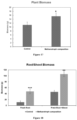
- application of the biostimulant composition of the present disclosure to a plant results in an increase in biomass production by at least about 23% to about 43%, when compared to a plant where the said composition has not been applied.
- application of the biostimulant composition of the present disclosure to a plant results in an increase in its pod yield by at least about 22%, when compared to a plant where the said composition has not been applied.
- biostimulant composition of the present disclosure results in an increase in its pod yield by at least about 8% to about 15%, when compared to a plant where the said composition has not been applied, and instead a commercially available biostimulant comprising nitrogen fixing, phosphate solubilizing and zinc solubilizing bacteria has been applied.
- application of the biostimulant composition of the present disclosure to a plant results in an increase in plant yield by at least about 27% to about 48%, when compared to a plant where the said composition has not been applied.
- application of the biostimulant composition of the present disclosure to a plant results in an increase in number of tap roots by at least about 7% to about 10%, when compared to a plant where the said composition has not been applied.
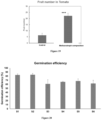
- application of the biostimulant composition of the present disclosure to a plant results in an increase in photosynthetic efficiency as measured by SPAD index by at least about 32%, when compared to a plant where the said composition has not been applied.
- application of the biostimulant composition of the present disclosure to a plant results in an increase in dietary fibre content by at least about 20%, when compared to a plant where the said composition has not been applied.
- application of the biostimulant composition of the present disclosure to a plant results in an increase in protein content by at least about 44%, when compared to a plant where the said composition has not been applied.
- biostimulant composition of the present disclosure improves or enhances plant performance is by improving the nutrient use efficiency of the plant.
- One of the most important nutrients that is required for proper growth, development, performance and/or survival of a plant is nitrogen.
- nitrogen is one of the most important nutrients that is required for proper growth, development, performance and/or survival of a plant.
- the plant performance is enhanced or improved as a direct result of increased nitrogen fixation that is facilitated by the biostimulant composition of the present disclosure. Accordingly, when the biostimulant composition of the present disclosure is applied to a plant, it facilitates nitrogen fixation, and makes the nitrogen and associated compounds available to the plant, which in-turn is used by the plant to grow and survive efficiently.
- the biostimulant composition of the present disclosure facilitates increased nitrogen fixation, that results in better plant absorption or utilization of nitrogen/ nitrogen derived compounds or metabolites, in-turn resulting in enhanced or improved plant growth, indicated by a quantitative or qualitative plant attribute selected from a group comprising biomass production, yield, photosynthetic activity, nutritional value, secondary metabolites and nutrient use efficiency, or any combination thereof.
- the present disclosure therefore provides a method which facilitates better nitrogen fixation in plants resulting in either increased availability of nitrogen to the plant or efficient utilization of nitrogen by the plant, or both.
- the present disclosure provides a method which increased nitrogen fixation in plants resulting in either increased availability of nitrogen to the plant or efficient utilization of nitrogen by the plant, or both.
- better or increased nitrogen fixation is facilitated when the biostimulant composition of the present disclosure is contacted with or applied to the plant. This results in increased availability of nitrogen to the plant or efficient utilization of nitrogen by the plant, or both.
- the biostimulant composition employed is as described by any of the embodiments above.
- the manner in which the biostimulant is contacted with or applied to the plant is also as per any of the embodiments described above.
- each of those embodiments are not being reiterated here again.
- each of the said embodiments completely fall within the purview of the method for facilitating nitrogen fixation in a plant.
- the biostimulant composition increased, enhances, improves or betters the nitrogen fixation in a plant, when compared to nitrogen fixation by the same plant in absence of the biostimulant composition of the present disclosure.
- the method comprises:
- the method comprises:
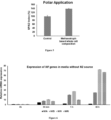
- improvement in nitrogen fixation facilitated by the biostimulant composition of the present disclosure is a result of increase in expression of genes of nitrogenase cluster selected from a group comprising nifA, nifD, nifH and nifK, or any combination thereof, in the gammaproteobacterial methanotroph present in the biostimulant.
- improvement in nitrogen fixation facilitated by the biostimulant composition of the present disclosure is a result of increase in expression of genes of nitrogenase cluster selected from a group comprising nifA, nifD, nifH and nifK, or any combination thereof, in the M. capsulatus present in the biostimulant.
- application of the biostimulant composition of the present disclosure to a plant enables the gammaproteobacterial methanotrophs to grow in the absence of external nitrogen source by modulating the expression of Nif genes and thus activating the nitrogenase machinery to fix environmental nitrogen.
- the method reduces need for external addition of nitrogen or nitrogen carrying fertilizer in the plant, by at least about 10% to about 100%, when compared to the need for addition of nitrogen or nitrogen carrying fertilizer in a plant not contacted with the biostimulant composition of the present disclosure.
- biostimulant composition of the present disclosure also facilitates better availability and/or utilization of other nutrients, including phosphorus and potassium to the plant.
- the present disclosure also provides a method of increasing availability of phosphorous, potassium or any combination thereof to a plant, the method comprising contacting or applying to the plant, the biostimulant composition as described in any of the embodiments above.
- the present disclosure also provides a method of increasing availability of all of nitrogen, phosphorous and potassium to a plant, the method comprising contacting or applying to the plant, the biostimulant composition as described in any of the embodiments above.
- the manner in which the biostimulant is contacted with or applied to the plant is also as per any of the embodiments described above.
- the methods described above increase availability of nitrogen, phosphorous, and potassium, or any combination thereof, in the soil for uptake by the plant.
- the method increases the availability of nitrogen, phosphorous, and potassium or any combination thereof by at least about 10%, 20%, 30%, 40%, 50%, 60%, 70%, 80% or 90% relative to a method not employing the composition defined herein.
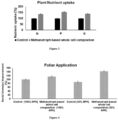
- application of the biostimulant composition of the present disclosure to a plant results in an improved uptake of nitrogen by about 36%, when compared to a plant where the said composition has not been applied.
- application of the biostimulant composition of the present disclosure to a plant results in an improved uptake of phosphorus by about 53%, when compared to a plant where the said composition has not been applied.
- application of the biostimulant composition of the present disclosure to a plant results in an improved uptake of potassium by about 39%, when compared to a plant where the said composition has not been applied.
- one of the important objectives of the present disclosure is to also efficiently utilize the methane generated by agricultural activities and other sources, in a manner that is beneficial in reducing the carbon footprint. Accordingly, use of the biostimulant composition of the present disclosure achieves this objective.
- the present disclosure accordingly also provides a method of increasing utilization of atmospheric methane the method comprising: contacting or applying to the plant the biostimulant composition as described above.
- the biostimulant composition of the present disclosure comprises a microbial consortium that has at least 50% whole cells of gammaproteobacterial methanotroph, it acts as an efficient tool that is employed for utilization of methane.
- mere application of this composition to a plant allows the gammaproteobacterial methanotrophs to utilize the methane that is generated by the same plant, or present in the atmosphere as a result of agricultural activity or generated from any other source, and use it for its growth and survival.
- the methane levels in the vicinity of this composition reduce.
- the gammaproteobacterial methanotroph of the present disclosure utilizes methane through carbon capture, and in-turn utilizes it for its growth and survival.
- the utilization of methane by the consortium in the biostimulant composition of the present disclosure comprising at least 50% whole cells of gammaproteobacterial methanotroph, recycles at least about 0.1kg of methane per kg of biostimulants used.
- the methane utilized by the gammaproteobacterial methanotrophs can be divided into two buckets:
- the gammaproteobacterial methanotrophs present in the consortium of the biostimulant composition herein uses the atmospheric methane as well, the focus of this disclosure is to allow the methanotrophs to utilize the methane concentrated in a particular area, particular due to agricultural activity.
- plants that emit high levels of methane act as important sources of methane for these methanotrophs.
- methane is a harmful greenhouse gas, its concentration in atmosphere needs to be continuously brought down.
- the use of the biostimulant composition of the present disclosure facilitates exactly that. Since the composition comprises gammaproteobacterial methanotrophs, when applied to a plant, which in-turn produces high levels of methane, the said organisms are able to utilize it, and help in improving nitrogen fixation, and performance of the plant.
- the biostimulant composition as such, as well as the manner in which it is to be applied for utilization of the methane by the consortium therein is as per any of the embodiments of the composition or methods provided above.
- the biostimulant composition as such, as well as the manner in which it is to be applied for utilization of the methane by the consortium therein, is as per any of the embodiments of the composition or methods provided above.
- each of those embodiments are not being reiterated here again.
- each of the said embodiments completely fall within the purview of the method for facilitating utilization of methane.
- composition provides multiple benefits in terms of enhancing plant performance, and/or increasing nitrogen fixation in plants, utilization of methane by the same composition acts as an added advantage.
- a combination of these attributes makes the biostimulant composition an extremely efficient, and environmentally friendly product.
- the present disclosure accordingly also provides a method for facilitating simultaneous utilization of methane and nitrogen fixation in a plant, said method comprising contacting or applying the biostimulant composition as described above, to the plant.
- the present disclosure provides a method for facilitating simultaneous utilization of methane and nitrogen fixation in a plant, said method comprising contacting or applying the biostimulant composition comprising a microbial consortium of whole cells, wherein the consortium comprises at least 50% whole cells of gammaproteobacterial methanotroph.
- the microbial consortium comprises at least about 60% to about 100% whole cells of gammaproteobacterial methanotroph.
- the gammaproteobacterial methanotroph is a type I or type X methanotroph belonging to genus selected from a group comprising Methylococcus, Methylomonas, Methylobacter, Methyloglobulus, Methylovulum, Methylomicrobium, Methylosarcina, Methylosphaera, Methyloprofundus, Methylosoma, Methylocucumis, Methylocaldum, Methyloparacoccus, Methylogaea, Methylomagnum, Methyloterricola, Methylothermus, Methylohalobius, Methylomarinovum, Methylomarinum and Crenothrix, or any combination thereof.
- the gammaproteobacterial methanotroph is Methylococcus capsulatus.
- the composition is in a solid form or a liquid form, and comprises at least one metabolite, at least one media derived nutrient and optionally at least one agriculturally acceptable excipient.
- the microbial consortium of whole cells comprises about 1 ⁇ 10 3 cells to about 5 ⁇ 10 10 cells per gram or per millilitre of the composition and constitutes about 0.1% to about 80% of the composition; with the remainder of the composition constituted by about 0.1% to about 10% of at least one metabolite, about 0.1% to about 10% of at least one media derived nutrient and optionally about 0.01% to about 90% of at least one agriculturally acceptable excipient, and includes all values and ranges therein.
- the metabolite is selected from a group comprising carbohydrates, lipids, sugars, fatty acids, proteins, peptides, amino acids, nucleic acid, nucleotides, vitamins, organic acids, salts, minerals, osmolytes, extracellular enzymes, bacterial derived components and minerals, or any combination thereof, wherein the media derived nutrient is selected from a group comprising ions and salts, or a combination thereof, and wherein the agriculturally acceptable excipient is selected from a group comprising carrier, cell protectant, adjuvant, surfactant, stabilizer, preservative, diluent, suspending agent, dispersing agent and cosolvent, or any combination thereof.
- the consortium in addition to the gammaproteobacterial methanotroph, comprises about 1% to about 50% of at least one plant growth-promoting microbe selected from a group comprising nitrogen fixing microorganism, phosphate solubilizing microorganism, mineral solubilizing microorganism, phytohormone secreting microorganism, organic acids secreting bacteria and plant beneficial microbe, or any combination thereof.
- the microbial consortium of the present disclosure comprises primarily of gammaproteobacterial methanotrophs, such as M. capsulatus.
- the microbial consortium of the present disclosure comprises of gammaproteobacterial methanotrophs, such as M. capsulatus and one or more PGPMs in a ratio of about 90:10.
- the microbial consortium of the present disclosure comprises of gammaproteobacterial methanotrophs, such as M. capsulatus and one or more PGPMs in a ratio of about 80:20.
- the microbial consortium of the present disclosure comprises of gammaproteobacterial methanotrophs, such as M. capsulatus and one or more PGPMs in a ratio of about 70:30.
- the microbial consortium of the present disclosure comprises of gammaproteobacterial methanotrophs, such as M. capsulatus and one or more PGPMs in a ratio of about 60:40.
- the microbial consortium of the present disclosure comprises of gammaproteobacterial methanotrophs, such as M. capsulatus and one or more PGPMs in a ratio of about 50:50.
- the consortium in the composition utilizes methane, facilitates nitrogen fixation and:
- the biostimulant composition employed is as described by any of the embodiments mentioned above.
- the manner in which the said biostimulant composition is to be applied to a plant is also as described by any of the embodiments above.
- each of those embodiments are not being reiterated here again.
- each of the said embodiments completely fall within the purview of the method for facilitating simultaneous utilization of methane and nitrogen fixation in a plant.
- the present disclosure provides a method for facilitating simultaneous utilization of methane and nitrogen fixation/availability in a plant, the method comprising contacting or applying to the plant a biostimulant composition comprising a consortium of whole cells comprising at least 50% whole cells of gammaproteobacterial methanotroph, optionally along with metabolite(s), media derived nutrient(s) and agriculturally acceptable excipient(s).
- the gammaproteobacterial methanotroph in the biostimulant composition utilizes atmospheric methane to facilitate/enable nitrogen fixation in plants.
- the methanotrophic organism in the composition of the above method utilizes atmospheric methane to increase nitrogen fixation, and thereby increased nitrogen availability to plants.
- the gammaproteobacterial methanotrophs in the consortium of the composition has an average colonization ability per unit of a plant part of at least about 2 ⁇ 10 8 bacterial cells per gram of weight of the plant part, specifically roots.
- the plant part is selected from a group comprising root, rhizome, seed, stalk, flower, stigma, stamens, anthers, fruit, leaves, shoot and combinations thereof.
- the gammaproteobacterial methanotrophs in the consortium of the composition defined above is capable of increasing nitrogen availability to the plant by fixing atmospheric nitrogen into soil.
- the gammaproteobacterial methanotroph in the composition is capable of facilitating the utilization of atmospheric methane along with simultaneous increase in nitrogen availability to the plant by fixing atmospheric nitrogen into soil, relative to a method not employing the composition defined herein.
- the gammaproteobacterial methanotrophs in the composition defined above is capable of utilizing atmospheric methane for its growth and metabolism, and fixing atmospheric nitrogen into soil as ammonia, nitrites, nitrates or other nitrogen containing compounds for enhanced nitrogen uptake and assimilation by plant.
- the plant is a leguminous plant, a non-leguminous plant, or a combination thereof.
- the plant is an agricultural crop, a horticultural crop, a plantation crop, or any combinations thereof.
- the plant is an agricultural crop selected from a group comprising but not limited to cereals, millets, pulses/legumes, cash crops, oil yielding crops and combinations thereof.
- the plant is a horticultural crop selected from a group comprising but not limited to vegetable crops, medicinal crops, aromatic crops, floricultural crops, fruit crops, spices and plantation crops and combinations thereof.
- improvement in nitrogen fixation along with simultaneous utilization of methane, facilitated by the biostimulant composition of the present disclosure is a result of increase in expression of genes of nitrogenase cluster selected from a group comprising nifA, nifD, nifH and nifK, or any combination thereof, in the gammaproteobacterial methanotroph present in the biostimulant.
- improvement in nitrogen fixation along with simultaneous utilization of methane, facilitated by the biostimulant composition of the present disclosure is a result of increase in expression of genes of nitrogenase cluster selected from a group comprising nifA, nifD, nifH and nifK, or any combination thereof, in the M. capsulatus present in the biostimulant.
- the consortium in the biostimulant composition of the present disclosure comprising at least 50% whole cells of gammaproteobacterial methanotroph, recycles at least about 0.1kg of methane per kg of biostimulants used, while facilitating nitrogen fixation as mentioned above.
- the gammaproteobacterial methanotroph of the present disclosure utilizes methane through carbon capture, and in-turn utilizes it for its growth and survival, and facilitating nitrogen fixation.
- biostimulant composition of the present disclosure facilitates better availability of at least one nutrient selected from but not limited to nitrogen, phosphorus and potassium to the plant, or increases utilization of the said nutrients by the plant, the need for external addition of artificial/chemical/synthetic fertilizers comprising these nutrients is therefore automatically reduced.
- the present disclosure provides a method of reducing need of external addition of at least one nutrient or nutrient carrying fertilizer for growth, development, performance and/or survival of a plant, said method comprising contacting or applying the biostimulant composition as described above, to the plant.
- the nutrient is selected from a group comprising but not limited to nitrogen, phosphorus and potassium, or any combination thereof.
- the fertilizer is a chemical fertilizer.
- the method comprises reducing the input of chemical fertilizer required for growth and productivity of a plant, the method comprising contacting or applying to the plant the biostimulant composition of the present disclosure.
- contacting or applying the biostimulant composition to the plant decreases the usual conventional amount of nitrogen containing fertilizer, phosphorous containing fertilizer, potassium containing fertilizer, or any combination thereof, required for producing an improved yield of the plant.
- biostimulant composition of the present disclosure reduces the need for such external additional of said fertilizers.
- contacting or applying the biostimulant composition to the plant decreases the amount of nitrogen containing fertilizer comprising glutamine, ammonia, ammonium, urea, sulphur coated urea, methylene urea, polymer coated urea, isobutylidene diurea, nitrate, nitrite, ammonium containing molecules, nitrate containing molecules or nitrite containing molecules, or any combinations thereof, required for producing an improved yield of the plant.
- nitrogen containing fertilizer comprising glutamine, ammonia, ammonium, urea, sulphur coated urea, methylene urea, polymer coated urea, isobutylidene diurea, nitrate, nitrite, ammonium containing molecules, nitrate containing molecules or nitrite containing molecules, or any combinations thereof, required for producing an improved yield of the plant.
- contacting or applying the biostimulant composition to the plant decreases the amount of phosphorous containing fertilizer comprising but not limited to diammonium phosphate, monoammonium phosphate, single super phosphate, ammonium dihydrogen phosphate, ammonium phosphate, super phosphate, tricalcium phosphate or any combinations thereof as a source of phosphate.
- contacting or applying the composition to the plant decreases the amount of potassium containing fertilizer comprising but not limited to muriate of potash, sulphate of potash, potassium nitrate, sulfate potash magnesia, kainite or a combination thereof as a source of potassium.
- the method reduces need for external addition of at least one of nitrogen, phosphorus and potassium for growth, development, performance and/or survival of the plant, by at least about 10% to about 100%, when compared to the need for addition of respective nitrogen, phosphorus and potassium in a plant not contacted with the biostimulant composition of the present disclosure.
- the method decreases the amount of chemical fertilizer required for growth of a plant by at least about 10% relative to a method not employing the biostimulant composition defined herein.
- the method decreases the amount of chemical fertilizer required for growth of a plant by at least about 10%, 20%, 30%, 40%, 50%, 60%, 70%, 80% or 90% relative to a method not employing the biostimulant composition defined herein.
- application of the biostimulant composition of the present disclosure with 50% less amount of traditional NPK fertilizer to a plant results in an increase in biomass production by at least about 50%, when compared to a plant grown under the same conditions of 50% less NPK fertilizer and where the said composition has not been applied.
- biostimulant composition of the present disclosure with 50% less amount of traditional NPK to a plant results in an increase in biomass production by at least about 42%, when compared to a plant grown in the regular 100% NPK and where the said composition has not been applied.
- the present disclosure provides a method of reducing need of external addition of at least one nutrient or nutrient carrying fertilizer for growth, development, performance and/or survival of a plant, said method comprising contacting or applying the biostimulant composition comprising a microbial consortium of whole cells, wherein the consortium comprises at least 50% whole cells of gammaproteobacterial methanotroph.
- the microbial consortium comprises at least about 60% whole cells of gammaproteobacterial methanotroph, and includes all values and ranges therein.
- the gammaproteobacterial methanotroph is a type I or type X methanotroph belonging to genus selected from a group comprising Methylococcus, Methylomonas, Methylobacter, Methyloglobulus, Methylovulum, Methylomicrobium, Methylosarcina, Methylosphaera, Methyloprofundus, Methylosoma, Methylocucumis, Methylocaldum, Methyloparacoccus, Methylogaea, Methylomagnum, Methyloterricola, Methylothermus, Methylohalobius, Methylomarinovum, Methylomarinum and Crenothrix, or any combination thereof.
- the gammaproteobacterial methanotroph is Methylococcus capsulatus.
- the composition is in a solid form or a liquid form, and comprises at least one metabolite, at least one media derived nutrient and optionally at least one agriculturally acceptable excipient.
- the microbial consortium of whole cells comprises about 1 ⁇ 10 3 cells to about 5 ⁇ 10 10 cells per gram or per millilitre of the composition and constitutes about 0.1% to about 80% of the composition; with the remainder of the composition constituted by about 0.1% to about 10% of at least one metabolite, about 0.1% to about 10% of at least one media derived nutrient and optionally about 0.01% to about 90% of at least one agriculturally acceptable excipient, and includes all values and ranges therein.
- the metabolite is selected from a group comprising carbohydrates, lipids, sugars, fatty acids, proteins, peptides, amino acids, nucleic acid, nucleotides, vitamins, organic acids, salts, minerals, osmolytes, extracellular enzymes, bacterial derived components and minerals, or any combination thereof, wherein the media derived nutrient is selected from a group comprising ions and salts, or a combination thereof, and wherein the agriculturally acceptable excipient is selected from a group comprising carrier, cell protectant, adjuvant, surfactant, stabilizer, preservative, diluent, suspending agent, dispersing agent and cosolvent, or any combination thereof.
- the consortium in addition to the gammaproteobacterial methanotroph, comprises about 1% to about 50% of at least one plant growth-promoting microbe selected from a group comprising nitrogen fixing microorganism, phosphate solubilizing microorganism, mineral solubilizing microorganism, phytohormone secreting microorganism, organic acids secreting bacteria and plant beneficial microbe, or any combination thereof.
- the consortium in the composition reduces the need for external addition of at least one nutrient selected from nitrogen, phosphorus and potassium, either individually or as part of a fertilizer, and:
- the biostimulant composition employed is as described by any of the embodiments mentioned above.
- the manner in which the said biostimulant composition is to be applied to a plant is also as described by any of the embodiments above.
- each of those embodiments are not being reiterated here again.
- each of the said embodiments completely fall within the purview of the method of reducing need of external addition of at least one nutrient or nutrient carrying fertilizer.
- the plant is a leguminous plant, a non-leguminous plant, or a combination thereof.
- the plant is an agricultural crop, a horticultural crop, plantation crop, or any combinations thereof.
- the plant is an agricultural crop selected from a group comprising cereals, millets, pulses/legumes, cash crops, oil yielding crops and combinations thereof.
- the plant is a horticultural crop selected from a group comprising vegetable crops, medicinal crops, aromatic crops, floricultural crops, fruit crops, spices and plantation crops, and combinations thereof.
- the present disclosure further relates to a method of maintaining soil fertility comprising planting a plant or a part thereof contacted or applied with the biostimulant composition of the present disclosure.
- the method further comprises harvesting the said plant.
- the method comprises sowing seed contacted or applied with the biostimulant composition of the present disclosure.
- the method maintains nitrogen levels of the soil and reduces the need of fertilizer required for plant growth, preferably nitrogen containing fertilizer.
- the method reduces the need of nitrogen containing fertilizer, phosphorous containing fertilizer, potassium containing fertilizer, or any combination thereof.
- the following embodiments provide a process for preparing the said composition comprising a microbial consortium having at least 50% whole cells of gammaproteobacterial methanotroph, optionally along with at least one metabolite, at least one media derived nutrient, and at least one agriculturally acceptable excipient.
- the present disclosure accordingly also relates to a process for preparing the biostimulant composition comprising gammaproteobacterial methanotroph, with at least one of a metabolite, or media derived nutrient and optionally at least one agriculturally acceptable excipient as defined above, the process comprising:
- the process comprises:
- gammaproteobacterial methanotroph is present in a consortium having a total concentration of whole cells ranging from about 1 ⁇ 10 3 cells to about 5 ⁇ 10 10 cells/g or ml of solid composition, and includes all values and ranges therein.
- the present disclosure accordingly also relates to a process for preparing the biostimulant composition comprising gammaproteobacterial methanotroph, optionally along with at least one metabolite, at least one media derived nutrient and at least one agriculturally acceptable excipient as defined above, the process comprising:
- the process comprises:
- the process comprises:
- the gammaproteobacterial methanotroph is Methylococcus capsulatus.
- the process comprises culturing Methylococcus capsulatus in culture media under suitable culturing conditions, followed by harvesting the said Methylococcus capsulatus, to prepare the biostimulant composition of the present disclosure.
- the process comprises:
- the process comprises:
- the process comprises:
- the method of culturing methanotrophs is carried out according to the description and examples in applications WO/2017/195103 and/or WO/2020/095281 .
- the method of culturing Methylococcus capsulatus is carried out according to WO/2017/195103 and/or WO/2020/095281 .
- the method of culturing Methylococcus capsulatus in a culture media in presence of methane under suitable culturing conditions is described in WO/2017/195103 and/or WO/2020/095281 .
- the cells together with media derived components are mixed with at least one agriculturally acceptable excipient.
- the excipient used is selected from known adjuvants and cell protectants, and employed at 0.01%, 0.5% or 1% (w/v) in the composition.
- the methanotrophic cells together with media derived components are mixed with at least one group of bacteria wherein the bacteria is from a group comprising nitrogen fixing, mineral solubilizing, phytohormone producing bacteria or plant growth promoting bacteria.
- the prepared composition comprises Methylococcus capsulatus, at least one metabolite selected from but not limited to carbohydrates, sugars, proteins, amino acids, nucleic acids, nucleotides, peptides, fatty acids, lipids, vitamins, organic acids, osmolytes and salts, and at least one media derived nutrient selected from but not limited to salts, minerals and ions.
- the biostimulant composition of the present disclosure comprises a consortium of microorganisms, that comprises a total of about 1 ⁇ 10 3 whole cells to about 5 ⁇ 10 10 whole cells per gram or per millilitre of the compositions of the present disclosure.
- the microbial consortium comprises a total of about 5 ⁇ 10 3 whole cells to about 5 ⁇ 10 10 whole cells.
- the microbial consortium comprises a total of about 1 ⁇ 10 3 whole cells to about 1 ⁇ 10 10 whole cells.
- this consortium must comprise at least 50% whole cells of gammaproteobacterial methanotroph.
- the microbial consortium within the biostimulant composition comprises at least about 60% whole cells of gammaproteobacterial methanotroph, and includes all values and ranges therein.
- the process steps for preparing the biostimulant composition of the present disclosure inclusion of the gammaproteobacterial methanotroph such as M. capsulatus is of primary importance.
- the process steps are as provided above, whereby the culturing, harvesting, and combining of the cells with metabolite(s), media derived nutrient(s) and/or excipient(s) is applicable with the respective gammaproteobacterial methanotroph cells.
- PGPMs are either also cultured and/or harvested along with the gammaproteobacterial methanotroph, or are cultured and/or harvested separately and then included in the composition as an additional step, to the processes described in the preceding embodiments.
- the gammaproteobacterial methanotroph employed in the biostimulant composition is a type I or type X methanotroph belonging to genus selected from a group comprising Methylococcus, Methylomonas, Methylobacter, Methyloglobulus, Methylovulum, Methylomicrobium, Methylosarcina, Methylosphaera, Methyloprofundus, Methylosoma, Methylocucumis, Methylocaldum, Methyloparacoccus, Methylogaea, Methylomagnum, Methyloterricola, Methylothermus, Methylohalobius, Methylomarinovum, Methylomarinum and Crenothrix, or any combination thereof.
- the gammaproteobacterial methanotroph employed in the biostimulant composition is a type I or type X methanotroph is selected from a group comprising Methylococcus sp., Methylomonas sp., Methylobacter sp., Methyloglobulus sp., Methylovulum sp., Methylomicrobium sp., Methylosarcina sp., Methylosphaera sp., Methyloprofundus sp., Methylosoma sp., Methylocucumis sp., Methylocaldum sp., Methyloparacoccus sp., Methylogaea sp., Methylomagnum sp., Methyloterricola sp., Methylothermus sp., Methylohalobius sp
- the gammaproteobacterial methanotroph is selected from a group comprising Methylococcus capsulatus, Methylococcus mobilis, Methylomicrobium kenyense, Methylomicrobium alcaliphilum, Methylomicrobium alcaliphilum 20Z, Methylomicrobium buryatense 5G, Methylomicrobium buryatense 4G, Halomonas pantelleriensis, Methylomicrobium album, Methylomonas methanica, MB 126, Methylobacter tundripaludum, Methylovulum miyakonense, Methylomonas rubra, Methylomonas koyamae, Methylomonas methancia, Methylomonas denitrificans, Methylomonas paludis, Methylomonas lenta, Methylomarinum vad
- the methanotroph, the metabolite, the media derived nutrient and the agriculturally acceptable excipient are as described in the preceding embodiments.
- the present disclosure also provides a process for preparing a composition comprising:
- obtaining the mixture comprising microbial consortium, metabolite and media derived nutrient comprises act of culturing the methanotroph and the plant growth-promoting microbe (PGPM) in the same or different culture medium under suitable culturing conditions to obtain a mixture.
- PGPM plant growth-promoting microbe
- Methylococcus capsulatus was cultured in culture media in presence of methane under suitable culturing conditions. Since culturing of Methylococcus capsulatus and its growth requirements are well known in the art, conventional process to this effect was employed. These culture conditions were carried out according to the description and examples in applications WO/2017/195103 and/or WO/2020/095281 . Post culturing, the cells together with media derived components were mixed with at least one agriculturally acceptable excipient and used for plant performance analysis.
- methanotrophic cells together with media derived components were mixed with at least one group of bacteria wherein the bacteria were from a group comprising nitrogen fixing, mineral solubilizing, phytohormone producing bacteria or plant growth promoting bacteria.
- Different ratios of methanotrophic cells were mixed with said bacteria. The ratio of cells to bacteria was accordingly varied from 90:10, 80:20, 70:30, 60:40 or 50:50.
- the microbial consortium of the present disclosure comprises primarily of M. capsulatus. In some embodiments, the microbial consortium of the present disclosure comprises of M . capsulatus and one or more PGPMs in a ratio of about 90:10.
- the microbial consortium of the present disclosure comprises of M. capsulatus and one or more PGPMs in a ratio of about 80:20.
- the microbial consortium of the present disclosure comprises of M. capsulatus and one or more PGPMs in a ratio of about 70:30.
- the microbial consortium of the present disclosure comprises of M. capsulatus and one or more PGPMs in a ratio of about 60:40.
- the microbial consortium of the present disclosure comprises of M. capsulatus and one or more PGPMs in a ratio of about 50:50.
- the concentration of methanotrophic cells such as M . capsulatus in the composition was targeted to be greater than 90%. In some embodiments, the concentration of methanotrophic cells such as M. capsulatus in the composition was targeted to be greater than 80%. In some embodiments, the concentration of methanotrophic cells such as M. capsulatus in the composition was targeted to be greater than 70%. In some embodiments, the concentration of methanotrophic cells such as M. capsulatus in the composition was targeted to be greater than 60%.
- methanotrophic cells such as M. capsulatus were mixed with at least 50% of cells from one group of nitrogen fixing, mineral solubilizing, phytohormone producing bacteria or plant growth promoting bacteria.
- the above composition is mixed with at least one agriculturally acceptable excipient.
- the excipient used is selected from known adjuvants and cell protectants.
- the excipient is combined at 0.01%, 0.1%, 0.5% or 1% (w/v) in the composition.
- the composition contained M . capsulatus cells at 1 ⁇ 10 5 to 1 ⁇ 10 8 cells/ml harvested post fermentation done in the presence of methane.
- the composition contains 2-3% of protein and 1-2% of total salts (micronutrients).
- This composition is formulated with agriculturally acceptable excipient at 0.5%.
- the excipient used is 0.5% DMSO.
- the excipient used is 0.5% DMSO and 2% Xantham gum. This composition is therefore forms the biostimulant composition of the present disclosure where the microbial consortium comprises primarily of M. capsulatus.
- the total protein is analyzed using HPLC and Kjeldahl using established methods, and the micronutrients are analyzed using Inductively coupled plasma - optical emission spectrometry (ICP-OES) and Ion Chromatography (IC).
- ICP-OES Inductively coupled plasma - optical emission spectrometry
- IC Ion Chromatography
- cells from the M. capsulatus fermentation broth are mixed with phosphate solubilizing bacteria at a ratio of 90:10 with the total cells in the composition being 1x10 5 to 1x10 8 cells/ml.
- the composition contains 2-3% of protein and 1-2% of total salts (micronutrients).
- This composition is formulated with agriculturally acceptable excipient at 0.5%.
- the excipient used is 0.5% DMSO.
- the excipient used is 0.5% DMSO and 2% Xantham gum. Accordingly, in some embodiments, the ratio of cells from M.
- compositions therefore form the biostimulant compositions of the present disclosure where the microbial consortium comprised of M. capsulatus along with other plant growth promoting microorganisms.
- the compositions are in liquid form, and based on the end use, sufficient amount (q.s.) of water was added to each of the compositions prepared herein.
- the composition is used on plants as a solid formulation.
- the composition is mixed with carrier materials and dried to ⁇ 10% total moisture in the formulation.
- the composition is dried by air drying, spray drying, drum drying or vaccum tray drying.
- the microbial consortium, the methanotroph, the plant growth-promoting microbe (PGPM), the metabolite, media derived nutrient, the agriculturally acceptable excipient, and the concentrations/amounts of said components in the composition are defined in the preceding embodiments.
- biostimulant composition of the present disclosure is important from agricultural and environmental perspective as it fulfills multiple attributes, and overcomes the challenges with respect to high content of methane released by agricultural activities, better agricultural productivity and reduced usage of external fertilizers, all at once - something not provided by any currently available biostimulant.
- the present disclosure also provides for use of the biostimulant composition of the present disclosure, for:
- improving or enhancing plant performance is characterized by at least one of the following:
- the biostimulant composition is in a solid form or a liquid form, and is contacted or applied to the plant through its soil, or through aerial or non-aerial parts of the plant selected from a group comprising root, shoot, leaf, flower, anther, stigma, stamen, fruit and seed, or any combination thereof, at a concentration ranging from about 1ml per litre to about 50ml per litre of the liquid form or 1gm per kilogram to about 50gm per kilogram of the solid form.
- the biostimulant composition is in a solid form or a liquid form, and is contacted or applied to the plant through its soil, or through aerial or non-aerial parts of the plant selected from a group comprising root, shoot, leaf, flower, anther, stigma, stamen, fruit and seed, or any combination thereof, at a concentration ranging from 1x to 100000x dilution of the solid or liquid form of the composition, and includes all values and ranges therein.
- the present disclosure also provides use of the biostimulant composition of the present disclosure in a method of making an agricultural or horticultural product, comprising:
- the agricultural or horticultural product is selected from the group comprising but not limited to food grain, vegetable, fruit, tuber, nut, cereals, grains, millets, pulses, oil yielding crops, floricultural crops, medicinal plants, aromatic plants, spices and plantation crops, grasses and combinations thereof.
- the present disclosure also provides a biostimulant product comprising:
- the biostimulant composition employed is as described by any of the embodiments mentioned above.
- the manner in which the said biostimulant composition is to be applied to a plant is also as described by any of the embodiments above.
- each of those embodiments are not being reiterated here again.
- each of the said embodiments completely fall within the purview of the said use.
- the present disclosure generally aims at providing unique and alternate approaches/methods for achieving reduction of agricultural methane emissions (by efficient utilization of said methane) and nitrogen availability/fixation in plants simultaneously.
- the gammaproteobacterial methanotroph based biostimulant compositions as described above are provided. Additionally, while said methods employing the compositions relate to an environmental friendly approach to reduce methane in atmosphere, fix atmospheric nitrogen to plants and/or reduce the usage of chemical fertilizers along with other advantages, said compositions are also used for agricultural applications to improve the performance of plants/crops.
- compositions and methods of the present disclosure have leveraged use of harmful greenhouse gas methane for enabling unique biostimulant compositions. This allows the said biostimulant compositions to be economical/cost effective while enabling sustainability and consistency in its production. The improvement in plant performance results in attractive returns to the users, who are primarily the agri-community and farmer enabling wider adoption of the said biostimulant composition.
- Methylococcus capsulatus strain employed in the present disclosure has been deposited in accordance with the Budapest Treaty with the Microbial Type Culture Collection (MTCC) and Gene Bank (MTCC 25398).
- the geographical origin and source of the strain is UK, and upon procurement, the strain was maintained at String Bio Private Limited.
- all plants/crops which were employed in the below experiments/examples only to validate the technical effects of the product of present disclosure (methanotroph derived biostimulant composition). None of these plants/crops were employed in preparing/developing said biostimulant product of the present disclosure.
- Methylococcus capsulatus was cultured in culture media in presence of methane under suitable culturing conditions. Since culturing of Methylococcus capsulatus and its growth requirements are well known in the art, conventional process to this effect was employed. These culture conditions were carried out according to the description and examples in applications WO/2017/195103 and/or WO/2020/095281 .
- the cells together with media derived components were mixed with atleast one agriculturally acceptable excipient and used for plant performance analysis.
- methanotrophic cells together with media derived components were mixed with atleast one group of bacteria wherein the bacteria were from a group comprising nitrogen fixing, mineral solubilizing, phytohormone producing bacteria or plant growth promoting bacteria.
- Different ratios of methanotrophic cells were mixed with said bacteria. The ratio of cells to bacteria was accordingly varied from 90:10, 80:20, 70:30, 60:40 or 50:50.
- the concentration of methanotrophic cells in the composition was targeted to be greater than 90%. In some instances, the concentration of methanotrophic cells in the composition was targeted to be greater than 80%. In some instances, the concentration of methanotrophic cells in the composition was targeted to be greater than 70%. In some instances, the concentration of methanotrophic cells in the composition was targeted to be greater than 60%. In other instances, 50% of methanotrophic cells were mixed with 50% of cells from one group of nitrogen fixing, mineral solubilizing, phytohormone producing bacteria or plant growth promoting bacteria. This composition was then mixed with atleast one agriculturally acceptable excipient. The excipient used was selected from known adjuvants and cell protectants. The excipient was combined at 0.01%, 0.1%, 0.5% or 1% (w/v) in the composition.
- the composition contained M. capsulatus cells at 1x10 5 to 1x10 8 cells/ml harvested post fermentation done in the presence of methane.
- the composition when analyzed for protein contained 2-3% of protein and 1-2% of total salts (micronutrients).
- the total protein was analyzed using HPLC and Kjeldahl using established methods.
- the micronutrients were analyzed using Inductively coupled plasma - optical emission spectrometry (ICP-OES) and Ion Chromatography (IC).
- ICP-OES Inductively coupled plasma - optical emission spectrometry
- IC Ion Chromatography
- This composition was formulated with agriculturally acceptable excipient at 0.5%. In some instances, the excipient used was 0.5% DMSO. In other instances, the excipient was 0.5% DMSO and 2% Xantham gum.
- This composition is therefore an example of the biostimulant composition of the present disclosure where the microbial consortium comprised primarily of M. capsulatus.
- compositions In another instance of preparing the composition, cells from the M. capsulatus fermentation were mixed with phosphate solubilizing bacteria at a ratio of 90:10 with the total cells in the composition being 1x10 5 to 1x10 8 cells/ml.
- the composition when analyzed for protein contained 2-3% of protein and 1-2% of total salts (micronutrients).
- This composition was formulated with agriculturally acceptable excipient at 0.5%. In some instances, the excipient used was 0.5% DMSO. In other instances, the excipient was 0.5% DMSO and 2% Xantham gum.
- the ratio of cells from M. capsulatus fermentation to phosphate solubilizing bacteria was accordingly varied from 90:10, 80:20, 70:30, 60:40 or 50:50.
- compositions are in liquid form, and based on the end use, sufficient amount (q.s.) of water was added to each of the compositions prepared herein.
- the composition was used on plants as a solid formulation.
- the composition is mixed with carrier materials and dried to ⁇ 10% total moisture in the formulation.
- the composition is dried by air drying, spray drying, drum drying or vaccum tray drying.
- Table 1 shows examples of typical methanotrophs based whole cell compositions.
- Table 1 Sl No Ratio of Methylococcus capsulatus to other PGPMs Total No. of Cells PGPMs Concentration of Metabolite Concentration of Media derived nutrient Name and Concentration of Excipient 01 Comprised of only M .
- a field trial experiment following a Randomized Complete Block Design (RCBD) was designed to understand the effect of methanotroph based whole cell composition on yield improvement in Spinach ( Spinacia oleracea ).
- the seed rate, fertilizer application, planting date, harvest time and other standard management practices were left to norms of local agricultural practices except for the application of methanotroph based whole cell composition.
- Seeds were sown in the field and the first treatment of the methanotroph based whole cell composition on Spinach plants was carried out 15 days after sowing followed by second application after an interval of 10 days. The treatment was done either as soil or foliar application.
- the final whole cell composition employed in this experiment was prepared as listed under Example A and primarily contains M.
- capsulatus cells at a cell count of 1x10 5 to 1x10 8 cells/ml.
- the composition was applied as both foliar and soil application to control plants. Plants were harvested 40-45 days after sowing. The aerial biomass was used to determine the yield improvement. All observations, unless or otherwise noted, were taken from uniform sampling of plants under identical conditions.
- a plot trial experiment was designed following a Randomized Complete Block Design (RCBD) to understand the effect of methanotroph based whole cell composition on pod yield in cluster bean ( Cyamopsis tetragonoloba ) .
- the plant population, fertilizer application, planting date, harvest time and other standard management practices were left to norms of local agricultural practice except for the application of methanotroph based whole cell composition.
- Seeds were sown in the field and thirty days after sowing (DAS), first foliar application of methanotroph based whole cell formulation was applied. The second and third foliar application was performed 45 and 60 DAS respectively.
- DAS sowing
- the final whole cell composition employed in this experiment was prepared as listed under Example A and contains a total cell count of 2 ⁇ 10 5 to 1x10 8 cells/ml, with >90% of cells being M. capsulatus.
- the composition was applied to the plants as foliar or soil treatment. Pods harvested from multiple pickings were measured to understand the total yield improvement. All observations, unless or otherwise noted, were taken from uniform sampling of plants under identical conditions.
- methanotroph based whole cell composition The effect of methanotroph based whole cell composition on yield improvement in other agriculturally important crops like sweet corn, chili, coriander, field bean and marigold are mentioned in Table 2.
- the plant population, planting date, harvest time and other standard management practices were left to norms of local agricultural practice except for the application of methanotroph based whole cell composition.
- Experiments were conducted at different locations in farmer's field, but under identical conditions.
- the final whole cell composition employed in this experiment comprised of total cell count of 1x10 5 to 1x10 8 cells/ml with >80% of cells being M. capsulatus and the composition was prepared as listed under Example A. The composition was applied either through the soil or by foliar application.
- the yield results obtained demonstrate that methanotroph based whole cell composition of the present disclosure showed significant yield improvement in different crops compared to respective controls. Said results/improvement in yield additionally indicates the ability of methanotroph based whole cell composition in enhancing/promoting plant growth or performance in diverse crop groups.
- Table 2 Yield improvement in (%) Crop Control Methanotroph based whole cell composition Sweet corn (Cobs) 100 116-127 Chilli (Fruits) 100 115-118 Coriander (Aerial biomass) 100 116-132 Field bean (Pods) 100 113-118 Marigold (Flower) 100 140-148
- a field trial experiment was designed following a Randomized Complete Block Design (RCBD) to understand the effect of methanotroph based whole cell composition on nutrient uptake in Spinach ( Spinacia oleracea ) .
- the plant population, fertilizer application, planting date, harvest time and other standard management practices were left to norms of local agricultural practice except for the application of methanotroph based whole cell composition.
- Seeds were sown in field and fifteen days after sowing (DAS), first soil application of methanotroph based whole cell composition was performed. The second soil application was performed twenty-five days post sowing.
- DAS sowing
- the final whole cell composition employed in this experiment comprised a total cell count of 1x10 5 to 1x10 8 cells/ml with >80% of cells being M.
- Example A Water with appropriate adjuvant was used for soil application in control plants.
- Level of Nitrogen, Potassium and Phosphorous was analyzed to understand the effect of methanotroph based whole cell composition on plant nutrient uptake. Pooled samples were harvested from uniform sampling of the plants. Samples were dried before analyzing levels of Nitrogen, Potassium and Phosphorus following standard protocols.
- a plot trial experiment was designed following a Randomized Complete Block Design (RCBD) to understand the effect of methanotroph based whole cell composition on improved fertilizer utilization and biomass in coriander ( Coriandrum sativum ).
- the experiment also served to understand if the whole cell composition reduces the need of externally added fertilizers.
- the plant population, planting date, harvest time and other standard management practices were left to norms of local agricultural practice except for the application of methanotroph based whole cell composition. Seeds were sown in field with two different levels of nitrogen, phosphorous and potassium.
- the whole cell composition not only increases plant yield but can also lower the requirement for NPK fertilizer. Further, generation of methanotroph based whole cell composition can also reduce methane levels or capture carbon as this gas is used as sole carbon source to produce methanotroph based whole cell composition.
- the final whole cell composition employed in this experiment comprised a total of 1x10 5 to 1x10 8 cells/ml.
- the ratio of Methylococcus capsulatus and other bacteria were varied to determine the optimal levels of gammaproteobacterial methanotroph based whole cell composition that can improve/increase seed germination efficiency (Table 3).
- Paddy seeds were soaked overnight in methanotroph based whole cell composition.
- Control seeds were soaked in water. The ability of optimal methanotroph based whole cell composition in improving germination efficiency was recorded.
- Nif gene nitrogenase cluster
- qPCR Quantitative Real Time PCR
- methanotroph based whole cell composition improved yield compared to commercial control containing Nitrogen fixing, Phosphate and Zinc solubilizing bacteria, in multiple plants
- a plot trial experiment was designed following a Randomized Complete Block Design (RCBD) to understand the effect of methanotroph based whole cell composition on pod yield in field bean ( Vicia faba ) and biomass in coriander ( Coriandrum sativum ) over the commercial control available in the market. Similar effect was tested on cluster bean and spinach.
- the plant population, planting date, harvest time and other standard management practices were left to norms of local agricultural practice except the application of methanotroph based whole cell composition.
- three foliar application was performed at 20 days after sowing (DAS), 40 DAS and 55 DAS.
- Cluster bean treatment was same as mentioned in example 2.
- Two foliar or soil application was performed for coriander at 20 DAS and 30 DAS. Treatment for Spinach was same as mentioned in examples 1/4.
- Example 1 The final whole cell composition employed in these experiments was prepared as listed under Example 1 and contain >90% of Methylococcus capsulatus cells at a total cell count of 1x10 5 to 1x10 8 cells/ml. Water excipient was sprayed to control plants. A leading commercial product was used as commercial control. This commercial product is a carrier based microbial consortium containing nitrogen fixing, phosphate and zinc solubilizing bacteria along with plant growth promoting microbes. Manufacturer's recommended dose was applied at respective time points. Pods harvested from multiple pickings were measured to understand the total yield improvement in field bean. The plant biomass data was recorded in case of coriander. All observations, unless or otherwise noted, were taken from uniform sampling of plants.
- methanotroph based whole cell composition improved yield compared to commercial control containing methylotrophic bacteria
- a plot trial experiment was designed following a Randomized Complete Block Design (RCBD) to understand the effect of methanotroph based whole cell composition on fruit yield in chilli ( Capsicum annuum ) and Spinach ( Spinacia oleracea ) over the commercial control available in the market.
- the plant population, fertilizer application, planting date, harvest time and other standard management practices were left to norms of local agricultural practice except for the application of methanotroph based whole cell composition.
- Chilli seedlings were transplanted to field, and three foliar application was performed at 25 days after transplanting (DAT), 40 DAT and 60 DAT.
- DAT 25 days after transplanting
- 60 DAT 60 DAT
- the whole cell composition in the final formulation containing adjuvant was prepared as listed under Example A and contains >90% of Methylococcus capsulatus cells at a total cell count of 5 ⁇ 10 6 to 5 ⁇ 10 7 cells/ml. Water with appropriate excipient was sprayed to control plants. A Methylobacterium based microbial product [Pink pigmented facultative methylotroph (PPFM)]) was used as commercial control. Manufacturer's recommended dose was applied at respective time points as foliar spray. Fruits harvested from multiple picking were measured to understand the total yield improvement in Chilli. The plant biomass data was recorded in case of Spinach. All observations, unless or otherwise noted, were taken from uniform sampling of plants.
- the whole cell composition in the final formulation was prepared as listed under Example A and comprised of ⁇ 2 ⁇ 10 5 - 2 ⁇ 10 8 cells/ml with >70% of cells being M. capsulatus.
- Paddy seeds were soaked overnight in methanotroph based whole cell composition and seeds were subsequently transferred to germination sheets or petri dishes containing moist filter paper. Control seeds were soaked in water.
- a Methylobacterium based microbial product [Pink pigmented facultative methylotroph (PPFM)] was used as commercial control. Manufacturer's recommended dose was used for seed treatment.
- a plot trial experiment was designed following a Randomized Complete Block Design (RCBD) to understand the effect of methanotroph based whole cell composition on tap root yield in Carrot ( Daucus carota ).
- the plant population, fertilizer application, planting date, harvest time and other standard management practices were left to norms of local agricultural practice except for the application of methanotroph based whole cell composition.
- Single foliar application was performed for Carrot after 30 DAS.
- the final whole cell composition employed in this experiment was prepared as listed under Example A and comprised of about 1x10 5 to 1x10 8 cells/ml, wherein >90% of the cells were of M. capsulatus. Water with appropriate excipient was sprayed to control plants. Tap root weight was recorded to understand the total yield improvement. All observations, unless or otherwise noted, were taken from uniform sampling of plants under identical conditions.
- a hydroponics-based experiment was designed to understand the effect of methanotroph based whole cell composition on yield improvement in Spinach ( Spinacia oleracea ) .
- the seed rate, nutrient application, planting date, harvest time and other standard management practices were left to norms of hydroponics practice except for the application of methanotroph based whole cell composition.
- First foliar treatment of the methanotroph based whole cell composition on Spinach plants was carried out 15 days after sowing followed by second application after an interval of 10 days.
- the final whole cell composition employed in this experiment was prepared as listed under Example A and contained ⁇ 5 ⁇ 10 7 - 5 ⁇ 10 8 cells/ml, wherein >90% were Methylococcus capsulatus cells. Water with appropriate adjuvant was used for both foliar and soil application to control plants. Plants were harvested 40-45 days after sowing. The aerial biomass was used to determine the yield improvement. All observations, unless or otherwise noted, were taken from uniform sampling of plants under identical conditions.
- a field trial experiment was designed to understand the effect of methanotroph based whole cell composition on improving dietary fibre and protein in Spinach ( Spinacia oleracea ) .
- the growth conditions and methanotroph based whole cell composition application was similar to example 1 and example 4.
- Commercial control comprising carrier based microbial consortium used in the preceding examples of recommended dose was applied at appropriate time.
- Leaf dietary fibre and total protein were measured following standard protocols that has been reported previously.
- Example A Water with appropriate adjuvant was used as control for both foliar and soil applications. Plants were harvested 45 days after sowing. The plants were measured for biomass yield and other morphological characteristics. Total shoot biomass was collected and recorded 45 days post sowing. The results shown are from 5-10 biological replicates and effect in the plants applied with said compositions were compared with respective controls. Student's t -test: *P ⁇ 0.05. Error bars indicate mean ⁇ SE.
- Raphanus sativus var. Longipinnatus (Radish) seeds were grown in cocopeat and required amount of nitrogen, phosphorous and potassium was supplemented.
- foliar or soil application of methanotroph based whole cell composition along with an agriculturally acceptable excipient (adjuvant) was performed.
- the whole cell composition in the final formulation containing adjuvant was prepared as listed under Example A and comprised of about 1x10 5 to 1x10 8 cells/ml, with >80% of cells being M . capsulatus. Water with appropriate adjuvant was used as control for both foliar and soil applications. Plants were harvested 50 days after sowing. The plants were measured for biomass yield and other morphological characteristics.
- Example A The whole cell composition in the final formulation containing adjuvant was prepared as listed under Example A and comprised of about 1x10 5 to 1x10 8 cells/ml with >90% of cells being M . capsulatus. Water with appropriate adjuvant was used as control for both foliar and soil applications. The plants were measured for fruit number and other morphological characteristics post 60 days of transplantation. Number of ripe fruits were recorded two months post transplanting. The results shown are from 5-10 biological replicates and effect in the plants applied with said compositions were compared with respective controls. Student's t-test: ***P ⁇ 0.001. Error bars indicate mean ⁇ SE.
- a method comprising steps a, b, and c encompasses a method of steps a, b, x, and c, a method of steps a, b, c, and x, as well as a method of steps x, a, b, and c.
- a method comprising steps a, b, and c encompasses, for example, a method of performing steps in the order of steps a, c, and b, the order of steps c, b, and a, and the order of steps c, a, and b, etc.
- the singular forms "a,” “an” and “the” includes both singular and plural references unless the content clearly dictates otherwise.
- the term "inserted at a position" as used herein in reference to a polypeptide sequence refers to insertion at one or more (such as one, two, three, etc.) amino acid positions in the polypeptide sequence.
- the use of the expression 'at least' or 'at least one' suggests the use of one or more elements or ingredients or quantities, as the use may be in the embodiment of the disclosure to achieve one or more of the desired objects or results.
- the terms “a” (or “an”), “one or more”, and “at least one” can be used interchangeably herein.
- the terms “include” (any form of “include”, such as “include”), “have” (and “have”), “comprise” etc. any form of “having”, “including” (and any form of “including” such as “including”), "containing”, “comprising” or “comprises” are inclusive and will be understood to imply the inclusion of a stated element, integer or step, or group of elements, integers or steps, but not the exclusion of any other element, integer or step, or group of elements, integers or steps
Landscapes
- Life Sciences & Earth Sciences (AREA)
- Engineering & Computer Science (AREA)
- Health & Medical Sciences (AREA)
- Chemical & Material Sciences (AREA)
- Zoology (AREA)
- Wood Science & Technology (AREA)
- Biotechnology (AREA)
- General Health & Medical Sciences (AREA)
- Organic Chemistry (AREA)
- Bioinformatics & Cheminformatics (AREA)
- Genetics & Genomics (AREA)
- Microbiology (AREA)
- Virology (AREA)
- Plant Pathology (AREA)
- Pest Control & Pesticides (AREA)
- Environmental Sciences (AREA)
- Biochemistry (AREA)
- General Engineering & Computer Science (AREA)
- Biomedical Technology (AREA)
- Tropical Medicine & Parasitology (AREA)
- Medicinal Chemistry (AREA)
- Dentistry (AREA)
- Chemical Kinetics & Catalysis (AREA)
- Botany (AREA)
- Agronomy & Crop Science (AREA)
- General Chemical & Material Sciences (AREA)
- Micro-Organisms Or Cultivation Processes Thereof (AREA)
- Fertilizers (AREA)
- Agricultural Chemicals And Associated Chemicals (AREA)
- Cultivation Of Plants (AREA)
- Medicines Containing Material From Animals Or Micro-Organisms (AREA)
- Soil Conditioners And Soil-Stabilizing Materials (AREA)
- Treatment Of Sludge (AREA)
Applications Claiming Priority (2)
| Application Number | Priority Date | Filing Date | Title |
|---|---|---|---|
| IN202041022403A IN202041022403A (enExample) | 2020-05-28 | 2020-05-28 | |
| PCT/IB2021/054712 WO2021240472A1 (en) | 2020-05-28 | 2021-05-28 | Whole cell methanotroph based biostimulant compositions, methods and applications thereof |
Publications (2)
| Publication Number | Publication Date |
|---|---|
| EP4156941A1 EP4156941A1 (en) | 2023-04-05 |
| EP4156941B1 true EP4156941B1 (en) | 2025-05-07 |
Family
ID=76845271
Family Applications (1)
| Application Number | Title | Priority Date | Filing Date |
|---|---|---|---|
| EP21739779.3A Active EP4156941B1 (en) | 2020-05-28 | 2021-05-28 | Whole cell methanotroph based biostimulant compositions, methods and applications thereof |
Country Status (9)
| Country | Link |
|---|---|
| US (1) | US12364267B2 (enExample) |
| EP (1) | EP4156941B1 (enExample) |
| JP (1) | JP7719804B2 (enExample) |
| AU (1) | AU2021279438A1 (enExample) |
| BR (1) | BR112022024194A2 (enExample) |
| CA (1) | CA3185441A1 (enExample) |
| ES (1) | ES3033133T3 (enExample) |
| IN (1) | IN202041022403A (enExample) |
| WO (1) | WO2021240472A1 (enExample) |
Families Citing this family (3)
| Publication number | Priority date | Publication date | Assignee | Title |
|---|---|---|---|---|
| IN202211063833A (enExample) * | 2022-11-09 | 2022-11-18 | Indian Council Of Agricultural Research | |
| WO2024197074A2 (en) * | 2023-03-21 | 2024-09-26 | Windfall Bio, Inc. | Bacterial compositions for consuming methane and fixing nitrogen |
| WO2025122375A1 (en) * | 2023-12-04 | 2025-06-12 | Newleaf Symbiotics, Inc. | Methanotroph strains for mitigating methane and methods related thereto |
Family Cites Families (7)
| Publication number | Priority date | Publication date | Assignee | Title |
|---|---|---|---|---|
| GB0209007D0 (en) * | 2002-04-19 | 2002-05-29 | Norferm Da | Product |
| US10883121B2 (en) | 2015-05-09 | 2021-01-05 | String Bio Private Limited | Processes for fermentation and purification of value added products from gaseous substrates |
| EP3353935B1 (en) | 2015-09-24 | 2019-12-04 | Intel IP Corporation | Determination of number of physical uplink control channel repetitions for machine type communications |
| RU2749884C2 (ru) * | 2015-11-09 | 2021-06-18 | Унибио А/С | Способ улучшенной ферментации с помощью микроорганизмов |
| EA201891926A1 (ru) * | 2017-02-03 | 2019-04-30 | Киверди, Инк. | Микроорганизмы и искусственные экосистемы для производства белка, продуктов питания и полезных побочных продуктов из субстратов c1 |
| US11261277B2 (en) | 2017-09-25 | 2022-03-01 | Lg Chem, Ltd. | Method of preparing graft copolymer, graft copolymer, and thermoplastic resin molded article |
| EP3877506A4 (en) | 2018-11-09 | 2022-08-24 | String Bio Private Limited | GROWTH MEDIUM COMPOSITION AND IMPROVED METHODS FOR PRODUCTION OF BIOMASS AND VALUE-ADDED PRODUCT |
-
2020
- 2020-05-28 IN IN202041022403A patent/IN202041022403A/en unknown
-
2021
- 2021-05-28 AU AU2021279438A patent/AU2021279438A1/en active Pending
- 2021-05-28 WO PCT/IB2021/054712 patent/WO2021240472A1/en not_active Ceased
- 2021-05-28 ES ES21739779T patent/ES3033133T3/es active Active
- 2021-05-28 US US17/928,096 patent/US12364267B2/en active Active
- 2021-05-28 BR BR112022024194A patent/BR112022024194A2/pt unknown
- 2021-05-28 EP EP21739779.3A patent/EP4156941B1/en active Active
- 2021-05-28 CA CA3185441A patent/CA3185441A1/en active Pending
- 2021-05-28 JP JP2022573644A patent/JP7719804B2/ja active Active
Non-Patent Citations (1)
| Title |
|---|
| VILLADA JUAN C. ET AL: "Genomic Evidence for Simultaneous Optimization of Transcription and Translation through Codon Variants in the pmoCAB Operon of Type Ia Methanotrophs", MSYSTEMS, vol. 4, no. 4, 27 August 2019 (2019-08-27), XP055959915, Retrieved from the Internet <URL:https://www.ncbi.nlm.nih.gov/pmc/articles/PMC6650546/pdf/mSystems.00342-19.pdf> DOI: 10.1128/mSystems.00342-19 * |
Also Published As
| Publication number | Publication date |
|---|---|
| ES3033133T3 (en) | 2025-07-31 |
| JP2023527870A (ja) | 2023-06-30 |
| US20230217929A1 (en) | 2023-07-13 |
| CA3185441A1 (en) | 2021-12-02 |
| US12364267B2 (en) | 2025-07-22 |
| WO2021240472A1 (en) | 2021-12-02 |
| IN202041022403A (enExample) | 2022-02-26 |
| EP4156941A1 (en) | 2023-04-05 |
| BR112022024194A2 (pt) | 2022-12-20 |
| JP7719804B2 (ja) | 2025-08-06 |
| AU2021279438A1 (en) | 2023-01-19 |
Similar Documents
| Publication | Publication Date | Title |
|---|---|---|
| MX2014012524A (es) | Uso de microorganismos sinergisticos y nutrientes para producir señales que faciliten la germinacion y la colonizacion de la raiz de la planta por los hongos de micorriza en medios ambientes ricos en fosforo. | |
| EP4156941B1 (en) | Whole cell methanotroph based biostimulant compositions, methods and applications thereof | |
| Kumar et al. | Sustaining productivity through integrated use of microbes in agriculture | |
| Pahari et al. | Biological nitrogen fixation mechanism and applications | |
| Demir et al. | Impact of effective micro-organisms (EM) on the yield, growth and bio-chemical properties of lettuce when applied to soil and leaves | |
| WO2023172758A2 (en) | Compositions including endophytes for improving plant nutrition, growth, and performance and methods of using the same | |
| EP4508192A2 (en) | Compositions including endophytes for improving plant nutrition, growth,and performance and methods of using the same | |
| Cruz et al. | Enhancement of growth and yield of upland rice (Oryza sativa L.) var. NSIC Rc 192 by actinomycetes. | |
| US20240081337A1 (en) | Compositions including endophytes for improving plant nutrition, growth,and performance and methods of using the same | |
| US20230217930A1 (en) | Hydrolysate based biostimulant compositions derived from methanotroph, methods, and applications thereof | |
| Hindersah et al. | Effect of NPK and Bacillus-coated NPK fertilizer on biomass, nutrient content in soil and nutrient uptake by lettuce | |
| CN118613160A (zh) | 基于微藻和菌根的植物营养组合物 | |
| Prakhyath et al. | Improving crop productivity, nutrient use efficiency and economics of chamomile (Matricaria chamomilla L.) using phosphate and potassium solubilizing bacteria | |
| Luna Castellanos et al. | Effect of the inoculation of nitrogen-fixing rhizobacteria in the sweet potato crop (Ipomoea batatas Lam.) | |
| RU2846209C1 (ru) | Биостимулирующие композиции на основе гидролизатов метанотрофного происхождения, способы и их применение | |
| CN111066790A (zh) | 胺鲜酯和高地芽孢杆菌含菌代谢产物组合的植物生长调节剂 | |
| Paul et al. | Evaluation of biofertilizers in cultured rice | |
| RU2826882C1 (ru) | Штамм эндомикоризного гриба Rhizophagus intraradices и микробиологическое удобрение на его основе | |
| CN111410583A (zh) | 一种甜糯玉米光催化固氮生物碳肥及其制备方法 | |
| Prabawardani et al. | Application of the arbuscular mycorrhizal fungi inoculant, organic and NPK fertilizers on the growth and yields of maize (Zea mays L.) | |
| Hindersah et al. | Bacillus-Coated Inorganic Fertilizer to Improve Plant Growth and Bacillus Count in the Rhizosphere of Broccoli | |
| Bhardwaj et al. | Cyanobacteria as a nutri-fertigation option for stimulating fruit quality and yield in Capsicum annuum | |
| CN107652092A (zh) | 一种功能性富硒固氮生物菌肥 | |
| Gnanachitra et al. | Role of Biofertilizers in Organic Vegetable Production | |
| Yadav et al. | BIOFERTILIZERS: PROMOTING SUSTAINABLE CROP PRODUCTION |
Legal Events
| Date | Code | Title | Description |
|---|---|---|---|
| STAA | Information on the status of an ep patent application or granted ep patent |
Free format text: STATUS: UNKNOWN |
|
| STAA | Information on the status of an ep patent application or granted ep patent |
Free format text: STATUS: THE INTERNATIONAL PUBLICATION HAS BEEN MADE |
|
| PUAI | Public reference made under article 153(3) epc to a published international application that has entered the european phase |
Free format text: ORIGINAL CODE: 0009012 |
|
| STAA | Information on the status of an ep patent application or granted ep patent |
Free format text: STATUS: REQUEST FOR EXAMINATION WAS MADE |
|
| 17P | Request for examination filed |
Effective date: 20221220 |
|
| AK | Designated contracting states |
Kind code of ref document: A1 Designated state(s): AL AT BE BG CH CY CZ DE DK EE ES FI FR GB GR HR HU IE IS IT LI LT LU LV MC MK MT NL NO PL PT RO RS SE SI SK SM TR |
|
| DAV | Request for validation of the european patent (deleted) | ||
| DAX | Request for extension of the european patent (deleted) | ||
| STAA | Information on the status of an ep patent application or granted ep patent |
Free format text: STATUS: EXAMINATION IS IN PROGRESS |
|
| 17Q | First examination report despatched |
Effective date: 20240624 |
|
| GRAP | Despatch of communication of intention to grant a patent |
Free format text: ORIGINAL CODE: EPIDOSNIGR1 |
|
| STAA | Information on the status of an ep patent application or granted ep patent |
Free format text: STATUS: GRANT OF PATENT IS INTENDED |
|
| INTG | Intention to grant announced |
Effective date: 20241128 |
|
| RAP3 | Party data changed (applicant data changed or rights of an application transferred) |
Owner name: STRING BIO PRIVATE LIMITED |
|
| RIN1 | Information on inventor provided before grant (corrected) |
Inventor name: GJ, PAVITHRA Inventor name: SUBBIAN, EZHILKANI Inventor name: KUMAR, VINOD MUNISANJEEVAIAH LAKSHMI DEVI Inventor name: UDAGATTI, PRASHANTH MURALIDHAR Inventor name: BONDALAKUNTA, RAVINDRA BABU Inventor name: AVALAKKI, UDAY KASHINATH Inventor name: SARMA, RAJEEV KUMAR |
|
| GRAS | Grant fee paid |
Free format text: ORIGINAL CODE: EPIDOSNIGR3 |
|
| GRAA | (expected) grant |
Free format text: ORIGINAL CODE: 0009210 |
|
| STAA | Information on the status of an ep patent application or granted ep patent |
Free format text: STATUS: THE PATENT HAS BEEN GRANTED |
|
| AK | Designated contracting states |
Kind code of ref document: B1 Designated state(s): AL AT BE BG CH CY CZ DE DK EE ES FI FR GB GR HR HU IE IS IT LI LT LU LV MC MK MT NL NO PL PT RO RS SE SI SK SM TR |
|
| REG | Reference to a national code |
Ref country code: GB Ref legal event code: FG4D |
|
| REG | Reference to a national code |
Ref country code: CH Ref legal event code: EP |
|
| REG | Reference to a national code |
Ref country code: DE Ref legal event code: R096 Ref document number: 602021030450 Country of ref document: DE |
|
| REG | Reference to a national code |
Ref country code: IE Ref legal event code: FG4D |
|
| P01 | Opt-out of the competence of the unified patent court (upc) registered |
Free format text: CASE NUMBER: APP_22173/2025 Effective date: 20250509 |
|
| REG | Reference to a national code |
Ref country code: NL Ref legal event code: FP |
|
| PGFP | Annual fee paid to national office [announced via postgrant information from national office to epo] |
Ref country code: DE Payment date: 20250528 Year of fee payment: 5 |
|
| PGFP | Annual fee paid to national office [announced via postgrant information from national office to epo] |
Ref country code: GB Payment date: 20250528 Year of fee payment: 5 Ref country code: ES Payment date: 20250605 Year of fee payment: 5 |
|
| PGFP | Annual fee paid to national office [announced via postgrant information from national office to epo] |
Ref country code: NL Payment date: 20250528 Year of fee payment: 5 |
|
| PGFP | Annual fee paid to national office [announced via postgrant information from national office to epo] |
Ref country code: FR Payment date: 20250529 Year of fee payment: 5 |
|
| PGFP | Annual fee paid to national office [announced via postgrant information from national office to epo] |
Ref country code: CH Payment date: 20250604 Year of fee payment: 5 |
|
| PGFP | Annual fee paid to national office [announced via postgrant information from national office to epo] |
Ref country code: AT Payment date: 20250721 Year of fee payment: 5 |
|
| REG | Reference to a national code |
Ref country code: ES Ref legal event code: FG2A Ref document number: 3033133 Country of ref document: ES Kind code of ref document: T3 Effective date: 20250731 |
|
| PG25 | Lapsed in a contracting state [announced via postgrant information from national office to epo] |
Ref country code: PT Free format text: LAPSE BECAUSE OF FAILURE TO SUBMIT A TRANSLATION OF THE DESCRIPTION OR TO PAY THE FEE WITHIN THE PRESCRIBED TIME-LIMIT Effective date: 20250908 Ref country code: FI Free format text: LAPSE BECAUSE OF FAILURE TO SUBMIT A TRANSLATION OF THE DESCRIPTION OR TO PAY THE FEE WITHIN THE PRESCRIBED TIME-LIMIT Effective date: 20250507 |
|
| REG | Reference to a national code |
Ref country code: LT Ref legal event code: MG9D |
|
| PG25 | Lapsed in a contracting state [announced via postgrant information from national office to epo] |
Ref country code: NO Free format text: LAPSE BECAUSE OF FAILURE TO SUBMIT A TRANSLATION OF THE DESCRIPTION OR TO PAY THE FEE WITHIN THE PRESCRIBED TIME-LIMIT Effective date: 20250807 Ref country code: GR Free format text: LAPSE BECAUSE OF FAILURE TO SUBMIT A TRANSLATION OF THE DESCRIPTION OR TO PAY THE FEE WITHIN THE PRESCRIBED TIME-LIMIT Effective date: 20250808 |
|
| PG25 | Lapsed in a contracting state [announced via postgrant information from national office to epo] |
Ref country code: PL Free format text: LAPSE BECAUSE OF FAILURE TO SUBMIT A TRANSLATION OF THE DESCRIPTION OR TO PAY THE FEE WITHIN THE PRESCRIBED TIME-LIMIT Effective date: 20250507 |
|
| REG | Reference to a national code |
Ref country code: AT Ref legal event code: MK05 Ref document number: 1791405 Country of ref document: AT Kind code of ref document: T Effective date: 20250507 |
|
| PG25 | Lapsed in a contracting state [announced via postgrant information from national office to epo] |
Ref country code: BG Free format text: LAPSE BECAUSE OF FAILURE TO SUBMIT A TRANSLATION OF THE DESCRIPTION OR TO PAY THE FEE WITHIN THE PRESCRIBED TIME-LIMIT Effective date: 20250507 |
|
| PGFP | Annual fee paid to national office [announced via postgrant information from national office to epo] |
Ref country code: BE Payment date: 20250702 Year of fee payment: 5 |
|
| PG25 | Lapsed in a contracting state [announced via postgrant information from national office to epo] |
Ref country code: HR Free format text: LAPSE BECAUSE OF FAILURE TO SUBMIT A TRANSLATION OF THE DESCRIPTION OR TO PAY THE FEE WITHIN THE PRESCRIBED TIME-LIMIT Effective date: 20250507 |
|
| PG25 | Lapsed in a contracting state [announced via postgrant information from national office to epo] |
Ref country code: AT Free format text: LAPSE BECAUSE OF FAILURE TO SUBMIT A TRANSLATION OF THE DESCRIPTION OR TO PAY THE FEE WITHIN THE PRESCRIBED TIME-LIMIT Effective date: 20250507 |
|
| PG25 | Lapsed in a contracting state [announced via postgrant information from national office to epo] |
Ref country code: RS Free format text: LAPSE BECAUSE OF FAILURE TO SUBMIT A TRANSLATION OF THE DESCRIPTION OR TO PAY THE FEE WITHIN THE PRESCRIBED TIME-LIMIT Effective date: 20250807 |
|
| PG25 | Lapsed in a contracting state [announced via postgrant information from national office to epo] |
Ref country code: IS Free format text: LAPSE BECAUSE OF FAILURE TO SUBMIT A TRANSLATION OF THE DESCRIPTION OR TO PAY THE FEE WITHIN THE PRESCRIBED TIME-LIMIT Effective date: 20250907 |
|
| PG25 | Lapsed in a contracting state [announced via postgrant information from national office to epo] |
Ref country code: LV Free format text: LAPSE BECAUSE OF FAILURE TO SUBMIT A TRANSLATION OF THE DESCRIPTION OR TO PAY THE FEE WITHIN THE PRESCRIBED TIME-LIMIT Effective date: 20250507 |