EP4155987B1 - Verfahren zum modifizieren eines bildes, das biometrische daten enthält, und vorrichtung dafür - Google Patents
Verfahren zum modifizieren eines bildes, das biometrische daten enthält, und vorrichtung dafür Download PDFInfo
- Publication number
- EP4155987B1 EP4155987B1 EP22196428.1A EP22196428A EP4155987B1 EP 4155987 B1 EP4155987 B1 EP 4155987B1 EP 22196428 A EP22196428 A EP 22196428A EP 4155987 B1 EP4155987 B1 EP 4155987B1
- Authority
- EP
- European Patent Office
- Prior art keywords
- image
- images
- template
- processing
- sequence
- Prior art date
- Legal status (The legal status is an assumption and is not a legal conclusion. Google has not performed a legal analysis and makes no representation as to the accuracy of the status listed.)
- Active
Links
Images
Classifications
-
- G—PHYSICS
- G06—COMPUTING OR CALCULATING; COUNTING
- G06V—IMAGE OR VIDEO RECOGNITION OR UNDERSTANDING
- G06V10/00—Arrangements for image or video recognition or understanding
- G06V10/70—Arrangements for image or video recognition or understanding using pattern recognition or machine learning
- G06V10/74—Image or video pattern matching; Proximity measures in feature spaces
- G06V10/75—Organisation of the matching processes, e.g. simultaneous or sequential comparisons of image or video features; Coarse-fine approaches, e.g. multi-scale approaches; using context analysis; Selection of dictionaries
- G06V10/751—Comparing pixel values or logical combinations thereof, or feature values having positional relevance, e.g. template matching
-
- G—PHYSICS
- G06—COMPUTING OR CALCULATING; COUNTING
- G06F—ELECTRIC DIGITAL DATA PROCESSING
- G06F21/00—Security arrangements for protecting computers, components thereof, programs or data against unauthorised activity
- G06F21/30—Authentication, i.e. establishing the identity or authorisation of security principals
- G06F21/31—User authentication
- G06F21/32—User authentication using biometric data, e.g. fingerprints, iris scans or voiceprints
-
- G—PHYSICS
- G06—COMPUTING OR CALCULATING; COUNTING
- G06F—ELECTRIC DIGITAL DATA PROCESSING
- G06F18/00—Pattern recognition
- G06F18/20—Analysing
- G06F18/24—Classification techniques
- G06F18/241—Classification techniques relating to the classification model, e.g. parametric or non-parametric approaches
- G06F18/2413—Classification techniques relating to the classification model, e.g. parametric or non-parametric approaches based on distances to training or reference patterns
- G06F18/24133—Distances to prototypes
- G06F18/24137—Distances to cluster centroïds
- G06F18/2414—Smoothing the distance, e.g. radial basis function networks [RBFN]
-
- G—PHYSICS
- G06—COMPUTING OR CALCULATING; COUNTING
- G06N—COMPUTING ARRANGEMENTS BASED ON SPECIFIC COMPUTATIONAL MODELS
- G06N3/00—Computing arrangements based on biological models
- G06N3/02—Neural networks
-
- G—PHYSICS
- G06—COMPUTING OR CALCULATING; COUNTING
- G06T—IMAGE DATA PROCESSING OR GENERATION, IN GENERAL
- G06T7/00—Image analysis
- G06T7/0002—Inspection of images, e.g. flaw detection
-
- G—PHYSICS
- G06—COMPUTING OR CALCULATING; COUNTING
- G06V—IMAGE OR VIDEO RECOGNITION OR UNDERSTANDING
- G06V10/00—Arrangements for image or video recognition or understanding
- G06V10/40—Extraction of image or video features
-
- G—PHYSICS
- G06—COMPUTING OR CALCULATING; COUNTING
- G06V—IMAGE OR VIDEO RECOGNITION OR UNDERSTANDING
- G06V10/00—Arrangements for image or video recognition or understanding
- G06V10/70—Arrangements for image or video recognition or understanding using pattern recognition or machine learning
- G06V10/82—Arrangements for image or video recognition or understanding using pattern recognition or machine learning using neural networks
-
- G—PHYSICS
- G06—COMPUTING OR CALCULATING; COUNTING
- G06V—IMAGE OR VIDEO RECOGNITION OR UNDERSTANDING
- G06V10/00—Arrangements for image or video recognition or understanding
- G06V10/98—Detection or correction of errors, e.g. by rescanning the pattern or by human intervention; Evaluation of the quality of the acquired patterns
-
- G—PHYSICS
- G06—COMPUTING OR CALCULATING; COUNTING
- G06V—IMAGE OR VIDEO RECOGNITION OR UNDERSTANDING
- G06V10/00—Arrangements for image or video recognition or understanding
- G06V10/98—Detection or correction of errors, e.g. by rescanning the pattern or by human intervention; Evaluation of the quality of the acquired patterns
- G06V10/993—Evaluation of the quality of the acquired pattern
-
- G—PHYSICS
- G06—COMPUTING OR CALCULATING; COUNTING
- G06V—IMAGE OR VIDEO RECOGNITION OR UNDERSTANDING
- G06V40/00—Recognition of biometric, human-related or animal-related patterns in image or video data
- G06V40/10—Human or animal bodies, e.g. vehicle occupants or pedestrians; Body parts, e.g. hands
-
- G—PHYSICS
- G06—COMPUTING OR CALCULATING; COUNTING
- G06V—IMAGE OR VIDEO RECOGNITION OR UNDERSTANDING
- G06V40/00—Recognition of biometric, human-related or animal-related patterns in image or video data
- G06V40/10—Human or animal bodies, e.g. vehicle occupants or pedestrians; Body parts, e.g. hands
- G06V40/15—Biometric patterns based on physiological signals, e.g. heartbeat, blood flow
-
- G—PHYSICS
- G06—COMPUTING OR CALCULATING; COUNTING
- G06V—IMAGE OR VIDEO RECOGNITION OR UNDERSTANDING
- G06V40/00—Recognition of biometric, human-related or animal-related patterns in image or video data
- G06V40/10—Human or animal bodies, e.g. vehicle occupants or pedestrians; Body parts, e.g. hands
- G06V40/16—Human faces, e.g. facial parts, sketches or expressions
-
- G—PHYSICS
- G06—COMPUTING OR CALCULATING; COUNTING
- G06V—IMAGE OR VIDEO RECOGNITION OR UNDERSTANDING
- G06V40/00—Recognition of biometric, human-related or animal-related patterns in image or video data
- G06V40/50—Maintenance of biometric data or enrolment thereof
-
- H—ELECTRICITY
- H04—ELECTRIC COMMUNICATION TECHNIQUE
- H04L—TRANSMISSION OF DIGITAL INFORMATION, e.g. TELEGRAPHIC COMMUNICATION
- H04L63/00—Network architectures or network communication protocols for network security
- H04L63/08—Network architectures or network communication protocols for network security for authentication of entities
- H04L63/0861—Network architectures or network communication protocols for network security for authentication of entities using biometrical features, e.g. fingerprint, retina-scan
-
- H—ELECTRICITY
- H04—ELECTRIC COMMUNICATION TECHNIQUE
- H04W—WIRELESS COMMUNICATION NETWORKS
- H04W12/00—Security arrangements; Authentication; Protecting privacy or anonymity
- H04W12/06—Authentication
-
- G—PHYSICS
- G06—COMPUTING OR CALCULATING; COUNTING
- G06F—ELECTRIC DIGITAL DATA PROCESSING
- G06F18/00—Pattern recognition
-
- G—PHYSICS
- G06—COMPUTING OR CALCULATING; COUNTING
- G06T—IMAGE DATA PROCESSING OR GENERATION, IN GENERAL
- G06T2207/00—Indexing scheme for image analysis or image enhancement
- G06T2207/20—Special algorithmic details
- G06T2207/20084—Artificial neural networks [ANN]
-
- G—PHYSICS
- G06—COMPUTING OR CALCULATING; COUNTING
- G06T—IMAGE DATA PROCESSING OR GENERATION, IN GENERAL
- G06T2207/00—Indexing scheme for image analysis or image enhancement
- G06T2207/30—Subject of image; Context of image processing
- G06T2207/30168—Image quality inspection
-
- G—PHYSICS
- G06—COMPUTING OR CALCULATING; COUNTING
- G06T—IMAGE DATA PROCESSING OR GENERATION, IN GENERAL
- G06T2207/00—Indexing scheme for image analysis or image enhancement
- G06T2207/30—Subject of image; Context of image processing
- G06T2207/30196—Human being; Person
-
- G—PHYSICS
- G06—COMPUTING OR CALCULATING; COUNTING
- G06V—IMAGE OR VIDEO RECOGNITION OR UNDERSTANDING
- G06V40/00—Recognition of biometric, human-related or animal-related patterns in image or video data
- G06V40/40—Spoof detection, e.g. liveness detection
Definitions
- the present invention relates to the field of biometrics.
- the present invention particularly relates to a method comprising generating an augmented image from a plurality of images of an individual.
- a known biometric authentication system comprises two devices: a first device comprising an image sensor for acquiring images, and a second device producing an authentication result, the first device and the second device communicating via a communication network.
- a first method implemented in a system of this type is as follows: the image sensor acquires an image showing the individual. The image is transmitted via the communication network to the second device. The second device produces a biometric template from the transmitted image. This biometric template can then be compared with reference templates stored in a database. In the event of a match between the calculated biometric template and one of the reference templates, the individual is considered an approved user.
- this first method may lead to an erroneous result if the acquired image is noisy, in particular if the image is blurred or does not show a discriminating part of the user's body in a sufficiently precise manner.
- An aim of the invention is to generate data relating to an individual on the basis of which biometric authentication can be carried out reliably and consuming little bandwidth when transmitted in a communication network.
- the invention is in particular defined by the independent claims, other advantageous aspects and embodiments being defined by the dependent claims.
- the modified image condenses information from several images showing the individual into a reduced size, which reduces its probability of being noisy.
- applying the same processing to this image would produce a biometric template close to the average template, thus constituting a reliable basis for a comparison with reference templates.
- the method according to the first aspect may further comprise the following optional features, taken alone or combined with each other when technically possible.
- the selected image is such that the biometric template produced by applying the selected image is closest to the average template among the biometric templates produced.
- the modification step is iterated until an iteration of the modification step has produced a final image such that an error between the average template and a biometric template produced by applying the processing to the final image is less than a predefined one,
- the iteration is repeated until the number of iterations of the modification step has reached a predefined threshold.
- the processing is implemented by a convolutional neural network.
- the method comprises selecting the plurality of images from an image sequence, for example from a video of the individual.
- the plurality of images are from images acquired by a single image sensor.
- the selection is made on the basis of an image quality criterion and on the basis of a temporal location criterion in the image sequence.
- the steps of the method are implemented by a first device, the method further comprising a step of transmitting, in a communication network and to a second device, a final image originating from the modified image, the second device being configured to apply the processing to the final image, so as to produce a final biometric template relating to the individual.
- a computer-readable memory storing computer-executable instructions for carrying out the steps of the method according to the first aspect.
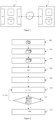
- a biometric authentication system comprises a first device 1 and a second device 2 adapted to communicate with each other via a communication network 3.
- the first device 1 comprises an image sensor 10, a data processing unit 12, a memory 14 and a communication interface 16 with the second device 2.
- the image sensor 10 is for example suitable for acquiring a video of an individual, that is to say a sequence of images showing an individual.
- an “image showing an individual” means an image that shows a part of the individual’s body, in particular a part of the individual’s body that allows the individual to be distinguished from another individual.
- the acquired images may show the individual's face, or at least one fingerprint of the individual.
- the data processing unit 12 is configured to apply certain processing to the images acquired by the image sensor 10.
- the processing unit 12 is configured to implement a convolutional neural network taking an image I as input and producing from this input image a biometric template T relating to the individual shown in the input image I.
- a convolutional neural network taking an image I as input and producing from this input image a biometric template T relating to the individual shown in the input image I.
- the processing unit 12 typically comprises at least one processor for implementing the aforementioned processing, the or each processor being able to take any form (ASIC, FPGA, SoC, microcontroller, etc.).
- the first device 1 further comprises a memory which stores a computer program comprising code instructions executable by the or each processor. When the program is executed by the or each processor, a method comprising the aforementioned processing operations is implemented.
- Memory typically includes a volatile memory unit (RAM for example) and non-volatile memory (flash, EEPROM, hard drive, SSD, etc.).
- RAM volatile memory unit
- flash non-volatile memory
- the communication interface 16 is adapted to allow the first device 1 to transmit data to the second device 2 via the communication network 3.
- This communication interface 16 can be of any type (wired or wireless radio), and the communications via this communication network 3 can be governed by any communication protocol (Ethernet, Wi-Fi, Bluetooth, 3G/4G/5G cellular, etc.).
- the first device 1 is typically intended to be used at the entrance to a secure area, into which only authorized individuals are permitted to enter.
- the first device 1 may be part of or coupled to a gate constituting a physical barrier. preventing an unauthorized individual from entering the secure area, and authorizing an authorized individual to enter it.
- biometric authentication having for example the purpose of determining whether this individual is authorized (in which case he will have the right to enter the secure area) or not (in which case access to the secure area will be prohibited).
- the first device 1 comprises several image sensors adapted to acquire a plurality of images of an individual.
- the second device 2 is distant from the first device 1.
- the second device 2 comprises a communication interface 20 with the first device 1, a processing unit 22 and a memory 24.
- the communication interface 20 may be of the same type as the communication interface 16 of the first device 1.
- the processing unit 22 is in particular configured to implement the same convolutional neural network of mathematical function CNN as the first device 1.
- the memory 24 is intended to store a database comprising biometric templates or biometric images relating to various previously enrolled individuals.
- a method implemented by the first device 1 comprises the following steps.
- a camera acquires for example a sequence of images showing the individual.
- the image sequence comprises a number N of images acquired at a relatively high frequency, with N ⁇ 3.
- the sequence of N images is stored in memory 14.
- multiple sensors acquire images showing the individual.
- the image sequence includes images of the individual taken at different times. and by different sensors.
- the processing unit 12 selects from the image sequence a plurality of images constituting a subset of images of this sequence.
- the plurality of images obtained at the end of this selection comprises a number of images K such that 1 ⁇ K ⁇ N.
- the selection 102 of the plurality of images in the image sequence is carried out by the processing unit 12 on the basis of an image quality criterion and on the basis of a temporal location criterion in the image sequence.
- selection 102 advantageously includes the following sub-steps.
- the processing unit 12 calculates a metric associated with the image, the metric being indicative of a quality of the image (step 200). N metrics are therefore calculated in this step 200.
- the calculated metrics are stored in memory 16 in association with their respective images.
- the processing unit 12 selects the image of the image sequence that is associated with the metric indicating the best quality in the set of images of the sequence that have not yet been selected (sub-step 202).
- this set is the image sequence itself acquired by the image sensor 10 in its entirety; in other words, the image selected during this first implementation of the sub-step 202 is the one with the highest quality within the image sequence.
- This image selected during this first implementation is conventionally called the “first image”.
- the processing unit 12 identifies each image of the image sequence located in a temporal neighborhood of the image selected in substep 202 (i.e. the first image).
- An image of the sequence is considered to be neighboring the image selected in substep 202 if it is located in a time interval of predefined duration including the selected image, for example a time interval centered on this selected image.
- a time interval of predefined duration including the selected image, for example a time interval centered on this selected image.
- the processing unit 12 degrades the metric associated with at least one of the neighboring images (substep 204).
- degradation is meant that the value of the metric is modified so as to decrease the quality indicated by the metric. It is understood that this degradation only concerns the calculated metric values, and not the images to which these metric values relate; in other words, the images are not degraded in themselves.
- the processing unit 12 degrades 204 the metric associated with any image neighboring the image previously selected in the sub-step 202. All the degradations are for example shifts according to the same quality difference.
- selection step 102 is complete.
- substeps 202, 204 and 206 are iterated as follows.
- the processing unit 12 repeats the substep 202 of selecting an image from the image sequence that is associated with the metric indicating the best quality in the set of images in the sequence that have not yet been selected.
- a difference from the previous implementation of this substep 202 is that in the meantime the first image has been selected; thus, at the second implementation of the substep 202, all the images of the sequence not yet selected correspond to the initial image sequence excluding the first image. A second image different from the first image is therefore selected during this second implementation of the substep 202.
- Another difference from the previous implementation of this substep is that in the meantime the metrics respectively associated with some images (at least one of the images neighboring the first image) have been degraded. This advantageously favors the selection as a second image of an image that is not temporally close to the first image.
- the processing unit 12 repeats the substep 204 of degrading the metric associated with at least one of the neighboring images of the last selected image, namely the second image.
- the same temporal neighborhood can be used.
- This embodiment of the selection step 102 has the advantage of leading to the obtaining of a plurality of selected images which are not too close to each other temporally, and therefore not very redundant, while being of good quality.
- the processing unit 12 passes each selected image as input to the convolutional neural network.
- the processing implemented by the convolutional neural network produces on the basis of each selected image a corresponding biometric template relating to the individual shown in the image (step 104).
- K templates associated with step 104 are produced by the convolutional neural network.
- Each biometric template is typically presented in the form of a vector, for example of norm 1.
- the biometric templates produced by the convolutional neural network are stored in memory 14.
- the processing unit 12 calculates an average template TM constituting, as its name indicates, an average of the K biometric templates produced previously.
- the average template TM can be calculated as the sum of these K biometric templates divided by the sum of their respective standards (therefore divided by K in the case of vectors with a standard equal to 1).
- the processing unit 12 chooses one of the images forming part of the K images that have been selected, which is conventionally called the initial image I 0 .
- the initial image I 0 can be any one among the K selected images on the basis of which the template TM was calculated.
- the processing unit 12 implements a loop comprising one or more iterations, this loop producing a final image I f from the initial image I 0 .
- the initial iteration of the loop comprises a modification step 110 during which the processing unit 12 modifies the initial image I 0 into a modified image I 1 .
- the modification 110 implemented is adapted to satisfy the following condition: an error E 1 between the average template TM and a biometric template T 1 produced by applying the processing to the modified image I 1 is less than an error Eo between the average template TM and the biometric template T 0 having been produced by applying the processing to the initial image I 0 .
- this modification step does not necessarily require the prior calculation of the biometric template T 1 produced by applying the processing to the modified image I 1 nor of the error E 1 .
- such a calculation can be implemented in practice to check whether an image modification is covered by the modification carried out in step 110.
- the modification step 110 guarantees that the condition on the errors E1, E2 is fulfilled, that is to say that the error E 1 between the average template TM and a biometric template T 1 produced by applying the processing to the modified image I 1 is less than the error Eo between the average template TM and the biometric template T 0 having been produced by applying the processing to the initial image I 0 .
- the modification 110 of the image I 0 into the modified image I 1 is carried out in the following manner.
- This embodiment of the modification step 110 is inspired by the gradient descent method, traditionally used to update the parameters of a neural network in a way to minimize a loss. However, in the present method, it is not the parameters of the convolutional neural network of mathematical function CNN that are sought to be modified, but an image that has been passed as input to this convolutional neural network (in this case the image I 0 ), which is not conventional.
- the initial iteration of the loop then includes a verification step 112 during which the processing unit 12 checks whether one of the following exit conditions is satisfied.
- a second condition is satisfied when the number of iterations of the modification step 110 implemented reaches a predefined threshold. At this stage, the modification step has only been implemented once.
- the final image I f is then the modified image I 1 .
- the modification 110 implemented at the iteration of index k is adapted so that the error E k+1 between the average template TM and the biometric template T k+1 produced by applying the processing to the modified image I k+1 is less than the error E k between the average template and the biometric template having been produced by applying the processing to the image I k .
- the final image I f obtained at the output of the loop is the modified image produced during the last implementation of the modification step 110.
- the final image I f can perfectly well be the image I 1 (in the case where a single iteration of the loop was sufficient to lead to the satisfaction of the first condition or the second condition), or be an image resulting from one or more successive modifications of this image I 1 (in the case where several iterations of the loop had to be executed to satisfy the first condition or the second condition).
- the final image I f is transmitted to the second device 2 via the communication interface (step 114).
- the final image I f has a double advantage: it constitutes a small data item whose transmission 114 consumes little bandwidth on the communication network 3, while compiling visual information from the K images selected in the video sequence. This final image I f is less likely to be noisy than one of the original images of the acquired image sequence.
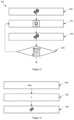
- the second device 2 implements a method comprising the following steps.
- the second device 2 receives the final image I f via its communication interface (step 300).
- the processing unit 22 of the second device 2 passes the final image If as input to the same convolutional neural network of mathematical function CNN as that implemented by the first device 1 (step 302).
- the processing implemented in step 302 on the second device 2 side is identical to each processing implemented in step 104 on the first device 1 side.
- the final biometric template T f is close to the average template TM. This property allows the second device 2 to implement matches that remain reliable. Thus, a dual objective was achieved: the biometric authentication performed consumed only a small amount of bandwidth on the communication network 3 between the first device 1 and the second device 2 (only one information-rich image was transmitted on this network), and this without compromising the proper functioning of the template matching.
- the method implemented by the first device 1 can also be combined with a method implemented by the second device 2 to enroll the individual in the database of the memory 24 (in which case the comparison/matching step is simply replaced by a storage of the final template T f and/or the final image I f in the database).
- the acquisition steps 100 and selection steps 102 are optional preliminary steps for obtaining the final image I f .
- the selection 102 is optional, and the plurality of K images on the basis of which the final image is obtained does not necessarily come from a sequence of images acquired by an image sensor 10.
Landscapes
- Engineering & Computer Science (AREA)
- Theoretical Computer Science (AREA)
- Physics & Mathematics (AREA)
- General Physics & Mathematics (AREA)
- Multimedia (AREA)
- General Health & Medical Sciences (AREA)
- Health & Medical Sciences (AREA)
- Computer Vision & Pattern Recognition (AREA)
- Human Computer Interaction (AREA)
- Evolutionary Computation (AREA)
- Quality & Reliability (AREA)
- Artificial Intelligence (AREA)
- Computing Systems (AREA)
- Software Systems (AREA)
- General Engineering & Computer Science (AREA)
- Computer Security & Cryptography (AREA)
- Data Mining & Analysis (AREA)
- Life Sciences & Earth Sciences (AREA)
- Databases & Information Systems (AREA)
- Medical Informatics (AREA)
- Signal Processing (AREA)
- Computer Networks & Wireless Communication (AREA)
- Biophysics (AREA)
- Biomedical Technology (AREA)
- Computer Hardware Design (AREA)
- Computational Linguistics (AREA)
- Cardiology (AREA)
- Bioinformatics & Cheminformatics (AREA)
- Oral & Maxillofacial Surgery (AREA)
- Evolutionary Biology (AREA)
- Molecular Biology (AREA)
- Mathematical Physics (AREA)
- Bioinformatics & Computational Biology (AREA)
- Heart & Thoracic Surgery (AREA)
- Physiology (AREA)
- Collating Specific Patterns (AREA)
- Image Analysis (AREA)
- Burglar Alarm Systems (AREA)
- Traffic Control Systems (AREA)
Claims (8)
- Verfahren zur Verarbeitung von eine Person betreffende biometrische Daten enthaltenden Bildern, das von einem Computer durchgeführt wird, wobei das Verfahren enthält- für jedes Bild, das Teil einer Vielzahl von eine Person zeigenden Bildern ist, Anwendung (104) einer Verarbeitung an das Bild, um ein die Person betreffendes biometrisches Template zu erzeugen,- Berechnung (106) eines mittleren Templates (TM), das einen Mittelwert der erzeugten biometrischen Templates bildet,- Änderung (110) eines in der Vielzahl von Bildern gewählten Bilds (I0) in ein geändertes Bild (I1), wobei die Änderung (110) geeignet ist, damit ein Fehler zwischen dem mittleren Template (TM) und einem anderen biometrischen Template, das durch Anwendung der Verarbeitung an das geänderte Bild (I1) erzeugt wird, geringer ist als ein Fehler zwischen dem mittleren Template (TM) und dem biometrischen Template, das durch Anwendung der Verarbeitung an das gewählte Bild (I0) erzeugt wurde;der Änderungsschritt (110) wird folgendermaßen wiederholt:
 - Ik ein durch eine Iteration k des Änderungsschritts (110) zu änderndes Bild ist,- Ik+1 ein durch die Iteration k erzeugtes geändertes Bild ist,- A ein vordefinierter Parameter ist,-
- Verfahren nach dem vorhergehenden Anspruch, wobei das gewählte Bild (I0) das Bild ist, das dem dem mittleren Template (TM) am nächsten liegenden biometrischen Template zugeordnet ist.
- Verfahren nach einem der vorhergehenden Ansprüche, wobei der Änderungsschritt (110) wiederholt wird, bis mindestens eine der folgenden Bedingungen erfüllt ist:- eine Iteration des Änderungsschritts (110) hat ein endgültiges Bild (If) derart erzeugt, dass ein Fehler zwischen dem mittleren Template (TM) und einem durch Anwendung der Verarbeitung an das endgültige Bild (If) erzeugten biometrischen Template geringer ist als eine vordefinierte Schwelle,- die Anzahl von Iterationen des Änderungsschritts (110) hat eine vordefinierte Schwelle erreicht.
- Verfahren nach einem der vorhergehenden Ansprüche, wobei die Verarbeitung von einem gefalteten neuronalen Netzwerk durchgeführt wird.
- Verfahren nach einem der vorhergehenden Ansprüche, das außerdem enthält:- eine Auswahl (102) der Vielzahl von Bildern in einer Folge von Bildern, wobei die Auswahl auf der Basis eines Bildqualitätskriteriums und auf der Basis eines zeitlichen Lokalisierungskriteriums in der Folge von Bildern durchgeführt wird,der Auswahlschritt (102) enthält:a) für jedes Bild der Folge von Bildern, Berechnung (200) einer zugeordneten Metrik, die eine Qualität des Bilds anzeigt,b) Auswahl (202) eines Bilds aus der Folge von Bildern, dessen zugeordnete Metrik die beste Qualität in einer Gruppe von Bildern der Folge anzeigt, die noch nicht ausgewählt wurden,c) für mindestens ein Bild der Folge anders als das ausgewählte Bild, das sich in einer vordefinierten zeitlichen Nachbarschaft des ausgewählten Bilds befindet, Degradierung (204) der dem Bild zugeordneten Metrik,d) Wiederholung der Schritte b) und c), bis mindestens eine der folgenden Bedingungen erfüllt ist:- die Anzahl von Durchführungen des Schritts b) hat eine vordefinierte Schwelle erreicht,- die Metrik jedes Bilds der Folge von Bildern, das noch nicht ausgewählt wurde, hat eine vordefinierte Qualitätsschwelle überschritten.
- Verfahren nach einem der vorhergehenden Ansprüche, dessen Schritte von einer ersten Vorrichtung (1) durchgeführt werden, wobei das Verfahren außerdem einen Schritt enthält- der Übertragung (114), in einem Kommunikationsnetz (3) und für eine zweite Vorrichtung (2) bestimmt, eines endgültigen Bilds (If), das vom geänderten Bild stammt, wobei die zweite Vorrichtung (2) konfiguriert ist, an das endgültige Bild die Verarbeitung anzuwenden, um ein die Person betreffendes endgültiges biometrisches Template (Tf) zu erzeugen.
- Computerlesbarer Speicher (14), der vom Computer für die Ausführung der Schritte des Verfahrens nach einem der Ansprüche 1 bis 6 ausführbare Anweisungen speichert.
- Vorrichtung (1), die einen Sensor (10), der konfiguriert ist, eine Vielzahl von eine Person zeigenden Bildern zu erfassen, und mindestens einen Prozessor (12) enthält, der konfiguriert ist, die Schritte eines Verfahrens nach einem der Ansprüche 1 bis 6 auszuführen.
Applications Claiming Priority (1)
| Application Number | Priority Date | Filing Date | Title |
|---|---|---|---|
| FR2110146A FR3127602B1 (fr) | 2021-09-27 | 2021-09-27 | procédé de génération d’une image augmentée et dispositif associé |
Publications (2)
| Publication Number | Publication Date |
|---|---|
| EP4155987A1 EP4155987A1 (de) | 2023-03-29 |
| EP4155987B1 true EP4155987B1 (de) | 2024-11-20 |
Family
ID=79019309
Family Applications (1)
| Application Number | Title | Priority Date | Filing Date |
|---|---|---|---|
| EP22196428.1A Active EP4155987B1 (de) | 2021-09-27 | 2022-09-19 | Verfahren zum modifizieren eines bildes, das biometrische daten enthält, und vorrichtung dafür |
Country Status (6)
| Country | Link |
|---|---|
| US (1) | US12387458B2 (de) |
| EP (1) | EP4155987B1 (de) |
| JP (1) | JP7386951B2 (de) |
| CN (1) | CN115880788A (de) |
| AU (1) | AU2022235623B2 (de) |
| FR (1) | FR3127602B1 (de) |
Families Citing this family (1)
| Publication number | Priority date | Publication date | Assignee | Title |
|---|---|---|---|---|
| CN116226822B (zh) * | 2023-05-05 | 2023-07-14 | 深圳市魔样科技有限公司 | 一种智能戒指身份数据采集方法及系统 |
Family Cites Families (14)
| Publication number | Priority date | Publication date | Assignee | Title |
|---|---|---|---|---|
| WO2002095552A2 (en) * | 2001-05-18 | 2002-11-28 | Imprivata, Inc. | Authentication with variable biometric templates |
| EP2053536B1 (de) * | 2002-09-17 | 2012-06-20 | Fujitsu Ltd. | Gerät zur Aufzeichnung biologischer Informationen und biologische Informationen benutzendes Berechtigungsgerät |
| JP4187494B2 (ja) | 2002-09-27 | 2008-11-26 | グローリー株式会社 | 画像認識装置、画像認識方法およびその方法をコンピュータに実行させるプログラム |
| JP4496005B2 (ja) | 2004-04-28 | 2010-07-07 | 株式会社東芝 | 画像処理方法および画像処理装置 |
| US7751598B2 (en) * | 2005-08-25 | 2010-07-06 | Sarnoff Corporation | Methods and systems for biometric identification |
| CN102073849A (zh) | 2010-08-06 | 2011-05-25 | 中国科学院自动化研究所 | 目标图像识别系统及方法 |
| JP5291735B2 (ja) | 2011-02-24 | 2013-09-18 | ソネットエンタテインメント株式会社 | 似顔絵作成装置、配置情報生成装置、配置情報生成方法、及びプログラム |
| CN103250183A (zh) | 2011-09-05 | 2013-08-14 | 株式会社摩如富 | 脸认证系统、脸认证方法、以及脸认证程序 |
| US9495526B2 (en) * | 2013-03-15 | 2016-11-15 | Eyelock Llc | Efficient prevention of fraud |
| US8965066B1 (en) * | 2013-09-16 | 2015-02-24 | Eye Verify LLC | Biometric template security and key generation |
| US20170206403A1 (en) * | 2016-01-19 | 2017-07-20 | Jason RAMBACH | Method of distributed face recognition and system thereof |
| CN106022067B (zh) * | 2016-05-30 | 2018-03-27 | 广东欧珀移动通信有限公司 | 一种解锁控制方法及终端设备 |
| CN109408653B (zh) | 2018-09-30 | 2022-01-28 | 叠境数字科技(上海)有限公司 | 基于多特征检索和形变的人体发型生成方法 |
| MX2022002387A (es) * | 2019-09-12 | 2022-03-17 | Identy Inc | Metodo para obtener datos de una imagen de un objeto de un usuario que tiene una caracteristica biometrica del usuario. |
-
2021
- 2021-09-27 FR FR2110146A patent/FR3127602B1/fr active Active
-
2022
- 2022-09-19 EP EP22196428.1A patent/EP4155987B1/de active Active
- 2022-09-23 AU AU2022235623A patent/AU2022235623B2/en active Active
- 2022-09-26 JP JP2022153159A patent/JP7386951B2/ja active Active
- 2022-09-26 CN CN202211173057.2A patent/CN115880788A/zh active Pending
- 2022-09-26 US US17/952,371 patent/US12387458B2/en active Active
Also Published As
| Publication number | Publication date |
|---|---|
| AU2022235623B2 (en) | 2023-09-07 |
| FR3127602A1 (fr) | 2023-03-31 |
| FR3127602B1 (fr) | 2025-02-21 |
| US20230097143A1 (en) | 2023-03-30 |
| EP4155987A1 (de) | 2023-03-29 |
| JP7386951B2 (ja) | 2023-11-27 |
| US12387458B2 (en) | 2025-08-12 |
| AU2022235623A1 (en) | 2023-04-13 |
| CN115880788A (zh) | 2023-03-31 |
| JP2023048156A (ja) | 2023-04-06 |
Similar Documents
| Publication | Publication Date | Title |
|---|---|---|
| EP2318980B1 (de) | Verfahren zur bestimmung einer pseudoidentität auf der grundlage von eigenschaften von minutien und diesbezügliche einrichtung | |
| EP2924609B1 (de) | Verfahren zum einholen von daten in eine basis zum schutz dieser daten | |
| CA2957774C (fr) | Procede de securisation et de verification d'un document | |
| EP2862309B1 (de) | Verfahren zur sicheren datenverarbeitung | |
| EP3742699B1 (de) | Starkes authentifizierungsverfahren einer person | |
| FR3102600A1 (fr) | Procédé de segmentation d’une image d’entrée représentant au moins une empreinte biométrique au moyen d’un réseau de neurones à convolution | |
| EP4155987B1 (de) | Verfahren zum modifizieren eines bildes, das biometrische daten enthält, und vorrichtung dafür | |
| EP2754088B1 (de) | Identifikation durch iris-erkennung | |
| EP3214601A1 (de) | Verfahren zur verbesserung von bildern, das auf bilder von fingerabdrücken angewandt werden kann | |
| FR3088755A1 (fr) | Procede de defloutage d’une image | |
| EP1792278B1 (de) | Verfahren zur detektion und nachverfolgung von punktuellen zielen in einem optoelektronischen überwachungssystem | |
| EP3274913B1 (de) | Vorrichtung und verfahren zur biometrischen erfassung der iris | |
| EP3797509B1 (de) | Verarbeitung von impulsrauschen in einer videosequenz | |
| FR3106678A1 (fr) | Traitement biométrique comprenant une pénalisation d’un score de correspondance | |
| EP4668143A1 (de) | Verfahren zur sicherung des zugriffs auf eine datenquelle | |
| EP4150574B1 (de) | Verfahren zur verarbeitung von bildern | |
| EP2939179B1 (de) | Verfahren und vorrichtung zur segmentierung des bild eines auges | |
| FR3161972A3 (fr) | Procédé de sécurisation d’accès à une source de données | |
| FR3089320A1 (fr) | Vérification biométrique partagée entre un processeur et un élément sécurisé | |
| EP4685676A1 (de) | Verfahren zur sicherung des zugriffs auf eine datenquelle | |
| FR3157636A1 (fr) | Procédé et dispositif de détermination de fraudes dans un système de reconnaissance d’images biométriques. | |
| EP4575848A1 (de) | Verfahren zur zugriffskontrolle auf eine website | |
| FR3162090A1 (fr) | Procédé et dispositif de détection de fraude à l’identification d’une personne | |
| WO2024002618A1 (fr) | Procédé de reconnaissance biometrique |
Legal Events
| Date | Code | Title | Description |
|---|---|---|---|
| PUAI | Public reference made under article 153(3) epc to a published international application that has entered the european phase |
Free format text: ORIGINAL CODE: 0009012 |
|
| STAA | Information on the status of an ep patent application or granted ep patent |
Free format text: STATUS: REQUEST FOR EXAMINATION WAS MADE |
|
| 17P | Request for examination filed |
Effective date: 20220919 |
|
| AK | Designated contracting states |
Kind code of ref document: A1 Designated state(s): AL AT BE BG CH CY CZ DE DK EE ES FI FR GB GR HR HU IE IS IT LI LT LU LV MC MK MT NL NO PL PT RO RS SE SI SK SM TR |
|
| P01 | Opt-out of the competence of the unified patent court (upc) registered |
Effective date: 20230919 |
|
| GRAP | Despatch of communication of intention to grant a patent |
Free format text: ORIGINAL CODE: EPIDOSNIGR1 |
|
| STAA | Information on the status of an ep patent application or granted ep patent |
Free format text: STATUS: GRANT OF PATENT IS INTENDED |
|
| RIC1 | Information provided on ipc code assigned before grant |
Ipc: G06F 18/2413 20230101ALN20240619BHEP Ipc: G06V 10/82 20220101ALN20240619BHEP Ipc: G06V 40/50 20220101ALN20240619BHEP Ipc: H04W 12/06 20210101ALI20240619BHEP Ipc: H04L 9/40 20220101ALI20240619BHEP Ipc: G06V 40/16 20220101ALI20240619BHEP Ipc: G06V 40/10 20220101ALI20240619BHEP Ipc: G06V 10/98 20220101ALI20240619BHEP Ipc: G06V 10/40 20220101ALI20240619BHEP Ipc: G06N 3/02 20060101ALI20240619BHEP Ipc: G06F 21/32 20130101AFI20240619BHEP |
|
| INTG | Intention to grant announced |
Effective date: 20240718 |
|
| GRAS | Grant fee paid |
Free format text: ORIGINAL CODE: EPIDOSNIGR3 |
|
| GRAA | (expected) grant |
Free format text: ORIGINAL CODE: 0009210 |
|
| STAA | Information on the status of an ep patent application or granted ep patent |
Free format text: STATUS: THE PATENT HAS BEEN GRANTED |
|
| AK | Designated contracting states |
Kind code of ref document: B1 Designated state(s): AL AT BE BG CH CY CZ DE DK EE ES FI FR GB GR HR HU IE IS IT LI LT LU LV MC MK MT NL NO PL PT RO RS SE SI SK SM TR |
|
| REG | Reference to a national code |
Ref country code: GB Ref legal event code: FG4D Free format text: NOT ENGLISH |
|
| REG | Reference to a national code |
Ref country code: CH Ref legal event code: EP |
|
| REG | Reference to a national code |
Ref country code: DE Ref legal event code: R096 Ref document number: 602022007882 Country of ref document: DE |
|
| REG | Reference to a national code |
Ref country code: IE Ref legal event code: FG4D Free format text: LANGUAGE OF EP DOCUMENT: FRENCH |
|
| RAP2 | Party data changed (patent owner data changed or rights of a patent transferred) |
Owner name: IDEMIA PUBLIC SECURITY FRANCE |
|
| REG | Reference to a national code |
Ref country code: LT Ref legal event code: MG9D |
|
| REG | Reference to a national code |
Ref country code: NL Ref legal event code: MP Effective date: 20241120 |
|
| PG25 | Lapsed in a contracting state [announced via postgrant information from national office to epo] |
Ref country code: HR Free format text: LAPSE BECAUSE OF FAILURE TO SUBMIT A TRANSLATION OF THE DESCRIPTION OR TO PAY THE FEE WITHIN THE PRESCRIBED TIME-LIMIT Effective date: 20241120 Ref country code: IS Free format text: LAPSE BECAUSE OF FAILURE TO SUBMIT A TRANSLATION OF THE DESCRIPTION OR TO PAY THE FEE WITHIN THE PRESCRIBED TIME-LIMIT Effective date: 20250320 Ref country code: PT Free format text: LAPSE BECAUSE OF FAILURE TO SUBMIT A TRANSLATION OF THE DESCRIPTION OR TO PAY THE FEE WITHIN THE PRESCRIBED TIME-LIMIT Effective date: 20250320 |
|
| PG25 | Lapsed in a contracting state [announced via postgrant information from national office to epo] |
Ref country code: NL Free format text: LAPSE BECAUSE OF FAILURE TO SUBMIT A TRANSLATION OF THE DESCRIPTION OR TO PAY THE FEE WITHIN THE PRESCRIBED TIME-LIMIT Effective date: 20241120 Ref country code: FI Free format text: LAPSE BECAUSE OF FAILURE TO SUBMIT A TRANSLATION OF THE DESCRIPTION OR TO PAY THE FEE WITHIN THE PRESCRIBED TIME-LIMIT Effective date: 20241120 |
|
| REG | Reference to a national code |
Ref country code: AT Ref legal event code: MK05 Ref document number: 1744217 Country of ref document: AT Kind code of ref document: T Effective date: 20241120 |
|
| PG25 | Lapsed in a contracting state [announced via postgrant information from national office to epo] |
Ref country code: BG Free format text: LAPSE BECAUSE OF FAILURE TO SUBMIT A TRANSLATION OF THE DESCRIPTION OR TO PAY THE FEE WITHIN THE PRESCRIBED TIME-LIMIT Effective date: 20241120 |
|
| PG25 | Lapsed in a contracting state [announced via postgrant information from national office to epo] |
Ref country code: ES Free format text: LAPSE BECAUSE OF FAILURE TO SUBMIT A TRANSLATION OF THE DESCRIPTION OR TO PAY THE FEE WITHIN THE PRESCRIBED TIME-LIMIT Effective date: 20241120 |
|
| PG25 | Lapsed in a contracting state [announced via postgrant information from national office to epo] |
Ref country code: NO Free format text: LAPSE BECAUSE OF FAILURE TO SUBMIT A TRANSLATION OF THE DESCRIPTION OR TO PAY THE FEE WITHIN THE PRESCRIBED TIME-LIMIT Effective date: 20250220 |
|
| PG25 | Lapsed in a contracting state [announced via postgrant information from national office to epo] |
Ref country code: AT Free format text: LAPSE BECAUSE OF FAILURE TO SUBMIT A TRANSLATION OF THE DESCRIPTION OR TO PAY THE FEE WITHIN THE PRESCRIBED TIME-LIMIT Effective date: 20241120 Ref country code: LV Free format text: LAPSE BECAUSE OF FAILURE TO SUBMIT A TRANSLATION OF THE DESCRIPTION OR TO PAY THE FEE WITHIN THE PRESCRIBED TIME-LIMIT Effective date: 20241120 Ref country code: GR Free format text: LAPSE BECAUSE OF FAILURE TO SUBMIT A TRANSLATION OF THE DESCRIPTION OR TO PAY THE FEE WITHIN THE PRESCRIBED TIME-LIMIT Effective date: 20250221 |
|
| PG25 | Lapsed in a contracting state [announced via postgrant information from national office to epo] |
Ref country code: PL Free format text: LAPSE BECAUSE OF FAILURE TO SUBMIT A TRANSLATION OF THE DESCRIPTION OR TO PAY THE FEE WITHIN THE PRESCRIBED TIME-LIMIT Effective date: 20241120 |
|
| PG25 | Lapsed in a contracting state [announced via postgrant information from national office to epo] |
Ref country code: RS Free format text: LAPSE BECAUSE OF FAILURE TO SUBMIT A TRANSLATION OF THE DESCRIPTION OR TO PAY THE FEE WITHIN THE PRESCRIBED TIME-LIMIT Effective date: 20250220 |
|
| REG | Reference to a national code |
Ref country code: DE Ref legal event code: R081 Ref document number: 602022007882 Country of ref document: DE Owner name: IDEMIA PUBLIC SECURITY FRANCE, FR Free format text: FORMER OWNER: IDEMIA IDENTITY & SECURITY FRANCE, COURBEVOIE, FR |
|
| PG25 | Lapsed in a contracting state [announced via postgrant information from national office to epo] |
Ref country code: SM Free format text: LAPSE BECAUSE OF FAILURE TO SUBMIT A TRANSLATION OF THE DESCRIPTION OR TO PAY THE FEE WITHIN THE PRESCRIBED TIME-LIMIT Effective date: 20241120 |
|
| PG25 | Lapsed in a contracting state [announced via postgrant information from national office to epo] |
Ref country code: DK Free format text: LAPSE BECAUSE OF FAILURE TO SUBMIT A TRANSLATION OF THE DESCRIPTION OR TO PAY THE FEE WITHIN THE PRESCRIBED TIME-LIMIT Effective date: 20241120 |
|
| PG25 | Lapsed in a contracting state [announced via postgrant information from national office to epo] |
Ref country code: EE Free format text: LAPSE BECAUSE OF FAILURE TO SUBMIT A TRANSLATION OF THE DESCRIPTION OR TO PAY THE FEE WITHIN THE PRESCRIBED TIME-LIMIT Effective date: 20241120 |
|
| PG25 | Lapsed in a contracting state [announced via postgrant information from national office to epo] |
Ref country code: RO Free format text: LAPSE BECAUSE OF FAILURE TO SUBMIT A TRANSLATION OF THE DESCRIPTION OR TO PAY THE FEE WITHIN THE PRESCRIBED TIME-LIMIT Effective date: 20241120 |
|
| PG25 | Lapsed in a contracting state [announced via postgrant information from national office to epo] |
Ref country code: SK Free format text: LAPSE BECAUSE OF FAILURE TO SUBMIT A TRANSLATION OF THE DESCRIPTION OR TO PAY THE FEE WITHIN THE PRESCRIBED TIME-LIMIT Effective date: 20241120 |
|
| PG25 | Lapsed in a contracting state [announced via postgrant information from national office to epo] |
Ref country code: CZ Free format text: LAPSE BECAUSE OF FAILURE TO SUBMIT A TRANSLATION OF THE DESCRIPTION OR TO PAY THE FEE WITHIN THE PRESCRIBED TIME-LIMIT Effective date: 20241120 |
|
| PG25 | Lapsed in a contracting state [announced via postgrant information from national office to epo] |
Ref country code: IT Free format text: LAPSE BECAUSE OF FAILURE TO SUBMIT A TRANSLATION OF THE DESCRIPTION OR TO PAY THE FEE WITHIN THE PRESCRIBED TIME-LIMIT Effective date: 20241120 |
|
| REG | Reference to a national code |
Ref country code: DE Ref legal event code: R097 Ref document number: 602022007882 Country of ref document: DE |
|
| PG25 | Lapsed in a contracting state [announced via postgrant information from national office to epo] |
Ref country code: SE Free format text: LAPSE BECAUSE OF FAILURE TO SUBMIT A TRANSLATION OF THE DESCRIPTION OR TO PAY THE FEE WITHIN THE PRESCRIBED TIME-LIMIT Effective date: 20241120 |
|
| PLBE | No opposition filed within time limit |
Free format text: ORIGINAL CODE: 0009261 |
|
| STAA | Information on the status of an ep patent application or granted ep patent |
Free format text: STATUS: NO OPPOSITION FILED WITHIN TIME LIMIT |
|
| PGFP | Annual fee paid to national office [announced via postgrant information from national office to epo] |
Ref country code: DE Payment date: 20250820 Year of fee payment: 4 |
|
| 26N | No opposition filed |
Effective date: 20250821 |