EP4155584B1 - Verfahren zum betreiben einer antriebsanordnung, antriebsanordnung und fahrzeug - Google Patents
Verfahren zum betreiben einer antriebsanordnung, antriebsanordnung und fahrzeug Download PDFInfo
- Publication number
- EP4155584B1 EP4155584B1 EP22195158.5A EP22195158A EP4155584B1 EP 4155584 B1 EP4155584 B1 EP 4155584B1 EP 22195158 A EP22195158 A EP 22195158A EP 4155584 B1 EP4155584 B1 EP 4155584B1
- Authority
- EP
- European Patent Office
- Prior art keywords
- coupling element
- coupling
- clutch
- transmission
- relative position
- Prior art date
- Legal status (The legal status is an assumption and is not a legal conclusion. Google has not performed a legal analysis and makes no representation as to the accuracy of the status listed.)
- Active
Links
Images


Classifications
-
- F—MECHANICAL ENGINEERING; LIGHTING; HEATING; WEAPONS; BLASTING
- F16—ENGINEERING ELEMENTS AND UNITS; GENERAL MEASURES FOR PRODUCING AND MAINTAINING EFFECTIVE FUNCTIONING OF MACHINES OR INSTALLATIONS; THERMAL INSULATION IN GENERAL
- F16H—GEARING
- F16H61/00—Control functions within control units of change-speed- or reversing-gearings for conveying rotary motion ; Control of exclusively fluid gearing, friction gearing, gearings with endless flexible members or other particular types of gearing
- F16H61/04—Smoothing ratio shift
-
- B—PERFORMING OPERATIONS; TRANSPORTING
- B60—VEHICLES IN GENERAL
- B60K—ARRANGEMENT OR MOUNTING OF PROPULSION UNITS OR OF TRANSMISSIONS IN VEHICLES; ARRANGEMENT OR MOUNTING OF PLURAL DIVERSE PRIME-MOVERS IN VEHICLES; AUXILIARY DRIVES FOR VEHICLES; INSTRUMENTATION OR DASHBOARDS FOR VEHICLES; ARRANGEMENTS IN CONNECTION WITH COOLING, AIR INTAKE, GAS EXHAUST OR FUEL SUPPLY OF PROPULSION UNITS IN VEHICLES
- B60K1/00—Arrangement or mounting of electrical propulsion units
-
- B—PERFORMING OPERATIONS; TRANSPORTING
- B60—VEHICLES IN GENERAL
- B60K—ARRANGEMENT OR MOUNTING OF PROPULSION UNITS OR OF TRANSMISSIONS IN VEHICLES; ARRANGEMENT OR MOUNTING OF PLURAL DIVERSE PRIME-MOVERS IN VEHICLES; AUXILIARY DRIVES FOR VEHICLES; INSTRUMENTATION OR DASHBOARDS FOR VEHICLES; ARRANGEMENTS IN CONNECTION WITH COOLING, AIR INTAKE, GAS EXHAUST OR FUEL SUPPLY OF PROPULSION UNITS IN VEHICLES
- B60K17/00—Arrangement or mounting of transmissions in vehicles
- B60K17/02—Arrangement or mounting of transmissions in vehicles characterised by arrangement, location, or kind of clutch
-
- B—PERFORMING OPERATIONS; TRANSPORTING
- B60—VEHICLES IN GENERAL
- B60K—ARRANGEMENT OR MOUNTING OF PROPULSION UNITS OR OF TRANSMISSIONS IN VEHICLES; ARRANGEMENT OR MOUNTING OF PLURAL DIVERSE PRIME-MOVERS IN VEHICLES; AUXILIARY DRIVES FOR VEHICLES; INSTRUMENTATION OR DASHBOARDS FOR VEHICLES; ARRANGEMENTS IN CONNECTION WITH COOLING, AIR INTAKE, GAS EXHAUST OR FUEL SUPPLY OF PROPULSION UNITS IN VEHICLES
- B60K1/00—Arrangement or mounting of electrical propulsion units
- B60K2001/001—Arrangement or mounting of electrical propulsion units one motor mounted on a propulsion axle for rotating right and left wheels of this axle
-
- B—PERFORMING OPERATIONS; TRANSPORTING
- B60—VEHICLES IN GENERAL
- B60Y—INDEXING SCHEME RELATING TO ASPECTS CROSS-CUTTING VEHICLE TECHNOLOGY
- B60Y2400/00—Special features of vehicle units
- B60Y2400/42—Clutches or brakes
- B60Y2400/422—Synchromesh type clutches or brakes
-
- F—MECHANICAL ENGINEERING; LIGHTING; HEATING; WEAPONS; BLASTING
- F16—ENGINEERING ELEMENTS AND UNITS; GENERAL MEASURES FOR PRODUCING AND MAINTAINING EFFECTIVE FUNCTIONING OF MACHINES OR INSTALLATIONS; THERMAL INSULATION IN GENERAL
- F16H—GEARING
- F16H61/00—Control functions within control units of change-speed- or reversing-gearings for conveying rotary motion ; Control of exclusively fluid gearing, friction gearing, gearings with endless flexible members or other particular types of gearing
- F16H61/04—Smoothing ratio shift
- F16H2061/047—Smoothing ratio shift by preventing or solving a tooth butt situation upon engagement failure due to misalignment of teeth
-
- F—MECHANICAL ENGINEERING; LIGHTING; HEATING; WEAPONS; BLASTING
- F16—ENGINEERING ELEMENTS AND UNITS; GENERAL MEASURES FOR PRODUCING AND MAINTAINING EFFECTIVE FUNCTIONING OF MACHINES OR INSTALLATIONS; THERMAL INSULATION IN GENERAL
- F16H—GEARING
- F16H3/00—Toothed gearings for conveying rotary motion with variable gear ratio or for reversing rotary motion
- F16H3/02—Toothed gearings for conveying rotary motion with variable gear ratio or for reversing rotary motion without gears having orbital motion
- F16H3/08—Toothed gearings for conveying rotary motion with variable gear ratio or for reversing rotary motion without gears having orbital motion exclusively or essentially with continuously meshing gears, that can be disengaged from their shafts
- F16H3/087—Toothed gearings for conveying rotary motion with variable gear ratio or for reversing rotary motion without gears having orbital motion exclusively or essentially with continuously meshing gears, that can be disengaged from their shafts characterised by the disposition of the gears
- F16H3/089—Toothed gearings for conveying rotary motion with variable gear ratio or for reversing rotary motion without gears having orbital motion exclusively or essentially with continuously meshing gears, that can be disengaged from their shafts characterised by the disposition of the gears all of the meshing gears being supported by a pair of parallel shafts, one being the input shaft and the other the output shaft, there being no countershaft involved
Definitions
- the invention relates to a method for operating a drive arrangement, in particular for a vehicle, according to the preamble of claim 1, a drive arrangement, in particular for a vehicle, having features of claim 8, and a vehicle having features of claim 9.
- an electric machine In drive arrangements with an electric machine, it is generally intended that this can be coupled to and uncoupled from an output element, e.g. an output shaft.
- an output element e.g. an output shaft.
- the uncoupled electric machine is generally stationary and not rotating.
- the electric machine For the coupling process, the electric machine must be accelerated to a certain speed.
- a tooth-on-tooth position occurs between the coupling elements, in which the teeth of the respective gears collide before the gears engage.
- DE 10 2013 204 227 A1 discloses a drive train and a method for performing a load change with a positive shift element, wherein tooth-on-tooth positions are to be avoided.
- the drive train has an electric motor, a drive shaft, two gear ratios, an intermediate shaft, an output differential, a positive shift element and a frictional shift element.
- the positive shift element is moved from one gear ratio (e.g. gear position A) to a neutral position and the frictional shift element is coupled to the other gear ratio by closing.
- the frictional shift element can be coupled to the other gear ratio (e.g. gear position B).
- the frictional shift element can be opened slightly if necessary to enable meshing.
- a method for shifting a transmission is known, wherein the transmission is designed as a CVT transmission and comprises a drive shaft and a clutch device designed as a claw clutch with shift elements that can be brought into positive engagement.
- a first shift element is coupled to the drive shaft in a rotationally fixed manner, the drive shaft being able to be coupled to a second shift element in a rotationally fixed manner during a clutching operation and to be decoupled from the second shift element during a clutching operation, the first shift element being brought into positive engagement with the second shift element during a clutching operation.
- a rotation sensor that outputs a pulse signal when a tooth of a gearing is moved past the rotation sensor.
- a relative angular position is determined from absolute values of the angular positions of the shift elements with the aid of a count of the tooth pulses, starting from a state in which the claw of a first shift element is opposite a gap of the corresponding second shift element.
- the US 5 715 901 A discloses a drive arrangement for a vehicle, comprising an electric machine with a rotor shaft, a drive shaft, wherein the drive shaft is coupled to the rotor shaft of the electric machine such that the drive shaft can be driven by means of the electric machine, a coupling element and a transmission gear arranged on an output shaft, wherein the transmission gear is coupled to the coupling element such that the transmission gear can be driven by means of the coupling element, and a coupling device with a coupling element, wherein the coupling element is coupled to the drive shaft in a rotationally fixed manner, wherein the drive shaft can be coupled to the coupling element in a rotationally fixed manner in a coupling process and can be uncoupled from it in a decoupling process, and wherein during the coupling process a toothing of the coupling element and a toothing of the coupling element are brought into positive engagement with one another.
- a detection device for detecting a differential position between two corresponding claws of two clutch elements, which is necessary during meshing, is known in order to prevent tooth-on-tooth alignment.
- Two Hall sensors are provided as the detection device, with each Hall sensor assigned to the claws of one of the two clutch elements.
- the signals from the Hall sensors are summed in an evaluation unit, with the respective alternating current component of the signals being a measure of the overlap of the corresponding claws.
- the DE 100 60 688 A1 discloses a method for engaging a positive-locking clutch, in which the relative rotational angle positions of the clutch halves are detected to prevent a tooth-to-tooth position of the clutch halves.
- Rotation angle sensors can be assigned to the shafts involved, which can be converted into the rotation angle of the clutch halves, taking into account the intermediate gear stages.
- the drive arrangement comprises an electric machine with a rotor shaft and a drive shaft.
- the drive shaft can be designed as an intermediate shaft.
- the drive shaft is coupled to the rotor shaft of the electric machine in such a way that the drive shaft can be driven (rotationally) by the electric machine.
- the drive shaft is coupled in particular in a rotationally fixed manner or by means of a toothing (e.g. a spur gear stage) to a drive, in particular an electrical machine (electric motor).
- a toothing e.g. a spur gear stage
- an electrical machine electric motor
- the drive assembly further comprises a coupling element.
- a coupling element This can be, for example, a toothing or gear/pinion coupled to an output shaft, an intermediate shaft, or a loose wheel arranged on the drive shaft.
- the drive assembly further comprises a transmission gear arranged on an output shaft.
- the transmission gear is coupled to the coupling element in such a way that the transmission gear can be driven (rotationally) by means of the coupling element.
- the output shaft can be designed in the form of a differential with two output shafts.
- the drive arrangement further comprises a clutch device (clutch) with a clutch element (e.g., a movable or axially displaceable shift sleeve), wherein the clutch element is rotationally fixedly coupled to the drive shaft.
- the clutch element is rotationally fixedly coupled to the drive shaft, in particular by means of a gear arranged on the drive shaft or a guide hub with a toothing arranged on the drive shaft.
- the clutch element is displaceable, in particular, axially (i.e., along the longitudinal direction of the drive shaft or parallel to the central longitudinal axis of the drive shaft).
- the drive shaft can be coupled to the coupling element in a rotationally fixed manner in a coupling process and decoupled from it in a decoupling process.
- a toothing (in particular, an internal toothing) of the coupling element and a toothing (in particular, an external toothing) of the coupling element are brought into positive engagement with one another.
- the coupling element is displaced axially, in particular.
- the coupling element runs with its internal toothing on a corresponding external toothing of the guide hub or gear.
- the coupling element can rotate freely relative to the drive shaft, in particular in the uncoupled state.
- the drive assembly further includes a rotation sensor.
- the rotation sensor outputs a pulse signal when a tooth of a gearing of the transmission gear or a tooth of a sensor wheel non-rotatably coupled to the output shaft is moved past the rotation sensor (due to rotation of the transmission gear or the sensor wheel).
- the absolute position of the transmission gear is redetermined from an absolute position of the rotor shaft of the electric machine, a transmission ratio between the coupling element and the rotor shaft, and a transmission ratio between the coupling element and the transmission gear in a coupled state of the coupling device (i.e., when the coupling element, the coupling element, and the drive shaft are rotationally fixedly coupled).
- the electric machine can comprise a sensor for determining the absolute position of the electric machine or the rotor (rotor shaft) of the electric machine.
- the transmission ratio refers to the ratio between the number and/or size of the teeth of two gear sets. This process can be referred to as restoring the absolute position of the transmission gear.
- the rotation sensor is used in particular to detect a relative position of the transmission gear or sensor wheel.
- detection means detecting the teeth of the gear wheel or the teeth of the encoder wheel rotating past the rotation sensor.
- a relative position of the transmission gear or sensor wheel refers to the position of the teeth of the gearing of the transmission gear or sensor wheel, particularly in relation to the rotation sensor. In other words, it can be determined whether or not a tooth of the transmission gear or sensor wheel is located below the rotation sensor (or within its detection range).
- the rotation sensor can be designed as a wheel speed sensor.
- the relative position of the transmission gear can be determined from the relative position of the sensor wheel by means of a conversion, and vice versa.
- an absolute position of the transmission gear or the sensor wheel is determined depending on a previously stored absolute position of the transmission gear or sensor wheel and a counting of the pulse signals output by means of the rotation sensor.
- an absolute position of the transmission gear or sensor wheel refers to the position of a specific tooth of the gearing of the transmission gear or sensor wheel, particularly in relation to the rotation sensor. In other words, it is possible to determine the rotational position of a specific tooth of the gearing of the transmission gear or sensor wheel.
- the absolute position of the transmission gear can be determined from the absolute position of the sensor wheel by means of conversion and vice versa.
- the rotation sensor can be designed as a Hall sensor, for example, but other speed sensors are also conceivable.
- the proposed design has the advantage, among other things, that the rotational speed of the electric machine can be synchronized during a clutch operation using the pulse signal of the rotation sensor in such a way that a tooth-on-tooth position can be avoided or the time period in which a tooth-on-tooth position occurs (tooth-on-tooth time) can be reduced. Wear is reduced and power losses associated with the tooth-on-tooth position are minimized.
- a tooth-on-tooth position refers to a position of two gears in which the teeth of both gears, particularly their radial surfaces, are in contact with each other, thus preventing meshing between the two gears.
- the absolute position of the transmission gear or the sensor wheel can be stored after at least one rotation cycle (in particular after several rotation cycles, in particular after each rotation cycle).
- the rotation cycle can correspond to one revolution of the transmission gear or the sensor wheel.
- the already stored absolute position can be overwritten with a new absolute position. Storing several absolute positions, in particular those determined one after the other, is also conceivable.
- a relative position of the clutch element i.e., the position of the teeth of the clutch element's gearing relative to the rotor shaft of the electric machine
- the transmission ratio between the rotor shaft and the clutch element can be used for this purpose.
- a relative position of the coupling element i.e., the position of the teeth of the coupling element's toothing relative to the toothing of the transmission gear
- the transmission ratio between the transmission gear and the coupling element can be used for this purpose.
- the coupling process can be carried out depending on the relative position of the coupling element and/or the relative position of the This can prevent the tooth-on-tooth position between the teeth of the coupling element and the coupling element, or at least shorten the corresponding tooth-on-tooth time.
- the relative position of the clutch element can be adjusted depending on the relative position of the coupling element.
- the relative position of the coupling element does not change when the vehicle with the drive assembly is stationary, i.e., when the transmission gear is not rotating.
- the relative position of the clutch element can be adjusted or adapted to the relative position of the coupling element such that a clutch operation can be performed with a non-rotating transmission gear (e.g., when the vehicle with the drive assembly is stationary) without a tooth-on-tooth position or without a tooth-on-tooth time.
- a drive arrangement in particular for a vehicle, wherein the drive arrangement is configured to be operated according to a method as described above.
- the drive arrangement is configured to be operated according to a method as described above.
- the measures described in connection with the method can be used to further refine the drive arrangement.
- the drive arrangement can, for example, be designed as an electric axle (E-axle) or form part of an E-axle.
- a vehicle in particular a motor vehicle, is proposed with a drive arrangement according to the above statements.
- Drive arrangement With regard to the advantages achievable thereby, reference is made to the relevant statements on Drive arrangement. The measures described in connection with the drive arrangement or the method and/or those explained below can be used to further configure the vehicle.
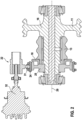
- the method is explained using the drive assembly 10 shown in the figures as an example.
- the method is not limited to the drive assembly 10 shown, but can also be carried out on other drive assemblies with a clutch.
- the drive assembly 10 has a drive shaft 16.
- a gear 11 is arranged on the drive shaft 16 in a rotationally fixed manner.
- the drive shaft 16 is coupled to a rotor shaft 14 of an electric machine 12 by means of the gear 11, so that the electric machine 12 can drive the drive shaft 16.
- the drive shaft 16 is designed as an intermediate shaft.
- An idler gear 13 is arranged on the drive shaft 16, which meshes with a gear 20 of an output shaft 19.
- a coupling element 18 is arranged on the idler gear 13 in a rotationally fixed manner.
- a sensor gear (not shown) can be arranged on the output shaft 19.
- the output shaft 19 is designed in the form of a differential 21 and two output shafts 17 coupled to the differential 21 (shown only schematically).
- the drive assembly 10 has a coupling device 22 with a coupling element 24.
- the coupling element 24 has a toothing 26 (internal toothing) and the coupling element 18 has a toothing 28 (external toothing) (see Fig.1 to 3 ).
- a guide hub 25 with a toothing 27 is arranged on the drive shaft 16 in a rotationally fixed manner (cf. Fig.1 to 3 ).
- the coupling element 24 is arranged on the guide hub 25 in a rotationally fixed manner, wherein the (internal) toothing 26 of the coupling element 24 and the (external) toothing 27 of the guide hub 25 are in engagement with one another.
- the clutch element 24 is designed to be axially displaceable. In other words, the clutch element 24 can be moved parallel to the central longitudinal axis 29 of the drive shaft 16.
- the clutch device 22 in the example has a shift fork 31, which can be driven or moved axially, i.e., parallel to the central longitudinal axis 29 of the drive shaft 16, by means of an electric drive 32.
- the Figures 1 and 2 The drive arrangement 10 shown is in a state before a coupling operation (coupling element 18 and coupling element 24 not (yet) coupled to one another).
- the drive arrangement further comprises a rotation sensor 30 (cf. Figure 1 ).
- Figure 3 shows a section of a schematic representation of the toothing 28 of the coupling element 18, the toothing 26 of the coupling element 24 and the toothing 27 of the guide hub 25 before the coupling process.
- the toothing 26 of the coupling element 24 is arranged at a distance from the toothing 28 of the coupling element 18.
- Figure 4 shows a schematic representation of the gears 26, 27, 28 according to Figure 3 during the clutch operation.
- the shift fork 31 see Fig. 1 and 2
- the coupling element 24 in the direction of the coupling element 18 (in Figure 4 to the left).
- the teeth 28, 26 of the coupling element 24 and the coupling element 18 engage directly or, as in Fig. 4 shown, initially to a tooth-on-tooth position of the gears 26, 28.
- the Fig. 4 The tooth-on-tooth position shown prevents engagement until the tooth-on-tooth position is overcome and the two gear teeth 28.26 can engage.
- the tooth-to-tooth time can be reduced or prevented by performing the coupling process depending on the relative position of the toothing 26 of the coupling element 24 and/or the toothing 28 of the coupling element 18.
- the relative position of the toothing 26 of the coupling element 24 can be specifically adjusted by means of the electric machine 12.
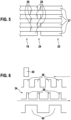
- Figure 6 shows, by way of example, a schematic representation of a pulse signal 34 output by means of the rotation sensor 30 in comparison with a tooth position of a transmission gear 20 and a coupling element 18.
- the rotation sensor 30 As soon as a tooth 36 of the gearing of the gear wheel 20 is passed under the rotation sensor 30 (in Figure 6 indicated by an arrow pointing to the left), the rotation sensor generates a pulse 38. A plurality of pulses 38 in a time-dependent manner (in Figure 6 indicated by an arrow pointing to the right) results in a pulse signal 34. The pulses 38 correspond to the teeth 36 of the gearing of the gear wheel 20.
- the relative position of the gear wheel 20 can be determined from the pulse signal 34 shown.
- the gear wheel 20 is coupled to the coupling element 18 via the idler gear 13. Accordingly, the position of the teeth 40 of the toothing 28 of the coupling element 18 depends on the position of the teeth 36 of the toothing of the gear wheel 20.
- the relative position of the coupling element 18 depends on the relative position of the transmission gear 20.
- the relative position of the coupling element 18 can be determined by means of a transmission ratio between the transmission gear 20 and the coupling element 18 and the relative position of the transmission gear 20, which can be determined from the pulse signal 34.
- the different number and size of the teeth 36 of the gearing of the gear wheel 20 compared to the teeth 40 of the gearing 28 of the coupling element 18 determine the transmission ratio.
- different number and size of teeth 36 and 40 are in Figure 6 indicated by rectangles of different sizes and their different numbers.
- the relative position of the coupling element 18 and thus the position of its teeth 40 can be determined from the pulse signal 34 by means of the transmission ratio between the gear wheel 20 and the coupling element 18.
Landscapes
- Engineering & Computer Science (AREA)
- Mechanical Engineering (AREA)
- General Engineering & Computer Science (AREA)
- Chemical & Material Sciences (AREA)
- Combustion & Propulsion (AREA)
- Transportation (AREA)
- Mechanical Operated Clutches (AREA)
Description
- Die Erfindung betrifft ein Verfahren zum Betreiben einer Antriebsanordnung, insbesondere für ein Fahrzeug, nach dem Oberbegriff des Anspruchs 1, eine Antriebsanordnung, insbesondere für ein Fahrzeug, mit Merkmalen des Anspruchs 8, sowie ein Fahrzeug mit Merkmalen des Anspruchs 9.
- Bei Antriebsanordnungen mit einer elektrischen Maschine ist es in der Regel vorgesehen, dass diese mit einem Abtriebselement, bspw. einer Abtriebswelle, gekoppelt und von diesem wieder abgekoppelt werden kann. Für einen solchen Kupplungsvorgang ist es notwendig, die Drehzahlen der elektrischen Maschine und des Abtriebselements aufeinander abzustimmen. In der Regel steht die abgekoppelte elektrische Maschine still und dreht sich nicht. Zum Kuppelvorgang muss die elektrische Maschine entsprechend auf eine bestimmte Drehzahl beschleunigt werden. Während des Kupplungsvorgangs kommt es zu einer Zahn-auf-Zahn Stellung zwischen den kuppelnden Elementen, bei der die Zähne der jeweiligen Verzahnungen aufeinanderprallen, bevor es zu einem Eingriff der Verzahnungen kommt.
- Eine derartige Zahn-auf-Zahn Stellung führt bei einem Koppelvorgang zu höherem Verschleiß und Leistungsverlusten und ist daher unerwünscht.
-
DE 10 2013 204 227 A1 offenbart einen Antriebsstrang und ein Verfahren zum Durchführen eines Lastwechsels mit einem formschlüssigen Schaltelement, wobei Zahn-auf-Zahn Stellungen vermieden werden sollen. Der Antriebsstrang weist eine elektrische Maschine, eine Antriebswelle, zwei Übersetzungsstufen, eine Zwischenwelle, ein Abtriebsdifferential, ein formschlüssiges Schaltelement und ein reibschlüssiges Schaltelement auf. Bei einem Schaltvorgang von einer Schaltstufe in die andere Schaltstufe wird das formschlüssige Schaltelement von der einen Schaltstufe (bspw. Schaltstellung A) in eine Neutralstellung bewegt und das reibschlüssige Schaltelement wird durch Schließen mit der anderen Schaltstufe gekoppelt. Im geschlossenen Zustand des reibschlüssigen Schaltelements kann das formschlüssige Schaltelement mit der anderen Schaltstufe gekoppelt werden (bspw. Schaltstellung B). Zum Auflösen einer Zahn-auf-Zahn-Stellung kann das reibschlüssige Schaltelement bei Bedarf geringfügig geöffnet werden, um ein Einspuren zu ermöglichen. - Nachteilig dabei ist, dass ein derartiger Antriebsstrang einen komplexen Aufbau mit vielen Komponenten, wie bspw. zwei unterschiedliche Schaltelemente, aufweist, was die Störungs- und Fehleranfälligkeit der Antriebsanordnung erhöht. Insbesondere der Einsatz eines reibschlüssigen Schaltelements führt dabei zu einem hohen Verschleiß.
- Aus der
DE 199 15 200 B4 ist ein Verfahren zum Schalten eines Getriebes bekannt, wobei das Getriebe als CVT-Getriebe ausgebildet ist und eine Antriebswelle und eine als Klauenkupplung ausgebildete Kupplungseinrichtung mit formschlüssig in Eingriff bringbaren Schaltelementen umfasst, wobei ein erstes Schaltelement drehfest mit der Antriebswelle gekoppelt ist, wobei die Antriebswelle in einem Kupplungsvorgang drehfest mit einem zweiten Schaltelement gekoppelt und in einem Abkupplungsvorgang von diesem abgekoppelt werden kann, wobei bei einem Kupplungsvorgang das erste Schaltelement mit dem zweiten Schaltelement formschlüssig in Eingriff gebracht wird. Aus dieser Schrift ist weiterhin bekannt, einen Rotationssensor zu verwenden, der ein Impulssignal ausgibt, wenn ein Zahn einer Verzahnung an dem Rotationssensor vorbeigeführt wird. Eine relative Winkellage wird aus Absolutbeträgen der Winkellagen der Schaltelemente unter Zuhilfenahme einer Zählung der Zahnpimpulse bestimmt, ausgehend von einem Zustand, bei dem die Klaue eines ersten Schaltelementes einer Lücke des korresponidierenden zweiten Schaltelementes gegenüberliegt. - Die
US 5 715 901 A offenbart eine Antriebsanordnung für ein Fahrzeug, umfassend eine elektrische Maschine mit einer Rotorwelle, eine Antriebswelle, wobei die Antriebswelle mit der Rotorwelle der elektrischen Maschine derart gekoppelt ist, dass die Antriebswelle mittels der elektrischen Maschine angetrieben werden kann, ein Koppelelement und ein auf einer Ausgangswelle angeodnetes Getriebezahnrad, wobei das Getriebezahnrad mit dem Koppelelement derart gekoppelt ist, dass das Getriebezahnrad mittels des Koppelelementes angetrieben werden kann, und eine Kupplungseinrichtung mit einem Kupplungselement, wobei das Kupplungselement drehfest mit der Antriebswelle gekoppelt ist, wobei die Antriebswelle in einem Kupplungsvorgang drehfest mit dem Koppelelement gekoppelt und in einem Abkupplungsvorgang von diesem abgekoppelt werden kann und wobei beim Kupplungsvorgang eine Verzahnung des Kupplungselementes und eine Verzahnung des Koppelelementes formschlüssig miteinander in Eingriff gebracht werden. - Aus der
DE 10 2009 054 459 A1 ist eine Erfassungseinrichtung zum Erfassen einer beim Einspuren notwendigen Differenzposition zwischen zwei korrespondierenden Klauen zweier Kupplungselemente bekannt, um eine Zahn-auf-Zahnstellung auszuschließen. Als Erfassungseinrichtung sind zwei Hall-Sensoren vorgesehen, wobei jeder Hall-Sensor den Klauen eines der beiden Kupplungselemente zugeordnet ist. Die Signale der Hall-Sensoren werden in einer Auswerteeinheit aufsummiert, wobei der jeweilige Wchselstromanteil der Signale ein Maß für die Überdeckung der korrespondierenden Klauen ist. - Die
DE 100 60 688 A1 offenbart ein Verfahren zum Einrücken einer formschlüssigen Kupplung, bei dem zu Verhinderung einer Zahn-auf-Zahn Stellung von Kupplungshälften die relativen Drehwinkelstellungen der Kupplungshälfen erkennt werden. Dabei können den beteiligen Wellen Drehwinkelsensoren zugeordnet sein, die bei Berücksichtigung der zwischengeschalteten Getriebestufen in den Drehwinkel der Kupplungshälften umgerechnet werden können. - Erfindungsgemäß wird ein Verfahren zum Betreiben einer Antriebsanordnung, insbesondere für ein Fahrzeug, vorgeschlagen. Dabei umfasst die Antriebsanordnung eine elektrische Maschine mit einer Rotorwelle und eine Antriebswelle. Die Antriebswelle kann als Zwischenwelle ausgebildet sein. Die Antriebswelle ist mit der Rotorwelle der elektrischen Maschine derart gekoppelt, dass die Antriebswelle mittels der elektrischen Maschine (drehend) angetrieben werden kann.
- Die Antriebswelle ist insbesondere drehfest oder mittels einer Verzahnung (bspw. einer Stirnradstufe) mit einem Antrieb, insbesondere einer elektrischen Maschine (Elektromotor), gekoppelt.
- Die Antriebsanordnung umfasst weiter ein Koppelelement. Dies kann bspw. eine mit einer Abtriebswelle, einer Zwischenwelle oder einem auf der Antriebswelle angeordnetem Losrad gekoppelte Verzahnung bzw. Zahnrad/Ritzel sein.
- Die Antriebsanordnung umfasst weiter ein auf einer Ausgangswelle angeordnetes Getriebezahnrad. Das Getriebezahnrad ist mit dem Koppelelement derart gekoppelt, dass das Getriebezahnrad mittels des Koppelelements (drehend) angetrieben werden kann. Die Ausgangswelle kann in Form eines Differentials mit zwei Abtriebswellen ausgebildet sein.
- Die Antriebsanordnung umfasst weiter eine Kupplungseinrichtung (Kupplung) mit einem Kupplungselement (z. B. eine bewegliche bzw. axial verschiebliche Schaltmuffe) wobei das Kupplungselement drehfest mit der Antriebswelle gekoppelt ist. Das Kupplungselement ist insbesondere mittels eines auf der Antriebswelle angeordneten Zahnrads bzw. einer auf der Antriebswelle angeordneten Führungsnabe mit einer Verzahnung drehfest mit der Antriebswelle gekoppelt. Das Kupplungselement ist insbesondere axial (also entlang der Längsrichtung der Antriebswelle, bzw. parallel zur Mittellängsachse der Antriebswelle) verschiebbar.
- Die Antriebswelle kann in einem Kupplungsvorgang drehfest mit dem Koppelelement gekoppelt und in einem Abkupplungsvorgang von diesem abgekoppelt werden. Beim Kupplungsvorgang werden eine Verzahnung (insbesondere eine Innenverzahnung) des Kupplungselements und eine Verzahnung (insbesondere Außenverzahnung) des Koppelelements formschlüssig miteinander in Eingriff gebracht. Das Kupplungselement wird hierzu insbesondere axial verlagert. Insbesondere läuft das Kupplungselement dabei mit seiner Innenverzahnung auf einer korrespondierenden Außenverzahnung der Führungsnabe bzw. des Zahnrades. Das Koppelelement kann sich insbesondere im abgekoppelten Zustand relativ zur Antriebswelle frei drehen.
- Die Antriebsanordnung weist weiter einen Rotationssensor auf. Der Rotationssensor gibt ein Impulssignal aus, wenn ein Zahn einer Verzahnung des Getriebezahnrads oder ein Zahn eines drehfest mit der Ausgangswelle gekoppelten Geberrads an dem Rotationssensor vorbeigeführt wird (durch Drehung des Getriebezahnrads oder des Geberrads).
- Die Absolutstellung des Getriebezahnrads wird erfindungsgemäß aus einer Absolutstellung der Rotorwelle der elektrischen Maschine, einem Übersetzungsverhältnis zwischen dem Kupplungselement und der Rotorwelle und einem Übersetzungsverhältnis zwischen dem Koppelelement und dem Getriebezahnrad in einem gekoppelten Zustand der Kupplungseinrichtung (also wenn das Koppelelement, das Kupplungselement und die Antriebswelle drehfest gekoppelt sind) neu bestimmt. Die elektrische Maschine kann hierzu einen Sensor zur Bestimmung der Absolutstellung der elektrischen Maschine bzw. des Rotors (Rotorwelle) der elektrischen Maschine umfassen. Mit dem Übersetzungsverhältnis ist das Verhältnis zwischen der Anzahl und/oder Größe der Zähne zweier Verzahnungen gemeint. Dieser Vorgang kann als Wiederherstellung der Absolutposition des Getriebezahnrads bezeichnet werden.
- Der Rotationssensor dient insbesondere zur Detektion einer Relativstellung des Getriebezahnrads oder Geberrads.
- Vorliegend ist mit Detektion ein Erfassen der am Rotationssensor vorbeirotierenden Zähne der Verzahnung des Getriebezahnrads oder der Zähne des Geberrads gemeint.
- Mit einer Relativstellung des Getriebezahnrads oder Geberrads ist vorliegend eine Stellung der Zähne der Verzahnung des Getriebezahnrads oder Geberrads insbesondere in Bezug auf den Rotationssensor gemeint. Mit anderen Worten, es kann festgestellt werden, ob unter dem Rotationssensor (bzw. in dessen Detektionsbereich) sich ein Zahn des Getriebezahnrads oder des Geberrads befindet oder nicht.
- Der Rotationssensor kann als Raddrehzahlsensor ausgebildet sein. Insbesondere kann aus der Relativstellung des Geberrads mittels einer Umrechnung die Relativstellung des Getriebezahnrads ermittelt werden und umgekehrt.
- Dabei wird eine Absolutstellung des Getriebezahnrads oder des Geberrads in Abhängigkeit einer vorher abgespeicherten Absolutstellung des Getriebezahnrads oder Geberrads und einem Zählen der mittels des Rotationssensors ausgegebenen Impulssignale bestimmt.
- Mit einer Absolutstellung des Getriebezahnrads oder Geberrads ist vorliegend eine Stellung eines bestimmten Zahns der Verzahnung des Getriebezahnrads oder Geberrads insbesondere in Bezug auf den Rotationssensor gemeint. Mit anderen Worten, es kann festgestellt werden, in welcher Drehstellung sich ein bestimmter Zahn der Verzahnung des Getriebezahnrads oder des Geberrads befindet.
- Es ist denkbar, dass aus der Absolutstellung des Geberrads mittels Umrechnung die Absolutstellung des Getriebezahnrads ermittelt werden kann und umgekehrt.
- Der Rotationssensor kann bspw. als Hallsensor ausgebildet sein, es sind aber auch andere Drehzahlsensoren denkbar.
- Die vorgeschlagene Ausgestaltung hat u.a. den Vorteil, dass mittels des Impulssignals des Rotationssensors die Drehzahl der elektrischen Maschine bei einem Kupplungsvorgang derart synchronisiert werden kann, dass eine Zahn-auf-Zahn Stellung vermieden oder eine Zeitspanne, in der es zu einer Zahn-auf-Zahn Stellung kommt (Zahn-auf-Zahn Zeit), reduziert werden kann. Damit kann Verschleiß reduziert und Leistungsverluste, die mit der Zahn-auf-Zahn Stellung zusammenhängen minimiert werden.
- Mit einer Zahn-auf-Zahn Stellung ist eine Stellung zweier Verzahnungen gemeint, bei der sich die Zähne beider Verzahnungen, insbesondere mit ihren Radialflächen, in Kontakt miteineinander befinden und so einen Eingriff der beiden Verzahnungen verhindern. Mit der Reduzierung der Zahn-auf-Zahn Zeit kann die Kupplungszeit des gesamten Kupplungsvorgangs reduziert werden.
- Gemäß einer Weiterbildung kann die Absolutstellung des Getriebezahnrads oder des Geberrads nach mindestens einem Rotationszyklus (insbesondere nach mehreren Rotationszyklen, insbesondere nach jedem Rotationszyklus) abgespeichert werden. Dabei kann der Rotationszyklus einer Umdrehung des Getriebezahnrads oder des Geberrads entsprechen. Dabei kann die bereits abgespeicherte Absolutstellung jeweils mit einer neuen Absolutstellung überschrieben werden. Ebenso ist das Abspeichern mehrerer, insbesondere hintereinander ermittelter, Absolutstellungen denkbar.
- Gemäß einer Weiterbildung kann eine Relativstellung des Kupplungselements (also in welcher Position sich die Zähne der Verzahnung des Kupplungselements relativ zur Rotorwelle der elektrischen Maschine befinden) aus der Absolutstellung der Rotorwelle der elektrischen Maschine bestimmt werden. Hierzu kann insbesondere das Übersetzungsverhältnis zwischen der Rotorwelle und dem Kupplungselement eingesetzt werden.
- Gemäß einer Weiterbildung kann eine Relativstellung des Koppelelements (also in welcher Position sich die Zähne der Verzahnung des Koppelelements relativ zu der Verzahnung des Getriebezahnrads befinden) aus der Absolutstellung des Getriebezahnrads bestimmt werden. Hierzu kann insbesondere das Übersetzungsverhältnis zwischen dem Getriebezahnrad und dem Koppelelement benutzt werden.
- Gemäß einer Weiterbildung kann der Kupplungsvorgang in Abhängigkeit der Relativstellung des Koppelelements und/oder der Relativstellung des Kupplungselements durchgeführt werden. Hierdurch kann die Zahn-auf-Zahn Stellung zwischen den Verzahnungen des Koppelelements und Kupplungselements vermieden oder zumindest die entsprechende Zahn-auf-Zahn Zeit verkürzt werden.
- Gemäß einer Weiterbildung kann die Relativstellung des Kupplungselements vor einem Kupplungsvorgang mittels eines Bestromen der elektrischen Maschine und/oder Erhöhen einer Drehzahl der Rotorwelle (Beschleunigen der Rotorwelle) eingestellt werden. Dies kann insbesondere bei einem Stillstand eines Fahrzeugs mit der Antriebsanordnung, also wenn das Getriebezahnrad sich nicht dreht, erfolgen.
- Gemäß einer Weiterbildung kann die Relativstellung des Kupplungselements in Abhängigkeit der Relativstellung des Koppelelements eingestellt werden. Die Relativstellung des Koppelelements ändert sich nicht beim Stillstand des Fahrzeugs mit der Antriebsanordnung, also wenn das Getriebezahnrad sich nicht dreht. Die Relativstellung des Kupplungselements kann so eingestellt bzw. an die Relativstellung des Kopplelelements angepasst werden, dass ein Kupplungsvorgang bei einem sich nicht drehenden Getriebezahnrad (z. B. bei Stillstand des Fahrzeugs mit der Antriebsanordnung) ohne eine Zahn-auf-Zahn Stellung bzw. ohne eine Zahn-auf-Zahn Zeit durchgeführt werden kann.
- Erfindungsgemäß wird eine Antriebsanordnung, insbesondere für ein Fahrzeug, vorgeschlagen, wobei die Antriebsanordnung eingerichtet ist, um nach einem Verfahren gemäß obiger Ausführungen betrieben zu werden. Hinsichtlich der damit erzielbaren Vorteile wird auf die diesbezüglichen Ausführungen zum Verfahren verwiesen. Zur weiteren Ausgestaltung der Antriebsanordnung können die im Zusammenhang mit dem Verfahren beschriebenen Maßnahmen dienen.
- Die Antriebsanordnung kann bspw. als elektrische Achse (E-Achse) ausgebildet sein oder Bestandteil einer E-Achse bilden.
- Erfindungsgemäß wird ein Fahrzeug, insbesondere ein Kraftfahrzeug, mit einer Antriebsanordnung gemäß obiger Ausführungen vorgeschlagen. Hinsichtlich der damit erzielbaren Vorteile wird auf die diesbezüglichen Ausführungen zur Antriebsanordnung verwiesen. Zur weiteren Ausgestaltung des Fahrzeugs können die im Zusammenhang mit der Antriebsanordnung bzw. dem Verfahren beschriebenen und/oder die nachfolgend noch erläuterten Maßnahmen dienen.
- Nachfolgend wird eine Ausführungsform der Erfindung unter Bezugnahme auf die beiliegenden Zeichnungen erläutert. Es zeigen:
- Figur 1
- eine schematische Schnittdarstellung einer Antriebsanordnung;
- Figur 2
- einen Ausschnitt der schematischen Schnittdarstellung aus
Figur 1 ; - Figur 3
- einen Ausschnitt einer schematischen Darstellung von Verzahnungen eines Koppelelements, eines Kupplungselements und einer Führungsnabe vor einem Kupplungsvorgang;
- Figur 4
- eine schematische Darstellung der Verzahnungen gemäß
Figur 3 während des Kupplungsvorgangs; - Figur 5
- eine schematische Darstellung der Verzahnungen gemäß
Figur 3 nach dem Kupplungsvorgang; und - Figur 6
- eine schematische Darstellung eines mittels eines Rotationssensors ausgegebenen Impulssignals im Vergleich zu einer Zahnstellung eines Getriebezahnrads und eines Koppelelements.
- Vorliegend wird das Verfahren beispielhaft anhand der in den Figuren gezeigten Antriebsanordnung 10 erläutert. Das Verfahren ist nicht auf die gezeigte Antriebsanordnung 10 beschränkt, sondern kann auch an anderen Antriebsanordnungen mit einer Kupplung durchgeführt werden.
-
Figur 1 zeigt eine schematische Schnittdarstellung der Antriebsanordnung 10 undFigur 2 zeigt einen Ausschnitt der schematischen Schnittdarstellung gemäßFigur 1 . - Die Antriebsanordnung 10 weist eine Antriebswelle 16 auf. Auf der Antriebswelle 16 ist ein Zahnrad 11 drehfest angeordnet. Die Antriebswelle 16 ist mittels des Zahnrads 11 mit einer Rotorwelle 14 einer elektrischen Maschine 12 gekoppelt, so dass die elektrische Maschine 12 die Antriebswelle 16 antreiben kann.
- Vorliegend ist die Antriebswelle 16 als Zwischenwelle ausgebildet. Auf der Antriebswelle 16 ist ein Losrad 13 angeordnet, das mit einem Getriebezahnrad 20 einer Ausgangswelle 19 kämmt. Auf dem Losrad 13 ist ein Koppelelement 18 drehfest angeordnet. Auf der Ausgangswelle 19 kann ein Geberrad angeordnet sein (nicht dargestellt).
- Vorliegend ist die Ausgangswelle 19 in Form eines Differentials 21 und zweier mit dem Differential 21 gekoppelten Abtriebswellen 17 ausgebildet (lediglich schematisch dargestellt).
- Die Antriebsanordnung 10 weist eine Kupplungseinrichtung 22 mit einem Kupplungselement 24 auf. Das Kupplungselement 24 weist eine Verzahnung 26 (Innenverzahnung) und das Koppelelement 18 eine Verzahnung 28 (Außenverzahnung) auf (vgl.
Fig.1 bis 3 ). - Auf der Antriebswelle 16 ist eine Führungsnabe 25 mit einer Verzahnung 27 (Außenverzahnung) drehfest angeordnet (vgl.
Fig.1 bis 3 ). Das Kupplungselement 24 ist drehfest auf der Führungsnabe 25 angeordnet, wobei die (Innen-)Verzahnung 26 des Kupplungselements 24 und die (Außen-)Verzahnung 27 der Führungsnabe 25 miteinander in Eingriff sind. - Das Kupplungselement 24 ist axial verschiebbar ausgebildet. Mit anderen Worten kann das Kupplungselement 24 parallel zur Mittellängsachse 29 der Antriebswelle 16 bewegt werden. Hierzu weist die Kupplungseinrichtung 22 im Beispiel eine Schaltgabel 31 auf, die mittels eines elektrischen Antriebs 32 axial, also parallel zur Mittellängsachse 29 der Antriebswelle 16, abgetrieben bzw. bewegt werden kann.
- Die in den
Figuren 1 und2 gezeigte Antriebsanordnung 10 befindet sich in einem Zustand vor einem Kupplungsvorgang (Koppelelement 18 und Kupplungselement 24 (noch) nicht miteinander gekoppelt). - Die Antriebsanordnung weist weiter einen Rotationssensor 30 auf (vgl.
Figur 1 ). -
Figur 3 zeigt eine einen Ausschnitt einer schematischen Darstellung der Verzahnung 28 des Koppelelements 18, der Verzahnung 26 des Kupplungselements 24 und der Verzahnung 27 der Führungsnabe 25 vor dem Kupplungsvorgang. - Vor dem Kupplungsvorgang ist die Verzahnung 26 des Kupplungselements 24 beabstandet von der Verzahnung 28 des Koppelelements 18 angeordnet.
-
Figur 4 zeigt eine schematische Darstellung der Verzahnungen 26, 27, 28 gemäßFigur 3 während des Kupplungsvorgangs. Während des Kupplungsvorgangs schiebt im Beispiel die Schaltgabel 31 (vgl.Fig. 1 und2 ) das Kupplungselement 24 in Richtung des Koppelelements 18 (inFigur 4 nach links). - Abhängig von der Relativstellung des Kupplungselements 24 und des Koppelelements 18 gelangen die Verzahnungen 28, 26 des Kupplungselements 24 und des Koppelelements 18 direkt in Eingriff oder es kommt, wie in
Fig. 4 dargestellt, zunächst zu einer Zahn-auf Zahn-Stellung der Verzahnungen 26, 28. Die inFig. 4 dargestellte Zahn-auf-Zahn-Stellung verhindert solange den Eingriff, bis die Zahn-auf-Zahn-Stellung überwunden und die beiden Verzahnungen 28.26 in Eingriff gelangen können. - Die Zahn-auf-Zahn-Zeit kann reduziert oder verhindert werden, indem der Kupplungsvorgang in Abhängigkeit der Relativstellung der Verzahnung 26 des Kupplungselements 24 und/oder der Verzahnung 28 des Koppelelements 18 durchgeführt wird. Dabei kann die Relativstellung der Verzahnung 26 des Kupplungselements 24 mittels der elektrischen Maschine 12 gezielt eingestellt werden.
-
Figur 5 zeigt eine schematische Darstellung der Verzahnungen 26, 27, 28 gemäßFigur 3 nach dem Kupplungsvorgang. Die Verzahnung 28 des Koppelelements 18 und die Verzahnung 26 des Kupplungselements 24 sind nun miteinander in Eingriff. Damit sind das Koppelelement 18 und das Kupplungselement 24 drehfest miteinander gekoppelt. -
Figur 6 zeigt beispielhaft eine schematische Darstellung eines mittels des Rotationssensors 30 ausgegebenen Impulssignals 34 im Vergleich zu einer Zahnstellung eines Getriebezahnrads 20 und eines Koppelelements 18. - Sobald ein Zahn 36 der Verzahnung des Getriebezahnrads 20 unter dem Rotationssensor 30 vorbeigeführt wird (in
Figur 6 mittels eines Pfeils nach links angedeutet) erzeugt der Rotationssensor einen Impuls 38. Eine Vielzahl von Impulsen 38 in einer Abhängigkeit von der Zeit (inFigur 6 mittels eines Pfeils nach rechts angedeutet) ergibt ein Impulssignal 34. Dabei entsprechen die Impulse 38 den Zähnen 36 der Verzahnung des Getriebezahnrads 20. - Damit kann aus dem dargestellten Impulssignal 34 die Relativstellung des Getriebezahnrads 20 ermittelt werden.
- Das Getriebezahnrad 20 ist über das Losrad 13 mit dem Koppelelement 18 gekoppelt. Entsprechend hängt die Stellung der Zähne 40 der Verzahnung 28 des Koppelelements 18 von der Stellung der Zähne 36 der Verzahnung des Getriebezahnrads 20 ab.
- Damit hängt die Relativstellung des Koppelelements 18 von der Relativstellung des Getriebezahnrads 20 ab. So kann mittels eines Übersetzungverhältnisses zwischen dem Getriebezahnrad 20 und dem Koppelelement 18 und der Relativstellung des Getriebezahnrads 20, welche aus dem Impulssignal 34 bestimmt werden kann, die Relativstellung des Koppelelements 18 bestimmt werden.
- Vorliegend bestimmen die unterschiedliche Anzahl und Größe der Zähne 36 der Verzahnung des Getriebezahnrads 20 im Vergleich zu den Zähnen 40 der Verzahnung 28 des Koppelelements 18 das Übersetzungsverhältnis. Die unterschiedliche Anzahl und Größe der Zähne 36 und 40 sind in
Figur 6 mittels unterschiedlich großer Rechtecke und deren unterschiedlichen Anzahl angedeutet. - Entsprechend kann aus dem Impulssignal 34 mittels des Übersetzungsverhältnisses zwischen dem Getriebezahnrad 20 und dem Koppelelement 18 die Relativstellung des Koppelelements 18 und somit die Stellung dessen Zähne 40 bestimmt werden.
Claims (9)
- Verfahren zum Betreiben einer Antriebsanordnung (10), insbesondere für ein Fahrzeug, umfassend- eine elektrische Maschine (12) mit einer Rotorwelle (14),- eine Antriebswelle (16), wobei die Antriebswelle (16) mit der Rotorwelle (14) der elektrischen Maschine (12) derart gekoppelt ist, dass die Antriebswelle (16) mittels der elektrischen Maschine (12) angetrieben werden kann,- ein Koppelelement (18),- ein auf einer Ausgangswelle (19) angeordnetes Getriebezahnrad (20), wobei das Getriebezahnrad (20) mit dem Koppelelement (18) derart gekoppelt ist, dass das Getriebezahnrad (20) mittels des Koppelelements (18) angetrieben werden kann,- eine Kupplungseinrichtung (22) mit einem Kupplungselement (24), wobei das Kupplungselement (24) drehfest mit der Antriebswelle (16) gekoppelt ist,- wobei die Antriebswelle (16) in einem Kupplungsvorgang drehfest mit dem Koppelelement (18) gekoppelt und in einem Abkupplungsvorgang von diesem abgekoppelt werden kann,- wobei beim Kupplungsvorgang eine Verzahnung (26) des Kupplungselements (24) und eine Verzahnung (28) des Koppelelements (18) formschlüssig miteinander in Eingriff gebracht werden,- einen Rotationssensor (30), wobei der Rotationssensor (30) ein Impulssignal (34) ausgibt, wenn ein Zahn (36) einer Verzahnung des Getriebezahnrads (20) oder ein Zahn eines drehfest mit der Ausgangswelle (19) gekoppelten Geberrads an dem Rotationssensor (30) vorbeigeführt wird,- wobei eine Absolutstellung des Getriebezahnrads (20) in Abhängigkeit einer vorher abgespeicherten Absolutstellung des Getriebezahnrads (20) und einem Zählen der mittels des Rotationssensors (30) ausgegebenen Impulssignale bestimmt wird, wobei die Absolutstellung des Getriebezahnrads (20) aus einer Absolutstellung der Rotorwelle (14) der elektrischen Maschine (12), einem Übersetzungsverhältnis zwischen dem Kupplungselement (24) und der Rotorwelle (14) und einem Übersetzungsverhältnis zwischen dem Koppelelement (18) und dem Getriebezahnrad (20) in einem gekoppelten Zustand der Kupplungseinrichtung (22) neu bestimmt wird.
- Verfahren nach Anspruch 1, dadurch gekennzeichnet, dass die Absolutstellung des Getriebezahnrads (20) oder des Geberrads nach mindestens einem Rotationszyklus abgespeichert wird, wobei der Rotationszyklus einer Umdrehung des Getriebezahnrads oder des Geberrads entspricht.
- Verfahren nach Anspruch 1, dadurch gekennzeichnet, dass eine Relativstellung des Kupplungselements (24) aus der Absolutstellung der Rotorwelle (14) der elektrischen Maschine (12), insbesondere über das Übersetzungsverhältnis zwischen der Rotorwelle (14) und dem Kupplungselements (24), bestimmt wird.
- Verfahren nach einem der voranstehenden Ansprüche 1 und 3, dadurch gekennzeichnet, dass eine Relativstellung des Koppelelements (18) aus der Absolutstellung des Getriebezahnrads (20), insbesondere über das Übersetzungsverhältnis zwischen dem Getriebezahnrad (20) und dem Koppelelement (18), bestimmt wird.
- Verfahren nach Anspruch 4, dadurch gekennzeichnet, dass der Kupplungsvorgang in Abhängigkeit der Relativstellung des Koppelelements (18) und/oder der Relativstellung des Kupplungselements (24) durchgeführt wird.
- Verfahren nach einem der Ansprüche 3 bis 5, dadurch gekennzeichnet, dass die Relativstellung des Kupplungselements (24) vor einem Kupplungsvorgang mittels eines Bestromen der elektrischen Maschine (12) und/oder Erhöhen einer Drehzahl der Rotorwelle (14) eingestellt wird.
- Verfahren nach Anspruch 6, dadurch gekennzeichnet, dass die Relativstellung des Kupplungselements (24) in Abhängigkeit der Relativstellung des Koppelelements (18) eingestellt wird.
- Antriebsanordnung (10), insbesondere für ein Fahrzeug, dadurch gekennzeichnet, dass die Antriebsanordnung (10) eingerichtet ist, um gemäß einem Verfahren nach einem der Ansprüche 1 bis 7 betrieben zu werden.
- Fahrzeug, insbesondere Kraftfahrzeug, mit einer Antriebsanordnung nach Anspruch 8.
Applications Claiming Priority (1)
| Application Number | Priority Date | Filing Date | Title |
|---|---|---|---|
| DE102021210796.6A DE102021210796A1 (de) | 2021-09-28 | 2021-09-28 | Verfahren zum Betreiben einer Antriebsanordnung, Antriebsanordnung und Fahrzeug |
Publications (2)
| Publication Number | Publication Date |
|---|---|
| EP4155584A1 EP4155584A1 (de) | 2023-03-29 |
| EP4155584B1 true EP4155584B1 (de) | 2025-05-07 |
Family
ID=83283158
Family Applications (1)
| Application Number | Title | Priority Date | Filing Date |
|---|---|---|---|
| EP22195158.5A Active EP4155584B1 (de) | 2021-09-28 | 2022-09-12 | Verfahren zum betreiben einer antriebsanordnung, antriebsanordnung und fahrzeug |
Country Status (2)
| Country | Link |
|---|---|
| EP (1) | EP4155584B1 (de) |
| DE (1) | DE102021210796A1 (de) |
Families Citing this family (1)
| Publication number | Priority date | Publication date | Assignee | Title |
|---|---|---|---|---|
| DE102023206528A1 (de) | 2023-07-10 | 2025-01-16 | Robert Bosch Gesellschaft mit beschränkter Haftung | Verfahren zur Herstellung einer Antriebskomponente für ein Fahrzeug, sowie nach diesem Verfahren hergestellte Antriebskomponente |
Family Cites Families (5)
| Publication number | Priority date | Publication date | Assignee | Title |
|---|---|---|---|---|
| JP3549068B2 (ja) * | 1995-04-19 | 2004-08-04 | 本田技研工業株式会社 | 電動自動車用減速機 |
| DE19915200B4 (de) * | 1999-04-03 | 2004-04-29 | Dr.Ing.H.C. F. Porsche Ag | Verfahren zur aktiven Winkelsynchronisierung von geschalteten Klauenkupplungen |
| DE10060688A1 (de) * | 2000-12-07 | 2002-06-13 | Daimler Chrysler Ag | Verfahren zum Einrücken einer im Kraftfluß zwischen einer Ein- und einer Ausgangswelle eines Zahnräder-Wechselgetriebes angeordneten formschlüssigen Kupplung |
| DE102009054459A1 (de) * | 2009-12-10 | 2011-06-16 | Zf Friedrichshafen Ag | Formschlüssige Schalteinrichtung, insbesondere Klauenschalteinrichtung |
| DE102013204227A1 (de) | 2013-03-12 | 2014-09-18 | Zf Friedrichshafen Ag | Antriebsstrang für ein Fahrzeug und Verfahren zum Durchführen eines Lastwechsels |
-
2021
- 2021-09-28 DE DE102021210796.6A patent/DE102021210796A1/de active Pending
-
2022
- 2022-09-12 EP EP22195158.5A patent/EP4155584B1/de active Active
Also Published As
| Publication number | Publication date |
|---|---|
| DE102021210796A1 (de) | 2023-03-30 |
| EP4155584A1 (de) | 2023-03-29 |
Similar Documents
| Publication | Publication Date | Title |
|---|---|---|
| EP1794479B1 (de) | Sensoranordnung und verfahren zur steuerung eines automatisierten doppelkupplungsgetriebes | |
| EP0897493B1 (de) | Verfahren zum steuern der kupplungen eines hydrostatisch-mechanischen leistungsverzweigungsgetriebes | |
| DE102013112401A1 (de) | Kupplungssteuerung | |
| EP3126701A1 (de) | Verfahren zum steuern einer aktuierungsanordnung für eine kupplung, aktuierungsanordnung und antriebsanordnung mit einer solchen aktuierungsanordnung | |
| EP4182581B1 (de) | Schaltungseinrichtung für ein getriebe eines kraftfahrzeugs | |
| EP2715190B1 (de) | Verfahren zur initialisierung der betätigungseinheit einer schalteinrichtung und schalteinrichtung für ein lastschaltgetriebe | |
| WO2018007164A1 (de) | Kupplungseinheit und kraftfahrzeugantriebsstrang mit einer solchen kupplungseinheit | |
| WO2015169524A1 (de) | Vorrichtung zum schalten eines ersten und zweiten schaltelements, und getriebe mit einer solchen vorrichtung | |
| EP4483078B1 (de) | Antriebsstrang umfassend eine betätigungsanordnung und eine kopplungseinrichtung zur kopplung einer abtriebswelle mit einem antrieb und zur betätigung einer parksperre | |
| DE102008001398A1 (de) | Automatisiertes Schaltgetriebe eines Kraftfahrzeugs | |
| EP4155584A1 (de) | Verfahren zum betreiben einer antriebsanordnung, antriebsanordnung und fahrzeug | |
| EP4132807B1 (de) | Verfahren zum einlernen einer schaltwalze in einem hybridantriebsstrang | |
| DE102021122488A1 (de) | Verfahren zur Prüfung einer in einem Fahrzeuggetriebe verbauten Gangschaltkupplung | |
| DE102011005529A1 (de) | Verfahren zur Vermeidung einer Zahn-auf-Zahn-Stellung beim Schließen eines Klauenschaltelementes eines Doppelkupplungsgetriebes oder eines automatisierten Handschaltgetriebes in Vorgelegebauweise | |
| DE102018207970A1 (de) | Schaltanordnung sowie Getriebe | |
| EP1460305A1 (de) | Wechselgetriebe | |
| DE102023203098A1 (de) | Kraftfahrzeuggetriebe für ein zumindest teilweise elektrisch angetriebenes Kraftfahrzeug | |
| DE102019204296B4 (de) | Getriebemechanismus | |
| EP3812190A1 (de) | Getriebeanordnung | |
| DE102014207670A1 (de) | Formschlüssige Schaltkupplung | |
| EP4686858A1 (de) | Verfahren zum betätigen einer klauenkupplung eines wechselgetriebes eines elektrisch antreibbaren fahrzeugs und vorrichtung zur durchführung des verfahrens | |
| DE102019123619B4 (de) | Verfahren zum Betreiben eines Doppelkupplungsgetriebes für ein Kraftfahrzeug | |
| DE102023209845B4 (de) | Kraftfahrzeuggetriebe für ein zumindest teilweise elektrisch angetriebenes Kraftfahrzeug | |
| DE102023209855B4 (de) | Kraftfahrzeuggetriebe für ein zumindest teilweise elektrisch angetriebenes Kraftfahrzeug | |
| DE102023209860B4 (de) | Kraftfahrzeuggetriebe für ein zumindest teilweise elektrisch angetriebenes Kraftfahrzeug |
Legal Events
| Date | Code | Title | Description |
|---|---|---|---|
| PUAI | Public reference made under article 153(3) epc to a published international application that has entered the european phase |
Free format text: ORIGINAL CODE: 0009012 |
|
| STAA | Information on the status of an ep patent application or granted ep patent |
Free format text: STATUS: THE APPLICATION HAS BEEN PUBLISHED |
|
| AK | Designated contracting states |
Kind code of ref document: A1 Designated state(s): AL AT BE BG CH CY CZ DE DK EE ES FI FR GB GR HR HU IE IS IT LI LT LU LV MC MK MT NL NO PL PT RO RS SE SI SK SM TR |
|
| STAA | Information on the status of an ep patent application or granted ep patent |
Free format text: STATUS: REQUEST FOR EXAMINATION WAS MADE |
|
| 17P | Request for examination filed |
Effective date: 20230929 |
|
| RBV | Designated contracting states (corrected) |
Designated state(s): AL AT BE BG CH CY CZ DE DK EE ES FI FR GB GR HR HU IE IS IT LI LT LU LV MC MK MT NL NO PL PT RO RS SE SI SK SM TR |
|
| GRAP | Despatch of communication of intention to grant a patent |
Free format text: ORIGINAL CODE: EPIDOSNIGR1 |
|
| STAA | Information on the status of an ep patent application or granted ep patent |
Free format text: STATUS: GRANT OF PATENT IS INTENDED |
|
| RIC1 | Information provided on ipc code assigned before grant |
Ipc: B60K 1/00 20060101ALN20250212BHEP Ipc: F16H 3/089 20060101ALN20250212BHEP Ipc: F16H 61/04 20060101AFI20250212BHEP |
|
| GRAS | Grant fee paid |
Free format text: ORIGINAL CODE: EPIDOSNIGR3 |
|
| INTG | Intention to grant announced |
Effective date: 20250227 |
|
| RIN1 | Information on inventor provided before grant (corrected) |
Inventor name: MIZOBE, TAKUYA Inventor name: LIU, ZHENGYU Inventor name: KLIMENKO, MICHAEL Inventor name: SHIGEMATSU, TAKASHI |
|
| GRAA | (expected) grant |
Free format text: ORIGINAL CODE: 0009210 |
|
| STAA | Information on the status of an ep patent application or granted ep patent |
Free format text: STATUS: THE PATENT HAS BEEN GRANTED |
|
| AK | Designated contracting states |
Kind code of ref document: B1 Designated state(s): AL AT BE BG CH CY CZ DE DK EE ES FI FR GB GR HR HU IE IS IT LI LT LU LV MC MK MT NL NO PL PT RO RS SE SI SK SM TR |
|
| REG | Reference to a national code |
Ref country code: GB Ref legal event code: FG4D Free format text: NOT ENGLISH |
|
| REG | Reference to a national code |
Ref country code: CH Ref legal event code: EP |
|
| REG | Reference to a national code |
Ref country code: DE Ref legal event code: R096 Ref document number: 502022003846 Country of ref document: DE |
|
| REG | Reference to a national code |
Ref country code: IE Ref legal event code: FG4D Free format text: LANGUAGE OF EP DOCUMENT: GERMAN |
|
| REG | Reference to a national code |
Ref country code: NL Ref legal event code: MP Effective date: 20250507 |
|
| PG25 | Lapsed in a contracting state [announced via postgrant information from national office to epo] |
Ref country code: PT Free format text: LAPSE BECAUSE OF FAILURE TO SUBMIT A TRANSLATION OF THE DESCRIPTION OR TO PAY THE FEE WITHIN THE PRESCRIBED TIME-LIMIT Effective date: 20250908 Ref country code: ES Free format text: LAPSE BECAUSE OF FAILURE TO SUBMIT A TRANSLATION OF THE DESCRIPTION OR TO PAY THE FEE WITHIN THE PRESCRIBED TIME-LIMIT Effective date: 20250507 Ref country code: FI Free format text: LAPSE BECAUSE OF FAILURE TO SUBMIT A TRANSLATION OF THE DESCRIPTION OR TO PAY THE FEE WITHIN THE PRESCRIBED TIME-LIMIT Effective date: 20250507 |
|
| REG | Reference to a national code |
Ref country code: LT Ref legal event code: MG9D |
|
| PG25 | Lapsed in a contracting state [announced via postgrant information from national office to epo] |
Ref country code: NO Free format text: LAPSE BECAUSE OF FAILURE TO SUBMIT A TRANSLATION OF THE DESCRIPTION OR TO PAY THE FEE WITHIN THE PRESCRIBED TIME-LIMIT Effective date: 20250807 Ref country code: GR Free format text: LAPSE BECAUSE OF FAILURE TO SUBMIT A TRANSLATION OF THE DESCRIPTION OR TO PAY THE FEE WITHIN THE PRESCRIBED TIME-LIMIT Effective date: 20250808 |
|
| PG25 | Lapsed in a contracting state [announced via postgrant information from national office to epo] |
Ref country code: NL Free format text: LAPSE BECAUSE OF FAILURE TO SUBMIT A TRANSLATION OF THE DESCRIPTION OR TO PAY THE FEE WITHIN THE PRESCRIBED TIME-LIMIT Effective date: 20250507 Ref country code: PL Free format text: LAPSE BECAUSE OF FAILURE TO SUBMIT A TRANSLATION OF THE DESCRIPTION OR TO PAY THE FEE WITHIN THE PRESCRIBED TIME-LIMIT Effective date: 20250507 |
|
| PG25 | Lapsed in a contracting state [announced via postgrant information from national office to epo] |
Ref country code: BG Free format text: LAPSE BECAUSE OF FAILURE TO SUBMIT A TRANSLATION OF THE DESCRIPTION OR TO PAY THE FEE WITHIN THE PRESCRIBED TIME-LIMIT Effective date: 20250507 |
|
| PG25 | Lapsed in a contracting state [announced via postgrant information from national office to epo] |
Ref country code: HR Free format text: LAPSE BECAUSE OF FAILURE TO SUBMIT A TRANSLATION OF THE DESCRIPTION OR TO PAY THE FEE WITHIN THE PRESCRIBED TIME-LIMIT Effective date: 20250507 |
|
| PGFP | Annual fee paid to national office [announced via postgrant information from national office to epo] |
Ref country code: AT Payment date: 20251020 Year of fee payment: 4 Ref country code: FR Payment date: 20250924 Year of fee payment: 4 |
|
| PG25 | Lapsed in a contracting state [announced via postgrant information from national office to epo] |
Ref country code: RS Free format text: LAPSE BECAUSE OF FAILURE TO SUBMIT A TRANSLATION OF THE DESCRIPTION OR TO PAY THE FEE WITHIN THE PRESCRIBED TIME-LIMIT Effective date: 20250807 |
|
| PG25 | Lapsed in a contracting state [announced via postgrant information from national office to epo] |
Ref country code: IS Free format text: LAPSE BECAUSE OF FAILURE TO SUBMIT A TRANSLATION OF THE DESCRIPTION OR TO PAY THE FEE WITHIN THE PRESCRIBED TIME-LIMIT Effective date: 20250907 |
|
| PG25 | Lapsed in a contracting state [announced via postgrant information from national office to epo] |
Ref country code: LV Free format text: LAPSE BECAUSE OF FAILURE TO SUBMIT A TRANSLATION OF THE DESCRIPTION OR TO PAY THE FEE WITHIN THE PRESCRIBED TIME-LIMIT Effective date: 20250507 |
|
| PGFP | Annual fee paid to national office [announced via postgrant information from national office to epo] |
Ref country code: DE Payment date: 20251121 Year of fee payment: 4 |
|
| PG25 | Lapsed in a contracting state [announced via postgrant information from national office to epo] |
Ref country code: DK Free format text: LAPSE BECAUSE OF FAILURE TO SUBMIT A TRANSLATION OF THE DESCRIPTION OR TO PAY THE FEE WITHIN THE PRESCRIBED TIME-LIMIT Effective date: 20250507 Ref country code: SM Free format text: LAPSE BECAUSE OF FAILURE TO SUBMIT A TRANSLATION OF THE DESCRIPTION OR TO PAY THE FEE WITHIN THE PRESCRIBED TIME-LIMIT Effective date: 20250507 |
|
| PGFP | Annual fee paid to national office [announced via postgrant information from national office to epo] |
Ref country code: IT Payment date: 20250930 Year of fee payment: 4 |
|
| PG25 | Lapsed in a contracting state [announced via postgrant information from national office to epo] |
Ref country code: CZ Free format text: LAPSE BECAUSE OF FAILURE TO SUBMIT A TRANSLATION OF THE DESCRIPTION OR TO PAY THE FEE WITHIN THE PRESCRIBED TIME-LIMIT Effective date: 20250507 |
|
| PG25 | Lapsed in a contracting state [announced via postgrant information from national office to epo] |
Ref country code: EE Free format text: LAPSE BECAUSE OF FAILURE TO SUBMIT A TRANSLATION OF THE DESCRIPTION OR TO PAY THE FEE WITHIN THE PRESCRIBED TIME-LIMIT Effective date: 20250507 |
|
| PG25 | Lapsed in a contracting state [announced via postgrant information from national office to epo] |
Ref country code: SK Free format text: LAPSE BECAUSE OF FAILURE TO SUBMIT A TRANSLATION OF THE DESCRIPTION OR TO PAY THE FEE WITHIN THE PRESCRIBED TIME-LIMIT Effective date: 20250507 |
|
| PG25 | Lapsed in a contracting state [announced via postgrant information from national office to epo] |
Ref country code: RO Free format text: LAPSE BECAUSE OF FAILURE TO SUBMIT A TRANSLATION OF THE DESCRIPTION OR TO PAY THE FEE WITHIN THE PRESCRIBED TIME-LIMIT Effective date: 20250507 |
|
| REG | Reference to a national code |
Ref country code: DE Ref legal event code: R097 Ref document number: 502022003846 Country of ref document: DE |
|
| PLBE | No opposition filed within time limit |
Free format text: ORIGINAL CODE: 0009261 |
|
| STAA | Information on the status of an ep patent application or granted ep patent |
Free format text: STATUS: NO OPPOSITION FILED WITHIN TIME LIMIT |
|
| REG | Reference to a national code |
Ref country code: CH Ref legal event code: L10 Free format text: ST27 STATUS EVENT CODE: U-0-0-L10-L00 (AS PROVIDED BY THE NATIONAL OFFICE) Effective date: 20260318 |
|
| 26N | No opposition filed |
Effective date: 20260210 |
|
| REG | Reference to a national code |
Ref country code: CH Ref legal event code: H13 Free format text: ST27 STATUS EVENT CODE: U-0-0-H10-H13 (AS PROVIDED BY THE NATIONAL OFFICE) Effective date: 20260425 |