EP4155271A2 - Cathode material for a lithium ion battery and preparation method and application thereof - Google Patents

Cathode material for a lithium ion battery and preparation method and application thereof Download PDF

Info

Publication number
EP4155271A2
EP4155271A2 EP22206781.1A EP22206781A EP4155271A2 EP 4155271 A2 EP4155271 A2 EP 4155271A2 EP 22206781 A EP22206781 A EP 22206781A EP 4155271 A2 EP4155271 A2 EP 4155271A2
Authority
EP
European Patent Office
Prior art keywords
lithium
cathode material
ion battery
sintering
preparation
Prior art date
Legal status (The legal status is an assumption and is not a legal conclusion. Google has not performed a legal analysis and makes no representation as to the accuracy of the status listed.)
Pending
Application number
EP22206781.1A
Other languages
German (de)
French (fr)
Other versions
EP4155271A3 (en
Inventor
Chaoyi ZHOU
Qianxin Xiang
Jin Huang
Ye YU
Lijuan Wang
Yang Wu
Ansheng Hu
Current Assignee (The listed assignees may be inaccurate. Google has not performed a legal analysis and makes no representation or warranty as to the accuracy of the list.)
Guizhou Zhenhua eChem Inc
Original Assignee
Guizhou Zhenhua eChem Inc
Priority date (The priority date is an assumption and is not a legal conclusion. Google has not performed a legal analysis and makes no representation as to the accuracy of the date listed.)
Filing date
Publication date
Application filed by Guizhou Zhenhua eChem Inc filed Critical Guizhou Zhenhua eChem Inc
Publication of EP4155271A2 publication Critical patent/EP4155271A2/en
Publication of EP4155271A3 publication Critical patent/EP4155271A3/en
Pending legal-status Critical Current

Links

Images

Classifications

    • HELECTRICITY
    • H01ELECTRIC ELEMENTS
    • H01MPROCESSES OR MEANS, e.g. BATTERIES, FOR THE DIRECT CONVERSION OF CHEMICAL ENERGY INTO ELECTRICAL ENERGY
    • H01M4/00Electrodes
    • H01M4/02Electrodes composed of, or comprising, active material
    • H01M4/36Selection of substances as active materials, active masses, active liquids
    • H01M4/48Selection of substances as active materials, active masses, active liquids of inorganic oxides or hydroxides
    • H01M4/50Selection of substances as active materials, active masses, active liquids of inorganic oxides or hydroxides of manganese
    • H01M4/505Selection of substances as active materials, active masses, active liquids of inorganic oxides or hydroxides of manganese of mixed oxides or hydroxides containing manganese for inserting or intercalating light metals, e.g. LiMn2O4 or LiMn2OxFy
    • CCHEMISTRY; METALLURGY
    • C01INORGANIC CHEMISTRY
    • C01GCOMPOUNDS CONTAINING METALS NOT COVERED BY SUBCLASSES C01D OR C01F
    • C01G53/00Compounds of nickel
    • C01G53/40Complex oxides containing nickel and at least one other metal element
    • C01G53/42Complex oxides containing nickel and at least one other metal element containing alkali metals, e.g. LiNiO2
    • CCHEMISTRY; METALLURGY
    • C01INORGANIC CHEMISTRY
    • C01GCOMPOUNDS CONTAINING METALS NOT COVERED BY SUBCLASSES C01D OR C01F
    • C01G53/00Compounds of nickel
    • C01G53/40Complex oxides containing nickel and at least one other metal element
    • C01G53/42Complex oxides containing nickel and at least one other metal element containing alkali metals, e.g. LiNiO2
    • C01G53/44Complex oxides containing nickel and at least one other metal element containing alkali metals, e.g. LiNiO2 containing manganese
    • CCHEMISTRY; METALLURGY
    • C01INORGANIC CHEMISTRY
    • C01GCOMPOUNDS CONTAINING METALS NOT COVERED BY SUBCLASSES C01D OR C01F
    • C01G53/00Compounds of nickel
    • C01G53/40Complex oxides containing nickel and at least one other metal element
    • C01G53/42Complex oxides containing nickel and at least one other metal element containing alkali metals, e.g. LiNiO2
    • C01G53/44Complex oxides containing nickel and at least one other metal element containing alkali metals, e.g. LiNiO2 containing manganese
    • C01G53/50Complex oxides containing nickel and at least one other metal element containing alkali metals, e.g. LiNiO2 containing manganese of the type (MnO2)n-, e.g. Li(NixMn1-x)O2 or Li(MyNixMn1-x-y)O2
    • CCHEMISTRY; METALLURGY
    • C01INORGANIC CHEMISTRY
    • C01GCOMPOUNDS CONTAINING METALS NOT COVERED BY SUBCLASSES C01D OR C01F
    • C01G53/00Compounds of nickel
    • C01G53/40Complex oxides containing nickel and at least one other metal element
    • C01G53/42Complex oxides containing nickel and at least one other metal element containing alkali metals, e.g. LiNiO2
    • C01G53/44Complex oxides containing nickel and at least one other metal element containing alkali metals, e.g. LiNiO2 containing manganese
    • C01G53/50Complex oxides containing nickel and at least one other metal element containing alkali metals, e.g. LiNiO2 containing manganese of the type (MnO2)n-, e.g. Li(NixMn1-x)O2 or Li(MyNixMn1-x-y)O2
    • C01G53/502Complex oxides containing nickel and at least one other metal element containing alkali metals, e.g. LiNiO2 containing manganese of the type (MnO2)n-, e.g. Li(NixMn1-x)O2 or Li(MyNixMn1-x-y)O2 containing lithium and cobalt
    • C01G53/504Complex oxides containing nickel and at least one other metal element containing alkali metals, e.g. LiNiO2 containing manganese of the type (MnO2)n-, e.g. Li(NixMn1-x)O2 or Li(MyNixMn1-x-y)O2 containing lithium and cobalt with the molar ratio of nickel with respect to all the metals other than alkali metals higher than or equal to 0.5, e.g. Li(MzNixCoyMn1-x-y-z)O2 with x ≥ 0.5
    • HELECTRICITY
    • H01ELECTRIC ELEMENTS
    • H01MPROCESSES OR MEANS, e.g. BATTERIES, FOR THE DIRECT CONVERSION OF CHEMICAL ENERGY INTO ELECTRICAL ENERGY
    • H01M10/00Secondary cells; Manufacture thereof
    • H01M10/05Accumulators with non-aqueous electrolyte
    • H01M10/052Li-accumulators
    • H01M10/0525Rocking-chair batteries, i.e. batteries with lithium insertion or intercalation in both electrodes; Lithium-ion batteries
    • HELECTRICITY
    • H01ELECTRIC ELEMENTS
    • H01MPROCESSES OR MEANS, e.g. BATTERIES, FOR THE DIRECT CONVERSION OF CHEMICAL ENERGY INTO ELECTRICAL ENERGY
    • H01M4/00Electrodes
    • H01M4/02Electrodes composed of, or comprising, active material
    • H01M4/13Electrodes for accumulators with non-aqueous electrolyte, e.g. for lithium-accumulators; Processes of manufacture thereof
    • H01M4/131Electrodes based on mixed oxides or hydroxides, or on mixtures of oxides or hydroxides, e.g. LiCoOx
    • HELECTRICITY
    • H01ELECTRIC ELEMENTS
    • H01MPROCESSES OR MEANS, e.g. BATTERIES, FOR THE DIRECT CONVERSION OF CHEMICAL ENERGY INTO ELECTRICAL ENERGY
    • H01M4/00Electrodes
    • H01M4/02Electrodes composed of, or comprising, active material
    • H01M4/36Selection of substances as active materials, active masses, active liquids
    • H01M4/48Selection of substances as active materials, active masses, active liquids of inorganic oxides or hydroxides
    • H01M4/485Selection of substances as active materials, active masses, active liquids of inorganic oxides or hydroxides of mixed oxides or hydroxides for inserting or intercalating light metals, e.g. LiTi2O4 or LiTi2OxFy
    • HELECTRICITY
    • H01ELECTRIC ELEMENTS
    • H01MPROCESSES OR MEANS, e.g. BATTERIES, FOR THE DIRECT CONVERSION OF CHEMICAL ENERGY INTO ELECTRICAL ENERGY
    • H01M4/00Electrodes
    • H01M4/02Electrodes composed of, or comprising, active material
    • H01M4/36Selection of substances as active materials, active masses, active liquids
    • H01M4/48Selection of substances as active materials, active masses, active liquids of inorganic oxides or hydroxides
    • H01M4/52Selection of substances as active materials, active masses, active liquids of inorganic oxides or hydroxides of nickel, cobalt or iron
    • H01M4/525Selection of substances as active materials, active masses, active liquids of inorganic oxides or hydroxides of nickel, cobalt or iron of mixed oxides or hydroxides containing iron, cobalt or nickel for inserting or intercalating light metals, e.g. LiNiO2, LiCoO2 or LiCoOxFy
    • CCHEMISTRY; METALLURGY
    • C01INORGANIC CHEMISTRY
    • C01PINDEXING SCHEME RELATING TO STRUCTURAL AND PHYSICAL ASPECTS OF SOLID INORGANIC COMPOUNDS
    • C01P2002/00Crystal-structural characteristics
    • C01P2002/50Solid solutions
    • C01P2002/52Solid solutions containing elements as dopants
    • CCHEMISTRY; METALLURGY
    • C01INORGANIC CHEMISTRY
    • C01PINDEXING SCHEME RELATING TO STRUCTURAL AND PHYSICAL ASPECTS OF SOLID INORGANIC COMPOUNDS
    • C01P2002/00Crystal-structural characteristics
    • C01P2002/50Solid solutions
    • C01P2002/52Solid solutions containing elements as dopants
    • C01P2002/54Solid solutions containing elements as dopants one element only
    • CCHEMISTRY; METALLURGY
    • C01INORGANIC CHEMISTRY
    • C01PINDEXING SCHEME RELATING TO STRUCTURAL AND PHYSICAL ASPECTS OF SOLID INORGANIC COMPOUNDS
    • C01P2004/00Particle morphology
    • C01P2004/60Particles characterised by their size
    • C01P2004/61Micrometer sized, i.e. from 1-100 micrometer
    • CCHEMISTRY; METALLURGY
    • C01INORGANIC CHEMISTRY
    • C01PINDEXING SCHEME RELATING TO STRUCTURAL AND PHYSICAL ASPECTS OF SOLID INORGANIC COMPOUNDS
    • C01P2004/00Particle morphology
    • C01P2004/60Particles characterised by their size
    • C01P2004/64Nanometer sized, i.e. from 1-100 nanometer
    • CCHEMISTRY; METALLURGY
    • C01INORGANIC CHEMISTRY
    • C01PINDEXING SCHEME RELATING TO STRUCTURAL AND PHYSICAL ASPECTS OF SOLID INORGANIC COMPOUNDS
    • C01P2006/00Physical properties of inorganic compounds
    • C01P2006/12Surface area
    • CCHEMISTRY; METALLURGY
    • C01INORGANIC CHEMISTRY
    • C01PINDEXING SCHEME RELATING TO STRUCTURAL AND PHYSICAL ASPECTS OF SOLID INORGANIC COMPOUNDS
    • C01P2006/00Physical properties of inorganic compounds
    • C01P2006/16Pore diameter
    • CCHEMISTRY; METALLURGY
    • C01INORGANIC CHEMISTRY
    • C01PINDEXING SCHEME RELATING TO STRUCTURAL AND PHYSICAL ASPECTS OF SOLID INORGANIC COMPOUNDS
    • C01P2006/00Physical properties of inorganic compounds
    • C01P2006/16Pore diameter
    • C01P2006/17Pore diameter distribution
    • CCHEMISTRY; METALLURGY
    • C01INORGANIC CHEMISTRY
    • C01PINDEXING SCHEME RELATING TO STRUCTURAL AND PHYSICAL ASPECTS OF SOLID INORGANIC COMPOUNDS
    • C01P2006/00Physical properties of inorganic compounds
    • C01P2006/40Electric properties
    • CCHEMISTRY; METALLURGY
    • C01INORGANIC CHEMISTRY
    • C01PINDEXING SCHEME RELATING TO STRUCTURAL AND PHYSICAL ASPECTS OF SOLID INORGANIC COMPOUNDS
    • C01P2006/00Physical properties of inorganic compounds
    • C01P2006/80Compositional purity
    • HELECTRICITY
    • H01ELECTRIC ELEMENTS
    • H01MPROCESSES OR MEANS, e.g. BATTERIES, FOR THE DIRECT CONVERSION OF CHEMICAL ENERGY INTO ELECTRICAL ENERGY
    • H01M4/00Electrodes
    • H01M4/02Electrodes composed of, or comprising, active material
    • H01M2004/021Physical characteristics, e.g. porosity, surface area
    • HELECTRICITY
    • H01ELECTRIC ELEMENTS
    • H01MPROCESSES OR MEANS, e.g. BATTERIES, FOR THE DIRECT CONVERSION OF CHEMICAL ENERGY INTO ELECTRICAL ENERGY
    • H01M4/00Electrodes
    • H01M4/02Electrodes composed of, or comprising, active material
    • H01M2004/026Electrodes composed of, or comprising, active material characterised by the polarity
    • H01M2004/028Positive electrodes
    • YGENERAL TAGGING OF NEW TECHNOLOGICAL DEVELOPMENTS; GENERAL TAGGING OF CROSS-SECTIONAL TECHNOLOGIES SPANNING OVER SEVERAL SECTIONS OF THE IPC; TECHNICAL SUBJECTS COVERED BY FORMER USPC CROSS-REFERENCE ART COLLECTIONS [XRACs] AND DIGESTS
    • Y02TECHNOLOGIES OR APPLICATIONS FOR MITIGATION OR ADAPTATION AGAINST CLIMATE CHANGE
    • Y02EREDUCTION OF GREENHOUSE GAS [GHG] EMISSIONS, RELATED TO ENERGY GENERATION, TRANSMISSION OR DISTRIBUTION
    • Y02E60/00Enabling technologies; Technologies with a potential or indirect contribution to GHG emissions mitigation
    • Y02E60/10Energy storage using batteries

Definitions

  • the present invention relates to the technical field of lithium-ion batteries, and in particular to a lithium-ion battery cathode material, a preparation method and an application thereof.
  • the positive active material of the rechargeable lithium battery is obtained by preparing a precursor by a coprecipitation method and then mixing and sintering with a lithium source.
  • the material includes pores with an average diameter of about 10nm to about 60nm and a porosity of about 0.5% to about 20%.
  • the material has good particle strength, thus preventing or reducing the occurrence of breakage after extrusion.
  • the material tends not to react with the electrolyte and shows good thermal stability, thus providing a high-capacity rechargeable lithium battery.
  • the chemical formula of the material is Li a Ni x Co y Mn z M k O 2 , where 0.45 ⁇ x ⁇ 0.65, 0.15 ⁇ y ⁇ 0.25, 0.15 ⁇ z ⁇ 0.35, the cobalt content of the material is high, the capacity is insufficient, and the cost performance cannot meet the requirements.
  • the China patent CN108123119A discloses a nickel-based active material for lithium secondary batteries, a preparation method thereof and a lithium secondary battery including a positive electrode containing the nickel-based active material.
  • the nickel-based active material disclosed by the present patent can be obtained by firstly processing a mixture of a lithium precursor and a metal hydroxide at a low temperature, and then performing heat treatment at a high temperature in an oxygen atmosphere.
  • the material can include secondary particles.
  • the secondary particle includes agglomerates of at least two plate-like primary particles.
  • the China patent CN1856890 discloses lithium composite oxide particles for lithium secondary battery cathode materials, a lithium secondary battery positive electrode using the particles, and a lithium secondary battery.
  • the lithium composite oxide particles for lithium secondary battery cathode materials disclosed by the present patent can enhance the low-temperature load characteristics of the battery and also enhance the coatability when manufacturing the cathode.
  • the material shall meet the following condition (a) and at least one of the following conditions (b) and (c) when measured by a mercury intrusion method.
  • the present patent mainly solves the low-temperature performance, but fails to give consideration to the high-temperature performance.
  • the China patent CN104272520A discloses a non-aqueous electrolyte secondary battery and a manufacturing method thereof.
  • the present patent discloses a cathode mixed material layer constituting a positive electrode of the non-aqueous electrolyte secondary battery.
  • the pore size distribution curve measured by a mercury porosimeter there is a peak A with differential pore capacity and a peak B closer to a small pore diameter side than the peak A in the range of 0.05 ⁇ m to 2 ⁇ m; in the pore size distribution curve, there is a minimum point C where the differential pore volume becomes a minimum value; and the ratio (X C /X L ) of the differential pore capacity X L of the larger one of the differential pore capacity X A of the peak A and the differential pore capacity X B of the peak B, to the differential pore capacity X C of the minimum point C is 0.6 or more.
  • the present patent mainly aims at reducing the gas production of batteries by adding overcharging additives in the process of manufacturing the batteries.
  • the technical problem to be solved by the present invention is as follows: in the prior art, the pore diameter of cathode materials is too large, and most of them belong to macroporous materials; and because of the existence of these macropores, the migration path of lithium ions is too long, therefore, relatively high capacity cannot be provided for a lithium-ion battery, and particles of the cathode material will crack in the process of repeated charge and discharge of the lithium-ion battery, resulting in capacity attenuation, internal resistance increase, gas production and the like of the lithium-ion battery in the cycle process.
  • the present invention provides a cathode material for the lithium-ion battery.
  • the cathode material comprises mesopores with relatively small diameters, and these mesopores provide more shorter paths for lithium ion migration, so that the lithium-ion battery has relatively high capacity; meanwhile, the lithium-ion cathode material prepared by the method of the present invention basically does not crack in the charge and discharge process of the lithium-ion battery, and thus, the capacity attenuation and the like of the lithium-ion battery material in the cycle process is prevented.
  • the present invention also provides a preparation method of the lithium-ion cathode material and a lithium-ion battery containing the lithium-ion cathode material.
  • the present invention also provides an application of the lithium-ion cathode material or the lithium-ion battery in the fields of digital batteries, power batteries or energy storage batteries.
  • a pore volume of pores with a pore size of 3-20 nm accounts for 60% or more of a total mesopore volume of the mesopores.
  • a pore volume of pores with a pore size of 5-19 nm accounts for 40% or more of a total pore volume of the mesopores.
  • the specific surface area of the cathode material is 0.25-1.5m 2 /g, preferably, the D V 50 particle size of the cathode material is 2.00-6.00 ⁇ m, and further preferably, the total free lithium content of the cathode material is less than 2000ppm.
  • the cathode material contains lithium element, nickel element and manganese element, and the content of the nickel element in the cathode material is greater than that of manganese element.
  • the cathode material contains elements as defined in a chemical formula 1;
  • the present invention further provides a preparation method of the lithium-ion battery cathode material.
  • the preparation method comprises steps of mixing raw materials, then sintering at least twice and crushing at least twice.
  • the sintering temperature in step (2) is 300-780°C, and the sintering time is 3-14 hours; and further preferably, the sintering atmosphere is air, oxygen or mixed gas of air and oxygen.
  • the Li source is lithium-containing oxide, lithium-containing fluoride or lithium-containing salt, and preferably, the Li source is selected from one or more than two of lithium hydroxide anhydrous, lithium hydroxide monohydrate, lithium carbonate, lithium nitrate, lithium acetate and lithium fluoride.
  • the present invention also provides a lithium-ion battery cathode material prepared by the above-mentioned preparation method.
  • the present invention further provides a lithium-ion battery positive electrode which comprises a current collector and a cathode material loaded on the current collector.
  • the cathode material is the above-mentioned lithium-ion battery cathode material.
  • the present invention further provides a lithium-ion battery, which is characterized by comprising a positive electrode, a negative electrode and a lithium salt-containing electrolyte.
  • the positive electrode is the above-mentioned lithium-ion battery positive electrode.
  • the present invention further provides an application of the above-mentioned lithium-ion battery cathode material, or the above-mentioned lithium-ion battery positive electrode, or the above-mentioned lithium-ion battery in the field of digital batteries, power batteries or energy storage batteries.
  • the lithium-ion battery cathode material of the present invention mainly contains the mesopores; the pore size of the mesopores is mainly in the range of 2-20nm, the pore volume of mesopores with the pore size of 2-20nm accounts for more than 90% of the total pore volume, there are almost no macropores in particles, the particle structure is stable, and the particles will not crack during repeated charge and discharge, so the lithium-ion battery cathode material has a good cycle performance; the distribution of pores among the particles is relatively reasonable, which can provide a favorable channel for lithium ion transmission, therefore, relatively high capacity can be provided, and at the same time, the increase of impedance in the battery cycle process is relatively small; and if it exceeds the above range, the transmission distance of lithium ions will increase, the capacity will decrease, and the impedance will increase rapidly.
  • the pore size distribution refers to the change of proportion of pore volume of different pore sizes in the total pore volume with the pore size.
  • mesopores refer to pores with a pore size of 2-50nm, that is, pores with a pore size of 2nm or more to 50nm or less, micropores are pores with a pore size of less than 2nm, and macropores are pores with a pore size of more than 50nm.
  • the present invention provides a lithium-ion battery cathode material which has a porous structure, wherein a pore volume of mesopores with a pore size of 2-20nm accounts for 90% of a pore volume of total pores.
  • a pore volume of pores with a pore size of 3-20 nm accounts for 60% or more of a total mesopore volume of the mesopores.
  • a pore volume of pores with a pore size of 5-19 nm accounts for 40% or more of a total pore volume of the mesopores.
  • the specific surface area of the cathode material is 0.25-1.5m 2 /g, preferably, the D V 50 particle size of the cathode material is 2.00-6.00 ⁇ m, and further preferably, the total free lithium content of the cathode material is less than 2000ppm.
  • the cathode material contains lithium, nickel and manganese, and the content of the nickel in the cathode material is greater than that of the manganese.
  • the cathode material contains elements shown in a chemical formula 1;
  • the present invention further provides a preparation method of the lithium-ion battery cathode material.
  • the preparation method comprises steps of mixing raw materials, then sintering at least twice and crushing at least twice.
  • the first sintering temperature is 750-980°C, and the sintering time is 8-40 hours; the second sintering temperature is 650-920°C, and the sintering time is 5-20 hours; and preferably, the sintering atmosphere is air, oxygen or mixed gas of air and oxygen.
  • the preparation method of the above-mentioned lithium-ion battery cathode material further comprises the following steps:
  • the sintering temperature in step (2) is 300-780°C, and the sintering time is 3-14 hours; and further preferably, the sintering atmosphere is air, oxygen or mixed gas of air and oxygen.
  • the Li source is lithium-containing oxide, lithium-containing fluoride or lithium-containing salt, and preferably, the Li source is selected from one or more than two of lithium hydroxide anhydrous, lithium hydroxide monohydrate, lithium carbonate, lithium nitrate, lithium acetate and lithium fluoride.
  • the present invention also provides a lithium-ion battery cathode material prepared by the above-mentioned preparation method.
  • the lithium-ion battery cathode material of the present invention which is prepared by the preparation method comprising steps of mixing raw materials, then sintering at least twice and crushing at least twice.
  • the first sintering temperature is 750-980°C, and the sintering time is 8-40 hours; the second sintering temperature is 650-920°C, and the sintering time is 5-20 hours.
  • the sintering temperature in step (2) is 300-780°C, and the sintering time is 3-14 hours.
  • the present invention further provides a lithium-ion battery positive electrode which comprises a current collector and a cathode material loaded on the current collector.
  • the cathode material is the above-mentioned lithium-ion battery cathode material.
  • the present invention further provides a lithium-ion battery, which is characterized by comprising a positive electrode, a negative electrode and a lithium salt-containing electrolyte.
  • the positive electrode is the above-mentioned lithium-ion battery positive electrode.
  • the lithium-ion battery of the present invention further comprises a diaphragm and an aluminum-plastic film.
  • the electrode comprises a positive electrode and a negative electrode.
  • the positive electrode is made of a positive electrode current collector, a positive active material coated on the positive electrode current collector, a binder, a conductive improver and the like; and the positive active material is the above-mentioned lithium-ion cathode material.
  • the negative electrode is made of a current collector, a negative active material coated on the current collector, a binder, a conductive improver and the like.
  • the diaphragm is a PP/PE film commonly used in this industry, and is used for separating the positive electrode from the negative electrode; and the aluminum-plastic film is a container of the positive electrode, the negative electrode, the diaphragm and the electrolyte.
  • the binder includes polyvinyl alcohol, carboxymethyl cellulose, hydroxypropyl cellulose, polyvinyl chloride, carboxylated polyvinyl chloride, polyvinyl fluoride, ethylene oxide-containing polymers, polyvinylpyrrolidone, polyurethane, polytetrafluoroethylene, poly(1,1-difluoroethylene), polyethylene, polypropylene, styrene butadiene rubber, acrylated styrene butadiene rubber, epoxy resin, nylon, the like, and combinations thereof, and is used for improving the adhesion characteristics between positive active material particles and between the positive active material particles and the current collector.
  • the conductive improver includes one or more than two of a carbon-based material, a metal-based material and a conductive polymer.
  • the carbon-based material is one or more than two of natural graphite, artificial graphite, carbon black, acetylene black, Ketjenblack or carbon fibers
  • the metal-based material is metal powder or metal fibers of copper, nickel, aluminum or silver
  • the conductive polymer is a polyphenylene derivative.
  • Table 1 Information of reagents used in Examples Name of reagents Grade Model Manufacturer nanometer zirconium oxide ceramic grade --- Xuancheng Jingrui New Materials (Anhui) Co., Ltd. nanometer titanium dioxide ceramic grade --- Xuancheng Jingrui New Materials (Anhui) Co., Ltd. tungsten oxide ceramic grade --- Xuancheng Jingrui New Materials (Anhui) Co., Ltd. nanometer magnesium oxide ceramic grade --- Xuancheng Jingrui New Materials (Anhui) Co., Ltd. nanometer aluminum oxide ceramic grade --- Xuancheng Jingrui New Materials (Anhui) Co., Ltd.
  • Material mixing select a 200L plow mixer, start stirring, add 46.11 kg of lithium hydroxide monohydrate, 0.256 kg of nanometer titanium dioxide and 100.0 kg of nickel manganese hydroxide precursor Ni 0.68 Mn 0.32 (OH) 2 (battery grade, purchased from Guangdong Jiana Energy Technology Co., Ltd.), and stir for 2 hours for later use;
  • Material mixing select a 200L plow mixer, start stirring, add 45.87 kg of lithium hydroxide monohydrate and 100 kg of nickel manganese cobalt hydroxide precursor Ni 0.65 Co 0.1 Mn 0.25 (OH) 2 (battery grade, purchased from Guizhou Zhongwei Zhengyuan New Material Co., Ltd.), and stir for 2 hours for later use;
  • the chemical formula of the above cathode material obtained after digestion with dilute hydrochloric acid and ICP detection is LiNi 0.65 Co 0.1 Mn 0.25 Sr 0.03 O 2 .
  • Material mixing select a 200L plow mixer, start stirring, add 51.97 kg of lithium hydroxide monohydrate, 0.244 kg of boric oxide and 100 kg of nickel manganese cobalt hydroxide precursor Ni 0.78 Co 0.07 Mn 0.15 (OH) 2 (battery grade, purchased from Jingmen Genlinmei New Material Co., Ltd.), and stir for 2 hours for later use;
  • the chemical formula of the above cathode material obtained after digestion with dilute hydrochloric acid and ICP detection is Li 1.14 Ni 0.77 Co 0.07 Mn 0.15 B 0.01 O 2 .
  • Material mixing select a 200L plow mixer, start stirring, add 48.46 kg of lithium hydroxide monohydrate and 100 kg of nickel manganese cobalt hydroxide precursor Ni 0.79 Co 0.02 Mn 0.19 (OH) 2 (battery grade, purchased from Guangdong Jiana Energy Technology Co., Ltd.), and stir for 2 hours for later use;
  • the chemical formula of the above cathode material obtained after digestion with dilute hydrochloric acid and ICP detection is Li 1.06 Ni 0.79 Co 0.02 Mn 0.1 gAl 0.0013 P 0.0013 O 2 .
  • first sintering adopt a 36m roller kiln, set the sintering temperature at 970°C, introduce air (the air flow rate is 15L/min), load mixed materials into the roller kiln for first sintering, keep the temperature constant for 8 hours, cool the materials to a room temperature, and pulverize the materials with an air pulverizer to obtain primary sintered semi-finished products
  • secondary sintering adopt a 36m roller kiln, set the sintering temperature at 910°C, introduce air (the air flow rate is 15L/min), load the obtained primary sintered semi-finished products into the 36m roller kiln for secondary sintering
  • the chemical formula of the above cathode material obtained after digestion with dilute hydrochloric acid and ICP detection is Li 1.08 Ni 0.62 Co 0.03 Mn 0.35 O 2 .
  • Material mixing select a 200L plow mixer, start stirring, add 43.24 kg of lithium carbonate and 100 kg of nickel manganese cobalt hydroxide precursor Ni 0.62 Co 0.03 Mn 0.35 (OH) 2 (battery grade, purchased from Guangdong Jiana Energy Technology Co., Ltd.), and stir for 2 hours for later use; and first sintering: adopt a 36m roller kiln, set the sintering temperature at 970°C, introduce air (the air flow rate is 15L/min), load mixed materials into the roller kiln for first sintering, keep the temperature constant for 8 hours, cool the materials to a room temperature, and sieve to obtain the cathode material.
  • first sintering adopt a 36m roller kiln, set the sintering temperature at 970°C, introduce air (the air flow rate is 15L/min), load mixed materials into the roller kiln for first sintering, keep the temperature constant for 8 hours, cool the materials to a room temperature, and sie
  • the chemical formula of the above cathode material obtained after digestion with dilute hydrochloric acid and ICP detection is Li 1.08 Ni 0.62 Co0.03Mn0.3502.
  • Material mixing select a 200L plow mixer, start stirring, add 46.96 kg of lithium hydroxide monohydrate, 0.256 kg of nanometer titanium dioxide and 100.0 kg of nickel manganese hydroxide precursor Ni 0.4 Mn 0.6 (OH) 2 (battery grade, purchased from Guangdong Jiana Energy Technology Co., Ltd.), and stir for 2 hours for later use;
  • the chemical formula of the above cathode material obtained after digestion with dilute hydrochloric acid and ICP detection is LiNi 0.4 Mn 0.6 Ti 0.0063 O 2 .
  • the pore size distribution curve, specific surface area, particle size and total free lithium content of Examples 1-8 are measured according to the following method.
  • a desorption side isotherm is measured by a Micromeritics automatic surface area and porosity analyzer (TriStarII3020), and then the pore size distribution curve with pore diameters as abscissas and pore volume percentages (percentage of the pore volume of mesopores with different pore sizes in the pore volume of total mesopores) as ordinates is obtained by using the desorption side isotherm and calculating with a BJH method. As shown in FIGs.
  • the specific surface area of the present invention is determined by referring to a gravimetric method in GB/T 19587-2004 gas adsorption using the BET Method, and is determined by the Micromeritics automatic surface area and porosity analyzer (TriStarII3020). The test results are shown in Table 3.
  • Total free lithium content-the unit is weight percentage (%)
  • a 454261 soft package battery is prepared according to the following method.
  • Preparation of the positive electrode add the cathode material of the present invention, the conductive carbon black (S.P), and the polyvinylidene fluoride (PVDF) serving as the binder into the N-methylpyrrolidone (NMP) (a weight ratio of the cathode material to the NMP is 2.1:1) according to a weight ratio of 94:3:3, fully mix, stir to form uniform slurry, coat on an aluminum foil current collector, dry and press into a pole piece.
  • NMP N-methylpyrrolidone
  • Preparation of a negative electrode add the negative electrode artificial graphite, the conductive carbon black (S.P), the carboxymethyl cellulose (CMC) and the binder (SBR) into enough pure water according to a weight ratio of 95:1:1:3, mix, stir to form uniform slurry, coat on the copper foil current collector, dry and press into a pole pieces.
  • S.P conductive carbon black
  • CMC carboxymethyl cellulose
  • SBR binder
  • the model of a battery cell is 454261.
  • test temperature at 25°C, stand for 4 hours, charge at constant current and constant voltage for 4 hours (such as 1/3C, charge to 4.2V), pause, stand, discharge at a constant current (such as 1/3C, end at 3.0V), and pause; stand for 4 hours, charge at constant current and constant voltage for 4 hours (such as 1/3C, charge to 4.3V), pause, stand, discharge at a constant current (such as 1C, end at 3.0V), and pause; and repeat the previous steps to obtain capacity data under different voltage conditions.
  • constant current and constant voltage such as 1/3C, charge to 4.2V
  • pause, stand discharge at a constant current (such as 1/3C, end at 3.0V)
  • pause stand for 4 hours, charge at constant current and constant voltage for 4 hours (such as 1/3C, charge to 4.3V), pause, stand, discharge at a constant current (such as 1C, end at 3.0V), and pause; and repeat the previous steps to obtain capacity data under different voltage conditions.
  • step 2) of the cycle test add a step of constant-current discharge for 30 seconds before the constant-current discharge (the voltage difference within 30 seconds is recorded, and then the DCR is obtained by dividing the voltage by the current), and the rest is unchanged. Repeat the previous step of constant-current charge, and carry out the cycle test to obtain the growth rate of DCR in different cycles (divide a difference value between the DCR after the cycle and the DCR after the first cycle by the DCR after the first cycle).
  • the lithium-ion battery cathode materials prepared in examples 1-6 mainly contain mesopores, the pore sizes of the mesopores are mainly in the range of 2-20nm, the pore volume of the mesopores in the range of 2-20nm accounts for more than 90% of the total pore volume, the pore volume of the pores in the range of 3-20nm accounts for more than 80% of the total pore volume of the mesopores, and the pore volume of the pores in the range of 5-19nm accounts for more than 57% of the total pore volume of the mesopores; the lithium-ion battery cathode materials prepared in Examples 1-6 have a relatively large specific surface area of 0.48-1.5m 2 /g and a relatively small particle size of 2.8-5.6 ⁇ m; the cathode materials prepared in Examples 7 and 8 mainly contain mesopores and macropores, the mesopores in the range of 2-20nm are
  • the lithium-ion battery cathode material provided by the present invention has mesopores, the pore size of which is mainly in the range of 2-20nm and accounts for more than 90%, and these mesopores provide more shorter paths for lithium ion migration, so that the lithium-ion battery cathode material provided by the present invention has higher capacity; at the same time, during the charge and discharge process of the lithium-ion battery, the cathode material is not easy to crack, and thus, the capacity attenuation of the lithium-ion battery cathode material in the cycle process is prevented.

Landscapes

  • Chemical & Material Sciences (AREA)
  • Inorganic Chemistry (AREA)
  • Chemical Kinetics & Catalysis (AREA)
  • Electrochemistry (AREA)
  • General Chemical & Material Sciences (AREA)
  • Organic Chemistry (AREA)
  • Engineering & Computer Science (AREA)
  • Materials Engineering (AREA)
  • Manufacturing & Machinery (AREA)
  • Battery Electrode And Active Subsutance (AREA)
  • Inorganic Compounds Of Heavy Metals (AREA)

Abstract

The invention belongs to the technical field of lithium ion battery and specifically relates to a cathode material of lithium ion battery, a preparation method and application thereof. The cathode material of the invention has a porous structure, wherein the pore volume of mesoporous with pore diameter of 2-20nm accounts for 90% or more of the total pore volume, comprising at least two sintering and at least two crushing step of the raw material after mixing. Compared with the conventional lithium-ion battery cathode material, the lithium-ion battery cathode material of the present invention contains mainly mesopores, and the pore size of mesopores is mainly in the range of 2-20nm, there are hardly large pores inside the particles, the distribution of pores between particles is relatively reasonable, which can provide a favorable channel for lithium ion transmission, so a high capacity can be provided and simultaneously the increase in impedance during the battery cycle is relatively small.

Description

    Technical Field
  • The present invention relates to the technical field of lithium-ion batteries, and in particular to a lithium-ion battery cathode material, a preparation method and an application thereof.
  • Background Art
  • In 2019, the new energy market ushered in drastic changes. With the increasing number of electric vehicles, the demand for energy density and cost performance of lithium-ion batteries is increasing. Among them, cobalt in lithium cobalt nickel manganese ternary cathode materials is a scarce resource with high price. In order to improve the cost performance and pursue high energy density, the content of nickel or manganese element should be appropriately increased to reduce the amount of cobalt. Among them, the increase of nickel content can provide high-capacity batteries, but with the increase of nickel content, the structure of the material is unstable, and a solution reacts with electrolyte; moreover, due to the repeated charge and discharge, cracks are generated in the cathode material, which deteriorates the cycle life of the lithium-ion battery, increases the impedance and reduces the capacity. Therefore, it is urgent to develop new materials or find new materials to replace the scarce resource cobalt or reduce the amount of cobalt in the material. Chinese patent CN102280636A discloses a positive active material, a preparation method thereof and a rechargeable lithium battery including the positive active material. The positive active material of the rechargeable lithium battery is obtained by preparing a precursor by a coprecipitation method and then mixing and sintering with a lithium source. The material includes pores with an average diameter of about 10nm to about 60nm and a porosity of about 0.5% to about 20%. The material has good particle strength, thus preventing or reducing the occurrence of breakage after extrusion. The material tends not to react with the electrolyte and shows good thermal stability, thus providing a high-capacity rechargeable lithium battery. However, the chemical formula of the material is LiaNixCoyMnzMkO2, where 0.45≤x≤0.65, 0.15 ≤ y ≤ 0.25, 0.15 < z ≤ 0.35, the cobalt content of the material is high, the capacity is insufficient, and the cost performance cannot meet the requirements.
  • The China patent CN108123119A discloses a nickel-based active material for lithium secondary batteries, a preparation method thereof and a lithium secondary battery including a positive electrode containing the nickel-based active material. The nickel-based active material disclosed by the present patent can be obtained by firstly processing a mixture of a lithium precursor and a metal hydroxide at a low temperature, and then performing heat treatment at a high temperature in an oxygen atmosphere. The material can include secondary particles. The secondary particle includes agglomerates of at least two plate-like primary particles. At least part of the secondary particle has a structure in which the plate-like primary particles are radially arranged, and a material with the external porosity of the secondary particles being larger than the internal porosity of the secondary particles, but the present patent does not indicate what aspect of the problem has been improved.
  • The China patent CN1856890 discloses lithium composite oxide particles for lithium secondary battery cathode materials, a lithium secondary battery positive electrode using the particles, and a lithium secondary battery. The lithium composite oxide particles for lithium secondary battery cathode materials disclosed by the present patent can enhance the low-temperature load characteristics of the battery and also enhance the coatability when manufacturing the cathode. The material shall meet the following condition (a) and at least one of the following conditions (b) and (c) when measured by a mercury intrusion method. Condition (a): on the mercury intrusion curve, when the pressure increases from 50MPa to 150MPa, the mercury intrusion is less than or equal to 0.02 cm3/g. Condition (B): on the mercury intrusion curve, when the pressure increases from 50MPa to 150MPa, the mercury intrusion is greater than or equal to 0.01 cm3/g. Condition (c): the average pore radius is 10-100 nm, and the pore size distribution curve has a main peak with its peak top at the pore radius of 0.5-50 µm, and a sub-peak with its peak top at the pore radius of 80-300 nm. The present patent mainly solves the low-temperature performance, but fails to give consideration to the high-temperature performance.
  • The China patent CN104272520A discloses a non-aqueous electrolyte secondary battery and a manufacturing method thereof. The present patent discloses a cathode mixed material layer constituting a positive electrode of the non-aqueous electrolyte secondary battery. In the pore size distribution curve measured by a mercury porosimeter, there is a peak A with differential pore capacity and a peak B closer to a small pore diameter side than the peak A in the range of 0.05 µm to 2 µm; in the pore size distribution curve, there is a minimum point C where the differential pore volume becomes a minimum value; and the ratio (XC/XL) of the differential pore capacity XL of the larger one of the differential pore capacity XA of the peak A and the differential pore capacity XB of the peak B, to the differential pore capacity XC of the minimum point C is 0.6 or more. The present patent mainly aims at reducing the gas production of batteries by adding overcharging additives in the process of manufacturing the batteries.
  • Summary of the Invention
  • The technical problem to be solved by the present invention is as follows: in the prior art, the pore diameter of cathode materials is too large, and most of them belong to macroporous materials; and because of the existence of these macropores, the migration path of lithium ions is too long, therefore, relatively high capacity cannot be provided for a lithium-ion battery, and particles of the cathode material will crack in the process of repeated charge and discharge of the lithium-ion battery, resulting in capacity attenuation, internal resistance increase, gas production and the like of the lithium-ion battery in the cycle process.
  • In view of the shortcomings of the prior art, the present invention provides a cathode material for the lithium-ion battery. The cathode material comprises mesopores with relatively small diameters, and these mesopores provide more shorter paths for lithium ion migration, so that the lithium-ion battery has relatively high capacity; meanwhile, the lithium-ion cathode material prepared by the method of the present invention basically does not crack in the charge and discharge process of the lithium-ion battery, and thus, the capacity attenuation and the like of the lithium-ion battery material in the cycle process is prevented. The present invention also provides a preparation method of the lithium-ion cathode material and a lithium-ion battery containing the lithium-ion cathode material. The present invention also provides an application of the lithium-ion cathode material or the lithium-ion battery in the fields of digital batteries, power batteries or energy storage batteries.
  • The technical solution of the present invention is:
    • the present invention provides a lithium-ion battery cathode material which has a porous structure, wherein
    • a pore volume of mesopores with a pore size of 2-20nm accounts for 90% of a pore volume of total pores.
  • Preferably, a pore volume of pores with a pore size of 3-20 nm accounts for 60% or more of a total mesopore volume of the mesopores.
  • Preferably, a pore volume of pores with a pore size of 5-19 nm accounts for 40% or more of a total pore volume of the mesopores.
  • Preferably, the specific surface area of the cathode material is 0.25-1.5m2/g, preferably, the DV50 particle size of the cathode material is 2.00-6.00 µm, and further preferably, the total free lithium content of the cathode material is less than 2000ppm.
  • Preferably, the cathode material contains lithium element, nickel element and manganese element, and the content of the nickel element in the cathode material is greater than that of manganese element.
  • Preferably, the cathode material contains elements as defined in a chemical formula 1; and
    • the chemical formula 1 is Li1 + aNixMnyCozAmO2, where 0 ≤ a ≤ 0.25, 0.5 < x ≤ 0.97, 0 < y ≤ 0.42, 0 ≤ z ≤ 0.09, 0 ≤ m ≤ 0.03 ,
    • and A is selected from any one or two or more elements of Mn, Co, Al, Zr, Y, Rb, Cs, W, Ce, Mo, Ba, Ti, Mg, Ta, Nb, Ca, V, Sc, Sr and B, or from phosphorus-containing compounds containing at least one element of Ti, Al, Mg, Zr, La and Li.
  • The present invention further provides a preparation method of the lithium-ion battery cathode material. The preparation method comprises steps of mixing raw materials, then sintering at least twice and crushing at least twice.
  • Preferably, the first sintering temperature is 750-980°C, and the sintering time is 8-40 hours; the secondary sintering temperature is 650-920°C, and the sintering time is 5-20 hours; and preferably, the sintering atmosphere is air, oxygen or mixed gas of air and oxygen.
  • Preferably, the preparation method of the above-mentioned lithium-ion battery cathode material further comprises the following steps:
    1. (1) mixing crushed products with a metal A source ;
    2. (2) sintering and crushing a mixture in step (1).
  • Preferably, the sintering temperature in step (2) is 300-780°C, and the sintering time is 3-14 hours; and further preferably, the sintering atmosphere is air, oxygen or mixed gas of air and oxygen. Preferably, according to the above-mentioned preparation method, the Li source is lithium-containing oxide, lithium-containing fluoride or lithium-containing salt, and preferably, the Li source is selected from one or more than two of lithium hydroxide anhydrous, lithium hydroxide monohydrate, lithium carbonate, lithium nitrate, lithium acetate and lithium fluoride. The present invention also provides a lithium-ion battery cathode material prepared by the above-mentioned preparation method.
  • The present invention further provides a lithium-ion battery positive electrode which comprises a current collector and a cathode material loaded on the current collector. The cathode material is the above-mentioned lithium-ion battery cathode material.
  • The present invention further provides a lithium-ion battery, which is characterized by comprising a positive electrode, a negative electrode and a lithium salt-containing electrolyte. The positive electrode is the above-mentioned lithium-ion battery positive electrode.
  • The present invention further provides an application of the above-mentioned lithium-ion battery cathode material, or the above-mentioned lithium-ion battery positive electrode, or the above-mentioned lithium-ion battery in the field of digital batteries, power batteries or energy storage batteries.
  • The present invention has the following beneficial effects:
    Compared with the conventional lithium-ion battery cathode material, the lithium-ion battery cathode material of the present invention mainly contains the mesopores; the pore size of the mesopores is mainly in the range of 2-20nm, the pore volume of mesopores with the pore size of 2-20nm accounts for more than 90% of the total pore volume, there are almost no macropores in particles, the particle structure is stable, and the particles will not crack during repeated charge and discharge, so the lithium-ion battery cathode material has a good cycle performance; the distribution of pores among the particles is relatively reasonable, which can provide a favorable channel for lithium ion transmission, therefore, relatively high capacity can be provided, and at the same time, the increase of impedance in the battery cycle process is relatively small; and if it exceeds the above range, the transmission distance of lithium ions will increase, the capacity will decrease, and the impedance will increase rapidly.
  • Brief Description of the Drawings
    • FIG. 1 is a curve chart of the pore size distribution of a lithium-ion battery cathode material prepared in one example 1.
    • FIG. 2 is a curve chart of the pore size distribution of a lithium-ion battery cathode material prepared in one example 2.
    • FIG. 3 is a curve chart of the pore size distribution of a lithium-ion battery cathode material prepared in one example 6.
    • FIG. 4 is a curve chart of the pore size distribution of a lithium-ion battery cathode material prepared in one example 7.
    Detailed Description of the Invention
  • For For the purpose of making the objectives, technical solution and technical effect of examples of the present invention more clear, clear and complete description will be made to the technical solutions of the examples of the present invention. The following described examples are merely a part of examples of the present invention and not all the examples. Based on the examples of the present invention, all other examples obtained by a person of ordinary skill in the art without involving any inventive effort all fall within the scope of the present invention.
  • In the description of the present invention, the pore size distribution refers to the change of proportion of pore volume of different pore sizes in the total pore volume with the pore size.
  • In the description of the present invention, mesopores refer to pores with a pore size of 2-50nm, that is, pores with a pore size of 2nm or more to 50nm or less, micropores are pores with a pore size of less than 2nm, and macropores are pores with a pore size of more than 50nm.
  • In order to better understand above technical solution, the technical solution of the present invention is further detailed.
  • The present invention provides a lithium-ion battery cathode material which has a porous structure, wherein
    a pore volume of mesopores with a pore size of 2-20nm accounts for 90% of a pore volume of total pores.
  • In a preferred embodiment of the present invention, a pore volume of pores with a pore size of 3-20 nm accounts for 60% or more of a total mesopore volume of the mesopores.
  • In a preferred embodiment of the present invention, a pore volume of pores with a pore size of 5-19 nm accounts for 40% or more of a total pore volume of the mesopores.
  • In another preferred embodiment of the present invention, the specific surface area of the cathode material is 0.25-1.5m2/g, preferably, the DV50 particle size of the cathode material is 2.00-6.00 µm, and further preferably, the total free lithium content of the cathode material is less than 2000ppm. In another preferred embodiment of the present invention, the cathode material contains lithium, nickel and manganese, and the content of the nickel in the cathode material is greater than that of the manganese.
  • In another preferred embodiment of the present invention, the cathode material contains elements shown in a chemical formula 1;
    • the chemical formula 1 is Li1 + aNixMnyCozAmO2, where 0 ≤ a ≤ 0.25, 0.5 < x ≤ 0.97, 0 < y ≤ 0.42, 0 ≤ z ≤ 0.09, 0 ≤ m ≤ 0.03 ,
    • and A is selected from any one or two or more elements of Mn, Co, Al, Zr, Y, Rb, Cs, W, Ce, Mo, Ba, Ti, Mg, Ta, Nb, Ca, V, Sc, Sr and B, or from phosphorus-containing compounds containing at least one element of Ti, Al, Mg, Zr, La and Li.
  • The present invention further provides a preparation method of the lithium-ion battery cathode material. The preparation method comprises steps of mixing raw materials, then sintering at least twice and crushing at least twice.
  • The first sintering temperature is 750-980°C, and the sintering time is 8-40 hours; the second sintering temperature is 650-920°C, and the sintering time is 5-20 hours; and preferably, the sintering atmosphere is air, oxygen or mixed gas of air and oxygen.
  • In a preferred embodiment of the present invention, the preparation method of the above-mentioned lithium-ion battery cathode material further comprises the following steps:
    1. (1) mixing crushed products with a metal A source;
    2. (2) sintering and crushing a mixture in step (1).
  • The sintering temperature in step (2) is 300-780°C, and the sintering time is 3-14 hours; and further preferably, the sintering atmosphere is air, oxygen or mixed gas of air and oxygen.
  • In a preferred embodiment of the present invention, according to the above-mentioned preparation method, the Li source is lithium-containing oxide, lithium-containing fluoride or lithium-containing salt, and preferably, the Li source is selected from one or more than two of lithium hydroxide anhydrous, lithium hydroxide monohydrate, lithium carbonate, lithium nitrate, lithium acetate and lithium fluoride.
  • The present invention also provides a lithium-ion battery cathode material prepared by the above-mentioned preparation method.
  • In another preferred embodiment of the present invention, the lithium-ion battery cathode material of the present invention, which is prepared by the preparation method comprising steps of mixing raw materials, then sintering at least twice and crushing at least twice.
  • Preferably, the first sintering temperature is 750-980°C, and the sintering time is 8-40 hours; the second sintering temperature is 650-920°C, and the sintering time is 5-20 hours.
  • Preferably, , the preparation method of the above-mentioned lithium-ion battery cathode material further comprises the following steps:
    1. (1) mixing crushed products with a metal A source;
    2. (2) sintering and crushing a mixture in step (1).
  • Preferably, the sintering temperature in step (2) is 300-780°C, and the sintering time is 3-14 hours. The present invention further provides a lithium-ion battery positive electrode which comprises a current collector and a cathode material loaded on the current collector. The cathode material is the above-mentioned lithium-ion battery cathode material.
  • The present invention further provides a lithium-ion battery, which is characterized by comprising a positive electrode, a negative electrode and a lithium salt-containing electrolyte. The positive electrode is the above-mentioned lithium-ion battery positive electrode.
  • The lithium-ion battery of the present invention further comprises a diaphragm and an aluminum-plastic film. Specifically, the electrode comprises a positive electrode and a negative electrode. The positive electrode is made of a positive electrode current collector, a positive active material coated on the positive electrode current collector, a binder, a conductive improver and the like; and the positive active material is the above-mentioned lithium-ion cathode material. The negative electrode is made of a current collector, a negative active material coated on the current collector, a binder, a conductive improver and the like. The diaphragm is a PP/PE film commonly used in this industry, and is used for separating the positive electrode from the negative electrode; and the aluminum-plastic film is a container of the positive electrode, the negative electrode, the diaphragm and the electrolyte.
  • The binder includes polyvinyl alcohol, carboxymethyl cellulose, hydroxypropyl cellulose, polyvinyl chloride, carboxylated polyvinyl chloride, polyvinyl fluoride, ethylene oxide-containing polymers, polyvinylpyrrolidone, polyurethane, polytetrafluoroethylene, poly(1,1-difluoroethylene), polyethylene, polypropylene, styrene butadiene rubber, acrylated styrene butadiene rubber, epoxy resin, nylon, the like, and combinations thereof, and is used for improving the adhesion characteristics between positive active material particles and between the positive active material particles and the current collector.
  • The conductive improver includes one or more than two of a carbon-based material, a metal-based material and a conductive polymer. The carbon-based material is one or more than two of natural graphite, artificial graphite, carbon black, acetylene black, Ketjenblack or carbon fibers, the metal-based material is metal powder or metal fibers of copper, nickel, aluminum or silver, and the conductive polymer is a polyphenylene derivative.
  • The present invention further provides an application of the above-mentioned lithium-ion battery cathode material, or the above-mentioned lithium-ion battery positive electrode, or the above-mentioned lithium-ion battery in the fields of digital batteries, power batteries or energy storage batteries.
  • The technical effects of the present invention are further illustrated by the following specific examples.
  • Information of reagents and equipment used in the following examples is shown in Table 1 and Table 2. Table 1 Information of reagents used in Examples
    Name of reagents Grade Model Manufacturer
    nanometer zirconium oxide ceramic grade --- Xuancheng Jingrui New Materials (Anhui) Co., Ltd.
    nanometer titanium dioxide ceramic grade --- Xuancheng Jingrui New Materials (Anhui) Co., Ltd.
    tungsten oxide ceramic grade --- Xuancheng Jingrui New Materials (Anhui) Co., Ltd.
    nanometer magnesium oxide ceramic grade --- Xuancheng Jingrui New Materials (Anhui) Co., Ltd.
    nanometer aluminum oxide ceramic grade --- Xuancheng Jingrui New Materials (Anhui) Co., Ltd.
    rubidium carbonate ceramic grade --- Xuancheng Jingrui New Materials (Anhui) Co., Ltd.
    nanometer niobium oxide ceramic grade --- Xuancheng Jingrui New Materials (Anhui) Co., Ltd.
    strontium titanate ceramic grade --- Xuancheng Jingrui New Materials (Anhui) Co., Ltd.
    barium titanate ceramic grade --- Xuancheng Jingrui New Materials (Anhui) Co., Ltd.
    nanometer cerium oxide ceramic grade --- Xuancheng Jcingrui New Materials Co., Ltd. of Anhui
    boric oxide reagent grade --- Nanjing Chemical Reagent Plant
    nanometer yttrium oxide ceramic grade --- Xuancheng Jingrui New Materials (Anhui) Co., Ltd.
    aluminum nitrate nonahydrate battery grade 99.50% Dalian First Organic Chemical Co., Ltd.
    tetrabutyl titanate reagent grade 99.80% Nanjing Chemical Reagent Plant
    zirconium n-Butoxide reagent grade 99.80% Nanjing Chemical Reagent Plant
    cerium carbonate reagent grade 96.0% Zibo Ruibokang Rare Earth Material Co., Ltd.
    lithium hydroxide anhydrous battery grade 99.5wt% Yahua Lithium Technology (Sichuan) Co., Ltd.
    lithium hydroxide monohydrate battery grade 56.0wt% Jiangxi Ganfeng Lithium Group Co., Ltd.
    lithium carbonate battery grade 56.0wt% Jiangxi Ganfeng Lithium Group Co., Ltd.
    lithium nitrate battery grade 99.5wt% Shanghai Oujin Industrial Co., Ltd.
    lithium acetate battery grade 99.5wt% Sichuan State Lithium Materials Co., Ltd.
    high-purity oxgen industrial grade Purity: 99.9% Guizhou Yagang Gas Co., Ltd.
    conductive carbon black battery grade Super P Li TIMCAL
    N-methylpyrrolido ne battery grade Content: 99.5% Nanjing Jinlong Chemical Co., Ltd.
    polyvinylidene fluoride battery grade Solef 6020 SOLVAY Chemical Co., Ltd. Of America
    aluminum foil battery grade Thickness: 16 µm Aluminum Company of America
    electronic adhesive tape electronic grade Green width: 10mm Minnesota Mining and Manufacturing Company
    lithium piece electronic grade Diameter Φ: 20mm; purity: greater than or equal to 99.9% Shanghai Shunyu Metal Materials Co., Ltd.
    electrolyte electronic grade LIB301, propylene carbonate (PC): ethylene carbonate (EC): diethyl carbonate (DEC)=1:1:1 (volume ratio), lithium salt LiPF6 concentration: 1mol/L Shenzhen Capchem Technology Co., Ltd.
    diaphragm ---- PP/PE/PP three-layer material, Celgard M825, thickness: 16 µm Celgard Company of America
    aluminum-plastic film industrial grade total thickness: 160 µm Dai Nippon Printing Co., Ltd
    Table 2 Information of equipment used in Examples
    Name of equipment Model Manufacturer
    laser particle size analyzer MSU-2000 Malvern Panalytical Ltd
    micromeritics automatic surface area and porosity analyzer TriStarII3020 Micromeritics Instruments Corporation
    inductively coupled plasma optical emission spectrometer iCAP-7400 Thermo Electron Corporation
    High constant temperature formation system LIP-3AHB06 Zhejiang HangKe Technology Incorporated Company
    High-efficiency vacuum drying oven KP-BAK-03E-02 Kerui Mechnical and Electrical Limited
    Airflow pulverizer MX-50 YiXing Juneng Ultra Fine Grinding Equipment Co., Ltd.
    Roller kiln 36m Huayou New Energy Kiln Equipment Co., Ltd.
  • Example I
  • Material mixing: select a 200L plow mixer, start stirring, add 46.11 kg of lithium hydroxide monohydrate, 0.256 kg of nanometer titanium dioxide and 100.0 kg of nickel manganese hydroxide precursor Ni0.68Mn0.32(OH)2 (battery grade, purchased from Guangdong Jiana Energy Technology Co., Ltd.), and stir for 2 hours for later use;
    • first sintering: adopt a 36m roller kiln, set the sintering temperature at 930°C, introduce the mixed gas of air and oxygen (the oxygen content is 60%, the gas flow rate is 8L/min), load mixed materials into the roller kiln for first sintering, keep the temperature constant for 20 hours, cool the materials to a room temperature, and pulverize the materials with an air pulverizer to obtain primary sintered semi-finished products;
    • secondary sintering: adopt a 36m roller kiln, set the sintering temperature at 800°C, introduce the mixed gas of air and oxygen (the oxygen content is 60%, the gas flow rate is 8L/min), load the obtained primary sintered semi-finished products into the 36m roller kiln for secondary sintering, keep the temperature constant for 8 hours, cool the materials to a room temperature, pulverize the materials with an air pulverizer, and then demagnetize to obtain secondary sintered semi-finished products;
    • secondary mixing: put the secondary sintered semi-finished products into a fusion machine, start stirring, and then add 0.248 kg of nanometer titanium dioxide, and mix for 30 minutes; and
    • third sintering: adopt a 36m roller kiln, set the sintering temperature at 750°C, introduce the mixed gas of air and oxygen (the oxygen content is 60%, the gas flow rate is 8L/min), load the secondary mixed materials into the 36m roller kiln for third sintering, keep the temperature constant for 6 hours, cool the materials to a room temperature, pulverize the materials with an air pulverizer, demagnetize, and sieve to obtain the cathode material.
  • The chemical formula of the above cathode material obtained after digestion with dilute hydrochloric acid and ICP detection is LiNi0.68Mn0.32Ti0.0063O2.
  • Example 2
  • Material mixing: select a 200L plow mixer, start stirring, add 45.87 kg of lithium hydroxide monohydrate and 100 kg of nickel manganese cobalt hydroxide precursor Ni0.65Co0.1Mn0.25(OH)2 (battery grade, purchased from Guizhou Zhongwei Zhengyuan New Material Co., Ltd.), and stir for 2 hours for later use;
    • first sintering: adopt a 36m roller kiln, set the sintering temperature at 940°C, introduce the mixed gas of air and oxygen (the oxygen content is 55%, the gas flow rate is 6L/min), load mixed materials into the roller kiln for first sintering, keep the temperature constant for 13 hours, cool the materials to a room temperature, and pulverize the materials with an air pulverizer to obtain primary sintered semi-finished products;
    • secondary sintering: adopt a 36m roller kiln, set the sintering temperature at 850°C, introduce the mixed gas of air and oxygen (the oxygen content is 55%, the gas flow rate is 6L/min), load the obtained primary sintered semi-finished products into the 36m roller kiln for secondary sintering, keep the temperature constant for 14 hours, cool the materials to a room temperature, pulverize the materials with an air pulverizer, and then demagnetize to obtain secondary sintered semi-finished products;
    • secondary mixing: put the secondary sintered semi-finished products into a fusion machine, start stirring, and then add 4.43 kg of strontium carbonate into the 36m roller kiln, and mix for 30 minutes; and
    • third sintering: adopt a 36m roller kiln, set the sintering temperature at 780°C, introduce the mixed gas of air and oxygen (the oxygen content is 55%, the gas flow rate is 6L/min), load the secondary mixed materials into the 36m roller kiln for third sintering, keep the temperature constant for 7 hours, cool the materials to a room temperature, pulverize the materials with an air pulverizer, demagnetize, and sieve to obtain the cathode material.
  • The chemical formula of the above cathode material obtained after digestion with dilute hydrochloric acid and ICP detection is LiNi0.65Co0.1Mn0.25Sr0.03O2.
  • Example 3
  • Material mixing: select a 200L plow mixer, start stirring, add 29.8 kg of lithium hydroxide, anhydrous, 0.377 kg of aluminum oxide and 100 kg of nickel manganese hydroxide precursor Ni0.97Mn0.03(OH)2 (battery grade, purchased from Guangdong Jiana Energy Technology Co., Ltd.), and stir for 2 hours for later use;
    • first sintering: adopt a 36m roller kiln, set the sintering temperature at 750°C, introduce oxygen (the gas flow rate is 10L/min), load mixed materials into the roller kiln for first sintering, keep the temperature constant for 40 hours, cool the materials to a room temperature, and pulverize the materials with an air pulverizer to obtain primary sintered semi-finished products;
    • secondary sintering: adopt a 36m roller kiln, set the sintering temperature at 650°C, introduce oxygen (the gas flow rate is 10L/min), load the obtained primary sintered semi-finished products into the 36m roller kiln for secondary sintering, keep the temperature constant for 5 hours, cool the materials to a room temperature, pulverize the materials with an air pulverizer, and then demagnetize to obtain secondary sintered semi-finished products;
    • secondary mixing: put the secondary sintered semi-finished products into a mixing tank, start stirring, add 200 kg of deionized water and 0.614 kg of zirconium n-butoxide solution, mix for 50 minutes, and filter to obtain filter cakes; and
    • third sintering: adopt a 36m roller kiln, set the sintering temperature at 550°C, introduce oxygen (the oxygen flow rate is 10L/min), load the secondary mixed filter cakes into the 36m roller kiln for third sintering, keep the temperature constant for 4 hours, cool the materials to a room temperature, pulverize the materials with an air pulverizer, demagnetize, and sieve to obtain the cathode material.
  • The chemical formula of the above cathode material obtained after digestion with dilute hydrochloric acid and ICP detection is Li1.15Ni0.97Mn0.03Al0.0037Zr0.0016O2.
  • Example 4
  • Material mixing: select a 200L plow mixer, start stirring, add 51.97 kg of lithium hydroxide monohydrate, 0.244 kg of boric oxide and 100 kg of nickel manganese cobalt hydroxide precursor Ni0.78Co0.07Mn0.15(OH)2 (battery grade, purchased from Jingmen Genlinmei New Material Co., Ltd.), and stir for 2 hours for later use;
    • first sintering: adopt a 36m roller kiln, set the sintering temperature at 880°C, introduce oxygen (the gas flow rate is 8L/min), load mixed materials into the roller kiln for first sintering, keep the temperature constant for 25 hours, cool the materials to a room temperature, and pulverize the materials with an air pulverizer to obtain primary sintered semi-finished products;
    • secondary sintering: adopt a 36m roller kiln, set the sintering temperature at 800°C, introduce oxygen (the gas flow rate is 8L/min), load the obtained primary sintered semi-finished products into the 36m roller kiln for secondary sintering, keep the temperature constant for 6 hours, cool the materials to a room temperature, pulverize the materials with an air pulverizer, and then demagnetize to obtain secondary sintered semi-finished products;
    • secondary mixing: put the secondary sintered semi-finished products into a fusion machine, start stirring, add 0.104 kg of boric oxide, and mix for 40 minutes; and
    • third sintering: adopt a 36m roller kiln, set the sintering temperature at 500°C, introduce oxygen (the gas flow rate is 8L/min), load the secondary mixed materials into the 36m roller kiln for third sintering, keep the temperature constant for 8 hours, cool the materials to a room temperature, pulverize the materials with an air pulverizer, demagnetize, and sieve to obtain the cathode material Li1.14Ni0.78Co0.07Mn0.15B0.01O2.
  • The chemical formula of the above cathode material obtained after digestion with dilute hydrochloric acid and ICP detection is Li1.14Ni0.77Co0.07Mn0.15B0.01O2.
  • Example 5
  • Material mixing: select a 200L plow mixer, start stirring, add 48.46 kg of lithium hydroxide monohydrate and 100 kg of nickel manganese cobalt hydroxide precursor Ni0.79Co0.02Mn0.19(OH)2 (battery grade, purchased from Guangdong Jiana Energy Technology Co., Ltd.), and stir for 2 hours for later use;
    • first sintering: adopt a 36m roller kiln, set the sintering temperature at 860°C, introduce oxygen (the gas flow rate is 7L/min), load mixed materials into the roller kiln for first sintering, keep the temperature constant for 25 hours, cool the materials to a room temperature, and pulverize the materials with an air pulverizer to obtain primary sintered semi-finished products;
    • secondary sintering: adopt a 36m roller kiln, set the sintering temperature at 780°C, introduce oxygen (the gas flow rate is 7L/min), load the obtained primary sintered semi-finished products into the 36m roller kiln for secondary sintering, keep the temperature constant for 7 hours, cool the materials to a room temperature, pulverize the materials with an air pulverizer, and then demagnetize to obtain secondary sintered semi-finished products;
    • secondary mixing: put the secondary sintered semi-finished products into a mixing tank, start stirring, add 80 kg of deionized water, stir for 30 minutes, then add a solution containing phosphorus and a solution containing aluminum simultaneously (weigh 0.23 kg of aluminum sulfate and dissolve the aluminum sulfate in 2 kg of deionized water, and then weigh 0.165 kg of ammonium dihydrogen phosphate and dissolve ammonium dihydrogen phosphate in 5 kg of deionized water), mix for 40 minutes, and filter to obtain filter cakes; and
    • third sintering: adopt a 36m roller kiln, set the sintering temperature at 300°C, introduce air (the air flow rate is 15L/min), load the secondary mixed filter cakes into the 36m roller kiln for third sintering, keep the temperature constant for 14 hours, cool the materials to a room temperature, pulverize the materials with an air pulverizer, demagnetize, and sieve to obtain the cathode material.
  • The chemical formula of the above cathode material obtained after digestion with dilute hydrochloric acid and ICP detection is Li1.06Ni0.79Co0.02Mn0.1gAl0.0013P0.0013O2.
  • Example 6
  • Material mixing: select a 200L plow mixer, start stirring, add 43.24 kg of lithium carbonate and 100 kg of nickel manganese cobalt hydroxide precursor Ni0.62Co0.03Mn0.35(OH)2 (battery grade, purchased from Guangdong Jiana Energy Technology Co., Ltd.), and stir for 2 hours for later use; first sintering: adopt a 36m roller kiln, set the sintering temperature at 970°C, introduce air (the air flow rate is 15L/min), load mixed materials into the roller kiln for first sintering, keep the temperature constant for 8 hours, cool the materials to a room temperature, and pulverize the materials with an air pulverizer to obtain primary sintered semi-finished products; and
    secondary sintering: adopt a 36m roller kiln, set the sintering temperature at 910°C, introduce air (the air flow rate is 15L/min), load the obtained primary sintered semi-finished products into the 36m roller kiln for secondary sintering, keep the temperature constant for 20 hours, cool the materials to a room temperature, pulverize the materials with an air pulverizer, and then demagnetize to obtain the cathode material.
  • The chemical formula of the above cathode material obtained after digestion with dilute hydrochloric acid and ICP detection is Li1.08Ni0.62Co0.03Mn0.35O2.
  • Example 7
  • Material mixing: select a 200L plow mixer, start stirring, add 43.24 kg of lithium carbonate and 100 kg of nickel manganese cobalt hydroxide precursor Ni0.62Co0.03Mn0.35(OH)2 (battery grade, purchased from Guangdong Jiana Energy Technology Co., Ltd.), and stir for 2 hours for later use; and
    first sintering: adopt a 36m roller kiln, set the sintering temperature at 970°C, introduce air (the air flow rate is 15L/min), load mixed materials into the roller kiln for first sintering, keep the temperature constant for 8 hours, cool the materials to a room temperature, and sieve to obtain the cathode material.
  • The chemical formula of the above cathode material obtained after digestion with dilute hydrochloric acid and ICP detection is Li1.08Ni0.62Co0.03Mn0.3502.
  • Example 8
  • Material mixing: select a 200L plow mixer, start stirring, add 46.96 kg of lithium hydroxide monohydrate, 0.256 kg of nanometer titanium dioxide and 100.0 kg of nickel manganese hydroxide precursor Ni0.4Mn0.6(OH)2 (battery grade, purchased from Guangdong Jiana Energy Technology Co., Ltd.), and stir for 2 hours for later use;
    • first sintering: adopt a 36m roller kiln, set the sintering temperature at 930°C, introduce the mixed gas of air and oxygen (the oxygen content is 60%, the gas flow rate is 8L/min), load mixed materials into the roller kiln for first sintering, keep the temperature constant for 20 hours, cool the materials to a room temperature, and pulverize the materials with an air pulverizer to obtain primary sintered semi-finished products;
    • secondary sintering: adopt a 36m roller kiln, set the sintering temperature at 800°C, introduce the mixed gas of air and oxygen (the oxygen content is 60%, the gas flow rate is 8L/min), load the obtained primary sintered semi-finished products into the 36m roller kiln for secondary sintering, keep the temperature constant for 8 hours, cool the materials to a room temperature, pulverize the materials with an air pulverizer, and then demagnetize to obtain secondary sintered semi-finished products;
    • secondary mixing: put the secondary sintered semi-finished products into a fusion machine, start stirring, and then add 0.248 kg of nanometer titanium dioxide, and mix for 30 minutes; and third sintering: adopt a 36m roller kiln, set the sintering temperature at 750°C, introduce the mixed gas of air and oxygen (the oxygen content is 60%, the gas flow rate is 8L/min), load the secondary mixed materials into the 36m roller kiln for third sintering, keep the temperature constant for 6 hours, cool the materials to a room temperature, pulverize the materials with an air pulverizer, demagnetize, and sieve to obtain the cathode material.
  • The chemical formula of the above cathode material obtained after digestion with dilute hydrochloric acid and ICP detection is LiNi0.4Mn0.6Ti0.0063O2.
  • Experiment 1
  • The pore size distribution curve, specific surface area, particle size and total free lithium content of Examples 1-8 are measured according to the following method.
  • (1) Determination method of pore size distribution curve
  • A desorption side isotherm is measured by a Micromeritics automatic surface area and porosity analyzer (TriStarII3020), and then the pore size distribution curve with pore diameters as abscissas and pore volume percentages (percentage of the pore volume of mesopores with different pore sizes in the pore volume of total mesopores) as ordinates is obtained by using the desorption side isotherm and calculating with a BJH method. As shown in FIGs. 1-4, the test results of proportion of the mesopores with the pore sizes of 2-20nm (proportion of the pore volume of the mesopores with the pore sizes of 2-20 in the pore volume of total pores), proportion of the pores with the pore sizes of 3-20nm (proportion of the pore volume of the pores with the pore sizes of 3-20 in the pore volume of total mesopores), and proportion of the pores with the pore sizes of 5-19nm (proportion of the pore volume of the pores with the pore sizes of 5-19 in the pore volume of total mesopores) are shown in Table 3.
  • (2) Determination method of specific surface area
  • The specific surface area of the present invention is determined by referring to a gravimetric method in GB/T 19587-2004 gas adsorption using the BET Method, and is determined by the Micromeritics automatic surface area and porosity analyzer (TriStarII3020). The test results are shown in Table 3.
  • (3) Determination method of particle size
  • The particle size of the present invention is measured by referring to a GB/T19077-2016 particle size analysis and laser diffraction method and using a Malvern, Master Size 2000 laser particle size analyzer. The test results are shown in Table 3.
  • (4) Determination method of total free lithium content
  • Accurately weigh 30g±0.01g of sample, put the sample into a 250ml conical flask, put in a magnetic stirrer, and add 100ml of deionized water; put the conical flask on the magnetic stirrer, turn on the stirrer, and stir for 30min; filter a mixed solution by shaped filter paper and a funnel; transfer 50ml of filtrate with a 50ml pipette, put in a 100ml beaker, and put in magneton; put the beaker on the magnetic stirrer, and add 2 drops of phenolphthalein indicator; titrate with 0.05mol/L of hydrochloric acid standard titration solution until the color of the solution changes from red to colorless, and record the volume V1 (end point 1) of 0.05mol/L of hydrochloric acid standard titration solution; add 2 drops of methyl red indicator, and the indicator color changes from colorless to yellow; titrate with 0.05mol/L of hydrochloric acid standard titration solution until the color of the solution changes from yellow to orange; put and heat the beaker on a heating furnace until the solution boils (the color of the solution changes from orange to yellow); take down the beaker, and cool to a room temperature; and then place the beaker on the magnetic stirrer, titrate with 0.05mol/L hydrochloric acid standard titration solution until the color of the solution changes from yellow to red, and record the volume V2 (end point 2) of 0.05mol/L of hydrochloric acid standard titration solution. The total free lithium content is calculated according to the following formula. The test results are shown in Table 3. Total free lithium content = V 2 × 0.05 × 6.94 × 2 × 100 % / m × 1000
    Figure imgb0001
  • Total free lithium content-the unit is weight percentage (%);
    • m--- sample weight, g;
    • V2---second titration end point, ml;
    • 6.94-atomic weight of lithium
    Table 3 Test results of performance parameters of cathode materials prepared in Examples 1-8
    Percenta ge of pores with particle sizes of 2-20nm Perce ntage of pores with particle sizes of 3-20nm Percen tage of pores with particle sizes of 5-19nm Specific surface area, m2/g Total free lithium content (ppm) Parti cle size, µm
    Example 1 94.92% 83.56% 59.92% 0.67 380 4.3
    Example 2 96.48% 87.71% 67.07% 0.53 894 5.2
    Example 3 95.93% 80.48% 57% 1.5 850 2.8
    Example 4 94.98% 82.43% 57.8% 0.97 1076 3.5
    Example 5 94.82% 80.79% 58.86% 1.2 1158 2.8
    Example 6 95.69% 86.4% 60.23% 0.48 820 5.6
    Example 7 23.8% 9.93% 7.18% 0.32 1328 10.52
    Example 8 33.6% 13.31% 10.69% 0.25 280 9.6
    Experiment 2
  • Preparation and performance evaluation of lithium-ion battery
    A 454261 soft package battery is prepared according to the following method.
  • Preparation of the positive electrode: add the cathode material of the present invention, the conductive carbon black (S.P), and the polyvinylidene fluoride (PVDF) serving as the binder into the N-methylpyrrolidone (NMP) (a weight ratio of the cathode material to the NMP is 2.1:1) according to a weight ratio of 94:3:3, fully mix, stir to form uniform slurry, coat on an aluminum foil current collector, dry and press into a pole piece.
  • Preparation of a negative electrode: add the negative electrode artificial graphite, the conductive carbon black (S.P), the carboxymethyl cellulose (CMC) and the binder (SBR) into enough pure water according to a weight ratio of 95:1:1:3, mix, stir to form uniform slurry, coat on the copper foil current collector, dry and press into a pole pieces.
  • The diaphragm is a PP/PE composite film material. Tabs are spot-welded on the pressed positive and negative pole pieces; the pressed positive and negative pole pieces with the tabs are inserted into the diaphragm, are wound on a winding machine, and then are put into a soft package fixture for sealing of tops and sides; afterwards, the pressed positive and negative pole pieces with the tabs are baked in the oven; 9g of electrolyte is injected in an environment with a relative humidity less than 1.5%; and the electrolyte is a mixed solvent with a mass ratio of EC: DEC: DMC = 1: 1: 1, is 1M of lithium hexafluorophosphate, and is injected, and after formation for 48 hours, vacuumizing and sealing are performed. The model of a battery cell is 454261.
  • Battery performances are tested on a Hangke battery tester according to the following method.
  • 1) Capacity test
  • Connect the prepared soft package battery with a test rack, and start the test procedure. Setting steps: set the test temperature at 25°C, stand for 4 hours, charge at constant current and constant voltage for 4 hours (such as 1/3C, charge to 4.2V), pause, stand, discharge at a constant current (such as 1/3C, end at 3.0V), and pause; stand for 4 hours, charge at constant current and constant voltage for 4 hours (such as 1/3C, charge to 4.3V), pause, stand, discharge at a constant current (such as 1C, end at 3.0V), and pause; and repeat the previous steps to obtain capacity data under different voltage conditions.
  • 2) Cycle test
  • Connect the battery subjected to the above capacity test to the test rack, and start the test procedure. Setting steps: set the test temperature at 45°C, stand for 4 hours, charge at a constant current for 4 hours (such as 1C, charge to 4.2V or 1C, charge to 4.3V), charge at a constant voltage (such as 4.2V for 2 hours or 4.3V for 2 hours), stand for 5 minutes, and discharge at a constant current for 4 hours (such as 1C, end at 3.0V), and stand for 5 minutes; and repeat the previous step of constant-current charging, and carry out the cycle test to obtain the capacity retention rate of different cycles under different voltage conditions.
  • 3) Cyclic DCR growth test:
  • In the step 2) of the cycle test, add a step of constant-current discharge for 30 seconds before the constant-current discharge (the voltage difference within 30 seconds is recorded, and then the DCR is obtained by dividing the voltage by the current), and the rest is unchanged. Repeat the previous step of constant-current charge, and carry out the cycle test to obtain the growth rate of DCR in different cycles (divide a difference value between the DCR after the cycle and the DCR after the first cycle by the DCR after the first cycle).
  • Test results are as shown in Table 4. Table 4 Test results of cycle performance
    Cathode material Capacity (4.2V, 1/3C) Capacity retention rate (4.2V, 45°C, 200 cycles) Capacity (4.3V, 1/3C) Capacity retention rate (4.3V, 45°C, 200 cycles) DCR growth rate (4.2V, 45°C, after 200 cycles)
    BA-S1 Example 1 162.9 99.3% 180.6 95.2% 16.67%
    BA-S2 Example 2 166.8 98.2% 183.2 92.7% 10.87%
    BA-S3 Example 3 205.0 99.3% 211.6 55.3% 28.26%
    BA-S4 Example 4 188.6 94.9% 195.0 92.1% 29.03%
    BA-S5 Example 5 183.0 94.7% 192.4 91.8% 29.41%
    BA-S6 Example 6 155.0 93.5% 172.8 90.6% 35.96%
    BA-S7 Example 7 148.0 90.3% 160 55% (100 cycles) 62.92%
    BA-S8 Example 8 120.0 / / / /
    Note: the capacity of Example 8 is measured at 4.4V, 1/3C.
  • As can be seen from Table 3 and FIGs. 1-4, the lithium-ion battery cathode materials prepared in examples 1-6 mainly contain mesopores, the pore sizes of the mesopores are mainly in the range of 2-20nm, the pore volume of the mesopores in the range of 2-20nm accounts for more than 90% of the total pore volume, the pore volume of the pores in the range of 3-20nm accounts for more than 80% of the total pore volume of the mesopores, and the pore volume of the pores in the range of 5-19nm accounts for more than 57% of the total pore volume of the mesopores; the lithium-ion battery cathode materials prepared in Examples 1-6 have a relatively large specific surface area of 0.48-1.5m2/g and a relatively small particle size of 2.8-5.6 µm; the cathode materials prepared in Examples 7 and 8 mainly contain mesopores and macropores, the mesopores in the range of 2-20nm are relatively few, and the pore volume of the mesopores in the range of 2-20nm accounts for less than 40% of the total pore volume; and the lithium-ion battery cathode materials prepared in examples 7 and 8 have a relatively small specific surface area of 0.25-0.32m2/g and a relatively large particle size of 9.6-10.52 µm.
  • As can be seen from Table 4, compared with the lithium-ion battery cathode material of example 7, the lithium-ion battery cathode materials provided by Examples 1-6 have the advantages that the capacity is increased, the cycle performance improves, obviously improves especially at a high voltage, and the growth rate of cyclic DCR is obviously reduced; in Example 7, as the material has more large pores, the material easily cracks during the cycle, therefore, the cycle performance is relatively poor, the material is not suitable for a high voltage, after 100 cycles at 4.3V, the capacity retention rate is only 55%, and the cyclic DCR increases greatly; compared with the material of Example 1, the material of Example 8 has the advantages that the capacity cannot be developed at a low voltage as the manganese content is higher than the nickel content, the capacity can barely be developed at a high voltage, but the capacity is too low to meet the requirement of energy density.
  • To sum up, the lithium-ion battery cathode material provided by the present invention has mesopores, the pore size of which is mainly in the range of 2-20nm and accounts for more than 90%, and these mesopores provide more shorter paths for lithium ion migration, so that the lithium-ion battery cathode material provided by the present invention has higher capacity; at the same time, during the charge and discharge process of the lithium-ion battery, the cathode material is not easy to crack, and thus, the capacity attenuation of the lithium-ion battery cathode material in the cycle process is prevented.
  • The above examples are merely preferred examples of the present invention and are not intended to limit the present invention. Any modification, equivalent replacement and improvement made within the spirit and principle of the present invention are intended to be included within the protection scope of the present invention.
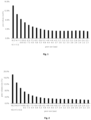
Claims (14)

  1. A lithium-ion battery cathode material, characterized in that the cathode material has a porous structure, wherein a pore volume of mesopores with a pore size of 2-20nm accounts for 90% or more of a total volume of total pores.
  2. A lithium-ion battery cathode material of claim 1, characterized in that a pore volume of pores with a pore size of 3-20nm accounts for 60% or more of a total pore volume of the mesopores, and preferably, a pore volume of pores with a pore size of 5-19nm accounts for 40% or more of a total pore volume of the mesopores.
  3. A lithium-ion battery cathode material of claim 1 or 2, characterized in that the specific surface area of the cathode material is 0.25-1.5m2/g, preferably, the particle size of DV50 particles of the cathode material is 2.00-6.00 µm, and further preferably, the total free lithium content of the cathode material is less than 2000ppm.
  4. A lithium-ion battery cathode material of any one of claims 1 to 3, characterized in that the cathode material contains lithium element, nickel and manganese element, and the content of the nickel element in the cathode material is greater than that of the manganese element.
  5. A lithium-ion battery cathode material of any one of claims 1 to 4, characterized in that the cathode material contains elements as defined in a chemical formula 1;
    the chemical formula 1 is: Li1+aNixMnyCozAmO2, where 0 ≤ a ≤ 0.25, 0.5 < x ≤ 0.97, 0 < y ≤ 0.42, 0 ≤ z ≤ 0.09, 0 ≤ m ≤ 0.03,
    wherein A is selected from any one or two or more elements of Mn, Co, Al, Zr, Y, Rb, Cs, W, Ce, Mo, Ba, Ti, Mg, Ta, Nb, Ca, V, Sc, Sr and B, or from phosphorus-containing compounds containing at least one element of Ti, Al, Mg, Zr, La and Li.
  6. A preparation method of the lithium-ion battery cathode material of any one of claims 1 to 5, characterized in that the preparation method comprises steps of mixing raw materials, then sintering at least twice and crushing at least twice.
  7. The preparation method of claim 6, characterized in that the first sintering temperature is 750-980°C, and the constant temperature time is 8-40 hours; the second sintering temperature is 650-920°C, and the constant temperature time is 5-20 hours; and preferably, the sintering atmosphere is air, oxygen or mixed gas of air and oxygen.
  8. The preparation method of claim 6 or 7, characterized in that the preparation method of the lithium-ion battery cathode material further comprises the following steps:
    (1) mixing crushed products with a metal A source ; and
    (2) sintering and crushing a mixture in step (1).
  9. The preparation method of claim 8, characterized in that the sintering temperature in step (2) is 300-780°C, the constant temperature time is 3-14 hours, and preferably, the sintering atmosphere is air, oxygen or mixed gas of air and oxygen.
  10. The preparation method of any one of claims 6-9, characterized in that the Li source is lithium-containing oxide, lithium-containing fluoride or lithium-containing salt, and preferably, the Li source is selected from one or more than two of lithium hydroxide anhydrous, lithium hydroxide monohydrate, lithium carbonate, lithium nitrate, lithium acetate and lithium fluoride.
  11. A lithium-ion battery cathode material, characterized by being prepared by a preparation method of any one of claims 6-10.
  12. A lithium-ion battery positive electrode, characterized by comprising a current collector and a cathode material loaded on the current collector, wherein the cathode material is the lithium-ion battery cathode material of any one of claims 1 to 5 or claim 11.
  13. A lithium-ion battery, characterized by comprising a positive electrode, a negative electrode and a lithium salt-containing electrolyte, wherein the positive electrode is the lithium-ion battery positive electrode of claim 12.
  14. An application of the lithium-ion battery cathode material of any one of claims 1 to 5 or claim 11, or the lithium-ion battery positive electrode of claim 12, or the lithium-ion battery of claim 13 in the field of digital batteries, power batteries or energy storage batteries.
EP22206781.1A 2021-09-23 2022-11-10 Cathode material for a lithium ion battery and preparation method and application thereof Pending EP4155271A3 (en)

Applications Claiming Priority (1)

Application Number Priority Date Filing Date Title
CN202111115015.9A CN115159589A (en) 2021-09-23 2021-09-23 Lithium ion battery anode material, preparation method and application

Publications (2)

Publication Number Publication Date
EP4155271A2 true EP4155271A2 (en) 2023-03-29
EP4155271A3 EP4155271A3 (en) 2023-04-12

Family

ID=83475601

Family Applications (1)

Application Number Title Priority Date Filing Date
EP22206781.1A Pending EP4155271A3 (en) 2021-09-23 2022-11-10 Cathode material for a lithium ion battery and preparation method and application thereof

Country Status (4)

Country Link
US (1) US20230187626A1 (en)
EP (1) EP4155271A3 (en)
JP (2) JP7677934B2 (en)
CN (2) CN120637475A (en)

Cited By (1)

* Cited by examiner, † Cited by third party
Publication number Priority date Publication date Assignee Title
CN119284872A (en) * 2024-09-30 2025-01-10 四川紫宸科技有限公司 A porous carbon, silicon-carbon negative electrode material and its preparation method and application

Families Citing this family (3)

* Cited by examiner, † Cited by third party
Publication number Priority date Publication date Assignee Title
KR102753437B1 (en) * 2023-06-07 2025-01-10 한국원자력연구원 Positive electrode Active material and lithium secondary battery containing the same
KR102893681B1 (en) * 2025-03-21 2025-12-01 성균관대학교산학협력단 Cathode active materials, preparing method thereof, cathode and electrochemical devices
CN119993750B (en) * 2025-04-15 2025-07-18 内蒙古工业大学 Carbon nanofiber loaded WSe2/Dy-WO3Preparation method and application of heterojunction electrode material

Citations (4)

* Cited by examiner, † Cited by third party
Publication number Priority date Publication date Assignee Title
CN1856890A (en) 2003-09-26 2006-11-01 三菱化学株式会社 Lithium composite oxide particles for lithium secondary battery positive electrode material, lithium secondary battery positive electrode, and lithium secondary battery using the same
CN102280636A (en) 2010-06-13 2011-12-14 三星Sdi株式会社 Positive active material, method of preparing the same, and rechargeable lithium battery including the same
CN104272520A (en) 2012-04-27 2015-01-07 丰田自动车株式会社 Non-aqueous electrolyte secondary battery and method of fabricating same
CN108123119A (en) 2016-11-30 2018-06-05 三星Sdi株式会社 For the active material based on nickel, its preparation method and the lithium secondary battery for including the anode containing it of lithium secondary battery

Family Cites Families (12)

* Cited by examiner, † Cited by third party
Publication number Priority date Publication date Assignee Title
CN1233563C (en) * 2003-11-05 2005-12-28 湖南瑞翔新材料有限公司 Thrice sintering synthetic method for lithium cobalt oxide
JP5218782B2 (en) 2009-11-27 2013-06-26 戸田工業株式会社 Li-Ni composite oxide particle powder for non-aqueous electrolyte secondary battery, method for producing the same, and non-aqueous electrolyte secondary battery
CN102723465B (en) * 2011-06-15 2015-02-18 中国科学院金属研究所 Preparation method of porous LiFePO4 bulk electrode for lithium ion battery
CN108682844A (en) * 2018-05-04 2018-10-19 贵州大龙汇成新材料有限公司 A kind of preparation method of lithium ion battery mangaic acid lithium anode material
CN109713251B (en) 2018-11-30 2022-05-17 贵州高点科技有限公司 Lithium ion battery anode material and preparation method and application thereof
CN110176583A (en) * 2019-05-10 2019-08-27 湖南金富力新能源股份有限公司 It is coated with anode material for lithium-ion batteries and its preparation method and the application of zr element
CN110589901A (en) * 2019-06-26 2019-12-20 浙江美都海创锂电科技有限公司 Preparation method of nickel-cobalt lithium manganate cathode material (Ni≥0.8)
KR102644802B1 (en) 2019-08-08 2024-03-08 주식회사 엘지에너지솔루션 Method for preparing positive electrode active material for secondary battery
CN113054186B (en) * 2019-12-26 2022-07-15 惠州比亚迪实业有限公司 Ternary material, preparation method thereof and lithium ion battery
CN111435744B (en) 2020-01-17 2022-04-12 蜂巢能源科技有限公司 Cobalt-free layered positive electrode material, preparation method thereof, positive plate and lithium ion battery
JP6705068B1 (en) 2020-01-17 2020-06-03 住友化学株式会社 Positive electrode active material for all-solid-state lithium-ion battery, electrode and all-solid-state lithium-ion battery
KR102379561B1 (en) * 2020-03-05 2022-03-28 삼성에스디아이 주식회사 Composite positive electrode active material for lithium secondary battery, preparing method thereof, and lithium secondary battery including a positive electrode including the same

Patent Citations (4)

* Cited by examiner, † Cited by third party
Publication number Priority date Publication date Assignee Title
CN1856890A (en) 2003-09-26 2006-11-01 三菱化学株式会社 Lithium composite oxide particles for lithium secondary battery positive electrode material, lithium secondary battery positive electrode, and lithium secondary battery using the same
CN102280636A (en) 2010-06-13 2011-12-14 三星Sdi株式会社 Positive active material, method of preparing the same, and rechargeable lithium battery including the same
CN104272520A (en) 2012-04-27 2015-01-07 丰田自动车株式会社 Non-aqueous electrolyte secondary battery and method of fabricating same
CN108123119A (en) 2016-11-30 2018-06-05 三星Sdi株式会社 For the active material based on nickel, its preparation method and the lithium secondary battery for including the anode containing it of lithium secondary battery

Cited By (1)

* Cited by examiner, † Cited by third party
Publication number Priority date Publication date Assignee Title
CN119284872A (en) * 2024-09-30 2025-01-10 四川紫宸科技有限公司 A porous carbon, silicon-carbon negative electrode material and its preparation method and application

Also Published As

Publication number Publication date
JP2025105943A (en) 2025-07-10
EP4155271A3 (en) 2023-04-12
CN120637475A (en) 2025-09-12
JP2023046411A (en) 2023-04-04
JP7677934B2 (en) 2025-05-15
JP7814593B2 (en) 2026-02-16
CN115159589A (en) 2022-10-11
US20230187626A1 (en) 2023-06-15

Similar Documents

Publication Publication Date Title
US12406979B2 (en) Carbon-coated lithium-rich oxide composite material and preparation method thereof
EP4155271A2 (en) Cathode material for a lithium ion battery and preparation method and application thereof
CN111193019B (en) Lithium supplement additive, preparation method thereof and lithium ion battery
US10790509B2 (en) Positive-electrode active material precursor for nonaqueous electrolyte secondary battery, positive-electrode active material for nonaqueous electrolyte secondary battery, method for manufacturing positive-electrode active material precursor for nonaqueous electrolyte secondary battery, and method for manufacturing positive-electrode active material for nonaqueous electrolyte secondary battery
EP3731314A1 (en) Positive electrode active material and lithium ion battery
EP3467915A1 (en) High rate lithium cobalt oxide positive electrode material and manufacturing method thereof
WO2018090956A1 (en) Positive electrode material for high voltage lithium battery, battery, preparation method therefor and use thereof
CN113363476B (en) Ternary cathode material of lithium ion battery and preparation method thereof
KR20240158142A (en) Double-coated high-nickel lithium ion positive electrode material as well as preparation method and application thereof
KR20150073970A (en) Li-Ni COMPLEX OXIDE PARTICLE POWDER AND NON-AQUEOUS ELECTROLYTE SECONDARY BATTERY
CN109461893B (en) Novel lithium ion battery anode material and preparation method thereof
EP4216308A1 (en) High-nickel cathode material for a lithium ion battery and preparation method and application thereof
EP4645448A1 (en) Lithium-supplementing material, positive electrode, electrochemical apparatus, and electric device
KR101223482B1 (en) Surface-modified cathode active material for a lithium secondary battery and the fabrication method thereof
EP2477260A1 (en) Silicon oxide and anode material for lithium ion secondary cell
CN114068918B (en) Lithium iron phosphate positive electrode active material and preparation method thereof and battery
CN118231601A (en) Double-layer coated ternary material and preparation method thereof, positive electrode sheet, lithium-ion battery and electrical equipment
CN115304104B (en) Manganese series lithium supplementing additive, preparation method and application thereof
CN114573043B (en) Positive electrode material, preparation method and application thereof
CN114937769A (en) Washing-free high-rate hollow high-nickel cathode material and preparation method and application thereof
CN115020695A (en) Positive electrode active material, electrochemical device, and electronic device
CN114094095A (en) Spinel type positive electrode material, preparation method thereof and lithium ion battery positive electrode plate
CN116014103B (en) A high-nickel ternary cathode material, its preparation method and application
KR101589296B1 (en) Positive electrode active material for rechargable lithium battery, method for synthesis the same, and rechargable lithium battery including the same
CN116259747A (en) A positive electrode material, a secondary battery and an electrical device

Legal Events

Date Code Title Description
PUAI Public reference made under article 153(3) epc to a published international application that has entered the european phase

Free format text: ORIGINAL CODE: 0009012

STAA Information on the status of an ep patent application or granted ep patent

Free format text: STATUS: THE APPLICATION HAS BEEN PUBLISHED

PUAL Search report despatched

Free format text: ORIGINAL CODE: 0009013

AK Designated contracting states

Kind code of ref document: A2

Designated state(s): AL AT BE BG CH CY CZ DE DK EE ES FI FR GB GR HR HU IE IS IT LI LT LU LV MC ME MK MT NL NO PL PT RO RS SE SI SK SM TR

AK Designated contracting states

Kind code of ref document: A3

Designated state(s): AL AT BE BG CH CY CZ DE DK EE ES FI FR GB GR HR HU IE IS IT LI LT LU LV MC ME MK MT NL NO PL PT RO RS SE SI SK SM TR

RIC1 Information provided on ipc code assigned before grant

Ipc: H01M 4/525 20100101ALI20230307BHEP

Ipc: C01G 53/00 20060101AFI20230307BHEP

STAA Information on the status of an ep patent application or granted ep patent

Free format text: STATUS: REQUEST FOR EXAMINATION WAS MADE

17P Request for examination filed

Effective date: 20230926

RBV Designated contracting states (corrected)

Designated state(s): AL AT BE BG CH CY CZ DE DK EE ES FI FR GB GR HR HU IE IS IT LI LT LU LV MC ME MK MT NL NO PL PT RO RS SE SI SK SM TR