EP4154875B1 - N-palmitoylethanolamide and docosahexaenoic acid for use in the treatment of autism spectrum disorder and other depressive syndromes - Google Patents
N-palmitoylethanolamide and docosahexaenoic acid for use in the treatment of autism spectrum disorder and other depressive syndromes Download PDFInfo
- Publication number
- EP4154875B1 EP4154875B1 EP22194900.1A EP22194900A EP4154875B1 EP 4154875 B1 EP4154875 B1 EP 4154875B1 EP 22194900 A EP22194900 A EP 22194900A EP 4154875 B1 EP4154875 B1 EP 4154875B1
- Authority
- EP
- European Patent Office
- Prior art keywords
- palmitoylethanolamide
- pea
- dha
- microns
- volume
- Prior art date
- Legal status (The legal status is an assumption and is not a legal conclusion. Google has not performed a legal analysis and makes no representation as to the accuracy of the status listed.)
- Active
Links
Images

Classifications
-
- A—HUMAN NECESSITIES
- A23—FOODS OR FOODSTUFFS; TREATMENT THEREOF, NOT COVERED BY OTHER CLASSES
- A23L—FOODS, FOODSTUFFS OR NON-ALCOHOLIC BEVERAGES, NOT OTHERWISE PROVIDED FOR; PREPARATION OR TREATMENT THEREOF
- A23L33/00—Modifying nutritive qualities of foods; Dietetic products; Preparation or treatment thereof
- A23L33/10—Modifying nutritive qualities of foods; Dietetic products; Preparation or treatment thereof using additives
- A23L33/115—Fatty acids or derivatives thereof; Fats or oils
- A23L33/12—Fatty acids or derivatives thereof
-
- A—HUMAN NECESSITIES
- A23—FOODS OR FOODSTUFFS; TREATMENT THEREOF, NOT COVERED BY OTHER CLASSES
- A23L—FOODS, FOODSTUFFS OR NON-ALCOHOLIC BEVERAGES, NOT OTHERWISE PROVIDED FOR; PREPARATION OR TREATMENT THEREOF
- A23L33/00—Modifying nutritive qualities of foods; Dietetic products; Preparation or treatment thereof
- A23L33/40—Complete food formulations for specific consumer groups or specific purposes, e.g. infant formula
-
- A—HUMAN NECESSITIES
- A61—MEDICAL OR VETERINARY SCIENCE; HYGIENE
- A61K—PREPARATIONS FOR MEDICAL, DENTAL OR TOILETRY PURPOSES
- A61K31/00—Medicinal preparations containing organic active ingredients
- A61K31/16—Amides, e.g. hydroxamic acids
-
- A—HUMAN NECESSITIES
- A61—MEDICAL OR VETERINARY SCIENCE; HYGIENE
- A61K—PREPARATIONS FOR MEDICAL, DENTAL OR TOILETRY PURPOSES
- A61K31/00—Medicinal preparations containing organic active ingredients
- A61K31/16—Amides, e.g. hydroxamic acids
- A61K31/164—Amides, e.g. hydroxamic acids of a carboxylic acid with an aminoalcohol, e.g. ceramides
-
- A—HUMAN NECESSITIES
- A61—MEDICAL OR VETERINARY SCIENCE; HYGIENE
- A61K—PREPARATIONS FOR MEDICAL, DENTAL OR TOILETRY PURPOSES
- A61K31/00—Medicinal preparations containing organic active ingredients
- A61K31/185—Acids; Anhydrides, halides or salts thereof, e.g. sulfur acids, imidic, hydrazonic or hydroximic acids
- A61K31/19—Carboxylic acids, e.g. valproic acid
- A61K31/20—Carboxylic acids, e.g. valproic acid having a carboxyl group bound to a chain of seven or more carbon atoms, e.g. stearic, palmitic, arachidic acids
- A61K31/202—Carboxylic acids, e.g. valproic acid having a carboxyl group bound to a chain of seven or more carbon atoms, e.g. stearic, palmitic, arachidic acids having three or more double bonds, e.g. linolenic
-
- A—HUMAN NECESSITIES
- A61—MEDICAL OR VETERINARY SCIENCE; HYGIENE
- A61K—PREPARATIONS FOR MEDICAL, DENTAL OR TOILETRY PURPOSES
- A61K47/00—Medicinal preparations characterised by the non-active ingredients used, e.g. carriers or inert additives; Targeting or modifying agents chemically bound to the active ingredient
- A61K47/02—Inorganic compounds
-
- A—HUMAN NECESSITIES
- A61—MEDICAL OR VETERINARY SCIENCE; HYGIENE
- A61K—PREPARATIONS FOR MEDICAL, DENTAL OR TOILETRY PURPOSES
- A61K47/00—Medicinal preparations characterised by the non-active ingredients used, e.g. carriers or inert additives; Targeting or modifying agents chemically bound to the active ingredient
- A61K47/06—Organic compounds, e.g. natural or synthetic hydrocarbons, polyolefins, mineral oil, petrolatum or ozokerite
- A61K47/08—Organic compounds, e.g. natural or synthetic hydrocarbons, polyolefins, mineral oil, petrolatum or ozokerite containing oxygen, e.g. ethers, acetals, ketones, quinones, aldehydes, peroxides
- A61K47/12—Carboxylic acids; Salts or anhydrides thereof
-
- A—HUMAN NECESSITIES
- A61—MEDICAL OR VETERINARY SCIENCE; HYGIENE
- A61K—PREPARATIONS FOR MEDICAL, DENTAL OR TOILETRY PURPOSES
- A61K47/00—Medicinal preparations characterised by the non-active ingredients used, e.g. carriers or inert additives; Targeting or modifying agents chemically bound to the active ingredient
- A61K47/06—Organic compounds, e.g. natural or synthetic hydrocarbons, polyolefins, mineral oil, petrolatum or ozokerite
- A61K47/22—Heterocyclic compounds, e.g. ascorbic acid, tocopherol or pyrrolidones
-
- A—HUMAN NECESSITIES
- A61—MEDICAL OR VETERINARY SCIENCE; HYGIENE
- A61K—PREPARATIONS FOR MEDICAL, DENTAL OR TOILETRY PURPOSES
- A61K47/00—Medicinal preparations characterised by the non-active ingredients used, e.g. carriers or inert additives; Targeting or modifying agents chemically bound to the active ingredient
- A61K47/06—Organic compounds, e.g. natural or synthetic hydrocarbons, polyolefins, mineral oil, petrolatum or ozokerite
- A61K47/26—Carbohydrates, e.g. sugar alcohols, amino sugars, nucleic acids, mono-, di- or oligo-saccharides; Derivatives thereof, e.g. polysorbates, sorbitan fatty acid esters or glycyrrhizin
-
- A—HUMAN NECESSITIES
- A61—MEDICAL OR VETERINARY SCIENCE; HYGIENE
- A61K—PREPARATIONS FOR MEDICAL, DENTAL OR TOILETRY PURPOSES
- A61K47/00—Medicinal preparations characterised by the non-active ingredients used, e.g. carriers or inert additives; Targeting or modifying agents chemically bound to the active ingredient
- A61K47/30—Macromolecular organic or inorganic compounds, e.g. inorganic polyphosphates
- A61K47/36—Polysaccharides; Derivatives thereof, e.g. gums, starch, alginate, dextrin, hyaluronic acid, chitosan, inulin, agar or pectin
-
- A—HUMAN NECESSITIES
- A61—MEDICAL OR VETERINARY SCIENCE; HYGIENE
- A61K—PREPARATIONS FOR MEDICAL, DENTAL OR TOILETRY PURPOSES
- A61K47/00—Medicinal preparations characterised by the non-active ingredients used, e.g. carriers or inert additives; Targeting or modifying agents chemically bound to the active ingredient
- A61K47/30—Macromolecular organic or inorganic compounds, e.g. inorganic polyphosphates
- A61K47/36—Polysaccharides; Derivatives thereof, e.g. gums, starch, alginate, dextrin, hyaluronic acid, chitosan, inulin, agar or pectin
- A61K47/38—Cellulose; Derivatives thereof
-
- A—HUMAN NECESSITIES
- A61—MEDICAL OR VETERINARY SCIENCE; HYGIENE
- A61K—PREPARATIONS FOR MEDICAL, DENTAL OR TOILETRY PURPOSES
- A61K9/00—Medicinal preparations characterised by special physical form
- A61K9/0087—Galenical forms not covered by A61K9/02 - A61K9/7023
- A61K9/0095—Drinks; Beverages; Syrups; Compositions for reconstitution thereof, e.g. powders or tablets to be dispersed in a glass of water; Veterinary drenches
-
- A—HUMAN NECESSITIES
- A61—MEDICAL OR VETERINARY SCIENCE; HYGIENE
- A61K—PREPARATIONS FOR MEDICAL, DENTAL OR TOILETRY PURPOSES
- A61K9/00—Medicinal preparations characterised by special physical form
- A61K9/08—Solutions
-
- A—HUMAN NECESSITIES
- A61—MEDICAL OR VETERINARY SCIENCE; HYGIENE
- A61K—PREPARATIONS FOR MEDICAL, DENTAL OR TOILETRY PURPOSES
- A61K9/00—Medicinal preparations characterised by special physical form
- A61K9/14—Particulate form, e.g. powders, Processes for size reducing of pure drugs or the resulting products, Pure drug nanoparticles
- A61K9/16—Agglomerates; Granulates; Microbeadlets ; Microspheres; Pellets; Solid products obtained by spray drying, spray freeze drying, spray congealing,(multiple) emulsion solvent evaporation or extraction
- A61K9/1605—Excipients; Inactive ingredients
- A61K9/1617—Organic compounds, e.g. phospholipids, fats
- A61K9/1623—Sugars or sugar alcohols, e.g. lactose; Derivatives thereof; Homeopathic globules
-
- A—HUMAN NECESSITIES
- A61—MEDICAL OR VETERINARY SCIENCE; HYGIENE
- A61K—PREPARATIONS FOR MEDICAL, DENTAL OR TOILETRY PURPOSES
- A61K9/00—Medicinal preparations characterised by special physical form
- A61K9/48—Preparations in capsules, e.g. of gelatin, of chocolate
- A61K9/4816—Wall or shell material
- A61K9/4825—Proteins, e.g. gelatin
-
- A—HUMAN NECESSITIES
- A61—MEDICAL OR VETERINARY SCIENCE; HYGIENE
- A61K—PREPARATIONS FOR MEDICAL, DENTAL OR TOILETRY PURPOSES
- A61K9/00—Medicinal preparations characterised by special physical form
- A61K9/48—Preparations in capsules, e.g. of gelatin, of chocolate
- A61K9/4841—Filling excipients; Inactive ingredients
- A61K9/4858—Organic compounds
-
- A—HUMAN NECESSITIES
- A61—MEDICAL OR VETERINARY SCIENCE; HYGIENE
- A61K—PREPARATIONS FOR MEDICAL, DENTAL OR TOILETRY PURPOSES
- A61K9/00—Medicinal preparations characterised by special physical form
- A61K9/48—Preparations in capsules, e.g. of gelatin, of chocolate
- A61K9/4841—Filling excipients; Inactive ingredients
- A61K9/4875—Compounds of unknown constitution, e.g. material from plants or animals
-
- A—HUMAN NECESSITIES
- A61—MEDICAL OR VETERINARY SCIENCE; HYGIENE
- A61P—SPECIFIC THERAPEUTIC ACTIVITY OF CHEMICAL COMPOUNDS OR MEDICINAL PREPARATIONS
- A61P25/00—Drugs for disorders of the nervous system
-
- A—HUMAN NECESSITIES
- A61—MEDICAL OR VETERINARY SCIENCE; HYGIENE
- A61P—SPECIFIC THERAPEUTIC ACTIVITY OF CHEMICAL COMPOUNDS OR MEDICINAL PREPARATIONS
- A61P25/00—Drugs for disorders of the nervous system
- A61P25/24—Antidepressants
-
- A—HUMAN NECESSITIES
- A23—FOODS OR FOODSTUFFS; TREATMENT THEREOF, NOT COVERED BY OTHER CLASSES
- A23V—INDEXING SCHEME RELATING TO FOODS, FOODSTUFFS OR NON-ALCOHOLIC BEVERAGES AND LACTIC OR PROPIONIC ACID BACTERIA USED IN FOODSTUFFS OR FOOD PREPARATION
- A23V2002/00—Food compositions, function of food ingredients or processes for food or foodstuffs
Definitions
- the present invention relates to the use of N-palmitoylethanolamide (PEA) in combination with docosahexaenoic acid (DHA) in the treatment of autism spectrum disorder and other depressive syndromes.
- PEA N-palmitoylethanolamide
- DHA docosahexaenoic acid
- Autism spectrum disorder is a multifactorial-etiology neurodevelopmental disorder which manifests through the impairment of social interaction, verbal and non-verbal communication, activities, and interest (definition from the American Psychiatric Association).
- the symptomatology begins within the first three years of life following a specific event and early diagnosis is very important to be able to adequately intervene on the various compromised areas.
- Stereotypes are one of the main diagnostic features of ASD and can comprise self-stimulatory and self-harming behaviors, excitement, stimulation, stress, anxiety, boredom, fatigue, and social isolation.
- ASD ASD is also due to an imbalance between inhibitory and excitatory synapses, as well as neuroinflammation responsible for the activation and pathological proliferation of non-neuronal cells which, by releasing cytokines (IL-1 ⁇ , IL-1 ⁇ , IL-6 and TNF- ⁇ ) and pro-inflammatory chemokines (MCP-1 and RANTES) in the brain and cerebrospinal fluid of autistic patients, exacerbate the neuroinflammatory process.
- cytokines IL-1 ⁇ , IL-1 ⁇ , IL-6 and TNF- ⁇
- MCP-1 and RANTES pro-inflammatory chemokines
- ALLO allopregnanolone
- GABA A receptors synthesized by 5 ⁇ -reductase type 1 enzymes and 3 ⁇ -hydroxysteroid dehydrogenase.
- ALLO possesses antidepressant, anxiolytic, anti-stress, sedative, anti-aggressive and analgesic properties and prevents the formation and release of pro-inflammatory cytokines, such as NFkB, HMGB1, MCP-1 and TNF-a involved in multiple neuroinflammatory conditions.
- the drugs authorized and administered to patients with ASD are risperidone and methylphenidate, which, although useful for treating autistic symptoms, do not act on the modulation of neuroinflammation and on the increase in endogenous ALLO levels.
- ALLO levels have also been found in psychiatric conditions such as major depressive disorder (MDD), post-traumatic stress disorder (PTSD) and especially in postpartum depression.
- MDD major depressive disorder
- PTSD post-traumatic stress disorder
- Zulresso TM is the first drug approved by the FDA (Federal Drug Administration) for its exclusive use in the treatment of postpartum depression.
- the EMA included Brexanolone in a study program prior to its marketing in Europe.
- Zulresso TM should only be administered in certified healthcare facilities due to the risk of excessive sedation, sudden loss of consciousness or dizziness during the 60 hours of administration.
- ALLO is administered as a therapy for autistic patients: it is thus of considerable importance to identify an anti-neuroinflammatory treatment which is easy to administer orally, safe and free of significant side effects in the long term and capable of also normalizing endogenous ALLO levels.
- PEA Palmitoylethanolamide
- the administration of PEA is capable of determining neuroinflammatory normalization activity; in particular, it has been demonstrated that PEA-um is capable of significantly sub-modulating the general neuroinflammatory status of mice with a simil-autistic phenotype, reducing the expression of the pro-inflammatory hippocampal and serum cytokines IL-6, IL-1b and TNF-a and modulating the altered behavioral status.
- the 3-month treatment of autistic children with PEA-um 600 mg/day improves aggressiveness, cognitive and behavioral skills, and communication without adverse effects.
- DHA (C22:6 n-3) is one of the most abundant long-chain polyunsaturated fatty acids (PUFAs) in the body. It is a fundamental component of all cell membranes, including the cells of the nervous system. The decrease thereof can trigger a malfunction of nervous tissue, negatively affecting learning and behavioral processes as well as aggravating the autistic disease.
- PUFAs polyunsaturated fatty acids
- Peritore AF et al (Nutrients, 2019, 11(9): 2175 ) concerns PEA, optionally in micronized form, for use in the treatment of acute and chronic inflammatory pathologies.
- Russo R et al (Current Medicinal Chemistry, 2018, 25(32): 3930-52 ) teaches that the gut-brain axis has been found to play a role in stress-related disorders, to neurodevelopmental disorders and to neurodegenerative diseases.
- PEA is a type of bioactive lipid that reduces inflammation markers in a murine model of inflammatory bowel disease. DHA is mentioned to be reduced in plasma of children with autism spectrum disorders (ASD) and supplementation with PUFAs improves the symptoms of ASD.
- ASSD autism spectrum disorders
- ASD therapy which is effective, non-invasive and safe and which, if possible, does not require the administration of high doses of active substances.
- ASD therapy would be primarily dedicated to a child population, repeated administration and/or in large dosage forms (for example, large tablets for oral administration of high doses of active ingredients) would be difficult to accept by the patient.
- the present invention derives from the surprising discovery that palmitoylethanolamide (PEA), preferably when used in an ultra-micronized form, when administered in combination with docosahexaenoic acid (DHA), exhibits a synergistically relevant effect in improving the behavioral parameters of autistic subjects and in raising endogenous allopregnanolone (ALLO) levels.
- PDA palmitoylethanolamide
- DHA docosahexaenoic acid
- ALLO endogenous allopregnanolone
- the present invention relates to palmitoylethanolamide for use in the treatment of autism spectrum disorders (ASDs), where palmitoylethanolamide is administered in association with docosahexaenoic acid, where said administration is separate, combined, or simultaneous.
- ASDs autism spectrum disorders
- the invention further relates to a composition containing palmitoylethanolamide and docosahexaenoic acid, in particular when usable in the treatment of autism spectrum disorders (ASD).
- ASD autism spectrum disorders
- the invention also relates to palmitoylethanolamide for use in the treatment of diseases characterized by decreased endogenous allopregnanolone levels, where palmitoylethanolamide is administered in combination with docosahexaenoic acid, where said administration is separate, combined, or simultaneous.
- the present invention relates in a first aspect to palmitoylethanolamide (PEA) for use in the treatment of autism spectrum disorders (ASD), where palmitoylethanolamide is administered in association with docosahexaenoic acid (DHA), where said administration is separate, combined, or simultaneous.
- PDA palmitoylethanolamide
- ASD autism spectrum disorders
- DHA docosahexaenoic acid
- in association means both a combination therapy and a therapy in which PEA and DHA are contained in a single dosage form.
- “Separate” administration means an administration of PEA and DHA in separate dosage forms, administered at different times ranging from 1 minute to several hours, for example 8, 12 or 14 hours apart.
- Combined administration means an administration of PEA and DHA contained in a single dosage form, i.e., a pharmaceutical or veterinary composition or formulation, supplement, dietary composition or food for special medical purposes.
- “Simultaneous” administration means an administration of PEA and DHA in separate dosage forms, but administered simultaneously, i.e., within a separation time between the PEA and DHA administration, or vice versa, not exceeding 1 minute.
- Palmitoylethanolamide can be administered in any form, for example in a non-micronized form, in a micronized form or in an ultra-micronized form.
- PEA palmitoylethanolamide in a non-micronized form
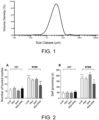
- PEA having a particle size distribution, defined as a percentage by volume and measured with the laser light scattering method, represented by a distribution curve having the mode above 10 microns, preferably above 20 microns.
- PEA palmitoylethanolamide in a micronized form
- PEA having a particle size distribution, defined as a percentage by volume and measured with the laser light scattering method, represented by a distribution curve having the mode between 6 microns and 10 microns.
- PDA palmitoylethanolamide in an ultra-micronized form
- PEA having a particle size distribution, defined as a percentage by volume and measured with the laser light scattering method, represented by a distribution curve having the mode below 6 microns and above 0.5 microns.
- the PEA is in an ultra-micronized form.
- the PEA in an ultra-micronized form has a particle size distribution as defined above, measured with a Malvern Mastersizer 3000 instrument with Fraunhofer calculation algorithm, where at least 95% by volume, more preferably at least 99% by volume, of particles has a particle size of less than 6 microns.
- the PEA in an ultra-micronized form has a particle size distribution as defined above, measured with a Malvern Mastersizer 3000 instrument with Fraunhofer calculation algorithm, having a mode between 2 and 4 microns and having 100% by volume of particles smaller than 10 microns and at least 60% by volume of particles smaller than 3 microns.
- micronization can be carried out in a fluid jet system (for example, Jetmill ® model system) which operates with spiral technology with a compressed air or nitrogen jet capable of exploiting kinetic energy - instead of mechanical energy - to crush the particles.
- a fluid jet system for example, Jetmill ® model system
- Such apparatuses are conventional and will therefore not be further described, except in relation to the following features:
- Docosahexaenoic acid belongs to the so-called PUFAs or long-chain polyunsaturated fatty acids and has the following structural formula:
- Docosahexaenoic acid also called cervonic acid
- cervonic acid is an omega-3 or PUFA n-3 fatty acid.
- Oceanic cold-water fish are rich in DHA.
- DHA is also commercially produced by microalgae, Crypthecodinium cohnii which is a microorganism of the genus Schizochytrium. DHA produced using microalgae is of plant origin.
- the present invention further relates to a composition comprising palmitoylethanolamide and docosahexaenoic acid.
- the composition of the invention consists of a mixture of palmitoylethanolamide and docosahexaenoic acid and pharmaceutically acceptable excipients. More preferably, palmitoylethanolamide is in an ultra-micronized form (PEA-um).
- PEA and DHA are administered in a weight ratio between 1:7 and 7:1.
- the PEA/DHA weight ratio will preferably be between 1:7 and 1:1, more preferably between 1:5 and 1:2.
- the PEA/DHA weight ratio will preferably be between 1:1 and 7:1, more preferably between 2:1 and 5:1.
- PEA alone, DHA alone or the composition containing PEA and DHA can be included in pharmaceutical or veterinary formulations and can be formulated in dosage forms for oral, buccal, parenteral, rectal or transdermal administration.
- the compounds of the invention can be found, for example, in the form of tablets or capsules, hard or soft, prepared in the conventional fashion with pharmaceutically acceptable excipients such as binders (e.g., pregelatinized cornstarch, polyvinylpyrrolidone or hydroxypropyl methylcellulose); fillers(e.g., lactose, microcrystalline cellulose or calcium hydrogen phosphate); lubricants (e.g., magnesium stearate, talc or silica); disintegrants (e.g., potato starch or sodium starch glycolate); or inhibiting agents (e.g., sodium lauryl sulfate).
- binders e.g., pregelatinized cornstarch, polyvinylpyrrolidone or hydroxypropyl methylcellulose
- fillers e.g., lactose, microcrystalline cellulose or calcium hydrogen phosphate
- lubricants e.g., magnesium stearate, talc or silica
- the liquid preparations for oral administration can be, for example, in the form of solutions, syrups or suspensions or they can be freeze-dried or granulated products to be reconstituted, before use, with water or other suitable vehicles.
- Such liquid preparations can be prepared through conventional methods with pharmaceutically acceptable additives such as suspending agents (e.g., sorbitol syrup, cellulose derivatives, or edible hydrogenated fats); emulsifiers (e.g., lecithin or acacia); non-aqueous vehicles (e.g., almond oil, oily esters, ethyl alcohol or fractionated vegetable oils); and preservatives (e.g., methyl- or propyl-p-hydroxybenzoates or sorbic acid).
- the preparation can also conveniently contain flavorings, dyes, and sweeteners.
- the preparations for oral administration can be appropriately formulated to allow the controlled release of the active constituent.
- the compounds of the invention can be in the form of tablets or pills formulated in the conventional manner, which are suitable for an absorption at the level of the buccal mucosa.
- Typical buccal formulations are tablets for sublingual administration.
- the compounds of the invention can be formulated for parenteral administration by injection.
- the injection formulations can be presented as a single dose, for example in vials, with an added preservative.
- the compositions can appear in such a form as suspensions, solutions, or emulsions in oily or aqueous vehicles and can contain agents of the formulation such as suspension, stabilizers and/or dispersants.
- the active ingredient or the mixture of active ingredients can be found in the form of a powder to be reconstituted, before use, with a suitable vehicle, for example with sterile water.
- the compounds of the invention can also be formulated according to rectal formulations such as suppositories or retention enemas, for example containing the basic components of the common suppositories such as cocoa butter or other glycerides.
- the compounds of the invention can also be formulated as a deposit preparation.
- Such long-acting formulations can be administered by implantation (e.g., subcutaneously, transcutaneously or intramuscularly) or intramuscular injection. Therefore, for example, the composition can be formulated with appropriate polymer or hydrophobic materials (for example in the form of an emulsion in a suitable oil) or ion exchange resins or as minimally soluble derivatives.
- the daily dose of PEA proposed for administration to a man ranges from 10 mg to 1500 mg or, if PEA is used in an ultra-micronized form, from 10 mg to 500 mg of PEA.
- a daily dose can be divided into dose units for an administration, for example, from 1 to 4 times a day.
- the dose will depend on the form in which the PEA is administered, i.e., whether non-micronized PEA, micronized PEA or ultra-micronized PEA is administered.
- the dose will also depend on the route chosen for administration. It should be considered that it may be necessary to continuously vary the dosage depending on the age and weight of the patient and also on the severity of the clinical condition to be treated. The exact dose and route of administration will ultimately be at the discretion of the treating physician or veterinarian.
- the invention further relates to dietary compositions, food supplements and foods for special medical purposes (FSMPs) comprising PEA, preferably ultra-micronized PEA, and DHA for use in the treatment of ASD.
- FSMPs special medical purposes
- the term "food for special medical purposes” means products authorized according to regulation (EU) 2016/128. Such a term refers to a product to be administered under medical supervision, thus assimilating such an FSMP to a drug.
- EU regulation
- formulations according to the invention can be prepared according to conventional methods, such as those described in Remington's Pharmaceutical Sciences Handbook, Mack Pub. Co., N.Y., USA, 17th edition, 1985 or in Remington, The Science and Practice of Pharmacy, Edited by Allen, Loyd V., Jr, 22nd edition, 2012 .
- the PEA was micronized as previously described.
- the ultra-micronization was carried out in a fluid jet system (in particular, the Jetmill ® model system) which operates with compressed air jet "spiral technology".
- the determination of the particle size distribution was carried out on a wet sample, after 1-minute sonication.
- the particle size distribution graph is shown in figure 1 .
- BTBR mice have a simil-autistic phenotype capable of reproducing the main symptoms of ASD with the appearance of behavioral deficits in a period comparable to early childhood.
- BTBR mice are completely free of the corpus callosum and subject to severely reduced hippocampal commissure ( Wahlsten D. et al., Survey of 21 inbred mouse strains in two laboratories reveals that BTBR T/+ tf/tf has severely reduced hippocampal commissure and absent corpus callosum, Brain Res. 2003, 971: 47-54 ).
- This strain has several symptoms of autism including reduced social interactions, altered expressions of play, reduced exploratory behavior, unusual vocalizations, and anxiety ( McFarlane HG et al., Autism-like behavioral phenotypes in BTBR T+tf/J mice, Genes Brain Behav. 2008, 7: 152-63 ; Scattoni ML et al., Unusual repertoire of vocalizations in the BTBR T+tf/J mouse model of autism, PLoS One 2008, 3: e3067 ); further has particularly reduced ALLO levels ( Ebihara K.
- CMC carboxymethyl cellulose
- PEA-um ultra-micronized PEA
- the animals were euthanized 10 days after starting the administration of the treatments. Plasma was collected for dosing with the HLPC (Agilent) method of the ALLO neurosteroid. Before being sacrificed, the animals were subjected to behavioral tests to study the repetitive/obsessive phenotype (Marble Burying test and Self Grooming test) and sociability.
- mice were placed in an empty plexiglass cage (30x40 cm) and allowed to freely explore the arena. After 10 minutes of acclimatization, self grooming activity was monitored for 20 minutes. The repetitive attitude in washing the head, body, genital area and tail and in licking the arms and legs were taken into account.
- the healthy C57 mice exhibit enhanced sociability to another mouse also following treatments with either only PEA-um or only DHA at the inactive concentrations of 1 mg/kg and 30 mg/kg ( Fig. 3A ).
- the sociability of which is reduced only the synergy between PEA-um associated with DHA improves the sociability of autistic animals, leading the mice to spend more time in the company of a companion.
- the BTBR animals treated with vehicle, only PEA-um 1 mg/kg and only DHA 30 mg/kg did not demonstrate social improvements, continuing to spend their time in the empty side of the instrument ( Fig. 3B ).
- BTBR mice have a significant reduction in plasma ALLO levels; this trend is also found in BTBR animals treated with PEA-um 1 mg/kg and DHA 30 mg/kg. Only the group of BTBR animals treated with the PEA-um 1 mg/kg + DHA 30 mg/kg combination has a significant increase in plasma levels of the neurosteroid ALLO. All the treatments performed in the healthy C57 mice did not induce any plasma ALLO increase ( Fig. 4 ).
- the present invention thus provides an agent for use in a method for treating autism spectrum disorders (ASD) comprising or consisting in administering, to a subject suffering from ASD, said agent comprising
- PEA preferably PEA in an ultra-micronized form, and DHA, where said administration is separate, combined (i.e., in a single dosage form) or simultaneous and where PEA and DHA are administered at a dosage at which, when administered alone, PEA and DHA are inactive.
- the doses of PEA-um and DHA administered to a child or adolescent patient are 500 mg/day or less and 700 mg/day, or more preferably 300 mg/day or less and 500 mg/day or less, respectively.
- the present invention provides a method for increasing endogenous allopregnanolone levels in a subject in which said endogenous levels are below normal levels (i.e., preferably below 0.7 nmol/L), comprising or consisting in administering to said subject PEA, preferably in an ultra-micronized form, and DHA, where said administration is separate, combined (i.e., in a single dosage form) or simultaneous and where PEA and DHA are administered at a dosage at which, when administered alone, PEA and DHA are inactive.
- PEA normal levels
- DHA ultra-micronized form
- such a method allows the treatment not only of subjects with ASD, but also of subjects with depressive syndromes, in particular postpartum depression.
- PEA-um Ultra-micronized palmitoylethanolamide
Landscapes
- Health & Medical Sciences (AREA)
- Chemical & Material Sciences (AREA)
- Life Sciences & Earth Sciences (AREA)
- Medicinal Chemistry (AREA)
- Veterinary Medicine (AREA)
- Public Health (AREA)
- General Health & Medical Sciences (AREA)
- Animal Behavior & Ethology (AREA)
- Pharmacology & Pharmacy (AREA)
- Epidemiology (AREA)
- Engineering & Computer Science (AREA)
- General Chemical & Material Sciences (AREA)
- Chemical Kinetics & Catalysis (AREA)
- Bioinformatics & Cheminformatics (AREA)
- Oil, Petroleum & Natural Gas (AREA)
- Biomedical Technology (AREA)
- Organic Chemistry (AREA)
- Neurology (AREA)
- Neurosurgery (AREA)
- Nuclear Medicine, Radiotherapy & Molecular Imaging (AREA)
- Inorganic Chemistry (AREA)
- Molecular Biology (AREA)
- Mycology (AREA)
- Nutrition Science (AREA)
- Polymers & Plastics (AREA)
- Food Science & Technology (AREA)
- Biochemistry (AREA)
- Pain & Pain Management (AREA)
- Psychiatry (AREA)
- Botany (AREA)
- Zoology (AREA)
- Pediatric Medicine (AREA)
- Biophysics (AREA)
- Acyclic And Carbocyclic Compounds In Medicinal Compositions (AREA)
- Coloring Foods And Improving Nutritive Qualities (AREA)
- Organic Low-Molecular-Weight Compounds And Preparation Thereof (AREA)
Priority Applications (2)
| Application Number | Priority Date | Filing Date | Title |
|---|---|---|---|
| RS20250126A RS66464B1 (sr) | 2021-09-23 | 2022-09-09 | N-palmitoiletanolamid i dokozaheksaenska kiselina za upotrebu u lečenju poremećaja autističnog spektra i drugih depresivnih sindroma |
| HRP20250169TT HRP20250169T1 (hr) | 2021-09-23 | 2022-09-09 | N-palmitoiletanolamid i dokozaheksaenska kiselina za uporabu u liječenju poremećaja iz spektra autizma i drugih depresivnih sindroma |
Applications Claiming Priority (1)
| Application Number | Priority Date | Filing Date | Title |
|---|---|---|---|
| IT102021000024464A IT202100024464A1 (it) | 2021-09-23 | 2021-09-23 | N-palmitoil-etanolamide e acido docosaesaenoico per l’uso nel trattamento del disturbo dello spettro autistico e di altre sindromi depressive |
Publications (2)
| Publication Number | Publication Date |
|---|---|
| EP4154875A1 EP4154875A1 (en) | 2023-03-29 |
| EP4154875B1 true EP4154875B1 (en) | 2024-11-20 |
Family
ID=79018794
Family Applications (1)
| Application Number | Title | Priority Date | Filing Date |
|---|---|---|---|
| EP22194900.1A Active EP4154875B1 (en) | 2021-09-23 | 2022-09-09 | N-palmitoylethanolamide and docosahexaenoic acid for use in the treatment of autism spectrum disorder and other depressive syndromes |
Country Status (14)
| Country | Link |
|---|---|
| US (1) | US20230104124A1 (es) |
| EP (1) | EP4154875B1 (es) |
| JP (1) | JP2023046406A (es) |
| CN (1) | CN115919829A (es) |
| AU (1) | AU2022228187A1 (es) |
| BR (1) | BR102022018941A2 (es) |
| CA (1) | CA3174861A1 (es) |
| ES (1) | ES3025157T3 (es) |
| FI (1) | FI4154875T3 (es) |
| HR (1) | HRP20250169T1 (es) |
| IT (1) | IT202100024464A1 (es) |
| LT (1) | LT4154875T (es) |
| PL (1) | PL4154875T3 (es) |
| RS (1) | RS66464B1 (es) |
Family Cites Families (4)
| Publication number | Priority date | Publication date | Assignee | Title |
|---|---|---|---|---|
| ATE290858T1 (de) * | 1999-08-06 | 2005-04-15 | Innovet Italia Srl | N-palmitoylethanolamid-enthaltende pharmazeutische zusammensetzungen und deren verwendung in der veterinärmedizin |
| ES2547133T5 (es) * | 2009-09-07 | 2019-02-15 | Epitech Group S P A | Composición que contiene palmitoiletanolamida ultramicronizada |
| US8563610B2 (en) * | 2010-02-04 | 2013-10-22 | Rutgers, The State of New Jersey | Polyunsaturated fatty acids interactions and oxidative stress disorders |
| JP7118642B2 (ja) * | 2014-08-08 | 2022-08-16 | アリ リサーチ ソシエタ ア レスポンサビリタ リミタータ センプリフィカタ | 炎症性およびアレルギー性病変の治療に用いるための脂肪酸とパルミトイルエタノールアミドの混合物 |
-
2021
- 2021-09-23 IT IT102021000024464A patent/IT202100024464A1/it unknown
-
2022
- 2022-09-09 PL PL22194900.1T patent/PL4154875T3/pl unknown
- 2022-09-09 ES ES22194900T patent/ES3025157T3/es active Active
- 2022-09-09 EP EP22194900.1A patent/EP4154875B1/en active Active
- 2022-09-09 HR HRP20250169TT patent/HRP20250169T1/hr unknown
- 2022-09-09 FI FIEP22194900.1T patent/FI4154875T3/fi active
- 2022-09-09 RS RS20250126A patent/RS66464B1/sr unknown
- 2022-09-09 AU AU2022228187A patent/AU2022228187A1/en active Pending
- 2022-09-09 LT LTEP22194900.1T patent/LT4154875T/lt unknown
- 2022-09-15 CA CA3174861A patent/CA3174861A1/en active Pending
- 2022-09-21 BR BR102022018941-2A patent/BR102022018941A2/pt unknown
- 2022-09-21 US US17/949,754 patent/US20230104124A1/en active Pending
- 2022-09-22 JP JP2022151373A patent/JP2023046406A/ja active Pending
- 2022-09-22 CN CN202211159412.0A patent/CN115919829A/zh active Pending
Also Published As
| Publication number | Publication date |
|---|---|
| CN115919829A (zh) | 2023-04-07 |
| JP2023046406A (ja) | 2023-04-04 |
| EP4154875A1 (en) | 2023-03-29 |
| IT202100024464A1 (it) | 2023-03-23 |
| HRP20250169T1 (hr) | 2025-04-11 |
| ES3025157T3 (en) | 2025-06-06 |
| PL4154875T3 (pl) | 2025-03-24 |
| AU2022228187A1 (en) | 2023-04-06 |
| LT4154875T (lt) | 2025-02-25 |
| BR102022018941A2 (pt) | 2023-03-28 |
| US20230104124A1 (en) | 2023-04-06 |
| FI4154875T3 (fi) | 2025-02-21 |
| CA3174861A1 (en) | 2023-03-23 |
| RS66464B1 (sr) | 2025-02-28 |
Similar Documents
| Publication | Publication Date | Title |
|---|---|---|
| JP6092843B2 (ja) | 神経障害の治療用組成物 | |
| JP7410055B2 (ja) | ニコチンアミドアデニンジヌクレオチド(nad+)前駆体及び少なくとも1種のケトン又はケトン前駆体を使用する組成物及び方法 | |
| Matsui et al. | DHA mitigates autistic behaviors accompanied by dopaminergic change in a gene/prenatal stress mouse model | |
| EP3781150A1 (en) | Stabilized polyunsaturated compounds and uses thereof | |
| EP2611313A1 (en) | Method and preparation for the treatment or prevention of anxiety or neurogenesis | |
| FR2902010A1 (fr) | Utilisation de la 1,7 dimethylxanthine pour la fabrication d'un medicament psychoanaleptique non anxiogene destine au traitement d'un trouble neuropsychiatrique | |
| CN103732223A (zh) | 用于认知能力下降的医疗食品 | |
| Shishmanova-Doseva et al. | The anticonvulsant effect of chronic treatment with topiramate after pilocarpine-induced status epilepticus is accompanied by a suppression of comorbid behavioral impairments and robust neuroprotection in limbic regions in rats | |
| CN107427485A (zh) | 用于治疗焦虑症的中链脂肪酸及其甘油三酯 | |
| EP4154875B1 (en) | N-palmitoylethanolamide and docosahexaenoic acid for use in the treatment of autism spectrum disorder and other depressive syndromes | |
| US20230381121A1 (en) | N-palmitoylethanolamide and melatonin for use in the treatment of autism spectrum disorder and other neurobehavioral disorders similarly accompanied by restlessness, irritability, sleep disorders, and potentially stereotypies | |
| EP3764992B1 (en) | Pharmaceutical or food supplement preparation based on alpha-lactalbumin | |
| EP4094757B1 (en) | Composition of acylethanolamides from olive oil fatty acids | |
| JP2021519330A (ja) | ムメフラールを含む認知障害関連疾患の予防又は治療用組成物 | |
| CA2553843A1 (en) | Stress relieving composition | |
| EP4353261A1 (en) | Nutraceutic combination and its use in the treatment of neurological disorders | |
| US20140343143A1 (en) | Use of highly concentrated compositions of selected n-3 fatty acids for the treatment of central nervous system disturbances | |
| TWI878353B (zh) | 經由調節水通道蛋白3之表現的腸機能改善用組成物及其使用 | |
| US20240024261A1 (en) | Pharmaceutical composition for improving cognitive ability or enhancing memory | |
| Yui et al. | Neurobiological Basis and Pharmacologic Treatment of Social Impairment in Autism Spectrum Disorders | |
| Pusceddu | An examination of the impact of dietary lipids on behaviour and neurochemistry | |
| Ciarlone | The Effects of Synthetic and Dietary Therapeutics on Learning, Memory, Motor Coordination, and Seizure in an Angelman Syndrome Mouse Model |
Legal Events
| Date | Code | Title | Description |
|---|---|---|---|
| REG | Reference to a national code |
Ref country code: HR Ref legal event code: TUEP Ref document number: P20250169T Country of ref document: HR |
|
| PUAI | Public reference made under article 153(3) epc to a published international application that has entered the european phase |
Free format text: ORIGINAL CODE: 0009012 |
|
| STAA | Information on the status of an ep patent application or granted ep patent |
Free format text: STATUS: THE APPLICATION HAS BEEN PUBLISHED |
|
| AK | Designated contracting states |
Kind code of ref document: A1 Designated state(s): AL AT BE BG CH CY CZ DE DK EE ES FI FR GB GR HR HU IE IS IT LI LT LU LV MC MK MT NL NO PL PT RO RS SE SI SK SM TR |
|
| STAA | Information on the status of an ep patent application or granted ep patent |
Free format text: STATUS: REQUEST FOR EXAMINATION WAS MADE |
|
| 17P | Request for examination filed |
Effective date: 20230327 |
|
| RBV | Designated contracting states (corrected) |
Designated state(s): AL AT BE BG CH CY CZ DE DK EE ES FI FR GB GR HR HU IE IS IT LI LT LU LV MC MK MT NL NO PL PT RO RS SE SI SK SM TR |
|
| P01 | Opt-out of the competence of the unified patent court (upc) registered |
Effective date: 20230523 |
|
| GRAP | Despatch of communication of intention to grant a patent |
Free format text: ORIGINAL CODE: EPIDOSNIGR1 |
|
| STAA | Information on the status of an ep patent application or granted ep patent |
Free format text: STATUS: GRANT OF PATENT IS INTENDED |
|
| RIC1 | Information provided on ipc code assigned before grant |
Ipc: A61K 9/48 20060101ALI20240614BHEP Ipc: A61K 47/26 20060101ALI20240614BHEP Ipc: A61K 9/16 20060101ALI20240614BHEP Ipc: A61K 9/08 20060101ALI20240614BHEP Ipc: A61P 25/00 20060101ALI20240614BHEP Ipc: A61P 25/24 20060101ALI20240614BHEP Ipc: A61K 31/202 20060101ALI20240614BHEP Ipc: A61K 9/00 20060101ALI20240614BHEP Ipc: A61K 31/164 20060101AFI20240614BHEP |
|
| INTG | Intention to grant announced |
Effective date: 20240708 |
|
| GRAS | Grant fee paid |
Free format text: ORIGINAL CODE: EPIDOSNIGR3 |
|
| GRAA | (expected) grant |
Free format text: ORIGINAL CODE: 0009210 |
|
| STAA | Information on the status of an ep patent application or granted ep patent |
Free format text: STATUS: THE PATENT HAS BEEN GRANTED |
|
| AK | Designated contracting states |
Kind code of ref document: B1 Designated state(s): AL AT BE BG CH CY CZ DE DK EE ES FI FR GB GR HR HU IE IS IT LI LT LU LV MC MK MT NL NO PL PT RO RS SE SI SK SM TR |
|
| REG | Reference to a national code |
Ref country code: GB Ref legal event code: FG4D |
|
| REG | Reference to a national code |
Ref country code: CH Ref legal event code: EP |
|
| REG | Reference to a national code |
Ref country code: DE Ref legal event code: R096 Ref document number: 602022007879 Country of ref document: DE |
|
| REG | Reference to a national code |
Ref country code: IE Ref legal event code: FG4D |
|
| REG | Reference to a national code |
Ref country code: FI Ref legal event code: FGE |
|
| REG | Reference to a national code |
Ref country code: SE Ref legal event code: TRGR |
|
| REG | Reference to a national code |
Ref country code: NL Ref legal event code: FP |
|
| REG | Reference to a national code |
Ref country code: SK Ref legal event code: T3 Ref document number: E 45835 Country of ref document: SK |
|
| REG | Reference to a national code |
Ref country code: GR Ref legal event code: EP Ref document number: 20250400318 Country of ref document: GR Effective date: 20250314 |
|
| PG25 | Lapsed in a contracting state [announced via postgrant information from national office to epo] |
Ref country code: PT Free format text: LAPSE BECAUSE OF FAILURE TO SUBMIT A TRANSLATION OF THE DESCRIPTION OR TO PAY THE FEE WITHIN THE PRESCRIBED TIME-LIMIT Effective date: 20250320 Ref country code: IS Free format text: LAPSE BECAUSE OF FAILURE TO SUBMIT A TRANSLATION OF THE DESCRIPTION OR TO PAY THE FEE WITHIN THE PRESCRIBED TIME-LIMIT Effective date: 20250320 |
|
| REG | Reference to a national code |
Ref country code: HR Ref legal event code: T1PR Ref document number: P20250169 Country of ref document: HR |
|
| REG | Reference to a national code |
Ref country code: AT Ref legal event code: MK05 Ref document number: 1742956 Country of ref document: AT Kind code of ref document: T Effective date: 20241120 |
|
| PG25 | Lapsed in a contracting state [announced via postgrant information from national office to epo] |
Ref country code: NO Free format text: LAPSE BECAUSE OF FAILURE TO SUBMIT A TRANSLATION OF THE DESCRIPTION OR TO PAY THE FEE WITHIN THE PRESCRIBED TIME-LIMIT Effective date: 20250220 |
|
| PG25 | Lapsed in a contracting state [announced via postgrant information from national office to epo] |
Ref country code: AT Free format text: LAPSE BECAUSE OF FAILURE TO SUBMIT A TRANSLATION OF THE DESCRIPTION OR TO PAY THE FEE WITHIN THE PRESCRIBED TIME-LIMIT Effective date: 20241120 Ref country code: LV Free format text: LAPSE BECAUSE OF FAILURE TO SUBMIT A TRANSLATION OF THE DESCRIPTION OR TO PAY THE FEE WITHIN THE PRESCRIBED TIME-LIMIT Effective date: 20241120 |
|
| REG | Reference to a national code |
Ref country code: ES Ref legal event code: FG2A Ref document number: 3025157 Country of ref document: ES Kind code of ref document: T3 Effective date: 20250606 |
|
| PG25 | Lapsed in a contracting state [announced via postgrant information from national office to epo] |
Ref country code: SM Free format text: LAPSE BECAUSE OF FAILURE TO SUBMIT A TRANSLATION OF THE DESCRIPTION OR TO PAY THE FEE WITHIN THE PRESCRIBED TIME-LIMIT Effective date: 20241120 |
|
| PG25 | Lapsed in a contracting state [announced via postgrant information from national office to epo] |
Ref country code: DK Free format text: LAPSE BECAUSE OF FAILURE TO SUBMIT A TRANSLATION OF THE DESCRIPTION OR TO PAY THE FEE WITHIN THE PRESCRIBED TIME-LIMIT Effective date: 20241120 |
|
| PG25 | Lapsed in a contracting state [announced via postgrant information from national office to epo] |
Ref country code: EE Free format text: LAPSE BECAUSE OF FAILURE TO SUBMIT A TRANSLATION OF THE DESCRIPTION OR TO PAY THE FEE WITHIN THE PRESCRIBED TIME-LIMIT Effective date: 20241120 |
|
| REG | Reference to a national code |
Ref country code: DE Ref legal event code: R097 Ref document number: 602022007879 Country of ref document: DE |
|
| REG | Reference to a national code |
Ref country code: HR Ref legal event code: ODRP Ref document number: P20250169 Country of ref document: HR Payment date: 20250724 Year of fee payment: 4 |
|
| PLBE | No opposition filed within time limit |
Free format text: ORIGINAL CODE: 0009261 |
|
| STAA | Information on the status of an ep patent application or granted ep patent |
Free format text: STATUS: NO OPPOSITION FILED WITHIN TIME LIMIT |
|
| PGFP | Annual fee paid to national office [announced via postgrant information from national office to epo] |
Ref country code: FI Payment date: 20250917 Year of fee payment: 4 |
|
| PGFP | Annual fee paid to national office [announced via postgrant information from national office to epo] |
Ref country code: LT Payment date: 20250723 Year of fee payment: 4 Ref country code: DE Payment date: 20250923 Year of fee payment: 4 |
|
| PGFP | Annual fee paid to national office [announced via postgrant information from national office to epo] |
Ref country code: GR Payment date: 20250922 Year of fee payment: 4 |
|
| PGFP | Annual fee paid to national office [announced via postgrant information from national office to epo] |
Ref country code: TR Payment date: 20250901 Year of fee payment: 4 Ref country code: NL Payment date: 20250925 Year of fee payment: 4 Ref country code: PL Payment date: 20250825 Year of fee payment: 4 |
|
| PGFP | Annual fee paid to national office [announced via postgrant information from national office to epo] |
Ref country code: BG Payment date: 20250723 Year of fee payment: 4 |
|
| PGFP | Annual fee paid to national office [announced via postgrant information from national office to epo] |
Ref country code: HR Payment date: 20250724 Year of fee payment: 4 |
|
| PGFP | Annual fee paid to national office [announced via postgrant information from national office to epo] |
Ref country code: AL Payment date: 20250919 Year of fee payment: 4 Ref country code: FR Payment date: 20250829 Year of fee payment: 4 |
|
| PGFP | Annual fee paid to national office [announced via postgrant information from national office to epo] |
Ref country code: SE Payment date: 20250923 Year of fee payment: 4 |
|
| 26N | No opposition filed |
Effective date: 20250821 |
|
| PGFP | Annual fee paid to national office [announced via postgrant information from national office to epo] |
Ref country code: RS Payment date: 20250723 Year of fee payment: 4 Ref country code: CZ Payment date: 20250827 Year of fee payment: 4 |
|
| PGFP | Annual fee paid to national office [announced via postgrant information from national office to epo] |
Ref country code: RO Payment date: 20250904 Year of fee payment: 4 |
|
| PGFP | Annual fee paid to national office [announced via postgrant information from national office to epo] |
Ref country code: SK Payment date: 20250903 Year of fee payment: 4 |
|
| PGFP | Annual fee paid to national office [announced via postgrant information from national office to epo] |
Ref country code: IT Payment date: 20250930 Year of fee payment: 4 |
|
| PGFP | Annual fee paid to national office [announced via postgrant information from national office to epo] |
Ref country code: ES Payment date: 20251001 Year of fee payment: 4 |