EP4154632B1 - Benutzergerät und ressourcenauswahlverfahren in der sidelink-kommunikation - Google Patents
Benutzergerät und ressourcenauswahlverfahren in der sidelink-kommunikation Download PDFInfo
- Publication number
- EP4154632B1 EP4154632B1 EP21853942.7A EP21853942A EP4154632B1 EP 4154632 B1 EP4154632 B1 EP 4154632B1 EP 21853942 A EP21853942 A EP 21853942A EP 4154632 B1 EP4154632 B1 EP 4154632B1
- Authority
- EP
- European Patent Office
- Prior art keywords
- resource
- sidelink
- resources
- transmission
- slot
- Prior art date
- Legal status (The legal status is an assumption and is not a legal conclusion. Google has not performed a legal analysis and makes no representation as to the accuracy of the status listed.)
- Active
Links
Images


Classifications
-
- H—ELECTRICITY
- H04—ELECTRIC COMMUNICATION TECHNIQUE
- H04W—WIRELESS COMMUNICATION NETWORKS
- H04W84/00—Network topologies
- H04W84/005—Moving wireless networks
-
- H—ELECTRICITY
- H04—ELECTRIC COMMUNICATION TECHNIQUE
- H04W—WIRELESS COMMUNICATION NETWORKS
- H04W72/00—Local resource management
- H04W72/02—Selection of wireless resources by user or terminal
-
- H—ELECTRICITY
- H04—ELECTRIC COMMUNICATION TECHNIQUE
- H04W—WIRELESS COMMUNICATION NETWORKS
- H04W72/00—Local resource management
- H04W72/04—Wireless resource allocation
- H04W72/044—Wireless resource allocation based on the type of the allocated resource
-
- H—ELECTRICITY
- H04—ELECTRIC COMMUNICATION TECHNIQUE
- H04W—WIRELESS COMMUNICATION NETWORKS
- H04W72/00—Local resource management
- H04W72/20—Control channels or signalling for resource management
- H04W72/25—Control channels or signalling for resource management between terminals via a wireless link, e.g. sidelink
-
- H—ELECTRICITY
- H04—ELECTRIC COMMUNICATION TECHNIQUE
- H04W—WIRELESS COMMUNICATION NETWORKS
- H04W72/00—Local resource management
- H04W72/40—Resource management for direct mode communication, e.g. D2D or sidelink
Definitions
- the present disclosure relates to the field of communication systems, and more particularly, to a user equipment (UE) and a resource selection method in sidelink communication, which can provide a good communication performance and/or provide high reliability.
- UE user equipment
- a transmitter (Tx) user equipment (UE) does not take into account of channel environment surrounding its target receiver UE(s) (Rx UE).
- the Tx UE tries to avoid selecting resources that have been announced by other UEs, due to a hidden node issue, it is not aware of any and therefore cannot guarantee a collision-free reception at the receiver side (Rx UE) from using the selected resource.
- a user equipment and a sidelink resource exclusion method, which can solve issues in the prior art, avoid transmission collisions with one or more hidden UEs, avoid a half-duplex issue for UEs belong to a same group, save a transmitter UE processing power, provide a good communication performance, and/or provide high reliability.
- LG ELECTRONICS "Discussion on sidelink resource allocation mechanism", 3GPPDRAFT; R1-1810283, vol. RAN WG1, no. Chengdu, China; 29 September 2018 , discloses discussion on sidelink resource allocation mechanism.
- An object of the present disclosure is to propose a user equipment (UE) and a resource selection method in sidelink communication, which can solve issues in the prior art, avoid transmission collisions with one or more hidden UEs, avoid a half-duplex issue for UEs belong to a same group, save a transmitter UE processing power, provide a good communication performance, and/or provide high reliability.
- UE user equipment
- a first user equipment includes a memory, a transceiver, and a processor coupled to the memory and the transceiver.
- the processor is configured to request a second UE to provide a set of resources by controlling the transceiver to transmit, to the second UE, a UE assistance information (UEAI) or a scheduling request/buffer status report (SR/BSR) information, control the transceiver to receive the set of resources from the second UE, and select or avoid selecting one or more resources from the set resources for sidelink transmission.
- UEAI UE assistance information
- SR/BSR scheduling request/buffer status report
- a resource selection method in sidelink communication by a first user equipment includes requesting a second UE to provide a set of resources by transmitting, to the second UE, a UE assistance information (UEAI) or a scheduling request/buffer status report (SR/BSR) information, receiving the set of resources from the second UE, and selecting or avoiding selecting one or more resources from the set resources for sidelink transmission.
- UEAI UE assistance information
- SR/BSR scheduling request/buffer status report
- a non-transitory machine-readable storage medium has stored thereon instructions that, when executed by a user equipment (UE), cause the UE to perform the above method.
- UE user equipment
- SL resource allocation scheme based on a transmitter UE (Tx UE) autonomous selection of resource entirely on its own with minimum (pre-)configurations and sometimes without any assistance from the mobile network (also commonly known as mode 2 resource selection) is introduced in 3rd generation partnership project (3GPP) Release 16.
- 3GPP 3rd generation partnership project
- the UE-A When there is no sidelink data packet to transmit from the UE-B, the UE-A would not need to determine and transmit, to the UE-B, a set of resource from which the UE-B selects resource for transmission. Furthermore, even if the UE-B does have data packet to transmit over the sidelink, the UE-A may not be the target Rx UE and the exact timing and the range of time from which the UE-B needs to transmit its data packet cannot be predicted by the UE-A.
- the existing mode 2 resource selection procedure described in 3GPP technical specifications 38.214 and 38.321
- many technical parameters relating to sidelink resource pool and attributes relating to the sidelink data transport block (TB) to be transmitted over the sidelink are needed for resource selection at the Tx UE.
- a set of resources may be first determined at the UE-A before transmitting to the UE-B for final selection and transmission. Therefore, the above problems and the list of questions below can be resolved.
- the list of questions includes how the whole resource selection process is triggered, how the set of resources can be determined at the UE-A, and how the UE-B can take this into account in the resource selection.
- the present disclosed methods of resource selection assisted by a target receiver UE, a cluster header, or a centralized controller it aims to resolve the hidden node issue in the existing mode 2 resource allocation scheme, the described issues in the general resource selection enhancement framework, and to coordinate sidelink resource allocation among UEs to avoid half-duplex issue (hear-ability problem) by adopting a trigger then response strategy.
- other benefits of adopting the proposed assisted resource selection methods include minimal signal processing at the Tx UE and thus power saving/reduced battery consumption.
- FIG. 1 illustrates that, in some embodiments, one or more first user equipments (UEs) 10 and one or more second user equipments (UEs) 20 of communication in a communication network system 30 according to an embodiment of the present disclosure are provided.
- the communication network system 30 includes one or more UEs 10 and one or more second UE 20.
- the first UE 10 may include a memory 12, a transceiver 13, and a processor 11 coupled to the memory 12 and the transceiver 13.
- the second UE 20 may include a memory 22, a transceiver 23, and a processor 21 coupled to the memory 22 and the transceiver 23.
- the processor 11 or 21 may be configured to implement proposed functions, procedures and/or methods described in this description. Layers of radio interface protocol may be implemented in the processor 11 or 21.
- the memory 12 or 22 is operatively coupled with the processor 11 or 21 and stores a variety of information to operate the processor 11 or 21.
- the transceiver 13 or 23 is operatively coupled with the processor 11 or 21, and transmits
- the processor 11 or 21 may include application-specific integrated circuit (ASIC), other chipset, logic circuit and/or data processing device.
- the memory 12 or 22 may include read-only memory (ROM), random access memory (RAM), flash memory, memory card, storage medium and/or other storage device.
- the transceiver 13 or 23 may include baseband circuitry to process radio frequency signals.
- modules e.g., procedures, functions, and so on
- the modules can be stored in the memory 12 or 22 and executed by the processor 11 or 21.
- the memory 12 or 22 can be implemented within the processor 11 or 21 or external to the processor 11 or 21 in which case those can be communicatively coupled to the processor 11 or 21 via various means as is known in the art.
- the communication between UEs relates to vehicle-to-everything (V2X) communication including vehicle-to-vehicle (V2V), vehicle-to-pedestrian (V2P), and vehicle-to-infrastructure/network (V2I/N) according to a sidelink technology developed under 3rd generation partnership project (3GPP) long term evolution (LTE) and new radio (NR) Release 17 and beyond.
- UEs are communicated with each other directly via a sidelink interface such as a PC5 interface.
- 3GPP 3rd generation partnership project
- LTE long term evolution
- NR new radio
- the first UE 10 may be a sidelink packet transport block (TB) transmission UE (Tx-UE).
- the second UE 20 may be a sidelink packet TB reception UE (Rx-UE) or a peer UE.
- the sidelink packet TB Rx-UE can be configured to send ACK/NACK feedback to the packet TB Tx-UE.
- the peer UE 20 is another UE communicating with the Tx-UE 10 in a same SL unicast or groupcast session.
- FIG. 2 illustrates an example user plane protocol stack according to an embodiment of the present disclosure.
- FIG. 2 illustrates that, in some embodiments, in the user plane protocol stack, where service data adaptation protocol (SDAP), packet data convergence protocol (PDCP), radio link control (RLC), and media access control (MAC) sublayers and physical (PHY) layer may be terminated in a first UE 10 and a base station 40 (such as gNB) on a network side.
- SDAP service data adaptation protocol
- PDCP packet data convergence protocol
- RLC radio link control
- MAC media access control
- PHY physical
- a PHY layer provides transport services to higher layers (e.g. MAC, RRC, etc.).
- services and functions of a MAC sublayer may comprise mapping between logical channels and transport channels, multiplexing/demultiplexing of MAC service data units (SDUs) belonging to one or different logical channels into/from transport blocks (TBs) delivered to/from the PHY layer, scheduling information reporting, error correction through hybrid automatic repeat request (HARQ) (e.g. one HARQ entity per carrier in case of carrier aggregation (CA)), priority handling between UEs by means of dynamic scheduling, priority handling between logical channels of one UE by means of logical channel prioritization, and/or padding.
- HARQ hybrid automatic repeat request
- a MAC entity may support one or multiple numerologies and/or transmission timings.
- mapping restrictions in a logical channel prioritization may control which numerology and/or transmission timing a logical channel may use.
- an RLC sublayer may supports transparent mode (TM), unacknowledged mode (UM) and acknowledged mode (AM) transmission modes.
- TM transparent mode
- UM unacknowledged mode
- AM acknowledged mode
- the RLC configuration may be per logical channel with no dependency on numerologies and/or transmission time interval (TTI) durations.
- TTI transmission time interval
- ARQ automatic repeat request may operate on any of the numerologies and/or TTI durations the logical channel is configured with.
- services and functions of the PDCP layer for the user plane may comprise sequence numbering, header compression, and decompression, transfer of user data, reordering and duplicate detection, PDCP PDU routing (e.g., in case of split bearers), retransmission of PDCP SDUs, ciphering, deciphering and integrity protection, PDCP SDU discard, PDCP re-establishment and data recovery for RLC AM, and/or duplication of PDCP PDUs.
- services and functions of SDAP may comprise mapping between a QoS flow and a data radio bearer.
- services and functions of SDAP may comprise mapping quality of service Indicator (QFI) in downlink (DL) and uplink (UL) packets.
- a protocol entity of SDAP may be configured for an individual PDU session.
- FIG. 3 illustrates an example control plane protocol stack according to an embodiment of the present disclosure.
- FIG. 2 illustrates that, in some embodiments, in the control plane protocol stack where PDCP, RLC, and MAC sublayers and PHY layer may be terminated in a first UE 10 and a base station 40 (such as gNB) on a network side and perform service and functions described above.
- RRC used to control a radio resource between the UE and a base station (such as a gNB).
- RRC may be terminated in a UE and the gNB on a network side.
- services and functions of RRC may comprise broadcast of system information related to AS and NAS, paging initiated by 5GC or RAN, establishment, maintenance and release of an RRC connection between the UE and RAN, security functions including key management, establishment, configuration, maintenance and release of signaling radio bearers (SRBs) and data radio bearers (DRBs), mobility functions, QoS management functions, UE measurement reporting and control of the reporting, detection of and recovery from radio link failure, and/or non-access stratum (NAS) message transfer to/from NAS from/to a UE.
- SRBs signaling radio bearers
- DRBs data radio bearers
- QoS management functions UE measurement reporting and control of the reporting
- detection of and recovery from radio link failure detection of and recovery from radio link failure
- NAS non-access stratum
- NAS control protocol may be terminated in the UE and AMF on a network side and may perform functions such as authentication, mobility management between a UE and an AMF for 3GPP access and non-3GPP access, and session management between a UE and a SMF for 3GPP access and non-3GPP access.
- an application layer taking charge of executing the specific application provides the application-related information, that is, the application group/category/priority information/ID to the NAS layer.
- the application-related information may be pre-configured/defined in the UE.
- the application-related information is received from the network to be provided from the AS (RRC) layer to the application layer, and when the application layer starts the data communication service, the application layer requests the information provision to the AS (RRC) layer to receive the information.
- the processor 11 is configured to request a second UE to provide a set of resources by controlling the transceiver to transmit, to the second UE, a UE assistance information (UEAI) or a scheduling request/buffer status report (SR/BSR) information, control the transceiver to receive the set of resources from the second UE, and select or avoid selecting one or more resources from the set resources for sidelink transmission.
- UEAI UE assistance information
- SR/BSR scheduling request/buffer status report
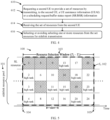
- FIG. 4 illustrates a resource selection method 610 in sidelink communication by a user equipment (UE) according to an embodiment of the present disclosure.
- the method 610 includes: a block 612, requesting a second UE to provide a set of resources by transmitting, to the second UE, a UE assistance information (UEAI), a block 614, receiving the set of resources from the second UE, and a block 616, avoiding selecting one or more resources from the set resources for sidelink transmission
- UEAI UE assistance information
- the UEAI or the SR/BSR information is transmitted periodically by the first UE, triggered upon sidelink data arrival from a UE upper layer, and/or triggered by the second UE.
- the UEAI or the SR/BSR information is provided in a radio resource control (RRC) message or an information element (IE).
- RRC radio resource control
- IE information element
- the RRC message comprises a PC5-RRC message.
- the UEAI comprises one or more of the followings: priority, a latency or remaining packet delay budget (PDB), periodicity, a resource selection window length or a start and/or finish time, a sidelink resource size, a number of transmission resources, a resource pool index or identifier, and/or whether a resource pool is network configured or pre-configured.
- PDB packet delay budget
- periodicity a resource selection window length or a start and/or finish time
- a sidelink resource size a number of transmission resources
- a resource pool index or identifier a resource pool index or identifier
- the SR/BSR information comprises one or more of the followings: a buffer or transport block size, a modulation and coding scheme (MCS), a number of transmission layers, priority, a latency or remaining PDB, periodicity, a resource selection window length or a start and/or finish time, a number of transmission resources, an RP index or identifier, and whether a resource pool is network configured or pre-configured.
- MCS modulation and coding scheme
- the method comprises triggering the second UE to perform monitoring on a sidelink resource pool and exclude resources within a resource selection window.
- the set of resources comprises a remaining candidate resource set from the second UE.
- a selection of the remaining candidate resource set at the second UE is based on one or more of the followings a ranking of measured reference signal received power (RSRP) and/or an RSRP threshold used for the remaining candidate resource set, resources that are early in time, and/or transmission timing of the second UE and/or other UEs.
- RSRP measured reference signal received power
- an indication of the set of resources is based on a sidelink resource index or a bitmap of sidelink resources within the resource selection window.
- the sidelink resource index or the bitmap of sidelink resources is arranged from a frequency direction and a time direction. In some embodiments, selecting the one or more resources from the set resources for sidelink transmission is based on one or more of the followings: a number of sidelink transmissions, resources that are early in time, and/or timing of other sidelink transmission.
- the method further comprises receiving, from the second UE, a set of resource timing slots in which the first UE performs or does not perform the sidelink transmission.
- the set of resource timing slots is counted in physical or logical slots.
- the set of resource timing slots is counted in the physical slots.
- the set of resource timing slots is associated with a sidelink resource pool, the set of resource timing slots is counted in the logical slots.
- the set of resource timing slots is represented using a bitmap or slot index within a new radio (NR) radio frame.
- NR new radio
- a starting slot within a sidelink resource pool or a slot offset is relative to a physical sidelink broadcast channel (PSBCH) slot, system frame number (SFN) 0, a slot in which the first UE receives an indication, or a timing slot indicated by the first UE.
- the slot offset is applied by the set of resource timing slots.
- the method further comprises performing monitoring on a sidelink resource pool and selecting or avoiding selecting resources from the set of resource timing slots indicated by the second UE.
- a second user equipment which can be a target receiver UE (Rx UE) reports/indicates a set of potential resources or resource timing slots to assist with SL resource selection for transmission by a first UE (Tx UE).
- the second UE could be a target receiver UE or a local/cluster header in a SL unicast/groupcast, or a centralized controller such as a road side unit (RSU) in vehicle-to-everything (V2X) communication, and from all of which they perform a resource coordination function to enhance SL communication reliability and reduce SL data delivery latency.
- RSU road side unit
- V2X vehicle-to-everything
- these different UEs/devices using the disclosed exemplary methods can assist in resource selection of a transmitter UE (Tx UE), to avoid transmission collisions with hidden node UE(s) by taking into account of resource reservation status and interference environment seen at the receiver UE, avoid half-duplex problem for UEs belong to a same group (unicast or groupcast), and/or save Tx UE processing power, since the operation of resource sensing and some parts of resource selection that were traditionally done by the Tx UE is now shifted to the Rx UE, cluster header, or a centralized controller.
- Tx UE transmitter UE
- a set of sidelink resources reported from a second UE that can be used for immediate selection or to be excluded by the Tx UE (the first UE) during sidelink resource selection process is disclosed.
- the Rx UE In order for the Rx UE to determine the set of resources that can be used for immediate selection or to be excluded by the Tx UE, the Rx UE needs to have knowledge about the SL data transport block (TB) for which the Tx UE needs to transmit and the resource pool in which the Tx UE will perform the required SL transmission. Without this information, the Rx UE would not be able to provide a set of SL resources that are suitable for carrying the data TB (e.g., with a right resource size and timing that the Tx UE needs).
- TB SL data transport block
- Exemplary step 1 To trigger the Rx UE to provide the set of sidelink resources that can be used in the resource selection for SL transmission, the Tx UE first transmits a request to the Rx UE by providing UE assistance information (UEAI) or scheduling request/buffer status report (SR/BSR).
- UEAI UE assistance information
- SR/BSR scheduling request/buffer status report
- the UEAI or BSR information can be provided periodically by the first UE, event triggered upon SL data arrival from UE upper layer, and/or triggered by the second UE. Further, the UEAI or BSR information can be provided in radio resource control (RRC) message/information element (IE), wherein the RRC is PC5-RRC.
- RRC radio resource control
- the UEAI includes one or more of the followings: priority, latency or remaining packet delay budget (PDB), periodicity, resource selection window length or the start and/or finish time (T1 and/or T2), SL resource size (L subCH ), number of (re)transmission resources, resource pool (RP) index or identifier, and whether the RP is network configured or pre-configured.
- PDB packet delay budget
- periodicity periodicity
- resource selection window length or the start and/or finish time T1 and/or T2
- L subCH resource size
- number of (re)transmission resources resource pool (RP) index or identifier
- RP resource pool index or identifier
- the BSR information should include one or more of the followings: buffer or transport block size, modulation and coding scheme (MCS), number of transmission layers, priority, latency or remaining packet delay budget (PDB), periodicity, resource selection window length or the start and/or finish time (T1 and/or T2), number of (re)transmission resources, resource pool index or identifier, and whether the RP is network configured or pre-configured.
- MCS modulation and coding scheme
- PDB packet delay budget
- periodicity resource selection window length or the start and/or finish time (T1 and/or T2), number of (re)transmission resources, resource pool index or identifier, and whether the RP is network configured or pre-configured.
- Exemplary step 2 Upon receiving the request/trigger from Tx UE, Rx UE initializes a candidate resource set (SA) for a resource selection window indicated by the Tx UE, performs monitoring/sensing of slots belong to the indicated or a selected sidelink RP, and perform exclusion of sidelink resources from the set SA based on sensing results.
- the Rx UE may determine/select the same or a different sidelink RP regardless of if the RP information is already indicated by the Tx UE.
- Exclusion includes resources that are reserved by SCI/PSCCH received during sensing and resources that associated with RP slots were not monitored by Rx UE (which may be due to other SL and/or UL transmissions). Exclusion includes also resources that are already reserved by the Rx UE.
- Exemplary step 3 The Rx UE reports the full set or a subset of the remaining candidate resources in SA, or the set of excluded resources from Step 2 to the Tx UE.
- the reporting of full set of the remaining set SA is beneficial when number of resources needed for SL transmission is large (e.g., 32) and/or when the configured RP parameter x Percentage is low (e.g., 20%), such that there are very limited number of resources that can be selected from.
- the number of resources needed for SL transmission is small and/or there are plenty of remaining candidate resources in set SA, it can be beneficial to reduce the data size to report only a subset of resources.
- the Rx UE selects a subset can be based on one or more of the following selection methods: Ranking of measured RSRP and/or the latest RSRP threshold used for each of the remaining candidate resources in set SA.
- a SL resource from the remaining candidate resource set that corresponds to a lower measured RSRP value during the sensing process may have a higher ranking, or a SL resource from the remaining candidate resource set that corresponds to higher RSRP threshold used during the resource exclusion process may have a higher ranking.
- the report/representation of the set of resources from the Rx UE is based on sidelink resource index or a bitmap of sidelink resources within the resource selection window or the initial candidate resource set SA (before any exclusion in Step 2). Furthermore, the resource indices or the bitmap of resources is arranged/counted from frequency direction first then time direction, or time direction first then frequency direction.
- Exemplary step 4 After receiving the reported set of resources, the Tx UE selects one or more resources from the Rx UE's provided resource set for sidelink transmission based on one or more of the following selection criteria: Number of sidelink transmissions, resources that are early in time, and/or timing of other SL transmission(s).
- FIG. 5 is a schematic diagram illustrating an exemplary illustration of a proposed method 1 for assisted resource selection scheme according to an embodiment of the present disclosure.
- FIG. 5 illustrates that, in some embodiments, a UE (Rx UE) determines and transmits a subset of available candidate resources to another UE (Tx UE) for selection in a SL unicast connection session.
- the Rx UE is the local cluster header for the SL unicast session.
- SCI sidelink control information
- PSCCH physical sidelink control channel
- the Rx UE excludes any SL resource from the initial candidate resource set SA 102 that are already reserved by other UEs, and its associated reference signal received power (RSRP) measurement is larger than a corresponding RSRP threshold.
- RSRP reference signal received power
- the Rx UE detected SL resource (2, 3, 4, 11, 13, 15, 18, 20, and 23) has lower associated RSRP measurement, therefore, they may be considered as preferred/higher ranking resources for SL transmission. So, instead of reporting the full set, Rx UE reports the high ranking set, which is a subset of the remaining candidate resource set SA, to Tx UE for selection.
- Exemplary Method 2 In another embodiment, a simplified method of providing from Rx UE, a set of resource timing slots that can be used or to be avoided by the Tx UE to transmit data TB over the sidelink interface is disclosed.
- the Rx UE In order for Rx UE to determine the set of resource timing slots that can be used or to be excluded by Tx UE for SL transmission, the Rx UE needs to have knowledge about the SL data transport block (TB) for which the Tx UE needs to transmit and the resource pool in which the Tx UE can perform the required SL transmission.
- TB SL data transport block
- Rx UE would not be able to provide a set of SL resource timing slots that are suitable for carrying the data TB (e.g., with a right resource timing, number of timing slots and periodicity that Tx UE needs). Therefore, typically this disclosed method 2 is ideal for SL unicast and groupcast communications where each member UE's SL transmission timing are coordinated by a centralized controller or localized cluster header in a time domain multiplexing (TDM) manner as their transmissions need to be heard by all other member UEs. To this end, the following procedure steps are proposed.
- TDM time domain multiplexing
- Exemplary step 1 To trigger the Rx UE to provide the set of sidelink resources that can be used in the resource selection for SL transmission, the Tx UE first transmits a request to the Rx UE by providing UE assistance information (UEAI) or scheduling request/buffer status report (SR/BSR).
- UEAI UE assistance information
- SR/BSR scheduling request/buffer status report
- the UEAI or BSR information can be provided periodically by the first UE, event triggered upon SL data arrival from UE upper layer, and/or triggered by the second UE.
- the UEAI or BSR information can be provided in radio resource control (RRC) message / information element (IE), wherein the RRC is PC5-RRC.
- RRC radio resource control
- the UEAI may include one or more of the followings: priority, latency or remaining packet delay budget (PDB), periodicity, resource selection window length or the start and/or finish time (T1 and/or T2), resource pool (RP) index or identifier, and whether the RP is network configured or pre-configured.
- the BSR information may include one or more of the followings: buffer or transport block size, priority, latency or remaining packet delay budget (PDB), periodicity, resource selection window length or the start and/or finish time (T1 and/or T2), resource pool index or identifier, and whether the RP is network configured or pre-configured.
- Exemplary step 2 Based on the received UEAI or BSR information from Tx UE and possibly also taking into account of other UE's UEAIBSR information, Rx UE determines and provides a set of resource timing slots in which Tx UE can or cannot perform sidelink transmission.
- the resource timing slots should be counted in either physical or logical slots.
- the set of resource timing slots is not associated with a particular sidelink RP (e.g., sidelink RP identity or index is not provided)
- the indicated timing slots from the second UE is counted in physical slots, which can allow the Tx UE to flexibly decide the sidelink RP it wishes to use to perform its own sidelink transmission.
- the indicated set of resource timing slots is counted in logical slots.
- the set of resource timing slots can be represented using a bitmap or slot index within a NR radio frame.
- the starting slot within the SL resource pool or the slot offset from which the indicated resource timing slots should apply is relative to PSBCH, SFN#0, the slot in which the Tx UE receives the indication, or a timing slot indicated by Tx UE as part of UEAI or BSR information.
- the UE1 has fairly allocated 1/3 of the resource pool slots to each UEs and the assigned timing slots alternates between the UEs as illustrated in diagram 200. That is, the UE1 has assigned itself resource timing slots n 202, n+3 203, n+6 204 and so on, assigned UE2 with resource timing slots n+1 205, n+4 206, n+7 207 and so on, and assigned UE3 with resource timing slots n+2 208, n+5 209, n+8 210 and so on in the resource pool 201. To indicate this resource timing slot assignment, it is represented as a bitmap to UE2 and UE3 as illustrated in 211 and 212, respectively.
- the selection of the subset at the second UE is based on one or more of the followings: Ranking of measured RSRP and/or the RSRP threshold used, resources that are early in time, and/or transmission timing of its own and/or other UEs. 5.
- the indication of the set of resources is based on sidelink resource index or a bitmap of sidelink resources within the resource selection window. 6.
- the first UE selects one or more resources from the second UE's provided resource set for sidelink transmission based on one or more of the followings: Number of sidelink transmissions, resources that are early in time, and/or timing of other SL transmission(s).
- Some embodiments of the present disclosure are used by 5G-NR chipset vendors, V2X communication system development vendors, automakers including cars, trains, trucks, buses, bicycles, moto-bikes, helmets, and etc., drones (unmanned aerial vehicles), smartphone makers, smart watches, wireless earbuds, wireless headphones, communication devices, remote control vehicles, and robots for public safety use, AR/VR device maker for example gaming, conference/seminar, education purposes, smart home appliances including TV, stereo, speakers, lights, door bells, locks, cameras, conferencing headsets, and etc., smart factory and warehouse equipment including IIoT devices, robots, robotic arms, and simply just between production machines.
- 5G-NR chipset vendors V2X communication system development vendors
- automakers including cars, trains, trucks, buses, bicycles, moto-bikes, helmets, and etc.
- drones unmanned aerial vehicles
- smartphone makers smart watches, wireless earbuds, wireless headphones, communication devices, remote control vehicles, and robots for public safety use
- AR/VR device maker
- commercial interest for the disclosed invention and business importance includes lowering power consumption for wireless communication means longer operating time for the device and/or better user experience and product satisfaction from longer operating time between battery charging.
- Some embodiments of the present disclosure are a combination of "techniques/processes" that can be adopted in 3GPP specification to create an end product.
- Some embodiments of the present disclosure relate to mobile cellular communication technology in 3GPP NR Release 17 and beyond for providing direct device-to-device (D2D) wireless communication services.
- D2D direct device-to-device
- the baseband circuitry 720 may include circuitry such as, but not limited to, one or more single-core or multicore processors.
- the processors may include a baseband processor.
- the baseband circuitry may handle various radio control functions that enables communication with one or more radio networks via the RF circuitry.
- the radio control functions may include, but are not limited to, signal modulation, encoding, decoding, radio frequency shifting, etc.
- the baseband circuitry may provide for communication compatible with one or more radio technologies.
- the baseband circuitry may support communication with an evolved universal terrestrial radio access network (EUTRAN) and/or other wireless metropolitan area networks (WMAN), a wireless local area network (WLAN), a wireless personal area network (WPAN).
- EUTRAN evolved universal terrestrial radio access network
- WMAN wireless metropolitan area networks
- WLAN wireless local area network
- WPAN wireless personal area network
- Embodiments in which the baseband circuitry is configured to support radio communications of more than one wireless protocol may be referred to as multi-mode baseband circuitry
- the baseband circuitry 720 may include circuitry to operate with signals that are not strictly considered as being in a baseband frequency.
- baseband circuitry may include circuitry to operate with signals having an intermediate frequency, which is between a baseband frequency and a radio frequency.
- the RF circuitry 710 may include circuitry to operate with signals that are not strictly considered as being in a radio frequency.
- RF circuitry may include circuitry to operate with signals having an intermediate frequency, which is between a baseband frequency and a radio frequency.
- some or all of the constituent components of the baseband circuitry, the application circuitry, and/or the memory/storage may be implemented together on a system on a chip (SOC).
- SOC system on a chip
- the memory/storage 740 may be used to load and store data and/or instructions, for example, for system.
- the memory/storage for one embodiment may include any combination of suitable volatile memory, such as dynamic random access memory (DRAM)), and/or non-volatile memory, such as flash memory
- the I/O interface 780 may include one or more user interfaces designed to enable user interaction with the system and/or peripheral component interfaces designed to enable peripheral component interaction with the system.
- User interfaces may include, but are not limited to a physical keyboard or keypad, a touchpad, a speaker, a microphone, etc.
- Peripheral component interfaces may include, but are not limited to, a non-volatile memory port, a universal serial bus (USB) port, an audio jack, and a power supply interface.
- USB universal serial bus
- the sensor 770 may include one or more sensing devices to determine environmental conditions and/or location information related to the system.
- the sensors may include, but are not limited to, a gyro sensor, an accelerometer, a proximity sensor, an ambient light sensor, and a positioning unit.
- the positioning unit may also be part of, or interact with, the baseband circuitry and/or RF circuitry to communicate with components of a positioning network, e.g., a global positioning system (GPS) satellite.
- GPS global positioning system
- the display 750 may include a display, such as a liquid crystal display and a touch screen display.
- the system 700 may be a mobile computing device such as, but not limited to, a laptop computing device, a tablet computing device, a netbook, an ultrabook, a smartphone, a AR/VR glasses, etc.
- system may have more or less components, and/or different architectures.
- methods described herein may be implemented as a computer program.
- the computer program may be stored on a storage medium, such as a non-transitory storage medium.
- the units as separating components for explanation are or are not physically separated .
- the units for display are or are not physical units, that is, located in one place or distributed on a plurality of network units. Some or all of the units are used according to the purposes of the embodiments.
- each of the functional units in each of the embodiments can be integrated in one processing unit, physically independent, or integrated in one processing unit with two or more than two units.
- the software function unit is realized and used and sold as a product, it can be stored in a readable storage medium in a computer.
- the technical plan proposed by the present disclosure can be essentially or partially realized as the form of a software product.
- one part of the technical plan beneficial to the conventional technology can be realized as the form of a software product.
- the software product in the computer is stored in a storage medium, including a plurality of commands for a computational device (such as a personal computer, a server, or a network device) to run all or some of the steps disclosed by the embodiments of the present disclosure.
- the storage medium includes a USB disk, a mobile hard disk, a read-only memory (ROM), a random access memory (RAM), a floppy disk, or other kinds of media capable of storing program codes.
Landscapes
- Engineering & Computer Science (AREA)
- Computer Networks & Wireless Communication (AREA)
- Signal Processing (AREA)
- Mobile Radio Communication Systems (AREA)
Claims (13)
- Verfahren zur Auswahl von Ressourcen bei der Sidelink-Kommunikation durch ein erstes Benutzergerät (UE), das Folgendes umfasst:Auslösen (612) eines zweiten UE zur Bereitstellung einer Reihe von Ressourcen durch Senden, an das zweite UE, einer UE-Unterstützungsinformation;Empfangen (614) des Satzes von Ressourcen von dem zweiten UE; undVermeiden (616) der Auswahl einer oder mehrerer Ressourcen aus dem Satz von Ressourcen für die Sidelink-Übertragung;wobei das Verfahren zur Auswahl der Ressourcen ferner Folgendes umfasst:Auslösen des zweiten UE zur Überwachung eines Sidelink-Ressourcenpools und Ausschluss von Ressourcen innerhalb eines Ressourcenauswahlfensters,wobei der Satz von Ressourcen einen verbleibenden Kandidaten-Ressourcensatz des zweiten UE umfasst.
- Verfahren nach Anspruch 1, wobei die UE-Unterstützungsinformation periodisch von dem ersten UE gesendet wird, ausgelöst wird, wenn Sidelink-Daten von einer UE-Oberschicht ankommen, und/oder von dem zweiten UE ausgelöst wird.
- Verfahren nach Anspruch 1, wobei die UE-Unterstützungsinformation eines oder mehrere der folgenden Elemente umfasst:
Priorität, Periodizität, Start- und Endzeit des Ressourcenauswahlfensters, Größe der Sidelink-Ressource. - Verfahren nach Anspruch 1, wobei eine Auswahl des verbleibenden Kandidaten-Ressourcensatzes am zweiten UE auf dem Sendezeitpunkt des zweiten UE und/oder anderer UEs basiert.
- Verfahren nach Anspruch 1, wobei eine Angabe der Ressourcengruppe auf einem Sidelink-Ressourcenindex basiert.
- Verfahren nach Anspruch 5, wobei der Sidelink-Ressourcenindex in einer Frequenzrichtung und einer Zeitrichtung angeordnet ist.
- Verfahren nach Anspruch 1, ferner umfassend das Empfangen, von dem zweiten UE, eines Satzes von Ressourcen-Zeitschlitzen, in denen das erste UE die Sidelink-Übertragung durchführt oder nicht durchführt.
- Verfahren nach Anspruch 7, wobei der Satz von Ressourcen-Zeitschlitzen unter Verwendung einer Bitmap oder eines Schlitzindexes innerhalb eines neuen Funkrahmens (NR) dargestellt wird.
- Verfahren nach Anspruch 7, wobei ein Startschlitz innerhalb eines Sidelink-Ressourcenpools oder ein Schlitzversatz relativ zu einem physikalischen Sidelink-Rundfunkkanal (PSBCH), einem Schlitz, einer Systemrahmennummer (SEN) 0, einem Schlitz, in dem das erste UE eine Anzeige empfängt, oder einem Zeitschlitz, der von dem ersten UE angezeigt wird, ist.
- Verfahren nach Anspruch 9, wobei der Schlitzversatz durch den Satz von Ressourcen-Zeitschlitzen angewendet wird.
- Verfahren nach Anspruch 7, das ferner die Überwachung eines Sidelink-Ressourcenpools und die Auswahl oder Vermeidung der Auswahl von Ressourcen aus dem Satz von Ressourcen-Zeitschlitzen, die von dem zweiten UE angegeben werden, umfasst.
- Erstes Benutzergerät (UE), das Folgendes umfasst:einen Speicher;einen Sender-Empfänger; undeinen Prozessor, der mit dem Speicher und dem Sender-Empfänger gekoppelt ist;wobei der Prozessor so konfiguriert ist, dass er das Verfahren nach einem der Ansprüche 1 bis 11 durchführt.
- Nichtflüchtiges, maschinenlesbares Speichermedium, auf dem Anweisungen gespeichert sind, die, wenn sie von einem Benutzergerät (UE) ausgeführt werden, das UE veranlassen, das Verfahren nach einem der Ansprüche 1 bis 11 durchzuführen.
Applications Claiming Priority (2)
| Application Number | Priority Date | Filing Date | Title |
|---|---|---|---|
| US202063060305P | 2020-08-03 | 2020-08-03 | |
| PCT/CN2021/110266 WO2022028409A1 (en) | 2020-08-03 | 2021-08-03 | User equipment and resource selection method in sidelink communication |
Publications (3)
| Publication Number | Publication Date |
|---|---|
| EP4154632A1 EP4154632A1 (de) | 2023-03-29 |
| EP4154632A4 EP4154632A4 (de) | 2023-11-22 |
| EP4154632B1 true EP4154632B1 (de) | 2024-11-27 |
Family
ID=80119988
Family Applications (1)
| Application Number | Title | Priority Date | Filing Date |
|---|---|---|---|
| EP21853942.7A Active EP4154632B1 (de) | 2020-08-03 | 2021-08-03 | Benutzergerät und ressourcenauswahlverfahren in der sidelink-kommunikation |
Country Status (3)
| Country | Link |
|---|---|
| EP (1) | EP4154632B1 (de) |
| CN (2) | CN116321430B (de) |
| WO (1) | WO2022028409A1 (de) |
Families Citing this family (3)
| Publication number | Priority date | Publication date | Assignee | Title |
|---|---|---|---|---|
| US20230319881A1 (en) * | 2022-03-30 | 2023-10-05 | Qualcomm Incorporated | Inter-user-equipment coordination for sidelink scheduling using multiple time-frequency occasions |
| CN117939675A (zh) * | 2023-02-14 | 2024-04-26 | 中兴通讯股份有限公司 | 信息传输、资源确定和资源选择方法、设备及存储介质 |
| WO2025152145A1 (en) * | 2024-01-19 | 2025-07-24 | Guangdong Oppo Mobile Telecommunications Corp., Ltd. | User equipment and method of resource allocation in sidelink communication |
Family Cites Families (7)
| Publication number | Priority date | Publication date | Assignee | Title |
|---|---|---|---|---|
| US10779308B2 (en) * | 2016-08-11 | 2020-09-15 | Qualcomm Incorporated | Priority based resource selection in a device-to-device communication system |
| US11219054B2 (en) * | 2017-05-05 | 2022-01-04 | Qualcomm Incorporated | Relaying in a device-to-device communication system |
| CN110958586B (zh) * | 2018-09-27 | 2022-04-01 | 大唐移动通信设备有限公司 | 一种资源分配及接收资源分配的方法、设备、装置 |
| CN118972028A (zh) * | 2018-11-02 | 2024-11-15 | 苹果公司 | Nr v2x侧链路通信的资源分配和处理行为 |
| US12004143B2 (en) * | 2019-01-11 | 2024-06-04 | Qualcomm Incorporated | Resource reservation techniques for wireless communications |
| CN111294175B (zh) * | 2019-01-11 | 2023-03-28 | 北京紫光展锐通信技术有限公司 | 一种信息资源确定方法、设备及存储介质 |
| US20200229171A1 (en) * | 2019-04-02 | 2020-07-16 | Intel Corporation | Methods of autonomous resource selection in new radio (nr) vehicle-to-everything (v2x) sidelink communication |
-
2021
- 2021-08-03 CN CN202310282601.5A patent/CN116321430B/zh active Active
- 2021-08-03 CN CN202180049685.7A patent/CN115868220A/zh active Pending
- 2021-08-03 WO PCT/CN2021/110266 patent/WO2022028409A1/en not_active Ceased
- 2021-08-03 EP EP21853942.7A patent/EP4154632B1/de active Active
Also Published As
| Publication number | Publication date |
|---|---|
| WO2022028409A1 (en) | 2022-02-10 |
| CN115868220A (zh) | 2023-03-28 |
| CN116321430A (zh) | 2023-06-23 |
| EP4154632A4 (de) | 2023-11-22 |
| CN116321430B (zh) | 2024-12-31 |
| US20230118247A1 (en) | 2023-04-20 |
| EP4154632A1 (de) | 2023-03-29 |
Similar Documents
| Publication | Publication Date | Title |
|---|---|---|
| US12452839B2 (en) | User equipment and resource selection method in sidelink communication | |
| US20240031997A1 (en) | User equipment and resource selection method in sidelink communication | |
| US20240015703A1 (en) | User equipment and resource monitoring method in sidelink communication | |
| US20230345422A1 (en) | User equipment and resource monitoring method in sidelink communication | |
| US12574962B2 (en) | User equipment and resource monitoring method in sidelink communication | |
| EP4154632B1 (de) | Benutzergerät und ressourcenauswahlverfahren in der sidelink-kommunikation | |
| US20240172184A1 (en) | User equipment, resource selection method in sidelink communication, and storage medium | |
| US20230379948A1 (en) | User equipment and resource monitoring method in sidelink communication | |
| US20250261047A1 (en) | User equipment and method of resource allocation and channel access in sidelink communication | |
| US20240049265A1 (en) | User equipment and resource allocation method in sidelink communication | |
| US20250331004A1 (en) | User equipment, method for beam management in sidelink communication, and storage medium | |
| US12598630B2 (en) | User equipment and resource selection method in sidelink communication | |
| US20260089747A1 (en) | User equipment and method for sidelink communication | |
| WO2024092782A1 (en) | User equipment and method of sidelink resource selection in shared spectrum | |
| WO2024092742A1 (en) | User equipment and method for protecting resources in sidelink communication |
Legal Events
| Date | Code | Title | Description |
|---|---|---|---|
| STAA | Information on the status of an ep patent application or granted ep patent |
Free format text: STATUS: THE INTERNATIONAL PUBLICATION HAS BEEN MADE |
|
| PUAI | Public reference made under article 153(3) epc to a published international application that has entered the european phase |
Free format text: ORIGINAL CODE: 0009012 |
|
| STAA | Information on the status of an ep patent application or granted ep patent |
Free format text: STATUS: REQUEST FOR EXAMINATION WAS MADE |
|
| 17P | Request for examination filed |
Effective date: 20221220 |
|
| AK | Designated contracting states |
Kind code of ref document: A1 Designated state(s): AL AT BE BG CH CY CZ DE DK EE ES FI FR GB GR HR HU IE IS IT LI LT LU LV MC MK MT NL NO PL PT RO RS SE SI SK SM TR |
|
| REG | Reference to a national code |
Ref country code: DE Ref legal event code: R079 Free format text: PREVIOUS MAIN CLASS: H04W0072020000 Ipc: H04W0072400000 Ref country code: DE Ref legal event code: R079 Ref document number: 602021022626 Country of ref document: DE Free format text: PREVIOUS MAIN CLASS: H04W0072020000 Ipc: H04W0072400000 |
|
| DAV | Request for validation of the european patent (deleted) | ||
| DAX | Request for extension of the european patent (deleted) | ||
| A4 | Supplementary search report drawn up and despatched |
Effective date: 20231023 |
|
| RIC1 | Information provided on ipc code assigned before grant |
Ipc: H04W 72/02 20090101ALN20231017BHEP Ipc: H04W 84/00 20090101ALI20231017BHEP Ipc: H04W 72/20 20230101ALI20231017BHEP Ipc: H04W 72/40 20230101AFI20231017BHEP |
|
| GRAP | Despatch of communication of intention to grant a patent |
Free format text: ORIGINAL CODE: EPIDOSNIGR1 |
|
| STAA | Information on the status of an ep patent application or granted ep patent |
Free format text: STATUS: GRANT OF PATENT IS INTENDED |
|
| RIC1 | Information provided on ipc code assigned before grant |
Ipc: H04W 72/02 20090101ALN20240716BHEP Ipc: H04W 84/00 20090101ALI20240716BHEP Ipc: H04W 72/20 20230101ALI20240716BHEP Ipc: H04W 72/40 20230101AFI20240716BHEP |
|
| INTG | Intention to grant announced |
Effective date: 20240801 |
|
| RIN1 | Information on inventor provided before grant (corrected) |
Inventor name: LIN, HUEI-MING |
|
| GRAS | Grant fee paid |
Free format text: ORIGINAL CODE: EPIDOSNIGR3 |
|
| GRAA | (expected) grant |
Free format text: ORIGINAL CODE: 0009210 |
|
| STAA | Information on the status of an ep patent application or granted ep patent |
Free format text: STATUS: THE PATENT HAS BEEN GRANTED |
|
| AK | Designated contracting states |
Kind code of ref document: B1 Designated state(s): AL AT BE BG CH CY CZ DE DK EE ES FI FR GB GR HR HU IE IS IT LI LT LU LV MC MK MT NL NO PL PT RO RS SE SI SK SM TR |
|
| REG | Reference to a national code |
Ref country code: GB Ref legal event code: FG4D |
|
| REG | Reference to a national code |
Ref country code: CH Ref legal event code: EP |
|
| REG | Reference to a national code |
Ref country code: DE Ref legal event code: R096 Ref document number: 602021022626 Country of ref document: DE |
|
| REG | Reference to a national code |
Ref country code: IE Ref legal event code: FG4D |
|
| REG | Reference to a national code |
Ref country code: LT Ref legal event code: MG9D |
|
| REG | Reference to a national code |
Ref country code: NL Ref legal event code: MP Effective date: 20241127 |
|
| P01 | Opt-out of the competence of the unified patent court (upc) registered |
Free format text: CASE NUMBER: APP_9918/2025 Effective date: 20250226 |
|
| PG25 | Lapsed in a contracting state [announced via postgrant information from national office to epo] |
Ref country code: HR Free format text: LAPSE BECAUSE OF FAILURE TO SUBMIT A TRANSLATION OF THE DESCRIPTION OR TO PAY THE FEE WITHIN THE PRESCRIBED TIME-LIMIT Effective date: 20241127 Ref country code: IS Free format text: LAPSE BECAUSE OF FAILURE TO SUBMIT A TRANSLATION OF THE DESCRIPTION OR TO PAY THE FEE WITHIN THE PRESCRIBED TIME-LIMIT Effective date: 20250327 Ref country code: PT Free format text: LAPSE BECAUSE OF FAILURE TO SUBMIT A TRANSLATION OF THE DESCRIPTION OR TO PAY THE FEE WITHIN THE PRESCRIBED TIME-LIMIT Effective date: 20250327 |
|
| PG25 | Lapsed in a contracting state [announced via postgrant information from national office to epo] |
Ref country code: FI Free format text: LAPSE BECAUSE OF FAILURE TO SUBMIT A TRANSLATION OF THE DESCRIPTION OR TO PAY THE FEE WITHIN THE PRESCRIBED TIME-LIMIT Effective date: 20241127 Ref country code: NL Free format text: LAPSE BECAUSE OF FAILURE TO SUBMIT A TRANSLATION OF THE DESCRIPTION OR TO PAY THE FEE WITHIN THE PRESCRIBED TIME-LIMIT Effective date: 20241127 |
|
| REG | Reference to a national code |
Ref country code: AT Ref legal event code: MK05 Ref document number: 1746998 Country of ref document: AT Kind code of ref document: T Effective date: 20241127 |
|
| PG25 | Lapsed in a contracting state [announced via postgrant information from national office to epo] |
Ref country code: BG Free format text: LAPSE BECAUSE OF FAILURE TO SUBMIT A TRANSLATION OF THE DESCRIPTION OR TO PAY THE FEE WITHIN THE PRESCRIBED TIME-LIMIT Effective date: 20241127 |
|
| PG25 | Lapsed in a contracting state [announced via postgrant information from national office to epo] |
Ref country code: ES Free format text: LAPSE BECAUSE OF FAILURE TO SUBMIT A TRANSLATION OF THE DESCRIPTION OR TO PAY THE FEE WITHIN THE PRESCRIBED TIME-LIMIT Effective date: 20241127 |
|
| PG25 | Lapsed in a contracting state [announced via postgrant information from national office to epo] |
Ref country code: NO Free format text: LAPSE BECAUSE OF FAILURE TO SUBMIT A TRANSLATION OF THE DESCRIPTION OR TO PAY THE FEE WITHIN THE PRESCRIBED TIME-LIMIT Effective date: 20250227 |
|
| PG25 | Lapsed in a contracting state [announced via postgrant information from national office to epo] |
Ref country code: AT Free format text: LAPSE BECAUSE OF FAILURE TO SUBMIT A TRANSLATION OF THE DESCRIPTION OR TO PAY THE FEE WITHIN THE PRESCRIBED TIME-LIMIT Effective date: 20241127 Ref country code: LV Free format text: LAPSE BECAUSE OF FAILURE TO SUBMIT A TRANSLATION OF THE DESCRIPTION OR TO PAY THE FEE WITHIN THE PRESCRIBED TIME-LIMIT Effective date: 20241127 Ref country code: GR Free format text: LAPSE BECAUSE OF FAILURE TO SUBMIT A TRANSLATION OF THE DESCRIPTION OR TO PAY THE FEE WITHIN THE PRESCRIBED TIME-LIMIT Effective date: 20250228 |
|
| PG25 | Lapsed in a contracting state [announced via postgrant information from national office to epo] |
Ref country code: PL Free format text: LAPSE BECAUSE OF FAILURE TO SUBMIT A TRANSLATION OF THE DESCRIPTION OR TO PAY THE FEE WITHIN THE PRESCRIBED TIME-LIMIT Effective date: 20241127 |
|
| PG25 | Lapsed in a contracting state [announced via postgrant information from national office to epo] |
Ref country code: RS Free format text: LAPSE BECAUSE OF FAILURE TO SUBMIT A TRANSLATION OF THE DESCRIPTION OR TO PAY THE FEE WITHIN THE PRESCRIBED TIME-LIMIT Effective date: 20250227 |
|
| PG25 | Lapsed in a contracting state [announced via postgrant information from national office to epo] |
Ref country code: SM Free format text: LAPSE BECAUSE OF FAILURE TO SUBMIT A TRANSLATION OF THE DESCRIPTION OR TO PAY THE FEE WITHIN THE PRESCRIBED TIME-LIMIT Effective date: 20241127 |
|
| PG25 | Lapsed in a contracting state [announced via postgrant information from national office to epo] |
Ref country code: DK Free format text: LAPSE BECAUSE OF FAILURE TO SUBMIT A TRANSLATION OF THE DESCRIPTION OR TO PAY THE FEE WITHIN THE PRESCRIBED TIME-LIMIT Effective date: 20241127 |
|
| PG25 | Lapsed in a contracting state [announced via postgrant information from national office to epo] |
Ref country code: EE Free format text: LAPSE BECAUSE OF FAILURE TO SUBMIT A TRANSLATION OF THE DESCRIPTION OR TO PAY THE FEE WITHIN THE PRESCRIBED TIME-LIMIT Effective date: 20241127 |
|
| PG25 | Lapsed in a contracting state [announced via postgrant information from national office to epo] |
Ref country code: RO Free format text: LAPSE BECAUSE OF FAILURE TO SUBMIT A TRANSLATION OF THE DESCRIPTION OR TO PAY THE FEE WITHIN THE PRESCRIBED TIME-LIMIT Effective date: 20241127 |
|
| PG25 | Lapsed in a contracting state [announced via postgrant information from national office to epo] |
Ref country code: SK Free format text: LAPSE BECAUSE OF FAILURE TO SUBMIT A TRANSLATION OF THE DESCRIPTION OR TO PAY THE FEE WITHIN THE PRESCRIBED TIME-LIMIT Effective date: 20241127 |
|
| PG25 | Lapsed in a contracting state [announced via postgrant information from national office to epo] |
Ref country code: CZ Free format text: LAPSE BECAUSE OF FAILURE TO SUBMIT A TRANSLATION OF THE DESCRIPTION OR TO PAY THE FEE WITHIN THE PRESCRIBED TIME-LIMIT Effective date: 20241127 |
|
| PG25 | Lapsed in a contracting state [announced via postgrant information from national office to epo] |
Ref country code: IT Free format text: LAPSE BECAUSE OF FAILURE TO SUBMIT A TRANSLATION OF THE DESCRIPTION OR TO PAY THE FEE WITHIN THE PRESCRIBED TIME-LIMIT Effective date: 20241127 |
|
| REG | Reference to a national code |
Ref country code: DE Ref legal event code: R097 Ref document number: 602021022626 Country of ref document: DE |
|
| PG25 | Lapsed in a contracting state [announced via postgrant information from national office to epo] |
Ref country code: SE Free format text: LAPSE BECAUSE OF FAILURE TO SUBMIT A TRANSLATION OF THE DESCRIPTION OR TO PAY THE FEE WITHIN THE PRESCRIBED TIME-LIMIT Effective date: 20241127 |
|
| PLBE | No opposition filed within time limit |
Free format text: ORIGINAL CODE: 0009261 |
|
| STAA | Information on the status of an ep patent application or granted ep patent |
Free format text: STATUS: NO OPPOSITION FILED WITHIN TIME LIMIT |
|
| REG | Reference to a national code |
Ref country code: CH Ref legal event code: L10 Free format text: ST27 STATUS EVENT CODE: U-0-0-L10-L00 (AS PROVIDED BY THE NATIONAL OFFICE) Effective date: 20251008 |
|
| PGFP | Annual fee paid to national office [announced via postgrant information from national office to epo] |
Ref country code: DE Payment date: 20250827 Year of fee payment: 5 |
|
| PGFP | Annual fee paid to national office [announced via postgrant information from national office to epo] |
Ref country code: GB Payment date: 20250826 Year of fee payment: 5 |
|
| PGFP | Annual fee paid to national office [announced via postgrant information from national office to epo] |
Ref country code: FR Payment date: 20250826 Year of fee payment: 5 |
|
| 26N | No opposition filed |
Effective date: 20250828 |
|
| REG | Reference to a national code |
Ref country code: CH Ref legal event code: H13 Free format text: ST27 STATUS EVENT CODE: U-0-0-H10-H13 (AS PROVIDED BY THE NATIONAL OFFICE) Effective date: 20260324 |