EP4153918B1 - Elektrisches gerät und verfahren zur adaptiven steuerung eines elektrischen gerätes - Google Patents
Elektrisches gerät und verfahren zur adaptiven steuerung eines elektrischen gerätes Download PDFInfo
- Publication number
- EP4153918B1 EP4153918B1 EP21734235.1A EP21734235A EP4153918B1 EP 4153918 B1 EP4153918 B1 EP 4153918B1 EP 21734235 A EP21734235 A EP 21734235A EP 4153918 B1 EP4153918 B1 EP 4153918B1
- Authority
- EP
- European Patent Office
- Prior art keywords
- subject
- distance
- electric apparatus
- conditioning
- detection means
- Prior art date
- Legal status (The legal status is an assumption and is not a legal conclusion. Google has not performed a legal analysis and makes no representation as to the accuracy of the status listed.)
- Active
Links
Images

Classifications
-
- F—MECHANICAL ENGINEERING; LIGHTING; HEATING; WEAPONS; BLASTING
- F24—HEATING; RANGES; VENTILATING
- F24F—AIR-CONDITIONING; AIR-HUMIDIFICATION; VENTILATION; USE OF AIR CURRENTS FOR SCREENING
- F24F11/00—Control or safety arrangements
- F24F11/62—Control or safety arrangements characterised by the type of control or by internal processing, e.g. using fuzzy logic, adaptive control or estimation of values
-
- F—MECHANICAL ENGINEERING; LIGHTING; HEATING; WEAPONS; BLASTING
- F24—HEATING; RANGES; VENTILATING
- F24F—AIR-CONDITIONING; AIR-HUMIDIFICATION; VENTILATION; USE OF AIR CURRENTS FOR SCREENING
- F24F11/00—Control or safety arrangements
- F24F11/30—Control or safety arrangements for purposes related to the operation of the system, e.g. for safety or monitoring
- F24F11/46—Improving electric energy efficiency or saving
-
- F—MECHANICAL ENGINEERING; LIGHTING; HEATING; WEAPONS; BLASTING
- F24—HEATING; RANGES; VENTILATING
- F24F—AIR-CONDITIONING; AIR-HUMIDIFICATION; VENTILATION; USE OF AIR CURRENTS FOR SCREENING
- F24F11/00—Control or safety arrangements
- F24F11/62—Control or safety arrangements characterised by the type of control or by internal processing, e.g. using fuzzy logic, adaptive control or estimation of values
- F24F11/63—Electronic processing
- F24F11/65—Electronic processing for selecting an operating mode
-
- F—MECHANICAL ENGINEERING; LIGHTING; HEATING; WEAPONS; BLASTING
- F24—HEATING; RANGES; VENTILATING
- F24F—AIR-CONDITIONING; AIR-HUMIDIFICATION; VENTILATION; USE OF AIR CURRENTS FOR SCREENING
- F24F11/00—Control or safety arrangements
- F24F11/62—Control or safety arrangements characterised by the type of control or by internal processing, e.g. using fuzzy logic, adaptive control or estimation of values
- F24F11/63—Electronic processing
- F24F11/65—Electronic processing for selecting an operating mode
- F24F11/66—Sleep mode
-
- G—PHYSICS
- G05—CONTROLLING; REGULATING
- G05D—SYSTEMS FOR CONTROLLING OR REGULATING NON-ELECTRIC VARIABLES
- G05D23/00—Control of temperature
- G05D23/19—Control of temperature characterised by the use of electric means
- G05D23/1902—Control of temperature characterised by the use of electric means characterised by the use of a variable reference value
-
- F—MECHANICAL ENGINEERING; LIGHTING; HEATING; WEAPONS; BLASTING
- F24—HEATING; RANGES; VENTILATING
- F24F—AIR-CONDITIONING; AIR-HUMIDIFICATION; VENTILATION; USE OF AIR CURRENTS FOR SCREENING
- F24F2120/00—Control inputs relating to users or occupants
- F24F2120/10—Occupancy
- F24F2120/12—Position of occupants
-
- F—MECHANICAL ENGINEERING; LIGHTING; HEATING; WEAPONS; BLASTING
- F24—HEATING; RANGES; VENTILATING
- F24F—AIR-CONDITIONING; AIR-HUMIDIFICATION; VENTILATION; USE OF AIR CURRENTS FOR SCREENING
- F24F2120/00—Control inputs relating to users or occupants
- F24F2120/10—Occupancy
- F24F2120/14—Activity of occupants
-
- G—PHYSICS
- G05—CONTROLLING; REGULATING
- G05D—SYSTEMS FOR CONTROLLING OR REGULATING NON-ELECTRIC VARIABLES
- G05D23/00—Control of temperature
- G05D23/19—Control of temperature characterised by the use of electric means
- G05D23/27—Control of temperature characterised by the use of electric means with sensing element responsive to radiation
Definitions
- the electric apparatus of the type in question is an air conditioning apparatus suitable to heat, cool and/or dehumidify a space, the functioning of which is useful and/or advantageous in the presence of a person who benefits from it.
- Detection devices are known, used to detect the presence of one or more subjects, in particular in indoor or closed spaces, to regulate the functioning of one or more electric apparatuses.
- detection means for the purpose of detecting the presence of a subject:
- US2007/241203A1 discloses an HVAC system comprising a remote thermostat and US2020/018506A1 discloses a system and method of detecting occupancy of a conditioned space.
- a false recognition can be caused by a flow of hot or cold air that misleads the thermal sensor, fast moving subjects such as pets, or also possible static situations of a subject which can be interpreted as false absences, and could therefore lead to an unwanted deactivation of the apparatus.
- Another disadvantage is that if a subject approaches or moves away from the conditioning apparatus, in particular in the case of portable air conditioners, he must continuously modify and adapt the operating parameters according to the relative position, in order to maintain an acceptable level of comfort.
- Another purpose of the present invention is to provide an electric apparatus that is provided with a detection device suitable to regulate the functioning thereof in a substantially automatic manner, in order to optimize both energy consumption and also the comfort provided to the subject.
- the Applicant has devised, tested and embodied the present invention to overcome the shortcomings of the state of the art and to obtain these and other purposes and advantages.
- PCS-type HVAC apparatuses aim to create a comfort bubble around an occupant, that is the subject. That is, instead of controlling the microclimatic conditions in the entire volume of a room, as traditional air conditioning apparatuses normally do, they are designed to only control the conditions of a portion of air that is in the immediate vicinity of the subject.
- Traditional PCS-type apparatuses rely on the direct intervention of the individual, who can act on the heating power and/or speed of the fan, for changes in the operating set-up, and therefore for the customization of comfort conditions.
- conditioning and “condition” here and hereafter we generally mean the actions that are suitable to cool, heat, dehumidify or ventilate a space, or a combination thereof.
- the detection device also comprises a processing board, with which the detection means are associated, configured to receive and process the thermal and spatial data detected by the detection means and determine the presence of a subject inside a space, or a detection zone, and also the distance of the subject from the device itself.
- the electric apparatus is a conditioning or thermo-ventilation apparatus, and the control method provides to regulate at least one of either the temperature and/or the speed of a flow of conditioned air as a function of the distance from the subject.
- the method for the adaptive control of the electric apparatus provides to continue to monitor the detection zone even when the electric apparatus is in energy saving mode and, if the presence of a subject is detected, to once again activate the electric apparatus or one or more of its components.
- the device and method for detecting subjects allow to accurately detect the presence and movement of a human body in such a way as to prevent both false recognitions that would erroneously activate the electric apparatus, and also false failed recognitions that would deactivate the electric apparatus in an unwanted manner.
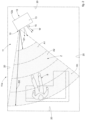
- a device 10 and a method are provided which allow to detect a subject S inside a space 11.
- the electric apparatus 12 can comprise at least one functional component suitable to modify at least one environmental characteristic of a space 11.
- the device 10 is associated with an electric apparatus 12, in particular a portable conditioning apparatus 12a, suitable to regulate the climatic conditions inside a determinate area.
- the detection device 10 comprises an infrared detection means 19 and a spatial detection means 21 respectively able to detect thermal and spatial data correlated to the presence and distance of the subject S with respect to the device 10, or to the electric apparatus 12 with which it is associated.
- the detection device 10 also comprises a processing board 22, to which the detection means 19, 21 are associated and connected.
- the processing board 22 is configured to receive and process the data detected by the detection means 19, 21 and determine the presence of a subject S inside the detection zone Z and possibly, if present, also the distance of the subject S from the device 10.
- the infrared detection means 19 is provided with means for receiving/transmitting a signal of the digital and analogue type in order to allow the detection of the subject S both if it is static, and also if it is in motion.
- the signaling means 23 can comprise lighting means, for example with LEDs 24a and 24b, which can emit a light signal when a person, that is, a subject S, is detected or on the basis of the functioning status parameters.
- acoustic signaling means suitable to provide a user with information on the functioning status of the device 10 and possibly of the electric apparatus 12, or even indications for a better use of the electric apparatus 12 in the event that a distance of the subject S is detected that is too small or too large with respect to the respective predefined minimum distance D1 and maximum distance D2 ( fig. 2 ).
- the conditioning apparatus 12a can be installed in an internal space 11, distinct from an external space 11a, and be able to condition its environmental parameters on each occasion.
- the conditioning apparatus 12a can be configured to cool, dehumidify, heat or ventilate the internal space 11, or a combination of the above, in order to modify the thermal and/or hygrometric characteristics of the internal space 11.
- a conditioning apparatus 12a comprises a conditioning body 13 defining a housing compartment 13a suitable to contain at least one functional component, which is a conditioning means 16 suitable to modify the state of an air flow W in order to cause a determinate effect in the surrounding space 11.
- This conditioning body 13 may also comprise means 14 for drawing air and means 15 for delivering air.
- the ventilation device 17 can be of the adjustable type and be configured to deliver air with different speeds and different flow rates.
- the conditioning means 16 further comprise at least one conditioning device 18 capable of modifying the state of the air flow W in order to cause a determinate effect inside the internal space 11 in which it is emitted.
- the detection device 10 can be associated with the control and command unit 26 of the electric apparatus 12.
- the invention also provides a method for the adaptive control of an electric apparatus as defined in claim 3.
- the method can provide to regulate its operating parameters to modify the characteristics of a conditioned air flow W by acting on the conditioning means 16 as a function of the position/distance of the subject S.
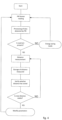
- the presence detection step provides to verify and monitor substantially continuously over time the presence of a subject S, whether static or in motion inside a space 11, in order to provide reliable signals on the real presence of the subject S.
- the distance detection step occurs continuously.
- one or more functional components are disabled, for example, in the case of the conditioning apparatus 12a, the ventilation device 17 is stopped and the conditioning devices 18 for cooling/heating the air are shut down (if present).
- the method provides to verify whether a variation in the distance of the subject S monitored, with respect to a previously detected distance, has occurred and possibly determine whether the new distance detected is stable or not.
- the distance can be considered stable when the subject S does not change its distance beyond a sensitivity range of the spatial detection mean 21 for a determinate time interval.
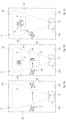
- At least the ventilation device 17 has different functioning levels, that is, different rotation speeds, suitable to supply a more or less intense air flow W, and that the speed level is selected as a function of the distance of the subject S detected.
- Fig. 3b exemplifies the case in which a second subject S2 enters the detection zone Z and comes between an already present subject S and the conditioning apparatus 12a.
- the analysis of the infrared detection means 19 can be initialized, and a step of continuous monitoring of the distance between the subject S and the conditioning apparatus 12a, and of the presence of the subject S is started.
- the processing board 22 If the processing board 22 detects a variation in the distance greater than a preset threshold, it then enters a cycle, or loop, that is, it executes a cycle of instructions to verify that the new detected distance is stable over time.
- the infrared detection means 19 continues to monitor the presence of people and, if the presence of a subject S is detected again, the conditioning apparatus 12a is restarted, setting the functioning settings on the basis of the last distance measured before the activation of the power saving mode.
- the invention therefore determines an improvement in comfort conditions since the microclimatic conditions around the subject S remain substantially constant as the distance of the subject S varies.
Landscapes
- Engineering & Computer Science (AREA)
- Signal Processing (AREA)
- Chemical & Material Sciences (AREA)
- General Engineering & Computer Science (AREA)
- Mechanical Engineering (AREA)
- Combustion & Propulsion (AREA)
- Physics & Mathematics (AREA)
- Mathematical Physics (AREA)
- Fuzzy Systems (AREA)
- Automation & Control Theory (AREA)
- General Physics & Mathematics (AREA)
- Air Conditioning Control Device (AREA)
- Feedback Control In General (AREA)
- Selective Calling Equipment (AREA)
- Control Of Electric Motors In General (AREA)
Claims (7)
- Elektrisches Luftkonditionierungsgerät, umfassend:
einen Konditionierungskörper (13), der einen Aufnahmeraum (13a) definiert, mindestens eine funktionelle Komponente (16, 17, 18), die geeignet ist, mindestens eine Umgebungseigenschaft eines Innenraums (11) zu modifizieren, wobei die funktionelle Komponente Konditionierungsmittel (16), die mit einer Belüftungsvorrichtung (17) und einer Konditionierungsvorrichtung (18) versehen sind, und mindestens eine Vorrichtung (10) zur Detektion eines Subjekts (S) umfasst, wobei die Vorrichtung (10) mit dem Konditionierungskörper (13) verbunden ist und ein Mittel (19) zur kontinuierlichen Infrarotdetektion und ein Mittel (21) zur räumlichen Detektion umfasst, die jeweils so konfiguriert sind, dass sie thermische bzw. räumliche Daten des Raums (11) erfassen, die mit dem Vorhandensein des Subjekts (S) in dem Raum und mit der Entfernung des Subjekts (S) in Bezug auf die Vorrichtung (10) korreliert sind, dadurch gekennzeichnet, dass das Infrarotdetektionsmittel (19) vom PIR-Typ ist und aus einem einzigen passiven Sensor besteht, der so konfiguriert ist, dass er die thermischen Daten in einer im Wesentlichen kontinuierlichen Weise über die Zeit erfasst, und mit digitalen und analogen Signalempfangs- und - übertragungsmitteln versehen ist, die so konfiguriert sind, dass sie die Anwesenheit des Subjekts (S) sowohl in einem statischen Zustand als auch in einem Bewegungszustand erfassen, wobei die Detektionsvorrichtung (10) eine Verarbeitungskarte (22) umfasst, die so konfiguriert ist, dass sie die von den Detektionsmitteln (19, 21) erfassten Daten empfängt und verarbeitet und die mögliche Anwesenheit des Subjekts (S) und die Entfernung bestimmt und Steuersignale liefert, die geeignet sind, die Funktionsweise des elektrischen Geräts und/oder der mindestens einen funktionelle Komponente (16, 17, 18) auf der Grundlage der durchgeführten Verarbeitung zu steuern, um die Temperatur und die Geschwindigkeit eines Stroms konditionierter Luft in Abhängigkeit von der Entfernung des Subjekts (S) zu regeln, und das Luftkonditionierungsgerät zu regeln, indem es seine Parameter und/oder die Betriebseinstellung in Abhängigkeit von der von dem Subjekt (S) eingenommenen Position so verändert, dass das Subjekt (S) unabhängig von seiner Entfernung von dem Luftkonditionierungsgerät die gewünschten klimatischen Bedingungen in dem von ihm eingenommenen Bereich vorfindet. - Vorrichtung nach Anspruch 1, dadurch gekennzeichnet, dass das Mittel (21) zur räumliche Erfassung ein Ultraschallsensor ist.
- Verfahren zur adaptiven Steuerung eines elektrischen Luftkonditionierungsgeräts (12) gemäß Anspruch 1 oder 2, dadurch gekennzeichnet, dass es umfasst:- Erfassen, mittels eines Infrarot-Detektionsmittels (19), von thermischen Daten des Raums (11), die mit der Anwesenheit eines Subjekts (S) korreliert sind, ob es sich in einem statischen Zustand oder in einem Zustand mit anschließender Positionsveränderung befindet, wobei in dem Verfahren die thermischen Daten in einer im Wesentlichen kontinuierlichen Weise über die Zeit mittels eines Infrarot-Detektionsmittels (19) vom PIR-Typ, das aus einem einzigen passiven Sensor besteht und mit digitalen und analogen Signalempfangs- und -übertragungsmitteln mit Analog/Digital-Ausgabe versehen ist, erfasst werden, um die Anwesenheit des Subjekts (S), ob im statischen oder im Bewegungszustand, zumindest in einer Erfassungszone (Z) des Raums (11) zu bestätigen;- Erfassen, mittels eines Mittels (21) zur räumlichen Detektion, von räumlichen Daten, die mit der Entfernung des Subjekts (S) von dem elektrischen Gerät (12) korreliert sind;- Empfangen und Verarbeiten der erfassten thermischen und räumlichen Daten mittels einer Verarbeitungskarte (22), um zu bestimmen, ob mindestens ein Subjekt (S) in dem Raum (11) vorhanden ist und in welcher Entfernung es sich in Bezug auf das elektrische Gerät befindet;- kontinuierliches und automatisches Regeln der Funktionsweise des elektrischen Geräts (12) und/oder der mindestens einen funktionellen Komponente (16, 17, 18) in Abhängigkeit vom Ergebnis der durchgeführten Verarbeitung zur Regelung der Temperatur und der Geschwindigkeit eines Stroms konditionierter Luft in Abhängigkeit von der Entfernung des Subjekts (S) und Modifizieren der Parameter und/oder der Betriebseinstellung des elektrischen Geräts (12) in Abhängigkeit von der von dem Subjekt (S) eingenommenen Position derart, dass das Subjekt (S) unabhängig von seiner Entfernung zu dem Luftkonditionierungsgerät die gewünschten klimatischen Bedingungen in dem von ihm eingenommenen Bereich vorfindet.
- Verfahren nach Anspruch 3, dadurch gekennzeichnet, dass die Anwesenheit des Subjekts (S) festgestellt wird, wenn das Infrarot-Detektionsmittel (19) das Subjekt (S) kontinuierlich für eine vorbestimmte Zeit erfasst.
- Verfahren nach Anspruch 3 oder 4, dadurch gekennzeichnet, dass es vorsieht, jedes Mal die zuletzt erfasste Entfernung zwischen dem Subjekt (S) und dem elektrischen Gerät (12) zu speichern und zu überprüfen, ob eine Abweichung zwischen der zuletzt erfassten Entfernung und einer zuvor gespeicherten Entfernung aufgetreten ist oder nicht, und zu bewerten, ob oder wie die mindestens eine funktionelle Komponente (16, 17, 18) auf der Grundlage der zuletzt erfassten Entfernung zu regeln ist.
- Verfahren nach Anspruch 5, dadurch gekennzeichnet, dass vor der Regelung der mindestens einen funktionellen Komponente (16, 17, 18) überprüft wird, ob die zuletzt erfasste Entfernung stabil ist, das heißt für eine vordefinierte Zeitspanne im Wesentlichen unverändert bleibt.
- Verfahren nach einem der Ansprüche 3 bis 6, dadurch gekennzeichnet, dass es, wenn die Abwesenheit mindestens eines Subjekts (S) festgestellt wird, dafür sorgt, dass das elektrische Gerät (12) in einen Energiesparmodus oder "Schlafmodus" versetzt wird.
Applications Claiming Priority (2)
| Application Number | Priority Date | Filing Date | Title |
|---|---|---|---|
| IT102020000011809A IT202000011809A1 (it) | 2020-05-21 | 2020-05-21 | Apparato elettrico e metodo per il controllo adattativo di un apparato elettrico |
| PCT/IT2021/050156 WO2021234756A1 (en) | 2020-05-21 | 2021-05-21 | Electrical apparatus and method for adaptive control of an electrical apparatus |
Publications (2)
| Publication Number | Publication Date |
|---|---|
| EP4153918A1 EP4153918A1 (de) | 2023-03-29 |
| EP4153918B1 true EP4153918B1 (de) | 2025-04-16 |
Family
ID=71994925
Family Applications (1)
| Application Number | Title | Priority Date | Filing Date |
|---|---|---|---|
| EP21734235.1A Active EP4153918B1 (de) | 2020-05-21 | 2021-05-21 | Elektrisches gerät und verfahren zur adaptiven steuerung eines elektrischen gerätes |
Country Status (3)
| Country | Link |
|---|---|
| EP (1) | EP4153918B1 (de) |
| IT (1) | IT202000011809A1 (de) |
| WO (1) | WO2021234756A1 (de) |
Citations (2)
| Publication number | Priority date | Publication date | Assignee | Title |
|---|---|---|---|---|
| CN205825336U (zh) * | 2016-01-28 | 2016-12-21 | 江苏新科电器有限公司 | 一种智能体感空调 |
| CN205957398U (zh) * | 2016-07-29 | 2017-02-15 | 青岛海尔空调器有限总公司 | 一种智能空调器 |
Family Cites Families (10)
| Publication number | Priority date | Publication date | Assignee | Title |
|---|---|---|---|---|
| JP2921256B2 (ja) | 1991-11-14 | 1999-07-19 | 三菱電機株式会社 | 空気調和機の制御装置及び人体検知センサー及び空気調和機 |
| TW342439B (en) | 1996-09-12 | 1998-10-11 | Samsung Electronics Co Ltd | Discharge current control apparatus of air conditioner and method thereof |
| US5986357A (en) | 1997-02-04 | 1999-11-16 | Mytech Corporation | Occupancy sensor and method of operating same |
| JP3807305B2 (ja) | 2001-12-28 | 2006-08-09 | ダイキン工業株式会社 | 空気調和機 |
| US20070241203A1 (en) * | 2006-04-14 | 2007-10-18 | Ranco Inc. Of Delaware | Management of a thermostat's power consumption |
| JP5312055B2 (ja) | 2009-01-07 | 2013-10-09 | 三菱電機株式会社 | 空気調和システム |
| CN104110762B (zh) | 2013-04-24 | 2017-03-22 | 广东美的制冷设备有限公司 | 一种随身感空调以及空调风门控制方法 |
| WO2015095753A1 (en) * | 2013-12-21 | 2015-06-25 | The Regents Of The University Of California | Interactive occupant-tracking fan for indoor comfort and energy conservation |
| US9612029B2 (en) | 2014-12-04 | 2017-04-04 | Shek Fat Bosco Ng | Airflow systems |
| US20200018506A1 (en) * | 2018-07-10 | 2020-01-16 | Emerson Electric Co. | System and method for dual occupancy detection |
-
2020
- 2020-05-21 IT IT102020000011809A patent/IT202000011809A1/it unknown
-
2021
- 2021-05-21 WO PCT/IT2021/050156 patent/WO2021234756A1/en not_active Ceased
- 2021-05-21 EP EP21734235.1A patent/EP4153918B1/de active Active
Patent Citations (2)
| Publication number | Priority date | Publication date | Assignee | Title |
|---|---|---|---|---|
| CN205825336U (zh) * | 2016-01-28 | 2016-12-21 | 江苏新科电器有限公司 | 一种智能体感空调 |
| CN205957398U (zh) * | 2016-07-29 | 2017-02-15 | 青岛海尔空调器有限总公司 | 一种智能空调器 |
Also Published As
| Publication number | Publication date |
|---|---|
| WO2021234756A1 (en) | 2021-11-25 |
| IT202000011809A1 (it) | 2021-11-21 |
| EP4153918A1 (de) | 2023-03-29 |
Similar Documents
| Publication | Publication Date | Title |
|---|---|---|
| CN107013978B (zh) | 空调室内机及其送风方法 | |
| EP2407728B1 (de) | Klimaanlage | |
| CN101706142B (zh) | 基于人体活动量检测的温度调节方法及其装置和系统 | |
| US7918406B2 (en) | Override of nonoccupancy status in a thermostat device based upon analysis of recent patterns of occupancy | |
| US10948931B2 (en) | HVAC schedule with designated off periods | |
| EP3247909B1 (de) | Integriertes thermisches komfortsteuerungssystem mit variabler betriebsart | |
| US9816719B2 (en) | Remote control of an HVAC system that uses a common temperature setpoint for both heat and cool modes | |
| US20090266904A1 (en) | Hvac system with energy saving modes set using a security system control panel | |
| JP6370049B2 (ja) | 空気調和機の室内機 | |
| US20190309968A1 (en) | Thermal management system with thermographic sensing | |
| KR102206459B1 (ko) | 공기조화기 및 그 제어방법 | |
| CN114963466B (zh) | 空调器睡眠模式的控制方法、装置、空调器以及存储介质 | |
| CN105042794A (zh) | 一种空调器控制方法 | |
| CN112346348A (zh) | 一种室内环境调整系统 | |
| CN111457564A (zh) | 空调及其控制方法 | |
| CN105202694A (zh) | 空调器控制方法 | |
| CN201589371U (zh) | 基于人体活动量检测的温度调节装置及其系统 | |
| CN109751737A (zh) | 用于风管式空调器的控制方法、装置及风管式空调器 | |
| JP2015094489A (ja) | 空気調和機 | |
| EP4010637B1 (de) | Konditioniervorrichtung und verfahren zur regelung davon | |
| EP4153918B1 (de) | Elektrisches gerät und verfahren zur adaptiven steuerung eines elektrischen gerätes | |
| EP2868990A1 (de) | Klimaanlage und Steuerungsverfahren dafür | |
| JP2023108925A (ja) | 換気空調システム | |
| US20210239337A1 (en) | Apparatus and method for controlling temperature | |
| CN104033989A (zh) | 空调控制系统及其控制方法 |
Legal Events
| Date | Code | Title | Description |
|---|---|---|---|
| STAA | Information on the status of an ep patent application or granted ep patent |
Free format text: STATUS: UNKNOWN |
|
| STAA | Information on the status of an ep patent application or granted ep patent |
Free format text: STATUS: THE INTERNATIONAL PUBLICATION HAS BEEN MADE |
|
| PUAI | Public reference made under article 153(3) epc to a published international application that has entered the european phase |
Free format text: ORIGINAL CODE: 0009012 |
|
| STAA | Information on the status of an ep patent application or granted ep patent |
Free format text: STATUS: REQUEST FOR EXAMINATION WAS MADE |
|
| 17P | Request for examination filed |
Effective date: 20221219 |
|
| AK | Designated contracting states |
Kind code of ref document: A1 Designated state(s): AL AT BE BG CH CY CZ DE DK EE ES FI FR GB GR HR HU IE IS IT LI LT LU LV MC MK MT NL NO PL PT RO RS SE SI SK SM TR |
|
| P01 | Opt-out of the competence of the unified patent court (upc) registered |
Effective date: 20230513 |
|
| DAV | Request for validation of the european patent (deleted) | ||
| DAX | Request for extension of the european patent (deleted) | ||
| STAA | Information on the status of an ep patent application or granted ep patent |
Free format text: STATUS: EXAMINATION IS IN PROGRESS |
|
| 17Q | First examination report despatched |
Effective date: 20240222 |
|
| GRAP | Despatch of communication of intention to grant a patent |
Free format text: ORIGINAL CODE: EPIDOSNIGR1 |
|
| STAA | Information on the status of an ep patent application or granted ep patent |
Free format text: STATUS: GRANT OF PATENT IS INTENDED |
|
| INTG | Intention to grant announced |
Effective date: 20241112 |
|
| GRAS | Grant fee paid |
Free format text: ORIGINAL CODE: EPIDOSNIGR3 |
|
| GRAA | (expected) grant |
Free format text: ORIGINAL CODE: 0009210 |
|
| STAA | Information on the status of an ep patent application or granted ep patent |
Free format text: STATUS: THE PATENT HAS BEEN GRANTED |
|
| AK | Designated contracting states |
Kind code of ref document: B1 Designated state(s): AL AT BE BG CH CY CZ DE DK EE ES FI FR GB GR HR HU IE IS IT LI LT LU LV MC MK MT NL NO PL PT RO RS SE SI SK SM TR |
|
| REG | Reference to a national code |
Ref country code: GB Ref legal event code: FG4D |
|
| REG | Reference to a national code |
Ref country code: CH Ref legal event code: EP |
|
| REG | Reference to a national code |
Ref country code: IE Ref legal event code: FG4D |
|
| REG | Reference to a national code |
Ref country code: DE Ref legal event code: R096 Ref document number: 602021029241 Country of ref document: DE |
|
| PGFP | Annual fee paid to national office [announced via postgrant information from national office to epo] |
Ref country code: IT Payment date: 20250514 Year of fee payment: 5 |
|
| PGFP | Annual fee paid to national office [announced via postgrant information from national office to epo] |
Ref country code: FR Payment date: 20250527 Year of fee payment: 5 |
|
| PGFP | Annual fee paid to national office [announced via postgrant information from national office to epo] |
Ref country code: AT Payment date: 20250721 Year of fee payment: 5 |
|
| REG | Reference to a national code |
Ref country code: NL Ref legal event code: MP Effective date: 20250416 |
|
| PG25 | Lapsed in a contracting state [announced via postgrant information from national office to epo] |
Ref country code: NL Free format text: LAPSE BECAUSE OF FAILURE TO SUBMIT A TRANSLATION OF THE DESCRIPTION OR TO PAY THE FEE WITHIN THE PRESCRIBED TIME-LIMIT Effective date: 20250416 |
|
| REG | Reference to a national code |
Ref country code: AT Ref legal event code: MK05 Ref document number: 1785917 Country of ref document: AT Kind code of ref document: T Effective date: 20250416 |
|
| PG25 | Lapsed in a contracting state [announced via postgrant information from national office to epo] |
Ref country code: PT Free format text: LAPSE BECAUSE OF FAILURE TO SUBMIT A TRANSLATION OF THE DESCRIPTION OR TO PAY THE FEE WITHIN THE PRESCRIBED TIME-LIMIT Effective date: 20250818 Ref country code: FI Free format text: LAPSE BECAUSE OF FAILURE TO SUBMIT A TRANSLATION OF THE DESCRIPTION OR TO PAY THE FEE WITHIN THE PRESCRIBED TIME-LIMIT Effective date: 20250416 Ref country code: ES Free format text: LAPSE BECAUSE OF FAILURE TO SUBMIT A TRANSLATION OF THE DESCRIPTION OR TO PAY THE FEE WITHIN THE PRESCRIBED TIME-LIMIT Effective date: 20250416 |
|
| REG | Reference to a national code |
Ref country code: LT Ref legal event code: MG9D |
|
| PG25 | Lapsed in a contracting state [announced via postgrant information from national office to epo] |
Ref country code: NO Free format text: LAPSE BECAUSE OF FAILURE TO SUBMIT A TRANSLATION OF THE DESCRIPTION OR TO PAY THE FEE WITHIN THE PRESCRIBED TIME-LIMIT Effective date: 20250716 Ref country code: GR Free format text: LAPSE BECAUSE OF FAILURE TO SUBMIT A TRANSLATION OF THE DESCRIPTION OR TO PAY THE FEE WITHIN THE PRESCRIBED TIME-LIMIT Effective date: 20250717 |
|
| PG25 | Lapsed in a contracting state [announced via postgrant information from national office to epo] |
Ref country code: PL Free format text: LAPSE BECAUSE OF FAILURE TO SUBMIT A TRANSLATION OF THE DESCRIPTION OR TO PAY THE FEE WITHIN THE PRESCRIBED TIME-LIMIT Effective date: 20250416 |
|
| PG25 | Lapsed in a contracting state [announced via postgrant information from national office to epo] |
Ref country code: BG Free format text: LAPSE BECAUSE OF FAILURE TO SUBMIT A TRANSLATION OF THE DESCRIPTION OR TO PAY THE FEE WITHIN THE PRESCRIBED TIME-LIMIT Effective date: 20250416 |
|
| PG25 | Lapsed in a contracting state [announced via postgrant information from national office to epo] |
Ref country code: HR Free format text: LAPSE BECAUSE OF FAILURE TO SUBMIT A TRANSLATION OF THE DESCRIPTION OR TO PAY THE FEE WITHIN THE PRESCRIBED TIME-LIMIT Effective date: 20250416 |
|
| PG25 | Lapsed in a contracting state [announced via postgrant information from national office to epo] |
Ref country code: AT Free format text: LAPSE BECAUSE OF FAILURE TO SUBMIT A TRANSLATION OF THE DESCRIPTION OR TO PAY THE FEE WITHIN THE PRESCRIBED TIME-LIMIT Effective date: 20250416 |
|
| PG25 | Lapsed in a contracting state [announced via postgrant information from national office to epo] |
Ref country code: RS Free format text: LAPSE BECAUSE OF FAILURE TO SUBMIT A TRANSLATION OF THE DESCRIPTION OR TO PAY THE FEE WITHIN THE PRESCRIBED TIME-LIMIT Effective date: 20250716 |
|
| PG25 | Lapsed in a contracting state [announced via postgrant information from national office to epo] |
Ref country code: IS Free format text: LAPSE BECAUSE OF FAILURE TO SUBMIT A TRANSLATION OF THE DESCRIPTION OR TO PAY THE FEE WITHIN THE PRESCRIBED TIME-LIMIT Effective date: 20250816 |
|
| PG25 | Lapsed in a contracting state [announced via postgrant information from national office to epo] |
Ref country code: LV Free format text: LAPSE BECAUSE OF FAILURE TO SUBMIT A TRANSLATION OF THE DESCRIPTION OR TO PAY THE FEE WITHIN THE PRESCRIBED TIME-LIMIT Effective date: 20250416 |
|
| REG | Reference to a national code |
Ref country code: DE Ref legal event code: R119 Ref document number: 602021029241 Country of ref document: DE |
|
| REG | Reference to a national code |
Ref country code: CH Ref legal event code: H13 Free format text: ST27 STATUS EVENT CODE: U-0-0-H10-H13 (AS PROVIDED BY THE NATIONAL OFFICE) Effective date: 20251223 |
|
| PG25 | Lapsed in a contracting state [announced via postgrant information from national office to epo] |
Ref country code: SM Free format text: LAPSE BECAUSE OF FAILURE TO SUBMIT A TRANSLATION OF THE DESCRIPTION OR TO PAY THE FEE WITHIN THE PRESCRIBED TIME-LIMIT Effective date: 20250416 Ref country code: DK Free format text: LAPSE BECAUSE OF FAILURE TO SUBMIT A TRANSLATION OF THE DESCRIPTION OR TO PAY THE FEE WITHIN THE PRESCRIBED TIME-LIMIT Effective date: 20250416 |
|
| PG25 | Lapsed in a contracting state [announced via postgrant information from national office to epo] |
Ref country code: LU Free format text: LAPSE BECAUSE OF NON-PAYMENT OF DUE FEES Effective date: 20250521 |
|
| PG25 | Lapsed in a contracting state [announced via postgrant information from national office to epo] |
Ref country code: CH Free format text: LAPSE BECAUSE OF NON-PAYMENT OF DUE FEES Effective date: 20250531 |
|
| PG25 | Lapsed in a contracting state [announced via postgrant information from national office to epo] |
Ref country code: CZ Free format text: LAPSE BECAUSE OF FAILURE TO SUBMIT A TRANSLATION OF THE DESCRIPTION OR TO PAY THE FEE WITHIN THE PRESCRIBED TIME-LIMIT Effective date: 20250416 |
|
| PG25 | Lapsed in a contracting state [announced via postgrant information from national office to epo] |
Ref country code: EE Free format text: LAPSE BECAUSE OF FAILURE TO SUBMIT A TRANSLATION OF THE DESCRIPTION OR TO PAY THE FEE WITHIN THE PRESCRIBED TIME-LIMIT Effective date: 20250416 |
|
| PG25 | Lapsed in a contracting state [announced via postgrant information from national office to epo] |
Ref country code: SK Free format text: LAPSE BECAUSE OF FAILURE TO SUBMIT A TRANSLATION OF THE DESCRIPTION OR TO PAY THE FEE WITHIN THE PRESCRIBED TIME-LIMIT Effective date: 20250416 |
|
| REG | Reference to a national code |
Ref country code: BE Ref legal event code: MM Effective date: 20250531 |
|
| PG25 | Lapsed in a contracting state [announced via postgrant information from national office to epo] |
Ref country code: MC Free format text: LAPSE BECAUSE OF FAILURE TO SUBMIT A TRANSLATION OF THE DESCRIPTION OR TO PAY THE FEE WITHIN THE PRESCRIBED TIME-LIMIT Effective date: 20250416 |
|
| PG25 | Lapsed in a contracting state [announced via postgrant information from national office to epo] |
Ref country code: RO Free format text: LAPSE BECAUSE OF FAILURE TO SUBMIT A TRANSLATION OF THE DESCRIPTION OR TO PAY THE FEE WITHIN THE PRESCRIBED TIME-LIMIT Effective date: 20250416 |
|
| PLBE | No opposition filed within time limit |
Free format text: ORIGINAL CODE: 0009261 |
|
| STAA | Information on the status of an ep patent application or granted ep patent |
Free format text: STATUS: NO OPPOSITION FILED WITHIN TIME LIMIT |
|
| REG | Reference to a national code |
Ref country code: CH Ref legal event code: L10 Free format text: ST27 STATUS EVENT CODE: U-0-0-L10-L00 (AS PROVIDED BY THE NATIONAL OFFICE) Effective date: 20260225 |
|
| 26N | No opposition filed |
Effective date: 20260119 |
|
| PGFP | Annual fee paid to national office [announced via postgrant information from national office to epo] |
Ref country code: GB Payment date: 20260323 Year of fee payment: 6 |
|
| PG25 | Lapsed in a contracting state [announced via postgrant information from national office to epo] |
Ref country code: IE Free format text: LAPSE BECAUSE OF NON-PAYMENT OF DUE FEES Effective date: 20250521 Ref country code: DE Free format text: LAPSE BECAUSE OF NON-PAYMENT OF DUE FEES Effective date: 20251202 |
|
| PG25 | Lapsed in a contracting state [announced via postgrant information from national office to epo] |
Ref country code: BE Free format text: LAPSE BECAUSE OF NON-PAYMENT OF DUE FEES Effective date: 20250531 |