EP4152072B1 - Optisches fotografiesystem und bildaufnahmeeinheit - Google Patents
Optisches fotografiesystem und bildaufnahmeeinheit Download PDFInfo
- Publication number
- EP4152072B1 EP4152072B1 EP21207158.3A EP21207158A EP4152072B1 EP 4152072 B1 EP4152072 B1 EP 4152072B1 EP 21207158 A EP21207158 A EP 21207158A EP 4152072 B1 EP4152072 B1 EP 4152072B1
- Authority
- EP
- European Patent Office
- Prior art keywords
- lens element
- image
- photographing system
- optical photographing
- lens
- Prior art date
- Legal status (The legal status is an assumption and is not a legal conclusion. Google has not performed a legal analysis and makes no representation as to the accuracy of the status listed.)
- Active
Links
Images





Classifications
-
- G—PHYSICS
- G02—OPTICS
- G02B—OPTICAL ELEMENTS, SYSTEMS OR APPARATUS
- G02B13/00—Optical objectives specially designed for the purposes specified below
- G02B13/001—Miniaturised objectives for electronic devices, e.g. portable telephones, webcams, PDAs, small digital cameras
- G02B13/0015—Miniaturised objectives for electronic devices, e.g. portable telephones, webcams, PDAs, small digital cameras characterised by the lens design
- G02B13/002—Miniaturised objectives for electronic devices, e.g. portable telephones, webcams, PDAs, small digital cameras characterised by the lens design having at least one aspherical surface
- G02B13/0045—Miniaturised objectives for electronic devices, e.g. portable telephones, webcams, PDAs, small digital cameras characterised by the lens design having at least one aspherical surface having five or more lenses
-
- G—PHYSICS
- G02—OPTICS
- G02B—OPTICAL ELEMENTS, SYSTEMS OR APPARATUS
- G02B13/00—Optical objectives specially designed for the purposes specified below
- G02B13/001—Miniaturised objectives for electronic devices, e.g. portable telephones, webcams, PDAs, small digital cameras
- G02B13/0055—Miniaturised objectives for electronic devices, e.g. portable telephones, webcams, PDAs, small digital cameras employing a special optical element
- G02B13/006—Miniaturised objectives for electronic devices, e.g. portable telephones, webcams, PDAs, small digital cameras employing a special optical element at least one element being a compound optical element, e.g. cemented elements
-
- G—PHYSICS
- G02—OPTICS
- G02B—OPTICAL ELEMENTS, SYSTEMS OR APPARATUS
- G02B9/00—Optical objectives characterised both by the number of the components and their arrangements according to their sign, i.e. + or -
- G02B9/64—Optical objectives characterised both by the number of the components and their arrangements according to their sign, i.e. + or - having more than six components
-
- H—ELECTRICITY
- H04—ELECTRIC COMMUNICATION TECHNIQUE
- H04N—PICTORIAL COMMUNICATION, e.g. TELEVISION
- H04N23/00—Cameras or camera modules comprising electronic image sensors; Control thereof
- H04N23/50—Constructional details
- H04N23/55—Optical parts specially adapted for electronic image sensors; Mounting thereof
Definitions
- the present disclosure relates to an optical photographing system and an image capturing unit, more particularly to an optical photographing system applicable to an image capturing unit.
- Document CN 111596442 A discloses an optical imaging lens, which sequentially comprises a first lens, a second lens, a third lens, a fourth lens, a fifth lens, a sixth lens, a seventh lens, an eighth lens and a ninth lens from an object side to an image side along an optical axis, and any two adjacent lenses from the first lens to the ninth lens have an air gap on the optical axis.
- an optical photographing system includes eight lens elements.
- the eight lens elements are, in order from an object side to an image side along an optical path, a first lens element, a second lens element, a third lens element, a fourth lens element, a fifth lens element, a sixth lens element, a seventh lens element and an eighth lens element.
- Each of the eight lens elements has an object-side surface facing toward the object side and an image-side surface facing toward the image side.
- the total number of lens elements of the optical photographing system is eight.
- the first lens element has negative refractive power, the object-side surface of the first lens element is convex in a paraxial region thereof, and the image-side surface of the first lens element is concave in a paraxial region thereof.
- the third lens element has negative refractive power, and the object-side surface of the third lens element is concave in a paraxial region thereof.
- the fourth lens element has positive refractive power.
- the fifth lens element has positive refractive power, and the image-side surface of the fifth lens element is convex in a paraxial region thereof.
- the sixth lens element has positive refractive power.
- the seventh lens element has negative refractive power, the object-side surface of the seventh lens element is concave in a paraxial region thereof, and the image-side surface of the seventh lens element is concave in a paraxial region thereof.
- the optical photographing system further comprises an aperture stop located between the second lens element and the third lens element.
- the sixth lens element and the seventh lens element are cemented to each other.
- an image capturing unit includes the aforementioned optical photographing system and an image sensor, wherein the image sensor is disposed on an image surface of the optical photographing system.
- An optical photographing system includes eight lens elements.
- the eight lens elements are, in order from an object side to an image side along an optical path, a first lens element, a second lens element, a third lens element, a fourth lens element, a fifth lens element, a sixth lens element, a seventh lens element and an eighth lens element.
- Each of the eight lens elements has an object-side surface facing toward the object side and an image-side surface facing toward the image side.
- the first lens element has negative refractive power. Therefore, it is favorable for adjusting the refractive power configuration of the optical photographing system so as to increase the field of view thereof.
- the object-side surface of the first lens element is convex in a paraxial region thereof. Therefore, it is favorable for adjusting the direction of light incident into the optical photographing system so as to increase the field of view.
- the image-side surface of the first lens element is concave in a paraxial region thereof. Therefore, it is favorable for adjusting the lens shape and the refractive power of the first lens element so as to correct aberrations such as astigmatism.
- the third lens element has negative refractive power. Therefore, it is favorable for balancing the refractive power configuration at the object side of the optical photographing system, and it is also favorable for increasing the field of view and correcting aberrations.
- the object-side surface of the third lens element is concave in a paraxial region thereof. Therefore, it is favorable for adjusting the direction of light so as to increase the aperture.
- the fourth lens element has positive refractive power. Therefore, it is favorable for miniaturization at the object side of the optical photographing system.
- the image-side surface of the fourth lens element can be convex in a paraxial region thereof. Therefore, it is favorable for adjusting the direction of light, thereby balancing the distribution of the outer diameters of the optical photographing system.
- the fifth lens element has positive refractive power. Therefore, it is favorable for adjusting the refractive power configuration of the optical photographing system so as to obtain a balance between the field of view and the size distribution.
- the object-side surface of the fifth lens element can be convex in a paraxial region thereof. Therefore, it is favorable for the fifth lens element combining with the fourth lens element so as to increase image quality at the wild field of view.
- the image-side surface of the fifth lens element can be convex in a paraxial region thereof. Therefore, it is favorable for adjusting the direction of light so as to reduce outer diameters at the image side of the optical photographing system.
- the sixth lens element has positive refractive power. Therefore, it is favorable for miniaturization at the image side of the optical photographing system.
- the image-side surface of the sixth lens element can be convex in a paraxial region thereof. Therefore, it is favorable for the sixth lens element combining with the seventh lens element so as to correct aberrations.
- the seventh lens element has negative refractive power. Therefore, it is favorable for balancing the refractive power configuration at the image side of the optical photographing system so as to correct aberrations such as spherical aberration.
- the object-side surface of the seventh lens element is concave in a paraxial region thereof. Therefore, it is favorable for the seventh lens element combining with the sixth lens element so as to correct aberrations.
- the image-side surface of the seventh lens element is concave in a paraxial region thereof. Therefore, it is favorable for reducing the incident angle on the image surface so as to increase response efficiency of the image sensor.
- the third lens element and the fourth lens element can be cemented to each other. Therefore, it is favorable for correcting aberrations such as chromatic aberration and reducing assembly difficulty so as to increase yield rate.
- the sixth lens element and the seventh lens element are cemented to each other. Therefore, it is favorable for correcting aberrations such as chromatic aberration and reducing assembly difficulty so as to increase yield rate.
- the following condition can also be satisfied: ⁇ CT/ ⁇ AT ⁇ 15. Moreover, the following condition can also be satisfied: ⁇ CT/ ⁇ AT ⁇ 10. Moreover, the following condition can also be satisfied: 3.0 ⁇ ⁇ CT/ ⁇ AT ⁇ 20. Moreover, the following condition can also be satisfied: 3.5 ⁇ ⁇ CT/ ⁇ AT ⁇ 15.
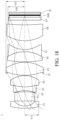
- a maximum effective radius of the object-side surface of the first lens element is Y11
- a maximum effective radius of the image-side surface of the eighth lens element is Y82
- the following condition can be satisfied: 0.70 ⁇ Y11/Y82 ⁇ 1.0. Therefore, it is favorable for adjusting the ratio of outer diameters of the lens elements so as to obtain a balance among the field of view, the size distribution and the size of the image surface.
- Fig. 18 shows a schematic view of Y11 and Y82 according to the 1st embodiment of the present disclosure.
- the optical photographing system includes an aperture stop.
- an axial distance between the aperture stop and the image surface is SL
- an axial distance between the object-side surface of the first lens element and the image surface is TL
- the following condition can be satisfied: 0.75 ⁇ SL/TL ⁇ 0.90. Therefore, it is favorable for adjusting the position of the aperture stop so as to obtain a balance between the field of view and the size distribution.
- an Abbe number of the first lens element is V1
- an Abbe number of the second lens element is V2
- an Abbe number of the third lens element is V3, an Abbe number of the fourth lens element is V4
- an Abbe number of the fifth lens element is V5
- an Abbe number of the sixth lens element is V6
- an Abbe number of the seventh lens element is V7
- an Abbe number of the eighth lens element is V8, an Abbe number of the i-th lens element is Vi
- a refractive index of the first lens element is N1
- a refractive index of the second lens element is N2
- a refractive index of the fifth lens element is N5, a refractive index of the sixth lens element is N6, a refractive index of the seventh lens element is N7, a refractive index of the eighth lens element is N8, a refractive index of the i
- the axial distance between the object-side surface of the first lens element and the image surface is TL, and the maximum image height of the optical photographing system is ImgH, the following condition can be satisfied: 5.0 ⁇ TL/ImgH ⁇ 6.5. Therefore, it is favorable for obtain a balance between the optical total track length and the size of the image surface.
- the Abbe number of the sixth lens element is V6
- the Abbe number of the seventh lens element is V7
- the following condition can be satisfied: 1.6 ⁇ V6/V7 ⁇ 2.6. Therefore, it is favorable for combining the sixth lens element and the seventh lens element so as to correct chromatic aberration.
- the focal length of the optical photographing system is f
- a composite focal length of the sixth lens element and the seventh lens element is f67
- the following condition can be satisfied: -1.0 ⁇ f/f67 ⁇ 0. Therefore, it is favorable for combining the sixth lens element and the seventh lens element so as to correct aberrations.
- the following condition can be satisfied: 35.0 ⁇ TD/T23. Therefore, it is favorable for adjusting the lens configuration for miniaturization. Moreover, the following condition can also be satisfied: 40.0 ⁇ TD/T23 ⁇ 100.
- the focal length of the optical photographing system is f
- a focal length of the first lens element is f1
- the following condition can be satisfied: -1.0 ⁇ f/f1 ⁇ -0.60. Therefore, it is favorable for adjusting the refractive power of the first lens element so as to obtain a balance between the increase in the field of view and the reduction in the lens outer diameter.
- the focal length of the optical photographing system is f
- a focal length of the fifth lens element is f5
- the following condition can be satisfied: 0.30 ⁇ f/f5 ⁇ 1.0. Therefore, it is favorable for adjusting the refractive power of the fifth lens element so as to reduce the size.
- a maximum effective radius of the object-side surface of the first lens element is Y11
- a maximum effective radius of the image-side surface of the fifth lens element is Y52
- the following condition can be satisfied: 0.50 ⁇ Y11/Y52 ⁇ 1.1. Therefore, it is favorable for adjusting the direction of light at the object side of the optical photographing system so as to reduce the outer diameter of the object side.
- Fig. 18 shows a schematic view of Y11 and Y52 according to the 1st embodiment of the present disclosure.
- the Abbe number of the third lens element is V3
- the Abbe number of the fourth lens element is V4
- the following condition can be satisfied: 1.1 ⁇ V4/V3 ⁇ 2.5. Therefore, it is favorable for combining the third lens element and the fourth lens element so as to correct chromatic aberration.
- the maximum effective radius of the object-side surface of the first lens element is Y11
- the maximum image height of the optical photographing system is ImgH
- the following condition can be satisfied: 0.70 ⁇ Y11/lmgH ⁇ 1.0. Therefore, it is favorable for adjusting the outer diameter of the lens element and the size of the image surface so as to obtain a balance between the field of view, the size distribution and the size of the image surface.
- the lens elements of the optical photographing system can be made of either glass or plastic material.
- the refractive power distribution of the optical photographing system may be more flexible, and the influence on imaging caused by external environment temperature change may be reduced.
- the glass lens element can either be made by grinding or molding.
- the manufacturing costs can be effectively reduced.
- surfaces of each lens element can be arranged to be spherical or aspheric. Spherical lens elements are simple in manufacture. Aspheric lens element design allows more control variables for eliminating aberrations thereof and reducing the required number of lens elements, and the total track length of the optical photographing system can therefore be effectively shortened. Additionally, the aspheric surfaces may be formed by plastic injection molding or glass molding.
- a lens surface when a lens surface is aspheric, it means that the lens surface has an aspheric shape throughout its optically effective area, or a portion(s) thereof.
- one or more of the lens elements' material may optionally include an additive which generates light absorption and interference effects and alters the lens elements' transmittance in a specific range of wavelength for a reduction in unwanted stray light or color deviation.
- the additive may optionally filter out light in the wavelength range of 600 nm to 800 nm to reduce excessive red light and/or near infrared light; or may optionally filter out light in the wavelength range of 350 nm to 450 nm to reduce excessive blue light and/or near ultraviolet light from interfering the final image.
- the additive may be homogeneously mixed with a plastic material to be used in manufacturing a mixed-material lens element by injection molding.
- the additive may be coated on the lens surfaces to provide the abovementioned effects.
- each of an object-side surface and an image-side surface has a paraxial region and an off-axis region.
- the paraxial region refers to the region of the surface where light rays travel close to the optical axis
- the off-axis region refers to the region of the surface away from the paraxial region.
- the image surface of the optical photographing system based on the corresponding image sensor, can be flat or curved, especially a curved surface being concave facing towards the object side of the optical photographing system.
- an image correction unit such as a field flattener
- a field flattener can be optionally disposed between the lens element closest to the image side of the optical photographing system along the optical path and the image surface for correction of aberrations such as field curvature.
- the optical properties of the image correction unit such as curvature, thickness, index of refraction, position and surface shape (convex or concave surface with spherical, aspheric, diffractive or Fresnel types), can be adjusted according to the design of the image capturing unit.
- a preferable image correction unit is, for example, a thin transparent element having a concave object-side surface and a planar image-side surface, and the thin transparent element is disposed near the image surface.
- At least one light-folding element such as a prism or a mirror, can be optionally disposed between an imaged object and the image surface on the imaging optical path, such that the optical photographing system can be more flexible in space arrangement, and therefore the dimensions of an image capturing unit is not restricted by the total track length of the optical photographing system.
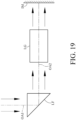
- Fig. 19 shows a schematic view of a configuration of a light-folding element in an optical photographing system according to one embodiment of the present disclosure
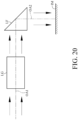
- Fig. 20 shows a schematic view of another configuration of a light-folding element in an optical photographing system according to one embodiment of the present disclosure.
- the optical photographing system can have, in order from an imaged object (not shown in the figures) to an image surface IM along an optical path, a first optical axis OA1, a light-folding element LF and a second optical axis OA2.
- the light-folding element LF can be disposed between the imaged object and a lens group LG of the optical photographing system as shown in Fig. 19 or disposed between a lens group LG of the optical photographing system and the image surface IM as shown in Fig. 20 .
- Fig. 21 shows a schematic view of a configuration of two light-folding elements in an optical photographing system according to one embodiment of the present disclosure. In Fig.
- the optical photographing system can have, in order from an imaged object (not shown in the figure) to an image surface IM along an optical path, a first optical axis OA1, a first light-folding element LF1, a second optical axis OA2, a second light-folding element LF2 and a third optical axis OA3.
- the first light-folding element LF1 is disposed between the imaged object and a lens group LG of the optical photographing system
- the second light-folding element LF2 is disposed between the lens group LG of the optical photographing system and the image surface IM
- the travelling direction of light on the first optical axis OA1 can be the same direction as the travelling direction of light on the third optical axis OA3 as shown in Fig. 21 .
- the optical photographing system can be optionally provided with three or more light-folding elements, and the present disclosure is not limited to the type, amount and position of the light-folding elements of the embodiments disclosed in the aforementioned figures.
- the optical photographing system can include at least one stop, such as an aperture stop, a glare stop or a field stop. Said glare stop or said field stop is set for eliminating the stray light and thereby improving image quality thereof.
- an aperture stop is configured as a middle stop.
- a front stop disposed between an imaged object and the first lens element can provide a longer distance between an exit pupil of the optical photographing system and the image surface to produce a telecentric effect, and thereby improves the image-sensing efficiency of an image sensor (for example, CCD or CMOS).
- a middle stop disposed between the first lens element and the image surface is favorable for enlarging the viewing angle of the optical photographing system and thereby provides a wider field of view for the same.
- the optical photographing system can include an aperture control unit.
- the aperture control unit may be a mechanical component or a light modulator, which can control the size and shape of the aperture through electricity or electrical signals.
- the mechanical component can include a movable member, such as a blade assembly or a light shielding sheet.
- the light modulator can include a shielding element, such as a filter, an electrochromic material or a liquid-crystal layer.
- the aperture control unit controls the amount of incident light or exposure time to enhance the capability of image quality adjustment.
- the aperture control unit can be the aperture stop of the present disclosure, which changes the f-number to obtain different image effects, such as the depth of field or lens speed.
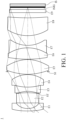
- Fig. 1 is a schematic view of an image capturing unit according to the 1st embodiment of the present disclosure.
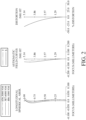
- Fig. 2 shows, in order from left to right, spherical aberration curves, astigmatic field curves and a distortion curve of the image capturing unit according to the 1st embodiment.
- the image capturing unit 1 includes the optical photographing system (its reference numeral is omitted) of the present disclosure and an image sensor IS.
- the optical photographing system includes, in order from an object side to an image side along an optical axis, a first lens element E1, a second lens element E2, an aperture stop ST, a third lens element E3, a fourth lens element E4, a stop S1, a fifth lens element E5, a sixth lens element E6, a seventh lens element E7, an eighth lens element E8, a filter E9 and an image surface IMG.
- the optical photographing system includes eight lens elements (E1, E2, E3, E4, E5, E6, E7 and E8) with no additional lens element disposed between each of the adjacent eight lens elements.
- the first lens element E1 with negative refractive power has an object-side surface being convex in a paraxial region thereof and an image-side surface being concave in a paraxial region thereof.
- the first lens element E1 is made of glass material and has the object-side surface and the image-side surface being both aspheric.
- the second lens element E2 with positive refractive power has an object-side surface being convex in a paraxial region thereof and an image-side surface being convex in a paraxial region thereof.
- the second lens element E2 is made of glass material and has the object-side surface and the image-side surface being both spherical.
- the third lens element E3 with negative refractive power has an object-side surface being concave in a paraxial region thereof and an image-side surface being concave in a paraxial region thereof.
- the third lens element E3 is made of glass material and has the object-side surface and the image-side surface being both spherical.
- the fourth lens element E4 with positive refractive power has an object-side surface being convex in a paraxial region thereof and an image-side surface being convex in a paraxial region thereof.
- the fourth lens element E4 is made of glass material and has the object-side surface and the image-side surface being both spherical.
- the object-side surface of the fourth lens element E4 is cemented to the image-side surface of the third lens element E3.
- the fifth lens element E5 with positive refractive power has an object-side surface being convex in a paraxial region thereof and an image-side surface being convex in a paraxial region thereof.
- the fifth lens element E5 is made of glass material and has the object-side surface and the image-side surface being both aspheric.
- the sixth lens element E6 with positive refractive power has an object-side surface being convex in a paraxial region thereof and an image-side surface being convex in a paraxial region thereof.
- the sixth lens element E6 is made of glass material and has the object-side surface and the image-side surface being both spherical.
- the seventh lens element E7 with negative refractive power has an object-side surface being concave in a paraxial region thereof and an image-side surface being concave in a paraxial region thereof.
- the seventh lens element E7 is made of glass material and has the object-side surface and the image-side surface being both spherical.
- the object-side surface of the seventh lens element E7 is cemented to the image-side surface of the sixth lens element E6.
- the eighth lens element E8 with positive refractive power has an object-side surface being convex in a paraxial region thereof and an image-side surface being concave in a paraxial region thereof.
- the eighth lens element E8 is made of glass material and has the object-side surface and the image-side surface being both spherical.
- the filter E9 is made of glass material and located between the eighth lens element E8 and the image surface IMG, and will not affect the focal length of the optical photographing system.
- the image sensor IS is disposed on or near the image surface IMG of the optical photographing system.
- V1/N1 31.41.
- V5/N5 31.41.
- an axial distance between the first lens element E1 and the second lens element E2 is T12
- an axial distance between the second lens element E2 and the third lens element E3 is T23
- a central thickness of the second lens element E2 is CT2
- an axial distance between two adjacent lens elements is a distance in a paraxial region between two adjacent lens surfaces of the two adjacent lens elements.
- CT6/T45 32.70.
- CTmax a maximum value among central thicknesses of all lens elements of the optical photographing system
- ATmax a maximum value among axial distances between each of all adjacent lens elements of the optical photographing system
- CTmax/ATmax 1.83.
- a central thickness of the eighth lens element E8 is larger than central thicknesses of the other lens elements of the optical photographing system
- CTmax is equal to the central thickness of the eighth lens element E8.
- an axial distance between the seventh lens element E7 and the eighth lens element E8 is larger than the axial distances between all the other two adjacent lens elements of the optical photographing system, and ATmax is equal to the axial distance between the seventh lens element E7 and the eighth lens element E8.
- TL/ImgH 5.79.
- ⁇ CT central thicknesses of the first lens element E1, the second lens element E2, the third lens element E3, the fourth lens element E4, the fifth lens element E5, the sixth lens element E6, the seventh lens element E7, and the eighth lens element E8.
- ⁇ AT is a sum of axial distances between the first lens element E1 and the second lens element E2, the second lens element E2 and the third lens element E3, the third lens element E3 and the fourth lens element E4, the fourth lens element E4 and the fifth lens element E5, the fifth lens element E5 and the sixth lens element E6, the sixth lens element E6 and the seventh lens element E7, and the seventh lens element E7 and the eighth lens element E8.
- a maximum value among maximum effective radii on the object-side surfaces and the image-side surfaces of all lens elements of the optical photographing system is Ymax
- a minimum value among maximum effective radii on the object-side surfaces and the image-side surfaces of all lens elements of the optical photographing system is Ymin
- the maximum effective radius on the image-side surface of the fifth lens element E5 is larger than maximum effective radii on the other surfaces of all lens elements of the optical photographing system
- Ymax is equal to the maximum effective radius of the image-side surface of the fifth lens element E5.
- a maximum effective radius on the object-side surface of the third lens element E3 is smaller than maximum effective radii on the other surfaces of all lens elements of the optical photographing system, and Ymin is equal to the maximum effective radius of the object-side surface of the third lens element E3.
- An effective radius of the stop S1 (Surface 10) is 5.763 mm.
- Table 1 the curvature radius, the thickness and the focal length are shown in millimeters (mm).
- Surface numbers 0-21 represent the surfaces sequentially arranged from the object side to the image side along the optical axis.
- k represents the conic coefficient of the equation of the aspheric surface profiles.
- A4-A12 represent the aspheric coefficients ranging from the 4th order to the 12th order.
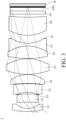
- Fig. 3 is a schematic view of an image capturing unit according to the 2nd embodiment of the present disclosure.
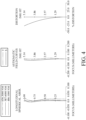
- Fig. 4 shows, in order from left to right, spherical aberration curves, astigmatic field curves and a distortion curve of the image capturing unit according to the 2nd embodiment.
- the image capturing unit 2 includes the optical photographing system (its reference numeral is omitted) of the present disclosure and an image sensor IS.
- the optical photographing system includes, in order from an object side to an image side along an optical axis, a first lens element E1, a second lens element E2, an aperture stop ST, a third lens element E3, a fourth lens element E4, a fifth lens element E5, a sixth lens element E6, a seventh lens element E7, a stop S1, an eighth lens element E8, a filter E9 and an image surface IMG.
- the optical photographing system includes eight lens elements (E1, E2, E3, E4, E5, E6, E7 and E8) with no additional lens element disposed between each of the adjacent eight lens elements.
- the first lens element E1 with negative refractive power has an object-side surface being convex in a paraxial region thereof and an image-side surface being concave in a paraxial region thereof.
- the first lens element E1 is made of glass material and has the object-side surface and the image-side surface being both aspheric.
- the second lens element E2 with positive refractive power has an object-side surface being concave in a paraxial region thereof and an image-side surface being convex in a paraxial region thereof.
- the second lens element E2 is made of glass material and has the object-side surface and the image-side surface being both spherical.
- the third lens element E3 with negative refractive power has an object-side surface being concave in a paraxial region thereof and an image-side surface being convex in a paraxial region thereof.
- the third lens element E3 is made of glass material and has the object-side surface and the image-side surface being both spherical.
- the fourth lens element E4 with positive refractive power has an object-side surface being concave in a paraxial region thereof and an image-side surface being convex in a paraxial region thereof.
- the fourth lens element E4 is made of glass material and has the object-side surface and the image-side surface being both spherical.
- the fifth lens element E5 with positive refractive power has an object-side surface being convex in a paraxial region thereof and an image-side surface being convex in a paraxial region thereof.
- the fifth lens element E5 is made of glass material and has the object-side surface and the image-side surface being both aspheric.
- the sixth lens element E6 with positive refractive power has an object-side surface being convex in a paraxial region thereof and an image-side surface being convex in a paraxial region thereof.
- the sixth lens element E6 is made of glass material and has the object-side surface and the image-side surface being both spherical.
- the seventh lens element E7 with negative refractive power has an object-side surface being concave in a paraxial region thereof and an image-side surface being concave in a paraxial region thereof.
- the seventh lens element E7 is made of glass material and has the object-side surface and the image-side surface being both spherical.
- the object-side surface of the seventh lens element E7 is cemented to the image-side surface of the sixth lens element E6.
- the eighth lens element E8 with positive refractive power has an object-side surface being convex in a paraxial region thereof and an image-side surface being concave in a paraxial region thereof.
- the eighth lens element E8 is made of glass material and has the object-side surface and the image-side surface being both spherical.
- the filter E9 is made of glass material and located between the eighth lens element E8 and the image surface IMG, and will not affect the focal length of the optical photographing system.
- the image sensor IS is disposed on or near the image surface IMG of the optical photographing system.
- An effective radius of the stop S1 (Surface 16) is 4.760 mm.
- the equation of the aspheric surface profiles of the aforementioned lens elements is the same as the equation of the 1st embodiment. Also, the definitions of these parameters shown in the following table are the same as those stated in the 1st embodiment with corresponding values for the 2nd embodiment, so an explanation in this regard will not be provided again.
- Fig. 5 is a schematic view of an image capturing unit according to the 3rd embodiment of the present disclosure.
- Fig. 6 shows, in order from left to right, spherical aberration curves, astigmatic field curves and a distortion curve of the image capturing unit according to the 3rd embodiment.
- the image capturing unit 3 includes the optical photographing system (its reference numeral is omitted) of the present disclosure and an image sensor IS.
- the optical photographing system includes, in order from an object side to an image side along an optical axis, a first lens element E1, a second lens element E2, an aperture stop ST, a third lens element E3, a fourth lens element E4, a fifth lens element E5, a sixth lens element E6, a seventh lens element E7, a stop S1, an eighth lens element E8, a filter E9 and an image surface IMG.
- the optical photographing system includes eight lens elements (E1, E2, E3, E4, E5, E6, E7 and E8) with no additional lens element disposed between each of the adjacent eight lens elements.
- the first lens element E1 with negative refractive power has an object-side surface being convex in a paraxial region thereof and an image-side surface being concave in a paraxial region thereof.
- the first lens element E1 is made of glass material and has the object-side surface and the image-side surface being both aspheric.
- the second lens element E2 with positive refractive power has an object-side surface being planar in a paraxial region thereof and an image-side surface being convex in a paraxial region thereof.
- the second lens element E2 is made of glass material and has the image-side surface being spherical.
- the third lens element E3 with negative refractive power has an object-side surface being concave in a paraxial region thereof and an image-side surface being concave in a paraxial region thereof.
- the third lens element E3 is made of glass material and has the object-side surface and the image-side surface being both spherical.
- the fourth lens element E4 with positive refractive power has an object-side surface being convex in a paraxial region thereof and an image-side surface being convex in a paraxial region thereof.
- the fourth lens element E4 is made of glass material and has the object-side surface and the image-side surface being both spherical.
- the object-side surface of the fourth lens element E4 is cemented to the image-side surface of the third lens element E3.
- the fifth lens element E5 with positive refractive power has an object-side surface being convex in a paraxial region thereof and an image-side surface being convex in a paraxial region thereof.
- the fifth lens element E5 is made of glass material and has the object-side surface and the image-side surface being both aspheric.
- the sixth lens element E6 with positive refractive power has an object-side surface being convex in a paraxial region thereof and an image-side surface being convex in a paraxial region thereof.
- the sixth lens element E6 is made of glass material and has the object-side surface and the image-side surface being both spherical.
- the seventh lens element E7 with negative refractive power has an object-side surface being concave in a paraxial region thereof and an image-side surface being concave in a paraxial region thereof.
- the seventh lens element E7 is made of glass material and has the object-side surface and the image-side surface being both spherical.
- the object-side surface of the seventh lens element E7 is cemented to the image-side surface of the sixth lens element E6.
- the eighth lens element E8 with positive refractive power has an object-side surface being convex in a paraxial region thereof and an image-side surface being concave in a paraxial region thereof.
- the eighth lens element E8 is made of glass material and has the object-side surface and the image-side surface being both spherical.
- the filter E9 is made of glass material and located between the eighth lens element E8 and the image surface IMG, and will not affect the focal length of the optical photographing system.
- the image sensor IS is disposed on or near the image surface IMG of the optical photographing system.
- the equation of the aspheric surface profiles of the aforementioned lens elements is the same as the equation of the 1st embodiment. Also, the definitions of these parameters shown in the following table are the same as those stated in the 1st embodiment with corresponding values for the 3rd embodiment, so an explanation in this regard will not be provided again.
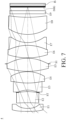
- Fig. 7 is a schematic view of an image capturing unit according to the 4th embodiment of the present disclosure.
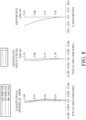
- Fig. 8 shows, in order from left to right, spherical aberration curves, astigmatic field curves and a distortion curve of the image capturing unit according to the 4th embodiment.
- the image capturing unit 4 includes the optical photographing system (its reference numeral is omitted) of the present disclosure and an image sensor IS.
- the optical photographing system includes, in order from an object side to an image side along an optical axis, a first lens element E1, a second lens element E2, an aperture stop ST, a third lens element E3, a fourth lens element E4, a fifth lens element E5, a stop S1, a sixth lens element E6, a seventh lens element E7, an eighth lens element E8, a filter E9 and an image surface IMG.
- the optical photographing system includes eight lens elements (E1, E2, E3, E4, E5, E6, E7 and E8) with no additional lens element disposed between each of the adjacent eight lens elements.
- the first lens element E1 with negative refractive power has an object-side surface being convex in a paraxial region thereof and an image-side surface being concave in a paraxial region thereof.
- the first lens element E1 is made of glass material and has the object-side surface and the image-side surface being both aspheric.
- the second lens element E2 with positive refractive power has an object-side surface being concave in a paraxial region thereof and an image-side surface being convex in a paraxial region thereof.
- the second lens element E2 is made of glass material and has the object-side surface and the image-side surface being both spherical.
- the third lens element E3 with negative refractive power has an object-side surface being concave in a paraxial region thereof and an image-side surface being concave in a paraxial region thereof.
- the third lens element E3 is made of glass material and has the object-side surface and the image-side surface being both spherical.
- the fourth lens element E4 with positive refractive power has an object-side surface being convex in a paraxial region thereof and an image-side surface being convex in a paraxial region thereof.
- the fourth lens element E4 is made of glass material and has the object-side surface and the image-side surface being both spherical.
- the object-side surface of the fourth lens element E4 is cemented to the image-side surface of the third lens element E3.
- the fifth lens element E5 with positive refractive power has an object-side surface being convex in a paraxial region thereof and an image-side surface being convex in a paraxial region thereof.
- the fifth lens element E5 is made of glass material and has the object-side surface and the image-side surface being both aspheric.
- the sixth lens element E6 with positive refractive power has an object-side surface being convex in a paraxial region thereof and an image-side surface being convex in a paraxial region thereof.
- the sixth lens element E6 is made of glass material and has the object-side surface and the image-side surface being both spherical.
- the seventh lens element E7 with negative refractive power has an object-side surface being concave in a paraxial region thereof and an image-side surface being concave in a paraxial region thereof.
- the seventh lens element E7 is made of glass material and has the object-side surface and the image-side surface being both spherical.
- the object-side surface of the seventh lens element E7 is cemented to the image-side surface of the sixth lens element E6.
- the eighth lens element E8 with positive refractive power has an object-side surface being convex in a paraxial region thereof and an image-side surface being concave in a paraxial region thereof.
- the eighth lens element E8 is made of glass material and has the object-side surface and the image-side surface being both spherical.
- the filter E9 is made of glass material and located between the eighth lens element E8 and the image surface IMG, and will not affect the focal length of the optical photographing system.
- the image sensor IS is disposed on or near the image surface IMG of the optical photographing system.
- An effective radius of the stop S1 (Surface 12) is 6.025 mm.
- the equation of the aspheric surface profiles of the aforementioned lens elements is the same as the equation of the 1st embodiment. Also, the definitions of these parameters shown in the following table are the same as those stated in the 1st embodiment with corresponding values for the 4th embodiment, so an explanation in this regard will not be provided again.
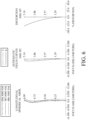
- Fig. 9 is a schematic view of an image capturing unit according to the 5th embodiment of the present disclosure.
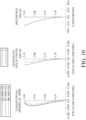
- Fig. 10 shows, in order from left to right, spherical aberration curves, astigmatic field curves and a distortion curve of the image capturing unit according to the 5th embodiment.
- the image capturing unit 5 includes the optical photographing system (its reference numeral is omitted) of the present disclosure and an image sensor IS.
- the optical photographing system includes, in order from an object side to an image side along an optical axis, a first lens element E1, a second lens element E2, an aperture stop ST, a third lens element E3, a fourth lens element E4, a fifth lens element E5, a stop S1, a sixth lens element E6, a seventh lens element E7, an eighth lens element E8, a filter E9 and an image surface IMG.
- the optical photographing system includes eight lens elements (E1, E2, E3, E4, E5, E6, E7 and E8) with no additional lens element disposed between each of the adjacent eight lens elements.
- the first lens element E1 with negative refractive power has an object-side surface being convex in a paraxial region thereof and an image-side surface being concave in a paraxial region thereof.
- the first lens element E1 is made of glass material and has the object-side surface and the image-side surface being both aspheric.
- the second lens element E2 with positive refractive power has an object-side surface being convex in a paraxial region thereof and an image-side surface being convex in a paraxial region thereof.
- the second lens element E2 is made of glass material and has the object-side surface and the image-side surface being both spherical.
- the third lens element E3 with negative refractive power has an object-side surface being concave in a paraxial region thereof and an image-side surface being concave in a paraxial region thereof.
- the third lens element E3 is made of glass material and has the object-side surface and the image-side surface being both spherical.
- the fourth lens element E4 with positive refractive power has an object-side surface being convex in a paraxial region thereof and an image-side surface being convex in a paraxial region thereof.
- the fourth lens element E4 is made of glass material and has the object-side surface and the image-side surface being both spherical.
- the object-side surface of the fourth lens element E4 is cemented to the image-side surface of the third lens element E3.
- the fifth lens element E5 with positive refractive power has an object-side surface being convex in a paraxial region thereof and an image-side surface being convex in a paraxial region thereof.
- the fifth lens element E5 is made of glass material and has the object-side surface and the image-side surface being both spherical.
- the sixth lens element E6 with positive refractive power has an object-side surface being convex in a paraxial region thereof and an image-side surface being convex in a paraxial region thereof.
- the sixth lens element E6 is made of glass material and has the object-side surface and the image-side surface being both spherical.
- the seventh lens element E7 with negative refractive power has an object-side surface being concave in a paraxial region thereof and an image-side surface being concave in a paraxial region thereof.
- the seventh lens element E7 is made of glass material and has the object-side surface and the image-side surface being both spherical.
- the object-side surface of the seventh lens element E7 is cemented to the image-side surface of the sixth lens element E6.
- the eighth lens element E8 with positive refractive power has an object-side surface being convex in a paraxial region thereof and an image-side surface being concave in a paraxial region thereof.
- the eighth lens element E8 is made of glass material and has the object-side surface and the image-side surface being both spherical.
- the filter E9 is made of glass material and located between the eighth lens element E8 and the image surface IMG, and will not affect the focal length of the optical photographing system.
- the image sensor IS is disposed on or near the image surface IMG of the optical photographing system.
- An effective radius of the stop S1 (Surface 12) is 5.825 mm.
- the equation of the aspheric surface profiles of the aforementioned lens elements is the same as the equation of the 1st embodiment. Also, the definitions of these parameters shown in the following table are the same as those stated in the 1st embodiment with corresponding values for the 5th embodiment, so an explanation in this regard will not be provided again.
- Fig. 11 is a schematic view of an image capturing unit according to the 6th embodiment of the present disclosure.
- Fig. 12 shows, in order from left to right, spherical aberration curves, astigmatic field curves and a distortion curve of the image capturing unit according to the 6th embodiment.
- the image capturing unit 6 includes the optical photographing system (its reference numeral is omitted) of the present disclosure and an image sensor IS.
- the optical photographing system includes, in order from an object side to an image side along an optical axis, a first lens element E1, a second lens element E2, an aperture stop ST, a third lens element E3, a fourth lens element E4, a stop S1, a fifth lens element E5, a sixth lens element E6, a seventh lens element E7, an eighth lens element E8, a filter E9 and an image surface IMG.
- the optical photographing system includes eight lens elements (E1, E2, E3, E4, E5, E6, E7 and E8) with no additional lens element disposed between each of the adjacent eight lens elements.
- the first lens element E1 with negative refractive power has an object-side surface being convex in a paraxial region thereof and an image-side surface being concave in a paraxial region thereof.
- the first lens element E1 is made of glass material and has the object-side surface and the image-side surface being both aspheric.
- the second lens element E2 with positive refractive power has an object-side surface being convex in a paraxial region thereof and an image-side surface being convex in a paraxial region thereof.
- the second lens element E2 is made of glass material and has the object-side surface and the image-side surface being both spherical.
- the third lens element E3 with negative refractive power has an object-side surface being concave in a paraxial region thereof and an image-side surface being convex in a paraxial region thereof.
- the third lens element E3 is made of glass material and has the object-side surface and the image-side surface being both spherical.
- the fourth lens element E4 with positive refractive power has an object-side surface being concave in a paraxial region thereof and an image-side surface being convex in a paraxial region thereof.
- the fourth lens element E4 is made of glass material and has the object-side surface and the image-side surface being both spherical.
- the object-side surface of the fourth lens element E4 is cemented to the image-side surface of the third lens element E3.
- the fifth lens element E5 with positive refractive power has an object-side surface being convex in a paraxial region thereof and an image-side surface being convex in a paraxial region thereof.
- the fifth lens element E5 is made of glass material and has the object-side surface and the image-side surface being both aspheric.
- the sixth lens element E6 with positive refractive power has an object-side surface being concave in a paraxial region thereof and an image-side surface being convex in a paraxial region thereof.
- the sixth lens element E6 is made of glass material and has the object-side surface and the image-side surface being both spherical.
- the seventh lens element E7 with negative refractive power has an object-side surface being concave in a paraxial region thereof and an image-side surface being concave in a paraxial region thereof.
- the seventh lens element E7 is made of glass material and has the object-side surface and the image-side surface being both spherical.
- the object-side surface of the seventh lens element E7 is cemented to the image-side surface of the sixth lens element E6.
- the eighth lens element E8 with positive refractive power has an object-side surface being convex in a paraxial region thereof and an image-side surface being convex in a paraxial region thereof.
- the eighth lens element E8 is made of glass material and has the object-side surface and the image-side surface being both spherical.
- the filter E9 is made of glass material and located between the eighth lens element E8 and the image surface IMG, and will not affect the focal length of the optical photographing system.
- the image sensor IS is disposed on or near the image surface IMG of the optical photographing system.
- the equation of the aspheric surface profiles of the aforementioned lens elements is the same as the equation of the 1st embodiment. Also, the definitions of these parameters shown in the following table are the same as those stated in the 1st embodiment with corresponding values for the 6th embodiment, so an explanation in this regard will not be provided again.
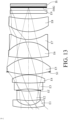
- Fig. 13 is a schematic view of an image capturing unit according to the 7th embodiment of the present disclosure.
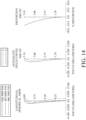
- Fig. 14 shows, in order from left to right, spherical aberration curves, astigmatic field curves and a distortion curve of the image capturing unit according to the 7th embodiment.
- the image capturing unit 7 includes the optical photographing system (its reference numeral is omitted) of the present disclosure and an image sensor IS.
- the optical photographing system includes, in order from an object side to an image side along an optical axis, a first lens element E1, a second lens element E2, an aperture stop ST, a third lens element E3, a fourth lens element E4, a stop S1, a fifth lens element E5, a sixth lens element E6, a seventh lens element E7, an eighth lens element E8, a filter E9 and an image surface IMG.
- the optical photographing system includes eight lens elements (E1, E2, E3, E4, E5, E6, E7 and E8) with no additional lens element disposed between each of the adjacent eight lens elements.
- the first lens element E1 with negative refractive power has an object-side surface being convex in a paraxial region thereof and an image-side surface being concave in a paraxial region thereof.
- the first lens element E1 is made of glass material and has the object-side surface and the image-side surface being both aspheric.
- the second lens element E2 with negative refractive power has an object-side surface being convex in a paraxial region thereof and an image-side surface being concave in a paraxial region thereof.
- the second lens element E2 is made of glass material and has the object-side surface and the image-side surface being both spherical.
- the third lens element E3 with negative refractive power has an object-side surface being concave in a paraxial region thereof and an image-side surface being concave in a paraxial region thereof.
- the third lens element E3 is made of glass material and has the object-side surface and the image-side surface being both spherical.
- the fourth lens element E4 with positive refractive power has an object-side surface being convex in a paraxial region thereof and an image-side surface being convex in a paraxial region thereof.
- the fourth lens element E4 is made of glass material and has the object-side surface and the image-side surface being both spherical.
- the object-side surface of the fourth lens element E4 is cemented to the image-side surface of the third lens element E3.
- the fifth lens element E5 with positive refractive power has an object-side surface being convex in a paraxial region thereof and an image-side surface being convex in a paraxial region thereof.
- the fifth lens element E5 is made of glass material and has the object-side surface and the image-side surface being both aspheric.
- the sixth lens element E6 with positive refractive power has an object-side surface being convex in a paraxial region thereof and an image-side surface being convex in a paraxial region thereof.
- the sixth lens element E6 is made of glass material and has the object-side surface and the image-side surface being both spherical.
- the seventh lens element E7 with negative refractive power has an object-side surface being concave in a paraxial region thereof and an image-side surface being concave in a paraxial region thereof.
- the seventh lens element E7 is made of glass material and has the object-side surface and the image-side surface being both spherical.
- the object-side surface of the seventh lens element E7 is cemented to the image-side surface of the sixth lens element E6.
- the eighth lens element E8 with positive refractive power has an object-side surface being convex in a paraxial region thereof and an image-side surface being concave in a paraxial region thereof.
- the eighth lens element E8 is made of glass material and has the object-side surface and the image-side surface being both spherical.
- the filter E9 is made of glass material and located between the eighth lens element E8 and the image surface IMG, and will not affect the focal length of the optical photographing system.
- the image sensor IS is disposed on or near the image surface IMG of the optical photographing system.
- An effective radius of the stop S1 (Surface 10) is 5.737 mm.
- the equation of the aspheric surface profiles of the aforementioned lens elements is the same as the equation of the 1st embodiment. Also, the definitions of these parameters shown in the following table are the same as those stated in the 1st embodiment with corresponding values for the 7th embodiment, so an explanation in this regard will not be provided again.
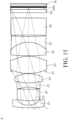
- Fig. 15 is a schematic view of an image capturing unit according to the 8th embodiment of the present disclosure.
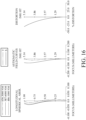
- Fig. 16 shows, in order from left to right, spherical aberration curves, astigmatic field curves and a distortion curve of the image capturing unit according to the 8th embodiment.
- the image capturing unit 8 includes the optical photographing system (its reference numeral is omitted) of the present disclosure and an image sensor IS.
- the optical photographing system includes, in order from an object side to an image side along an optical axis, a first lens element E1, a second lens element E2, an aperture stop ST, a third lens element E3, a fourth lens element E4, a stop S1, a fifth lens element E5, a sixth lens element E6, a seventh lens element E7, an eighth lens element E8, a filter E9 and an image surface IMG.
- the optical photographing system includes eight lens elements (E1, E2, E3, E4, E5, E6, E7 and E8) with no additional lens element disposed between each of the adjacent eight lens elements.
- the first lens element E1 with negative refractive power has an object-side surface being convex in a paraxial region thereof and an image-side surface being concave in a paraxial region thereof.
- the first lens element E1 is made of glass material and has the object-side surface and the image-side surface being both aspheric.
- the second lens element E2 with positive refractive power has an object-side surface being convex in a paraxial region thereof and an image-side surface being concave in a paraxial region thereof.
- the second lens element E2 is made of glass material and has the object-side surface and the image-side surface being both spherical.
- the third lens element E3 with negative refractive power has an object-side surface being concave in a paraxial region thereof and an image-side surface being concave in a paraxial region thereof.
- the third lens element E3 is made of glass material and has the object-side surface and the image-side surface being both spherical.
- the fourth lens element E4 with positive refractive power has an object-side surface being convex in a paraxial region thereof and an image-side surface being convex in a paraxial region thereof.
- the fourth lens element E4 is made of glass material and has the object-side surface and the image-side surface being both spherical.
- the object-side surface of the fourth lens element E4 is cemented to the image-side surface of the third lens element E3.
- the fifth lens element E5 with positive refractive power has an object-side surface being convex in a paraxial region thereof and an image-side surface being convex in a paraxial region thereof.
- the fifth lens element E5 is made of glass material and has the object-side surface and the image-side surface being both aspheric.
- the sixth lens element E6 with positive refractive power has an object-side surface being convex in a paraxial region thereof and an image-side surface being convex in a paraxial region thereof.
- the sixth lens element E6 is made of glass material and has the object-side surface and the image-side surface being both spherical.
- the seventh lens element E7 with negative refractive power has an object-side surface being concave in a paraxial region thereof and an image-side surface being concave in a paraxial region thereof.
- the seventh lens element E7 is made of glass material and has the object-side surface and the image-side surface being both spherical.
- the object-side surface of the seventh lens element E7 is cemented to the image-side surface of the sixth lens element E6.
- the eighth lens element E8 with negative refractive power has an object-side surface being concave in a paraxial region thereof and an image-side surface being planar in a paraxial region thereof.
- the eighth lens element E8 is made of glass material and has the object-side surface being spherical.
- the filter E9 is made of glass material and located between the eighth lens element E8 and the image surface IMG, and will not affect the focal length of the optical photographing system.
- the image sensor IS is disposed on or near the image surface IMG of the optical photographing system.
- An effective radius of the stop S1 (Surface 10) is 4.686 mm.
- the equation of the aspheric surface profiles of the aforementioned lens elements is the same as the equation of the 1st embodiment. Also, the definitions of these parameters shown in the following table are the same as those stated in the 1st embodiment with corresponding values for the 8th embodiment, so an explanation in this regard will not be provided again.
- an image capturing unit 100 is a camera module including a lens unit, a driving device, an image sensor and an image stabilizer (not shown).
- the lens unit includes the optical photographing system disclosed in the 1st embodiment, a barrel and a holder member for holding the optical photographing system.
- the lens unit may alternatively be provided with the optical photographing system disclosed in other embodiments of the present disclosure, and the present disclosure is not limited thereto.
- the imaging light converges in the lens unit of the image capturing unit 100 to generate an image with the driving device utilized for image focusing on the image sensor, and the generated image is then digitally transmitted to other electronic component for further processing.
- the driving device can have auto focusing functionality, and different driving configurations can be obtained through the usages of voice coil motors (VCM), micro electro-mechanical systems (MEMS), piezoelectric systems, or shape memory alloy materials.
- VCM voice coil motors
- MEMS micro electro-mechanical systems
- the driving device is favorable for obtaining a better imaging position of the lens unit, so that a clear image of the imaged object can be captured by the lens unit with different object distances.
- the image sensor for example, CCD or CMOS
- CCD or CMOS which can feature high photosensitivity and low noise, is disposed on the image surface of the optical photographing system to provide higher image quality.
- the image stabilizer such as an accelerometer, a gyro sensor and a Hall Effect sensor, is configured to work with the driving device to provide optical image stabilization (OIS).
- OIS optical image stabilization
- the driving device working with the image stabilizer is favorable for compensating for pan and tilt of the lens unit to reduce blurring associated with motion during exposure.
- the compensation can be provided by electronic image stabilization (EIS) with image processing software, thereby improving image quality while in motion or low-light conditions.
- EIS electronic image stabilization
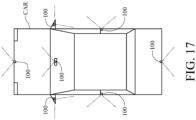
- the number of the image capturing unit 100 is plural, and each of the image capturing units 100 is a wide-angle image capturing unit. As shown in Fig. 17 , the image capturing units 100 can be disposed at the front side, the rear side, the lateral sides, the inner side or on the rear-view mirrors of a car CAR for detecting ambient conditions of the car CAR. Also, the image capturing units 100 can be in communication connection with the processing system of the car CAR to be a driver assistance system or an autopilot system. Note that the arrangement positions of the image capturing units 100 are only exemplary, and the number, the positions and the orientations of the image capturing units 100 can be adjusted according to actual requirements.
- any of the image capturing units 100 can have a light-folding element configuration, and the light-folding element configuration of the one of the image capturing units 100 can be similar to, for example, one of the structures shown in Fig. 19 to Fig. 21 , which can be referred to foregoing descriptions corresponding to Fig. 19 to Fig. 21 , and the details in this regard will not be provided again.
- the car in this embodiment is only exemplary for showing the image capturing unit of the present disclosure installed in a movable device, and the present disclosure is not limited thereto.
- the image capturing unit can be optionally applied to optical systems with a movable focus.
- the optical photographing system of the image capturing unit features good capability in aberration corrections and high image quality, and can be applied to 3D (three-dimensional) image capturing applications, in products such as digital cameras, mobile devices, digital tablets, smart televisions, network surveillance devices, smart phones, multi-camera devices, image recognition systems, motion sensing input devices, wearable devices and other electronic imaging devices.
Landscapes
- Physics & Mathematics (AREA)
- General Physics & Mathematics (AREA)
- Optics & Photonics (AREA)
- Engineering & Computer Science (AREA)
- Multimedia (AREA)
- Signal Processing (AREA)
- Lenses (AREA)
- Cameras Adapted For Combination With Other Photographic Or Optical Apparatuses (AREA)
- Studio Devices (AREA)
- Cameras In General (AREA)
Claims (25)
- Optisches Fotografiesystem mit acht Linsenelementen (E1, E2, E3, E4, E5, E6, E7, E8), wobei es sich bei den acht Linsenelementen (E1, E2, E3, E4, E5, E6, E7, E8) in einer Reihenfolge von einer Objektseite zu einer Bildseite entlang einem optischen Pfad um ein erstes Linsenelement (E1), ein zweites Linsenelement (E2), ein drittes Linsenelement (E3), ein viertes Linsenelement (E4), ein fünftes Linsenelement (E5), ein sechstes Linsenelement (E6), ein siebtes Linsenelement (E7), und ein achtes Linsenelement (E8) handelt, und jedes der acht Linsenelemente Linsenelementen (E1, E2, E3, E4, E5, E6, E7, E8) eine der Objektseite zugewandte objektseitige Fläche und eine der Bildseite zugewandte bildseitige Fläche aufweist;wobei eine Gesamtzahl der Linsenelemente (E1-E8) des optischen Fotografiesystems acht beträgt, das erste Linsenelement (E1) negative Brechkraft aufweist, die objektseitige Fläche des ersten Linsenelements (E1) in einem paraxialen Bereich desselben konvex ist, die bildseitige Fläche des ersten Linsenelements (E1) in einem paraxialen Bereich desselben konkav ist, das dritte Linsenelement (E3) negative Brechkraft aufweist, die objektseitige Fläche des dritten Linsenelements (E3) in einem paraxialen Bereich desselben konkav ist, das vierte Linsenelement (E4) positive Brechkraft aufweist, das fünfte Linsenelement (E5) positive Brechkraft aufweist, die bildseitige Fläche des fünften Linsenelements (E5) in einem paraxialen Bereich desselben konvex ist, das sechste Linsenelement (E6) positive Brechkraft aufweist, das siebte Linsenelement (E7) negative Brechkraft aufweist, die objektseitige Fläche des siebten Linsenelements (E7) in einem paraxialen Bereich desselben konkav ist, und die bildseitige Fläche des siebten Linsenelements (E7) in einem paraxialen Bereich desselben konkav ist, und wobei das sechste Linsenelement (E6) und das siebte Linsenelement (E7) miteinander verklebt sind;dadurch gekennzeichnet,dass das optische Fotografiesystem ferner eine Aperturblende (ST) aufweist, die zwischen dem zweiten Linsenelement (E2 und dem dritten Linsenelement E3) angeordnet ist, unddass eine Summe der Mittendicken sämtlicher Linsenelemente (E1, E2, E3, E4, E5, E6, E7, E8) des optischen Fotografiesystems ΣCT ist, eine Summe axialer Abstände zwischen jedem der benachbarten Linsenelemente (E1, E2, E3, E4, E5, E6, E7, E8) des optischen Fotografiesystems ΣAT ist, und die folgende Bedingung erfüllt ist:

- Optisches Fotografiesystem nach Anspruch 1, bei welchem die Summe der Mittendicken sämtlicher Linsenelemente (E1, E2, E3, E4, E5, E6, E7, E8) des optischen Fotografiesystems ΣCT ist, eine Summe axialer Abstände zwischen jedem der benachbarten Linsenelemente (E1, E2, E3, E4, E5, E6, E7, E8) des optischen Fotografiesystems ΣAT ist, und die folgende Bedingung erfüllt ist:

- Optisches Fotografiesystem nach Anspruch 1, bei welchem eine maximale Bildhöhe des optischen Fotografiesystems ImgH ist, ein Eintrittspupillendurchmesser des optischen Fotografiersystems EPD ist, und die folgende Bedingung erfüllt ist:

- Optisches Fotografiesystem nach Anspruch 1, bei welchem ein maximaler effektiver Radius der objektseitigen Fläche des ersten Linsenelements (E1) Y11 ist, ein maximaler effektiver Radius der bildseitigen Fläche des achten Linsenelements (E8) Y82 ist, und die folgende Bedingung erfüllt ist:

- Optisches Fotografiesystem nach Anspruch 1, bei welchem ein axialer Abstand zwischen der Aperturblende (ST) und einer Bildfläche (IMG) SL ist, ein axialer Abstand zwischen der objektseitigen Fläche des ersten Linsenelements (E1) und der Bildfläche (IMG) TL ist, und die folgende Bedingung erfüllt ist:

- Optisches Fotografiesystem nach Anspruch 1, bei welchem eine Abbe-Zahl des ersten Linsenelements (E1) V1 ist, eine Abbe-Zahl des zweiten Linsenelements (E2) V2 ist, eine Abbe-Zahl des dritten Linsenelements (E3) V3 ist, eine Abbe-Zahl des vierten Linsenelements (E4) V4 ist, eine Abbe-Zahl des fünfen Linsenelements (E5) V5 ist, eine Abbe-Zahl des sechsten Linsenelements (E6) V6 ist, eine Abbe-Zahl des siebten Linsenelements (E7) V7 ist, eine Abbe-Zahl des achten Linsenelements (E8) V8 ist, eine Abbe-Zahl des i-ten Linsenelements Vi ist, ein Brechungsindex des ersten Linsenelements (E1) N1 ist, ein Brechungsindex des zweiten Linsenelements (E2) N2 ist, ein Brechungsindex des dritten Linsenelements (E3) N3 ist, ein Brechungsindex des vierten Linsenelements (E4) N4 ist, ein Brechungsindex des fünften Linsenelements (E5) N5 ist, ein Brechungsindex des sechsten Linsenelements (E6) N6 ist, ein Brechungsindex des siebten Linsenelements (E7) N7 ist, ein Brechungsindex des achten Linsenelements (E8) N8 ist, ein Brechungsindex des i-ten Linsenelements Ni ist, die objektseitige Fläche und die bildseitige Fläche mindestens eines Linsenelements des optischen Fotografiesystems beide asphärisch sind, und das mindestens eine Linsenelement die folgende Gleichung erfüllt:

- Optisches Fotografiesystem nach Anspruch 1, bei welchem die bildseitige Fläche des sechsten Linsenelements (E6) in einem paraxialen Bereich desselben konvex ist.
- Optisches Fotografiesystem nach Anspruch 7, bei welchem die Summe der Mittendicken sämtlicher Linsenelemente (E1, E2, E3, E4, E5, E6, E7, E8) des optischen Fotografiesystems ΣCT ist, die Summe axialer Abstände zwischen jedem der benachbarten Linsenelemente (E1, E2, E3, E4, E5, E6, E7, E8) des optischen Fotografiesystems ΣAT ist, und die folgende Bedingung erfüllt ist:

- Optisches Fotografiesystem nach Anspruch 7, bei welchem eine Mittendicke des sechsten Linsenelements (E6) CT6 ist, ein axialer Abstand zwischen dem vierten Linsenelement (E4) und dem fünften Linsenelement (E5) T45 ist, und die folgende Bedingung erfüllt ist:

- Optisches Fotografiesystem nach Anspruch 7, bei welchem ein maximaler Wert unter den Dicken sämtlicher Linsenelemente (E1, E2, E3, E4, E5, E6, E7, E8) des optischen Fotografiesystems CTmax ist, ein maximaler Wert unter den axialen Abständen zwischen jedem der benachbarten Linsenelemente (E1, E2, E3, E4, E5, E6, E7, E8) des optischen Fotografiesystems ATmax ist, und die folgende Bedingung erfüllt ist:

- Optisches Fotografiersystem nach Anspruch 7, bei welchem ein axialer Abstand zwischen dem ersten Linsenelement (E1) und dem zweiten Linsenelement (E2) T12 ist, ein axialer Abstand zwischen dem zweiten Linsenelement (E2) und dem dritten Linsenelement (E3) T23 ist, eine Mittendicke des zweiten Linsenelements (E2) CT2 ist, und die folgende Bedingung erfüllt ist:

- Optisches Fotografiersystem nach Anspruch 7, bei welchem ein axialer Abstand zwischen der objektseitigen Fläche des ersten Linsenelements (E1) und einer Bildfläche (IMG) TL ist, eine Brennweite des optischen Fotografiesystems f ist, eine maximale Bildhöhe des optischen Fotografiesystems ImgH ist, und die folgenden Bedingungen erfüllt sind:


- Optisches Fotografiersystem nach Anspruch 7, bei welchem ein maximaler Wert unter maximalen effektiven Radien auf den objektseitigen Flächen und den bildseitigen Flächen sämtlicher Linsenelemente (E1, E2, E3, E4, E5, E6, E7, E8) des optischen Fotografiesystems Ymax ist, ein minimaler Wert unter maximalen effektiven Radien auf den objektseitigen Flächen und den bildseitigen Flächen sämtlicher Linsenelemente (E1, E2, E3, E4, E5, E6, E7, E8) des optischen Fotografiesystems Ymin ist, und die folgende Bedingung erfüllt ist:

- Optisches Fotografiesystem nach Anspruch 7, bei welchem eine Abbe-Zahl des sechsten Linsenelements (E6) V6, eine Abbe-Zahl des siebten Linsenelements (E7) V7 ist, eine Brennweite des optischen Fotografiesystems f ist, eine zusammengesetzte Brennweite des sechsten Linsenelements (E6) und des siebten Linsenelements (E7) f67 ist, und die folgenden Bedingungen erfüllt sind:


- Optisches Fotografiesystem nach Anspruch 7, bei welchem die bildseitige Fläche des vierten Linsenelements (E4) in einem paraxialen Bereich desselben konvex ist, und die objektseitige Fläche des fünften Linsenelements (E5) in einem paraxialen Bereich desselben konvex ist.
- Optisches Fotografiesystem nach Anspruch 1, bei welchem die Summe der Mittendicken sämtlicher Linsenelemente (E1, E2, E3, E4, E5, E6, E7, E8) des optischen Fotografiesystems ΣCT ist, die Summe axialer Abstände zwischen jedem der benachbarten Linsenelemente (E1, E2, E3, E4, E5, E6, E7, E8) des optischen Fotografiesystems ΣAT ist, und die folgende Bedingung erfüllt ist:

- Optisches Fotografiesystem nach Anspruch 1, bei welchem ein axialer Abstand zwischen der objektseitigen Fläche des ersten Linsenelements (E1) und der bildseitigen Fläche des achten Linsenelements (E8) TD ist, ein axialer Abstand zwischen dem zweiten Linsenelement (E2) und dem dritten Linsenelement (E3) T23 ist, und die folgende Bedingung erfüllt ist:

- Optisches Fotografiesystem bei welchem eine Brennweite des optischen Fotografiesystems f ist, eine Brennweite des ersten Linsenelements (E1) f1 ist, eine Brennweite des fünften Linsenelements (E5) f5 ist, und die folgenden Bedingungen erfüllt sind:


- Optisches Fotografiesystem nach Anspruch 1, bei welchem ein maximaler effektiver Radius der objektseitigen Fläche des ersten Linsenelements (E1) Y11 ist, ein maximaler effektiver Radius der bildseitigen Fläche des fünften Linsenelements (E5) Y52 ist, und die folgende Bedingung erfüllt ist:

- Optisches Fotografiesystem nach Anspruch 1, bei welchem das dritte Linsenelement (E3) und das vierte Linsenelement (E4) miteinander verklebt sind;
wobei eine Abbe-Zahl des dritten Linsenelements (E3) V3 ist, eine Abbe-Zahl des vierten Linsenelements (E4) V4 ist, eine Brennweite des optischen Fotografiesystems f ist, eine zusammengesetzte Brennweite des dritten Linsenelements (E3) und des vierten Linsenelements (E4) f34 ist, und die folgenden Bedingungen erfüllt sind:

- Optisches Fotografiesystem nach Anspruch 1, bei welchem ein Krümmungsradius der objektseitigen Fläche des ersten Linsenelements (E1) R1 ist, ein Krümmungsradius der bildseitigen Fläche des ersten Linsenelements (E1) R2 ist, und die folgende Bedingung erfüllt ist:

- Optisches Fotografiesystem nach Anspruch 1, bei welchem die bildseitige Fläche des vierten Linsenelements (E4) in einem paraxialen Bereich desselben konvex ist;
wobei eine Blendenzahl des optischen Fotografiesystems Fno ist, die Hälfte des maximalen Bildwinkels des optischen Fotografiesystems HFOV ist, und die folgenden Bedingungen erfüllt sind:

- Optisches Fotografiesystem nach Anspruch 1, bei welchem die objektseitige Fläche des fünften Linsenelements (E5) in einem paraxialen Bereich desselben konvex ist;
wobei ein maximaler effektiver Radius der objektseitigen Fläche des ersten Linsenelements (E1) Y11 ist, eine maximale Bildhöhe des optischen Fotografiesystems ImgH ist, und die folgende Bedingung erfüllt ist:
- Optisches Fotografiesystem nach Anspruch 1, bei welchem die objektseitige Fläche des fünften Linsenelements (E5) in einem paraxialen Bereich desselben konvex ist;
wobei ein Krümmungsradius der objektseitigen Fläche des fünften Linsenelements (E5) R9 ist, ein Krümmungsradius der bildseitigen Fläche des fünften Linsenelements (E5) R10 ist, und die folgende Bedingung erfüllt ist:
- Bilderfassungseinheit (1) mit:dem optischen Fotografiesystem nach Anspruch 1; undeinem auf einer Bildfläche (IMG) des optischen Fotografiesystems angeordneten Bildsensor (IS).
Applications Claiming Priority (1)
| Application Number | Priority Date | Filing Date | Title |
|---|---|---|---|
| TW110134863A TWI808492B (zh) | 2021-09-17 | 2021-09-17 | 光學攝像系統組及取像裝置 |
Publications (2)
| Publication Number | Publication Date |
|---|---|
| EP4152072A1 EP4152072A1 (de) | 2023-03-22 |
| EP4152072B1 true EP4152072B1 (de) | 2025-05-07 |
Family
ID=78592616
Family Applications (1)
| Application Number | Title | Priority Date | Filing Date |
|---|---|---|---|
| EP21207158.3A Active EP4152072B1 (de) | 2021-09-17 | 2021-11-09 | Optisches fotografiesystem und bildaufnahmeeinheit |
Country Status (4)
| Country | Link |
|---|---|
| US (1) | US12210139B2 (de) |
| EP (1) | EP4152072B1 (de) |
| CN (1) | CN115826190A (de) |
| TW (1) | TWI808492B (de) |
Families Citing this family (3)
| Publication number | Priority date | Publication date | Assignee | Title |
|---|---|---|---|---|
| CN116482839A (zh) * | 2023-04-11 | 2023-07-25 | 辰瑞光学(苏州)有限公司 | 光学摄像镜头 |
| CN117348206B (zh) * | 2023-09-27 | 2025-12-12 | 广东弘景光电科技股份有限公司 | 一种高像素小体积全景鱼眼光学系统及其应用的摄像模组 |
| CN119148334A (zh) * | 2024-09-27 | 2024-12-17 | 广东弘景光电科技股份有限公司 | 一种广角光学系统及其应用的摄像模组 |
Family Cites Families (29)
| Publication number | Priority date | Publication date | Assignee | Title |
|---|---|---|---|---|
| JP3259530B2 (ja) * | 1994-06-20 | 2002-02-25 | キヤノン株式会社 | 接眼レンズ |
| JP5463265B2 (ja) * | 2010-11-17 | 2014-04-09 | 株式会社タムロン | 広角レンズ |
| CN108241202B (zh) | 2016-12-23 | 2020-01-17 | 信泰光学(深圳)有限公司 | 成像镜头 |
| TWI693444B (zh) | 2016-12-27 | 2020-05-11 | 大陸商信泰光學(深圳)有限公司 | 成像鏡頭(十七) |
| JP6815210B2 (ja) | 2017-01-26 | 2021-01-20 | 株式会社タムロン | 結像光学系及び撮像装置 |
| JP6812251B2 (ja) | 2017-01-26 | 2021-01-13 | 株式会社タムロン | 結像光学系及び撮像装置 |
| US9989732B1 (en) | 2017-05-22 | 2018-06-05 | Sintai Optical (Shenzhen) Co., Ltd. | Lens assembly |
| CN107167898B (zh) | 2017-06-29 | 2023-05-02 | 江西联创电子有限公司 | 鱼眼镜头 |
| CN115616745A (zh) * | 2017-12-29 | 2023-01-17 | 玉晶光电(厦门)有限公司 | 光学成像镜头 |
| TWI684024B (zh) * | 2018-07-04 | 2020-02-01 | 大立光電股份有限公司 | 攝影光學鏡組、取像裝置及電子裝置 |
| TWI684807B (zh) * | 2019-06-14 | 2020-02-11 | 大立光電股份有限公司 | 光學透鏡系統、取像裝置及電子裝置 |
| CN110618520B (zh) * | 2019-08-20 | 2021-06-25 | 江西联创电子有限公司 | 广角镜头及成像设备 |
| CN110286476B (zh) * | 2019-08-20 | 2019-11-12 | 江西联创电子有限公司 | 光学成像镜头及成像设备 |
| US20210055519A1 (en) | 2019-08-20 | 2021-02-25 | Jiangxi Lianchuang Electronics Co, Ltd. | Lens group, camera module and motion camera |
| TWI722704B (zh) * | 2019-12-09 | 2021-03-21 | 大陸商信泰光學(深圳)有限公司 | 廣角鏡頭(二十三) |
| CN211979308U (zh) | 2020-02-14 | 2020-11-20 | 天津欧菲光电有限公司 | 光学镜头、取像装置、电子装置及驾驶装置 |
| CN113267871A (zh) * | 2020-02-14 | 2021-08-17 | 天津欧菲光电有限公司 | 光学镜头、取像装置、电子装置及驾驶装置 |
| CN211627919U (zh) * | 2020-02-21 | 2020-10-02 | 天津欧菲光电有限公司 | 光学系统、摄像模组、电子装置及汽车 |
| WO2021189463A1 (zh) | 2020-03-27 | 2021-09-30 | 天津欧菲光电有限公司 | 光学成像系统、成像模组、电子装置及驾驶装置 |
| CN111258035A (zh) * | 2020-03-27 | 2020-06-09 | 天津欧菲光电有限公司 | 光学成像系统、成像模组、电子装置及驾驶装置 |
| CN111596442B (zh) * | 2020-06-28 | 2024-11-19 | 浙江舜宇光学有限公司 | 光学成像镜头 |
| CN111796402B (zh) * | 2020-08-10 | 2025-09-02 | 东莞市宇瞳光学科技股份有限公司 | 一种定焦镜头 |
| JP7535418B2 (ja) | 2020-08-31 | 2024-08-16 | 株式会社タムロン | 撮像レンズ及び撮像装置 |
| WO2022047109A1 (en) | 2020-08-31 | 2022-03-03 | Gopro, Inc. | Accessory lens structures |
| CN112014954B (zh) * | 2020-10-14 | 2021-01-01 | 瑞泰光学(常州)有限公司 | 摄像光学镜头 |
| CN213182175U (zh) | 2020-10-20 | 2021-05-11 | 东莞市宇瞳光学科技股份有限公司 | 一种黑光镜头 |
| CN112327450A (zh) * | 2020-10-30 | 2021-02-05 | 玉晶光电(厦门)有限公司 | 光学成像镜头 |
| JP7187590B2 (ja) | 2021-01-27 | 2022-12-12 | キヤノン株式会社 | 光学系、撮像装置、車載システムおよび移動装置 |
| US20240053662A1 (en) | 2021-01-27 | 2024-02-15 | Gopro, Inc. | Modular action camera lens assembly and mounting system |
-
2021
- 2021-09-17 TW TW110134863A patent/TWI808492B/zh active
- 2021-10-08 CN CN202111171170.2A patent/CN115826190A/zh active Pending
- 2021-10-26 US US17/511,395 patent/US12210139B2/en active Active
- 2021-11-09 EP EP21207158.3A patent/EP4152072B1/de active Active
Also Published As
| Publication number | Publication date |
|---|---|
| TWI808492B (zh) | 2023-07-11 |
| CN115826190A (zh) | 2023-03-21 |
| BR102021026568A2 (pt) | 2023-04-04 |
| US12210139B2 (en) | 2025-01-28 |
| TW202314317A (zh) | 2023-04-01 |
| EP4152072A1 (de) | 2023-03-22 |
| US20230086139A1 (en) | 2023-03-23 |
Similar Documents
| Publication | Publication Date | Title |
|---|---|---|
| US12529869B2 (en) | Photographing optical system | |
| US10935760B2 (en) | Imaging lens system, image capturing unit and electronic device | |
| EP3961281B1 (de) | Optische bildlinsenanordnung, bildaufnahmeeinheit und elektronische vorrichtung | |
| EP3995878B1 (de) | Optisches bildaufnahmesystem, bildaufnahmeeinheit und elektronische vorrichtung | |
| US11709345B2 (en) | Optical lens assembly comprising seven lenses of -++--+- or +++--+- refractive powers, image capturing unit and electronic device | |
| EP4105701B1 (de) | Linsenanordnung zur erfassung von optischer bildgebung, bilderfassungseinheit und elektronische vorrichtung | |
| EP4040207B1 (de) | Optisches bildgebungssystem, bildaufnahmeeinheit und elektronische vorrichtung | |
| EP4152072B1 (de) | Optisches fotografiesystem und bildaufnahmeeinheit | |
| EP4001985A2 (de) | Optisches abbildungslinsensystem, bildaufnahmeeinheit und elektronische vorrichtung | |
| EP4177658B1 (de) | Optisches fotografiesystem, bildaufnahmeeinheit und elektronische vorrichtung | |
| EP4089459B1 (de) | Optisches linsensystem zur bildgebung, bildaufnahmeeinheit und elektronische vorrichtung | |
| EP4209818B1 (de) | Bildaufnahmesystem | |
| EP4071534B1 (de) | Optische bildgebungslinsenanordnung, bildaufnahmeeinheit und elektronische vorrichtung | |
| EP4109162B1 (de) | Optisches abbildungssystem, bildaufnahmeeinheit und elektronische vorrichtung | |
| EP4258034B1 (de) | Linsensystem zur optischen bildgebung, bildaufnahmeeinheit und elektronische vorrichtung | |
| EP4597193A2 (de) | Optische linsenanordnung | |
| EP4254033B1 (de) | Linsensystem zur optischen bildgebung, bildaufnahmeeinheit und elektronische vorrichtung | |
| EP4286913A1 (de) | Optisches linsensystem zur bildgebung, bildaufnahmeeinheit und elektronische vorrichtung | |
| EP4191314B1 (de) | Optisches bildgebungssystem, bildaufnahmeeinheit und elektronische vorrichtung | |
| EP4296743B1 (de) | Bildgebungslinsenanordnung, bildaufnahmeeinheit und elektronische vorrichtung | |
| EP4303635B1 (de) | Fotografische optische linsenanordnung, bildaufnahmeeinheit und elektronische vorrichtung | |
| EP4667996A2 (de) | Optische fotografielinsenanordnung, bilderfassungseinheit und elektronische vorrichtung |
Legal Events
| Date | Code | Title | Description |
|---|---|---|---|
| PUAI | Public reference made under article 153(3) epc to a published international application that has entered the european phase |
Free format text: ORIGINAL CODE: 0009012 |
|
| STAA | Information on the status of an ep patent application or granted ep patent |
Free format text: STATUS: REQUEST FOR EXAMINATION WAS MADE |
|
| 17P | Request for examination filed |
Effective date: 20211109 |
|
| AK | Designated contracting states |
Kind code of ref document: A1 Designated state(s): AL AT BE BG CH CY CZ DE DK EE ES FI FR GB GR HR HU IE IS IT LI LT LU LV MC MK MT NL NO PL PT RO RS SE SI SK SM TR |
|
| RBV | Designated contracting states (corrected) |
Designated state(s): AL AT BE BG CH CY CZ DE DK EE ES FI FR GB GR HR HU IE IS IT LI LT LU LV MC MK MT NL NO PL PT RO RS SE SI SK SM TR |
|
| GRAP | Despatch of communication of intention to grant a patent |
Free format text: ORIGINAL CODE: EPIDOSNIGR1 |
|
| STAA | Information on the status of an ep patent application or granted ep patent |
Free format text: STATUS: GRANT OF PATENT IS INTENDED |
|
| RIC1 | Information provided on ipc code assigned before grant |
Ipc: G02B 13/00 20060101ALI20250129BHEP Ipc: G02B 9/64 20060101AFI20250129BHEP |
|
| INTG | Intention to grant announced |
Effective date: 20250211 |
|
| GRAS | Grant fee paid |
Free format text: ORIGINAL CODE: EPIDOSNIGR3 |
|
| GRAA | (expected) grant |
Free format text: ORIGINAL CODE: 0009210 |
|
| STAA | Information on the status of an ep patent application or granted ep patent |
Free format text: STATUS: THE PATENT HAS BEEN GRANTED |
|
| P01 | Opt-out of the competence of the unified patent court (upc) registered |
Free format text: CASE NUMBER: APP_13121/2025 Effective date: 20250317 |
|
| AK | Designated contracting states |
Kind code of ref document: B1 Designated state(s): AL AT BE BG CH CY CZ DE DK EE ES FI FR GB GR HR HU IE IS IT LI LT LU LV MC MK MT NL NO PL PT RO RS SE SI SK SM TR |
|
| REG | Reference to a national code |
Ref country code: GB Ref legal event code: FG4D |
|
| REG | Reference to a national code |
Ref country code: CH Ref legal event code: EP |
|
| REG | Reference to a national code |
Ref country code: DE Ref legal event code: R096 Ref document number: 602021030331 Country of ref document: DE |
|
| REG | Reference to a national code |
Ref country code: IE Ref legal event code: FG4D |
|
| REG | Reference to a national code |
Ref country code: NL Ref legal event code: FP |
|
| PG25 | Lapsed in a contracting state [announced via postgrant information from national office to epo] |
Ref country code: FI Free format text: LAPSE BECAUSE OF FAILURE TO SUBMIT A TRANSLATION OF THE DESCRIPTION OR TO PAY THE FEE WITHIN THE PRESCRIBED TIME-LIMIT Effective date: 20250507 Ref country code: PT Free format text: LAPSE BECAUSE OF FAILURE TO SUBMIT A TRANSLATION OF THE DESCRIPTION OR TO PAY THE FEE WITHIN THE PRESCRIBED TIME-LIMIT Effective date: 20250908 Ref country code: ES Free format text: LAPSE BECAUSE OF FAILURE TO SUBMIT A TRANSLATION OF THE DESCRIPTION OR TO PAY THE FEE WITHIN THE PRESCRIBED TIME-LIMIT Effective date: 20250507 |
|
| REG | Reference to a national code |
Ref country code: LT Ref legal event code: MG9D |
|
| PG25 | Lapsed in a contracting state [announced via postgrant information from national office to epo] |
Ref country code: NO Free format text: LAPSE BECAUSE OF FAILURE TO SUBMIT A TRANSLATION OF THE DESCRIPTION OR TO PAY THE FEE WITHIN THE PRESCRIBED TIME-LIMIT Effective date: 20250807 Ref country code: GR Free format text: LAPSE BECAUSE OF FAILURE TO SUBMIT A TRANSLATION OF THE DESCRIPTION OR TO PAY THE FEE WITHIN THE PRESCRIBED TIME-LIMIT Effective date: 20250808 |
|
| PG25 | Lapsed in a contracting state [announced via postgrant information from national office to epo] |
Ref country code: PL Free format text: LAPSE BECAUSE OF FAILURE TO SUBMIT A TRANSLATION OF THE DESCRIPTION OR TO PAY THE FEE WITHIN THE PRESCRIBED TIME-LIMIT Effective date: 20250507 |
|
| PGFP | Annual fee paid to national office [announced via postgrant information from national office to epo] |
Ref country code: NL Payment date: 20250912 Year of fee payment: 5 |
|
| REG | Reference to a national code |
Ref country code: AT Ref legal event code: MK05 Ref document number: 1793074 Country of ref document: AT Kind code of ref document: T Effective date: 20250507 |
|
| PG25 | Lapsed in a contracting state [announced via postgrant information from national office to epo] |
Ref country code: BG Free format text: LAPSE BECAUSE OF FAILURE TO SUBMIT A TRANSLATION OF THE DESCRIPTION OR TO PAY THE FEE WITHIN THE PRESCRIBED TIME-LIMIT Effective date: 20250507 |
|
| PGFP | Annual fee paid to national office [announced via postgrant information from national office to epo] |
Ref country code: GB Payment date: 20250918 Year of fee payment: 5 |
|
| PG25 | Lapsed in a contracting state [announced via postgrant information from national office to epo] |
Ref country code: HR Free format text: LAPSE BECAUSE OF FAILURE TO SUBMIT A TRANSLATION OF THE DESCRIPTION OR TO PAY THE FEE WITHIN THE PRESCRIBED TIME-LIMIT Effective date: 20250507 |
|
| PG25 | Lapsed in a contracting state [announced via postgrant information from national office to epo] |
Ref country code: AT Free format text: LAPSE BECAUSE OF FAILURE TO SUBMIT A TRANSLATION OF THE DESCRIPTION OR TO PAY THE FEE WITHIN THE PRESCRIBED TIME-LIMIT Effective date: 20250507 |
|
| PG25 | Lapsed in a contracting state [announced via postgrant information from national office to epo] |
Ref country code: RS Free format text: LAPSE BECAUSE OF FAILURE TO SUBMIT A TRANSLATION OF THE DESCRIPTION OR TO PAY THE FEE WITHIN THE PRESCRIBED TIME-LIMIT Effective date: 20250807 |
|
| PG25 | Lapsed in a contracting state [announced via postgrant information from national office to epo] |
Ref country code: IS Free format text: LAPSE BECAUSE OF FAILURE TO SUBMIT A TRANSLATION OF THE DESCRIPTION OR TO PAY THE FEE WITHIN THE PRESCRIBED TIME-LIMIT Effective date: 20250907 |
|
| PG25 | Lapsed in a contracting state [announced via postgrant information from national office to epo] |
Ref country code: LV Free format text: LAPSE BECAUSE OF FAILURE TO SUBMIT A TRANSLATION OF THE DESCRIPTION OR TO PAY THE FEE WITHIN THE PRESCRIBED TIME-LIMIT Effective date: 20250507 |
|
| PGFP | Annual fee paid to national office [announced via postgrant information from national office to epo] |
Ref country code: DE Payment date: 20250916 Year of fee payment: 5 |
|
| PG25 | Lapsed in a contracting state [announced via postgrant information from national office to epo] |
Ref country code: DK Free format text: LAPSE BECAUSE OF FAILURE TO SUBMIT A TRANSLATION OF THE DESCRIPTION OR TO PAY THE FEE WITHIN THE PRESCRIBED TIME-LIMIT Effective date: 20250507 Ref country code: SM Free format text: LAPSE BECAUSE OF FAILURE TO SUBMIT A TRANSLATION OF THE DESCRIPTION OR TO PAY THE FEE WITHIN THE PRESCRIBED TIME-LIMIT Effective date: 20250507 |
|
| PG25 | Lapsed in a contracting state [announced via postgrant information from national office to epo] |
Ref country code: CZ Free format text: LAPSE BECAUSE OF FAILURE TO SUBMIT A TRANSLATION OF THE DESCRIPTION OR TO PAY THE FEE WITHIN THE PRESCRIBED TIME-LIMIT Effective date: 20250507 |
|
| PG25 | Lapsed in a contracting state [announced via postgrant information from national office to epo] |
Ref country code: EE Free format text: LAPSE BECAUSE OF FAILURE TO SUBMIT A TRANSLATION OF THE DESCRIPTION OR TO PAY THE FEE WITHIN THE PRESCRIBED TIME-LIMIT Effective date: 20250507 |
|
| PG25 | Lapsed in a contracting state [announced via postgrant information from national office to epo] |
Ref country code: SK Free format text: LAPSE BECAUSE OF FAILURE TO SUBMIT A TRANSLATION OF THE DESCRIPTION OR TO PAY THE FEE WITHIN THE PRESCRIBED TIME-LIMIT Effective date: 20250507 |
|
| PG25 | Lapsed in a contracting state [announced via postgrant information from national office to epo] |
Ref country code: IT Free format text: LAPSE BECAUSE OF FAILURE TO SUBMIT A TRANSLATION OF THE DESCRIPTION OR TO PAY THE FEE WITHIN THE PRESCRIBED TIME-LIMIT Effective date: 20250507 |